




Abstract
Secrecy is common, yet we know little about how it plays out in daily life. Most existing research on secrecy is based on methods involving retrospection over long periods of time, failing to capture secrecy “in the wild.” Filling this gap, we conducted two studies using intensive longitudinal designs to present the first picture of secrecy in everyday life. We investigated momentary contextual factors and individual differences as predictors of mind-wandering to and concealing secrets. Contextual factors more consistently predicted secrecy experiences than person-level factors. Feeling more negative about a secret predicted a greater likelihood of mind-wandering to the secret. Interacting with the secret target was linked with a greater likelihood of secret concealment. Individual differences were not consistently associated with mind-wandering to secrets. We conclude that daily experiences with secrets may be better predicted by momentary feelings rather than individual differences such as personality traits.
Who doesn’t have secrets? At some point in life, virtually everyone chooses to keep information from others (Slepian et al., 2017). Keeping secrets can protect and sometimes even improve people’s individual and social lives (Frijns et al., 2013; Kelly, 2002). Yet, secrets can be burdensome, eating away at us, and hurting our relationships (Critcher & Ferguson, 2014; Larson & Chastain, 1990; Vangelisti, 1994). In seeking to understand these relationships, most researchers ask people to retrospect on experiences with their secrets. However, this method is not well suited to investigating more fleeting secrecy experiences in everyday contexts (Ostojic-Aitkens et al., 2019), such as contemplating or concealing a secret in the moment. We suggest that to understand secrets, researchers must shine a light on these experiences as they unfold in daily life. The current work leverages daily diary (Study 1) and experience sampling methodology (Study 2) to explore people’s experience with secrets across hours and days, rather than weeks, months, or years.
The Status Quo of Secrecy Research
Secrecy is both common and costly, with mostly negative links to personal and social well-being (Davis et al., 2021; Kelly et al., 2001; Slepian & Moulton-Tetlock, 2019). For instance, secrecy is associated with anxiety and depression (Kelly & Yip, 2006; Maas et al., 2012), worse health outcomes (Larson & Chastain, 1990; Larson et al., 2015), and lower relationship quality and satisfaction (Frijns et al., 2013; Vangelisti, 1994). The habitual use of secrecy to deal with problems is related to psychosomatic symptoms (Kelly & Yip, 2006), even after controlling for traumatic experiences, distress, and disclosure, as well as social support, social network strength, and self-disclosure (Larson & Chastain, 1990). People who keep secrets tend also to have a range of other maladaptive attachment styles, attitudes, and coping strategies, all associated with negative health outcomes (Larson et al., 2015).
Early theorizing on why secrecy is harmful pointed to concealment, that is, inhibiting information during social interactions (Pennebaker, 1989; Wegner & Lane, 1995). Yet, recent work shows that experiences with secrecy extend beyond brief and occasional moments during which people conceal their secrets in conversation. Rather than define secrecy as the action taken to keep a secret, recent theory emphasizes that secrecy is an intention to keep a piece of information (i.e., the secret) from one or more others. As such, secrecy processes are as much cognitive as they are behavioral (e.g., Slepian et al., 2017; For example, some secrets never come up in conversation, yet still impact well-being.
Advancing theorizing on secrecy, Slepian (2022) proposed a process model outlining two processes through which secrecy unfolds. According to this model, the intention to keep a secret makes the mind more sensitive to cues in the environment related to the secret. When these cues are activated, a secret can come to mind in one of two contexts: (a) a context that requires concealment; or (b) a context in which concealment is not required. While the former situation may prompt concealment behaviors to keep the secret hidden (e.g., lying, DePaulo et al., 1996; changing the subject, Rogers et al., 2017; honestly reporting feeling uncomfortable discussing the subject, Donovan-Kicken et al., 2013), the latter situation leaves people’s minds free to wander to thoughts concerning the secret.
Findings from several studies suggest that mind-wandering to secrets is more frequent and potentially more damaging to well-being than concealment. For example, Slepian and colleagues (2017) estimated that two thirds of secrecy experiences occur in situations that do not require active concealment. Accordingly, people mind-wander to secrets more often than they conceal secrets (Slepian, Greenaway & Masicampo, 2020). Furthermore, people routinely report feeling isolated, ashamed, and inauthentic when their mind wanders to thoughts of secrets (McDonald et al., 2020; Slepian, Kirby & Kalokerinos, 2020; Slepian & Koch, 2021). This is not to say that concealing secrets has no impact on people’s well-being. Indeed, concealment can be fatiguing when actively employed in conversation (e.g., Critcher & Ferguson, 2014).
Although this prior body of work is helpful in identifying mind-wandering and concealment as consequential experiences people have with secrets, it also has flaws. First, most existing studies assess secrecy at a single timepoint. Typically, people are asked to recall how many times they mind-wandered to or concealed secrets over several weeks or the past month (e.g., Slepian et al., 2017; Slepian, Greenaway & Masicampo, 2020; Slepian & Moulton-Tetlock, 2019). This method has limitations, such as relying on extended recall (Stone et al., 2004, 2005), which may not capture all, or even most, instances of mind-wandering and concealment. Due to their fleeting nature, mind-wandering and concealment episodes may be difficult to estimate over long periods of time, and such estimates might be subject to biases (Christensen et al., 2003).
In addition to retrospective surveys, researchers have studied secrecy in lab experiments, which attempt to recreate secret concealment in an artificial setting (e.g., mock interviews). These designs often create insignificant situations that are unlikely to be experienced regularly (e.g., hiding the word “mountain” from an experimenter; Newheiser & Barreto, 2014; Wegner & Lane, 1995). As such, researchers have an incomplete picture of what secrecy looks like day-to-day. We offer an alternative to the empirical status quo in secrecy research, aiming to chart experiences of secrecy in everyday life.
A Quotidian Approach to Secrecy
We take a more contextually embedded approach using intensive longitudinal designs, including daily diary and experience sampling methodology (ESM). These methods—which involve repeated measurements at frequent intervals to characterize change over time (Bolger & Laurenceau, 2013)—have three key advantages. First, intensive longitudinal methods capture experiences close to the time they actually occur (Scollon et al., 2003). Second, these methods allow for the study of real secrets rather than artificial ones, thus maintaining ecological validity (Bolger & Laurenceau, 2013; Christensen et al., 2003). Finally, and most important to broadening knowledge about secrecy, these methods allow researchers to address questions related to how individuals change across time and contexts.
Although theory draws attention to context as a major determinant of secrecy experiences (Slepian, 2022), existing work has largely neglected context as a predictor of mind-wandering to and concealment of secrets (i.e., the two broad experiences people have with their secrets). Relevant contextual factors may be situational, arising from encountering circumstances that heighten the salience of secrets (e.g., hearing a topic related to the secret on the TV). Alternatively, and relevant to our investigation, contextual factors may be internal to the person, in that they concern an individual’s interpretation or perception of the situation they inhabit (Greenaway et al., 2018). Finally, and also relevant to our investigation, individual differences may predict experiences with secrets, in that they could offer a trait-based lens through which people engage in secrecy in their everyday lives. Our research aims to explore internally perceived contextual factors and individual differences as predictors of mind-wandering to and concealment of secrets.
A better understanding of the predictors of secrecy experiences will not only advance secrecy theory but also help direct efforts to improve the well-being of people struggling with secrets. For instance, if individual differences are related to secrecy experiences in everyday life, interventions aiming to reduce the negative impact of secrecy could be tailored toward different individuals’ tendencies (e.g., lonely people; extraverts). Moreover, if contextual factors predict the types of experiences people have with their secrets, interventions could be deployed at certain times or in certain situations in which secrets are likely to come to mind.
To our knowledge, only one study to date has examined contextual and individual predictors of secrecy processes over time. In an innovative departure from other work, Davis and Brazeau (2021) conducted a four-wave longitudinal study to understand preoccupation with secrets (a proxy for mind-wandering). In a sample of 143 people keeping a secret from their partner, the authors assessed within-person fluctuations in the perceived cost of revealing the secret, frequencies of environmental cues (i.e., idiosyncratic reminders of people’s secrets), and fear of discovery of the secret at 2-week intervals for 6 weeks. Perceived cost, environmental cues, and fear of discovery all predicted greater preoccupation with secrets at each assessment, and up to 2 weeks later. Furthermore, the relationship between fear of discovery and preoccupation was moderated by trait self-concealment, such that people who habitually concealed showed a stronger association.
Davis and Brazeau (2021) took an important step forward by adopting a longitudinal approach, as well as investigating predictors of secrecy preoccupation. However, this study employed retrospective recall over 2-week intervals, and thus may have similar time-scale issues as in previous work. Furthermore, these authors did not explore state concealment of secrets alongside preoccupation with secrets. Accordingly, we investigated the self-reported frequency and predictors of mind-wandering and concealment episodes over the course of days (Study 1) and hours (Study 2). We are interested in identifying whether these secrecy experiences have more to do with perceptions of the contexts people experience, or have more to do with the qualities of the person keeping secrets. We assessed three contextual factors that may covary with people’s thoughts and behaviors around secrets: social interactions, emotion intensity, and perceived control over the secret. In addition, we investigated two trait predictors: personality and loneliness.
Predictors of Secrecy Experiences
Contextual Factors
We investigated three contextual factors as predictors of the times when people think about and conceal secrets. As a first step, we aimed to ascertain whether spending time with the secret target (i.e., a person from whom the secret is kept) would relate to the frequency of mind-wandering to and concealing the secret. The current concerns model (Klinger, 1987) posits that attention shifts from the external environment to internally generated thoughts when those thoughts are relevant to a current goal. One obvious secret-related cue is the secret target. Spending time with the target person might remind one of the secrets, even when the context does not lend to an opportunity to conceal the secret (e.g., silently watching TV). More intuitively, we also thought that time spent with the secret target in social contexts may relate to instances of secret concealment.
We also aimed to test whether emotion intensity concerning the secret predicts secrecy experiences. Emotions are contextual, in that they are ongoing and dynamic processes generated and shaped by different environments (Greenaway et al., 2018). In particular, negative emotions like shame, guilt, and embarrassment have been linked with secrecy (Frijns & Finkenauer, 2009; Slepian, Kirby & Kalokerinos, 2020). For example, secret-related shame is associated with greater mind-wandering to secrets in retrospective reports (Slepian, Kirby & Kalokerinos, 2020). In contrast to retrospective measures, momentary emotion state measures assess experiences closer in time to when they occur (Robinson & Clore, 2002). Hence, we test whether contexts in which people feel strongly about their secrets are also the contexts in which people think about and conceal secrets.
In a novel departure from prior research, we assessed positive as well as negative emotion intensity. Although most secrets concern negative information, some secrets are positive (e.g., surprises; Slepian et al., 2017). In addition, people may feel positive about the act of secrecy when keeping information hidden helps to achieve a personal or interpersonal goal (Slepian & Koch, 2021), or when sharing a secret strengthens relationships (Slepian & Greenaway, 2018). Hence, we investigated whether positive as well as negative emotion intensity was tied to daily fluctuations in secret mind-wandering and concealment.
Finally, we assessed perceived control over the secret as a contextual predictor of secrecy experiences. Lay perceptions of secrets often center on concerns about lack of control, including the idea that one must not let the secret slip out. Indeed, Cusimano and Goodwin (2019) found people judge desires (which are commonly kept secret; Slepian et al., 2017) as less controllable than other kinds of cognitions, such as beliefs. Nevertheless, the process of keeping a secret can be construed as exerting control over information (Bingley et al., 2022). Accordingly, successful instances of concealment may be associated with feeling control over one’s secret. We thus thought it possible that perceived secret controllability may fluctuate across daily contexts in ways related to the degree to which people think about, and conceal, secrets.
Individual Differences
Investigating individual differences gives us the opportunity to understand who might think about their secrets, and who might conceal them. Prior work finds that habitually engaging in secrecy predicts negative outcomes (Davis et al., 2021; Kelly et al., 2001; Larson et al., 2015). Yet some of the most highly studied individual difference factors—personality traits—have not been considered deeply in the secrecy literature. Some work has explored personality differences in the context of who is confided in (Slepian & Kirby, 2018). This work found confidants’ compassion and assertiveness—subdimensions of agreeableness and extraversion (DeYoung et al., 2007)—predicted being confided in more often. Here, we examine the big five personality dimensions, and the degree to which they predict experiences with secrets in daily life from the perspective of the secret keeper.
Another individual difference factor that may be related to secrecy is loneliness. Loneliness is an emotionally unpleasant state arising from feeling less socially connected than one would like (Heinrich & Gullone, 2006). People report that secrets interfere with goals to connect and relate to others, and thus can be socially isolating (Slepian et al., 2019). As such, secrecy may be intwined with loneliness by reminding people that they are failing to uphold relationship values of openness and vulnerability (Lopez & Rice, 2006). Indeed, the relationship between secrecy and social isolation has been attributed to secrecy creating a motivational conflict between the goal of secret concealment and the desire to connect with others (Corsano et al., 2017; Frijns et al., 2013). Accordingly, as lonely people focus on feeling less socially connected, their minds may more often—and their tongues less often—return to their secrets in daily life.
The Present Research
In a daily diary (Study 1) and ESM study (Study 2), we investigated secret mind-wandering and concealment in everyday life. 1 In both studies, we tested three perceived contextual predictors (social, emotion, cognitive) at the momentary level and two individual difference predictors (personality, trait loneliness) at the person level. We assessed the degree to which these factors predicted the two main secrecy experiences: mind-wandering to and concealing secrets. To further document how different methods capture secrecy experiences, we compared momentary reports of mind-wandering and concealment episodes over the course of one week with retrospective weekly estimates over the same period. We gathered the latter estimates at baseline (and follow-up) surveys, whereas we captured the former in momentary surveys as life unfolded.
Open Science Practices
As a first step, our studies sought to quantify the aforementioned relationships in daily life, rather than hypothesize a priori which predictors would matter most. Hence, our analyses were exploratory. We pre-registered our analysis plans for both studies: pre-registrations, measures, data, code, and all Supplementary Materials are available at https://osf.io/t4gb3/
Study 1
Method
Participants
We analyzed data from 174 participants recruited from Prolific (Mage = 34.56, SD = 12.46, range = 18–72; 74% women, 23% men, 3% non-binary), 2 a U.K.-based recruitment platform that yields high-quality data (Eyal et al., 2021). No prior daily diary research was available to extract effect sizes for power analyses. Accordingly, our sample size was constrained by available funding—we aimed for at least 150 participants after exclusions.
Design and Procedure
The study received ethics approval and comprised three parts. First, in a baseline survey, participants provided informed consent, completed demographics and questionnaires. Second, participants who reported keeping at least one secret were invited to complete daily diaries, which involved completing a short survey about experiences with their most important secret every evening for 7 consecutive days. Third, participants completed a follow-up survey the day after the daily diary phase, in which they repeated some questionnaires from baseline. Finally, participants were debriefed.
Participants received monetary compensation, contingent upon compliance on a graded scale, where fewer completed surveys meant less reimbursement. We paid £2.50 for completing the baseline survey, £0.50 for each daily survey, £1 for the follow-up survey, and a bonus of £1 for completing all the surveys in the study. We sent a total of 1,218 daily surveys and overall compliance (percentage completed of surveys received) was 86.95% (SD = 18.29%), resulting in 1,059 observations.
Measures
We report measures relevant to the current paper. A complete list of measures is contained in an appendix to the pre-registration at https://osf.io/t4gb3/
Baseline Survey
Common Secrets Questionnaire
The Common Secrets Questionnaire (CSQ) asks participants whether they have personally ever kept any secrets within 38 common categories (e.g., lying, stealing, infidelity; Slepian et al., 2017). Response options were (1) I have a secret like this. No one knows; (2) I have a secret like this. Some people know; (3) I used to have a secret like this; (4) I have had an experience like this, but it was never a secret; and (5) I have never had this experience. Participants were identified as having a secret if they responded (1) or (2). We then asked participants to nominate their most important secret and write a few keywords about this secret. 3 They then completed the following questions in relation to this secret.
Estimates of Secret Mind-Wandering
At baseline and follow-up, we asked participants to estimate the number of times they had spontaneously mind-wandered to their most important secret in the past week, when not in the presence of anyone they were keeping the secret from (Slepian et al., 2017). Responses were made in an open-ended text box.
Estimates of Secret Concealment
At baseline and follow-up, we asked participants to estimate the number of times in the past week they had to ensure the secret was kept in a conversation (i.e., had to work toward preventing the secret from being learned during a social interaction with someone they were keeping the secret from; Slepian et al., 2017). Responses were made in an open-ended text box.
UCLA Loneliness Scale
We used the original scale (Russell et al., 1978) with 20 items (e.g., “I cannot tolerate being so alone”; “I feel isolated from others”). Responses options were (1) I never feel this way; (2) I rarely feel this way; (3) I sometimes feel this way; (4) I often feel this way. Responses were averaged for each participant (α = .96).
Big Five Inventory
We assessed the Big Five multidimensions of personality (John et al., 1991). The scale comprises 44 items, split into five domain-specific subscales: extraversion (e.g., “I am someone who is outgoing, sociable,” α = .82), conscientiousness (e.g., “ I am someone who keeps things neat and tidy,” α = .87), agreeableness (e.g., “I am someone who is helpful and unselfish with others,” α = .81), openness to experience (e.g., “I am someone who is curious about many different things,” α = .84), and neuroticism (e.g., “I am someone who is temperamental, gets emotional easily,” α = .93). Response options were (1) disagree strongly; (2) disagree a little; (3) neutral; no opinion; (4) agree a little; (5) agree strongly. Responses were averaged for each participant. 4
Daily Diary Surveys
Secret Mind-Wandering
Participants responded to the item: “Think about your day and all the times when you were NOT with the person or people you are hiding this secret from, BUT you found yourself spontaneously thinking about your secret. How many times today did you find yourself thinking about your secret?” (Slepian et al., 2017). Responses were made in an open-ended text box.
Secret Concealment
Participants responded to the item: “Think about your day and all the times when you WERE WITH the person or people you are hiding this secret from. How many times today did you have to prevent yourself from revealing the secret (i.e., had to hold back the secret and not reveal it) while interacting with someone else?” (Slepian et al., 2017). Responses were made in an open-ended text box.
Emotion Experience
Participants reported on how much they felt the following nine emotions (presented in randomized order) in relation to their secret during the day: sad, nervous, angry, stressed, guilty, ashamed (averaged to form negative emotion scale; ωwithin = .87; ωbetween = .97), relaxed, happy, and contented (averaged to form positive emotion scale; ωwithin = .76; ωbetween = .96). Each item was scored on a scale ranging from (1) not at all to (7) very much.
Perceived Control
Participants responded to the item: “How much control do you feel you have over the secret?” on a scale ranging from (1) none at all to (7) a great deal.
Time Spent With the Secret Target
Participants responded to the item: “How much time did you spend today with the person or people you are hiding this secret from?” with responses provided on a scale ranging from (0) none at all to (7) a great deal.
Data Analytic Strategy
Descriptive Analyses
All analyses were conducted in R (version 4.2.1). We estimated descriptive statistics including frequencies, means, standard deviations, and intraclass correlation coefficients (ICC) for relevant variables. Using paired samples t-tests, we investigated whether estimates of mind-wandering and concealment obtained at baseline and follow-up differed from the frequencies of both variables captured in daily diaries.
Multilevel Analyses
We originally pre-registered using standard mixed effects analyses using lme4 (Bates et al., 2015). However, upon inspection of data, we discovered zero-inflated distributions for secrecy experiences (mind-wandering and concealment), and thus updated the pre-registration to include two-step models that accounted for this data structure. The original pre-registration and updated pre-registration are both available on Open Science Framework. Updated analyses were conducted using the package GLMMadaptive (Rizopoulos, 2019) in R.
Two-step models allow us to simultaneously predict two types of relationships: (a) whether there is a link between the predictor and the likelihood of the outcome variable not occurring (vs. occurring; i.e., zero-part of the model) and (b) whether the predictor is linked to the degree (in our models, the frequency) of the continuous outcome variables (i.e., continuous part of the model). That is, two-step models are capable of testing two pieces of information at once: (a) whether mind-wandering/concealment occur at all and (b) how much mind-wandering/concealment occurs. Estimates for the zero-part of the model are reported as odds ratios. In contrast to traditional odds ratios, for two-step models, odds ratios between 0 and 1 indicate a higher likelihood of the outcome occurring (vs not occurring), and odds ratios above 1 indicate a higher likelihood of the outcome not occurring (vs. occurring). In terms of our outcomes, for instance, values below 1 indicate a higher likelihood of mind-wandering and values above 1 indicate a higher likelihood of not mind-wandering.
We ran two-step mixed effects models with measurement occasions nested within persons. Our first set of analyses tested contextual predictors of secret mind-wandering and concealment. We investigated the degree to which mind-wandering and concealment were predicted by time spent with the secret target (Models 1 and 2), emotion intensity about the secret (Models 3a-4b), and perceived control over the secret (Models 5 and 6). We included person-mean centered contextual predictors as fixed effects, as well as a random intercept for participant and a random slope for each predictor, in both parts of the models. As we were interested in within-person effects, person-mean centering allowed us to capture variations in emotional, cognitive, and social experiences from people’s usual level.
Our second set of analyses predicted daily estimates of secret mind-wandering and concealment from trait variables assessed at baseline. We investigated the degree to which mind-wandering and concealment were predicted by personality (Models 7 and 8), and loneliness (Model 9 and 10). We included the grand-mean centered trait predictors as fixed effects, and a random intercept for participant, in both parts of the models (see Supplementary Materials Table S1.1 for final model specifications).
Results
Descriptive Analyses
Means, standard deviations, and ICCs are shown in Table 1 (within- and between-person correlations are reported in Supplementary Materials). 5 The ICC demonstrates the proportion of total variance reflecting between-person differences. Baseline results suggested secrecy is common: people on average reported 10 types of secrets (M = 10.11; SD = 5.73). The most frequent secrets were having lied to someone (60%), followed by being physically discontented (55%), a financial secret (51%), a sexual behavior (49%) or romantic desire (45%).
Descriptive Statistics in Study 1.
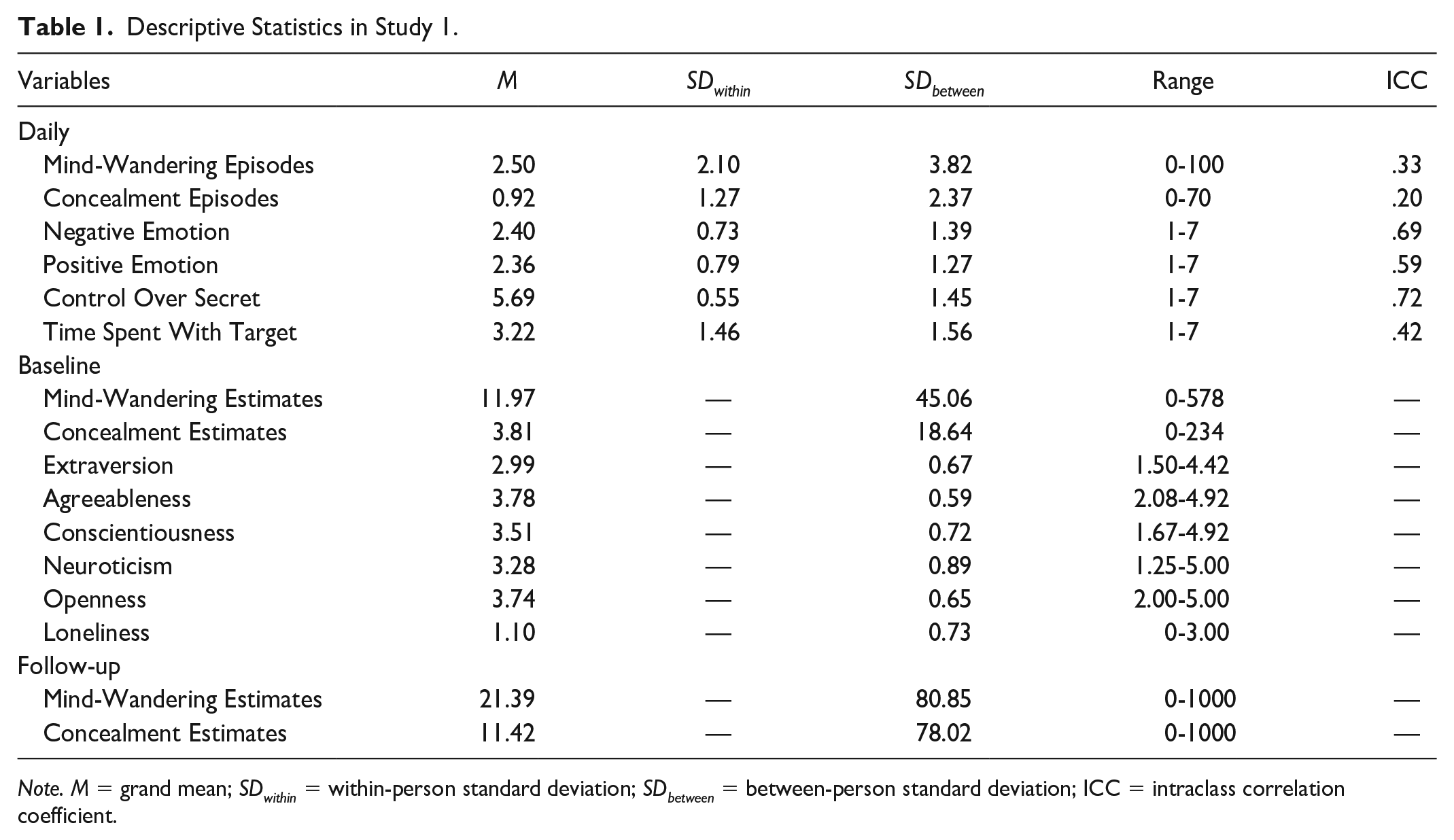
Note. M = grand mean; SDwithin = within-person standard deviation; SDbetween = between-person standard deviation; ICC = intraclass correlation coefficient.
Results from daily diaries supported the view that secrecy is common in daily life. On average, people mind-wandered to their most important secret 2 to 3 times per day (M = 2.50, SD = 3.82) and 15 times across the week (M = 15.01; SD = 23.28). Most (77%) of the variance in mind-wandering was within-person, rather than between-person (ICC = .33), suggesting mind-wandering to secrets may be more state-like than trait-like.
In addition, people’s weekly estimates of how often they mind-wandered to their secret were relatively similar to frequencies captured daily (Figure 1). At baseline, participants estimated on average that they mind-wandered to the secret 12 times per week (M = 11.97, SD = 45.06), which was not significantly different from summed daily mind-wandering, t(173) = 1.05, SE = 2.90, p = .297. Estimates increased at follow-up, with participants estimating mind-wandering 21 times through the week (M = 21.39, SD = 80.85), albeit with large variation between people. Again, this was not significantly different from summed daily mind-wandering, t(167) = −1.12, SE = 5.41, p = .265.
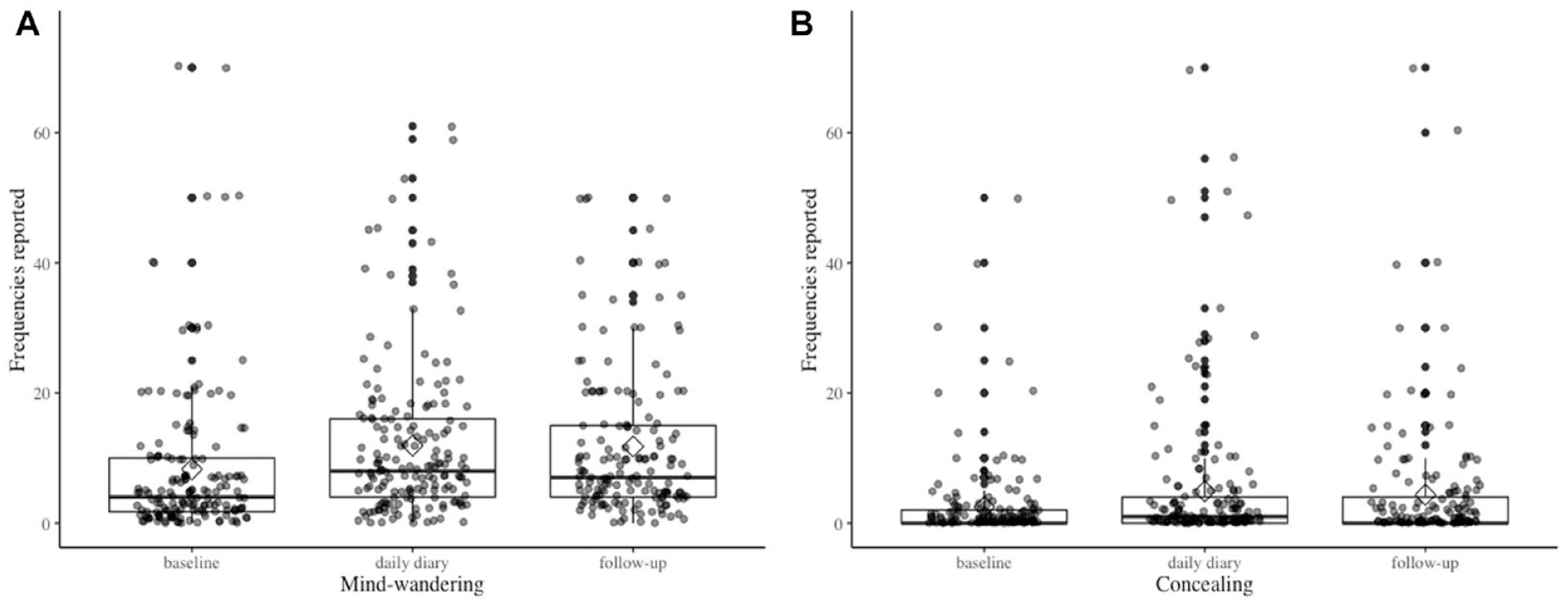
Mind-Wandering and Concealing Frequencies as Reported at Different Stages of Study 1.
Concealment was less frequent, occurring on average less than once per day (M = 0.92; SD = 2.37) and at one third the rate of mind-wandering across the week (M = 5.76, SD = 15.65). The majority (80%) of variance in daily concealment was within-person, rather than between-person (ICC = .20).
Weekly estimates of concealments were relatively similar to frequencies captured daily. At baseline participants estimated on average that they concealed 4 times per week (M = 3.81, SD = 18.64), which was not significantly different from summed daily concealment, t(173) = 1.16, SE = 1.68, p = .246. Estimates increased at follow-up, with participants estimating concealing 11 times through the week (M = 11.42, SD = 78.02), which was not significantly different from summed daily concealment, t(167) = −0.90, SE = 6.09, p = .369.
On average, people reported feeling similar intensity of negative and positive emotions about their secret (see Table 1), although the means were relatively low. People reported having relatively high control over their secret (Table 1).
Multilevel Analyses
Contextual Predictors
Results of multilevel models are reported in Tables 2 to 4.
Two-Step Multi-Level Models Predicting Secret Mind-Wandering and Concealment From Contextual Factors.
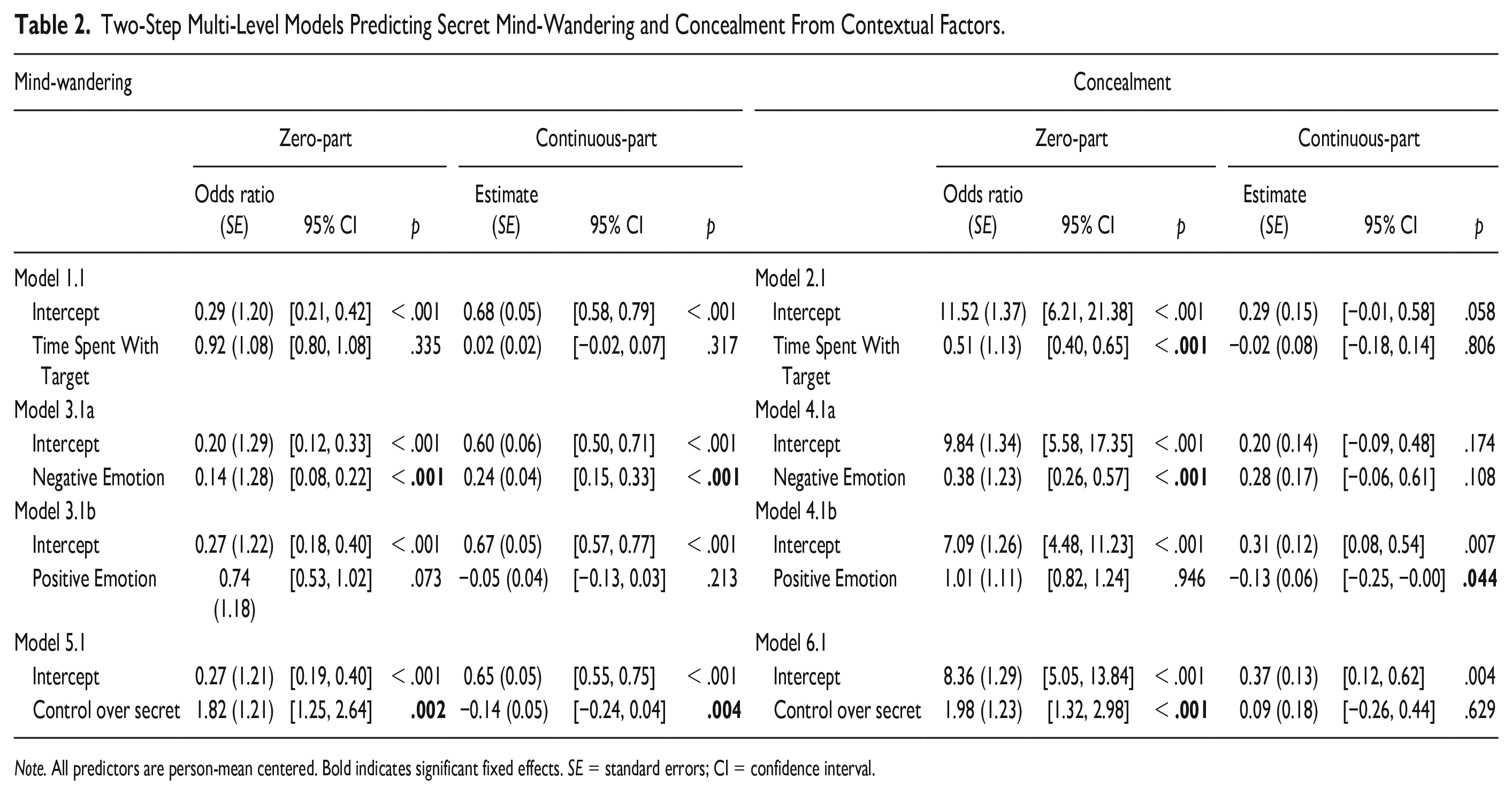
Note. All predictors are person-mean centered. Bold indicates significant fixed effects. SE = standard errors; CI = confidence interval.
Two-Step Multi-Level Models Predicting Secret Mind-Wandering and Concealment From the Big Five Personality Inventory.
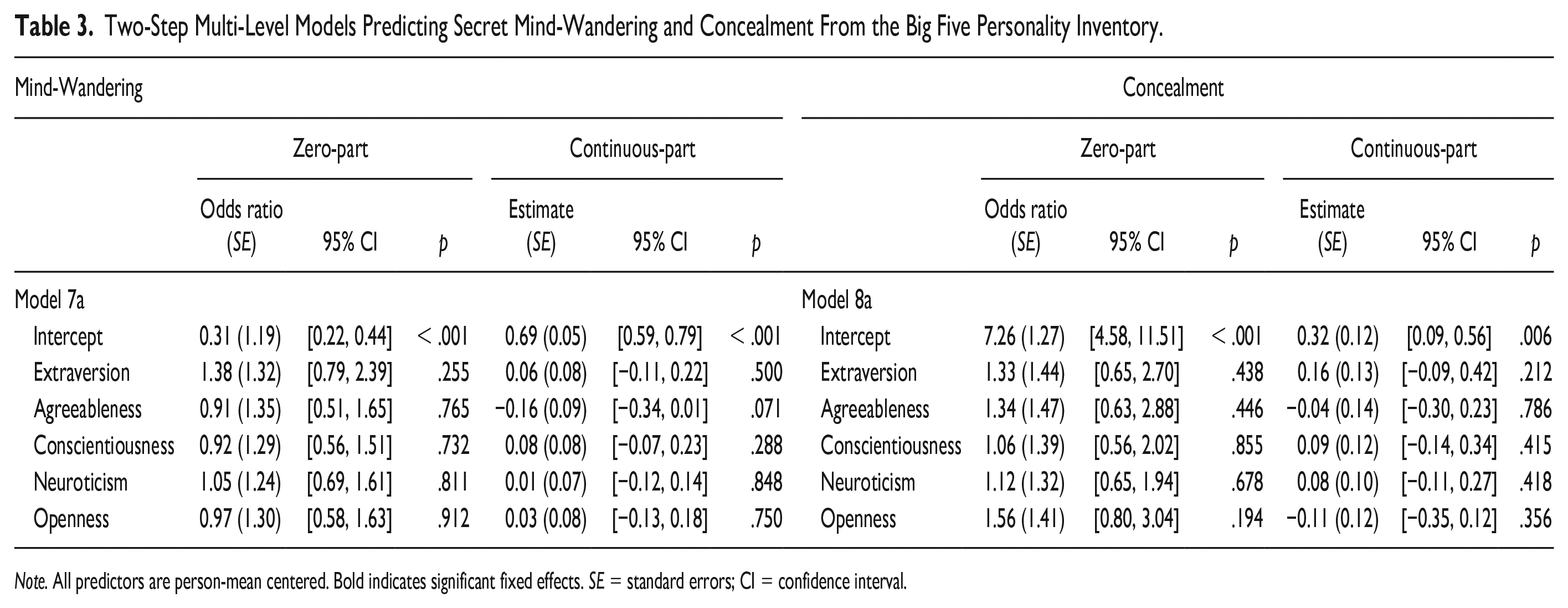
Note. All predictors are person-mean centered. Bold indicates significant fixed effects. SE = standard errors; CI = confidence interval.
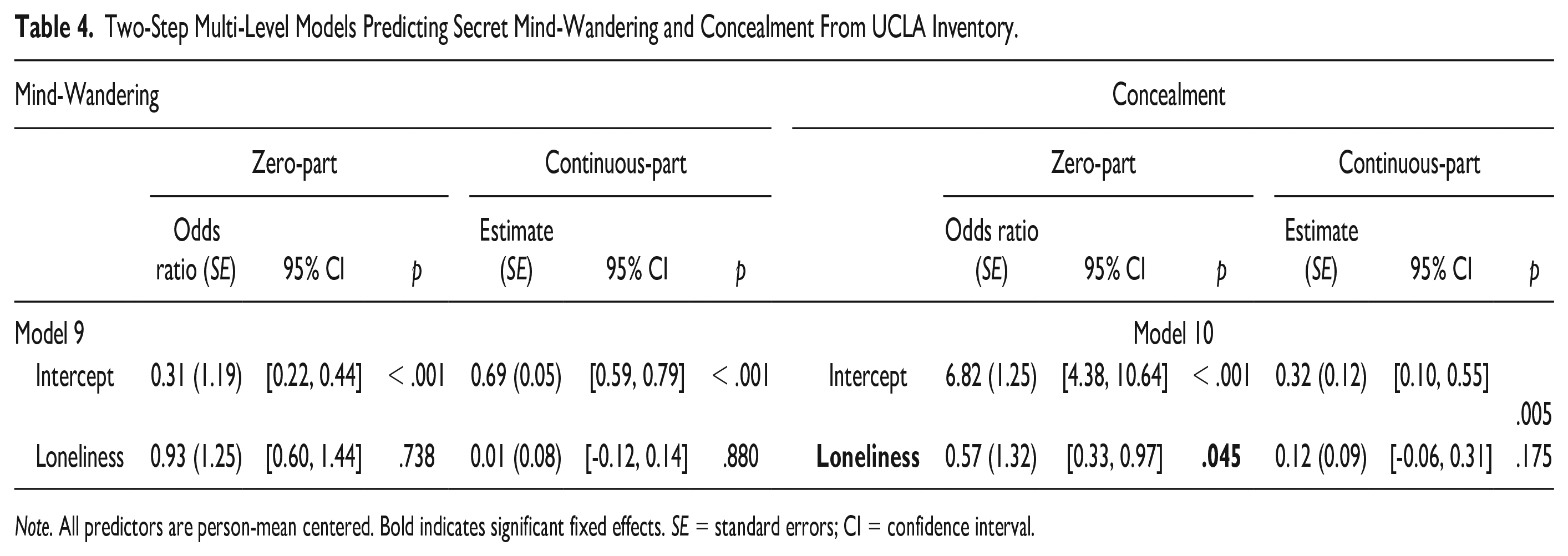
Two-Step Multi-Level Models Predicting Secret Mind-Wandering and Concealment From UCLA Inventory.
Note. All predictors are person-mean centered. Bold indicates significant fixed effects. SE = standard errors; CI = confidence interval.
Time Spent With Target
Spending more time than usual with the target of the secret predicted greater odds of concealing (vs. not, zero-part of the model), but not greater frequency of concealment (continuous-part of the model). There was no relationship between time spent with the secret target and mind-wandering to secrets.
Negative Emotion
Feeling more negative emotion than usual about the secret predicted greater odds of mind-wandering (vs. not, zero-part), as well as greater frequency of mind-wandering (continuous-part). Feeling more negative emotion than usual was also linked to greater odds of concealing (vs. not, zero-part).
Positive Emotion
Positive emotion did not predict mind-wandering to the secret (zero-part or continuous-part). However, feeling more positive emotion than usual about the secret predicted less frequent concealment (continuous-part).
Perceived control
Feeling more in control of the secret than usual predicted lower odds of mind-wandering (vs. not, zero-part), and lower frequency of mind-wandering (continuous-part). Feeling more in control than usual was also linked to lower odds of concealing (vs. not, zero-part).
Individual Differences
Personality
None of the personality dimensions predicted daily secret mind-wandering or concealment.
Loneliness
Trait loneliness did not predict daily secret mind-wandering. Higher loneliness predicted greater odds of concealing (vs. not, zero-part).
Discussion
Study 1 offers a first glimpse into a day in the life of a secret. Our results confirmed that secrecy is common, and that people more commonly mind-wandered to, than concealed, their secrets. Furthermore, in line with Slepian’s (2022) process model of secrecy, our findings suggest that secrecy experiences track with changes in context. When people spent more time than usual with the target of their secret, felt more negative than usual about their secret, and felt less control than usual over the secret, they were also more likely (than not) to conceal the secret. Also, when people felt more negative about and less control over their secret, they were more likely (than not) to mind-wander to their secret, and did so to a greater degree.
In contrast to contextual predictors, individual difference measures of personality and loneliness were not reliably associated with secret mind-wandering or concealment. Loneliness predicted the likelihood of concealing, but the effect was barely significant, and does not replicate in Study 2. As secrecy experiences appeared to differ more within-person than between-people (indicated by relatively low ICCs), it may be that these experiences are better predicted by variables that fluctuate across time rather than across individuals.
Although reverse directionality for relationships within social contexts is unlikely (i.e., concealment experiences are unlikely to cause more time spent with others who do not know the secret), we recognize that mind-wandering could very well be a predictor, rather than an outcome, of emotion intensity and perceived control over the secret. Indeed, these relationships may even be cyclical, such that thinking about a secret makes people feel worse about the secret, and feeling worse about the secret means it comes to mind more often. This feedback loop could potentially contribute to negative well-being outcomes by keeping people stuck in a rumination process. We considered this possibility in Study 2 by lagging momentary contextual predictors, such that we tested whether those variables predicted subsequent mind-wandering to and concealment of the secret in the following hours. We did this using an ESM design that surveyed people 6 times per day, rather than once per day.
Study 2
Method
Participants
We recruited a mixed sample of university students and community participants who responded to an online advertisement. Using G*Power 3.1 (Faul et al., 2009), we conducted an a priori power analysis aiming for 80% power with alpha = .05 to detect a medium-sized between-person correlation (r = .30; noting that many of our analyses in the present paper are within-person, which affords greater statistical power than between-person analyses). This power analysis recommended a sample size of at least 109 participants after exclusions. 6
We analyzed data from 133 participants, Mage = 28.65, SD = 10.15, range = 18–60; 67% women, 29% men, 4% non-binary, genderqueer, or preferred not to say; White or Caucasian (47%), East Asian (25%), or South Asian (20%), with 8% identifying as “other.”
Design and Procedure
The study received ethics approval and consisted of two consecutive parts. Baseline worked the same way as in Study 1. Then, participants downloaded the SEMA3 application (Koval et al., 2019) on their smartphone to complete experience sampling surveys sent pseudo-randomly in a signal-contingent design 6 times per day between the hours of 9:30 am and 8:30 pm (see pre-registration for details).
Participants were compensated with partial course credit (university students) or a gift voucher (community members). As in Study 1, compensation was contingent upon compliance on a graded scale. University students received 1% course credit for completing the baseline survey, another 1% course credit if they completed 1 to 40% of the ESM surveys or 2% course credit if they completed 41 to 100% of the ESM surveys. Community participants received $15 (AUD currency) for completing the baseline survey, and $5 for completing 1 to 39%, $10 for completing 40 to 49%, $20 for completing 50 to 59%, $25 for completing 60 to 69%, $30 for completing 70 to 85%, or $35 for completing above 85% of the ESM surveys.
A total of 4,503 surveys were sent, with approximately 2 hours between each window (M = 119.72 min, SD = 25.07). Overall compliance was 78.41% (SD = 23.77%), resulting in 3,567 observations.
Measures
We report measures relevant to the current paper. A complete list of measures is contained in an appendix to the pre-registration at https://osf.io/t4gb3/.
Baseline Survey
Common Secrets Questionnaire
The CSQ was administered as in Study 1. After this, participants nominated their most important secret and answered the following questions about that secret.
Estimates of Secret Mind-Wandering
Using the same wording as Study 1, participants estimated the number of times in the past week they mind-wandered to their most important secret. Responses were made in an open-ended text box.
Estimates of Secret Concealment
Using the same wording as Study 1, participants estimated the number of times in the past week they held their most significant secret back in conversation. Responses were made in an open-ended text box.
UCLA Loneliness Scale
Loneliness was measured as in Study 1 (α = .95).
Big Five Inventory
Personality was measured as in Study 1 (αextraversion = .85; αagreeableness = .74; αconscientiousness = .87; αneuroticism = .91; αopenness = .85).
ESM Surveys
Secret Mind-Wandering
Participants responded to the item: “Since the last survey, how many times did you find yourself thinking about the secret?.” Responses were made in an open-ended text box.
Secret Concealment
Participants responded to the item: “Since the last survey, how many times did you prevent yourself from revealing the secret?” Responses were made in an open-ended text box.
Emotion Experience
We asked participants to report on how the secret made them feel “right now,” using seven items (displayed in randomized order): sad, nervous, angry, stressed, guilty, ashamed (ωwithin = .79; ωbetween = .92), and happy. Participants responded on a scale from (0) not at all; to (100) very much.
Perceived Control
Participants responded to the item: “Since the last survey, how much control have you felt you had over the secret?” on a scale from (0) none at all; to (100) a great deal.
Time Spent With the Secret Target
Participants responded to the item: “Since the last survey, how much time have you spent interacting with the person or people you are hiding the secret from?” on a scale from (0) none at all to (100) a great deal.
Data Analytic Strategy
Descriptive Analyses
As in Study 1, we calculated descriptive statistics including frequencies, means, standard deviations and ICCs. Using paired samples t-tests, we investigated whether mind-wandering and concealment estimates at baseline differed from frequencies in ESM surveys.
Multilevel Analyses
We originally pre-registered using standard mixed effects analyses using lme4 (Bates et al., 2015). But as reported earlier, we discovered zero-inflated distributions for secrecy experiences, and thus ran two-step models that accounted for this. The original pre-registration and updated pre-registration are both available on OSF. We ran two-step multilevel models with measurement occasions (N = 3,567) nested within persons (N = 133) using the package GLMMadaptive (Rizopoulos, 2019) in R.
Our first set of analyses tested contextual predictors of secret mind-wandering and concealment (Models 1-6). For Models involving time spent with the target, emotion intensity and perceived control, we performed two tests: (a) a concurrent test predicting secrecy experiences (mind-wandering and concealment) from the predictor at the same time point; and (b) a lagged test predicting secrecy experiences from the predictor assessed at the previous time point, while controlling for secrecy experiences at the previous time point. This provided some evidence for the directionality of relationships. For (a) concurrent tests, we included the contextual predictors (person-mean centered) as fixed effects, as well as a random intercept for participant and a random slope for each predictor in both parts of the models. For the (b) lagged tests, we included contextual predictors at the previous timepoint (person-mean centered) and the outcome at previous timepoint as fixed effects, as well as a random intercept for participant and a random slope for each predictor at the previous time point in both parts of the models.
Our second set of analyses predicted secret mind-wandering and concealment from traits assessed at baseline (Models 7-10). We included the trait predictors (grand-mean centered) as fixed effects, and a random intercept for participant in both parts of the models (see Supplementary Materials Table S2.2 for final model specifications).
Results
Descriptive Analyses
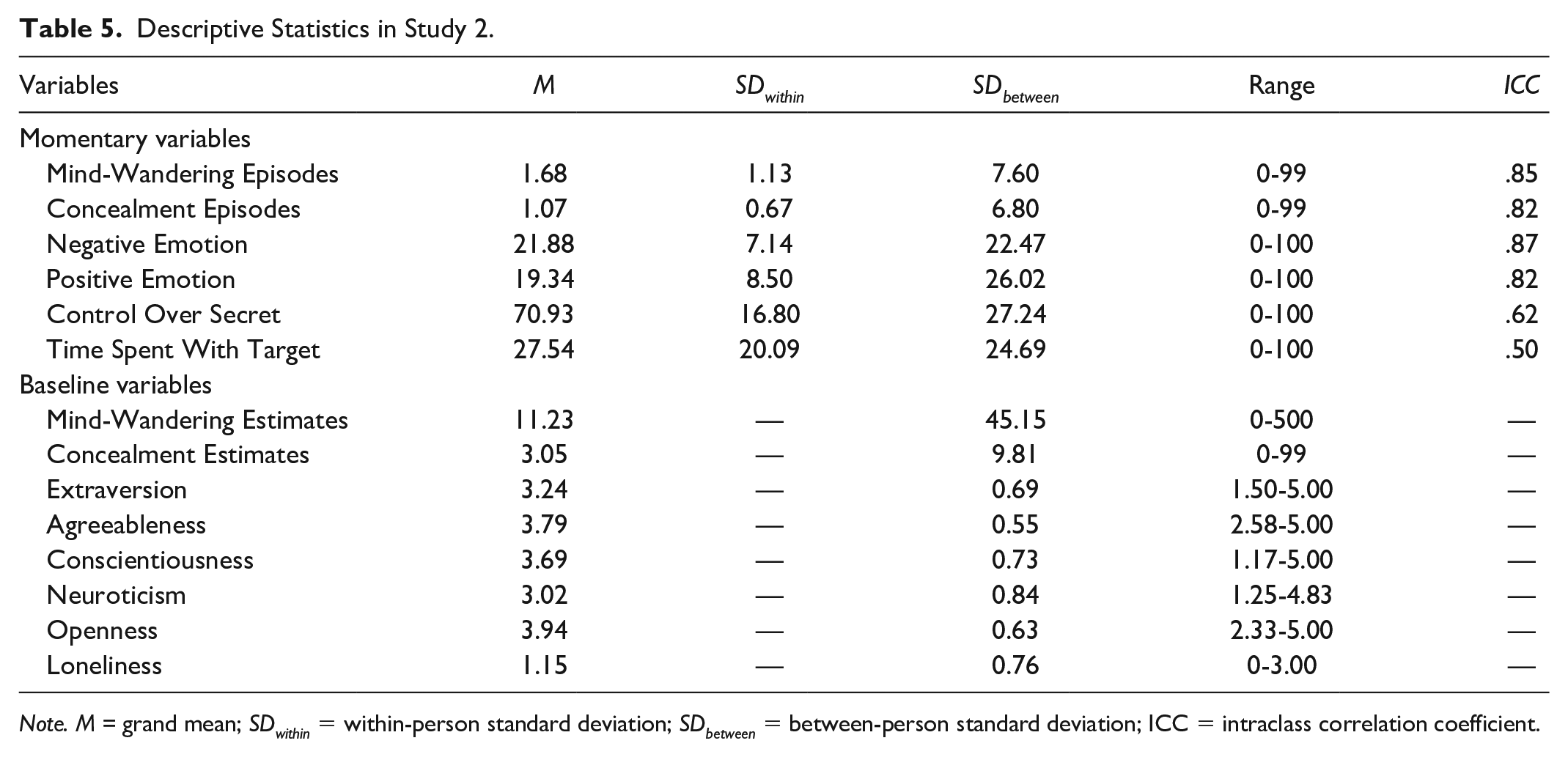
Descriptive statistics are in Table 5. Again, secrecy was common: people on average reported having 10 types of secrets (M = 10.58; SD = 5.92). The most frequent secrets were having lied (57%), sexual behavior (57%), being physically discontented (55%), a romantic desire (53%), or being dissatisfied socially (48%).
Descriptive Statistics in Study 2.
Note. M = grand mean; SDwithin = within-person standard deviation; SDbetween = between-person standard deviation; ICC = intraclass correlation coefficient.
Results from ESM surveys also showed secrecy is common. On average, people reported mind-wandering 1 to 2 times between surveys (i.e., roughly every 2 hr; M = 1.68, SD = 1.13), summing to 31 times per week (M = 31.22; SD = 67.53), albeit with large variation. Departing from Study 1, most (85%) of the variance in mind-wandering was between-person.
At baseline, participants estimated they mind-wandered to secrets 11 times per week (M = 11.23, SD = 45.15), which was significantly different from summed momentary mind-wandering, t(132) = 3.19, SE = 6.27, p = .002 (Figure 2). We thought it possible that poor survey compliance might help explain this difference, because people who completed fewer ESM surveys would have longer timeframes to report on mind-wandering episodes. Therefore, we performed the analyses only for participants with compliance above 80%. These analyses replicated the significant difference between baseline and momentary estimates, t(88) = 4.24, SE = 4.84, p < .001. Potentially, the ESM protocol might induce reactivity, by encouraging more mind-wandering, as participants became “cued” to episodes through repeated reporting. Reactivity is a common concern for ESM studies because asking participants to report frequently on a certain phenomenon might have an impact on the phenomenon itself (Bolger & Laurenceau, 2013). To identify whether we observed such an issue in Study 2, we ran multilevel models predicting mind-wandering and concealment from survey number (a proxy for time). As reported in Supplementary Materials (Supplemental Table S2.5; Supplemental Figure S2.1) we observed no evidence of reactivity—instead, mind-wandering significantly decreased across surveys.
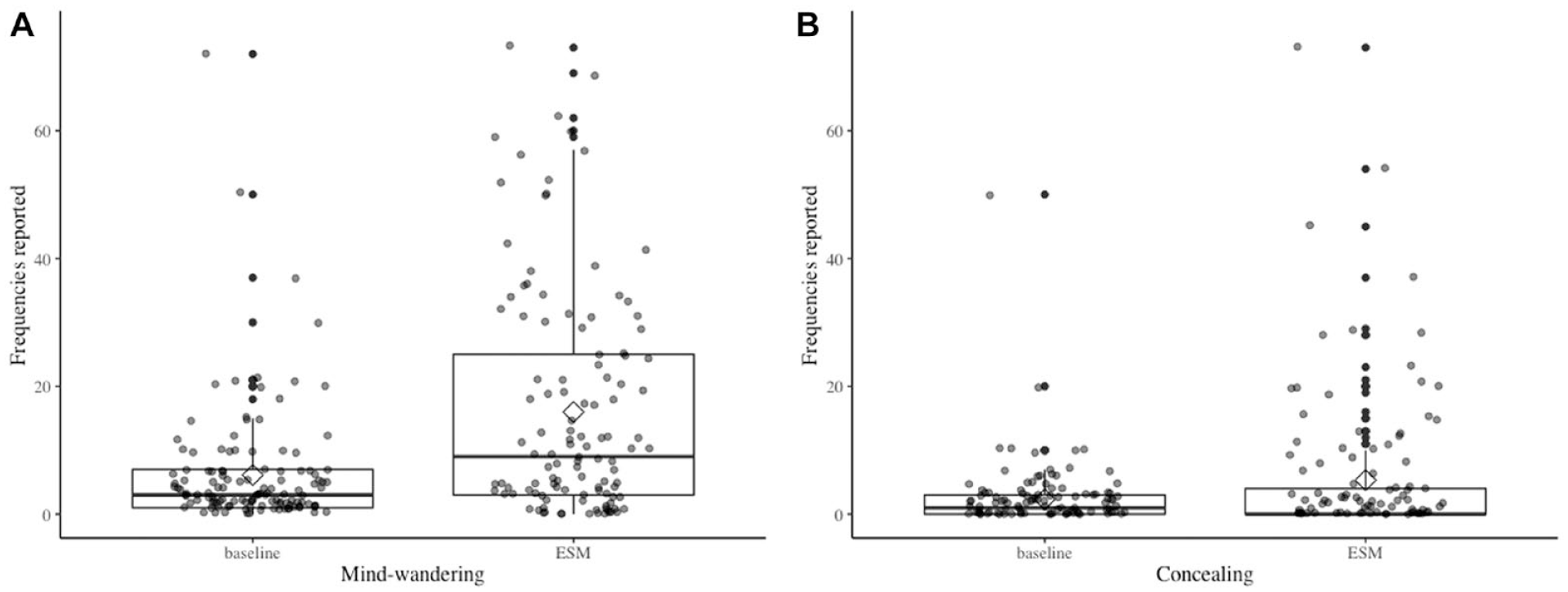
Mind-Wandering and Concealing Frequencies as Reported at Different Stages of Study 2.
Concealment episodes were less frequent, occurring on average once between surveys (M = 1.07; SD = 0.67) and at half the rate of mind-wandering across the week (M = 17.44, SD = 60.07). Most (82%) variance for concealing was between-person.
At baseline participants estimated on average that they concealed 3 times per week (M = 3.05, SD = 9.81); a significant difference compared to summed momentary concealment, t(132) = 2.85, SE = 5.04, p = .005. We repeated the analysis using participants with ESM compliance >80%, which replicated the significant difference, t(88) = 3.01, SE = 4.05, p = .003. As reported in Supplementary Materials, concealment was stable across surveys, suggesting the difference was not due to repeated reporting (see Supplementary Materials Table S2.5; Supplemental Figure S2.2).
On average, people reported feeling similar levels of negative and positive emotions about their secret, although means were low. People felt relatively high levels of control over their secrets (see Table 5).
Multilevel Analyses
Contextual Predictors
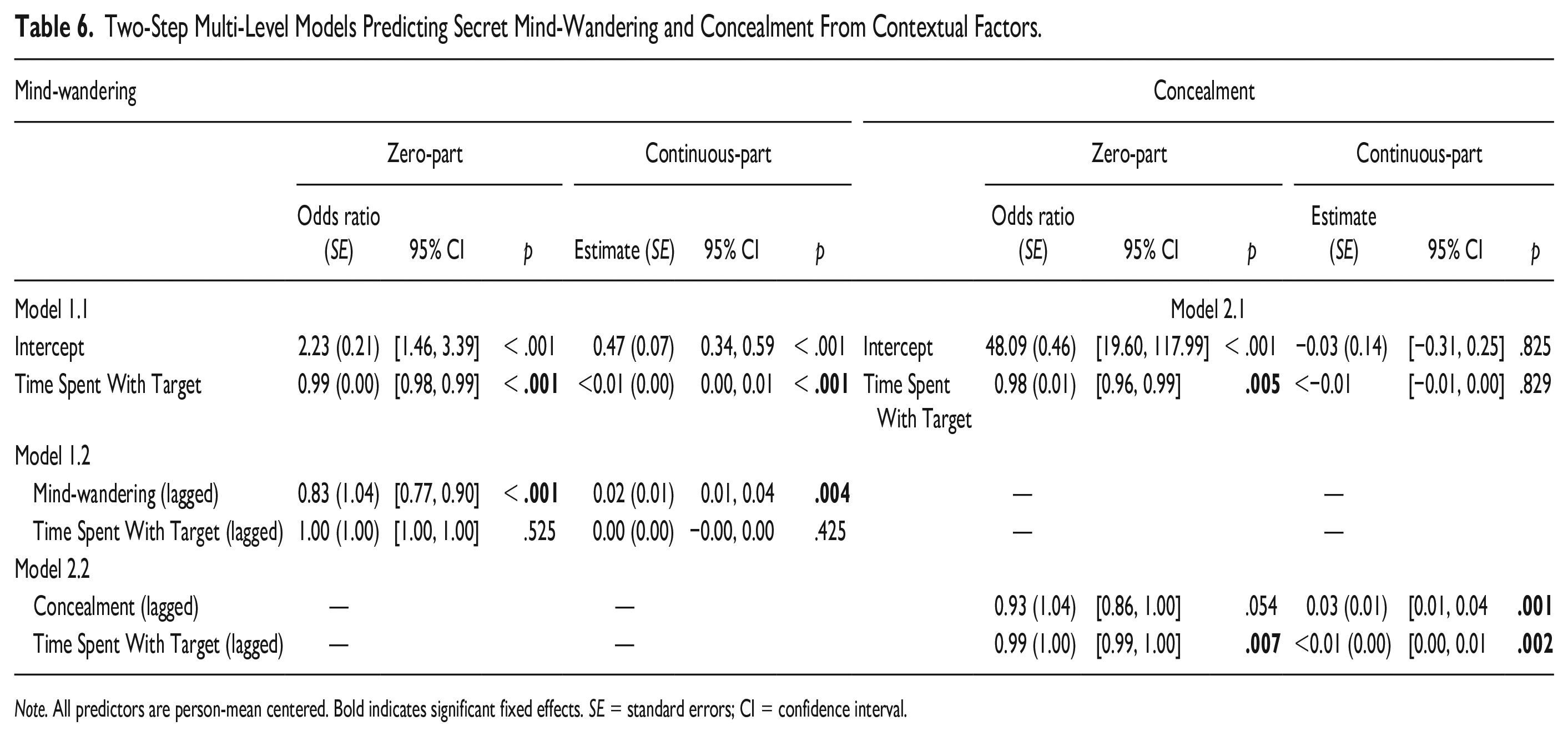
Results of multilevel models are reported in Tables 6 to 9.
Two-Step Multi-Level Models Predicting Secret Mind-Wandering and Concealment From Contextual Factors.
Note. All predictors are person-mean centered. Bold indicates significant fixed effects. SE = standard errors; CI = confidence interval.
Two-Step Multi-Level Models Predicting Secret Mind-Wandering and Concealment From Contextual Factors.
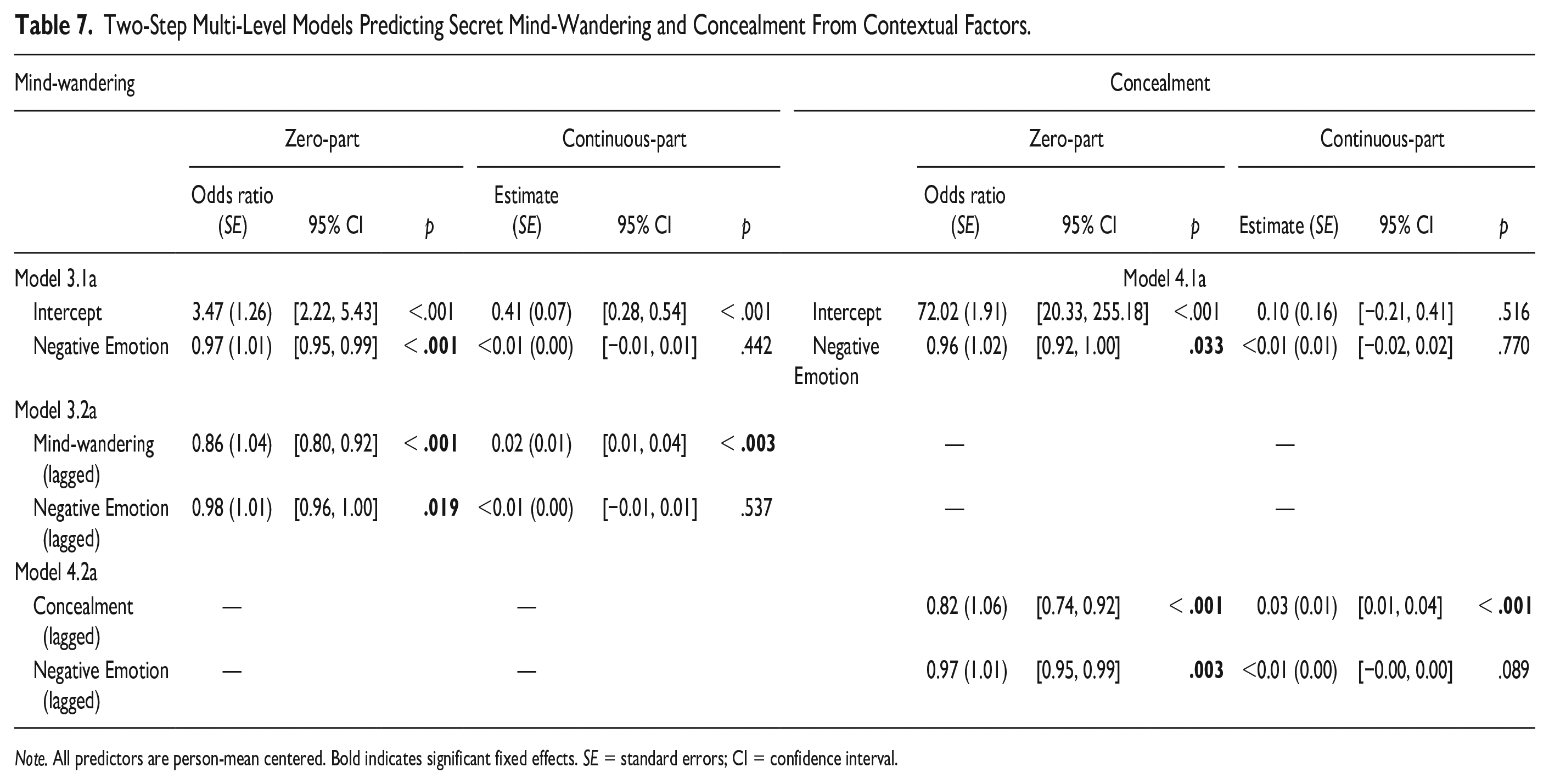
Note. All predictors are person-mean centered. Bold indicates significant fixed effects. SE = standard errors; CI = confidence interval.
Two-Step Multi-Level Models Predicting Secret Mind-Wandering and Concealment From Contextual Factors.
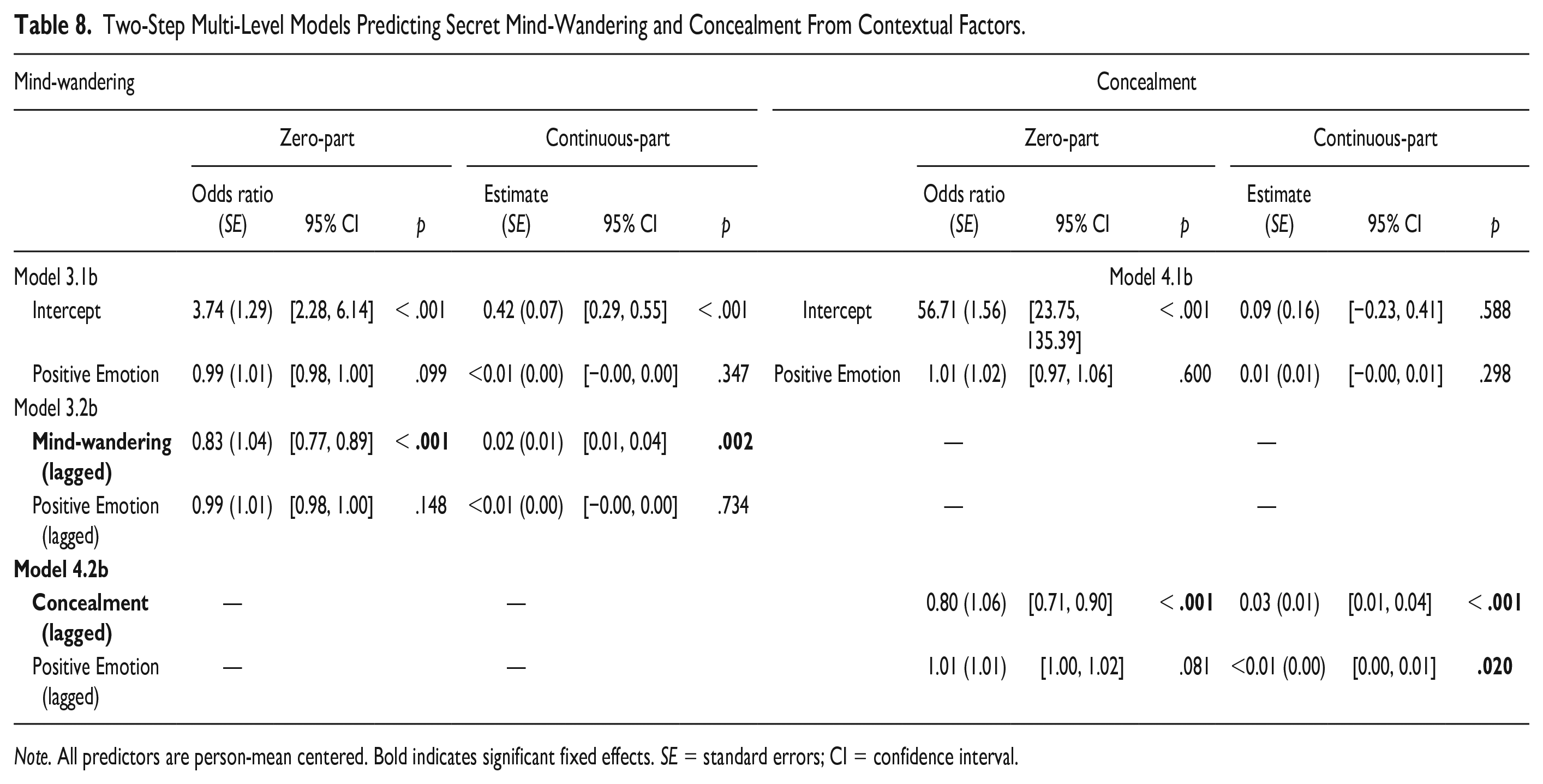
Note. All predictors are person-mean centered. Bold indicates significant fixed effects. SE = standard errors; CI = confidence interval.
Two-Step Multi-Level Models Predicting Secret Mind-Wandering and Concealment From Contextual Factors.
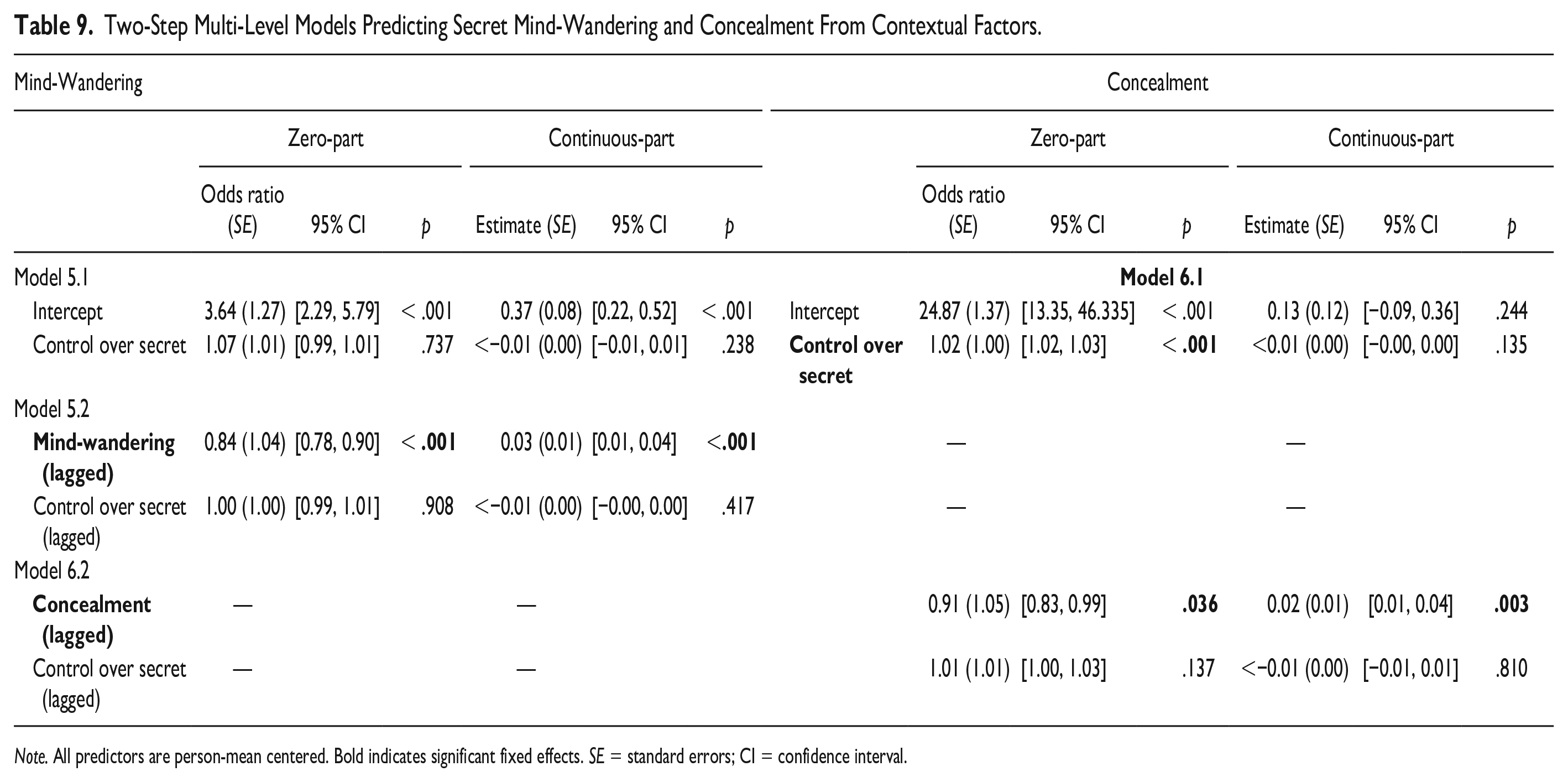
Note. All predictors are person-mean centered. Bold indicates significant fixed effects. SE = standard errors; CI = confidence interval.
Time Spent With Target
Focusing on analyses that account for change across time (i.e., the lagged analyses), spending more time than usual with the secret target predicted greater odds of concealing (vs. not) 2 hours later (zero-part), and greater frequency of concealment 2 hours later (continuous-part). There was no relationship between time spent with the secret target and subsequent mind-wandering to secrets. Findings replicate in the concurrent analyses (see Table 6).
Negative Emotion
In the lagged analyses, feeling more negative emotion than usual predicted greater odds of concealing (vs. not) and greater odds of mind-wandering (vs. not) 2 hours later (zero-part). There was no relationship between negative emotion and frequency of mind-wandering or concealing (continuous-part; see Table 7).
Positive Emotion
There was only one weak association whereby feeling more positive emotion than usual predicted more concealment (continuous-part; see Table 8).
Perceived Control
Perceived control over the secret did not predict mind-wandering or concealing in the lagged analyses. However, perceived control did predict lower odds of concealing (vs. not) in the concurrent analyses (see Table 9).
Individual Differences
Personality
None of the personality dimensions predicted secret mind-wandering (Table 10). Higher levels of extraversion predicted greater odds of concealing (vs. not, zero-part), and greater frequency of concealment (continuous-part).
Two-Step Multi-Level Models Predicting Secret Mind-Wandering and Concealment From Facets and Sub-Facets of the Big Five Personality Inventory.
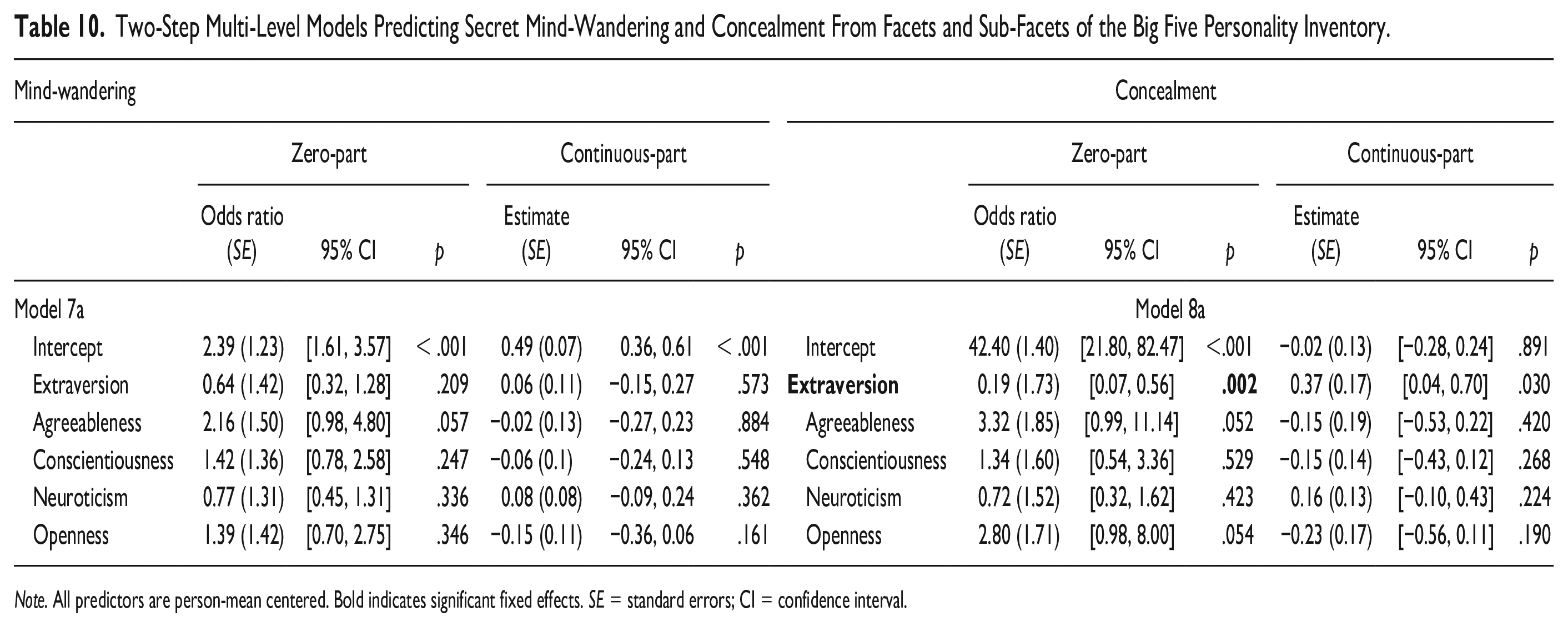
Note. All predictors are person-mean centered. Bold indicates significant fixed effects. SE = standard errors; CI = confidence interval.
Loneliness
Loneliness did not predict greater odds of mind-wandering (vs. not, zero-part), though weakly predicted greater frequency of mind-wandering when it occurred (continuous-part). Loneliness did not predict concealment in either part (Table 11).
Two-Step Multi-Level Models Predicting Secret Mind-Wandering and Concealment From UCLA Inventory.
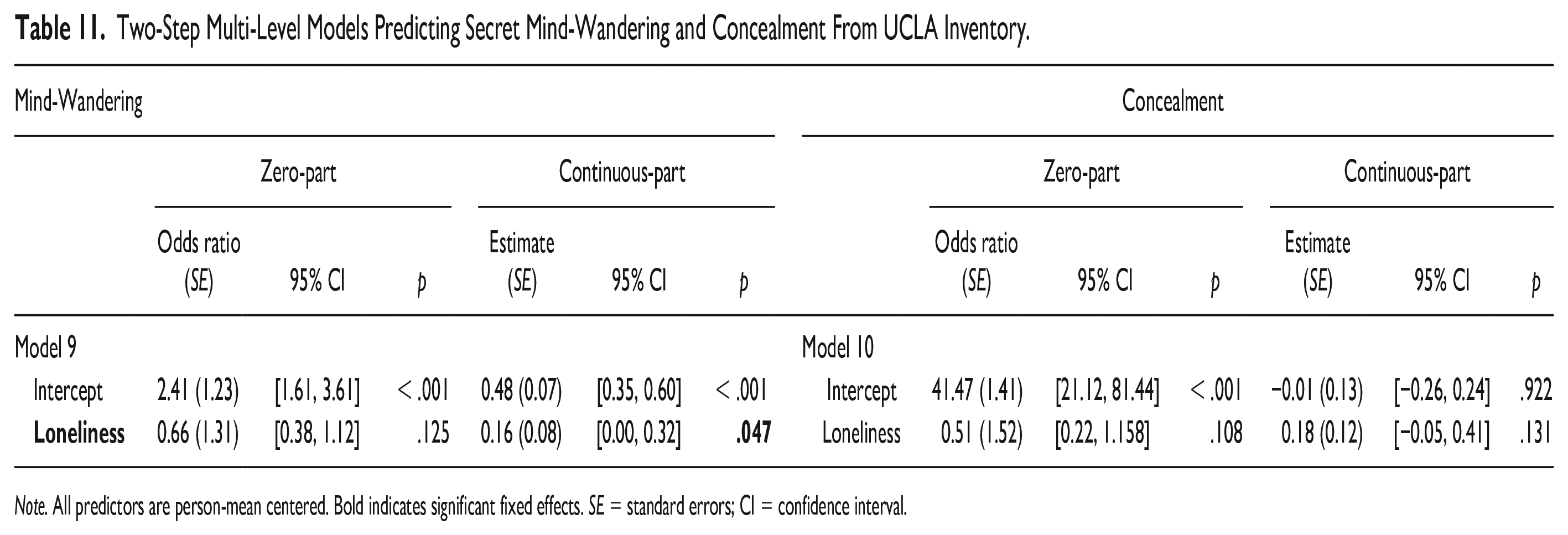
Note. All predictors are person-mean centered. Bold indicates significant fixed effects. SE = standard errors; CI = confidence interval.
Discussion
Our findings were similar to Study 1 in this more fine-grained assessment of the predictors of secrecy experiences. The results showed that people who spent more time than usual with the target of their secret were more likely (than not) to conceal their secret. In a departure from Study 1, we also found that people higher in trait extraversion were more likely to conceal their secret. Together, these results may suggest that people who spend more time with others—either contextually or habitually—encounter more opportunities to hold back their secrets in conversation. We also found that people higher in trait loneliness were more likely (than not) to mind-wander to their secret, but this effect was barely significant and unlikely to be robust.
In addition, when people felt more negative about their secret than usual, they were more likely (than not) to mind-wander to and conceal their secret. Although the effects were small, this pattern was also evident in lagged analyses that investigated change across time—experiencing a greater negative emotion predicted a greater subsequent likelihood of mind-wandering to and concealing secrets at the next survey. However, these effects were not present at the person level when assessing a related personality trait—neuroticism—which tracks trait-level negative emotionality. Taken together, when it comes to the emotional side of secrets, secrecy experiences were once again better predicted by changes within person rather than differences between persons.
General Discussion
We conducted the first intensive look at secrecy in everyday life. Where prior research has studied secrets in the lab (e.g., Critcher & Ferguson, 2014; Newheiser & Barreto, 2014; Wegner & Lane, 1995) or via surveys asking people to estimate their experiences with secrecy across weeks, months, or in general (e.g., Davis et al., 2021; Frijns & Finkenauer, 2009; Kelly et al., 2001; Slepian et al., 2017), we assessed secrecy as it is experienced on a daily and hourly basis. These studies yielded information about hundreds of secrets across thousands of observations. The results confirm, and add to, some previous findings, and raise methodological and theoretical considerations for future secrecy research.
How Common Is Secrecy?
We confirmed secrecy is a common experience (Slepian et al., 2017). People reported on average holding 10 categories of secrets in both studies. Also confirming prior findings (e.g., Slepian, Greenaway & Masicampo, 2020), people reported thinking about their secrets more than they concealed them: This pattern was observed in both daily (Study 1) and hourly (Study 2) estimates and when asking participants to estimate mind-wandering and concealment across the past week (both studies).
A criticism of prior research is that it captured mind-wandering and concealment estimates over long periods, which may introduce biases in recall. Our own findings reveal that retrospective estimates of secrecy experiences are indeed different from estimates obtained in daily life. Where previous averages suggest people mind-wander to thoughts of secrets roughly 16 times per month and conceal secrets roughly 8 to 12 times per month (e.g., Slepian et al., 2017; Slepian & Moulton-Tetlock, 2019), we found those estimates look closer to the amount people reported mind-wandering to and concealing in 1 week, rather than 4. In our studies, reported rates of mind-wandering were 4 times (Study 1) and almost 8 times (Study 2) higher than rates captured in prior work. 7
We note that while our data show a discrepancy between retrospective and momentary estimates, our studies do not reveal which form of estimation is more accurate. Nonetheless, one interpretation of the size of the discrepancy is that not all episodes of mind-wandering to and concealing secrets are equally memorable, and thus are less prone to be represented in retrospective reports. Likely, there are instances in which a secret comes to mind, and the mind moves on, or when someone is in an interaction and conceals very briefly before the conversation continues to other topics (Slepian, 2022). In other words, not all experiences with a secret will have the same impact, and the ones that do have an impact are probably more likely to be remembered at the end of the day, or 1 week later (e.g., Stone et al., 2004, 2005). A direction for future research is therefore to estimate the phenomenological characteristics (e.g., vividness, distress) as predictors of associated memorability, for secret mind-wandering and concealment episodes.
Between-Person Predictors of Secrecy
Do people with certain dispositions find themselves mind-wandering to or concealing secrets more than others? Our studies yielded inconsistent findings on this front. Although we did not see effects in Study 1, in Study 2 trait extraversion predicted greater likelihood of concealing in everyday life. Because Study 2 assessed people more frequently, and thus tracked more instances of concealment, this may indicate that people who have a more social disposition—and presumably come into contact with others more frequently—have more opportunities to conceal their secret from others.
There are several possible explanations for why we mostly found null, or statistically weak, relationships for trait predictors of secrecy experiences. One explanation is that we correlated person-level predictors with the aggregate of reports gathered in momentary surveys, and thus should not expect them to be closely related. Indeed, researchers have argued that these measures assess different “selves” in the form of the “remembering self” (trait measures) and the “experiencing self” (momentary measures) and thus would not be expected to be closely related (Conner & Barrett, 2012). Nevertheless, research shows that trait measures are capable of predicting state experiences assessed via ESM (e.g., Fleeson & Gallagher, 2009; Koval et al., 2023). Another possibility is that people express greater variability in personality-related behaviors in everyday life than is captured by individual difference measures. Thus, a potential direction for future work is to look at the relationship between secrecy experiences and state measures of the trait variables we assessed. For example, instead of asking whether more extraverted people conceal secrets, future work could ask whether the times when people report higher state extraversion are times when they are more likely to conceal. These kinds of investigations will allow for a better understanding of state and trait influences on secrecy experiences.
Within-Person Predictors of Secrecy
Our contextual findings align with and advance recent secrecy theory. Slepian’s (2022) process model presents two contextual pathways concerning people’s experience of secrecy, depending on whether concealment is required. According to the model, when concealment is required, people enact specific behaviors in the service of keeping the secret. However, when concealment is not required, people’s minds are free to wander to the secret and its implications for one’s life and relationships.
In some of the first evidence for these theorized processes, we found that when people spent more time with secret targets than usual, they were more likely to conceal vs. not. Thus, spending time with others not privy to the secret can activate the concealment pathway. As intensive longitudinal studies find that people often interact with others throughout the day (Forbes et al., 2023; Tran et al., 2023), our finding suggests opportunities for concealing secrets—and potential costs of that concealment—are rife in daily life. Relevant to the non-concealment pathway, in both studies we found that when people felt more negatively than usual about their secret, they were more likely to mind-wander to their secret than not. This finding suggests that negative emotionality is a risk factor for mind-wandering, perhaps particularly when people are alone and free to ruminate. More broadly, it indicates that times when secrets are in the heart are also times when secrets are on the mind.
By prioritizing external validity, our work investigates secrecy processes in complex natural settings with real-world secrets, circumventing known limitations of experimental designs (Diener et al., 2022). Although our data cannot confirm the causal direction of these relationships, we provide some evidence toward a possible temporal order in Study 2 by lagging predictors and controlling for mind-wandering and concealment at the previous timepoint. This lagged approach allows us to conclude that prior negative emotional experiences were associated with subsequent mind-wandering, above and beyond autoregressive effects of this outcome.
On a practical level, our findings suggest that in concealment contexts, people may benefit from knowledge about multiple ways to successfully conceal information (e.g., how to dodge questions, or avoid topics of conversation; Sun & Slepian, 2020). In high-emotion contexts, however, people might benefit from strategies directed at better managing their thoughts and emotions. Hence, merging insights from the secrecy (Slepian, 2022) and emotion regulation literatures (Aldao, 2013; Greenaway et al., 2018) may offer an opportunity to explore which strategies (and in which contexts) make or break well-being.
Limitations and Future Directions
Parallel to the contribution offered by our work, we acknowledge some limitations which may serve to inspire future research. First, self-selection bias is a relevant concern (Scollon et al., 2009). For instance, secrecy may be a sensitive topic potentially dissuading participants from taking part in a study, or attracting participants who have a salient secret. To offset this issue, we recruited participants through online platforms, which guarantees a level of anonymity. In addition, we designed the studies and contingent compensation schemes to encourage sample retention while also balancing honesty (e.g., participants received partial remuneration if opting into the study yet reporting no secrets). Furthermore, prior work found no well-being differences between participants who opted into a study on secrecy compared to those who withdrew when learning it was about secrecy (Slepian, Greenaway & Masicampo, 2020).
There is a risk that asking repeatedly about experiences with secrecy may alter the nature of those experiences. For example, people may become more aware of or attuned to such experiences and therefore report them more often. Counter to this explanation, we found that mind-wandering to and concealment of secrets did not increase over the course of the study (Supplementary Materials Table S2.5). Nevertheless, simply taking part in the study may have primed participants to mind-wander to their secrets more than they otherwise would have. Future studies aimed at investigating secrecy experiences could circumvent this issue by asking people to spontaneously report times when they mind-wander to their secrets (i.e., in an event-contingent or probe caught design) rather than prompting them at semi-regular times during the day.
Another limitation is the operationalization of mind-wandering in terms of frequencies. Frequencies neglect other aspects of the episode, such as length, content, or characteristics. Furthermore, momentary frequency estimates may not be entirely accurate if some mind-wandering occurs out of direct awareness (Schooler et al., 2011). People may be better able to determine the presence or absence of a process (e.g., I did or did not think about my secret), rather than the degree to which the process is present (e.g., I thought about my secret 5 times). A strength of our analytic strategy is that our two-step models are capable of assessing both whether mind-wandering occurs at all as well as how much.
In addition, our measure of concealment was not ideal across studies. In Study 1, the concealment item referred exclusively to the secret target, and thus baked contextual information into the assessment of concealment frequencies. This may have inflated the association between time spent with the secret target and concealment episodes. However, we note that the concealment item in Study 2 did not suffer from this problem and replicated the association between this social contextual factor and concealment. Furthermore, in both studies, time spent with the secret target only moderately predicted the likelihood of concealing at all and did not consistently predict how much people concealed. This finding suggests that the presence of a secret target can activate a concealment pathway (Slepian, 2022), but it by no means perfectly overlaps with concealment: just because people are in a situation where concealment could take place does not mean that concealment will happen.
In another measurement issue, mind-wandering and concealing episodes were linked with how much control people felt over their secret. However, our assessment of perceived control affords little insight into how this manifests in relation to people’s secrets. Future studies could more specifically investigate aspects of control people feel (or do not feel) over their secrets. For instance, future work might aim to distinguish perceived control over information management (e.g., ability to stop the information from spilling out; Bingley et al., 2022) from perceived control over potential social outcomes (e.g., coping with other people’s reactions) or perceived controllability of the secret itself (e.g., whether keeping the secret relies on another person’s silence).
Turning to other factors that may be related to secrecy experiences, our research only begins to scratch the surface of potential contextual predictors of secret mind-wandering and concealment. Consequently, a range of other potentially relevant contextual factors can and should be explored in future research. For instance, we operationalized context in terms of people’s perceptions of their experiences in everyday environments. Future research could codify and assess external features of the environment that may encourage secret mind-wandering and concealment. Such an approach could build on work by Davis and Brazeau (2021), which asked participants to self-nominate cues to secrets and recall the presence of these idiosyncratic cues across a 2-week period. Alternatively, researchers may identify and track environmental cues that are relevant to specific types of secrets, depending on their research focus (e.g., exposure to alcohol or drugs for people keeping an addiction secret). On a similar note, future studies would do well to study whether the specific type of secret plays a role in how secrecy processes unfold in everyday life.
Similarly, although our studies did not find consistent relationships between secrecy experiences and individual differences in personality and loneliness, there are many other traits that future work could explore as potential predictors. For instance, future intensive longitudinal studies could explore whether trait self-concealment (Larson & Chastain, 1990) or attachment styles (Merrill & Afifi, 2015) are linked to the degree to which people think about and conceal secrets in everyday life.
Conclusion
There are two broad situations in which a secret may be salient: (a) concealment contexts that require close attention during a social interaction and (b) non-concealment contexts that allow one’s mind to wander. Both experiences have implications for well-being (Slepian, 2022), but the psychological antecedents to these experiences are only beginning to be explored. Bringing secrecy measures “into the wild,” we investigated contextual and individual difference predictors of mind-wandering to and concealing secrets in two intensive longitudinal studies. Our research shows that people report mind-wandering to and concealing secrets quite frequently in everyday life. Our findings also revealed that contextual factors consistently predicted secrecy experiences, but person-level factors did not, or did not do so consistently. This is good news for anyone with a secret; with a better understanding of which situations prompt which secrecy processes, we can better help people cope with their secrets in everyday life.
Supplemental Material
sj-docx-1-psp-10.1177_01461672241226560 – Supplemental material for Secrecy in Everyday Life
Supplemental material, sj-docx-1-psp-10.1177_01461672241226560 for Secrecy in Everyday Life by Valentina Bianchi, Katharine H. Greenaway, Ella K. Moeck, Michael L. Slepian and Elise K. Kalokerinos in Personality and Social Psychology Bulletin
Footnotes
Declaration of Conflicting Interests
The author(s) declared the following potential conflicts of interest with respect to the research, authorship, and/or publication of this article: Second Author (Dr K. Greenaway) is an Associate Editor for PSPB.
Funding
The author(s) disclosed receipt of the following financial support for the research, authorship, and/or publication of this article: This work was supported by an Australian Research Council Discovery Project awarded to the second, fourth, and final authors (grant no. DP190103072) and an Australian Research Council Future Fellowship awarded to the second author (grant no. FT190100300).

Supplemental Material
Supplemental material is available online with this article.
Notes
References
Supplementary Material
Please find the following supplemental material available below.
For Open Access articles published under a Creative Commons License, all supplemental material carries the same license as the article it is associated with.
For non-Open Access articles published, all supplemental material carries a non-exclusive license, and permission requests for re-use of supplemental material or any part of supplemental material shall be sent directly to the copyright owner as specified in the copyright notice associated with the article.
