




Abstract
People seek high positions not to gain influence over others but to satisfy their need for personal control. Personal control tends to have positive interpersonal consequences. If this is the case, does power indeed corrupt? We argue that holding a high position is associated both with perceptions of power (influence over others) and personal control (influence over one’s life). Three studies showed that these two aspects might have opposite consequences: Power over others positively predicted aggressiveness (Study 1, N = 793) and exploitativeness (Study 2, N = 445), whereas personal control predicted these outcomes negatively. In Study 3 (N = 557), conducted among employees at various organizational positions, the effects of holding a high position on exploitativeness and aggressiveness were differentially mediated by power over others and personal control. We discuss these findings in light of contradicting evidence on the corruptive effects of power.
The observation that “power tends to corrupt” is no longer newsworthy. Vast empirical literature in the field of social psychology speaks to the antisocial effects of power. Power undermines social relations by reducing the propensity to take the perspective of others (Galinsky, Magee, Inesi, & Gruenfeld, 2006), compassion (van Kleef et al., 2008), and the willingness to maintain close relationships (Kipnis, 1972). Powerful people are more cynical (Inesi, Gruenfeld, & Galinsky, 2012) and tend to undervalue (Georgesen & Harris, 1998) and objectify others (Cislak, 2013; Gruenfeld, Inesi, Magee, & Galinsky, 2008). Yet, power can also be seen from a more positive perspective—as “the glue that coordinates social life and moves shared goals forward” (Guinote & Vescio, 2010, p. 3). Groups follow leaders for coordinative purposes, providing the structure and organization of group efforts (Van, Vugt, Hogan, & Kaiser, 2008). In fact, power was demonstrated to enhance goal attainment, reduce procrastination (Guinote, 2007), enhance creativity, and reduce conformity (Galinsky, Magee, Gruenfeld, Whitson, & Liljenquist, 2008).
What psychological processes stand behind the corruptive, versus ennobling, effects of holding high positions? We believe that the key to this question lies in the understanding of different aspects of holding such positions. A high position is associated with two spheres of control. The first is control over others—more traditionally associated with the concept of power (Lammers, Stoker, Rink, & Galinsky, 2016). The second is the ability to influence the course of one’s own life, which is usually referred to as personal control (Kay, Whitson, Gaucher, & Galinsky, 2009). In his famous observation on the corruptive effects of power, Lord Acton (1887/1906) attributed the antisocial effects of high positions to the influence over others exercised by the powerholders. But Kipnis (1972), inspired by Lord Acton’s theorizing to pioneer social psychological research into the corruptive effects of power, suggested that power brings about negative effects exactly because of the internal locus of control of the powerful. Yet, recent psychological literature suggests that these two aspects of holding high positions should have different outcomes: Whereas power corrupts, personal control has been linked to beneficial outcomes both for individuals and their social environment (e.g., Ryan & Deci, 2000; Weinstein & Ryan, 2010). In this work, we examine which of these two intertwined aspects of holding high positions stands behind the only too frequently observed corruptive effects. To this end, we disentangle the relationships between holding high positions, power over others, personal control, and antisocial tendencies.
The Antisocial Effects of Power
The idea of a “corruptive power” was introduced by Hobbes (1651/2002), who claimed that modern societies emerged to limit the otherwise exploitative and corruptive effects of unconstrained power. It was perhaps most famously formulated in the 19th century by John Emerich Edward Dalberg–Acton in a correspondence with Archbishop Creighton regarding the First Vatican Council’s introduction of the dogma of infallibility. Whereas Archbishop Creighton suggested that people in high positions should be treated with less moral rigor, Lord Acton (1887/1906) observed, Great men are almost always bad men, even when they exercise influence and not authority: still more when you superadd the tendency or the certainty of corruption by authority. There is no worse heresy than that the office sanctifies the holder of it. (p. 364)
Lord Acton suggested that not only merely exercising authority but also gaining influence over others stands behind the corruptive effects of holding high positions. Inspired by his idea—that “power corrupts”—classic psychological studies on the metamorphic effects of power delivered the first systematic evidence that, indeed, powerful people distance themselves from others, objectify them, and devalue their performance (Kipnis, 1972; Kipnis, Castell, Gergen, & Mauch, 1976).
Extensive contemporary empirical research strongly confirms this early evidence. Powerholders are egocentric (Galinsky et al., 2006), not compassionate (van Kleef et al., 2008), overconfident (Fast, Sivanathan, Mayer, & Galinsky, 2012), unrealistically self-assured, and prone to ignore others (See, Morrison, Rothman, & Soll, 2011). They tend to cheat (Lammers, Stapel, & Galinsky, 2010), even on their life partners (Lammers, Stoker, Jordan, Pollmann, & Stapel, 2011). Powerful people stereotype others (Goodwin, Gubin, Fiske, & Yzerbyt, 2000), treat others instrumentally (Gruenfeld et al., 2008), and undervalue the performance of their subordinates (Georgesen & Harris, 1998). They tend also to harm others by various forms of aggression (Zimbardo, 1973) in family (Howard, Blumstein, & Schwartz, 1986), peer (Faris & Felmlee, 2011), and workplace contexts (C. Anderson & Brion, 2014; Workplace Bullying Institute, 2014). In fact, a majority of workplace bullying comes from those who occupy a higher rank in the organizational hierarchy than their victims (Workplace Bullying Institute, 2014). Different operationalizations of high positions and various methods brought converging results. For example, social class (Piff, Kraus, Côté, Cheng, & Keltner, 2010) and status (Guinote, Cotzia, Sandhu, & Siwa, 2015) were found to be negatively related to prosociality.
Still, several classic theories and programs of empirical research speak to the contrary. Early on, Rogow and Lasswell (1963) suggested that power leads neither to corruption nor to ennoblement. In the field of social psychology, Cartwright and Zander (1968) even suggested that power has positive consequences, leading to empathy rather than exploitation. In a similar vein, C. Anderson, John, and Keltner (2012) showed that “individuals with an extremely high personal sense of power did not have more anti-social tendencies” (p. 336). In their studies, a high personal sense of power was not associated with the tendency to exploit. In fact, it was negatively related to Machiavellianism, and positively related to generosity and the belief in one’s duty to care for the weak. Furthermore, the results of research using big data sets and representative samples revealed positive effects of higher social class on prosocial behavior, such as helping, volunteering, donating, and being trustworthy and trusting in economic games (Korndörfer, Egloff, & Schmukle, 2015).
One possible explanation for the inconsistent results regarding high positions and antisocial tendencies was suggested by Overbeck and Park (2001) and further developed by Lammers, Stoker, and Stapel (2009). These authors postulated that there are different types of power, which emphasize either interdependence or independence. These in turn affect the tendency to stereotype others. When interdependence is salient, the tendency to stereotype others is diminished (although this effect may reflect a decrease in reliance on schematic information, rather than a positive interpersonal attitude). Another approach was proposed by Fast and Chen (2009), who demonstrated that antisocial effects of power (such as defensive aggressiveness) weaken after a self-boost. Although these authors highlighted factors moderating the effects of power, we propose that the diverging effects of power may stem from two concurrent, yet opposing, psychological processes associated with climbing the social ladder: gaining both personal control and power over others.
Two Core Aspects of Holding High Positions
Although the concept of power is claimed to be “the fundamental concept in social science, in the same sense in which energy is the fundamental concept in physics” (Russell, 1938, p.10), it lacks theoretical clarity and has been occasionally described as “slippery” (Overbeck, Tiedens, & Brion, 2006). Social power has been defined as the potential for social influence (French & Raven, 1959; Raven, 2008), the degree of asymmetry of control over resources or other people (Georgesen & Harris, 1998), empowerment with greater autonomy and discretion (Spreitzer, 1995), or as the opposite of dependence (Magee, Galinsky, & Gruenfeld, 2007). Recently, Lammers et al. (2016) carried out an extensive review of the definitions of power prevalent in the field of social psychology, and found that these definitions often mask the multidimensionality of power, leading to a lack of conceptual clarity. According to these authors, power covers two aspects of control: control over others (which they consider influence) and independence of others (which they consider autonomy). In line with their theorizing, Lammers and colleagues (2016) found that people do not seek high positions to gain influence over others. They do so to satisfy their need for autonomy and to gain control of their own lives. In fact, power can satisfy the personal control motive (Inesi, Botti, Dubois, Rucker, & Galinsky, 2011). Although sometimes used interchangeably, or even to define one another (Fiske, 1993), power over others and control should not be equated.
The need for personal control is considered to be one of three basic innate psychological motives (Ryan & Deci, 2000; Whitson & Galinsky, 2008). Contrary to the suggestion of Kipnis (1972), vast empirical evidence on personal control and autonomy shows their positive consequences. Research conducted in the context of self-determination theory (Deci & Ryan, 1985) demonstrates that having personal control helps maintain an intrinsic motivation for action, enhances performance, and leads to greater overall well-being (Deci & Ryan, 2000; Ryan & Deci, 2000). Moreover, personal control appears to have desirable effects on interpersonal relations. For example, personal autonomy is linked to prosociality, including the willingness to help others by volunteering or donating money to charities (Gagné, 2003; Weinstein & Ryan, 2010). Increased personal control also leads to more secure and constructive identification with significant social groups (Cichocka, 2016; Cichocka et al., in press). Others have argued that personal control mediates some effects of power. For example, Fast, Gruenfeld, Sivanathan, and Galinsky (2009) showed that high positions increased the illusion of personal control, which was further associated with optimism, higher self-esteem, and action orientation. As these authors themselves suggested, feelings of control may result in overconfidence, but they are also “adaptive and, in some cases, can enhance performance” (Fast et al., 2009, p. 507).
Thus, it seems that it is power over others, rather than personal control, that is the likely mechanism behind the antisocial effects of power. In fact, experimental studies often use manipulations, which explicitly emphasize the influence aspect of power (Galinsky, Gruenfeld, & Magee, 2003). Furthermore, recent research suggests that personal control may have different psychological concomitants from those of power over others. Personal control was demonstrated to have opposite effects to power, both on approach tendencies (Greenaway et al., 2015) and stereotyping (Fritsche et al., 2013). Whereas high power enhances both the behavioral approach system and the tendency to stereotype others (Goodwin et al., 2000; Keltner, Gruenfeld, & Anderson, 2003), it was low personal control that led to similar effects. Importantly, a personal sense of power, found to be positively related to prosociality, was also positively related to an internal locus of control (C. Anderson et al., 2012).
Current Research
This research examines whether perceived personal control and power over others have opposite effects on antisocial tendencies. We predicted that power over others would be positively associated with antisocial tendencies, but personal control would be negatively associated with antisocial tendencies. Rather than expecting personal control to mediate the effect of power on antisocial tendencies (e.g., Fast et al., 2009; Guinote, 2007; Kipnis, 1972), we predicted a suppression effect (e.g., MacKinnon, Krull, & Lockwood, 2000; Paulhus, Robins, Trzesniewski, & Tracy, 2004), in which the opposing effects of power over others and personal control would become more pronounced when we accounted for their shared variance.
In Study 1 (N = 793), we examined whether power over others and personal control, though positively related, predicted self-reported verbal aggression in opposite directions. We aimed to conceptually replicate previously observed patterns of results by showing that power over others is associated with higher levels of self-reported verbal aggression (cf. Faris & Felmlee, 2011; Workplace Bullying Institute, 2014). Crucially, we extended previous findings by verifying a potentially mitigating effect of personal control on aggression. In Study 2 (N = 445), we tested our predictions using interpersonal exploitativeness as a different operationalization of antisocial tendencies. Both in Studies 1 and 2, we tested mutual suppression effects of power over others and personal control. In Study 3, conducted among 557 employees at lower (N = 194), medium (N = 201), and higher (N = 162) levels within an organizational hierarchy, we examined the effects of power over others and personal control on both self-reported aggression and exploitativeness. In addition, we tested the estimated indirect effects of position on self-reported aggression and exploitativeness via perceived power over others and perceived personal control.
In all studies, we aimed to include at least around 460 participants, to allow us to detect even small indirect (suppressing or mediating) effects with bias-corrected bootstrapping 1 (assuming a power of .80; Fritz & MacKinnon, 2007). Because using regression analyses may produce a Type I error, especially at moderate levels of reliability and with larger samples (Westfall & Yarkoni, 2016), we used structural equation modeling to examine the indirect effects. These analyses were conducted in MPlus 8.00 (Muthén & Muthén, 2017), with the use of the maximum-likelihood estimation. Because gender is correlated with a wide array of antisocial tendencies (such as verbal aggression; C. A. Anderson & Bushman, 2002; Buss & Perry, 1992; Gerevich, Bácskai, & Czobor, 2007), in all studies, we examined the models with gender as a covariate. Unless noted otherwise, the pattern of results remained the same without the inclusion of gender in the models (see the supplementary material for details).
Study 1
Method
Participants and procedure
Study 1 was part of a larger survey conducted in Poland by the Centre of Research on Prejudice among 926 adults. 2 The survey included measures of power over others, personal control, and verbal aggression. Our final sample consisted of 793 participants, who reported being Polish (or mixed Polish) and responded to the items measuring our three focal variables. There were 625 women (coded as 1) and 153 men (coded as 2), one participant declared other gender and 14 declined to answer (all coded as missing), aged between 17 and 62 years (M = 25.02 years, SD = 5.04 years).
Measures
Power over others was measured with a single item. Participants were asked to report on a 7-point scale how much power over others they felt they had (from 0 = no power to 6 = a lot of power).
Personal control was measured with the three items (e.g., –3 = “I feel I have little control over my life” to 3 = “I feel I have great control over my life”; Cichocka et al., in press). To facilitate the interpretation of the results, participants’ responses were then recoded from 1 to 7, with higher scores indicating greater personal control (α = .79).
Verbal aggression was measured with the five-item subscale of Verbal Aggression from the Buss and Perry’s (1992) aggression questionnaire. Participants rated to what extent they agreed with statements such as “I can’t help getting into arguments when people disagree with me” on a 7-point scale from 1 = strongly disagree to 7 = strongly agree (α = .77).
Results
Bivariate relations
Zero-order correlations and descriptive statistics can be found in Table 1. In line with our expectations, power over others and personal control were positively correlated. Power over others was significantly positively correlated with aggressiveness, whereas personal control was negatively and nonsignificantly correlated with aggressiveness. Gender was significantly related only to personal control, with men scoring higher than women.
Descriptive Statistics and Correlations Between Variables With Confidence Intervals (Study 1).
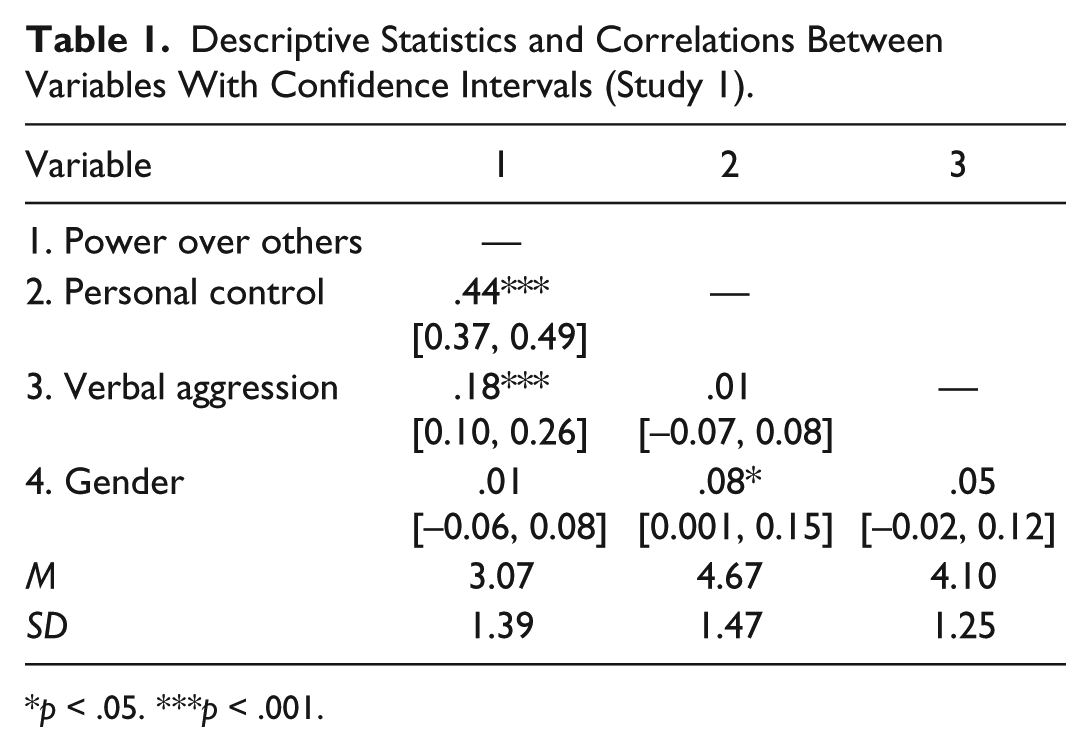
p < .05. ***p < .001.
Power over others and personal control as predictors of verbal aggression
We then used structural equation modeling to examine whether power over others and personal control predicted verbal aggression in opposite directions. The measurement model for the predictors included power over others and gender as manifest variables and personal control as a latent variable with three indices. The measurement model for the outcome included aggression as a latent variable with five indices. As illustrated in Figure 1, 3 whereas power over others predicted verbal aggression significantly and positively, b = 0.21 [0.14, 0.29], p < .001, personal control predicted it significantly and negatively, b = −0.17 [–0.26, –0.08], p < .001. The effect of gender was not significant, b = 0.15 [–0.08, 0.37], p = .20.
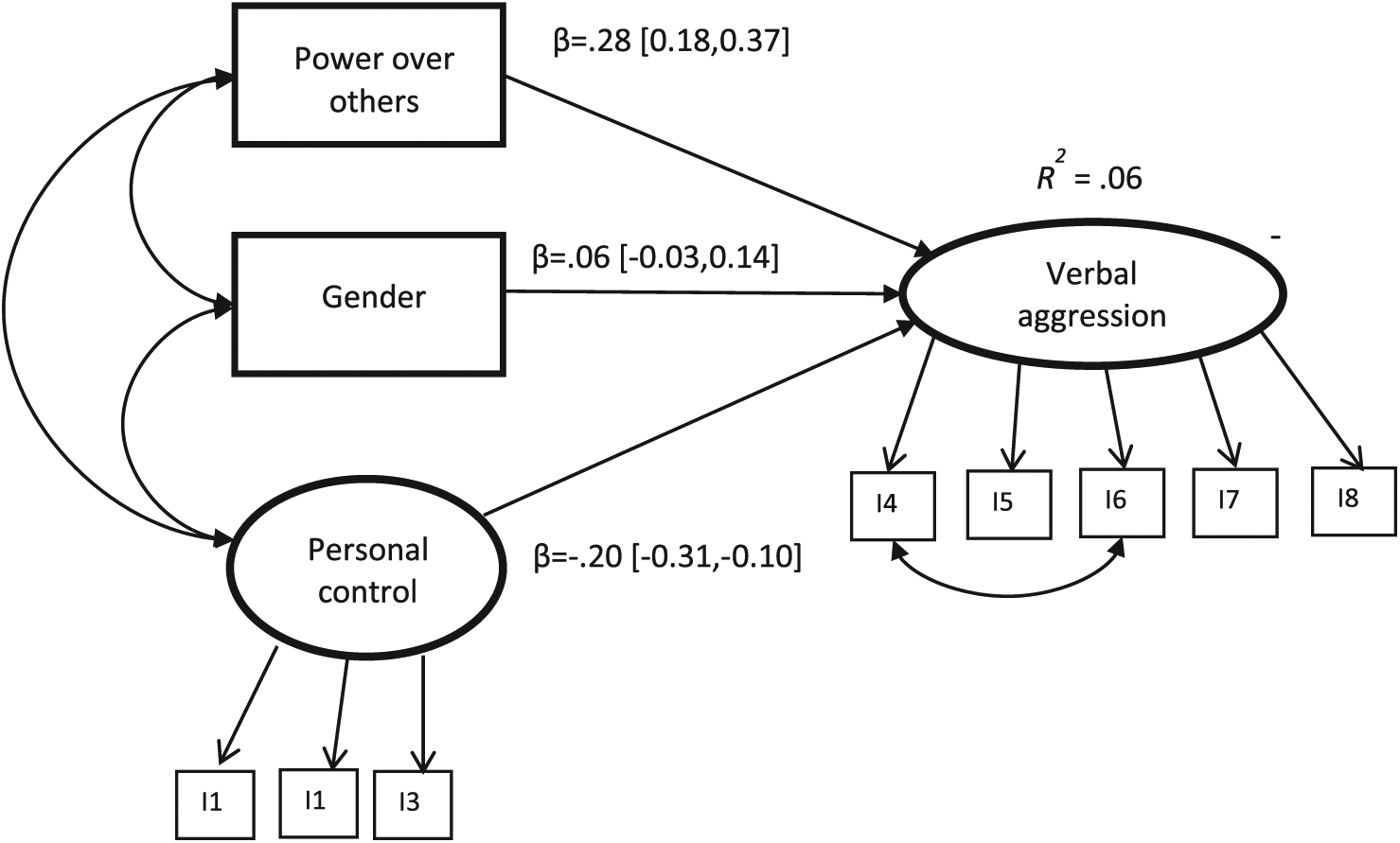
Power over others and personal control as predictors of verbal aggression (Study 1).
We also examined whether the increase in strength of the effects of power over others and personal control were significant after we accounted for their overlap. To this end, we tested for suppression effects, in which the inclusion of both predictors in the same model increases their predictive validity (e.g., MacKinnon et al., 2000). In both models, gender was included as a covariate. We found a significant suppressing effect of personal control, unstandardized estimate = −0.08 [–0.13, –0.04], indicating that the effect of power over others strengthened when personal control was included in the model, and a significant suppressing effect of power over others, unstandardized estimate = 0.11 [0.07, 0.17], indicating that the effect of personal control strengthened when power over others was included in the model.
Discussion
Study 1 demonstrated that personal control and power over others were positively correlated, yet associated with antisocial tendencies in opposite ways. In line with previous results, the higher the power participants reported having over others, the more verbal aggression they reported (C. Anderson & Brion, 2014; Faris & Felmlee, 2011; Workplace Bullying Institute, 2014). Yet, this study extended previous findings by demonstrating a mitigating effect of control over one’s life on antisocial tendencies: The higher the personal control participants reported having, the lower was their tendency to be verbally aggressive. Furthermore, these effects were strongest when the overlap between power over others and personal control was adjusted for, indicating mutual suppressing effects of power and control on antisocial tendencies. Our findings indicate that the desirable effects of personal control are most pronounced after we account for its overlap with power over others. They also suggest that, in fact, the corruptive role of power could have been underestimated in past research that did not take into account the suppressing role of personal control: Once we take it into account, the effects of power over others become even stronger.
Study 2
In Study 2, we sought to examine our hypotheses in a different context and with a different operationalization of antisocial tendencies. This time, we conducted the study in the United States and considered the role of power over others and personal control in predicting interpersonal exploitativeness—a tendency to use others for personal benefit (see Brunell et al., 2013). We expected that, although feelings of having power over others and personal control would be positively correlated, power over others would be associated with a higher tendency to exploit others, whereas personal control would be associated with a lower tendency to exploit others.
Method
Participants and procedure
Study 2 was an online survey conducted using the Prolific Academic platform among American participants. We recruited 449 part-time or full-time employees at various levels in organizational hierarchies. Participants completed measures of power over others and personal control (counterbalanced), then reported their exploitative tendencies. The final sample consisted of 445 participants who reported U.S. residency: 231 line employees (subordinate level), 105 low-level managers, 85 medium-level managers, and 24 high-level managers, aged from 18 to 70 years (M = 32.53 years, SD = 10.82 years), of whom 189 were women (coded as 1) and 248 men (coded as 2); eight participants failed to indicate their gender. 4
Measures
Power over others was measured with three items: “To what extent do you have influence over people in your organization?” “To what extent do you have influence over decisions taken in your organization?” and “How much power do you have in your organization?” Participants were asked to report on 7-point scales from –3 = very little to 3 = very much. To facilitate interpretation of results, participants’ responses were then recoded from 1 to 7, with higher scores indicating greater power over others (α = .96).
Personal control was measured with the same three items as in Study 1, with responses recoded to a 1 to 7 scale (α = .82).
Interpersonal exploitativeness was measured with a six-item scale developed by Brunell and colleagues (2013). Participants were asked to rate the extent of their agreement with the statements (e.g., “It doesn’t bother me to benefit at someone else’s expense,” “I’m perfectly willing to profit at the expense of others”) on a 7-point scale from 1 = strongly disagree to 7 = strongly agree (α = .93).
Results
Bivariate relations
Zero-order correlations and descriptives are presented in Table 2. Power over others and personal control were significantly correlated. Exploitativeness was marginally positively associated with power over others, and negatively but not significantly with personal control. Men reported higher power over others, personal control (marginally), and exploitativeness than women.
Descriptive Statistics and Correlations Between Variables With Confidence Intervals (Study 2).
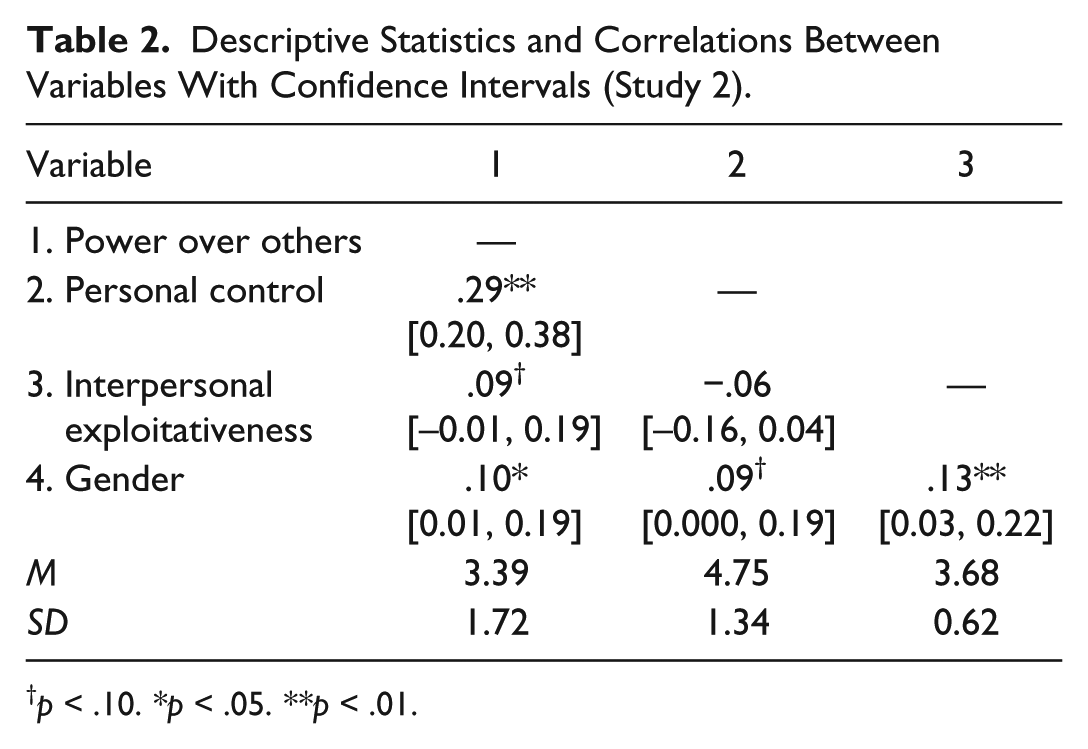
p < .10. *p < .05. **p < .01.
Power over others and personal control as predictors of interpersonal exploitativeness
As in Study 1, we tested a structural equation model. The measurement model for the predictors included power over others and personal control as latent variables with three indices each, and gender as a manifest variable. The measurement model for the outcome included exploitativeness as a latent variable with six indices. As illustrated in Figure 2, power over others predicted exploitativeness significantly and positively, b = 0.11 [0.03, 0.19], p = .01. Personal control predicted exploitativeness negatively, b = −0.12 [–0.24, 0.001], p = .06, although this effect was only marginally significant. The effect of gender was significant, b = 0.66 [0.43, 0.89], p < .001, indicating that men showed greater antisocial tendencies than women. The strength of the effects remained similar when gender was not adjusted for, although in this case, the effect for personal control was nonsignificant (see details in the supplemental material).
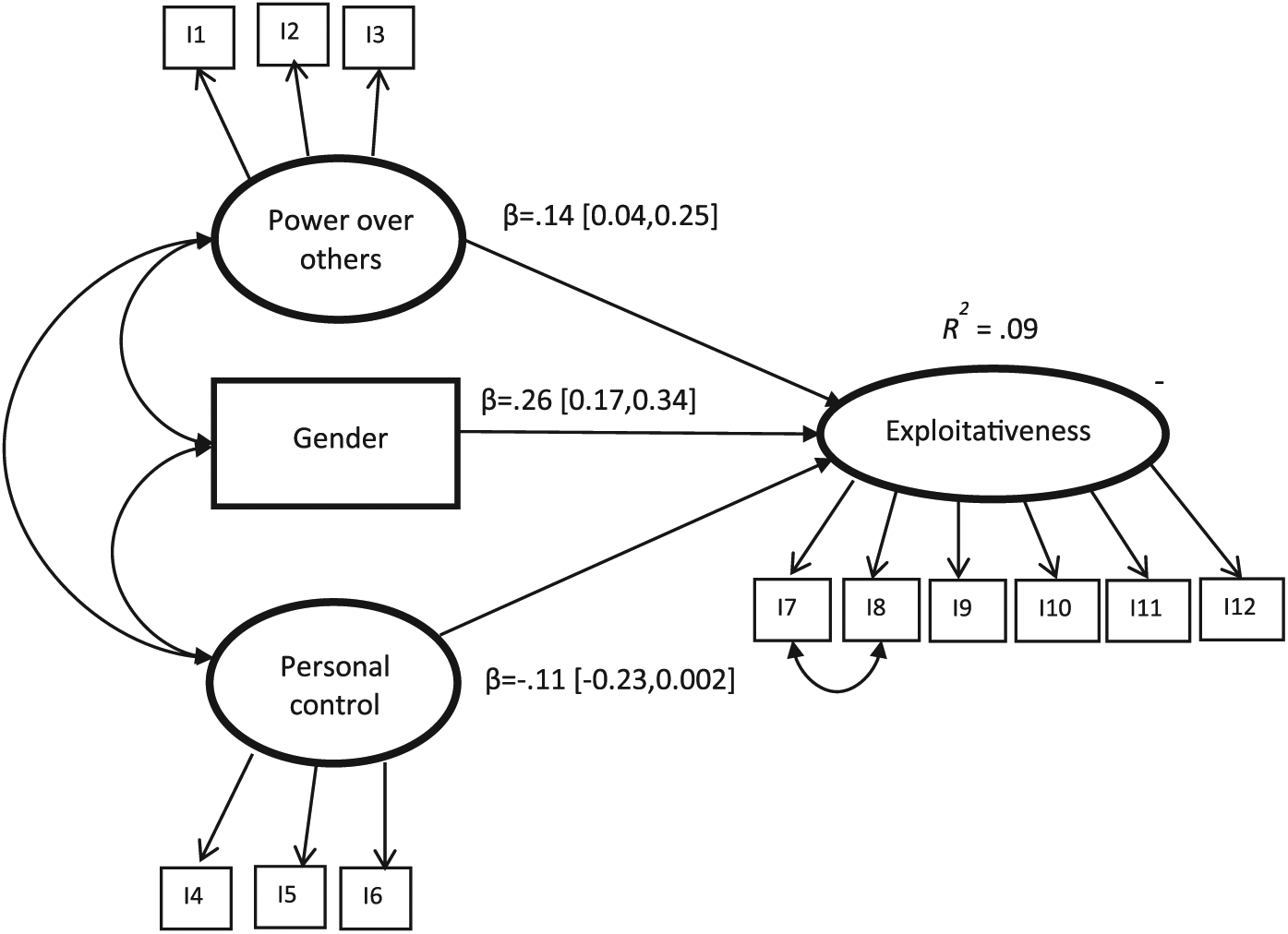
Power over others and personal control as predictors of exploitativeness (Study 2).
Bootstrapping analyses with gender as a covariate yielded a significant suppressing effect of personal control, unstandardized estimate = −0.03 [–0.06, –0.001], indicating that the effect of power over others strengthened when personal control was included in the model, and a significant suppressing effect of power over others, unstandardized estimate = 0.05 [0.01, 0.10], indicating that the effect of personal control strengthened when power over others was included in the model.
Discussion
The results of Study 2 were consistent with those of Study 1, showing that power over others and personal control had opposite effects for antisocial behavioral tendencies. In line with previous work, power over others predicted readiness to exploit (cf. C. Anderson et al., 2012), but personal control was linked to lower exploitativeness (although in the latter case, the effect was only marginally significant). Furthermore, we observed mutual suppressing effects, meaning that the effects of power over others and personal control on antisocial tendencies were stronger once we accounted for the overlap between the two predictors.
Study 3
In Study 3, we sought to examine the effects of power over others and personal control on both interpersonal exploitativeness and verbal aggression. Moreover, we further tested whether both personal control and power over others were associated with holding high positions. Therefore, besides personal control and power over others, we measured one’s objective position in a hierarchy. To this end, Study 3 was specifically designed to enroll people who occupied low, medium, or high positions in organizations. We hypothesized that power over others and personal control will serve as parallel, yet opposite, mediators of the link between high positions and the two indicators of antisocial tendencies.
Method
Participants and procedure
Study 3 was part of a larger organizational survey. Participants were recruited from various sized organizations by an external research agency. They took part in computer-assisted personal interviews (CAPI) in their workplace. We originally sought to include 600 participants. We aimed for a sample of full-time employees, approximately one third at the nonmanagerial, one third at low- or medium-level managerial positions, and one third at the top managerial positions, gender balanced at each of the organizational levels. We obtained data from 600 participants, but we excluded 43 individuals who did not fulfill our basic inclusion criteria (e.g., not having a full-time position, failing to give full consent for participating in the study).
The final sample consisted of 557 Polish adults: 284 women (coded as 1), 273 men (coded as 2), aged from 19 to 83 years (M = 39.98 years, SD = 9.77 years) working at various organizations at different levels of the organizational hierarchy: 194 were assistants or line employees, 201 were low- or medium-level managers, and the remaining 162 were higher level or top managers. Participants completed measures of power over others, personal control, exploitativeness, and verbal aggression, among other variables.
Measures
Power over others was measured with four items, similar to those used in Study 2 (e.g., “To what extent do you have influence over people in your organization?”). Participants were asked to report on 6-point scales how much influence they had from –3 = very little to 3 = very much. Participants’ responses were recoded to a 1 to 6 scale, with higher scores indicating greater power over others (α = .95).
Personal control was measured with the same three items as in Study 1 but with the use of a 6-point scale. Participants’ responses were recoded to a 1 to 6 scale (α = .80).
Verbal aggression was measured with the same five-item verbal aggression subscale (Buss & Perry, 1992) as in Study 1. One item measuring relations with friends was omitted from the analyses because it was not relevant to the workplace context, although retaining this item yields a similar pattern of results. Final analyses were conducted with four items (α = .72).
Interpersonal exploitativeness was measured with the six-item scale as in Study 2 (Brunell et al., 2013). We excluded the item “Vulnerable people are fair game,” which was weakly correlated with the latent construct (in line with the recommendations of Brown, 2006, and Tabachnick & Fidell, 2007). Although retaining the additional item yields a similar pattern of results, the final analyses were conducted with five items (α = .85). 5
Results
Bivariate relations
Zero-order correlations and descriptive statistics are presented in Table 3. Power over others was significantly positively correlated with personal control, and with the two indices of antisocial tendencies: aggressiveness and exploitativeness. Personal control was negatively correlated with aggressiveness and exploitativeness, although only the latter correlation was statistically significant. The two indices of antisocial tendencies were correlated with each other. Gender was unrelated to both power over others and personal control, but it was significantly related to the tendencies to be verbally aggressive and exploitative toward others (with men showing higher antisocial tendencies than women).
Descriptive Statistics and Correlations Between Variables With Confidence Intervals (Study 3).
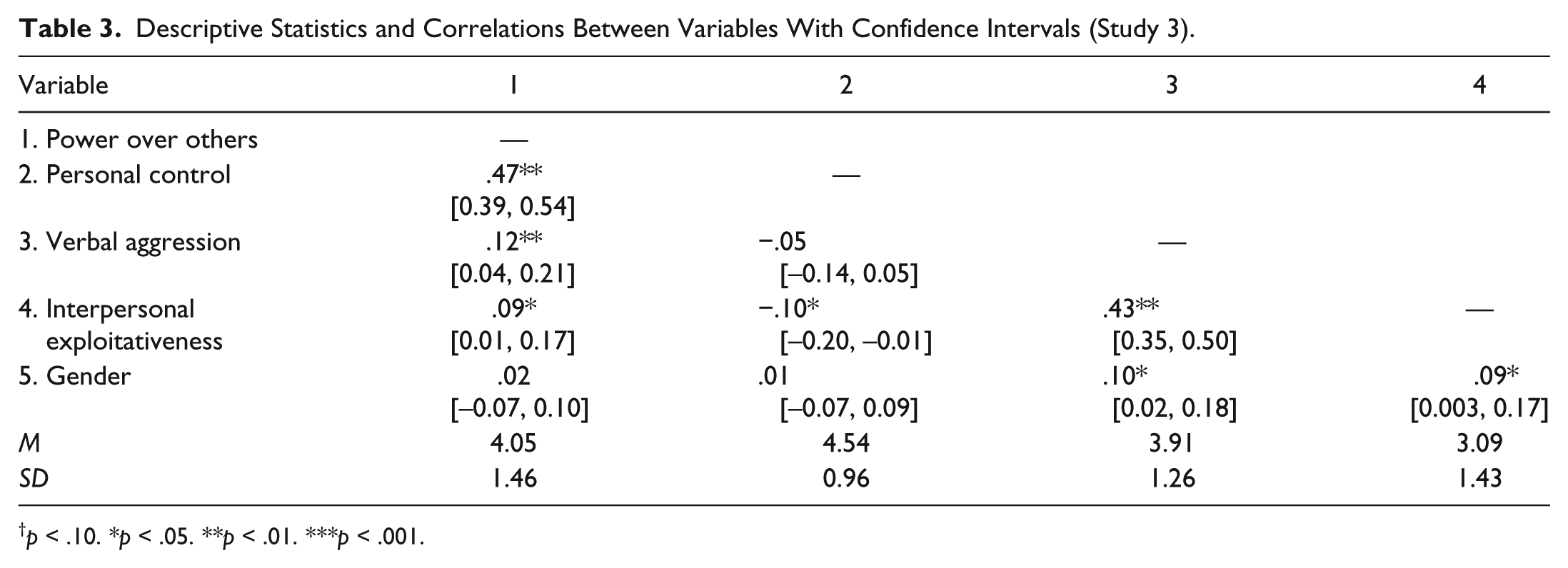
p < .10. *p < .05. **p < .01. ***p < .001.
We then analyzed relationships between position in the organizational hierarchy and the focal variables with ANOVA conducted in SPSS (see Table 4). We found main effects of position for power over others and personal control. Simple main effects computed separately for each of the variables with Bonferroni corrections for multiple comparisons showed that both power over others and personal control increased with higher organizational position. The main effect of position was nonsignificant for exploitativeness and marginal for aggression, but there were no significant simple main effects for these two outcomes across the levels of organizational hierarchy (we only observed a marginally significant difference between top-level and low-level employees in verbal aggression, p = .08).
Tests of Differences in Means of Focal Variables Across Levels Within the Organizational Hierarchy (Study 3).
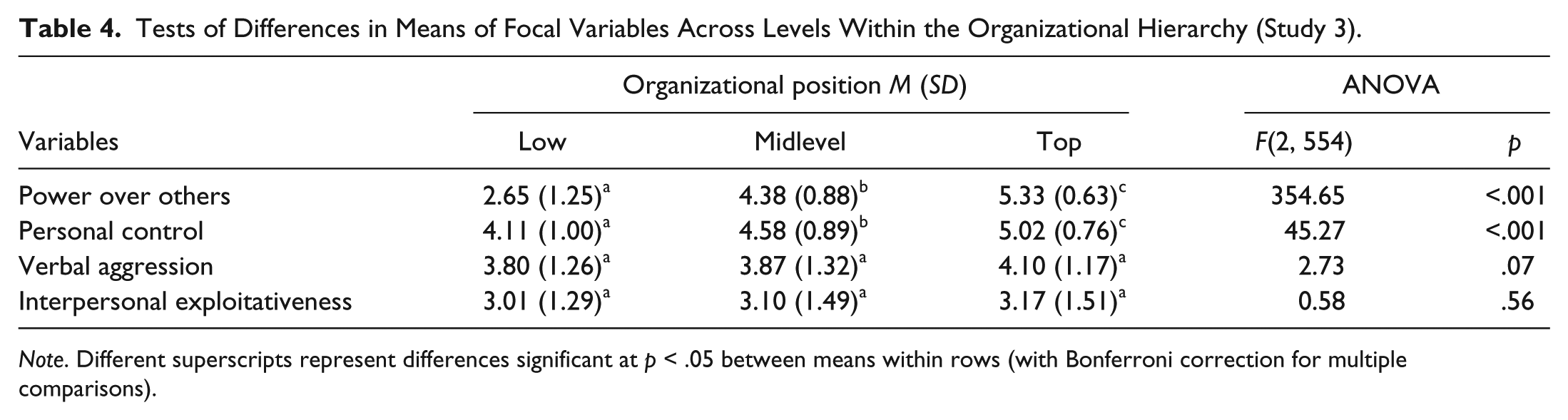
Note. Different superscripts represent differences significant at p < .05 between means within rows (with Bonferroni correction for multiple comparisons).
We repeated these analyses including gender as a factor, and found significant effects of gender on verbal aggression, F(1, 551) = 6.32, p = .01, and interpersonal exploitativeness, F(1, 551) = 4.00, p = .046, indicating that men tended to be more verbally aggressive and exploitative than women. There were no significant effects of gender on power and personal control. We also did not find any significant interactions between gender and organizational position (see details in supplementary material).
Power over others and personal control as mediators of the effect of organizational position on antisocial tendencies
We then examined whether high organizational position was associated with antisocial tendencies through power over others and personal control using structural equation modeling. The predictors were organizational position, recoded on two dummy variables, comparing line employees with mid- and top-level managers, respectively, and gender as manifest variables. The measurement model for the intervening variables included power over others with four indices, and personal control with three indices. The measurement model for the outcome formed a two-level structure: It included nine observed variables, which formed two first-level latent variables (four for verbal aggression and five for interpersonal exploitativeness).
As illustrated in Figure 3, both power over others and personal control were significantly stronger among those occupying midlevel and top-level organizational positions relative to low-level positions. Thus, a higher position within the organizational hierarchy predicted both higher perceived power over others and higher personal control. Occupying a midlevel, in comparison with a low-level, position within the organizational hierarchy predicted an increase in perceived power over others, b = 1.77 [1.55, 1.97], p < .001, and a simultaneous (albeit smaller) increase in perceived personal control, b = 0.46 [0.27, 0.65], p < .001. Similarly, occupying a top-level position, in comparison with a low-level position, predicted both an increase in perceived power over others, b = 2.65 [2.44, 2.85], p < .001, and in perceived personal control, b = 0.89 [0.71, 1.08], p < .001. Gender was neither associated with power over others, b = 0.05 [–0.11, 0.21], p = .51, nor with personal control, b = 0.02 [–0.13, 0.17], p = .79.
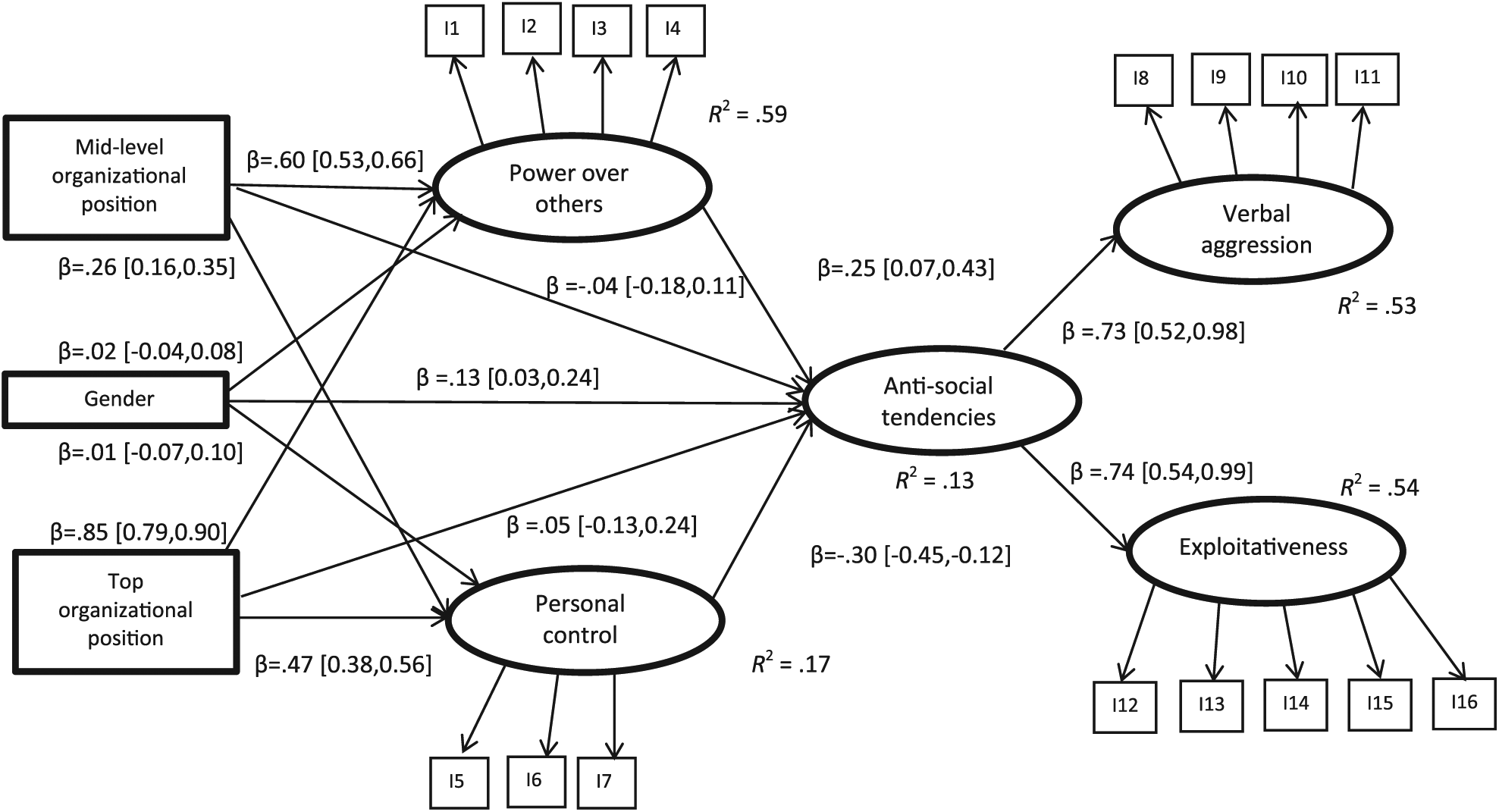
Power over others and personal control as mediators of the effect of organizational position on antisocial tendencies (Study 3).
Furthermore, whereas power over others predicted antisocial tendencies measured with verbal aggression and interpersonal exploitativeness significantly and positively, b = 0.16 [0.04, 0.27], p = .01, personal control predicted them significantly and negatively, b = −0.31 [–0.47, –0.12], p = .001. Indirect effects of mid- and top-level positions, compared with a low-level position, on antisocial tendencies via personal control were significant: estimates = −0.14 [–0.27, –0.05], and –0.27 [–0.46, –0.11], respectively. Similarly, the indirect effects of mid- and top-level positions (compared with low-level positions) on antisocial tendencies via power over others were significant, estimates = 0.28 [0.08, 0.48], and 0.42 [0.12, 0.72], respectively.
After accounting for the significant indirect effects via power over others and personal control, holding neither a midlevel, b = −0.07 [–0.34, 0.20], p = .62, nor a top-level organizational position had a direct effect on antisocial tendencies, b = 0.10 [–0.26, 0.46], p = .60. However, the direct effect of gender was still significant, b = 0.24 [0.04, 0.42], p = .02, indicating greater antisocial tendencies in men than in women. There were no significant indirect effects of gender on antisocial tendencies (estimate via personal control = −0.01 [–0.06, 0.04], estimate via power over others = 0.01 [–0.01, 0.04]).
In addition, the total effect of midlevel (relative to low-level) position on antisocial tendencies, β = .04 [–0.08, 0.16], b = 0.07 [–0.16, 0.29], p = .55, was not significant. However, the total effect of a top-level (relative to a low-level) position on antisocial tendencies was marginally significant, β = .12 [–0.003, 0.25], b = 0.24 [–0.01, 0.48], p = .06, indicating a weak overall corruptive effect of high positions. Total effect of gender was significant, β = .13 [0.02, 0.24], b = 0.24 [0.04, 0.43], p = .02.
Discussion
Study 3 extended the findings of Studies 1 and 2 by demonstrating that power and personal control were parallel, yet opposing, mediators of the association between organizational position and antisocial tendencies. We found that the higher the position individuals held within the organization, the higher the power and personal control they experienced (cf. Leach, Weick, & Lammers, 2017). However, people at different levels of organizational position did not significantly differ in their self-reported levels of aggressiveness or exploitativeness (although top-level managers were marginally more aggressive than low-level employees). Our analyses demonstrated that this was because a higher organizational position was simultaneously associated with enhanced power, which positively predicted antisocial tendencies, and enhanced personal control, which negatively predicted antisocial tendencies.
Because the current findings are based on correlational data, our inferences about causality are limited. It is of course plausible that it is those with antisocial tendencies that feel more powerful over others and less in control of their lives, or that people with a higher sense of power and control are promoted more readily. It is also possible that these factors affect each other in a dynamic system. Still, our studies offer preliminary evidence of mechanisms that might drive the connections between holding positions of authority and diverse social outcomes.
General Discussion
In three studies, using different operationalizations of predictors and dependent variables, and samples from Western (the United States) and Eastern European (Poland) countries, we found converging evidence regarding the opposite effects of power over others and personal control. Whereas power over others was associated positively with antisocial tendencies, personal control was associated negatively with them. These results are consistent with previous findings on the desirable effects of personal control (Deci & Ryan, 1985; Weinstein & Ryan, 2010) and the destructive effects of power (e.g., Gruenfeld et al., 2008; Inesi et al., 2012; Kipnis, 1972). We observed these relationships over and above the effects of gender. Although in some of the studies, gender was associated with experienced power over others (Study 2) and personal control (Studies 1-2) as well as with antisocial tendencies (Studies 2-3), adjusting for gender in the analyses did not meaningfully affect the strength of the relationships of power over others and personal control with antisocial tendencies.
Importantly, we demonstrated that these two processes operate simultaneously within the individual. Both perceptions of power over others and personal control seem to stem from holding high positions within social hierarchies. In Study 3, we found that higher positions within organizations were associated both with increased perceived power over others and increased personal control. Thus, power over others and personal control share a certain amount of variance and, therefore, they tend to suppress each other—only when accounting for their overlap, can we observe their direct effects on antisocial tendencies.
The positive effects of personal control were most clearly observed once we accounted for its overlap with perceived power over others. Similarly, including personal control strengthened the positive association between power over others and antisocial tendencies. This suggests that the corruptive effects of power may, in fact, have been underestimated in previous studies in which the opposing effects of personal control were not accounted for. Overall, our work helps explain the inconsistent findings on the relation between power and antisocial tendencies (cf. C. Anderson et al., 2012). These mixed results may be attributed to the diverging psychological experiences resulting from holding a high position.
Thus, in this work, we highlight the role of the dual psychological processes responsible for the different outcomes of high position. Our approach is then different from previous work highlighting the different effects of different types of power. For example, Sassenberg, Ellemers, and Scheepers (2012) differentiated power construed as opportunity (to achieve one’s goals via influence) or as responsibility (for the implications of one’s actions resulting from one’s influence). Both these construals focus on control over others’ outcomes and, thus, should be related to our “power over others” component. Our distinction is probably more akin to that of Lammers et al.’s (2009), who differentiated personal power (freedom from others) from social power (power over others). They demonstrated that although both forms of power increase approach motivation, personal power increases stereotyping, and social power decreases it. Compared with these authors, we differentiate between perceptions of power over others and personal control over one’s life (rather than independence from others), and propose that these are not two types of power, but rather two processes inherently intertwined with holding high positions in the society. In fact, based on our findings, we could expect power over others to increase stereotyping (to the extent that it reflects negative treatment of others) and approach motivation, but personal control to decrease stereotyping and also decrease (rather than increase) approach motivation (see Greenaway et al., 2015).
Our work also helps to clarify some of the desirable effects of a high position in the social hierarchy. For example, our work could explain why Blader and Chen (2012, see also Blader, Shirako, & Chen, 2016) found that high status (which might be more strongly related to personal control), but not high power over others, was linked to just treatment of others. Furthermore, research by Guinote (2007) demonstrated desirable effects of power for the individual in terms of “attunement to the situation by means of selective attention and processing flexibility” (p. 256). She argued that these effects can primarily be explained by the link between power and personal control. For example, in an experiment by Guinote, Brown, and Fiske (2006), members of an arguably more powerful majority group engaged in more focused reasoning than members of a minority group due to an increased sense of control. We propose that differential outcomes might be observed if we simultaneously considered the mediating effect of personal control, alongside the effects of feelings of power associated with higher group status (or other indices of high position). The examination of the effects of personal control versus power over others on information processing await future research.
Taken together, the results of our studies shed new light on the social dynamics of climbing up the organizational or, more broadly, social ladder. People are motivated to strive for high power positions to enhance their autonomy and ability to achieve goals, rather than to gain influence on others (Lammers et al., 2016). It is at least plausible that due to this more noble motivation, they might hope that attaining higher position would have positive societal consequences. To the extent that power increases personal control, it does. Nevertheless, holding a high position is associated not only with personal control but also with the ability to exert power over others, which tends to have negative effects on social relations.
Interestingly, in Study 3, position seemed to more strongly predict perceptions of power than those of personal control. Power by definition is a relational concept (Emerson, 1962). Feelings of power are, thus, grounded in existing social arrangements, such as occupying a certain organizational position. In contrast, personal control might have been additionally affected by factors outside of the organization, such as the broader social and economic context (e.g., Bukowski, de Lemus, Rodriguez-Bailón, & Willis, 2017). Thus, the experience of personal control may fluctuate more over time than that of power over others. This may have important social implications. In changing political and social climates, even those occupying high social positions may experience occasional threats to personal control. Hence, the increased personal control among those holding high positions may take a longer time to fully stabilize. Future research should, therefore, test how the experiences, power, personal control, and their consequences develop over time.
Examining the stability and legitimacy of high status positions could also elucidate the boundary conditions for the observed effects. Past work suggests that unstable high positions are more conducive to undesirable consequences. For example, when the hierarchy was unstable, dominant leaders were inclined to exclude threatening group members (Maner & Mead, 2010). Also, when put in teams, leaders competed over position in a newly formed group, thus undermining collaboration and team performance (Hildreth & Anderson, 2016). It is then possible that a tenuous hold of a high position decreases personal control, while strengthening the need to assert power, resulting in yet stronger negative interpersonal consequences. At the same time, past work demonstrated that when power difference was perceived as illegitimate, the tendency to take action and risk diminished among the powerful but increased among the powerless, reorienting them toward greater agency aimed at system change (Lammers, Galinsky, Gordijn, & Otten, 2008). The stability and legitimacy of hierarchy may then moderate the effects of power over others as well as personal control on the antisocial behavior we observed in our studies.
These studies are of course not free from limitations. Because our research was correlational, it was not possible to establish causality between variables. We chose a cross-sectional design because we were interested in the analysis of concurrent opposing processes. In practice, this means that real-life powerholders should show a dual tendency in responding to social situations: On one hand, their heightened sense of personal control might foster a more benevolent interpersonal behavior; on the other hand, their sense of power might tempt them to act more aggressively or exploitatively. Therefore, it would be difficult to experimentally place people in high (vs. low) positions and evoke only one of these processes. Nevertheless, we hope that our studies help clarify the psychological processes and outcomes associated with holding a high position.
Conclusion
In his correspondence to Acton (1887/1906), Creighton wrote, I remember that in 1880 I met John Bright at dinner: he was very cross, apparently a cabinet meeting had disagreed with him. Amongst other things he said: “If the people knew what sort of men statesmen were, they would rise and hang the whole lot of them.” Next day I met a young man who had been talking to Gladstone, who urged him to parliamentary life, saying: “Statesmanship is the noblest way to serve mankind.” (p. 370)
Our studies suggest that both politicians’ remarks regarding holding a high position in the social hierarchy may have merit. Holding a high position can be both corruptive and ennobling, and the overall effect may depend on which of these two opposing processes prevails.
Footnotes
Acknowledgements
The authors would like to thank Giacomo Marchesi for his help with article preparation.
Declaration of Conflicting Interests
The author(s) declared no potential conflicts of interest with respect to the research, authorship, and/or publication of this article.
Funding
The author(s) disclosed receipt of the following financial support for the research, authorship, and/or publication of this article: Aleksandra Cislak, Aleksandra Cichocka, and Natalia Frankowska were supported by the National Science Center Grant 2014//13/B/HS6/03137. Adrian Wojcik was supported by the National Science Centre Grant 2014//15/B/HS6/03738.
Notes
Supplemental Material
Supplementary material is available online with this article.

References
Supplementary Material
Please find the following supplemental material available below.
For Open Access articles published under a Creative Commons License, all supplemental material carries the same license as the article it is associated with.
For non-Open Access articles published, all supplemental material carries a non-exclusive license, and permission requests for re-use of supplemental material or any part of supplemental material shall be sent directly to the copyright owner as specified in the copyright notice associated with the article.
