




Abstract
Objective:
A person’s quality of life can be deeply impacted by chronic rhinitis. We report 2-year outcomes in patients after treatment using a novel, multipoint, impedance-controlled, radiofrequency ablation device.
Methods:
A prospective, multicenter, single-arm clinical study of posterior nasal nerve ablation in adults with chronic rhinitis. Efficacy assessments included the reflective total nasal symptom score (rTNSS), postnasal drip, cough, Eustachian Tube Dysfunction Questionnaire-7 (ETDQ-7), nasal obstruction symptom evaluation (NOSE), and mini-Rhinoconjunctivitis Quality of Life Questionnaire (mini-RQLQ).
Results:
Seventy-five of 80 (94%) participants completed 2-year follow-up. Statistically significant improvements were observed in rhinitis symptoms, postnasal drip, cough, ear symptoms, and quality of life as evidenced by the mean change in rTNSS (−4.3), postnasal drip (−0.9), cough (−0.7), ETDQ-7 (−1.1), NOSE (−31.7), and mini-RQLQ (−1.7; P < .0001 for all). Allergic and nonallergic rhinitis subgroups demonstrated similar, significant improvement. No serious related adverse events were reported between the 9-month and 2-year follow-ups.
Conclusions:
The data demonstrate consistent long-term efficacy and safety of a multipoint, impedance-controlled, radiofrequency ablation device for the treatment of chronic rhinitis. Significant improvements were observed in rhinitis symptoms, postnasal drip, cough, ear symptoms, and quality of life through 2-year follow-up.
Study Registration:
www.clinicaltrials.gov. Unique identifier NCT05591989.
Keywords
Introduction
Chronic rhinitis is a prevalent condition with major symptoms of a runny nose, congestion, itching, sneezing, postnasal drip, and coughing. The negative impact of these symptoms on patients’ quality of life and work productivity has been reported.1 -3 Disruption of the posterior nasal nerve (PNN) can improve rhinitis symptoms, but surgical procedures such as vidian neurectomy and PNN neurectomy require general anesthesia in an operating room and can result in serious complications. 4 In contrast, radiofrequency ablation procedures can interrupt the PNN using an in-office procedure under local anesthesia with minimal complications. 5 In addition, radiofrequency ablation procedures can be performed at any site of service and concurrently with other ENT procedures.
The NEUROMARK® System (Neurent Medical Ltd, Oranmore, Galway, Ireland) is an innovative multipoint, impedance-controlled, radiofrequency ablation device for treatment of chronic rhinitis. Recent publications reported significantly improved rhinitis symptoms up to 12 months after NEUROMARK treatment.6,7 This study differs from the previous study in that more participants were enrolled to allow for subgroup analyses. Additionally, we investigated the treatment effect on patient-reported outcomes (PROs) that have not been previously examined in the chronic rhinitis patient population; specifically, PROs assessing ear symptoms, sleep, and nasal obstruction. The early outcomes (through 6 months) for this study have been previously reported. 8 Now we present the longer-term outcomes through 24-month follow-up.
Patients and Methods
Study Design and Population
This article reports on the long-term outcomes (through 2 years) of a prospective, single-arm, multicenter clinical study of impedance-controlled radiofrequency ablation of the PNN in patients with chronic rhinitis. The Allendale IRB (Old Lyme, CT, USA) reviewed and approved the study. Written IRB-approved informed consent was obtained from all participants before participating in the study. The study is registered at www.clinicaltrials.gov (NCT05591989).
Adult participants (≥18 years) with at least 6 months of chronic rhinitis symptoms were enrolled. Participants required a minimum total reflective total nasal symptom score (rTNSS) 9 of 5 (out of 12), with a rhinorrhea score ≥2 (moderate to severe) and a nasal congestion score ≥1 (mild to severe). Allergy tests, by skin prick, intradermal testing, or IgE immunoassay, were required to determine allergy subgroups. Participants were excluded if they had significant anatomical obstructions; atrophic rhinitis; mucosal erosion/ulceration, history of epistaxis, or a significant epistaxis event in the past 3 months; previous interventions for rhinitis; or previous head/neck irradiation.
The NEUROMARK System was used for bilateral PNN ablation. All participants were treated under local anesthesia, according to the investigator’s usual practice, in the office setting.
Assessments
The rTNSS, postnasal drip and cough symptoms, and nasal obstruction symptom evaluation (NOSE) assessments were completed by the participants at baseline and every 3 months in long-term follow-up (9 through 24 months). The 7-item Eustachian Tube Dysfunction Questionnaire-7 (ETDQ-7) was completed at baseline, 12, and 24 months. The mini-Rhinoconjunctivitis Quality of Life Questionnaire (mini-RQLQ) was completed by participants at baseline, 12, 18, and 24 months. Adverse events (AE) were documented at all visits.
Statistical Analysis
The primary efficacy endpoint was the change from baseline to 6 months in the total rTNSS, which has been previously reported. 8 Although a total of 17 participants was determined to be adequate for the primary endpoint, enrollment of 80 participants was planned to allow for attrition and subgroup analysis.
Continuous data are summarized using mean and SD or median and 95% confidence interval, as appropriate. Categorical data are summarized using counts and percentages. Changes from baseline were tested using paired t-tests or the Wilcoxon signed rank test. Statistical significance was determined at an alpha level of .05. Subgroup analysis compared outcomes for participants by rhinitis type (allergic vs nonallergic).
The minimal clinically important difference (MCID) for the rTNSS was considered a reduction of ≥1 point. 9 The MCID for the mini-RQLQ was considered a reduction of ≥0.4 points. 10 A reduction from baseline of ≥30% in the total score was used to define the rTNSS responder rate. 11 An improvement of ≥20% or 1 NOSE class over baseline was used to define the NOSE score responder rate.12,13
An independent statistician performed the data analyses using Stata (version 17; StataCorp, LLC, College Station, Texas), unless otherwise noted.
Results
Enrollment and treatment of 80 participants were performed at 11 clinical centers in the United States. Seventy-five (94%) participants completed the 24-month follow-up. Five participants were lost to follow-up. There were no unexpected study results that would have contributed to their loss to follow-up.
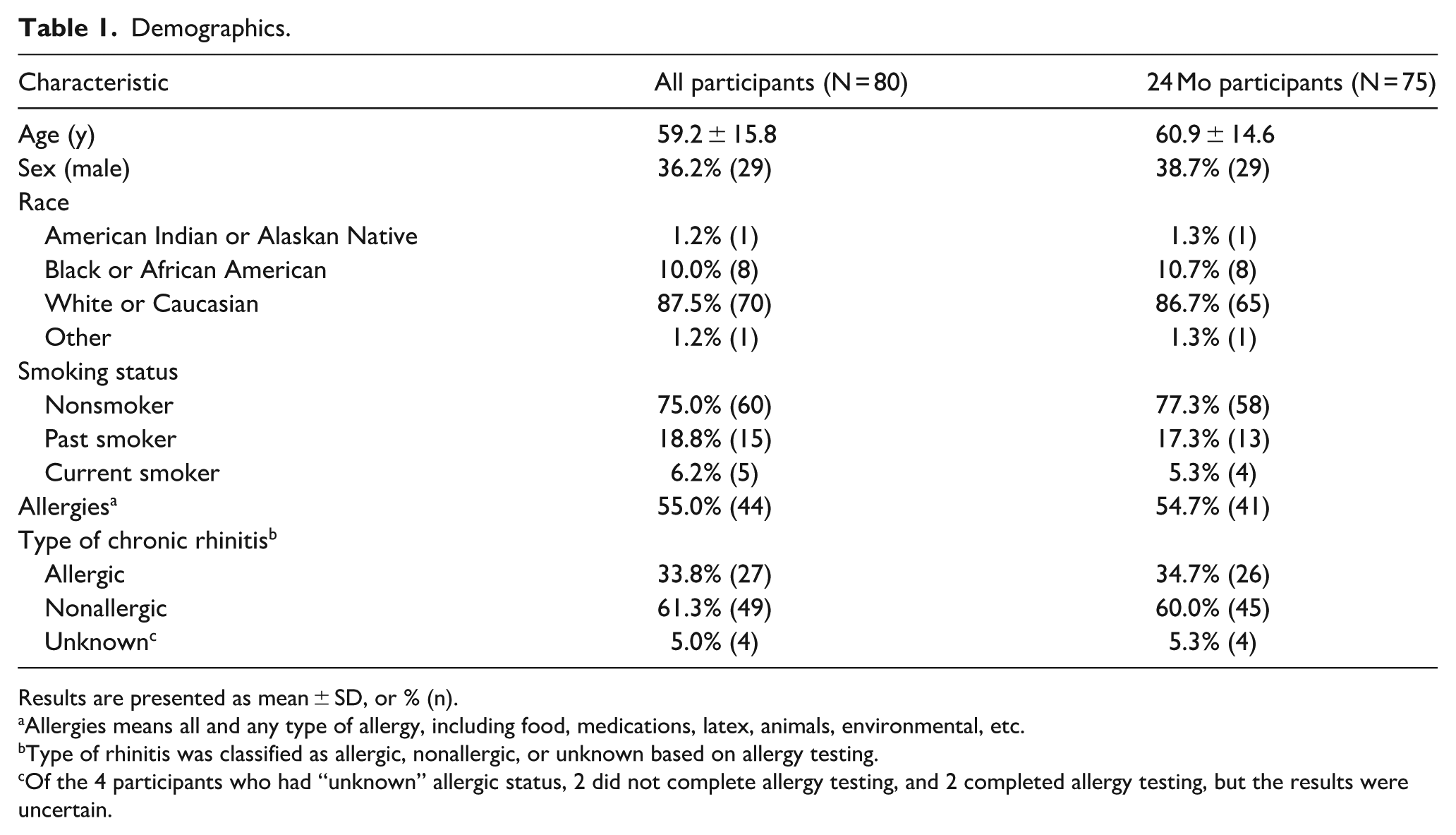
Demographic data for the participants at baseline and at 24-month follow-up are presented in Table 1. The demographic data are similar between the initial population (n = 80) and the population that completed the 24-month follow-up (n = 75).
Demographics.
Results are presented as mean ± SD, or % (n).
Allergies means all and any type of allergy, including food, medications, latex, animals, environmental, etc.
Type of rhinitis was classified as allergic, nonallergic, or unknown based on allergy testing.
Of the 4 participants who had “unknown” allergic status, 2 did not complete allergy testing, and 2 completed allergy testing, but the results were uncertain.
The mean total rTNSS improved significantly over baseline at all timepoints from 9 months through 24 months, with the change from baseline ranging from −4.1 to −4.4 (all P < .0001). Figure 1 shows the total rTNSS at baseline and all study follow-ups. The percent changes from baseline for the total rTNSS at 12, 18, and 24 months were 53%, 55%, and 55%. The responder rates at 12, 18, and 24 months were 80%, 79%, and 76%. The MCID was achieved by 89%, 88%, and 91% of participants at the 12-, 18-, and 24-month visits, respectively. All 4 rTNSS subscores (congestion, rhinorrhea, sneezing, and itching) demonstrated consistent and significant improvement at 9, 12, 15, 18, 21, and 24 months (P < .0001 for all). Figure 2 shows representative mean changes from baseline for the rTNSS subscores at 12, 18, and 24 months. At 2 years, congestion, rhinorrhea, sneezing, and itching improved 51%, 53%, 65%, and 58%, respectively.
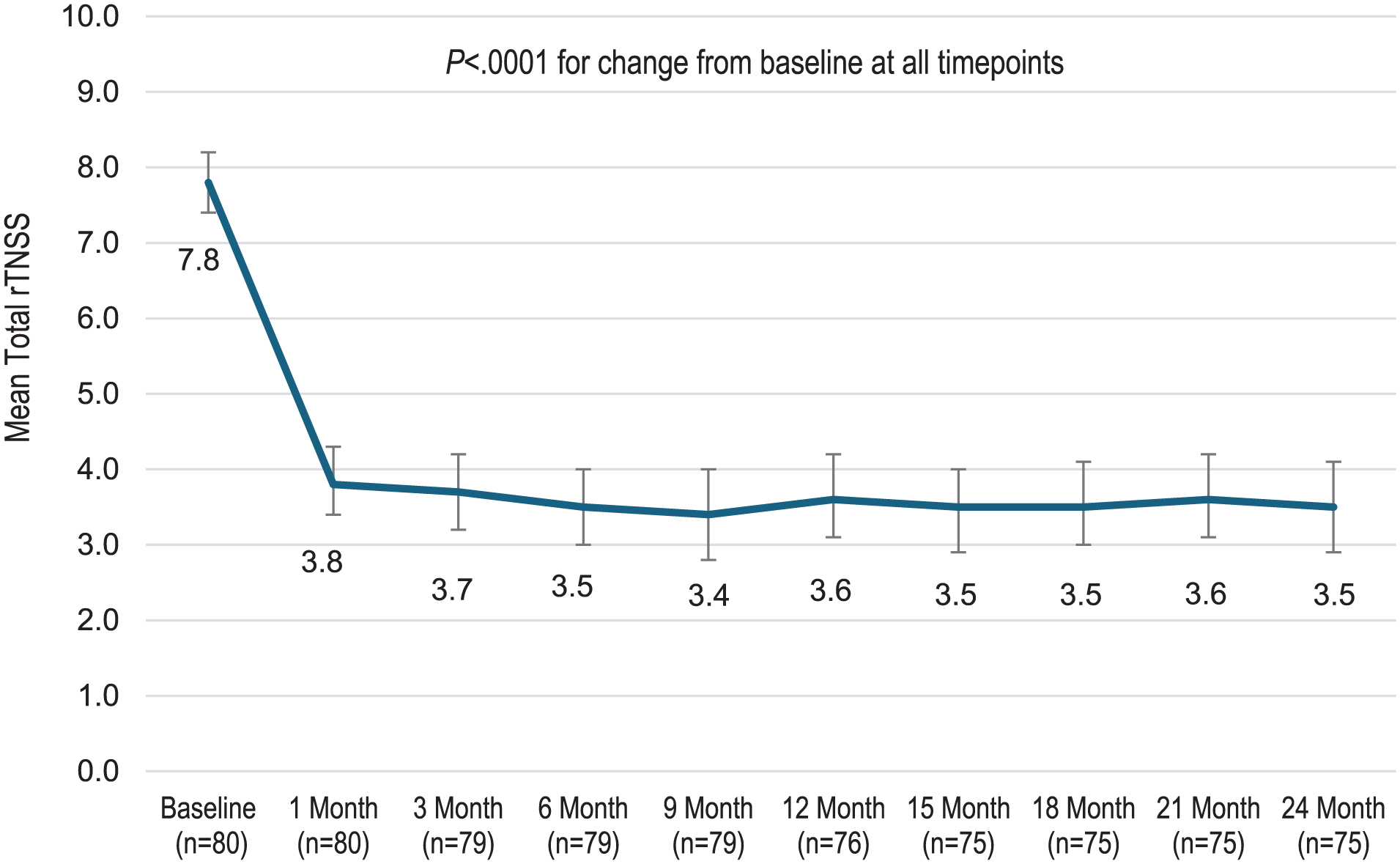
Change in mean total rTNSS score. Error bars indicate the 95% confidence interval. rTNSS, reflective total nasal symptom score.
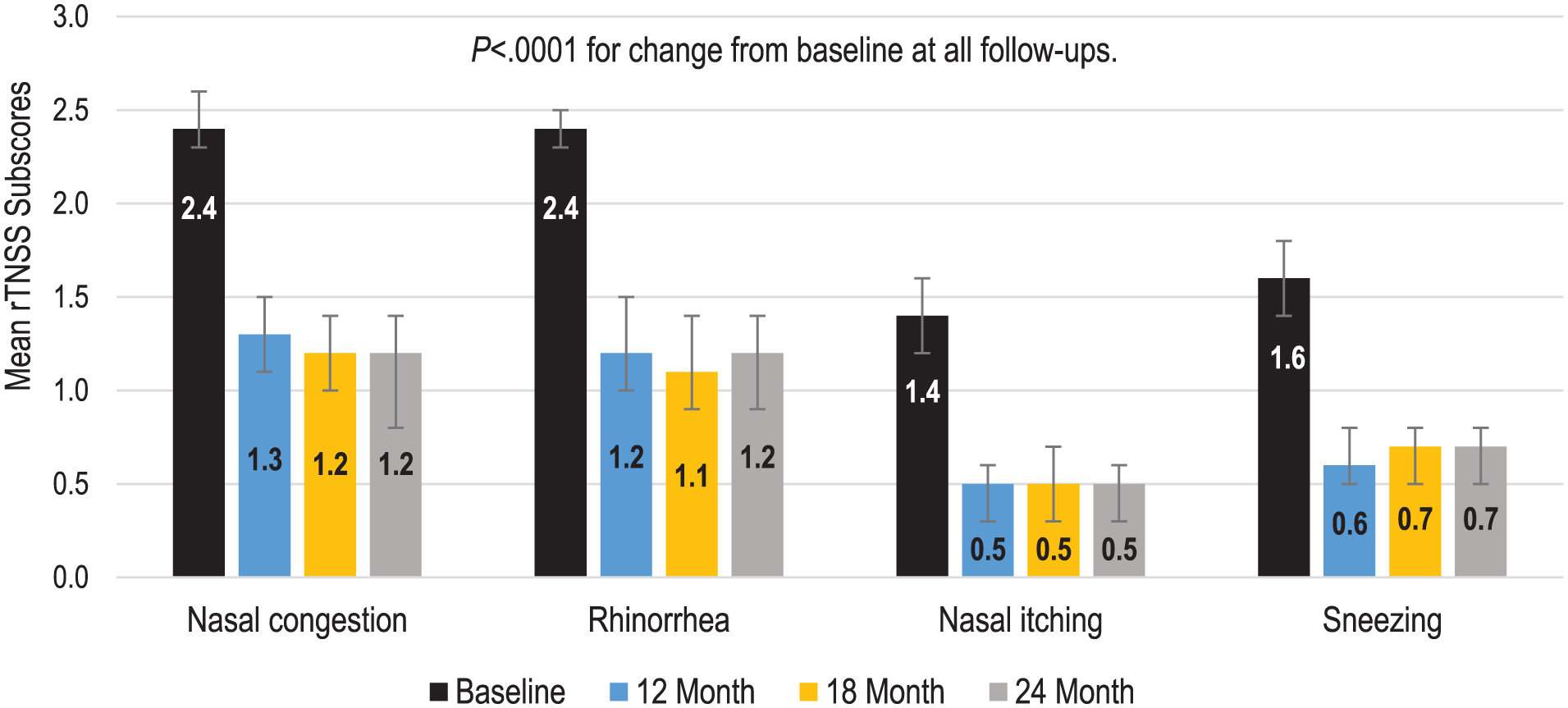
Change in mean rTNSS subscores. Error bars indicate the 95% confidence interval. rTNSS, reflective total nasal symptom score.
The mean postnasal drip and cough symptom scores improved significantly over baseline. Specifically, postnasal drip score was improved by 0.9 points at 12, 18, and 24 months (all P < .0001), and cough score was improved by 0.7 points at 12, 18, and 24 months (all P < .0001).
As shown in Figure 3, the ETDQ-7 overall score remained significantly improved over baseline at the 12- and 24-month visits (−1.1, P < .0001 for both timepoints). Consistent with the earlier results, each of the ETDQ-7 subscores (ear pressure, ear pain, clogged ears, ear problems with cold/sinusitis, crackling/popping, ringing in ears, and muffled hearing) showed significant improvement from baseline at 12 and 24 months (all P ≤ .005). At 2 years, the subscores that showed the greatest percent improvement from baseline were ear problems with cold or sinusitis (40%), clogged ears (37%), and muffled hearing (37%).
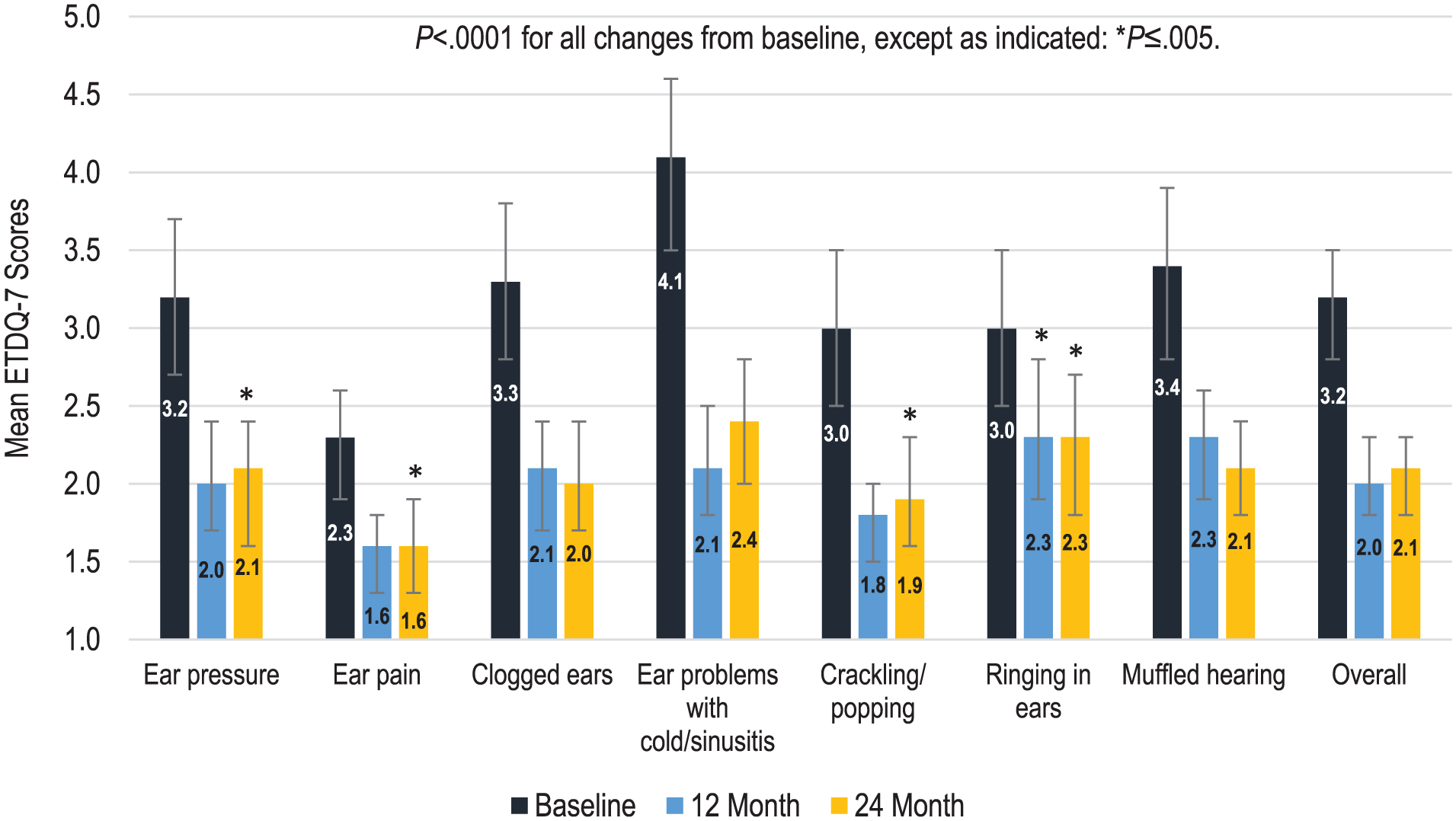
Change in mean overall ETDQ-7 score and subscores. Error bars indicate the 95% confidence interval. ETDQ-7, Eustachian Tube Dysfunction Questionnaire-7.
Figure 4 shows the total NOSE scores at baseline and all study follow-ups. Total NOSE scores were significantly improved over baseline at all time points (P < .0001). The scores indicate that, in general, participants improved from severe symptoms at baseline (scores 55-75) to mild (5-25) or moderate (30-50) symptoms at follow-up, and that the improvements were maintained throughout 2 years. Responder rates at 12, 18, and 24 months were 88%, 77%, and 77%, respectively. All NOSE subscores demonstrated significant improvement over baseline at 9, 12, 15, 18, 21, and 24 months (all P < .0001). Representative NOSE subscores at the 12, 18, and 24 months are shown in Figure 5. At 2 years, the percent improvement was 50% for nasal congestion, 49% for nasal blockage/obstruction, 51% for trouble breathing through the nose, 53% for trouble sleeping, and 59% for difficulty getting air through the nose during exercise.
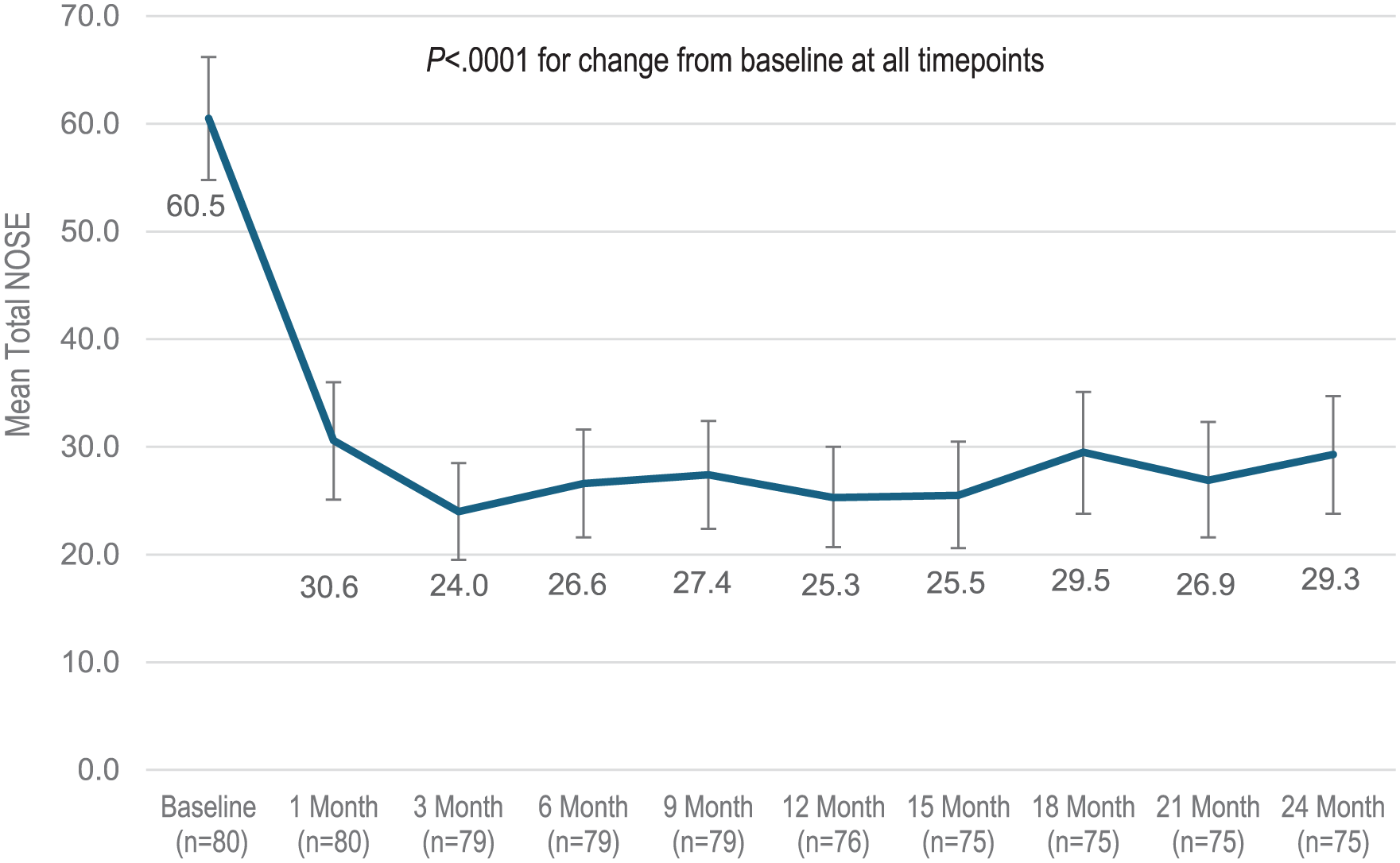
Change in mean total NOSE score. Error bars indicate the 95% confidence interval. NOSE, nasal obstruction symptom evaluation.
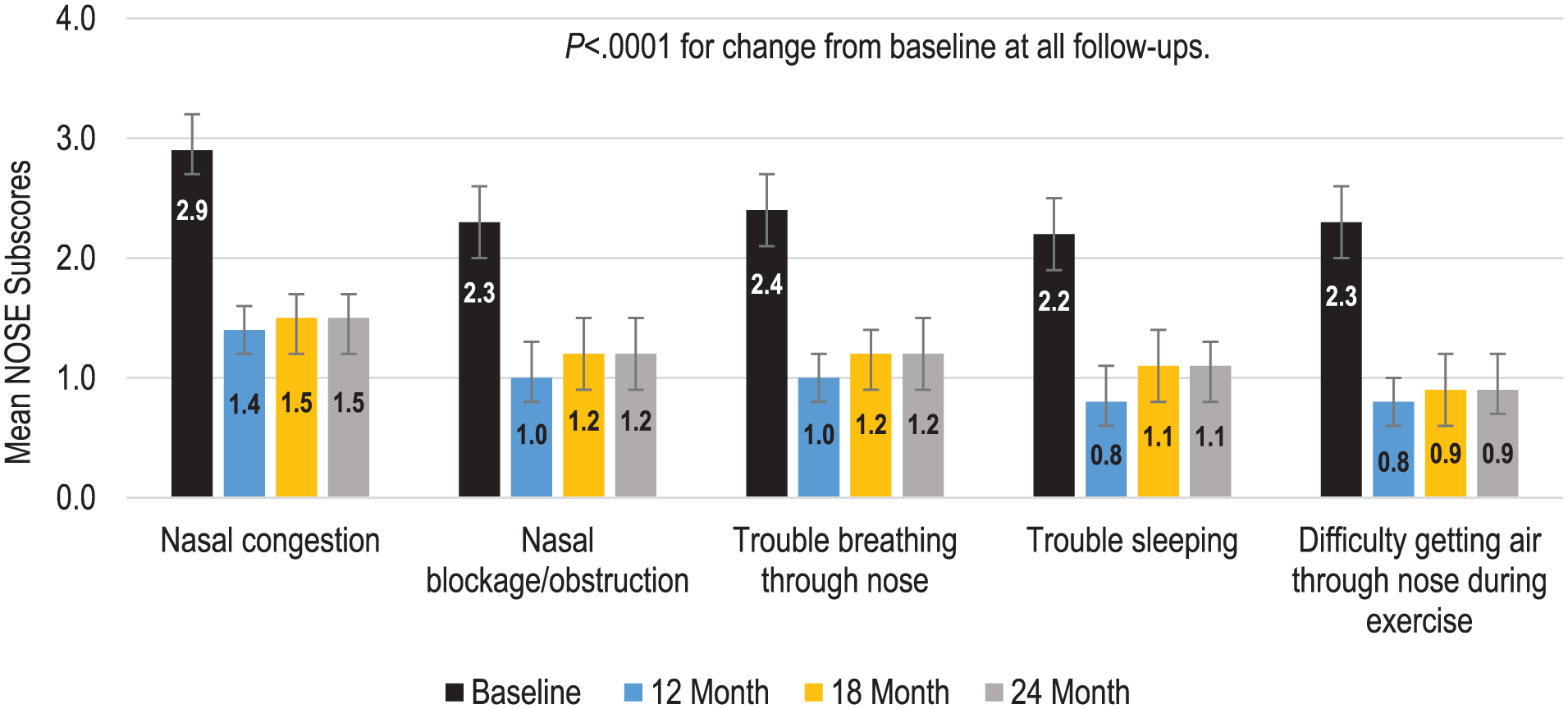
Change in mean NOSE subscores. Error bars indicate the 95% confidence interval. NOSE, nasal obstruction symptom evaluation.
The overall mini-RQLQ showed statistically significant improvements from baseline at 12, 18, and 24 months (P < .0001 for all, Figure 6). In addition, all domain scores (activities, practical problems, nose symptoms, eye symptoms, and other symptoms) demonstrated significant improvement (P < .0001 for all). There are 3 sleep-related individual items on the mini-RQLQ: Q3: Sleep (difficulties getting a good night’s sleep and/or getting to sleep at night); Q12: Tiredness and/or fatigue; and Q14: Feeling irritable. Each of these items demonstrated significant improvement at 2 years (all P < .001), and improved from baseline by 51%, 47%, and 69%, respectively. The mini-RQLQ MCID was achieved by 87% of participants at 12 months, 75% at 18 months, and 79% at 24 months.
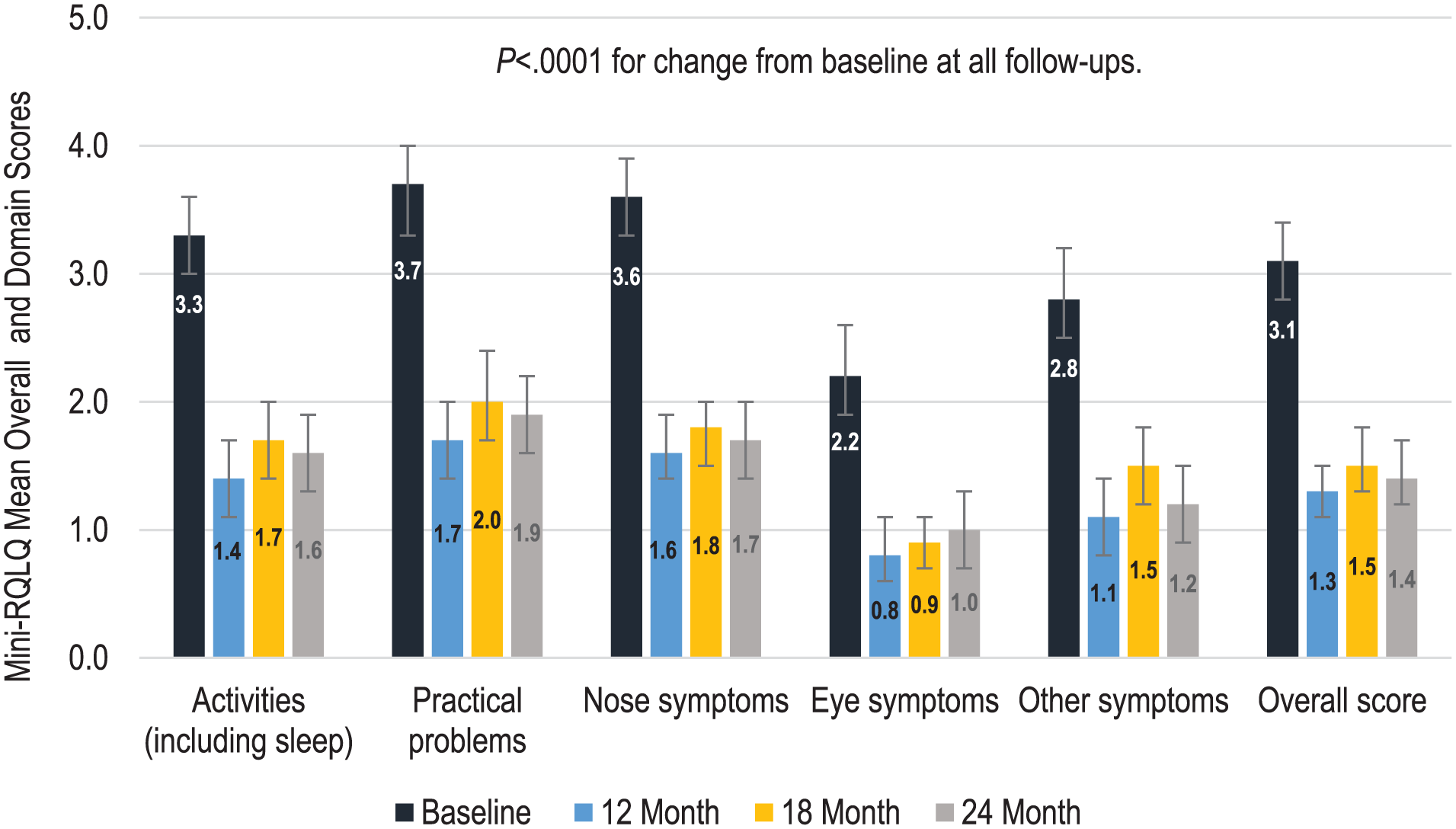
Change in mean overall mini-RQLQ score and subscores. Error bars indicate the 95% confidence interval. Mini-RQLQ, mini-Rhinoconjunctivitis Quality of Life Questionnaire.
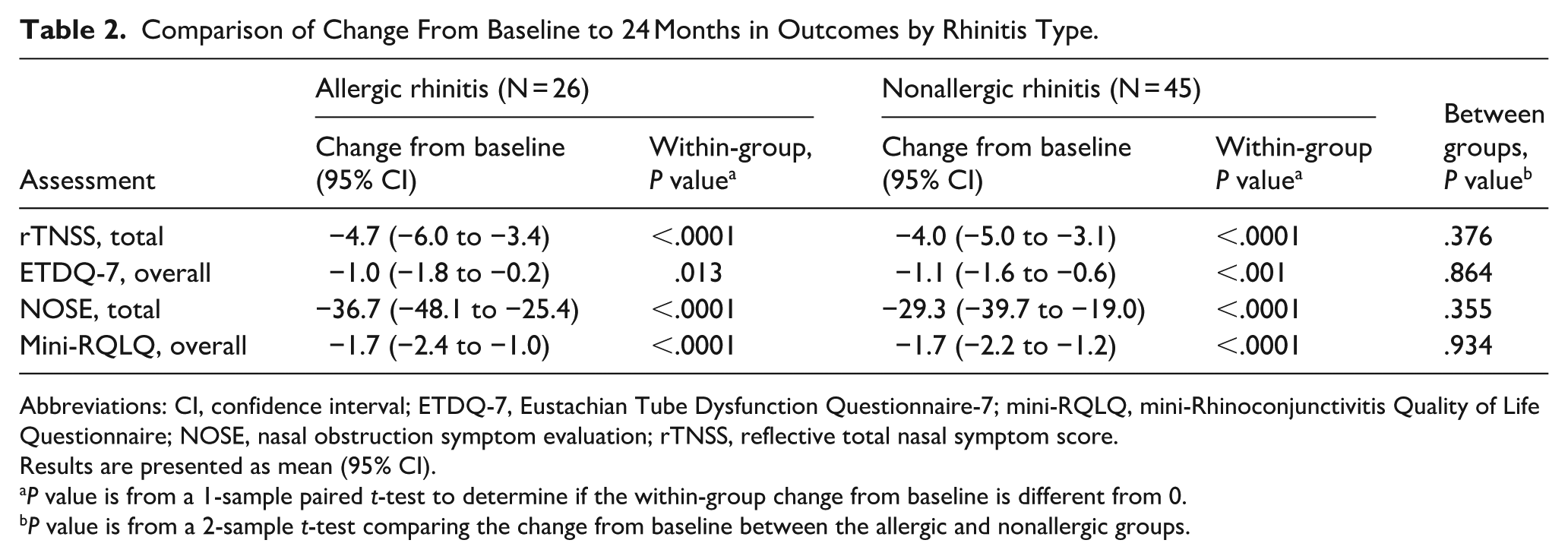
Analysis by rhinitis type (allergic vs nonallergic) showed both subgroups had significant improvements from baseline to 2 years for the total rTNSS, overall ETDQ-7, total NOSE, and overall mini-RQLQ scores (P < .0001 for all assessments except ETDQ-7: P ≤ .013). There were no significant differences in any of the outcome measures between the allergic and nonallergic subgroups (Table 2).
Comparison of Change From Baseline to 24 Months in Outcomes by Rhinitis Type.
Abbreviations: CI, confidence interval; ETDQ-7, Eustachian Tube Dysfunction Questionnaire-7; mini-RQLQ, mini-Rhinoconjunctivitis Quality of Life Questionnaire; NOSE, nasal obstruction symptom evaluation; rTNSS, reflective total nasal symptom score.
Results are presented as mean (95% CI).
P value is from a 1-sample paired t-test to determine if the within-group change from baseline is different from 0.
P value is from a 2-sample t-test comparing the change from baseline between the allergic and nonallergic groups.
No related serious adverse events (SAEs) were reported between 9 and 24 months of follow-up. One participant reported a mild, nonserious case of dry eyes at the 9-month visit. This adverse event was judged to be possibly related to the procedure. Over-the-counter eye drops were prescribed and the event was resolved. No other related adverse events were reported from 9 months through 2 years.
Between 9 and 24 months post-procedure, 8 participants started on new medications for chronic rhinitis and were taking them at the end of the study. Five participants started on an anticholinergic spray, 1 participant started on an antihistamine, 1 participant started on a corticosteroid, and 1 participant started on a leukotriene receptor antagonist. Seven of the 8 participants had symptom improvement before starting the new medications. In addition, 4 participants stopped a medication they were taking during this time period; 3 stopped an anticholinergic spray, and 1 participant stopped an antihistamine.
Discussion
We previously reported the 6-month outcomes of this prospective, single-arm, multicenter study of a multipoint, impedance-controlled, radiofrequency ablation device. 8 Here we report the long-term results through 2 years.
At the 6-month follow-up, we reported mean improvements of −4.2 on the total rTNSS, −1.0 for postnasal drip, −0.8 for cough, −1.2 on the ETDQ-7, −33.5 on the total NOSE, and −1.8 on the overall mini-RQLQ; (all P < .0001). 8 At the 24-month follow-up, the improvements in all of these assessments remained consistent with the 6-month data. Specifically, at 24 months, there were mean improvements of −4.3 on the total rTNSS, −0.9 for postnasal drip, −0.7 for cough, −1.1 on the ETDQ-7, −31.7 on the total NOSE, and −1.7 on the overall mini-RQLQ; (all P < .0001). At both the 6- and 24-month follow-ups, the percentage of participants meeting the MCID of ≥1 point for the rTNSS was 91%. The rTNSS and mini-RQLQ improvements are consistent with 24-month outcomes of other radiofrequency 14 and cryotherapy devices. 15
To our knowledge, this study is the first to use the ETDQ-7 to evaluate ear symptoms in patients with chronic rhinitis. Eustachian tube dysfunction (ETD) has a prevalence of nearly 50% in patients with chronic rhinosinusitis, 16 and ear symptoms improve after endoscopic sinus surgery in that population.16 -18 We assessed ear symptoms in this chronic rhinitis population after anecdotal reports from some patients that treatment with PNN also resulted in improved ear symptoms. Our study participants were not required to have ETD, and their baseline overall ETDQ-7 score (3.2) was lower than that reported in patients being treated for ETD (baseline score 4.6), 19 but was similar to that observed in patients with chronic rhinosinusitis and ETD.16 -18 The improvements in overall ETDQ-7 that we observed at 6 months (change from baseline −1.2; P < .0001) 8 were maintained through the 24-month follow-up (change from baseline −1.1; P < .0001). Additionally, all improvements in the ETDQ-7 subscores at 24 months were similar to the improvements observed at 6 months. 8 The pathophysiology of ETD, the association between allergic rhinitis and ETD, and the potential for PNN ablation to improve ear symptoms in patients with ETD have been previously discussed.8,20 -22
Total NOSE scores after treatment indicated an overall shift from severe symptoms to mild/moderate symptoms reported. Similar to the 6-month data, the 24-month NOSE subscores that improved the most were difficulty getting air through the nose during exercise and trouble sleeping. Interestingly, sleep scores from the mini-RQLQ (sleep, tiredness/fatigue, and feeling irritable), also showed significant improvement at 2 years. Use of the NOSE and mini-RQLQ assessments in this patient population may be helpful to provide clinicians with important quality of life findings not obtained using the rTNSS.
Long-term safety was confirmed with no related SAEs reported between 9 months and 2 years. Only 1 nonserious AE (dry eye) was reported at the 9-month follow-up that was considered possibly procedure related. The event was resolved with the application of lubricant drops. These results confirm the excellent safety profile noted in the previous study with this device. 8
Our evaluation of outcomes in patients with allergic rhinitis versus those with nonallergic rhinitis at 2 years confirms our earlier findings of no significant difference in outcomes by rhinitis type at 6 months, with both groups demonstrating significant improvements in all the outcomes now at 2 years. This finding is in agreement with the findings of others.23,24
A major strength of this study is the excellent compliance with long-term follow-up; 94% (75/80) of participants returned for the 24-month follow-up. An obvious limitation is the lack of concurrent control; however, the baseline assessments of each participant were compared with their posttreatment assessments. Additionally, we did not require participants to have ETD, so the significance of our ETDQ-7 findings in this cohort is speculative. Although we found improvements in sleep, as indicated by the NOSE sleep subscore and sleep items on the mini-RQLQ, use of tools specific to sleep quality, such as the Pittsburgh Sleep Quality Index or Epworth Sleepiness Scale, would help to further describe the improvements in sleep after PNN ablation in this population.
Conclusion
These long-term results demonstrate the continued efficacy and safety of a multipoint, impedance-controlled, radiofrequency ablation device for the treatment of chronic rhinitis. Significant improvements were observed in rhinitis symptoms, postnasal drip, cough, ear symptoms, and quality of life through 2-year follow-up, as evidenced by the rTNSS, ETDQ-7, NOSE, and mini-RQLQ. Subgroup analysis by allergic type (allergic vs nonallergic) showed significant improvement in all outcome measures with no significant differences between the subgroups.
Footnotes
Acknowledgements
The authors thank study investigators: Michael Armstrong, MD; Nicholas Beckmann, DO; Jeffery Bedrosian, MD; Brian Davis, MD; Marc Dubin, MD; Adil Fatakia, MD; Jarrod Keeler, MD; Kristopher Lay, MD; Matthew Leach, MD; Daniel Rontal, MD; Matthew Rontal, MD; Douglas Reh, MD; Michael Sillers, MD; and Daniel Smith, MD. The authors also thank Manya Harsch, MS, for assistance in the statistical analysis.

Ethical Considerations
Ethical approval for this study was obtained from Allendale IRB (Old Lyme, CT, USA) on June 25, 2022.
Consent to Participate
All participants signed the IRB-approved written informed consent before participating in the study.
Author Contributions
D.M.Y.: conception and design, data acquisition, revision, critical review, and final approval. G.E.D.: conception and design, data acquisition, revision, critical review, and final approval. R.A.O.: data acquisition, revision, critical review, and final approval. E.M.O.: drafting article, revision, critical review, and final approval. A.G.D.S.: data acquisition, revision, critical review, and final approval.
Funding
The authors disclosed receipt of the following financial support for the research, authorship, and/or publication of this article: the research was supported by Neurent Medical Ltd. No financial support was provided for authorship and publication of this article.
Declaration of Conflicting Interests
The authors declared the following potential conflicts of interest with respect to the research, authorship, and/or publication of this article: D.M.Y., G.E.D., and A.G.D.S. are medical advisor consultants. E.M.O. is a medical writing consultant to Neurent Medical Ltd. The other authors have no conflicts to declare.
Data Availability Statement
Research data are not shared.