




Abstract
Introduction
Cochlear implants (CIs) are most commonly used to treat adults as well as prelingual deaf children with severe to profound hearing loss who cannot benefit from hearing aids. 1 The first CIs were commercially released in the 1980s with the aim of providing the patients with severe and profound hearing loss improved speech understanding in a variety of complex environments. Performance of CI depends on several preoperative factors.2-6 Following an increase in candidacy criteria and their inception as fundamental treatment options for healthcare practitioners in otology, these revolutionary devices were marked with accelerated technological advances. From when they were first made available, CIs have been the subject of numerous internal and external improvements to not only better the objective benefits of the devices but also to provide quality-of-life upgrades. Advancements in internal electronical components have been focused on ensuring that upgrades to external sound processors (SPs) can be made without the need to replace receivers already implanted. With these flexibly-designed internal components, external SPs are free to follow a more active schedule of development; in the past, in addition to improving objective listening performance, SP upgrades have been ergonomic in nature and have included reduced physical size and the introduction of connectivity to external controlling devices. 7 More recently, increased attention has been given to better accommodate CIs in the unique environment of the modern digital age with the introduction of enhanced Bluetooth connectivity and remote health monitoring through the user’s SP.8-10
With the seemingly rapid release of new SPs, existing CI users face the decision of whether to upgrade to the newer devices with a significant monetary tradeoff. New CI users have an easier decision as the most up-to-date SPs are part of the initial system package for new recipients, but existing users must decide on whether to wait out the finite life of their current SPs or upgrade earlier as they deem the benefits of the newer SP to be significant. As such, it is important to elucidate the objective and subjective benefits of newer generation SPs over previous counterparts to aid CI users in making well-informed decisions.
The subject of this study is the new Cochlear™ Nucleus® 7 SP. Compared to the previous models, this new model presents a number of functional improvements: ForwardFocus technology that decreases rear noise to favor face-to-face conversation, longer battery life, lighter make, iPhone, and Android compatibility which includes direct streaming to the SP and the introduction of the Nucleus Smart App, and a larger range of retention options including earmolds and headworn adaptors. Based on previous studies, however, these upgrades are not always objective markers of CI performance improvement for speech recognition,11-14 but for most cases do provide a measurably significant improvement as seen in studies comparing the Nucleus 6 SP with the Nucleus 5 SP.15-17
Our study aims to assess the objective speech recognition performance in a quiet situation, aided hearing thresholds, and dynamic ranges of the new Nucleus 7 SP following 1 year of usage by CI users who have successfully had previous generation SPs for 10 years or more prior to this study. In addition to these objective markers of improvement, subjective performance is measured through a survey of user listening experiences.
Patients and Methods
Subjects
There was a total of 2008 CI patients at Asan Medical Center at the time of this study, of which 385 had upgraded to the Nucleus 7 SP as of January 2023. As seen in Table 1, 55 subjects between the ages of 14 and 73 (mean 29.0 ± 18.2 years) who had already been utilizing the Nucleus 7 SP for at least 1 year were enrolled. Each participant’s performance using previous SP was assessed before upgrading to the Nucleus 7 SP, and these assessments were then compared to the word recognition scores (WRSs) measured 1 year after upgrading to the new SP. The CI devices previously utilized by the users had to have been from 1 manufacturer (Cochlear), and these previous generations were the Esprit 3G, Freedom, Nucleus 5, and Nucleus 6. All participants were classified as “experienced” users; the age at which the patients underwent the CI operations ranged from 1 to 61 (mean 15.0 ± 19.0 years; median 5.0 years) and the age of their current speech processors ranged from 6.7 to 18.2 (mean 12.5 ± 3.0 years). Criteria for exclusion of participants from this study included inner ear malformations as well as combined cognitive and motor disabilities.
Patient Population Information.
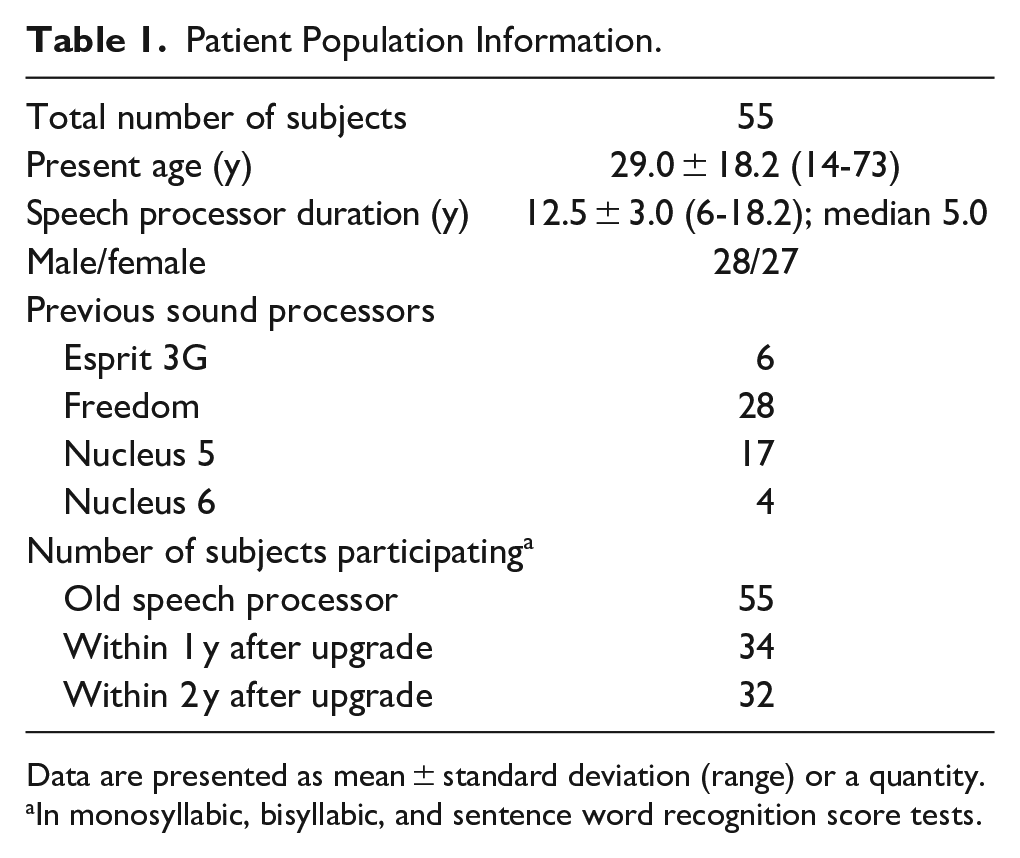
Data are presented as mean ± standard deviation (range) or a quantity.
In monosyllabic, bisyllabic, and sentence word recognition score tests.
This study was approved by the Institutional Review Board of the institute and performed in accordance with the Declaration of Helsinki.
Study Design
For each of the 55 study participants, baseline WRSs using the previous generation SPs were compared to the WRSs of the previous generation SPs 1 year prior to upgrading to the Nucleus 7 SP to adjust the necessary variables related to the timing of the examination. Following the upgrade to the Nucleus 7 SP, the WRSs of the participants were measured 1 year and 2 years after and compared with the baseline WRSs to determine objective changes to speech perception ability. All participants were not measured at every interval as some were unavailable to be assessed (n = 55 at baseline, n = 34 after 12 months, n = 32 after 24 months). WRSs were obtained with open-set monosyllabic, bisyllabic words, and sentence recognition tests in quiet environments where no responsive alternatives were provided and the listener had to respond to what they had heard. The tests were conducted in a sound-treated booth with measurements via a live voice over loudspeaker positioned 0 azimuth and 1 m away from the participant using 25 words. The sound pressure was set at +40 dB at the best-aided condition.
C- and T-levels were assessed in a similar longitudinal fashion as WRSs, with level measurements being made 1 year prior to the upgrade with the previous SP, at the time of the upgrade with the previous SP to be used as a baseline, and at 1-year intervals after the upgrade with the Nucleus 7 SP. Aided hearing thresholds were also measured with the old SP and with the Nucleus 7 SP 1 year after upgrading by determining the pure-tone average with the means of the aided pure-tone air-conduction thresholds at 500, 1 k, 2 k, and 4 kHz. 15 Aided thresholds were also measured 1 year prior to obtaining old SP benchmark measurements to adjust necessary variables related to examination timing.
Subjective evaluations of the Nucleus 7 SP were made with scaled-response questionnaires validated to the participants’ native language at the last examination after upgrading. Thirty participants responded to the questionnaire from the total pool of 55 participants. Users were asked to give performance ratings in the following fields: ease of use, better connectivity, lifestyle (small and light), talking on the telephone, communication in noise, and quality of sound (clearness). Participants were able to give a rating based on a 5-point scale, with (1) very dissatisfied; (2) somewhat dissatisfied; (3) neither satisfied nor dissatisfied; (4) somewhat satisfied; (5) very satisfied. An additional scaled-response questionnaire was administered asking the same 30 participants of their likelihood to recommend other CI users to upgrade to the Nucleus 7 SP. Scores were given from 0 (not likely at all) to 10 (extremely likely).
Statistical Analyses
Statistical significance of all outcomes was determined using paired t tests and Wilcoxon signed-ranked test.
Results
Speech Perception Ability
Participants were tested in a quiet situation. There was no significant difference in the group performance of baseline WRSs with WRSs 12 and 24 months after upgrading for monosyllabic, bisyllabic, and sentence recognition tests (paired t test, P > .05, Figure 1). Baseline WRSs with the old SP were: monosyllabic = 83.2; bisyllabic = 91.0; sentence = 93.4. WRSs 12 months after upgrading to the Nucleus 7 were: monosyllabic = 82.8; bisyllabic = 92.4; sentence = 94.5. WRSs 24 months after upgrading were: monosyllabic = 81.5; bisyllabic = 91.6; sentence = 94.5.
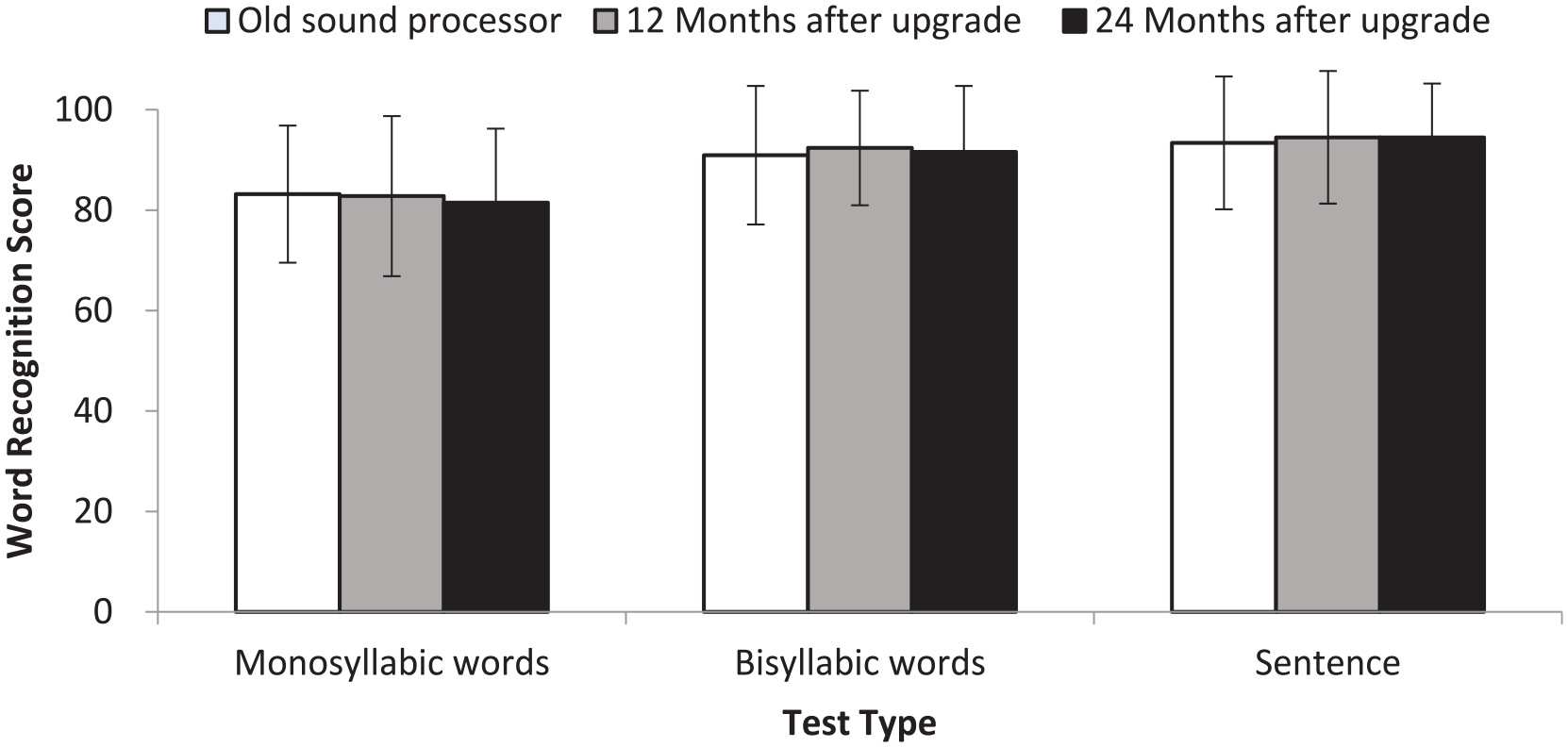
Changes in word recognition scores following upgrades to the Nucleus 7 SP. Two-year comparison of monosyllabic, bisyllabic, and sentence word recognition scores at 1 year intervals. SP, sound processor.
C- and T-Levels
C- and T-levels were measured for participants with their old SPs and with the Nucleus 7 SPs. For C-levels (Figure 2A), the stimulation level of electrode 22 with the old processor (187 cu) increased with the new processor (192 cu), and for electrode 1, the stimulation level with the old processor (197 cu) slightly increased (199 cu). The results of T-level measurements (Figure 2B) largely reflected the C-level measurements, with electrode 22 with the previous SP (142 cu) slightly increasing after the upgrade (144 cu), and electrode 1 remaining similar before and after (151-152 cu). Overall, the C- and T-levels of the participants increased after upgrading to the Nucleus 7 SP. All electrodes had higher levels of stimulation following the upgrade, and the differences were especially evident in C-level measurements where all electrodes had significant increases; for T-level measurements, most electrodes showed significant increases except for electrodes 12 through 21.
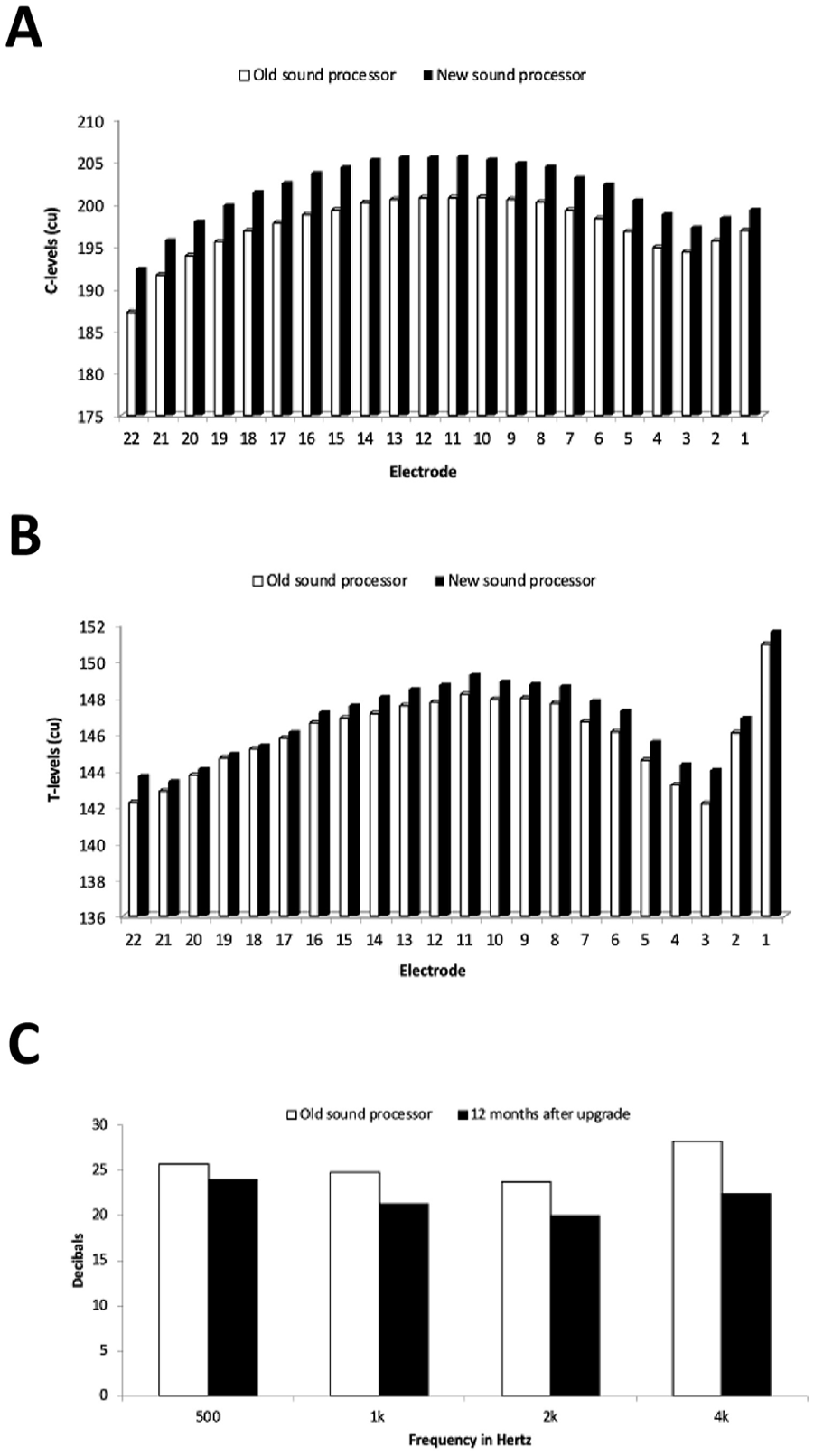
Changes in C- and T-levels and aided thresholds following upgrades to the Nucleus 7 SP. (A) C-levels, (B) T-levels, (C) Aided thresholds. SP, sound processor.
Aided Thresholds
Aided thresholds with previous generation SPs decreased 1 year after upgrading to the Nucleus 7 SP at all frequencies (Figure 2C). At 500 Hz, the aided threshold decreased from 25.7 dB HL with the old processor to 24.0 dB HL with the Nucleus 7 SP; at 1 kHz, from 24.8 dB HL before to 21.3 dB HL after; at 2 kHz, from 23.7 dB HL before to 20.0 dB HL after; at 4 kHz, from 28.2 dB HL before to 22.4 dB HL after. Threshold decreases were significant at all frequencies.
Subjective Questionnaire
Participants were given a questionnaire at the last examination after upgrading to the Nucleus 7 SP and asked to give a score in 6 categories (Figure 3). As seen in Table 2, all subjects except for 2 who felt there was no change gave the new SP a score of “slightly better” or “much better” in quality of sound and lifestyle; all subjects gave a score of “slightly better” or “much better” for ease of use and better connectivity. For lifestyle, ease of use, and better connectivity, the majority of the scores were “much better,” while for quality of sound it was “slightly better.” An overwhelming majority of participants except one who felt there was no change gave a score of “much better” when talking on the telephone, while most felt “no difference” and others felt “slightly better” when communicating in noise. In the satisfaction survey, all participants stated that they would be likely to recommend other CI users to upgrade to the Nucleus 7 SP, with 3 participants giving a score of 10, 19 giving a score of 9, 8 giving an 8.
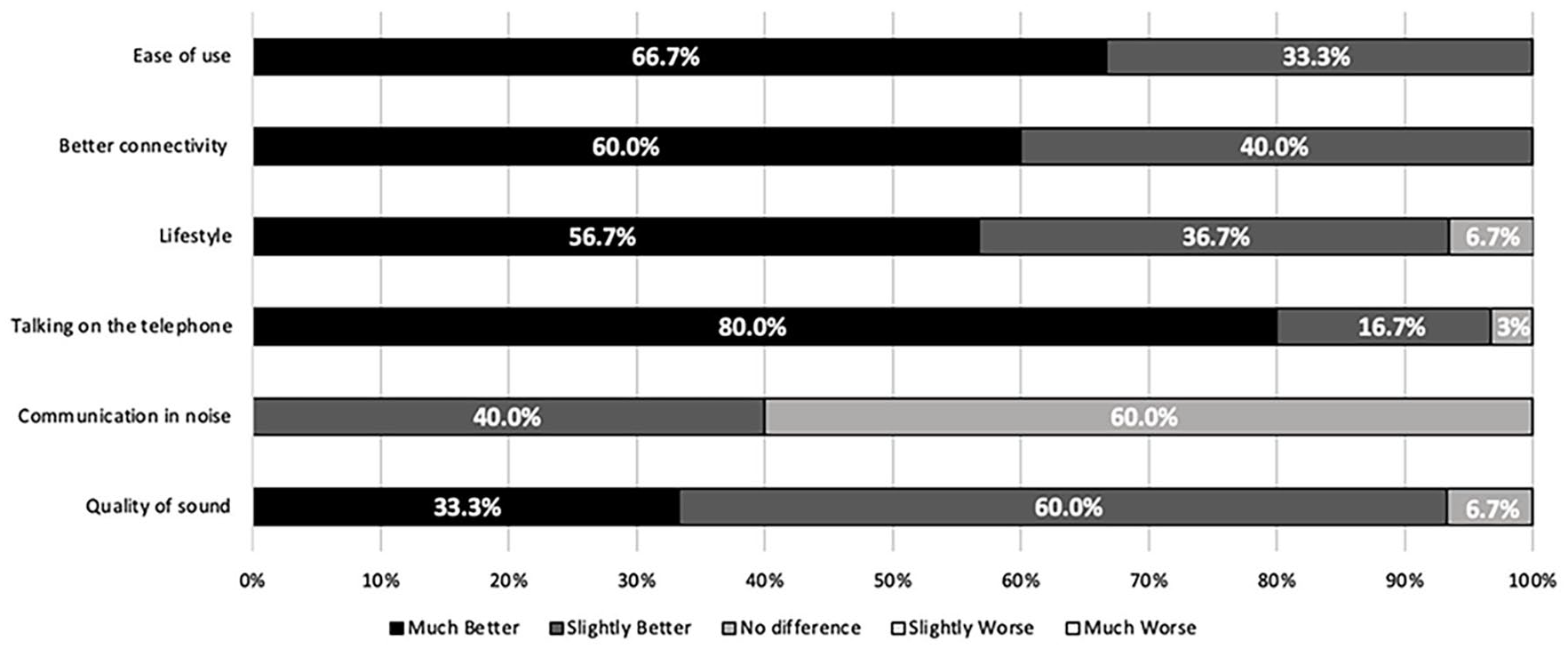
Subjective evaluations following upgrades to the Nucleus 7 SP. Questionnaire with 6 categorical questions administered to 30 subjects at the last examination after upgrading with the new SP. SP, sound processor.
Questionnaire Results (n = 30).
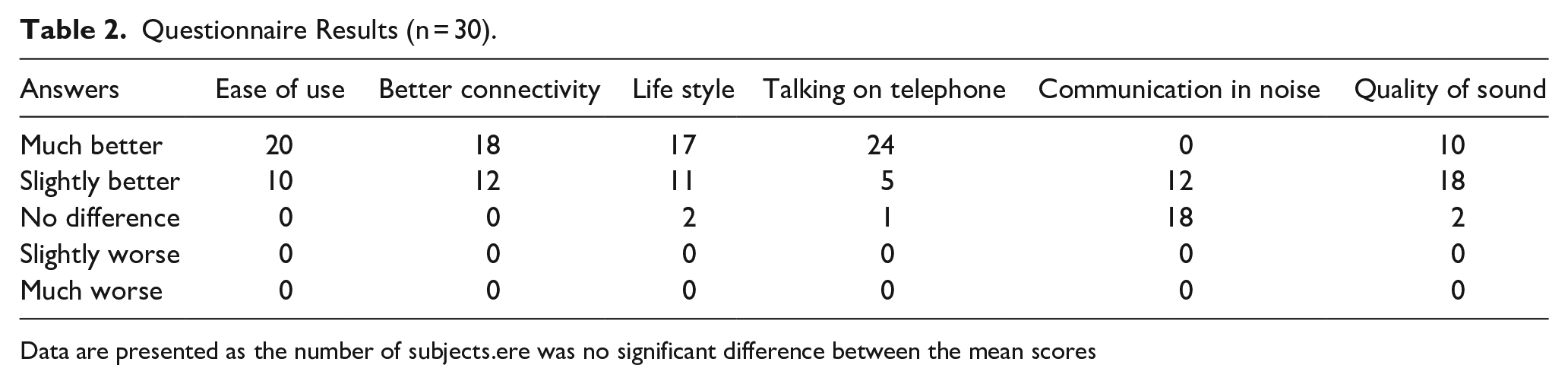
Data are presented as the number of subjects.ere was no significant difference between the mean scores
Discussion
Our study is unique from other similar research studies comparing the Nucleus 7 SP with previous generations in that it takes a longitudinal approach by measuring WRSs and C- and T-levels in set intervals, and also in that intrasubject comparisons are made before and after SP upgrades. 14 This approach allows for both breadth and depth in evaluating the comparative effectiveness of the Nucleus 7 SP and provides an important perspective of the long-term effects of upgrading. In addition, our evaluation of quality-of-life improvements offered by the Nucleus 7 SP via user satisfaction surveys is a valuable insight on the ergonomic benefits of the newer model.
This study showed that for the 55 participants who completed testing in quiet, speech perception ability remained relatively unaffected by the upgrade to the Nucleus 7, although subjects felt that there was a definite subjective benefit to upgrading. Our results remain consistent with the findings of Warren et al, 14 where 37 participants who had all used the Nucleus 5 or Nucleus 6 SP for at least 3 months prior were subject to testing with the Nucleus 7 SP. In their study, it was found that for 24 of the CI users who participated in the speech recognition portion of testing, there was no significant difference between the mean scores for consonant-nucleus-consonant (CNC) monosyllabic words in quiet between the Nucleus 6 and the Nucleus 7 SP. In our study, we had a larger sample size (n = 55) with participants evaluated over a longer period of time controlled for the timing of examinations (evaluations were made 1 year prior to upgrading to track previous SP stability), and we found similar results related to changes in speech perception ability. The consistency in WRSs across time should serve as an indication that there are no major defects with the speech perception enhancing ability of the Nucleus 7 SP from a long-term perspective. The lack in post-upgrade speech perception improvement for participants in quiet conditions was expected. Compared to older processors, the new processor did not have any new features that would generally improve speech in quiet perception. Overall, these findings support that the Nucleus 7 SP provides no difference in speech perception ability in a quiet situation.
A number of previous research has been conducted comparing the clinical benefits of a newer generation SP over its predecessor as these potential benefits are important to realize for both patients and providers. Previously, the Nucleus 6 SP was the first CI SP to implement an automatic scene classifying analyzer that forsook the need for users to make manual program changes in response to their dynamic environments. Several studies were able to demonstrate that the new environmental analyzer was indeed able to increase speech perception ability, as seen in a previous study. 18 Eighty-two CI users were asked to listen to then repeat AzBio sentences in noise with the Nucleus 6 SP and their previous SP, and researchers found that with the automatic scene classifying analyzer activated, speech perception was significantly improved. Similar results were found in another study, 19 where 105 CI users found a 4.7 dB group improvement when upgrading to the Nucleus 6 SP from their previous SP.
The Nucleus 7 SP has been miniaturized with its integrated processing chip, but aside from the new ForwardFocus technology, it remains functionally similar to the Nucleus 6 SP. The ForwardFocus technology allows users to focus on forward conversations while reducing noise situated behind them, and this technology has been shown to improve hearing outcomes of CI users in challenging environments with noise. In a previous study, 20 20 deaf adult CI users were equipped with SPs with the best-in-class directional microphone program for babble separation to represent Nucleus 6 outcomes and act as a control, then with the FowardFocus technology to represent Nucleus 7 outcomes. Researchers found the speech reception threshold of participants to be significantly improved by 5.8 dB in three-talker competing noise and by 1.3 dB in multi-talker babble. With the addition of ForwardFocus technology and the other functional improvements mentioned earlier, the Nucleus 7 SP has the potential to provide ergonomic benefits and improved speech perception performance in certain environments. This study, however, has participants tested in quiet for all objective testing portions, thus negating a significant benefit of the ForwardFocus technology. We tested the speech perception ability only in a quiet condition and found that there was no significant difference before and after upgrade. However, there was some patients with improved speech ability in a noisy condition subjectively and this improvement in a noisy condition might be related to this ForwardFocus technology.
C-levels represent the CI users’ comfortable levels of amplification, while T-levels represent the softest sounds that can be heard by the users. In this study, stimulation levels at all electrodes for C- and T-levels increased, indicating that the new SP increased sound sensitivity for patients. As such, aided thresholds decreased as well with lower inputs being necessary to produce outputs that reached the threshold criterion; increased T-levels and decreased sound thresholds were found to be correlated, 21 which in turn improved soft speech perception. Decreased C- and T-levels represent the increased benefit provided by implanting and upgrading SPs; in a study by Gajadeera et al with a cohort of 680 adults with Nucleus SPs, 22 mean C- and T-levels were found to significantly decrease over a 24 month timeframe post operation with an overall improvement in speech perception.
Most notable to our findings, we found that study participants reported several ergonomic benefits to upgrading their processors. The Nucleus 7 SP features enhanced external device connectivity with Bluetooth Low Energy technology as well as a lighter make that should improve user comfortability. Thirty participants answered questionnaires after upgrading SPs with questions related to ease of use and subjective evaluations of improvements in speech perception ability. Participants stated that the Nucleus 7 SP was easier to use and more comfortable with the new Nucleus Smart App and smaller build, while almost all participants felt that the new SP transmitted a higher quality of sound than their previous processors and significantly improved conversations on the phone. Though 60% of the participants believed that the processor upgrade did not improve communication in noisy environments, 40% stated that they felt improved hearing in a noisy condition. The positive evaluations are likely related to the introduction of ForwardFocus technology as well as direct streaming, novel external device connectivity, and a diverse array of retention devices. These results are consistent with the subjective evaluations made by Warren et al through the Client Oriented Scale of Improvement, 14 an evaluation tool that allows participants to give a scaled score for situations of their choosing. Their study found that subjects had a high score of satisfaction in key situations highlighted by researchers, such as hearing on telephone and conversation with a group in noise. Subjects in our study were also asked to complete a satisfaction survey, in which all participants (n = 30) stated that they were likely to recommend other CI users to upgrade to the Nucleus 7 SP. Subjective evaluations indicate that the ergonomic improvements of the Nucleus 7 SP have beneficial effects on user satisfaction, but it is important to be aware of possible placebo effects, especially as there seems to be minimal objective benefit to upgrading SPs. 23
Conclusions
This study demonstrates that there is no major difference in speech perception ability in a quiet situation between participants equipped with the Nucleus 7 SP and with previous generation SPs. Most important, however, participants believed that there were subjective benefits to upgrading. C- and T-levels in quiet environments generally increased 1 year after upgrading SPs, resulting in decreased aided thresholds. It is important that we have confirmed that speech perception ability remains at least equivalent with the Nucleus 7 SP as this is the baseline from which ergonomic improvements can be made. Subjective comparisons between the Nucleus 7 SP and previous SPs yielded higher scores of satisfaction with the newer model as a result of the new SP’s novel features.
CI users who are interested in upgrading to the Nucleus 7 SP should be given counseling when deciding whether to make the financial investment. Objective performance remains similar as previous SPs, but users have reported better satisfaction with the newer product. The Nucleus 7 SP is well-equipped for the modern digital age with its enhanced Bluetooth connectivity and beamforming technology should users elect to upgrade.
Footnotes
Data Availability Statement
The data that support the findings of this study are available from the corresponding author on reasonable request from other investigators.
Declaration of Conflicting Interests
The author(s) declared no potential conflicts of interest with respect to the research, authorship, and/or publication of this article.
Funding
The author(s) received no financial support for the research, authorship, and/or publication of this article.
Ethics Statement
Ethics approval was granted by the Institutional Review Board (IRB). This study was conducted in accordance with the Declaration of Helsinki. Written informed consent was obtained from all participants.
