




Abstract

Keywords
Introduction
The key challenges of ear and hearing care have been brought together for the first time in a global World Health Organization (WHO) report which provides clear guidance for professionals and policymakers. 1 The report outlines some of the key causes of hearing loss over the course of life and the impact that this hearing loss, if unaddressed, can have on listening and communication, education, employment, mental health and cognition. If left untreated, the cost of hearing loss globally, both to the individual and the economy, is estimated to be in the region of $980 billion per year. 1
The challenges
As the global population ages, the numbers requiring treatment for hearing loss will rise. The latest reports estimate one in five people globally have some degree of hearing loss. 2 Each geographical region faces its own challenges, and national and international disparities exist in the access to hearing technologies, rehabilitation and reimbursement. Individuals are prevented from coming forward for treatment by lack of access to a well-informed professional, the lack of accurate information about hearing loss in the wider general public and the stigma attached to hearing loss in many countries.3,4 Even in developed economies such as the U.S.A. and Europe, the uptake of hearing aids is less than 40% for those with moderate hearing loss, less than 60% for those with a severe hearing loss and less than 10% for cochlear implants (CIs).3,5,6
Significant gaps in the workforce exist, particularly in emerging economies, and innovative approaches must be used to implement the recommendations of the report. Improvements in technology such as self-fit or over the counter hearing aids and telemedicine may go some way towards alleviating the pressure, but a radical rethink of how hearing services are provided is needed.7,8 Professional lack of awareness of proven treatments such as cochlear implants can act as a further barrier to accessing this and other innovative treatments.3,9 However, advances in technology are hard to keep up with. Referral criteria are ever changing, with significant advances in the types of implantable solutions available for hearing loss. 10 Providing access to appropriate sources of information remains a challenge, with the uptake of online learning poor amongst otorhinolaryngologists, prior to the pandemic. 4
How could I implement the WHO recommendations in my practice?
The WHO report suggests some key indicators that should be adequately addressed to provide a gold standard service. Some of these are especially relevant to improving referral rates for CI assessment (Figure 1). Suggested package of ear and hearing care interventions taken from the WHO world report on hearing.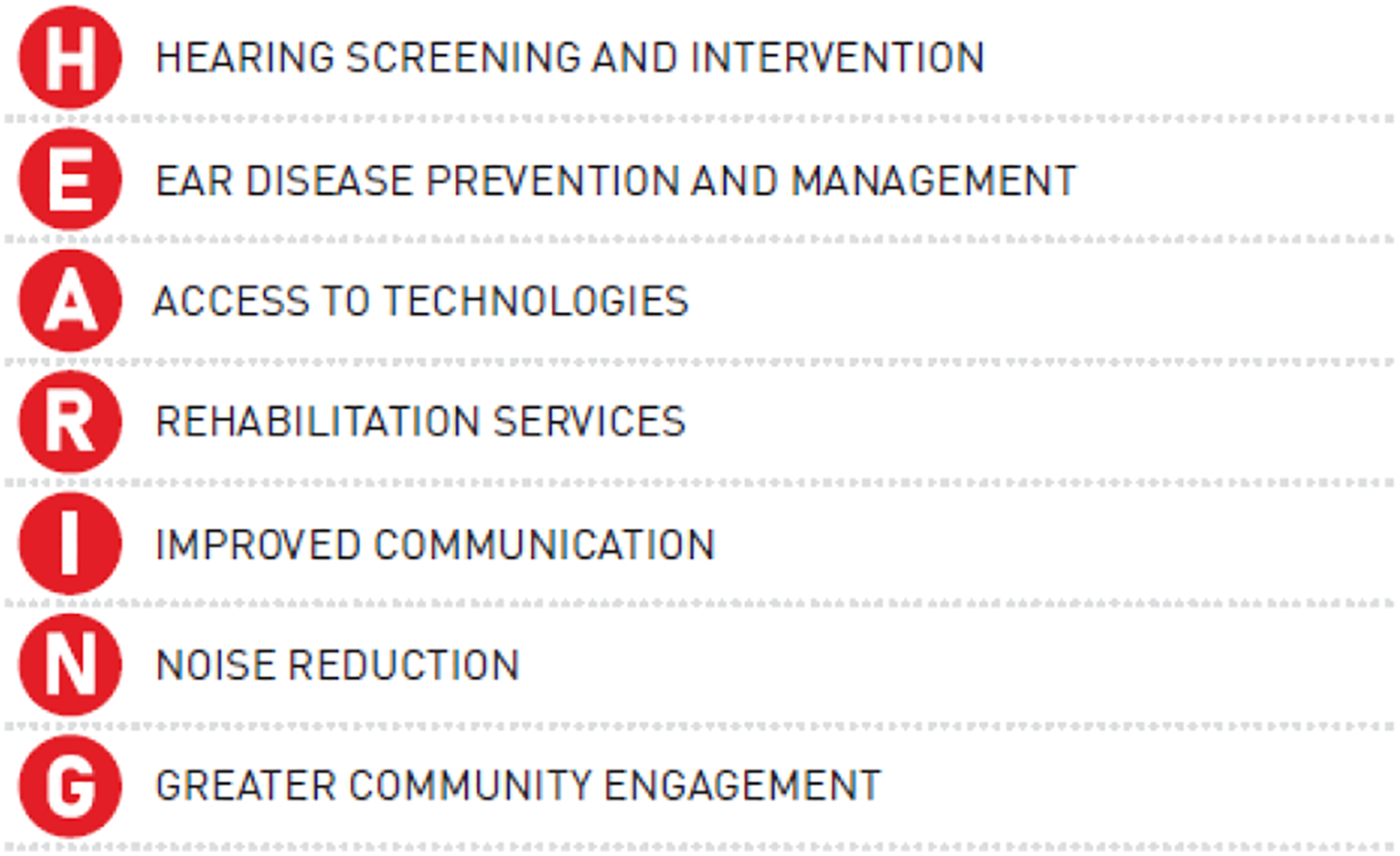
Aligned with these interventions, we have identified five areas to consider in your practice to improve referral rates and outcomes with hearing devices.
Hearing screening
Is hearing loss being identified and treated early enough?
Are hearing screening programs for newborn and school age children and older adults implemented effectively in my area and are referral pathways clear?
Access to technology
Are the referral pathways for further specialist assessment of those with severe to profound hearing loss clear and straightforward?
Do I have the latest information on available technology, including implantable devices such as cochlear implants and am I aware of the referral criteria?
Ear disease prevention and management and noise reduction
Are those in high-risk occupations or taking ototoxic medication having their hearing monitored regularly?
Are common ear conditions such as otitis media managed effectively and in a timely manner?
Rehabilitation services
Is there access to rehabilitation and counselling services following hearing aid or implantable device fittings?
Community engagement and communication
Is enough information provided to private hearing aid providers and local general practitioners to ensure onward referral for further assessment when required, for example, for cochlear implant suitability?
Do community care and health providers have a basic knowledge of hearing care, for example, checking hearing aids are working, managing wax and knowing when and how to refer for a hearing test?
Conclusion
In conclusion, the WHO report provides a unique platform to improve hearing services. The recommendations contained in the report will increase access to hearing aids and advanced technologies such as cochlear implants. If greater uptake rates are to be achieved, hearing professionals must be aware of when and where and how to refer for further specialised assessment and be able to communicate the benefits of these advanced technologies to their patients.
Footnotes
Declaration of conflicting interests
The author(s) declared no potential conflicts of interest with respect to the research, authorship, and/or publication of this article.
Funding
The author(s) received no financial support for the research, authorship, and/or publication of this article.
