




Abstract
Objective:
Acute tonsillitis is a common disease in otorhinolaryngology. Meteorological factors can affect the incidence of many infectious diseases. This study aims to analyze the correlation between acute tonsillitis and meteorological conditions.
Materials and Methods:
We collected the meteorological data, including daily temperature, humidity, and fine particulate matter (PM2.5) of Shanghai, China, from 2014 to 2015. The monthly number of acute tonsillitis cases in our hospital was also calculated and used as the outcome variable. The associations between them were evaluated, respectively.
Results:
The average number of patients diagnosed with acute tonsillitis in our hospital per month was 68.67 ± 18.67 from 2014 to 2015. The average temperature, humidity, and PM2.5 of Shanghai during the defined period was 16.84 °C ± 7.80 °C, 75.93% ± 5.45%, and 52.38 ± 14.23 μg/m3, respectively. The temperature was significantly positively associated with the acute tonsillitis cases number both in Pearson correlation analysis (R = 0.423, P = .039) and in multivariate regression analysis (coefficient =2.194, P = .012). However, no correlation between the acute tonsillitis cases number and relative humidity or PM2.5 was found through a multivariate regression model (P = .225 and P = .243), respectively.
Conclusion:
The high temperature was associated with an increased incidence of acute tonsillitis.
Introduction
Tonsils are parts of the lymphatic system and can be inflamed when the immune system is weak. Acute tonsillitis is a common disease in the department of otorhinolaryngology and occurs in patients at any age, especially in children of school age. Each year over 500 patients with acute tonsillitis are treated in our institution. These patients always present with a sore throat, fever, general malaise, and tonsil mucosa hyperemia, with or without tonsillar exudate. Peritonsillar abscess (PTA) is the most common complication of acute bacterial tonsillitis. Additionally, secondary parapharyngeal or retropharyngeal abscess may develop when the infection diffuses into the parapharyngeal or retropharyngeal space. 1 Severe complications of this disease include upper airway obstruction, septic thrombophlebitis, myocarditis, and acute nephritis. 2
Meteorological conditions can affect the incidence of upper respiratory tract infections because they probably have a significant impact on the survival and spread of bacterial and viral pathogens in the environment.3,4 Pathogens can survive longer outside the body under proper climate conditions, and susceptible persons are more likely to become infected then. Air pollution is also associated with the incidence of upper respiratory infections. 5 The exposure of air pollution is suggested to decrease phagocytic ability toward pathogens, and thus evoking infections caused by these pathogens. 6 Ambient particulate matter with an aerodynamic diameter of 2.5 mm or less (PM2.5) is a major index of air condition, which can alter responses of immune defense against bacterial and viral infections, and is associated with increased susceptibility to respiratory infections. 7 PM2.5 can increase the sensitivity of respiratory epithelial cells to produce pro-inflammatory cytokines such as interleukin 6 and tumor necrosis factor α, which potentially leads to hyperinflammatory response against bacterial infection. The tonsils are located beside the upper respiratory tract and may be more easily influenced by external environmental factors and air pollutions. Therefore, we hypothesize that the incidence of acute tonsillitis may be associated with meteorological conditions and air pollution. However, studies on the relationship between meteorological conditions and acute tonsillitis were rarely reported, and the influence of environmental factors on acute tonsillitis remains uncertain. Peritonsillar abscess is regarded as a common complication of acute tonsillitis. There have been many studies on the impact of environmental conditions on PTA, although the results were not consistent. 8 A study enrolling 528 patients with PTA showed that this disease was more likely to occur in warmer months. 9 Nevertheless, some other researchers recognized that PTA patients exhibited an even distribution over the year. 1 The association between environmental factors and acute tonsillitis needs to be determined.
In the present study, we retrospectively collected the data of acute tonsillitis incidence in our hospital and the meteorological factors, including temperature, humidity, and PM2.5 in Shanghai. Subsequently, the correlation between them was analyzed, respectively.
Materials and Methods
Meteorological data of 2014 to 2015 were collected from Shanghai Central Meteorological Observatory. The daily temperature, humidity, and PM2.5 were collected and combined to provide a monthly average. The number of acute tonsillitis cases in our hospital per month was used as the outcome variable.
Patients receiving emergency care with a diagnosis of acute tonsillitis in the same tertiary hospital from January 2014 to December 2015 were included in the study. Patients with acute onset in other cities were excluded. The monthly number of acute tonsillitis cases was collected. Its correlation with the corresponding monthly meteorological factors was analyzed. All performed procedures in this study were in accordance with the World Medical Association Declaration of Helsinki. Informed consent was obtained from each participant included in the study. The study protocols were approved by the institutional ethics committee of our hospital (approved number: 2015038).
Results
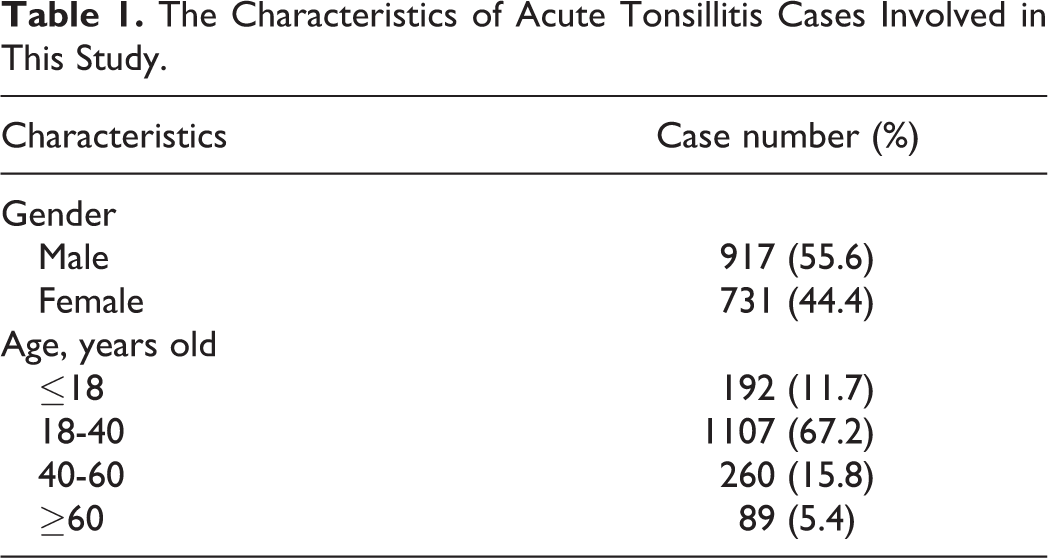
We conducted a statistical analysis of 1648 patients who met the inclusion criteria, and the average number of patients diagnosed with acute tonsillitis per month and the average age of them were 68.67 ± 18.67 and 32.72 ± 14.55 years old, respectively. The characteristics of the acute tonsillitis patients are summarized in Table1. There was a male prevalence with a sex-ratio of 1.25:1 and 18 to 40 years old is the peak age group. Children were also included in our study, but they preferred to visit other pediatric hospitals. The meteorological conditions from 2014 to 2015 are shown in Figure 1, as well as the monthly number of acute tonsillitis cases in the defined period. Acute tonsillitis cases in 2014 and 2015 reached a peak in May. The temperature ranged from 5.45 °C to 27.58 °C in the study period, and the average temperature was 16.84 °C ± 7.80 °C. Meanwhile, the average humidity and the PM2.5 of Shanghai during the defined period were 75.93 ± 5.45% and 52.38 ± 14.23 μg/m3, respectively.
The Characteristics of Acute Tonsillitis Cases Involved in This Study.
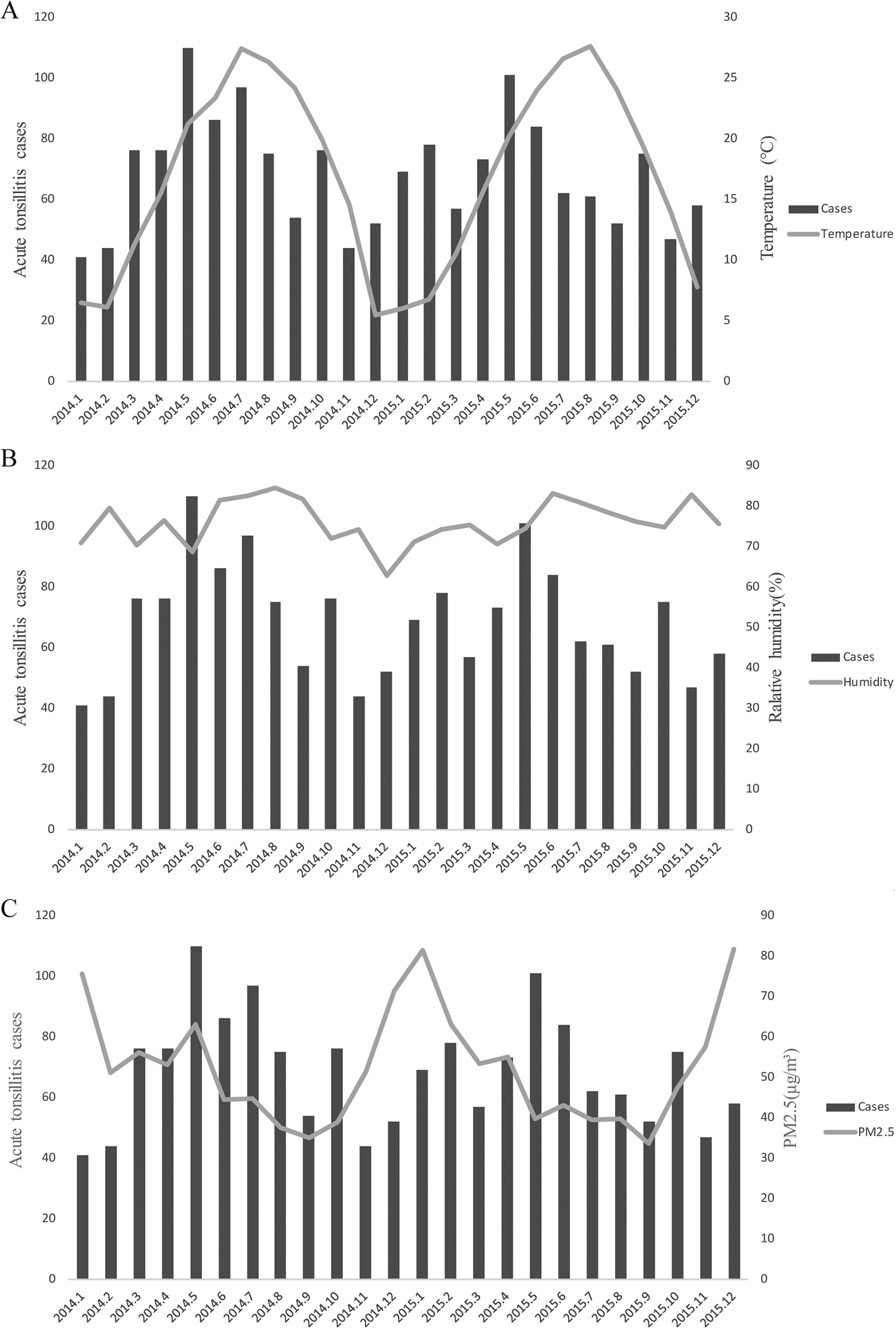
The monthly number of acute tonsillitis patients visiting the same tertiary hospital and meteorological conditions by month in Shanghai. Acute tonsillitis cases and (A) temperature, (B) relative humidity, or (C) PM2.5.
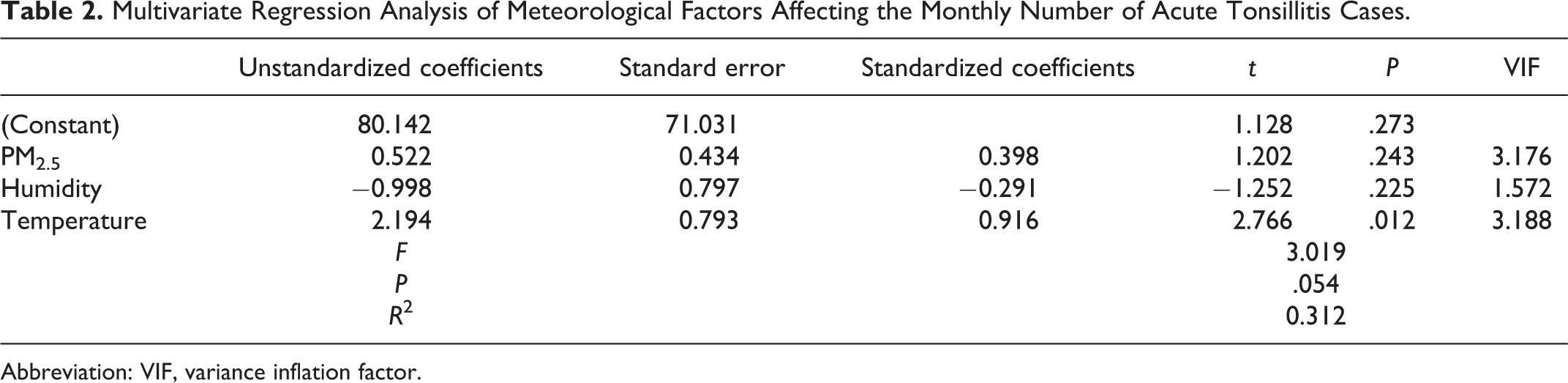
Afterward, the 3 meteorological factors were correlated with the monthly number of acute tonsillitis cases. As shown in Figure 2, the temperature was significantly positively associated with the acute tonsillitis case number in Pearson correlation analysis (R = 0.423, P = .039), suggesting high temperature contributes to the incidence of acute tonsillitis. However, no correlation between the acute tonsillitis cases number and relative humidity or PM2.5 was found (P = .968 and P = .387, respectively). Multivariate regression analysis was performed then (Table 2). Consistent with the findings before, the temperature was the independent risk factor of acute tonsillitis visiting numbers in the hospital (coefficient = 2.194, P = .012). No significant correlation was found between acute tonsillitis cases number and the humidity (P = .225) or PM2.5 (P = .243), respectively.
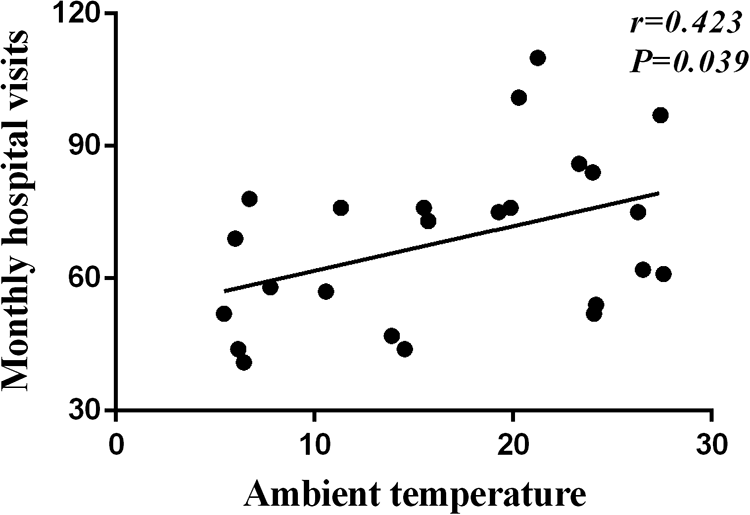
Correlation between monthly hospital visits for acute tonsillitis and monthly ambient temperatures. Acute tonsillitis visits were positively correlated with temperature.
Multivariate Regression Analysis of Meteorological Factors Affecting the Monthly Number of Acute Tonsillitis Cases.
Abbreviation: VIF, variance inflation factor.
Discussion/Conclusion
Acute tonsillitis is mainly caused by viruses, such as human adenoviruses, human Boca viruses, influenza, and parainfluenza viruses. 10 Additionally, an overgrowth of bacterial taxa located in the oral and pharyngeal cavity is also responsible for this disease sometimes. 10 The bacterial tonsillitis is recognized to be mostly caused by group A β-hemolytic streptococci. Streptococcus, Staphylococcus, Bacteroides, Fusobacterium, Veillonella, Prevotella, and Haemophilus are also reported to be associated with the incidence of this disease. 11 However, there are numerous different bacteria and viruses detectable in the oral and pharyngeal cavity, and the interrelationship among them is extremely complicated. Therefore, it is always difficult to distinguish the pathogenic germs from the present microflora. 12 Therefore, we look for influencing factors of acute tonsillitis from a macro perspective.
Climate factors, especially temperature and humidity, have and will continue to affect the survival, reproduction rate, spread, and geographical distribution of both bacteria and viruses. 13 Meanwhile, human behavior and the ecology of vectors are also closely correlated with the change of weather. As a result, it has been observed that many infectious diseases are associated with meteorological conditions, including respiratory infections, bacterial dysentery, malaria, hand–foot–mouth disease, and cellulitis.13-15 Meteorological variables directly influence the survival and proliferation of infectious microorganisms, their vectors, and their animal reservoirs. Climate instability also affects human activities, and close contact may exacerbate the spreading of infectious diseases. 16 As the major variate of weather, the temperature is a crucial factor to impact lots of infectious diseases. An increase of 1 °C may cause bacterial dysentery, hand–foot–mouth disease, and malaria cases to increase by 3.6% to 14.8%, 1.8% to 5.9%, and 0.90%, respectively. 13 Another study showed that every 1 °C increase in ambient temperature may cause an increase of 3.47 per 100 000 cases of cellulitis. 15 Meanwhile, the temperature was also able to influence the infections caused by a respiratory syncytial virus, human metapneumovirus, and Middle East respiratory syndrome coronavirus.14,17,18
Humidity is another important climate factor. It was reported that the relative humidity is negatively correlated with respiratory syncytial virus detection 14 but is positively associated with the incidence of hand–foot–mouth disease and Middle East respiratory syndrome.17,19 Environmental air pollution has been a global problem in recent years, which can increase the risk of cardiovascular diseases, pneumonia, and asthma.20,21 Davila discovered that PM2.5 could trigger the incidence of respiratory diseases, including pneumonia and asthma, 22 and PM2.5 is significantly associated with the occurrence of childhood scarlet fever in another study. 23 These climatic factors may affect the balance of microflora, thus prompting the occurrence of many infectious diseases. Therefore, temperature, humidity, and PM2.5 were all enrolled in our study to observe the association between meteorological factors and acute tonsillitis.
The bacteria located beside the tonsils are critical for the occurrence of tonsillitis. Bacteria exist in the core region of tonsils differ a lot from the surface bacteriology and play a more critical role in the onset of tonsillitis. 24 Dickinson et al proved that the oral microbial balance was broken during tonsillitis in comparison with healthy individuals. 25 The Prevotella taxa were significantly enriched in the tonsillitis cohort, which can be potentially influenced by the climatic conditions. An appropriate temperature promotes the proliferation of viruses and bacteria which challenges the tonsil immune system and thus resulting in the increase of tonsillitis incidence. 26 However, few studies sought for the relation between weather conditions and acute tonsillitis. Kim et al collected the climate data including temperature, humidity, spot atmospheric pressure, sulfur dioxide, nitrogen dioxide, ozone, carbon monoxide, and PM10 to correlate the occurrence of PTA formation, the most common complication of acute tonsillitis. 10 Finally, only nitrogen dioxide and PM10 were positively associated with this complication in that study. However, a generally acknowledged theory recognized that PTA is not a direct complication of acute tonsillitis. 27 The location of the majority of PTAs is at the superior tonsillar pole, and the tonsils are always not affected. The risk factors for them may not be consistent. In our study, PM2.5 did not correlate with the incidence of acute tonsillitis, but the rise of temperature was able to induce the onset of acute tonsillitis. The infectious pathogen of tonsillitis may be mostly influenced by outdoor temperature but not by humidity nor PM2.5. Only a few PTAs formed after acute infection, and the risk factors for PTA formation were nitrogen dioxide and PM10 according to Kim’s study. 8 This result reminds the susceptible population to take preventive measures when the temperature rises. For example, they should keep good oral hygiene during the warmer months.
Several confounders were not considered in this study. A large number of people would leave Shanghai during the Chinese Spring Festival; hence, the visiting number would decrease this month. Indoor activities are preferable for citizens during hot months, especially for the children during the summer holidays, and this may promote the spreading of contagious diseases. Other limitations of this study include the relatively short study period, the lack of detailed information about the tonsillitis cases, and the few meteorological factors involved in the research. The data only from a warm city are not enough to draw a firm conclusion.
In conclusion, we discovered that the incidence of acute tonsillitis was significantly and positively associated with the ambient temperature. Our findings are consistent with the theory that PTA does not directly occur because of acute tonsillitis. Meanwhile, these results may improve our understanding of acute tonsillitis etiology, and the association between climate change and microflora alteration during tonsillitis would be furtherly investigated in our future studies.
Footnotes
Authors’ Note
J.C. contributed to the design of the study and interpretation of data and drafting the article. Y.Z. contributed to acquisition of data and revising the article critically for important intellectual content. X.Z. contributed to acquisition of data. Y.H. contributed to the conception and design of the study and revising the article critically for important intellectual content. All authors contributed to final approval of the version to be submitted. J.C. and Y.Z. contributed equally to this work. This study was approved by the Ethics Committee of Eye, Ear, Nose, Throat Hospital of Fudan University.
Declaration of Conflicting Interests
The author(s) declared no potential conflicts of interest with respect to the research, authorship, and/or publication of this article.
Funding
The author(s) received no financial support for the research, authorship, and/or publication of this article.
