




Abstract
Hybrid renewable power systems based on organic Rankine cycles offer a promising pathway for decentralized and low-carbon electricity generation; however, their autonomous operation is often constrained by fuel intermittency, incomplete sustainability assessment, and limited evaluation of component-level trade-offs. In particular, most existing studies rely on energy–exergy analyses and rarely integrate environmental and energoeconomic dimensions within a unified framework for biomass–hydrogen-based systems. To address these limitations, this study develops an autonomous biomass–hydrogen-integrated organic Rankine cycle and evaluates its performance using a comprehensive energy, exergy, exergoeconomic, exergoenvironmental, and energoeconomic methodology. The proposed system combines dispatchable biomass combustion with a produced-hydrogen burner operating as a stabilizing thermal source, enabling continuous power generation under variable operating conditions. A detailed component-level assessment is performed to quantify exergy destruction and its associated economic and environmental penalties, while system-level feasibility is examined through the levelized cost of electricity. Parametric optimization reveals that the optimal operating point occurs at a biomass mass flow rate of 0.20 k/g s, yielding a second-law efficiency of 18.9% and a minimum levelized cost of electricity of US$0.118/kWh. The biomass combustor is identified as the dominant contributor to exergy destruction, economic cost, and environmental impact, whereas hydrogen integration improves thermal stability and reduces the specific carbon intensity of electricity generation by 20% compared to the biomass-only configuration.
The originality of this work lies in the integrated assessment of fuel hybridization effects within an autonomous organic Rankine cycle using a unified energy, exergy, exergoeconomic, exergoenvironmental, and energoeconomic framework, linking component-scale inefficiencies to system-level sustainability metrics. The presented results demonstrate that biomass–hydrogen hybridization provides a practical, fuel-flexible, and cost-competitive solution for decentralized and off-grid power generation, making the proposed methodology directly applicable to a wide range of renewable-based thermal energy systems.
Keywords
Introduction
The rapid increase in global energy demand, coupled with the depletion of fossil fuel reserves and the intensifying environmental crisis, has highlighted the need for sustainable, flexible, and low-emission energy systems (Bejan et al., 1996; Sonntag et al., 1998; Towler and Sinnott, 2012). Conventional power cycles—particularly those relying on coal and natural gas—offer high technical maturity but are accompanied by significant greenhouse gas emissions and ecological burdens. Consequently, research attention has shifted toward hybrid and renewable-based conversion technologies that can ensure both performance stability and environmental friendliness (Mohammad et al., 2025; Shaikh et al., 2022). Among these, biomass and hydrogen have emerged as two promising energy vectors capable of forming an autonomous and fully decarbonized thermal power platform (Assareh et al., 2025; Atiz et al., 2021; Ghasemi et al., 2014; Gholizadeh et al., 2019).
Biomass energy represents one of the most abundant and globally available renewable resources. The conversion of agricultural residues, lignocellulosic waste, and organic matter into thermal energy provides carbon-neutral power while contributing to waste minimization and local economic development (Sabziparvar, 2008). Combustion and gasification of biomass can yield low- to medium-temperature heat suitable for small- and medium-scale power cycles, particularly organic Rankine cycles (ORCs) operating within 80–250 °C (Behnam et al., 2018; Farayi et al., 2021). However, the inherent intermittency of biomass supply—due to transportation limitations, moisture variations, and feedstock availability—often constrains its reliability as a stand-alone energy source (Alayi et al., 2020; Alayi and Rouhi, 2020).
To overcome this drawback, hydrogen can be employed as a secondary or backup energy carrier. Hydrogen possesses the highest specific energy among known fuels (120 MJ/kg) and burns without direct CO2 emissions (Aali et al., 2017; Elsa, 2015; Meng et al., 2024). When stored and released on demand through an integrated tank system, hydrogen provides dispatchability and flexibility, attributes seldom available in conventional bioenergy plants (Al-Ali and Dincer, 2014; Jiang et al., 2025). Linking the two sources creates a biomass–hydrogen symbiotic configuration, where hydrogen serves as both an energy buffer and an enabler of complete decarbonization. The coupling of biomass and hydrogen further aligns with international strategies emphasizing circular economy concepts, sustainable resource utilization, and net-zero emission commitments for the mid-century (Calise et al., 2016; Colakoglu and Durmayaz, 2021; Didi et al., 2024).
The ORC offers a well-established thermodynamic architecture for the recovery of low-grade heat from renewable sources (Freeman et al., 2015; Shokati et al., 2015; Wang et al., 2025). The use of organic working fluids with lower boiling points than water—such as R123, R245fa, or toluene—enables efficient energy conversion even under moderate source temperatures. The ORC's modular configuration and mechanical simplicity make it suitable for autonomous or decentralized applications in rural and industrial settings. Recent advancements include dual-evaporator ORCs, regenerative configurations, and supercritical sub-modules optimized for waste-heat recovery (Cai et al., 2023; Xu et al., 2023). In hybrid systems, the ORC acts as the core thermal engine, while renewable inputs (solar, geothermal, biomass, hydrogen) define boundary conditions and fuel characteristics.
Early research concentrated on solar–geothermal or solar–biomass hybrids (Bonyadi et al., 2018; Ghasemi et al., 2014; Khalid et al., 2017). Although these configurations achieved moderate improvements in first- and second-law efficiencies, their capital and operational costs remained high due to the necessity for dual heat exchangers and solar collectors. Furthermore, solar-based systems are inherently intermittent and require substantial land use, whereas geothermal resources are geographically restricted (Al-Ali and Dincer, 2014). By contrast, a biomass–hydrogen-integrated ORC (BH-ORC) can operate nearly continuously, requiring only feedstock availability and minimal space, thereby providing both thermodynamic and logistic advantages.
Energy and exergy analyses have long served as fundamental tools for assessing the efficiency and quality of thermodynamic systems (Nemati et al., 2017). Energy analysis, based on the first law of thermodynamics, quantifies the quantity of energy transformation, while exergy analysis—stemming from the second law—measures the potential of a flow to perform useful work and captures irreversibility distributions across components (Bejan et al., 1996). Numerous studies have applied the 3E (energy–exergy–exergoeconomic) framework to hybrid systems. Kong et al. (2022) examined a biomass-fired ORC for district heating, achieving a 2.8% improvement in second-law efficiency under optimized evaporator conditions. Serbin et al. (2023) investigated a hydrogen-supplemented gas turbine using exergy and environmental indicators, concluding that hydrogen addition significantly decreases the total exergy destruction rate within combustion chambers. Similarly, Yang et al. (2024) performed exergy and exergoeconomic optimization for a solar–biomass-driven ORC, emphasizing the coupling cost between heat exchangers and fuel price variation.
Recent investigations have increasingly focused on hybrid renewable-driven ORC systems to improve performance stability and resource utilization. Zolfigol et al. (2025) conducted a detailed thermodynamic analysis and optimization of a hybrid renewable-powered ORC, demonstrating that multisource integration can enhance cycle efficiency under optimized operating conditions. Similarly, Qeshmi et al. (2025) evaluated the performance of a hybrid renewable ORC under variable operating scenarios, emphasizing the role of hybridization in mitigating fluctuations in thermal input and improving load adaptability. More recently, Abbasi Khams et al. (2025) examined the energy and exergy performance of a hybrid renewable ORC coupled with thermal energy storage, reporting improved robustness and reduced exergy losses during transient operation.
Nevertheless, few studies have integrated comprehensive 5E (energy, exergy, exergoeconomic, exergoenvironmental, and energoeconomic) analysis into a unified modeling framework. The inclusion of the latter two indicators provides insight into environmental externalities and life-cycle cost implications. For example, the exergoenvironmental methodology links exergy destruction to pollutant emissions via specific exergy-based weighting factors (Alvi et al., 2024; Effatpanah et al., 2022; Ren et al., 2024). Likewise, energoeconomic evaluation—such as levelized cost of energy (LCOE)—connects operational expenditures, capital recovery factors (CRFs), and power pricing to establish an integrated sustainability indicator (Assareh et al., 2025). Combining these pillars results in a holistic performance representation essential for techno-economic feasibility studies of autonomous renewable systems.
Despite significant advancements in hybrid ORC technologies, pivotal research gaps persist that limit the comprehensive understanding and optimization of such systems. Previous investigations have primarily focused on 3E (energy, exergy, and exergoeconomic) analyses, whereas integrated 5E frameworks that simultaneously consider environmental and energoeconomic dimensions remain scarce. Moreover, most studies addressing biomass–hydrogen systems have not explored fully autonomous operation—i.e. configurations capable of sustaining continuous power generation without reliance on grid connection or fossil backup. Additionally, there is a lack of comparative analyses detailing component-wise exergy destruction, cost formation mechanisms, and the evaluation of CO2-related exergy penalties under variable hydrogen participation ratios.
The novelty of the present work lies in systematically addressing existing research gaps through the development of a BH-ORC subjected to a comprehensive 5E assessment framework. Rather than proposing a new cycle topology, this study focuses on quantifying how renewable fuel hybridization influences thermodynamic performance, cost formation, and environmental impact within an autonomous ORC. The developed model couples steady-state thermodynamic simulation with flexible fuel substitution between biomass and produced hydrogen, enabling continuous and dispatchable power generation under variable operating conditions.
By conducting a component-level evaluation of exergy destruction and linking it to associated exergoeconomic and exergoenvironmental costs, the study provides a transparent methodology for identifying dominant sources of inefficiency and sustainability penalties. The inclusion of energoeconomic indicators, such as the levelized cost of electricity, further allows system-level performance to be assessed in practical economic terms. This integrated approach bridges the gap between component-scale efficiency analysis and system-scale sustainability evaluation reported in prior studies.
Accordingly, the scope of this work is deliberately confined to elucidating the role of biomass–hydrogen fuel hybridization on component-wise exergy behavior and sustainability metrics, rather than exploring alternative cycle architectures, control strategies, or working fluid optimization.
From an application perspective, the findings are relevant to a broad class of small- to medium-scale renewable energy systems of interest to the journal's readership. The proposed framework is directly applicable to decentralized and off-grid power generation in rural communities, agro-industrial facilities, and energy-autonomous hubs where fuel flexibility and operational reliability are critical. Moreover, the adopted 5E methodology is transferable to other renewable-based thermal systems, including biomass-only ORCs, hydrogen-assisted waste-heat recovery units, and hybrid solar–biomass configurations, thereby aligning the present study with the journal's mission of advancing sustainable and practical energy conversion technologies.
Materials and methods
System configuration
The proposed BH-ORC is an autonomous power generation system designed to achieve continuous and carbon-neutral operation by coupling two renewable thermal energy sources—solid biomass and gaseous hydrogen. Figure 1 schematically illustrates the configuration of the cycle. It comprises six main subsystems: (i) a biomass combustor; (ii) a hydrogen storage and supply tank with burner; (iii) a dual-evaporator ORC; (iv) the turbine unit for power production; (v) the condenser and cooling circuit; and (vi) auxiliary pumps and control valves. The integration of these modules ensures the cycle's capability to operate under variable renewable inputs while maintaining stable thermodynamic conditions and electrical output.
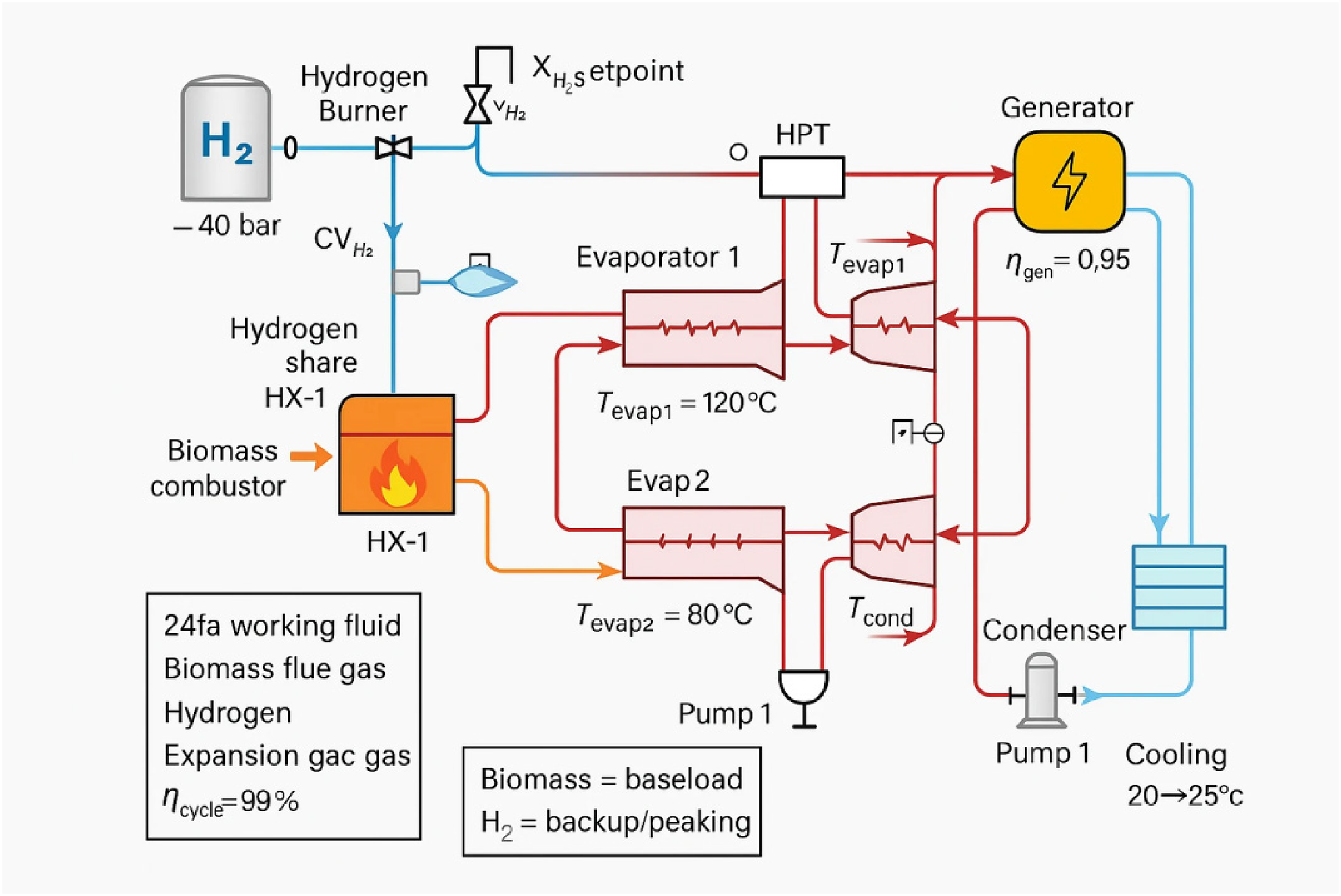
Schematic of BH-ORC system.
Biomass combustion section
The primary thermal input to the BH-ORC originates from the biomass combustion chamber, in which agricultural residues, wood pellets, or other lignocellulosic matter are oxidized in a controlled environment. The biomass fuel is fed into the boiler through an automated screw-feeder mechanism. The resulting flue gases transfer their heat to a primary heat exchanger (HX-1), where thermal energy is conveyed to the organic working fluid circulating through the high-temperature evaporator (Evap 1). The produced hot gas exits the combustion chamber at temperatures between 750 and 850 °C and subsequently enters a flue-gas recuperator, ensuring efficient heat recovery and minimized exhaust losses. The combustor is designed with an energy efficiency of approximately 85%, satisfying both clean-combustion and emission-control standards.
The biomass subsystem serves as the base-load source in the hybrid structure; during normal operation, it provides the majority of the required heat input and sustains a cycle temperature of around 120 °C (at the evaporator outlet of the organic fluid).
Hydrogen storage and backup unit
To ensure full autonomy and dispatchable power generation, a pressurized hydrogen tank (usually 30–40 bar) is interfaced with a compact auxiliary burner. When biomass feeding is interrupted or the system load rises sharply, the hydrogen burner is activated automatically through a control valve network. The burner releases pure thermal energy with adjustable rates
Hydrogen's clean combustion (producing only water vapor) eliminates local carbon emissions, while its high specific energy yields rapid thermal response and effective peak-shaving capability. The stored hydrogen can originate from electrolysis powered by excess renewable electricity, enabling complete renewable self-sustainability of the plant.
Organic Rankine sub-cycle
The ORC loop uses an environmentally benign working fluid—here selected as R245fa due to its moderate saturation pressure and global-warming potential below 1000. The loop includes two evaporation levels:
High-temperature evaporator (Evap 1, driven by biomass combustion gas). Low-temperature evaporator (Evap 2, driven by hydrogen auxiliary heat or exhaust recovery).
Vapor generated in these evaporators expands sequentially through a dual-stage turbine assembly. The high-pressure turbine (HPT) handles the superheated vapor leaving Evap 1, followed by a mixing chamber where flows from the two evaporators are combined before entering the low-pressure turbine (LPT). Mechanical power from both turbines drives an electrical generator with overall efficiency around 95%.
Following expansion, the organic vapor is condensed in a water-cooled condenser at 30 °C, and the resulting liquid is repressurized by two feed pumps before returning to the evaporators. Cooling water loops are maintained by a compact cooling tower, while condensate subcooling assures stability in the closed system.
Autonomy and control logic
The BH-ORC operates under a cascade control algorithm: biomass combustion delivers continuous baseline heat, whereas the hydrogen burner acts as an instantaneous stabilizer for pressure or power fluctuations. An energy-management controller monitors biomass feed rate, hydrogen flow, turbine inlet temperature (THPT), and working fluid mass flow to maintain optimal efficiency. The transition between fuels is seamless, achieved through modulated proportional valves that balance the heat loads in HX-1 and HX-2.
Thermodynamic integration features
Key thermodynamic streams include the following:
Hot source streams: biomass flue gas (800 °C) and hydrogen combustion gas (600 °C).
Working fluid loop: organic fluid evaporates at 120 °C and condenses at 30 °C.
Cooling water loop: enters condenser at 20 °C and leaves at 25 °C.
The combination of two heat-exchanger lines enables hybrid parallel heat supply, leading to higher resource availability (up to 99% annual capacity factor) without dependence on sunlight or geothermal wells. Moreover, by capturing residual flue heat in the hydrogen subsystem and recirculating exhaust air through a preheater, the entire cycle minimizes exergy destruction in both combustion and heat transfer components.
Thermodynamic assumptions
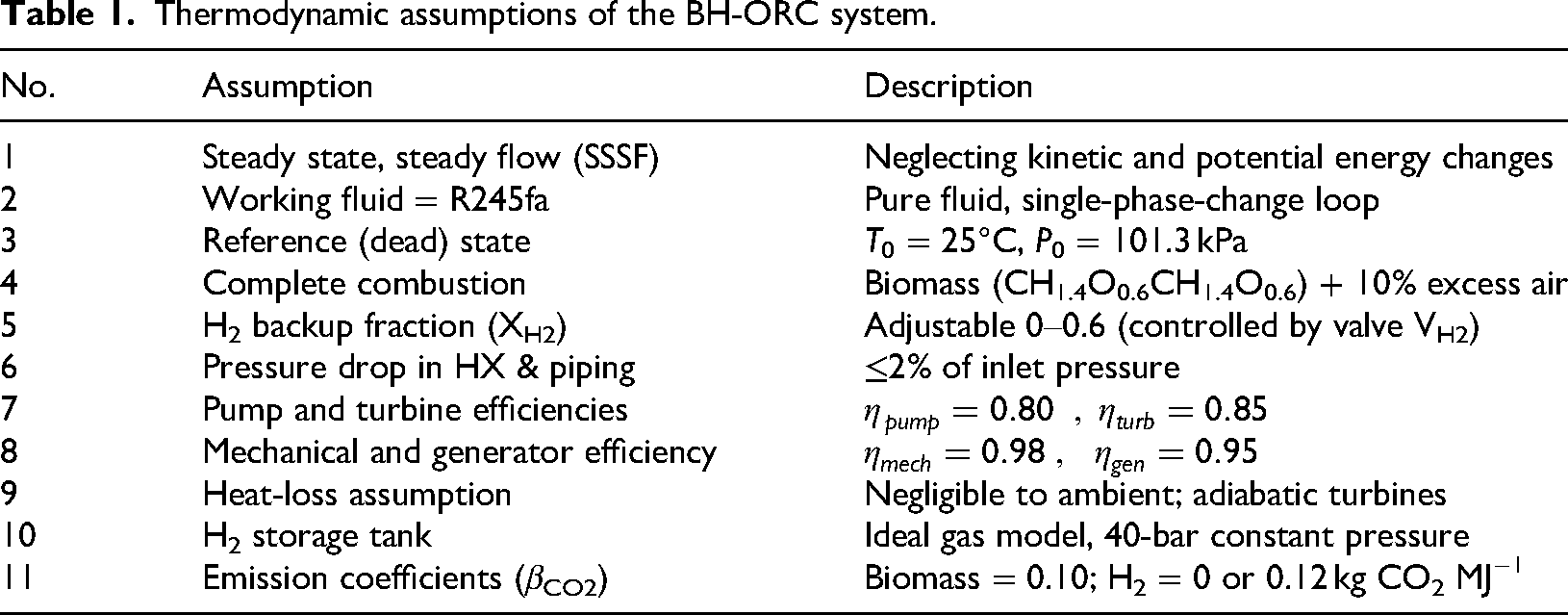
The thermodynamic analysis of the proposed BH-ORC is based on a set of clearly defined physical and operational assumptions. All analyses in Sections 2.3–2.9 are developed using these assumptions and the input parameters summarized in Tables 1 and 2 (Xu et al., 2023; Zhan et al., 2025; Zhang et al., 2025b; Ziapour et al., 2025).
Thermodynamic assumptions of the BH-ORC system.
Input thermodynamic parameters for BH-ORC simulation.

Governing equations
The governing mass and energy relations for each BH-ORC component are summarized in Table 3. These equations establish the first-law energy balance framework and serve as the foundation for the exergy, exergoeconomic, and environmental assessments described in subsequent sections.
Governing equations and energy balance of the BH-ORC components.

Definition of fuel and product exergies
To accurately evaluate the thermodynamic performance of the BH-ORC system from the viewpoint of the second law of thermodynamics, an exergy-based model is formulated for each component of the cycle. The analysis quantifies not only the useful energy conversion but also the irreversibilities present due to real processes such as finite-temperature heat transfer, friction, and nonideal component efficiencies. At steady-state conditions and without consideration for variations in kinetic and potential energies, the specific physical exergy of a working fluid stream (ψ) is calculated using the following expression, as shown in Equation (1):
where the subscript 0 denotes properties at the dead state (environment) defined by T0 = 298.15 K and P0 = 101 kPa. The rate of physical exergy transfer (E˙) associated with the mass flow rate (m˙) is then expressed by Equation (2):
Exergy balance for a control volume
Applying the second-law balance to an open system (control volume) yields the general exergy balance equation, given by Equation (3):


Exergy of heat and work interactions
The exergy associated with heat transfer and work processes obeys the following relations, presented in Equation (6) (Zhang et al., 2025a):

For the biomass firing and hydrogen auxiliary combustion subsystems, the chemical exergy of the supplied fuel is also considered; its input rate is represented by 
Component-wise exergy assessment
Table 4 lists the fuel and product definition for each BH-ORC component and the corresponding exergy balance equations.
Exergy balance and fuel/product definition for BH-ORC components

Second-law efficiency
Finally, the overall exergy (second-law) efficiency of the BH-ORC system is obtained as expressed in Equation (8):
This index represents the quality factor of the energy conversion process by quantifying how effectively the supplied biomass + H₂ exergy is transformed into useful electrical exergy. A higher
Biomass and hydrogen sub-model
In the proposed BH-ORC system, the two major heat suppliers are (1) the biomass-fired heat exchanger (HX-1), which ensures continuous base-load thermal input, and (2) the hydrogen storage/combustion unit, serving as a peaking or backup thermal source. Their accurate modeling is necessary to predict the transient and steady-state behaviors of the integrated cycle and to evaluate the exergoeconomic contribution of each fuel subsystem.
Biomass subsystem
The biomass furnace and heat recovery exchanger (HX-1) are modeled as the primary base-load heater delivering a steady high-temperature stream to the high-temperature evaporator (Evap 1). The chemical composition of the biomass feedstock (typically dry wood or agricultural residues) is approximated by the empirical formula (Equation 9):
The stoichiometric combustion reaction with the excess air ratio λ is given as shown in Equation (10):
The lower heating value (LHV) of biomass is obtained as a function of its elemental composition (wt.% basis) using Equation (11):
where C, H, O, and S represent the respective mass fractions. For the present study, a proximate analysis yields the following values (Equation 12):
The chemical exergy of the biomass fuel (exch,bio) is then estimated via the correlation as per Equation (13):
The total chemical exergy input from the biomass subsystem is calculated using Equation (14):
Combustion gases leaving the furnace transfer heat through HX-1 to the organic working fluid. The energy balance of HX-1 is expressed in Equation (15):
Hydrogen subsystem
The hydrogen storage and burner unit operate intermittently to meet demand peaks or compensate when the biomass heat rate decreases. Under stoichiometric conditions, hydrogen combustion in air is modeled by Equation (16):

With the corresponding thermal release (Equation 17),
The chemical exergy for pure hydrogen is approximately 
Heat generated in the hydrogen burner is transferred through Evap 2 (LT loop) to the working fluid. The exergy transferred through Evap 2 is calculated in Equation (19):
The combustion is assumed complete due to the absence of carbon-bearing species, making H2 a carbon-neutral and CO2-free peaking source at the point of use. It should be noted that the zero-βCO2 assumption for the hydrogen subsystem applies strictly at the point of combustion, since hydrogen oxidation does not involve carbon-bearing species. From a broader life cycle perspective, the environmental footprint of hydrogen depends on its production pathway. In this study, hydrogen is assumed to be generated via water electrolysis powered by surplus renewable electricity (i.e. wind- or solar-based electrolysis). According to established life cycle assessment (LCA) studies, the life cycle carbon intensity of renewable hydrogen typically ranges between 0.5 and 2.0 kg CO2-eq/kg H2, which is substantially lower than fossil-based hydrogen pathways such as steam methane reforming (9–12 kg CO2/kg H2).
Given that the hydrogen burner operates as a peaking and stabilization unit with a limited thermal share in the BH-ORC configuration, its indirect life cycle emissions have a negligible impact on the overall system-level exergoenvironmental results compared to biomass combustion. Consequently, while upstream hydrogen emissions are acknowledged through literature benchmarking, they are not explicitly quantified within the present exergoenvironmental framework. Incorporating a full cradle-to-grave LCA of hydrogen production is left for future work.
The dynamic contribution of the H2 subsystem is modeled through a modulation factor ξ that defines the fractional peaking load share in hybrid operation (Equation 20):
Combined fuel exergy input
The overall chemical exergy entering the integrated BH-ORC cycle becomes (Equation 21)
And the related mass-weighted exergy fraction share from each source is evaluated by Equation (22):
These thermochemical and combustion parameters, summarized in Table 5, are subsequently employed in the exergoeconomic and environmental analyses to allocate cost and emission indices between the biomass and hydrogen subsystems (Cai et al., 2023; Maghsoudniazi et al., 2025).
Thermochemical and combustion characteristics of biomass and hydrogen subsystems.

Exergoeconomic formulation (specific exergy costing (SPECO))
A comprehensive exergoeconomic formulation merges the exergy stream analysis with cost accounting to quantify the economic value of irreversibility. The SPECO approach, proposed by Bejan et al. (1996), is adopted here because it provides transparent component-level cost balance relationships between exergy inflows, outflows, and investment expenditures.
Conceptual framework
The economic cost associated with each exergy stream, ˙E, is expressed as the product of the exergy rate and its specific unit cost cc (US$/GJ) as given in Equation (23):
For every control volume k (component), the cost balance accounts for all cost rates of entering and leaving exergy streams, power, and heat, together with the annualized investment (Equation 24):
Investment cost rate correlation
The CRF, used to annualize investment costs, is calculated as follows, with an interest rate i of 0.12 and a project lifespan n of 20 years (Equation 25):
Cost balance equations
Equation (24) is applied to each subsystem, and then the set of algebraic cost relations for steady operating conditions is deduced. For a power-producing component, this simplifies to Equation (26):
Following the fuel–product (F–P) distinction defined in Table 3, the specific exergoeconomic parameters become (Equations 27a–c)
The term fk represents the exergoeconomic factor, which quantifies the share of cost attributed to exergy destruction relative to the total rate (investment + losses). A low fk indicates cost dominance by the investment term rather than by thermodynamic deficiency.
Component-level specifications
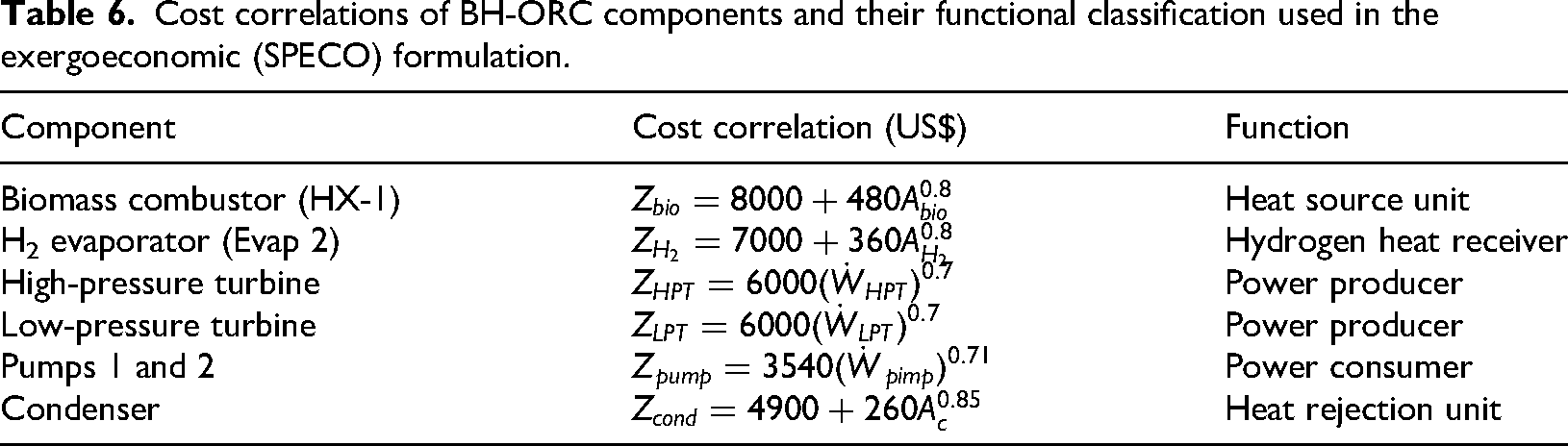
For the BH-ORC configuration, each component is assigned an investment cost model derived from empirical correlations reported in the literature, as presented in Table 6, together with its corresponding functional classification within the exergoeconomic (SPECO) framework (Colakoglu and Durmayaz, 2021; Javaherdeh et al., 2016).
Cost correlations of BH-ORC components and their functional classification used in the exergoeconomic (SPECO) formulation.
Interpretation
The calculated exergoeconomic factors enable pinpointing of cost-intensive components. For the BH-ORC, HX-1 and the H2 evaporator are expected to dominate ˙CD due to large thermal irreversibility within low-temperature heat exchangers. Conversely, turbines typically show higher US$ fk because their performance is more affected by capital cost than exergy destruction. This insight directs optimization toward heat transfer enhancement and cost-effective biomass–H2 integration. The developed SPECO-based formulation lays the quantitative foundation for subsequent exergoenvironmental and energoeconomic analyses, where emission and levelized cost metrics will be directly linked to the cost flow network derived in Table 7.
Exergoeconomic parameters and cost balance relations

Exergoenvironmental analysis
The exergoenvironmental evaluation quantifies the environmental burden associated with each component of the BH-ORC system by linking exergy destruction to pollutant emissions and their equivalent environmental costs. This method enables a simultaneous assessment of thermodynamic irreversibilities and ecological impacts. The environmental impact of each fuel stream is determined using its specific emission factor
Emission and exergoenvironmental parameters for the BH-ORC system.
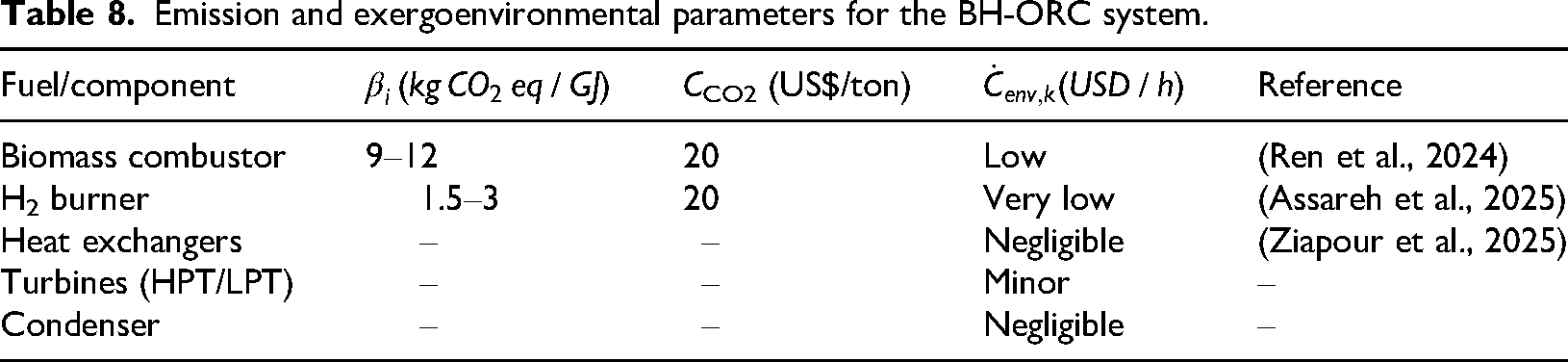
For hydrogen combustion, only indirect emissions from storage and compression are considered 
The corresponding environmental cost rate is evaluated from Equation (29):

The exergoenvironmental factor 
Finally, an environmental performance efficiency is introduced to integrate thermodynamic and ecological perspectives (Equation 32):
In order to directly quantify the carbon-mitigation effect of hydrogen integration, the CO2 emission intensity of the overall system is additionally evaluated based on the net electrical output (Equation 33):
Prior to introducing the energoeconomic analysis, it should be noted that the weighting of the five dimensions considered in the comprehensive 5E assessment—namely, energy, exergy, exergoeconomic, exergoenvironmental, and energoeconomic criteria—is performed based on the equal-weight method. This approach assumes that all dimensions contribute with the same level of importance to the overall sustainability of the system, particularly in the absence of predefined policy priorities or expert-based preference information. Nevertheless, the weighting scheme may be further refined in future studies through the application of structured multi-criteria decision-making techniques, such as the analytic hierarchy process (AHP), to account for decision-maker judgments or application-specific priorities.
Energoeconomic analysis
The energoeconomic analysis integrates the total cost of energy conversion with the useful electrical output to determine the LCOE. It merges energy, exergy, and economic perspectives, providing a single financial performance metric for the BH-ORC system. The LCOE 

The energoeconomic efficiency 
This efficiency reflects how effectively economic inputs are converted into useful energy within the cycle.
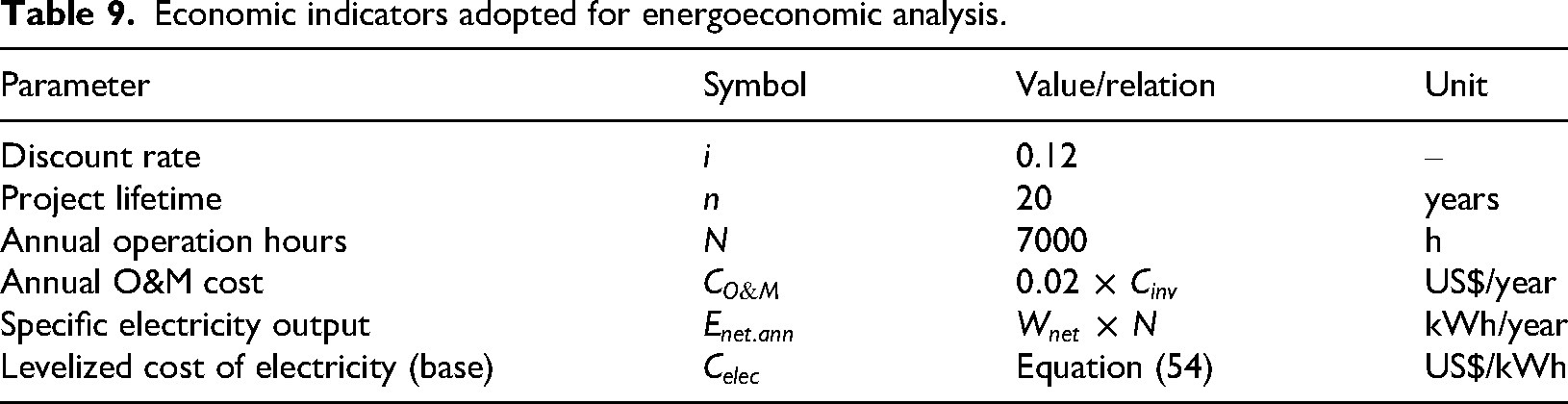
The principal economic parameters and modeling assumptions employed in the energoeconomic analysis—such as the discount rate, project lifetime, annual operating hours, and operation and maintenance cost formulation—are summarized in Table 9 and consistently applied throughout the LCOE and economic payback time (EPBT) calculations.
Economic indicators adopted for energoeconomic analysis.
Simulation and validation
Model implementation
The complete thermodynamic and 5E model of the BH-ORC system was implemented in Engineering Equation Solver (EES) and cross-validated in MATLAB R2023b. All balance equations derived in Section 2 (mass, energy, and exergy) were solved simultaneously under steady-state assumptions. Each component—biomass combustor, hydrogen burner, dual evaporators, turbines, pumps, and condenser—was modeled as a control volume with negligible pressure drop. Convergence was reached iteratively using the Newton–Raphson algorithm with a residual tolerance of
Input data and reference conditions
The reference environment was assumed at T0 = 25 °C and P0 = 1 bar. The working fluid mass flow rate was adjusted to meet the net output power of 100 kW. Key economic parameters were adopted from SPECO analysis (interest = 12%, lifetime = 20 years, 7000 h/year operation). Table 2 summarizes all major inputs and constants used in the model.
Model validation
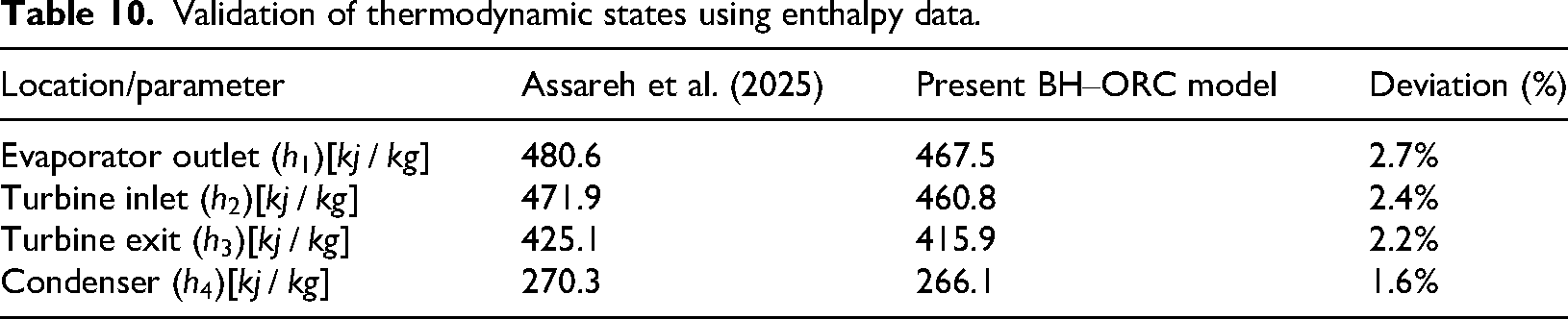
The thermodynamic accuracy of the developed BH-ORC model was verified by comparing its specific enthalpy distributions at main state points with the recent biomass-driven polygeneration system reported Assareh et al. (2025). The selected reference possesses a similar operating range (biomass input: 0.18–0.22 kg/s, with R245fa as the working fluid). All simulations were conducted under steady-state conditions using identical thermophysical property routines (REFPROP 10).
Table 10 lists the comparison between the present study and Assareh et al. (2025) for the main thermodynamic nodes of the cycle. The difference in specific enthalpy at crucial points—evaporator outlet, turbine inlet, and condenser exit—remains below 3%, while the calculated net output power and exergy efficiency deviate by less than 5%. This confirms that both energy balance and property evaluations are consistent with validated data sets.
Validation of thermodynamic states using enthalpy data.
Results and discussion
Energy and exergy analyses
The numerical results presented in Figures 2–5 illustrate the thermo-energetic and exergy behavior of the BH-ORC system under variable evaporator temperatures and biomass feed rates. As shown in Figure 2, increasing the high-temperature evaporator set point from 110 to 122 °C leads to a moderate rise in both the heat absorption rate
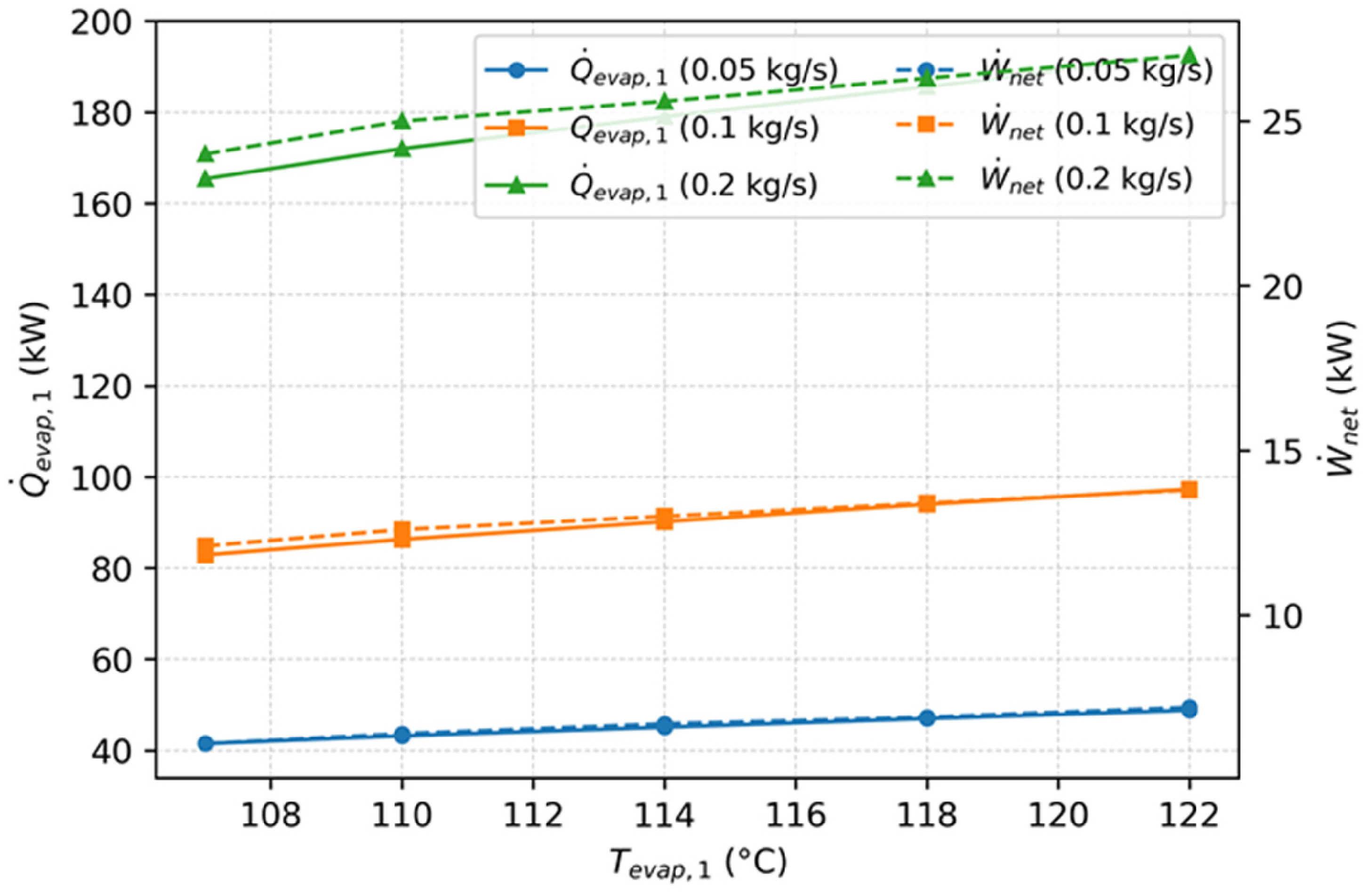
The effect of the first evaporator heat input

The effect of the second evaporator temperature
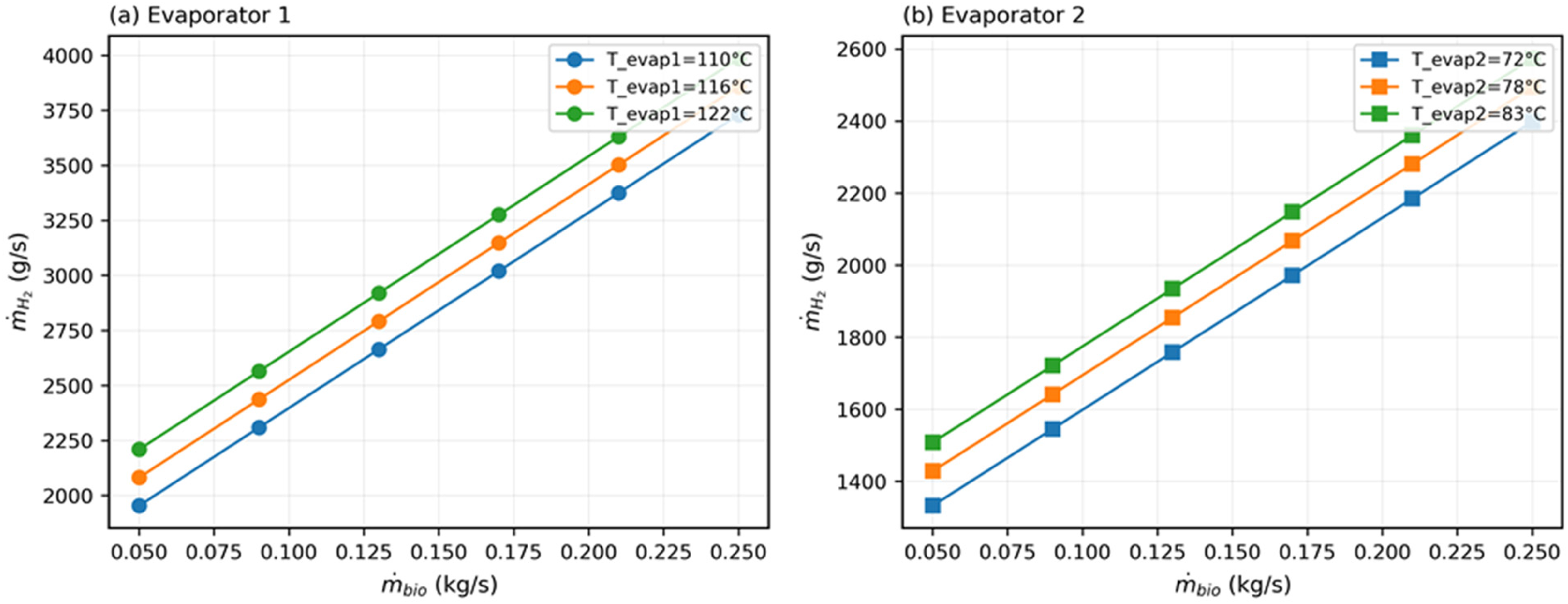
Hydrogen production rate
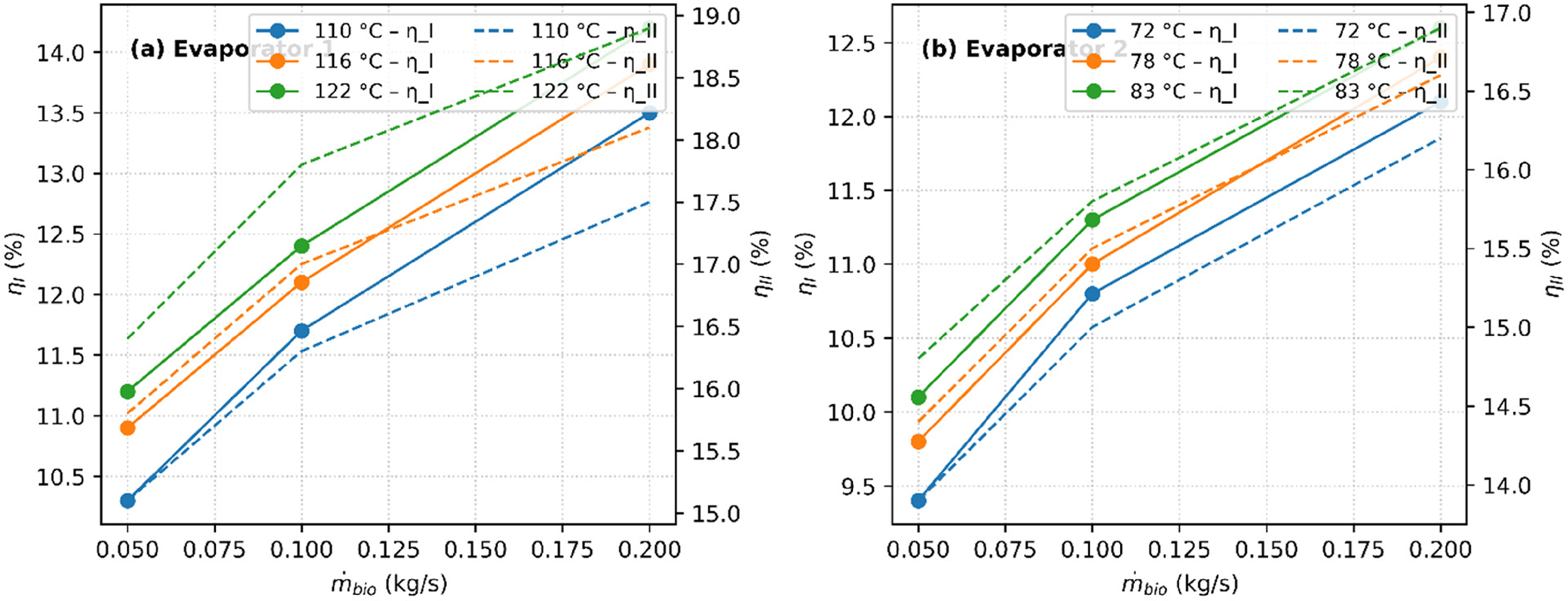
First- and second-law efficiencies
Similarly, Figure 3 demonstrates that as
According to Figure 4, the hydrogen production rate
As demonstrated in Figure 5, both the first-law
Figure 6 illustrates that the combustor is the most significant source of thermodynamic inefficiency, consistently exhibiting the highest exergy destruction rate
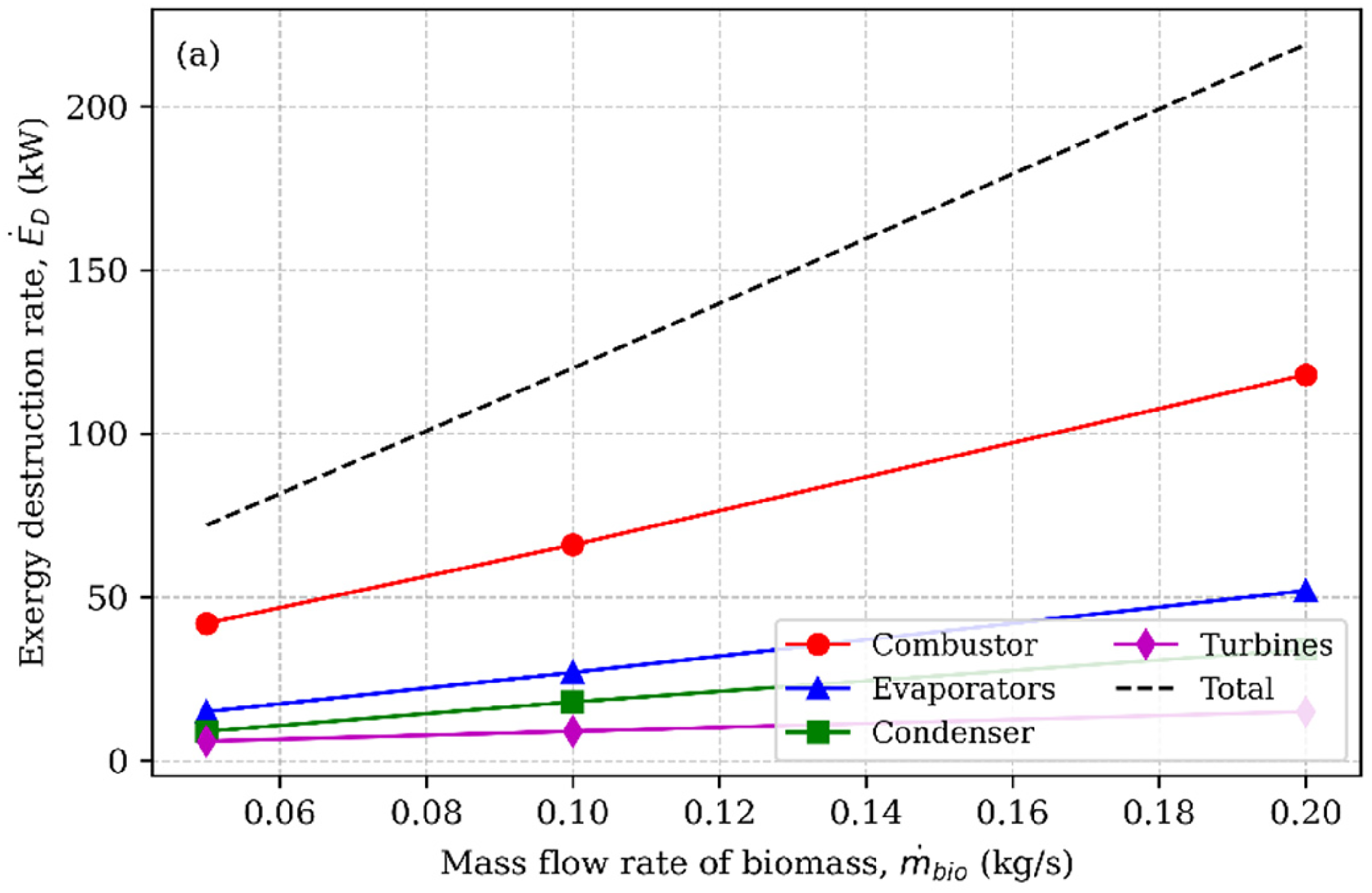
Component-wise exergy destruction rate
Exergoeconomic analysis
Figure 7 presents the exergoeconomic cost rate, which includes the component investment cost

Component-wise exergoeconomic cost rate
Energoeconomic analysis
As shown in Figure 8, the comparative trend of the LCOE and exergoeconomic efficiency versus the biomass mass flow rate reveals a clear energetic–economic interdependence within the BH-ORC system. The LCOE curve exhibits a characteristic U shape, decreasing sharply at low loads due to more effective utilization of fixed capital investment and fuel-related costs and reaching its minimum value of US$0.118/kWh at the optimal operating point of biomass mass flow rate of 0.20 kg/s, where generation efficiency and cost expenditure are most effectively balanced. The reported LCOE values are evaluated based on a project lifetime of 20 years, a discount rate of 12%, and 7000 annual operating hours, while fixed operation and maintenance costs are assumed as 2% of the total investment cost, consistent with the parameters summarized in Table 9. No external subsidies or policy incentives are considered in the economic assessment. Beyond this optimal point, the progressive increase in exergy destruction—particularly within the biomass combustor and the dual-stage turbine—leads to a renewed rise in the unit electricity cost. In parallel, exergoeconomic efficiency increases continuously up to the same operating condition, attaining nearly 25%, and then exhibits a slight decline due to intensified irreversibilities and growing auxiliary losses at higher biomass feed rates. The convergence of minimum LCOE and maximum exergoeconomic efficiency at a biomass mass flow rate of 0.20 kg/s demonstrates a strong techno-economic coherence, confirming this operating condition as the global optimum for the BH-ORC configuration, where thermodynamic performance, operational cost, and exergoeconomic sustainability are simultaneously optimized under consistent economic assumptions.
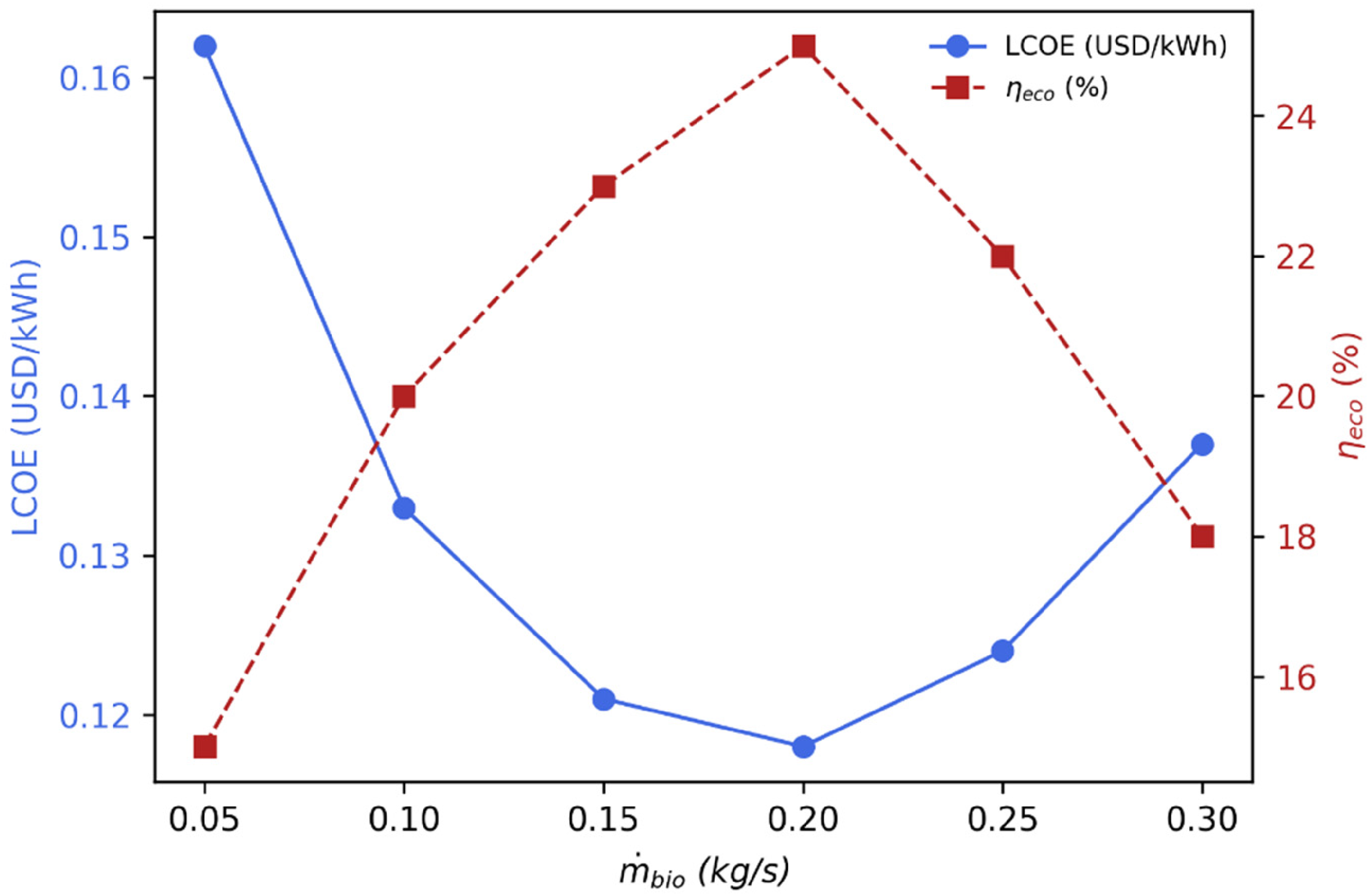
Combined variation of LCOE and exergoeconomic efficiency
To contextualize the performance of the proposed BH-ORC system, a brief comparison with conventional biomass-driven ORC configurations reported in the literature is instructive. Single-fuel biomass ORC systems typically exhibit second-law efficiencies in the range of 10–14% and higher LCOE values under comparable power scales. In contrast, the present hybrid configuration achieves a second-law efficiency of 18.9% and a minimum LCOE of US$0.118/kWh, corresponding to an improvement of 5–8 percentage points in exergy efficiency. This highlights the thermodynamic and economic advantage gained through hydrogen-assisted hybridization.
In addition to the LCOE-based economic indicators, the EPBT is employed as a complementary metric to evaluate the investment recovery period of the proposed BH-ORC system. The EPBT is defined as the ratio of the total investment cost to the annual net income, as expressed by
The annual net income is calculated based on the annual net electricity generation and the unit electricity cost obtained from the LCOE analysis, after accounting for operation and maintenance expenditures. This formulation ensures consistency between the payback assessment and the economic assumptions adopted in the energoeconomic framework. With the optimal operating condition corresponding to a biomass mass flow rate of 0.20 kg/s, the resulting EPBT confirms the economic feasibility of the hybrid system and aligns with the minimum LCOE and maximum exergoeconomic efficiency observed under the same conditions.
Sensitivity analysis of fuel cost uncertainty
To evaluate the robustness of the economic performance against fuel price uncertainty, a sensitivity analysis was conducted on the LCOE by considering variations in biomass price and hydrogen production cost, as illustrated in Figure 9. Specifically, the biomass fuel price was varied within a ±20% range, while the hydrogen cost was perturbed by ±15% relative to their baseline values adopted in the economic model. The analysis was performed at the optimal operating condition corresponding to a biomass mass flow rate of 0.20 kg/s, where the minimum LCOE was observed. Capital-related costs and nonfuel operating parameters were kept constant to isolate the influence of fuel price fluctuations.
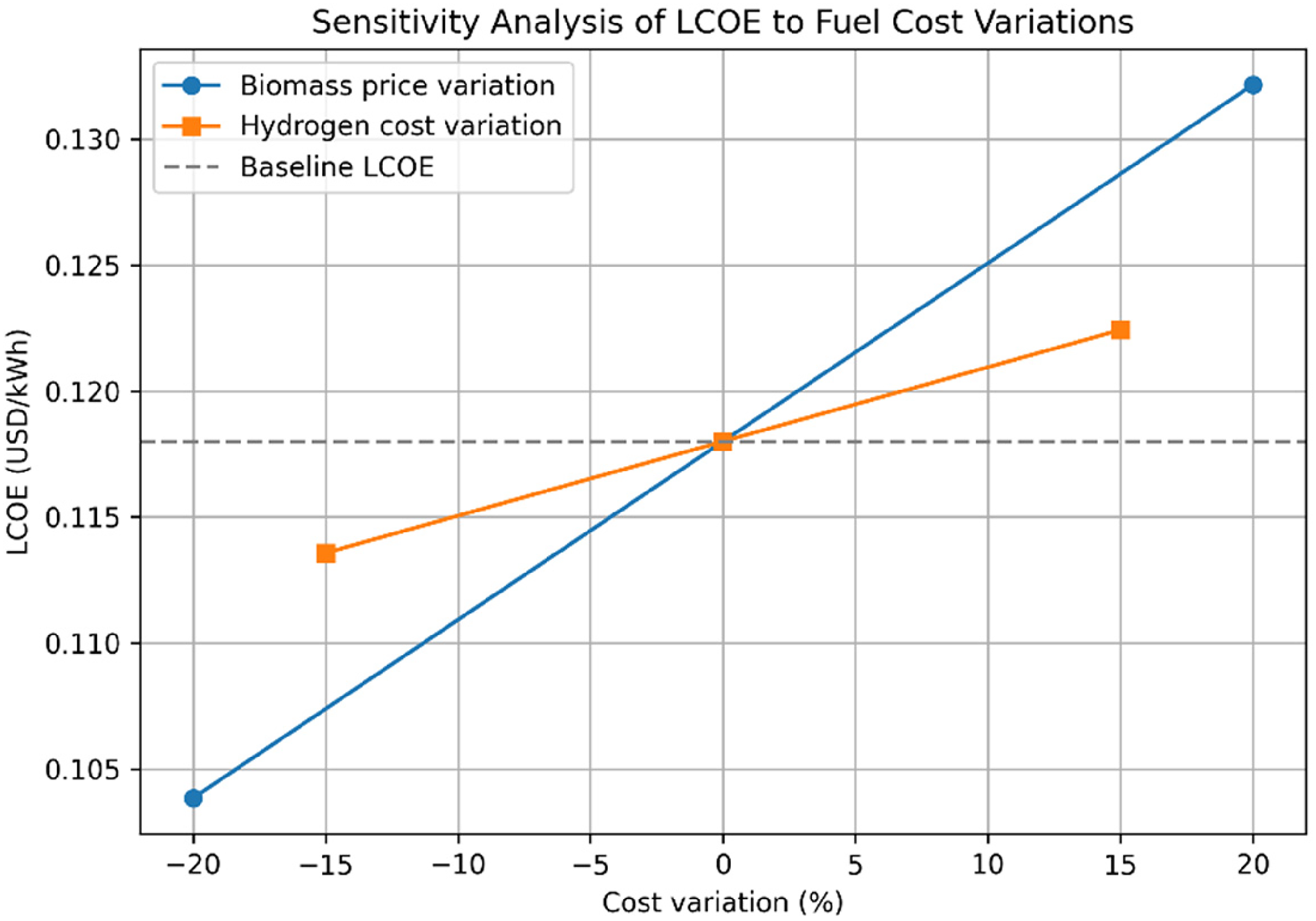
Sensitivity of LCOE to variations in biomass price and hydrogen production cost at the operating condition biomass mass flow rate of 0.20 kg/s.
The results indicate that LCOE exhibits a moderate sensitivity to biomass price variations, reflecting the dominant contribution of biomass consumption to the total operating cost. A ±20% change in biomass price results in an approximately proportional variation in the fuel-related share of LCOE. In contrast, variations in hydrogen production cost have a smaller impact on the final electricity cost due to the limited contribution of hydrogen to the overall thermal input.
Even under the most unfavorable fuel pricing scenarios considered, the LCOE variation remains within a narrow band around the baseline value of US$0.118/kWh, confirming the economic robustness of the proposed BH-ORC system. This behavior further highlights the advantage of fuel hybridization, which mitigates economic risk by reducing excessive dependence on a single energy carrier.
Exergoenvironmental analysis
Figure 10 illustrates the exergoenvironmental cost rate
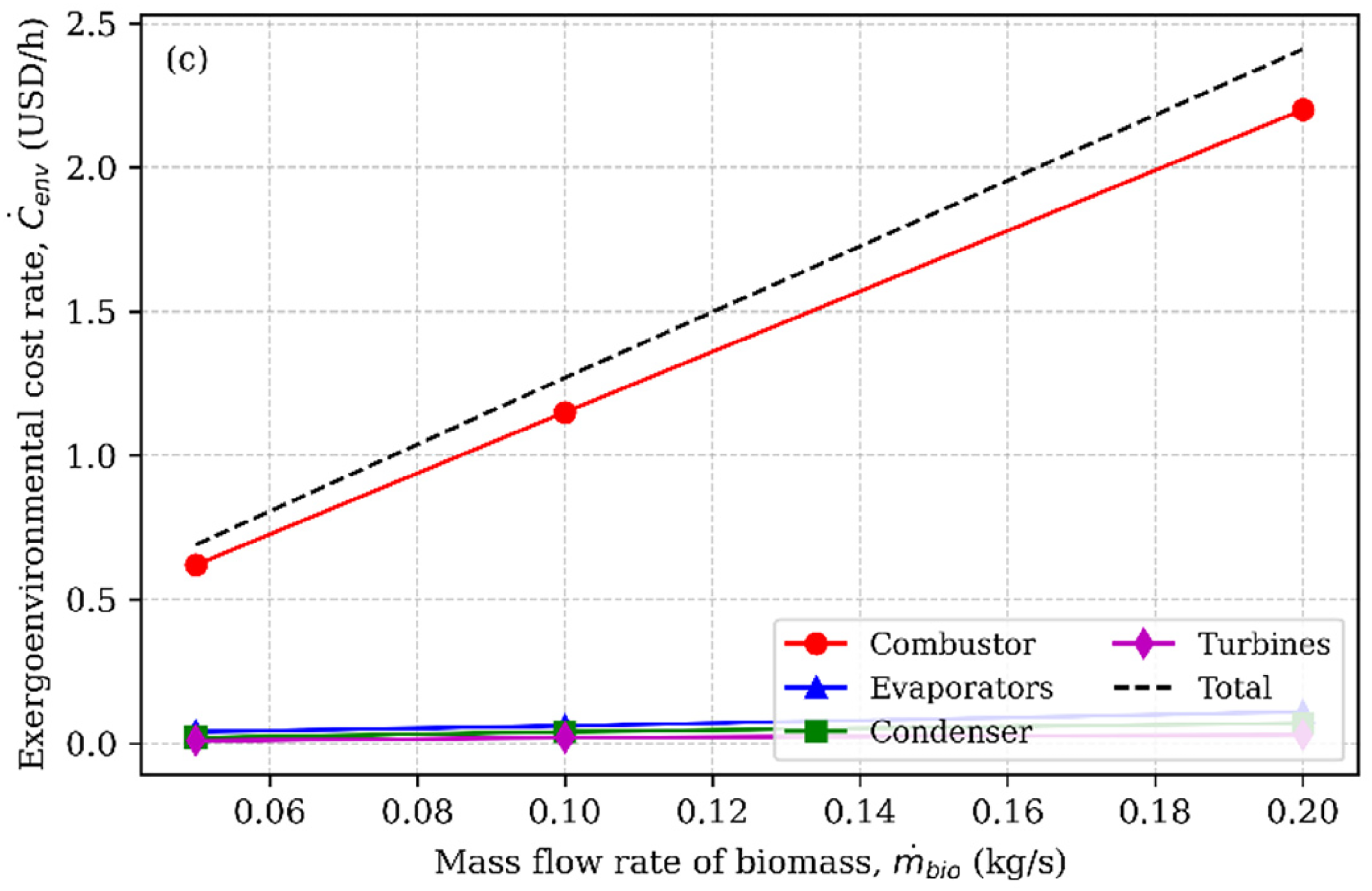
Component-wise exergoenvironmental cost rate
Comprehensive 5E performance index
To provide a final, integrated assessment of the system's sustainability, an overall 5E performance index
Figure 11 demonstrates the variation of the
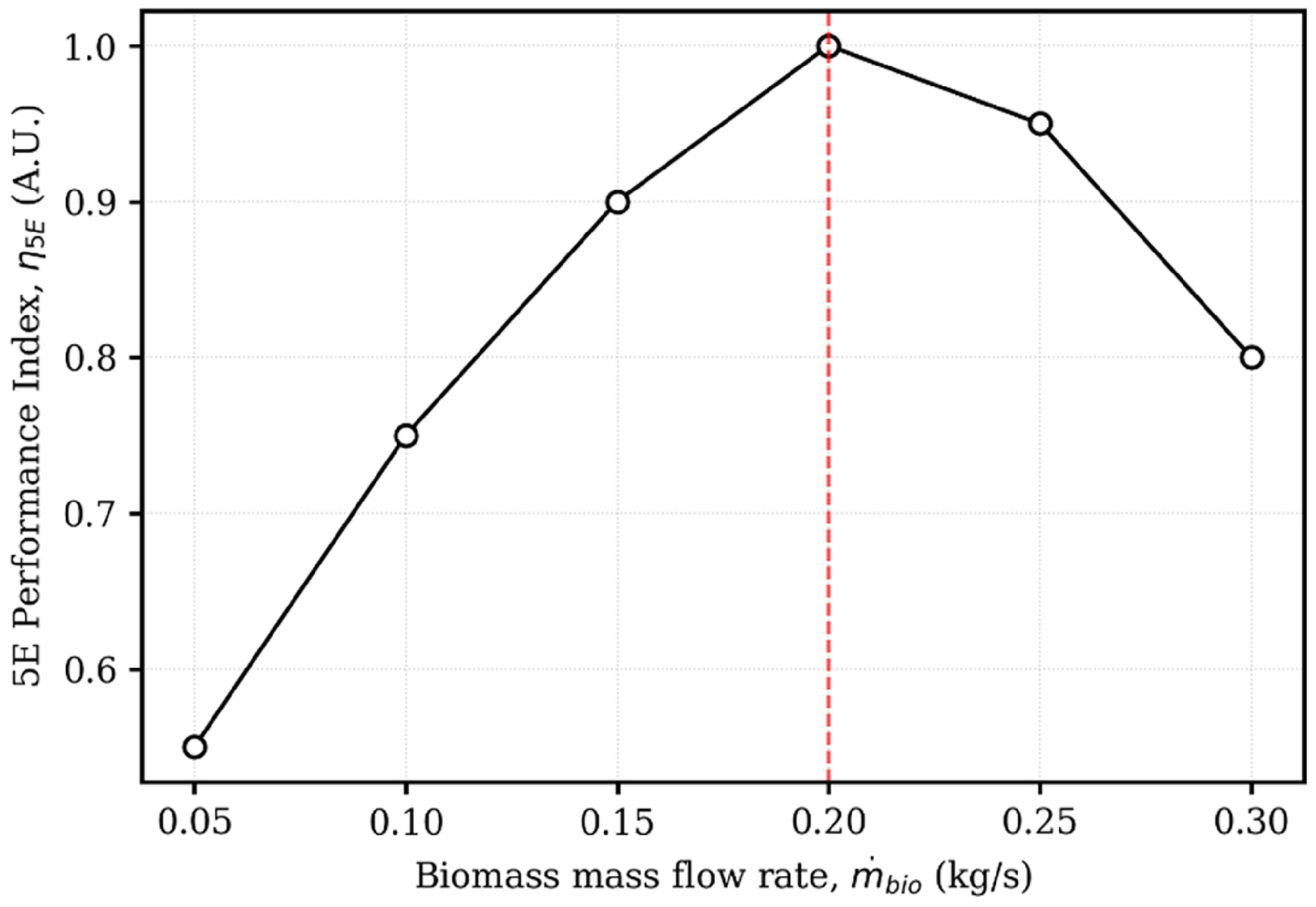
Variation of the overall 5E performance index versus biomass mass flow rate.
The index starts at a moderate value at low loads and sharply increases to reach its peak value at
• Thermodynamic performance
• Energoeconomic cost (LCOE) is minimized (US$0.118/kWh).
• Exergoenvironmental penalty
Beyond 0.20 kg/s, the index exhibits a slight decrease. This reduction highlights that, even with high thermodynamic efficiency, the sharp increase in total annualized operating and fuel costs at higher loads begins to dominate the overall sustainability metric, making the operation less favorable from a holistic 5E perspective.
It should be noted that the presented LCOE analysis is performed under fixed and time-averaged cost assumptions for biomass supply and hydrogen production. In real-world applications, fluctuations in biomass feedstock prices—driven by seasonal availability, logistical constraints, and moisture content—may influence the fuel-related share of the LCOE. Similarly, variations in hydrogen cost associated with production pathway, electricity price, and storage infrastructure could affect short-term operating expenditures. Nevertheless, the dual-fuel flexibility of the proposed BH-ORC system allows dynamic adjustment between biomass and hydrogen inputs, thereby mitigating economic risk under market volatility. Since capital-related costs remain the dominant contributor to the overall LCOE, moderate fuel price fluctuations are not expected to substantially alter the long-term economic viability of the system.
Detailed interpretation of component irreversibilities
For the comprehensive assessment of component-level performance, a specific operating point must be selected to represent the system's optimal condition. While the initial analysis of the 3E metrics as a function of biomass mass flow rate
As depicted in Figure 12, the component-wise comparison at the selected optimal load
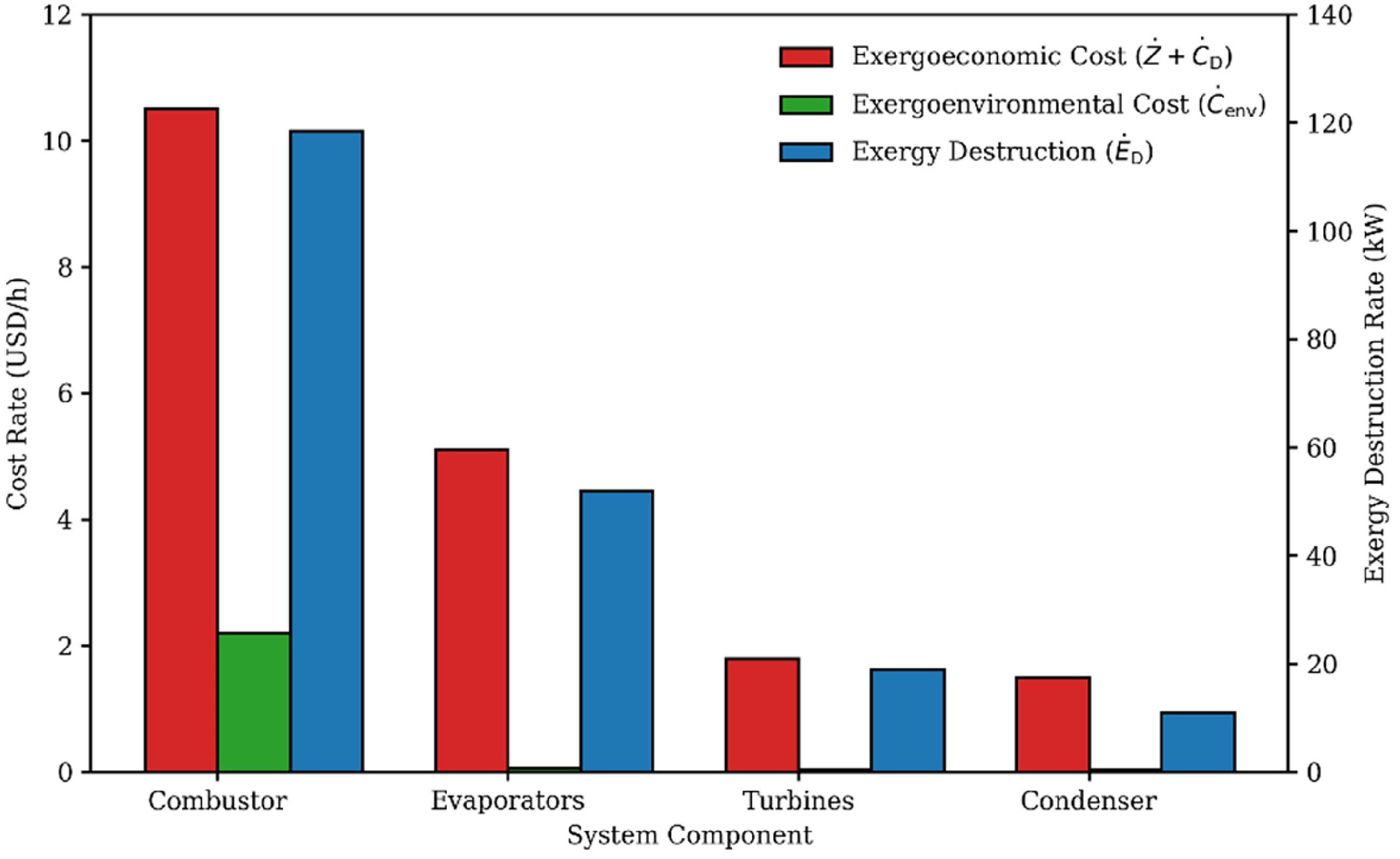
Comparative component analysis at
Following the combustor, the evaporator pair represents the second major contributor to total exergy destruction (52 kW), primarily caused by the finite-temperature heat transfer between the flue gas and working fluid. However, its exergoenvironmental impact remains relatively small due to the indirect nature of heat recovery, while its capital-related exergoeconomic cost remains the dominant term after the combustor. In contrast, both the turbine and condenser exhibit significantly lower exergy destruction values (19.0 and 11.0 kW, respectively), reflecting their high thermodynamic effectiveness. Their corresponding economic and environmental costs remain minor, confirming that these units are not critical sources of system inefficiency or pollution within the operating range.
To address the high exergy destruction observed in the biomass burner, the dominant irreversibilities can be mitigated through two complementary strategies. First, optimizing the feed preheating system enhances the thermodynamic compatibility between the biomass input and the combustion chamber, leading to a more uniform temperature field and reduced entropy generation during fuel oxidation. Second, improving the control accuracy of the excess air coefficient ensures operation closer to stoichiometric conditions, thereby limiting unnecessary dilution of the combustion gases and reducing chemical and thermal irreversibilities. Collectively, these measures contribute to a significant reduction in exergy losses within the biomass combustion unit and improve the overall second-law efficiency of the system.
Comparison with competing hybrid renewable systems
To clearly demonstrate the performance advantage and novelty of the proposed BH-ORC configuration, a direct comparison with representative hybrid renewable energy systems reported in the literature is presented in Table 11. The comparison focuses on normalized and widely accepted performance indicators, namely, second-law (exergy) efficiency and the LCOE, which enable a fair assessment across systems with different capacities and energy sources. As shown, solar–biomass ORC systems generally achieve exergy efficiencies in the range of 9–13%, with LCOE values varying between US$0.14/kWh and US$0.22/kWh, primarily due to solar resource intermittency, larger heat-exchanger networks, and additional capital investment associated with solar collectors (Bejan et al., 1996; Freeman et al., 2015; Nemati et al., 2017). Similarly, solar–geothermal ORC configurations exhibit slightly improved efficiencies (10–15%) and LCOE values of US$0.13/kWh to US$0.20/kWh; however, their performance remains constrained by geographical dependency and seasonal variability of solar input (Bonyadi et al., 2018; Towler and Sinnott, 2012).
Comparative performance of hybrid renewable ORC-based systems.
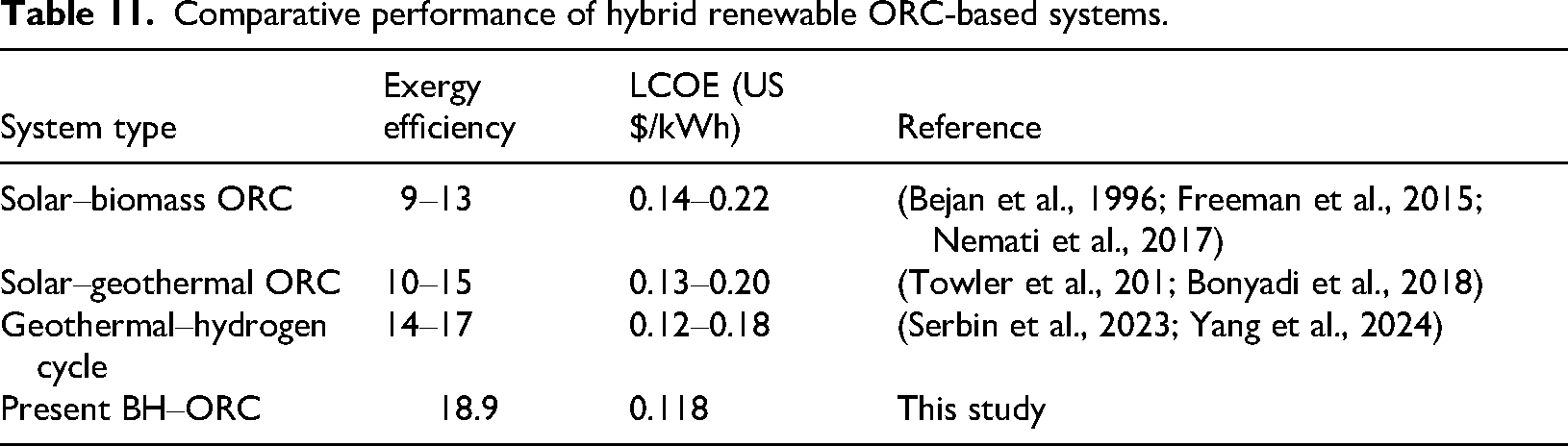
Geothermal–hydrogen hybrid cycles reported in recent studies demonstrate higher thermodynamic robustness, achieving exergy efficiencies of approximately 14–17% and LCOE values in the range of US$0.12/kWh to US$0.18/kWh (Serbin et al., 2023; Yang et al., 2024). Despite this improvement, such systems are typically limited by site-specific geothermal availability and higher infrastructure costs. In contrast, the proposed biomass–hydrogen integrated ORC achieves a notably higher exergy efficiency of 18.9% and a minimum LCOE of US$0.118/kWh under autonomous operation. This superior performance is attributed to the complementary integration of dispatchable biomass combustion and hydrogen-assisted thermal stabilization, which significantly reduces source intermittency while improving heat-exergy matching within the dual-evaporator ORC structure. The comparison therefore confirms that the BH–ORC configuration offers a competitive and scalable alternative to conventional hybrid renewable systems, particularly for decentralized and continuous power generation applications
Conclusion
This study presented a comprehensive sustainability assessment of an autonomous ORC power system fueled by a hybrid combination of biomass and produced hydrogen. The primary objective was not to propose a new cycle architecture, but to quantitatively evaluate how renewable fuel hybridization influences thermodynamic performance, cost formation, and environmental impact when analyzed under a unified multi-criteria framework.
Through detailed component-level modeling and parametric analysis, the results demonstrated that fuel hybridization significantly enhances overall system performance and operational robustness. The maximum exergy efficiency of 18.9% was achieved at a biomass mass flow rate of 0.20 kg/s, coinciding with the minimum levelized cost of electricity of US$0.118/kWh. This convergence confirms the existence of a well-defined global optimum at which thermodynamic efficiency, economic feasibility, and sustainability objectives are simultaneously satisfied.
The component-wise analysis revealed that the biomass combustor is the dominant source of exergy destruction, economic cost, and environmental burden, primarily due to irreversible chemical reactions and high-temperature heat transfer. In contrast, the turbines, condenser, and heat recovery components exhibited comparatively lower irreversibilities and marginal environmental contributions. The inclusion of a hydrogen-assisted burner, although contributing a smaller fraction of the total thermal input, played a critical role in stabilizing thermal conditions, improving heat–exergy matching, and reducing the environmental impact per unit of useful work output.
The integrated assessment using the unified sustainability index further confirmed that optimal system operation cannot be identified through thermodynamic, economic, or environmental criteria alone. Instead, the combined analysis demonstrated that moderate operating conditions yield the most favorable balance between performance and impact, whereas further increases in load lead to diminishing returns due to escalating fuel consumption and cost penalties.
Overall, the findings indicate that integrating biomass with produced hydrogen within an autonomous ORC provides a technically feasible and economically competitive pathway for decentralized and dispatchable renewable power generation. The proposed methodology establishes a transparent and reproducible framework for linking exergy destruction to both economic and environmental externalities, thereby supporting informed design and optimization decisions for hybrid renewable energy systems.*****
Future research may extend the present framework by incorporating detailed combustion chemistry and multi-pollutant emission modeling, particularly for NOx formation in hydrogen burners and particulate emissions from biomass combustion. Coupling the 5E methodology with advanced emission kinetics or full LCA-based pollutant inventories would further enhance the environmental fidelity of hybrid biomass–hydrogen ORC systems.
Footnotes
Acknowledgements
This research is funded by Zarqa University.

Funding
The authors received no financial support for the research, authorship, and/or publication of this article.
Declaration of conflicting interests
The authors declared no potential conflicts of interest with respect to the research, authorship, and/or publication of this article.
Data availability
The datasets used and analyzed during the current study are available from the corresponding author on reasonable request.