




Abstract
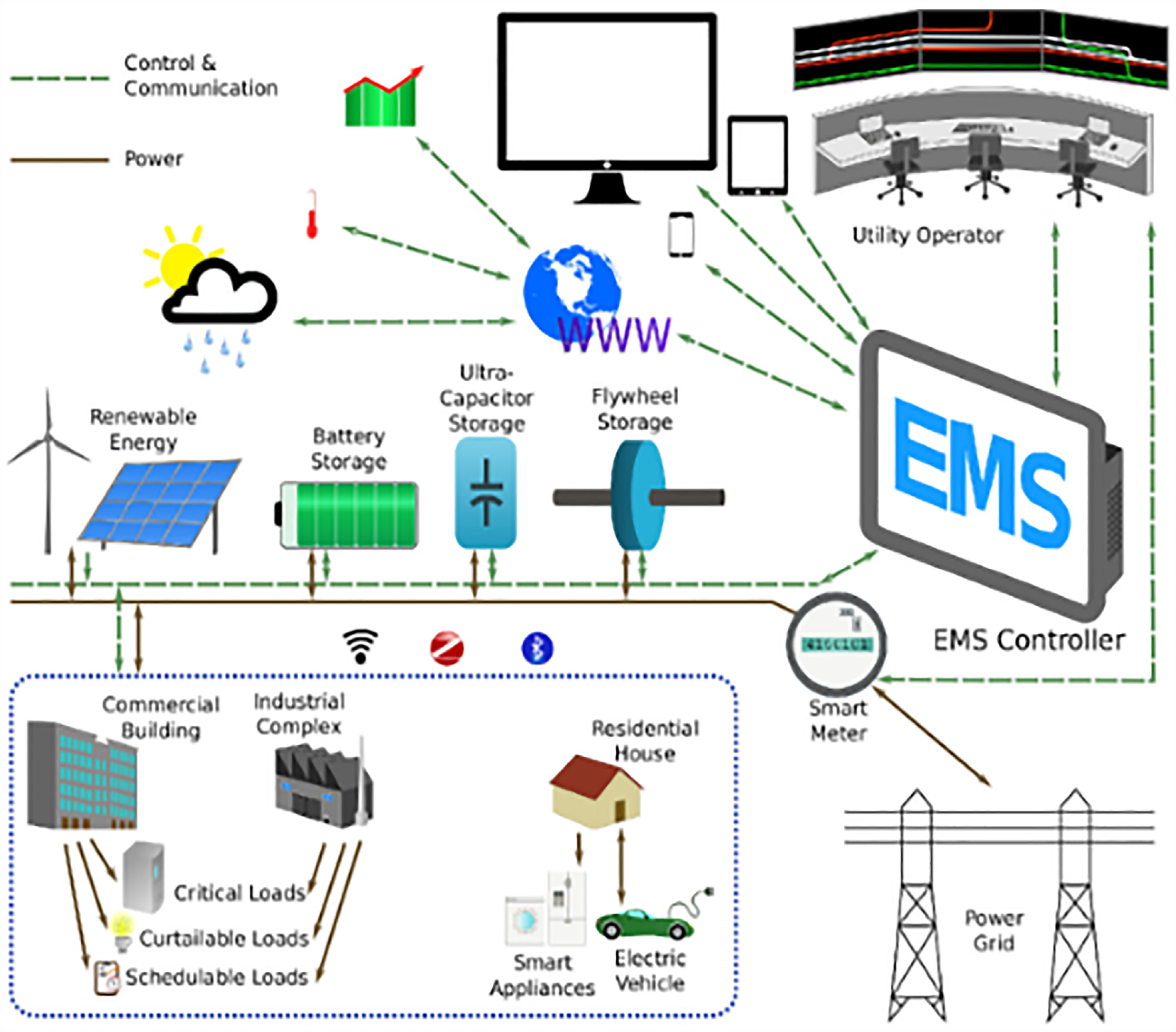
Burning fossil fuels results in more emissions than generating electricity from renewable sources. The transition to renewable energy from fossil fuels, which currently produce the majority of emissions, is essential to preventing the climatic disaster. Hybrid energy generation systems are still in their infancy. It is envisaged that future technology developments would lead to greater application and more economical goods. There will be more standardised designs, which will make it easier to select a system that is suitable for a certain application. The components will communicate more with one another. As a result, control, monitoring, and diagnosis will be made simpler. The hybrid energy system (HES), also known as hybrid power, is expected to be the long-term power solution for microgrid (MG) systems. This study compares and contrasts several theories and conventional approaches to controlling HRES’s control and energy consumption. A successful energy management strategy has been created using a variety of methods and procedures. The effectiveness of an EMS is determined by its control architecture and the solution approach used; common topologies include hierarchical, decentralised and centralised EMS. Supply side management and demand side management, two EMS components, will be discussed later. The three EMS control architectures are examined in this section. In order to determine the most practical and dependable solution with the lowest Net present cost (NPC), COE and realistic environmental consequences, various hybridisation cases of a PV panel, wind turbine, battery storage and diesel generator are designed, analysed and compared using DSM. The results of taking into account DSM indicated a reduction in CO2 emissions of 25%, NPC emissions of 14.8%, COE emissions of 14% and an increase in RF emissions of 8.5%. Two fundamental metrics – the DSM Quality Index for technical benefits and the DSM Appreciation Index for economic advantages – are used to assess the technical and economic benefits of DSM.
Introduction
The recognition of energy as a critical business has spurred efforts worldwide in recent decades to create renewable energy sources and the technologies that support them. New laws and regulations have been passed by governments around the globe to inspire trenewable energy sources usage (Olatomiwa et al., 2016). These initiatives include of advancing energy-efficient technologies, increasing the use of renewable energy sources and developing energy-saving strategies and legislation (Perera et al., 2013). The construction featured multiple backup energy sources, storage systems, and renewable energy sources. The best option to assure supply continuity given the fluctuating nature of renewable sources is to combine them with conventional sources to power distant loads or mini-grids (Moghavvemi et al., 2013). The construction featured multiple backup energy sources, storage systems and renewable energy sources. Due to the fluctuating nature of renewable sources, combining it with conventional sources to power remote loads or mini-grids is the best way to ensure supply continuity.
Hybrid renewable energy systems aid in enhancing power quality and boosting system dependability. Challenges such as erratic renewable energy sources like wind speed, solar irradiance, partial lifetime of energy storage devices and high initial installation costs that cause fluctuations in source and load power make it necessary to integrate various renewable energy sources using proper energy management strategies. Figure 1 shows the block diagram of a hybrid system, which comprises of solar panels, wind turbines, fuel cells, electrolyzers and batteries (Laxmi et al., 2018).
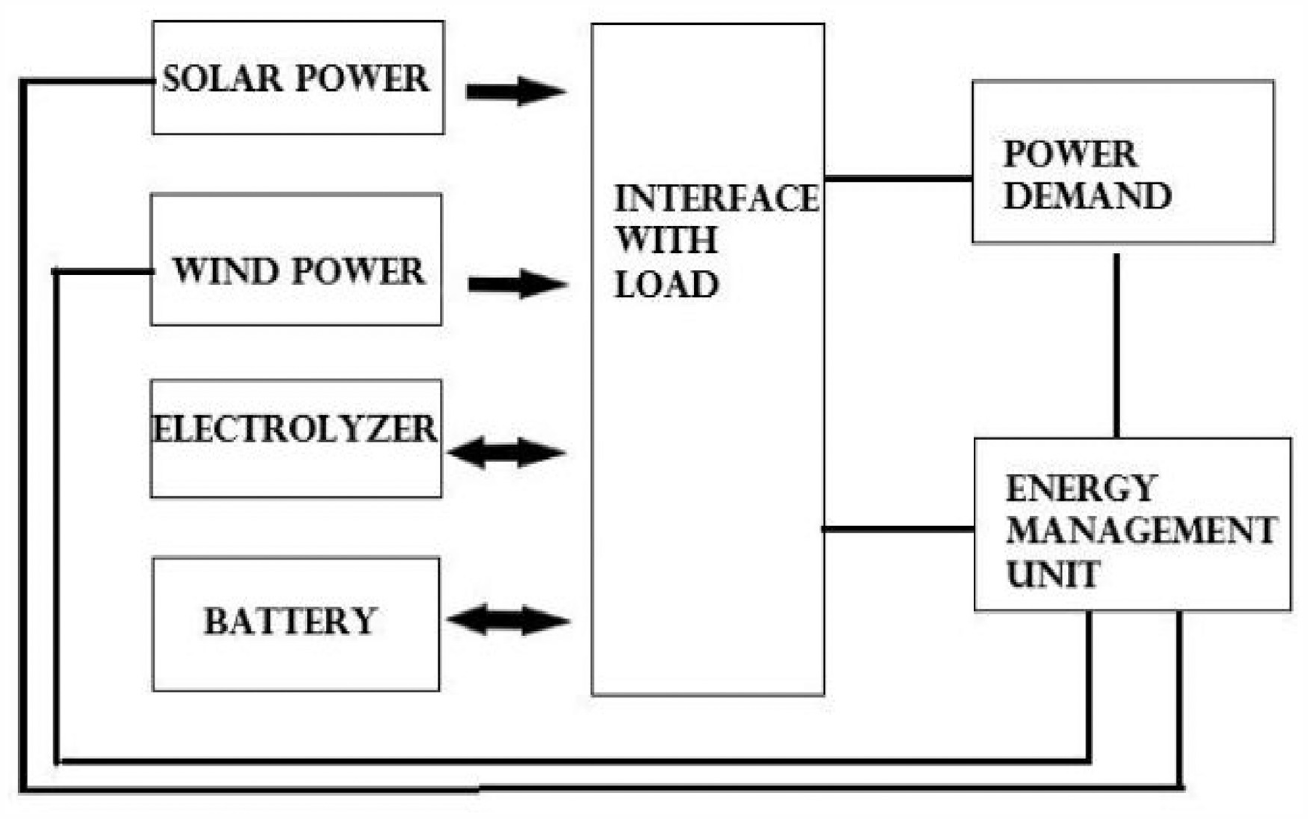
Hybrid energy system block diagram (Laxmi et al., 2018).
There is a lot of study being done today on hybrid systems and their uses (Harish and Kumar, 2014). A hybrid power system combines several energy generating and/or storage techniques or uses two or more distinct fuels to power a generator (Systems, 2011). When moving away from a fossil fuel-based economy, a hybrid energy system is a helpful tool. In fact, increasing the use of renewable energy sources through the addition of conventional thermal power generation can be beneficial in the near term while new technologies for better integrating renewable energy sources are still being developed. Hybrid power systems can leverage existing power infrastructure and add components to reduce costs, environmental impact, and system disturbance (Zhang et al., 2023a). The market, not the technology, is the main factor to be taken into account when designing a hybrid power system; the objective is to choose a mix of power technologies that will best meet customer expectations for dependability and efficiency. Both Stand-Alone (SA) and Grid Connected (GC) operating modes are available for hybrid renewable energy systems (HRES) (Benadli et al., 2021). HRES has a number of benefits over single source systems. Figure 2 depicts some of these advantages (Hassas and Pourhossein, 2017).
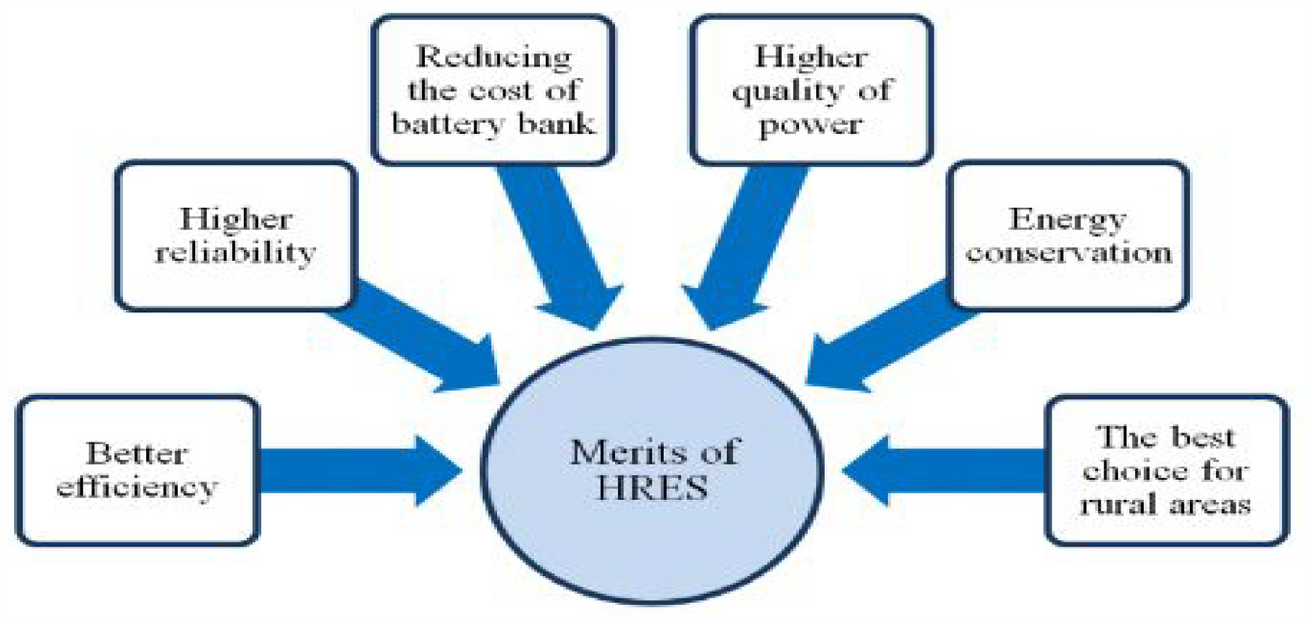
Main advantages of HRES (Hassas and Pourhossein, 2017).
An effective Energy Management (EMS) approach is required if several different energy sources are employed to power a single load. Through the supply system, the energy is directed using this tactic. The hybrid renewable energy systems must meet this criterion whether they are freestanding or integrated into the electrical grid. In off-grid systems, this technique accomplishes a number of tasks, including preventing overloading from destroying components, enhancing grid stability and ensuring constant load supply. It also requires optimising the usage of renewable sources and incorporating them into the optimisation problem to decrease the cost of energy generation. The metring of energy and managing its flow to and from the grid are additional responsibilities of energy managers. These objectives also involve managing the energy flow to change the load curve’s peaks or benefit from off-peak times. To implement an energy management plan, a central controller should be selected, set up and programmed to govern the system in line with an ideal approach. Figure 3 shows the number of HRES publications according to different parameters (Khan et al., 2022).
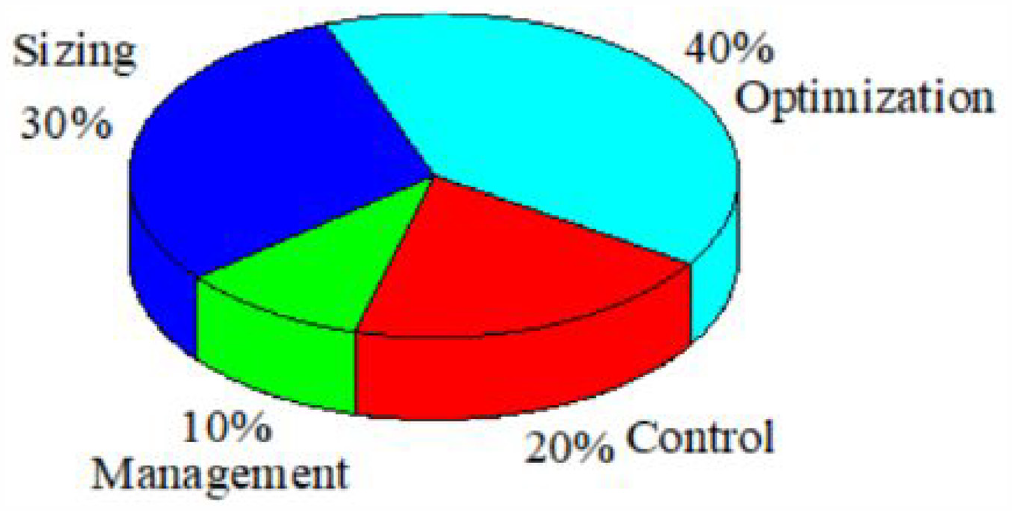
HRES Publications from 1992 to 2022 (Khan et al., 2022).
The demand for energy must be satiated using all available energy sources. Renewable energy is plentiful and clean, but its inconsistent availability is its biggest disadvantage. To solve this problem, a variety of energy sources are combined to form a ‘hybrid renewable energy system’. This study (Ammari et al., 2022) controls (central, distributed and hybrid controls), as well as energy management (technical, economic and techno-economic objectives). The literature contains a number of thorough studies of various hybrid system energy management strategies. Controlling the flow of energy between the various sources is necessary when there are several energy supply/storage systems. Therefore, to lower the cost of the system and reduce its negative effects, optimising the size of the components and implementing an energy management strategy (EMS) are crucial (Olatomiwa et al., 2016). The power management technique is frequently combined with optimisation to ensure load supply continuity and reduce the cost of power generating. As a result, ‘energy management’ refers to all scientific techniques for controlling and reducing the quantity of energy and associated costs needed to run a given application in line with its specifications.
Despite the fact that climate change is real, many off-grid villages still rely on diesel generators for power. Arévalo-Cordero et al. outlines a management plan to lower the amount of diesel used in an off-grid system powered by renewable sources (PV-HKT-WT-DG). To assess the effect on diesel usage and generator hours, three different power distribution schemes were put forth. In addition, various energy storage technologies (including supercapacitors, vanadium redox flow, pump storage and lithium-ion) were taken into account. For a hybrid off-grid system intended to power controllable loads, a different energy management strategy (EMS) is suggested by Yahyaoui and de la Peña (2022) the necessary electrical power while ‘ensuring the maximum use of energy produced by renewable sources, and ensuring that the battery bank operates at no cost and in the specified state values to ensure their safe operation’ in order to reduce the use of the genset. Using machine learning, predictive energy management for the grid is demonstrated (Refaai et al., 2022) to optimise the energy exchange with the supply network by means of logistic regression. To use logistic regression to improve the energy exchange with the supply network. The suggested model is examined using fluctuating electricity costs. The suggested method and forecast model can handle more than half of the annual load demand in comparison to present power systems. The majority of renewable energy systems link to the grid or are designed to be self-sufficient. Due to restrictions in the inverter markets, this is a concern, especially for tiny high power systems. In this study (Pradeep et al., 2018), ‘By creating a wind-PV hybrid system that can function as both a stand-alone system and a system that is connected to the grid, a novel power management method was created’. The inverter utilised in this study was built to work both on and off the grid. Users had the option of working up to 10% more effectively with the proposed control device. In order to get around the intermittent nature of producing renewable energy from a single source, hybrid renewable energy systems (HRES) have been developed. To maximise HRES, popular approaches and paradigms for managing and controlling energy are investigated.
Given the difficult nature of rural electrification and the expanding academic interest in hybrid renewable energy systems (HRESs), it has been thought that this approach is both necessary and natural. In order to advance these investigations (Mokhtara et al., 2020), makes an innovative suggestion for how to optimise an off-grid PV-solar-diesel-battery hybrid system for home electrification in arid locations using a typical residential building that will be constructed in Adrar, southern Algeria. Using an internal MATLAB algorithm designed around the idea of a multi-agent system, the proposed HRES is conceptually simulated first, and is then optimised by reducing the total net present cost (TNPC), which is based on the dependability level and the renewable fraction (RF). After validation against the HOMER programme, additional techno-economic evaluations, such as sensitivity analyses that take into consideration various battery technologies, will be carried out.
Another study (Merabet et al., 2022) presents an improved energy management system that reduces the energy expenses and storage needs of a grid-tied alternative and a hybrid solar and wind microgrid with battery storage. Power management now includes load-shifting to reduce energy expenses. The system accurately determines energy costs by using component efficiencies. According to the results, using a linear profile for the contribution factor and load shift led to daily costs for energy and degradation of $68.27 and $ 0.81, respectively. When compared to the conventional energy management system, which ignores grid power and load shifting when using battery storage, these costs reflect a 25.66% reduction in energy expenditures and a 91.72% reduction in battery degradation costs (Conte et al., 2022).
This approach makes predictions about the future values of community energy attributes using a time-delayed neural network. A stochastic model predictive controller uses these predictions later to optimise the combined ‘operation of the battery energy storage system with the proper control strategy’. In comparison to the competition, the model predictive control fed with these predictions produces the highest revenues. When compared to using the same management system without using forecasts from a forecasting method, total income increases by 18.72%. In this research (Mohamed and Mohammed, 2013), from the standpoint of costs and system stability, an efficient algorithm for optimising the distribution network operation in a smart grid was put forth. The major objective of the suggested algorithm is to manage the available electricity from various sources in order to satisfy load demand for the least amount of money while giving renewable energy sources the highest priority. In addition, an intelligent energy binding method was created to govern the batteries and ensure that they can only discharge when there isn’t expected to be a significant load in the near future. As a result, they serve as a buffer for the system’s stability, the rise in anticipated heavy loads, and the reduction of voltage dips.
In addition, peak-shifting during the day is another economic function of the batteries. The solar-powered system should be combined with energy storage due to variations in electricity demand and weather patterns for effective energy management (Jienkulsawad et al., 2022). An adaptive control based on neural networks is developed to regulate and satisfy the continuing electrical needs of households while adhering to technological requirements. The residential area is one that utilises more electricity due to the rising urbanisation of society and the automation and electrification of many daily activities, including urban mobility and indoor comfort. This increased demand necessitates a corresponding increase in fuel consumption for electricity generation (Chakir et al., 2022). Describe a management system for an electric car with a PVWindBattery hybrid renewable system connected to the national grid, a future home with controlled electrical demands, and both. A linear programming model with non-linear constraints, which is solved in MATLAB toolboxes, serves as the foundation for the suggested management system. System decisions in the grid’s Home-to-Vehicle (H2V) mode provide switching control states for the connection architecture as well as variations for the Vehicle-to-Home (V2H), Home-to-Vehicle (H2V) and Grid-to-Vehicle (G2V) scenarios.
‘Another study (Liu et al., 2022) develops communities with pumped hydroelectric power stations, hydrogen taxis, and renewable energy systems that are integrated with net-zero energy management for the commercial building sector. Based on the anticipated installation potential of offshore wind and solar photovoltaic electricity’. Bhattacharjee and Nandi (2021)‘proposes the creation of a grid-connected, biomass-based, solar, wind and hybrid energy system with an intelligent energy management system (VSEMS) that is based on voting’. A state-of-the-art Rule-Based Energy Management Algorithm (EMA) serves as the foundation for VSEMS’s judgements. By enhancing customer input in decisions influencing their energy supply, the suggested solution simultaneously manages the disruption of renewable energy sources. ‘The outcomes demonstrate how cost-effective and environmentally beneficial it is’. It has been acknowledged that the expanding research interest in hybrid renewable energy systems (HRESs) is a natural but essential answer to the problem of rural electrification. The majority of research, according to a bibliometric analysis the authors conducted, only use supply-side management techniques to optimise the design of such a renewable energy system. Zhang et al. (2018) examines a technique for energy management in a hybrid energy storage system (HESS) that combines electricity and hydrogen to produce power from renewable sources. The newly proposed power management strategy targets the primary factors that contribute to fuel cell (FC) performance degradation, such as: B. poor humidification and frequent, abrupt voltage shifts. The entire performance of HESS is demonstrated using the suggested energy management method. Aktaş and Kırçiçek (2020) outlines a novel optimal energy management approach (NOEMS) for utilising a hybrid renewable energy system (HRES) that utilises offshore wind, ocean current, batteries and ultracapacitors in the most efficient way.
A thorough analysis of the methods employed by numerous authors in their publications introducing energy management solutions is undertaken in the current study. Grid-connected hybrid renewable energy systems and stand-alone hybrid energy systems are some of these strategies. This paper discusses the governance of the system (centric, distributed, hybrid and traditional methods) and management of the energy systems (technical policy of purpose, economic strategy and techno-economic strategy) in hybrid renewable energy systems. It also provides a global summary of the most recent research on these four key axes.
The most recent approaches that have been proven in hybrid systems coupled to the generators used in these techniques are also a major emphasis of this study. Towards the end of the section, a thorough comparison is made of the uses of the various control mechanisms, as well as their advantages and disadvantages.
This review study is to provide an overview of the various energy management techniques used in hybrid renewable energy systems. ‘The assessment will be done for different concentrations of stand-alone and grid-connected hybrid systems’ in order to be sure and ultimately come to the conclusion that the energy management strategy that works well and can be used for some renewable energy systems may not be the best for other concentrations. In some of the research we looked at, several energy management techniques were tried to discover which was most successful. The section prior to this one covered these details.
There are seven sections in this study. The first category of publications consists of studies that suggest standalone hybrid renewable energy systems that make use of particular energy management techniques. The second half of the article provides examples of energy management strategies utilised in smart grids, including the technical, financial and techno-economic approaches of hybrid renewable energy systems. The architecture of the ems is shown in Section 3. The fourth section illustrates hybrid energy system control solutions, and the fifth segment illustrates the best control management flow. The results and discussions are shown in sixth section and contains concluded in section seven.
Management methods of hybrid renewable energy system
‘Energy flow between the multiple HES components (energy sources, storage systems and loads)’ must be managed by a specialised Energy Management System (EMS). It is feasible to accomplish one or more of the objectives depicted in Figure 4 by adhering to a certain EMS (Vivas et al., 2018).
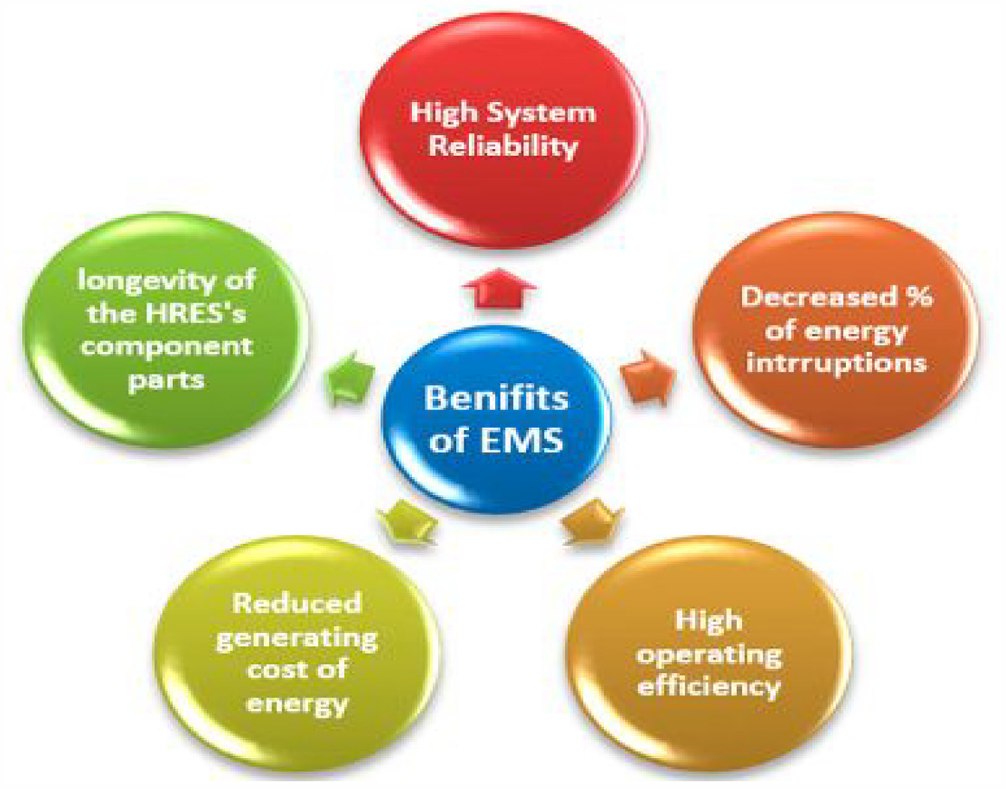
Benefits of EMS (Vivas et al., 2018).
Hybrid system management makes it possible to supply the system year-round, extend element life, reduce economic parameters (total cost, levelling cost, etc.), and ultimately optimise system performance. The management of the hybrid system ensures high system efficiency and high reliability at the lowest cost to enable year-round system supply, an extension of element life, a decrease in economic parameters (total cost, tiered cost, etc.), and ultimately a maximisation of system performance, as shown in Figure 10 (Mahesh and Sandhu, 2015).
Conventional control strategies
For hybrid energy from renewable systems, specialised energy monitoring techniques are required to save operating costs and increase efficiency. The effective operation of hybrid renewable energy systems requires a few standardised techniques that rely on linear programming and PI controllers.
Vaccari et al. (2019) produced a shared hybrid energy by optimising renewable systems using the sequential linear programming (SLP) algorithm. The proposed approach reduces running costs by establishing an operational plan for the setpoints of each device over a specific time horizon. A grid-tied system with a UPS and a hybrid power source with regenerative capability using photovoltaic and wind energy is suggested for heavy loads (Chiang et al., 2010). The suggested energy balance management technique ensures the load will continue to have access to energy while making better use of the recovered energy. ‘Morais et al. (2010) proposed the most effective plan using mixed integer linear programming for wind energy, solar system, FC and battery’. ‘With the aid of solar, wind and fuel cell systems, Dursun and Kilic (2012) analyse the isolated hybrid system using novel power management techniques’.
Photovoltaic and wind energy sources are the main supply sources. The fuel cell provides the backup source. The FC is used to create an uninterrupted flow of energy. Shared primary sources provide the load’s necessary power while the power management method preserves battery SOC. The electrolyser is powered by the extra energy created when the amount of energy produced exceeds the amount that is needed and the battery SOC is within acceptable bounds. When there is a large demand for power, the FC feeds the load and also recharges the battery. A hybrid system comprising a mini-hydro, diesel, solar, biomass and biogas generator has been created by Gupta et al. (2010). The optimal dispatch policy is put into place and the system’s ideal sizing is calculated using the linear programming technique. Zervas et al. (2008) developed a model of ideal control for hybrid power systems using FC and solar cells. Dahmane et al. (2013) displays a method for monitoring the energy consumption of a standalone hybrid system made up of a solar array, a wind turbine, a diesel generator and battery storage. When operating in priority mode, the PV generator delivers electricity to the consumer. The wind source only works secondary if there is a weather-related malfunction. Diesel power is utilised when the load cannot be powered by either the wind or the solar panels.
Advanced control strategies
Conventional techniques, such as linear PI controllers, are used to solve a wide variety of issues. However, for a number of particular situations, such as projections for energy from renewable sources, storage forecasts and demand forecasts, the results are insufficient. As a result, intelligent methods should be employed instead of traditional ones. Numerous studies on contemporary techniques, such as neural networks, fuzzy systems, genetic algorithms, differential evolution and neuro-fuzzy, have recently been proposed. Abedi et al. (2012) developed a strategy for the most efficient management of the energy in a renewable integrated system with a variety of energy sources and storage systems. A system with the most popular sources, such as batteries, electrolyzers, hydrogen tanks, diesel generators and wind, PV and FC sources, will be used to test the suggested technology. The article’s main objective is to enhance energy management such that load needs are still met while operating costs are kept to a minimum. Client demand is met by the PV and wind energy sources, and any extra energy is used to charge the storage system. An technique for differential evolution based on fuzzy systems has been developed for the optimisation nonlinear multi-objective system. In an isolated wind, diesel and battery hybrid power system, predicted load and utility conditions were evaluated in order to suggest a predictive energy monitoring method by Dennis Barley and Byron Winn (1996). The suggested technique is a hybrid system cost-effective solution, per a comparison analysis between unexpected management tactics and a modelled energy monitoring strategy. Mohammadpour Shotorbani et al. (2021) provide an online energy management strategy for the real-time operation of microgrids.
Dali et al. (2011) suggested a hybrid system with a PV array, wind turbines and batteries that uses an ideal balanced energy management mechanism. For the hybrid system, an estimated and investigative validation is done. The projected model analyses the system behaviour under dynamic conditions, and the control algorithms demonstrated an efficient energy management strategy (Roumila et al., 2017). For hybrid power generation using wind sources, solar systems, and diesel generation with battery storage, an enhanced control with monitoring attribute based on fuzzy system has been created. The hybrid system’s operational protocols are reviewed in light of the weather. Erdinc et al. (2009) proposed a fuzzy system and wavelet application-based energy monitoring technique, using the fuzzy system to control power and wavelet to investigate signals.
Three RESs – PV, hydro and WT – are included in the supply side of the HRES, which can be divided into demand and supply sides. The demand side, however, also includes a variety of applications and small businesses. So it stands to reason that managing both demand side load and generation (using RES) would be a better course of action.
Supply side management challenges
As previously indicated, RESs can more effectively cover a sizable portion of the energy needed to meet an energy load than a single type of renewable energy source. This is because solar and wind power depend on meteorological factors like sun radiation and wind speed. When these RESs are integrated as a system and various approaches or tactics are offered, the issues posed by the variability in their power productions can be overcome.
- Proper modelling of the RESs to lessen power fluctuations could accomplish this. This entails choosing the best type and size of installed generation units as well as the best configuration for the HRES components.
- Selecting the best dispatch plan while keeping costs at a minimum and load needs in mind.
Demand side management challenges
The fundamental difficulty with employing HRES is that the daily and seasonal patterns of power availability may not coincide with the pattern of the requested load. The goal of demand side management (DSM) is to balance the load pattern so that it matches the generation profiles of the RESs. Implementing DSM techniques like peak shaving and load shifting has the potential to balance these sides.
DSM is used to improve system performance by moving loads during periods of low power output and reducing the high peak of the load profile. It also increases the utilisation of energy produced from RESs. Some energy demands can be moved to times when there is less energy demand (off peak times), provided there is enough energy available from other sources.
The application of DSM strategies that can boost RES utilisation, reduce reliance on the main grid, and maintain the demand and supply for energy balance in order to reduce COE and CO2 emissions.
Demand-side management (DSM) has historically been thought of as a way to lower peak electricity demands. It can be used to successfully meet energy demand using RES with the least amount of BBS and the most amount of direct energy supplied from RESs. DSM improves overall system reliability and reduces the frequency of blackouts, among other positive benefits in HRES applications. DSM also aids in lowering reliance on pricey non-renewable fuels, which lowers COE and harmful emissions like CO2 emissions. As a result, DSM used in hybrid energy systems offers notable benefits in terms of dependability, efficiency and the environment.
To achieve the best possible design and operation of HRES, DSM techniques like peak shaving and load shifting had been targeted at balancing the generated energy with the load requirements. In order to make better use of the energy produced and save money on utilising more power to prevent load shedding, it is preferable to move the consumption of electricity (for some realistic demand) to off-peak hours. A smoother demand profile produced by load shifting from high-peak to off-peak times also reduces total COE and improves the sustainability of HRES.
DSM techniques
The suggested DSM can be achieved by reducing load during high peak periods and making up for it during off-peak periods, preventing oversizing of the HRES configuration and lowering the NPC, COE and peak-to-average ratio (PAR). Based on how adaptable each activity in the load profile is, they can be categorised. It is possible to modify or reduce flexible loads without compromising the convenience and effectiveness of satisfying demand. If the required energy cannot be relocated from the expected energy profile or rescheduled, the load is classified as non-flexible. This is the circumstance when the load necessitates a definite start and finish time. These loads have to be run entirely in the allowed time. These appliances cannot be relocated to off-peak times as a result.
Shiftable loads and curtailable loads are two categories for fixable loads (Wu et al., 2015):
(i) Shiftable loads are those where the required energy must be provided but where it is acceptable for the shape of the energy profile to change or be shifted over time. The following categories can also be used to categorise shiftable loads:
Although it has a set profile, the shiftable profile load (PSPL) can still be moved and rescheduled in the same order in time.
PSVLs, or shiftable volume loads, have customisable profiles but a fixed volume.
(ii) Energy requirements known as curtailable loads (PCL) can be reduced without having to be replaced. The DSM categories are visualised in the following Figure 5.
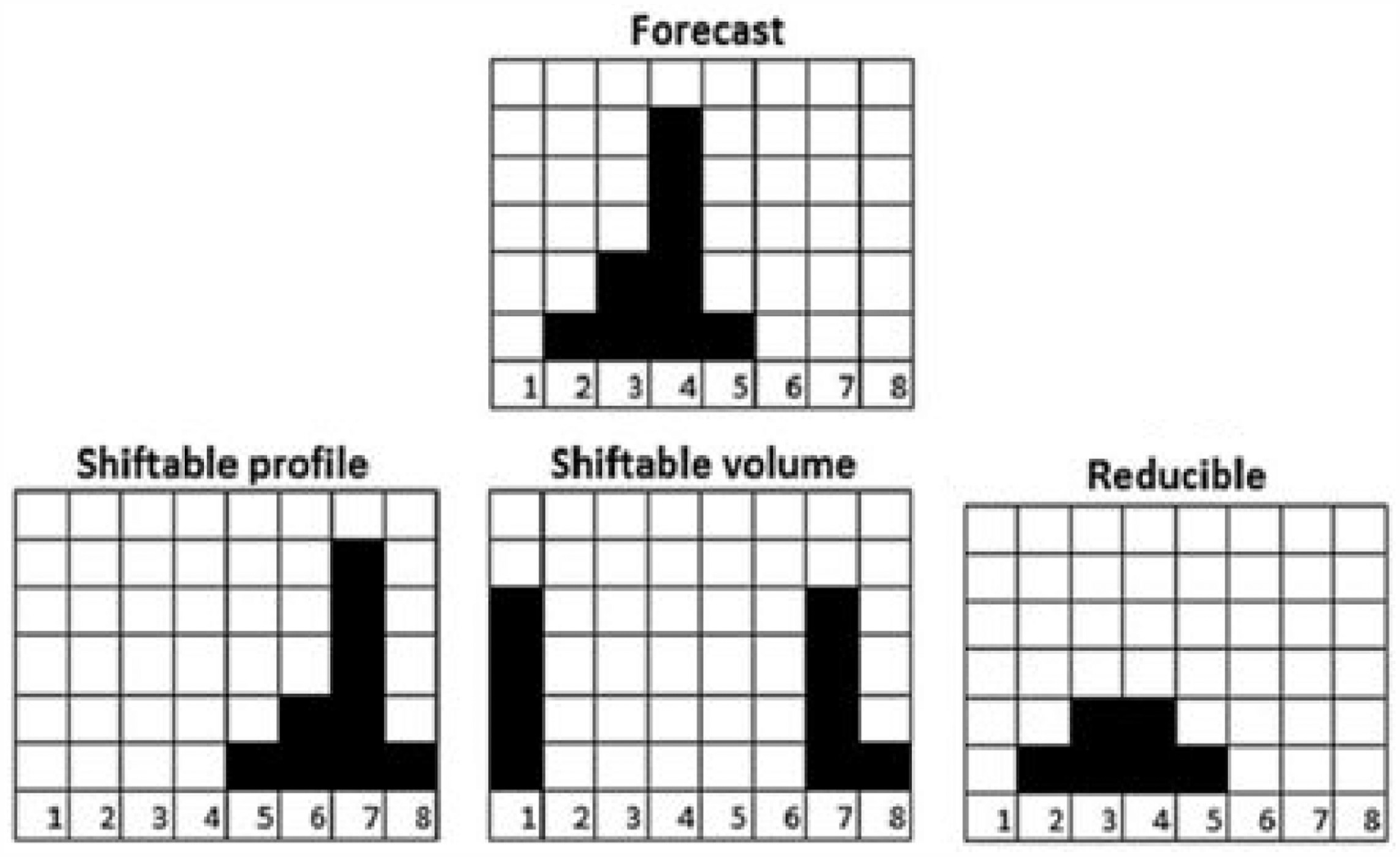
Visualisation of DSM classifications (Wu et al., 2015).
Shiftable profile loads and shiftable volume loads, as previously mentioned, are applied to the load power requirements that are supplied by HRES.
While shiftable profile and shiftable volume loads can be managed, fixed loads must be operated exactly as scheduled at the scheduled time. If the order of the load operations doesn’t vary, shiftable profile loads can be operated at different times. On the other hand, the shiftable volume load must be operated for the requisite number of hours, regardless of how it is operated.
While the operation of a shiftable profile load can be rescheduled, the order in which the operations are performed cannot. In the case of a shiftable profile load, only the load operation’s initial time can be controlled without changing the lord of relation’s order. The shiftable volume load, on the other hand, has the capacity to function regardless of the order in which operations are performed. However, only the daytime hours should be given for the entire operating period of the shiftable volume load. When there is a high energy demand but a low production of RES, or when there is a high energy demand but a low generation of RES, critical scenarios would be implemented. In these cases, DSM could be used by allowing higher consumption during peak hours and lower usage during off-peak hours.
Management objective strategies
Three sorts of management methods are recognised as a result of objective strategy:
Technical objective strategy.
Economic objective strategy.
Techno-economic strategy objective.
Technical objective strategy
The major goal of this technique is to consider the hybrid system’s technical characteristics in order to meet the load demand (Zhu et al., 2019), lengthen the equipment life (Cherukuri et al., 2020), boost power (Bonkile and Ramadesigan, 2019), improve system stability (Kosmadakis et al., 2019), extend the lifespan of the storage system (battery, fuel cell, supercapacitance, etc.) (Rullo et al., 2019) and many other aspects that distinguish each hybrid system generator (Figure 6) (Al Busaidi et al., 2016). Different algorithms, such as predictive control (Eriksson and Gray, 2019), PSO (Yan et al., 2019), real-time optimisation (Li et al., 2019), neural network (Padrón et al., 2019) and HOMER software (Vaccari et al., 2019), are used to manage these parameters.
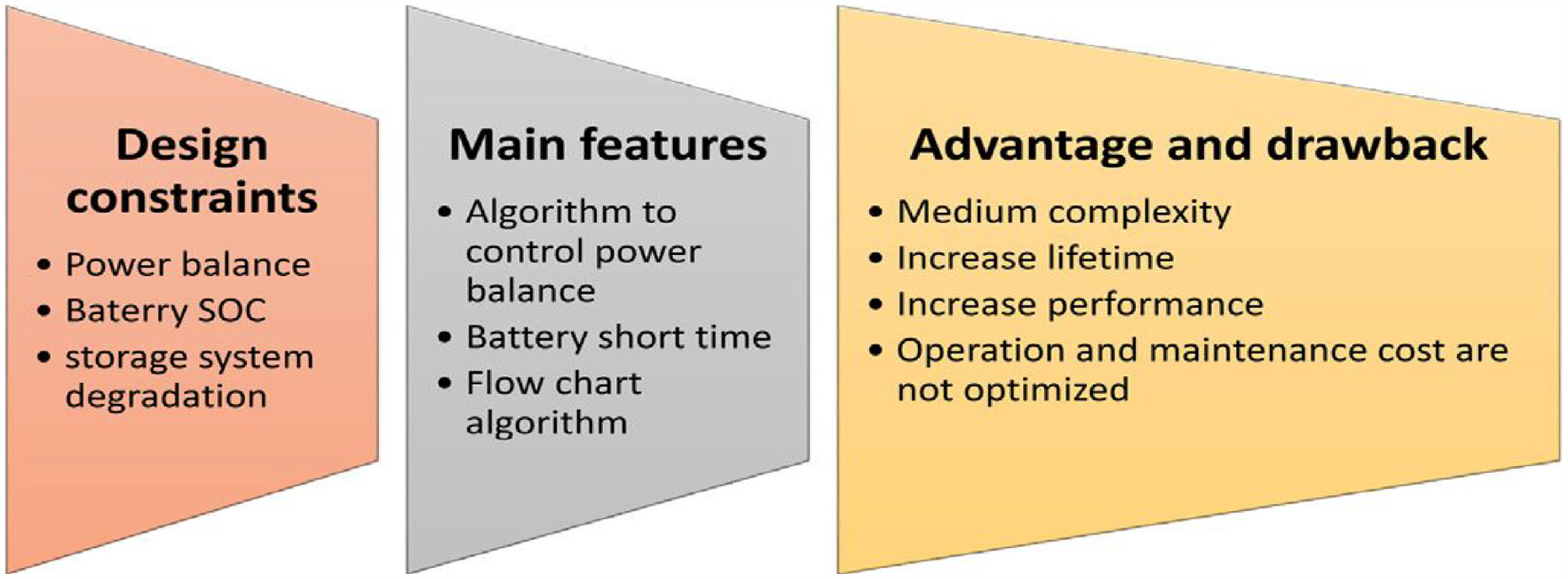
Technical strategies features (Al Busaidi et al., 2016).
Economic objective strategy
Regardless of the technical circumstances (stability, system performance, etc.), the target economic strategy is any plan that considers some factors affecting the economic condition of the system (Figure 7) (Al Busaidi et al., 2016). The satisfaction of demand and the reduction of system costs by an algorithm other than a generic algorithm (Rashidi and Khorshidi, 2018), differential evolution algorithm (Huang et al., 2019), mixed-integer linear programming (Athari and Ardehali, 2016), fuzzy logic (Rouholamini and Mohammadian, 2016), interior search algorithm (Muh and Tabet, 2019), as well as commercial software like HOMER (Arabi Nowdeh et al., 2019)… are two of the main objectives of significant studies on economic strategy.
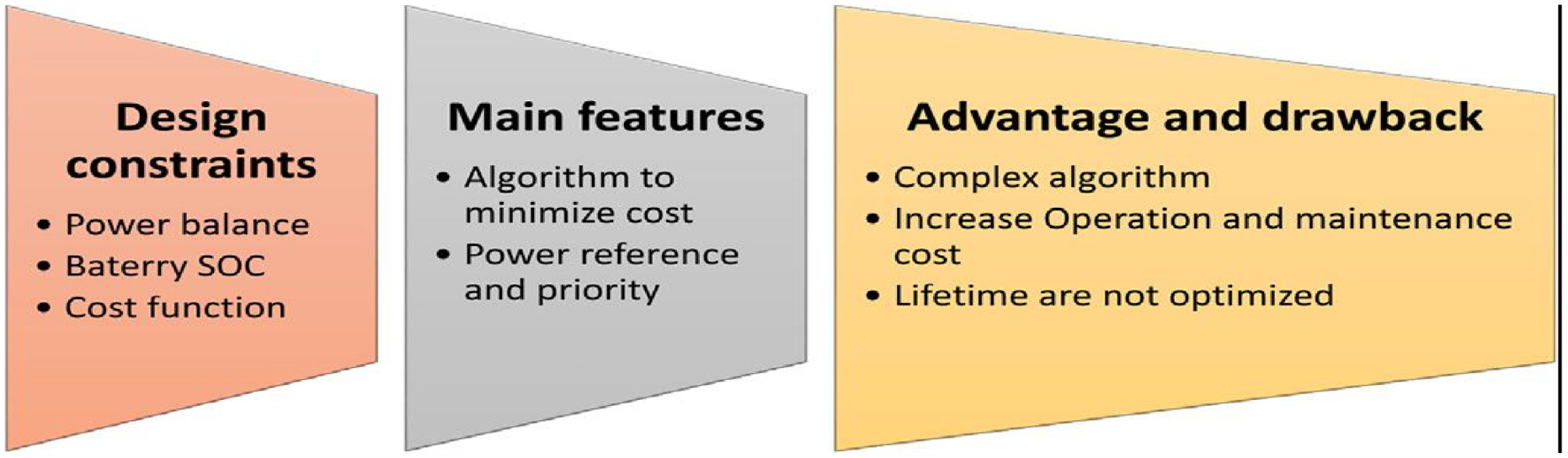
Economic strategies features (Al Busaidi et al., 2016).
Techno-economic objective strategy
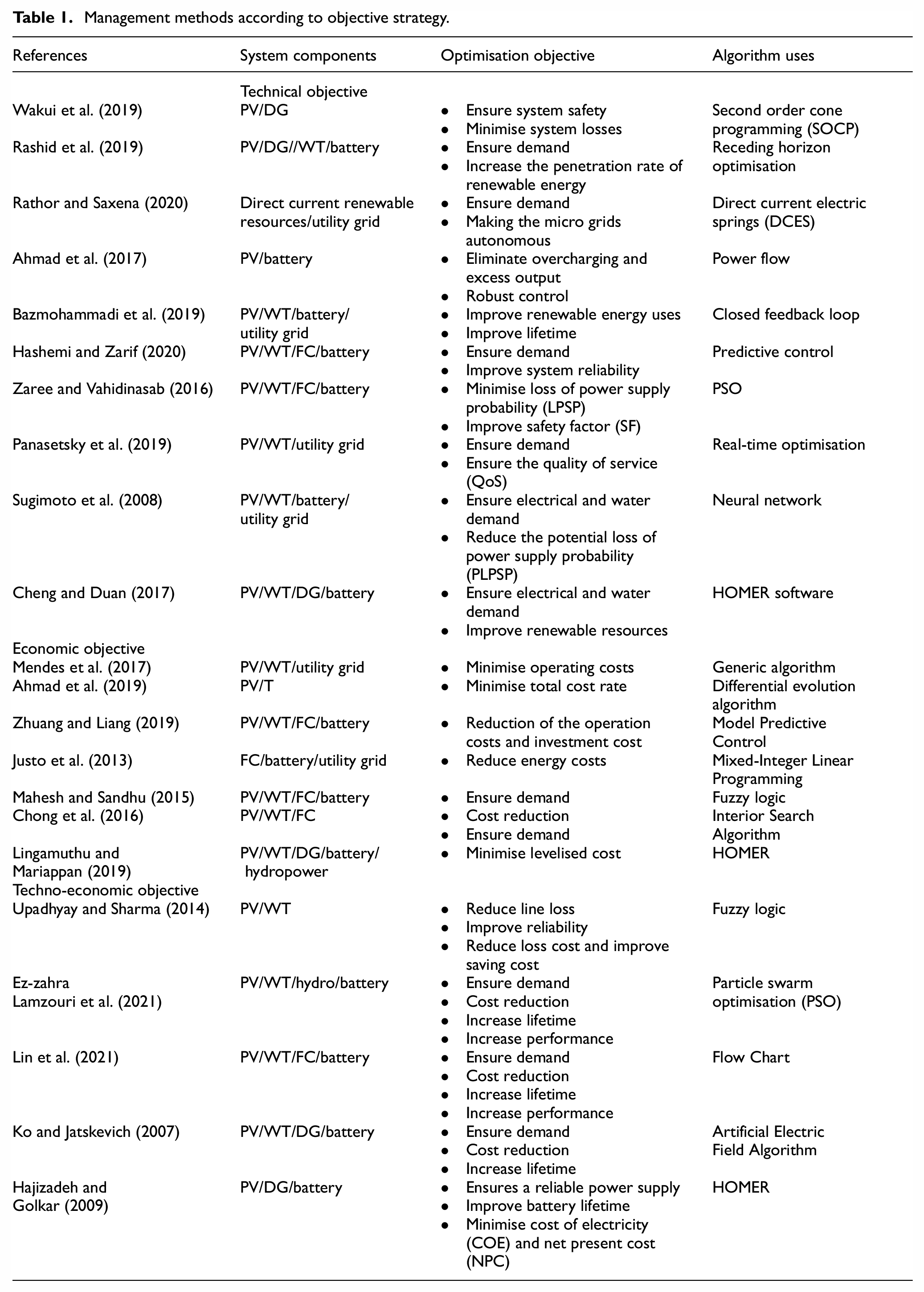
Non-linear optimisation is used in this method to solve multi-objective problems while accounting for both technological and financial factors. This strategy’s benefit is that it lowers economic parameters like total cost while increasing technical characteristics like performance and component longevity (Figure 8) (Al Busaidi et al., 2016). Fuzzy logic (García-Triviño et al., 2016) and particle swarm optimisation (PSO) (Valverde et al., 2016) are two popular algorithms that are the foundation of the major methodologies employed in this strategy. Table 1 lists all management techniques in order of target strategy. Participants and stakeholders in the energy management system are depicted in Figure 9 (Rathor and Saxena, 2020).
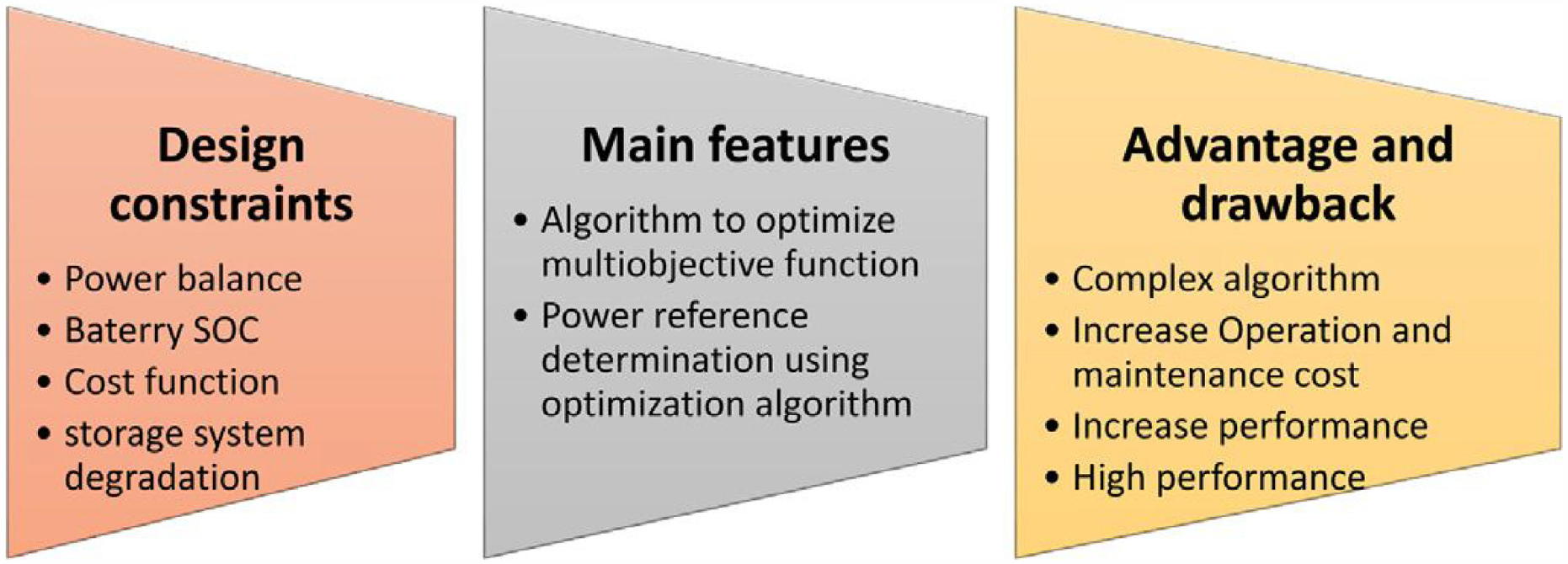
Technio-economic strategies features (Al Busaidi et al., 2016).
Management methods according to objective strategy.
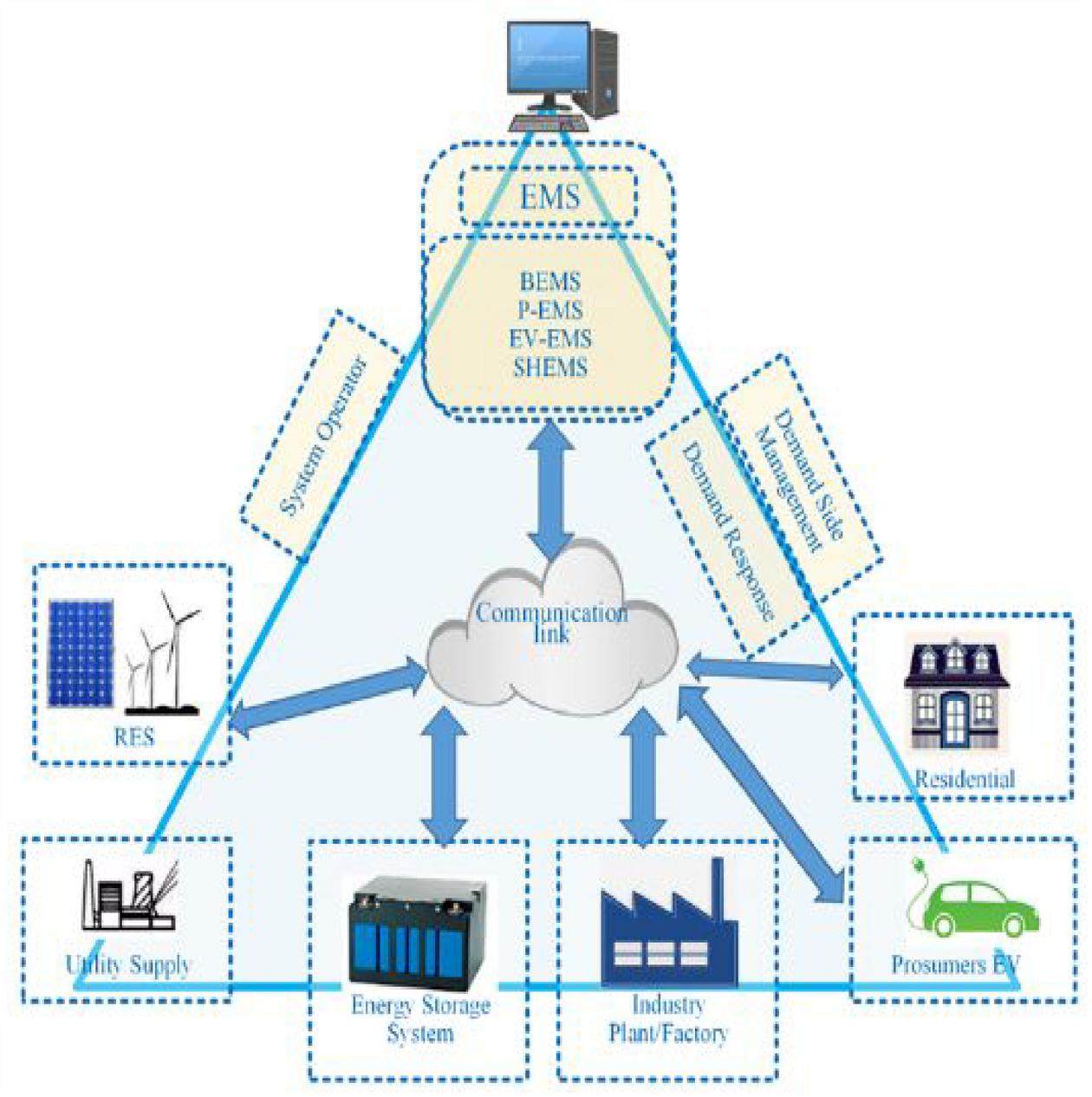
Energy management system stakeholders (Rathor and Saxena, 2020).
Architecture of EMS
The EMS’s effectiveness is determined on its control architecture and the solution strategy selected; Common architectures include hierarchical, distributed, and centralised EMS (Zheyuan et al., 2017). The following discussion covers the three EMS control architectures.
Centralised EMS
A central controller with a high-performance processing unit and a dedicated, secure communication network are part of the centralised control design (Valverde et al., 2016). The central controller, which may be a utility company or an aggregator, collects data from all nodes from market participants, including energy output, consumption patterns of each load and consumer, meteorological information and other information required for a smooth operation. This centralised control system has certain shortcomings despite offering the best overall performance. Since all data is gathered and processed in one place, this control structure is less suited to real-time communication requirements and increases the computational load, especially when managing a large number of assets (Guo et al., 2021). The centralised EMS architecture might be disrupted when a new source or component is added since it has distinct operational costs and constraints.
Decentralised EMS
Each node in the distributed processing system that makes up the decentralised architecture is capable of independent control and peer-to-peer communication. By increasing expandability, offering greater operational flexibility and preventing single-point failures, the decentralised architecture thereby solves the drawbacks of the centralised architecture (Guo et al., 2021). The decentralised architecture can be categorised into three operational modes, namely totally independent, partially independent, and fully dependent, depending on the degree of decentralisation and the available communication network (Roslan et al., 2022). A decentralised design has more reliability than a centralised system due to the redundancy of controllers and communications. Local optimisation in a decentralised form cannot offer a solution to minimise total operating cost as a whole, whereas centralised optimisation offers global optimisation and hence offers total operating cost reduction taking into account all restrictions. For the smart grid, a decentralised design is more trustworthy than a centralised one since it has the advantages of low computational load and response time. Decentralised EMS are more reliable than centralised ones, according to Ahmad et al. (2017).
Hierarchical EMS
Few researchers have created and tested the design of hierarchical EMS, which is based on decentralised EMS, specifically for an MMG or Microgrid Community (MGC) system, in which the numerous microgrids are connected to one another to form an MGC. In a hierarchical architecture, the system is divided into several control layers, each with a distinct control objective. Usually, two- or three-level structures are advised. No information is shared between entities on the same tier; information flow only happens across layers that are contiguous. Supervisory control level, optimisation control level, and execution control level make up the majority of hierarchical EMS. There may also be sub-levels on each of the levels, depending on how the system is presented.
A two-tier hierarchical stochastic EMS was proposed by Bazmohammadi et al. (2019) for the operational management of four interconnected microgrids. The planning of energy is done in the top layer. Power exchanges inside the network of microgrids as well as between microgrids and the main grid are computed and reported at this level. At a lower level, decisions are determined while accounting for various levels of uncertainty using random constrained MPC. The suggested approach reduces total real-time average power imbalances in 100 hypothetical situations while simultaneously reducing the operational costs of the four microgrids under consideration. In an island DC microgrid, Han et al. (2019) presented hierarchical power management for PV/hydrogen/battery. Here, the system control layer and local control layer are depicted. a consideration. The operational characteristics of the sources are controlled by the local control plane in DC microgrids, and the system control plane uses a similar consumption minimisation strategy.
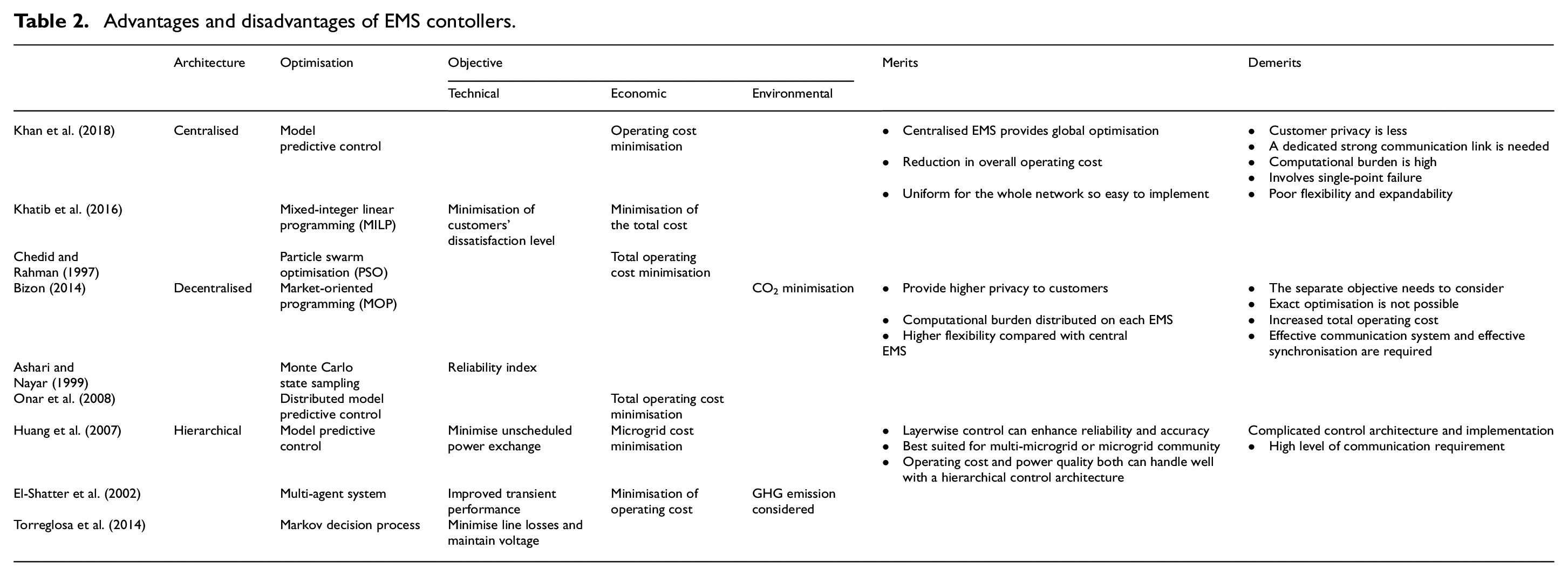
Thus, the centralised architecture makes it easier to implement and maintain EMS at a low cost, producing results that are globally optimal. However, it has some drawbacks, such as a high computational load, a high communication cost, privacy concerns and reliability. Microgrids benefit from enhanced reliability and reduced computational work from a decentralised architecture with distributed processing, but this does not ensure globally optimal outcomes. A hierarchical architecture with several degrees of control is a practical choice for MGC/MMG. However, the implementation is incredibly difficult. The ability to manage uncertainties in the presence of erratic loads, erratic sources, and erratic power price is referred to as EMS resilience in the context of smart grids. Regardless of whether an EMS has a centralised, decentralised or hierarchical architecture, accurate uncertainty modelling is the fundamental requirement for resilience. The benefits and drawbacks of the three management architectures are compiled in Table 2.
Advantages and disadvantages of EMS contollers.
Energy flow management control
Management of the energy flow is crucial when using integrated renewable energy to guarantee a constant supply of electricity to the load. The use of unconventional energy sources causes very substantial stability and power quality issues. In order to overcome the problems they produce, the system must be managed in the best possible way (Laxmi et al., 2018). Integrated renewable energy control techniques are typically divided into three categories: centralised control arrangements, distributed control arrangements, and hybrid centralised and distributed control arrangements.
Control methods used in hybrid renewable energy system
For each hybrid system, the following variables should generally be examined (Justo et al., 2013):
Stability: This means the voltage and frequency of the system.
Protection: Consideration of the power flow.
Power balance: Optimal load distribution.
A typical data communication and power flow in HRES is shown in Figure 10 (Hassas and Pourhossein, 2017).
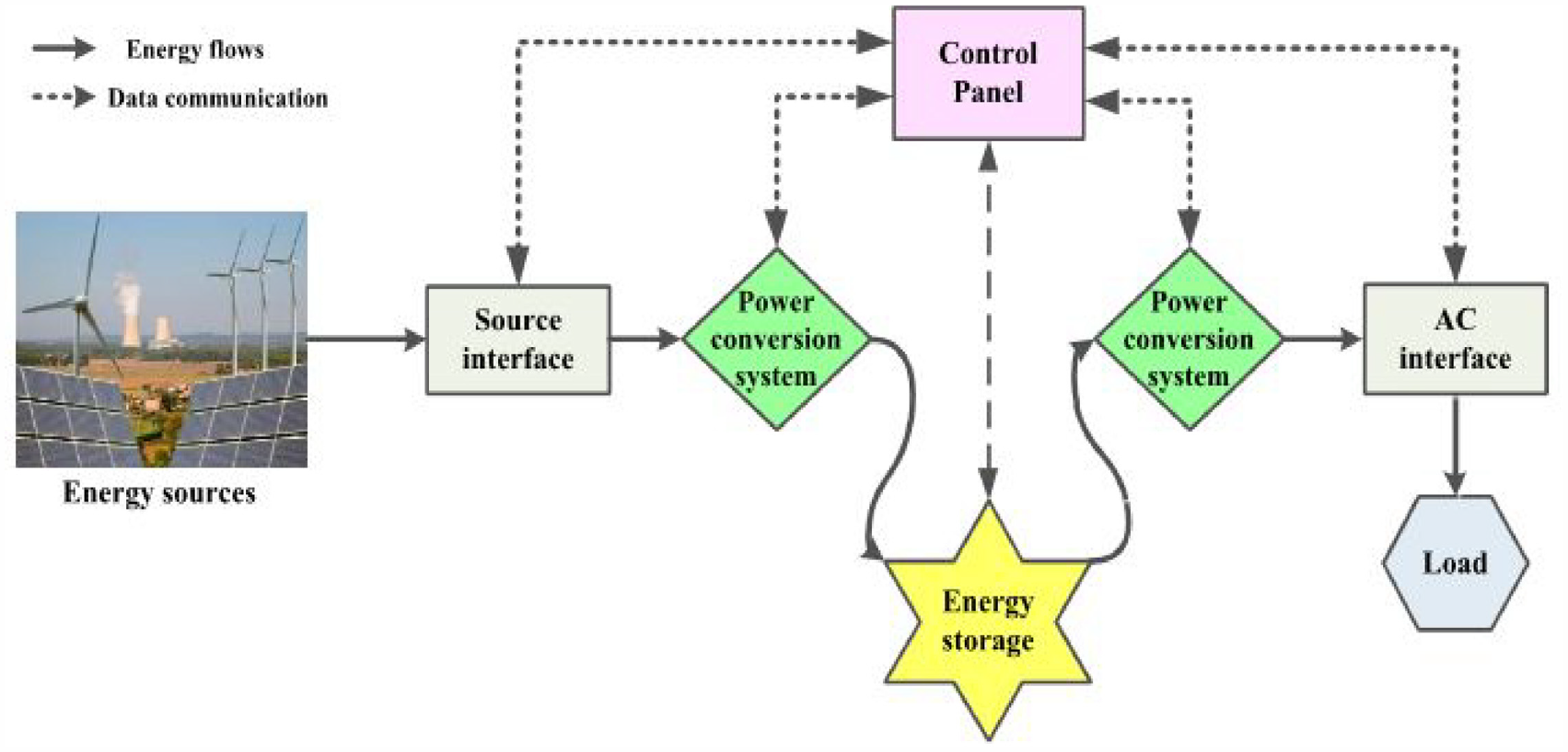
Typical data communication and power flow in HRES (Hassas and Pourhossein, 2017).
Control of hybrid systems has been categorised by several writers, including Vivas et al. (2018), into three main categories: centralised (Figure 11(a)), distributed (Figure 11(b)) and decentralised control (Figure 11(c)) (Mahesh and Sandhu, 2015). Additionally, Chong et al. (2016) classified control methods into two categories: classical control and intelligent control as shown in figure 12.
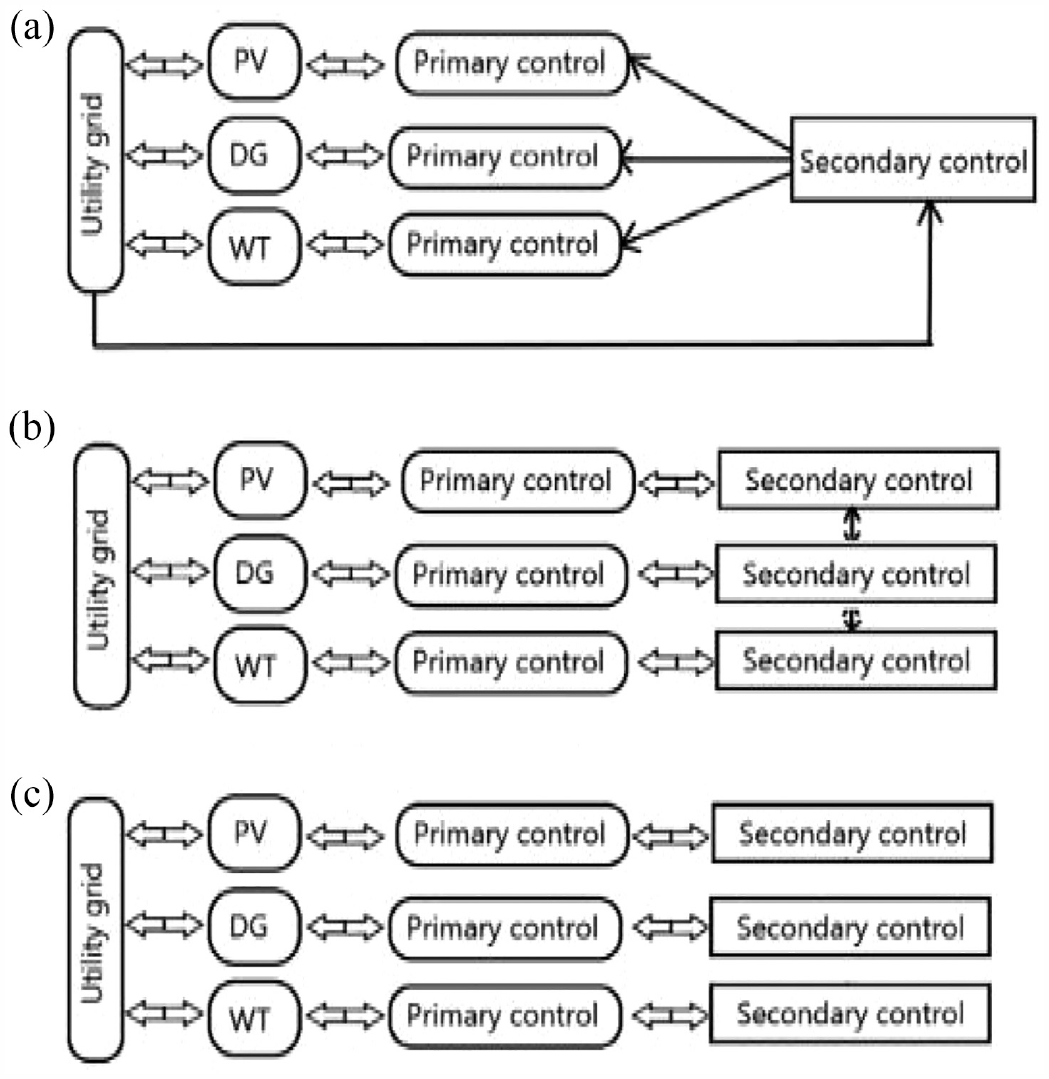
Concept of hybrid system control (Mahesh and Sandhu, 2015): (a) centralised secondary control, (b) distributed secondary control, and (c) decentralised secondary control.
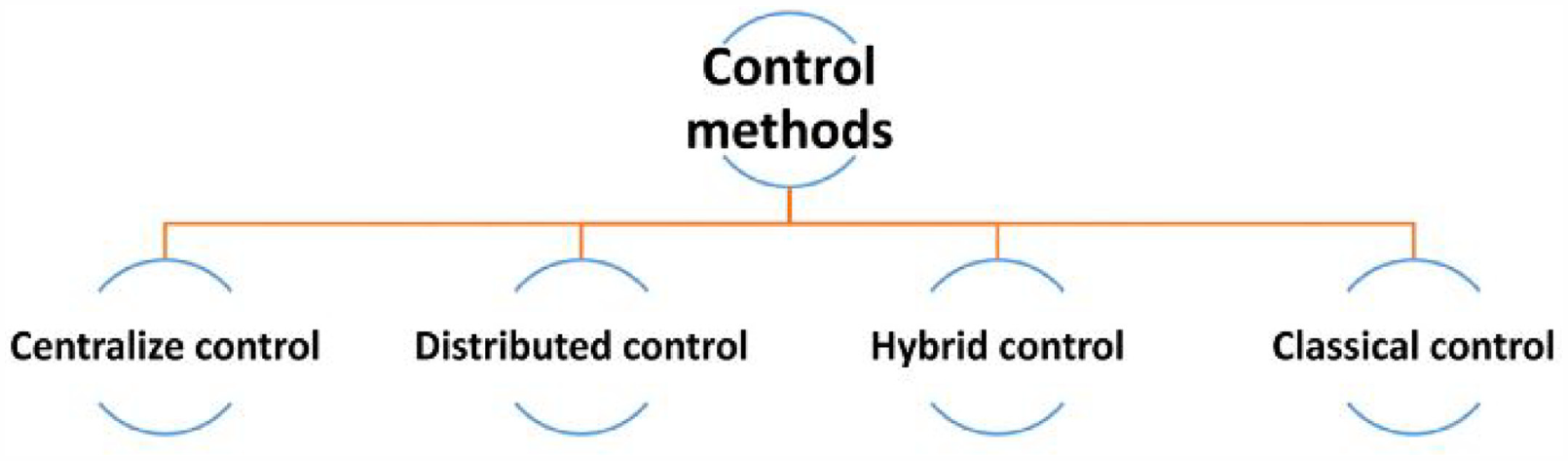
Control methods of hybrid system. Chong et al. (2016)
Numerous control strategies for wind turbines have been documented in the literature, including MPPT (Maximum power point tracking) based on practical swarm optimisation (PSO) (Sitharthan et al., 2020), direct power control (DPC)-based voltage vector selection on the rotor side converter and robust sliding mode pitch control.
In order to maximise the performance of solar photovoltaics, a variety of control approaches have been used, such as MPPT based on the general neural regression network (GRNN) (Mirza et al., 2019) and Deep learning neural network to predict photovoltaic power using MPPT under partially shadowed situations.
The majority of research on diesel generators has concentrated on voltage control (Haseltalab et al., 2019), frequency control and reactive power.
However, there are numerous other ways to manage hybrid renewable energy systems, including rule-based control (RBC) (Wakui et al., 2019), proportional-integral control (Rashid et al., 2019), distributed control (Hashemi and Zarif, 2020), hybrid control (Hashemi and Zarif, 2020) and centralised control (Panasetsky et al., 2019). Intelligent techniques, such as neural network algorithms, fuzzy logic controllers, multi-objective particle swarm optimisation (PSO) and adaptive neuro-fuzzy inference system (ANFIS), are considered the ‘classical methods’ (Lingamuthu and Mariappan, 2019). Typically, a control system is needed to assign the active and reactive output of each energy source’s output power while keeping the output voltage and frequency within a predetermined range. The control systems can be categorised into three groups (Upadhyay and Sharma, 2014): centralised, distributed and hybrid control paradigms. In each of these groups, it is assumed that each energy source has a local controller, who can choose how best to operate the corresponding unit based on the most recent information.
Centralised control paradigm
According to the centralised control paradigm, each renewable energy source and energy storage system has its own local controller in addition to a central controller that oversees the entire system. According to this paradigm, a central controller receives measurement signals from each energy resource in a group, as shown in Figure 13 (Ez-zahra Lamzouri et al., 2021). The centralised controller serves as an energy supervisor and makes control decisions based on all measurable signals, a predetermined set of objectives and constraints. Based on the availability of resource generation and load demand, HRES will regulate energy flow among various renewable energy sources (Lin et al., 2021).
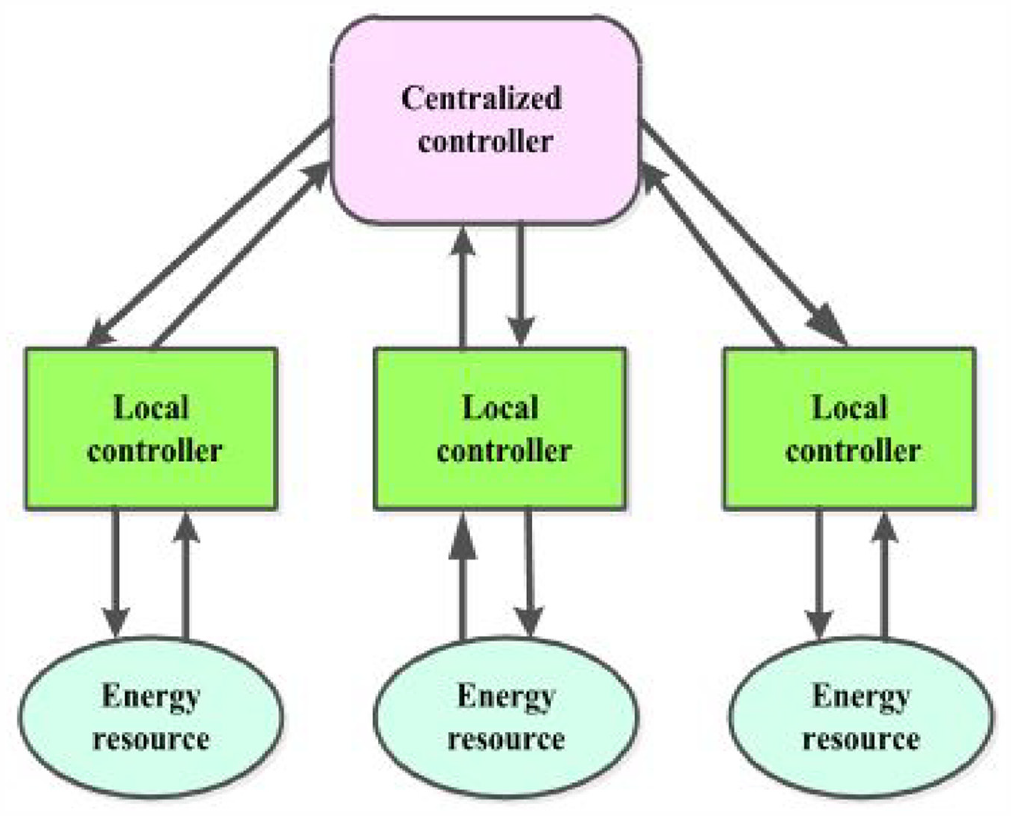
Centralised control paradigm (Ez-zahra Lamzouri et al., 2021).
Distributed control paradigm
Each energy source transmits measurement signals to its local controller under the distributed control paradigm, as depicted in Figure 14 (Ez-zahra Lamzouri et al., 2021). To choose the best course of action for global optimisation, the local controllers confer with one another (Hajizadeh and Golkar, 2009; Ko and Jatskevich, 2007).
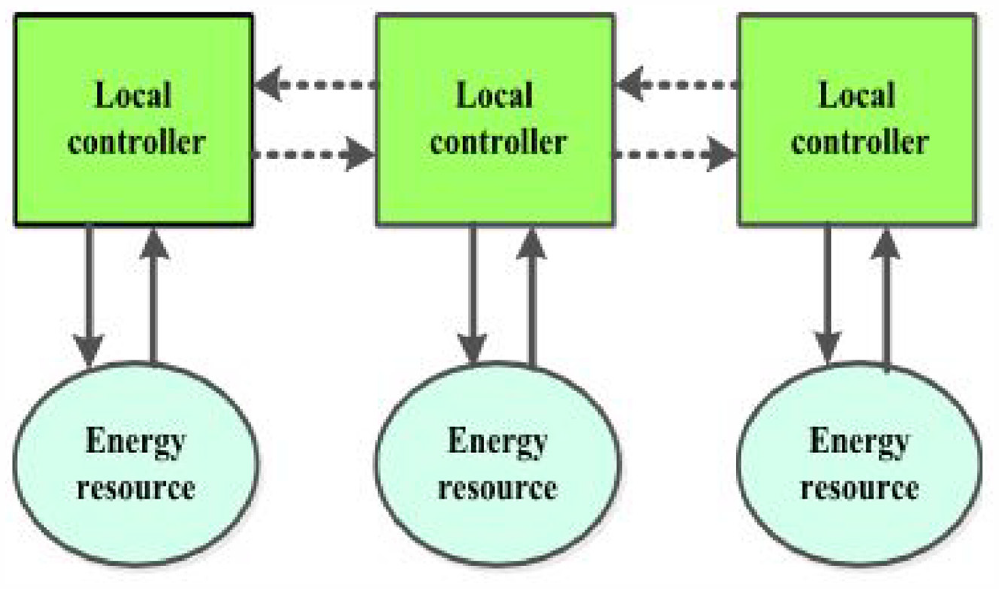
Distributed control paradigm (Ez-zahra Lamzouri et al., 2021).
Hybrid control paradigm
The hybrid control paradigm combines distributed and centralised control strategies. Such a plan groups renewable energy sources into an integrated system. Each group is subject to a distributed control system that is coordinated by a centralised control system. In this hybrid control paradigm, local optimisation is accomplished through distributed control while global coordination across the many groups is accomplished through centralised control inside each group (Jiang and Dougal, 2008). In Figure 15, a hybrid control paradigm is displayed ‘(Ez-zahra Lamzouri et al., 2021)’.
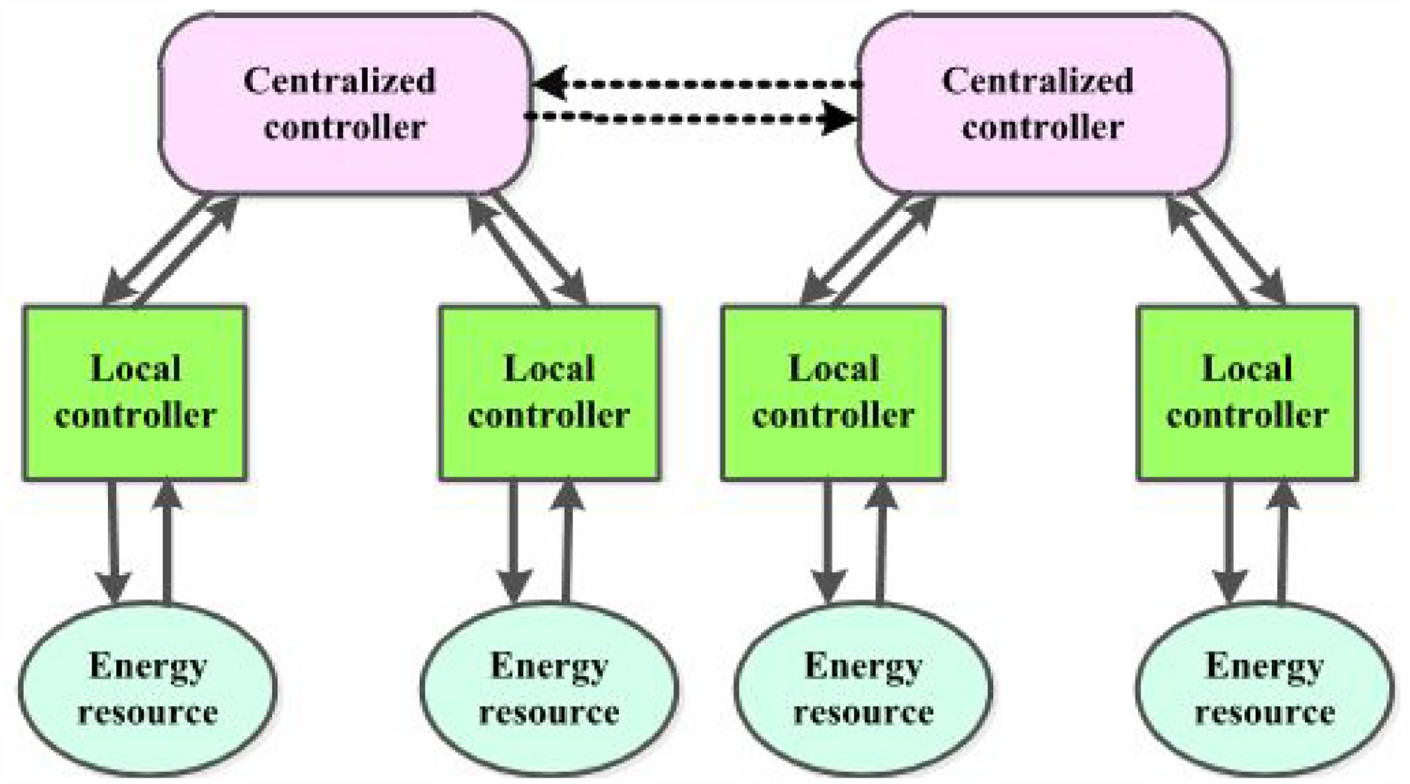
Hybrid control paradigm (Ez-zahra Lamzouri et al., 2021).
The majority of hybrid systems use distributed or hybrid control because it excels at decentralised control efficiency, minimises system failures, employs multiple control types and has no restrictions besides the complexity of the connection and processing codes. When utilised in a small hybrid renewable energy system, centralised control exhibits great efficacy, enhances performance and requires little design. In addition, its cost is more appealing than that of distributed or hybrid control. In the meanwhile, they have the choice of scheduling repairs or fully shutting down the system in the event of generator issues.
Comparison of control paradigm
By selecting the appropriate control strategy throughout the system design phase, the power output from a hybrid system can be economically maximised (Khare et al., 2016). In order to identify appropriate control paradigms for HRES, this segment lists the benefits and drawbacks of each of the aforementioned control paradigms.
A single point of failure is a component of a system that, in the event of a failure, renders the entire system inoperable. The multi-target energy management system can achieve global optimisation in the centralised control paradigm based on all available data, but this control paradigm has a high computational load. Although a distributed control paradigm involves a complicated mechanism for communication between local controllers, it significantly reduces the computing load of each local controller without any single-point error issues emerging.
The multi-agent system (MAS) is a method to distributed control issues that shows promise. MAS is a field of study that focuses on group behaviours that result from interactions between several autonomous units, or agents. These interactions between the agents centre on their cooperation, rivalry or coexistence and present the issue of collective intelligence as well as the creation of structural interactions. For instance, MAS has been applied to power systems’ microgrid integration, recovery, reconfiguration, and power management (Luna-Rubio et al., 2012; Nehrir et al., 2011). Fuzzy logic, artificial neural networks, genetic algorithms and their hybrid combinations are examples of artificial algorithms that could be used to address these dispersed control paradigm issues (Huang et al., 2007; Mbodji et al., 2016).
By easing the computational burden on both centralised and local controllers, the hybrid control paradigm decreases single-point failure difficulties in HRES.
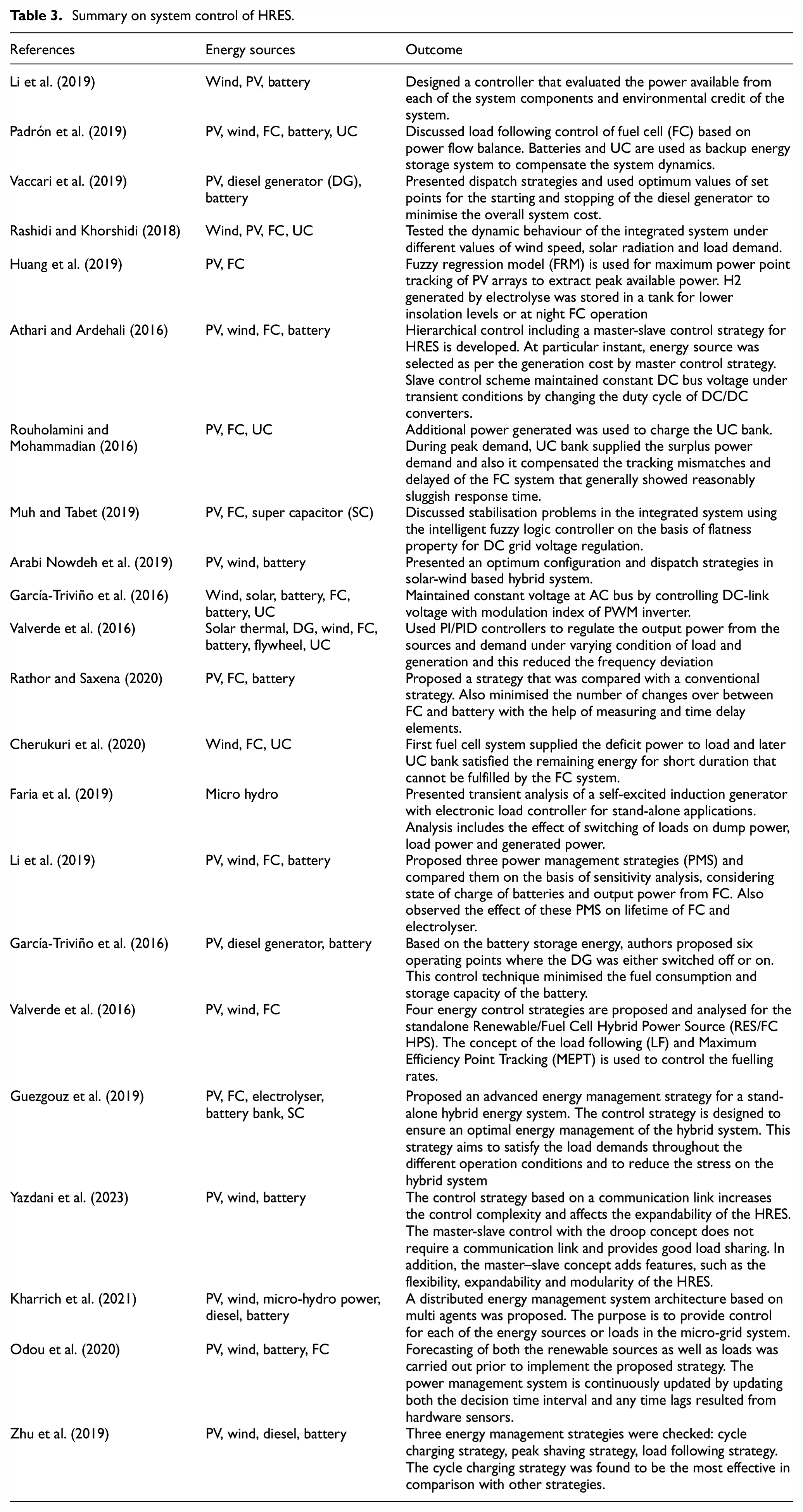
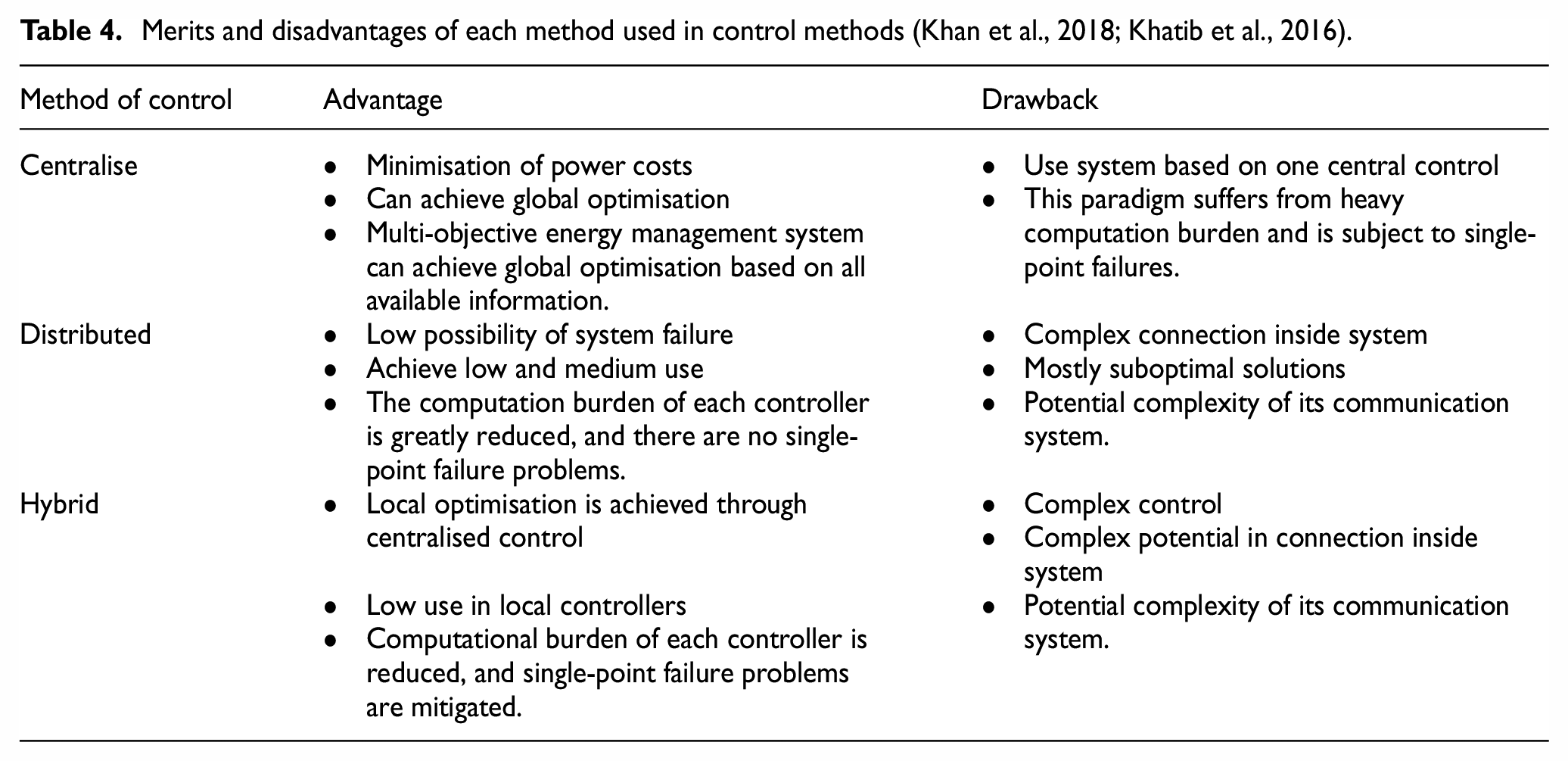
By examining the advantages and disadvantages of each control arrangement among all control paradigms, we can get to the conclusion that a combination of centralised and distributed control schemes, or hybrid control paradigms, are particularly suitable and reliable in HRES. The literature contains descriptions of numerous investigations on the system control of HRES, which are gathered in Table 3 (Khan et al., 2018). Table 4 (Khatib et al., 2016) summarises the advantages and drawback categories of control.
Summary on system control of HRES.
Merits and disadvantages of each method used in control methods (Khan et al., 2018; Khatib et al., 2016).
Optimal energy flow management in HRES
The intermittent nature of the power output from renewable sources and the dependence of these sources on numerous uncontrollable factors necessitate the optimal management of energy flow between varied energy sources in HRES. To properly comprehend the dynamic interaction between diverse energy sources and loads, it is frequently important to carefully investigate the transitory behaviour of such systems, which depends on a number of uncontrolled conditions (Askarzadeh and Dos Santos Coelho, 2015; Rastegar and Fotuhi-Firuzabad, 2015). A thorough examination of these systems’ transient response is typically required due to the dynamic interaction between different energy sources and loads.
The energy management plan should help achieve high system dependability and efficiency at the lowest cost. Always meeting peak demand should be the technology’s main goal. HRES has the possibility of using fuel cells for long-term energy storage. However, a major disadvantage of fuel cells is their slow dynamics and the damage that comes from repeated starting and stopping cycles. Batteries are thus utilised in these hybrid systems to make up for performance shortfalls and serve as a short-term energy storage medium. Utilising solar, fuel cells and batteries guarantees that users have access to a steady supply of electricity. The primary factors influencing or aiding in the selection of the optimum energy management approach are listed below (Ahmed et al., 2008):
Usable electrical energy that can be obtained quickly from fundamental renewable energy sources like solar panels and wind turbines.
The upfront, ongoing, lifecycle and backup costs of storage technologies like batteries, ultracapacitors, and fuel cells.
The amount of hydrogen tank pressure or the state of charge of storage devices in hydrogen energy systems.
The quantity of electrolysers’ and fuel cells’ startup and shutdown cycles.
The cost of fuel for hybrid generators that use diesel
Hybrid energy system opportunities in Africa
Hybrid energy systems are especially well suited for use in outlying areas since they can power freestanding mini-grids without incurring high transmission expenses.
The cost of delivering fuel to remote places is decreased by the increasing potential to incorporate renewable energy generation into the electricity mix.
Valid for district heating and combined heat and power systems: Hybrid energy systems are typically well suited for combined heat and power or district heating as technological systems that can be utilised for decentralised generation, isolated grids or on-site use.
Strengths of hybrid energy system
Hybrid systems can increase the share of renewable energy sources, particularly intermittent ones and decrease reliance on fossil fuels, improving the eco-efficiency of power generation and energy security.
Hybrid systems can lower long-term energy expenditures by balancing the use of fossil fuels. Creating renewable energy.
By constructing isolated networks, rural places can have contemporary energy access without paying for costly transmission and distribution connections from the main grid.
Particularly in underdeveloped areas using diesel generators, where variations in fuel prices can temporarily result in no electricity, hybrid systems can help ensure more dependable access to modern energy.
Challenges and future trends in HRES
There are still certain difficulties even if producing electricity from renewable energy sources is environmentally benign and sustainable. The following are some of the major issues and chances for further research:
‘The need to construct intelligent mini-grids with a variety of generators that communicate with one another and distribute power as needed’.
‘The requirement for real-time energy management of such systems and trustworthy communication between the various energy sources of the microgrid becomes a serious concern as HRES are progressively implemented as autonomous microgrids and thus merits greater thought’.
‘Transient analysis of system-wide changes in the variable factors, such as solar radiation, wind speed and load demand, must be carried out to solve stability difficulties with HRES. Researchers have examined the benefits of DC microgrids for specific loads and the idea of totally replacing AC power networks due to the development in contemporary goods and home appliances that require electricity’.
Results and discussion (return of using EMS)
There are lot of many returns due to usage of energy management strategies of hybrid renewable energy systems. Akyuz et al. (2011) stated the benefits of employing this management method in terms of technology, finances and the environment. When renewable hybrid energy choices are used in chicken farming, demand-side management (DSM)'s cost, environmental benefits, and benefits are assessed. With DSM, annual electricity consumptions can be cut by 15% by integrating light control systems and high-efficiency fans (with an increase in efficiency of roughly 20%). When DSM was applied to the cost of energy, certain metrics, such as unmet electric load, excess electricity and greenhouse gas emissions, were calculated for each scenario. As a result, the hybrid system reduces CO2 emissions from 21.8 to 10?t and NOx emissions from 0.421 to 0.221?t. The results demonstrate that setting up a hybrid energy system is
Utilising demand-side energy management strategies, such as load shifting and postponing appliance operation during peak hours, is frequently done at the expense of customer comfort in an effort to lower electricity bills. Fuzzy logic control (FLC) integrated energy management system (EMS) for commercial loads with hybrid grid-solar PV/battery energy systems was proposed by Bakareb et al. The suggested method makes intelligent energy source selections based on grid electricity costs and the solar PV/battery state of charge (SoC) at any time of day. With no operational lag or shifting, the EMS operates the loads at a lower cost. Figures 16 and 17 (Ibrahim et al., 2023) presents the daily energy costs for the past 7?days and the daily average, demonstrating how much less expensive the designed energy management controller is in comparison to that of the simulation HOMER model. This results in a savings of 1,098,224 ($2837.79), or 7.94%, over the course of 20?years, as shown in Figure 18.
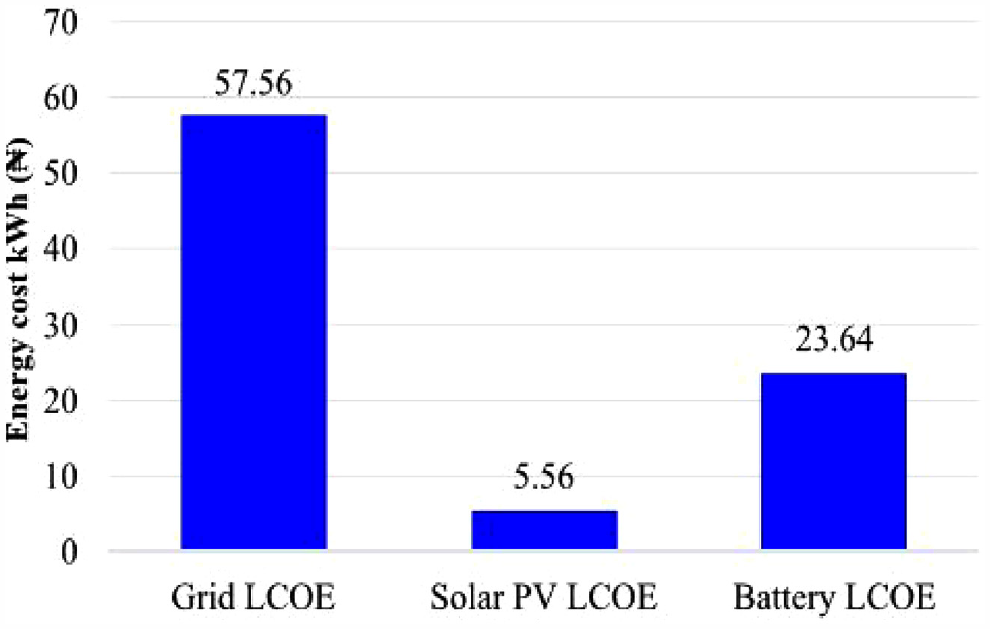
Twenty years LCOE of power sources (Ibrahim et al., 2023).
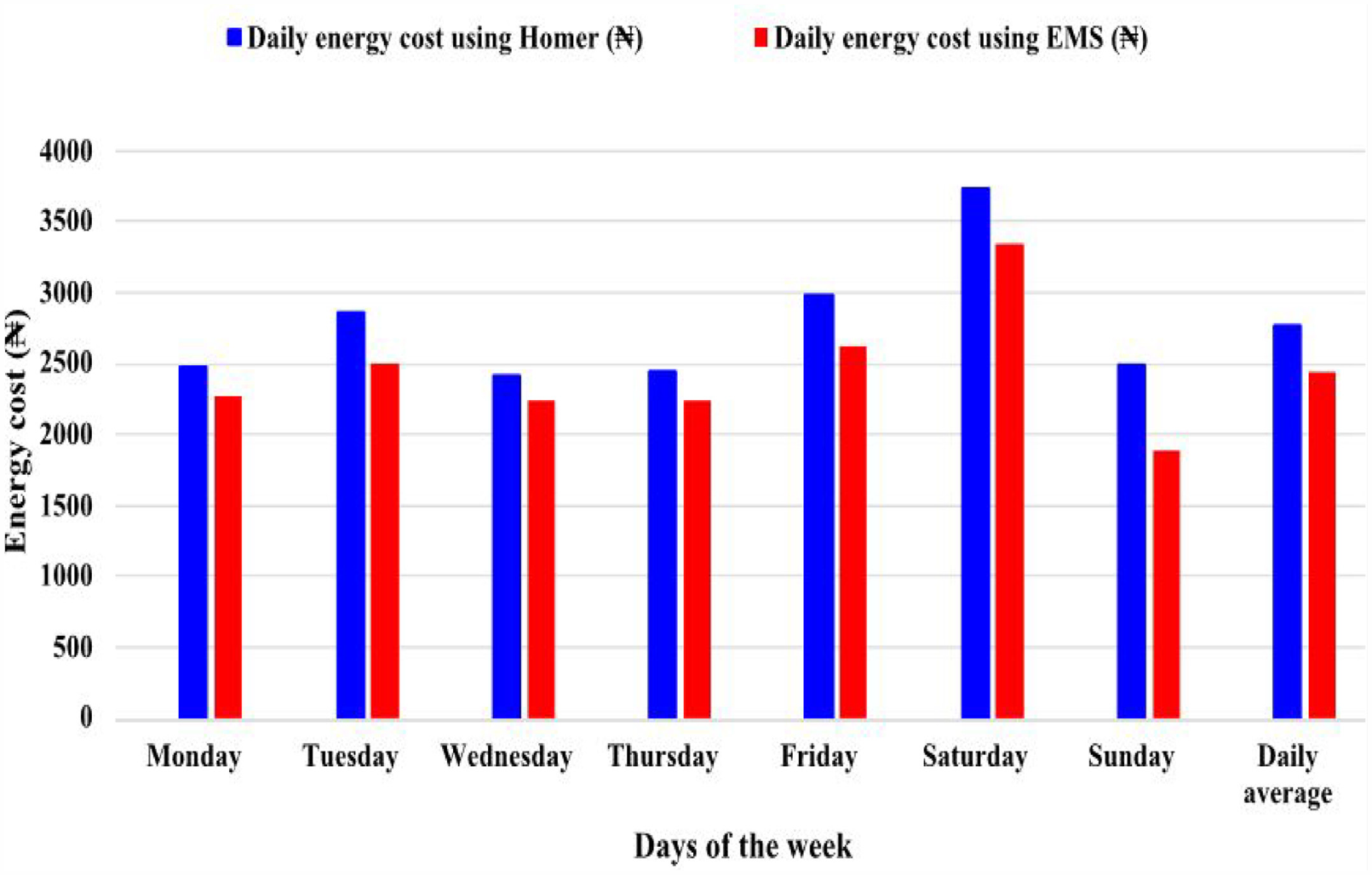
Daily and averaged daily cost of energy (Ibrahim et al., 2023).
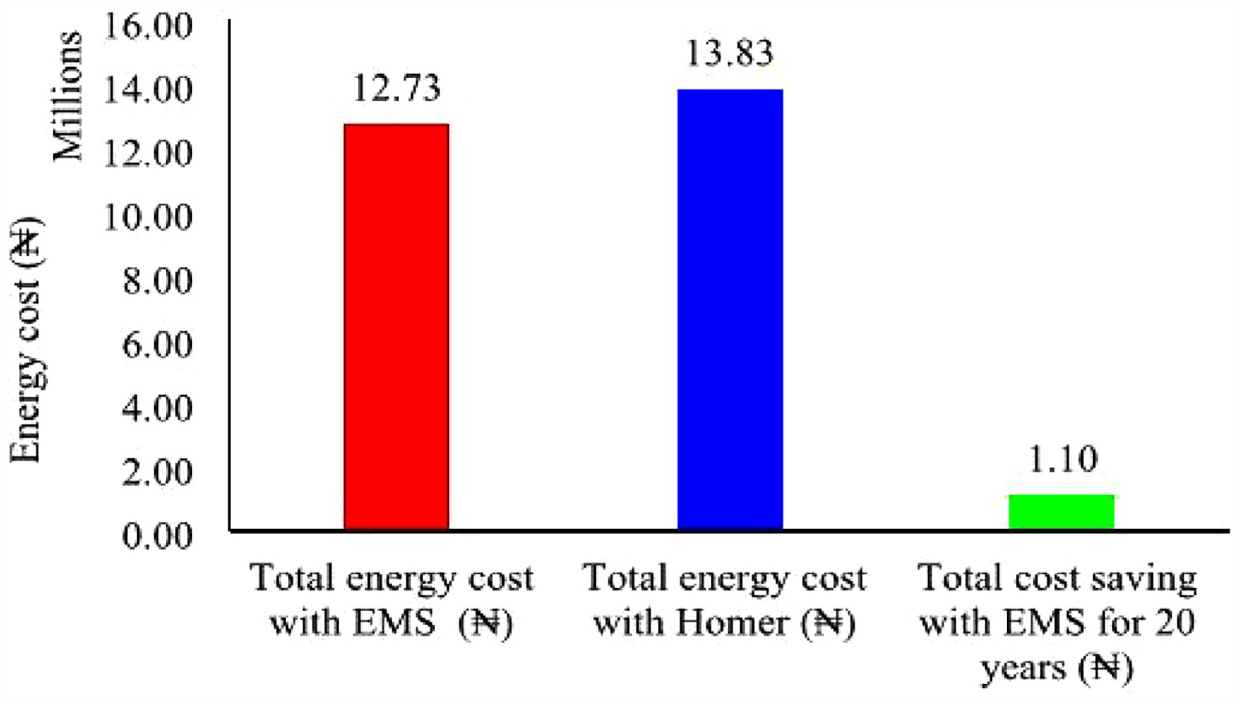
Long-term energy cost (Ibrahim et al., 2023).
In another study of energy management; Tawfik et al. (2022), made energy management for load of NRC Farm in Nubbryyah, Egypt. The farm load consistes of :
□ Water desalination unit
□ Animal fodders (AF) factory
□ Hydrogel (HG) factory
□ Management building
□ lighting system
□ Fish farm
Data from the hourly load profiles was gathered in accordance with the NRC farm’s electricity usage.
Figure 19 showed that HRESWDSM increases the equilibrium between the peaks in RES power demand while decreasing DG power output. These figures were approximately 36,123 and 21,785 kW/year for HRESWODSM (without DSM) and HRESWDSM (with DSM). In Figure 20, the BS size for both systems is shown.
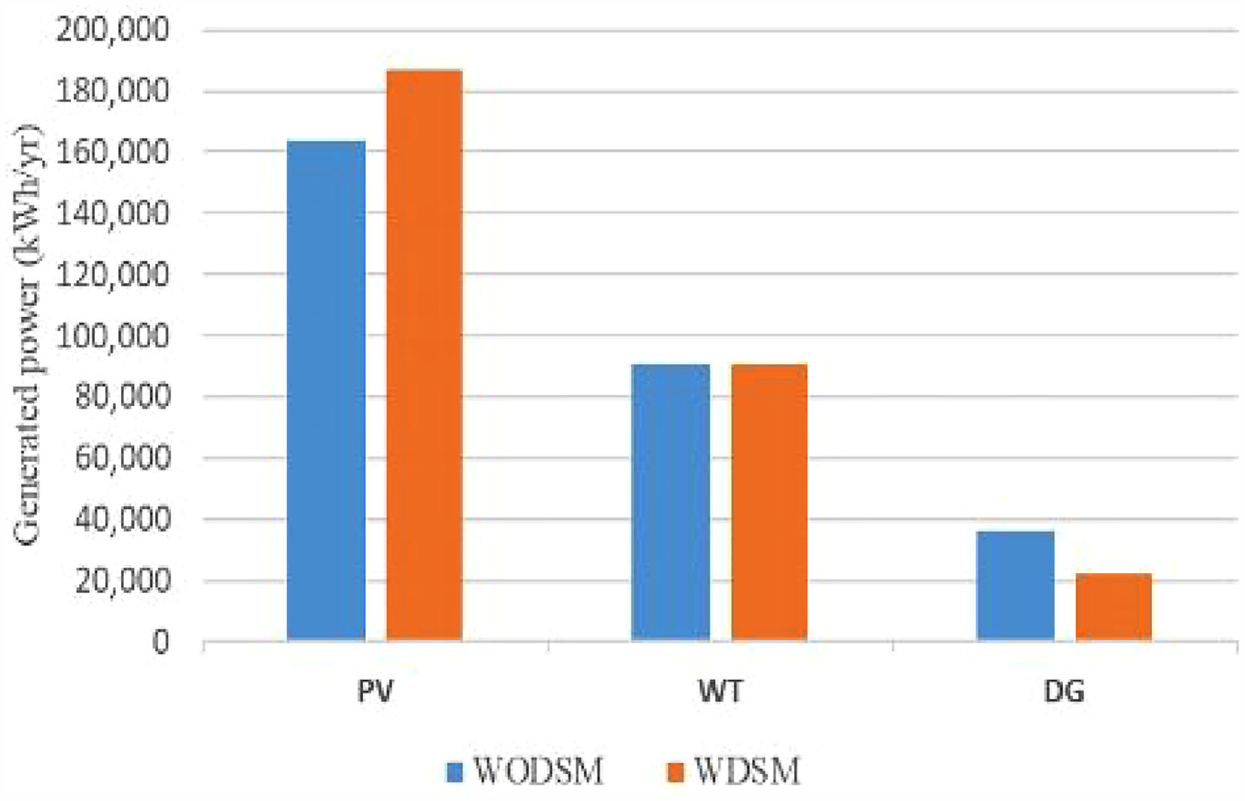
Power generation for HRESWODSM and HRESWDSM.
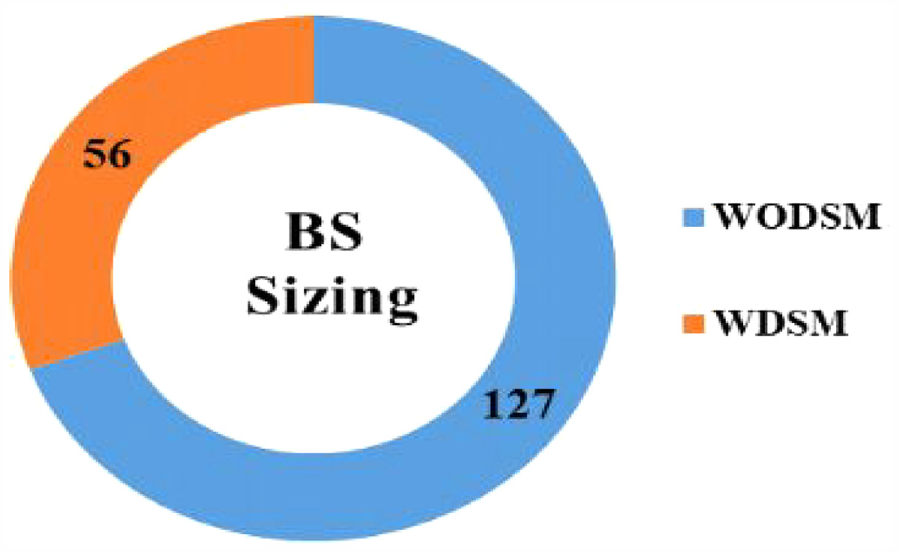
Battery sizing for HRESWODSM and HRESWDSM.
It was noted that the DSM method improved the matching between the peaks of the needed load and the RES generated power, which resulted in a 57% reduction in battery size, which was approximately 127 and 56 kW for HRESWODSM and HRESWDSM, respectively, as shown in Figure 20. Along with the DG, the fuel usage fell by 25.6%, or 11,707 L/year for HRESWODSM and 8709 L/year for HRESWDSM. The annual GHG for HRESWODSM and HRESWDSM are shown in Figure 21.
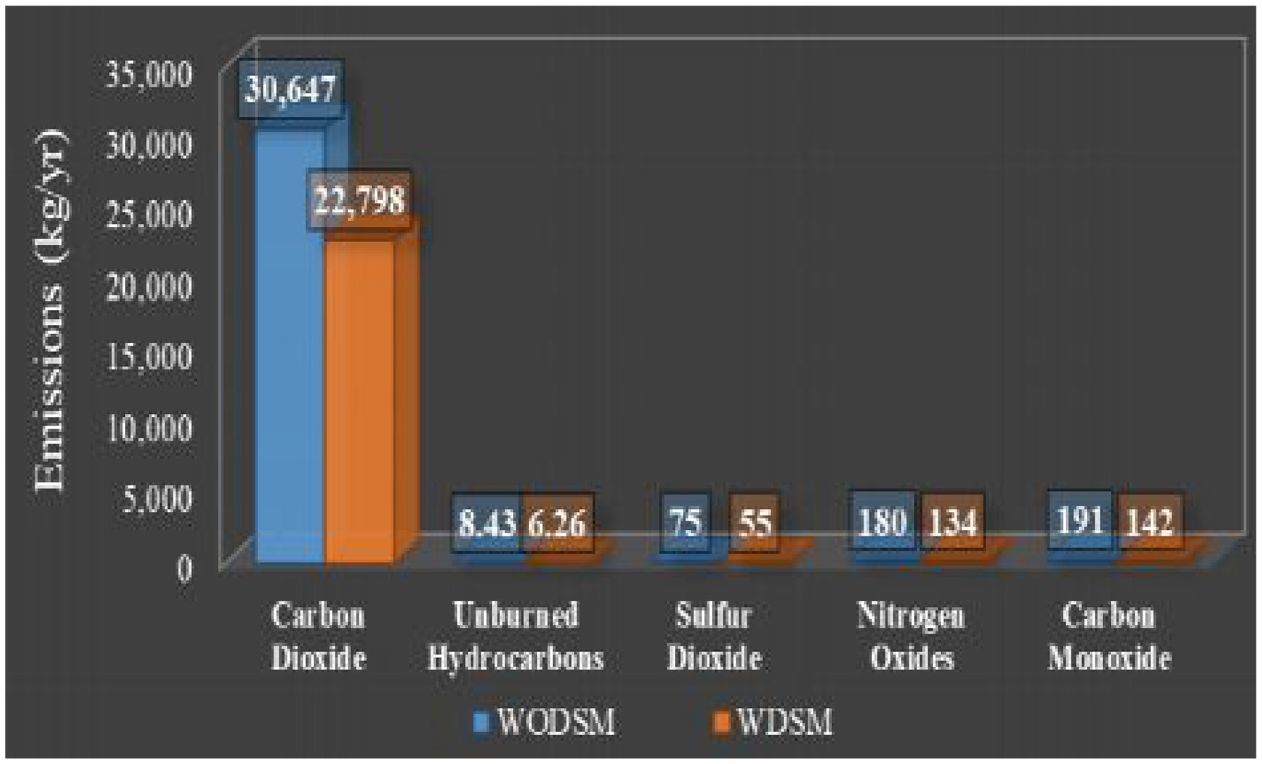
GHG emissions for HRESWODSM and HRESWDSM.
GHG emissions were significantly reduced by 25% as seen in Figure 21, whereas DG power output for HRESWODSM and HRESWDSM over the course of a year is shown in Figures 17 and 18, respectively. NPC, capital costs, and operating costs for HRESWODSM and HRESWDSM are shown in Figure 22.
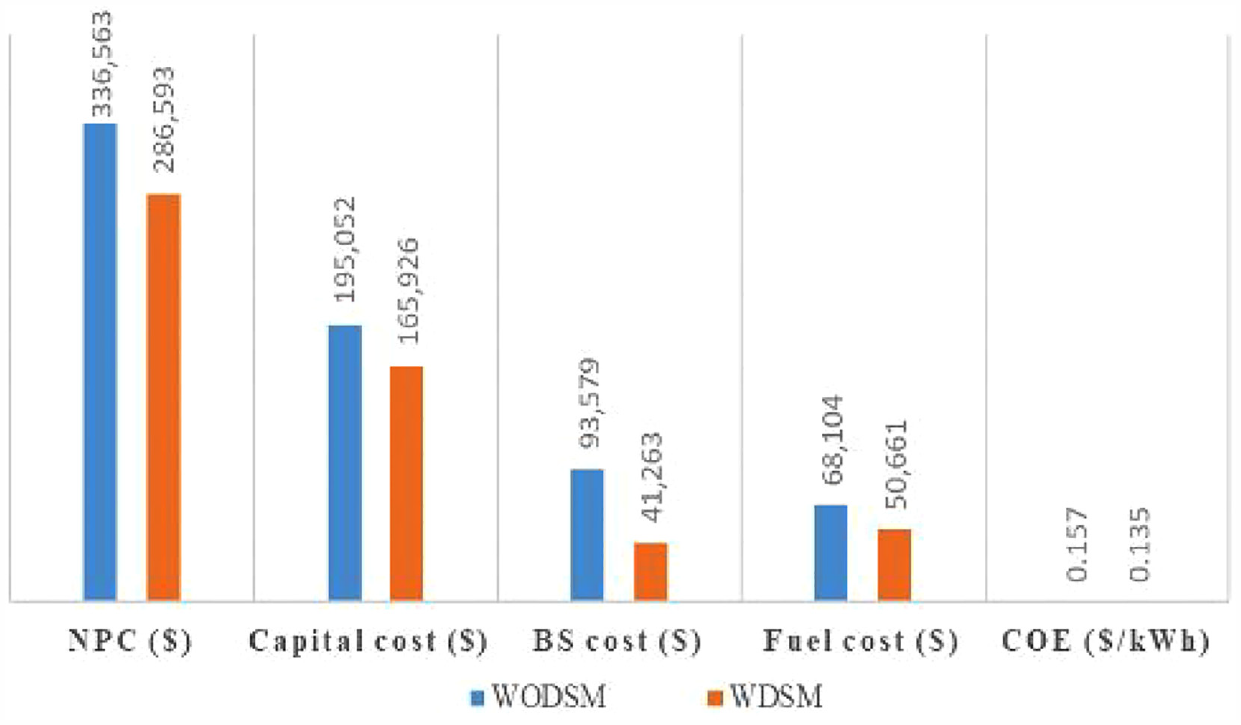
Economical evaluation for HRESWODSM and HRESWDSM.
According to Figure 22, the NPC, capital cost, BS cost, fuel cost and COE of HRESWDSM were all significantly reduced by 14.8%, 14.9%, 55.9%, 25.6% and 14%, respectively.
Conclusions
Hybrid systems are recognised as a potential solution for grid supply. Given that oversizing has been shown to improve system costs and undersizing has been shown to result in undersizing, sizing and optimisation algorithms must effectively search for an optimal mix to critically analyse metrics like system cost and system efficiency.
"Practical alternatives to sporadic single-source renewable energy sources include hybrid systems. To provide the maximum system dependability and operating efficiency, HRES must be properly regulated. The principles and traditional approaches to energy management and HRES regulation are examined and contrasted in this research. Hybrid control paradigms are among the most dependable and suitable for HRES of all potential control paradigms. This control paradigm is thought to be the best choice for robust control of HRES without single-point error issues because local optimisation is accomplished through centralised control within each group while global coordination between the various groups is accomplished through distributed control. Because they are efficient at managing each individual generator, they decrease the risk of system failure and increase the life of the system.
The management strategies used in hybrid systems depend on the goals of each study; typically, researchers concentrate on techno-economic goals because they guarantee both technical (increases in lifespan, coverage of consumption and performance) and economic (minimisation of system costs, improvement in savings costs) benefits, as well as lowering energy costs. Additionally, a variety of algorithms, including fuzzy logic, particle swarm optimisation, neural networks, and commercial software like HOMER, are used to track various components of hybrid renewable energy systems. In order to realise the cost-effective, environmentally friendly and dependable operation of the smart grid, EMS ensures the best use of decentralised energy sources. This study provides an in-depth analysis of the concept, goals, control systems, types. EMS is also explored, along with the three control structures of centralised, decentralised and hierarchical.
The implementation of an EMS with many stakeholders presents a number of difficulties and problems that are highlighted in order to spur further research and development for a more sophisticated EMS. Two sides of EMS: supply side management and demand side management are discussed here. Future research should take into account the following areas of study: The main issue that needs to be solved is (a) improving a cost-effective smart grid network with dependable and secure communication; (b) conducting further research on quick and accurate modelling of uncertainties and (c) designing and developing a low-cost, real-time hardware implementation of EMS.
According to the findings, the ideal HRESWODSM had an NPC of $336,563 and a COE of $ 0.157 per kWh under the LF control method, while the HRESWODSM under the CC control strategy had an NPC of $338,247 and a COE of $ 0.158 per kWh. The two main expenses of the ideal HRESWODSM are BS and DG, which are roughly 57% (LF) and 60% (CC) of NPC, respectively. There was a strong need to enlarge the BS and regularly deploy DG because, in both methods, the RES generation for HRESWODSM remained largely unfulfilled at peak energy demand. Therefore, the DG used approximately 11,707 L/year with LF and 13,149 L/year with CC, resulting in significant CO2 emissions of 31,109 and 34,935 kg/year for LF and CC, respectively.
Footnotes
Declaration of conflicting interests
The author declared no potential conflicts of interest with respect to the research, authorship, and/or publication of this article.
Funding
The author received no financial support for the research, authorship, and/or publication of this article.
