




Abstract
Short-term hydrothermal generation scheduling (SHS), which accounts for diverse hydraulic and electrical restrictions, is a challenging non-convex optimization challenge. The interconnection of cascaded reservoirs and the valve-point effects of thermal units significantly complicate the process of identifying an effective solution. The purpose of the HTS is to assess the best power distribution over a certain time period to minimize overall energy production costs. The proposed methodology is subsequently evaluated on two established hydrothermal systems, and the outcomes are validated through several meta-heuristic methodologies. This work offers an effective resolution to the SHS issue by the application of a golden eagle optimizing (GEO) algorithm, which produces optimal scheduling outcomes by adjusting speed at various phases of the helical path during searching. They have a greater inclination to navigate and seek prey during the first phases of searching and a heightened tendency to engage in attacks during the concluding phases. A golden eagle calibrates these two elements to capture optimal food within the quickest practicable timeframe. The results indicate that the suggested method has significant resilience and surpasses other leading algorithms regarding solution quality. The proposed method primarily focuses on generation scheduling and minimizing fuel costs in thermal systems, yielding competitive outcomes with reduced computing demands. The fuel expenditure of a thermal plant, incorporating four sequential hydro plants, is $908,222.44 per hour, which is lower than the fuel costs indicated by other established adaptive methodologies in the modeling outcomes. The computing time of the suggested method is significantly lower than that currently used techniques.
Keywords
Introduction
Hydrothermal cooperation is a crucial element of the contemporary power industry. Given the escalating environmental degradation and dwindling energy supplies, the hydropower idea is crucial in the integrated energy system. A significant challenge in the hydrothermal scheduling system involves the financial optimization of the distribution of power between thermal and hydroelectric units. The primary objective of the short-term hydrothermal scheduling challenge is to ascertain the best power generation operation from a designated temporal viewpoint (Alhafadhi et al., 2024; Khalaf et al., 2024). The primary aim of hydrothermal scheduling is to minimize the operational costs of thermal facilities within a designated timeframe while adhering to all limitations (Atiyah and Hameed, 2024). Hydraulic and temperature limitations, encompassing both equality and inequality restrictions, render short-term hydrothermal issues complicated, non-convex, and non-linear optimization challenges.
The literature review claims that the SHS is a challenging nonlinear optimization problem that requires the application of powerful computer algorithms to provide better power energy expense efficiency. Numerous techniques to address the STH problem have been suggested throughout numerous generations. Early research in this field includes the gentilic algorithm (Orero and Irving, 2002), fast evaluation programming (Sinha et al., 2003), and various solution techniques such as particle swarm optimization (PSO) (Mandal et al., 2008) and deferential evaluation technology (Mandal and Chakraborty, 2008). Then, latest heuristic stochastic methods of search encompass grasshopper optimization algorithm (Zeng et al., 2021), the rigid cuckoo search algorithm (Zheyuan et al., 2021), the crisscross optimization (Yin et al., 2020), the gray wolf optimization algorithm (Swain and Mishra, 2023), and a fresh manner cuckoo search algorithm (Khalaf et al., 2024).
The golden eagle optimizer (GEO) is a nature-inspired, swarm-based metaheuristic designed for addressing global optimization challenges. The fundamental motivation of GEO is the cognitive ability of golden eagles to adjust their speed at various phases of their helical path when feeding. They have a greater inclination to navigate and seek food during the beginning phases of searching and a heightened tendency to engage in attacks during the concluding phases. A golden eagle modifies both of these elements to capture optimal food within the quickest practicable timeframe. This conduct is quantitatively represented to emphasize exploration and exploitation within a global optimization technique (Mohammadi-Balani et al., 2021).
The referenced research indicates that the hydrothermal scheduling problem is a complex not linear optimization challenge that requires robust computer techniques to achieve the highest efficiency in production costs. These methods entail a temporal delay to get enhanced generation and reduced manufacturing expenses. In contrast to the GEO methodology, the previous approaches required a somewhat extended computation duration. The increasing number of variables in the GEO evolutionary approach significantly enhances the rate of convergence speed. This optimization method is more adept at circumventing local minima. The previous approaches were not proven for extensive systems. The GEO represents an original approach in hydrothermal systems, enhancing system reliability while reducing production costs within a particular period of time. Due to computational complexity, conventional methods are unsuitable for multi-reservoir systems, which include significantly more intricate systems and actual period limitations.
This work examines the optimal scheduling of a hydrothermal system using two distinct case studies: test system 1 (Orero and Irving, 2002) and test system 2 (Wang et al., 2012b). Its main objective is to decrease the fuel expenses of thermal power plants while meeting the reservoir's end volume and discharge rate requirements of hydropower facilities. The economic dynamics of extensive cascaded hydrothermal systems are analyzed utilizing the GEO method. This research contrasts the minimal production cost with several stochastic methodologies.
SHS scientific arrangement is regarded as a very difficult and non-linear issue. The SHS's goal is to assess the best way to distribute electricity throughout a specific time period in order to reduce the total expense of generating. Water dispensing restrictions, tank storage limits, hydraulic durability constraints, beginning and ending reservoir container restrictions, water delivery delay, grade of energy, and the ensuing characteristics of hydroelectric facilities are all thoroughly integrated in the current research.
The essay comprises four distinct sections; Section 2 succinctly presents the problem description. Subsequently, we present the utilization of GEO to the STHS problem. The implementation technique of the optimization is thereafter examined. This part concludes with a presentation of hydrothermal scheduling, including case studies, and a succinct explanation of the results in conjunction with the research comparison in part 3. Ultimately, the conclusions were articulated in Section 4.
Methodology
Problem formulation
The principal aim of the SHS challenge is to reduce the overall expense of producing electricity while satisfying the required load within an allocated period. This entails optimizing the operational costs of both thermal and hydropower facilities, encompassing diverse thermal plants and cascaded hydroelectric installations. The optimization has to comply with many limitations to provide a dependable and economical energy source for all consumers (Zhang et al., 2017).
Objective function
To streamline the examination of the current issue, a singular quadratic equation is employed to depict the engine expense function. Nonetheless, the expense function of a fossil fuel plant is nonlinear due to emphasis induced by valve point pressure; hence, it is better precisely characterized as a recurring corrected sinusoidal value (Zheyuan et al., 2021). The objective variable is defined as

To achieve an additional efficient and precise predicting of the issue, the fuel expense operates delineated in equation (2) must be adjusted to account for valve-point impacts, characterized by a significant rise in fuel reduction that contributes to the fuel expense curve as a result of wire determining impacts when the water acceptance the valve begins to open (Singh and Jameel, 2024). The valve-point impacts may be represented by including a sinusoidal equation in the expense of fuel formula. Consequently, the expense of fuel functions of the SHS issue, accounting for valve-point impacts, may be articulated thereby (Lu et al., 2010):

Constraints
The SHS issue is governed by the subsequent equality and inequality requirements (Jaenul and Altameemi, 2024; Roy et al., 2018).
Load distribution
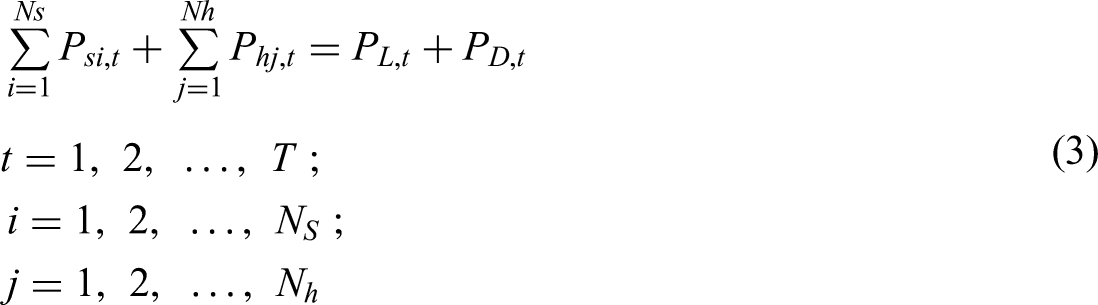

B, B0, and B00 are the ratios for energy reduction. NG is equivalent to the aggregate count of producers (thermal plus hydro). In another sense, it is equivalent to Ns plus Nh. Pi,t denotes the energy generation from the ith power source, whether thermal or hydro, at period t. It encompasses all power plants, including thermal and hydroelectric. It encompasses inefficiencies among every set of units. It adheres to the conventional linear reduction equation employed in energy systems design. Ultimately, Pi,t and Pj,t denote the energy generated from distinct units. The i-index and j-index facilitate the examination of all possible relationships that lead to expenses.
The electrical energy output of hydroelectric facilities may be expressed as a linear equation of stream discharge and reservoir capacity for storage as follows:

Qj,t and Vj,t denote the stream discharge and reservoir capacity of the jth hydro plant during the tth scheduling period, accordingly; C1j, C2j, C3j, C4j, C5j, and C6j represent the power production factors of the jth hydro plant.
Restrictions on the production capacity.


Psi,min, Psi,max represent the minimum and maximum production thresholds of the ith thermal plant; Phj,min, Phj,max represent the minimum and maximum production thresholds of the jth hydro plant.
Constraints on the capacity and amount of reservoirs.

Vj,min, Vj,max represent the minimum and maximum amount of storage that may be stored in a reservoir, respectively, of the jth hydro plant.
Stream discharge restrictions.

Qj,min, Qj,max represent the minimum and maximum stream discharge restrictions of the jth hydro plant.
Hydrological equilibrium.

Restrictions on initial and terminal reservoir storage volumes.

Proposed method (golden eagle optimization (GEO))
Golden eagle optimization
The golden eagle, a member of the Accipitridae family, resides in the northern hemisphere, extending from North America to Eurasia. GEO has shown enhanced convergence rates relative to alternative optimization techniques throughout many applications. The software draws inspiration from the golden eagle (Mohammadi-Balani et al., 2021), employing its brainpower to replicate whirling speed at various points along its spiraling exploration trajectory. Investigations reveal that golden eagles tend to be predisposed to fly instead of strike during the early stages of a chase, but the opposite occurs in the concluding portions. GEO is based on the round path of the Golden Eagle, because each eagle remembers the most advantageous spots it has discovered. The eagle's attack is depicted by a path from its present location to its target, when the technique establishes the optimal parameters of the entire system (Huzbur Hussien and Ameen Alazawi, 2025).
Attack
The assault may be represented as a path originating from the golden eagle's present position and terminating at the prey's position as recalled by the eagle. The path of attack for the golden eagle may be determined using equation (12).


Searching (cruise)
The cruise vector that results tangential to the circle and orthogonal to the assault vector denotes the eagle's velocity in relation to its target. In n-dimensional space, it resides within a tangential hyperplane, characterized by a point and its normal vector. Equation (13) presents its scalar representation.



Cruise vector


Modify the position



Execution of GEO to mathematical sample of STHS
This part delineates the suggested conceptual framework to replicate the motions of golden eagles in their pursuit of food. An equation for circular movement is provided, thereafter decomposed into assault and cruise directions to highlight exploitation and investigation, accordingly.


X is a vector (or set) that contains the entire schedule of generation decisions over the optimization horizon. It includes the power outputs from each thermal unit throughout each time interval and the power outputs from each hydroelectric plant throughout each time interval.
To handle constraints within the metaheuristic framework, we introduce penalty functions:
Power balance violation

If violated, penalty term:

Reservoir volume limits
Applied equation (8) put its number, Penalty term:

Final reservoir volume 4. Water discharge:



Pseudocode
Single-objective golden eagle optimizer (GEO). According to the basic concepts and their corresponding mathematical modeling presented in Section 2.2.2, the pseudo-code of the single-objective implementation of GEO is presented in GEO
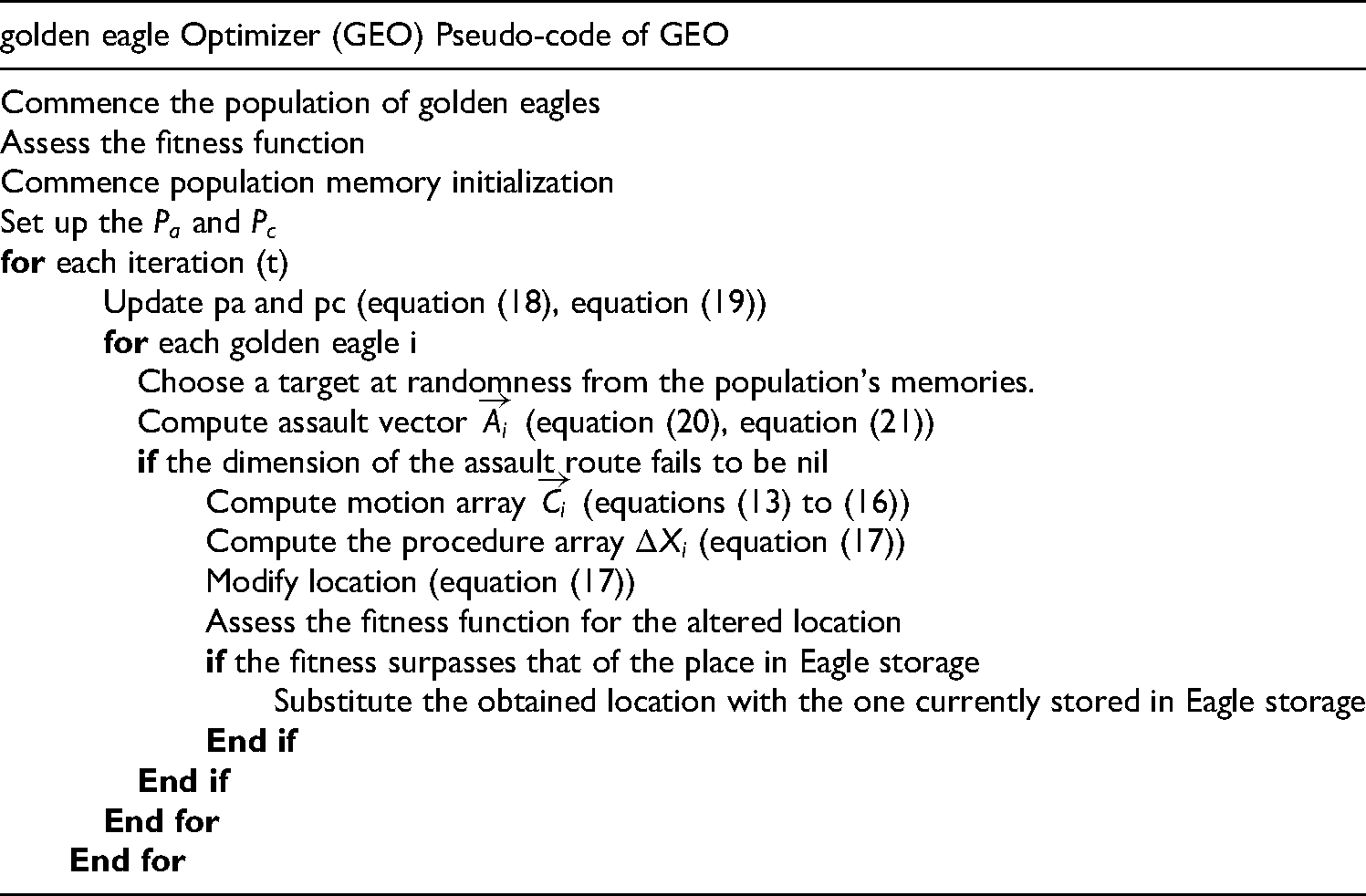
The difficulty problem of GEO
The two main components of the suggested GEO algorithm's difficulty challenge can be examined:
Setting up: The approach takes time to initialize the query bots’ storage, stride trajectory, and location matrix. The primary loop: Target selection, assault and cruising trajectory calculations, and hunt agent location updates take time in the primary loop.
In comparison to the distance difficulty, the overall time difficulty of GEO is significant, it can be said. The space that is used for setup and does not increase or decrease when the primary loop's iterations are performed is known as the GEO's difficulty.
Hydrothermal scheduling: case studies
Test system 1
Test system 1 comprises four interconnected hydraulic power plants and an analogous thermal plant characterized by non-smooth valve-point impacts expense operation, excluding transmission losses. The scheduling range is established as one day, with 24 periods, every lasting 1 h. The hydraulic configuration of this test system is illustrated in Reference (Orero and Irving, 2002), and the detailed data utilized for this test system, together with the reservoir stream during a 24-h period, are presented in Figure 1.
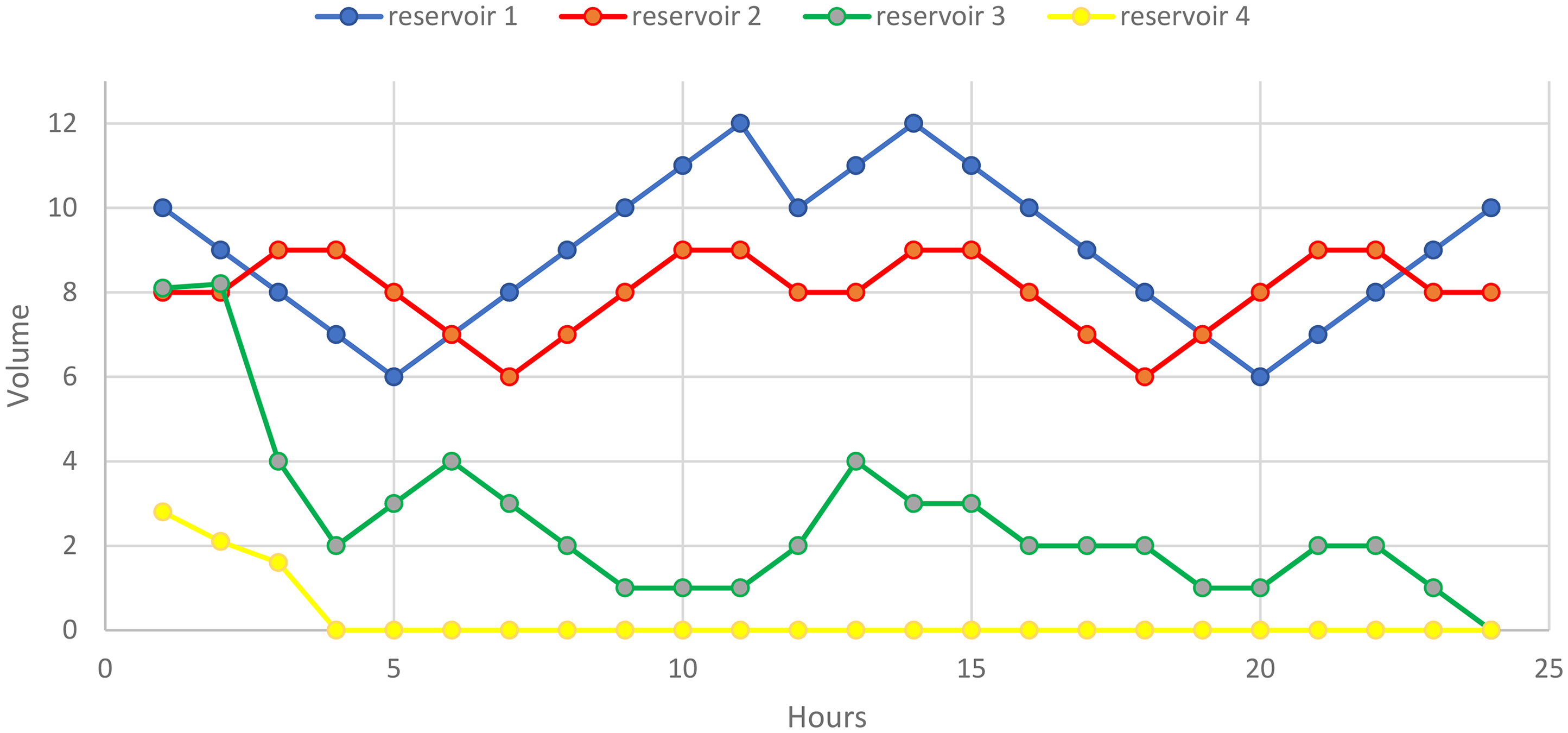
Reservoir inflows.
Figure 2 delineates the constraints on reservoir storage volume, water release, initial and terminal reservoir storage volumes, and the output capacity of hydroelectric facilities. Additionally, Figure 3 presents the electrical energy production factors for the hydro plant, while the fuel expense curve for the comparable thermal plant, incorporating valve-point impacts, is specified in equation (28).
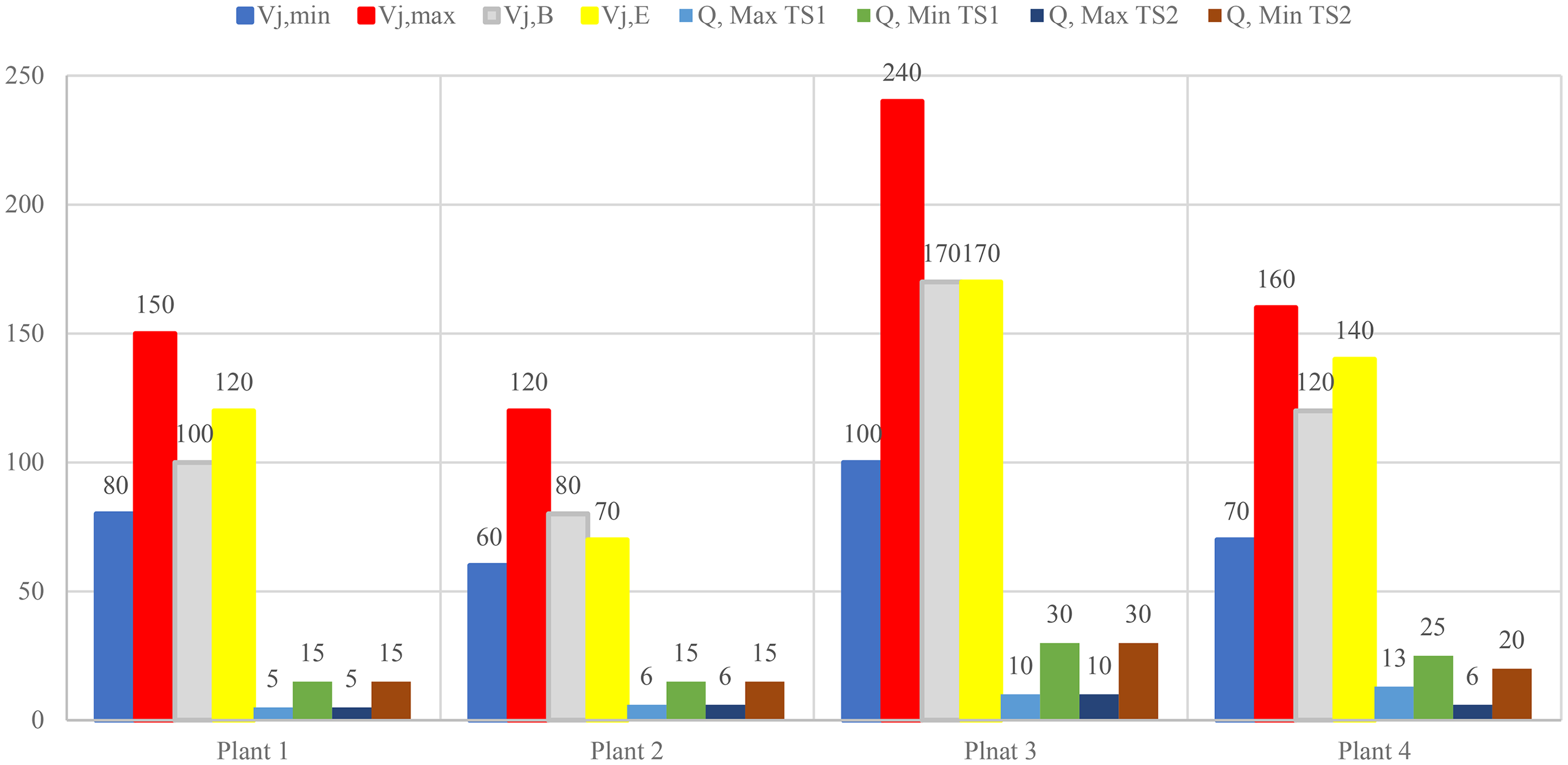
Constraints of hydro plants.
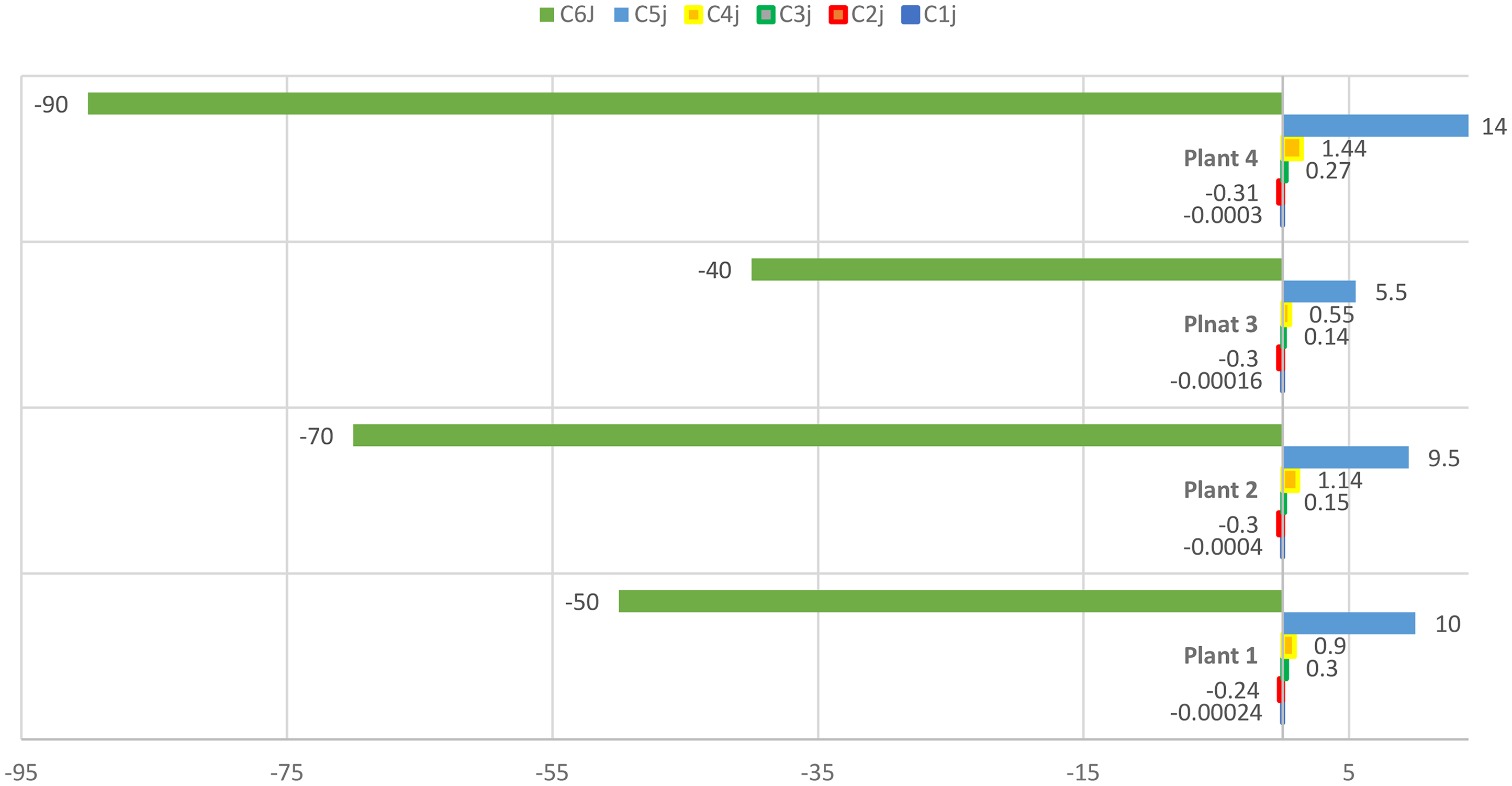
Coefficients for hydro plants.
Test system 2
Test system 2 is an altered form of test system 1, with four interconnected hydraulic power plants and three comparable thermal plants with an expense operate characterized by non-smooth valve-point effects, excluding transmission losses. The revised version of test system 1 retains identical reservoir inflows, storage volume limitations, water release restrictions, beginning and terminal storage volume restrictions, output capacity restrictions, and power production factors for the hydro plants. Meanwhile, the load request information for test systems 1 and 2, as illustrated in Figure 4, is provided in Reference (Wang et al., 2012b).
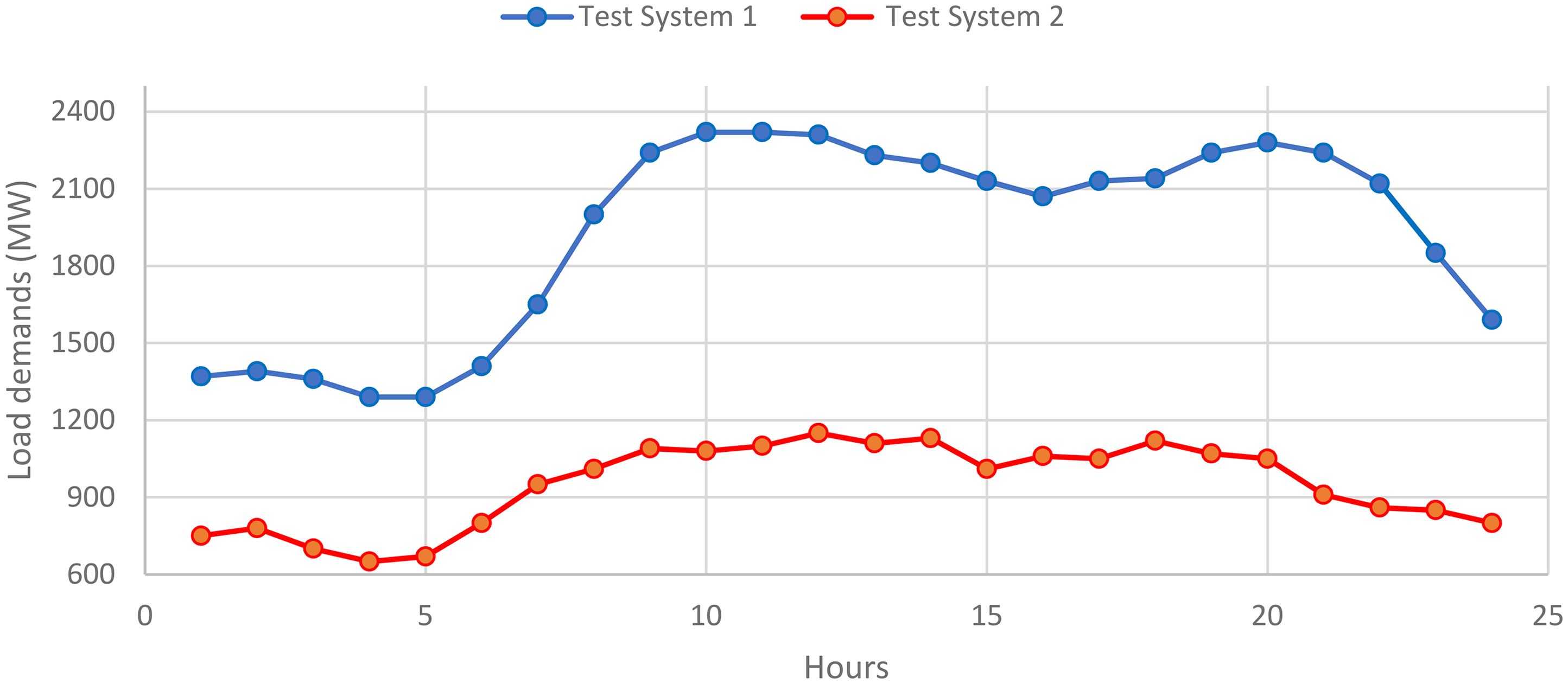
Load demands data for test system 1 and 2.
Results
The suggested approach has been executed in MATLAB 23 on an Intel(R) Core(TM) i7– 1355U CPU operating at 1.7 GHz with 16 GB of RAM. Transmission losses are excluded from this experiment. The model additionally considers the effects of valve point loading. The two situations have been considered to demonstrate the efficacy of the proposed method and the pertinent data for all case studies.
Modeling variable configurations
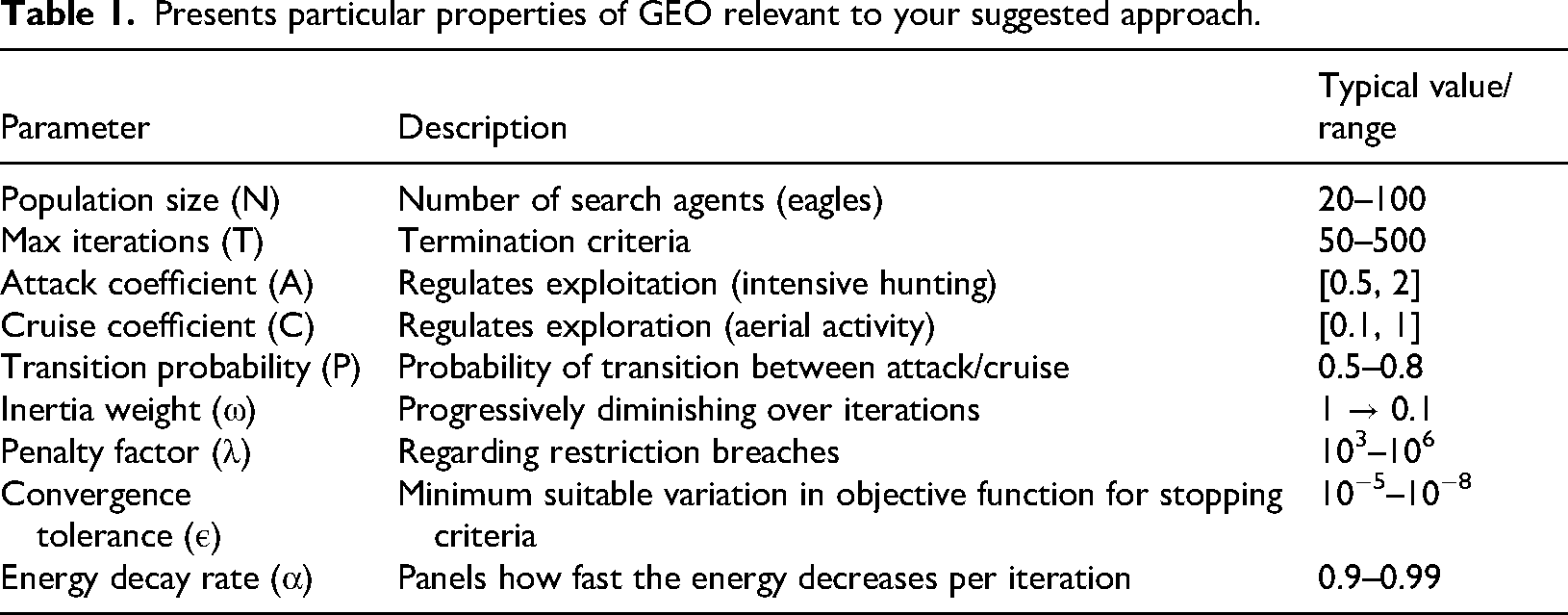
The variables of the suggested GEO approach, when applied to address the SHS issue in the aforementioned test systems, are presented in Table 1. To validate the efficacy of the modifications presented in this study, several iterations of GEO are employed to address the same challenges. When several iterations of GEO are executed, the parameters are enumerated in Table 1.
Presents particular properties of GEO relevant to your suggested approach.
Comparison and estimation effects
Test system 1
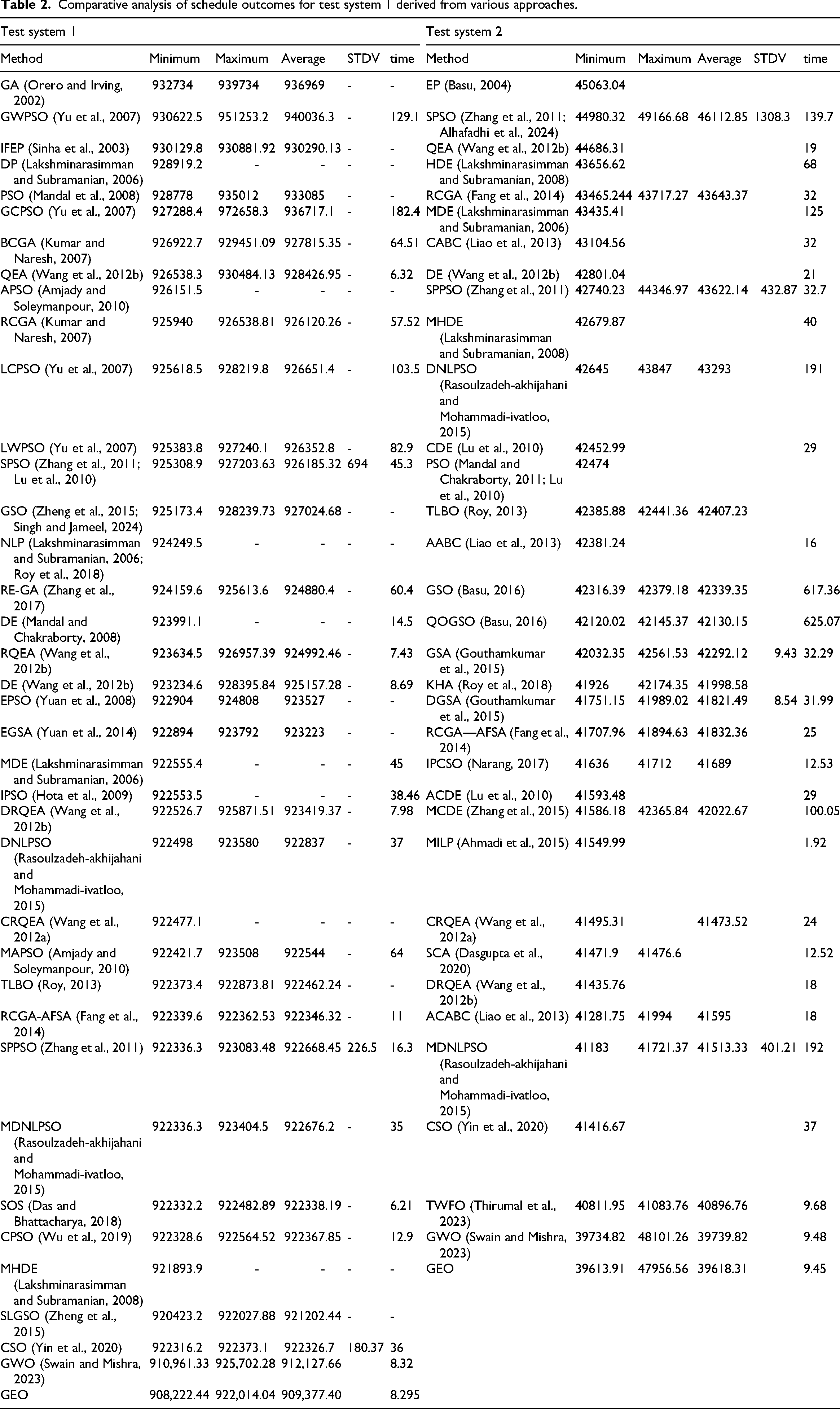
Figure 5 illustrates the evaluations of convergence qualities, while Table 2 details the optimal overall fuel expenditure and the average processing time necessary for executing the proposed GEO to substantiate the modification study reported in this research. Furthermore, Table 2 presents the best total fuel expenditure. The optimal hydrothermal generation and release scheduling solutions obtained by GEO are illustrated in Table 3, while the hourly reservoir capacity of hydro plants corresponding to these optimal scheduling findings is depicted in Figure 6. This is conducted to ascertain whether the constraints of the problem are satisfied. Ultimately, to confirm the effectiveness of the proposed GEO method for addressing the SHS problem in this test system, the delivery results from test system 1 were provided and displayed in Table 2 for ease of review.
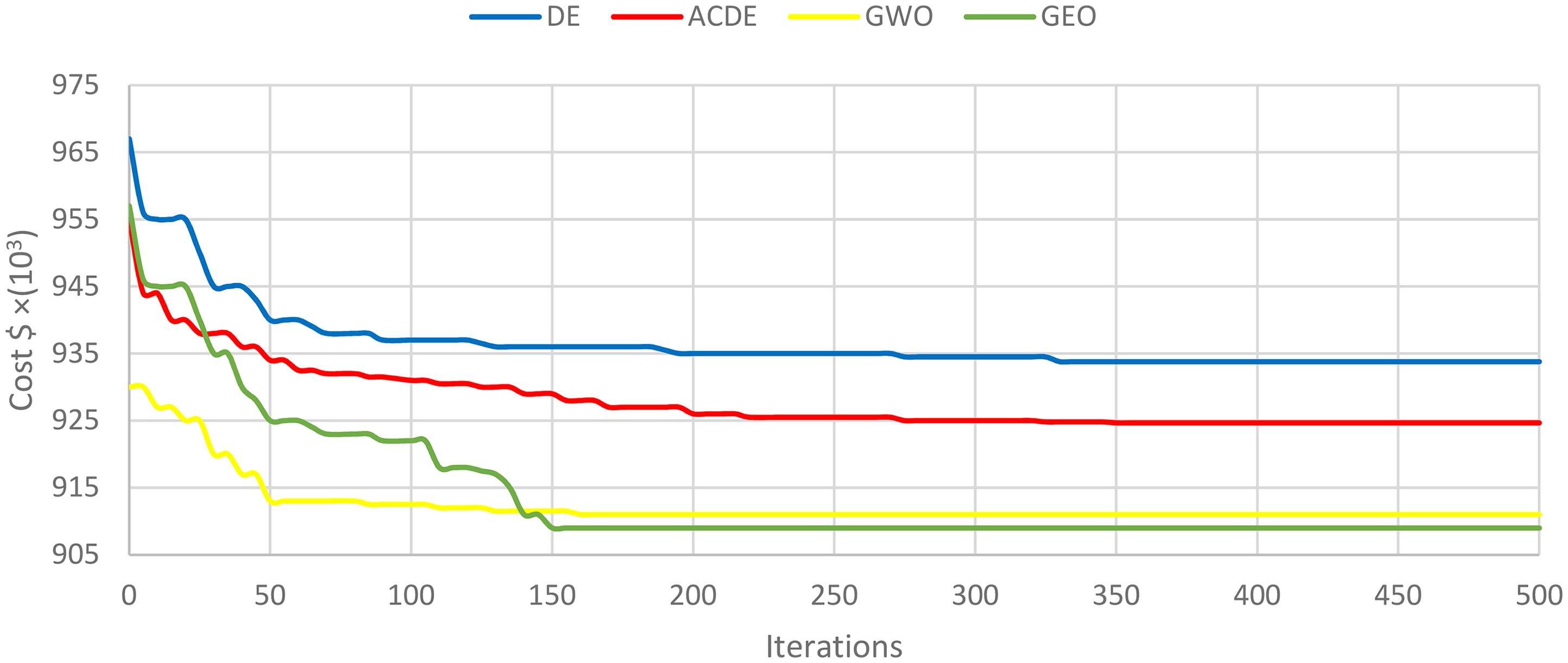
Convergence behavior of many iterations of GEO for test system 1.
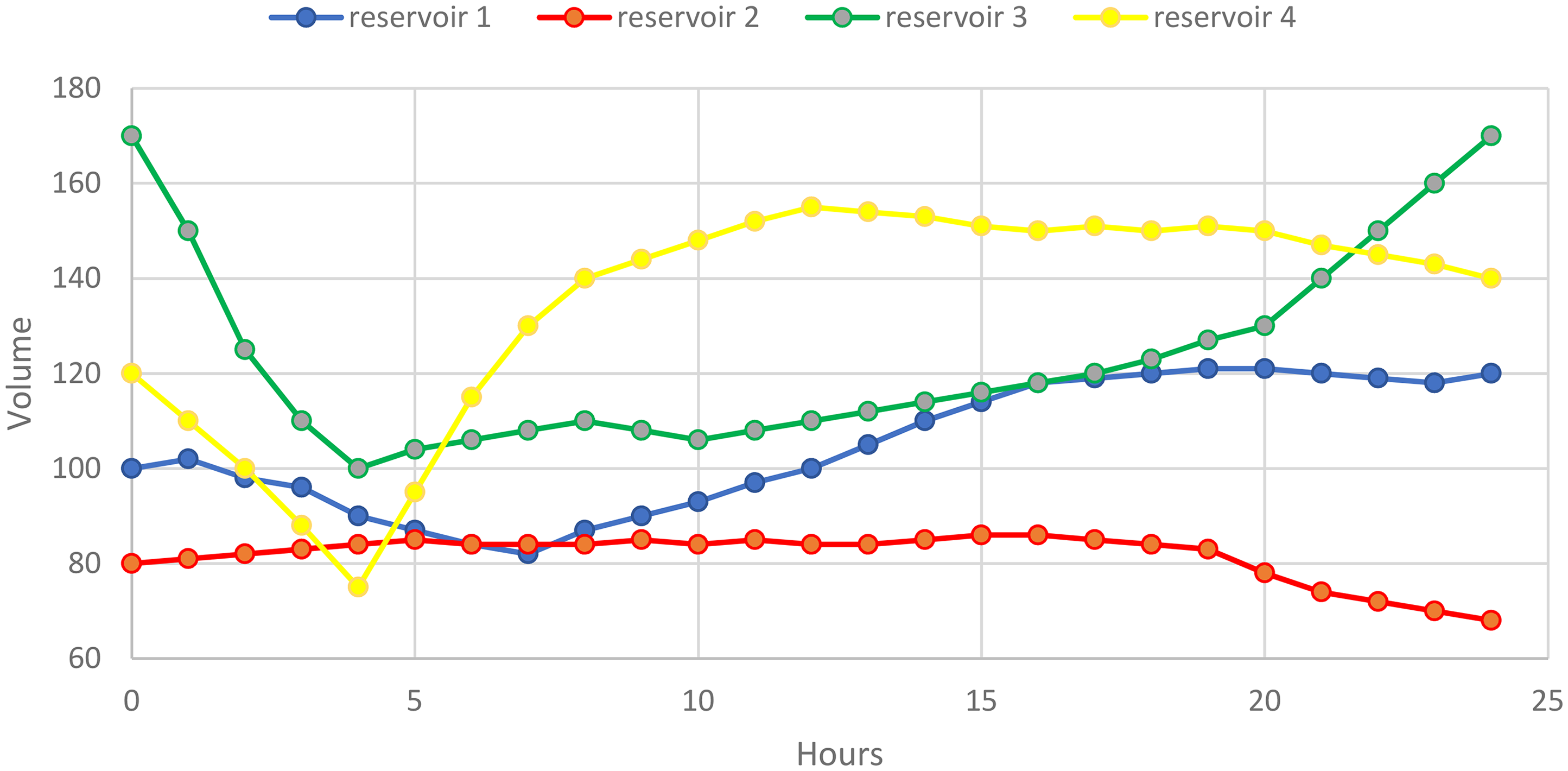
Hourly hydro reservoir quantities of the best scheduling outcome for test system 1 derived using GEO.
Comparative analysis of schedule outcomes for test system 1 derived from various approaches.
The specifics of the best scheduling outcome for test system 1 derived from GEO.
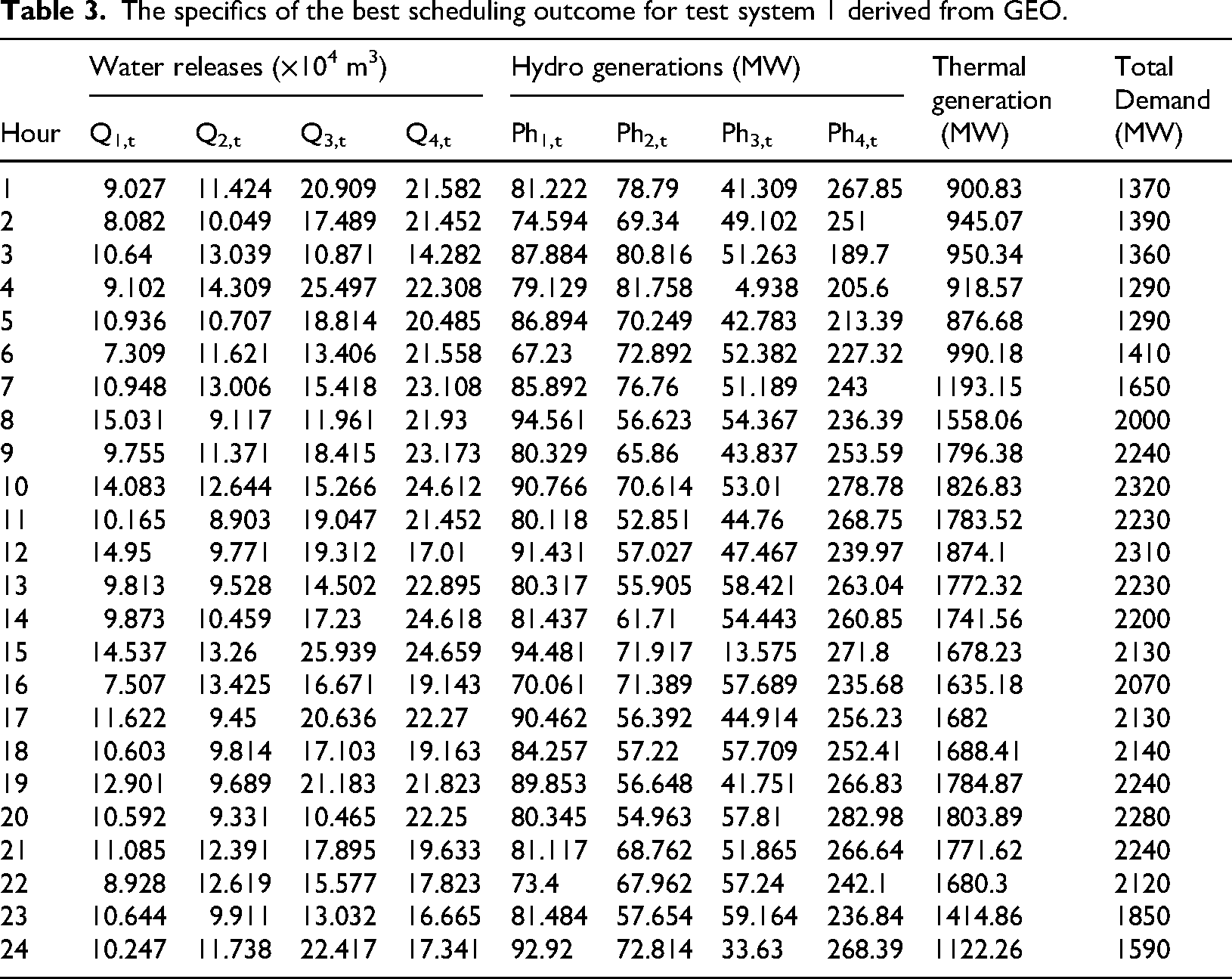
Table 2 indicates that the ideal fuel expenditure for test system 1 over the scheduling timeline, as determined by the suggested GEO over these 10 conditional modeling, is $908,222.44. In comparison to the optimal outcomes achieved by many iterations of novel approaches, it is evident that the suggested approach is preferable for addressing the SHS problem of this test system by minimizing overall fuel costs with effectiveness. Figure 5 clearly illustrates that the suggested GEO successfully mitigates early convergence and demonstrates superior convergence properties over several iterations of novel approaches while addressing the SHS problem in this test system. Consequently, the efficacy of the modifications presented in this research is validated. Furthermore, based on the comparative results presented in Table 2 and Figure 5, we can draw a few findings regarding the modifications discussed in this article: the utilization of GEO without a planned adjustment process can improve search capability and convergence characteristics without necessitating additional computation time. Furthermore, it may successfully prevent early convergence and substantially enhance optimization capabilities.
Table 3 and Figure 6 demonstrate that the schedule produced by the suggested GEO adheres to the requirements of the SHS issue whilst significantly lowering the overall expense of fuel. Consequently, it can be succinctly inferred that the restriction management techniques presented in this research may successfully address the intricate restrictions of the SHS issue without disrupting the constantly changing procedure intrinsic to the suggested GEO approach.
Ultimately, Table 2 demonstrates that the suggested GEO yields superior scheduling outcomes with reduced overall fuel costs in comparison to both traditional and contemporary techniques when addressing the SHS problem of this test system. Furthermore, the average CPU process time needed by GEO is shorter than that of the aforementioned approaches, thus indicating that the suggested GEO is better to the previously described techniques.
Test system 2
To validate the modifications presented in this article, the suggested GEO and various iterations of new methods were employed to address the SHS problem of this test system 10 times, utilizing distinct initial populations comprising 238 responses, as detailed in Table 1. The final product was determined by selecting the most favorable scheduling outcome from these 10 separate trials. The optimum fuel expense and mean CPU implementation period of the suggested GEO technique and various iterations of the new approach for addressing the SHS issue on this test system are presented in Table 2, while the convergence characteristics of the suggested GEO and various iterations of the new method are illustrated in Figure 7. To assess the viability of the suggested restriction management techniques, Table 4 presents the optimum hydrothermal electrical energy and discharge schedule results derived from GEO, while Figure 8 illustrates the hourly reservoir storage volumes of hydro plants corresponding to this optimal schedule. This test system is designed to immediately evaluate the findings and efficacy of the suggested GEO approach with known methods. To facilitate examinations, the findings of the aforementioned approaches are presented in Table 2.
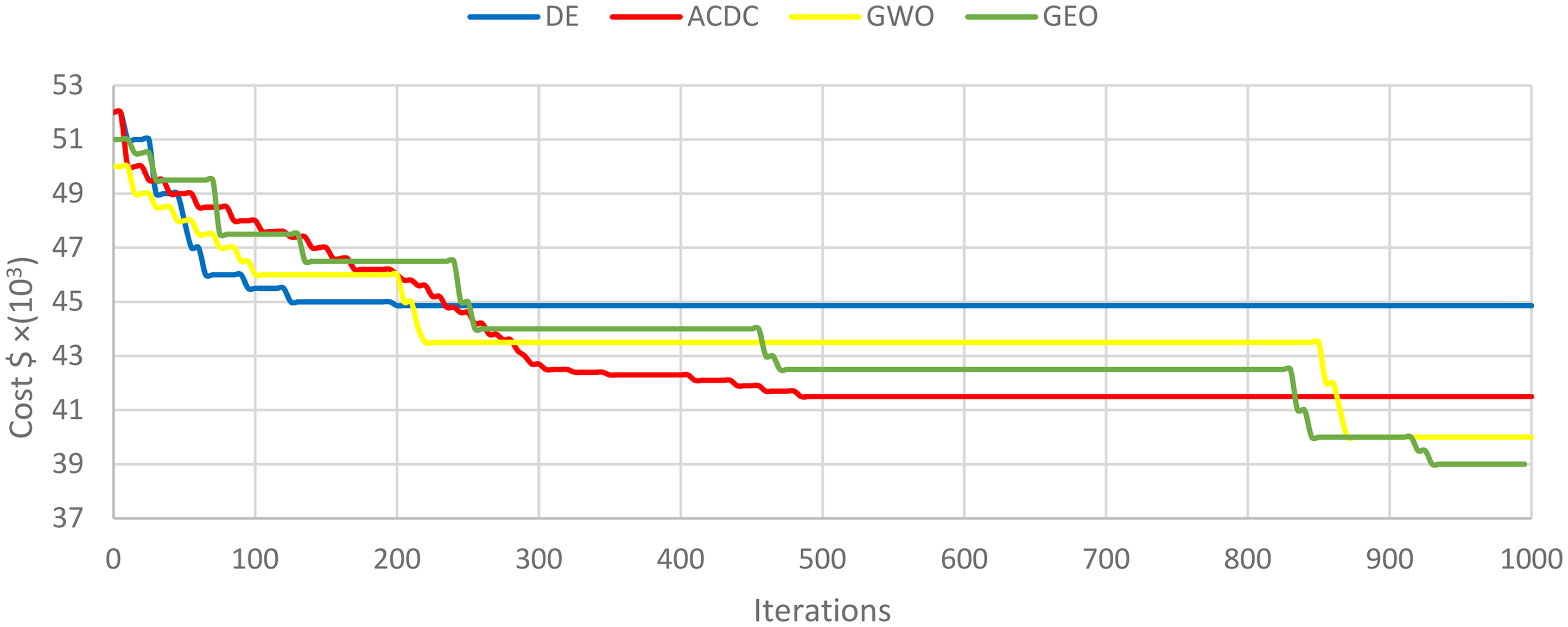
Convergence behavior of many iterations of GEO for test system 2.
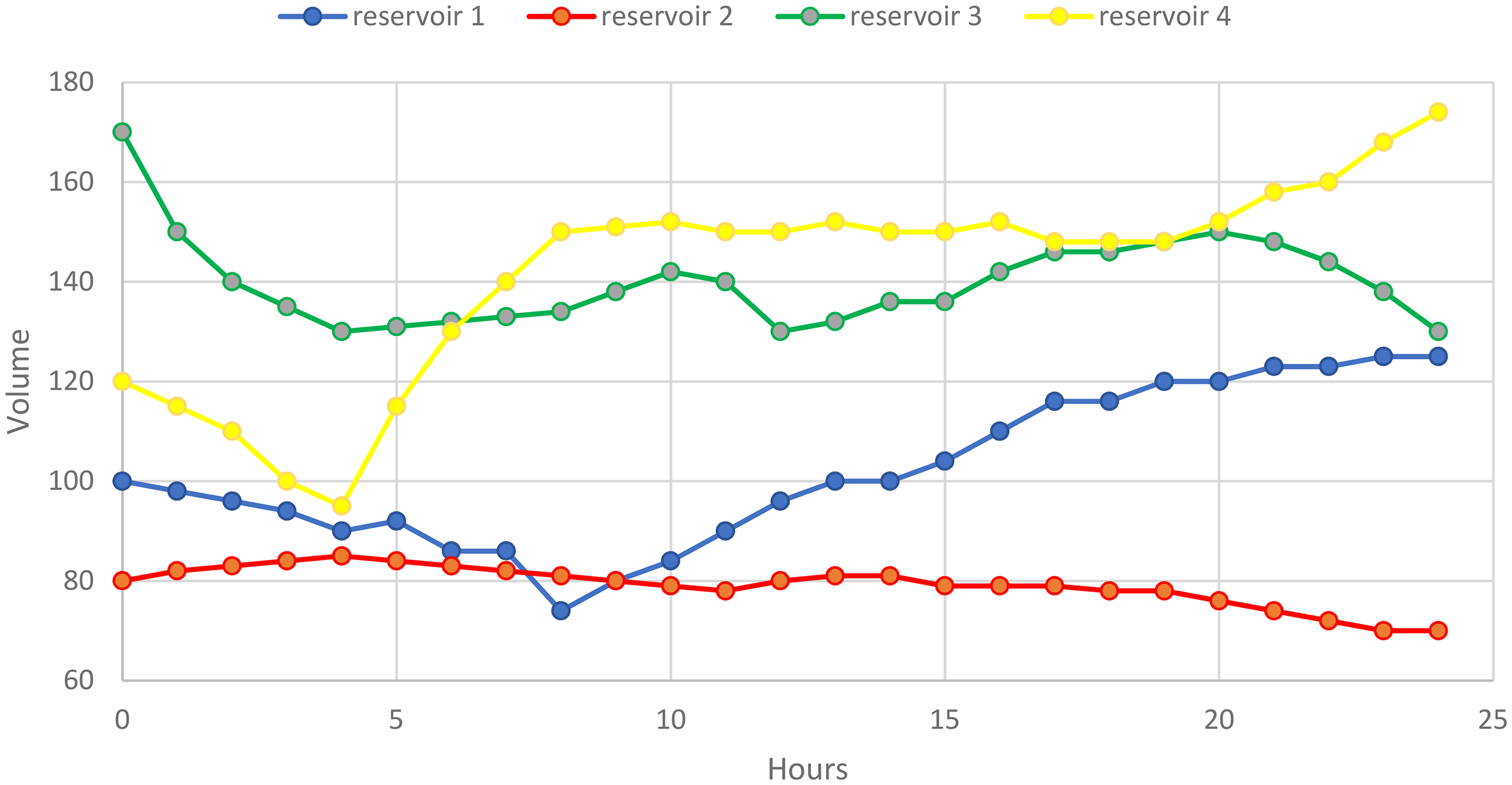
Hourly hydro reservoir quantities of the best scheduling outcome for test system 2 derived using GEO.
The specifics of the ideal scheduling outcome for test system 2 derived from GEO.
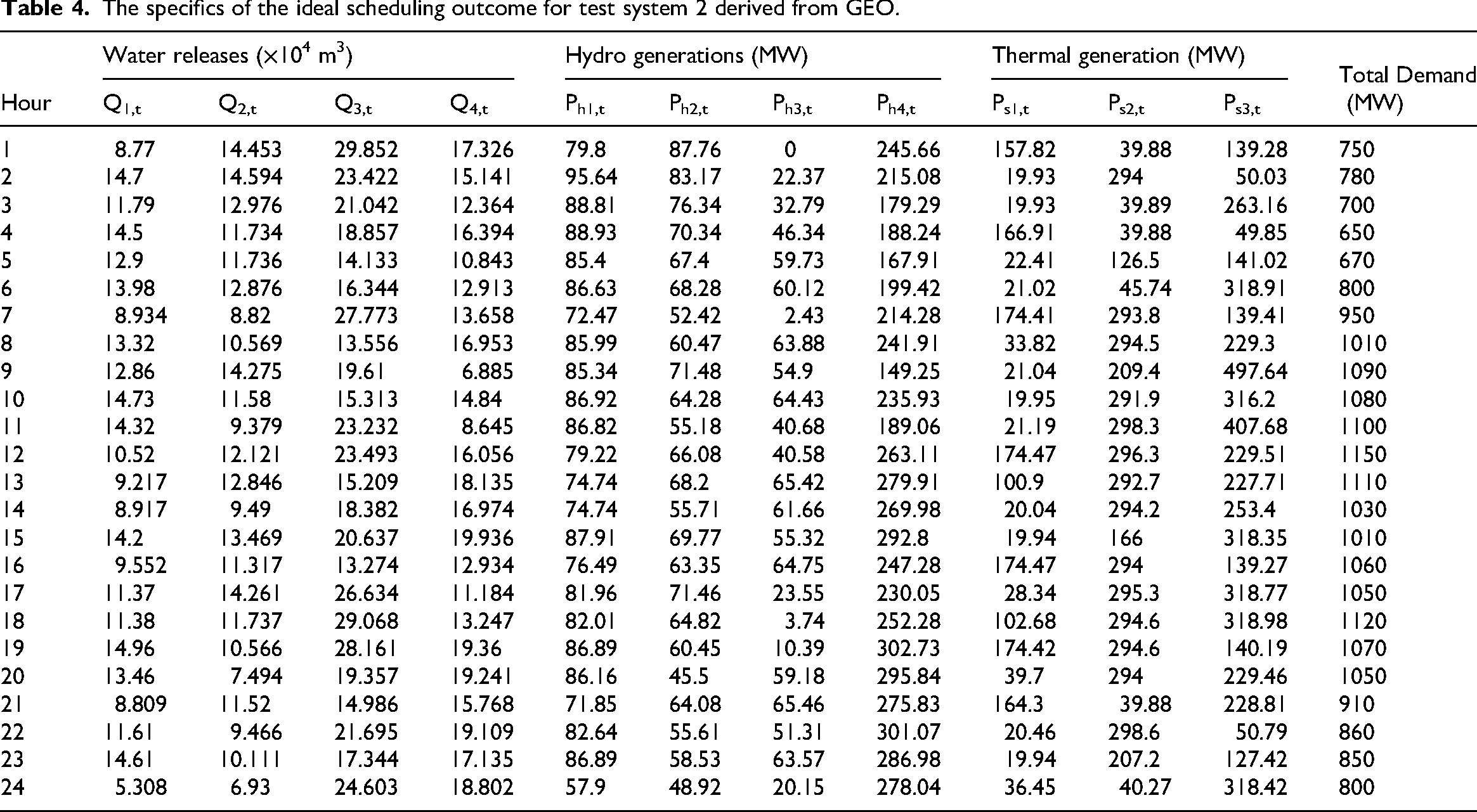
The best overall fuel expenditure of the schedule outcome for test system 2, achieved by the suggested GEO across 10 dependent experiments, is $39,613.91. The efficiency of the suggested GEO in addressing the SHS problem of this test system is evidently superior to that resulting from various innovative approaches. Table 2 and Figure 7 illustrate that the suggested GEO technique yields superior delivery results with reduced overall fuel expenses and enhanced convergence properties when employed to the SHS issue of this test system, in comparison to several alternative methods.
Table 4 and Figure 8 demonstrate that the delivery outcome generated by the suggested GEO adheres to all restrictions of the SHS issue, excluding transmission losses, while significantly minimizing the overall fuel expenditure. Consequently, the efficacy of the restriction handling approaches presented in this study is reaffirmed.
Ultimately, Table 2 demonstrates that the suggested GEO technique produces superior scheduling outcomes compared to current approaches, with regard to both total fuel expenses and computing time for addressing the SHS problem in this test system. The effective implementation of the recommended GEO for addressing the SHS problem, accounting for the valve-point impact and excluding transmission losses, is clearly shown.
Algorithm reapplied optimally
Considering all sides discussed of the SHS problem with all constraints that are illustrated above, according to Figures 5 and 7 (Convergence behavior for test systems 1 and 2, respectively), one can observe that the GEO is achieved, including minimizing the thermal plan's cost. As shown in Figures 6 and 8 (best scheduling outcomes for test systems 1 and 2, respectively), the GEO has been optimized for the hydro plants’ reservoir. Related to this matter, in Table 3 and 4 (the best scheduling outcome for test systems 1 and 2, respectively), one can observe that by GEO is optimized to include minimizing the electrical energy production to thermal plants and maximizing the electrical energy production to hydro thermal plants while fixing the total demand or total generation for both test systems. All these matters are improved by 0.302% (more efficient) over all solutions to short-term hydrothermal scheduling if we compare to the last modern approach of the gray wolf optimizer algorithm (Swain and Mishra, 2023).
In addition, to validate the credibility and robustness of the obtained results, from the aspect of the improvement ratio mentioned above, which uses the GEO algorithm employed to solve the SHS problem for both test systems: 1 and 2 of SHS, relatively corresponds to the same ratio as another field that was applied in ref. (Vijayakumar and Sudhakar, 2024)
Final output
Following multiple iterations, the golden eagle optimization (GEO) algorithm determines the optimal solution (X), which minimizes the total generation expenses, adheres to all system limitations (or approaches compliance by minimizing penalties), and constitutes the ideal generation schedule for both thermal and hydro units throughout the scheduling horizon.
Conclusion
Golden eagle optimization (GEO) is an appropriate method for addressing short-term hydrothermal scheduling (SHS) issues. The SHS issue is intrinsically intricate, encompassing nonlinear, restricted, and multivariable optimization. GEO, as a global metaheuristic, presents multiple benefits in this setting: it can traverse intricate exploration fields while succumbing to local minima, supports nonlinear behavior and various restrictions, and functions irrespective of slope data. These attributes render GEO especially proficient in tackling the computing difficulties linked to SHS. Even if the GEO approach provides a more practical solution for SHS issues, there is still room for improvement in the study, including in terms of computational capacity and convergence accuracy, which can be achieved by combining the GEO approach with additional heuristic techniques. Second, to cut expenses while lowering emissions and toxic gases from thermal plants. The multi-objective optimization of hydrothermal systems is not taken into consideration because this approach works solely on minimizing the operational costs of hydrothermal systems. Finally, for more energy efficiency, hydrothermal systems could incorporate energy from renewable supplies.
Footnotes

Funding
The authors received no financial support for the research, authorship, and/or publication of this article.
Declaration of conflicting interests
The authors declared no potential conflicts of interest with respect to the research, authorship, and/or publication of this article.