




Abstract
Deregulated power systems have reformed the dynamics of modern electricity markets through promoting competition, efficiency, and consumer-oriented benefits while, at the same time, creating new challenges in system stability and sustainability. The article offers an extensive review of renewable energy sources (RES) and electric vehicle (EV) integration in deregulated power systems, emphasizing their synergetic potential for augmenting grid resilience, economic viability, and environmental performance. The research thoroughly analyzes the contribution of erudite smart grid (SG) infrastructures, demand-side management (DSM), and vehicle-to-grid (V2G) technologies in reducing intermittency, voltage and frequency deviation stabilization, and facilitating cost-optimized dispatching of hybrid RES (HRES). The prime contribution of this research is the techno-economic assessment of RES–EV integration approaches, illustrating the viability of grid parity attainment under certain market pricing scenarios, thereby ensuring sustainable competitiveness in reformed energy markets. Additionally, the article outlines how EVs offer ancillary services, including frequency regulation, load balancing, and peak shaving, reducing dependence on expensive infrastructure reinforcements. Integrating technological advancements, regulatory frameworks, and market-oriented operational models, this review provides a framework to bridge the knowledge gap of integrated RES–EV research under deregulated power systems. The findings set out here are highly applicable to policymakers, utilities, and energy market participants because they identify avenues to promote decarbonization at pace, strengthen system flexibility, and progress toward a low-carbon, sustainable electricity future.
Introduction
The pace of renewable energy sources (RES) expansion and the growing acceptance of electric vehicles (EVs) are revolutionizing power systems in fundamental ways. These changes are in close agreement with global sustainability visions and international responsibilities to move toward low-carbon energy futures. The growth of RES and EVs creates opportunities for cleaner, efficient electricity production and transport, whereas their mass integration into traditional grids also presents significant challenges. The problems of grid stability, ensuring system flexibility, and reaching economic viability are still key issues. In a bid to address these challenges, the issue of smart grids has come to the fore as a center-stage solution. Through support of advanced monitoring, two-way communication, and real-time supply and demand coordination, smart grids provide the technical basis to integrate variable renewable generation and the dynamic charging requirements of EVs in a more dependable and sustainable way. While much research has addressed RES and EVs separately, comparatively little interest has been given to assessing their combined effect within deregulated electricity markets. Previous research tends to concentrate either on the technical viability of RES integration or on the environmental and economic advantages of EV uptake. But synergies between the two sectors, especially in relation to smart grid infrastructure, deregulated market dynamics, and long-term system resiliency, are still underinvestigated. This highlights one key research gap: an absence of inclusive analyses that not only summarize the current state of technological innovation but also critically evaluate the related economic paradigms, regulatory systems, and operating strategies required for dependable and lucrative integration. To fill this gap, this current review delineates three core objectives.
First, it assesses the existing status and position of smart grid advancement in facilitating RES–EV integration in deregulated power markets. Second, it addresses systematically technologies, economics, and environmental strategies that lead to improved grid stability, efficiency, and profitability. Third, it provides practical insights and recommendations that can guide policymakers, utilities, and researchers to create sustainable, resilient, and market-based energy systems.
Through this multidimensional view, the article attempts to make its contribution through a systematic framework to comprehend both opportunities and challenges posed by the convergence of RES, EVs, and smart grid technologies in deregulated markets.
In the process, this review not only synthesizes what has been learned but also offers guidance for future research and policy action. The convergence of deregulated electricity markets, smart grid technologies, and EV integration is a boundary-pushing frontier in energy systems, with consequences that reach far beyond technical performance. It is the potential to redefine energy economics, improve system reliability, and drive the world toward decarbonized and sustainable power systems.
RES trends, EVs uptake rates, and investment patterns
RES-based power generation has seen remarkable growth in recent years. Indeed, by 2023, it was projected that there would be a 50% rise in global power generation from RES from the previous few years (Armiento et al., 2025). This increased RES generation is in sync with the International aspirations to reach net-zero CO2 emissions by 2050, which is a goal set by the International Energy Community to fight climate change and shift towards a low-carbon future (Fam and Fam, 2024). Therefore, the electricity sector is experiencing a revolution, moving from conventional fossil fuel-based electricity generation to carbon-free renewable sources. To support the growth in RES, power grids need to transform to become stronger, more technologically practical, and resilient to shifting energy needs and recovery strategies. Here, decentralized and distributed energy resources (DERs) have appeared as a disruptive force to the conventional centralized model of power generation and supply. DERs comprise a variety of smaller, locally dispersed power sources, which have the potential for more flexible, resilient, and efficient power systems. Although DERs pose challenges to current infrastructure, they also provide innovative solutions for grid modernization and decentralization (Marlés-Sáenz et al., 2025). This transition towards decentralized generation has made it possible to develop and utilize smart grids to integrate RES more effectively, enhance energy efficiency, and improve the resilience of the grid (Chakraborty et al., 2022; Das et al., 2022; Farooq et al., 2022a, 2022b).
Renewable energy is a key component to enable the optimal control and energy flow management in advanced grid systems. Microgrids are local energy systems that can operate either in isolation or in parallel with the primary grid, offering a more stable and renewable supply for a geographic area. These systems typically combine different DERs, including solar PV panels, wind power plants (WPP), energy storage systems (ESS), and DSM mechanisms, to provide a stable and efficient energy supply (Ranjan et al., 2021; Tahir et al., 2022). The integration of RES into microgrids not only allows for cleaner power generation but also increases energy security and sustainability. Smart grids are not only about the integration of RES and DERs; they facilitate efficient coordination and management of demand-side resources, grid infrastructure, and distributed generation. Through real-time data exchange and grid automation, smart grids offer a more responsive and adaptive power system capable of balancing supply and demand efficiently, minimizing energy losses, and maximizing energy consumption (Acharya et al., 2023; Basu et al., 2022).
The global transition to clean and sustainable power generation from RES has led to significant investment in the power sector. This is fueled by both environmental factors and the growing need for clean energy solutions. Figure 1 presents the increase in investment in the RES market from 2015 to 2024, with the occurrence of solar power and EVs in clean energy. This trend in investment depicts the growing resolve of governments, industries, and investors to switch to RES. The accelerating growth of RES and the adoption of smart grid technologies are key to the success of a sustainable, resilient energy system. The innovation of decentralized and distributed energy systems, along with advancements in grid infrastructure, holds great potential for addressing the increasing global demand for clean energy without harming the environment. With continued investment in RES, the revolution of power generation and transmission systems will be a key player in the worldwide campaign to reduce carbon emissions and fight climate change. Off-grid RES-based systems are largely recognized as the best method for supplying electricity to rural and isolated locations in developing countries. However, environmental factors such as steep terrain and dispersed communities limit the successful execution of these programs in rural areas (Alanne, 2023; Nyarko et al., 2023). In this environment, smart grids bring both single potential and problems in deregulated systems. By incorporating RES and enhancing grid dependability, these systems can help to create a more resilient power grid.
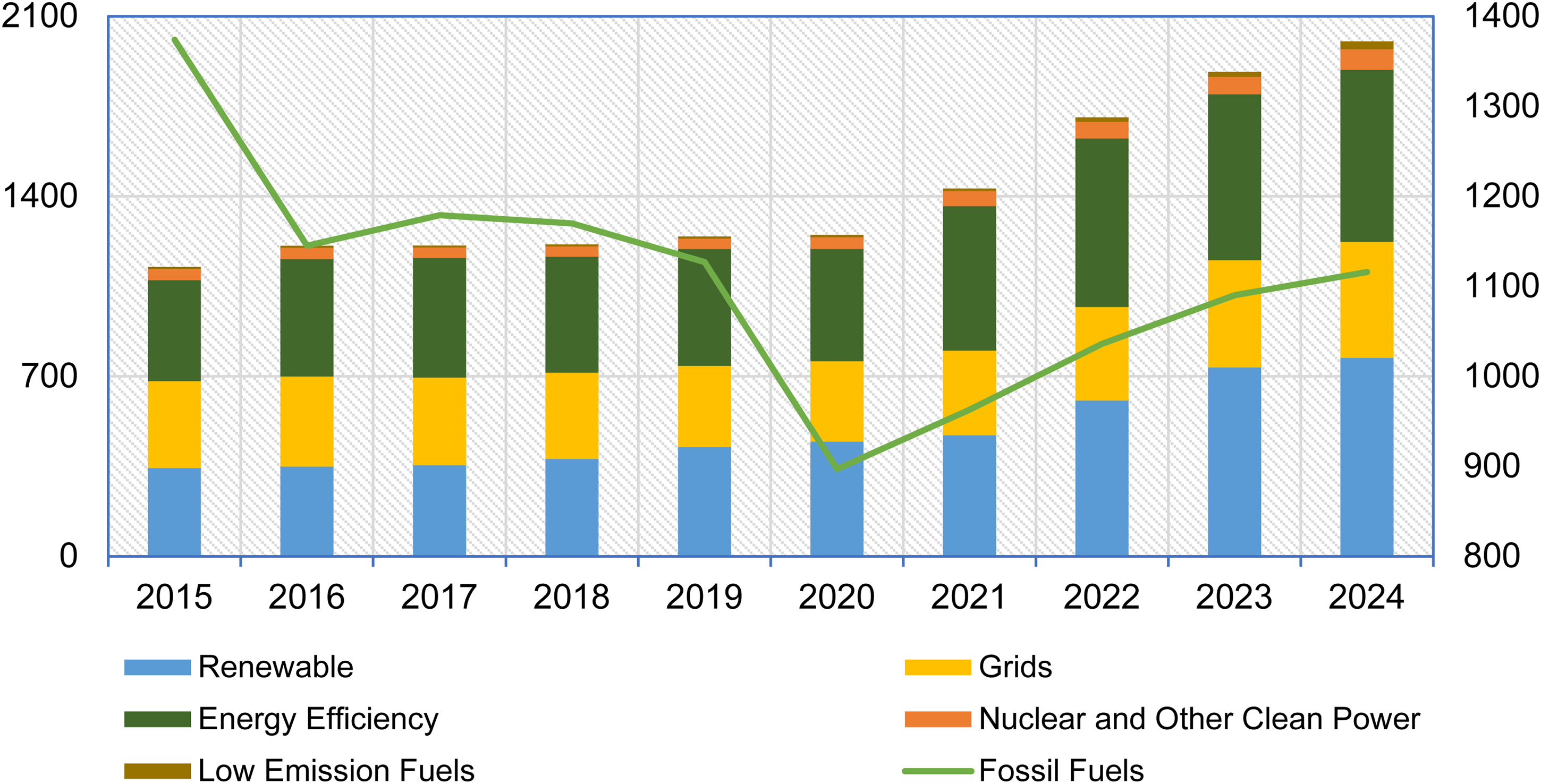
Global investment status of clean energy and fossil fuel (in billion USD) (IEA, 2024).
EVs can significantly reduce the environmental impact of charging the vehicle by choosing RES options. In addition to the environmental benefits, there are also financial advantages to owning an EV. Furthermore, the government offers various policies and incentives for EV owners, which vary depending on the state of the owner's residence. Another advantage of EVs is their efficiency. EVs can convert a remarkable 60% of the electrical energy from the grid into power for the wheels. In contrast, petrol or diesel cars can only convert around 17% to 21% of the energy stored in the fuel into power for the wheels. This difference in efficiency means that petrol or diesel vehicles waste approximately 80% of their energy, resulting in unnecessary fuel consumption and emissions (Armiento et al., 2025). To mitigate the impact of charging EVs, India has set hopeful goals to achieve about 40% cumulative electric power installed capacity from nonfossil fuel-based energy resources by 2030. This commitment to RES will play a crucial role in ensuring that EVs remain a sustainable and eco-friendly choice for Indian transportation. While integrating small EV fleets into distribution grids has little impact, extensive EV adoption raises concerns about the stability and security of the electric system, as well as the quality of power supply. If not correctly accomplished, massively loaded grids may encounter congestion, largely radial networks may have low voltage concerns, and low voltage networks may see an increase in peak load, energy losses, and load imbalances between phases. Furthermore, the generation and transmission system may experience grid loading, irregular power flows, a lack of reserve capacity, and variations in energy pricing. There are several techniques for addressing the issues of bulk EV charging in distribution systems. The first option is to strengthen the grid infrastructure to accommodate EV uptake, but this would be expensive. The second strategy is to combine the concepts of smart grids with EVs. This entails creating demand-side management (DSM) capabilities that can govern EV charging depending on grid requirements and EV owners’ preferences. The necessity of building a public charging infrastructure for EVs and its role in driving wider adoption cannot be overemphasized. While residential charging meets the majority of EV charging demands, followed by business charging, there is a critical need for EV charging infrastructure at the municipal and regional levels. This is significant in developing nations like India, where such infrastructure can optimize resources while also facilitating EV adoption (Desai et al., 2023). The widespread use of RESs may cause grid instability owing to dynamic changes in supply and load. However, one effective solution to this problem is to operate lithium-ion batteries (LIBs) in pulsed mode (Qin et al., 2021).
The energy sector is witnessing increased investment in power generation and RES due to the surge in electricity demand, reduction in RES expenses, and the expansion of government regulations promoting clean energy. Figures 2 and 3 show the worldwide investment in fossil fuels and clean energy, highlighting a significant surge in clean energy investment. At the end of 2022, the world's RES production capability reached a total of 3372 GW (IEA, 2022). The most significant portion of this capacity was attributed to hydropower, which amounted to 1256 GW of the global total. Solar and wind power made up the majority of the remaining energy sources, with a combined capacity of 1053 and 899 GW. Additionally, there were 149 GW of bioenergy and 15 GW of geothermal capacity, along with 524 MW of marine energy (Pourasl et al., 2023). In 2022, the capacity of RES witnessed a significant growth of 295 GW (+9.6%). Solar energy remained at the forefront of this expansion, experiencing a remarkable increase of 192 GW (+22%). Wind energy (WE) followed suit with a commendable growth of 75 GW (+9%). Additionally, hydropower capacity saw an increase of 21 GW (+2%), while bioenergy witnessed a growth of 8 GW (+5%). Geothermal energy, on the other hand, experienced a modest increase of 181 MW.
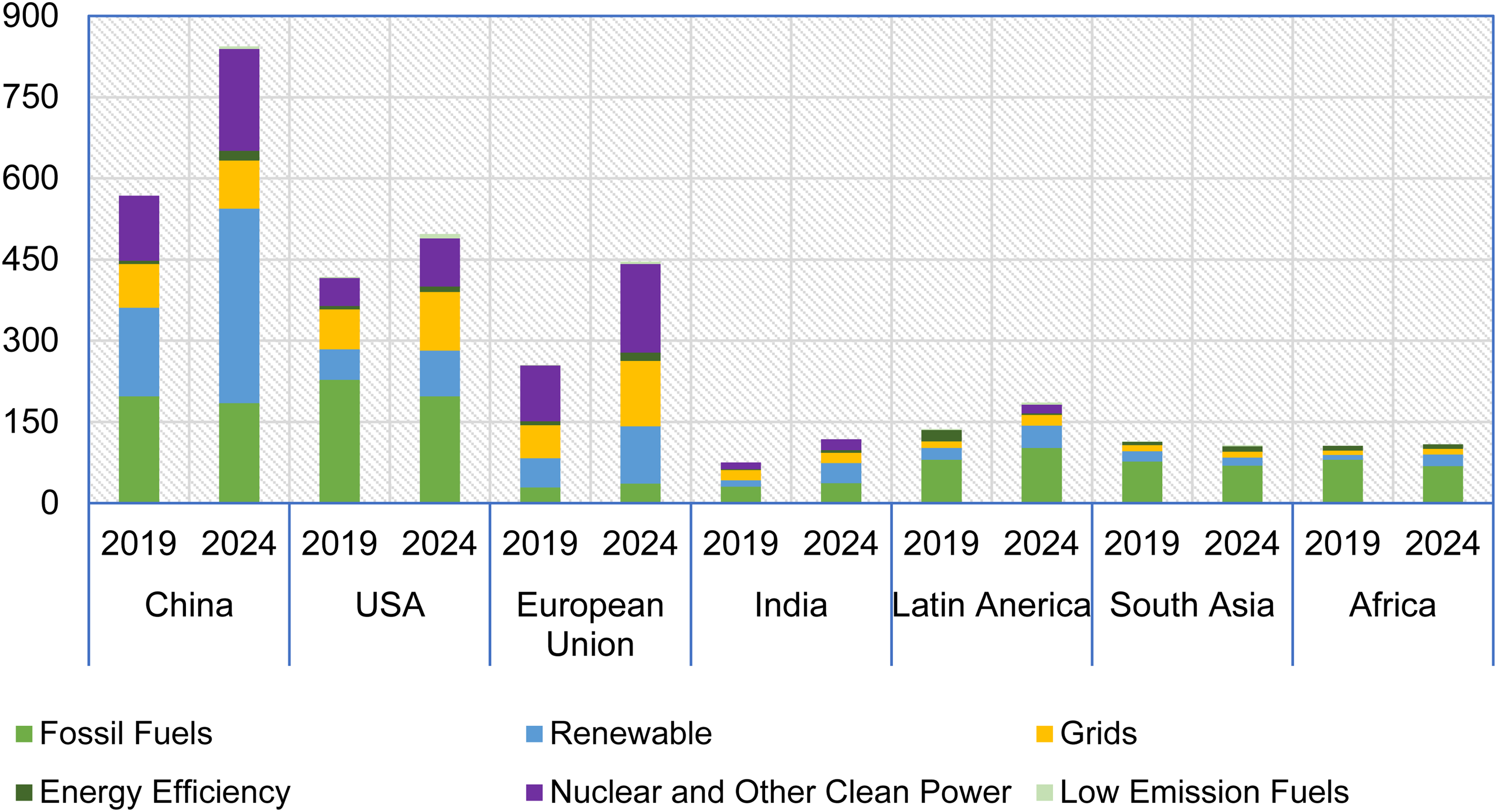
Annual investment in clean energy between different regions (in billion USD).
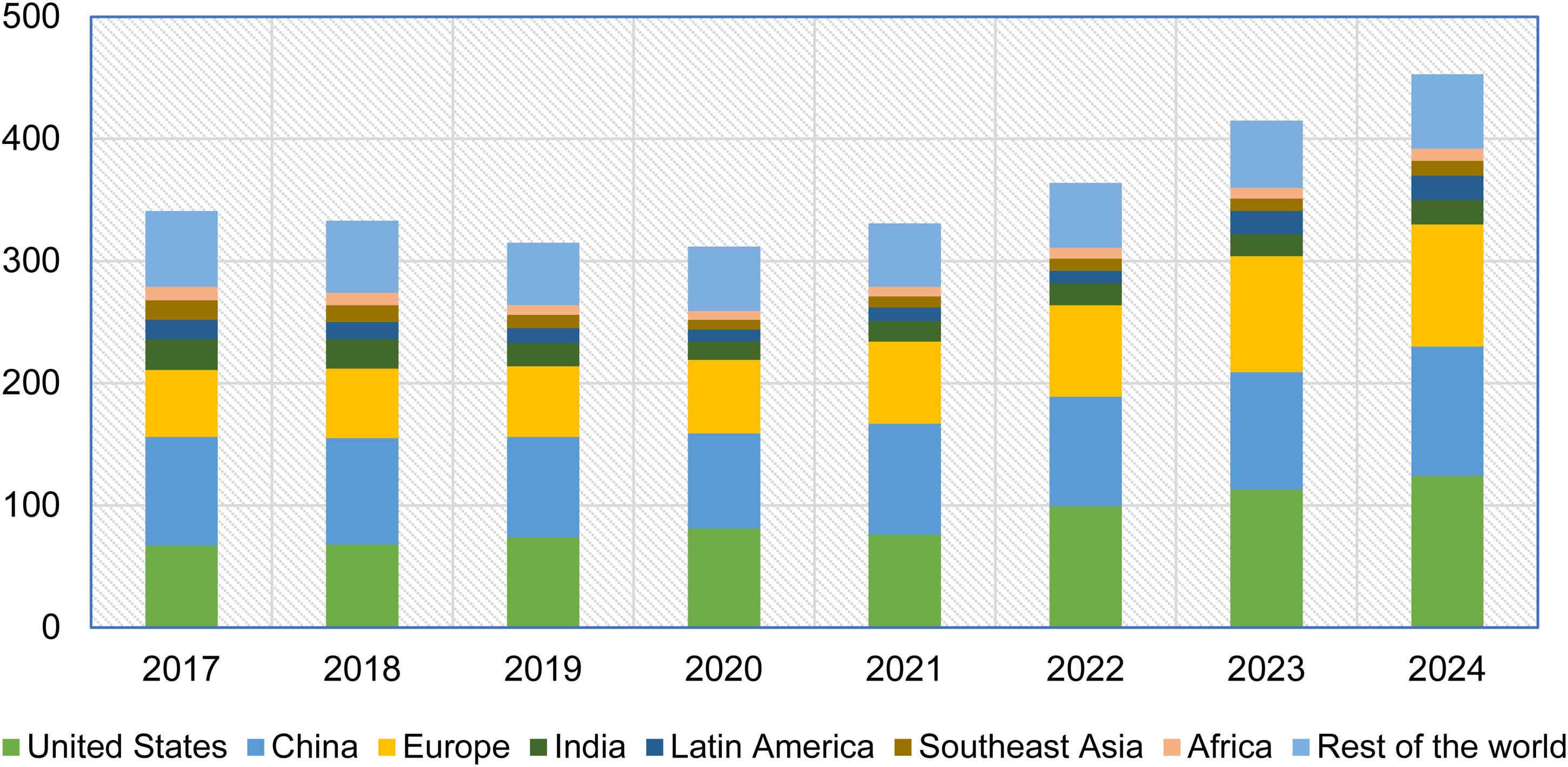
Global power investment status (in billion USD) (IEA, 2024).
Figure 2 provides a comparative analysis of the financial investments made in RES versus those allocated to non-RES, including fossil fuels and nuclear power. The data reveal a significant preference for investments in RES, reflecting the global necessity to actively decrease carbon emissions and address the adverse impacts of climate change. This analysis underscores a trend in the energy market, characterized by an increasing tendency to prioritize RES, thus aligning with the primary objectives of the study, which aims to investigate the effective integration of RES into deregulated power systems. Figure 3 offers an overview of the yearly growth in RES capacity, highlighting the remarkable increase primarily fueled by the rise of solar and WE installations. The figure emphasizes the scalability and significance of RES, which play a vital role in effectively incorporating these resources into smart grid systems. Figure 4 provides a representation that conveys the process and outcome of the expansion of RES capacity on a global scale. The graph illustrates the global growth in annual power capacity, focusing particularly on RES. This remarkable growth can be linked to several important factors, such as the notable drop in production costs, advancements in technology, and the creation of supportive regulatory environments that encourage these developments. The ongoing rise in renewable power capacity underscores the growing need for flexible and advanced smart grid systems that can effectively manage the fluctuating nature of RES. In 2022, there was a remarkable increase in the growth of RES capacity, exceeding the long-term averages. China and the United States remained at the lead of this expansion, but many other nations also made significant progress in boosting their RES capabilities compared to the previous year. The share of RES in total capacity growth jumped to 83%, up from 78% in 2021. Additionally, the renewable portion of total generation capacity rose by nearly 2%, climbing from 38.3% in 2021 to 40.2% in 2022 (IEA, 2022), as illustrated in Figure 4. This increase highlights the rapid adoption of RES, while also indicating a slowdown in the growth of nonrenewable capacity. This shift is attributed to the considerable net decommissioning that has occurred in various regions over the years.
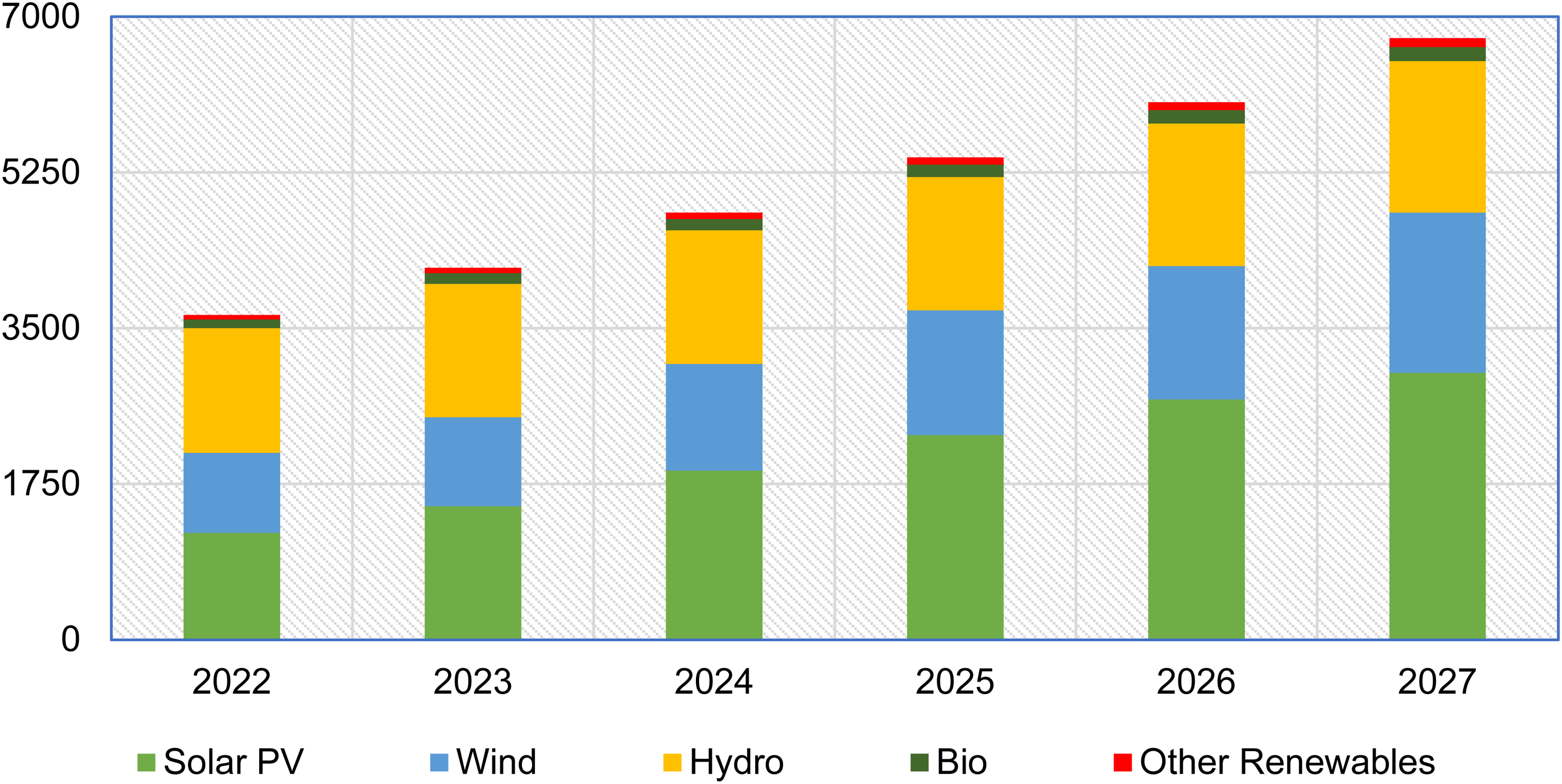
Global renewable power capacity trends (in GW).
The integration of RES presents several challenges. One major issue is the frequency instability that occurs after a synchronous generator tripping event (Jawad and Masood, 2021; Shaukat et al., 2023). PV systems lack inertia and cannot provide reserve power, which further contributes to the instability of the grid's frequency. Additionally, the use of external storage to improve frequency response poses economic challenges for grid operators. The integration of PV systems into power grids also brings about challenges in frequency stability, voltage stability, small-signal stability, and power quality. The proportion of RES in worldwide electricity production has consistently increased, primarily due to significant growth in solar and wind energy. In 2022, renewables accounted for nearly 13% of power generation, exceeding the contribution of nuclear energy. Although the share of coal in the power sector experienced a slight rise in 2022, it remained below its level in 2021. Figure 5 displays the global annual expansion of power capacity originating from RES. Figure 5, with its illustrative nature, comprehensively captures the data and information about the worldwide growth and development of RES generation.
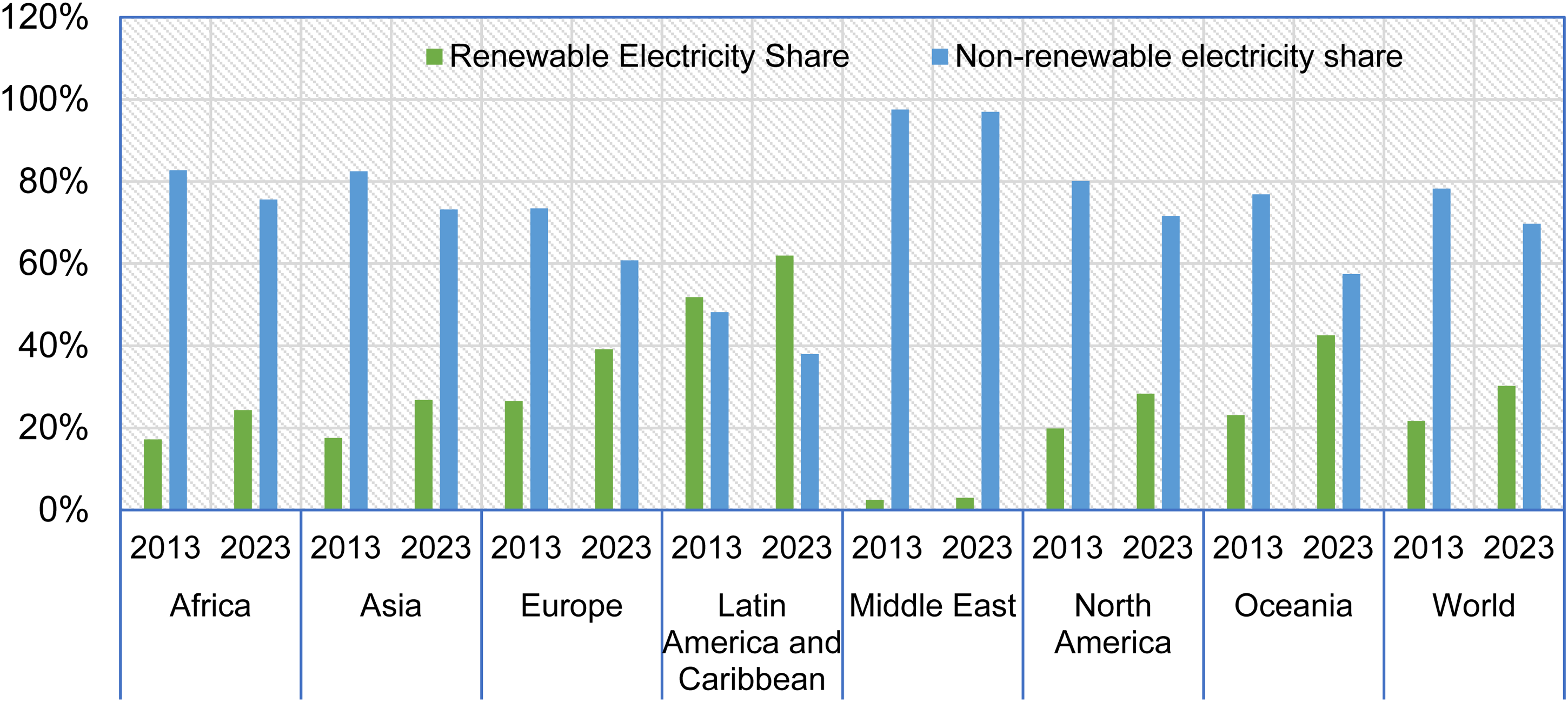
Annual power capacity expansion and renewable share.
In the main-case projection, RES use in the power, heat, and transport sectors is expected to grow by almost 60% between 2023 and 2030. This expansion will increase the proportion of RES in final energy consumption worldwide to about 20% by 2030, from 13% in 2023 (shown in Figure 6) (IEA, 2022). Most of this growth will be due to the growth in electricity generation from RES, which is set to contribute over three-quarters of the total increase. This growth is supported by consistent policy support across more than 130 nations, ongoing reductions in the cost of RES technology, and increased use of electricity in transport along roads and heating through heat pump technologies. Global renewable electricity generation is expected to grow to more than 17,000 TWh by 2030, which is an almost 90% increase from 2023. By 2030, wind-based power generation will also overtake hydropower, and RES will provide 46% of the world's electricity generation, with wind and solar PV collectively contributing 30%. Solar PV will become the leading renewable electricity source by that year, followed by wind power, both surpassing hydropower in contribution (as displayed in Figure 7). China is set to boost its leadership as the world's renewable energy powerhouse, commanding 60% of the world's growth in renewable capacity by 2030. China is set to host close to half of all RES capacity added globally by 2030, having passed its 1200 GW target for solar PV and wind power 6 years early.
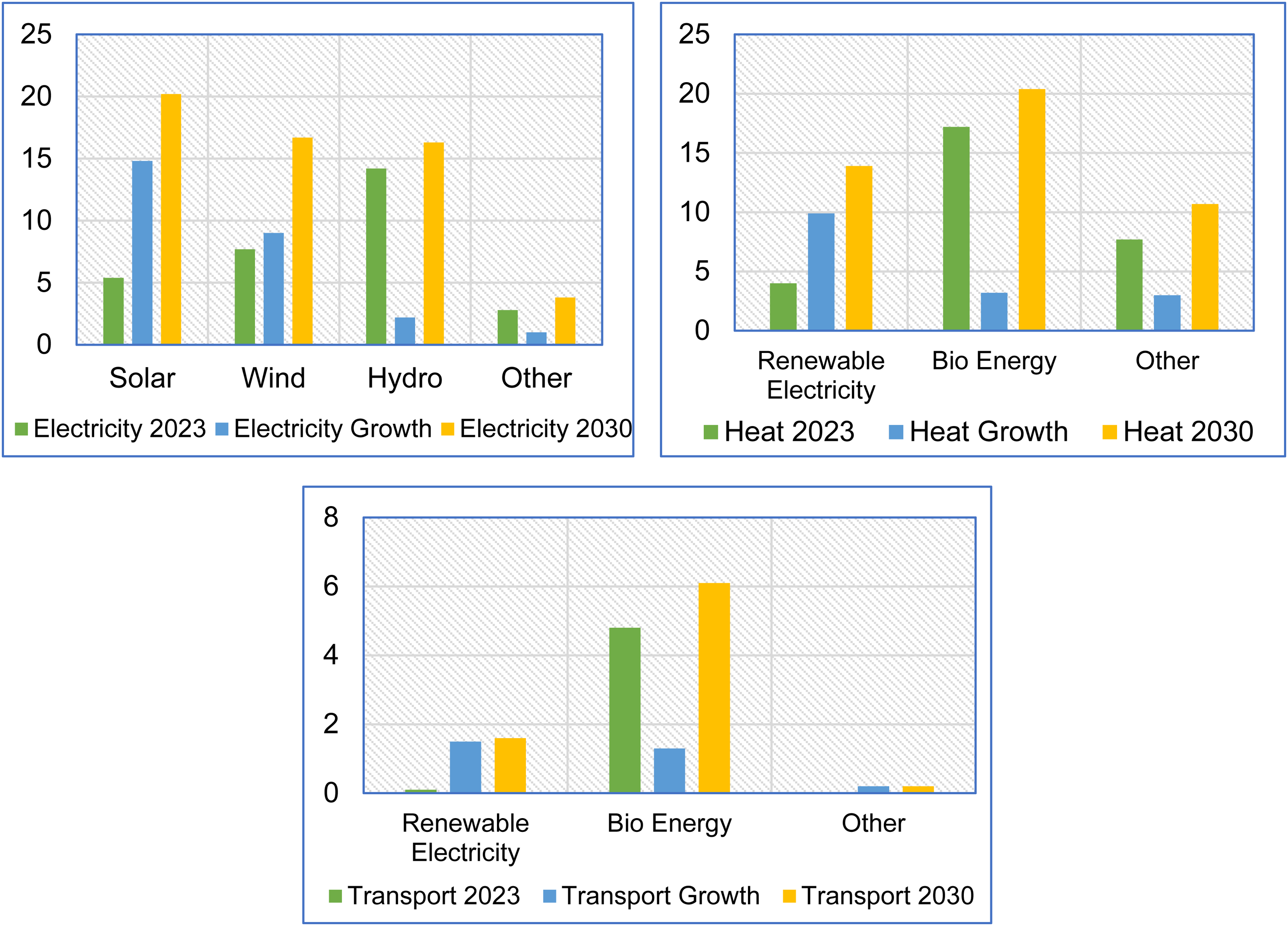
Renewable energy demand progression for different sectors.
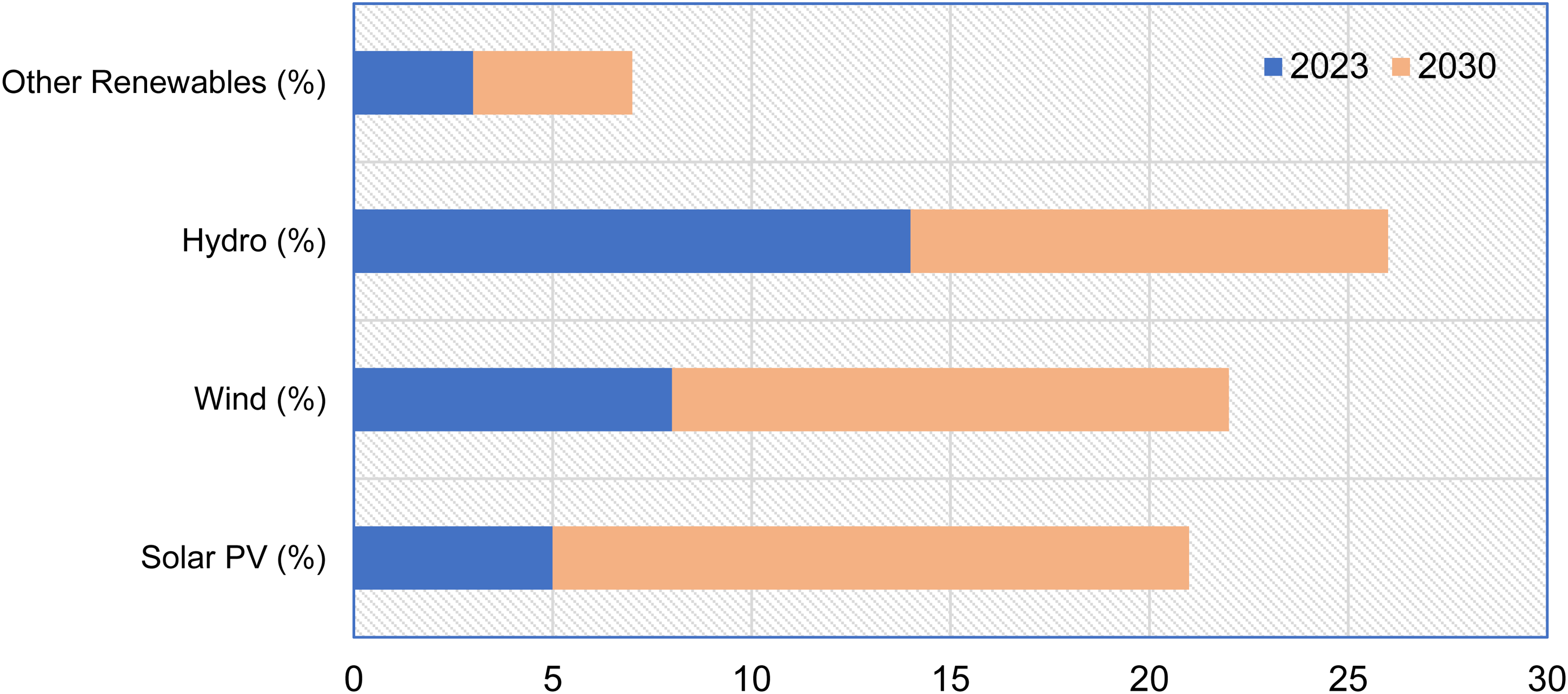
Global electricity production by renewable technology.
As Feed-in Tariffs phased out in 2020, China's cumulative solar PV capacity has almost quadrupled, and its wind capacity doubled, as falling costs of renewables and ongoing government support drive the growth (as depicted in Figure 8). The success of China lies in strong policy systems that support large-scale renewable energy projects and the incorporation of distributed renewable energy solutions from a wide range of technologies.
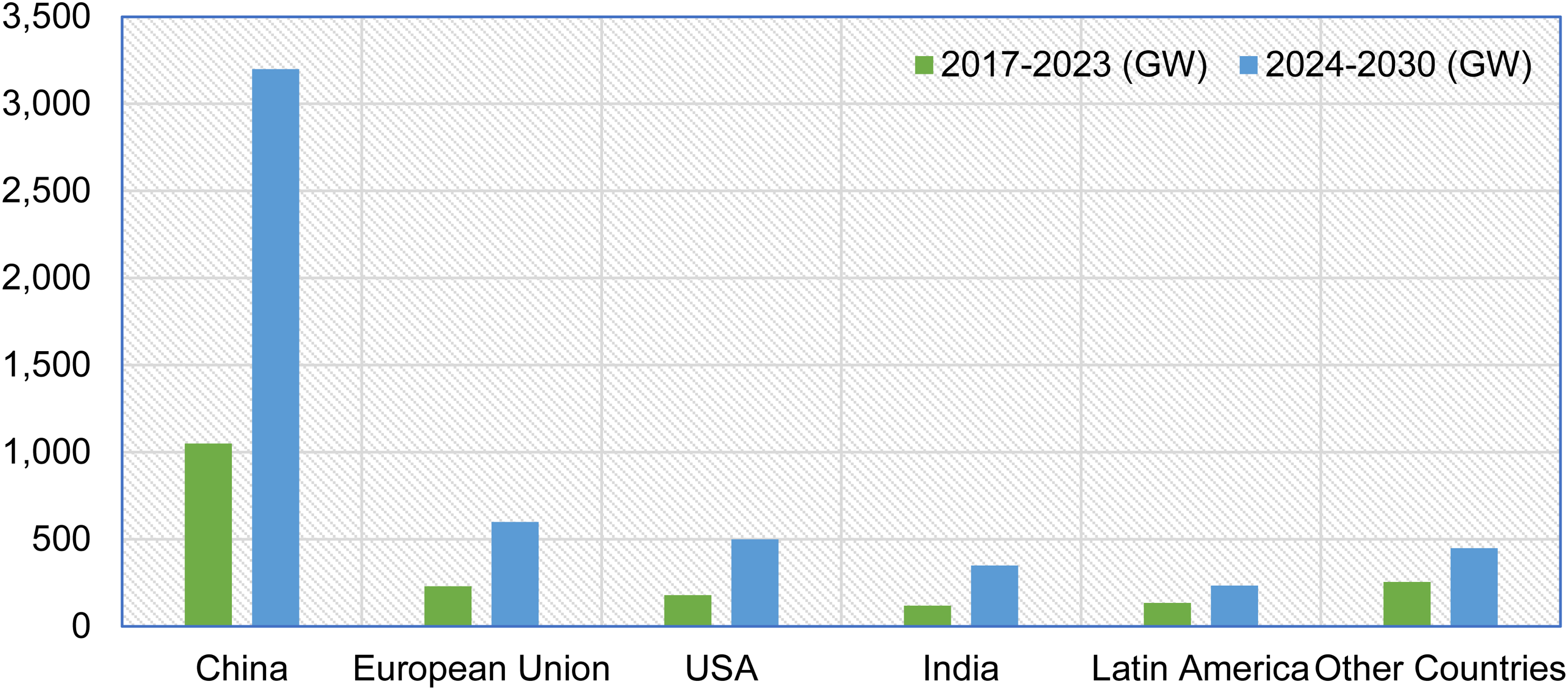
Renewable electricity generation capacity expansion by countries.
The transition toward RES has emerged as an urgent priority for modern power systems, driven by the global necessity to alleviate carbon emissions and attain sustainability objectives that are increasingly being mandated by international agreements and national policies. The explosion of RES with the growing adoption of EVs offers a transformative opportunity to fundamentally redefine and improve the existing power grid infrastructure. Nevertheless, the process of effectively integrating these diverse and variable energy resources into the pre-existing grid framework, particularly within the context of deregulated energy markets, poses a multitude of substantial and intricate challenges. Recent advancements in the domain of the smart grid have facilitated the development of increasingly erudite control mechanisms that enhance the integration of RES into the power grid. These modern technologies encompass a variety of innovations, including advanced battery energy storage systems (BESS), vehicle-to-grid (V2G) interaction protocols, and DSM strategies that are designed to optimize energy consumption patterns.
This present research mainly addresses the technical viability of powering power grids with RES and EVs, which tends to concentrate on economic and environmental effects within competitive market structures. But numerous studies lack sufficient consideration for how effectively the control mechanisms, like decentralized energy management systems, are essential for grid resilience and profitability in uncertain energy demand conditions. This gap provides the foundation of the current research, which seeks to undertake an intensive study of the integration of RES and EVs into deregulated power grids.
Renewable energy in deregulated power systems
Deregulated energy markets are different from regulated markets, where they permit more than one supplier to compete, enabling customers to choose their electricity sellers and promoting competition that can reduce prices and enhance service. Advances in technology have rendered RES cleaner, more efficient, and cheaper. Better solar panels and ESS aid in overcoming the intermittency of renewables, enhancing reliability. Smart grid technologies, such as advanced metering, demand response, and real-time monitoring, have a crucial role in optimizing energy flows and the performance of the grid. In deregulated markets, investment risks transfer from consumers to competitive producers, inducing greater strategic and cost-efficient investments. The integration of RES into deregulated networks entails various factors:
Technical: Grid stability in the presence of variable renewable output implies erudite control strategies, forecasting, deployment of ESS, and technical standards compliance. Financial: Levelized cost of electricity (LCOE), high initial expenses, market incentives, and economic instruments such as power purchase agreements (PPAs) affect economic viability. Regulatory: Support from government policies like renewable portfolio standards, carbon pricing, and grid codes is crucial in enabling RES integration. Market Dynamics: Independent power producers (IPPs), market mechanisms, and demand-side participation drive renewable adoption and profitability.
Effectively and sustainably integrating renewable energy into deregulated power systems demands a visionary strategy that harmonizes technical reliability, economic incentives, regulatory conditions, and market competition.
Market structures and participants
Power system deregulation entails the segregation of generation, transmission, and distribution into different sectors to provide reliability and enhance competitiveness through private ownership. While generation is opened up to independent producers competing based on efficiency, transmission is a natural monopoly controlled without market transactions. Distribution can operate in isolation or in combination with transmission, either for the maintenance of networks or for market participation. Retailers act as middlemen between producers and consumers, providing a range of pricing, and Independent System Operators (ISOs) provide grid stability and operate the transmission. Even though deregulation promotes competition and innovation, it is also associated with market power concentration, complicated rules, and costly upgrades to infrastructure. Decentralized technologies such as microgrids, EV charging points, and battery storage also have more challenges in weak grid areas, low funding, and cybersecurity threats. To overcome these challenges, government policy must be consistent, there must be investment in infrastructure, there must be enforcement of cybersecurity protocols, and capacity building support to allow for a sustainable and resilient energy transition.
Global status of RES integration in the deregulated power market
The International Energy Agency (IEA) estimates that RES consumption in the power sector, heat sector, and transport sector will grow by almost 60% from 2024 to 2030, raising the proportion of renewables in final energy use to almost 20% by 2030, up from 13% in 2023.
In Europe and some areas of the United States, widespread instances of zero or negative wholesale electricity prices have become common due to the increase in RES. This is because renewables have very low costs of generation and state subsidies that prompt a constant supply even during instances of excess output.
Australia's transition plan for energy, which seeks to phase out coal-fired power generation in favor of renewables, is threatened by the natural volatility and unpredictability of RES. This volatility requires ongoing reliance on gas for grid stability.
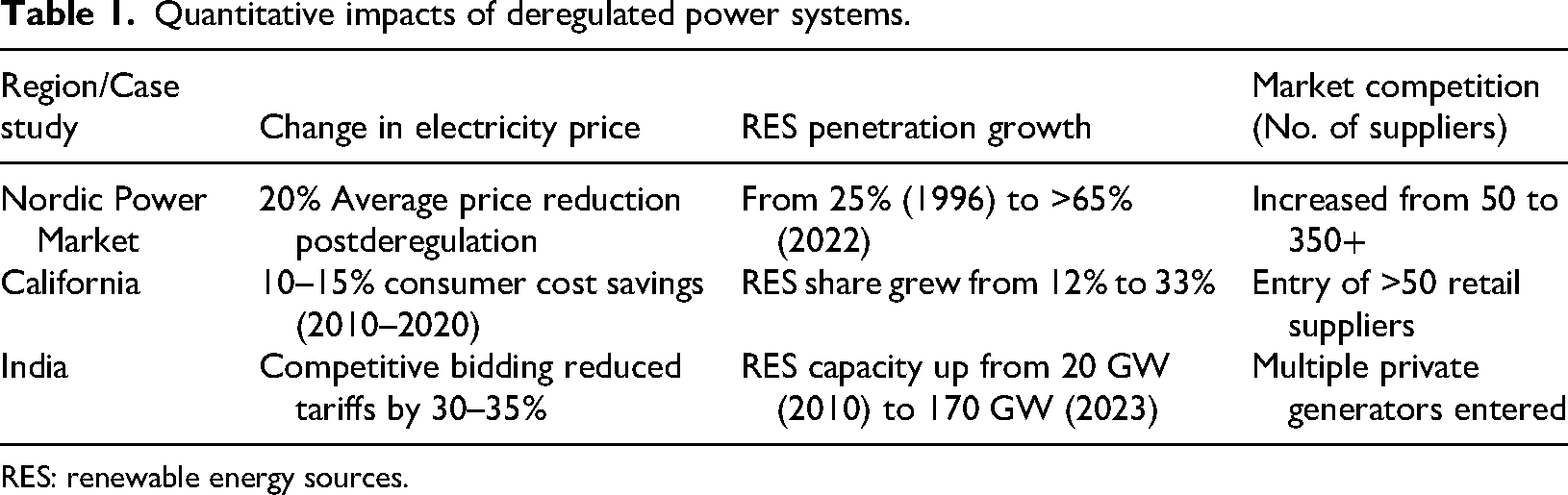
Table 1 presents the qualitative effects of deregulation in various regions and case studies. Data from the Nordic Power Market indicates that liberalization resulted in a 20% drop in consumer electricity prices on average, while at the same time raising renewable penetration from approximately 25% in 1996 to over 65% in 2022. In California, deregulation encouraged the entry of over 50 retail suppliers, enabling consumers to realize 10% to 15% savings in electricity expenses over the period 2010–2020, accompanied by a noticeable increase in RES share from 12% to 33% (IEA, 2023). In India, the Electricity Act of 2003 was a turning point for market liberalization as it encouraged competitive bidding and private sector investment, leading to a 30% to 35% decrease in tariffs. In addition, installed RES capacity increased from 20 GW in 2010 to 170 GW in 2023, showing the influential role of deregulation in the promotion of clean energy installation (Ministry of New and Renewable Energy, 2024). Figure 9 also shows the relative electricity price patterns in deregulated and regulated markets from 2000 to 2023. The line graph is drawn with a greater slope of the decline in consumer tariffs in deregulated settings than in regulated settings, where prices have only declined slightly due to less competition. This graphical data supports the suggestion that deregulated markets not only offer efficiency benefits but also a more robust platform for the integration of renewable energy and consumer-focused benefits.
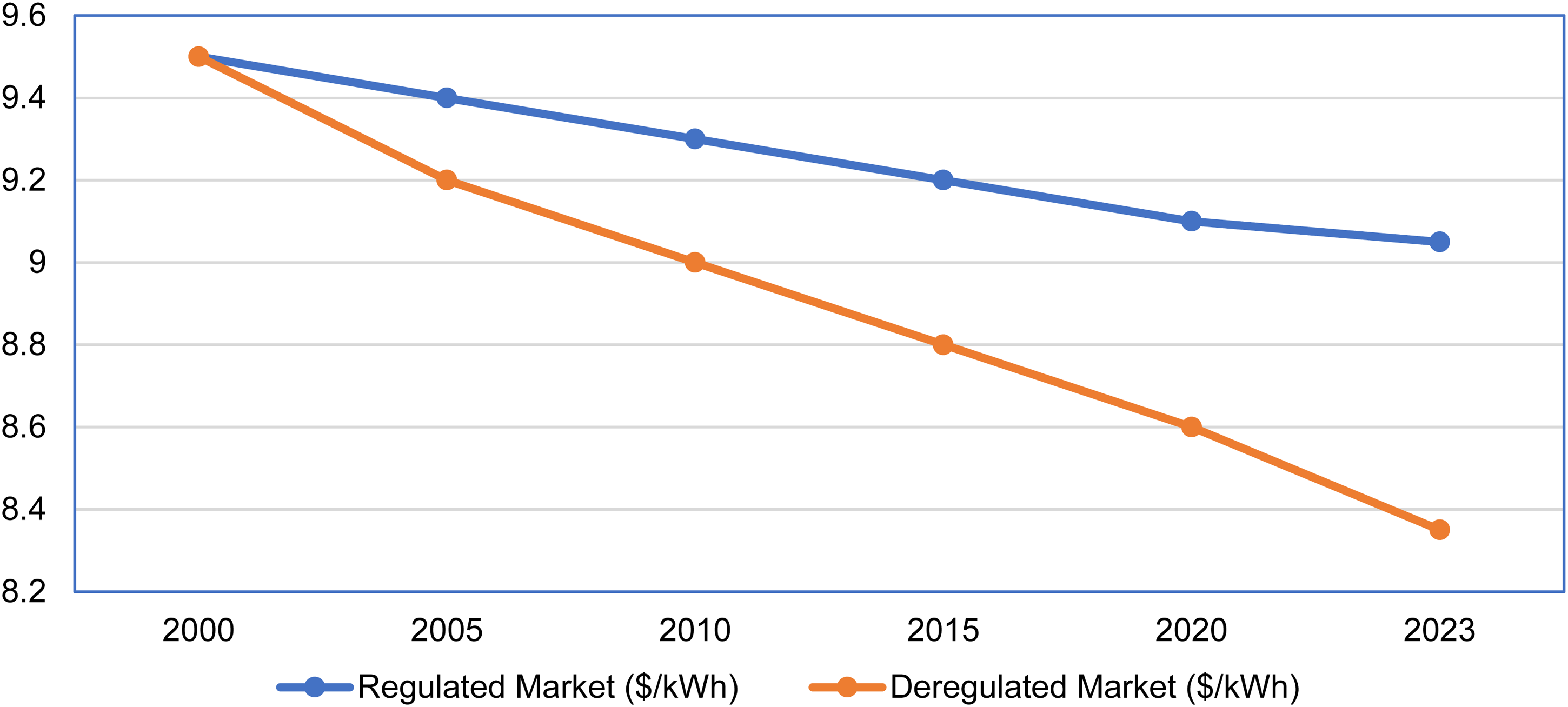
Electricity price trends: deregulated versus regulated markets (2000–2023).
Quantitative impacts of deregulated power systems.
RES: renewable energy sources.
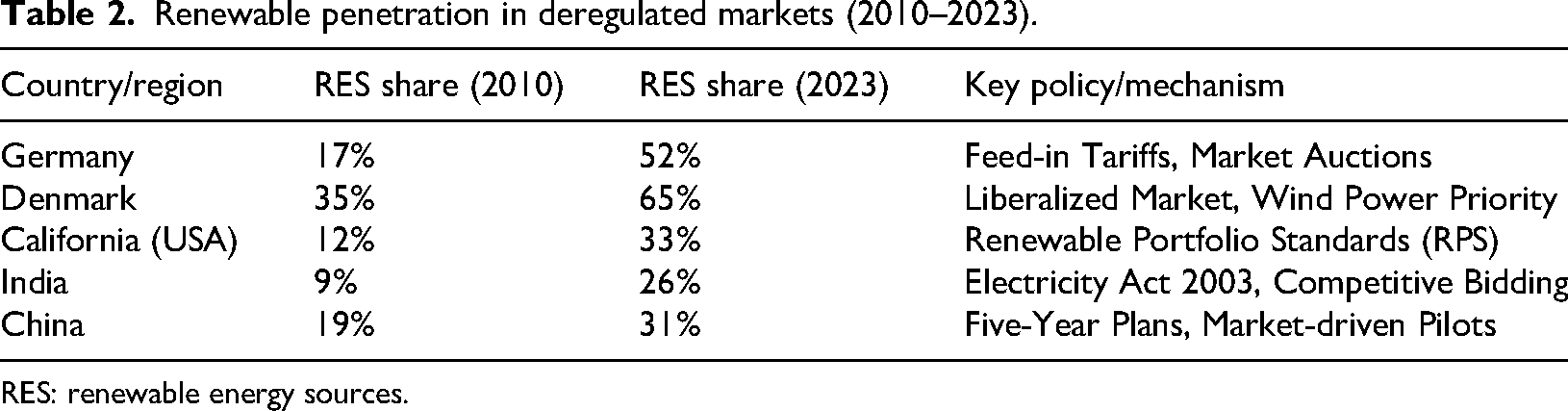
Table 2 provides a comparative perspective of RES penetration in major deregulated or partially deregulated markets from 2010 to 2023. The figures clearly reflect how market restructuring and facilitating policy mechanisms have incited the integration of RES. For example, Germany has raised its share of renewables from 17% in 2010 to 52% in 2023, primarily because of feed-in tariffs and competitive market auctions. Denmark attained one of the highest percentages in the world, increasing from 35% to 65% over the same time, due to its deregulated electricity market and emphasis on wind energy in dispatch priorities. California also saw tremendous growth, with the proportion of renewables increasing from 12% to 33%, led mainly by Renewable Portfolio Standards (RPS) that obligated the utilities to serve particular clean energy goals (IEA, 2023). In the developing economies, India experienced its share of renewable growth from 9% to 26%, followed by the Electricity Act 2003 and competitive bidding schemes (Ministry of New and Renewable Energy, 2024), whereas China's share of renewables grew from 19% to 31%, anchored by long-term Five-Year Plans and pilot market reforms.
Renewable penetration in deregulated markets (2010–2023).
RES: renewable energy sources.
Figure 10 supports these findings by showing the consistent increase in RES penetration from 2010 to 2023. The trends show that more deregulated or partially deregulated regimes have steeper rising trajectories, especially Germany, Denmark, and California, where regulatory reforms had a direct effect of speeding up the adoption of renewables. India and China, originating from lower baselines, exhibit steady upward trends with the combined impact of policy drivers and changing market-driven impulses. Figure 10 and Table 2 together prove that deregulation, in combination with focused policies, is a strong platform for driving the penetration of renewable energy as well as energy mix diversification.
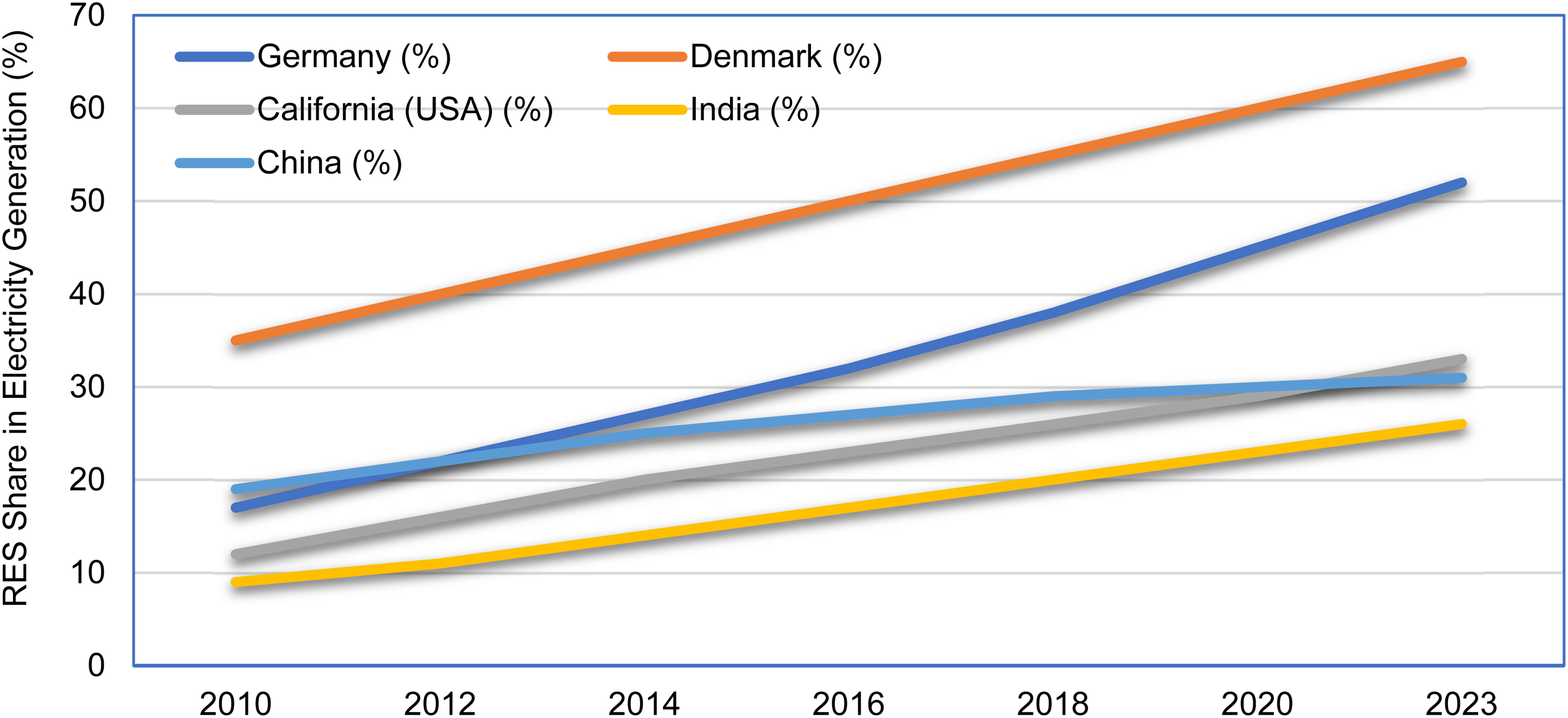
Growth of renewable energy share (2010–2023).
Smart grid infrastructure
A smart grid is an advanced electric grid that applies digital technologies to augment consistency, sustainability, and efficiency. The smart grid makes real-time monitoring and management possible by enabling two-way communication between grid operators, generators, and consumers by decreasing power outages and improving overall grid performance. Advanced Metering Infrastructure (AMI) employs smart meters to measure and send energy consumption information to grid operators for monitoring usage, detecting faults, and taking demand response actions. Information and Communication Technologies (ICT) facilitate real-time data sharing among grid players for efficient grid management and instant feedback from consumers. Grid optimization takes advantage of data analytics to make operations more efficient, minimize energy loss, and optimize resource utilization (Alavikia and Shabro, 2022). Demand response schemes support consumers in cutting back usage in peak demand periods to avoid blackouts and alleviate grid pressure. Such approaches, especially in EV charging systems, streamline charging schedules, load balancing, and incorporate renewables for stabilizing the grid. DSM scheduling provides access for both utility aggregators and consumers to be involved in energy trade and improve smart grid performance. This paper presents several new features of the integration of modern technologies, especially in the context of smart grids and sustainability-oriented solutions within deregulated markets. The innovations covered in this article are:
The article displays the integration of RES with EVs to maximize the operational efficiency of power systems. This integration enhances energy efficiency, minimizes transmission losses, and maximizes the utilization of available renewable energy. One of the key innovations is the use of smart charging technologies and DSM techniques to equip EVs with the capability to respond dynamically to fluctuations in electricity demand. With the optimization of EV charging during peak demand times, the system can ensure stability, minimize operational expenses, and take pressure off the grid infrastructure. The article offers a comprehensive economic analysis of hybrid RES (HRES), showing that they are capable of attaining grid parity in specific pricing scenarios. The analysis emphasizes the economic viability of hybridizing RES and EVs in deregulated markets. The study emphasizes the necessity for innovations in power flow management technologies and calls for the development of a strong regulatory environment to facilitate the installation of RES and smart grid technologies. The article emphasizes policy incentives and innovations in technologies such as ESS devices and V2G interactions, which are crucial for grid stability and ensuring long-term sustainability.
The choice of smart grid technologies depends on major factors, including grid features, market configurations, reliability requirements, and emerging trends. In the case of old grids, technologies that boost efficiency should take precedence, while failing grids need solutions to enhance reliability. The study (Massana et al., 2022) focuses on energy storage and governable demand optimization in a Spanish technology park, incorporating BESS to optimize photovoltaic power production and compensate for EV fast charging effects. Market forces, such as deregulation and regulatory requirements, drive technology take-up, with LIBs becoming popular for future grid flexibility, especially vehicle-to-grid use. Reliability and resilience needs, particularly in disaster areas, call for meticulous incorporation of Distributed Energy Systems (DESs). Trends such as the integration of RES, erudite monitoring, enhanced storage capacity, and mobile pay-as-you-go metering propel the expansion of off-grid systems (Lai et al., 2022; Gbadega and Sun, 2022; Kallio and Siroux, 2022).
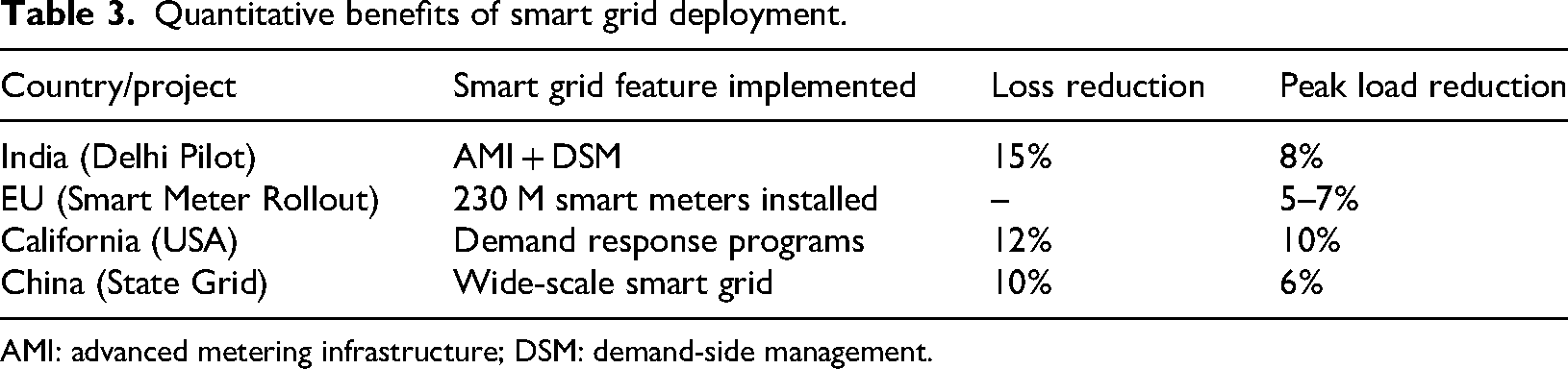
Table 3 summarizes measurable advantages attributable to smart grid deployment across various global contexts. For example, the Delhi Smart Grid Pilot in India, which implemented AMI and DSM, recorded a 15% reduction in technical and commercial losses, an 8% reduction in peak load, and a 20% reduction in outage hours, proving that smart grids have the capacity to improve efficiency and reliability (Central Electricity Authority, 2021). In Europe, the mass deployment of over 230 million smart meters has enabled improved outage detection and consumer engagement in energy management, resulting in reductions of peak demand by 5% to 7% (Data and analysis, 2024). In California, DSM and demand response programs have enabled grid operators to reduce peak load by 10% and suppress distribution losses by a roughly 12% rate (Auth, 2022). Likewise, China's mass deployment of smart grid infrastructure has enhanced operational effectiveness, with a 10% reduction in losses and a 6% reduction in peak demand (IEA, 2022). These outcomes as a whole speak to how smart grids help modernize the grid by reducing losses, enhancing reliability, and facilitating greater integration of renewable energy resources.
Quantitative benefits of smart grid deployment.
AMI: advanced metering infrastructure; DSM: demand-side management.
Figure 11 offers further evidence of how smart grids enhance reliability through comparison of average outage times, that is, System Average Interruption Duration Index (SAIDI) among various regions. Non-smart grid systems have average outage times of about 300 hours per year, whereas pilot projects in India and California have managed to lower them to about 240 and 210 hours, respectively. In Europe, outage hours have decreased even further to almost 200 hours per year, bolstered by the widespread implementation of smart meters and automation technologies. China has also registered improvements in reliability with SAIDI levels in the vicinity of 220 hours, indicating the effect of its comprehensive smart grid initiative. These figures combined serve to illustrate that smart grid deployment dramatically lowers outage time, improves the resiliency of the system, and facilitates a more reliable supply of electricity.
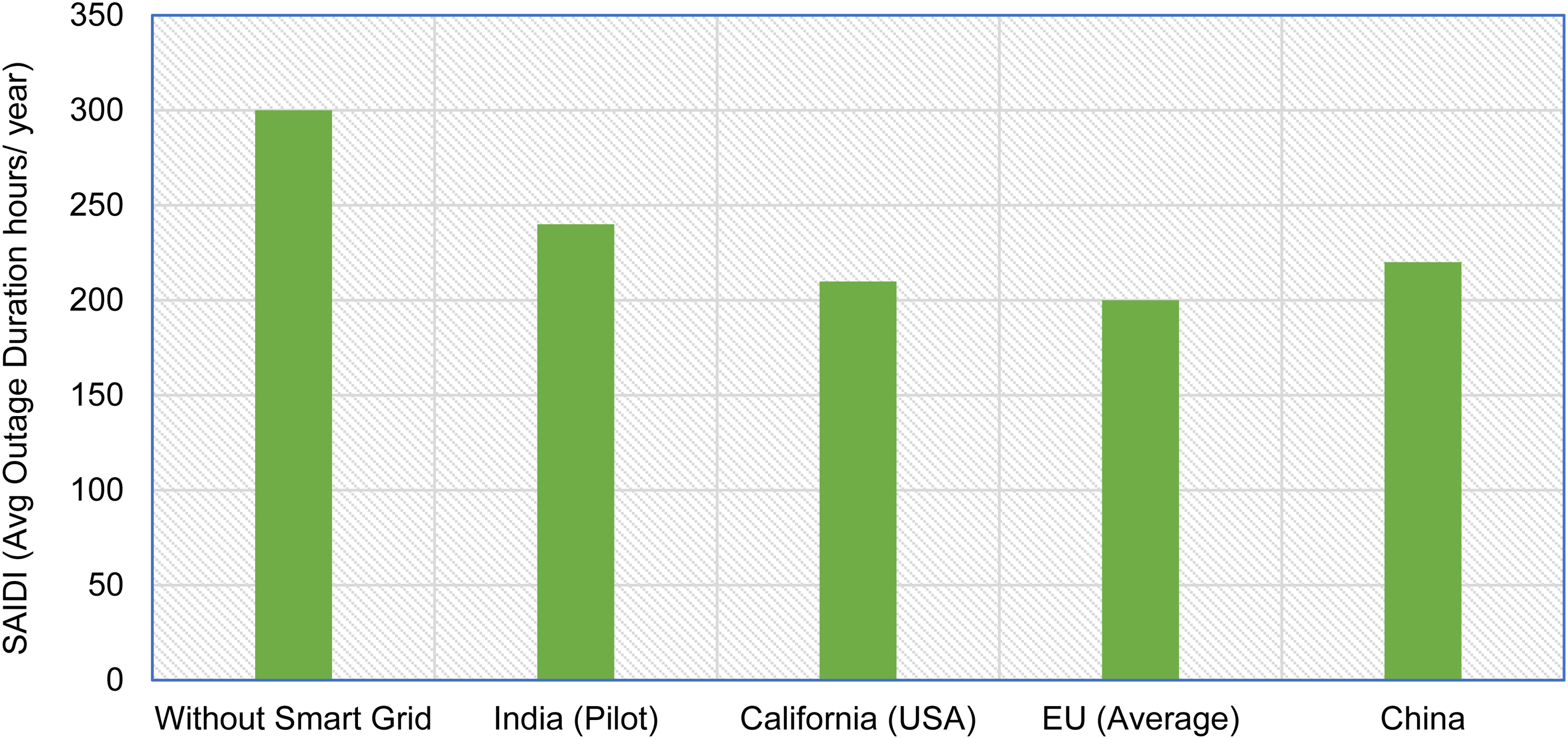
Reliability improvement with smart grid adoption (2005–2022).
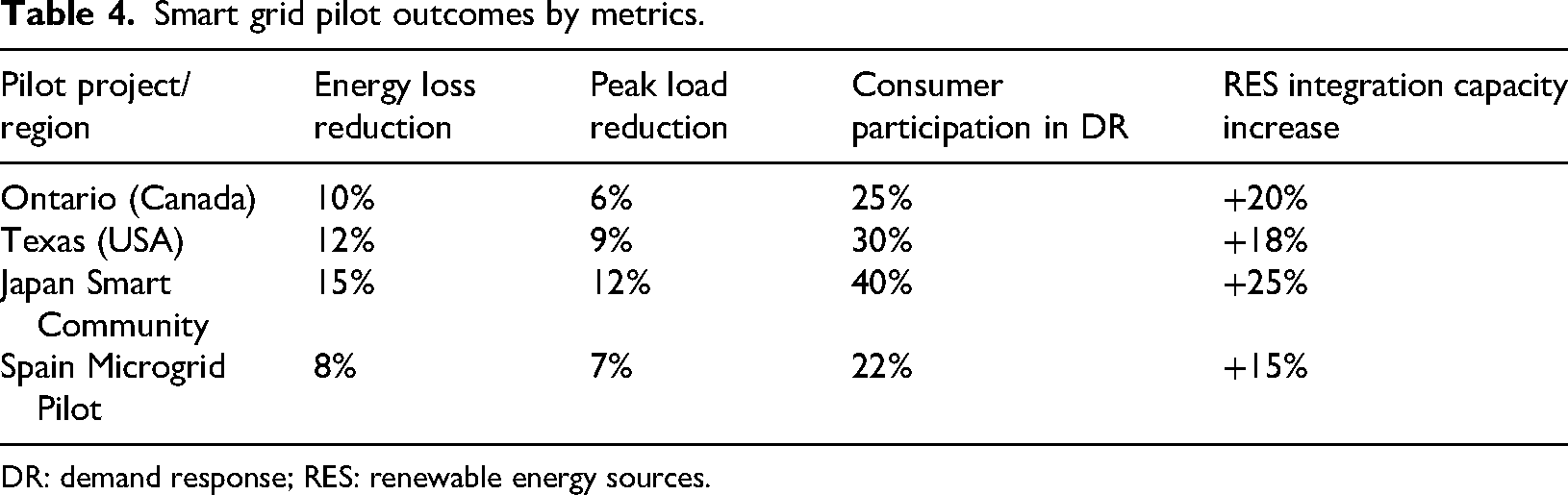
Table 4 presents selected smart grid pilot projects in four regions, that is, Canada (Ontario), the United States (Texas), Japan, and Spain, with their measurable outcomes (IESO, 2024). The pilot projects offer strong evidence of the technical and economic advantages of smart grid deployment. In Ontario, metering and automation advances allowed a 10% reduction in energy losses and a 6% reduction in peak load, with almost 25% consumer participation in demand response (DR) programs, resulting in a 20% increase in renewable integration capacity. Texas realized even more robust results, with 12% energy loss reduction, 9% peak load reduction, and 30% consumer participation in DR programs, leveraged by its competitive electricity market and demand-side flexibility. Japan's Smart Community initiative achieved the highest gains, with a 15% reduction in loss, 12% peak demand reduction, 40% consumer engagement, and a 25% rise in renewable integration capacity. Spain's pilot microgrid, which was scaled down in comparison, still showed considerable gains, including 8% reduction in loss and a 7% reduction in peak demand, and quantifiable consumer engagement and renewable integration gains. Figure 12 again brings out these results through a comparison of the percentage peak load reduction attained in each of these pilots. Japan has the best 12% peak load reduction, followed by Texas at 9%, Spain at 7%, and Ontario at 6%. This visual supports the value of smart grids in managing demand peaks efficiently, thus easing pressure on transmission and distribution infrastructure. Together, Table 4 and Figure 12 highlight that smart grid projects repeatedly provide measurable advantages in terms of loss reduction, peak load management, consumer engagement, and the integration of renewable energy, making them indispensable facilitators of decentralized and sustainable power systems of the future.
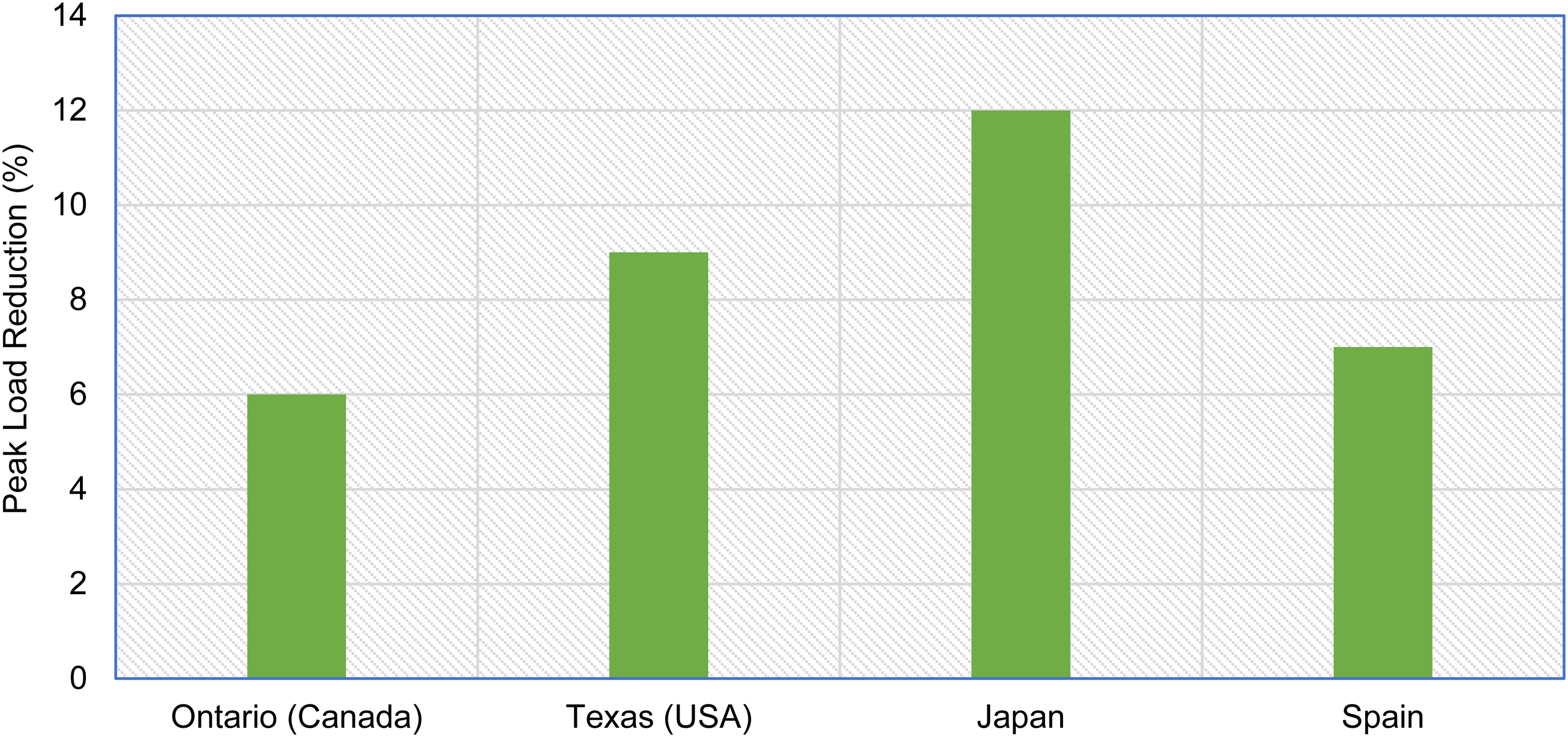
Peak load reduction in smart grid pilot projects.
Smart grid pilot outcomes by metrics.
DR: demand response; RES: renewable energy sources.
EV's present status and future prospects in RES integrated deregulated systems
The incorporation of EVs with RES in deregulated markets is a fast-growing sector with huge prospects. As the systems continue to grow, EVs are becoming integral parts of DSM and renewable energy integration.
Present status of EV in deregulated system
EV adoption has been on the rise, prompted by environmental consciousness, government subsidies, and technical innovation. In deregulated power systems, EVs are fulfilling a critical function in maximizing the use of RES.
EVs, with bidirectional charging systems, not only consume power from the grid but also supply energy to the grid when required. This V2G technology is being increasingly applied to power systems, providing a flexible energy storage option that can stabilize grids, especially in high RES penetration markets.
In deregulated environments, where grid stability can be difficult, EVs assist in grid stability by functioning as DERs. EVs, when coupled with smart grid technologies, can supply ancillary services like frequency regulation, voltage support, and load balancing.
EVs usually come with built-in smart charging technologies that permit DR schemes. These make it possible for utilities to remotely control EV charging by real-time conditions on the grid, thereby minimizing grid stress in peak demand conditions and maximizing the usage of RES in periods of excess generation.
Charging infrastructure availability is an important determinant of the adoption of EVs at a large scale. In the deregulated power system, private investment has been driving the establishment of charging stations at a fast pace, frequently with public–private partnership arrangements.
Future prospects of EV in a deregulated system
The growth of EVs has a lot to do with the future of EVs in deregulated grids. More investments by governments and private industries are going into big fleets of EVs, especially for public transportation, which will bring more flexibility and capacity to facilitate RES systems.
With greater adoption of EVs, their function as distributed ESS devices will gain importance. Through V2G technology, EVs will be decentralized storage devices that support balancing intermittent RES and grid operators with alternative mechanisms for managing the supply and demand of energy.
The future of EVs will be closely integrated with smart grid infrastructure. Erudite communication and monitoring systems will facilitate real-time coordination among EVs, RES, and grid operators. This integration will enable optimized energy flows and efficient use of renewable energy.
As evolving deregulated markets develop, regulations and policies will remain crucial to determining the destiny of EVs. Governments might introduce fresh incentives for integrating EVs, such as charging infrastructure subsidies, V2G technologies tax credits, and energy trading market support regulation for EVs.
Advances in technology in battery performance, ESS, and charging systems have moved EVs along faster, joined by worldwide government incentives and mandates (Alanazi, 2023). While those barriers are reduced, however, with high upfront expense, driving distance limitations, and inadequate recharging networks among the remaining hurdles, research and development continue to attack these disadvantages and place EVs at the center stage in an integrated, environmentally conscious, low-carbon transport model (Wang and Witlox, 2025; Goel et al., 2021).
EV sales progression
EV sales are increasing very quickly, with an estimated 17 million units to be sold in 2024, which accounts for more than 20% of worldwide car sales. This expansion mirrors the transition of EVs from lower to mass markets, especially in China, Europe, and the United States, which collectively represented 95% of global sales in 2023. Despite issues like thin profit margins, fluctuating battery material prices, high inflation, and the phasing out of purchase incentives in some markets, global sales keep increasing, with a 25% rise in the first quarter of 2024 over 2023 (shown in Figure 13). China dominates the market with 60% of global EV sales, and Chinese manufacturers also lead, representing over half of all EVs sold globally. Developing and emerging economies are increasingly making up their portion of EV sales, with Vietnam and Thailand achieving 15% and 10% market shares, respectively, by 2023. In major markets like India (2%) and Brazil (3%), policies such as purchasing subsidies and production incentives are fueling adoption. Indicators of low-cost EV models from Chinese automakers and India's PLI Scheme imply additional growth. Mexico is also actively building out EV supply chains on the back of subsidies under the U.S. Inflation Reduction Act, presenting growth opportunities outside conventional EV markets (Bang, 2024).
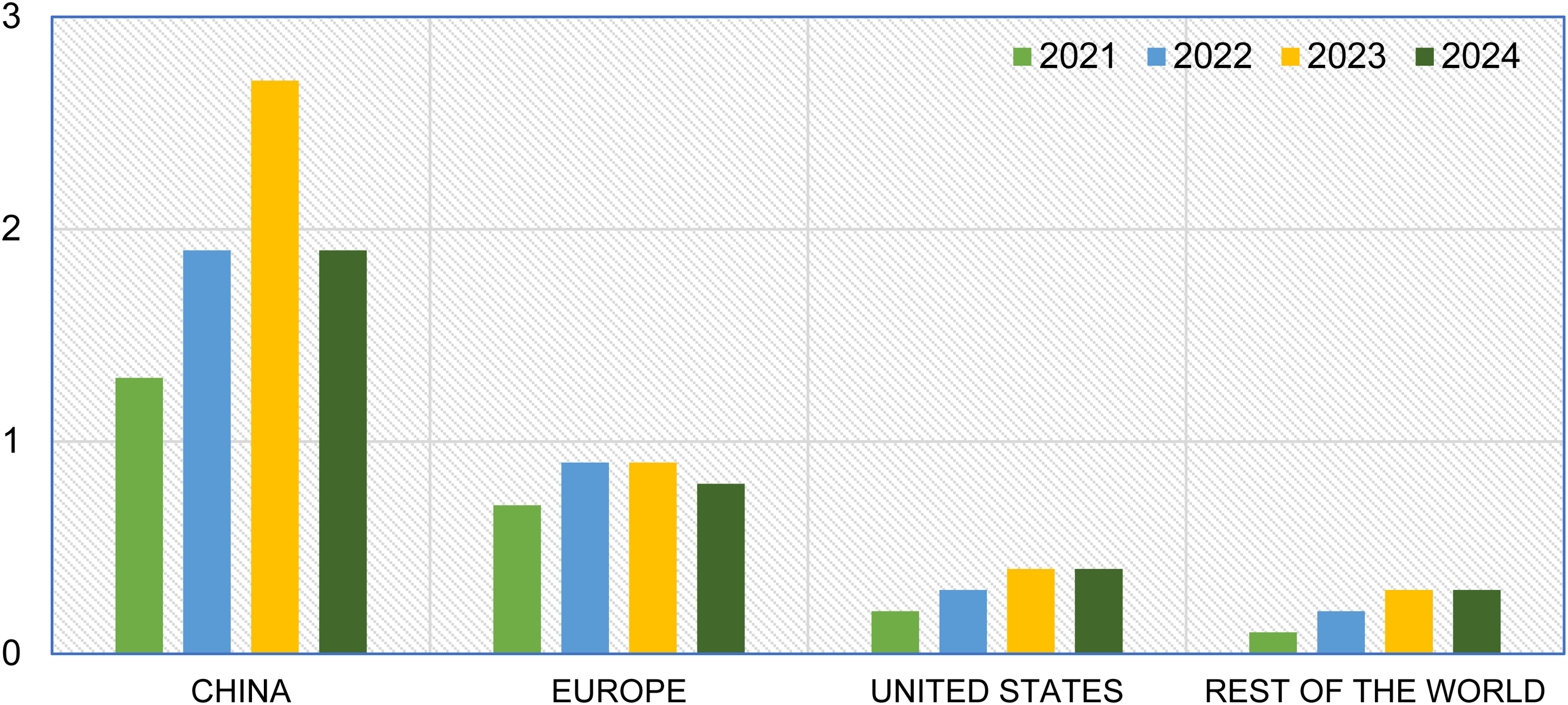
Region-wise EV sales (in millions). EV: electric vehicle.
EVs’ status in the Indian market
EVs have become a cleaner, greener, and more efficient auxiliary for conventional internal combustion engine vehicles, stimulated by improvements in battery technology, increasing charging infrastructure, and consumer acceptance. India's third-largest vehicle market in the world is turning green, with its Indigenous EV market projected to grow with a compound annual growth rate of 49% during 2022–2030, to 10 million unit sales by 2030. The government's vision for 30% of the vehicle fleet to be electric by 2030 will be powered by incentives such as the FAME-II program and the Production Linked Incentive Scheme. The FY24 Union Budget provided INR 35,000 crore for energy transition investment, including incentives for battery storage systems, further promoting EV adoption (Rajendran et al., 2025; Satpathy et al., 2025). Investing in EV charging facilities in India has picked up rapidly, with public–private collaborations taking center stage.
A benchmark was achieved in July 2020 when India's first EV charging plaza was set up by Energy Efficiency Services Limited (EESL), and charging stations were produced five times within the first year. State-level policies such as the Delhi EV Policy (2020) have helped EVs capture 16.8% of vehicle sales in Delhi as of December 2022, with an 86% year-on-year growth (Ramesan et al., 2022; Tripathi et al., 2025). With supportive government policies, technological innovation, and increasing consumer awareness, India's EV market is set to revolutionize, offering huge opportunities for domestic and foreign investors in the sustainable transport space (shown in Table 5 and Figure 14).
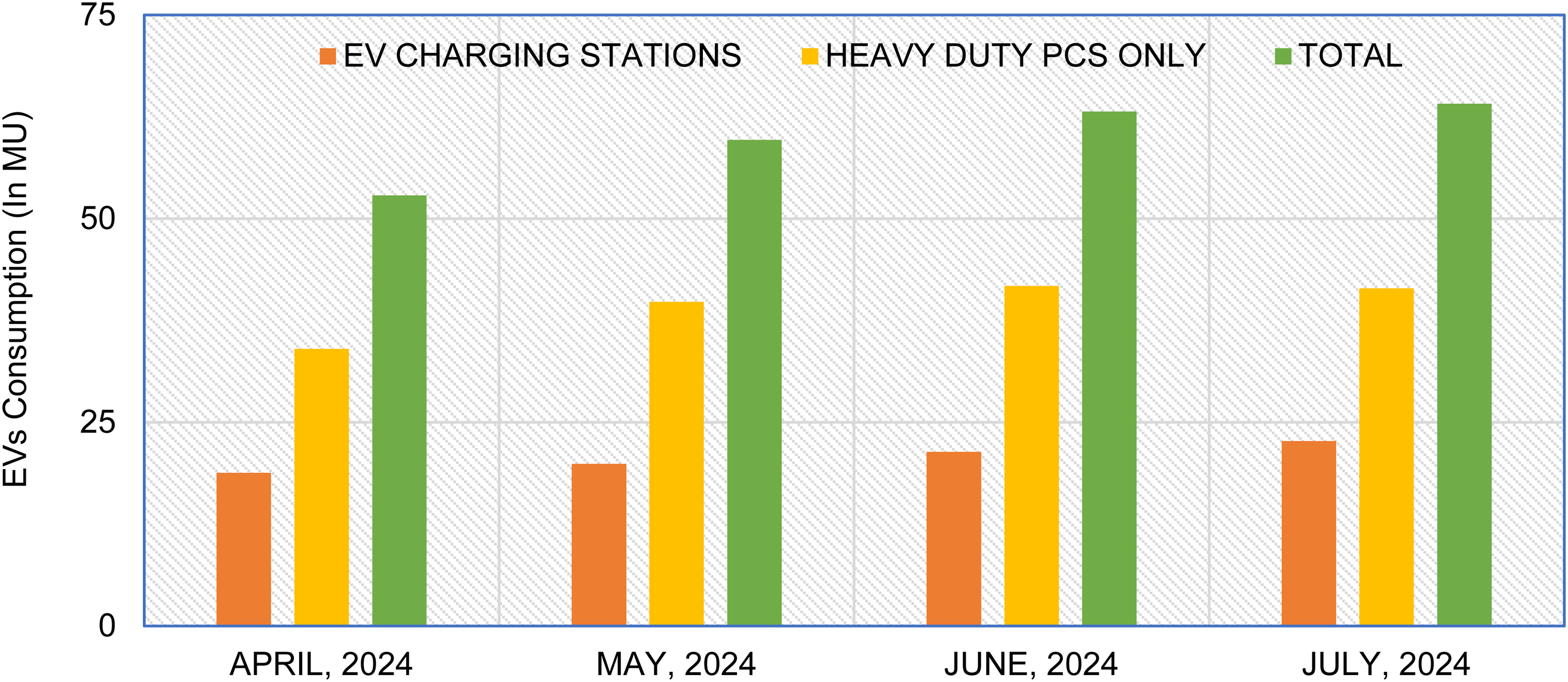
Electricity intake details of EV charging stations in India. EV: electric vehicle.
Electricity intake details of EV charging stations in India (in MU).
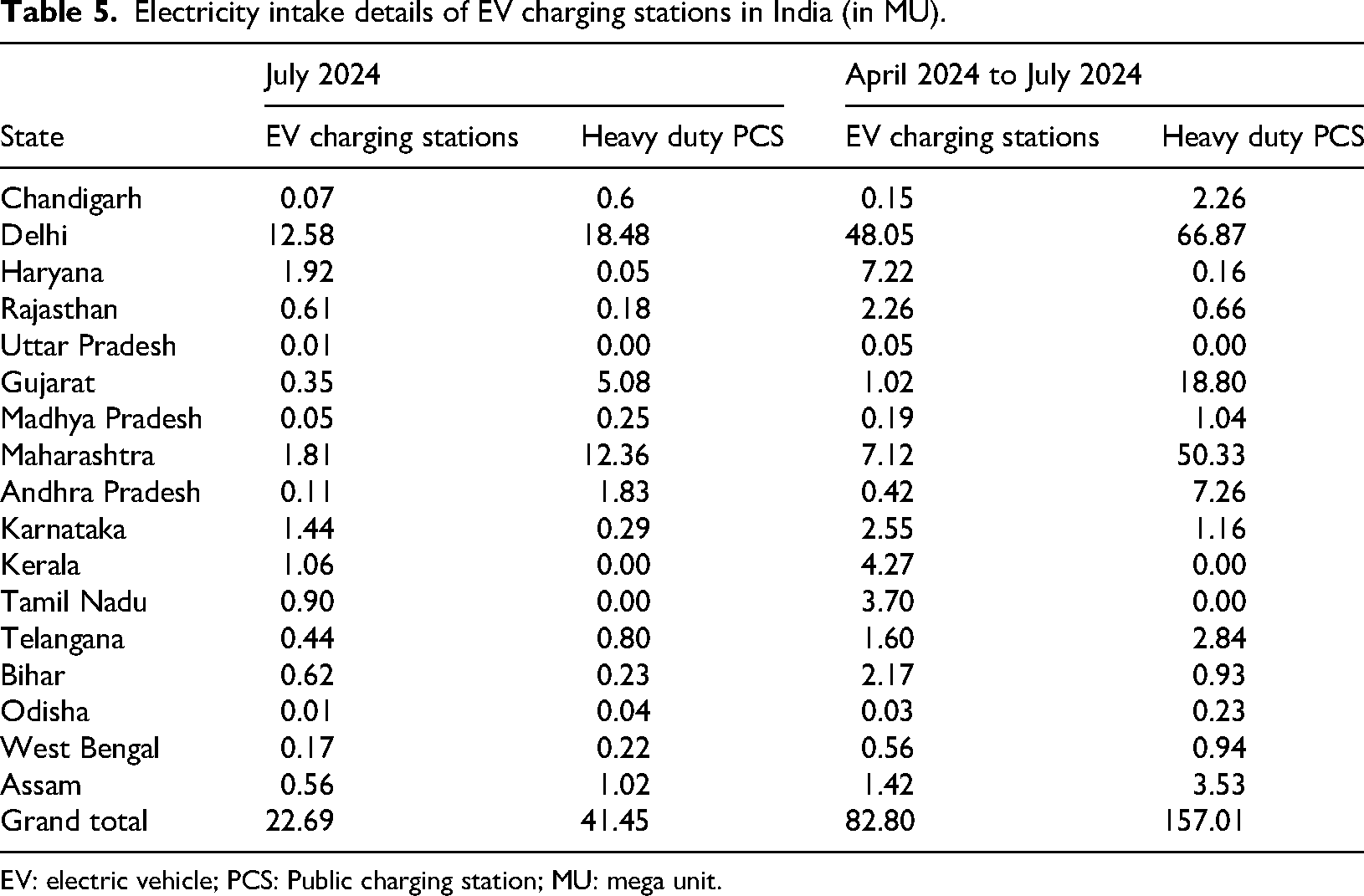
EV: electric vehicle; PCS: Public charging station; MU: mega unit.
Exploration of the technologies in renewable combined structure
The current research has outlined a technological, economic, eco-friendly, and functioning contrast of RES technologies in the primary areas of investigation. The study seeks to explore the influence of an integrated system of renewable energy in a deregulated power environment. This section compares different technologies and methods to analyze the effects of integrated RES on deregulated markets. The list of essential findings from different methodologies is as follows:
Technological Comparison: Lithium-ion and micro-inverter systems increase energy accuracy of generation and grid strength. Economic Viability: Techno-economic models evaluate the cost-effectiveness of battery and photovoltaic systems, making them viable in competitive markets. Operational and Resilience Analysis: Lithium-ion batteries are crucial to supply-demand balance, delivering grid services needed for stability. Optimization Algorithms: Methods such as PID controllers, Honey Badger, and Differential Evaluation - Hyper-Spherical Search (DE-HSS) algorithms maximize microgrid performance and resource dispatch. DSM: DSM, particularly with EVs, maximizes energy consumption, peak shaving, and market integration.
These approaches are ordered according to their performance in enhancing system act, economic viability, and grid stability in the context of a deregulated energy system.
Technological assessment
The study (Singh et al., 2021) explores the use of different storage and generation techniques to address the intermittency of renewables. The technology allows for the measurement of individual PV panel outputs and overall system outputs for enhancing the forecast model's accuracy. The suggested method uses a neuro-fuzzy-based model predictive model to find the optimal interruptible load scheduling and energy storage pattern for 24 hours (Ulutas et al., 2020). LIBs are becoming more prominent because they have better performance characteristics. These systems are vital to ensuring supply-demand balance, enhancing system resilience, and enabling the integration of RES (Chakraborty et al., 2023). To evaluate their economic viability, detailed cost models are necessary, as BESS delivers important ancillary services that increase operational flexibility and support regulatory developments in energy markets. Techno-economic models for PV and battery systems are generally categorized as optimization models (Hassan et al., 2023), based on whether the capacities of PV and battery units are optimized as variables or simulated as exogenous variables. Various technical evaluations have been made of PV-battery-based systems (Hussain et al., 2020), being concerned with optimizing system sizing and input assessment from experimental data. This investigation emphasizes the significance of system stability and dynamics in deregulated power markets. Microgrids also utilize optimized control techniques to minimize fluctuations, generally incorporating advanced controllers like the PI or proportional-integral-derivative (PID) controller (Abdolrasol et al., 2021). Case studies illustrate that hybrid optimization techniques for microgrid dispatch, utilizing techniques like non-supplementary fired compressed air energy storage system (NSF-CAES) and sliding time window (STW), provide better performance (Caputo et al., 2023; Li et al., 2022a, 2022b). Furthermore, Sharma and Naidu (2022) investigates grid-connected PV system optimization approaches with the use of EV batteries in terms of power flows from the grid, PV arrays, and EV batteries to charging stations. In addition, Plug-in Hybrid Electric Vehicles (PHEVs) play a crucial role in mitigating greenhouse gas emissions with operational objectives of load curve flattening, avoidance of thermal overloads, and fair charging allocation (Kong and Karagiannidis, 2016). Some key challenges that need to be addressed to enable wider deployment of smart grid technology are the absence of standardized testing techniques, effective exploration–exploitation control in optimization, and well-defined guidelines on the application of metaheuristics to particular problems. Research (Pop et al., 2022) proves that metaheuristics can be central to noteworthy computational time and resource overhead reduction in decentralized optimization problems for smart grids. Further, the congestion control strategy for micro smart sensor networks proposed in (Zhou et al., 2021), leveraging Koopman operator theory, model predictive control, and an extended state observer, is capable of predicting nonlinear system behavior with high accuracy through data-driven models. In V2G networks, ABRIS (Rajasekaran et al., 2022) utilizes blockchain technology for secure and anonymous communication while enhancing efficiency by minimizing computational delay. The Vehicle-to-Micro-Grid (V2μG) network concept (Wang et al., 2022) combines off-grid building systems with Battery Electric Vehicles (BEVs) and Fuel Cell Electric Vehicles (FCEVs), showing a 13% reduction in LIB degradation when applied to fuel cell vehicles. DSM of EVs in smart grids is also investigated (Tabassum et al., 2024), including the issues of power flow control uncertainty, low EV participation at the distribution level, and the necessity of clustering EVs to ensure stable operation. DC microgrids and DES integration with RES are imperative for low-carbon energy futures, as in the Kenyan hybrid system (Modu et al., 2023). Artificial intelligence (AI) and machine learning (ML) methods are proposed for minimizing energy production loss and maximizing grid efficiency.
The study (Lasemi et al., 2022) investigates optimization problems in smart energy hubs under uncertainty and identifies resilient optimization (RO) and scenario-based stochastic optimization. A paper (Hashimoto et al., 2021) is centered on smart inverters and introduces an integrated testbed that improves efficiency, minimizes errors, and reduces testing time for RES generators. The optimization algorithm comparison (Fathy et al., 2021) indicates that the Sparrow Search Algorithm (SSA) performs better than other algorithms, such as Krill Herd Optimizer (KH) and Harris Hawks Optimizer (HHO), in cost and emission minimization for microgrid control. Studies (Barakat et al., 2022) compare ESS options for grid-connected applications during power outages using different battery technologies based on HOMER software. Distributed control strategies, such as bio-inspired emergent controls, are considered (Medina et al., 2023) to improve coordination in smart grids. An approach to optimize plugged-in EVs and switched shunt capacitors (SSCs) for better smart grid performance is introduced in Deilami (2018), aiming to minimize voltage swings, total harmonic distortion (THD), and stability losses. Further, a study of human resource management (HRM) practices in microfirms concludes three configurations: financial-centric, operations-centric, and people-centric (Rodrigues et al., 2022). A hybrid system consisting of floating solar along with hydropower from the Karun-3 dam is proposed in Iran to overcome shortages of power, water scarcity, and pollution while minimizing energy expenses and emissions (Cazzaro et al., 2022). The economic analysis of the system illustrates reduced operating costs relative to fossil fuel power plants (Alamaniotis et al., 2015). The design of a V2G system is investigated in Shaker et al. (2021), including bidirectional charging stations, day-ahead scheduling, and energy supervision for enhancing EV charging and discharging efficiency.
The Optimal Active-Reactive Power Dispatch (OARPD) problem in microgrids integrated with EVs can be solved by the Canonical Differential Evolutionary Particle Swarm Optimization algorithm, which provides substantial cost reduction and is superior to other swarm intelligence algorithms (Amamra and Marco, 2019). A Res-Net-based approach to microcrack detection in polycrystalline solar cells attains a detection rate of 99.11%, outperforming other deep neural networks by a wide margin, with an additional 11.6% improvement using transfer learning based on multiple kernel maximum mean discrepancy (MK-MMD) (Marcelino et al., 2022). For voltage recovery and maximum active power sharing in islanded microgrids, an Adaptive Double-Hidden-Layer Recurrent Neural Network-based distributed secondary control scheme is presented (Fan et al., 2022). Furthermore, a smart EV Charging Station operation framework is presented to enhance demand response services, reduce distribution system losses, and consider capacity constraints.
In the case of unreliable grids, a study recommends an active damping adaptive control method for grid-connected inverters. This approach utilizes adaptive control and a Lyapunov-based back-stepping design to provide stability while considering varying impedance, enhancing the performance and stability of single-phase grid-connected inverters with inductor capacitor inductor (LCL) filters (Zhang and Wai, 2022). An active battery management system (BMS) is vital to extend the life of batteries by properly identifying the state of charge (SOC) and state of health (SOH) (Li et al., 2021). To augment grid operations, the study suggests a smart EV Charging Station (EVCS) model, which enhances the performance of distribution systems by minimizing losses and capacity constraints using queuing models and optimal operations (Hussein et al., 2012). Innovations in both lead-acid and LIB, such as enhanced peak power and carbon-based designs, have improved the performance of these technologies to suit contemporary utility-scale applications. Policies enable the use of renewable energy and limit environmental footprint through advanced battery technologies (Hafez and Bhattacharya, 2016).
This study reviews the RES technologies along with LIBs, micro-inverters, and DSM for integration into microgrids, highlighting their application in enhancing performance, stability, and efficiency in deregulated power systems (depicted in Table 6). It considers the integration of RES and EVs with a Mixed-Integer Linear Programming (MILP) model to maximize energy dispatch, load balancing, and grid efficiency based on wind, solar, and EV charging infrastructure. Data inputs such as past load profiles, RES generation, EV charging patterns, and weather forecasts are used to mitigate RES supply uncertainty. Metaheuristic algorithms such as the Honey Badger Algorithm (HBA) and Genetic Algorithm (GA) are utilized to handle nonlinearities and uncertainties for improved decision-making with respect to cost minimization, loss minimization, and profit maximization. Economic viability is estimated with LCOE and Net Present Value (NPV), with sensitivity analyses on battery cost, EV penetration, and electricity prices. Scenarios for high and low RES penetration are considered under regulated and deregulated regimes, studying system loss and voltage stability. MILP enables effective dispatch and load management through the simulation of realistic scenarios, while metaheuristic techniques offer dynamic approaches for energy storage, V2G control, and real-time optimization, with guaranteed robust and flexible grid operation.
Technological comparison and analysis.
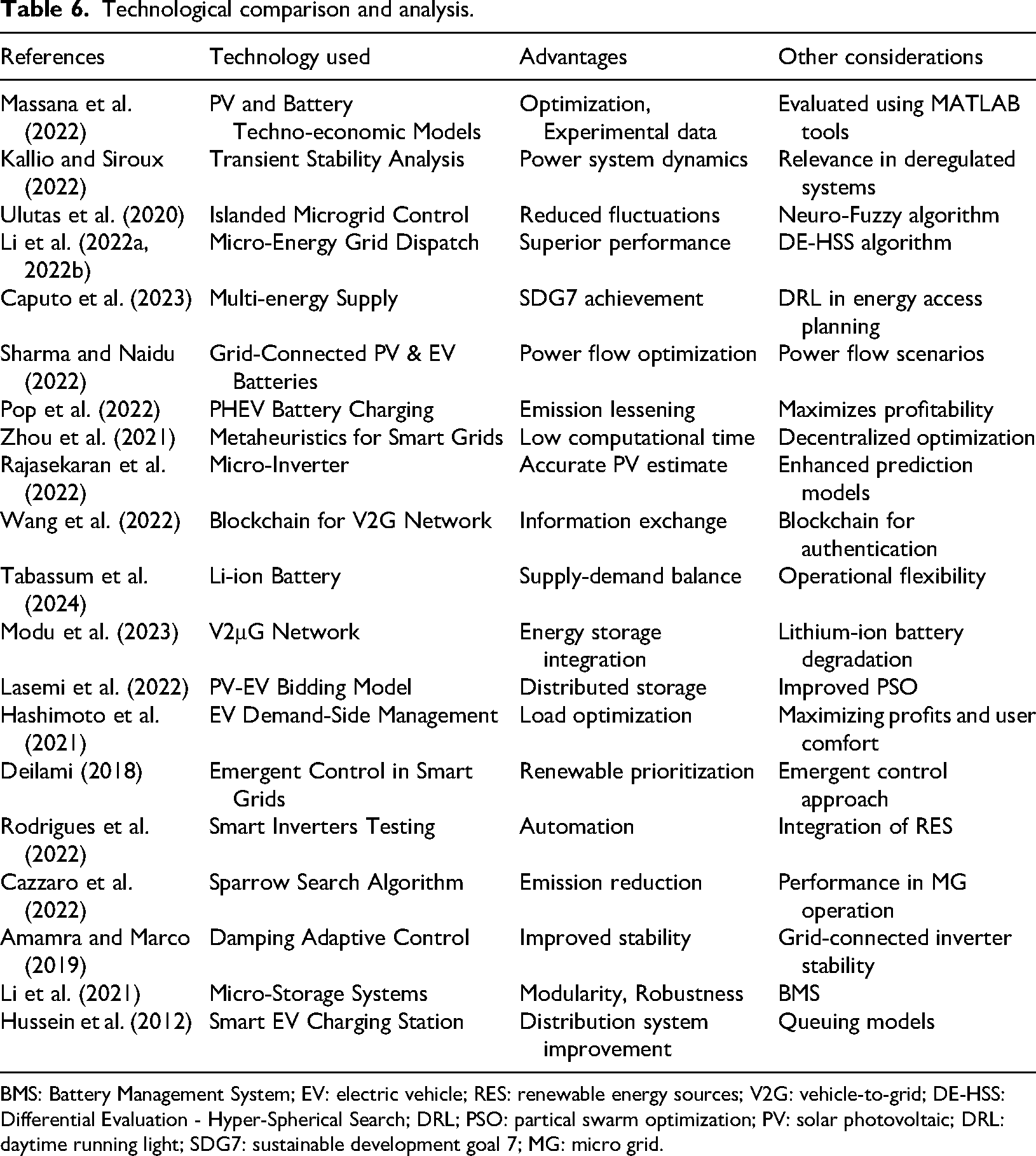
BMS: Battery Management System; EV: electric vehicle; RES: renewable energy sources; V2G: vehicle-to-grid; DE-HSS: Differential Evaluation - Hyper-Spherical Search; DRL; PSO: partical swarm optimization; PV: solar photovoltaic; DRL: daytime running light; SDG7: sustainable development goal 7; MG: micro grid.
Economic assessment
Photovoltaic Battery Application (PVBA) systems have been economically evaluated and were found to decrease energy costs significantly as compared to conventional electricity (Hassan et al., 2023). Techno-economic analysis of microgrid systems reveals that solar PV and BESS are the most cost-effective for residential prosumers, even surpassing full grid supply in off-grid conditions. Seasonal hydrogen storage systems are mainly applied in high-latitude nations under off-grid conditions, with economics being a major consideration in system choice (McKeon et al., 2014). The economic feasibility of HRES is realized when the LCOE is less than the cost of imported energy, with grid parity in Finland being attained at electricity prices of 17 to 29 €c/kWh. The work also addresses the exorbitant costs of installation of level 3 charging infrastructure and maintenance, and economic factors influencing EV customers like charger and battery prices (Keiner et al., 2023). Another research compares different reinforcement learning techniques in terms of average profit and examines the effect of EV flexibility on pricing, aggregator profits, and EV owner expenses (Savari et al., 2022). Also, research on smart energy hubs discusses the economic considerations, such as optimization and integrated demand response planning, but without making direct comparisons between technologies. The research uses optimization methods to reduce microgrid operating costs and grid energy consumption, maintaining a balanced generation–demand relationship (Qiu et al., 2020). The proposed SSA method can minimize pollutant emissions by 54.76% in the single-objective problem and 0.118% in the multi-objective problem (Fathy et al., 2021).
A cost assessment for a Ghanaian village water supply indicates that the Grid-PV hybrid system is much less expensive, with an LCOE of $0.0824/kWh, compared to $0.309/kWh for a PV-Genset standalone system. The Grid-PV system is 184% less expensive than a grid-only system, and the PV-Genset system is 24% more expensive (Qiu et al., 2020). Asamoah et al. (2022) summarize economic approaches such as game theory, auctions, and contract theory applied to V2G, microgrids, and distribution networks, and emphasize their function in the economic feasibility of the systems. A comparative analysis in Table 7 depicts RES by evaluating cost savings, grid parity, and impacts on EV charging, and highlights financial drivers in deregulated markets. Integrating a RES diversity lowers the dependence on fossil fuels and running costs, with internet-based communication enhancing real-time monitoring and grid stability. BESS and DSM handle intermittency and peak loads, and EVs with V2G increase grid flexibility and cost savings. Real-time pricing promotes off-peak usage, decentralization through microgrids minimizes grid strain, and government incentives facilitate renewable investments. Algorithms such as GA and HBA maximize load and dispatch, whereas ML techniques (ARIMA, Random Forest) enhance forecasts, enabling improved supply-demand matching and system stability.
Investigation on economic assessment.
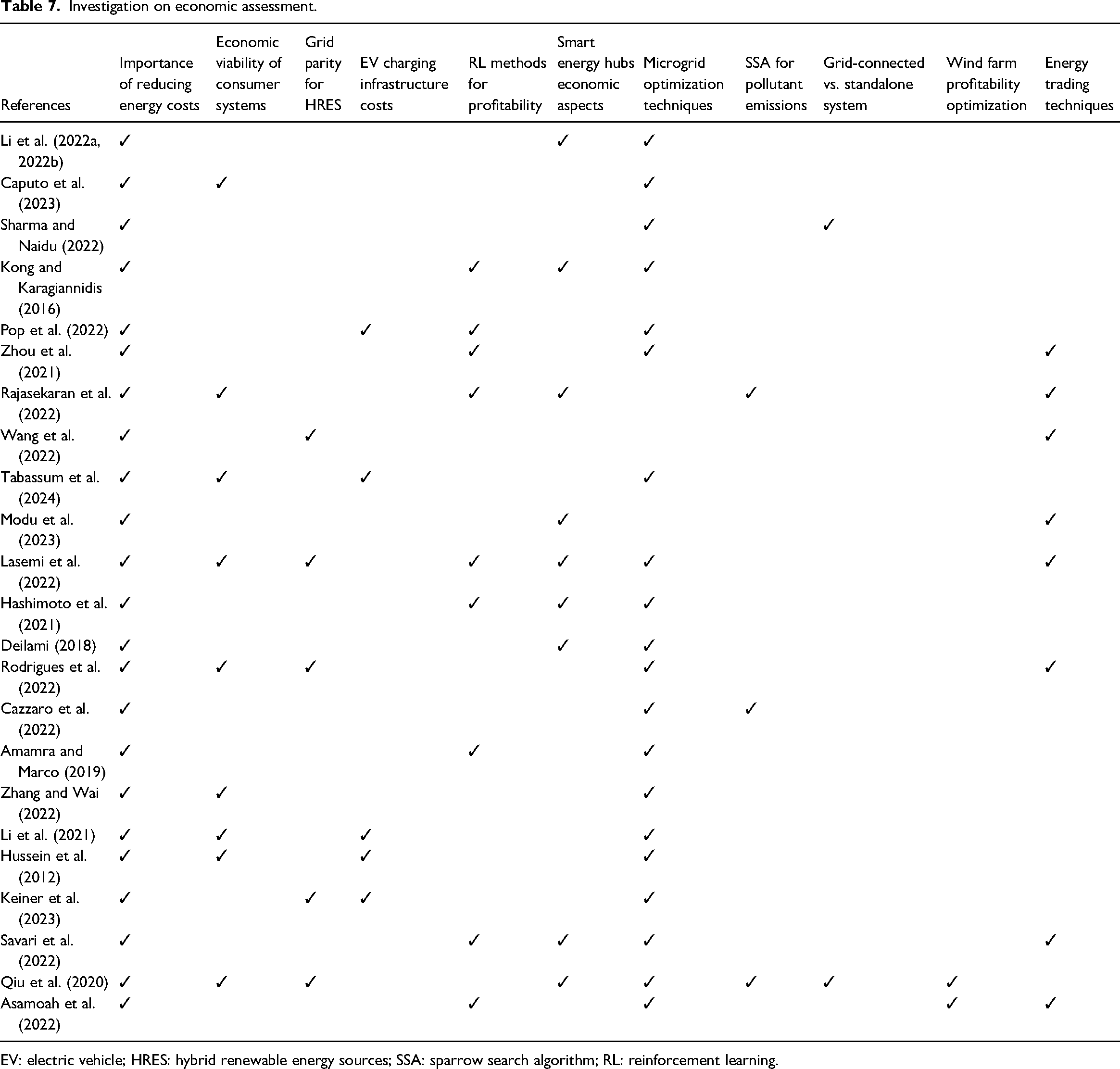
EV: electric vehicle; HRES: hybrid renewable energy sources; SSA: sparrow search algorithm; RL: reinforcement learning.
Real-world case studies
Germany's target to generate 80% of its electricity from RES by 2030 demonstrates the achievements of deregulated markets aided by massive smart grid investments, RES integration, and measures such as the Renewable Energy Sources Act (EEG). Integrating EVs with V2G technology also adds to grid stability and peak demand management. Likewise, California tackles grid instability due to high renewable penetration by BESS, DSM programs, and time-of-use pricing, mitigating economic burdens on consumers as well as dealing with solar and wind variability. Denmark is targeting 50% wind power by 2030 in a competitive deregulated market based on advanced forecasting, flexible DSM programs, and interconnections with surrounding countries to export excess and import when necessary. Iceland is dependent on hydropower and geothermal sources in a deregulated environment, facilitated with intelligent grids, decentralized networks, and robust incentives for regulation in energy storage development. Australia has experienced fast renewable expansion, with a priority on solar and wind power in a deregulated environment that encourages competition and innovative grid technologies, including large-scale battery storage ventures like the Hornsdale Power Reserve and sophisticated demand-side management to ensure grid stability and minimize fossil fuel use.
Table 8 presents comparative estimates of the LCOE of various generation technologies in selected regions in 2023. The indicators indicate that RES technology, especially solar PV and onshore wind, has reached grid parity and, in most regions, is now costlier than fossil fuels. For example, utility-scale solar photovoltaic prices vary between 20 and 40 USD/MWh in India and the United States, far less than new coal (45–85 USD/MWh) and gas combined-cycle facilities (45–70 USD/MWh). Likewise, onshore wind is averaging 30 to 55 USD/MWh in the United States and 28 to 45 USD/MWh in India, again lower than fossil-based options. Offshore wind is still more costly at 70 to 120 USD/MWh, but its price is expected to fall even further with economies of scale and technological improvements. These data show how deregulated and competitive markets increasingly favor investments in renewables, since their economic viability is no longer tied exclusively to subsidies but backed by inherent cost benefits.
Comparative LCOE values for RES and fossil fuels (2023, USD/MWh).
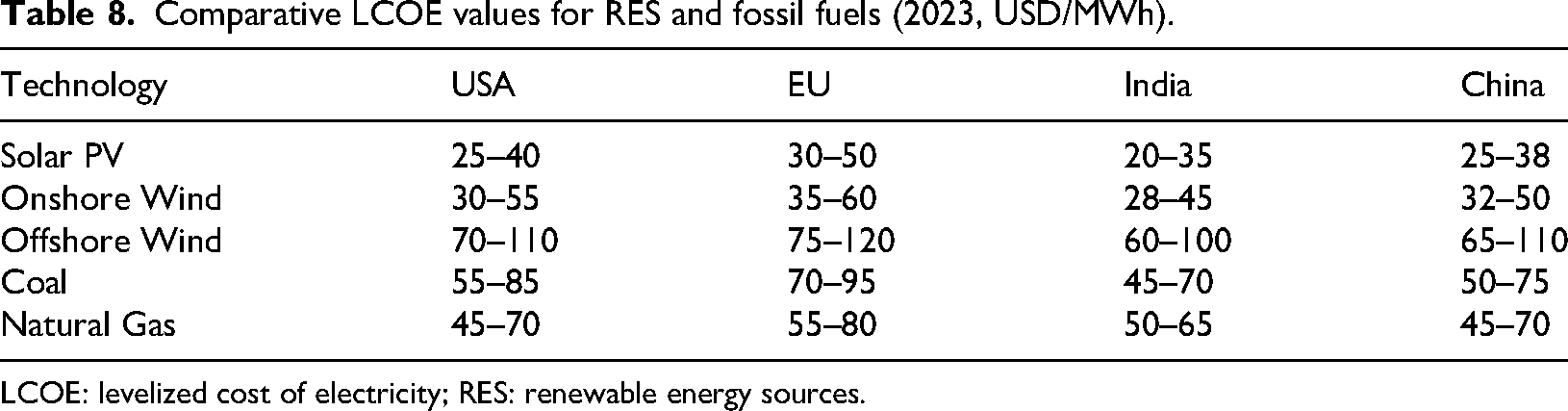
LCOE: levelized cost of electricity; RES: renewable energy sources.
Figure 15 supplements these results by presenting LCOE trends between 2010 and 2023 for solar PV, onshore wind, coal, and natural gas. The chart indicates a precipitous reduction in solar PV prices, almost 90% in the past decade, from 250 USD/MWh in 2010 to less than 30 USD/MWh in 2023. Onshore wind has also fallen more than 60%, from 100 USD/MWh to 40 to 60 USD/MWh. Conversely, coal and gas prices have been flat on average, between 60 and 80 USD/MWh (IEA, 2023). At their crossing point in around 2018, grid parity was achieved, whereafter renewables were always cheaper than fossil fuels. In combination, Table 8 and Figure 15 quantitatively confirm the contention that renewables are not just environmentally favorable but economically preferable in current markets.
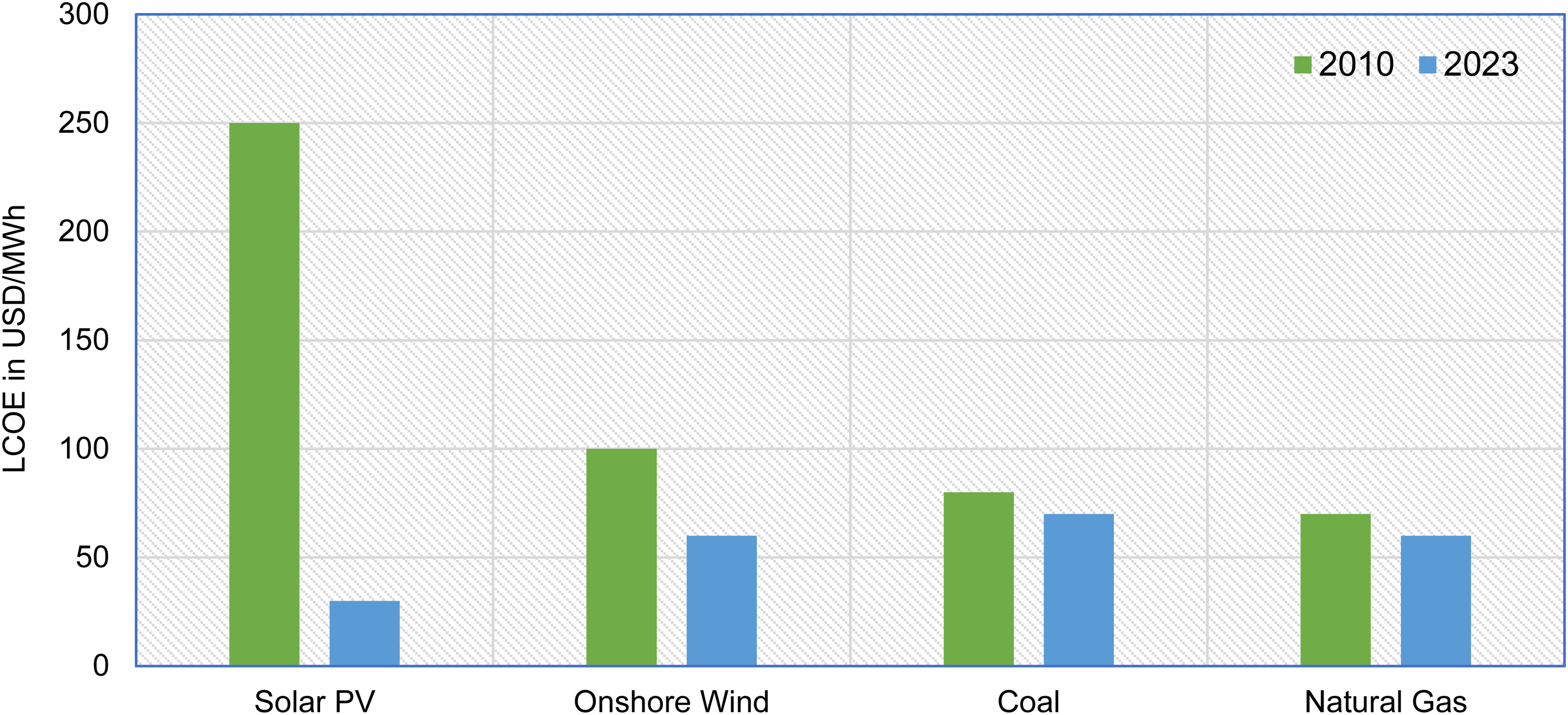
LCOE trends for renewables versus fossil fuels (2010–2023). LCOE: levelized cost of electricity.
Table 9 shows case studies demonstrating the cost impact of deploying EVs with RES for varied market conditions. In California, bundling EV charging with solar and storage has resulted in a 15% reduction in peak system costs, made possible mainly due to time-of-use tariffs and demand response capabilities. Germany has achieved approximately 12% savings in balancing costs through EV fleet utilization as a flexible load to take up the overspill of wind generation, hence curtailment reduction. Pilot projects integrating PV with smart EV charging in India have reduced local distribution costs by close to 10%, showing the benefit of having EVs included in distribution-level planning (IEA, 2023). China's bulk rollout of EV buses in Shenzhen, supplemented with grid-connected solar and storage, has provided 18% cost savings in fuel costs, highlighting the synergy potential of EV–RES in urban transport electrification. Case-based evidence supports that EV integration has high-cost saving potential if supported by enabling market and regulatory frameworks.
Case studies of EV–RES integration and cost savings.
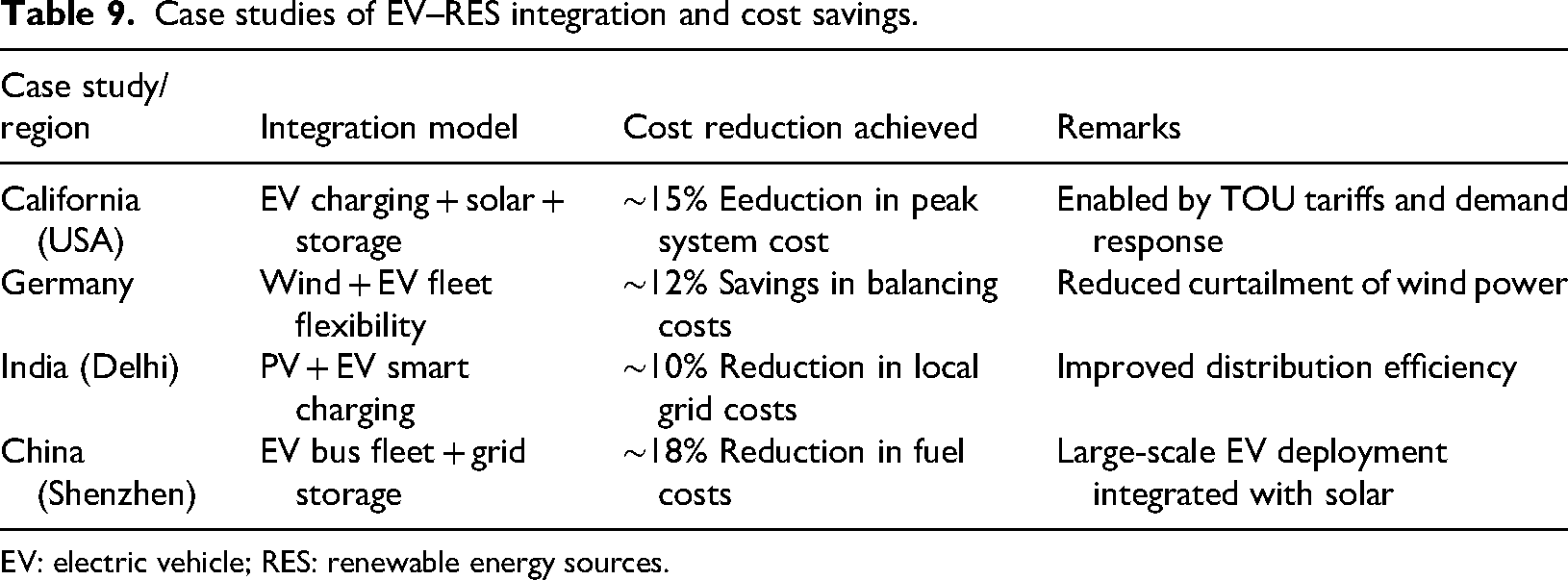
EV: electric vehicle; RES: renewable energy sources.
Figure 16 shows incremental system cost savings realized under varying integration scenarios. With renewable energy alone, system cost savings are relatively modest at around 5%. Adding EVs with unmanaged charging increases the savings slightly to 8%, but the real impact is evident with smart charging strategies, which raise cost reductions to 15%. The highest benefits, around 20% savings, come from the combination of EV integration with storage and demand response programs, as all these collectively maximize load shifting, minimize curtailment, and avoid the use of costly peaking power plants (IEA, 2023). The illustration points out that economic viability is strongly influenced by how high the coordination and flexibility are in integrating EVs and renewables.
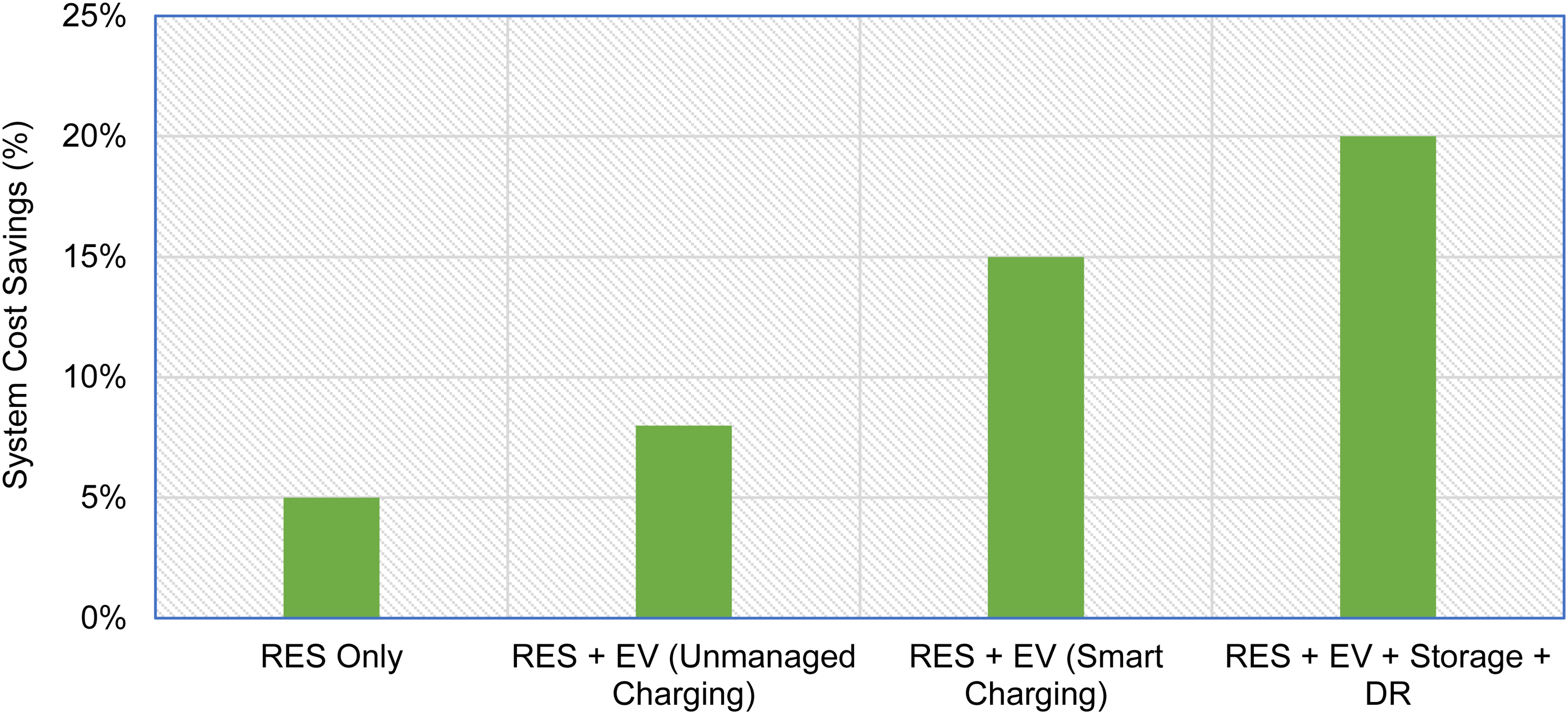
Cost savings from EV–RES integration under market conditions. EV: electric vehicle; RES: renewable energy sources.
Environmental assessment
EVs are important in reducing fuel use and emissions, the solution to the use of fossil fuels in transportation, and the fight against global warming (Keiner et al., 2023). The best V2G network can reduce CO2 emissions by 515.56 tons concerning conventional off-grid energy systems through internal combustion engines (Wang et al., 2022). AI models optimize energy production, demand forecasting, and DSM to increase energy efficiency and minimize environmental footprint through consumption optimization and waste minimization (Aggarwal et al., 2021). The SSA algorithm has proved to be superior in lowering pollutant emissions and has surpassed other optimization methods in single and multi-objective problems. A comparison of greenhouse gas (GHG) emissions between the two systems reveals that the Grid-PV system has 12,341.5 kg/year of emissions, and the PV-Genset system has 4775.57 kg/year of emissions, which proves the environmental advantage of solar energy (Qiu et al., 2020). The application of solar thermal design and reversible thermoelectric effect in generators also enhances sustainability by transforming heat energy into DC and using recyclable materials (Li et al., 2022a). A study of the AC-MG microgrid shows that although it is superior in reducing system cost and the probability of loss of power supply, its GHG emissions are comparatively less minimized (Abodunrin and Ofulue, 2022). The inclusion of DERs is likely to improve system security, enhance power quality, and maximize efficiency through output fluctuation management and relieving distribution system congestion (Ma et al., 2022). Table 10 lists an in-depth environmental comparison through the literature that was reviewed.
Analysis considering environmental considerations.
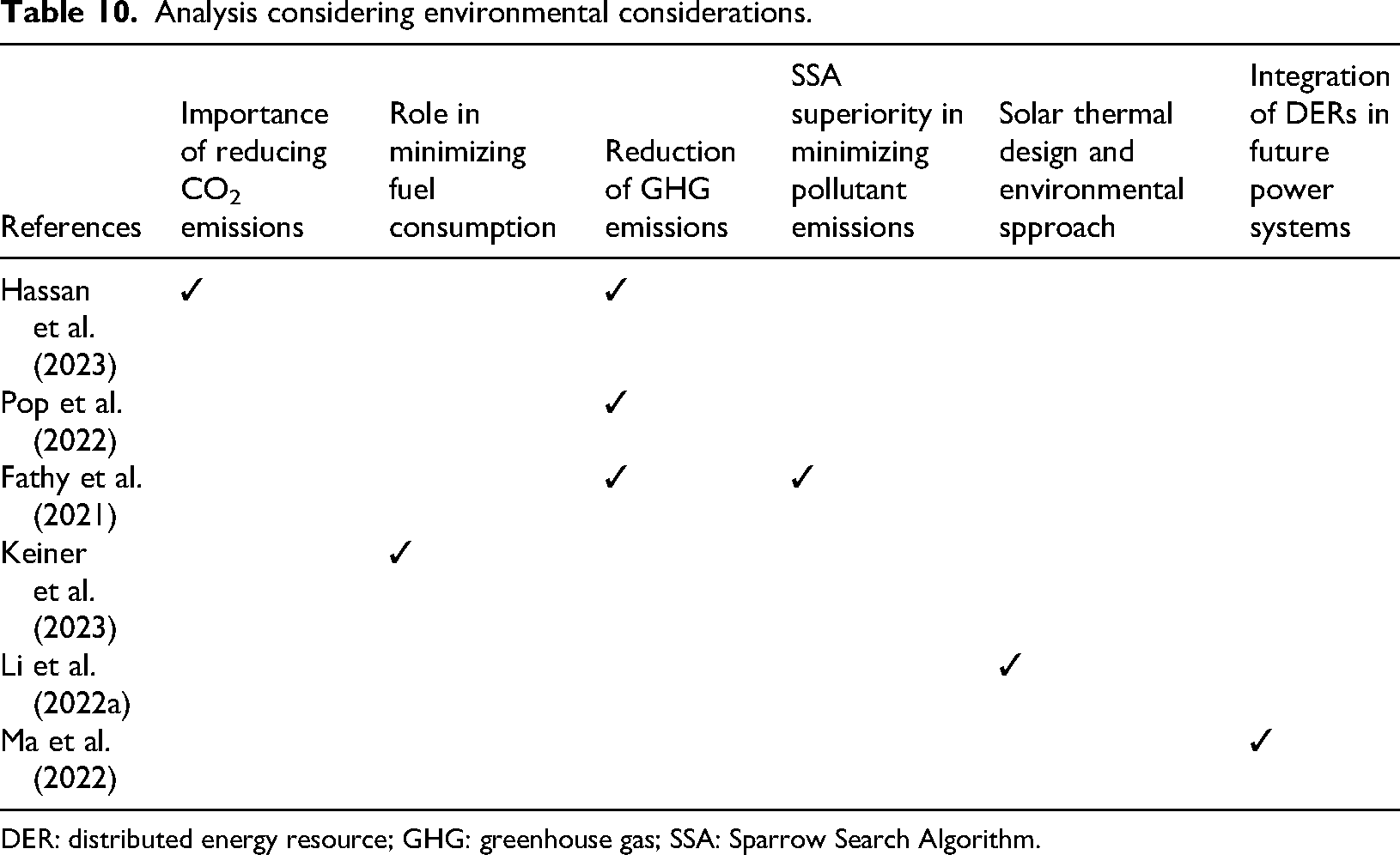
DER: distributed energy resource; GHG: greenhouse gas; SSA: Sparrow Search Algorithm.
Table 10 captures an integrated approach toward sustainability based on priority issues of lowering CO2 and GHG emissions, fuel efficiency, and minimizing emissions to achieve worldwide climate objectives. The linkage of autonomous microgrids and distributed energy resources is a change toward distributed energy systems, enhancing access to energy and mitigating dependence on fossil fuel-powered traditional centralized power generation plants. This change promotes sustainability through increased uptake of renewable energy.
Operational and resilience comparison
Hussein et al. (2012) considers the microgrid stability challenges in terms of the uncertainty of RES and the intricacies of smart load participation. It highlights the requirement for precise prediction models, that is, artificial neural networks (ANN), to enhance the operational efficiency of solar microgrids (Aggarwal et al., 2021). Moreover, PVBA systems have proved efficient in supplying power to several applications (Hassan et al., 2023), with scheduling strategies optimized for controllable devices such as High Voltage AC System (HVAC) systems, charging stations for electric vehicles, and hydrogen fueling stations, where load shifting has been used to maximize energy efficiency and economic value (Keiner et al., 2023). A hybrid of hydropower and floating solar panels has proved to lower emissions by 38.5%, save on penalties for emissions, and stabilize the grid (Ni et al., 2016). A real-time energy management approach maximizes EV integration by reducing travel pattern uncertainties and load variations (Ghasempour et al., 2022), and a hierarchical game theory strategy maximizes system performance, yielding better results on an IEEE 9-bus standard system (Yang et al., 2022; Shakerighadi et al., 2018). Table 11 offers a wide-ranging overview of energy research approaches, both technical and environmental, for energy systems. It underscores the challenges confronting modern energy systems, with an emphasis on the integration of RES, improvement of hybrid system performance, and efficiency of operations to decrease the use of fossil fuels and address global climate objectives. The table highlights the necessity of erudite optimization methods, including game theory and real-time control, for managing decentralized power systems. It also shows a growing emphasis on sustainability, system reliability, and efficient use of resources, with upcoming energy systems having innovative technologies such as electric vehicles, hybrid renewable energy systems, and advanced optimization techniques to support the shift toward renewable-based decentralized grids.
Operation and resilience analysis.
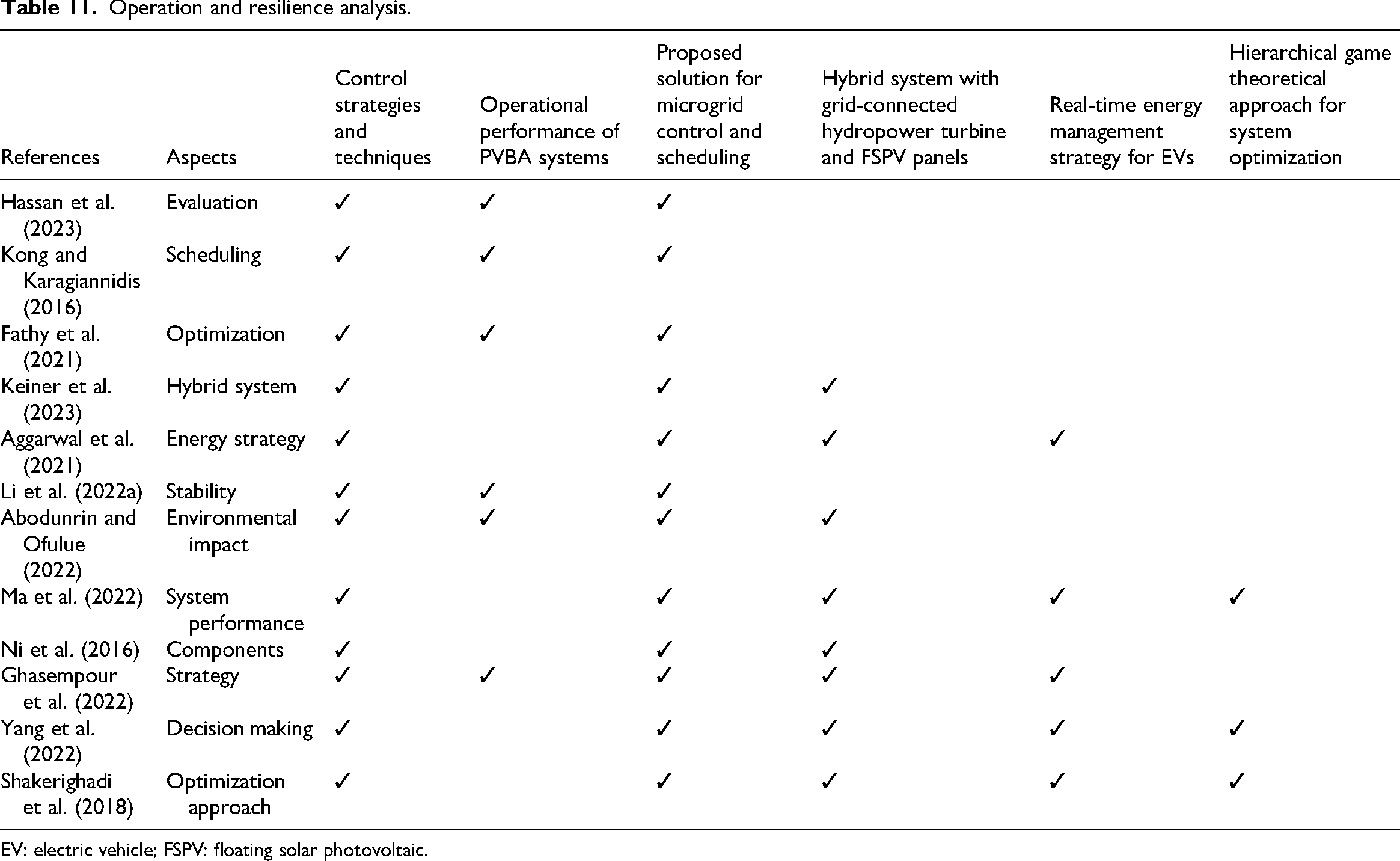
EV: electric vehicle; FSPV: floating solar photovoltaic.
Integration methods for smart grid and microgrid
Hybrid approaches for microgrids within smart grids: AI and data analytics can augment smart energy management through hybrid approaches, for instance, by mixing deep reinforcement learning with algorithms like Deep Q-Network (DQN), optimizing energy generation and usage in microgrids (Aggarwal et al., 2021). Analysis of a hybrid green microgrid, using solar, wind, hydro, battery, and utility grid resources, determines an optimal setup for a solar-wind-hydro utility grid-connected system with a low LCOE of 0.056 $$/kWh. This microgrid utilizes RES effectively, and it is a cost-effective and reliable source of power for remote communities (Mishra et al., 2021).
Cooperative strategies for system efficiency: Patents have led to hierarchical energy management techniques in which an AI controller manages active and reactive power at various points of aggregation. Moreover, energy trading is facilitated by cooperative approaches such as the Trans Active Grid system based on blockchain technology for secure autonomous energy trading between registered parties (Aggarwal et al., 2021).
Benefits of integrated energy management: The combination of power sources increases reliability, offsetting grid outages and reinforcing the energy system (Barakat et al., 2022). Integrated energy management (IEM) synchronizes energy generation, transmission, distribution, and use to enhance efficiency, reliability, and sustainability. Smart grids can include microgrids via IEM. Combining renewable energy with EV charging systems minimizes air pollution, fuel usage, and emissions, and provides opportunities for the power network via V2G and Vehicle-to-Building (V2B) modes.
Challenges and barriers to integration: The integration of microgrids into smart grids is challenged by technical compatibility, interoperability, and standardization of communication protocols. Regulatory obstacles, old policies, and a lack of incentives may slow progress. Economic challenges, such as initial high costs and uncertain revenues, also create hurdles.
EV integration with renewable system
India has become the world's third-largest automobile market by sales through 2023, highlighting its economic development. The Indian auto industry was worth US$100 billion in 2022 and ranked fourth in the world. The industry contributes 7.1% of India's GDP and 8% of exports (Ferro et al., 2018). While EVs have a small share, for now, they are gaining ground. Transportation in India contributes 14% to CO2 emissions, and road transport uses 90% of energy and meets 50% of oil demand. This indicates the utmost importance of energy efficiency and decarbonization in India's fast-growing economy.
The inclusion of RES and EVs in India's present power system has a few major challenges. Solar and wind power are intermittent and uncertain, and they lead to voltage and frequency fluctuations, compromising the reliability and stability of the grid and necessitating advanced management methods. India's current grid infrastructure, being centralized, one-way in power transmission, needs extensive refurbishment to support decentralized RES and bidirectional EV charging to facilitate effective two-way energy flows. Effective energy storage solutions are required to manage supply and demand under RES variability, yet storage costs and capacity constraints continue to be the main hindrances. Also, a lack of incentives and obsolete regulatory systems prevent the use of RES and EV technology, and thus, developing policy support is essential in promoting investment and integration. Interoperability among smart meters, EV charging points, and RES calls for standardized communication protocols and high-level control systems. Financial hurdles also present challenges, with the high initial costs of RES equipment, EVs, and grid upgrades requiring creative financing and incentive mechanisms to soften the loads. In addition, the environmental implications of mass battery usage for energy storage and EVs pose questions regarding the disposal and recycling of batteries, demanding the use of sustainable disposal practices to avoid pollution.
These challenges need to be addressed through several approaches involving infrastructure upgradation, policy changes, technological advancements, and financial mechanisms to facilitate the integration of RES and EVs into India's power grid. A full analysis of EVs in renewable energy systems in India, Germany, and three other nations, like China, the United States, and the United Kingdom, calls for comparing different dimensions like adoption rates, integration with RES, grid infrastructure, government policies, environmental effects, and charging infrastructure (shown in Figure 17). India, Germany, China, the United States, and the United Kingdom all offer different scenarios for the uptake of EVs with RES, conditioned by differences in infrastructure, policy inducement, and technological readiness. India has witnessed high-speed EV penetration, especially in the two-wheeler segment, driven by government incentives under the FAME India Scheme, but it still struggles with costly purchase prices, a lack of charging infrastructure, and a coal-based grid that short-circuits the environmental advantages of EVs. Although with an ambitious 500 GW of RES capacity by 2030 target, India is still in the promising stage of positioning EVs with RES. Conversely, Germany takes the lead with over 1 million EVs on the road and over 50% of electricity from renewables backed by world-class smart grids, policy incentives, and GW-scale energy storage.
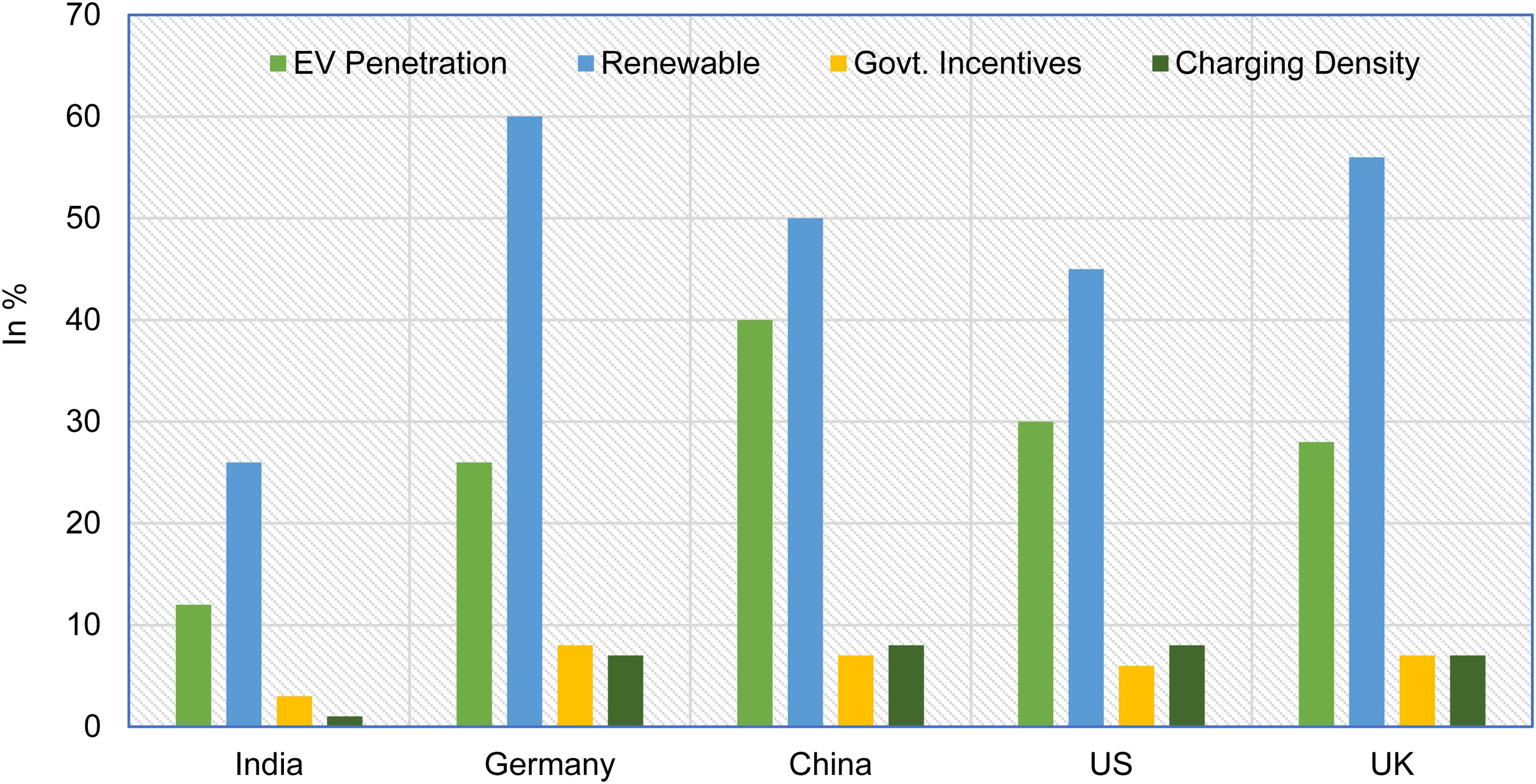
Worldwide EV status within the renewable system. EV: electric vehicle.
China has run away as the world's biggest EV market, with more than 10 million EVs, supported by solar and wind energy leadership and aggressive smart grid and storage technology rollout, although it still lags with rural infrastructure weaknesses. The United States exemplifies patchy advancement, with states such as California leading the way on EV take-up and renewable generation, but the country as a whole is stuck with ancient grid infrastructure and patchy charging networks. The United Kingdom, having more than 500,000 EVs and a well-developed offshore wind industry, is well-equipped with a highly advanced grid and ubiquitous public charging, but still has issues with grid capacity during times of high demand. Overall, although Germany, China, and the United Kingdom have made considerable progress integrating EVs and renewables, there are significant challenges for India and the United States in terms of infrastructure, storage, and policy implementation. Both nations need to keep investing in smart technologies, grid modernization, and enabling policies in order to drive the shift toward sustainable EV-powered renewable energy ecosystems.
Figure 18 is a summary of major indicators associated with EV adoption and integration of renewable energy in India, Germany, China, the United States, and the United Kingdom during 2023. China takes the lead with 40% of new car sales coming from EVs due to robust government initiatives, incentives, and a large domestic EV manufacturing industry, followed by the United Kingdom (28%), the United States (30%), and Germany (25%), all with strong emissions regulations and incentives. India is behind at 12% EV adoption because of high prices, fewer charging points, and dependence on imported batteries. Compared to the overall vehicle fleet, China leads once more at 15% EV penetration, followed by Germany (8%), the United Kingdom (9%), and the United States (10%), while India is lagging at a mere 2%, an indication of nascent stages of fleet electrification. The highest percentage of renewable energy is in Germany at 60%, followed by the United Kingdom (55%), China (50%), and the United States (45%), while India's 25% is still limited by being heavily dependent on coal. Charging infrastructure is quite different, with China having 300 public chargers for every 1000 EVs backed by robust policies, while the United Kingdom (220), the United States (250), and Germany (200) have also made good strides (IEA, 2023, 2024). India lags with a mere 50 chargers for every 1000 EVs, aggravating range anxiety among consumers. Energy storage capacity, which plays a pivotal role in offsetting renewable variability and facilitating EV charging, is most prominent in China (15 GW), followed by the United States (12 GW), Germany (10 GW), and the United Kingdom (9 GW), while India's mere 2 GW capacity stifles smooth renewable integration. Lastly, reductions in CO₂ emissions spotlight the ecological footprint of such initiatives and show that Germany recorded the greatest drop at 35%, followed by China (30%), the United Kingdom (28%), and the United States (25%), with India managing just a 10% fall, mainly because of its continued dependence on coal and slower adoption of EVs.
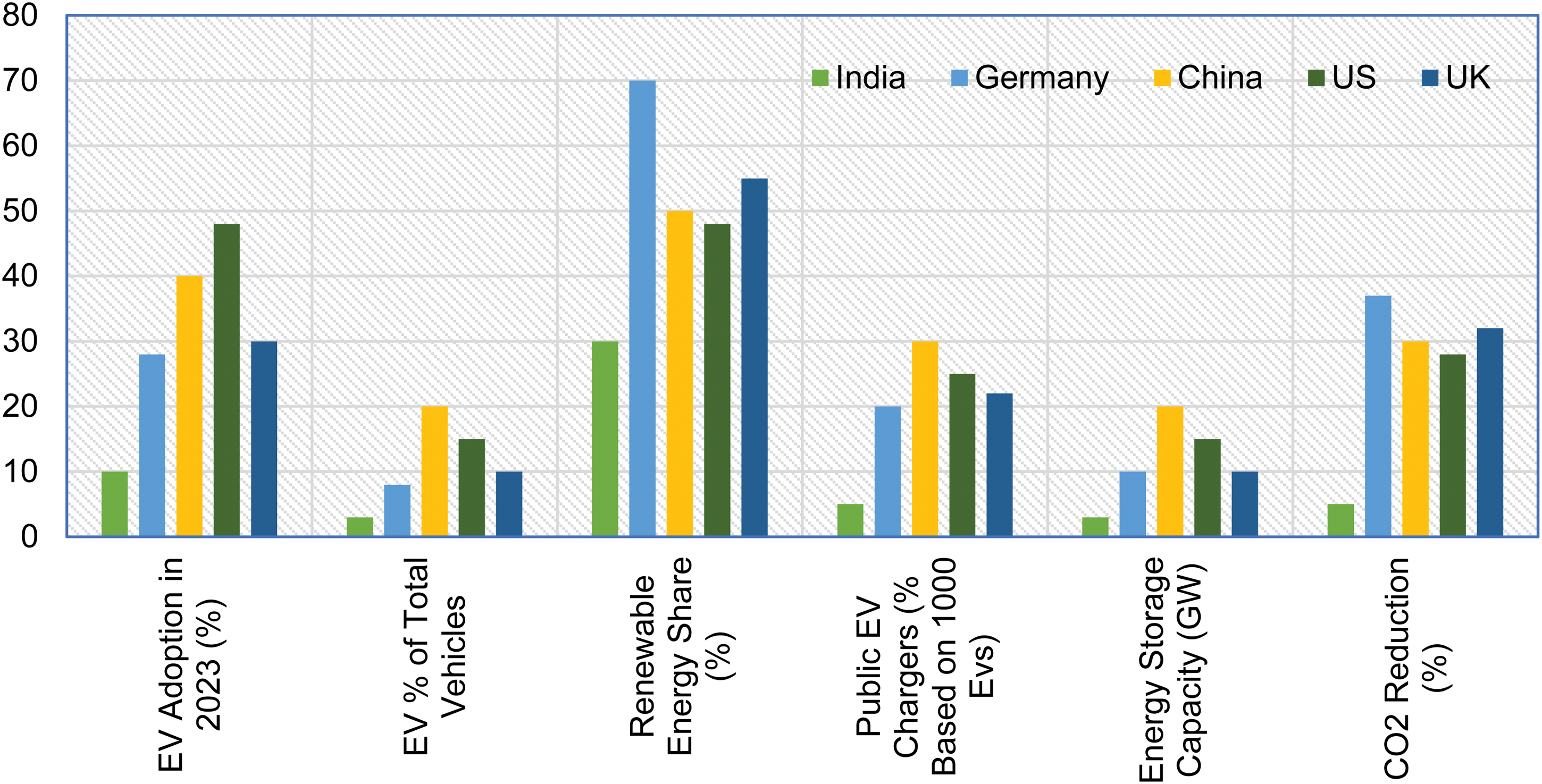
Comparison of key metrics for EV and renewables for top countries. EV: electric vehicle.
Assessment on the incorporation of EV in renewable arrangement
The main concern of Hudson et al. (2023) is to exploit EV charging scheduling in a smart grid, taking into account energy expense, customer demand lag, and vehicle service income. Smart charging techniques may save 40% of peak demand, reducing grid investments and equipment lifespan (Ohanu et al., 2024). Mohanty et al. (2022) offers an extensive review of incorporating RERs in the smart grid, discussing ideas, organization, energy sources, and problems. Reference Aftab et al. (2018) examines EV integration with different communication technologies to increase interoperability, tackling challenges with EV-DSM operation. Mishra et al. (2024) is about the use of EVs to provide virtual inertia in RES-dominated grids. Hydrogen fuel cell multiple-unit vehicles are used in nonelectrified railways for carbon-free operation and smart grid utilization (Jiménez et al., 2024). Saadatmandi et al. (2024) examines RES integration into standalone energy systems, specifically transportation electrification, with a case study of Gran Canaria. Outcomes indicate decreased oil usage, CO2 emissions, and system expenses. Reference Secchi et al. (2023) suggests an intelligent EV charging policy to reduce solar energy wastage, utilizing clustering techniques, fuzzy-weighted charging, and blockchain for security. The paper by Jiang et al. (2024) presents an EV charging algorithm optimized by a V2G policy, minimizing net-load variance by 60% while also addressing voltage oscillation and line overload, although at the expense of EV battery lifetime. Barman et al. (2023) proposes a hierarchical deep Q network for real-time EV charging guidance at minimal cost and scalable levels. Hashemi-Dezaki et al. (2017) investigates renewable energy as an acceptable EV charging means, reviewing RE sources, storage technologies, charging systems, and smart grid integration issues. Rehman (2022) evaluates the reliability of smart grids by considering direct cyber-power interdependencies with distributed generations and plug-in hybrid EVs, and introduces a new uncertainty-based evaluation approach.
A bidirectional hierarchical aggregation algorithm in the article by Khalid (2024) brings EVs to the smart grid through V2G technology by optimizing day-ahead scheduling and power demand forecasting under EV-SOC and battery degradation consideration. Oad et al. (2022) examines challenges in the integration of RES into smart grids, such as user acceptance, operational flexibility, and security issues. A decentralized V2G-supported supply-demand management solution in the article by Calise et al. (2021) examines network topology and interdependent system resilience for smart cities. Paterakis et al. (2016) investigates energy demand management of private transport and buildings through smart energy districts, which retain a 32% energy saving ratio with a 6-year payback time. Emerging literature fills loopholes in research on smart grids. Panda et al. (2023) balances EV and distributed energy resource integration for efficiency and sustainability. Nguyen et al. (2014) discusses the challenges of integrating RE in deregulated power markets. Feng et al. (2021) points out smart EV charging's potential to balance renewable variability and improve grid stability, whereas Harsh and Das (2022) investigates power system flexibility strategies with EVs and energy storage. Research by Kaiss et al. (2024) combines RES and demand response strategies in smart grids with EVs as central assets. Kumar et al. (2024) examines virtual power plants’ contribution to optimizing smart grid operation, and Martinez et al. (2016) discusses progress in V2G technology. Hu et al. (2013) proposes a hybrid energy management scheme for EV and RE integration into microgrids. Chatterjee et al. (2024) explores energy storage and dual-source fuel cell EV cooperation to stabilize renewables and improve reliability. Lastly, Farooq et al. (2022b) investigates optimal EV location for a hybrid energy management system.
Ullah et al. (2021) provides a comprehensive review of optimization techniques of smart grid control with emphasis placed on the accommodation of RES and EVs. Hu et al. (2016) carries out an extensive study of EVs as distributed energy storage facilities to support economic dispatch in RES-integrated high-penetration power systems. Tan et al. (2015) introduces a multi-agent system paradigm to realize the coordinated utilization of RES and EVs within smart grid setups. Amin et al. (2020) substantively analyzes smart grid technologies essential for RES and EV integration, highlighting their engineering applications and technical significance. Vanlalchhuanawmi et al. (2024) is concerned with the optimization of EV charging strategies in RES-based smart grids to maximize system efficiency and sustainability. Chatuanramtharnghaka et al. (2024) investigates demand response mechanisms incorporating EVs for enhancing grid stability and promoting RES use. Dixon et al. (2022) examines market optimization methods for deregulated power systems with high RES penetration, especially EV participation. Das et al. (2025) critically analyzes V2G technology as a grid-balancing means, bringing its application toward RES integration within interconnected power networks into focus. Meng et al. (2024) addresses the importance of BES in the management of RES and EV in deregulated power markets.
EV and RES contribution to new knowledge
The study enhances knowledge by comparing novel RES–EV integration technologies, most notably smart grids and ESS. It identifies the importance of advanced control algorithms and AI-based optimization in tackling issues like grid congestion, frequency stability, and load management. The identified key contributions and impacts of this study are as follows:
The incorporation of RES and EVs in smart grids enables a considerable decrease in carbon emissions by substituting fossil fuel-based generation with solar and wind power. The research highlights the contribution of EV uptake toward further lowering fuel use and greenhouse gas emissions, as per global net-zero emission goals. Smart grids with RES, EVs, and BESS improve grid resilience by leveling supply-demand variations. DSM strategies enhance energy efficiency, while smart EV charging adjusts dynamically to demand, avoiding grid congestion and peak load stresses. The research proves that HRES can attain grid parity within certain electricity pricing ranges, hence making them financially viable in deregulated energy markets. For stakeholders in the industry, technology innovations minimize the cost of operations, maximize profitability, and boost market competitiveness through investment in clean energy solutions. Deregulated power markets promote competition and technological advancements, motivating increased involvement in energy production and distribution. The article emphasizes the demand for policy frameworks fostering incentives for RES uptake and EV-grid integration, promoting cost savings and speeding up clean energy transitions. The study identifies major technology gaps, specifically in power flow management mechanisms and EV involvement at the distribution level. Resolving these through R&D policy-influenced investments will enhance system efficiency as well as sustainability in deregulated markets.
The association of RES and EVs in deregulated energy markets is best represented by Germany, California, Norway, and India, each taking advantage of policy-based incentives, infrastructure development, and superior ESS technologies. Figure 19 shows Germany's growth in RES and EV adoption from 2015 to 2023. This simultaneous growth mirrors the effects of liberalization of the market, government support, reduced battery prices, and increased charging infrastructure, making Germany a pioneer of a low-carbon economy transition.
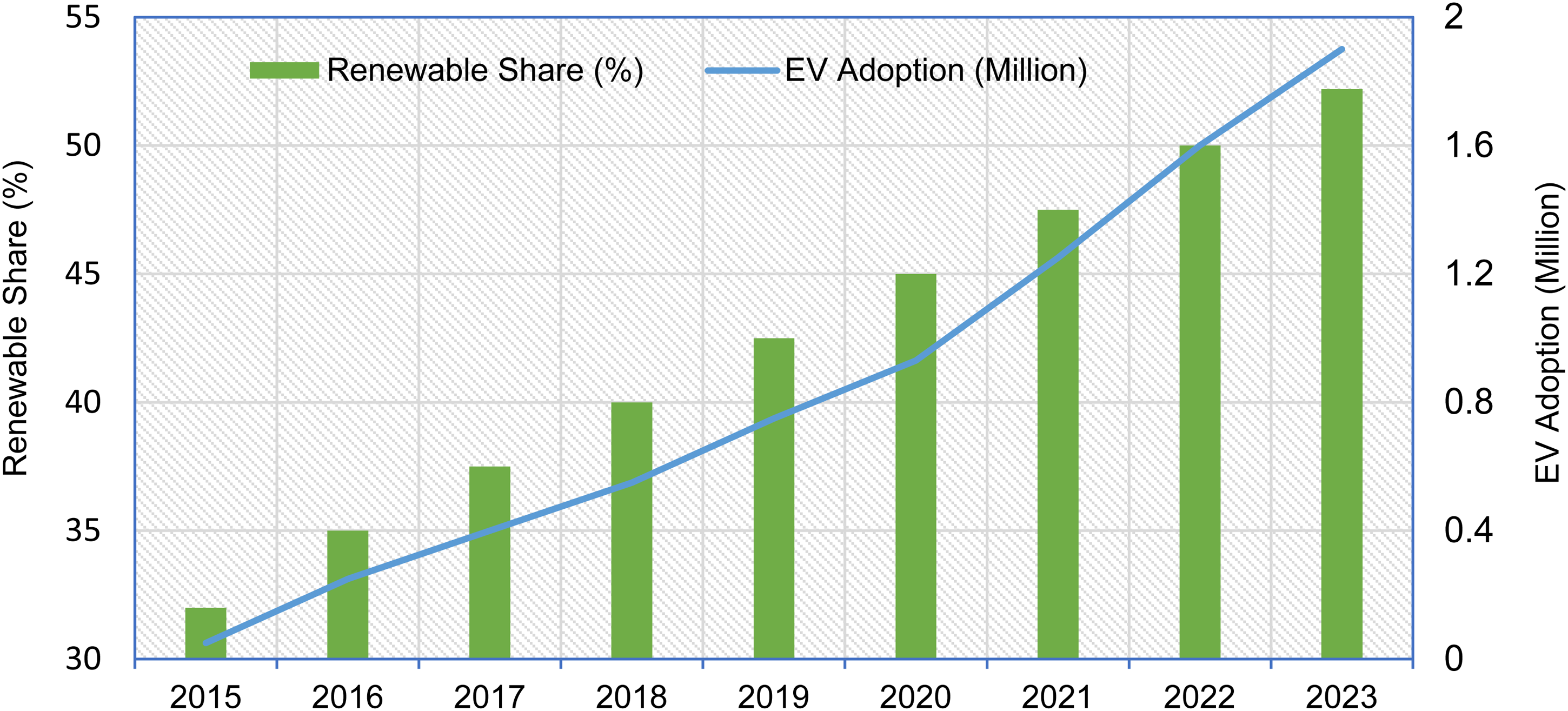
RES growth versus EV adoption in Germany. EV: electric vehicle; RES: renewable energy sources.
Figure 20 illustrates California's BESS growth from 1.2 (2017) to 5.0 GW (2023) due to policy incentives, investment in clean energy, and the requirement for grid flexibility. As solar and wind penetration are high, storage compensates for intermittency, minimizes peak load stress, and improves grid stability while fueling the increasing EV market. Figure 21 illustrates India's fast-charging points in 2023, with Delhi (1200) at the top, followed by Bangalore (1100) and other metropolitan cities. Growth, fueled by FAME-II and private investment, is crucial for defossilization and emissions reduction, although additional rural and highway infrastructure is required for wider EV adoption.
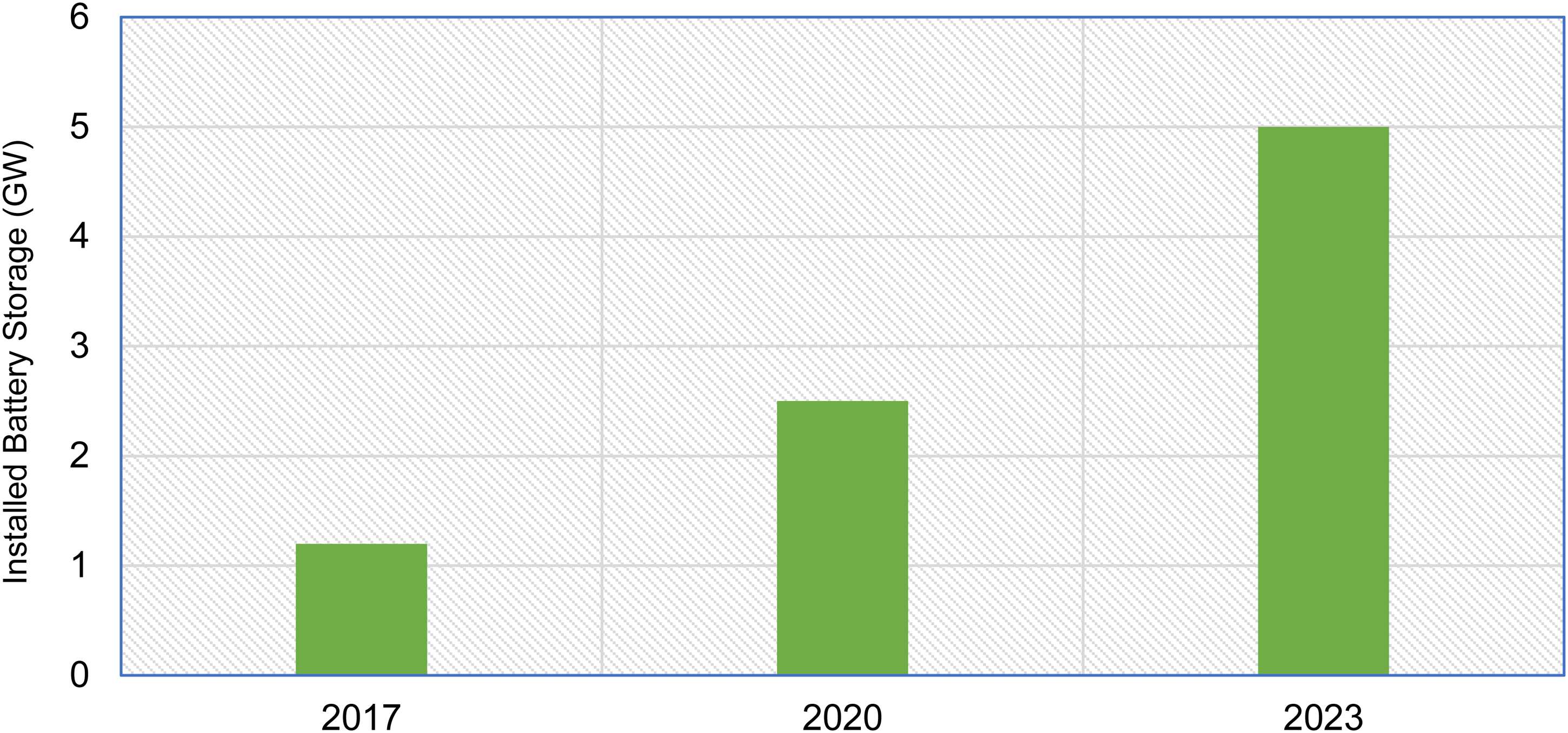
California's battery installation growth (in GW).
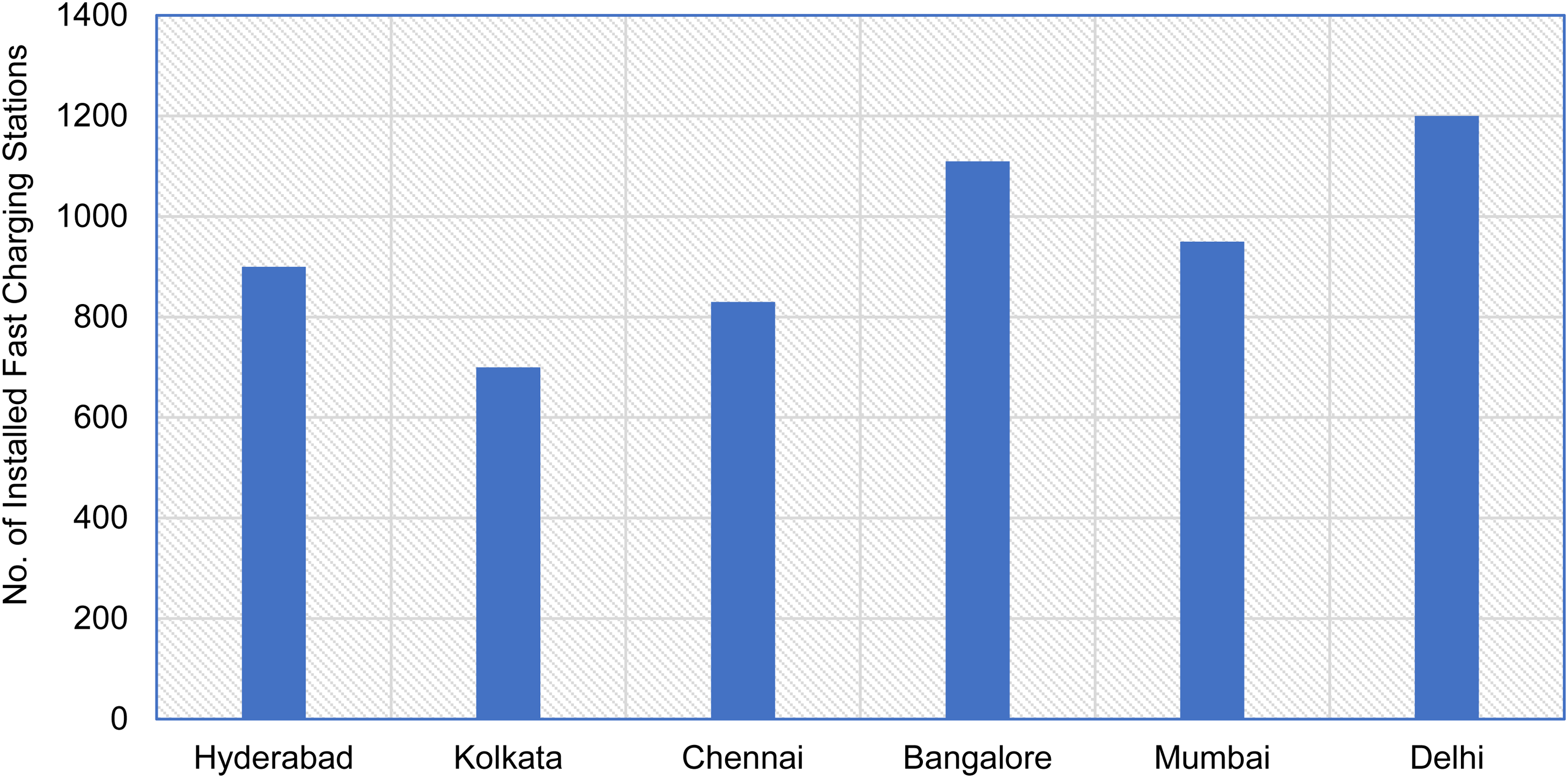
EV fast-charging set-up in India. EV: electric vehicle.
The transition in global energy investments is displayed in Figure 22, indicating an increase in RES investments ($250B–$550B) and a decrease in fossil fuel funding ($450B–$280B) between 2015 and 2023. Figure 23 shows CO₂ reductions achieved through EV penetration, with China taking the lead at 450 million tons, followed by the United States (300 M), India (180 M), Germany (120 M), and Norway (50 M). All the above case studies coupled together emphasize smart grids, market incentives, and energy storage as the key to maintaining seamless integration of renewables and EVs in a deregulated marketplace.
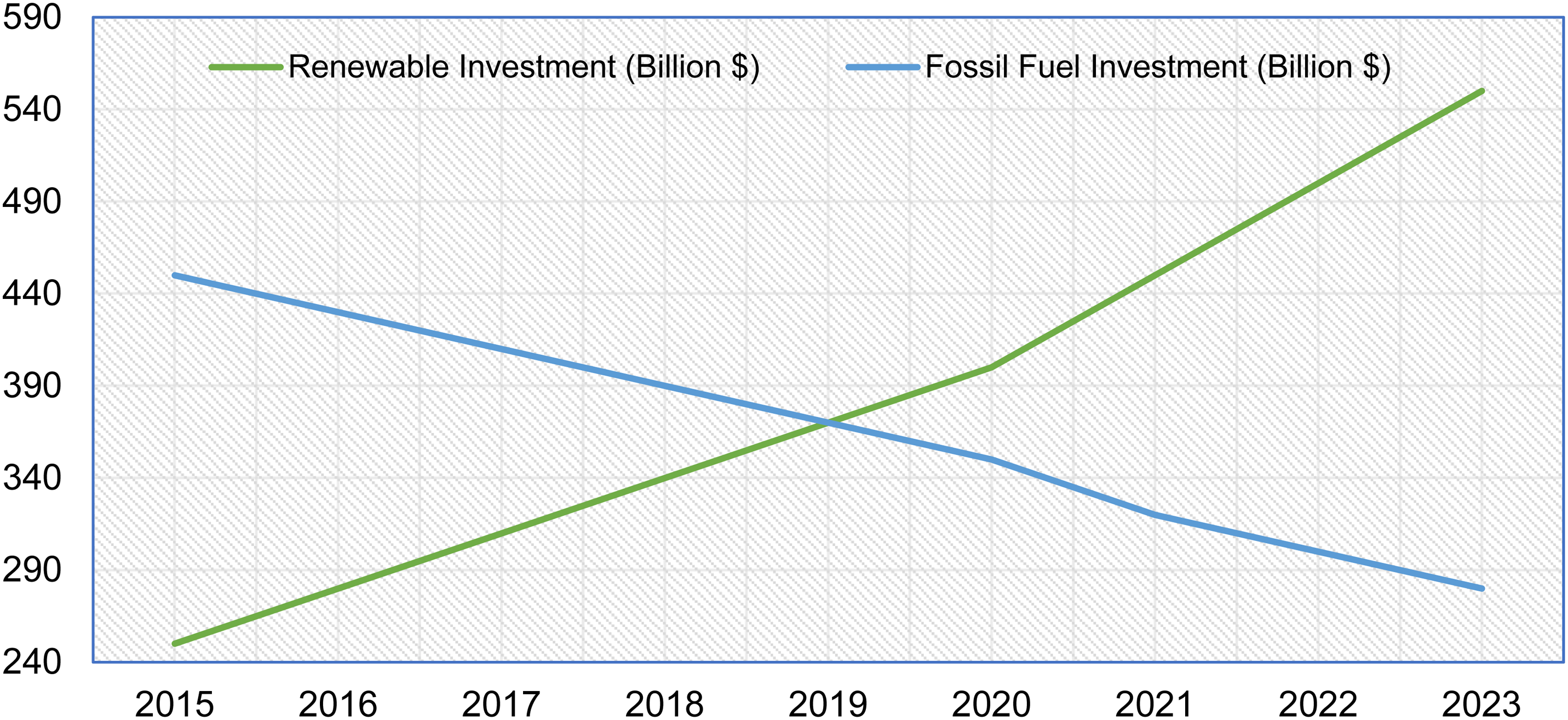
Global RES versus fossil fuel investment. RES: renewable energy sources.
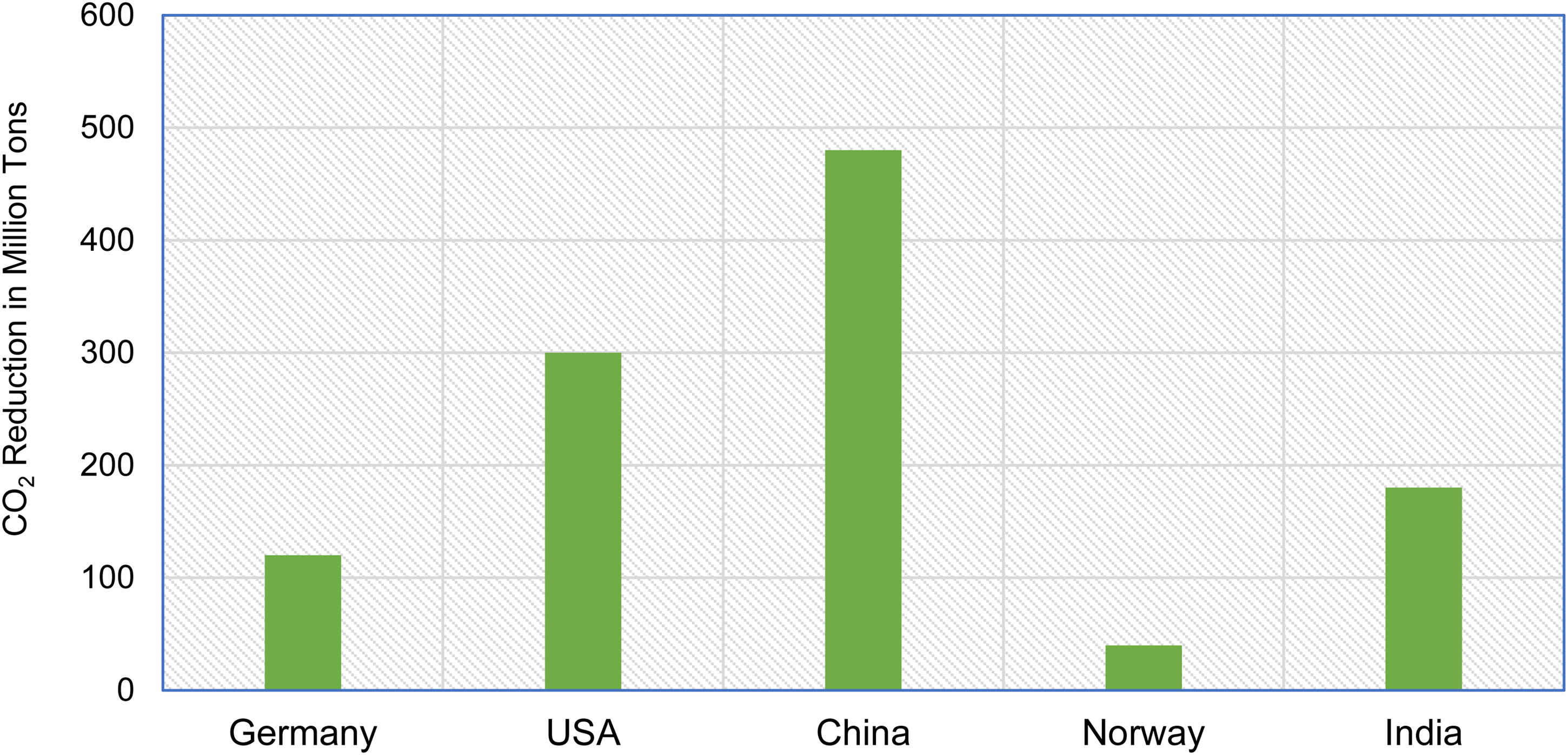
CO2 reductions achieved through EV penetration. EV: electric vehicle.
Deregulation in the energy market has been a transformative driver of competition, technological advancements, and renewable energy integration around the world. The United States initiated energy market deregulation in the 1990s, where customers could shift between different suppliers of electricity, promoting competition, and rate efficiency. Texas has its own independent ERCOT grid with a very competitive market and large wind energy capacity, while California experienced early deregulation issues but has now restructured its market to emphasize solar and wind energy growth.
In Europe, deregulation has promoted sustainability and investment in RES technologies. The United Kingdom, having deregulated in the late 1990s, has witnessed large investments in offshore wind power, building a competitive and sustainable energy economy. Germany takes the lead with its Energy Transition program, aiming for 80% renewable energy by 2030, as well as promoting V2G and BESS for increased grid stability (depicted in Figure 24).
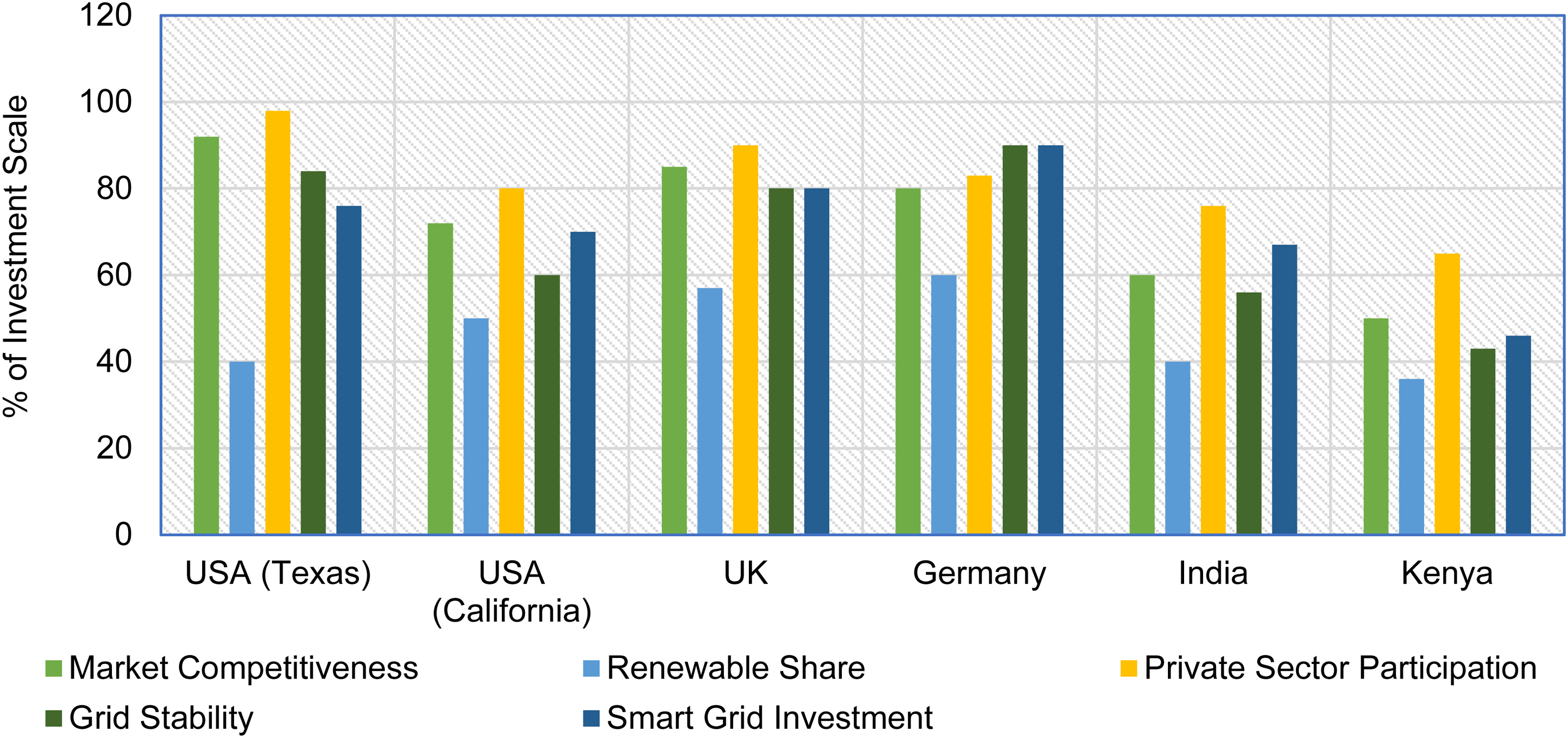
Comparative analysis of deregulated energy markets.
Developing nations, including India and Kenya, are also adopting deregulation to foster private-sector involvement and integration of RES. India is adopting a semideregulated approach, with a mix of state-owned and private utilities, having policies aimed at 40% nonfossil fuel energy by 2030, especially in deregulated states like Delhi. Simultaneously, Kenya has implemented a hybrid DES based on solar, wind, and biogas to increase access to electricity and balance the grid, especially in low-income areas.
Deregulated markets have triggered competition, improved grid resilience, and fueled renewable energy penetration, with the advanced economies taking the lead in next-generation grid technologies while developing countries concentrate on expanding access and private sector participation. Of the five major countries, that is, China, Germany, the United States, the United Kingdom, and India, China is top in battery storage capacity at 200 GWh, followed by Germany (180 GWh), the United Kingdom (160 GWh), the United States (150 GWh), and India (100 GWh) (as depicted in Figure 25). Incentives from the government also follow the same trend, as China has invested $50 billion in tax credits and subsidies, Germany $45 billion, the United Kingdom $42 billion, the United States $40 billion (although with unbalanced state policies), and India $30 billion funded through initiatives such as the FAME scheme. Where China takes the lead with regards to investments in smart grids at $120 billion invested in AI-based and decentralized grids, Germany follows (110 billion), the United Kingdom comes next (105 billion), followed by the United States (100 billion), and then India ($80 billion), which is slowly establishing its infrastructure. As a whole, China stands out as the leader in promoting EVs and renewable energy, Germany has a balanced approach, the United States lags with policies that are divided, the United Kingdom leads in grid modernization and incentives, and India is progressing steadily through government-sponsored efforts.
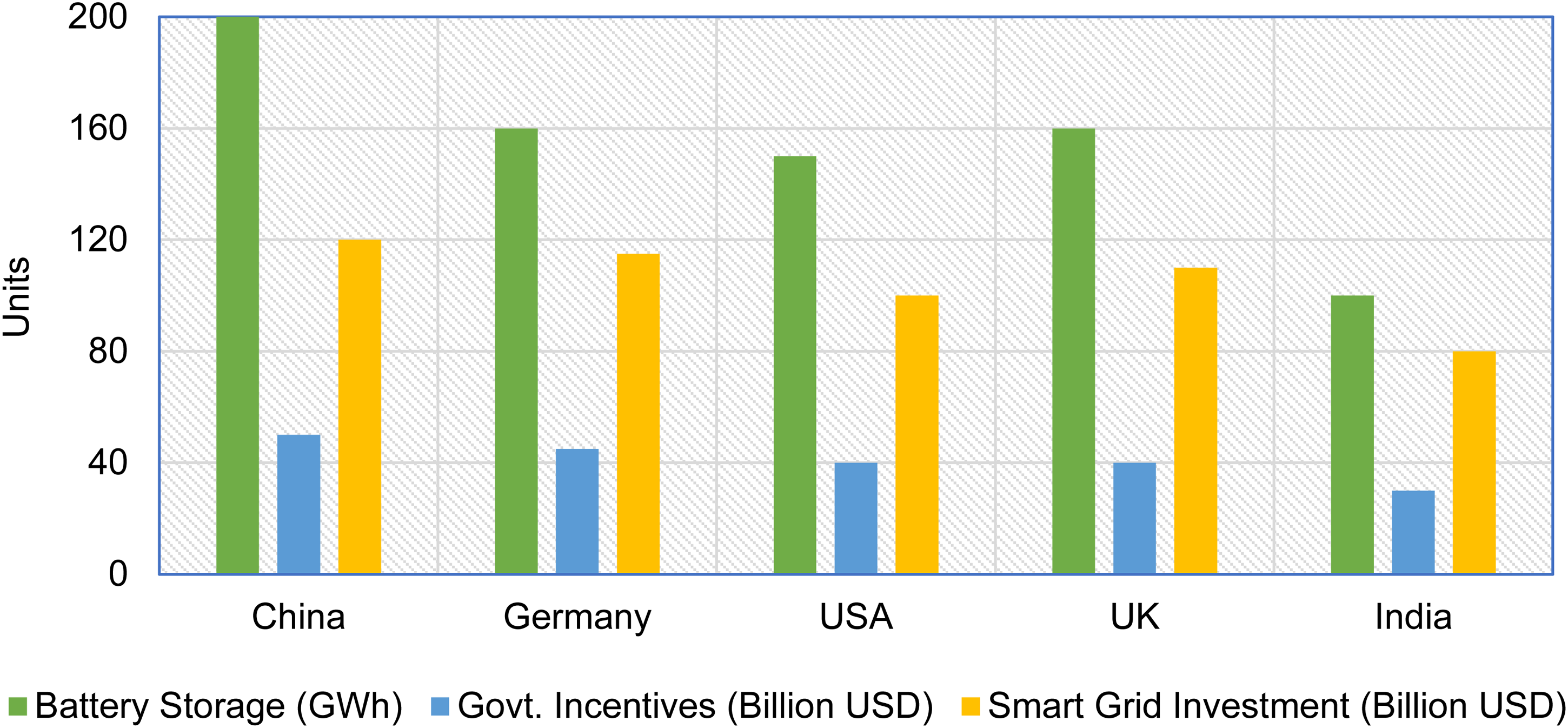
Infrastructure and financial support for EV and renewable integration. EV: electric vehicle.
Conclusions
The integration of EVs and RES in deregulated electricity systems represents a revolutionary path toward a sustainable, flexible, and consumer-centric electricity system. Yet, numerous challenges remain unsolved to inhibit the deployment on a large scale. Major technical barriers include the finite lifetime and degradation of EV batteries, the absence of universal and interoperable charging infrastructure, and the inefficiencies in existing market design that do not completely capture the value in distributed energy resources and demand-side flexibility. Uncertainty in renewable generation, grid stability with high EV penetration, and requirements for erudite forecasting and optimization models are also ongoing concerns. The future research should focus on the creation of low-cost, long-life battery technologies, together with innovative charging technologies like ultra-fast charging, wireless charging, and coordinated charging strategies that reduce grid stress. Market design reform is needed to design proper incentives for EV participation in ancillary services and V2G operations. Erudite data-driven forecasting, artificial intelligence, and optimization algorithms will be instrumental in managing RES intermittency and ensuring optimal operation of the market. In addition, a detailed techno-economic analysis of hybrid RES–EV systems in actual deregulated settings is required to make informed investment and policy choices. By steadily conquering these challenges, subsequent work can speed up the move toward decarbonized, economically sustainable, and resilient electricity markets where RES and EVs are at the very center of pillars in the energy system.
Footnotes

Funding
The authors disclosed receipt of the following financial support for the research, authorship, and/or publication of this article: This work was supported by the Japan International Renewable Energy Research Excellence Fund under Grant No. JP25-IREX-04781.
Declaration of conflicting interests
The authors declared no potential conflicts of interest with respect to the research, authorship, and/or publication of this article.
Data availability
No new data were created or analyzed in this study.