




Abstract
Fluid modification critically affects the quality of clastic rock reservoirs. At present, the mechanism of multistage fluid alteration in clastic rock reservoirs under deep burial conditions is still a matter of debate. To solve this problem, this study focuses on the deep clastic reservoirs of the Zhuhai Formation in the Wenchang A Sag of the Zhujiangkou Basin as an example and conducts a series of petrological and geochemical analyses. The results indicate that the fluids that primarily affect reservoir development are hydrothermal fluids and organic acids, and the hydrothermal fluid activity occurred over multiple stages, leading to a diagenetic environment with alternating acidic and alkaline conditions. In this low-permeability reservoir, hydrothermal fluids under acidic conditions were favorable for reservoir development. However, these fluids gradually became alkaline as the reaction proceeded, and under alkaline conditions, carbonate precipitation blocked the pores. In contrast, organic acids had a very positive effect on improving the reservoir. Thus, in this relatively sealed low-permeability reservoir, regions with significant hydrothermal development typically exhibit poor reservoir quality, whereas areas with substantial influxes of organic acids exhibit better porosity and permeability. Furthermore, the order of fluid injection caused substantial variations in reservoir properties. Reservoir areas that first experienced strong hydrothermal injection tend to have very poor properties. In contrast, reservoir areas that first experienced weak hydrothermal fluid influence followed by strong organic acid activity exhibit better properties. The reservoir areas initially improved by organic acids show good connectivity, and any precipitates from later hydrothermal fluids did not accumulate in reservoir pores. As a result, these reservoirs display the best reservoir characteristics. This study defines a model of reservoir development under the combined effects of multiphase fluids and diagenetic environments, which is highly important for evaluating the exploration potential of deep clastic rock reservoirs.
Keywords
Introduction
Fluid interaction is one of the key factors in modifying clastic rock reservoirs and occurs widely in clastic rock reservoirs worldwide (Hansley and Nuccio, 1992; Meng et al., 2008; Huang et al., 2016; Hu et al., 2018). The effects of different fluids entering sandstone reservoirs are diverse. The injection of fluids during the later stages of diagenesis can significantly influence the quality of sandstone reservoirs and even determine whether they will become oil and gas reservoirs that are viable for exploitation (Ochoa et al., 2007; Yu et al., 2016; Zhu et al., 2017; Zhao et al., 2022).
Fluid activity in deeply buried reservoirs typically exhibits a phased progression, with multiple stages of fluid activity being the dominant controlling factor for the development of deep reservoirs (Jiang et al., 2009; Jiu et al., 2020; Li et al., 2020a; Jiang et al., 2021a). Currently, many deep clastic rock reservoirs have been shown to have been modified by fluid interactions, such as the Bohai Bay Basin (Xu et al., 2015), the lower Paleozoic buried hill reservoirs in the Jiyang Depression and clastic reservoirs in the Zhuanghai area (Wang et al., 2024c; Wei et al., 2024), the tight sandstone reservoirs in the Shanxi Formation in the western Hanjinqi region of the Ordos Basin (Zong et al., 2024), the sandstone reservoirs in the fourth section in the northern Dongying Sag (Yuan et al., 2023; Wang et al., 2024), the deep clastic rock reservoirs in the Junggar Basin (Qin et al., 2023; Sun et al., 2024), the lower Paleozoic reservoirs in the Gucheng area of the Tarim Basin and Ordovician reservoirs in the northern slope of the Tazhong area (Chen et al., 2016; Wang et al., 2016a; Guo et al., 2020), the Xihu Sag in the East China Sea (Liu et al., 2019), and the Yinggehai Basin in the western part of Hainan Province, China (Xie et al., 1999; Li, 2021). The influence of different types and stages of fluids on porosity and permeability during diagenesis is highly complex and poorly constrained. Therefore, fluid interactions play a significant role in geological evolution (Qiu et al., 2002; Liu et al., 2018; Yang et al., 2020). However, many issues remain in their study, such as constraining the timing of fluid injection and identifying the phases of fluids. Previous studies have extensively discussed the impacts of fluids on reservoirs, but the specific processes of multiphase fluid and diagenetic environment interactions in reservoir modification have not been explored in detail.
The Zhuhai Formation (E3z) is a significant natural gas-producing interval in the Wenchang A Sag of the Zhujiangkou Basin. Its burial depth typically ranges from 3500 to 4000 m, and it hosts typical deep clastic rock reservoirs (Liu, 2024). Studies indicate that the E3z is primarily composed of fan delta foreland deposits, with the main rock types being feldspathic quartz sandstone and lithic feldspar sandstone (Hu et al., 2020; Zhong et al., 2023). The reservoirs of the E3z mainly display low-porosity and low-permeability characteristics, with secondary dissolution pores being the dominant type of pore space. Diagenetic fluid modification has had a significant effect on the reservoir properties (Li et al., 2018a; Yuan et al., 2019; Yang et al., 2022). With respect to fluid sources, some scholars have proposed that meteoric freshwater could have been a significant diagenetic fluid on the basis of carbon and oxygen isotope analysis of carbonate cements and salinity recovery (Huang, 2014; Zhu et al., 2018). On the basis of analyses of regional fault development and hydrocarbon source rock evolution in the underlying Enping Formation (E3e), many scholars have argued that hydrothermal fluids and organic acids may also play crucial roles as diagenetic fluids (Gan et al., 2009; Xie et al., 2016; Xu et al., 2016; You et al., 2018; Shi et al., 2023; Zhang et al., 2024). There has been significant debate in previous studies regarding the roles of different fluids in reservoir modification. Some researchers suggest that the E3z reservoirs were affected by the combined actions of hydrothermal fluids and organic acids, both of which enhance reservoir properties by dissolving easily soluble components such as feldspar and lithic fragments (Xu et al., 2016; You et al., 2018). Some researchers argue that meteoric freshwater and organic acids were the primary fluid types influencing the reservoir properties of the E3z. Meteoric freshwater is thought to have a primarily destructive impact, whereas organic acids contribute to improving reservoir quality (Yang et al., 2022). Other scholars have suggested that the modification process of the E3z reservoirs may have been controlled by a combination of meteoric freshwater, acidic hydrothermal fluids, and organic acids. Meteoric freshwater could have played both destructive and enhancing in the reservoir, but organic acids and hydrothermal fluids were the fluids primarily responsible for improving the reservoir properties (Xu, 2020; Deng et al., 2017). These controversies greatly limit the ability to predict the formation mechanisms of high-quality reservoirs and the distribution of favorable reservoirs. Therefore, in-depth research on the identification of diagenetic fluids and reservoir modification mechanisms under multiphase fluid interactions in the deep clastic rock reservoirs of the E3z in the Wenchang A Sag is urgently needed.
This study focuses on the deep clastic rock reservoirs of the E3z in the Wenchang Sag of the Zhujiangkou Basin. Comprehensive analyses, including rock mineral identification, physical property analysis, stable carbon and oxygen isotope analysis, electron probe analysis, homogenization temperature testing of inclusions, scanning electron microscopy (SEM), and energy dispersive spectroscopy (EDS) analysis, have been conducted. The sources and activity stages of fluids were determined, and the effects of multiphase fluid interactions and changes in the diagenetic environment on the development of the deep clastic rock reservoirs were assessed. The results of this study provide important reference and strong evidence for the formation mechanisms and predictions of favorable reservoir distributions in deep clastic rock reservoirs worldwide, and these findings have significant implications.
Geological setting
The Wenchang A Sag is located in the western part of the Zhujiangkou Basin within the Zhu San Depression. It is an atypical synclinal depression bounded by a fault to the south and thrust to the north with a central fault transfer zone. The overall orientation is NE‒SW, and multiple oil and gas structures have been identified (Figure 1(a) and (b)). The Wenchang A Sag is classified as a hydrocarbon-rich depression (Jiang et al., 2012; Ma et al., 2024). The Wenchang Sag is characterized as a “down-faulted basin and upwarp” structure, making it a typical half-graben. Its sedimentary evolution has gone through three stages. The continental rift-lake basin stage (Paleocene–Early Oligocene, 65–28.4 Ma) was dominated by mid-to-deep lacustrine and fluvial swamp deposits. The Wenchang Formation (E2w) and Enping Formation (E3e) were deposited during this time, constituting the primary source rock sequences within the depression (Li et al., 2020; Liu et al., 2022). The fault-to-basin transition stage (Late Oligocene–Early Miocene, 28.4–18.3 Ma) was characterized by transitional deposits between continental and semi-enclosed bay facies, during which the E3z and the lower part of the Zhujiang Formation were deposited. The early stage of the Zhuhai Formation is characterized by predominant mudstone deposition, which transitions to sandstone deposition over time. The sedimentation rate was initially low but increased as tectonic activity intensified over time. The study area underwent several tectonic events from the late Mesozoic to the early Cenozoic, mainly involving Miocene extension and Pliocene compression. As time progressed, the burial depth of the Zhuhai Formation has steadily increased. The formation temperature rises with increasing burial depth. During periods of hydrothermal fluid influx into the reservoir, the temperature of the Zhuhai Formation notably increased, leading to unusually high vitrinite reflectance values in the reservoir. The E3z represents the main oil-bearing interval and is stratigraphically subdivided into three sections from bottom to top. The sag stage (since the Miocene, 18.3 Ma–present) was dominated by shelf marine basin facies, forming the upper Zhujiang Formation and the Hanjiang, Yuehai, Wanshan, and Qionghai Formations (Figure 1(c)). Among them, shallow marine mudstones of the upper Zhujiang and Hanjiang Formations act as regional seals (Zhou et al., 2011; Duan et al., 2023).
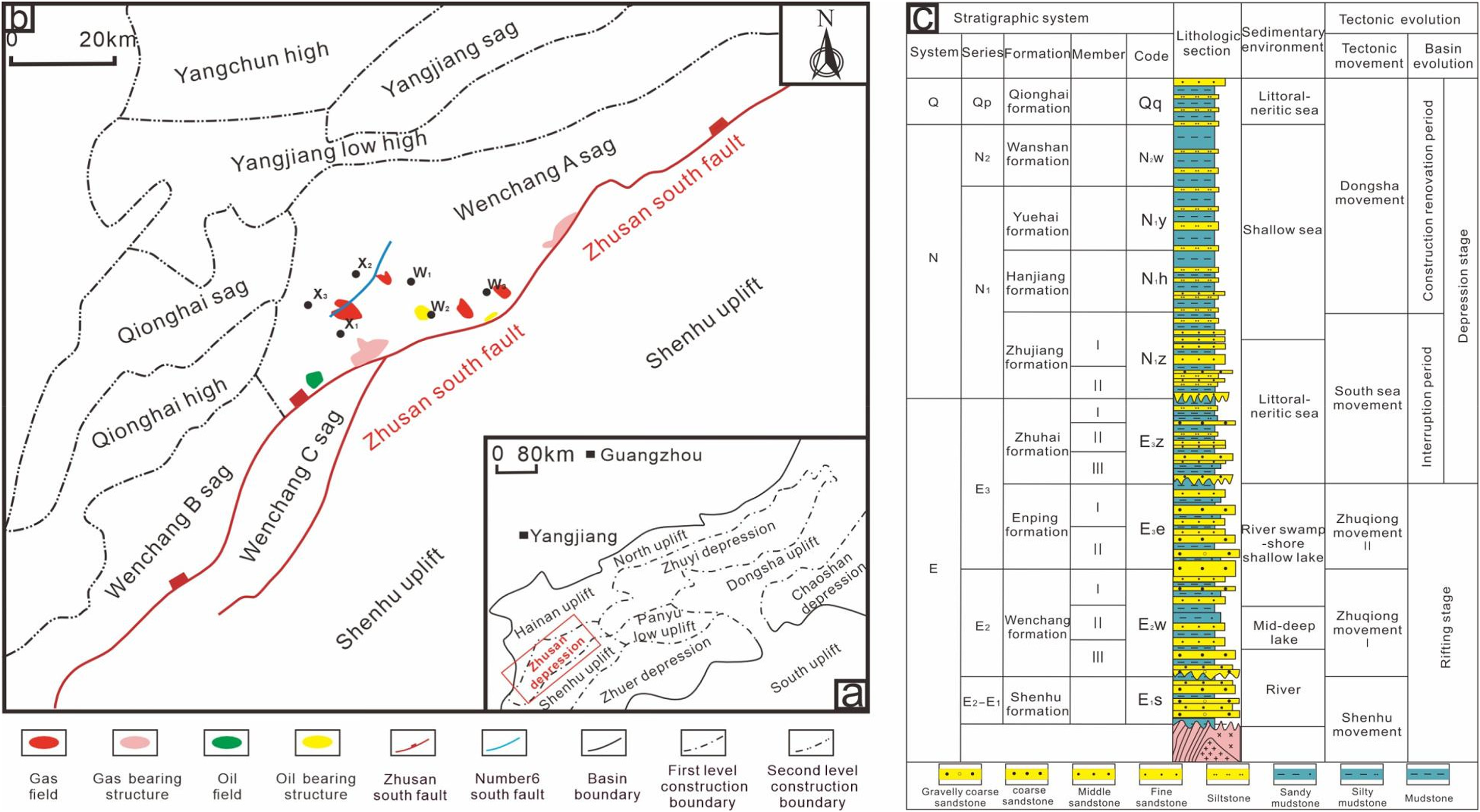
Geological structure map and stratigraphic composite column of the Wenchang A Sag. (a) geological structure map of the Zhusan Depression (modified from Xu, 2020); (b) geological structure map of the Wenchang A Sag (modified from Xu et al., 2020); and (c) stratigraphic composite column of the Wenchang A Sag (modified from Xu et al., 2024).
Different tectonic strengths and paleoclimatic conditions during the Wenchang and Enping periods led to the formation of mixed humus- and sapropel-type hydrocarbon source rocks in the semideep lake facies deposited during the Wenchang period and in the shallow lake facies deposited during the Enping period (Li et al., 2020; Chen et al., 2021). The central area of the depression was relatively distant from the southern sedimentary source and mainly features the sedimentary characteristics of a middle-to-distal fan delta front, with relatively fine sediment grain sizes. The area near the southern boundary fault zone (Zhu San South Fault) was closer to the source, presenting proximal sedimentary characteristics with coarser grain sizes (Xu, 2020; Jiang et al., 2021; Xu et al., 2023). Considering the differences in fluid sources within the study area, this study divides the area into two units—the region near the fault zone and the region far from the fault zone—to study the effects of multiphase fluids and diagenetic environments on the reservoir.
Sampling and methods
This study focuses on seven wells from zones 9 and 10 of the Wenchang A Sag (X1, X2, X3, X2−1, W1, W2, W3) and uses core samples from the fluid-altered E3z for a series of tests and analyses. The typical cores of the E3z from these seven wells were systematically examined, and 52 thin sections were prepared for microscopic analysis of rock grain size, sorting, cement types, mineral composition, and other characteristics. After completing the basic analysis, 11 samples were chosen for fluid inclusion analysis and laser Raman spectroscopy to identify the fluid types and homogenization temperatures. Furthermore, eight thin sections were prepared to examine the pore types. A total of 61 samples were chosen for carbon and oxygen isotope analysis. To establish the diagenetic stages and changes in clay mineral content, 20 samples were selected for X-ray diffractometry (XRD; whole rock and clay) analysis, and the vitrinite reflectance in the formations was also measured. Finally, to visually observe the pore structure and cement types in the reservoir, 10 samples were examined using field emission (FE)-SEM.
The XRD analysis was conducted using an Ultima IV XRD. The FE-SEM analysis was conducted using a Sirion 200 microscope. The fluid inclusion analysis and laser Raman spectroscopy were carried out using a Leica DM4P polarized microscope and a THMSG600 heating-freezing stage, featuring a 1.7 mm aperture diameter, a temperature range from −300°C to 600°C, a maximum heating rate of 200°C/min, and a temperature accuracy of ±0.1°C, with testing conducted at room temperature. EPMA experiments were conducted using a JXA-8230 (JEOL) electron probe microanalyzer, with an accelerating voltage range of 10 to 20 kV, a beam current range of 10 to 20 nA, an ambient temperature of 25°C, and humidity ranging from 35% to 45%.
Stable carbon and oxygen isotopes were measured using a continuous-flow mass spectrometer (MAT253). CO2 released from the samples was analyzed, and the obtained δ13C and δ18O values were compared with the LAEAC01 standard. The samples were dissolved in a 70°C H3PO4 solution for 2 hours.
Results
Lithological characteristics
The study of lithological characteristics is a crucial step in reservoir research, as features such as rock types, clastic components, and cementing materials influence diagenesis and porosity evolution (Kassab et al., 2014). This study divides the deep reservoir in the study area into four lithologies on the basis of core observations and thin section analysis: gravelly coarse sandstone, coarse sandstone, fine sandstone, and mud-bearing fine sandstone. The clastic particles in the E3z are relatively fine, with fine sandstone being the predominant lithology (Figures 2 and 3(b)).
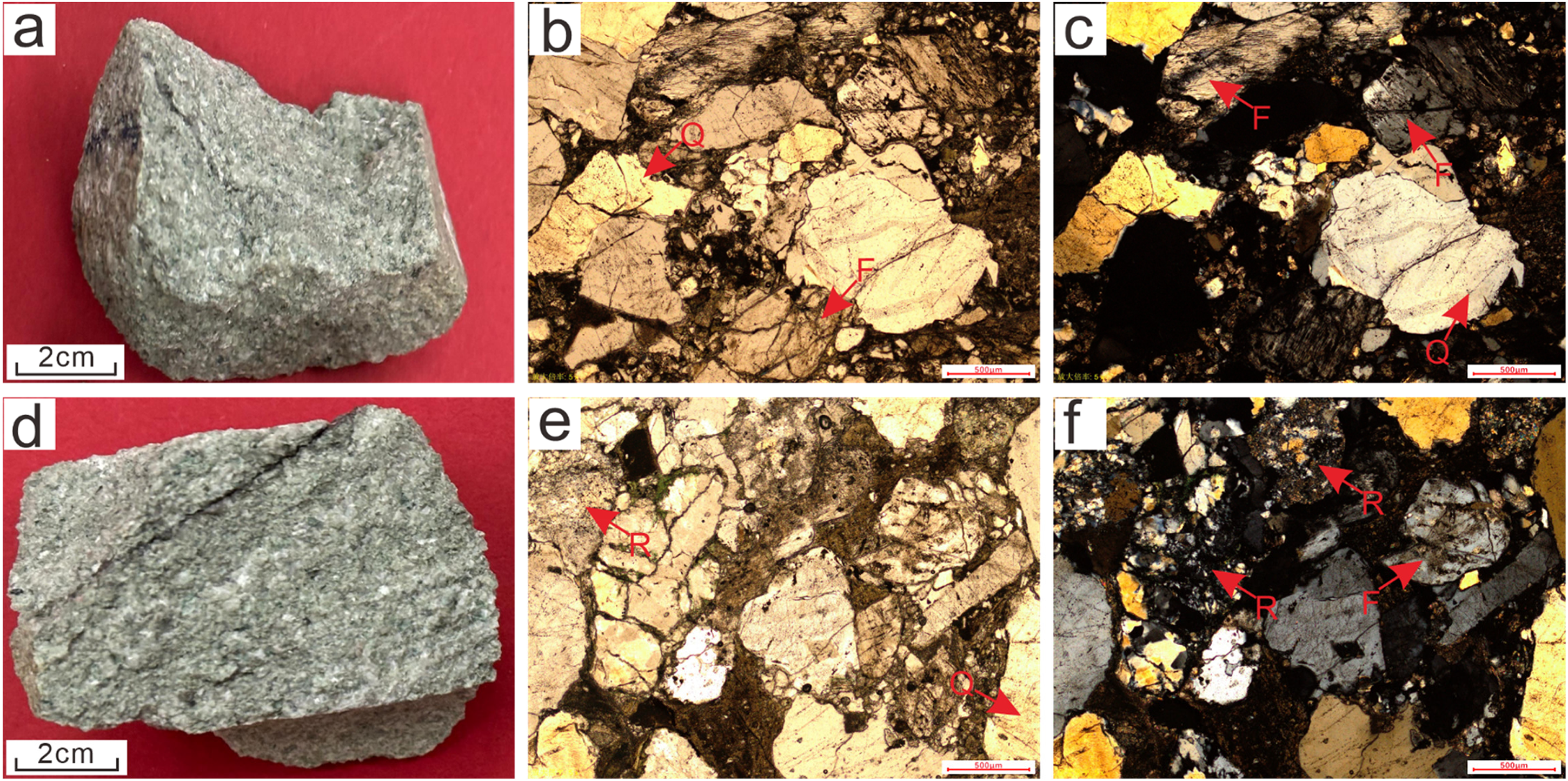
Core photos and thin section observations of the Zhuhai Formation reservoir. (a) feldspar-quartz sandstone, core photograph, W1, 4374.7 m; (b) feldspar-quartz sandstone, pores filled with clay minerals, monoclinic polarization, W1, 4374.7 m, 5×; (c) Feldspar-quartz sandstone, feldspar is dissolved, quartz surface is relatively smooth, orthogonal polarization, W1, 4374.7 m, 5×; (d) lithic feldspar sandstone, core photograph, W1, 4375 m; (e) lithic feldspar sandstone, a large amount of clay minerals present in the pores, monoclinic polarization, W1, 4375 m, 5×; (f) lithic feldspar sandstone, feldspar is dissolved, contains a large amount of igneous rock fragments, orthogonal polarization, W1, 4375 m, 5× (note: in the figure, Q represents quartz; F represents feldspar; R represents rock fragments).
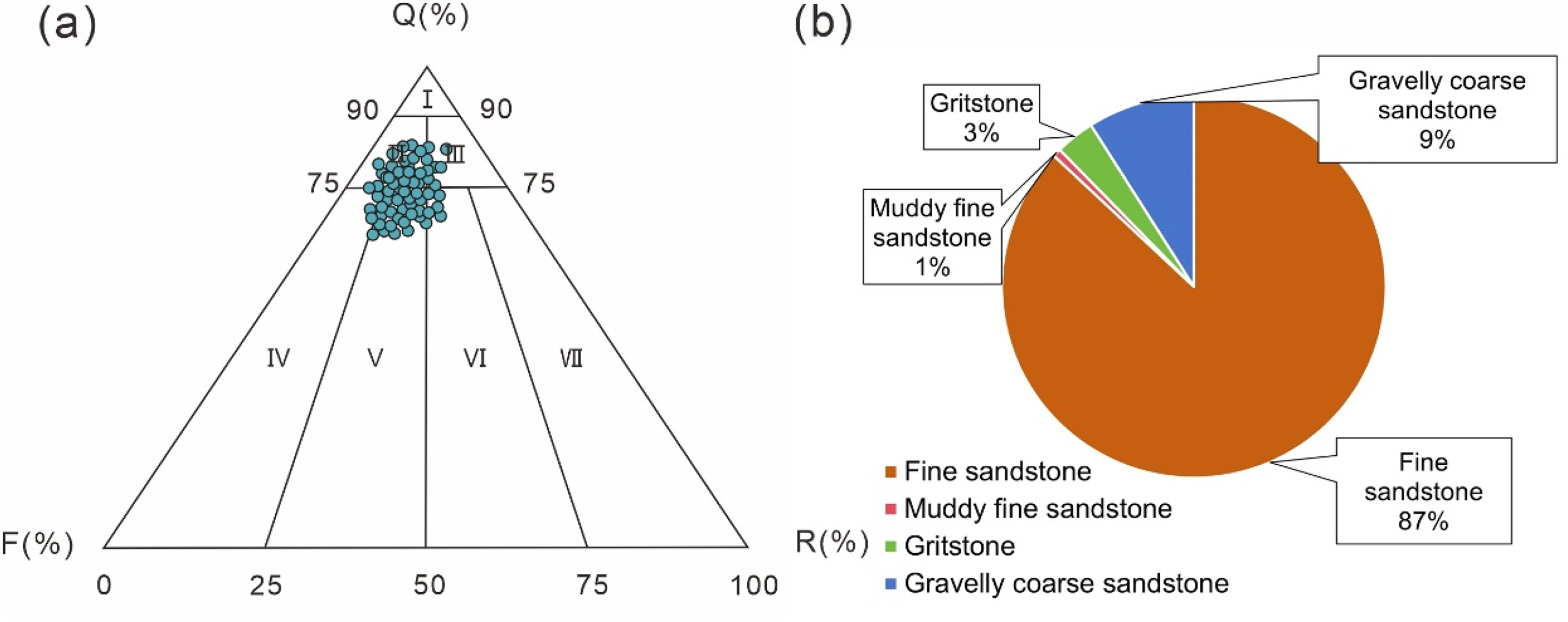
Lithology ternary diagram and rock type statistical chart of the Zhuhai Formation (note: in Figure 3a, I represents quartz sandstone; II feldspar-quartz sandstone; III lithic-quartz sandstone; IV feldspar sandstone; V lithic-feldspar sandstone; VI feldspar-lithic sandstone; VII lithic sandstone).
In terms of rock type, E3z is composed primarily of feldspathic quartz sandstone and lithic feldspar sandstone (Figure 2). In terms of clast composition, the monocrystalline quartz content varies between 64.2% and 84.6%, averaging 74%; the feldspar (including polycrystalline quartz) content ranges from 4.4% to 31.8%, with an average of 14.7%; and the lithic content varies from 0.7% to 26.6%, averaging 11.7% (Figure 3(a)). The lithic fragments primarily consist of metamorphic rock fragments and granite, with occasional sedimentary rock fragments. The sandstone is moderately to poorly sorted, with subangular to angular roundness. The particle support structure is primarily point-to-line contact, and the cementation types are mainly pore filling and contact cementation. Overall, the characteristics of the sandstone reservoirs in this region reflect relatively low compositional and structural maturity (Xu et al., 2020).
Reservoir petrophysical characteristics and pore space types
With increasing burial depth, the formation pressure gradually increases, and the porosity and permeability of the E3z generally decrease, but an anomalous high-porosity zone appears near a depth of 3800 m in the E3z (Figure 4(a)). The E3z reservoir is generally characterized by poor porosity and permeability due to factors such as burial depth and grain size; thus, this unit can be classified as low-permeability sandstone (Figure 4(b)). The reservoir storage space of the E3z in the study area is mainly composed of intergranular dissolution pores, followed by intragranular dissolution pores and microfractures, with only a small number of intergranular pores remaining. The storage space was primarily formed by feldspar dissolution (Figure 5).
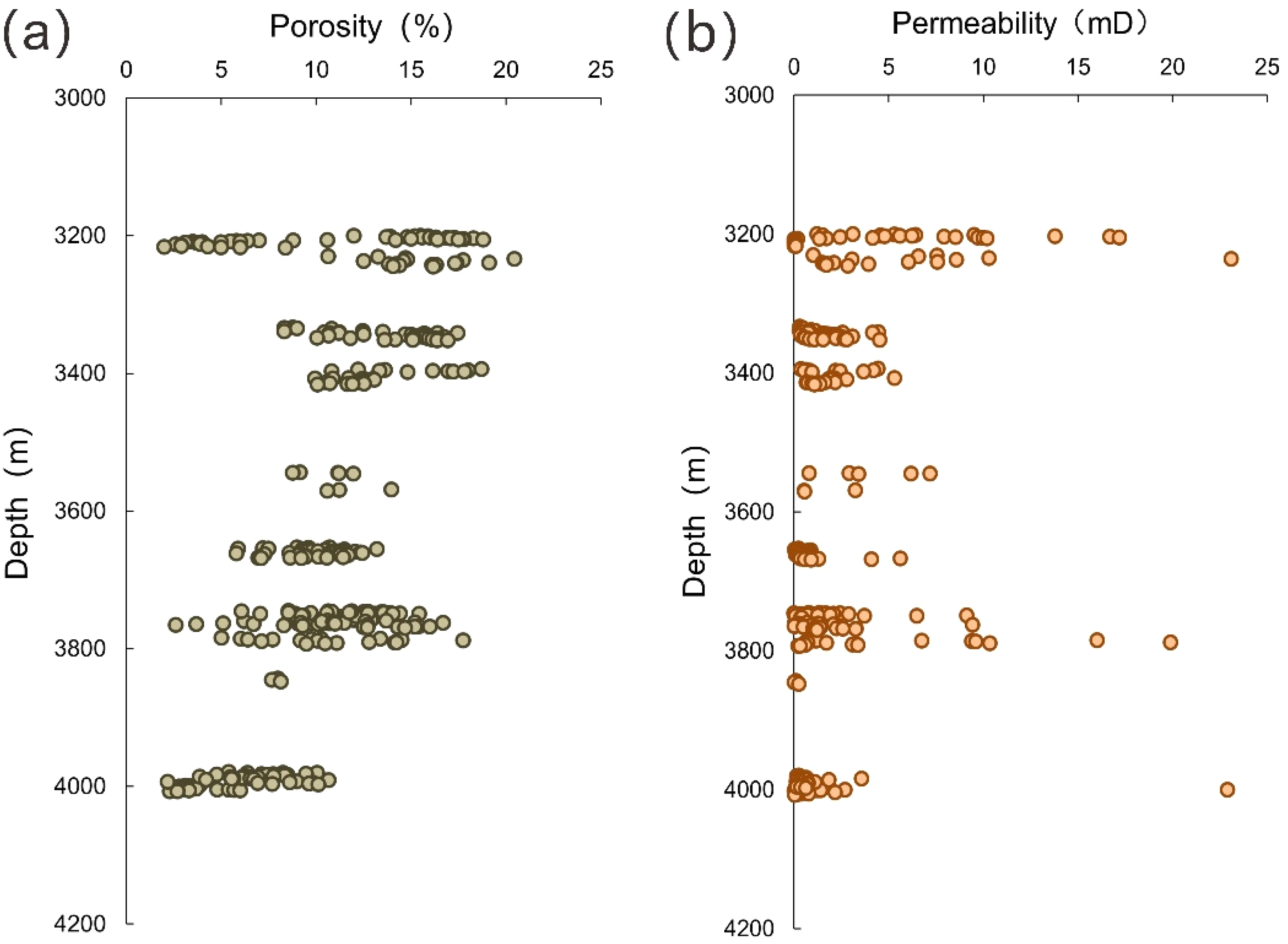
Variation of physical properties with depth in the Zhuhai Formation. (a) Porosity variation with depth in the Zhuhai Formation reservoir and (b) permeability variation with depth in the Zhuhai Formation reservoir.
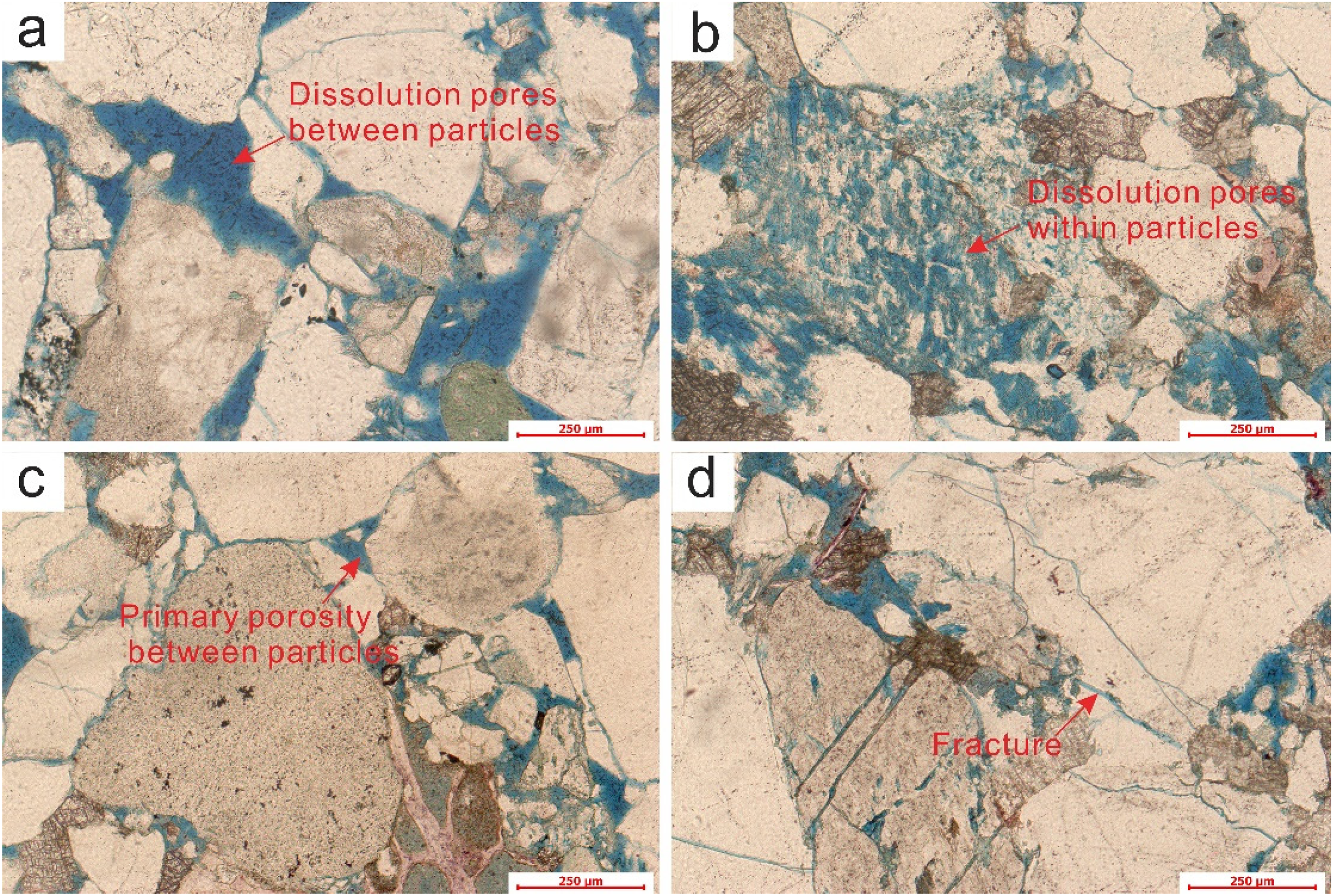
Reservoir storage space characteristics of the Zhuhai Formation. (a) Intergranular dissolution pores, W3, 3752.49 m, cast thin section, plane-polarized light; (b) intragranular dissolution pores, W3, 3754.21 m, cast thin section, plane-polarized light; (c) residual intergranular pores, W3, 3752.83 m, cast thin section, plane-polarized light; and (d) microcracks, W3, 3754.21 m, cast thin section, plane-polarized light.
Diagenesis
As the degree of diagenetic evolution increases, the montmorillonite in illite‒smectite mixed layers transforms into illite, ultimately replacing the mixed layers entirely with illite. The variation in montmorillonite content with depth in the E3z illite-montmorillonite mixed layer of the study area is illustrated in Figure 6(a). These data indicate that the diagenetic stage is between Mesodiagenesis A and Mesodiagenesis B. The reservoir in this stage has a high degree of diagenetic evolution, with the majority of the storage space being secondary porosity with little remaining primary porosity (Duan et al., 2017; Liu et al., 2024). The study area has experienced three diagenetic processes: compaction, cementation, and dissolution.
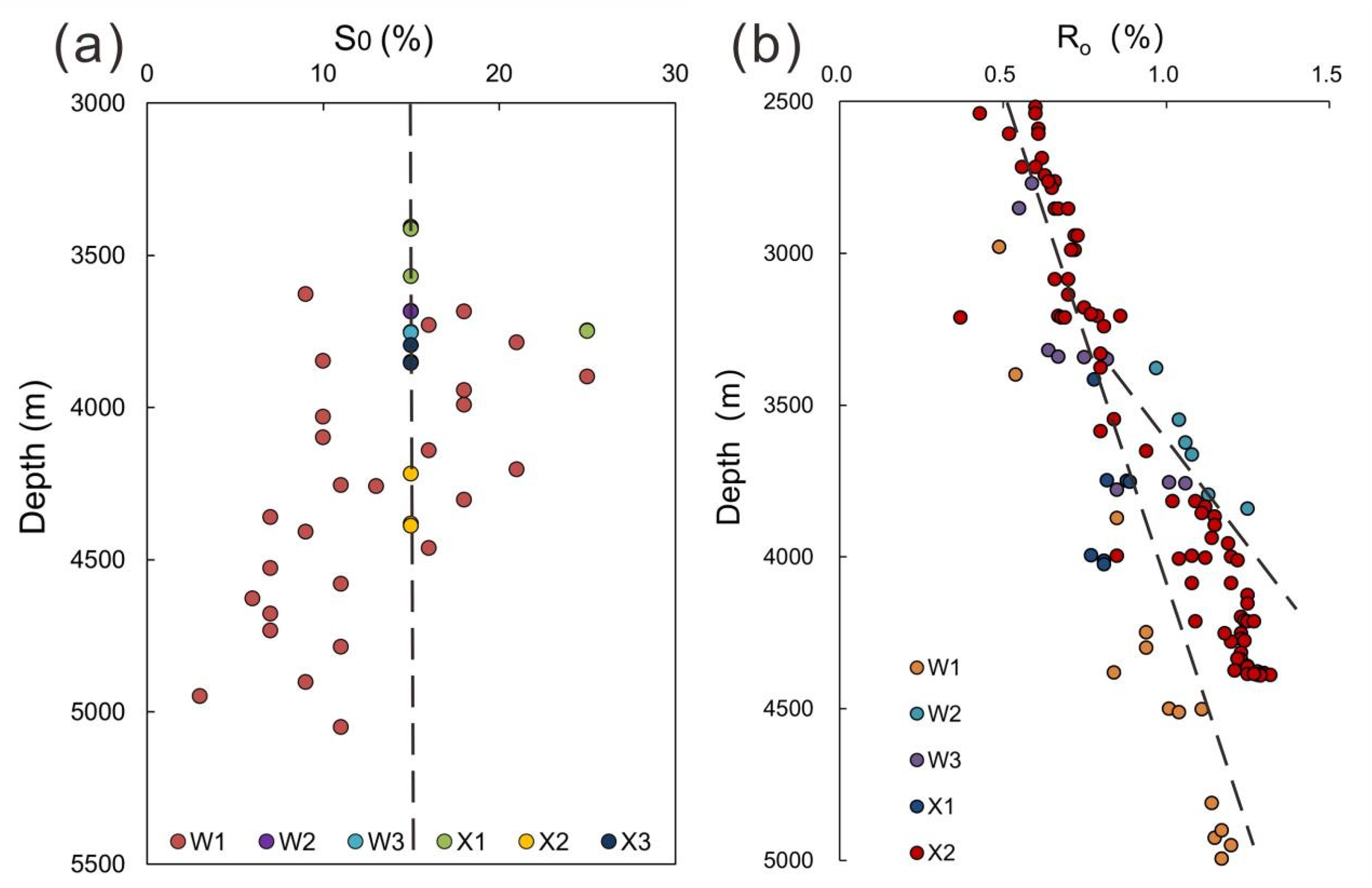
The relationship between the content of montmorillonite in the illite-montmorillonite mixed layer and the vitrinite reflectance with depth in the Zhuhai Formation of the Wenchang A Sag. (a) The relationship between the content of montmorillonite in the illite-montmorillonite mixed layer and depth and (b) the relationship between vitrinite reflectance and depth.
Compaction is the most characteristic diagenetic process in clastic rocks. Microscopic observations reveal that the rock composition is primarily quartz, feldspar, and lithic fragments, with minor amounts of mica, pyrite, and other minerals. The modes of particle contact include point contact, line contact, and concavo-convex contact (Figure 7(a) and (b)), with a high overall degree of compaction.
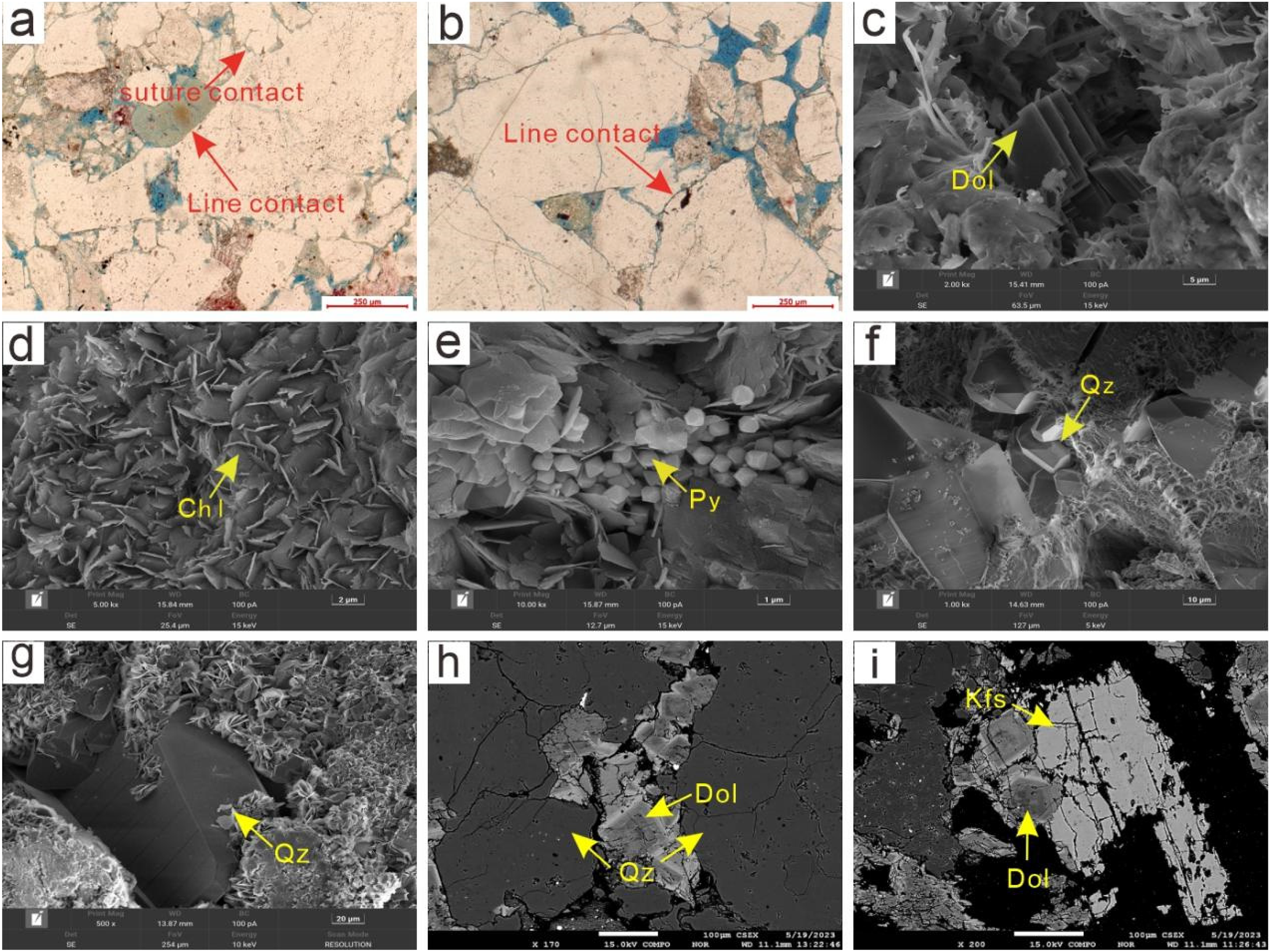
Microscopic observations of diagenesis in the Zhuhai Formation, Wenchang A Sag. (a) Intense compaction, with line contacts and sutured contacts as the main features, W3, 3756.32 m, cast thin section, plane-polarized light; (b) intense compaction, with line and sutured contacts as the main features, visible point contact, W3, 3753.17 m, cast thin section, plane-polarized light; (c) ferruginous dolomite cementation, W2, 3685.3 m, scanning electron microscope, 2000×; (d) clay mineral cementation, W3, 3753.7 m, scanning electron microscope, 5000×; (e) pyrite cementation, strawberry-like, W3, 3753.7 m, scanning electron microscope, 10000×; (f) secondary quartz enlargement, X1, 3409.3 m, scanning electron microscope, 1000×; (g) quartz dissolution, chlorite replacement, W3, 3753.7 m, scanning electron microscope, 500×; (h) quartz dissolution, W2, 3683.2 m, backscattering, 170×; (i) feldspar dissolution, W2, 3683.2 m, backscattering, 200× (notes: Dol represents dolomite; Chl chlorite; Py pyrite; Qz quartz; Kfs potassium feldspar).
The study area exhibits intense cementation, which primarily consists of carbonate mineral cementation and clay mineral cementation, with localized occurrences of pyrite cementation and secondary quartz cementation. The carbonate mineral cementation is primarily developed near wells W2 and W3, which are located close to the fault zone; this cementation is dominated by ferro-dolomite cementation, followed by ferro-calcite cementation (Figure 7(c)). Clay mineral precipitation is widespread throughout the study area, with the greatest development of clay minerals occurring in reservoirs far from the fault zone. Clay minerals are primarily found surrounding the original sediments and minerals such as feldspar and quartz. Wells W1, W3, and X2 are dominated by chlorite, whereas wells W2 and X1 are dominated by illite (Figure 7(d)). Secondary quartz cementation has developed mainly in areas far from the fault zone (Figure 7(f)). Pyrite is present in areas near the fault zone (Figure 7(e)).
Dissolution is extremely common in the study area and has played a key role in enhancing the reservoir properties of the E3z (Figure 7(g)–(i)). Dissolution is observed primarily within and on the surface of feldspar, with the dissolution of carbonate cement also observed in areas with relatively good petrophysical properties. In addition, dissolution phenomena are also visible along the edges of some secondary quartz cements (Figure 7g). Among the three minerals affected by dissolution, feldspar dissolution is the most intense (Figure 7(i)). SEM reveals that feldspar experienced dissolution along cleavage planes. Secondary quartz cement dissolution is observed in areas near the fault zone, with small dissolution pores, a wide dissolution range, and dissolution surfaces exhibiting harbour-like or irregular shapes, accompanied by the presence of abundant authigenic chlorite and illite (Figure 7g and h). The secondary porosity generated by the dissolution of carbonate cement in the pore spaces of reservoirs near the fault zone is one of the factors that has improved the reservoir properties (Figure 7(i)).
Stable carbon and oxygen isotope characteristics
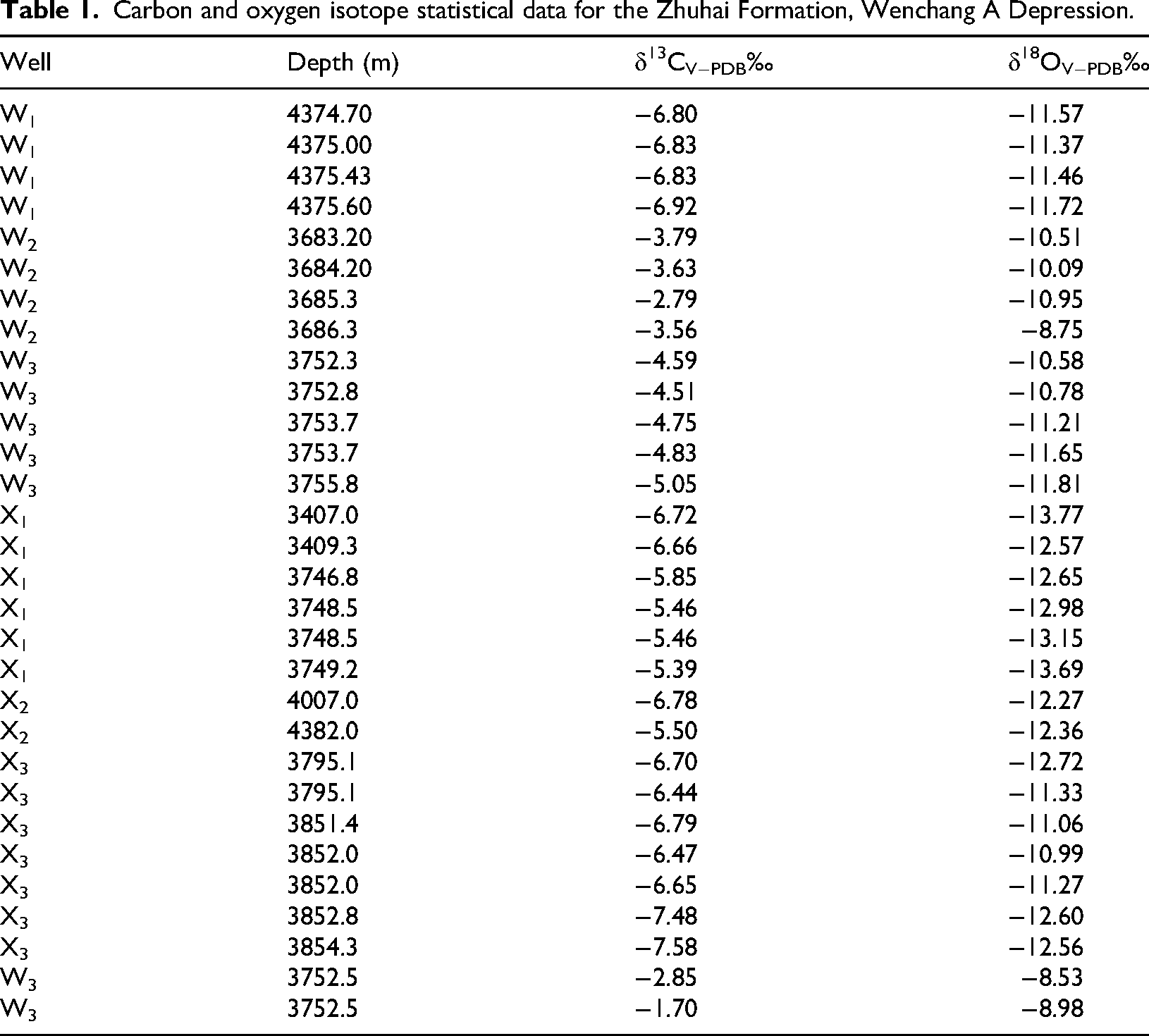
The carbon and oxygen isotope data of the E3z in the study area exhibit certain regularities, with carbon isotope values ranging from −7.58‰ to −1.70‰, with an average value of 5.51‰, and oxygen isotope values ranging from −13.77‰ to −8.53‰, with an average value of 11.54‰ (Table 1).
Carbon and oxygen isotope statistical data for the Zhuhai Formation, Wenchang A Depression.
Electron probe analysis
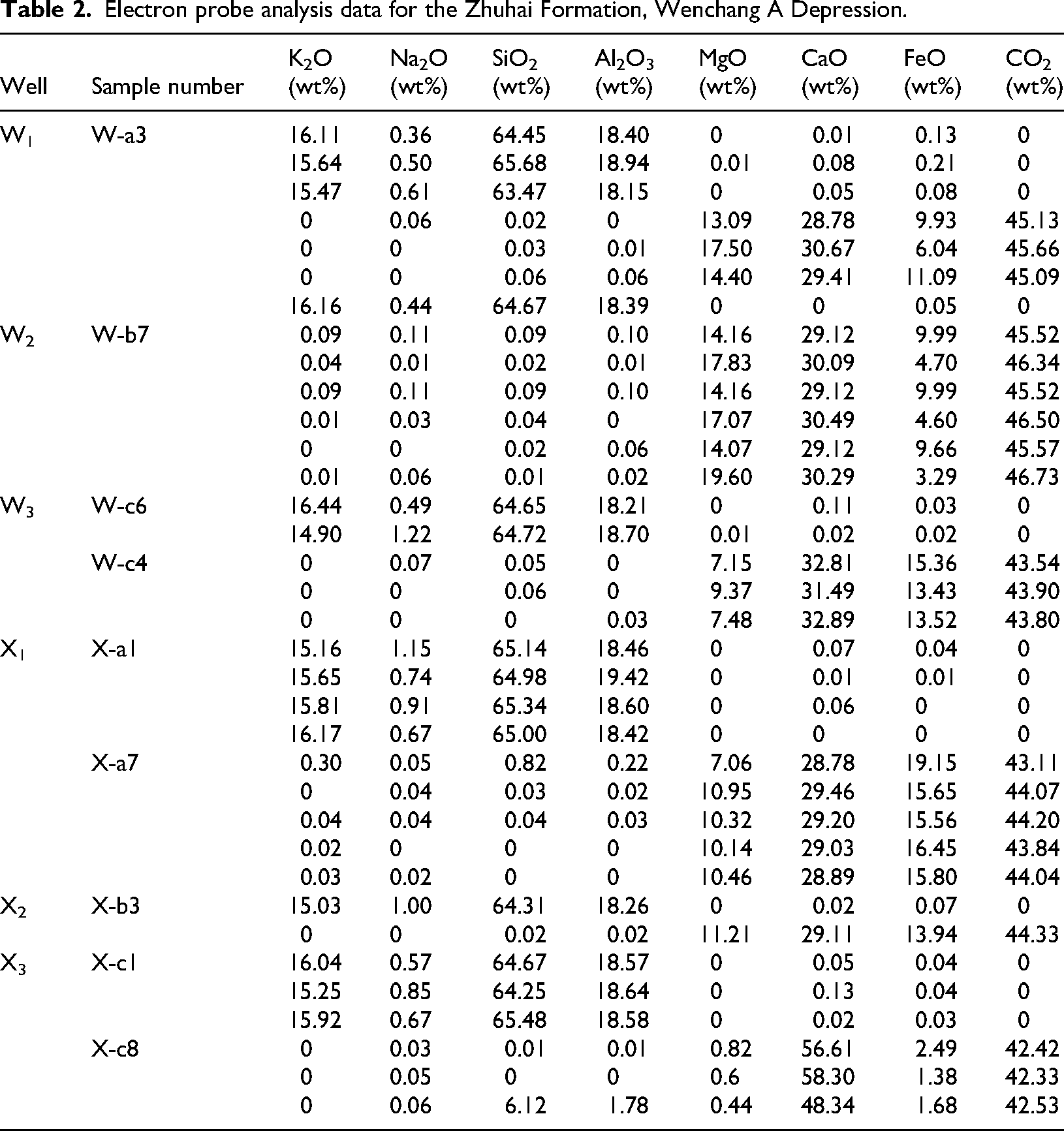
Electron probe analysis data reveal that the E3z reservoirs contain large amounts of feldspar and carbonate minerals. Backscattered electron images show extensive feldspar alteration, and the carbonate cement can be broadly divided into two phases, with notable differences in the iron content between them (Table 2).
Electron probe analysis data for the Zhuhai Formation, Wenchang A Depression.
Homogenization temperature characteristics of inclusions
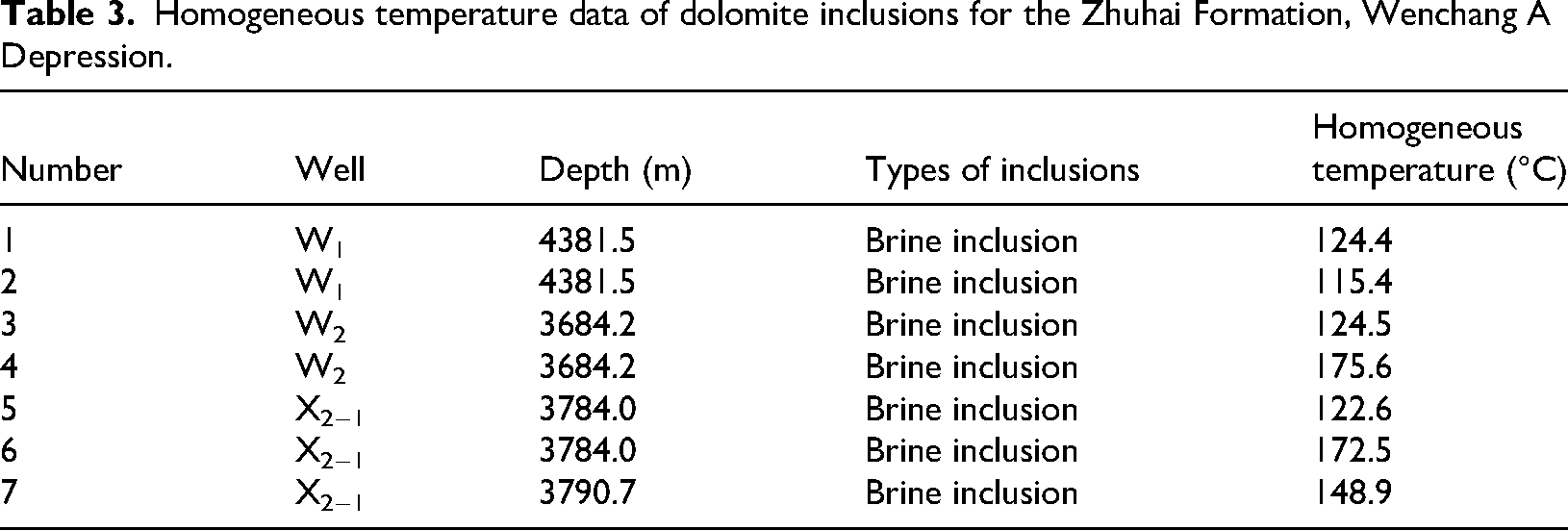
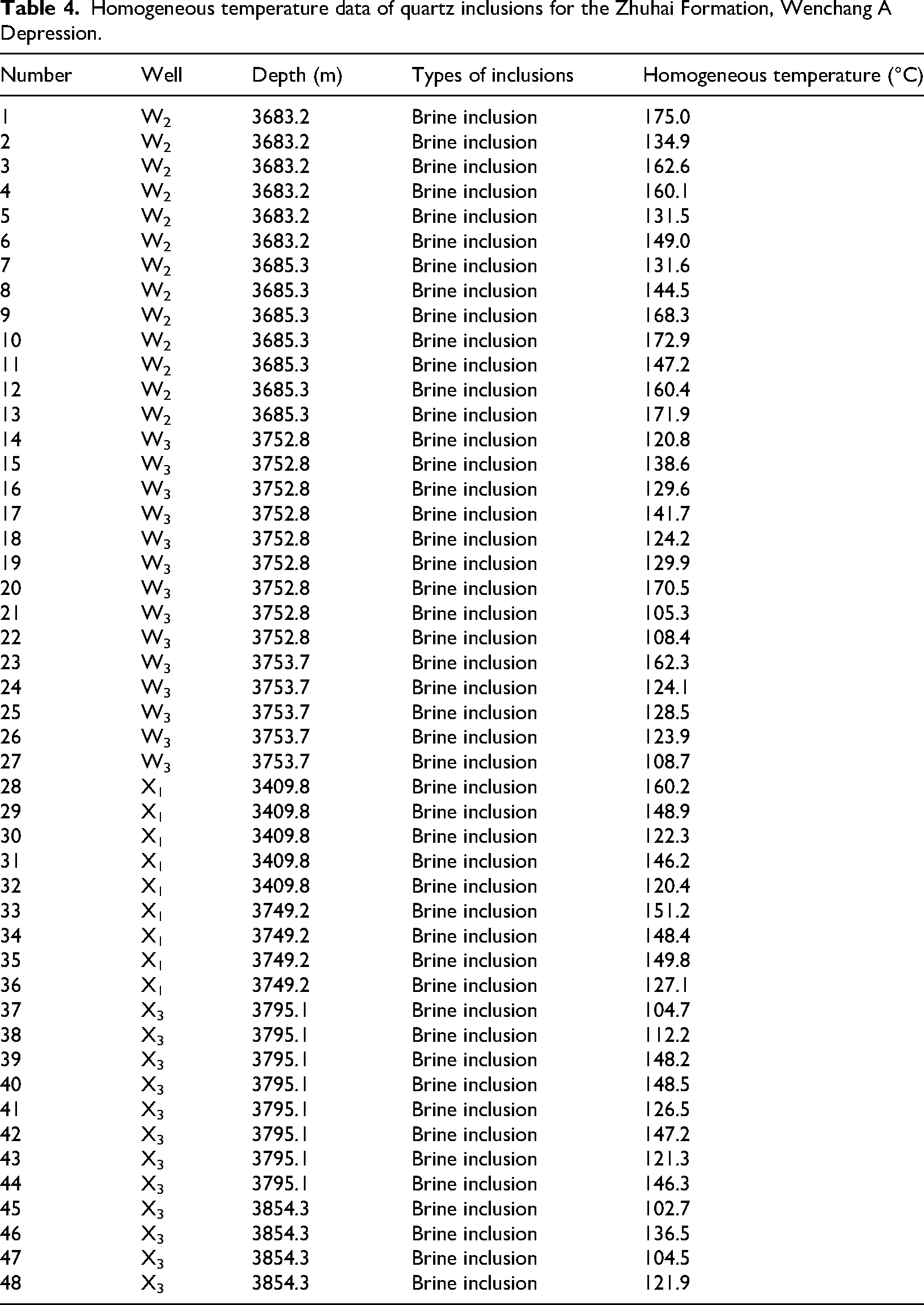
Testing and analysis of the fluid inclusions in dolomite and quartz minerals revealed that dolomite has developed three main phases of fluid inclusions, occurring at 110°C∼130°C, 140°C∼150°C, and 170°C∼180°C (Table 3). Quartz has developed three phases of fluid inclusions, occurring at 100°C∼110°C, 120°C∼150°C, and 160°C∼180°C (Table 4).
Homogeneous temperature data of dolomite inclusions for the Zhuhai Formation, Wenchang A Depression.
Homogeneous temperature data of quartz inclusions for the Zhuhai Formation, Wenchang A Depression.
Discussion
Fluid phases and fluid types
Dolomite and quartz are widely present in the E3z reservoir. Dolomite easily dissolves under mildly acidic conditions and precipitates under mildly alkaline conditions, whereas quartz typically dissolves under mildly alkaline conditions and forms enlarged edges under mildly acidic conditions (Alonso-Zarza et al., 2016; Guo et al., 2023). Because the diagenetic environments required for their formation are completely opposite (Saldi et al., 2021; Li et al., 2024a), dolomite inclusions are used as indicators of an alkaline diagenetic environment (Figure 8(b)), whereas quartz inclusions are used as indicators of an acidic diagenetic environment (Botha and Hughes, 1992; Wanas and Sallam, 2016; Figure 8(a)). By overlaying the homogenization temperature curves of both inclusions, the peaks of the homogenization temperature curves are found to alternate, each showing three fluid charge stages. Moreover, the peak homogenization temperature for quartz inclusions always occurs before the peak temperature for dolomite inclusions, indicating that each fluid stage caused the diagenetic environment to first be acidic and then shift to alkaline (Figure 8(c)–(d)). Owing to the continuous subsidence of the E3z strata after deposition (Figure 9), on the basis of the correlation between the homogenization temperatures of the quartz and dolomite inclusions and the burial history—thermal evolution history, it can be inferred that the first fluid influx occurred at approximately 20 Ma, with the first diagenetic environment shift occurring at approximately 18.5 Ma; the second fluid influx started at approximately 15.5 Ma, with the second diagenetic environment shift occurring at approximately 13 Ma; and the third fluid influx started at approximately 10 Ma, with the third diagenetic environment shift occurring at approximately 9 Ma (Figure 9).
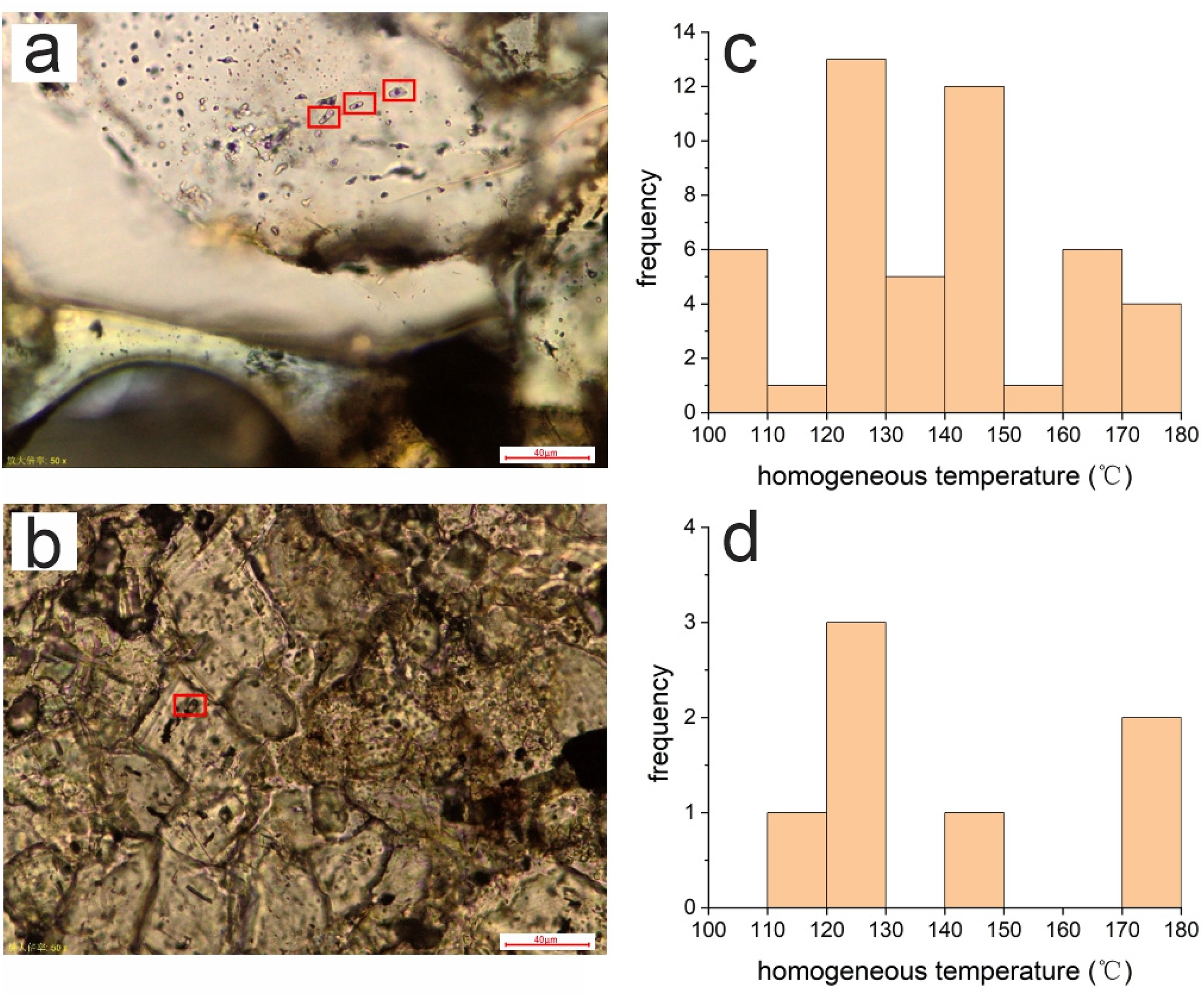
Photographs of reservoir inclusions and analysis of homogenization temperatures in the Zhuhai Formation, Wenchang A Sag. (a) Photomicrograph of quartz inclusions, X3, 3795.1 m; (b) photomicrograph of dolomite inclusions, W2, 3684.2 m; (c) histogram of homogenization temperature distribution of quartz inclusions; and (d) histogram of homogenization temperature distribution of dolomite inclusions.
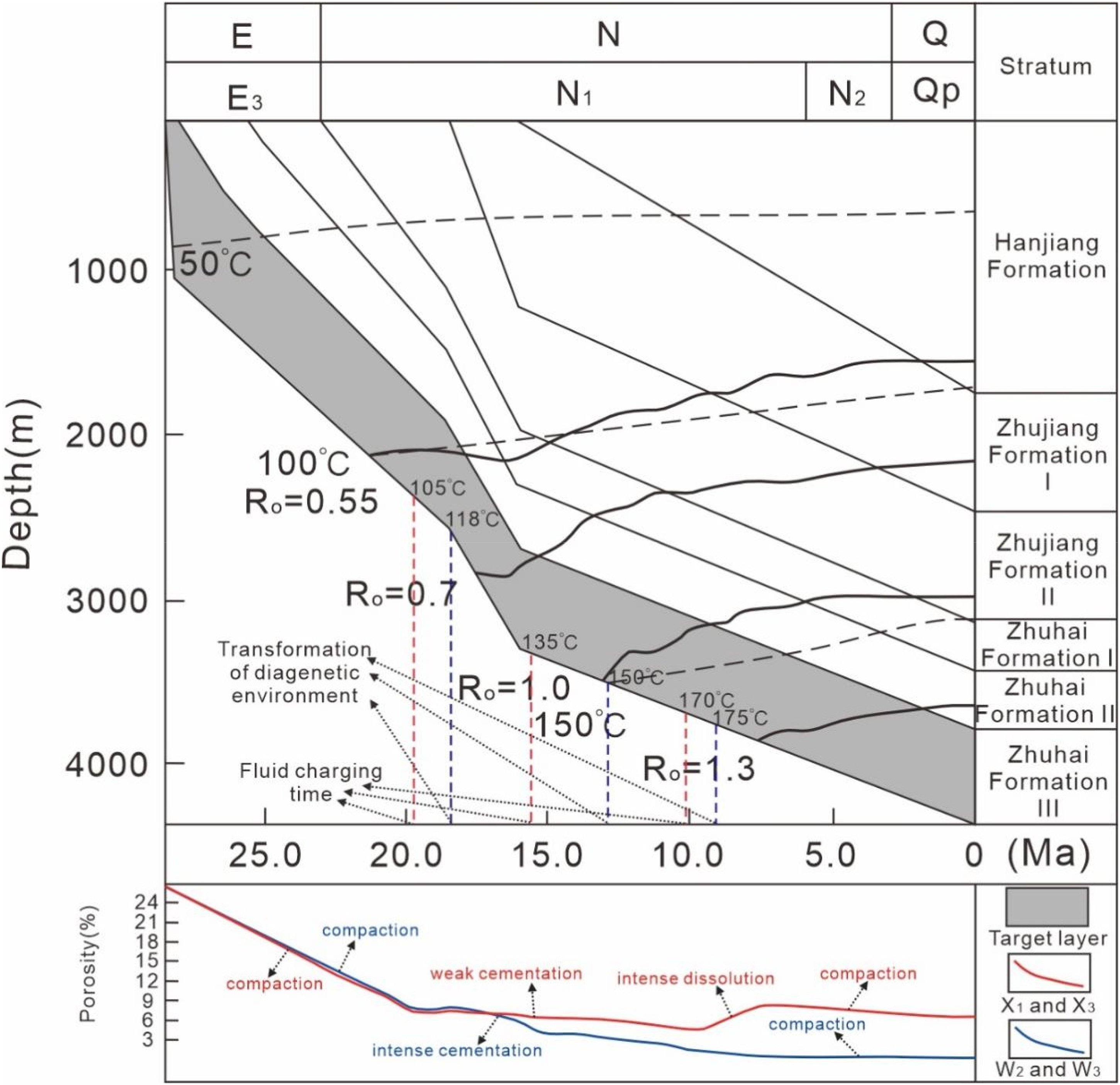
Burial history and hydrocarbon generation history of the Wenchang A Sag (modified from Shi et al., 2023).
The homogenization temperature of the E3z reservoir ranges from 100°C to 180°C (Figure 8(c)–(d)), whereas the temperature of meteoric freshwater generally does not exceed 50°C. Additionally, meteoric freshwater typically has relatively high oxygen isotope values (Stuiver, 1970; Falster et al., 2018), which does not align with the actual conditions in the study area. On this basis, it is inferred that the study area did not undergo early meteoric freshwater leaching or that such leaching has occurred only in small, localized areas (Figure 8(c)–(d)). As shown in Figure 6(b), the reflectance of vitrinite in the E3z strata is unusually high in the 3500∼4500 m depth range, especially in the wells near the W2 and W3 fault zones (Figure 1(b)), indicating that thermal disturbance occurred here, accelerating vitrinite maturation and providing evidence for the presence of hydrothermal fluids. Additionally, backscatter observations of the E3z samples near the fault zones reveal a small amount of authigenic rutile and abundant iron-rich dolomite (Figure 10(f)). This iron-rich dolomite exhibits numerous banded structures, typical of late-stage CO2-rich hydrothermal genesis (Deng et al., 2017; Tian et al., 2023; Zhang et al., 2023; Figure 10(d) and (e)). Electron probe analysis revealed significant differences in the Mg and Fe contents between the core and banded areas of this hydrothermal iron-rich dolomite. Compared with the core samples, the band samples have lower Mg contents and higher Fe contents, suggesting that two phases of hydrothermal activity occurred in this area (Figure 11). The E3e underlying the E3z contains abundant source rocks (Chen et al., 2021; Jiang et al., 2021; Liu et al., 2022). As the burial depth increased, these source rocks underwent significant maturation, providing a source of the organic acids that arrived in the later stage (Li et al., 2020; Liu et al., 2022). The presence of two types of fluids, hydrothermal fluids and organic acids, can be further verified using carbon isotope values. Hydrothermal fluids typically have carbon isotope values > −5‰, whereas organic acids have lower carbon isotope values, generally approximately −15‰ (Taylor, 1974; Wu et al., 2017; Sun et al., 2021; Wang et al., 2024a). The carbon isotope values in the study area range from −2.79‰ to −7.58‰, indicating that both fluids participated in the diagenesis of the E3z reservoir (Table 1).
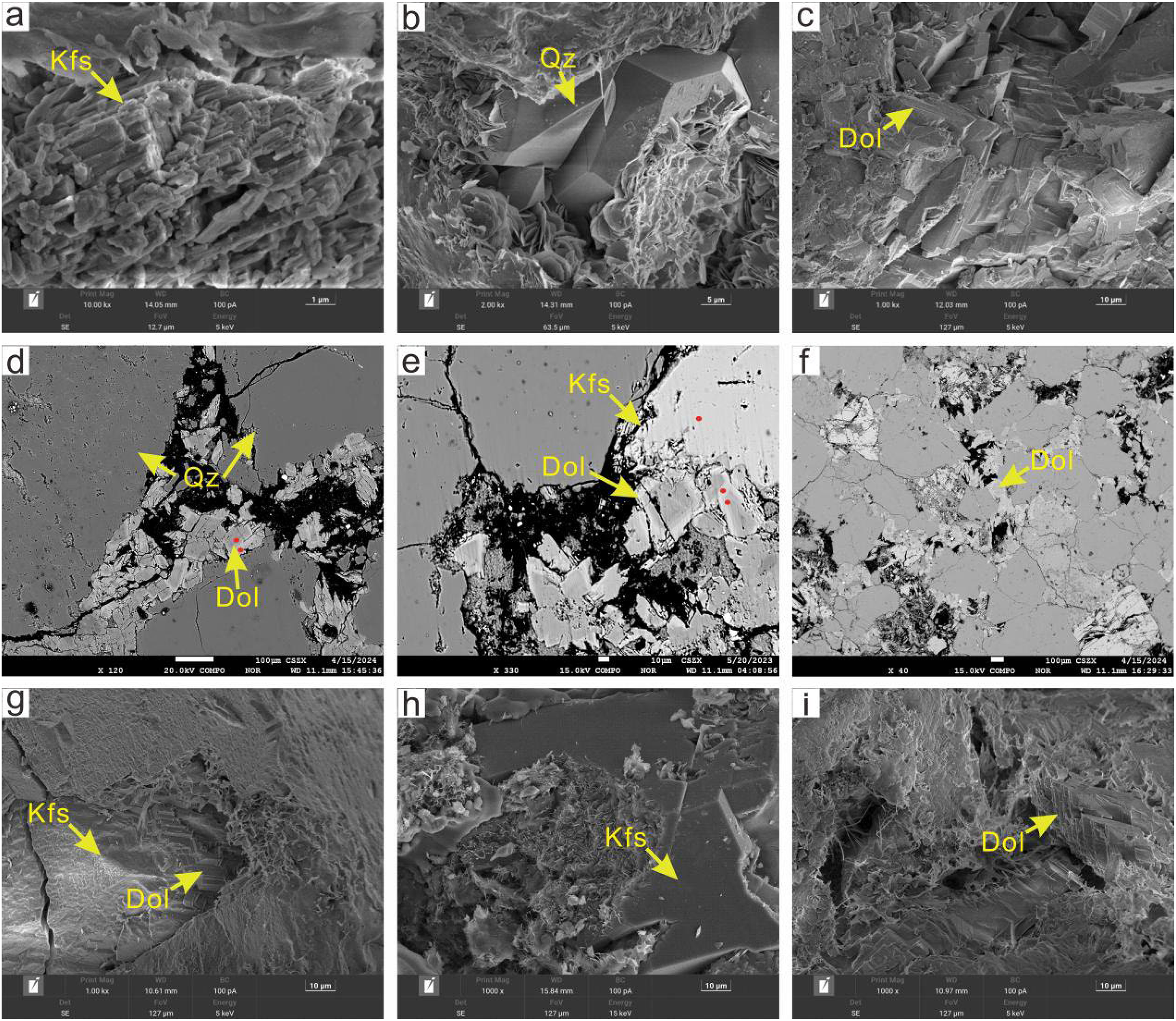
Effect of hydrothermal alteration on the Zhuhai Formation reservoir. (a) Feldspar dissolution, W3, 3752.83 m, scanning electron microscope, 10000×; (b) Quartz dissolution, W3, 3752.83 m, scanning electron microscope, 2000×; (c) ferruginous dolomite precipitation, W2, 3688.5 m, scanning electron microscope, 1000×; (d) quartz dissolution, dolomite precipitation, W2, 3686.3 m, backscattering, 120×; (e) dolomite replacing feldspar, W2, 3686.3 m, backscattering, 40×; (f) large amount of dolomite filling reservoir pores, W2, 3686.3 m, backscattering, 40×; (g) feldspar dissolution, dolomite and clay mineral precipitation, W2, 3685.8 m, scanning electron microscope, 1000×; (h) clay minerals replacing feldspar, W3, 3753.7 m, scanning electron microscope, 1000×; (i) clay minerals and dolomite replacing feldspar, W2, 3685.8 m, scanning electron microscope, 1000× (notes: in Figure 13, Dol represents dolomite; Chl chlorite; Py pyrite; Qz quartz; Kfs potassium feldspar).
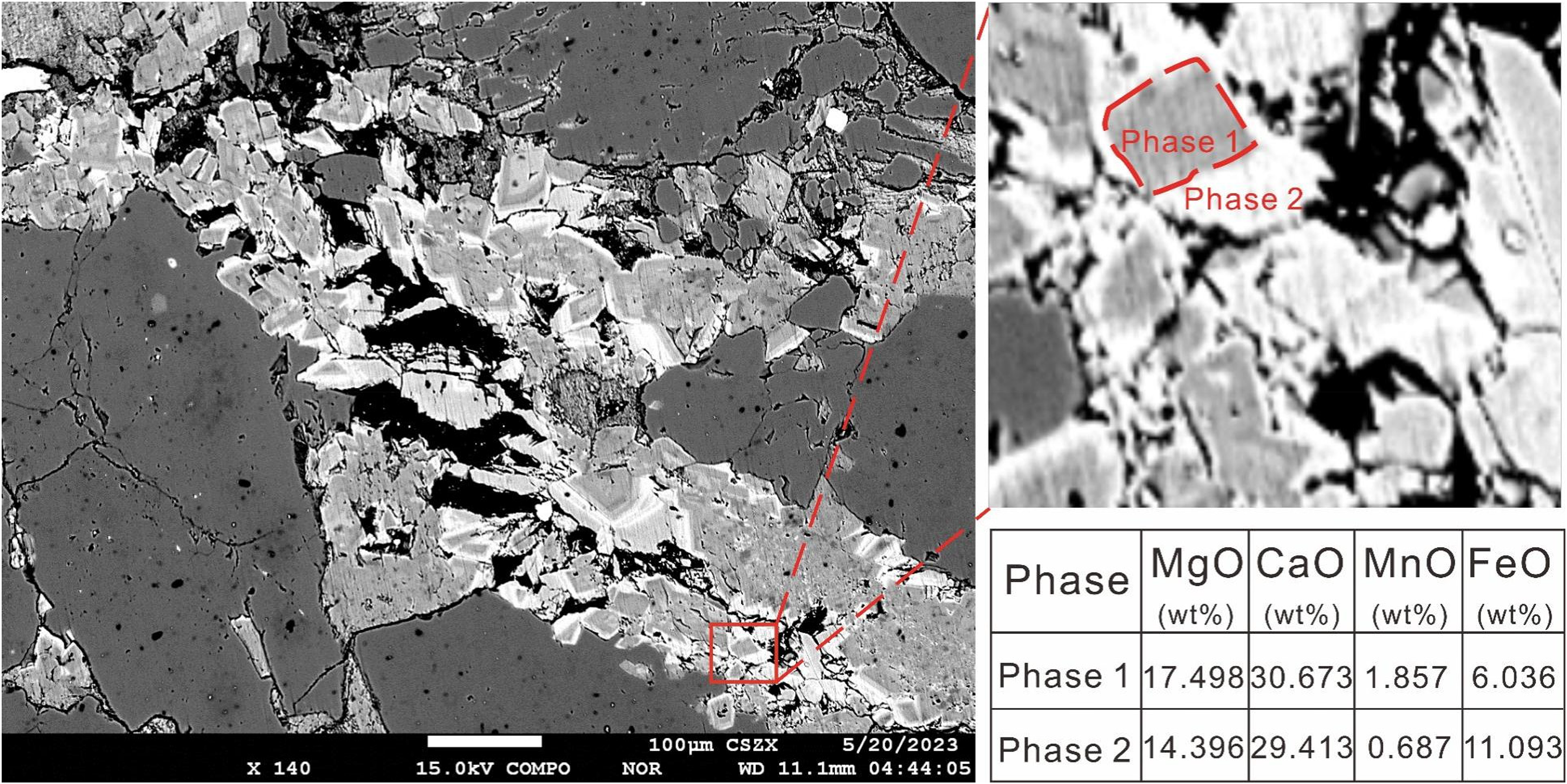
Multiple phases of carbonate cementation and electron probe analysis (the sample was taken from well W2 at a depth of 3686.3 m).
Oxygen isotope values can reflect changes in formation temperature. The higher the formation temperature is, the lower the oxygen isotope values are (Xue et al., 2020). No interference from factors such as formation uplift has been observed in the study area. Typically, under constant external conditions, lower oxygen isotope values indicate deeper burial of the formation, and oxygen isotope values can then be used to determine the order of fluid influx (Schrag et al., 1995; Bennett et al., 2011). The carbon‒oxygen isotope crossover diagram of the E3z shows a certain correlation. As the oxygen isotope values decrease, the carbon isotope values decrease from −2.79‰ to −7.59‰ (Figure 12). Therefore, the E3z reservoir in the study area experienced two initial phases of hydrothermal fluid influx, followed by the influence of an organic acid phase.
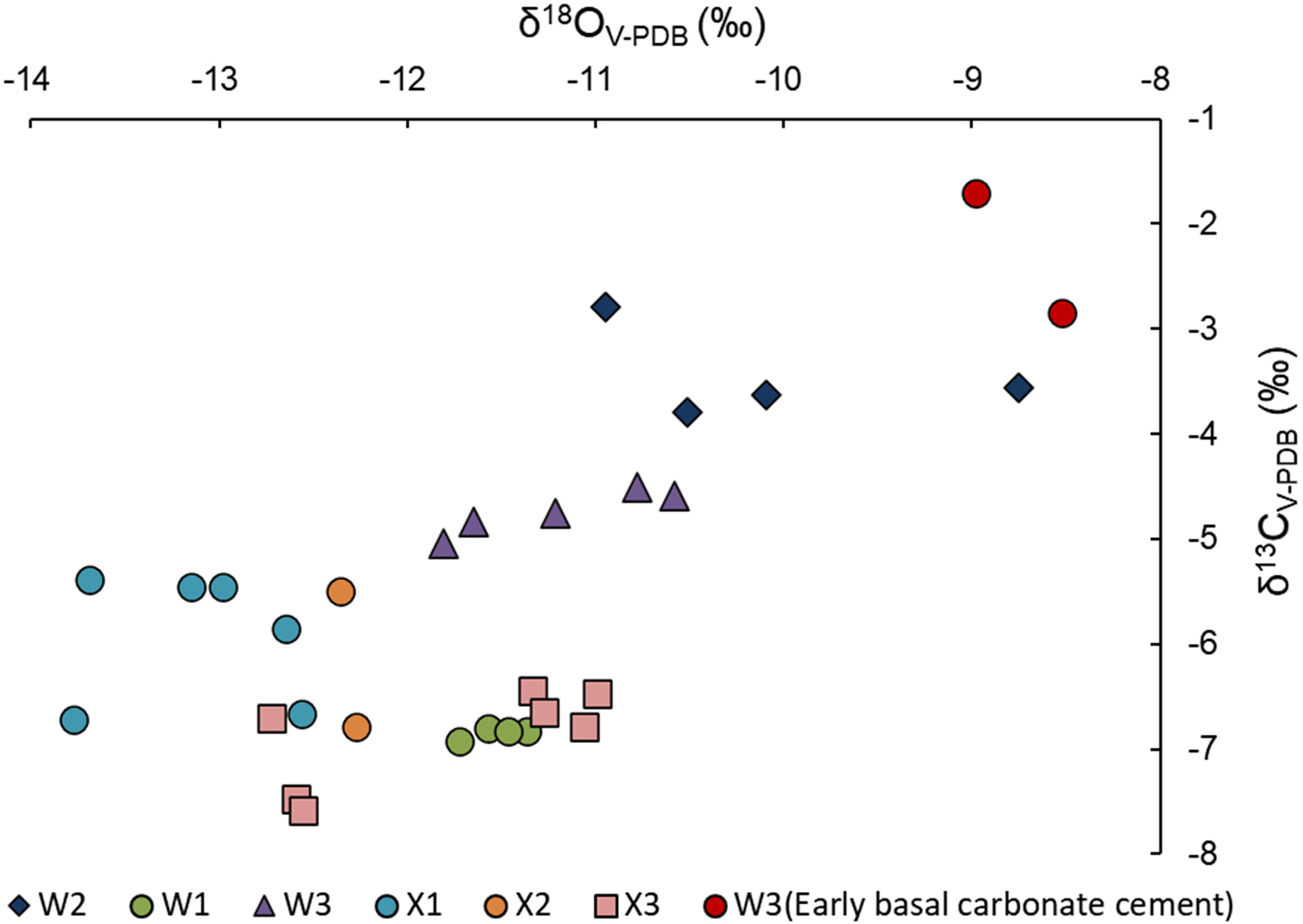
Carbon and oxygen isotope crossover diagram of the Zhuhai Formation reservoir, Wenchang A Sag.
The E3z reservoir in different regions of the study area has been affected by various fluids to different extents under the influence of topography, tectonics, and other factors. The main fluid combinations include a strong hydrothermal fluid and weak organic acid combination and a weak hydrothermal fluid and strong organic acid combination. The former predominantly affected the area near the southern fault zone, such as in wells W2 and W3; the latter mainly affected areas farther from the southern fault zone, such as in wells X1 and X3.
Effects of the strong hydrothermal and weak organic acid combination on reservoir development
Deep and long faults serve as key channels for hydrothermal upwelling (Hayman and Karson, 2007; Loreto et al., 2019). In the study area, the E3z reservoir in wells W2 and W3 near the southern fault zone was strongly influenced by two stages of hydrothermal fluid activity. The vitrinite reflectance in this area is unusually high, reaching 1.25% (Figure 6(b)). At the same time, a large amount of carbonate minerals is observed in the reservoir (Figure 10(c)). However, the effect of organic acid improvement is not significant in the areas near the fault zone.
Hydrothermal fluids affected the E3z reservoir at different stages. Initially, the hydrothermal fluids, which were rich in CO2 and upwelling from the southern fault, were acidic (Gan et al., 2009). During upwelling, the acidic fluid reacted with acid-soluble minerals such as feldspar along the flow paths. After entering the reservoir, the fluid continued to dissolve feldspar and other minerals, generating some intergranular and intragranular dissolution pores, which temporarily improved the reservoir's physical properties (Yang et al., 2024, Figures 9(d) and 10(a)). During hydrothermal injection into the E3z reservoir, unstable plagioclase almost completely dissolved, and a significant amount of dissolution also occurred in potassium feldspar. Moreover, the K+ and Ca2+ released from feldspar dissolution were incorporated into the diagenetic fluids (Xu, 2020). As the reactions progressed (equations 1 and 2), the H+ in the hydrothermal fluid was consumed, and a large accumulation of alkaline ions such as CO32− occurred (equation 3), gradually shifting the diagenetic environment from acidic to alkaline (Pecoraino et al., 2015; Wu et al., 2016; Xia et al., 2020). At this point, acid-soluble minerals such as feldspar no longer dissolved, and quartz dissolution began to occur (Figure 10(b)). Moreover, in this alkaline environment, the Ca2+ and Mg2+ in the hydrothermal fluid combined with CO32− to form a large amount of carbonate precipitation (Figure 10(c); equation 4), and the volume of the dissolution pores of quartz were negligible compared to the volume of carbonate precipitation (Figure 10(d); Table 2). Since the E3z in the study area is a low-permeability reservoir with poor pore connectivity, the diagenetic environment was relatively closed (Figures 4(b) and 10(f)). The fluid flux in the reservoir was extremely low, and the carbonate precipitation and clay minerals generated by feldspar dissolution accumulated in the dissolution pores because they could not be efficiently discharged (Figure 10(g)–(i)). Additionally, because the CO2 in the hydrothermal fluid was involved in carbonate precipitation, the amount of precipitation in this alkaline environment was greater than the amount of dissolution of minerals such as feldspar (Figures 10(d) and 2(e)), ultimately leading to deterioration in the reservoir properties of the E3z compared with its original properties (Figure 10(f)). The impact of the second-phase hydrothermal fluid on the reservoir was similar to that of the first phase. After entering the E3z reservoir, the fluid further intensified the damage to the reservoir (Figures 8 and 10).




Backscatter observations reveal that the pores in the reservoir near the South Fault, where the reservoir was strongly affected by hydrothermal fluid, are severely damaged. This damage occurred mainly via a reduction in pore diameter, further deterioration of connectivity, and even complete disconnection (Figure 10(f)). Even though the maturation of source rocks in the later stage released a large amount of organic acid, only a small amount could enter the reservoir and improve its physical properties.
Effects of the weak hydrothermal and strong organic acid combination on reservoir development
In comparison with the rocks in wells W2 and W3 near the southern fault, the rocks in wells X1 and X3, which are farther from the fault, were less influenced by the two stages of hydrothermal activity. No anomalously high values are observed in vitrinite reflectance (Figures 1(b) and 6(b)), and notably fewer carbonate minerals precipitated in the pores (Figure 13(a)). This indicates that the hydrothermal activity was weaker and did not cause severe damage to reservoir properties. Isotope analysis indicates that areas far from the fault zone were more significantly influenced by organic acids (Figure 12; Table 1).
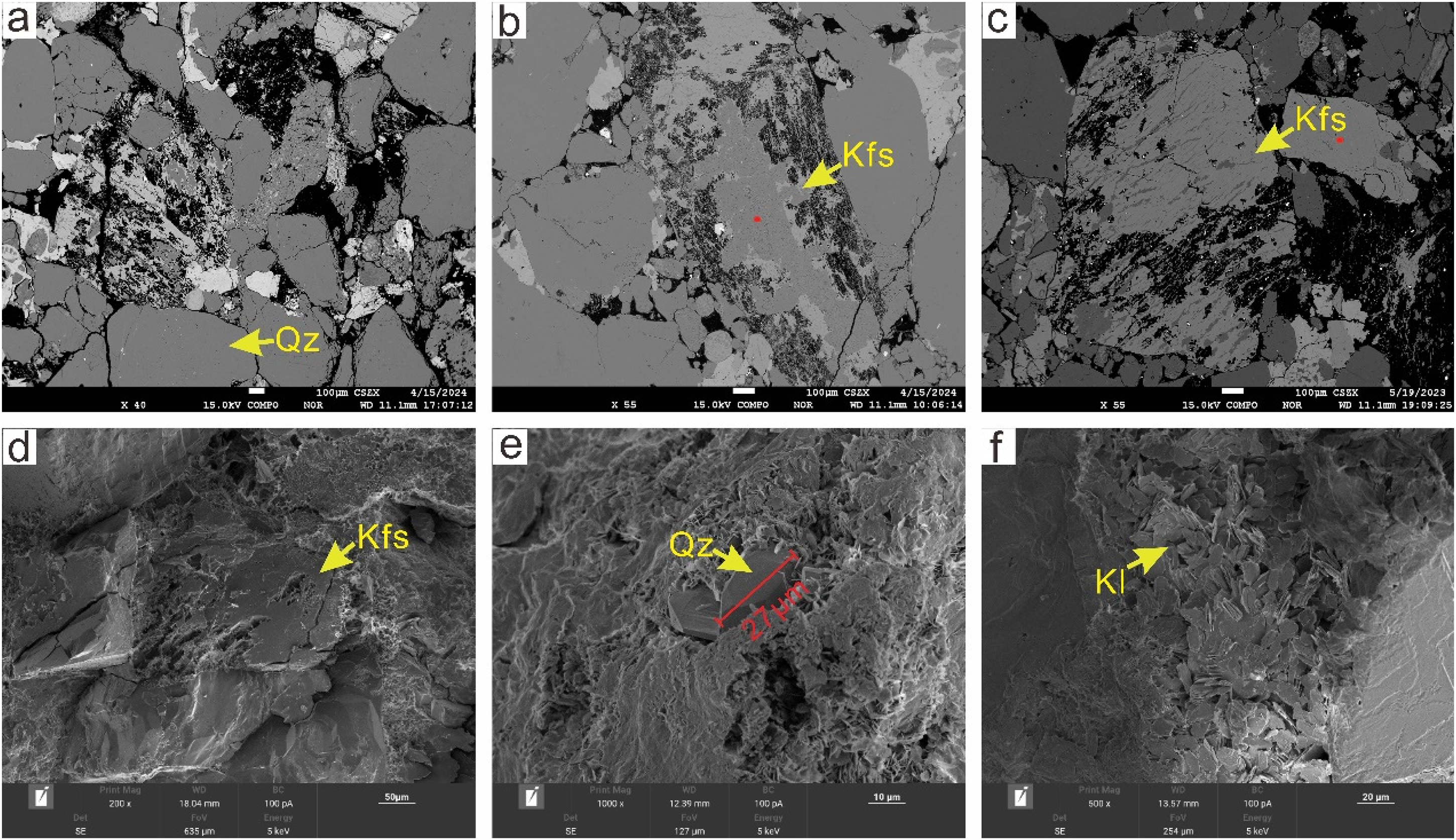
Effect of organic acids on the Zhuhai Formation reservoir. (a) Feldspar dissolution, good physical properties, X3, 3795.1 m, backscattering, 40×; (b) feldspar dissolution, good physical properties, X1, 3749.2 m, backscattering, 250×; (c) feldspar dissolution, good physical properties, X1, 3407 m, backscattering, 40×; (d) intragranular dissolution pores in feldspar, X1, 3749.2 m, scanning electron microscope, 200×; (e) secondary quartz, X3, 3795.1 m, scanning electron microscope, 1000×; (f) kaolinite, X1, 3749.2 m, scanning electron microscope, 500× (notes: in Figure 14, Qz represents quartz; Kfs potassium feldspar; Kl kaolinite).
The strata of the E3e underlying of the E3z reservoir contain many source rocks, which can be divided into two types: littoral-neritic and deltaic. The organic matter in the littoral-neritic source rocks is mainly types II2 and III, whereas the deltaic source rocks on the northern slope mainly contain type III organic matter (Li et al., 2020; Chen et al., 2021). The organic matter abundance in the E3e source rocks is relatively high, with an average organic carbon content of 1.12%, reaching a maximum of 7.27%, classifying it as a medium-grade source rock. The maximum content of chloroform asphalt A is 0.63%, indicating that it is a good source rock. The average hydrocarbon generation potential (S1 + S2) is 2.61 × 10⁻³, classifying it as a medium-grade source rock. On the basis of comprehensive evaluation, the E3e is categorized as a medium-to-good source rock (Li et al., 2020; Liu et al., 2022). As the burial depth increased, the geothermal temperature gradually increased (Figure 9), and the organic acids released from the mature source rocks provided hydrogen ions contributing to the dissolution of feldspar and organic acid anions capable of effectively complexing with aluminium ions after entering the reservoir (Seewald et al., 1994; Seewald et al., 2003; Figure 13(b)–(d); equation 5). During this stage, feldspar experienced significant dissolution, resulting in pores consisting mainly of intergranular and intragranular dissolution pores. The pore diameter is generally greater than 100 microns, reaching approximately 500 microns (Figure 13(c); Table 2). During the organic acid dissolution process, silicon migrated in the form of silicates with the fluid, and aluminium ions were carried out of the reservoir in the form of complexes. Only very small portions of Si4+ and Al3+ were deposited in the reservoir in the form of clay minerals and quartz (Figure 13(e) and (f)). In addition to feldspar dissolution, some carbonates that were deposited by early weak hydrothermal fluids were also dissolved by the organic acids, thereby improving the reservoir properties (equation 6). Although carbonates were later generated by CO2 produced from the decarboxylation of organic acids, at this point, the reservoir properties were already greatly improved. CO2-bearing fluids dissolved feldspar and carried the dissolved products along the pores to other regions, and the generated carbonates did not accumulate in the reservoir (Shock et al., 1988; Li et al., 2018; Dong et al., 2022; Zhou et al., 2023; Wang et al., 2024; Figure 13(c)).

On the basis of the previously mentioned vitrinite reflectance and source rock evidence (Chen et al., 2021; Figure 6(b)), the rocks in the X1 and X3 wells, which are located far from the southern fault, were less affected by hydrothermal fluids (Figure 1(b)). This weaker hydrothermal activity did not cause significant damage to the reservoir. Because the later intense organic acid activity dissolved easily soluble minerals such as feldspar, it can be inferred that the acidic diagenetic environment involving weak hydrothermal fluids and strong organic acids had a positive impact on reservoir development.
Prospects
On the basis of the coupled analysis of fluid and diagenetic environments, it can be inferred that CO2-rich hydrothermal fluids and organic acids have different impacts on low-permeability sandstone reservoirs. Organic acids cause the dissolution of highly soluble silicate minerals, such as albite and potassium feldspar, in low-permeability reservoirs. The Al produced during dissolution can migrate in the form of organic complexes (Seewald et al., 1994; Seewald et al., 2003; Wu et al., 2023), which facilitates the improvement of reservoir properties. Although CO2-rich fluids can also dissolve highly soluble components such as albite, the Al formed during dissolution has difficulty migrating effectively in low-permeability reservoirs, which may further reduce the reservoir's permeability. Additionally, as water‒rock interactions progress, the diagenetic environment gradually shifts from acidic to alkaline, leading to the precipitation of large amounts of secondary carbonate minerals, which further deteriorates the reservoir properties.
Therefore, for low-permeability sandstone reservoirs affected by multiple fluid phases, the sequence and intensity of fluid interactions lead to differences in reservoir properties. When a large volume of CO2-rich fluid first enters a low-porosity and low-permeability reservoir, dissolution and reprecipitation will form a large amount of secondary carbonate minerals, further reducing reservoir properties. This makes it difficult for subsequent fluids to effectively improve the reservoir, and the final reservoir properties are often poor (Figure 14(a)). When a small amount of CO2-rich fluid first enters a low-permeability reservoir, fewer secondary carbonate minerals are produced through dissolution and reprecipitation. The reservoir subsequently experiences intense organic acid dissolution, eventually leading to the formation of a reservoir with better properties (Figure 14(b)). When the reservoir first undergoes intense organic acid alteration, the low-permeability reservoir properties are significantly improved. Even if affected later by CO2-rich hydrothermal fluids, the dissolution products can still migrate effectively, resulting in generally good reservoir properties (Figure 14(c)).
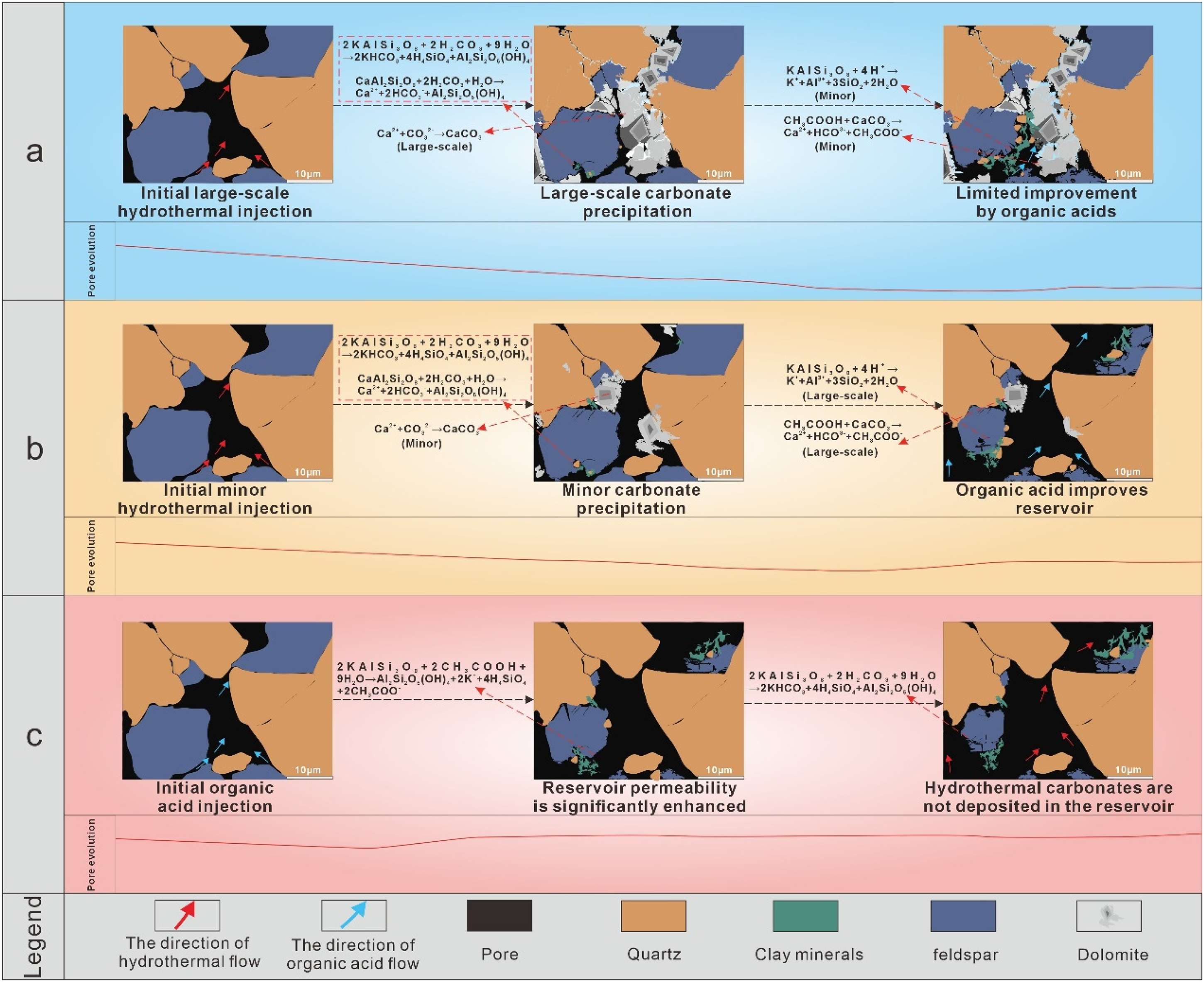
Model of multiphase fluid control over reservoir physical properties. (a) First subjected to intense hydrothermal fluids, then to weak organic acids; (b) first subjected to weak hydrothermal fluids, then to strong organic acids; and (c) first subjected to strong organic acids, then to hydrothermal fluids.
In summary, the higher the CO2-rich fluid content is, the stronger the fracturing effect on low-permeability reservoirs. Organic acids generally have a positive effect on reservoir development. Reservoir properties significantly vary when modified by fluids of different types, sequences, and/or intensities.
Conclusions
The low-permeability sandstone reservoir of the E3z in the Wenchang A Sag is a typical case for studying the effects of multiple fluid phases on reservoir quality. The combined analysis of inclusion homogenization temperatures and stable carbon‒oxygen isotope values indicates that the E3z reservoir experienced two phases of hydrothermal fluid and one phase of organic acid injection. After entering the reservoir, the hydrothermal fluids, influenced by the diagenetic environment, produced a large quantity of carbonate minerals through dissolution and reprecipitation, thus lowering the reservoir properties.
Under the combined influence of multiple fluid phases and diagenetic environments, the W2 and W3 wells near the southern fault were severely affected by pore reduction from hydrothermal fluids, causing little improvement in organic acids in later stages and resulting in overall poor reservoir properties. The X3 and X1 wells, located far from the southern fault, were almost unaffected by hydrothermal fluids, and the subsequent organic acid activity significantly improved the reservoir, leading to good overall reservoir properties. These findings indicate that the combination of strong hydrothermal fluids and weak organic acids is detrimental to reservoir development, whereas the combination of weak hydrothermal fluids and strong organic acids is favorable for reservoir development.
This study clarifies the mechanisms by which different sequences and types of fluid combinations affect the development of low-permeability clastic reservoirs in various diagenetic environments. It helps in predicting high-quality oil reservoirs modified by fluids worldwide and in subsequent oil and gas exploration.
Highlights
The impact mechanism of multi-stage fluids on low-permeability sandstone reservoirs has been elucidated.
Under deep burial and closed conditions, CO2-rich fluids may lead to the degradation of low-permeability sandstone reservoirs, whereas organic acids generally enhance reservoir properties.
A development model of low-permeability sandstone reservoirs under the influence of multi-stage fluids with different types and sequences has been established.
Footnotes

Funding
The authors disclosed receipt of the following financial support for the research, authorship, and/or publication of this article: This work was financially supported by National Natural Science Foundation of China (grant no. 42372150) and Provincial University Basic Scientific Research Operating Cost Projects (grant no. 2023RCZX-02).
Declaration of conflicting interests
The authors declared no potential conflicts of interest with respect to the research, authorship, and/or publication of this article.
Data availability
Data will be made available on request.