




Abstract
Helium is a strategic and scarce resource. The enrichment mechanism of helium-rich gas reservoirs has become a research hotspot in the global energy field. This article takes the Qingyang gas field in the Ordos Basin as a case study. Through analyzing the components of natural gas and noble gas isotope ratios by geochemical means, in combination with the study of the key controlling parameters of helium generation in helium source rocks, the origin of helium gas, the enrichment mechanism, and the geological controlling factors are systematically revealed. The research findings are as follows: (1) The helium content in the Qingyang gas field varies between 0.073% and 0.16%, the average content is 0.095%, and the helium isotope ratio 3He/4He is between 2.50 × 10⁻⁸ and 3.85 × 10⁻⁸, showing that the helium is typical of crustal origin; (2) Although the helium generation rate of the Archean basement is lower than that of bauxite, due to its ancient geological age, wide distribution area, and massive thickness, the amount of 4He accumulated during the long-term geological evolution is 1582 times, 3646 times, and 13,664 times that of mudstone, bauxite, and sandstone, respectively, making it a superior helium source rock; (3) The erosion of the Lower Paleozoic caused direct contact between the Upper Paleozoic strata and the basement, forming a short-distance migration channel. Although it restricts the extraction of helium by gas–water interaction, its near-source accumulation characteristics are important for helium enrichment.
Introduction
Helium is one of the noble gases, which was first discovered in the sun. When French astronomer Pierre Janssen and British astronomer Sir Joseph Norman Lockyer noticed a new substance in 1868, an unidentified yellow spectral line in the sun's spectrum, it was indistinguishable from the spectrum of any known element. The line, designated “D3” was believed to be a new element in the sun, which Sir Norman Lockyer subsequently defined and called “helium.” In 1895, Sir William Ramsey, a British chemist renowned for his studies on atmospheric noble gases, discovered helium on Earth for the first time. Ramsey observed that the D3 line dominated the gas's spectra while researching noble gases produced when studying the inert gas obtained by the action of sulfuric acid on the uraninite mineral (Jodry and Henneman, 1968). Noble gases, which are hard to burn, were first identified in natural gas in 1903 in the Dexter gas well in Kansas, USA. Three years later, an analysis revealed that it contained 1.84% helium (Cady and McFarland, 1907). Since then, the United States has become the largest helium-producing country globally, primarily from the Cliffside, Hugoton, Panhandle, Greenwood, Keyse, and Riley Ridge fields, and has detected notable levels of helium in natural gas samples (Bohning and Sierra, 2000).
Helium resources are widely distributed in China. Nonetheless, the majority of the resources are poor helium resources with a volume percentage of less than 0.10% or roughly 0.10%, and the resource grades are generally low (Chen et al., 2023). Helium has three distinct origins: the Earth's crust, the atmosphere, and the mantle. The atmospheric helium level is extremely low at 5.24 ppm, which is negligible. In tectonically stable areas, the generation of helium predominantly occurs through the α-decay of elements of U and Th, whereas active extensional or young volcanically active areas are marked by helium originating from the mantle, and thus the release of mantle-derived fluids is largely governed by tectonics (Meng et al., 2021a). For instance, the eastern basin of China is located in the vicinity of the Tanlu Fracture Zone, with intense tectonic activity and a high proportion of mantle-source helium mixing. The west and central basin in China is tectonically stable, with a low percentage of mantle-source helium mixing (Chen et al., 2023; Tong, 1986). Numerous Chinese researchers have conducted helium resource studies in natural gas in the Ordos Basin in recent years. The helium content in the Dongsheng gas field varies between 0.045% and 0.487%, and on average, it is 0.118%. The helium mainly originates from the basal Archean-Proterozoic metamorphic-granitic system, and the high-value areas are primarily distributed on both sides of the basal fractures, such as the Bo’erjianghaizi (He et al., 2022). The helium content in the Daniudi gas field at the northern edge of the Yishan slope ranges between 0.0232% and 0.1273%, having an average of 0.0425% (Liu et al., 2022b). The Qingyang gas field also shows helium with contents of 0.121%–0.204% (average 0.144%) (Hui et al., 2024).
This article takes the Qingyang gas field as the research object. We analyze noble gas isotope ratios and gas components in natural gas samples and calculate the amounts of helium generation from various types of helium source rocks in the study area. Meanwhile, by comparing the characteristics of the noble gas compositions in typical basins of China and combining them with an in-depth analysis of the planar structural distribution and sectional structural characteristics of the Qingyang gas field, this article reveals the genetic mechanism and enrichment law of helium in the study area, providing theoretical insights for the search for and discovery of potential areas with helium enrichment.
Geological setting
The Ordos block, a multicyclic overlaid basin formed on top of an Archean-Paleoproterozoic crystalline basement, is contained in the North China Craton's western portion (Zhai, 2021). The region spans 37 × 104 km2, with the Archean-Paleoproterozoic metamorphic rock system serving as the basement. The entire thickness of the strata is between 5000 and 10,000 m. It has a dual-layered structure with a lower part being marine and an upper part being terrestrial sedimentation (Fu et al., 2019).
The geological feature of the Ordos Basin is “full basin gas, half basin oil.” It possesses a lot of natural gas resources, the majority of which is “low-permeability, tight” unconventional gas (Li et al., 2021). The Yimeng Uplift, West Margin Thrusting Belt, Tianhuan Depression, Yishang Slope, Weibei Uplift, and Jinxi Flexural Belt are the six main tectonic units that make up the Ordos Basin. The Qingyang gas field, a west-dipping monocline with a comparatively flat structure, was explored in the Longdong region southwest of the basin's Yishan slope in 2018. The Permian Shanxi Formation and lower Shihezi Formation serve as the primary gas-producing strata (Fu et al., 2019; Li et al., 2021; Xia et al., 2022). The sandstone reservoirs of Shan 1 member often exhibit “extra-low porosity and extra-low permeability,” with lithic solution pores predominating, followed by intercrystalline and uncommon intergranular pores. The permeability values predominantly vary between 0.003 and 0.500 mD, averaging 0.19 mD; the porosity distribution is 0.84%∼9.74%, primarily dispersed in 2.0%∼8.0%, with an average of 4.98% (Meng et al., 2021b). The reservoir is composed of meandering river point-bar facies sand bodies; the multiple-stage single point-bar sand bodies are stacked to form a sand body belt, which is irregularly distributed from southwest to northeast. The thickness of the sand body reduces in the direction of both sides of the sand body belt, accompanied by a deterioration in its physical characteristics and gas-bearing properties, showing strong heterogeneity (Fu et al., 2019).
The Qingyang gas field, our study area, is situated within the administrative regions of Qingcheng and Heshui Counties in Qingyang City, which belongs to the central paleo-uplift zone on the southwestern margin of the Yishan slope tectonic unit of the Ordos Basin (Figure 1(a)). In the Upper Paleozoic, the Permian Taiyuan Formation, Shanxi Formation, Shihezi Formation, and Shiqianfeng Formation are developed, while the Silurian, Devonian, and Carboniferous systems are absent (Figure 1(b)).
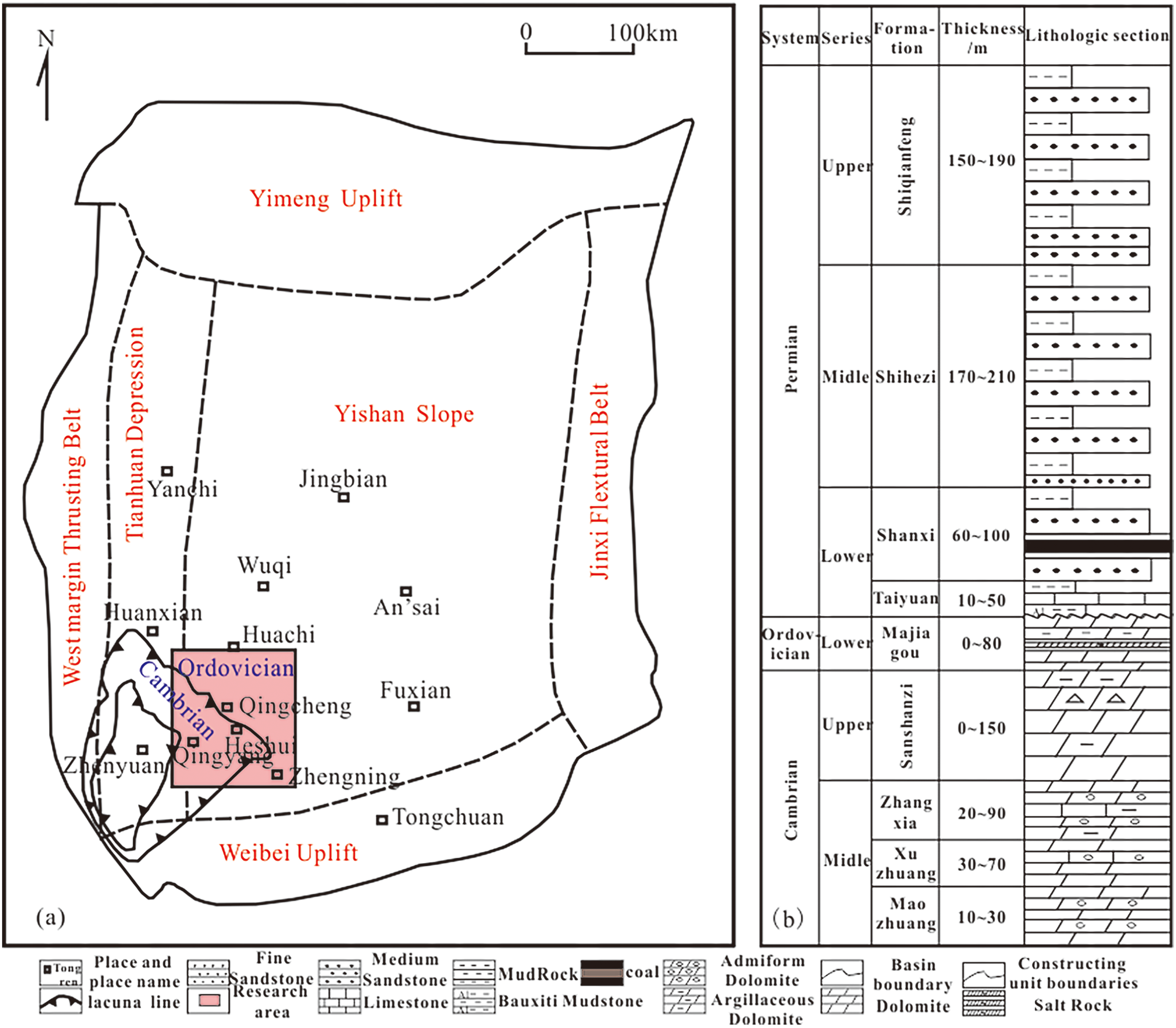
Delineation of tectonic units (a) and stratigraphic composite histogram (b) of Qingyang gas field, Ordos Basin (modified from Wang et al., 2024).
Samples and analytical methods
This study used high-pressure steel cylinders with dual valves to collect gas samples at the Qingyang gas field. The cylinders were repeatedly flushed with the natural gas from the wellhead no less than five times before sampling, effectively reducing the risks of sample leakage and contamination. Subsequently, the analysis of noble gas isotopes and natural gas components was conducted at the Northwest Institute of Eco-Environment and Resources, Chinese Academy of Sciences. For the gas component assay, a GC9790 gas chromatograph and a GC5890N gas chromatograph were used, following the procedures outlined in GB/T13610-2020. Additionally, an HPA220 mass spectrometer was utilized, adhering to the protocols specified in GB/T6041-2020. Meanwhile, a noble gas isotope ratio mass spectrometer was employed to conduct the analysis of noble gas isotopes (the specific test process is carried out by SY/T 7359-2017, Determination of noble gas isotope ratios).
Geochemical characteristics of helium in Qingyang gas field
Major gas compositions
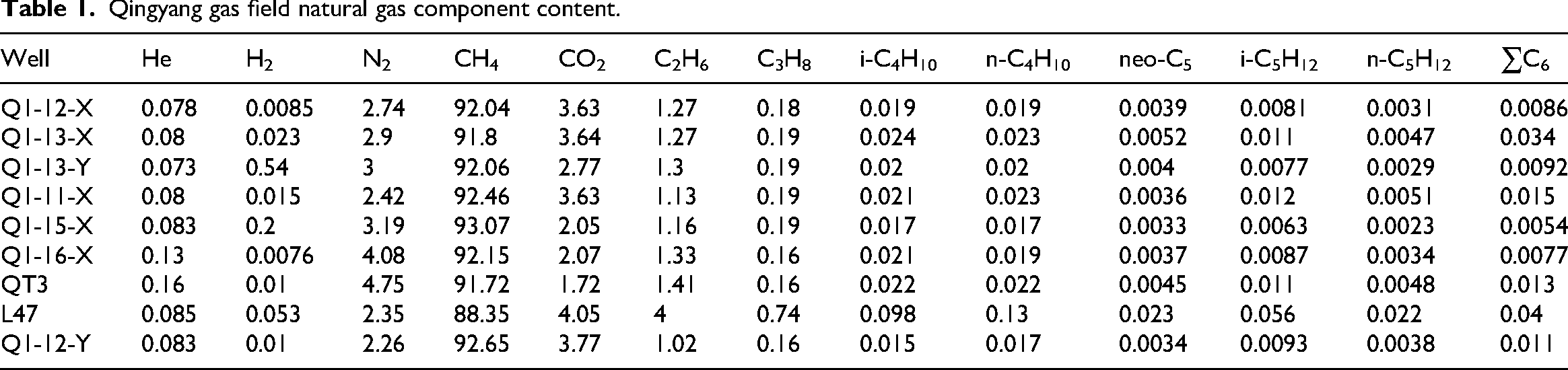
Natural gas samples from nine wells in the Qingyang gas field exhibit some differences in their helium contents. The helium with contents of 0.073%–0.16% (average 0.095%); all the contents are higher than 0.05%, and the helium contents of two wells exceed the industrial standard of 0.1% (Table 1). N2 and CO2 have relatively low contents, ranging from 2.26% to 4.75% and from 1.72% to 4.05%, respectively. Compared to the majority of main petroliferous basins in China, there is a remarkable helium-enrichment feature in the study area (Figure 2).
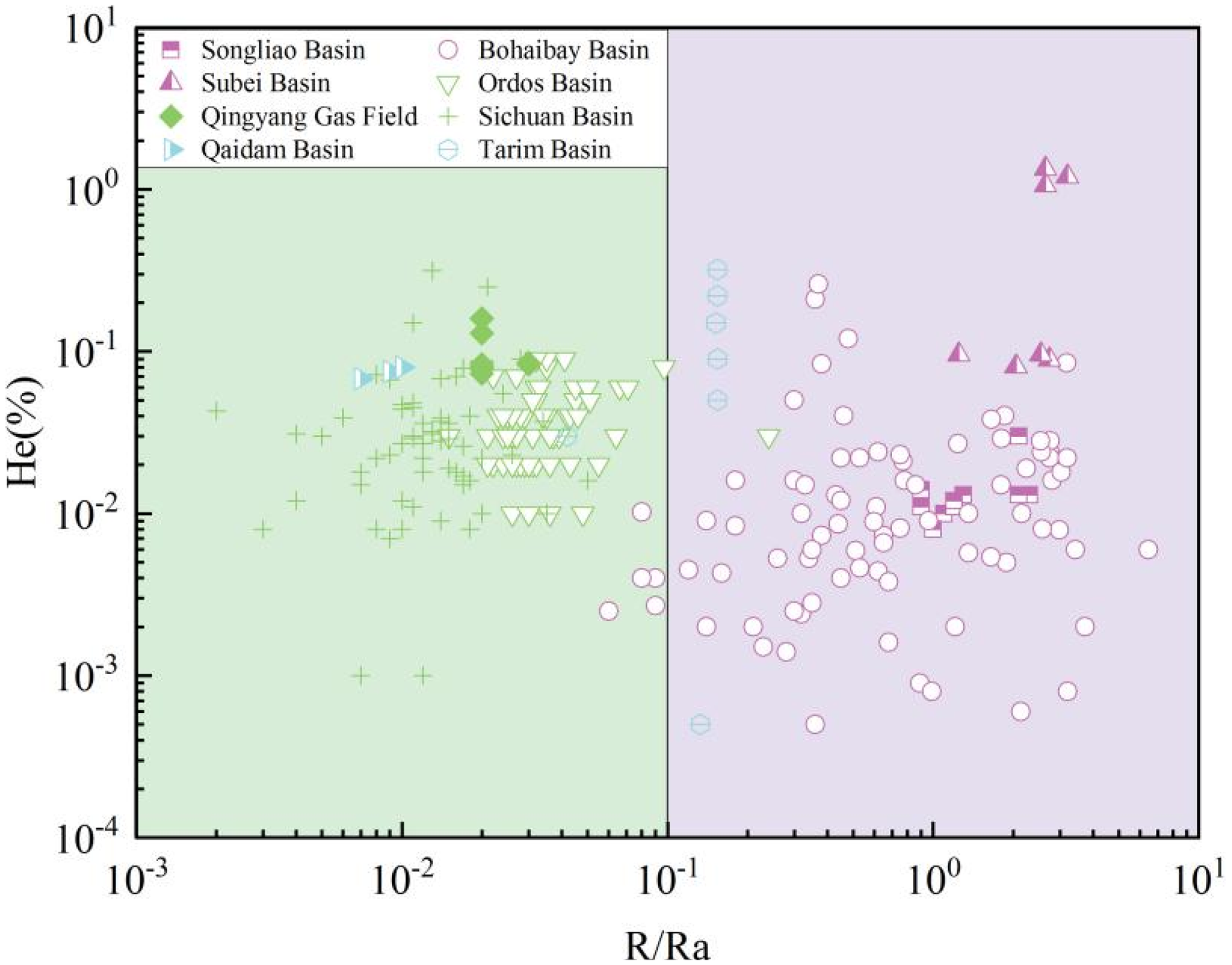
Correlation between He content and R/Ra among the natural gas from the Qingyang gas field and main petroliferous basins in China (data from Dai et al., 2017; Ni et al., 2014; Tao et al., 1997; Yang et al., 2014; Zhang et al., 2020; Zhang et al., 2023).
Qingyang gas field natural gas component content.
Noble gas isotope
Helium has three sources: helium from the atmosphere, helium generated within the Earth's crust, and helium emanating from the mantle. The ratio between the two stable isotopes of helium, namely 3He/4He, is frequently utilized to ascertain the origin and source of helium. It is generally believed that the 3He/4He ratio in the atmosphere is 1.4 × 10⁻⁶ (Mamyrin et al., 1970). When the 3He/4He ratio is 2 × 10⁻⁸, it serves as an indicator that the helium is derived from the crust. When the 3He/4He ratio reaches 1.1 × 10⁻⁵ or higher, it is mantle-source helium (Liu et al., 2022b). Meanwhile, one can utilize the binary composite model to quantify the percentages of helium sourced from the crust and the mantle in natural gas specimens, and the calculation formula is (Xu, 1997):
where (3He/4He)S represents the 3He/4He isotope ratio in the sample, (3He/4He)C represents the 3He/4He value of crustal-derived helium, which is taken as 2 × 10⁻⁸, and (3He/4He)M represents the 3He/4He value of mantle-derived helium, which is taken as 1.1 × 10⁻⁵.
The test and analysis results show that the 3He/4He ratio of natural gas in the Qingyang gas field ranges from 2.50 × 10⁻⁸ to 3.85 × 10⁻⁸, and the R/Ra ratio ranges from 0.02 to 0.03. The percentage of helium originating from the mantle is minimal, spanning from 0.046% to 0.168% (Table 2). Therefore, it can be inferred that the helium within the study area predominantly originates from the crust (Table 2). Compared with the basins in eastern China with intense tectonic activities, the Qingyang gas field, which is situated in the context of a stable craton basin, has a significantly lower R/Ra ratio in its natural gas (Figure 2). This disparity reveals the remarkable influence of different tectonic settings on the isotopic composition of helium.
Noble gas isotopic composition of natural gas in the Qingyang gas field.
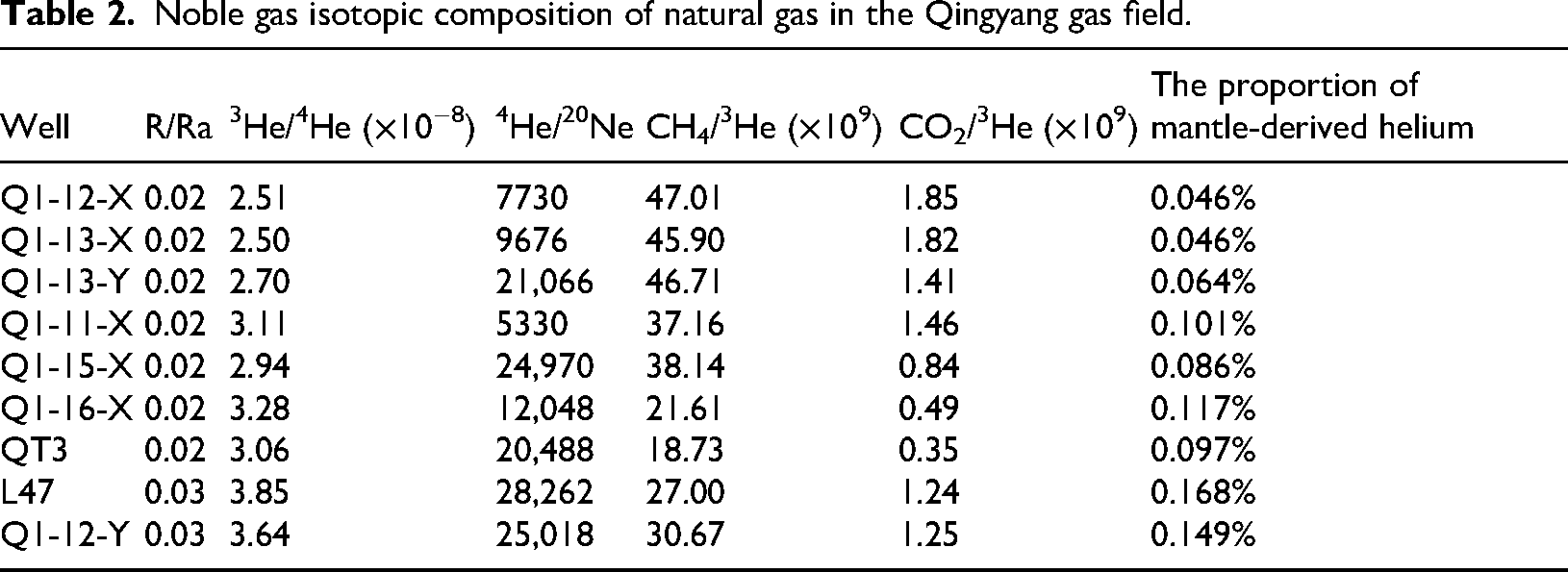
In the Qingyang gas field's natural gas, the 4He/20Ne ratio is between 5330 and 28,262, and its average is 17,176.44. The noble gas isotope 20Ne is nearly completely of atmospheric origin and can enter the subsurface layers through the process of dissolving in groundwater. 4He is derived from the α-decay of radioactive elements uranium and thorium. Since helium and neon possess nearly identical Henry's constants in water and oil (Ballentine and Burnard, 2002), water–oil–gas fractionation has minimal or no effect on fractionating these two elements. Consequently, 4He/20Ne is a good parameter for studying the connection between 4He accumulation and groundwater movement (Zhang et al., 2019a). The levels of 20Ne and 4He in the Qingyang gas field do not appear to be significantly correlated, according to the data analysis conducted for this study (Figure 3). This phenomenon suggests that, given the geological circumstances of the Qingyang gas field, the conventional understanding that groundwater acts as the primary carrier for helium migration may have limitations. The specific factors will be discussed in detail in the subsequent section.
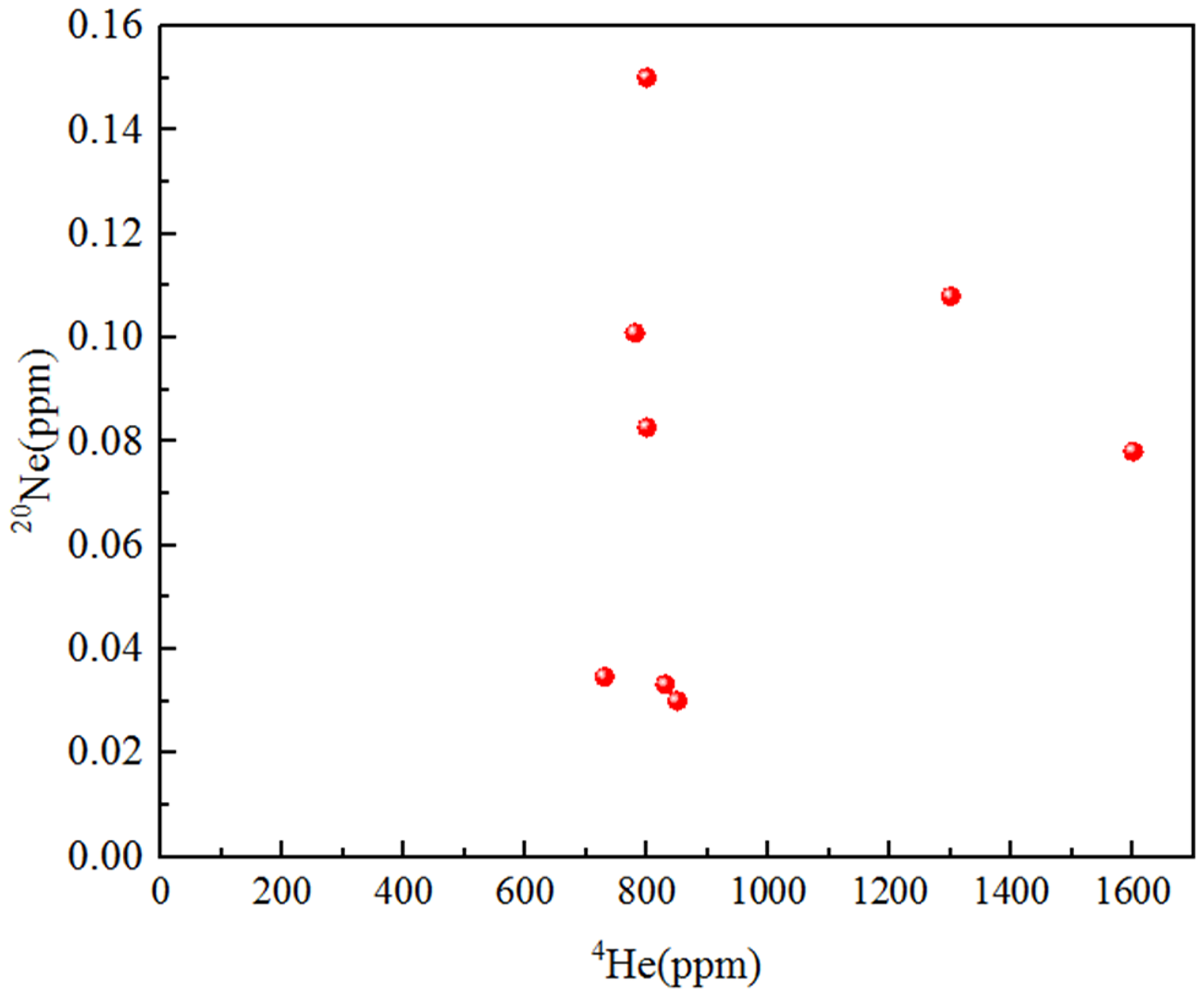
4He and 20Ne relationships for natural gas in the Qingyang gas field (calculate according to Table 2).
The rations of CH4/3He and CO2/3He
Geochemical studies demonstrate that the natural gas exhibits typical crustal-derived characteristics in the study area. Its CH4/3He ratio ranges from 18.73 × 10⁹ to 47.01 × 10⁹ (with an average of 34.77 × 10⁹), and the CO2/3He ratio varies from 0.35 × 10⁹ to 1.85 × 10⁹ (averaging 1.19 × 10⁹). CH4 constitutes the major component of the gas, accounting for 88.35% and 93.07% of the total composition, and an average proportion of 91.81%, while CO2 accounts for 1.72%–4.05% (average value: 3.04%) (Tables 1 and 2).
According to the correlation analysis results, the R/Ra ratio in the natural gas of the Qingyang gas field does not significantly correlate with the contents of CH4 and CO2 (Figure 4(a) and (b)). Through a comprehensive study of the distribution relationship diagrams of CH4/3He, CO2/3He and R/Ra (Figure 4(c) and (d)), it is discovered that in the Qingyang gas field and main basins in the central and western regions, except for the Tarim Basin, which has a small quantity of helium from the mantle because R/Ra > 0.1, the relevant ratios of the other basins are near the crustal end-member, suggesting that the helium in them primarily originates from the crust. On the other hand, in the rift basins of eastern China, like the Songliao Basin, CO2 and R/Ra exhibit an obvious positive correlation (Yang et al., 2014) (Figure 4(b)), and R/Ra > 0.1, which fully indicates that CO2 contributes to the mixing proportion of mantle-derived helium in the eastern basins, and the characteristics of mantle-derived helium are obvious.
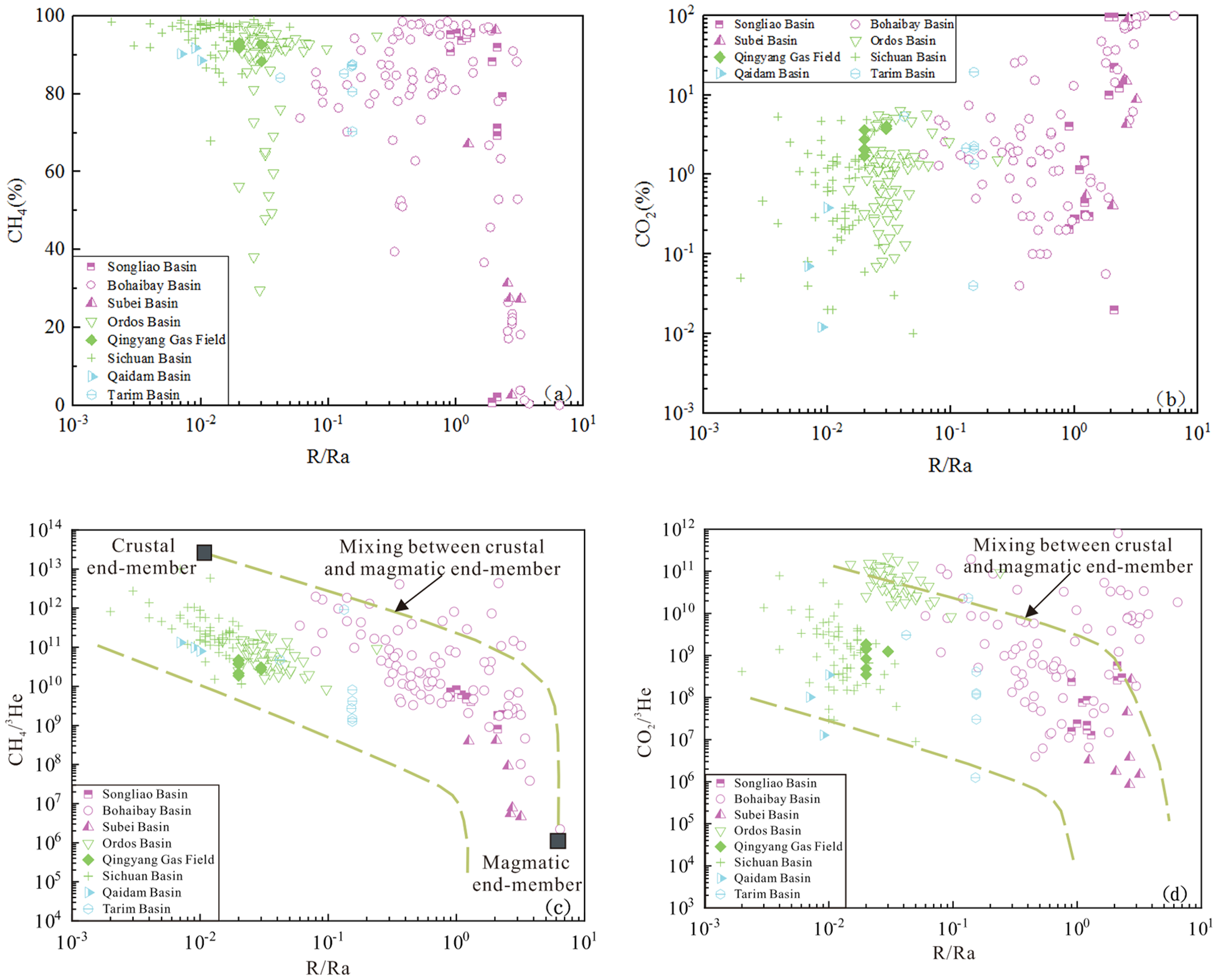
Correlation diagrams of CH4% (a), CO2% (b), CH4/3He (c), CO2/3He (d), and R/Ra for natural gas in the Qingyang gas field and main petroliferous basins in China (data from Dai et al., 2017; Ni et al., 2014; Tao et al., 1997; Yang et al., 2014; Zhang et al., 2020; Zhang et al., 2023).
He, CO2, and CH4 in natural gas have distinct origins. 4He is primarily controlled by rocks rich in radioactive uranium and thorium elements, 3He originates from the deep mantle (Tedesco, 2022), CO2 mainly comes from the injection of deep mantle fluids or the dissolution of carbonate rock (Plank and Manning, 2019), and CH4 mainly originates from sedimentary organic matter (Liu et al., 2005). Statistics show that the CH4 content in the natural gas of main petroliferous basins in China spans an order of magnitude of 102 (ranging from 0.88% to 99%), and the difference in the content of CO2 reaches an even larger order of magnitude of 104 (ranging from 0.01% to 97.81%). However, in general, the CH4 content commonly exceeds 80%, and CO2 content in the basins of central and western China is mostly lower than 10% (Dai et al., 2017; Ni et al., 2014; Tao et al., 1997; Yang et al., 2014; Zhang et al., 2020; Zhang et al., 2023).
Comparative analysis shows that at equal helium contents, CH4/3He and CO2/3He ratios are higher in stable basins of central-western China (e.g., Ordos, Sichuan) than in tectonically active eastern basins (e.g., Songliao, Bohai Bay) (Figure 5(a), Figure 5(b)), indicating greater 3He contents in the east. Across China's seven major basins, He shows a negative correlation with CH₄/³He and CO₂/³He, no correlation with CH₄, and a positive correlation with ³He (Figure 5(a), Figure 5(b), Figure 5(c), Figure 5(d)). Due to the much lower content of 3He compared to 4He, the He content is mainly contributed by 4He, therefore, 4He and 3He also exhibit a positive correlation, and the content of the two in the gas reservoir follows a certain proportional relationship. In the eastern basins, the CO₂/³He ratio exhibits significant fluctuations, and the negative correlation between He and CO₂/³He is weaker than that between He and CH₄/³He. Additionally, the presence of abundant CO₂ gas reservoirs in the eastern basins suggests that CO2 and 3He jointly affect the relationship between He and CO2/3He in the eastern basins. Overall, CH4 and 3He are unrelated, while CO2 positively correlates with 3He and acts as a carrier for 3He migration from deep-mantle fluids to reservoirs.
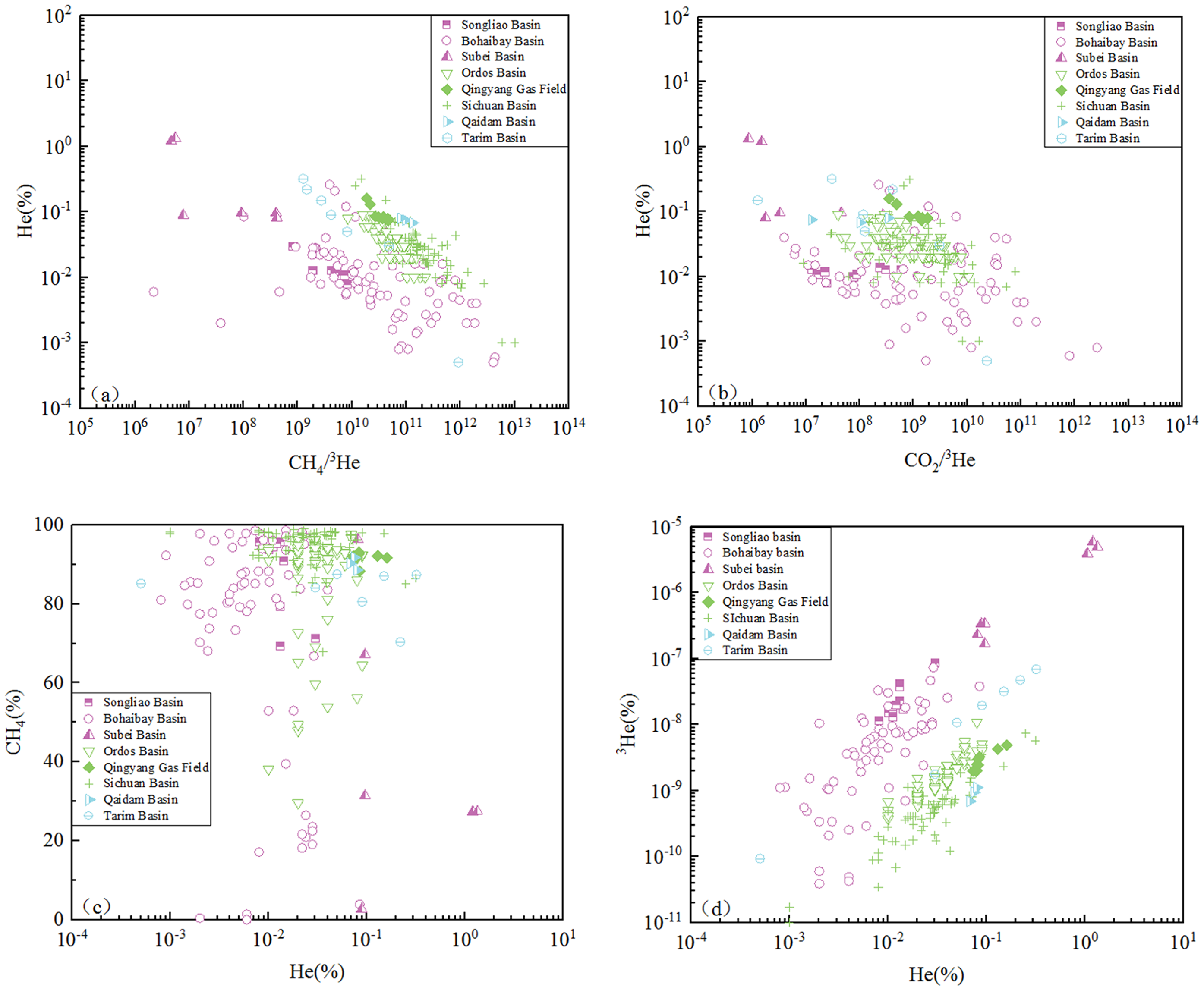
Correlation of CH4/3He (a), CO2/3He (b), CH4% (c), and 3He% (d) with He% for natural gas from Qingyang gas field and main petroliferous basins in China (data from Dai et al., 2017; Ni et al., 2014; Tao et al., 1997; Yang et al., 2014; Zhang et al., 2020; Zhang et al., 2023).
Enrichment regularities of helium in Qingyang gas field
Helium source rock
The Qingyang gas field's helium is mostly crustal in origin. The radioactive decay of granite, metamorphic rock, bauxite, mudstone, and coal rock that is rich in U and Th that formed in the basin's basement and sedimentary strata is the major source of helium in the crust. The usual decay processes are: 238U→206Pb + 84He + 6β−; 235U→207Pb + 74He + 4β−; 232Th→208Pb + 64He + 4β−. Based on the radioactive decay laws of uranium and thorium proposed by Craig and Lupton (1976) the formula for the generation rate of 4He is:
where J (4He) is the generation rate of 4He, with the unit of cm3/(g·a) and represents the volume of 4He generated per gram of rock per year; [U] and [Th] signify the contents of uranium and thorium in each gram of rock, with the unit of 10−6.
The primary gas-producing layers in the study area are the sand mudstone of the Upper Paleozoic Permian Shanxi Formation and the Lower Shihezi Formation (Xia et al., 2022). For the helium source rocks of the Qingyang gas field, many previous studies have been carried out, among which the bauxites and bauxitic mudstones developed in the Permian Taiyuan Formation and the Carboniferous Benxi Formation have high U and Th contents (Li et al., 2022), and it was found that five samples of bauxites from the Permian Taiyuan Formation have an average of 46.3 ppm of Th and an average of 26.48 ppm of U, and their thicknesses are on average 10 m, with an area of 12,000 km2, the bauxite density is concentrated in 2.6∼2.85 g/cm3, and the density in this article is taken as 2.85 g/cm3 (Kang et al., 2025; Liu et al., 2022a). Among the 20 samples of Permian sandstones, the average Th content is 5.25 ppm, the average U content is 1.25 ppm, and the area of sandstones in the Shan1 member sandstone is about 13,000 km2, the thickness varies between 2 and 15 m, averaging 10 m. The area of the He 8 Member sandstone is about 20,500 km2, and it has a thickness of 2∼25 m, averaging is 15 m, and a density of 2.71 g/cm3 (Kang et al., 2025; Li et al., 2024). For 2 Permian coal samples, the average Th content is 3.12 ppm, the average U content is 3.6 ppm, the thickness is 4.65 m on average, and the density is taken as 1.42 g/cm3 (Kang et al., 2025; Zhao et al., 2024). The average Th content of five samples of Permian mudstone is 14.44 ppm, the average U content is 4.50 ppm, the average thickness is 60 m, the area is 28,000 km2, and the density of mudstone is taken as 2.21 g/cm3 (Kang et al., 2025; Zhang et al., 2021b); the average Th content of five samples of Ordovician dolomite is 1.07 ppm, the average U content is 0.67 ppm, the area is 5000 km2, with a thickness of about 0∼10 m (Kang et al., 2025; Wu et al., 2024), and the density of the carbonate rock is 2.77 g/cm3 (Li et al., 2008). Two samples of Cambrian siliciclastics, the average Th content is 0.24 ppm, the average U content is 0.32 ppm. Three samples of basal Archean granitic gneiss have an average of 12.50 ppm of Th and an average of 8.58 ppm of U, the basement was formed at 2.2∼2.0 Ga, the development area is about 24,000 km2, the thickness is 2∼7 km, and the density is taken as 2.85 g/cm3 (Hui et al., 2024; Kang et al., 2025; Qin, 2015; Zhang et al., 2021a), and the Qingyang gas field is in direct contact with the Jixian System of the Mesoproterozoic, which is missing the Ordovician and Cambrian, and it is closer to the basement (Figure 1), which is conducive to the collection of helium released from granite.
The results of the calculations suggest that the Archean basement of the Qingyang gas field exhibits excellent helium-generation potential (Table 3). Although the helium-generation rate of bauxite (45.08 × 10⁻¹³ cm3/(g·a)) is higher than that of the basement (13.88 × 10⁻¹³ cm3/(g·a)), the amount of 4He generated by radioactive decay of the Archean basement over geological time scales reaches as high as 14,620.64 × 108 m3, which is 1582 times, 3646 times, and 13,664 times that of mudstone (9.24 × 10⁸ m3), bauxite (4.01 × 10⁸ m3), and sandstone (1.07 × 10⁸ m3), respectively. Despite the high U and Th contents in bauxite rock, its thin thickness, limited distribution, and relatively young formation age make it difficult to serve as a large-scale helium source. In contrast, the Archean basement not only has a favorable helium-generation rate but also features an ancient rock age, extensive distribution area in the basin, and considerable thickness, thus generating a much higher amount of 4He compared to other rocks. This study further confirms that the potential of helium source rocks should be evaluated by comprehensively considering the synergistic effect of elemental abundance and geological volume. Although the distribution scale of sandstone is larger than that of bauxite rock, bauxite rock generates more 4He during the same geological period due to its high U and Th contents. However, when the rock volume exceeds a certain threshold, the volume factor dominates helium generation. For example, despite its lower elemental contents, mudstone contributes a higher total amount of helium generation due to its large volume.
Helium-generating capacity of Qingyang gas field in Ordos Basin.
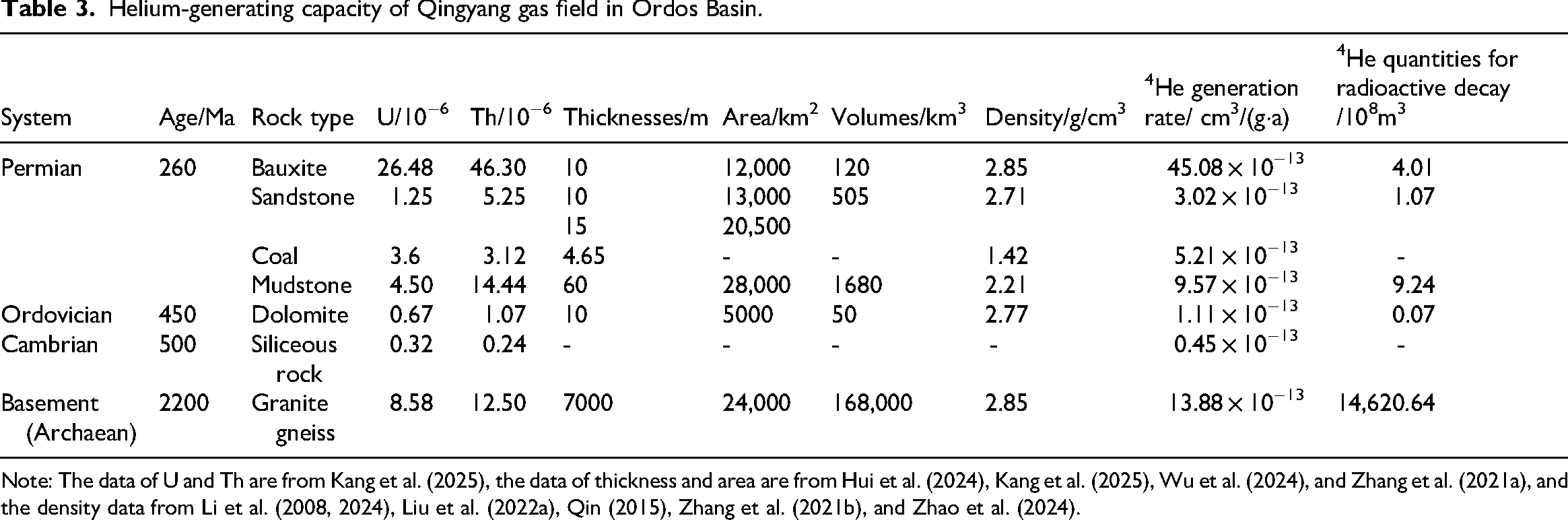
Note: The data of U and Th are from Kang et al. (2025), the data of thickness and area are from Hui et al. (2024), Kang et al. (2025), Wu et al. (2024), and Zhang et al. (2021a), and the density data from Li et al. (2008, 2024), Liu et al. (2022a), Qin (2015), Zhang et al. (2021b), and Zhao et al. (2024).
Migration carriers and channels
After the decay of uranium and thorium elements in the helium source rocks, under certain temperature and pressure circumstances, they break through the mineral lattice and are released outside the helium source rocks, and they need to attach to underground fluids (various magmas, molten substances, volatiles, associated gases, water, etc.) and migrate to the reservoir through faults, fractures, and seepage channels that connect the basin basement and caprock.
Previous studies have shown that the good positive correlation between 20Ne and 4He is one of the important pieces of evidence for groundwater to serve as a carrier for helium migration (Zhang et al., 2024b). For the purpose of exploring the manifestation of this correlation under different geological backgrounds and the major influencing factors of helium migration, this study carried out the tests and analyses of 20Ne and 4He on the natural gas samples from the Qingyang gas field. Moreover, relevant data from the Daniudi gas field, the southern part of the Songliao Basin, the northern part of the Qaidam Basin, and the Hugoton-Panhandle gas field in the United States were investigated for comparative studies (Ballentine and Lollar, 2002; Chen et al., 2024; Liu et al., 2022b; Zhang et al., 2019b). The findings of the research indicate that the correlations between 20Ne and 4He vary significantly across different basins (Figure 6). As typical bedrock-type helium-rich gas reservoirs, the northern Qaidam Basin and the Hugoton-Panhandle gas field have abundant edge and bottom water developed (Liu et al., 2023), and the correlation coefficients between 20Ne and 4He are as high as 0.9784 and 0.7807, respectively, which confirms the important role of groundwater as a carrier for helium migration. The natural gas in the Songliao Basin shows a moderate correlation between 20Ne and 4He (R2 = 0.3904), indicating that the helium migration in this region may be affected by multiple factors jointly. It is worth noting that the Daniudi and the Qingyang gas fields generally lack edge and bottom water, and the hydrodynamic conditions are inactive (Fu et al., 2019). There is no correlation between 20Ne and 4He in their natural gas, suggesting that under this geological background, the contribution of groundwater to helium migration is relatively small. The above findings indicate that the process of helium migration is jointly regulated by multiple types of carriers. Because of the variations in geological conditions, fluid properties, and tectonic evolutionary processes across different basins, the dominant carrier types for helium migration vary, which further reflects the obvious regional differentiation characteristics of the intensity of the role of groundwater in helium migration.
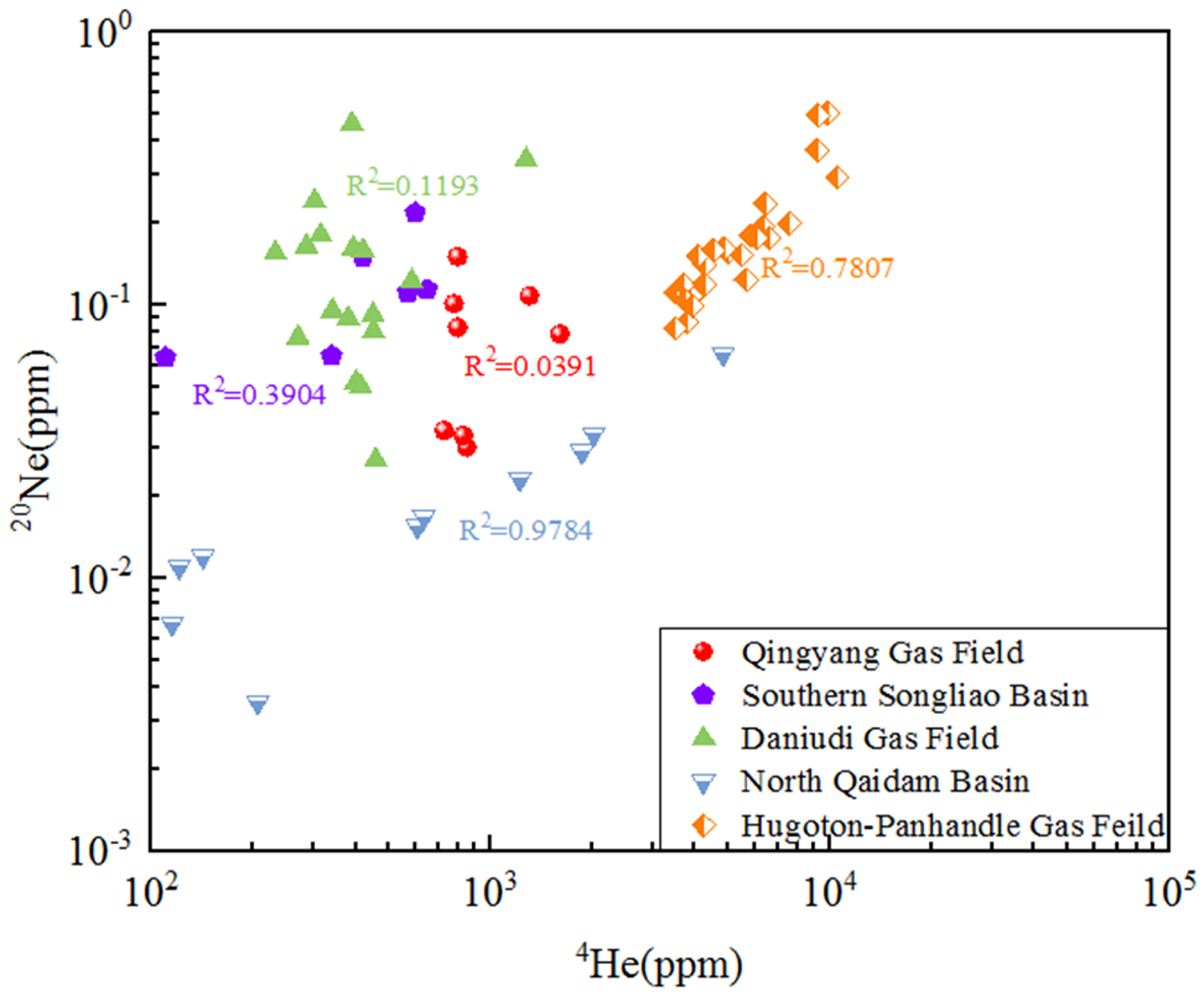
Correlation of 4He with 20Ne in representative helium-bearing regions (data from Table 2; Ballentine and Lollar, 2002; Chen et al., 2024; Liu et al., 2022b; Zhang et al., 2019b).
In the main area of the Qingyang gas field, the structural evolution has formed a complex pattern of early NE-trending faults and later NW-trending tuning faults. Investigations have shown that gas wells in regions with fault-developed exhibit different degree of helium enrichment. The helium content in Well CT3 controlled by the NE-trending faults reaches 0.22% (Wang et al., 2025), and that in Well QT3 is also as high as 0.14%. In contrast, the helium content in Well L47 controlled by the NW-trending faults is slightly lower, being 0.085% (Figure 7).
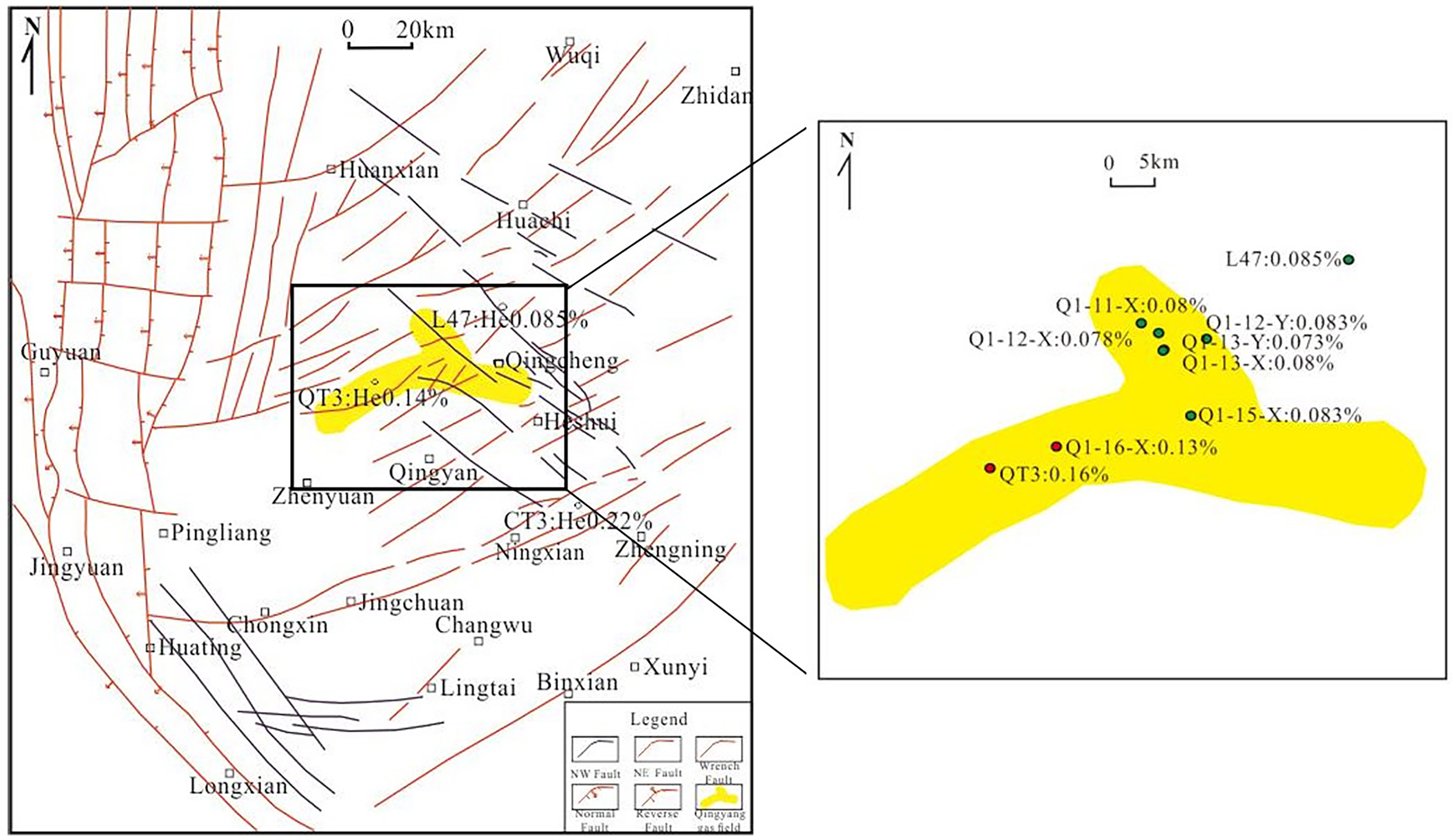
Distribution map of caledonian structural plane faults in the Qingyang gas field (modified from Yao, 2024).
Based on the analysis of the helium enrichment pattern (Figure 8), although fault systems extend from the basement to the gas reservoir in Wells QT3, Q1-16-X, and L47, the multiple sets of secondary faults developed around Well L47 extend in directions away from the reservoir, which may lead to the lateral loss of helium, making the helium contents in Wells QT3 and Q1-16-X significantly higher than that in Well L47. According to the drilling geological data, the formation pressure of the Shanxi Formation reservoir in Well QT3 is 39.36 MPa, that in Well Q1-16-X is 42.0 MPa, while Well L47 fluctuates between 29 and 37 MPa. The difference in reservoir pressure further confirms that the multiple sets of secondary faults developed in the area of Well L47 cause the loss of helium, thus affecting the helium enrichment of this well.
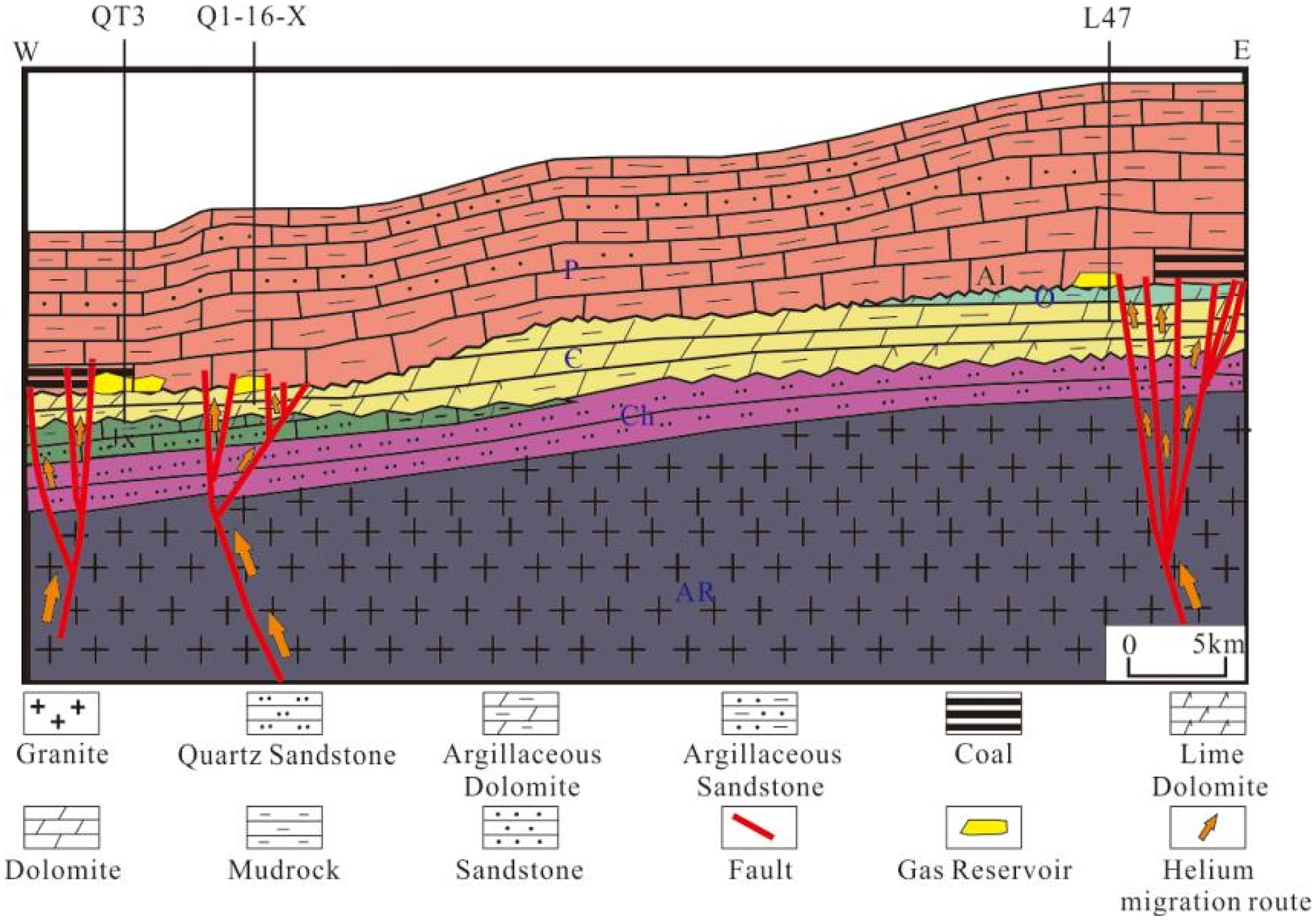
Helium enrichment pattern diagram of Qingyang gas field.
Reservoir-caprock configuration
There aren't any separate helium reservoirs at the moment because of its unique properties. Helium is always associated with natural gas and shares the same reservoir-caprock configurations. Its upper Paleozoic reservoir in the Qingyang gas field is mainly the first member of the Permian Shanxi Formation. The main types of reservoir pores are dissolution pores, intergranular pores, and intercrystalline pores. The average formation pressure of the gas reservoir is 37.49 MPa, with a pressure coefficient of 0.88, classifying it as an abnormally low-pressure gas reservoir (Fu et al., 2019). Such a low reservoir partial pressure environment facilitates, to a certain extent, the processes of helium dissolution, exsolution, and enrichment (Li et al., 2017; Tao et al., 2024). The reservoirs generally exhibit the traits of “extra-low porosity and extra-low permeability” and significant heterogeneity. The sandstones between the He 8 and He 4 layers are poorly developed, mostly light-gray fine-grained and silt-sized sandstones and interbedded with mudstones. This interbedded structure is an excellent regional caprock that effectively prevents helium dissipation and provides favorable conditions for helium preservation (Meng et al., 2021b).
Main controlling factors for helium enrichment
The Qingyang paleo-land is located in the high part of the ancient landform position, the water body in the paleo-uplift part is shallow, and littoral-neritic lagoon and tidal flat facies are developed at the edge, which is surrounded by the paleo-ocean (Zhang et al., 2024a). Located on the eastern and western peripheries of the paleo-uplift, the thickness of the Cambrian and Ordovician progressively diminishes towards the paleo-uplift until they are lost, and the missing range of the Ordovician is larger than that of the Cambrian (Ma et al., 2024). Due to the influence of paleo-tectonics, the paleo-strata of the Qingyang paleo-uplift have direct contact with the basement, which contributes to the accumulation of helium released from granite into reservoirs (Figure 9).
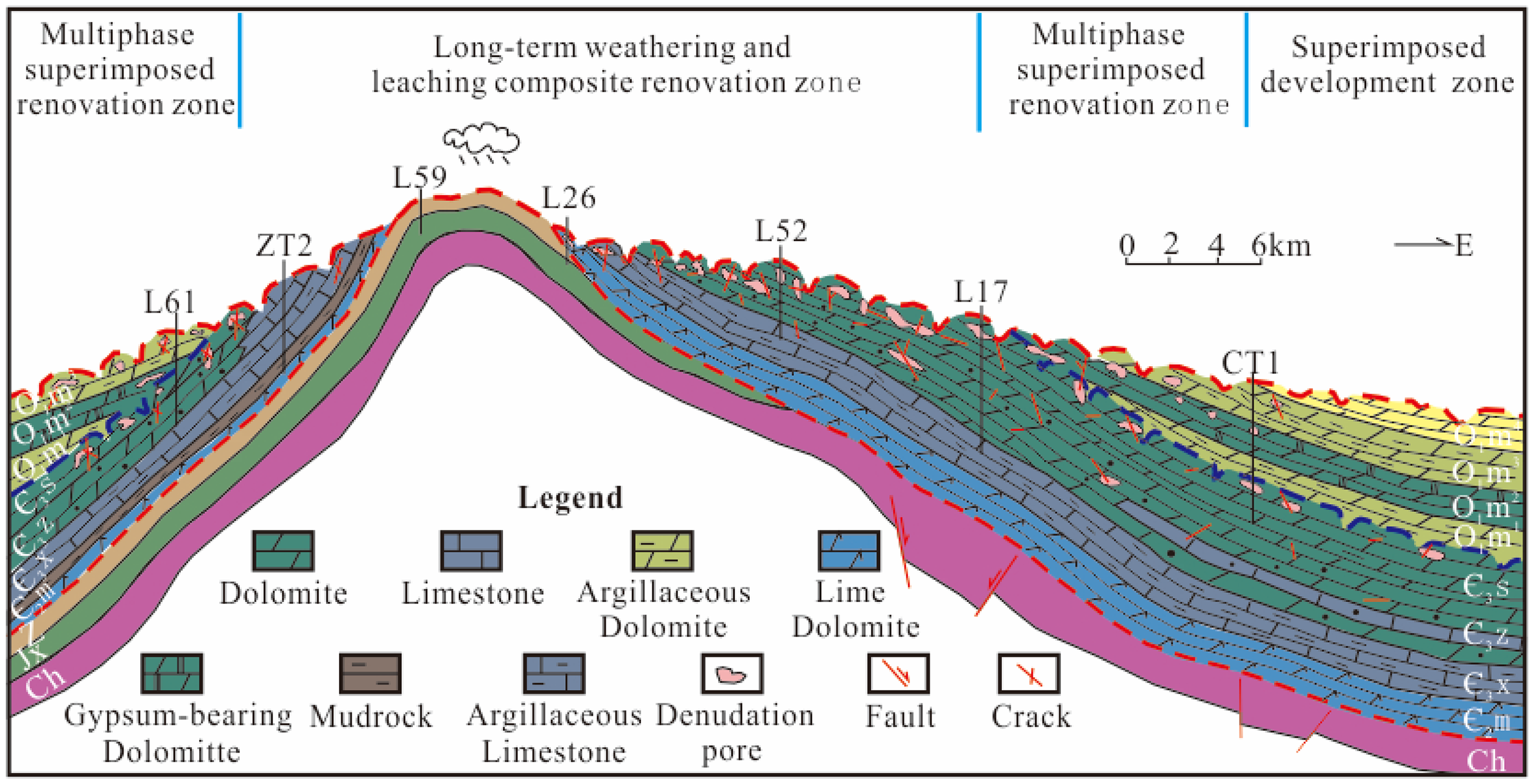
Development pattern diagram of lower paleozoic weathered crust reservoirs located in the central paleo-uplift area (modified from Yao, 2024).
The Permian bauxites and mudstones developed in the study area are characterized by high U and Th contents. Although their scale is limited, and they contribute less to the helium content in the whole gas field than the ancient basement does, they are closer to the Shanxi Formation reservoir and have the characteristic of near-source reservoir formation (Wang et al., 2025). The short-distance migration makes it difficult for helium to be extracted from groundwater through gas–water interaction, which also explains the lack of correlation between 20Ne and 4He in the Qingyang gas field.
There are multiple faults developed in the research area, helium generated from the Qingyang gas field's underlying crystalline basement migrates through deep and large faults, unconformity surfaces, and high-angle structures into the overlying tight sandstone reservoir for accumulation and reservoir formation. The gas reservoir with a lower partial pressure and high-quality caprock prevents the escape and dissipation of helium.
Through the testing and analysis of noble gas isotopes and natural gas components, summarizing the potential for helium generation in different types of helium source rocks and the elements of natural gas reservoir formation clarified the mechanism of helium genesis and the enrichment factors and found that the migration mode of helium in the Qingyang gas field is not mainly groundwater desolvation and aggregation.
Conclusions
By conducting tests and analyses on the components of natural gas and noble gas isotopes in the study area, the results reveal that the helium content is 0.073%∼0.16%, the average content is 0.095%, and the helium isotope ratio of 3He/4He is 2.50 × 10⁻⁸ to 3.85 × 10⁻⁸, which is typical of crustal-derived helium.
On the geological time scale, the amount of 4He generated by the radioactive decay of the Archean basement is as high as 14,620.64 × 108 m3, which is 1582 times, 3646 times, and 13,664 times that of mudstone (9.24 × 10⁸ m3), bauxite (4.01 × 10⁸ m3), and sandstone (1.07 × 10⁸ m3), respectively, even though the helium generation rate of bauxite (45.08 × 10⁻¹³ cm3/(g·a)) is higher than that of the basement rocks (13.88 × 10⁻¹³ cm3/(g·a)). It is challenging for bauxite to function as a high-quality helium source because of its thin thickness, small distribution area, and relatively early formation age, despite its high uranium and thorium contents. In contrast, the Archean basement not only has a favorable helium generation rate but also features an ancient rock age, extensive distribution area in the basin, and considerable thickness of the strata. As a result, the amount of 4He it generates is much higher than that of other rocks, making it an excellent helium source rock.
4He/20Ne serves as a good parameter to investigate the association between 4He accumulation and groundwater movement. The isotopes of noble gases in the Qingyang gas field were tested, and the 4He/20Ne data of the southern Songliao Basin, the northern Qaidam Basin, the Daniudi gas field, and the Hugoton-Panhandle gas field were collected. The results show that in the bedrock-type helium-rich gas reservoirs of the northern Qaidam area and the Hugoton-Panhandle gas field, which have abundant groundwater (edge-bottom water), 4He and 20Ne are positively correlated. However, the structural characteristics of the study area, such as the serious denudation of the lower Paleozoic, the direct contact between the upper paleo-strata and the basement in the Qingyang paleo-uplift, and the short-distance migration, make it difficult for helium to extract helium from groundwater through gas–water interaction, and the lack of edge and bottom water in the gas reservoir as a whole and the inactivity of hydrodynamic forces explain that there is no correlation between 4He and 20Ne in the study area.
The enrichment of helium in the Qingyang gas field benefits from a favorable source–reservoir–caprock configuration. The ancient granite gneisses rich in uranium and thorium, which are widely distributed in the basement, serve as high-quality helium source rocks. The Shanxi Formation's first member tight sandstones, exhibit the features of low porosity, low permeability, and low pressure, and constitute ideal reservoirs. The He 8 to He 4 layers, where fine-grained materials develop between layers, are high-quality regional caprocks.
Footnotes

Funding
The author(s) disclosed receipt of the following financial support for the research, authorship, and/or publication of this article: Supported by the CNPC Technology Research Project (2021ZG13) and the Project “Optimal Selection of Favorable Target Areas for Limestone Gas in the Ordovician Wulalike Formation and the Eastern Sub-salt Ma 3 Member in the Ordos Basin.”
Declaration of conflicting interests
The author(s) declared no potential conflicts of interest with respect to the research, authorship, and/or publication of this article.