




Abstract
This study investigates the role of environmental regulations, renewable energy, and the validity of the load capacity curve (LCC) hypothesis. The natural environment offers a range of ecosystem services; however, it is important to recognize that these services have finite limits, and overuse can result in a biocapacity deficit. To restore biocapacity, it is essential to prioritize renewable energy, enforce stricter environmental taxation, and closely monitor trade flows. This paper first assesses Romania's LCC hypothesis by considering the impact of environmental taxes, renewable energy, and trade. Utilizing data from the first quarter of 1994 to the fourth quarter of 2022, the study employs method of moments quantile regression and quantile regression techniques to derive its empirical findings. The results confirm the validity of the LCC hypothesis and highlight the significant influence of trade and renewable energy on the load capacity factor. These findings offer valuable insights for Romanian policymakers, suggesting that adopting renewable energy and environmental taxes can mitigate trade's ecological and socioeconomic impacts without hindering economic growth and the pursuit of sustainable development goals. The authors also propose new policy recommendations to align sustainable energy use with economic objectives.
Introduction
Sustainable development is a desire of all countries, including developing and developed countries. Still, political determination, the level of economic development, the involvement of private companies, and the attitude of consumers and citizens are essential factors that determine the pace and level of implemented measures. A crucial direction in achieving sustainable development goals is the new energy transition, which tries to reduce the ecological footprint through the large-scale use of renewable energy (Nketiah et al., 2024; Shahzad et al., 2023). New concepts such as the social responsibility of companies and investors, circular economy, non-financial performance, green transition, and load capacity factor (LCF) take shape in the specialized literature, are analyzed from a national and regional perspective, researchers trying to find solutions to economic challenges, social and that the shift to an economy with a low carbon footprint produces (Alshammari et al., 2025; Hou, 2025; Khaleel et al., 2025). The environmentally friendly transition is a politically determined process at the administrative level of the European Union (EU), with the existence of uniform legal regulations at the level of the member countries generating an inevitable convergence and similar rhythms of implementation of specific measures to promote a carbon-neutral economy (Apostu et al., 2023).
Sustainability in our increasingly integrated world economy must strike a balance between growth, trade liberalization, and the protection of the environment. Trade globalization has promoted industrialization and economic development while exacerbating environmental problems, including high carbon emissions, overuse of resources, and ecological destruction (Abbass et al., 2025; Ullah et al., 2024). Unless these are corrected, the gains from trade are threatened to be eroded by significant environmental costs. Environmental tax is supposed to internalize the actual ecological costs of production and consumption by increasing the cost of pollution-generating activities (Hong et al., 2024; Radulescu et al., 2025). This tax stimulates companies to innovate, to include cleaner and more efficient technologies, and to move from less to more sustainable production. At the same time, they can affect trade flows by altering the relative competitiveness of goods and services between countries. Products with lower impacts on the environment can become more competitive internationally, leading to a global evolution of greener trade structures (Dong et al., 2025).
The energy transition is also an important topic at the international and European level, and the EU countries intend to set up a reliable, affordable, and sustainable energy system (Caglar et al., 2025; Dusmanescu et al., 2014; Sharif et al., 2024). For an easier transition to renewable energy, the European Energy Union was created at the EU level, which ensures the coherence of the implemented policies and measures, the main directions being to increase energy efficiency, improve energy security, markets and consumers considering the risk of energy poverty (Apostu et al., 2023).
The degradation of the ecosystem is a reality that has generated numerous alarm signals; at the international level, there is even talk of a global biodiversity crisis. The United Nations also got involved in this field by developing a global biodiversity framework at the UN Biodiversity Conference in 2021. European countries have developed a biodiversity strategy for 2030, considering the importance of well-functioning ecosystems from the perspective of resilience and preventing the emergence of future diseases (e.g. COVID-19), ensuring food security and the dependence of critical economic sectors on nature. According to EU statements, “Over half of global GDP depends on nature and the services it provides”. Even though this paper is dedicated only to Romania, it is important to discuss the paper in the national context regarding environmental and energy policies. Romania faces numerous ecological and related problems, including industrial pollution, widespread and obsolete energy generation, and a transition from a command to a free-market economy (Bulmez et al., 2024; Knodt and Kemmerzell, 2022). Although a member state of the EU, Romania is far behind in meeting its long-term targets for RE despite pledging to uphold the European Green Deal and Fit for 55 packages (von Malmborg, 2024). The country continues to depend heavily on coal and natural gas, with significant lags in its plans to dismantle heavily carbon-emitting industries. Environmental fiscal measures in Romania are also less developed than those in other EU countries, restricting their capacity as measures for inducing certain behaviors. Fragmentation of regulations, law enforcement, and weak institutional capacity are further obstacles to monitoring environmental standards. Nonetheless, changing course is evident from policy reforms, such as the implementation of NRRP, decisions to invest in solar and wind power, and the EU's push for working towards carbon neutrality.
The degradation of the environment in the three dimensions, but also the ability of nature to face this challenge is monitored with the help of several instruments and economic indicators such as the environmental kuznest curve (EKC) and the load capacity curve (LCC) (Abbas et al., 2024; Erdogan, 2023, 2024).
The LCC is a new concept that is used more and more frequently, considering its complexity and ability to render both the demand and offer sides regarding environmental sustainability. This work investigates the effect of greener energy use, urbanization, environmental taxes, and trade openness on LCC in Romania using data from 1994 to 2020. This study fills a research vacuum in the international scientific literature by noting the lack of studies focused on the perspective of the LCC for EU countries, particularly Romania. The study employs the innovative approach of the method of moments quantile regression (MM-QR) method. The MM-QR model, as developed by (Machado and Santos Silva, 2019), is utilized in this study to examine the impact of greener energy, trade openness, urbanization, and environmental tax on the LCF in Romania. This study represents the initial examinations of LCC on the quantile levels. Specifically, it investigates the applicability of the MMQR approach involving non-normally distributed data or datasets that include outliers, endogeneity, and multicollinearity issues among the variables. This study has three contributions. First, although the (LCC) hypothesis has become increasingly popular in sustainability and ecological economics, very little empirical research has examined it at the level of specific countries, especially Romania. Most previous research has concentrated on the larger economies for example, China, US, and broad EU-wide estimations and relatively little has been known about environmental pressures and energy transformation processes in more recently emerged European countries.
Second, this paper provides insight into the inadequate literature on the joint effect of environmental tax, renewable energy penetration, and trade on a country's ecological sustainability. In contrast to most prior research, which tends to treat these as separate factors, this paper presents them in an integrated empirical framework, generating a more comprehensive overview of enablers of sustainability.
Third, this study provides the first long-term empirical evaluation of Romania's sustainability pathway. By utilizing a unique historical data set covering almost three decades, the analysis covers major structural changes like Romania's post-communist transition, the European Union's accession, and recent environmental and energy reforms. Such a long-term view is broadly absent from previous short-term and cross-sectional examinations. The rest of this paper is structured as follows. The second section provides a comprehensive overview of related research literature. The third section delves into the theoretical underpinnings and methodologies employed in this study. It also introduces the data utilized in this paper and presents basic statistical descriptions. The fourth section presents empirical findings from data analysis. The fifth section concisely summarizes the findings and conclusions and offers policy implications.
Literature review
Environmental degradation is a particularly complex process that involves air, water, and soil pollution, which is why scientific researchers have tried to find instruments to measure this phenomenon (Bakkar et al., 2024; Caglar et al., 2024; Daştan and Eygü, 2024; Xiao et al., 2025). More and more specialists have drawn attention to the fact that carbon emissions are not a sufficiently relevant indicator to measure ecological degradation (Erdas et al., 2025), which is why indicators such as the ecological footprint (EF) have appeared. This indicator is important because it helps individuals and companies measure their impact on nature, optimizes specific investments to protect the ecosystem, and supports sustainable development. To evaluate the effects of human activity on nature, Wackernagel and Rees (1997) consider that the “EF is a measure to load imposed by a given population on nature. It represents the land area necessary to sustain current levels of resources consumption. That population discharges it” (p.5). This approach reflects only the demand side. Additionally, the prominence of ecological issues within the realm of sustainability, encompassing sociocultural, economic, and environmental dimensions, has been extensively documented by researchers and policymakers. There is a strong correlation between GDP and ecological sustainability. The hypothesis of the EKC has sparked considerable debate and controversy regarding the connection between GDP and environmental pollution, particularly in relation to sulfur dioxide and dark matter. This hypothesis, introduced by (Grossman and Krueger, 1995), suggests a non-linear relationship characterized by an inverted U-shape. The heterogeneity of environment-income associations has given rise to novel ideas and hypotheses. The hypothesis known as the LCC elucidates how socioeconomic factors exert influence on both immediate and prolonged environmental conditions. The LCF quantifies the performance of an environment in response to shocks across diverse economic and social factors. The prevailing hypothesis posits a U-shaped link between GDP and environmental quality, whereby the latter tends to deteriorate as income levels increase (Shahzad et al., 2023).
Consequently, the researchers tried to develop an indicator that considers factors related to supply and demand. The offer is tracked with the help of biocapacity, which reflects nature's ability to produce biological space in the form of fertile land and marine areas. By confronting demand and supply, Siche et al. (2010) proposed a synthetic indicator called an LCF, measured as a ratio between biocapacity and EF. LCF expresses ecological sustainability or the ability of the natural environment to recover and face the challenges generated by human degradation. The research of Guloglu et al. (2023) focused on 26 OECD countries from 1980 to 2018. The study used a newly designed quantile common correlated effects mean group (QMG) model to investigate the impact of human capital, resources from nature, renewable energy, income, urbanization, and the LCC for the group of countries under consideration. The analysis found that the seminal U-shaped link between income and environmental quality applies to this group of countries. The main conclusions were that human capital and clean energy sources have a favorable effect on the LCC. However, urbanization has a detrimental impact on the environment.
Using the MMQR, Pata and Samour (2023) focused their study on the same group of countries from 1990 to 2018. The researchers considered that the insurance market has a negative effect on LCF and that greener energy consumption positively influences EQ and LCF. Dogan and Pata (2022) focused on the impact of specific issues (income, RE consumption information, communication technology, research, and development) on the LCF for the G7 countries for the 1986 to 2017 period. The researchers used a CS-ARDL and the cointegration test to demonstrate a U-shaped link for these developed countries, for these developed countries, between environmental quality and income. The LCC hypothesis is not confirmed for India, according to the paper of Alola et al. (2023). The researchers used the DC-ARDL simulations and data for the period 1965 to 2018, the independent variables being GDP, financial development, trade openness, non-RE efficiency, and RE usage. The main result is that income and LCF present an inverted U-shape.
Using the ARDL approach, Pata and Ertugrul (2023) conducted a comparative study of this nation from 1988 to 2018. To investigate the impact of the Kyoto Protocol on the environment, the authors used independent variables such as gross domestic product per capita, natural resources rent % of GDP, geopolitical risk, urbanization % of the total population, and human capital index globalization. The LCC hypothesis is valid; natural resource rents, human capital, and globalization contribute to preserving the environment. Awosusi et al.'s 2022 paper focused on the LCF of South Africa, the study conducted from 1980 to 2017, using GDP, globalization, non-conventional energy, and technological innovation as independent variables. The researchers used the bound cointegration test, the ARDL. The outcome suggested that unconventional energy and economic performance negatively impact the environment, and technological innovation and globalization positively contribute to the environment in this country. From 1977 to 2018, Pata and Kartal (2023) conducted a study for South Korea to explore the influence of nuclear energy consumption, renewable energy, and income on the environment through the LCF perspective using the ARDL approach. The finding concludes that the LCC is valid for this country; nuclear energy positively impacts the environment. In addition, RE does not affect the environment in the long term. For Turkey, the study of Pata and Balsalobre-Lorente (2022) focused on 1965–2017 and used novel dynamic (ARDL) simulations. This paper is interesting, considering the approach based on the link between two dynamic sectors, tourism and energy. The findings explore that energy consumption, tourist arrivals, and GDP have, in the long run, a negative impact on the LCF.
Aizenman et al. (2023) explores how geopolitical shocks, specifically Russia's invasion of Ukraine, affect energy and agricultural commodities regarding environmental degradation. The study found that the European natural gas markets are affected by 12% and the wheat markets by 3%, respectively. Interestingly, the impact on the European natural gas market is greater than that of its US and Asian counterparts, offering essential perspectives on the wider effects of geopolitical concerns on environmental deterioration through market reactions.
Using the Fourier quantile causality test, Fareed et al.'s 2021 study analyzed the situation in Indonesia for the period 1965–2014. The research focused on the effect of non-conventional and conventional energy, income, and export diversification on LCF. The results suggest that export diversification and RE positively impacted the LCF, and income and non-RE decreased the LCF explores the impact of renewable energy, energy efficiency, and nuclear energy research and development investments on the LCF in Germany from 1974 to 2018. The findings indicate that renewable energy, energy efficiency, and nuclear energy significantly enhance ecological quality, while nuclear energy research has a less positive effect. Financial globalization also supports ecological improvement by expanding the LCF. Erdogan (2024) examined the link between natural resource abundance and EQ in Sub-Saharan African countries from 1990 to 2020, applying the LCC hypothesis with panel data methods. The study finds a long-term link between natural resources and EQ, confirming the hypothesis's validity. Key results show that natural resource rent, energy consumption, and population density negatively impact EQ. Robustness checks reinforce these findings, suggesting that policymakers in these countries should develop strategies to mitigate the adverse effects of natural resource exploitation.
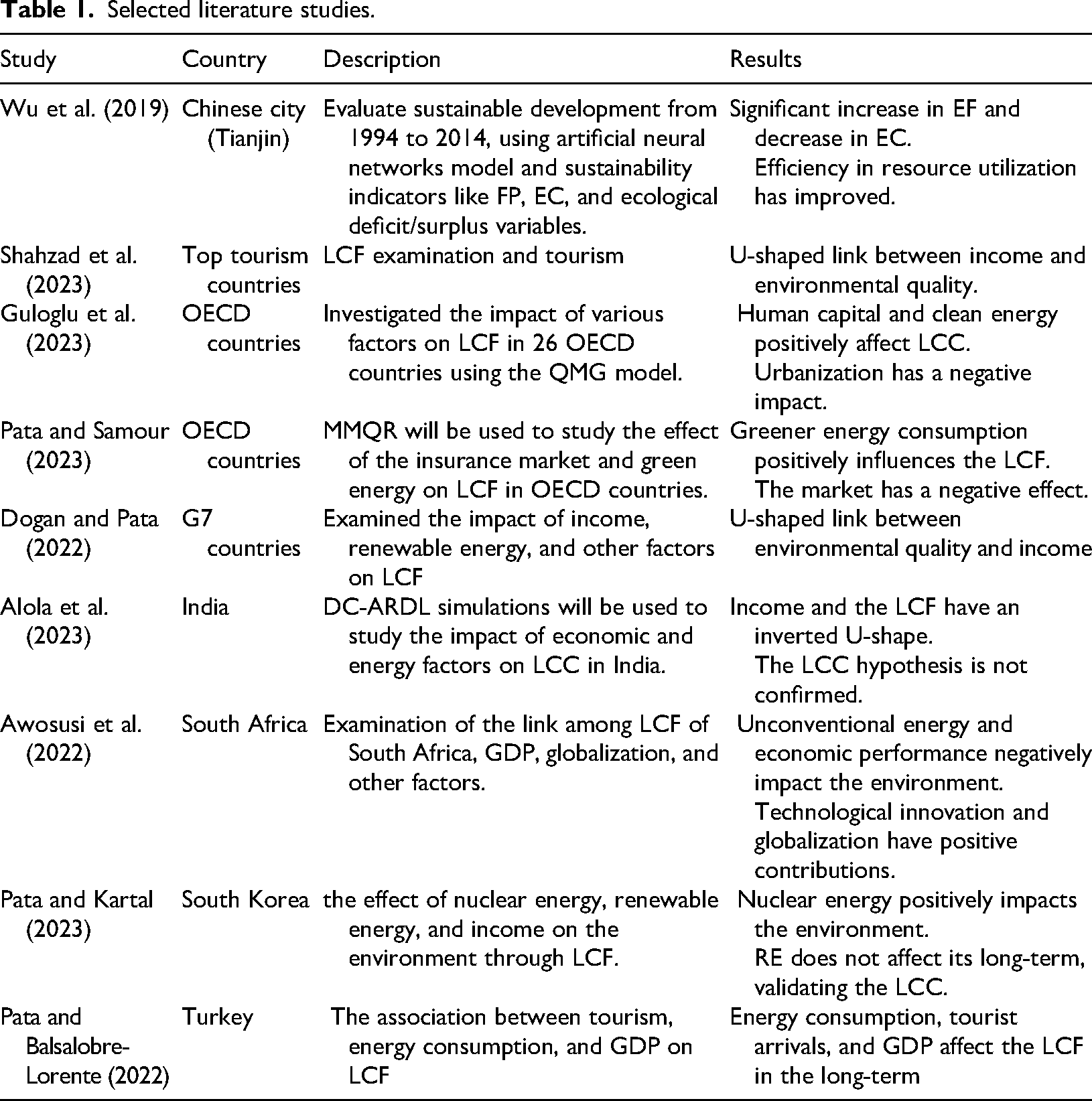
Considering these studies, the authors of this paper proposed to analyze the situation in Romania from the point of view of EQ. So, this study stands out by analyzing LCC in a European Union country. This country is not the subject of scientific analysis on this topic; most studies focus on countries in Asia and Africa and A brief review of the results of previous studies is presented in Table 1.
Selected literature studies.
Methodology and data
Data specification
In this study, we examined the LCC hypothesis in Romania by considering the effect of RE consumption, urbanization, environmental tax, and trade openness. Data for our specified parameters have been gathered from 1994Q1 to 2020Q4 using quarterly data to fulfill our study objectives. We focused on 1994Q1-2020Q4 because it was a joint decision taking into consideration data availability and significant structural changes in Romania's economic and environmental policy. The initial year, 1994, is also the first year of the transition of post-communist Romania to a market economy and an early year on the path of its environmental reforms. This period also includes Romania's pre- and post-accession to the EU (accession in 2007), during which significant convergence of regulations with EU environmental directives occurred. Also, the time profile comprises several significant milestones, such as the development of environmental taxation systems, the opening of the energy market, and the expansion of utilization of renewable energy sources. Terminating the dataset in 2020 allows us to incorporate Romania's most recent sustainability initiatives before the data noise induced by the COVID-19 crisis in 2021.
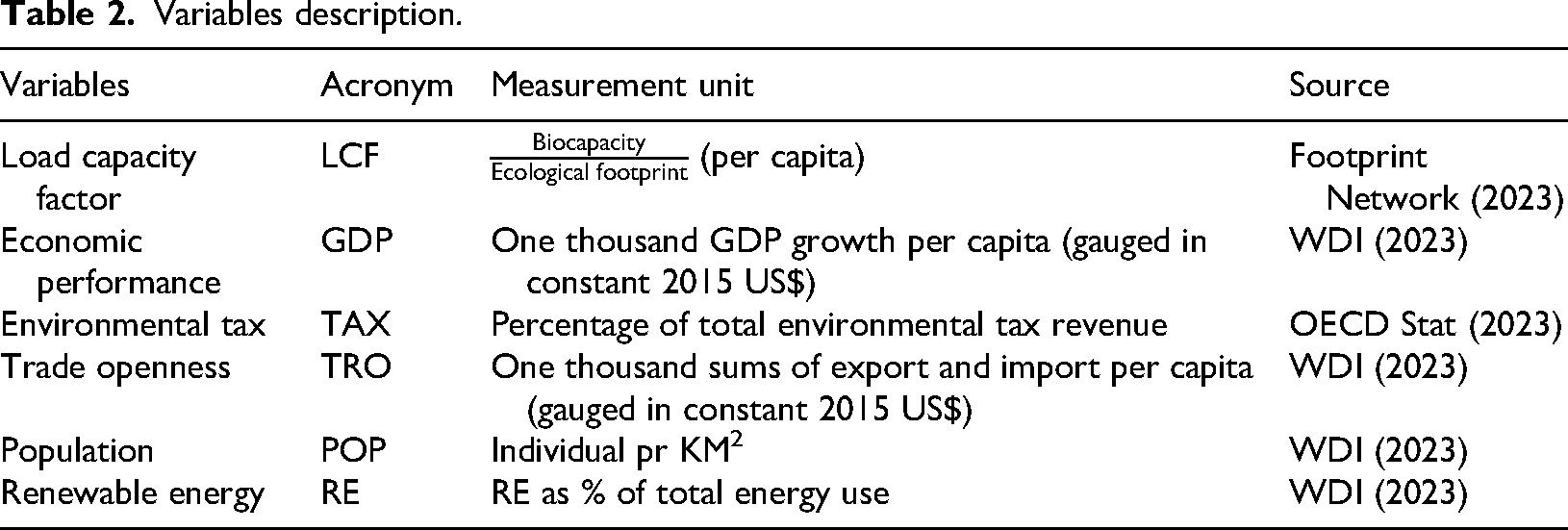
The data on environmental tax is downloaded from OECD Stat (2023). The second factors are urbanization, trade openness, and growth in GDP per capita, as obtained from the World Development Indicators (WDI) of the World Bank (2023). The understanding of EQ, measured by the LCF, has traditionally been linked to the emission of toxic gases into the atmosphere, quantified through CF. However, the discourse on ecological injustice and pollution has broadened over recent decades, revealing more complex aspects of environmental harm. Current advancements in ecological footprint data suggest that satisfying today's demand for ecosystem services would require resources equivalent to those of two Earths, which starkly contrasts with the capacity for providing ecological goods. Drawing on contemporary literature, we employ the LCP to navigate these discussions (Erdogan, 2023, 2024). The LCF is computed using the biocapacity measured in metric gha per population and the ecological footprint gha per capita from the Footprint network (2023). Figure 1 shows the data trend. Following the logic of the previously mentioned research, the model developed to address carbon emissions in Romania is as follows:
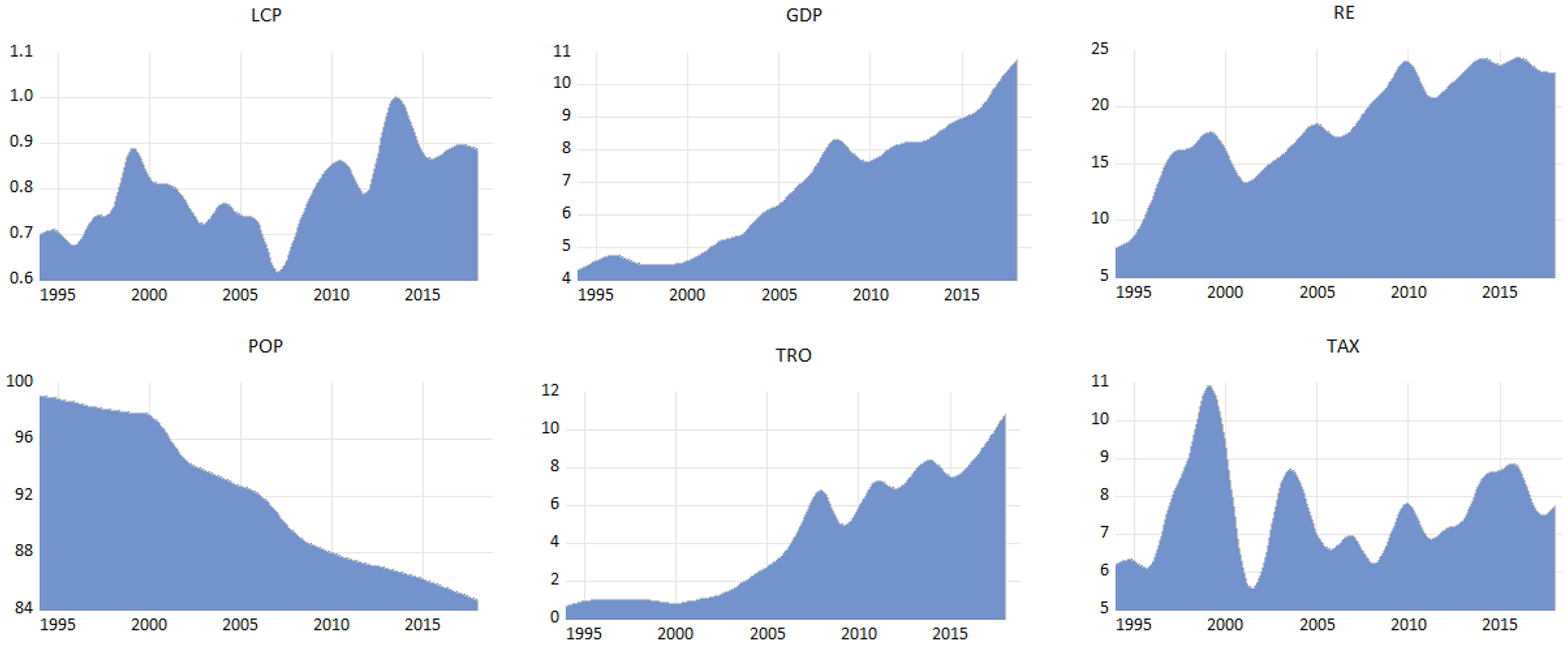
Quarterly data trend during the period estimation.
The econometric version is reported in Equation 2.
Variables description.
Descriptive statistics and correlation
Table 3 provides the summary statistics of time series data. In total, 97 data were used in this estimation study. LCF has a positive mean (0.8). Similarly, the variables have a positive sign, indicating that the GDP, POP, TAX, and TRO have a positive mean. The skewness and kurtosis analyses reveal additional intriguing aspects of the parameters. The skewness study reveals that all the parameters are right-handedly skewed or positively except renewable energy.
Descriptive statistics.
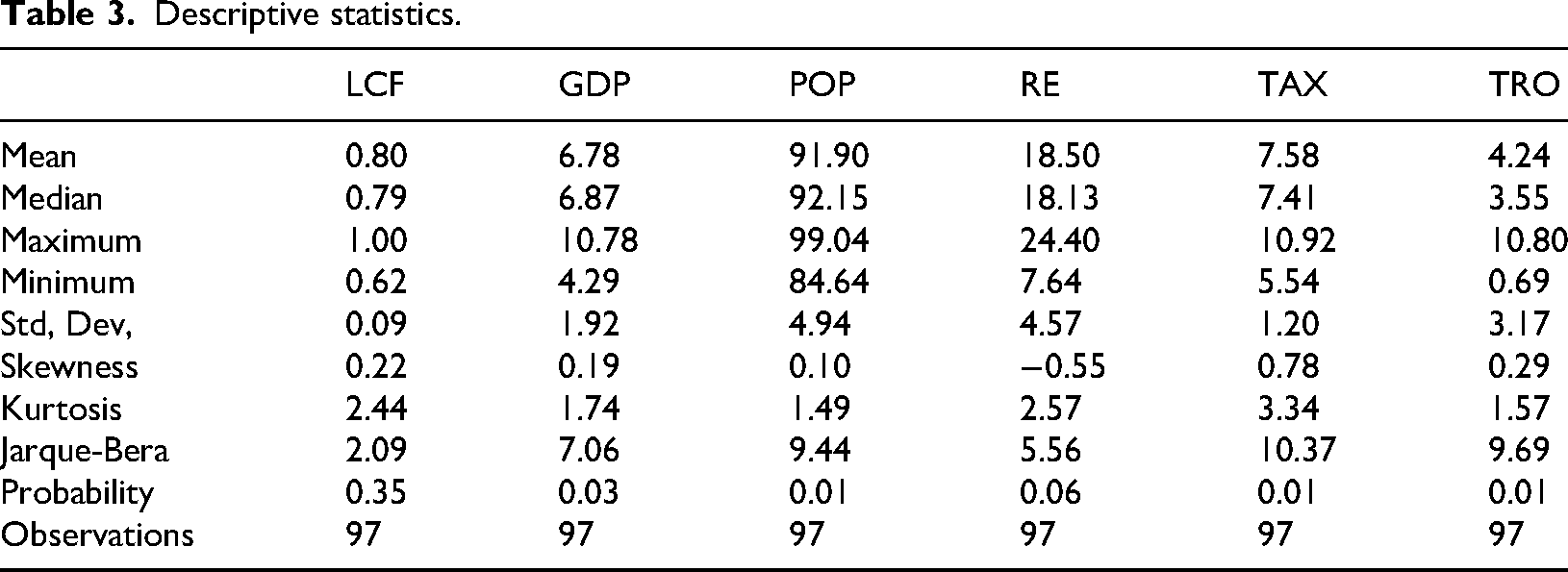
Further evidence that the variables are generally not distributed comes from the skewness study, where the value coefficient exceeds threshold limit three. Additionally, we harnessed the Jarque-Bera (JB) test to further assess our candidate's normality. The JB test findings show that the test statistics are comparatively high, requiring us to deny the null hypothesis of normality in this case. As a consequence, the variables cannot be presumed to be normally distributed.
Correlation
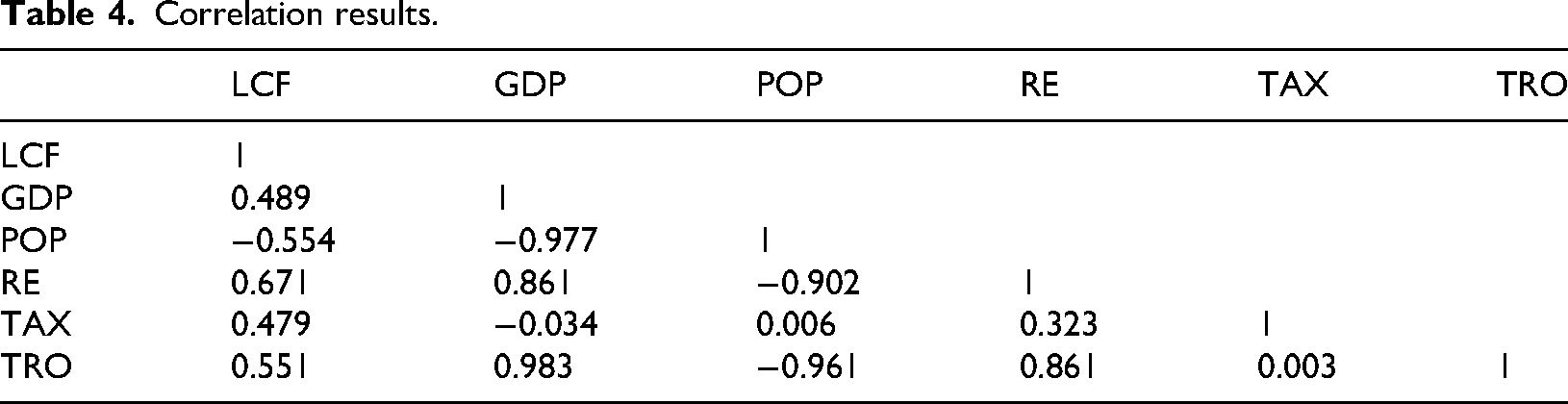
Table 4 presents the correlation among datasets. It shows a positive correlation between LCF and its determinate variables. The correlation between RE and LCF appears high, about 0.67. LCF moderately correlates with GDP and TAX, about 0.48, and 0.55 with trade openness and population
Correlation results.
Techniques definition
The MM-QR approach has several advantages for analyzing panel data, especially when one is interested in analyzing how changes in one or more covariates affect different percentiles of the conditional distribution of the outcome. Introduced by Machado and Santos Silva (2019), the MM-QR method is an alternative approach to traditional quantile regression and OLS (ordinary least squares) that may not sufficiently model all possible associations between variables. In contrast to these standard approaches, MM-QR is more appropriate when dealing with data that are non-normally distributed or contain outliers, enabling a richer understanding of how explanatory variables influence different parts of the distributions of the dependent variable (Mohammed et al., 2024).
A key methodological novelty of Machado and Santos Silva (2019) is the inclusion of the additive fixed effects (αi), which allows us to estimate the entire conditional coverage distribution of the dependent variable (Dit) given observed covariates. Furthermore, the framework allows the application of methods that previously were restricted to the estimation and inference of conditional means (e.g. identification of the individual effects in panel structures) and also provides for the behavior of the regressor across the entire conditional distribution. In particular, the MM-QR model is appropriate when the endogeneity of explanatory variables is a problem (Tiwari et al., 2023).
In addition, MM-QR is highly suited to examining the distributional consequences of covariates, such as those of the influence on income inequality, given its resistance to normality violations, ability to handle endogenous regressors, and consideration of individual fixed effects. Crucially, it guarantees non-crossing quantile estimates, improving the results’ interpretability.

The check function is indicated as 
The quantile regression model
This research will use the QR method to enhance the robustness of the MM-QR outcomes. As Sim and Zhou (2015) argue, previous panel quantile regression models suffered from restricted estimation of average effects and disregarded different market regimes.
Results and discussion
Unit root test (URT)
This section explored the stationarity status to show whether time series were used at level or first difference. The URT findings for the complete panel are shown in Table 5. We investigated two types of URT. We consider the tests Phillips and Perron (1988) and Elliott and Stock (1992). The results from the URT confirm the stationarity at the first difference I (1) for all data variables, namely GDP, TAX, TRO, RE, POP, and the LCF.
Unit root test results.
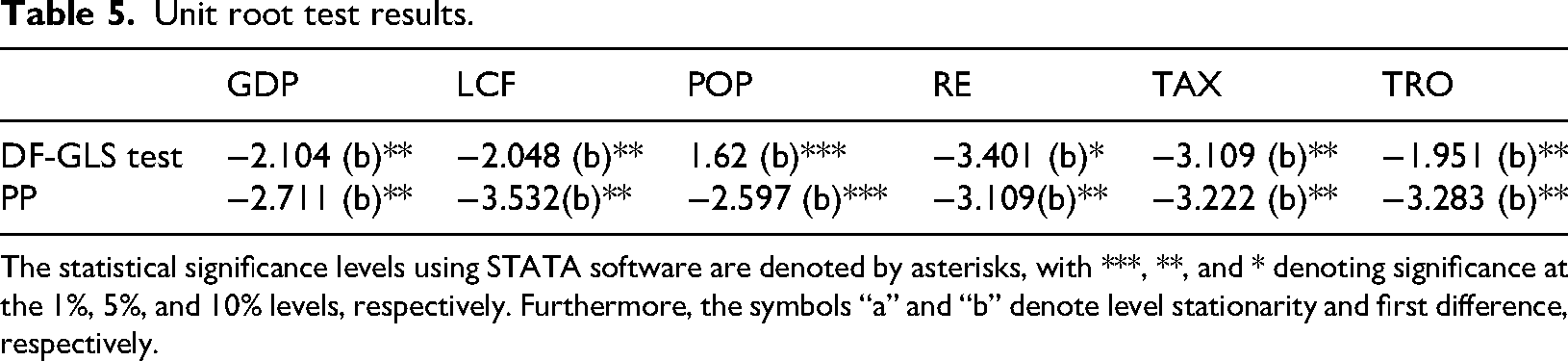
The statistical significance levels using STATA software are denoted by asterisks, with ***, **, and * denoting significance at the 1%, 5%, and 10% levels, respectively. Furthermore, the symbols “a” and “b” denote level stationarity and first difference, respectively.
Panel the MM-QR findings
Table 6 and Figure 2 provide the MMQR model outcomes for GDP, GDP squared, RE trade openness, urbanization, and Tax on LCF in Romania. Based on the literature (Dogan and Pata, 2022) that verified the signs of the
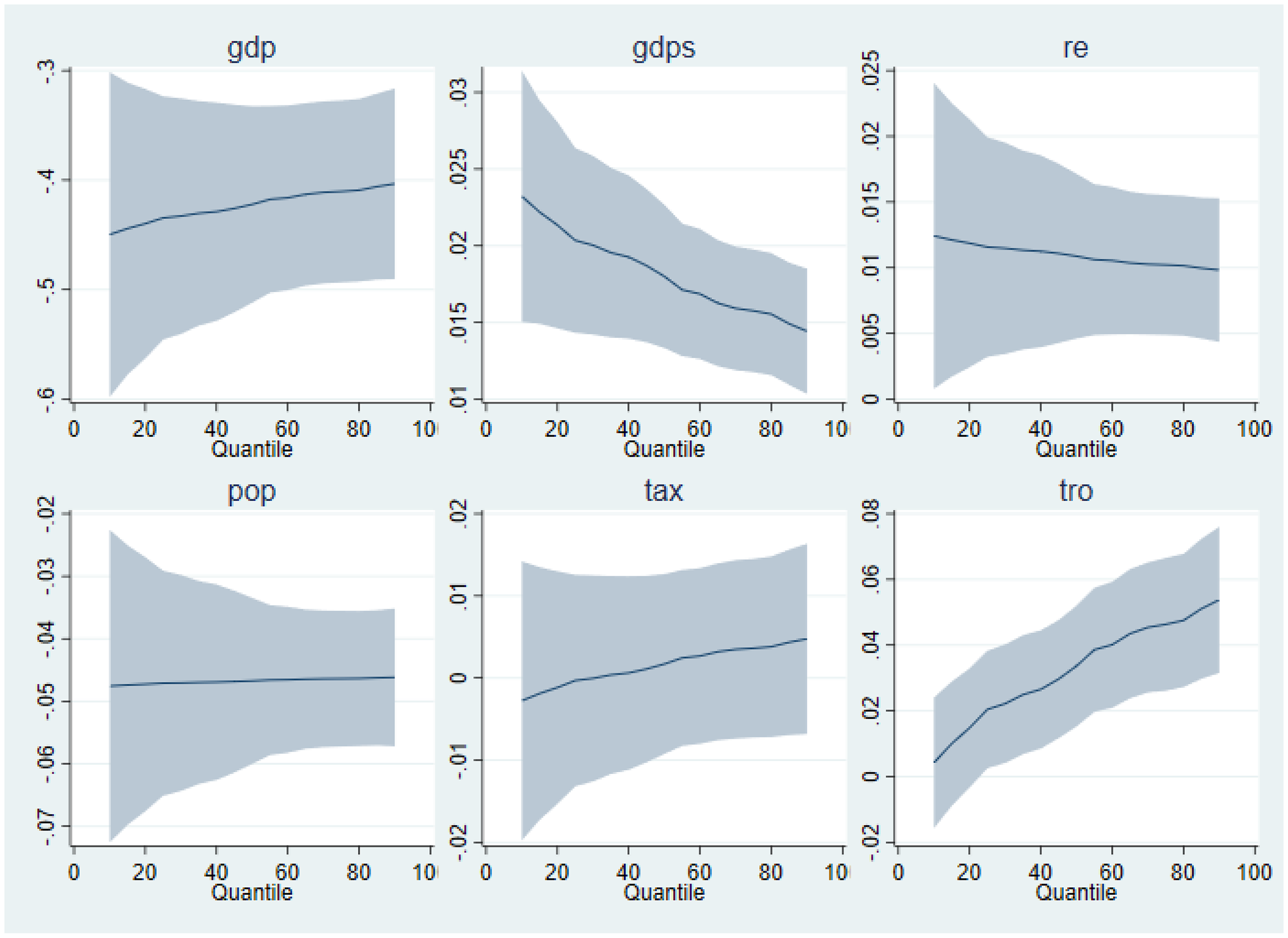
MMQR results plot.
Panel MMQR process estimate.
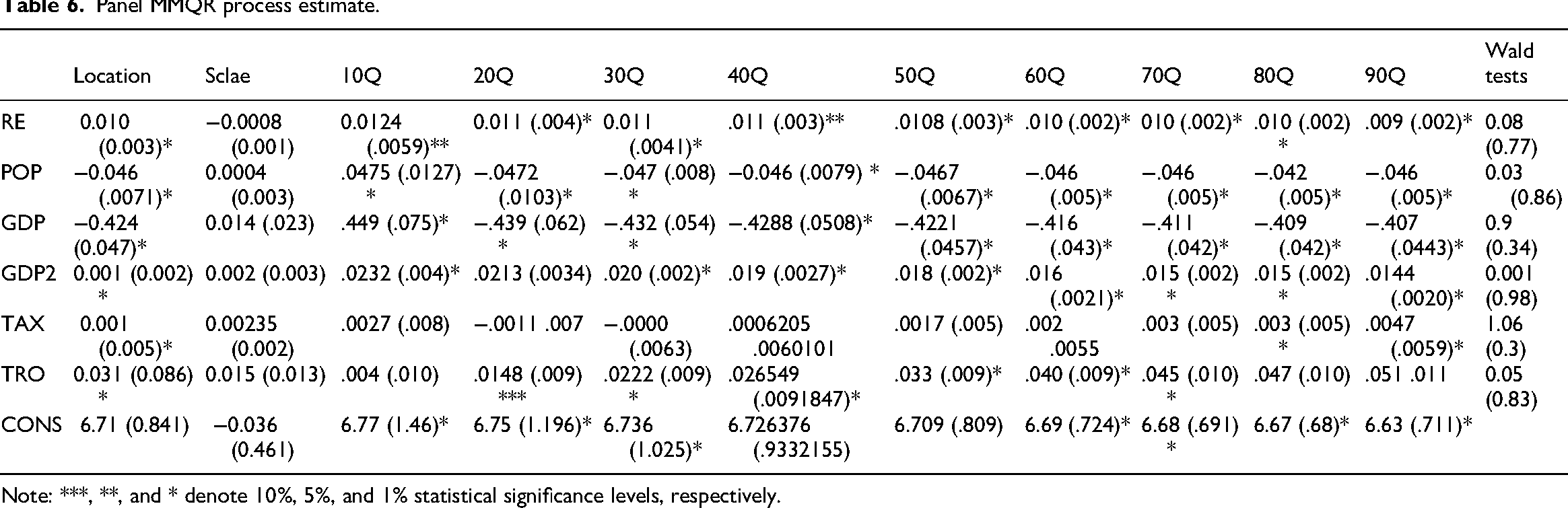
Note: ***, **, and * denote 10%, 5%, and 1% statistical significance levels, respectively.
The effect of TAX across different quantiles does not significantly affect EQ. One possible explanation for TAX's lack of a significant effect on EQ in Romania could be the inadequate enforcement and implementation. Despite TAX, compliance and enforcement can be weak due to various factors. The inability of public authorities to rigorously apply existing legal regulations (which are based on relevant European directives transposed into national legislation) and the high level of corruption fueled by foreign capital can be some explanations for this situation. Additionally, the revenues generated from TAX may not be directed toward environmental protection measures, weakening their effectiveness. Unlike trade openness, it still plays a role in LCC. This effect is critical at the upper quantile and then the lower quantile. An increase of 1% in trade openness at the lowest quantiles resulted in a 0.06% increase in energy poverty, followed by a decrease of around 0.3 at the 10th quantile.
QR results
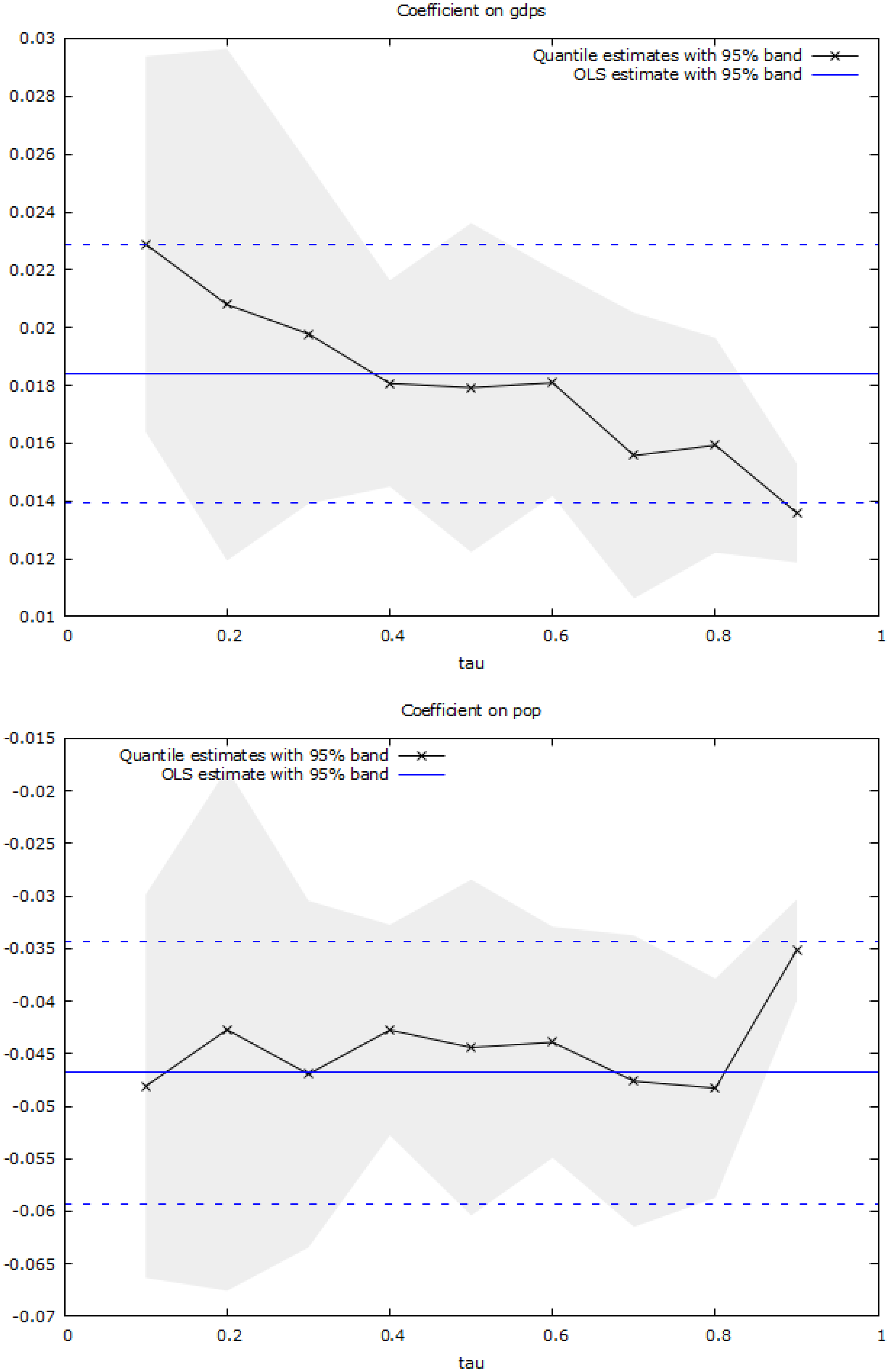
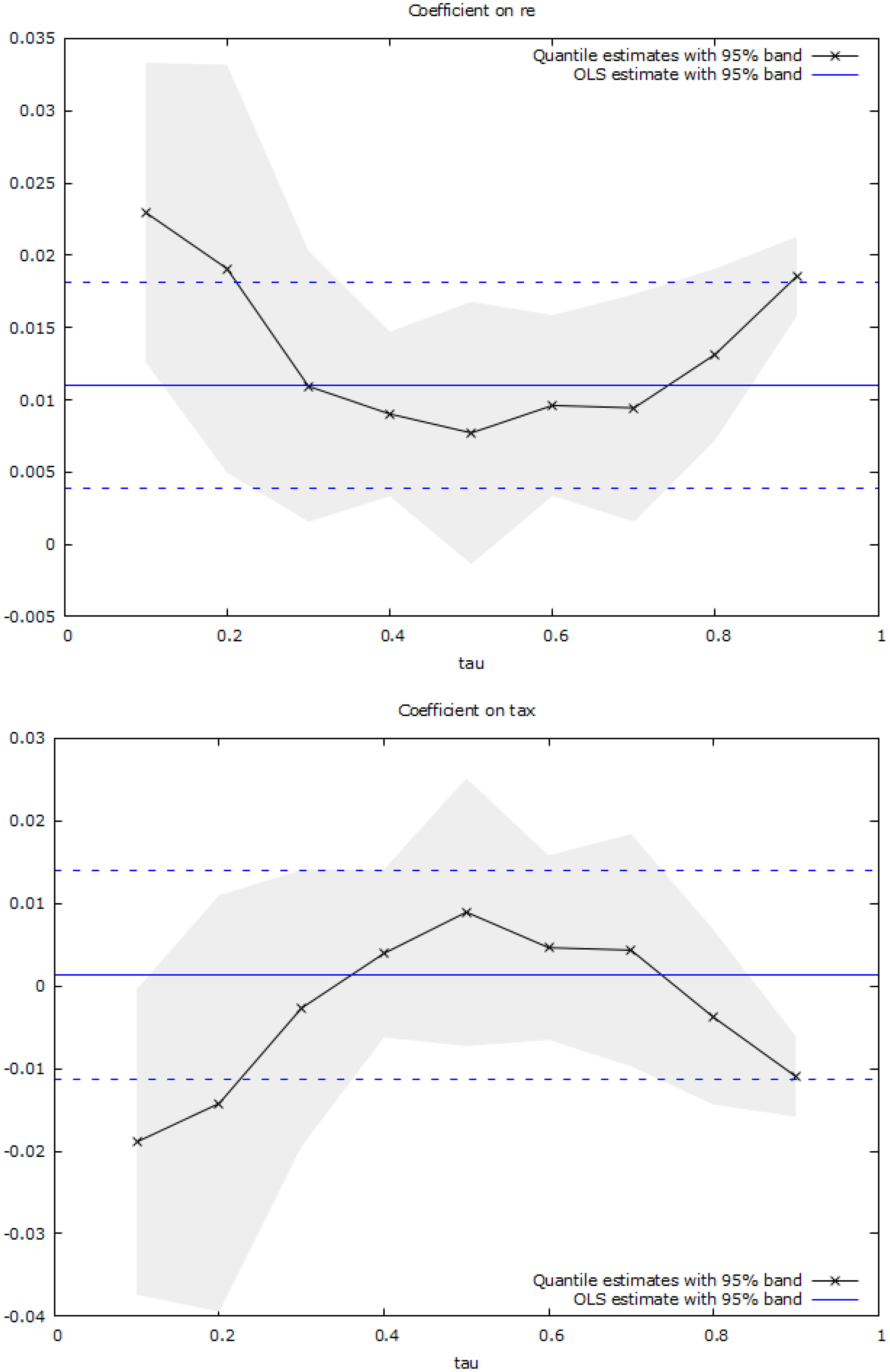
We have shown the results of the Quantile Regression analysis on the panel data in Figure 3. It demonstrates how changes in explicating variables impact LCC. This result provides evidence for the significant influence of independent variables on the upper, middle, and lower quartiles of GDP and GDP squared. The negative coefficient for GDP and the positive coefficient for GDP squared support the LCC hypothesis in Romania. In addition, QR findings support the role of green power in reducing environmental damage. The study also observed that the degree of openness in trade variables amplified their impact across different quantile levels. The ecological tax has a negligible effect from the 10th to the 90th quintile. Increasing urbanization is a detrimental factor for EQ improvement in the results.
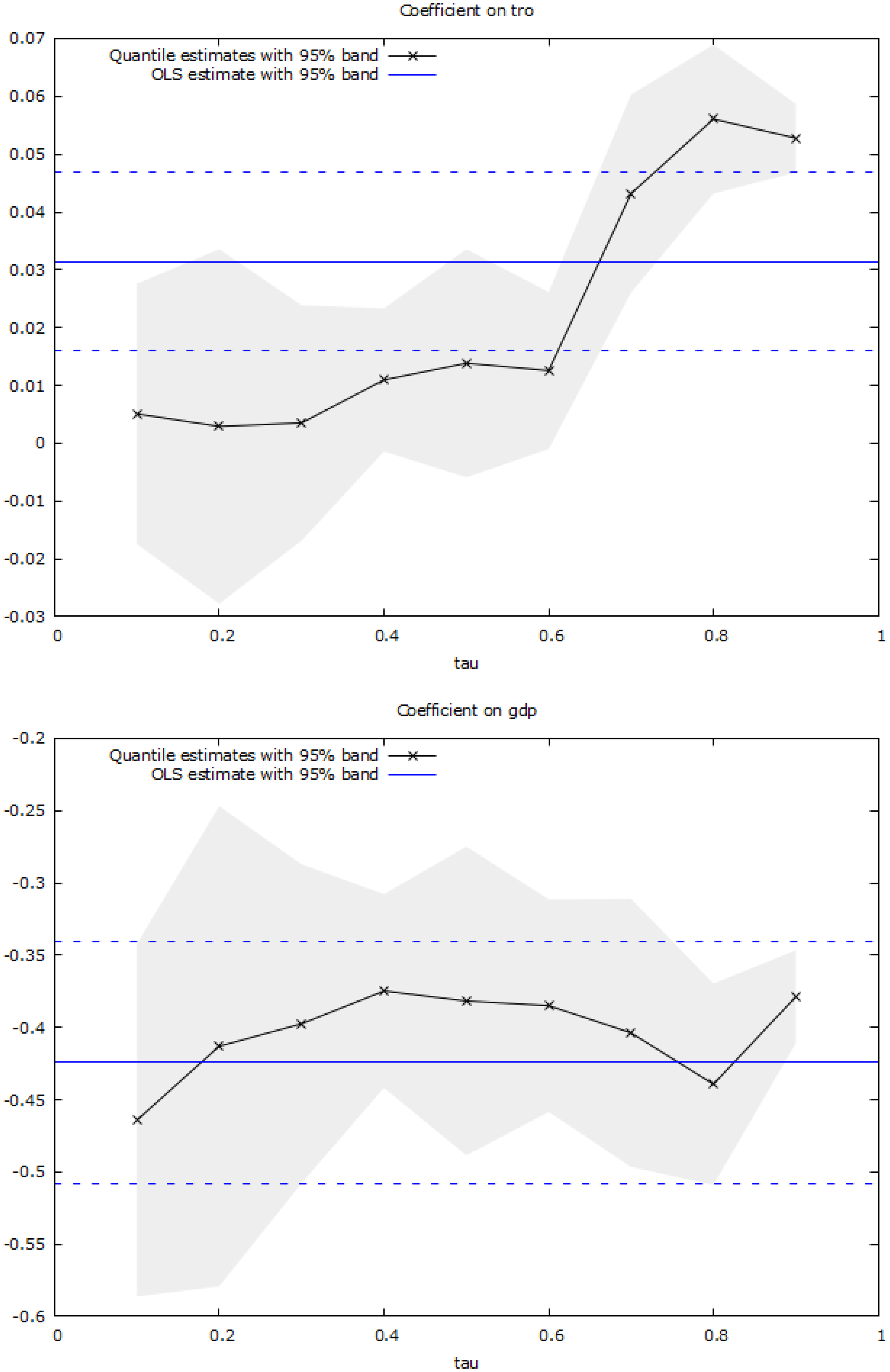
QR results plot.
Discussion of findings
This paper examines Romania's LCC hypothesis for the first time, considering the effects of trade, TAX, and renewable energy. The data from 1994 to 2020 were used, and the MM-QR and QR techniques were applied. The outcome of the two models demonstrates the existence of the LCC and the significant role of trade and RE on the LCF.
The study confirms Romania's (LCC) hypothesis, with similar results registered by previous studies (Dogan and Pata, 2022; Kirikkaleli et al., 2023; Pata and Kartal, 2023) for different regions like OECD countries, G7; India and Indonesia. As a member of the European Union, Romania is in the whole energy transition process. The transposition of European directives into national legislation has generated a metamorphosis in the behavior of companies that are increasingly concerned not only with improving energy efficiency but also with the increasingly intense use of RE (Panait et al., 2022b; Popescu et al., 2019). According to these results, RE significantly impacts EQ at lower, medium, and upper quantiles, where 1% renewable consumption seems relatively higher at lower than the rest quantiles level. RE contributes to mitigating carbon emissions and improving environmental quality. Considering the geopolitical situation, the energy economy is essential from the perspective of the challenges resulting from the necessity to improve the energy security of the European Union countries. Access to energy has also become a challenge for the countries of the European Union. The possibility of using RE reduces the pressure presented by the increased risk of energy poverty. For these reasons, the shift to alternative energy is considered from the viewpoint of reducing the impact on the population. The just transition is the watchword that guides the reconfiguration of the energy mix and the reconsideration of coal and nuclear energy.
The population has numerous negative externalities on the environment, from environmental pollution and the challenges it generates from waste management. This study concluded that a 1% increase in population significantly impacts the LCF across low, medium, and upper quantiles. Specifically, on average, LCF decreases by 0.04% in response to a 1% increase in population at these quantiles. Similar correlations between population and LCF were observed in prior studies (Liang et al., 2019; Sahoo and Sethi, 2022).
The TAX across different quantiles significantly impacts environmental quality, considering several factors that have other implications. The explanation for this situation is that TAX's lack of a significant effect on ecological quality in Romania could be due to inadequate enforcement and implementation. Despite TAX, compliance and enforcement can be weak due to various factors (Dong et al., 2025; Hong et al., 2024; Radulescu et al., 2025). A certain inability of public authorities can be observed regarding the rigorous appliance of the legal rules (based on relevant European directives transposed into national legislation). In addition, corruption is fueled by foreign companies and local entrepreneurs; in this way, the legislative loopholes are abundantly exploited by private companies to the detriment of the public interest.
Additionally, TAX received by the public budget may not be used to finance environmental protection measures, so their efficiency is lower. Unlike trade openness, it still plays a role in LCC. This effect is significant at the upper quantile and then the lower quantile. At the weakest quantiles, an increase of 1% in trade openness increases energy poverty by 0.06%.
Conclusions and limitation study
Conclusion
The complexity of environmental degradation on different levels—soil, air, water, and the many implications on biodiversity generates intense concerns on the part of specialists. Researchers from different fields have tried to identify tools for measuring environmental degradation and nature's ability to face the challenges generated by human activity. The study confirms the validity of the LCC hypothesis for the Romanian economy. For this country, the results demonstrated the significant role of trade and RE on the LCF.
The fall of communism generated major changes in the Romanian economy by moving from a centralized economy to a market economy, and the effects were also felt in the environment. The transition to the market economy was accompanied by the intensification of commercial exchanges, the attraction of foreign investments, and deindustrialization. The large state-owned companies were privatized, and in many cases, they were bought by companies with foreign capital that closed them down and sold the assets for scrap or used the land for real estate projects. The decrease in industrial production had positive consequences on the environment. Still, in many cases, companies with foreign capital generated negative externalities due to non-compliance with legal regulations. Romania's accession to the European Union in 2007 brought major changes generated by adopting the acquis communautaire, the country's legislation being radically transformed by the transposition of European directives into various legal regulations. The liberalization of the movement of goods, services, capital, and people between European Union countries had positive consequences on GDP, the process being interrupted by the international crises that affected the entire world economy. The implementation of these procedures will entail fiscal implications for policymakers. Hence, it is imperative to formulate strategies to recoup the expenses accrued during this stage. Therefore, in the subsequent stage, policymakers should prioritize financial recovery, specifically through implementing green financial channels, as they strive to promote clean energy, green innovations, and environmental well-being. Financial institutions may consider implementing differential interest rate mechanisms, such as incorporating carbon footprint assessments. It encourages adopting environmentally friendly and sustainable technologies while discouraging firms’ use of fossil fuel-based solutions. This mechanism facilitates the transition of firms and policymakers towards clean energy solutions while discouraging the utilization of fossil fuel solutions and more environmentally harmful technologies. Policymakers should not only levy environmental taxes, but the tax system should also be designed to fund green innovation and renewable infrastructure projects directly. Environmental tax revenues could fund subsidies to cleaners and offset other distortionary taxes (e.g. income taxes), having a “double dividend” effect on environmental quality and growth. Trade policy should support environmental goals by promoting green exports and requiring environmental standards for imported products. Romania could be more involved in green trade agreements or even develop “eco-labeling” certifications to ensure higher competitiveness of sustainable goods in international trade. To accelerate the energy transition, Romania must extend its investment incentives for solar, wind, and biomass in rural and industrial areas. All it would have to do is speed permitting, offer low-interest green loans, and focus on grid modernization to better accommodate the rise of distributed clean energy sources.
Along with GDP come issues with energy use and environmental quality. Still, EU membership ensures certain behaviors by public authorities and companies, which are no longer exclusively concerned with financial performance. The increase in the importance of corporate social responsibility actions has also generated a new direction for companies, namely, social and environmental performance, generically known as non-financial performance.
Limitations study
The manuscript outlines various limitations that could be a fundamental framework for future research. The primary limitation arises from the lack of data for the chosen sample. Global crises, including the ongoing pandemic, the military conflicts between Russia and Ukraine, and the upcoming COP 27, have had significant global implications that have not been considered in this research. Moreover, building upon this analogous line of reasoning, our study fails to consider other micro and macroeconomic factors that could influence the LCF.
Future research could compare “across countries” between other emerging European countries to further check the LCC hypothesis. Sectoral multipliers might expose the industry-specific dynamics, and including other determinants, such as green innovation and quality of institutions, would refine the findings. Furthermore, dynamic modeling techniques may provide more accurate time-varying effects, and the relationship between environmental taxes and international trade agreements is studied to provide an understanding of sustainable policy design.
Footnotes
Abbreviations

Funding
The authors disclosed receipt of the following financial support for the research, authorship, and/or publication of this article: This research was funded by Princess Nourah bint Abdulrahman University Researchers Supporting Project number (PNURSP2025R548), Princess Nourah bint Abdulrahman University, Riyadh, Saudi Arabia.
Declaration of conflicting interests
The authors declared no potential conflicts of interest with respect to the research, authorship, and/or publication of this article.
Data availability
Data is available on reasonable request.