




Abstract
The Fukushima nuclear catastrophe in 2011 had a significant effect on nuclear development worldwide. Despite the numerous studies that assessed nuclear acceptance in recent times, there is currently no study that provides a detailed bibliometric review on the available literature. Therefore, a bibliometric review of public acceptance and nuclear energy has been carried out to better understand their evolution, trends, and future research potentials. In the period under review (2000–2023), 263 documents were published, and a total of 659 researchers produced the literature with an annual growth rate of 7.9%. The factorial analysis revealed key themes; grouped into three clusters: technical operational aspects of nuclear energy (Cluster 1), safety and risk management (Cluster 2), and public policy and social issues (Cluster 3). The word cloud analysis identified common subjects of research such as nuclear safety, risk perception, and public trust, suggesting that further research is needed on societal concerns and effective communication strategies. Collaboration patterns revealed strong research linkages between China and the US, and a number of other internationally collaborative countries such as the UK, Germany, and Japan. Future studies should investigate prediction models for public perceptions of nuclear power and concentrate on comprehending the elements that affect public trust, especially in developing nations. Research on public-private partnerships, psychological aspects influencing attitudes, and the effectiveness of educational initiatives is also crucial. The policy recommendations highlights the need for open governance and broad public participation in decisions concerning nuclear energy to alleviate concerns on safety and environmental risks and therefore nurture public trust in nuclear power.
Introduction
Many nations throughout the world are promoting nuclear energy as a clean energy source, and it is now one of the primary substitutes for changing the global energy system and lowering the greenhouse effect. The International Atomic Energy Agency's (IAEA) forecast indicates that nuclear power remains a viable source of energy worldwide, with a focus on Asia, particularly China (Guo and Ren, 2017). Several nations (including the US, China, and Japan) have made the decision to pursue the model development of nuclear energy because of its significant contribution to mitigating adverse environmental effects, offering economically viable solutions to satisfy particular energy needs, and generating new job opportunities (Baek, 2015; Hu et al., 2021). With 440 nuclear reactors in use, 50 countries have demonstrated the dependability of nuclear power plants (NPP). Even though the number of nuclear reactors is rising, 182 of them are no longer in operation (Ong et al., 2022). Nuclear power development worldwide was severely hampered and significantly slowed after the Fukushima nuclear accident (FNA) in Japan in 2011. The global public's perception of nuclear power underwent a dramatic shift following the FNA, and this shift has had a major impact on the growth of nuclear power in the nations and areas that have been developing, building, and running NPPs (Huang et al., 2013; Guo et al., 2024). People fear and resist the establishment of toxic facilities near their homes, a phenomenon known as “not in my backyard” (NIMBY), despite the government using temporary procedures to avert the adverse effects of implementing nuclear power construction projects (Hu et al., 2021).
The public's acceptance of energy sourced from nuclear is important to policymakers because these decisions—including cost, environmental factors and the location of the facility—often spark public outcry, which causes policies to be redirected resulting in delays in projects (Glaser, 2012; Agyekum et al., 2021; Ansah et al., 2021). Public acceptance has grown to be a barrier to the development of nuclear energy, and the key to allowing the legal construction of NPPs is understanding how to influence and win over the public. Therefore, more research should be done to determine the variables influencing the locals’ opinions regarding the building of nuclear power plants (Yang et al., 2022; Al-Shetwi et al., 2024). Policymakers face unique challenges in garnering public support for nuclear-related energy decisions for a variety of reasons. Nuclear decision-making encompasses not only technical matters but also a multifaceted range of governance, social, economic, and environmental issues, including risk management and public mistrust. The nuclear plant operators, public, media, academics, NGOs, and epistemic communities are all involved in concerns about nuclear energy. Understanding their views is crucial for effective nuclear decision-making, as it helps to increase the effectiveness of the energy option (Mah et al., 2014; Agyekum et al., 2020; Ansah et al., 2021; Ansah et al., 2023; Khaleel et al., 2025). Consequently, numerous researchers from academia and industry have endeavored to investigate the public's perceptions of nuclear energy and the factors that influence these perceptions (Park and Ohm, 2014; Wang et al., 2014; Wu, 2017; Latré et al., 2019; Wang et al., 2020; Badora et al., 2021; Hlavacek et al., 2023).
Thus far, various reviews of the literature pertaining to nuclear energy and its acceptance have been carried out from various angles. For instance, Edwards et al. (2019) conducted a thorough assessment of qualitative and mixed methods research to investigate the psychological impacts of living close to nuclear energy and technology. The historical synopsis of their study states that early studies focused on atomic bomb psychological consequences and nuclear war readiness. Greenhalgh and Azapagic (2009) explored the reasons behind the policy shift, the obstacles that once prevented the development of new nuclear power, and the obstacles that still exist for both the governments and businesses. The three primary drivers—climate change, declining energy generation capacity, and energy supply security—were examined. Takebayashi et al. (2017) gave an overview of the literature on radiation-related fear and risk perceptions among Japanese citizens following the Fukushima NPP tragedy in 2011. References in the identified publications were manually looked up and two databases (MEDLINE and PsycINFO) were employed. Budnitz (2016) examined and reviewed the state of commercial nuclear power today and its prospects for the future, paying particular attention to concerns about economics, safety, proliferation, and physical security. Another study by Bruce Hayes (2022) examined the facts regarding nuclear energy without regard to social, political, or other prejudices. According to the results, nuclear power is practically always the best option, despite the common social discourse that portrays it as undesirable or even terrifying. Kurniawan et al. (2022) reviewed a range of technologies to offer partially used nuclear fuel storage solutions that are workable, long-lasting, and sustainable. They consist of pyro processing, vitrification, partitioning and transmutation (P&T), and deep geological repositories (DGR). Similarly, Zeng et al. (2016) examined China's nuclear power industry's historical phases as well as its external environment. They went on to highlight the issues and provided a summary of the current state of affairs. Following that, they offered pertinent solutions based on the optimization of industrial distribution, integration of regional resources, industrial organization mode, technical standard system and other factors. Musyoka and Field (2018) also examined Kenya's environmental oversight system in the context of a nuclear power program. According to their analysis, it is necessary to examine Kenya's national legal system to determine whether the environmental law and any ancillary regulations need to be amended, supplemented, or both. Finally, Saghafi and Ghofrani (2016) offered the first thorough review of Accident Management Support Tools (AMST) since Fukushima, addressing the specifics of each of their components. This is in contrast to other review papers that have only looked at specific areas, like fault detection or decision-making support. The study concluded that a modern AMST can offer crucial information about the conditions of the plant, such as the timing of crucial events and a quantitative estimate of significant parameters, that it is not possible to obtain from standard Severe Accident Management Guidelines.
It can be seen that in the current literature as provided in the earlier section, there is no study that comprehensively assesses the past, current and future research status, and directions in the area of nuclear power or energy acceptance. Most researchers have relied on traditional methods to provide a review of the nuclear energy space which is usually not comprehensive enough and does not provide a complete overview on the happenings in the research area. Bibliometric data from internet databases are used in bibliometric studies. Based on these data, bibliometric analysis is performed to enable a thorough and scientific investigation of the field. Bibliometric reviews in various fields of study have multiplied due to the availability of bibliometric data (Ellegaard and Wallin, 2015; Zyoud and Fuchs-Hanusch, 2017; Secinaro et al., 2020; Zyoud and Zyoud, 2021; Zyoud and Zyoud, 2024; Agyekum et al., 2025). The bibliometric analysis is a useful method for gaining high-level insights into the features of a sizable body of academic literature within a particular research area when compared to standard literature reviews (Yang et al., 2020; Hou et al., 2021; Zyoud, 2022). These studies offer data on subjects, research trends, journals, co-citation and co-authorship networks, bibliographic coupling, and the development of emerging fields over time.
Therefore, a comprehensive bibliometric analysis of nuclear energy and social acceptance is carried out for the first time in this study. This comprehensive analysis of 263 publications released for the period 2000–2023 provides the first objective and quantitative insights into research trends regarding nuclear energy and social acceptability. Utilizing the VOSviewer Van Eck and Waltman (2010) and Van Eck et al. (2010) and Biblioshiny tool in R-studio software packages, this study investigates the co-authorship network, the most frequently referenced publications, the most commonly used keywords, and the evolution of publications over time. A systematic review of the top 20 most cited articles within the period of study is also provided in this study. In this statistical analysis of published articles, the relationships between and among them are objectively depicted by examining the frequency of citations in published articles about a particular research topic or field.
Materials and method
The bibliometric study in this paper was conducted using the VOSviewer and the Biblioshiny package in the R-software for the visualization of the bibliometric studies. Preferred Reporting Items for Systematic Reviews and Meta-Analyses (PRISMA) is a literature review methodology that this study uses to retrieve the data required for the analysis because of its ability to carefully, efficiently, and accurately aggregate information about a certain discourse area (Page et al., 2021; Agyekum and Odoi-Yorke, 2024a; Agyekum and Odoi-Yorke, 2024b; Bajwa et al., 2025). A thorough search was conducted using TITLE-ABS-KEY: (“Nuclear power,” OR “Nuclear energy” OR “nuclear power plant”) AND (“Public acceptance” OR “community acceptance” OR “social acceptance” OR “adoption”) in the Elsevier Scopus database on 31 January 2024. During the initial search, a total of 1046 documents were obtained for the period spanning between 2000–2023. Applying various exclusion criteria such as limiting it to documents in the following subject areas: Engineering, Energy, Social Sciences and Environmental Science reduced it to 933 documents. Secondly, the documents were further reduced to 920 by limiting it to articles, conference papers, review, book chapter, and conference reviews. Thirdly, limiting it to papers authored in the English language further reduced it to 875 documents. The remaining documents were further subjected to individual checks to check their scope through abstract, and title inspections, this allowed us to remove out of scope documents, bringing the remaining data to 263 which were used for the analysis in this study. A flowchart of the PRISMA approach adopted for data filtering is shown in Figure 1.
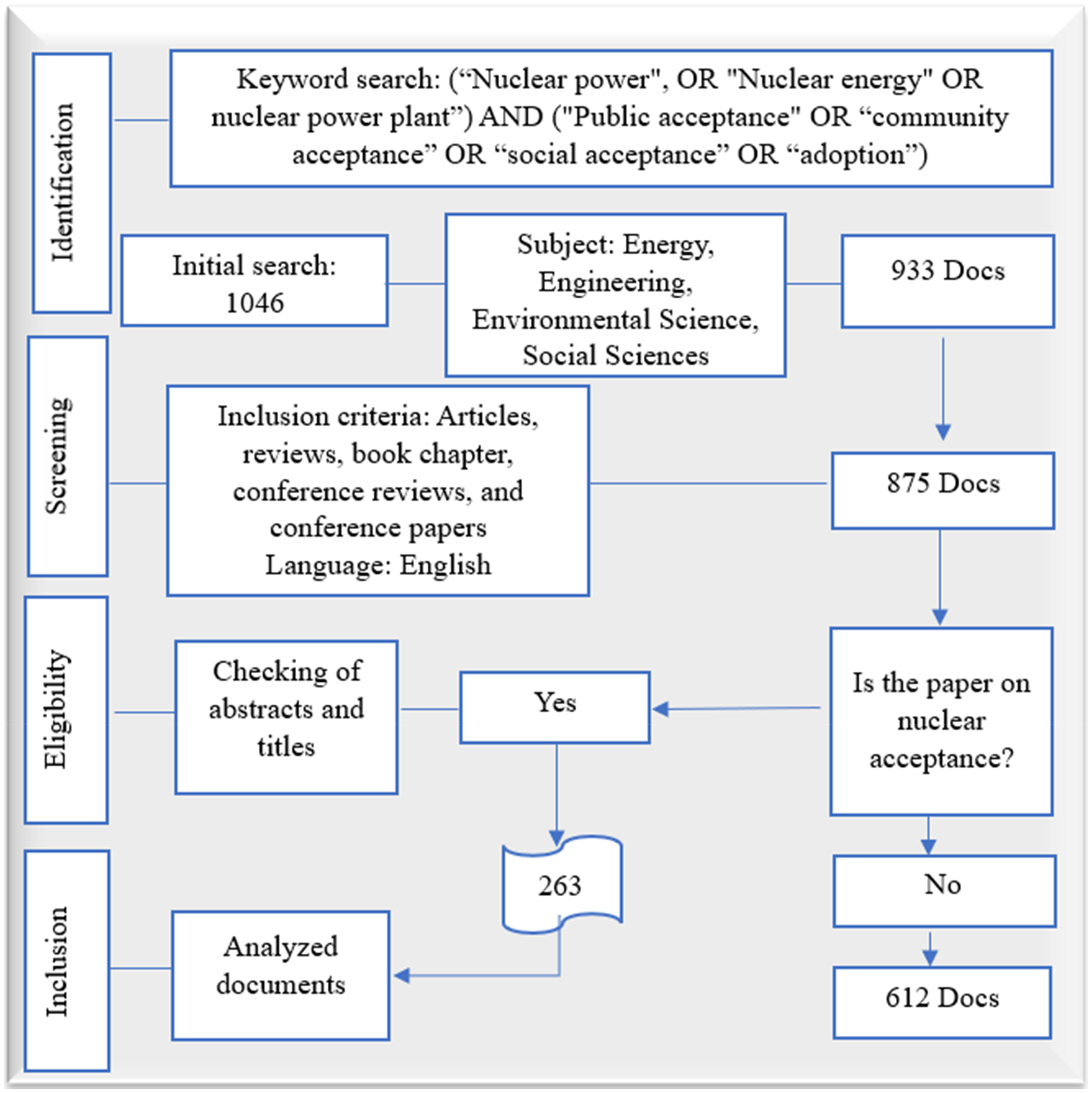
The flowchart for the PRISMA method.
Results and discussion
Using a statistical method to analyze public acceptance publication results related to nuclear energy and its trends in identifying gaps, proposing solutions, and highlighting areas of active research, the bibliometric approach provides valuable insights to the research community. A total of 263 documents were obtained based on the type, language, publication output, region, and keyword distribution of the documents that were extracted between 2000 and 2023. Subsections that follow provide more details about the analysis.
Summary of the data
The summary of the data used is provided in Figure 2. The summary shows that research activities on the topic grew by 7.9% annually during the period of study. A total of 659 researchers or authors have been involved in the production of the 263 documents during the period of study. The document production per year for the period of study has been a zig-zag trend, as there is generally no consistent increase in documents with increases in years. The first year of study recorded a total of 4 documents, which is also the least number of documents produced in a specific year within the period of study. The greatest number of documents—23—was reported in 2023, as shown in Figure 3.
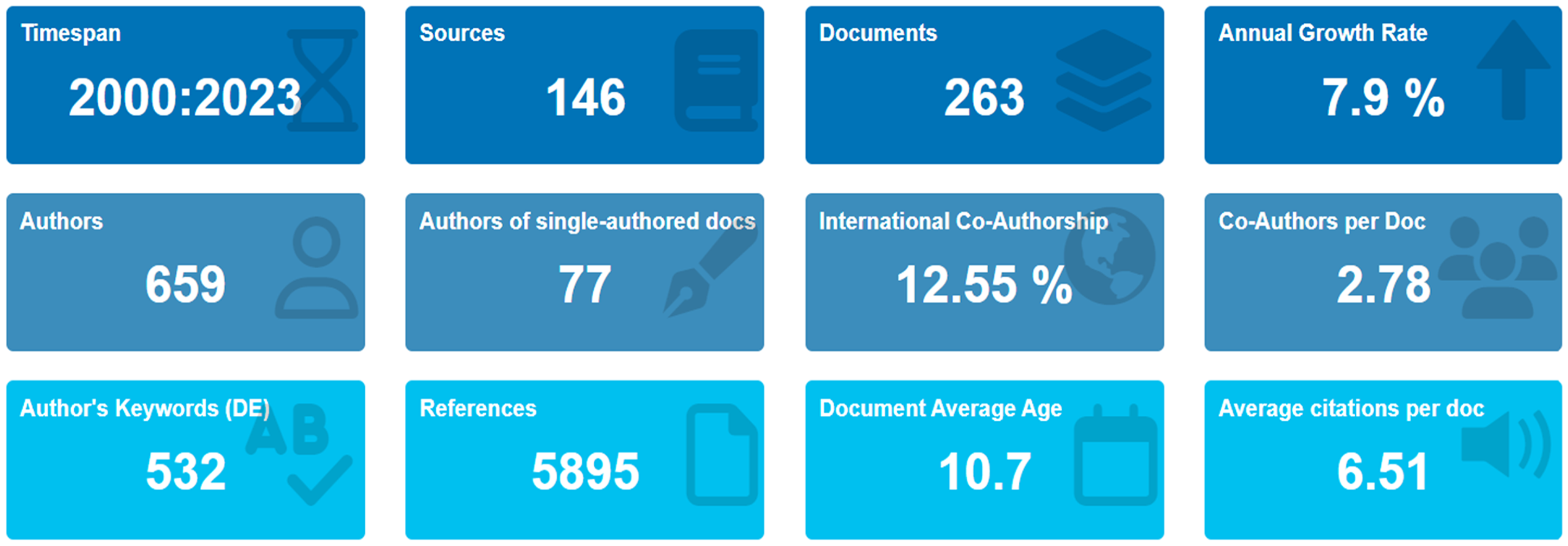
Summary of the analyzed data.
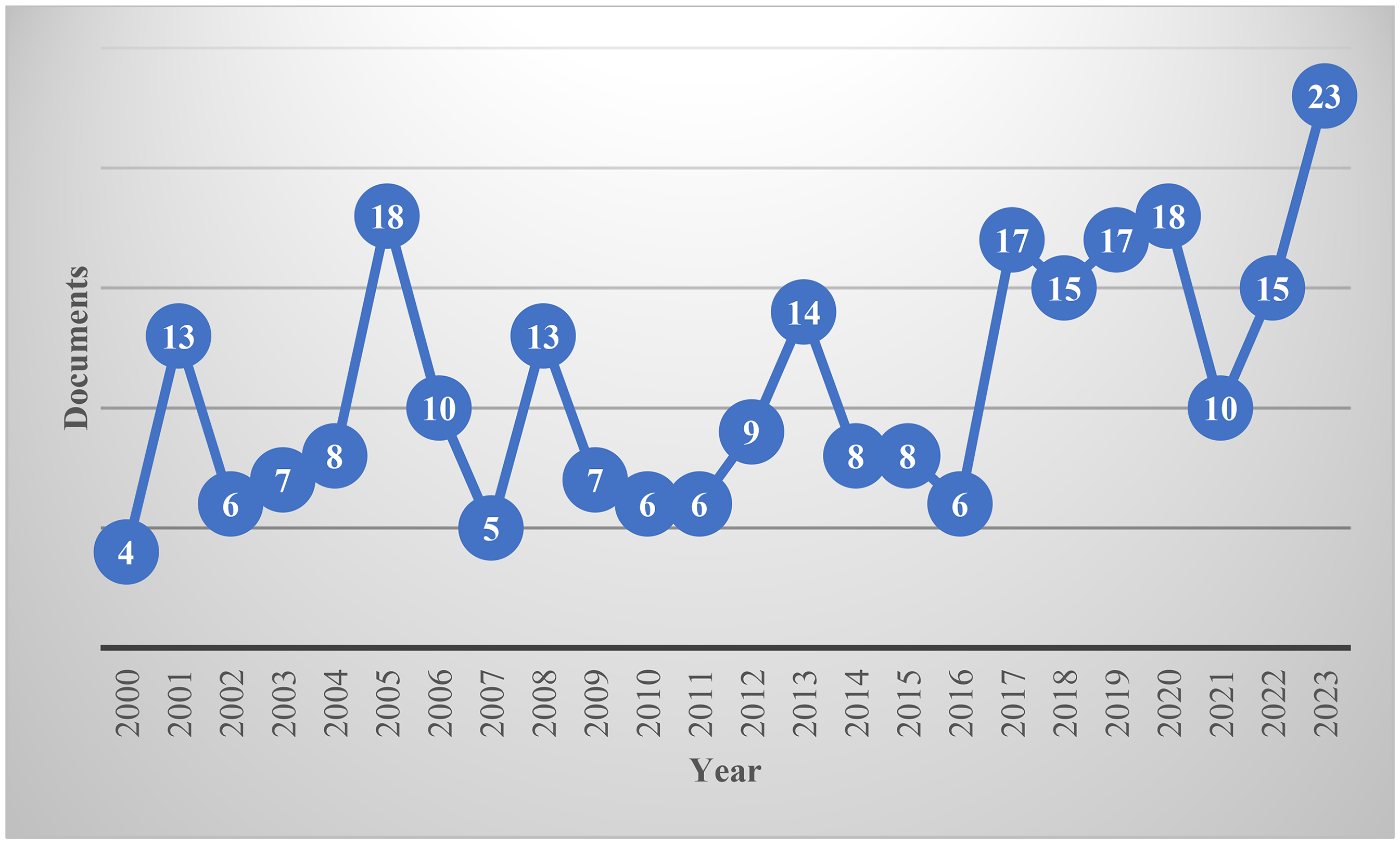
Annual scientific production.
Brief review of top 20 most cited documents and their key findings/recommendations
This study reviews the most cited works on the topic in this section to identify important works that have shaped its development. These articles frequently emphasize important findings, hypotheses, or methods. Therefore, reviewing such documents helps academics in comprehending the evolution of the topic, guiding future research, and laying the groundwork for future studies. The order of the review based on the number of citations is presented in Table 1.
Most global cited documents.
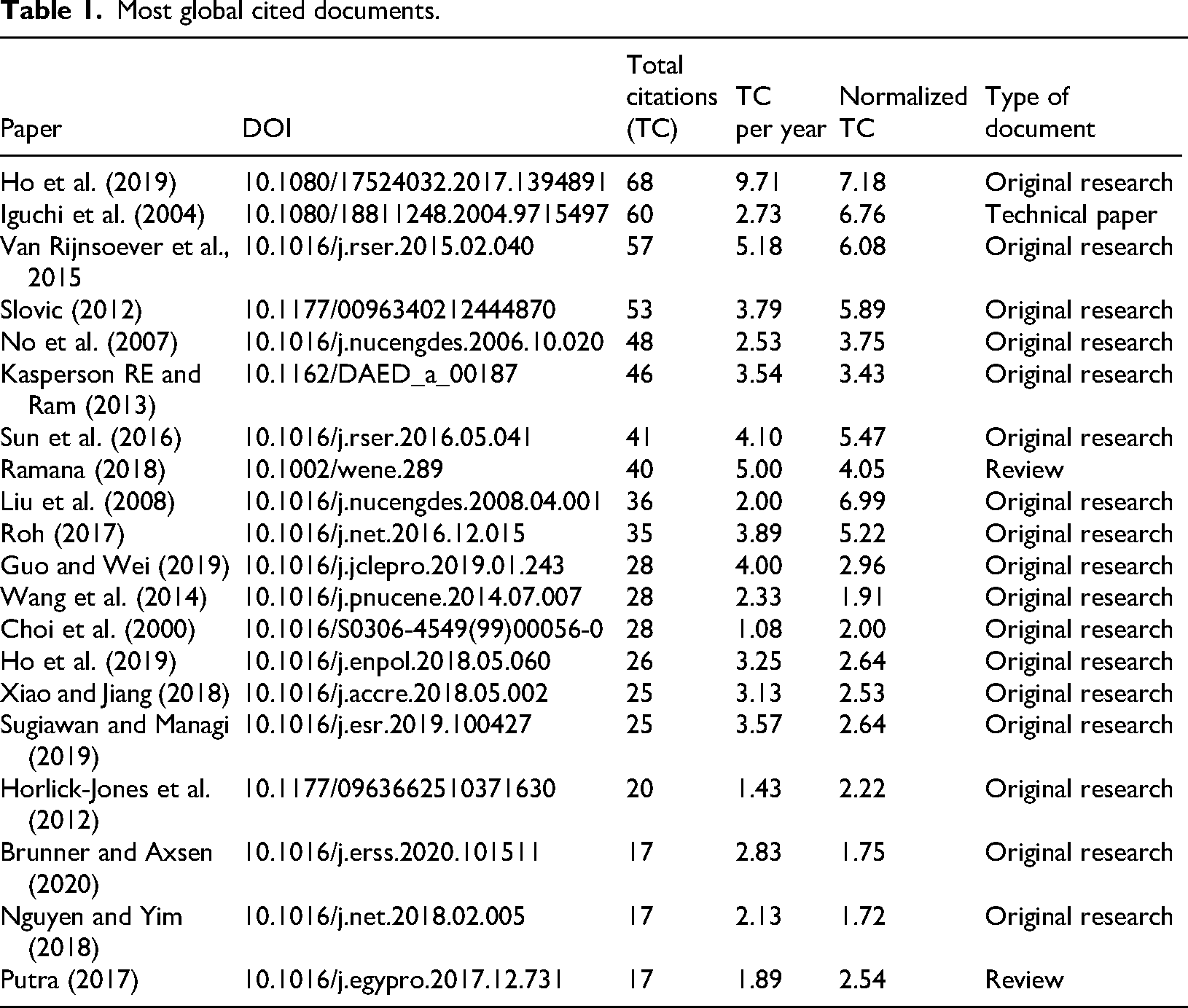
In the Journal of Environmental Communication, which was published in the year 2018, Ho et al. (2019) methodically determined and assessed the impact of 19 predictors on the public's perceptions of the advantages, dangers, and acceptability of nuclear energy. A total of 32,938 participants and 129 independent correlations were represented in the 34 empirical studies they meta-analyzed. The results showed that public perception of nuclear energy hazards was significantly influenced by factors such as sex, education, public debate, trust, and the public's perception of the benefits of nuclear energy. A number of factors, determined by the sampling country and data collecting time, had a substantial impact on public acceptability of nuclear energy, including sex, education, perceptions of costs, dangers, and benefits, knowledge, and trust. Iguchi et al. (Iguchi et al., 2004) wrote a technical report published in 2012 in the Journal of Nuclear Science and Technology. The authors developed a system for decommissioning plan optimization, workload evaluation in radiation environments, dismantling plan simulation, radioactive inventory visualization, and quantification. Additionally, the developed system helped to gain public acceptance, educate and train workers. Also, van Rijnsoever et al. (2015) conducted a study on the acceptance of energy technologies among the members of the public. Sociopolitical, market, and community acceptance were the three types of public acceptance that their study conceptualized. It went on to link preference formation to the idea of socio-political acceptance. Following that, it looked into the issues using two discrete choice experiments carried out in 2010 and 2012. Their findings demonstrated that, despite external shocks like the Fukushima accident, public inclinations toward energy technology are cyclically stable. They further demonstrated that labeling has a significant impact on expressed preferences using mixed logit models. Respondents preferred natural gas and renewable energy technologies when technology labels were disclosed. According to their study, latent class models revealed discrete respondents with specific sociodemographic traits, exhibiting significant variations in preferences and sensitivity to labeling, particularly in the context of biomass and nuclear energy.
Also, Slovic (2012) conducted a study on the perceptions on nuclear power and radiations. According to the study, risk-communication techniques can reduce radiation fears by weighing nuclear power and waste risks against other risks. Education on radiation could influence attitudes and perceptions. Public outreach materials for radiological disasters were crucial, especially after the Fukushima accident, highlighting communication issues. No et al. (2007) in their study published in the Nuclear Engineering and Design journal in 2006 suggested that for new reactor concepts like the very high temperature gas-cooled reactor (VHTR) to gain public acceptance, they must demonstrate enhanced inherent safety compared to existing designs, eliminating concerns about large radiological releases outside the site boundary. Kasperson and Ram (2013) published a study in the Daedalus journal that examined the problems associated with the public's acceptance of change and stability in the American energy systems. According to the study, stakeholder participation does not always translate into better decision-making, and there is no surefire method for gaining public acceptance of new energy technologies and applications. Nevertheless, pursuing these goals is imperative. The acceptance of new energy applications and technologies was not ensured by compliance with the National Environmental Protection Act's current regulatory requirements, among others. According to them, the likelihood of success increases significantly when obtaining public acceptance is given careful consideration and funding. Sun et al. (2016), in 2016, published an article in the Renewable and Sustainable Energy Reviews journal that examined Chinese society's attitudes toward nuclear power, electricity preferences, and management tools. It also assessed the degree of public opposition to nuclear power by calculating the willingness-to-pay (WTP) of the populace to stop the construction of nuclear power plants in their local and surrounding cities. The results indicated that a majority of the participants are concerned about China's progress in nuclear power development. Because they are concerned about nuclear mishaps, the public had some doubts regarding the safety of nuclear energy. Furthermore, the government was asked to enhance policy transparency, which is considered a crucial measure in reducing the public's concerns about nuclear energy in China.
Furthermore, Ramana (2018) in a study on the social and technical problems associated with nuclear waste published by the Advanced Review journal showed that the accidents and failures experienced by pilot facilities are the reason for worries regarding the long-term safety of repositories. The study revealed that majority of people fear nuclear waste and oppose disposing of radioactive waste near them or far away. Proponents of nuclear power dismiss these concerns, but this argument fails to hold up to close inspection. Reprocessing spent fuel is a technical approach that misrepresents social concerns. Also, Liu et al. (2008) published a paper that suggested a means of measuring the intensity of public support for nuclear power. A system of assessments, comprising of weighing coefficients, assessment models, and assessment performances, was developed to measure the level of public acceptance of nuclear power in China. Their system was founded on the basis of preliminary qualitative analysis, statistical theory, and sampling surveys. Roh (2017) pointed to big data analysis as a compelling substitute and made an effort to gauge public opinion regarding nuclear power. The author specifically employed opinion and keyword analysis along with standard big data analysis techniques to examine user opinions from SNS (Social Networking Services). The public's opinions regarding nuclear power were determined by the keyword analysis. Following Korea's successful export of nuclear reactors to the United Arab Emirates, public opinion of nuclear power was positively impacted. But nuclear power's reputation took a hit after the Fukushima accident in 2011 and several supplier scandals in 2012, and it remains unfavorable. Therefore, according to the author, to increase public acceptance, it was advised that the government concentrate on creating profitable ventures and practical applications for nuclear power. Guo and Wei (2019) in 2019 published a study in the Journal of Cleaner Production that investigated how local acceptance of NPP is impacted by government communication by examining data from China. They emphasized the Chinese government's recent initiatives to strengthen industry communication, including the restart of nuclear power production and the creation of an assessment framework. It was found that using public participation as a communication tool worked better in the short term to bolster public support for nuclear energy than enforcing campaign-style enforcement to popularize science. Public support for nuclear power increased as a result of open discourse, which not only enabled the public to shape policy but also helped individuals recognize their civic duty.
Additionally, Wang et al. (2014) analyzed the substance of news articles on nuclear that appeared in two significant Chinese newspapers, The People's Daily and The Guangming Daily, between 2004 and 2013. According to the findings, pro-nuclear or informative statements predominated in the articles published in the two newspapers, while opinions against nuclear power were infrequently expressed. Safety and environmental benefits were the main points of contention for pro-nuclear arguments, and these points according to them have been emphasized repeatedly in the nuclear power policies of the Chinese government. Choi et al. (2000) assessed the perception and judgement of the public in relation to nuclear power, which has been published in Annals of Nuclear Energy. According to their study, women perceive nuclear energy as more hazardous and less beneficial, while men are 1.32 times more likely to accept it nationally and 1.27 times more likely to accept it locally. The judgment model showed that individuals with a college degree have a higher national tendency to accept nuclear energy, with a 1.22 times higher likelihood of acceptance than those with only a middle school education. Ho et al. (2018) also analyzed how credible people thought nuclear-related information sources were and how much they trusted possible stakeholders. Their study also looked at how the general public perceived risks, rewards, and support, all under the guidance of the psychometric paradigm. Participants evaluated nuclear-related data according to the characteristics of the sources, aligning with source credibility theory. Despite generational differences, they used the same standards to determine each other's credibility, with their evaluations subordinated to source characteristics like communication medium type. Xiao and Jiang (2018) studied the options and challenges of nuclear power in China in order to determine how best to meet the global 1.5 °C temperature target. According to their study, China's nuclear power development faces obstacles due to concerns about safety, low nuclear science penetration, and government policies. Public acceptance and the not-in-my-backyard effect influenced decisions, preventing China from achieving large-scale nuclear power development. According to them, China must promote nuclear power more widely to meet the 1.5 °C target. This involves developing consensus and creating scientific decision-making processes. Raising public awareness includes strengthening nuclear power science dissemination, promotion, and education, making it mandatory in education, creating clear promotional materials, and developing a supportive legal framework. The paper was published in the Advances in Climate Change Research journal.
Similarly, Sugiawan and Managi (2019) investigated the degree to which public acceptance of NPPs in Indonesia is influenced by trust in the national, local, and nuclear energy agencies. According to their study, the acceptance of NPPs is negatively influenced by major accidents and site proximity, while demographic factors like age, sex, and education also play a role. Age and gender reduce NPP support, but education level significantly influences one’s support or opposition towards NPPs. Familiarity with NPPs positively impacts their acceptance, as increased public awareness leads to increased support, while negative information, like the link between nuclear energy and WMDs, decreases support. The results of their study have been published in the Energy Strategy Reviews journal. Horlick-Jones et al. (2012) studied on cognitive processes related to learning about and using fusion power, a relatively new nuclear energy technology. They concentrated on how laypeople's understanding of this technology is shaped by the nuclear label, also known as the “brand.” Their research indicates that the label, has a significant impact on lay perceptions, as demonstrated by how it influences social accounting procedures. They hypothesized that the ability of the nuclear brand to resonate with some basic aspects of human experience may be the reason for the stigma’s continued existence. These findings have been published in the Public Understanding of Science journal since 2012. Brunner and Axsen (2020) through their study published in the Energy Research & Social Science journal in 2020 analyzed public opinion on unconventional fossil fuels in Canada, focusing on the Northern Gateway, TransMountain, and Energy East pipelines. It used a nationally representative survey of 1407 Canadians to evaluate their acceptability compared to other energy production methods like nuclear, conventional oil, coal, and renewable energy. The investigation found that nuclear and coal have higher acceptance levels, but oil sands and pipeline developments have lower acceptance compared to renewable energy and conventional oil. Oil sands and pipeline developments are most widely accepted across Canadian regions. In another study by Nguyen and Yim (2018) published in the Nuclear Engineering and Technology journal in 2018, hypothesized the effects of various socioeconomic variables on the public's perception of nuclear power. In addition to political and economic issues, the factors included natural hazards, nuclear accidents, and social and demographic influences. Regression analysis results largely supported the hypotheses put forth, particularly those pertaining to the favorable effects of geological suitability or education and the unfavorable effects of increased living standards and democracy on acceptance of nuclear energy. Better emphasis on education and communication, as well as careful evaluation of a nation's social and geological circumstances prior to choosing to go nuclear, were among the policy recommendations they put forth.
Also, Putra (2017) examined the nuclear energy dynamics among ASEAN nations in 2018 and published it in the Energy Procedia journal. According to the study, out of the ten states in the Southeast Asia region, Vietnam, Indonesia, and Malaysia seem to have advanced the fastest in terms of developing nuclear power infrastructure. Vietnam was the closest of these three states to building its first NPP. Out of the two countries, Indonesia has garnered greater public acceptance for nuclear power, whereas Malaysia seems to be having difficulty gaining public support. Thailand, Vietnam, the Philippines, Indonesia, and Malaysia have been investing in nuclear infrastructure development since 2011, enhancing their laws, regulatory capacities, and expanding nuclear energy education, while remaining ASEAN members continue through international collaboration.
Conceptual structure: thematic map, evolution, and factorial analysis
The topics that guide the field of investigation as well as the subjects that scientists focused on during the study period are assessed in this section. In Figure 4, the authors’ keywords are represented as a thematic diagram. A number of methods, including theme mapping, can be used to analyze and visualize academic research topics. The coordinate system, initially proposed by Callon et al. (1991), consists of the x- and y-axes for density and centrality. In their opinion Callon et al. (1991), “density characterizes the strength of the links that tie the words making up the cluster together, while centrality measures for a given cluster the intensity of its links with other clusters, the more numerous and stronger these links are, the more this cluster designates a set of research problems considered crucial by the scientific or technological community”. The more the cluster-related research problems are more cohesive and integrated the stronger the links. It gives a comprehensive analysis of how the various themes changed over the course of the study by classifying the themes into four categories: emerging or declining themes, basic themes, motor themes and niche themes. Thematic assessment identifies themes using correlations and keywords from the authors; centrality indicates correlation and density indicates cohesiveness of nodes (Cobo et al., 2011).
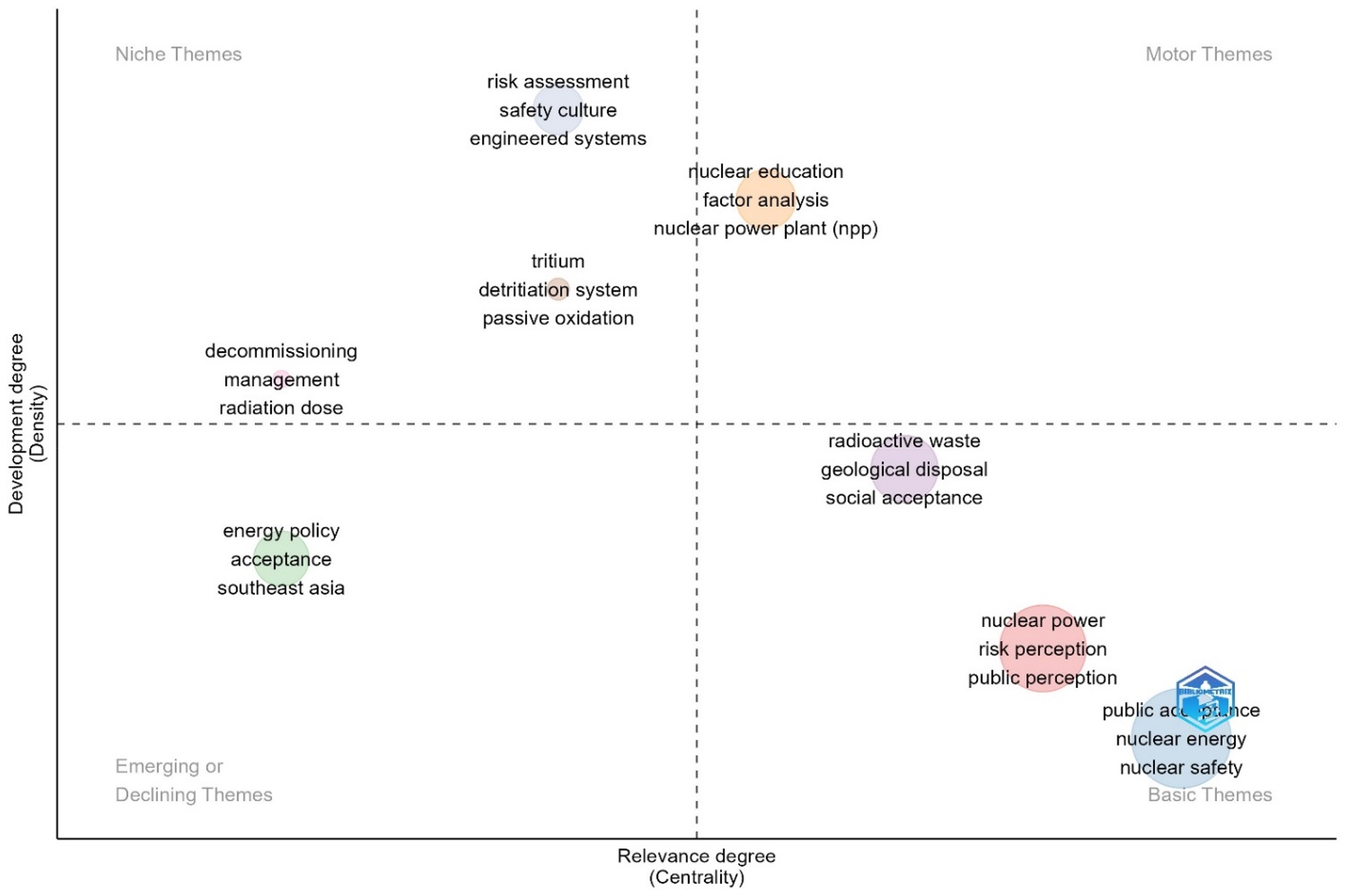
Thematic map of author keywords using the fast greedy algorithm.
The motor themes keywords are highly developed, with strong connections to other clusters placing them at the center of the general network and intense internal linkages. The clusters in this quadrant are in a strategic position, and a well-defined team of researchers are likely to handle them meticulously and thoroughly over an extended period of time (Agyekum and Nutakor, 2024). In the motor themes keywords like nuclear education, factor analysis and nuclear power plant were found in a single cluster. The reason behind this cluster can be explained as follows: The factor analysis has been used by Kim et al. (2014) in order to obtain the required assessment standards at a nuclear facility. Utilizing survey data from locals living close to the power plants and nuclear experts, input data for the factor analysis was created. After weighing the relative importance of the evaluation criteria with a sample of public and nuclear energy experts, it was found that safety was deemed the most crucial criterion by both groups, while social factors like public acceptance seemed to be given a higher priority by the nuclear energy experts. Bhanthumnavin and Bhanthumnavin (2014) measured the three aspects of attitudes toward NPPs: behavioral tendency, affective component, and cognitive component. The study, which involved 817 Thai university students, discovered that NPP site approval ratings and attitude component measurements were positively correlated. The acceptability of two NPP locations was significantly impacted by the three attitude component measurements, suggesting areas for further investigation. Liu (2014) and Liu and Xia (2014) evaluated how public opinion was affected by major nuclear events and how that response affected the growth of the nuclear industry. Nuclear education was found to be a major player in enhancing the acceptability of nuclear facilities among the populace.
The term “niche quadrant” describes peripheral clusters, which are not central but rather reflect well-researched research issues. Despite significant investments, these clusters may have lost interest over time and become marginalized. They appear as specializations with little interaction with other sub-networks in the field under study. The niche quadrant has three clusters, the densest cluster contains themes like risk assessment, safety culture and engineered systems. According to its definition, safety culture is a deliberately created culture that is based on how society and individuals interpret the relative importance of actual, perceived, and imagined risks compared to the advantages of using certain engineered systems (Tucker et al., 2009). As such those three themes are usually studied together to find the safety culture associated with nuclear power plant's engineering systems. The next cluster also has themes like tritium, detritiation system, and passive oxidation. For this, in order to improve public acceptance of a nuclear fusion reactors, the technical reliability of tritium confinement must be increased while fully considering hypothetical extraordinary situations that could occur in a nuclear fusion facility, such as fires and power outages. The study of passive tritium conversion in the detritiation system field has received a great deal of attention. It is practically important to demonstrate detritiation in order to understand the dynamic behavior and improve the confinement of tritium (Zucchetti, 2005; Iwai et al., 2017; Iwai et al., 2018). The last cluster in the niche themes quadrant includes themes such as decommissioning, management, and radiation dose. These themes linked because a potential poor management of radiation dose during disasters or decommissioning has been one of the key factors that the anti-nuclear group has pushed over the years, it is one of the reasons why the general public may disapprove of the installation of a nuclear facility at a chosen location (Iguchi et al., 2004; Park et al., 2020).
Declining/emerging themes—the networks in the quadrant indicate the marginal themes of the network; they are undeveloped and thinly populated. Comparative or dynamic analysis is the only way to assess their impact on the field (Cobo et al., 2018). This quadrant has themes like energy policy, acceptance, and southeast Asia. Research work on Southeast Asia on nuclear acceptance could possibly be gaining more attention from researchers, or less developed and therefore requires some level of attention. These themes can best be classified as emerging themes in the field of study, since most studies are currently been done to survey the views of the general public on the acceptance of NPPs to drive energy policy formulation especially in the southeast Asia.
Basic themes quadrant is centralized and has few internal connections but a high external connectivity. Although they could be the focus of investments in unrelated fields, they are strategically significant to the subject under consideration. They point out areas of transfer between related networks and developing research issues inside a network that are not yet the subject of significant investments (Cobo et al., 2011; Agyekum and Nutakor, 2024). Three clusters are formed in the Basic themes quadrant, one of the clusters has themes like radioactive waste, geological disposal, and social acceptance. These themes are mostly studied together because radioactive waste disposal facilities are a matter of public concern when it comes to spent nuclear fuel, which is essential since it is produced by nuclear power plants and must be stored or reprocessed after use. It is vital to examine public opinion and determine the degree of acceptance of spent nuclear fuel given the significance of spent nuclear fuel and the public's perception of generating power from nuclear (Roh and Kim, 2022). The nuclear industry has spent decades trying to find a practical way to manage the most radioactive products produced by nuclear power plants, high-level waste and spent fuel. The best way to handle this issue is through geological disposal, as many scientific and technical organizations have acknowledged. However, there are still a lot of unknowns regarding the behavior of the nuclear waste that will be kept in these facilities as well as the long-term performance of repositories. The majority of nations, with the exception of a small minority, have not selected any locations for repositories. Repositories’ long-term safety has come under further scrutiny in light of the malfunctions and mishaps at pilot facilities. The public's strong disapproval of operating repositories, even decades after they were first proposed, is one reason why they do not exist. Research has shown that large majority of inhabitants are scared of nuclear waste and oppose plans to dispose of radioactive waste close to them or, frequently, even far away. Notwithstanding the fact that proponents of nuclear power have always brushed off public concerns as the product of a lack of knowledge of scientific facts, this argument falls apart (Ramana, 2018). The second cluster has themes like nuclear power, risk perception, and public perception. Public acceptance, nuclear energy and nuclear safety also fall within one cluster, they are themes that are researched together under the topic of research.
Progression of the research topic over time
The evolution of studies during the period of study is presented in Figure 5, it is observed that the period between 2011 and upwards has seen much research interest in the area of public acceptance and risk analysis in relation to the use and development of nuclear energy or nuclear power plants. This could be due to the Fukushima nuclear accident in 2011 which reduced public confidence in the development of NPPs. Negative public perception of NPP is credited with contributing to the denuclearization of nuclear power worldwide following the Fukushima accident. A June 23, 2011, Ipsos MORI poll found that support for nuclear power has decreased globally to 38%, less than that of coal (48%). For instance, 26% of respondents said that the Fukushima accident made them view things more negatively (Kim and Kim, 2023). In fact, 83.1% of Koreans surveyed in August 2011 expressed concern about radioactive materials spreading as a result of Japan's nuclear accident. Furthermore, 40% of respondents to a 2012 Australian survey Bird et al. (2014) stated they would not accept nuclear power even if it helped prevent climate change. Thus, the global dissemination of unfavorable perceptions of nuclear power seems to have been significantly influenced by the Fukushima nuclear accident. Therefore, various studies were commissioned in different countries to gauge the public's level of acceptance, and the potential interest nuclear education could have in one's willingness to accept the development and use of NPPs.
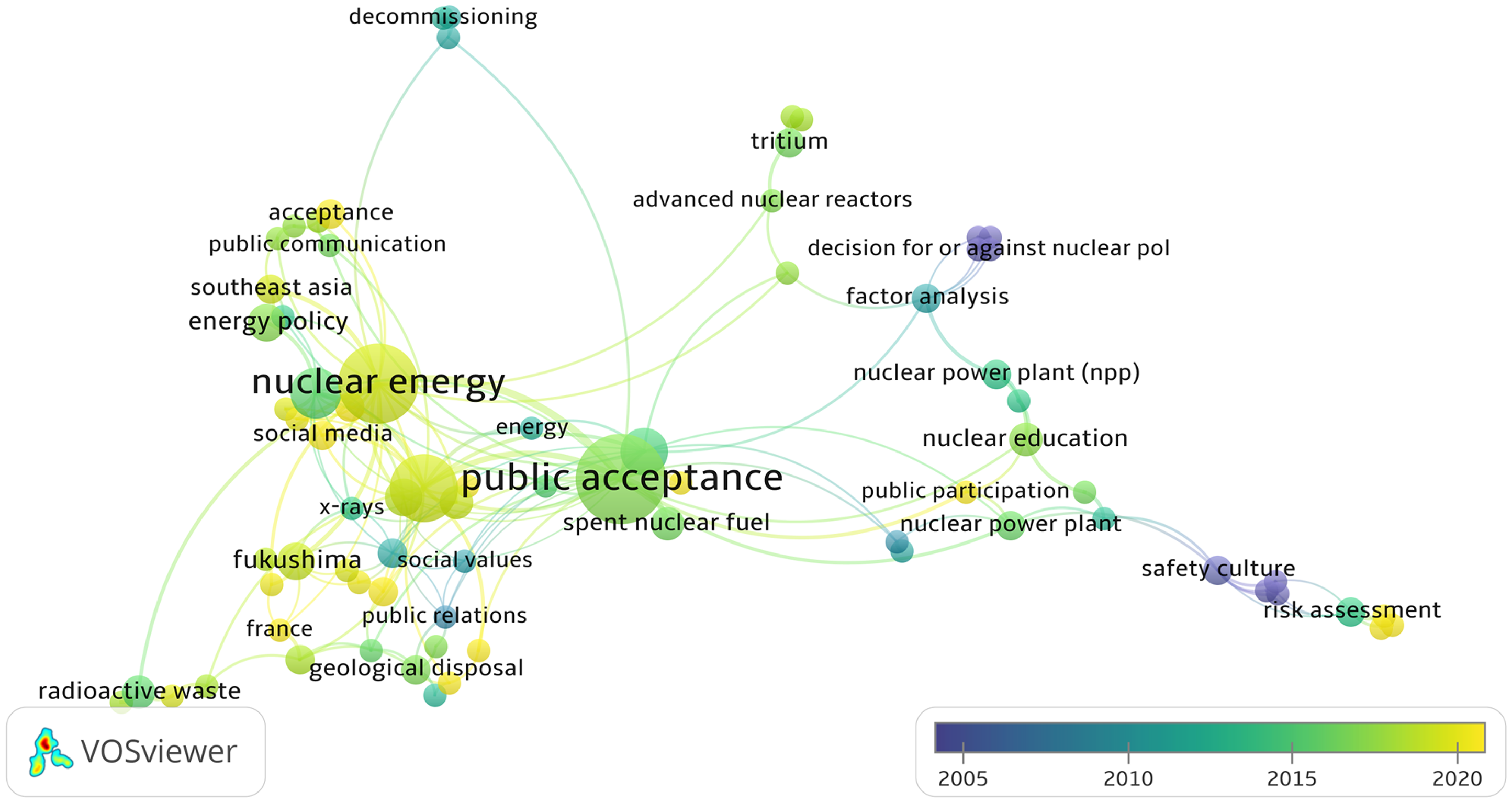
Overlay visualization of author keywords.
Multiple correspondence analyses (MCA) in Biblioshiny program aid in evaluating a study area's conceptual structure using K-means algorithm for keyword clustering. Factor analysis uses the distribution and relative positions of dots along dimensions to explain results. In Figure 6, similar words are displayed closer together, with terms with recent attention closer to the center and more widely distributed, while evenly distributed terms are linked to less research topics. The factorial analysis map provides insights into the interrelationships among various themes pertaining to nuclear energy and its acceptance by the public. Cluster 1 (blue cluster), located at the center of the map, suggests that factor analysis, automation, and nuclear power plants are themes with basic importance for technical and operational aspects of nuclear energy. The central position naturally points to future investigations that can focus on the perspectives of the operational techniques of nuclear power plants while integrating automation toward safety and efficiency maximization. Cluster 2 (red cluster), positioned in the negative quadrant, dealt with themes emphasizing safety and risk, such as engineered systems, risk assessment, safety culture, and hydrogen production technologies. These themes emphasize how crucial it is to have strong risk management plans and safety procedures, particularly in light of cutting-edge nuclear technology and hydrogen generation. Research going forward in this cluster could potentially assess how to best optimize and communicate these safety and risk-related elements in trust-building. Cluster 3, i.e., green cluster, in the positive quadrant, focuses on social issues and policy concerns of nuclear energy such as acceptance from the public, nuclear policy decisions, knowledge, and perception on nuclear energy. This further demonstrates that future study should focus on comprehending and resolving public concerns, supporting education and communication efforts, and figuring out how to connect governmental choices and siting with public expectations and values. When taken together, these clusters propose that nuclear energy is to be accepted and progressed in the future through the art of balancing technical solutions with public engagement.
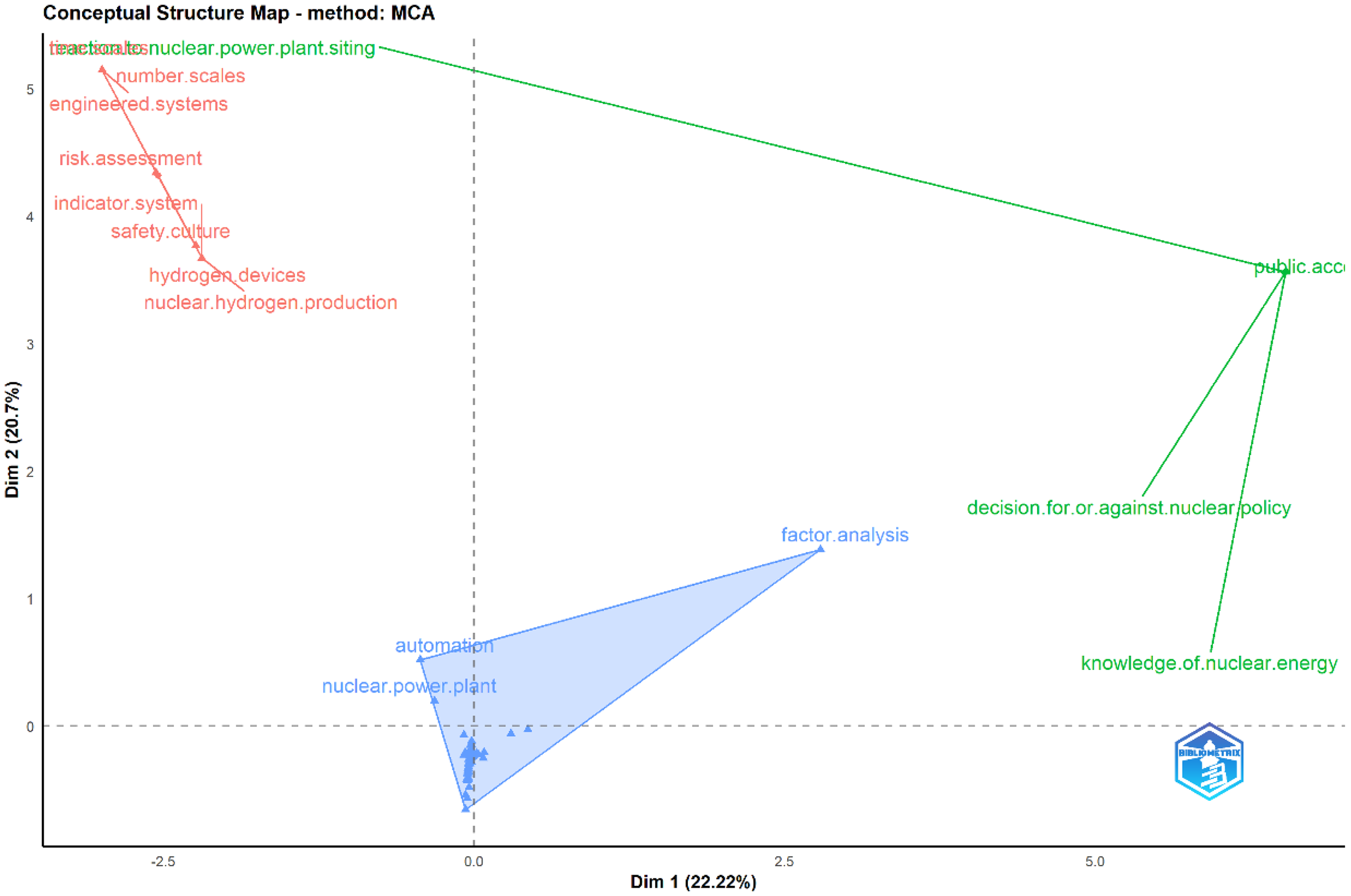
Factorial analysis for the author keywords.
Analysis of keywords
The most frequently used words within the topic of research during the period of study include nuclear safety, risk perception, energy policy, Fukushima, public perception, among others. Figure 7 shows the word cloud for the author keywords. Visible word clouds show the frequency of words. The text's size in the picture representation is based on how frequently a term occurs in the material under analysis. Bibliometric studies using word clouds can reveal the most common words in areas where most work is concentrated. Additionally, smaller-lettered terms indicate potential avenues for future study (Mulay et al., 2020; Alkhammash, 2023). In this analysis, the word cloud suggests that most of the studies have been concentrated around investigations on the nuclear safety, risk perception, public perception, energy policy, radioactive waste, spent nuclear fuel, all in relation to the acceptance of nuclear power plants or facilities in various countries. Such common themes are suggestive of the need to understand how the views and concerns of society affect the adoption of nuclear energy. Indeed, the nuclear industry faces both technological and social challenges, and thus these important issues from Fukushima, radiation, and radioactive waste highlight the critical importance of addressing past accidents and their long-term effects on public trust. Emerging themes such as risk communication, safety culture, and social media indicate an increasing need for effective public communication strategies through which the understanding and trust of society can be built. Furthermore, emerging themes such as advanced nuclear reactors, automation, and climate change reflect the shift to technological advances and what their shaping potential would have in future energy landscapes. Thus, it is essential to draw from this for a future research that integrates these elements to ensure the alignment of public values with nuclear energy developments in terms of addressing possible safety, sustainability, and environmental concerns while using new platforms such as social media to foster dialogue and informed decision-making. The analysis from the VOSviewer software identified 13 clusters with 111 total link strengths and total links of 179.
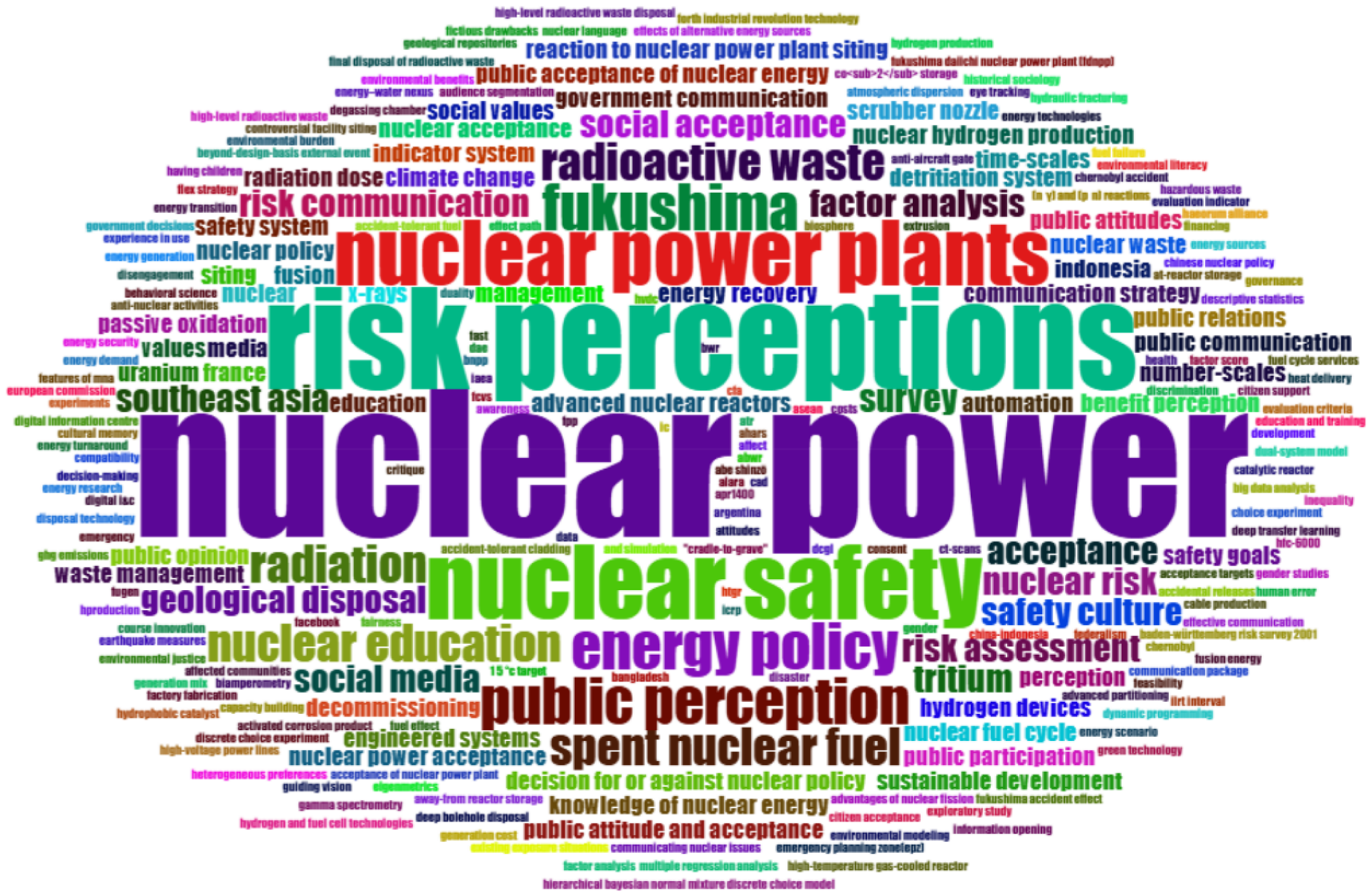
Word cloud for the author keywords.
Journals, collaborations, and other various disciplines
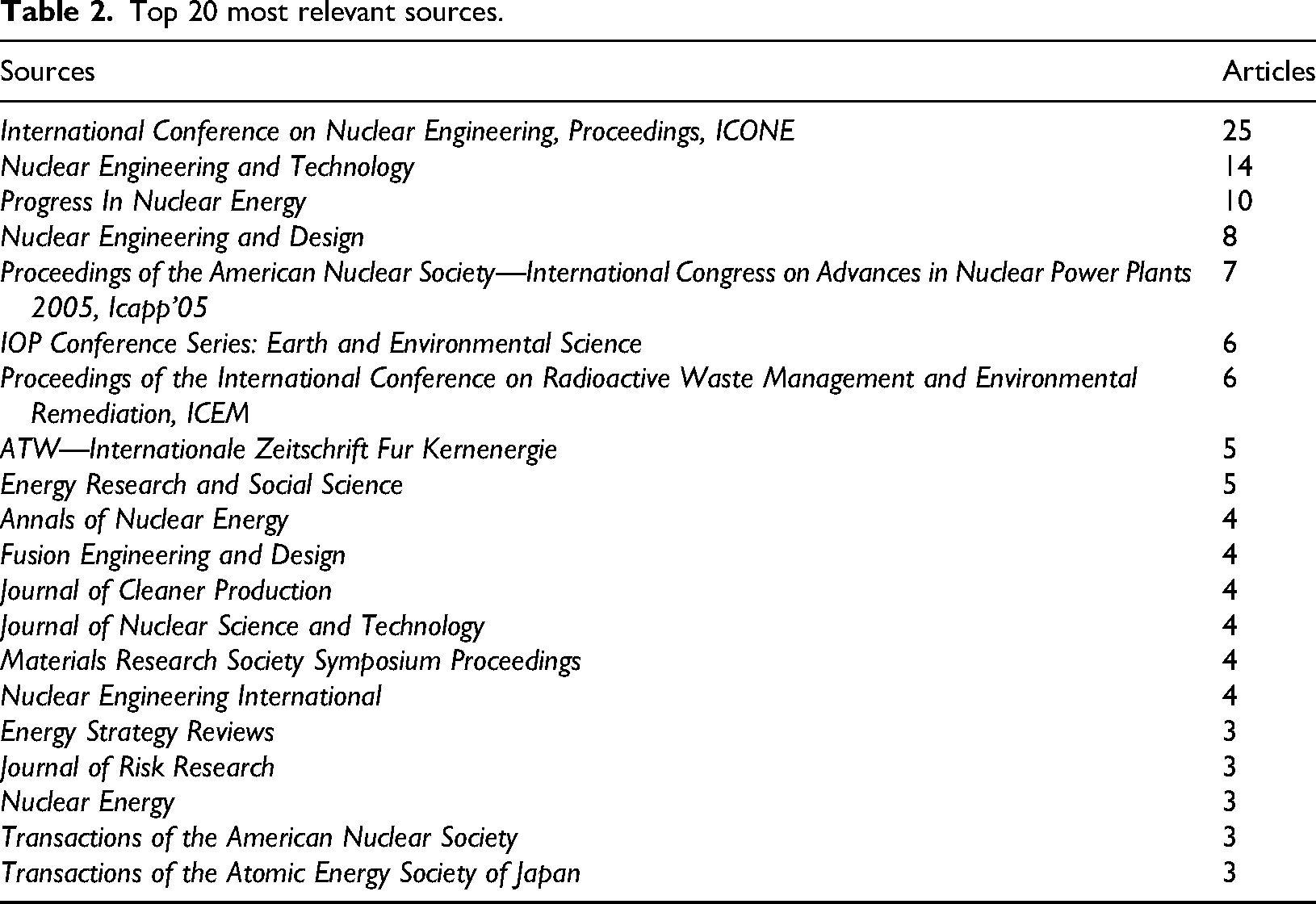
One useful technique for determining the impact of academic journals is to examine the sources of publications. Through a thorough analysis of multiple publication indicators, it is feasible to monitor the global distribution of scholarly journals in real time and to regularly rank the most prominent academic journals. This adds a new level of context for assessing the social impact of journals. The results suggest that a select group of established journals and conferences, in particular those in nuclear engineering, energy, and environmental science, have been at the center of discussion on nuclear energy and public acceptance. Prominence of conferences like International Conference for Nuclear Engineering (ICONE) and journals, like Nuclear Engineering and Technology and Progress in Nuclear Energy, reiterates that specialized platforms continue to be an important avenue for nuclear energy research. With changing opinions of the public and with sustainable energy solutions being increasingly central, future works could focus more strongly on interdisciplinary studies working across engineering, environment, and social sciences that examine how trends in perceptions of nuclear energy interact with technology, regulatory frameworks, and global sustainability objectives. The top 20 most relevant sources on the topic are presented in Table 2.
Top 20 most relevant sources.
Numerous scientometric and co-citation analyses have been carried out in recent years to assess the relevance and connection of referenced works in published studies to the research topic (Mu and Ma, 2022). One common technique in bibliometric analyses is co-citation analysis (Acedo et al., 2006). This method helps map the intellectual structure of the study area and investigate scholarly links between influential research outputs in the study area (Alkhammash, 2023). In the analysis, a total of 4 clusters were identified based on a minimum citation value of 20 for an author (see Figure 8). A total of 19 authors met the threshold. Each author's citations, both unidirectional and bidirectional, are represented as nodes (authors) connected by edges in the figure. The proximity of two nodes indicates a node's ability to connect to other nodes in the network via geodetic distance, and the size of the nodes is proportionate to the overall number of citations received between the authors (Sordan et al., 2022).
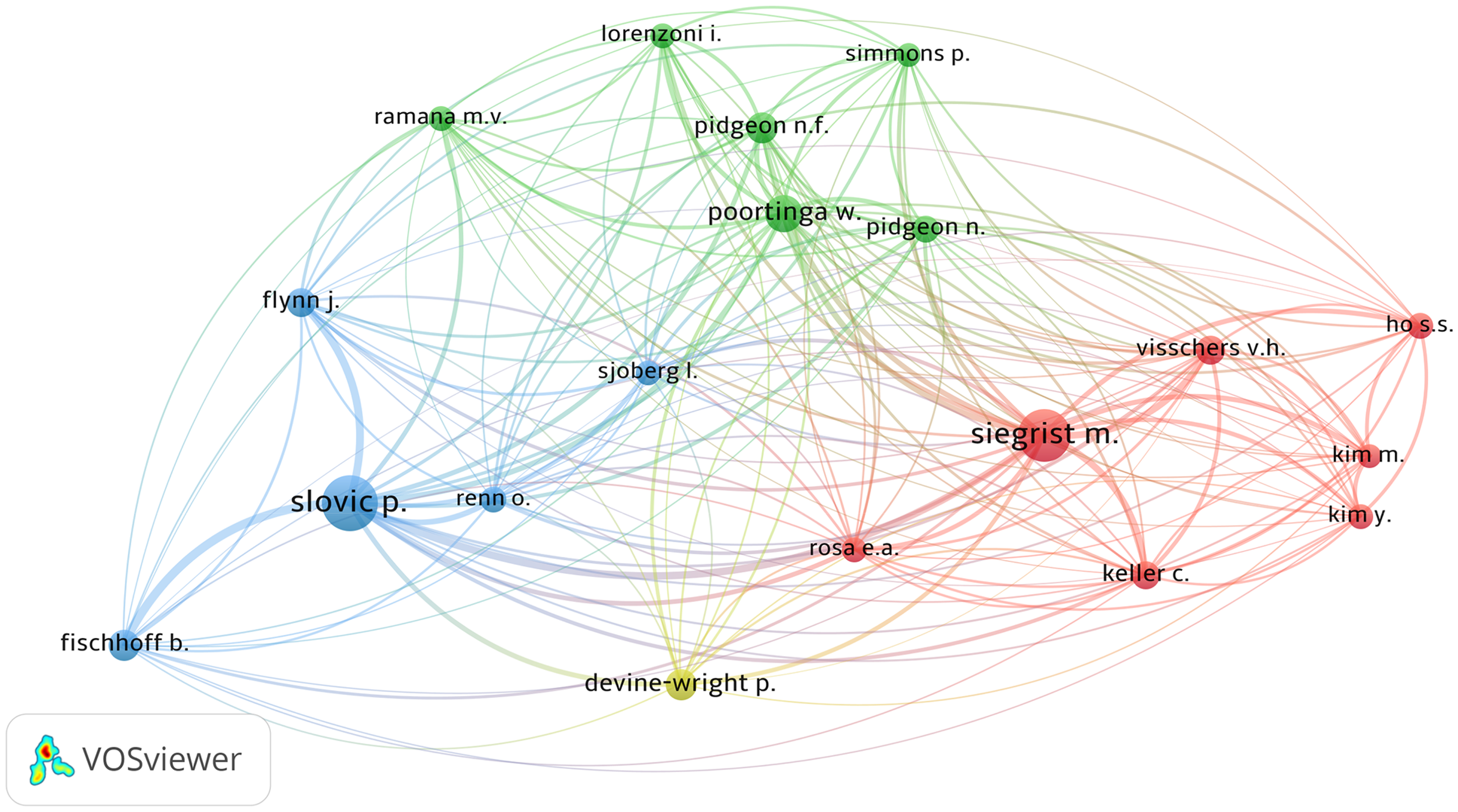
Co-citation network for the authors.
Working together across institutions is a good method to advance academic communication, which can increase academic influence, make it possible for researchers’ findings to be given more attention and recognition, and elevate academic standing. It is possible to demonstrate the cooperative relationship between institutions by creating a visual network of institutions. The analysis indicates that the most productive institution on the study of the public acceptance of nuclear energy use is the Tsinghua University in China, it published a total of 15 documents. The Bhabha Atomic Research Center follows with 11 documents as shown on Figure 9. The international collaborations map as shown in Figure 10 shows that research on the topic has been mainly between China and the United States of America, they recorded a collaboration frequency of 3. Collaboration between, China–the United Kingdom, Germany–France, Indonesia–the Netherlands, Korea–Thailand, Japan–the USA, and the USA–Korea all recorded a collaboration frequency of 2. All other countries that were involved in the research collaborated once during the period of study. Countries working together internationally are symbolized by the color blue. More international cooperation is indicated by the darker blue. Furthermore, the degree of cooperation among the authors is indicated by the pink border that connects the states.
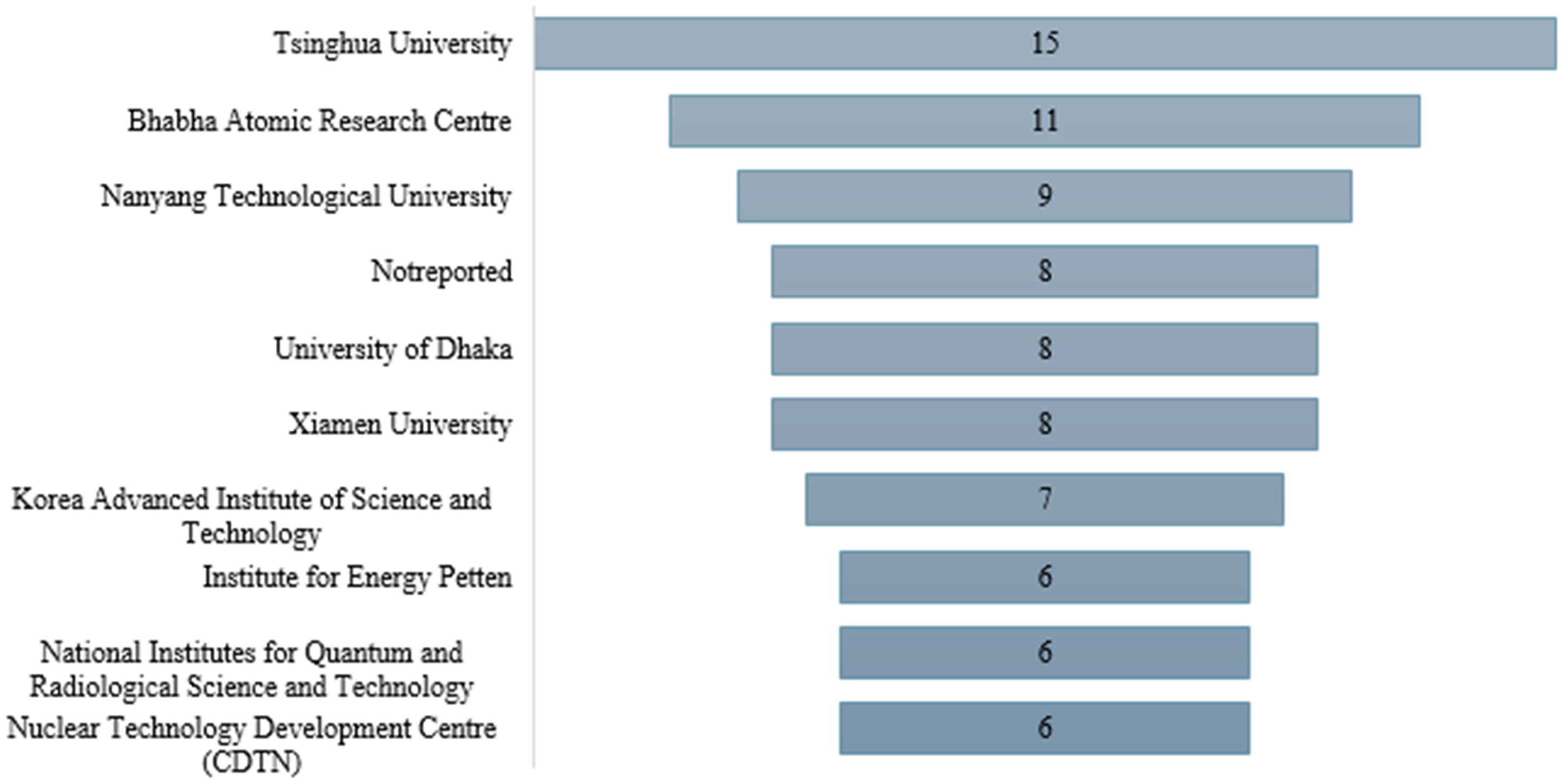
Most relevant institutions.
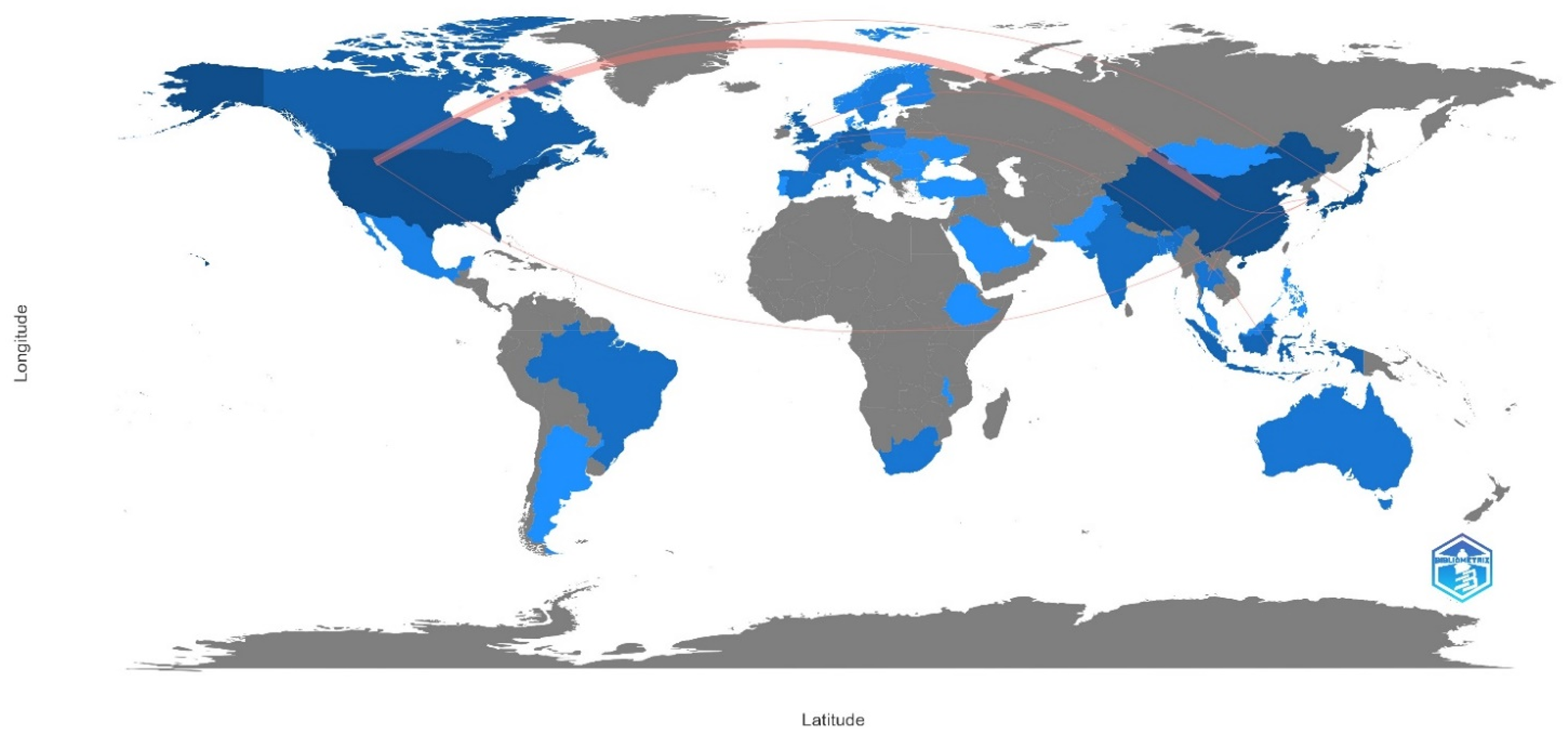
International collaborations.
The number of documents produced by each country is presented on Figure 11. China once again comes top in terms of the number of documents produced over time, recording a total of 106. Japan also follows with a total of 91 papers. The United States, South Korea, Indonesia, Canada, Germany, Brazil, India, United Kingdom, and the Netherlands trail behind with 90, 81, 35, 28, 28, 25, 18, 17, and 15 papers, respectively. It is however interesting to note that when it comes to the most cited countries although China maintained it first spot, Japan lost its position to South Korea, with Canada coming third as shown in Figure 12.
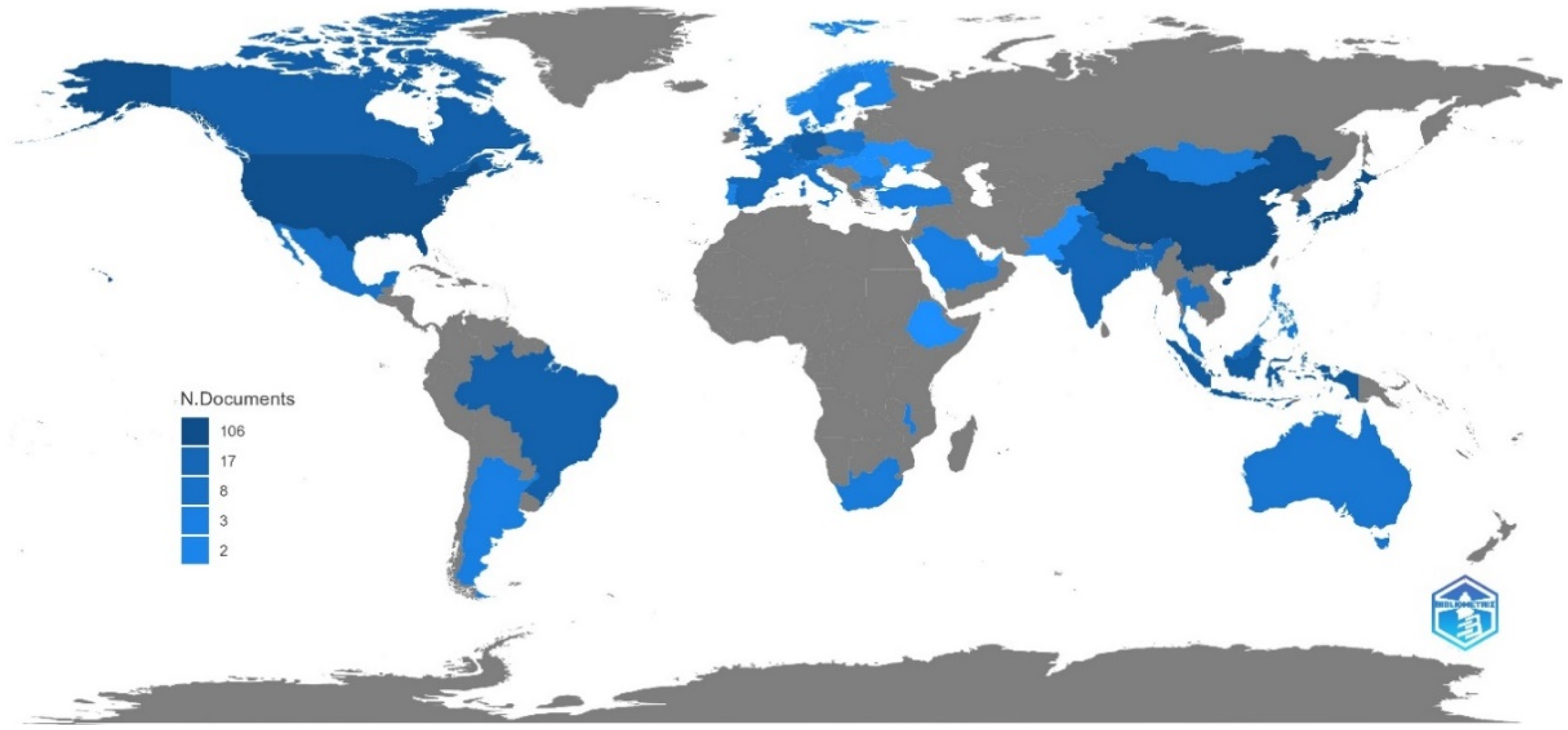
Scientific production of the various countries.
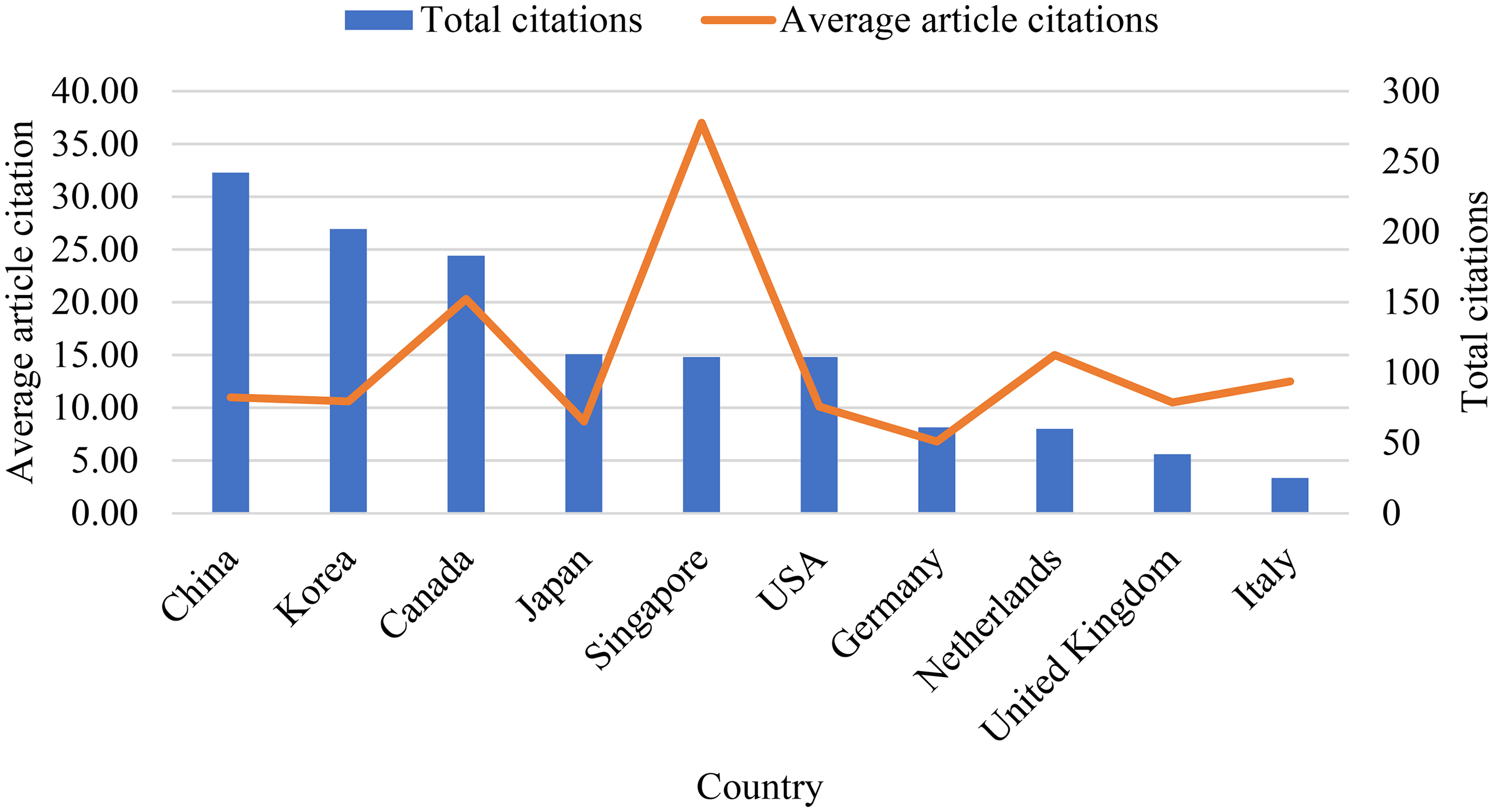
Most cited countries.
The countries of the various corresponding authors are presented in Figure 13. The study indicates that, in total output and international collaboration, China is a major player in the research on nuclear energy and public acceptance, with an apparent differentiation between single-country publications (SCP) and multiple-country publications (MCP). The smaller percentage of MCPs indicates the possibility of international cooperation, whereas the high number of Chinese SCPs indicates a strong national focus on nuclear energy, perhaps reflecting China's growing interest in nuclear energy development. Korea and Japan are more engaged internationally in their research approach, as they have contributed greatly with an array of SCPs and MCPs, showing a willingness to share ideas with other researchers in other countries on nuclear energy. The USA, having only SCPs, shows a research agenda that is rather domestically focused, creating possible limitations on exchange of ideas and cooperation that might otherwise develop a more varied understanding of public acceptance. The nonexistence of MCPs in nations such as Canada, India, Indonesia, Bangladesh, and Brazil attest to a lack of global collaborations, indicating difficulties in international cooperation or perhaps less prioritizing international partnerships in nuclear energy research. As a whole, some countries exhibit national research leadership, while it is urged to enhance international collaboration for a more complete, global understanding of public acceptance in nuclear energy.
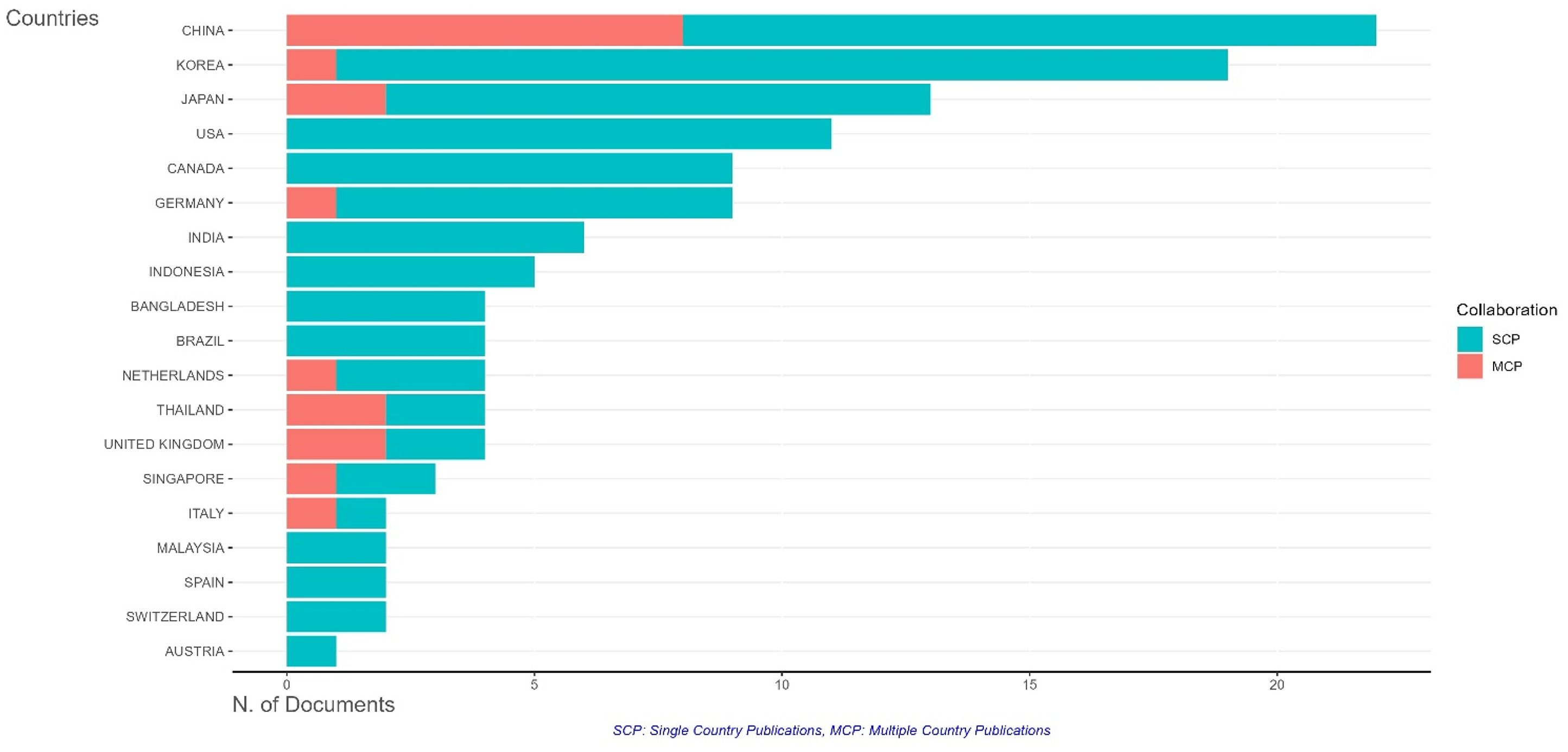
Countries of the various corresponding authors.
A three-field plot, commonly referred to as a Sankey diagram, is used to show how values move from one set to another. These plots provide a three-dimensional view of the development and information exchange between these categories by displaying the connections and changes in data between three distinct groups. Lines are used to show the connections between the fields in these graphical representations of data from three different sources. How many or how strong the connections are is shown by the width of these lines (Farhat et al., 2024). In the three-field plot presented in Figure 14, it is shown that China is a key country in the research of public acceptance and perception of nuclear power plants, and as indicated supra, the Tsinghua University has been at the forefront of such studies. One thing that is observed in all of this analysis is the fact that most of these countries involved on the topic of research are nations that have either a significant percentage of their energy being generated from nuclear facilities or are preparing to include NPPs in their energy generation. For instance, with a total net capacity of 53.3 GWe, China is home to 55 nuclear reactors that are operational. Some 5.0% of the nation's electricity in 2022 came from nuclear power. At the end of October 2023, 25 reactors were under construction, demonstrating the nation's continued dominance in the market for new nuclear development. China was the first nation to order two new designs in 2018: the AP1000 and the EPR. The reactor design Hualong One, which is primarily indigenous, is being marketed for export by China. China is heavily pushing the development of new nuclear power due to the need to lower greenhouse gas emissions and improve the quality of the air in their cities (World Nuclear Association, 2020). With a total net capacity of 6.8 GWe, India possesses 22 nuclear reactors that are operational. About 3.1% of the nation's electricity in 2022 came from nuclear power. Also, Japan who is also involved in the topic of research is home to 33 nuclear reactors that are operational and have a 31.7 GWe net overall capacity. Following the Fukushima accident, as of October 2023, 11 reactors had been brought back online and 16 more were awaiting restart approval. Nuclear power accounted for 30% of the nation's electricity in the past; by 2022, that percentage had dropped to just 6.1%. There are 25 nuclear reactors in South Korea that are operational and have a net capacity of 24.4 gigawatts. 6.1% of the nation’s electricity in 2022 came from nuclear power (World Nuclear Association, 2020). Bangladesh began building Rooppur 1, its first nuclear power reactor, in November 2017, with the second unit set to be operational in July 2018, to reduce its reliance on natural gas (World Nuclear Association). It explains the reasons behind the need to conduct a detailed study on the perception of the general public in relation to the construction and use of NPPs in some of these countries. Such studies could help in the formulation of appropriate policies and procedures for the adoption of nuclear technology.
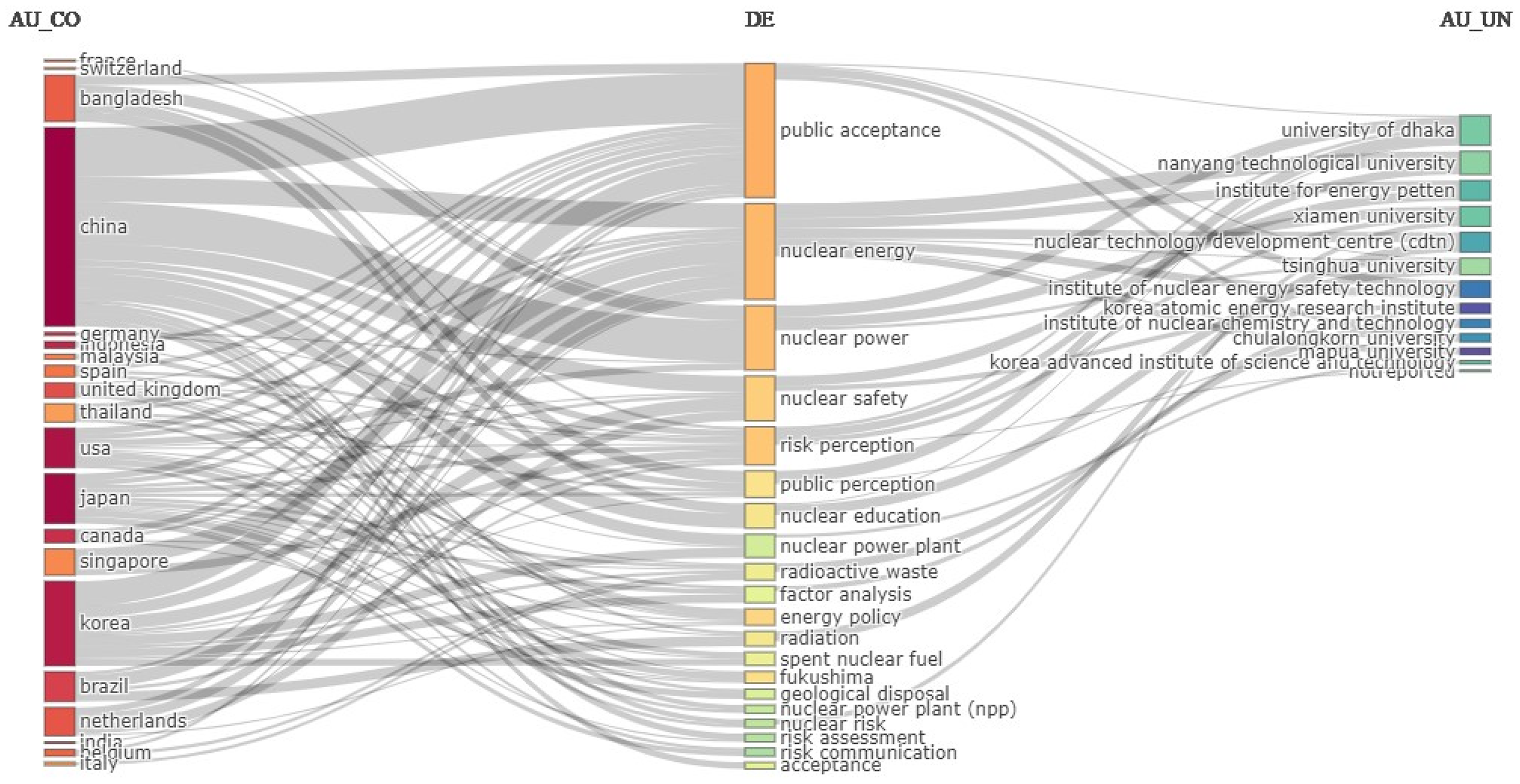
Three-field plot.
Potential areas for future research
Based on the studies, certain topics were identified as potential areas for future studies, and some of these topics should look at the following: firstly, limited information exists on factors influencing NPP acceptability among the populace especially studies on public trust, and environmental impacts, necessitating future studies to explore those factors. Secondly, future studies may explore the development of predictive models to predict public attitudes towards nuclear power plants. Thirdly, according to Earle et al. (2007), trust is influenced by common values, confidence, social interactions, and institutions like accountability and the rule of law. Further research is therefore needed to understand the factors that influence people's trust or mistrust, and the credibility of an organization, government, or source of electricity. Furthermore, there is also very little information on studies on countries that are planning to integrate nuclear energy into their energy generation mix, particularly those in developing economies (example African countries), it will be interesting to find out the factors that could affect the citizen's willingness to accept NPPs particularly when most of such citizens do not have access to reliable power. Conducting such a study will help stakeholders compare the results to studies from the developed countries who have relatively reliable power. Lastly, more research on nuclear energy and related scientific subjects is needed, particularly in the area of fostering public-private partnerships.
Furthermore, future research should assess how well educational initiatives and programs work to increase public awareness of nuclear energy's benefits and risks. Investigating the psychological elements that impact public perceptions of nuclear power, such as radiation fear, institutional trust, and perceived control over environmental risks, is also advised. Also, undertaking extended research to monitor alterations in public sentiment across time, particularly in reaction to novel breakthroughs in nuclear technology, modifications in policy, or significant incidents will help broaden our understanding the factors that could influence attitudinal change. Future research should also examine how public safety perceptions are affected by nuclear technology developments, with an emphasis on how these advancements can allay past anxieties and create successful communication plans for safety enhancements.
Limitations of the current study
Although the study was conducted in a detailed manner, it has a limitation that has to be highlighted for future research considerations. This work solely relied on the Scopus database for data analysis despite the fact that it is the largest scientific database and a credible one; such studies tend to be quite restricted as other credible databases are excluded, for instance, Web of Science (WoS). The scope, indexing criteria, and citation patterns between Scopus and WoS vary which could lead to a disparity in representations on certain journals, articles, and research outputs. Consequently, this may produce underrepresentation of important studies from disciplines or regions where the coverage is stronger. Such a limitation also has some impact on the quality of citation analysis, as counts and H-index values may differ across databases. Therefore, future studies may involve multiplicity in databases for more balanced and complete representation of the literature.
Conclusion and policy implications
Public opinion is crucial for the adoption of nuclear energy sources since its accidents can have catastrophic consequences. Nuclear energy sources are essential for achieving a carbon neutral economy at a reasonable cost. In this study a comprehensive review of the various studies that have been conducted on the factors that influence one's willingness to accept the development and use of nuclear power or energy is assessed using the systematic and bibliometric review approach. The source of the data used for this study is the Scopus database, which is the largest scientific database. A total of 263 documents were retrieved for the period of study, i.e., 2000–2023 and used for the analysis. The study shows a 7.9% growth in research activities on the topic, with 659 researchers involved in producing 263 documents. The first year produced 4 documents, while 2023 saw the highest number at 23. The study highlights the varying nature of document production over time. The analysis highlights the significance of inter-institutional cooperation for effective scientific investigations into the public's acceptance of nuclear energy or power. Based on the analysis, Tsinghua University in China has produced the most papers regarding public acceptance of nuclear energy use, with a total of 15. Eleven documents from the Bhabha Atomic Research Center are presented next. Additionally, the analysis reveals that the majority of research has focused on questions related to nuclear safety, public perception, risk assessment, energy policy, radioactive waste, and spent nuclear fuel, all of which are related to the acceptance of nuclear power plants or facilities in different nations. Future studies should explore factors influencing nuclear power plant acceptability, public trust, and environmental impacts. Predictive models could predict public attitudes towards nuclear power plants. Additional investigation is needed to understand factors influencing trust and credibility of organizations, and governments.
Policy implications stemming from this study stress the need for having a transparent and inclusive governance structure in countries interested in integrating nuclear energy into their energy generation mix. Governments should improve communication through online forums and mass media, keeping the public informed about developments regarding nuclear power, given that public concerns regarding nuclear safety, accidents, and environmental risks rank high. An increase in transparency such as public participation and access to information regarding nuclear safety programs would assuage public anxiety while building confidence. And equally important, strict safety assessments and cautious approvals of new nuclear projects must be enforced in order to mitigate potential developments that could severely offset the local socio-economic fabric in case of any nuclear accident.
Footnotes

Funding
The authors disclosed receipt of the following financial support for the research, authorship, and/or publication of this article: This work was supported by the Manipal Academy of Higher Education.
Declaration of conflicting interests
The authors declared no potential conflicts of interest with respect to the research, authorship, and/or publication of this article.
Data availability statement
Data will be made available on request.