




Abstract
Torsional impactor is widely used in deep and ultra-deep wells because it can suppress stick–slip vibration and increase ROP. As the direct factor affecting torsional impactor effect, it's working parameters study is still not sufficient. In order to evaluate the effect of torsional impactor, considering the high-frequency torque provided by torsional impactor, a dynamic model of torsional vibration of drillstring is established, and by compiling the calculation program, and solved by The fourth–fifth Runge–Kutta, the influence of main working parameters of torsional impactor on stick–slip vibration is analyzed. The results show that: The torsion impacter can effectively reduce the stick–slip period of drillstring, thereby suppressing the stick–slip vibration and increasing the ROP; when the torsional impact load is low, increasing the torsional impact load can reduce the stick–slip period and even eliminate the stick–slip vibration, However, when the stick–slip disappears, increasing the torsional impact load has small effect on the torsional vibration. Increasing the impact frequency can suppress the stick–slip vibration and improve the stability of the drillstring during rotation. The results provide reference significance for the selection of working parameters of torsional impactor.
Introduction
As oil and gas exploration advances, drilling challenges increase (Longlong and Yifei, 2012). In hard formations, due to high plasticity and rock hardness, PDC bits perform poorly in breaking rock and are prone to stick‒slip vibrations. These vibrations lead to premature failure and significantly reduce the drilling efficiency (Li et al., 2019; Xiaohua et al., 2015; Xie et al., 2020). Torsional impact tools convert the kinetic energy of the drilling fluid into a high-frequency torsional impact force. This force is transmitted directly to the PDC bit, helping to overcome friction torque and suppress stick‒slip vibrations (de Moraes and Savi, 2019; Rajabali et al., 2020). Evaluating the effects of torsional impact tools on stick‒slip vibrations is crucial for selecting optimal operational parameters.
Several researchers have studied stick‒slip vibrations and proposed various methodologies. In 1982, Belokobyl'skii and Prokopov (Belokobylskii and Prokopov, 1982) defined stick‒slip vibrations and proposed a preliminary torsional pendulum model. Kyllingstad (Kyllingstad and Halsey, 1988), Brett (1992), Lin and Wang (1991) optimized this model by developing a concentrated mass torsional pendulum model for drill strings. Richard (Richard et al., 2004) expanded on Van de Vrande's (Van de Vrande et al., 1999) band‒spring‒mass model and considered bit‒rock interactions to develop a novel spring‒mass model. Navarro-Lòpez (Navarro-López and Cortés, 2007; Navarro-López and Suárez, 2004) successively established two-, four-, and multiple-degree-of-freedom torsional pendulum models. The methods of Richard and Navarro-Lòpez are most commonly used in stick‒slip vibration studies.
Recently, torsional impact tools have gained attention for their efficacy in suppressing stick‒slip vibrations, prompting extensive research by domestic scholars. Aron (Deen et al., 2011) and Said (Ziani et al., 2018) analyzed application cases of torsional impact tools, finding them effective in shortening drilling cycles and reducing bit wear. Divenyi et al. (2012) developed an axial-torsional coupled vibration model for drill strings, which better describes bit stick-slip and bounce. Sarker et al. (2012) created axial-torsional and lateral-torsional dynamic models via three-dimensional multibody dynamic bonding graph modeling to study the dynamic response of horizontal well drill string systems. Zhu (Zhu and Liu, 2017) designed and tested key components of torsional impact tools via a full-scale PDC bit rock-breaking simulation model to study the rock-breaking mechanism. Guan (Guan and Baoping, 2021) conducted rock-breaking experiments and analyzed the rock fragmentation process and efficiency. Tian (Tian et al., 2022) proposed a longitudinal-torsional coupling impactor and studied its internal mechanisms through theoretical analysis and experiments, showing that this innovative design provides adequate longitudinal-torsional coupling impacts during drilling. Liu et al. (2016) combined torsional impact tools with rotary percussion drilling tools, designed a composite impact drilling tool and studied the relationships among impact work, impact frequency, displacement, and bit nozzle diameter through ground experiments.
Tan et al. (2021) theoretically analyzed the effects of different structural and operational parameters on the impact frequency, impact force, and impact torque of torsional impact tools. Tian et al. (2020) studied the drag-reducing characteristics of torsional impact tools, proposed a new type of impact tool and analyzed the influence of the drilling parameters on their performance. Liu (Liu et al., 2020) used a single-degree-of-freedom torsional model to analyze the impact of bit combinations and drilling parameters on torsional impact drilling.
In summary, current research on torsional impact tools has focused mainly on their rock-breaking mechanisms, with fewer studies considering their effects on stick‒slip vibrations. Single- or double-degree-of-freedom models often overlook the influence of drill pipes and drill collars and do not analyze the impact of torsional impact tool operational parameters on stick‒slip vibrations. This paper establishes a four-degree-of-freedom torsional vibration dynamic model considering high-frequency torque from torsional impact tools, solves it via the fourth–fifth-order Runge–Kutta method, analyzes the suppression of stick‒slip vibrations via torsional impact tools, and discusses the influence of torsional impact load and frequency on stick‒slip vibrations.
Establishment of the drill string torsional vibration model considering torsional impact
The torsional impact tool is installed above the bit and works with the PDC bit (Figure 1). Drilling fluid flows into the tool, causing the hammer and impact hammer (high-frequency impact system) to move rapidly, repeatedly striking the impact surface and forming high-frequency stable torsional impact energy. This energy is directly transmitted to the PDC bit to assist in rock breaking. The drill string torsional vibration dynamic model assumes the following:
The turntable, drill pipe, drill collar, and bit are four mass blocks connected by springs (Figure 1). The influence of lateral vibrations on torsional vibrations is neglected. Friction between the bit rock and drill string wall is represented as concentrated friction torque.
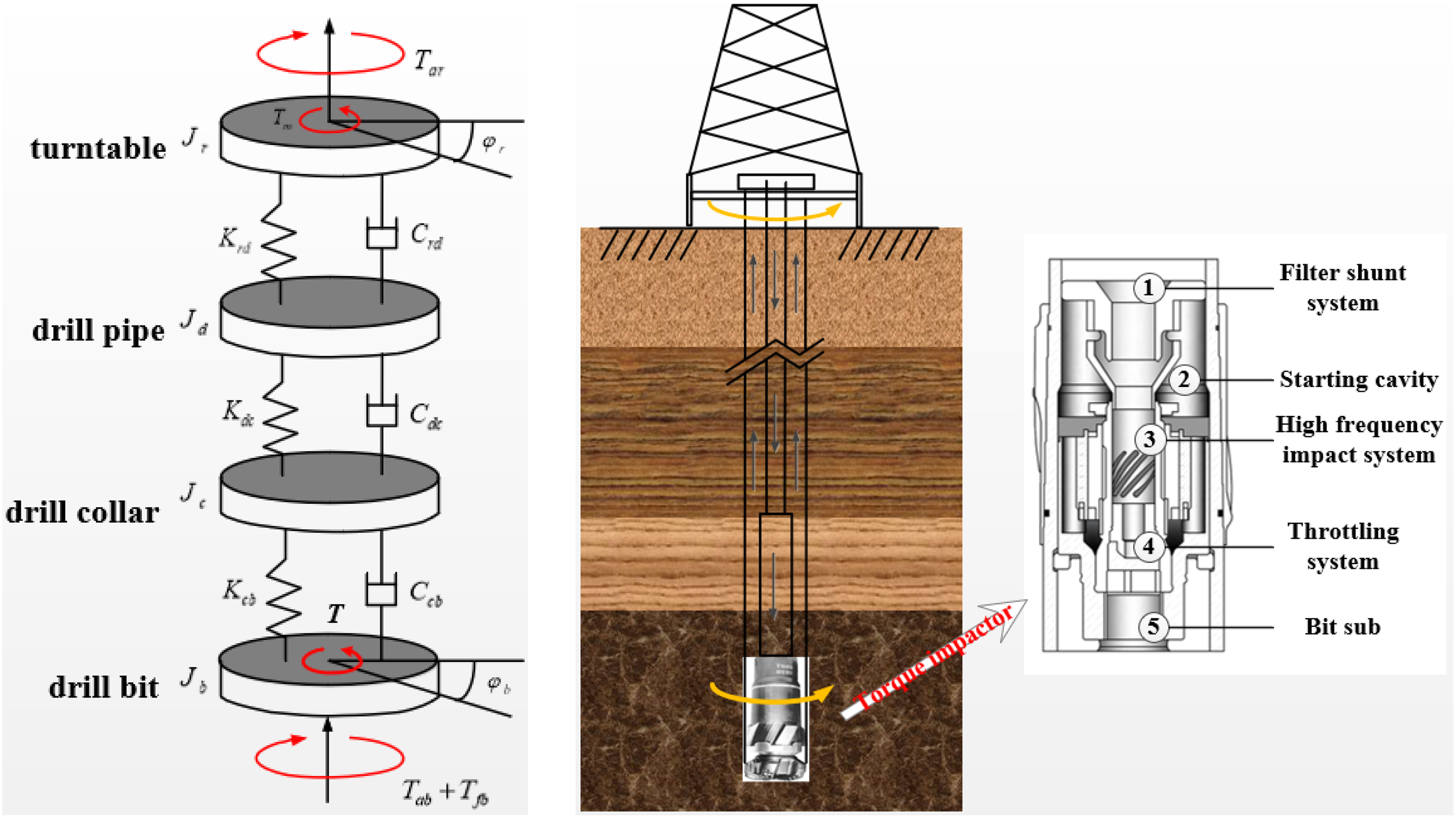
Four-degree-of-freedom torsional vibration model of the drill string considering torsional impact.
The conventional four-degree-of-freedom drill string torsional vibration dynamic equation is as follows:
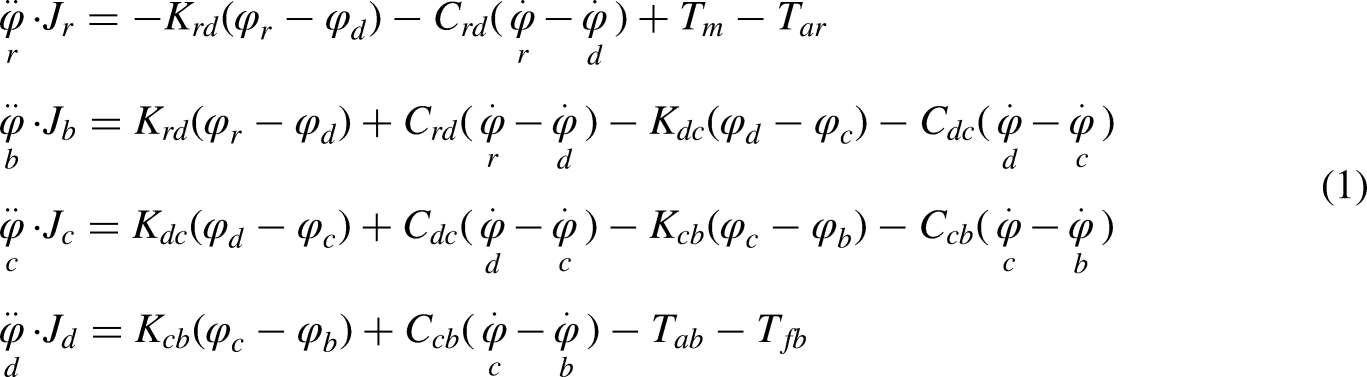
In constructing the drill string torsional vibration dynamic model, high-frequency torque from the torsional impact tool is considered. By analyzing the forces on each mass block in Figure 1, Equation (1) can be rewritten as follows:
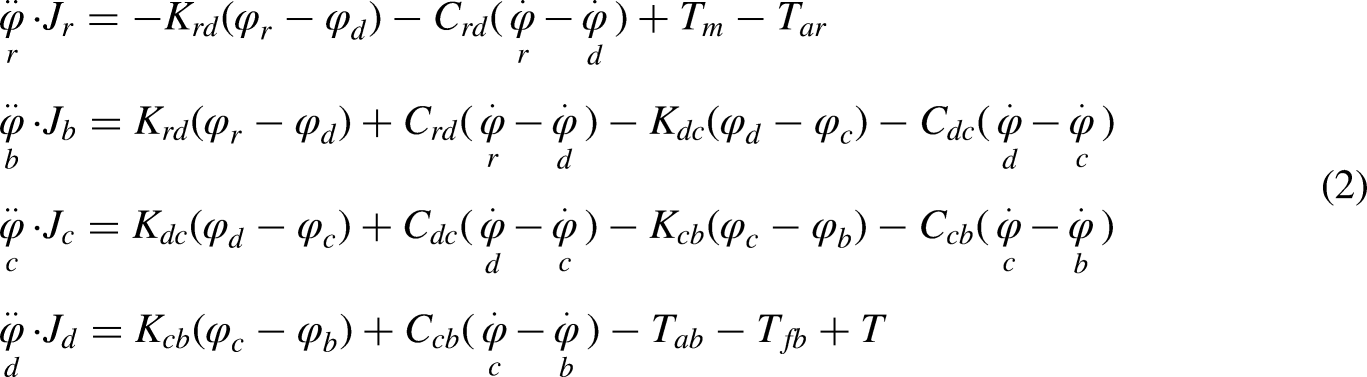






Additionally,



Therefore, Equation (2) can be rearranged to obtain:
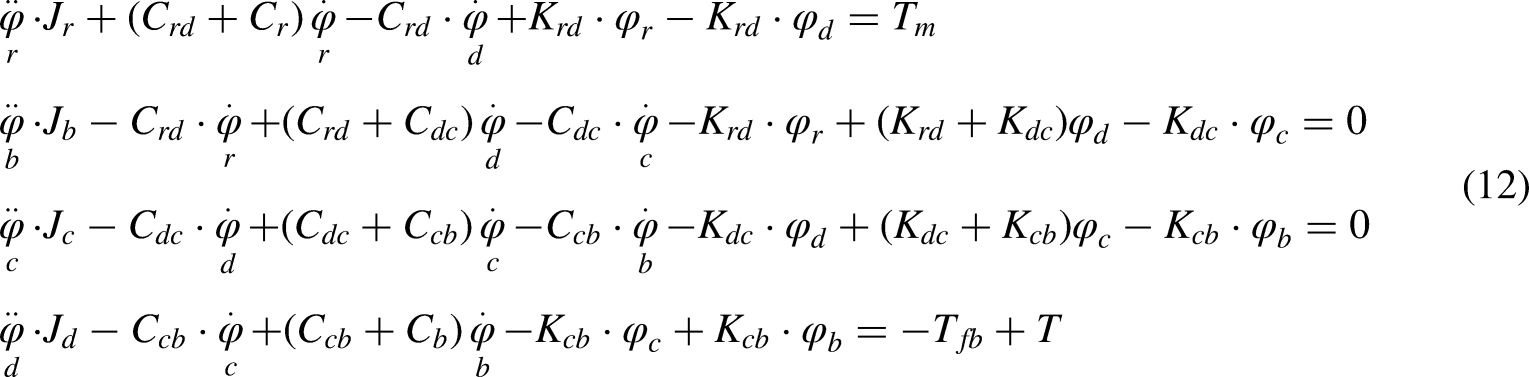




This model is solved via the fourth–fifth-order Runge–Kutta algorithm to analyze the suppression of stick‒slip vibrations by the torsional impact tool.
Analysis of the stick-slip vibration characteristics of drill strings
Effects of torsional impact tools on drill string stick-slip vibrations
Navarro-Lòpez (Navarro-López and Cortés, 2007), and Tian (Tian et al., 2022) conducted simulation analyses of stick-slip vibrations, and Tables 1 and 2 list the main calculation parameters of their drill string torsional vibration dynamic models. Substituting these parameters into the dynamic equations verifies that the model can replicate their simulation results, confirming its reliability and effectiveness in analyzing stick‒slip vibration characteristics with torsional impact. The time step is 0.001 s, and the total simulation time is 100 s.
Main drill tool parameters.

Basic calculation parameters for stick-slip vibrations.
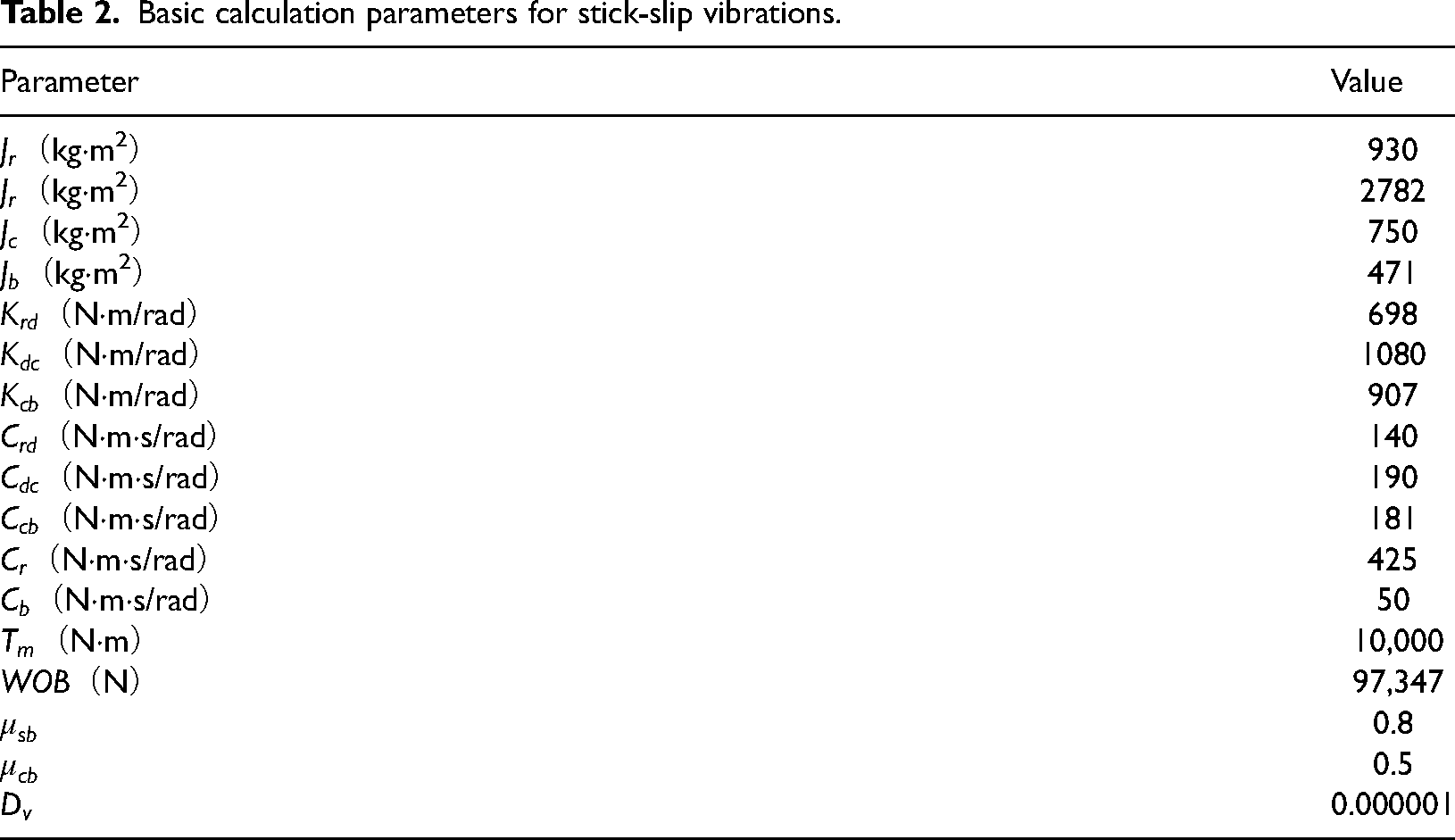
Figure 2 shows the torsional vibration characteristics of various positions in the drill string system under a constant turntable torque without torsional impact tools. Figures 2(a) and (b) clearly show that the turntable, drill pipe, drill collar, and bit do not rotate simultaneously, with a delay in torque transmission to the lower sections. When the bit rotates, it experiences friction from the formation. If the torque transmitted by the upper drill string is insufficient to overcome this friction, torque accumulation occurs (Figure 2(d)), leading to stick-slip phenomena. When the bit receives torque exceeding the maximum static friction torque of the formation, it transitions from sticking to slipping, causing sudden acceleration. Angular acceleration reaching approximately 8 rad/s2 can severely damage the bit and the nearby drill string.
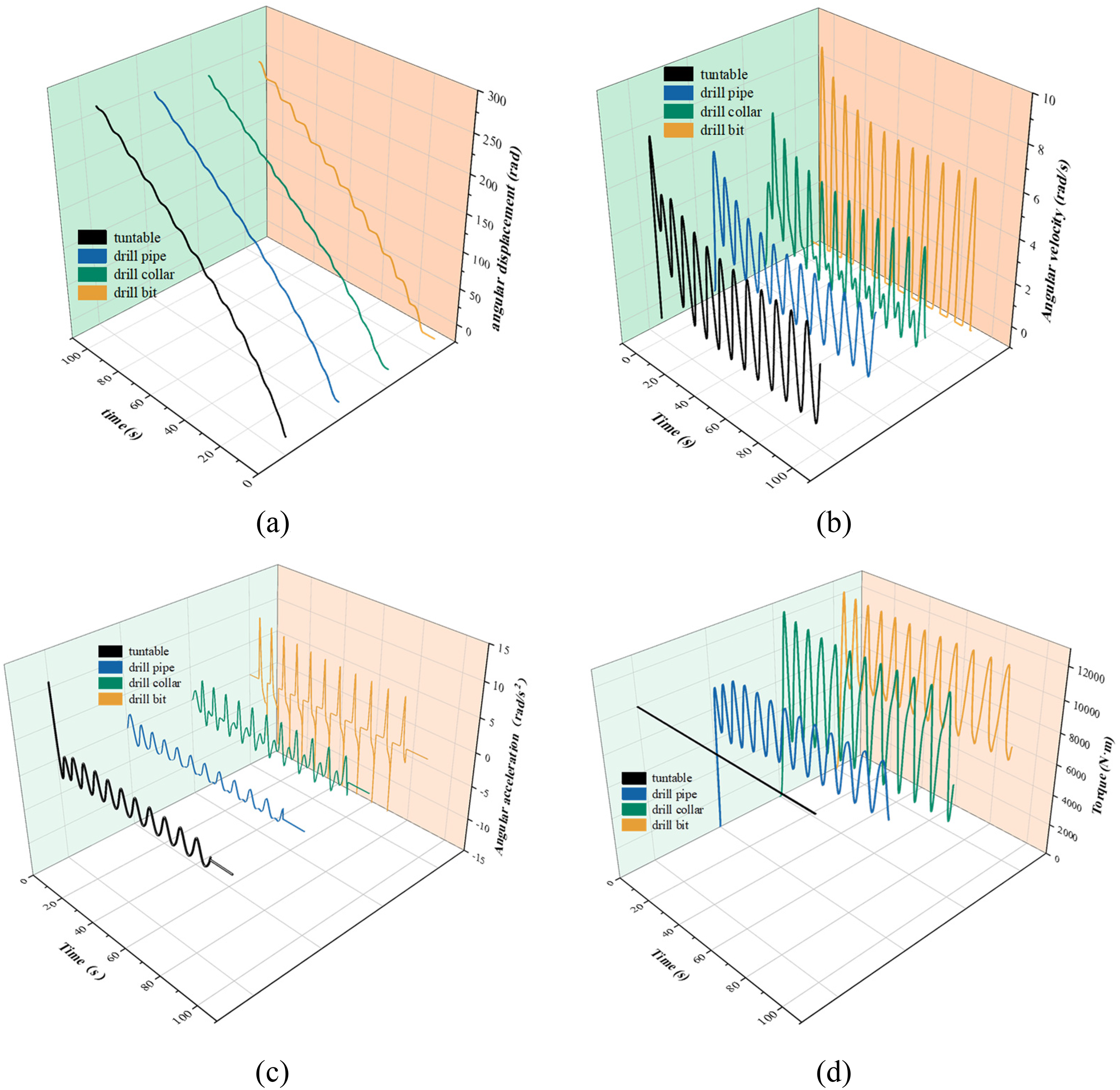
Torsional vibration characteristics of the drill string system without torsional impact tools. (a) Angular displacement. (b) Angular velocity. (c) Angular acceleration. (d) Torque.
Figure 3 shows the torsional vibration characteristics of the bit with and without torsional impact tools. The selected torsional impact tool has a torsional impact load of 2000 N·m and an impact frequency of 22 Hz. Figure 3(a) clearly shows that after installing the torsional impact tool, the stick‒slip vibrations of the drill string are significantly suppressed. The angular displacement of the bit shows a linear relationship with time, and after stabilization, the angular velocity of the bit maintains a high value. The angular acceleration and torque of the bit exhibit minor fluctuations around a fixed value after brief instability. Ultimately, the angular displacement of the bit with the torsional impact tool is approximately 2.31 times greater than that without the tool within 100 s, greatly increasing the rate of penetration. This finding indicates that the torsional impact tool provides additional high-frequency torsional impact energy to the bit, allowing continuous rock breaking without the need for torque accumulation. This reduces fluctuations in the bit's torque, angular velocity, and angular acceleration, thereby mitigating or even eliminating stick‒slip vibrations in the drill string.
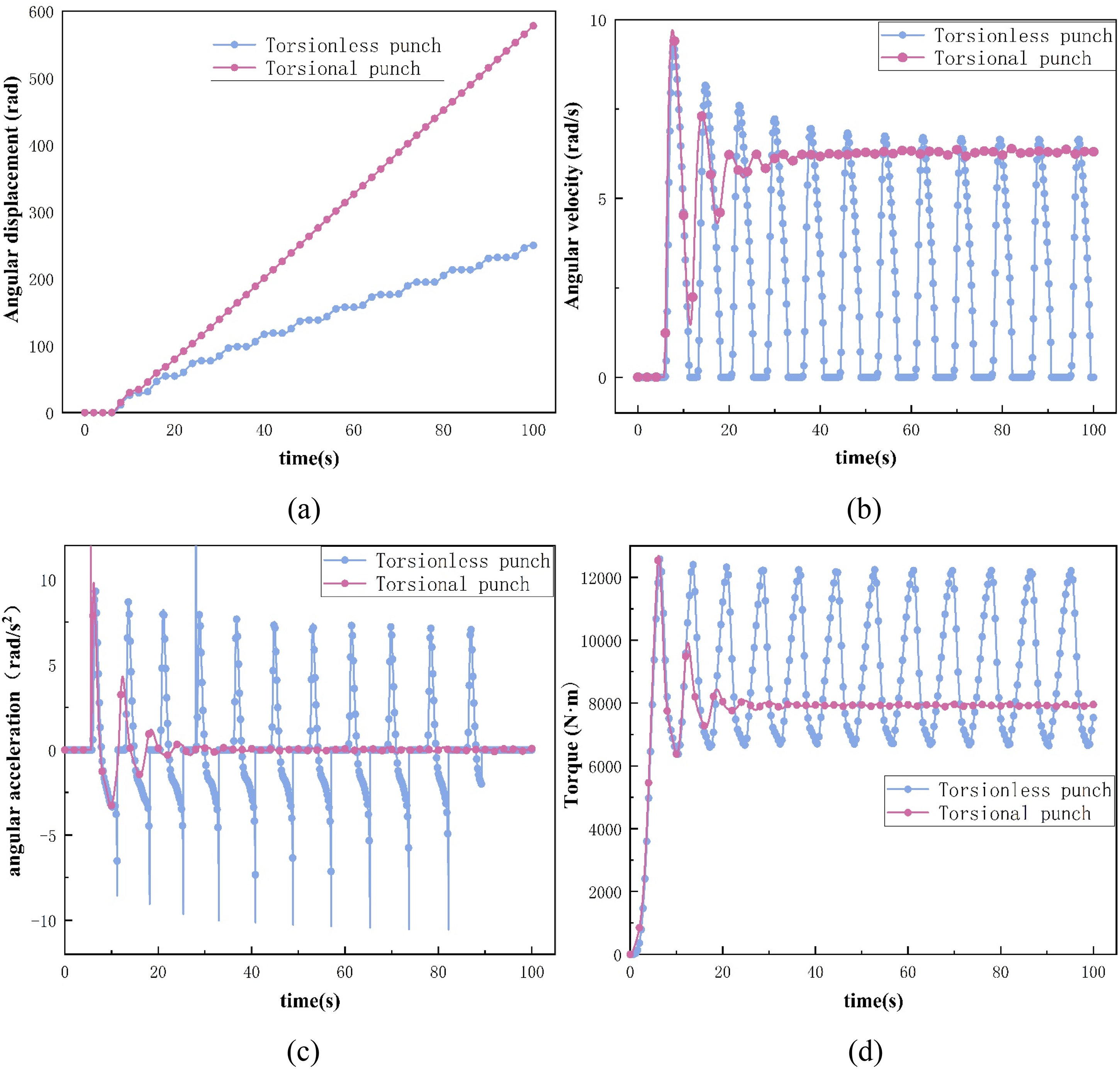
Torsional vibration characteristics of the bit with and without torsional impact tools. (a) Angular displacement. (b) Angular velocity. (c) Angular acceleration. (d) Torque.
Influence of torsional impact tool operational parameters on drill string stick-slip vibrations
The torsional impact load and frequency are key operational parameters that directly affect tool performance. The impact load is influenced by the angle of the tool's helical teeth, whereas the impact frequency is related to the hammer stroke, flow area, and displacement (de Moraes and Savi, 2019). Adjustments can be made on the basis of structural parameters and drilling fluid flow to change these parameters. This section analyzes the effects of torsional impact load and frequency on stick‒slip vibrations via the torsional vibration model considering torsional impact (Table 3).
Basic parameters of the torsional impact tool.
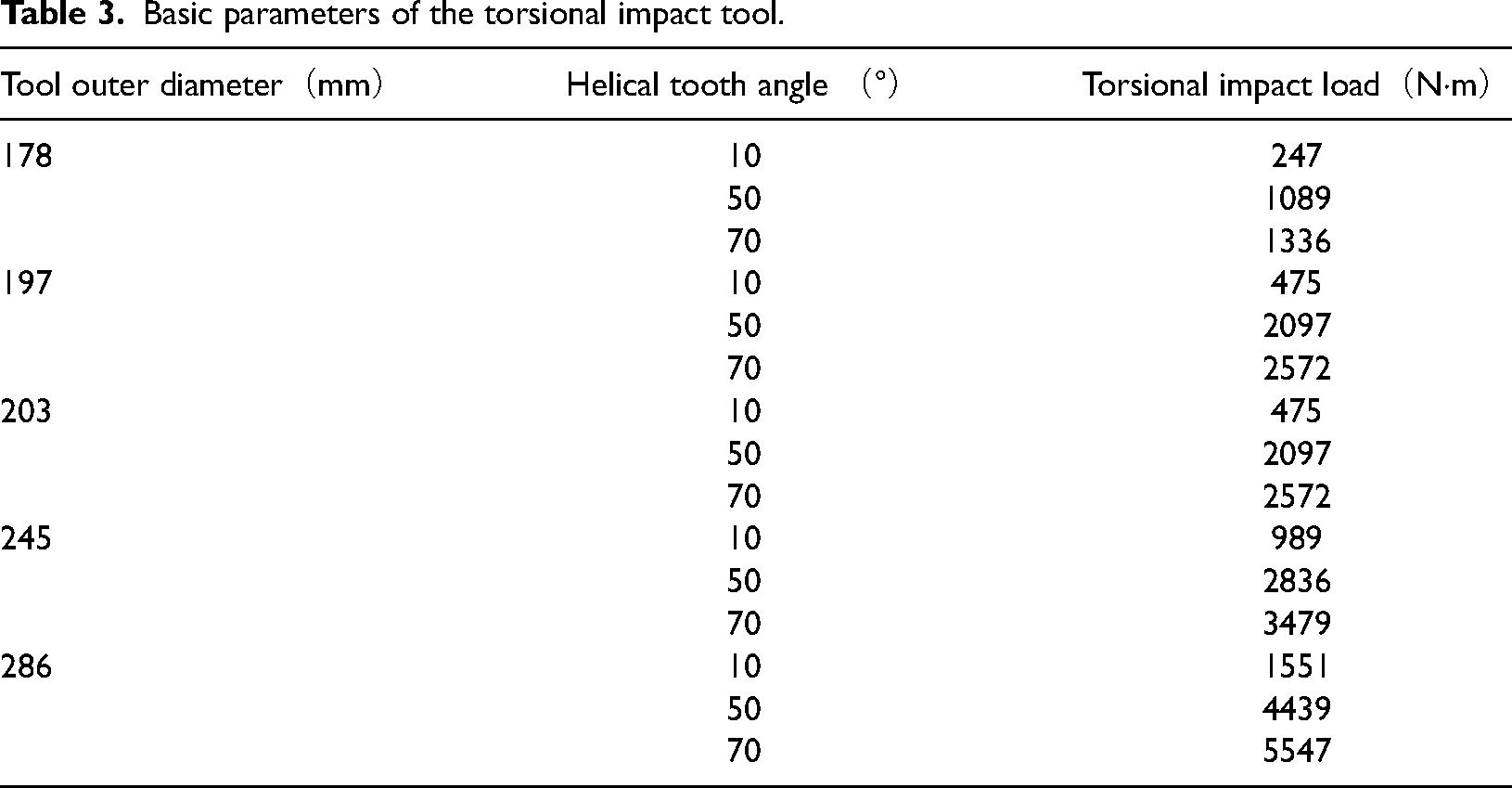
The impact frequency is generally controlled between 18 Hz and 24 Hz. Using a torsional impact tool with an outer diameter of 203 mm, stick‒slip vibration characteristics are analyzed for impact loads of 475 N·m, 2097 N·m, and 2572 N·m and frequencies of 10 Hz, 12 Hz, 14 Hz, 16 Hz, 18 Hz, 20 Hz, 22 Hz, and 24 Hz.
Effect of torsional impact load on drill string stick-slip vibrations
The torsional impact load is crucial in overcoming friction torque and suppressing stick‒slip vibrations. Figure 4 shows the torsional vibration characteristics at an impact frequency of 18 Hz for different impact loads. At 475 N·m, stick-slip still occurs, but the period is shortened by approximately 26% compared with that of the bit without the impact tool, indicating the tool's weak suppression effect. Increasing the impact load to 2097 N·m eliminates stick-slip, with the angular displacement of the bit showing a linear relationship with time. A further increase in the load to 2527 N·m results in minimal changes, with a 6% increase in angular displacement over 100 s. Thus, the torsional impact load effectively suppresses or eliminates stick‒slip vibrations, with diminishing returns after eliminating the phenomenon.
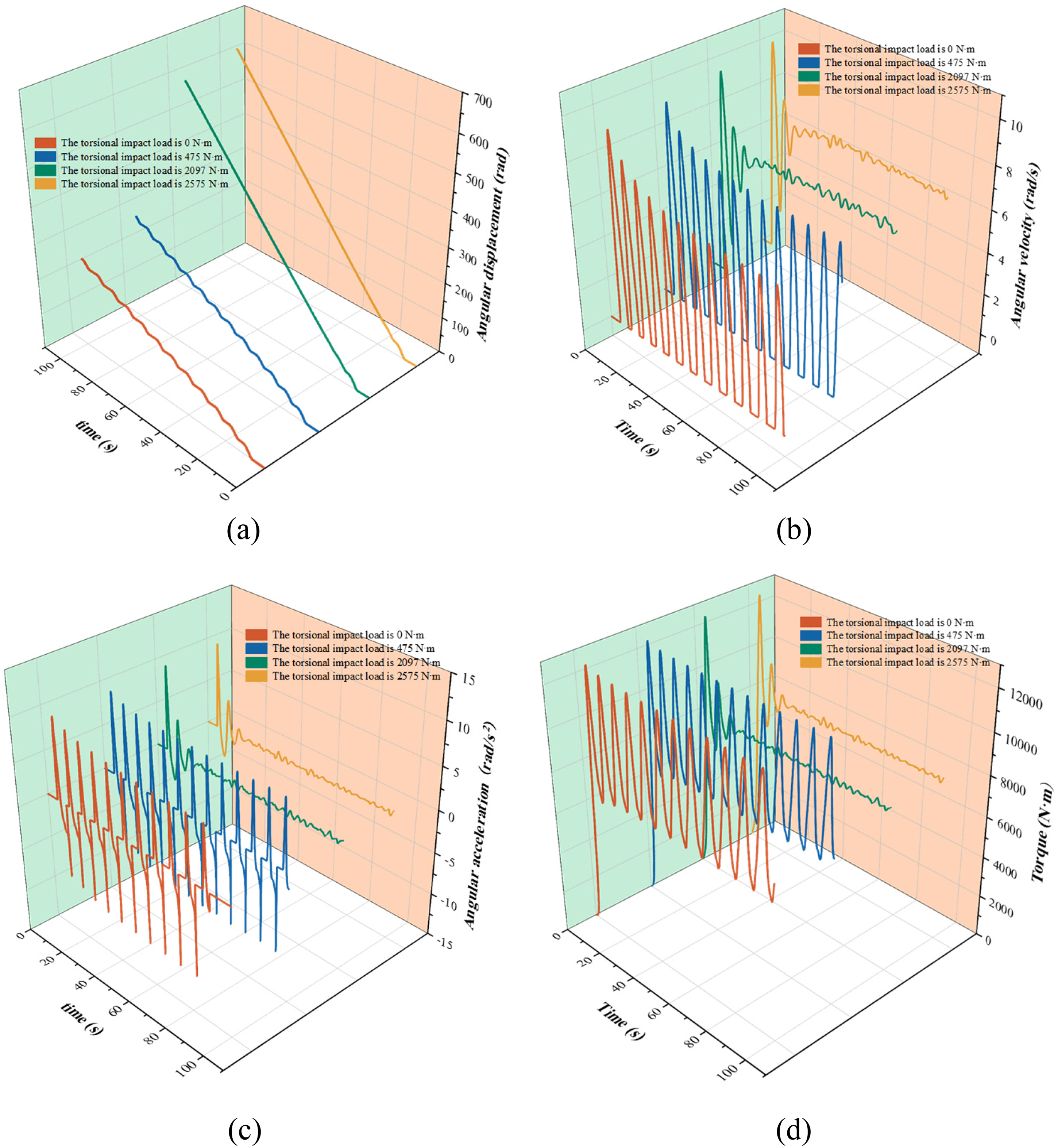
Torsional vibration characteristics of the bit under different torsional impact loads. (a) Angular displacement. (b) Angular velocity. (c) Angular acceleration. (d) Torque.
Effect of impact frequency on drill string stick-slip vibrations
A proper impact frequency provides stable torsional impact loads, enhancing rock-breaking stability. This section analyzes the torsional vibration characteristics at an impact load of 2097 N·m for frequencies of 10 Hz, 12 Hz, 14 Hz, 16 Hz, 18 Hz, 20 Hz, 22 Hz, and 24 Hz. Figure 5 shows the significant impact of frequency on torsional vibration characteristics in the 10 s–20 s range. At 10 Hz and 12 Hz, stick-slip occurs, with short periods decreasing with increasing frequency. Figure 5(d) shows that low frequencies result in inadequate rock breaking, requiring torque accumulation and causing stick-slip. Higher frequencies allow continuous rock to break, eliminating stick-slip.
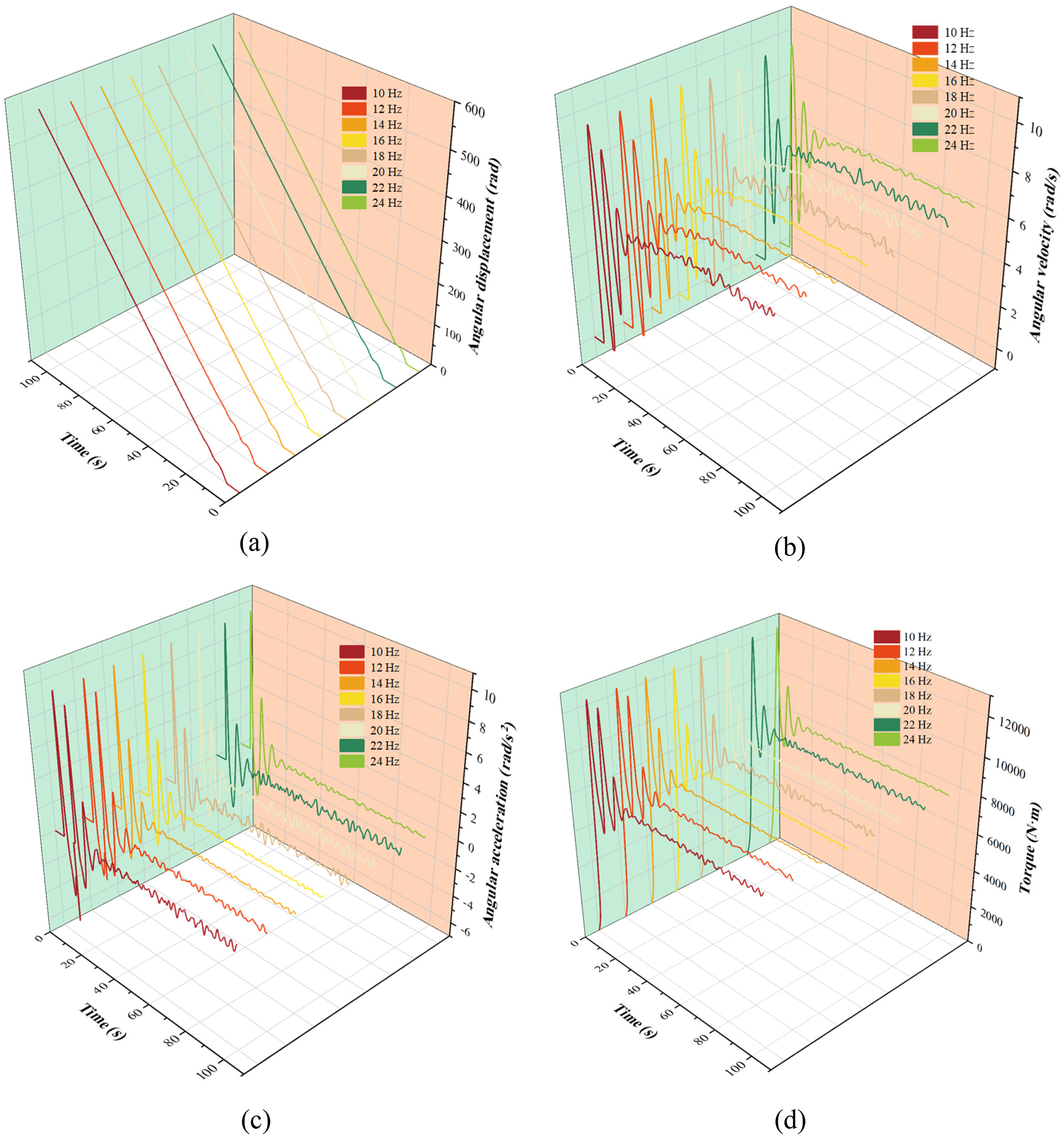
Torsional vibration characteristics of the bit under different impact frequencies. (a) Angular displacement. (b)Angular velocity. (c) Angular acceleration. (d) Torque.
Figure 6 shows the angular velocity at various positions in the drill string for different impact frequencies (20 s–100 s). The angular velocity at different positions in the drill string remains roughly the same, fluctuating approximately 6.5 rad/s. However, as the impact frequency increases, the amplitude of these fluctuations gradually decreases. Compared with the angular velocity at impact frequencies below 20 Hz, increasing the impact frequency to 20 Hz reduces the variance in angular velocity to approximately one-tenth of its previous value, significantly diminishing the fluctuation amplitude and thereby stabilizing the drill string motion. Therefore, increasing the impact frequency of the torsional impact tool effectively reduces stick‒slip vibrations and enhances the stability of the drill string rotation. In practical drilling engineering design, increasing the impact frequency of the torsional impact tool to above 20 Hz is recommended, provided that the torsional impact load requirements are met.
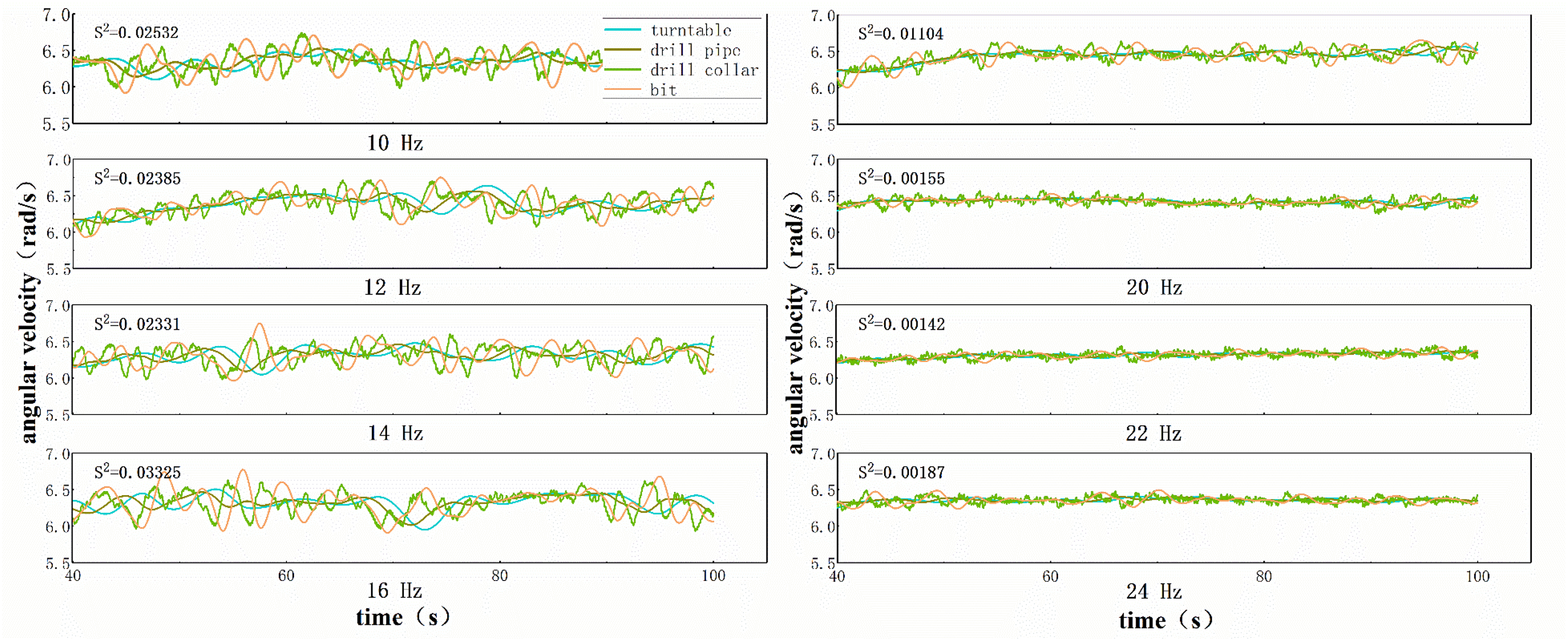
Angular velocity of the drill string system under different impact frequencies.
Field application
Figure 7 shows the measured data during horizontal drilling of Well Lu 206H31-1 with stick‒slip vibration metrics obtained via Baker Hughes rotary steerable tools. The vibration evaluation standards are detailed in Table 4. For controlling stick‒slip vibrations, Baker Hughes specified the following: grades 0–4 allow normal drilling, the cumulative time a single tool can endure grades 5–6 stick‒slip vibration must not exceed 5 h, grades 6–7 must not exceed 3 h, and grade 7 or above must not exceed 20 min.
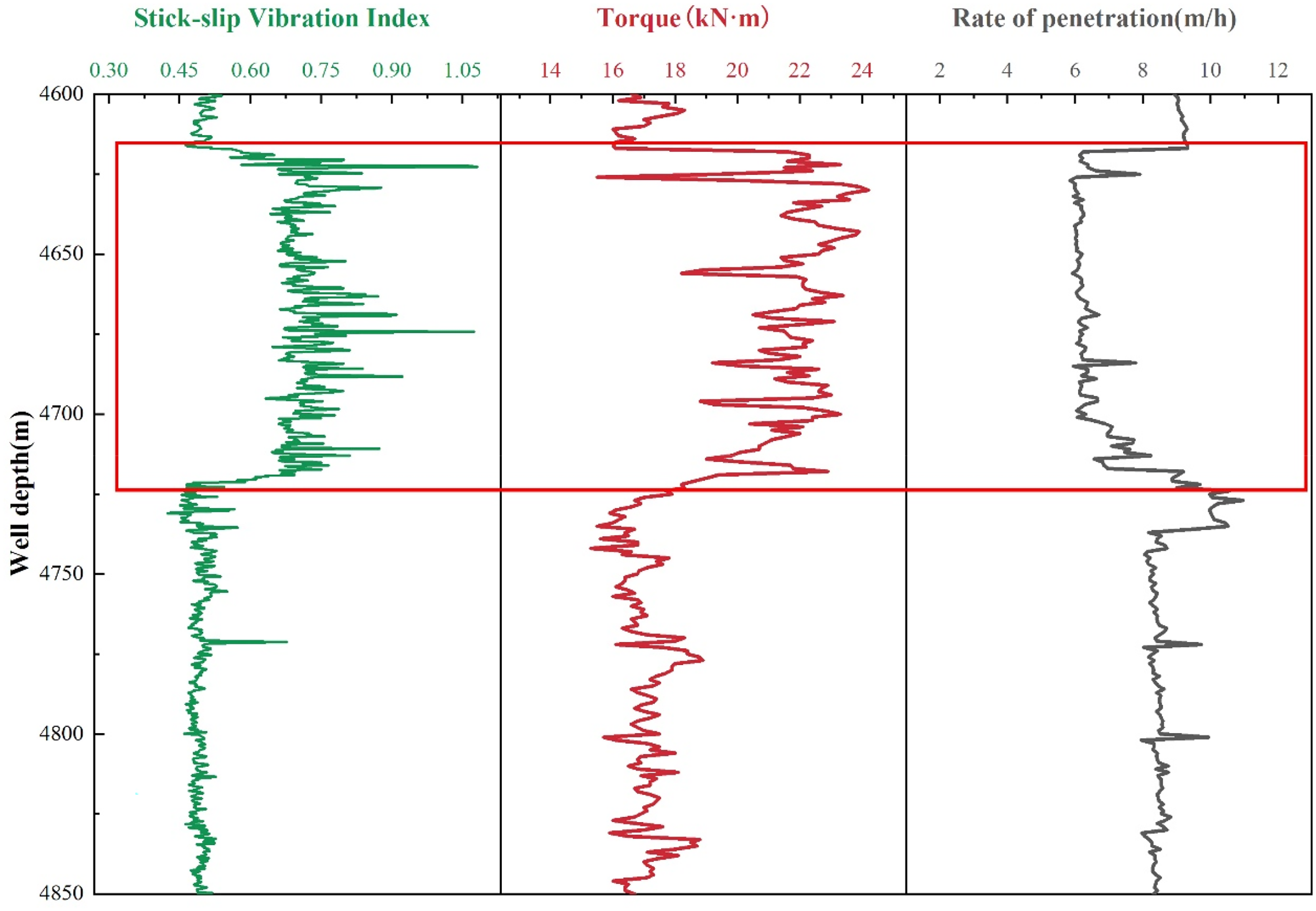
Measured data during horizontal drilling of well lu 206H31-1.
Baker Hughes vibration evaluation standards.
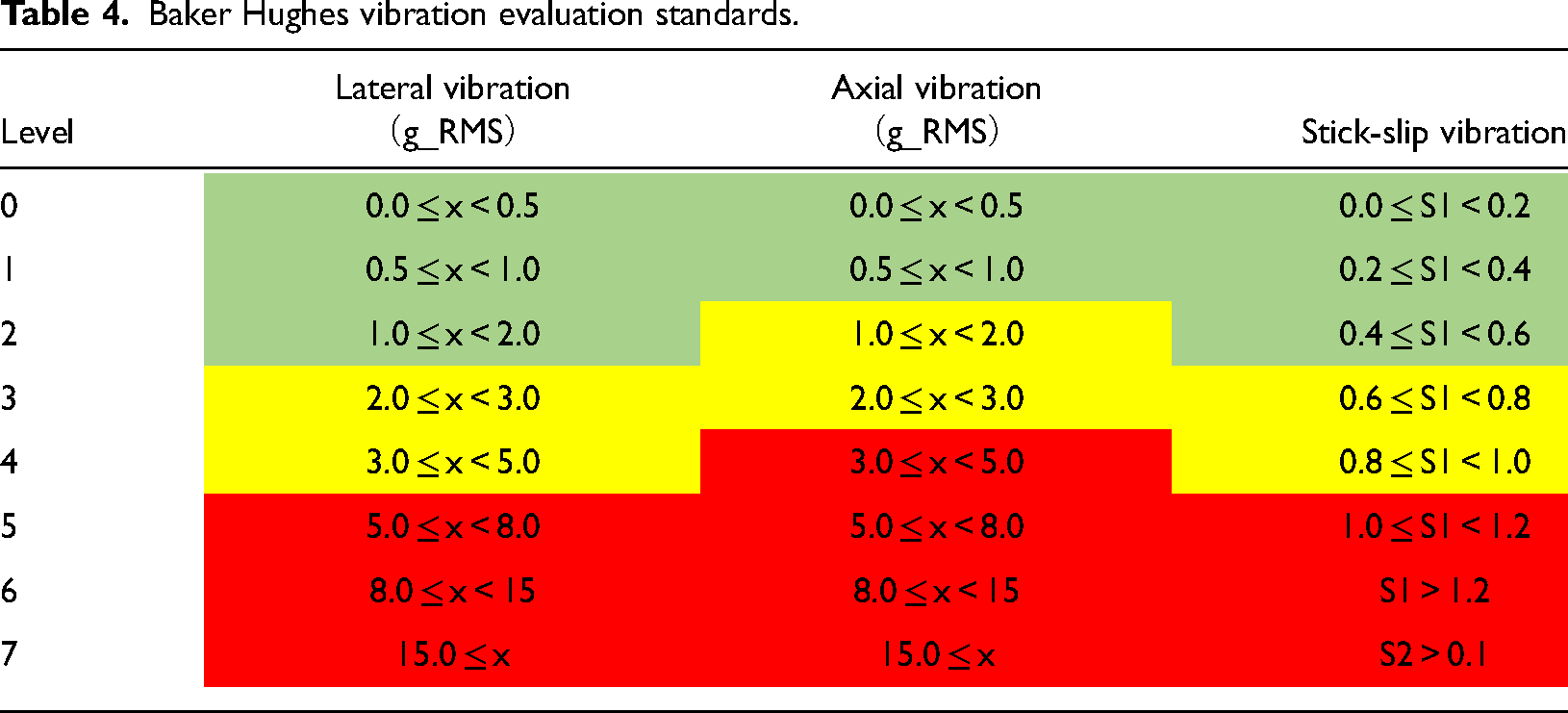
During horizontal drilling, a torsional impact tool was used. When drilling between 4617 and 4719 m (marked in red), the impact load was 431 N·m. The data indicate a significant increase in stick‒slip vibrations, with the peak stick‒slip indicator increasing to approximately 1.07, causing large-amplitude periodic torque oscillations and a decrease in the drilling speed. When drilling between 4720 and 4850 m, the impact load increased to 2062 N·m, reducing the stick‒slip indicator to approximately 0.47, decreasing torque oscillations and increasing the drilling speed. This finding demonstrates that increasing the torsional impact load can significantly suppress or even eliminate stick‒slip vibrations in the drill string.
Conclusions
The torsional impact tool provides additional torque to the bit, allowing continuous rock breaking without the need for torque accumulation, reducing fluctuations in angular acceleration, maintaining a high angular velocity, and ultimately improving the drilling speed.
When the torsional impact load is low (below 2000 N·m), increasing the load can significantly suppress or eliminate stick‒slip vibrations, but further increases have a minimal effect on the torsional vibration characteristics of the drill string. At low impact frequencies (10 Hz or 12 Hz), stick‒slip phenomena still occur, but increasing the frequency can suppress these vibrations and reduce fluctuations in angular velocity, enhancing the stability of the drill string rotation.
In practical drilling operations, to meet rock-breaking requirements, a torsional impact load of approximately 2000 N·m and an impact frequency above 20 Hz are recommended. This effectively suppresses stick‒slip vibrations and increases the lifespan of drill strings.
Footnotes
Acknowledgements
First of all, I would like to sincerely thank Prof. Mao Liangjie of Southwest Petroleum University for his professional guidance and advice, without which this study could not have been completed. Then, I would like to thank my colleagues for their help and support, and for their encouragement.
Declaration of conflicting interests
The authors declared no potential conflicts of interest with respect to the research, authorship, and/or publication of this article.
Funding
The authors received no financial support for the research, authorship, and/or publication of this article.