




Abstract
Solar stills are simple devices that can be used to remove salts from water. However, it has a lower distillate yield; hence, it is not popular. Increasing the solar energy collection at the absorber may help to address these issues. This is feasible by adopting highly absorbent energy storage substances. Hybrid nanomaterials have significant potential for this purpose, and they can boost the absorptivity of the absorber plate of solar stills. Taking this into account, a hybrid nanomaterial was synthesized in a laboratory and applied to the surface of a solar still absorber to achieve higher performance. Iron oxide (Fe2O3) and copper oxide (Cu2O) nanoparticles were used in a 50:50 ratio. In addition, the current research employed a water sprinkler to enhance the condensation rate in the condensing region and consequently increase the distillation output of the solar still. A cooling water flow rate of 10 kg/h was used to sprinkle the condensing surface. According to the results, combining Fe2O3 and Cu2O with epoxy resin increased the efficiency of the solar still by 34% when using a glass cooling approach and by 28% when operating without a glass cover cooling technique.
Keywords
Introduction
Water covers almost 71% of the earth's surface, and most of it is unsafe for daily household applications because it is highly saline. Nearly 3% of water is available on Earth as fresh water. Only approximately 2.5% of freshwater reservoirs are in the form of lakes, rivers, glaciers, and underground aquifers (Walaa, 2012). Traditional resources such as rivers, ponds, lakes, and groundwater are inadequate for fulfilling the local water demand. To address this issue, implementing water conservation measures, minimizing distribution losses, and promoting the use of recycled water can contribute to more efficient water usage. However, if there is still an insufficient supply, it becomes necessary to distill the saline and brackish water. The fundamental principle of solar water distillation is straightforward and involves a process that closely resembles natural rain formation. The heat energy from the sun causes water to evaporate, resulting in water vapor ascending and condensing on the surface of the glass, where it can be collected in the distillate collection trough. During evaporation, pollutants, such as salts, biological contaminants, dust, dirt, and suspended solid particles, are eliminated, producing pure potable water that resembles fresh rainwater. Solar distillation is a simple method to generate potable water. However, it has lower daily distillate yield and energy efficiency. During summer, the water produced by basin-type solar stills per square meter per day was 3.3 L. In contrast, during winter, the maximum output was 2.3 L (Panchal and Mohan, 2017). Consequently, researchers are continuously working to enhance the distillate yields of solar stills.
Over the last 3-decade, nanofluids have attracted interest among desalination fraternity researchers. Over the past two decades, crucial experimental data have been collected on the thermal conductivity enhancement capabilities of metallic and oxide nanoparticles, carbon nanofibers, and carbon nanotubes (Panchal, 2016). In this literature review, we have included broad reviews and studies on thermal-conductivity enhancement techniques. Nanomaterials possess prominent physicochemical characteristics that render them highly desirable separation media for water purification.
Typically, nanofluids are used as phase-change materials or coating materials on absorber plates. Researchers are interested in nanomaterials because of their favorable characteristics, including their heat capacity and thermal conductivity (Panchal, 2016; Zanganeh et al., 2020; Al-Kayiem et al., 2013; Bait and Si-Ameur, 2018; Bumataria et al., 2019; Kiliç et al., 2018). To date, numerous researchers have conducted experiments to improve the overall productivity of solar stills by employing a flat-plate collector coupled with a solar still (Badran and Al-Tahaineh, 2005), a single basin with fins (Velmurugan et al., 2008), a single basin with a vertical and inclined fin (Panchal et al., 2020), a solar still integrated with an evacuated tube collector (Singh et al., 2013), a solar still with a condenser (Kabeel et al., 2016), a condenser with a rotating disc (Abdullah et al., 2019), and an energy storage material (Panchal and Mohan, 2017). (Panchal et al., 2019) used MgO and TiO2 at concentrations ranging from 0.1% to 0.2% to evaluate the distillate output of stepped solar stills. During the experiment with 0.2% and 0.1% MgO nanofluid, the overall productivity was 45.8% and 33.33%, respectively. Similarly, they obtained 20.4% and 4.1% of 0.2% and 0.1% concentration of TiO2 nanofluids. A higher thermal conductivity and lower specific heat capacity are crucial factors in increasing the productivity yield. Parikh et al. (Parikh et al., 2021) studied the effect of water depth on DW generation of distilled water. The absorber surface was coated with a mixture of TiO2 and black paint. They concluded that by comparing simple and modified still results with concentrations of 20% and 40%, they obtained 11–18% and 20–23% increments in productivity. At a water depth of 10 mm, a mixture with a 40% (w/v%) concentration generated 23% more power than a traditional solar still. Sathyamurthy et al. (Sathyamurthy et al., 2019). Their research showed an improvement in productivity of 33.18% with 0.1% volume concentration and 41.05% when using 0.2% volume concentration of TiO2 nanofluid and 51.7% and 61.89% enhancement of output, respectively. Zanganeh et al. (Zanganeh et al., 2020) found that the condensation surface played a vital role in the overall productivity of distilled water. The results indicate that dropwise condensation provides 13% more productivity than film-wise condensation for glass-cover cooling. Kabeel et al. (2017) used CuO as a nanomaterial in practical applications. They found that mixing nanoparticles with black paint drastically increased the heat transfer rate. The productivity increased by 16% and 25%, respectively, compared to the conventional solar still (CSS) at 10% and 40% weight fraction concentrations. A review of the economic analysis in the published literature reveals that the total amount of water collected climbed and the distilled water price plummeted. (Panchal, 2017; El-Sebaii and El-Naggar, 2017).
Kabeel et al. (2019) studied the behavior of a pyramid solar still with TiO2 coating on an absorber plate. The daily water generation increased by 6.1% compared to that of conventional solar stills. The temperature gradient between the condensing and evaporating surfaces is essential for productivity yield. The researchers used fans, condensers, heat storage materials, different cooling techniques, and reflectors (Kumar et al., 2016, Mevada et al., 2021, Sharshir et al., 2017a, Omara et al., 2017). By applying the glass cooling technique, the researcher reduced the temperature gradient by 6–20°C and distilled water was added up to a maximum of 15.5% and 20%, respectively. Cooling airflow in tabular solar stills enhances productivity by 32.8% and 59% compared to simple solar stills without cooling (Omara et al., 2017; Verma et al. 2018) studied the influence of the hybrid nanomaterial of CuO and MgO with MWCNTs in water based on the overall productivity of distilled water. They found that under the same ambient conditions, the energetic and energetic efficiencies of the MgO nanofluid were 71.54% and 70.55% and 70.63% and 69.11%, respectively, and concluded that the performance of the hybrid nanofluid of MgO was better than that of CuO and closer to that of multi-wall carbon nanotubes with water fluid. Panchal et al. (2021b) experimented using graphite powder mixed with black paint to coat an absorbing surface. The productivity of the still improved from 10.5% to 17%, with the concentration varying from 20% to 40%. Carbon powder was mixed with the black paint to increase the water temperature and heat transfer rate. The lower specific heat capacity and better thermal conductivity of MgO nanofluid over TiO2 in a stepped solar still are the causes of the higher distillate yield. Various methods of cooling the glass cover are crucial for increasing the rate of condensation. The productivity rate of distilled water can also be improved by regulating the flow rate of the cooling water (Sharshir et al., 2017a; Omara et al., 2017; Sharshir et al., 2017b). The water used for glass cover colling provides certain benefits, such as self-cleaning of glass without any other mechanism.
To enhance the effect of UV rays on solar energy, a nanopainted floor was used in a solar pond. (Hagh Parast et al., 2023a) In their experiment, the researcher experimented with three different coatings, that is, simple coating, coating made of zinc oxide nanoparticles, and coating made of aluminum oxide nanoparticles, with productivities of 5, 6.6, and 6.7 L/day, respectively. The nano-coating on the floor has a magnifying effect on the evaporation rate (Hagh Parast et al., 2023b). Three different models were used in the experiment. The results showed that flooring made of nanoaluminum oxide increased the rate of evaporation by approximately 17% and flooring made of zinc oxide by approximately 11% with respect to a simple coating on the floor, and the results were also supported by the laboratory. A solar still model was simulated for laboratory and actual readings (Baghizade et al., 2023). The concluding remarks were about the maximum solar intensity and evaporation rate. The solar intensity was maximum during June, and the intensity was approximately 5 × 10⁻³ m3. It was found that the treatment efficacy of the plant decreased with increasing wastewater depth.
A novel approach was developed that combined solar desalination and nanotechnology to improve the efficiency of solar thermal water desalination. This was achieved by using a low-cost hybrid nanocomposite material (Hagh Parast et al., 2023a; Baghizade et al., 2023; Holman, 2011). These novel nanomaterials exhibit high light absorption and can transform them into thermal energy. The fundamental concept of this novel approach involves applying a layer of the newly developed nanocomposite onto the absorber plate in a straightforward solar-still configuration, which is consistently oriented towards sunlight. This significantly enhances the rate of water vaporization, leading to the condensation and subsequent collection of water vapor, which can be utilized as a supply of clean water. The current study concentrated on essential parameters, including the depth of the water in the basin, mass flow rate, and temperature of the absorber surface coated with nanomaterial. The main goal of this study is to demonstrate the effects of using a hybrid nanofluid as a heat transfer fluid on the performance parameters of the solar still.
Based on the literature survey, it can be concluded that nanoparticles have a significant potential for improving thermal conductivity, and consequently, the performance of solar stills. The thermal conductivities of ceramic oxides, such as aluminum oxides, silicon oxides, and titanium oxides, are higher than those of metals, such as copper and silver, as well as carbon components. Therefore, in this study, we tried a hybrid nanomaterial of ceramic oxides to increase the performance of solar stills. Iron oxide (Fe2O3) and copper oxide (Cu2O) were used in this study. A hybrid nanomaterial mixed with epoxy resin was used to investigate the overall effect on the productivity yield. Under the same conditions, the productivity output of a modified still and regular solar still is compared with that of a conventional still (without modifications).
Methodology
Preparation of the hybrid nanomaterial
Fe2O3 and Cu2O were selected to enhance the productivity of the solar still. Fe2O3 and Cu2O are classified as basic oxides, and their presence in acidic environments increases the temperature, thereby increasing the water temperature in the reservoir. In the process of making the hybrid material, the steps mentioned in the flow chart in Figure 1 are followed. Initially, the material was procured with a “nanotechnologies” datasheet
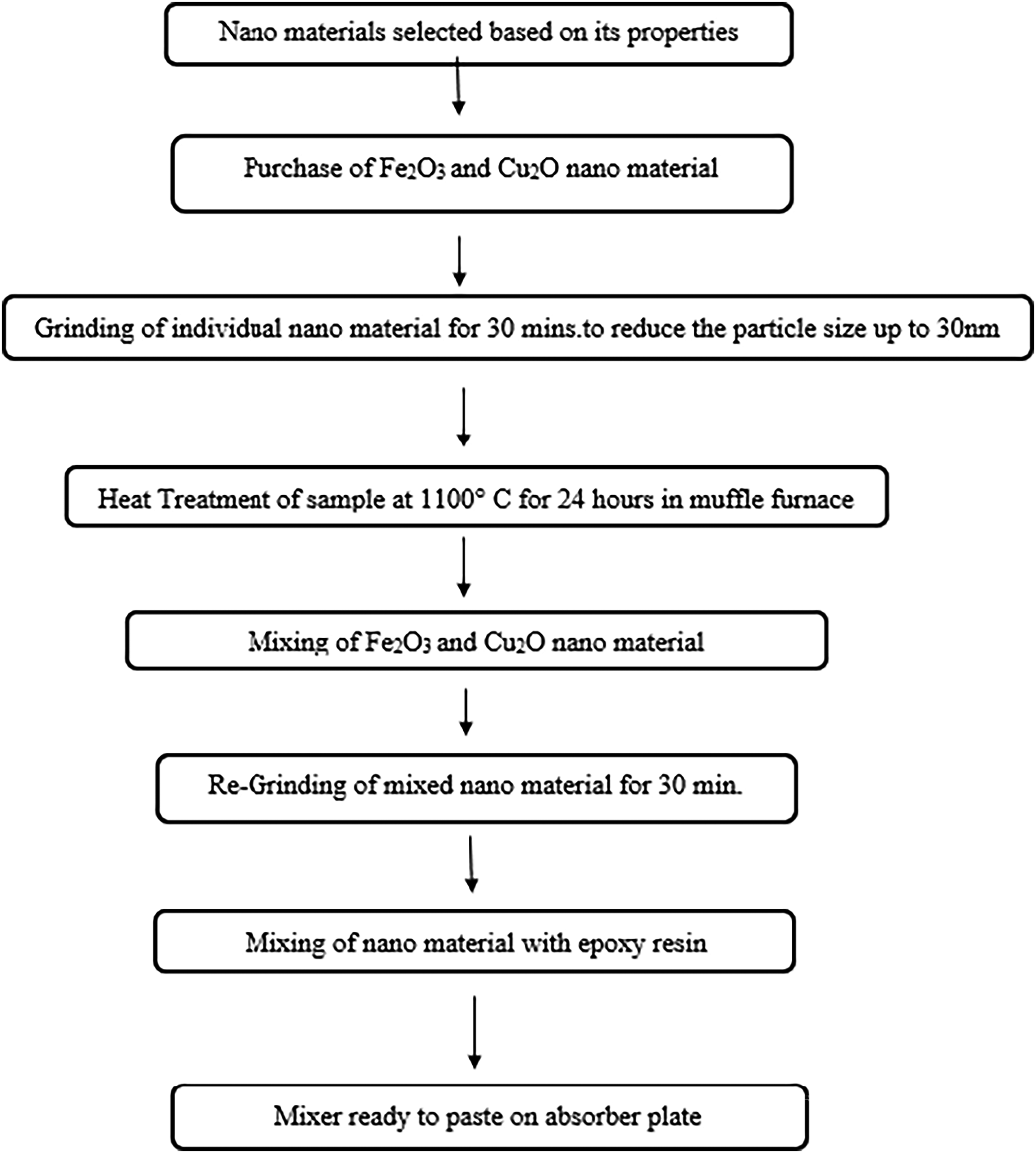
Procedure followed for the hybrid nanomaterial.
Experimental set-up and procedure
Two distinct solar stills were built, constructed, and installed for this research project at the Gandhinagar Institute of Technology, Gandhinagar, Gujarat, India. Figure 2(a) and (b) shows the components of the two solar stills. In a solar still, convection is a heat-transmission mode in which thermal energy is transferred from the water in the basin, causing it to evaporate. There was a noticeable temperature difference between the water and glass. The evaporated water (water vapor) in the air condenses on the surface of the glass cover and is collected in a beaker through a gutter owing to gravity. As shown in Figure 2, the main components of solar stills are the water tank, flow control valve, calibrated flask, water sprinkler, and timer. Both solar stills were made with the exact specifications using galvanized iron sheets. The modified solar still has some additional accessories to improve the overall productivity. The effective absorber area of the solar still was 0.25 m2 (0.5 × 0.5 m). The height of the side wall is 0.12 and 0.32 m, respectively. The interior wall of the basin was painted black to increase absorptivity. Clear crystal glass with a thickness of 4 mm was used to cover the basin, which was inclined at 23° (Latitude of Ahmedabad). The walls and bottom of the still were covered with a thermocol sheet to restrict heat loss from the system to the surroundings. The water height was maintained at approximately 10 mm inside the basin of the still using a water level indicator. The water level indicator was connected to the motor, which provided the on-off command to the motor for water levels of 8–15 mm. Additionally, a rectangular stainless steel water sprinkler was used for glass cover cooling. It was operated for 30 s at an interval of 5 min. The glass cover condenses the increasing amount of evaporated water. Condensed water flowed through a tiny rectangular channel (trough) to be collected into the flasks and used again for chilling because of the tilt of the glass cover and gravity. The temperatures of the water, air, and surface of the glass were measured using K-type temperature sensors. An anemometer was used to measure the air velocity, and a pyranometer was used to record the solar radiation level. Distilled water was collected in a calibrated flask. All readings were recorded hourly.
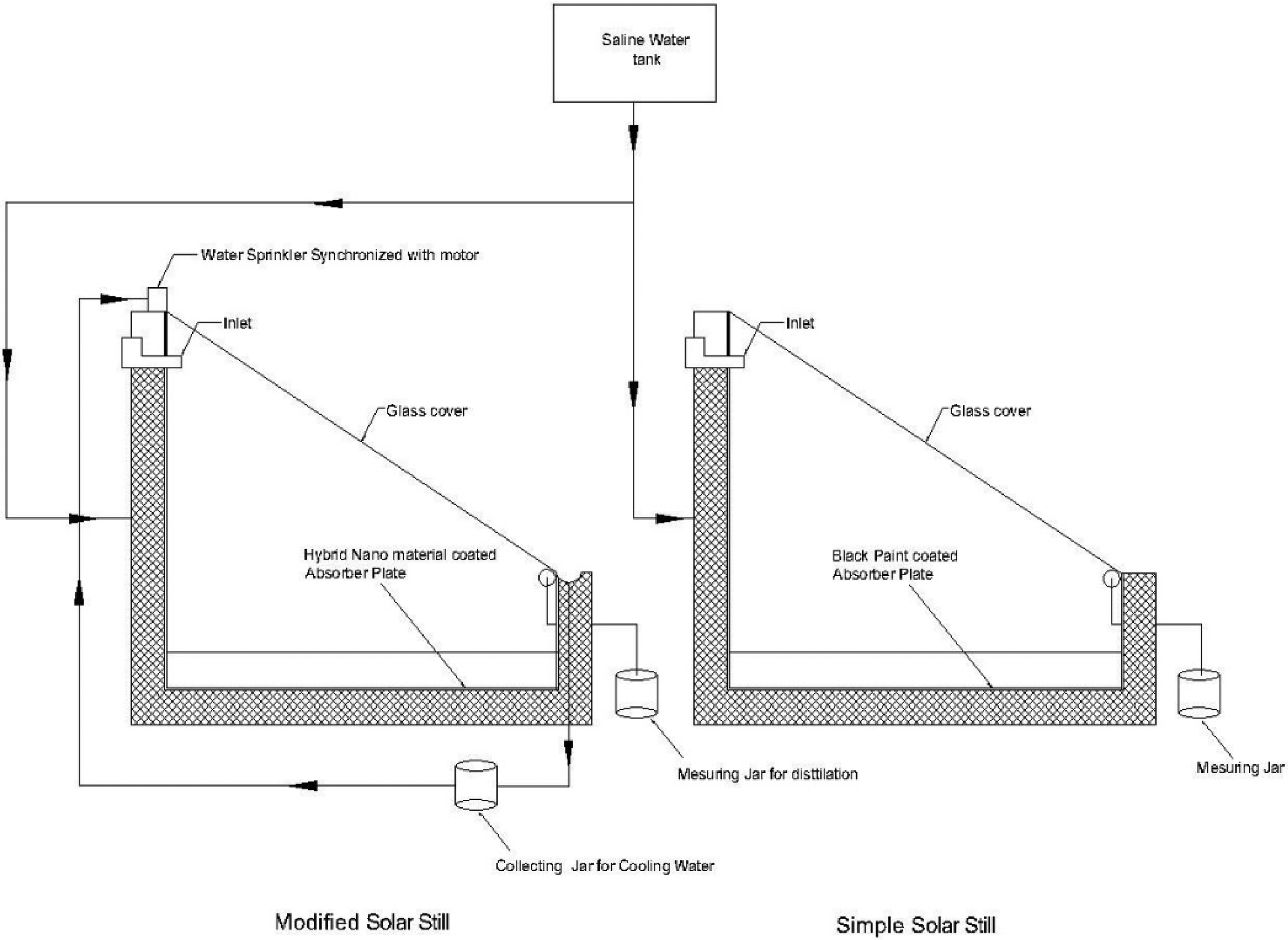
Schematic diagram of simple and modified solar stills.
Uncertainty analysis
To evaluate the solar still performance, different parameters were quantified, that is, the temperature at various points, solar radiation, air velocity, mass flow rate of the cooling water, and water depth are essential. As indicated earlier, K-type thermocouples were used to identify the temperature at different points, that is, the water of the basin, outside of the glass, inside the glass, and ambient, with an accuracy of ±1°C. In addition, a solar pyranometer with a range of 0–1800 W/m2 was employed with an accuracy of ±1 W/m2. The wind speed was measured using an anemometer with an operating range of 0.3–30 m/s. A calibrated beaker was used to measure five milliliters of distilled water. The approach proposed by Holman (2011) was employed to quantify the uncertainty.
In the employed approach for uncertainty analysis, if the process response (R) is calculated using a set of measurements for any process control variable (V), that is, R = (V1, V2, V3…, Vm), the response uncertainty UR can be computed as a function of the independent variable uncertainties U1, U2, U3,. …Um, as follows:

Results and discussion
During this experimental work, a hybrid nanomaterial of Cu2O and Fe2O3 was mixed with epoxy resin to determine their effect on the productivity yield of distilled water. The experimental results depended on the meteorological conditions observed on different days: the ambient temperature range was from 19°C to 35°C, the air velocity was from 0 to 3 m/s, and the solar radiation ranged from 0 to 900 W/m2. The following findings are included in this section: (a) XRD characterization; (b) field-emission scanning electron microscopy (FE-SEM) analysis; (c) effect of climatic conditions on temperature variation in both solar stills at various locations, productivity yield, impure and distilled water properties; (d) collation of the results; and (e) cost analysis.
Structural phase identification was accomplished using X-ray diffraction. Figure 3 shows the XRD pattern of the CuO + Fe composite. The
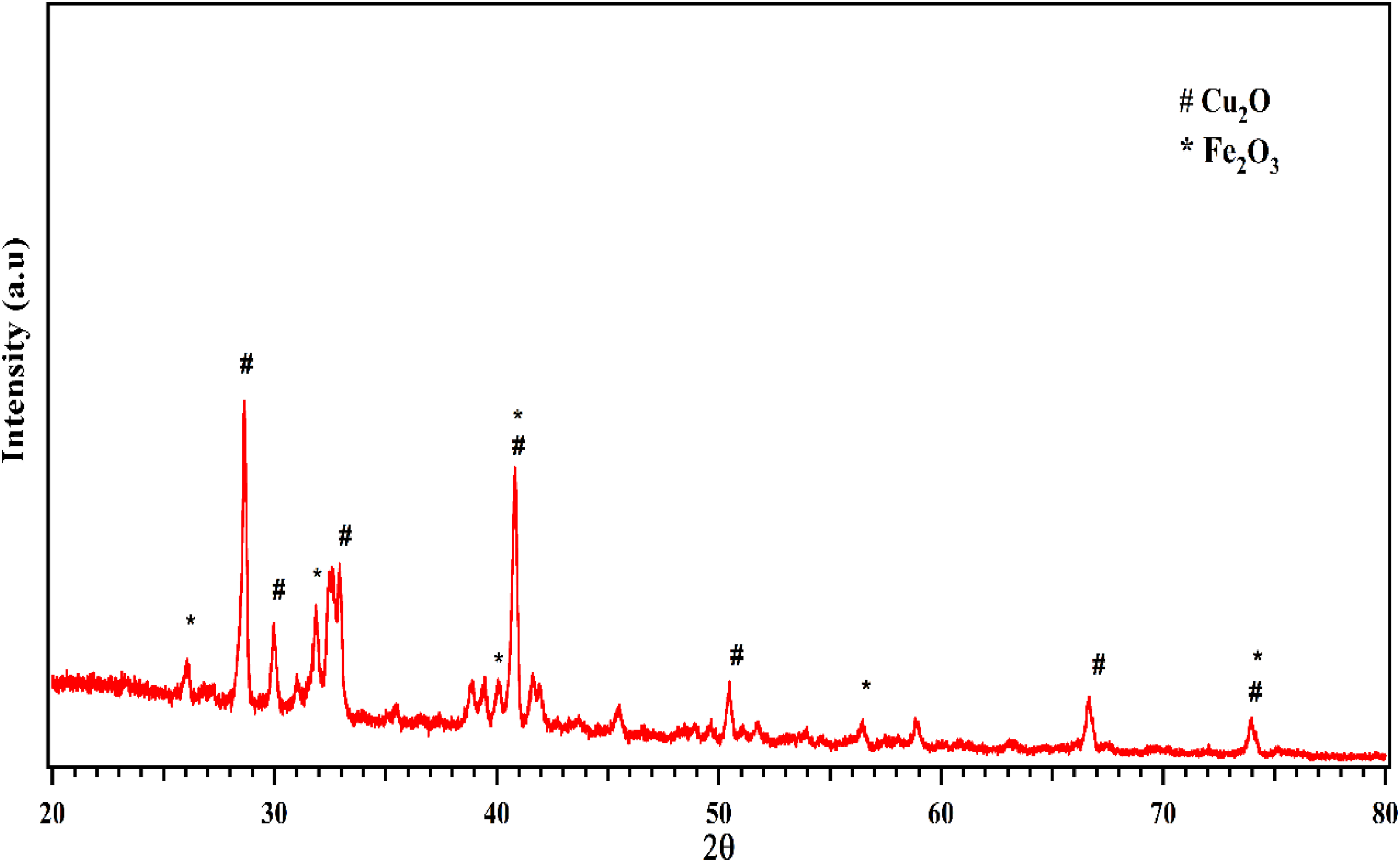
XRD analysis of the Cu2O and Fe2O3 hybrid nanomaterial.
To check the nature of the materials using the XRD patterns, the nature of the Bragg peaks appearing in the XRD pattern should be checked. A large humped peak indicates that the material is short-range ordered and amorphous. The material is crystalline if the XRD pattern shows sharp peaks. If both are present in combination, the material demonstrates both characteristics, namely, its semicrystalline nature. No other impurities were identified, which resulted in the successful formation of the CuO/Fe nanocomposite. The crystallite size was calculated using Scherrer's formula:

Figure 4 shows the FE-SEM images of the Cu2O and Fe2O3 hybrid nanomaterial at different resolutions. A temperature change of 1°C/min is essential for converting Cu to Cu2O and Fe2 to Fe2O3. The morphological layout of the sphere was altered by the presence of oxygen, which is a crucial factor. It was found that the combined effect of increased plasma power and the absolute temperature of the substrate led to the formation of the plate.
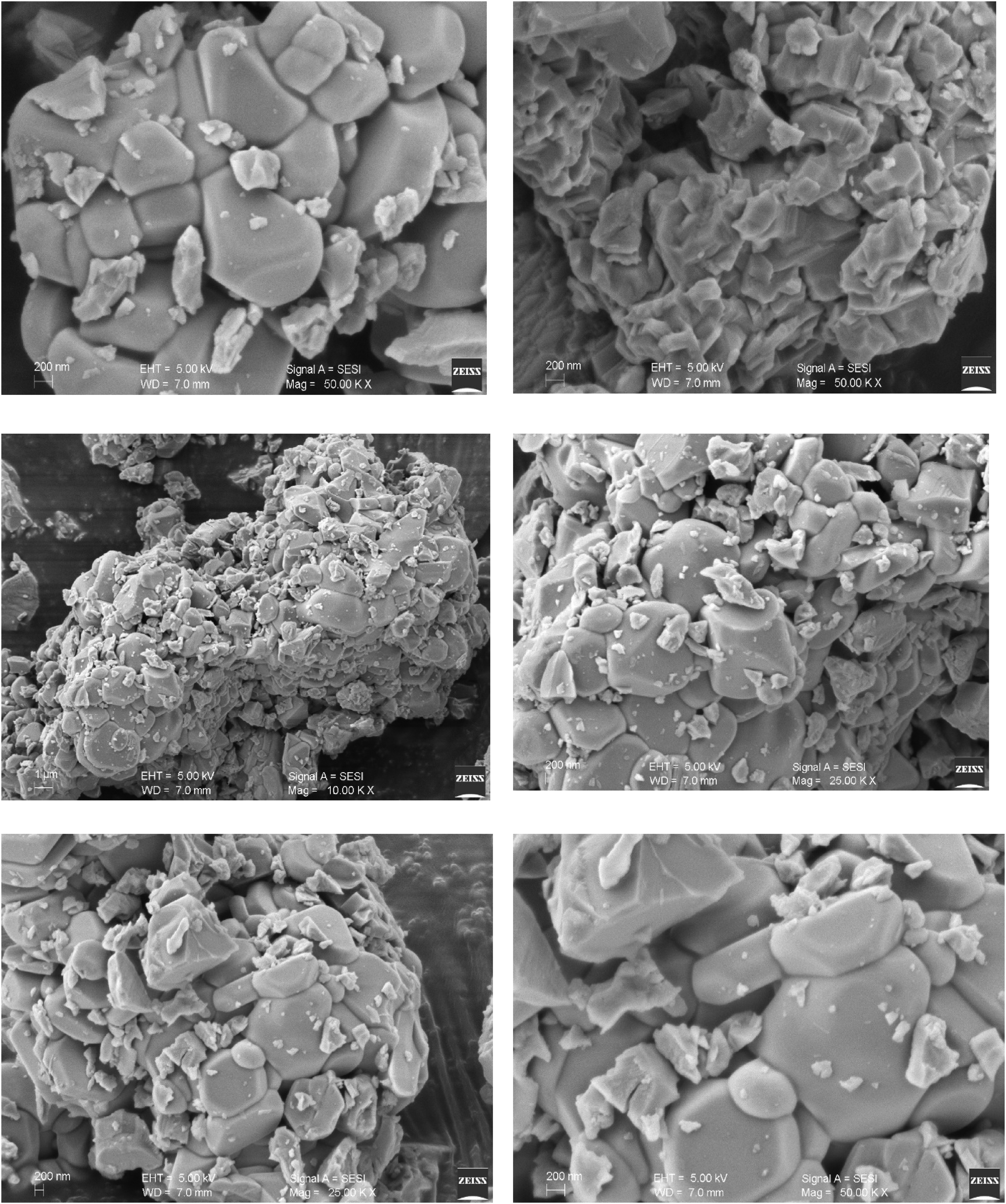
FE-SEM images of the Cu2O and Fe2O3 hybrid nanomaterial (XRD and SEM images were characterized using “Sprint Testing Solution”).
The experimental setup was built and put into service in Ahmedabad. The solar stills were arranged such that their south-facing sloping surfaces received the maximum solar radiation. Figure 5 shows the weather parameters, including the air velocity and solar radiation taken on 30 October 2021. The ambient temperature profile for the same day is shown in Figure 7. Based on these two figures, the recorded maximum solar intensity was 899 W/m2 at noon, which decreased to 410 W/m2 at 5 pm. We observed an average solar intensity of 726 W/m2 between 9 am and 5 pm. Similarly, the maximum ambient temperature was 37°C, and the average was 33.25°C. The wind velocity was also in the range of 0 to 2.7 m/s.
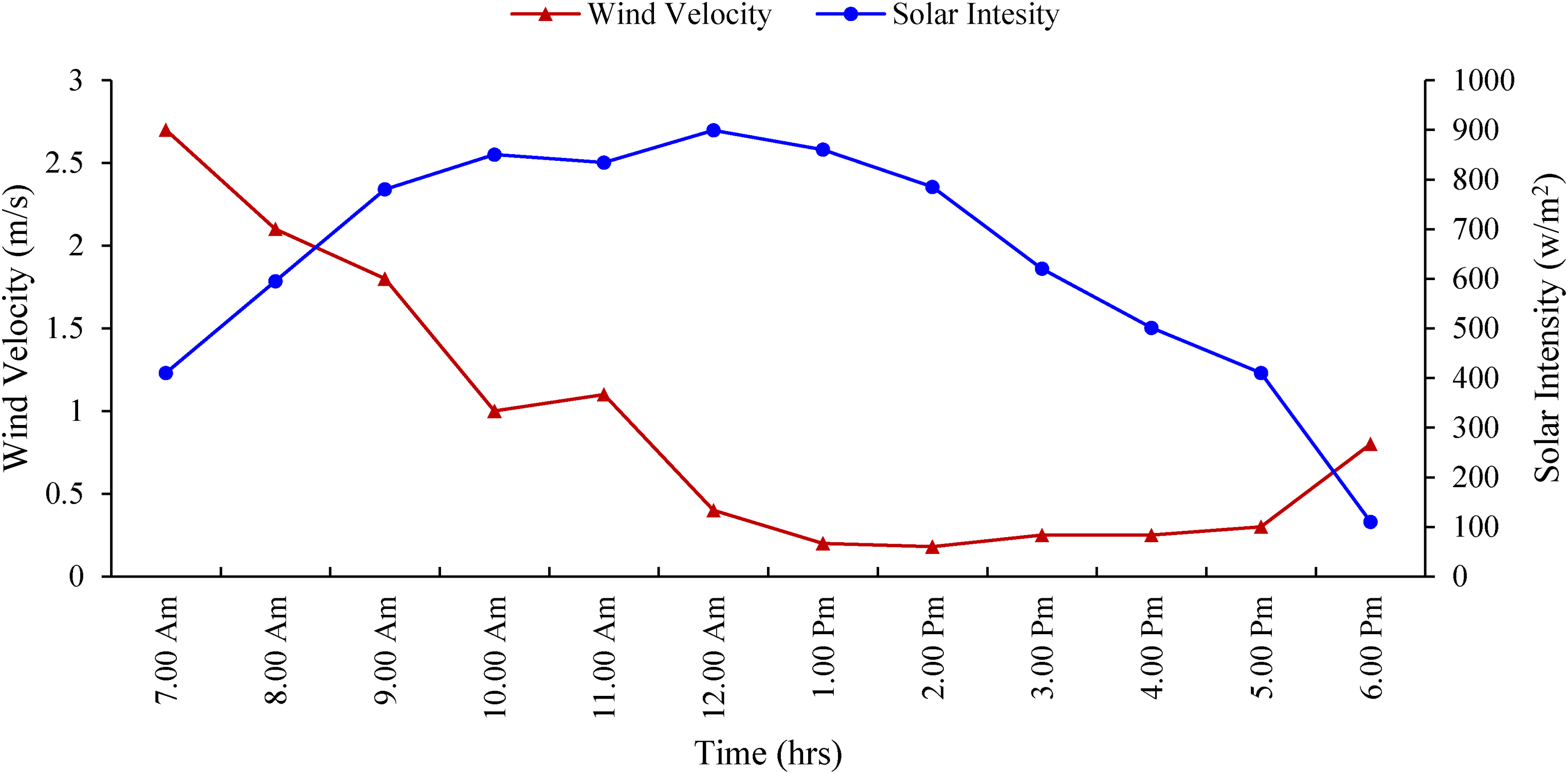
Hourly solar radiation and wind velocity.
The thermal conductivity of the absorbing material is the main parameter affecting the overall productivity of distilled water, and (Patel et al., 2013) nanomaterials play an essential role in improving overall productivity. The thermal and optical properties also play a vital role in productivity. The results were obtained during the day and night. The recorded temperature profiles are shown in Figures 6 and 7, respectively. The maximum recorded temperatures for the modified and simple solar stills were 57°C and 59°C, respectively. Changes in solar radiation, ambient temperature, and wind velocity are the leading causes of variations in the temperature graph.
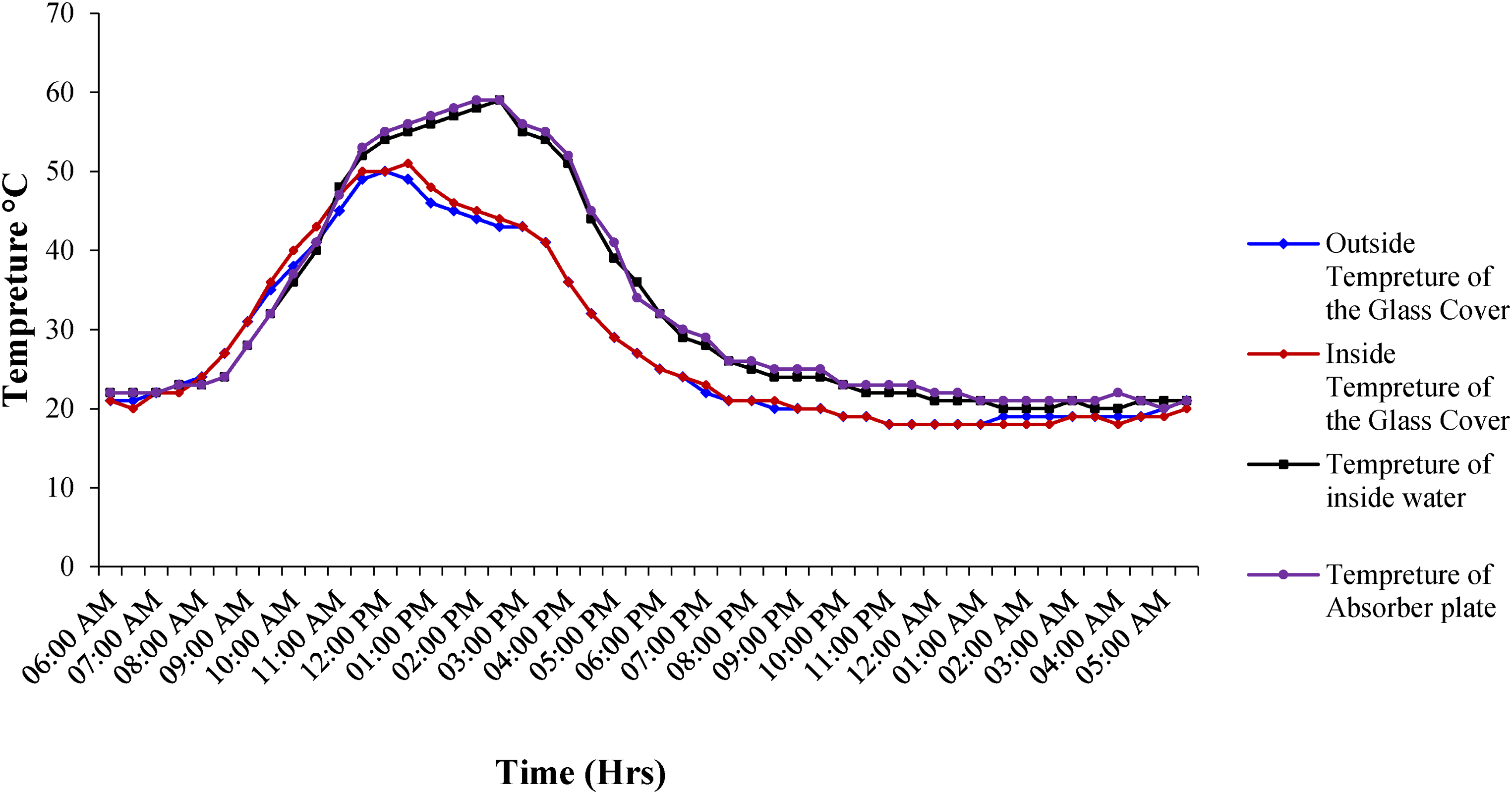
The recorded temperature profiles of a simple solar still.
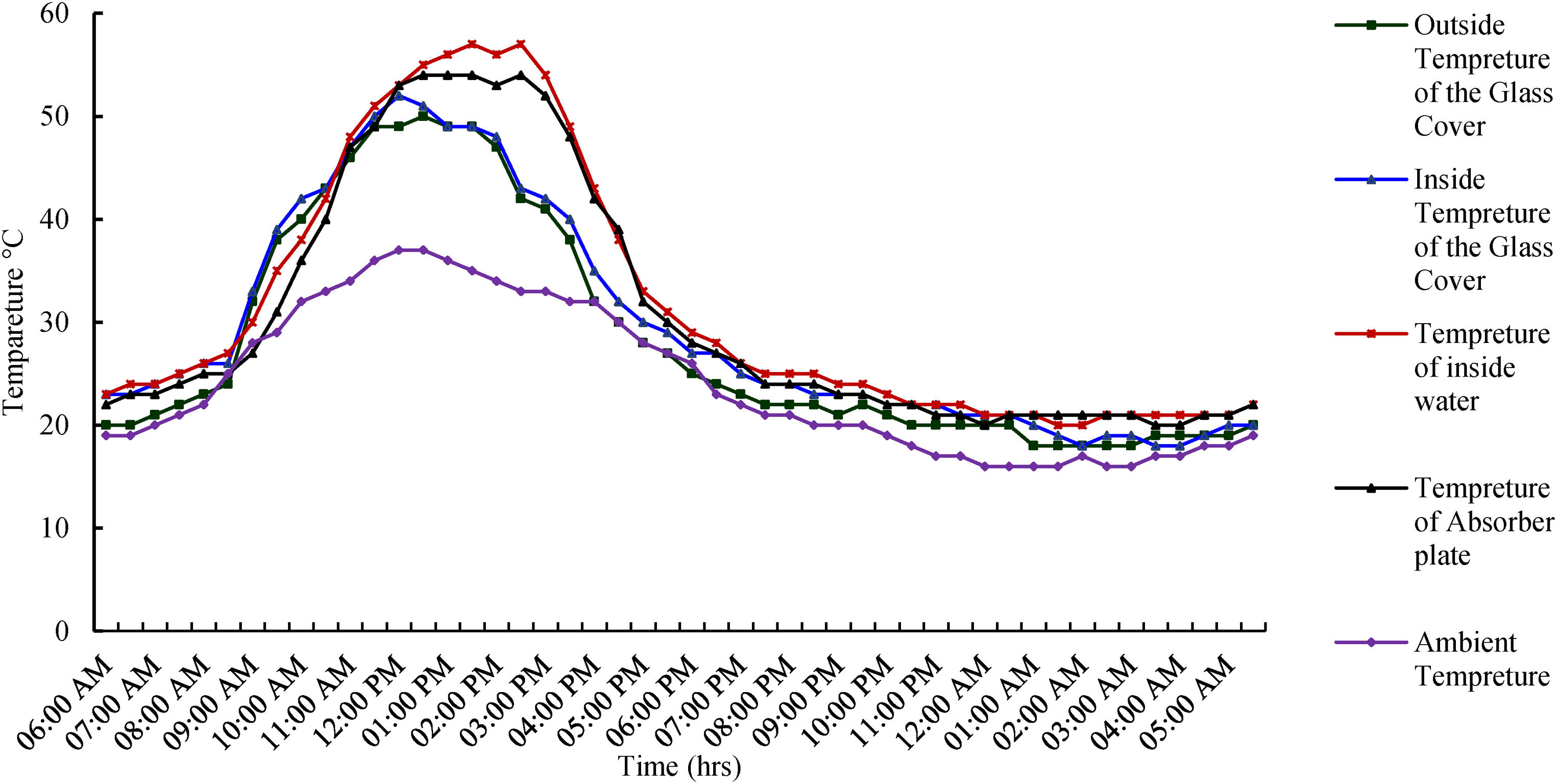
Recorded temperature profile of a simple solar still.
A graphical representation of the experimental results revealed that the productivity yield increased with the help of the cooling technique, as the temperature gradient was higher than that of a simple solar still. Figure 6 shows the temperature variation in the simple solar still, whereas Figure 7 shows the variation in the modified solar still. The graph shows that because of the heat storage capacity of the nanomaterial, the output of distilled water continued even at sunset. In addition, hybrid nanomaterials have higher heat capacities than water, so we can retrieve distilled water even during nocturnal hours.
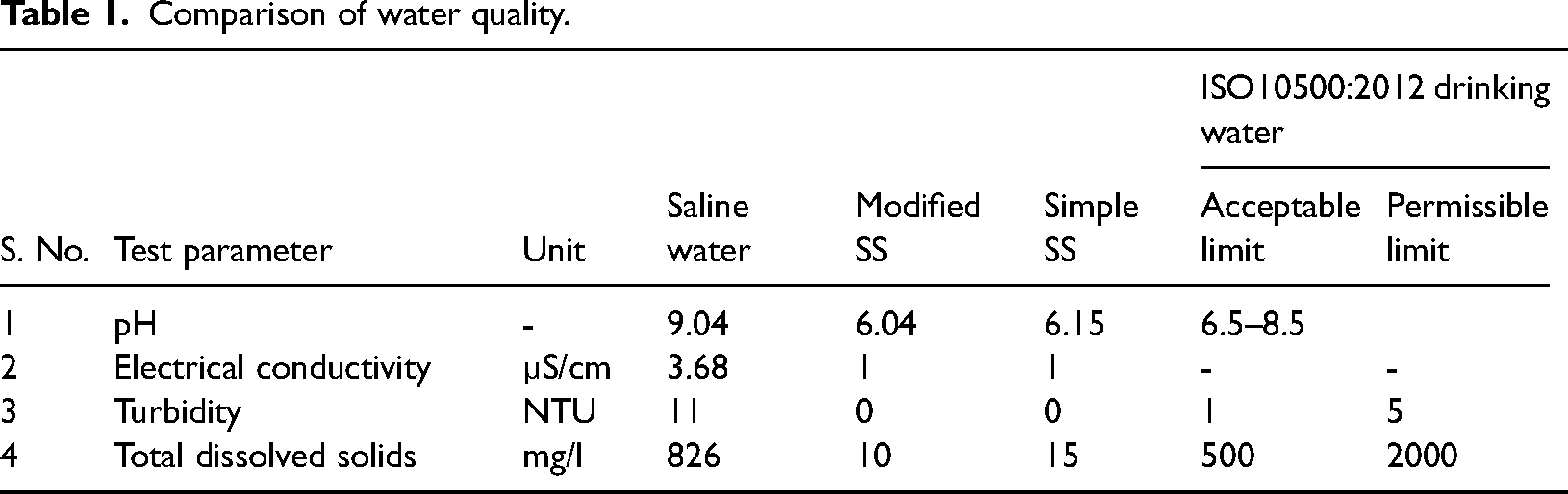
The profiles for the generation of distilled water for the modified and simple solar stills are shown in Figure 8. The profiles for the entire amount of distilled water generated during the day (cumulative yield) are shown in Figure 9. In addition, Table 1 shows a comparison of the various specifications of saline water with those of distilled water collected from a solar still.
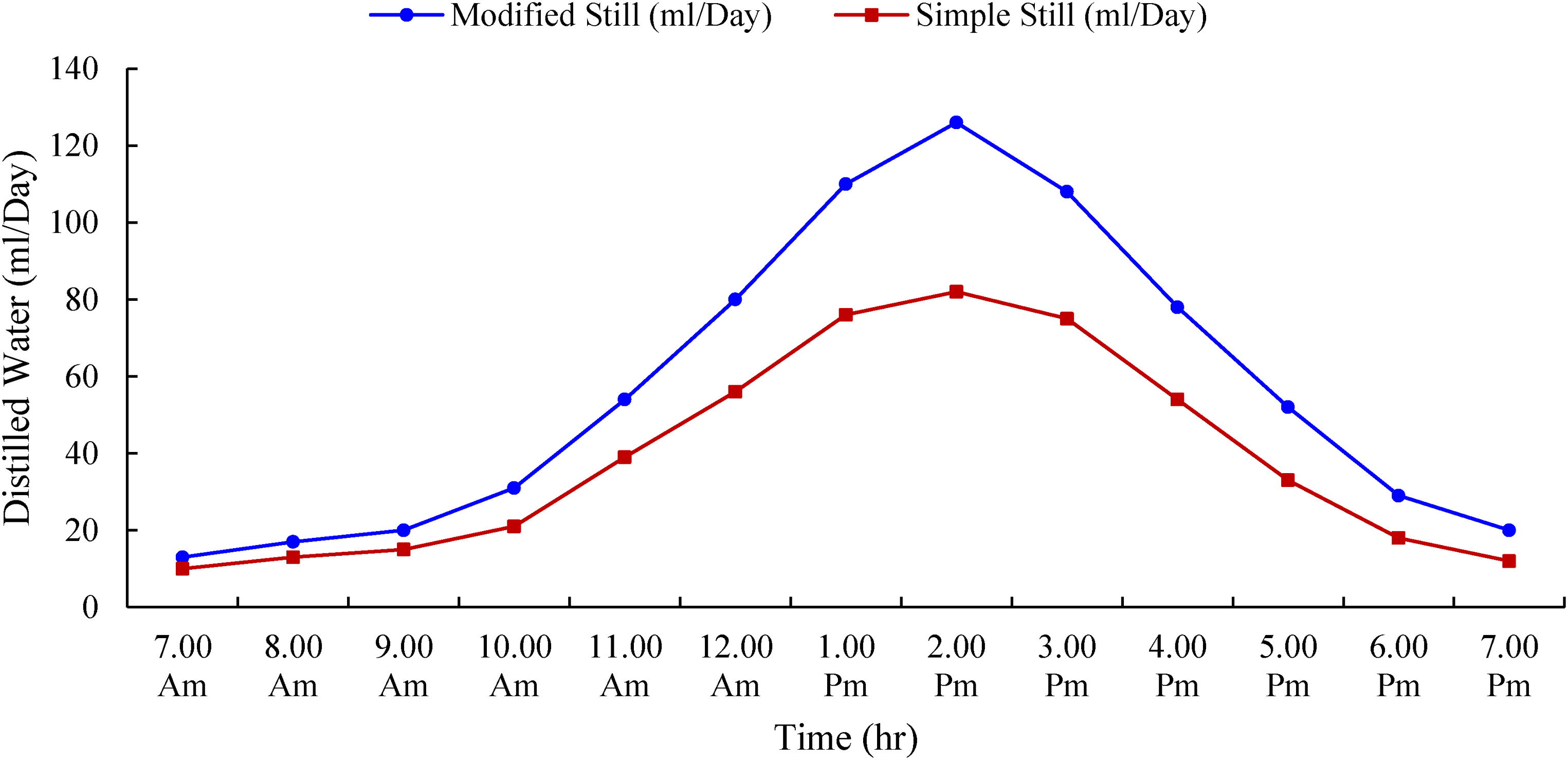
Hourly productivities of distilled water for simple and modified solar stills.
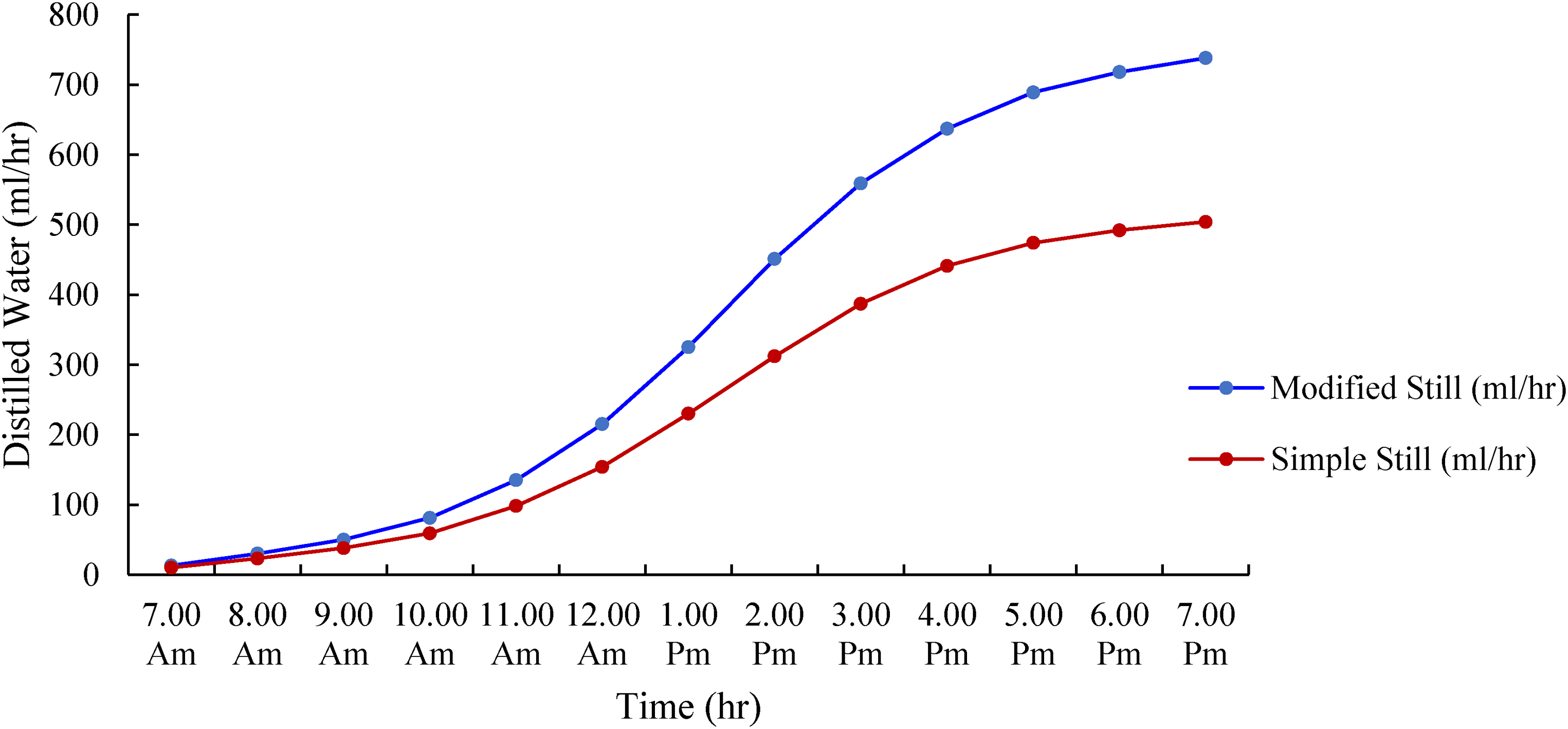
The cumulative yields of the two investigated solar stills.
Comparison of water quality.
Conclusions
In this study, a mixture of iron oxide (Fe2O3) and copper oxide (Cu2O) was used to determine its potential to enhance productivity by increasing the thermal conductivity of the energy storage material. A sprinkler was also used to provide a cooling film on the condensation surface. The concentrations of Fe2O3 and Cu2O used to make a hybrid nanomaterial were taken in the same proportion to check the effect on water productivity. Moreover, the water depth in the basin was maintained at an optimized level of 10 mm. The water depth was kept constant with the help of a water-level indicator and controller. The most important findings are listed in the conclusions.
In the XRD chart, the change in the peak position showed a change in interatomic distance, stress, substitutional doping of atoms, non-uniform lattice, strain, and defects during the mixing process. The maximum productivities of distilled water were 34% and 28% higher when operating with the glass cooling technique and without the glass cover cooling technique, respectively. According to ISO 10500:2012 Drinking Water Properties, solar stills produce safe drinking water.
Nomenclature
ambient temperature
density of nanoparticles
efficiency of solar stills
liter per square meter
joules per kilogram kelvin
meter per second
mass of nanopowder
milliliter
nanometer
parts per million
multi-walled carbon nanotube
polyvinyl chloride
potential of hydrogen
total dissolved solids
total number of nanoparticles
single-stage thermal energy storage
watt per square meter
electrodialysis
reverse osmosis
aluminum oxide
cuprous oxide
iron oxide
Footnotes
Acknowledgement
The authors acknowledge and extend their appreciation to the Researcher Support (Project No. RSPD2025R996), King Saud University, Riyadh, Saudi Arabia, for funding this study.
Declaration of conflicting interests
The authors declared no potential conflicts of interest with respect to the research, authorship, and/or publication of this article.
Funding
The authors disclosed receipt of the following financial support for the research, authorship, and/or publication of this article: This work was supported by King Saud University (grant number RSPD2025R996).
