




Abstract
The shape parameters of porous media are really important to describe the petrophysical and geomechanical parameters of reservoirs. In addition, shape analysis can provide essential information about the origin, transport, deposition history of particles, etc. Because macroscopic properties (such as permeability, diffusion, etc.) are influenced by microscopic properties (such as pore size, grain shape, etc.). So far, various studies have been conducted to calculate some shape parameters, however, there is no comprehensive study that first includes most of the geometric parameters of the shape and then presents the representative shape parameters. Therefore, the aim of this study is to present representative shape parameters of porous media based on mathematical computation on images. The shape parameters studied included roundness, circularity, angularity, convexity, compactness, sphericity, aspect ratio, elongation, eccentricity, shape factor, and regularity. Calculation of shape parameters is done digitally using the developed program. The necessary data for the desired analysis are obtained from real sandstone samples. To develop this research, first, the mentioned shape parameters are calculated using the developed program for all rock samples. Then, by establishing a relationship between the mentioned parameters, the representative parameters that can show the shape of the porous medium are expressed. The results of this study show that the representative shape parameters of the porous medium are compactness, shape factor-round, and aspect ratio, which are good indicators for the shape of the porous medium.
Introduction
The particle geometry, such as particle shape and size, is a result of the genesis of the parent rock, stages of transportation, and depositional history (Rodriguez et al., 2013; Santamarina and Cho, 2004). For some materials, the characteristics of the particle shape govern their complex mechanical behavior at multiscales (Aloufi and Santamarina, 1995; Cavarretta et al., 2010; Fonseca et al., 2012). Also, fluid movement in porous media is considered one of the most fundamental issues in reservoir engineering, although many parameters are effective in fluid movement. Researchers have divided the factors affecting longitudinal diffusivity into two categories. The first category is related to the properties of the fluid and the second category is related to the properties of the porous medium. In the first category, the effect of viscosity, density, and temperature of the fluid is mainly assessed. In the second category, factors such as the ratio of particle length to diameter, particle size, and particle shape of the porous medium are expressed (Bandai et al., 2017; Delgado, 2007; Ginn et al., 2009; Ikni et al., 2013; Lehmann et al., 2008; Perovic et al., 2017; Pugliese et al., 2012).
The particle's shape of a porous medium has a significant effect on the flow and especially on the longitudinal diffusivity. Carberry and Bretton, presented the first research in the field of the particle's shape. In their research, the process was carried out on spherical, cubic, and ring-shaped particles. Their qualitative results showed that the shape of the particles is very important in the longitudinal diffusion coefficient of the flow. Some studies similar to the mentioned research emphasize the importance of the shape of the particles of the porous medium on the movement of the fluid flow (Carberry and Bretton, 1958; Takashimizu and Iiyoshi, 2016). Therefore, accurate knowledge of the shape of particles of the porous medium is effective on the behavior of this medium and is of great importance in reservoir engineering, water engineering, geomechanical engineering, and environmental engineering.
As stated, the shape of the particle or the geometrical irregularities of an aggregate particle is effective on the behavior of aggregates. Aggregate particles appear in different forms depending on their origin and subsequent processes. The description of particle shape can be qualitatively or quantitatively classified. The qualitative description of the shape of the particle is expressed using variables such as elongated, spherical, etc. and the quantitative description can be expressed by measuring the dimensions of the particle (Wadell, 1932). In addition, the qualitative expression of particle shape is described by various variables, which are mentioned below to express some of these variables and related research. The roundness variable was defined by Wadell as the ratio of the average radius of curvature of the corners of a particle to the maximum radius of the inscribed circle. This stated definition of roundness is still widely used in recent research (Bareither et al., 2008; Cabalar et al., 2013; Chapuis, 2012; Cho et al., 2006; Mitchell and Soga, 2005; Santamarina and Cho, 2004; Shin and Santamarina, 2013; Sui and Zhang, 2012; Wadell, 1933; Zheng and Hryciw, 2015).
The sphericity variable was defined by Wadell as the ratio of the spherical surface with the same volume of the particle to the actual surface area of the particle. Also, Wadell defined the degree of sphericity as the diameter of a circle that has an area equal to the largest surface projected to the diameter of the smallest circle. Over the years, other definitions of sphericity have been proposed by Altuhafi et al. (2013), Krumbein and Sloss (1951), Mitchell and Soga (2005), Zheng and Hryciw (2015), and Wadell (1933). The surface roughness variable for porous media is defined based on the average value of the measured vertical coordinates compared to the relative height of the surface. Also, roughness is the ratio of the real surface area to the geometrically smooth surface area. In addition, roughness can be defined based on fractal geometry, where pore surfaces or the entire porous medium are modified using fractal dimension settings (Araujo et al., 2017; Berrezueta et al., 2019; Cho et al., 2006; Sanei et al., 2013).
Convexity was studied by Preparata and Shamos, and it can be expressed as the ratio between the area of the silhouette and the convex hull of the silhouette (Preparata and Shamos, 1985). Also, the authors defined the convex hull as the minimum convex polygon to cover an object. There is a lot of research related to the convexity parameter that can be found in (Chen et al., 2017; Liu et al., 2015; Melkman, 1987) studies. The mentioned qualitative geometrical parameters still need to be checked and analyzed. Most likely, this is because the same geometric parameters vary widely at different scales. On the other hand, this number of geometrical parameters cannot show the characteristics of the porous medium (Rodriguez et al., 2013; Santamarina and Cho, 2004). Therefore, it is necessary to collect other geometrical parameters in addition to the stated parameters of the porous medium, so that maybe these parameters can express the shape of the porous medium well.
The exact shape of the porous medium can reveal the possibility of a more detailed examination of other processes, including how the flow moves, flow diffusion, etc. with more certainty. In past research, there are few comprehensive types of research that provide a complete set of geometric shape parameters such as elliptic smoothness, regularity, angularity, aspect ratio, circularity, compactness, convexity, eccentricity, elongation, roughness, roundness, shape factor, solidity, and sphericity (Angelidakis et al., 2021; Durand et al., 2023; Kim et al., 2022; Mo, 2020; Sun et al., 2019; Touiti et al., 2020; Tunwal et al., 2018; Ulusoy, 2023). Also, there are fewer past researches that show which of these surface parameters are representative parameters, expressing the exact parameter of the shape of the porous medium.
Into the engineering field several research works conclude that particle shape influence technical properties of soil material and unbound aggregates (Mora and Kwan, 2000; Santamarina and Cho, 2004). Among documented properties affected by the particle shape are for example void ratio (porosity), internal friction angle, and hydraulic conductivity (permeability) (Rousé et al., 2008; Shinohara et al., 2000; Song et al., 2024; Witt and Brauns, 1983). For example, in the field of water engineering: the infiltration of pollutants into freshwater aquifers due to the creation of a hydraulic gradient towards these aquifers due to the drop in the level of underground water is one of the most important challenges facing the water sector managers. The shape of the particles of the porous medium has a significant effect on the flow and especially its longitudinal diffusivity. For example, by increasing the flow speed in the Darcy flow range, the longitudinal diffusion of pollutants in the environment decreases and this decrease is more in the environment with broken and sharp particles, while in the environment with spherical particles, easy flow channels and changes in longitudinal diffusivity are lower with increasing speed.
Therefore, due to the lack of a comprehensive study on the measurement of parameters representing the shape of the porous medium and the importance of this issue in petroleum engineering, in this research, 15 geometric parameters of different shapes such as elliptic smoothness, regularity, angularity, aspect ratio, circularity, compactness, convexity, eccentricity, elongation, roughness, roundness, shape factor, solidity, and sphericity were selected. Shape parameters were measured on 20 real sandstone samples. The results obtained from each of the parameters were obtained 2 × 2, and then according to the dispersion of the statistical indices for each parameter in comparison with other parameters, the parameters that have a higher average coefficient of determination were suggested as representative parameters of the porous medium. The proposed parameters as representative parameters have the possibility to properly express other features of the shape. The results of this study emphasized that the representative shape parameters of the porous medium are compactness, shape factor—round, and aspect ratio.
Properties of porous media
The texture of a porous medium and its related characteristics are divided into two quantitative and qualitative categories, from the point of view of sedimentation. The size of the grains, the morphology of the grains, and the fabric of the grains are among the quantitative parameters, and the texture of the grain surface and the textural maturity are among the qualitative parameters that are effective in determining the sedimentation process and formation of the porous medium (Tucker and Jones, 2023).
Grain size and sorting
Grain size is considered the first quantitative parameter in the investigation of rocks, and its calculation was first presented by Udden-Wentworth. This parameter is represented by φ in the form of equation (1) (Udden, 1914; Wentworth, 1919):

When the size of all the seeds is calculated, the sorting of the seeds can be done. Sorting is a deviation from the grain size standard in a rock. The better the sorting, the higher the porosity and permeability, because in rocks with bad sorting, the fine particles fill the matrix between the coarse grains and reduce the porosity and permeability (Cho et al., 2006; Tiab and Donaldson, 2015).
Morphology of grains and roundness
The morphology of the grains is considered as the second quantitative parameter in the study of sandstones so it is of particular importance in determining the morphology as the shape of the grains. In fact, the shape of grains should be examined quantitatively, which is raised in 2-D sections of roundness and in 3-D sections of sphericity. Roundness is the degree of sharpness of the corners and edges of grain, and sphericity is the degree of similarity of a grain to a sphere (Figure 1) (Barrett, 1980; Fonseca, 2011; Fonseca et al., 2012; Wadell, 1932).
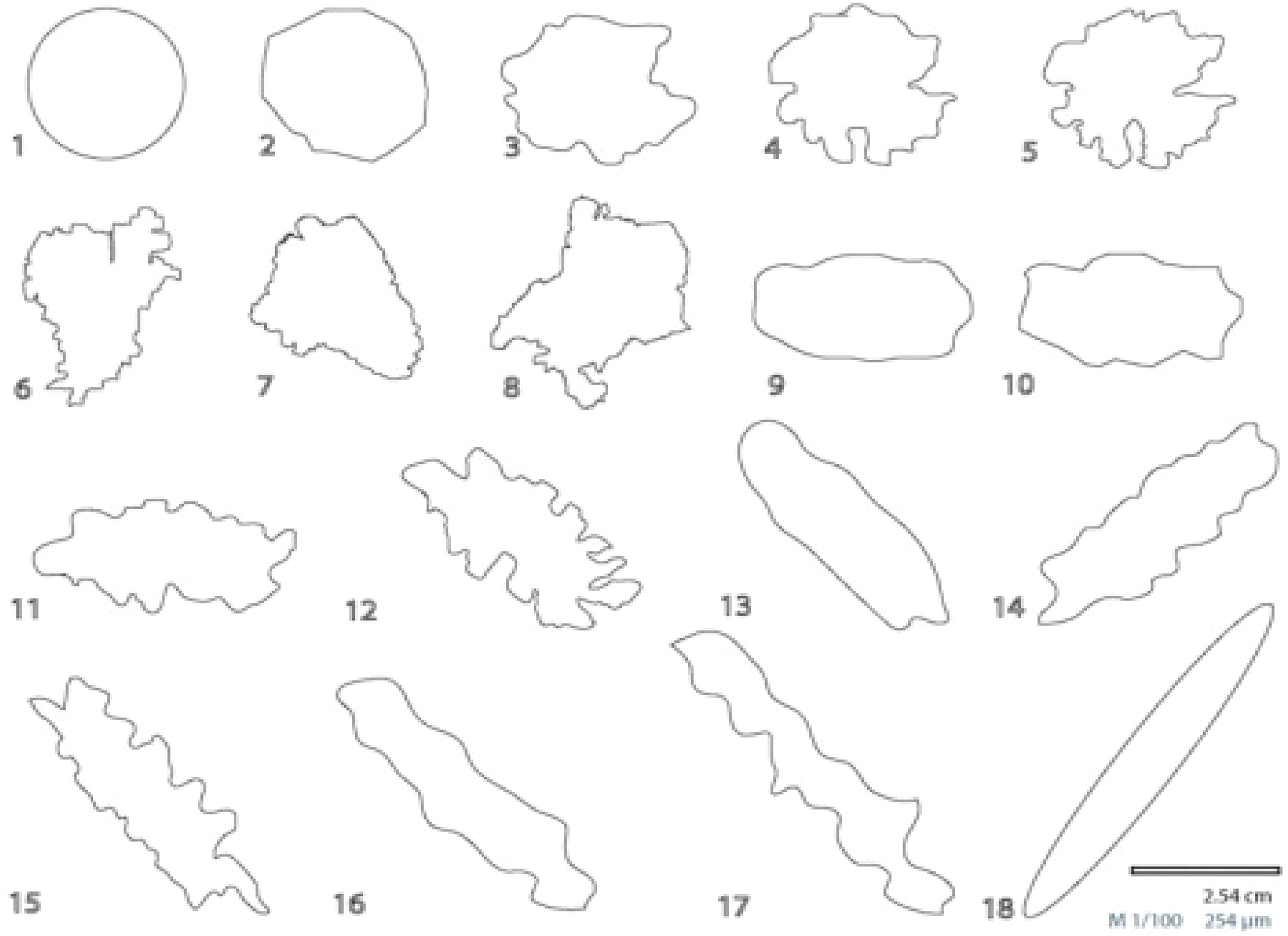
Particle 1 is a perfect sphere with maximum roundness and no roughness. The sphericity of Particle 2 is equal to that of Particle 1, 2, 3, 4, and 5 roundness particles decrease and their roughness increases. The roundness of Particle 6, 7, and 8 decreases and their roughness increases. Sphericity is constant for Particles 9, 10, 11, and 12, while their roundness decreases and their roughness increases. Sphericity is constant for Particles 13, 14, and 15, while their roundness decreases and their roughness increases. Sphericity is constant for Particles 16 and 17, while their roundness decreases and their roughness increases. Particle 18 has the least sphericity (Berrezueta et al., 2019).
The quantification of particle shapes is defined as follows:
In the Cartesian coordinate system, ellipsoidal particles are defined as follows:

The ratio of sphericity

Fabric grains and compression
The fabric includes the orientation and arrangement of the grains. The arrangement of the grains is effective in the amount of porosity and permeability. If the grains have a cubic arrangement, the amount of porosity is 48%, and if they are rhombohedral, it is about 26%. The orientation of the sand grains helps a lot to facilitate the flow of liquids, or in other words, to the degree of permeability inside the pores formed in the sediment or rock. How the grains are arranged is one of the important controllers of porosity and finally permeability in sediments. It is very likely that compression after deposition causes severe changes in composition and loss of porosity during the initial burial (Gajjar et al., 2013; Mao and Russell, 2015; Tiab and Donaldson, 2015).
After the sediment is covered by the upper sediments, the porosity decreases due to hardening. The pressure has a great impact on sediments and reduces the amount of initial porosity during sedimentation. The effects of compression in the reservoir rock can be investigated in two ways: mechanical compression and pressure dissolution (chemical compression). Mechanical compaction leads to a closer arrangement of grains, changes in the grain arrangement and their orientation, stretching and flattening of the grains, and finally breaking of the particles due to the weight of the upper layers (Boomsma and Poulikakos, 2002).
Preparation of porous medium data and related measurements
Real data from sandstone
In this research, 20 real samples of sandstone rocks with different shapes of porous media were selected. The related stone samples are related to one of the southwestern fields of Iran. Microscopic photographs that were necessary for the desired analysis were prepared. The provided data almost met the need of the article to express all the parameters of the shape. All photos have a size of 299 × 299 pixels. Figure 2 shows a real sample of microphotographs of the studied sandstones from southwest Iran that is used in this research.
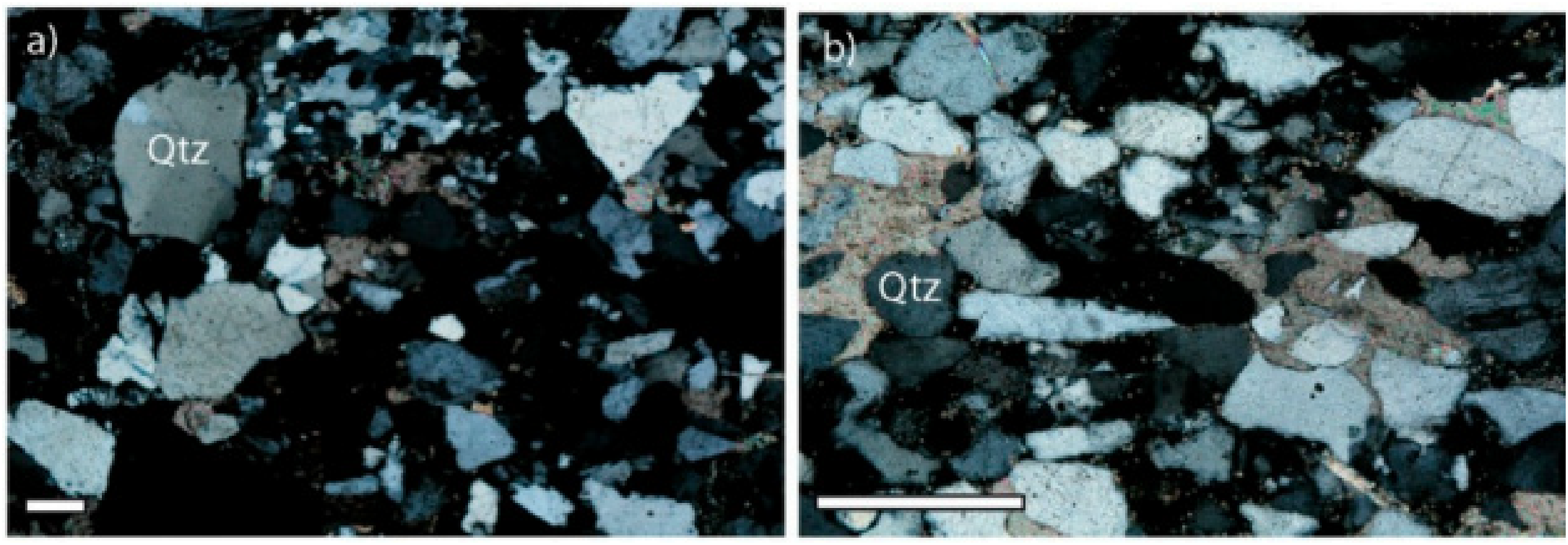
An example of microscopic photographs of the studied sandstones (a) heterogeneous sandstone (b) homogeneous sandstone.
Definition and calculation of shape parameters of porous media
As mentioned in the text above, in this article 15 shape parameters were selected and measured to describe the shape of the porous medium. The measurements are focused on a two-dimensional representation of the particle boundary. A large number of parameters have been proposed to quantify particle shape. According to their application in 2-D image data, the desired parameters are roundness, circularity, irregularity, angularity, and a number of other simpler dimensionless parameters such as aspect ratio, regularity, convexity, compactness, and solidity. In addition to these parameters, other types of shape parameters are computed. Table 1 shows the subquantities that describe the morphology of the particles (Rodriguez et al., 2013).
Subquantities describing the particle morphology and its antonym (Rodriguez et al., 2013).

The details related to the definition and calculation of the parameters of the shape are stated in the rest of this section:
Roundness
Wentworth in 1919 provided the first definition for the roundness parameter in the form of equation (4) (Wentworth, 1919):
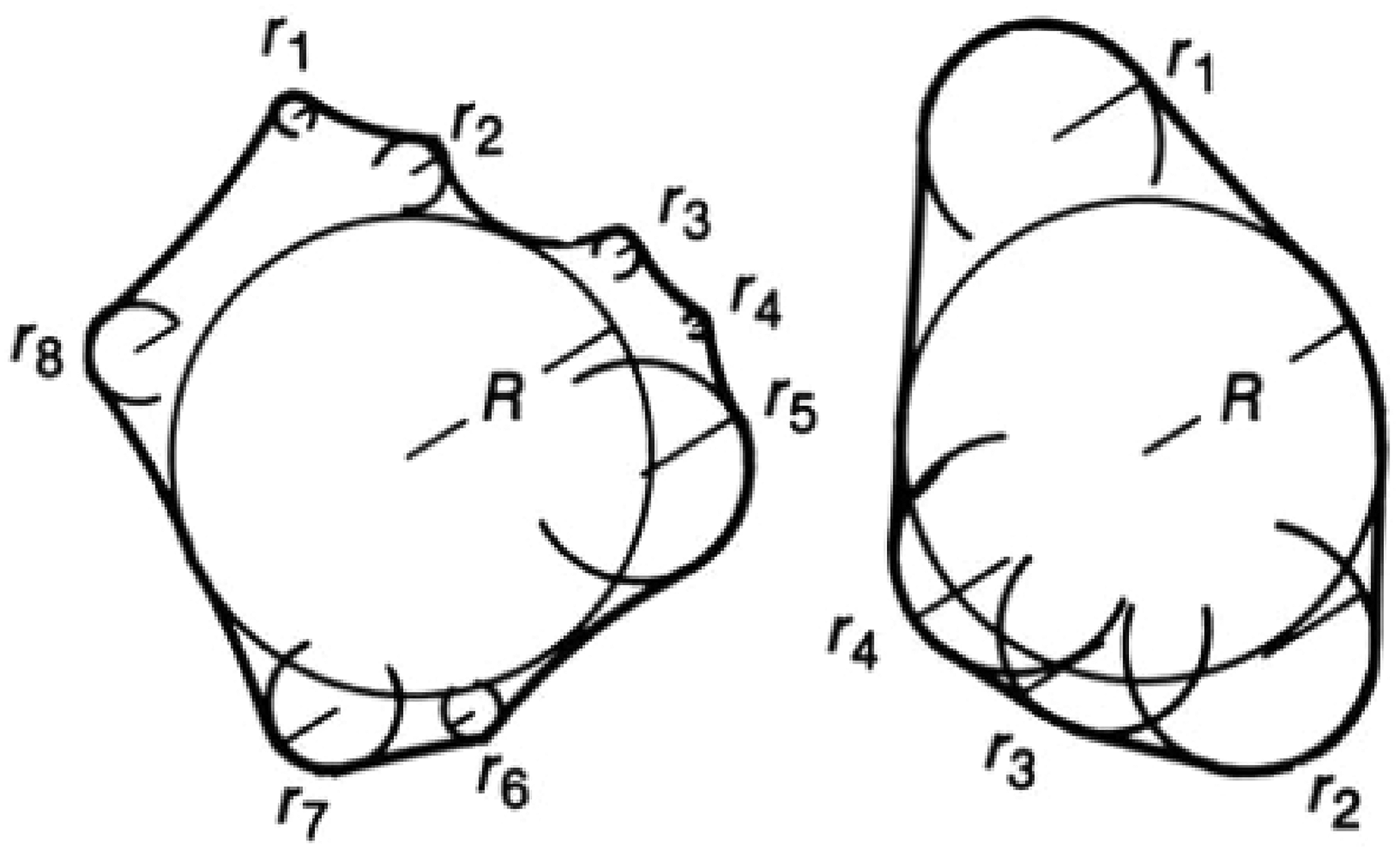
Representation of roundness based on Wentworth's definition (Wentworth, 1919).
Wadell in 1932 presented another definition for roundness in the form of equation (5) (Wadell, 1932):
The most accepted definition of roundness was given by Wadell, which is the average roundness of the corners of a particle in a 2-D cross-sectional plane (Wadell, 1932).
Circularity
Circularity is a measure of how close the particle boundary is to a circle. Conventional circular parameters were applied to 23 sand particles in a comparative study (Riley, 1941; Wadell, 1933, 1935). They found that the methods of Wadell and Riley provide optimal results. in the form of equation (6) (Riley, 1941; Wadell, 1933):
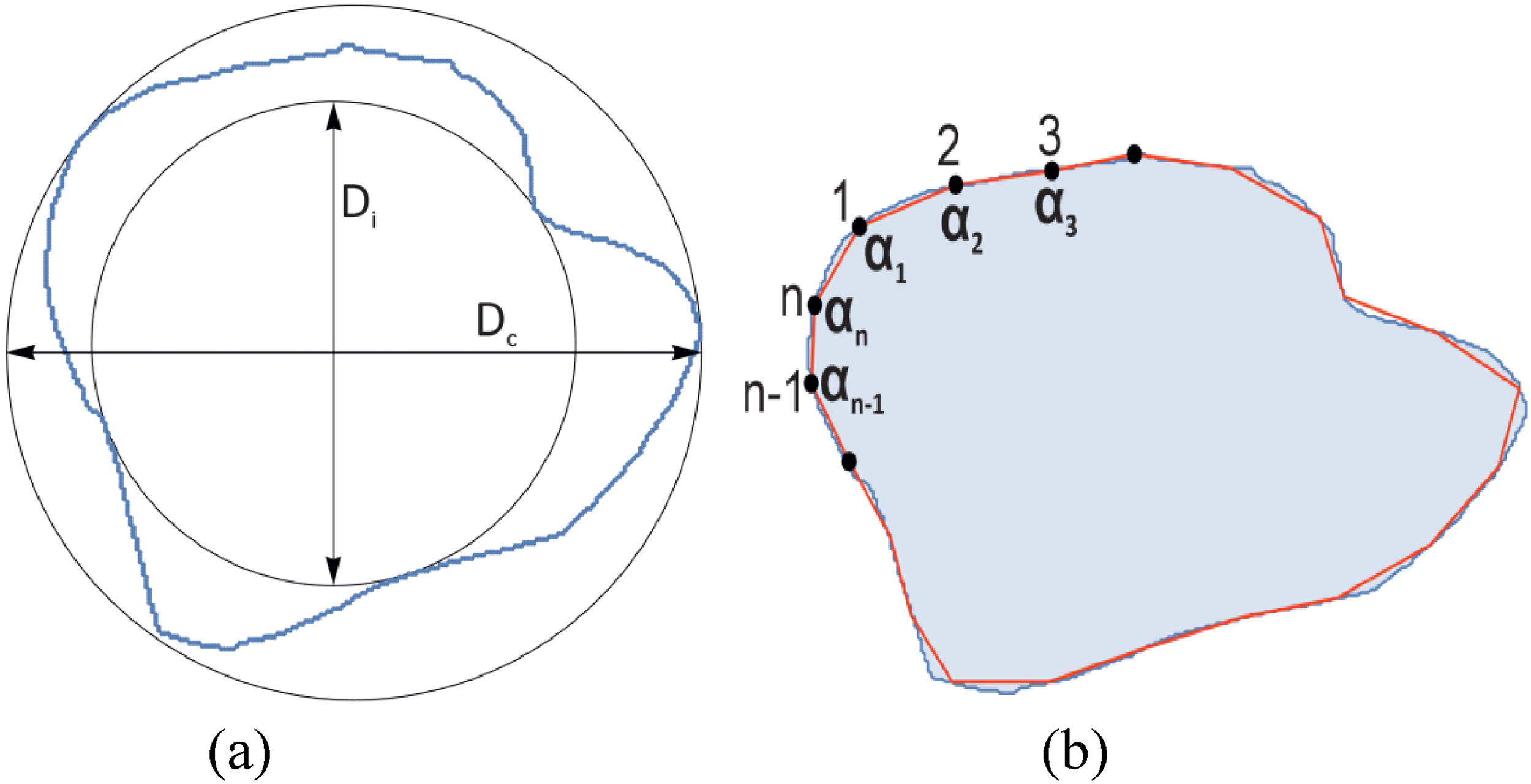
(a) Display of circularity function and (b) display of angularity function (Rao et al., 2002).
Angularity
Angularity is usually considered the opposite of roundness but is formally defined as a shape parameter based on the intensity of corner angles, the number of corners, and the projection of corners from the center of the particle (Lees, 1964). To measure the angle, the Angularity function transforms the particle boundary into a polygon by sampling n points at regular intervals along the particle boundary points (Rao et al., 2002). The interior angle at each vertex is calculated, denoted by
Convexity
Convexity describes the surface characteristics of a particle and it can be calculated by dividing the area of the real projection by the area of the convex shell. The convex shell can best be described by an imaginary elastic strap wrapped around the particle. For example, a smooth surface in which all concavities are filled has a convexity value close to one, while particles with a rough surface reach a lower value (Durand et al., 2023, Melkman, 1987; Preparata and Shamos, 1985).
Sphericity
The concept of sphericity was proposed by Wadell in 1932, commonly referred to as the global shape of particles, and is defined as the ratio of the surface area of a sphere of the same particle volume to the surface area of the particle. Sphericity is a general shape parameter that can be independently affected by form, roundness, and roughness (Wadell, 1932, Zhao and Wang, 2016). Wadell in 1932 presented sphericity as equation (7) (Wadell, 1932):
In the above relationship,
Aspect ratio
Aspect ratio, indicating the ratio of width to length, where width and length are calculated from the minimum (Feret MIN) and maximum (Ferret MAX) diameters of the ferret. Fert diameter is defined as the distance between two parallel tangents of the particle contour. Therefore, Feret MIN is the smallest and Feret MAX is the largest distance among all Feret diameters of a particle (Durand et al., 2023; Fernández et al., 2005).
Elongation
Elongation is another indicator of the width/length ratio. The length of fiber (LeFi) is calculated using the skeletonization technique and is related to the longest straight path from one side to the other inside the particle contour. The diameter of the fiber is calculated by dividing the projection area by the total length of all the branches of the fiber skeleton (Durand et al., 2023; Fernández et al., 2005).
Eccentricity
Eccentricity can also be calculated using the central moment. The eccentricity of an ellipse is less than 1. When circles (which have an eccentricity of 0) are counted as ellipses, the eccentricity of an ellipse is greater than or equal to 0. If circles are given a special category and excluded from the category of ellipses, the eccentricity of an ellipse is greater than 0 (Aloufi and Santamarina, 1995; Jonasz, 1991).
Shape factor
A shape factor is a number that defines the shape of a particle. In many cases, a shape factor is obtained from the microscopic image of the particle, but it can also be obtained in other ways. The common denominator of all shape factors is from zero to unity, where unity represents a complete sphere (Bouwman, 2005; Cox, 1927).
Other parameters
Other remaining parameters that are not explained in the previous parts are elliptic, smoothness, regularity, roughness, solidity, and compactness, which can be obtained based on the described parameters and will be calculated in the rest of this research.
Image analysis techniques
Particle shape can be measured using automated image analysis techniques that quickly produce the required statistical data, unlike manual analysis techniques such as microscopy. Also, automatic image analysis can generate relevant numerical distributions, which makes it possible to use this method for very small samples with very fine particles. Previous studies show that it is possible to analyze the size and shape of particles and their distribution using some of the available packages as described below (Berrezueta et al., 2015; Liu and Ostadhassan, 2017; Schneider et al., 2012):
Advanced programming of desired analyses using specialized languages (such as C++ and Visual Basic and MATLAB software with image processing toolbox). Commercial image processing software (e.g. Image-Pro Plus®, Aphelion) with morphological functions and a programming module (e.g. Visual Basic). Free and open-source image processing programs (e.g. Image J). Area Perimeter Ferets x-y coordinates
For image analysis, the following basic measurements are required:
The area is calculated as the number of pixels of an object that make up an object, and the perimeter is determined by counting the number of pixels that touch the background or protrusion of the object (Figure 5(a) and (b)). This parameter depends on the image resolution, it is more sensitive to texture changes at high resolution and to angle change at relatively low resolution (Janoo, 1998).
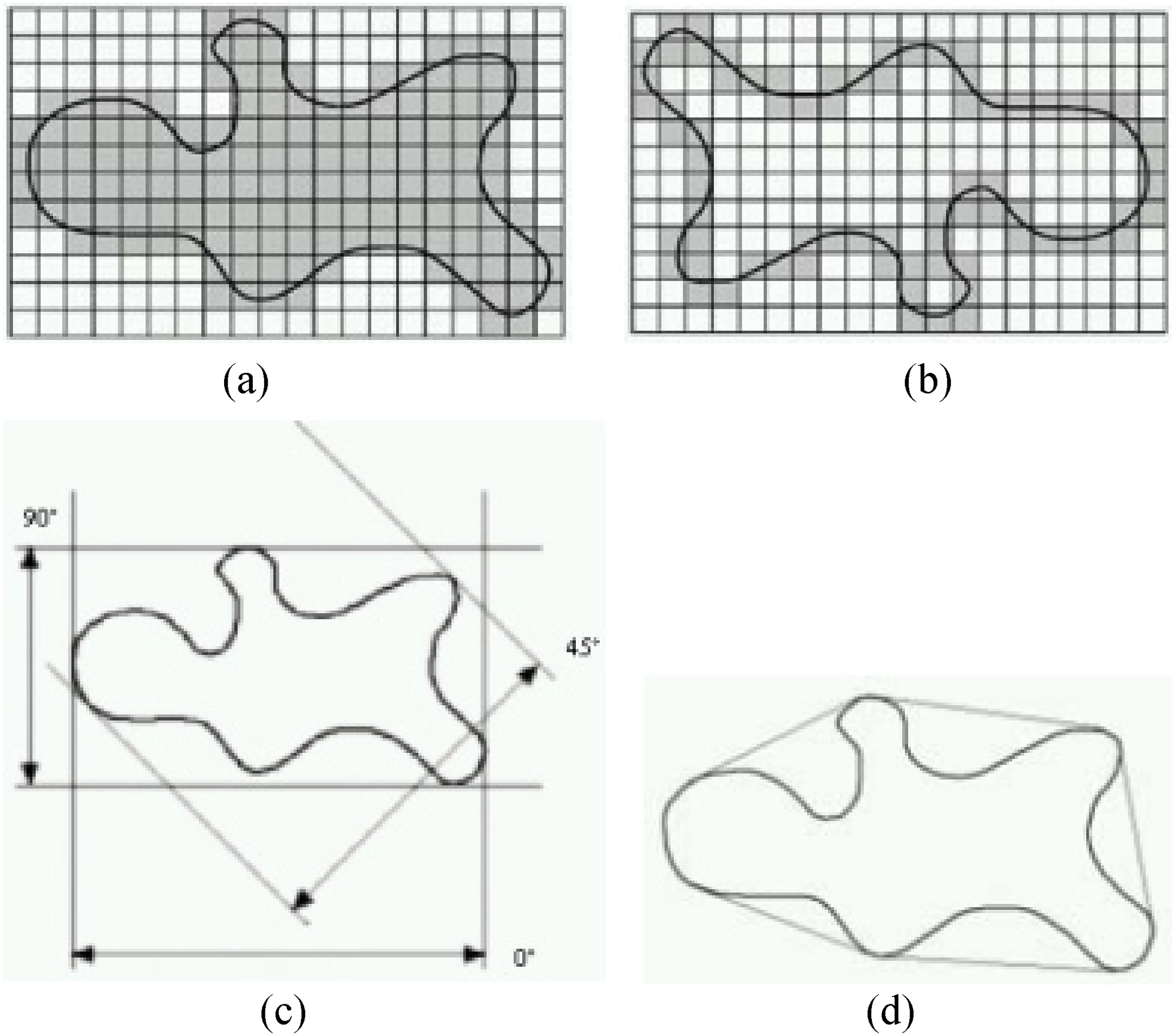
(a) Area of an aggregate, (b) perimeter of an aggregate, (c) Feret measurement, and (d) illustration of the convex perimeter (Janoo, 1998).
Frets are straight-line measurements taken between two tangents (Figure 5(c) and (d)). From these measurements, expressions for the roundness and roughness of an aggregate can be obtained.
Results and discussion
As stated in the text of this research, the main goal of this research is to first study the geometrical parameters of the porous medium and then to find the representative parameters of the porous medium that accurately express the shape of the porous medium. Therefore, in this study, 15 shape parameters such as elliptic smoothness, regularity, angularity, aspect ratio, circularity, compactness, convexity, eccentricity, elongation, roughness, roundness, shape factor, solidity, and sphericity were investigated on 20 real sandstone particles. Then, representative parameters are expressed by analyzing the results.
Also, due to the authenticity of the sandstone samples, the data includes changes from low to high for sphericity, from rounded to angular for roundness, and from very smooth to very rough for roughness. In addition, the design and digitization of particles were done to estimate the geometric shape parameters using the developed code. The mathematical algorithms expressed on the images obtained from the porous medium and the necessary parameters were calculated digitally. In all calculations, particles with an average diameter of 2.54 cm (1 inch) were considered as the basis. It should be noted that in this study 20 real particles were analyzed and the necessary results were obtained in this section, some examples of them are given due to the reduction of the size of the images in the next section.
Figure 6 shows the measurement of the geometric parameter of the porous medium elongation for some samples.
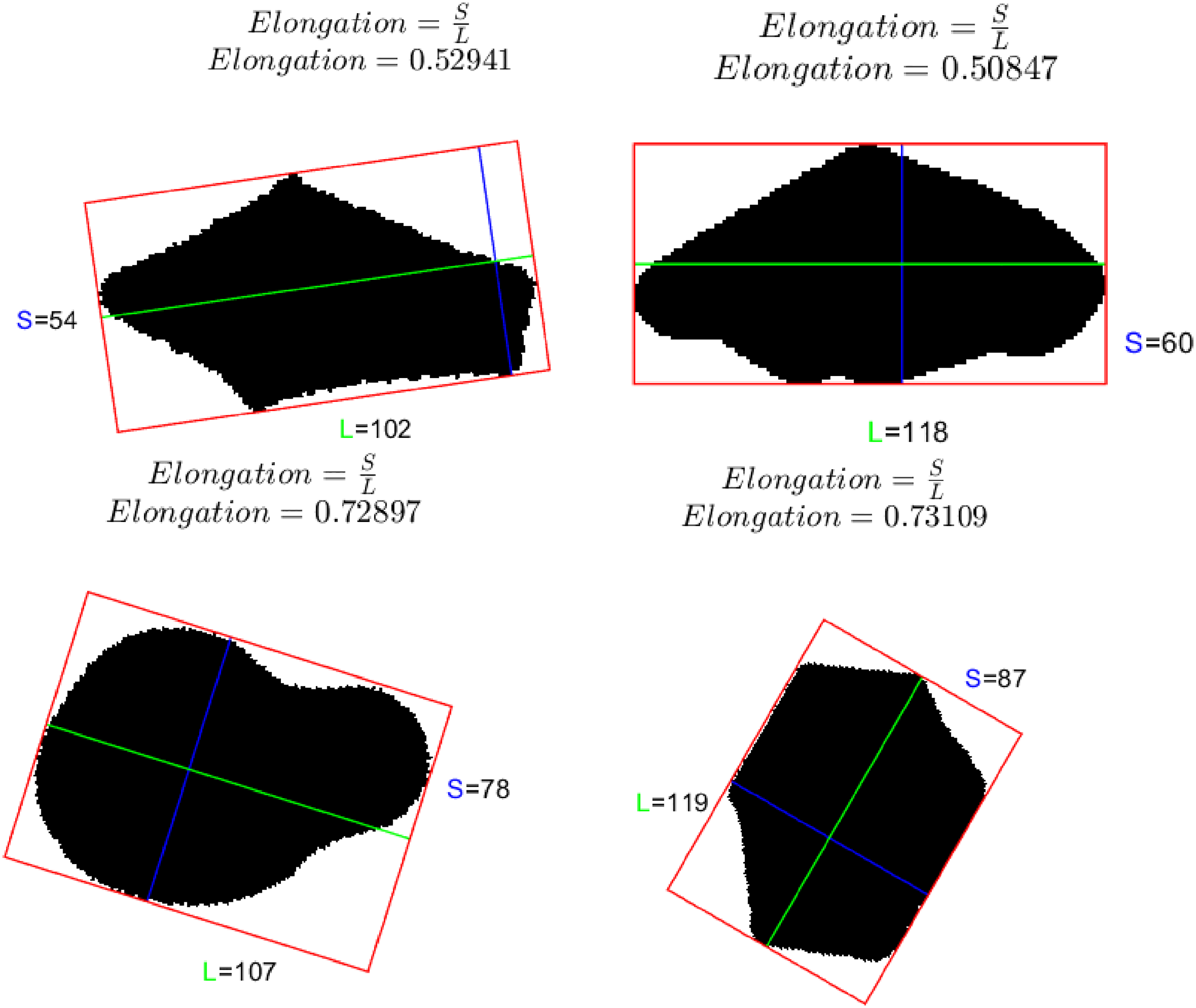
The results of the elongation parameter in samples of different shapes.
Figure 7 shows the measurement of the geometrical parameter of the porous medium aspect ratio for some samples.
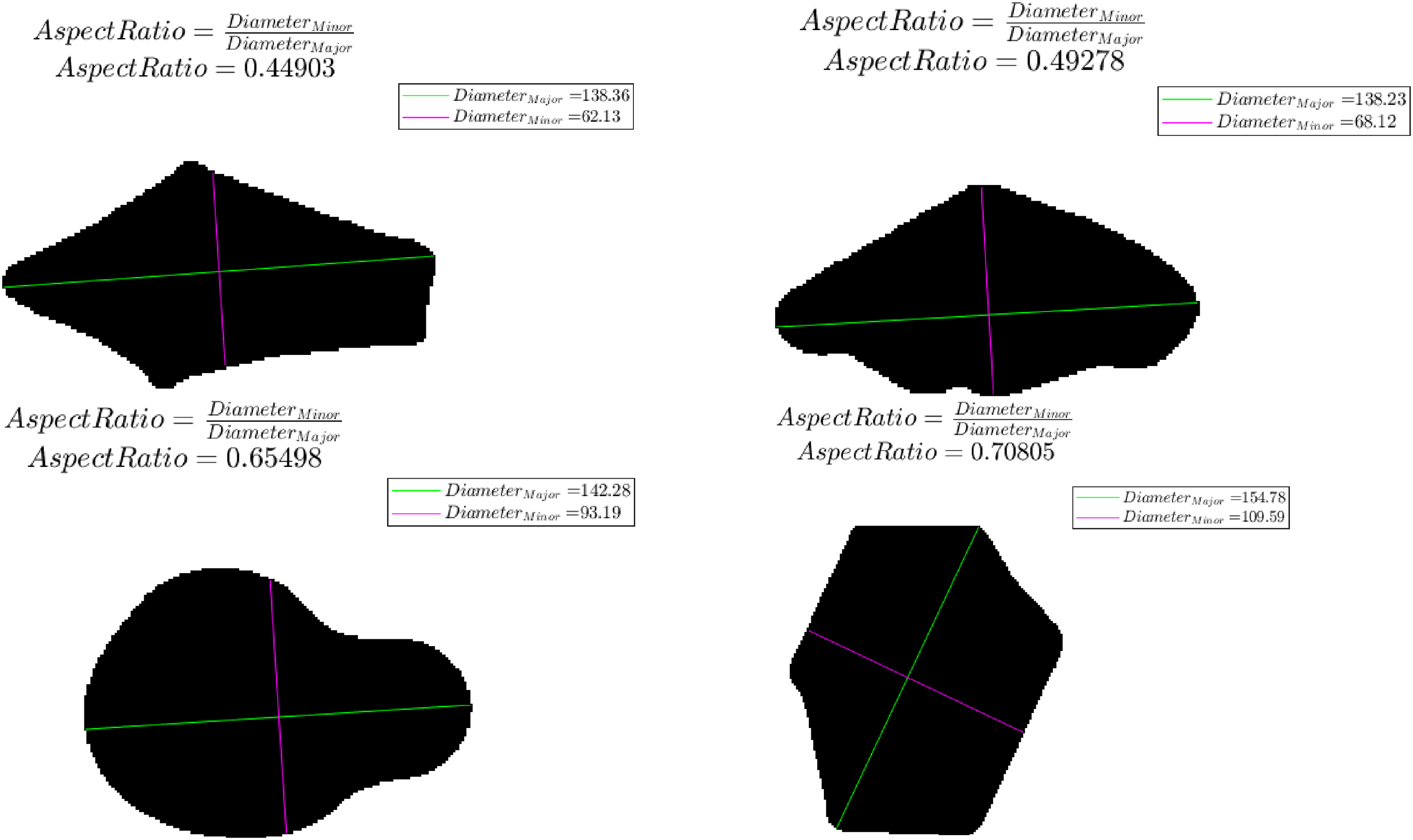
The results were obtained from the aspect ratio in samples of different shapes.
Figure 8 shows the measurement of angularity porous media geometric parameter for some samples.
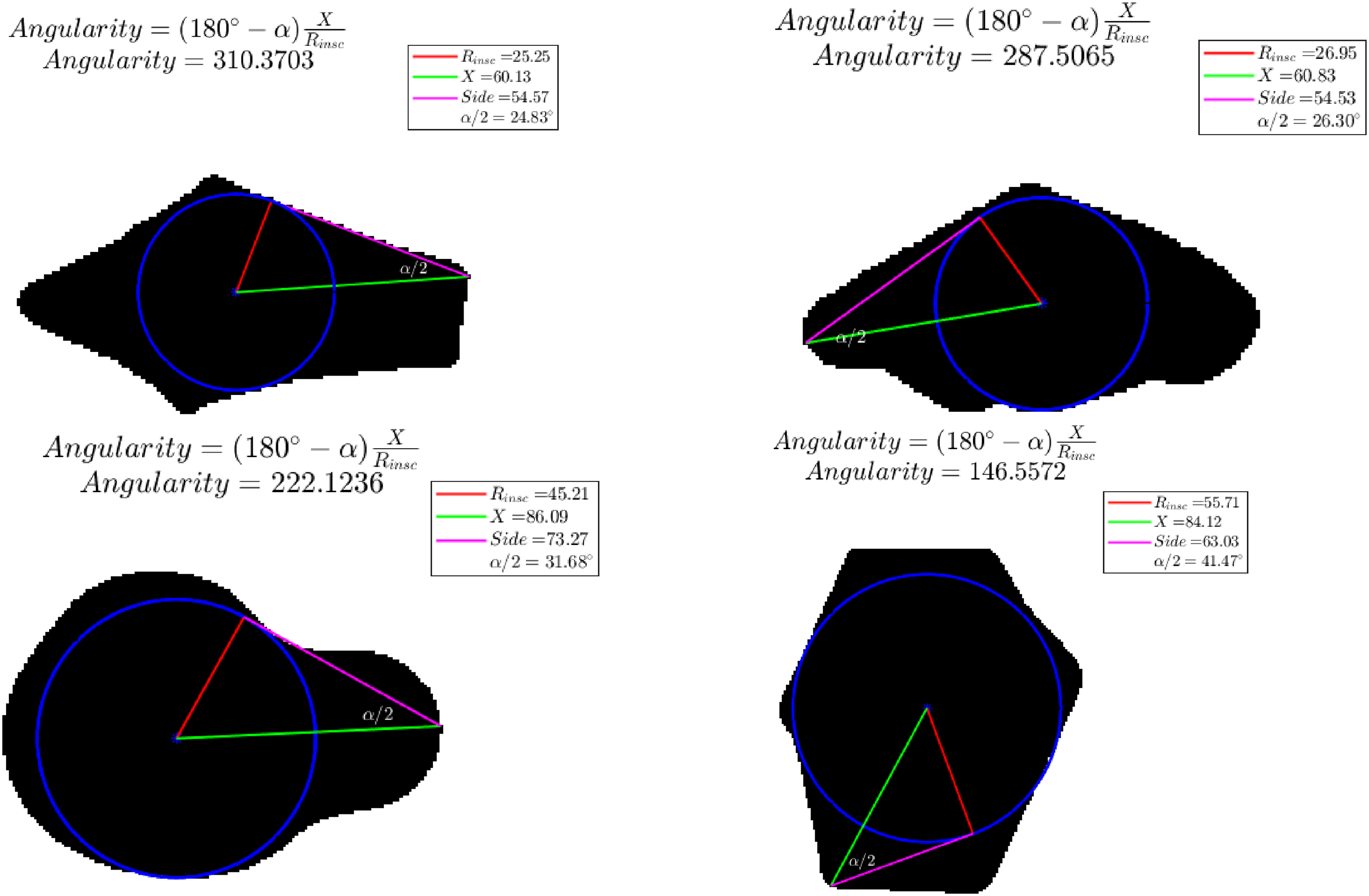
The results of the angularity parameter in the samples of different shapes.
Figure 9 shows the measurement of the geometric parameter of the regularity porous medium for some samples.
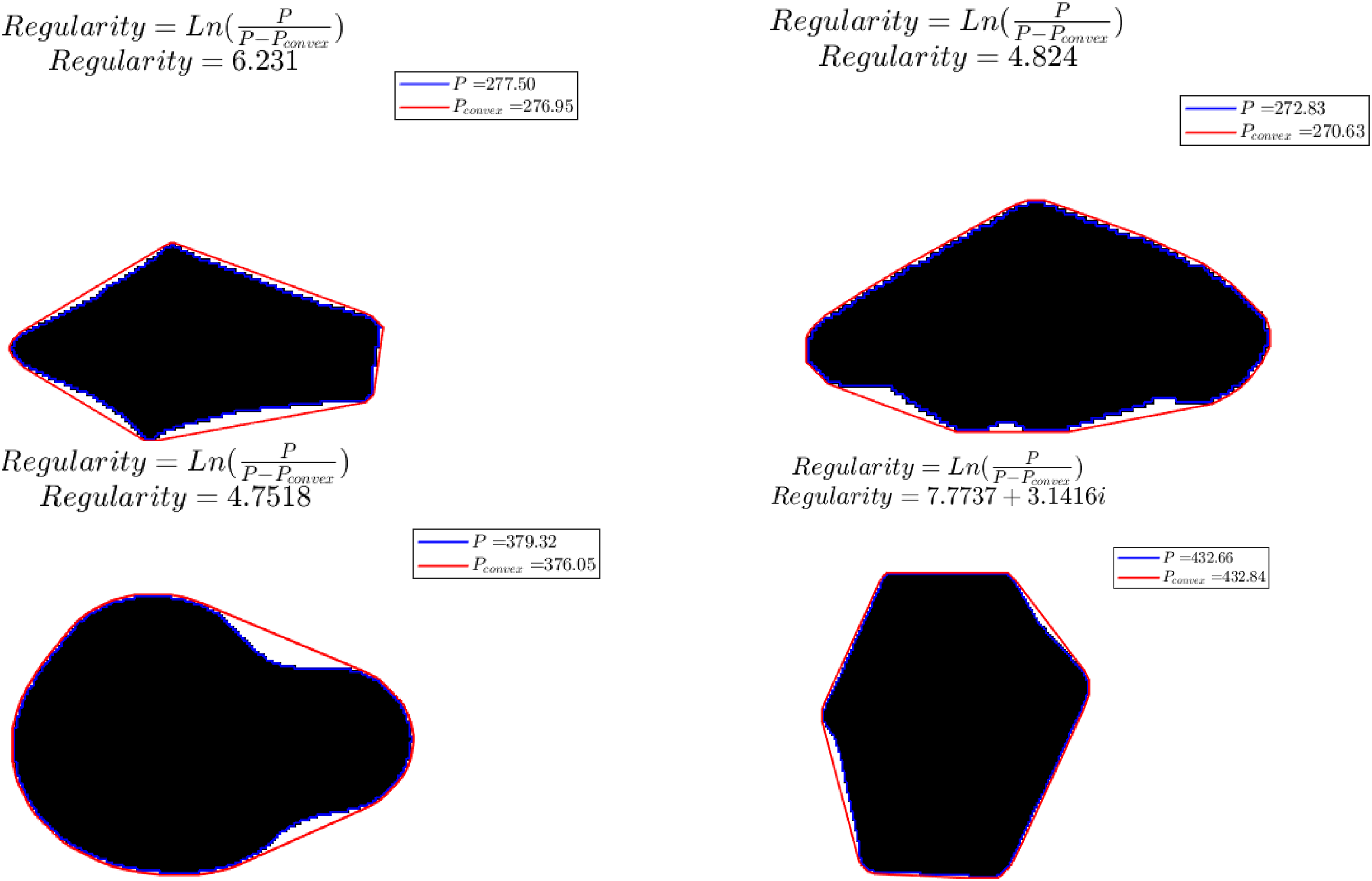
The results of the regularity parameter in the samples of different shapes.
Figure 10 shows the measurement of the geometric parameter of the porous medium roundness for some samples.
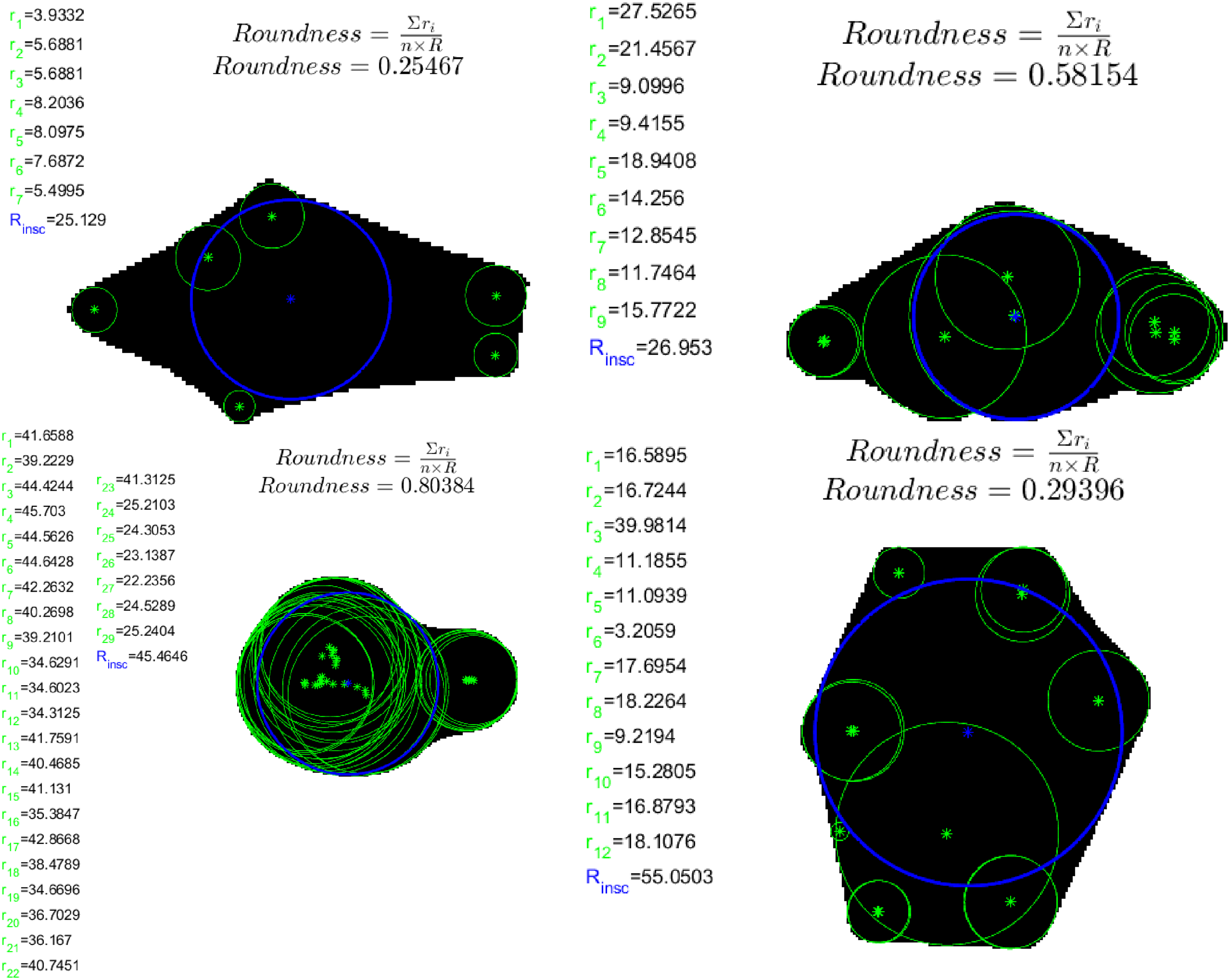
The results of the roundness parameter in samples of different shapes.
Figure 11 shows the measurement of the geometric parameter of the porous medium circularity for some samples.
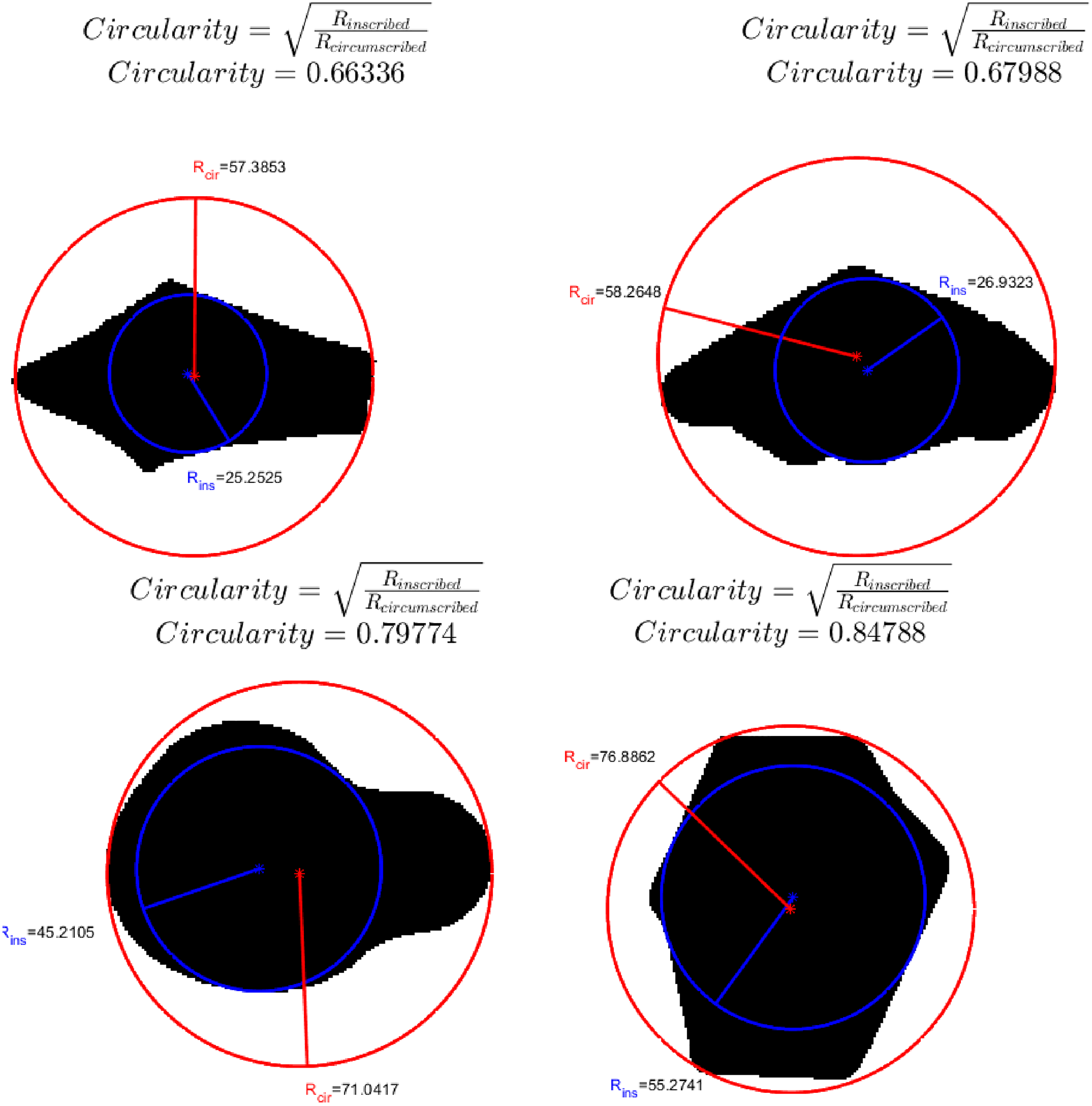
Results of the circularity parameter in samples of different shapes.
Figure 12 shows the measurement of the geometric parameter of the porous medium compactness for some samples.
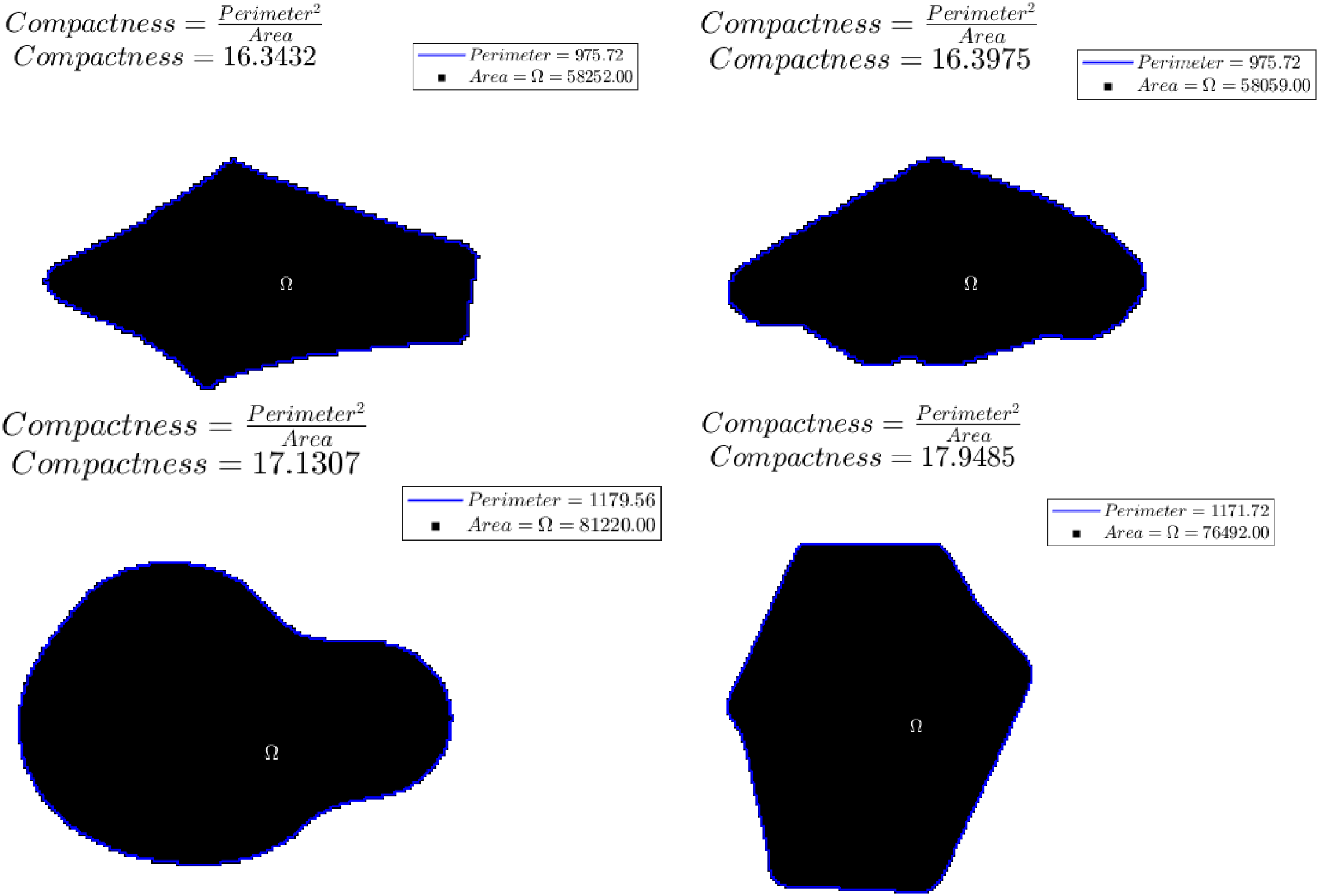
The results of the compactness parameter in samples of different shapes.
Figure 13 shows the sphericity porous medium geometric parameter measurement for some samples.
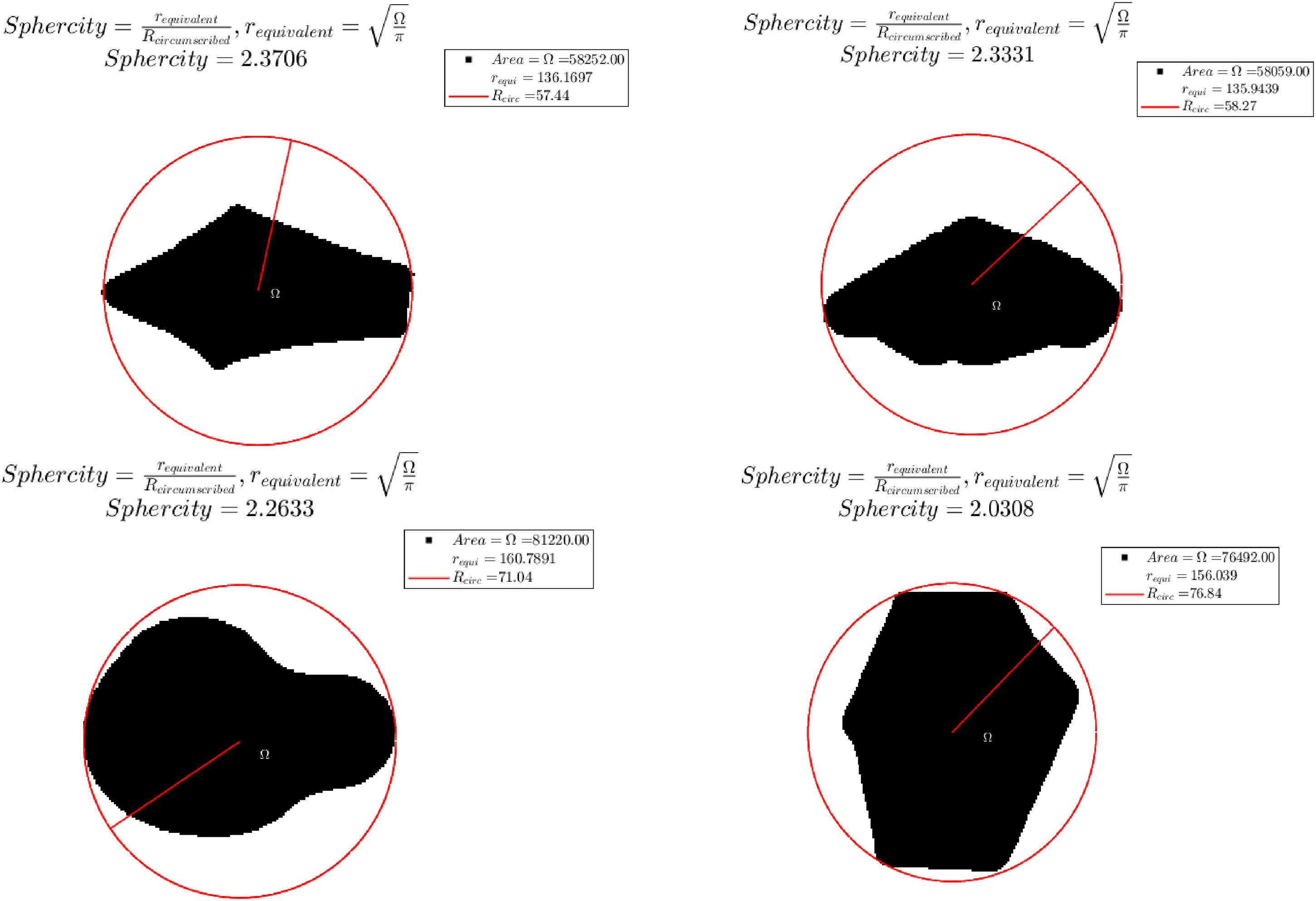
The results of the sphericity parameter in samples of different shapes.
Figure 14 shows the measurement of the geometric parameter of the porous medium solidity for some samples.
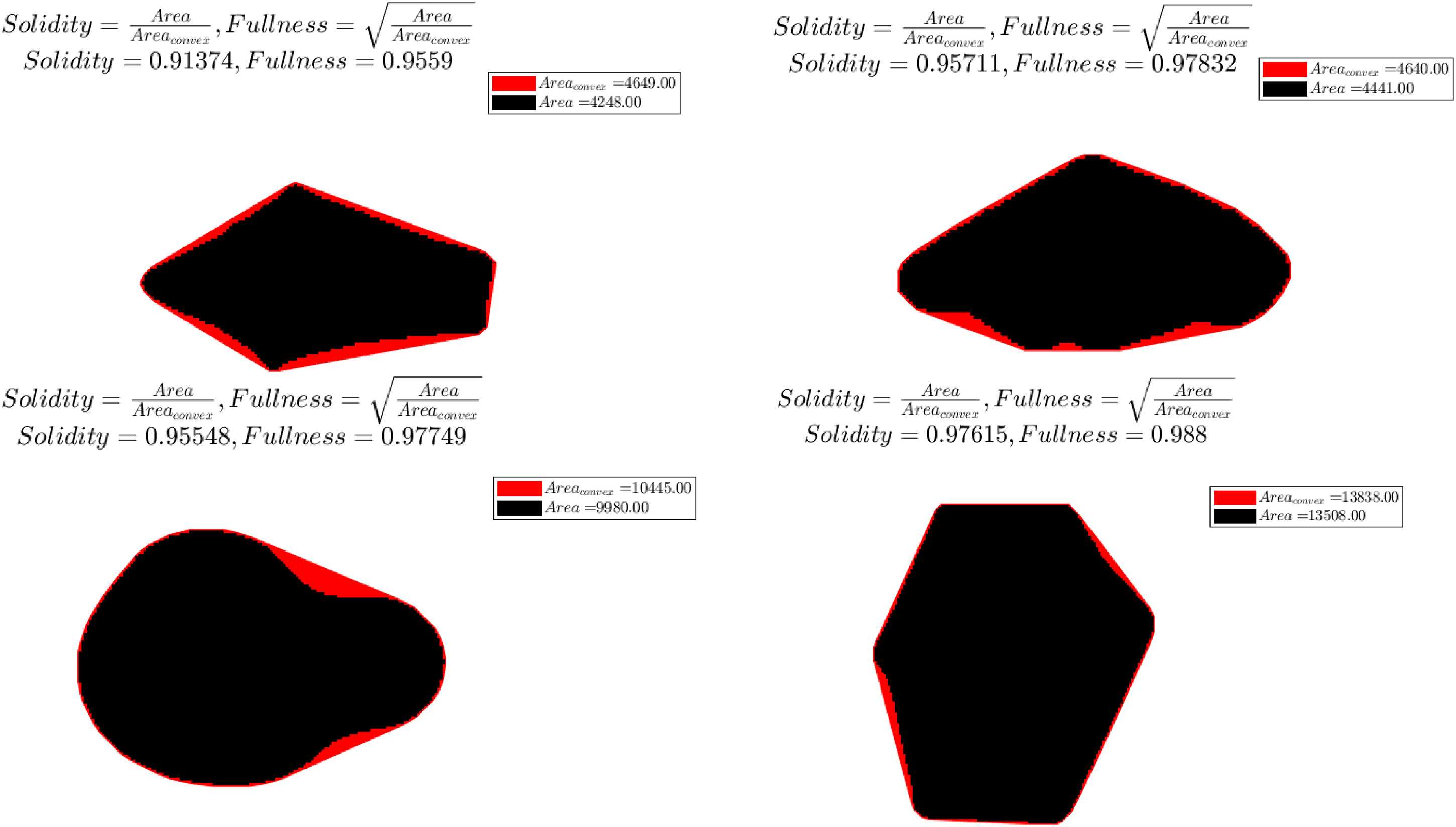
Results of the solidity parameter in samples of different shapes.
Figure 15 shows the measurement of the geometrical parameter of the porous medium eccentricity for some samples.
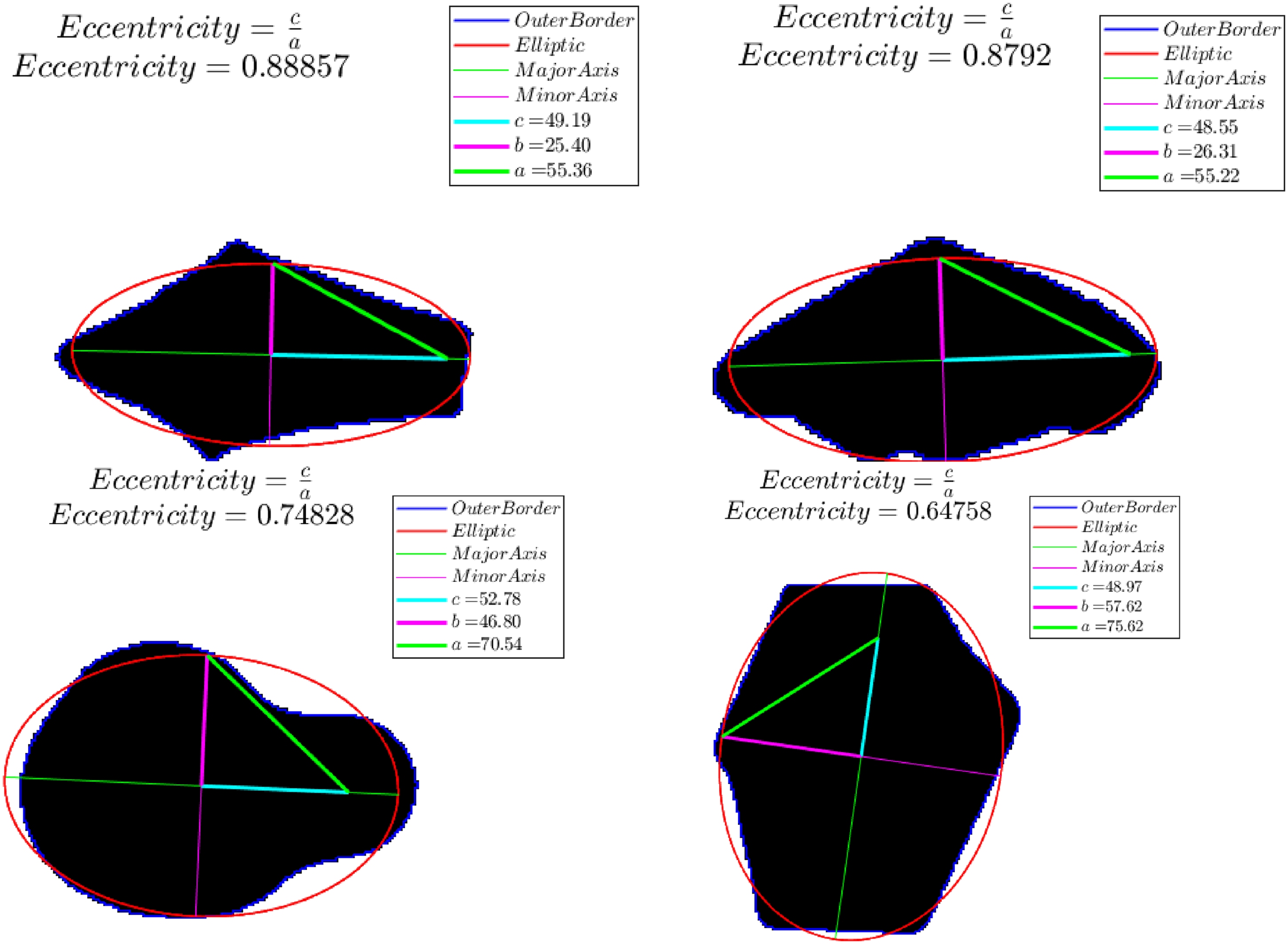
The results of the eccentricity parameter in the samples of different shapes.
Figure 16 shows the measurement of the geometric parameter of the porous medium convexity for some samples. The results obtained from roughness are equal to the results of convexity, so only a sample of some convexity images is given in this section.
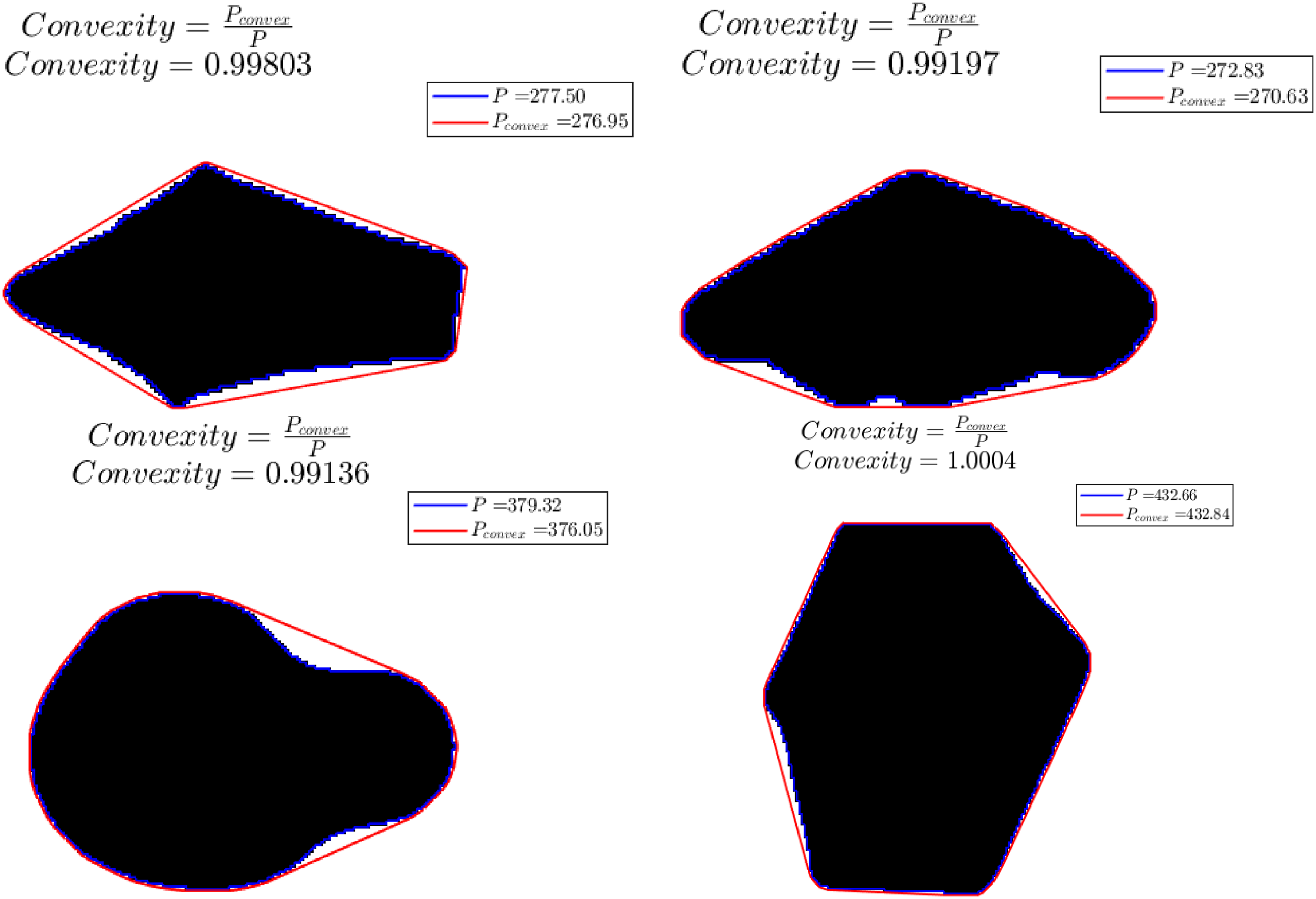
The results of the convexity parameter in samples of different shapes.
Figure 17 shows the measurement of the geometric parameter of the porous medium shape factor for some samples.
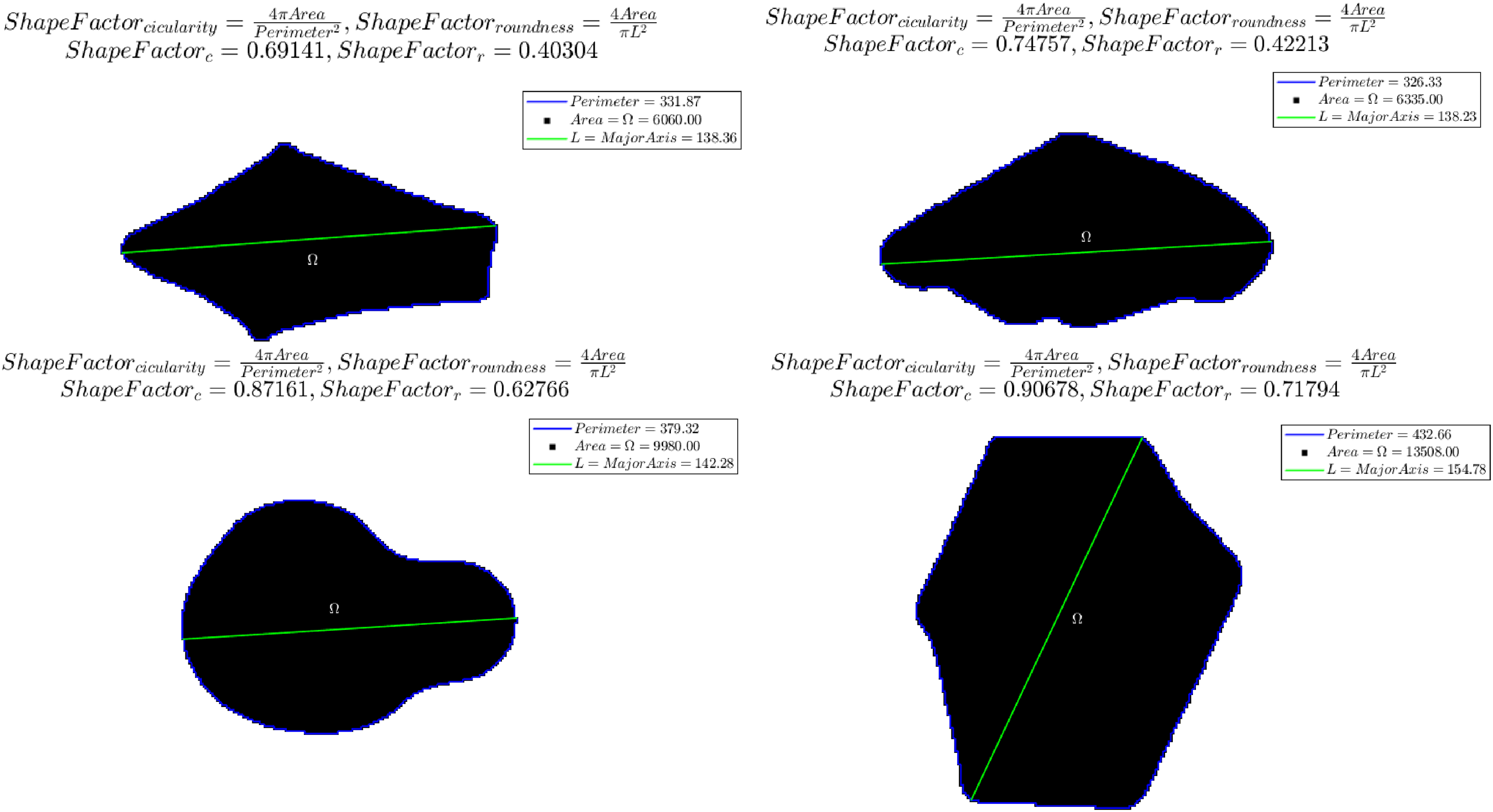
Results of the shape factor parameter in samples of different shapes.
Figure 18 shows the measurement of the elliptic smoothness geometric parameter of the porous medium for some samples.
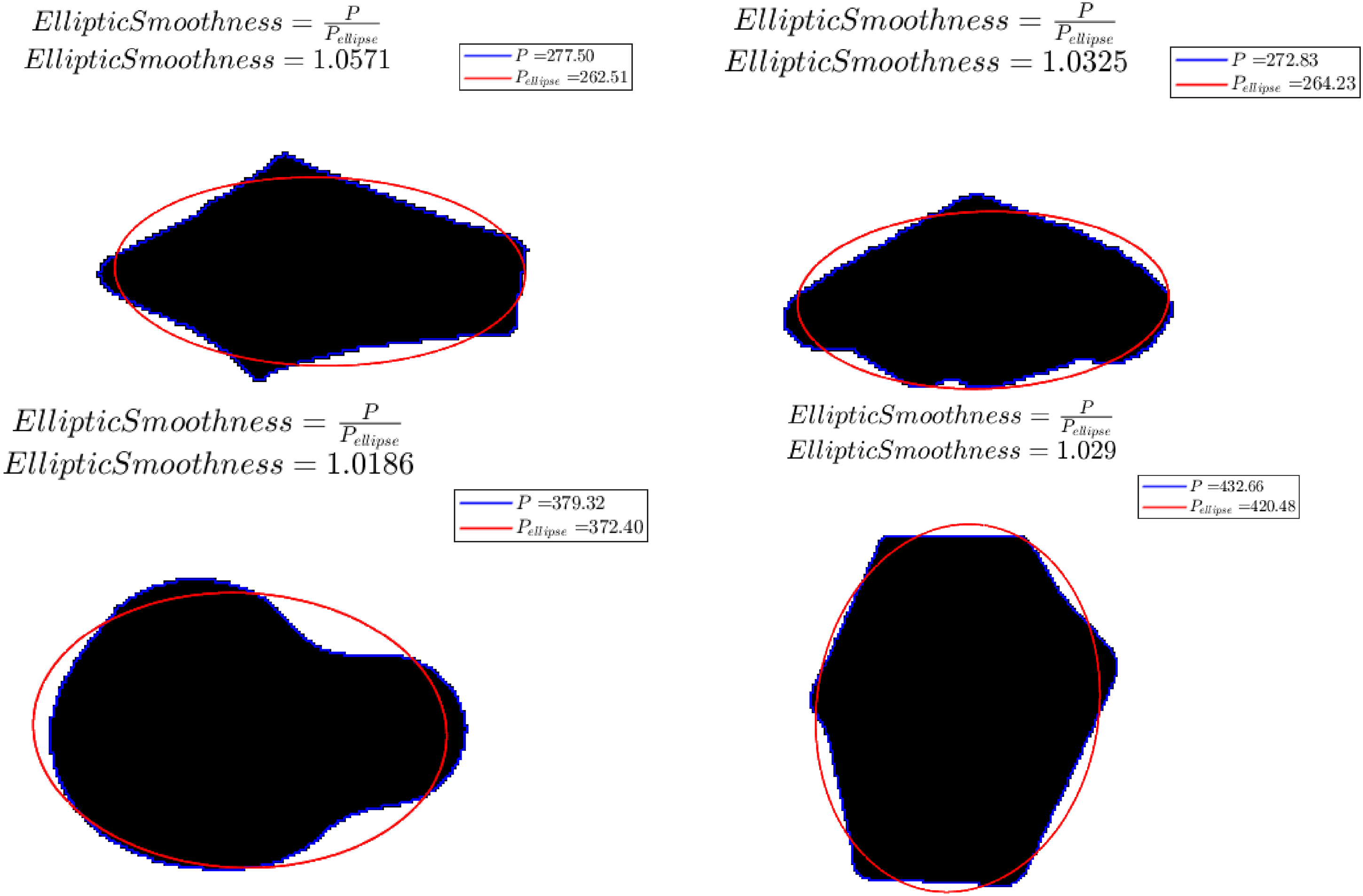
The results of the elliptic smoothness parameter in the samples of different shapes.
The geometrical parameters presented in Figures 6–18, which were presented for some samples, have been digitally calculated for all 20 sandstone samples (due to the large volume of images, only a few examples of the images have been shown in this research). The results of the shape parameters of the porous medium on 20 sandstone grains are given in Table 2.
The results of 15 shape parameters on 20 sandstone particles in the study.
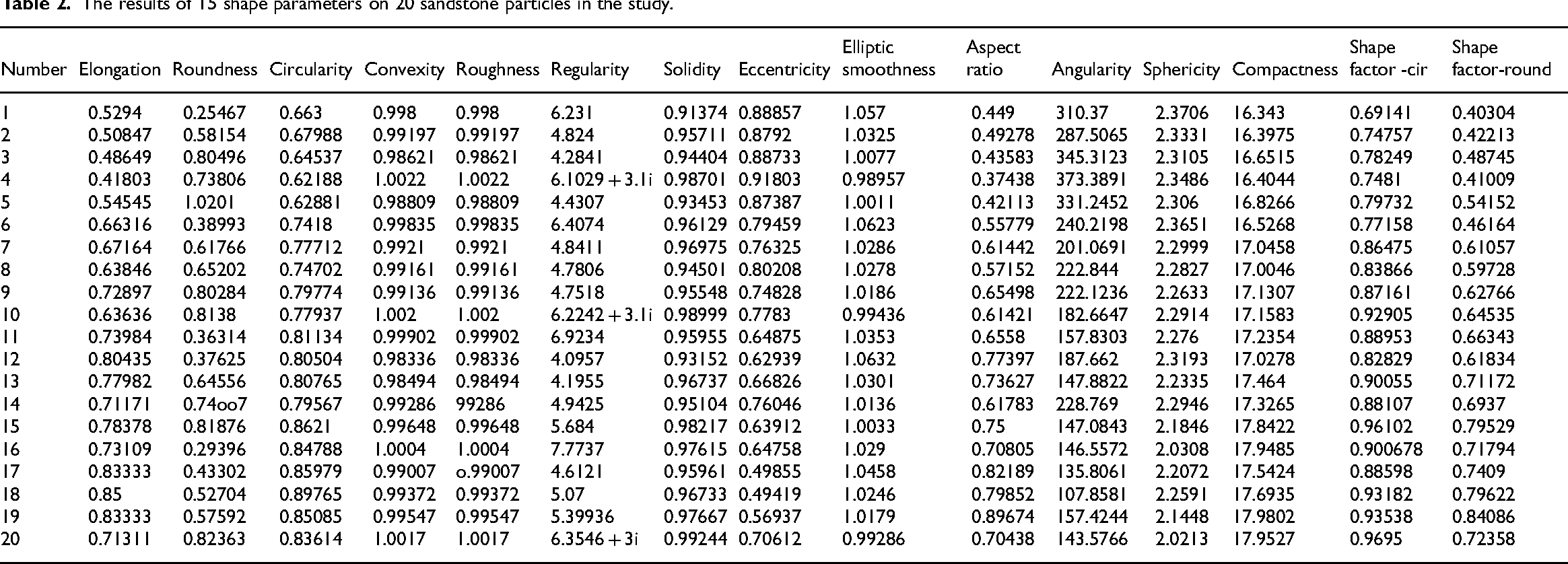
As stated, one of the goals of this article is to determine the representative shape parameters for the correct representation of the porous medium after calculating the geometric shape parameters. Therefore, the results of the parameters calculated two-by-two should be analyzed and the most suitable parameters that can be a good indicator for analyzing the shape of the porous medium should be selected from the relationship between them. Statistical analysis is used to check the relationship between two parameters of the geometric shape. These statistical analyses include four types of statistical indices (Table 3), namely coefficient of determination (
Statistical Indicators of model performance evaluation.
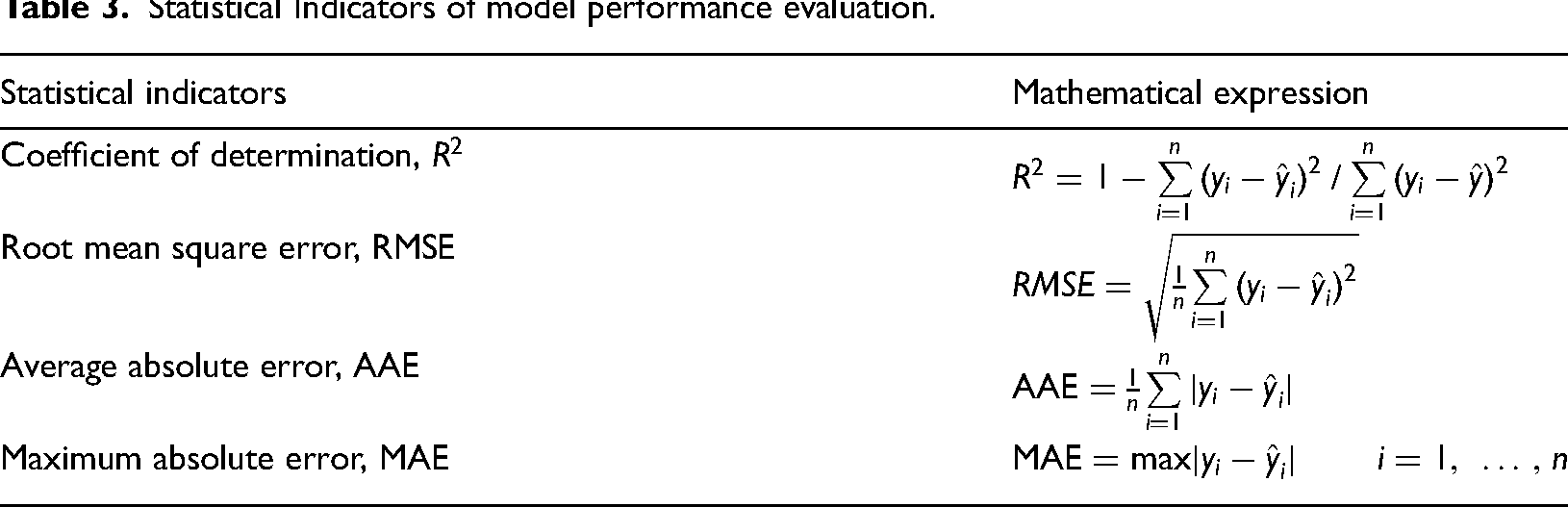
The statistical analysis of 2 × 2 parameters is shown graphically in Figures 19–21. In Table 4, comprehensive information related to the geometric parameters of the shape is provided. Based on this, Figure 19 shows the relationship between the two circularity-angularity parameters with the coefficient of determination R² = 0.9442, which is also marked in red in Table 4.
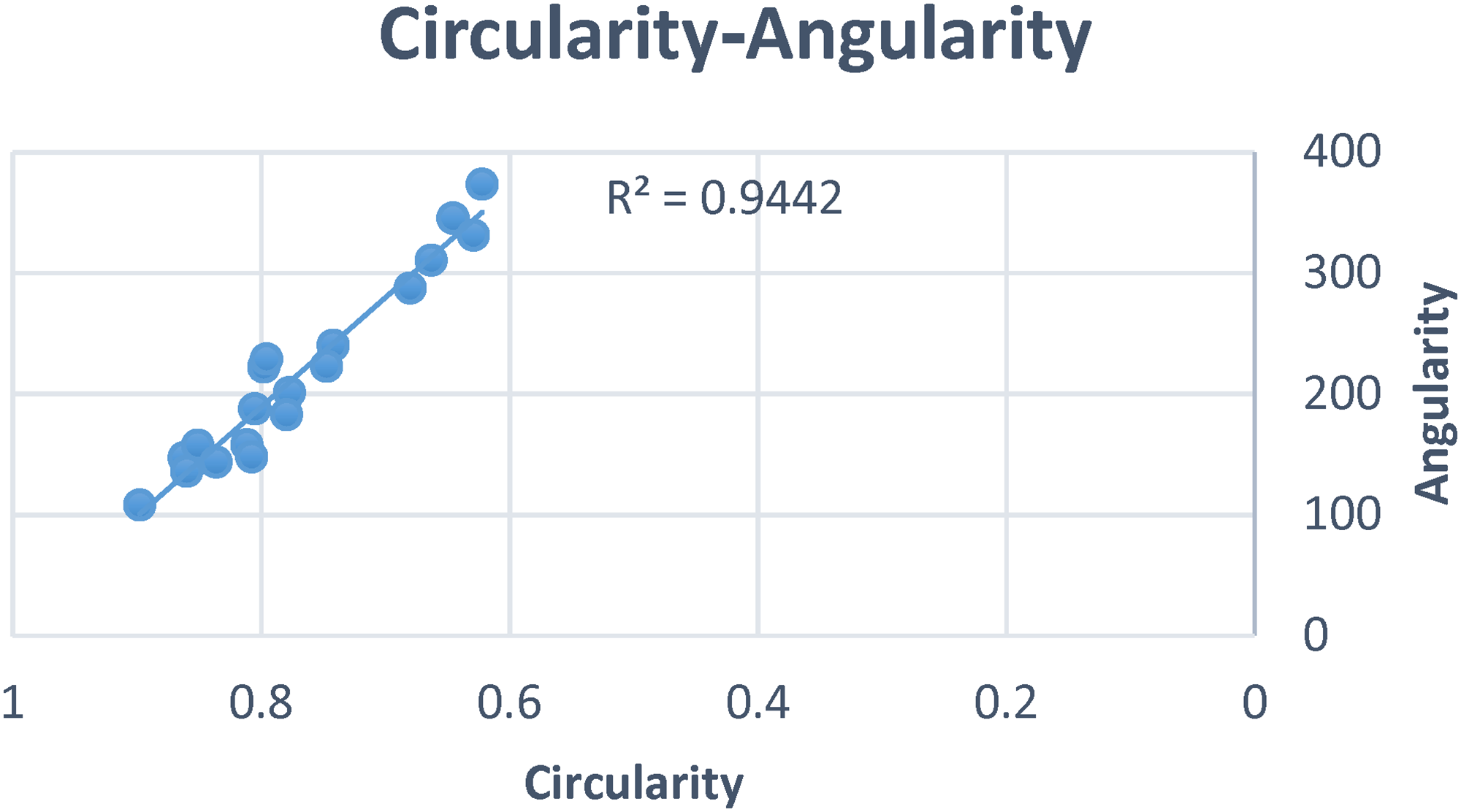
The results of comparing circularity with angularity.
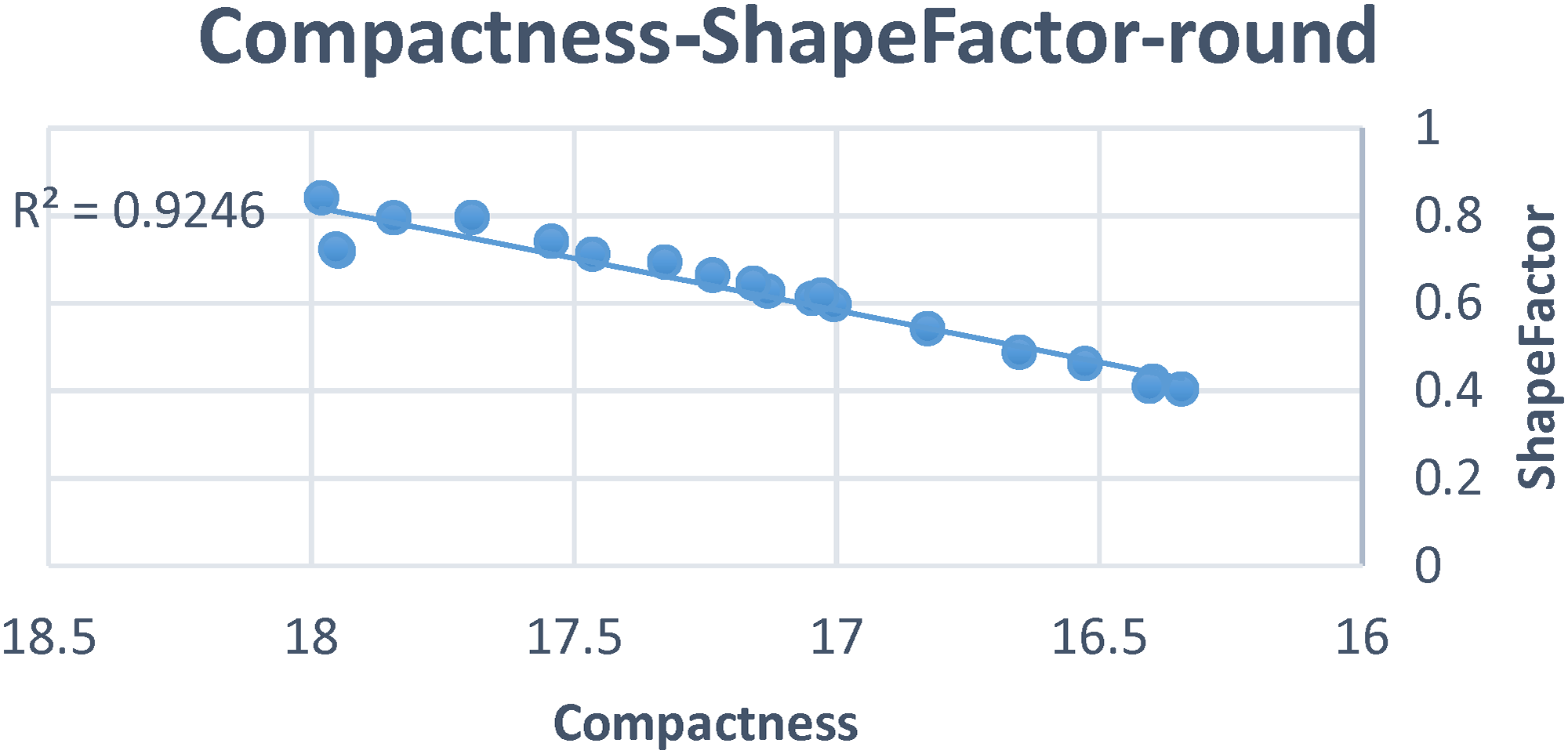
The results of comparing compactness with shape factor-round.
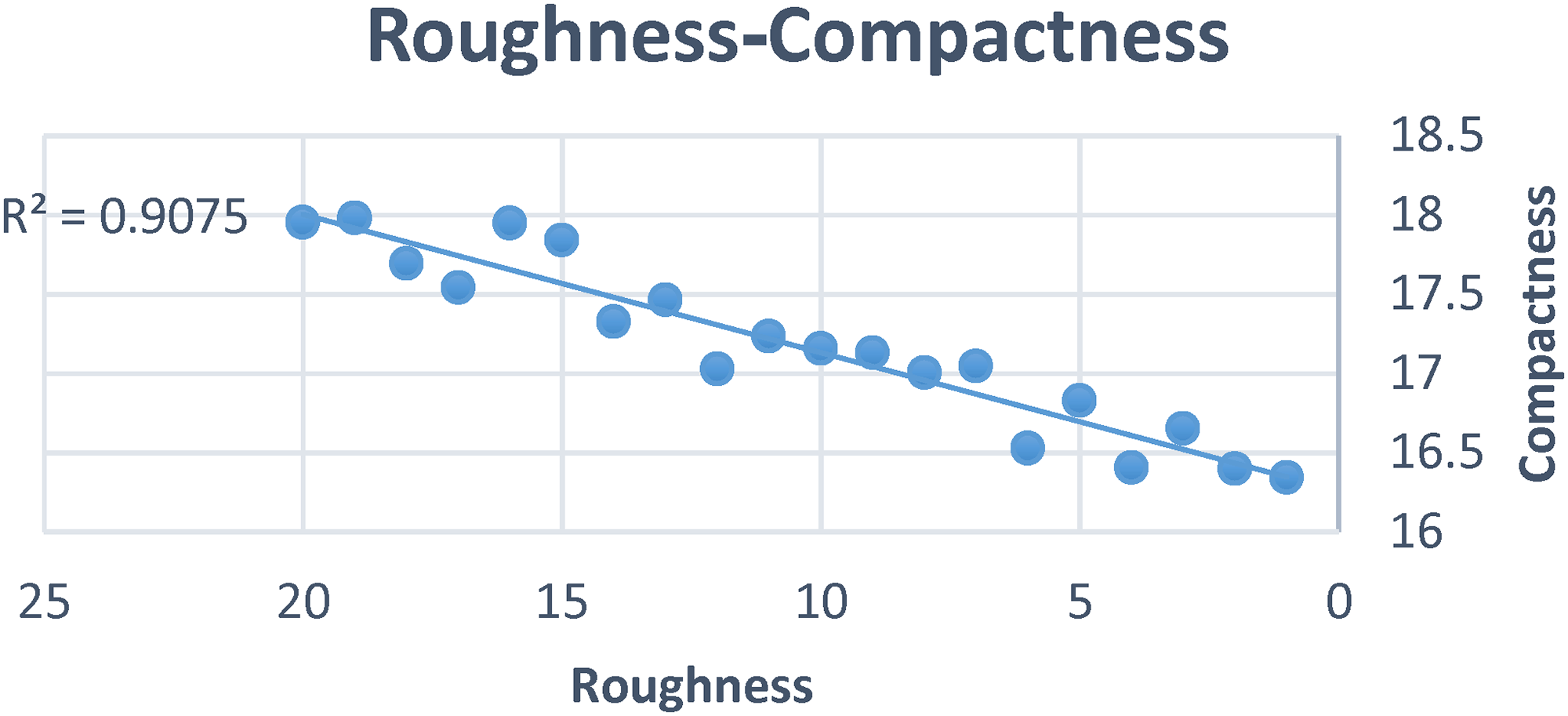
The results of comparing roughness with compactness.
Showing the R² results obtained from the 2 × 2 comparison of each of the methods with each other.
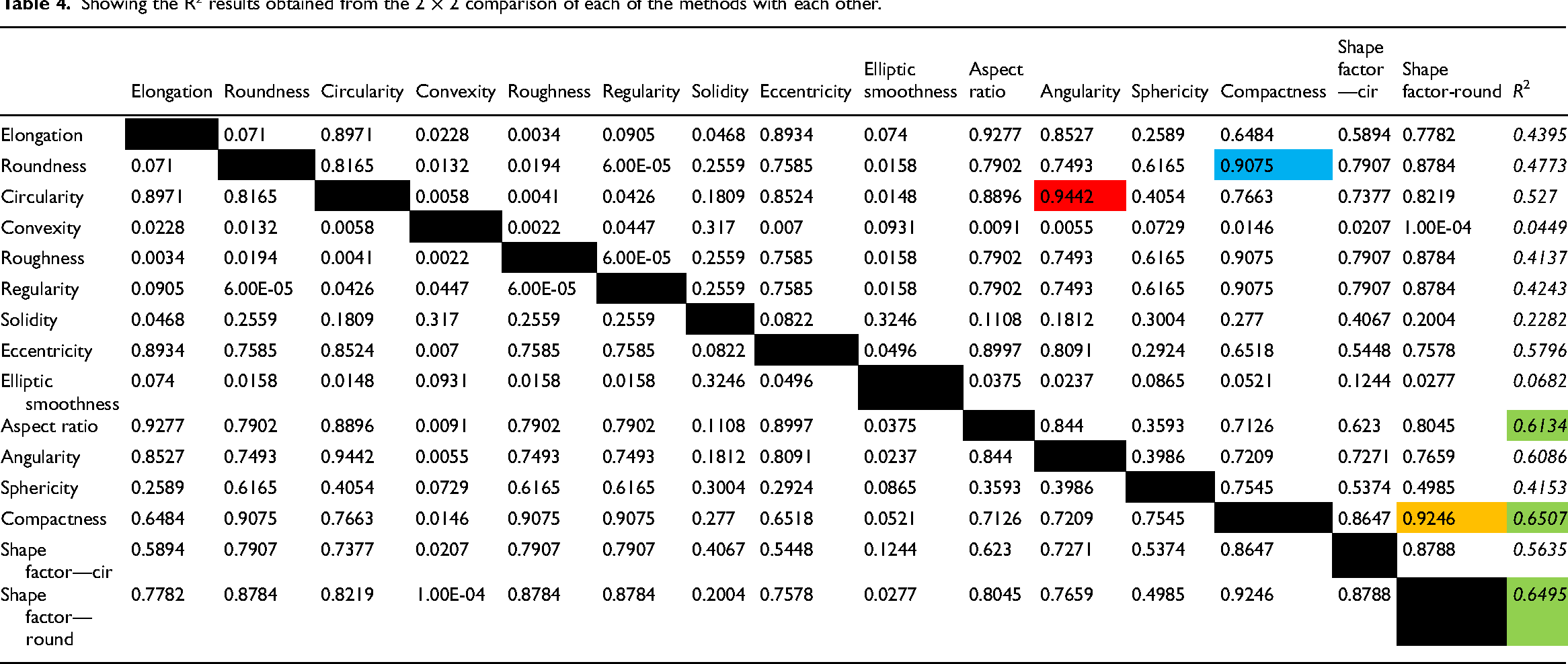
Figure 20 shows the relationship between the two parameters compactness-shape factor-round with the coefficient of determination R² = 0.9246, and this relationship is also marked in orange in Table 4.
Figure 21 shows the relationship between the two parameters roughness-compactness with the coefficient of determination R² = 0.9075, and this relationship is also marked in blue color in Table 4.
Based on the values of the geometric shape parameters in Table 4, it can be seen that the dispersion of the coefficient of determination (

In the above equation, n is the number of coefficient of determination (
The shape parameter of the porous medium has a great influence on various variables such as hydraulic conductivity, thermal conductivity, shear wave speed, etc. Providing representative shape parameters allows the accurate expression of the shape of the porous medium as soon as possible. This problem is because, firstly, the number of parameters is limited and secondly, these parameters are a suitable representative to show the shape of the porous medium. On the other hand, representative parameters make it possible for researchers to estimate these parameters more easily and then, for example by using intelligent methods, some other variables can be related to shape parameters and by using developed relationships, it can be estimated these parameters.
Conclusion
Due to the lack of a comprehensive study on the presentation of the representative shape parameters of the porous medium and the importance of this issue, in this research, the representative shape parameters were presented based on mathematical computation on the images. In this research, 15 geometrical parameters of different shapes were selected and calculated. Shape parameters were measured on 20 real sandstone samples. The results obtained from each of these parameters two by two showed that the dispersion of the average coefficient of determination index is high. Due to the high dispersion of the coefficient of determination, in this research, the arithmetic average of the coefficient of determination of each parameter was proposed and obtained in a 2 × 2 relationship with other shape parameters. The results of this research showed that the parameters compactness, shape factor—round, and aspect ratio are the parameters that can show the shape of the porous medium more accurately.
Footnotes
Acknowledgments
The third author acknowledges the funding of the Agencia Nacional de Investigación y 761 Desarrollo (ANID), through the grant project of Fondecyt Iniciacion N° 11221093.
Declaration of conflicting interests
The authors declared no potential conflicts of interest with respect to the research, authorship, and/or publication of this article.
Funding
The authors received no financial support for the research, authorship, and/or publication of this article.
