




Abstract
With the development of intelligent and connected vehicles, over-the-air (OTA) updates empower cars with continuous evolution capabilities, leading to an accelerated penetration rate and steady market share growth. This research endeavors to construct a comprehensive model to understand and predict sustainable consumer intentions to purchase electric vehicles (EVs) and their inclination to pay for OTA updates for EVs. Empirical validation of the model was conducted through partial least squares structural equation modeling (PLS-SEM), using responses from 504 Chinese participants gathered through an online survey. The study demonstrates that instrumental attributes, product innovativeness, and driving experience have indirect effects on the intention to purchase both EVs and OTA updates. This indirect effect is observed through the construct of relationship quality, which includes trust and satisfaction. Moreover, satisfaction and trust are found to have significant and positive associations with purchase intentions for both EVs and OTA updates. This research offers valuable insights for policymakers and marketers seeking to promote EV purchases and OTA updates. It also contributes to the academic implication of intention and behavior in the context of sustainable transportation.
Keywords
Introduction
The convergence of internet of things (IoT) and over-the-air (OTA) technology updates in the context of electric vehicles (EVs) has brought about numerous innovative use cases and benefits by introducing remote monitoring and diagnostics, software-defined features, enhanced security, energy efficiency, and a greater focus on environmental sustainability. IoT has enabled EVs equipped with sensors can continuously monitor vehicle data, such as battery status, charging state, and location. OTA technology empowers manufacturers to wirelessly introduce new features and capabilities to EVs. This flexibility allows vehicles to gain new functionalities over time without requiring hardware upgrades. The combination of IoT connectivity and OTA technology enables swift responses to potential security vulnerabilities. Leveraging OTA updates, IoT technology allows manufacturers to collect vehicle data, facilitating data analysis, and performance optimization. This convergence of IoT and OTA technologies plays a critical role in promoting the sustainability of EVs (Dantas et al., 2021).
Despite these technological advancements, the adoption of OTA technology remains relatively low, especially in China, where the overall OTA adoption rate for new passenger vehicles was stable at around 30% in 2022 (Zhu, 2022). The adoption rate of OTA is higher in new energy vehicles (NEVs) compared to traditional fuel vehicles due to advanced electronic and electrical designs. Projections indicate that by 2025, the number of vehicles equipped with OTA capabilities in China will reach 18 million, driven by the expanding market for smart automobiles (Cascetta and Henke, 2023). However, the factors driving consumer adoption of OTA technology in EVs remain underexplored, particularly within the Chinese market.
Automotive OTA refers to the use of remote upgrade technology to update and repair vehicle functionalities. The OTA architecture consists of three key elements: the vehicle, cloud, and communication network, along with the involvement of third-party operators and original equipment manufacturers (OEMs) in the development system (as shown in Figure 1). The overall OTA upgrade process is relatively complex and can be categorized into two types based on the upgrade target: Software OTA (SOTA) and Firmware OTA (FOTA). SOTA involves the upgrading of in-vehicle software, similar to updating apps on a smartphone, while FOTA refers to firmware updates, which encompass the entire vehicle OTA process, similar to updating the operating system on a smartphone (Borse et al., 2023).
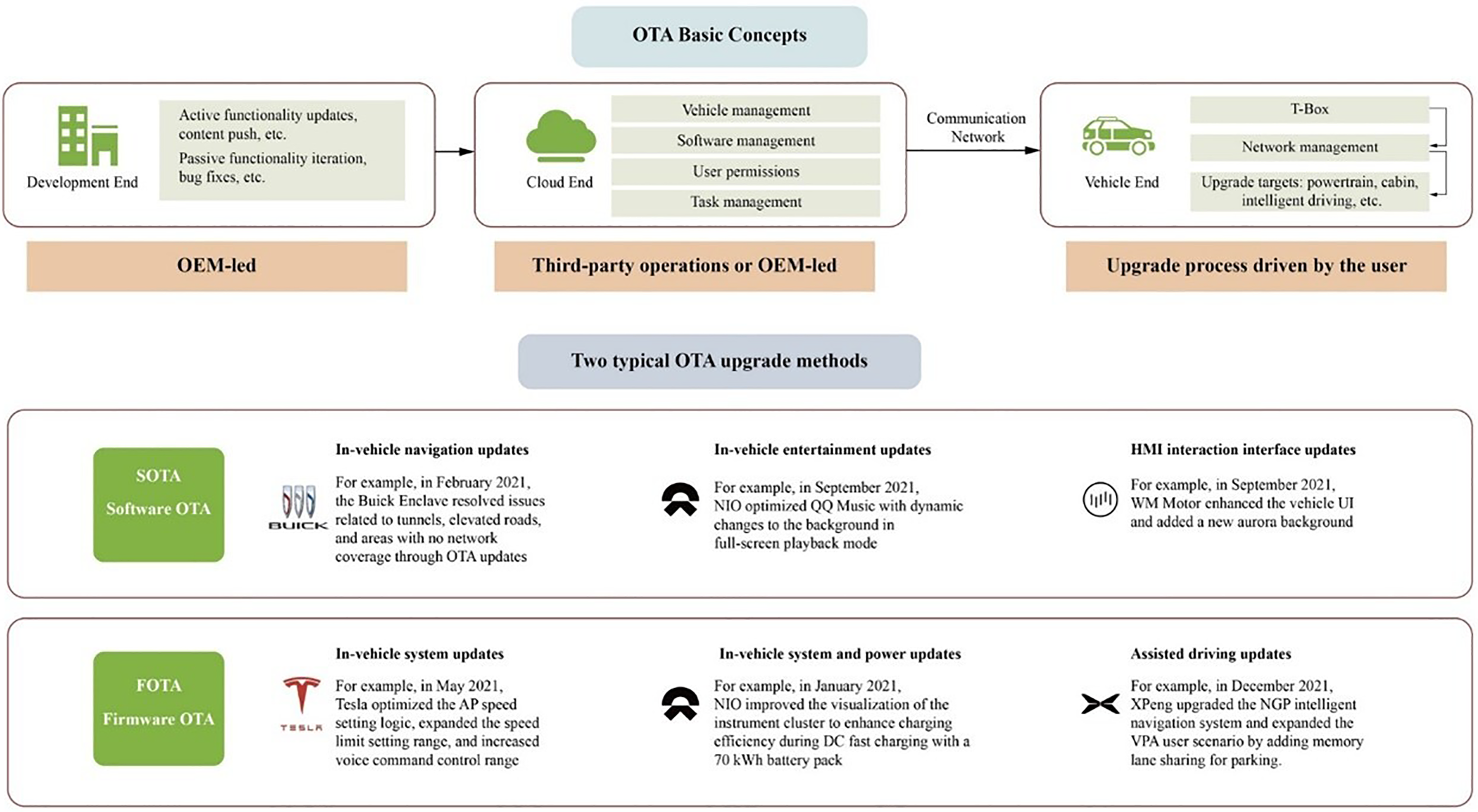
Basic concepts of OTA. OTA: over-the-air.
The automotive OTA industry chain is well-established, involving OTA solution providers and other ecosystem supporters in the upstream, vehicle manufacturers/OEMs in the midstream, and end consumers in the downstream. However, the boundaries between the midstream and upstream are becoming increasingly blurred, as midstream vehicle manufacturers/OEMs have started to develop their own solutions and expand their business scope to include upstream module suppliers. This overlap in the midstream and upstream sectors has intensified competition within the industry, which creates ambiguity about the influential factors of OTA adoption. Therefore, it is crucial and urgent to conduct research on consumer purchase intentions for OTA.
In fact, OTA technology possesses the characteristics of disruptive innovation. As per Rogers’ Diffusion of Innovation theory (Lee et al., 2011), the adoption of OTA in China is currently in the ‘early adopters’ stage of market diffusion. During this phase, consumer acceptance plays a pivotal role in driving technological shifts and ensuring the long-term success of a new sustainable transportation system (Ozaki and Sevastyanova, 2011). The relatively low market share of OTA in China can be attributed to the limited adoption intentions among consumers. Therefore, it becomes imperative to delve into the factors that influence consumer purchase intentions regarding EVs in order to comprehend OTA purchase intentions.
Most existing studies have focused on the broader acceptance of EVs or the adoption of disruptive technologies in different markets (e.g. Asadi et al., 2021; Higueras-Castillo et al., 2023; Singh et al., 2020; Xu et al., 2021), without adequately addressing the specific factors influencing OTA adoption in EVs. Research has consistently highlighted the importance of pricing, with consumers more likely to adopt EVs when prices are within their financial reach (Jaiswal et al., 2022). Supportive policies, such as monetary incentives from marketers or governments, also significantly impact EV purchase intentions (Shanmugavel and Micheal, 2022). While the significance of pricing, supportive policies, and product attributes in EV adoption has been widely studied (e.g. Cui et al., 2021; Liu et al., 2021), there is a lack of focused research on how these factors influence OTA adoption. Additionally, existing studies predominantly focus on single dimensions, such as vehicle pricing or policy incentives, without addressing the multidimensional aspects of consumer decision making.
This study seeks to fill these gaps by addressing the following research questions:
What are the key factors influencing consumers’ purchase intentions for EVs and OTA updates? How do trust and satisfaction (relationship quality) mediate the relationship between these factors and consumers’ purchase intentions for EVs and OTA updates?
Overall, this research constructs a theoretical framework aimed at comprehending consumers’ purchase intentions for both EVs and OTA, addressing a research void within the context of a burgeoning sustainable transportation market. Therefore, the study assesses factors such as supportive policies (SP), price consciousness (PC), instrumental attributes (IA), driving experience (DE), and product innovativeness (PI) to examine their direct impacts on consumer trust (TR) and satisfaction (SA) (i.e. relationship quality) toward EVs and OTA. The partial least squares structural equation modeling (PLS-SEM) was employed to analyze survey data collected from 504 Chinese participants via an online survey. PLS-SEM is chosen due to its suitability for prediction purposes (Haenlein and Kaplan, 2004), aligning with our goal of identifying key predictors for sustainable consumer intentions to purchase EVs and willingness to pay for OTA updates. Furthermore, PLS-SEM is well-suited for handling complex structural equation models (Henseler and Fassott, 2010), as evident in our research model, allowing us to investigate potential indirect effects of relationship quality (comprising TR and SA) between purchase intentions for EVs and OTA and their predictor variables of IA, PI, and DE.
This article offers several valuable contributions. Firstly, while numerous studies have explored purchase intentions related to EVs (Xu et al., 2021), limited attention has been directed toward understanding purchase intentions for OTA. This study delves into both the factors that drive the purchase of EVs and those that influence OTA acquisitions. Secondly, this research constructs a theoretical framework to examine the determinants of consumers’ purchase intentions and highlights the indirect effects of TR and SA (i.e. relationship quality) in these associations. This narrows the gap that is unclear about the psychological decision-making process of consumers in the current literature (Xu et al., 2021). Thirdly, this study selects a more comprehensive variable construct, from four dimensions including vehicle usage costs (e.g. PC and PI), charging facilities (e.g. IA), government policies (e.g. supportive policy), and consumer experience (e.g. DE), to address the limitations of previous studies that focused on a single dimension (Zhao et al., 2022). Lastly, this article identifies the positive impact of PI and IA on purchase intention.
Literature review and hypotheses development
Purchase intention of EVs and OTA purchase intention
From an organizational perspective, the manufacturing idea employed by traditional automakers differs from that of EV manufacturers. Unlike traditional vehicles, which are primarily hardware-oriented, EVs are characterized by a software-centric approach to manufacturing. This software-oriented paradigm enables continuous improvement through OTA updates, ensuring that EV owners benefit from the latest advancements and enhancements.
From a consumer standpoint, purchasing a traditional vehicle provides a stable and predictable experience, as the features and functionalities are fixed at the time of purchase. In contrast, OTA updates for EVs can bring unexpected enhancements and surprises to consumers, allowing for the potential for ongoing improvements and new features. While OTA technology may currently be imperfect, EV owners recognize its potential for ongoing upgrades and advancements. This flexibility and adaptability further contribute to the attractiveness of EVs and positively influence the purchase intention of OTA updates.
Considering the aforementioned factors, this study posits the hypothesis that there exists a direct and positive correlation between the purchase intention of EVs and the purchase intent concerning OTA updates.
H1: The purchase intention of EVs exhibits a direct and positive association with the intent to acquire OTA updates.
Relationship quality: Trust and satisfaction and OTA purchase intention
Relationship quality is recognized as the fundamental underpinning for fostering robust interactions between buyers and sellers, illustrated by its two primary constituents: TR and SA (Chen and Chiu, 2008). In this study, we have focused on these two dimensions: SA and TR between customers and sellers. SA stands as a pivotal element in gauging relationship quality; customers tend to remain when past performance consistently meets their expectations (So et al., 2016). In general, a favorable relationship quality can encourage customers to interact with a company (Itani et al., 2019). TR, conversely, relates to the emotional dimension of a relationship. It signifies the level of emotional intimacy and mutual support experienced by both parties in the relationship. Put simply, TR conveys a sense of psychological proximity and shared feelings. This is linked to a deep understanding of each other and the possession of information and knowledge about the brand (Nyffenegger et al., 2015).
Previous research has highlighted the significant influence of consumers’ emotional responses on their subsequent behavioral actions (Vieira, 2013). Furthermore, studies have consistently demonstrated a strong association between TR, SA, and behavioral intentions. For instance, research has uncovered a positive correlation between consumer SA with EVs and their inclination to embrace EVs (Xu et al., 2021). Additionally, investigations have established a favorable relationship between TR in EVs and the intention to adopt EVs (Xu et al., 2021).
Building on these discoveries, we posit that a positive relationship quality, characterized by TR and SA, will stimulate a greater inclination among consumers to embrace OTA updates for their EVs. Based on this rationale, we formulate the following hypotheses:
H2: Relationship quality (trust and satisfaction) exhibits a direct and positive correlation with the purchase intention of EVs. H3: Relationship quality (trust and satisfaction) demonstrates a direct and positive association with OTA adoption. H4: Within the construct of relationship quality, satisfaction exerts a positive and significant influence on trust.
Supportive policy and relationship quality
Supportive policy measures have been recognized as crucial factors influencing the adoption of EVs. To address the challenge of high prices and encourage the adoption of EVs, governments and financial institutions in both developed and emerging economies have implemented supportive policies. These policies frequently encompass both financial and nonfinancial incentives, such as direct purchase subsidies, tax rebates, and the enhancement of charging infrastructure (Kim et al., 2018; Wang et al., 2017; Zhang et al., 2013). The underlying goal of these measures is to incentivize the demand for zero-emission vehicles within their respective transportation markets.
However, the influence of financial incentives on EV adoption remains a subject of contention in the literature. Some studies have suggested that direct financial support may not be as influential as anticipated, emphasizing the significance of other factors such as performance benefits (Li et al., 2018; Zhang et al., 2013). Contradictory findings concerning the impact of financial incentives on EV adoption have emerged, with some studies affirming the positive effect of financial incentives on EV sales (Lane and Potter, 2007), while others present a divergent perspective (Kim et al., 2018; Wang et al., 2017).
Therefore, comprehending the role of supportive policies is crucial for a comprehensive examination of factors influencing the purchase intention of EVs and OTA. It offers insights into the contextual influences on consumer behavior and their decisions regarding EVs and OTA. In light of this, the study posits the following hypotheses:
H5: Supportive policy demonstrates a positive and significant association with relationship quality (trust and satisfaction).
Price consciousness and relationship quality
Previous investigations have underscored the significance of price as a financial obstacle to EV adoption, with research indicating that consumers are more inclined to embrace EVs when prices are relatively affordable (Jaiswal et al., 2022). Additionally, studies have demonstrated that PC is a significant predictor of consumers’ motivation to buy EVs (Cui et al., 2021). PC represents the economic aspect that consumers take into account when making purchasing decisions for products or services (Liang et al., 2017). In many instances, price assumes a crucial role in influencing consumers’ willingness to exchange advantages for expenses when obtaining products or services (Wang et al., 2019). Within the context of green consumerism, price has been identified as having a substantial linkage with purchase behavior towards consumers (Lee et al., 2014). Building upon the existing literature, this study formulates the following hypotheses:
H6: Price consciousness exhibits a negative and significant relationship with relationship quality (trust and satisfaction).
Instrumental attribute and relationship quality
Research has delved into the role of IA in the adoption of battery EVs (BEVs) within the framework of diffusion theory (Schuitema et al., 2013). Subsequent investigations have pinpointed characteristics such as limited driving range and extended recharging times as perceived drawbacks, exerting a negative influence on the inclination to purchase BEVs (Carley et al., 2013). Existing studies have predominantly concentrated on instrumental factors such as driving range, recharge duration, and charging infrastructure (Carley et al., 2013; Schuitema et al., 2013; She et al., 2017).
Nonetheless, there have been notable technological advancements since then. It is posited that selecting home charging is the optimal choice in comparison to public charging. This preference is primarily driven by the insufficient availability of charging infrastructure, limited awareness of charging stations, and prolonged recharging times. Addressing the longer charging times can be tackled through various means, such as subsidizing home electricity rates, augmenting home charging infrastructure, adopting fast-charging battery technology, and the availability of more battery-swapping stations, among others. It's noteworthy that this challenge tends to diminish with the growing experience in using EVs (Thøgersen and Ebsen, 2019). Therefore, it becomes imperative to reassess the impact of IA, especially considering the previously established negative influence.
H7: Instrumental attributes demonstrate a positive and significant relationship with relationship quality (trust and satisfaction).
Driving experience and relationship quality
DE plays a significant role in consumer perceptions and attitudes toward EVs. Existing literature underscores that the DE exerts a substantial influence on consumers’ inclination to embrace EVs (Xu et al., 2021). Additionally, the DE has been found to positively influence consumer SA and TR, which are both crucial factors in the adoption of EVs (Xu et al., 2021).
Promoting the adoption of EVs requires providing consumers with opportunities to personally experience the performance and characteristics of these vehicles. Test drives have been recognized as an effective approach to enable consumers to directly experience the benefits and features of EVs. Companies like Tesla have successfully employed this strategy by emphasizing experiential opportunities, interactive communication, and sharing to help consumers intuitively grasp the value of EVs (Xu et al., 2021).
Given that the DE plays a pivotal role in shaping consumers’ perceptions and decision making with regard to EV adoption, it is crucial to comprehend its influence and integrate it into marketing strategies effectively to promote EV adoption. In the context of this research, we formulate the following hypothesis:
H8: The driving experience demonstrates a direct and positive relationship with relationship quality (trust and satisfaction).
Product innovativeness and relationship quality
Relative PI refers to the introduction of an entirely new product into the market. As outlined by Atalay et al. (2013), product innovation encompasses an organization's ability to introduce novel or significantly improved products or services, taking into account their attributes or intended usage. Research further emphasized that product innovation serves as the primary catalyst for a company's performance and long-term viability (Forsman, 2011). This is because product innovations not only contribute to organizational growth but also serve as a means to achieve enduring sales effectiveness through diverse promotional initiatives. Consequently, a higher success rate with new products can optimize sales volume and expand market share, ultimately attracting new customers while retaining the loyalty of existing ones (Tu and Hwang, 2014). For instance, focusing on interior product features such as technological advancements and creating attractive product designs of exceptional quality can shape customer perceptions and elevate their overall impression of the brand. These actions inevitably impact consumer decision making and brand evaluation. EVs are considered highly innovative products due to their utilization of new technology, alternative fuel sources, and novel features. Research has shown that relative PI has a positive influence on the perceived usefulness of EVs (Shanmugavel and Micheal, 2022). Therefore, this study proposes the hypothesis that PI plays a significant and positive role in shaping relationship quality:
H9: Product innovativeness demonstrates a direct and positive relationship with relationship quality (trust and satisfaction).
Building upon the preceding discussions, we put forward the research framework, visually depicted in Figure 2. This proposed research framework integrates the pivotal elements delineated in the literature review, providing a graphical representation of the interrelationships and interactions among these factors.
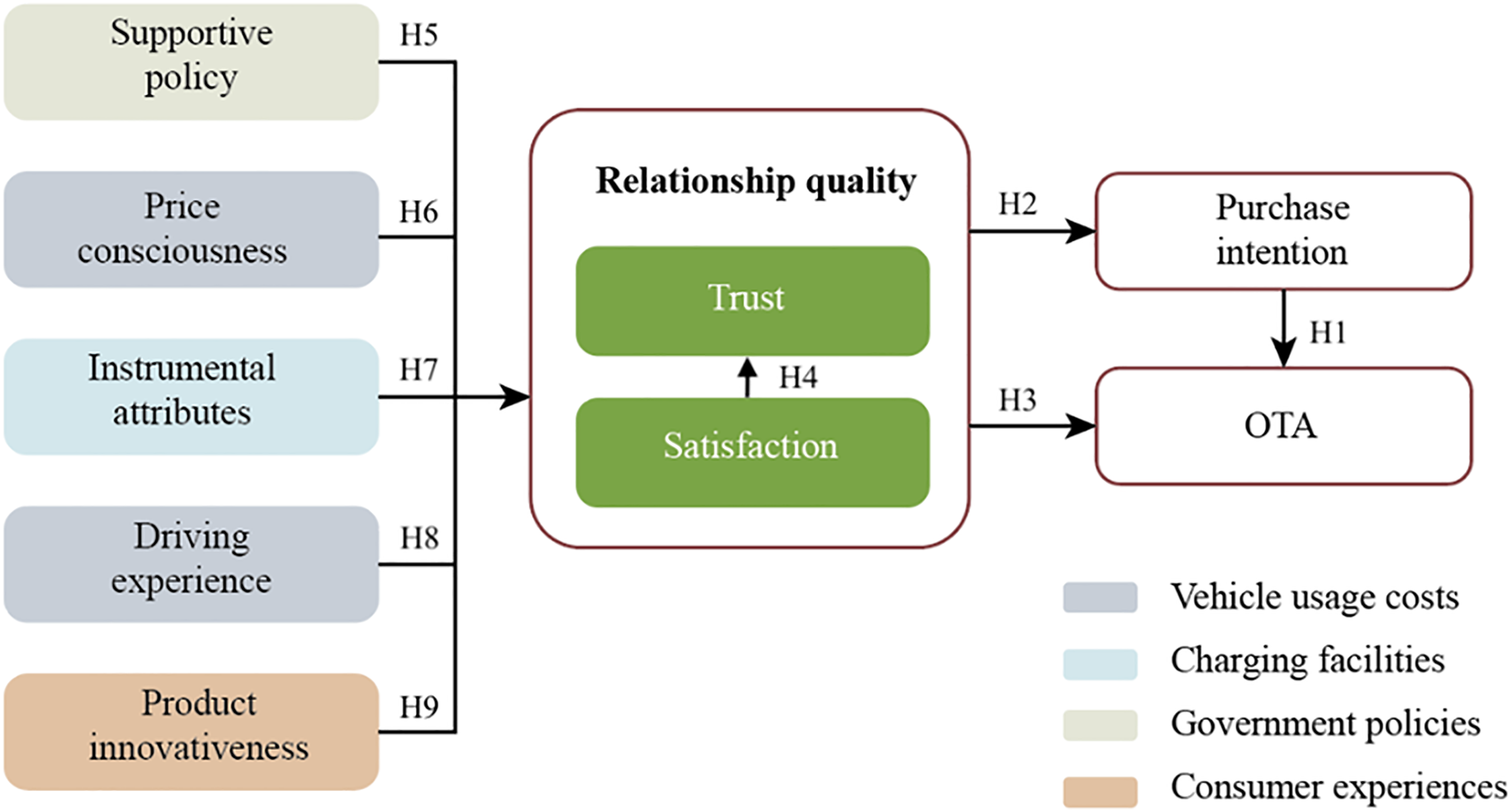
The conceptual model.
Research method
Questionnaire and data collection
A self-administered questionnaire was utilized to test the conceptual research model. Before deployment, the questionnaire was reviewed by experts and scholars to ensure the accuracy of its language and structure. It was divided into two sections. The first section gathered demographic information from the respondents, including gender, age, educational background, income, vehicle ownership, and the number of vehicles owned, as summarized in Table 1. The second section comprised prevalidated measures adapted from prior studies (Chen et al., 2019; Cui et al., 2021; Jaiswal et al., 2021; Pradeep et al., 2021; Shanmugavel and Micheal, 2022; Wang et al., 2021; Xu et al., 2021), as shown in Appendix 1. These measures employed a seven-point Likert scale, ranging from ‘strongly disagree’ (1) to ‘strongly agree’ (7), to capture respondents’ perceptions of EV and OTA purchase intentions.
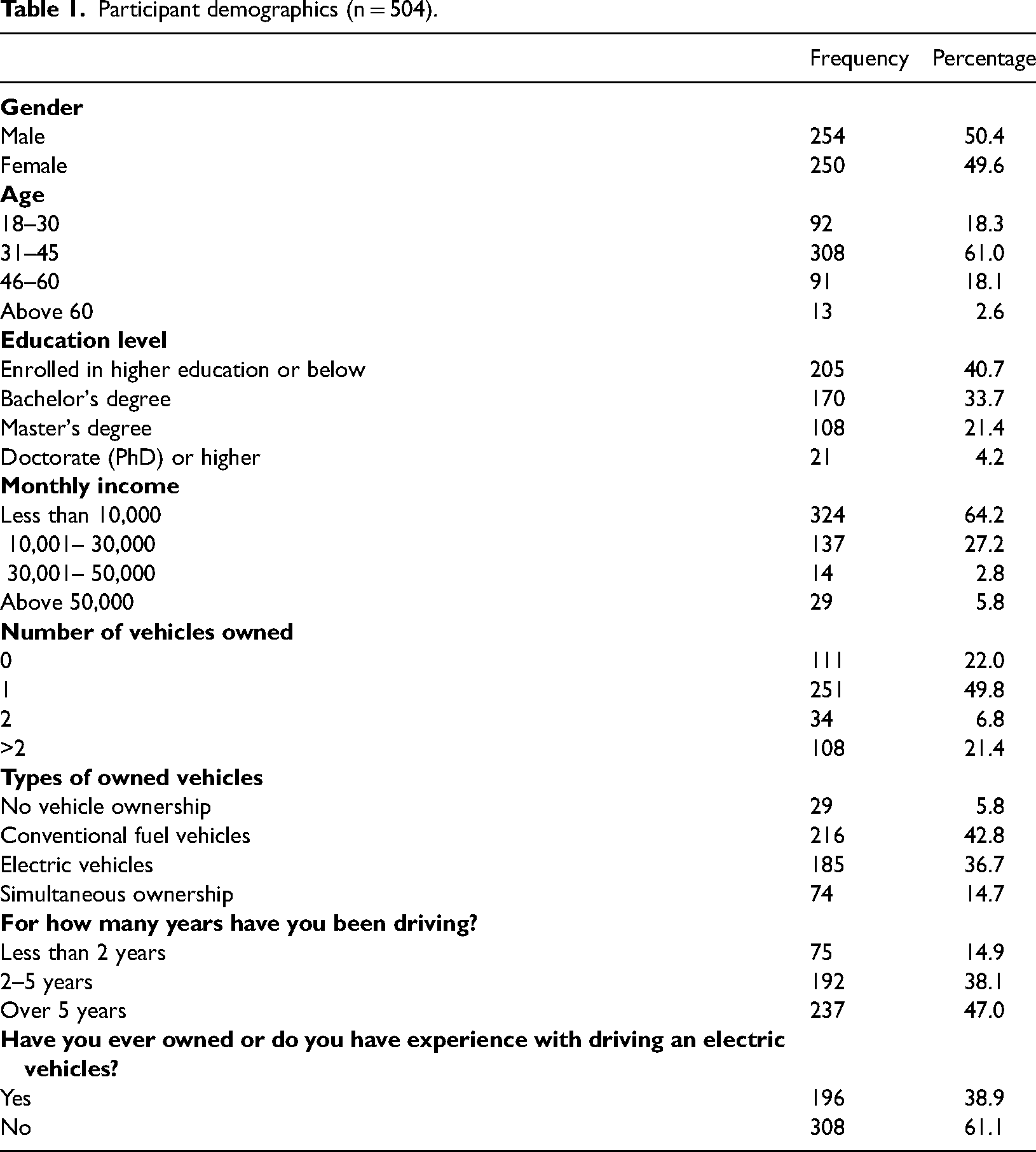
Participant demographics (n = 504).
Data collection was conducted through an online survey in China from 11 to 21 October 2023. Convenience sampling was employed, selecting participants based on subjective judgment for a readily accessible and cost-effective approach. An online questionnaire was distributed to individuals within the Chinese target population and was piloted with 50 individuals to ensure its relevance to the target demographic. Ultimately, 526 responses were collected, with 504 deemed valid after rigorous screening for outliers and incomplete submissions. The sample size determination was guided by recommendations from scholars (Hair et al., 2015), ensuring that the sample of 504 adequately represents the target population.
Table 1 presents the demographic characteristics of the survey participants: 254 (50.4%) were male and 250 (49.6%) female. Age distribution was as follows: 92 respondents (18.3%) were aged 18 to 30, 308 (61.0%) aged 31 to 45, 91 (18.1%) aged 46 to 60, and 13 (2.6%) aged 60 or above. Educational attainment varied, with 205 respondents (40.7%) having completed higher education or below, 170 (33.7%) holding a Bachelor's degree, 108 (21.4%) holding a Master's degree, and 21 (4.2%) having earned a PhD or higher qualification. Income distribution was as follows: 324 respondents (64.2%) earned less than 10,000 RMB per month, 137 (27.2%) earned 10,001 to 30,000 RMB, 14 (2.8%) earned 30,001 to 50,000 RMB, and 29 (5.8%) earned over 50,000 RMB. Regarding vehicle ownership, 251 respondents (49.8%) owned one vehicle, 34 (6.8%) owned two vehicles, and 108 (21.4%) owned more than two vehicles. Among the respondents, 216 (42.8%) owned conventional fuel vehicles, 185 (36.7%) owned EVs, 74 (14.7%) owned both types, and 29 (5.8%) did not own any vehicle. In terms of DE, 75 respondents (14.9%) had less than 2 years of experience, 192 (38.1%) had 2 to 5 years, and 237 (47.0%) had over 5 years. Additionally, 196 respondents (38.9%) had previously owned or driven an EV, while 308 (61.1%) had not.
Data analysis techniques
The data processing was carried out in two stages: model construction and model validation. In the first stage, a preliminary analysis was conducted using data from a pilot study (50 samples). SPSS 23 was employed to calculate demographic frequencies (e.g. age, gender, education, and income), while SmartPLS 4 was used to assess the reliability and validity of the measurements. Based on these findings, the survey questionnaire was revised, leading to the final version used in the main study. In the second stage, model validation was performed using the full-scale dataset (504 samples). Data screening was conducted to check for missing values, identify multivariate outliers, test for multicollinearity in SPSS, and verify the reliability of measurements via factor loadings in SmartPLS 4. Following data screening, the main analysis was carried out. Demographic frequencies were calculated using SPSS 23, and PLS-SEM was employed to further assess the reliability and validity of the measurements and test the proposed research model. SEM was applied to examine the cause–effect relationships between latent constructs (Fornell, 1987; Hair et al., 2011).
Analysis and results
Outer model analysis
To assess the internal consistency of the items within each construct, construct validity was examined. Construct validity evaluates how well the measurement scale accurately represents the constructs (Wang et al., 2016). In this study, the reliability of the latent constructs was assessed using Cronbach's alpha coefficients and composite reliability. As shown in Table 2, nearly all constructs yielded Cronbach's alpha values exceeding the recommended threshold of 0.7 (Taber, 2018). The only exception was construct IA, which produced a Cronbach's alpha value of 0.678, just slightly below 0.7. Nevertheless, given its proximity to 0.7, it can still be considered acceptable. Additionally, the standardized loadings for all measurement items, as displayed in Table 2, surpassed the recommended threshold of 0.6. The composite reliability values for all constructs were above 0.7, indicating a satisfactory level of reliability. The AVE values fell within the acceptable range of 0.613 to 0.755. Therefore, the construct reliability of the latent constructs can be considered reasonably robust.
Convergent validity.
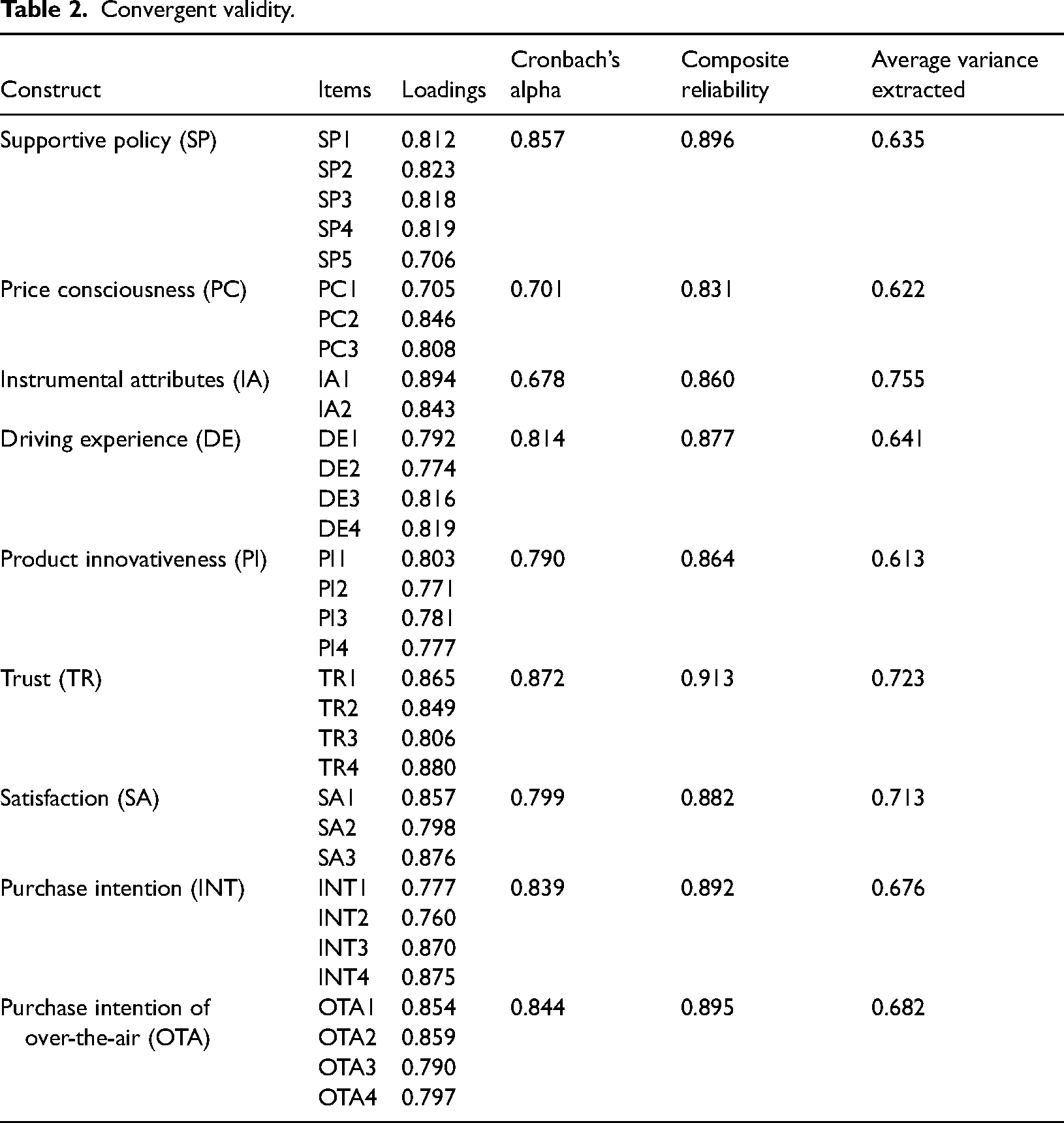
Following the evaluation of construct reliability, assessments of convergent and discriminant validity were conducted. Convergent validity for each construct was established based on factor loadings and average variance extracted (AVE), in line with the recommendations by Hair et al. (2016). The AVE values, computed using the method suggested by Hair et al. (2015), all fell within the acceptable range of 0.613 to 0.755. Additionally, the standardized loadings for all measurement items, as displayed in Table 2, surpassed the recommended threshold of 0.6. As illustrated in Table 3, the square root of the AVE for each construct exceeded the squared correlation with other constructs, thereby confirming the adequacy of discriminant validity, in accordance with the criteria outlined by Hair et al. (2015). Consequently, it can be concluded that the outer model attained satisfactory reliability and validity.
Discriminant validity results.
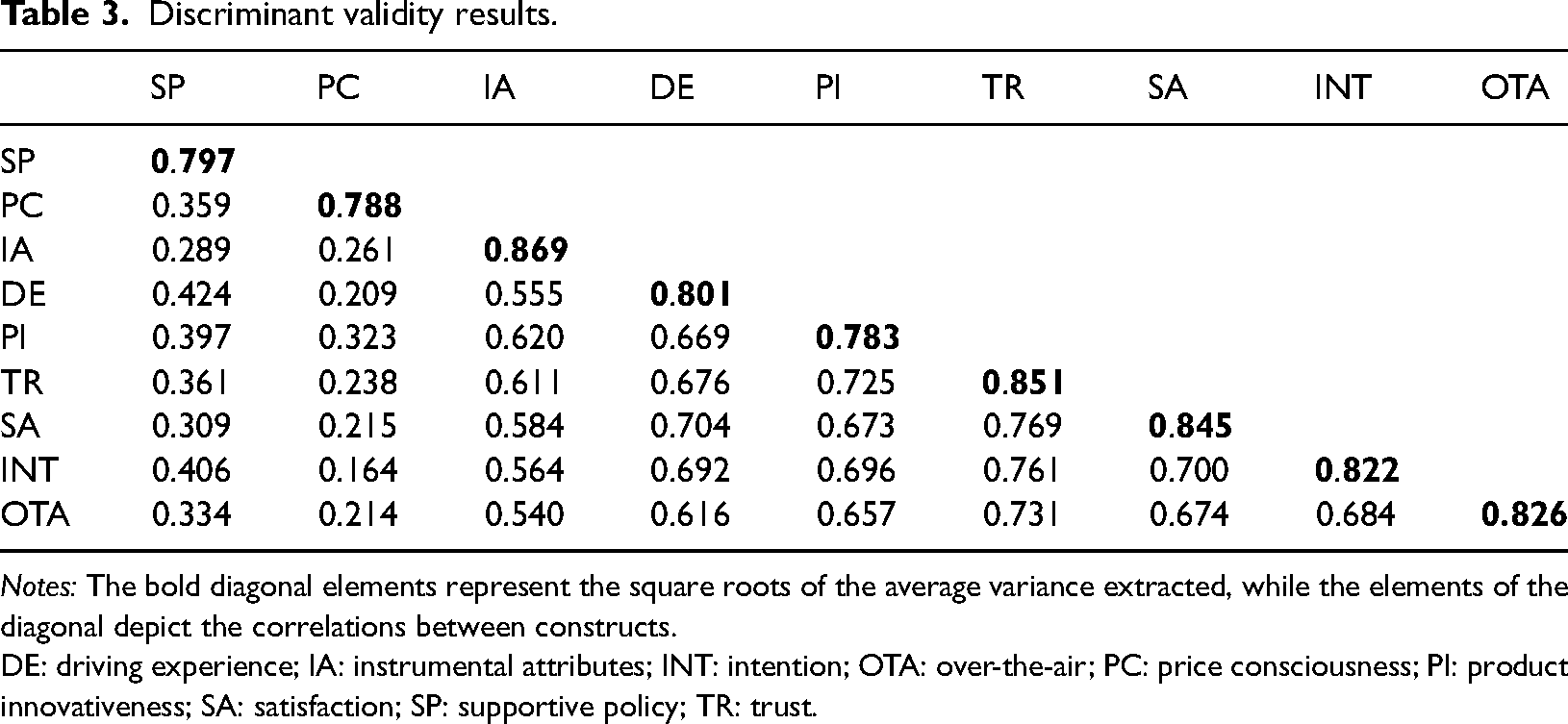
Notes: The bold diagonal elements represent the square roots of the average variance extracted, while the elements of the diagonal depict the correlations between constructs.
DE: driving experience; IA: instrumental attributes; INT: intention; OTA: over-the-air; PC: price consciousness; PI: product innovativeness; SA: satisfaction; SP: supportive policy; TR: trust.
Inner model analysis
The research model's explanatory capability is evident in the proportion of variance elucidated by R2. The R2 value for the endogenous variable, purchase intention for EVs, equaled 0.612, signifying that the predictor variables collectively accounted for 61.2% of the total variance in purchase intention. Likewise, the R2 value for the endogenous variable, purchase intention of OTA, was 0.589, indicating that the predictor variables jointly expounded upon 58.9% of the total variance in purchase intention of OTA. These findings validate the robust explanatory prowess of the research model, as depicted in Figure 3.
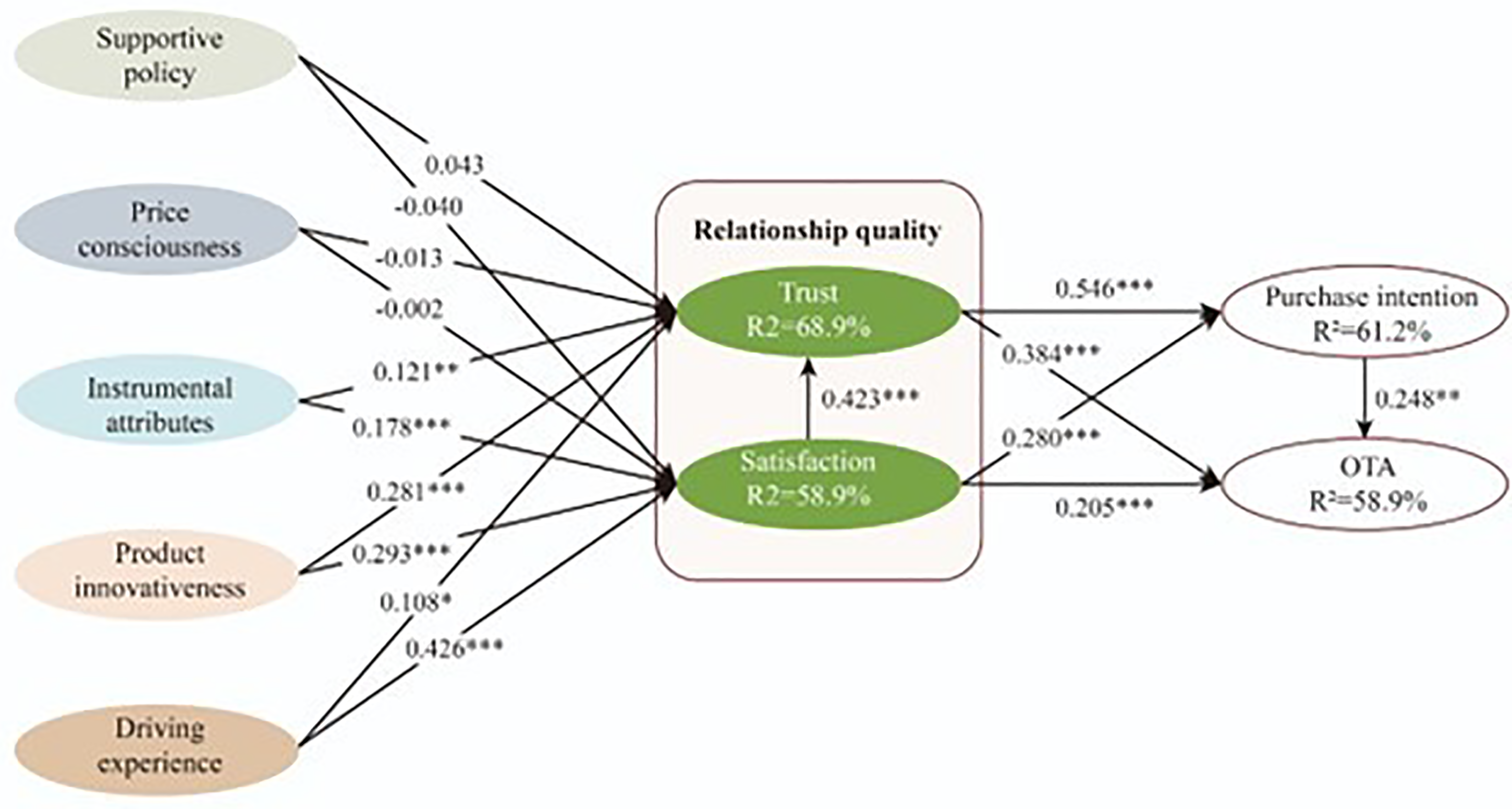
Structural model result.
To evaluate the research hypotheses, an examination of the impact of variables was conducted. The outcomes of the path analysis, encompassing the coefficients (β), and corresponding p-values can be found in Table 4. The path analysis results revealed that TR (H3a; β = 0.384, p < 0.001) exerted the most substantial positive and statistically significant influence on the purchase intention of OTA. Following this, purchase intention toward EVs (H1; β = 0.248, p < 0.01) and SA (H3b; β = 0.205, p < 0.001) emerged as pivotal factors influencing consumers’ intent to purchase OTA. Consequently, the results of this study provide support for H1, H3a, and H3b.
Results of direct effects in the inner model.
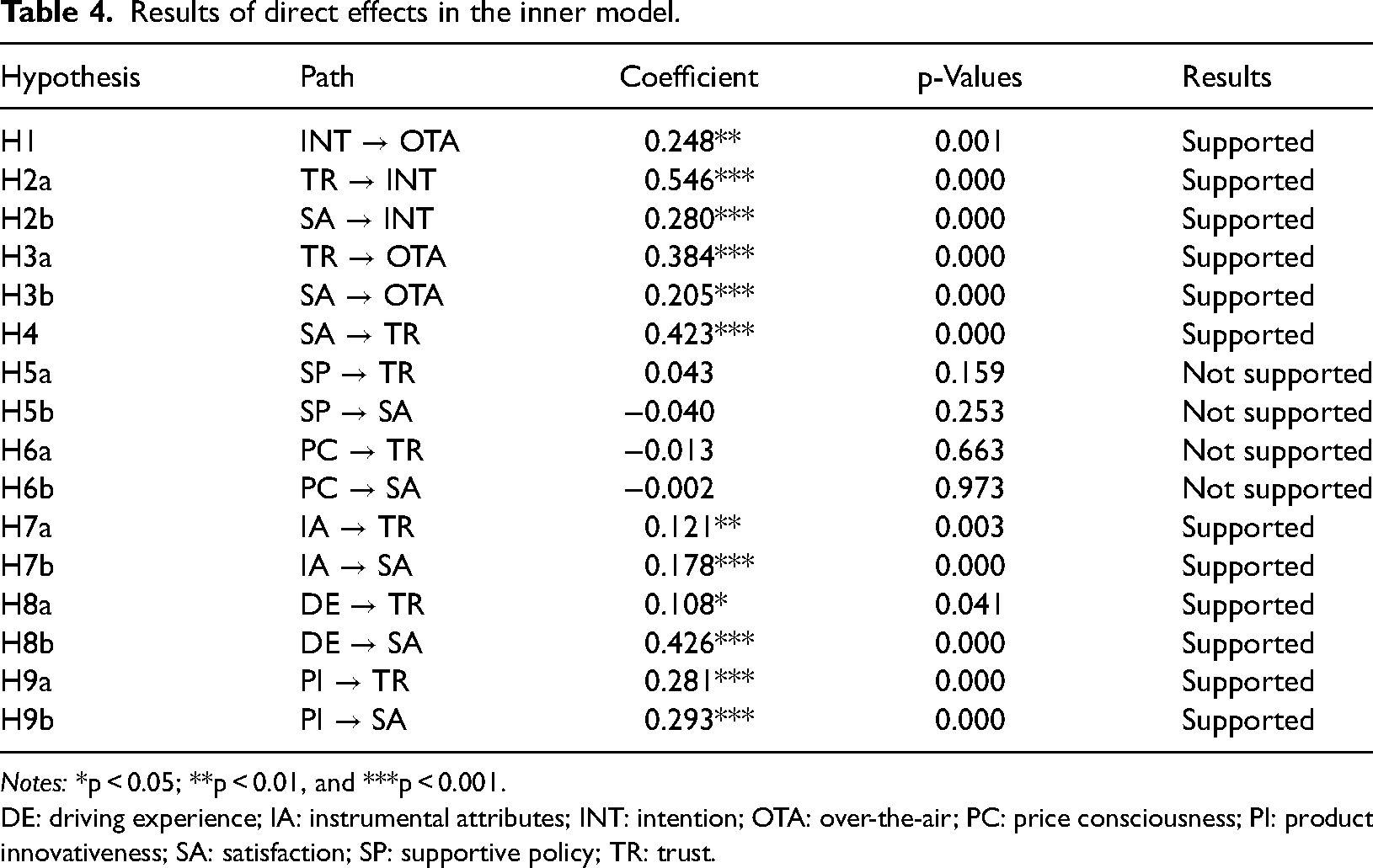
Notes: *p < 0.05; **p < 0.01, and ***p < 0.001.
DE: driving experience; IA: instrumental attributes; INT: intention; OTA: over-the-air; PC: price consciousness; PI: product innovativeness; SA: satisfaction; SP: supportive policy; TR: trust.
Similarly, the path analysis results indicated that TR (H2a; β = 0.546, p < 0.001) also had the most substantial positive and statistically significant influence on EV purchase intention. SA, IA, DE, and PI all influenced TR, supporting hypotheses H4, H7a, H8a, and H9a. Among these, SA had the most significant impact on TR (H4; β = 0.423, p < 0.001), followed by PI on TR as the second most influential factor (H9a; β = 0.281, p < 0.001), IA as the third (H7a; β = 0.121, p < 0.01), and DE as the fourth (H8a; β = 0.108, p < 0.05). The research results indicate that SP and PC had no impact on TR, and as a result, H5a and H6a are not supported.
In addition to TR, SA also influenced the purchase intention of EVs (H2b; β = 0.280, p < 0.001). It was found that IA, DE, and PI influenced SA, supporting hypotheses H7b, H8b, and H9b. Among these, DE had the most significant impact on SA (H8b; β = 0.426, p < 0.001), followed by PI (H9b; β = 0.293, p < 0.001) as the second most influential factor, and IA (H7b; β = 0.178, p < 0.001) as the third. However, SP and PC had no impact on SA, and the results indicate that H5b and H6b are not supported.
Table 5 illustrates the findings regarding the indirect effect of relationship quality (including TR and SA) on the purchase intention of OTA. The results demonstrate that IA exert a significant impact on OTA through both TR (β = 0.046, p < 0.01) and SA (β = 0.036, p < 0.05). Similarly, PI also influences OTA through both TR (β = 0.108, p < 0.001) and SA (β = 0.060, p < 0.01).
Indirect effects of relationship quality on OTA purchase intention.
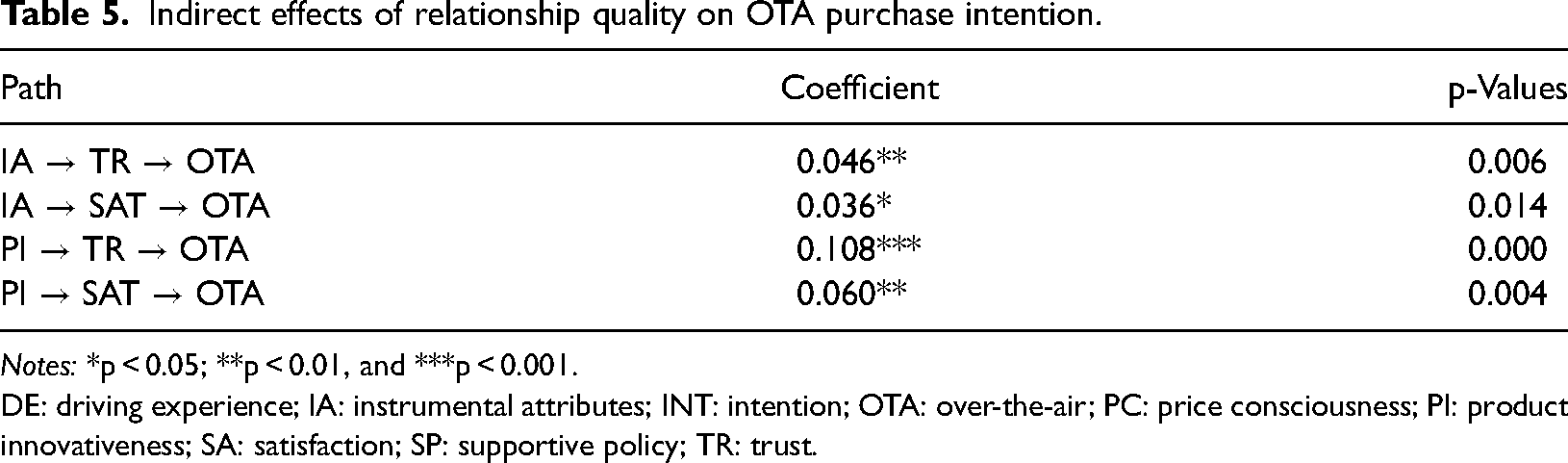
Notes: *p < 0.05; **p < 0.01, and ***p < 0.001.
DE: driving experience; IA: instrumental attributes; INT: intention; OTA: over-the-air; PC: price consciousness; PI: product innovativeness; SA: satisfaction; SP: supportive policy; TR: trust.
Discussion
This study provides empirical validation of the conceptual framework by identifying and confirming diverse factors, including IA, PI, and DE, that collectively influence consumers’ purchase intentions of EVs and OTA. While prior research has extensively examined purchase intentions concerning EVs (e.g. Asadi et al., 2021; Higueras-Castillo et al., 2023; Singh et al., 2020; Xu et al., 2021), there exists limited research on the determinants of purchase intentions for OTA. This study addresses this void by investigating the antecedents and consequences of variables that impact OTA purchase intentions.
Notably, the study reveals a direct and favorable correlation between purchase intentions for EVs and purchase intentions for OTA. The outcomes from the direct pathways reveal that TR (β = 0.384) exerts the most pronounced influence on consumers’ OTA purchase intentions, followed by purchase intentions regarding EVs (β = 0.248) and SA (β = 0.205). These results offer novel perspectives compared to prior research.
Previous research found that the inclination to embrace EVs decreased due to concerns related to IA (Pradeep et al., 2021). Specifically, the study highlighted that the amount of time required for charging and the constrained range of EVs as the principal impediments perceived by individuals (She et al., 2017; Thøgersen and Ebsen, 2019). People were worried that EVs took a significant amount of time to charge and that even with a full charge, the vehicles did not have sufficient range for longer trips. Consequently, individuals perceived EVs as suitable only for shorter commutes, as frequent charging was deemed necessary (Jensen et al., 2013).
Consistent with previous research, our findings also indicate the significance of IA. Specifically, IA influence OTA purchase intentions through the intermediary mechanisms of TR and SA. However, it is important to note that recent advancements in technology have addressed some of these concerns. There has been an upsurge in the accessibility of charging infrastructure, both in residential settings and public areas, along with the use of fast-charging batteries. Additionally, Tesla has opened up charging access to other EV brands. Furthermore, in China, there have been significant changes in charging prices, such as lower rates during off-peak hours, off-peak charging discounts, and cheaper charging rates outside the city center.
The results of this study corroborate the notion that PI significantly influences the purchase intention of OTA, aligning with the conclusions of previous research (e.g. Fu and Elliott, 2013; Shanmugavel and Micheal, 2022). This reinforces the idea that consumers place importance on choosing innovative products. An innovative aspect of this study lies in not only demonstrating the significant impact of PI on OTA purchase intention but also establishing the indirect effects. More specifically, this study views both EV and OTA as innovative products, using relationship quality (including TR and SA) to establish an indirect link between PI and OTA purchase intention. As a result, the indirect effect of relationship quality represents a unique contribution to the existing body of literature.
This study also explores the impact of PC, and it reveals that PC does not exert a significant influence. In contrast, previous research has suggested the significance of PC (Cui et al., 2021; Jaiswal et al., 2022) because the charging cost of EVs was substantially lower in comparison to refueling conventional vehicles. However, with technological advancements, the price of vehicles has been consistently decreasing, rendering PC insignificant. Moreover, the prices of new cars have been continuously declining, while the prices of used cars remain unstable. For instance, owner benefits such as free 6-year vehicle connectivity cannot be transferred from the first owner to the second owner.
Similarly, this study has also demonstrated that supportive policies are not significant. Firstly, new energy vehicles are exempt from license plate restrictions, and there is a separate lottery pool for them. Secondly, the dual credit policy stipulates that conventional vehicles can only be produced after a sufficient quantity of new energy vehicles has been manufactured. These competition rules change fundamentally, which makes original supportive policies meaningless to the customers. Additionally, the timeline for purchase tax exemptions has been extended until 2025. While supportive policies were initially effective, other factors such as IA, PI, and DE are now necessary in addition to supportive policies.
Theoretical implications
While numerous studies have examined the purchase intentions of EVs, limited research has been conducted on the factors influencing OTA purchase intentions. Therefore, this study not only investigates the precursors and outcomes of variables that influence the purchase of EVs but also explores variables that impact the purchase of OTA.
The existing literature predominantly overlooks the psychological decision-making process of consumers (Xu et al., 2021), thereby creating a significant research gap. Consequently, the objective of this study is to bridge this gap by formulating a comprehensive theoretical framework that delves into the interconnections among various factors impacting consumers’ purchase intentions. This framework also incorporates the indirect effect of TR and SA (i.e. relationship quality).
To overcome the limitations of prior studies that focused on a single dimension, this study adopts a holistic approach by selecting four distinct dimensions for variable selection: vehicle usage costs (e.g. PC and PI), charging facilities (e.g. IA), government policies (e.g. supportive policy), and consumer experience (e.g. DE) (Zhao et al., 2022). This all-encompassing framework facilitates a more holistic comprehension of the factors that shape consumers’ purchase intentions, furnishing valuable insights for both academia and industry stakeholders.
Managerial implications
As OTA penetration continues to increase, it gradually enhances the intelligence of vehicles and is poised to become a comprehensive sales and service platform for smart cars. Factors such as OTA adoption, the residual value of used cars, and payment methods in automotive finance will significantly influence the OTA market's competitiveness. Start-up companies and internet giants’ direct entry into the OTA market pose a formidable challenge to traditional domestic automakers, who previously dominated China's primary automotive market with their local supplier advantages.
To address these challenges, traditional automakers should accelerate the application and independent development of OTA technology. On one hand, OTA technology can increase user stickiness. Specifically, OTA can enhance vehicle residual value, reduce time costs for users, and provide delightful experiences. On the other hand, for automakers, OTA enables functional iterations throughout the entire lifecycle, saving costs associated with recalls and ensuring vehicles stay up-to-date. It also breaks the traditional “automaker-4S dealership-user” supply chain, providing more opportunities for automakers to expand value-added services on the user end.
In the future, OTA product technology will undergo a transformation from a functionality-oriented approach to a service-oriented approach, giving rise to several key core technologies. Suppliers should focus on providing high-quality products and comprehensive support services to meet customer demands and enhance satisfaction. They should also invest in in-house research and development to reduce OTA costs, gain core decision-making power, and secure a larger market share. Strengthening investments in intelligent connected technology and making OTA technology a standard feature in vehicle models beyond intelligent driving and cabin systems, such as chassis systems, power systems, and body electronic systems, is crucial. Currently, different automakers have varying levels of OTA capabilities, with cabin and advanced driver assistance system upgrades becoming the main focus areas. Hardware embedded in vehicles determines the upper limit of OTA upgrades for intelligent cars, necessitating higher requirements and adequate preparations from automakers. As OTA technology further develops, it will give rise to new third-party companies and a new industry ecosystem. In the future, automakers can transition from a profit model based on one-time sales and after-sales services to an innovative model centered around secondary software consumption through OTA technology upgrades. Moreover, as OTA evolves from a functionality-oriented approach to a service-oriented approach, it is essential to overcome technological challenges by establishing upgrade assurance mechanisms, conducting testing and verification processes, and implementing differential upgrades to improve success rates and reduce upgrade durations.
Conclusions
The primary objective of this study was to explore the determinants impacting consumer purchase intentions concerning EVs and OTA technology. Additionally, the study sought to analyze the indirect effects of TR and SA within this context. By addressing the research void concerning OTA purchase intentions and taking into account the multifaceted factors influencing both EV and OTA adoption, this research makes a meaningful contribution to the current body of literature. Furthermore, it offers valuable insights with both theoretical and practical significance.
The outcomes of this study substantiated the direct and favorable correlation between the intentions to purchase EVs and the intentions to adopt OTA updates. Individuals considering the purchase of EVs are more inclined to express an intention to embrace OTA updates for their vehicles. This result highlights the importance of EVs as software-centric products that offer continuous improvement through OTA updates, attracting consumers who appreciate the potential for ongoing upgrades and advancements.
Furthermore, the study revealed the significant impact of relationship quality, comprising TR, and SA, on OTA purchase intentions. Consumers who have TR in and derive SA from EVs are more inclined to exhibit a stronger intention to embrace OTA updates. This finding emphasizes the role of emotional responses and positive consumer experiences in shaping their behavioral intentions.
IA, encompassing aspects like driving range, recharge time, and charging infrastructure, were identified as exerting a favorable influence on OTA purchase intentions. Consumers consider these attributes when making decisions regarding EV adoption and OTA updates. Moreover, IA were found to influence OTA purchase intentions through the indirect effects of relationship quality. This implies that the TR and SA consumers have with EVs play a pivotal role in bridging the link between IA and OTA adoption.
PI was identified as another significant driver of OTA purchase intentions. EVs, characterized by their use of new technology and alternative fuel usage, are considered highly innovative products. The research underscored that consumers who perceive EVs as innovative tend to harbor a more robust intention to adopt OTA updates. Furthermore, the indirect effects of relationship quality underscored the significance of TR and SA in forging the connection between PI and OTA adoption.
The DE was acknowledged as an influential factor in shaping consumer perceptions and attitudes toward EVs. The discussion highlighted the importance of affording consumers opportunities to firsthand experience the advantages and characteristics of EVs through test drives. The DE contributes to consumer SA, TR, and ultimately their intention to adopt EVs and OTA updates.
This research has several theoretical implications. Examining both EV and OTA purchase intentions, it expands the comprehension of consumer behavior in the emerging sustainable transportation market. The comprehensive theoretical framework constructed in this study integrates multiple dimensions, addressing the limitations of previous research that focused on a single dimension. It highlights the importance of considering IA, PI, and DE alongside other factors when analyzing consumer purchase intentions.
The managerial implications of this research are valuable for marketers and government entities seeking to promote EV and OTA adoption. The findings emphasize the need for traditional automakers to accelerate the application and independent development of OTA technology. OTA enhances user stickiness, increases vehicle residual value, reduces time costs for users, and provides delightful experiences. Automakers should invest in research and development to reduce OTA costs, gain decision-making power, and expand value-added services. As OTA evolves, a shift from a one-time sales and after-sales service model to an innovative model centered around secondary software consumption through OTA upgrades is suggested. Strengthening investments in intelligent connected technology and making OTA technology a standard feature in various vehicle systems is crucial for automakers.
While the research model contributes significantly to understanding consumer behavior regarding the usage of EVs and OTA and provides valuable insights for both policymakers and manufacturers in the burgeoning mobility market, it's crucial to acknowledge certain limitations that necessitate attention in future research. Firstly, this study's sample exclusively comprised respondents from China, potentially limiting the generalizability of the findings. To enhance external validity, future studies should encompass more diverse samples and include participants from various regions. Additionally, this research primarily focused on assessing the purchase intention of OTA, leaving room for further exploration of the link between intention and actual behavior. Subsequent studies should extend this model to encompass the phenomenon of consumers’ actual purchasing behavior regarding EVs and OTA, yielding a more comprehensive understanding of their actions.
Footnotes
Author contributions
SW conceptualized the study, designed the methodology, conducted the formal analysis, and interpreted the results. SW and AK drafted the manuscript, reviewed and edited the final version of the manuscript. Both the authors have read and approved the final manuscript.
Data availability
The data will be provided upon reasonable request from the corresponding author.
Declaration of conflicting interests
The authors declared no potential conflicts of interest with respect to the research, authorship, and/or publication of this article.
Ethical approval
The authors declare that the manuscript titled “Exploring the Factors Driving the Sustainable Consumer Intentions for Over-the-Air Updates in Electric Vehicles” has neither been previously published nor submitted to another journal or preprint server for consideration.
Funding
The authors received no financial support for the research, authorship, and/or publication of this article.

Appendix 1
Construct
Items
Sources
Supportive policy
The subsidies (including government subsidies and/or manufacturers’ subsidies) for purchasing energy vehicles is helpful to me
Chen et al. (2019); Jaiswal et al. (2021)
The tax policies are important to me for purchasing energy vehicles
The government support for charging fee is helpful to me
The government support policies (such as lottery for license and restricting license issuance) is helpful to me
The government investment for the construction of the energy vehicles’ charging piles is helpful to me
Price consciousness
Unless the price of EVs gets lower, I will choose to buy ordinary products
Cui et al. (2021)
I think the maintenance cost of EVs is high
I think the usage cost of EVs is high
Product innovativeness
EVs are highly innovative comparing to the tradition vehicles
Shanmugavel and Micheal (2022)
EVs offer unique features (e.g. OTAtechnology, intelligent network, pilotless/self-driving, cell phone unlocking, intelligent voice control, and so on) for the customers
The current technology in EVs are new to the customers
Instrumental attributes
The basic charging facilities for EVs (such as charging piles) are well completed
Pradeep et al. (2021); Wang et al. (2021)
The charging facilities can be seen nearby where you live or work
Driving experience
The driving experience of EVs can be exciting
Xu et al. (2021)
I can master a certain amount of knowledge about EVs through driving experience
I can know the details of the use (e.g. charging and maintenance) of EVs through driving experience
Driving experience made me want to learn more about EVs
Trust
I believe in the quality and technology of EVs
Xu et al. (2021)
I believe that driving EVs is safe
I believe that the battery and distance information on the dashboard of EVs is exact
I think EVs are trustworthy
Satisfaction
The presale and after-sale service of EVs is satisfactory
Xu et al. (2021)
The interior functions of EVs are better than my original expectation
The charging operation of EVs is convenient and satisfactory
Purchase intention
I want to buy EVs in the future
Chen et al. (2019); Shanmugavel and Micheal (2022)
I want to buy EVs to alleviate environmental pollution
The next time I purchase a vehicle, I would give priority to EVs
I would like to recommend friends to purchase EVs
Purchase intention of OTA
When I buy an energy vehicle, I am willing to choose paid OTA feature upgrades
Chen et al. (2019); Shanmugavel and Micheal (2022)
I will consider paid OTA function upgrades if the update is quick
I am willing to activate all functions the moment when I purchase the vehicle
I am willing to activate the functions I need through OTA after I purchase the vehicle