




Abstract
The analysis of the Carreau–Yasuda nanofluid (CYNF) across a stretching surface has practical applications in several fields, such as heat exchange, engineering, and material science. Scholars may discover novel perspectives for increasing heat transfer performance, establishing advanced materials, and enhancing the efficiency of multiple engineering systems by studying the behavior of CYNF in this particular instance. The energy transfer through trihybrid CYNF flow with the effect of magnetic dipole across a stretching sheet is examined in the present study. The ternary hybrid nanofluid (THNF) has been prepared by the addition of ternary nanoparticles (NPs) in the water (50%) and ethylene glycol (50%). Titanium dioxide (TiO2), silicon dioxide (SiO2), and aluminum oxide (Al2O3) are used in base fluid. The fluid velocity and heat transfer are examined under the impact of Darcy–Forchheimer, chemical reaction, convective condition, activation energy, and exponential heat source. The fluid flow has been stated in form of velocity, energy, and concentration equations. The set of modeled equations is simplified to non-dimensional form of ordinary differential equations (ODEs) by using similarity substitutions. Numerically, the system of lowest order ODEs is calculated through the parametric continuation method. It has been noticed that the temperature field augments against the variation of viscous dissipation and heat source term. Furthermore, the magnetic dipole has significant impact to enhance the thermal curve of THNF whereas falloffs the velocity profile. It can be noticed that the energy propagation rate enhances with the rising numbers of ternary NPs, from 1.22% to 5.98% (nanofluid), 2.30% to 9.61% (hybrid nanofluid), and 3.23% to 11.12% (trihybrid nanofluid).
Keywords
Introduction
The analysis of fluid motion over an enlarging surface has great importance in the field of fluid dynamics, given its diverse applications across various sectors (Daniel et al., 2017b; Mahmood et al., 2024a). Daniel et al. (2020) examined slip conditions in 2D unsteady mixed convection flow of electrical magnetohydrodynamic (MHD) nanofluid over a stretched sheet. Kandasamy et al. (2005) investigated the homotopy analysis technique to explore the phenomena of free convective 2D hydromagnetic fluid pattern over an extended vertical surface within an absorbent medium. This investigation included the consideration of irregular magnetization and thermal radiation. The unsteady mixed convection flow of nanofluids across permeable stretching sheets was quantitatively investigated in a work by Daniel et al. (2019, 2020). A 2D axisymmetric boundary layer flow over a moving sheet is the primary focus of Rafique et al.’s (2024b) research, which aims to determine the heat transfer mechanism and the conditions necessary to achieve high cooling speeds. The Boussinesq approximation and MHD effects were used by Islam et al. (2024) to explore incompressible triple diffusive fluid flow across a linearly stretched surface. Nanofluids over deformable surfaces subjected to nonlinear thermal radiation were the subject of the research of Ullah et al. (2024). Prasad et al. (2018) investigated the flow and heat transmission properties of a Casson liquid on a perforated vertical stretched sheet while systematically varying liquid parameters. Wahid and Said (2018) studied the resolution of the problem involving consequence of thermal emission and magnetization on temperature exchange in a microcosmic liquid along a vertical stretched surface.
The hybrid nanofluid involves the combination of two distinct types of nanomaterials distributed in a base fluid (Rafique et al., 2024c). Consequently, a well-chosen combination of these nanoparticles (NPs) can enhance each other’s positive attributes while modifying the drawbacks associated with a singular material. For instance, introducing distinct NPs has the potential to elevate the overall mixture’s thermal conductivity. Numerous scholars (Mahmood et al., 2024b; Rafique et al., 2024d) have empirically explored hybrid nanofluids and demonstrated an augmented heat transfer rate in these combinations. Khan et al. (2024) studied the flow of a 2D MHD boundary layer over a stretched sheet in a porous medium. Their work focused on hybrid nanofluids’ innovative usage. Mishra (2024) studied the electromagnetic and hydrothermal characteristics of a hybrid nanofluid
A perfect ternary hybrid nanofluid (THNF) is created by three nanostructures interacting. The THNF conducts heat better than nanofluid and hybrid nanofluid (Rafique et al. 2024a, 2024e). Sahoo and Kumar (2020) calculated the effect of heat source on the dynamic viscosity of THNF. Boroomandpour et al. (2020) accompanied a study on the heat capacity of THNF. Ahmed et al. (2021) directed a study on heat transference in turbulent flow using nanofluids with varying concentrations in a quadrilateral thermal exchanger subject to consistent thermal flux. Sepehrnia et al. (2022) experimentally studied the rheological characteristics and kinetic viscosity of 10W40 motor oil utilizing ternary hybrid nanocomponents. Algehyne et al. (2022) reported the trihybrid nanoliquid over an enlarging surface. Jakeer et al. (2023) assessed the upshot of Darcy–Forchheimer effects on the hydromagnetic flow of THNF with radiation effect over a vertical stretchable surface. The study emphasized the increasing thermal competence, offering valuable insights for applications in vehicle cooling, especially with the utilization of hybrid nanofluids. Ramzan et al. (2023) studied the hydromagnetic flow of THNF over cone and wedge geometries, prevalent in polymer data processing applications. The inclusion of MHD in the ternary hybrid nanoliquid had exhibited improved heat transport when compared to conventional nanoliquid. Animasaun et al. (2022) reviewed the THNF, aiming to offer insights into convective linked with thermal boundary layer. Khan et al. (2023) observed the flow characteristics of nanoliquid inclosing ternary hybrid NPs in a Sutterby fluid.
The study of MHD in convection processes is essential in thermal systems, particularly when using ternary nanofluids (Ullah et al., 2024). Heat transfer and unsteady mixed convection electrical MHD flow induced by nanofluids over a porous stretched sheet were studied using the Buongiorno model by Daniel et al. (2017a). Daniel et al. (2018b) numerically investigate the effects of thermal stratification, applied electric and magnetic fields on a boundary layer flow of an electrically conducting nanofluid over a nonlinearly stretching sheet of variable thickness. A 3D magnetized hybrid nanofluid was studied by Mohyud-Din et al. (2020). The researchers employed thermal radiations and the novel Cattaneo–Christov model. Fatunmbi et al. (2024) studied magneto hybrid nanofluid flow dynamics, melting heat transfer, and entropy production in porous media.
In the field of fluid dynamics, an exponential heat source or sink is conventionally denoted as a component within the governing equations that summarizes a heat generation or absorption phenomenon exhibiting an exponential functional form. This term elucidates the modulation of the rate of heat generation/absorption concerning spatial coordinates or temporal evolution. The utilization of an exponential function in this context serves to articulate the dynamic variation in the intensity of the thermal influence relative to spatial dimensions or temporal progression, thereby affording a sophisticated representation of the thermal dynamics within the fluidic system under consideration (Ali et al., 2023). Ali et al. (2024b) numerically assessed the 3D Darcy hybrid nanoliquid flow with partial slip and heat source/sink effects over a turning disk. Farooq et al. (2021) examine the occurrence of bioconvection in a Carreau nanofluid flow, considering different temperature influences. This flow was produced using an elongated cylinder. Chu et al. (2022) numerically analyzed hybrid nanofluids with quartet of nanoparticulate varieties, considering a tilted magnetization effect. The study examined a 2D unsteady flow over an absorbent elongating surface. Ali and Jubair (2023) reported the rheological features of Darcy nanoliquid flow with heat source and thermal emission and across a curved surface. Alharbi et al. (2023) studied the Maxwell–Sutterby nanofluid flow over a plan sheet. The investigation took into account various factors such as bioconvection, swimming microbes, Brownian motion, exponential heat sources/sinks, and the influence of thermal conductivity, all under convective boundary conditions (BCs). Rawat et al. (2023) reported the nanofluid flow over an extended surface with the influence of exponential heat source/sink.
Hamid and Khan (2018) investigated the interaction between changeable magnetization, thermal production, and assimilation in the transient motion of a Williamson fluid. Zeeshan et al. (2018) conducted a study on the MHD radiative Couette–Poiseuille flow of nanoliquid over a horizontal plane. Dhlamini et al. (2019) investigated the special effects of activation energy and binary chemical processes in a time-dependent mixed convective flow across an indefinitely elongated boundary. Ali et al. (2024) and Raza et al. (2022) reported the hybrid nanoliquid flow over a permeable surface. Li et al. (2023) scrutinized the impacts of activation energy on the MHD flow of a Casson fluid thru a permeable medium within a horizontal conduit.
Fluid movement through porous medium is essential to many industries’ product creation. Examples include porous bearings, biosensors, kerosene, thermal insulation, drainage, and irrigation (Gorla et al., 2010; Gorla and Chamkha, 2011). Many efforts have been made to improve fluid flow into permeable zones using Darcy’s law. This guideline does not apply to faster and more permeable circumstances. Most physical difficulties include higher flow rates and imbalanced porosity conditions (Chamkha, 1997; Chamkha and Khaled, 2000). To get around this limitation, Forchheimer (1901) modified the momentum equation by using a quadratic velocity element. Theoretically, buoyancy and heat radiation affect MHD flow over a stretched porous sheet, which Daniel and Daniel (2015) examined. Theoretically studying the continuous 2D electrical MHD nanofluid flow over nonlinear expanding or contracting sheet in porous media is the goal of Daniel et al. (2018a). Daniel (2015) used homotopy analysis (HAM) to explore a steady MHD laminar flow of an incompressible viscous and electrically conducting fluid close to a porous stretched sheet. Recently, Mahmood et al. (2024c) want to study how thermal conductivity models affect important parameters in Darcy–Forchheimer flow and heat transmission of a hybrid nanofluid of
In this study, the heat transfer through trihybrid CYNF flow with the effect magnetic dipole across a stretching sheet is observed. The THNF was made by dispersing ternary NPs in a mixture of 50% water and 50% ethylene glycol. TiO2, Al2O3, and SiO2 are used as NPs. The fluid velocity and heat transfer are examined under the influence of Darcy–Forchheimer, chemical reaction, convective condition, activation energy, and exponential heat source. The fluid flow has been designed in form of velocity, energy, and concentration equations. The set of modeled equations is simplified into dimensionless form of ordinary differential equations (ODEs) by using similarity substitutions. Numerically, the system of lowest order ODEs is calculated through the PCM. Furthermore, some core novelties of the current analysis are:
To study the CYNF over a stretching sheet. The unique property of Carreau–Yasuda is its constant viscosity, which makes it prominent from other types of non-Newtonian fluid and also applicable to several industrial applications. To elucidate the effects on energy transmission of an exponential heat source or sink. To scrutinize the impacts of Arrhenius activation energy on mass propagation. To determine how a magnetic dipole influences the flow of fluid through a porous medium. To find the numerical solution of system of nonlinear partial differential equations.
Applications
This breakthrough improves cooling systems in high-performance electronics, which need perfect temperature management to prevent overheating and ensure operational stability. Carreau–Yasuda nanofluids’ unique rheology may also increase heat transmission in chemical reactors, energy storage systems, and microfluidic devices. This is especially useful for controlling fluid behavior at varied shear rates.
In the impending “Mathematical analysis” section, the flow problem is modeled. In the “Numerical solution” section, the flow equations are numerically solved. In the “Results and discussion” section, the graphical results are explained in detail.
Mathematical analysis
Consider the mass and heat conduction through 2D CYNF comprises of ternary hybrid NPs over an elongating sheet. Three different sorts of NPs (TiO2, Al2O3, and SiO2) are dispersed in the water (50%) and ethylene glycol (50%). Furthermore, the main assumptions are:
The 2D flow is supposed to be an incompressible. The fluid flow is due to uniform stretching of sheet along x-axis. Magnetic dipole is located horizontally and is placed at the center as displayed in Figure 1(a) and (b). The y-axis is normal to the sheet surface. The significances of Darcy effect, convective condition, and magnetic dipole are studied on the fluid flow.
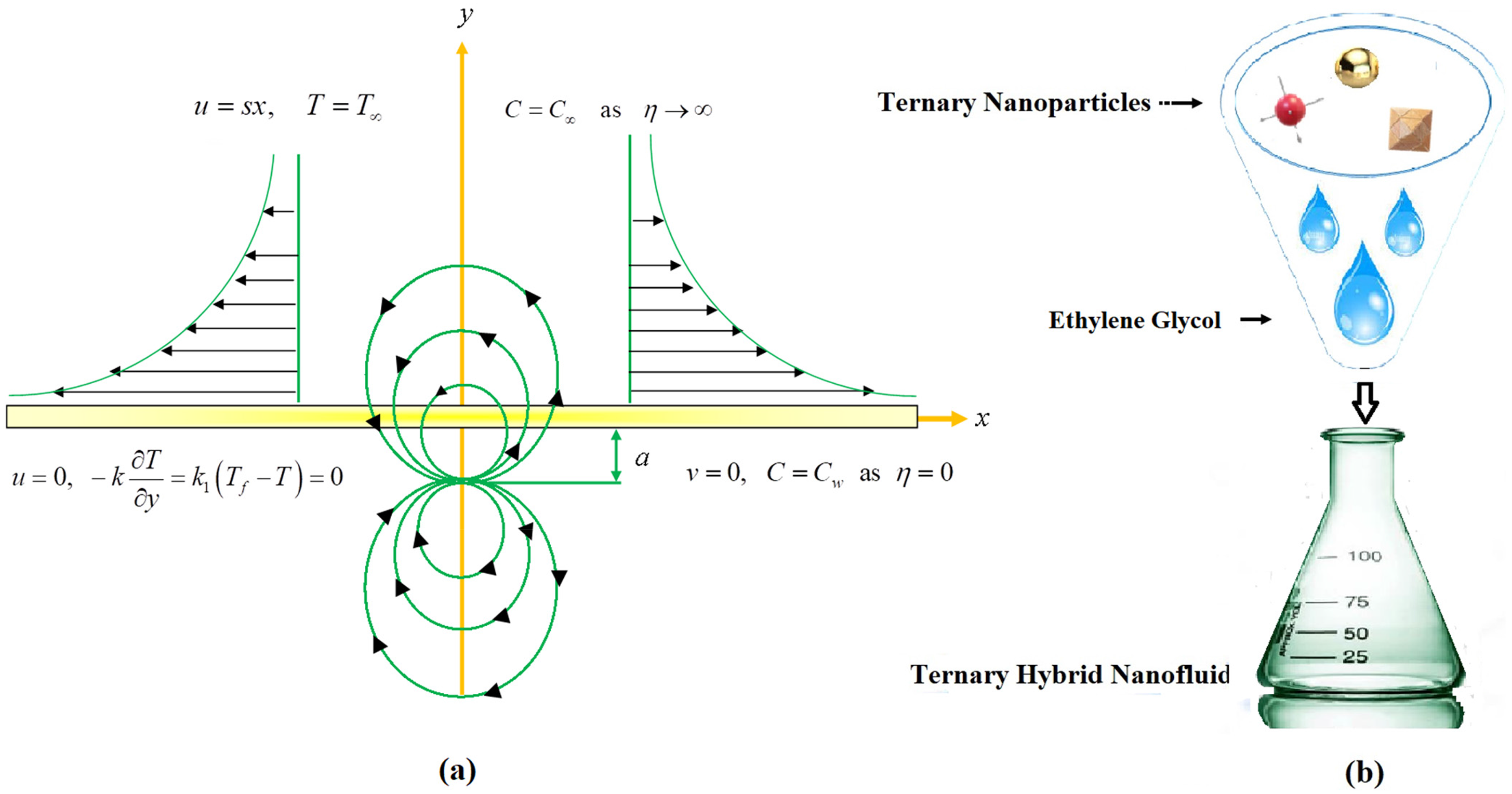
The physical sketch of the flow model. (a) The physical sketch of the flow model. (b) Preparation of ternary hybrid nanofluid.
The basic equations are specified as (Wang et al., 2022):




The BCs are (Wang et al., 2022):









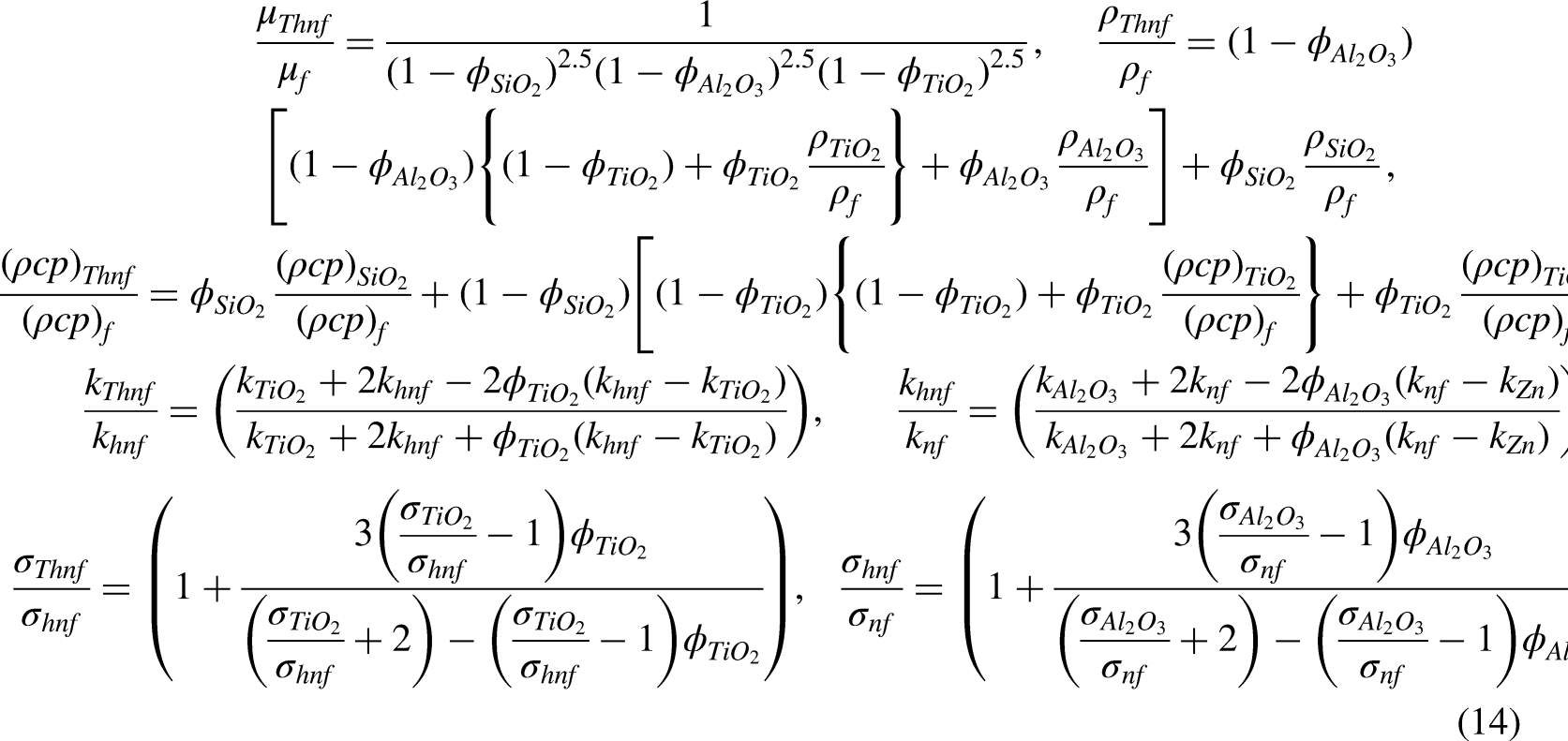
The thermophysical properties of trihybrid nanofluid are expressed as (Bilal et al., 2022; Rafique et al., 2024e):
The engineering interest physical quantities are expressed as:

Numerical solution
The numerical solution of the non-dimensional set of ODEs is obtained through PCM. The detailed methodology is followed (Wang et al., 2022):
Step 1: introducing variables for redoing system of ODEs to lowest order

By placing equation (15) in equations (9) to (11) and equation (12), we get the first-order ODEs as:




Step 2: Presenting parameter p:



Step 3: Solving the Cauchy problems
By using numerical implicit system as:


Results and discussion
In this section, the graphical results for
Velocity interpretation
Figures 2 to 7 display the demonstration of velocity
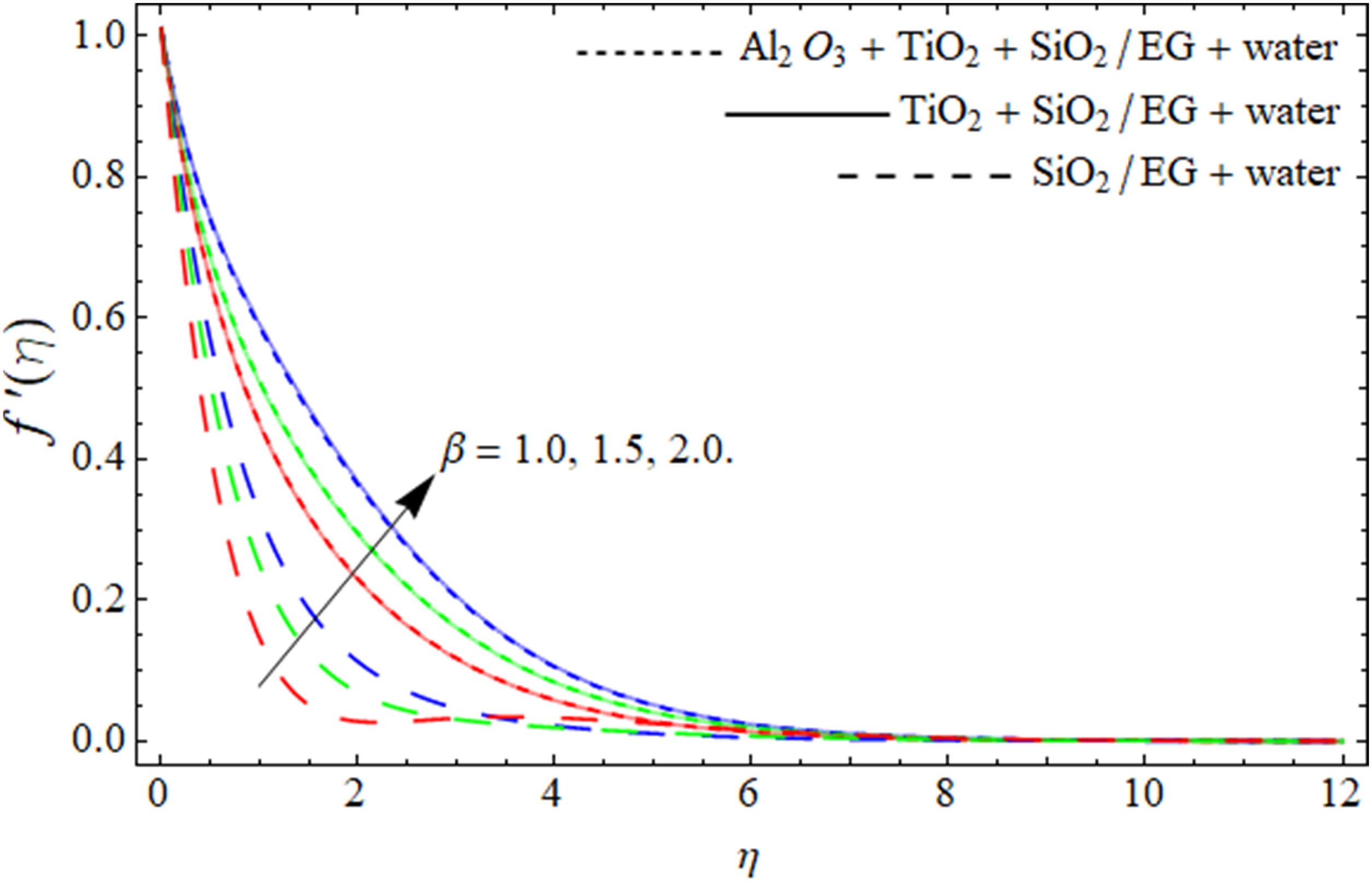
Ferro-hydrodynamic interaction parameter
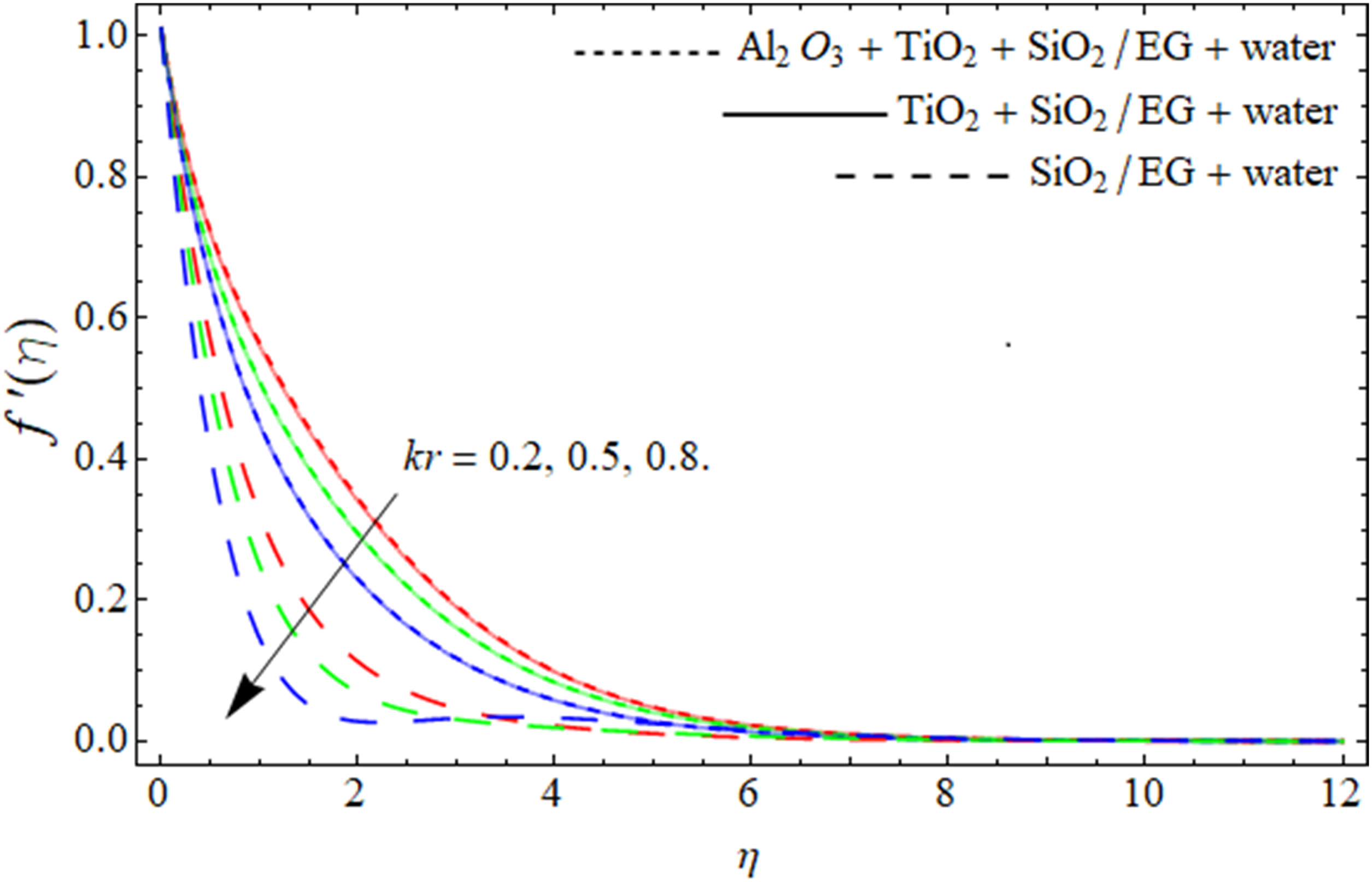
Effect of porous surface parameter on the velocity
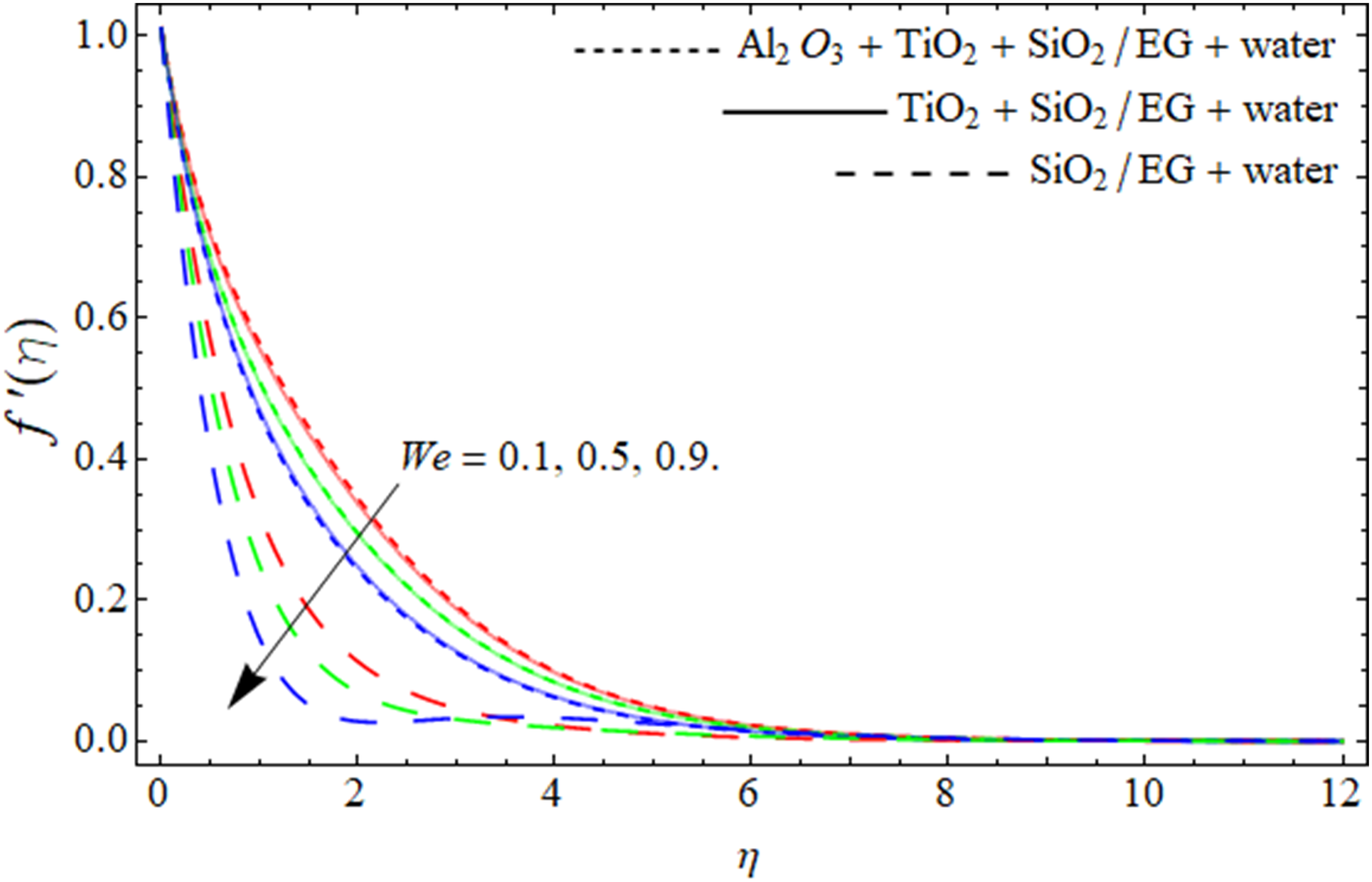
Weissenberg number We versus velocity
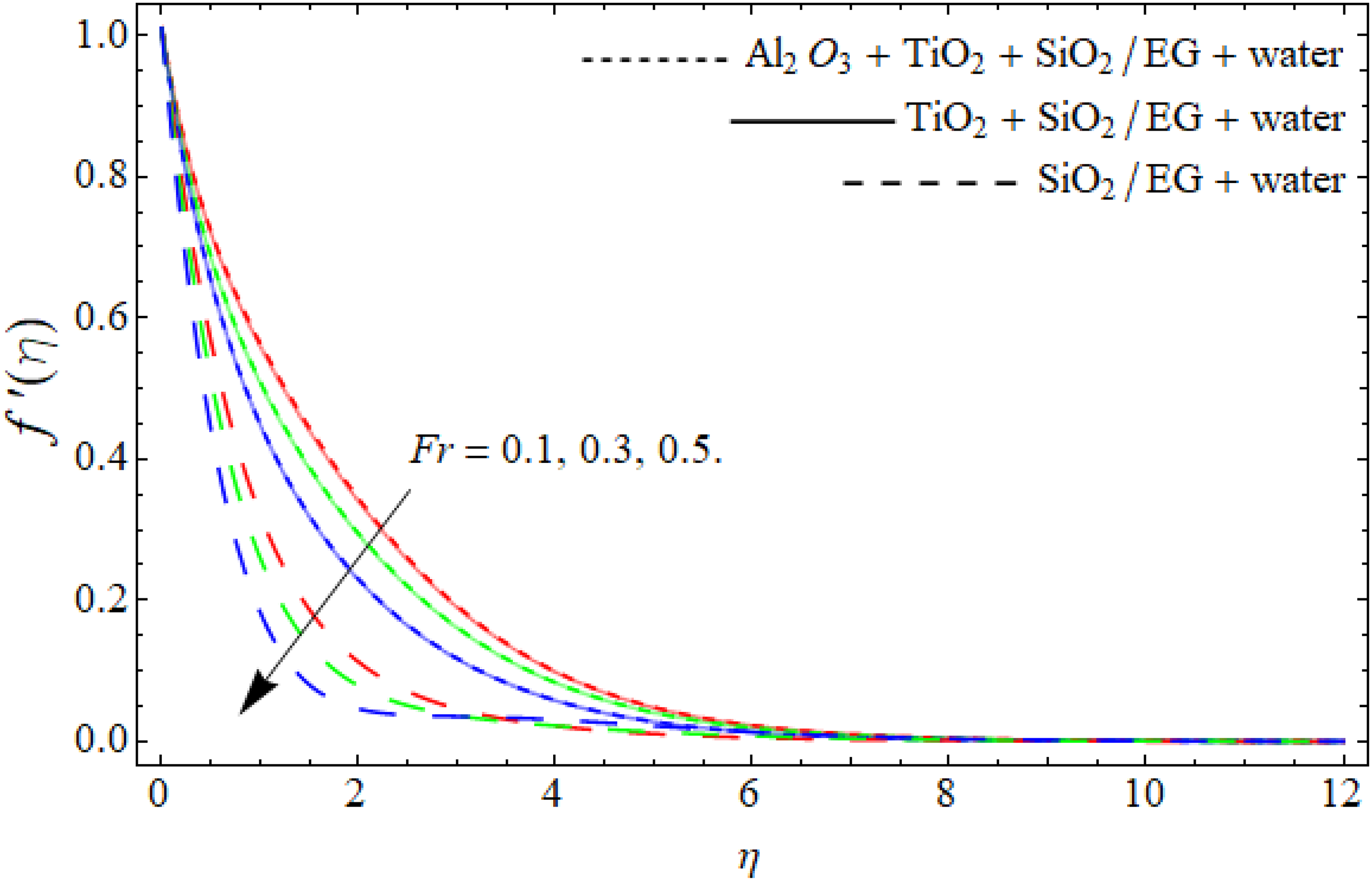
Darcy–Forchheimer's term Fr versus velocity curve
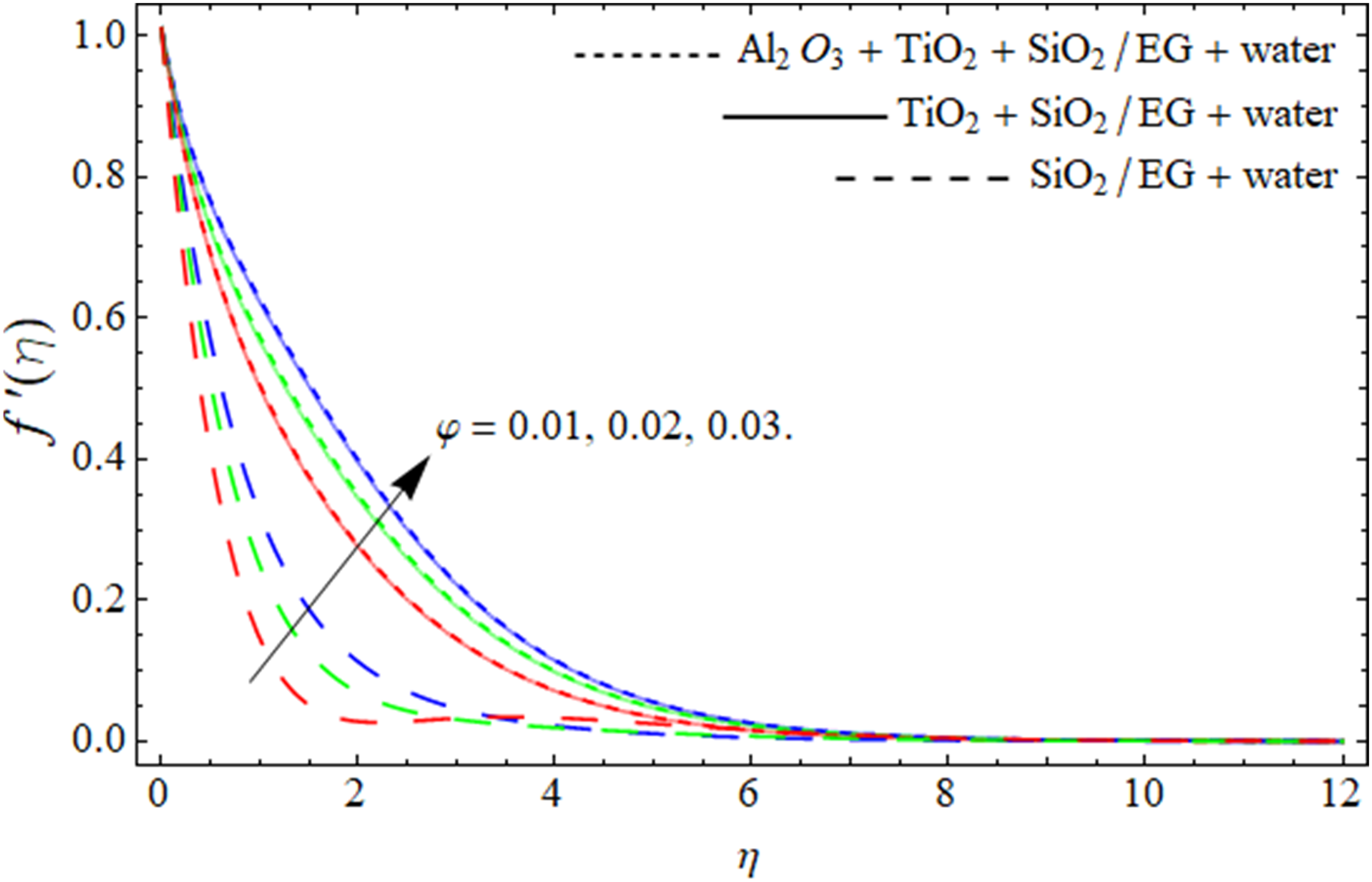
Trihybrid nanoparticle
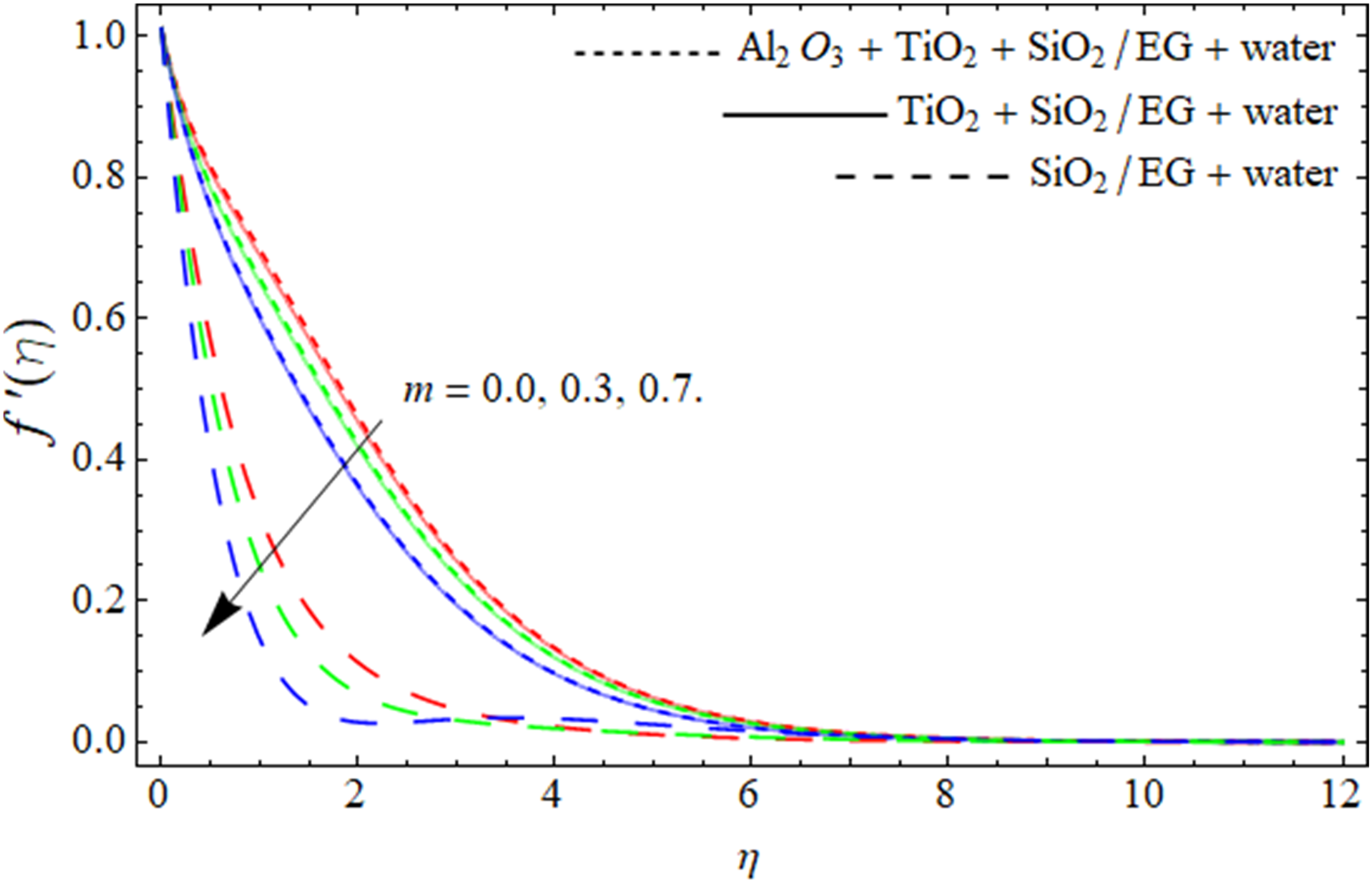
Power law term m versus velocity
Figure 3 shows a decrease in velocity as the porous surface parameter
Figure 4 illustrates a downward trend in the velocity profile as the Weissenberg number
Figure 5 illustrates that increasing the Darcy–Forchheimer term (Fr) lowers the velocity profile. Because of the porous media and inertial effects, flow resistance increases. A fluid’s flow resistance through a porous medium may be characterized using the Darcy–Forchheimer model, which accounts for both drag forces. As (Fr) increases, the Forchheimer term becomes more influential, implying that inertial effects and viscous drag in the porous medium become more significant. Drag forces cumulatively impede fluid motion, increasing flow resistance.
The velocity profile in Figure 6 shows an increasing trend as the NP volume fraction
Figure 7 shows that the velocity profile falls as the power law term (m) grows due to the fluid's non-Newtonian properties. In non-Newtonian fluids, the power law model describes the link between shear stress and shear rate. When
Temperature interpretation
Figure 8 illustrates the influence of Biot number Bi on the energy field. It can be perceived that the energy field enriches with the impact of Bi. Figures 9 and 10 elucidate that the fluid temperature enhances with the impact of
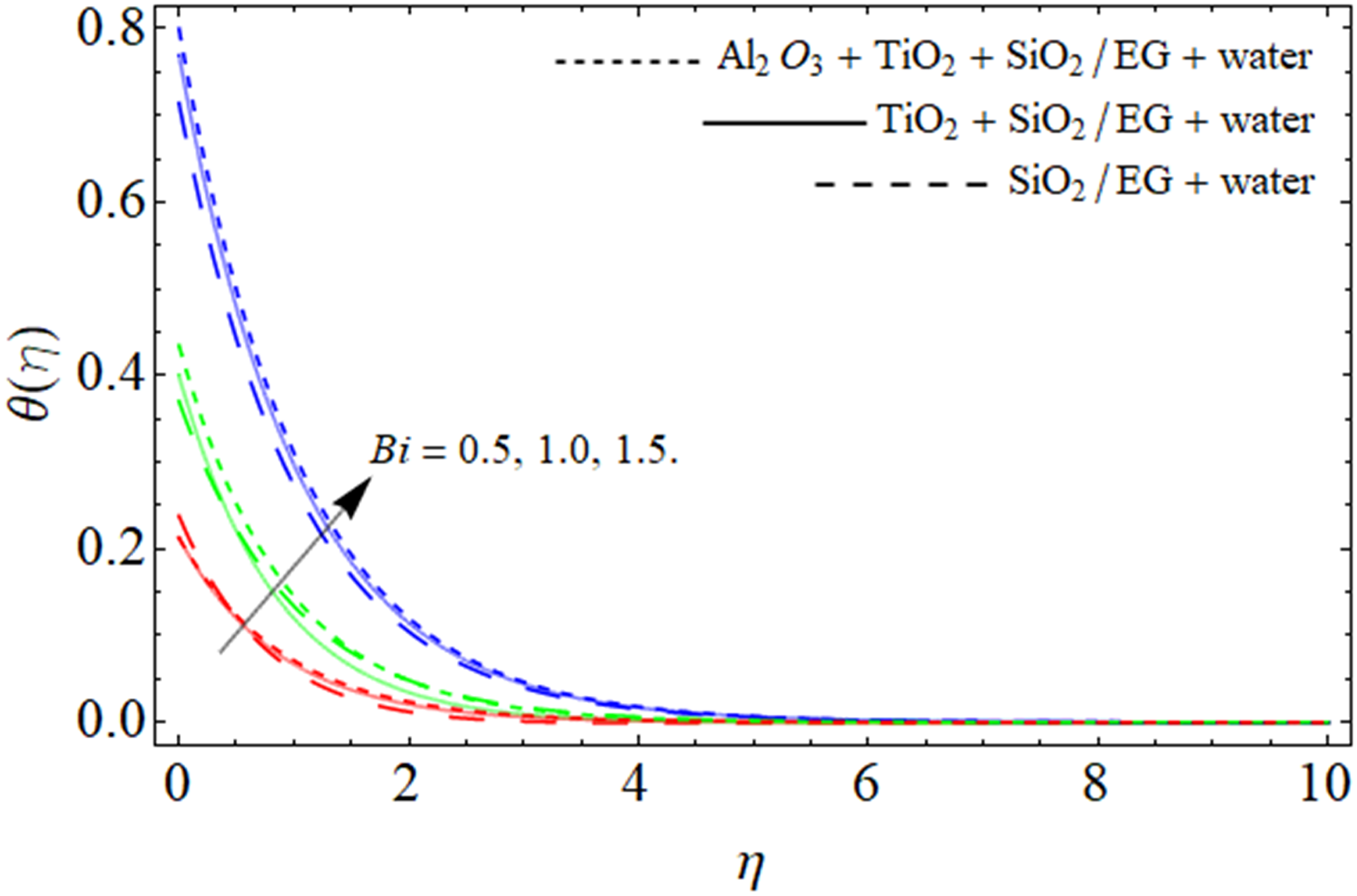
Biot number
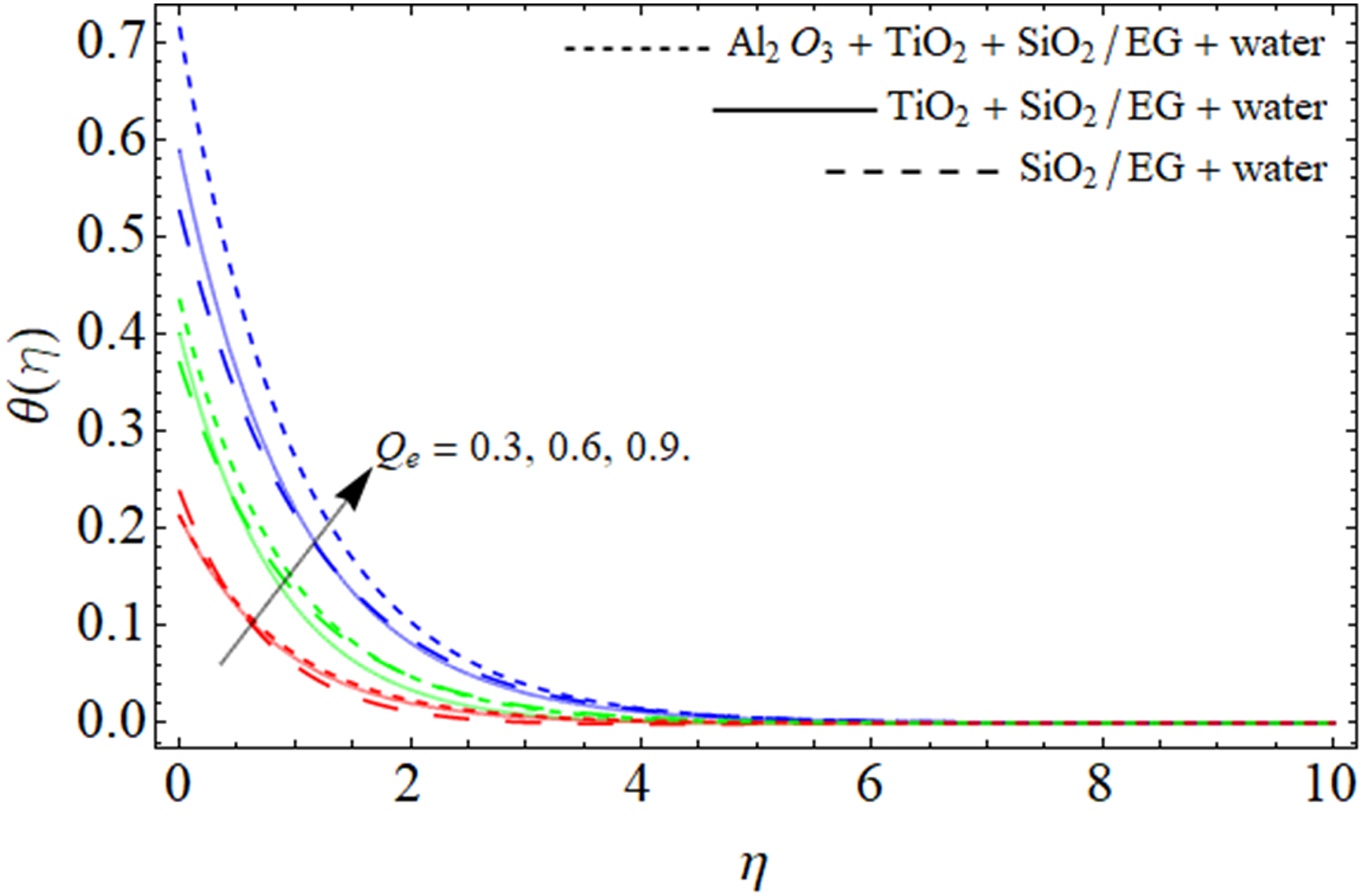
Heat source term
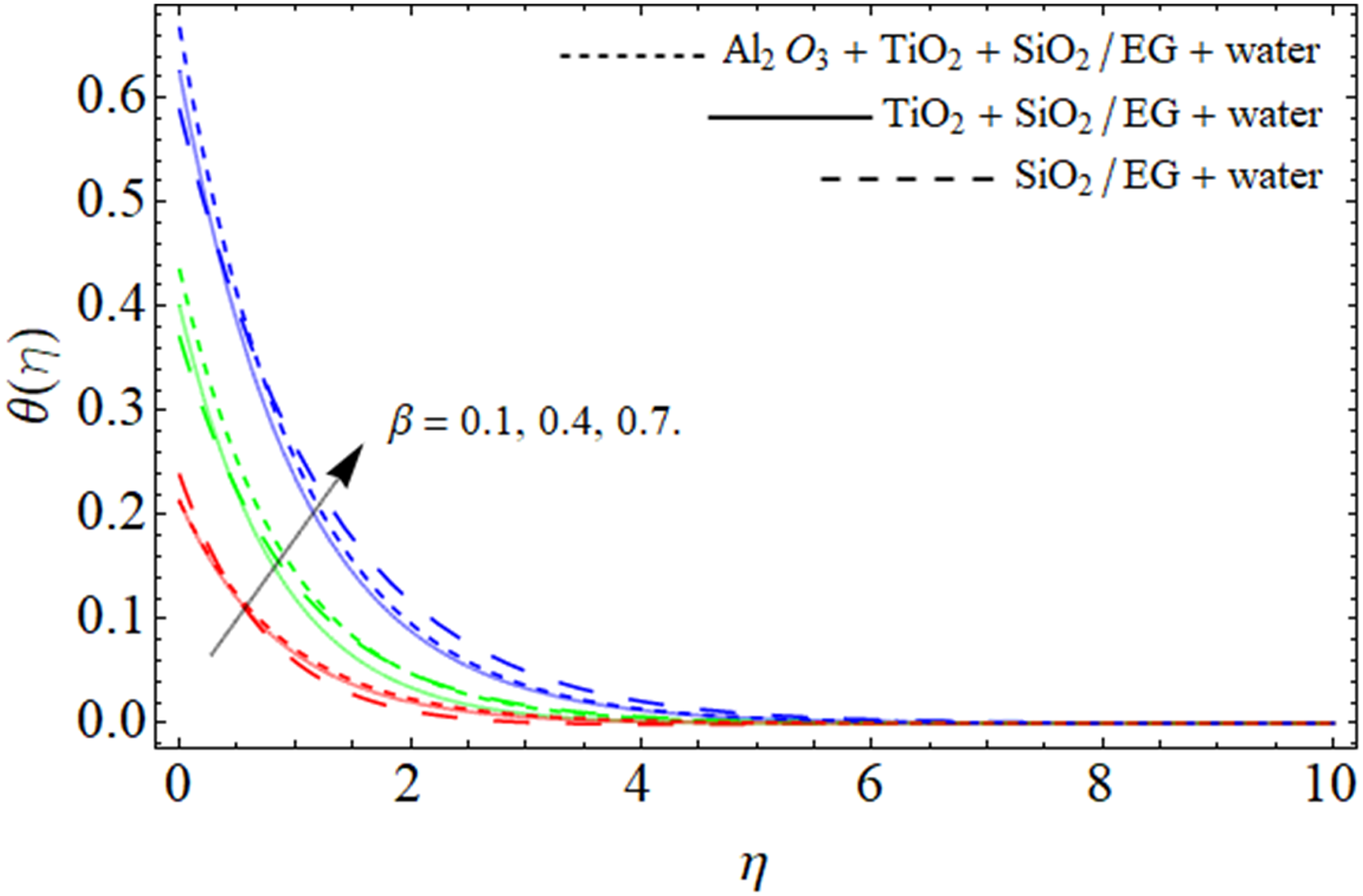
Ferro-hydrodynamic interaction term versus the energy curve
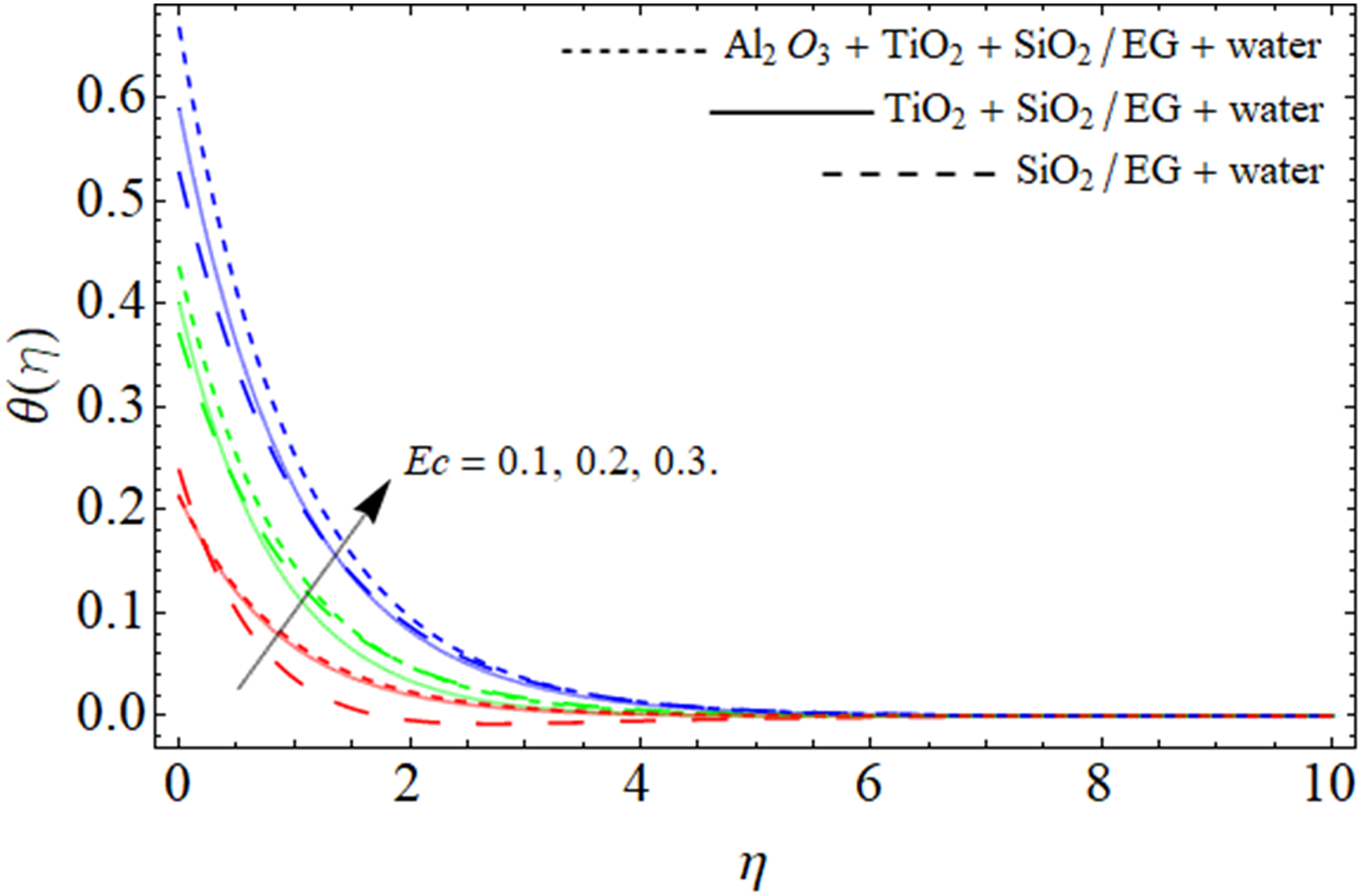
Eckert number Ec versus the energy curve
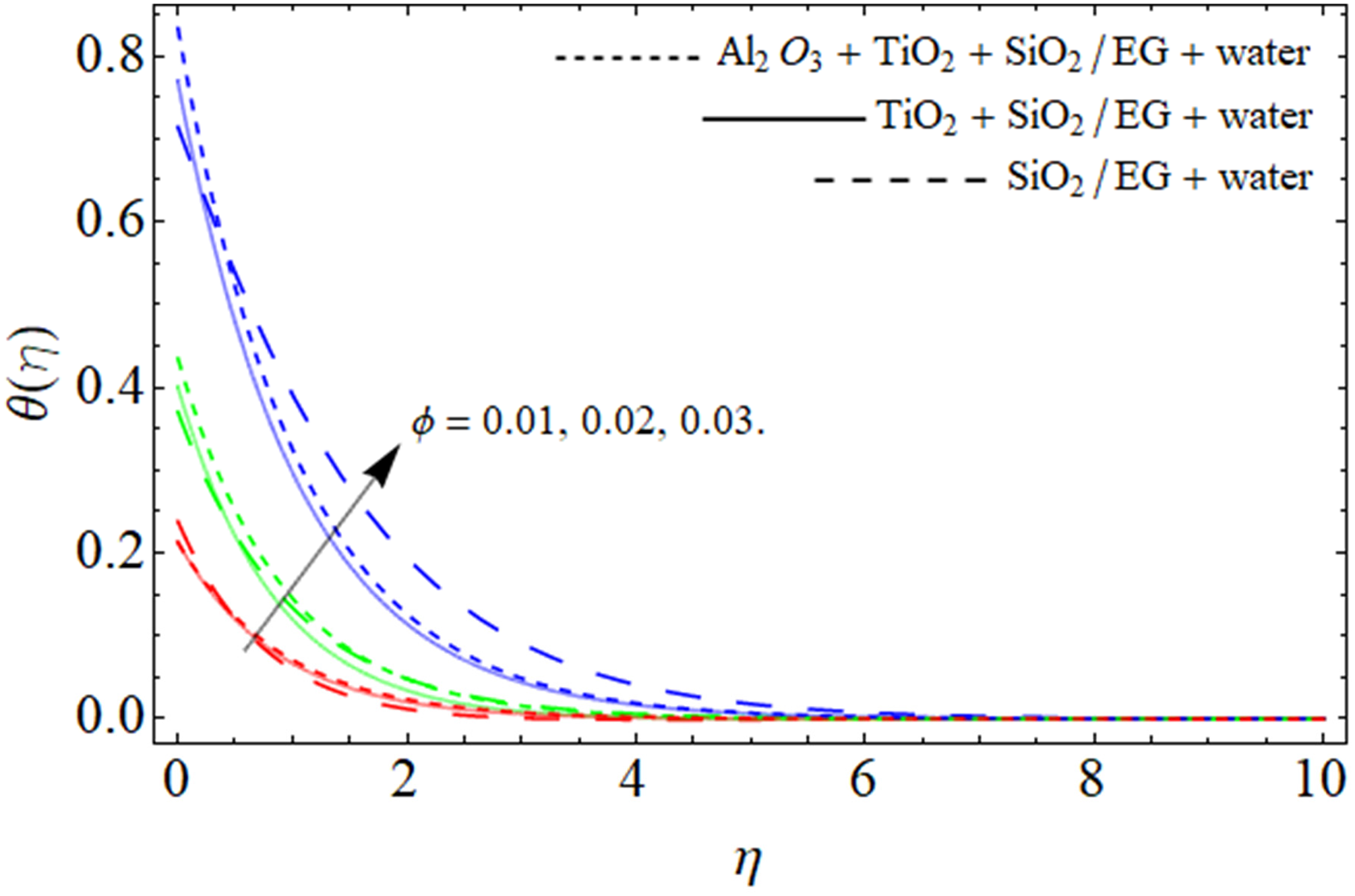
Ternary hybrid nanoparticle
Concentration interpretation
Figures 13 to 15 indicate the exposition of concentration outline
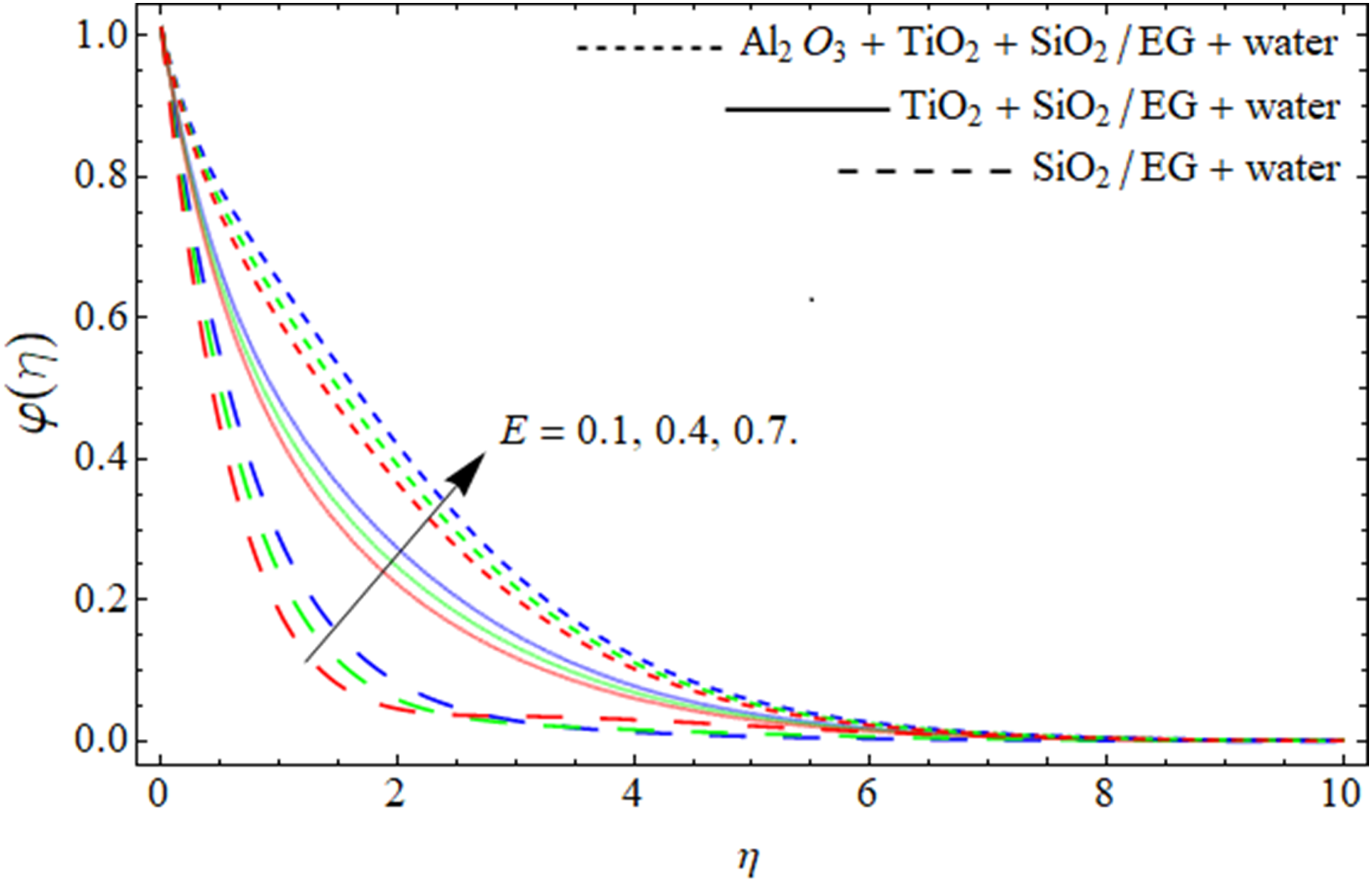
Activation energy E versus mass curve
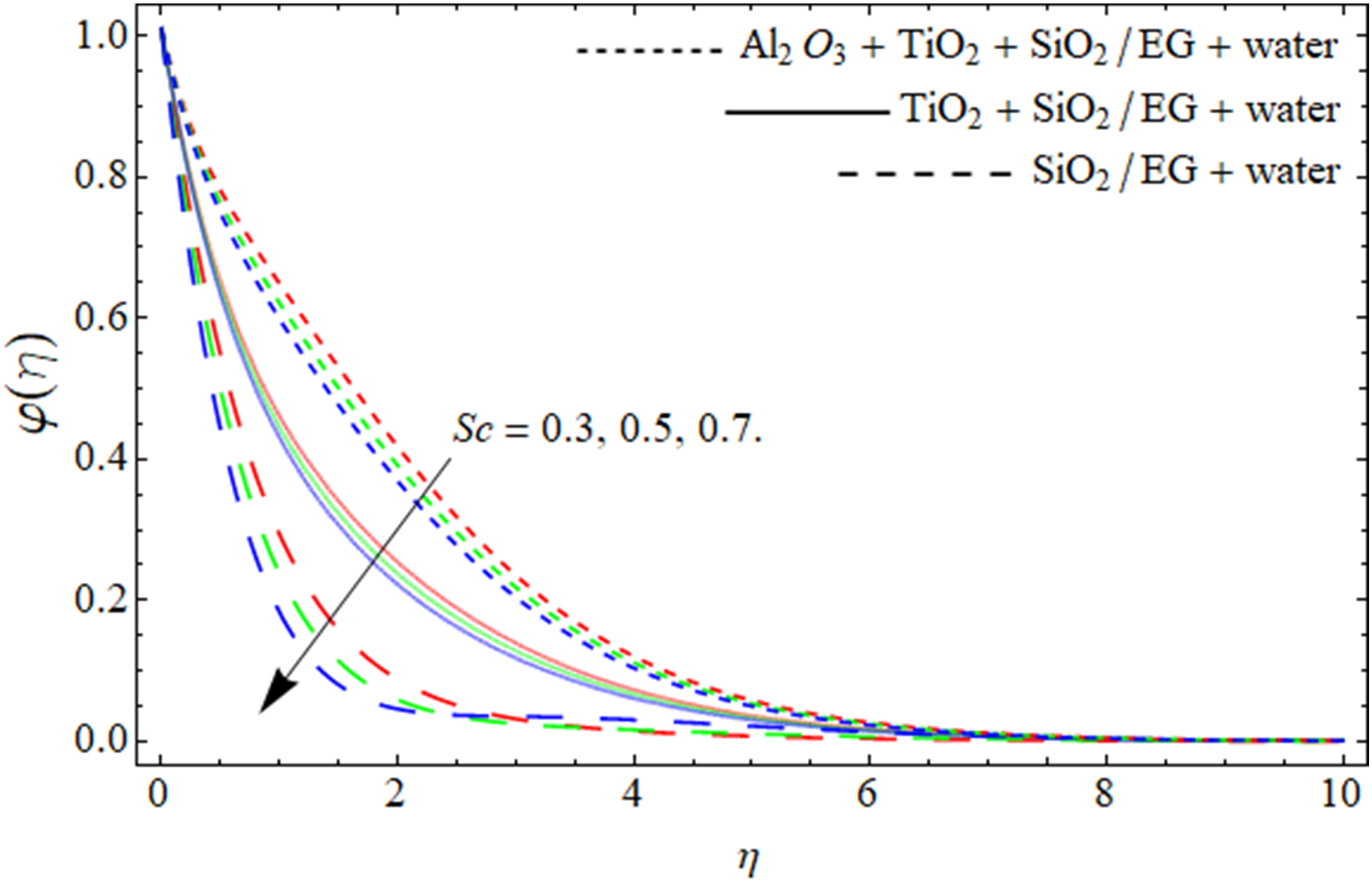
Schmidt number versus mass curve
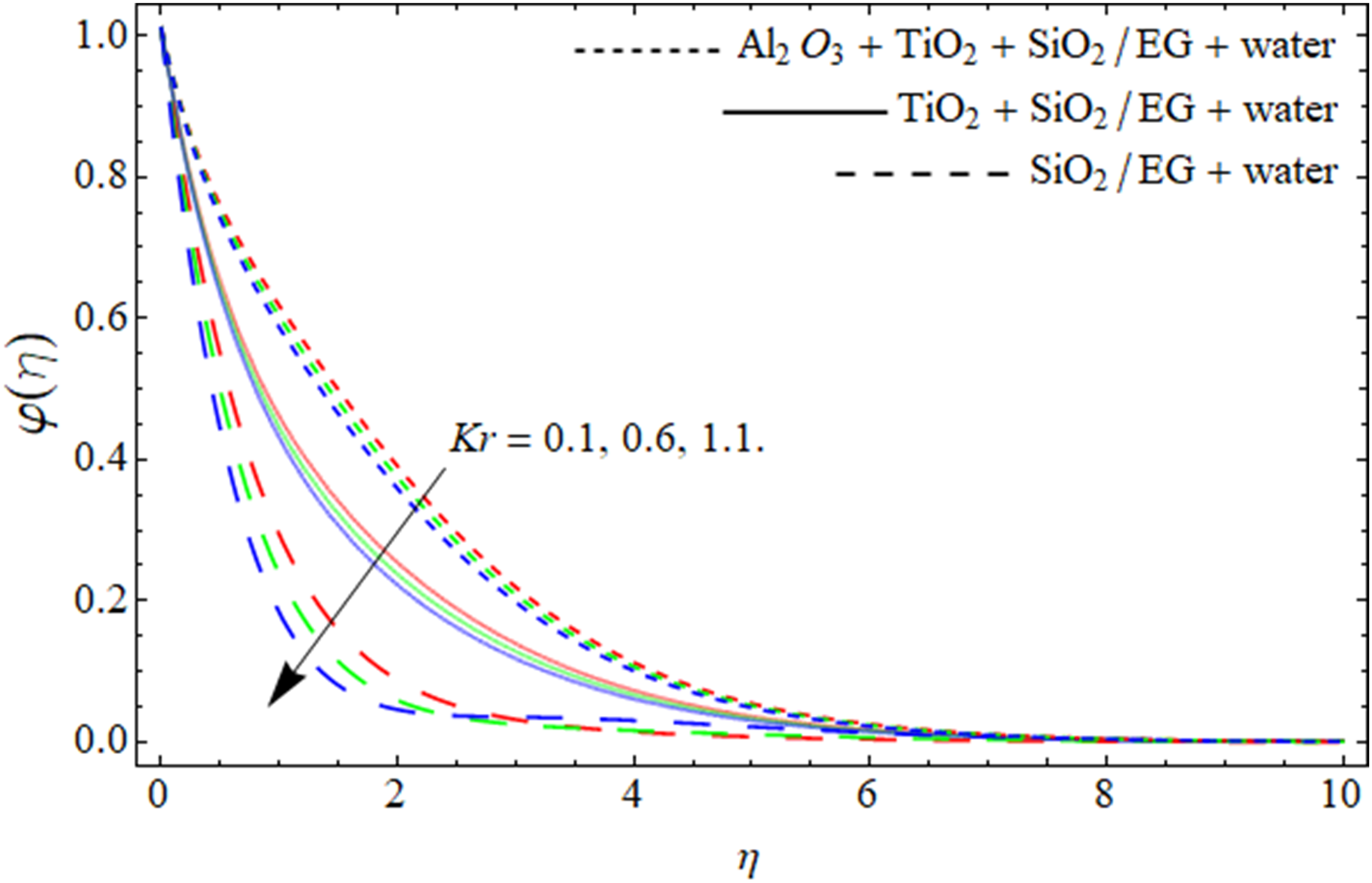
Chemical reaction parameter Kr versus mass curve
The concentration profile drops as seen in Figure 14 with higher values of the Schmidt number
The concentration profile in Figure 15 drops as the reaction parameter (Kr) rises due to the quicker chemical reaction. Chemical reactions in the fluid consume diffusing species, and the chemical reaction parameter (Kr) represents their rate. As the rate constant
Figures 16 and 17 show the percentage valuation for energy and velocity transfer rate. The values of
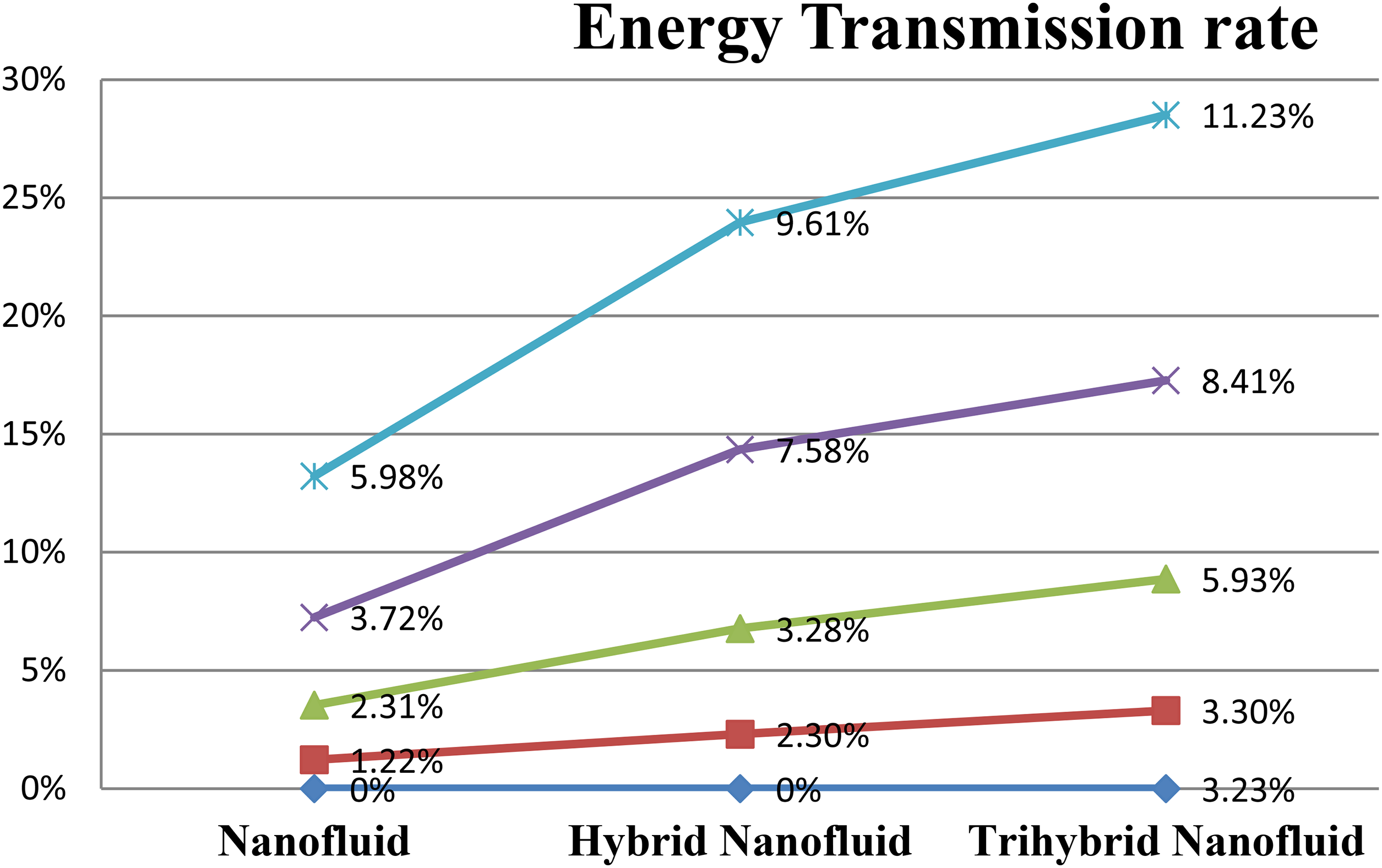
Percentage energy transfer rate.
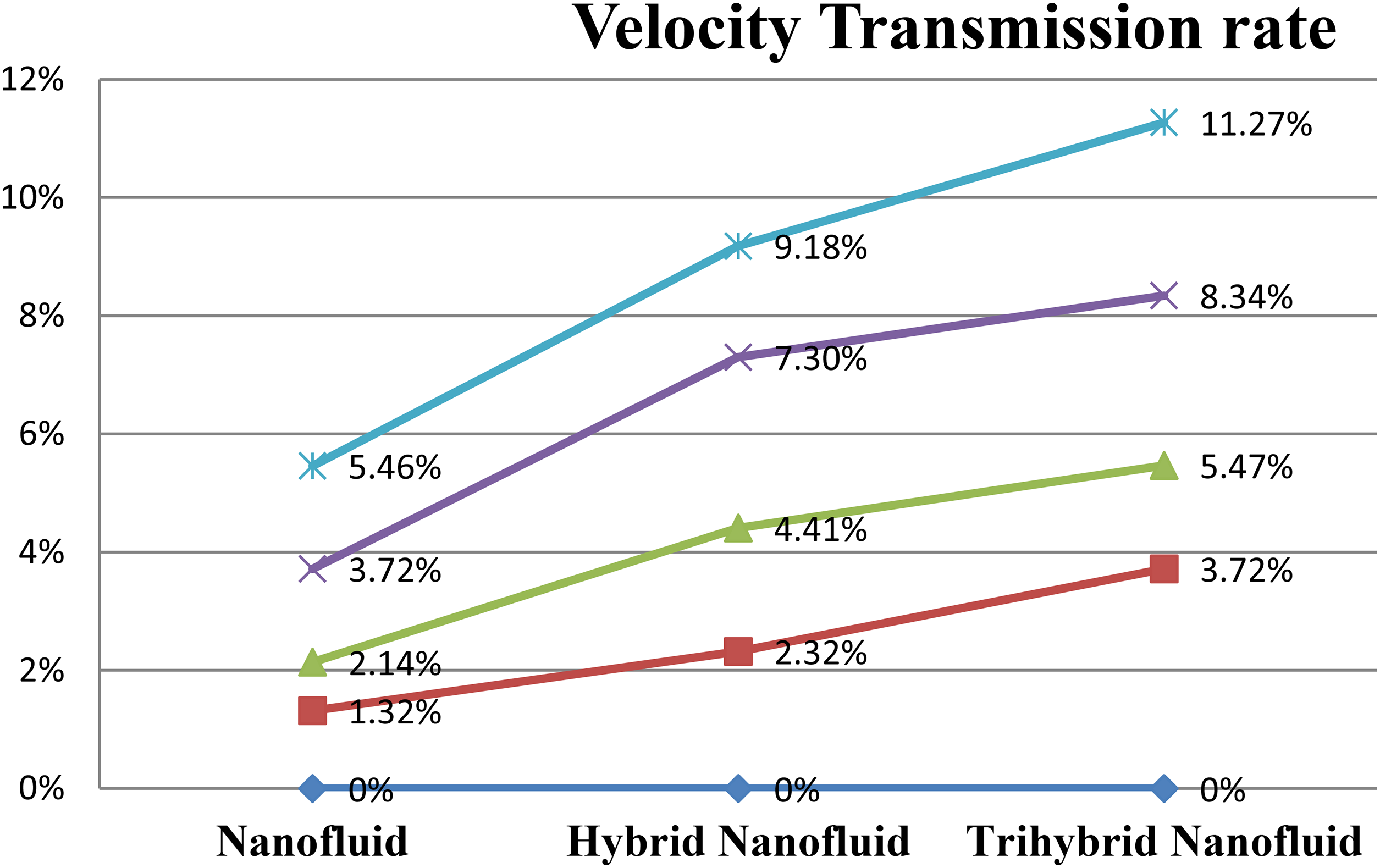
Percentage velocity transfer rate.
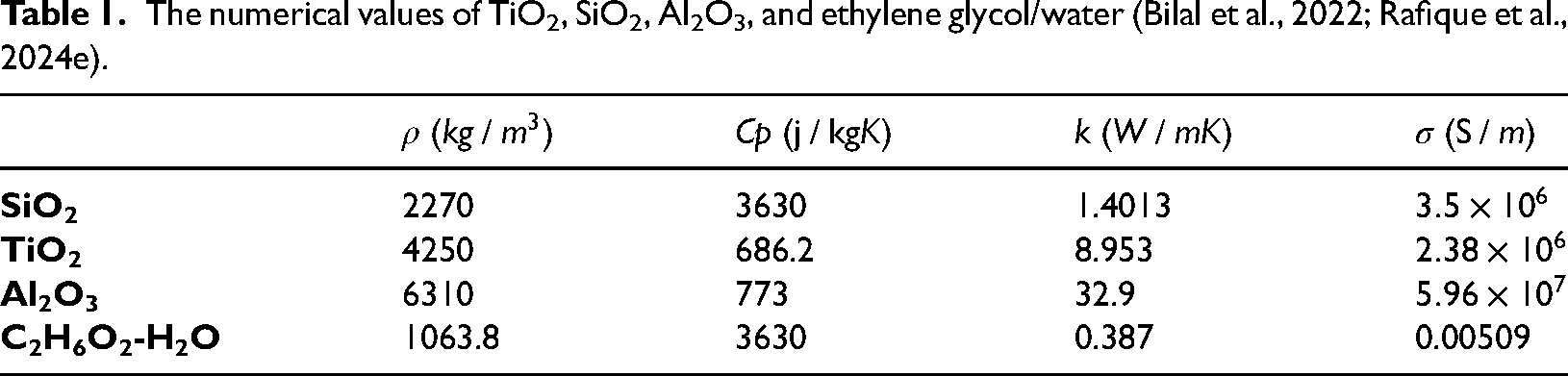
Table 1 reveals the numerical values for base fluid and ternary hybrid NPs. The numerical assessment of
The numerical values of TiO2, SiO2, Al2O3, and ethylene glycol/water (Bilal et al., 2022; Rafique et al., 2024e).
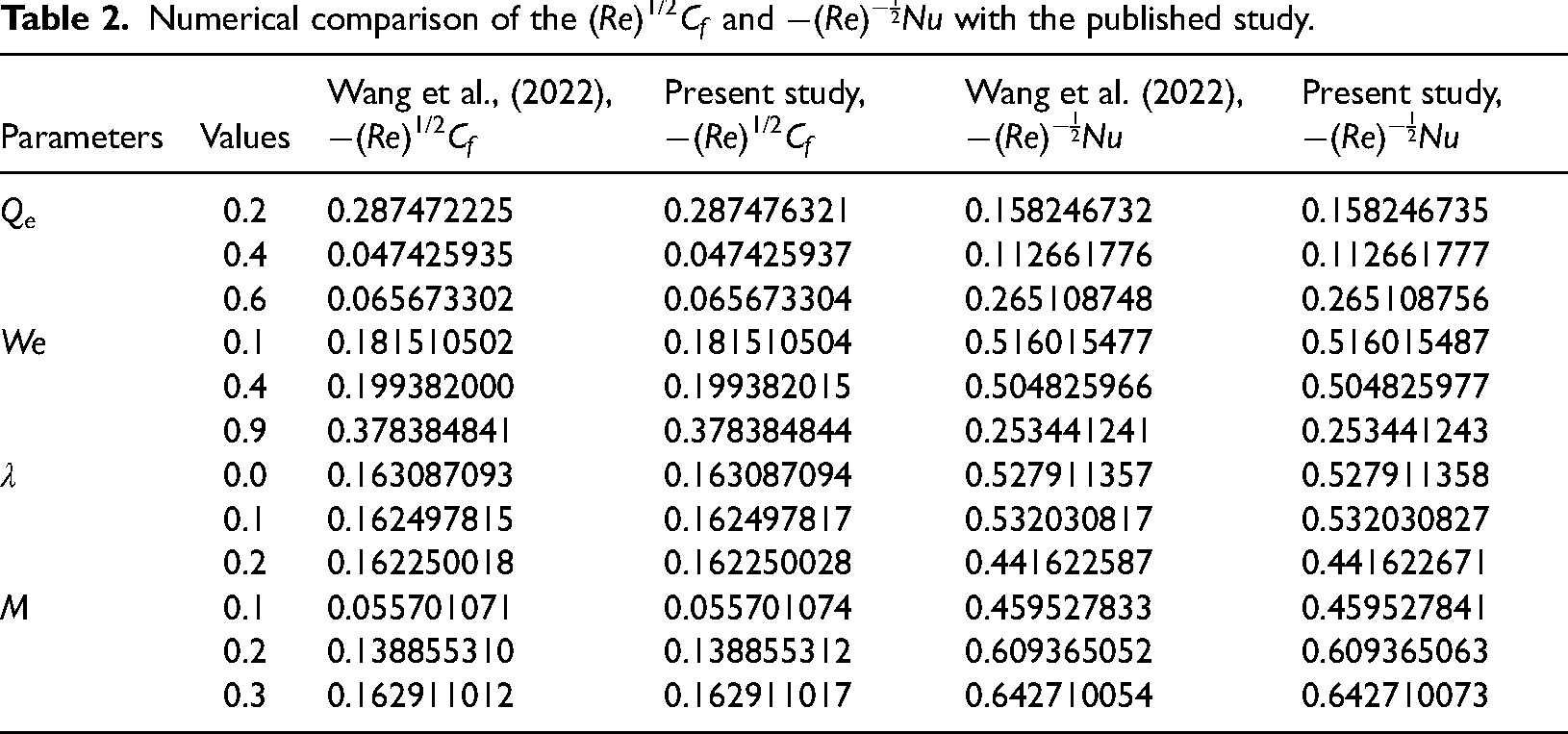
Numerical comparison of the
Conclusion
We have estimated the energy transfer through trihybrid CYNF flow with the effect of magnetic dipole across a stretching sheet is examined in the present study. The THNF has been equipped by the dispersal of ternary NPs in the water (50%) and ethylene glycol (50%). The fluid velocity and heat transfer are examined under the effect of Darcy–Forchheimer, chemical reaction, convective condition, and exponential heat source. Numerically, the system of lowest order ODEs are deliberated through the PCM. The key judgments are:
The energy propagation rate enhances with the rising numbers of TiO2, Al2O3 and SiO2 NPs from 1.22% to 5.98% in case of nanofluid and from 2.30% to 9.61% in case of hybrid nanofluid. The fluid velocity develops with the impact of magnetic dipole parameter, whereas declines with the influence of porosity factor. The fluid velocity falls with the effect of We, Darcy factor and Power law term m. The addition of trihybrid NPs in base fluid (EG/water) amplifies the fluid velocity. The energy transfer rate augments from 3.23% to 11.12% in case of trihybrid nanofluid. The stimulus of Biot number Bi enriches the fluid temperature. The fluid temperature enhances with the impact of The consequence of E increases the mass conduction rate, whereas, the effect of Sc and Kr lessens the mass dissemination rate. The energy sketch of THNF upraises with the enhancement of Eckert number and accumulation of trihybrid NPs.
Future recommendations
Experimental verification of this study’s theoretical and numerical models would strengthen and apply the conclusions. Practical applications may need precise measurements of viscosity, convective heat transfer, and thermal conductivity.
Footnotes
Author's note
Abhinav Kumar is currently affiliated with Department of Mechanical Engineering, Karpagam Academy of Higher Education, Coimbatore 641021, India. Centre for Energy and Environment, Karpagam Academy of Higher Education, Coimbatore 641021, India.
Declaration of conflicting interests
The authors declared no potential conflicts of interest with respect to the research, authorship, and/or publication of this article.
Funding
The authors disclosed receipt of the following financial support for the research, authorship, and/or publication of this article: The study was funded by Researchers Supporting Project number (RSPD2024R749), King Saud University, Riyadh, Saudi Arabia.
