




Abstract
To expedite drilling operations in hard rock of coal mines, a new type of impact-shear drill bit was developed, and its mechanism of speed-up and efficiency increase was studied. The RHT constitutive model was used to describe the structural behavior of rock, and the rock-breaking simulation model of full-size bit was established. Compared with PDC bit and hammer bit, the rock-breaking force, bit torque, and rock stress characteristics of impact-shear bit were analyzed. The results show that, in comparison to PDC bit and hammer bit, the axial force of impact-shear bit was reduced by 68.25% and 71.40%, respectively, and the average torque was reduced by 91.79% and 83.36%, respectively. Notably, for the impact-shear bit, the fluctuation of drilling force was effectively mitigated, the stick–slip vibration of bit was weakened, the rock-breaking energy consumption was drastically reduced, and the rock-breaking efficiency and bit’s life were finally improved. In terms of rock stress characteristics, the pre-impact effect of the central hammer bit of the impact-shear bit can release the internal stress of the rock well, and the stress of the rock element on the hole wall was relatively reduced, thus making it easier for the external PDC bit to break the rock. Field test results show that, under the condition of the small drilling rig, the impact-shear bit can give full play to the pre-crushing function of the impact mechanism, thereby effectively protecting the PDC cutter of external PDC bit, and realizing the fast hole-forming in hard rock of coal mine.
Introduction
Roof and floor cross-layer drilling and roof high-level drilling are the main means of gas pre-drainage and goaf gas control in coal mines. With the increase of coal mining depth, the encounter rate of hard, dense, and heterogeneous rocks during drilling construction is gradually increasing. For the conventional polycrystalline diamond compact (PDC) bit, the problems of serious bit wear and low drilling efficiency are often encountered (Barnett et al., 2022; Piri et al., 2020; Yang et al., 2024). Taking Pingmei No. 10 Coal Mine in Pingdingshan, Henan Province as an example, the sandstone has high quartz content and dense cementation, and the average rock firmness coefficient is greater than 10, which makes it difficult for the PDC bit to penetrate the rock, and the average rate of penetration (ROP) is only 0.3 m/h, the bit footage life is less than 5 m. Consequently, the drilling progress in this mining area is severely hampered (Han et al., 2021). Therefore, in coal mine drilling construction, how to realize optimal and rapid hole forming has become a pressing technical problem in China. As shown in Figure 1, the PDC bit was seriously worn.
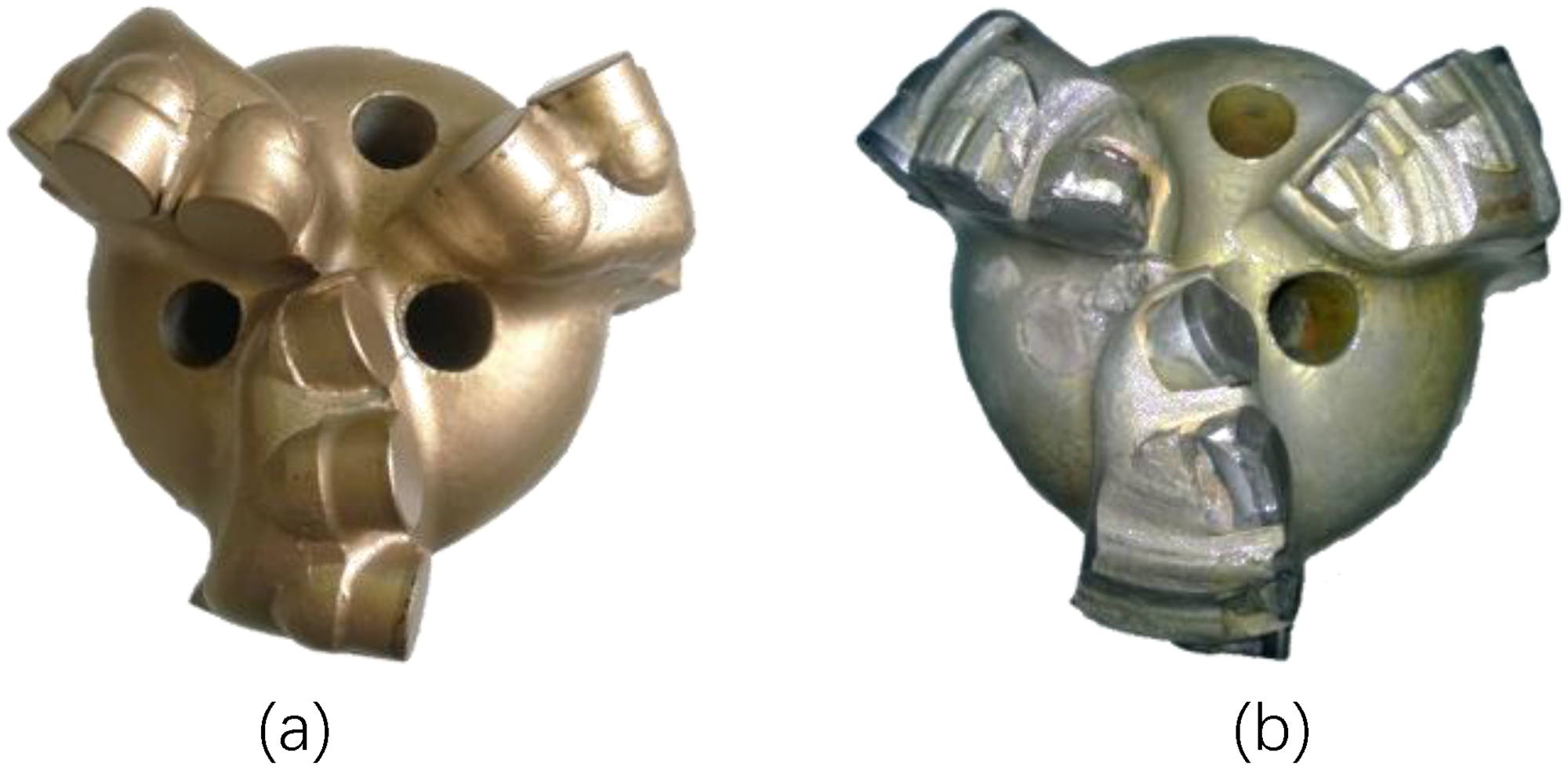
Photo of the conventional PDC bit (a) new and (b) used, seriously worn.
Up to now, percussive rotary drilling technology has been regarded as the most effective approach for drilling hard rock in coal mines (Huang et al., 2023). This technique employs a pneumatic or hydraulic impactor to generate a periodic impact dynamic load on the hammer bit, thereby promoting volume crushing in hard and abrasive rocks and improving the rock-breaking efficiency (Kim et al., 2015; Liu et al., 2023; Shi et al., 2023; Tuomas, 2004). Figure 2 depicts the hammer bit utilized in percussive rotary drilling. Zhong, Zhang et al. conducted a hard rock breaking test using the pneumatic percussion rotary drilling method in the Huainan mining area, and the average ROP was nearly doubled compared with the PDC bit, but they pointed out that gas pressure is a crucial factor in enhancing ROP (Zhong et al., 2023; Zhang et al., 2022). Dou, Zhao et al. performed similar tests using the hydraulic percussion rotary drilling method in the Pansan mining area, compared with the PDC bit, the average ROP increased by 2.3 times, also pointed out that when the pump pressure exceeds 12 MPa, the ROP can be significantly increased (Dou et al., 2022; Zhao and Hao, 2022). Clearly, for percussive rotary drilling technology, only when the impact energy of the impactor reaches a certain threshold, its advantages can be fully exerted. Therefore, it is necessary to equip it with a high-powered air compressor or large-flow mud pump, which needs to solve the problems of explosion-proof of equipment, as well as the difficulty in relocating equipment due to its large size. Furthermore, the application of the percussive rotary drilling method is often cost-intensive (Nuh et al., 2016; Zhao, 2022). So, how to realize optimal and rapid hole-forming in hard rock on the basis of existing drilling equipment, is a technical challenge that demands urgent attention and resolution.
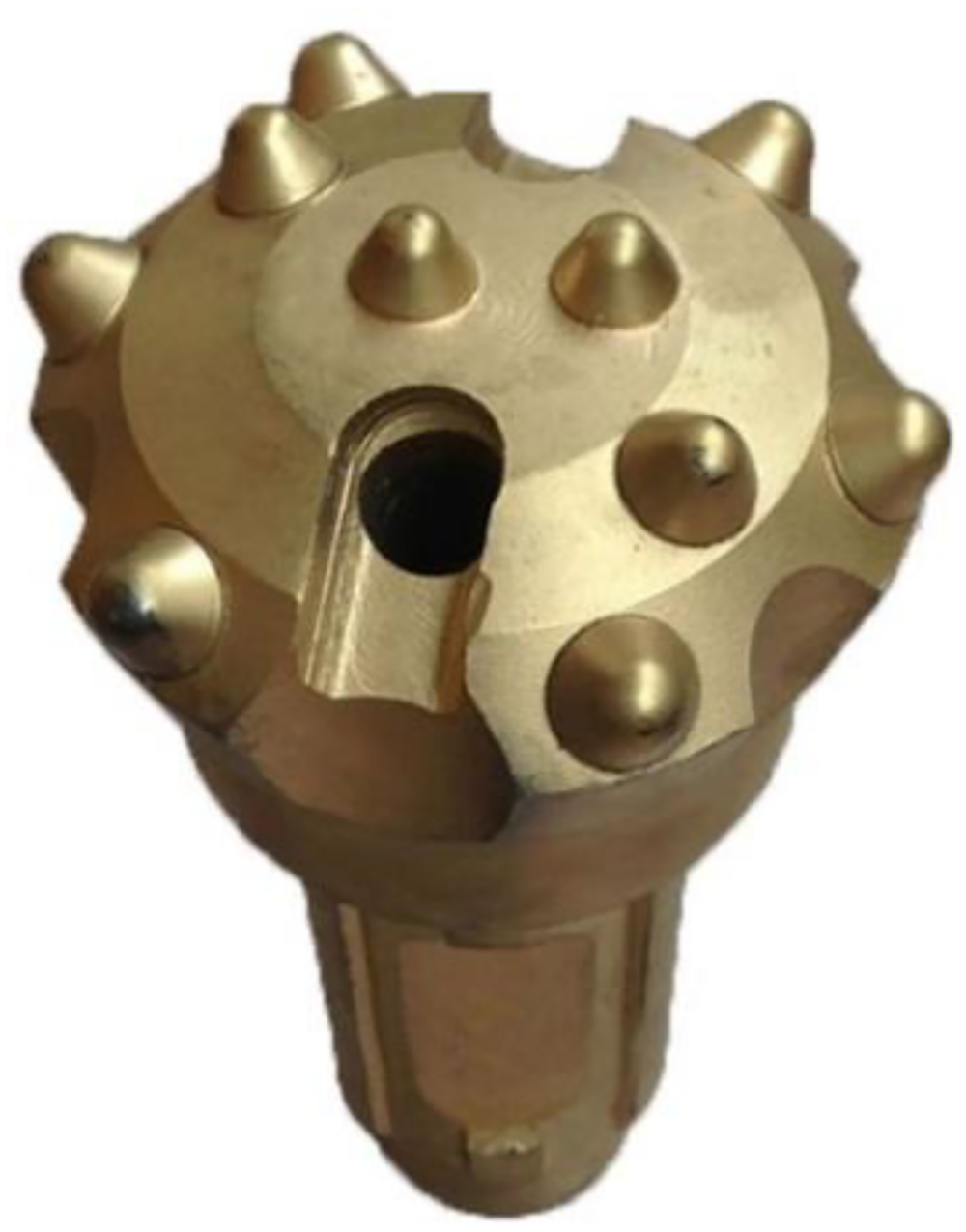
Photo of hammer bit.
In the field of oil and gas well drilling, the integration of different rock-breaking methods has emerged as one of the main trends to address the challenges posed by hard formations. Liu, Wang et al. (Lei et al., 2023; Liu et al., 2018; Wand et al., 2021) studied that by adding torsional impact on the basis of shear rock breaking of PDC bit, the proportion of rock volume breaking can be significantly increased, and the stick–slip vibration of the bit is mitigated. However, this is a huge challenge to the impact resistance of PDC cutters. Zhang et al. (Zhang et al., 2021; Zhong et al., 2019) introduced a rotating module structure to the conventional PDC bits, the rotary module cutters, and fixed cutters scrape and break rocks in a crosswise manner, which is beneficial to reduce the thermal wear of PDC cutters and improve the bit's invasion ability. Chen et al. (2024) studied to arrange a single core bit in the central area of the PDC bit, and the PDC bit shears and scrapes the peripheral rock, while the core bit crushes and scrapes the remaining rock column in the center; this combination can minimize the lateral vibration of bit and achieve the purpose of high-efficiency rock breaking. Muñoz et al. (2024) explored the fusion of roller cone and PDC structures; the cone structure impacts rock to form a crushing pit, which can effectively reduce the rock-breaking difficulty of PDC cutters and slow down the wear of the cutters. However, the ROP is slower than that of the PDC bit, and it needs to bear the risk of short life and loss of the cone.
In succession, numerous leading oil drilling enterprises have developed hybrid drill bits, which have yielded commendable drilling outcomes in both hard, abrasive formations and soft–hard interbeds. For instance, Baker Hughes launched the Kymera series of PDC-cone hybrid drill bits (shown in Figure 3(a)), which achieved an average ROP of 10 m/h when drilling in heterogeneous formation with chert nodules and surpassed the PDC bit used in offset wells by a significant of 15% (Blakney et al., 2019; Clement, 2020; Nunez et al., 2021). Nov introduced the FuseTek hybrid bit with PDC cutter and impregnated block (shown in Figure 3(b)), which achieved an average ROP of 8.8 m/h in basalt formations, it was a nearly threefold increase compared to roller cone inset bit (Garcia et al., 2013). Shear bits unveiled the Pexus hybrid bit with PDC cutter and cemented carbide cutter (shown in Figure 3(c)), which attained an average ROP of 31 m/h when drilling through gravel and boulder beds, surpassed the performance of roller-cone bit by an impressive 116% (Beaton et al., 2016; Wong et al., 2016). Halliburton launched the Hybrid shear-rolling bit (shown as Figure 3(d)), which demonstrated an average ROP of 7.8 m/h when drilling through challenging formations with varying rock strengths, and it was 4.2 times than that of the PDC bit used in offset wells (Halliburton, 2019).
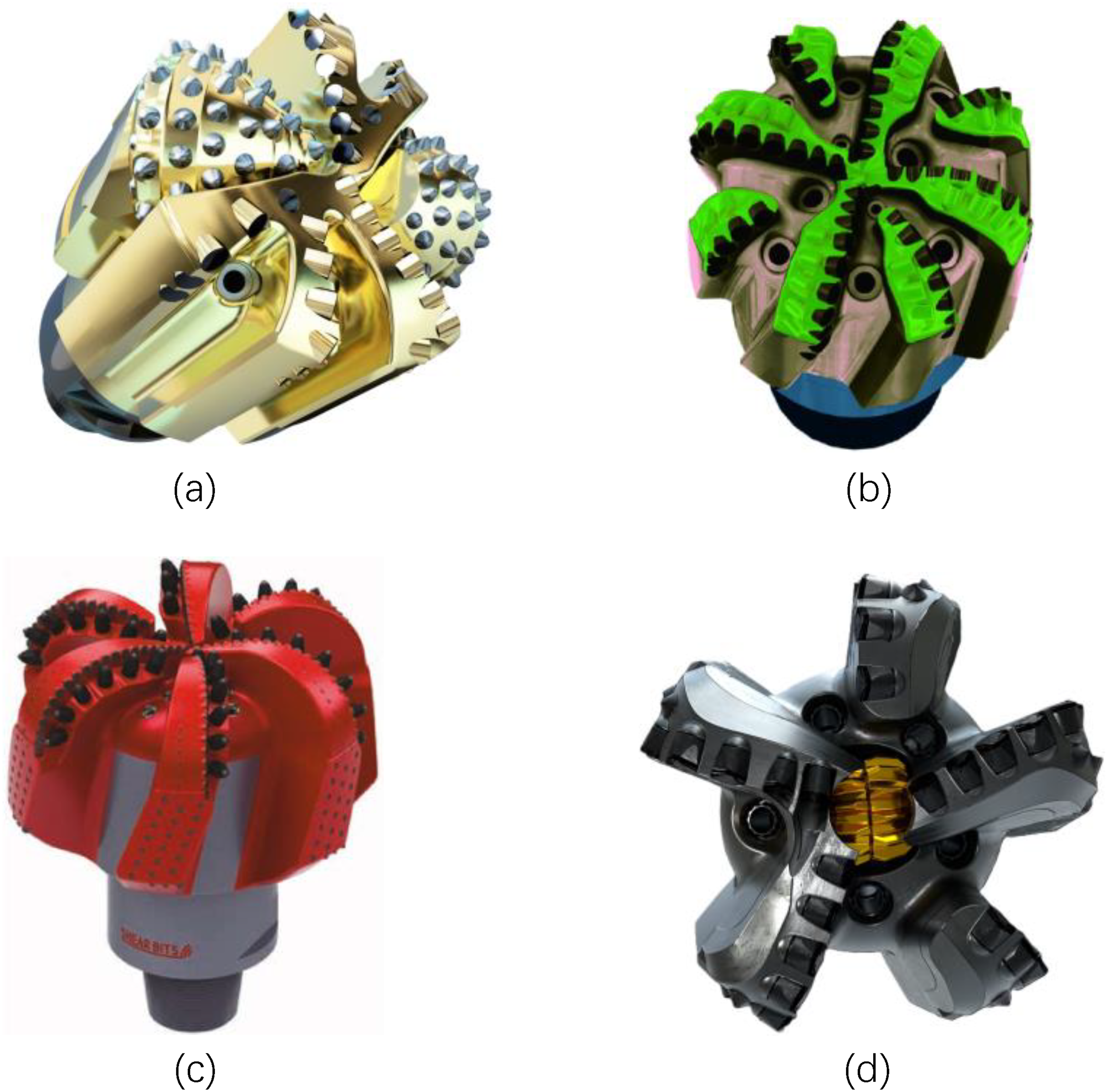
Different types of hybrid bits of (a) Kymera bit, (b) FuseTek bit, (c) Pexus bit, and (d) hybrid bit.
Based on the successful application of the above hybrid rock-breaking methods, it can provide important enlightenment for improving drilling efficiency and bit life in coal mine drilling, particularly when faced with hard and challenging formations. Considering the characteristics of high rock-cutting efficiency and poor impact resistance of the PDC bit, a new idea of “impact-shear” composite rock-breaking technology was proposed (as shown in Figure 4). This technology incorporates a central hammer bit into the PDC bit, the borehole is composed of the radial superposition of the diameters of the central impact hole and peripheral shear hole. On the one hand, the combination of the central hammer bit and external PDC bit can ensure the hammer bit breaks rock in a small diameter range, thus significantly reducing the rock-breaking energy of the impact mechanism. The impactor can drive the central hammer bit to break rock under the existing drilling equipment, which avoids the shortcomings of conventional percussive rotary drilling, such as harsh requirements for construction, high requirements on equipment performance, and poor operation convenience. On the other hand, the pre-damage of the rock by the central hammer bit can weaken the strength of the rock, reduce the difficulty of the external PDC bit to break hard rock, and increase the penetrating ability of the PDC cutter, thus avoiding the disadvantages of severe wear and low drilling efficiency of PDC bit in hard rock drilling. Furthermore, the dynamic impact force is only applied to the central hammer bit, which can effectively protect the PDC cutters and prevent them from being damaged by impact, finally realizing the optimal and rapid hole-forming in the hard and difficult-to-drill formations of coal mine, and achieving the effect of “small horse pulling a big cart.”
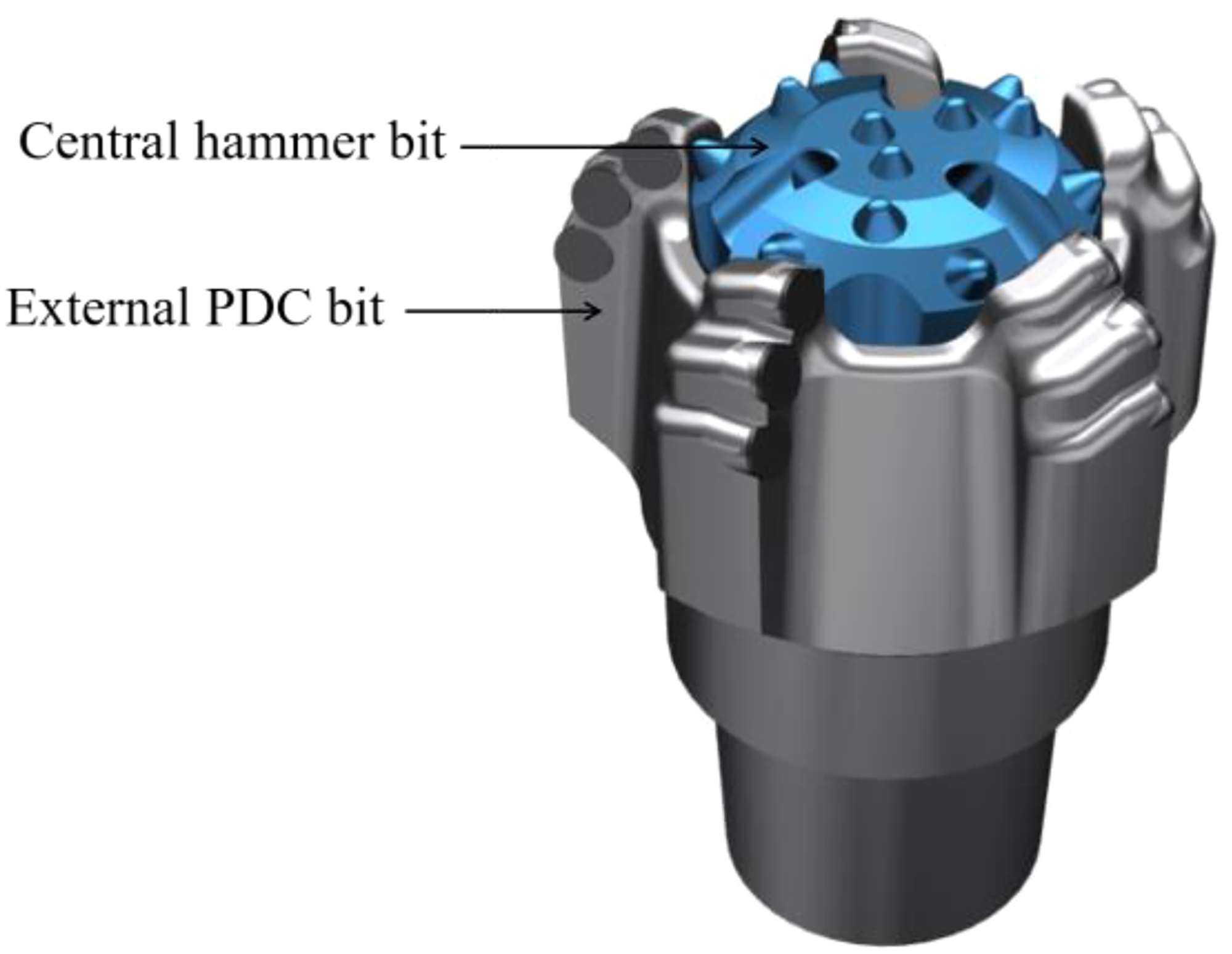
3D model of impact-shear bit.
Structural characteristics of impact-shear bit
The impact-shear bit is composed of a central hammer bit and an external PDC bit (as shown in Figure 5). The two parts break rock at the same time, which are not only independent of each other but also influence and complement each other, so that the bit possesses both impact and shear capabilities, thus guaranteeing superior and rapid hole formation in hard rock.
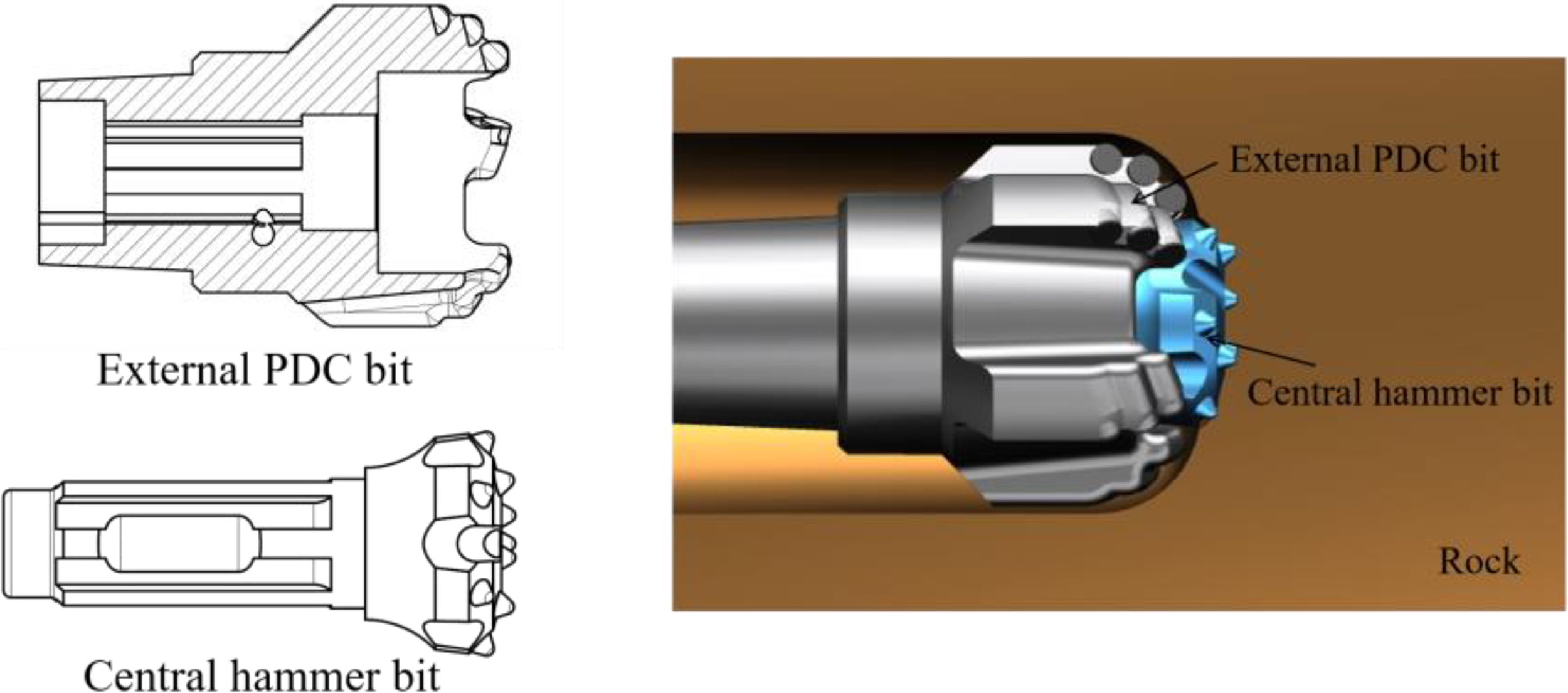
Structure diagram of impact-shear bit.
In the initial state, the working face of the central hammer bit is positioned slightly above the external PDC bit, which makes the cutting face of the impact-shear bit present a convex shape. This setup ensures the central hammer bit breaks and pre-cracks rock first. During the drilling process, the weight on bit and torque applied by the drilling rig drive the external PDC bit to rotate and press into the rock, and the external PDC bit, in turn, drives the central hammer bit to rotate synchronously through the spline matching. Concurrently, the impactor's punching hammer repeatedly strikes the rear end face of the central hammer bit, driving the central hammer bit to extend out of the external PDC bit, and slide axially relative to the external PDC bit. This process can pre-break the rock, release the rock stress, and reduce the cutting force required by the external PDC bit greatly. Ultimately, the rock-breaking efficiency of the impact-shear bit is significantly improved.
Rock-breaking simulation model of full-size bit
Basic assumption
To improve the simulation calculation efficiency, the following assumptions were made in accordance with the pivotal aspects of the research:
Regardless of the wear and deformation of the bit, the strength and hardness of the bit are much higher than those of rock, so the impact-shear bit was regarded as rigid. Rock units were deleted immediately after being broken, ignoring the repeated breaking. The influence of fluid and temperature was not considered.
Material model
Taking granite as the research object, the RHT constitutive model was used to describe the structural behavior of rock. For the RHT constitutive model, it introduces the elastic limit surface, failure surface, and residual strength surface that is related to pressure, which can well reflect the dynamic mechanical behavior, strain rate sensitivity, and damage softening characteristics of rock under different stress states (Reifarth et al., 2021; Shu et al., 2022). The p-α equation of state proposed by Herrmann is used to describe the transition from pore fragmentation to compaction in porous and loose media (Herrmann, 1969). The constitutive model consists of three development stages. Initially, the material traverses the elastic phase and attains the elastic yield surface. Subsequently, the material enters a plastic deformation phase and progresses to a linear strengthening stage, which exhibits strain-hardening characteristics until the failure surface is reached. Once the equivalent stress strength exceeds the failure stress strength, the material begins to show cumulative damage, it enters into a damage-softening stage, and finally reaches the residual strength surface (Lyu et al., 2024; Tu and Lu, 2010).
The elastic limit surface equation is:

The failure surface equation is:

The linear strengthening stage equation is:

The damage softening stage equation is as follows:




Based on the uniaxial compression test of granite in the paper “Study on size effect characteristics of small size rock samples,” the reliability of the rock constitutive model was verified (Chen et al., 2023). In the simulation, the size of the granite sample was Φ50 × 100 mm, the displacement loading control mode was adopted, and the loading rate was set to 0.06 mm/min until the rock sample was destroyed. Table 1 shows the material parameters of granite (Chen et al., 2023).
Material parameters of granite.

Figure 6 shows the uniaxial compressive stress–strain curve of granite obtained by test and simulation. The stress development curve obtained by the uniaxial compression test exhibited a nonlinear pattern, while the stress obtained by simulation increased approximately linearly with strain. The reason for this difference is that the granite sample used in the test was composed of irregular-sized particles, and there were randomly distributed cracks. During the uniaxial compression process, an extrusion and closure stage occurred for the internal cracks. Conversely, the granite model established in the numerical simulation was homogeneous and dense, there was no primary fracture, so the primary fracture closure stage did not occur on the stress–strain curve. The peak compressive strength stress of granite obtained by test and simulation was 116.6 MPa and 110.7 MPa respectively, the error rate between simulation and test results was less than 5%.
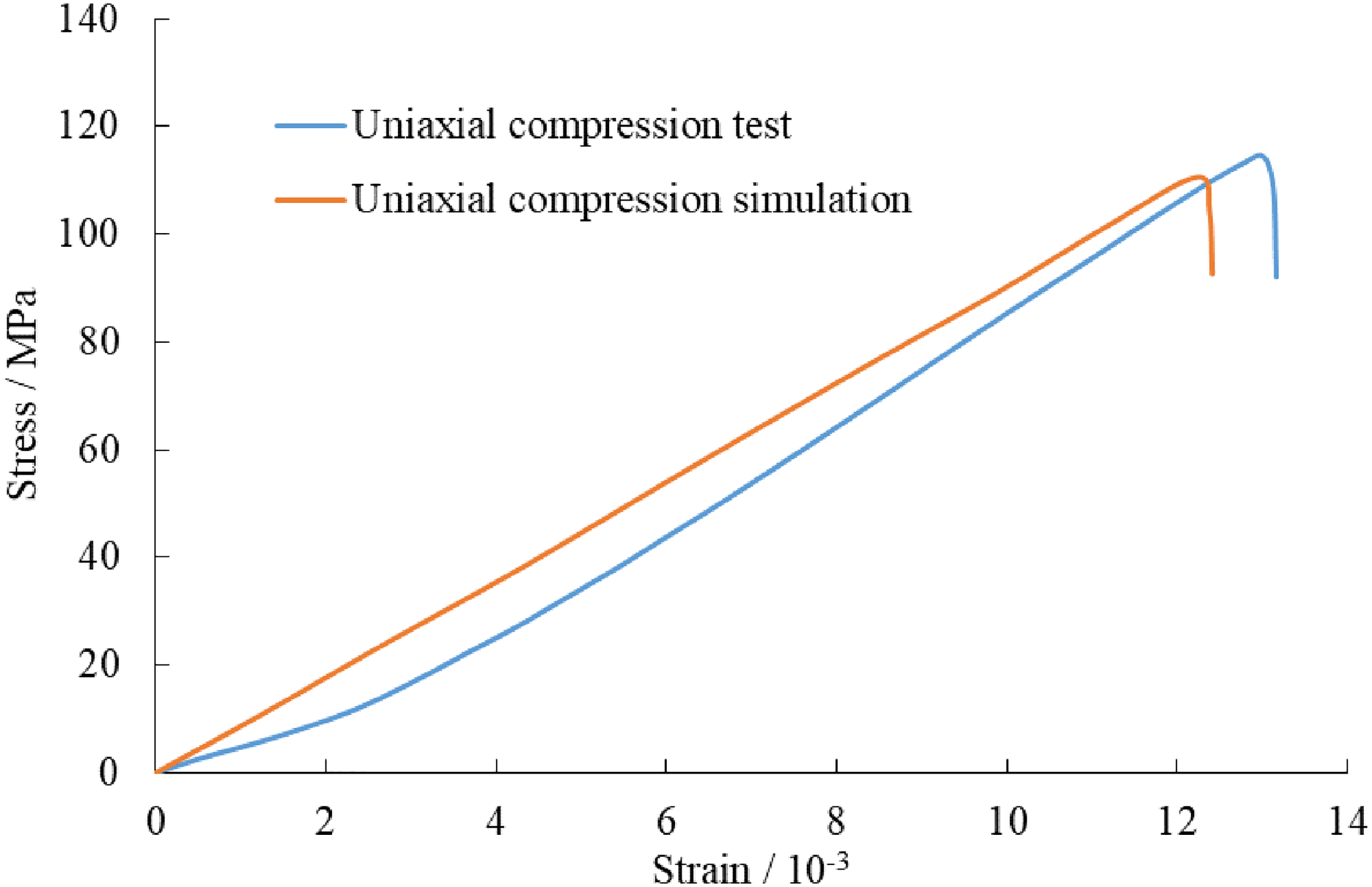
Stress–strain curves under test and simulation.
Figure 7 shows the macroscopic failure morphology of granite obtained by test and simulation. The macroscopic failure mode of granite exhibited in the simulation was similar to that in the test. The rock showed an oblique shear failure form, and the fracture developed and propagated at an angle of 30°–60° relative to the radial direction. Therefore, it can concluded that the rock constitutive model adopted can describe the stress-strain and damage characteristics of granite reliably.
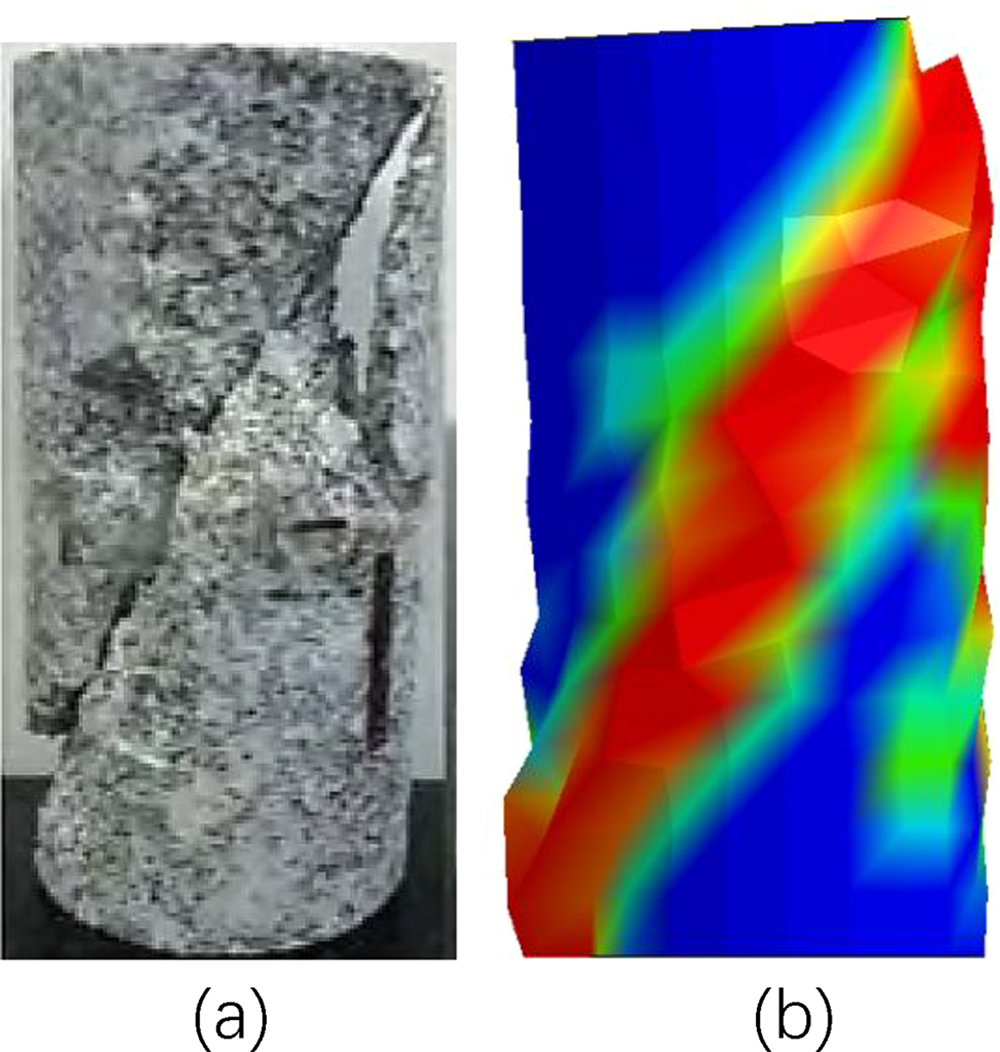
Comparison of rock macroscopic morphology between uniaxial compression test and simulation (a) test and (b) simulation.
Since the wear and deformation of the bit were not considered, the bit was set as rigid material with a density of 3.56 kg/m3, an elastic modulus of 850 GPa, and a Poisson ratio of 0.07.
Geometry model
The bit and rock were modeled by Solid 164 units. The size of the rock was 400 × 400 × 350 mm, and the rock was discretized with the hexahedral grid. The bit, with a diameter of Φ153 mm, was simplified by excluding minor features such as smaller chamfer, nozzles, and thread. The bit was discretized with a tetrahedral grid, and the grid where the bit breaks rock was refined to improve the calculation accuracy. Figure 8 shows the established three-dimensional models of the PDC bit, hammer bit, and impact-shear bit.
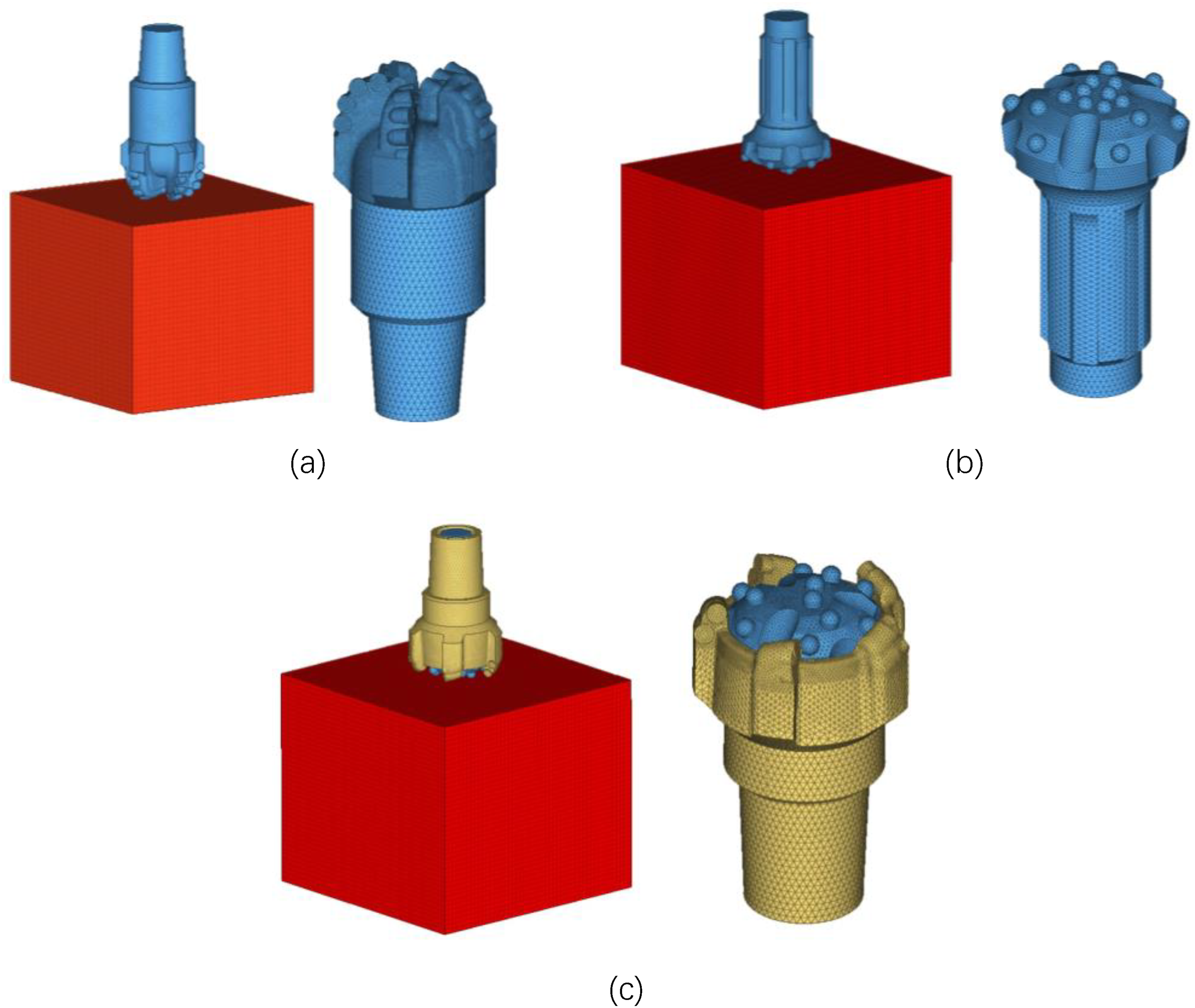
3D simulation models of (a) PDC bit, (b) hammer bit, and (c) impact-shear bit.
Boundary and load conditions
During the drilling process, the weight on the bit and torque transmitted by the drill pipe directly act on the bit, driving the bit to rotate, scrape, and break the rock. In the simulation, the rotation speed along the central axis of the bit and the drilling speed downward along the axis of the bit were applied to the bit, and the rock was fixed.
In accordance with the distinctive drilling characteristics of the bits with different structures, the loads were applied. For the PDC bit, the constant ROP of 335.8 m/h and rotation speed of 100 r/min were applied. For the hammer bit, a fixed ROP of 83.88 m/h, impact speed of 351.72 m/h, impact frequency of 15 Hz, and rotation speed of 20 r/min were applied; For the impact-shear bit, the central hammer bit was applied with a constant ROP of 58.14 m/h, impact speed of 259.2 m/h, impact frequency of 15 Hz, and rotation speed of 80 r/min, whereas the external PDC bit was applied with a constant ROP of 109.8 m/h, and rotation speed of 80 r/min. To improve the calculation efficiency, the ROP values of all bits were increased by 10 times in the above-mentioned load application. This operation will inevitably have a great impact on the simulation results directly related to ROP (such as drilling force, drilling time, and energy consumption), but the horizontal comparison of the rock-breaking effects of the three types of bits can be ignored. This is because, for the horizontal comparison, it usually focuses on the relative performance of the three types of bits under the same or similar conditions, since the ROP values of all bits are uniformly magnified by the same multiple, this amplification effect will be canceled out in the horizontal comparison. That is to say, even if the ROP value is magnified, the relative speed between the three types of bits does not change, so this operation will not affect the comparison results of their relative performance (Zhu and Liu, 2018).
In the process of rock breaking, the contact between the bit and the rock is highly nonlinear dynamic erosion mode, and the contact interface between them is accompanied by mutual extrusion and mutual movement. Therefore, the erosion contact condition was set between the bit and the rock, and the bit was set as the contact surface, the rock was set as the contact target. At the same time, to eliminate the influence of the reflection of boundary stress wave, non-reflective boundary conditions were applied to the boundary of the rock.
Reliability verification of simulation method
Taking Φ94 mm PDC bit as an example, the reliability of the simulation method was verified. Numerical simulation and field test of Φ94 mm PDC bit were carried out. The drilled rock was granite, and its material parameters are shown in Table 1. Because the simulation environment is ideal while the influencing factors of the field test are complex, the reliability of the simulation method was evaluated by qualitative method.
Since PDC cutters are the rock-breaking components of PDC bit, to focus on the analysis of the force characteristics of cutters, the bit body and blade were ignored, the simplified model is shown in Figure 9.
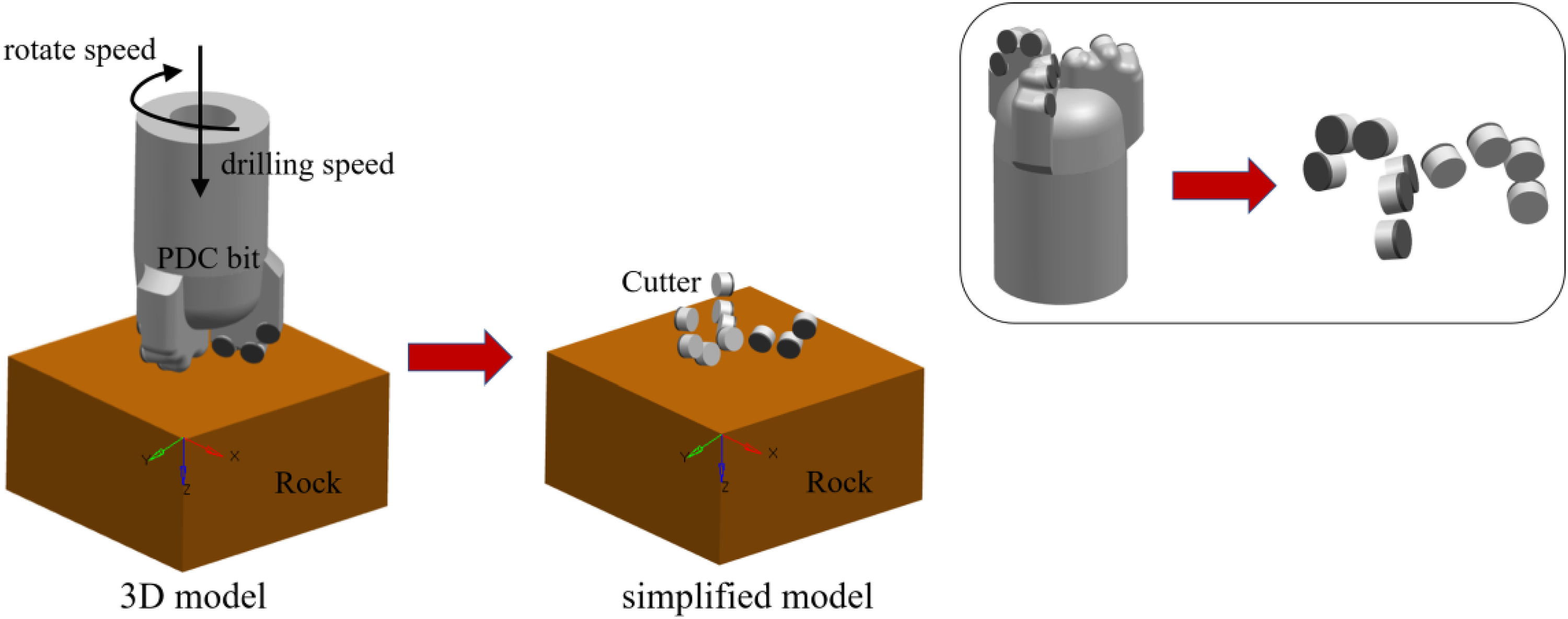
3D simulation model of Φ94 mm PDC bit after simplification.
Figure 10 shows the stress state nephogram of the rock at a specific time and the axial force response curve of a certain cutter. With the rotary drilling of the cutters, the rock units directly beneath the cutters underwent complete failure, and the borehole was formed. The rock units along the hole wall experienced plastic deformation, they were damaged but not failed. The rock units far away from the borehole were still in the elastic stage. Due to the limitation of the hexahedral grid shape, the formed hole wall exhibited an uneven, stepped appearance. The axial force of the cutter fluctuated with the drilling progress. When the cutter started to extrude the rock, the axial force increased gradually. When the rock block collapse occurred, the axial force decreased sharply, which reflected the “leap forward” breaking characteristic of the rock.
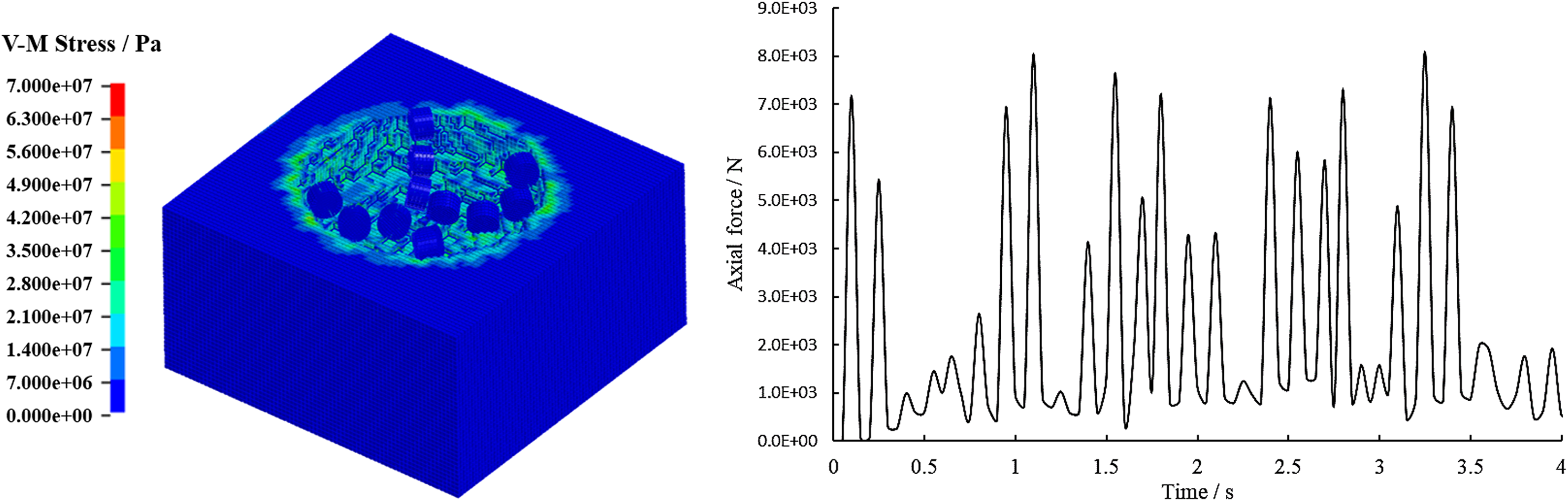
Stress nephogram of rock and force curve of cutter.
The force characteristic of PDC cutters along the radial direction of the bit obtained by simulation was analyzed, and it was compared with the actual wear situation of the cutters after the field test, as shown in Figure 11.
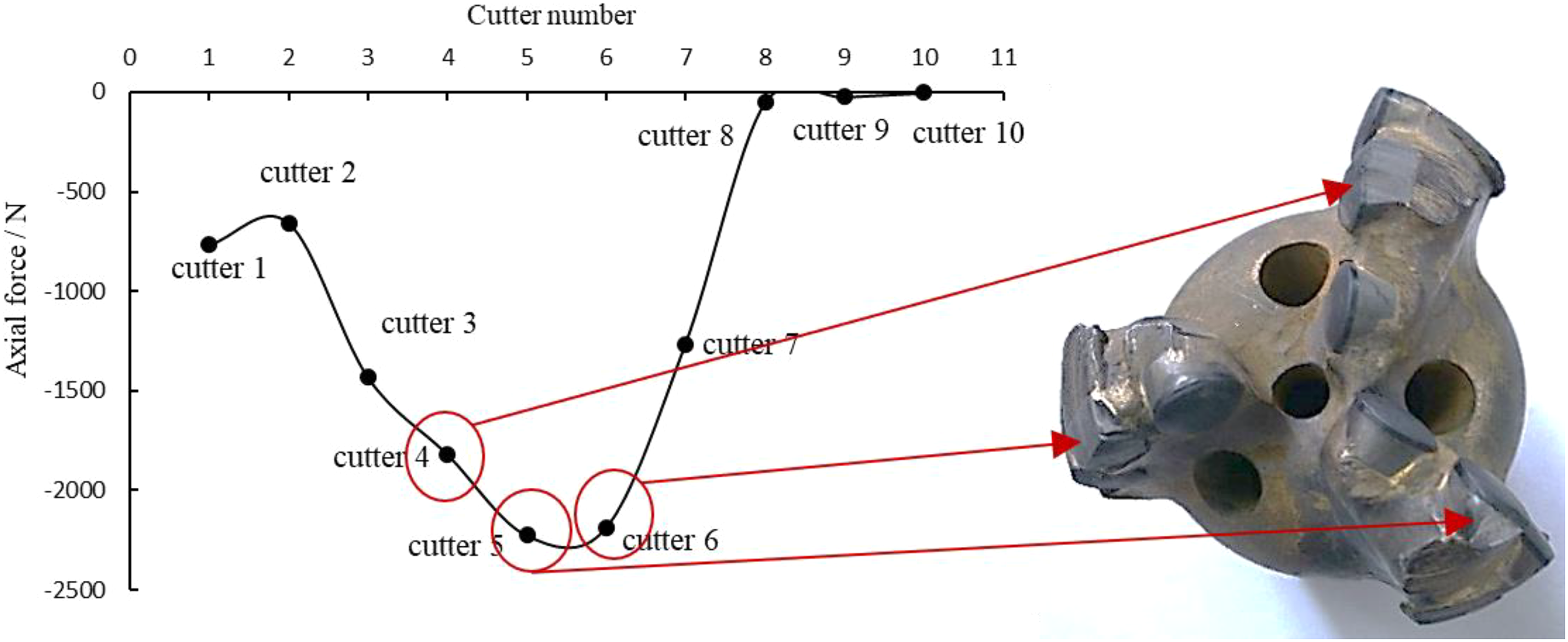
Comparison between simulation results and field test.
As illustrated in Figure 11, Nos. 4, 5, and 6 cutters bore the largest axial force, which indicates that these cutters are more prone to wear and failure when the bit breaks rock. Comparing with the bit photo after use, it can be seen that, consistent with the simulation results, the Nos. 4, 5, and 6 cutters exhibited the most severe wear, which can qualitatively verify the reliability of the numerical simulation method.
Efficient rock-breaking mechanism of impact-shear bit
Rock breaking force
Figure 12 shows the curves of axial force over time of the PDC bit, hammer bit, and impact-shear bit obtained by simulation. The axial force difference coefficient is used to measure the severity of force fluctuation, it is defined as the ratio between the standard deviation and the mean value of axial force. The smaller the axial force difference coefficient, the smoother the force fluctuation and the more stable the rock-breaking performance of the bit (Schillaci and Schillaci, 2022). Based on Figure 12, the axial force difference coefficients of the PDC bit, hammer bit, and impact-shear bit were 0.75, 1.08, and 0.72, respectively. Due to the impact effect, the fluctuation degree of axial force of the hammer bit was significantly higher than that of the PDC bit and impact-shear bit. The force fluctuation trend of the hammer bit showed a distinct periodic variation (increasing–decreasing–increasing), which was mutually confirmed with the application of periodic drilling speed. For the impact-shear bit, although a periodically changing drilling speed was applied too, the axial force of the bit fluctuated relatively evenly because of the combined action of the external PDC bit. Compared with the PDC bit and hammer bit, the fluctuation intensity of the axial force of the impact-shear bit was the lowest, and its drilling process was the most stable.
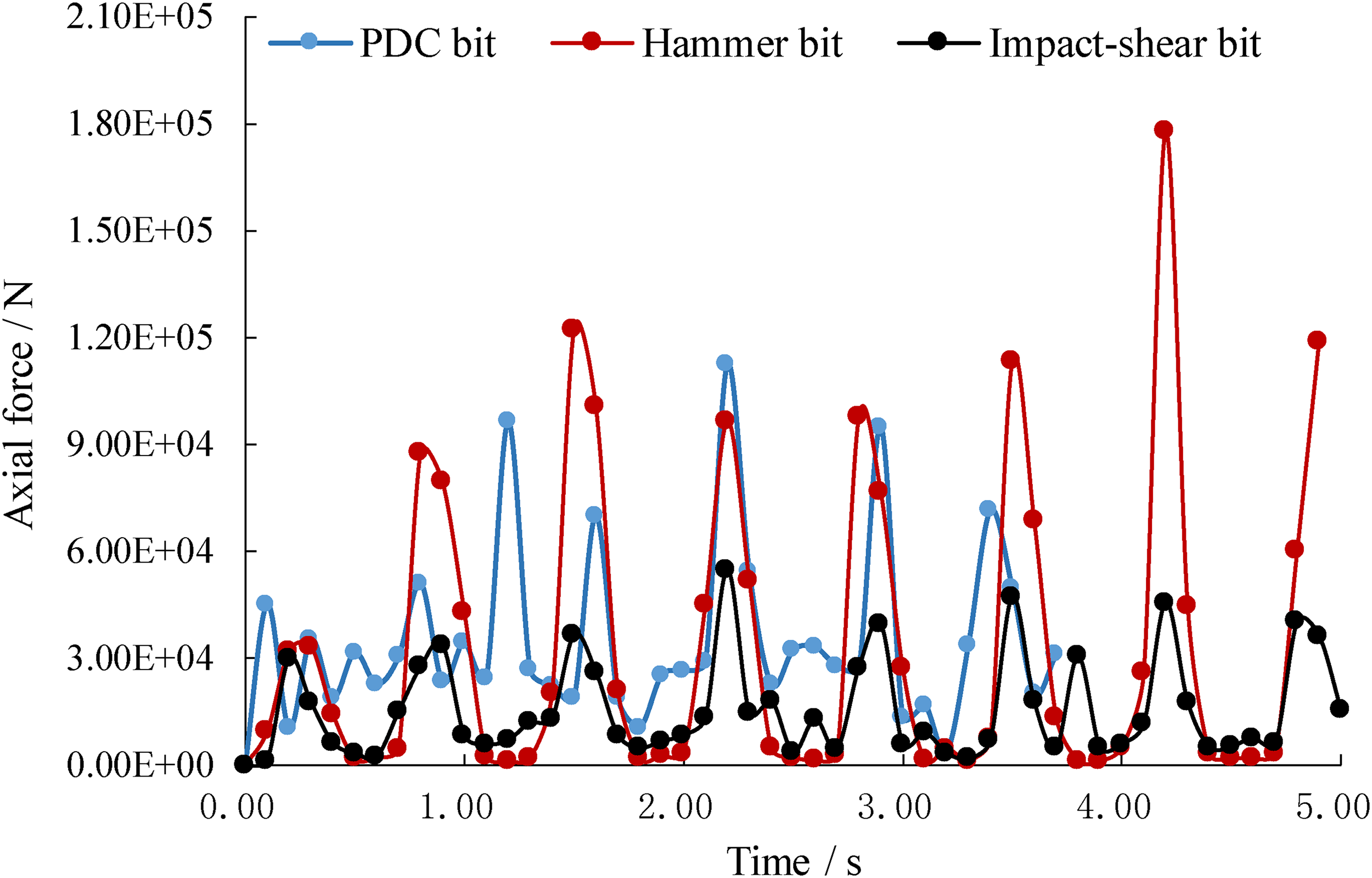
Curves of axial force over time of PDC bit, hammer bit, and impact-shear bit.
By calculation the average value of the axial force, the average axial force of the PDC bit, hammer bit, and impact-shear bit was 20.22 kN, 22.45 kN, and 6.42 kN, respectively. In comparison to the PDC bit and hammer bit, the axial force of the impact-shear bit exhibited a significant reduction of 68.25% and 71.40%, respectively; this remarkable decrement was attributed to the efficient composite rock-breaking method employed by the impact-shear bit.
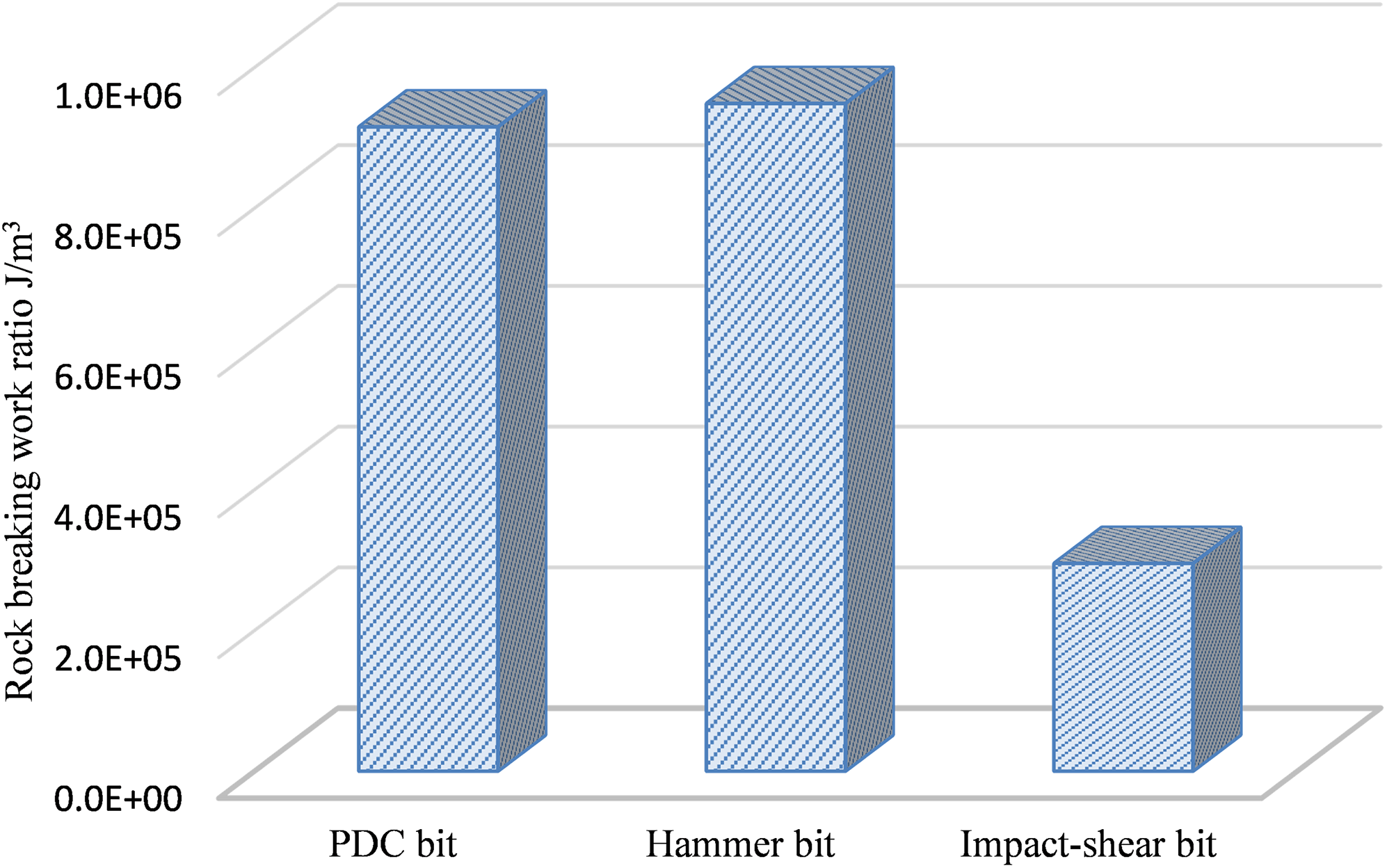
The rock-breaking specific work refers to the energy consumed to break a unit volume of rock, which is not only a physical quantity to measure the firmness of rock but also an index to evaluate the rock-breaking efficiency of the drill bit (Agyei and Tweneboah, 2019). The larger the rock-breaking specific work, the lower the utilization rate of input energy and the lower the rock-breaking efficiency of bit. Therefore, taking the rock-breaking specific work as the target, the rock-breaking effects of the three types of drill bits: PDC bit, hammer bit, and impact-shear bit, were analyzed, and the results are shown in Figure 13.
Histogram of rock breaking specific work of PDC bit, hammer bit, and impact-shear bit.
According to Figure 13, for the hammer bit, the energy required to break per unit volume of rock was the largest, so it has certain requirements for the impact energy of the impactor. Compared with the PDC bit and hammer bit, the rock-breaking specific work of the impact-shear bit was reduced by 67.75% and 68.89%, respectively, which showed that the impact-shear rock-breaking method has great potential in reducing energy consumption during the rock-breaking process.
Bit torque
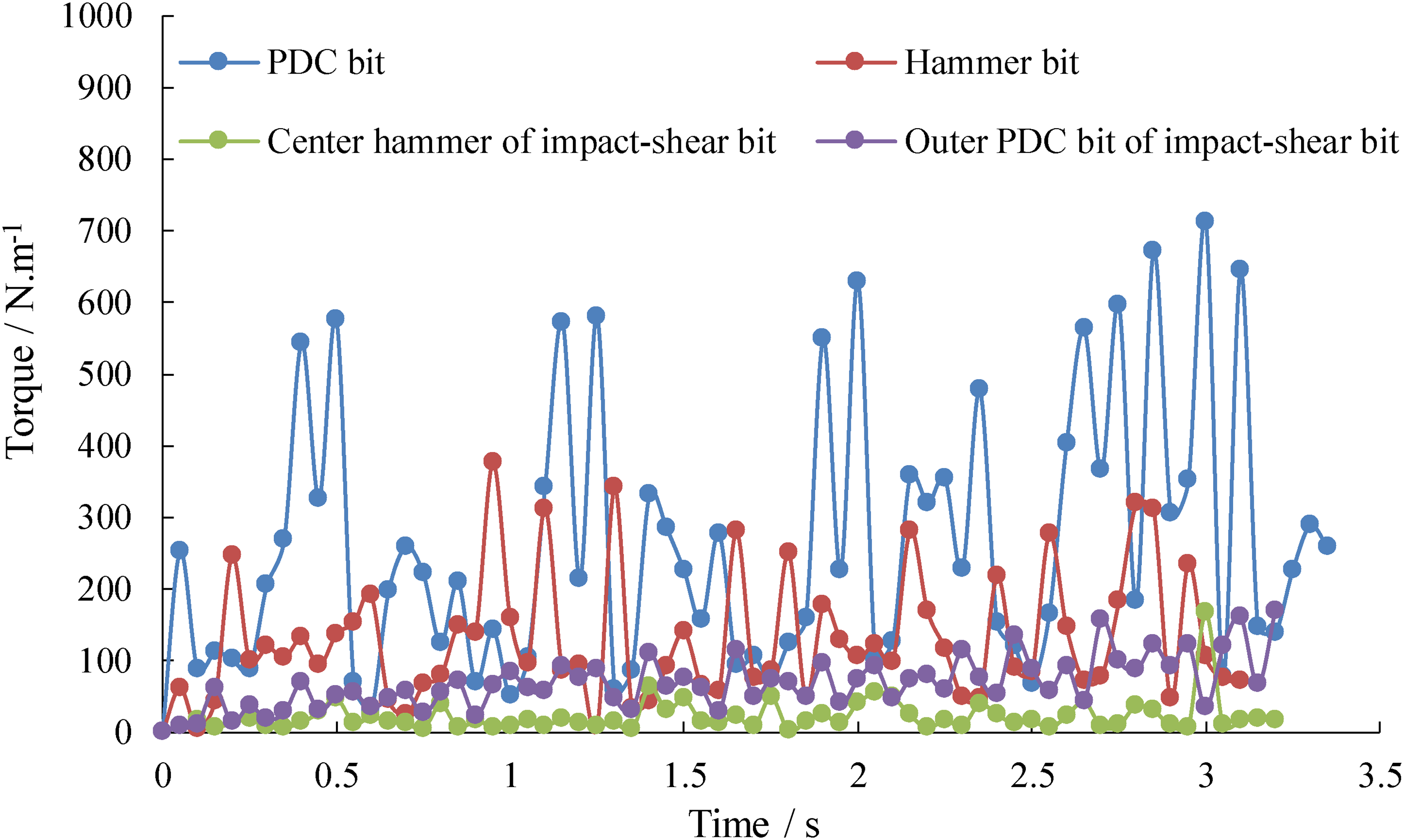
The fluctuation of torque will induce shock to the drill bit, and reflect the intensity of stick–slip vibration of the bit. The greater the fluctuation of torque, the higher the possibility of malignant vibration of the bit, which will lead to a reduction in the bit life (Karasawa et al., 2016). Figure 14 shows the torque curves over time of the PDC bit, hammer bit, and impact-shear bit.
Bit torque curves of PDC bit, hammer bit, and impact-shear bit.
According to Figure 14, the torque of the three types of bits fluctuated over time. In each torque fluctuation period, the increase of torque indicates that the bit is in a viscous stage, at which the torque generated by the bit is inadequate to break the rock, and the rock resistance will cause the bit to slow down or even stop rotating. As the upper drill string continues to twist and accumulate energy, the energy is transmitted to the bit, once the energy reaches the critical threshold for rock breaking, the rock is broken instantaneously, and the bit gets rid of the viscous state and vibrates around the bit's axis at a high speed. At this time, the bit is in a slip state, the torque decreases instantaneously, and the bit exhibits severe stick–slip vibration.
For the three types of bits, the PDC bit showed the largest torque fluctuation amplitude, which indicated that it was subjected to the most serious stick–slip vibration. The torque fluctuation amplitude of the hammer bit was significantly lower than that of the PDC bit, which showed that the impact rotary drilling method was beneficial in reducing the stick–slip vibration of the bit. Notably, for the impact-shear bit, the torque fluctuations of the central hammer bit and the external PDC bit were the most gentle, and their fluctuation amplitudes were much smaller than that of the PDC bit and hammer bit. Compared with the PDC bit and hammer bit, the average torque of the central hammer bit was reduced by 91.79% and 83.36%, respectively, and the average torque of the external PDC bit was reduced by 74.54% and 48.38%, respectively. This suggests that, for the combined impacting and shearing rock-breaking method, the stick–slip vibration of the bit can be greatly weakened, the risk of malignant vibration of the bit is dramatically reduced, and the continuity of rock breaking of the bit is enhanced, which is very beneficial to improving the drilling performance and extending the service life of the bit.
Rock stress
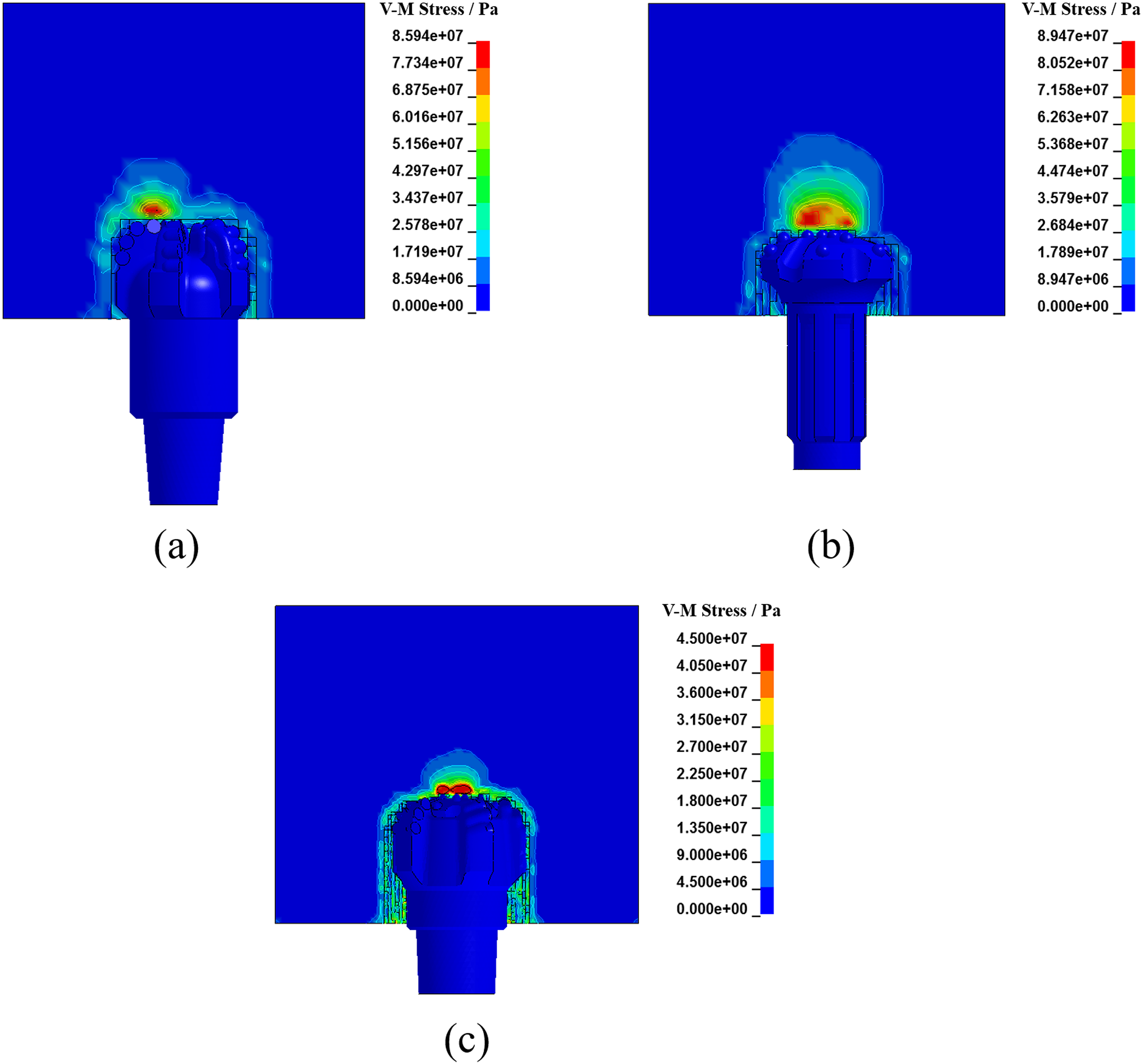
Taking the instantaneous stress field of rock as an object, the typical stress response characteristics of rock under the action of PDC bit, hammer bit, and impact-shear bit were studied, as shown in Figure 15.
Rock stress response nephogram of (a) PDC bit, (b) impact bit, and (c) impact-shear bit.
According to Figure 15, under the action of the PDC bit, the stress on the rock mainly diffused to the interior of the rock around the profile of the bit's blade crown, and the peak stress was concentrated in the contact area between the blade's nose and the rock. Under the impact of the hammer bit, the stress was transmitted deeper into the rock, the peak stress was centered on the dense nucleus and protruded into the rock in an approximate semicircle shape. Under the action of the impact-shear bit, the peak stress on the rock was centered on the dense nucleus formed by the central hammer bit, and the stress distribution of rock corresponding to the external PDC bit was more uniform, which can avoid stress concentration on the external PDC bit and protect PDC cutters effectively. Moreover, the stress value on the rock under the action of the impact-shear bit was significantly lower than that of the PDC bit and hammer bit, which indicated that the pre-crushing action of the central hammer bit can release the internal stress of the rock well, the stress of the rock unit in the hole wall was relatively reduced, and the rock was more easily to be broken.
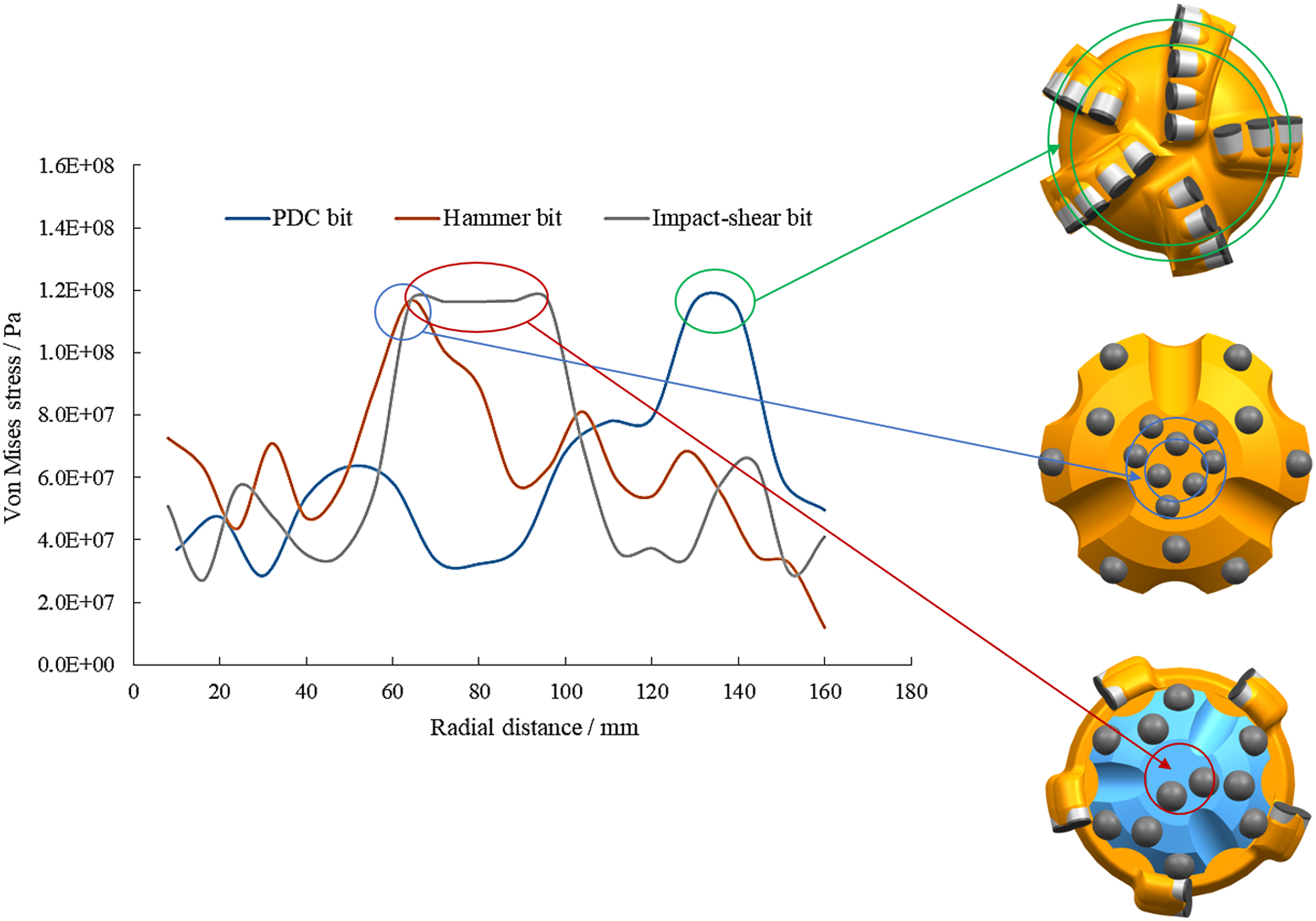
Starting from the rock unit corresponding to the left end of the bit and ending with the rock unit corresponding to the right end of the bit, the rock units were selected in turn along the radial direction of the bit, and the maximum equivalent stress change curve on the rock unit can be obtained, as shown in Figure 16.
Maximum equivalent stress change curve on the rock unit.
According to Figure 16, for the PDC bit, the maximum equivalent stress on the rock was located at the radial position of 120–140 mm, which corresponded to the nose and shoulder area of the bit blade (the area surrounded by the green ring in Figure 16), this indicated a relatively poor drillability of the rock in this area, the PDC cutters corresponding to this area were subjected to the largest rock breaking resistance, which was consistent with the actual wear characteristics of the PDC cutters on the bit (Ma et al., 2023). For the hammer bit, the maximum equivalent stress on the rock was located at the radial position of 60–75 mm, which corresponded to the middle cutter area of the bit (the area surrounded by the blue ring in Figure 16), this indicated a relatively poor drillability of the rock in this area, and a large force was required to realize the rapid breaking of the rock in this area. With the volume breaking of the rock in this area, cracks were generated and expanded inside the rock, the maximum equivalent stress of the rock corresponding to the side cutter of the bit was significantly reduced, and the rock was more easily broken. For the impact-shear bit, the maximum equivalent stress on the rock was located at the radial position of 60–100 mm, which corresponded to the middle region of the central hammer bit (the area surrounded by the red ring in Figure 16), this indicated that the force required to breaking the rock in this area was comparatively high. With the volume breaking of the rock in this area, the rock stress was released, the maximum equivalent stress of the rock units associated to the external PDC bit was significantly reduced, and the rock breaking force of the external PDC bit was minimal. This observation underscores the profound positive impact of the central hammer bit's pre-impact effect, which can effectively reduce rock strength and improve the overall rock-breaking efficiency of the bit.
Field test of impact-shear bit
A Φ153-mm impact-shear bit was developed, and the field test was carried out in Yuntai Mountain, Baishui County, Shaanxi Province. In the field test, a ZDY 3200S split drilling rig with a rated power of 37 kW and a rated torque of 3200 N·m was used, and a BW320 mud pump with a rated power of 30 kW, a maximum displacement of 320 L/min, and a maximum pressure of 8 MPa was used. Figure 17 shows the field test photo of the impact-shear bit.
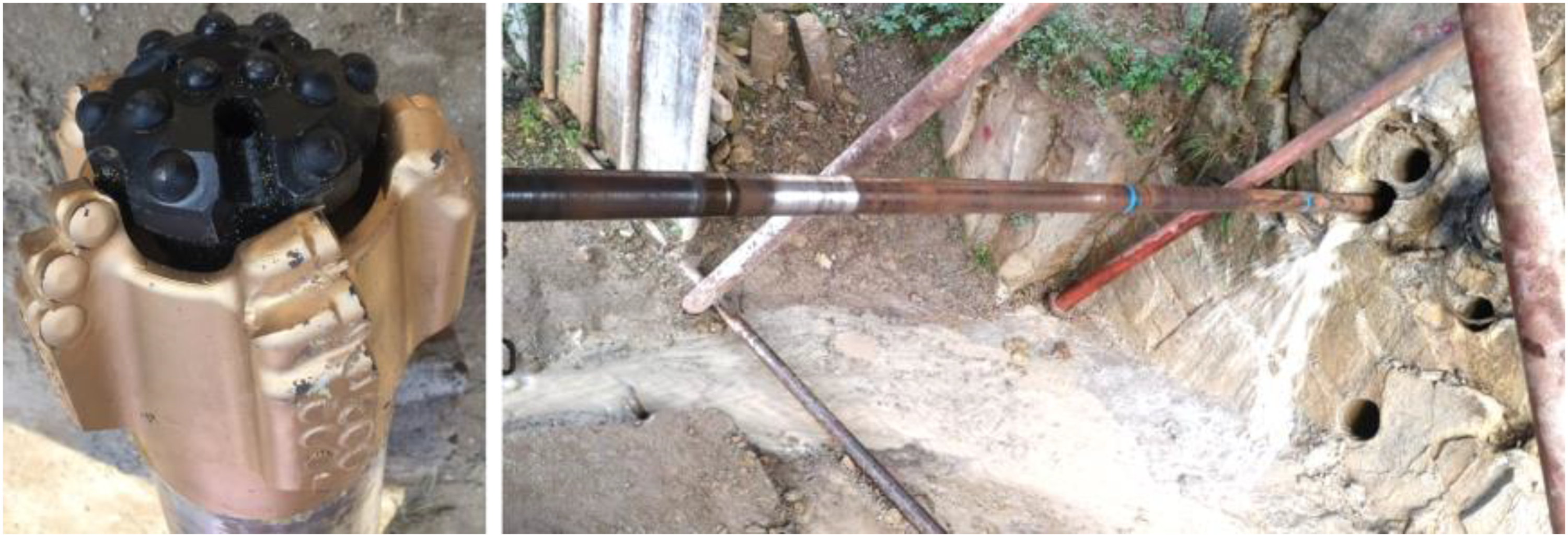
Field test photo of impact-shear bit.
The drilled rock was mainly sandstone, and its compressive strength was 70–90 MPa. The rocks were characterized by high hardness, strong abrasiveness, and poor drillability. After drilling for 12 m, the bit stopped drilling and was lifted out of the borehole; the wear characteristics of the bit and the characteristics of the cutting were observed.
In the field drilling, the pump pressure was set to 2 MPa, and the flow rate was set to 230 L/min; the average ROP of the bit was 9.5 m/h; the weight on the bit and rotational speed showed no influence on the ROP within a certain range. Figure 18 shows the photos of the bit after use and the cuttings.
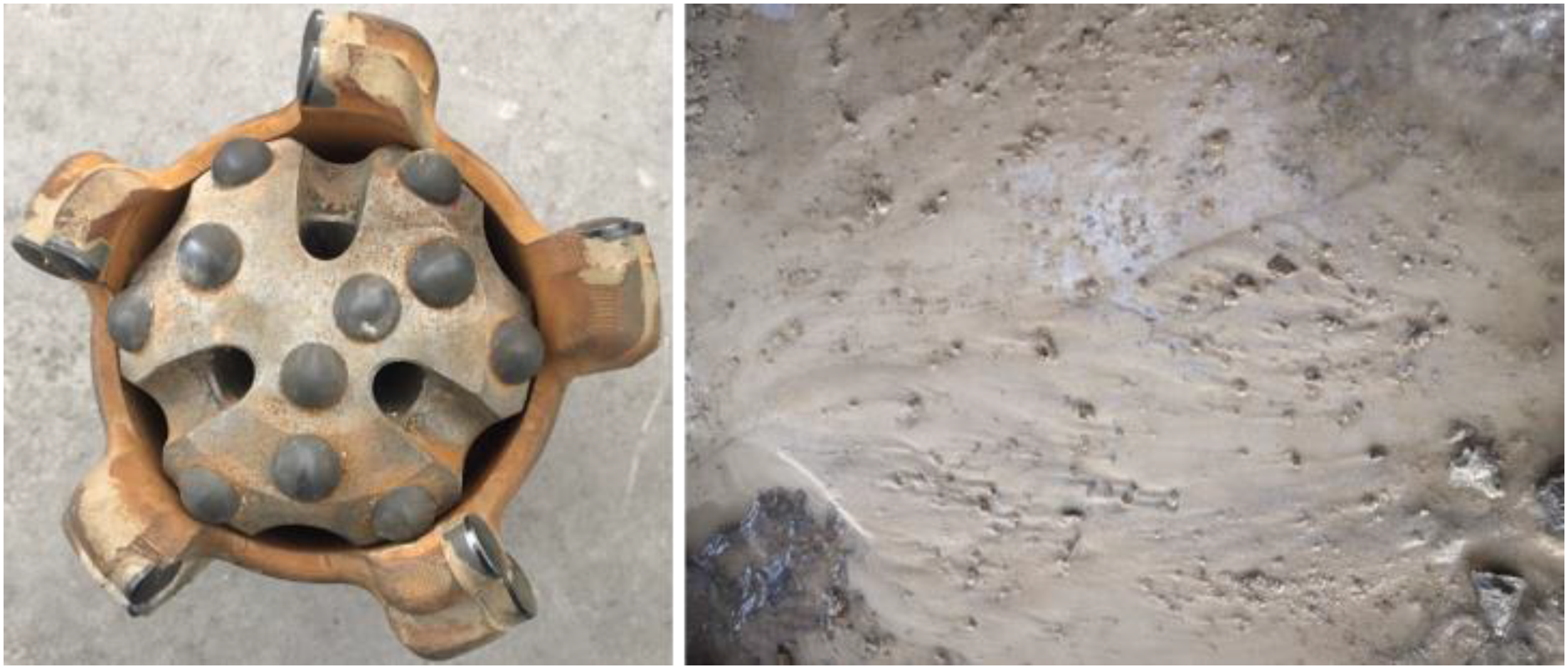
Photos of the bit after use and cuttings.
As can be seen from Figure 18, the center cutters of the central hammer bit were worn, and the tips of the cutters were worn into a cone shape from a circular arc shape, while the cutters of the external PDC bit were almost not worn, which shows that the pre-impact effect of the central hammer bit can release rock stress well, reduce the rock breaking force of the external PDC bit, and effectively protect the PDC cutters.
The cuttings presented two forms: granular and powdery. The impact of the central hammer bit caused the rock to be crushed in volume, and granular cuttings were formed, while the rotary action of the external PDC bit sheared and ground the rock, and powdery cuttings were formed, which proved that the impact-shear bit has both impact and shear effects in the process of rock breaking.
At the same time, the drilling test of Φ153 mm PDC bit was carried out in this area. Similarly, the bit stopped drilling after being drilled for 12 m. The average ROP of the PDC bit was 6.8 m/h, and the PDC cutters on the blade nose and shoulder area were seriously worn (as shown in Figure 19). Compared with the PDC bit, under the same drilling footage, the average ROP of the impact-shear bit was increased by 39.7%, and the time cost was reduced by 284%, which proved the superiority of the impact-shear bit in speeding up and increasing efficiency.
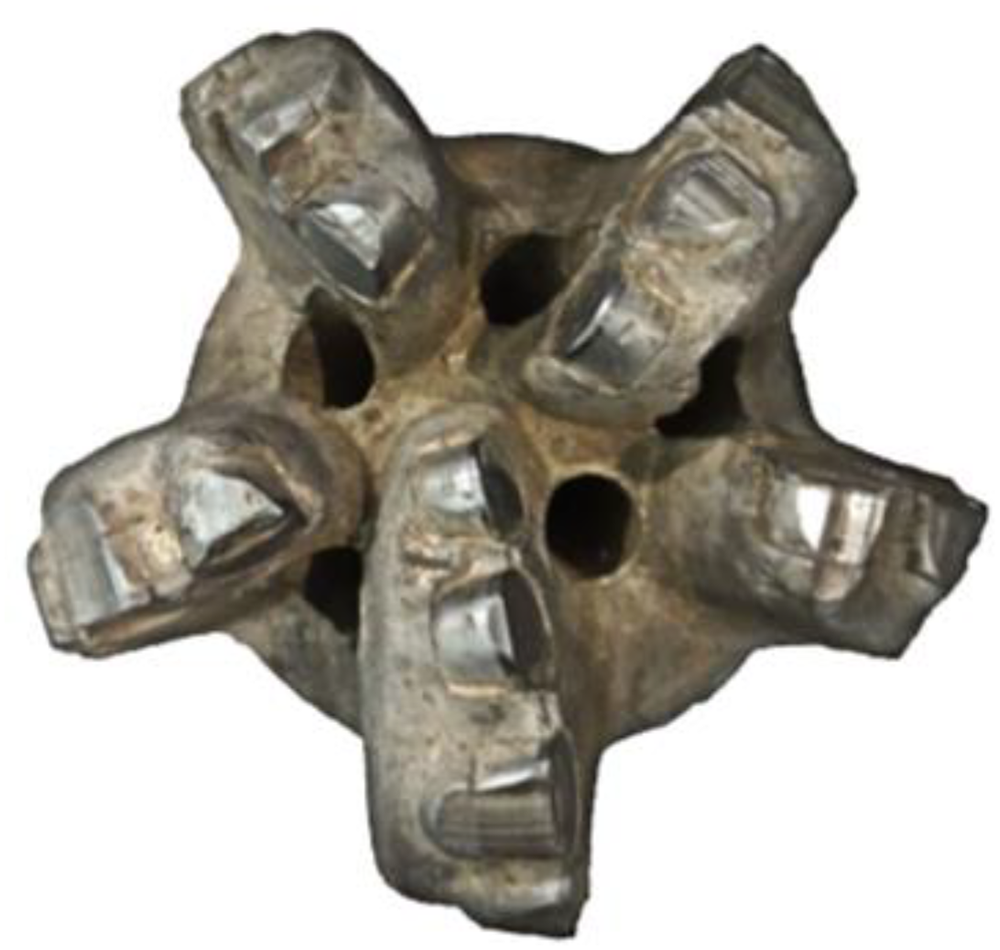
Photo of PDC bit after use.
Conclusion
According to the mechanical theory of rock breaking, the mechanical behavior of rock was described by the RHT constitutive model, and the simulation model of the full-size drill bit was established by the finite element method. The results show that:
Compared with the PDC bit and hammer bit, the impact-shear bit can slow down the fluctuation of drilling force, weaken the stick–slip vibration of the bit, reduce the rock-breaking energy consumption, and improve the rock-breaking efficiency and life of the bit effectively.
For the impact-shear bit, the pre-impact effect of the central hammer bit can release the internal stress of the rock well; the stress of the rock unit on the hole wall was relatively reduced, making it easier for the external PDC bit to break the rock. It has a very positive effect on improving the rock-breaking efficiency of the bit and slowing down the wear of the external PDC bit.
Footnotes
Declaration of conflicting interests
The authors declared no potential conflicts of interest with respect to the research, authorship, and/or publication of this article.
Funding
The authors disclosed receipt of the following financial support for the research, authorship, and/or publication of this article: This work is financially supported by the Key R&D projects in Shaanxi Province (2024GX-YBXM-525 and 2023-YBGY-319).
