




Abstract
This study investigates the impact of well-being on carbon efficiency in the entertainment market from the perspective of geographic psycholinguistics. To analyze this impact, we employ quantile regression based on the method of moments and spatial econometric models that incorporate economic policy uncertainty. The results highlight the substantial impact of well-being on energy conservation and carbon emission reduction. On one hand, our findings indicate that well-being significantly reduces carbon emissions and exhibits a spatial externality effect. Furthermore, well-being indirectly contributes to carbon reduction by alleviating the adverse consequences of economic policy uncertainty. The rationale behind this relies on psycholinguistic expressions of well-being, which play a crucial role in enhancing the quality of life and serving as psychological foundations for individuals to adopt environmentally conscious actions and low-carbon lifestyles. This exploration is of great significance for understanding the synergistic growth of well-being and the development of the green economy.
Keywords
Introduction
The sustainable development of the global economy and human society has garnered significant attention from both academic and practical communities, yielding numerous intellectual insights. Two keywords frequently mentioned in this context are happiness and greenness, both crucial for achieving sustainability (e.g. Costanza et al., 2016; Elliott, 2012; Lee et al., 2018; Rauschmayer et al., 2012; Rinne et al., 2013). Pursuing happiness is a universal goal, with economic progress deepening our understanding of happiness. Beyond material wealth, people seek satisfaction from spirituality and altruism. With the rise of consumption-driven lifestyles, advancements in manufacturing, services, and the digital realm offer diverse choices, ultimately enhancing overall societal welfare and happiness. Additionally, green development is pivotal in international governance. Annual reports from organizations such as the IEA, UNEP, Climate Action Tracker, Carbon Disclosure Project, and IPCC assess the level of global carbon emissions and provide policy recommendations. Low-carbon economic development, including climate change mitigation (Nyambuu and Semmler, 2020), ecological environmental protection (Dou, 2015), public health improvement (Haines, 2012), energy security enhancement (Kapitonov, 2021; Ren and Sovacool, 2015), and economic transformation innovation (Pan et al., 2023), contributes to green development and long-term human well-being. Moreover, the exploration and innovation of low-carbon economic pathways depend on cooperation between countries (Foxon, 2011).
The rising level of national well-being presents policymakers with a desirable outcome, but it reveals a pressing contradiction between heightened expectations for a better life and the imperative of sustainable development. As societies strive for greater happiness and economic prosperity, the accompanying consumption of resources places significant pressure on efforts to reduce carbon emissions and mitigate environmental degradation. While indicators of human well-being continue to improve, environmental degradation persists, leading to the coexistence of “happier” societies with “more polluted” environments. Addressing this paradox requires a nuanced understanding of the interplay between well-being and environmental sustainability (e.g. Dietz et al., 2009; Venhoeven et al., 2013). While much attention has been given to how environmental improvements enhance well-being (Bonasia et al., 2022; Musa et al., 2018; Qi et al., 2023; Zhong and Chen, 2022), there is a need to explore the reciprocal relationship—how happier societies are more likely to embrace low-carbon development. This exploration must consider the heterogeneous effects of different happiness levels on carbon efficiency across industries and regions. Additionally, there is a crucial need for enhanced communication and cooperation between countries to leverage the collective impact of well-being on low-carbon development at the regional level. In navigating this complex landscape, policymakers must prioritize optimizing policy frameworks and implementing long-term strategies that align the pursuit of happiness with environmental sustainability. By identifying specific aspects of well-being with low-carbon potential, understanding the mechanisms through which happiness contributes to carbon reduction, and fostering regional cooperation to amplify these contributions, policymakers can bridge the gap between happiness enhancement and low-carbon action. Ultimately, this holistic approach will foster a symbiotic relationship between societal well-being and environmental stewardship, paving the way for a sustainable and prosperous future.
Our paper examines the impact of enhancing well-being on carbon emissions from the perspective of the leisure and entertainment industry. The rapid evolution of technology has reshaped the media and entertainment industry, introducing new disruptors for profitable growth. PwC's 24th annual Global Entertainment and Media Outlook provides an in-depth, five-year forecast for the evolving forces shaping an industry on track to reach a $2.9 trillion market by 2027. Newman et al. (2014) highlight the profound link between well-being and leisure and entertainment activities. Increased investment and consumption in this sector are recognized as potential avenues for heightened happiness (Brajša-Žganec et al., 2011; Rieger et al., 2014). Individuals with heightened well-being are prone to expressing intense emotions through engagement in leisure and entertainment activities (Trainor et al., 2010), or even through thrill-seeking behaviors (Ravert and Donnellan, 2021). Within this context, we posit that a focused exploration of how increased well-being affects the carbon emissions of the leisure and entertainment industry is both rational and consequential. This raises a pivotal question: Does an improvement in residents’ psychological well-being contribute to an exacerbation or reduction in carbon emissions? On the one hand, increased investments in recreational facilities may lead to higher carbon emissions in the leisure and entertainment industry. This is because firms prioritize business models over production efficiency to foster competitiveness, lacking incentives for technological innovation (Irfan et al., 2023). Furthermore, this industry, often exempt from stringent environmental standards, impedes a swift transition towards environmentally sustainable practices (Vogel, 2020). On the other hand, heightened happiness drives individual demand for green consumption, compelling firms in the entertainment industry to reconfigure their production structures. Anchored in Maslow's hierarchy of needs (Maslow, 1954, 2021), heightened well-being transcends materialistic and hedonic pursuits. People naturally seek spiritual fulfillment, which is manifested in reverence for nature, social responsibility, and commitment to green consumption and low-carbon lifestyles. This elevated well-being may moderate higher-level needs, leading to shifts in demand preferences and production structures supportive of a low-carbon economy. To address this question, we employ quantile regression (QR) analyses based on the method of moments and integrate spatial econometric models into our analytical framework. Our findings suggest that societies with higher well-being may be more inclined to adopt low-carbon development practices, highlighting the significant impact of well-being on carbon emission reduction.
Furthermore, the psycholinguistic expression of well-being conveys a positive life and emotional state, crucial for individuals’ active participation in environmentally conscious actions, as supported by existing literature. Hence, beyond the earlier clarified direct green impact, we posit that happiness may indirectly contribute to carbon reduction by alleviating the adverse consequences of uncertainty. From a psychological standpoint, well-being inherently embodies the positive attribute of emotional tranquility, mitigating anxiety and elevating psychological expectations. Heightened levels of well-being can dampen irrational consumption expectations spurred by uncertainty on the demand side, and curtail costs associated with panic-induced supply fluctuations, panic-driven production, and surplus inventories on the supply side. Additionally, it can bolster governmental confidence and diminish the potential ramifications of policy uncertainty. The above mechanisms elaborate on the prospect of happiness indirectly influencing a green effect by mitigating uncertainty shocks, primarily from a cost-cutting perspective. Sector-specific cost savings across society are expected to culminate in an overall reduction in societal costs, thereby facilitating effective reductions in carbon emissions. Given that environmental costs constitute a non-negligible portion of total costs, it is reasonable to suggest that an increase in well-being can help mitigate the impact of uncertainty on the green effect. Based on the above analysis, our model incorporates interaction terms between economic policy uncertainty (EPU) and various well-being indicators, enabling a comprehensive analysis of both the direct and indirect impacts of well-being on entertainment carbon efficiency.
In particular, discussing these issues within the framework of developed countries is more practical and effective. On the one hand, the tension between happiness and greenness is more common in developed economies, where inhabitants often seek both a high quality of life and a low-carbon environment, driving the search for better development mechanisms to guide political decision-making. On the other hand, developed countries have well-developed trade and investment networks and a high economic dependence on the rest of the world. This may increase their exposure to global EPU, and policy risks from any of their stakeholder countries may affect them through the network transmission effect. Therefore, their role in mitigating uncertainty through happiness is paramount. Given these considerations, we have taken extra care in selecting our research sample. We choose OECD member countries, which include some of the richest and most developed countries in the world, for the following reasons. Firstly, there is a geographical advantage. The member countries are concentrated on several major continents with different and distinctive geographical characteristics. This advantage facilitates the exploration of spatial effects within each continent based on natural geographic features. Secondly, there are economic advantages. OECD countries have the strength to develop social welfare and green economies, with governments focusing more on higher-order social needs such as livelihoods and the environment. In contrast, studies conducted in economically challenged regions, characterized by “pollution havens” and governmental priorities on economic expansion over environmental preservation, may produce less precise estimations of the overall impact (Esmaeili et al., 2023). Thirdly, there is the advantage of diversity. Member countries are diverse in levels of well-being, cultural atmospheres, and economic conditions. Samples located on different continents can exhibit spatial effects that radiate out to neighboring countries and even other latecomer economies. Thus, studies based on developed countries also provide valuable lessons for developing economies, aiding in the formulation of universally applicable policy recommendations.
The potential contributions of this research to the existing literature are manifold. Firstly, our study is an interdisciplinary attempt that combines sociology and psychology with critical economic questions to deepen the discussion about green development. It seeks to widen the scope of existing studies by incorporating multiple disciplinary viewpoints and delving into the multifaceted facets of this subject. While earlier research on the determinants of green economies has primarily concentrated on policy (Doğan et al., 2022), economic complexity (Balsalobre-Lorente et al., 2023a, 2023b; Rafei et al., 2022), input (e.g. Jahanger et al., 2022; Sinha et al., 2022), efficiency, and knowledge, little thought has been given to the importance of psycholinguistic variables and the possible moderating role of social capital. This interdisciplinary approach provides a comprehensive perspective on economic issues, yielding significant benefits in terms of research quality, practical relevance, understanding of human behavior and complex socioeconomic dynamics, and guiding the formulation and implementation of public policy.
Secondly, our focus is on scrutinizing the catalytic impact of heightened well-being on the reduction of carbon emissions. This study provides valuable empirical insights into the affirmative influence of happiness on low-carbon development and thus filling a significant gap in the literature. Particularly, we explore the societal welfare implications of well-being on carbon reduction from the perspective of the entertainment industry. Our findings suggest a happiness-driven green transition, which involves mitigating the externalities of environmental stress resulting from increased recreational activities, ultimately leading to a net low-carbon effect. To enrich scholarly discourse, our contribution involves providing novel insights into this specific strand of literature.
Thirdly, this study simultaneously analyzes both the direct and indirect impacts of well-being on entertainment carbon efficiency. Particularly, we examine the prospect of well-being indirectly influencing a green effect by mitigating uncertainty shocks and explore its spatial externality. The geographic psycholinguistic network is incorporated into spatial econometric modeling as the spatial matrix, supporting the analysis of the spatial externality of well-being on entertainment carbon efficiency with consideration for EPU. These insights contribute to a deeper understanding of the complex interactions between human psychology, societal factors, and environmental outcomes.
The ensuing structure unfolds as follows. Section “Uncertainty impedes low-carbon development” delves into the theoretical foundation, focusing on the principal mechanisms through which well-being propels carbon emission reduction and the inhibiting impact of uncertainty on green development. It comprehensively explicates why and how happiness can assuage the adverse effects of uncertainty on the low-carbon transition. Section “The alleviating role of well-being” encompasses the research design, providing a detailed exposition of the research framework, data sources, variable selection, and research methodology. Subsequent sections articulate specific modeling and analytical approaches, present detailed findings, and engage in comparative discussions with existing studies. Finally, we consolidate the theoretical contributions and practical implications, offering policy recommendations to comprehensively enhance population well-being, thereby adeptly mitigating the shocks of uncertainty and optimizing its green effects.
Theoretical foundation and hypotheses
Although a substantial body of literature has extensively explored the relationship between happiness and green development (Martin et al., 2020; Venhoeven et al., 2013; Zawadzki et al., 2020), the predominant focus centers on the impact of participation in environmental protection on happiness (Bonasia et al., 2022; Musa et al., 2018; Qi et al., 2023; Zhong and Chen, 2022). The prevailing perspective suggests that engagement in green initiatives enhances individuals’ multidimensional utility levels through the transference effect of psychological capital, wherein heightened psychological satisfaction contributes to increased happiness (Di Fabio, 2017). Nevertheless, a minority of scholars, considering that the primary beneficiaries of green development are future generations, argue that meeting environmental conditions requires significant changes in current lifestyles and production-consumption structures. This transformative process can be arduous and may come at a cost, potentially diminishing the present well-being of the current generation (Prinzing, 2023). Furthermore, discussions on the potential positive effects of increased happiness are relatively scarce. In particular, there is limited literature exploring the impact of well-being on low-carbon development. Scholars in this field tend to prefer acquiring primary data through questionnaire-based methods in constructing happiness indicators (Moeller and Stahlmann, 2019). However, this approach, despite its focus on specific demographic groups within particular regions (e.g. Cloutier et al., 2014; Knez et al., 2020), age brackets (e.g. Bartolo et al., 2023; Hakoköngäs and Puhakka, 2023), or occupational spheres (e.g. Basinska and Rozkwitalska, 2022), does not fully mitigate unsystematic errors arising from selective biases and other chance factors in the sample. Consequently, the resulting conclusions exhibit limitations in their broader applicability.
This paper addresses the aforementioned research gaps in the following aspects: Firstly, it delves into the impact of heightened happiness on carbon emission reduction, while also spotlighting the role of psychological capital. This expansion enriches existing literature by broadening the scope of research contents. Given that psycholinguistic factors can serve as the primary mechanism influencing ex-ante behavior (where adopting green practices enhances well-being), they may also continue to exert influence ex-post (where well-being further motivates pro-environmental actions). This dual role has the potential to amplify the green effects of happiness and even generate positive spillovers. Secondly, we use a standardized OECD database to comprehensively measure well-being levels. This database furnishes a wealth of sample data from developed countries and breaks down happiness into secondary indicators. Such an approach not only facilitates the formation of more specific and robust conclusions but also helps preemptively exclude potential interference from extreme risk factors prevalent in developing markets. Thirdly, adopting a spatial perspective, we combine geographic location with psychological factors to construct a geo-psycho-linguistic image within the region. This framework enables a more refined estimation of the spatial externality of national well-being and its green effects.
In the following subsections, we conduct a thorough mechanism analysis and propose hypotheses, elucidating the role of happiness in steering carbon emission reduction from demand-side, supply-side, and governmental perspectives. Furthermore, we explore the mechanisms through which uncertainty hinders the progress of a low-carbon economy. The analysis demonstrates that well-being acts as a mitigating factor against the adverse impacts of uncertainty on the green economy, operating through confidence, efficiency, and the time-compressing effect.
The low-carbon effect of well-being
This subsection focuses on the distinctions in the carbon mitigation effects of well-being across diverse social strata or roles, specifically scrutinizing the demand side, the supply side, and society at large. Psychological capital, corporate social responsibility (CSR), and the role of modeling effect are all intangible elements operating at the ideological stratum, contributing subjective willingness and support, respectively, for individuals, enterprises, and the nation as a whole to embrace a green metamorphosis.
Demand-side perspective: the role of psychological capital
The objective of this subsection is to explore the catalyzing influence of heightened levels of consumer or public well-being on the development of a low-carbon economy from a demand-oriented perspective. Delving into the intrinsic attributes and psychological nuances inherent in happiness, this paper posits that psychological capital plays a pivotal moderating role in these dynamics. Elevated well-being levels may strengthen public environmental consciousness while simultaneously shaping consumers’ preferences. It's imperative to scrutinize the impact of happiness on the low-carbon paradigm through the lens of fulfilling specific psychological needs (e.g. Avey et al., 2010; Basinska and Rozkwitalska, 2022; Culbertson et al., 2010; Gao et al., 2020; Rabenu et al., 2017; Tanaka and Tokimatsu, 2020).
Psychological capital moderates well-being and thus affects the low-carbon economy through two main mechanisms. One aspect lies in its capacity to guide individuals towards engaging in environmental conservation or propel them towards a low-carbon lifestyle. Numerous studies propose that the environmental influence of happiness operates primarily by enhancing an individual's intrinsic well-being, including overall satisfaction, preference for heightened moral values, and altruism. Ibáñez-Rueda et al. (2020) points out that individuals with elevated life satisfaction are more likely to align with nature. Subsequent literature confirms that positive life and emotional states are crucial psychological foundations for environmentally conscious actions (Zhang et al., 2020; Zhang et al., 2023). In contrast, Welsch and Kühling (2018) argue that the positive correlation between happiness and the cultivation of a green image depends on the satisfaction individuals derive from conforming to societal norms. Binder et al. (2020) assert that happiness drives proactive environmental protection by intensifying individuals’ pursuit of virtue and self-fulfillment. Moreover, Ouyang et al. (2022) and Prinzing (2023) suggest that happiness significantly enhances individuals’ environmental motivation in both the private realm, characterized by reciprocal attributes, and the public domain, distinguished by altruistic attributes (Sulemana, 2016). In essence, happiness influences environmentally friendly conduct by augmenting residents’ social interactions, fostering reciprocity, and strengthening their appreciation for fraternity and altruism. Consequently, facilitated by the mediation of psychological capital, happiness promotes the widespread adoption of low-carbon lifestyles through guiding and reshaping residents’ lifestyle choices.
Furthermore, another aspect of happiness's influence on decisions for low-carbon consumption extends beyond a singular dimension, intertwined with various emotional factors. For instance, Kadic-Maglajlic et al. (2019) propose that self-identity and consumer values act as more nuanced mediators of happiness-induced green consumption. Nguyen et al. (2022) delved deeper, segmenting subjective well-being into psychological fulfillment and social identity, unveiling that happiness permeates eco-friendly consumerism through the interplay of psychological factors and social capital. Additionally, when scrutinizing the impact of public service announcements on elevating residents’ happiness levels, Nguyen et al. (2022) contend that disseminating environmental cues via official channels such as mass media can fortify the role of happiness in fostering eco-friendly consumer behavior. Moreover, engaging in environmentally conscious behaviors itself contributes to an individual's heightened sense of purpose and accomplishment, potentially elevating expectations of future happiness (e.g. Venhoeven et al., 2013; Zawadzki et al., 2020). One can attain heightened utility by increasing environmentally friendly consumption (Helm et al., 2019; Welsch and Kühling, 2011). Importantly, as this happiness stems from genuine and fulfilling sources rather than transient indulgences, such a positive feedback loop serves to amplify an individual's environmental awareness. Overall, the escalating demand for low-carbon products among consumers propels a paradigm shift on the supply side, inducing a green transformation that culminates in society-wide carbon emission reduction. In essence, the demand-side green transformation acts as the catalyst propelling the low-carbon overhaul of the overall industrial structure.
Supply-side perspective: the role of CSR
This segment aims to elucidate the positive impact of elevated corporate well-being on carbon mitigation from a supply-side perspective. Understanding the correlation between corporate well-being and the development of low-emission business models requires recognizing CSR. The inclination of a firm to embrace such responsibilities is intricately tied to its pursuit of sustainable operational frameworks. The importance of environmental protection within CSR for the pursuit of low-carbon footprints stands as a cornerstone of the environmental, social, and governance paradigm, embodying a commitment to harmonize economic and ecological realms (Yuan et al., 2022). Considerable research has explored how CSR contributes to low-carbon growth in various industrial settings, including circular economies, green innovation, environmental trust, and green finance (e.g. Gong et al., 2021; Le, 2022; Padilla-Lozano and Collazzo, 2022; Sung et al., 2021).
Considering the micro-level behavior of enterprises, companies that prioritize CSR are more likely to generate eco-friendly innovative ideas, leading to technological breakthroughs supporting green production methods and environmental progress (e.g. Broadstock et al., 2020; Chkir et al., 2021; Liu et al., 2021; Martinez-Conesa et al., 2017; Zhou et al., 2019). Simultaneously, such organizations demonstrate an enhanced readiness to align with existing environmental statutes, catalyzing and propagating models of self-regulation (e.g. Gond et al., 2011).
In aggregate, improvements in the collective welfare of a nation stimulate the vitality and enduring advancement of its corporate entities (Wangchuk and Tobgay, 2019). This phenomenon can be attributed to the positive influences of subjective well-being on the elevation of corporate valuations, amplifying the contribution of social responsibility to share performance through external multipliers (Edmans, 2012). Enhanced corporate social engagement reciprocally boosts staff well-being levels (Valentine and Fleischman, 2007). Given that heightened job satisfaction propels personnel to invest greater effort toward corporate ambitions (Barakat et al., 2016; Espasandín-Bustelo et al., 2021), contented employees may exhibit a proclivity for sustaining corporate environmental consciousness and enhancing overall well-being. This, in turn, indirectly guides corporate leadership toward socio-environmental accountability through bottom-up dissemination.
Governmental perspective: the role of modeling effect
The next discussion aims to elucidate how the inter-governmental role-modeling effect positively modifies the ecologically conscious manifestations of well-being, focusing on the national level.
Countries with higher well-being levels tend to prioritize long-term and global issues such as altruism, universality, externalities, and globalization. Consequently, it is not uncommon to witness larger or more developed nations proactively assuming international ecological responsibilities. Undoubtedly, a significant aspect of this proactive stance can be attributed to these nations’ superior technological efficiency, allowing them to achieve economic growth without compromising environmental degradation (Cavendish and Anderson, 1994; Zerbe, 1970). More importantly, however, is the role-modeling effect that largely explains their motivation to actively reduce carbon emissions. Governments of such nations often display heightened concern for their international standing, perceiving the proactive implementation of environmental policies, including carbon emission reduction, as emblematic of their influential stature and responsibilities as formidable entities (Pellizzoni, 2004). Citizens within these nations are more inclined to rally behind their government's ecological initiatives, bolstered by the emotional value derived from an augmented sense of well-being (Zhang et al., 2020). Driven by this emotional resonance, these governments take the initiative to intensify environmental conservation endeavors, setting a global benchmark by establishing parameters such as maximal carbon emissions per unit. Simultaneously, through the role-modeling effect, they endeavor to attract more nations to partake in global ecological governance initiatives, fostering a collective commitment to comprehensive environmental stewardship. In essence, inter-governmental role-modeling enhances the efficacy of global environmental protection while concurrently circumscribing the conduct of these “green pioneers.” Hence, the role-modeling effect stands forth as a pivotal explanatory mechanism for the reduction of the carbon footprint of well-being at the national level.
Concretely, nations acting as paradigms of happiness can influence other nations to adopt environmentally conscious behaviors through two primary avenues. Firstly, there is the initiative to propel technological innovation, thereby sustaining and propelling global development. Technological innovation, in itself, contributes to ecological advancement (Jiakui et al., 2023; Wang et al., 2021). It not only fosters green development but also augments international competitiveness (Borsatto and Amui, 2019; Li et al., 2019; Wang et al., 2022), fortifying their leadership and role-model image. Secondly, a concerted effort should be made to foster and orchestrate increased international cooperation. Being a role model does not entail unidirectional output or unilateral contribution; seeking collaboration can also be construed as a means to actualize the role-model effect. Role model nations can refine and transform their happiness values through international collaboration centered on sustainable practices. Innately, humans possess a proclivity for altruism and fraternity, a propensity more fully realized at elevated levels of well-being, encompassing health and happiness. Pro-social behavior stands as a conspicuous expression of human well-being, epitomizing an amalgamated state of physical, mental, and social well-being (Cloninger and Zohar, 2011). Cooperation serves as a prime manifestation of such behavior. The active embrace of cooperative behaviors is often perceived as an outward manifestation of an elevated quality of life and improved mental disposition (Cloninger, 2004). Empirical studies corroborate that positive affective states contribute to heightened cooperation (Tov and Diener, 2009). Translating this to the national level, countries with heightened happiness levels experience a greater propensity to partake in international cooperation, and cooperation for carbon reduction tends to be more efficacious. This includes initiatives such as carbon pricing, carbon transfers, carbon trading, and other eco-cooperative policies established within international carbon markets. The efficacy of such collaboration lies in the expansion of the carbon cooperation scope, augmenting the applicability of emission reduction mechanisms and magnifying their spillover effects. This transformative process promotes the shift of carbon emission reduction actions from domestic obligatory regulatory constraints to outcomes regulated by the international market. It is the intangible, efficient, and vast market power, along with international climate and eco-cooperation, that drives the growth of a low-carbon economy on a societal level (e.g. Chateau et al., 2022; Cramton et al., 2017a; Cramton et al., 2017b; Genovese, 2021; Gu et al., 2022; Maher and Symons, 2022; Schultes et al., 2018; Thube et al., 2022).
Based on the above analyses, the first hypothesis is as follows:
Uncertainty impedes low-carbon development
This section delves into the examination of the repercussions of uncertainty on the societal landscape, with a keen focus on elucidating the mechanisms through which uncertainty impedes the evolution of a low-carbon economy.
Primarily, at the micro level, uncertainty casts its influence on both demand and supply, exerting a pivotal impact on the overall carbon performance of society. On one hand, it causes an increase in irrational consumer demand, best exemplified by panic buying (Aljanabi, 2023), making demand decisions ineffective. The bullwhip effect is an example of how this phenomenon causes significant volatility in the supply chain through various transmission mechanisms (e.g. Li and Liu, 2013; Pastore et al., 2020). On the other hand, the defensive stance of the supply side, characterized by excessive production and material accumulation, begets a transient surge in manufacturing pressure. Since manufacturing is a carbon-intensive industry with many production and processing steps that always produce large amounts of greenhouse gases, increasing production naturally raises total carbon emissions (Jin and Han, 2021). Moreover, the escalation of inputs within the transportation chain is prone to unleashing a substantial carbon footprint (Bai et al., 2020). Notably, transportation, particularly in urban domains, serves as a prominent greenhouse gas emitter, primarily through motor vehicles (Hoehne and Chester, 2016). Additionally, the structural rigidity inherent in the major modes of manufacturing and business infrastructure limits the feasibility of swift and adaptable adjustments for the vast majority of nations (Xie et al., 2017).
At the macroeconomic level, uncertainty prompts transformative decision-making within the governmental sphere. This not only results in a comprehensive restructuring of the nation's industrial framework in the short term (Mostafiz et al., 2022) but also jeopardizes well-established and progressively evolved realms of productivity and eco-efficiency (e.g. Ganhammar, 2021; Gu et al., 2021; Sohail et al., 2022). For example, some governments may strategically allocate resources toward the rapid development of the military and equipment sectors due to concerns about national security. This is done to mitigate the negative effects of uncertainty on the military by quickly replenishing defense materials. However, these heavy industries stand as pivotal initiators to carbon emissions (Lin and Xu, 2020; Liu et al., 2018). Notably, under policy support, these industries may lack incentives for green innovation, with elevated carbon emissions becoming an inherent byproduct of increased industrial output. Furthermore, in the pursuit of establishing a new frontier in international competitiveness, numerous nations may hastily engage in the development of high-precision science and technology domains (Hughes, 1992). This impulsive innovation trajectory may result in diminished output performance and increased environmental costs. The nation's intrinsic developmental foundation and the accumulation of innovation capital may not be sufficiently robust to support innovative endeavors in cutting-edge disciplines, such as the forefront of digital domains. A significant concern is that the current global rush to become the digital leader, shrouded in uncertainty (Tseng et al., 2021), could result in digital pollution due to insufficient investment in science and eco-friendly digital systems (Hu, 2023; Li et al., 2021; Ma et al., 2022). Carbon emissions from the digital sector may stem from both the manufacturing and utilization of digital devices and the research and development (R&D) processes integral to digital technologies (Agrawal, 2021).
Therefore, a question arises here accordingly: What moderates the link between decision-making under uncertainty and the rise in carbon emissions? Or, why do decisions made under uncertainty tend to culminate in sub-optimal outcomes? The answer may lie in the dimension of time effects. It is acknowledged that negative shocks, though profound, are often transitory, causing inefficiencies due to temporal compression. This scarcity of decision time, rather than the uncertainty itself, acts as the “original sin.” Existing literature has predominantly explored the resource-based view and learning theory. Advocates of the resource-based view suggest that time compression diminishes the substitutability of resources and impedes learning, leading to hasty and imprudent strategies (Dierickx and Cool, 1989; Jiang et al., 2014; Knott et al., 2003). This aligns with the mechanism where uncertainty drives precipitous development and unbridled innovation. On the other hand, learning theory posits that time pressure hampers the capacity to learn and diminishes the returns derived from the learning process. Decision-makers face higher external expectations, fueling anxiety that undermines decision-making efficiency, resulting in a lack of analysis of the situation and shortsighted decision-making (Pacheco-de-Almeida and Zemsky, 2007). The micro-level irrational behaviors and macro-level radical policy formulations mentioned above reflect how reduced decisional efficiency ultimately results in commensurately subpar decisional performance.
The alleviating role of well-being
The previous section of the review focuses on clarifying the role of uncertainty as a hindrance to the advancement of a low-carbon economy. In this context, three critical mechanisms come to light: confidence, efficiency, and the time-compressing effect. Well-being serves as a mitigating factor against the adverse impacts of uncertainty on the green economy through these three facets. We argue that heightened levels of well-being possess the potential to strengthen confidence, enhance efficiency, and alleviate the temporal constraints linked to uncertainty.
Enhancing confidence
At the individual level, well-being plays a pivotal role in bolstering personal confidence and alleviating the specter of panic, preventing irrational responses in the face of uncertainty at its origin. This individual-centric perspective serves as the primary and immediate rationale for the positive impact of happiness on uncertainty reduction. Transitioning to the social sphere, the influence of well-being encourages individuals to engage in pro-social behavior through various means, with proactive socialization being a notable example (Cloninger and Zohar, 2011). For instance, individuals experiencing heightened well-being tend to utilize social networking platforms to reinforce and share their joy, while simultaneously seeking to absorb the happiness of others through active information seeking (Choi and Toma, 2014). This reciprocal exchange of information synergistically enhances societal well-being. These psycholinguistic expressions of well-being play a crucial role in improving the quality of life and serve as psychological foundations for individuals to adopt environmentally conscious actions and low-carbon lifestyles. Therefore, within this conceptual framework, happiness facilitates the establishment and proliferation of an information ecology at the societal level. Communication grounded in this information ecology contributes to reducing information asymmetry, thereby mitigating the deleterious impact of uncertainty on low-carbon development (Lu et al., 2010; Nagar et al., 2019).
Expanding this analysis to the national level, elevating the national well-being index emerges as an effective strategy to bolster government confidence and maintain stability in people's expectations. The impacts of policies on a nation's overall economic trajectory are undeniable, with high EPU predicting adverse consequences for industrial progress (e.g. Gu et al., 2021). From a corporate perspective, policies themselves constitute external disruptions marked by an increased likelihood of unpredictability and uncertainty. Consequently, high policy uncertainty begets commercial instability, compelling enterprises to allocate a portion of their capital as a precautionary reserve to address the potential emergence of unforeseen policies. This injudicious allocation of passive capital burdens firms, diverting resources that could otherwise be directed toward green innovation, hindering their capacity to explore low-carbon technologies more expansively. In contrast, within the regulatory framework of well-being, enterprises can anticipate a degree of stability in economic policies in the short term. The confidence fosters a tendency among firms to allocate more capital towards ventures characterized by relatively extended cycles, such as green innovation and sustainable development (Chen and Ma, 2021). Hence, well-being serves as a stabilizing force, mitigating the volatility in economic policy by enhancing government confidence and, in turn, alleviating the obstacles posed by uncertain policies to the trajectory of green development.
Improving efficiency
From a business perspective, the correlation between well-being and higher job satisfaction not only motivates employees to invest more time and effort (Barakat et al., 2016; Wright et al., 2007; Wright and Cropanzano, 2000) but also aligns them more closely with the company's overarching strategic imperatives related to sustainability (Bauman and Skitka, 2012; Green, 2010). This results in a noticeable increase in overall work efficiency—a phenomenon appropriately labeled “intrinsic efficiency.” Viewed from an industrial standpoint, the beneficial effects of happiness extend to the stimulation of technological innovation, leading to efficiency gains (Jiakui et al., 2023; Wang et al., 2021). Coined as “external efficiency,” this aspect underscores the catalytic role of happiness in fostering innovation within industrial frameworks. A body of scholarly investigations attests to the affirmative consequences of efficiency enhancement on the path of low-carbon development. On one hand, improvements in efficiency help reduce the use of resources and the time required for production, directly lowering the amount of unwanted outputs (Uddin and Rahman, 2012). On the other hand, efficiency improvements offer a partial reprieve from the temporal constraints inherent in the time-squeeze effect or, conversely, empower agents of innovation to harness time dynamics constructively. For instance, heightened efficiency acts as a bulwark, preventing the lag in the R&D process from trailing the accelerated depreciation of knowledge (Gregory and Rawling, 2016).
Mitigating time-effect challenges
Well-being not only directly alleviates temporal pressure but also mitigates the detriments associated with the time-compressing effect by guiding the trajectory of innovation and optimizing international collaborative endeavors.
First of all, integrating well-being into the global paradigm provides nations with an effective means to enhance the equity of the international division of labor and foster peaceful international relations. Strengthening multilateral communication systems, as advocated by Scott (1986), facilitates this endeavor. Collaborative international division and cooperation play a pivotal role in mitigating the impact of time pressures, enabling countries to carefully advance their policies in alignment with their unique resources and long-term strategies. This approach allows them to navigate the challenges posed by volatile short-term changes resulting from global uncertainty. The optimization of this collaborative division serves to avert the pitfalls of transient centralized competition in specific domains, such as the precarious arms race.
Additionally, this paper adds a new dimension to happiness-induced innovation, proposing that dis-economies caused by time compression can be addressed through the promotion of reverse innovation. As expounded earlier, countries experiencing developmental lags are particularly susceptible to panic, especially when confronted with stimuli like uncertainty. However, lacking the innovation infrastructure to swiftly devise high-end products or pioneering business models, these nations confront a dilemma. Nevertheless, the impact of well-being on innovation aims to redirect the innovation trajectory in these countries towards emerging markets, catalyzing the initiation and advancement of reverse innovation models (Govindarajan and Euchner, 2012; Govindarajan and Ramamurti, 2011; Immelt et al., 2009; Ramamurti, 2009).
The second hypothesis is formulated as follows:
Meanwhile, in the realm of psycholinguistics, the garden path phenomenon is recognized as a transient and partial ambiguity in the language parsing process, drawing increasing attention from psycholinguists in recent years (e.g. Kleinschmidt and Jaeger, 2015; Ullman, 2004). We posit that, extending beyond linguistic contexts, the comprehension of well-being as a manifestation of social psychological capital also displays a certain inertia, susceptible to changes influenced by the surrounding environment. Individuals’ conception of well-being may be shaped by their existing or initial environment, indicating cognitive inertia. However, as circumstances evolve, this entrenched perception may encounter challenges, necessitating reassessment and reinterpretation. This phenomenon mirrors the cognitive process of information processing and reconstruction encountered when navigating through a garden path sentence.
The context of one's surroundings frequently shapes their perception of their own well-being within a particular nation. While subjective factors may make it difficult to evaluate one's own quality of life, looking at how happy neighbors are provides a relatively objective benchmark. Thus, residents indirectly gauge well-being within their own region by observing the broader environment, a phenomenon demonstrating the profound influence of neighborhood surroundings on individuals’ understanding of well-being. This influence is rooted in prevailing ideologies and cultural frameworks, shaping residents’ perceptions of the relationship between people and their geographical context, consequently influencing their behaviors. Residents within a particular geographical proximity, such as those inhabiting in the same continent, often share common conceptions of well-being, leading to similar behavioral patterns, lifestyles, and social interactions. This fosters a collective “Geographic Psycholinguistics Image” that governs interactions both within and between countries. However, evolving understandings of well-being, such as the recognition of emotional and spiritual fulfillment beyond hedonism or wealth, can reshape this image. Such shifts in perception, originating in one locale, propagate like ripples across a lake, altering the shared consensus on lifestyle and values. The emergence of new notions of well-being, focusing on environmental consciousness and sustainable development, can trigger a ripple effect, reshaping the “Geographic Psycholinguistics Image” and influencing interactions within geographic spaces. This ripple effect extends beyond individual well-being to advocate environmental protection and community development, reflecting an evolving spatial understanding of well-being and its broader impact on societal structures. This process elucidates how the diffusion of happiness-driven carbon reduction efforts unfolds across spatial scales.
Consequently, it becomes imperative to provide support for the analysis of the spatial externality of well-being on entertainment carbon efficiency, particularly in the context of EPU, to unravel the nuanced interplay between well-being, linguistic understanding, and the environmental context. To verify this assumption, we propose the third hypothesis.
Materials and method
This study aims to explore the relationship between well-being and carbon efficiency in the entertainment market. In order to analyze this connection, we construct the dependent variable—entertainment carbon efficiency—as the ratio of CO2 emissions from arts, entertainment, and recreation to GDP. The primary independent variables encompass 24 subcategories of well-being derived from indicators in the Better Life Index (BLI). The BLI assesses the well-being of OECD member states, focusing on 11 crucial topics related to material living conditions and quality of life. These manifold factors influencing happiness, as argued by Ferguson et al. (2018), provide necessary underpinnings for happiness to actualize the low-carbon effect across finance, market, policy, and ideological domains. Specifically, these topics include housing, jobs, work-life balance, income, health, safety, education, community, and so on. To facilitate aggregation and comparison, the values of each indicator are normalized within the 0 to 1 range. In cases where an indicator gauges a detrimental aspect of well-being, such as unemployment and environmental pollution, the normalized values are deducted from 1. Thus, heightened values of the indicator signify a superior level of well-being across societies. Additionally, to comprehensively analyze the direct and indirect impact of well-being, we employ QR based on the method of moments and incorporate interaction terms with uncertainty. These interaction terms involve various well-being indicators and the EPU Index by Baker et al. (2016). The inclusion of EPU not only facilitates the exploration of the interplay between uncertainty and green development but also validates well-being as a mitigating factor for the adverse effects of uncertainty on low-carbon development. Table 1 provides an overview of all variables from 2013 to 2018, and variables are transformed by logarithm for empirical studies.
Overview of variables.
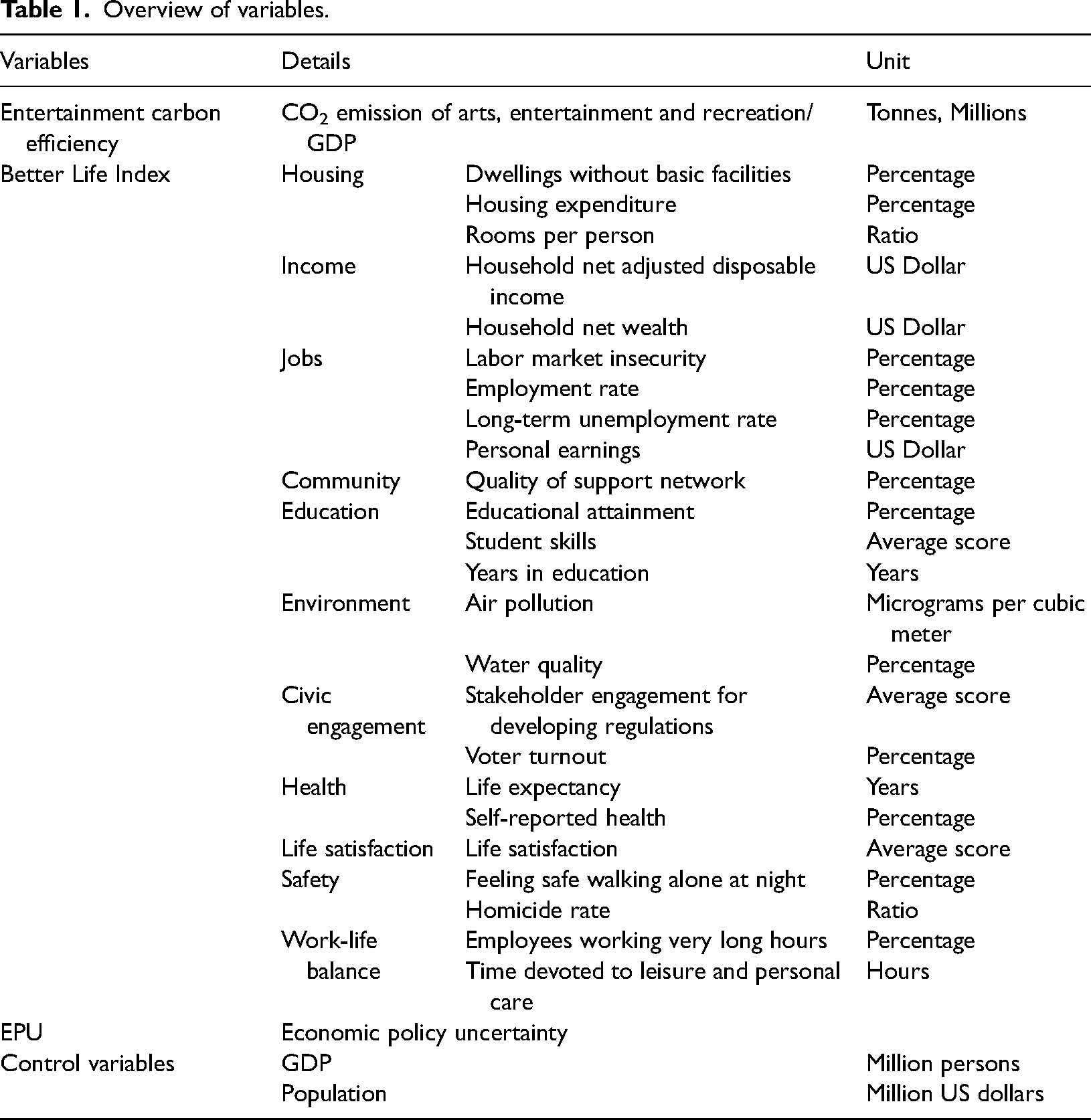
To examine our hypotheses, we utilize both conventional and QR approaches. The empirical investigation of the direct impacts relies on panel data generalized least squares (GLS) regression in Models 1 and 4. For enhanced robustness, we employ QR in Models 2 and 5, as well as the multiple-moment quantile regression (MMQR) model in Models 3 and 6. The models are formulated as follows:


Furthermore, this paper is grounded in the perspective of geographical psycholinguistics. We propose that, beyond linguistic realms, the understanding of well-being as a form of social psychological capital also exhibits a certain inertia, subject to change based on the surrounding environment. The geographic psycholinguistic network is structured based on the geographic distribution of countries located on the same continent, with adjacency to psycholinguistic behavior and ideology, by using 3D virtual reality technology. The geographic psycholinguistic network is then imported into spatial econometric modeling as the spatial matrix, providing support for analyzing the spatial externality of well-being on entertainment carbon efficiency based on EPU.
First, we initiate our exploration with the simplest scenario, where the transition towards low-carbon practices within one's own nation influences the adoption of eco-friendly practices among neighboring countries through spatial spillovers. In this scenario, the influence is both spatially expansive and positively impactful. This notion is intuitive: a region prioritizing environmental conservation is likely to disseminate this ethos to its neighboring regions; similarly, a nation successfully reducing its carbon footprint can catalyze a learning effect among its neighbors. We hypothesize that the carbon efficiency within the entertainment sector of a nation is influenced not only by its own determinants (well-being) but also by the eco-conscious behaviors of its spatial neighbors—other nations located on the same continent. Consequently, we employ the spatial autoregressive (SAR) model (in Model 7) to examine this relationship, positing that the dependent variable of one spatial unit is influenced by the eco-friendly actions of its neighboring spatial units.


Results
In this section, we will present detailed regression results and discuss our findings thoroughly, focusing on direct effects, as well as indirect and spatial effects, respectively.
Direct effects
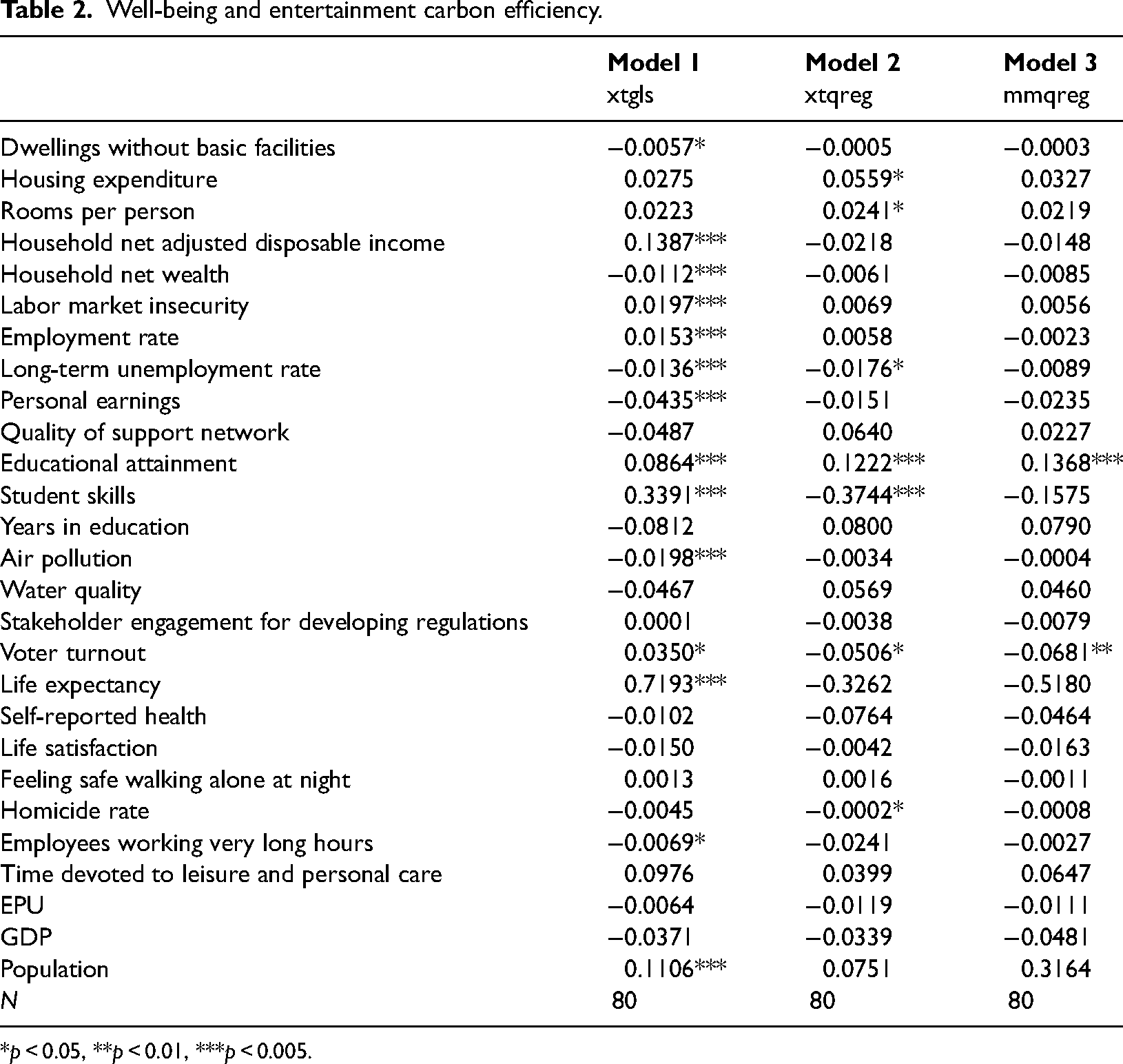
Table 2 displays the results of both general and QR analyses. Model 1 provides empirical results based on panel data GLS regression. The findings highlight the direct impact of well-being on entertainment carbon emission reduction, thereby enhancing carbon efficiency and confirming
Well-being and entertainment carbon efficiency.
*p < 0.05, **p < 0.01, ***p < 0.005.
Upon examining Models 1 to 3 collectively, we anticipate the estimated coefficient of well-being to exhibit a notably negative association. In essence, a heightened level of happiness is projected to diminish a country's carbon efficiency within the leisure and entertainment industry. Secondary indicators aligning with this expectation primarily encompass dwellings without basic facilities, household net wealth, long-term unemployment rate, personal earnings, air pollution, and voter turnout. These statistically significant indicators can be further classified into two principal categories.
The first category pertains to broad income considerations, chiefly comprising four sub-dimensions: dwellings without basic facilities, household net wealth, long-term unemployment rate, and personal earnings, which correspond to the first-level indicators of Housing, Income, and Jobs, respectively. These metrics reflect both nominal income levels and growth potential and significantly influence household wealth. High incomes correlate positively with heightened well-being (e.g. Ferrer-i-Carbonell, 2005), attributed to augmented purchasing power and increased utility in consumption. Moreover, sufficient savings afford individuals greater financial security (Feldstein, 1976). Individuals with greater happiness tend to exhibit stronger environmental inclinations, displaying a subjective propensity towards adopting low-carbon behaviors (Nguyen et al., 2022). High incomes make it possible to support these kinds of projects with money, facilitating the procurement of relatively pricier low-carbon products, which often entail significant upfront green innovation and R&D inputs (D'Souza et al., 2006; Drozdenko et al., 2011; Sana, 2020). Furthermore, higher incomes enable proactive engagement in environmental initiatives, including participation in social green donations.
The second category encompasses the maturity of the legal and regulatory framework, comprising two indicators, air pollution and voter turnout, falling under the Environment and Civic Engagement first-level indicators, respectively. These metrics serve as proxies for the robustness of policy-level oversight concerning environmental pollution and the significance of civil rights and societal well-being. Enhancements in this framework can effectively bolster residents’ perceptions of fairness and impartiality, consequently fostering greater happiness (e.g. Cavazos-Rehg, 2007). Strengthening laws and regulations can fortify the enforcement of low-carbon policies, thereby increasing their efficacy, while happier individuals exhibit a greater propensity for compliance (Zhang et al., 2020). Estimates for both types of indicators strongly support
Conversely, primary indicators reflective of the national education level, such as educational attainment and student skills, predominantly demonstrate a significant positive impact, suggesting that heightened investment in education may inadvertently elevate the carbon emission efficiency within the country's entertainment industry. This outcome diverges somewhat from prevailing research conclusions. Theoretically, educational access can augment environmental awareness and individuals’ willingness to embrace the benefits of low-carbon development (Chankrajang and Muttarak, 2017; Meyer, 2015; Suárez-Perales et al., 2021; Vicente-Molina et al., 2013). Consequently, elevated well-being levels should amplify the motivational effect of environmental consciousness on low-carbon behaviors. The discrepancy arises because our study focuses on entertainment carbon efficiency, where increased education levels, while potentially mitigating overall carbon intensity, incentivize residents to pursue cultural and leisure activities, thereby amplifying the carbon intensity within this domain instead.
Indirect effects
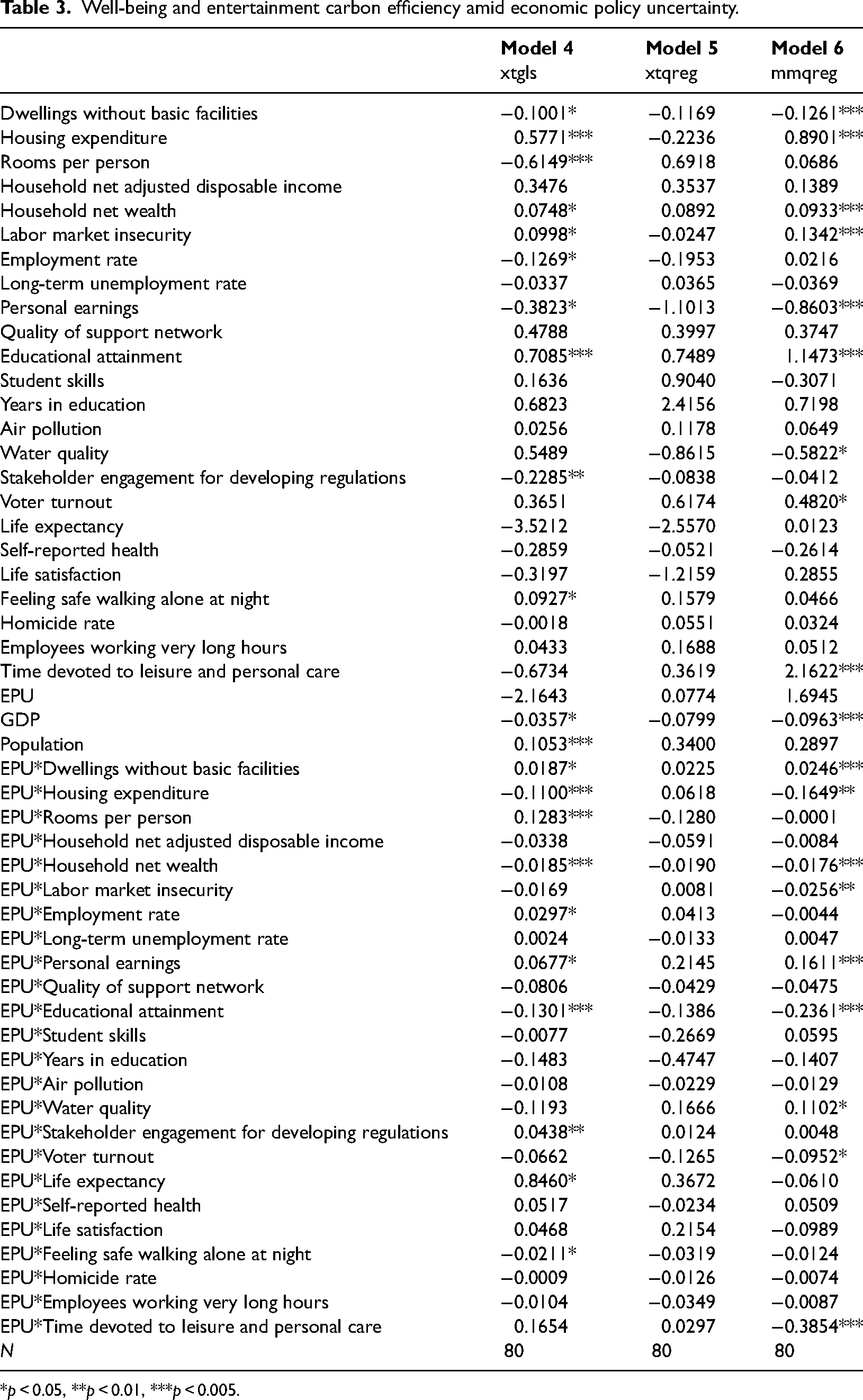
Our study also systematically investigates the indirect impact of well-being on reducing entertainment carbon emissions by mitigating the adverse effects of EPU. The results are presented in Table 3. To conduct this analysis, we integrate the interaction terms between EPU and various well-being indicators in Model 4 to Model 6. Model 4 reveals that, while certain well-being indicators may not directly decrease carbon emissions in the entertainment industry, their interactions with EPU significantly contribute to reducing carbon emissions. These findings illustrate that, in the presence of uncertainty, well-being plays a pivotal role in enhancing confidence and mitigating panic, thereby preventing irrational responses to uncertainty. And these characteristics are particularly pronounced in secondary well-being indicators, such as housing expenditure, household net wealth, educational attainment, and feeling safe when walking alone at night. Specifically, our analysis reveals a reversal in the estimates of secondary indicators related to Education subsequent to the inclusion of uncertainty (i.e. EPU*Educational attainment). This suggests that well-being stemming from higher educational attainment has the potential to mitigate the carbon emission efficiency of the entertainment sector, particularly under the moderating influence of uncertainty. We posit that elevated levels of education contribute to an overall enhancement in residents’ utility (e.g. Cohen, 2006), as it equips individuals with the capacity to extract positive elements from various life and work scenarios. These elements serve as crucial factors in mitigating uncertainty, by fostering individual rationality and psychological resilience, and by strengthening interconnected social capital dynamics. Rational individuals are inclined to diminish purely hedonic consumption tendencies, prioritize the cultivation of eco-friendly leisure activities, and consciously release low-carbon signals within their social networks, consequently contributing to a gradual reduction in entertainment carbon emissions through the network effect. Therefore, the aforementioned regression results provide adequate support for
Well-being and entertainment carbon efficiency amid economic policy uncertainty.
*p < 0.05, **p < 0.01, ***p < 0.005.
Meanwhile, it's noteworthy that well-being variables with a direct negative effect, such as household net wealth, exhibit a positive interaction term with the EPU, revealing that the initial carbon reduction effect prompted by well-being might be somewhat attenuated in the presence of uncertainty. This observation also partly indicate the significance of EPU as a pivotal transmission mechanism through which well-being influences low-carbon patterns. Notably, upon integrating uncertainty into the model, the initial estimates lose significance or deviate from intuitive expectations. This underscores that the impact of happiness on entertainment carbon emission primarily hinges on the alleviation of EPU. Nevertheless, the overall effects remain negative, thereby consistently reinforcing the fundamental conclusion that well-being fosters green economic development. Indicators such as dwellings without basic facilities, rooms per person, employment rate, personal earnings, and stakeholder engagement for developing regulations all exhibit this characteristic, encompassing diverse facets of well-being.
Next, we present the corresponding results of QRs conducted based on the method of moments, incorporating interaction terms between well-being and uncertainty. For robustness, we apply QR in Model 5 and the MMQR model in Model 6. The coefficients on the key variables remain significant and exhibit the expected signs, indicating the role of well-being in mitigating the uncertainties that hinder the progression of green development. Therefore, we find sufficient evidence that well-being has a significant effect on carbon emissions, either through a direct impact or an indirect influence by mitigating uncertainty shocks.
Spatial effects
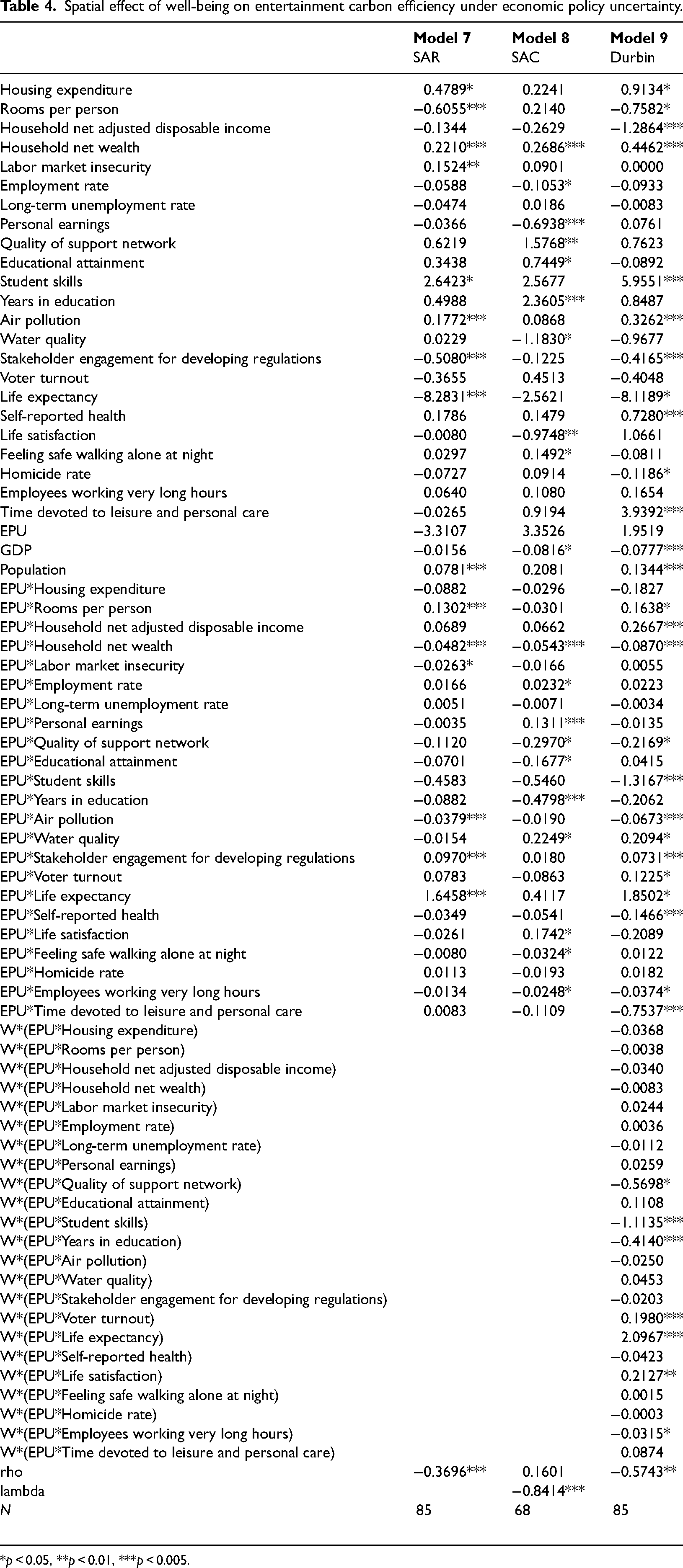
The analysis of the spatial effects of well-being on entertainment carbon efficiency is detailed in Table 4. Figure 1 represents the 3D geographic psycholinguistic network based on the geographic distribution of countries located on the same continent, with adjacency to psycholinguistic behavior and ideology, using virtual reality technology. To investigate the spatial externality of well-being on carbon efficiency, we utilize the SAR model, SAC model, and spatial Durbin model in Models 7 to 9, respectively. Through spatial autoregression in Model 7, we reconfirm that well-being either directly promotes a reduction in carbon emissions or indirectly mitigates adverse effects resulting from uncertainties. Income indicators (e.g. Rooms per person, EPU*Household net wealth), regulatory frameworks (e.g. stakeholder engagement for developing regulations, the EPU*Air pollution interaction), and educational metrics (e.g. EPU*Student skills) all exhibit a mitigating impact. Moreover, the SAR Model illustrates a negative spatial causal effect on the carbon efficiency of neighborhoods, as the spatial spillover coefficients of the explanatory variables (rho) demonstrate significant negativity. This signifies that a reduction in local entertainment carbon intensity corresponds to a decline in carbon emissions from the same industry within the vicinity. This result aligns with our earlier discussion on the spatial externality of carbon emission reductions.
In Model 8, the SAC model is applied to the analysis, revealing a negative spatial error effect, with lambda significantly negative. This finding suggests that the “green good luck” of a country resulting from higher levels of happiness is inversely correlated with the error terms of surrounding countries. This contrasts with previous findings in the literature, which propose that unobservable economic shocks and cognitive revolutions have similar effects across regions through geographic psycholinguistic propagation, implying positive spatial correlations between error terms. Our estimation results indicate that among the unobservable yet influential variables on uncertainty and entertainment carbon efficiency, certain factors related to scarce resources may enhance the reverse incentives between regions, primarily reflecting a broadly defined competitive effect. This somewhat unexpected outcome serves as a cautionary note for policymakers. Unobservable factors are often overlooked by authorities due to their challenging manipulability and demonstration of performance, especially if they also favor local development. However, these factors may subtly undermine the welfare of neighboring countries, hindering the establishment of a coordinated regional development mechanism. Therefore, countries should monitor these hidden factors while promoting their own development. Despite the positive externalities generated by inter-regional ideology, neighboring countries may suffer more swiftly and profoundly when competitive effects are present. Furthermore, the diversity, high value-added nature, innovation, and porous boundaries of the arts and recreation sector can amplify interregional competition based on high-end services, leading to a broader propagation of negative incentives in the sector, especially when the underlying factors are manifold, undetectable, and unobservable (Figure 1).
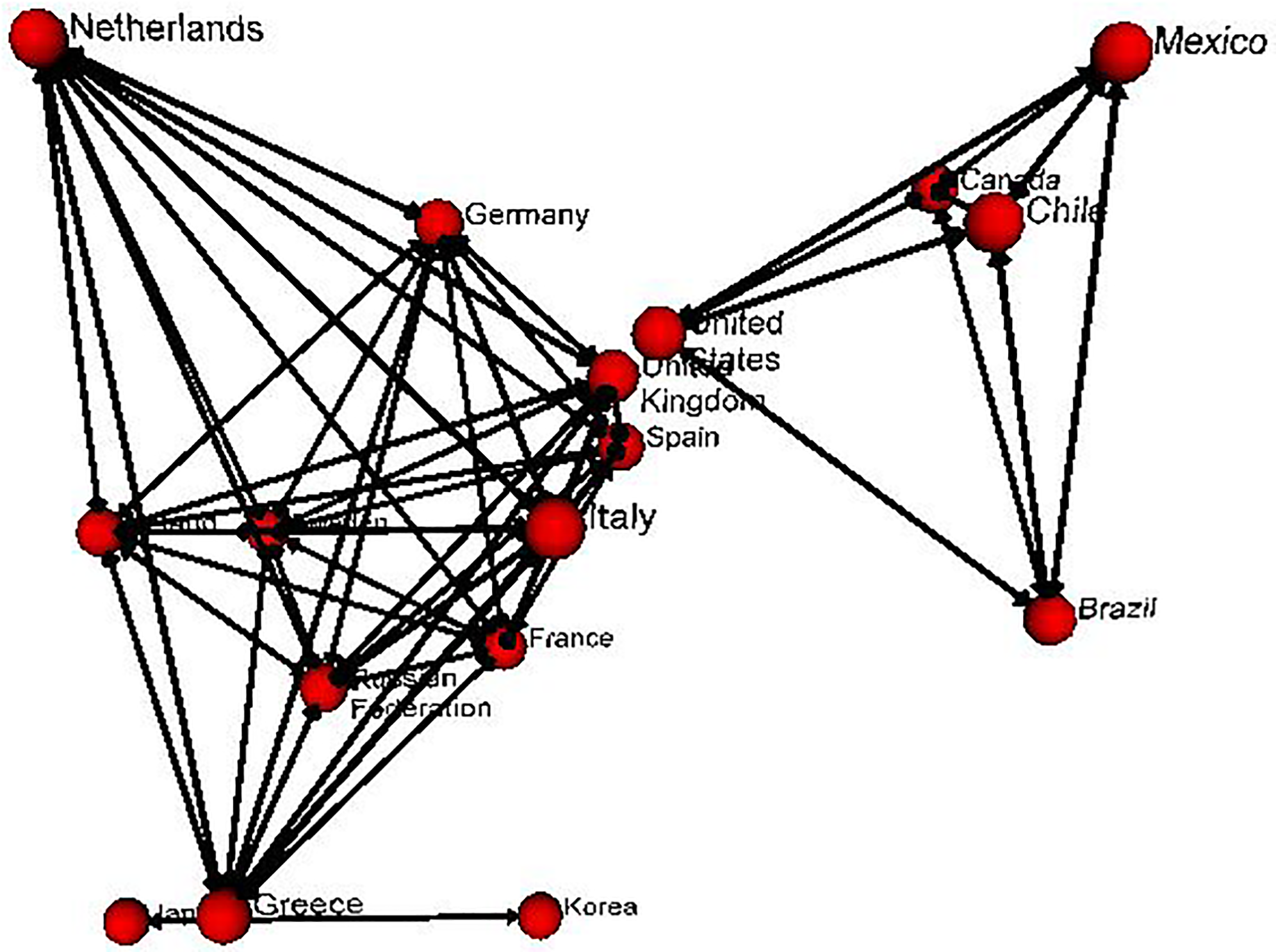
Geographic psycholinguistic network of countries within the same continent.
In Model 9, the spatial Durbin model establishes that carbon efficiency exhibits a negative SAR effect on neighboring countries, consolidating our findings in Model 7. Notably, the spatial lag terms of the explanatory variables also reveal noteworthy insights. Indicators pertaining to the level of education, such as W*(EPU*Student skills) and W*(EPU*Years in education), manifest significant negative spillovers. This implies that enhancing the proficiency of a country's populace, thus the overall well-being, not only diminishes its own entertainment carbon intensity but also exerts a favorable impact on the low-carbon trajectory of neighboring regions. This phenomenon underscores the positive externality of education, extensively deliberated in scholarly literature (e.g. Wantchekon et al., 2015), particularly in the context of low-carbon economic development. Augmented educational attainment is inclined to furnish individuals with heightened cognizance of low-carbon technologies and foster a predisposition towards fostering supportive and environmentally conscious communities. Additionally, education-related improvements in analytical prowess lessen the negative effects of uncertainty-induced irrationality and apprehension. Given our presumption that countries within a continent share a congruent “Geographic Psycholinguistics Image,” the mechanism through which well-being curtails entertainment carbon efficiency by alleviating uncertainty resonates harmoniously with neighboring nations. These countries exhibit a degree of homogeneity concerning their susceptibility to regional policies, underlying attitudes towards uncertainty, and propensities for adopting remedial measures, particularly in an industry as imbued with linguistic, cultural, and ideological elements as arts, entertainment, and leisure. Therefore, the empirical results presented above confirm the validity of
It is also interesting to note that the coefficient of the control variable GDP is significantly negative in both Tables 3 and 4, suggesting that improving the macroeconomic situation can help reduce the carbon intensity of the entertainment industry. A favorable economic situation fosters a heightened sense of stability and security among the populace while also bolstering positive expectations for the future, thereby elevating the overall well-being of the country's citizens (e.g. Tella et al., 2003). Moreover, a favorable economic backdrop, characterized by robust output and minimal external debt, empowers governments to allocate greater fiscal surpluses towards bolstering green initiatives. The positive impact of public expenditure on fostering a low-carbon economy is evident (Han et al., 2022), particularly in catalyzing the low-carbon transformation of high-value-added sectors such as recreation and leisure. Consequently, this macro-environmental support aligns with the populace's pursuit of a greener lifestyle, underscoring the symbiotic relationship between economic prosperity and environmental stewardship.
Spatial effect of well-being on entertainment carbon efficiency under economic policy uncertainty.
*p < 0.05, **p < 0.01, ***p < 0.005.
Conclusion
This paper delves into the influence and mechanisms of national happiness levels on the entertainment carbon efficiency, examining four dimensions: direct and indirect effects, local impacts, and spatial dynamics, while also considering the moderating role of EPU. Our findings indicate that varied facets of happiness not only directly diminish carbon emissions from the local entertainment sector but also indirectly aid carbon reduction by mitigating uncertainty. Moreover, spatial analyses reveal significant spatial lag effects for both the explained and explanatory variables. Drawing from the aforementioned conclusions, we propose the following policy recommendations, grounded in three key perspectives: the reinvigoration of national well-being, the cultivation of a new low-carbon paradigm, and the promotion of regional coordination and collaboration.
The first recommendation is to intentionally foster well-being. While our research highlights the potential for increased happiness levels to reduce carbon efficiency, it is critical to recognize that not all happiness varieties are compatible with environmental sustainability. Given the nuances and complexities of well-being, targeted efforts to improve social welfare across varied contexts and localities can maximize the carbon reduction gains associated with well-being. Our analysis, which uses a segmented well-being measure, provides vital insights into this endeavor. Based on our empirical findings, policymakers should prioritize programs targeted at increasing wealth accumulation at the grassroots level while strengthening macroeconomic regulatory frameworks to improve well-being. Sound economic advancement and institutional modernization should be the guiding concepts for policy formulation. Efforts to increase the wealth impact may include methods such as improving housing conditions, increasing salaries, and expanding job options. Government involvement in the housing sector could assure basic utilities by encouraging cheap housing and making mortgage financing more accessible. However, rewarding large housing expenditures or mandating per capita space allocations may unintentionally increase carbon intensity. Measures to raise income levels may include increasing household net wealth through smart investment promotion, encouraging financial innovation, and improving market systems. Directly increasing disposable household incomes may produce poor results compared to other strategies. Efforts to increase employment should focus on reducing long-term unemployment by improving information distribution channels and offering incentives to encourage job development. Furthermore, efforts to raise personal incomes, such as tax reform and strengthened social security programs, deserve consideration. Institutional improvements should prioritize protecting civil rights and implementing labor laws. On the civil rights issue, officials should use administrative tools to impose strict pollution limits and encourage citizen participation in public affairs. Regarding labor rights, it is critical to use micro-level interventions inside businesses and communities to strictly restrict work hours and prioritize employees’ psychological well-being.
The second recommendation involves accelerating, at a deeper level, the conversion of societal welfare capital inputs into low-carbon economic outputs. Our study identifies a pivotal mechanism for reducing the carbon intensity of entertainment—anxiety mitigation. In addition to the wealth and institutional policy suggestions outlined earlier, bolstering education assumes paramount importance. Our findings indicate that while happiness predicated on educational attainment may not directly curtail carbon emissions, it can indirectly lead to diminished entertainment carbon intensity, tempered by uncertainty. Specifically, governments should prioritize augmenting formal education attainment over focusing solely on specific skill sets or years of schooling. This is because the network effects of well-being, as regulated by psychological capital within the geo-psycho-linguistic context, may outweigh the benefits derived from skill spillages or elevated education levels. Rather than concentrating solely on skill enhancement or cultivating select elites, providing broader access to high-quality, uniformly standardized formal education for a larger segment of the populace is more likely to fully realize and expand societal well-being. This, in turn, bolsters mitigation efforts against uncertainty. Regarding the arts and entertainment sector, which exhibits a heightened consumption elasticity and is particularly susceptible to economic policy ambiguity, carbon emission levels within this industry are also shrouded in uncertainty. Consequently, adopting direct measures to curtail the carbon intensity of the entertainment industry may not be prudent. Instead, governments should consider the nation's resource endowment and capitalize on the unique strengths of the entertainment industry. Emphasis should be placed on enhancing happiness's capacity to assuage uncertainty, thus achieving carbon reduction through indirect mechanisms. These strategies encompass utilizing governmental platforms to shape mainstream perceptions and steer social trends, disseminating positive signals via mass media and advertising, fostering social networks to cultivate social capital, and leveraging audio-visual productions to subliminally influence ideologies. Particularly for developed economies, such as OECD member nations, where the leisure sector holds substantial sway and is highly developed, tactfully managing the carbon efficiency of this sector will significantly drive nationwide greening initiatives. As emerging markets often emulate analogous industries in developed nations, the solutions pioneered by developed countries offer invaluable insights for their lagging counterparts.
Thirdly, it is imperative to enrich the geographic psycholinguistic framework within the region. Countries within the same geographical region, such as those on the same continent, can proactively foster top-level design in areas such as political trust-building, economic reciprocity, consultation on key issues, social co-building, and shared well-being. By doing so, they can mitigate, or at least internally mitigate, the uncertain impacts stemming from fluctuations in regional economic policies. Additionally, encouraging people-to-people, cultural, and friendly exchanges among residents, such as promoting cross-border travel, study, and short-term work opportunities, can deepen and diversify the trade in services. This fosters not only economic interdependence but also cultural, linguistic, and ideological exchanges, indirectly enhancing the overall well-being of the region and alleviating uncertainty. This approach serves a dual purpose. Firstly, it strengthens regional ties, promotes technological spillovers, and fosters friendly neighborhoods, thereby leveraging the network advantages of the low-carbon economy. Secondly, it enables residents to perceive the quality of life and well-being in neighboring countries, fostering a positive geo-psycho-linguistic communication effect that contributes to the spatial effect of carbon reduction spreading over a wider area. We believe this recommendation is feasible because countries within the same continent often share deep diplomatic friendships, economic and trade foundations, and similar geographic, linguistic, and socio-economic characteristics, facilitating deeper interactions. However, in pursuing regional cooperation, caution must be exercised to mitigate negative spatial externalities arising from certain unobservable factors. Building robust regional cooperation mechanisms can help mitigate such counter-incentives. While these “discordant” effects may be challenging to identify and address individually, fostering multilateral cooperation based on other connections can gradually erode these counter-incentives through win-win solutions instead of directly targeting them. This approach allows for a subtle transformation of competitive dynamics into collaborative endeavors, facilitating the gradual dissolution of counter-incentives within the region. Employing science, technology, artificial intelligence (AI), and other forms of digital intelligence could offer a feasible approach to minimize subjective judgment and enhance analytical precision. By leveraging these tools, we can simulate and analyze complex mechanisms with a high degree of rationality, even those that are unobservable and elude human comprehension.
Overall, our exploration holds paramount importance in shedding light on the synergistic growth of happiness and the development of the green economy. Additionally, it provides insights to alleviate the harm caused by EPU. Furthermore, it is an interdisciplinary study that enriches the conceptualization of well-being, positioning it as a form of social psychological capital that impacts not only individual and societal well-being but also plays a vital role in shaping sustainable and environmentally conscious economic practices. By embracing this interdisciplinary perspective, our study contributes not only to the academic understanding of the relationship between happiness and carbon efficiency but also holds implications for policymakers, economists, and practitioners seeking effective strategies to navigate uncertain economic landscapes while fostering sustainable well-being and environmental stewardship. We consolidate theoretical contributions and practical implications, offering policy recommendations to comprehensively enhance well-being, thereby adeptly mitigating the shocks of uncertainty and optimizing its green effects.
Footnotes
Declaration of conflicting interests
The authors declared no potential conflicts of interest with respect to the research, authorship, and/or publication of this article.
Funding
The authors disclosed receipt of the following financial support for the research, authorship, and/or publication of this article: This research is supported by the National Social Science Foundation of China General Project (20BJL055), and the authors have contributed equally to work.
