




Abstract
The ever-increasing electricity demand, its dependency on fossil fuels, and the consequent environmental degradation are major concerns of this era. The worldwide domination of fossil fuels in bulk electricity generation is rapidly increasing the emissions of CO2 and other environmentally dangerous gases that are contributing to climate change. The economic and emission dispatch are two important problems in thermal power generation whose combination produces a complex highly constrained nonlinear optimization problem known as combined economic and emission dispatch. The optimization of combined economic and emission dispatch aims to allocate the generation of committed units to minimize fuel cost and emissions, simultaneously while honoring all equality and inequality constraints. Therefore, in this article, we investigate a solution of the combined economic and emission dispatch problem using quantum particle swarm optimization and its two modified versions, that is, enhanced quantum particle swarm optimization and quantum particle swarm optimization integrated with weighted mean personal best and adaptive local attractor. The enhanced quantum particle swarm optimization algorithm achieves particles’ diversification at early stages and shows good performance in local search at later stages. The quantum particle swarm optimization integrated with weighted mean personal best and adaptive local attractor boosts search performance of quantum particle swarm optimization and attains better global optimality. The suggested methods are employed to achieve solution for the combined economic and emission dispatch in four distinct systems, encompassing two scenarios with 6 units each, one with a 10-unit configuration, and another with an 11-unit setup. A comparative analysis with methodologies documented in existing literature reveals that the proposed approach outperforms others, demonstrating superior computational performance and robust efficiency.
Keywords
Introduction
Electricity is supplied to consumers through a grid comprising generation, transmission and distribution infrastructures. Electrical energy cannot be stored economically and hence requires a proper balance between demand and supply. Under normal conditions, power system operation is termed as a steady-state operation. There are mainly three types of problems encountered in the steady-state mode of operation, hierarchically listed as load flow, optimal economic dispatch (ED) and system control (Kothari, 2012).
Global energy demands are surging due to population growth and the unsustainable use of traditional fossil fuels poses environmental risks. Although, many renewable energy sources (RESs) are available such as wind, solar, etc. that are cleaner and greener than fossil fuels (coal, oil, and natural gas). However, because of the intermittent nature of RES, the bulk electricity is generated by fossil fuels, contributing around
The term emission dispatch (usually defined as EMD) was introduced after the US Clear Air Act amendment in
Cost minimization is the basic intention of any good business which is also true in the electric power sector. The priority of the economic procedure of electric power generation is to efficiently encounter power load variation with less costly and pollution-free generation sources, for example, hydro-power. As the load increases beyond the limits of these generating sources, the next tier of efficient plants is initiated, such as fossil fuels based thermal powered plants. In this way, the peak power demand is met by using the most efficient generating sources to the least efficient generating sources. An electric energy management system is used to monitor, control, and optimize the generators of electric power systems.
ED can be defined as the procedure of assigning different levels of generation to the generators within their limits to satisfy the total power demand efficiently at the lowest price. ED is a critical assignment of the power grid with a time scale from
The lowest cost condition of ED can lead to the lowest cost with a significant quantity of emissions. On the other hand, the least emissions EMD refers to the production of the least emissions which can deviate from the lowest pricing rate. The nature of both objectives is conflicting and yields a complex optimization problem which is known as combined economic and emission dispatch (CEED). The purpose of multi-objective CEED is to provide optimal load dispatching to the generators with the least fuel price and pollution together while honoring the functioning constraints.
Related work
Researchers have shown a lot of interest in solving the combined form of two different dispatches (ED and EMD) which are conflicting in nature. The aim of solving this multi-objective problem is to reduce the cost and emissions simultaneously. Many optimization techniques have been used to solve the CEED problem. These optimization techniques are categorized as classical or conventional, modern heuristic or non-conventional techniques, and hybrid methods. These methods have their own pros and cons; for instance, conventional methods are mathematically proven optimal and some of these are also recognized for solving problems with less computational time. However, there are some limitations such as premature convergence at local optima and not suitable for non-convex and non-smooth types of cost function, etc. A survey of optimization techniques that are employed to answer the CEED problem over the period (
Conventional optimization techniques
Many conventional optimization approaches have been adopted to answer ED and CEED problem such as lambda iteration (LI) (Zhan et al., 2013; Singhal et al., 2014), Newton-Raphson (NR) method (Chen and Chen, 1997, 2003), dynamic programing (DP), quadratic programing (QP) (Fan and Zhang, 1998), interior point method, and Lagrange relaxation (LR) (El-Keib et al., 1994; Shalini and Lakshmi, 2014; Krishnamurthy and Tzoneva, 2012). The environmentally constrained ED (ECED) is one of the initial forms of dispatching problem in which both problems are solved separately. According to Dhillon et al. (1993), LR is used to solve ECED in 1993 and analyzed that environmental constraints are easily accommodated without any major modification. The authors also conclude that their proposed algorithm is reliable, viable for offline and online applications and can generate more revenues for the power sector. They have used the test system consisting of 101 dispatchable generating units and two constraints. A comparison of LR and particle swarm optimization (PSO) to solve CEED is presented by Damodaran and Kumar (2014) and it reveals that LR gives better results than PSO in terms of computational time and fuel cost on IEEE 30 bus, six and 11 generators with power balance, transmission losses, and generator operational constraints. On the other hand, PSO proves itself better than LR with fewer emissions and transmission losses. The authors reach at the conclusion that LR is a better approach than PSO to solve the CEED problem. The solution of EED problem using LR is presented by Shalini and Lakshmi (2014), with an objective function of fuel price and emissions reduction of thermal power plants. The IEEE
Summary of conventional optimization techniques used to resolve CEED problem.
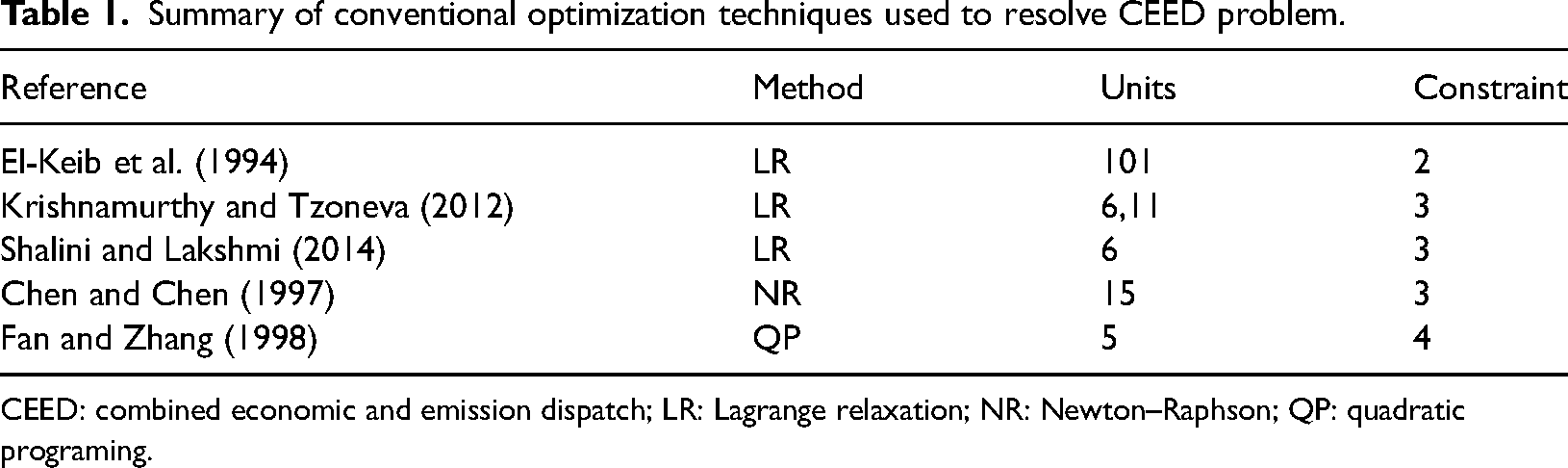
CEED: combined economic and emission dispatch; LR: Lagrange relaxation; NR: Newton–Raphson; QP: quadratic programing.
Summary of non-conventional optimization techniques used to resolve CEED problem.
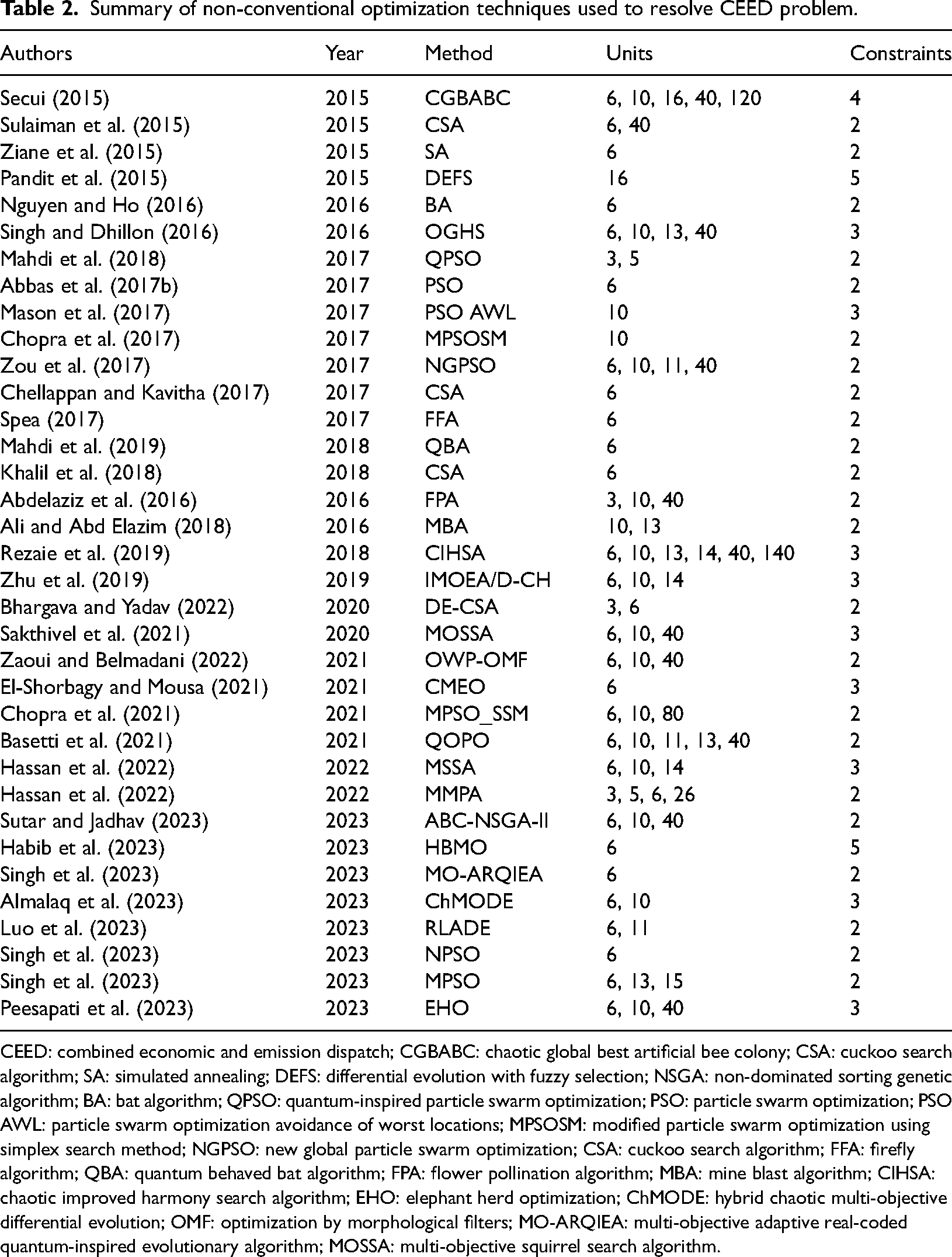
CEED: combined economic and emission dispatch; CGBABC: chaotic global best artificial bee colony; CSA: cuckoo search algorithm; SA: simulated annealing; DEFS: differential evolution with fuzzy selection; NSGA: non-dominated sorting genetic algorithm; BA: bat algorithm; QPSO: quantum-inspired particle swarm optimization; PSO: particle swarm optimization; PSO AWL: particle swarm optimization avoidance of worst locations; MPSOSM: modified particle swarm optimization using simplex search method; NGPSO: new global particle swarm optimization; CSA: cuckoo search algorithm; FFA: firefly algorithm; QBA: quantum behaved bat algorithm; FPA: flower pollination algorithm; MBA: mine blast algorithm; CIHSA: chaotic improved harmony search algorithm; EHO: elephant herd optimization; ChMODE: hybrid chaotic multi-objective differential evolution; OMF: optimization by morphological filters; MO-ARQIEA: multi-objective adaptive real-coded quantum-inspired evolutionary algorithm; MOSSA: multi-objective squirrel search algorithm.
Non-conventional optimization techniques
Non-conventional or modern heuristic optimization methods have been extensively used by scholars to answer the CEED problem in recent years (Table 2). To overcome the incompetence of conventional optimization methods, new computational intelligence (CI), nature-inspired advanced CI, and artificial intelligence based techniques have been introduced. Nature-inspired or bio-inspired evolutionary optimization techniques have gained significant popularity and widespread application in engineering and technology over recent decades. They pose a challenge to traditional numerical methods, which rely on assumptions of convexity and continuity and typically use a gradient-based search sensitive to initial solutions. While early bio-inspired techniques had limitations like premature convergence and dependence on control parameters, subsequent improvements and newer variants have effectively tackled these issues (Dubey et al., 2018). Figure 1 shows the various non-conventional optimization methods that have been practiced to solve the CEED problem. Accuracy with high-quality solutions, robustness, powerful computational performance, and fast convergence rate are major features of these optimization techniques (Mahdi et al., 2018). Some of the most important types of optimization techniques that have been used to solve CEED are discussed here.
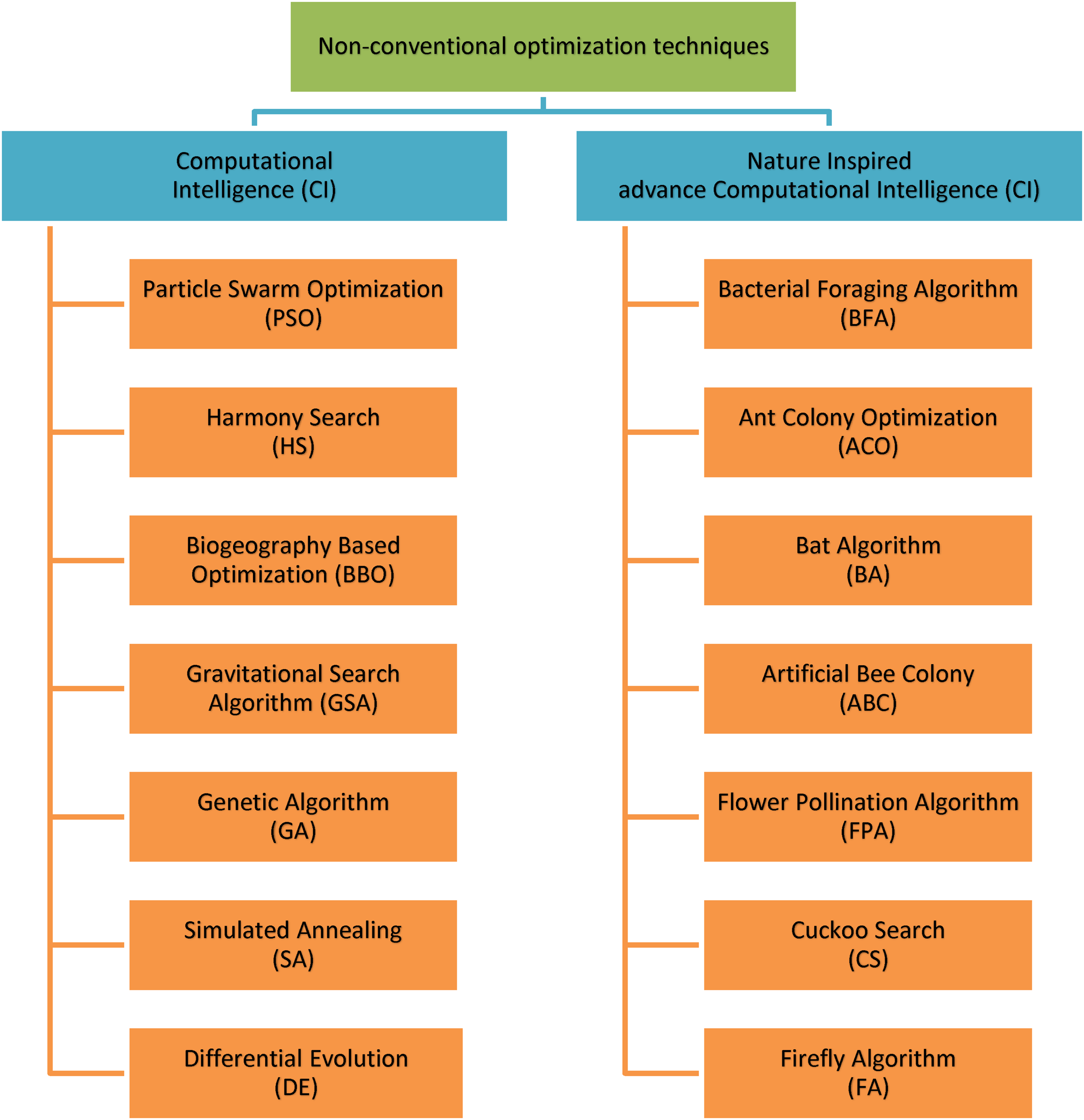
Non-conventional optimization techniques used to solve combined economic and emission dispatch (CEED).
The PSO is a stochastic optimization method that consists of a population with self-adaptive features. The idea was formulated by Kennedy and Eberhart (1995). The PSO is one of the most used optimization methods for the solution of the CEED problem. Literature review investigation revealed that Kumar et al. (2003) used PSO to answer the EED problem for the first time. They verified the solution algorithm on a six generators test system with power balance and generator limit constraints and compared the results with classical techniques such as real-coded genetic algorithm (RCGA) and hybrid genetic algorithm. The outcomes show better performance of PSO and global optimality above the mentioned conventional techniques. A review of EED solutions with PSO is presented by Mahor et al. (2009), which concludes that PSO proved to be the best option if it does not undergo trapping into local optima, premature convergence, and dimensionality complications. Moreover, in comparative analysis, PSO has shown better results with less computational time than conventional optimization techniques. Hussain et al. (2019) compared PSO and genetic algorithm (GA) for the CEED of an independent power plant (IPP) in Pakistan across different load demands. Using real IPP data, the study found that PSO performed better than GA in achieving the optimal solution for fuel cost, emission reduction, convergence characteristics, and computational time. Salaria et al. (2021) introduced two versions of global PSO incorporating inertial weights and quasi-opposition-based strategies. These variants were applied to tackle the economic load dispatch (ELD) for the Korean grid using IEEE standards for units 3, 6, 13, 15, 40, and 140. The hybrid PSO with simplex search method (MPSOSM) aimed to counter PSO’s issues of early convergence and stagnation by merging expansive exploration through PSO with localized exploitation via the simplex search technique is suggested by Chopra et al. (2021). This strategy seeks to elevate solution efficacy by harnessing PSO for wide-ranging exploration and employing the simplex search method to fine-tune solutions, steering clear of local minima towards global or nearly optimal points. Singh et al. (2023) presented an improved PSO variant that addressed the limitations of classical PSO. It prioritized retaining particles within the search area, updated positions to maintain global search involvement, dynamically adjusted constriction factors to guide particles towards the global solution and set inertia weight within defined ranges to ensure continuous movement towards the global solution, ultimately enhancing optimization performance. In another study (Singh et al., 2023), a modification was proposed for PSO, integrating a control mechanism for particle velocity through an attraction factor to avoid particle stoppage throughout iterations. This change removed the necessity of updating particle velocities, concentrating solely on adjusting particle positions to enhance computational speed.
A detailed and comprehensive review is presented by Abbas et al. (2017a,b) on CEED solution using PSO suggested many alterations in the elementary assembly of PSO to crack convex and non-convex dispatch problems. Mason et al. (2017) compared standard PSO (SPSO) and a new variant of PSO with avoidance of worst locations (AWLs) and revealed that the new variant performs better than SPSO. According to Chopra et al. (2017), a modified PSO, MPSOSM, is used to solve this problem which has shown better results than classical PSO for quality and convergence.
To increase the local searching capability and to dodge trapping in local optima. Varma et al. (2013) proposed a Gaussian randomizer instead of a traditional uniform randomizer in SPSO with four constraints such as power stability, generating unit output boundaries, ramp rate limit, and forbidden working time zone to achieve more realistic results. Zou et al. (2017) presented a new global PSO (NGPSO) by introducing two key modifications which are a new particle position updating process based on global best (gbest) particle to guide searching and uniform distributor for randomization. Jadoun et al. (2015) proposed two variants which are linear modulated PSO (LMPSO) and sinusoidal modulated PSO (SMPSO) by modifying the particles’ velocity. Both the proposed modified PSO techniques consider power balance, generator limits, and prohibited operating zone constraints and investigate solutions on three test systems in which SMPSO proved better than LMPSO. Hamed et al. (2012) solved the CEED problem using time varying acceleration constants (PSO-TVAC) and illustrated a comparative analysis of different techniques. A variant of PSO, bare-bone PSO and whale swarm optimization algorithms are proposed for combined heat and power economic and emission dispatch problems by Xiong et al. (2022) and Jadoun et al. (2022), respectively. Another variant of PSO, the moth swarm algorithm is used for solving the day-ahead CEED problem in a thermal power system integrated with solar PV units (Ajayi and Heymann, 2021). A grasshopper algorithm with a binary approach is used for solving CEED by Sharifian and Abdi (2022). The effects of valve point loading effect, ramp-rate limits, prohibited zones, and transmission losses are also considered in the study.
The GA is the second most frequent algorithm used to solve the CEED problem. The inspiration for this algorithm was taken from Darwin’s concept of evolution that only tough and fit genes can survive. Many versions of GA have been developed and implemented for EED problems. Song et al. presented a fuzzy logic-controlled GA (FCGA) to solve ED and EMD problems in 1997. Hybrid flower pollination algorithm (HFPA) for optimizing wind-thermal systems, concurrently minimizing cost, emissions, and losses while considering complex constraints, such as valve point loadings, ramp limits, prohibited zones, and spinning reserve. The HFPA method combines flower pollination algorithm (FPA) and differential evolution (DE) to improve solution exploration and prevent premature convergence (Dubey et al., 2015). To adaptively fine-tune crossover possibility and mutation frequency, this algorithm has used two heuristic-based fuzzy logic controllers. The validity of the proposed FCGA is illustrated on six generators with consideration of two constraints for the EED problem (Song et al., 1997). A comparative analysis of evolutionary programing which has been used to answer the CEED problem is presented by Venkatesh et al. (2003). An
Artificial bee colony (ABC) is a flock-grounded stochastic search algorithm that replicates the scrounging actions of honeybees. Many researchers have been using ABC to solve the CEED problem. Dixit et al. (2011) used ABC for the CEED problem and implemented it on three and six generating units systems. The comparative analysis shows better performance of ABC than conventional optimization techniques in terms of superiority of results, steady convergence characteristics, and better computational efficiency. ABC with dynamic population size is presented by Aydin et al. (2014), which is an improved version of incremental ABC with local search with the same working mechanism. Both procedures are illustrated on IEEE 30 nodes with considering 40 generators and comparative analysis shows that the proposed algorithm performs better than its predecessor. A chaotic global best ABC (CGBABC) optimization method is presented by Secui (2015) which is based on the global best ABC (GBABC). The CGBABC procedure is verified with five, six,
Nguyen and Ho (2016) presented a new meta-heuristic bat algorithm (BA) to solve the EED problem using the quadratic fuel function. The algorithm is tested on six generators system for two loads (1200 and 1800 MW) and three dispatch cases (fuel, emissions, and both). The authors conclude that BA performs better than other optimization techniques. Niknam et al. (2013) used self-adaptive learning BA with a chaos-based approach to initialize the population. Recently, Mahdi et al. presented a quantum computing idea based on BA known as the quantum behaved BA (QBA) to answer CEED. The proposed algorithm has four major purposes which are ED and three separate emissions dispatches (SO2, NOx, and CO2). To compare the results, a unit-wise penalty factor is used and tests are performed in six generators with four different loads. The comparative analysis of different techniques (LR, simulated annealing (SA), and PSO) and QBA displays that the proposed algorithm shows better results, robustness, and computational performance. In future research directions, the authors have mentioned that the addition of QC idea in metaheuristic optimization method delivers valuable and trustworthy means for multi-objective optimization problem (Mahdi et al., 2019). The FPA was designed for addressing ELD and CEED challenges within power systems (Abdelaziz et al., 2016). Its effectiveness was evaluated on 3-units, 10-units, and 40-units systems and compared with other prominent optimization algorithms to affirm its superiority.
Khalil et al. proposed a cuckoo search algorithm (CSA) for CEED and results are illustrated with six generators considering power balance and generators’ limit constraints using the cubic criterion function for the power demand of 150 MW. The comparative analysis reveals that CSA gives better results than LR, SA, and PSO (Chellappan and Kavitha, 2017). Sulaiman et al. proposed CSA for the solution of CEED and to prove effectiveness, the proposed algorithm is tested on 6-units and 40-units generating systems. The comparative analysis of CSA and other recent optimization techniques such as gravitational search algorithm (GSA), NSGA II, and strength pareto evolution algorithm (SPEA) has been presented by Sulaiman et al. (2015). Chellappan et al. presented CSA for CEED problem solution with two constraints and the proposed model is tested on six generators system concluding that the CSA performs better than GA results of CSA (Khalil et al., 2018). Bhargava and Yadav (2022) tackled the CEED problem by combining elements from the CSA and DE into the hybridized model hDECSA. This fusion involved updating solutions from both schemes and integrating them with a random searching model. Notably, this approach leds to reduced computational time compared to PSO, DE, and differential evolution PSO schemes.
The SA is a probabilistic robust optimization method that has been deployed efficaciously in various fields such as very large-scale integration circuit design, image processing, neural networks, economic load dispatch, etc. According to Ziane et al. (2015), SA is used for the solution of the dynamic EED problem. The proposed algorithm is successfully employed with six generators considering two constraints and results are compared with multi-objective modified bacterial foraging optimization (MBFA). The authors conclude that SA provides superior results than the other optimization techniques. The SA with goal attainment technique is proposed by Basu (2005) to solve the EED of a hydro-thermal power plant. The authors conclude that the proposed algorithm almost attains global optimality without imposing any convexity restriction on the generator’s characteristics. The only negative characteristic of the proposed method is that it takes a lengthy execution time. The SA has also been used to solve the CEED problem with new penalty factors by Ziane et al. (2015).
Farhat and El-Hawary (2011) projected a MBFA to solve the EED problem with power transmission losses. The basic BFA shows better results for small constrained problems, however, in larger constrained problems, it shows poor convergence. To overcome this complication along with the high dimensionality problem of EED problem, some modifications have been proposed for BFA. A comparative analysis of BFA and MBFA on six generating units system with consideration of two constraints, the proposed algorithm shows better convergence. An improved BFA is used to solve static and dynamic CEED problems by Pandit et al. (2012). The performance of the proposed improved bacterial foraging algorithm is tested on four different cases and it is revealed that the proposed model shows better and more consistent results.
Abou El Ela et al. (2010) proposed a DE for the EED problem and comparative analysis shows its superiority and effectiveness. An improved DE with fuzzy selection and data-driven surrogate-assisted approach are proposed by Pandit et al. (2015) and Lin et al. (2023), respectively, for the EED problem of multi-area power systems. The proposed algorithm consists of DM preference to direct the examination and to pick the seeds for the next offspring. DEFS is tested on
Güvenc et al. (2012) proposed a GSA to solve the CEED problem. The algorithm is tested on four different test systems to demonstrate its effectiveness. A better algorithm opposition-based GSA (OGSA) is proposed by Shaw et al. (2012), to accelerate the efficiency of GSA. The suggested procedure is verified on
A simplified recursive approach is used by Balamurugan and Subramanian (2007) for the CEED problem and tested on six and 11 generators systems. A comparative analysis of the proposed algorithms is also presented with other optimization techniques to prove its optimality. Basu (2011) has solved economic and environmental dispatch problems by using a multi-objective differential evolution (MODE) optimization approach which is an extension of DE. The algorithm is tested on three test systems and results are compared with pareto differential evolution (PDE), strength pareto evolutionary algorithm 2 (SPEA), and NSGA-II. Another study by Hassan et al. (2022), a modified marine predators algorithm (MMPA) is introduced and employed for determining the optimum solution to the CEED problem. The MMPA approach was used to tackle single and bi-objective CEED problems in diverse power generation systems, spanning 3 to 26 units, across varied load levels while considering only one of three emission types (SO2, NOx, and CO2) as an additional objective (Hassan et al., 2022).
The optimization by morphological filters algorithm was applied to the CEED problem by Zaoui and Belmadani (2022). This implementation took into account two constraints but omitted penalty factors in its approach. A modified honey bee mating optimization (HBMO) algorithm, leveraging collective intelligence, was presented to address the EED challenge within power systems by Habib et al. (2023). This algorithm is specifically tailored to handle nonlinear cost functions and various constraints of power generation. The main objective is to boost the standard algorithm’s effectiveness and balance by enhancing both local and final search approaches, employing an adaptive nonlinear system, and establishing the optimized solution as the termination criterion. According to Zhu et al. (2019), the progression from the multi-objective evolutionary algorithm based on decomposition (MOEA/D) algorithm to constraints handling MOEA/DCH is outlined, targeting the efficient resolution of the dynamic dispatch problem. This development involves the fusion of real-time heuristic constraint adjustments, adaptive threshold punishment mechanisms, and evolutionary control strategies, all designed to navigate complex constraints within the dispatching model. Sakthivel et al. (2021) introduced a multi-objective squirrel search algorithm that integrates the squirrel search algorithm with Pareto-dominance principles for producing non-dominated solutions, preserving diversity via an elitist depository mechanism, and crowding distance sorting. Singh et al. (2023) introduced the multi-objective adaptive real-coded quantum-inspired evolutionary algorithm aiming to tackle premature and slow convergence issues within evolutionary algorithms (EAs). This approach, embedded in the EA framework, adopts a non-dominated sorting technique and integrates quantum principles along with real-coded variables. The quasi-oppositional search-based political optimizer for non-convex CEED problems has been introduced by Basetti et al. (2021). While excelling in faster computation and superior convergence for optimal solutions, it required more iterations as unit numbers increased, constraining its scalability, and computational efficiency in larger applications. The hybrid chaotic multi-objective DE algorithm is presented by Almalaq et al. (2023) which adopted non-domination sorting and crowding distance calculation to accurately derive the Pareto front. To overcome local optima and improve the traditional DE algorithm, it integrates two distinct chaotic maps during initialization, crossover, and mutation stages, replacing the reliance on random numbers for enhanced performance. Luo et al. (2023) introduced reinforcement learning-based adaptive differential evolution (RLADE) to optimize mutation strategy and crossover probability for improved convergence and searchability. It integrated adaptive population size-based state division and fitness-ranking-based rewards in RL to enhance accuracy. Evaluated on quadratic and cubic criterion functions for CEED problems, RLADE outperformed the DE algorithm and its RL-based variants in terms of mean values and standard deviations. Peesapati et al. (2023) introduced the elephant herd optimization algorithm, employing innovative strategies to maintain population diversity and ensure the retention of the fittest individuals in subsequent generations. Comparative analysis demonstrated its superiority over BA and ant lion optimizer algorithms based on the fuel cost function values obtained. Rezaie et al. (2019) presented the chaotic improved harmony search algorithm as an advanced iteration of the harmony search algorithm. By incorporating chaotic patterns for random number generation, dynamically adjusting parameters, utilizing virtual harmony memories, and introducing a new local optimization technique, the algorithm significantly improved robustness, accuracy, and search efficiency while reducing the iterations needed for optimal solutions. A hybrid method merged the exchange market algorithm (EMA) and adaptive inertia weight PSO (AIWPSO) to address the CEED problem. System constraints such as prohibited operating zones and ramp rate limits were handled by the multiple constraint ranking technique and the inclusion of a mutation operator aimed to boost global search capabilities (Nourianfar and Abdi, 2022). The goal behind combining these algorithms is to leverage EMA’s strength in global exploration alongside AIWPSO’s effectiveness in local exploitation. Ali and Abd Elazim (2018) used mine blast algorithm (MBA) to solve ELD and CEEED problems. The authors also studied the effect of valve points on the cost of fuel. The findings of the study demonstrate that the proposed MBA outperforms other optimization techniques in terms of total cost and computational time.
Multiobjective ED with renewable integration
The growing demand for a cleaner environment has sparked attention towards addressing pollution in energy production. Laws in Japan and Europe, along with amendments to the Clean Air Act of 1990, have compelled utilities to modify their strategies, reducing pollution from thermal plants. Renewable energies, like wind turbines and solar panels, are gaining prominence due to their accessibility and ability to produce electricity more sustainably while lessening reliance on resources. Although renewable energy sources offer cleaner electricity production, their natural fluctuations pose challenges. Despite concerns about potential disruptions from large concentrations of wind turbines, they remain crucial in reducing greenhouse gas emissions. Overall, renewable energies present a promising alternative to fossil fuels, offering environmental benefits and energy independence, particularly as fossil fuel reserves diminish, costs rise, and emissions increase.
The changing nature of wind power makes it harder to manage the economic distribution of electricity in power systems. As wind power becomes more prominent, the challenges in scheduling electricity in microgrids increase. This shift requires a new approach to manage the balance between wind power and traditional thermal power in these systems (Alshammari et al., 2021). Balancing electricity production and demand is crucial when dealing with RES. This is because energy production from renewable, like solar panels and wind turbines, can vary and be uncertain over time. For example, solar panels generate electricity based on the available sunlight, which changes throughout the day and across seasons. Similarly, wind energy relies on the varying wind speed, influenced by different factors depending on the location. To accurately predict their energy output, we need to model the unpredictable nature of wind speed and solar radiation (Li et al., 2023).
Motivation and contributions
This study is conducted for a solution to a complex optimization problem, CEED having multiple objectives: optimal load dispatching to the generators with the least fuel price and pollution together while honoring the functioning constraints. The main contributions of the article are listed below:
This study introduces three novel variants of the PSO algorithm tailored for addressing the multiobjective CEED problem: quantum-inspired PSO (QPSO), enhanced QPSO (EQPSO), and QPSO integrated with weighted mean personal best and adaptive local attractor (ALA-QPSO). The research investigates the potential of these QPSO variants in tackling the CEED problem by evaluating their performance across various parameters. This evaluation involves the application of the algorithms to three distinct systems: 6-unit, 10-unit, and 11-unit systems, each characterized by different load demands. The competence and effectiveness of the proposed algorithms in terms of robustness, quality of the solution, and computational efficiency are compared with various methods suggested in the literature.
The rest of the article is organized as follows: The “Combined economic and emission dispatch” section introduces the CEED model, outlining the role of the penalty factor, and the considered constraints and the “Optimization techniques” section details the optimization techniques developed to address the CEED problem. A comparative analysis of diverse optimization techniques, applied to three test models, is presented in the “Development of QPSO for CEED problem solution” and “Experimental results and analysis” sections and the “Conclusions” section concludes the article with a discussion of findings and potential future directions.
Combined economic and emission dispatch
The combination of two objectives, fuel cost and emissions minimization of thermal power plants is known as CEED. These two objectives are non-commensurable and conflicting; the reduction of fuel cost leads to excess emissions and vice versa. Therefore, the problem’s solution can only be achieved through some tradeoff between these two objectives.
The term operating cost of ED refers to the cost of fuel used in a thermal power plant. There are sets of valves in the fuel inlet of each generating unit which are used to control the power production. For instance, the set of valves is opened in sequence to raise the steam inlet of fuel to increase the production. Throttling losses are high during the opening time of the valve and low when it is fully opened. This phenomenon is known as the valve point loading effect. The entire expenditure of a fossil fuel-based thermal plant mainly depends on fuel cost and the other expenditures (maintenance costs, labor costs, and cost of fuel supplies) are generally fixed percentages of fuel cost. The formulation of an ED optimization is usually represented by the quadratic cost function given in equation (1). The first objective function is fuel cost 

There are many pollutants released by thermal power plants such as sulphur dioxide, carbon dioxide, nitrogen oxides, etc. Emissions of these gases need to be minimized for every generating unit to reduce pollution. Some researchers take each pollutant separately as a separate objective function, however, in this article, we have considered all those emissions together as a collective emission dispatch. The construction of EMD problem is represented by a quadratic function of emissions in equation (3) and with valve point loading effect represented by 

Role of penalty factor
To change a multi-objective problem to a single objective, a penalty factor has been introduced denoted by “h.” The penalty factor plays a role in changing the physical meaning of emissions (kg/h or lb/h or ton/h) to fuel cost ($/h), to equalize the units of both functions. In this way, the difference of dimensions is eliminated and two objectives are transformed into one objective. Hence the total fuel cost CEED formulation represented by 


Two types of constraints
Power balance constraint
The power balance can be explained as the total active power generation of all the generators is essential to meet total power requirement. Therefore, total power production should be equivalent to the summation of power demand and power losses as shown in equation (8).
The losses that occurred during the power transmission to the grid such as power dissipation in conductors of transmission lines, transformers, and corona losses are recognized as transmission losses. The simple formula used to calculate power transmission loss is given in equation (9) and is known as George’s method (George, 1960).
Generator operational constraint
A power generating unit must work between its lower and upper limits of generation. Operating a generator below its lower limit is uneconomical or technically infeasible and the upper limit is the maximum output that can be taken from it. Generator operational constraint, also known as generation limit constraint, can be defined as
Optimization techniques
Quantum particle swarm optimization
QPSO is an improved version of PSO inspired by the quantum computing phenomenon. In QPSO, a quantum bit (Qubit) and spin gate are presented to enhance the range of the population. Moreover, to avoid local optima trapping, self-adaptive, and sequence mutation have been introduced. The particle’s state is depicted by the wave function rather than the position and velocity. Hence, QPSO shows more efficiency, stronger search capabilities, and faster convergence than basic PSO.
A survey presented by Manju and Nigam (2014), reveals that hundreds of papers reported successful implementation of quantum-inspired computational intelligence (QCI) and this combination of quantum mechanics (QM) and CI has yielded promising results for real-world applications. The first idea of QPSO was presented by Sun et al. (2004) with the model named quantum delta potential well model for PSO (QDPSO).
Later on, a cooperative approach to QPSO was introduced by Gao et al. (2007), to solve high-dimensional problems and maintain stability between global and local search. Another modification was presented by Su et al. (2009) in which a crossover operator was introduced to escape from local optimal. The testing of this model on different functions such as the sphere, Rosenbrock, Rastrigrin’s, Griewank, and Shaffer’s proves its performance better than basic PSO and original QPSO.
The next improvement was presented by Sun et al. (2012), in which search strategies were analyzed along with an investigation of the contraction-expansion (CE) coefficient’s modifications. Two methods of controlling CE were also proposed which have fixed and time-varying values. However, the authors also concluded that further improvements are required to control and determine the value of parameters for QPSO. The final form of QPSO was presented by Sun et al. (2012, 2011) which experimentally tested different variants of PSO on 12 different CEC 2005 benchmark functions and the comparative ranking showed that QPSO stands at second level.
QPSO is a new version of the PSO technique with the same working principles, based on population and self-adaptive features. For an optimal solution in multidimensional search space, particles are not updating their position by adding velocity instead each particle has quantum behavior which is formulated by a wave function (Mahdi et al., 2018, 2017). The main modification can be summarized as the particles’ state is depicted by the wave function which consists of angle and quantum bit (Qubit) instead of the position and velocity of PSO. The Qubit can simultaneously stay in two different quantum states which is its major difference with classical bit. The wave function 










The parameter
The global search capability of QPSO makes it effective in exploring complex solution spaces, which is important for determining optimal solutions to complex CEED problems. It can balance exploration and exploitation which helps optimize both emissions levels and ED needs. Furthermore, lower computational effort and parallelization potential increase its efficiency, especially in large energy systems with numerous variables and constraints. Additionally, its ability to escape local optima is vital for finding globally optimal solutions.
Enhanced quantum particle swarm optimization
The combination of PSO and quantum mechanics breeds a new global optimization method named QPSO. It shows encouraging performance in terms of convergence, searchability, solution accuracy, and robustness. Jia et al. (2015) presented EQPSO to overcome the global searching ability limitation of QPSO for a limited number of iterations. A novel way of calculating the local attractor for QPSO is to improve the performance of QPSO’s global search. The author tried to achieve diversification of particles at the early iterations stage and have a good performance in local search at later iteration stages. The proposed local attractor found by equation (21)
QPSO with weighted mean personal best and adaptive local attractor
The most recent version of QPSO is presented by Chen (2019) with weighted pbest and adaptive local attractor and termed as ALA-QPSO. The authors claim that the proposed algorithm can simultaneously boost the search performance of QPSO and attain better global optimality. The weighted mean, pbest, was obtained by measuring difference in effect of particles with different fitness values. The other improvement in adaptive local attractor is calculated by using a sum of squares of deviation of particles fitness as the coefficient of linear combination by utilizing the sum of particles fitness value deviation square. Weighted mean personal best position can be calculated using equations (22) and (23)

To enhance the efficiency of population based optimization techniques, an individual must wander through the entire search space rather than gathering around local optima and in later stages it is necessary to converge toward the global optima. The novel way of computing adaptive local attractors is presented in (24) and (25)



Development of QPSO for CEED problem solution
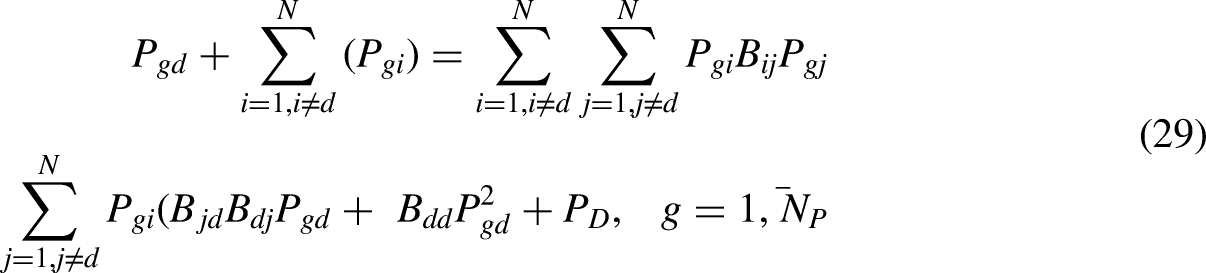
The step-wise procedure of QPSO development is as follows: Initialize all QPSO parameters such as acceleration constants ( Calculation of random initial position of particles using Checking generators limits according to equations: For lower limit violation For upper limit violation For staying between limits Initial power of slack bus generator is calculated based on power balance constraint equation (8) and stated in equation (29) Calculation of penalty factor according to equations (6) or (7) for all generators. Calculate fuel cost, emission and total CEED fuel cost as below pbest and gbest are defined as follows: Calculate CE coefficient ( Calculate local attractor, gbest and pbest values using the following equation: The position of particle is updated using equation (20) Check the limits of new positions according to step 3. Calculate new slack power as per step 4 and new total real power vector is designed as New values of objective function are calculated as per step 5. Update the new objective function
The flowchart of QPSO is presented in Figures 2 and 3 which summarize the procedure.












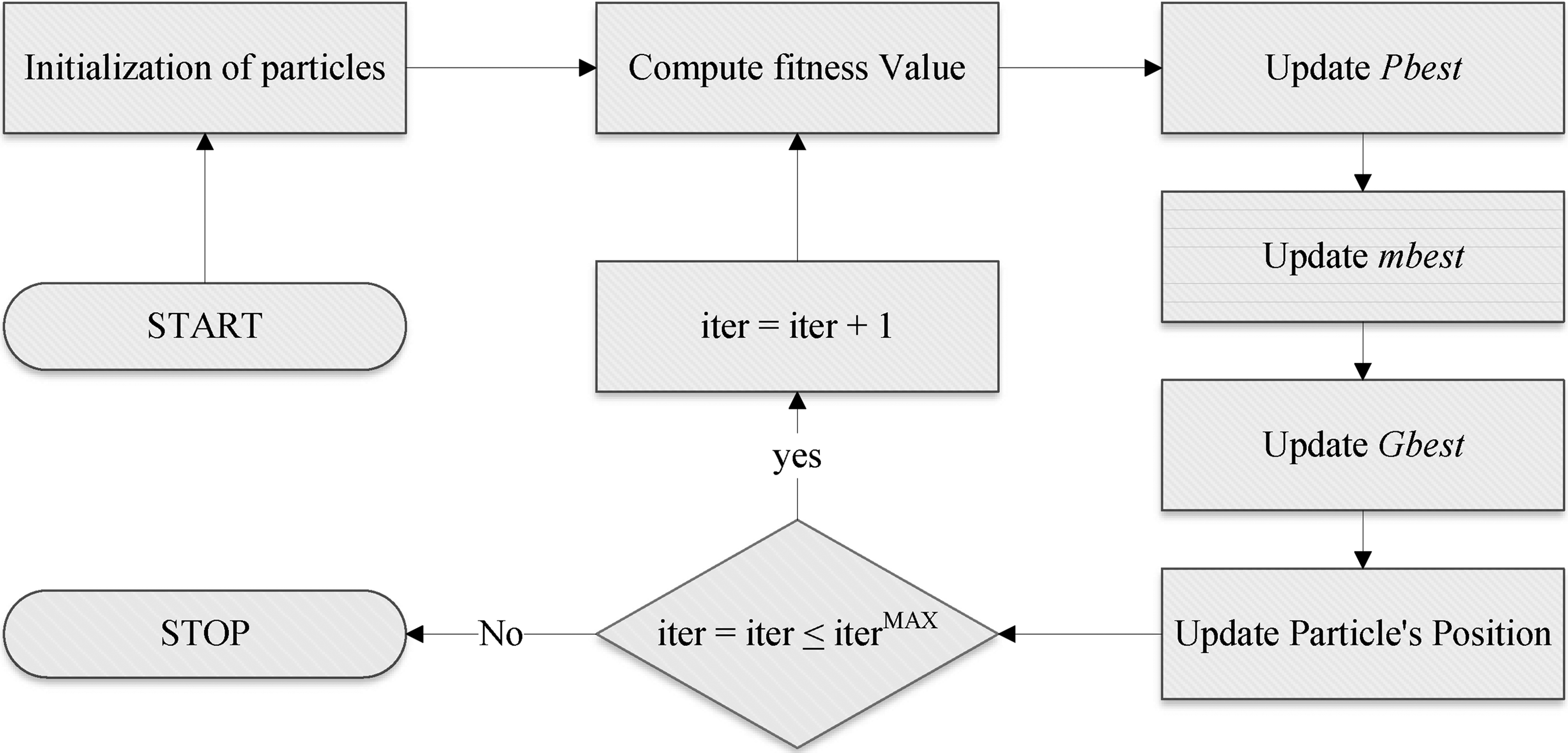
Quantum particle swarm optimization (QPSO) algorithm.
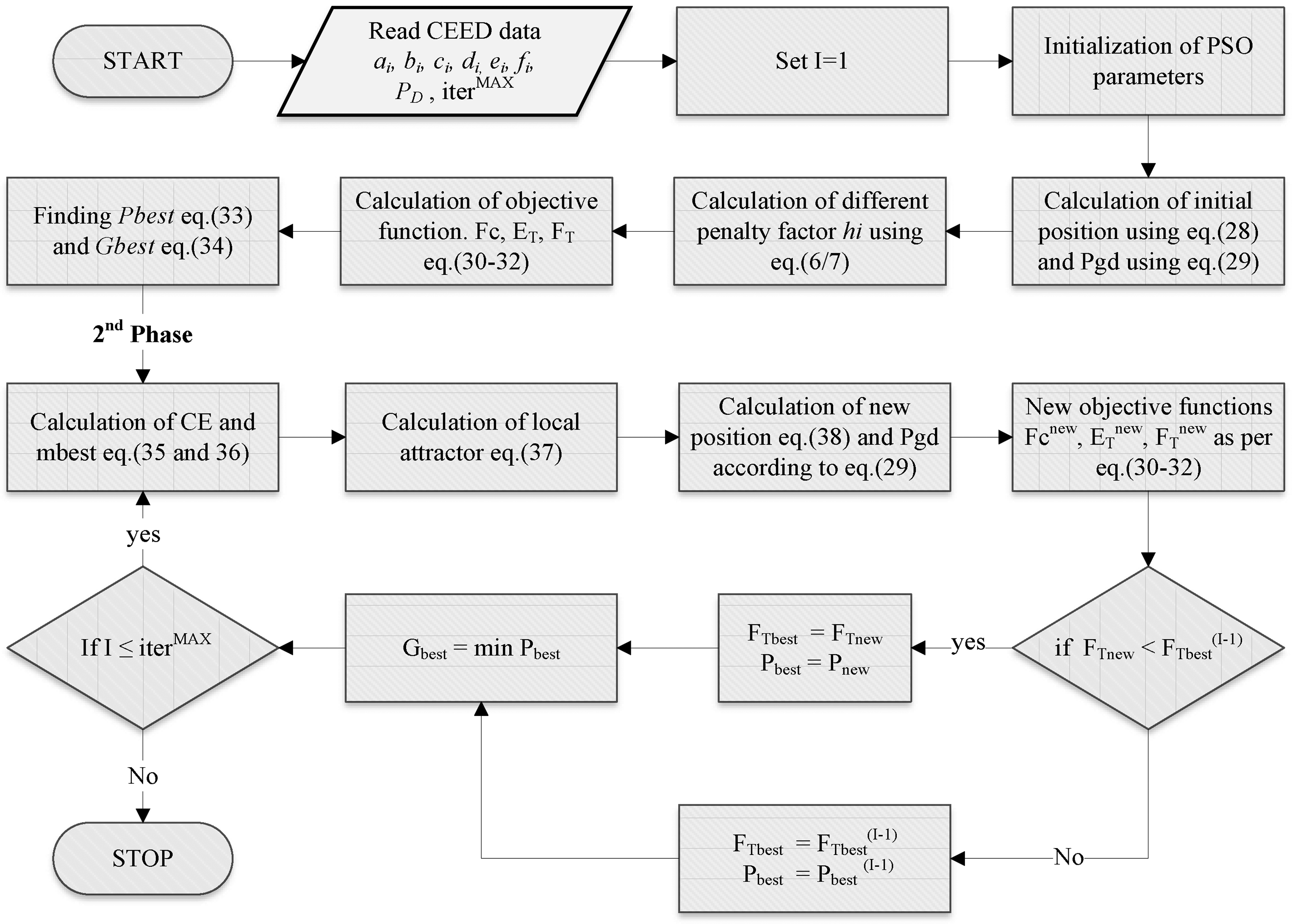
Development of algorithm for combined economic and emission dispatch (CEED) problem.
Experimental results and analysis
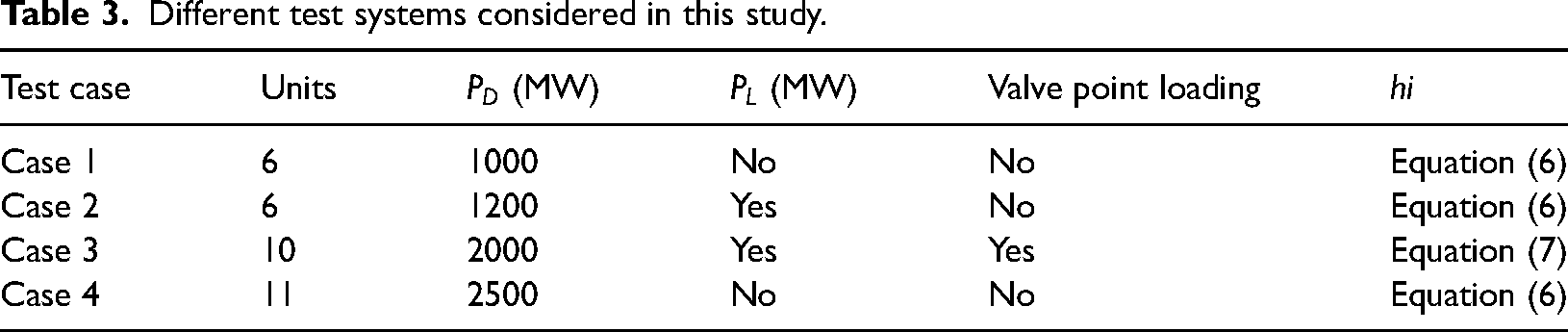
This section elaborates on the experimental results and discussion. The simulations are performed for four different CEED test systems using QPSO and its variants EQPSO and ALA-QPSO to test and validate their performances. These test systems have been used by many researchers as benchmarks in power systems to solve CEED problems, listed as (1) IEEE standard 30 bus system with six generators, (2) six generating units system, (3) 10 generating unit system, and (4) IEEE 69 bus 11 generators system. The findings of this article are also compared with different studies reported in the literature that use the same criteria. Table 3 shows different test systems considered in this study.
Different test systems considered in this study.
The parameter
Test system 1
The test system contains six generators to meet a total power demand of
Comparative analysis of best solutions achieved for test case 1 (
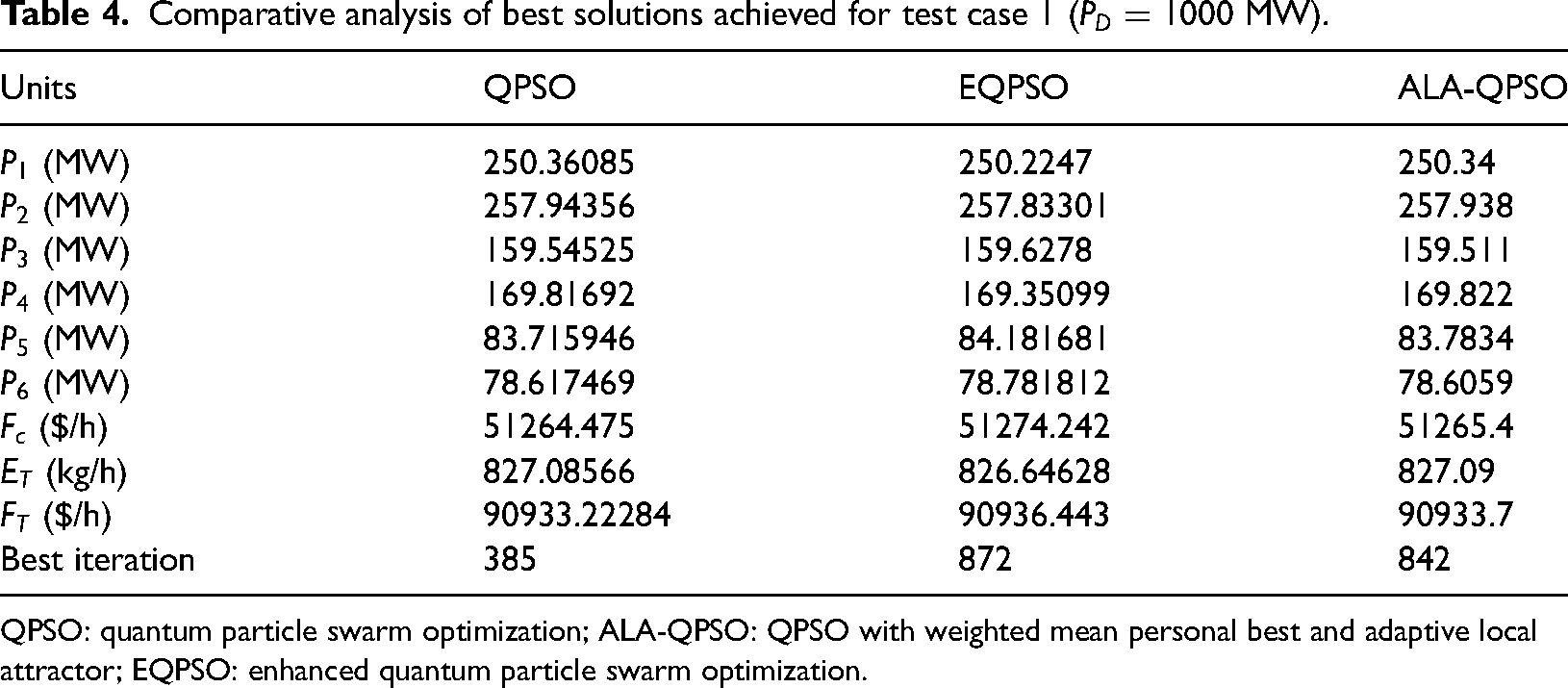
QPSO: quantum particle swarm optimization; ALA-QPSO: QPSO with weighted mean personal best and adaptive local attractor; EQPSO: enhanced quantum particle swarm optimization.
Best fuel cost and emission of test case 1 (
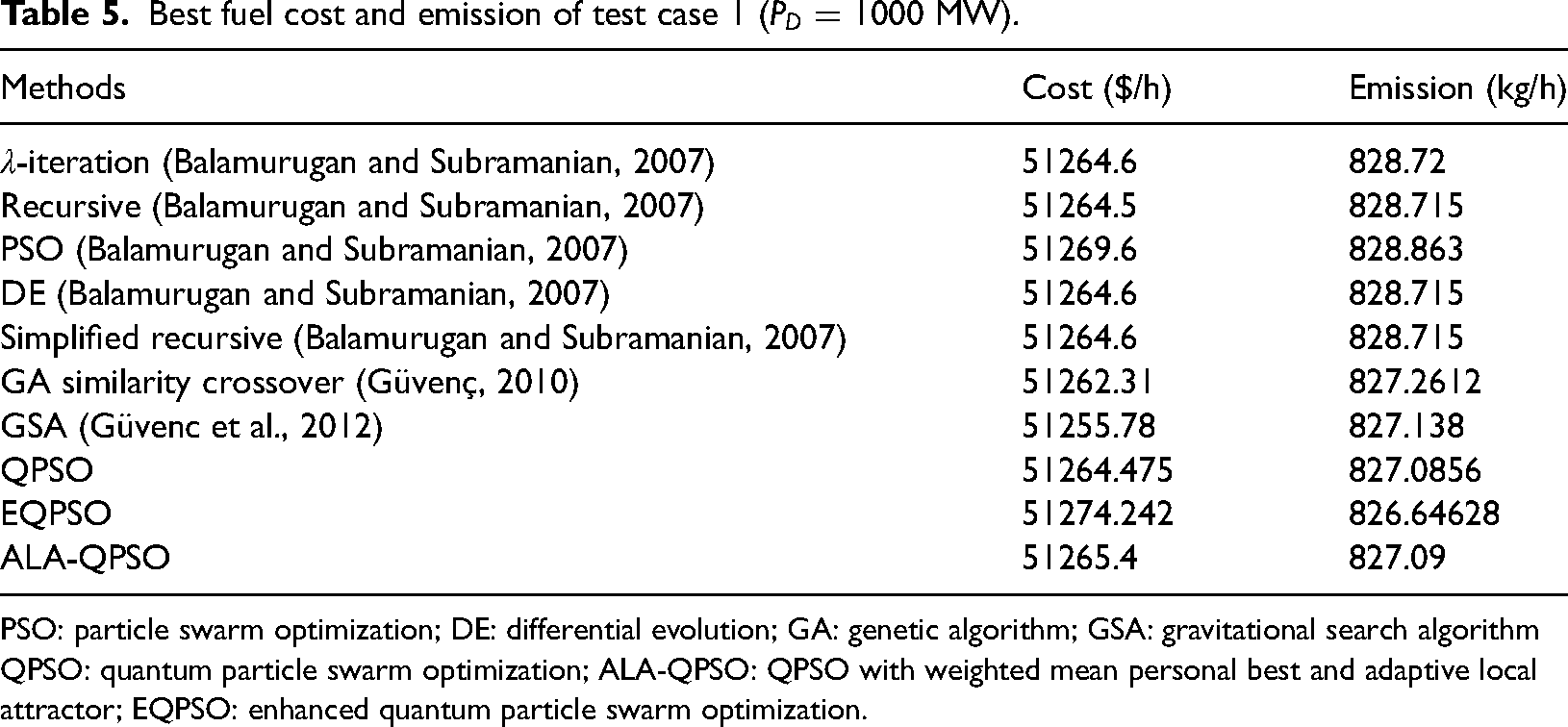
PSO: particle swarm optimization; DE: differential evolution; GA: genetic algorithm; GSA: gravitational search algorithm QPSO: quantum particle swarm optimization; ALA-QPSO: QPSO with weighted mean personal best and adaptive local attractor; EQPSO: enhanced quantum particle swarm optimization.
The results obtained in case 1 are shown in Table 4 with the generation level of each unit. The results are an average of a total of 50 runs considering the population size of 100 and 1000 iterations. The fuel cost of QPSO is minimum with moderate emissions to provide minimum overall CEED fuel cost. The EQPSO provides a lesser amount of emissions, however, with higher fuel cost, the overall CEED fuel cost by this method is higher than others. The comparative analysis also shows that QPSO is fast and provides early convergence with a lesser number of iterations. The next table presents a comparison of these techniques with other conventional and non-conventional optimization techniques. As results reported in the literature have no overall fuel cost mentioned in their papers, we cannot conclude which algorithm performs better than others. Furthermore, in this study, only an average of 50 runs is considered, whereas the other techniques reported in the literature did not mention this criterion in their study. Thus, we cannot necessarily conclude about which individual algorithm performs the best. However, only looking at the table, it can be said that the minimum fuel cost is achieved by GSA (Güvenc et al., 2012) and minimum emissions are attained by QPSO.
Test system 2
In this test system, six generating units are used to meet the total power demand (
Table 6 provides the comparison of results for test system 2 with all the generation levels, power loss, total power generation, fuel cost, emissions, and overall CEED fuel cost. The new global PSO (NGPSO) provides the best results for this case with minimum emissions and overall fuel cost. However, they did not mention whether their provided results are from a single run or an average of a certain number of runs. The QPSO achieved second position while EQPSO stands at third position among all these techniques by providing a balancing solution for fuel cost and emissions.
Comparative analysis of best solutions achieved for test case 2 (
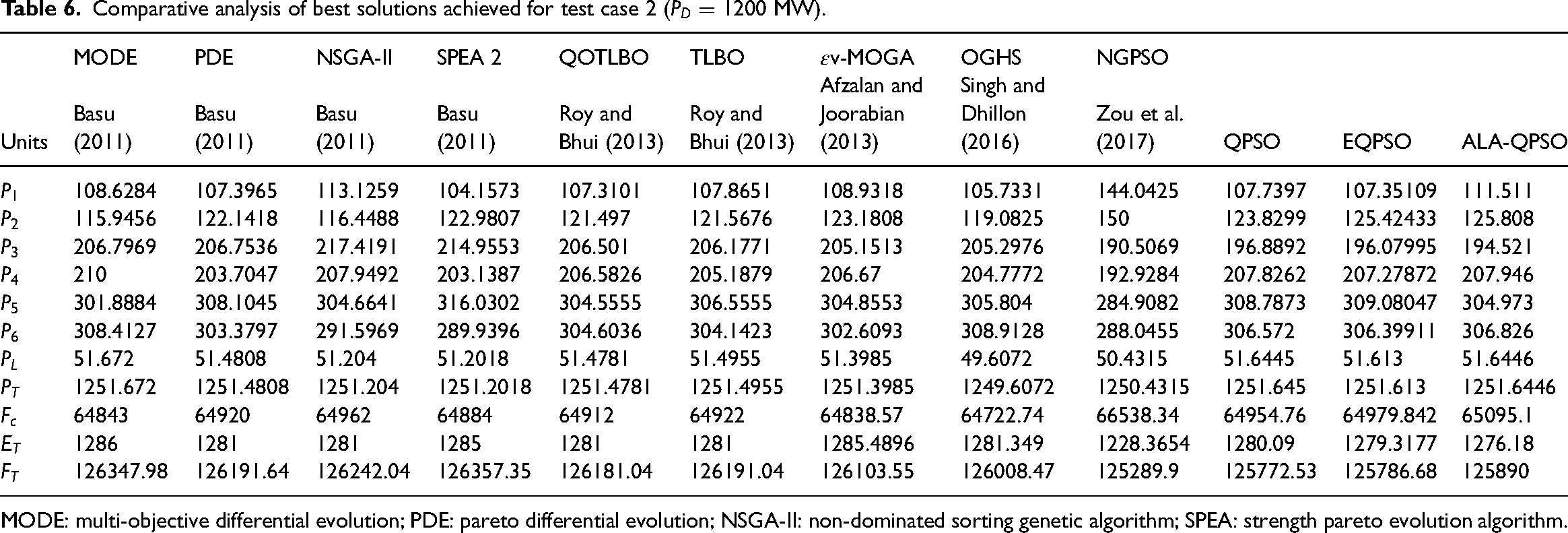
MODE: multi-objective differential evolution; PDE: pareto differential evolution; NSGA-II: non-dominated sorting genetic algorithm; SPEA: strength pareto evolution algorithm.
Test system 3
In this test system, 10 generating units are used to fulfill a power demand of
Table 7 gives comparative results of different non-conventional optimization techniques reported in the literature for test system 3. The CEED fuel cost of these optimization techniques is taken from Zou et al. (2017) to compare the overall efficiency of optimization techniques for providing the best compromise solution. In this test case, QPSO gives higher emission but lower fuel cost and transmission losses which yield the best overall fuel cost results than all the other techniques.
Comparative analysis of best solutions achieved for test case 3 (
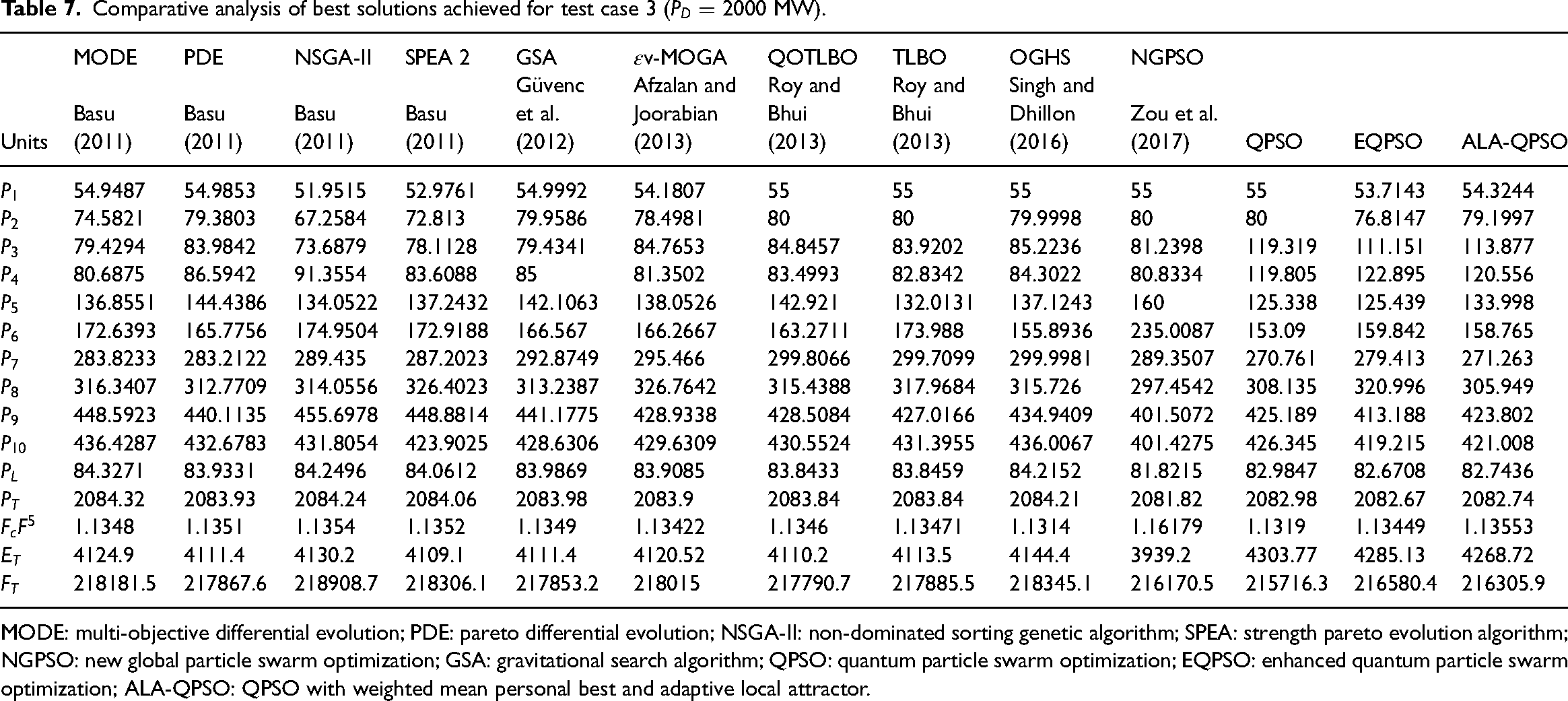
MODE: multi-objective differential evolution; PDE: pareto differential evolution; NSGA-II: non-dominated sorting genetic algorithm; SPEA: strength pareto evolution algorithm; NGPSO: new global particle swarm optimization; GSA: gravitational search algorithm; QPSO: quantum particle swarm optimization; EQPSO: enhanced quantum particle swarm optimization; ALA-QPSO: QPSO with weighted mean personal best and adaptive local attractor.
Test system 4
This system comprises 11 generating units with a total power demand of
The results obtained in test case 4 are presented in Table 8. The system is considered lossless and all the generating units fulfill a total power demand of
Comparative analysis of best solutions achieved for test case 4 (
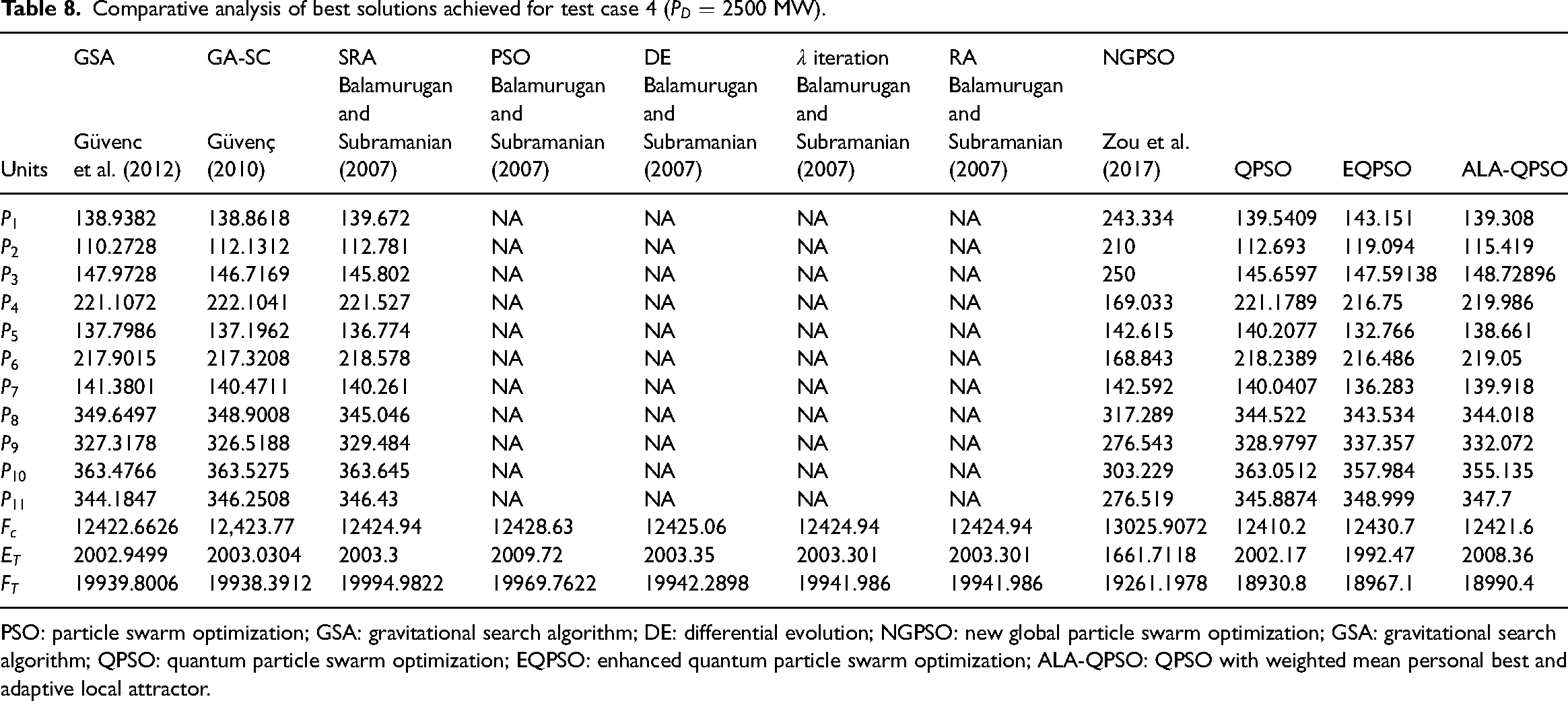
PSO: particle swarm optimization; GSA: gravitational search algorithm; DE: differential evolution; NGPSO: new global particle swarm optimization; GSA: gravitational search algorithm; QPSO: quantum particle swarm optimization; EQPSO: enhanced quantum particle swarm optimization; ALA-QPSO: QPSO with weighted mean personal best and adaptive local attractor.
Comparison of three optimization techniques for fuel cost minimization of four CEED cases
A comparison of the three optimization techniques used to solve the CEED problem is provided in this section. To analyze their performances, all the algorithms are tested in four different test cases and two case studies.
Case study 1
In the first case study, the number of iterations is set to 200, the population size to 40 and results are taken after averaging a total of 50 runs. The results of three algorithms in terms of minimum, maximum, mean, median, and standard deviation are provided in Tables 9 to 11. In both case studies,
Fuel cost comparative analysis of CEED.
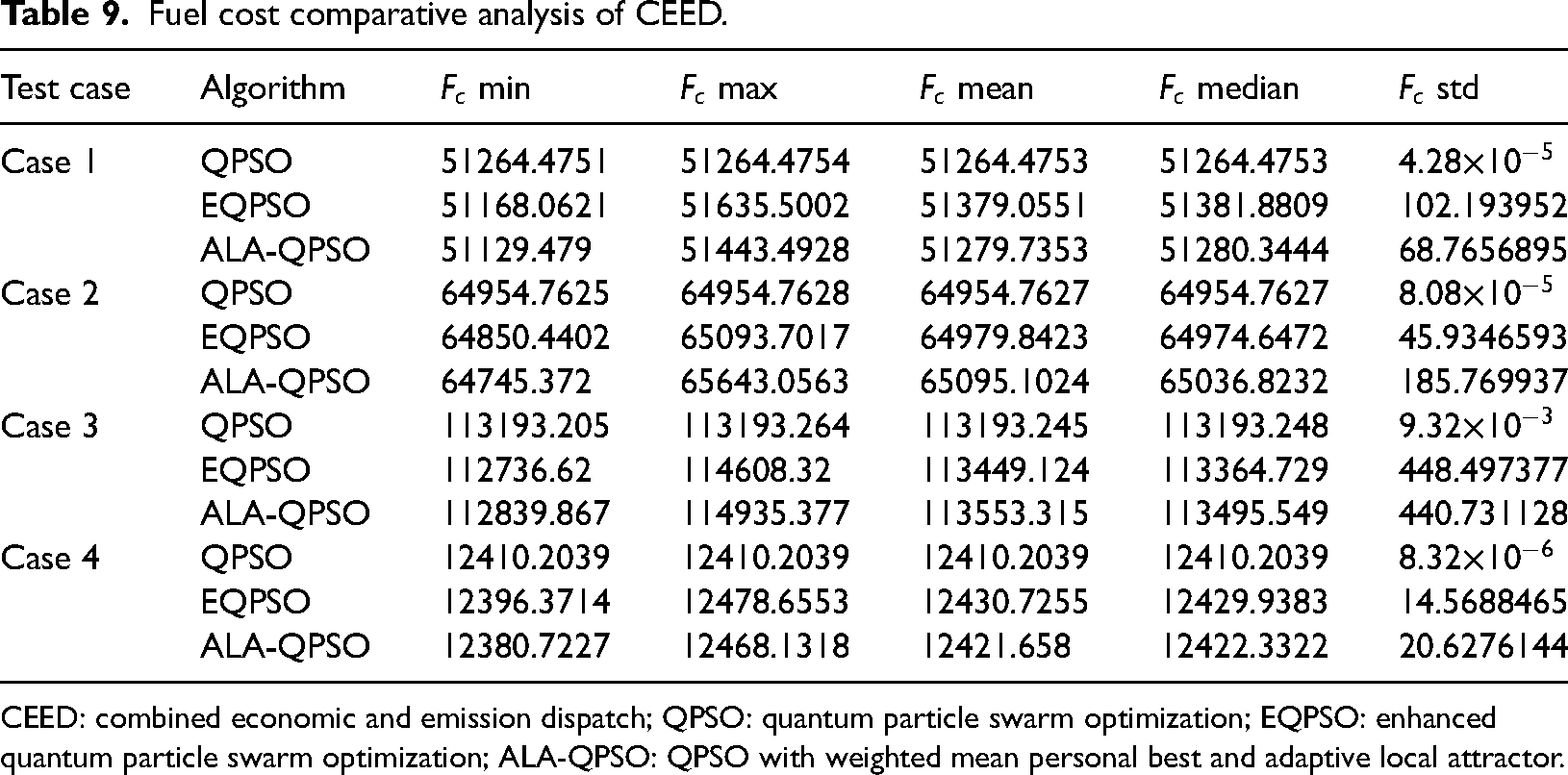
CEED: combined economic and emission dispatch; QPSO: quantum particle swarm optimization; EQPSO: enhanced quantum particle swarm optimization; ALA-QPSO: QPSO with weighted mean personal best and adaptive local attractor.
Emission comparative analysis of CEED.
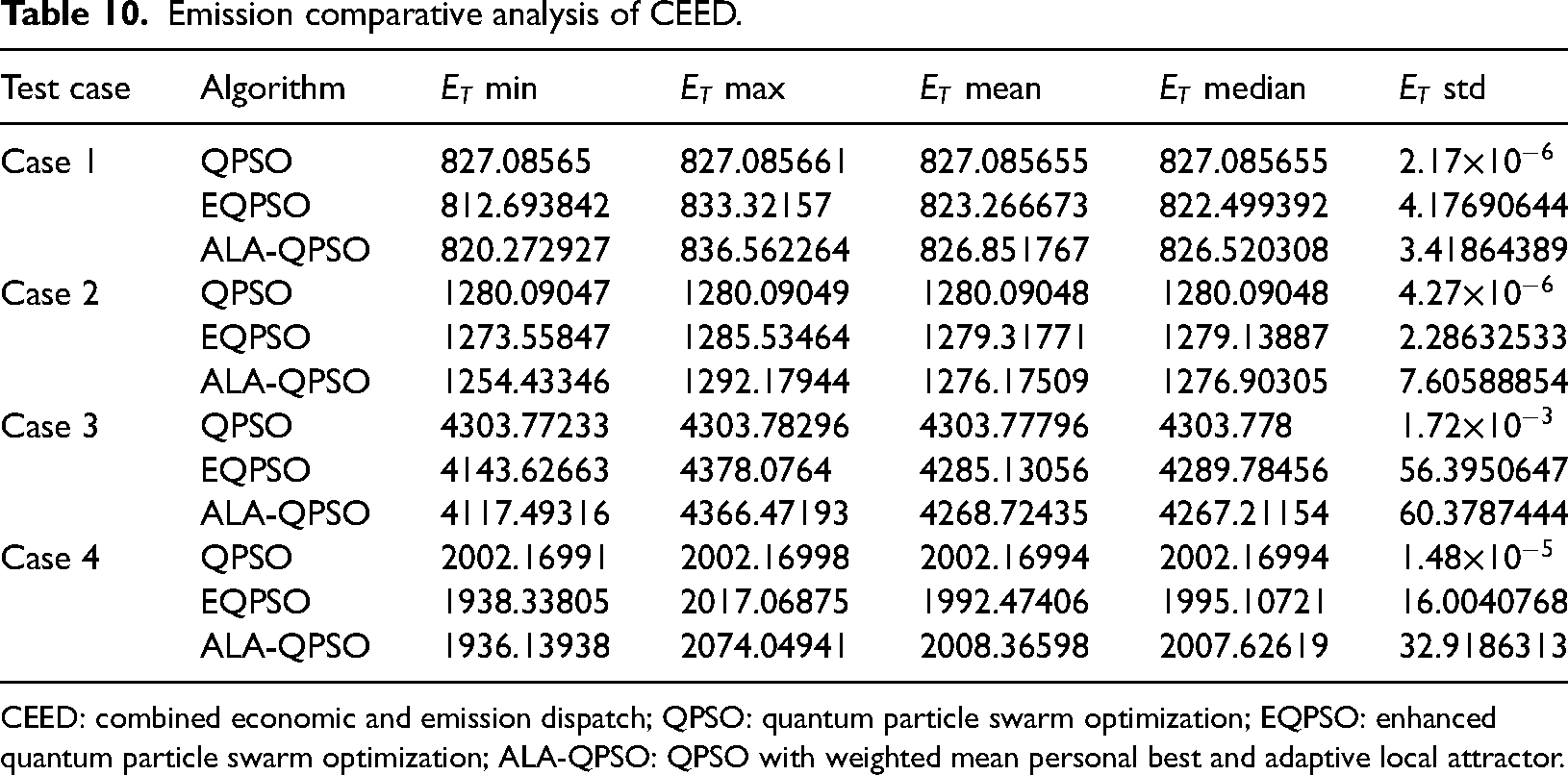
CEED: combined economic and emission dispatch; QPSO: quantum particle swarm optimization; EQPSO: enhanced quantum particle swarm optimization; ALA-QPSO: QPSO with weighted mean personal best and adaptive local attractor.
CEED overall fuel cost comparative analysis.
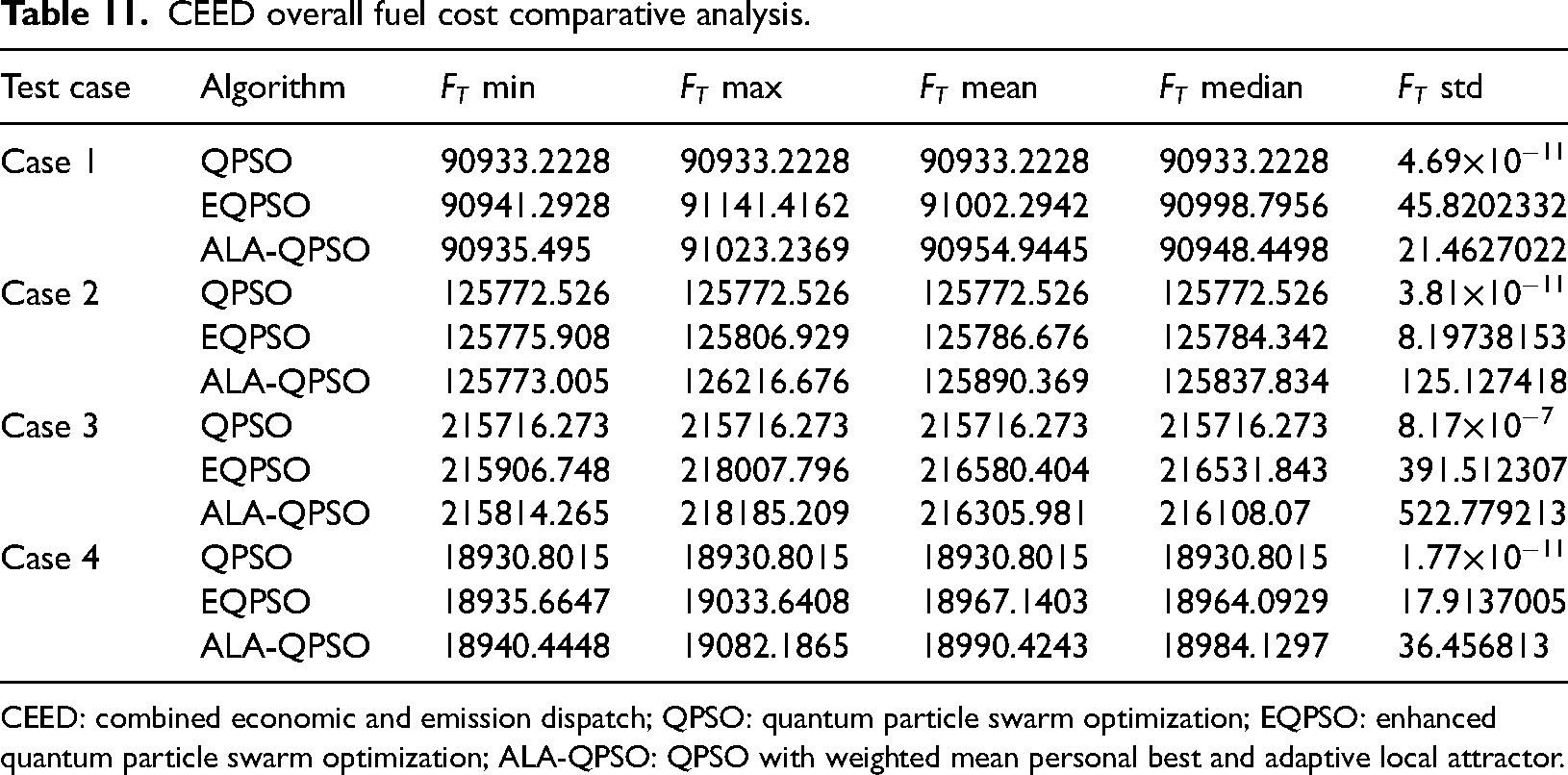
CEED: combined economic and emission dispatch; QPSO: quantum particle swarm optimization; EQPSO: enhanced quantum particle swarm optimization; ALA-QPSO: QPSO with weighted mean personal best and adaptive local attractor.
Case study 2
In the second case study, the number of iterations is set to 1000, the population size is 200 and results are taken after averaging a total of 50 runs. The comparative results of case study 2 are provided in Tables 12 to 14. This case study also shows that QPSO achieved first place in most of the cases. However, in Table 14, case 3, the average results achieved by EQPSO are better than QPSO. It shows that for a larger number of iterations, EQPSO can find better results but larger standard deviation is its demerit. These results are also shown in later convergence Figure 5.
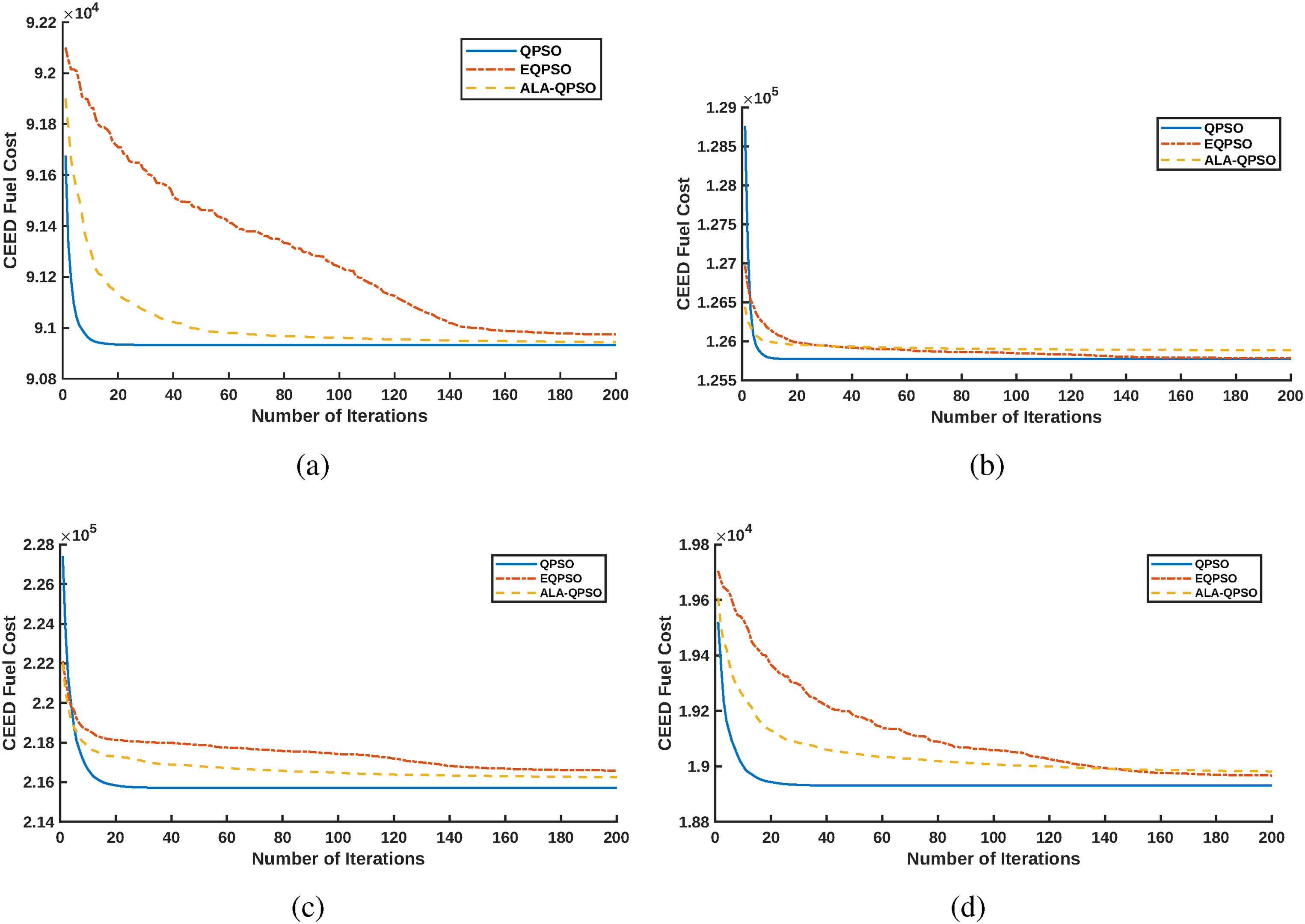
Convergence characteristics of all three algorithms (50 runs and 200 iterations).
Fuel cost comparative analysis of CEED.
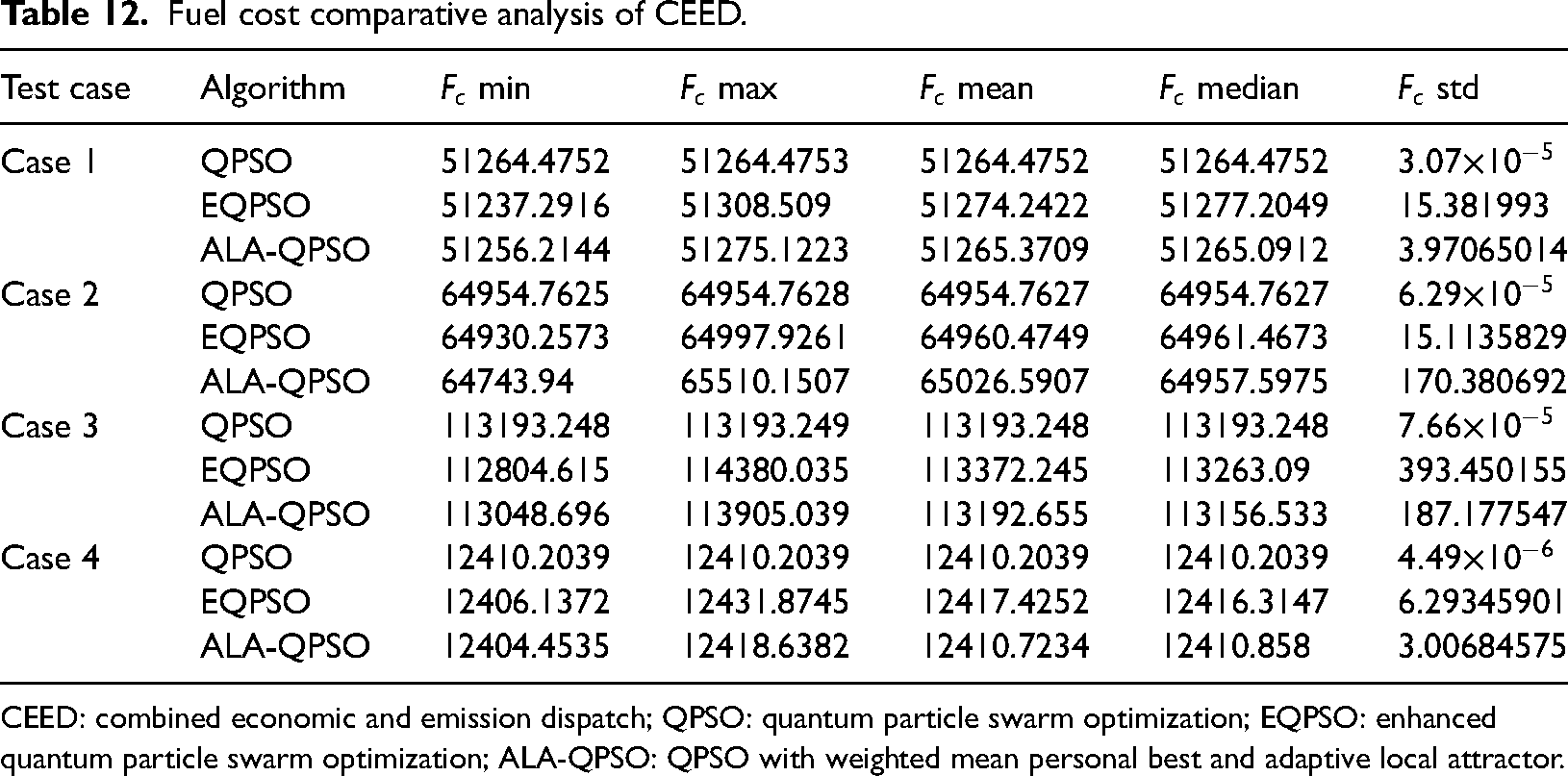
CEED: combined economic and emission dispatch; QPSO: quantum particle swarm optimization; EQPSO: enhanced quantum particle swarm optimization; ALA-QPSO: QPSO with weighted mean personal best and adaptive local attractor.
Emission comparative analysis of CEED.
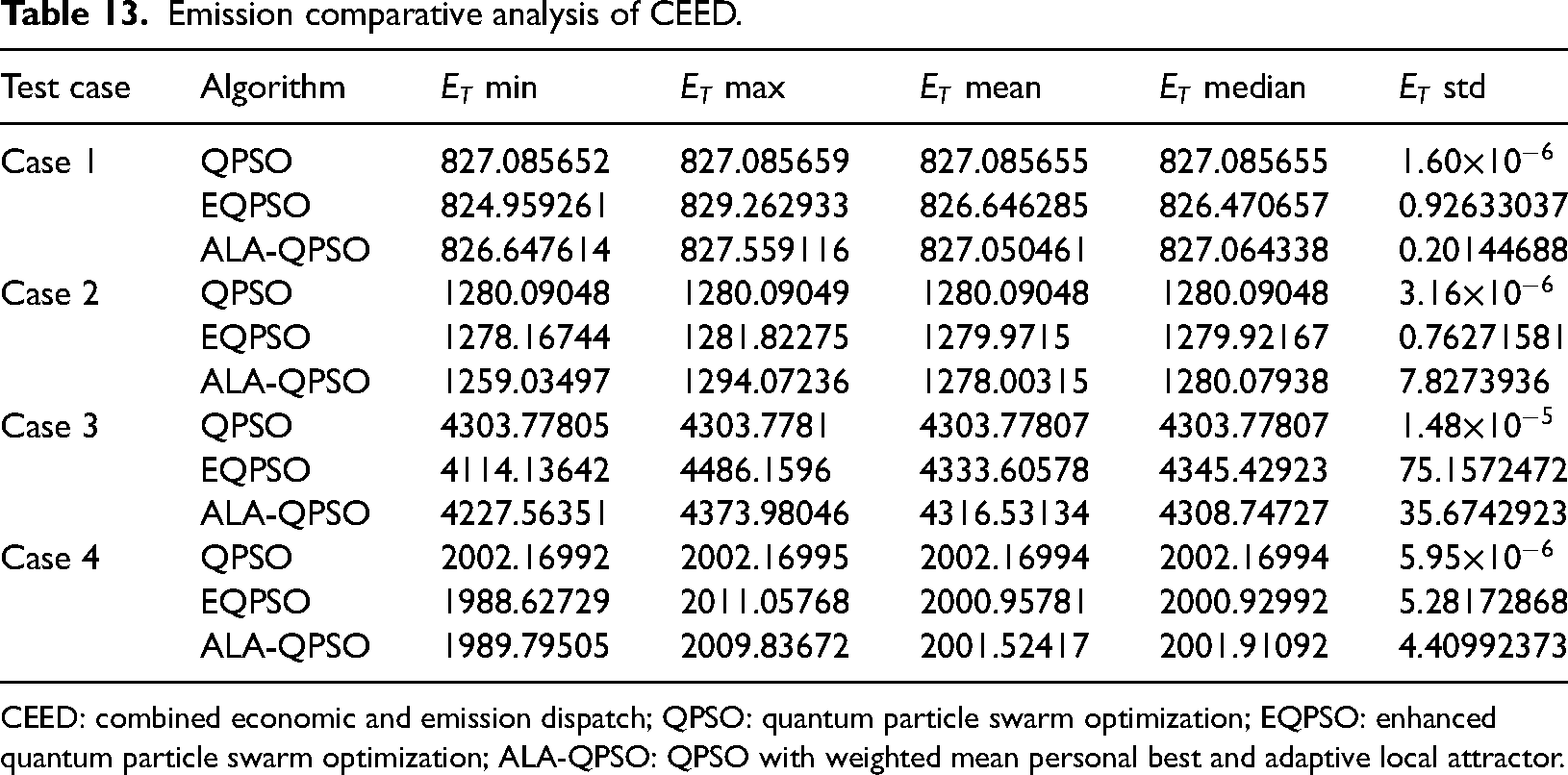
CEED: combined economic and emission dispatch; QPSO: quantum particle swarm optimization; EQPSO: enhanced quantum particle swarm optimization; ALA-QPSO: QPSO with weighted mean personal best and adaptive local attractor.
CEED overall fuel cost comparative analysis.
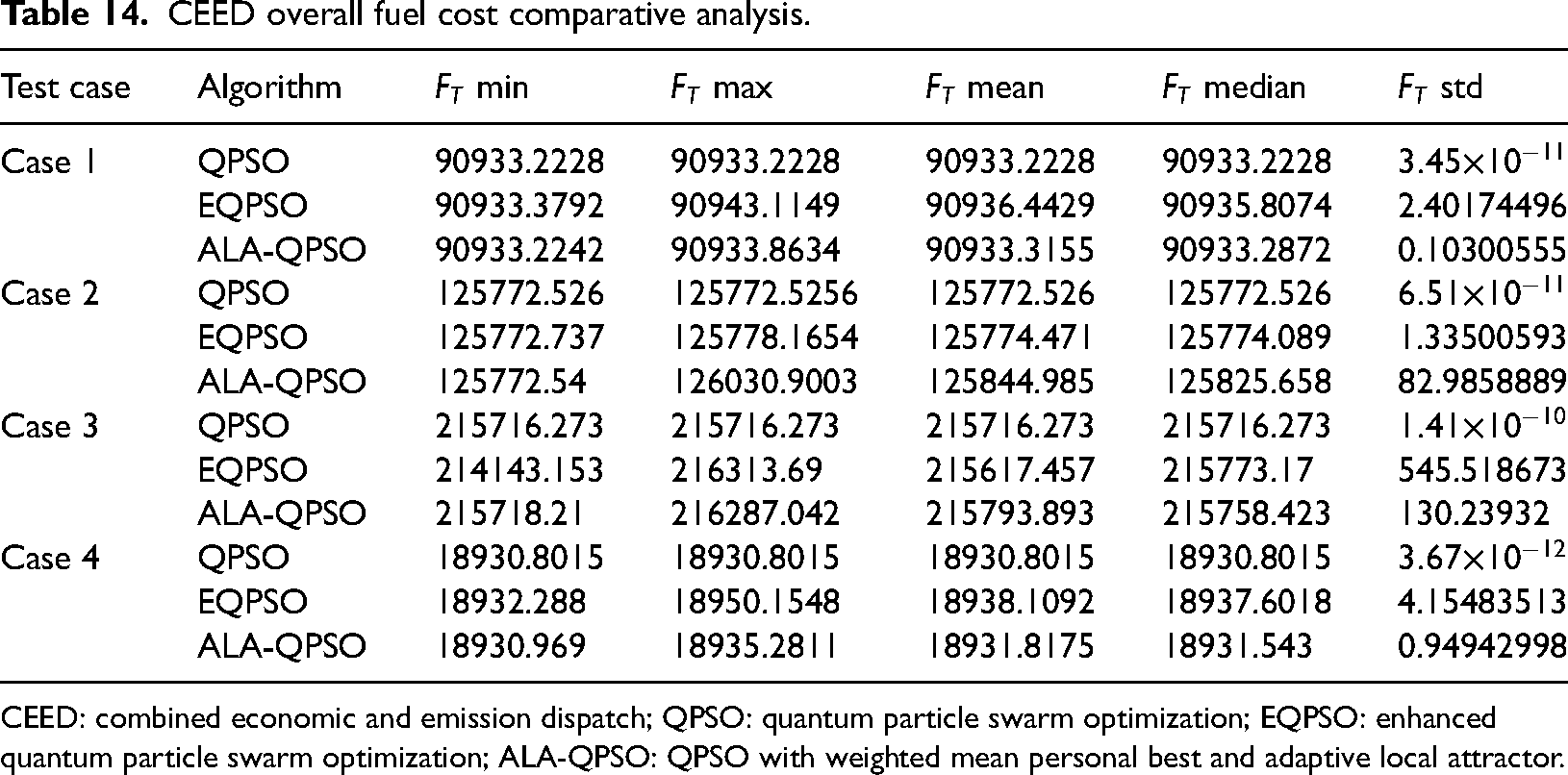
CEED: combined economic and emission dispatch; QPSO: quantum particle swarm optimization; EQPSO: enhanced quantum particle swarm optimization; ALA-QPSO: QPSO with weighted mean personal best and adaptive local attractor.
Convergence efficiency of three algorithms
Figure 4 depicts the random single-run behavior of algorithms for four test cases with a population size of 40 and 200 iterations. It shows that QPSO converges faster than the other two variants. The EQPSO spreads its population wider than the other two optimization approaches to achieve better local search. The convergence behavior of ALA-QPSO is in between these two techniques.
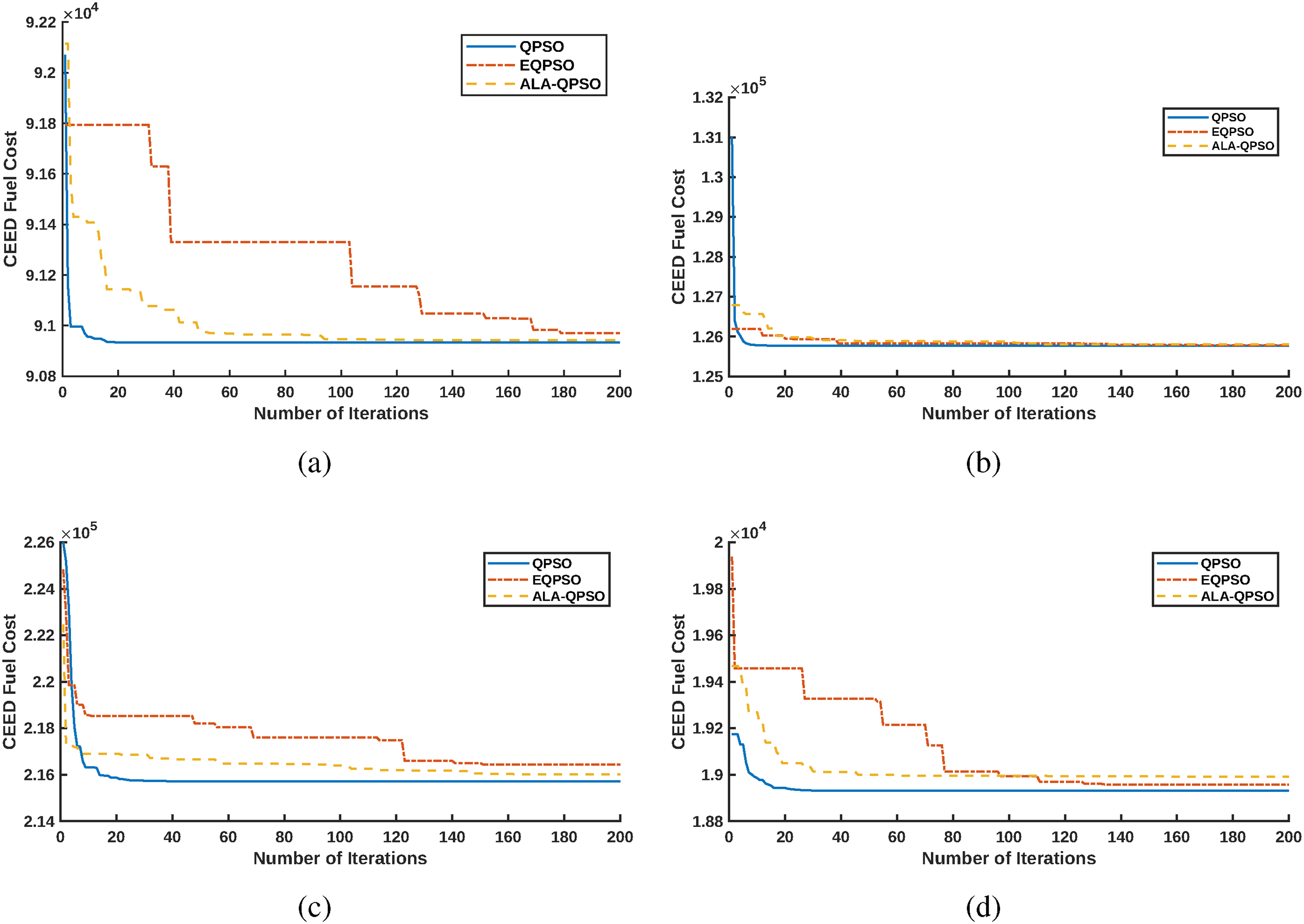
Convergence characteristics of all three algorithms (single run and 200 iterations).
For better analysis of convergence, all algorithms are tested for 50 runs and their average results are plotted as shown in Figure 5. The graphs show the same results as discussed earlier. Both the variants of QPSO are modified in such a way that they scatter their population in a wider area for better local search. However, ALA-QPSO’s adaptive local attractor is set in such a manner that the population wanders in the whole search space at early stages and converges at a later stage. To investigate further, the number of iterations is increased to 1000 and then it can be seen in Figure 6 that EQPSO achieves better results than QPSO for case 3.
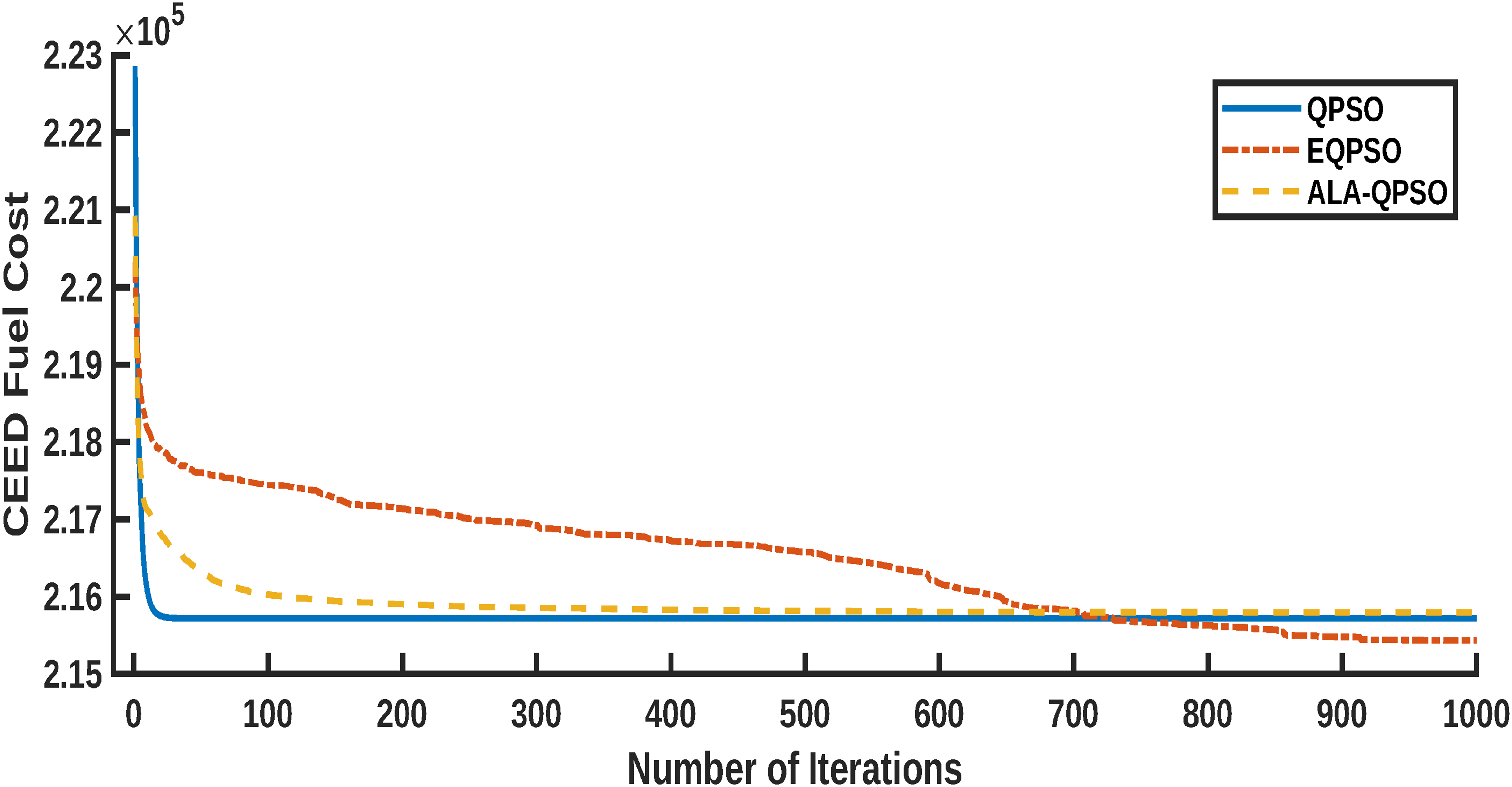
Convergence characteristics of test case 3 (50 runs and 1000 iterations).
The computational complexity of CEED algorithms arises from the intricate nature of power system optimization problems involving economic and emission considerations. Researchers continue to explore strategies to mitigate this complexity and enhance the performance of these algorithms in real-world applications. The computational complexity of a PSO algorithm is typically assessed in terms of its time complexity, which represents the computational resources required to find a solution. The execution time of the three algorithms is given in Appendix Table 16 under the conditions of 40 population size, 200 iterations, and 50 run average result. It is evident from Table 15 that the best time is achieved for QPSO, Test Case 1 and comparatively EQPSO elapsed the maximum time because of its feature of spreading population in wider range.
Comparison of computational time of three cases.
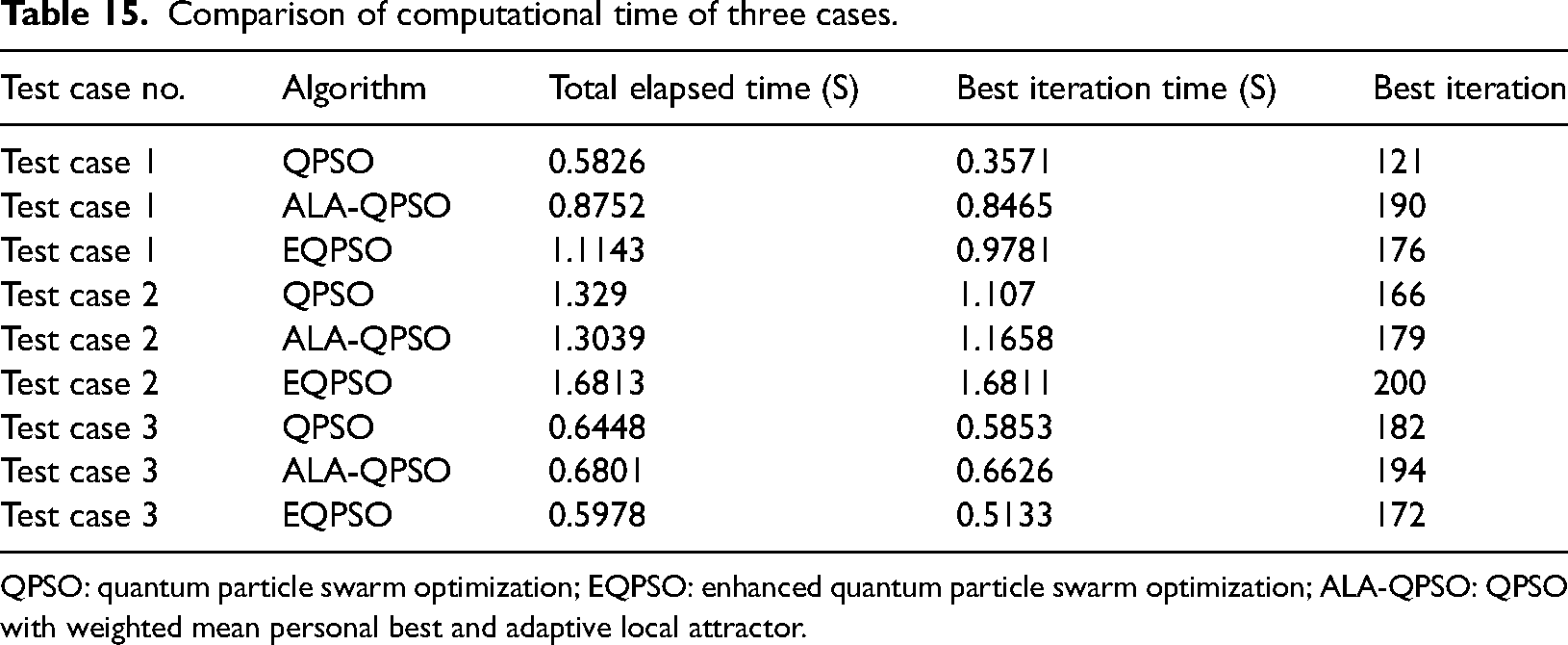
QPSO: quantum particle swarm optimization; EQPSO: enhanced quantum particle swarm optimization; ALA-QPSO: QPSO with weighted mean personal best and adaptive local attractor.
Six-units generator characteristics.
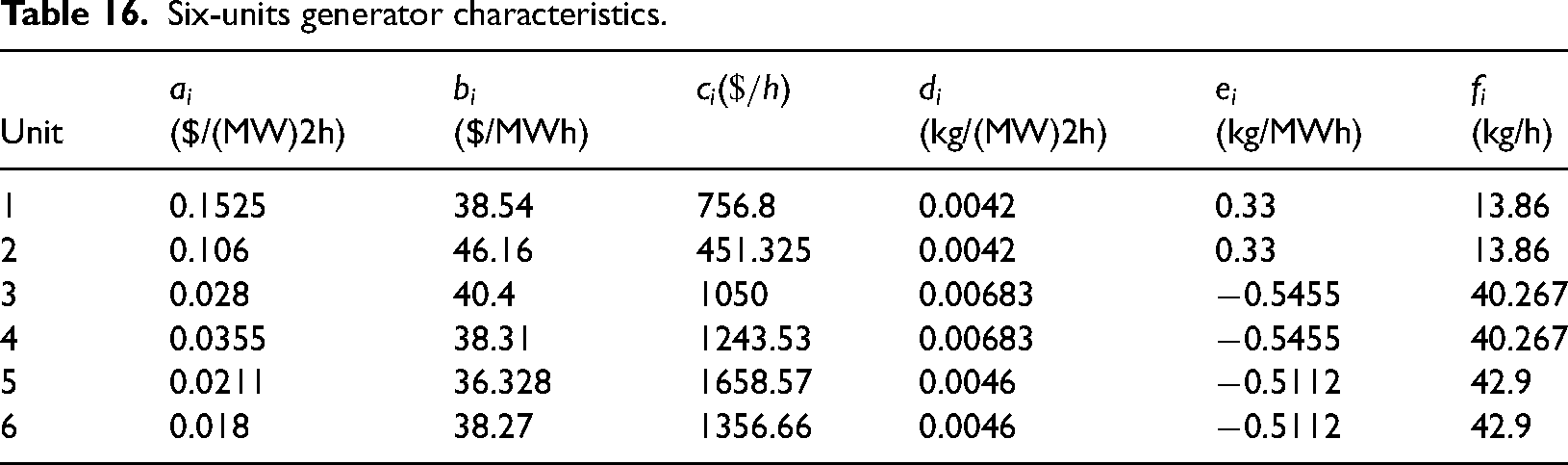
Six-units generator characteristics.
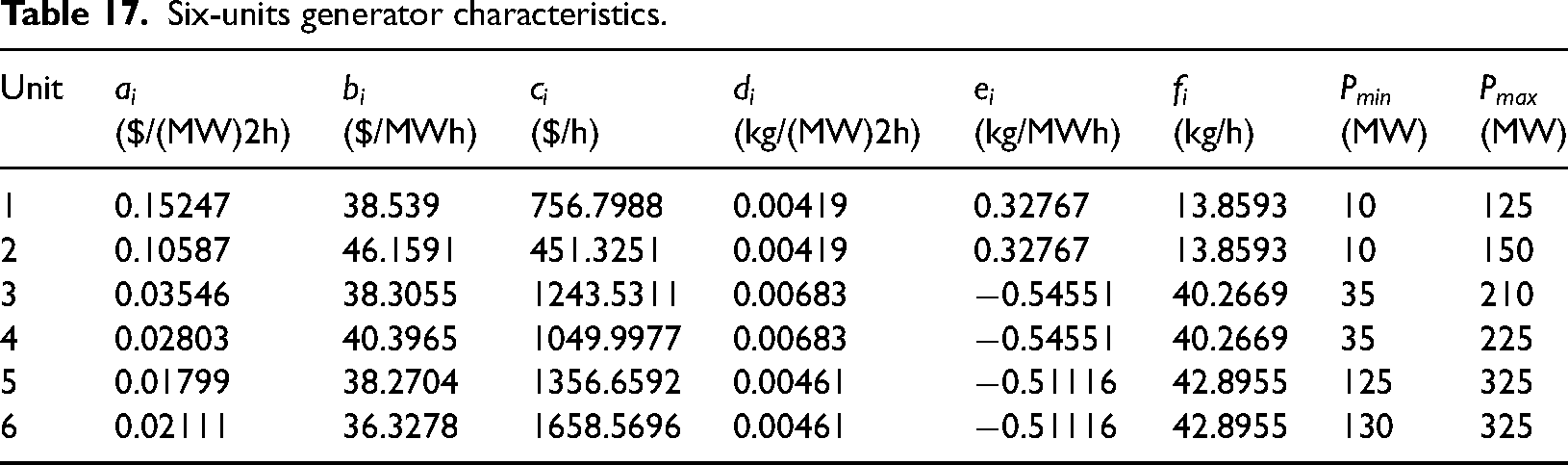
Transmission loss B coefficient.
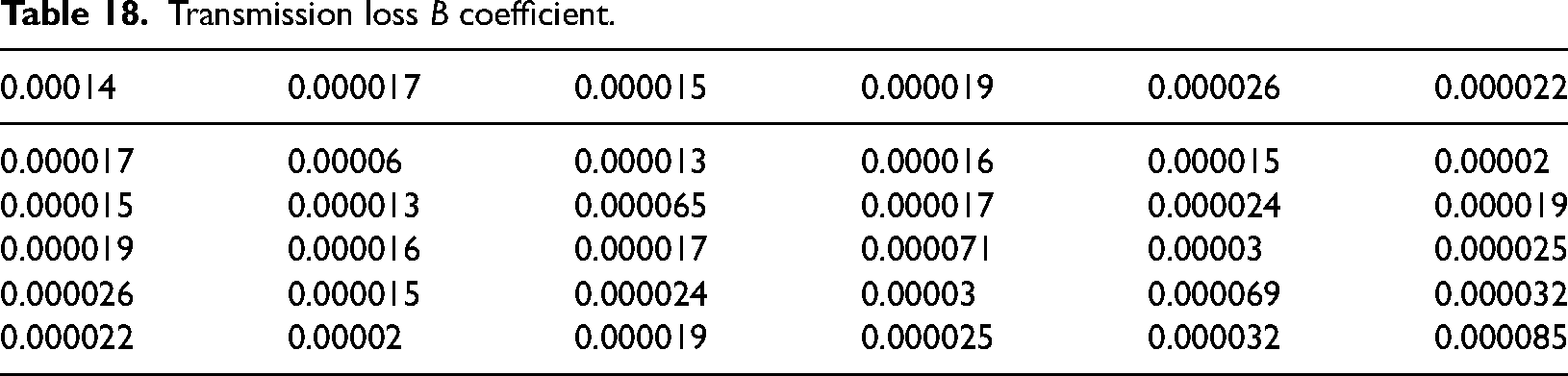
Ten-units generator characteristics.
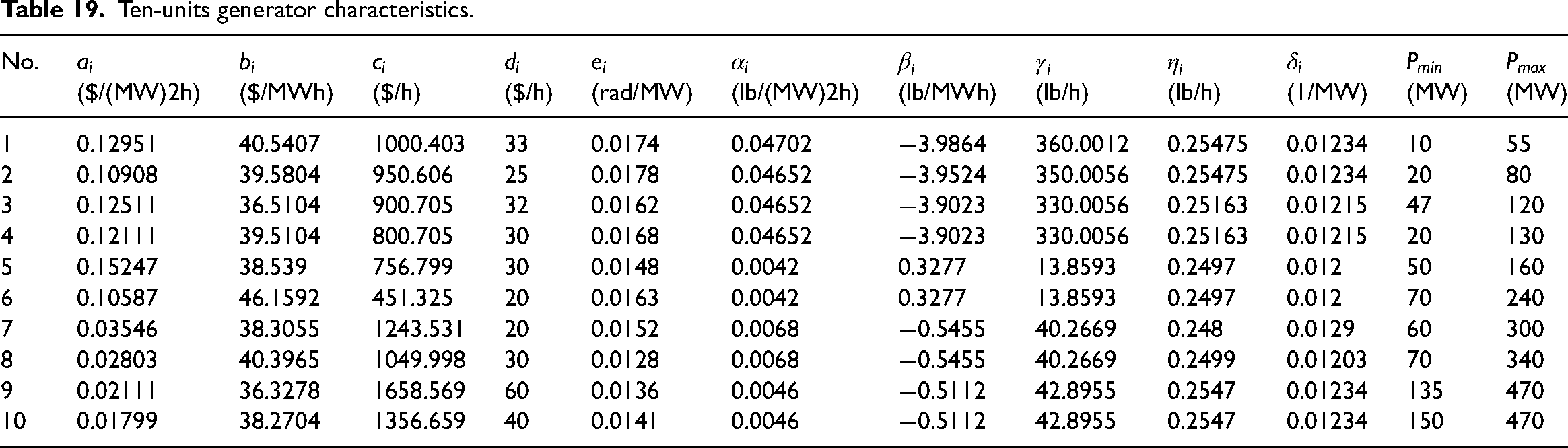
Transmission loss B coefficient.
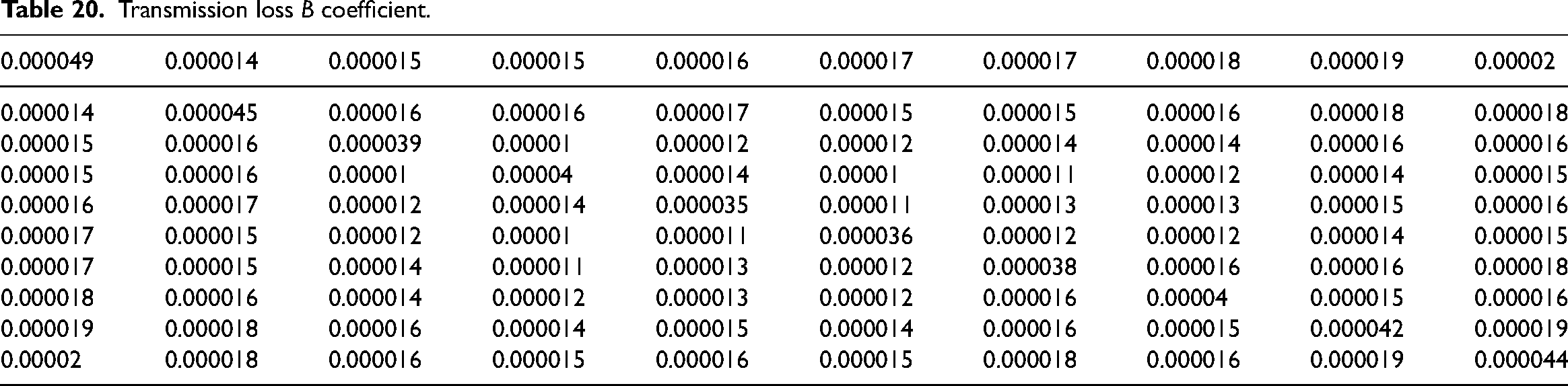
Eleven-units generator characteristics.
Conclusions
In this study, we have used QPSO and its two modified versions, EQPSO and ALAQPSO, to solve the CEED problem. These algorithms have been implemented on IEEE standard 6-, 10-, and 11-units systems. The proposed algorithms are investigated on four different test cases, that is, Test case 1 PD = 1000 MW, Test case 2 PD = 1200 MW, Test case 3 PD = 2000 MW, and Test case 4 PD = 2500 MW and two case studies have been considered. The efficacy of the proposed metaheuristic techniques is confirmed through a comparison of their performance with methodologies documented in the literature. From simulation results, key findings could be summarized as follows:
In case study 1, where the number of iterations is set to 200 with 40 population size. In all the test cases, QPSO showed fewer variations in results with minimum standard deviation and provided mean best output in terms of fuel cost: 51264.4753 for test system 1, 64954.7627 for test system 2, 113193.245 for test system 3, and 12410.2039 for test system 4; emissions: 827.085655 for test case 1, 1280.09048 for test case 2, 4303.77796 for test case 3, and 2002.16994 for test case 4; and overall CEED fuel cost: 90933.2228 for test case 1, 125772.526 for test case 2, 215716.273 for test case 3, and 18930.8015 for test case 4. In the second case study, the number of iterations has been set to 1000, with 200 population size and results are taken after averaging a total of 50 runs. This case study also showed that the QPSO achieved first place in all the cases except test case 3 where the average results for overall CEED fuel cost achieved by EQPSO (215617.457) were better than QPSO (215716.273). The convergence characteristics of QPSO also confirmed its efficiency in terms of robustness as it required fewer iterations to achieve the solution than the other two variants. The EQPSO and ALA-QPSO also produced some quality results as compared to other optimization techniques. However, the convergence efficiency of these two algorithms is lower and requires a larger number of iterations.
In the future, QPSO and its variants need to be tested on larger testing units integrated with renewable energy sources with more practical constraints such as prohibited operating zones and ramp rate limits. The efficiency of QPSO along with its enhancements also required to be tested on multi-objective dynamic economic and emission dispatch with demand side management.
Footnotes
Abbreviations
Declaration of conflicting interests
The author(s) declared no potential conflicts of interest with respect to the research, authorship, and/or publication of this article. This declaration certifies that the research, investigation, and interpretation of the findings presented in the manuscript were not influenced or biased by any financial, individual, or professional connections or affiliations. To reassure readers that the work is carried out completely without interference from external factors that might affect the study’s objectivity, it highlights the transparency and authenticity of the research process.
Data availability
Supplementary data and materials beyond what is presented in this article can be provided upon request.
Funding
The author(s) received no financial support for the research, authorship, and/or publication of this article.
