




Abstract
Despite the multiple applications of the oregano (Plectranthus amboinicus (Lour)), an important herbaceous plant because of its medicinal and culinary properties, limited research has been conducted on this species’ solar drying. Thus, the experimental drying of oregano leaves in a tropical climate was performed using direct and indirect solar drying and an electric oven in this research work. Also, mathematical modeling of the drying process, moisture diffusivity, activation energy, and colorimetric analysis (as a quality parameter) were accomplished to complement the experimental evaluation and understand the drying process behavior. The results show a shorter drying time obtained with the electric oven with 210 min reached at 65°C; however, the minimum solar drying time (250 min) was achieved with a maximum drying rate of 0.025 g water/g dry matter per minute and minimum final moisture between 0.28 and 0.13 g water/g dry matter was obtained with indirect solar dryer. Moreover, the models that better represented the experimental data were Modified Page, Page, and Logarithmic, with a maximum value of R2 obtained of 0.9980 corresponding to the Logarithmic model. Furthermore, a maximum effective diffusivity value of 1.81E-9 was obtained with direct solar dryer natural convection, while for the electric oven, were 1.14E-10, 2.280E-10, and 1.026E-09 for 45, 55, and 65°C, respectively. The activation energy for water diffusion in oregano leaves was 55.66 and 97.78 kJ/g mol for solar dryers and electric ovens, respectively, which were values very close to those reported in the literature. Finally, the colorimetric analysis exhibited a minimum color change value of 17.1 obtained for the indirect solar dryer, allowing better oregano preservation and maintaining its quality for the market, which makes it ideal for drying oregano in tropical climates and promotes solar drying use for sustainable growth of the region.
This is a visual representation of the abstract.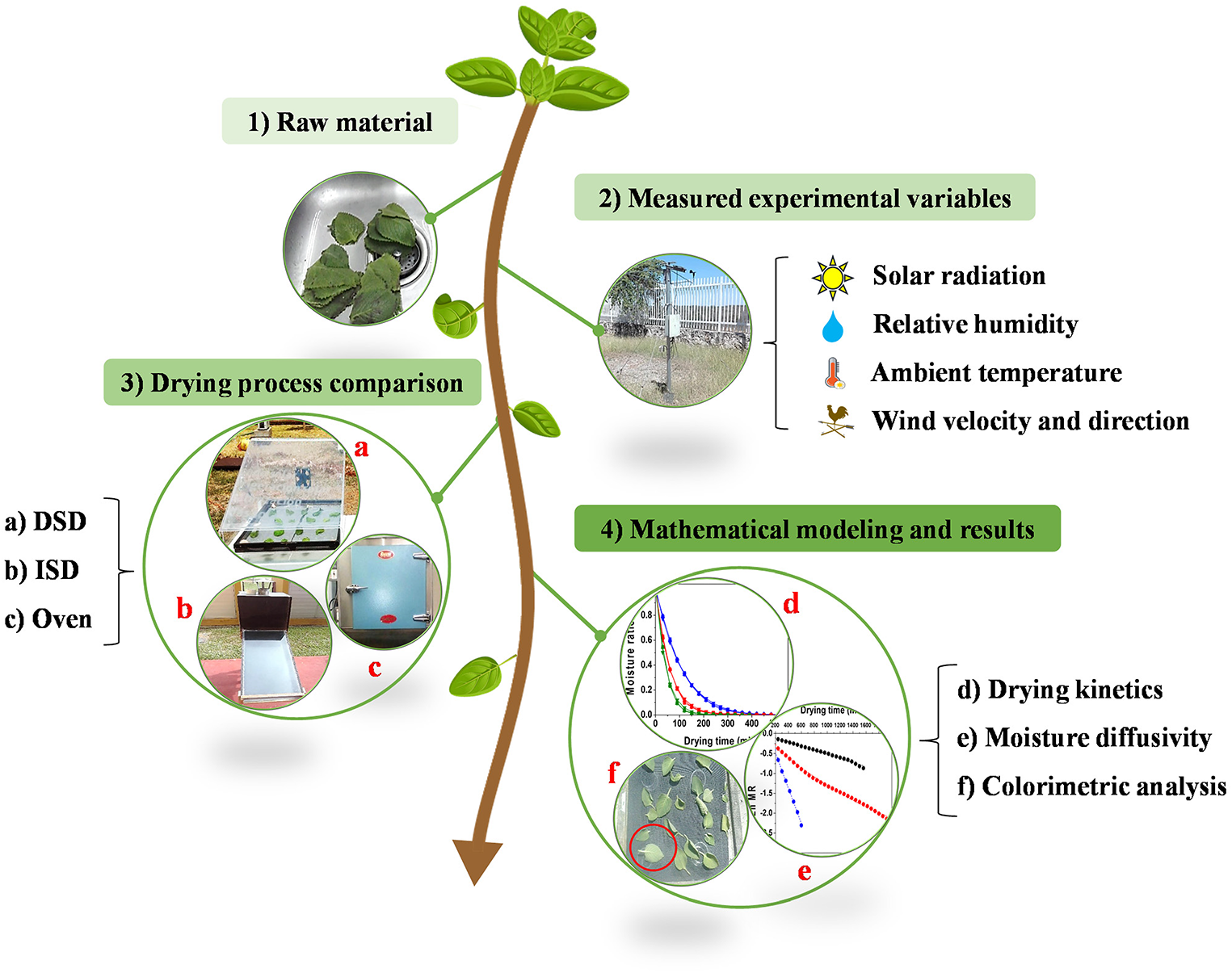
Keywords
Introduction
The genus Plectranthus amboinicus (Lour.), which comprises approximately 300 species, is found in tropical Africa, Asia, and Australia. It is a perennial and fragrant plant with robust, plump leaves. This plant is known in other parts of the world as French Oregano, Mexican mint, Indian oregano, and width oregano (Faisal et al., 2023). Moreover, its worldwide commercial value is primarily attributed to its medicinal, antibacterial, antifungal, antiparasitic, antimicrobial, and antioxidant properties (Stasińska-Jakubas et al., 2023). Some components of this plant, such as thymol and carvacrol, are widely used as food ingredients and additives and in other applications in the food, pharmaceutical, and perfumery industries (Sulaiman et al., 2018). Mexico is one of oregano's leading exporters, representing 35–40% of the international market (García-Bores et al., 2017). Different drying technologies have emerged to accomplish this purpose and have been investigated to ensure a continuous process (Cetina-Quiñones et al., 2021). Drying is the most used treatment to inhibit microbial growth and prevent specific biochemical changes (Jafari and Malekjani, 2023). Open sun drying has been used within these techniques and represents an ancient practice utilized in many regions of the world to preserve food. It is favored because of its low operating costs compared to mechanized processes. However, although open-sun drying is considered a non-polluting method, it has inherent limitations, such as high dependency on weather conditions, plant loss of color due to excessive exposure to ultraviolet rays, and moisture absorption during the night with contamination for dust and insects. These limitations can significantly affect the products’ quality and market value (Tomar et al., 2017). Furthermore, some traditional drying methods provide hot air for drying materials by burning fossil fuels or wood, which not only intensifies environmental pollution and energy shortage but also negatively impacts the drying materials’ quality (Deng et al., 2021). Therefore, increasing attention has been paid to solar dryer use which can offer faster drying processes with uniform, hygienic, and effective drying than traditional methods, resulting in better color and texture (Chan-Gonzálelz et al., 2021). Solar dryers can be classified as direct, indirect, or mixed/hybrid, and this classification primarily considers the aspect of drying a product under direct/indirect exposure to solar insolation (Mohana et al., 2020). The product is exposed to incident sunlight in a direct solar dryer through a transparent cover (Ameri et al., 2018). This type of solar dryer has been used for drying fruits, vegetables, and meat where the moisture content is high because it ensures a fast drying process but compromises the quality of the product (Kumar et al., 2016). These limitations can be overcome with an indirect-type solar dryer since the drying product is not exposed to direct radiation, but rather the heated air from the solar collector dries the product by removing moisture, and more heat transfer can be controlled (Singh et al., 2021). Finally, mixed-type solar dryers combine the principles of direct and indirect solar dryers, where the air is heated by the solar collector, which flows in natural or forced convection into a transparent drying chamber (López-Vidaña et al., 2020). Therefore, many researchers in the field have reported a wide variety of solar drying technologies, including direct, indirect, and hybrid solar driers (Castillo-Téllez et al., 2021; Khalfaoui et al., 2021; López-Vidaña et al., 2022; Simo-Tagne and Ndukwu, 2021). Moreover, there are other studies on the drying processes optimization to examine the drying kinetics behavior and evaluate the mathematical models developed to dry various products such as cocoa bean, mentha, valeriana jatamansi, Jamaica's flowers (Hibiscus sabdariffa), chile, rosemary (Rosmarinus officinalis), fine herbs, and medicinal plants (Bhardwaj et al., 2019; García-Valladares et al., 2023; Simo-Tagne et al., 2021, 2022). Regarding medicinal plants, a wide variety of different studies have been performed in recent years, such as the drying of horehound leaves (Marrubium vulgare L.) (Bahammou et al., 2019), rupturewort (Herniaria hirsuta) (Bahammou et al., 2020), stevia leaves (Hidar et al., 2020), Trigonella foenum-graecum (Singh et al., 2021), and Tithonia diversifolia gray (Constantino-Robles et al., 2022). Despite the wide range of its applications as an herbaceous plant with great commercial importance in culinary and industrial matters, limited research has been conducted on the solar drying of Oregano P. amboinicus (Lour.) species. The dehydrating methods currently used to dry Oregano plants include natural open drying and mechanical drying using propane gas and heat pumps (Vel and Acevedo, 2014). Also, drying in vacuum ovens (Hossain et al., 2010), microwaves (Jaloszynski et al., 2008; Śledź et al., 2013), and natural convection indirect solar (Avila-Sosa et al., 2012; Zimberg et al., 2000). Also, in regions with tropical climates, solar dryers represent a suitable option, and lower capital and operating costs can be obtained compared to conventional dryers (Moheno-Barrueta et al., 2021).
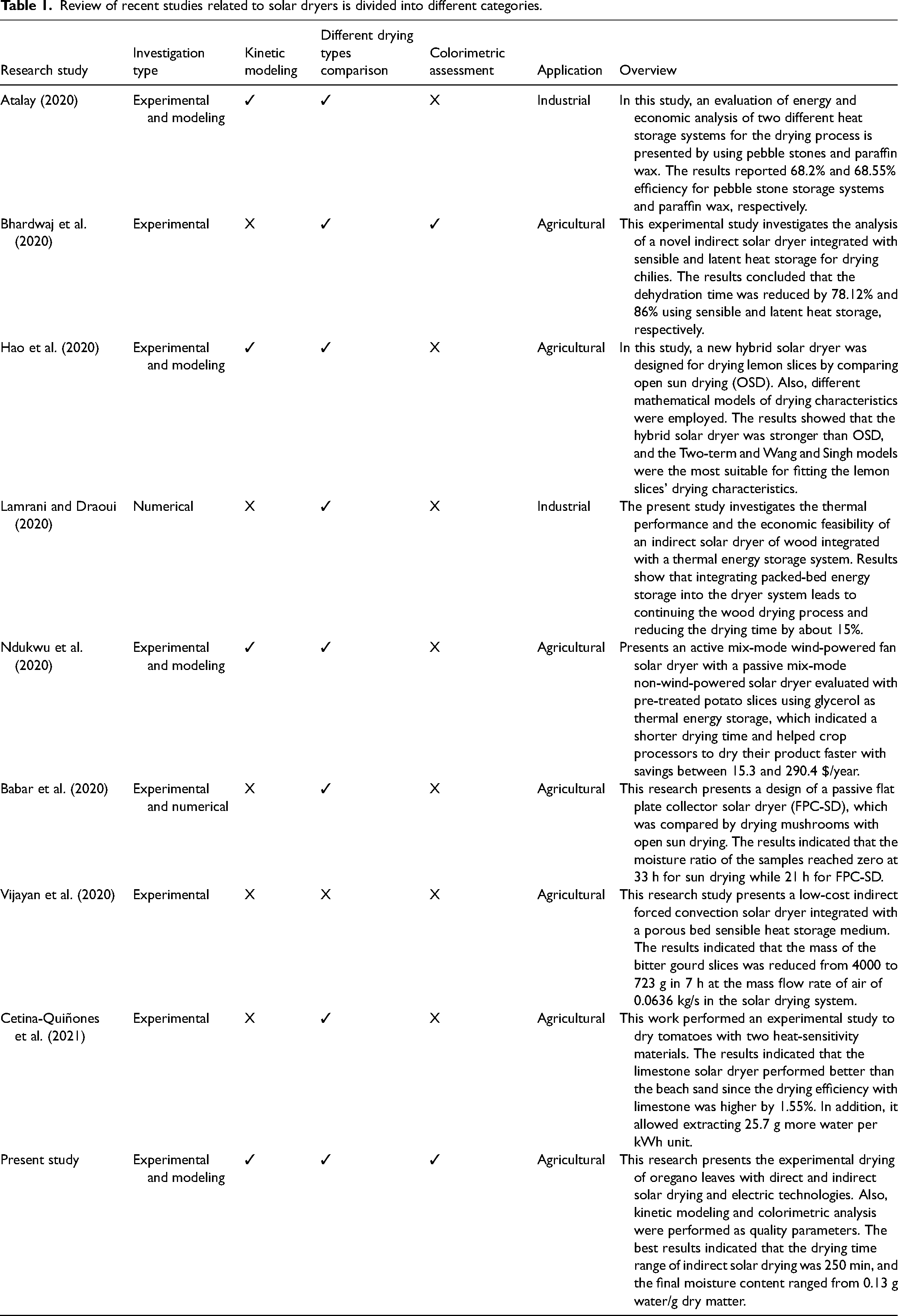
Unfortunately, there is a lack of studies on the solar drying of Oregano species reported in the current literature (Bergues-Ricardo et al., 2013; Nurafifah et al., 2018). There is an opportunity gap related to comparative studies of different drying technologies, a kinetic modeling study that complements the experimental results, and colorimetric studies. Therefore, Table 1 presents a qualitative analysis of recent experimental and theoretical studies on solar dryers. These research studies are categorized based on different aspects, considering a comparative study of other solar dryer technologies, kinetic modeling of the drying process, and a color assessment. Specifically, the colorimetric study is highly relevant in any drying process since it presents areas of opportunity where the drying process can be optimized based on the color of a sample, which allows the development of artificial intelligence applications through the development of sensors for the optimization of the drying process.
Review of recent studies related to solar dryers is divided into different categories.
Another essential parameter in the drying process is the effective moisture diffusivity (Deff) related to the mass transfer and functions of the structure, water content, and temperature. Deff includes all types of water transport, which is very accepted in modeling (Castro et al., 2018). Moreover, it is determined using experimental data, usually applying the Arrhenius-type equation. Combined with an analytical, thin-layer solution of this drying curve, the experimental moisture loss curve, based on Fick's law and the Crank solution, is utilized (Crank, 1975) for different geometries accounting only for axial or radial moisture diffusion. The effective diffusivity dependence on the moisture content is also applied in an Arrhenius-modified equation to obtain the activation energy (Váquiro et al., 2009). The activation energy is the minimum amount of power supplied to carry out the drying process so the water molecules overcome the energy obstacle during their transfer through the surface. Thus, a low value indicates that less energy is required to remove moisture from the product.
The drying process determines the food's final sensory and nutritional properties. Therefore, its selection is vital to optimize times and improve economic gains with products with the required quality. In this study, Oregano P. amboinicus (Lour.) was dried in a tropical climate using different technologies, comparing the products drying behavior, kinetics, and properties, offering an option to use clean and free solar energy instead of conventional sources.
Materials and methods
Experiments were performed to review the kinetics of oregano drying. Direct and indirect solar dryers and electric ovens were used. Water activity, humidity content, and colorimetric studies were conducted before and after treatment. Also, with the experimental data obtained, an adjustment of moisture ratio (MR) was made with some empirical and theoretical mathematical models, allowing the prediction of the drying behavior. Additionally, water diffusivity and activation energy were determined. This study was conducted at the Environmental Engineering Laboratory in the Autonomous University of Guadalajara Campus Tabasco, Mexico, with coordinates 17°59′13′′ N and 92°55′10′′ W. This site has a tropical wet-dry climate. The maximum average temperature is 27°C and 74% of the annual average relative humidity. The global average annual solar radiation value is 5.8 kWh/m2/day, and the experimentation was carried out from July 1 through September 30, 2020.
Raw material
P. amboinicus (Lour.), cultivated in Macuspana, Tabasco, was chosen for the experimental test. The leaves were separated from the branches to obtain a homogeneous group, considering ripeness and color, and then their width, length, and thickness were weighed and measured. The leaves’ average size was 6, 4, and 0.15 cm, corresponding to length, width, and thickness.
Methodology
Monitoring
Operating data
The initial and final moisture content was determined with a moisture balance, Boeco BMA150 (accuracy = 0.001%), using a sample of 1.5 g of weighing. The water activity was tested in fresh and dried oregano samples with a water activity meter, Rotronic HygroPalm, with an accuracy of ±0.001 a
Weather data
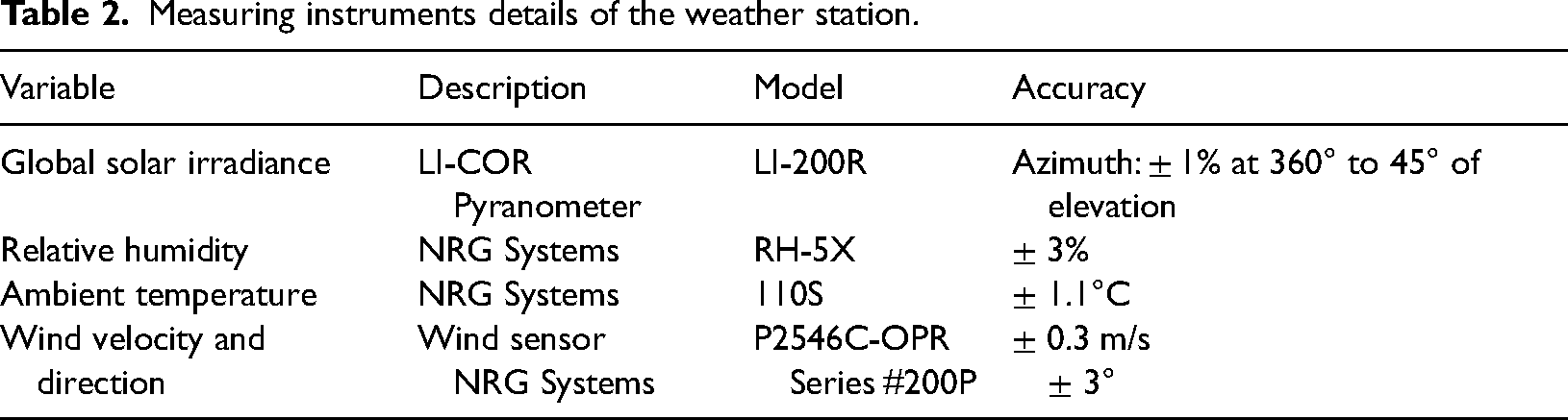
The climatic parameters were documented. Table 2 presents the measuring instruments used in the weather station.
Measuring instruments details of the weather station.
Solar drying
Two solar drying technologies were selected: direct drying (cabinet-type dryer and shadow-mesh) and indirect drying with a flat plate solar collector.
Direct solar drying
A transparent plastic cabin was used for direct solar drying (DSD). The base was utilized to place the material to dry, and its surface has an area of 0.56 m2. The lateral faces, the cover, and the rear holes were made to promote the flow and removal of warm and humid air. A fan reaching 2 m/s maximum air velocity was placed at the dryer's back to dry with natural or forced convection. The interior temperature, the weight loss in the oregano samples, the irradiance, relative humidity, and air temperature were reported. Figure 1 represents the schematic illustration of DSD.
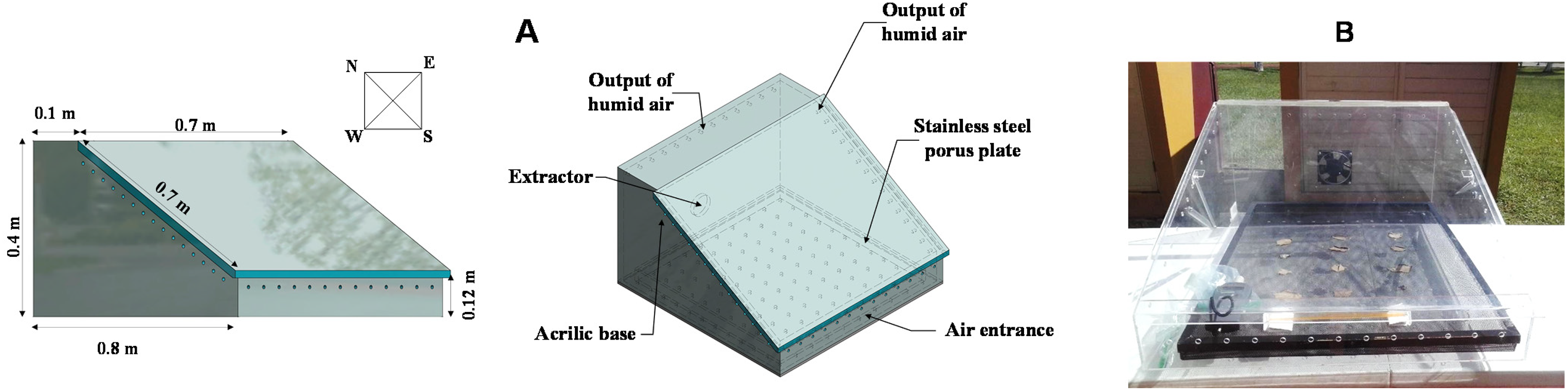
(A) Schematic illustration of the DSD, (B) actual image of the DSD.
Experimentation was performed using two DSDs at the same time. Moreover, one dryer was covered by a shadow mesh, whose irradiance filtration rate was 60%. This experimentation allows data on irradiance's effect on the oregano leaves to be studied through drying.
Indirect solar drying
The indirect solar drying (ISD) technology used was a natural convection type and consisted of three main parts: a drying chamber, a chimney, and an air collector. The chamber is a horizontal tunnel with dimensions of 0.40 m long and wide, constituting a 0.16 m2 cross-section, built of wood and thermally insulated. Also, the drying chamber is separated into levels with four trays to hold the product to dry (see Figure 2).
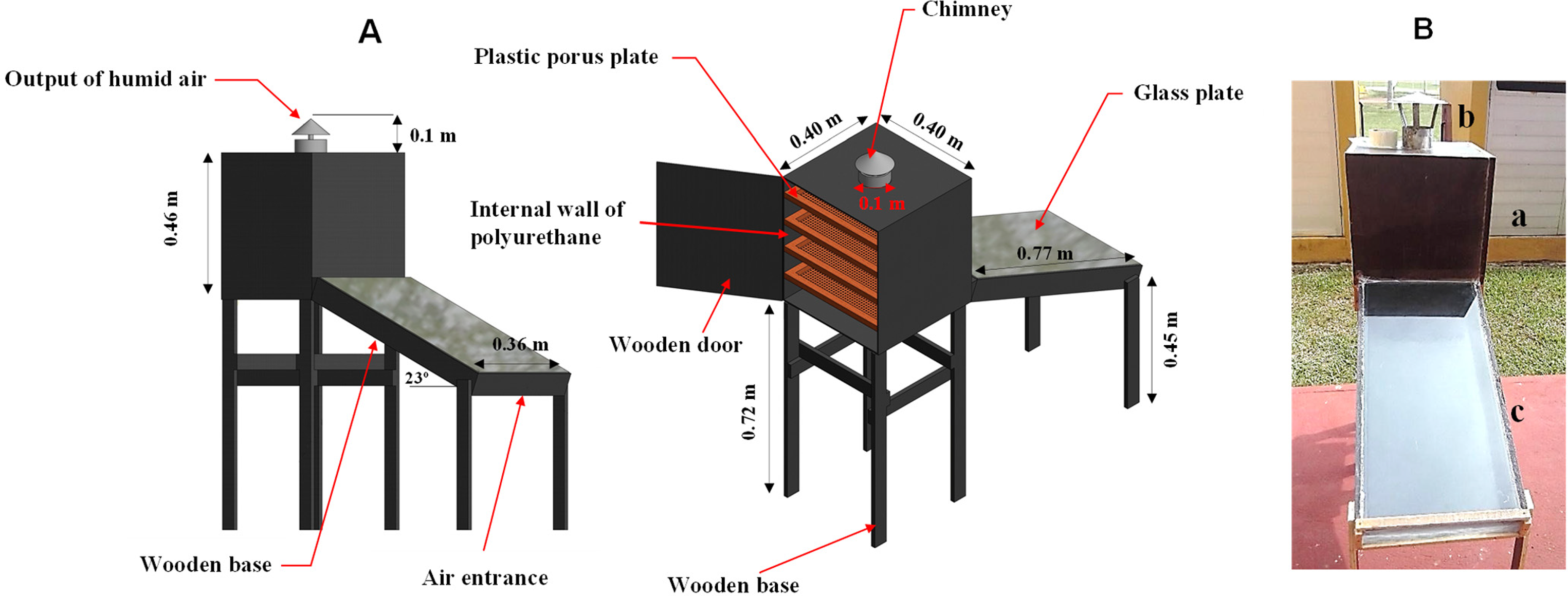
(A) Schematic illustration of the ISD, (B) actual image of the ISD: (a) drying chamber, (b) chimney, (c) air collector.
Electric Oven
Oregano leaves were dry under three different temperatures in an electric oven: 45, 55, and 65°C. The oven used was a Riossa brand, with natural convection. Data obtained were recorded on a computer.
Drying kinetics modeling
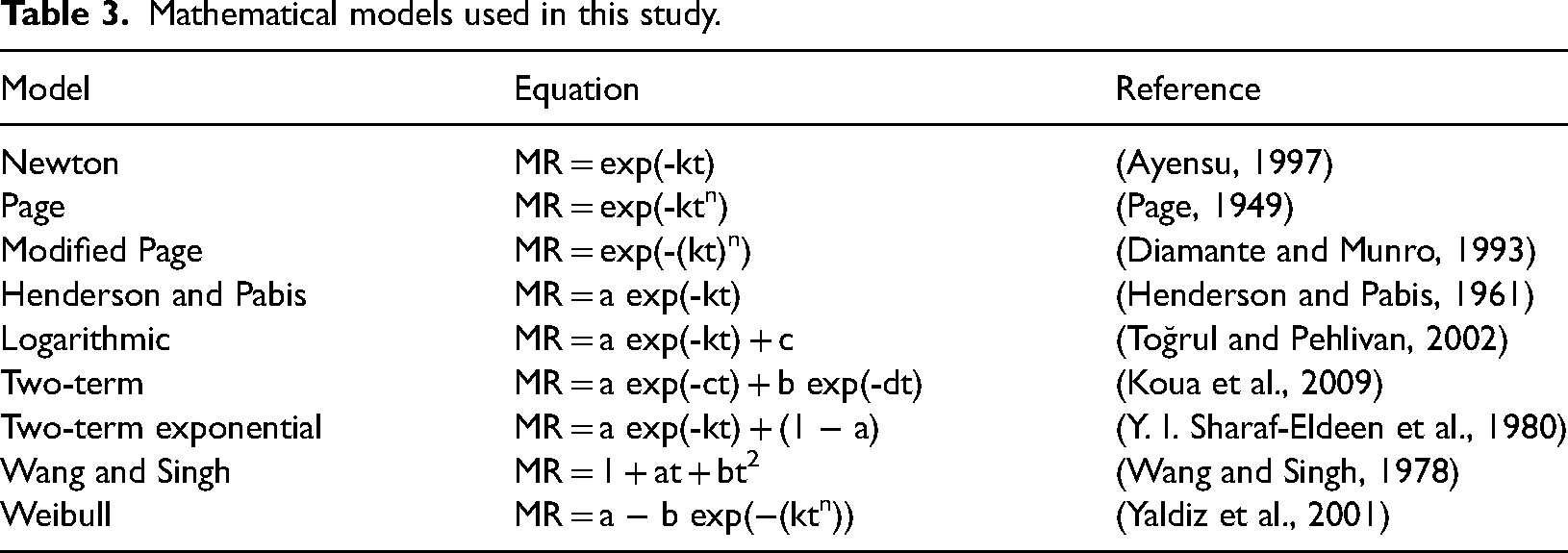
The fundamental chemistry and physics of food drying are very complex. Dryers are more complicated than equipment that merely removes moisture, and effective models are necessary for process design, optimization, energy integration, and control (Marinos-Kouris and Maroulis, 2006). The commonly used models are listed in Table 3.
Mathematical models used in this study.
The moisture ratio (MR) is considered a function of the drying time, which can be calculated using equation (1) (Toĝrul and Pehlivan, 2004):
The coefficient of determination (R2) was used as the main criterion to select the model that best fits the experimental results. The R2 was evaluated by calculating the parameters linked in the adjustment models with DataFit software. Reduced chi-square (χ2) and root-mean-square error (RMSE) were considered in selecting the best-fitting model. According to the literature, the model with the maximum R2 and lowest RMSE and χ2 was chosen as the better model that describes the kinetics of dried oregano leaves (Castillo Téllez et al., 2018). R2, RMSE, and χ2 were calculated with equations (2)–(4).


Nine models were analyzed in this study, as listed in Table 3. The parameters for each model and the R2, RMSE, and χ2 values were calculated.
Moisture diffusivity
The drying characteristics of agricultural products can be described using the Fick diffusion equation (equation (5)) for moisture diffusion:

The Arrhenius relationship assessed the temperature dependence of diffusivity (Ozdemir and Devres, 2000). Deff can be determined using the slope obtained from the experimental graph of Ln (MR) versus the drying time and the slope, which is estimated by equation (7) (Velić et al., 2004).


Color measurement
Food color is a critical quality attribute of dry foods due to its importance in visual appearance to consumers. Additionally, a change in food color can indicate a degradation of nutrients such as carotenoids, chlorophyll, anthocyanins, betalains, and pigments, which provide many health benefits. The color difference presented by the dry leaves was analyzed using the CIELAB color coordinates. Moreover, the L*, a*, and b* values average ten readings, and the color brightness coordinate L* measures the whiteness value and ranges from black at 0 to white at 100. The chromaticity coordinates measured a* (b*) are red (yellow) when it is positive and green (blue) when it is negative (Castillo-Téllez et al., 2023). Chroma C*'s value is the distance from the lightness axis (L*), starting from 0 in the center. The Hue angle starts from the + a* axis and is expressed in degrees.
Experimental methodology
All the sections previously described can be summarized in the schematic diagram illustrated in Figure 3.
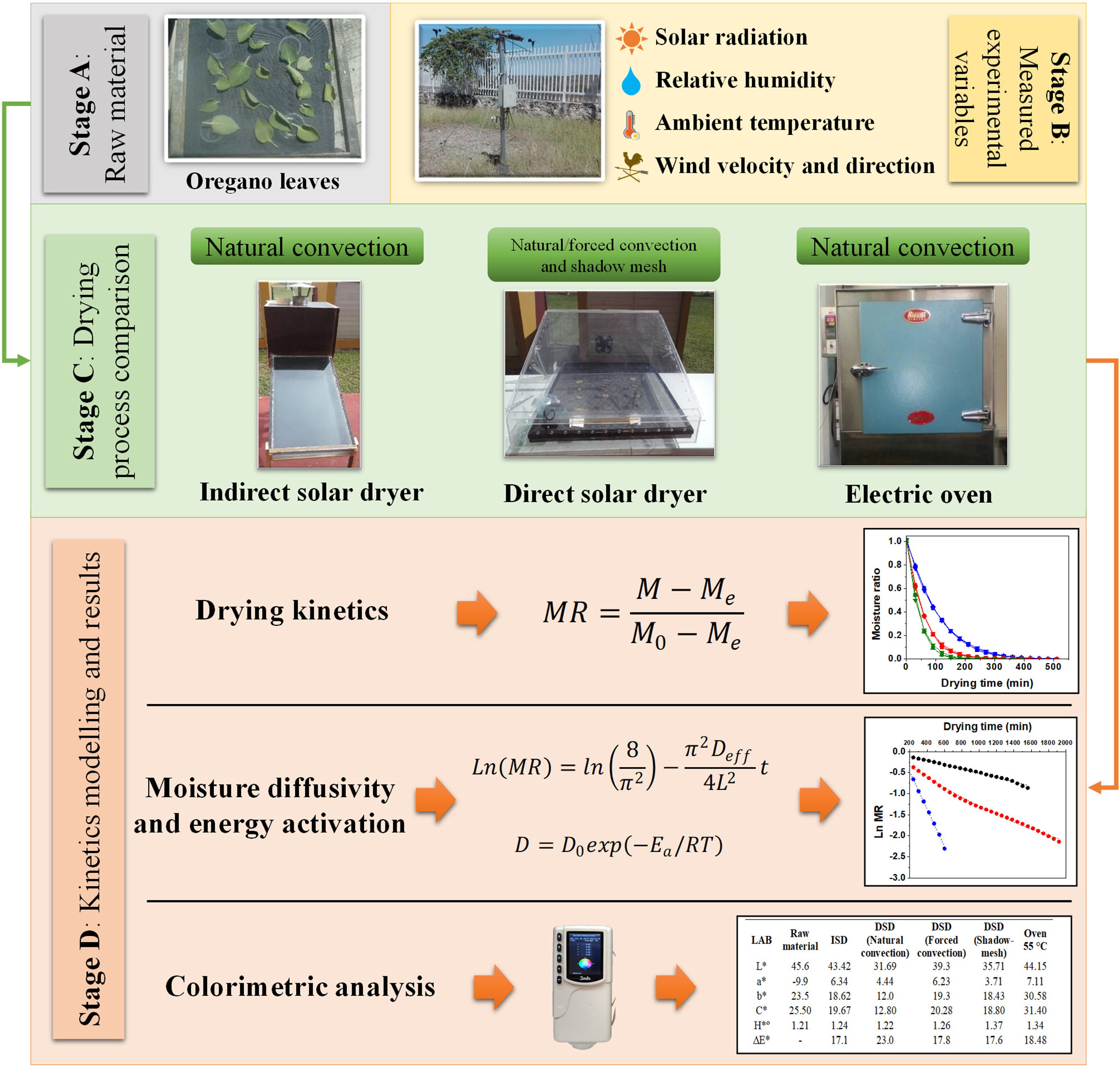
Schematic diagram of experimental methodology for oregano's drying process.
Figure 3 describes the methodology used in this research work. In Stage A, the preparation of the drying product is carried out in parallel with Stage B, where the different measurements of the environmental variables are performed, as described in Table 2. The three types of technologies measured the climatic data simultaneously during the drying process. Subsequently, in Stage C, direct solar drying under natural convection, forced convection, and shadow mesh were considered, as well as an indirect solar dryer and an electric oven for drying the product. Finally, (Stage D), kinetic process modeling is presented, involving the equations reported in Table 3, moisture ratio, the drying time, the moisture diffusivity, and a colorimetric study are evaluated.
Results and discussion
Through the experimentation days, about 20 experiments were achieved. Moreover, environmental conditions were similar in most cases, particularly the average solar irradiance on experimentation days. Hence, representative test days were selected from August 3–7, 2020.
Weather conditions
Figure 4 displays the weather conditions during three typical experimentation days. The global solar irradiance reached a maximum of 1000 W/m2, with a maximum average ranging from 950 to 980 W/m2, and the average minimum ambient temperature was 33°C, and the average maximum temperature was 40°C. The highest RH (relative humidity) ranged from 52 to 55%, while the minimum RH ranged between 43 and 47%.
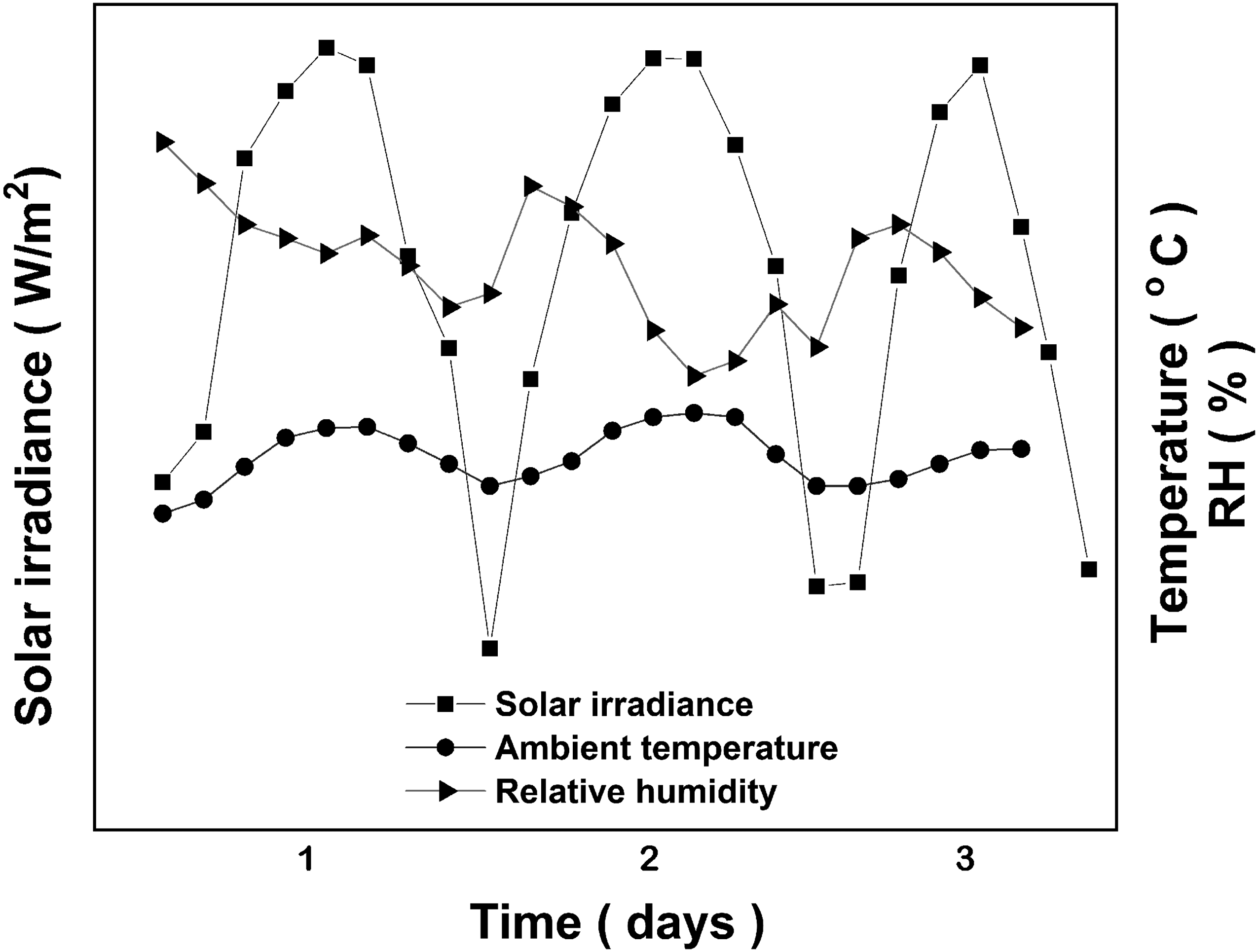
Climatic data during three typical experimentation days.
Solar drying
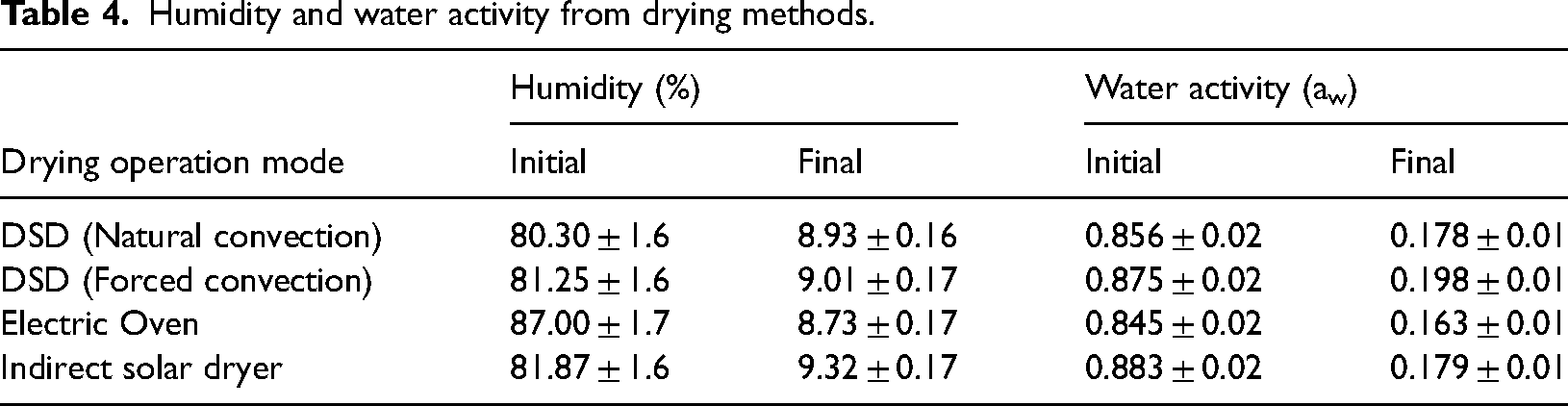
The initial and final moisture of water activity is registered in Table 4 for each analyzed technology. As can be seen, a slight variation in the initial humidity was detected in all cases. Slightly lower final humidity levels than those obtained by commercial products were reported. A similar increase in humidity levels obtained in each test can be seen regardless of the drying operation. A similar trend was observed regarding the differences in water activity. All tested drying technologies’ final water activity results indicate that the environmental conditions do not harm the dehydrated samples.
Humidity and water activity from drying methods.
Direct solar drying
Figure 5 illustrates the solar irradiance, with a maximum value of approximately 1000 W/m2. The temperature variations in the dryer were also studied. For drying using natural convection, the temperature was between 40 and 60°C, with forced convection between 30 and 40°C, and for shadow mesh drying, temperatures were between 35 and 43°C.
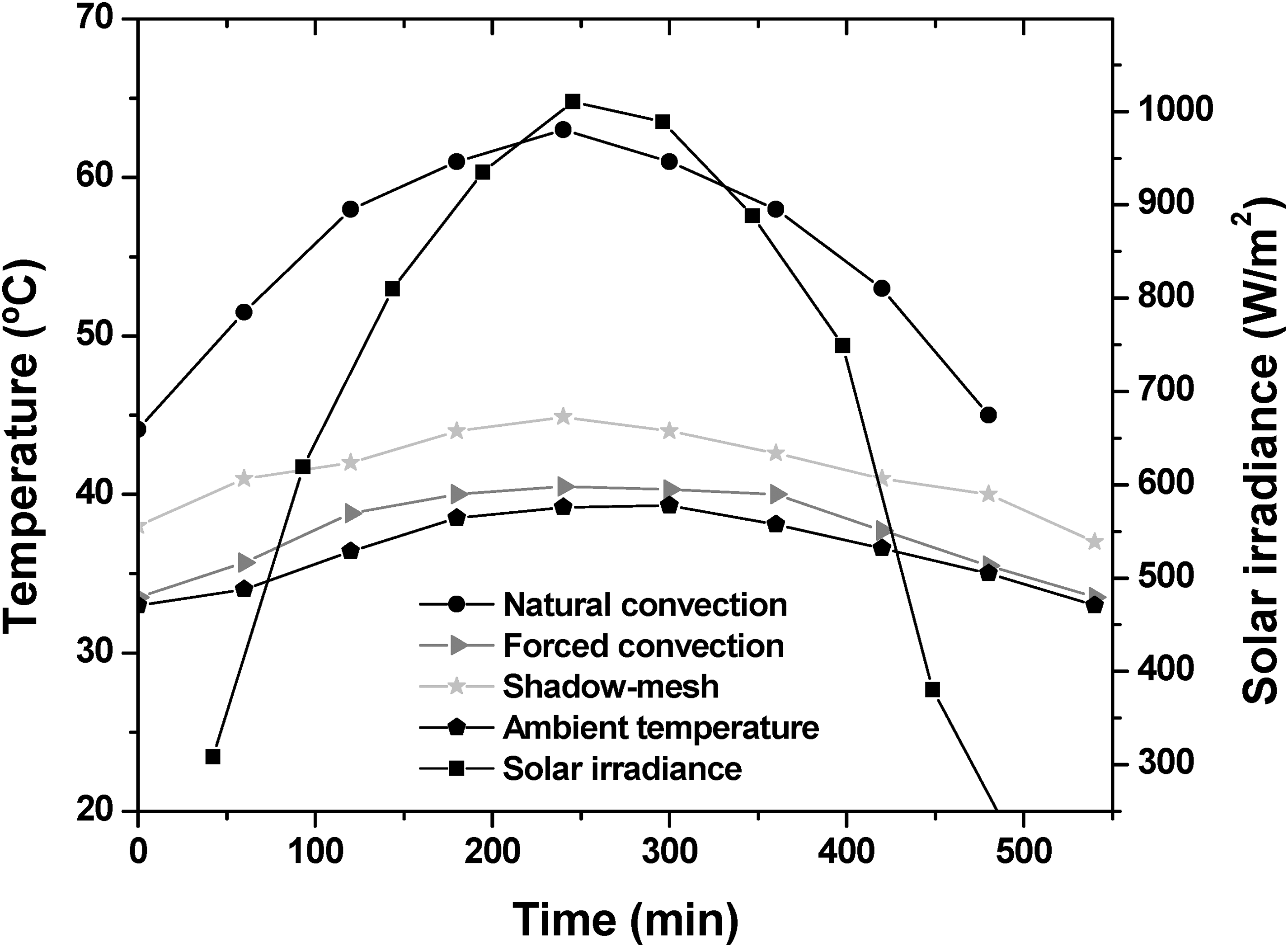
Solar irradiance and temperature for the DSD modes.
This solar dryer observed significant temperature differences between natural convection and forced and shadow mesh. The shadow mesh covering decreased the internal temperature while maintaining constant heat transfer.
Figure 6(A) presents the moisture content of solar dryers (d.b.) that operate with natural and forced convection and shadow-mesh. A lower moisture content is obtained when natural convection is used. These results are obtained when solar irradiation is high and the air velocity is high enough (even in natural convection) to evaporate the moisture on the surface of the product. On the contrary, if the air velocity is insufficient, surface evaporation is slow, and drying kinetics are limited. These results are similar to those obtained by Teussingka et al. (2023). Therefore, faster drying kinetics were observed using natural convection due to the higher temperature and lower humidity inside the drying chamber during this process, which concluded at 250 min.
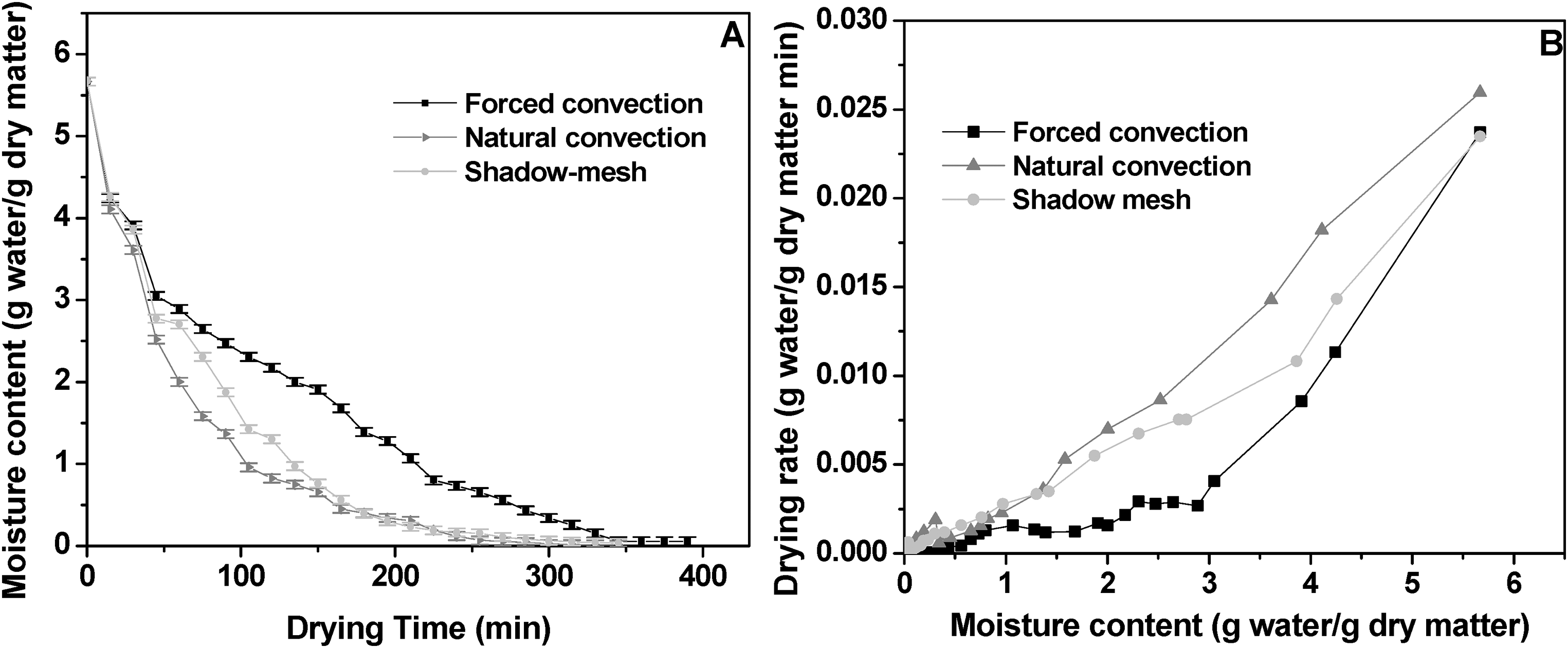
(A) Variation in moisture content and (B) Drying rate as a moisture content function under three DSD modes.
Moreover, a lower temperature was observed using DSD with forced convection because the residence time of the hot air inside the chamber was insufficient to heat and remove the moisture from the product. Hence, the drying ended at 345 min; thus, these results revealed that the fan was oversized. On the other hand, the drying curve obtained using shadow-mesh needed a drying time of 300 min to achieve moisture content equilibrium. This longer time compared with natural convection is due to the reduced 60% solar irradiance for the used mesh.
On the other hand, Figure 6(B) depicts the drying rates as a moisture content function for each direct drying mode. Constant drying rates were observed in natural convection and shadow-mesh methods. The highest drying rate (0.025 g water/g dry matter·min) was achieved under natural convection mode; the initial and final moisture contents were 5.67 and 0.12 g water/g dry matter, respectively. The drying rate obtained under natural convection mode decreased uniformly until a moisture content value of 1.366, then the decrease was slighter until a drying rate of 0.026 g water/g dry matter·min. Because the dwell time of the hot air inside the dryer was insufficient to heat and remove the moisture from the product, the lowest drying rates were achieved under the forced convection mode with a maximum drying rate of 0.024 g water/g dry matter·min. When forced convection was used, the moisture content slowly decreased through three drying phases, first, middle, and final, to reach 2.75, 1.01, and 0.25 g water/g dry matter, respectively. When the shadow mesh was used, the drying rates decreased in an intermediate range compared to those obtained by natural and forced convection. In this case, the final moisture content reached 0.12 g water/g dry matter in 270 min.
Indirect solar drying
Figure 7 exhibits the variation in solar irradiance compared to the temperatures inside the chamber and solar collector during two different experimentation days. Therefore, it can be observed that the maximum solar irradiance was 1000 W/m2, and the maximum temperature reached in the drying chamber was 54°C, with an average of 50°C. On the other hand, the solar collector's temperature was considerably higher, with a maximum of 65°C and an average of 62°C. This behavior is expected since the air flowing through the collector is hotter because solar radiation falls directly on the surface, so when it enters the drying chamber, it removes moisture from the product and loses heat, which indicates a decrease in the temperature of the drying chamber. Finally, ambient temperature presented the lowest temperature value, with a maximum value of 40.3°C. On average, the sample under study lost the most weight during the first 100 min of drying, achieving stabilization after 200 min.
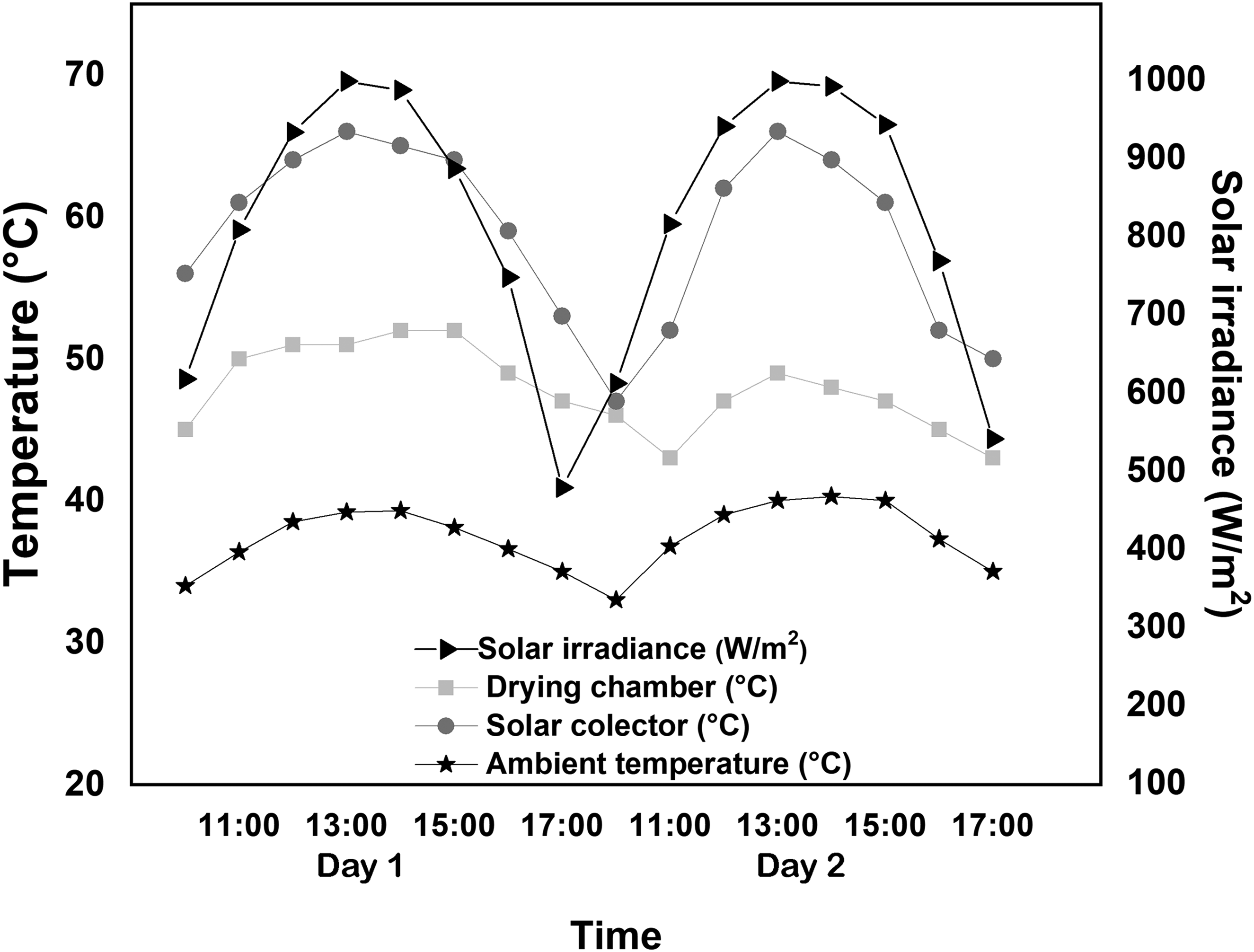
Typical solar irradiance and temperature in the dryer and solar collector ISD mode in two experimentation days.
Figure 8(A) illustrates the change in moisture content during the drying time when ISD was used. A decrease from 5.67 to 1.6 g water/g dry matter is observed during 55 min and then tends to stabilize after 200 min, finally reaching 250 min, where the moisture content ranged between 0.28 and 0.13 g water/g dry matter. It is observed that the total drying time was 345 min, in which the minimum moisture content value was reached, so it was decided to conclude the experiment. Furthermore, Figure 8(B) reveals the difference in the drying rate based on the moisture content in d.b. An increase can be observed until reaching a maximum value of 0.020 g water/g dry matter·min with an initial moisture content of 5.67 g water/g dry matter, final moisture content ranging between 0.28 and 0.13. This result is similar to that obtained with the natural convection direct solar dryer of 0.026 g water/g dry matter·min. Finally, experimental results indicated that using an indirect solar dryer with natural convection reduces drying times significantly. When the air temperature rises, its density decreases, which extracts moisture from the drying product in less time.
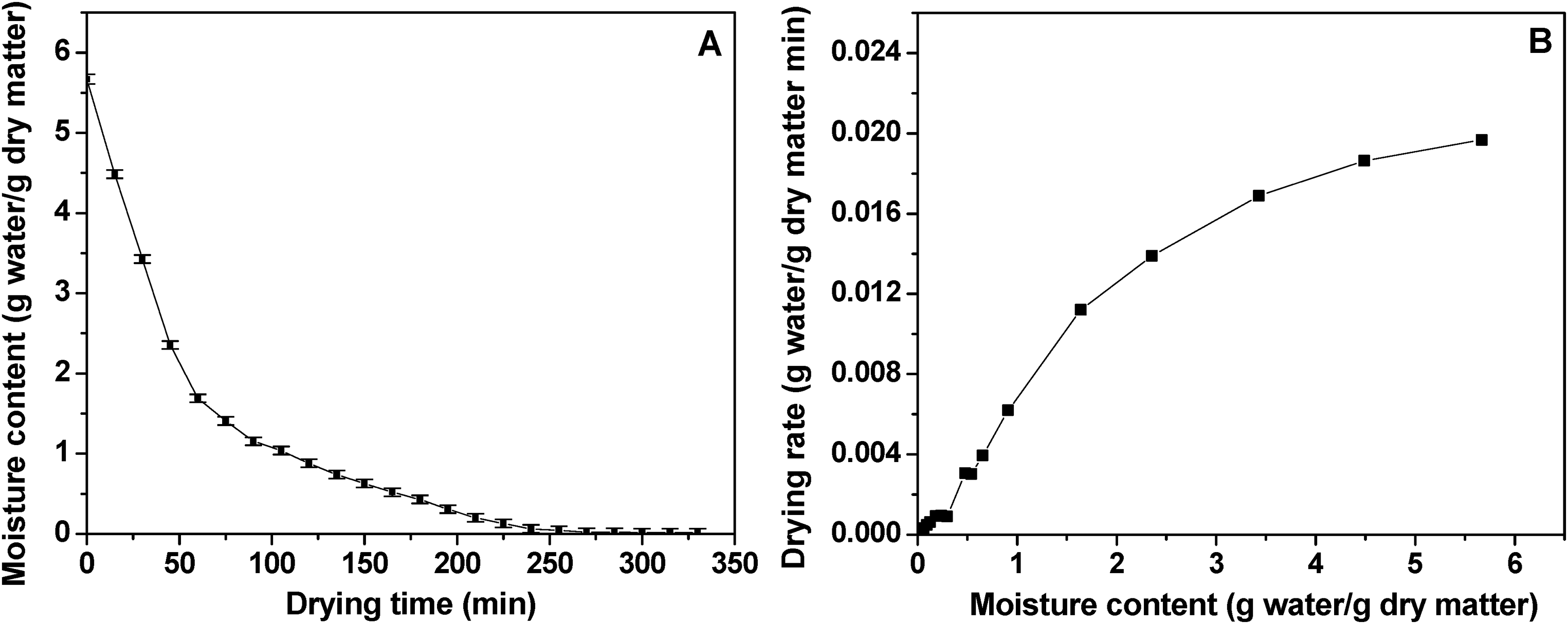
(A) Variation in moisture content and (B) Drying rate versus moisture content during ISD test.
Electric oven
Figure 9(A) depicts the leaves’ moisture content during drying at 45, 55, and 65°C. It can be observed that drying time is a temperature function. As the temperature increases, the drying time decreases. Moreover, at 65°C, time is reduced from 690 min at 45°C to 225 min, where moisture content is stabilized for this kinetics. Moisture content remains higher at the end of the drying process when performed at 45°C.
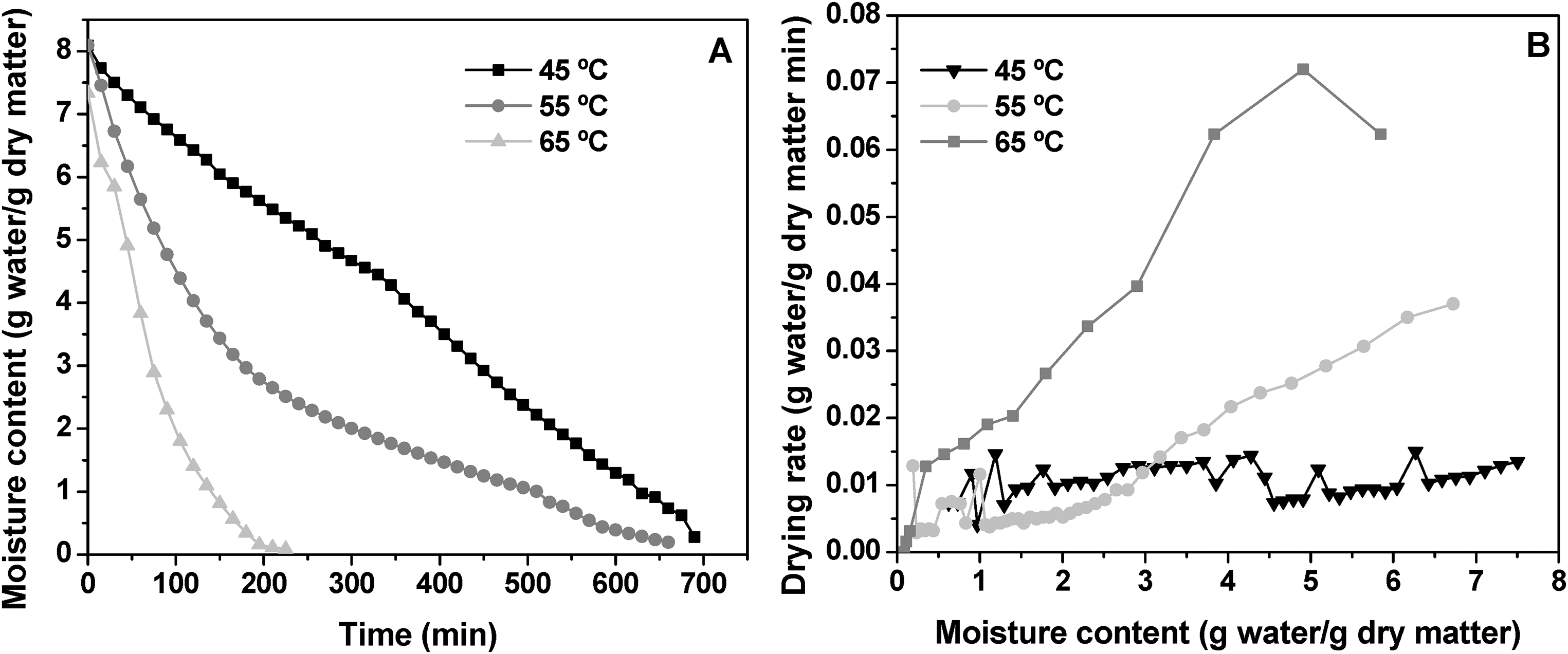
(A) Variation in moisture content and (B) Drying rate as a moisture content function during oven drying tests.
The drying rate is also a temperature and moisture content function. When the moisture content is lower, the drying rate has a lower value. Figure 9(B) reveals that the highest drying rate was 0.071 g water/g dry matter·min, reaching 4.91 g water/g dry matter, obtained at 65°C. Two constant periods are present in this temperature. There is only one long period of constant velocity, which starts at 0.0103 g water/g dry matter·min. The drying rate decreased slowly when a temperature of 45°C was used, reaching a maximum moisture content of 0.013 g water/g dry matter.
Mathematical modeling of the drying process
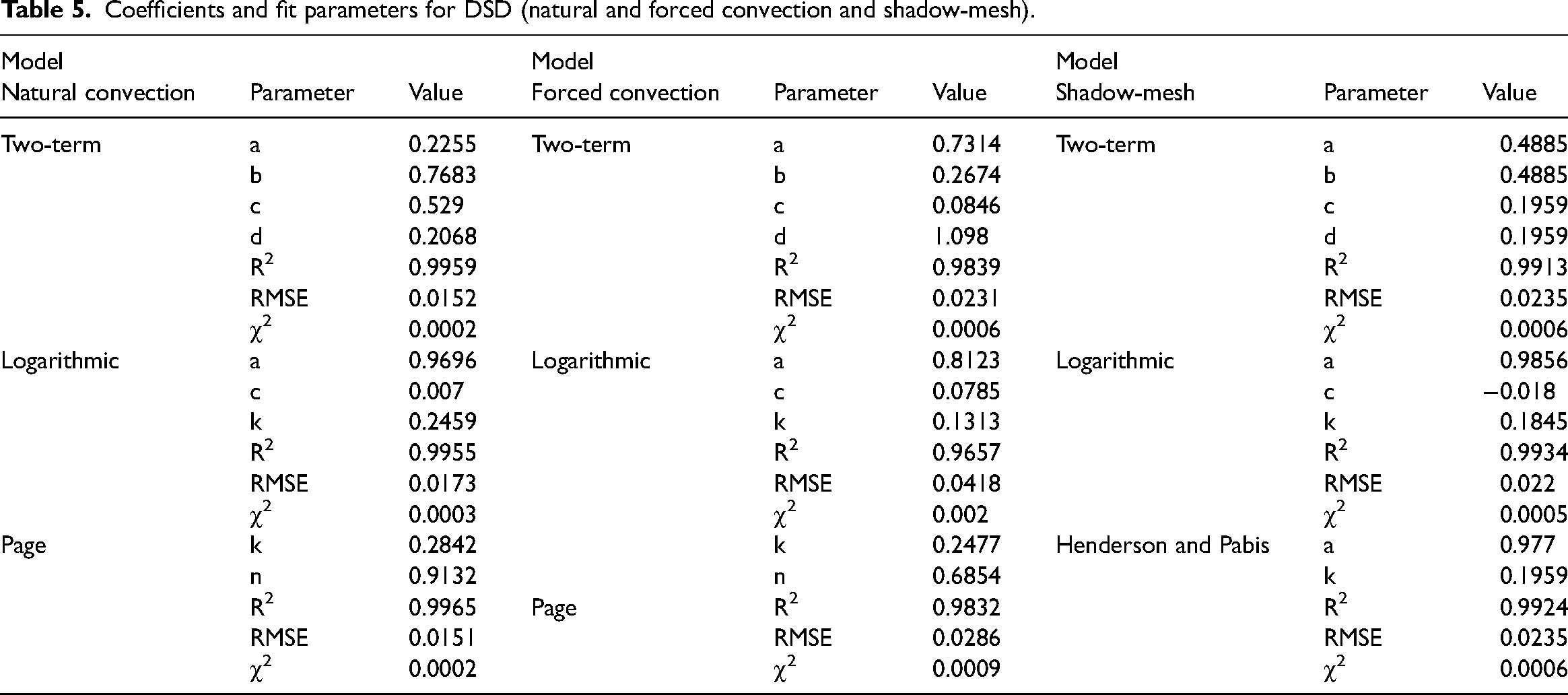
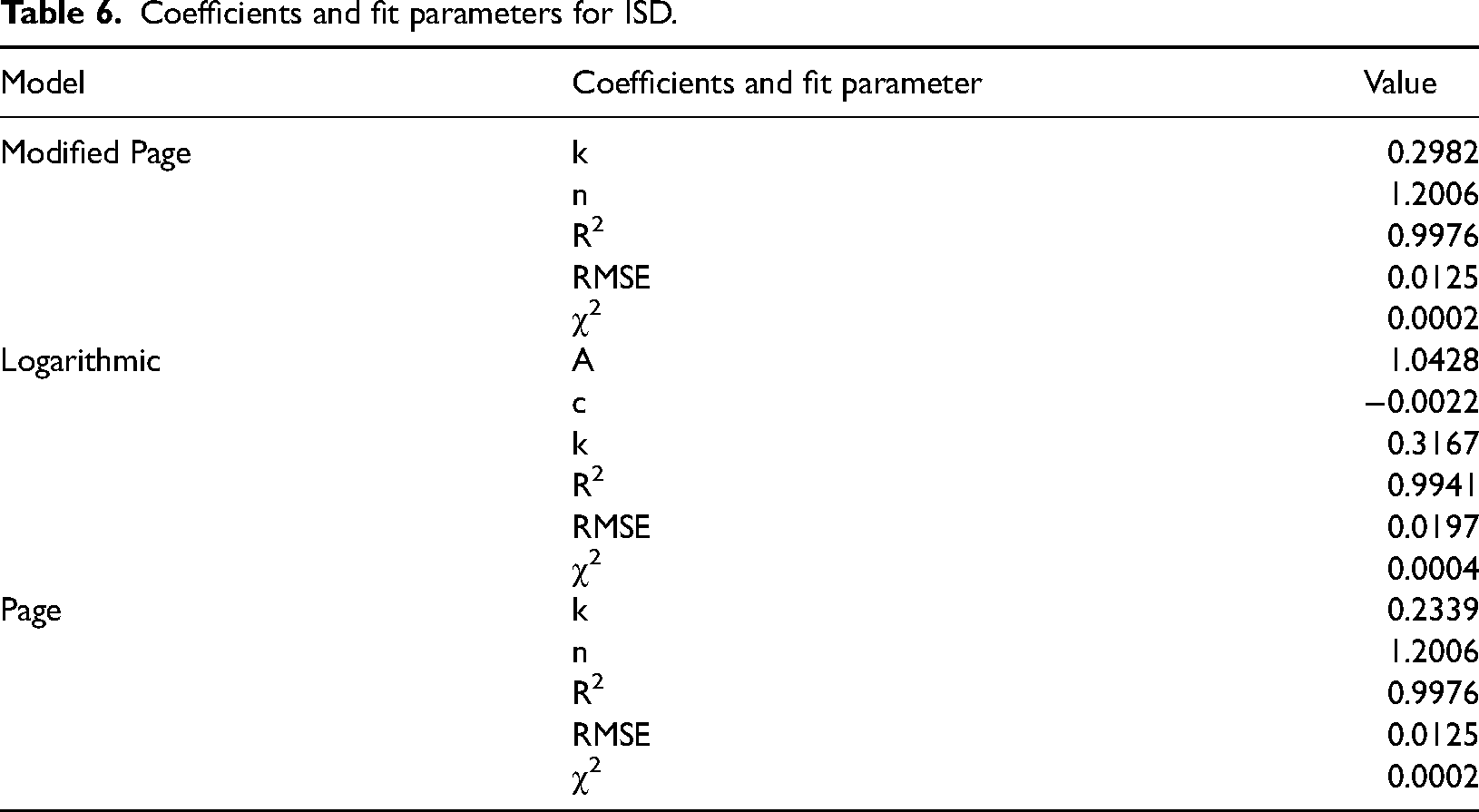
Tables 5–7 report the three best-adjusted models to the experimental data, their coefficients, and fit parameters for drying technology analysis, DSD, ISD, and electric oven drying kinetics.
Coefficients and fit parameters for DSD (natural and forced convection and shadow-mesh).
Coefficients and fit parameters for ISD.
Coefficients and fit parameters for the electric oven at 45°C.
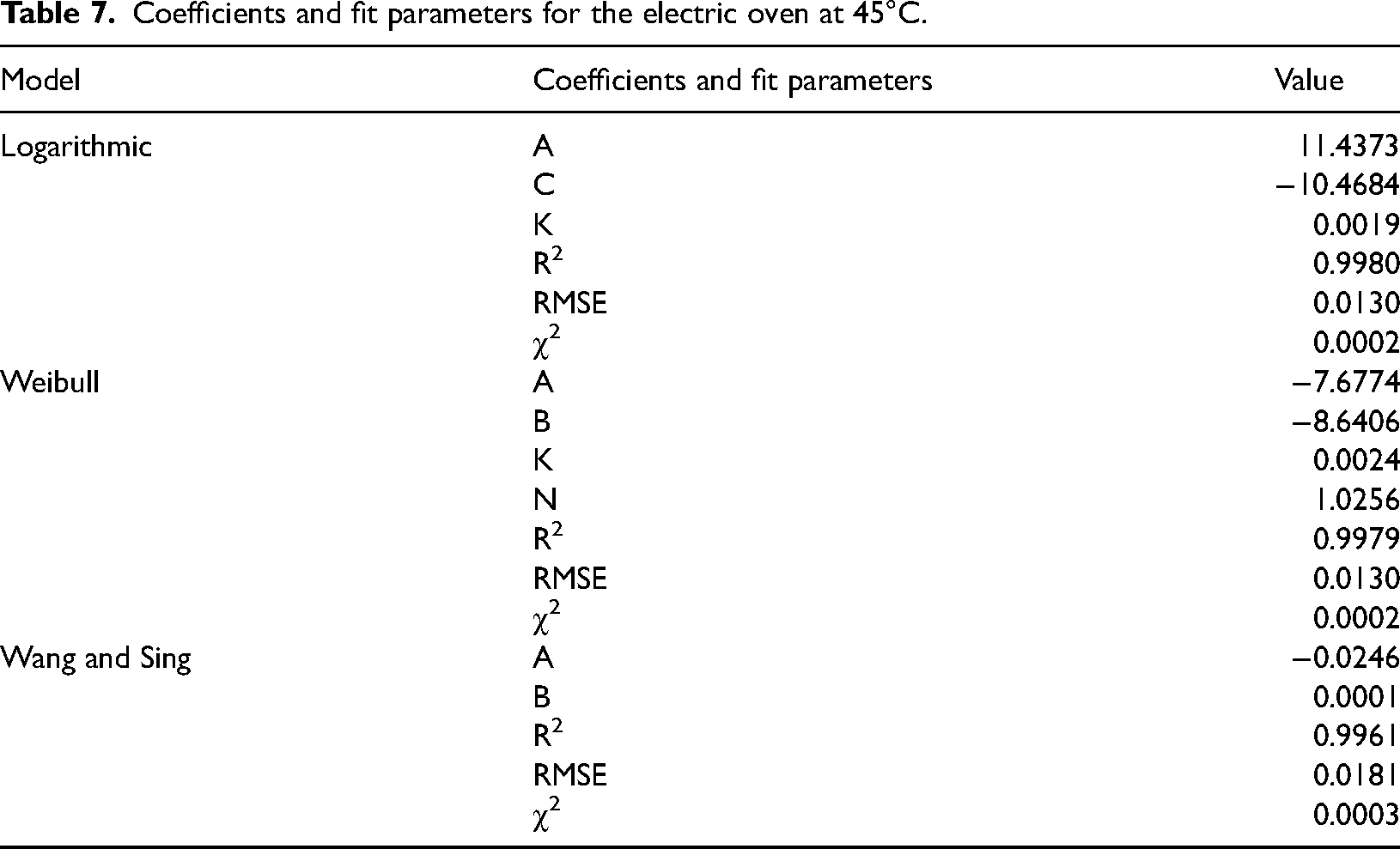
Two-term, logarithmic, and Page achieved DSD's best fit with the natural convection with a minimum R2 of 0.9955, maximum RMSE, and a χ2 of 0.0151 and 0.0003, respectively. The best results with forced convection were obtained fitting Two-Term, Logarithmic, and Page models, with minimum R2 of 0.9657, maximum RMSE, and χ2 of 0.0418 and 0.0020, respectively. Furthermore, the Logarithmic model obtained the best fit for shadow-mesh, then Henderson and Pabis and the Two-term model (minimum R2 of 0.9913; maximum RMSE and χ2 of 0.0235, respectively) with R2 of 0.9976, 0.9941, and 0.9976; RMSE of 0.0125, 0.0197, and 0.0125; and χ2 of 0.0002, 0.0004, and 0.0002, respectively. ISD experimentation results were better represented by Modified Page, Logarithmic, and Page models, with R2 of 0.9976, 0.9941, and 0.9976; RMSE of 0.0125, 0.0197, and 0.0125; and χ2 of 0.0002, 0.0004, and 0.0002, respectively. Finally, for the electric oven, the best-fit model was achieved by Logarithmic, with R2 of 0.9980, 0.9888, and 0.9917, respectively.
On the other hand, Figures 10–12 depict the fitting of oregano leaves’ experimental data using the tested direct and ISD and electric oven technologies with different mathematical models.
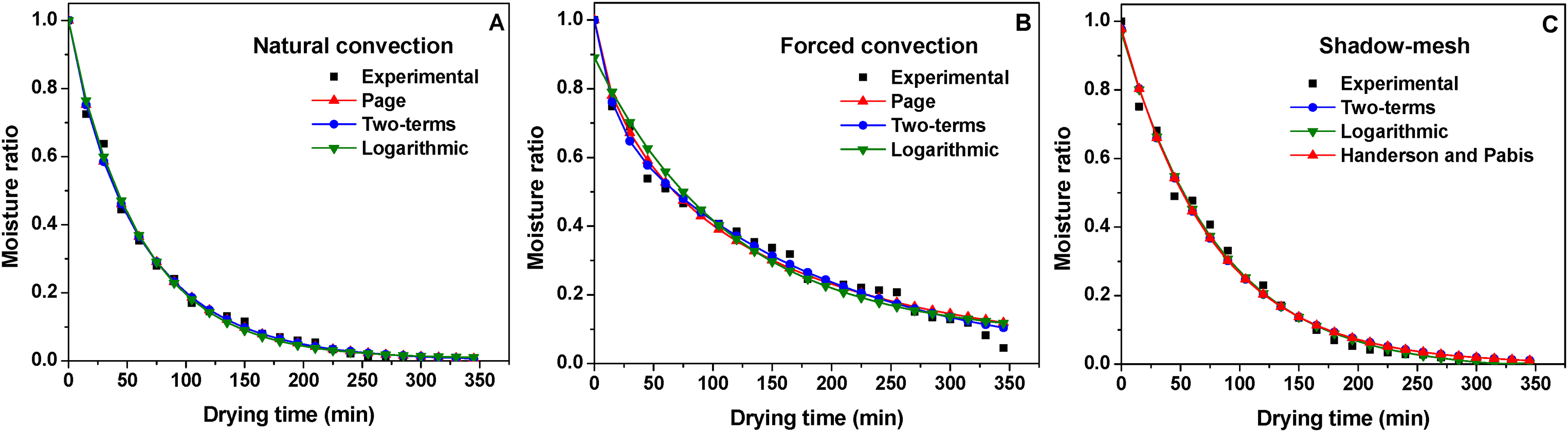
Fitting experimental moisture ratio versus drying time obtained for the DSD under (A) natural convection, (B) forced convection, and (C) shadow-mesh with different models.
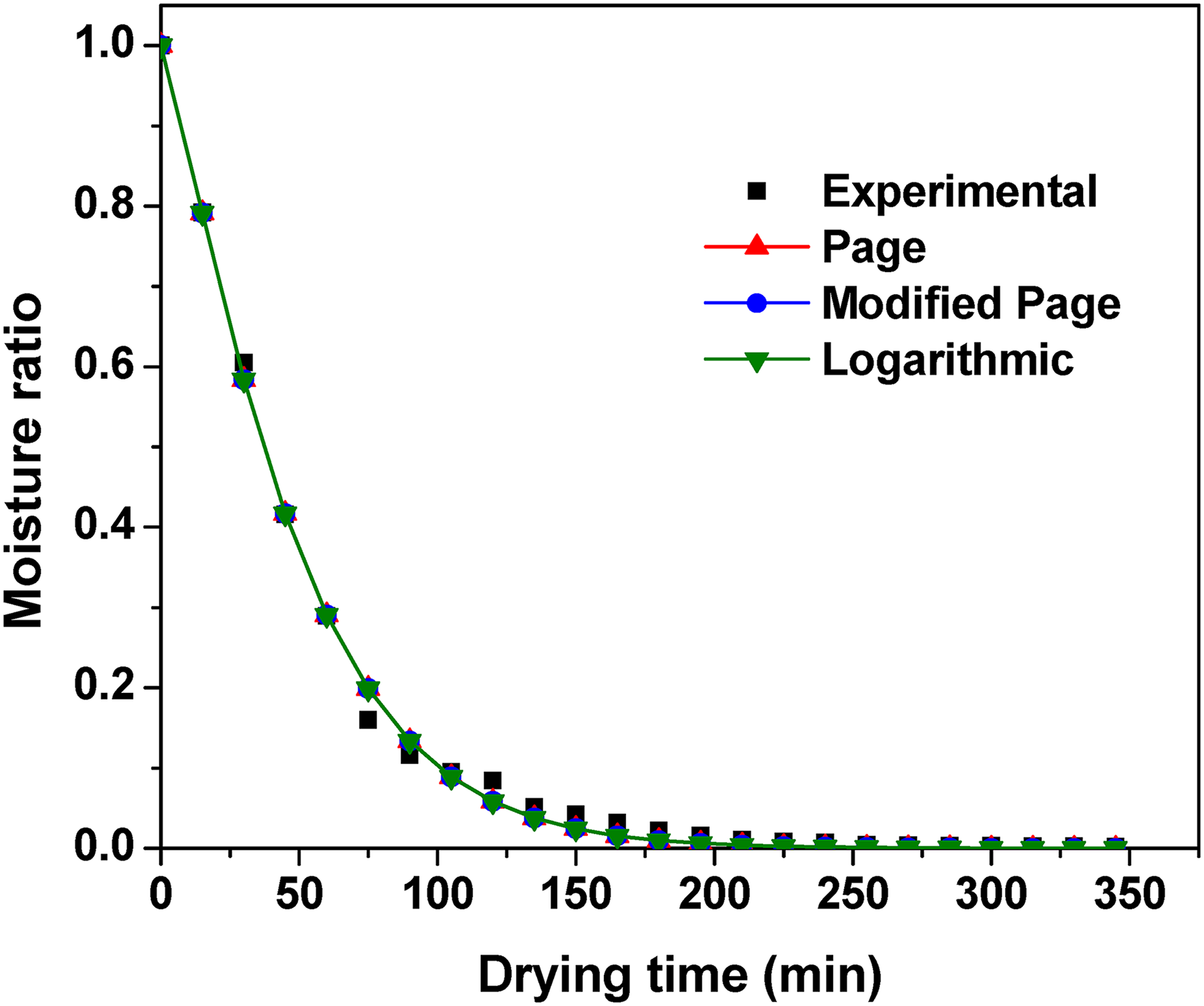
Fitting experimental moisture ratio versus drying time obtained for ISD with modified page, page, and logarithmic models.
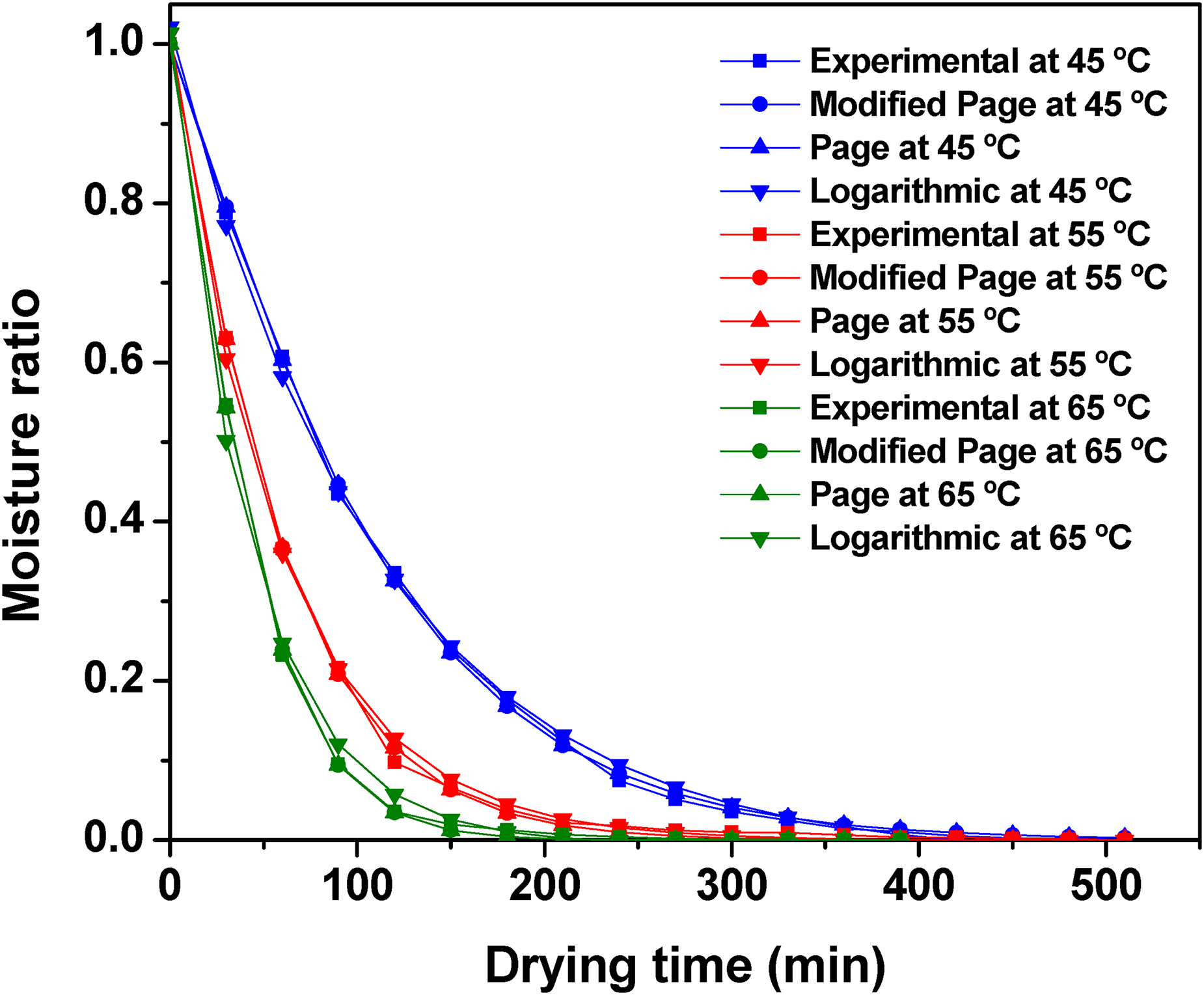
Fitting experimental moisture ratio versus drying time obtained for electric oven drying by different models and temperatures.
Figure 10 indicates that the three best models in each case exhibited a high fit; in Figure 10(A), the Page model best fits the experimental results, while Figure 10(B) was the two-term, and Figure 10(C), the best model, was the logarithmic, according to the R2 values reported in Table 5, with a total drying time of 345 min.
Figure 11 depicts a high correlation of fitting with Page, Modified Page, and Logarithmic models, where the best fitting was obtained with Page and Modified Page with both R2 of 0.9976, according to the report in Table 6. The total drying time was around 345 min; however, around minute 200, the moisture ratio was close to zero.
Finally, Figure 12 presents the drying time versus moisture ratio results and the correlation of three mathematical models compared with the experimental data obtained during the drying test with the electric oven at different temperatures. The drying time was 510 min, with a meager moisture ratio close to zero. Furthermore, it can be noted that the models fit well for the three different electric oven temperatures. The Page model best represented the moisture ratio for the different drying temperatures with a maximum R2 of 0.9980.
Moisture diffusivity and activation energy
Moisture diffusivity was calculated for solar dryers (Figure 13(A)) and electric ovens at three temperatures (Figure 13(B)). These results indicated a tendency to increase diffusivity values when drying temperature increases, as was expected. The leaf structure modification does not influence water diffusivity even with the higher temperature. Similar values were found for (Doymaz et al., 2006) 6.693E-10–1.434E-9 m2/s for dill and 9.0E-10–2.337E-9 m2/s for parsley leaves, (Sobukola et al., 2007) 43.42E-10 for bitter leaves, (Doymaz, 2006) 3.07E-9–19.41E-9 for mint leaves.
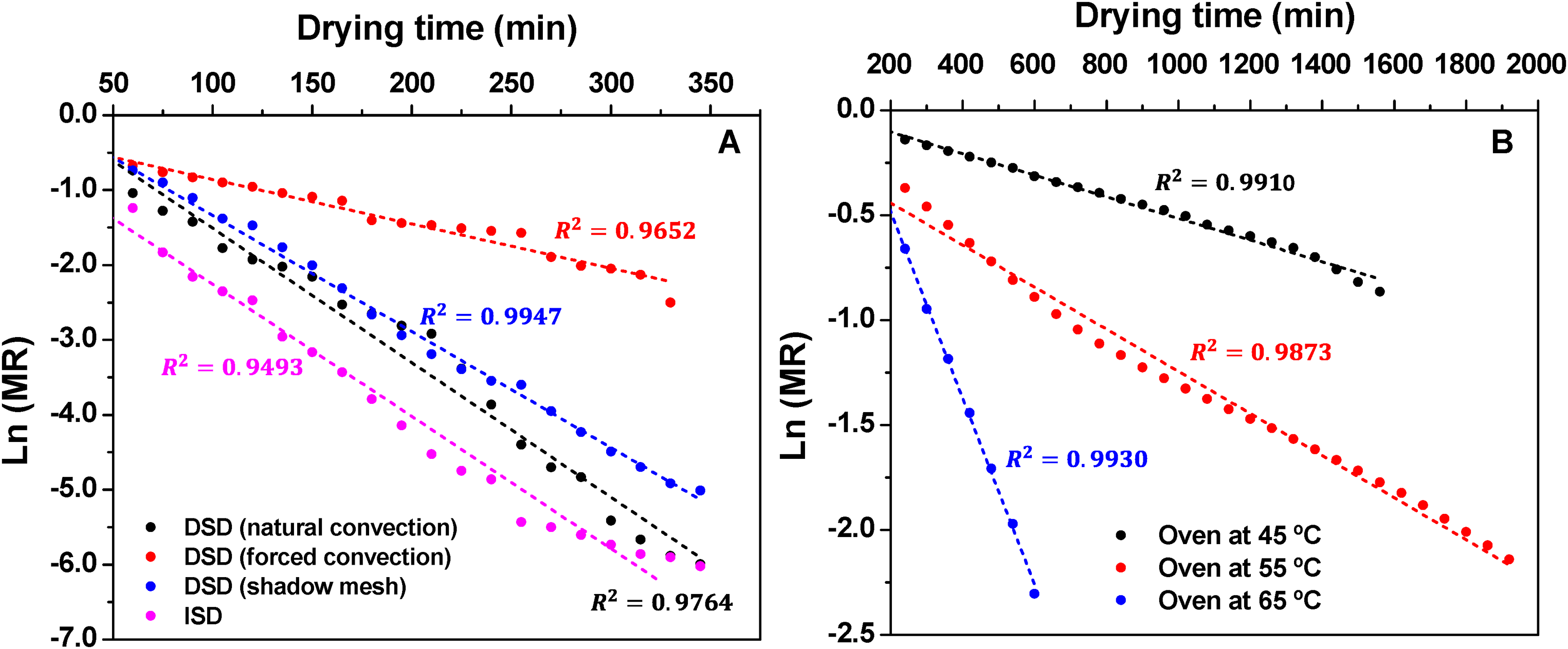
Effective diffusivity values: (A) direct and indirect solar dryer and (B) electric oven at 45, 55, and 65°C.
The experimental data from effective diffusivity has been used to obtain the activation energy utilizing the Arrhenius relationship type (see Figure 14). Ln (Deff) as a function of absolute temperature reciprocal shows a linear relationship, presenting an R2 of 0.8044 for solar technologies (Figure 14(A)) and 0.9491 for the electric oven (Figure 14(B)).
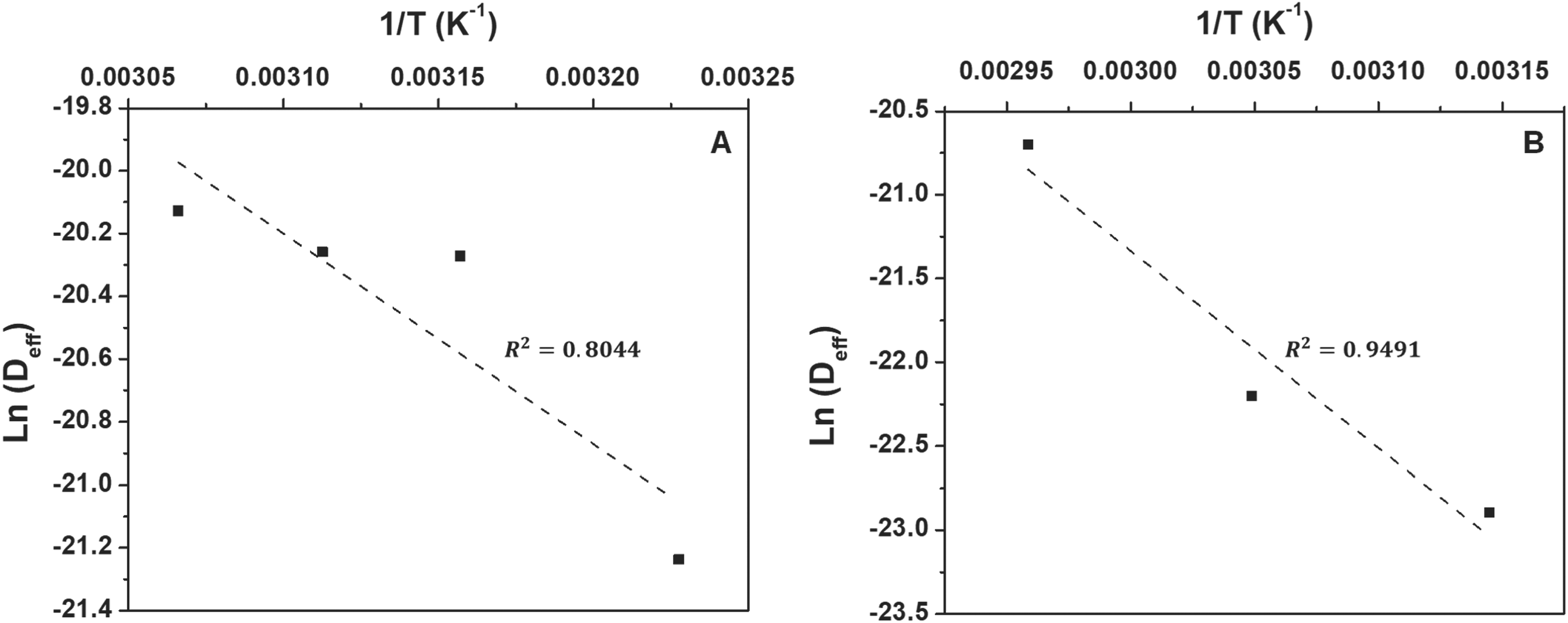
1/T versus ln (Deff) to obtain the activation energy: (A) solar dryer modes and (B) electric oven.
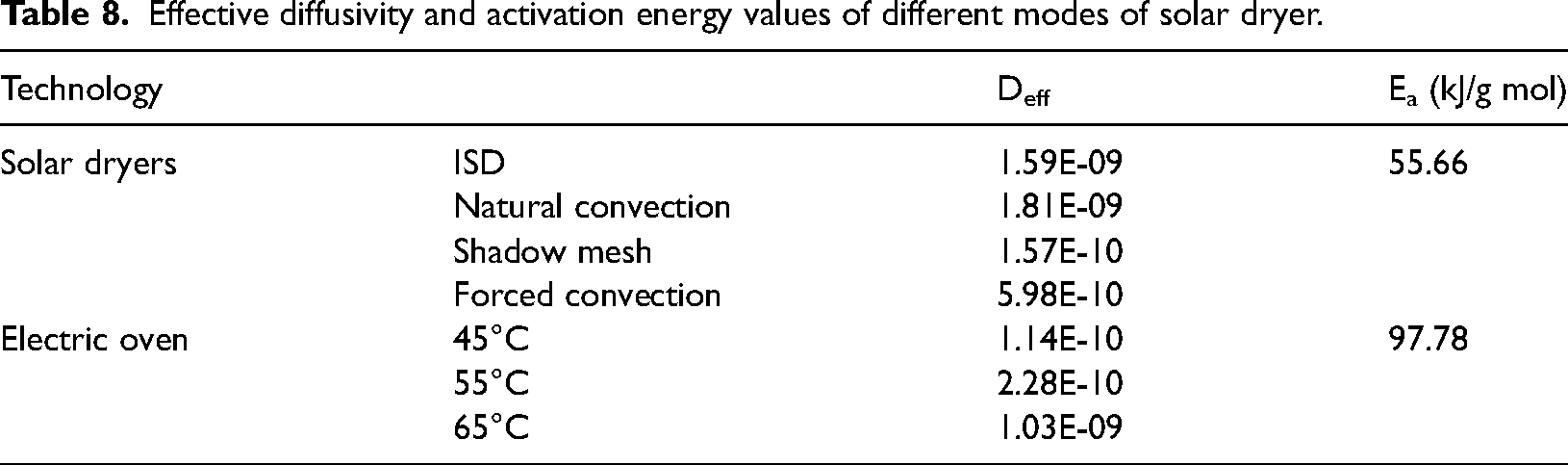
The activation energy and effective water diffusivity at all studied temperatures are presented in Table 8. These results are close to those found in the literature on drying leaves: (Jin Park et al., 2002) calculated an Ea value of 82.93 kJ/g mol and (Doymaz, 2006) found 62.96 kJ/g mol for mint leaves. The activation energy values obtained are in the recommended range (Samimi-Akhijahani and Arabhosseini, 2018).
Effective diffusivity and activation energy values of different modes of solar dryer.
Colorimetric analysis
Table 9 details the average L*, a*, b*, C*, and H* in each drying method evaluated. The total color change (ΔE) between the coordinates L*, a*, and b* is calculated using the obtained data.
Chromatic color coordinates of the oregano leaves during dehydration.
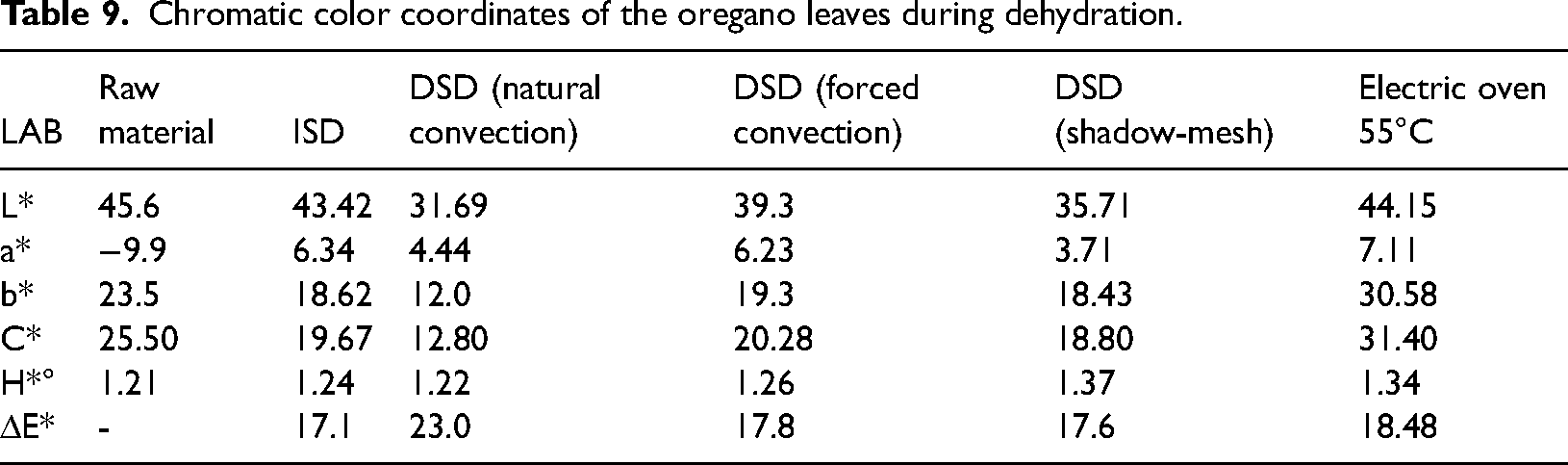
There is an increase in a* in all cases, indicating a change from green to red. This can be caused by the enzyme polyphenol oxidase, which causes an enzymatic browning, producing very quickly black, brown, or red pigments, as was concluded in (Mahecha et al., 2010).
The L* values decreased in the dryer with natural convection, showing decreased luminosity due to direct exposure to the sun. This result agrees with that reported in (Méndez-Robles et al., 2018). For b*, it is observed that solar drying with natural convection approximates a grayish tone due to exposure to direct solar radiation and high temperatures, initiating a photo-oxidation process of the pigments, which, in combination with oxygen, produces an intense discoloration. In addition, the discoloration indicates that chlorophyll is being lost in the leaves, forming pheophytin, which is olive-brown; this same value is reflected in L*, which significantly decreases the luminosity in the leaves. Similar results were found in (Garcia et al., 2017). The ΔE analysis shows a more remarkable color change with natural convection than the other drying methods evaluated. In the indirect solar dryer, the food is protected from direct radiation; consequently, the leaves are less degraded, resulting in a lower ΔE than in the direct solar dryers. A similar situation is noted in the electric oven, where the most favorable saturation value (C*) was obtained.
Finally, Table 10 compares results obtained in the present study with some previously reported in the literature, considering drying time, moisture content, and activation energy, among others.
Comparison of different results related to solar dryers reported in the literature with the present study.
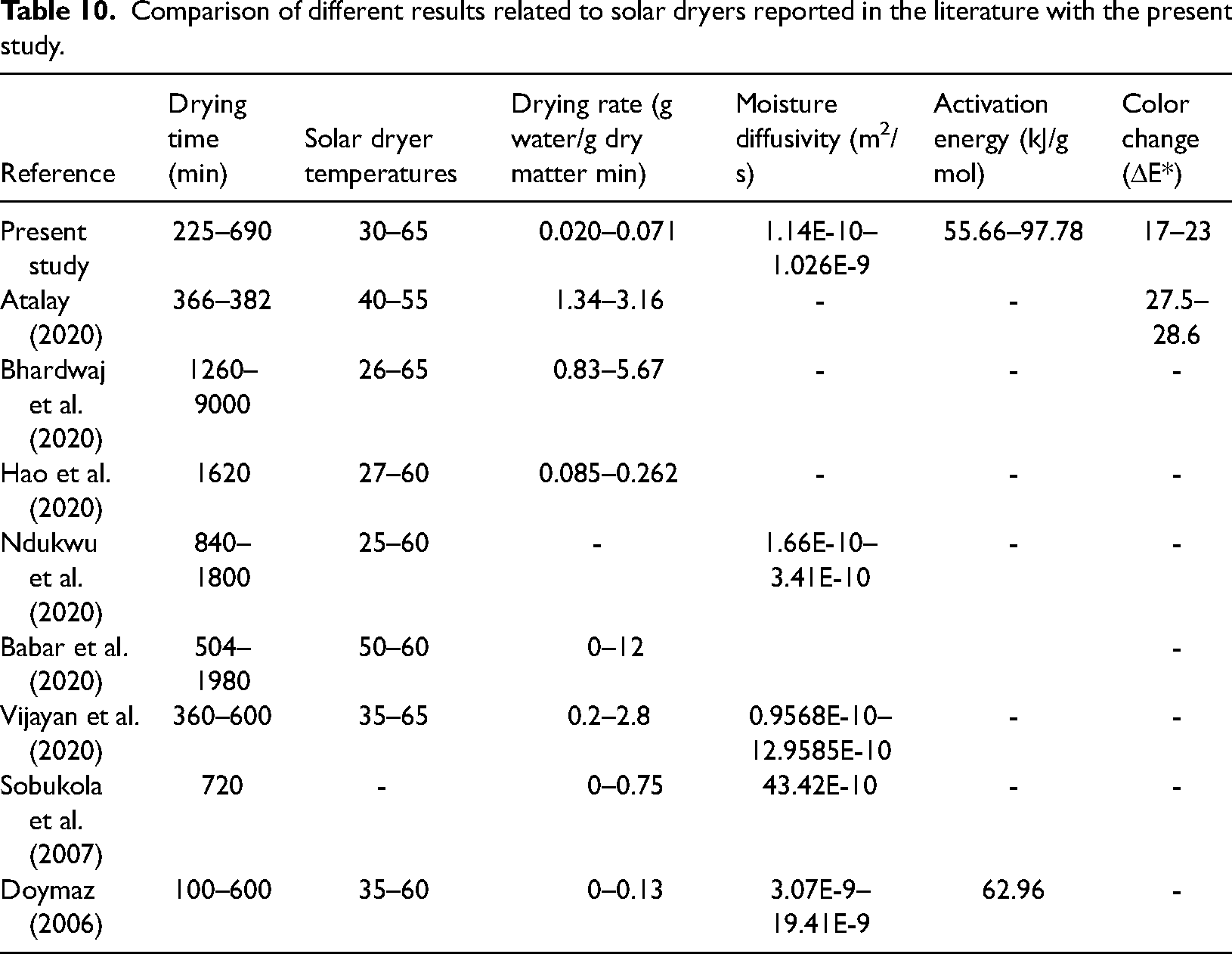
As seen in Table 10, the results obtained are within the range of outcomes obtained by different research works reported in the literature; considering the differences in initial and operating conditions in these investigations compared to this work, the validity of the findings obtained is ensured by this experimental study.
Conclusions
This research presented the experimental evaluation of comparative oregano leaves’ drying kinetics using direct, indirect, and electric drying technology. Moisture diffusivity and activation energy were calculated, and a colorimetric analysis was performed to quantify the quality of the product. Direct solar drying was divided into natural and forced convection and shadow-mesh. Furthermore, the indirect solar dryer was a natural convection type, and finally, an electric oven with three different drying temperatures was used. Among the results, it was found that the direct dryer revealed a shorter drying time of 250 min with natural convection, reaching a moisture content of 0.12 g water/g dry matter and a maximum drying rate of 0.025 g water/g dry matter per minute. When comparing these results with the indirect solar dryer, it was obtained that the product reached the equilibrium moisture after 250 min, with the highest drying rate of 0.020 g water/g dry matter per minute and final moisture between 0.28 and 0.13 g water/g dry matter.
On the other hand, with the electric oven, the shortest drying time was around 210 min, reached at a temperature of 65°C, and a maximum moisture content and drying rate was 0.013 g water/g dry matter and 0.071 g water/g dry matter per minute, respectively. Regarding the mathematical modeling, Modified Page, Logarithmic, and Page models best represented the experimental results with R2 above 0.99, which permitted satisfactory descriptions of oregano leaves drying under similar conditions. Furthermore, regarding the moisture diffusivity, a maximum value of 1.57047E-8 was obtained for DSD forced convection. Moreover, the activation energy for solar dryers was 55.66 kJ/kg mol. Finally, the colorimetric analysis brought a minimum color change value (ΔE) of 17.1, corresponding to the indirect solar dryer. A maximum ΔE value of 23.0 was obtained with the direct solar dryer. These results agree with expected since direct solar drying deteriorates the product faster due to the influence of solar radiation, unlike ISD, which is preferable since it represents promising technology and permits better preservation of oregano while maintaining its quality and value for the market.
The present work provides relevant information to agroindustrialists about improvements in drying kinetics, effective diffusivity, and colorimetry studies during oregano drying using solar drying to select the most appropriate depending on the purpose. It is demonstrated that these sustainable technologies are competitive with those commercially used, such as electric ovens. Additionally, thin layer modeling is vital for future designs and sizing of solar dryers applied to the experimental conditions presented.
For future work and continuity of the project, critical aspects are visualized for this type of system's improvement and development. It is proposed to apply artificial intelligent tools to develop a smart sensor to optimize time and reduce drying process costs, increasing efficiency.
Footnotes
Declaration of conflicting interests
The authors declared no potential conflicts of interest with respect to the research, authorship, and/or publication of this article.
Funding
The authors received no financial support for the research, authorship, and/or publication of this article.
