




Abstract
The Middle Jurassic Walloon Subgroup of Daandine gas field contains numerous coal seams with abundant coalbed methane (CBM) resources. However, the vertical gas content distribution of these coal seams is unclear currently, as well as its influencing factors, affecting the formulation of CBM exploration and exploitation strategy. For this purpose, using diverse geologic, experimental, and engineering data from recent exploration and development, this article ascertains the vertical coalbed gas content distribution in the Daandine gas field and discusses how the geological factors affect it. The results show that the coalbed gas contents have two basic trends as the depth increases: (1) increase, and then decrease; (2) increase. The former trend is dominant, and the inflection point occurs in the coal groups within or close to the Tangalooma Sandstone Formation. The correlation analysis shows that the macerals have little influence on the vertical coalbed gas content distribution. The moisture contents affect the adsorption capacity of coalbeds and show a negative correlation with the gas contents, and coal groups with higher moisture contents generally have lower gas contents. Three sets of independent gas-bearing systems exist in the Walloon Subgroup, and the coalbed gas content-depth relationship is relatively independent among different gas-bearing systems. The better the caprock condition, the higher the gas content, which is particularly evident in the coals of Condamine group. The permeabilities show a significant effect on the coalbed gas contents of Daandine coals. The coal groups within or close to the Tangalooma Sandstone Formation have higher permeabilities, as well as higher gas contents, and they are positively correlated. The reason is that the CBM in the study area is dominantly microbial in origin, and the higher permeability coals are conducive to the introduction of more microbial consortia into the coal seams, enhancing the generation of secondary biogenesis methane.
Introduction
Coalbed methane (CBM), a very important unconventional gas resource related to coal, was generated during coal-forming process (Kim, 1977; Montgomery, 1999). As a kind of clean and high-quality energy, as well as an important chemical material, the CBM has been favored by most coal-producing countries such as America, Australia, Canada, China, and so on (Mohamed and Mehana, 2020; Moore, 2012; Qin et al., 2018; Tao et al., 2019). The low-rank (mean random vitrinite reflectance, R̄r < 0.5%) CBM is widespread in the world and has achieved great success in the Powder River Basin of America (Ayers Jr, 2002), Alberta Basin of Canada (Mastalerz and Drobniak, 2020), and Surat Basin of Australia (Salmachi et al., 2021). The low-rank CBM resource accounts for 40% of the total CBM resource in China, and thus China is also actively exploring and developing the low-rank CBM in some basins, including Junggar, Tuha, Erlian, etc. (Huangfu et al., 2019; Qin et al., 2018).
Since 2016, Australia has surpassed America, becoming the largest CBM producer in the world (Salmachi et al., 2021). The Surat Basin of Australia hosts a world-class, low-rank CBM performance, and the CBM is produced from the Walloon Subgroup coals of Middle Jurassic in this basin (Hamilton et al., 2015; Mukherjee et al., 2020). By the end of 2017, the proven and probable (2P) CBM resources in the Surat basin were 8507 × 108 m3 (Queensland Government, 2018). On account of the relatively low coalbed gas content and lacking of individual coal seams with large thickness, only since the early twenty-first century has the CBM exploration in the Surat Basin began to receive attentions (Qin et al., 2019). The commercial CBM production of the Surat basin began in 2006, and now it has become the most efficient basin in the world for CBM development (Baublys et al., 2021), with approximately 300 × 108 m3 CBM production in 2018, which accounts for over 75% of Australia's total CBM production, making it become an important base for the LNG production in eastern Australia (DNRM, 2016; Salmachi et al., 2021).
Previous studies have shown that many factors affect the CBM potential of a block, such as coal distribution, coal rank, gas content, permeability, tectonic settings, depositional condition, hydrodynamic system, etc. (Ayers Jr, 2002; Beaton et al., 2006; Liu et al., 2022; Su et al., 2005; Yao et al., 2009). Among them, the gas content is a key parameter for CBM development because it ultimately determines the gas available to be recovered (Esen et al., 2020; Hou et al., 2020; Zhang et al., 2018). For the areas with multiple coal seams existing, the vertical distribution of gas contents of coal seams is also critical because it determines the exploration and exploitation strategy in the vertical. The gas contents of coal seams generally increases with depth, but is often highly variable due to many factors, such as coal properties (e.g., moisture content, and maceral), caprock condition, structural geology, multi-layer superposed gas system, enhanced secondary biogenic gases etc. For example, the existence of multi-layer superposed CBM system can cause the fluctuant change of gas content with depth (Qin et al., 2008; Shen et al., 2018; Zhang et al., 2015). The coal macerals affect the gas generation and adsorption capacities and thus the gas content distribution (Kędzior, 2019; Scott, 2002). A good caprock condition is beneficial to the preservation of CBM and may cause high gas content (Song et al., 2012). The gas content of coal seam can be enhanced, either locally or regionally, by generation of secondary biogenic gases or by diffusion and long-distance migration, thus resulting in higher gas content (Cai et al., 2014; Fu et al., 2022; Hamilton et al., 2014b; Scott, 2002). Therefore, the coalbed gas content distribution is a composite result of multiple geological factors and reservoir conditions (Esen et al., 2020).
The Daandine gas field of eastern Surat Basin has great potential for CBM development. The coal-bearing strata, Walloon Subgroup, contains numerous coal seams (Martin et al., 2013; Scott et al., 2004). However, the vertical gas content distribution of these coal seams is unclear currently, as well as its influencing factors. While the understandings of these are critical for developing an effective and successful exploration and exploitation strategy of CBM in the Daandine gas field. For this purpose, using diverse geologic, experimental, and engineering data from recent exploration and development, this article ascertains the vertical coalbed gas content distribution of Walloon Subgroup in the Daandine gas field and discusses how the geological factors affect it. The findings could provide guidance for the CBM exploration and development in the Daandine gas field and deepen the understandings of the vertical variation of gas contents in the Walloon Subgroup coal seams.
Geological settings
The Surat Basin is a large Mesozoic intracratonic basin, covering an area of approximately 30 × 104 km2 in the eastern Australia (Andrade et al., 2023). Structurally, the Surat Basin is relatively simple and composed of three structural units: eastern slope zone, central depression zone and western slope zone. Major faults system within the eastern Surat Basin include Burunga–Leichhardt and Moonie–Goondiwindi thrust fault systems, distributed along the meridian (Figure 1). The strata in the eastern Surat Basin outcrop along the northern erosional boundary and dip less than 5° to the south and southwest (Figure 1). The Study area, Daandine gas field, is located in the eastern slope zone, specifically, the Chinchilla-Goondiwindi Slope (Figure 1). In the eastern part of the gas field, the Walloon Subgroup crops out and dips gently SW toward the axis of the Mimosa Syncline, meanwhile, the Kumbarilla Ridge passes through the eastern part of the gas field. The western part of the gas field is close to the hinge zone of Kogan Nose.
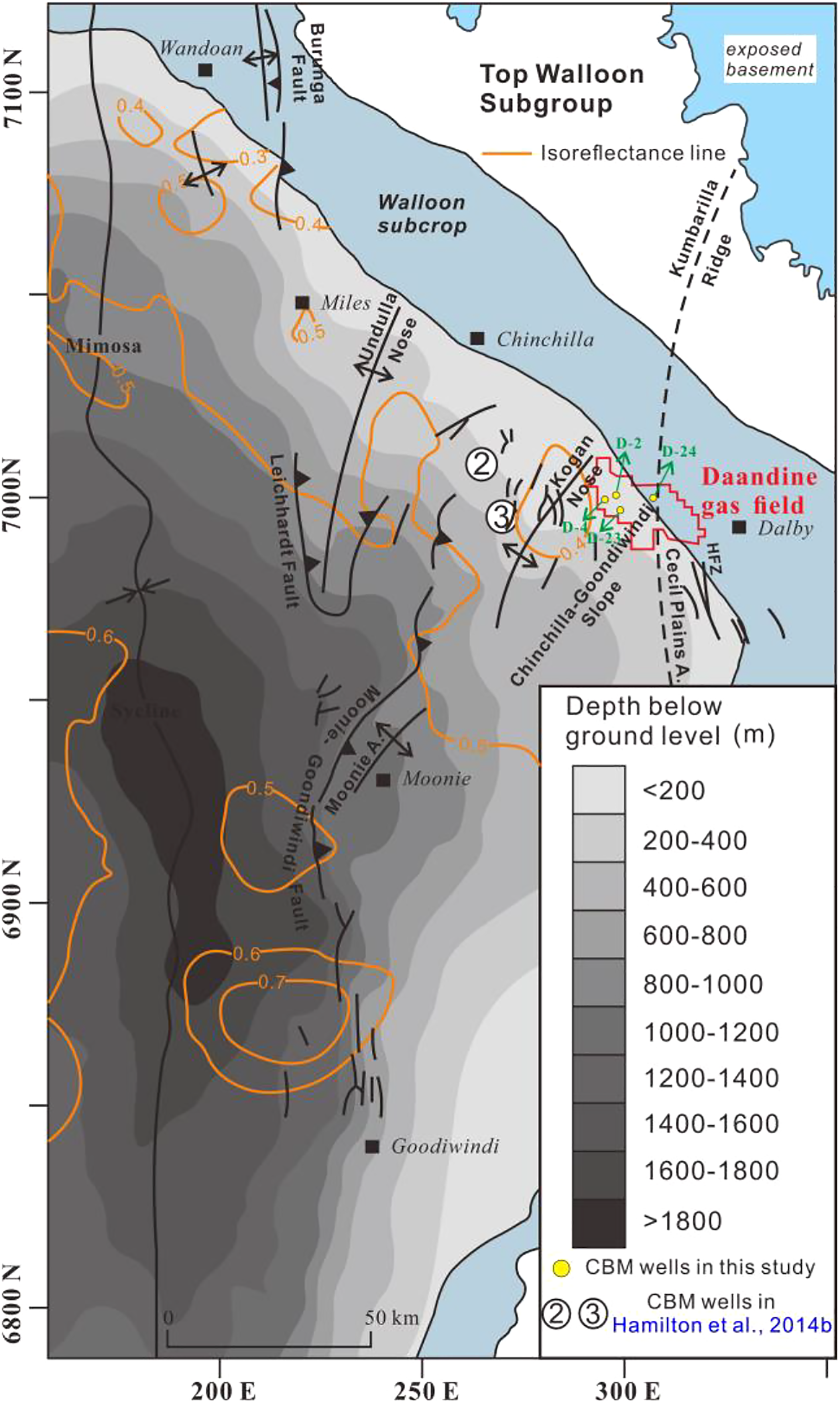
The depth contours of the top of the Walloon Subgroup, overlain by isoreflectance contours of Walloon Subgroup coals (after Hamilton et al., 2014b). The locations of CBM wells in Daandine gas field are shown as yellow circles.
The Middle Jurassic Walloon Subgroup is the coal-bearing strata of Surat Basin, with a typical thickness of 300–500 m (Morris and Martin, 2016). The overlying Springbok Sandstone in the Late Jurassic and the underlying Hutton Sandstone in the Early–Middle Jurassic (Figure 2) are the major regional aquifers (Hamilton et al., 2014b). The Walloon Subgroup is mainly composed of mudstone, siltstone, sand and coal (Figure 2), which were deposited in the fluvio-lacustrine environment (Shields and Esterle, 2015). The coals in the Walloon Subgroup were mainly the product of flood plain swamp facies of meandering river, with poor lateral continuity and large thickness variation. The Walloon Subgroup contains two coal measures, i.e., Juandah and Taroom, and they are separated by the formation of Tangalooma Sandstone, which may act as an important aquifer of Walloon Subgroup (Worley Parsons, 2010).
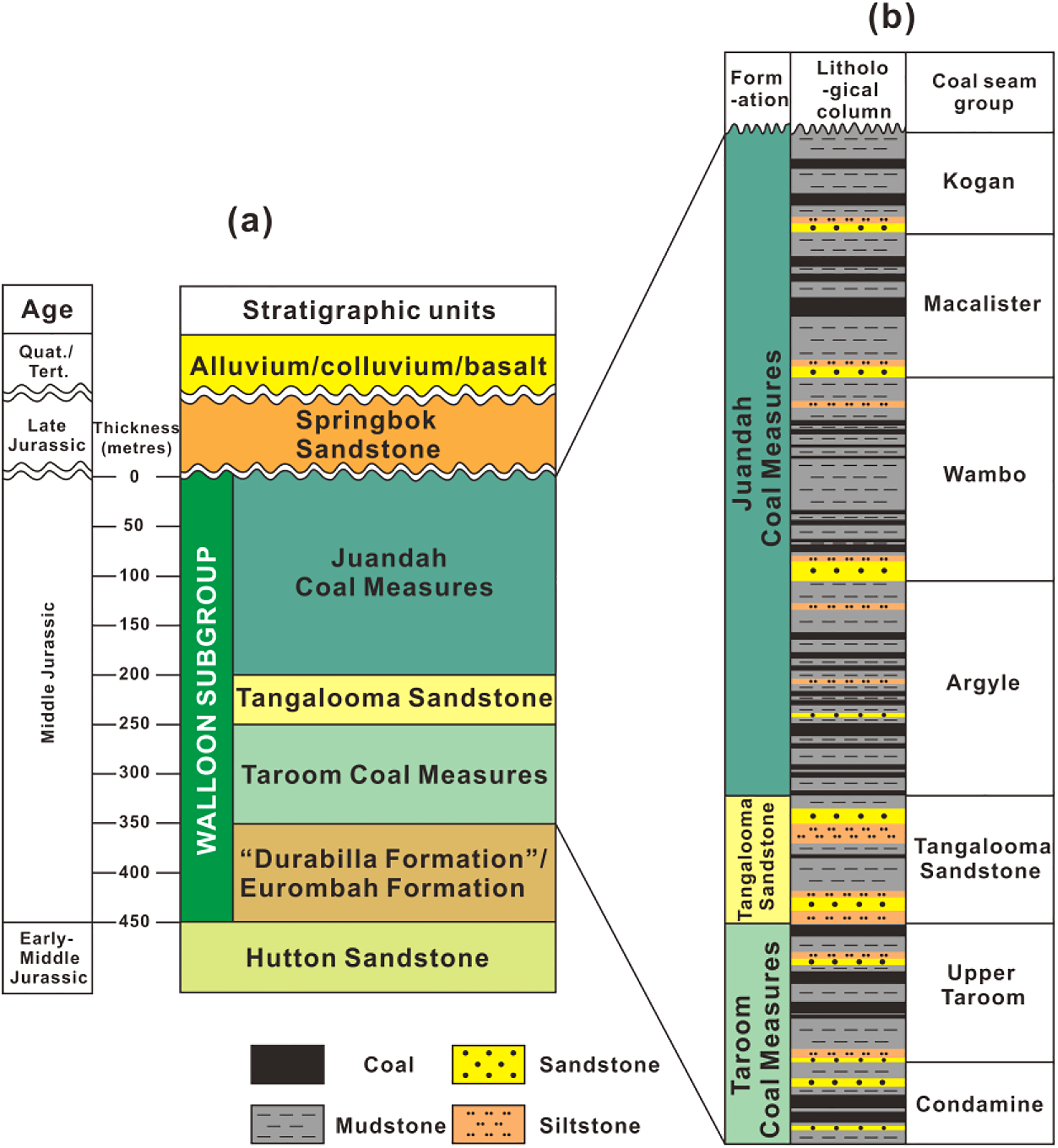
(a) Surat Basin stratigraphic units relevant to this study (modified from Hamilton et al., 2014b); (b) comprehensive stratigraphic column of coal measures of Walloon Subgroup of Surat Basin (modified from Cui et al., 2022).
The Walloon Subgroup generally contains more than 50 individual coal seams (Hamilton et al., 2014b), with the thicknesses varying from stringer-scale to 3–4 m, and the cumulative thickness can reach 50 m; the majority of the coal seams are thin (< 1 m), discontinuous and hard to correlate over large distances (Martin et al., 2013; Scott et al., 2004). Coal seams mainly occur in the Juandah and Taroom Coal Measures, and the Tangalooma Sandstone Formation can contain minor coal seams. Based on the stratigraphic framework studies of the Walloon Subgroup by previous workers (Cui et al., 2022; Hamilton et al., 2014a; Scott et al., 2004), in this study, the coal seams in the Juandah and Taroom coal measures of Walloon Subgroup were divided into different coal seam groups: Kogan, Macalister, Wambo, and Argyle of Juandah coal measures; Upper Taroom and Condamine of Taroom coal measures (Figure 2).
The vitrinite reflectance (Ro) of Walloon Subgroup coals in the Surat Basin is generally 0.30%–0.60%, and can reach 0.70% in the deep of the basin (Figure 1). The coalbed gas content of Walloon Subgroup varies significantly with values reported to be 1–15 m3/t on a dry-ash-free (d.a.f.) basis, generally ranging from 4–7 m3/t (Ryan et al., 2012; Scott et al., 2007), which is higher than that of many other low-rank coals, such as the Powder River Basin of America (Ayers, 2002), Erlian Basin in China (Sun et al., 2017), etc. The CBM reservoirs of Walloon Subgroup are commonly undersaturated. The coal fracture permeability changes greatly with values ranging from less than 0.1 mD to more than 2000 mD (Ryan et al., 2012). The Walloon Subgroup coal seams possibly behave as fractured aquifers (Draper and Boreham, 2006; Papendick et al., 2011), with higher permeability mainly distributed along the subcrop margin and generally restricted to shallow depths (<600 m) (Hamilton et al., 2015; Ryan et al., 2012).
Materials and methods
Core data
The measured gas content, coal proximate and petrographic analyses, Langmuir Isotherm adsorption, and cores description data were collected from four cored CBM wells (D-2, D-4, D-23, and D-24) in the Daandine gas field. According to the statistics, desorption and coal proximate analyses were carried out for a total of 116 coal samples across the Walloon Coal Measures. In addition, 24 coal samples were conducted for the maximum vitrinite reflectance (Ro,max) determination; 33 coal samples for Langmuir Isotherm adsorption analysis; 36 coal samples for maceral analysis. The gas desorption, coal proximate analyses, and cores description were performed by Earth Data Pty Ltd The maceral analysis, Ro,max determination, and Langmuir Isotherm adsorption experiments were conducted at Earth Resources Consulting Pty Ltd.
The coal proximate analyses results, including moisture, ash, volatile matter, and fixed carbon, are reported on air dried (a.d.) basis. The organic maceral composition contents are reported on mineral-matter-free (m.m.f.) basis, and mineral contents on “as analysed” (a.a.) basis. In this work, the total gas content (Qt) data of coal samples were determined based on Australian Standard (1999), and consisted of three parts: (1) the measured desorbed gas (Q1) in desorption canisters; (2) the measured residual gas (Q2) released during the crushing of coal sample; (3) the lost gas (Q3) estimated based on Q1. That is, Qt = Q1+ Q2+ Q3. The Qt in this work is reported on a d.a.f. basis.
Gas composition data
The gas composition data of one cored CBM well D-23 in the Daandine gas field were collected. The gas composition samples were obtained from the inverted cylinders, and the samples were generally taken at early and mid stages of desorption. The gas composition samples were analysed on a Varian Micro Gas Chromatograph by Earth Data Pty Ltd In this study, the average value of gas compositions of samples at early and mid stages of desorption were taken as the gas composition results.
In-situ reservoir pressure and permeability data
The in-situ reservoir pressure and permeability data of one CBM well in the Daandine gas field were collected, and these data were obtained through Drill Stem Testing (DST) conducted by Arrow Energy Ltd The DST refers to the testing of a reservoir during drilling or after completion of a well to obtain various characteristics of the formation and fluid under dynamic conditions.
Results
Coal properties
The measured Ro,max results of coal samples show that the maturity of Walloon Subgroup coals from Daandine gas field has a narrow range with Ro,max values between 0.40% and 0.53%, averaging 0.45%. According to ISO (2005), the coals are subbituminous to bituminous D in rank. Among all the measurement Walloon coals, only a few Condamine coals have Ro,max values higher than 0.50%. The Ro, max of Walloon coals in the studied three CBM wells all present increasing trend with the depth (Figure 3).
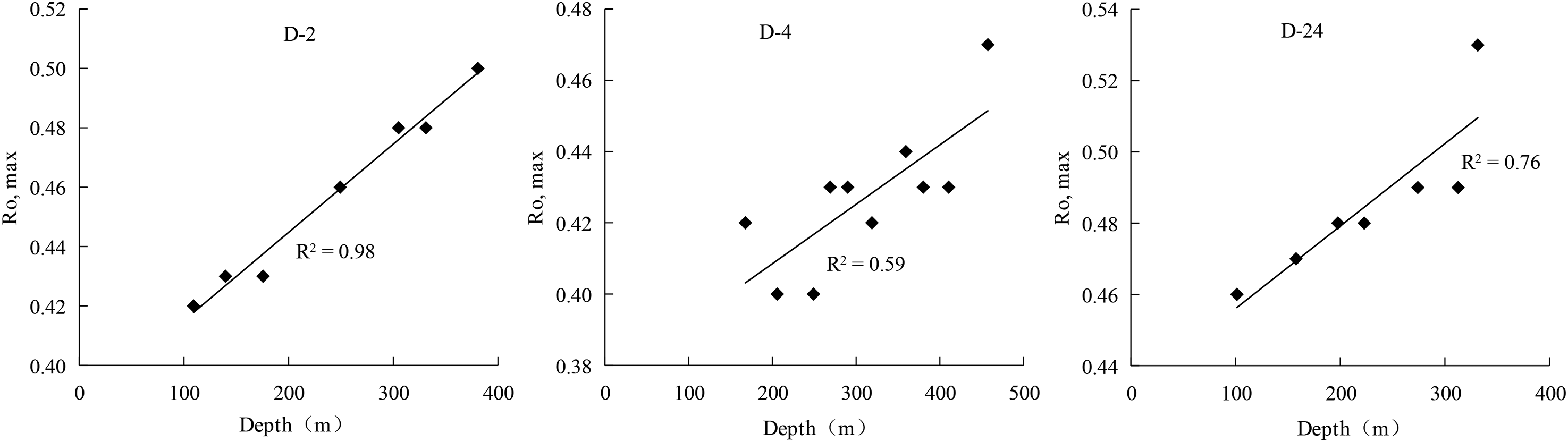
Vertical profiles of Ro,max for wells D-2, D-4, and D-24. The well locations are shown in Figure 1.
The moisture contents of Walloon Subgroup coals from Daandine gas field range from 3.6–13.1%, averaging 7.1%. The ash yields vary greatly, ranging between 6.5% and 61.8%, with an average of 29.1%. The volatile matter yields are 17.0–46.1%, averaging 34.6%. The average moisture, ash, and volatile matter of each coal seam group of Walloon Subgroup in Daandine gas field are presented in Figure 4. With the depth increasing, the moisture content overall shows a decreasing and then slightly increasing trend, to be specific, it reaches the minimum value in the Upper Taroom coals and then increases a little to the Condamine coals. The volatile matter yield overall increases, and then decreases with the depth, and the Wambo and Argyle coals have the relatively higher volatile matter yield. The ash yield takes on a good negative correlation (R2 = 0.75) with the volatile matter yield, indicating that almost all the samples are not affected by the heat of the intrusions (Hamilton et al., 2012).
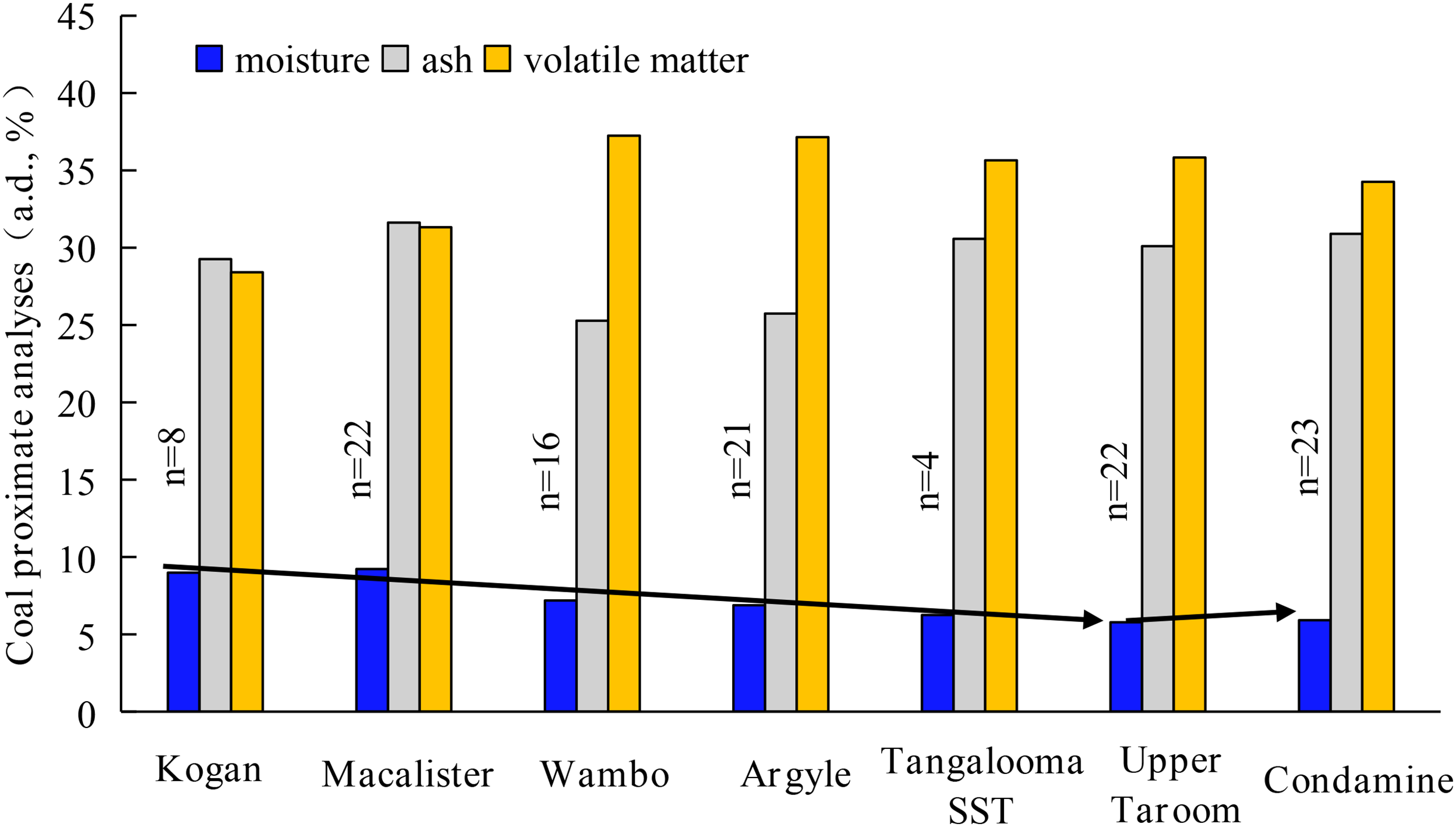
The average coal proximate analyses results of coal seam groups of Walloon Subgroup in the Daandine gas field. n represents the number of coal samples. SST means sandstone.
The coal maceral analysis results show that the vitrinite is the dominant organic maceral in the Walloon Subgroup coals of Daandine gas field, with a content ranging from 41.7% to 89.9%, averaging 72.0%; liptinite is the subordinate maceral with contents varying from 10.1% to 58.3%, averaging 26.8%; inertinite content is scarce ranging from 0–16.2%, with an average of only 1.1%. Vertically, vitrinite contents differs a little among the different coal seam groups, with values moving around 70% (Figure 5). The liptinite contents overall increase and then decrease in a parabolic pattern with the increase of the depth, and the Argyle coals have the highest average liptinite content. The inertinite contents are high only in Macalister coals with an average of 8.98%, while coals from the other coal seam groups contain almost no inertinite (Figure 5).
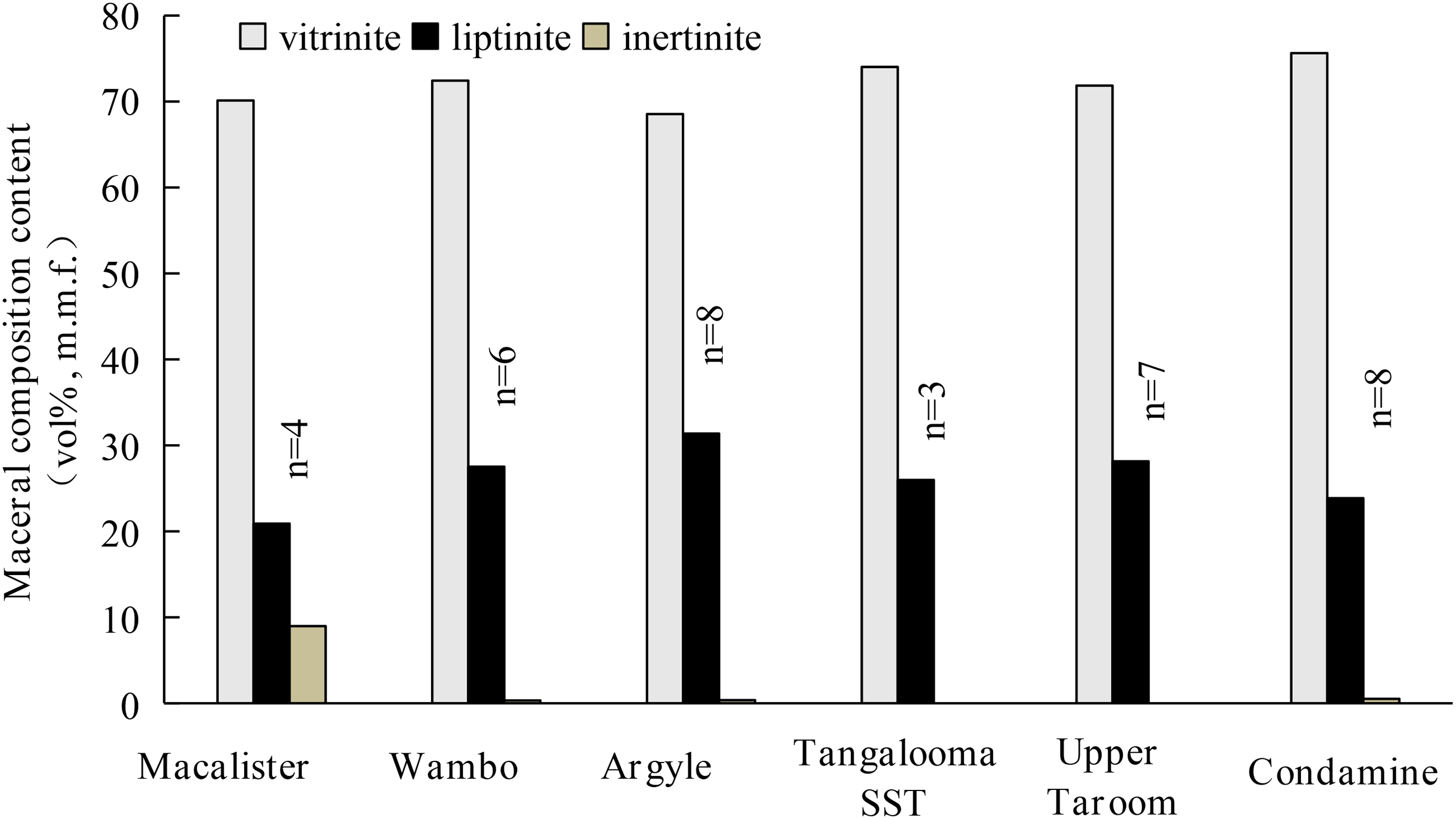
The average maceral composition contents of coal seam groups of Walloon Subgroup in the Daandine gas field.
The Langmuir Isotherm adsorption analysis indicate that the equilibrium moisture contents of coal samples range from 7.4–14.3%, averaging 10.11%. The Langmuir pressure PL (d.a.f.) varies from 2.73–7.37 MPa (avg. 5.22 MPa), and Langmuir volume VL (d.a.f.) is between 10.26 and 20.72 m3/t (avg. 16.89 m3/t).
Chemical compositions of coalbed gas
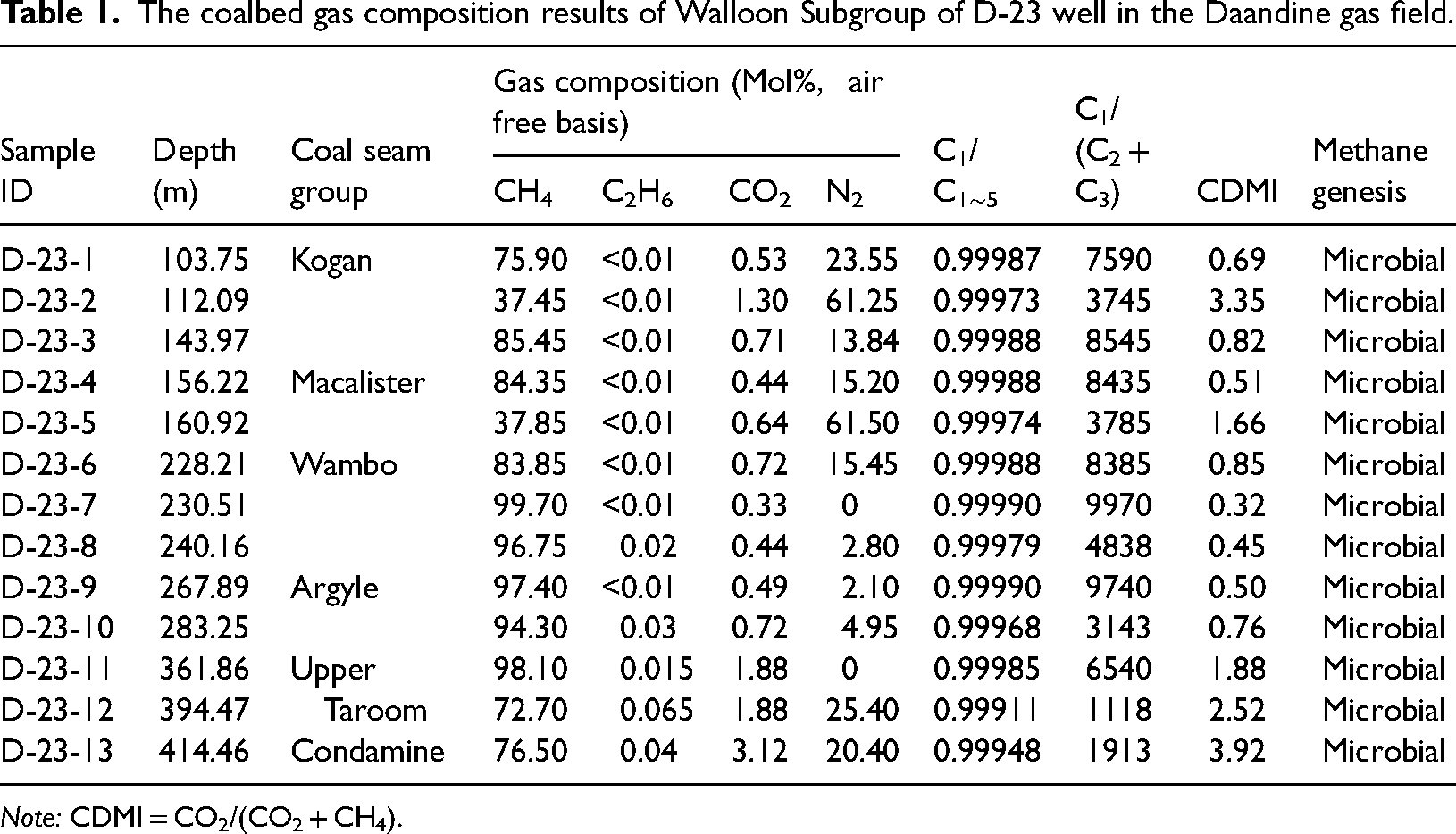
The coalbed gas composition results (Mol%, air free basis) of Walloon Subgroup of D-23 well in the Daandine gas field are presented in Table 1. It shows that the coalbed gas is dominantly CH4, with a concentration ranging from 37.45–99.7%, averaging 80.02%; N2 is the subordinate composition with a concentration between 0 and 61.5%, averaging 18.96%; next is CO2, varying from 0.33–3.12%, averaging 1.01%; in addition, the coalbed gas also contains a trace amount of C2H6, with a concentration of <0.01–0.065%, averaging 0.02%. The concentrations of different coalbed gas compositions vary with the burial depth increasing (Figure 6). In general, the CH4 concentration increases from the Kogan to the top of Tangalooma Sandstone, and then decreases as the depth increases (Figure 6(a)). The CH4 concentrations in coal seams between 230 m and 362 m are at high levels, all higher than 90%. The C2H6 in the coal seam is within a unmeasured concentration in the shallower (<230 m) depth, and then overall shows a rising trend with the increasing depth (Figure 6(a)), which may reflect an increase in the admixture with thermogenic gas in the deep (Hamilton et al., 2014b). With the increasing depth, both N2 and CO2 concentrations show a decreasing and then increasing trend (Figure 6(b)). The concentration of N2 turns near the top of the Tangalooma Sandstone, while the turning depth of CO2 concentration is relatively shallower, approximately 230 m. It can be discovered that the gas compositions in shallower coal seams are very susceptible to the atmospheric components.
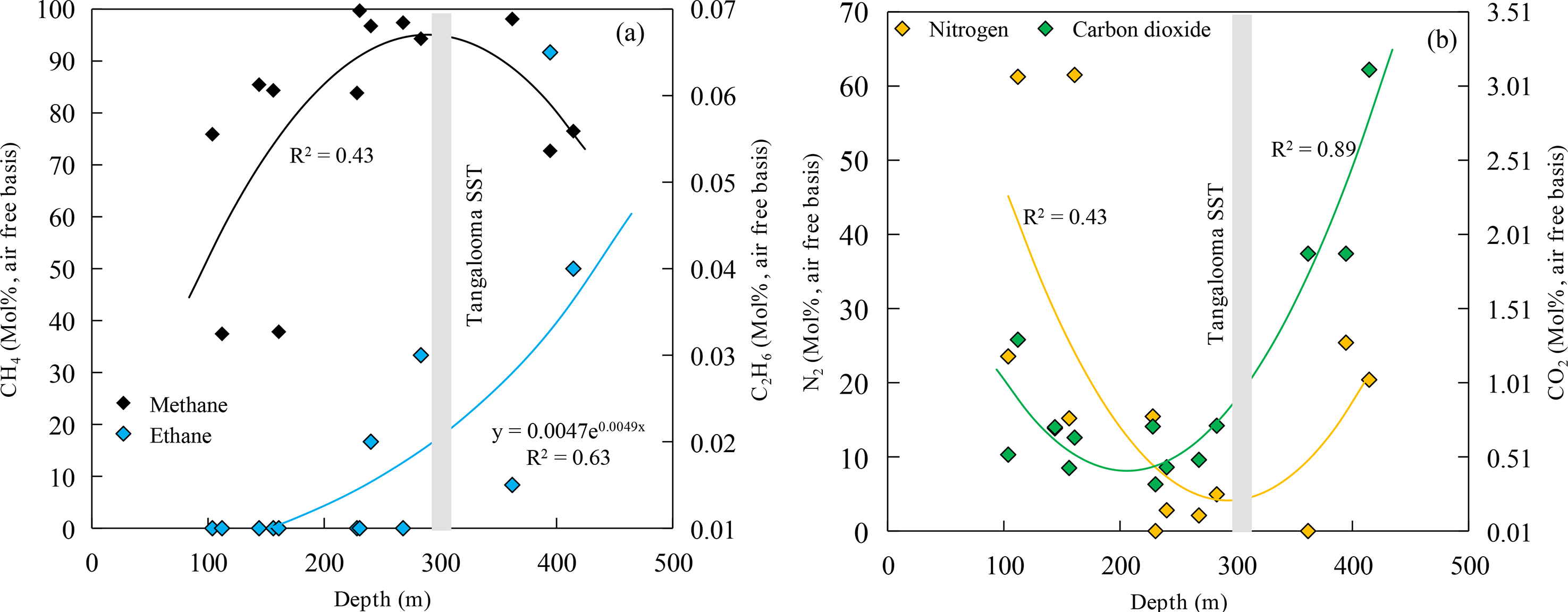
Vertical profiles of (a) CH4 and C2H6 concentrations and (b) N2 and CO2 concentrations for well D-23 in the daandine gas field. The well location is shown in Figure 1.
The coalbed gas composition results of Walloon Subgroup of D-23 well in the Daandine gas field.
Note: CDMI = CO2/(CO2 + CH4).
Vertical distribution of gas contents of coal seam groups
The coalbed gas contents (d.a.f.) of Walloon Subgroup coals from Daandine gas field range from 0.62–7.76 m3/t, averaging 3.96 m3/t. The gas content overall increases with the depth and is a function of hydrostatic pressure, however, the distribution is very scattered (Figure 7(a)). The gas contents of different coal seam groups of Walloon Subgroup are various (Figure 7(b)). The central and lower coal seam groups have higher coalbed gas contents, with average values more than 4 m3/t. From the Kogan to the Upper Taroom, the average coalbed gas content rises constantly, and then decreases to the Condamine, presenting a parabolic form.
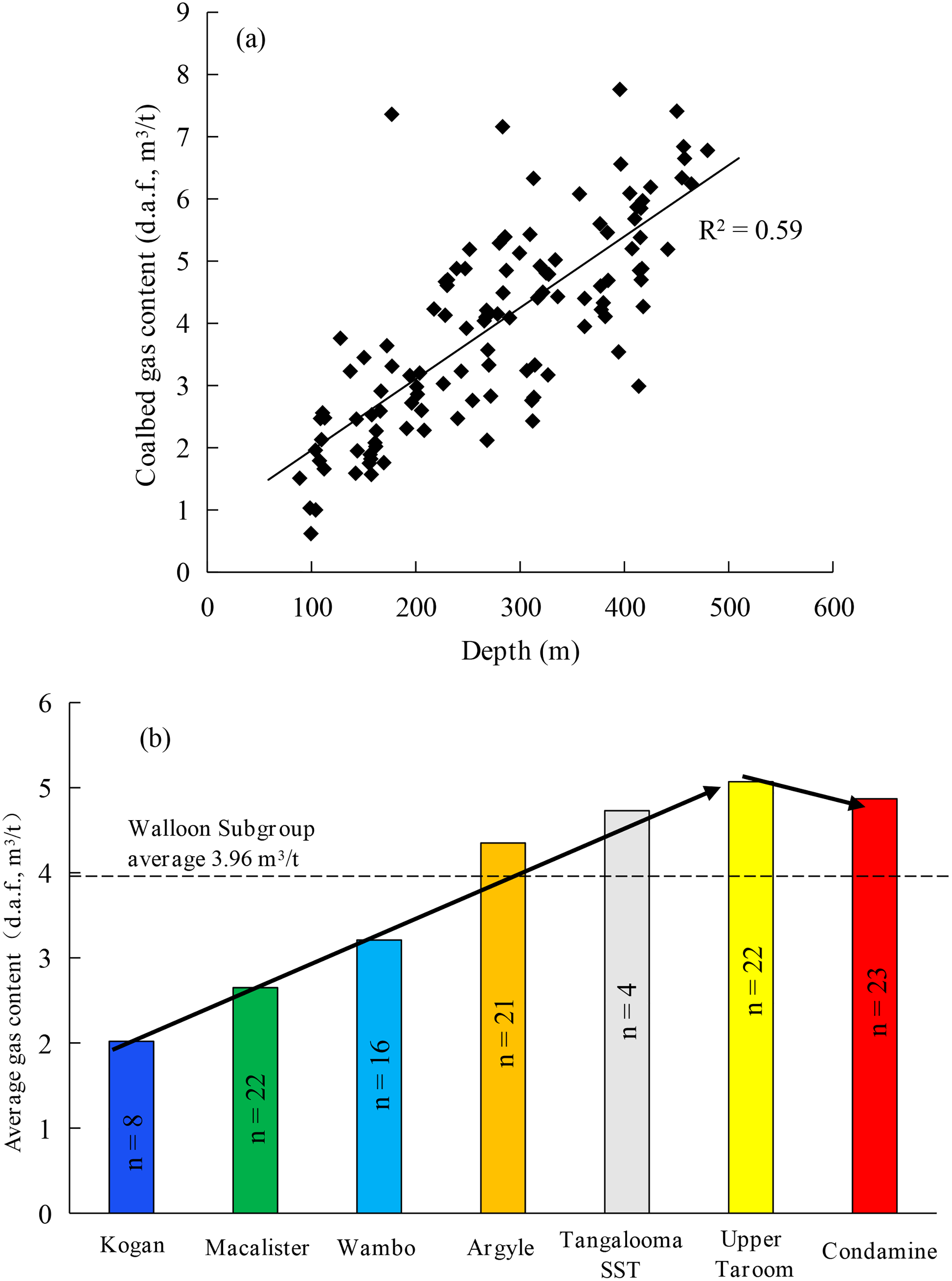
(a) Plot of the coalbed gas content versus the depth in the Daandine gas field; (b) the average gas contents of different coal seam groups of Walloon Subgroup in the Daandine gas field.
Vertically, the coalbed gas contents in the Walloon Subgroup of Daandine CBM wells have two basic trends as the depth increases: (1) increase, and then decrease; (2) increase (Figure 8). The majority of the CBM wells show a “trend 1” profile, inflecting between the Argyle and Upper Taroom coal seam groups, that is, within or close to the formation of Tangalooma Sandstone (Figure 8).
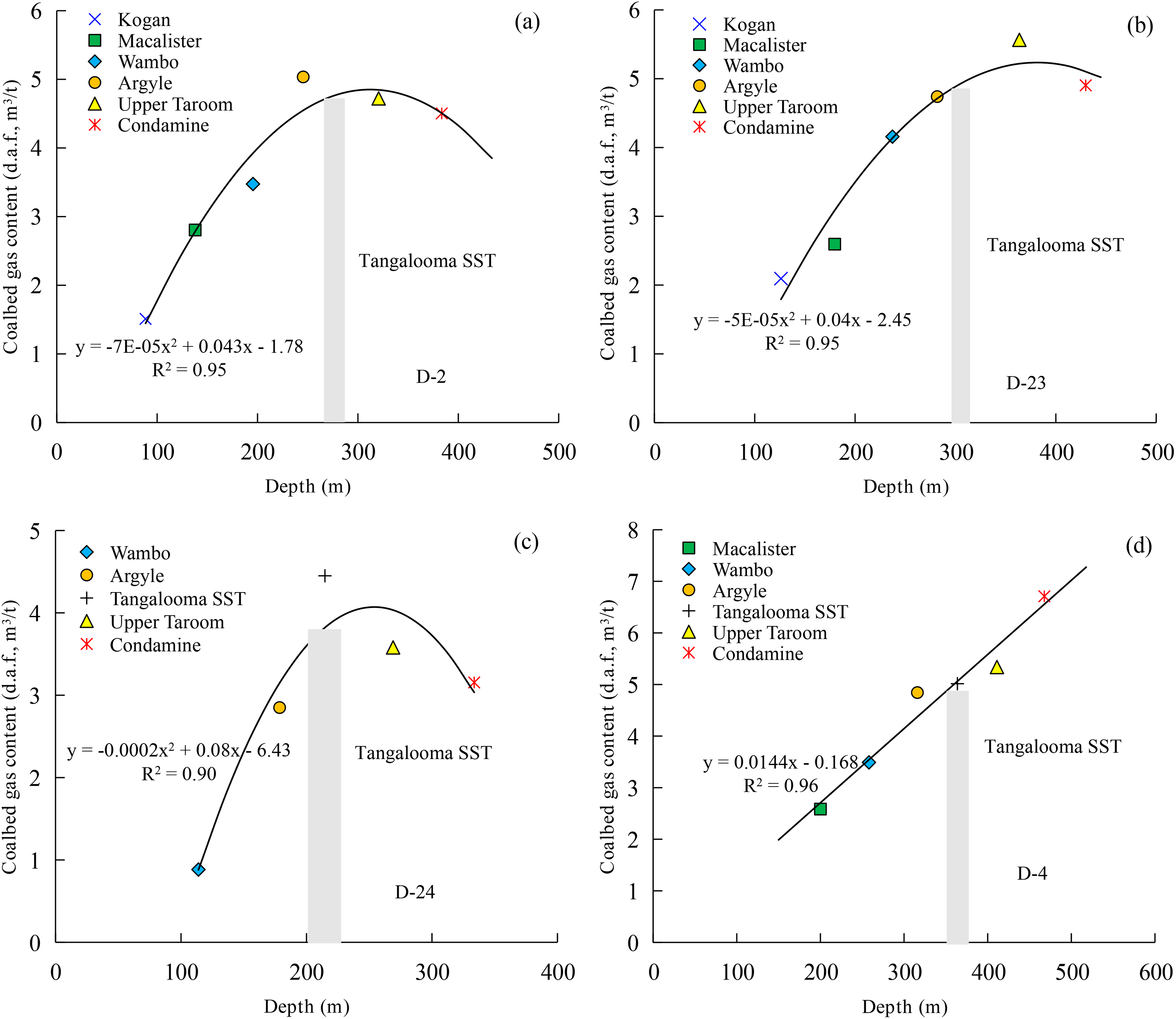
Vertical profiles of gas contents of coal seam groups in the Walloon Subgroup. (a) well D-2; (b) well D-23; (c) well D-24; (d) well D-4.
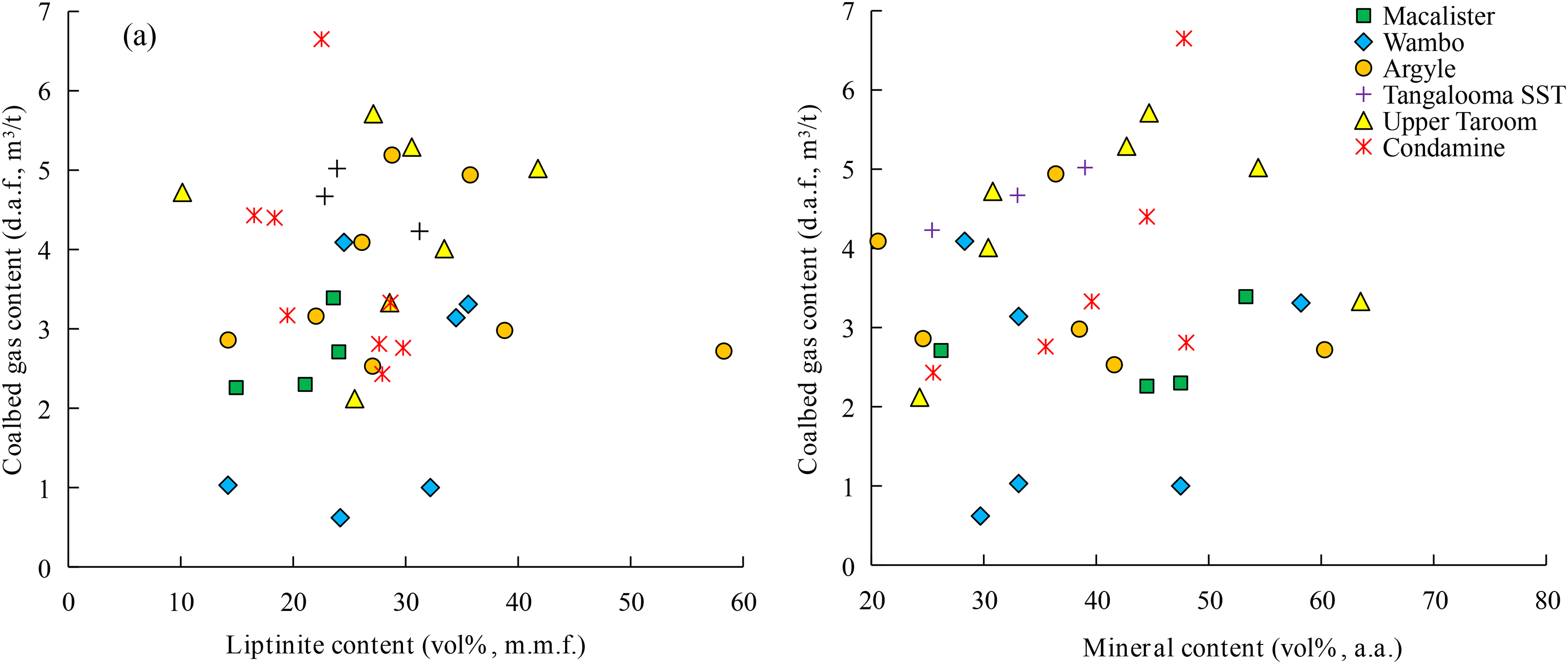
Relationship of gas content to (a) liptinite content and (b) mineral content for coal samples in the Daandine gas field.
Discussions
Genesis of CBM in the Daandine gas field
According to the main processes involved in the generation of CBM, the genetic types of CBM have been traditionally grouped as either biogenesis, thermogenesis, or a mixture (Flores et al., 2008; Mastalerz and Drobniak, 2020; Whiticar, 1999). The biogenic (or microbial) methane can be primary or secondary in origin and generated through either methyl-type fermentation or CO2-reduction reactions (Whiticar, 1999). The primary biogenic methane is generated at low ranks with Ro < 0.3% and largely escaped during the burial process of coal (Levine, 1993; Scott et al., 1994), whereas the secondary biogenic methane is generated post-coalification by introducing microbes through groundwater recharge (Hamilton et al., 2015). The biogenic CBM retained in the coalbed is mainly secondary in origin (Ju et al., 2014; Song et al., 2012). The Ro of Daandine coals is between 0.40% and 0.53%, therefore, if the CBM of the Daandine gas field is identified as biogenesis, and the CBM is basically secondary biogenic.
The best method to determine the origin of CBM is combining gas composition compositions with isotope data. In this work, due to lack of isotopic data, only the gas compositions were used to preliminarily identify the genetic type of CBM in the Daandine gas field. Besides, relevant references were used to further support our opinions.
Microbial and thermogenic gas generally respectively have [C1/(C2 + C3)] values >1000 and <100, whereas mixed gas has a [C1/(C2 + C3)] value in the range of 100–1000 (Hamilton et al., 2014b; Kvenvolden, 1995). The [C1/(C2 + C3)] values of coalbed gas of Walloon Subgroup in the Daandine gas field range from 1118 to 9970 (Table 1). Besides, the microbial gas also generally has C1/C1–5 values greater than 0.95 and [CO2/(CO2 + CH4)] (CDMI) values less than 5% (Ju et al., 2014). The C1/C1–5 values of coalbed gas in this work are greater than 0.99, and CDMI values vary from 0.32% and 3.92%. Thus, the [C1/(C2 + C3)], C1/C1–5, and CDMI values all suggest that the coalbed gas of Walloon Subgroup in the Daandine gas field is dominantly microbial in origin.
Using gas compositions, gas stable isotopic analysis (δ13C-CH4, δD-CH4 and δ13C-CO2), and the stable isotopic compositions (δD-H2O and δ18O-H2O) of formation water associated with CBM, Hamilton et al. (2014b) interpreted the main source of Walloon Subgroup CBM in the eastern Surat Basin as microbial CO2 reduction. Two of the three CBM wells studied by Hamilton et al. (2014b) are located about only 25 km away from the western boundary of the study area (Figure 1), thus, their conclusions can support our opinions. Obviously, our conclusions are consistent with the conclusions of Hamilton et al. (2014b). Therefore, it can be concluded that the CBM in the Daandine gas field is mainly secondary biogenic.
Geological factors affecting the vertical distribution of coalbed gas content
Maceral composition
The organic macerals of coal can affect the coalbed gas content because of their differences in the capacities of gas generation and adsorption. Previous studies have shown that: among the organic macerals of coal, the gas generation capacity of liptinite is the strongest, followed by vitrinite, and inertinite ranks last (Furmann et al., 2013; Liu et al., 2005, 2018; Zhu et al., 2004). In addition to the gas generation capacity, differences of gas adsorption capacity also exist between different organic macerals. Most studies suggested that vitrinite has better methane-adsorbent performance compared to similar-rank inertinite (Crosdale et al., 1998; Hildenbrand et al., 2006), possibly due to higher specific surface area of vitrinite (Crosdale et al., 1998; Shen et al., 2019). However, there are also some studies that proposed the methane-adsorbent capacity of different macerals is not fixed but changes with the coal rank rising (Liu et al., 2020).
The relationship between gas content and maceral composition of Walloon Subgroup coals is still unclear, though previous studies have shown that the higher gas contents of central coal seams of Walloon Subgroup seem to link with the higher hydrogen-rich liptinite contents of these seams (Hamilton et al., 2014b; Scott et al., 2007). In the Daandine gas field, despite the fact that both the gas content and liptinite content show a parabolic change with depth (Figs. 5 and 7b), the relationship of coalbed gas content to liptinite content is very scattered (Figure 9a), which may suggest that the indigenous microbial consortia lacks specificity with organic macerals and/or other ambient parameters such as meteoric water recharge are predominant (Hamilton et al., 2012).
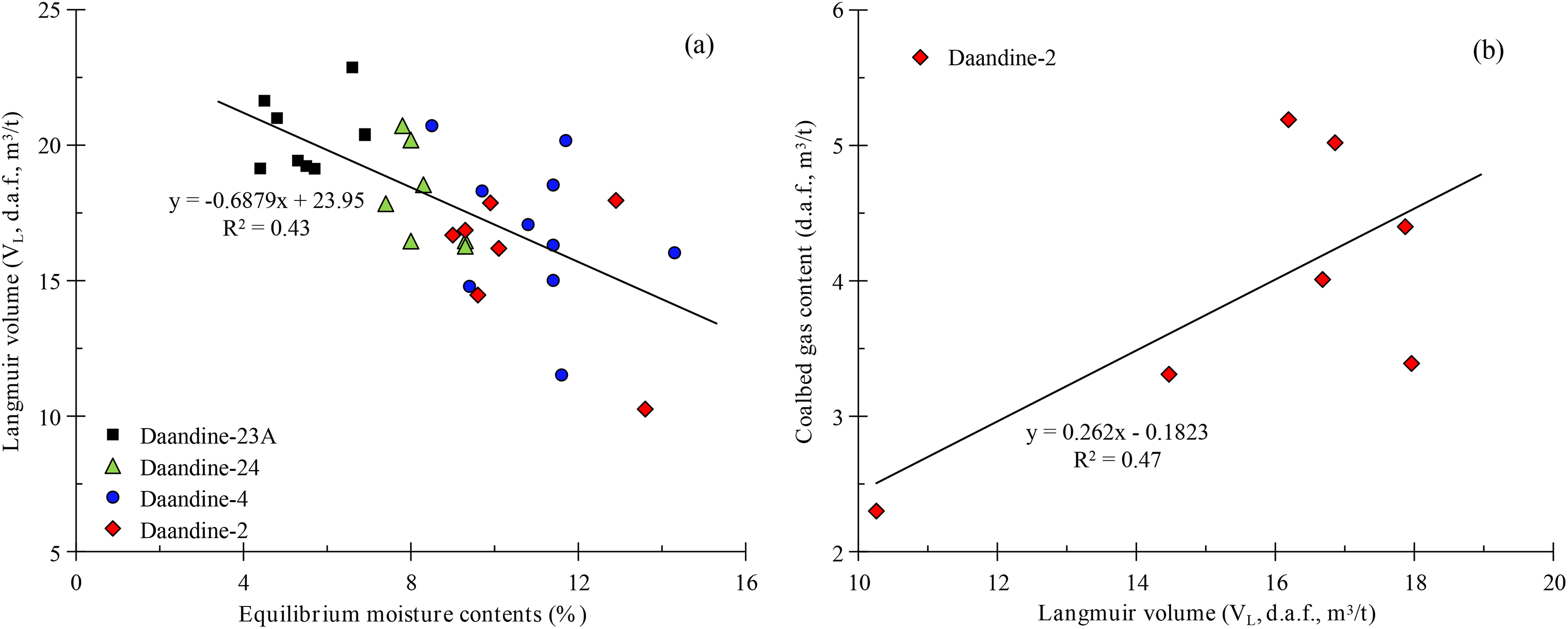
Relationship of equilibrium moisture contents to VLs of coal samples; (b) plot of the VLs versus the coalbed gas contents of coal samples of well Daandine-2.
The mineral, inorganic maceral in coal, affects the coalbed gas content from two aspects: firstly, it reduces the proportion of organic matter in coal, thus affecting the gas generation capacity of coal; secondly, it influences the adsorption capacity of the coal to gas. In this study, the coalbed gas content appears uncorrelated with the mineral content (Figure 9b), suggesting that the mineral content is not the dominant control on the gas content of Walloon Subgroup coals in the Daandine gas field.
Moisture content
Moisture in coal can remarkably influence the adsorption capacity of the coal to gas, thus affecting the coalbed gas content (Scott, 2002). In this study, the VL values of coals are negatively correlated with the equilibrium moisture contents (Figure 10a), indicating that the moisture has negative effect on the adsorption capacity of the coal. Moreover, taking the well Daandine-2 as an example, there is a positive correlation between the VL and the coalbed gas content (Figure 10b). Therefore, in theory, the moisture contents of Walloon Subgroup coals have negative effect on the coalbed gas content.
As mentioned in the Section “Coal properties”, the average moisture contents of different coal seam groups based on all samples of 4 cored CBM wells display a parabolic trend as depth increases, which is diametrically opposite to the gas content-depth relationship (Figs. 4 and 7b), and it implies the possibly negative relationship between moisture content and gas content. Figure 11 reveals that the moisture contents of Walloon Subgroup coal samples are indeed negatively correlated with the coalbed gas contents. It appears that the moisture contents of coals affect the vertical distribution of coalbed gas contents to some extent.
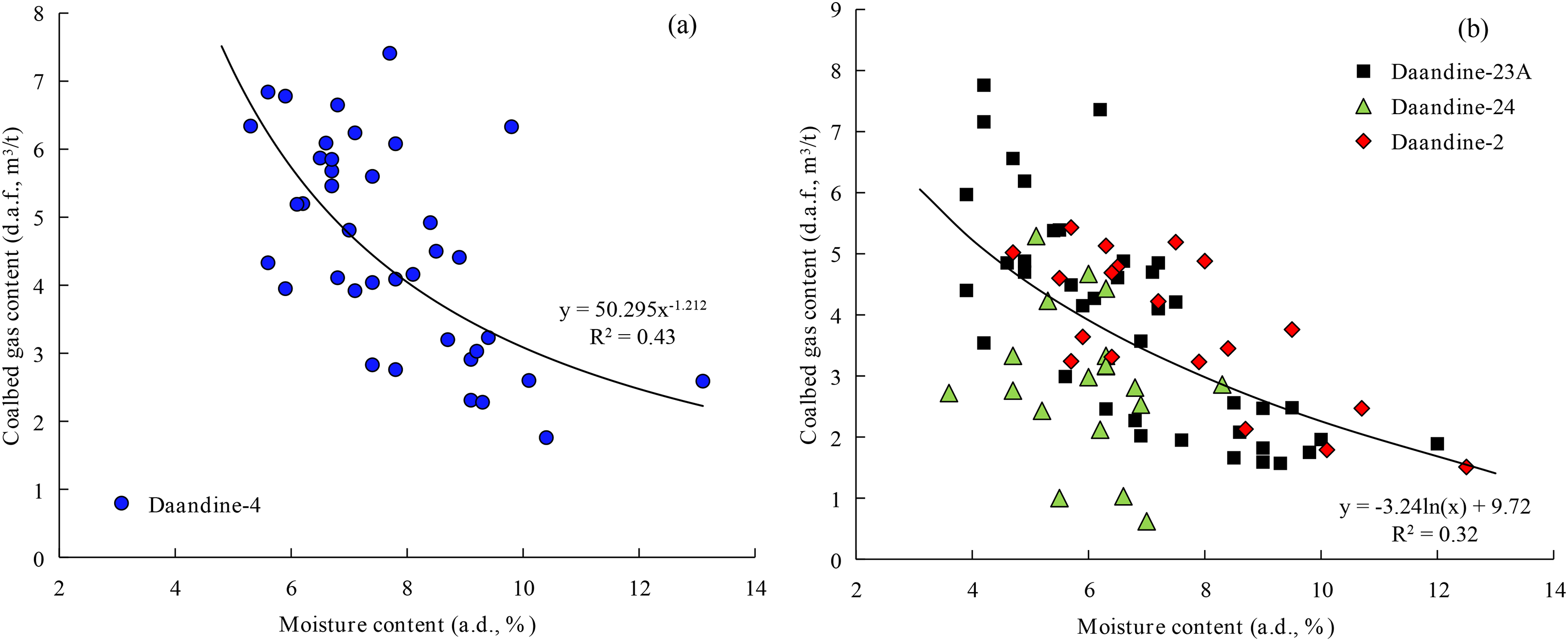
Relationship of moisture contents to the coalbed gas contents of coal samples. (a) well D-4; (b) wells D-23, D-24 and D-2.
Despite the overall parabolic trend between the moisture contents of coal seam groups of the 4 cored CBM wells and depth (Figure 12a), this relationship is not exactly the same among different individual wells (Figure 11b). For wells D-23, D-24, and D-2, the moisture contents of coal seam groups all reach the minimum in the Upper Taroom and then increase (Figure 12b); only the moisture contents of coal seam groups in well D-2 present a decreasing trend as depth increases, with no turning in the Upper Taroom (Figure 12b). And these features just correspond to the gas content-depth relationships in Figure 8, in which only well D-2 has an increasing trend between gas content and depth. Therefore, it’s evident that the moisture content of coalbed has an important effect on the vertical distribution of coalbed gas content of Walloon Subgroup in the Daandine gas field.
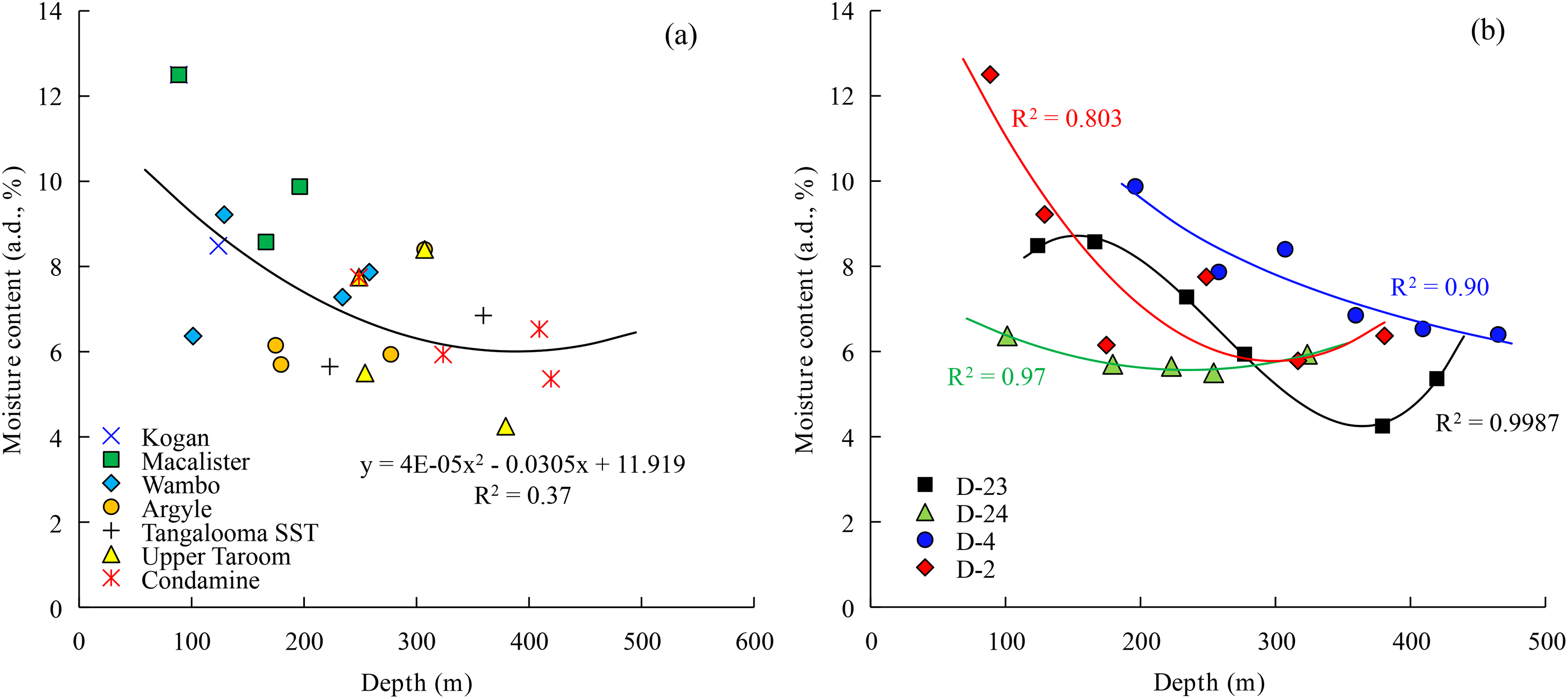
Relationship of moisture content to the depth of coal seam group. (a) overall trend; (b) trends of every individual well.
Pressure system
In well D-23, the DST in-situ reservoir pressures of coal seam groups conform to the general law of increasing with buried depth, however, the reservoir pressure coefficients (RPC) of coal seam groups vary regularly as the depth increases (Figure 13). The RPC-depth scatters can be divided into three sections: (1) from the Kogan to the Argyle, the RPC increases with depth and displays a very good linear relationship with depth (R2 = 0.96); (2) the abrupt drop of RPC from the Argyle to the Upper Taroom; (3) the RPC rises again from the Upper Taroom to the Condamine and then keeps relatively stable to the Hutton SST. Thus, it can be inferred that, vertically, three sets of independent fluid pressure systems exist in the Walloon Subgroup of study area, namely, Kogan–Argyle, Upper Taroom, and Condamine–Hutton fluid pressure systems, and they correspond to three sets of independent gas-bearing systems (Figure 13).
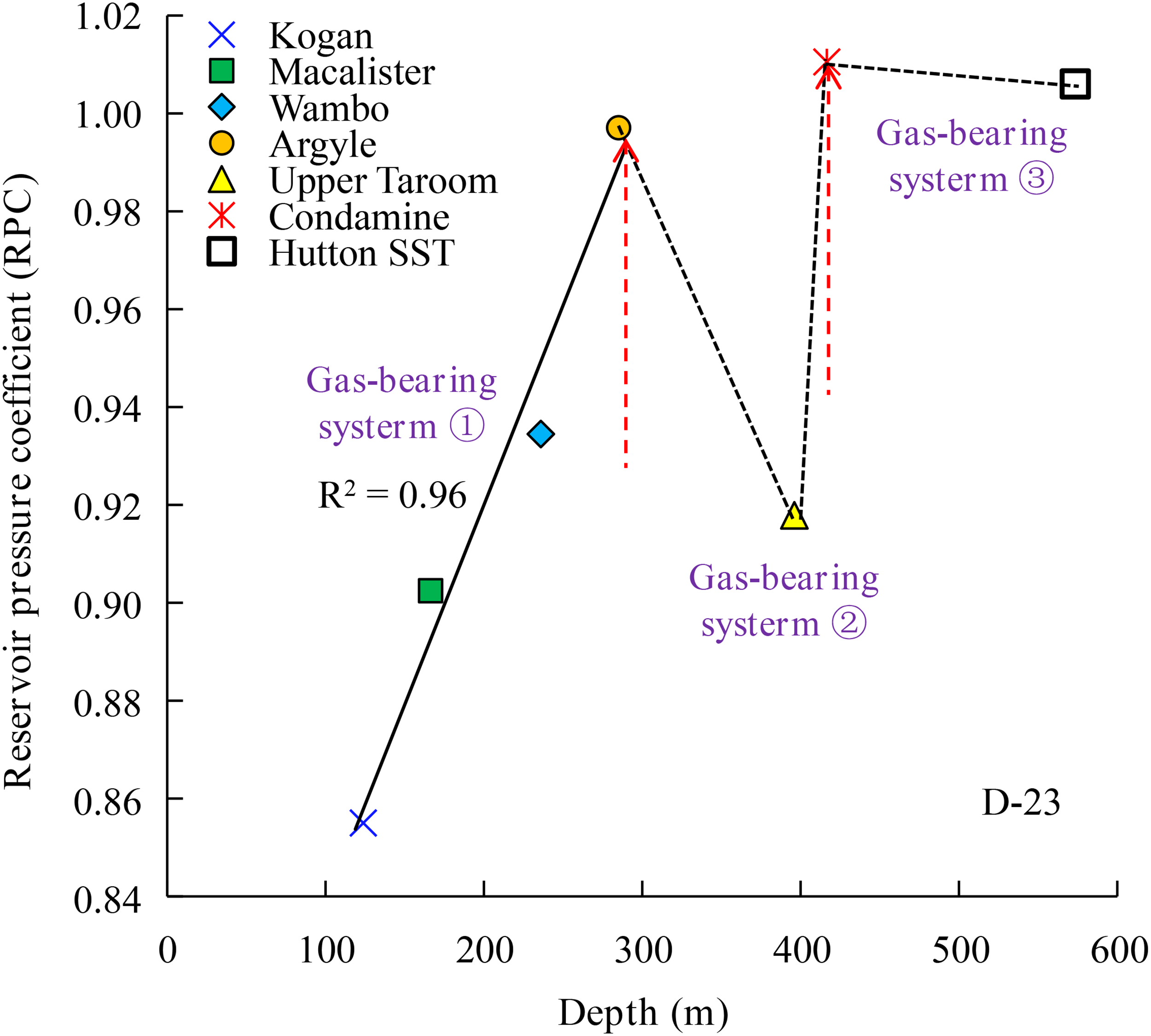
Plot of reservoir pressure coefficient to depth in different coal seam groups of Walloon Subgroup in the well D-23.
The coalbed gas content-depth relationship is relatively independent in different gas-bearing systems. In an unified fluid pressure system, the hydraulic connection and microbial activities between different coal seam groups are relatively close; with the increasing depth of coal seam group, the reservoir pressure increases, which is conducive to the adsorption and preservation of coalbed gas, therefore, the gas content of coal seam group will increase, that is, there is a generally monotone increasing functional relationship between the coalbed gas content and depth in an unified fluid pressure system (Qin et al., 2008; Zhang et al., 2015). That’s may be the reason that the gas contents increase from the Kogan to the Argyle in all four studied CBM wells (Figure 8). The Upper Taroom fluid pressure system exists separately from the above and below fluid pressure systems, thus, the coalbed gas content in it is controlled by its own gas generation, preservation, and accumulation conditions, that is, the coalbed gas content is relatively independent. That is why the coalbed gas content-depth relationship becomes uncertain (increase or decrease) when the depth of coal seam group reaches the Upper Taroom (Figure 8). Similarly, the Condamine–Hutton fluid pressure system is also independent.
Caprock condition
The CBM in coals have three occurrence states, namely, adsorbed, free, and water-soluble states, and the vast majority of CBM is generally stored on pore surfaces in an adsorbed state (Pashin, 2020). When the external system is stable, the three states of CBM are in a dynamic equilibrium. Among the three states of CBM, the adsorbed-CBM is very beneficial to the preservation of CBM. A good caprock condition can maintain the formation pressure and keep the three states of CBM relatively balanced, which makes the CBM retain the dominant state of being adsorbed, and then reduces the loss of free and dissolved CBM. As a result, the CBM can be well preserved and accumulated in coal seams. In contrast, if there is no a good caprock condition, the equilibrium among the three states of CBM will be disrupted. Firstly, the free CBM will escape through the overlying strata; secondly, with the loss of free CBM, the formation pressure will drop, and the adsorbed CBM will be converted into free state and continue to escape, consequently, leading to a declining CBM content. Therefore, a good caprock condition can prevent the seepage and migration of the free CBM and reduce the loss of CBM.
In general, the argillaceous rock caprock is the most common high-quality caprock with low permeability and high breakthrough pressure; in contrast, the sandstone usually has high porosity and permeability, leading to a poor sealing ability, so the sandstone is usually regarded as the bad caprock. In this study, the thickness ratio of sandstone to mudstone (TRSM) was used to evaluate the sealing ability of the formation. The greater the TRSM value, the worse the sealing ability, otherwise, the better the sealing ability.
Since the abnormal change of gas content–depth relationship in the study area occurs in the lower coal seam groups (Upper Taroom and Condamine), the impact of the TRSM change on the gas contents of the lower coal seam groups was analyzed in this study. Figure 14 shows that the coalbed gas contents of the lower coal seam groups display power function relationship with the TRSM and decrease with the increase of TRSM, indicating that a lower TRSM of the formation is conducive to the preservation of CBM. It can also be discovered from Figure 14 that the TRSM has more significant effect on the gas content of the Condamine than that of the Upper Taroom, suggesting that the caprock condition is the critical factor affecting the gas content of the Condamine, but not the Upper Taroom’s.
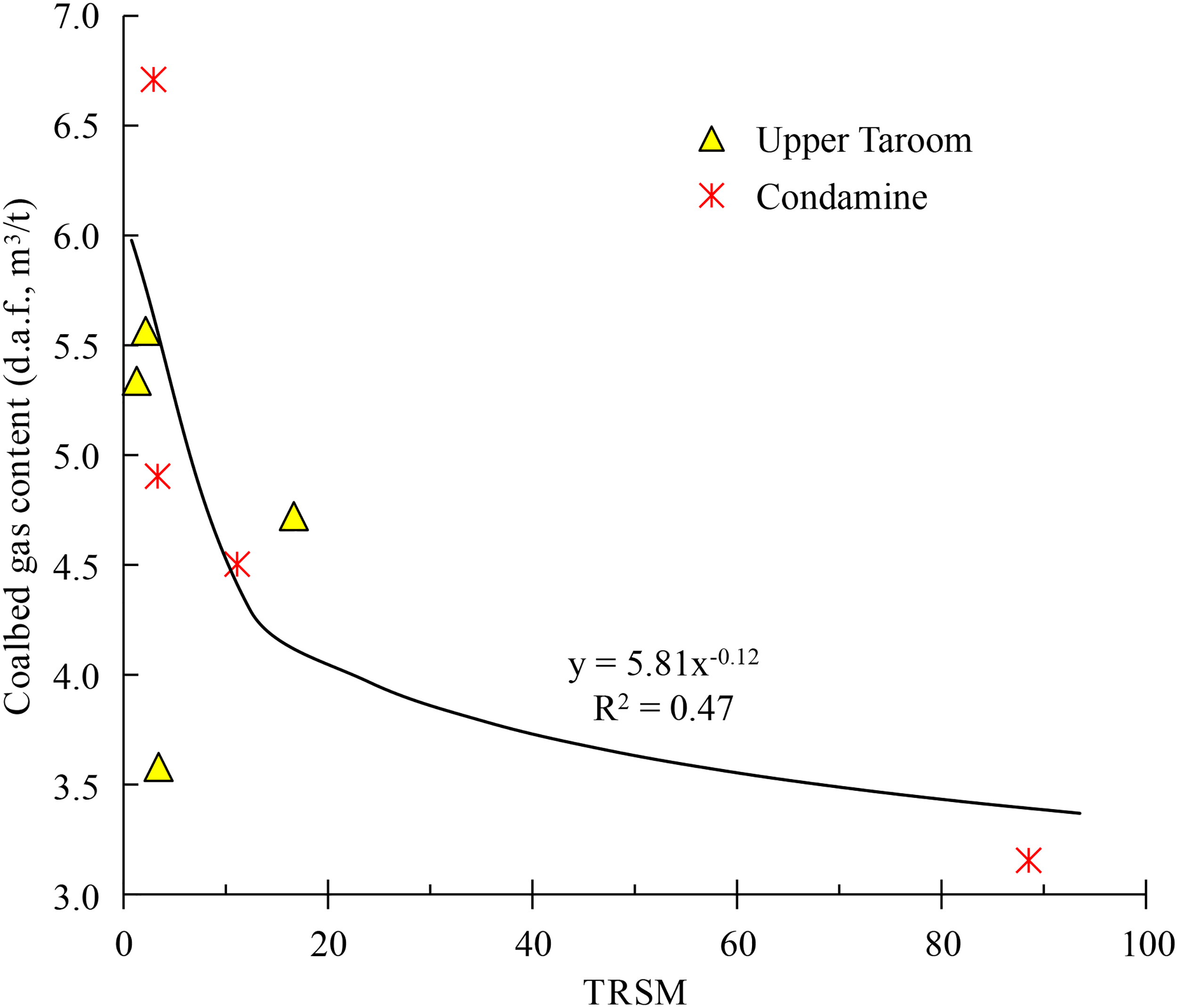
Relationship of thickness ratio of sandstone to mudstone (TRSM) to gas content of the lower coal seam groups.
Permeability of coal seam group
Coals with high permeability is not only conducive to the production of CBM, but also affect the generation of CBM. The Walloon Subgroup crops out in the eastern part of the Daandine gas field, and high-permeability coals are conducive to the infiltration and recharge of greater meteoric water, thus enabling the introduction of more microbial consortia into the coal seams, which likely enhances the generation of secondary biogenesis methane. Based on previous studies, the in situ microbial methanogenesis is thought to be ongoing in the eastern Surat Basin.
Cleats are natural fractures in coal (Close, 1993). There are two kinds of cleats in a specific cleat set: face cleats and orthogonal butt cleats (Dawson and Esterle, 2010). The cleat spacing refers to the distance between two adjacent face cleats or butt cleats (Paul and Chatterjee, 2011). The cores description of wells D-2, D-4, and D-24 contain face and butt cleat spacings data of coal samples, which are shown in Figure 15. It can be discovered that both face and butt cleat spacings of coal samples display a parabolic change with the increasing depth, and the turning zone occurs in the coal seam group within or close to the Tangalooma Sandstone. It suggests that the cleat development degree (cleat density or frequency) of Walloon Subgroup coals in the Daandine gas field increases and then decreases with the increasing depth, and coal seam groups within or close to the Tangalooma Sandstone are better cleated with higher permeability.
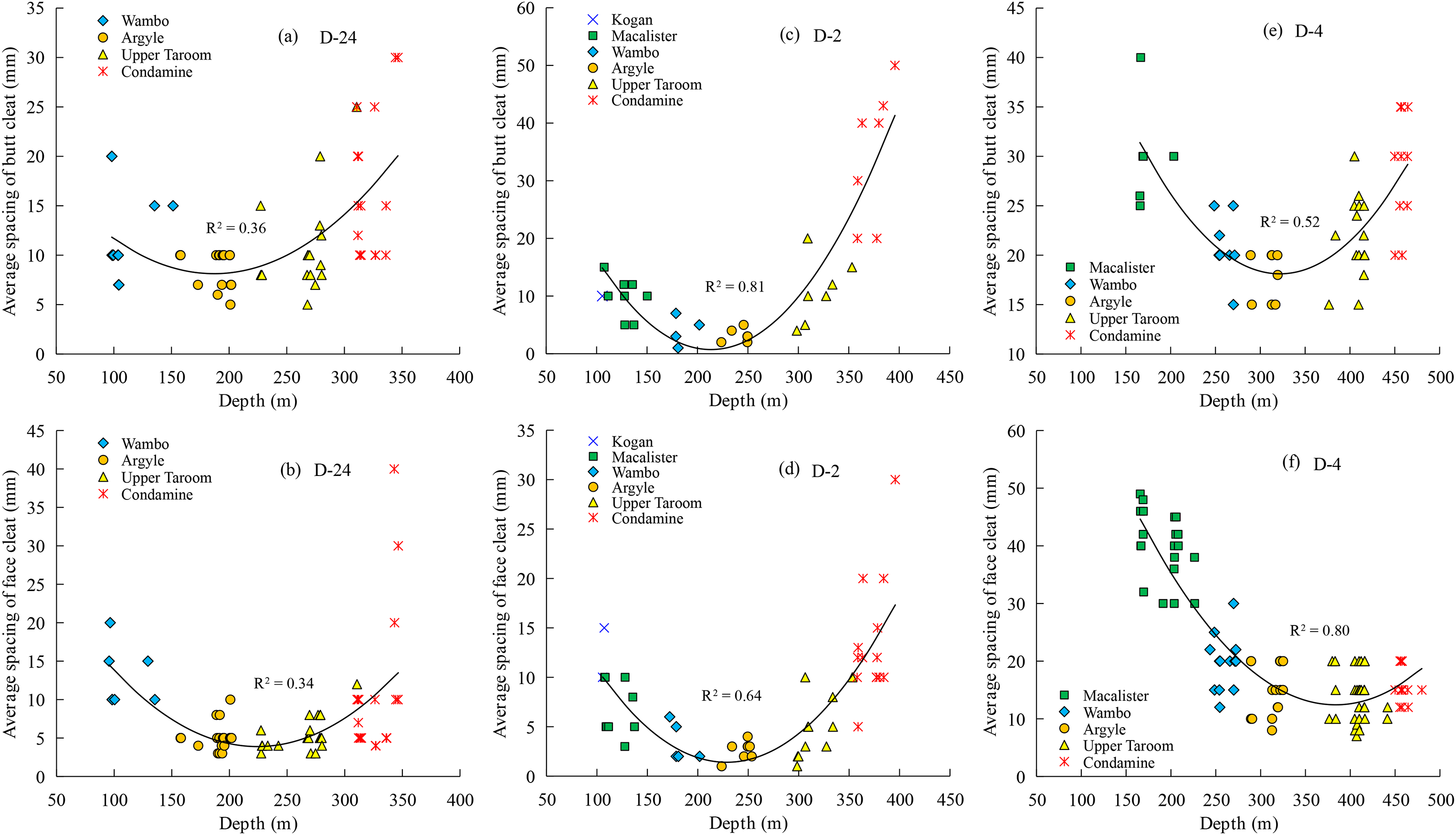
Vertical profiles of average butt and face cleat spacings of Walloon Subgroup coals in the Daandine gas field. (a), (b) well D-24; (c), (d) well D-2; (e), (f) well D-4.
In this study, the measured permeabilities of coal seam groups in well D-23 based on DST show that the Upper Taroom has the highest permeability with a value of 284 mD. The permeabilities of coal seam groups present good positive correlation with the coalbed gas contents. Figure 16a shows that with an increase or decrease in permeability there is a corresponding increase or decrease in coalbed gas content, and the Upper Taroom has the highest gas content. Moreover, the gas contents of coal seam groups display a remarkable logarithmic function relationship (R2 = 0.94) with the permeabilities of coal seam groups (Figure 16b). In most cases, the higher coalbed gas content of Walloon Subgroup in the study area occurs in the coal seam groups within or close to the Tangalooma Sandstone, which likely reflects enhanced secondary microbial methanogenesis resulting from the high permeabilities of these coal seam groups. As discussed in Section “Genesis of CBM in the Daandine gas field”, the microbial CO2 reduction is the primary source of Walloon Subgroup methane. The enhanced secondary microbial methanogenesis from CO2 reduction leads to a higher CH4 concentration and lower CO2 concentration in the coal seam groups within or close to the Tangalooma Sandstone (Figure 6).
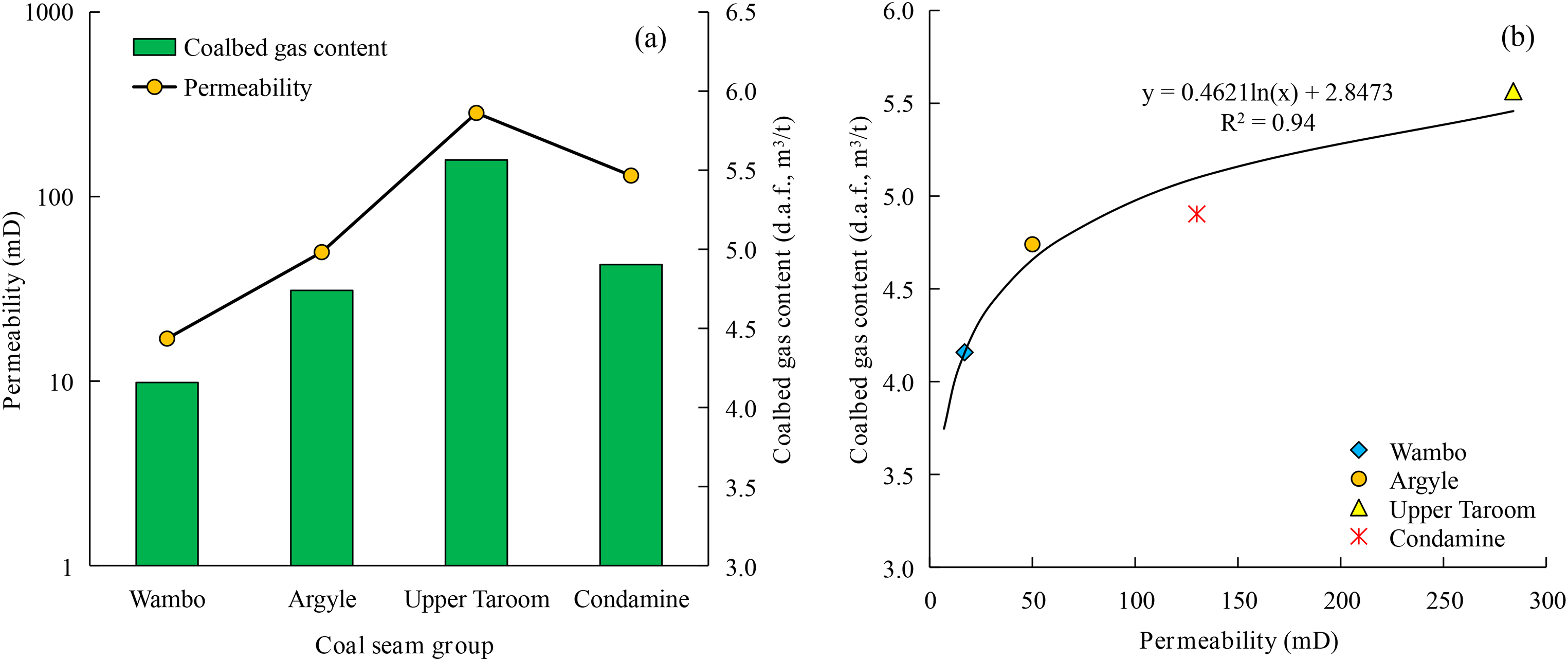
Relationship of permeability to gas content of the coal seam groups of Walloon Subgroup in the Daandine gas field.
Conclusions
The coalbed gas contents of Daandine gas field are between 0.62–7.76 m3/t, averaging 3.96 m3/t. Vertically, the coalbed gas contents have two basic trends as the depth increases: (1) increase, and then decrease (parabolic type); (2) increase. The former trend is dominant, and the inflection point occurs in the coal seam groups within or close to the Tangalooma Sandstone Formation.
The coal maceral contents of Daandine coals are presented as vitrinite > liptinite > inertinite. The moisture contents of coals range from 3.6–13.1%. The correlation analysis shows that the macerals have little influence on the vertical coalbed gas content distribution. The moisture contents show a negative correlation with the gas contents, and coal seam groups with higher moisture contents generally have lower gas contents.
Vertically, three sets of independent gas-bearing systems exist in the Walloon Subgroup, namely Kogan–Argyle, Upper Taroom, and Condamine–Hutton. The existence of multiple independent gas-bearing systems affects the coalbed gas content-depth relationship to some extent.
A parameter named TRSM was used to evaluate the influence of caprock condition on the coalbed gas content. It shows that the coalbed gas contents of Taroom coal measures display a negative correlation with TRSM, reflecting that the better the caprock condition, the higher the gas content, which is particularly evident in the coals of Condamine group of Taroom coal measures.
The permeabilities show a significant effect on the coalbed gas contents of Daandine coals. The coal seam groups within or close to the Tangalooma Sandstone Formation have higher permeabilities due to higher cleat density or frequency. The coalbed gas contents are positively correlated with the coal permeabilities. The reason is that higher permeability coals are conducive to the generation of secondary biogenesis methane in the Daandine gas field, resulting in higher coalbed gas contents.
Footnotes
Declaration of conflicting interests
The authors declared no potential conflicts of interest with respect to the research, authorship, and/or publication of this article.
Funding
The authors disclosed receipt of the following financial support for the research, authorship, and/or publication of this article: This work was supported by the commissioned project of PetroChina Research Institute of Petroleum Exploration & Development (grant number No. RIPED-2022-JS-1301), and National Natural Science Foundation of China (grant number No. 42130802).
