




Abstract
An analysis of factors that influence coalbed methane content showed that seven factors had a major influence: coal thickness, methane concentration, vitrinite reflectance, permeability, cracks, and sealing conditions hydrodynamic conditions were selected as criterion indexes. The prediction model of coalbed methane content was built based on the uncertainty measure theory. Data from six regions in the central and southern Qinshui Basin were used as the training sample. The sample mean was set as the cluster centers, and the index weight was determined by information entropy theory. Calculation of the multi-index comprehensive measure of the sample showed that the sample was classified according to the minimum uncertainty measure distance principle, which was used to predict coalbed methane content. The research results show that: the obtained level by the prediction method is consistent with the practical level, the predictive value is basically consistent with the actual value, coalbed methane content prediction method based on uncertainty measure theory is reliable and practical, as well as showing a new way for the prediction and evaluation of coalbed methane content in the future.
Introduction
Coalbed methane is a type of unconventional natural gas storage, which exists in the coal seam and its adjacent rocks in reservoir type. Coalbed methane is not only one of the important disasters factors in coal mine production, but also is a prerequisite for commercial exploration and development of coalbed methane resources in a region (Cai et al., 2014; Lee et al., 2014). Therefore, whether it is for coal mine production safety, or for accurate evaluation and prediction of coalbed methane development prospects, coalbed methane content is one of the most important parameters (Lian et al., 2008).
At present, domestic and foreign scholars have done a lot of research work in coalbed methane content prediction. The research mainly includes: the statistical method of coalbed methane content and the effective depth (Li et al., 1998), the temperature and stress method (Wang et al., 2002), the multivariate regression method of coalbed methane content, coal quality, logging, and other parameters integrated (Li et al., 2005; Pan and Huang, 1998), the desorption rate-isothermal adsorption curve based on Lang Mueller equation(Chen and Lin, 2005), the method based on support vector machine (Lian et al., 2008), the method based on fractal and Autoregressive Integrated Moving Average Model (ARIMA) (Wang et al., 2011), Back Propagation (BP) neural network method (Lian et al., 2005; Meng et al., 2008; Pan and Liu, 1997), and grey system theory (Tian, 2008; Tian et al., 2008). Because coalbed methane is a kind of complex and uncertain phenomenon, the research of coalbed methane content prediction did not reach a consensus, so far there is no mature theory and accurate calculation method recognized.
Uncertainty information put forward by Wang (1990) of Harbin Institute of Architecture and Engineering is new and different from fuzzy information, random information, and gray information. Wan (2004) proposed uncertainty clustering forecasting method, and used the method to predict the spaceflight material loss which gained satisfactory prediction results. The class discrimination of coalbed methane content exploration has many uncertainty factors and is very complicated work; therefore, uncertainty mathematics theory provides a good basis. This paper applied the uncertainty clustering method in order to study the class discrimination of coalbed methane content exploration, selected the main factors of coalbed methane content and built an uncertainty measurement model. This provides a new idea for coalbed methane resource evaluation.
Uncertainty clustering forecasting optimization method
Uncertainty clustering forecasting optimization method is based on uncertainty measure clustering theory (Chen et al., 2014; Dong et al., 2008; He et al., 2012, 2013; Zhao and Wu, 2013). Each discrimination index uses the mean value of sample measurement data as a classification center. First, based on the classification model, single index measure function was built up and then the weight of indexes was determined by the information entropy theory. After that, the multi-index comprehensive measure of the objects was calculated. The object category was determined by the multi-index comprehensive measure of objects and the classification model of uncertainty measure distance. At last the predictive value of objects was obtained by sum of products of the multi-index measurement by the mean value of object sample. Specific methods are as follows:
Construction of the criterion index system of research object. After analysis of influential factors of the research object, the discriminant index of research object samples is established. To make research object space for D, if any sample Carrying through the classification of samples. The sample set Determination of the single index measure. Determination of the index weight. Because the influence of each discrimination index to the research object is not the same, the weight coefficients uj indicate the influence degree of Wj influencing factors in sample Di. There are many methods to determine the index weight. This research calculates the index weight based on the information entropy theory.
Calculation of multi-index measure. Determination of the category of the measured object. The measured object category is determined by the minimum uncertainty measure distance principle. The uncertainty measure distance dk is set for multi-index measuring pi and pk distance:
Calculation of the predictive value. The sample mean of classification model is written as








Application in prediction of coalbed methane content
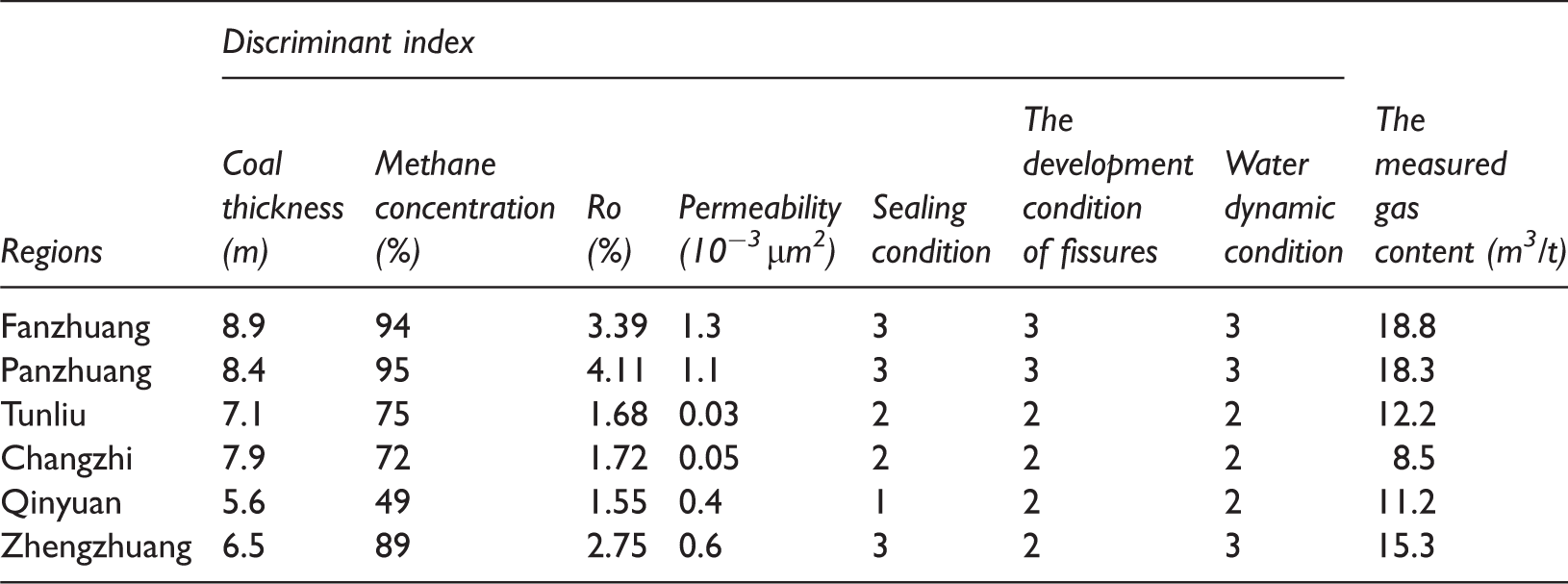
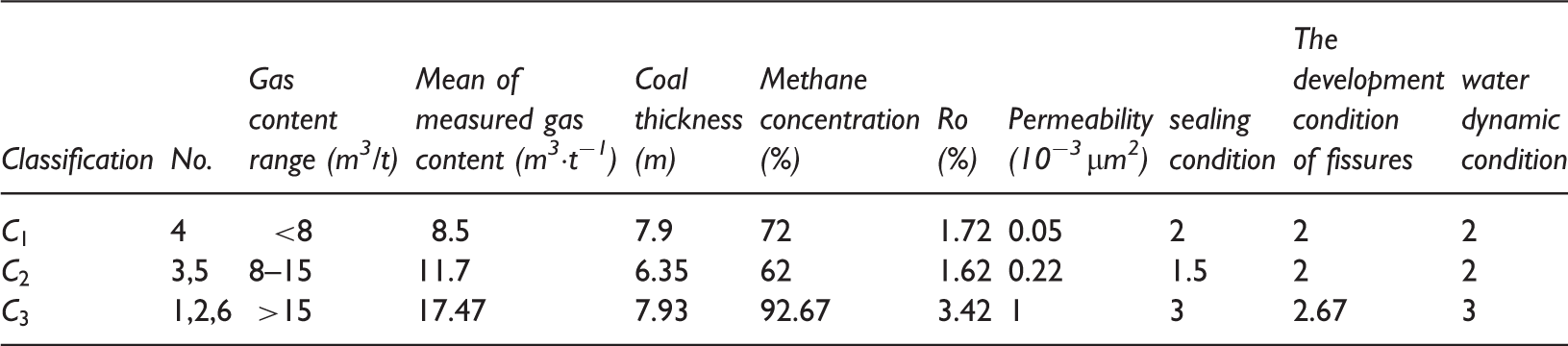
Classification samples set
Prediction sample data.
The sample classification data of coalbed methane.
Uncertainty measure function of influencing factors
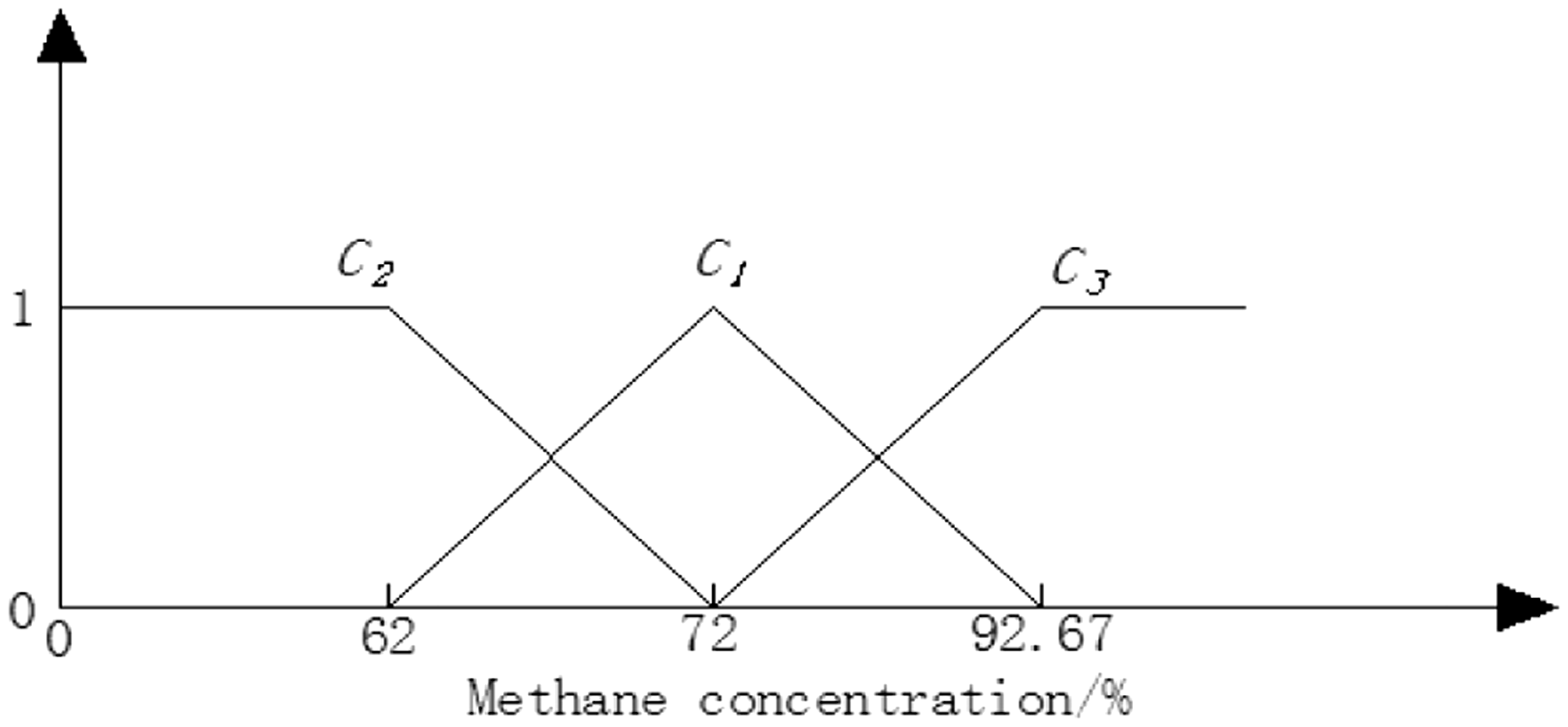
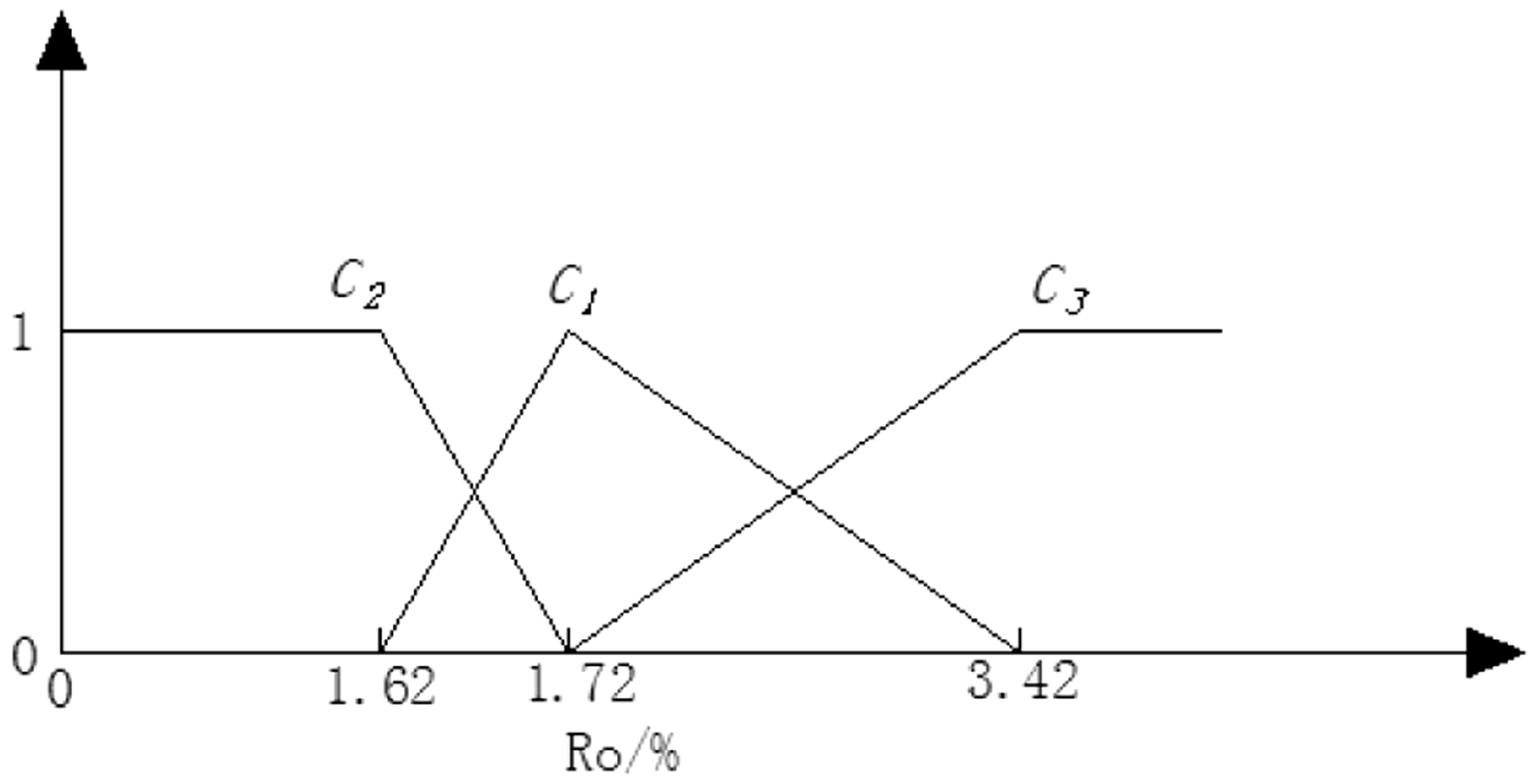
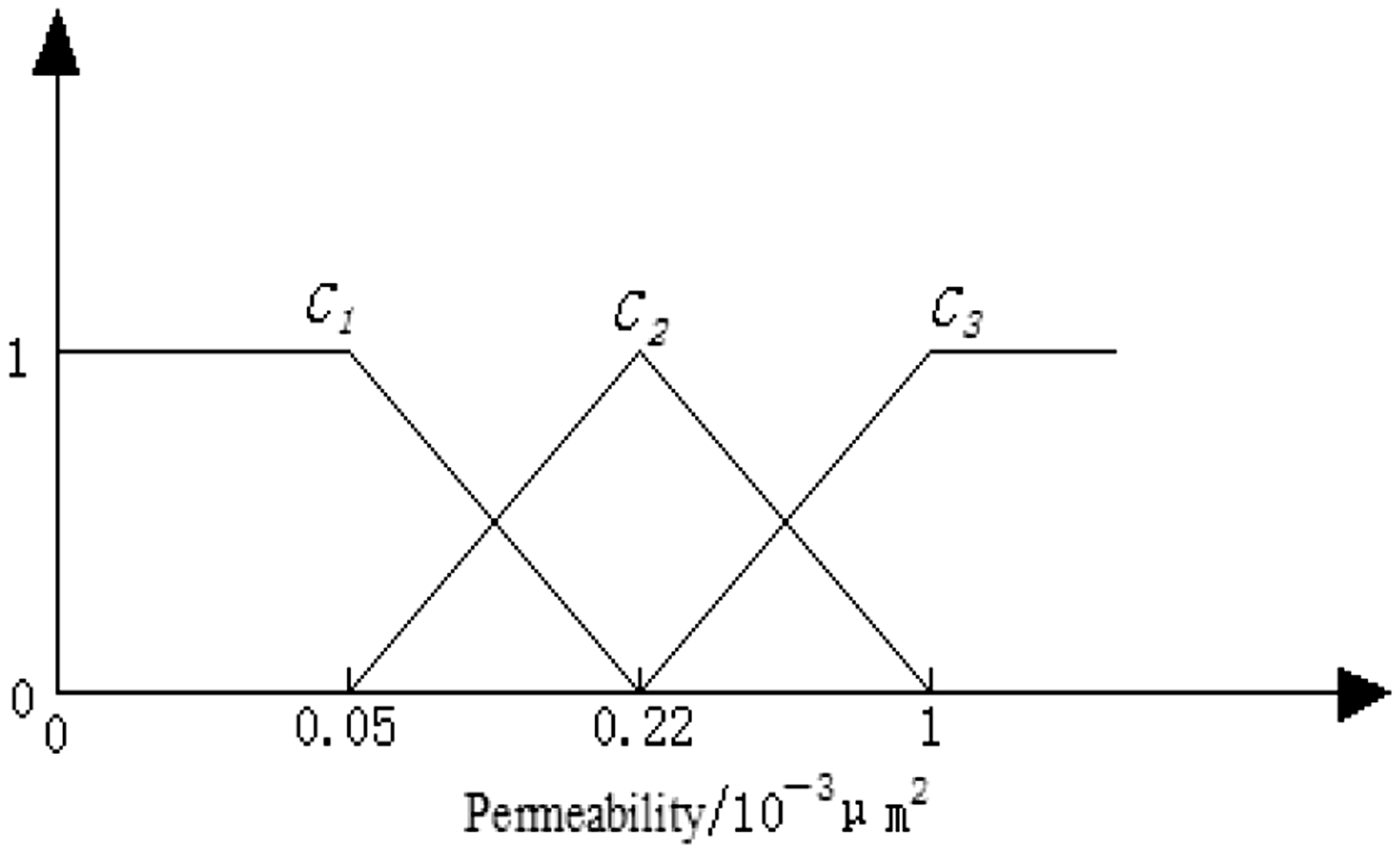
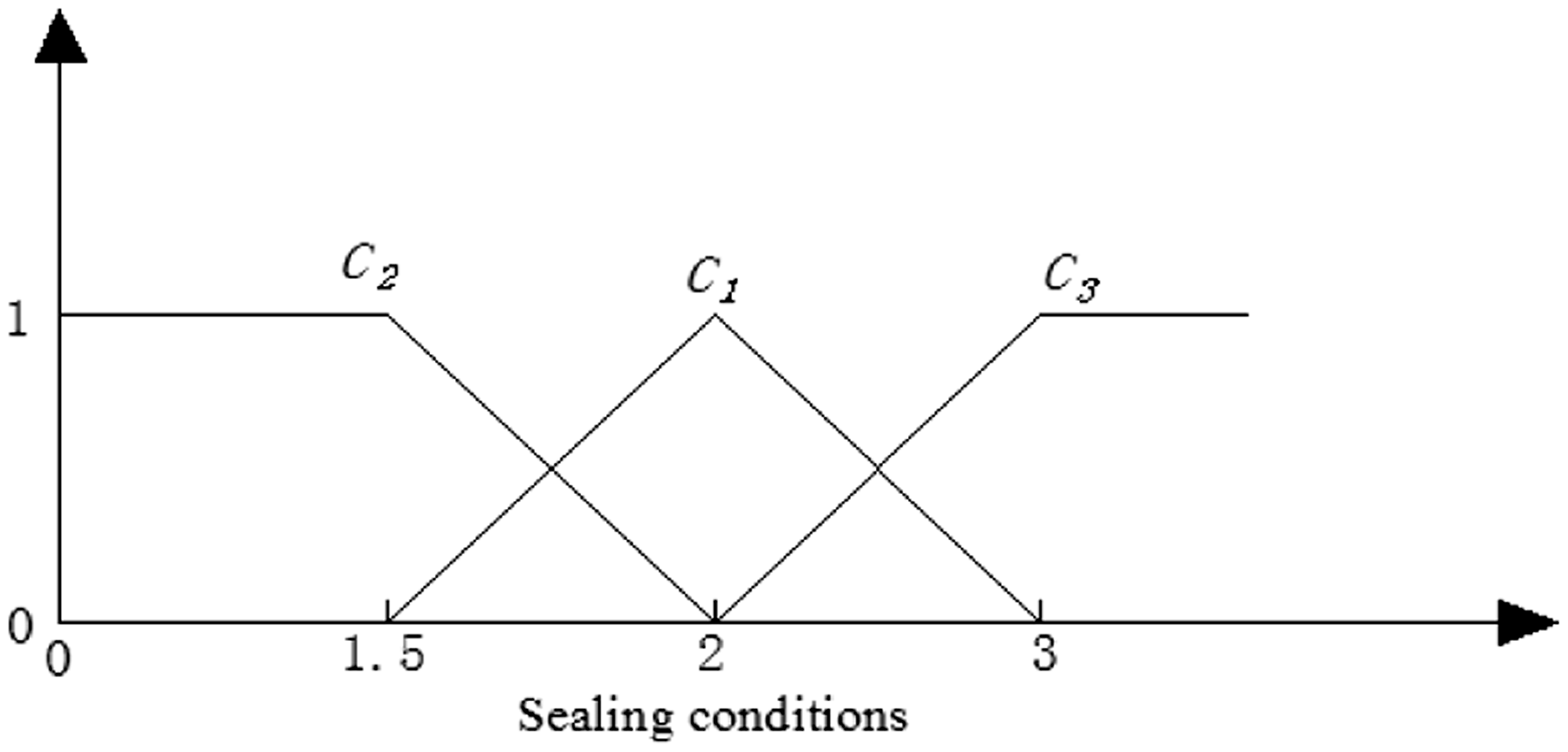
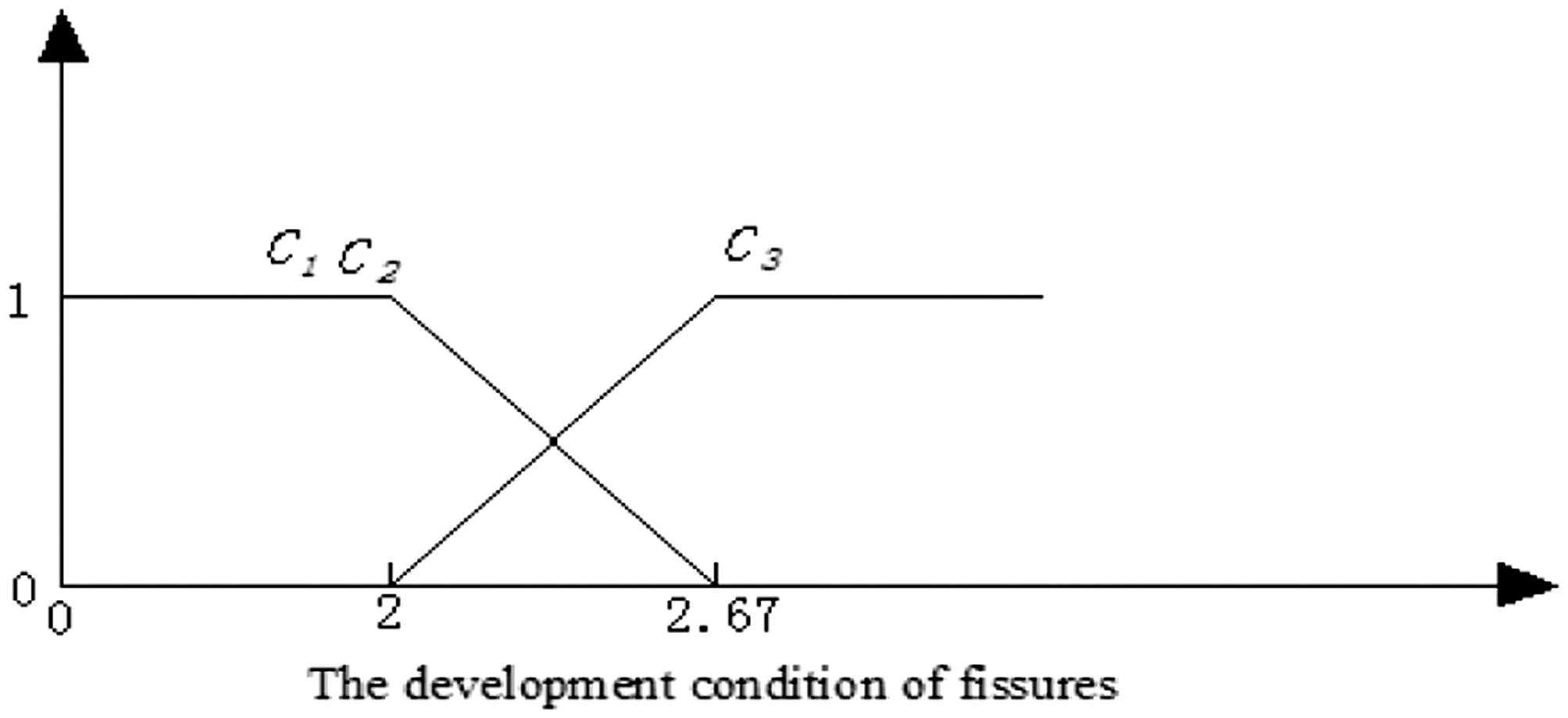
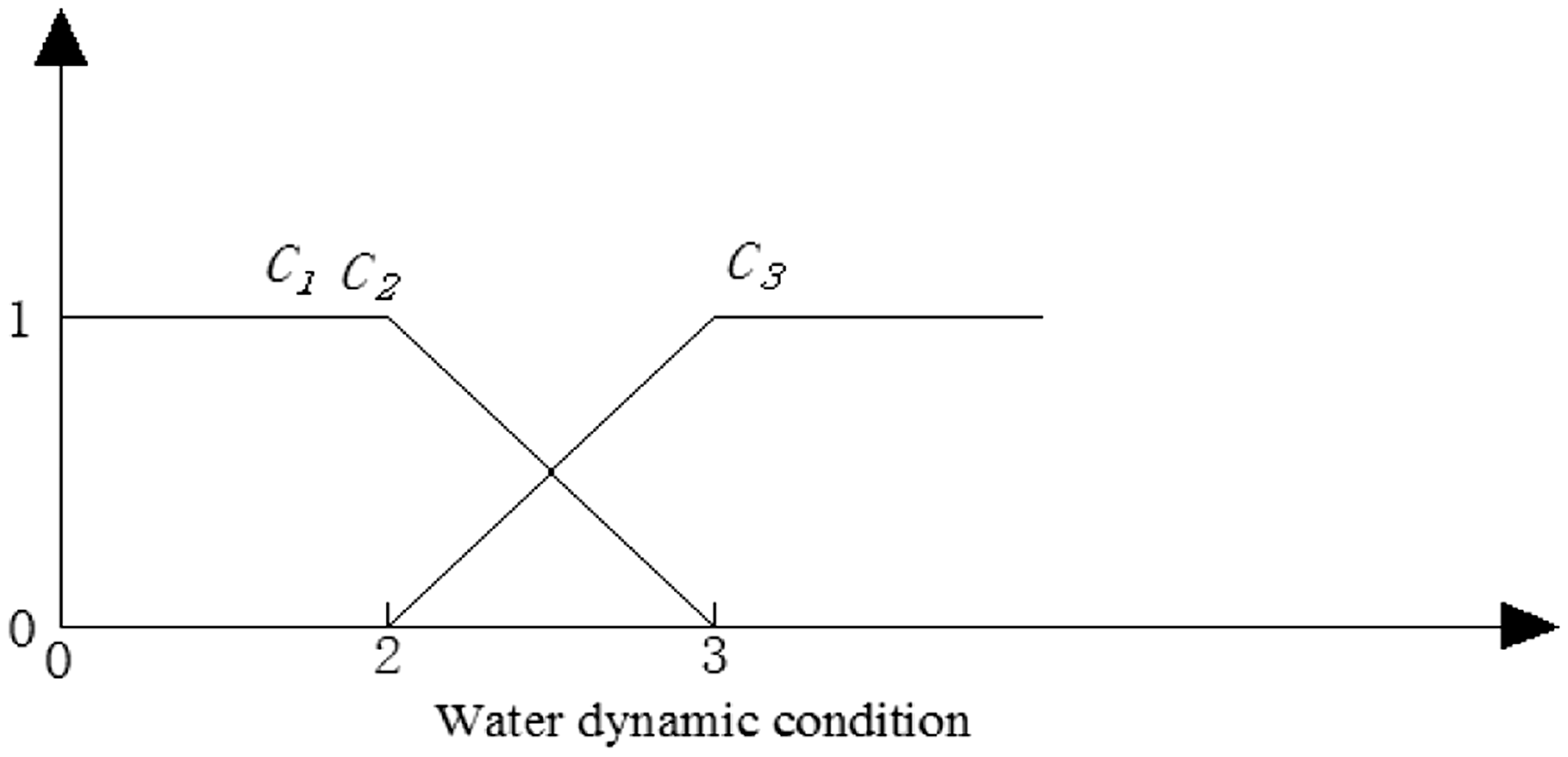
According to the constructing method of linear uncertainty measure function, combined with the classification standard in Table 2, the establishment of uncertainty measure functions such as coal thickness, methane concentration, vitrinite reflectance, permeability, the development condition of fissures, sealing conditions, and water dynamic condition are shown in Figures 1–7.
Uncertainty measure function of coal thickness.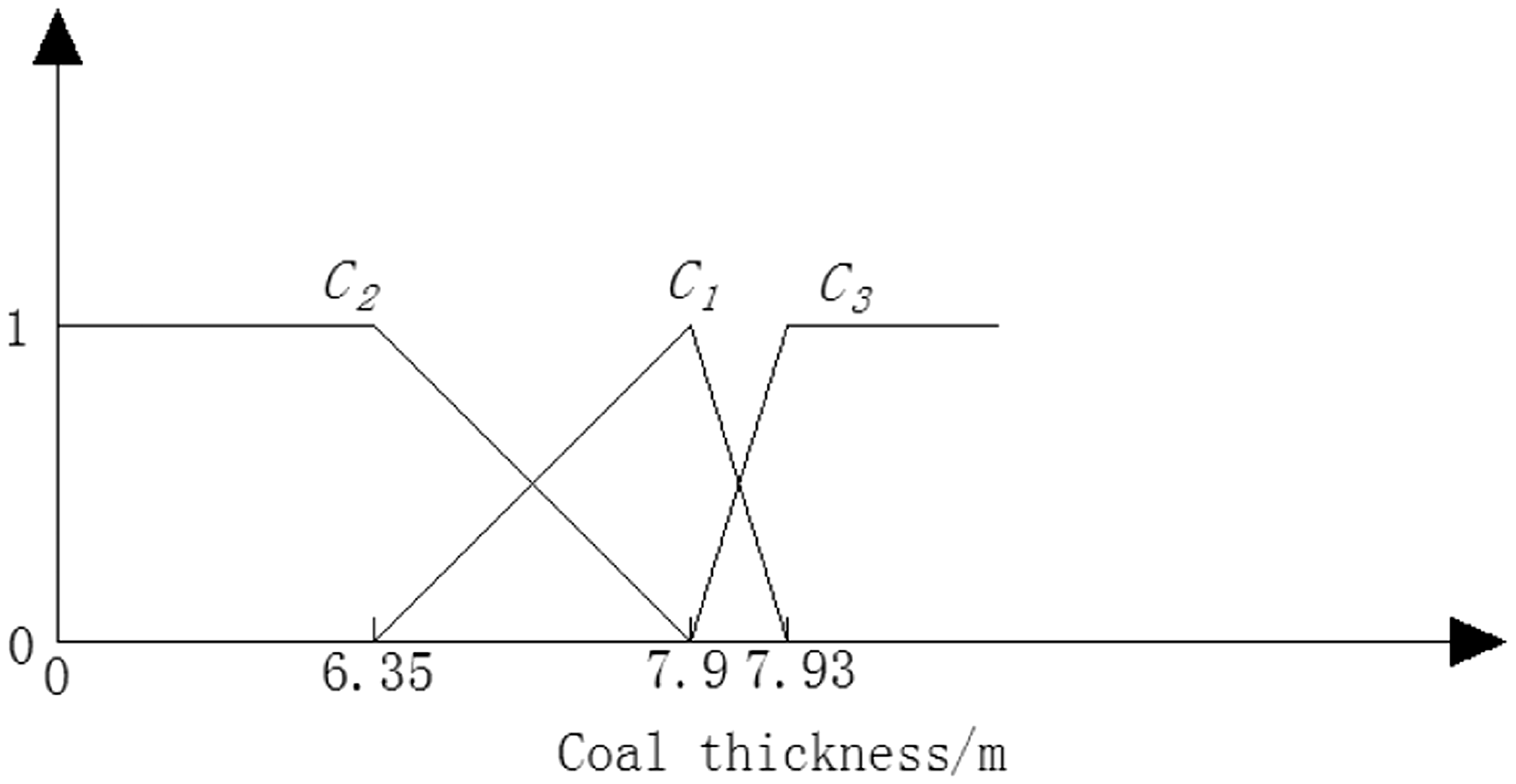
Uncertainty clustering forecasting method of coalbed methane content
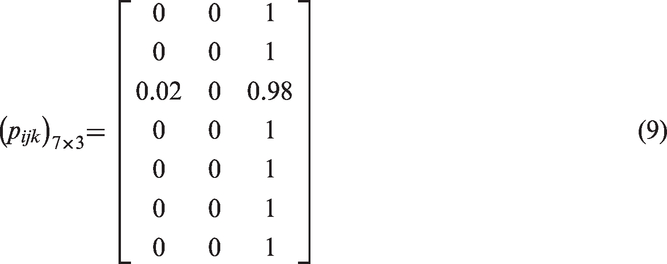
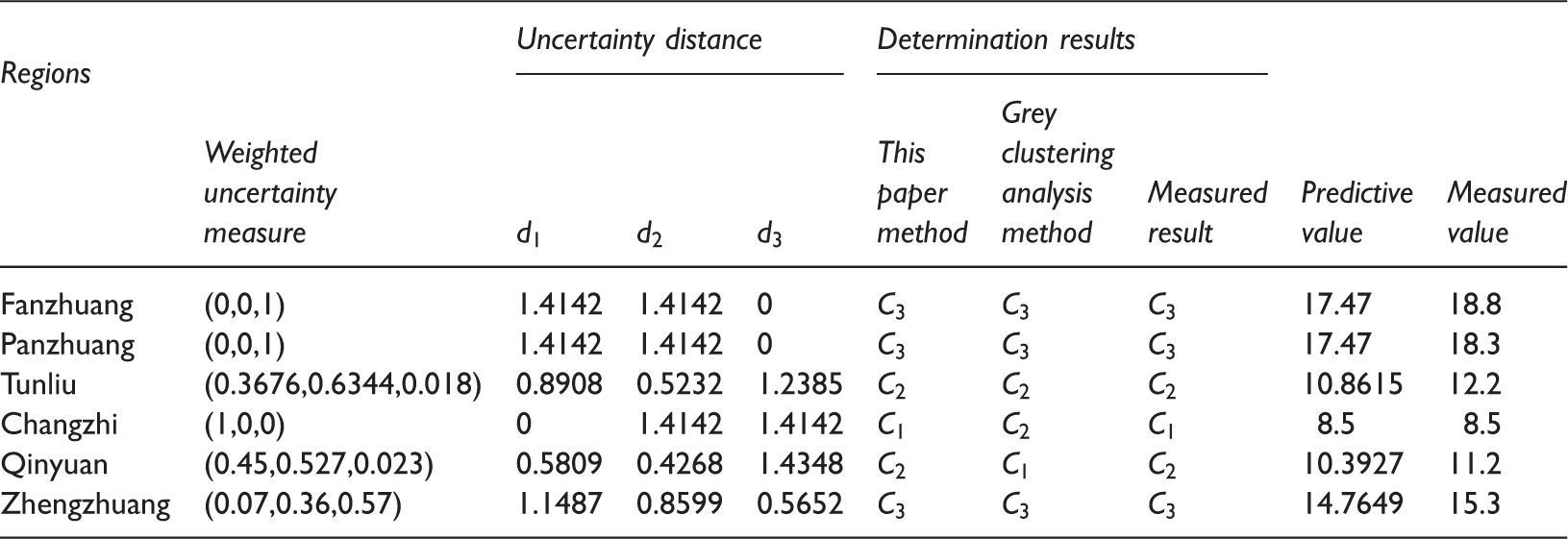
Fanzhuang exploration region is used as an example for prediction. According to uncertainty measure function of each impact factor in Table 1, the single index measure evaluation matrix can be obtained:
Determination results comparing comprehensive uncertainty measure and uncertainty measure analysis method.
Conclusions
Coalbed methane content is affected by many factors. Each factor has non dimension, quantitative, and non quantitative characteristics, which were influenced by uncertainty and concealment. Considering the importance of each factor, based on uncertainty measure theory, the uncertainty measure model of coalbed methane content was established. The weight of each index was calculated based on information entropy, in accordance with the minimum uncertainty measure distance principle, coalbed methane content exploration region level is evaluated, which makes evaluation results more scientific, objective and reasonable, thus providing a new way for coalbed methane content prediction and evaluation. Six typical regions in the central and southern areas of Qinshui Basin were used as examples of coalbed methane content prediction evaluation method and model of uncertainty clustering theory. Through calculation, coalbed methane contains grade in six target regions, which are consistent with those obtained by the measured method. Uncertainty measure function of methane concentration. Uncertainty measure function of Ro. Uncertainty measure function of permeability. Uncertainty measure function of sealing conditions. Uncertainty measure function of the development condition of fissures. Uncertainty measure function of water dynamic condition.
Footnotes
Declaration of conflicting interests
The author(s) declared no potential conflicts of interest with respect to the research, authorship, and/or publication of this article.
Funding
The national natural science foundation of China (41072223) and the special fund for basic scientific research of central colleges (310827151056 and 310827153408).