




Abstract
In recent years, in response to an increased demand for renewable energy sources, there has been a rise in the rate of energy recovery from municipal solid trash. This study analyses the feasibility of employing a variety of energy recovery methods to produce clean power from municipal solid waste (MSW). The conversion of MSW into a variety of useable sources of energy, such as fuel, heat and electricity, is required for the process of energy recovery. Other strategies for the recuperation of lost energy include gasification, incineration, anaerobic digestion, and the recovery of landfill gas. This article provides a high-level assessment of the advantages and disadvantages associated with each technology that is currently being utilised in India. According to the findings of the study, recovering energy from municipal solid waste is a sustainable and cost-effective option that can fulfil the growing demand for power while simultaneously lowering emissions of greenhouse gases and the amount of rubbish that ends up in landfills.
Keywords
Introduction
As opposed to conventional fossil fuel-based power plants, Municipal Solid Waste to Energy (MSWTE) methods like incineration and pyrolysis provide a clean energy source. India has the largest population in the world and it's a landfill-heavy waste management system. Yet, as environmental regulations about landfill contamination increase, the focus is progressively turning to waste-to-energy (WTE) technologies since they are more cost-effective. In India, there are only eight WTE thermal plants with a combined capacity of 94.1 MW, and another 50 WTE projects have been begun but are virtually complete (Mukherjee et al., 2020).
The type and quantity of MSW are influenced by a variety of variables such as the social and economic context, the weather, the rate of recycling, collection frequency, the population and others. A prior study classified the MSW stream into six groups based on physical features. Food, trash from yards, cardboard, paper products, plastic, glass, metallic substances, neutral and miscellaneous are some of these types (Gupta et al., 2015).
Human activities generate an endless amount of municipal solid waste, which provides valuable fodder for WTE facilities carrying out a wide range of operations and taking into account energy security in an economical and sustainable manner. If rigorously implemented across the entire region, the use of kitchen, agricultural and other organic wastes is a promising energy resource to reduce the need on traditional fuels. In particular, using animal by-products, garbage from restaurants, and agricultural residues as fuel is a potential free source of energy because they cannot be changed. Along with compost and biomethanation, these materials are used to produce biogas and alternative manure for farming. The disposal of 70% of municipal solid waste in landfills creates significant health risks owing to the degradation of soil and water. As a result, WTE is a very useful approach to the problem of MSW (Gupta et al., 2015; Mukherjee et al., 2020; Panigrahi and Dubey, 2019). There are only 10 facilities that produce electricity from MSW, and their combined installed capacity is 523 MW. This source contributes just 1% of India's total electricity output. It is essential to do research into various forms of renewable energy to cut back on our use of fossil fuels and preserve the natural resources of the earth. Researchers have been looking at WTE technology for the better part of the past several decades in the hopes that it may one day be able to take the place of fossil fuels as the major source of energy (Panigrahi and Dubey, 2019).
There are numerous ways to treat garbage, including controlled landfills and large-scale burning. One of the most recent methods of waste treatment, waste to energy conversion has a lot of advantages. It can produce power utilising a variety of technologies, including anaerobic digestion and incineration. The production of WTE aids in lowering the release of greenhouse gases. Since the beginning of COVID-19, the effects of improperly handled solid waste have gotten worse on the economies, societies, health and environments of the countries. Additionally, a significant shift in the type and amount of rubbish produced in the future is expected to intensify these negative consequences. So main objective of this research paper is to analyse and choose the most suitable WTE technologies for the Indian location, taking into account the environmental impact, resource availability, and MSW composition. In contrast to conventional incineration, this research work reviews the cutting-edge WTE technologies including advanced gasification and pyrolysis that have the potential to transform MSW into higher-value energy products with reduced emissions. This research study also evaluates the economic viability of WTE technologies by taking into account things like start-up costs, ongoing costs and money made from selling energy. The unique MSW composition, cultural customs and regulatory framework of India, as well as the country's particular needs and limitations, are also evaluated in this study. This contextualisation makes sure the technology is appropriate for the local environment (Johri et al., 2011; Rajmohan et al., 2021; Scarlat et al., 2015; Tozlu et al., 2016).
WTE techniques offer sustainable ecologically sound and economically viable alternate solution to conventional fossil fuel-based power plants as well as rising environmental issues associated with landfill contamination. The mechanisms of several WTE technologies, which includes anaerobic digestion, incineration, gasification and pyrolysis, have been explored. The adverse implications for the environment, availability of resources and MSW composition in India have been addressed with regard to these mechanisms (Chand Malav et al., 2020; Scarlat et al., 2015; Verma and Tripathi, 2016). By outlining these mechanisms in detail, this critical review has offered an evident comprehending insights of how these technologies function, spotlighting their practicality or feasibility, along with possibility of widespread utilisation. Hence, the scientific rigour and uniqueness of the critical review with in depth rationale or scientific mechanisms or reasons behind the same has been enumerated as follows.
Thorough analysis of WTE technologies
The article provides a thorough analysis of numerous WTE technologies, such as incineration, combustion, gasification, pyrolysis, anaerobic digestion and landfilling. This comprehensive approach is novel in that it not only discusses traditional techniques, however additionally advanced gasification and pyrolysis technologies. These cutting-edge technologies signify an essential scientific breakthrough, enabling the transformation of MSW into higher-value energy products with reduced emissions.
Contextualising regarding the Indian circumstance
This review has been distinguished by its in-depth contextualisation within the Indian framework. It takes into account India's distinct MSW composition, cultural practises, regulatory structure framework, and particular necessities and limitations. This contextualised analysis is necessary to ensure that the technologies under consideration are not only theoretically feasible, nevertheless additionally practically applicable in the localised environmental surroundings. This adaptation of worldwide insight to a particular regional context contributes towards the scholarly novelty of the work.
Environmental impact evaluation
The review emphasises the environmental implications of various WTE technologies, addressing issues pertaining to air pollutants, soil/water pollutants/impurities/contaminants, as well as the health of the public. By spotlighting these aspects, the article provides a nuanced comprehension of the consequences for the environment and thus contributes a significant effort to the scholarly discussion encircling the conversion of MSW to energy.
Analysis of economical viability
In addition, the article explores the financial sustainability prospects and economic viability of WTE technologies, including start-up expenditures, ongoing expenses and the profits or revenue from energy sales generating. This economic assessment is vital because it offers valuable insights into the financial viability of implementing such technologies, which renders the study pertinent to policymakers and financiers/shareholders or investors.
Concerns for the environment and health
By addressing the health and environmental issues associated with conventional waste management techniques such as landfilling and incineration, the review effectively justifies the review of WTE technologies. By illustrating the potential carcinogenicity of toxins discharged during incineration and the detrimental threats to the environment caused by landfilling, this article rationally demonstrates the necessity for investigating alternative and cleaner energy recovery methods.
Prospects of cutting-edge WTE technologies
Moreover, the mechanisms and potentials of advanced gasification and pyrolysis are explored in depth. Furthermore, not only undertake these discussions validate the scientific investigation of these technologies, however, the review has additionally shed light regarding their ingenious mechanisms. By accentuating the potential capabilities to convert MSW into higher-value energy products while lowering emission levels, this article persuasively supports for the continued advancement or development of these groundbreaking innovative techniques.
Socioeconomic significance
An additional compelling argument relates to the socioeconomic relevance of the study, particularly in light of India's growing population and centralised waste management system that relies extensively on landfills. As regulations pertaining to the environment becomes increasingly stringent and the spotlight shifts towards more economical affordable alternative feasible approaches or cost-effective solutions, the study's findings becomes indispensable for influencing future waste management and energy policies.
In summation, this review article signifies for its exhaustive assessment of numerous WTE technologies, its contextualisation within the Indian scenario, its particular emphasis on progressive developed, and sustainable ecologically sound techniques, and its thorough assessment of health, the environment, and financial considerations or economic factors as exhibited in the Figure 1.
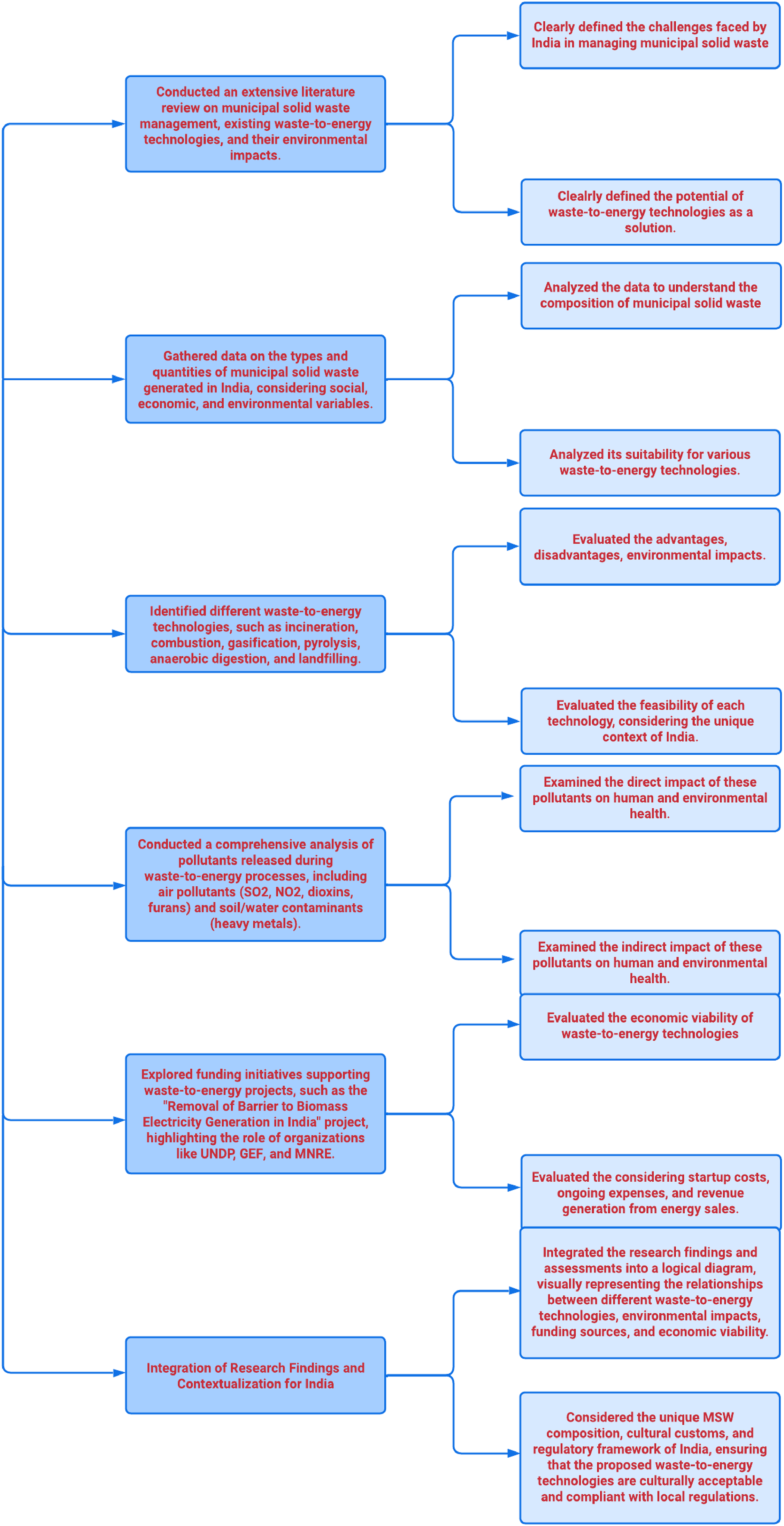
Logical diagram showing the methodology of the current state-of-art review.
India MSWTE trends
Every single day, the country produces 160,038.9 TPD (tonnes per day) of solid waste, of which 152,749.5 TPD are collected with an efficiency rate of 95.4%, 79,956.3 TPD are treated, and 29,427.2 TPD are disposed of. The trend in trash creation per capita is shown using data from the per capita solid waste produced during the preceding 6 years, which accounts for 50,655.4 TPD, or 31.7% of the total amount of garbage generated (Mukherjee et al., 2020). Figure 2 shows that during the last 6 years, the amount of solid trash generated per person has somewhat reduced because urban solid waste has the highest potential energy potential of 1247 MW. This is because urban solid waste comprises wood, cardboard, textiles, paper, plastic, etc. which have a high content of carbon, nitrogen, oxygen and sulphur (Chand Malav et al., 2020; Scarlat et al., 2015; Verma and Tripathi, 2016). Nitrogen, sulphur and oxygen content increases of 1% resulted in increases in heating value (HV) of 12%, 15% and 13%, respectively (Gomes and de Lourdes Costa Lopes, 2012; Lino and Ismail, 2017). Thus, the high concentration of carbon, nitrogen sulphur and oxygen resulted in the high energy potential of urban solid waste while in slaughterhouses the maximum waste is either dumped which leads to increasing fertility of the soil, or fed to stray animals (Lu et al., 2017; Materazzi and Foscolo, 2019; Materazzi and Foscolo, 2019). The energy potential of urban solid waste is the largest, at 1247 MW. This is due to the high carbon, nitrogen, oxygen and content of materials such as wood, cardboard, textiles, paper and plastic that are included in urban solid waste (Ganesh and Banerjee, 2001; Liming, 2009). A 1% increase in the concentration of nitrogen, sulphur or oxygen led to increases in HV of 12%, 15% and 13%, respectively (Chand Malav et al., 2020). As a consequence, the high concentration of carbon, nitrogen, sulphur and oxygen gave urban solid waste a high energy potential, but at slaughterhouses, the majority of the waste is either discarded, which increases the soil's fertility, or given to stray animals (Arena, 2012; Munir et al., 2019; Safarian et al., 2019).
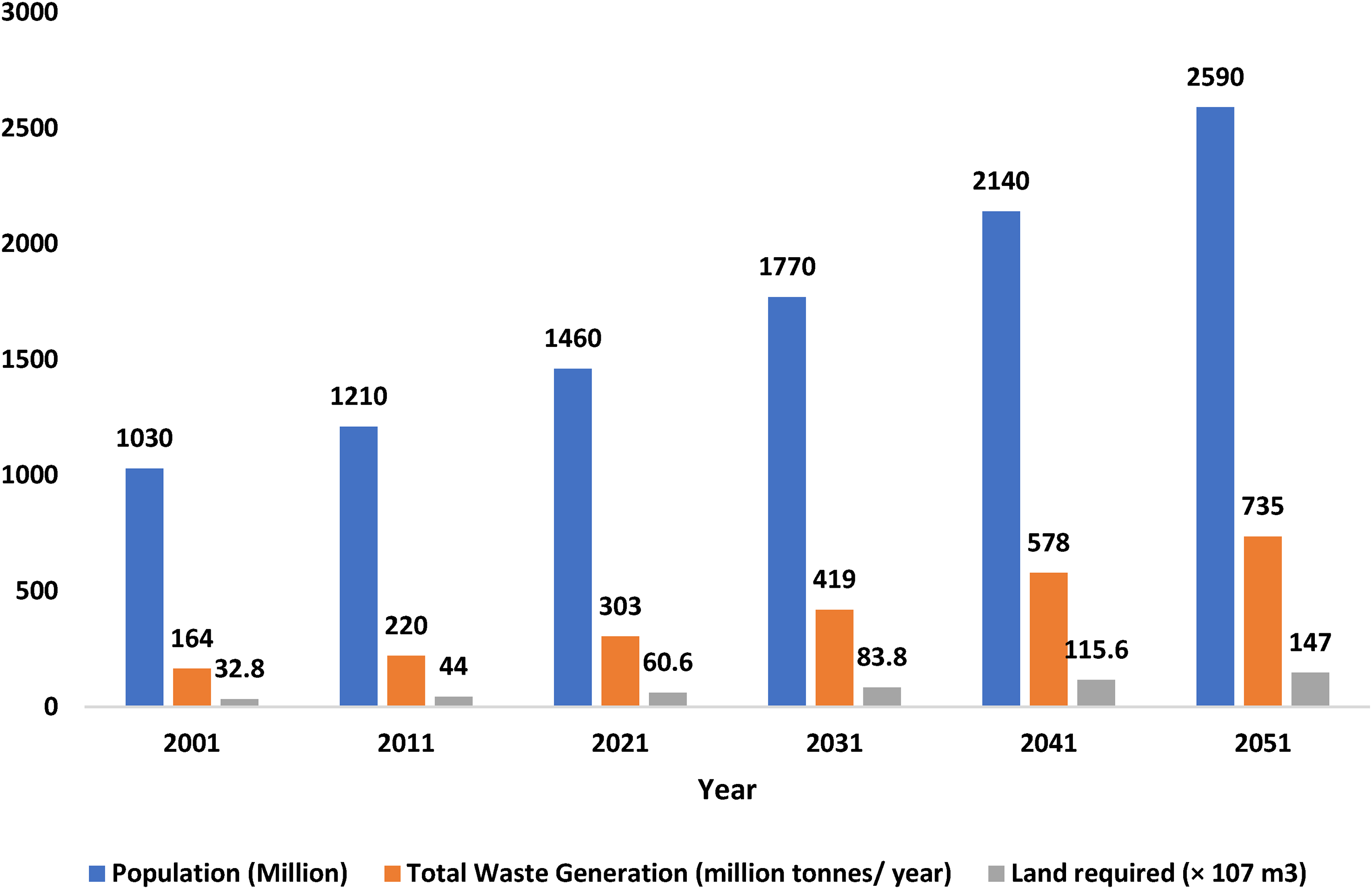
Purpose of a sustainability study, projected data on the population (Chand Malav et al., 2020).
MSW may be converted into energy by thermo-chemical processes including gasification, pyrolysis and incineration as well as biomolecules (bio-methanation, and composting) (Johri et al., 2011).
The vast majority of waste generated end up in land and water systems without first being subjected to the appropriate treatment, which results in significant pollution of both the air and the water. Developing WTE technologies that are favourable to the environment and allow for the treatment and processing of wastes before their disposal would considerably reduce the problems caused by solid and liquid wastes (Kumar et al., 2015; Lal et al., 2012; Liming, 2009). The deployment of WTE technologies that are favourable to the environment and enable the treatment and processing of waste before its disposal may be able to significantly mitigate the difficulties that are produced by solid and liquid wastes. If these steps were taken, there would be a significant drop in the number of pollutants in the environment, less energy would be created from garbage, and there would be less trash produced (Gomes and de Lourdes Costa Lopes, 2012; Scarlat et al., 2015; Verma and Tripathi, 2016).
Figure 3 below provides a discussion of technical approaches for reclaiming energy from MSW and its by-products because distillery stillage has a chemical oxygen demand (COD) concentration of 100,000 to 150,000 mg/L and only with a minimum COD concentration of 2800 mg/L can be used in fermenters for biogas production (Munir et al., 2019; Ojha et al., 2012; Velghe et al., 2011). That's why the distillery has max energy potential (Tozlu et al., 2016). Distillery stillage has a COD concentration of 100,000 to 150,000 mg/L and may only be utilised in fermenters for the generation of biogas if the COD concentration is at least 2800 mg/L. The distillery has the most energy potential because of this. It is evident that there are notable disparities in both its features and makeup when comparing Indian MSW to that of other prosperous nations (Pujara et al., 2019; van Fan et al., 2018). Compared to paper (7%), it contains more food and biodegradable waste (51%). Moreover, MSW from India has a higher moisture content (about 50%) than MSW from the United States and other wealthy nations (Arena, 2012; Ganesh and Banerjee, 2001; Liming, 2009; Lu et al., 2017; Materazzi and Foscolo, 2019; Materazzi and Foscolo, 2019). A project for energy recovery from renewable wastes from agriculture, industry, and cities, such as compost, manure, and sewage sludge; vegetable and other market wastes; garbage from slaughterhouses; agricultural leftovers; and advanced manufacturing (Sewage Treatment Plant) wastes, is being supported by India's Ministry of New and Renewable Energy.
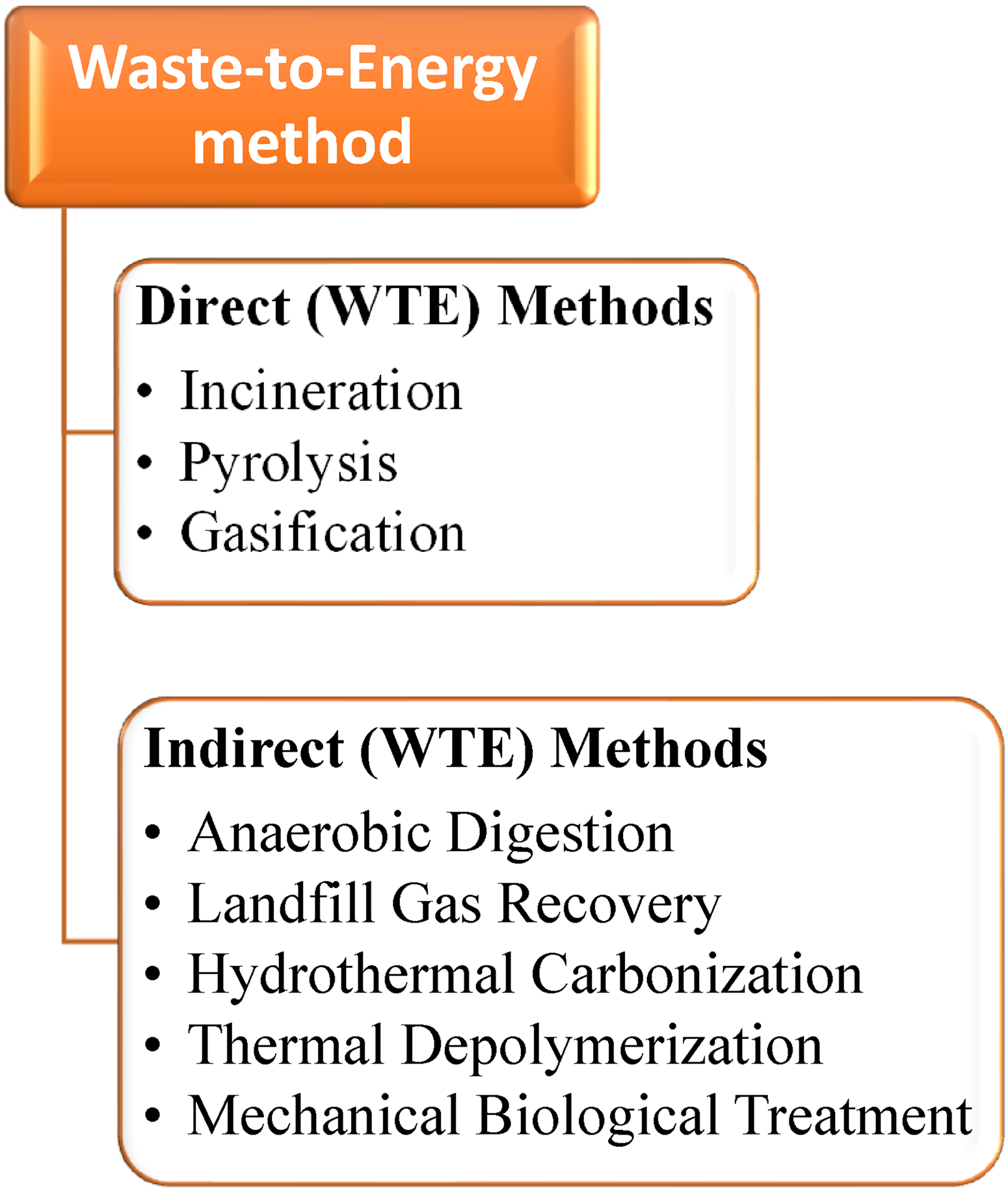
Technological methods to recover energy from waste (Scarlat et al., 2015).
The following is a breakdown of India's energy potential by industry, with a particular emphasis on the urban and industrial sectors in Figure 4 which delicts with the rise in population, waste generation increases land as well required for dumping. If we take the data for 2001, 2011 and 2021 and make the assumptions based on these data it can be estimated that by 2051 India will have a population of 2590 million, and 735 million tonnes per year of waste will be generated (Dutta and Jinsart, 2020; Thomas et al., 2017). Also, the land required for the dumping will be around 15,729 m3. As the population grows, so does the amount of land need for garbage disposal (Lino and Ismail, 2017).
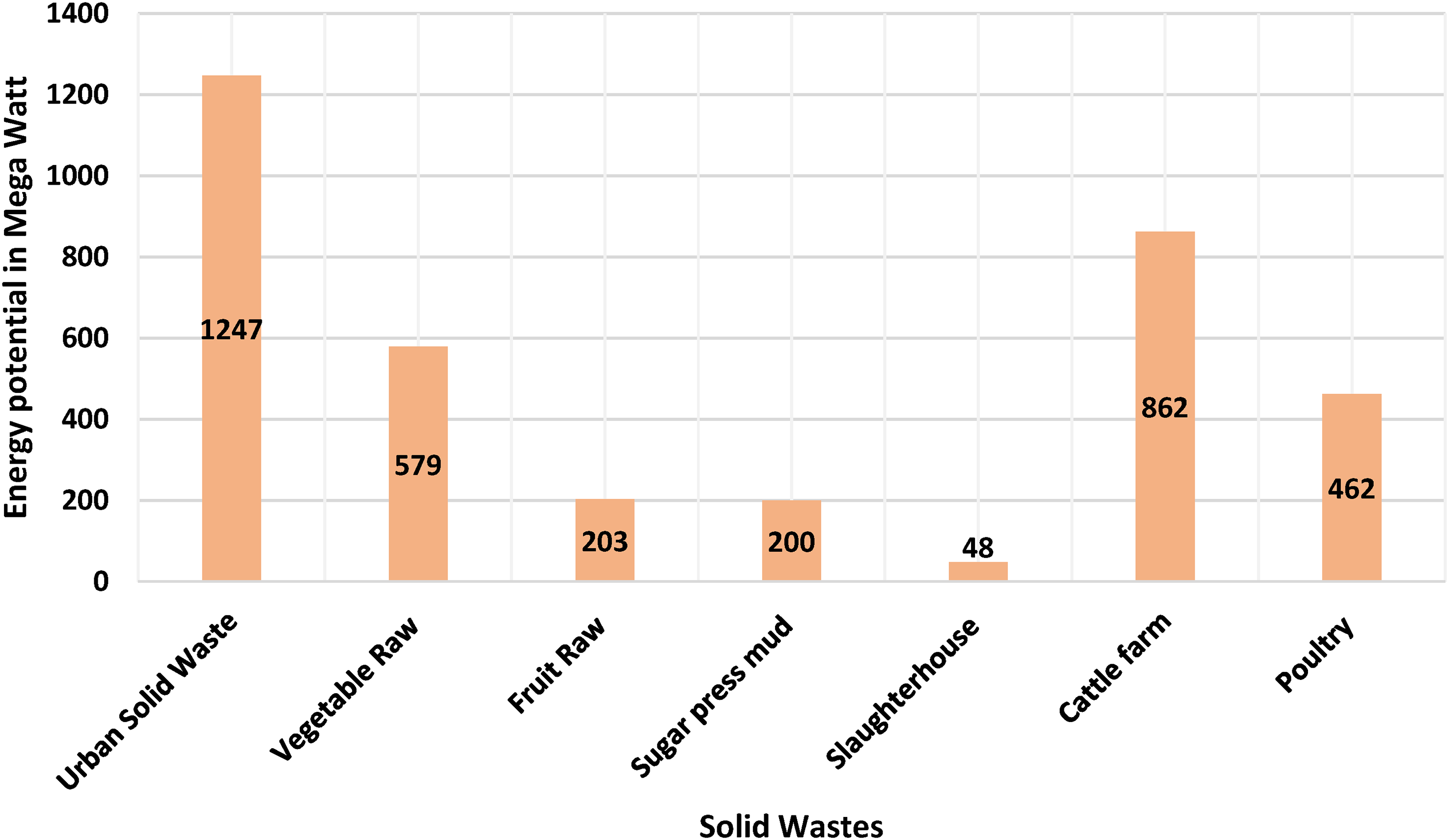
Energy potential from solid waste in India.
By using the statistics from 2001, 2011 and 2021 and making assumptions based on those data, it is possible to predict that India would have a population of 2590 million people by the year 2051 and produce 735 million tonnes of trash annually. Moreover, about 15,729 m3 of land will be needed for disposal plus Figure 5.
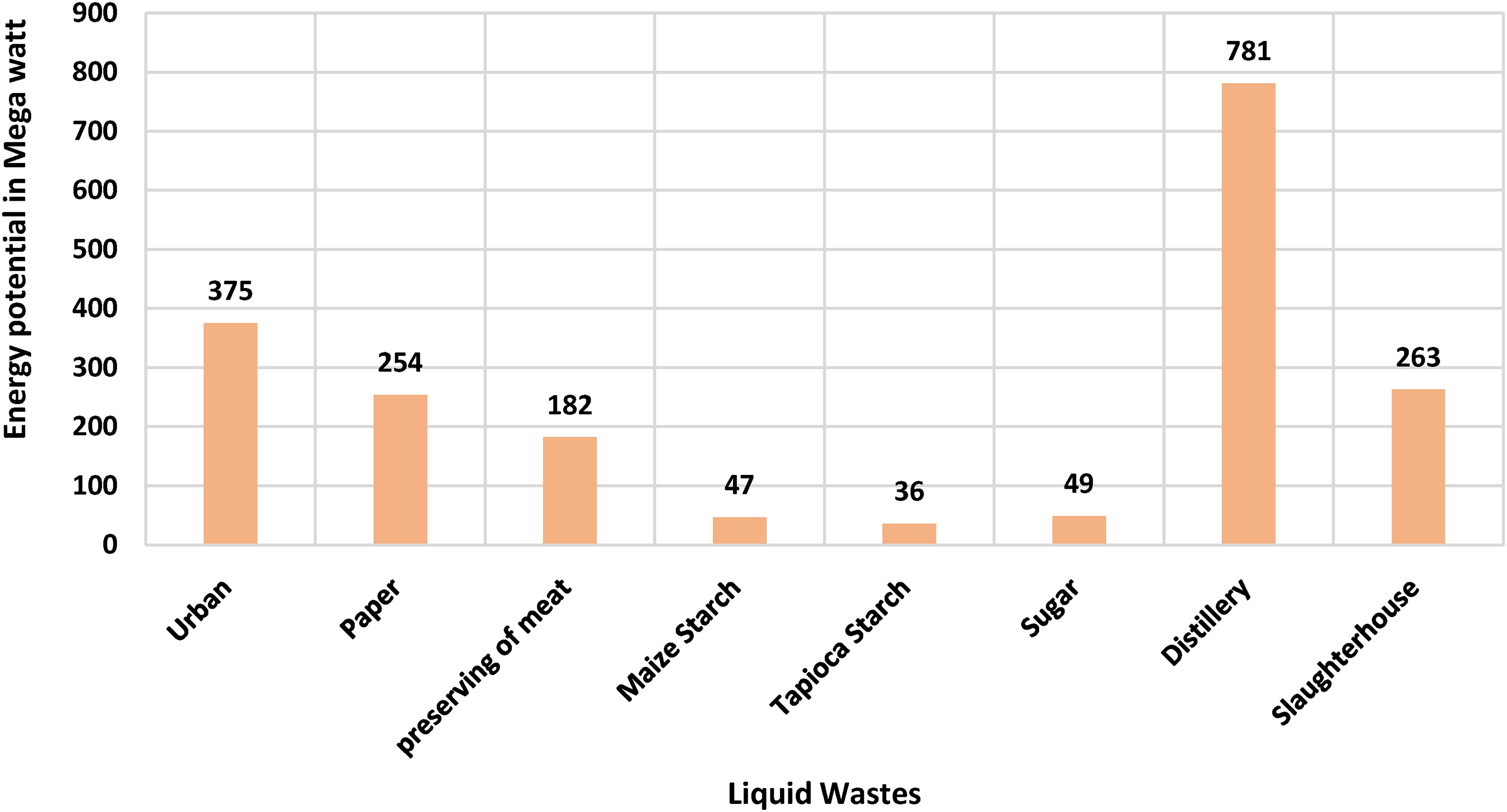
Energy potential from liquid waste in India (Chand Malav et al., 2020).
Population growth leads to an increase in waste production, which raises the need for dumping land. By using the statistics from 2001, 2011 and 2021 and making assumptions based on those data, it is possible to predict that India would have a population of 2590 million people by the year 2051 and produce 735 million tonnes of trash annually. Moreover, about 15,729 m3 of land will be needed for disposal. There is a potential for roughly 1460 MW from MSW and 226 MW from sewage, according to MNRE calculations. Figure 6 depicts the potential for energy production per geographical zone in India which shows the North has the highest population density thus the waste generation will be higher on the other, the northeast region's maximum land is covered by forest and the population density is also very less so the waste deposition is also less thus, the MSWTE trend is also less indicated by dark pink. To facilitate the development of projects for the generation of Syngas, Biogas, Bio-CNG, Electricity, and Producer from municipal, industrial and agricultural wastes and residues is the primary objective of the “Waste to Energy Project” initiative (Liming, 2009; Munir et al., 2019).
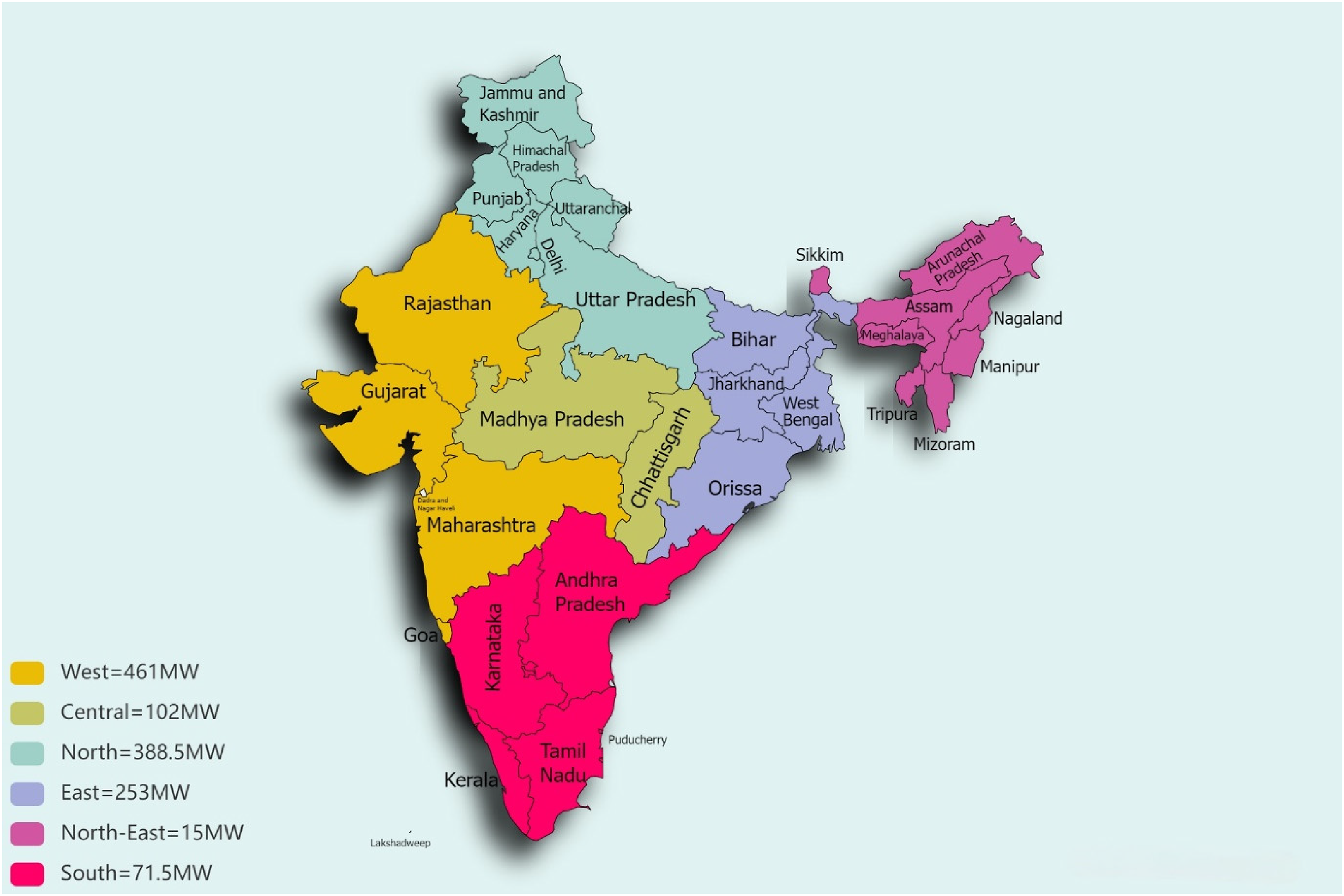
Geographical zone-wise energy generation potential in India.
Figure 7 depicts the potential difference between solid and liquid waste to energy in different parts of India. Central Financial Aid (CFA) and service fees are provided to project developers via the initiative implementing/inspection agencies such that landfills may be converted into power plants that generate electricity, biogas, bio-CNG, enhanced biogas, compressed biogas, producers gas, or syngas, and so on (Kumar and Samadder, 2020; Singh et al., 2023; Yuan et al., 2014). More than 900 thermal WTE facilities are in use worldwide. These facilities handle 200 million tonnes of municipal solid trash and are anticipated to produce 130 terawatt hours (TWh) of energy (MSW) (Lal et al., 2012).
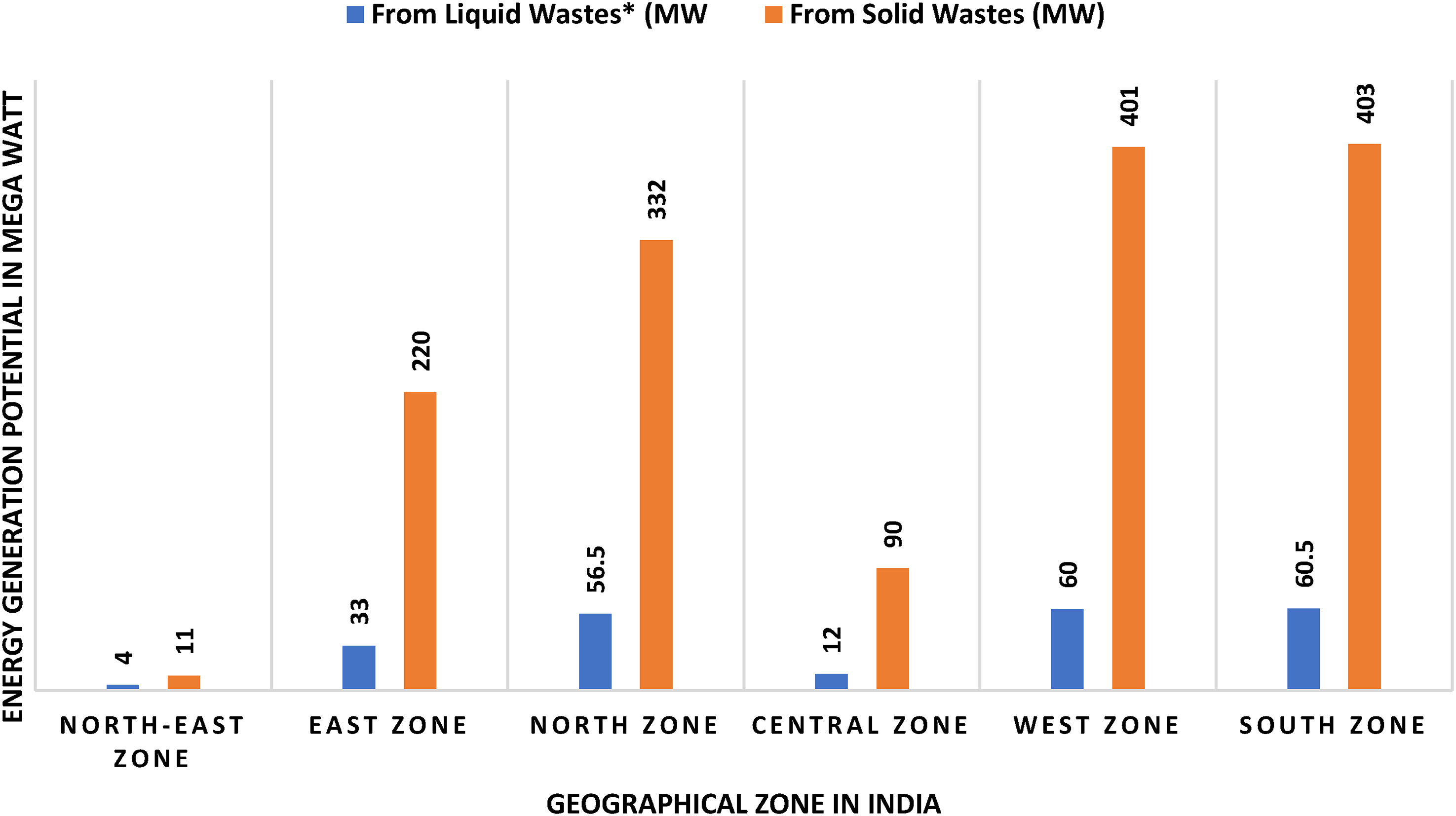
Difference between solid and liquid energy generation potential in India (Scarlat et al., 2015).
According to Figure 8, this has reported that at full capacity, the Narela-Bawana WTE facility generates roughly 24 MW of electricity. It accounts for around 36% of India's total WTE capacity. There is a pressing need for further investment in the expansion of India's operational factories. Although new facilities are being built, they are not yet operational six MSW energy-producing plants are running in India, each with a 65.75MW capacity.
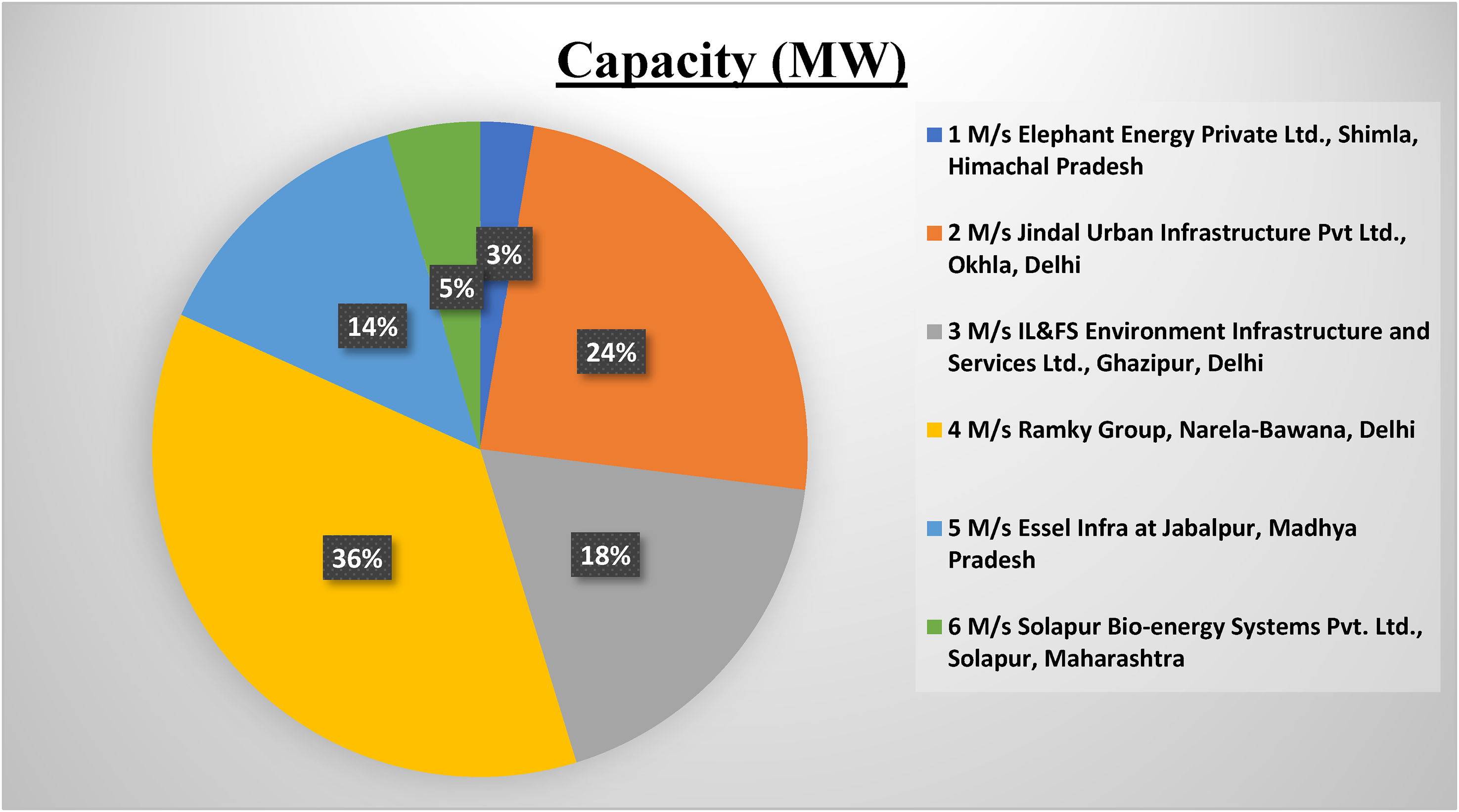
The capacity of power production in all the six plants in India (Liming, 2009).
In accordance with comprehending on the prior study on drying operation, the ‘non-thermodynamic drying kinetics’, the fundamental to WTE techniques, drying entails intricated ‘thermal as well as transfer of mass mechanisms’ (Fernandez et al., 2017). Quantitative analyses of these techniques frequently encounter difficulties, making the deployment of efficient models indispensable for real-world applications (Fernandez et al., 2017). The study examines several ‘semi-theoretical drying models’, such as ‘Henderson’, ‘Pabis’, ‘Newton’, ‘Page’ and ‘logarithmic models’. Initial consideration was given to these models, however their insufficient fit with data from experiments revealed the necessity for a substitute strategy (Fernandez et al., 2017).
From the methodologies for analysis of ‘non-isothermal drying’ viewpoint, the investigation employs both integral as well as differential techniques for ‘kinetics analysis’, every one of which yields distinctive insights (Fernandez et al., 2017). Integral techniques utilise ‘weight loss against temperature’ information directly, whereas ‘differential techniques’ are concerned with ‘weight loss rates’. The ‘coats redfern integral technique’, as well as the ‘sharp differential approach’ have been addressed, each of which provide useful insight into ‘drying kinetics’ (Fernandez et al., 2017).
In context with utilising ‘Jander's model:cône’, ‘Jander's model’, a ‘diffusion-controlled reacting equation’, is utilised widely to predict ‘non-isothermal drying’ (Fernandez et al., 2017). This model fits findings from experiments for diverse residues/by-products from ‘agriculture and industry’ under each inert as well as oxidative conditions exceptionally well. The ‘rate of drying’ is determined by the ‘motion of the solid's boundary’ in duration (t) and the original material, according to the ‘Jander model’. The ‘activation energy’ reported for diverse residues from ‘agriculture and industry’ under several circumstances vary between 20.31 to 48.41 kJ/mol, with marginally higher values recorded under ‘nitrogen-containing atmospheres’ comparing to ‘ambient air atmosphere’ (Fernandez et al., 2017).
In accordance with the implications of ‘rate of heating and atmosphere’, with varying ‘heating rates’, the ‘activation energy’ values exhibit a minor variance (Fernandez et al., 2017). This occurrence is caused by of the ‘endothermic processes’ that take place throughout the ‘dehydrating process’, which impact the transfer of heat within the particles. In addition, the surrounding environment (whether inert or oxidative) has an enormous impact on the drying/dehydrating operation. Certain chemical-based conversions, including ‘carboxyl’, and ‘carbonyl formation of groups’, influence the process of ‘drying kinetics differentially’ according to ‘oxidative environment’ compared to under an ‘inert environment’. This variation in ‘chemical process mechanisms’ leads to the noticed variations in readings for ‘activation energy’ among distinct environments (Fernandez et al., 2017).
MSW's characteristics
Garbage samples were gathered from different locations and described physically and chemically. The bulk garbage has had every physically separable component meticulously separated on-site. The samples were weighted and forwarded to the lab for further analysis once the garbage had been separated. The American Society for Testing and Materials then assessed the total moisture content (ASTM) (Scarlat et al., 2015).
Characterisation of MSW physically
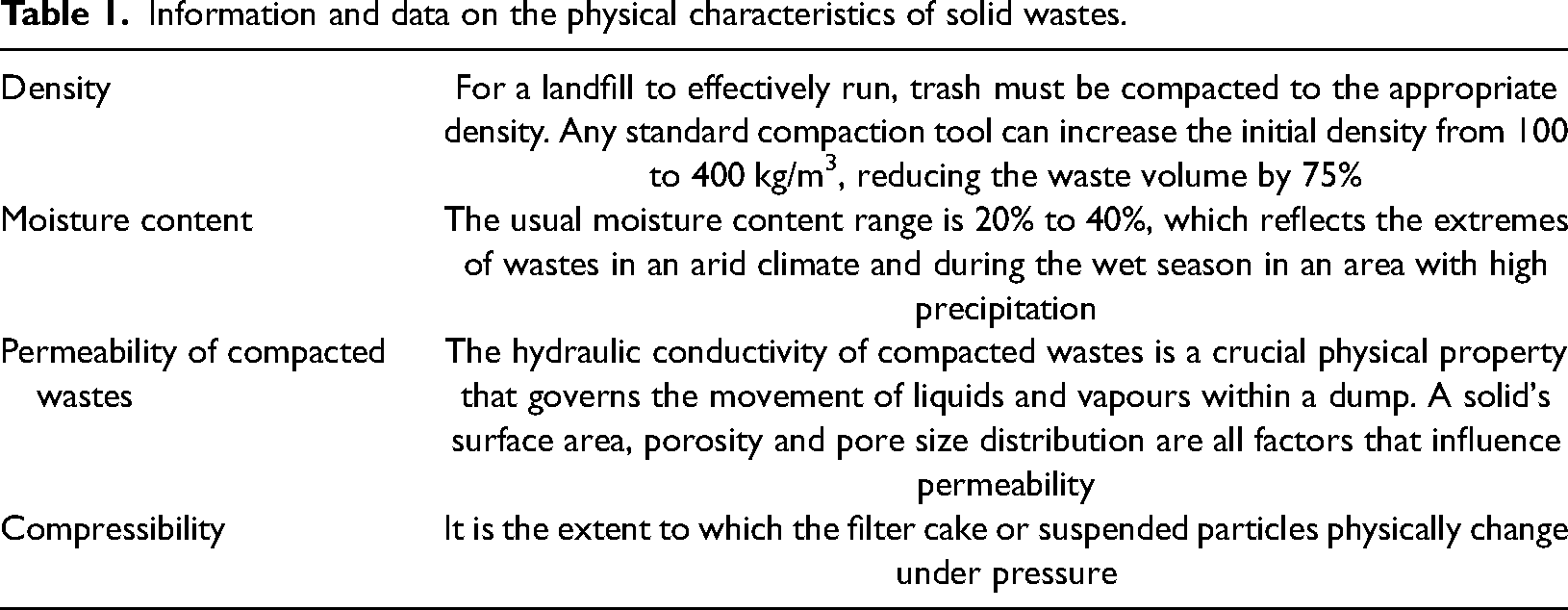
Particle size distribution, waste shape and categorisation, moisture, and organic matter content, unit weight, and temperature of the dumped garbage are among the physical features of MSW that are characterised (Chand Malav et al., 2020; Verma and Tripathi, 2016). For the selection and use of equipment as well as the study and design of disposal facilities, information and data on the physical properties of solid wastes are crucial. Table 1 examines the following physical traits in further depth.
Information and data on the physical characteristics of solid wastes.
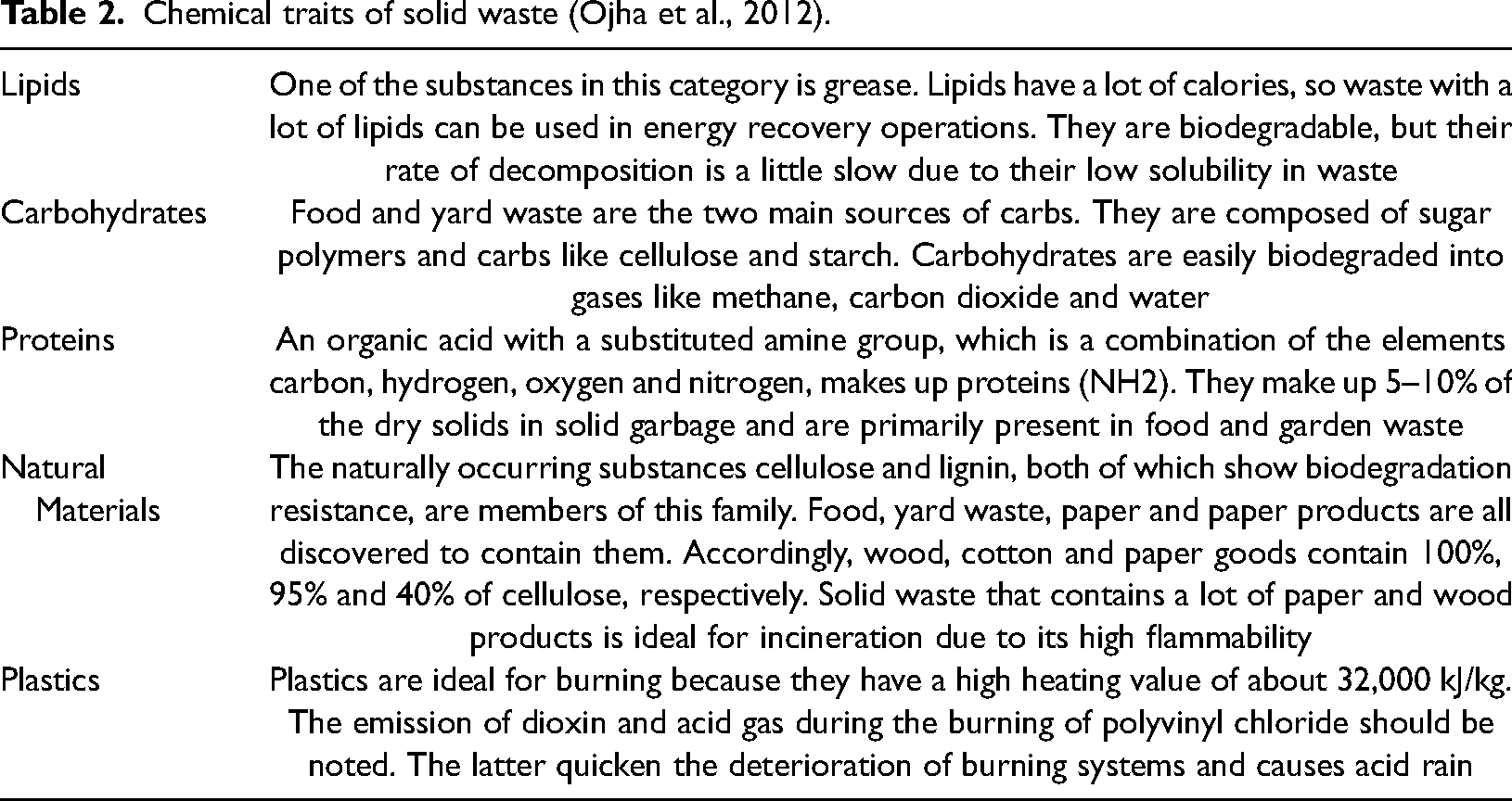
Chemical characterisation helps to decide the course of treatment operations in the future by revealing the fraction of crustal components present in MSW. If solid wastes are to be utilised as fuel or for any other purpose, it is important to be aware of their chemical characteristics, which include the following. Table 2 lists the chemical properties.
Chemical traits of solid waste (Ojha et al., 2012).
Techniques for the waste-to-energy
Incineration
A well-known technique that provides a low-cost method for extracting thermal energy is incineration. As a result of its ability to decrease waste volume and mass by up to 90% while lowering waste bulk by 70%, it is regarded as one of the most widely used waste management techniques. High calorific waste may be burned in an incinerator. Figure 9 provided a flowchart detailing the incineration procedure which describes waste incineration is the most basic thermo-chemical process. First, the trash is dried out or otherwise prepared for burning. Afterward, the trash is burnt in a furnace, which releases heat. This heat is put to use in the heating and power generation industries. Flue gas heat is also captured and put to use in the pre-treatment phase. Ashes and other potentially dangerous particles are filtered out of the flue gas before it is released into the environment by an air pollution control system, after taking a small 20% deduction for cardboard, plastic and Styrofoam recycling. And 72% of MSW is combustible, or 939.053 TPD, and 11.596 106 MJ of energy are generated during burning (Scarlat et al., 2015). Moreover, incinerating garbage might result in the production of power from waste, lowering the need for non-renewable energy sources. In addition, incineration may eliminate germs and toxic trash, making it a safer waste management choice. Steam may be generated by combustion and utilised as a heating source. The average global MSW composition is 46% organics, 17% papers, 10% plastics, 5% glass, 4% metals and 18% other components. The majority of the time, steam is produced via a controlled waste combustion process with heat recovery. Almost all MSW incineration facilities employ boilers with medium levels of superheated steam characteristics (i.e. 4.0 MPa and 400 °C). There are 1179 MSW incineration plants worldwide with a total mg/d (milligram/density) capacity of more than 700,000 (Lino and Ismail, 2017). The density, composition, moisture content and proportion of inert components in the waste all affect the process' net energy yield (Lino and Ismail, 2017). Ash, a typically innocuous by-product of solid waste combustion, may be utilised to create items like cement and construction materials. MSW incineration is relatively new to India as compared to industrialised nations like the United States, the European Union (EU), Japan, Singapore, South Korea, etc., which have been employing incineration for more than a decade. As a result, the number of MSW incineration (MSWI) facilities in the nation is rising as a result of the national initiative “Swachh Bharat Abhiyan” (Materazzi and Foscolo, 2019). Since incinerating may be done in cities, transportation costs are reduced, suitable regardless of the weather. The ash produced may be used to make bricks and roads (Rajmohan et al., 2021). However, Indian MSW has a low calorific value that varies from 800 to 1100 kcal/kg and waste with a high concentration of organic materials, water or inert materials that ranges from 30% to 60% each, making its incineration undesirable (Dutta and Jinsart, 2020; Munir et al., 2019; Pujara et al., 2019; van Fan et al., 2018; Velghe et al., 2011).
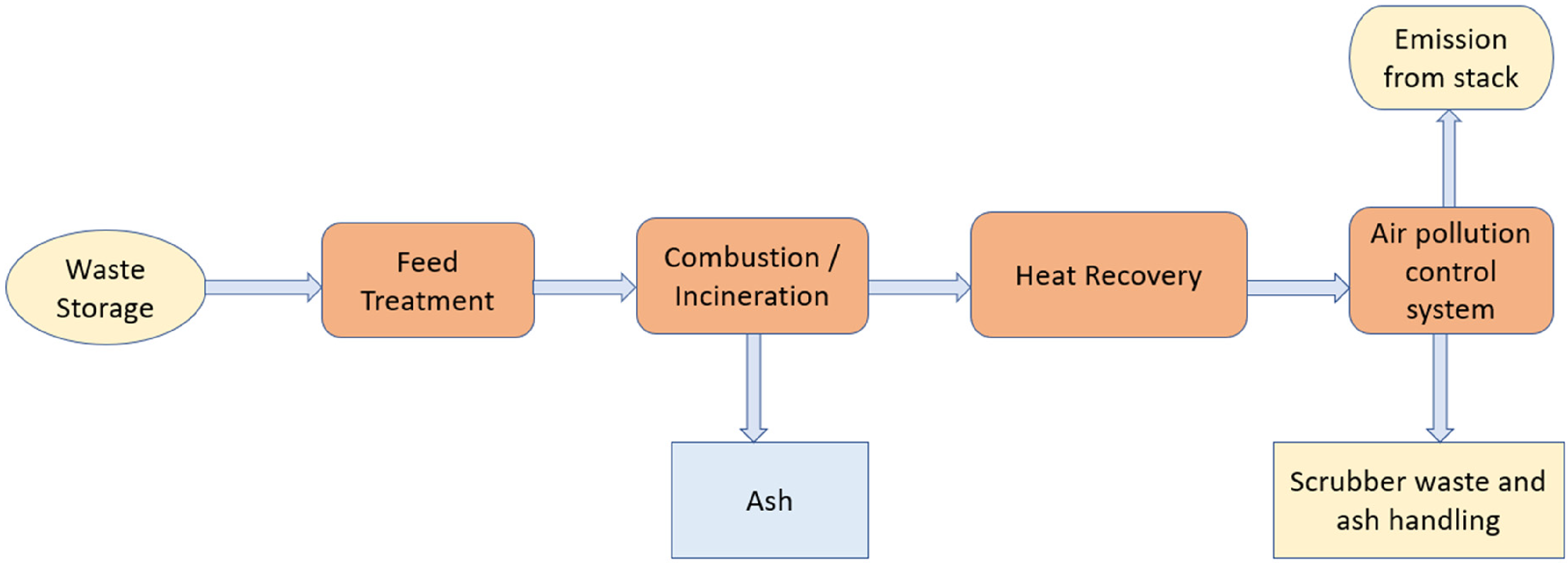
The process of incineration in a flow chart.
Another comparable study by Soria et al. (2015), wherein the context of ‘waste management’, the incineration arises as a feasible and efficient approach offering numerous of benefits (Soria et al., 2015). This method diminishes the volume of waste substantially, reduces its ‘reactivity’, eliminates ‘potential biological hazards’, and additionally produces ‘thermal energy’. Nevertheless, the content of the waste has served a crucial part, as it has influenced the contaminants produced during the process of incineration. The ‘Carbon monoxide’ (CO), ‘carbon dioxide’ (CO2), ‘nitrogen oxides’ (NOx), ‘sulphur oxides’ (SOx), ‘volatile organic compounds’ (VOCs), ‘dioxins’, ‘furans’ and ‘heavy metals’ (HM) are instances of these contaminants. The rise of such environmental issues has prompted the development of cutting-edge and sustainable ecological strategies that seek to mitigate the limitations of conventional approaches (Soria et al., 2015).
Employing ‘fluidized-beds’ (FBs) units, which have been recognised as having ecological sustainability, has emerged as a notable development in waste incineration technological advances (Soria et al., 2015). ‘Fluidised bed incinerators’ (FBI) have become more prevalent in favour as a consequence from their superior blend capability, combustion efficiencies surpassing 90%, and substantial reductions in NOx and SO emissions. This apparent technique to ‘waste incineration’ (WI) has opened the path to an approach to disposal that has become more considerate of the environment (Soria et al., 2015).
The complexity and variability inherent in WI processes pose substantial barriers to experimental evaluation, which is not only laborious nevertheless expensive (Soria et al., 2015). In contrast, computational fluid dynamics (CFD) provides an insightful and cost-effective alternative. CFD emerges to be a valuable tool, providing an abundance for accurate information crucial for the exhaustive investigation, design and scaling up of FBs. Its analytical expertise considerably serves to the apprehension concerning the complexities with waste incineration as well as assists in developing regarding effective and sustainable solutions (Soria et al., 2015).
The FBs technology shines out in the discipline of ‘Municipal Solid Waste Incineration’ (MSWI) due to its remarkable combustion effectiveness as well as exceptional versatility/flexibility/adaptability to dealing with numerous waste fuels (Soria et al., 2015). Furthermore, it demonstrates a considerable reduction in the release of contaminants within the flue gas. However, there is an urgent concern regarding the disposition of HM discovered in municipal solid waste as well as their possible impact on the environment. To tackle this issue, MSWI has diligently constructed an advanced ‘two-scale CFD modelling’ in a bubbling-FBs. This novel model has integrated a ‘single particle model’, and a comprehensive FBs model in a unique way. The innovative layout precisely represents HM vaporisation throughout MSW combustion, offering a thorough comprehension of the complex processes at play (Soria et al., 2015).
The incorporation of cutting-edge technologies, including FBs units and complex CFD models, represents a critical step regarding environmentally friendly waste management (Soria et al., 2015). These advancements not only enhance the efficacy of waste incineration, nevertheless also pave path for environmentally conscious practises, assuring an appropriate balance among disposal of waste as well as the preservation of the environment (Soria et al., 2015).
Gasification
Gasification is the process of chemically oxidising biomass at high temperatures to produce a combustible gas combination with a regulated proportion of oxygen or steam into carbon monoxide, hydrogen and carbon dioxide. Figure 10 represents the schematic diagram for gasification. Normal operating temperatures fall around 800 °C and 900 °C. The created CV gas may be burnt or utilised as a fuel in gas turbines and combustion engines. One possible use for this petrol is as a feedstock (syngas) in the production of chemicals like methanol (Gomes and de Lourdes Costa Lopes, 2012; Lu et al., 2017; Mukherjee et al., 2020).
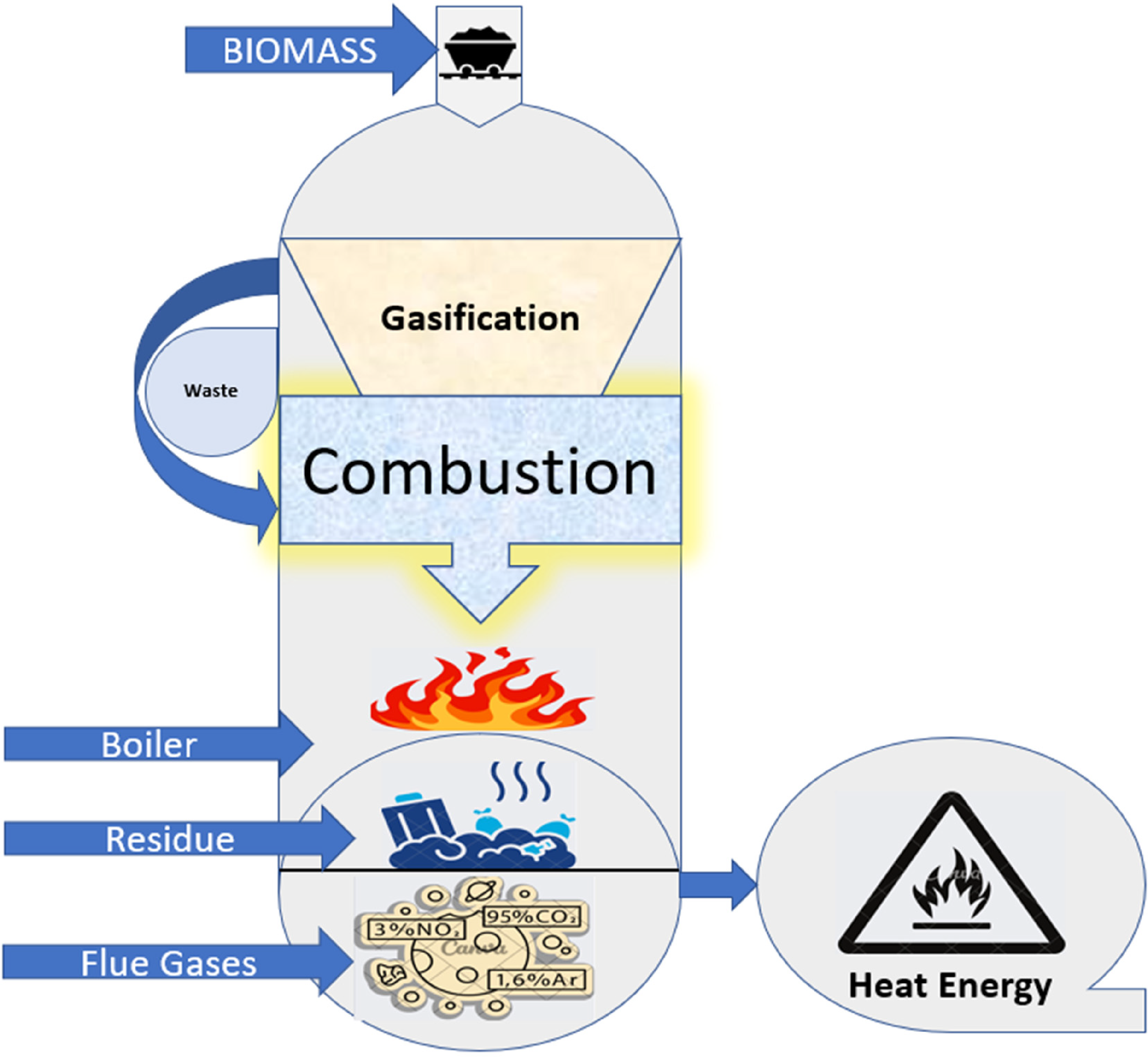
The schematic diagram for gasification.
A flow chart of the gasification process is shown in Figure 11, which tells us that the gasification process converts garbage into carbon dioxide, carbon monoxide and hydrogen, much like incineration does, but with a more manageable amount of oxygen. Bricks and similar goods may be manufactured using the ash or char that remains after burning. In a boiler, heat is used to make steam. Carbon dioxide makes about 95% of the flue gas (Liming, 2009).
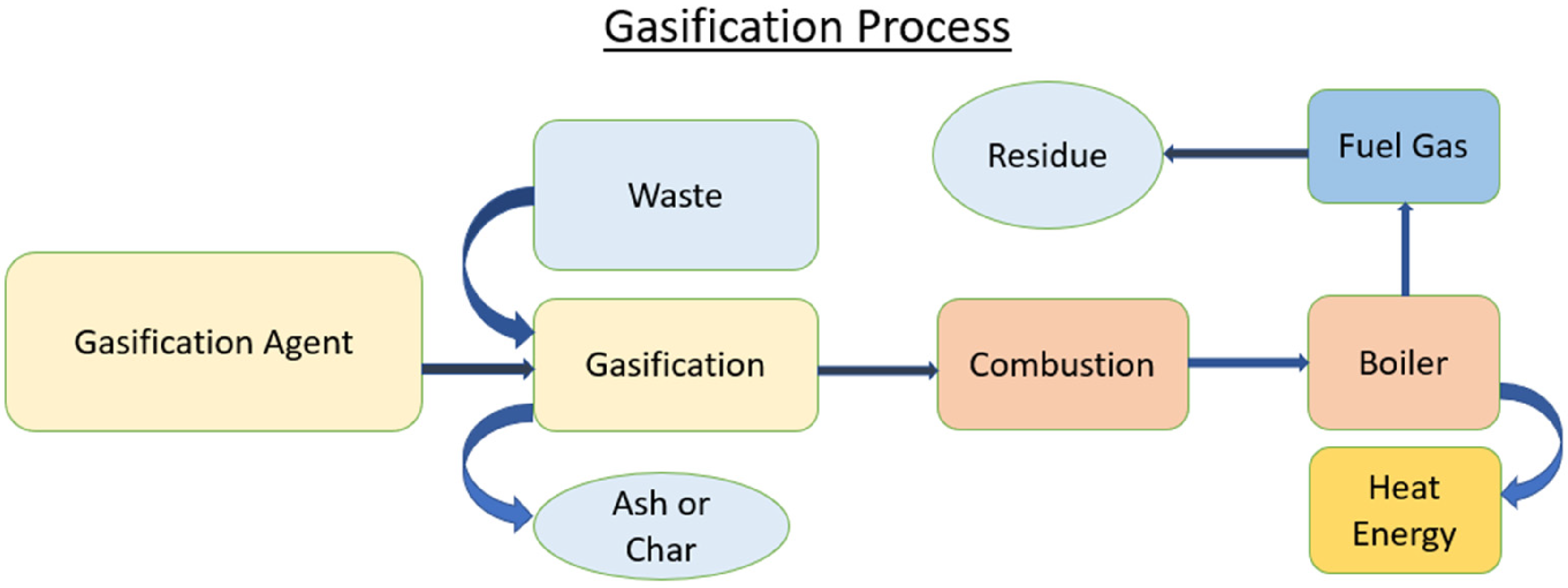
Process of gasification in a flow chart.
In addition to serving as a chemical feedstock, syngas may be utilised directly as a fuel to produce electricity, energy or both. The steps of the gasification process include drying, pyrolysis, oxidation (combustion), reductions (char gasification) and cracking (Ganesh and Banerjee, 2001). One fascinating idea is the geothermal cycle with integrated biofuels, which effectively convert gaseous fuel into power using gas turbines (Arena, 2012). As less gas needs to be cleaned as a result of this system's capacity to clean the gas before it is burnt in the turbine, smaller, more inexpensive gas-cleaning equipment may be used. In many parts of the globe, energy generation by gasification has been used to provide power to rural areas while reducing greenhouse gas emissions. Rural communities may benefit from renewable energy, but only if there are enough government subsidies, technological advancements, and subsidies to assure reliability, quality, and efficacy (Safarian et al., 2019). By combining gasification and combustion, which results in net efficiencies of 40–50% for a plant with a production capacity of 30–60 Mtpa (metric ton per annum), high conversion efficiency is achieved. Methanol and hydrogen, two fuels that may be used for transportation and other reasons, are produced from syngas created from biomass (Thomas et al., 2017). The use of oxygen-blowing and hydrogen indirect gasification procedures to create methanol and the higher value CV (typically 9–11 MJ = N m3) is favoured (Munir et al., 2019).
Arc gasification of plasma
While the inorganic components and minerals are extracted from solid waste vitrified slag, a by-product that resembles a glassy rock, the organic components burning waste products that are rich in carbon results in the production of syngas during the high-temperature pyrolysis procedure known as plasma arc gasification. Most of the syngas is made up of CO and H2. An average WTE plant will need an investment of around $2.3 billion and it's expected to produce about 120 MW (Rs 15 crores per MW) of power from a daily input of 3000 MT (metric tons) of municipal solid garbage. An estimate of 2000 MT of MSW each day is around $250 million. The majority of plasma gasification facilities un-segregate MSW using 120 kWh (kilo watt hour) of energy, producing 816 kWh of electricity in the process. Also, it is expected that each tonne of MSW would produce 900 kWh. The same facility may produce 1200 kWh for every tonne of MSW if it contains both a steam turbine and a gas turbine acting as cogeneration auxiliaries (Dhar et al., 2017; Fernandez et al., 2017; Kumar and Samadder, 2020; Singh et al., 2023; Thomas et al., 2017; Yuan et al., 2014; Zalazar-Garcia et al., 2022). Using an electrical conductor in a torch, the method creates a high temperature by converting gas into plasma. The process that employs a reactor and a plasma torch to treat organic waste solids is known as ‘plasma arc gasification’ (materials made of carbon). The plasma spray gasification reactor's typical working temperature range is between 7,200 and 12,600F. In commercial use, a carbonaceous material, such as coal or coke, is injected into the plasma arc gasification reactor to power the process. This chemical readily reacts with oxygen in an oxygen-deficient environment to provide heat for pyrolysis processes. Petrol generators used in cogeneration may create 1000–1200 kilowatt hours per tonne of MSW by using the hot gases from heat exchangers to power a gas turbine that operates on the Brayton cycle (kWh) (Kumar et al., 2015). One further perk of the conventional thermal gasification method is that it has been improved over the years unit have improved and decreased the requirement for processing (Lal et al., 2012). A schematic diagram is the one that follows the chemical and thermal energy of organic waste is preserved in the gas produced by plasma arc gasification, whereas inorganic waste is transformed into slag. Before being fed into a plasma gasifier or convertor, the waste is ground and crushed. Most waste is turned into gas or slag due to the high temperature of the plasma converter (about 14,000 °C). Each one of the three procedures is displayed in Figure 12.
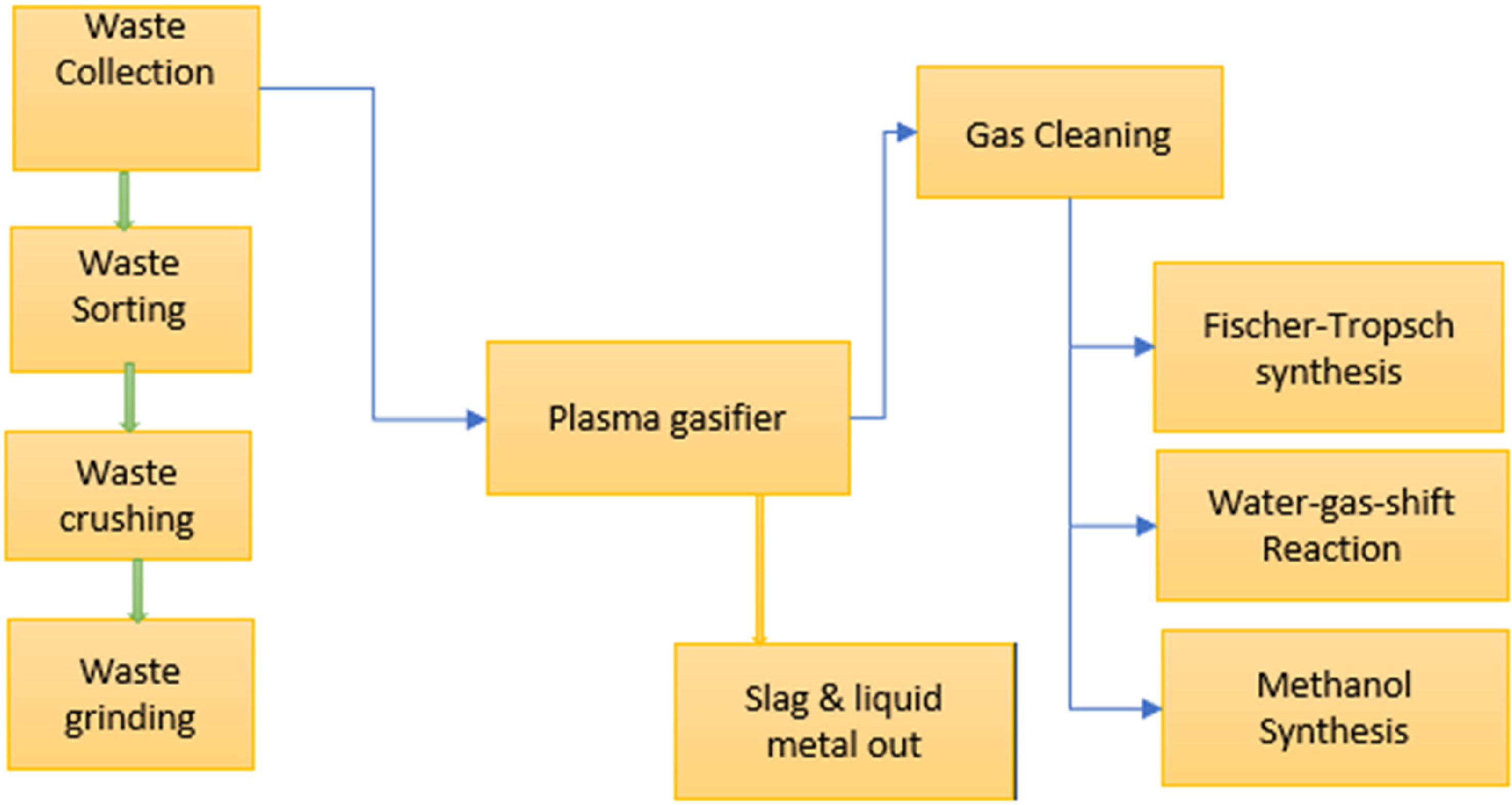
Flowchart of plasma arc gasification.
Pyrolysis
Pyrolysis is the process of heating biomass to a temperature of about 500 °C in the absence of air and turning it into solid, liquid (bio-oil or biocrude) and gaseous components. It is the creation of syngas by the thermal decomposition of carbon-based materials in an oxygen-deficient environment. This process is endothermically shown which displays us that drying and grinding solid waste is the initial step in pyrolysis (Soria et al., 2015).
Utilising both energy and mass balancing as well as a suggested reaction scheme from the literature, the pyrolysis product yields at 673, 773, and 873 K were accurately predicted. Utilising previously published experimental data, models were verified. The highest yields were for ‘charcoal (673 K – white grape stalk)’, ‘bio-oil (773 K – red grape marc)’ and ‘gas (873 K – white grape marc)’. The ‘Life Cycle Assessment’ (LCA), and cumulative exergy demand data were helpful in identifying and minimising environmental consequences in earlier stages of the process (Zalazar-Garcia et al., 2022).
Numerous studies has been conducted on thermo-chemical methods that transform biowaste into valuable products and biofuels (Zalazar-Garcia et al., 2022). Prior research delved into experiment and modelling articles handling these methods, however there is still a requirement for a rapid and reliable/dependable modelling strategy. Employing the ‘COCO-simulator for biological-waste pyrolysis’ at low rates as well as the ‘commercially available SimaPro tool’ for LCA, the present research offers an effective approach. The model precisely predicted pyrolysis outcomes at three distinct temperatures (673, 773 and 873 K) through the combination of both energy and mass balances with a reaction plan derived from the current scientific literature (Zalazar-Garcia et al., 2022). Confirmation has been carried out employing prior data from experiments. At 673 (stalk of white grape), 773 (marc of red grape), and 873 K (marc of white grape), biochar, bio-oil and gas outputs were 53.7%, 32.0% and 56.0%, respectively (Zalazar-Garcia et al., 2022). The LCA and ‘cumulative exergy demand’ (CExD) findings revealed adverse environmental effects, assisting in the abatement throughout earlier process stages (Zalazar-Garcia et al., 2022).
Employing the ‘Eco-indicator 99 technique’ to perform a cradle-to-grave evaluation, the study meticulously analysed the ‘LCA’, and ‘CExD’ for the pyrolysis process (Zalazar-Garcia et al., 2022). Utilising a model based on mass balance and predicted reactions, ‘COCO software’ precisely predicted ‘bioproduct yields’ (‘biochar’, ‘bio-oil’ and ‘gas’) throughout the temperature range (673–873 K) for ‘bioproducts’ (‘biochar’, ‘bio-oil’ and ‘gas’) (Zalazar-Garcia et al., 2022). This simulation approach, when compared to prior slow pyrolysis findings under comparable biowaste circumstances, demonstrated a high-degree of concordance among predicted and experimental outputs. Notably, the simulation was carried out under ‘steady-state conditions’, assuring adequate ‘residency time’ for the attainment of ‘thermodynamic equilibrium’. In addition, ‘SimaPro version 9.1.1.1’ has evaluated environmental implications, like ‘carcinogens’, ‘respiratory organics’, ‘climate change’, and ‘ecotoxicity’ (Zalazar-Garcia et al., 2022). These methods were crucial in identifying and alleviating environmental impacts during the initial phases of the operation. The study highlighted the significance of contemplating energy sources that are renewable as well as setting up ‘electrical energy-saving practises’ through ‘sensitivity analyses’ as a viable means of mitigating damage to the environment (Zalazar-Garcia et al., 2022).
The garbage is ground up and then sent to the pyrolysis reactor, where it is turned into gas and biochar. The biochar is put to use as fertiliser, and the gas is either condensed into bio-oil or unutilised in the pre-treatment of garbage by drying it in a cyclone condenser in Figure 13. Pyrolysis may be used to produce bio-oil by using flash pyrolysis, which has an efficiency of up to 80% for converting biomass into biocrude. High temperatures between 700 °C and 900 °C or more are used for this pyrolysis process, together with a very fast heating rate of more than 1000 °C/s. The bio-oil may be used as a feedstock for refineries as well as in turbines and engines (Munir et al., 2019). The phenomenon known as thermal instability occurs when the chemical bonds of the majority of organic compounds break at high temperatures, resulting in the formation of hydrocarbons and hydrogen gas are examples of smaller molecules. At high temperatures, a gaseous mixture is generated, the bulk of which consists of the thermodynamically tiny molecules CO and H2. Syngas is the name for the petrol produced when CO and H2 are combined. Gasification is the last phase of the thermal process. The power plant uses syngas to generate steam and electricity, which are then utilised domestically and exported. The majority of the time, the exported energy is used to generate electricity that is then sent into the grid (Lal et al., 2012). Heating speeds and materials input bandwidth were improved by pyrolysing the resultant fluid (moisture phase), solid and gas (12 and 24 g material/min, respectively). The values are also produced on a dry ashes-free basis for comparability with other sources. Slow pyrolysis up to 550 °C produces the most solid products because of the prolonged residence time that characterises the creation of the solids. Slow pyrolysis results in a liquid with two distinct phases: an oily product and a water-rich phase. According to Karl Fischer, the aliphatic acid content of the water-rich phase is 31%, the aromatic compound content is 22%, the furan component content is 16%, and the citrusy acid content is 11% (GC/MS). Its pH is 1.4 and it contains 66 weight percent water. Because of its low commercial worth and high-water content, this phase will not be studied anymore. It's a never-ending procedure that happens between 400 °C and 700 °C. The major purpose of this process is to prevent the by-products of pyrolysis from further degrading into non-condensable compounds, hence the heating rate normally ranges from 10 to 100 °C/s and the residence period is between 0.5 and 2 s. In contrast to rapid pyrolysis circumstances, slow pyrolysis does not result in the formation of waxy by-products (Chintala, 2023; Kumar et al., 2021; Saha and Handique, 2023).
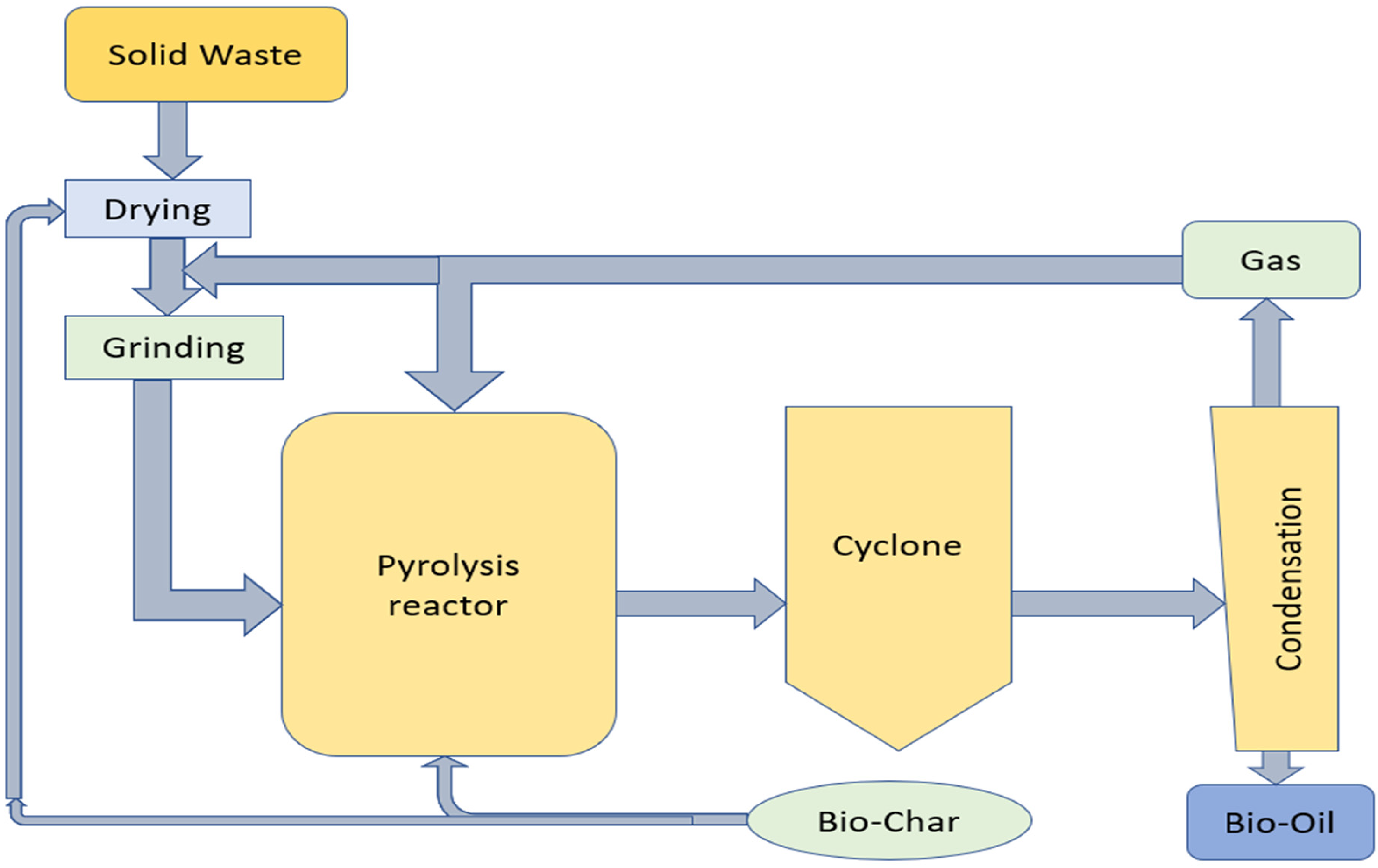
Flow chart of the pyrolysis process.
The anaerobic process
The energy crisis is the most significant issue India is now facing. In India, 96.7% of homes are now linked to the grid, and just 0.33% depending on off-grid electrical sources, according to a study conducted by the Council on Energy, Environment, and Water (IRES, 2020; Panigrahi and Dubey, 2019). According to the government's Ministry of Electricity, fossil fuels account for 57.4% of this need from India. Coal has been used to produce around 86% of the world's energy till now. This demonstrates how heavily India relies on fossil fuels for electrical generation. India has a long way to go before it can successfully transition from its reliance on fossil fuels to that of renewable energy sources as shown in Figure 14. Energy generated using fossil fuel in India. In India, 42% of MSW is organic, which makes up the bulk of MSW. The greatest choice for supplying electricity in rural India is anaerobic process (AD) (Panigrahi and Dubey, 2019). It is possible to create biomass more cheaply and efficiently using technical developments in crop cultivation, conversion, etc. (Pujara et al., 2019). India, which has a vast population, must deal with processing a lot of MSW (van Fan et al., 2018). And 70% of people rely mostly on agriculture for their income. Together with their crops, farmers also raise a sizable quantity of livestock and animals. As a result, the annual production of crops in metric tonnes in India is 70% of the people in India rely on agriculture for their income. Sugarcane is the most widely grown crop, with an annual output of 2,76,250 tonnes, followed by rice with an output of 1,45,050 tonnes. The most cost-effective and readily available source of biomass production is found in agricultural by-products.
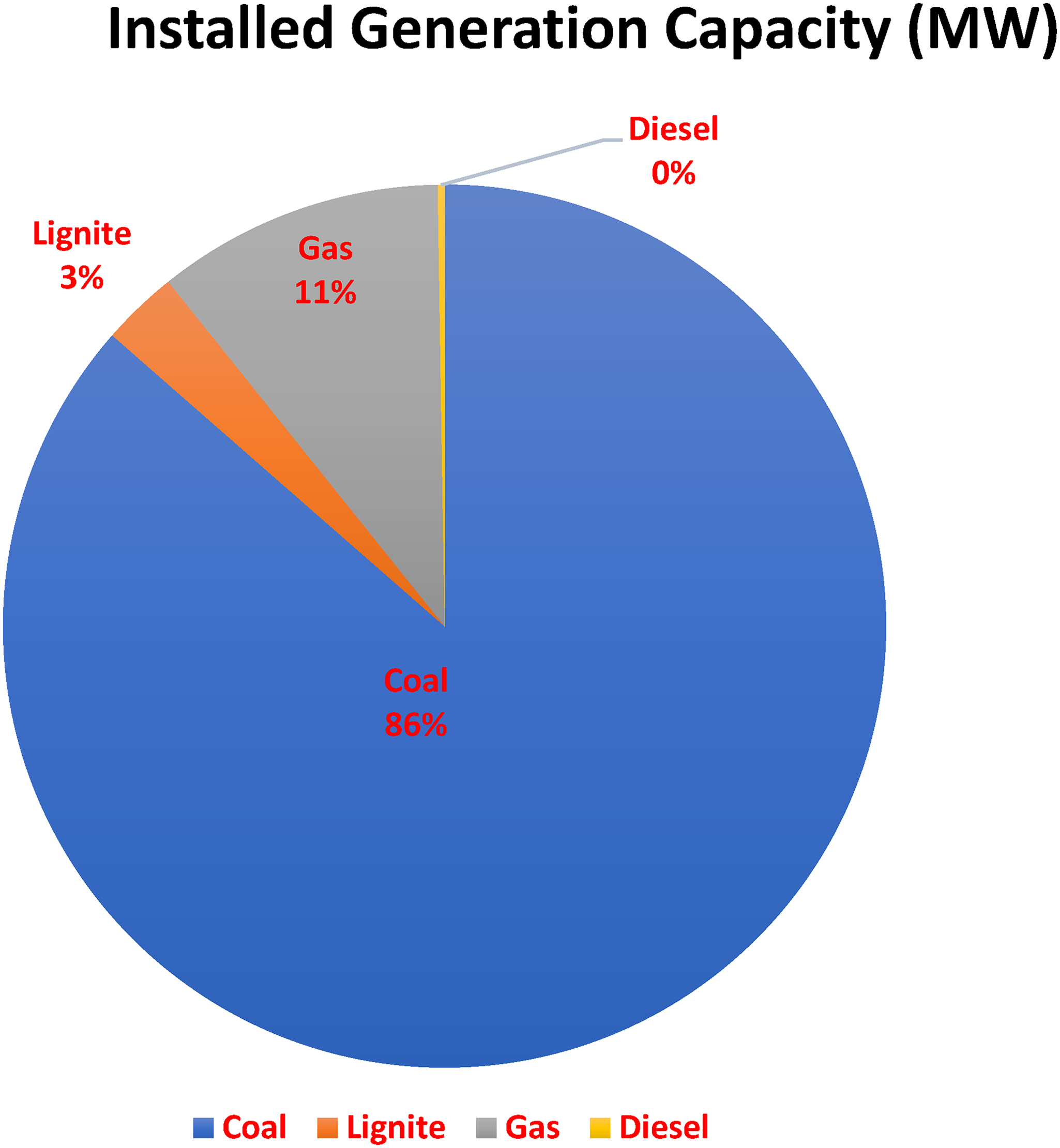
Energy generated using fossil fuel in India.
As a result, India has a great deal of potential for WTE conversion is shown in Figure 15. Agricultural wastes are any organic wastes as well as crop harvesting and processing by-products. In addition to leftovers, a significant amount of biomass also comes from plantations, urban markets and businesses that handle animal waste. India produces an estimated 200 million tonnes of household and agricultural waste annually (Thomas et al., 2017). This enormous quantity of biomass may be turned into biogas, which can replace LPG. According to the Intergovernmental Panel on Climate Change (IPCC), bioenergy will account for around 20% of total energy needs by 2050, or a pace of 100 EJ. In recent years, there has been a greater focus placed on the need to meet fuel requirements for transportation, electricity and heating while preserving natural resources. Lignocellulosic biomass (LCB) is the most common kind of biomass on Earth, but pre-treating LCB using physical, chemical, biological or a mix of these methods is costly and, to some degree, ecologically damaging (Thomas et al., 2017). Recently, the emphasis on expensive pre-treatment processes has been replaced with the search for an effective supply of microbes or inoculants sources that might be particularly successful in degrading LCB in a sustainable, economical and ecologically acceptable way. Combining anaerobic digestion with gasification and other WTE processes has recently resulted in the development of hybrid energy recovery from landfills. Biogas is produced from readily biodegradable organic wastes like food waste, while syngas is produced from less biodegradable organic wastes like wood and agricultural by-products, both of which are advantages of an integrated WTE system. Diverting organic waste from landfills, this approach would improve the long-term viability and practicality of metropolitan areas. Apart from technology, it has been suggested that transportation distance is the primary factor in determining the sustainability of AD. To discover a solution that is both inexpensive and ecologically beneficial, MSW management has already been optimised. It is essential to establish the characteristics and waste amount to enable appropriate selection (Pujara et al., 2019).
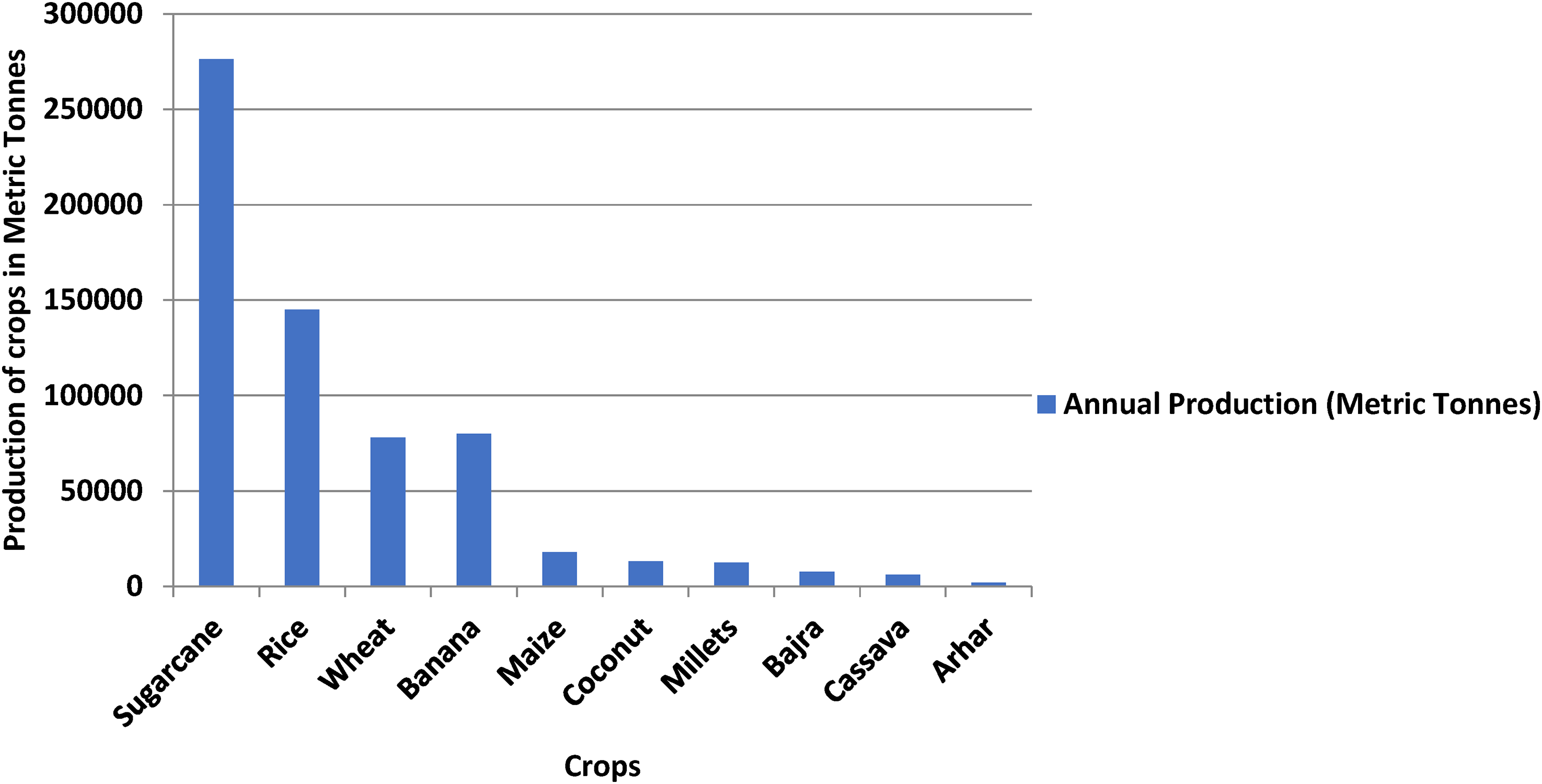
Annual production of crops in metric tonnes in India (Saha and Handique, 2023).
Applications in real life
India requires a lot of energy due to its big and expanding population. It continues to utilise fossil fuels as its energy source today, which contributes to pollution and global warming. Hence, the best way to manage garbage is to turn it into energy. We breathe better air and have more energy to carry out our daily tasks. The growth of MSWTE is gradual since MSWTE plants need substantial expenditures to build. In rural India, small-scale plants may tackle this issue. Construction of small-scale biogas plants may be accomplished through cooperative groups. Transportation and segregation are additional issues. Municipalities are striving to use separate dustbins for dry and wet garbage, but they are not always accessible, and individuals are not utilising them correctly since they are not aware of how to. The elementary school curriculum should include waste management classes as a requirement so that children may start learning about it at a young age. Also, for waste management, certain hands-on practical courses should be provided in addition to academic ones. According to this report, India has a great deal of potential for producing green energy from trash. The only need is that we utilise the right method at the right place. For instance, gasification plants will work better in agricultural regions where there are surpluses of animal and field wastes, while plastic waste recycling facilities should be placed outside of cities. Transporting garbage to plants will no longer be an issue thanks to this.
Failure causes and how to avoid them
Several barriers, such as inefficient waste recovery and disposal methods, are impeding the expansion of WTE. Inadequate financing, a lack of uniform national regulation and policy, poor data collection and evaluation, and other political, economic, and technical barriers have all affected the growth of the WTE industry. To plan the ultimate deployment of this technology in India, especially in light of the possibilities for the nation's new power sectors, it is vital to investigate and assess these limits (Kumar and Samadder, 2020). Inadequate trash collecting methods, a lack of public support, a lack of source separation, problems with litigation, the quality of the recyclable materials, workable technology, inadequate financial assistance, and a lack of legislation are some of the reasons why WTE failed in India. Failures may be avoided if India focuses on strategic and tactical planning. Also, the country has to strengthen its policy framework since doing otherwise may result in hostility from the general public, corporate executives and investors (Velghe et al., 2011). Some of the most significant issues that WTE technologies deal with are listed below.
Problems in India on waste-to-energy
WTE projects in India can help meet the country's energy requirements while minimising environmental concerns by using renewable sources. But there are various obstacles to overcome. The biggest challenges are: ineffective waste segregation, environmental concerns, high capital costs, land acquisition and zoning issues, waste reduction strategies, regulatory framework, and feedstock quality (Amin et al., 2023).
According to a research by the Government of India's central Pollution Control Board (CPCB), 60 major Indian cities produce nearly 4 million tonnes of plastic waste per day (Rezania et al., 2023). The considerable amount of ash that is present in Indian coal, on the other hand, presents a substantial challenge to the development of suitable technology. The production of chemicals and fertilisers has been the primary focus of gasification's commercial use in India. As a consequence of problems with the quality of the coal, a significant number of gasifiers that rely on coal have ceased operations. Jindal Steel and Power Ltd (JSPL) has constructed the first direct reduction iron (DRI) and steel production plant in the country at their location in Angul, Odisha. This facility is powered by coal gasification. Nevertheless, they are also finding problems with coals that contain more than 30% ash in the Lurgi Fixed Bed Dry Bottom (FBDB) gasifiers that they are using. Jointly owned by Coal India Ltd (CIL), the Gas Authority of India Ltd (GAIL), Rashtriya Chemicals and Fertilizers Ltd (RCF) and Fertilizer Company of India Ltd (FCIL), the establishment of coal gasification facilities to produce electricity is currently in progress through the efforts of a joint venture (MNRE). The following is a summary of some of the most critical challenges that WTE technologies attempt to overcome. Information about MSW: India is a huge country in terms of both people and land. It has several temperature zones and a range of lifestyles across its many locales. This situation has led to the formation of several types of solid waste. No study has yet been conducted in India to characterise the waste produced and dumped in landfills in almost all the cities and towns. Policymakers are depending on a small data source that is only accessible from a few places, therefore they are unable to give adequate options for the waste types created in each distinct region of the nation. To address the problem of MSW classification in the country, it is important to highlight the many facets of an MSW life cycle and its importance. Problem with funding: All of the aforementioned issues have been associated with insufficient financial waste management initiatives. Due to the financial crisis, waste management authorities lack the infrastructure needed to provide effective solutions. Application of laws and regulations: According to studies released in 2016, it is challenging to manage MSW effectively since authorities do not completely execute MSW laws. It is necessary to set up authorities who work jointly and skilled workers who are entirely responsible for waste management. If given adequate instruction and practical experience, they will be able to recognise the implementation-level problems and then take the necessary actions for implementing laws and regulations.
Additional difficulties: In addition to the problems already described, there are further difficulties with the idea of generating electricity from waste and WTE is still being researched, unlike renewable energy sources like wind and solar. India imports the hardware required for WTE technology from other nations. For instance, biomethanation-based initiatives are quite expensive and need the importation of resources.
The ‘Swachh Bharat Mission’, which only gives solar energy the highest priority, also affects WTE and biomass technology.
People in India toss things away or think of them as junk after just one usage, therefore waste generated there can be used to regain a variety of goods. This is a costly tactic that has become a modern-day commodity (Amin et al., 2023). Rapid urbanisation, industry and expanding populations have all contributed to an increase in the quantity of solid waste from municipalities output in Indian urban areas. Public health hazards, economic issues and severe environmental effects can all result from improper handling of municipal solid trash (Rezania et al., 2023).
Discussions and proposals
The incineration process of different WTE technologies may produce air pollutants (SO2, NO2, dioxins and furans) and soil/water contaminants (HM from fly ash). The health of living things is impacted by these toxins either directly or indirectly. Dioxin and furans released by incinerators are very carcinogenic. Flue gases include chlorine and sulphur species, and the pyrolysis process releases dangerous volatiles into the environment. When MSW is pyrolysed, HCl is released, which may corrode the facility if polyvinylchloride is a component. Flue gases include chlorine and sulphur species, and the pyrolysis process releases dangerous volatiles into the environment. When MSW is pyrolysed, HCl is released, which may corrode the facility if polyvinylchloride is a component (Karmakar et al., 2020; Khan et al., 2022; Kumar and Ankaram, 2019; Parashar et al., 2020). Funding for initiatives that increase projects: The ‘Removal of Barrier to Biomass Electricity Generation in India’ project, which is supported by the UNDP and GEF, is overseen by the MNRE, the Indian government. The project's objective is to increase the country's usage of cogeneration-based technologies and biomass power, as well as to enhance the country's electricity supply by utilising renewable energy sources. For the purpose of developing Model Investment Projects (MIPs) based on biomass gasification, MNRE is looking for suggestions. These initiatives must produce grid-interactive electricity only from 100% producer petrol engines and have a minimum capacity of 1 MW. The benefits of the suggestions for enhanced capacity, such as novel technology configurations/power consumption patterns and economies of scale, may be taken into consideration (Karmakar et al., 2023; Renthlei and Sharma, 2023).
Conclusions
Solid waste management is one greatest financial issue for communities in developing nations, as a lackluster system for handling waste in the environment, economy and health.
To reiterate, energy recovery from MSW presents a practical means of addressing the growing need for renewable energy sources while minimising the negative environmental effects of garbage. Technologies that may be utilised for energy recovery include incineration, combustion, gasification, pyrolysis, anaerobic digestion and landfilling. Each has benefits and drawbacks. These technologies have been successfully deployed in several nations, proving their feasibility as efficient waste management solutions despite worries about possible environmental effects. Future research and development of new technologies will be essential to improve the efficiency and viability of energy recovery from MSW while also addressing difficulties with cost, public acceptance and regulatory compliance. In the end, combining several waste management strategies, such as recycling, composting and energy recovery, would be necessary to achieve a more sustainable and circular economy.
In order to fulfil India's increasing energy needs and address environmental issues, this research paper explores the possibilities of WTE technology. Such studies and understandings can play an important part in determining future waste management and energy strategies in India and act as an invaluable resource for other regions dealing with comparable issues.
Footnotes
Acknowledgements
Researchers Supporting Project number (RSPD2024R576), King Saud University, Riyadh, Saudi Arabia.
Author contributions
RK and SS were involved in conceptualization, methodology and investigation; RKS, SS and RK in formal analysis; writing – original draft preparation by RK, SS and AK; writing—review and editing, supervision and project administration by SS, AK, FAA, MIK and EAAI; and funding acquisition by SS, FAA, MIK and EAAI. All authors have read and agreed to the published version of the manuscript.
Declaration of conflicting interests
The author(s) declared no potential conflicts of interest with respect to the research, authorship, and/or publication of this article.
Funding
The author(s) disclosed receipt of the following financial support for the research, authorship, and/or publication of this article: The authors would like to thank King Saud University, Riyadh, Saudi Arabia, with researchers supporting project number RSPD2024R576.
