




Abstract
Nowadays, the surge in energy demand due to economic growth and extreme weather conditions has put immense pressure on the usage of fossil fuels in Kuwait. As a result, scheduled load-shedding is performed in some regions during the summer season to meet the energy demand. To address this issue, this paper proposes a photovoltaic-based street lighting system as an alternative solution to meet the rising energy demand in Kuwait during the daytime. This study initially investigates the existing street lighting systems in the state of Kuwait. Subsequently, three different configurations of photovoltaic panels are proposed based on the existing streetlight pole structures. The simulation models are then developed and evaluated using physical security information management and PVSyst simulation platforms, aiming to validate their performance against conventional power generation models in Kuwait. The proposed photovoltaic system is designed based on feedback information collected from the existing installed capacity. Finally, an overall energy model is presented to demonstrate how solar potential can offset energy consumption during peak demand hours. Practical testbed data from the Al-Jahra residential area of Kuwait is used for validation. The results indicate that the proposed photovoltaic street lighting system can generate a maximum power output of 18.8 GWh in August and a minimum of 11.8 GWh in December, compared to the monthly consumption of 30.45 GWh. The study showcases the economic viability of the solution, with an average degradation ratio of 13% of the total cost. Moreover, the proposed system contributes to a reduction in CO2 emissions from traditional power plants.
Keywords
Introduction
Introduction and problem statement
The state of Kuwait has the highest per capita energy consumption in the world (Muhaisen et al., 2022), driven by a growing population, expanding economic activities, and modern-day lifestyles. Furthermore, Kuwait experiences long, hot summers, which significantly increase the demand for energy as people heavily rely on air conditioning systems for cooling (Muhaisen et al., 2017, 2022). During the daytime, building cooling systems account for ∼ 70% of the country's total load. To meet the rising energy demand, the country currently relies on traditional fossil fuel-based power plants, which are not only harmful to the environment but also becoming uneconomical due to increasing fuel prices (Sutopo et al., 2020). As a result, the government is shifting its focus towards alternate energy resources, particularly solar energy (Harashina, 1977; Muhaisen et al., 2016).
In Kuwait, the sunshine hours per day are significantly higher (Kuwait, 2017). The country collects massive solar irradiance per day, particularly during the summer season. Figure 1 illustrates the direct normal irradiance (DNI) across the state, indicating that Kuwait is suitable for solar power generation, with DNI > 1900 kWh/m2 per year in most areas (Al-Hasan et al., 2004). Solar power generation can be used to supply various types of loads, including commercial, residential, and municipal loads during the daytime (Alfalah, 2021). The state of Kuwait has a large number of different street lighting poles which use a significant amount of energy from the grid (Lotfi et al., 2021, 2022, 2023a, 2023b). In some types of poles, the power of lamps starts from 80 W and reaches 1000 W depending on the height of the pole. A huge amount of electrical power can be comfortably obtained and supplied to the grid through the same infrastructure by installing solar panels on the top of these street poles (Rahman et al., 2014). Such type of photovoltaic (PV)-based street lighting system is an environmentally friendly solution that not only can help to reduce the pressure on fossil fuel-based electricity generation but also can reduce the CO2 emission in the country (Al-Hasan et al., 2004; Goli and Shireen, 2014a, 2014b; Muhaisen et al., 2016, 2022).
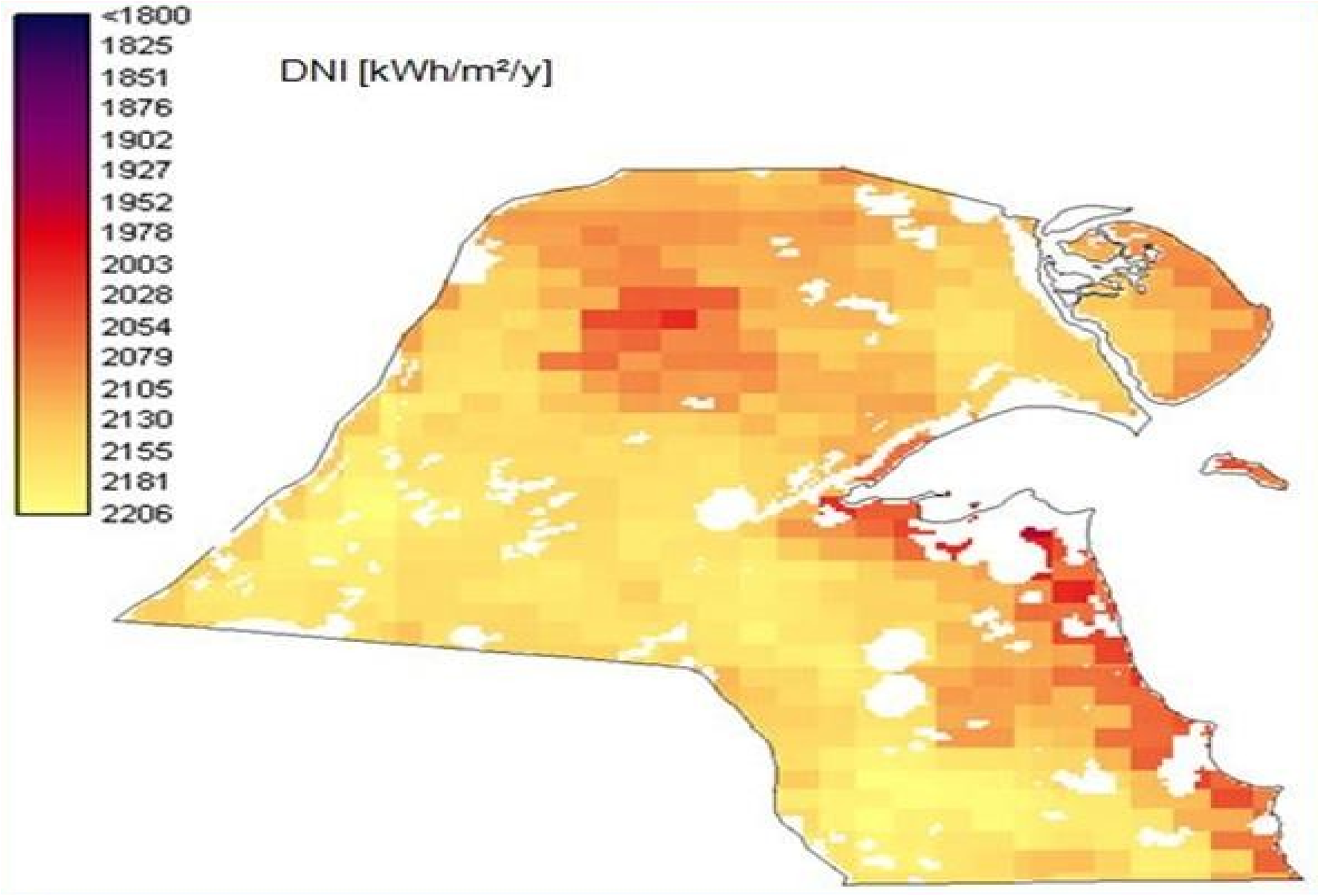
Direct normal irradiance map of Kuwait.
Literature review
Several researchers have presented PV-based street lighting systems specific to their respective countries. Fashina et al. (2017) investigated the performance and reliability of a PV-based street lighting system that was installed at a university in Nigeria. The study used different performance indicators, including capture loss and system energy yield, to assess the technical performance of the system. The performance of the installed system was evaluated by monitoring the system for three years, from February 2012 to January 2015. The results showed that the performance ratio of the system was within the range of 70%–90%. Moreover, the energy obtained from the system was within the range of 2.87–5.57 h/day. The best performance of the installed system was observed in February 2013, when the average energy output was at its peak, while the capture loss was the lowest.
Vitali et al. (2017) developed a standalone PV and wind turbine-based street lighting system in Italy. A small prototype was designed on a university campus to assess the performance of the developed system. The focus of the project was to enhance the efficiency of the system. The authors have used a central processing unit to retrieve the data from different components to monitor the efficiency of the developed system every day. Wireless communication was used to send the data from different components to central processing units. A meteorological pole was installed at the site of the prototype to monitor the solar irradiance and wind speed. The performance of the system was evaluated under different weather conditions in different seasons.
A cost-effective PV-based light-emitting diode (LED) street lighting system was developed in Malaysia (KIONG, 2014). A 30-day load profile was obtained by using sensors and then processed through the developed system. The light intensity of LEDs was also controlled. Simulations were performed on a system that was designed by using eight 10 Ah batteries and a 180 W solar panel. The system was designed, which can provide energy up to 38.6 h. A 25-year-long economic analysis shows that the proposed new design has 18.22% of cost savings as compared to the conventional design.
Rahman et al. (2014) presented a series of mathematical equations aimed at designing an ideal street lighting pole, along with calculations to determine the optimal number of poles. The developed equations were specifically tailored to account for scenarios where solar power was the sole source of energy for street lighting and were found to be highly accurate.
Acheampong (2014) conducted an investigation into the potential benefits and technical possibilities of utilizing a PV-based LED street lighting system in Ghana. The focus of this study was to assess the feasibility of implementing a PV-based LEC street lighting system in a municipal area. To evaluate the cost-effectiveness of the proposed system, an economic analysis was conducted. The results of the analysis indicated that, although the initial installation cost of the PV-based system was higher, its long-term operation proved to be economically viable. A simulation-based investigation of 300 LED lamps, with an expected 25 years of usage, demonstrated that the PV-based streetlights provided energy savings for the grid. Furthermore, the capital cost of the system was projected to be paid back within 7 years. The designed system was also found to be environmentally friendly, as it could prevent the emission of 2312 tons of CO2.
Choi and Woo (2015) presented a novel PV-based street lighting control method aimed at improving the efficiency of traditional solar-powered street lighting systems in South Korea. The proposed approach utilized a solar power charging controller with maximum power point tracking functionality to effectively recharge the developed PV-based streetlamps. Simulation results showed that the proposed control system improved the performance of conventional PV-based street lighting by 25%.
The feasibility of utilizing PV-powered LED street lighting lamps in Oman was investigated by Masoud (2015). The study was conducted on a 3.5 km road at Sultan Qaboos University, and it was determined that the initial cost of implementing such a system is significant. However, a well-designed lighting system has the potential to recoup its capital cost within 3–4 years. Additionally, it was discovered that a system of this kind has the potential to save 75% on energy and costs.
Xue et al. (2015) examined the impact of rainy weather and ambient temperature on the PV-based street lighting system. The authors proposed a solution by developing a back-propagation neural network with temperature and weather condition dependence to predict battery discharging. A simulation was conducted, and the results demonstrated that the proposed controller yielded better outcomes compared to the conventional PV-based street lighting system.
An economic feasibility study of PV-based street lighting in Libya was presented by Rajab et al. (2017). The study compared the CO2 emissions, energy savings, and costs associated with PV-based street lighting systems to traditional street lighting systems. The findings of the study indicated that the solar-based street lighting system has a lower operational cost and emits no CO2. Additionally, the use of this system can save energy from fossil fuels.
Li et al. (2016) presented the use of bidirectional DC–DC converters for PV-based street lighting systems. The converter was utilized for charging the battery from the PV cell and for providing electrical energy to the LEDs. The study found that this approach is beneficial, as simulations showed that the DC–DC converter was effective for both charging the battery and supplying power to the LEDs.
Jia and Wu (2022) investigated the cost of energy and performance of a hybrid solar–wind street lighting system in Jordan. The system components were designed based on specific local conditions, considering solar irradiation and wind velocity at the site. The economic feasibility of the system was evaluated using HOMER software, which calculated the Levelized Cost of Energy (LCOE) and energy performance indices. However, it is worth noting that the system did not incorporate practical data and relied on batteries for energy storage.
Galindo et al. (2022) provided a detailed explanation of the energy sector pertaining to public lighting systems in Ecuador. They conducted a well-structured and concise analysis of the legal framework governing this service. The framework and data presented in the study offer valuable information to stakeholders, aiding them in making well-informed decisions regarding interventions in the public lighting sector.
Akindipe et al. (2022) presented a comprehensive framework for intelligent roadway lighting in small cities. The research emphasized the significance of establishing effective public–private partnerships and explored both hybrid (solar and grid) and grid-only options for implementing smart street lighting systems. The framework offered valuable guidance for the successful deployment of such projects in low-population towns and cities. Additionally, it considered additional features such as EV charging infrastructure and air quality monitoring.
A street lighting based on hybrid wind and solar energy system along with an energy storage system was presented by Hossain et al. (2022). Communication channels were developed for remote control operation. The findings demonstrated that the use of hybrid solar and wind energy systems enhanced the reliability of the street lighting system.
Bednar et al. (2022) introduced an eco-friendly and innovative design for solar streetlights, with a focus on a hexagonal solar module. They discovered that the hexagonal layout of solar cells eliminated the need for individual maximum power point tracking (MPPT) controllers for different angles within the hexagon. The developed solar streetlight system was designed for remote control. However, it is important to note that this study was limited to a small-scale implementation.
Research gap and proposed framework
The aforementioned literature encompasses feasibility studies conducted to evaluate the viability of PV-based street lighting systems within their respective countries. Nevertheless, it is crucial to acknowledge that each country possesses distinct weather conditions, solar irradiance levels, and ambient temperatures, all of which can impact system performance. Additionally, a significant number of these studies primarily focus on isolated street lighting systems, which rely on batteries for nocturnal energy consumption. This characteristic inherently restricts their scalability and potential integration with pre-existing infrastructure. Consequently, the findings and outcomes of these feasibility studies cannot be directly extrapolated to the design of a PV-based street lighting system in Kuwait. In the work of Al-Hasan et al. (2004), an investigation was conducted to assess the performance of PV systems under varying weather conditions specifically in Kuwait. Nonetheless, it is important to note that this study was not specifically tailored to PV-based street lighting systems and thus does not offer any pertinent information for their design within Kuwait's context. A summary of the literature review is presented in Table 1.
Summary of the literature review along with research gap.
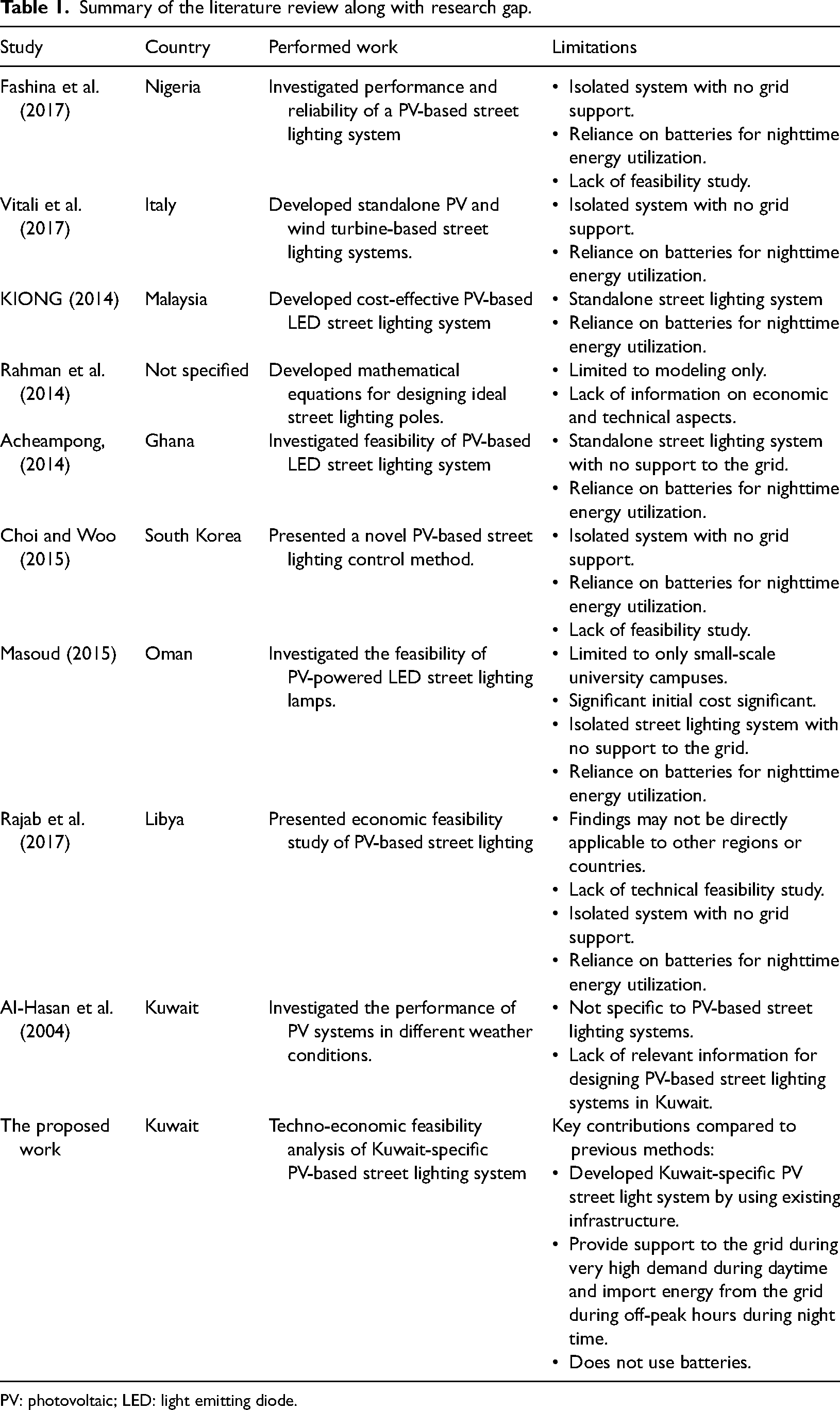
PV: photovoltaic; LED: light emitting diode.
This study proposes a Kuwait-specific PV-based street lighting system as an alternate solution to meet the increasing energy demand during the daytime. Firstly, various PV models for street lighting are examined by taking into account the weather conditions in Kuwait. Then, a PV-based street lighting system is developed based on the examined PV models. Subsequently, the PV models and the designed system are implemented in physical security information management (PSIM) and PVSyst software to evaluate and verify the performance of the proposed system in comparison with conventional fossil fuel-based street lighting models. Finally, an overall energy model is created to demonstrate the utilization of solar potential. Simulation results indicate that the proposed PV-based street lighting system designed for Kuwait is a technically and economically feasible solution to meet the high load demand during the daytime. The contributions of the article are as follows:
This study investigates the Kuwait-specific PV models for street lighting, considering the unique weather conditions in the region. The proposed PV-based street lighting system is integrated with the existing street lighting poles circuitry to provide power to the grid. This study presents an overall energy model for the utilization of solar potential in the state of Kuwait. The study highlights the technical and economic viability of the PV-based street lighting system to meet the high load demand of Kuwait during day time.
The rest of the article is organized as follows: The “Testbed and data collection” section presents the details of the experimental setup which is used to obtain real data for the proposed system. The “Design of Kuwait-specific PV-based street lighting system” section presents the details of the designed system along with the types of street light poles used in Kuwait. The simulation results are discussed in the “Experimental results from testbed” section. The cost and viability analysis has been presented in the “Simulation results and discussion” section. Finally, the article is synopsized in the “Cost and viability analysis” section.
Testbed and data collection
This article presents a Kuwait-specific PV-based street lighting system. Therefore, Kuwait-specific real-time solar irradiance and temperature are used to perform this study. To obtain real-time data, a physical experimental setup has been implemented in the Al-Jahra area of the state of Kuwait. The devices used in the experimental setup are shown in Figure 2.
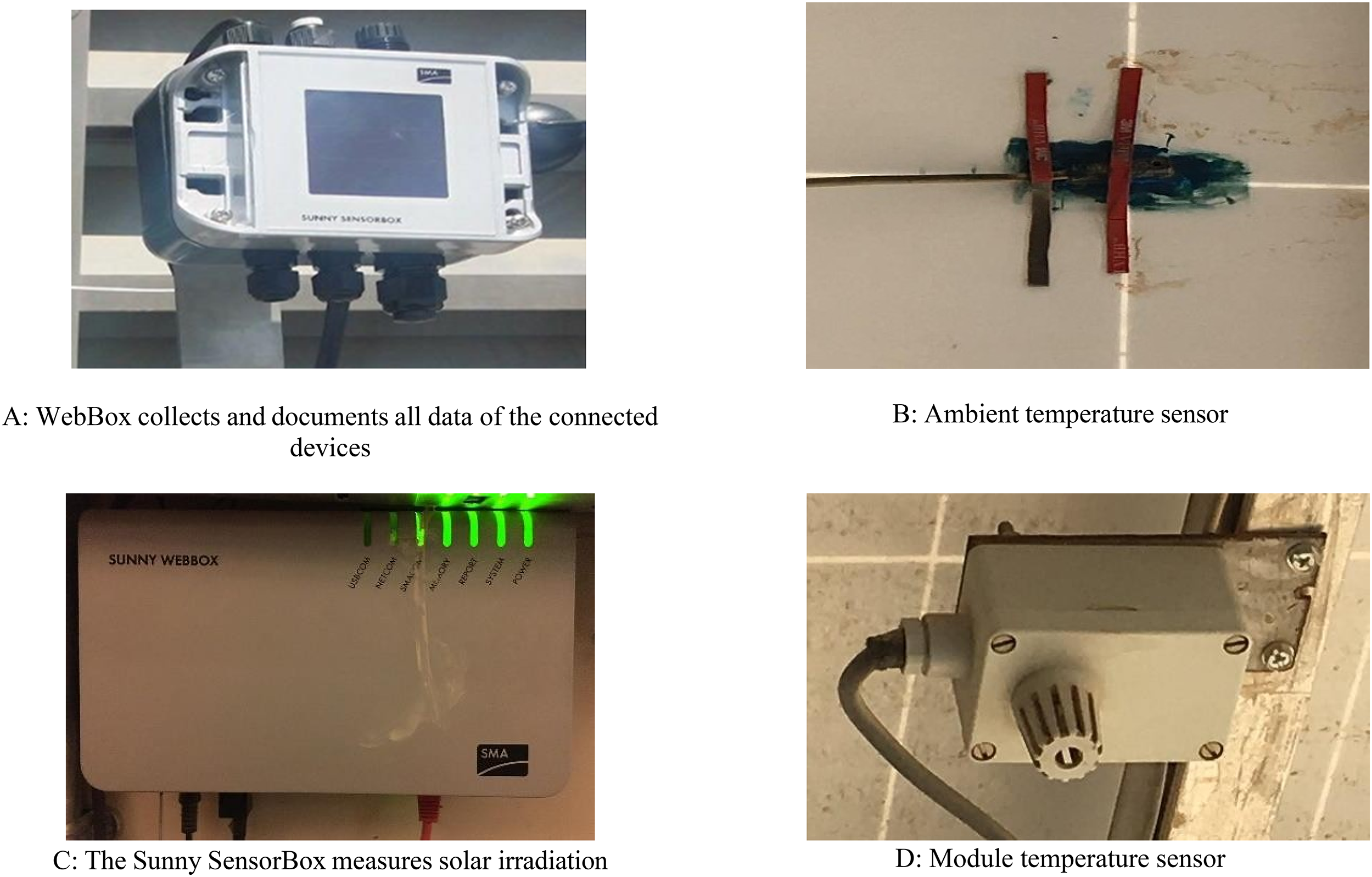
Devices used in the experimental setup for data collection.
The setup included temperature sensors for measuring ambient and cell temperature, as well as a Sunny Sensor Box for measuring solar irradiance in the region. All the sensors were connected to a WebBox, which was used to collect the data from the sensor and to send that data to Web Portal for viewing. The circuit diagram of the experimental setup is shown in Figure 3.
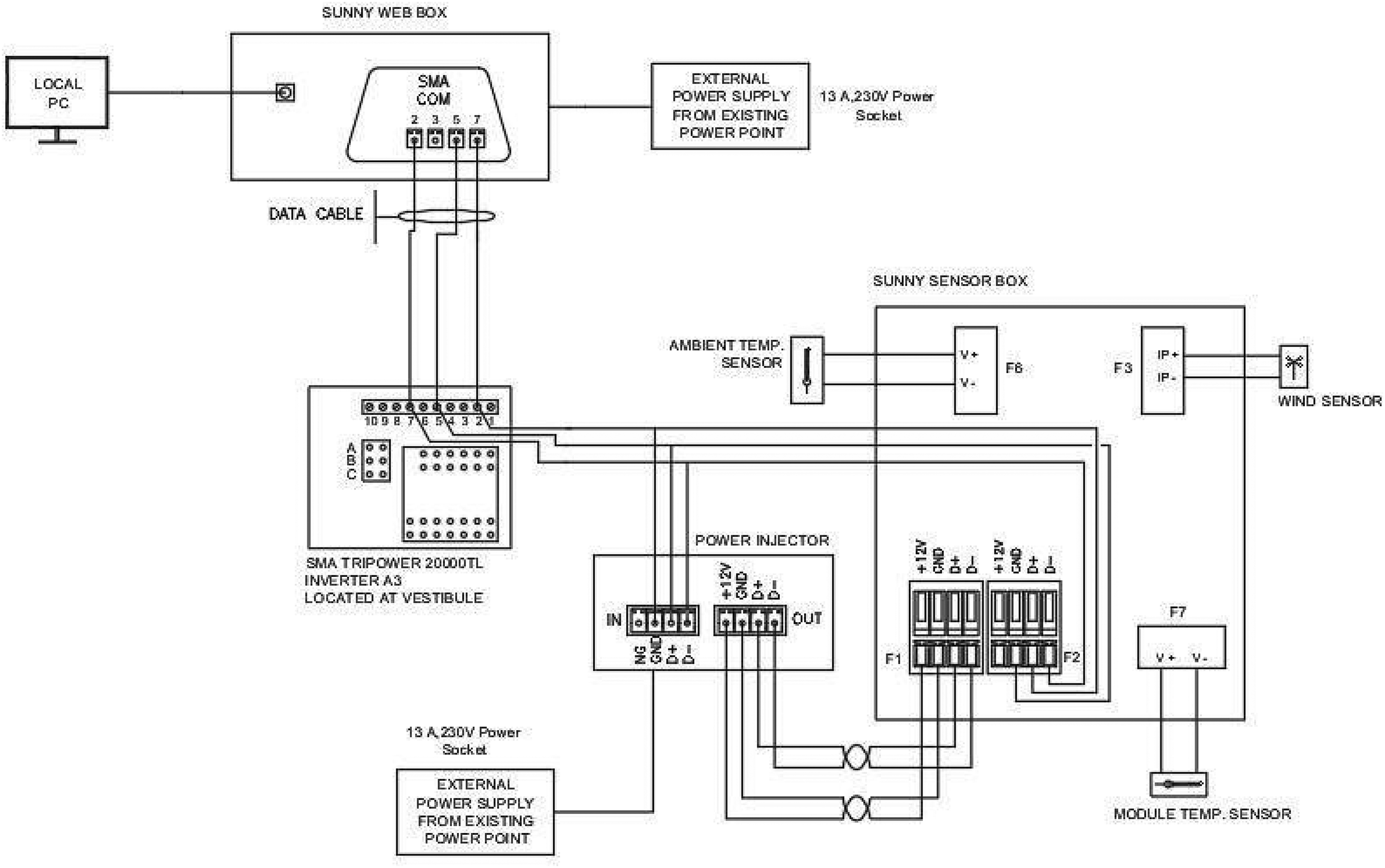
Circuit diagram of the experimental setup.
The data from all the sensors were recorded every day from the instant of sunshine to the instant of sunset with a sampling time interval of 5 min. The collection of data has been performed on a daily basis for 1 year. After obtaining the data, the daily and monthly averages of solar irradiance were calculated.
Design of Kuwait-Specific PV-based street lighting system
This study proposes a PV-based street lighting system while considering the weather conditions in the state of Kuwait. The schematic diagram of the proposed system is shown in Figure 4. The proposed system is a grid-tied street lighting system that consists of a PV panel installed at the top of a pole, a DC–DC converter equipped with an MPPT controller, a DC–AC inverter, and a control circuit. The system is cost-effective as it does not have any storage system. During the daytime, the PV panel generates electricity and delivers it to the utility grid through an inverter. In this way, the PV system supports the load during the peak hour. During the nighttime, when solar-based power is not available, the utility grid supplies the power to the street lighting system. The key benefit of the proposed system is that it does not require any storage system and uses existing cables to supply power to the utility grid (Goli et al., 2014).
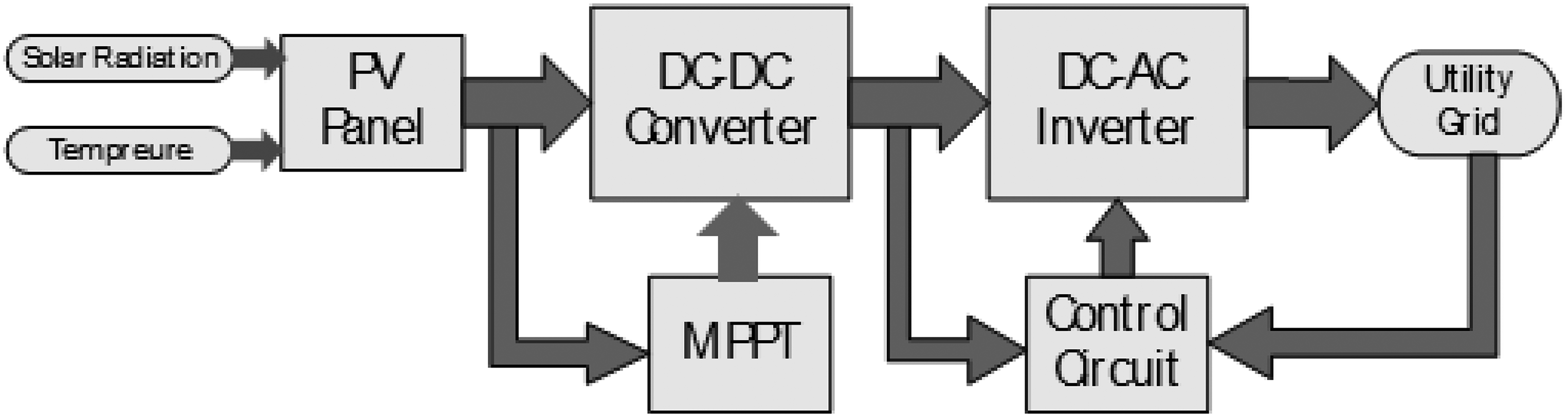
Schematic diagram of the proposed photovoltaic (PV)-based system.
Street lighting pole design
The state of Kuwait has around 219,326 poles for street lighting (Muhaisen et al., 2022). These poles are used with an extension to install the PV modules on them. The extension is required to avoid shading from the pole and lighting arm on the PV module, which can cause losses of up to 30% in the system. This study presents three different types of extensions for street lighting poles to install PV panels. The extension is designed based on the height of the poles. For the poles with 4, 6, and 8 m height, the extension is made on the top of the pole for only one PV module as shown in Figure 5(a). This is because one PV module is enough to cover the consumption of the lighting fixtures. For the poles with 4 and 6 m height with double arms and 10 m height with one arm, the extension is made to fix two PV panels on the pole. The extension for the double arm pole is made on the top of the arms whereas the extension for the single arm pole is made on the opposite side of the arm as shown in Figure 5(b). For the poles with more than 10 m in height, the extension in the poles is made to adjust three PV modules. The extension in the poles is made on the side where the arm of the pole is not extended as shown in Figure 5(c).
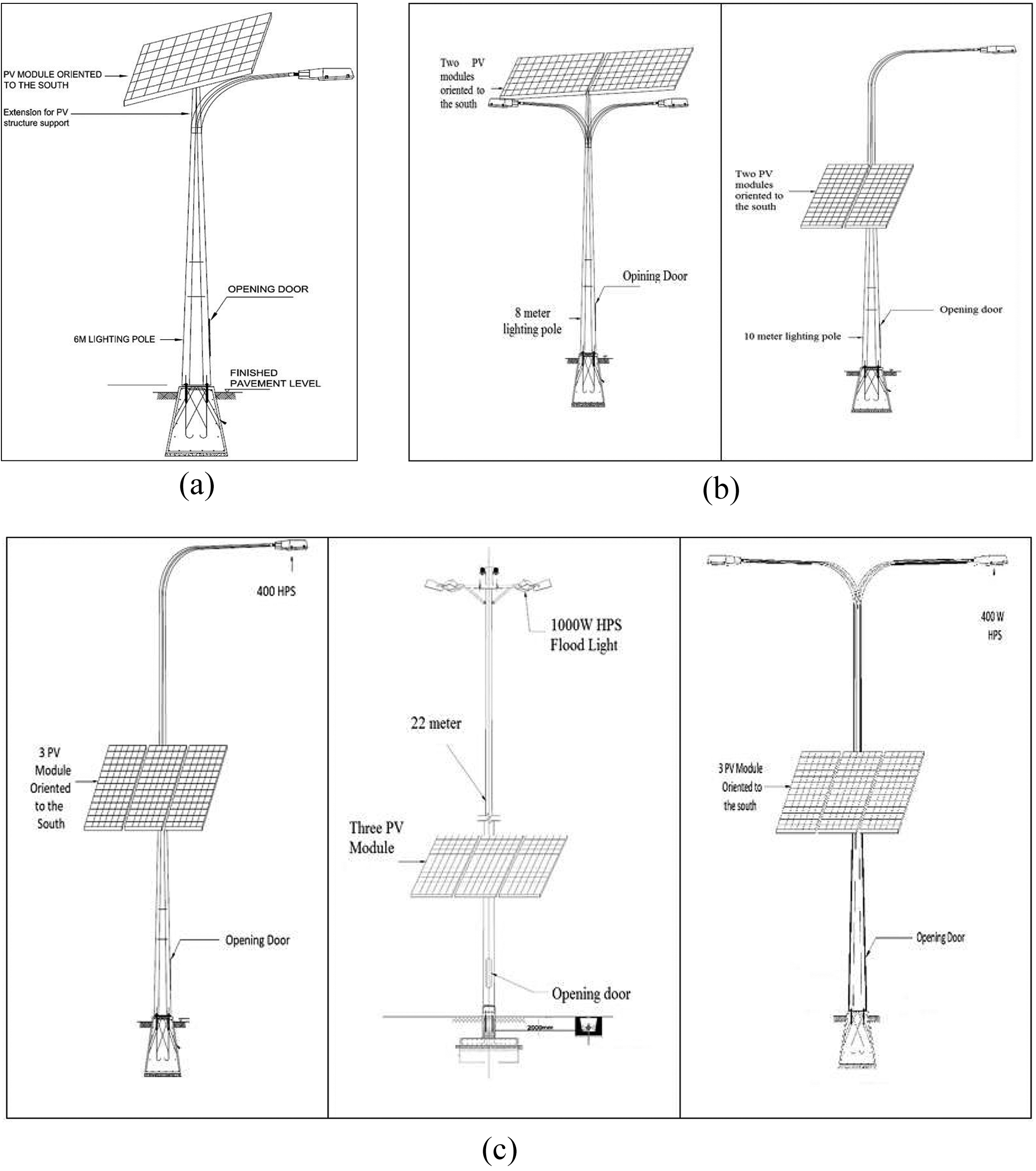
Street lighting poles with (a) one photovoltaic (PV) module, (b) two PV modules, and (c) three PV modules.
PV panel
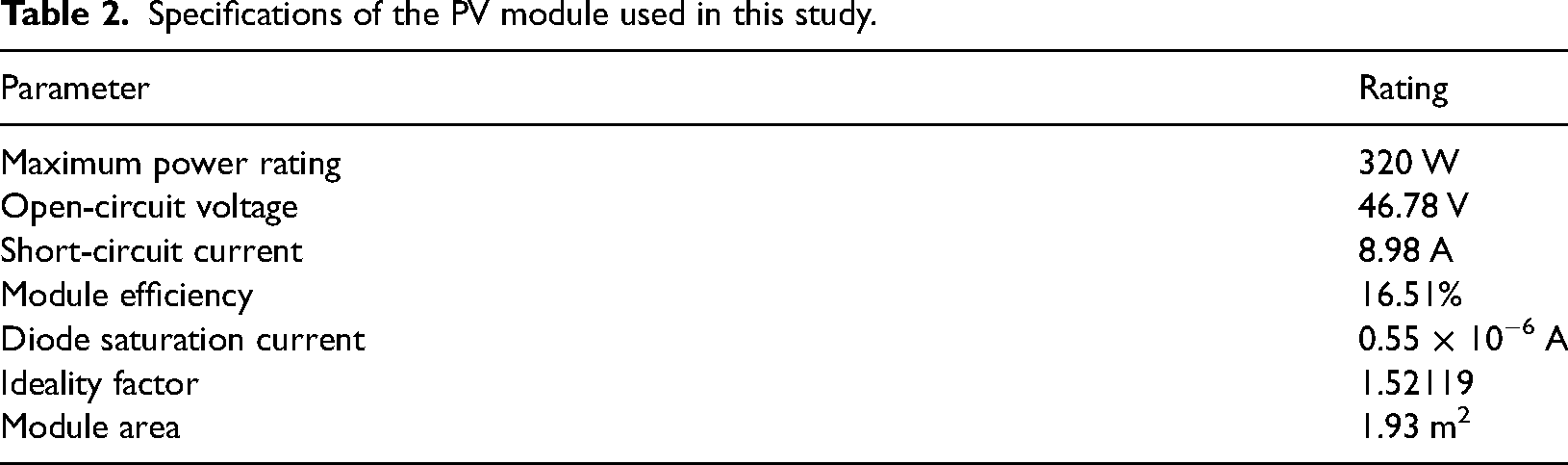
The proposed system is designed with one, two, and three PV panels to satisfy the requirements of different heights of street lighting poles. The PV panels are connected in a series configuration to generate the required power for the utility grid. The circuits of the three proposed PV panels are designed by considering the characteristic data of the selected PV panel. The ambient temperature and solar irradiance obtained from the experimental testbed are used as input to the three PV systems during simulations. In this study, mono-crystalline PV modules are selected because of their high efficiency. Moreover, the temperature coefficient of mono-crystalline PV modules is high which makes them suitable for the high temperature of the state of Kuwait. The specifications of the selected PV module are given in Table 2.
Specifications of the PV module used in this study.
DC–DC converter
The DC–DC converter is used to extract maximum power from the PV system by using an MPPT algorithm. Moreover, it is also used to increase/decrease the voltage level. In this study, a DC–DC boost converter is used to increase the voltage level of the PV system. A Perturb and Observe-based MPPT controller has been used to operate the PV panel at the maximum power point. The pulses for the switching of IGBT in the converter are generated by comparing the high-frequency triangular wave with the reference signal. The reference signal is obtained by processing the difference between the voltage at the maximum power point and the actual output voltage of the PV system through a proportional–integral (PI) controller. The DC–DC converter and MPPT controller are used for each PV module independently because each street pole has its own PV system. The PSIM software implementation of the DC–DC converter used in this study is shown in Figure 6.
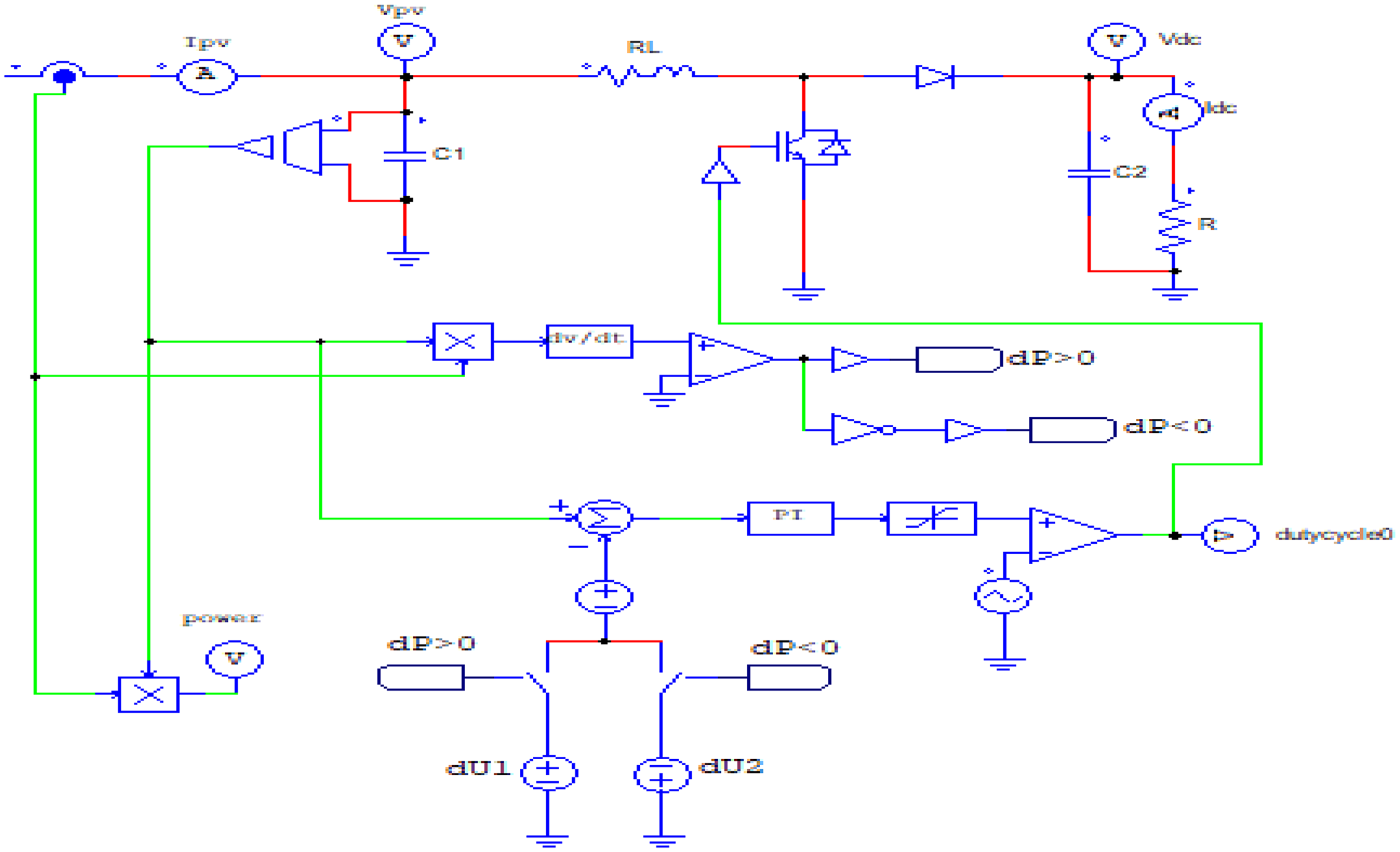
Implementation of DC–DC converter in physical security information management (PSIM) software.
DC–AC inverter
An inverter is the most important component of any grid-tied PV system. As the PV systems always generate DC power, therefore, a DC–AC inverter is always needed to convert the DC power to AC power. The inverter is an interfacing device that connects the PV system to the utility grid. It is also responsible to synchronize the PV system with the grid voltage.
In this study, single-phase micro-inverters are implemented due to the fact that each street lighting pole usually has its own system. The selected inverter has an efficiency of 95.7% and has the ability to work in all weather conditions. The circuit diagram of the single-phase inverter along with its control mechanism is shown in Figure 7. In the control system, the voltage error is then passed through a PI compensator. Afterward, the obtained signal is multiplied by the sine angle of the AC voltage signal to generate a current reference. The obtained current reference is compared with the output AC current of the inverter to generate the reference voltage. The reference voltage is then compared with the high-frequency triangular wave to generate the switching pulses for the inverter. The saturation blocks in the control system are used to keep the signals within limits. The specifications of the micro-inverter used for practical implementation and cost calculation are shown in Table 3.
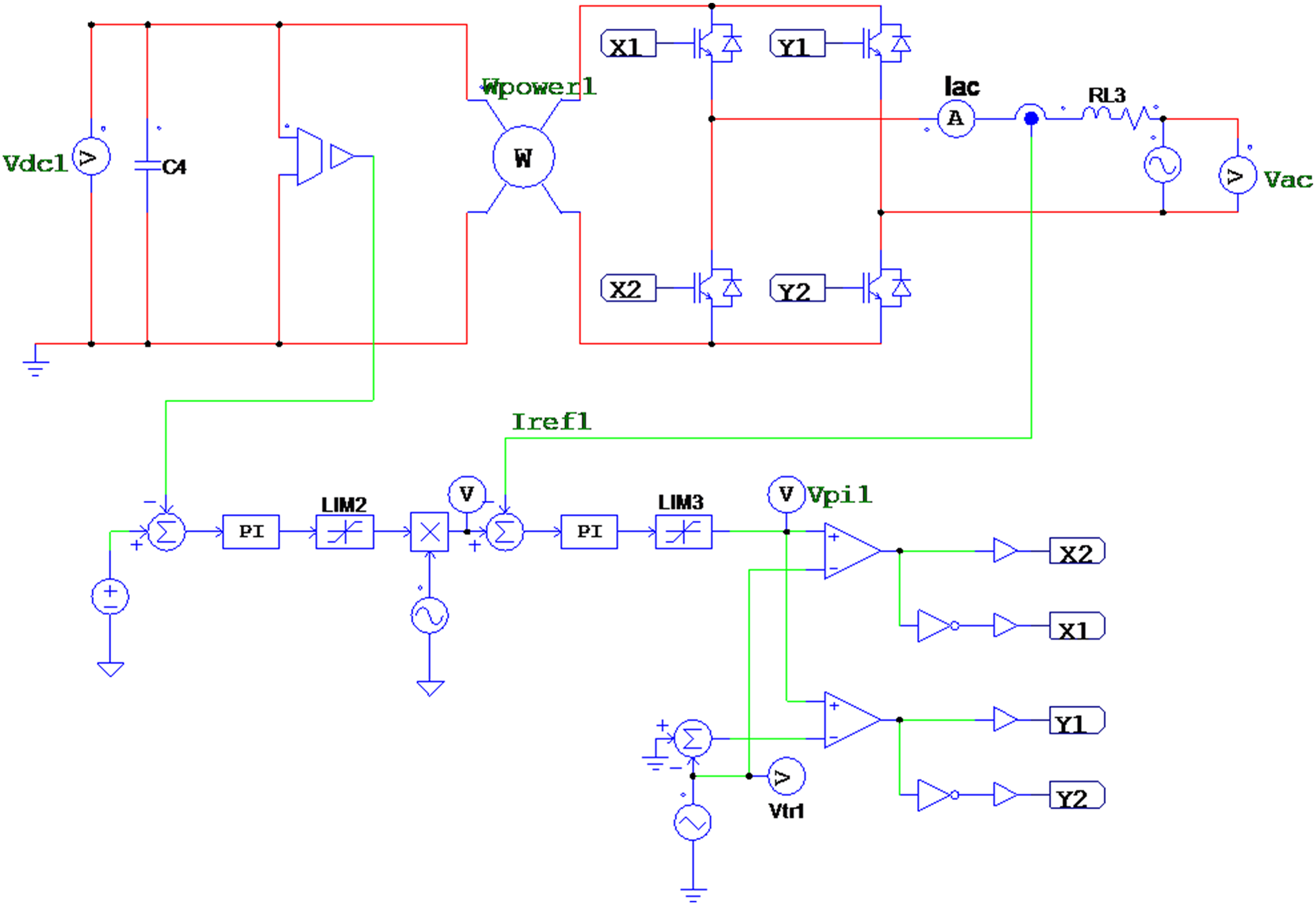
Circuit diagram of DC–AC inverter along with its control system.
Specifications of the micro-photovoltaic (PV) inverter used in this study.

Experimental results from a testbed
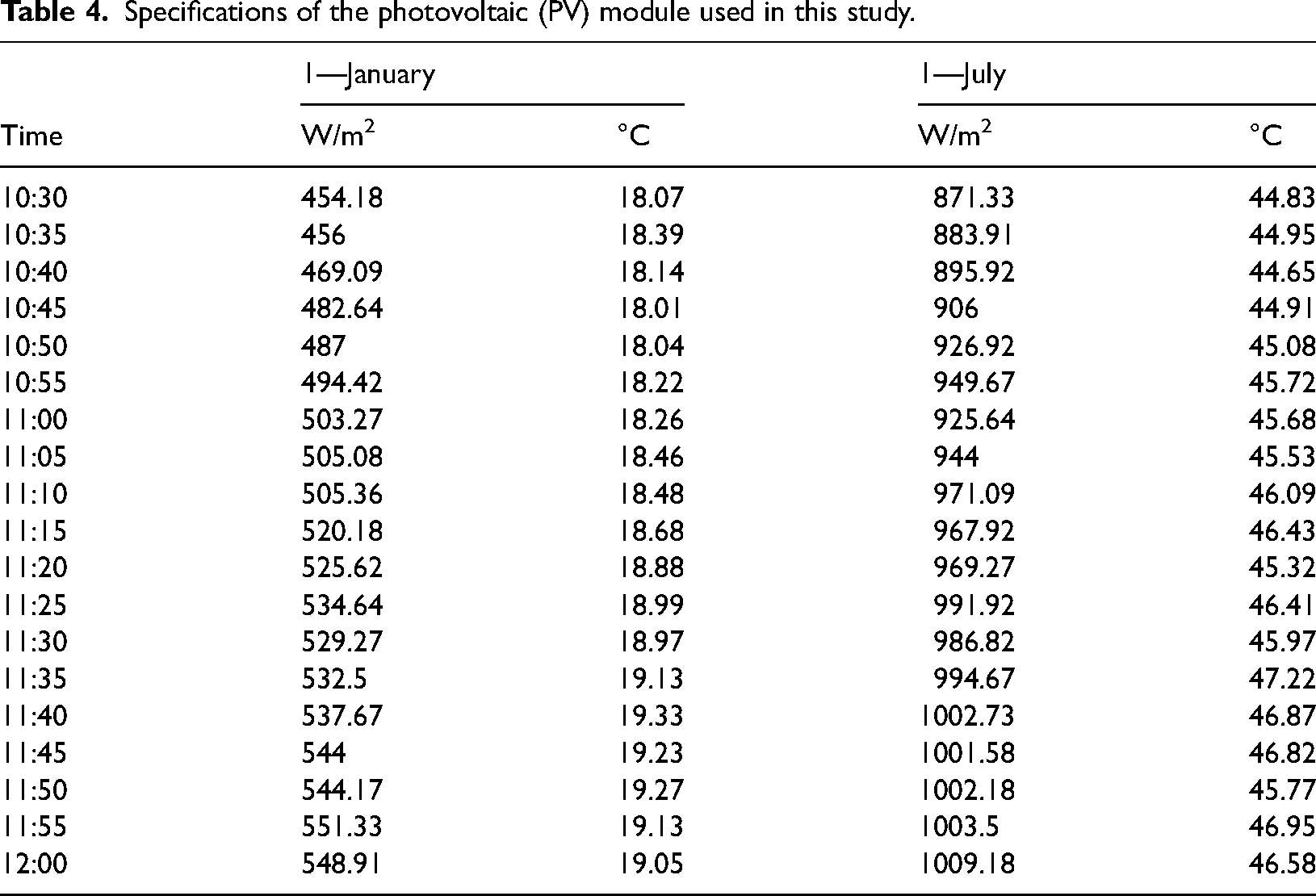
The experimental setup was installed in the Al-Jahra region of the state of Kuwait. The readings have been taken daily with a sampling time interval of five minutes for one year. The obtained data has been utilized as input in the simulation software for analysis. The samples of the readings obtained from the experimental setup for 1.5 h on two different days are shown in Table 4. The table shows that the solar irradiance and temperature increase gradually as time passes from morning to noon.
Specifications of the photovoltaic (PV) module used in this study.
The daily average of solar irradiance and temperature for four different months obtained from the experimental setup is shown in Figures 8 and 9, respectively. It can be observed from the figure that the month of April has higher variations in solar irradiance and temperature. Similarly, the monthly average of solar irradiance and temperature for all months is shown in Figures 10 and 11, respectively. It can be observed from the figure that the highest solar irradiance happens in the months of July and August. This verifies that the state of Kuwait has a significant amount of solar intensity which can be used to generate electrical energy to meet the load demand.
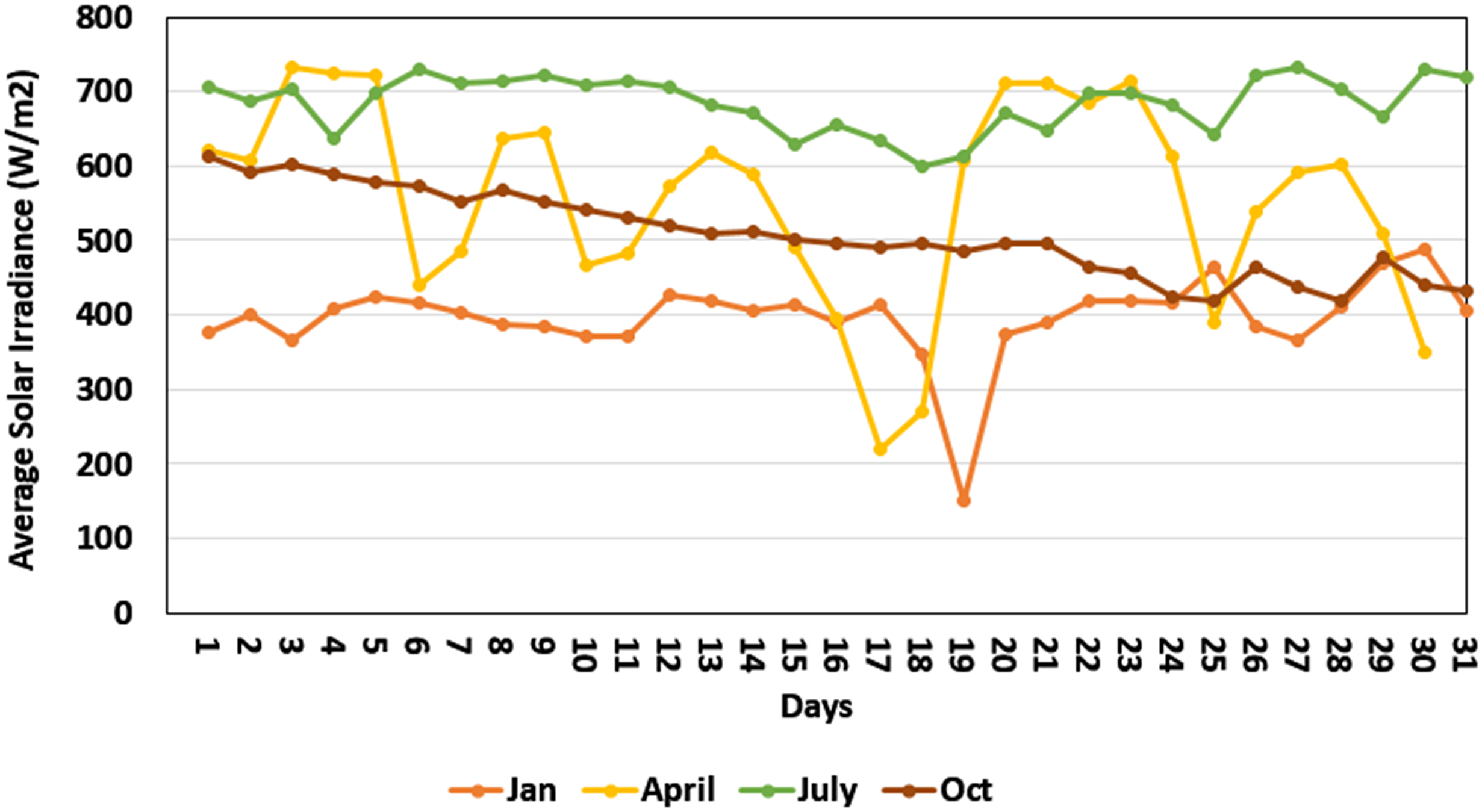
Average solar irradiance of four different months of the year in the Al-Jahra area of Kuwait.
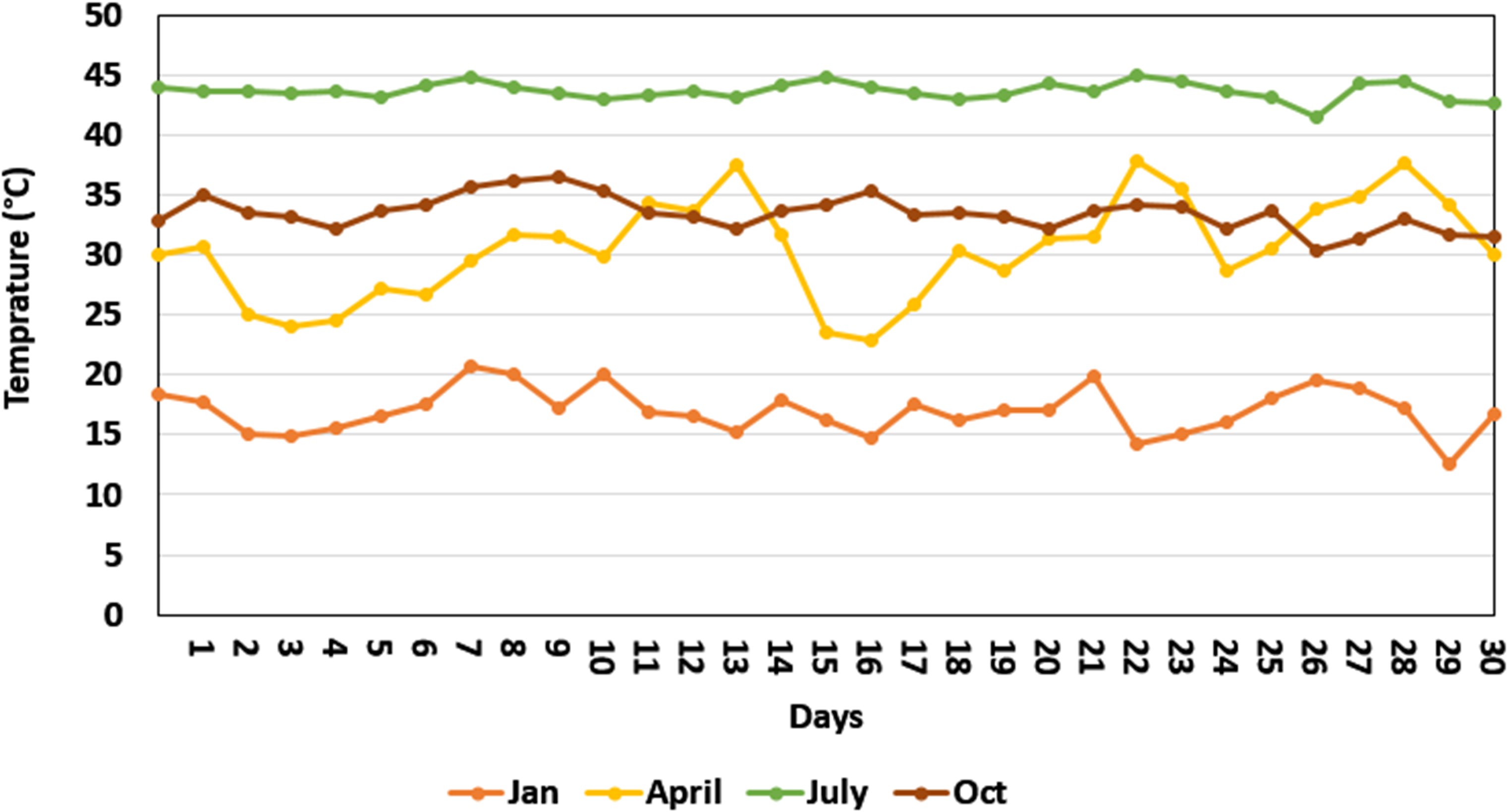
The average temperature of four different months of the year in the Al-Jahra area of Kuwait.
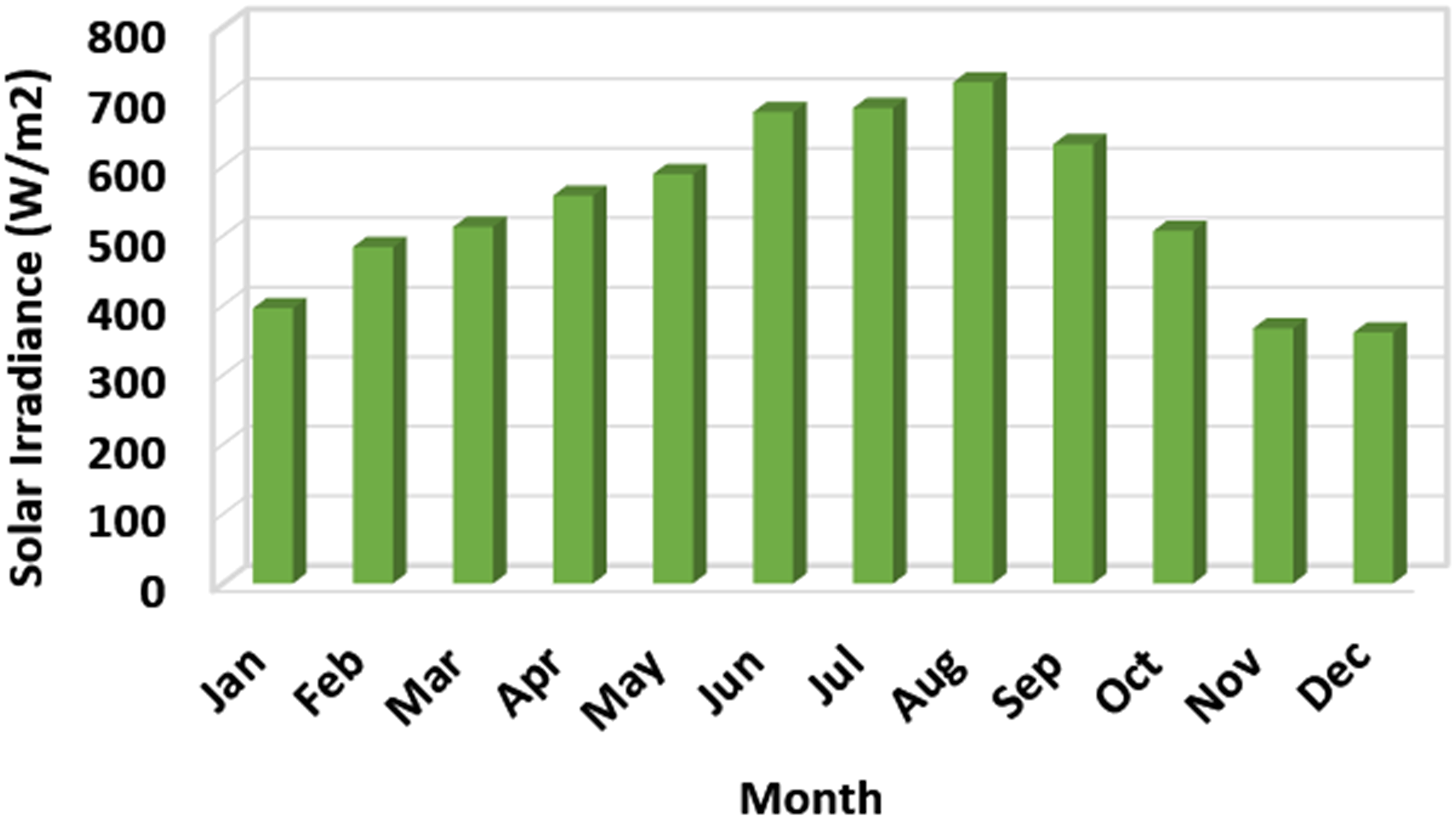
Monthly average solar radiation.
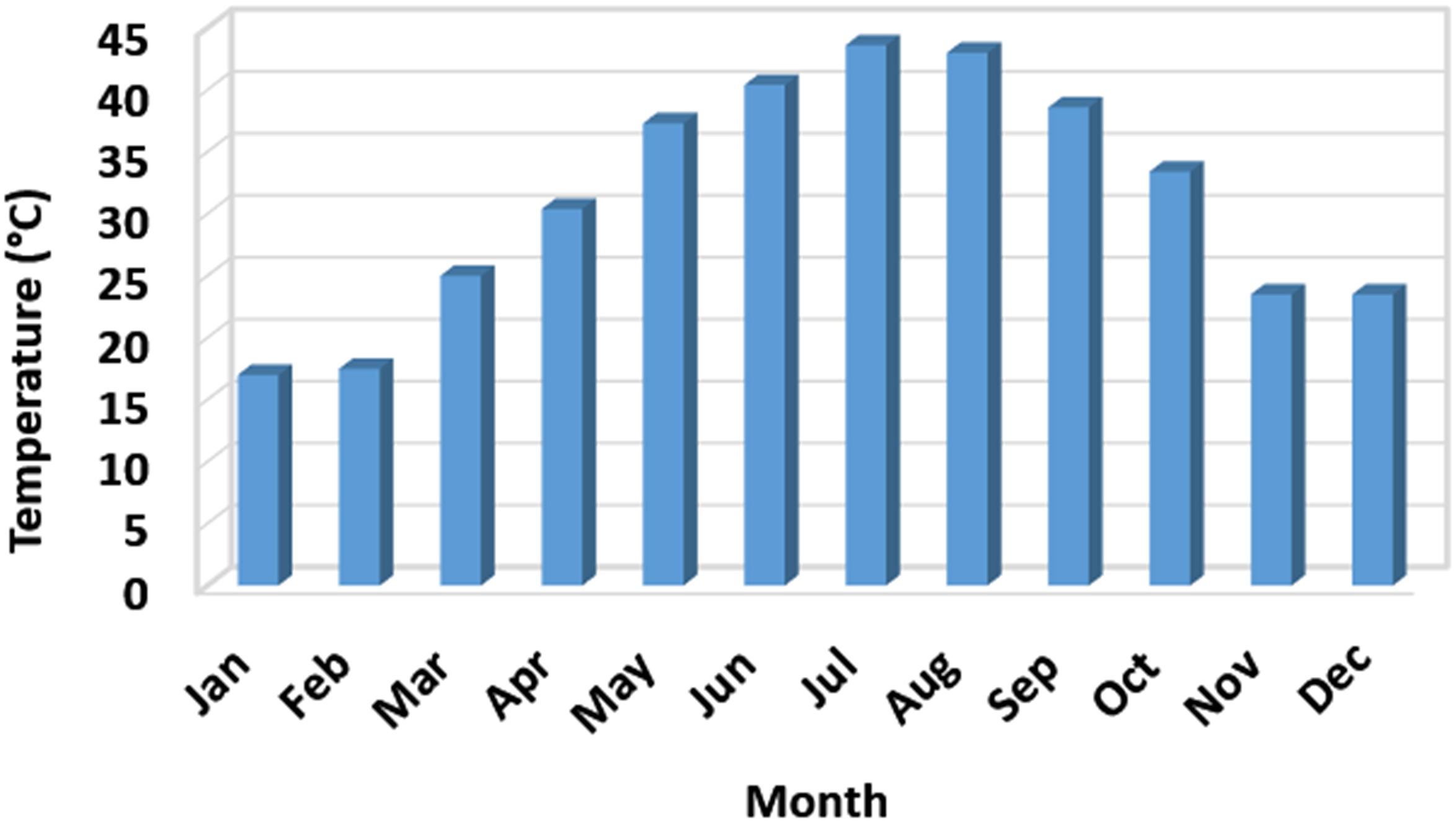
Monthly average temperature.
Simulation results and discussion
To model the proposed PV-based street lighting system, equivalent electrical circuits were utilized. Two software platforms, namely PVSyst and PSIM, were employed for modeling the proposed system. PVSyst was used to design the PV system due to its capability to design various types of PV systems. On the other hand, PSIM was used for power electronic circuit simulations, especially for renewable energy and power electronics.
PVSyst software simulation results
The data collected from the experimental setup was used as input to the PVSyst and simulation results were obtained. The amount of electrical energy generated from one PV module by using real data of solar irradiance and temperature as input is shown in Figure 12. This figure clearly shows that the PV module generates more energy in the summer months as compared to the winter months. This is because the solar irradiance and sunshine hours are larger in the summer season as compared to the winter season. The energy produced in the summer months is in the range of 48.52–48.93 kWh, whereas the energy produced in other months is relatively low and is in the range of 35.04–46.92 kWh.
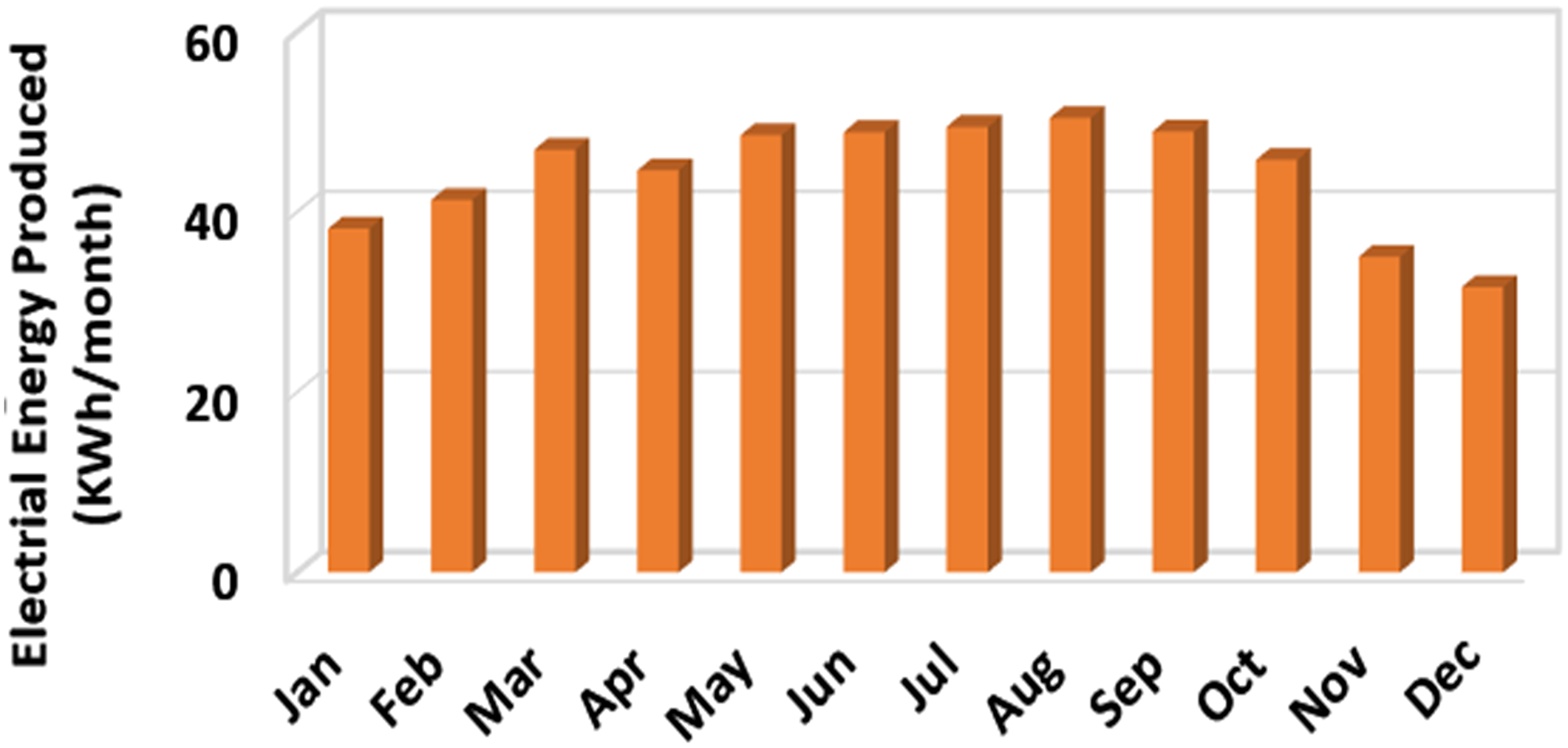
Amount of electrical energy (kWh) produced in each month by one module.
Once the electrical energy produced by one PV module is obtained for all months of the year, then the total energy generated from all PV modules to be installed in Kuwait on street lighting poles can be calculated by multiplying the results of one PV module. The electrical energy generated by all PV modules is shown in Figure 13. It can be observed from the figure that the summer months are vital in attaining the most energy output from the system. The highest energy yield was observed in the month of August, whereas the lowest energy out was in the month of December.
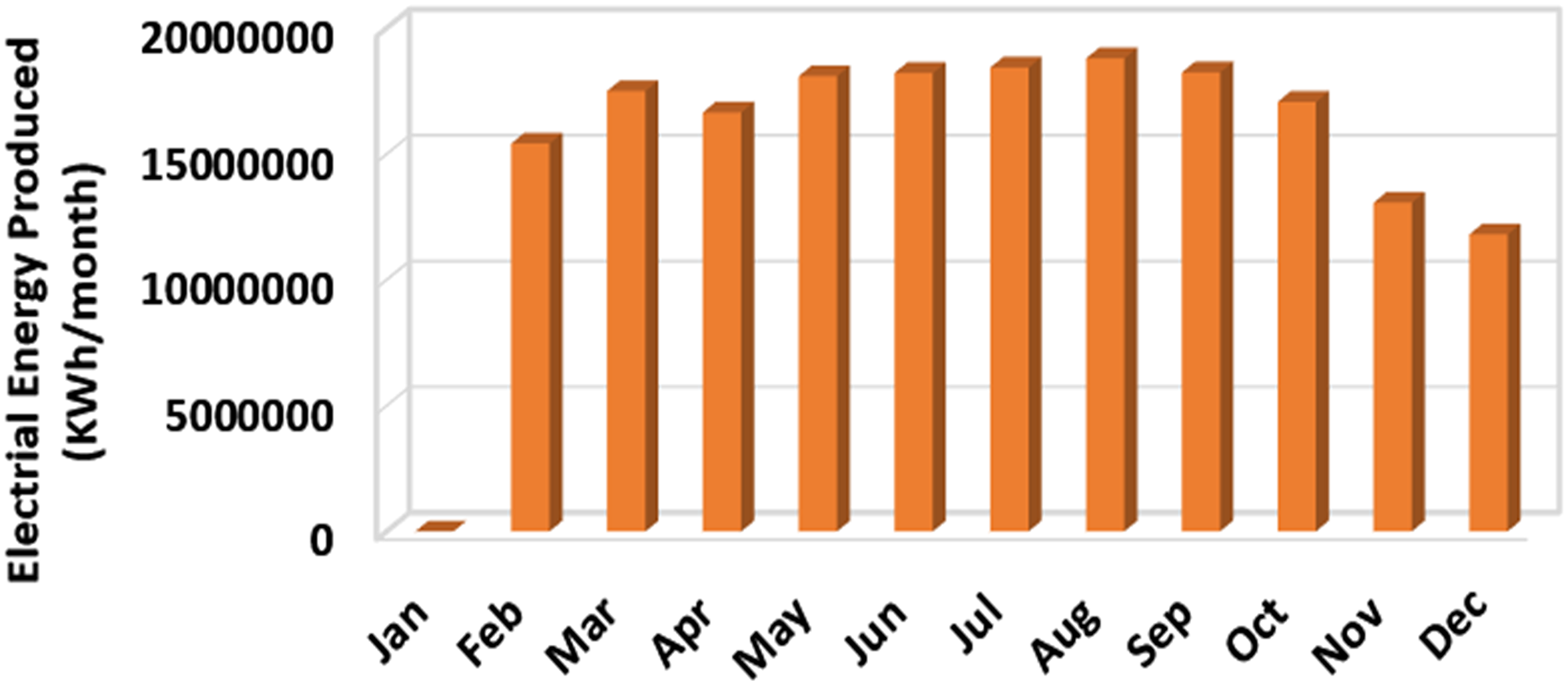
Amount of electrical energy (kWh) produced by all photovoltaic (PV) systems in each month of the year by one module.
In summary, it can be concluded that PV-based generation is highly suitable in the weather conditions of Kuwait and it can be used to meet high load demand, especially during the daytime in hot summers.
PSIM software simulation results
The dynamic performance of the proposed PV-based street lighting system was assessed by simulating the complete proposed system by using PSIM software. The PV system is integrated into the utility grid through a single-phase inverter. The inverter produces a sinusoidal voltage of 240 V at a frequency of 50 Hz.
The total power provided by the three PV panels-based systems is shown in Figure 14. It can be observed from the figure that the total power of the PV system is not constant, and it is varying. This is because the output power of the solar depends on ambient temperature and solar irradiance.
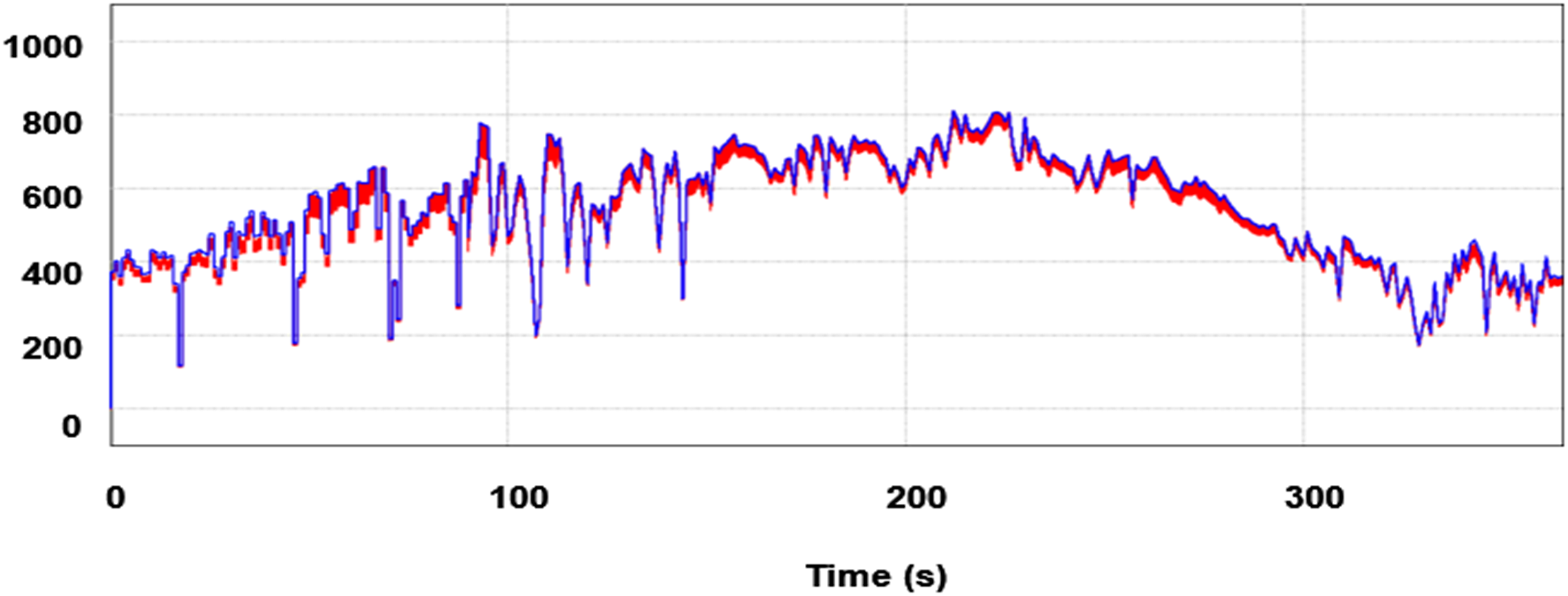
Total power delivered from the PV system.
The voltage and current obtained at the output of the single-phase inverter are shown in Figure 15. It can be clearly observed from the figure that the voltage and current are purely sinusoidal with a small phase angle between them. This shows that the inverter is supplying only real power to the grid. The dynamic response of the inverter is shown in Figure 16. The figure clearly shows that the output current and voltage of the proposed system reach the steady-state point after a small time. This verifies that the designed system is appropriate and can be used for PV-based street lighting systems.
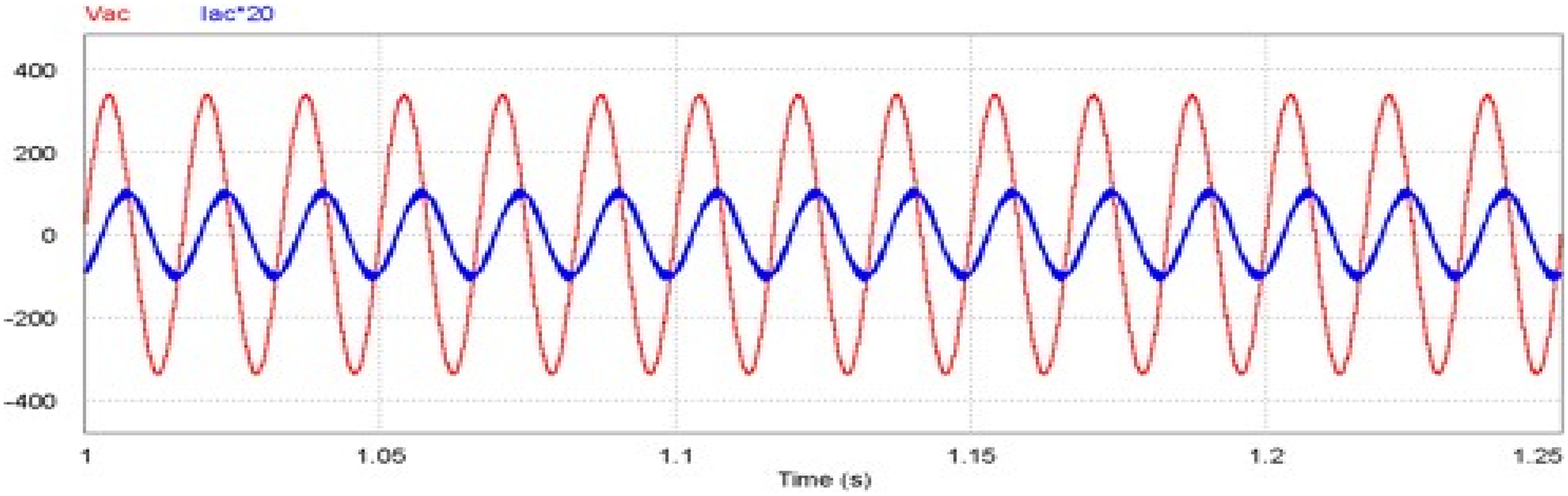
Output voltage and current of the single-phase inverter.
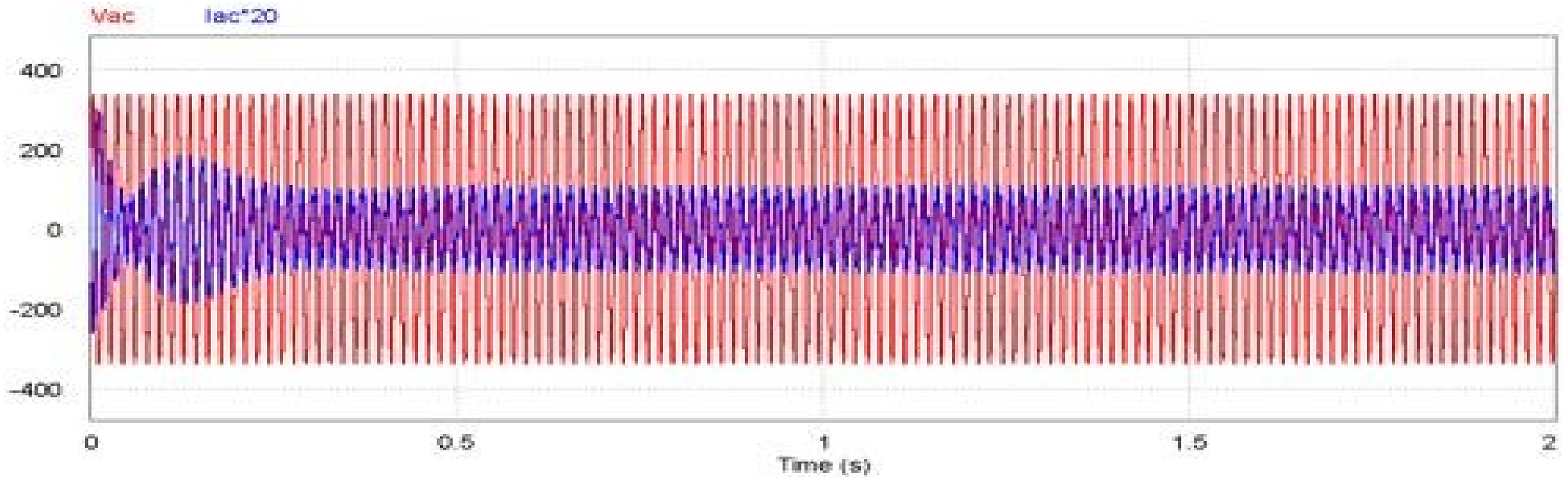
Dynamic performance of the single-phase inverter.
Cost and viability analysis
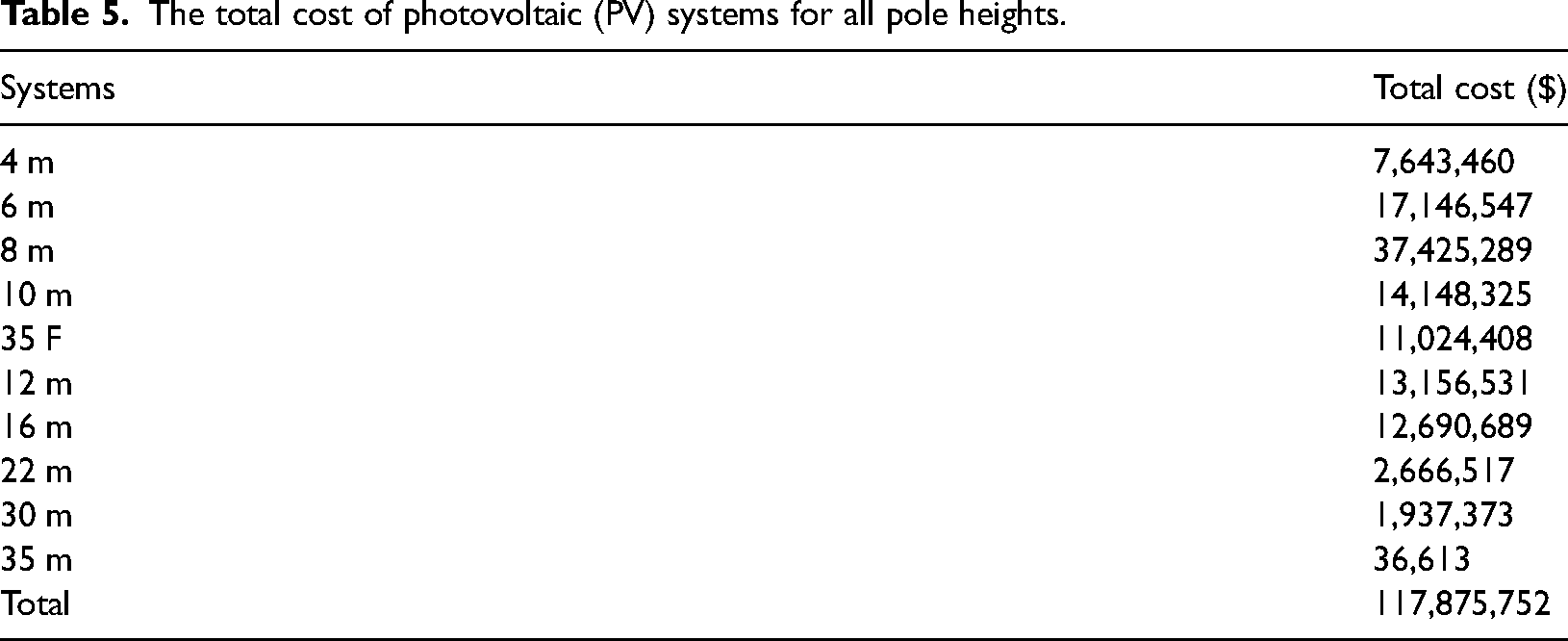
The cost of fossil fuel and global warming has become a major concern around the world. Therefore, renewable energy resources have attained considerable attention to producing clean and economical energy. This study presents a PV-based street lighting system as a solution to meet the high energy demands during the daytime in the state of Kuwait. The cost of installation of the whole system is estimated from the cost of all the components used in the proposed system. The cost analysis was done for all types of street lighting poles starting from 4 to 35 m in height. The total cost of the PV system for all pole heights is given in Table 5. It can be observed from the table that the system with an 8-m long pole has the highest cost. This is because the number of poles with 8 m height is large in the country as compared to the others. Therefore, the focus should be on installing the PV system by using them. The number of PV modules increases with the increase in pole height which will cause the price to go higher.
The total cost of photovoltaic (PV) systems for all pole heights.
With the advancement in PV technology, it is expected that the cost of installation will reduce. The calculation based on the data of the previous 2 years shows a degradation of 13% in the cost. Based on this analysis, it is predicted that the cost of the PV system will do down. The estimated installation cost for the next 9 years is shown in Figure 17.
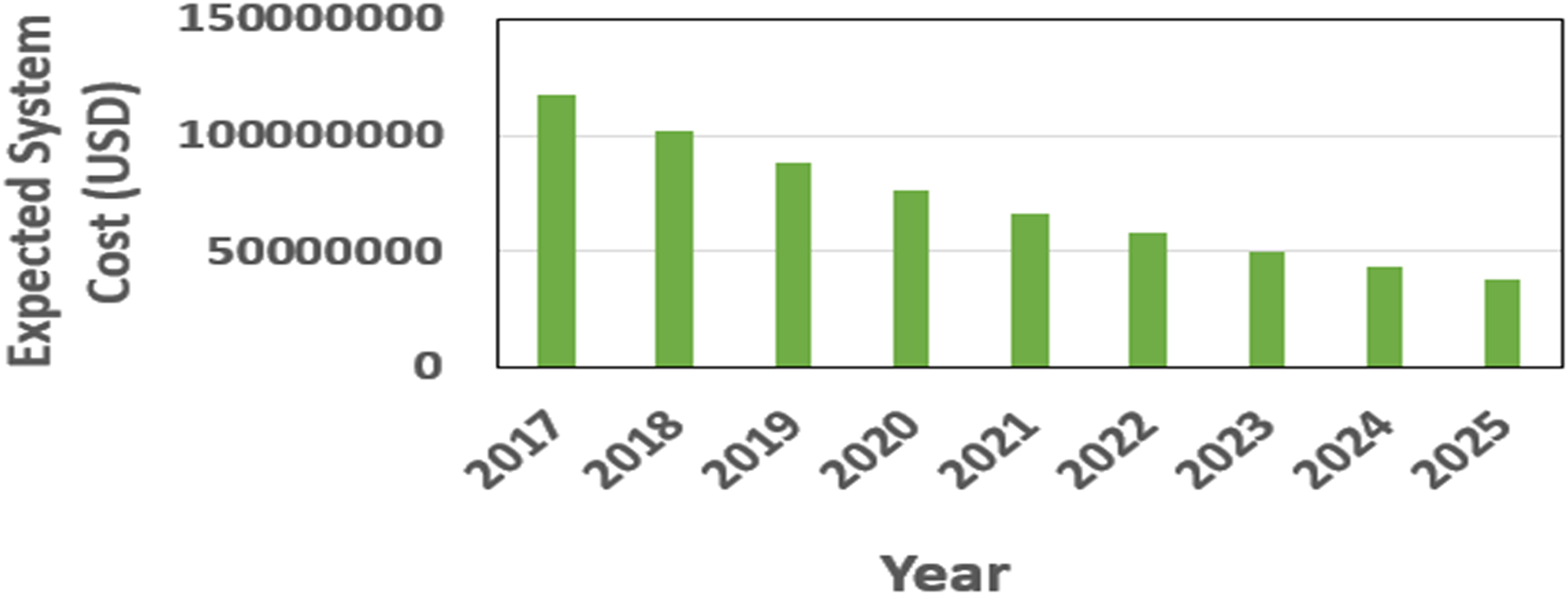
The estimated installation cost of the system for the next 9 years.
Payback period-feasibility study
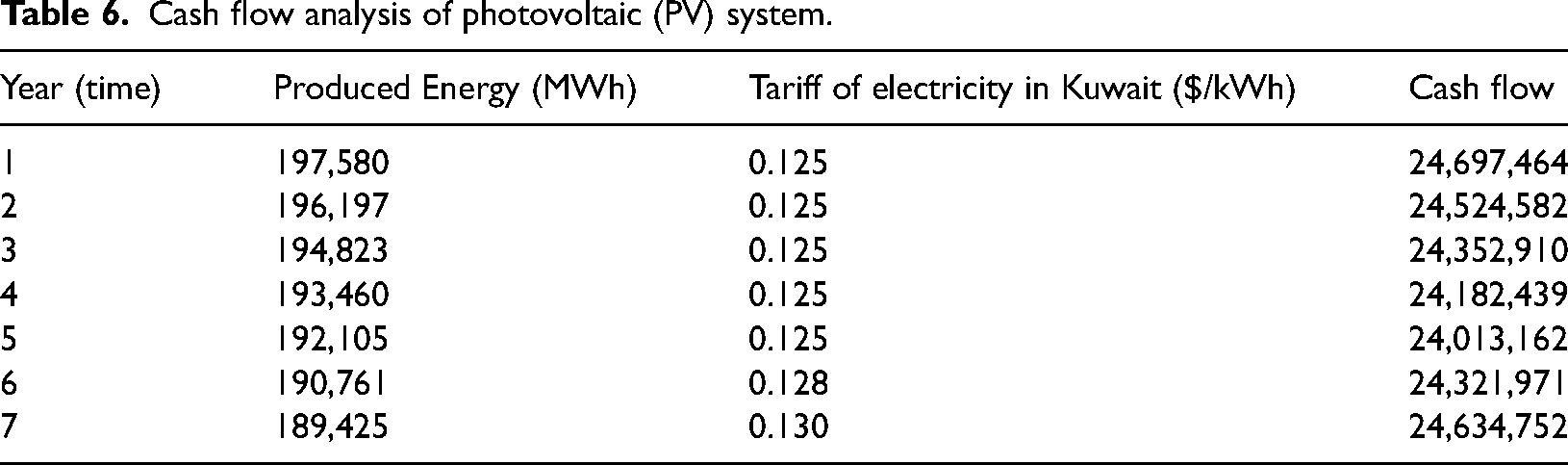
It is important to perform payback studies to decide the success of a project. The payback period of a project is the length of time that is needed to recover its capital cost in terms of savings or profit. In this study, firstly, the total cost of the project and the cost of electrical energy saved per year due to the installation of the PV system is calculated. Afterward, the payback period is estimated by using the above values. The cash flow analysis of the project is given in Table 6. The total cost of the proposed system is 117,875,752 USD. It can be observed from the table data that the system pays back its total cost within 5 years.
Cash flow analysis of photovoltaic (PV) system.
Environmental feasibility analysis
The state of Kuwait heavily depends on oil and gas to meet the energy demand. Carbon dioxide (CO2) gas is emitted when these types of fuels are burnt. CO2 emission causes global warming and damages the environment. The use of the proposed PV-based street lighting system can help to reduce CO2 emissions in the country. The CO2 saving due to the proposed system is shown in Figure 18. It can be seen from the figure that most of the CO2 savings can be obtained in the summer months. Moreover, the savings from fossil fuel-based generation stations are greater than those from gas-based generation. In summary, the proposed system not only can help the utility to meet the high load demand during the daytime but also it can reduce the CO2 emission in the country.
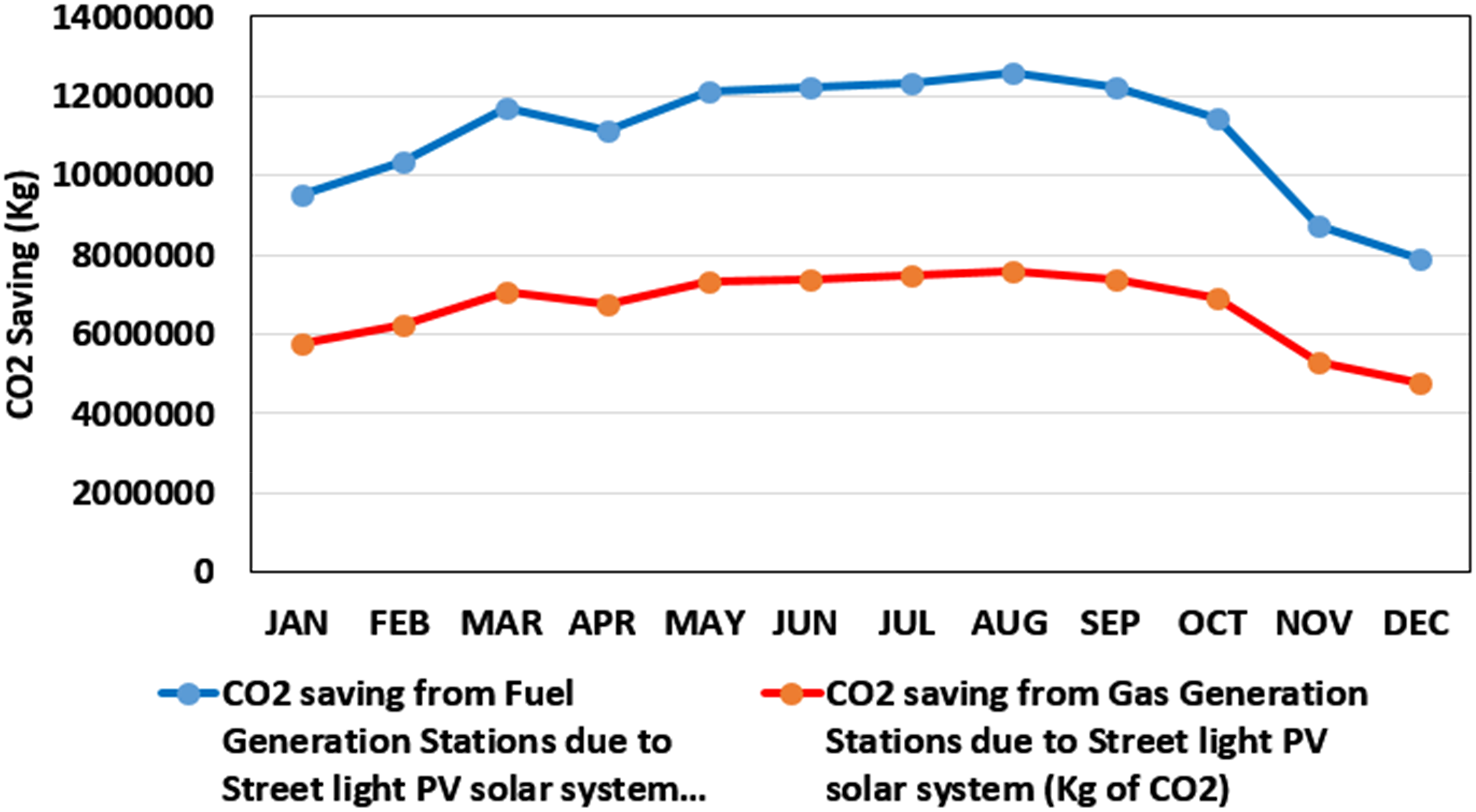
CO2 saving due to the proposed photovoltaic (PV)-based street lighting system.
Managerial insights and practical implications
The findings of this study provide valuable insights and implications for managers, policymakers, and stakeholders in the field of street lighting and sustainable urban development. The adoption of PV-based street lighting systems offers significant economic benefits and long-term financial advantages, as evidenced by the economic analysis conducted in this study. Decision-makers can use these findings to evaluate the cost-effectiveness and return on investment of implementing PV-based street lighting systems. Additionally, exploring financing models, incentives, and partnerships with renewable energy companies can support widespread adoption and facilitate the transition to sustainable energy solutions. Moreover, PV-based street lighting systems play a crucial role in promoting sustainable development in Kuwait. By reducing energy consumption and mitigating carbon emissions through the use of renewable energy sources, the country can enhance its environmental stewardship and contribute to global efforts in combating climate change. Policymakers and urban planners can incorporate these findings into their sustainability agendas, prioritizing the implementation of PV-based street lighting systems as part of a comprehensive strategy for sustainable development.
In conclusion, the findings of this study highlight the practical implications and benefits of PV-based street lighting systems for achieving energy independence, cost savings, environmental sustainability, and technological advancements. By leveraging these insights, decision-makers can make informed choices to drive the transition towards a more sustainable and efficient street lighting infrastructure in Kuwait.
Conclusions
Kuwait has a large number of street lighting poles with different heights and shapes. The total energy consumption by all types of street lighting poles in Kuwait has reached 1,816,236 kWh/year. This huge amount of electrical power can be comfortably obtained from the solar panels on street pole tops. The use of PV-based street lighting systems in Kuwait can bring significant benefits in terms of energy saving, reduction in greenhouse gas emissions, and cost-effectiveness. This study provided a feasibility study of PV-based street lighting systems in the state of Kuwait by using the data obtained from a practical testbed. Three different types of extensions for street lighting poles were proposed to install PV panels based on the height of the poles. The modeling of the proposed PV-based street lighting system was done through equivalent electrical circuits using PVSyst and PSIM software packages. The results of the study showed that PV-based street lighting can generate a significant amount of energy, with the potential to save a large amount of fuel and natural gas, as well as reduce CO2 emissions. The major findings of the study are as follows:
It was found that PV-based street lighting can produce 18,806,458 kWh/month of energy in summer. It was also found that the use of suggested PV systems can save fuel between 295,319.583 gallons to 470,161.458 gallons and natural gas between 1,122,214 and 1,786,614 m3. The CO2 emission can be reduced up to 12,600,327 kg in the case of fuel and 7,616,616 kg in the case of gas. Therefore, it is recommended that the government of Kuwait should consider PV-based street lighting systems to reduce the reliance of the country on non-renewable sources of energy and to promote sustainable development.
These following research areas can contribute to further advancements in PV-based street lighting technology, enhancing its effectiveness, efficiency, and overall impact on energy consumption, environmental sustainability, and economic considerations.
The research on PV-based street lighting technology can be further extended towards various crucial areas. One such area involves the integration of energy storage systems, such as batteries or supercapacitors, to improve system reliability. Another key focus is the integration of PV-based street lighting systems into smart grids, which facilitates optimized energy distribution and the implementation of demand–response capabilities. Furthermore, conducting comprehensive assessments of environmental impacts and economic considerations ensures long-term sustainability and cost optimization.
Footnotes
Author contributions
All authors have contributed equally. All authors have read and agreed to the published version of the manuscript.
Declaration of conflicting interests
The author(s) declared no potential conflicts of interest with respect to the research, authorship, and/or publication of this article.
Funding
The author(s) disclosed receipt of the following financial support for the research, authorship, and/or publication of this article: This work was supported by the Deanship of Scientific Research, King Khalid University (grant number RGP2./400/44).
