




Abstract
Mineral dissolution and precipitation is an important factor affecting pore genesis and hydrocarbon accumulation in sedimentary basins. Differential diagenetic processes at different hydrocarbon charging periods generally cause disparate effects on reservoir quality, which is important for reservoir evaluation and prediction. Focusing on this question, petrologic work, quantitative analysis on reservoir quality including porosity, permeability, and micro-scale X-ray computer tomography were conducted in conglomeratic reservoirs of the late Permian Upper Wuerhe Formation (P3w) in the Shawan Sag, Junggar Basin, northwestern China. The results show that tuff and volcanic debris are enriched in the formation. Laumontites generally occur as cements in the reservoirs due to the alteration of volcanic materials and small amounts of early-stage calcite precipitated during eodiagenesis. Partial laumontite and calcite cements, as well as some debris and feldspar, are differentially dissolved due to differential hydrocarbon charging. During the continuous compaction of the reservoir, first-stage hydrocarbon charging occurred in the middle Jurassic when primary porosity almost disappeared. Hydrocarbon charging inhibited the precipitation of laumontite and calcite, promoting their dissolution. Second-stage hydrocarbon charging in the early Cretaceous further caused more extensive dissolution of laumontite and calcite, forming more than 70% secondary porosity. Authigenic quartz, kaolinite, and late-stage calcite are precipitated as the associated minerals of laumontite dissolution. This study presents the significance of reservoir reconstruction after hydrocarbon charging and suggests prospective hydrocarbon accumulations in deeply buried clastic reservoirs when hydrocarbon supply is sufficient from source rocks.
Introduction
Mineral dissolution promoted by geological fluids is a key factor in improving reservoir quality, especially in deeply buried reservoirs (>3500 m; e.g., Franks and Forester, 1984; Mahmic et al., 2018; Wilkinson et al., 2006; Yuan et al., 2017). Dissolution is usually related to hydrocarbon-bearing fluids, which are common in sedimentary basins (Franks and Forester, 1984; Kang et al., 2018; Seewald, 2003). The charge of hydrocarbon-bearing fluids brings organic acids and CO2 into reservoirs and changes the fluid conditions in the formation (Seewald, 2003; Surdam et al., 1993). This change causes a series of mineral dissolution-precipitation reactions, resulting in multiple stages of intergranular cements and the paragenetic assemblage of various authigenic minerals (e.g., Blake and Walter, 1999; Surdam et al., 1984, 1993; Zhi et al., 2022). The charge of the fluid indirectly forms anomalously high porosity by promoting the dissolution of carbonate minerals and silicate minerals, including feldspar (Bjørlykke, 1994; Kang et al., 2019; Surdam et al., 1984, 1993; Taylor et al., 2010). Due to differential burial and thermal history, different charge periods of oil and gas generally cause differential dissolution responses and processes, eventually forming differential secondary porosity.
Oil exploration progress has been achieved in the sandy conglomerate reservoir in the Upper Permian Wuerhe (P3w) Formation in the Shawan Sag and the nearby Zhonguai Uplift, Junggar Basin, northwestern China. Abundant secondary pores exist in these reservoirs due to dissolution of laumontite and calcite cements as well as debris. These secondary pores generally occur together with bitumen, and thus its generation was most likely related to hydrocarbon charging. According to burial history, thermal evolution history and fluid inclusion studies, hydrocarbon charge in the P3w Formation mainly occurred in two periods: the middle Jurassic and early Cretaceous (Pan et al., 2021; Wang, 2016). For the former hydrocarbon emplacement, its charging scale and intensity are quite limited compared to the second one (Zhi et al., 2022). The two charge periods may promote differential amounts of secondary porosity. Quantifying this difference of secondary porosity corresponding to the differential hydrocarbon charge periods is very important for reservoir evaluation and prediction, but to date, there have been no related studies on deep reservoirs. Thus, the research aim of this paper is to (a) identify the influences of hydrocarbon charge on the diagenetic process and evolutionary history of pores, and (b) to quantify the secondary porosity corresponding to different hydrocarbon charge periods in the Permian conglomerates. The results and methods of this study contribute to understanding similar deeply buried siliciclastic reservoirs worldwide.
Geologic setting
The study area is located in the Shawan Sag and the nearby Zhonguai Uplift in the western of the Junggar Basin, northwestern China. It is adjacent to the Mahu Sag in the north, the Hongche Fault Zone in the west, the Homatu Anticline in the south, and the Western P1 Sag and Mosuowan Uplift in the east (Figure 1(a)). The sag is about 90 km from east to west and 85 km from north to south. Since the Late Carboniferous, affected by the subduction, accretion, and closure of the Darbute Ocean and the northern Tianshan Ocean, several dustpan-shaped fault depressions developed in the sag (Liang et al., 2018; Tang et al., 2015). At the end of the early Permian, the emergence of the structural wedge in the transition zone between the Shawan Sag and the Chepaizi Uplift caused the topography to gradually become low from west to east (Liang et al., 2018). To the Late Triassic, the strata were uplifted to undergo denudation and formed unconformity. To the Cretaceous and Paleogene, the whole basin experienced stable subsidence. Since the Neogene, large-scale overthrusting tectonics occurred adjacent to the Tianshan Mountains due to the Himalayan movement, and the Shawan Sag was rapidly deflecting settlement. In the Neogene–Quaternary period, due to the large-scale overthrusting tectonics adjacent to the Tianshan Mountains as a response of the Himalayan movement, the sag gradually became slope southward forming current tectonic pattern (Kang et al., 2019).
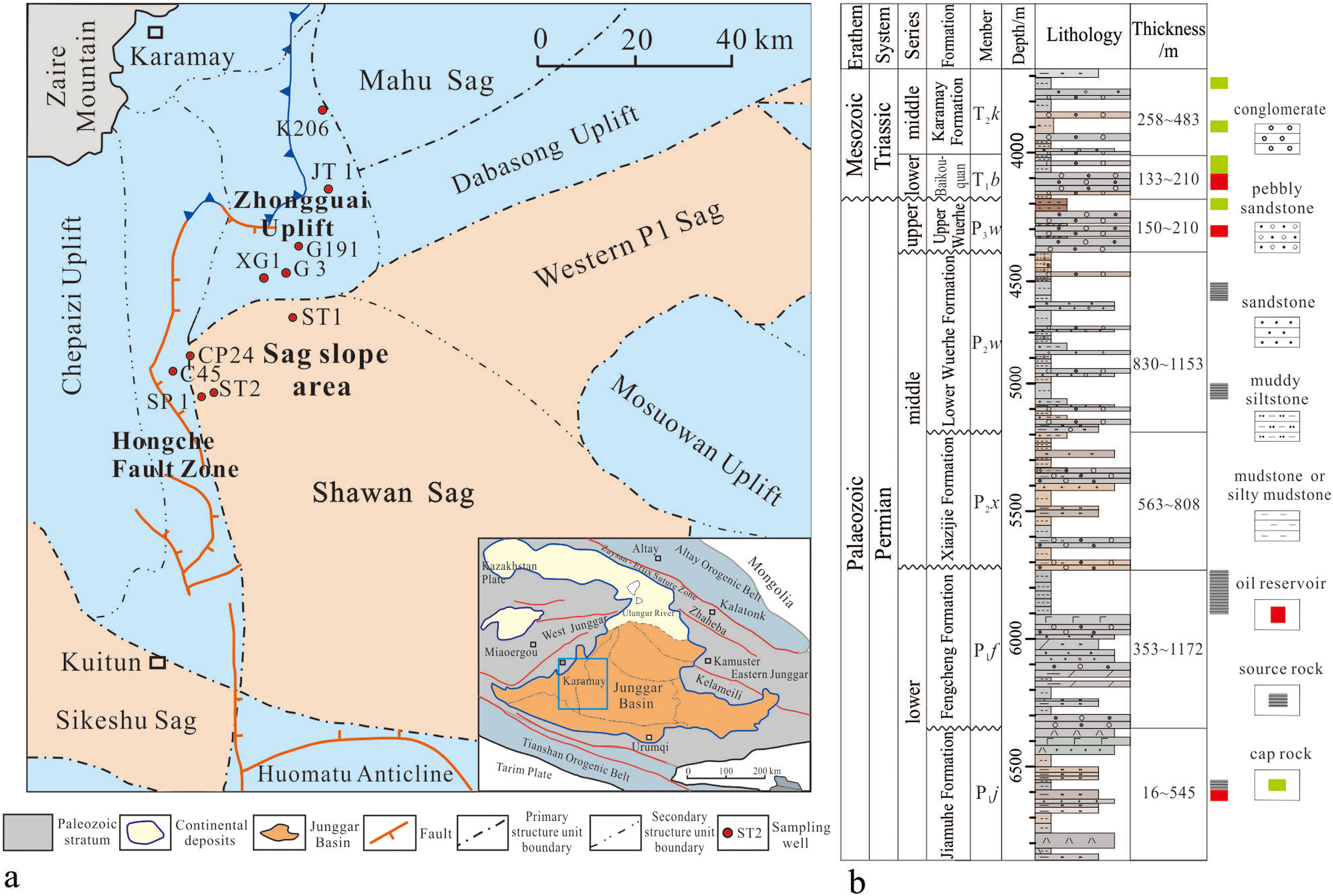
(a) Geologic map of the Shawan Sag and its surrounding areas; (b) lithological histogram of the study area.
The Upper Permian Wuerhe Formation overlies the Lower Wuerhe Formation of the middle Permian (P2w), underlies the Lower Triassic Baikouquan (T1b) Formation with a unconformable contact. The sedimentary thickness of the P3w Formation is 150–210 m (Figure 1(b)), deposited in a coarse-grained fan-delta system (Du et al., 2019; Zou et al., 2007). This formation is composed of grey and brown coarse-grained conglomerate and reddish brown mudstone interlayers. The formation shows a fining sequence upwards overall, and the thickness of conglomerate also decreases upwards, reflecting a lake transgression system tract during deposition.
Three sets of mature to highly mature source rocks exist beside the Zhongguai Uplift including the Lower Wuerhe formation (P2w), the Fengcheng formation (P1f), and the Jiamuhe formation (P1j), guaranteeing the potential of large-scale hydrocarbon production in the P3w formation (Cao et al., 2005, 2020; Wang et al., 2023; Xia et al., 2022). During the middle Jurassic and early Cretaceous, two periods of oil and gas emplacement occurred as the faults became active and turned into the migration channels of oil and gas (Pan et al., 2021; Wang, 2016).
Samples and methods
Detailed core loggings were conducted for 10 wells in the study area, and 96 core samples were collected systematically with a vertical interval of less than 1 m. Optical microscopic observations were carried out on samples’ thin sections. In total, 32 representative samples were observed under Scanning electron microscopy (SEM), and criticial minerals were analyzed via energy dispersive spectrum (EDS). SEM was analyzed on MIRA 3 TESACN with 5 kV, 30 μm standard grating, 40 s counting time, and the EDS probe was Oxford Aztec X-Max 150 with 15 kV.
Furthermore, the porosity and permeability of the samples were measured in order to assess the effects of mineral dissolution on the physical properties of the reservoir. Core samples (25.4 mm in diameter and 40 mm long) were analyzed using helium techniques. A micro-scale X-ray computer tomography (X-CT) scanning was further used to provide a high-resolution three-dimensional (3D) reconstruction of the pore network of reservoir rocks. The 3D imaging was measured using a Phoenix Nanotom S scanner with a working voltage of 180 kV, and tomogram imaging spatial resolution of around 1 μm.
Results
Petrological features
Petrological identification shows that the P3w Formation mainly contains grey-white and brown sandy conglomerate with brown mudstone interlayers. The grain compositions of sandy conglomerate are dominated by debris (Figure 2(a), > 90%) with the content of quartz and feldspar low than 10%. The debris is mainly mafic–intermediate volcanic rock debris (Figure 2(a), (c)) with low contents (< 15%) of metamorphic and sedimentary rock debris. Volcanic rock debris is mainly tuff debris (Figures 2(a), (b)), and small amounts of basalt and andesite debris (Figure 2(c)). Overall, the poor sorting and subangular-subcircular clast shape (Figure 2(a)) show low textural maturity of this formation, and revealing the characteristics of adjacent to provenance areas.
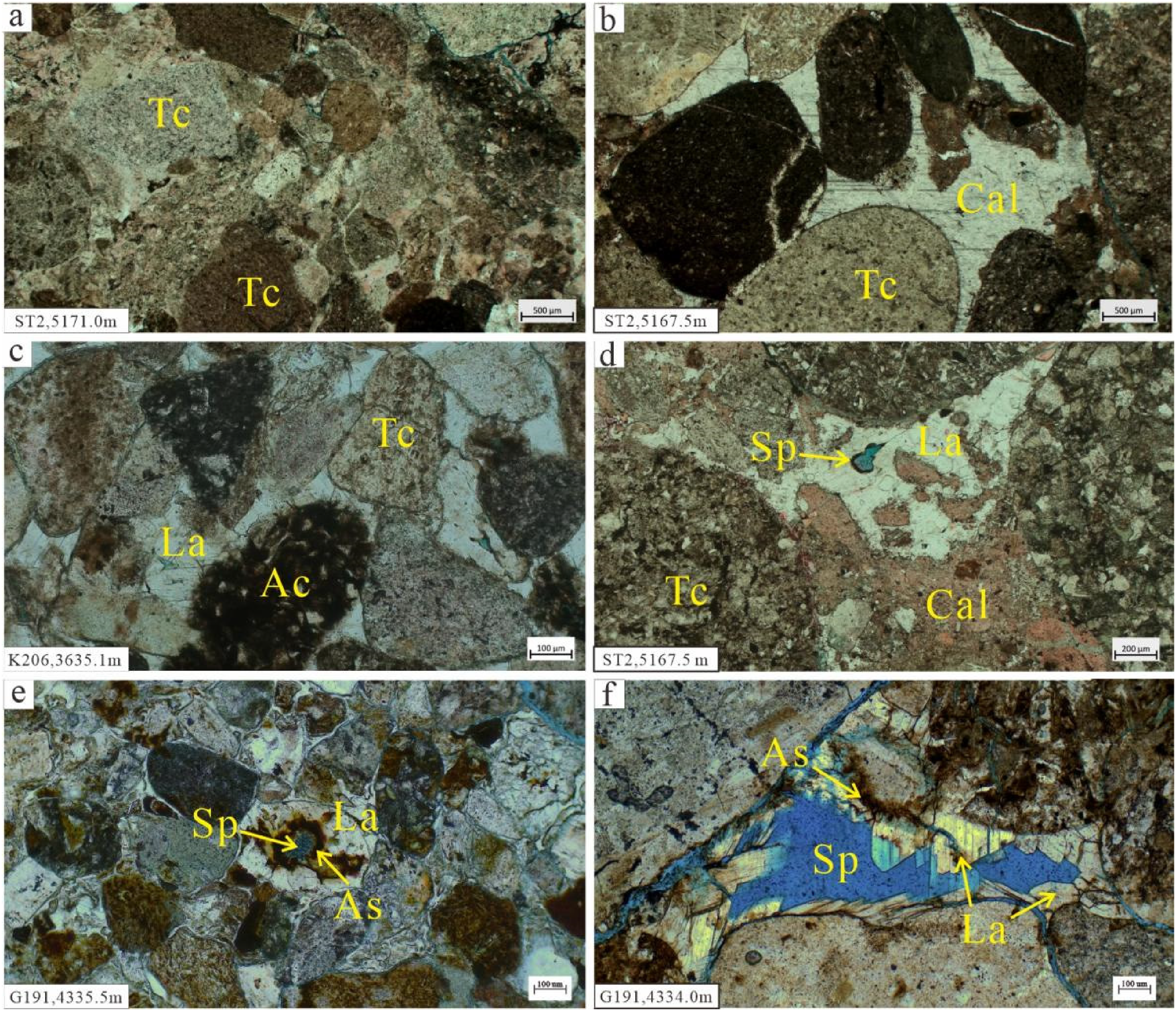
Petrological characteristics of the upper Wuerhe formation. (a) Greyish white sandstone,PPL, dry layer; (b) brown sandy conglomerate, PPL, water-bearing water; (c) grey sandy conglomerate, PPL, water-bearing water; (d) brown fine-grained conglomerate, PPL, heavy oil layer; (e) grey sandy conglomerate, PPL, heavy oil layer; (f) grey conglomerate, PPL, low-quality oil layer. PPL: plane-polarized light; Tc: tuffaceous clast; Cal: calcite; La: laumontite; Ac: andesite clast; Sp: secondary pores; As: asphalt.
The reservoir rocks are divided into oil and gas layer, water layer, and dry layer according to the differences in fluid properties. Authigenic laumontite and sparry calcite occur together with authigenic quartz and kaolinite (Figure 3(b), (d), and (e)). Illite/smectite mixed layer could be observed in intergranular pores (Figure 3(c)). Solid asphalt was also found in residual and secondary pores indicating hydrocarbon emplacement in oil-bearing layers (Figure 2(d) to (f)). In dry layers, the contents of laumontite and calcite obviously decrease, and abundant illite/smectite mixed layer occur as grain coat and matrix in intergranular pores.
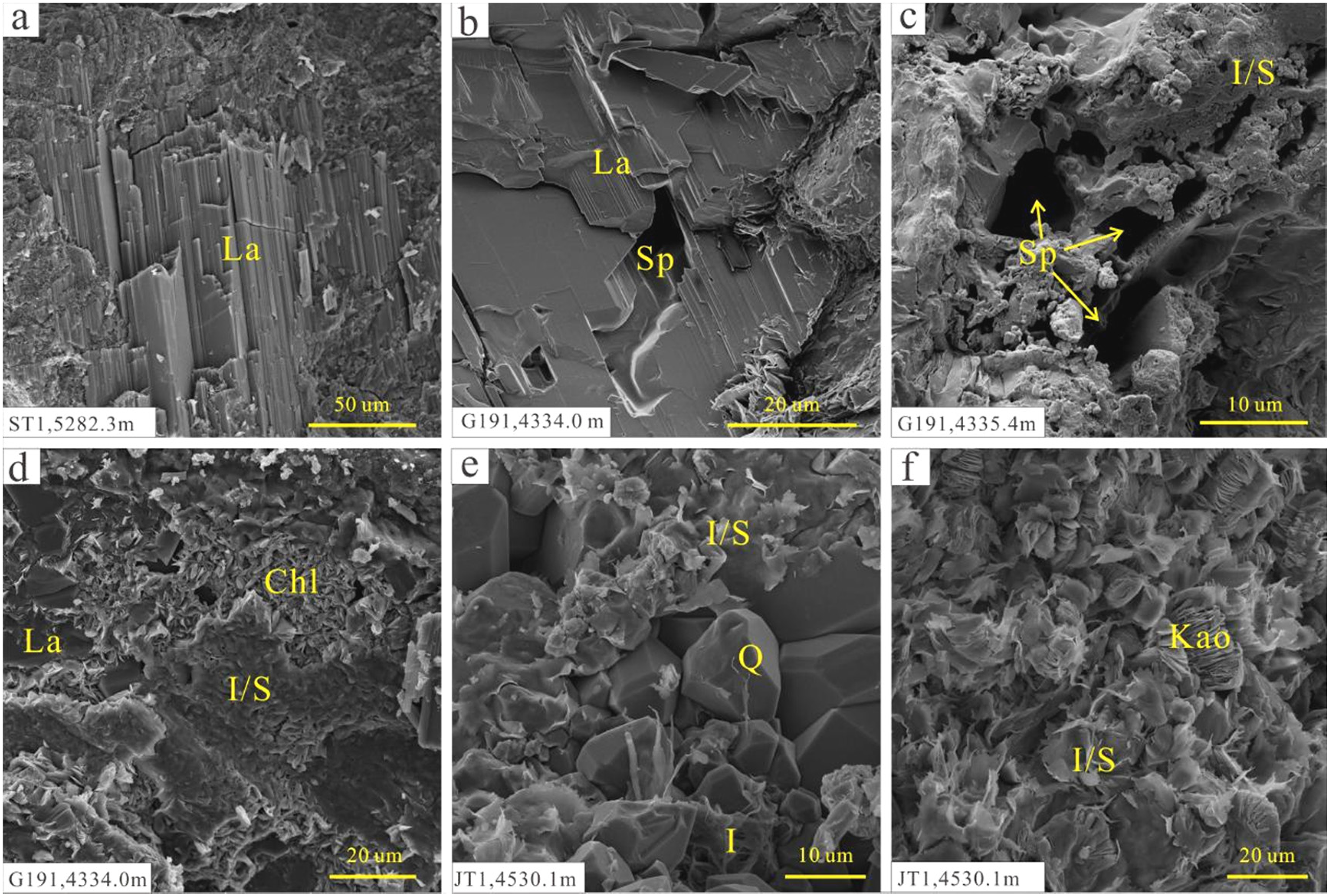
SEM images of interparticle mineral compositions in the P3w sandy conglomerates. (a) Grey gravelly conglomerate, water-bearing layer; (b) grey sandy conglomerate, heavy oil layer; (c) grey sandy conglomerate, heavy oil layer; (d) grey sandy conglomerate, heavy oil layer; (e) grey fine-grained conglomerate, oil layer; (f) grey fine-grained conglomerate, oil layer. SEM: scanning electron microscopic; La: laumontite; Sp: secondary pores; I/S: illite/smectite mixed layer; Chl: chlorite; Q: quartz;I: illite; K: kaolite.
Diagenesis phenomena
During diagenesis, the P3w Formation experienced mechanical compaction, mineral dissolution, cementation, and mineral replacement. As the burial depth of the studied strata generally has been more than 4000 m, all the sandy conglomerates underwent strong mechanical compaction. The particles exist with each other as linear-contact to concave- and convex-contact (Figure 2(a)), and the primary pores were almost exhausted (Figure 2(b)).
In oil and gas layers, laumontite and calcite cements occur as basal cementation (Figure 2(d) to (f)). Abundant secondary pores (Figure 3(b)) were generated due to extensive dissolution of laumontite and calcite cement and feldspar debris (Figures 2(d) and (e)). Bitumen often remained in the dissolved pores (Figure 2(e) and (f)). Late-stage calcite partially filled the dissolution pores of laumontite and feldspar (Figures 2(d)). Authigenic quartz (Figure 3(e)) and worm-like kaolinite aggregates (Figure 3(f)) were also found in the dissolution pores of laumontite. Leaf-like chlorite aggregates often precipitated among particles (Figure 3(d)), and smectite was gradually replaced to illite/smectite mixed layers via illitization (Figure 3(e)).
In water layers, mineral dissolution is weak, and small amounts of dissolution pores only occur in certain samples. Sparry laumontite and calcite exist as basal cementation (Figures 2(b), (c), 3(a)). In dry layers, the content of laumontite and calcite significantly decrease, almost not undergoing dissolution. Smectite experienced extensive illitization forming abundant illite/smectite mixed layer.
Identification oil from different accumulation periods
Fluorescence microscopy showed that the color difference between the two periods of hydrocarbon charging was significant. The early Jurassic oil and gas charging was dark green, while the early Cretaceous oil and gas charging was bright yellow (Figure 4).
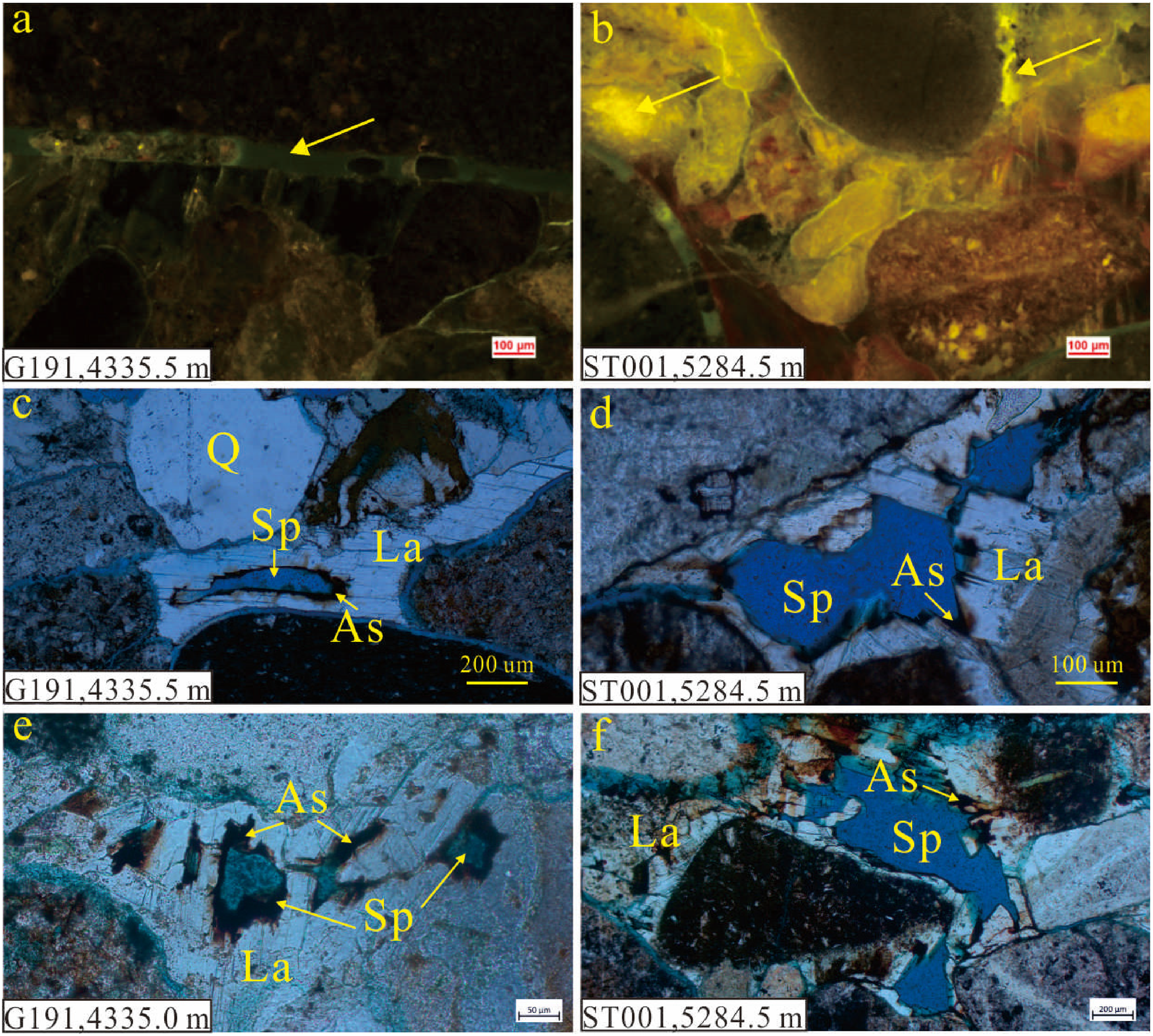
Hydrocarbon fluorescence photographs of the P3w. (a) The middle Jurassic crude oil was dark green, G191, grey oil-immersed medium sandstone, 4335.5 m ; (b) The early Cretaceous crude oil was bright yellow, ST001, grey sandy conglomerate, 5284.5 m; (c, e) are microscopic pictures under plane-polarized light for the same sample in picture (a); (d, f) are for the same sample in picture (b).
Reservoir quality differences related to different hydrocarbon charging periods
There are significant differences in the reservoir space and porosity of samples corresponding to the two periods of oil-gas charging (Figure 5). Specifically, there are 16 oil and gas charging samples from the early Jurassic period, which contain a small amount of primary pores. Meanwhile, the dissolution phenomenon of laumontite and feldspar is weak, the development degree of secondary pores is low, and micro-fractures are hardly developed. The porosity of these samples ranges from 6.10% to 10.14% with an average of 8.18%, and the permeability ranges from 0.16 to 30.8 mD with an average of 5.66 mD. There are 27 samples mainly charged with oil and gas in the early Cretaceous. In these samples, a small amount of primary pores remain, and alkaline minerals such as feldspar, laumontite, and calcite are dissolved in large quantities. The secondary pores are obviously developed, and a small number of micro-fractures are also developed. The porosity of these samples ranged from 8% to 17.5%, with an average of 13.24%, and the permeability ranged from 0.16 to 179 mD, with an average of 23.76 mD.
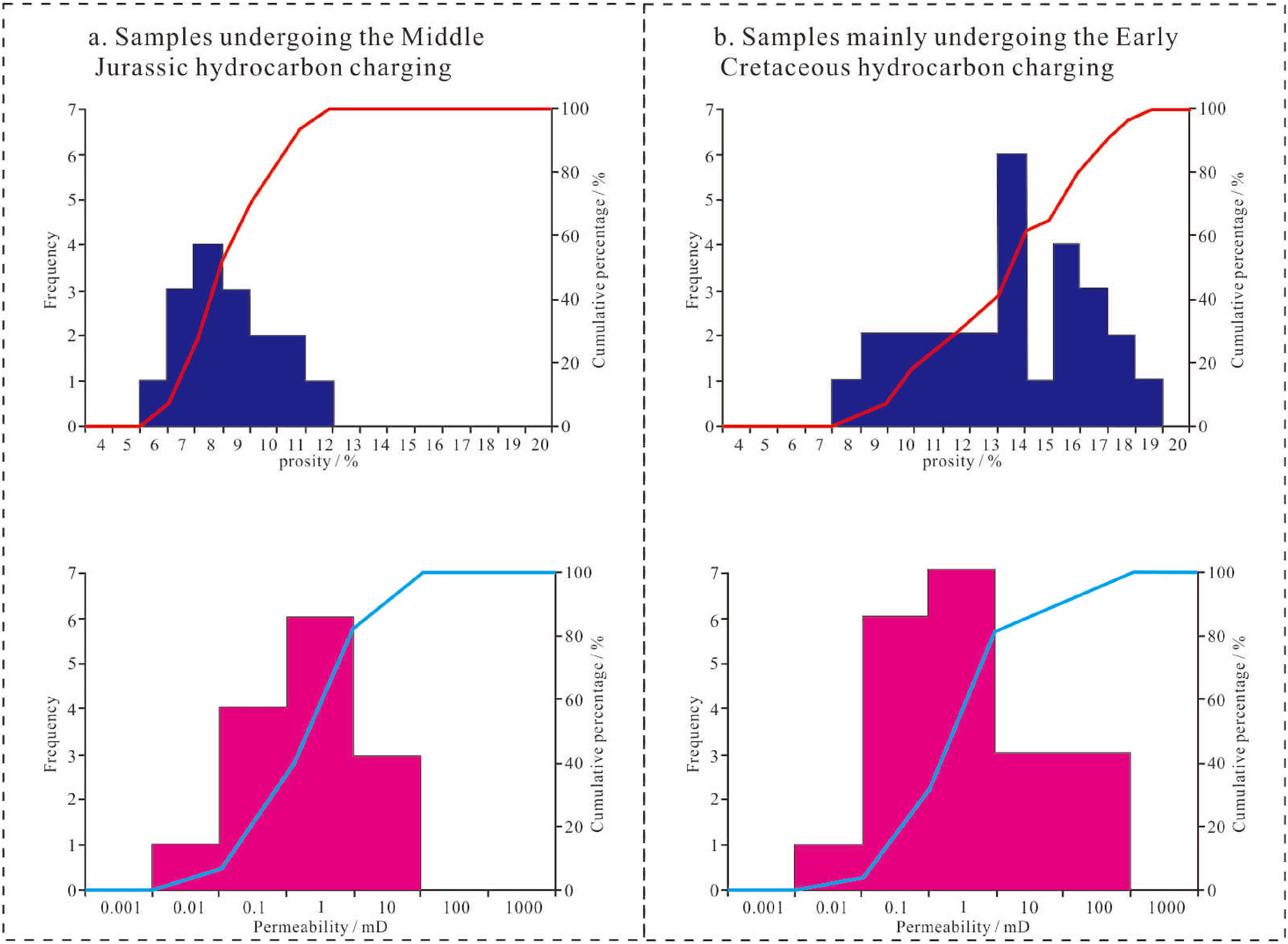
Columnar statistical diagram of porosity and permeability of conglomerate in the P3w. (a) Histogram of distribution of porosity and permeability of the middle Jurassic hydrocarbon charging samples; (b) histogram of distribution of porosity and permeability of the samples mainly hydrocarbon charged in early Cretaceous early Cretaceous.
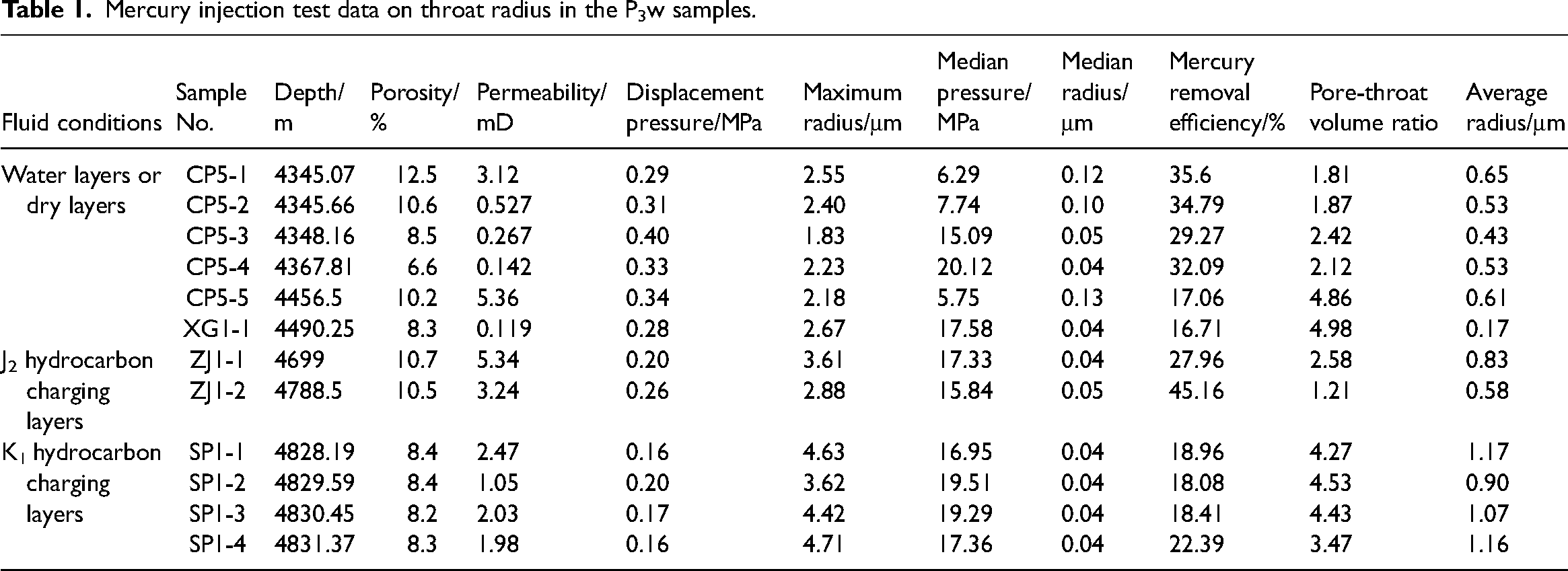
In order to quantify the characteristics of reservoir throat, mercury injection test was carried out. In clastic strata, throat diameters of different lithofacies often differ significantly. We selected sandy fine conglomerate samples charged with oil and gas in the middle Jurassic and early Cretaceous respectively. According to the test results, the throat diameter and distribution of the sandy fine conglomerate charged with oil and gas in the early Cretaceous is better than that of the sample charged with oil and gas in the middle Jurassic (Figure 6; Table 1). Due to the overall increase of laryngeal radius, the mercury injection curve of the former showed a downward trend (Figure 6(c)). The overall displacement pressure is less than 0.26 MPa, corresponding to the maximum pore throat radius of 2.88–4.71 μm, the mean saturation radius and mean capillary radius of 0.04–0.05 μm and 0.58–1.17 μm, respectively. In the middle Jurassic oil and gas charging samples, the displacement pressure is 0.28–0.40 MPa, corresponding to the maximum pore throat radius is 1.83–2.67 μm, and the mean saturation radius and capillary radius are 0.04–0.12 μm and 0.17–0.65 μm, respectively.
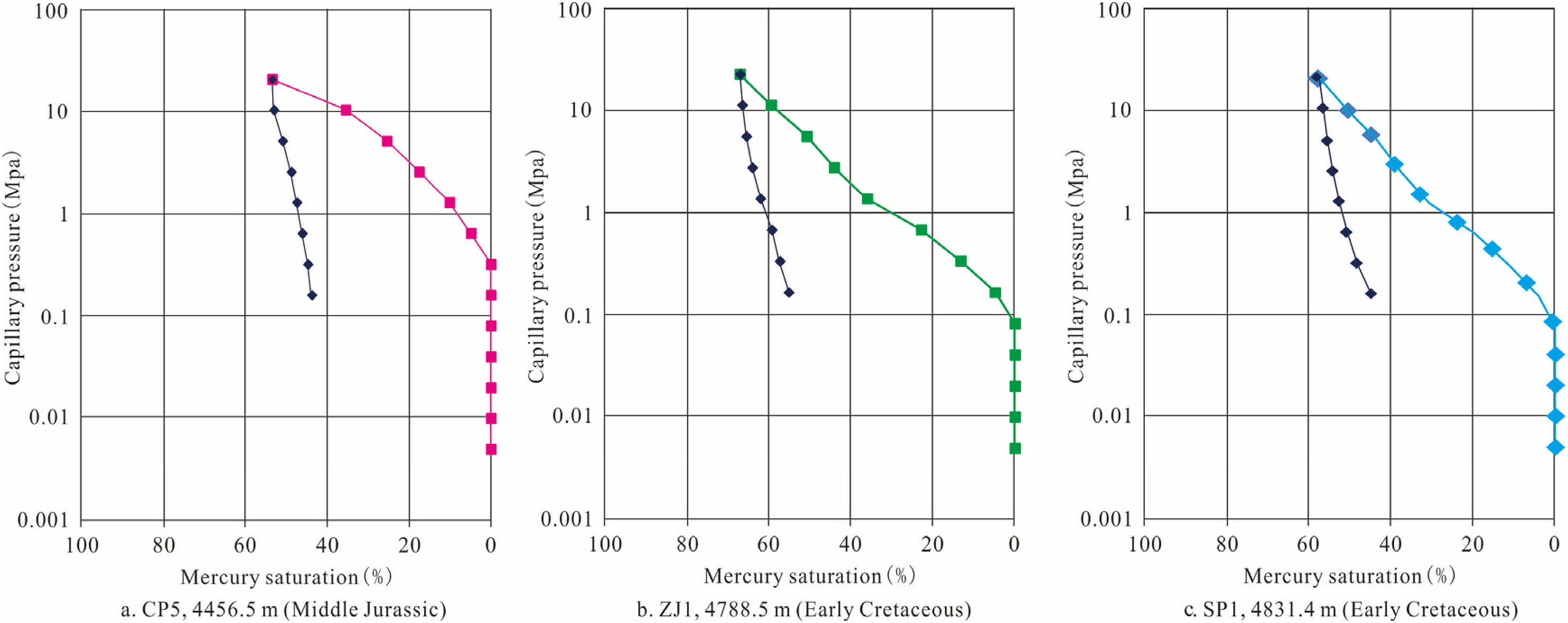
Mercury injection curve of the sandy fine conglomerate in the upper Wuerhe formation.
Mercury injection test data on throat radius in the P3w samples.
The samples that were only charged in the early Jurassic and mainly in the early Cretaceous were selected for X-CT scanning imaging to quantitatively characterize the degree of heterogeneity of the micro-pore structure of the reservoir. The results show that the pore connectivity of the samples only charged by oil and gas in the early Jurassic is poor, and a small number of primary pores are preserved, with most pore radii ranging from 0.5 to 4.0 μm, and the contribution of secondary pores is small (Figure 7(a), (b)). However, the pore connectivity of the samples dominated by oil and gas charging in the early Cretaceous is better, and the pore radius is concentrated in 1.0–16 μm, dominated by secondary pores (Figure 7(c), (d)). According to the microscopic face rate statistics, more than 70% of the secondary pores were formed by oil and gas charging at this stage.
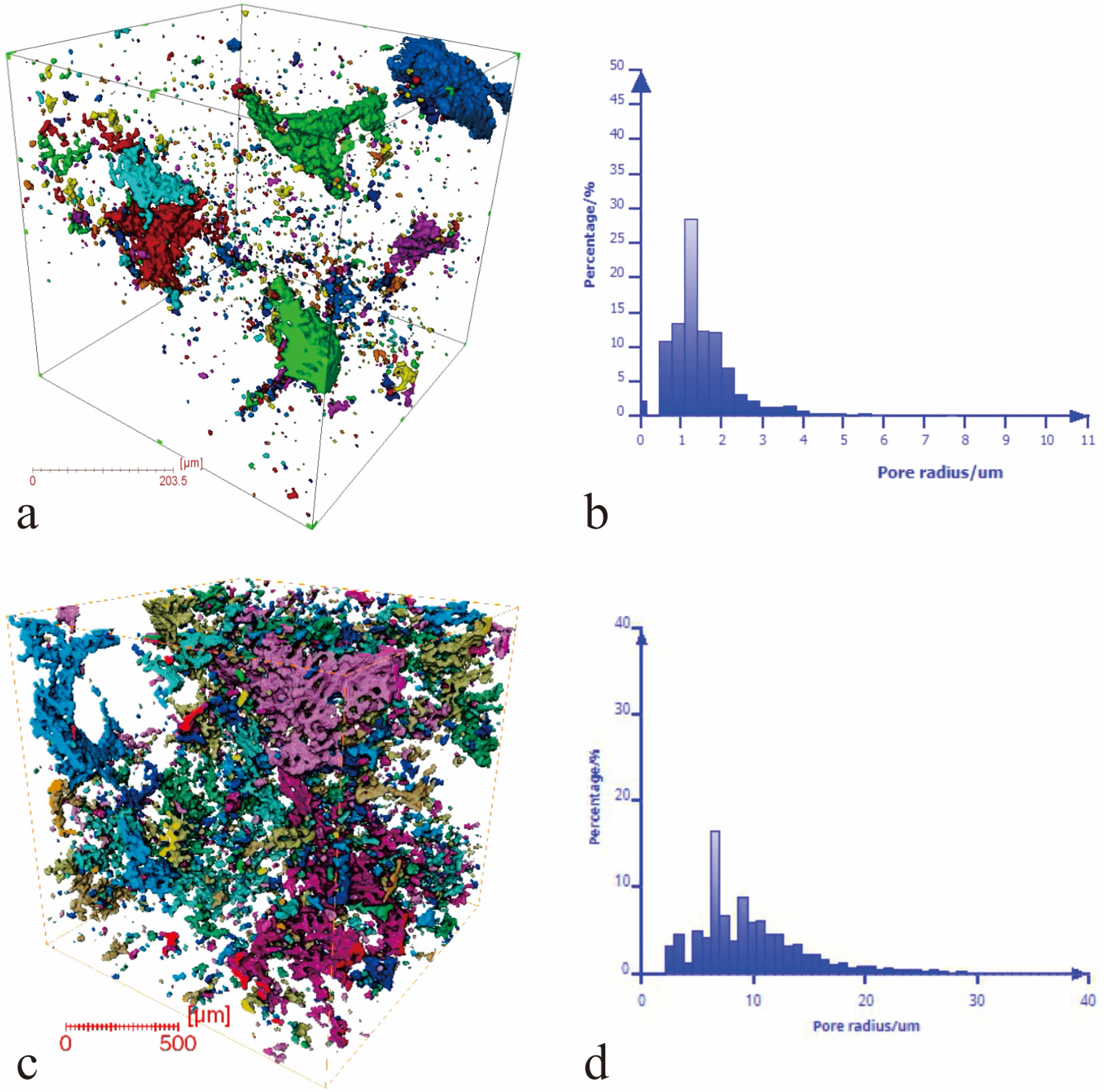
Computer tomographic (CT) image and frequency histogram of pore diameter distribution of the P3w reservoir samples. (a, b) middle Jurassic oil and gas charging sample, Well G3, 4760.8 m, grey sandy fine conglomerate; (c, d) Mainly early Cretaceous oil-gas charging sample, Well K206, 3842.5 m, grey-sandy fine conglomerate.
Discussion
Diagenesis sequence alteration due to hydrocarbon charging
Authigenic minerals are widely distributed and characterized by multistage precipitation in the P3w Formation (Figures 2, 8). The multistage authigenic minerals are responses to differential geological fluids and related complex fluid−rock interactions (Hu et al., 2023; Xie et al., 2020; Zhi et al., 2022). In oil and gas layers, hydrocarbon charging significantly changes the diagenetic sequence, leading to the dissolution and re-precipitation of various secondary minerals (Kang et al., 2019; Swart, 2015; Walkden and Berry, 1984; Wu et al., 2017). In the early diagenetic period, pore water was continuously transferred from the plastic mudstone interlayers to clast-supported sandy conglomerate layers. As the burial depth increased, the strata temperature gradually increased, and volcanic materials experienced extensive alteration and further precipitated authigenic laumontite as basal cementation (Zhi et al., 2022; Zhu et al., 2016). This process led to an increase in pH values of pore water (Sample et al., 2017; Wallmann et al., 2008), inorganic CO2 and terrestrial Ca2+ in pore water were gradually concentrated, eventually precipitating the early-stage calcite in residual interparticle pores (Figures 2(b), 4(c)). The P3w Formation underwent an obvious depositional hiatus before the deposition of the overlying early Triassic Baikouquanu Formation, forming the Permian/Triassic unconformity around the sag (Figure 1(b)), so this formation was inevitably affected by meteoric water leaching during diagenesis (Yuan et al., 2017). The neutral to acidic meteoric water changed the pore water properties and partially caused the recrystallization of early-stage calcite (Li et al., 2019; Yuan et al., 2017).
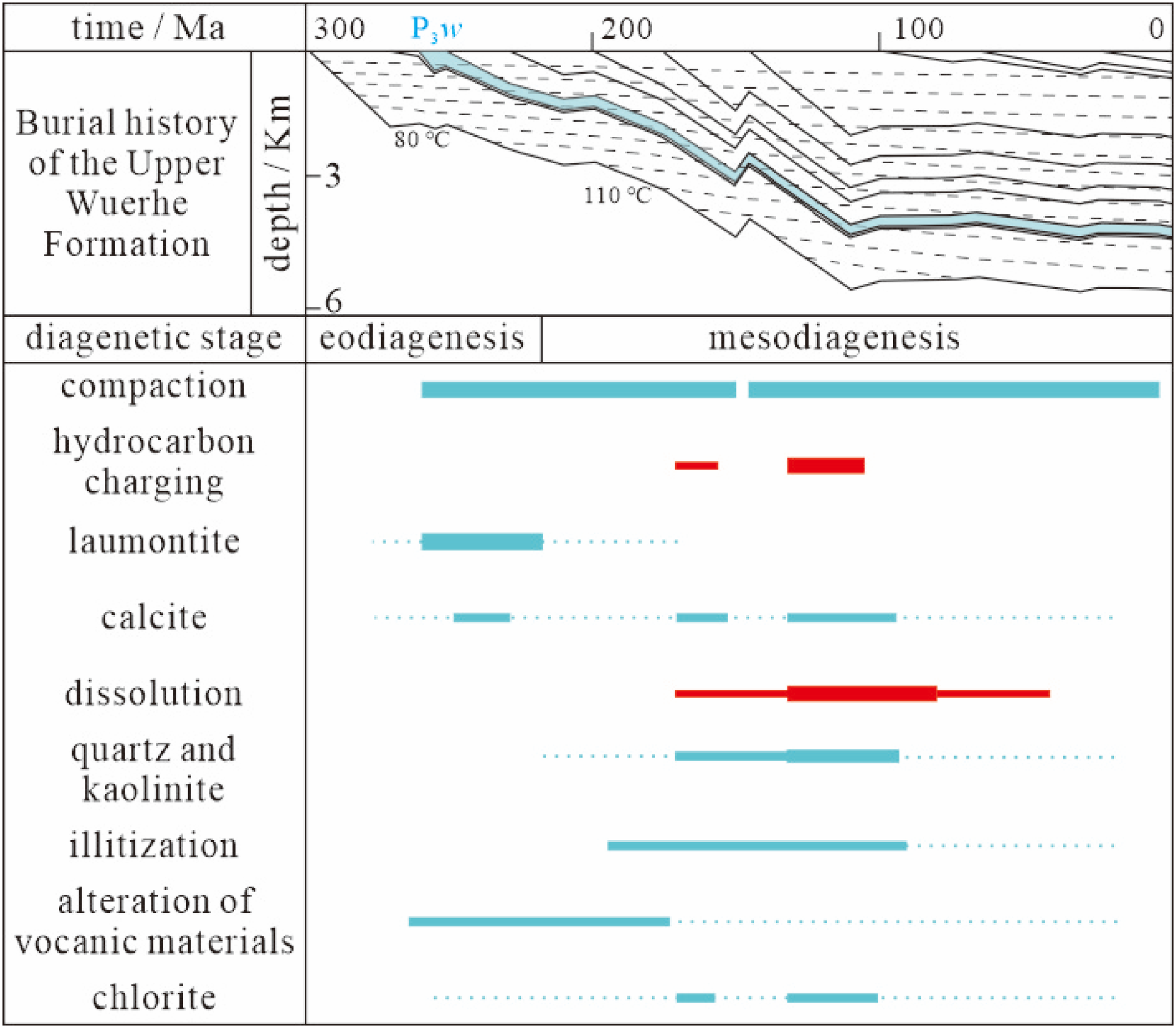
Integrated diagenetic evolution based on the diagenetic aspects, burial, and thermal history of the P3w sandy conglomerates in the Shawan Sag. The burial history and thermal evolution of P3w are taken from Well ZJ1. The basic stratigraphy and tectonic-geothermal evolution data are from Wang (2016) and Qiu et al. (2002), respectively.
To the mesodiagenessis, small-scale hydrocarbon emplacement occurred in the middle Jurassic (Figure 8, Pan et al., 2021), reducing the pH of formation water due to certain solubility of organic acids and organic CO2 (Seewald, 2003). It effectively inhibited the continued precipitation of laumontite and calcite (Figures 2(a), (b)), and even beganto dissolve these cements and unstable volcanic, feldspar debris. The primary pores preserved and secondary pores generated in the process provide effective reservoir space for the second-stage large-scale oil and gas charging in the early Cretaceous. The second large-scale hydrocarbon charging in the early Cretaceous brought abundant organic acids and organic CO2 (Figure 8, Surdam et al., 1984, 1989; Zhi et al., 2022), which further reduced the pH value of pore water, leading to the extensive dissolution of laumontite and early-stage calcite (Figure 2(e)). The increasing dissolution intensity of laumontite enhanced the porosity and permeability of the T1b reservoir rocks, especially in the oil and gas layers (Figure 9). These secondary pores became interconnected along cleavage fractures (Figure 3(e)), and even retaining small amounts of solid bitumen (Figure 2(e)). When the Ca2+, Al3+, Si4+ released through the dissolution reached saturated, secondary quartz and kaolinite precipitated in the dissolution pores of laumonite (Figures 3(d), (e)). Dissolution process also buffered the pH value of pore water (Surdam et al., 1984, 1993), leading to the precipitation of late-stage calcite in dissolution pores and partial residual interparticle pores (Zhi et al., 2022).
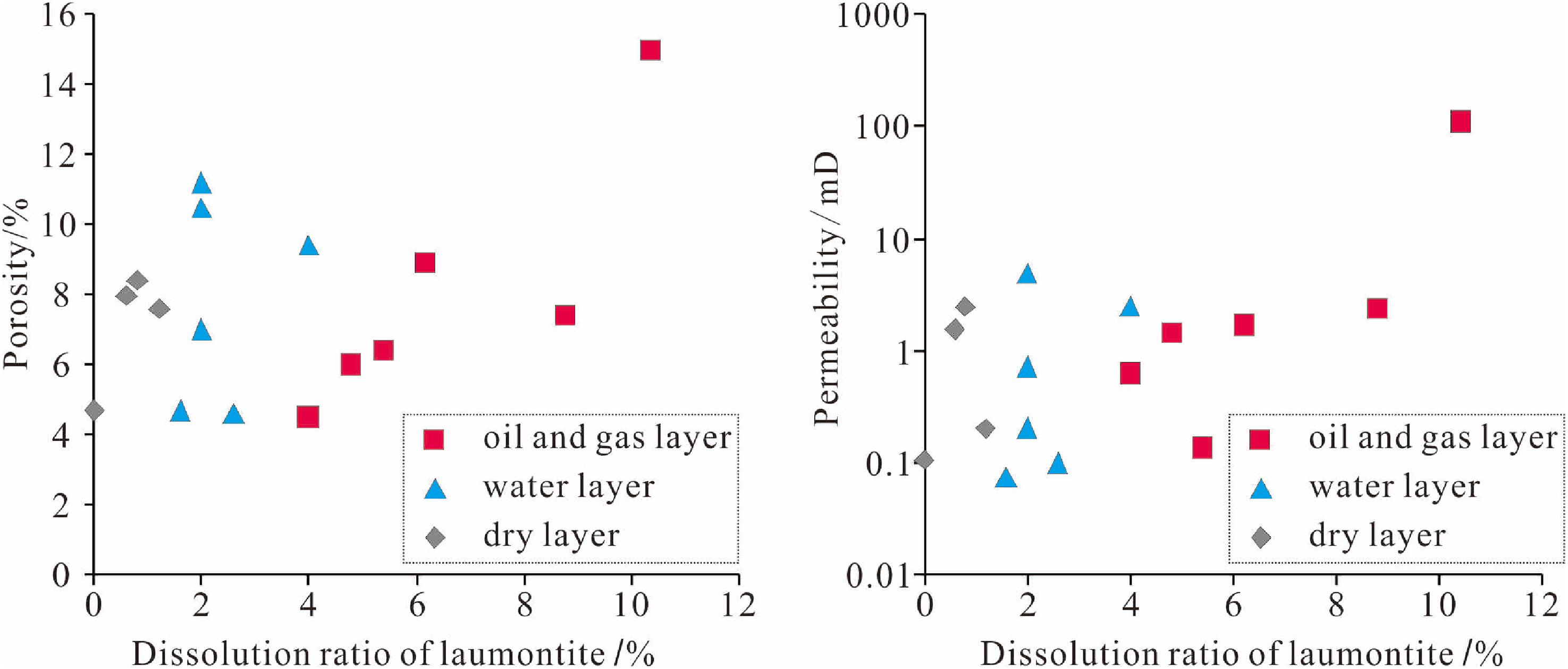
Increasing porosity and permeability with enhancing dissolution intensity of laumontite cement.
Effects of two hydrocarbon charging periods on reservoir quality
During the burial process, the reservoir rocks of the P3w formation gradually became tight because of increasing compaction, and the first-stage hydrocarbon charging occurred near the critical point where the primary intergranular pores were about to disappear (Figure 2(a)). Its charging inhibited the cementation of laumontite and calcite in the reservoir, preserved a small number of primary pores, and promoted the slight dissolution of alkaline minerals in the reservoir. Its contribution to the secondary porosity is limited, but it preserved certain porosity in the reservoir and laid the foundation of large-scale oil and gas accumulation during the early Cretaceous. The contact relationship between asphalt, laumontite and secondary pores shows that for most samples secondary pore is smaller when the oil and gas are mainly charged in the middle Jurassic, while it is larger when the samples underwent two phases hydrocarbon charging, or only underwent the charging in the early Cretaceous (Figure 4). This indicates that the second-stage hydrocarbon charging dominated the formation of secondary pores.
Combing fluorescence observation under the microscope and porosity data, the pore evolution curve was reconstructed in four tectonic units of the study area (Figure 10). In these deep-buried conglomerate reservoirs, if they didn’t undergo mineral dissolution during diagenesis, the porosity should gradually decrease with the increase of burial depth. When the depth of burial is approaching 4000 m, the porosity will decrease to less than 6% at layers not experiencing hydrocarbon charging (Figure 10). However, the actual porosity of several oil and gas layers at this depth even reaches 10%–15%. Their porosity actually increased instead of decreasing, which is consistent with microscopic observations. The pores in these samples are mainly secondary dissolution pores within alkalic minerals such as laumontite. It should be noted that the secondary porosity development zones generally correspond to the two phases of hydrocarbon charging. In the four tectonic units, due to the increase of reservoir burial depth during the two periods of hydrocarbon charging, the depth of secondary porosity development zones also increased (Figure 10). Moreover, the porosity of the samples undergoing two periods of oil and gas charging is significantly higher than that of the samples undergoing the first-period hydrocarbon charging.
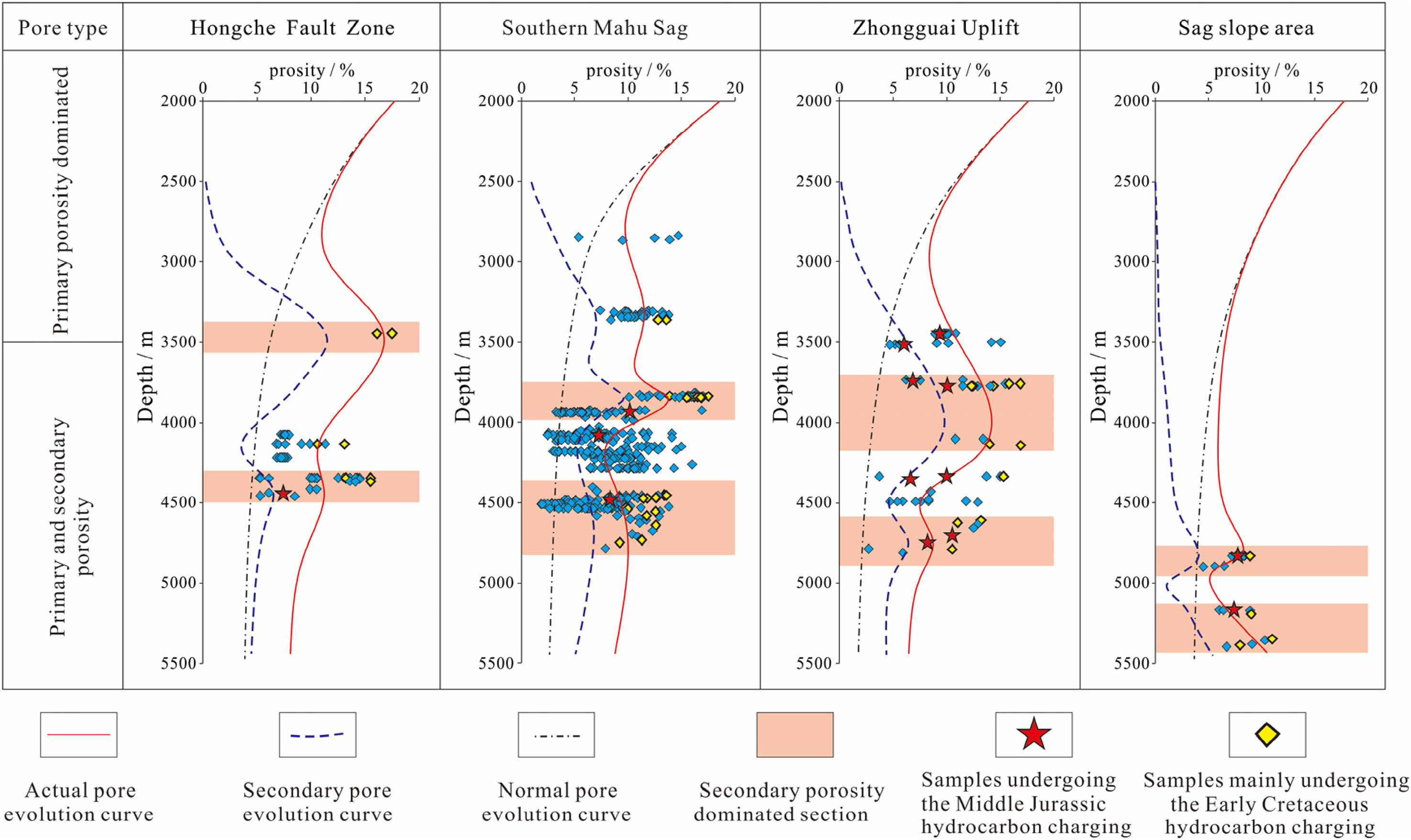
Porosity evolution curve of the upper Wuerhe formation conglomerate.
Compared with the small-scale hydrocarbon emplacement in the middle Jurassic, the intense oil and gas charging in the early Cretaceous promoted more extensive dissolution of alkalic minerals, such as laumontite, as well as basic rock debris in the reservoir (Figure 11). Mineral dissolution due to oil and gas charging especially the second-period charging significantly improved reservoir porosity, and the second-period hydrocarbon charging generated more than 70% secondary pores (Figure 10), significantly improved the reservoir space, and promoting the generation of high-quality reservoirs in the Shawan Sag.
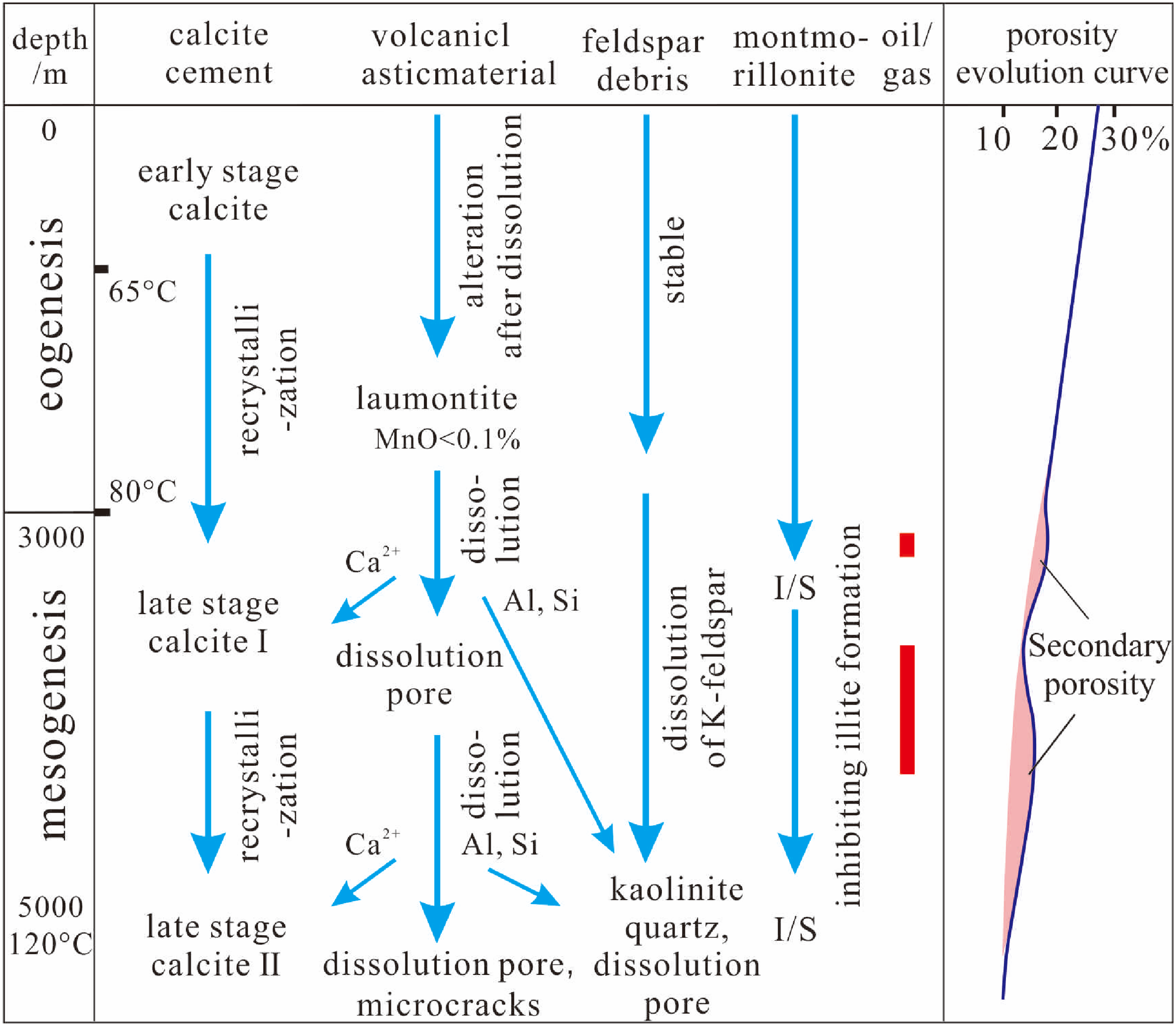
Conceptual diagram combining diagenetic sequence and porosity evolution for the P3w formation.
Conclusions
In this study, the effects of different hydrocarbon charging periods on the sandy conglomerate reservoir of the P3w Formation are quantitatively characterized by microscopic observation, porosity and permeability tests, mercury injection test, and X-CT scanning imaging. In the P3w Formation, the strong compaction and the precipitation of cement such as laumontite and calcite destroyed almost all primary pores, while considerable secondary pores appeared in the oil-bearing layers due to mineral dissolution. Hydrocarbon charging changed the diagenetic sequence, causing the dissolution of laumontite, feldspar and calcite, and thus precipitated secondary quartz and kaolinite. The transformation strength of reservoir rock by dissolution is different in different hydrocarbon charging periods. Hydrocarbon charging in the early Jurassic inhibited cementation and caused small-scale dissolution, which contributed less to the formation of reservoir space (< 30% secondary pores). However, the second large-scale hydrocarbon charging in the early Cretaceous directly led to extensive mineral dissolution, formed connected secondary reservoir space and improved permeability of rock, which was the main reservoir space formation period (> 70% secondary pores). The dissolution process caused by hydrocarbon charging not only results in high porosity and permeability areas in deeply buried strata, but also forms effective reservoirs coupled with hydrocarbon charging. It can be seen that the quantification of changes in rock porosity and permeability under the background of hydrocarbon charging is the key to clarify the formation of clastic reservoir, and this work also provides insights for the prediction and exploration of favorable distribution areas of deep-buried reservoirs.
Footnotes
Acknowledgments
We extend our gratitude to Professor Jianguo Pan (Petrochina) for his helpful discussions on this study.
Declaration of conflicting interests
The author(s) declared no potential conflicts of interest with respect to the research, authorship, and/or publication of this article.
Funding
The author(s) disclosed receipt of the following financial support for the research, authorship, and/or publication of this article: This work was supported by the Fundamental and Forward-looking Major Project of Petrochina (grant number 2021DJ0201).
