




Abstract
The heat damage in a coal face of a high-temperature mine is a significant mine disaster owing to various heat sources. Understanding the influence of various heat sources on the air temperature distribution in the coal face can help us to determine reasonable working conditions. Therefore, it is necessary to take into account the coupling relationship of multiple heat sources and obtain accurate prediction results. In this paper, the finite volume calculation method is used to establish a numerical model of heat dissipation of surrounding rock considering the difference in thermal and physical properties of coal and rock in the coal face. And then, a high-temperature coal mine in the northeast of China is taken as an example to explore the airflow temperature distribution law of the coal face under the influence of the absolute heat source and the relative heat source via the finite difference method. Furthermore, an orthogonal test was performed to investigate the influence degree of major factors on heat exchange of the coal face through range analysis. This work supplements the existing numerical model and research, and provides a theoretical basis and more accurate practical methods for predicting the thermal environment of coal face, especially in high mining depth mines.
Introduction
Coal consumption still accounts for a large proportion of energy consumption in China compared with other types of energy consumption (Guo et al., 2014; Hu et al., 2015; Loredo et al., 2017). The number of heat-hazard mines has been increasing due to an increase in mining depth and ground temperature (Chen et al., 2016; Feng et al., 2018). The temperature regulation function in the human body will become unbalanced due to long-term work in an excessively high-temperature environment, which will cause adverse physiological and psychological reactions (Hancock, 2020; Vogel and Rast, 2000). The coal face of a high-temperature mine is severely threatened by heat damage (Qin et al., 2015a, 2015b). The problem of thermal damage in a high-temperature mine has become a key research topic in the field of mine safety (Anderson and Souza, 2017; Kalantari and Ghoreishi-Madiseh, 2019; Liu et al., 2020).
Recently, great attention has been paid to maintaining a comfortable thermal environment in underground workplaces (Han et al., 2019). In order to solve the problem of high-temperature hazards in deep mining wells, the research on its heat exchange has increased significantly. A series of studies on the temperature field of underground space workplaces are mainly concentrated in the worker-gathering area (Chen et al., 2021; Hu et al., 2019). Han et al. (2019) conducted thermal comfort research on deep hot and humid mines. Park et al. (2016) considered dimensionless temperature and detailed flow structure characteristics in the optimization design of six different geometries of pipes. Zeng et al. (2017) analyzed the coupling effect of convection conduction with low inlet temperature airflow based on an actual railway tunnel section. The thermal state of underground space is mainly affected by rock temperature, ventilation parameters, airflow, etc. However, in this area, the thermal effect mainly comes from the high-temperature airflow of the working face (Guo et al., 2017; Xu et al., 2022). Reducing the temperature of the airflow in the area is necessary to prevent the airflow of the working face from being heated (Zhang et al., 2020). Therefore, the study of heat transfer characteristics in production mines is an important factor and plays a vital role in controlling thermal hazards.
The air flows in an underground confined space, causing the surrounding rock cooling and airflow heating due to the mutual influence of heat exchange between surrounding rock and airflow, which is a complex dynamic coupling process. A lot of efforts have been invested to study these heat exchange problems based on the methods of experiment (Rui et al., 2019) theoretical analysis (Liu et al., 2019) and numerical calculation (Ma et al., 2018). Jiang et al. (2021) explored the temperature distribution law of high-speed railway tunnel under the action of piston via computational fluid dynamics, and obtained the temperature disturbance range of tunnel entrance and tunnel exit under different train speeds. Zhao et al. (2021) proposed a simplified one-dimensional tunnel model, which considered the heat convection and heat conduction along the tunnel axis and the radial heat transfer between the air and the surrounding rock in the tunnel. Kang et al. (2020) studied the airflow temperature field in the high-temperature tunnel of geothermal exploitation based on the established two-dimensional model of coupled convection conduction heat transfer. The variation law of airflow temperature with or without the insulation layer is quantified by introducing the effective ventilation distance. The finite element method (FDM) can be used to calculate the heat dissipation problem of surrounding rock under complex conditions. Gao and Zang (2006) established a mathematical equation to calculate the temperature field distribution of surrounding rock and the heat dissipation of surrounding rock towards airflow under the condition of considering the evaporation of wall water and used the Finite difference method to numerically solve it. Taking the Gaoligongshan tunnel as an example, Zeng et al. (2020) studied the influence of mechanical ventilation frequency and ventilation speed on the surrounding rock temperature field and airflow in the longitudinal ventilation tunnel. The heat exchange of underground tunnels is not only affected by airflow velocity, air temperature and other factors, but also by the thermophysical properties of surrounding rock (i.e. original rock temperature, the thermal conductivity of coal and rock) (Du and Bian, 2018). Despite the importance of the thermophysical properties of surrounding rock in the tunnel temperature field, only a few papers have studied the differences in thermophysical properties of these characteristics of tunnel heat transfer. Ignoring the presence of thermophysical parameters of coal and rock may lead to various inaccuracies.
The heat source in a coal mine is mainly divided into the absolute heat source and the relative heat source (Athresh et al., 2016; Ji et al., 2014; Xie, 2012). The absolute heat source is less affected by climate conditions in a coal mine. Such as mechanical and electrical equipment heat emission, personnel heat emission, and air self-compression heat, can be easily calculated. The calculation of heat dissipation for a relative heat source is a transient problem, such as the problem of the surrounding rock in a coal face, which is closely related to air temperature and time. The calculation of the heat dissipation of a coal face and the prediction of wind temperature in a coal face has become more complex with the continuous advance of the working face. Previous studies focused on the mine ventilation network and the surrounding rock temperature field for the roadway or driving face (Gao and Wei, 2006; Semin and Levin, 2019; Yang et al., 2018). However, few studies address the characteristics of the heat state of surrounding rock in a coal face.
In addition, previous studies have not systematically addressed either the whole process of heat exchange between the airflow and the surrounding rock or the influence of other heat sources, such as falling coal on a scraper conveyor, on temperature. The technical problems of thermal state prediction in a coal face are mainly related to modelling and available solutions: (i) the most important heat source in a coal face, that is, surrounding rock heat dissipation, should be reasonably calculated; (ii) the influence of hot air from the gob shall be considered in the prediction of the thermal state of the coal face due to the existence of hot air in the gob; and (iii) the comprehensive calculation of various heat sources in a fully mechanized mining face is inevitable. To solve this complicated problem, a reasonable method must be sought. Different heat sources in the coal face interact with each other. In this work, the mathematical model for predicting the wind temperature in a coal face was developed to characterize the changing law of airflow temperature under the influence of various heat resources. Moreover, the heat exchange mechanism of the surrounding rock had been quantitatively evaluated. We hope that these means will provide a theoretical basis and practical methods for solving the problem of thermal damage in high-temperature mines.
Roadway site description and site monitoring
Coal face site description
Daqiang coal mine, with a mining depth of nearly 1000 m, is located in Kangping County, Liaoning Province and is an important coal production base in Northeast China. This area has a continental climate, with an average temperature of 7.04 °C over the years, a minimum temperature of − 12.74 °C, and a maximum temperature of + 23.62 °C. Most of this area is covered by the quaternary, and no coal-bearing strata are exposed. The minefield contains one layer of mineable coal seam, with a thickness of 0.80–7.35 m, and an average of 3.85 m. The stratum consists of 3–7 natural layers to form a composite coal seam, with medium – complex structure. The lithology of the coal seam roof is marlstone and siltstone, and the coal seam floor is mudstone and sandstone. Under the influence of the ventilation pressure difference, the air in the coal mining face flows from the inlet corner to the return corner. There are grade I and II high-temperature areas (31 °C–37 °C) in the South and East of the well field, and the maximum temperature can reach 42 °C.
In-situ monitoring
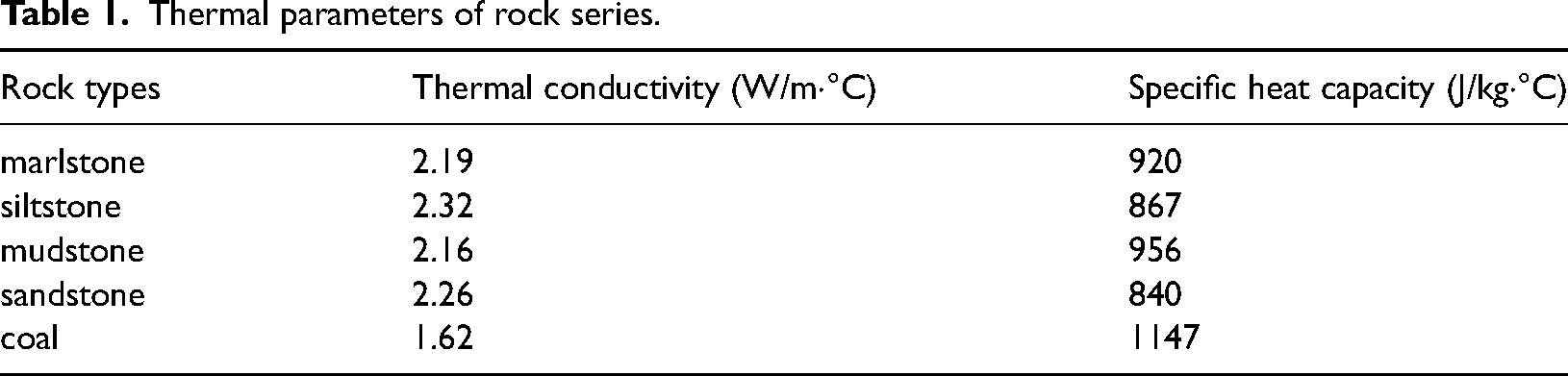
The experimental samples of coal and rock in the coal face are prepared in order to calculate the heat capacity of the surrounding rock in the coal face. The thermophysical parameters are measured by the thermal conductivity instrument and specific heat capacity meter in the laboratory, as shown in Figures 1 and 2. According to the relevant test data, the thermophysical parameters of the rock series are shown in Table 1.
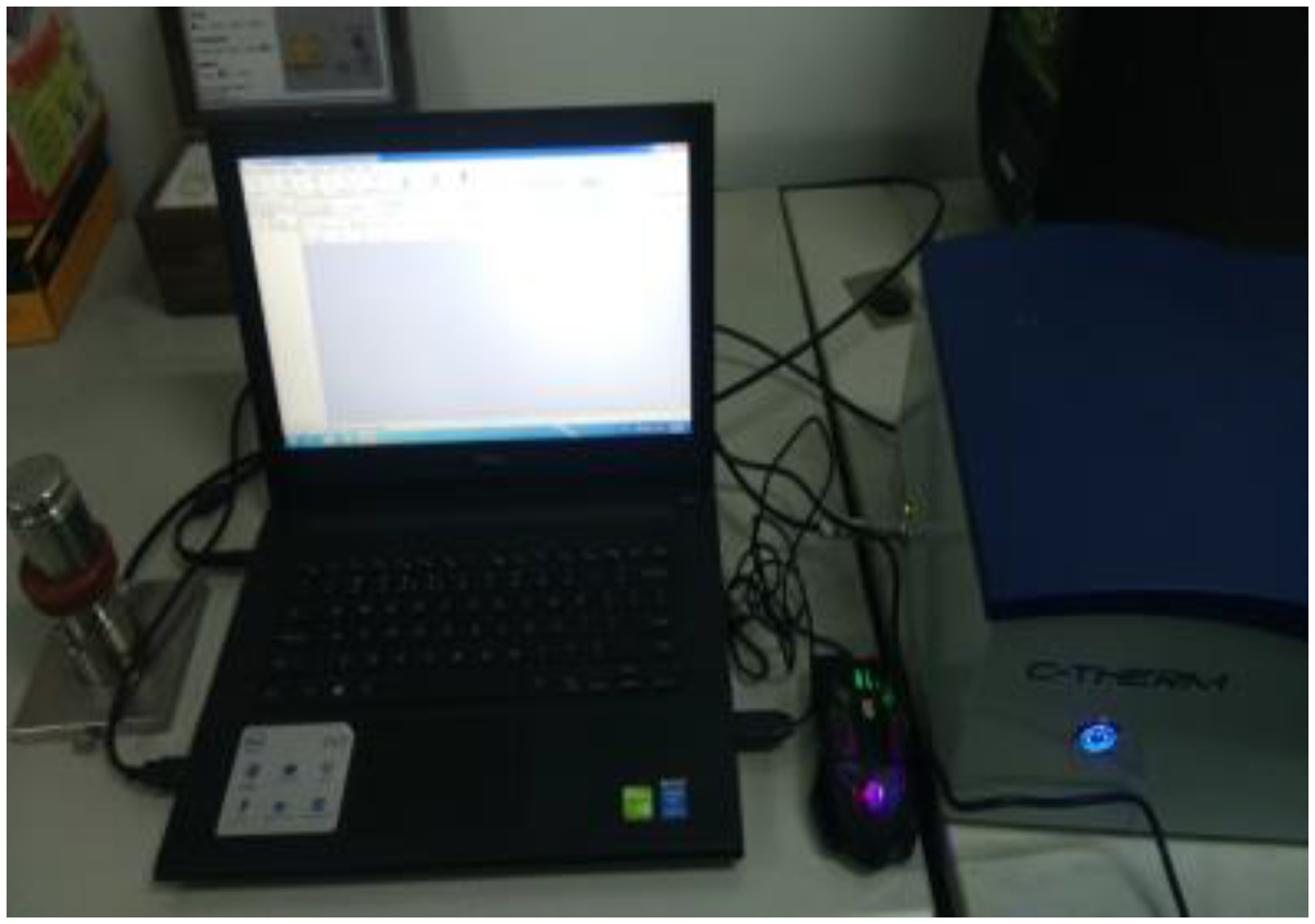
Thermal conductivity instrument.
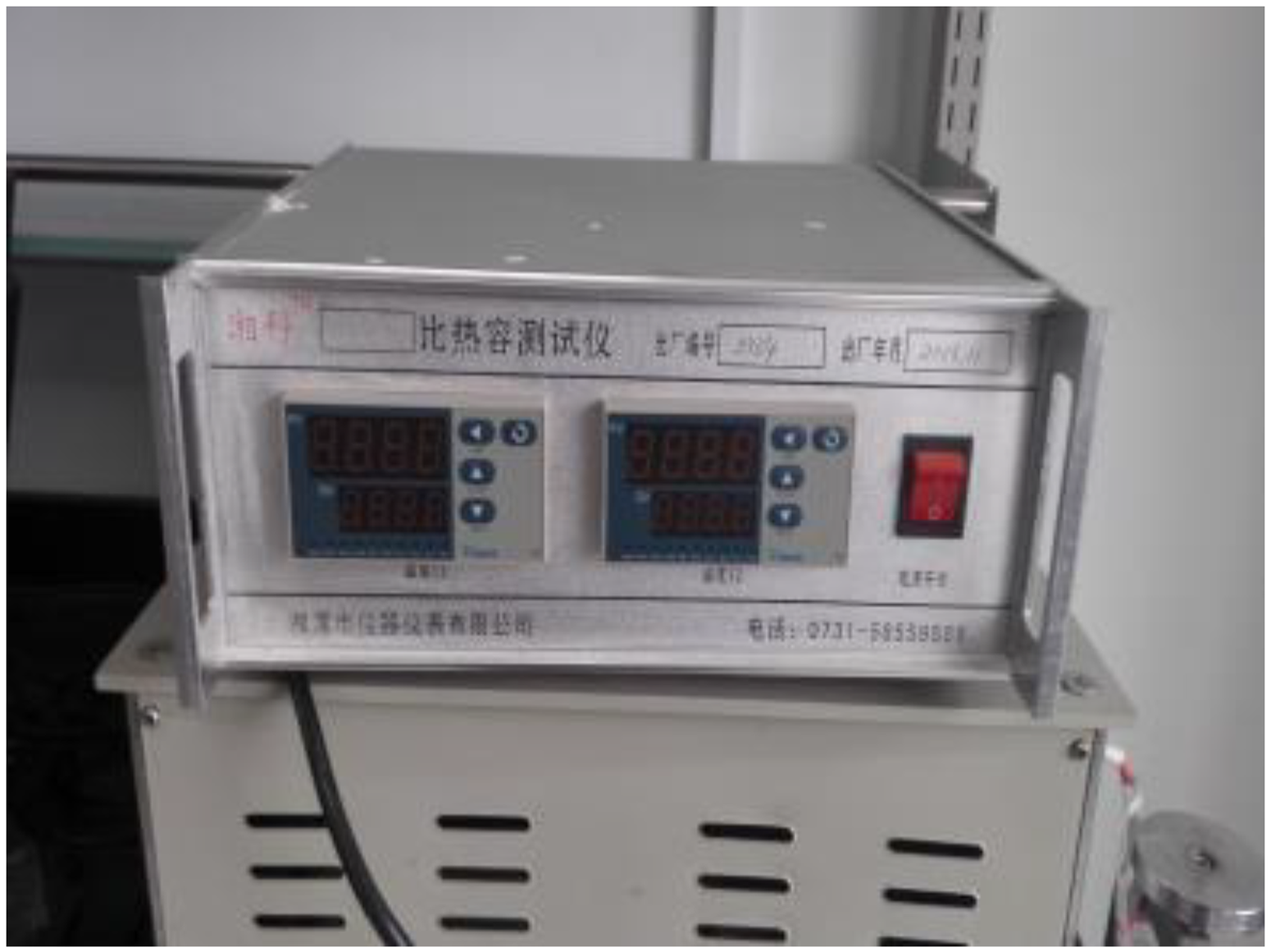
Specific heat capacity meter.
Thermal parameters of rock series.
The dry bulb temperature, wet bulb temperature, air pressure of airflow and the temperature of the coal seam wall were measured respectively by using a multi-parameter measuring device. The intervals of measurement point are 20 m from the air inlet side to the air return side of the coal face. According to the field monitoring data, the dry bulb temperature, wet bulb temperature and coal wall temperature range from 22.7 °C to 32.3 °C, 20.8 °C to 31.3 °C and 31 °C to 40 °C, respectively (Figure 3). These three temperature change curves approximately show a monotonic upward trend. The lowest and highest temperatures occur at the inlet side and outlet side of the coal face, respectively. The variation range of air pressure is very small, basically maintained at about 1120 pa.
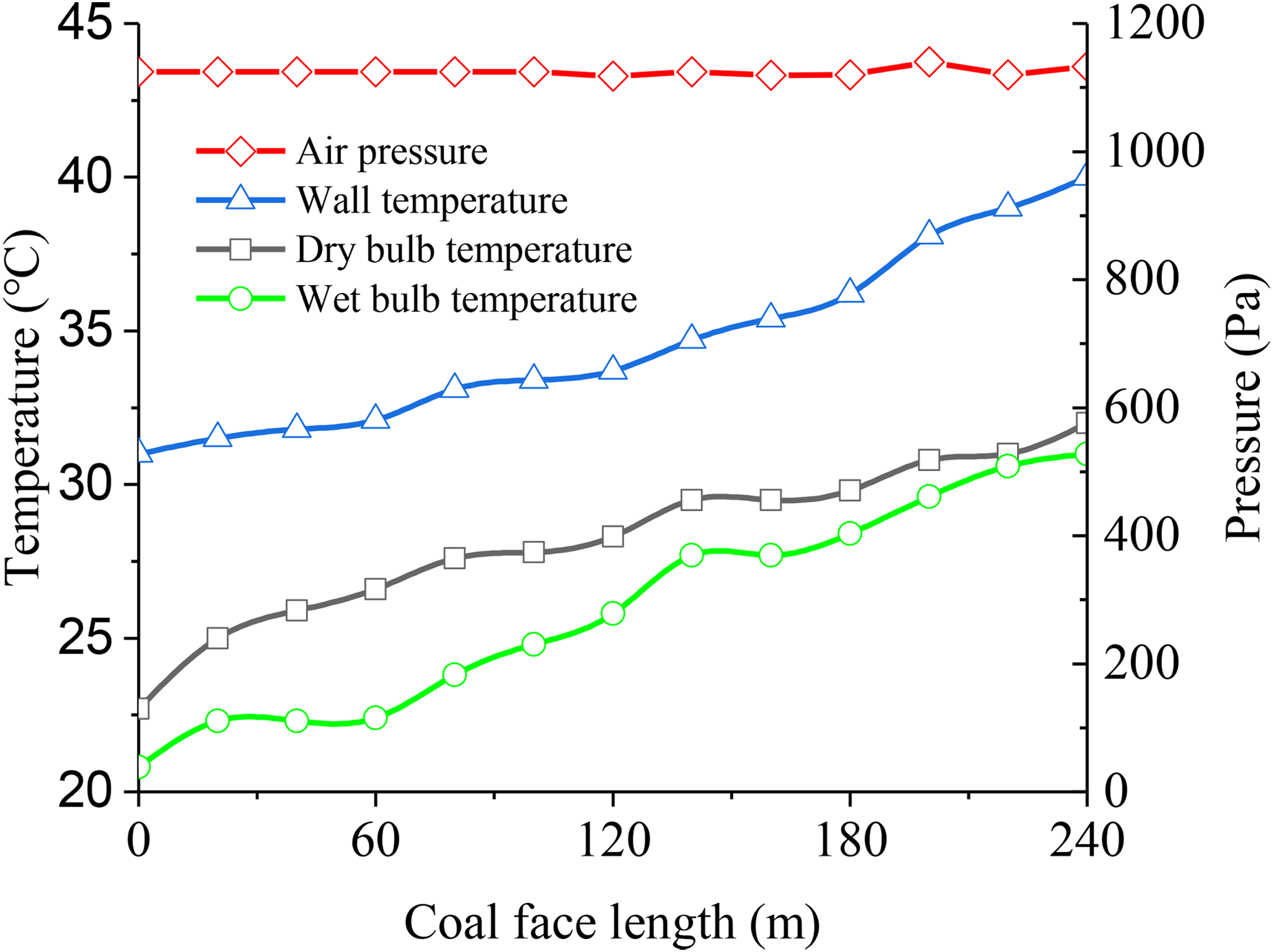
Field measured values of thermal parameters.
Numerical methods
A mathematical model for heat calculation of surrounding rock of coal face
As is well known, the heat transfer process in the coal face is affected by many factors, including the airflow state, surrounding rock, shearer, falling coal on the scraper conveyor, coal seam feature and so on. Figure 4 illustrates the basic principle of heat exchange in high-temperature coal working face. Heat transfer between the surrounding rock and airflow is one of the most important heat sources in the working face and its capacity calculation is complex. This complexity is due to not only the difference in the thermal physical properties of the surrounding rock in coal-bearing strata but also the change in the temperature field boundary when the coal face advances. To accurately obtain the airflow temperature and formulate reasonable cooling measures, it is necessary to carry out in-depth research on the heat dissipation law of the surrounding rock of the working face. The coal inside the surrounding rock rarely undergoes oxidation, and the medium mainly undergoes heat conduction. Therefore, in the current heat transfer modelling, only heat conduction and convection are considered. Meanwhile, the surrounding rock of the working face is a multi-layered composite structure. We assume that the surrounding rock of the working face is heterogeneous in all layers and in local thermal equilibrium. Therefore, we selected different thermal physical parameters of the coal mining working face for different layers. Finally, in order to reasonably calculate the thermal state of the working face, the relationship between the main factors has been emphasized. Therefore, some of the main assumptions in this part are listed as follows: (a) the section of the coal seam in the coal face is rectangular; (b) the rock mass located far from the coal wall has no heat flow, and the temperature gradient is zero; (c) the heat exchange conditions of the working face section in the third boundary condition are equivalent; and (d) the coal face advances forward at a constant speed. In addition, the surrounding rock temperature near the coal face changes dramatically. It is necessary to increase the grid density near the third kind of boundary to ensure calculation accuracy, as shown in Figure 5.
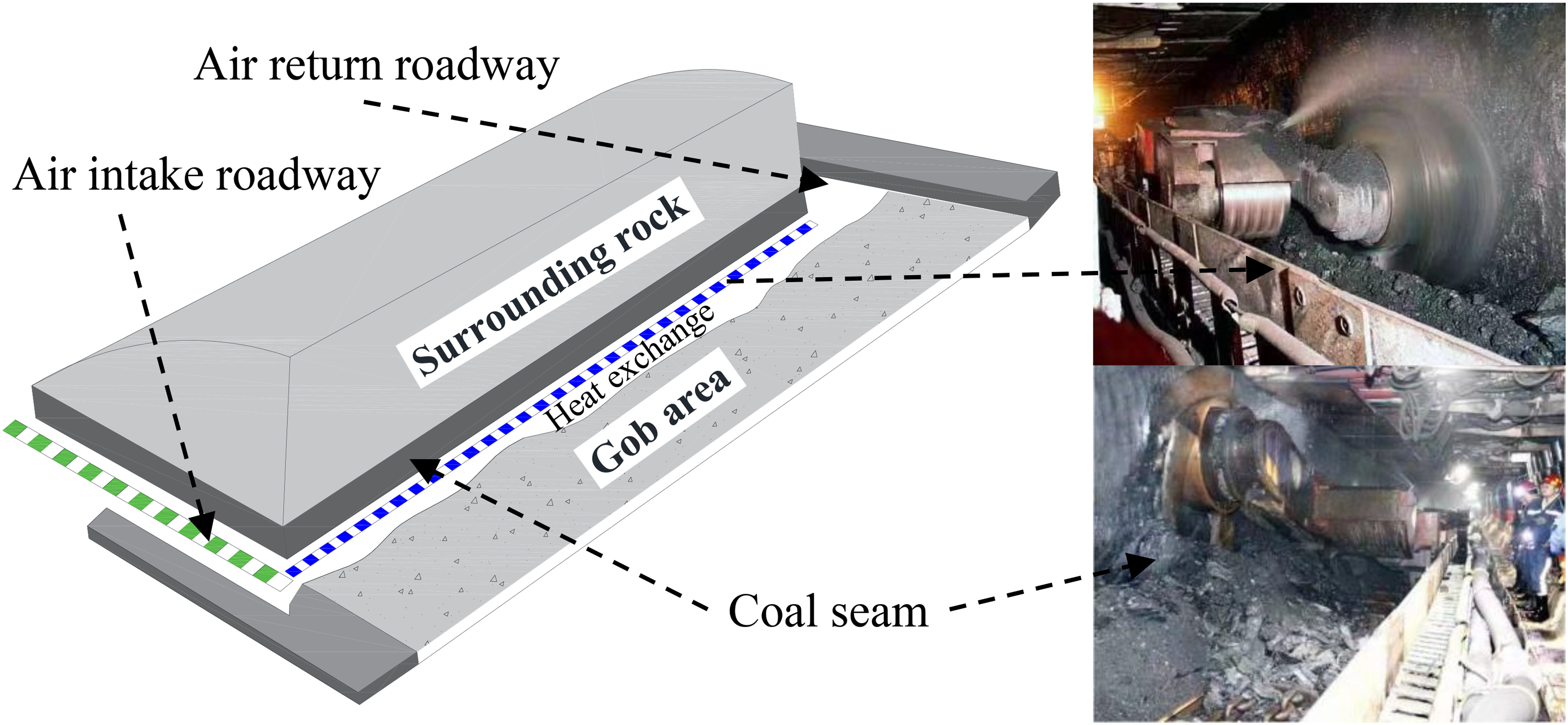
Schematic diagram of coupled heat exchange of various heat sources in coal face.
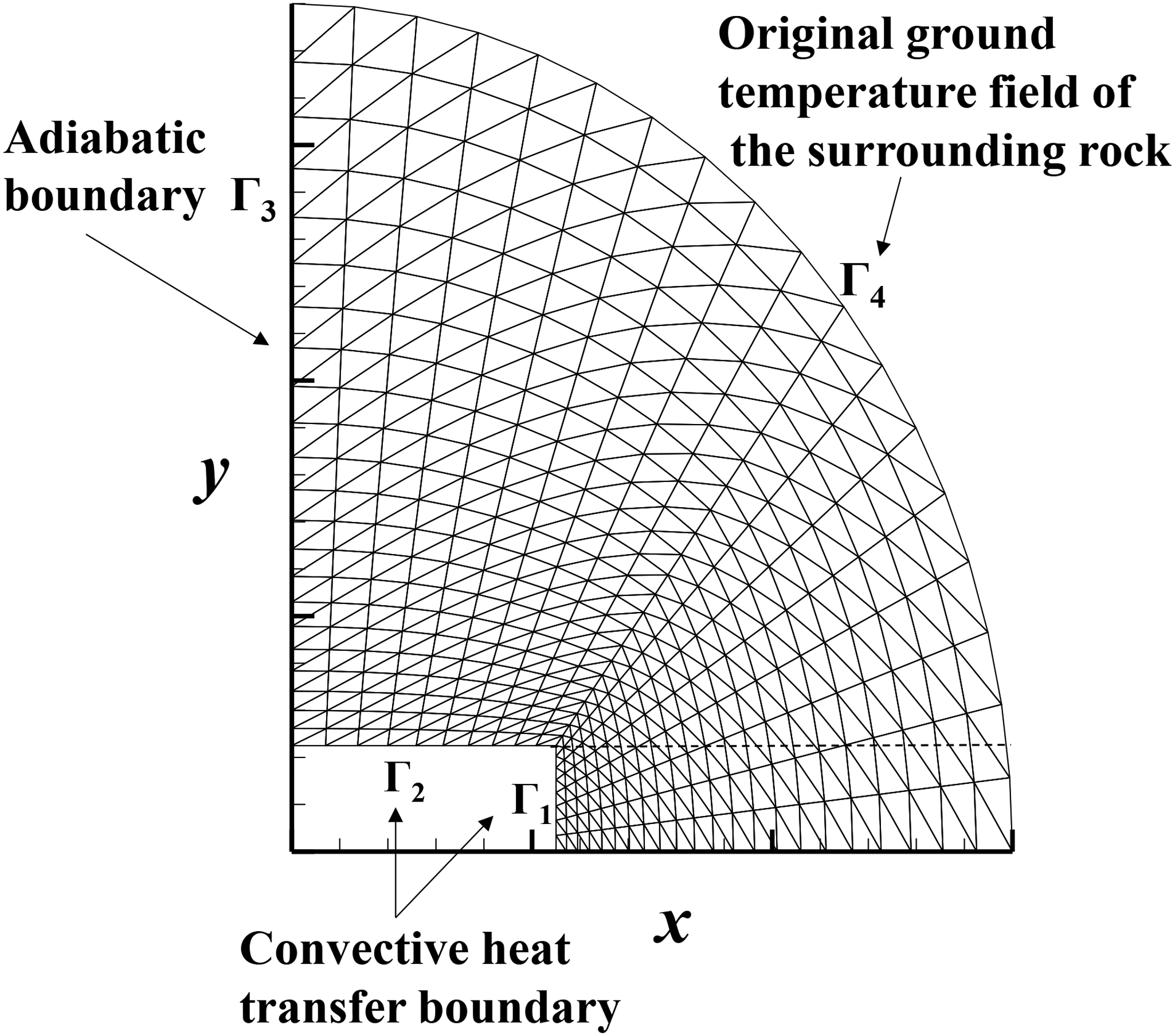
Mesh generation diagram and boundary conditions.
Governing equations
Accounting for the differences in various coal and rock properties in the coal strata and the law of energy conservation, the integral equation of the surrounding rock temperature field of the heterogeneous working face can be established as Qin et al., 2017):
Due to the continuous advance of the coal mining face, a similar simulation experiment is difficult to establish. Numerical calculation is a good method to study this kind of problem. The temperature of the surrounding rock varies with time and space. The temperature field can be simplified as a problem that changes with spatial movement by introducing moving coordinates and changing coordinates. As the coal face continues to move forward, the equation of unsteady heat conduction of the surrounding rock with static coordinates is transformed into the form of steady heat conduction under moving changes by introducing a moving coordinate system.
According to Fourier law and Green's formula, equation (1) can be converted to an integral equation of the heat conduction of the surrounding rock temperature field under the condition of moving propulsion.
Boundary condition
In the scenario onsite, the effect time of ventilation and cooling for surrounding rock in the direction of the top and bottom plates is longer than that in the direction of the moving face. Thus, the fluctuation range of the temperature field in the direction of the roof and floor is larger. Therefore, when calculating the heat dissipation of the surrounding rock in the y-axis direction of the working face, the outer boundary of the surrounding rock should be expanded appropriately. The geometric boundary conditions of the temperature field of the working face are set as the ellipse shape by focusing on the y-axis direction, as shown in Figure 5. The length of the short axis and the long axis of the elliptical geometric boundary are 15 m and 18 m, respectively, which exceed the range of the heat-regulating circle of the surrounding rock of a working face. The corresponding boundary condition expression is expressed as follows: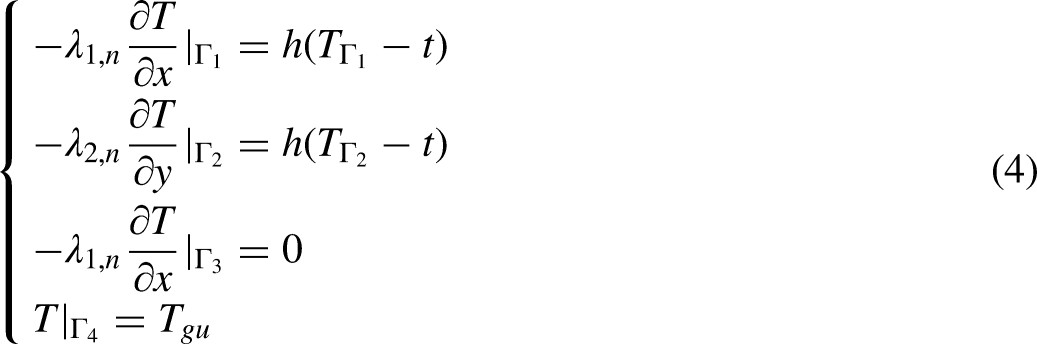
Numerical solutions
Qin et al. (2013) compared four finite volume schemes in the study of heat conduction problems and demonstrated that the finite volume calculation method can accurately calculate the heat dissipation problem of surrounding rock due to its clear physical significance in the model establishment process. In our previous work (Qin et al., 2015a, 2015b), we select the edge passing through the centre of gravity of the triangle as the boundary of the control unit and employed the finite volume method (FVM) to independently develop a method to calculate the temperature field of surrounding rock of a roadway, which can not only calculate the heat release capacity of the surrounding rock but can also simulate the change law of the cooling circle of surrounding rock for a tunnel. In this study, we established a heat dissipation model for the surrounding rock of the coal mining face by introducing the concept of moving coordinates. The original transient model program of a roadway was reconstructed to solve the steady-state model of a coal face, and the Gauss elimination method is employed to solve discrete equations. Finally, the temperature value of any node in the temperature field can be obtained.
In Figure 6(a), node m is the internal node of the grid in the surrounding rock calculation area of the coal face, but it is also the common vertex of six adjacent triangular elements. The element ijm is one of the six elements and selected to analyse. In the element, a new line segment is built through the centre of gravity and parallels with the original segment ij, so that a new small triangle ABm is obtained, which is the control area of node m. In the same way, the other five elements associated with node m can be obtained. In Figure 6(b), the hexagon ABCDEF is the element control area of node m, and the triangle ABm is one of the element control areas but also a part of the node control area of node m.
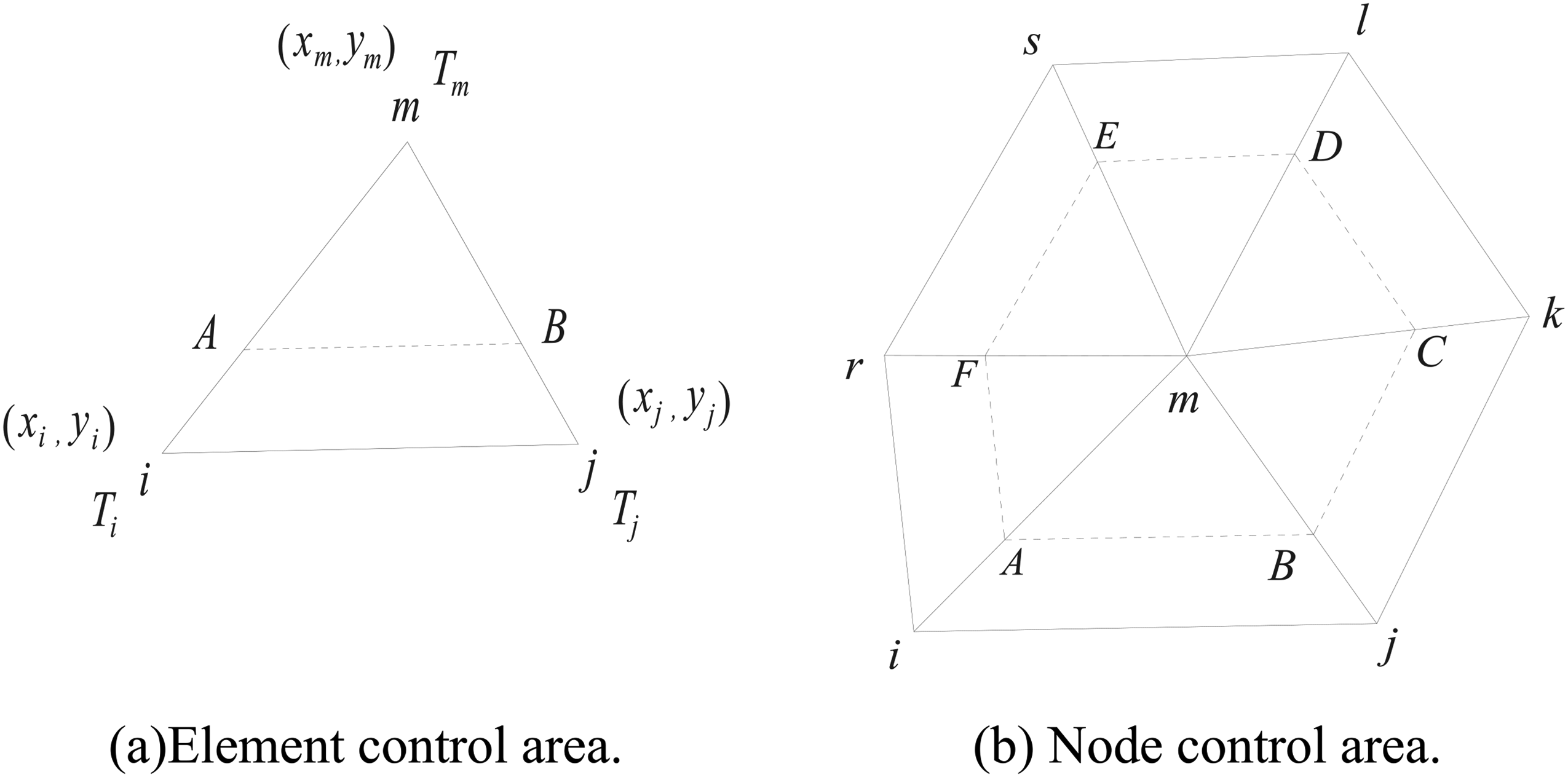
Sketch of the triangular unit and internal unit of control area: (a) element control area and (b) node control area.
Thus, the temperature interpolation function in the element is obtained, which is expressed as:
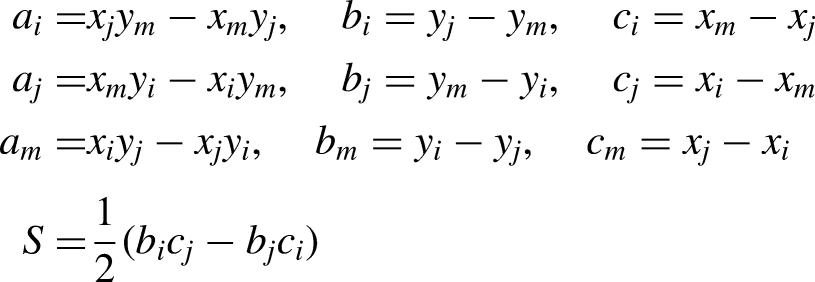

The equilibrium equation can be established with the corresponding nodes of the element as the objective after the whole area to be calculated is divided into discrete parts. The contribution of the cell to three nodes is obtained, respectively, and written in matrix form as:
where


In the same way, the contribution of the boundary element to the associated boundary node can be expressed as:
Other heat sources in the coal face
The heat release and the calculation method of the main heat sources, such as the heat release capacity of the surrounding rock of the coal face was investigated quantitatively. Furthermore, the thermal state in the coal face is also easily affected by the relative heat source, such as coal and gangue during transportation. In addition, absolute heat sources such as mechanical and electrical equipment, personnel heat dissipation, etc. also affect the airflow temperature in the coal face. In our numerical calculation, the coal flow on the conveyor and airflow are selected as analysis objects to establish the heat balance equations in the coal face. The schematic diagram for the predicting of thermal state in the coal face is presented in Figure 7.
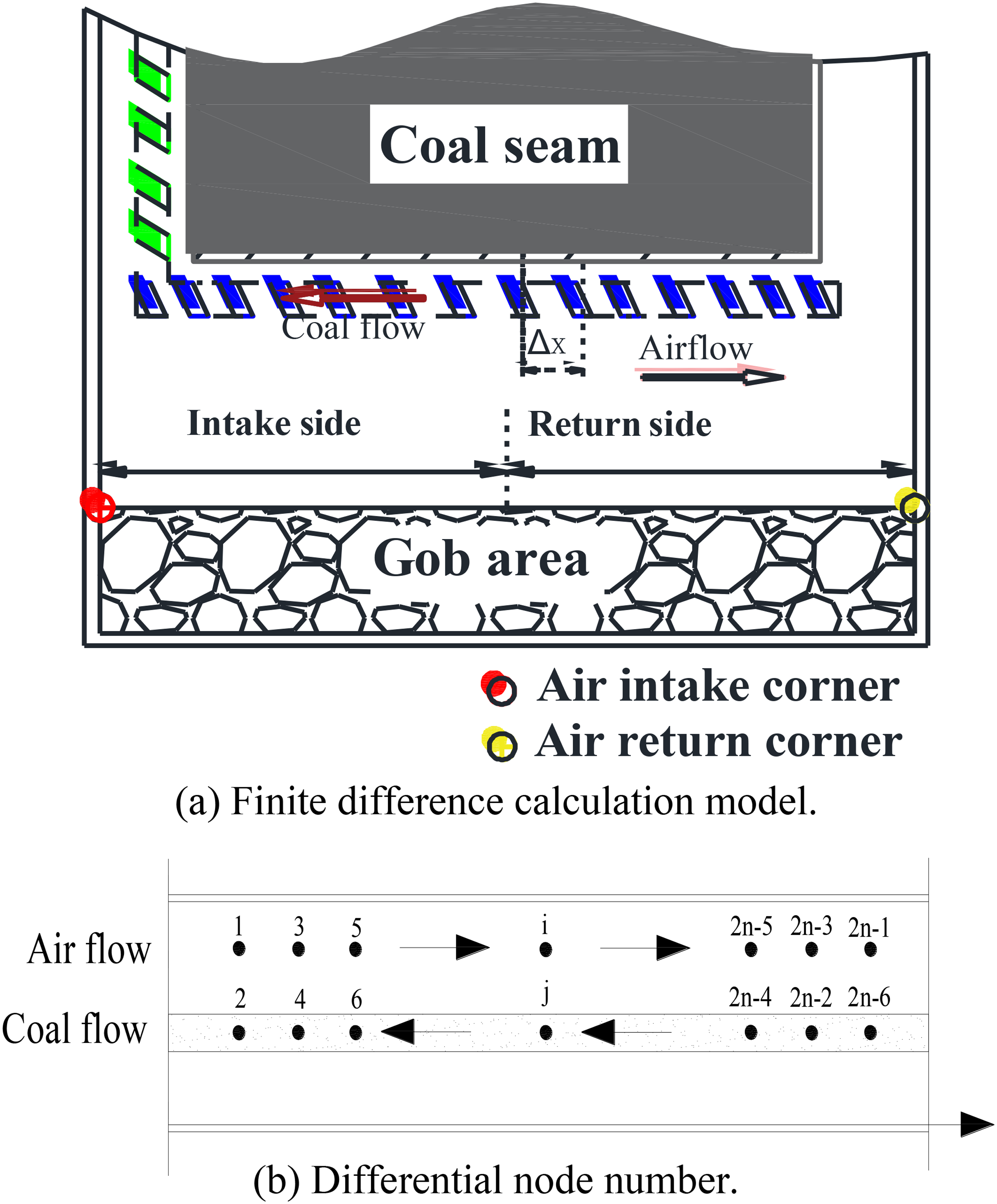
The finite difference calculation model and differential node number: (a) finite difference calculation model and (b) differential node number.
Heat balance equation of coal flow on scraper conveyor

The coal face is divided into the air inlet side and the air return side according to the difference in the direction of air leakage into or out of the coal face. The balance equations of airflow are established for the air inlet side and the air return side, respectively, in the coal face.
Air inlet side
The amount of energy change caused by the external environment is expressed as follows:
Since 
The model for the thermal state in the coal face is established by using the idea of differential principle in this paper. Any micro-segment is selected as the analysis object. The energy change caused by the external micro-element is mainly composed of surrounding rock, falling coal, and other absolute heat sources during the flow process of airflow in the coal face. The relative heat source is greatly affected by the wind temperature state. The heat capacity of the surrounding rock and falling coal during transportation can be calculated according to the Newton cooling formula. The absolute heat source is less affected by airflow, and the heat dissipation in the micro-segment can be calculated according to the total heat dissipation of the absolute heat source. According to the idea of the differential principle, the contribution of the external environment to the total heat Q is obtained as follows:
According to the law of energy conservation, the energy balance equation of airflow in the micro-element section of the air intake side of the coal face is obtained as follows:
Air return side
The amount of energy change caused by the external environment is established as follows:
Since 



Equation solving
Figure 7(b) reveals the node number of the analysis object in a thermal system. The node number of the coal flow temperature is set to an even number, and the node number of the airflow temperature is set to an odd number in the following differential calculations.
Discretization of coal flow equation on scraper conveyor. The form of equation (9) is transformed by replacing the differential quotient with the finite difference quotient, which is sorted as follows: Discretization of airflow equation on the air inlet side. The relative humidity, enthalpy, moisture content, and other parameters are substituted into equation (19), and the results are Discretization of the airflow equation on the return side. In the same way, the energy balance equation of airflow in the micro-element section of the air return side in the coal face is derived by using the similar discrete method that is employed in part of the air inlet side.





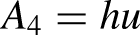
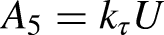






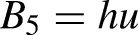


Finally, the heat balance equations of the coal face are obtained as follows: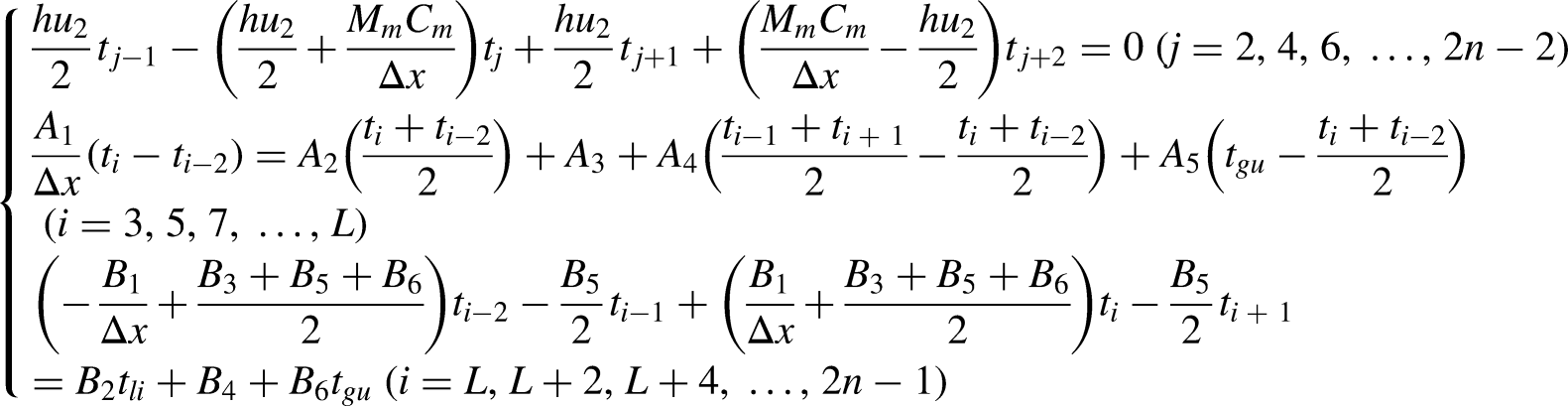
Model validation
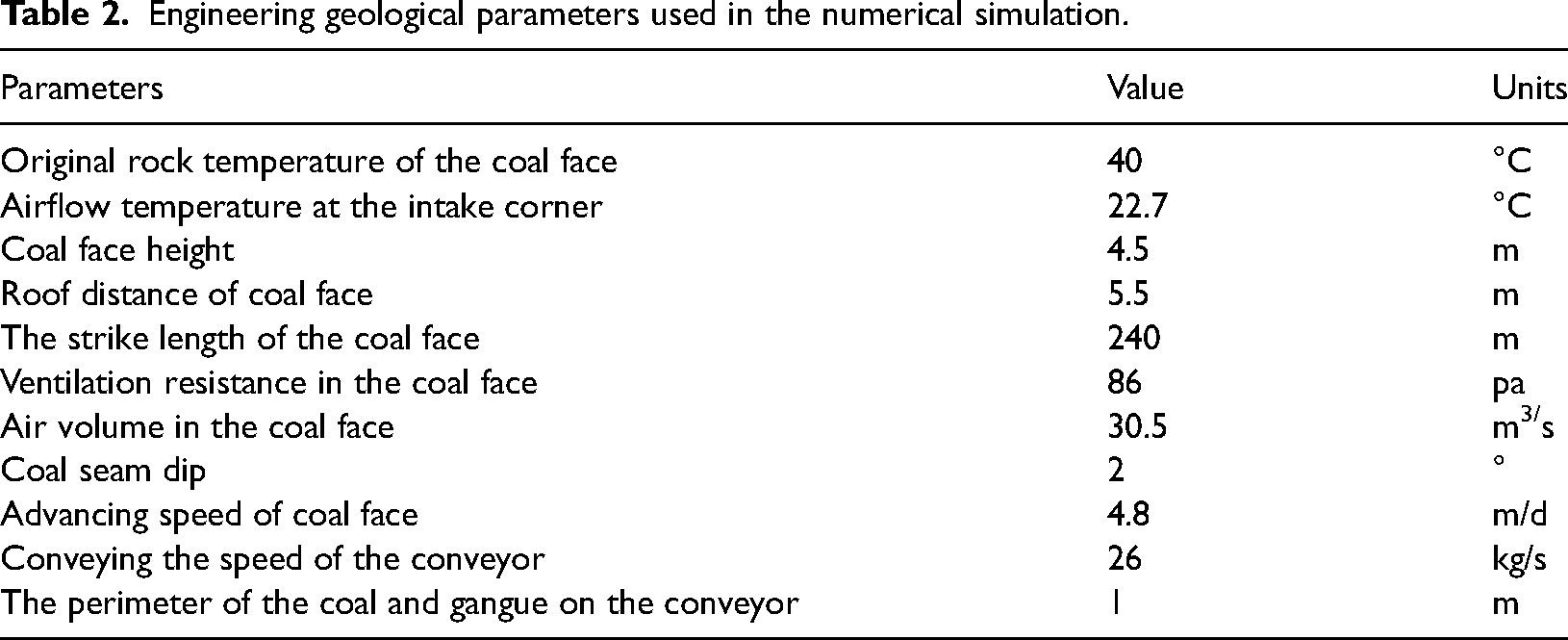
The heat transfer model of the surrounding rock, airflow and other heat sources in the coal face was realized using C + +. In order to verify the reliability of the numerical model proposed in this article, we compared the measured values of the coalface in high-temperature coal with the numerical results obtained by the calculation model proposed in this article. Note that the engineering geological parameters used in the numerical models are summarized in Tables 1 and 2. Moreover, the convective heat transfer coefficient can be calculated as 18.36 W/m2·°C, which is based on the Dittus–Boelter formula. The temperature of airflow of the working face is 22.7 °C and the calculation results are obtained by the Tecpot. The temperature change curve of the airflow, surrounding rock wall and falling on scraper conveyor in the coal face are obtained by calculation, as shown in Figure 8. It reveals that the values of the temperature test are evenly scattered on the change curve obtained by the numerical calculation method. The change trends of both curves are consistent with each other. The maximum difference between the temperature values of the model test and the numerical calculation is within 1.4 °C. The error between the model test results and the numerical results is within 2.8%. It shows that the numerical simulation results are scientific and can accurately demonstrate the change rule of the airflow temperature in the coal face.
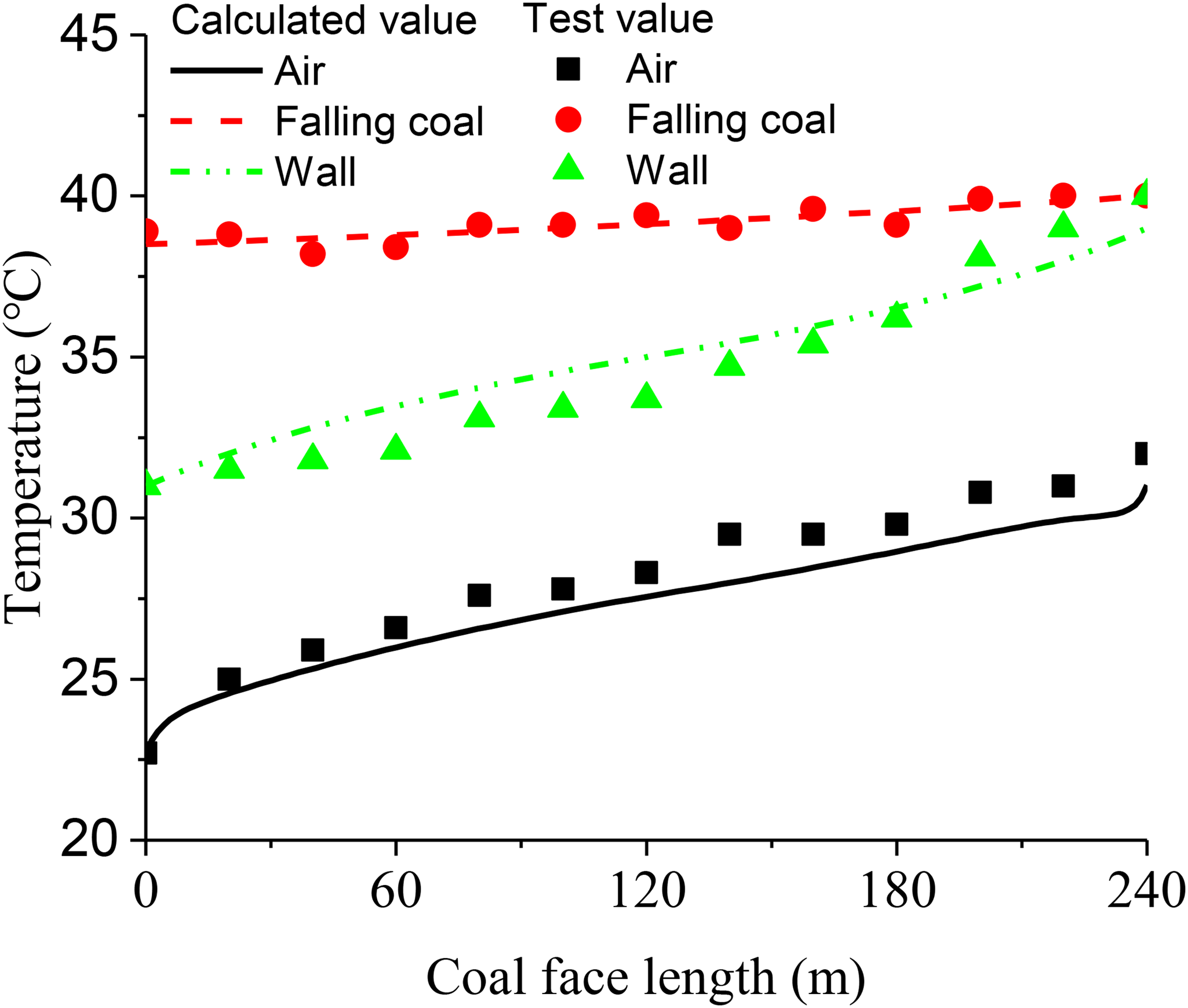
Comparison between numerical calculation and model test results.
Engineering geological parameters used in the numerical simulation.
Results and discussions
Influence of advancing speed rates and convection heat transfer coefficient
To quantify the effect of surrounding rock in the coal face, the coal wall temperature along the y-axis and the roof temperature along the x-axis were calculated, respectively, as shown in Figures 9 and 10. Figure 9 shows that the coal wall temperature tends to be stable with the increase in operation distance. It is found that the faster the moving speed rates of the coal face, the higher the coal wall temperature. On the contrary, the greater the convective heat transfer coefficient, the lower the coal wall temperature. This is because the new coal wall will be exposed continuously with the advancing of the coal face, which will increase the amount of heat released from the surrounding rock to the airflow. However, the strengthening of convective heat transfer will increase the cooling effect of coal wall temperature, which will reduce the temperature of the surrounding rock surface. It can be considered that increasing the wind speed, that is, strengthening the convective heat transfer operation, will improve the thermal environment of the coal face.
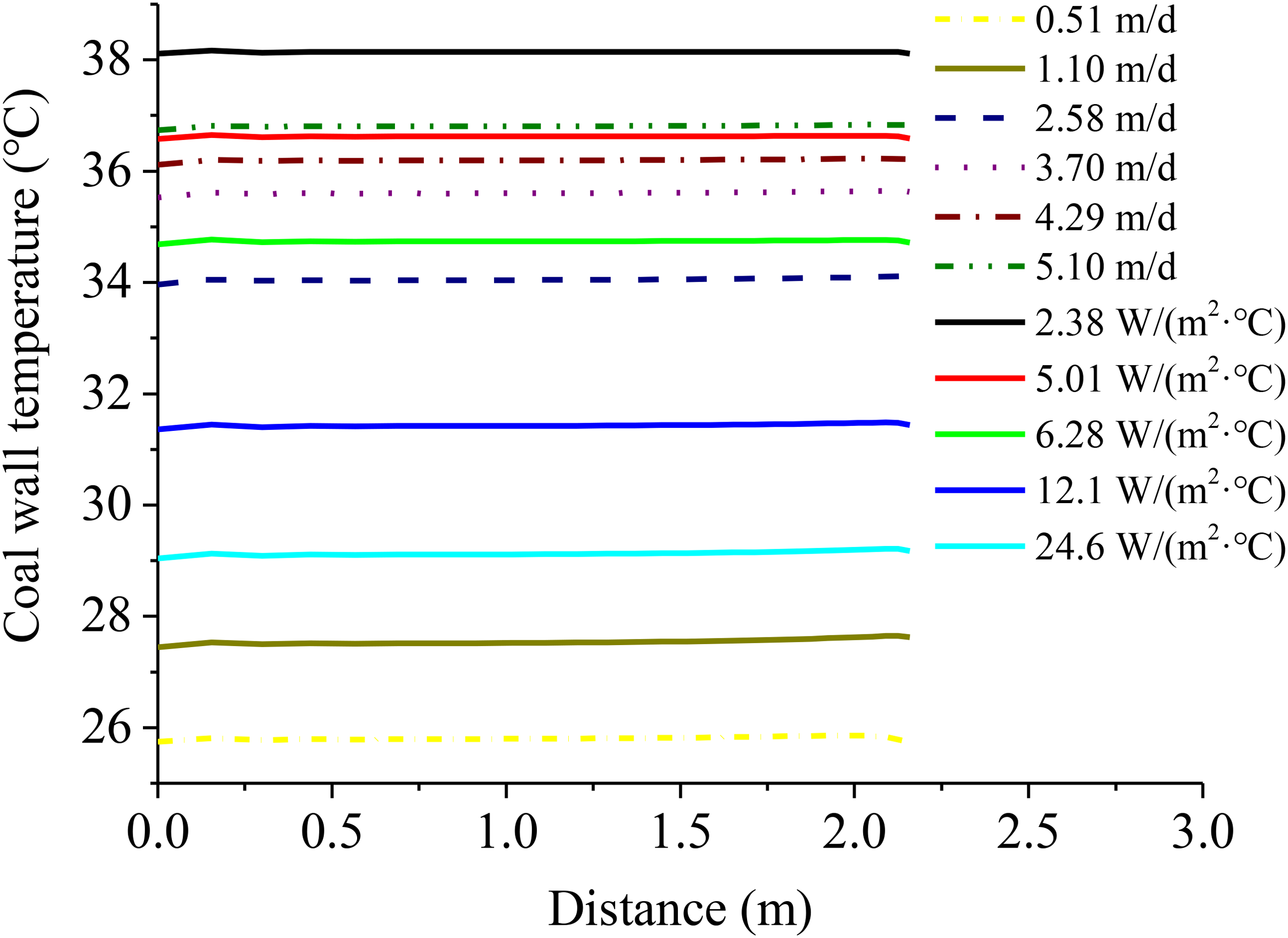
Variation of coal wall temperature for different moving speed rates and convection heat transfer coefficient.
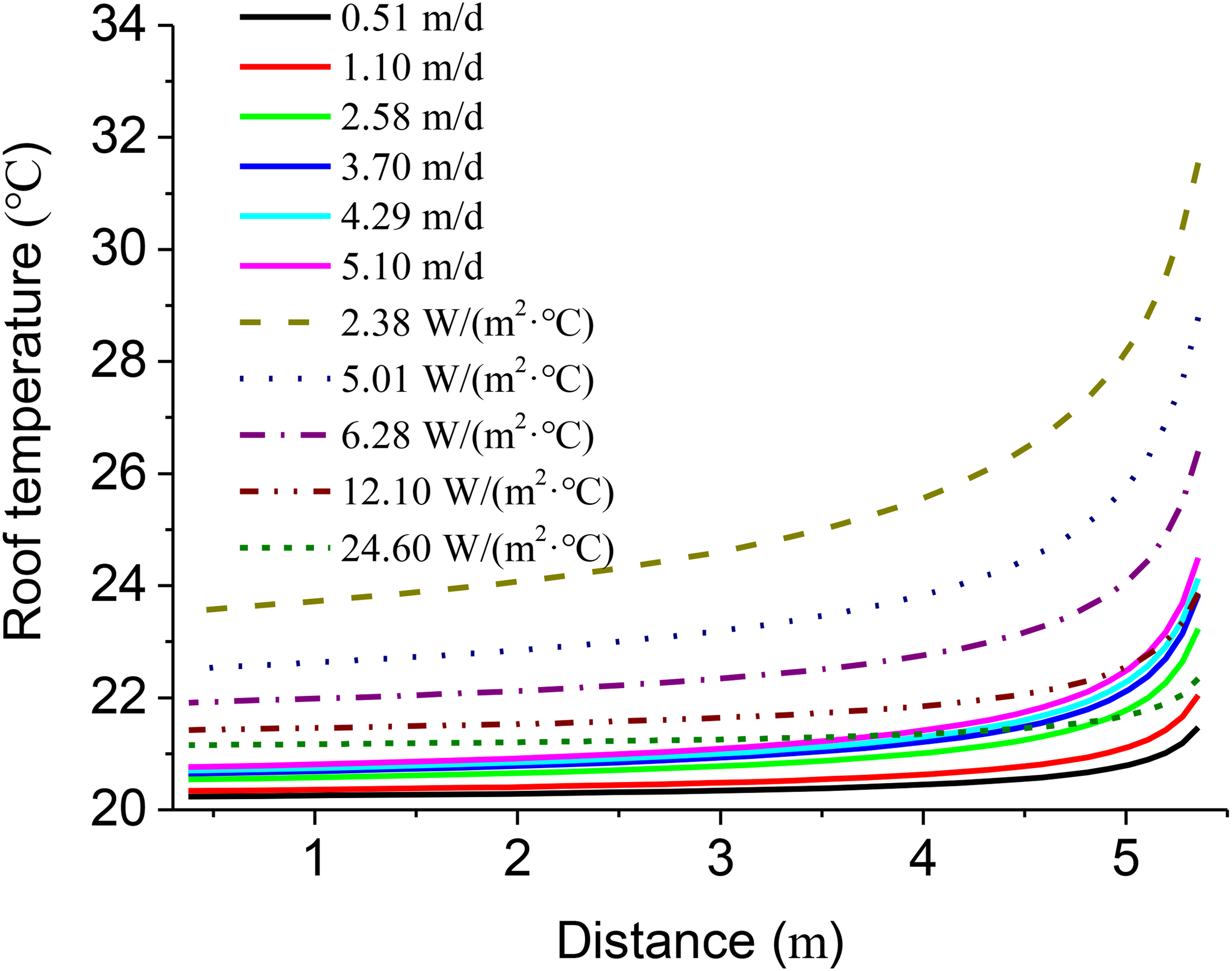
Variation of roof temperature of the coal face for different moving speed rates and convection heat transfer coefficient.
The variation curve of roof temperature with distance along the x-axis is shown in Figure 10. The roof temperature increases with the increase of operation distance and reaches the maximum near the coal wall. This is because the surrounding rock far away from the working face has experienced a longer period of cooling. When the advancing speed rates of coal face increase from 0.51 to 5.1 m/d, the maximum and minimum roof temperatures increase from 20.2 °C to 21.6 °C, and 20.7 °C to 25.9 °C, respectively. When the roof temperature decreases with the increase of convective heat transfer coefficient, the maximum and minimum roof temperature decreases from 33.2 °C to 22.7 °C, and 21.4 °C to 20.2 °C, respectively.
The temperature distribution of the surrounding rock of coal face for different advancing speed rates and convection heat transfer coefficient
The movement of the coal face changes the temperature distribution of the surrounding rock of the coal face, and potentially affects the heat exchange between airflow and surrounding rock. Figure 11 shows the temperature field contours of a working face for different advancing speed rates. The region boundary where the temperature reduction of the surrounding rock of the coal face exceeds 1% of the original rock temperature was defined as the cooling-regulating ring (Qin et al., 2015b). The temperature of the surrounding rock of the coal face at the coal wall is close to the original rock temperature, and the rock cooling range in the roof direction develops to the surrounding rock in the depth. Therefore, we define the cooling range in the direction of the roof as the cooling-regulating ring. In the case of advancing speed rates with 0.51 m/d, the cooling range of rock gradually develops to the deeper surrounding rock with the extension of ventilation time and the cooling-regulating ring presents a regular circular with a radius of 8.63 m. However, with the increase of the advancing speed of the coal face, the area affected by ventilation in the roof direction gradually narrowed. New coal is constantly being cut and the area affected by ventilation in the direction of the coal wall remains basically stable due to the continuous advancing of mining. Finally, the shape of the cooling circles is similar to an ellipse and focuses on the y-axis direction, which also verifies the rationality of the mesh division. In the direction of the coal wall, the surrounding rock temperature near the coal wall is higher, so the heat released from the coal seam to the airflow is larger. As the forward speed rates of the working face increase from 0.51 to 5.1 m/d. The radius of the heat-regulating ring decreases from 8.63 to 3.01 m, as shown in Table 3.
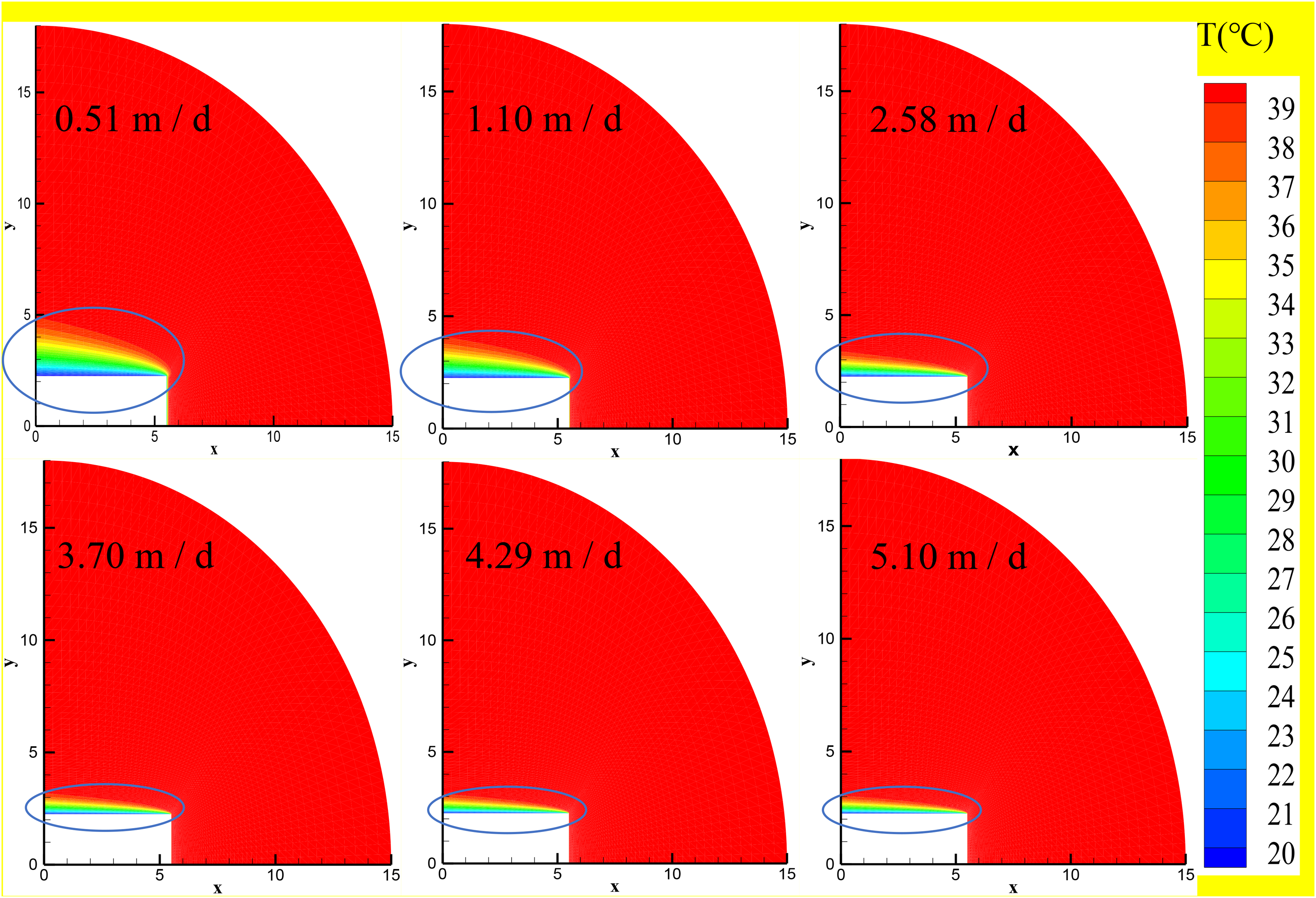
The temperature distribution of the surrounding rock of the working face when the advancing speed rate is 0.51–5.1 m/d.
Fluctuation range of cooling-regulating ring.
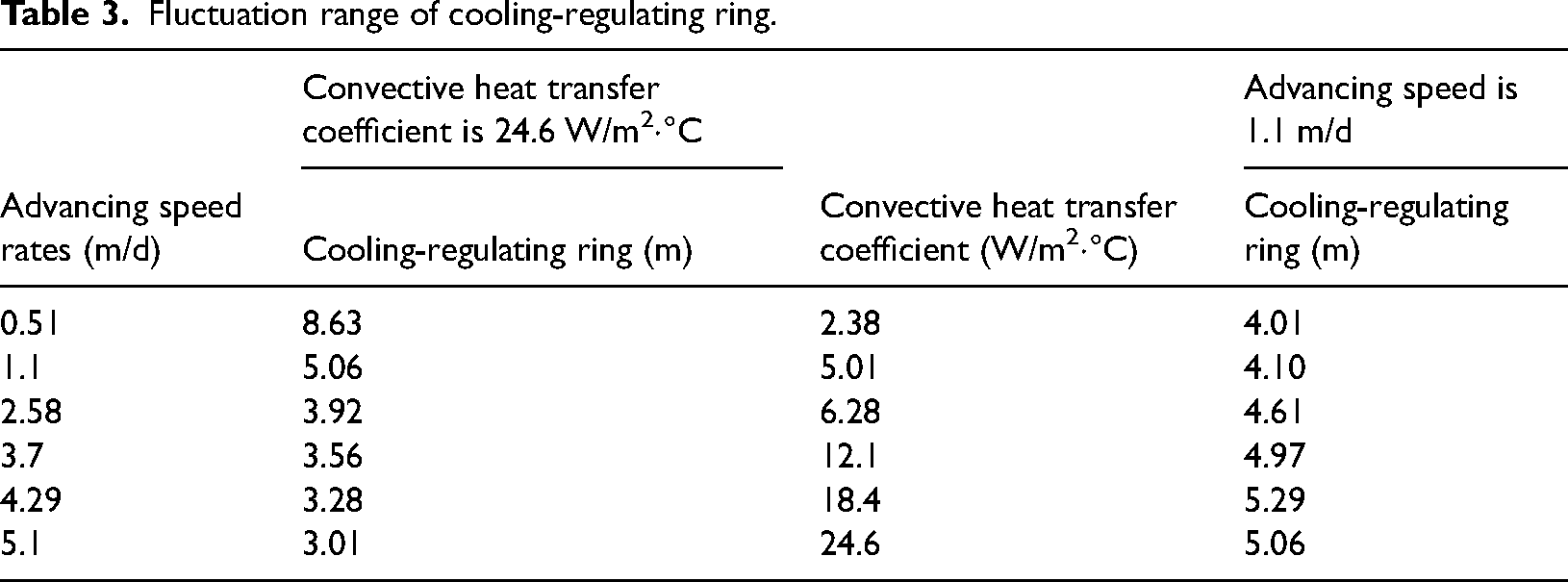
Figure 12 shows that the temperature field contours of the coal face are formed around the contact surface of the coal face under the effect of ventilation cooling with the air current and extend to the depth of the surrounding rock. The temperature of the roof is obviously lower than that of the coal wall. The temperature of the coal wall is significantly higher than that of the roof in this paper as the coal face continues to move forward and new coal walls are constantly exposed to the air. For the top or bottom of the coal face, they experienced a longer ventilation cooling time. Therefore, the wall temperature of the roof is obviously lower than that of the coal seam. In addition, the range of the cooling ring in the vertical direction is larger than the range in the coal advance direction. Finally, the thermal conditioning ring is shown to be elliptical. As the working surface flow heat transfer coefficient increases from 2.38 to 24.6 W/m2·°C. The radius of the thermal regulation ring increases from 4.01 to 5.06 m, as shown in Table 3.
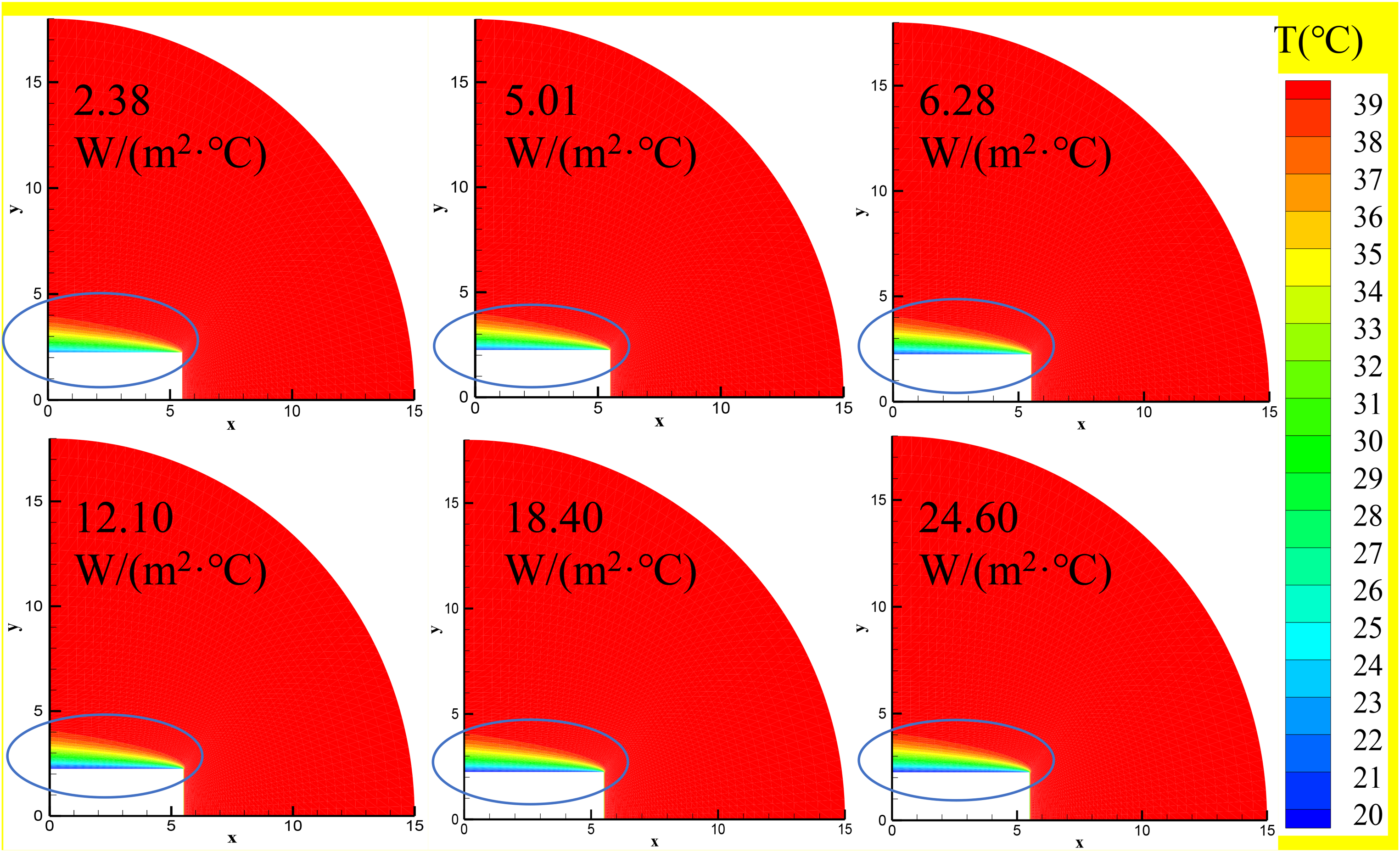
The temperature distribution of the surrounding rock of the working face when the convection heat transfer coefficient is 2.38–24.6 W/m2·°C.
Multi-factors sensitivity analysis
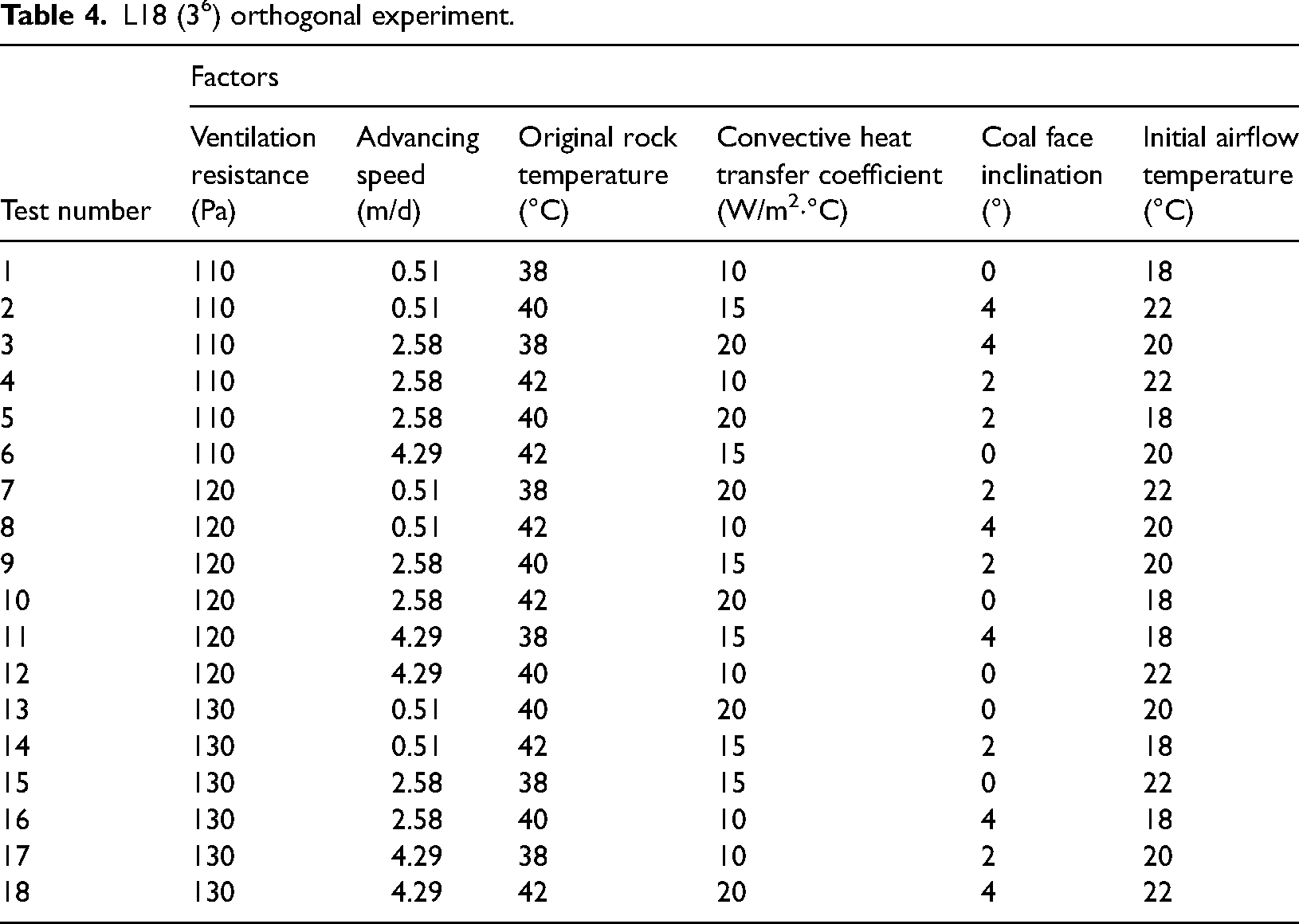
The orthogonal test can greatly reduce the number of tests and significantly improve the efficiency of scientific analysis, so it is an effective multifactor experimental method. The orthogonal experiment table L18 (36) was used in this paper to find out the influence rule of various ventilation conditions on the heat exchange of the coal face, as shown in Table 4.
L18 (36) orthogonal experiment.
The range analysis method was used to evaluate the influence of six factors on the test results. Figure 13 compares the influence of different factors on the heat exchange of coal face. The range analysis result presents that the significance of each factor is ranked in the order of original rock temperature > initial airflow temperature > convective heat transfer coefficient > advancing speed > ventilation resistance > coal face inclination. The original rock temperature of the surrounding rock has the greatest influence on the heat transfer of the coal face. The higher the original rock temperature of the surrounding rock, the greater the heat exchange between the airflow and the surrounding rock. Therefore, regulating the surrounding rock temperature is the most effective measure to control the thermal environment of the coal face. In addition, the air temperature at the air inlet side of the coal face also significantly affects the heat exchange of the face; Therefore, reducing the inlet side air temperature is an effective measure to improve the thermal environment of the coal face. The convective heat transfer coefficient has a significant influence on the heat transfer state of the coal face, and it is closely related to the geometric size of the coal face, air flow velocity and other thermophysical parameters. The influence of advancing speed on the heat transfer of coal face is greater than that of ventilation resistance. However, these two factors have received little attention in the past. The faster the advancing speed of the coal face is, the lower the average temperature rise of the coal face is. The greater the ventilation resistance of the coal face, the more the hot air leaked into the coal face from the gob. Therefore, reducing the ventilation resistance of the coal face can improve the thermal environment of the coal face. Coal face inclination has the least influence on the heat transfer state of the face among the six influencing factors. Therefore, its influence can be ignored in the environmental control design of coal face.
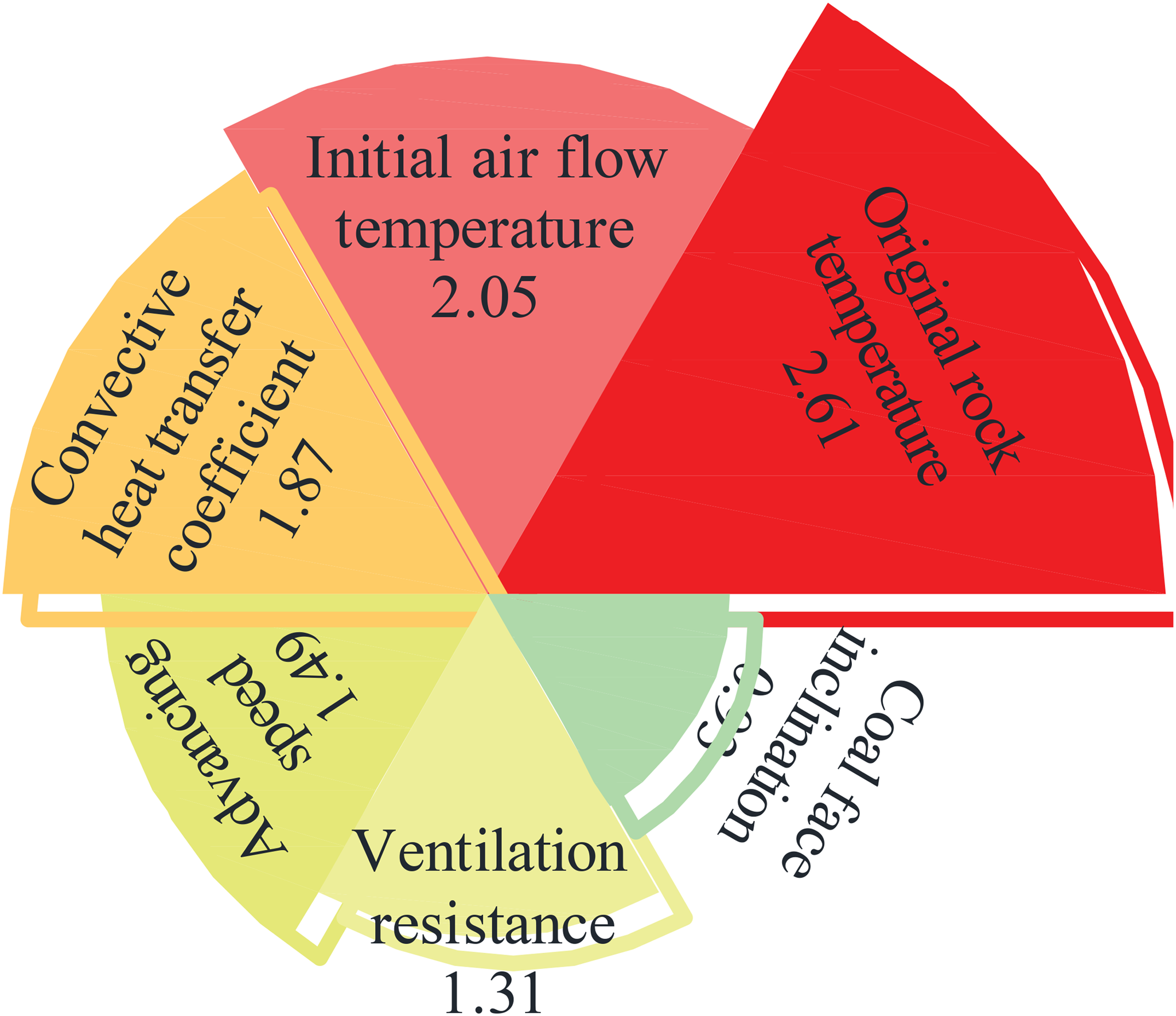
Comparison of influence levels of various factors.
Conclusions
In this article, we have established a mathematical model for predicting the wind temperature in the coal face by combining the heat capacity of the surrounding rock of the working face, the heat transfer of coal and gangue on the scraper conveyor and other absolute heat sources. In the model, we employed a series of cross-parameters for coupling. Based on the in-situ monitoring and numerical analysis, the following conclusions are presented:
The air temperature rises sharply after the airflow enters the working face, and the temperature curve of the airflow in the working face is S-shaped under the influence of the hot air from the gob. The change range of the coal flow temperature is smaller than that of the airflow temperature, which is approximately linear. The control equation of the temperature field in the heterogeneous coal face and the boundary conditions were confirmed based on the large difference in the thermal physical properties between coal and rock. The corresponding calculation program is compiled based on a new algorithm. The calculation results of the model indicate that the wall temperature of the roof is obviously lower than that of the coal seam. The temperature of the roof and coal seam wall of the coal face is positively correlated with the advancing speed and negatively correlated with the convective heat transfer coefficient. When the advancing speed ranges from 0.51 to 5.1 m/d and the convective heat transfer coefficient is 24.6 W/m2·°C, the cooling-regulating ring of the roof of the coal face are 8.63 m (0.51 m/d), 5.06 m (1.1 m/d), 3.92 m (2.58 m/d), 3.56 m (3.7 m/d), 3.28 m (4.29 m/d) and 3.01 m (5.1 m/d), respectively. When the convective heat transfer coefficient ranges from 2.38·°C to 24.6 W/m2·°C, and the advancing speed is 1.1 m/d, the cooling-regulating ring of the roof of the coal face is 4.01 m (2.38 W/m2·°C), 4.1 m (5.01 W/m2·°C), 4.61 m (6.28 W/m2·°C), 4.97 m (12.1 W/m2·°C), 5.29 m (18.4 W/m2·°C) and 5.06 m (24.6 W/m2·°C), respectively. The original surrounding rock temperature of the coal face has the greatest influence on the heat exchange of the coal face, and the initial temperature of the airflow at the air intake corner is next. The quickest and most direct way to control heat damage is to adjust the temperature of surrounding rock in the coal face while reducing the initial temperature of airflow at the air intake corner or increasing the convective heat transfer intensity is an effective way to promote the cooling of surrounding rock of the coal face.
Footnotes
Acknowledgements
This work was supported by the Fundamental Research Funds for Shenzhen Polytechnic University (6021310013K).
Declaration of conflicting interests
The author(s) declared no potential conflicts of interest with respect to the research, authorship, and/or publication of this article.
Funding
The author(s) disclosed receipt of the following financial support for the research, authorship, and/or publication of this article: This work was supported by the Fundamental Research Funds for the Shenzhen Polytechnic (grant number 6021310013K).
