




Abstract
Energy demand forecasting has been an indispensable research target for academics, which has led to creative solutions for energy utilities in terms of power system design, control, and planning. The usefulness of energy demand forecasting is confined to the power engineering industry but globally exceeds such outcomes to contribute to the environment and health sectors. Despite the large number of research projects published on this topic, the challenge of energy demand forecasting still exists, especially with the developments in modeling concepts via artificial intelligence, which motivates more attractive solutions for the variables involved in energy demand forecasting. Mathematical correlation or extrapolation-like methods cannot be effective in all situations; however, when a time series neural network is presented, most statistical, empirical, and theoretical problems can be easily handled. This paper presents a simple and easy-to-understand method for the next decade of energy demand forecasting based on a nonlinear autoregressive (NAR) neural network. From its time series past values, NAR structurally is an optimal predictor for a future variable. A publicly available data set for global energy consumption has been used to construct the network model with sufficiently accurate results. The evidence has appeared in precisely following the exponential trend of energy consumption as well as the regressions for training, testing, and validation, which ensures the model's robustness and avoids getting involved in overfitting. The proposed model concepts and results can be easily used in undergraduate engineering education, training graduates, and future research.
Keywords
Introduction
Aims and motivation
Stochasticity in power systems is a byproduct of the probabilistic character of system events on the generation side and the randomness of load changes. Even with the most cutting-edge models, forecasting future energy demand presents an inescapable problem due to the inherent uncertainty introduced by the stochasticity of load and energy demand, which is impacted by several factors, such as weather and population growth. However, accurate energy demand forecasting is essential to the success of planning strategies across the board, including for the development of civilization, the economy, energy markets, and the renovation of power networks. Short–medium-term energy demand forecasting comprises daily, weekly, and seasonal intervals, whereas long-term forecasting focuses on a year or more in the future (Cavallaro, 2013).
However, it is exceedingly difficult to construct a physical-based model that accounts for uncertainty and unpredictability in modeling energy demand forecasts. Simple extrapolation, which requires a curve-fitting approach, and the correlation technique, which considers some demographic and economic variables as direct inputs, have previously been used to develop simple forecasts of loads and energy needs (Sullivan, 1978). Nonetheless, artificial intelligence has made it feasible to make more precise energy consumption predictions at either timescale, correlating or directly relating to the energy growth curve. Artificial neural networks (ANNs) have quickly become the most popular prediction tool (Wei et al., 2019). Therefore, employing a particular form of ANN for the project next decade's energy demand is a continually demanding research aim, especially global energy consumption, which is vital for tackling the global warming challenges.
The decent objectives of this paper can be stated as follows:
- The usage of nonlinear autoregressive (NAR) to forecast the energy consumption of the next decade. NAR naturally has a structure that enables forecasting based on past data; unlike correlation techniques, which relate the energy to other demographic and weather variables, the NAR will likely show simplified and very accurate performance simultaneously. This can be classified as a theoretical objective. - The practical objective of energy forecasting, especially for the next decade, is due to the expected big transitions in energy systems within the next decades, which have resulted from the introduction of renewable resources and pollution control techniques. - Global energy consumption projections for the next decade have been made using a NAR neural network (NN). Improvements in environmental protections, energy resource management, and the study of tradeoffs among these sectors would benefit greatly from this. In this case, the simplicity and precision of the NAR network are highlighted. This may hold promise for introducing the concept at the undergraduate level and preparing the next generation of engineers. - It has been shown that the suggested model is accurate to the extent of 0.99865 in testing regression, establishing its validity without overfitting and suggesting its possible usage by planning engineers.
Recognizing the lack of previous research efforts devoted to long-term forecasting of global energy consumption, this work proposes the following contributions:
The remaining sections of the paper are structured as follows. Following an introduction to the research topic (section “Significance of energy consumption forecasting”), the literature review (section “Related work”), the time series energy consumption model development (section “Time series energy consumption model”), the quantitative discussion of the simulation findings (section “Results and discussion”), and the conclusion and suggestions (section “Conclusions and policy recommendations”) are presented.
Significance of energy consumption forecasting
Economic welfare and environmental protection cannot be ambitious without a proper and systematic arrangement in advance. One of the most important procedures for energy companies is energy demand forecasting, which allows the right strategic planning and development regarding system security and trading energy and related products. Several salient approaches, such as those (of Islam et al., 2020), are repeatedly used for energy forecasting: regression models, time series models, and ANNs.
Through multiple searches and reading, there have been many related principles published with emphasis on several issues on the data and load characteristics; it can be easily deduced that the research topic is highly important to the extent that students and researchers—in many disciplines—should upgrade their foundation about energy demand forecasting to achieve beneficial research collaborations and reach useful and tangible results on the long run. The topic has an interdisciplinary nature that makes it necessary to involve it in teaching and research, either as an application in one discipline or a core topic in another. Figure 1 shows the possible methods that are generally surrounding the research work of energy demand forecasting, whether on the long-term, mid-term, or short-term, and regional or global, with transdisciplinary outcomes.
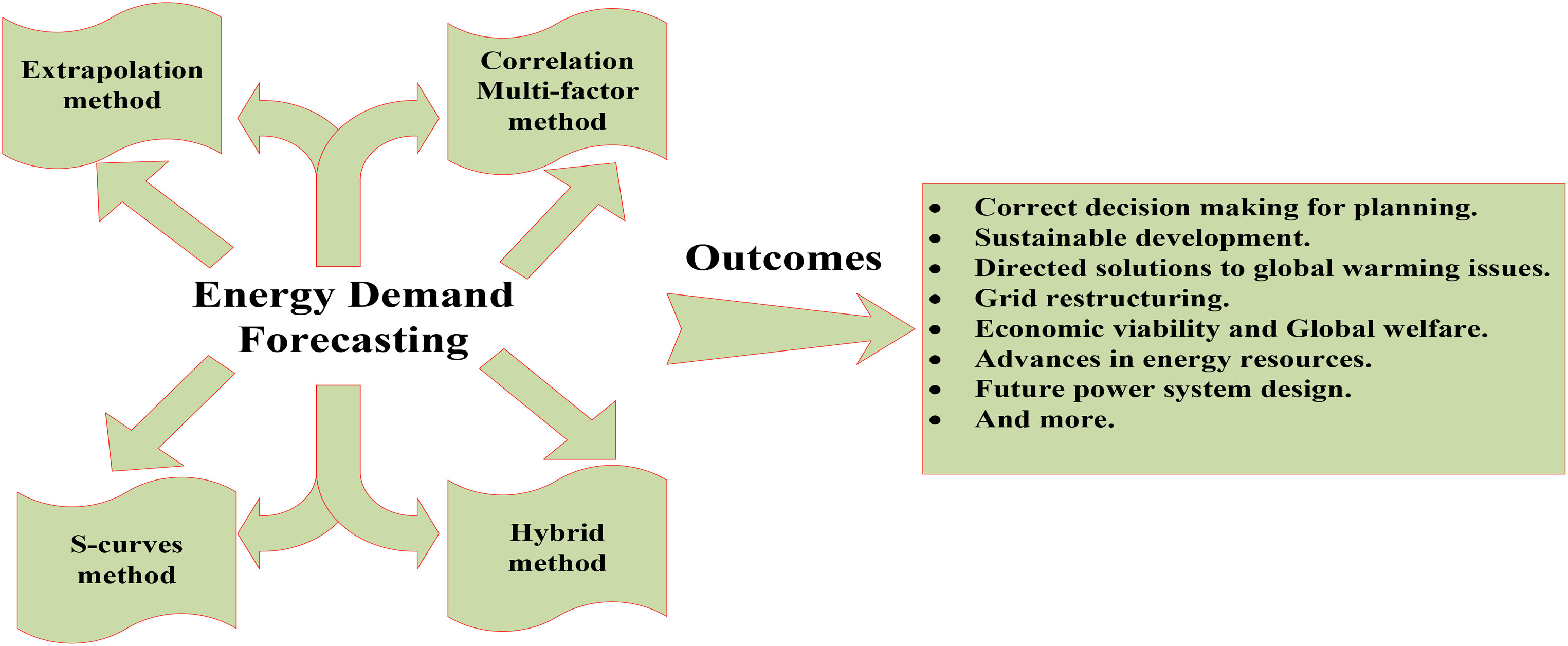
The transdisciplinary tendency and outcomes of the topic of energy demand forecasting.
The data science, energy engineering, environmental engineering, and business and economy departments are interested in energy demand forecasting. This drives the urgent need for further research attempts in a partly or similar fashion to develop invaluable tools that lead to more accurate results. There has been considerable research effort done so far; however, since the main target is related to model-based predictions, there will be no endpoint in such research area. It regularly needs studies to be available in advance for research above outcomes. The next section reports the recent literature work, which is a variety of specialisms and targets associated with energy demand predictions.
Related work
NNs have many interdisciplinary applications in energy engineering, such as modeling, control, real-time simulation, and forecasting. The practical importance of energy demand forecasting is justified and further revealed in this section through critical investigation and descriptive clarification of the literature. A published review has provided useful background and details about various modeling approaches (Suganthi and Samuel, 2012). However, another useful review has categorized some of those approaches into conventional and artificial intelligence-based (Wei et al., 2019). Therefore, a brief and recent review will serve our paper's purpose and make room for the analytical findings in the next sections.
NAR and the nonlinear autoregressive exogenous (NARX) NN have been applied to forecast public building energy consumption (Ruiz et al., 2016). The building data has been adopted from buildings at the University of Granada. The results have shown the robust performance of NAR and NARX and considerable research effort in data processing and the networks’ training. However, further investigation on NAR or NARX performance on the global energy demand scale has not yet been investigated.
Mauleón (2022) has presented a robust statistical model for world energy demand forecasting based on three main variables: primary energy, population, and gross domestic product (GDP). The model has been identified with a larger set of data (1900–2017) and produces a longer prediction horizon (up to 2050). However, the model can be realized as three dynamical equations with three unknowns, which might not be suitable in case of uncertainty assumption in GDP in some countries in addition to the longer period coverage for forecasting, which generally affects the performance of the data-driven model and subsequently the energy policy decisions.
Mustaqeem et al. (2021) have applied deep ensemble learning for short-term energy forecasting. The article has provided a valuable foundation for the research methodology, which can be seen as three subfolds: the data pre-processing, the designed models, and the evaluation of the models. The deep networks have been mainly convolutional NNs (CNNs) and long short-term memory (LSTM). The models have shown satisfactory performance in terms of accuracy. Some deep learning models have also been used for short-term forecasting of energy consumption in London households through comparison with Neural Basis Expansion Analysis for Interpretable Time Series (N-BEATS) (Shaikh et al., 2022). However, those papers have not discussed long-term- or next decade—forecasting. In addition, it is well-known that deep networks require larger data than those required for shallow dynamic NNs to produce satisfactory results.
Raza et al. (2022) used the long-range energy alternative planning (LEAP) simulator tool to forecast Pakistan's energy consumption and production up to 2030. The inputs to the software package are the GDP, population, number of households, number of consumers, and energy growth rates and demand from 2009 to 2018. The results have shown the software's capabilities for forecasting. However, the LEAP software has been used for future energy forecasting only for Pakistan in that paper, although it is scalable to handle global energy consumption. On the other hand, the global energy demand consumption is more comprehensive to estimate the long-term emissions, which completely affect global warming, unlike local case studies, which usually focus on economically viable and secure systems for the relevant countries.
Another regional energy demand forecasting has been presented via support vector regression-compositional data second exponential smoothing (SVR-CDSES) model (Rao et al., 2023). The drivers of energy demand in China have been investigated via a novel model that is—what the authors have called—a least absolute shrinkage and selection operator-random forest two-stage model. The purpose of knowing the drivers is to adopt 12 corresponding inputs to predict China's next decade's energy consumption. The results have given important information for the rate of increase of the various fossil energy resources and primary electricity. However, because the study has been regional, the next decade's global energy consumption is still needed to provide the key answers to the emissions questions and allow promising strategies for future climate targets. Seker (2021) has used meta-heuristic techniques for another long-term regional forecasting in Sivas province in Turkey. S-curve expressions have been computed via genetic algorithms (GAs), Gray-Wolf Optimizer (GWO), and Harris Hawk Optimizer (HHO) for optimal load forecasting. The study is useful for correct decision-making for regional strategic planning; however, as stated earlier, global energy demand forecasting is still needed for environmental and energy policy decisions.
Kamani and Ardehali (2023) have published an accurate long-term—up to 2050—energy consumption forecasting model, including solar and wind influences. ANN model has been optimized using two algorithms of particle swarm optimization (PSO) and expanded-particle swarm optimization (E-PSO). The inputs have been the GDP, the import, the export, the population, and the previous energy consumption. However, as the period is much longer, the uncertainty in load and source sides becomes a heavy factor in the model performance, which may need more extensive statistical and cross-validations.
Raheem et al. (2022) have developed an adjacent accumulation gray model for energy consumption forecasting of G20 countries up to 2026. From data processing to parameter estimation and analyzing the results, the model has shown promising model performance. However, a comparison with another robust model could be a valuable suggestion.
Some novel concepts, such as graph representation learning with heterogeneous features, have been utilized for short-term load forecasting during the COVID-19 crisis (Yu et al., 2021). A residual graph convolutional network (ResGCN) has been built to learn the graphs’ representation and predict future load during the pandemic within a short-term horizon. However, short-term applications are supportive only for power system security and economy in terms of operation but have nothing to do with long-term planning regarding energy environment requirements. The literature can be closed with more recent studies that were initially based on energy forecasting that can lead to more outcomes rather than grid requirements, which are combined outcomes of environmental and economic basis (Bekun, 2022; Bekun et al., 2021; Caglar et al., 2022). Table 1 summarizes the most relevant literature with distinguishing in terms of horizons, methodologies, and demands, which justifies the importance of this paperwork.
A summary of the investigated research contributions.
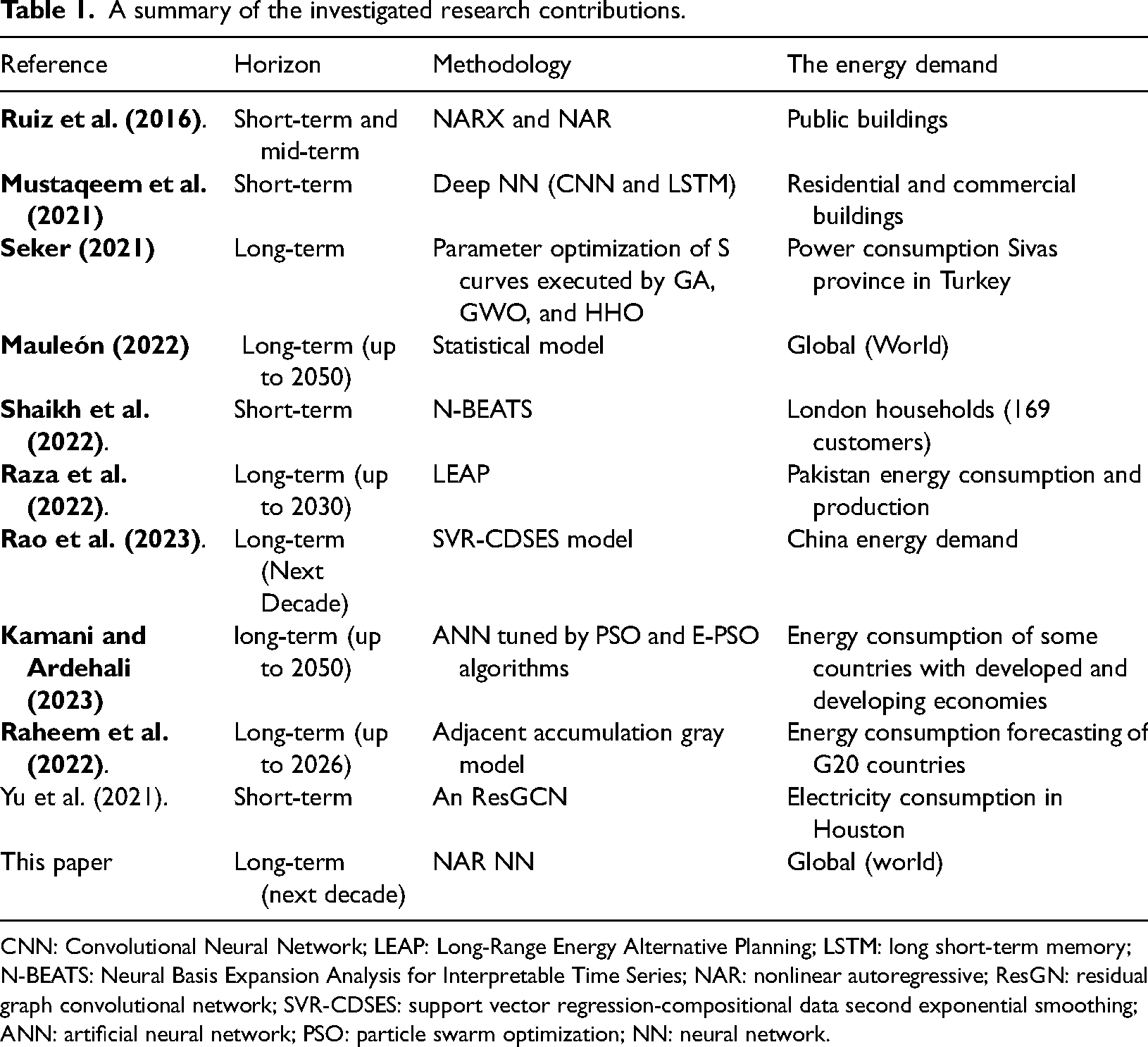
CNN: Convolutional Neural Network; LEAP: Long-Range Energy Alternative Planning; LSTM: long short-term memory; N-BEATS: Neural Basis Expansion Analysis for Interpretable Time Series; NAR: nonlinear autoregressive; ResGN: residual graph convolutional network; SVR-CDSES: support vector regression-compositional data second exponential smoothing; ANN: artificial neural network; PSO: particle swarm optimization; NN: neural network.
The recent literature has clearly shown a need for more research for the next decade of global-scale energy demand forecasting, which can be essential for making promising strategies to face global warming issues and more informed decision-making regarding energy policies globally. Another potential contribution is the simplicity and accuracy achieved with the proposed approach, which facilitates the inclusion of such topics in undergraduate power engineering courses and training future graduates, unlike other methods requiring enormous data or inherently having harder or more complex concepts.
Time series energy consumption model
This section presents our system modeling for the proposed time series model of estimating the next decade for worldwide energy exhaustion. The overall framework for the proposed forecasting task is illustrated in Figure 2. Initially, we obtained our time series dataset for global-electricity-consumption-1980–2022 from the Statista portal (STATISTA Portal website, 2023). This dataset provides timely statistics for the globe's electricity intake between 1980 and 2022, which has incessantly increased over the previous half a century, making roughly 28,000 terawatt-hours in 2022. The data has undergone a preparation stage, including converting the data values into numerical values, visualization of the data points into the time series, transposing the data items to be presented as an array, and transforming tabulated items into cell items to be processed by Matlab.
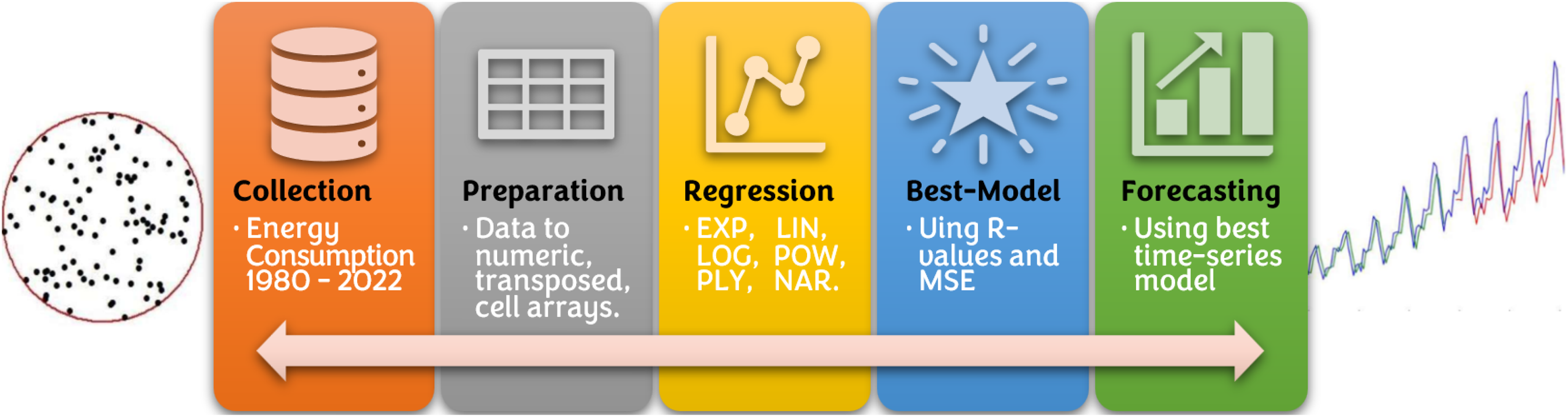
The framework graph for the time series modeling approach.
After that, the processed data was used regressed using six different regression methods in an attempt to pick up the model that provides the most precise regression, which can be further employed for signal regeneration and, of course, signal forecasting, which is the main goal to be satisfied for this article. The following figure–table, Figure 3, contrasts the coefficient of determination (R-value) (Al-Haija, 2022) and regression error percent for the six regression models: exponential interpolation (EXP), linear interpolation (LIN), logarithmic interpolation (LOG), power interpolation (POW), second-order polynomial interpolation, and the NAR NNs model. Based on the information in the table, the NAR model has been selected to perform the forecasting task for energy consumption in this article.
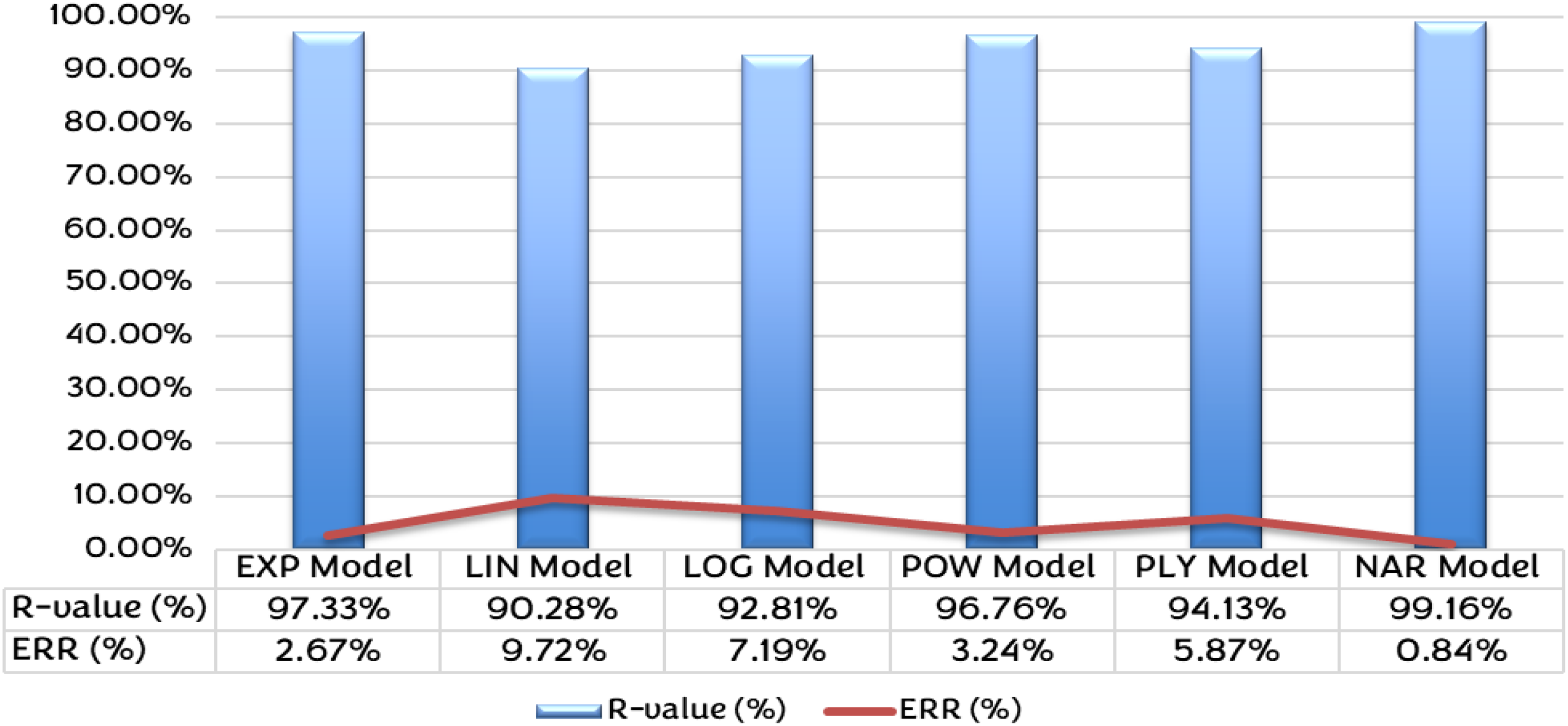
A summary of the investigated and surveyed research works.
Considering different forecasting models and techniques can help make the solution approach more accurate, robust, and informed and improve the overall quality of the forecasted phenomena. While the NAR model, which scored the best performance measures, has been selected to perform the forecasting task for energy consumption in this article, it is worth highlighting the benefits of other investigated models. For instance, the exponential model has been widely used for time series forecasting due to its simplicity and flexibility in modeling trends and seasonality in time series data. This makes it a versatile forecasting method. The exponential model can also be highly accurate in predicting future values of a time series, particularly if the data exhibits an exponential growth or decay pattern. Its intuitive nature and adaptability have made it a fundamental tool for time series forecasting and an important method for decision-making in various industries. Furthermore, comparing multiple models can help identify the strengths and weaknesses of each approach and provide a more comprehensive understanding of the underlying data. Overall, exploring different forecasting models and techniques can lead to more accurate and reliable predictions, ultimately helping to make better-informed decisions.
The proposed system makes use of NAR NNs. In this system, we have developed a multistep prediction model based on a NAR NN to predict a new sequence of time series values. The training process took place using several historical data recorded and accumulated in an organized time series. The time series used in this paper is known as global-electricity-consumption-1980–2022; it comprises the overall global electric energy consumption amounts measured in terawatt-hours. Figure 4 shows the two NAR components of our prediction model used to train and predict the global electric energy consumption amounts. The model is composed of the input layer (one neuron), processing layer/hidden layer (composed of 10 neurons), and output layer (one neuron). Figure 4(a) shows the open-loop NAR NN used to train the model with the available observation accumulated in the global-electricity-consumption-1980–2022. Once trained, the model can be closed using the feedback line from output to input, as shown in Figure 4(b). Closed-loop networks can perform multistep predictions. In NAR prediction, the future values of a time series are predicted only from the past values of that series.
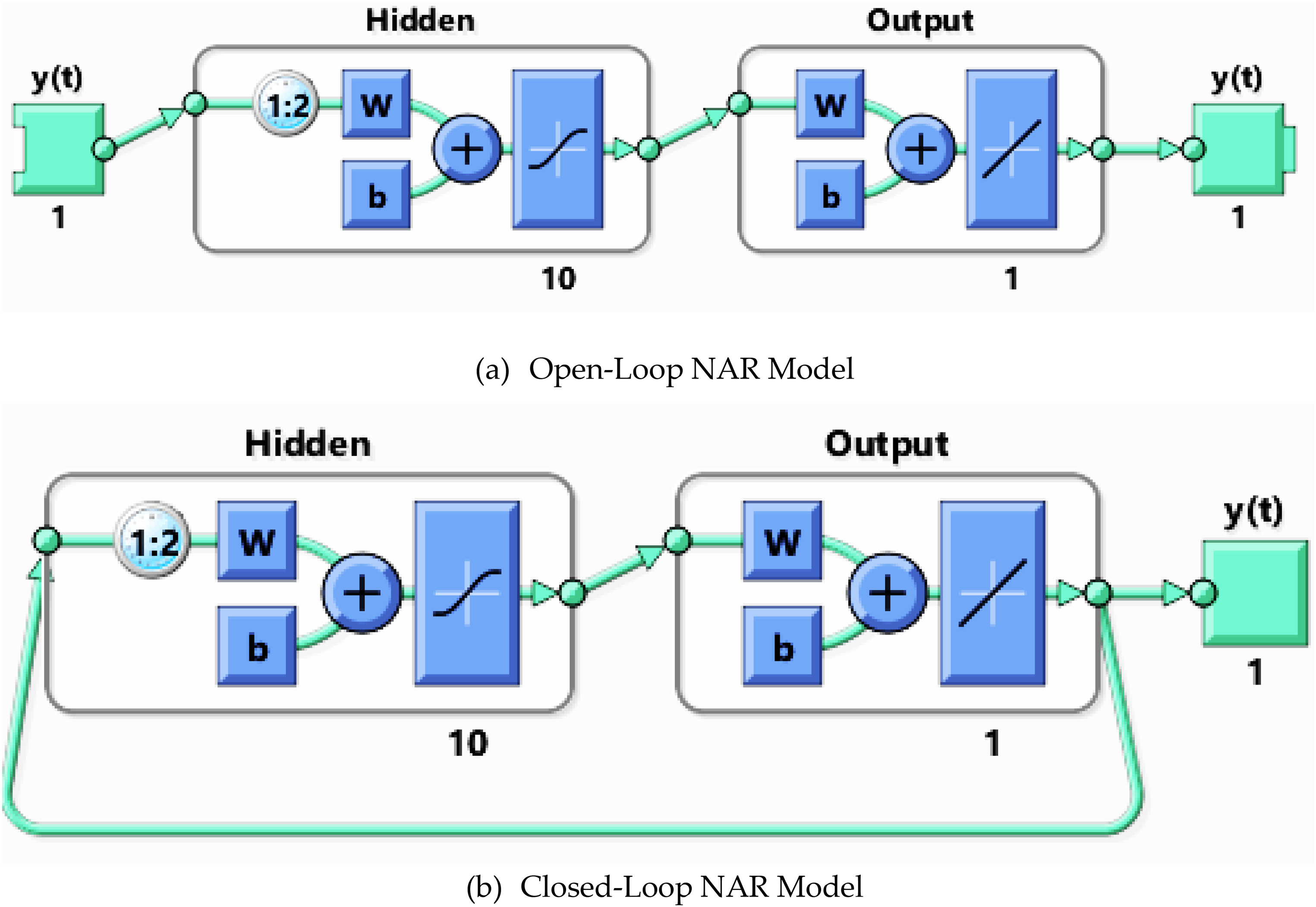
Proposed predictive model: (a) open-loop nonlinear autoregressive (NAR) model (training model) and (b) closed-loop NAR model (prediction model).
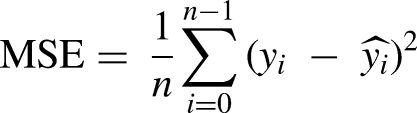
Also, the proposed NAR network was trained using the Levenberg–Marquardt (LM) algorithm (Alsulami and Zein-Sabatto, 2021). LM algorithm can be used to solve diverse data representation applications. Here, we use the LM algorithm for the least-squares curve-fitting problem. Given a group of n experimental observation-pairs of independent (
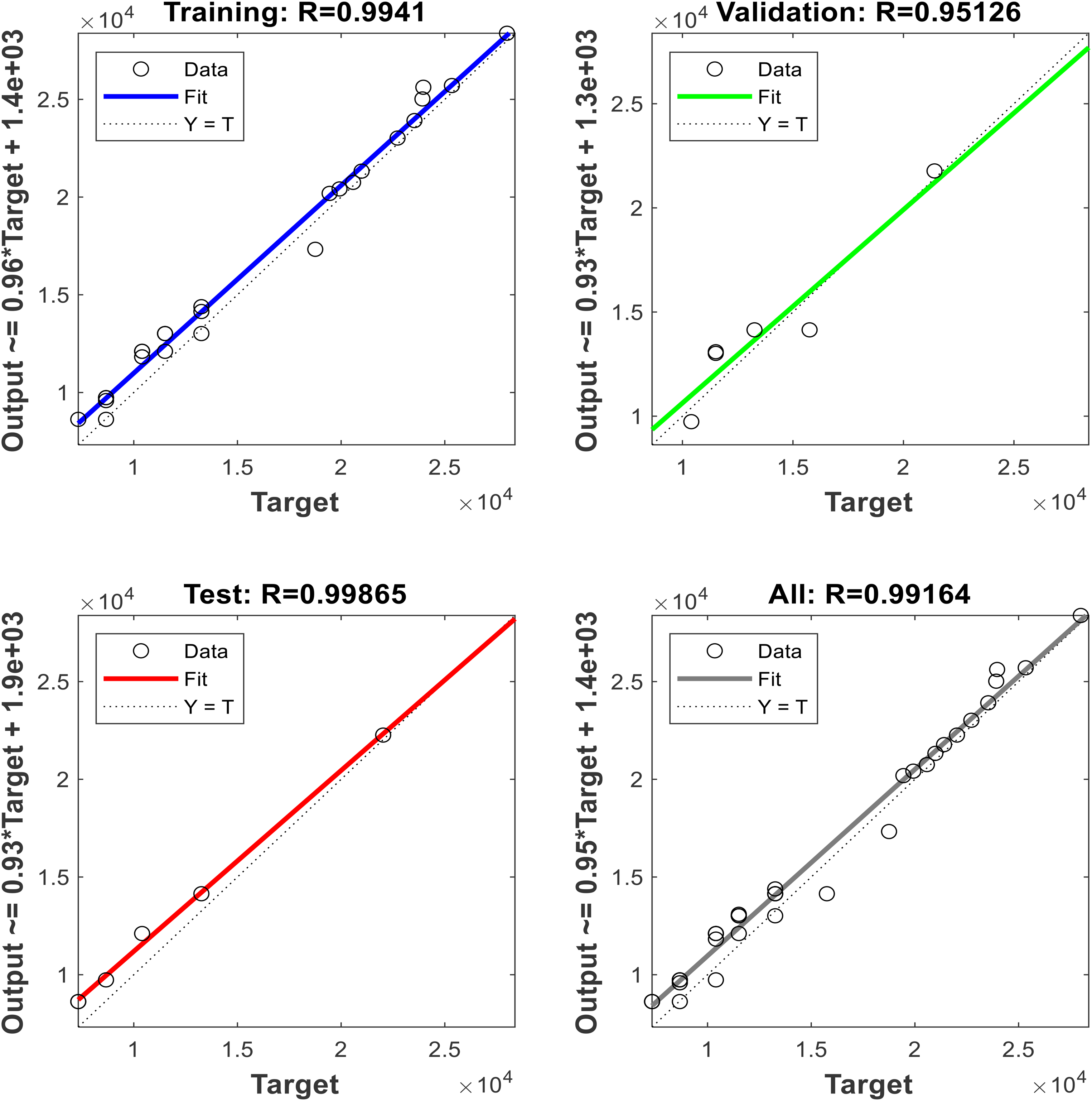
Coefficient of determination (R-value) for training, validation, testing, and the overall.
Results and discussion
An electric energy forecasting task is a technique to envisage potential electricity requirements to maintain the steadiness of demand and supply. It can be observed that between 1980 and 2022, energy exhaustion has more than tripled, though the worldwide population expanded by approximately 75%. Indeed, the expansion in industrial development and electrical energy access worldwide have further heightened electrical energy demand. This section presents our regression, forecasting, and validation results for the proposed NAR-based time series model for the next decade's forecasting of global energy exhaustion. We present the curve-fitting results using the NAR model for the electricity consumption values recorded from 1980 to 2022 (Figure 6). In this plot, we are trying to visualize the interpolation process between energy points to observe the degree of fitting for the proposed NAR-based time series model of our dedicated time series data points. We can observe the extreme fitting degree between the data points and the generated NAR curve. It almost fits with the center of all data points, with very slight variations appearing between some points and the curve.
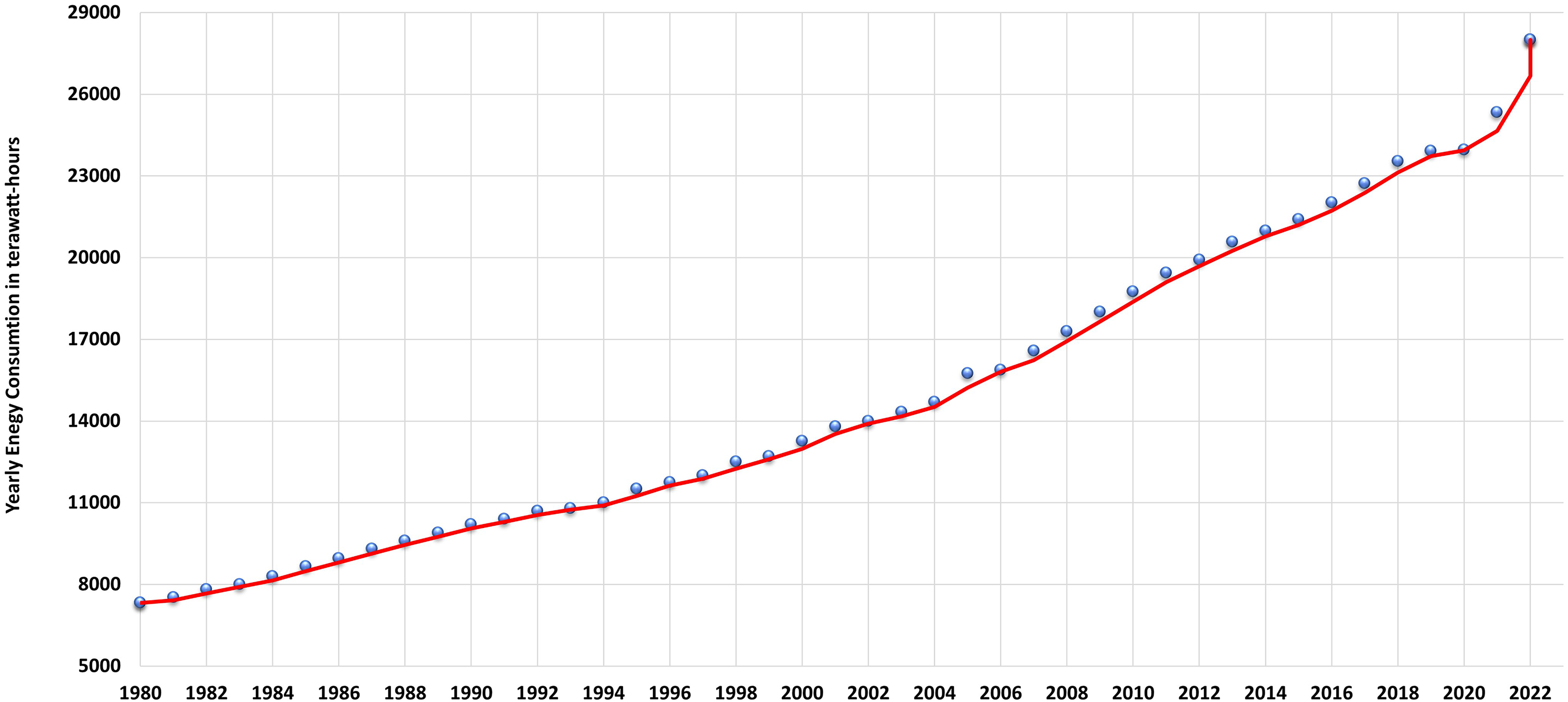
Curve fitting with filling missing point using second-order moving average (moving average with period = 2).
The forecasting task usually starts after the model regression and visualization to ensure that the forecasting process takes place with the highest degree of curve fitting for all previous observations. This, in turn, provides the greatest model trustworthiness to forecast the short-term future for the given time series. Figure 7 presents the next decade's forecasting of global energy exhaustion time series using the aforementioned developed NAR model. The blue bars show the past observations of electricity values (1980–2022). The red bars, along with the tabulated data, display the average forecasted values for global energy consumption for the next decade (2023–2032). The small, tapped lines accompanying the red bars provide both the upper and lower forecasted values for global energy consumption for the next decade (2023–2032). Of course, the values recorded by the red bars fall between the upper and lower forecasting (the average is used here). According to the figure, electricity consumption will continue to grow, indicating an increasing demand for electricity generation. The adherence to the forecasted energy values reveals a linear boosting tendency that increases with time in advance. This can be justified by the great expansion of industrialization and the increasing inclination toward automation in diverse areas of life applications.
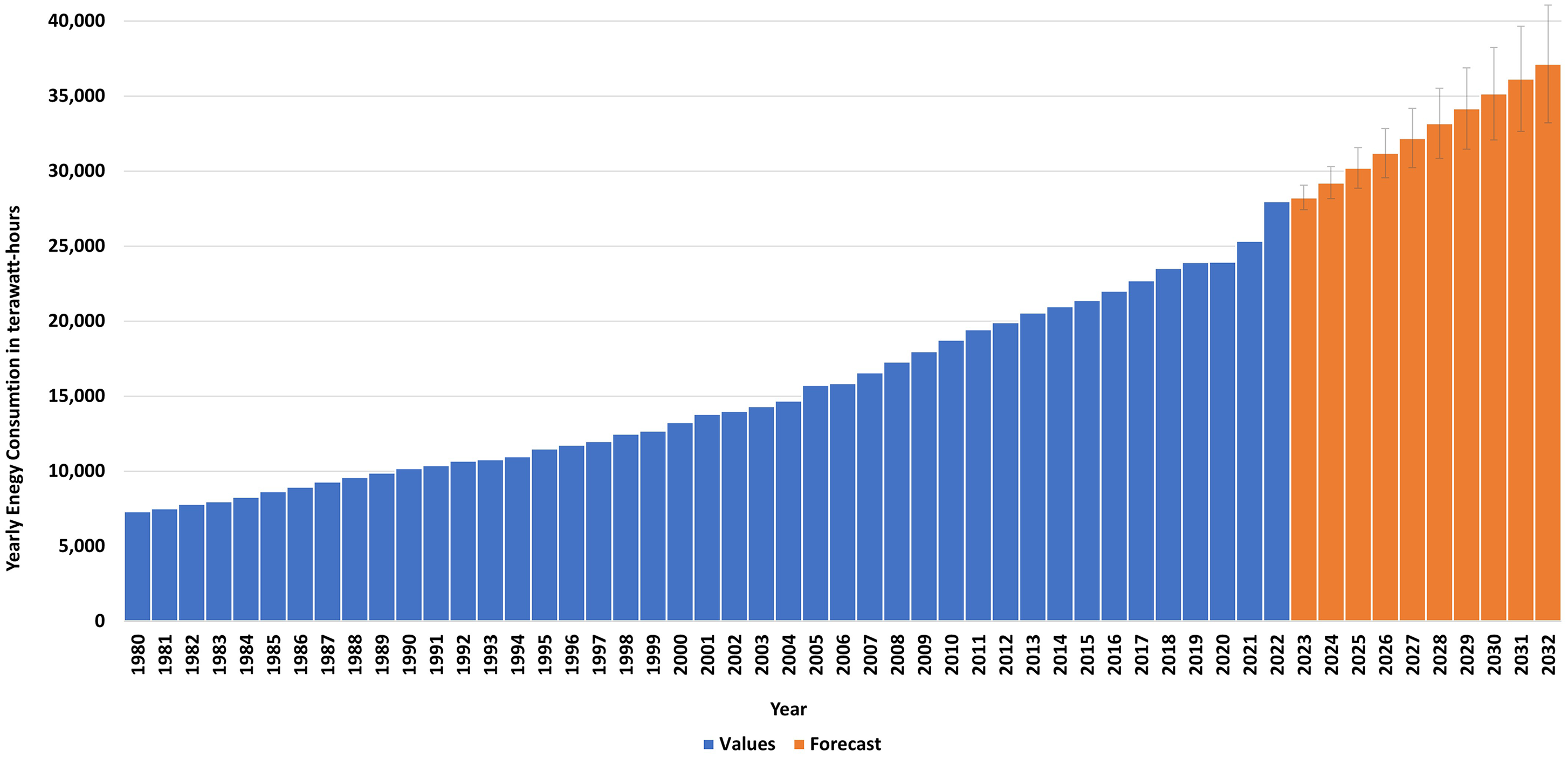
Next decade forecasting with nonlinear autoregressive (NAR), R2 = 99.8 (the tabulated data shows the exact forecasted values of global energy consumption amount in the next decade (2023–2032).
Finally, the model validation figure is displayed below in Figure 8. This figure plots every actual observation (i.e. energy value) along with its associated model-generated observation represented as pairs of blue and red bars from 1980–2022. The individual red bars represent the forecasted observations. According to the figures, the developed NAR model exhibits a high accuracy value in re-generating the time series signal scoring a model accuracy validation of 97.88%. Such high accuracy provides more insights into the model forecasting trustworthiness since it validated the small variations between the actual data points and the model-generated data points. The model validation accuracy (Al-Haija and Tawalbeh, 2019) has been calculated as follows:
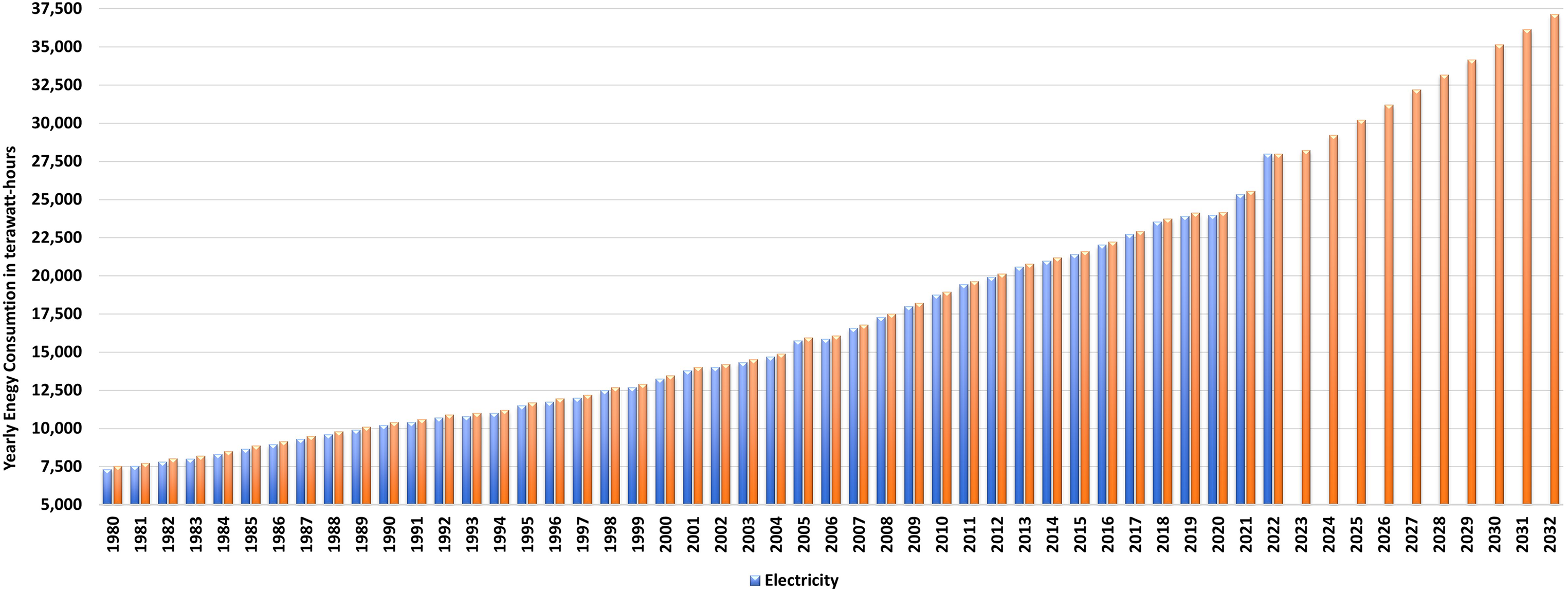
Model accuracy validation, accuracy = 97.88%.
While we have already compared our model’s approach to state-of-the-art approaches in Table 1, it is important to emphasize the superior results achieved in our experimental work. As our study focuses on developing a time series forecasting model and we have extensively compared our approach to several established and extensively used models in the literature (EXP, LIN, LOG, POW, PLY, and NAR), we feel that our exceptional performance indicators for forecasting accuracy, error, and the coefficient of determination can stand on their own merit without necessarily referencing previous studies. Our study contributes to the advancement of time series forecasting by demonstrating the effectiveness of our NAR NN model in predicting global energy demand for the next decade. We hope that our work will be useful for researchers and practitioners working in the field and inspire further research in this area.
Finally, to verify the stability and accuracy of our model in predicting future data, we conducted an additional test by using the model trained on data from 1980 to 2019 to forecast energy demand from 2020 to 2022. Figure 9 illustrates the obtained results. The results show a very slight variation between the actual and predicted values, demonstrating the specificity and robustness of the model in forecasting future energy demand. This finding further confirms the effectiveness of our proposed NAR model for short-term energy demand forecasting.
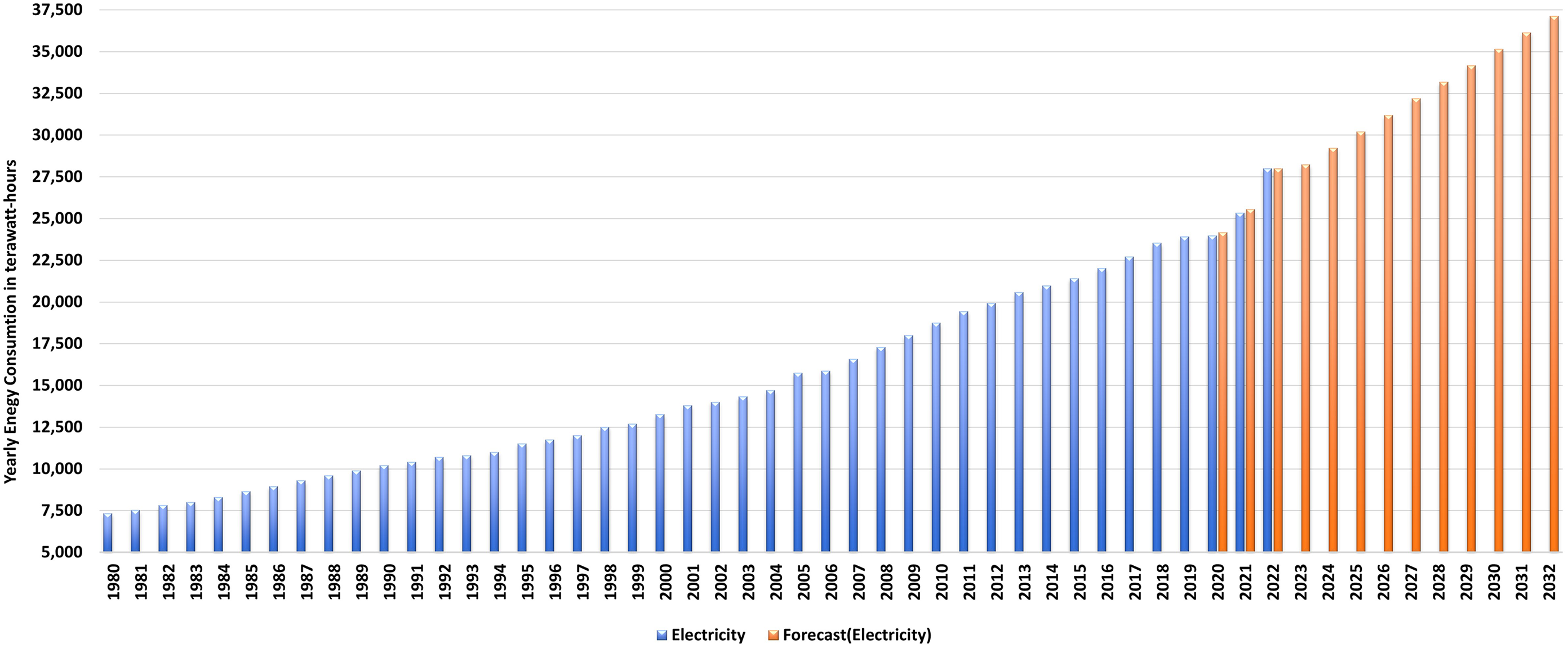
Validating the stability and specificity of the model in predicting future data.
Conclusions and policy recommendations
The energy industry is undergoing a radical shift away from fossil fuels and toward carbon-free alternatives. New, dynamic energy markets are developing to meet the ever-increasing need for power. Ensuring electricity system reliability is crucial: the effectiveness of electricity markets depends on reliable supply. All of this for companies in this sector implies new opportunities and risks.
The restructuring of the power industry adds extra complexity to an already complex power system environment. Foreseeing the factors influencing energy production, transmission, and consumption is becoming increasingly crucial. Energy distribution and consumption benefit greatly from reliable forecasts. Improved forecasting allows process optimization and enhancement due to the abundance of information from transmission and distribution networks.
Applications using artificial intelligence have proven crucial to achieving this. They allow for more precise forecasting of future requirements, market developments, and energy prices; improved capacity for planning and running operations in a dynamic setting; cost savings and optimization opportunities for electricity generators; forecasting energy prices in light of historical data and weather forecasts; and the identification of the best energy markets for the company's generation profile. Not to mention less instability and better power quality, decreased costs, and more efficient and dependable electricity distribution, optimized reactive power compensation, avoided grid congestion, and optimized power flow. Better demand-response from significant energy use is provided by optimizing operations and demand in light of anticipated power price forecasts, bidding flexibility in the energy market, and sustaining the system when demand is high.
To that end, the present work offers a NAR NN that was used to forecast global energy use over the next decade. The proposed forecasting model makes use of an open/close NAR system composed of the input layer, output layer, and a 10-neuron processing (hidden) layer. The open NAR model is trained with the LM algorithm toward obtaining the least MSE, which was recorded at 0.2%. After that, the close NAR model was used confidently with an R-value of 99.8% to predict the next decade of global energy consumption amount in the next decade (2023–2032). The solution incorporates both physics-based modeling and data-efficient and flexible learning techniques. It yields more accurate and reliable forecasting results and provides a clear view of energy consumption requirements and conditions.
The proposed model has been found to have a testing regression accuracy of 0.99865, demonstrating its validity without the use of overfitting and pointing toward its potential use by planning engineers.
Limitations and future directions
While the NAR model has demonstrated convincing performance in time series forecasting tasks of global energy demands, its use has some potential limitations. One of the main concerns is the possibility of overfitting, where the model becomes too complex and fits the noise in the data rather than the underlying patterns. This can lead to poor generalization and inaccurate predictions of new data. Additionally, NAR models can be computationally intensive and require significant training data to achieve optimal performance. Furthermore, interpreting the results of an NAR model can be challenging due to the complexity of the underlying architecture and the need for more transparency in the decision-making process. As such, it is important to carefully evaluate the performance of NAR models and consider the tradeoffs between accuracy, interpretability, and computational efficiency when selecting a forecasting approach for a given application.
In future time series forecasting tasks, exploring other efficient models beyond the exponential model may be beneficial. For example, the ARIMA model has shown promising results in capturing seasonal patterns, making it a suitable method for forecasting time series data with seasonal variations. On the other hand, the LSTM model has demonstrated its capability to capture long-term dependencies in the data, which makes it a suitable method for predicting future values based on past observations. By incorporating these models and techniques, along with the exponential model, into the forecasting process, achieving more accurate and reliable predictions is possible. Ultimately, the selection of a specific forecasting method should be based on the data's unique characteristics and the forecasting task’s goals. Besides, the interpretability of the NAR model could be improved through techniques such as sensitivity analysis or visualization of feature importance. Finally, it is also recommended to include correlation data and methods which relate or combine the effect of demographic and weather factors on forecasting energy consumption. This may lead to the necessity of using deep learning techniques, such as CNN or LSTM.
Footnotes
Declaration of conflicting interests
The author(s) declared no potential conflicts of interest with respect to the research, authorship, and/or publication of this article.
Funding
The author(s) received no financial support for the research, authorship, and/or publication of this article.
