




Abstract
In today's world, there are many changes and transformations in different sectors of the economy, and today's world economy has become more dependent on each other. The economy of many developing countries is highly dependent on agriculture. In addition, in developed countries, the agricultural sector is of special importance, so they are currently turning to the production of more organic and healthy products. One of the reasons that caused the agricultural sector to receive more attention in the economy is the existential importance of this sector in providing the raw materials of a part of the industry and the food industry needed in that country. Accordingly, in this research, the optimal cultivation pattern is determined using a linear multi-objective mathematical model, including economic, social, and environmental objectives. Moreover, the uncertainty in the input parameters of the proposed model is considered, and a robust optimization approach is applied to deal with this uncertainty. After collecting the research data for the crop year 2021-2022, the proposed robust counterpart formulation is optimized using GAMS software. The numerical results show that increasing the level of conservatism in the robust model cause to decrease in the profit of agriculture as well as increasing the total consumed water. Moreover, the results of the current research can help the decision-makers of the agricultural sector in achieving the goal of obtaining the highest profit.
Keywords
Introduction
The agriculture sector, as the oldest production activity with a rural origin, has been of special importance in the process of growth and development of different countries over different periods of time (Ragazou et al., 2022). Examining the development process of different countries indicates that the development of the agricultural sector as one of the most important economic sectors for the realization of the sustainable development of the country is a vital matter (Wang et al., 2022). Therefore, without removing the development barriers in this sector, it is not expected to achieve prosperity and development (Kumar et al., 2021). In this regard, a view on the transformational fields of the current advanced societies shows that the source of the development of many of these countries is the surplus production in the agricultural sector in the early stages of development, which has become the basis of the transformations (Tian et al., 2021).
Determining the optimal cultivation pattern in each region has been one of the inherent duties of the organizations responsible for agriculture and one of the long-standing aspirations of those involved in the agricultural sector (Ouyang et al., 2022). Although measures have been taken at any point, according to the available information, these measures have not been complete and comprehensive. In general, it seems that the current cultivation pattern of the country is affected by past actions and mainly based on the existing water and soil resources and sometimes economic advantages and due to the change of climatic and economic conditions due to the non-competitiveness of the production of some products, this cultivation pattern faces challenges, which necessitates changing the annual cultivation pattern (Bontzorlos et al., 2023).
Considering the vastness of the agricultural territory and the climatic diversity of different regions, it is an undeniable necessity to determine the appropriate cultivation pattern for each region, which can create the maximum exploitation of production factors, especially the limiting factor of water (Zhang and Guo, 2016). Moreover, the area under cultivation of agricultural products of a region should be determined according to the available resources, product prices, production costs, and product performance, and the decision to choose agricultural or horticultural products of different regions based on the existing infrastructure, socio-economic issues, and level technology, by maintaining the basic resources of production in order to meet the basic needs of the country (Jiang et al., 2022).
Therefore, in order to decide on the appropriate amount of annual cultivation of each crop, instead of using the traditional method and based on previous agricultural tests, new methods based on scientific information can be used. The advantage of new methods over traditional methods is the optimal allocation of resources to produce the maximum product with the highest efficiency, which is an accessible program (Paravar et al., 2023).
Different planning models based on geographic information systems or mathematical planning are able to determine the optimal pattern of exploitation or check the effect of different decisions on the flow and access to production resources in agricultural and environmental applications (Ward, 2007). In different planning, decision-makers are usually unsatisfied with a specific goal in their choices and want to balance conflicting outcomes and outputs of the decision (Jones and Barnes, 2000).
Decision-making in a situation where there are several special goals in front of managers of different units, in addition to decision-making tools, requires diverse and different information (Goli et al., 2023). It is not easy to set up the mechanism of a management system based on this information and multiple objectives over time and in different places, and it requires a method that can help the managers of agricultural units to make a rational decision based on a set of available information and different ideals (Ustaoglu et al., 2016).
Meanwhile, mathematical programming models have been used more widely (Ala et al., 2022; Pahlevan et al., 2021). These patterns, especially since the last few decades, have been introduced as one of the decision-making tools for agricultural issues at the level of the farm and the agricultural sector.
Moreover, the presence of uncertain factors in predicting the parameters used in this type of planning tool has caused much confusion in the interpretation of the results related to this type of model. It has caused a new generation of optimization problems in conditions of uncertainty. The widespread use of stepwise, interval, two- or multi-step stochastic methods and other related methods in this field shows the great importance of this issue. Recently, the use of optimization methods with conservatism control parameters or robust optimization to apply uncertainty conditions in mathematical programming models has been prevalent among researchers. The reason for this popularity is due to the computational advantages and more straightforward interpretation of the results of this model compared to other uncertainty models (Bertsimas and Sim, 2004).
In the field of cultivation patterns, various pieces of research have been conducted inside and outside the country. Zhang and Guo (2016) compiled the regional pattern of crop and garden cultivation using the multi-objective structural planning (MOSP) approach considering set economic, social, and environmental goals separately.
Zhang et al. (2018) determined the optimal pattern of agricultural land cultivation in the river catchment area. Accordingly, the application of the mentioned method will lead to the creation of a mutual relationship in the interests of the system, the level of stability, and the level of risk in the failure of the system. Filippi et al. (2017), using a mixed number linear programming model, determined the cultivation pattern in Italy. In their study, the linear programming model and the value-at-risk model were used, and the results showed that in both models, the profit of the optimal cultivation pattern increases between 19% and 26%.
Manos et al. (2010) proposed an optimization model for cultivation patterns. Due to the extensiveness of the model, only four of the ten regions located in the north of Egypt were investigated. Moreover, by designing the cultivation pattern of these areas, multi-criteria planning models (ideal planning) were used to solve it. The results indicate that multi-objective models are more capable than single-objective models. Song et al. (2022) investigated multi-regional planning models and their application in the agricultural sector.
Akbari et al. (2022) used ideal planning to determine the optimal irrigation pattern, strategy, and method for the sustainability of water resources in Firozabad, Iran. The results of that study can help farmers optimize their income and harvest from underground water tables simultaneously. The results showed that as a result of water storage, the percentage of profit reduction is less than the percentage of water consumption reduction, and the presented models provide motivation for the farmer in water storage without much change in profit. Shaikh et al. (2022), using linear programming methods, determined the optimal pattern of cultivation in the direction of water resources management in the Mashhad-Chenaran plain. The results showed that in the optimal model, the amount of water consumption decreased, and the cultivated area of crops, such as sugar beet, beans, and sunflower, could be increased.
Shi et al. (2023) investigated the optimal cultivation pattern and its effect on water resources management by using the ideal and linear planning method and showed that compared to the current situation, in the step-by-step linear planning model, the cultivated area of barley and sugar beet has decreased. Moreover, in the ideal planning model, the cultivated area of wheat and barley has increased, and the cultivated area of other crops has decreased.
Ding et al. (2023) conducted research on improving territorial life cycle assessment (LCA) optimization. The study utilized a fuzzy optimization approach to address trade-offs among objectives, minimize environmental damages, and maximize the satisfaction level of desired land-use functions. To account for constraints such as area availability and demand, the fuzzy optimization approach generated optimized scenarios. The research concluded that the optimized outcomes could assist decision-making in determining the ideal locations for various crop types and utilization while adhering to the constraints and objectives.
Similarly, Moges et al. (2023) investigated the optimization of agricultural land allocation and proposed a novel fuzzy multi-objective programming approach. The authors employed an accuracy ranking function and variable transformation in the approach to convert the fuzzy multi-objective model into a crisp multi-objective linear optimization problem. Additionally, the first phase of the weighted intuitionistic fuzzy goal programming model was formulated to obtain a non-dominant solution. The research results demonstrated the efficacy of the proposed methodology in optimizing agricultural land allocation.
In the field of optimizing the allocation of arable land in different regions of the world, studies have also been conducted (Santé-Riveira et al., 2008; Sharma and Jana, 2009). Moreover, in some of these studies, from the models of ideal planning (De Oliveira et al., 2003; Jayaraman et al., 2015) and multi-objective planning or staged multi-objective planning (Kong et al., 2023; Zeng et al., 2010) has been used.
The aforementioned studies highlight the significant importance of establishing a consistent agricultural program that is tailored to the specific needs and abilities of each region. Each study has aimed to establish an ideal cultivation plan based on various objectives and priorities, employing distinct techniques to achieve these plans. However, none of these studies have explored the application of a resilient multi-objective planning approach in identifying the most effective cultivation pattern for agricultural produce.
Accordingly, the main contribution of this research is to present a multi-objective mathematical model of cultivation according to different economic, social, and environmental goals. Moreover, for the first time, the robust optimization based on Bertsimas and Sim approach is applied to deal with the uncertainty in cultivation planning. In this regard, the investigations were carried out in two separate stages (with and without considering the uncertainty).
The rest of the paper is organized as follows. In the “Methodology” section, the proposed mathematical model in the deterministic and robust form is presented. In the “Numerical results” section, the numerical results of implementing the research methodology are provided. Finally, the research is concluded in the “Conclusions and future outlooks” section.
Methodology
In this research, in accordance with the mentioned innovation, the optimization of the cultivation of agricultural products with the aim of developing rural areas is discussed. This research has been conducted in two main and different phases. In the first stage, the deterministic mathematical model is proposed. In the second stage, the multi-objective mathematical model is combined with parameters controlling the level of conservatism, as well as different uncertainty scenarios. The main assumptions of the proposed mathematical models are as follows:
The simultaneous cultivation of several agricultural products has been studied in several time periods. The area of land allocated to each product is known at the beginning of the planning horizon. To plant any crop, water, chemical fertilizers, and poisons are needed. The available amount of water, chemical fertilizers, and poisons is limited. A certain amount of energy is consumed in the production of each product. Meanwhile, residents of rural areas also need this energy. Therefore, the amount of energy consumption in the agricultural sector should be such that it does not cause disruption in the consumption of residents. Irrigation efficiency is known for each product at the beginning of the planning horizon. Planting each crop has a predetermined gross profit and selling price. The demand for each agricultural product does not have an exact value and only has a certain minimum and maximum value.
The proposed mathematical model operates by analyzing the required information to identify the optimal decision for resource allocation, including water, chemical fertilizers, pesticides, energy, and agricultural machinery. This model has various objectives, including maximizing profits, minimizing water, fertilizer, and pesticide usage, and reducing energy consumption. It also aims to enhance the productivity of manpower and machines, ultimately leading to maximum harvest yield from agricultural land.
The steps of the proposed mathematical model are presented as follows.
Step 1: Deterministic model
Before introducing the proposed mathematical model, sets, variables, and parameters used in the study are given in Table 1.
Notations of the proposed mathematical model.
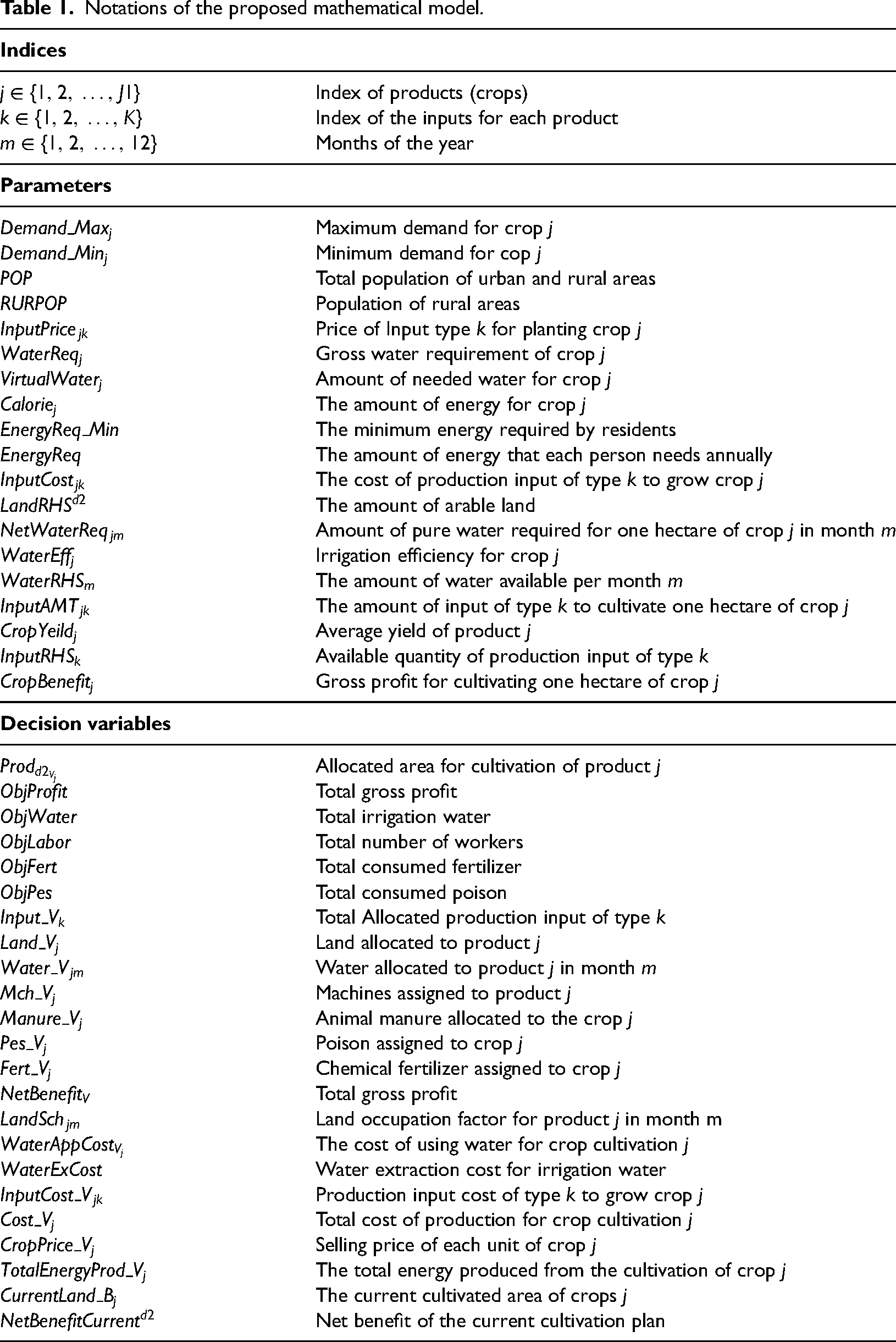
A regional pattern of cultivation can include different objectives. Due to the flexibility in the proposed model, different objectives are of concern. For example, obtaining the maximum profit from the cultivation of crops is the farmer's decision, and the minimum consumption of water is the decision of some relevant organizations. Since more than one objective was pursued in the present study, the mathematical formulation of these goals is given in equations (1) to (8)







The existence of several different objectives leads to the existence of a pattern in the form of multi-objective structural planning (MOSP). In this research, in order to harmonize the goals, the general framework of the multi-objective staged nonlinear planning model inspired by Jones and Barnes (2000) has been used. Zhang and Guo (2016) used the same planning model. In fact, it was possible to develop objectives and constraints by applying uncertainty conditions.
After examining the different objectives in the cultivation model, it is necessary to state the constraints of the model. In equation (9), it is stated that the total amount of land allocated to crops should not exceed the total arable land for each region and in each month.
Attention to the non-deviation of the model from the amount of available water for different sources and months is given in equations (10) and (11)

It should be noted that in equation (10), the issue of irrigation efficiency is considered according to the net water requirement of plants. In equations (12) to (20), the cost of using irrigation water, the cost of extracting irrigation water, the cost of agricultural inputs, the total cost of production, the price of agricultural products, the net profit of products, the gross profit of agricultural products and the amount of expected profit are calculated.








The consumption of each agricultural input from its available amount has been calculated in equations (21) and (22).

In equations (23) and (24), it is guaranteed that the amount of production of each crop should not deviate from its maximum and minimum demand.


The amount of energy produced from the cultivation of agricultural products must provide the minimum amount of energy required by each region for its residents. In other words, the set of constraints related to the discussion of food security has been applied in equations (25) to (27).


In equation (25), the required amount of energy is calculated and in equation (27), it is stated that the total produced energy creates the production boundary for growing crops in that area.
The allocated land, which is suggested by the model, should be greater than or equal to the current level, and this is important because of the multi-year nature of these products. Equation (28) shows this constraint.
Step 2: Robust mathematical model
One of the classic assumptions in mathematical programming under certainty is that all parameters (input data) are completely known and determined (Goli et al., 2022). This assumption is challenged in practice because most of the predicted or measured parameters deal with uncertainty. One of the ways to prevent damages caused by not paying attention to the uncertainty issue is to use flexible models to apply uncertainty conditions. The robust optimization model with control parameters is one of the most powerful and flexible models. The linear form of the robust optimization model inspired by (Bertsimas and Sim, 2003) is in the form of equation (29)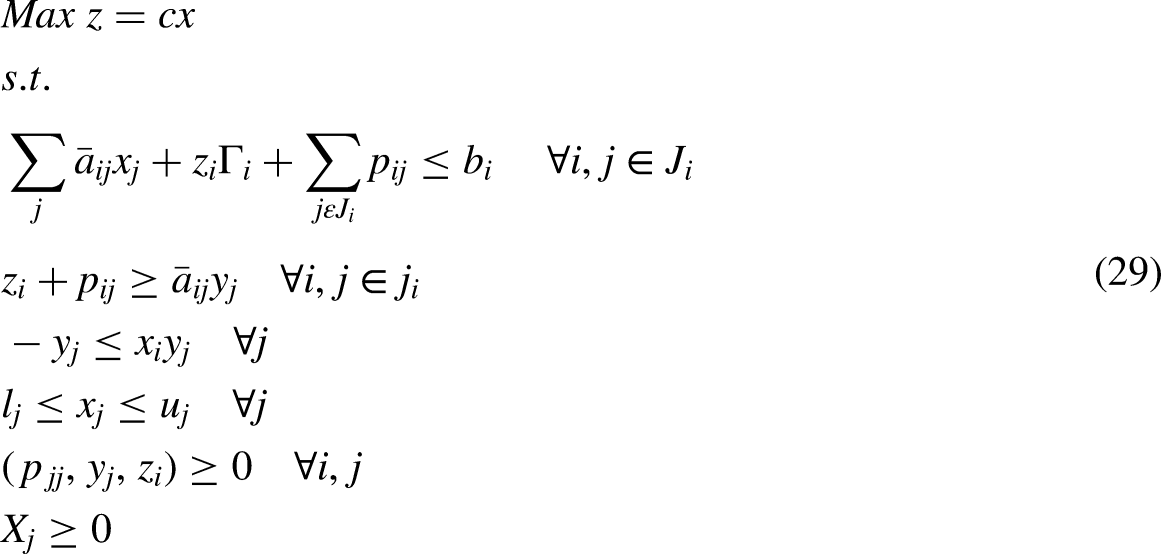
where z, y, and p are non-negative additional variables. The parameters controlling the level of conservatism 
For the calculation of
After applying the robust optimization approach, the proposed mathematical model is updated and the robust counterpart formulation is achieved. In this regard, equations (9), (11), (22), (27), and (28) are replaced with the following constraints









Numerical results
The results of this research are presented in two stages due to the coordination between different parts. First, the results of the deterministic model are presented. Next, the robust counterpart formulated is evaluated, and the results are analyzed.
The results of the first stage
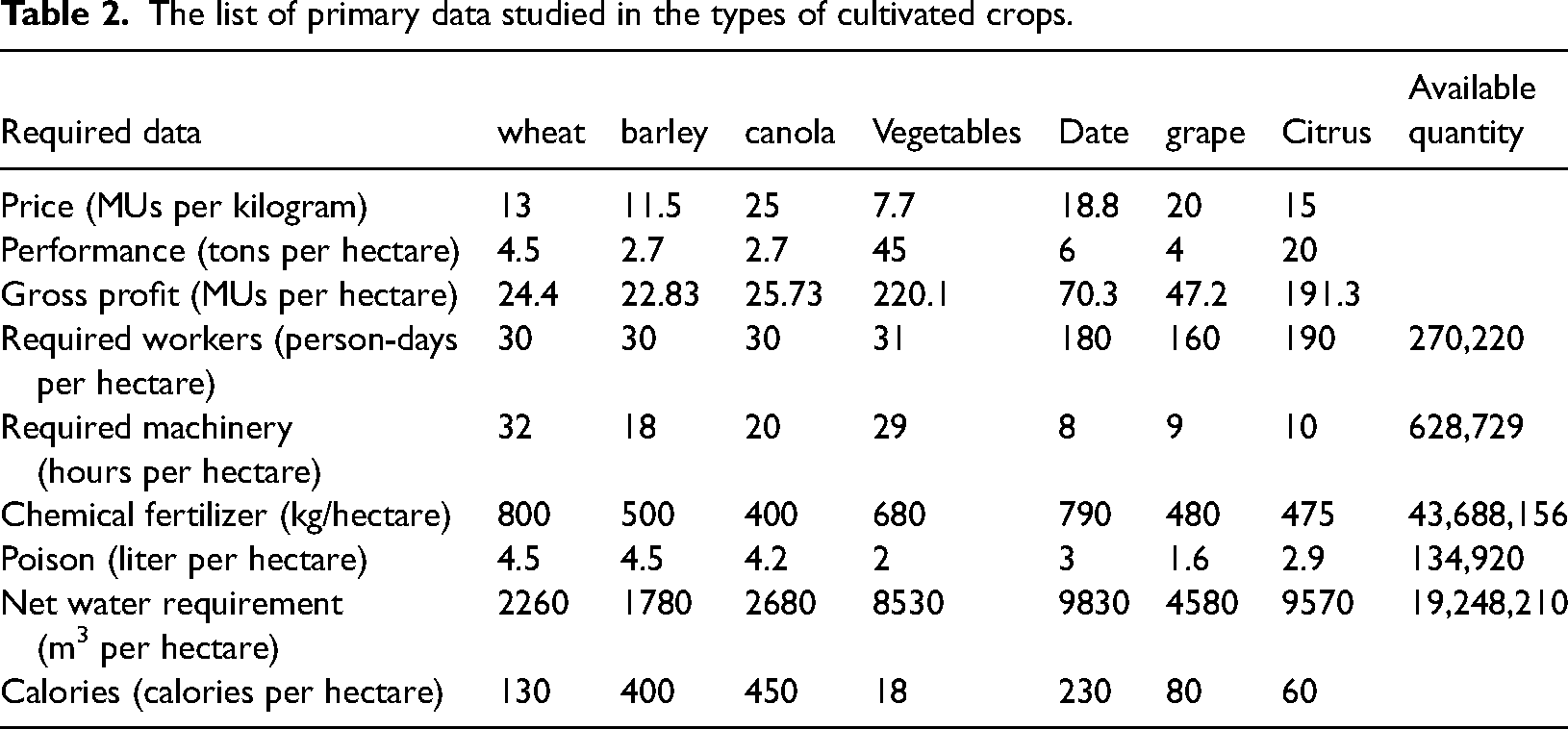
The required data for solving the proposed mathematical model is collected from the agricultural regions of West Asia. Accordingly, in the studied area, there are seven major crops, including four agricultural crops (wheat, barley, rapeseed, vegetables including seeded basil, leek, radish, and other types of vegetables) and three garden crops (grapes, dates, and citrus fruits). Moreover, grapes with 20,000 monetary units (MUs) and vegetables with 7700 MU per kilogram have the highest and lowest prices, respectively. The analysis of yield rows for cultivated crops showed that vegetables had the highest yields with 45 tons per hectare, and both barley and rapeseed products had the lowest yields, with 2.7 tons per hectare.
The investigation of the labor parameters showed that the difference in labor-related parameters is noticeable. For date crops, 182 person-days and wheat, barley, and rapeseed products with 24 person-days are necessary. Examination of other inputs such as poisons, machinery, chemical fertilizers, animal manure, and water consumption (net water requirement) showed that the three products of wheat, barley, and rapeseed with 3.5 L each, wheat input with 23 h per hectare, dates with 742 kg, citrus crop with 2.5 tons per hectare and the date crop with 9720 m3 per hectare have obtained the highest amount of the mentioned inputs, respectively. It is worth remembering that the irrigation efficiency was considered to be 35%. The rest of the collected data are presented in Table 2.
The list of primary data studied in the types of cultivated crops.
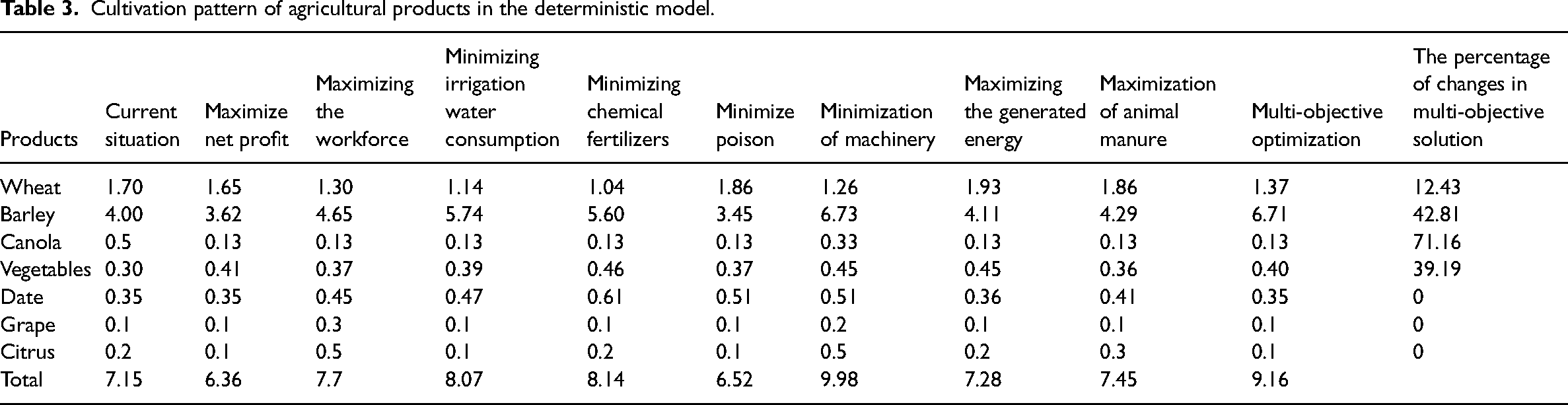
The pattern of cultivation of agricultural products, considering different objectives, is obtained by optimizing the deterministic mathematical model using GAMS software. The results are shown in Table 3. Moreover, the number of changes in the pattern of multipurpose cultivation is calculated and presented. It can be seen that in all the objectives studied, the total cultivated area in the first stage has decreased compared to the current pattern. The lowest amount of total cultivated area to maximize net profit is 22.25 thousand hectares and the highest is related to the current cultivation pattern with 23.95 thousand hectares. Examining the pattern of multi-objective cultivation shows that the area under cultivation has increased for two crops, barley and vegetables. Therefore, the increase in the area under cultivation of barley from four thousand hectares to 74.5 thousand hectares (43.55%) and vegetable crops from 300 to 410 hectares (37.38%). Moreover, the reduction of the cultivated area of rapeseed from 500 to 120 hectares (75.34%) is one of the other important results of the deterministic model. This significant reduction in the multi-objective cultivation pattern, along with the reduction of the cultivated area, has had the same trend in most of the objectives except for the objective of minimizing machinery. The decrease of 12.43% in the cultivated area of wheat crops is one of the other notable cases. Overall, the investigation of the cultivated area of the products showed that the total cultivated area has decreased in all objectives compared to the current state. This means that this group of products has limitations for cultivation in terms of economy, environment, and social objectives.
Cultivation pattern of agricultural products in the deterministic model.
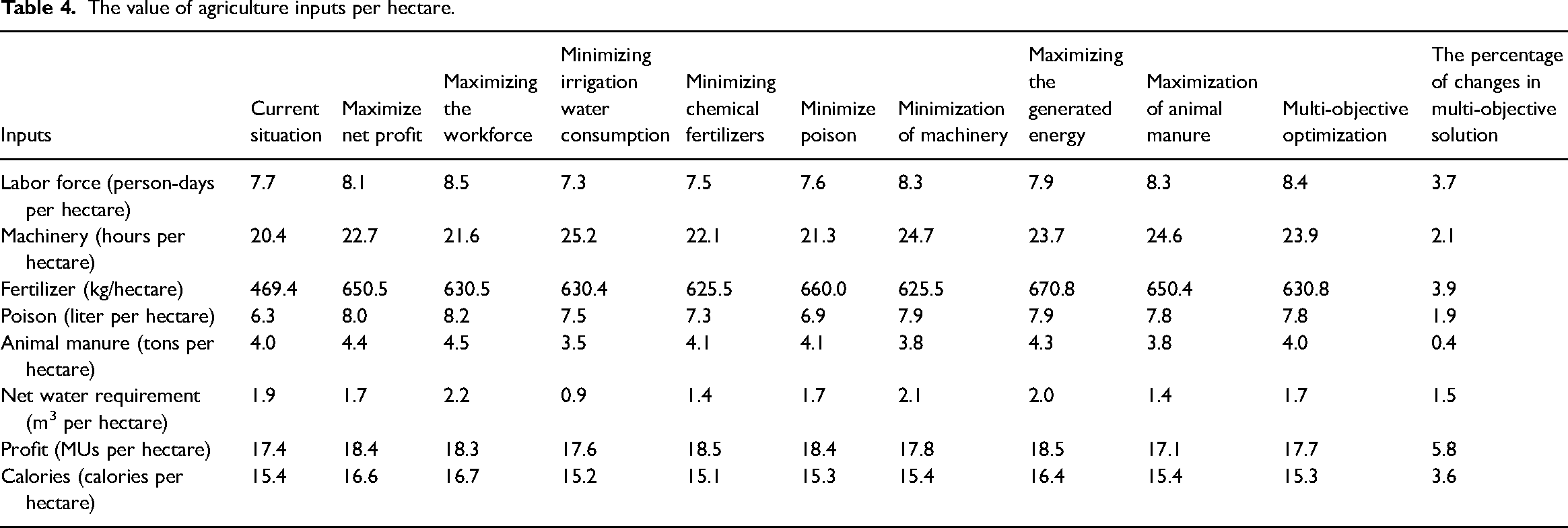
The consumption of inputs for the production of agricultural products is shown in Table 4. The results show an increase of 3.5% in the workforce in all models compared to the current situation in the multi-objective model. The number of hours of using machines has a little change in all models and the multi-objective model shows a decrease of 1.9% compared to the current situation. The amount of chemical fertilizer consumption in the multi-objective model has been reduced from 649 kg per hectare to 624 kg (3.9% reduction). The highest amount of poison input consumption occurred in the maximization of net profit (7.3 L). The input of animal manure followed the same trend in all models and accounted for 3.5 tons per hectare. Moreover, the highest amount of water consumption can be seen in the net profit maximization model with the amount of 7430 m3 per hectare. The highest and lowest profits per hectare are related to the two patterns of net profit maximization and the current pattern, with 18.1 and 16.8 MUs per hectare, respectively. Examining the amount of calories showed that in the multi-objective model, the amount of calories has decreased by 2.7% compared to the current situation.
The value of agriculture inputs per hectare.
The results of the second stage
In the second stage of the study, an attempt has been made to estimate different models concerning uncertainty in the real world. The results of applying the conditions of uncertainty with the probability levels
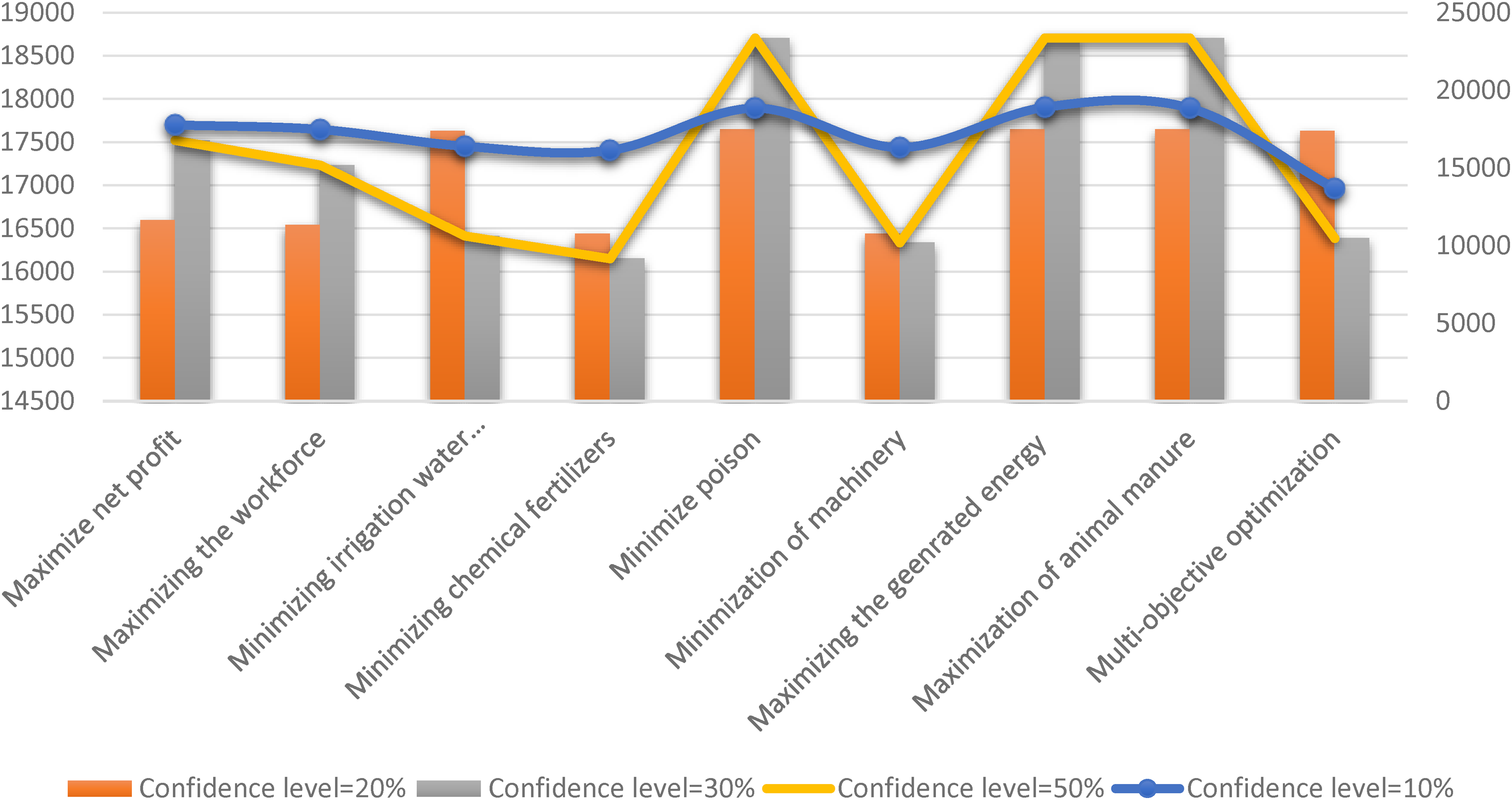
Comparison of cultivated area (hectares) of wheat crop under uncertainty.
It can be seen that the largest area under cultivation (18,921 hectares) is at the
In addition, the allocated area to the cultivated crops according to the current and multi-objective model, considering the different conditions of uncertainty, is investigated. The results comparing the current situation and the optimal solution of the robust mathematical model are provided in Table 5. According to these results, at the probability level of 10%, the current cultivated area for wheat is 18.70 thousand hectares, which according to the multi-objective model, has decreased by 12.4% and reached 16.39 thousand hectares. The reduction of cultivated area for the wheat crop has been repeated at the level of 30%. However, when p = 20%, this amount has decreased less and by 5.7% from 18.7 thousand hectares in the current situation to 17.63 thousand in the multi-objective model.
Comparison of cultivated areas of different crops according to different patterns under uncertainty.
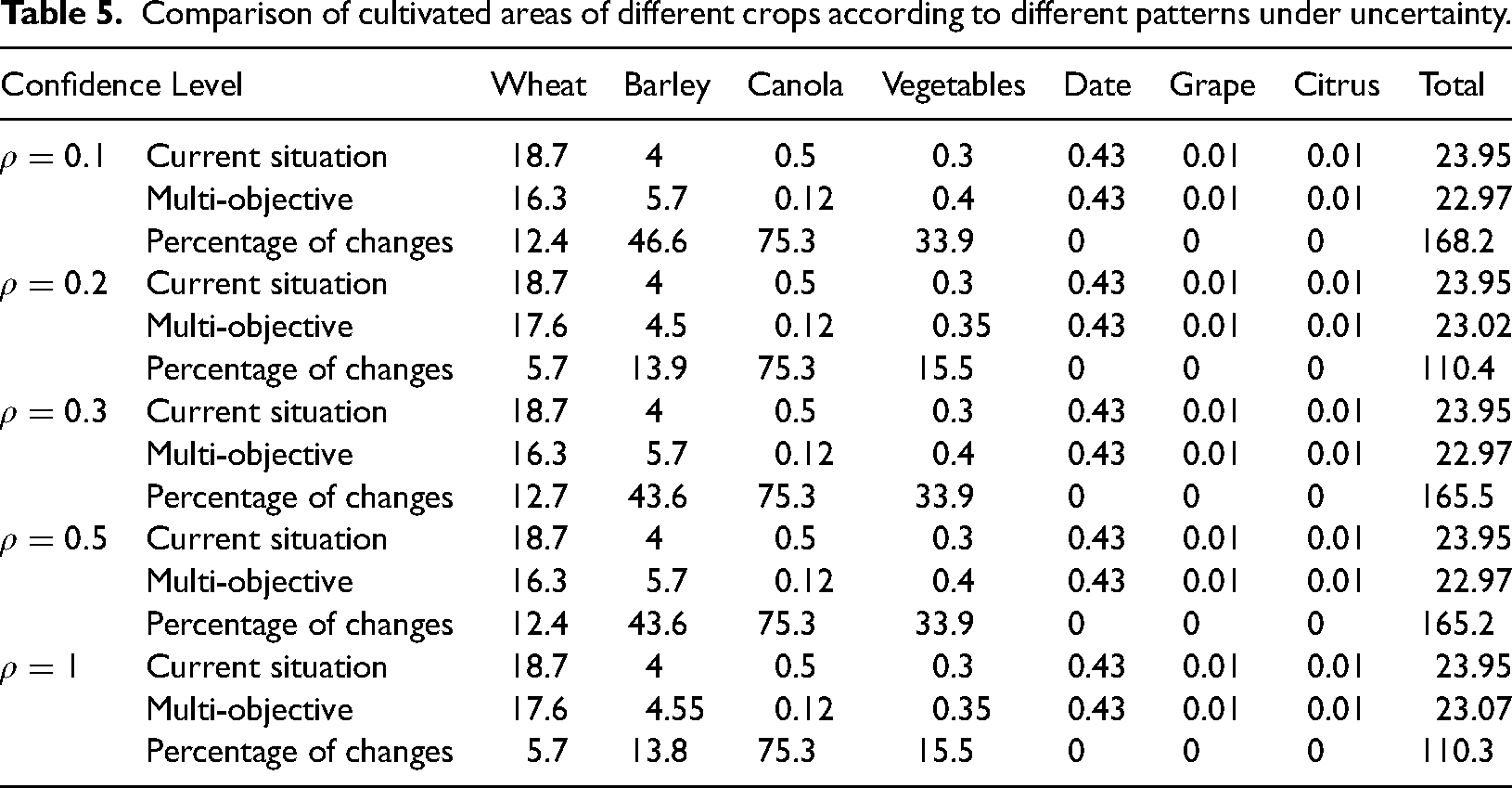
The biggest change in the cultivated area is related to the rapeseed crop, which has decreased from 500 hectares to 120 hectares with a 75% reduction in the multi-objective model compared to the current situation. This process has been repeated for this product at all levels of uncertainty and has decreased with a constant amount. The largest increase in the cultivated area with a 43.6% increase belongs to the barley product at the levels of 10%, 30%, and 50%, and the cultivated area of dates, grapes, and citrus fruits has not changed in the current and multi-purpose pattern.
In Figures 2 to 5, the total profit of the system is shown in different conditions of uncertainty. As can be seen, the profit of the system has decreased with the increase of the level of conservatism (α) and its value at
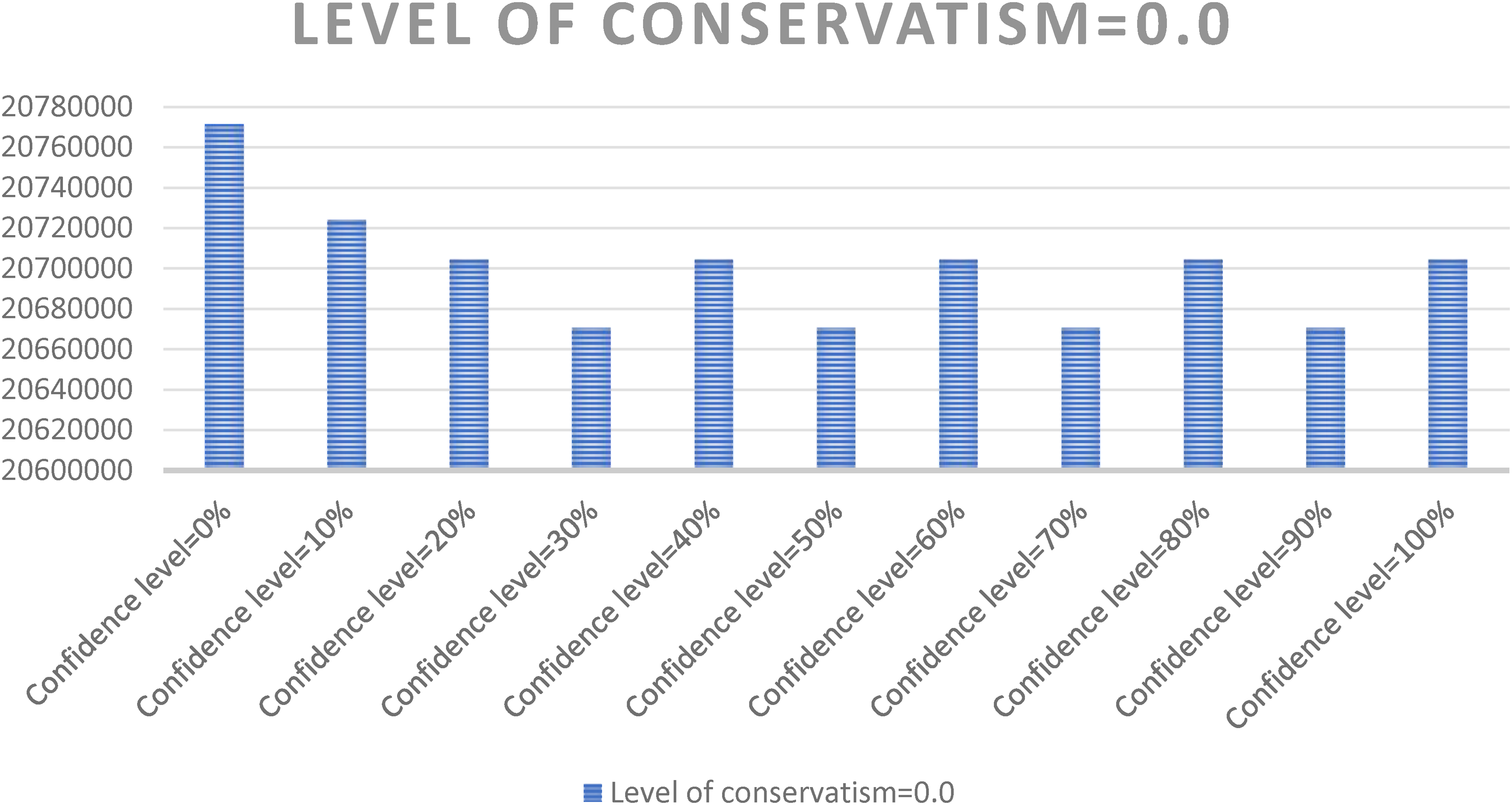
The total profit of the system under conditions of uncertainty
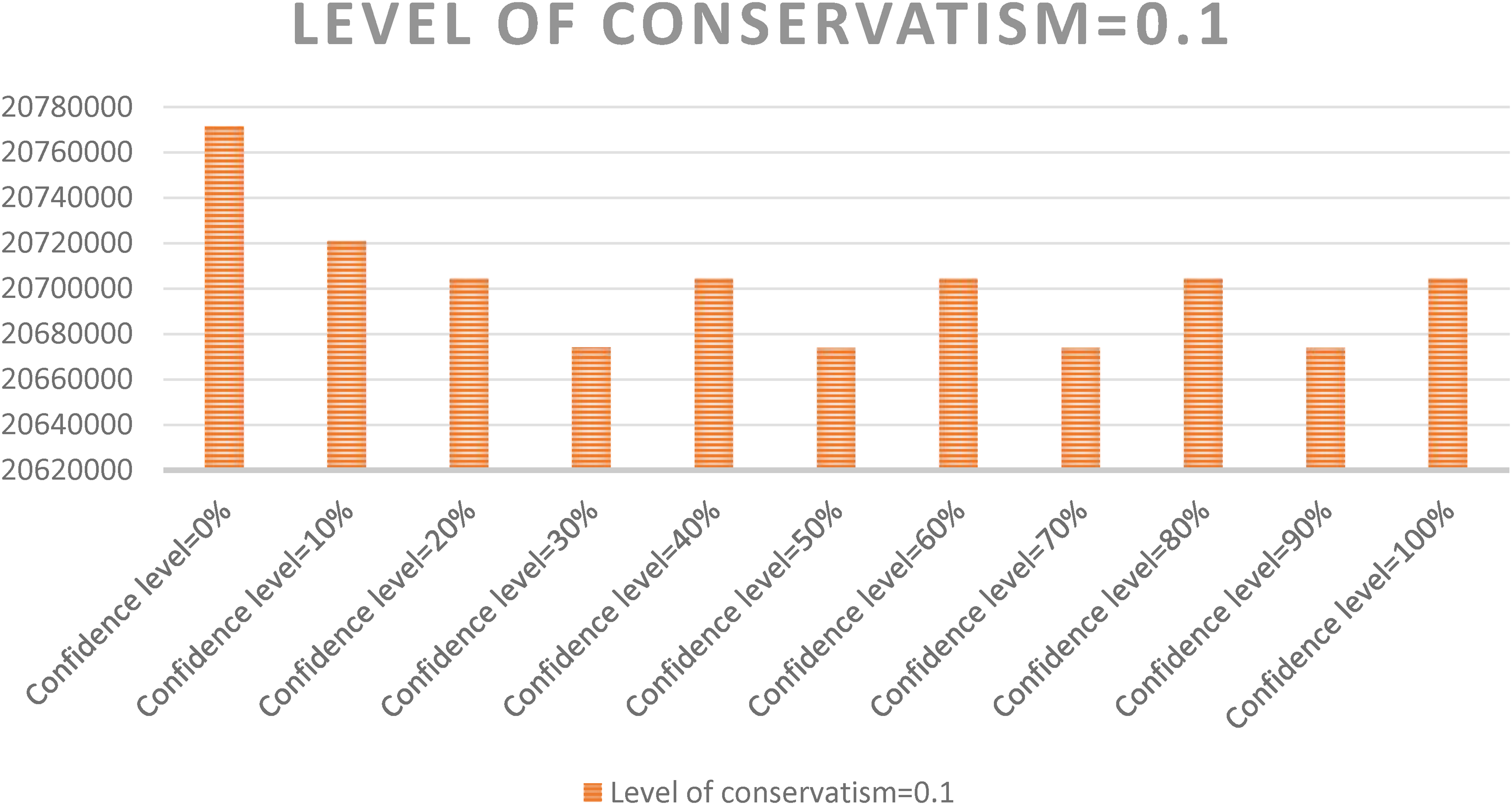
The total profit of the system under conditions of uncertainty
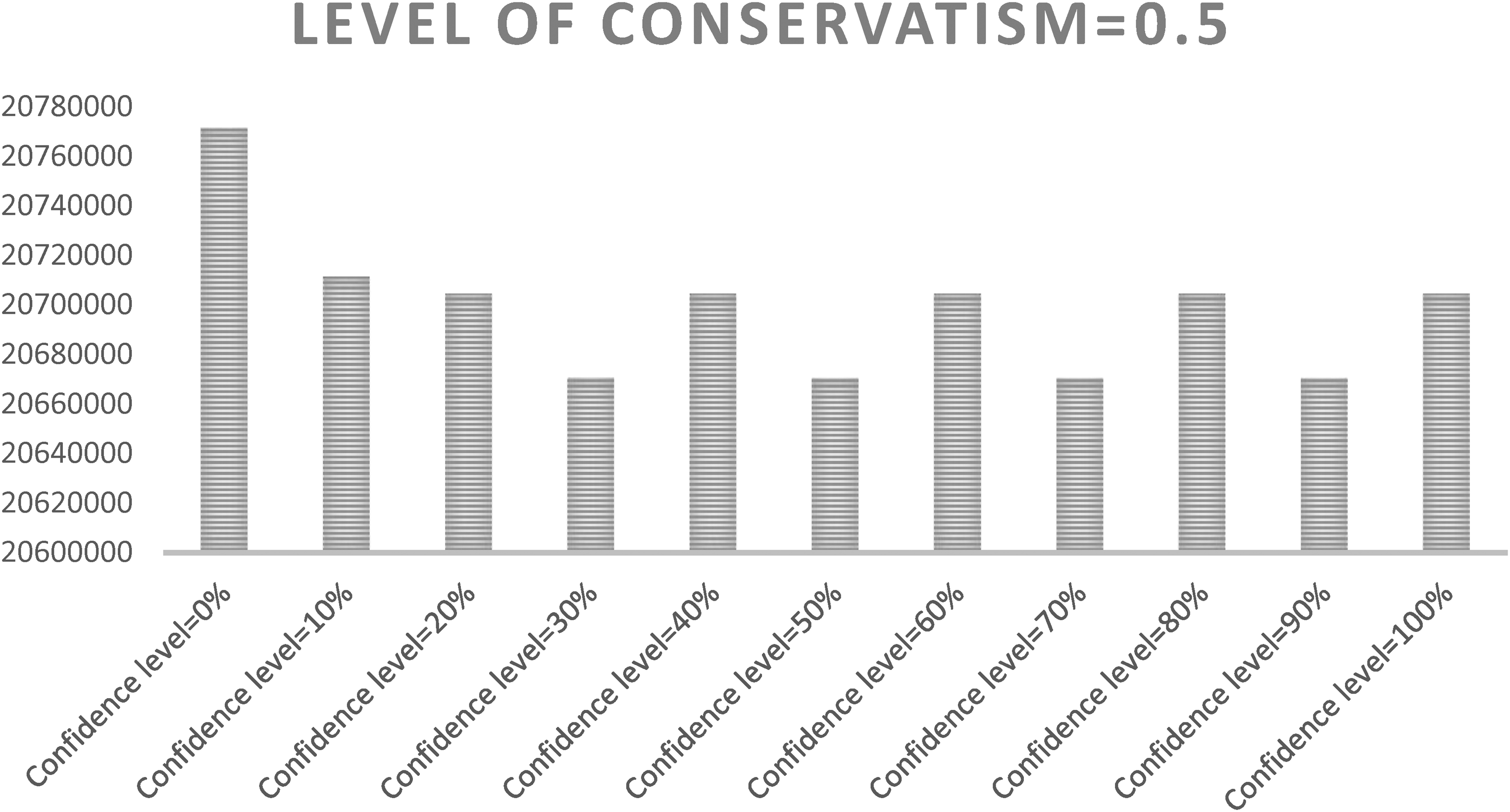
The total profit of the system under conditions of uncertainty
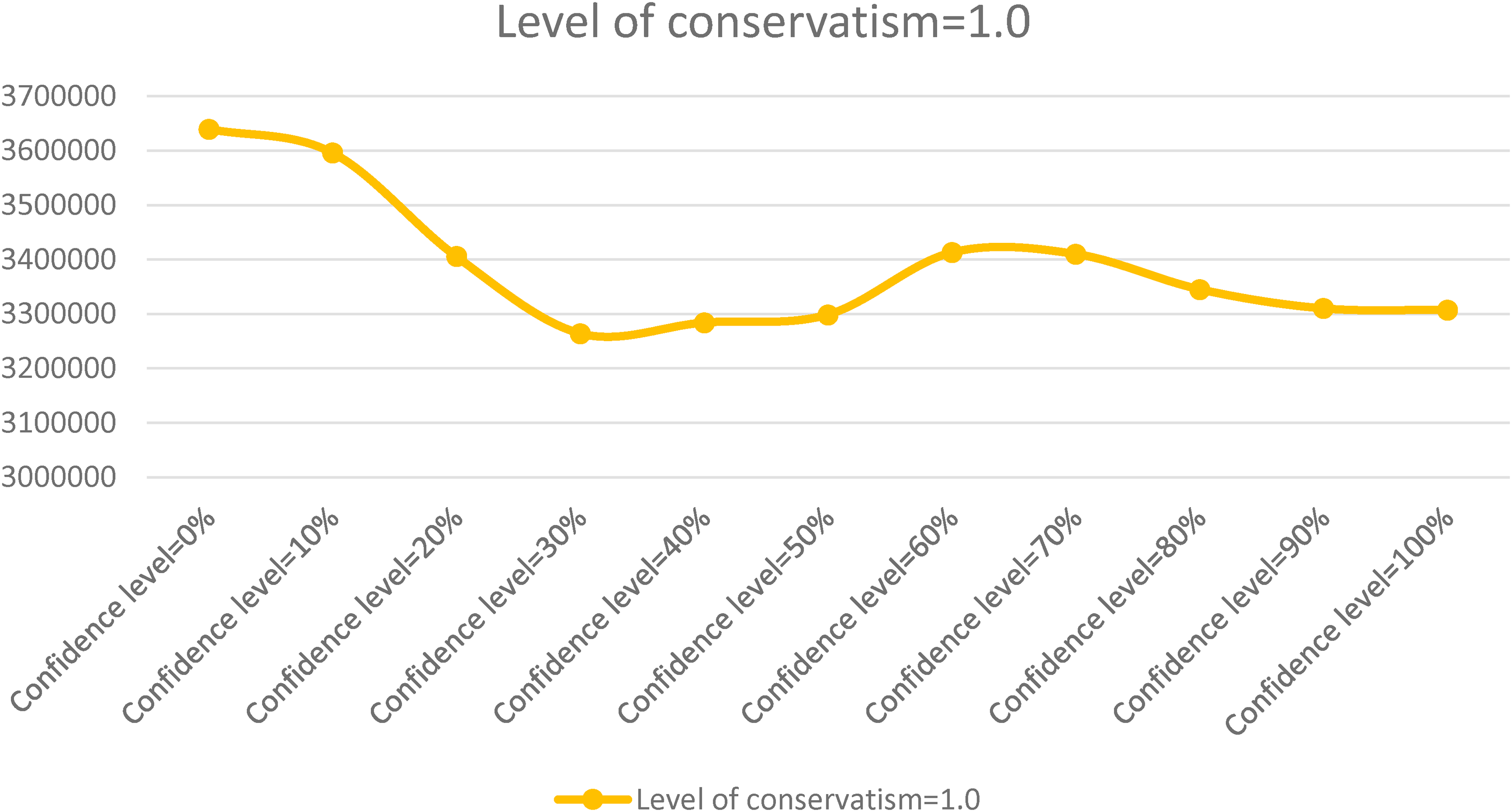
The total profit of the system under conditions of uncertainty
The results of the investigation of the labor force used in the system in different patterns and at the level of uncertainty
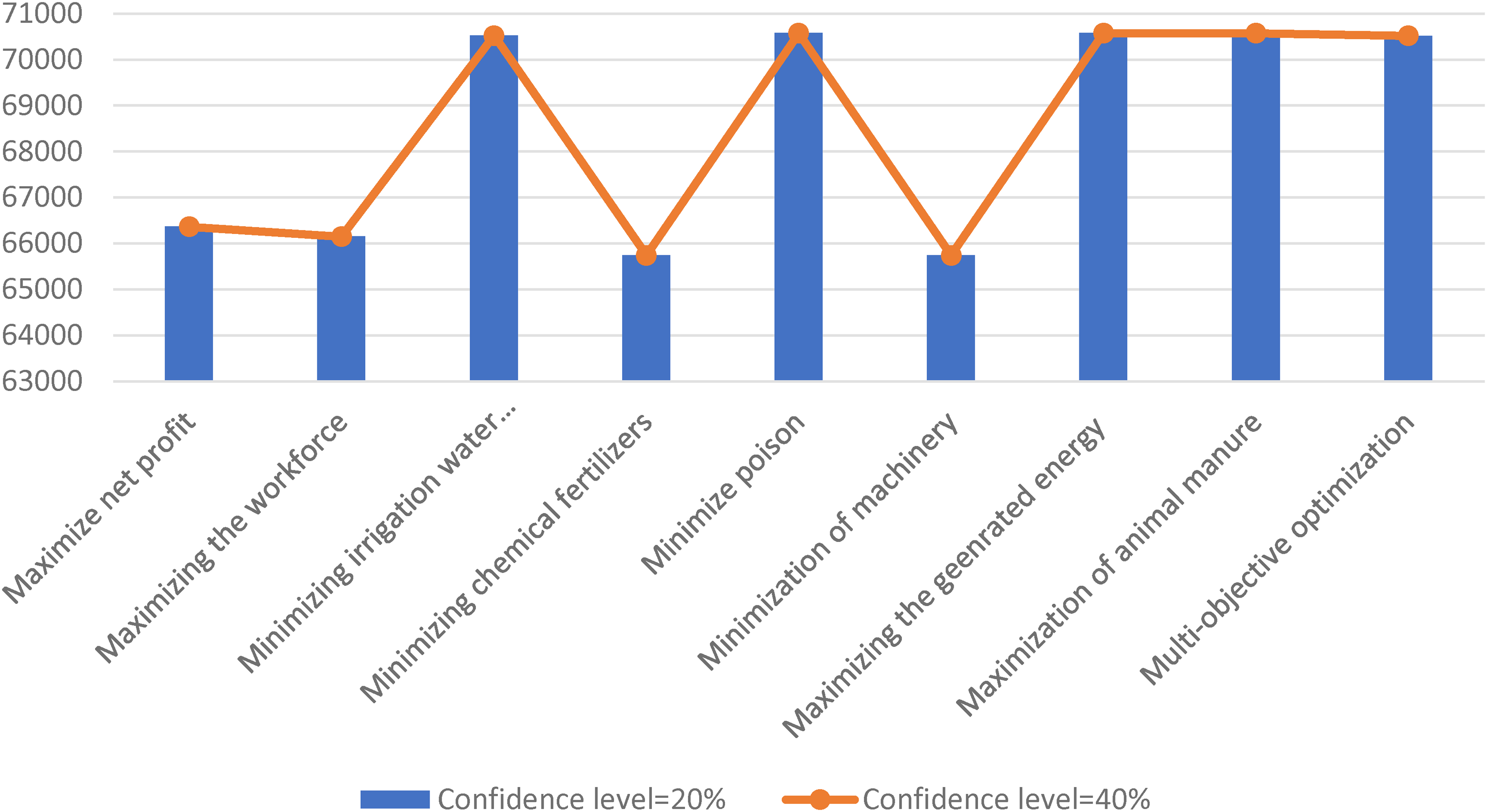
Comparison of employment of labor according to different goals in conditions of uncertainty.
Sensitivity analysis
In this section, to evaluate the existence of uncertainty and real conditions in the problem, sensitivity analysis on the demand range
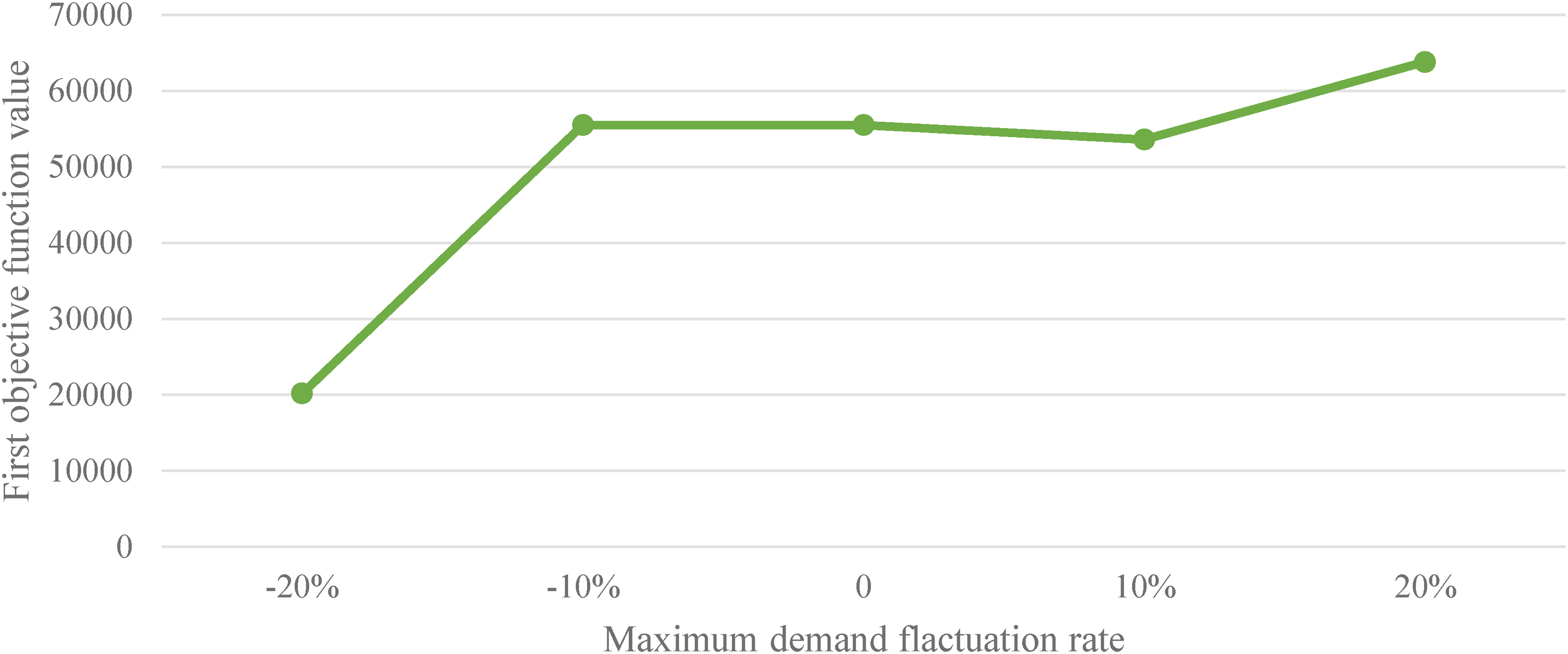
The amount of changes in the first objective function per changes in
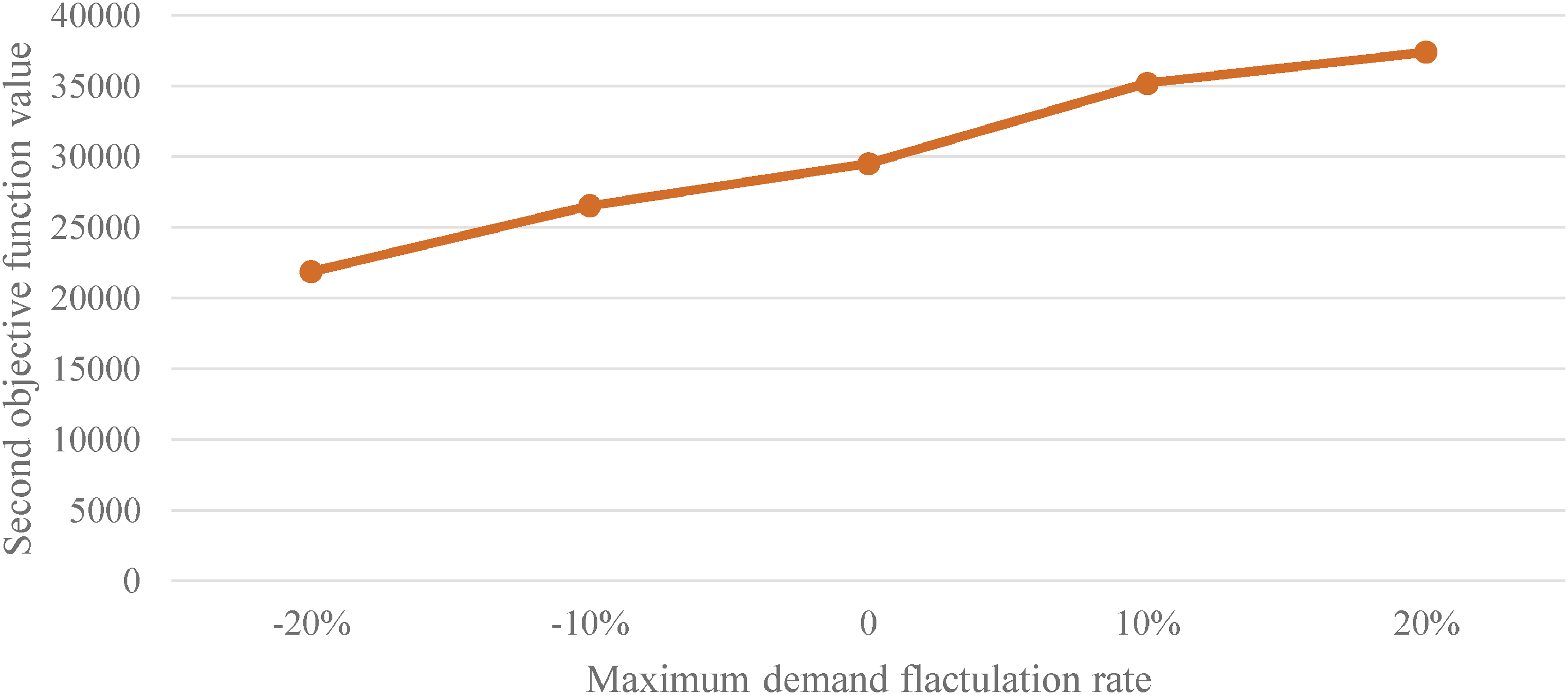
The amount of changes in the second objective function per changes in
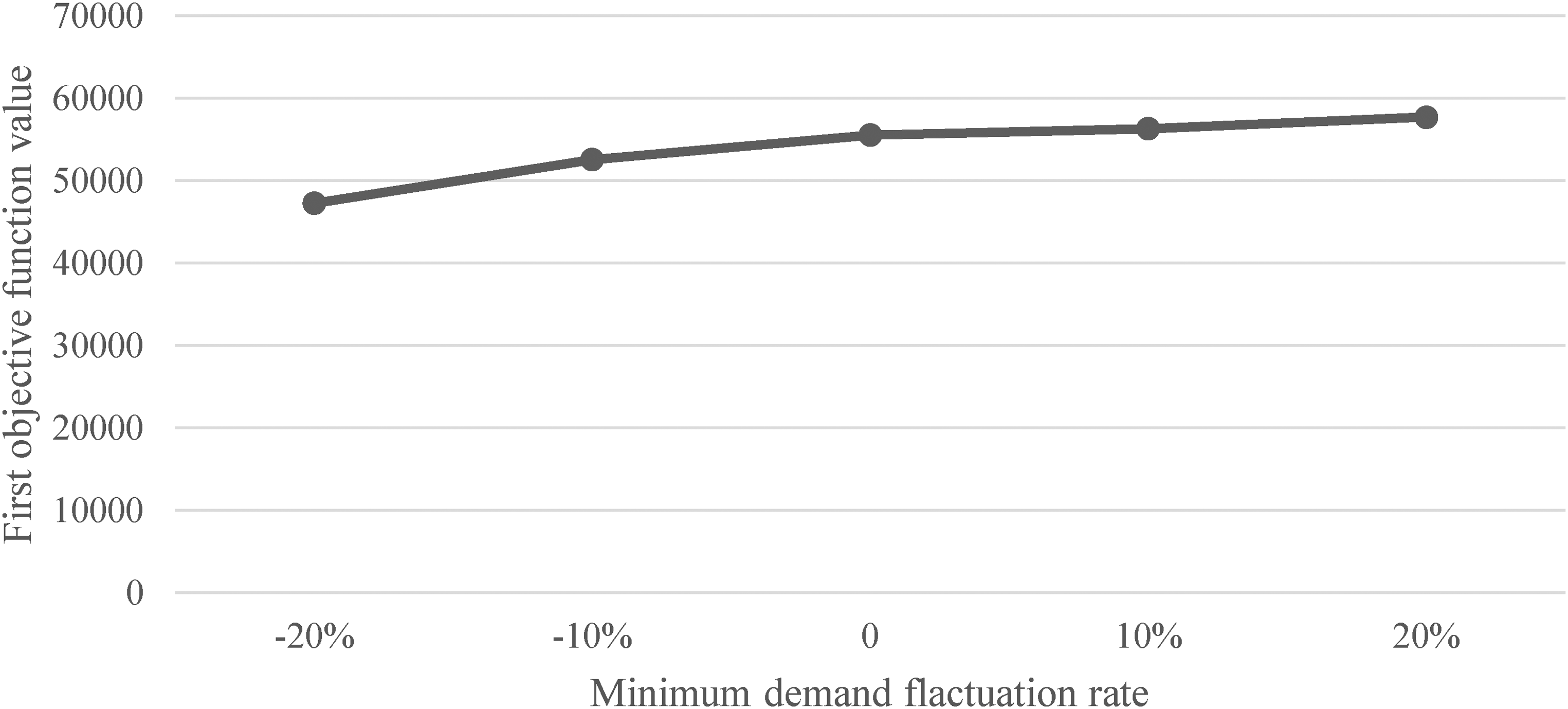
The amount of changes in the first objective function per changes in
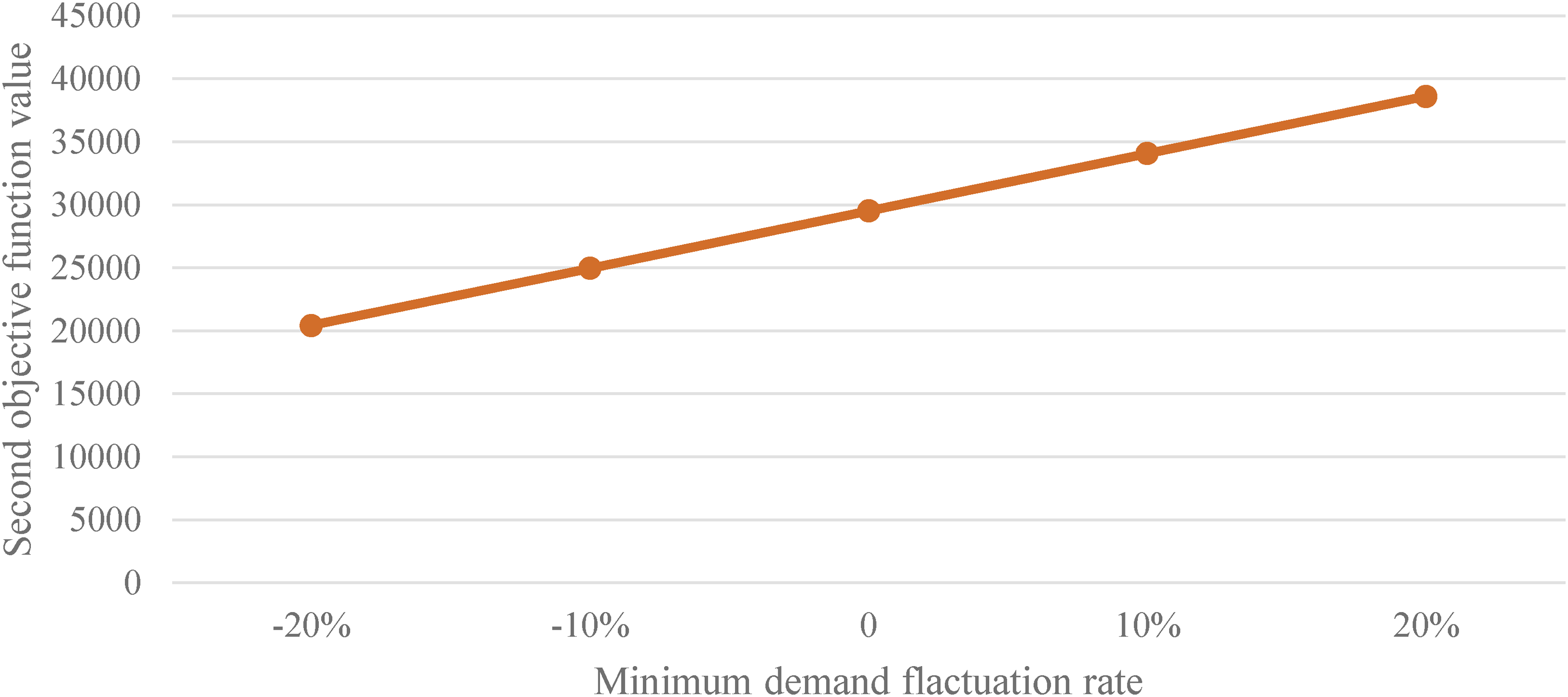
The amount of changes in the second objective function per changes in
Sensitivity analysis of demand parameters.
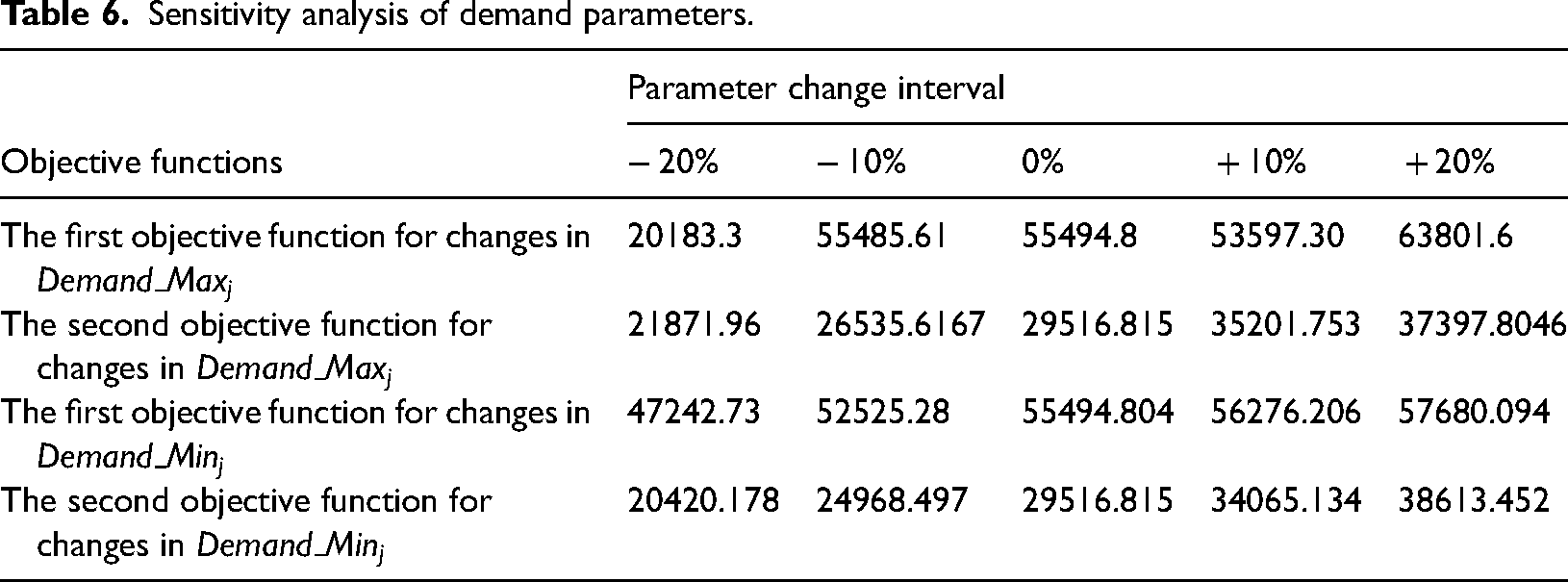
Figure 7 indicates that the first objective function is highly sensitive to variations in the maximum market demand parameter. A 20% increase in demand leads to a significant change in the first objective function, as the income from sales increases more than the costs. However, the opposite occurs when there is a 20% decrease in demand. Moreover, a 10% increase in demand slightly reduces the first goal compared to the state with no demand change due to the increase in costs relative to income.
Figure 8 illustrates the upward trend in sales utility, which is a natural consequence of increased demand. As demand increases, so do sales, income, and utility. Figure 9 demonstrates that increasing the minimum possible demand leads to a higher agricultural land harvest. Additionally, Figure 10 shows that water consumption in agricultural areas increases with an increase in demand, which is directly proportionate to the harvest from agricultural lands.
The analysis of Figures 6 to 10 reveals that changes in the demand parameters have varying effects on the objective functions. For instance, the first goal decreases initially when demand parameters increase, followed by a steeper increase. These alterations dictate different selling prices, leading to changes in the primary objective of the problem.
Conclusions and future outlooks
The production of agricultural products in a region should be planned according to the available resources, product prices, production costs, product performance, and the country's needs. It should be in accordance with the country's macro policies, and the decision for garden plants in different regions should be based on the infrastructure. Existing social, economic, environmental, and technological issues should be considered by maintaining the basic resources of production to meet the demand for agricultural products. In the proposed methodology, several basic aspects of the definition of the cultivation pattern, including sustainability, optimal use of production resources, economic advantage, food security, and macro policies of the country, are taken into consideration and the patterns examined in both deterministic and robust mathematical models.
Examining the pattern of multi-objective cultivation shows that the area under cultivation for the two products of barley and vegetables has increased, so that for barley, from four thousand hectares to 5.74 thousand hectares (43.55%), and for vegetables, from 300 has increased to 410 hectares (37.38%). In the multi-objective model, the reduction of the cultivated area of rapeseed from 500 to 120 hectares (75.34%) is another significant result in this research. This significant reduction of the cultivated area can be seen in all the objectives studied except for the minimization of the working hours of the machines. According to this objective, the cultivated area of rapeseed has reached 230 hectares from 500 hectares. Moreover, the decrease of 12.43% of the area under cultivation of wheat is one of the other significant cases in the first stage of the study.
In the second stage, it was found that the largest area under cultivation (18,921 hectares) was at the 10% probability level and related to the goal of maximizing the generated energy. The lowest possible amount was for the goal of maximizing chemical fertilizers with the amount of 1651 hectares and at the levels of 10%, 30%, and 50%. The comparison of the area under wheat cultivation in the current state according to the multi-objective model is equal to 16,385 hectares, which is the same at the 10%, 30%, and 50% levels, but at the 20% level, this amount has increased and reached 17,628 hectares.
The results of the investigation of the cultivation pattern in the multi-objective model compared to the current cultivated area in both types of models indicate a serious suggestion to reduce the cultivated area of some agricultural products such as rapeseed and increase the cultivated area of crops such as barley and vegetables.
Therefore, there is a pressing need to reduce the area under cultivation of specific agricultural products in West Asia and shift towards enhancing the efficiency of water resource utilization to combat the severe scarcity in the province. Sustainable agriculture must be the primary focus, and the cultivation pattern should be reevaluated. The proposed mathematical model can aid strategic planners in formulating policies to incentivize the reduction of cultivated land and operational planners in executing these policies. Implementing volumetric delivery of irrigation water is one of the most effective measures, given that 80% of irrigation water consumption occurs via irrigation and drainage networks. This proposal is simpler and less costly than alternative measures such as installing smart meters. Therefore, this strategy could be a potent solution for achieving sustainable agriculture in West Asia.
In order to extend this research, it is suggested to investigate the willingness of farmers to implement the proposed model, because by conducting such a study, in addition to evaluating the results of this research, a more comprehensive perspective will be drawn.
Footnotes
Acknowledgements
The first author is funded with the following project: General Project of National Social Science Fund: Research on strengthening the political function of rural grass-roots Party organizations in southwest ethnic areas (20BDJ009)
Declaration of conflicting interests
The author(s) declared no potential conflicts of interest with respect to the research, authorship, and/or publication of this article.
Funding
The author(s) received no financial support for the research, authorship, and/or publication of this article.
