




Abstract
Installing photovoltaic (PV) panels on the roofs of homes may reduce dependence on the electrical grid and lead to net-zero energy production. Climate patterns and a building’s structural system can significantly affect how much energy the structure uses. This investigation is aimed to focus on the shading effect of solar panels on the uninsulated roof of a residential building to investigate the output of combining architectural buildings with renewable energy systems. The PV system was modelled as a shading device using building simulation software (Design Builder) to calculate the monthly reduction and increase in heating and cooling loads for the rooftop in a humid subtropical climate zone. The results showed that the cooling loads were decreased by 290 kWh/year (almost 5%) and heating by almost 30 kWh/year. The findings showed the importance of renewable energy in tackling climate change and reducing the housing energy requirements for sustainable development.
Introduction
A lot of heat energy can be captured by dark surfaces. A rooftop can get as hot as 70°C on a hot summer day. Although roofing technologies are designed to withstand extreme heat, high temperatures can cause the material to deteriorate more quickly. The home or structure will see an increase in internal temperature due to heat transfer from the roof. Even if the building and roof are well-designed and have enough ventilation, the air conditioning system will still be stressed. By offering physical shielding and lowering the amount of heat energy captured by the roof, solar panels help to keep the building cool. People believe that heat is produced when solar panels transform sunlight into electricity. However, solar panels absorb heat that is usually transferred to the roof. Consideration of shade offers another angle on this. The area in the shadows is the coolest on a hot day. Solar panels give the building’s roof a constant layer of shadow, lowering the roof's average temperature. A convection current is used to remove a large portion of the heat the panels collect. The airflow between the roof and the panels is a convection current. As air moves between the two, the heat in the solar panels and the roof materials is reduced, lowering the roof’s temperature overall and further cooling the building. We might even have inclined solar panels, depending on the design of the roof. Compared to other solar arrays, tilted arrays have more space between the panels and the outside of the roofing. This widens the channel via which air may pass between the roof and the panels, further enhancing cooling.
Scientists from the University of California, San Diego, discovered that panels could lower a roof’s surface temperature by up to 38%. Considering the air and roof temperatures we experience in Australia are enormous. It is crucial to remember that each solar array is unique while being amazing. The placement of the photovoltaic (PV) arrays with the roof, the size of the surface area covered by the panels, and the type of panels we have will all affect the results. Moreover, solar panels have additional benefits such as reducing ultraviolet (UV) radiation exposure for exterior roofing materials, roofing materials protected from the elements decreasing wear and tear, and the effects of thermal shock can be diminished. Solar panels help the roof keep warm in the winter, much like in the summer, when they prevent it from overheating, this is due to the solar panels’ capacity to store heat, which slows the rate at which the temperature of the roof drops. Solar panels will slow down the rate at which the roof cools down and aid in maintaining the home temperature at night. However, their influence will not be as noticeable as during the day (Jay, 2021).
Researchers from the San Diego Jacobs School of Engineering, under the direction of Jan Kleissl, a professor of environmental engineering, discovered that, throughout the day, a structure's roof was 5°F cooler beneath solar panels than under a revealed roof. The panel aid in retaining heat at night, which lowers winter heating bills. A thermal infrared camera was used to collect data for the study for 3 days in April on the top of the Powell Structural Systems Laboratory at the Jacobs School of Engineering. PV systems that are level with the roof and inclined are installed on the structure. There are areas of the roof where there are no panel shields. In essence, the panels serve as roof shades. Solar panels absorb most of the sun’s rays rather than the roof, which would otherwise allow heat to pass through it and into the building’s ceiling. The wind that blows between the panels and the roof dissipates a significant amount of the heat. Slanted solar panels offer more cooling than the widely used PV panels since the advantages are larger if there is an open space for air to flow between the building and the solar panel (Albatayneh et al., 2022b).
Additionally, the cooling impact increases the PV panel’s efficiency. The solar cells decreased the heat that reached the roof of the building that researchers studied by roughly 38%. Even though the observations only covered a brief interval, they developed a system to extend their results to forecast cooling effects all year. The panels, for instance, would prevent the sun from warming the structure during the winter. However, they would also retain any internal heat at night. The two effects effectively cancel each other out for a region like San Diego. Reflective roof coatings are one of the more effective passive cooling methods, according to this statement. However, suppose they are thinking of installing solar PV. In that case, they expect a significant decrease in the energy used to cool the home or place of business, depending on the thermal qualities of the roof. They intended to construct a calculator to forecast the cooling impact on their roof and in their climate-specific location. Experts may compare two climate-controlled, identical structures in the exact location, one with and one without solar panels, to improve the precision of their models (UCSD Jacobs, 2011).
PV systems can shield the roof, allaying homeowners’ worries about solar panels harming their roofs. The panels can safeguard the roof in several ways since they shade it rather than laying directly on it. The fact that PV systems shield the roof from the direct impacts of bad weather is a significant benefit. Storms, rain, snow, and wind damage the roof over time. PV panels shield the roof from direct interaction with the factor, which helps it live longer than it would have otherwise (Solar alliance, 2021).
The PV system has two effects: the direct effect, generating electricity; and the indirect effect we are investigating in our study. The shading effect of the PV arrays was considered in different kinds of research, but not considering the climate zone and the roof type we are considering in our research. The subtropical climate zone and the uninsulated roof were the essential points to consider in our study.
The shadowing impact of PV arrays on rooftops is considered a technique to minimize the cooling needs of buildings with uninsulated rooftops. Also, many ways could affect the thermal behavior of the rooftops, such as the different types of insulation materials, roof thickness, green and cool roofs, roof ponds, etc. In designing a residential dwelling, the roof is a primary element in the design process as it shapes the masses. It was found a bunch of solutions for reducing heat through the roof: applying shades, stepped ceilings, insulation, increasing the thickness of the roof, and using water pools on the roof. Also, double-skin domed roofs provided roof shade in classic Middle Eastern buildings (Aqaba in Jordan, n.d.).
This research is exclusive to the Middle East since few researches have investigated how solar panels might shade traditional, poorly insulated roofs in Europe, the United States of America, and Asia. This study is distinct in its area because earlier investigations considered the impact of PV on different kinds of roofs but not poorly insulated roofs. This study also fills a research hole that excludes the indirect impact of PV arrays on roofs. People will be motivated to implement PV systems on their rooftops because of the study on the shading effect of poorly insulated roofs; these systems have the dual benefits of providing shade for the roof and power generation.
Jordan climate analysis
Jordan has a very diverse climate. It has four distinct seasons: summers being long, dry, and hot, and winter and spring being reasonably short. Even low 30-degree temps are bearable due to the minimal moisture content. Jordan does not suffer the same high temperatures as the Gulf states; even during the hottest summer, temperatures rarely get above 35°C (Jordan Select, 2022). Jordan also experiences estimated daily temperatures of roughly 30°C or above. The highest average temperatures, which range from 37 to 41°C, are found in the south.
Given that Jordan enjoys an average of 310 sunny days a year (Worldwide weather forecasts and climate information, 2021), July and August are the hottest and driest of the year. The Rift Jordan Valley zone in the west is known as the Ghore region ((the lowlands) (subtropical)); which includes Jordan Valley, Dead Sea, Wadi Araba, and Aqaba, the mountain chains extending from north to south, which are known as highlands (Mediterranean). the central region of Jordan; which includes The Capital Amman, Ajloun as well as the southern part of Jordan; Al-Mujib Karak, and Shoubak, and the desert plains (Sahara-Arabian) which include Mafraq, Ma’an, and Az-Zarqa, are Jordan’s three main topographical aspects according to the Thermal Insulation Code (What's is the weather like 2021). Jordan is split into four bio-geographic areas based on the country's natural ecology: Mediterranean, Irano-Turanian, Saharo-Arabian, and Subtropical, as clarified in Figure 1 (Ministry of Environment, 2014)
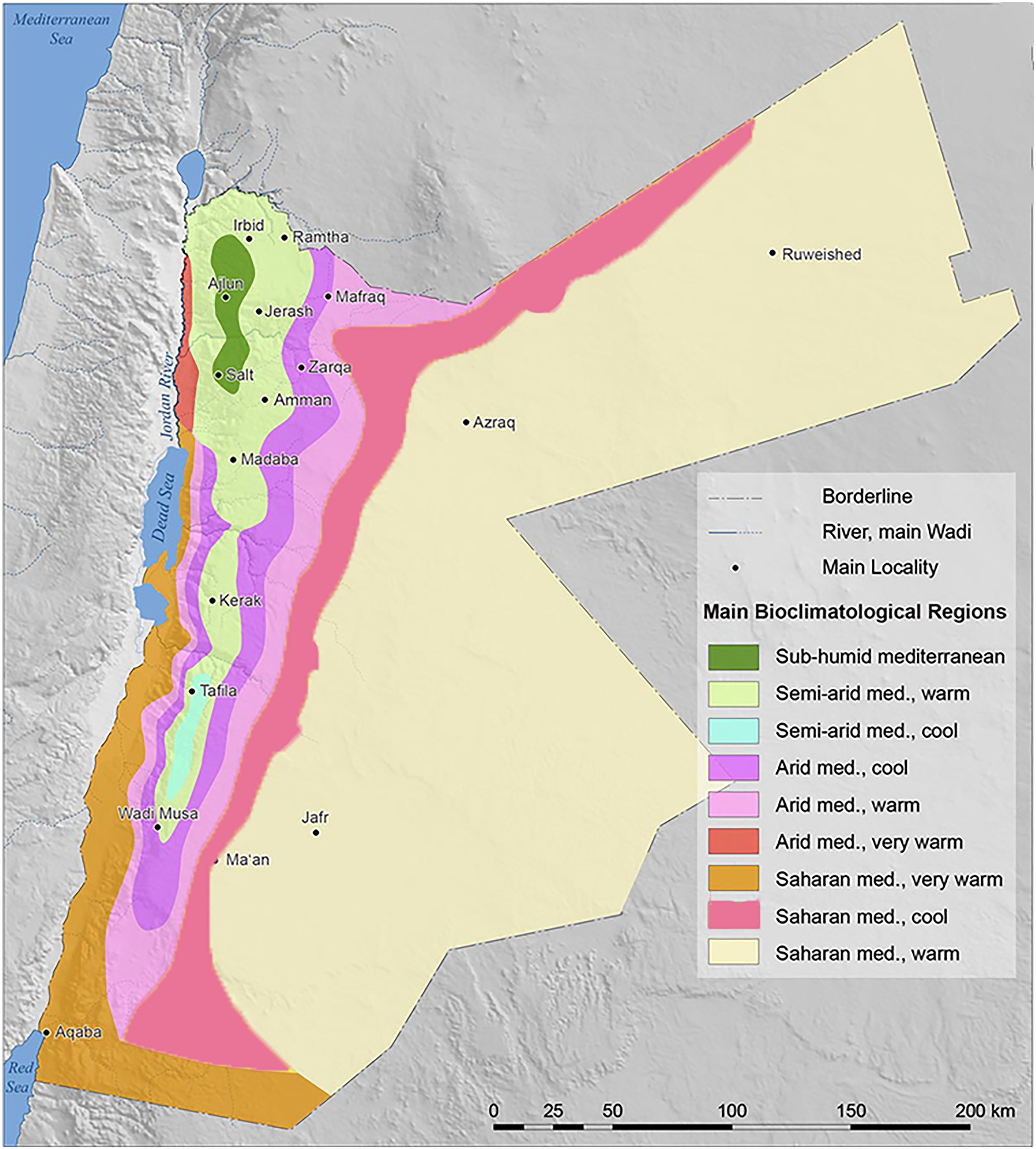
Biogeographical climate zones based on Koppen’s classification.
The tropical-subtropical climate zone
The subtropical anticyclone, also known as the subtropical high, with its downward air, high variations, and clear sky, mainly occurs in all months in the tropical and subtropical desert climate. Precipitation is prevented in such an atmospheric condition. Between 15 and 30 latitudes, most of Earth's tropical, real desert climates are found. In addition to being far from sources of humidity winds in the guts of nations, the most severe arid regions are accomplished primarily on the western flanks of those regions, where the subtropical anticyclone manifests itself most intensely.
The Sudanian region is classified as a subtropical zone that begins at the northern end of the Dead Sea and terminates at the southern edge of the Gulf of Aqaba, including the Dead Sea basin and Wadi Araba. The elevation, regarded as the lowest point on Earth, is the most notable feature of this region (410 m below sea level near the Dead Sea). The average yearly precipitation is 50 to 100 mm, with average yearly lowest temperatures ranging from 10 to 29°C and average yearly maximum temperatures ranging from 20 to 35°C.
Energy in Jordan
This is one of the most significant scores in the world, making Jordan a great place to invest in solar energy to fulfill domestic electricity needs. Buildings consume around 46% of Jordan's electricity utilization (Ayadi et al., 2021). Jordan’s construction firms are one of the most vital contributors to energy usage and the primary driver of most local aspects of the economy. Construction is accelerating, with the Jordanian government releasing construction allowance at 4–5% of the country’s total building capacity each year.
Jordan’s primary objective is to stabilize the energy supply, reducing its reliance on imports while fulfilling rising energy demand. Jordan's energy sources are crude oil, coal and coke, renewable energy, natural gas, and electricity imports, as shown in Figure 2. As a result, the government developed the National Energy Strategy, which aims to increase renewable energy’s share of the overall energy mix from 1% in 2011 to 10% by 2020 while reducing imported crude oil to around 50%, preserving coal utilization 3–5%, lowering natural gas share to 8%, and beginning to use oil shale reservoirs up to 10% by 2025 as summarized in Figure 3 (Ayadi et al., 2021). In addition, the National Energy Efficiency Action Plan (NEEAP) was launched in 2013 to execute energy-saving strategies on both the demand side, for example, energy labels, lighting, and saving energy utilization in all domains by 20%, and the supply side, including PVs, capacity structure in offshore wind, solar energy, and solar power code (Ayadi et al., 2021). Moreover, the government has established a legislative structure and enacted various laws and regulations to achieve the renewable energy goal (The Ministry of Energy & Mineral Resources Annual Report 2017 2 |V P a g e, n.d.). The strategies that helped to walk towards the concept of renewable energy integration are renewable energy and energy efficiency law, energy wheeling, feed-in tariff, by-laws, and regulations for investment (selling tariff), energy efficiency by-law, and tax exemptions by-law.
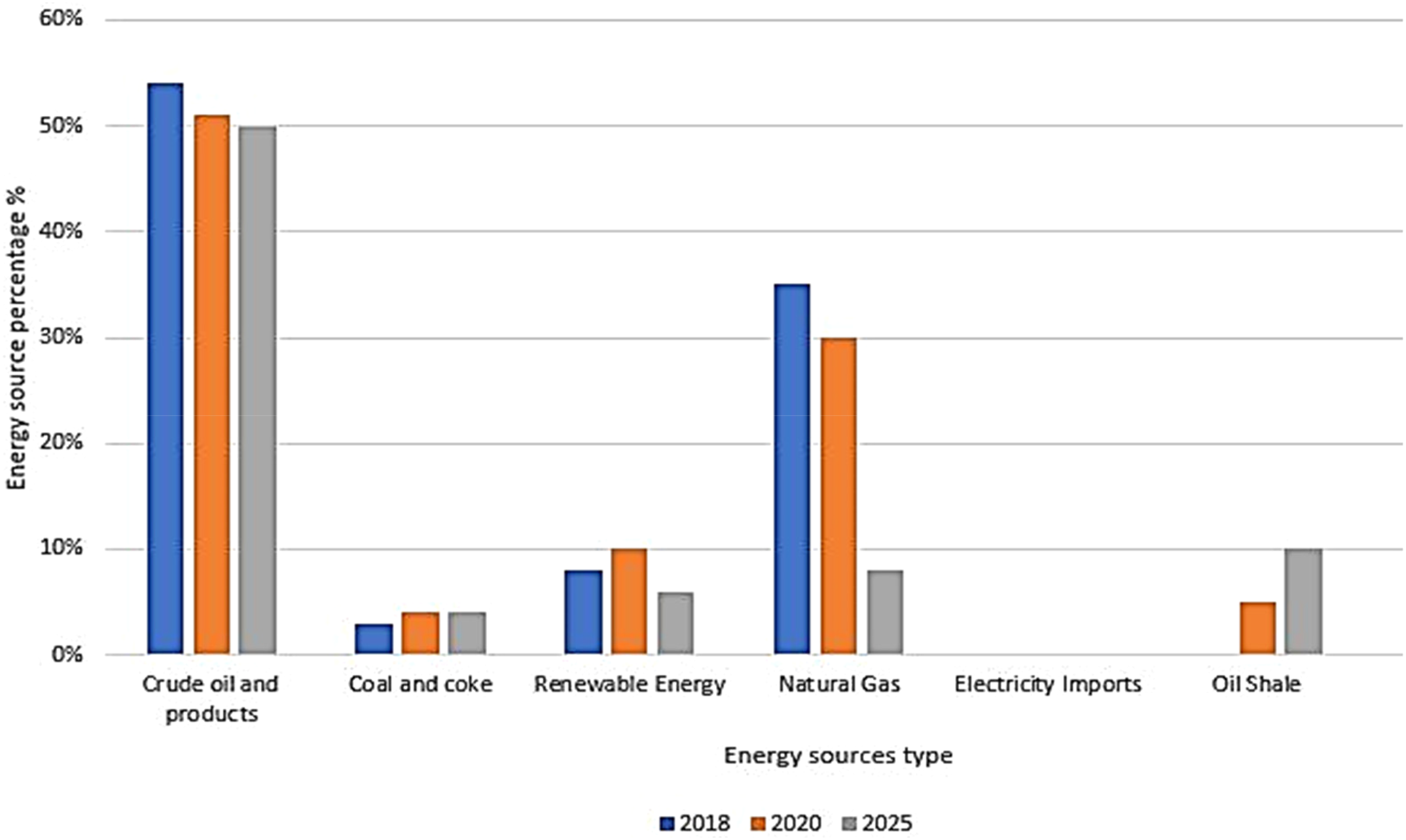
Jordan’s primary energy sources through the years 2018, 2020, and 2025 (The Ministry of Energy & Mineral Resources Annual Report 2017 2 |V P a g e, n.d.).
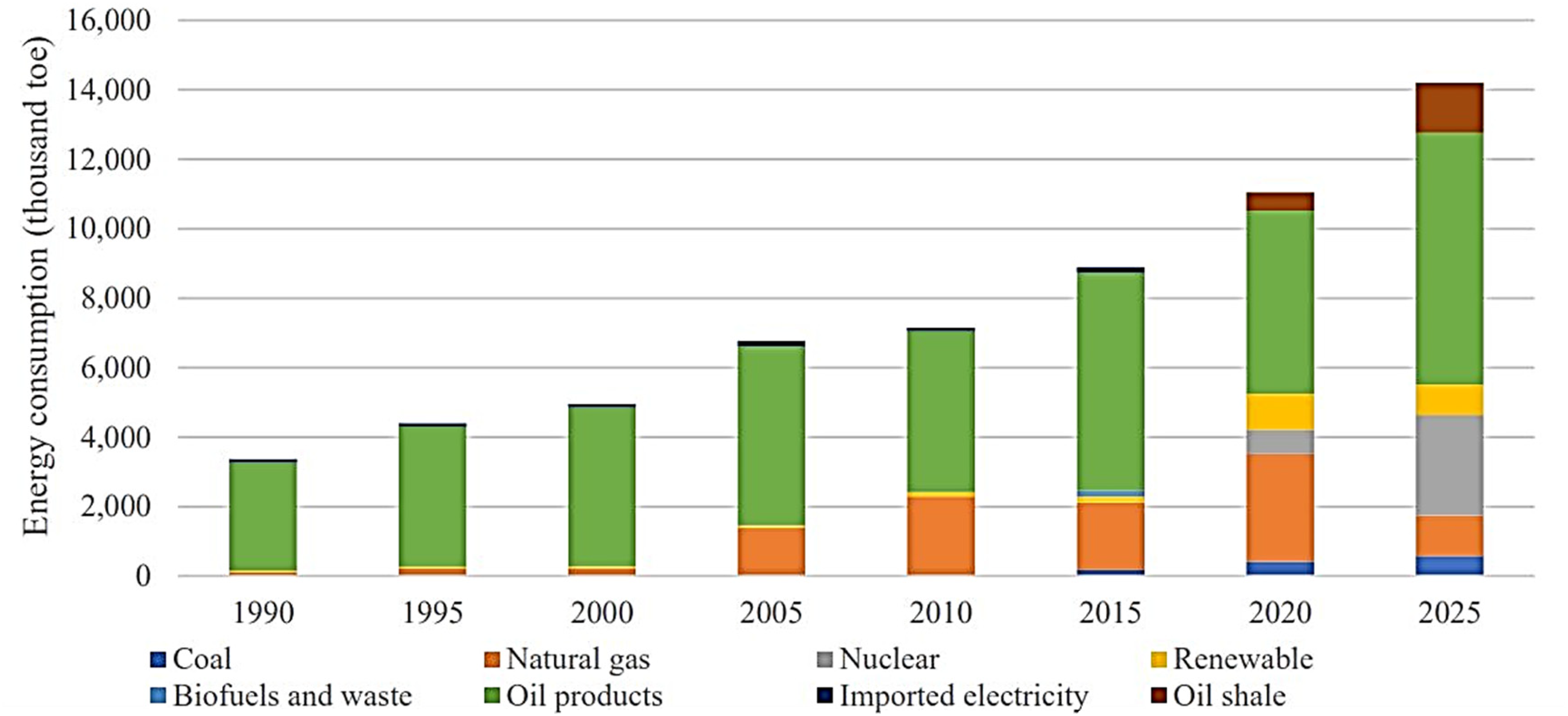
Primary energy consumption mixes in Jordan 1990–2025.
Jordan is fortunate with a plentiful supply of solar energy because it is situated in the “Global Sunbelt,” with daily mean solar irradiance ranging from 4 to 8 kWh/m². Day as anticipated in Figure 4 (U.S. Department of Energy O of EE and RE., 2021), equates to 1400–2300 kWh/m²/year in yearly worldwide horizontal irradiation (Alrwashdeh et al., 2018). A typical year has more than 300 days of sunshine (Alyami and Omer, 2021).
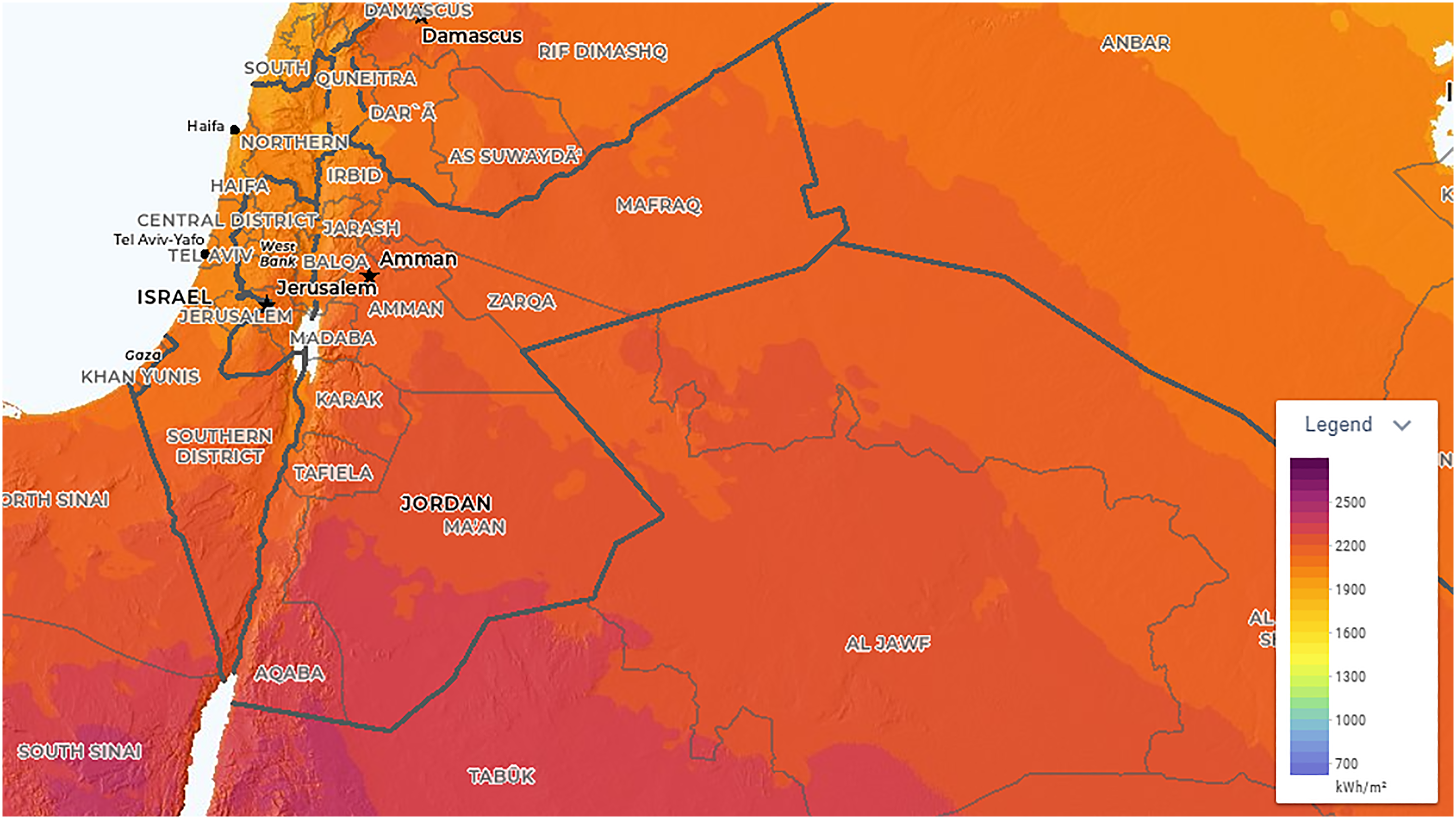
Global horizontal irradiation in Jordan (U.S. Department of Energy O of EE and RE, 2021).
Solar energy potential in Jordan
The solar array system is one of the solar applications to obtain electricity from the abundant source, the sun. According to new research published in Jordan by the United States Agency for International Development, many PV industries have recently been established in Jordan, with the number of companies reaching 500 in one year following the passage of the renewable energy and energy efficiency law in 2012. In Jordan, PV is a recent development and is not as widely used as it might be. Several solar off-grid systems were implanted in distant regions to provide electricity for water pumping, powering radio and phone line stations, and electrical energy for healthcare centers, education facilities, and a few tiny towns, primarily in Jordan’s south. Very few rooftop solar PV systems are installed in Jordan (Jaber and Probert, 2002).
Methodology
This section details how the Design Builder and Revit software enhanced the standard house rate’s energy usage by calculating the thermal performance of a baseline design model. This investigation contains: modeling and analyzing the performance of a typical residential standalone building that fulfills Jordanian construction thermal standards. Then define the building envelope parameters that need optimization and improve the design parameter using several simulations to determine the best solution. This paper then evaluates the thermal impact of the solar system as a shading device on traditional uninsulated roofs in a residential unit with an ideal inclination angle for reducing overall energy loads.
Humid subtropical climate (Aqaba city as a case example)
The Gulf of Aqaba is situated in the southwest section of Jordan. Four countries share its shoreline. The atmosphere in Aqaba is humid in the summer and chilly in the winter. Daytime temperatures in summer months are around 40°C and could reach 50°C. Winters are mild, although evenings can be chilly. Freezing weather is common on the coldest nights of the year (what is the weather like 2021).
Furthermore, Aqaba's global horizontal irradiation is 2295.6 kWh/m² (Monna et al., 2022). In this investigation, we will consider the average temperature, wind speed, and sun hours to describe the weather in Aqaba city. The more significant the temperature difference, the stronger the resulting winds. January is the coldest month, with a mean temperature of 14.5°C and a minimum mean temperature of 9°C, while the hottest month is August, with a mean temperature of 40°C and a maximum average temperature is 32.5°C. While the annual global radiation in Aqaba is 6.5 kWh/m², the most significant amount of sun hours occurs in August, with 340 hours, while the smallest amount of sun hours is in December, with an amount of 210 hours (Aqaba in Jordan, n.d.; Worldwide weather forecasts and climate information, 2021).
Moreover, the average wind speeds in Aqaba vary from 6 to 8 km/h throughout the year. The highest mean wind speed occurs in June and September with a value of 8 km/h, while the lowest average wind speed occurs in November through February at 6 km/h. Aqaba is affected by north-westerly wind.
Sun path diagram in Aqaba city
The sun path diagram is often very useful in determining the year and hours of the day when shading will occur at a particular location. It is frequently essential to assess the possibility of any nearby structures or items shadowing any solar energy system. A sun-path diagram can specify the solar azimuth and altitude, allowing the location to be precisely established. Knowing the shadow cast as a function of time on each day of the year is also necessary to compute the shade. The sun path diagram is a visual concept to understand when constructing a solar system since it shows the location of the sun (azimuth and altitude) on any specific day and time for a determined place. The sun spends most of its time in the south, and the maximum altitude in Aqaba at the summer solstice is roughly 84°. While the sun's height in winter is not very high in the sky, the maximum sun altitude in December is only 36°.On the other hand, the sun altitude in Equinox is 60°, as anticipated in Figure 5.
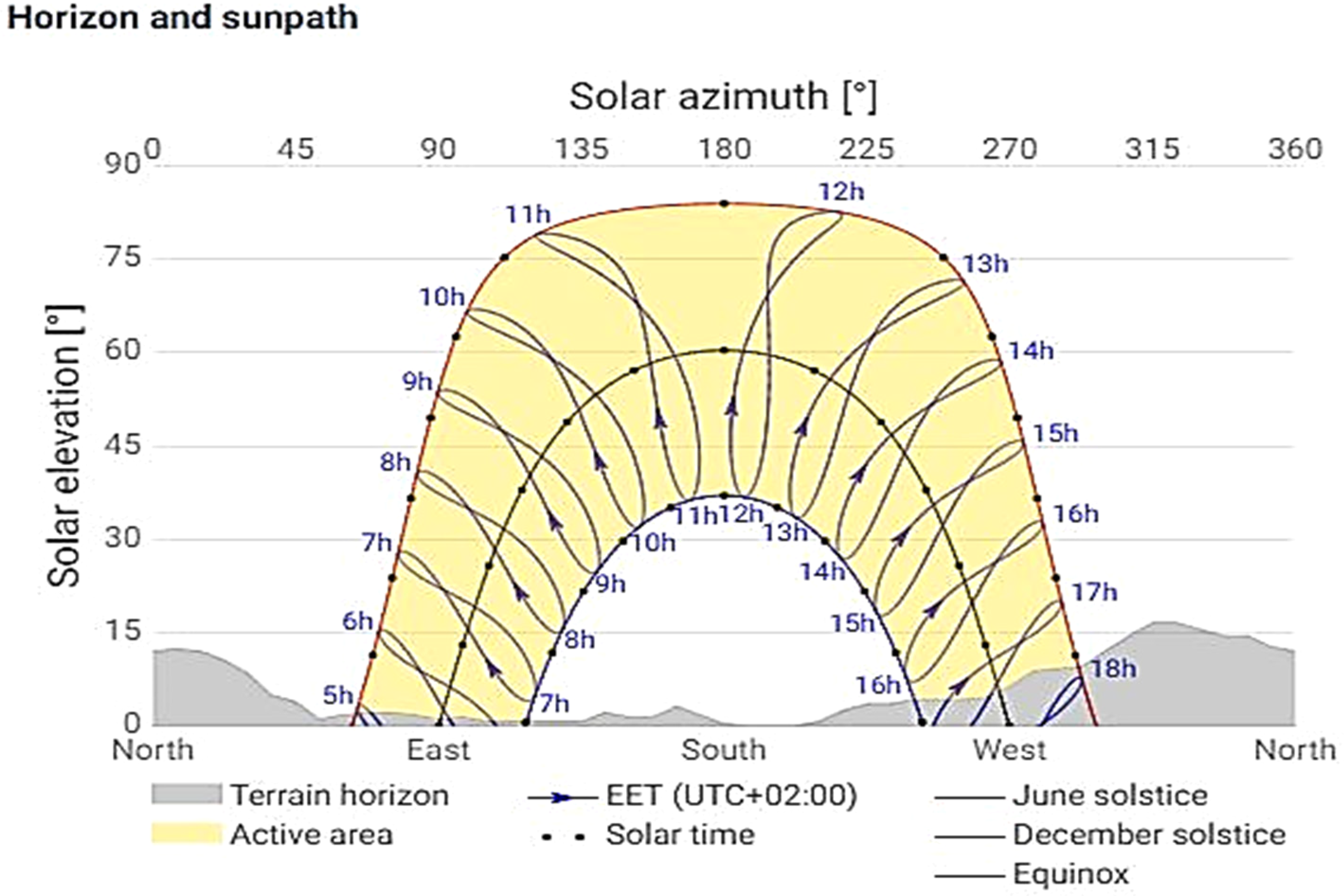
Sun path diagram (Global Solar Atlas, 2022).
Research approach
A complete review was taken at the preliminary design stage of the project to make later solutions regarding the integration of PV technology on the rooftop of the housing unit as a shading device, considering all advantages and disadvantages. As a result, this study considers a comprehensive evaluation approach for determining the behavior of the shading effect of the PV system on the thermal loads annually without accounting for the electrical energy calculations of the PV panels. The following is a summary of the research methods used in this research. Initially, we started by identifying the present circumstances of energy and renewable energy in Jordan, the previous related studies for the insulation of conventional roofs, and the many advantages of PV integration as a shading element in the total energy assessment. Secondly, a comprehensive investigation was implemented on a typical construction building in Jordan to help benchmark building characteristics to simulate it and have good heating and cooling load results almost identical to each Jordanian house’s monthly electrical consumption.
Moreover, weather design inputs were identified for the specified climate zone to maintain the similar condition of the residential buildings in Jordan, as the weather and climate conditions have a huge effect on the annual energy and electrical consumption of each housing unit. Finally, computational programs were used, and they computed the approximate annual heating and cooling loads for each city depending on the weather profiles each program provides in its system. Moreover, three simulation programs were chosen to compare each result and minimize the possibility of output differences. Finally, a comparison between the three programs was made to help the evaluation criteria and for future works.
Model building design
The below figure is a typical one-floor-height house with a total area of 180 m² was modeled using Revit Architecture; that contains main spaces: a gathering area, guest room, kitchen, three restrooms, one master bedroom, two bedrooms, eating area, entrance, and stairs. As anticipated in Figure 6, each room was categorized as a separate area. The building faces the south-north direction. The Thermal and optical properties of the materials were obtained from a standard architectural design prototype belonging to the Jordanian building codes studies (Albatayneh et al., 2022a, 2022b) were appointed to the project in the simulation program.
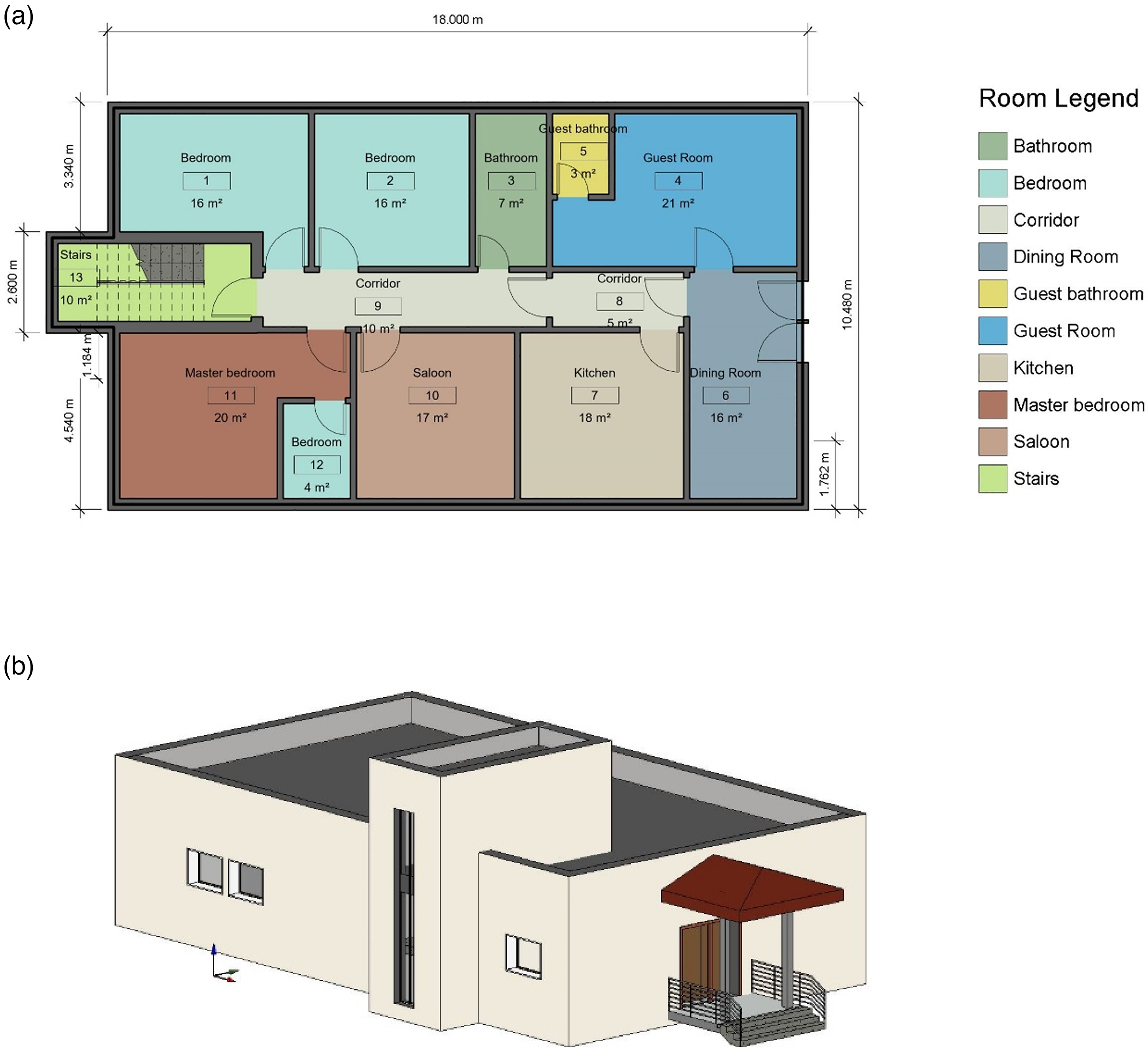
(a) 2D view of the ground floor. (b) Isometric view of the residential archetype, respectively.
The investigation was implemented using the Design Builder program and Revit software to specify the thermal impact of the PV system as shading elements on the building’s cooling demands and overall energy consumption. Using information from the nearest weather station, the calculated benchmark model presents a moderate-income housing unit in Aqaba, Jordan. The home's heating and cooling needs were computed in MWh/year, and the reference and upgraded models’ annual heating and cooling energy savings were also estimated.
Modeling and computational programs
Design Builder
One of the building modeling and simulation software used in this research was Design Builder. The Energy-Plus simulation engine integrated into the Design Builder software provides several features, including modeling, assessment, improvement, and environmental effect analysis (Nematchoua et al., 2020). Design Builder is nearly one of the pieces of equipment that engineers and architects commended and ranked among the best. It is intended to carry out Energy Plus as this software simulates heat transfer processes, climatic variables, and other components that impact energy consumption in buildings using computations on digital 3D solid. Energy Plus is a whole-building energy modeling application used by researchers and experts in the construction sector to estimate energy usage for heating, cooling, ventilation, lighting, and plug and process loads, as well as water consumption in structures (Ogbeba and Hoskara, 2019). The reliability and appropriateness of database software have been highlighted, particularly in structure performance investigations (Ministry of Environment, 2014). Furthermore, the Design Builder uses the computational fluid dynamics (CFD) method, which is the term used to describe a family of numerical methods used to calculate the temperature, velocity, and various other fluid properties throughout a region of space. CFD, when applied to buildings, can provide the designer with information on probable air velocities, pressures, and temperatures that will occur at any point through a predefined air volume in and around building spaces. Boundary conditions are specified, which may include the effects of climate, internal heat gains, and HVAC systems. Design Builder CFD can be used for both external and internal analyses. Also, there is the external and internal CFD analysis.
Additionally, it was built as a three-dimensional, all-encompassing interface using Energy Plus. Energy Plus is meant to be an accurate computing engine, allowing other tools to make more user-friendly pre- and post-processing phases (Ascione et al., 2020). The interior and external of the residence and the substances utilized in its design were all recreated using Design Builder to create the final product. By multiplying the design parameters at specified circumstances for an unsteady factor 1, the simulation product's hourly schedules for each thermal zone enable us to examine the hourly amounts of load volume of equipment, lighting, and DWW needed in a year. Because Design Builder software has rich data forms for a wide range of building simulation entries, such as conventional envelope building components, lighting fixtures, and occupancy schedules, it is ideal for building simulations. These frameworks appeal to newcomers who may not recognize when more precise inputs relevant to their building are required (Samuelson and Reinhart, 2009). Design Builder has specified characteristics that helped the successful collaboration between importing the model from Revit Architecture into Design Builder to simulate it in terms of energy analysis (Sidani and Omar, 2016):
Ability to link with building information modelling (BIM) solutions. Estimate solar shading. Available use of alternative energy technologies. High-quality technical and rendered outcomes. Users cannot see the Visible Reflectance Values in the Design Builder GUI. In simple HVAC, it is impossible to use radiant heating and cooling in any zone. In compact HVAC, there are only limited options for manually defining heating and cooling sizes.
While also, Design Builder has some limitations, which are:
Simulation approach
Uninsulated buildings need to combine renewable energy more than ever to overcome the environmental problems that result from climate change and to decrease the energy demand in these dwellings, especially in the housing sector. A defined approach must be adopted to minimize the hazardous effect of the construction sector. Simulation programs are used to help designers and architects to have reliable results that mimic the experimental results. One of the most critical issues in the simulation process is the climate and weather data for each biogeographical zone. Determining the climatic characteristic is crucial to ensure that individual comfort is in harmony with the surroundings and to have minimal consumed energy. A clear plan toward sustainability and energy efficiency to design reliable buildings that ensure individuals’ comfort in rhythm with the surroundings, understanding the climate type and the human responsive systems. Revit for two- and three-dimensional design, Design Builder, and Revit for the energy model Simulation process are the programs used.
The following technique was used in Design Builder simulation software to evaluate the effect of PV panels as a shade element on uninsulated rooftops. The process is explained in the following steps.
The first phase is constructing the benchmark model using the Revit Architecture program. The second phase presents the workflow of Design Builder software, starting with selecting a weather file for the desired location (Aqaba City, Jordan). The software then defines building types, activities, and characteristics. Despite the number of rooms in the villa, each floor was considered one zone for simplicity, although the building is designed for one floor only. All the details and specifications were fed into Design Builder to complete the model. Before running the simulation, it was necessary to input the operational schedule for equipment, lighting, and AC systems. The simulation was performed for an entire year every month. After that, input data was determined to include the HVAC system as the split system for cooling. At the same time, central heating with radiators was chosen for heating, and the occupancy schedule was determined, too, as heating hours through the year: 777.6 hours and cooling hours through the year: 600 hours. Finally, the simulation was done multiple times to generate acceptable heating and cooling load results. Moreover, the Design Builder program used the simulation tab tool to obtain the heating and cooling results.
The implementation procedure of the solar panels in Design Builder
Rooftop PV systems generate electricity and affect a building’s energy efficiency by casting shadows on the roof. In this instance, PV panels serve as an extra shield to protect direct solar radiation from permeating the rooftop. In the literature, particularly in the hot, humid Middle Eastern region, there has not been much discussion of this integral approach of solar PV to buildings’ energy performance. A regionally available PV panel was selected to implement the PV panels into the building simulation. The PV system was placed as a shade technique to lessen the heat transferred. This enhancing process aimed to swiftly evaluate and choose design concepts that reduce the energy requirements of the decision factors.
The PV system was designed of 12 modules as each PV panel has an area of 1.70 m² that generates a range of power of 300–380 W, according to the Clean Energy Reviews Website (Albatayneh et al., 2022a) This will support meeting the electrical requirements for a typical medium-income Jordanian house, while the modeling of the PV system using the Design Builder software was through the extrusion surface option with determining the construction layers of the PV panels according to a similar investigation (Albatayneh et al., 2022b). PV modules were modeled on the rooftop to determine the power output. Design Builder allows for the creation of PV panels and their integration within the building model through the extrusion surface, as previously mentioned. As the program is not designed initially to contribute PV system, it can simulate a limited number of modules. Also, each PV panel was modeled as representing a single PV unit with a multiplication of one module area.
Results and discussion
Annual solar energy analysis in Aqaba city for the baseline module design
Solar energy is an essential renewable energy source. Its techniques are classified as passive or active solar based on how they gather and transmit solar energy or transform it into solar power. To harvest energy, active solar solutions include solar panels, concentrated solar power, and solar water heating. Realigning a structure to the sun, choosing substances with desirable thermal mass or illumination qualities, and constructing rooms that naturally flow air are all passive solar approaches. Sustainable design and its commitment to green building are increasingly contributing commercial value for many design firms, with the green building sector predicted to hit $234 billion by 2019. Data and cooperation are now at the frontline of achieving green performance, adding to this value. Autodesk Revit is one of the interaction tools available to architects and engineers to assist them in accomplishing their aims. Operators of Revit can use the tool's energy analysis techniques in conjunction with Insight, a building performance plug-in, to satisfy environmental targets. We then calculated direct solar radiation per building exterior in Revit. Evaluating the sun's influence on a location can aid designers in improving the building's energy efficiency, convenience, and financial value. By incorporating energy offsets related to solar radiation, architects can increase the effectiveness of structures. We integrated PV systems into project specifications using solar models to evaluate building performance (Samuelson and Reinhart, 2009).
Solar analysis in Aqaba city before the installation of PV
The baseline model was analyzed throughout the year and per meter square. The analysis was tested from January to December in kWh, as shown in Figure 7. The Cumulative insolation in Aqaba city was found to be 274,966 kWh which equals 1638 kWh/m².
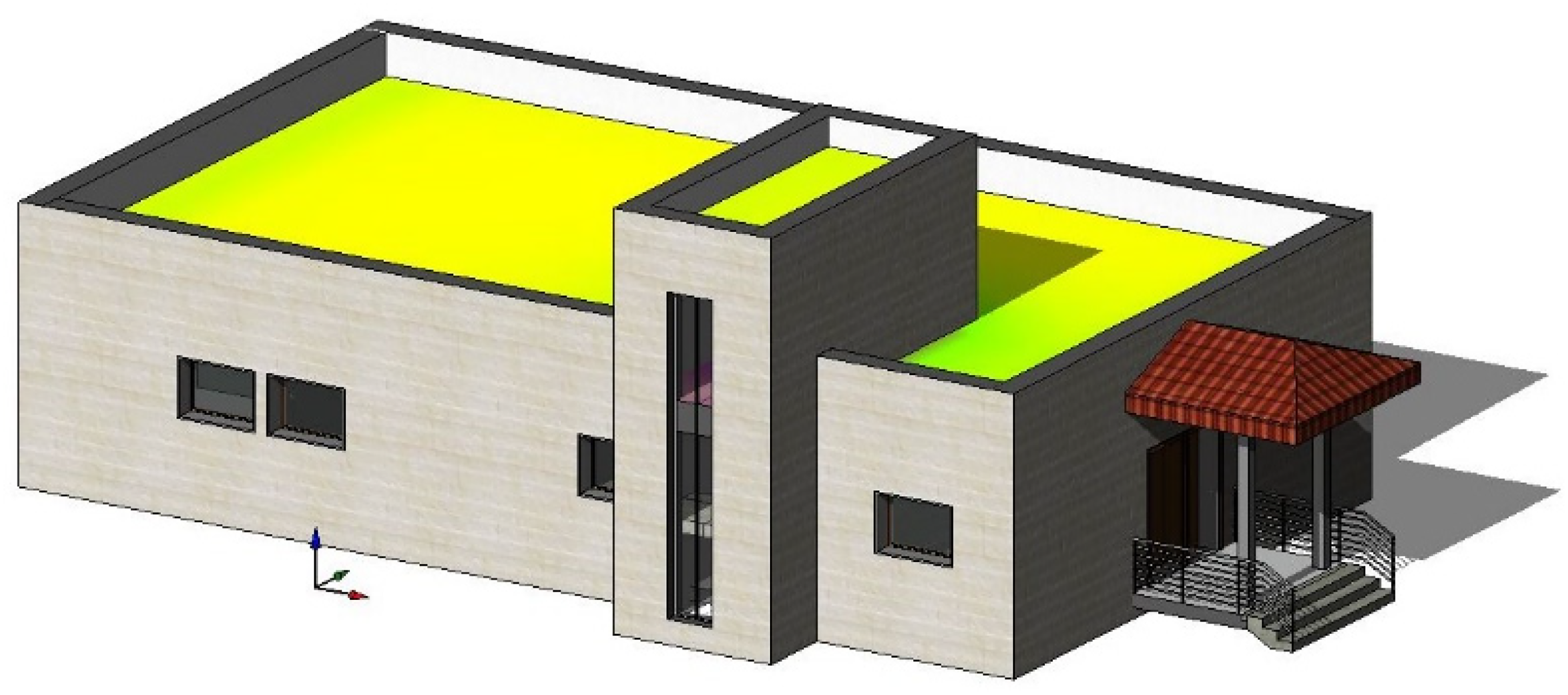
Incident solar radiation every year before installing the PV system.
Solar analysis in Aqaba city after the installation of PV
The model was analyzed after installing PV in terms of solar radiation on the roof throughout the year and per meter square. The analysis was tested after the installation of PV panels from January to December in kWh, as shown in Figure 8. The cumulative insolation in Aqaba city was reduced to 201,581 kWh, which equals 1201 kWh/m².
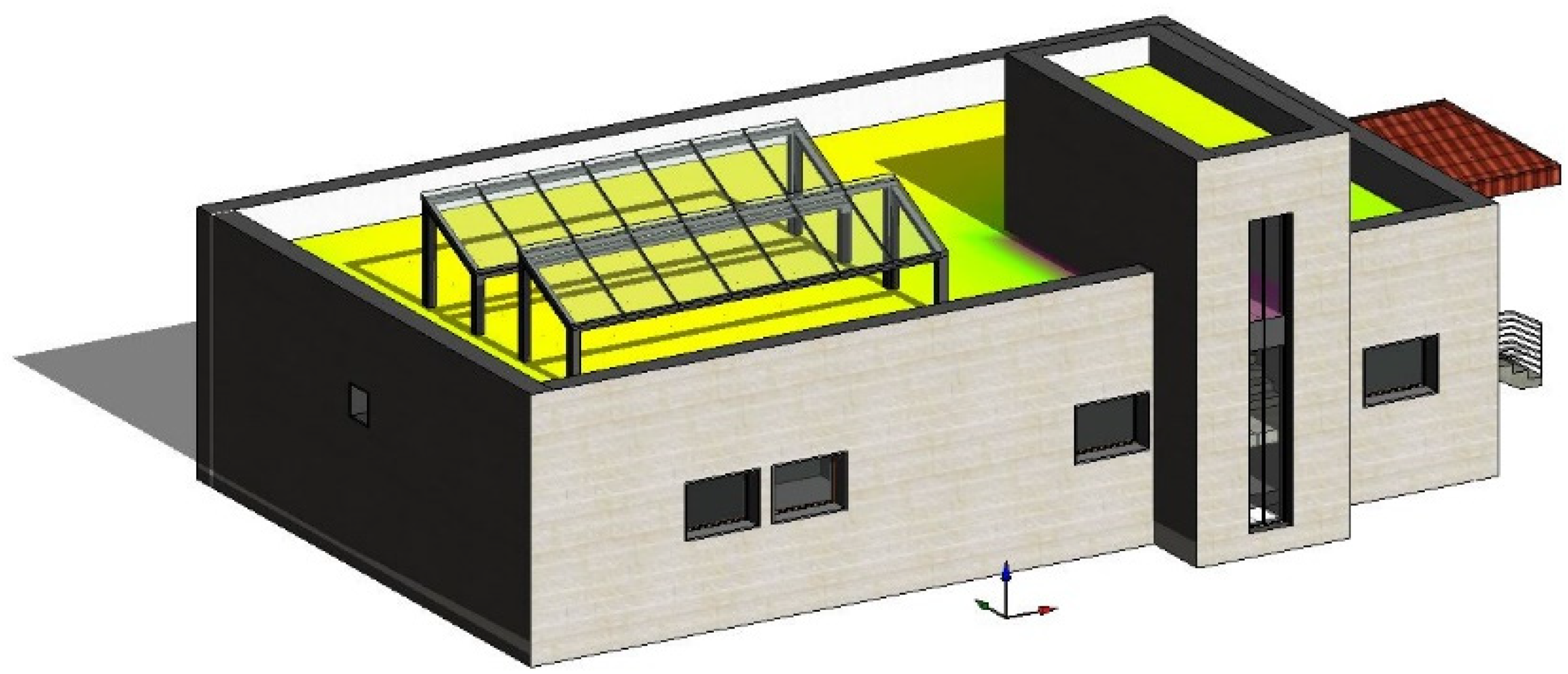
Incident solar radiation every year after establishing the PV system.
Energy demand results before the establishment of the solar system
Cooling loads were estimated to be 5.80 MWh/year, depending on the computed proposed base model, with the highest values in July and August. While the heating loads were calculated to be 0.25 MWh/year, according to the computed proposed base model, with the most significant values in January and December, as shown in Figure 9.
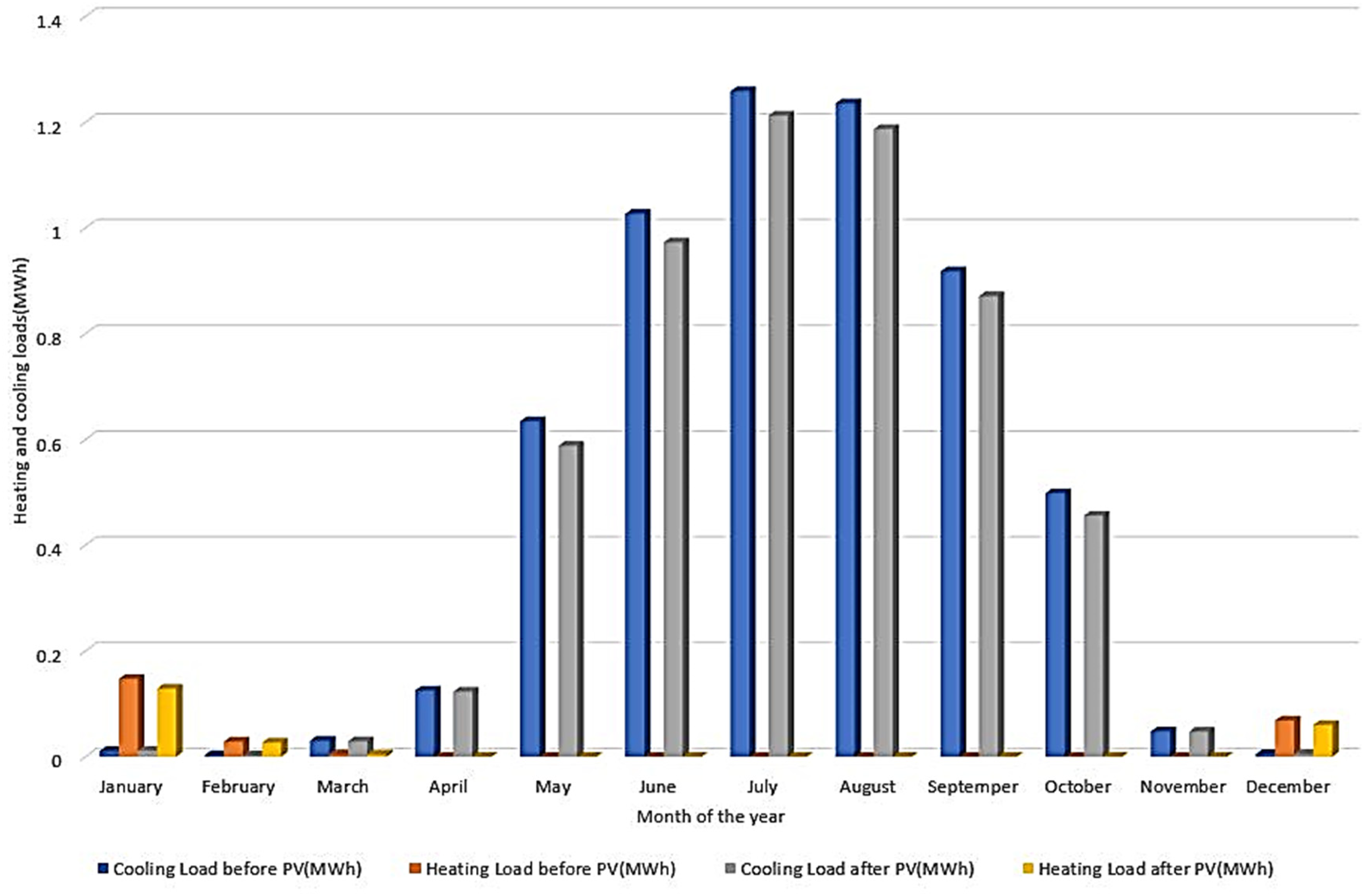
Heating and cooling demand before and after the solar system’s implementation as a shade structure in Aqaba city using Design Builder.
Energy demand results after the formation of the PV system
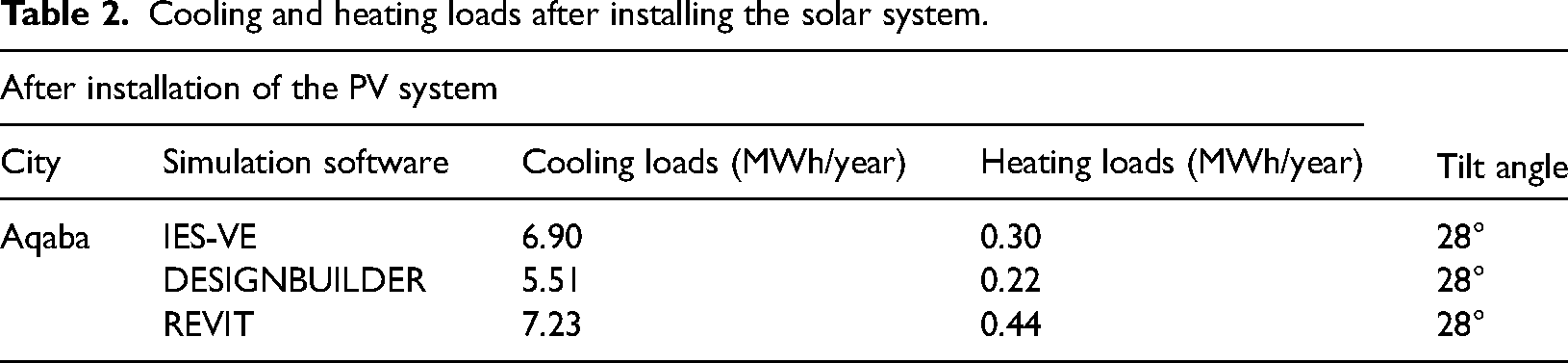
Following the computed optimum design, cooling loads were calculated every year after the solar system was established; the cooling load was minimized to 5.51 MWh/year, while the highest values in July and August also decreased. Moreover, by the computed optimal design, heating loads were computed every year after the renewable power was installed as a shading device; the heating load increased to 0.22 MWh/year, as anticipated in Figure 9.
Verification
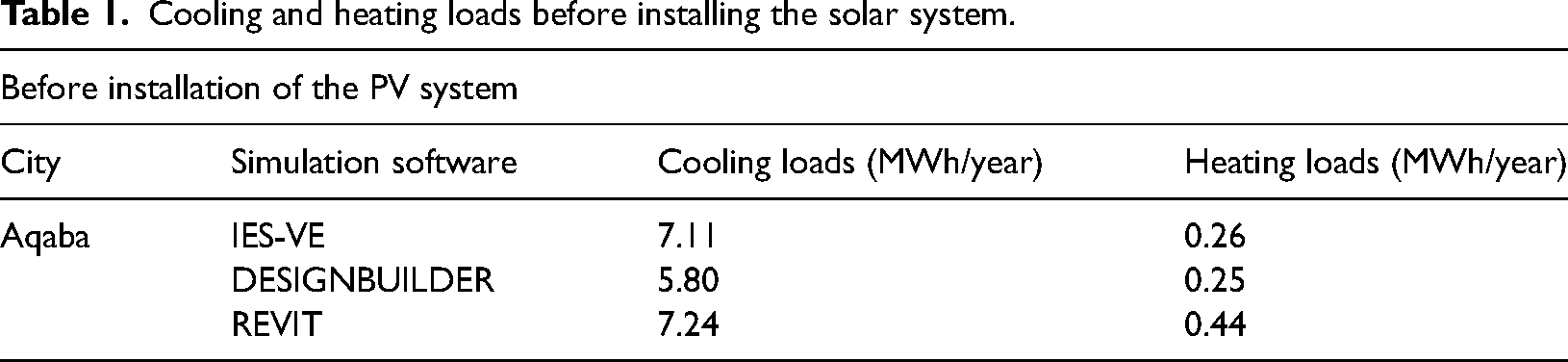
Regional, trustworthy Jordanian building regulations were used as the model's input data for the existing construction circumstances. The values obtained aligned with previous studies on a similar architectural design in a climate zone. Additionally, three simulation softwares were used to evaluate the numerical simulations (Design Builder, IES-VE, and Revit). Therefore, the results were consistent with what was expected from the Design Builder program. Tables 1 and 2 display the outcomes of the three simulation programs before and after the implementation of the solar array.
Cooling and heating loads before installing the solar system.
Cooling and heating loads after installing the solar system.
This demonstrates that there is a chance for future research and development to create panels and installation techniques that reduce the negative consequences of rooftop PV. This research is detailed and concise in its conclusion that rooftop PV heats the urban environment while also resulting in a modest rise in the value of energy used for air conditioning. However, experiments undoubtedly have room to identify constraints and add detail to the findings. The scope of this investigation can be expanded to include internal heat loads, as they were not assessed in this research. It was performed as a general analysis to calculate the energy demands of a conventional housing unit in a subtropical climate. In addition, the selection of construction materials was restricted to commonly used ingredients from the country/region; the albedo effect was not considered. Moreover, other climate zones, different compositions of roof construction, and the electrical incorporation of a solar panel system to determine the overall energy demand, and a comparison should be conducted between horizontally mounted PV panels and tilted panels in terms of electrical generation and shading effect, all of these can be included in future studies.
It would be advantageous to conduct research that includes all types of energy usage. Also, this study could be applied to other structure types such as industrial parks, commercial, and other building uses with more energy demand rates than residential buildings. The PV panels could show a high shading effect because of the rise in the number of PV panels to adjust to the electrical demands in these facilities. This investigation aimed to evaluate how the installed solar panel on the top of a traditional house impacts the uninsulated roof in terms of heating and cooling demands in the climate zone of Aqaba city.
Conclusion
This investigation aims to determine the thermal behavior of the inclined solar panels as a shading structure on roof-related HVAC energy demand of buildings in a subtropical climate zone. A 3D distributed thermal model was designed before and after the solar panels were installed at the top of the building. The study focused on a traditional design home in Aqaba city in Jordan. There was also a discussion of the restrictions placed on using solar panels by building rooftops. The total energy contribution of the benchmark module design was estimated to be 6.05 MWh/year, with 0.25 MWh/year for the heating demand and 5.80 MWh/year for the cooling demand. During the winter, the findings revealed that heating loads were reduced to 0.22 MWh/year via the roof, decreasing the corresponding electricity requirement for internal heating.
Furthermore, cooling loads were decreased to 5.51 MWh/year during the cooling months, cutting the electricity demand for indoor cooling during this season. This research's results validate this study's significance and offer recommendations to energy stakeholders, the building sector, and consumers. Moreover, a solar system on top of the structure maintains a greater understanding of the HVAC energy demand variance in buildings, which is essential in modern architecture.
This investigation on Aqaba, Jordan, provides persuasive justification for choosing roof upgrade options that integrate solar panels establishment with natural rooftop participation (retrofitting during roof maintenance) or rooftop energy-related improvement (re-roofing). The appropriate inclined angle was investigated and determined according to the highest electrical production in the city of Aqaba, which is 28 degrees (Monna et al., 2022), the ability of Solar panels to sustain conventional structures, and the connection between these elements and annual energy consumption. A 3D scattered thermal model in the transient stage included a representation of the PV roof-mounted modules. The inspection focused on a traditional housing unit in Aqaba, Jordan. The barriers that are placed on the building rooftops were also discussed. To sum up, five main results were emphasized:
The total energy requirement of the benchmark model using Design Builder was calculated to be 6050 kWh/year, with a heating load of 250 kWh/year and a cooling load of 5800 kWh/year. The results showed reduced heating loads through the roof in the winter, decreasing the electrical requirements for interior heating. However, the heating load in total is significantly less than the cooling load. During the cooling months, a 5% reduction in cooling demand was noticeable, decreasing the energy demand for interior cooling. The results reaffirm the purpose of this research and serve as a foundation for suggestions to energy policymakers, the construction sector, and users. A solar thermal panel also better understands institutions’ HVAC energy consumption variation, which is vital in the current development environment.
Finally, the idea that stands behind the significance of this research is to investigate the indirect effect of establishing solar panels on uninsulated rooftops, as this impact adds to the overall energy requirements of the buildings regardless of their function of electrical energy generation.
Footnotes
Acknowledgments
The author(s) would like to acknowledge The German Jordanian University for facilitating this research.
Declaration of Conflicting Interests
The author(s) declared no potential conflicts of interest with respect to the research, authorship, and/or publication of this article.
Funding
The author(s) received no financial support for the research, authorship, and/or publication of this article.
