




Abstract
Based on core, well-logging and seismic data, the gravity flow characteristics and sedimentary model of the 1st member of the Tengger formation in the eastern steep slope belt of the Sai-4 tectonic belt in the Saihantala depression (Erlian Basin, China) have been systematically studied; further, the sublacustrine fan sedimentary model in the study area has been established. The main types of gravity flow identified in the study area are sandy debris flow deposits and turbidity flow deposition. Affected by paleo-geomorphology, provenance and other factors, sublacustrine fans in the eastern steep slope zone are formed by gravity flows from different periods. The sublacustrine fan is divided into three subfacies: inner-fan, mid-fan and outer-fan. The subfacies can be subdivided into six types of microfacies: main channel, levee of main channel, distributary channel, inter-channel, levee of distributary channel and terminals. The formation of the sublacustrine fan is caused by steep slopes and triggered by earthquakes. The sedimentary model of the sublacustrine fan and its sedimentary characteristics provide a foundation for exploring and developing oil and gas in the study area.
Keywords
Introduction
With the increased level of oil and gas exploration in recent years, deep-water gravity flow sedimentary sands have gradually become the focus of current lithologic reservoir exploration. From the beginning of the 20th century, there were ongoing discussions on deep-water sedimentary sands; until the middle of the 20th century, the gravity flow theoretical system was rapidly developed with the introduction of the ideas of granular flow, turbidite, and debris flow, as well as the development of the “Bouma sequence.” (Bouma, 1962; Crowell, 1957; Heezen and Ewing, 1952; Kuenen, 1957); in the 1970s, an early model of deep-water sedimentation was established, as represented by the integrated deep-water fan model proposed by Walker (walker, 1978); in the1980s, Lowe proposed the high-density turbidity current (Lowe, 1982). The idea of sandy debris flow was put forth by Shanmugam et al., and the deep-water slope deposition model was developed as a result (Shanmugam et al., 1994). Based on earlier research, Gani expanded the categorisation system for gravity flow based on rheology, classifying turbidity flow as a Newtonian fluid, viscous debris flow as a Bingham plastic fluid, and slip collapse as a Bingham plasticity process (Gani, 2004). Additionally, researchers have put forward the ideas of heterogeneous and mixed flows, which have improved our knowledge of gravity flow patterns in terrestrial lake basins (Yang et al., 2021).
Scholars in China and the world have studied the stratigraphic features, sedimentary features, tectonic features, genesis process, and oil and gas enrichment pattern of the Sublacustrine fan extensively since the concept of lake bottom fans was originally introduced in 1976. The sedimentary systems of sublacustrine fans in terrestrial faulted lake basins in China are widely developed and found in various basins (Yang et al., 2019). As for the Saihantala depression, due to the lack of data, predecessors only knew the sublacustrin fan deposits be developed in the study area (Chen et al., 2010), but its genesis type and development pattern are unclear.
Therefore, based on core observations, well-logging, and seismic data, this paper investigates the kind of gravity flow genesis and sedimentary facies spreading in the 1st member of the Tengger formation of the Saihantala depression, and further analyses the formation process of the sublacustrine fan in conjunction with previous research findings, and then creates the deep-water sedimentation model in the study area, which also serves as a reference for the investigation of gravity flow sedimentation in terrestrial systems.
Overview of the study area
The Saihantala depression is located in the southwestern part of the Tengger depression in the Erlian Basin. It is bounded by the Sunit central uplift in the northwest, the Wenduermiao uplift in the south and the Chagannuoer uplift in the east. It has a width of about 23 km from east to west, a length of about 100 km from north to south and an area of about 2300 km2. Furthermore, it is an ‘s’-shaped half-graben rift lake basin spreading towards the northeast. It is the largest depression in the Tengger depression and one of the most favourable hydrocarbon-bearing areas in the Erlian Basin (Figure 1) (Cheng et al., 2011). Drilling shows that the Saihantala depression is composed of the Quaternary, Neogene, Paleogene, Cretaceous and Jurassic from top to bottom. The main exploration system is the Lower Cretaceous, which is divided from bottom to top into the Aershan, Tengger and Saihantala formations.
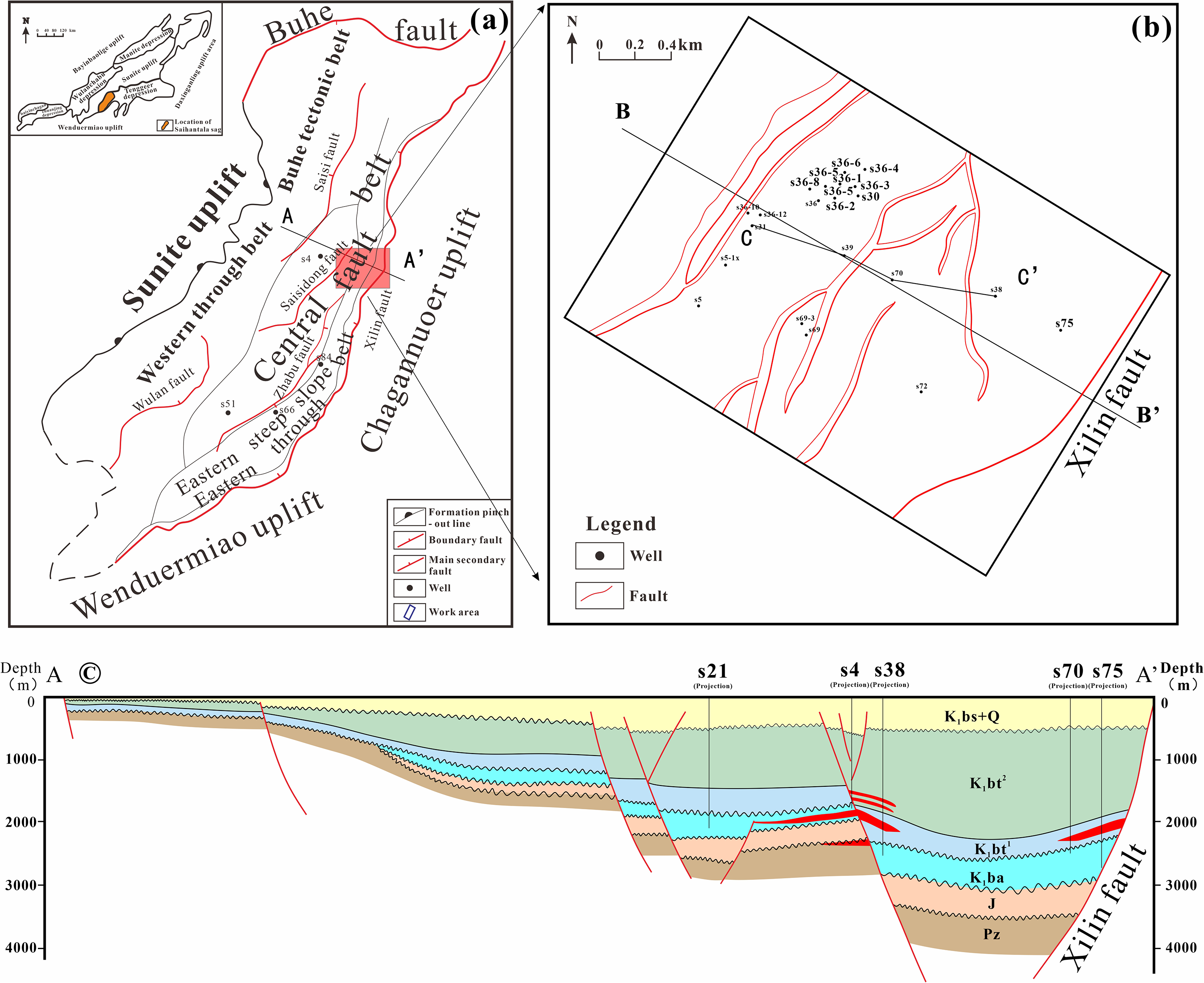
Geological location and background map of the 1st member of the Tengger formation in the Saihan area. (a) Structural location map of the Saihantala depression. (b) Structural map of the study area. (c) Regional strata section map cross-section of the Saihantala depression.
The Tengger formation can be further divided into the 2nd member of the Tengger formation and the 1st member of the Tengger formation, while the Aershan formation is further divided into the 3rd member of the Aershan formation and the 4th member of the Aershan formation (Figure 2). The tectonic evolution in the depression is divided into three stages. In the early stage, the fault depression gradually formed (during the deposition of the Aershan formation), the depression began to show tension and sink, and the eastern and western boundary faults started to develop, eventually forming the prototype of the fault depression. In the middle stage, the fault depression gradually expanded (during the deposition of the 1st member of Tengger formation and the 2nd member of Tengger formation), the eastern boundary fault (Xilin fault) and the northern boundary fault continued to show tension and sink, the depth and area of the fault depression continued to expand, the water body deepened and the deposition range increased, forming the main body of the fault depression. In the late stage, the fault depression slowly went extinct (during the deposition of the Saihantala formation), and when the boundary faults ceased to activate, the development of the fault depression basin also ended (Zhao et al., 2005).
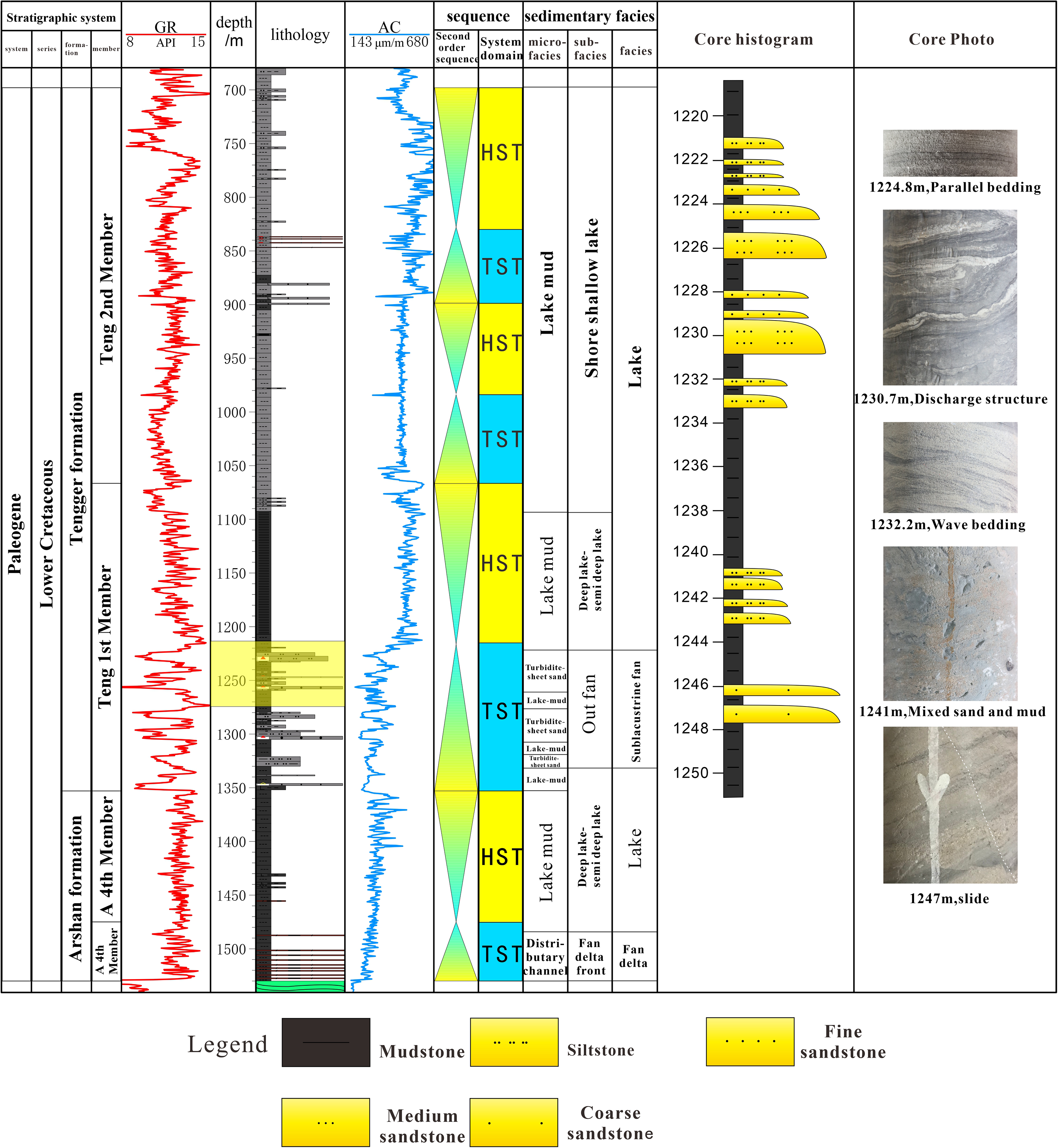
Schematic stratigraphic column of the Lower Cretaceous in the Saihantala depression.
The sedimentary period of the 1st member of the Tengger formation in the Saihantala depression is a period of stable subsidence of tectonic activities. During this period, semi-deep lake-deep lake facies were mainly developed. The thick mudstone–shale was the main source rock horizon in the Saihantala depression. The study area is located in the eastern steep slope of the Sai-4 tectonic belt, and the sand body of the sublacustrine fan in the central part of the 1st member of the Tengger formation formed a good source–reservoir configuration relationship with the lake mudstones above and below it, which is one of the main exploration and development horizons at present.
Genesis types of gravity flow
The identification of gravity flow deposition should be performed based on the lithological characteristics and facies marks. In addition to the lithological and sedimentary structural characteristics of gravity flow sandstone, the surrounding rocks contacting the sandstone are dark mudstones of deep lake facies, which is also one of the vital indicators of gravity flow deposition (Liu et al., 2020). The 1st member of the Tengger formation of the study area was deposited during the stage of lake basin expansion and development. Therefore, dark mudstones are developed throughout the depression, which indicates semi-deep & deep lake facies. Based on the current sedimentary process–rheology classification scheme (Shanmugam et al., 1994), the gravity flow in the 1st member of the Tengger formation of the study area is classified into sandy debris flow deposition and turbidity flow deposition.
Sandy debris flow
Sandy debris flow is a Bingham-type plastic fluid, representing a continuous action process between cohesive and non-cohesive debris flows (Zou et al., 2009), and the particles show integral consolidation when deposited. The thickness of a single sand body can reach 1 m, while the Bouma sequence cannot be observed. The sandy debris flow sand bodies in the study area are mainly massive grey equigranular sandstones (Figure 3(c)), with many mud pebbles and mud debris floating around (Figure 3(a) and (b)), which vary in size (2–8 cm) and shape.
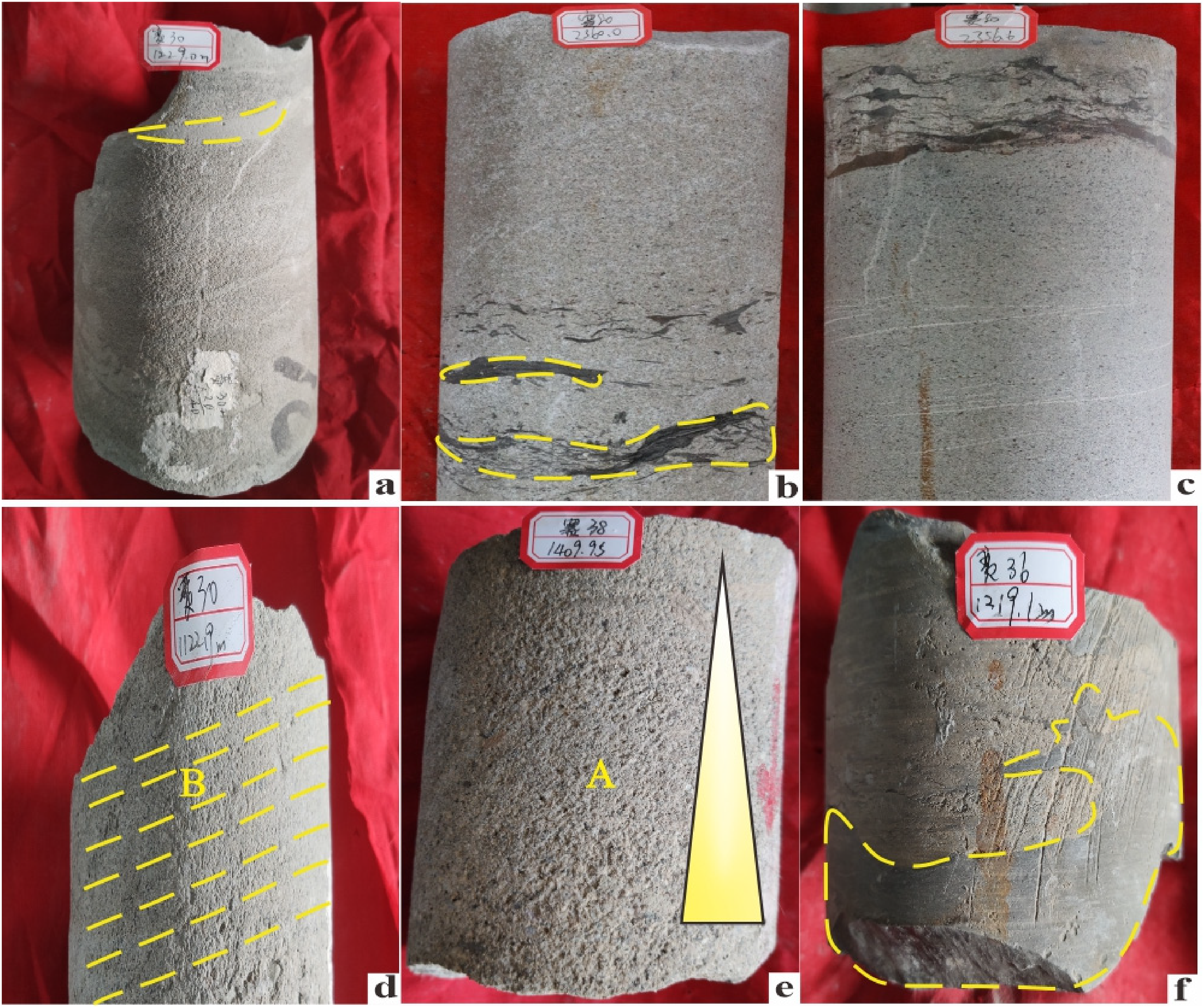
Lithofacies classification and interpretation in the study area. (a) Drifting gravel-bearing massive sandstone lithofacies (mud-pebble), well Sai-30, 1229 m. (b) Drifting gravel-bearing massive sandstone lithofacies (mud debris), well Sai-80, 2360 m. (c) Massive sandstone lithofacies, well Sai-80, 2356.6 m. (d) Parallel bedding sandstone lithofacies, well Sai-30, 1122.9 m. (e) Normal grading sandstone lithofacies, well Sai-38, 1409.95 m. (f) Deformed bedding sandstone lithofacies, well Sai-36, 1391.1 m.
The probability curve (Figure 4) shows that the grain size of the sandy debris flow in the study area is a relatively flat straight line or a slightly upward arc. The curve indicates that the sand body of the sublacustrine fan in the study area is well rounded, with a high total suspended load and low slope. As it is shown in C–M of Figure 5, the sample points are assembled in the QR segments. The QR segment is roughly parallel to the limit C = M; therefore, C is closely correlated with M. In general, it shows the characteristics of typical turbidite.
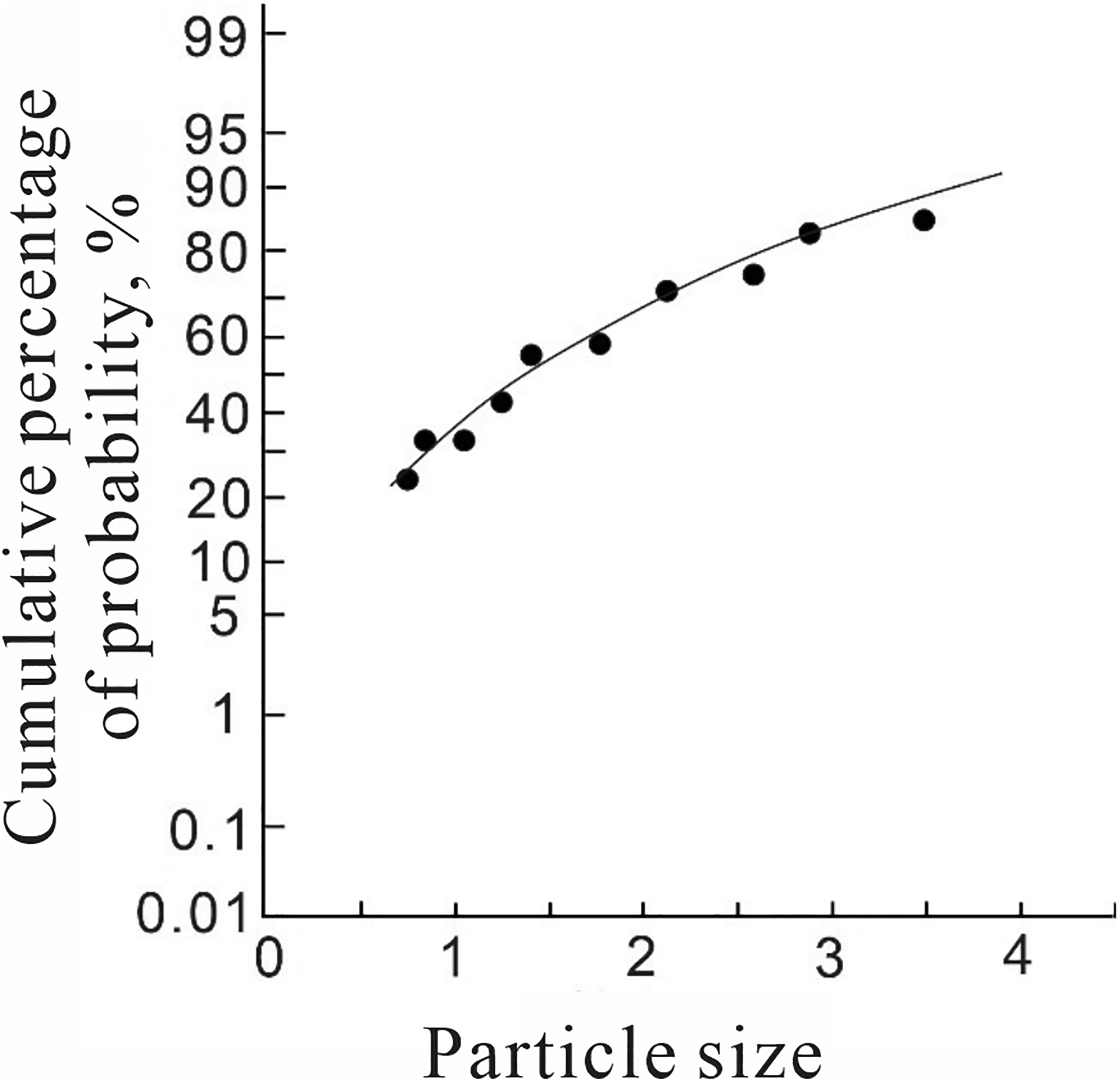
Probability accumulation curve of the sublacustrine fan sand body in well Sai-30.
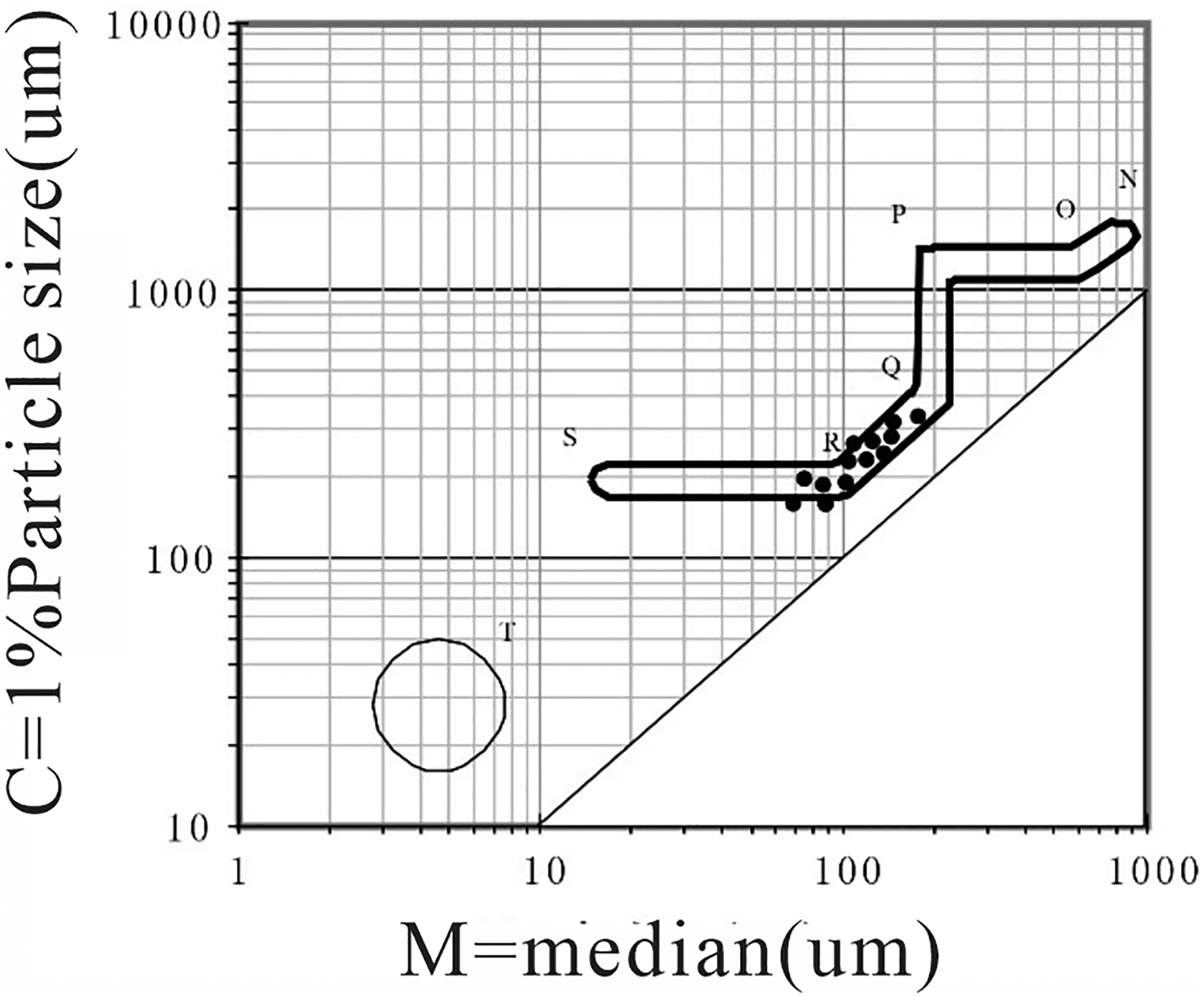
Figure C-M of the sublacustrine fan sand body in well Sai-30.
Turbidity current
Turbidity currents are sediment flows with Newtonian fluid properties supported by turbulent flows. The typical sedimentary structure of turbidite sediments is the Bouma sequence. However, the complete Bouma sequence is uncommon. Owing to the influence of the frequency and intensity of the turbidite current and the repeated erosive scouring of turbidity currents, the turbidite Bouma sequence is always destroyed, often manifested as in incomplete Bouma sequence with divisions AB, AC and AE. Division AB is mainly developed in the study area (Figure 3-(d) and (e)), while divisions CDE developed in a localised area. The sublacustrine fan mainly enters the deep-water area of the lake basin from the near-shore subaqueous fan and coastal sand dams by direct slump. Under the interaction of gravity and tectonic action, the sublacustrine fan sand body is formed in deep water. Apart from the Bouma sequence, other structures such as deformed structures are common in the coring of the study area (Figure 3(f)) (Liu et al., 1999; Pang et al., 2011).
Sedimentary facies
Lithofacies and lithofacies associations
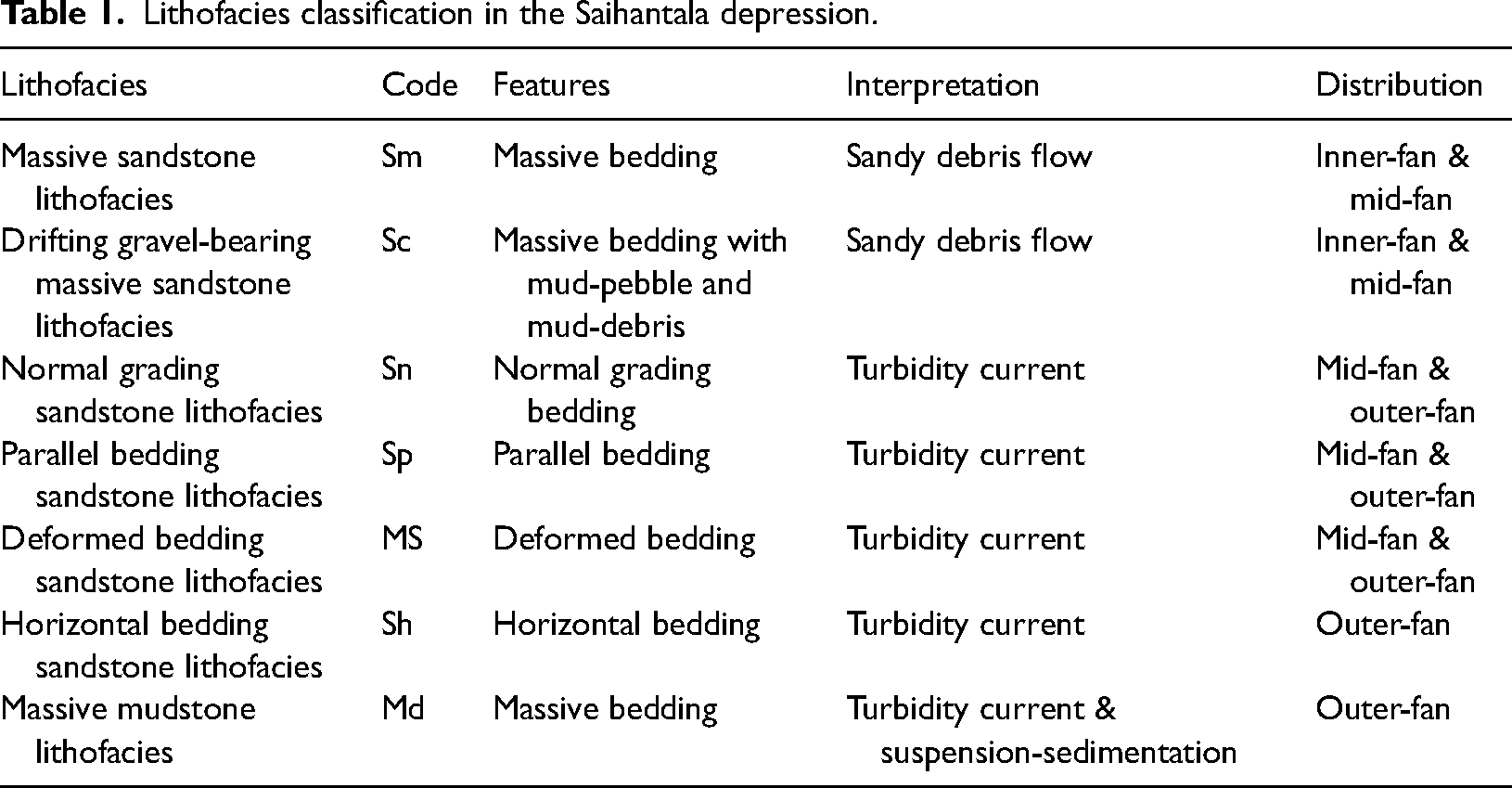
Based on the core observation in the study area, the gravity flow lithofacies type developed in the study area was classified into seven types (Figure 3), and the characteristics of each lithofacies are shown in Table 1.
Lithofacies classification in the Saihantala depression.
By analysing the lithofacies of the core wells in the study area (Figure 6), five lithofacies assemblages were identified as shown in Figure 7.
(1) Lithofacies associations a
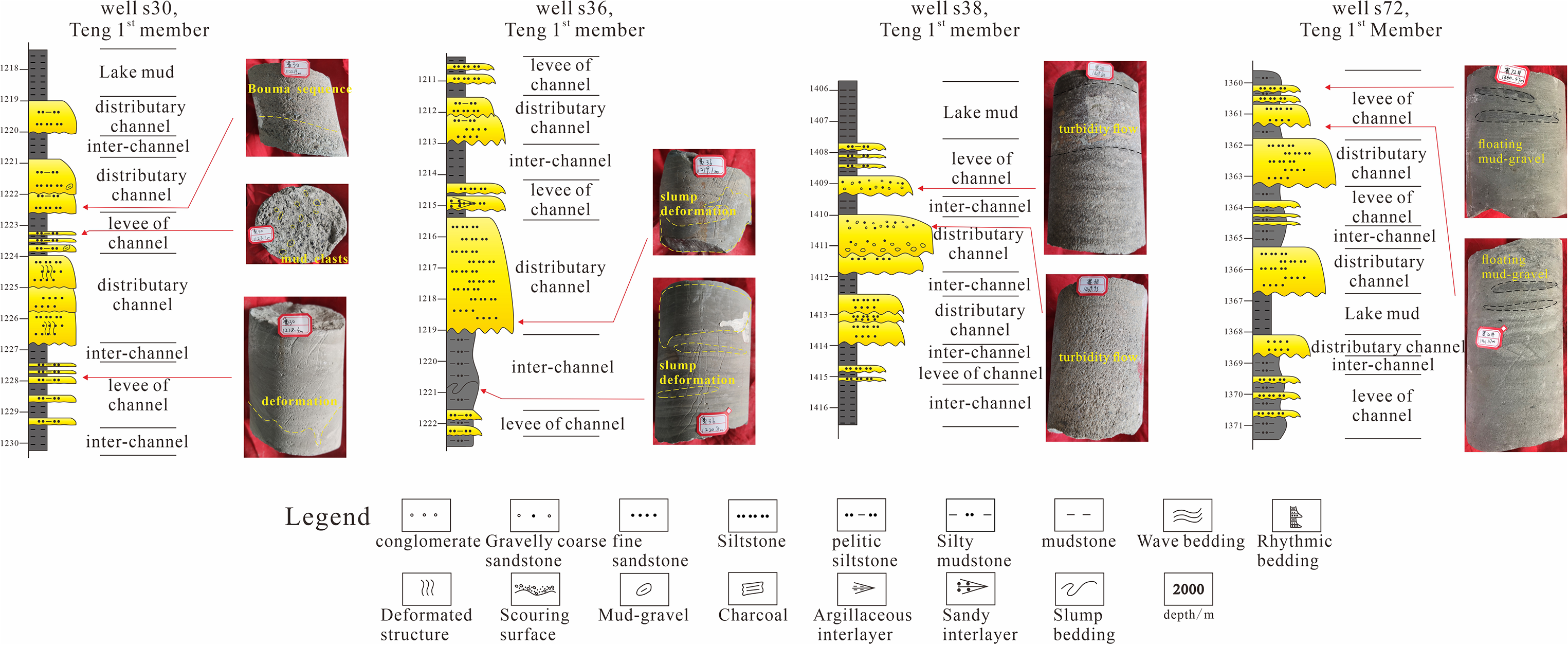
Core facies analysis of the sublacustrine fan.
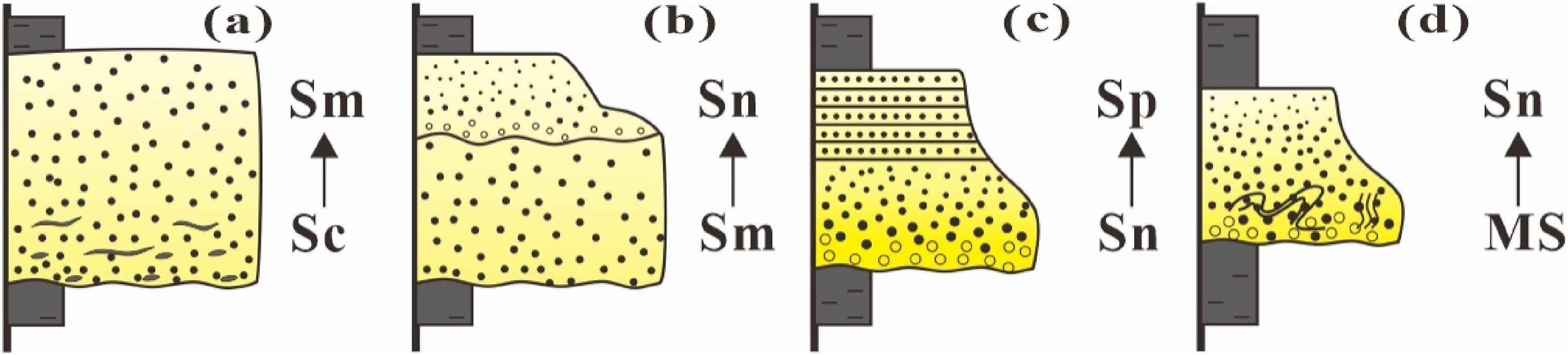
Characteristics of typical lithofacies assemblage of gravity flow in the Saihantala depression.
Sc and Sm make up the lithofacies type (Figure 7(a)), which is relatively homogeneous. The massive sandstone, which is primarily developed in the inner-fan and the mid-fan of the sublacustrine fan, indicates rapid sediment deposition, which is a typical depositional feature of high-density sandy debris flow.
(2) Lithofacies associations b (3) Lithofacies associations c (4) Lithofacies associations d (5) Lithofacies associations e
Sm and Sn are listed from bottom to top (Figure 7(b)). Among them, Sn develops thicker, while Sm develops thinner, indicating that the sediments at the lower end of the slope are concentrated unloading deposition, which is primarily developed in the mid-fan.
Sn and Sp are listed in order from bottom to top (Figure 7(c)). This typical AB section of the Bouma sequence, which is primarily produced near the distal end of the outer-fan, reacts to the deposition process of low-density distal turbidity currents.
MS and Sn are listed from the bottom to the top (Figure 7(d)). The sediment is thin and fine-grained overall, and it frequently develops in the extension of the lateral edge of the fan body, or the outer fan.
Sh is interbedded with Md (Figure 7(e)). Overall, the sediment is fine-grained. It mainly developed in the outer fan. Besides, the development of Md indicates a deep water sedimentary environment.
Sand body distribution
Through core observations and well-logging analysis, the sand bodies of the sublacustrine fan developed in the 1st member of the Tengger formation of the study area are divided into seven phases in the vertical direction. Each phase of the sand body is separated by a stable, thicker mudstone layer. The shape of the well-logging curve changes from a lower bell or box shape upward to a finger shape (Figure 8). Overall, core observations and well-logging reflect that the base level was rising during the formation of the sublacustrine fan (Cao and Liu, 2017; Fang et al., 1998; Ma et al., 2008).
(1) Profile features of sand body
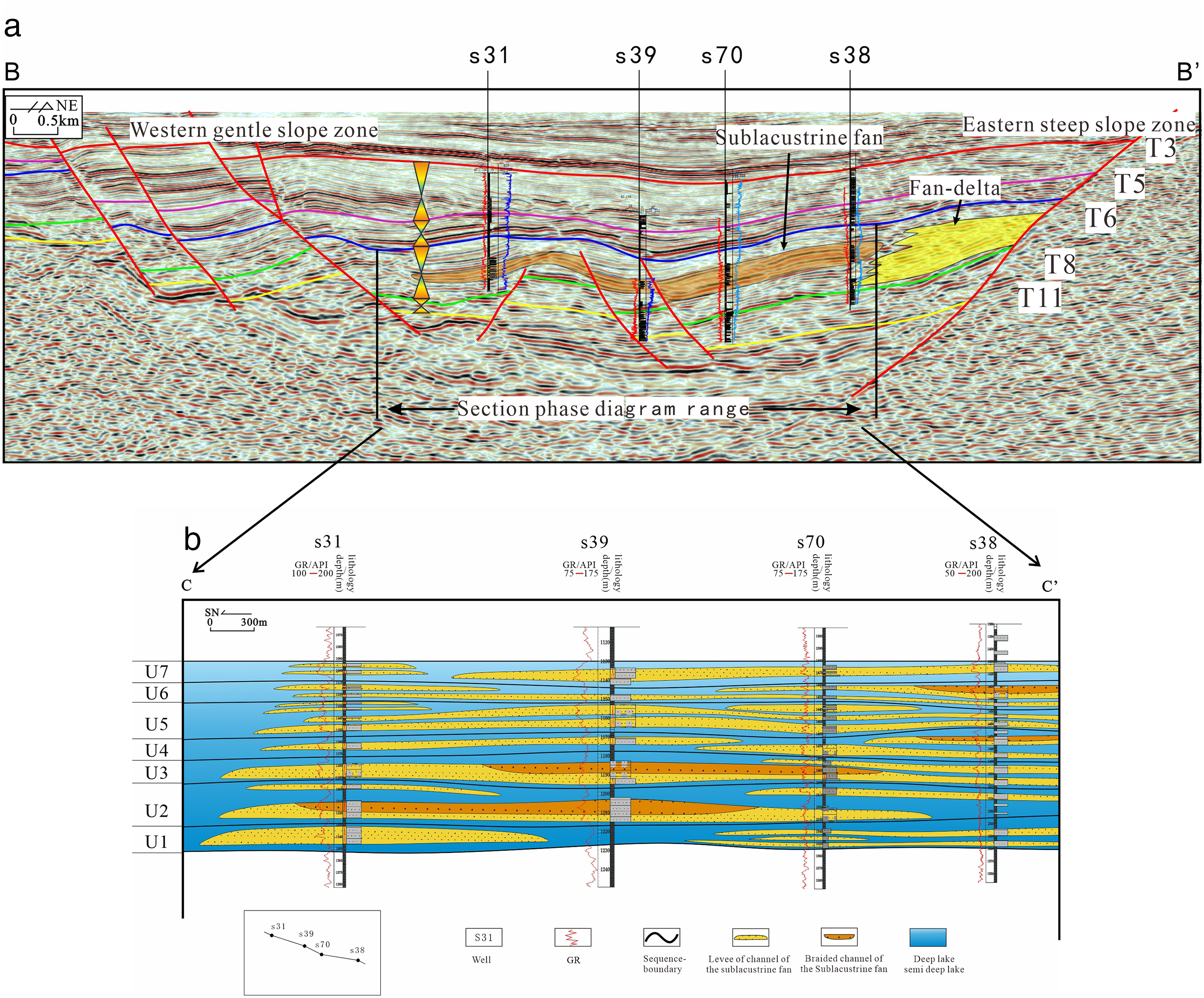
Corresponding well-seismic section in the Saihantala depression. (a) Seismic profile of the 1st member of the Tengger formation in the Saihantala depression. (b) The sublacustrine fan sand bodies profile of the 1st member of the Tengger formation in the Saihantala depression.
During the U1 period, the early development stage of the sublacustrine fan, the lithology of well Sai-38 is mainly fine sandstone, while well Sai-31 develops a large set of thick siltstone. The logging curve shows a serrated-box shape. During the U2–U3 period, the main development period of the sublacustrine fan, the lithology of well Sai-38 is mainly fine sandstone and the lithology of well s31 and well Sai-39 is siltstone. The logging curve shows a serrated-box shape. During the U4 period, the period of gradual shrinking stage of the sublacustrine fan, the lithology of well Sai-38 is fine sandstone, while the lithology of well Sai-31 shows a thin-bedded siltstone. The logging curve is a finger shape. During the U5–U6 period, the main development period of the sublacustrine fan, the lithology of well Sai-31 is mainly thin-bedded and superimposed fine sandstone. The logging curve shows a superimposed multi-phase box shape. The lithology of well Sai-39 is thick siltstone, and the logging curve is a box shape. During the U7 period, which is a period of gradual shrinking stage of the sublacustrine fan, the lithology of well S38 is mainly siltstone and mudstone, the lithology of well Sai-31 is thin-layered siltstone, and the logging curve is a bell shape.
(2) Sand body planar distribution features
The distribution of sublacustrine fans in the study area is studied by core, logging and seismic data, and the distribution characteristics and laws of sand bodies are primarily explained by sandstone thickness. As shown in Figure 7, a sandstone belt of nearly 15 km2 is developed in the study area towards the northwest. The sediments of the fan-delta front are subject to sliding and slipping under gravity and tectonic action and deposit along the fault slope break zone in the fault descending side. The sand bodies in the study area are divided into seven phases, that is, U1–U7 (Figure 9). The sand bodies in the study area are mainly controlled by NE–SW trending faults and other secondary faults. The boundary faults control the direction of the distributary channel of the fan-delta front and form terrain low points towards the west, which controls the distribution of sand bodies.
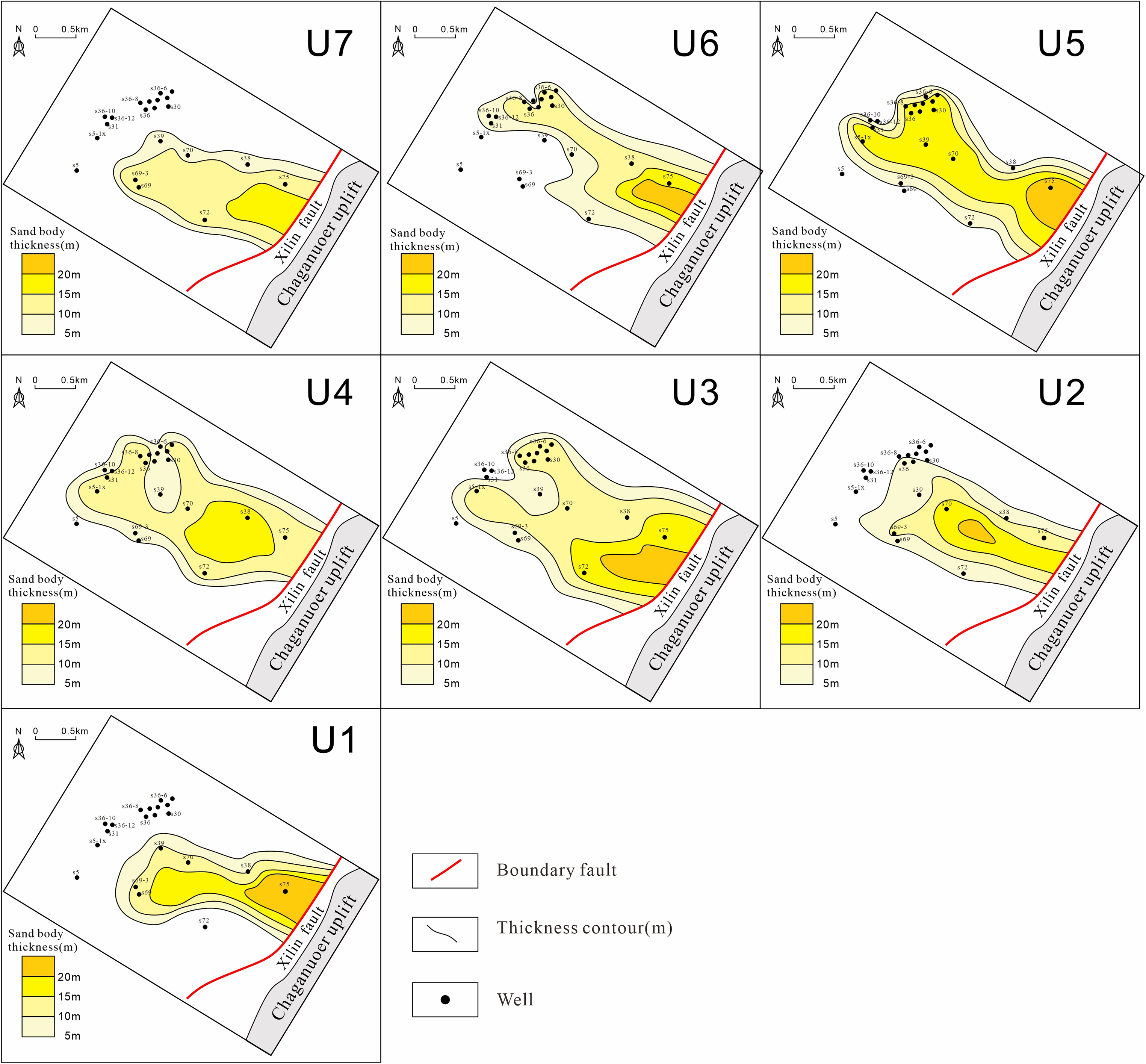
Thickness contour map of the sand body of the 1st member of the Tengger formation in the Saihantala depression.
The sublacustrine fan of the Saihantala depression was mainly developed during the Tengger formation of the Early cretaceous main rifting period. The history of tectonic development shows that during the main rifting period (the stage of the 1st member of the Tengger formation), the Xilin fault in the eastern steep slope zone of the study area was continuously active. The sufficient supply of material sources in the east accumulated rapidly in the lake basin, forming sediments dominated by the sublacustrine fan, which is characterised by multiple superpositions in the longitudinal direction and continuous distribution on the plane. During the U1 period, the profile shows that the sublacustrine fan sand bodies have progradation features. On the plane, the sand bodies mainly accumulate near the provenance, with a maximum thickness of 20 m. During the U2–U3 period, the sublacustrine fan was developed. The thickness centre of the sand body migrated to the west, and the thickness increased. During the U4 period, the sublacustrine fan gradually shrank, and the thickness of the sand body decreased considerably as can be seen from the plane. During the U5–U6 period, the sand body of the sublacustrine fan developed again. Compared with the scale of the early sand body, the scale of the sand body decreased in the south, while that of the sand body increased in the north, with a maximum thickness of the sand body reaching 20 m. During the U7 period, the sublacustrine fan shrank, and the thickness of the sand body further decreased. The sand body grew thicker away from the provenance and in the west direction, while the thickness of sand bodies near the provenance decreased.
In summary, controlled by the eastern Xilin fault and secondary faults, the sublacustrine fan in the study area shows a multi-phase migration in plane, with the sandstone thickness centre gradually migrating from the west to the east.
Sedimentary facies distribution
The source of sublacustrine fan in the 1st member of the Tengger formation usually stems from the sedimentary system on the edge of the lake basin or the depression. The sublacustrine fan was formed by rapid tectonic-induced subsidence, deep waters and the influence of fault activity and slip. It can be divided into three subfacies: inner-fan, mid-fan and outer-fan. A complete propulsive sublacustrine fan is characterised by a vertical facies sequence of outer-fan, middle fan and inner-fan subfacies from bottom to top, with a reverse graded sequence of grain size coarsening upwards and deposition thickness increasing upwards. On the plane (Figure 10), the sublacustrine fan shows a progressive advance from the provenance to the centre of the lake basin from the U1 period to the U3 period, while it gradually shrank from the U3 period to the U6 period.
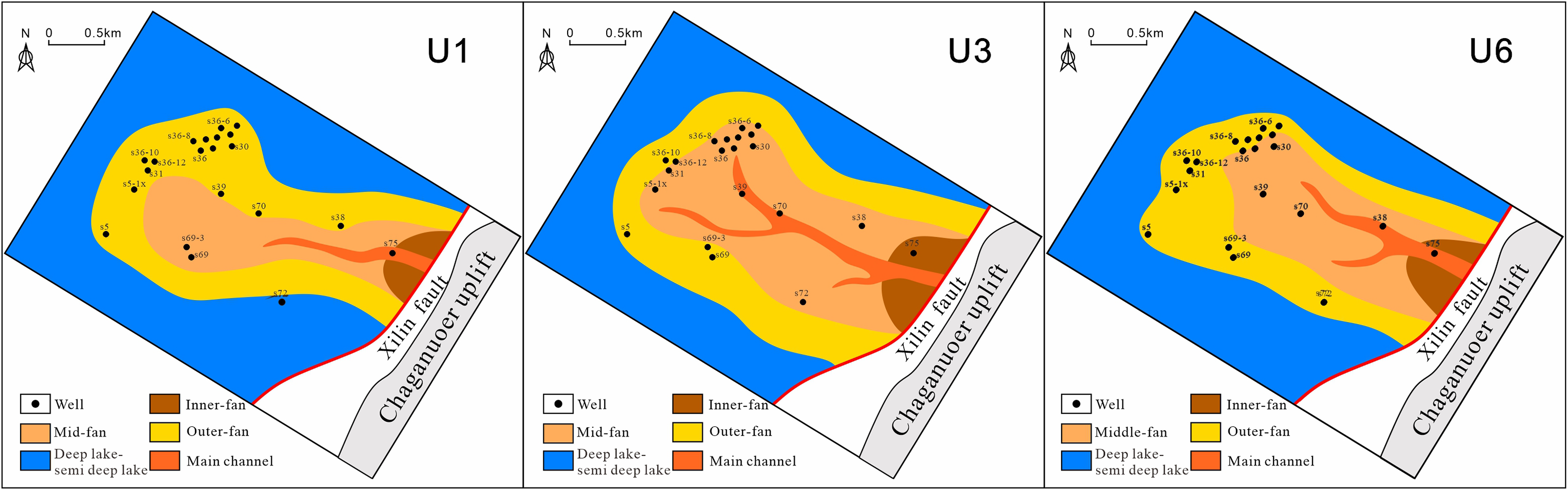
Sedimentary microfacies map of sublacustrine fan in different periods of the 1st member of the Tengger Formation in the Saihantala depression.
The inner-fan mainly composed of main channel and levee of main channel. Among them, the main channel mainly develops thick-layered massive sandstone lithofacies. The thickness of the sand body is large, up to 10 m. On the electric log curve, the main channel shows a serrated-box shape. The levee of the main channel, known as thin-layered massive sandstone lithofacies, is the overflow bank deposit formed after the main channel sediment diffusion, which is often associated with the main channel. The lithology of the microfacies is relatively fine, mainly composed of a medium–thin layer of fine sandstone and siltstone, and it is shown as the medium-amplitude serrated-box shape or bell shape on the electric log curve. This subfacies appeared in each of the periods depicted in Figures 6, 7 and 10, but the region of development was never very large.
The mid-fan mainly composed of distributary channel, inter-channel and levee of distributary channel, this is the main body of the sublacustrine fan. The distributary channel is thick, primarily generating massive sandstone lithofacies, but it is also possible to see drifting gravel-bearing massive sandstone lithofacies locally, which is frequently described as the lithofacies associations a; The levee of distributary channel, also known as lithological associations b and c, is the sediment of sandy debris flow diffuse out of the distributary channel. It is characterised by thick massive sandstone lithofacies; the inter-channel lithology is fine-grained and dominated by lake mud. Besides, from Figures 6, 7 and 10, it can be seen that from U1 to U3, the number of channel developed and their extent become larger, which was caused by the continuous decline of the lake level and strong tectonic activity, making the fan delta in the source area being stripped to provide a large amount of debris material for the sublacustrine fan; from U3 to U6, the number of channel and the extent of the fan body decreased relatively, which was caused by the rise of the lake level again.
The outer-fan mainly composed of terminals. It is located at the periphery of the mid-fan, where the terrain is flat, water bodies are tranquil and sedimentation is slow. Its microfacies is characterised by thin distal turbidites with thick deep lacustrine mud. The outer fan sand body is mainly developed with thin normal grading sandstone lithofacies and horizontal bedding sandstone lithofacies, and deformed bedding sandstone lithofacies can be seen locally, characterised by the lithofacies associations d and e. The well-logging curves show low-amplitude serration or fingering shapes.
Formation mechanism of sublacustrine fans
According to previous research results, the gravity flow deposition in the lake basin is mainly influenced by the supply of provenance, the shape of the lake basin bottom and specific triggering mechanisms (Liu et al., 2020). Sufficient slope angle and abundant material sources are the material basis and necessary conditions for the formation of gravity flow.
(1) Paleogeomorphology (2) Provenance of supply
According to the paleogeomorphic map (Figure 11), the study area shows paleogeomorphic features of relatively higher in the east and relatively lower in the west. The subsidence centre is located between wells Sai-70, Sai-30 and Sai-39. The eastern part is a steep slope zone and the western part is a gentle slope belt. The sedimentary period of the 1st member of the Tengger formation is favourable for the formation of deep-water gravity flows. Conversely, the east part of the study area is the Chagannore Bulge, which is controlled by the Xilin boundary fault, has a greater thickness in the eastern part of the depression and smaller stratigraphic thickness towards the west. The history of tectonic development indicates that the main fault in the east demonstrated long-term activity during the deposition of the Tengger formation, forming the main body of the depression. Therefore, the result led to steep topography and slope at the eastern edge of the depression, creating favourable slope drop conditions (Zhao et al., 2012) for the formation of sublacustrine fans.
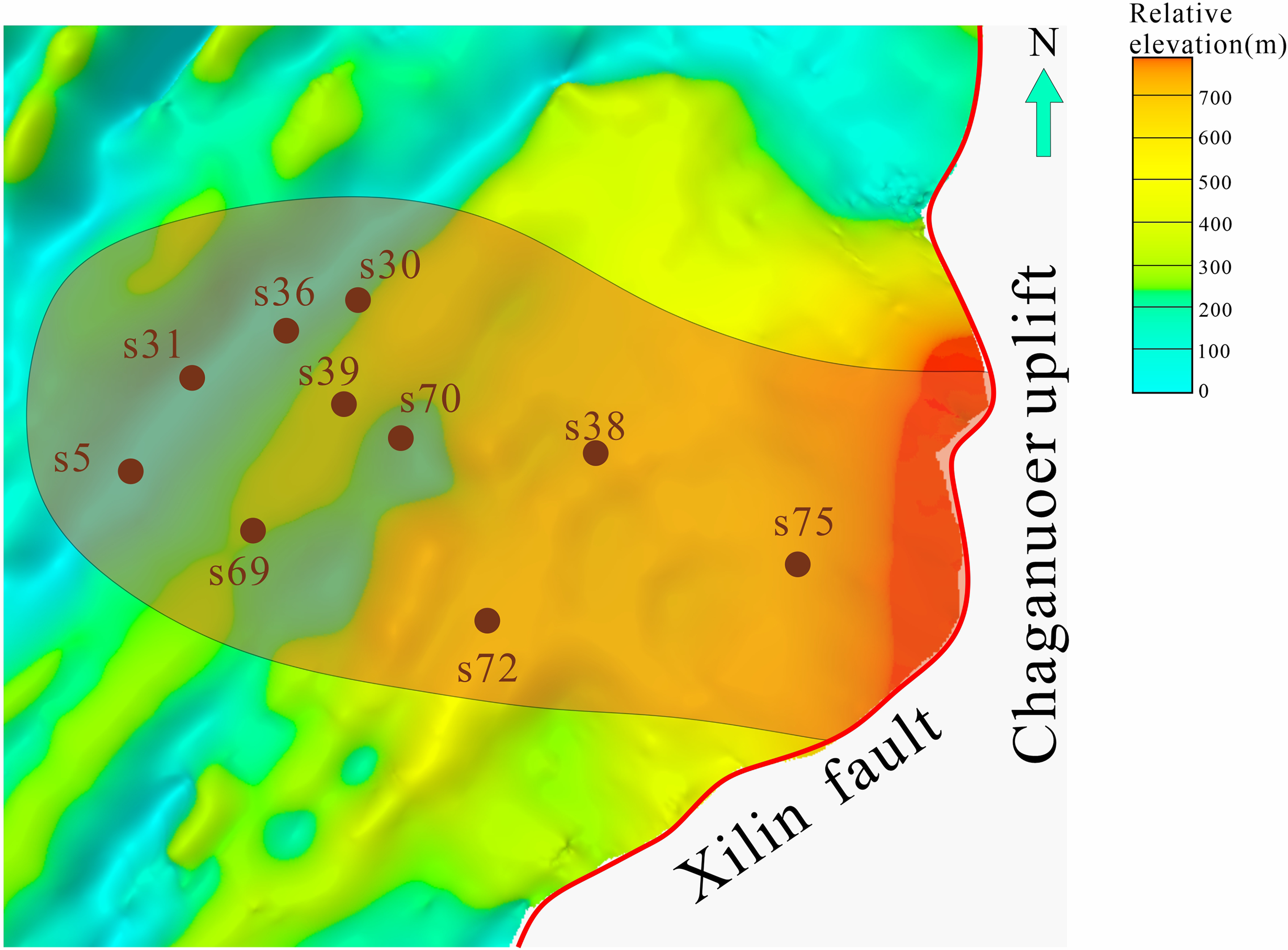
Paleogeomorphic map of the 1st member of the Tengger formation in the Saihantala depression.
Combining previous studies on the sedimentary morphology of the Saihantala depression, we have shown that the eastern boundary fault (Xilin fault) of the study area was weakly active in the Jurassic, with no apparent tectonic uplift. The study area is located in the submerged sedimentary environment. During the Lower Cretaceous period (from the Aershan formation to the 1st member of the Tengger formation), the fault activity gradually increased and reached a climax. The eastern bulge of the study area underwent tectonic uplift until the end of the 2nd member of the Tengger formation (Feng et al., 2008; Xiao et al., 2017). Under the influence of the tectonic uplift, the eastern bulge of the study area was strongly denuded, and a continuous stream of water carried sediments into the lake to form a fan delta. At the slope break belt of the fan-delta front, the sediments collapsed due to external factors to form the sublacustrine fan.
(3) External trigger mechanism
The study area was in a period of intense tectonic activity during the 1st member of the Tengger formation period (Feng, 2006; He et al., 2016). Combining previous tectonic analyses of the study area, we deem that under the control of the boundary fault (Xilin fault), the lake basin was accompanied by fault activity during subsidence, which may induce earthquakes or storms and the formation of the sublacustrine fan.
Sedimentary model
According to the above analysis of the sedimentary system of the sublacustrine fan in the eastern depression of the Saihantala depression, the sedimentary model of the sublacustrine fan in the study area was established (Figure 12). The model is as follows. (1) Fan deltas primarily arise during HST. A few small sublacustrine fans will form when the fan delta sand body accumulates in the slope fold zone, under the various control of gravity, topographic slope and earthquake activity. (2) Large sublacustrine fans deposits were primarily formed during LST. The fan deltas on the steep slope belt were exposed to the water and subsequently denuded at this time as a result of the decline in the lake level and the intense activity of the eastern boundary fault in the early 1st member of the Tengger formation, which provided a significant amount of debris material for the development of sublacustrine fans.
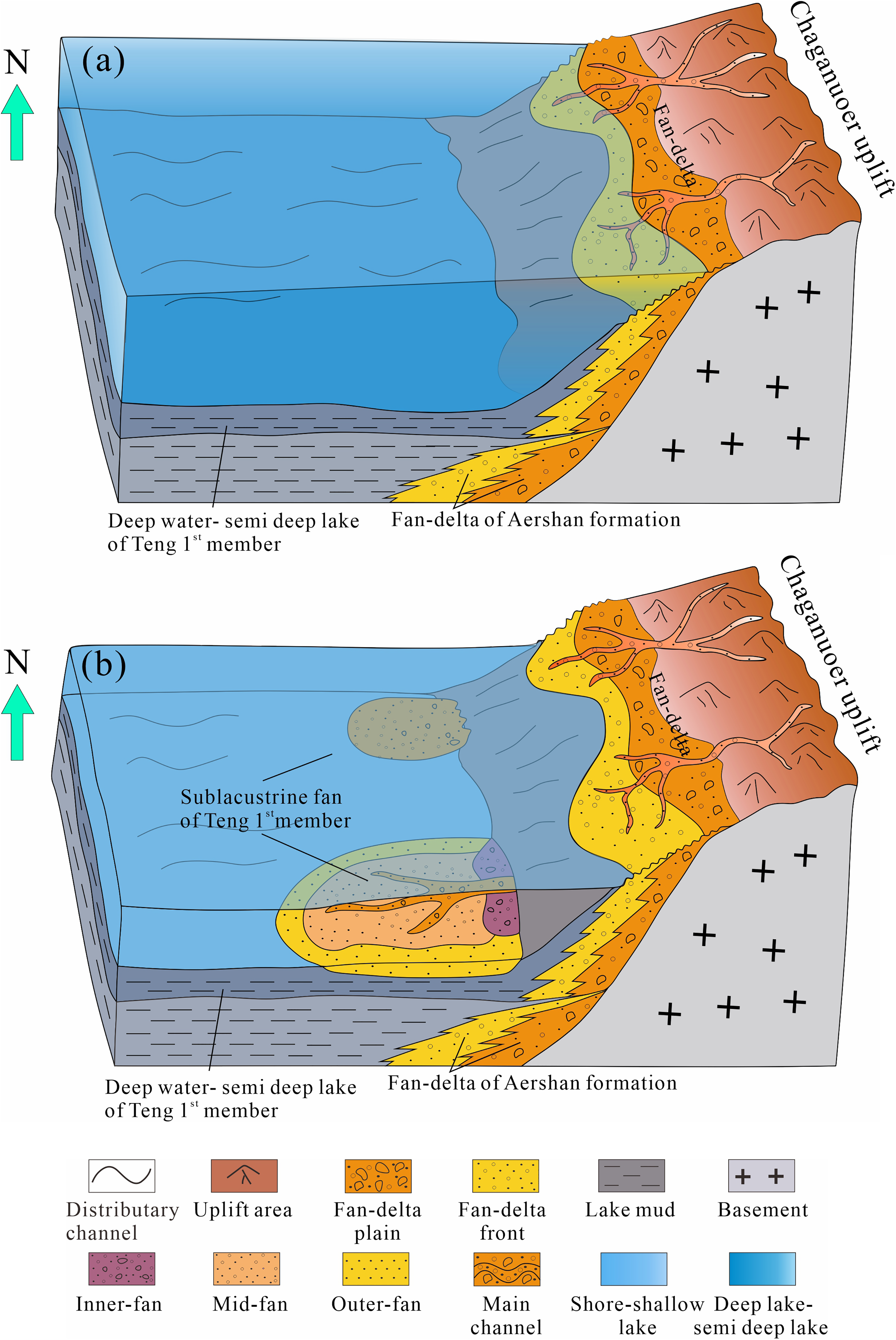
Model map of sublacustrine fan in the Saihantala depression (a: LST, b: HST).
Conclusions
Two types of gravity flow deposition processes can be identified in the sublacustrine fan in the study area: sandy debris flow and turbidity flow. The sublacustrine fan sedimentary system mainly develops three types of subfacies, namely inner-fan, mid-fan and outer-fan, and sixtypes of microfacies, namely main channel, levee of main channel, distributary channel, inter-channel, levee of distributary channel and terminals.
The sublacustrine fan sand bodies of the 1st member of the Tengger formation in the study area can be divided into seven phases, that is, U1–U7. The sand bodies are stacked vertically and connected on the plane. The distribution of sand bodies in the study area is controlled by boundary faults (Xilin fault), which form a terrain low part in the west and control the thickness of sand bodies. The fan-delta sand bodies are continuously migrating towards the deposition centre (between well Sai-70, Sai-30 and Sai-38) during the continuous fault activity.
The formation of the sublacustrine fan in the study area is mainly controlled by three factors: paleogeomorphy, provenance and external triggering mechanisms. During the depositional period of the 1st member of the Tengger formation, the eastern bulge was uplifted and denuded, and the provenance supply was sufficient. During this period, frequent earthquakes may have occurred, while the sand body of the fan-delta front collapsed at the slope fold zone to form the sublacustrine fan.
The steep slope zone of the lake basin has different degrees of gravity flow deposition in HST and LST, which is controlled by the combination of topography, tectonics and material sources. The key time for the creation of gravity flow is during LST, which is characterised by a low lake level and intense tectonic activity.
Footnotes
Declaration of conflicting interests
The author(s) declared no potential conflicts of interest with respect to the research, authorship, and/or publication of this article.
Funding
The author(s) disclosed receipt of the following financial support for the research, authorship, and/or publication of this article: This study was financially supported by the National Natural Science Foundation of China (grant number 42072115).
