




Abstract
The coarse-grained glutenite rock mass of the proximal fan delta is characterized by the blocky texture, mixing of gravels with varied sizes, high mud content, and low porosity and permeability, leading to difficulties in assessment and exploration of oil and gas enrichment regularities of tight glutenite. The Permian Xiazijie Formation in the northwest margin of Junggar Basin has a set of tight glutenite reservoirs, and the reservoir quality is an important controlling factor for oil and gas enrichment. Based on three-dimensional earthquake, casting thin sections, rock physical property, geochemistry, the sedimentary facies division, petrologic features, physical property regularities, pore types and diagenesis of Xiazijie Formation were analyzed. This research develops the pore evolution model of the coarse-grained deposition via the quantitative analysis of porosity evolution. First, during the rapid compaction, intensive mechanical compaction results in reduction of the original porosity from 29.8% to 15.1%. Secondly, the cement formed during the eodiagenesis destructs the reservoir space and leads to an average porosity loss of 6.5%. Third, dissolution effectively improves reservoir quality. It mainly dissolves the zeolite cement, and the porosity grows to 12.1% from 8.6%. The dissolution occurs during the main hydrocarbon expulsion stage of the source rock, which is in favor of hydrocarbon emplacement. Fourth, during the telodiagenesis with the deepening burial and intensifying pressure solution, siliceous and carbonate cement precipitate, the reservoir physical property is degraded again, the porosity loss is about 3.4%. After a series of complex diagenetic processes, the current tight glutenite reservoir comes into being, with the porosity of about 8.7%. The research results provide theoretical reference for coarse-grained glutenite reservoir prediction.
Keywords
Introduction
According to the Wentworth grain size classification of clastic sediments, the limit differentiating pebbles and sands is 2 mm (Φ = −1). Specifically, clastic sediments predominated by conglomerate and glutenite with grain sizes over 2 mm are referred to as coarse-grained deposition (Wentworth, 1922; Yu et al., 2018). Such a coarse-grained glutenite rock mass is often characterized by the complicated sedimentary pattern, diversified components, various textures, mixing of gravels of different sizes, expanded range of grain sizes, high mud content, great differences in physical properties, and rapid lateral variation (Xi et al., 2021; Zhang et al., 2014). Moreover, these characteristics result in the ambiguous well logging response, uncertain sedimentary facies type, and high difficulties in seismic identification and planar prediction, which severely restrains our understanding of the hydrocarbon accumulation pattern in glutenite of the coarse-grained deposition (Liu et al., 2012; Tan et al., 2017; Zhao et al., 2016).
The research on the coarse-grained deposition starts with Gilbert's investigation of the Pleistocene lacustrine delta of Lake Bonneville, the U.S. in the late 19th century (Gilbert, 1885). Then, Barrel (1912, 1914) defines the topset, foreset, and bottomset deposition, based on the analysis of the lithologic, bedding, and fossil characteristics of the Upper Devonian Catskill delta sediments in the Appalachian Basin. Since the 1930s, large glutenite oil and gas fields have been successively discovered in Argentina, the U.S., Canada, etc. The giant scale of hydrocarbon reserves draws high attention from petroleum explorationists, and many countries increase their input in the systematic investigation of the glutenite coarse-grained deposition (Holmes, 1978; Koster and Steel, 1984; Li et al., 2019a, 2019b; Walker, 1975; Yu et al., 2013, 2018). The earliest discovery in China is made in 1955 is the large glutenite oilfield of the Triassic Kelamayi Formation in the northwestern margin of the Junggar Basin. The reservoir rock of this oilfield is the coarse-grained clastic deposition predominated by conglomerates and pebbly sandstone and belongs to the proximal alluvial fan-fan delta system. This reservoir rock, with its wide distribution and tremendous resource potential, has opened a new field for hydrocarbon exploration in coarse-grained deposits (Yang et al., 2019). With the eastward shifting of the focus of hydrocarbon exploration in China, a series of glutenite oil and gas fields have been successively discovered in the Bohai Bay, Nanxiang, Erlian, and Turpan-Hami (Tuha) Basins (Li et al., 2020, 2021; Zhao et al., 2010).
The northwestern margin of the Junggar Basin (hereinafter referred to as the northwest margin) is one of the six hydrocarbon-abundant areas of the Junggar Basin and has been highly explored (Zhao et al., 1999). Over recent years, hydrocarbon exploration has made great progress in multiple formation series in the northwest margin—the Triassic Baikouquan Formation and Permian Upper Wuerhe Formation, as the main targets, have presented outstanding achievements, while the other layers also show promising preliminary results—the basin has gargantuan overall exploration potential (Zou et al., 2016). In the fault zone, the Permian Xiazijie Formation is found with proven oil reserves of over a hundred million tons, and moreover, the slope zone is found with multiple production points of remaining oil and gas, with the daily oil production per well reaching 6.5 t. The Permian Xiazijie Formation is thus a practical field for the future exploration expansion into medium-deep layers and growth of hydrocarbon reserves and production. Previous studies (Chen et al., 2015; Shi et al., 2010) show a tight glutenite reservoir body extensively occurs in the Permian Xiazijie Formation of the northwest margin and the reservoir factor is the main control factor of hydrocarbon accumulation in the Xiazijie Formation. This research focuses on the control of the slope break on the sedimentary facies of the Xiazijie Formation in the slope zone and dissects the genetic mechanisms and development model of the secondary porosity in the coarse-grained glutenite reservoir, in an attempt to provide basic references for reservoir prediction.
Structural and sedimentary characteristics
The study area covering about 1200 km2 is located in the western part of the Ke-Xia fault zone of the Western Bulge in the northwestern Junggar margin (Meng et al., 2009). The Ke-Xia fault zone attributed to the compressive-thrust faulting is formed during the Mid-Late Hercynian movement and finalized during the Indosinian movement, and ultimately calms down during the Middle Yanshannian stage. From bottom to top the Permian System is composed of the Jiamuhe, Fengcheng, Xiazijie, Lower Wuerhe, and Upper Wuerhe Formations. An unconformity is seen between the Jimuahe Formation and underlying Carboniferous and the Jiamuhe Formation mainly develops grey and grey-green mudstone, and thin muddy siltstone, with interbeds of andesite and tuff. The Fengcheng Formation presents unconformity with the Jiamuhe Formation and consists of grey-green glutenite and mudstone. The Xiazijie Formation is dominated by the grey-brown and grey glutenite, with interbeds of grey-brown muddy siltstone, silty mudstone, and mudstone, and the conformity is found between it and the underlying Fenghceng Formation. A conformity interface is seen between the Xiazijie Formation and the Lower Wuerhe Formation, which is mainly composed of interbedding of grey-brown glutenite, silty mudstone, and brown mudstone. Above the unconformity interface with the Lower Wuerhe Formation, the mid-lower part of the Upper Wuerhe Formation is predominated by the grey-brown and grey glutenite, with interbeds of brown muddy siltstone, while the top of the Upper Wuerhe Formation is associated with the stable development brown mudstone that serves as the effective regional cap rock (Figure 1).
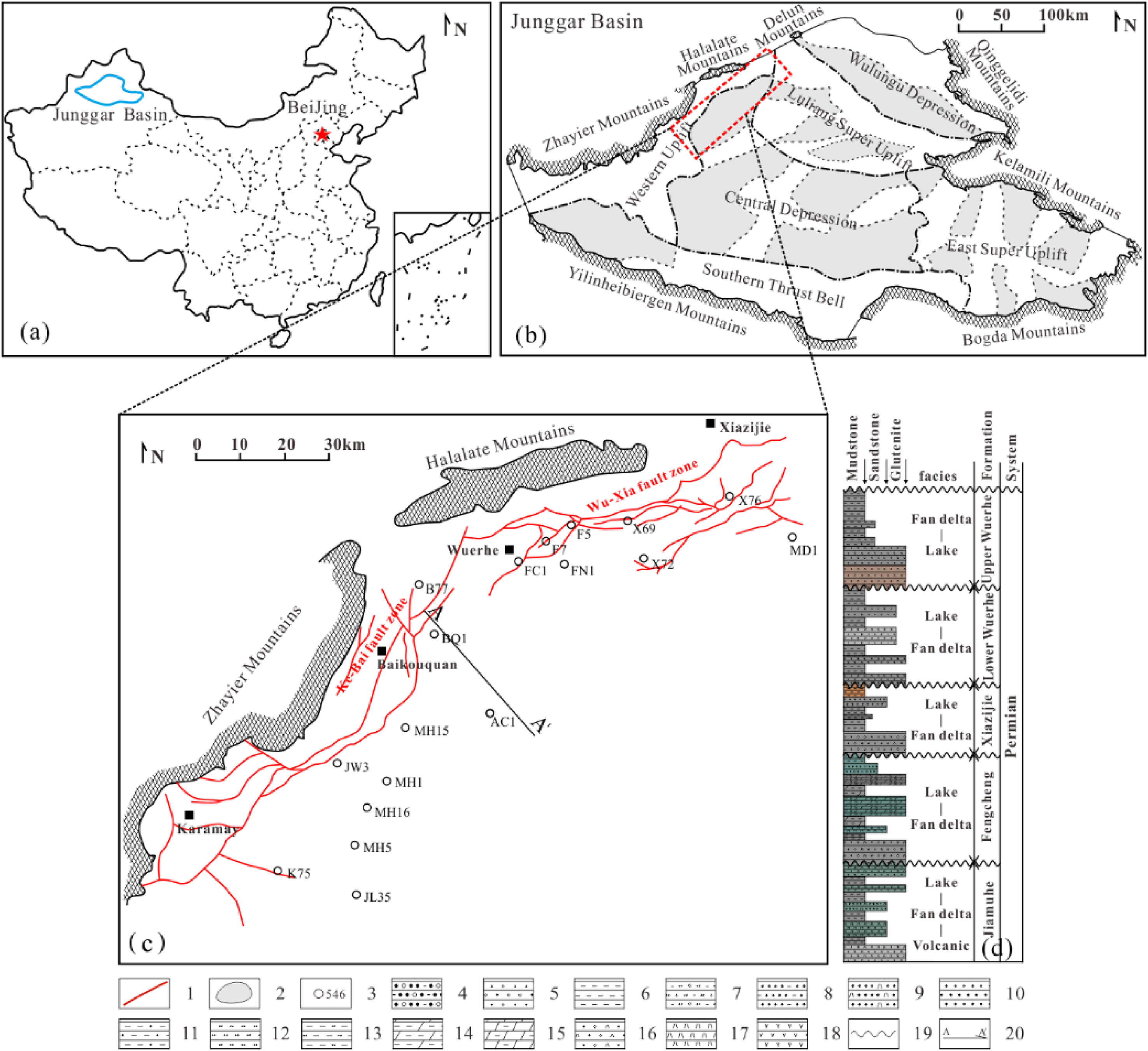
(a) Location map showing geographic of the Junggar Basin in northwestern China. (b) Map showing sub-tectonic units of the Junggar Basin and location of the study area. (c) Structure distribution in northwestern margin of Junggar Basin. (d) Stratigraphic column of the Permian System. Numbers indicate the following: 1 = Fault; 2 = Sag; 3 = Well; 4 = Pebbly muddy sandstone; 5 = Glutenite; 6 = Mudstone; 7 = Pebbly muddy siltstone; 8 = Muddy fine sandstone; 9 = Tufaceous fine sandstone; 10 = Fine sandstone; 11 = Sandy mudstone; 12 = Siltsone; 13 = Silty mudstone; 14 = Dolomitic mudstone; 15 = Muddy dolomite; 16 = Tufaceous glutenite; 17 = Low limestone; 18 = Andesite; 19 = Unconformity; 20 = Section position.
In accordance with the principles of sequence stratigraphy, the paleo-geomorphology of the study area during the deposition of the Xiazijie Formation is elaborately restored. The analysis indicates that the Xiazijie Formation in the northwest margin is controlled by the paleo-geomorphology and from the fault zone to the slope zone three slope breaks are developed (Figure 2) and they have key decisive effects on the sedimentary facies of the Xiazijie Formation. As suggested by the seismic, drilling, mud logging, and well logging data, the Xiazijie Formation in the northwest margin, controlled by the slope break, develops the fan delta plain sub-facies, fan delta front sub-facies, and the shore-shallow lake facies, and the fan delta front sub-facies can be sub-divided into the inner and outer fronts (Zeng et al., 2017; Zhu et al., 2008).
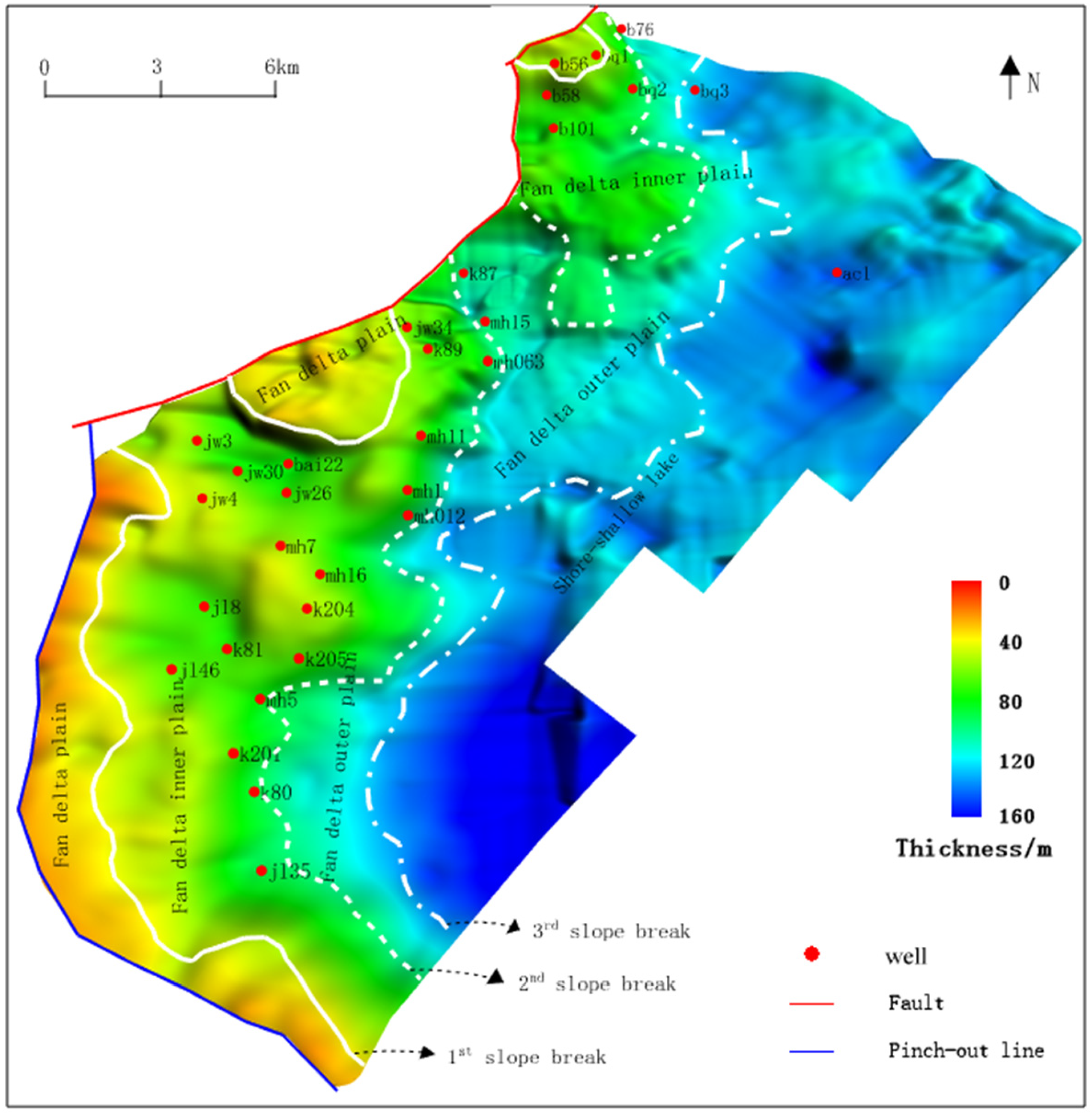
Paleogeomorphology of the study area during sedimentation of the Xiazijie Formation.
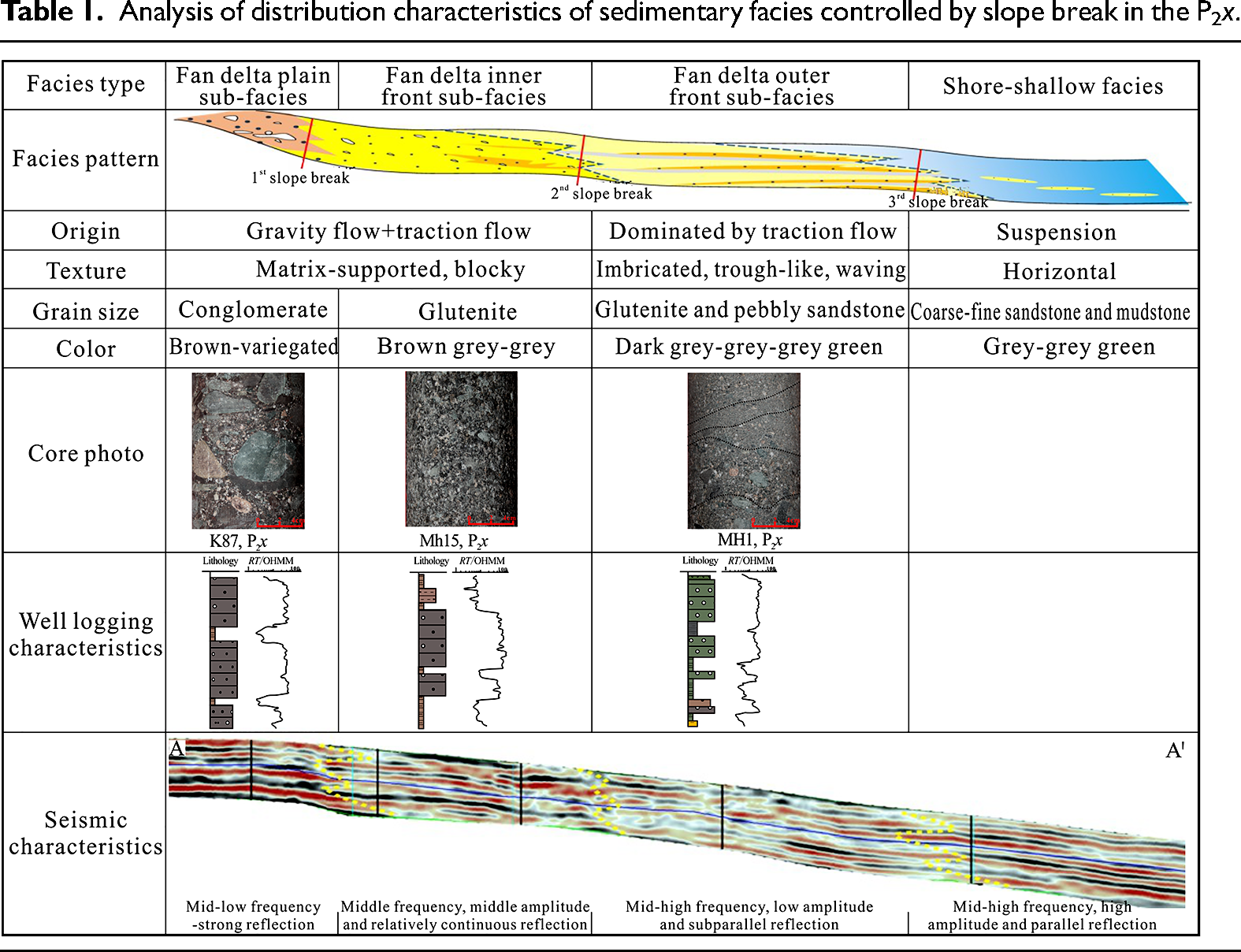
Above the first slope break, the fan delta plain sub-facies develops, of which the seismic facies is characterized by the medium-low frequency high-amplitude continuous reflection; the lithology is composed of multiple sets of thick blocky glutenite with coarse grains, poor sorting, high content of argillaceous matrix, and dominant matrix support; the hydrodynamics is mainly attributed to the gravity flow and tractive current; the electrical feature is manifested as the stacked thick high-amplitude zigzag boxes. The inner front sub-facies occur between the first and second slope breaks. Its seismic facies features the medium-frequency medium-amplitude relatively continuous reflection and its lithology is mainly thick glutenite with thin mudstone interbeds. The sediments are less sorted, with the somewhat oriented arrangement of gravels, and mainly of the braided underwater branch channel deposition. The electrical feature of the stacking of medium-thick high-amplitude zigzag boxes is observed. The outer front sub-facies is found between the second and third slope breaks, of which the seismic facies is observed as the medium-high-frequency low-amplitude near-parallel reflection. This sub-facies is mainly found with the deposition of glutenite interbedded by fine-grained sediments. It is well-sorted with relatively good physical properties and is predominated by medium-fine gravels. The cross-bedding and basal conglomerate are developed. The hydrodynamic force is mainly attributed to the tractive current and the electrical feature of the stacking of medium-thick medium-amplitude boxes and bells is identified (a clear feature of alternating between sandstone and mudstone). Below the third break slope lies the facies belt of the shore-shallow lake deposition. The corresponding seismic facies is characterized by the high-frequency high-amplitude parallel reflection and the lithology mainly consists of grey and grey-green muddy siltstone and mudstone, with thin interbeds of medium-coarse-grained sandstone (Table 1).
Analysis of distribution characteristics of sedimentary facies controlled by slope break in the P2x.
Samples and methods
This research is mainly based on the drilling data of the northwestern margin of Junggar Basin, offered by the CNPC Xinjiang oilfield. The core samples, totally 76 m long and collected from 12 wells, are observed. Furthermore, 175 clastic composition data, 83 clay mineral composition measurements, porosity, and permeability of 504 core samples, 656 casting thin section photos of 236 core samples, and the formation temperature information of 5 layers are acquired. The structural interpretation and the analysis of geophysical characteristics are performed for 4 high-density 3D seismic survey zones (1200 km2) in the study area.
The methods of the study include geophysics, petrology, and geochemistry. By combining geophysics with geology and combining macroscopic and microscopic studies, the characteristics and genesis mechanism of coarse-grained sedimentary secondary pores were analyzed, and the development model of hierarchical pores in this kind of reservoir was established.
Based on sequence stratigraphy, 3D seismic data interpretation was carried out, paleogeomorphological characteristics of the Xiazijie Formation during the sedimentary period were analyzed, and the control characteristics of slope breaks on sedimentary facies types were determined.
The core porosity and permeability were analyzed using AP-608 Core Measurement system with a confining pressure of 6 MPa.
Casting thin sections were prepared by vacuum impregnation with blue-dyed epoxy resin and stained with Alizarin Red S to facilitate recognition of carbonate cements. Through thin section observations, the detrital mineralogy, grain sizes and pore types were determined.
The relative abundances of the clay minerals were determined by XRD analysis. All selected samples were analyzed with an X’Pert Pro X-ray diffractometer with Cu-Kα radiation, which was operated at 200 mA and 40 kV. After the samples were air-dried, saturated with glycol and heated at 500°C for 2.5 h, the samples were ready for XRD analysis.
Results
Petrology and physical properties
The lithology of the Xiazijie Formation is predominated by the brown grey–grey glutenite, followed by the pebbly muddy fine-grained sandstone and pebbly mudstone. The gravel content of glutenite averages about 60%, which is mainly attributed to tuff (15%–90%, with an average of 59.6%), with the other components of sedimentary rock, felsite, and andesite. The sand content averages 32% and is also mainly composed of tuff (averaging 19.1%) and the rest of felsite, andesite, feldspar, and quartz. The cement generally presents the strip-like distribution controlled by the sedimentary facies. The plain sub-facies is observed with the dominant argillaceous cementation; the inner front sub-facies is dominated by filling of heulandite and laumontite; the outer front sub-facies is mainly associated with filling by analcite and albite (Table 2).
Mineral composition and interstitial materials of the Xiazijie Formation.
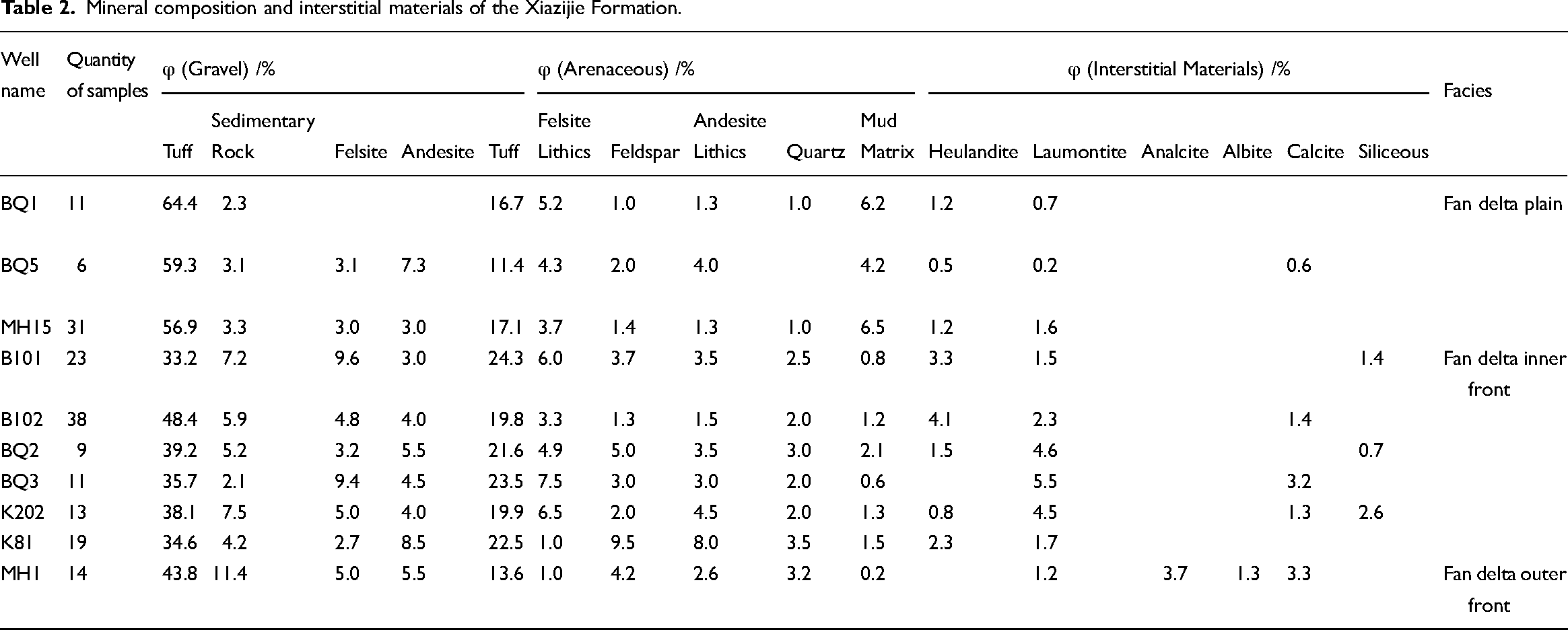
The glutenite is in most cases less sorted. Gravels are mainly angular-sub-angular. The tight cementation has the contact and pore types, with the particle support. The maturity index of the sand content is far below 1 and the composition and textural maturities are both low. These are the typical characteristics of the proximal coarse-grained deposition.
The physical property analysis of 504 core samples demonstrates that the physical properties of the fan delta front sub-facies are considerably higher than those of the fan delta plain sub-facies (Figure 3). The porosity of the plain sub-facies mainly lies between 4% and 9%, with an averaging of 6.2%; the permeability is (0.02–0.7) × 10−3 μm2, with an average of 0.1 × 10⁻³ μm2. The porosity of the inner front sub-facies is mostly 5%–13%, averaging 8.4%; the permeability is (0.1–5) × 10−3 μm2, averaging 0.9 × 10⁻³ μm2. As for the outer front sub-facies, the porosity is 7%–13%, with an average of 9.7%, and the permeability is (0.5–10) × 10−3 μm2, averaging 3.6 × 10⁻³ μm2. These represent low-porosity low-permeability reservoirs.
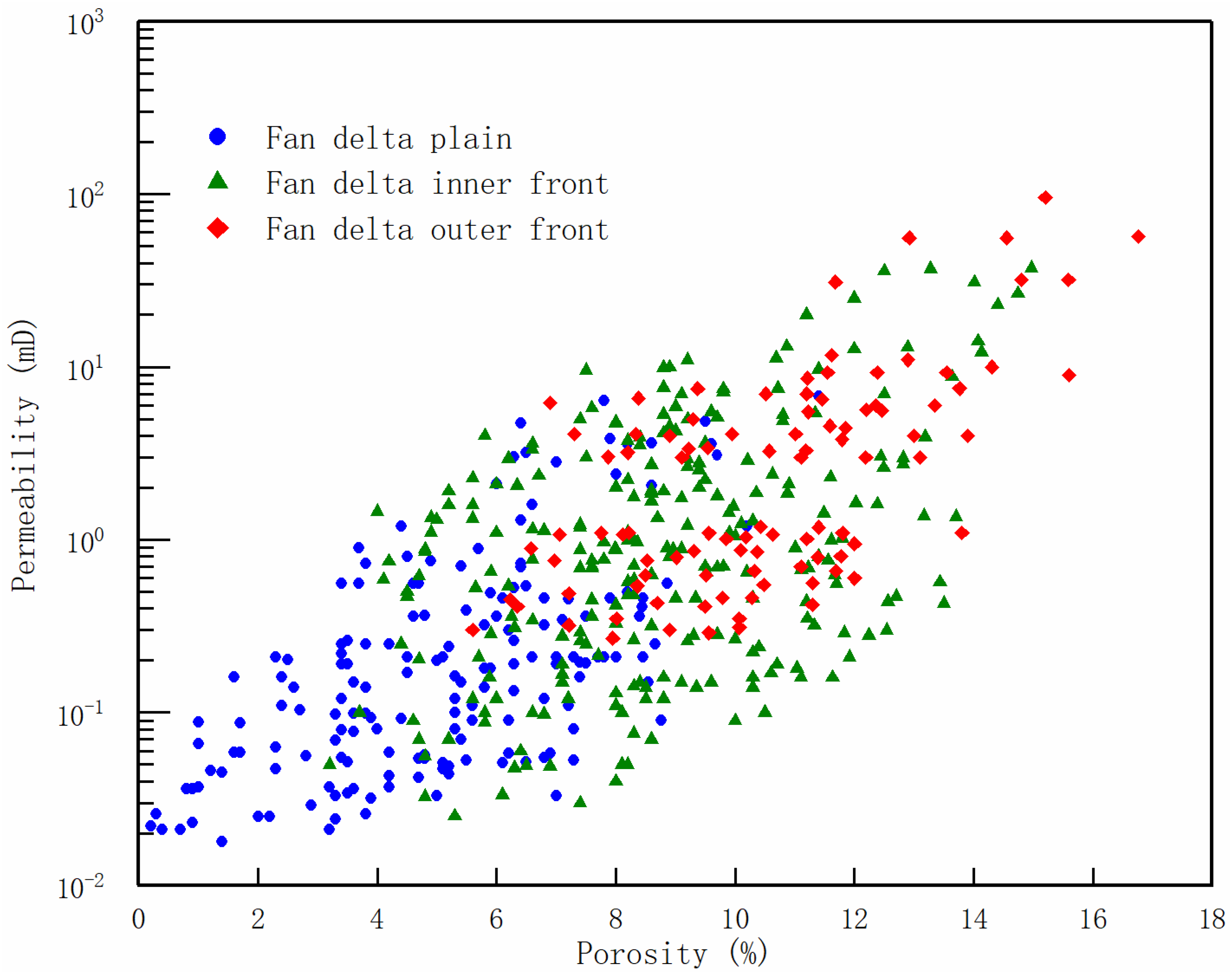
Cross-plot of porosity and permeability of the Xiazijie Formation.
Pore types
As observed from the cores and casting thin sections, the reservoir space of the Xiazijie Formation is mostly contributed by dissolved pores, with some micro fractures and a few remaining inter-granular pores (Figure 4). Dissolved pores, composed of inter- and intra- granular dissolved pores, account for about 70% of the total pores, and are formed via dissolution of cement such as zeolites, calcite, and albite. Micro fractures and remaining inter-granular pores account for 10%, respectively, and have fewer contributions to the reservoir space in the study area. In some thin sections a few bedding seams, primary inter-granular pores, and moldic pores are observed.
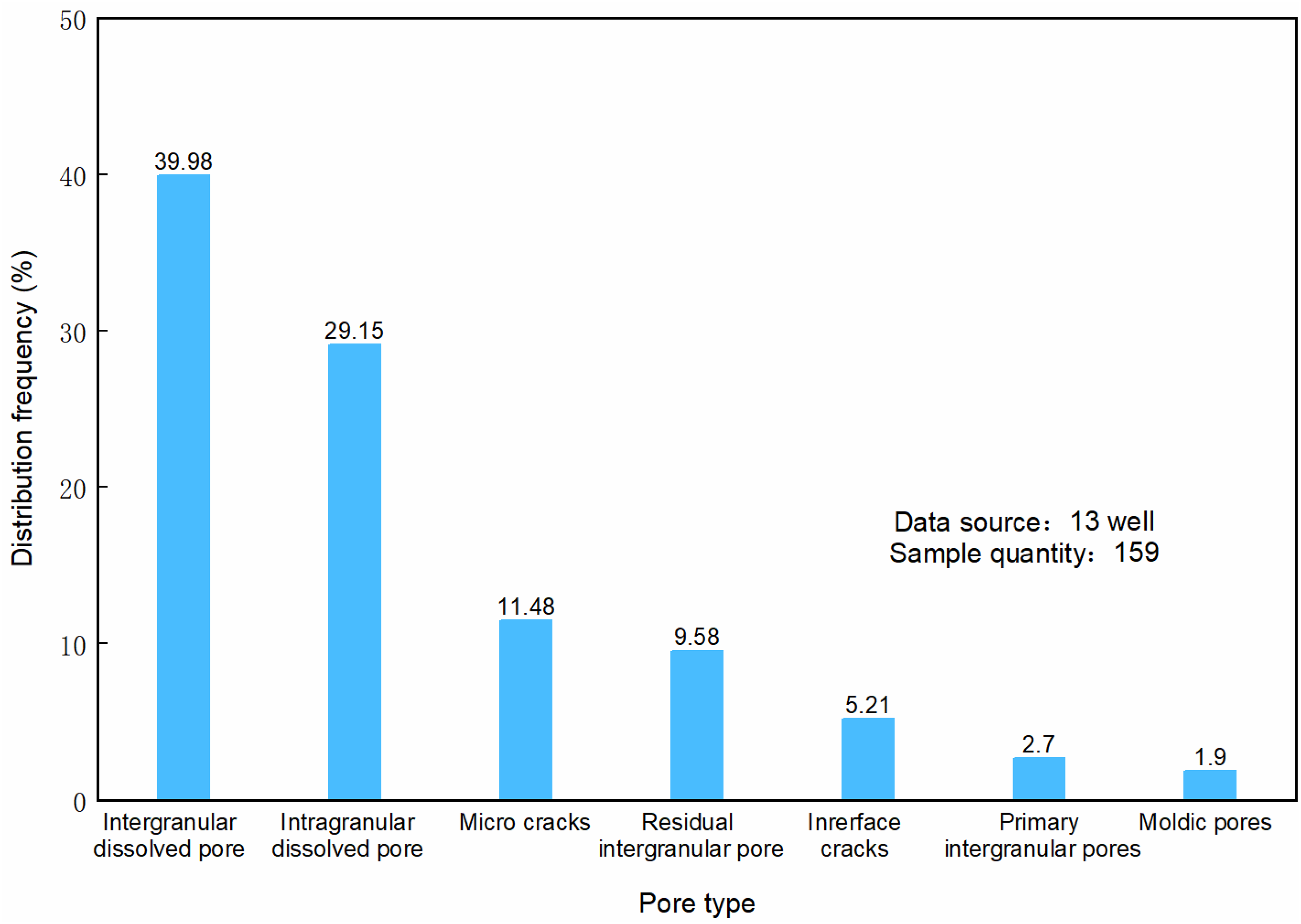
Histogram of pores types of the Xiazijie Formation.
A previous study (Guo et al., 2017) claims that the genesis of the secondary porosity of the Xiazijie Formation reservoir is closely related to the organic acid water expelled during the thermal maturation of source rocks. During the eodiagenesis, the massive generation of alkaline authigenic minerals (e.g. zeolites) occurs. Subsequently, the organic acid water expelled by the maturation of the source rock of the Permian Fengcheng Formation migrates into the Xiazijie Formation reservoir along faults, where it effectively dissolves cement such as zeolites and calcite. Specifically, the inner front sub-facies mainly develops the dissolved pores of laumontite—dissolution occurs along the cleavage plane and crystal fracture of laumontite cement and generates irregular, zigzag dissolves pores (Figure 5(a) and (b)); the outer front sub-facies is mainly found with the development of dissolved pores in analcite and authigenic albite—dissolution occurs along edges of mineral particles and forms irregular zigzag pores and some isolated pores (Figure 5(c) and (d)); the carbonate dissolved pores, mostly irregular and isolated, are mainly attributed to dissolution of calcite and develop in both inner and outer front sub-facies (Figure 5(e) and (f)); micro fractures are generally developed along the overthrust fault and large strike-slip fault zone and include particle-penetrating and particle-edge micro fractures (Figure 5(g) and (h)). The statistics of microscopic observation show that the particle-edge micro fractures are numerous, and the particle-penetrating fractures are extended—the development of micro fractures is a key control factor of the formation of dissolved pores.
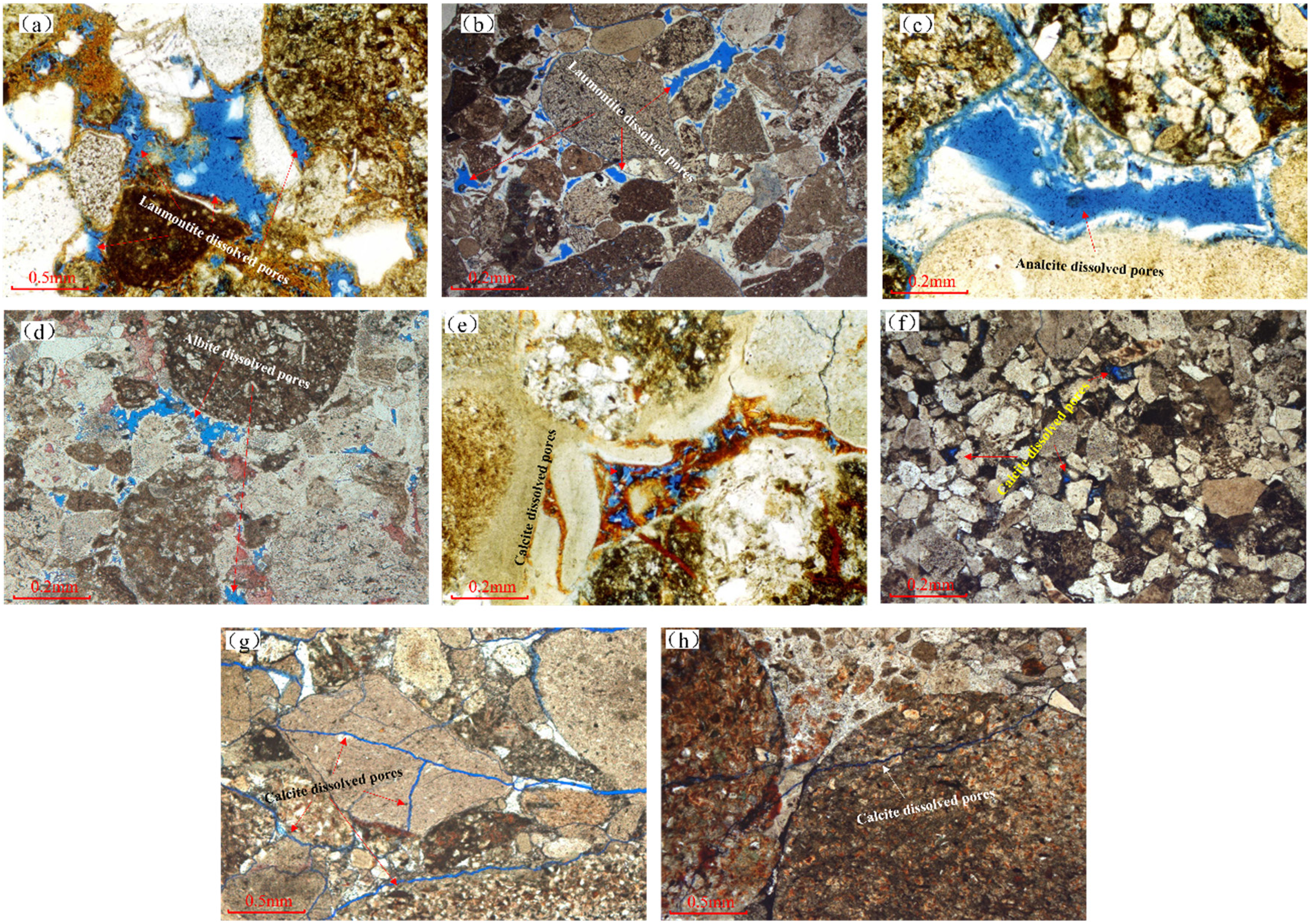
Pore types observed in casting thin sections of the reservoir rock.
Discussion
The genetic mechanism of secondary pores
The Xiazijie Formation reservoir of the coarse-grained deposition is commonly associated with deep burial and low compositional maturity. The primary pores of the reservoir are almost completely destructed by relatively intensive compaction and cementation, and only a few residual inter-granular pores are left. Thus, the secondary pores are currently the main pore type of the reservoir. The formation and preservation of secondary pores are controlled jointly by the paleo-climate, sedimentary, diagenetic, and tectonic factors (Ge et al., 2014; Kuang et al., 2017; Li et al., 2019a, 2019b).
The material basis for the formation of secondary pores
The data of the core and thin section observation show that the Xiazijie Formation mainly consists of glutenite; the coarse clasts such as gravels and sands are predominated by tuff, with the corresponding average content over 45%. Some analyses (Chipera et al., 2008; Hay, 1996; Mariner and Surdam, 1970) demonstrate that hydration of tuffaceous materials is an important mechanism for the formation of zeolite minerals. Zeolites can be formed in environments such as an open hydrological system, volcanism-active zone, and saline-alkaline lakes and are the main interstitial materials of the Xiazijie Formation reservoir. Besides, carbonate cement such as calcite and albite also occur. These fairly soluble clastic particles and interstitial materials constitute the material basis for developing secondary pores.
The catalyzer for the formation of secondary pores
The large amount of organic acid generated via hydrocarbon generation of organic matter can effectively dissolve soluble particles and cement in the reservoir rock, which thus improves the storage capacity of the reservoir, and the expulsion of organic acid occurs along the whole process of hydrocarbon generation (Zeng et al., 2007; Zhang et al., 2018). The study area is located above the hydrocarbon generation center of the Permian Fengcheng Formation of the Junggar Basin. This source rock features a wide distribution, high thickness (>200 m), desirable organic matter types (Type- I and II1), and high abundance (with average vitrinite reflectance of 1.38%Ro). At present, it stays at the mature-highly mature stage (Wang et al., 2013) and provides abundant acid fluids for the dissolution of the overlying strata, which makes vital contributions to the formation of dissolved pores in the Xiazijie Formation reservoir.
Development of the pathway system for hydrocarbons and organic acid
The organic acid is expelled from the source rock earlier than or at the same time as hydrocarbons and this process lasts for the whole hydrocarbon generation process. Organic acid and hydrocarbons migrate along the same path (Wang et al., 2019) and faults are the main channel for hydrocarbon migration in the study area.
The Ke-Bai fault zone is a large-scale overthrust fault zone, with a large fault displacement and a long extension. The Ke-Bai fault cuts the Carboniferous, Permian, and Triassic. The Xiazijie Formation in the footwall of the fault zone develops SE-dripping wide gentle nose-like uplift. Due to the Hercynian tectonic movement, two groups of faults are developed in the fault footwall. One is the adjustment fault nearly parallel to the axis of the nose-like uplift, with a small fault displacement and long planar extension. The other group, NW-SE-trending, occurs in the nose-like uplift axis and flanks, with a fault displacement of 15–30 m and a planar extension of 3–5 km. It forms a series of small fault blocks (Figure 6), which, together with the large fault, constituents the fracture development zone. Drilling confirms that the development of secondary pores presents strip-like distribution along faults and fractures. For instance, the #8 block and B21 well district along the Ke-Bai fault are both seen the predominance of secondary porosity; the wells presenting oil and gas streams in the slope zone are also around the faults; wells drilled far away from the fault zone present inferior or no hydrocarbon shows.
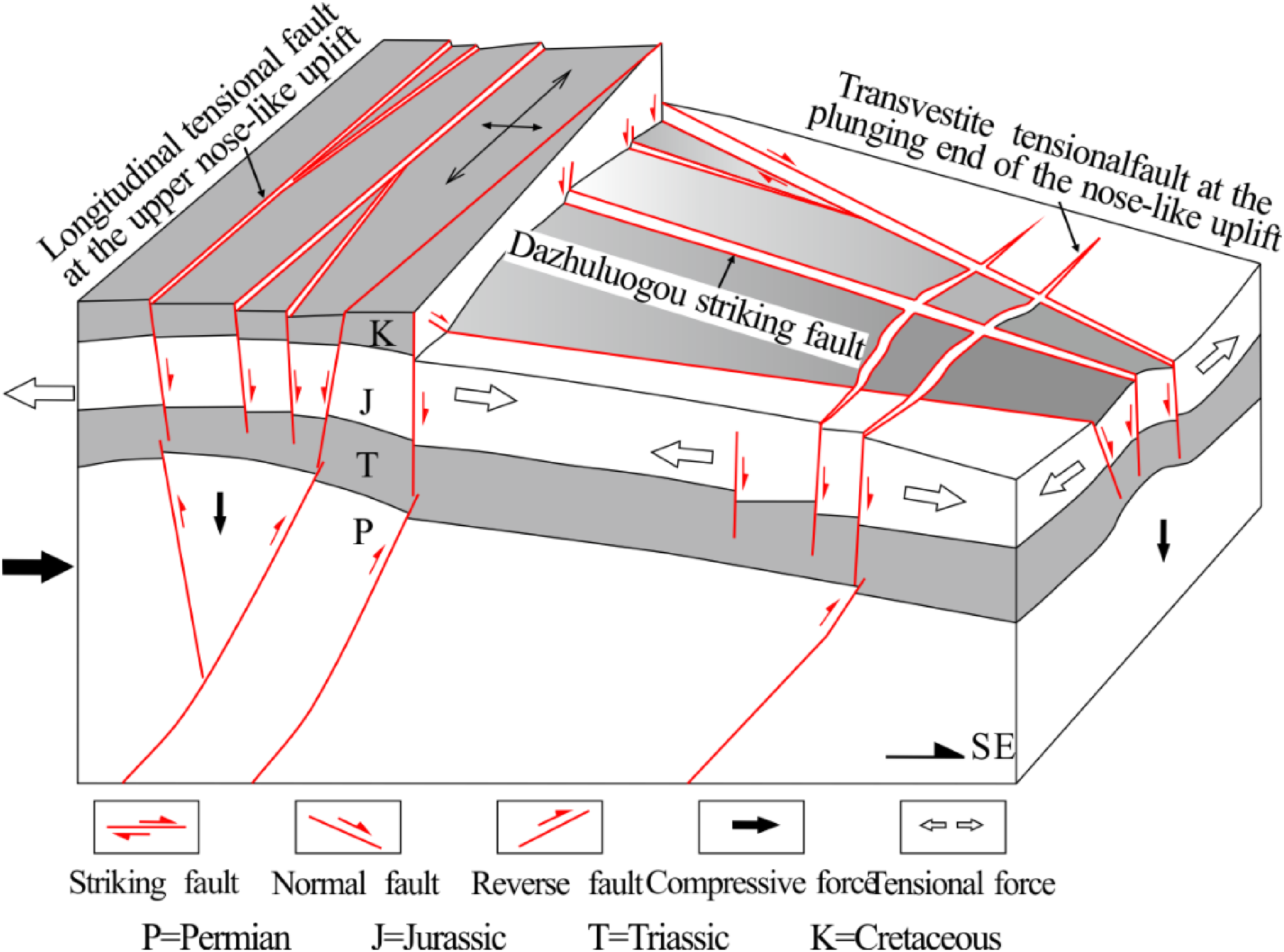
Fault development pattern of the western margin of the Junggar Basin.
Development model of secondary pores
Identifying diagenetic sequences
The analysis of organic fluid inclusions in the oil-bearing glutenite of the Xiazijie Formation (Wells K80, MH15, MH11, AC1, K75, etc.) indicates that these samples are all found with two stages of fluid inclusions. The fluid inclusion of the first stage presents the homogenization temperature of 70°C–95°C, while that of the second stage presents the homogenization temperature of 105°C–155°C. The vitrinite reflectance of the samples of Wells K76 and K80 is 0.93%Ro–1.56%Ro, averaging 1.41%Ro, and the peak pyrolysis temperature Tmax ranges from 462°C to 483°C, averaging 471°C. The X-ray diffraction mineral composition analysis of 83 samples shows that the clay mineral association mainly consists of the smectite-illite mixed layer, illite, and chlorite, occasionally with kaolinite and yet with no smectite. The relative content of the smectite-illite mixed layer is 22%–82%, averaging 58.4%; the relative content of illite averages 17.2%; that of chlorite averages 16.7%. The particle contact is mostly point-line contact, with the concave–convex contact observed in local areas. The pores are predominantly secondary pores. On the basis of our experiment results and understanding gained in previous studies (He et al., 2011; Zhang et al., 2010), it is concluded that the reservoir rock of the Permian Xiazijie Formation in the northwestern Junggar margin is at the B phase of the mesodiagenesis, according to SY/T 5477-2003 The Division of Diagenetic Stages in Clastic Rocks, an industrial standard of China.
Quantitative analysis of the porosity evolution
Based on the measured physical properties and thin section data, the porosity of different diagenetic stages is quantitatively restored to clarify the variation of reservoir physical properties in key diagenetic stages and provide theoretical references for reservoir prediction. For the convenience of calculation, diagenesis is divided into four stages, namely mechanical compaction, early cementation, dissolution, and late cementation, of which the porosity evolution characteristics are evaluated successively.
Calculating the original porosity
The empirical formula proposed by Beard and Weyl (Beard and Weyl., 1973) is presented below:

The Xiazijie Formation is seen with a predominance of dissolved pores. Statistics of the thin section analysis show that the Trask sorting coefficient is 2.0–3.3, averaging 2.56. Hence, the original porosity is calculated as 29.8% by substituting 2.56 into the empirical formula.
Porosity reduction by compaction
The whole burial process is associated with compaction. Moreover, after compaction, some remaining original pores are destructed by the later cementation, besides those that are preserved. Therefore, the pores surviving compaction include preserved primary pores and cement.

The Xiazijie Formation Reservoir has been through complex diagenetic modification. The current average porosity measured via the physical property analysis is 8.7%. Statistics of 53 thin sections show that the average plane porosity of glutenite is 1.7%, composed of the plane porosity of inter-granular pores of 0.6% and that of secondary dissolved pores of 1.1%; the volumetric fraction of cement averages 12.1%. Accordingly, the post-compaction porosity is estimated to be 15.1%.
Porosity reduction by cementation
Cementation includes early and late cementation. On the one hand, the early-formed cement such as the clay, matrix, and zeolites, is partially or fully dissolved by acid fluids. On the other hand, carbonate cement is formed during late cementation.

Cementation results in the porosity reduction by 3.4%–15.1%, averaging 9.9%. Statistics of the thin section data show that the porosity loss attributed to early cementation averages 6.5%, while that attributed to late carbonate cementation averages 3.4%.
Porosity growth by dissolution
Dissolution is a key diagenetic process improving the storage capacity of reservoirs. The porosity increment contributed by dissolution equals the product of the measured porosity and the ratio of the dissolved pore plane porosity to the total porosity. In addition, micro fractures mainly contribute to the pore connection of reservoirs and improve the fluid flow capacity (permeability), which are thus ignored in the calculation.
Pore evolution model
Based on the quantification of the reservoir porosity at different diagenetic stages and also the sedimentary, diagenetic, and burial history of the reservoir rock together with the maturation history of the source rock, the quantitative pore evolution model of the coarse-grained glutenite reservoir of the Xiazijie Formation has been developed (Figure 7).
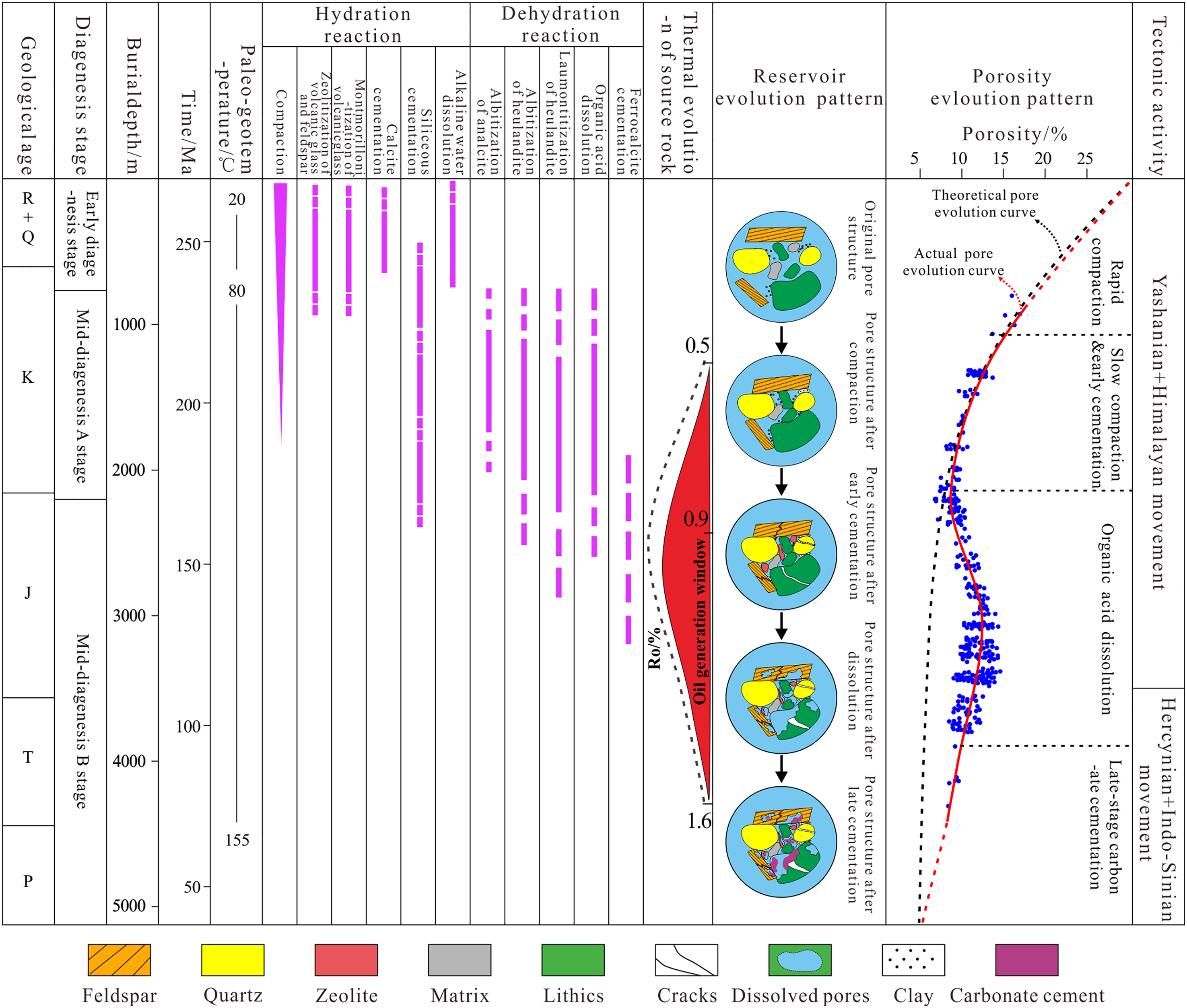
Pore evolution pattern of the Xiazijie Formation in the western margin of the Junggar Basin.
The deposition of the Xiazijie Formation starts about 250 Ma, and under the joint effects of the provenance, sedimentary environment, and hydrodynamics, the original porosity of glutenite reaches 29.8%. Upon the arrival of the early diagenesis, the sediments are subjected to rapid burial and compaction and a series of changes, such as sliding, rotation, displacement, deformation, and fracturing, occur to particles inside sediments. During the rapid compaction, the primary inter-granular pores are rapidly compressed, and the post-compaction porosity is 15.1%, associated with the dominant point-contact among particles.
At 200 Ma, the burial depth of the Xiazijie Formation is about 1500 m, with the formation temperature of 80°C–100°C, and the early diagenetic cementation occurs. Lithics of tuff contain abundant alkaline ions such as K+, Na+, Ca2+, and Mg2+, which react with Si and Al and form zeolites that fill inter-granular pores of glutenite left after compaction in the form of cement. Therefore, the reservoir physical property is severely degraded and great damage is made to the storage capacity—the post-early cementation porosity is 8.6%.
From 160 Ma to 100 Ma, the Xiazijie Formation enters the B phase of mesodiagenesis. At this time, the burial depth is about 2200–3500 m, with the formation temperature of 100°C–130°C, and the source rock of the Fengcheng Formation has entered its oil window. Accordingly, a massive amount of organic acid migrates into the Xiazijie Formation through the fault pathway system and dissolves the early-formed cement like zeolites. The reservoir physical property is considerably improved, and the porosity increment is about 3.5%.
With the increasing burial depth and intensified pressure solution, siliceous and carbonate cement of the late cementation precipitate successively, and the support model changes from the point-line contact to the dominant line contact. The physical property of the glutenite reservoir deteriorates again. After a series of diagenetic processes, the reservoir evolves to its current state, with an average porosity of about 8.7%.
This model is a comprehensive study of sedimentary, diagenetic, and burial history of the reservoir rock and the source rock maturation history, which realizes the quantitative analysis of the pore evolution process of the coarse-grained glutenite reservoir, and can accurately recover the evolution process of the glutenite reservoir, providing theoretical guidance for the prediction of this kind of reservoir. Of course, this model also has some shortcomings. For other types of reservoir evolution analysis, such as carbonate reservoirs and eventful sedimentary reservoirs, this model cannot be completed.
Conclusions
The coarse-grained glutenite reservoir of the Xiazijie Formation has high content of argillaceous matrix, low compositional and textural maturities, generally inferior physical properties, and high heterogeneity. High difficulties are found in reservoir prediction. The results show that under the slope break-controlled sedimentary facies distribution pattern, the fan delta outer front sub-facies is the development favorable zone of high-quality reservoirs and a practical field for expansion of hydrocarbon exploration in the slope zone.
The reservoir of the Xiazijie Formation is commonly found with deep burial and intensive compaction and cementation. The primary pores are almost completely destructed, and the current reservoir space is mostly attributed to secondary dissolved pores. Controlled by the sedimentary facies belt, the soluble cement such as laumontite, analcite, and albite presents strip-like distribution. The outer front sub-facies mainly develops the cementation of analcite and albite, which can be most dissolved by invading acid fluids in the late stage to effectively improve the reservoir physical property.
The formation of secondary pores in the glutenite reservoir is attributed to three aspects. The first is the transformation of abundant tuffaceous lithics into soluble zeolite cement via the alteration in an alkaline water environment during the eodiagenesis, which provides the material basis for the development of secondary pores. The second is a massive volume of acid fluids expelled from the source rock of the Fengcheng Formation and serving as the catalyzer to sufficient dissolution. The third is the development of faults connecting the source rock and target reservoir and providing channels for organic acid migration.
The quantitative porosity evolution model is developed for the Xiazijie Formation. Pores have been through four stages of evolution—the original pores (with the porosity of 29.8%)→rapid compaction (15.1%)→slow compaction plus early cementation (8.6%)→organic acid dissolution (12.1%)→late carbonate cementation (8.7%). The key stage of hydrocarbon accumulation of the Xiazijie Formation in the study area is synchronized with the dissolution process. At this stage, the porosity is over 12%, which represents high storage capacity and is in favor of hydrocarbon emplacement. It is indicated that the Xiazijie Formation has great exploration potential.
Footnotes
Declaration of conflicting interests
The authors declared no potential conflicts of interest with respect to the research, authorship, and/or publication of this article.
Funding
The authors received no financial support for the research, authorship, and/or publication of this article.
