




Abstract
Coal mining under slopes often leads to slope instability, resulting in substantial economic losses and human casualties. Therefore, constructing a scientific and practical slope stability evaluation model for slope disaster prevention and control is of great significance. In this study, seven evaluation indexes were selected, and their influence mechanisms were analyzed to establish a system of evaluation indexes for the stability of mining slopes in Xing County, Shanxi Province, China. A new evaluation model for the stability of mining slopes was established based on the interval analytic hierarchy process (IAHP) to determine the subjective weights of the indexes and the improved CRITIC method to determine the objective weights of the indexes, which circumvented the limitations of subjective or objective weights by combining the minimum discriminating information. The model was applied to the mining slopes in Xing County, Shanxi Province, and the results showed that slopes A, C, D and E were in an unstable state, slope B was in an understable state after mining. Finally, the accuracy of the evaluation results was verified through field surveys. The model has engineering application value in predicting the stability of mining slopes and can provide theoretical suggestions for later slope management to ensure the safe production of coal mines.
Keywords
Introduction
For the past few decades, coal resources have been the main source of primary energy consumption in China (Li et al., 2022). The area of surface subsidence caused by underground mining is as high as 1.5 × 10⁶ hm2 and still increasing at a rate of 7.0 × 10⁴ hm2/ a (Xiao et al., 2017). At the same time, a series of surface collapse and ground subsidence problems caused by mining are also increasing, among which landslides and cave-ins are commonly occurring (Wei et al., 2022; Chen et al. 2016). On June 5, 2009, a landslide occurred in Wulong, Chongqing, China, which reached a volume of 7 × 10⁶ m2 and caused 74 deaths, and studies have shown that the occurrence of the landslide was related to the mining of underground iron ore (Yin et al., 2011); in 2009, a landslide occurred in Lijialou, Shanxi Province, China, with a volume of about 2.5 × 10⁵m2, and investigations showed that the landslide was directly related to the activation of the old extraction zone of a nearby coal mine (Xu and Mao, 2020); on August 28, 2017, a landslide in Pusha Village, Nayong County, Guizhou Province, resulted in the death of 35 people, and studies suggested that the cause may be large-scale coal mining under the slope that disrupted the stress balance within the rock and accelerated the surface cracking and weathering phenomena (Fan et al., 2019). Coal mining-induced landslides and collapses have become one of the bottlenecks limiting the sustainable development of coal mining areas (Wang et al., 2020).
Therefore, it is particularly important to predict and evaluate the stability of slopes under the influence of underground mining, and many researchers have studied this issue. Xu and Wu (2011) combined structural surface analysis, FLAC numerical simulation and limit equilibrium verification to analyze and evaluate the damage mode and stability of slopes. Diao et al. (2011) used the Janbu method to calculate the safety coefficients of the slopes before and after mining, and the results showed that the safety coefficients on all three cross sections of the slopes after mining had different degrees of reduction. Lian et al. (2020) conducted a stability analysis of a high steep slope in a longwall coal mine by establishing a GNSS real-time monitoring. Salmi et al. (2017) analyzed the influence of underground mining on slope stability through numerical simulation and obtained the effect of geological and geotechnical factors such as rock mass characteristics, bedding and joints on slope stability. Xu and Mao (2020) developed a preliminary discriminatory model for deep mining landslides using mechanical methods and verified the correctness of the model. In a comprehensive view, the current research on mining landslides mainly analyzes the influence factors and disaster-causing mechanisms of mining landslides using mechanical analysis, physical model tests and numerical simulation tests (Fan et al., 2020).
However, actual projects often require pre-evaluation of mining slope stability, which means qualitative judgment of slope stability after coal seam mining based on existing geology, rainfall and other conditions before underground coal seam mining. Since there are many factors affecting slope stability, no matter what method is used in the quantitative evaluation, all factors cannot be taken into account. Based on this, Yang et al. (2016) used a fuzzy evaluation method and combined qualitative and quantitative methods to analyze the slope stability of coal mining subsidence areas. Wang et al. (2020) adopted CRITIC method to obtain objective weights of slope evaluation indexes. The conventional CRITIC method used standard deviation to express the contrast intensity of different programmes for the same index, but the standard deviation was easily affected by the dimension and mean value. Zhao et al. (2020) used the AHP-TOPSIS method to improve the objectivity and accuracy of evaluation results, but the weights in the above studies considered only subjective or objective values and did not combine the subjective and objective weights, which lacked scientific rationality.
This paper uses the interval analytic hierarchy process (IAHP) to calculate the subjective weights and constructs an interval judgment matrix to calculate the weights of evaluation indexes more accurately. The objective weights are calculated by the improved CRITIC method, and the redundant information entropy is introduced to deal with conflict and differences in the data, which makes the calculation results more objective and reasonable. On this basis, the subjective weights and objective weights are fused based on the principle of minimum discriminative information. The stability grades of the mining slopes are obtained based on the finite interval cloud model theory, and a comprehensive evaluation model is established, which provides new references for the stability evaluation of the mining slopes.
Study area
The frequent occurrence of geological disasters in China's Shanxi Province, a substantial national energy base, has seriously impacted infrastructure construction and mine safety production in the region. The slopes of Xing County, Shanxi Province, were selected as the object of study to evaluate the stability of this slope after coal seam mining.
The study area is located in the northwestern part of the Lüliang Mountain, and the surface is a loess plateau landscape. As shown in Figure 1, most of the area is covered by loess and laterite, and the loess gully is developed. The terrain is generally high in the south-east and low in the north-west The study area as a whole is of low to medium mountainous terrain.
The coal seam mined at the 1313 working face of a mine in this area is No. 13 coal of the Upper Carboniferous Taiyuan Group, with an average mining thickness of 12.6 m. The coal seam is buried at a depth of 106 m to 331 m, with an average coal seam inclination of 25°. The coal is mined by the longwall integrated mechanized roof release method, and the roof is managed by the caving method. The 1313 working face is about 650m long in the advancing direction and 150m long in the inclination direction. The slopes are located above the 1313 working face area, and the slopes affected by the mining activities are mainly A, B, C, D and E. The location of the slopes is shown in Figure 1, and the slope angles are primarily between 30° and 80°. The main component of the slopes is a thicker yellow soil of the beam mount structure, with fully developed vertical joints and the lower part is a layer of Baode red soil.
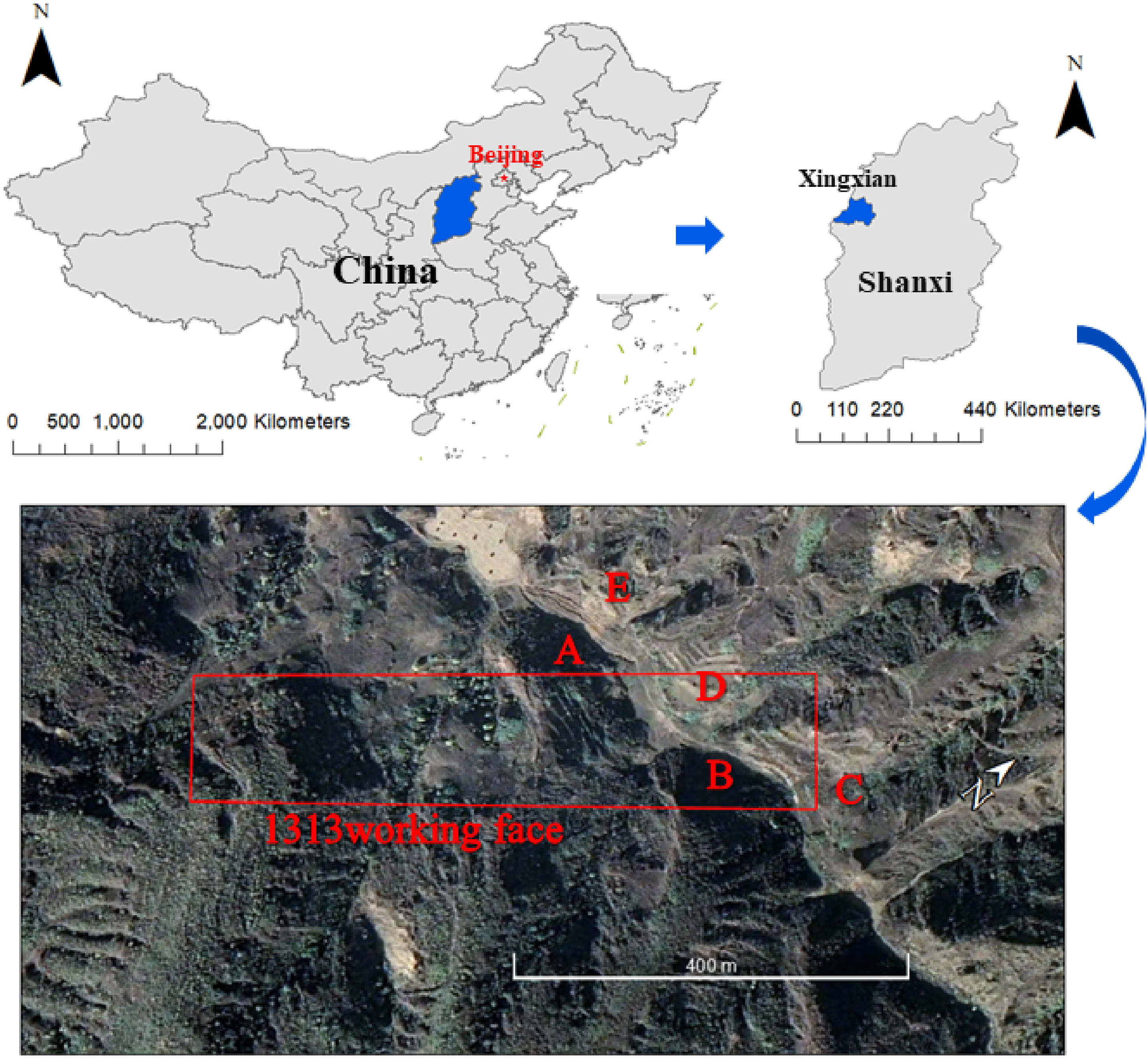
Overview of the study area.
Methodology
Slope stability evaluation index system in mining areas
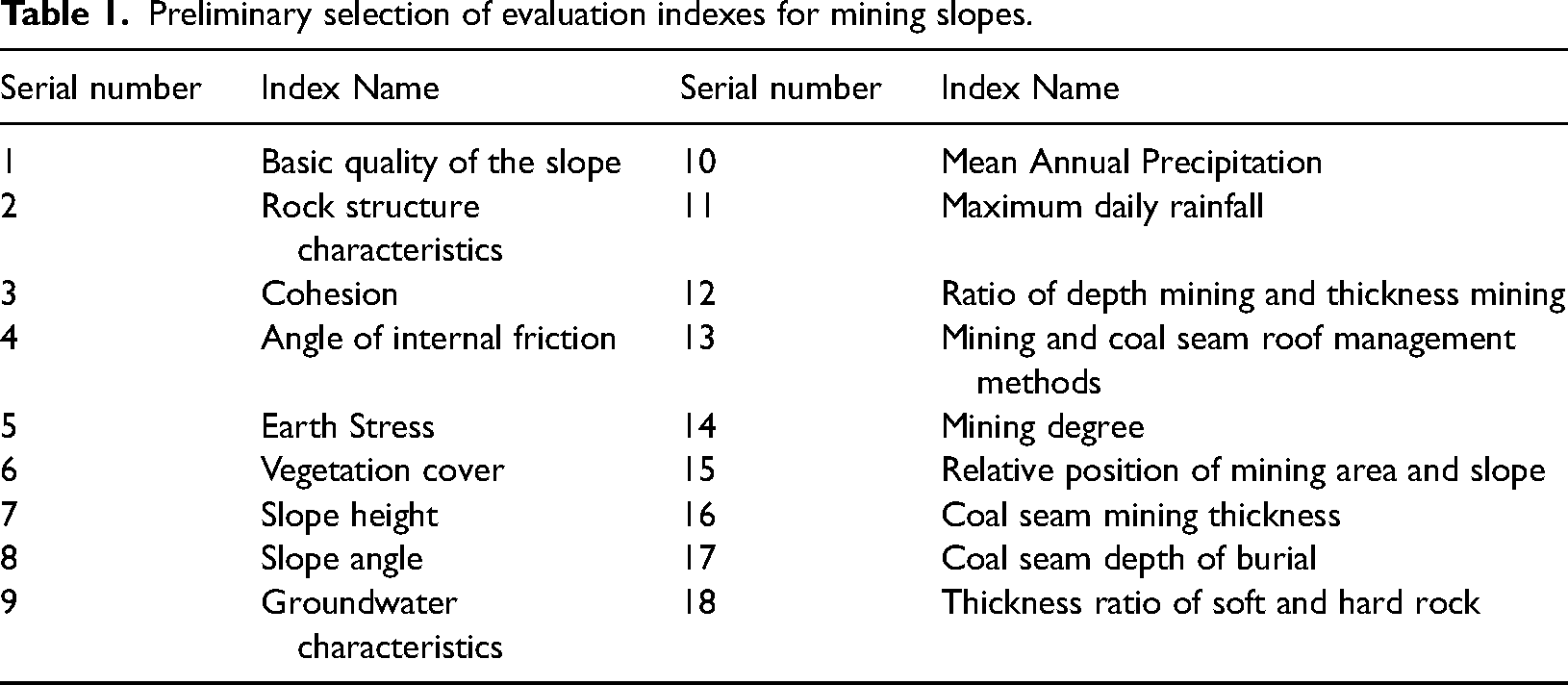
The stability of mining slopes is a systematic problem affected by multiple factors such as rock mechanics, geological conditions and mining conditions. The scientific and accurate selection of evaluation indexes is a prerequisite for slope stability evaluation. Up to now, there is no unified standard in the academic and geological engineering circles regarding the factors that determine the stability of slopes. Combined with the research results related to the evaluation of mining slope stability (Liu et al., 2014), the evaluation indexes related to the stability of mining slopes in this study area are sorted out and summarized.
As can be seen from Table 1: there are numerous evaluation indexes related to the stability of mining landslides in the study area, and due to the correlation between some indexes, which leads to redundant expression information, such a large set of indexes not only substantially increases the computational workload, but also dilutes the importance of the main evaluation indexes. For this reason, indexes were screened qualitatively following the four principles of uniqueness, purposefulness, feasibility and observability (Wang et al., 2022). The principles can be expressed as follows:
Uniqueness, to delete overlapping information, redundancy and useless indexes; Purposefulness, to delete the indexes that cannot effectively reflect the stability characteristics of the mining slope; Feasibility, the data of the screened indexes can be obtained with quality and quantity; Observability, whether directly or indirectly observed, the screened indexes must have clear and explicit meanings.
Preliminary selection of evaluation indexes for mining slopes.
Based on the above principles, the indexes in Table 1 were screened qualitatively, and the results after screening are shown in Table 2.
Evaluation index of mining slope after screening.
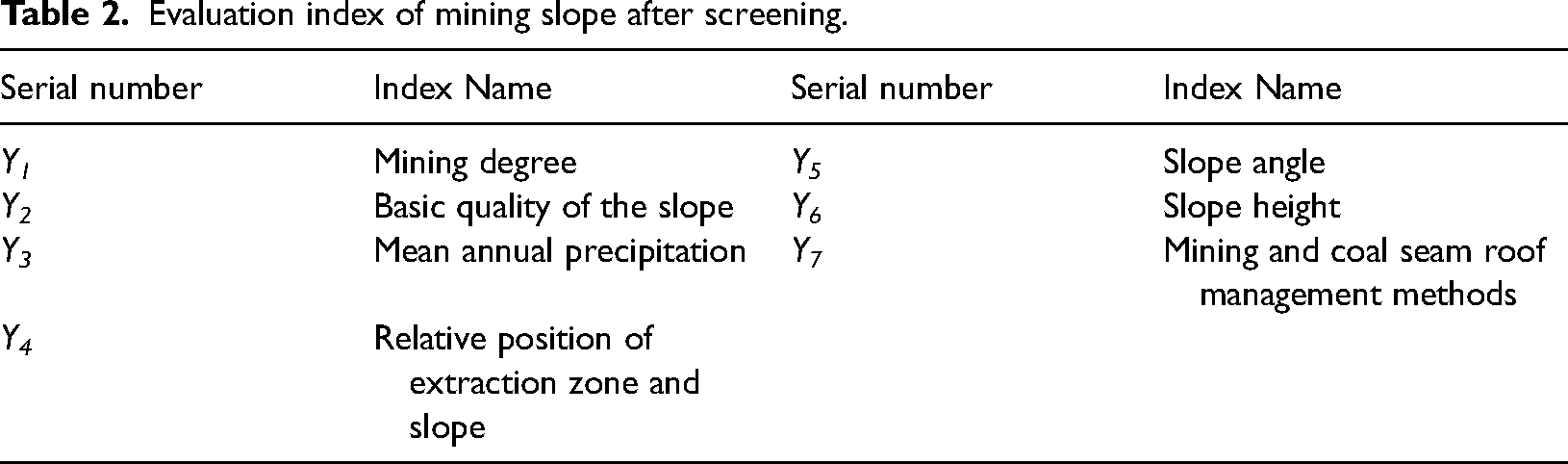
The mechanism of the role of each factor on slope stability is as follows:
Mining degree (Y1)
The mining degree refers to the degree of surface movement deformation caused by mining under certain mining geological conditions, and the surface movement deformation varies under different mining degrees. If the underground mining area is large enough, the surface subsidence reaches the maximum value of the geological mining conditions, and the surface is said to have reached sufficient mining; otherwise, it is called non-sufficient mining and very insufficient mining in turn (Guo, 2013). The greater the mining degree, the more intense the surface deformation and the greater the adverse impact on the slope, and the mining degree can be expressed by the extraction factor n (Hou, 2016).

where: k is generally determined by the actual measurement data, in this study to take 1; H is the average mining depth, m; D is the length of the coal mining working face in the inclination or advancing direction, m.
Basic slope mass (Y2)
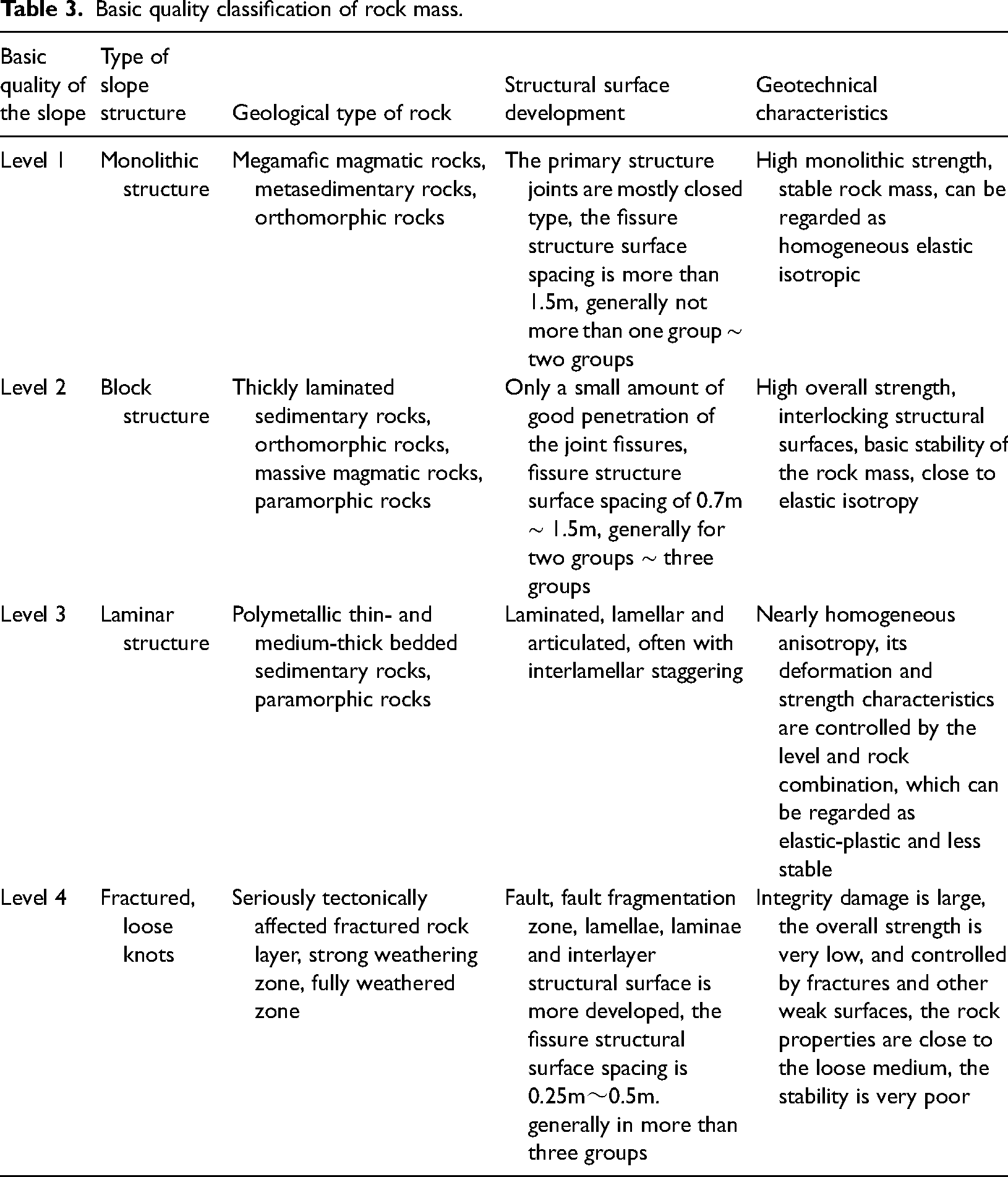
The basic quality of the slope is a comprehensive reflection of the hardness and integrity of the rock. It includes the type of rock structure of the slope, the geological type of the rock, the development of the structural surface and the geotechnical engineering characteristics, the basic quality of the slope is graded according to the above indexes, and the specific grading criteria are shown in Table 3 (China National Coal Construction Association, 2018). The higher the basic quality of the slope, the more stable it is under the influence of mining.
Mean annual precipitation (Y3)
Basic quality classification of rock mass.
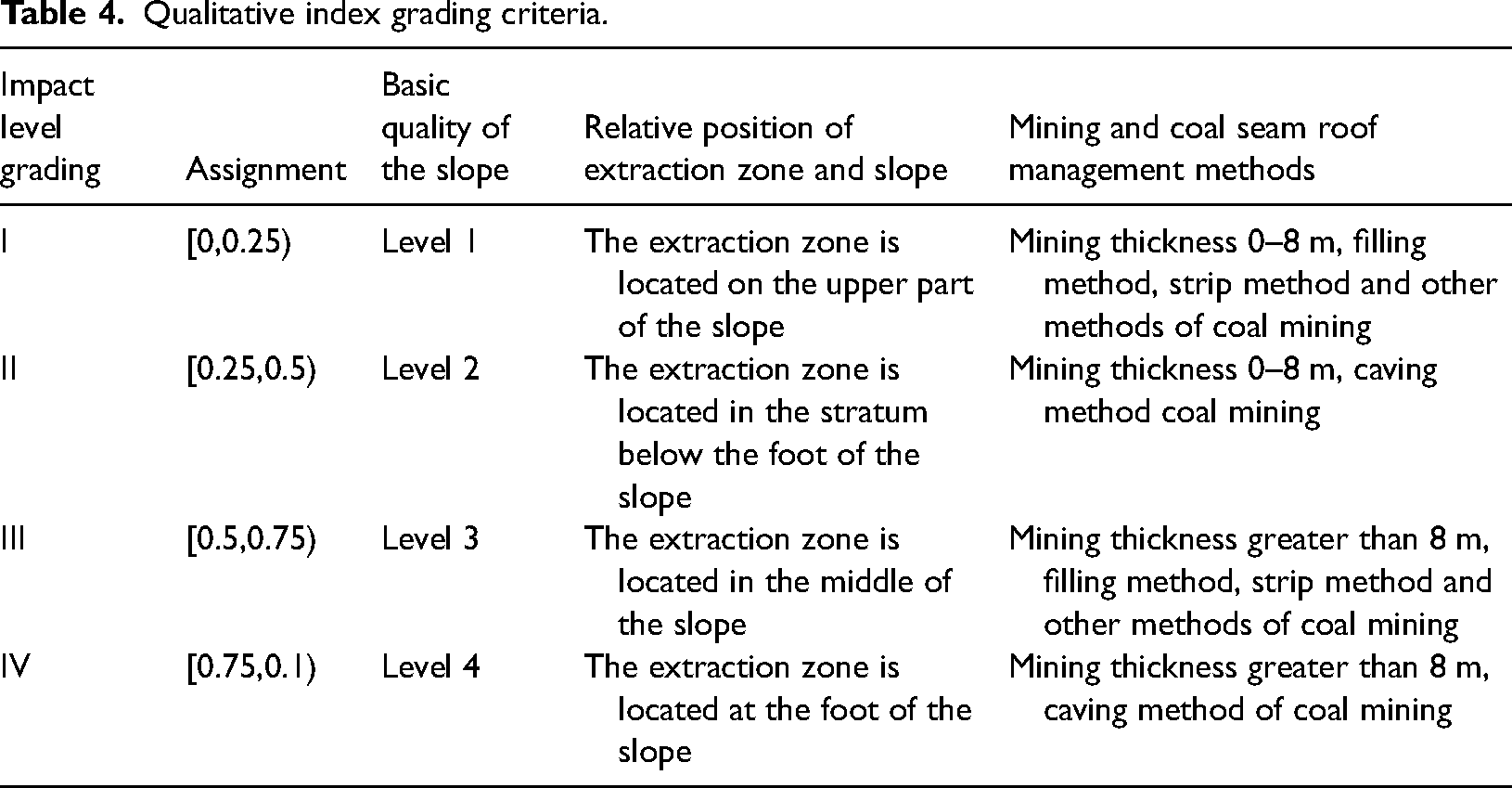
Qualitative index grading criteria.
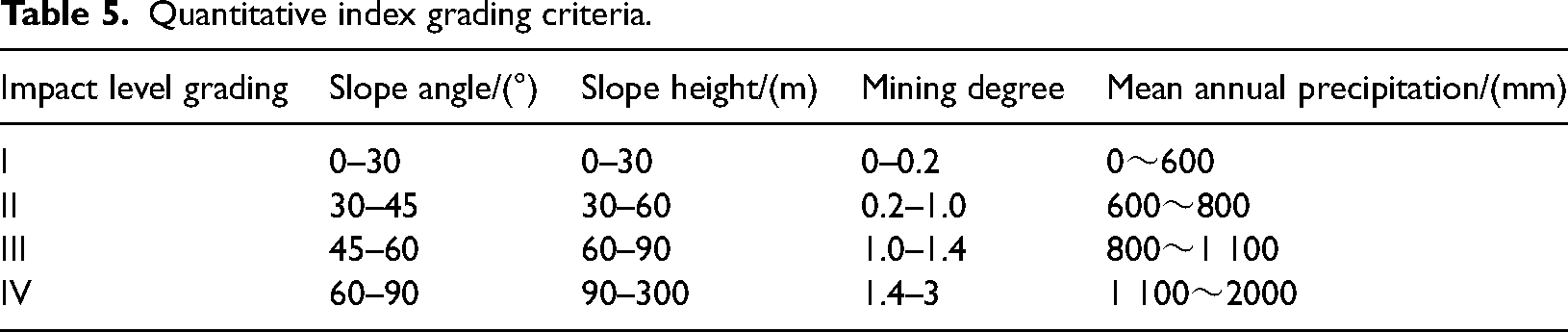
Quantitative index grading criteria.
Mining slopes often have cracks in the slope surface caused by mining subsidence. The infiltration of rainwater through the cracks in the slope surface has a negative impact on the stability of the slope. On the one hand, this leads to a reduction in the strength or integrity of the rock and soil, which in turn reduces the slip resistance of the slope; on the other hand, the rainfall acts to create hydrostatic and dynamic water pressure within the slope, which increases the sliding force. The higher the mean annual precipitation, the more unfavourable it is for the stability of the slope.
Relative position of extraction zone and slope (Y4) Slope angle (Y5) Slope height (Y6) Mining and coal seam roof management methods (Y7)
The degree of influence of underground mining area on slope stability is related to the relative position of the extraction zone and slope. When the location of the extraction zone is located at the top of the slope, it has less influence on the stability of the slope; when the extraction zone is located in the middle of the slope, the existence of the extraction zone is equivalent to reducing the strength of the sliding zone, the anti-slip force of the corresponding sliding surface will be reduced, and the safety factor of the slope will be reduced; when the extraction zone is located at the bottom of the slope, the extraction zone has a greater impact on the stability of the slope, especially the extraction zone located at the foot of the slope, which will lead to the reduction of the shear strength of the geotechnical body at the foot of the slope, and the foot of the slope is prone to shear damage and thus slope instability(Zhang et al., 2019); when the extraction zone is located below the foot of the slope, with the collapse of the top plate of the extraction zone, the combination of the soil joints and their soft surface in the middle of the surface slope forms a sliding surface, which pushes the leading edge soil layer to produce shear deformation, and after the sliding surface penetrates, a shear outlet is formed at the foot part of the slope on the outside, leading to the generation of landslides (Wang et al., 2015).
The larger the slope angles, the greater the shear stress near the slope surface, the more obvious the stress concentration at the foot of the slope, and the greater the possibility of damage to the slope.
The higher the slope height, the greater the remaining sliding force and the worse the stability. There are also statistics showing that the higher the slope height, the higher the probability of collapse.
In general, the greater the mining thickness, the more intense the rock movement phenomenon is, and the greater the adverse impact on the slope. The method of coal seam roof management is also one of the main factors affecting the stability of the surface slope. The methods more commonly applied in coal mines at present are caving method, filling method and coal pillar support method, etc. When the top plate of the coal seam is managed by the caving method, the recovery rate of the working face is high, the overburden and surface movement damage caused by mining subsidence is large, and the impact on slope stability is also large, so the frequency of mining slope instability is also high; on the contrary; when the top plate is managed by the filling method and coal pillar support method, the recovery rate of the working face is low, the overburden and surface movement damage is small, and the impact on slope stability is also small, so the possibility of mining slope instability is also relatively small.
The basis of slope stability grading criteria is usually related to the actual condition of the slope. Based on the actual situation of the study area, the slopes are classified into four grades with reference to the classification standard of engineering rock (China National Coal Construction Association, 2018), which are stable (I), basically stable (II), understable (III) and unstable (IV). The classification criteria of specific indexes are shown in Table 4 and Table 5.
Index weights determination
Subjective weights based on the IAHP
The principle of the analytic hierarchy process (AHP) is to scalarize subjective human judgment by a two-by-two comparison between elements using relative scaling. However, due to incomplete information, vague and subjective judgments often occur in actual two-by-two comparisons. For example, when the evaluator is not entirely sure whether the factor is unimportant or marginally important relative to the overall objective, it is inappropriate to use the numerical point values identified in the scale at this time. In 1995, Wu (Wu et al., 1995) introduced interval numbers into the AHP and proposed the IAHP to solve this problem. The interval number is used in the IAHP instead of point value compared to the AHP, and the interval judgment matrix is constructed to calculate the weight of each interval in multi-objective decision-making more intuitively. When the upper and lower bounds of the interval number are the same, the interval number degenerates to one point so that the AHP can be understood as a particular case of the IAHP.
According to the mining slope evaluation index system established in section 3.1, mining and slope management experts were selected to score the slope indexes. Different experts will have different results when determining the index weights, and the index weights given by the experts are a real number interval. The interval number weights of the evaluation indexes are calculated by using the IAHP, and the specific steps are as follows.
1) Establish the judgment matrix X of the IAHP.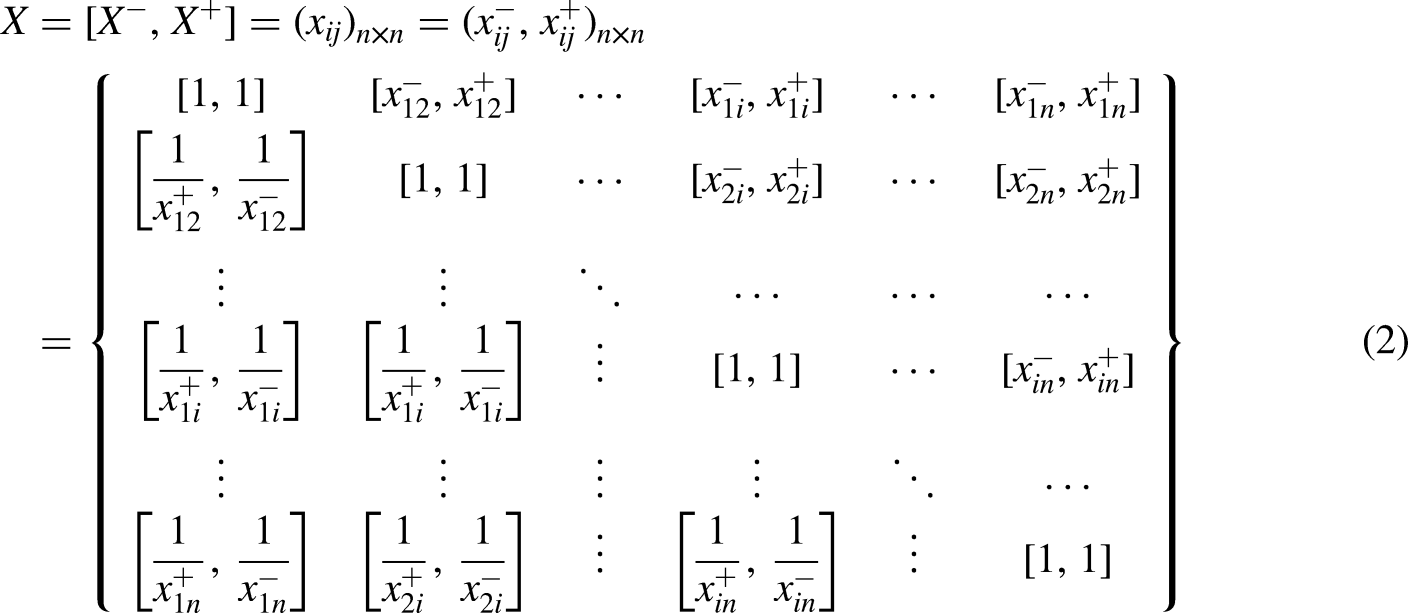
where:
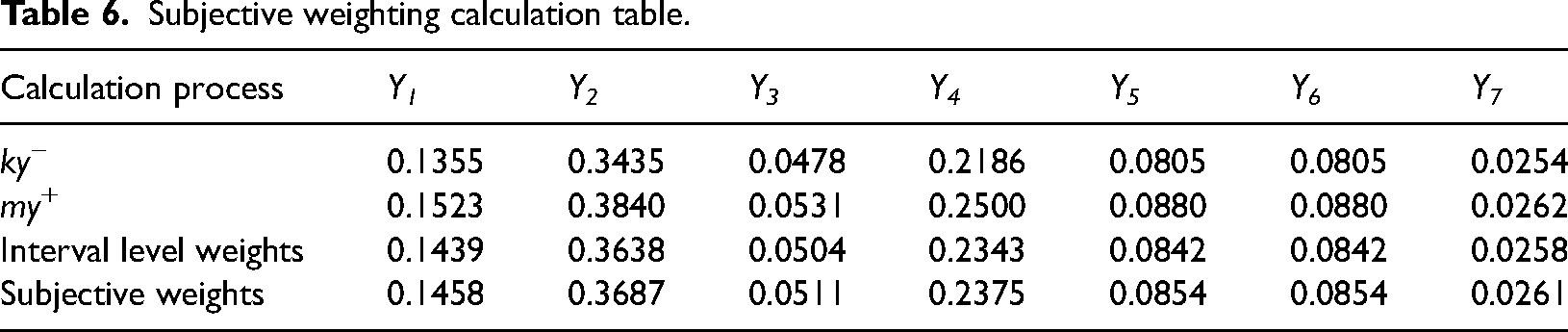
2) Calculate the maximum eigenvalues λ- and λ + corresponding to X− and X+, and derive the eigenvectors y- and y +, and calculate the weight vectors of the interval judgment matrix according to Eq. (3).


3) The interval level weights α’ are calculated according to Eq. (6), and the subjective weight vector α is obtained after the final normalization process.
The weight values calculated by the above formula also need to be tested for consistency, and the values of k and m are calculated by Eq. (4) and Eq. (5). The consistency of the interval judgment matrix X is better when and only when 0 ≤ k ≤ 1 ≤ m. If k > 1 or m < 1, the consistency of the interval judgment matrix X is poor, and the results need to be fed back to the experts to correct the judgment matrix or re-judge until the consistency requirements are met (Zhang et al., 2017).
Objective weights based on the improved CRITIC method
The Criteria Importance Through Intercrieria Correlation(CRITIC) method is an objective weighting method. The basic idea is to divide the index weights into two types: the contrast intensity between indexes and the conflict between indexes. The contrast intensity represents the size of the difference between the values of the same index for each programme, which is usually expressed by the standard deviation. By introducing a coefficient of variation, the vulnerability of standard deviation to the magnitude and mean is corrected. The introduction of redundant information entropy takes into account the conflicting and discrete of data, which makes the calculation results more objective and reasonable (Liu et al., 2022), and the specific steps are as follows.
1) Firstly, an evaluation matrix is established based on the evaluation indexes. Suppose there are n indexes in m programmes, and anm is the value of the n-th indicator in the m-th programme. The evaluation matrix A can be expressed by Eq. (7).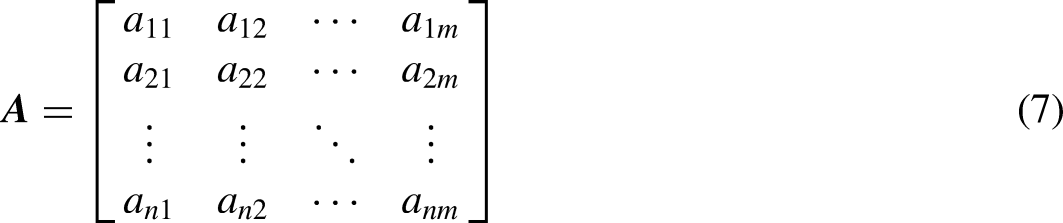
2) Normalization of the evaluation matrix using Eq. (8):
3) Introducing the coefficient of variation to reflect the intensity of comparison between indexes. The amount of information contained between the indexes is obtained by calculating the correlation coefficient between the indexes, so as to objectively determine the index weights with the following formula: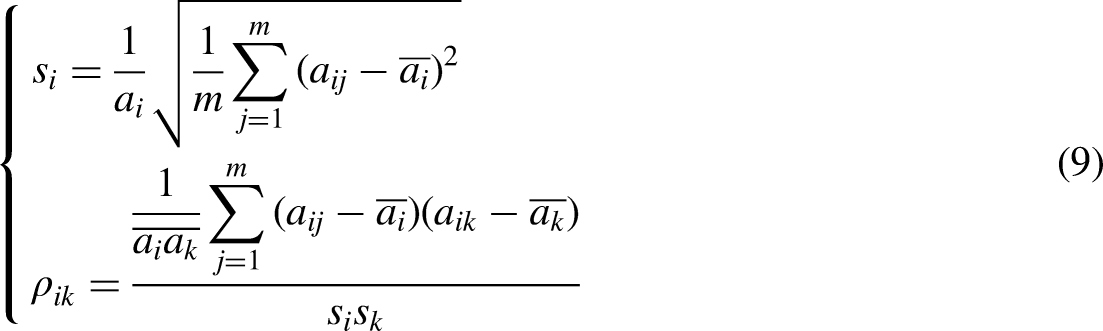
where, si and skare the coefficients of variation of indexes Ki and Kk, respectively;
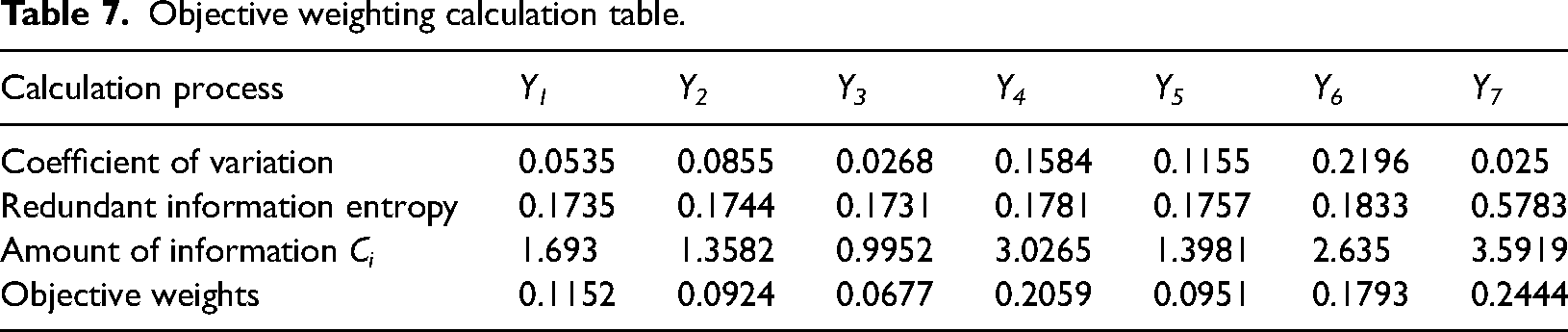
4) The introduction of redundant information entropy reflects the dispersion among indexes, which makes the assignment process integrate the contrast intensity, conflict degree and dispersion among indexes. The expression for the entropy of redundant information is as follows.
5) The objective weights are expressed as follows The amount of information contained in the index Ci is expressed as follows.
where,
6) The amount of information Ci is proportional to the importance of the index, and the objective weight of the index βi can be calculated using Eq. (12).
Minimum discriminative information combination assignment
Based on the principle of minimum discriminative information, the subjective weight α is fused with the objective weight vector β to obtain the combined weight with the minimum degree of consistency (Liu et al., 2022). The combination weight ωi is obtained by Eq. (14).

Finite interval cloud model theory
The cloud model is an artificial intelligence model used to characterize the uncertain relationship between variables (Wei et al., 2017). Essentially, it is a mathematical method to seek the mapping relationship between fuzzy and deterministic, so as to achieve the mutual transformation of qualitative evaluation and quantitative data (Li and Liu, 2004). Although the cloud model can fully consider the randomness and fuzzy information in the evaluation process, it requires the index rank interval to be an infinite interval normal distribution, which is inconsistent with the actual distribution form of the indexes and easily causes distortion of the simulation results. The finite interval cloud model is improved and modified based on the traditional cloud model to overcome this drawback. The finite interval cloud model transforms the infinite interval normal distribution into a finite interval normal distribution, which is more consistent with the actual distribution of indexes. Thus the prediction results are more consistent with the actual situation.
In the finite interval cloud model, let U be a quantitative domain with exact numerical representation and C be a qualitative concept on U. If there exists any quantitative element x belonging to U and x is a random realization on the qualitative concept C, the determinacy of x on C (




The qualitative concept is transformed into a quantitative concept using a forward finite interval cloud generator. Using the finite interval cloud model characteristic parameters Ex, En and He, quantitative values consisting of N cloud droplets as well as cloud droplet maps are obtained. When the index value is in the interval between the two ends of the rank cloud mean, then x obeys the normal distribution in the finite interval; when the index value is far from the expectation Ex, then x obeys the uniform distribution with the determination of 1. In summary, x obeys the uniform distribution in the finite interval and the normal distribution formula as follows:
Based on the above finite interval cloud model and the grading standard of mining slope index, 1000 cloud drops of index j belonging to grade i are simulated by using the forward finite cloud generator to form a finite cloud diagram of evaluation index j belonging to grade i (Figure 2). The horizontal coordinate corresponds to the value of mining slope evaluation index, and the vertical coordinate corresponds to the determination of cloud drops to a certain stability grade.
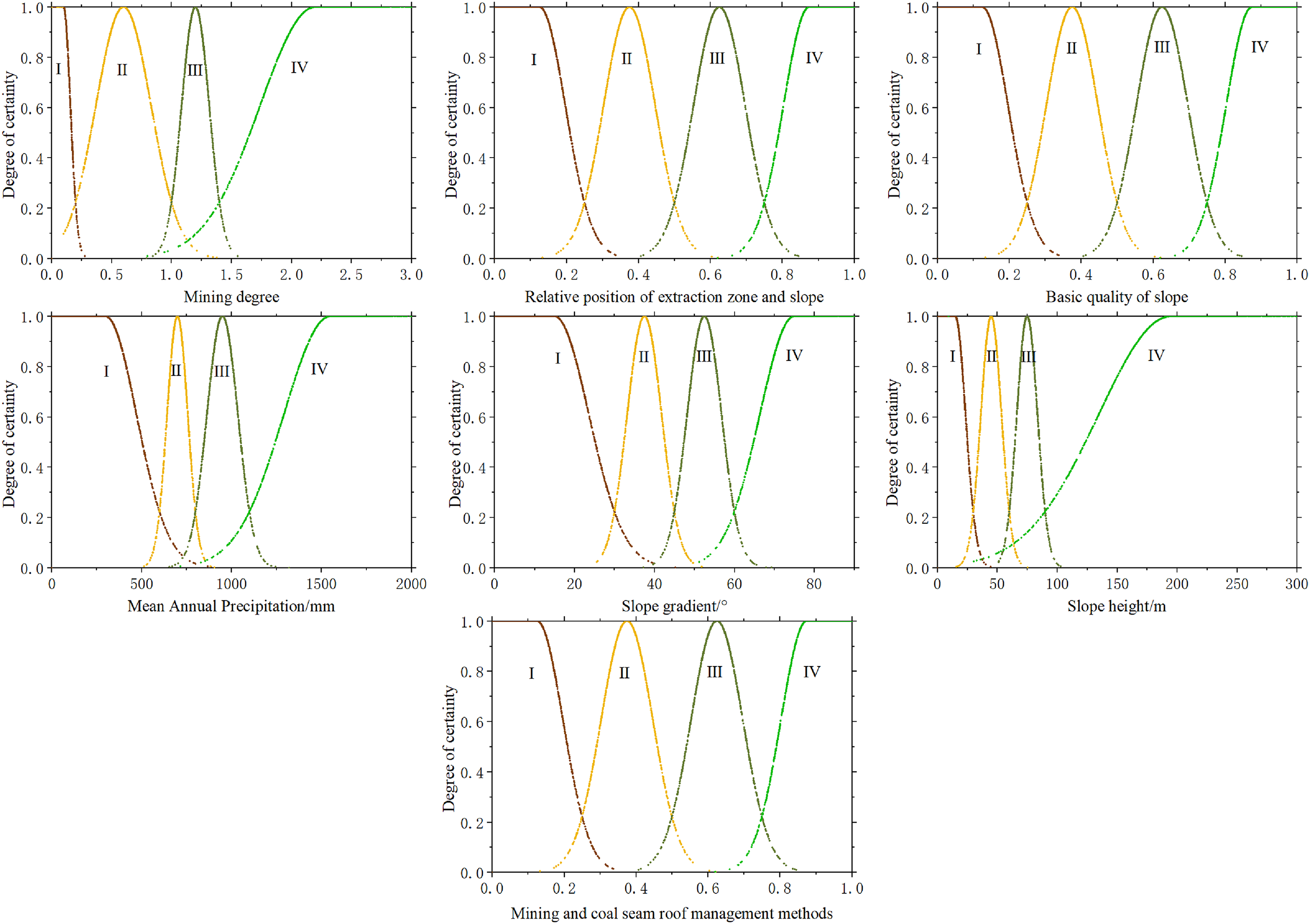
Cloud-drop diagram of mining slope index classification.
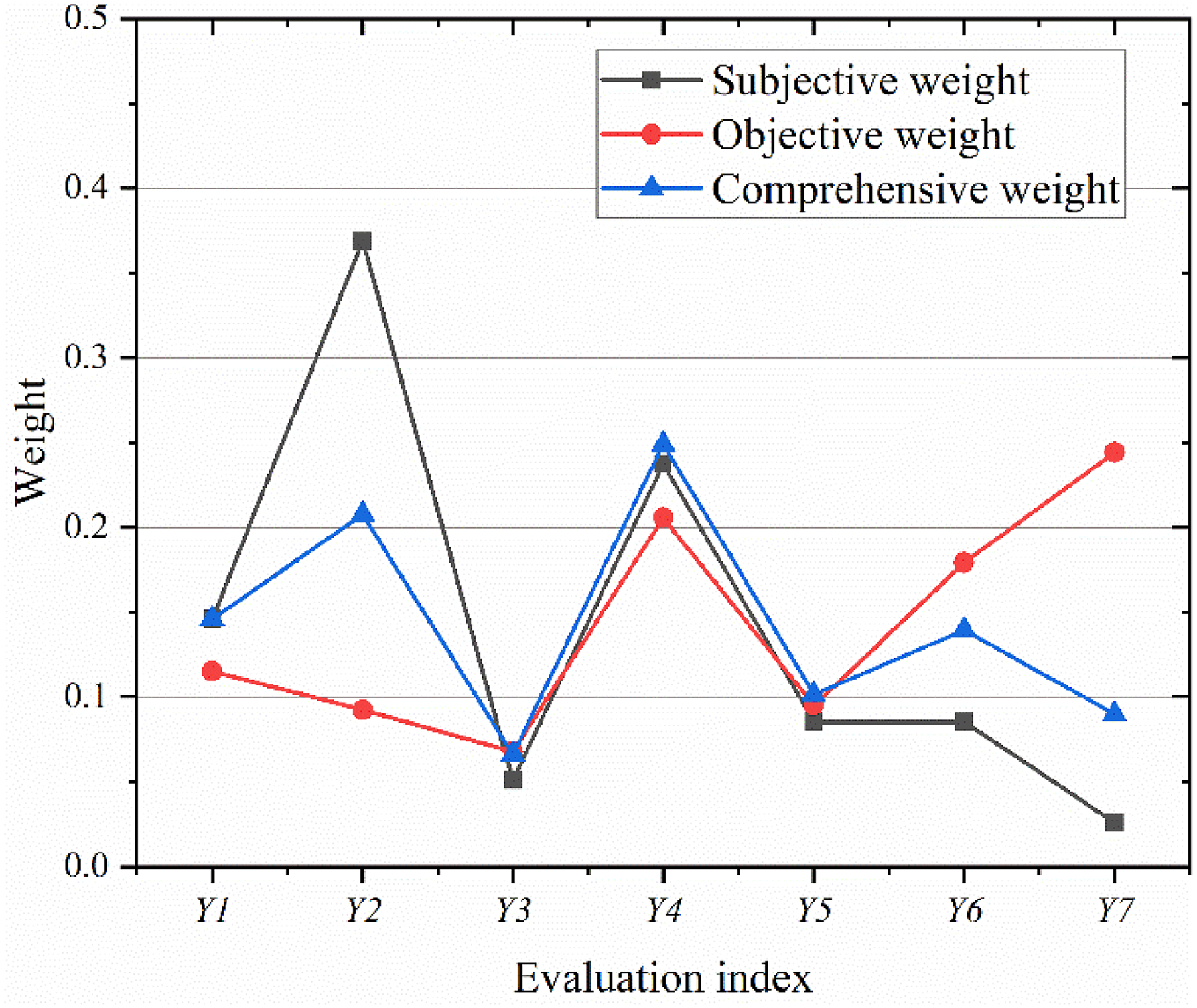
Integrated empowerment results.
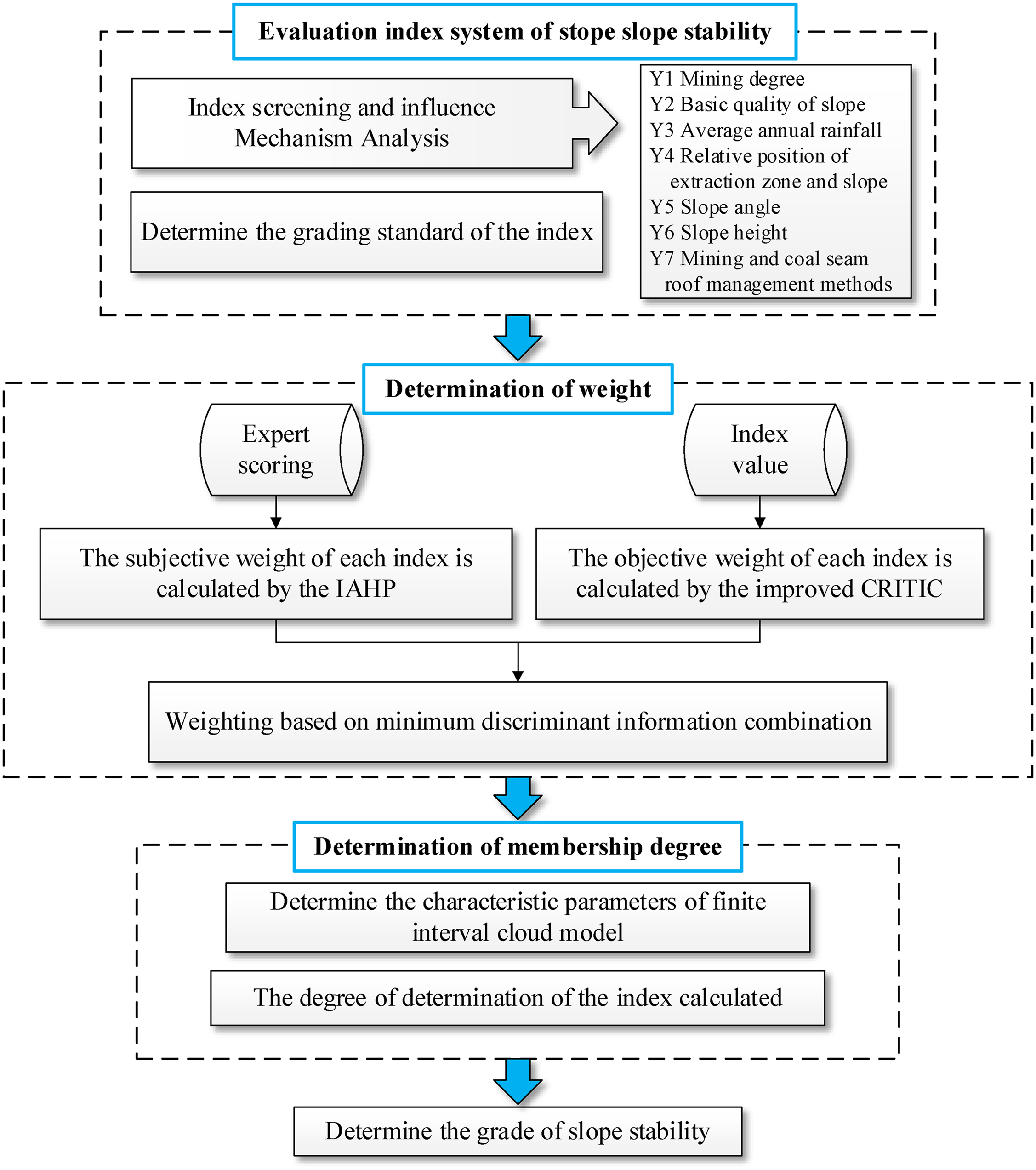
Flow chart of mining slope stability evaluation based on combined empowerment and finite interval cloud model.
Mining slope stability evaluation model
The evaluation model of mining slope stability is established based on the combination of minimum discriminatory information assignment and finite interval cloud model theory, and the main processes are represented in Figure 3.
Determine the evaluation indexes and index grading criteria according to relevant research results and standards, and establish the slope stability evaluation index system in mining areas; Calculate the subjective and objective weights of each index by using the IAHP and the improved CRITIC algorithm, respectively; Calculate the comprehensive weights based on the combination of minimum identification information; Calculate the cloud characteristics of the classification indexes and generate a finite interval cloud model by using the cloud generator to draw cloud drops; Calculate the determination of each index at each level according to the sample measurement data, and determine the slope stability level according to the maximum membership principle.
Result and discussion
Weight calculation results
According to the established index system for evaluation of mining slopes, experts in the field of mining slopes are invited to score. Due to the different perspectives of the review subjects, different categories of experts will have different results in determining the index weights. The given index weights are in a real number interval, and the judgment matrix X of the IAHP is as follows.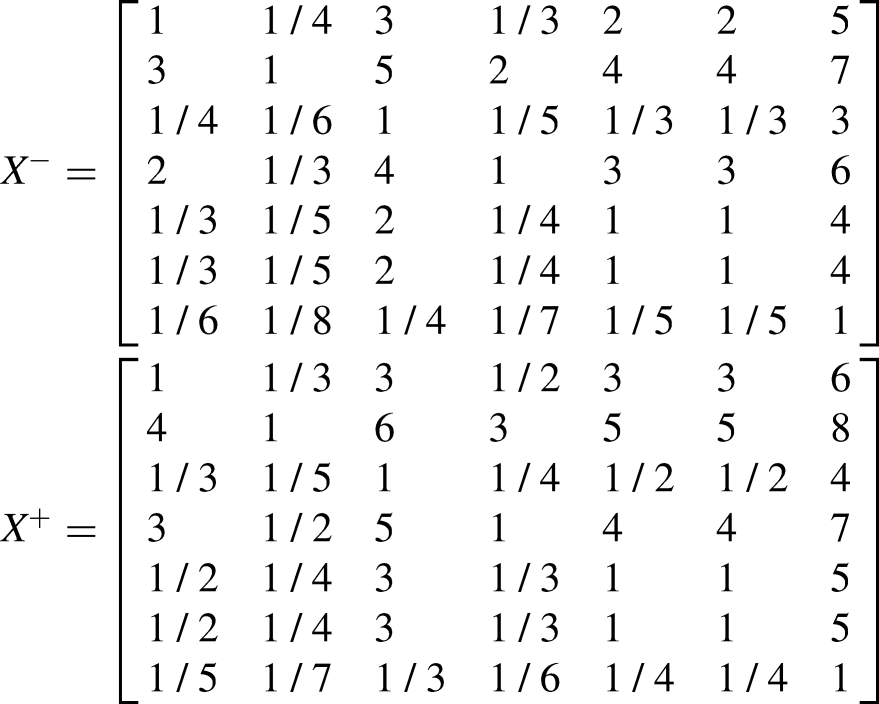
Subjective weighting calculation table.
The objective weights are calculated, and the index values are normalized to obtain the matrix A. Calculate the coefficient of variation and redundant information entropy, analyze the correlation coefficient to get the amount of information, and the index weights are positively related to the information layer to get the objective weights, and the calculation results are shown in Table 7.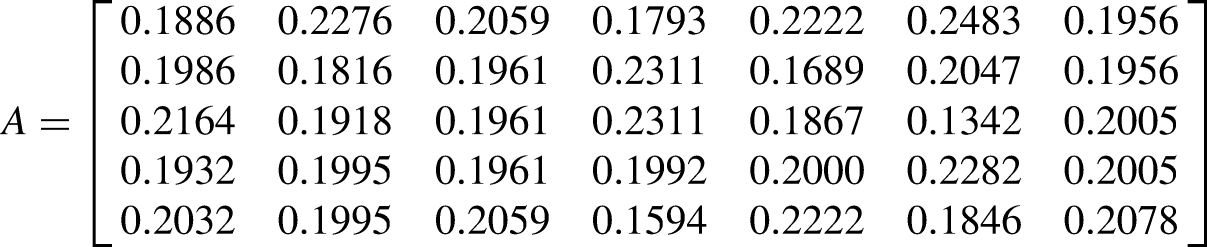
Objective weighting calculation table.
Calculation table of integrated weights.

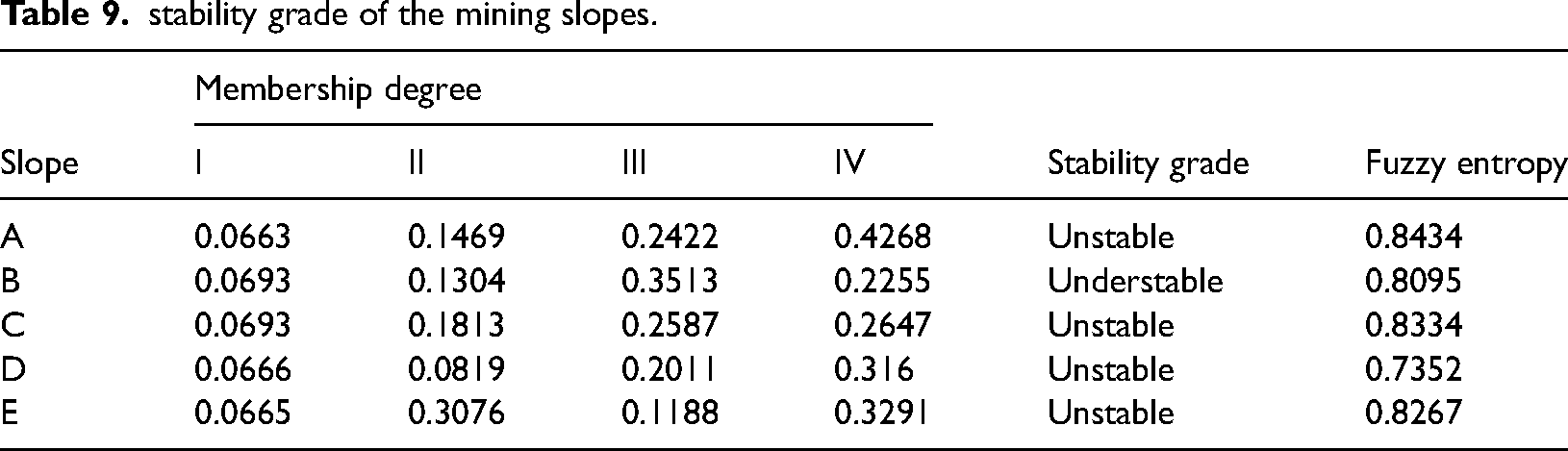
stability grade of the mining slopes.
It can be seen in Figure 4 that there are some differences between subjective weights and objective weights, which need to be optimized. Based on the principle of minimum discriminative information fusion of subjective and objective weights, the degree of consistency minimization is established to obtain the comprehensive weights of indexes (Table 8).
From the results, it can be concluded that the relative position of the extraction zone and the slope has a dominant role in the stability of the slope, and the mining degree, the basic quality of the slope, the slope angle and the slope height are the key factors affecting the stability of the slope. The combination of weighting takes into account both subjective and objective weights to ensure more scientific and accurate evaluation results.
Evaluation results of the model
The affiliation degree of each index of the slope can be obtained from the measured value or evaluation value of each index and the forward finite cloud generator. According to the affiliation degree of each index, the combined weight is used to determine the comprehensive affiliation degree of the study area. Then, based on the maximum membership principle, the suitability level of the study area is determined. The process can be expressed by Eq. (21) and (22).

The results are shown in Table 9, from which it can be seen that slopes A, C, D and E are in an unstable state after mining, while slope B is in an understable state.
The evaluation results obtained according to the maximum membership principle are prone to distortion when the levels of each evaluation target are not very different or equal. Therefore, on the basis of a finite interval cloud model, the complexity of the target to be evaluated is represented by means of fuzzy entropy theory. The fuzzy entropy H can be calculated by Eq. (23).

The fuzziness is specified to be low, fair, high and highest when the fuzzy entropy H is [0, 0.25), [0.25, 0.50), [0.50, 0.75) and [0.75, 1], respectively. The results show that the fuzzy entropy of stability grades of slopes A, B, C and E is larger, indicating that there is a certain fuzziness in the evaluation results of these four slopes, and the stability evaluation of them has a certain complexity, which needs to be focused on in the subsequent governance and monitoring.
Slope stability analysis
Before the landslide, the slopes were steep, and the ground inclination was large. It was a three-sided terrain with two ditches sandwiching a slope. Before the landslide, the angles of slopes A, B, C, D and E were 50°, 38°, 42°, 45° and 50°, respectively. After the underground coal seam mining, the surface slope body was affected by the mining movement to a wide range of overall movement. The landslide area and landslide situation are shown in Figure 5.
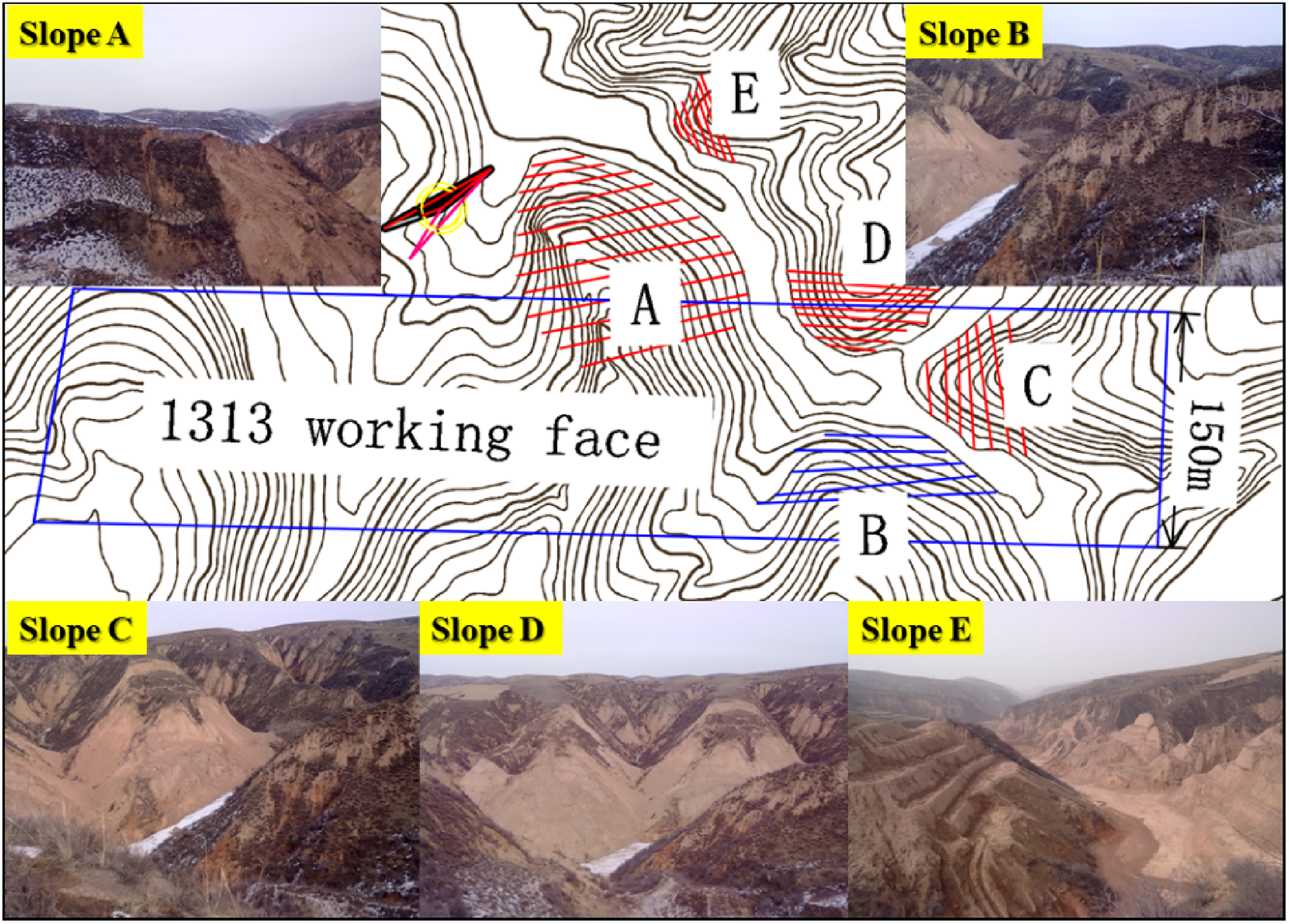
Mining landslides in the study area.
The area of slope A is located in the direction of the downhill of the working face, the value of surface subsidence is large, and the area is greatly affected by mining. The slope angle in this area is large, with significant slope projections and hollowing on three sides, so intense landslides occur under mining disturbance. A large number of tension cracks appear on the back edge of the landslide, a large landslide step and landslide platform are formed on the upper part of the slope body, the landslide body moves to a large extent, and the activity intensity of the landslide is the largest among the five areas.
The area of slope B is in the direction of the coal seam uphill, and the value of surface subsidence is relatively small. The area is little affected by mining, and the slope angle is small, so the landslide phenomenon in this area is not obvious. A small number of cracks appear on the top of the slope, the slope is in an unstable state, and the intensity of landslide activity is the smallest among the five areas.
The slope C, D and E are all located in the downhill direction of the working face, with a large amount of surface subsidence, and are greatly affected by mining. However, the projection of the mountain in the above three areas is not obvious, the range of the three faces is small, and the activity intensity of the landslide is less than slope A.
From the site survey and analysis, it can be seen that serious landslides occurred on slopes A, C, D and E (red part) and minor landslides occurred on slope B (blue part), which is consistent with the evaluation model results and verifies the accuracy of the evaluation model.
Conclusions
Mining-induced landslides and cave-ins in coal mines seriously affect the safety production of mining areas. This study aims to establish a mining slope stability evaluation model to judge the stability of slopes affected by mining to avoid damage to people or property caused by mining landslides. The main results of this study are as follows:
According to the actual geological conditions of mining slopes in Xing County, seven indexes are screened following the four principles of uniqueness, purposefulness, feasibility and observability. They are the mining degree, the basic quality of the slope, the mean annual precipitation, the relative position of the extraction zone and the slope, the slope angle, the slope height and the mining and coal seam roof management method. A mining slope stability evaluation system is established to ensure the reliability of the evaluation results. The objective weights are calculated by the improved CRITIC method. By introducing a coefficient of variation, the vulnerability of standard deviation to the magnitude and mean is corrected. The introduction of redundant information entropy takes into account the conflicting and discrete of data, which makes the calculation results more objective and reasonable. Based on the principle of minimum discriminative information, the subjective and objective weights are fused. The combined weighting results effectively avoid the influence of subjective factors of experts and make the evaluation results more accurate. By introducing the finite cloud model to realize the interconversion of qualitative evaluation and quantitative data and avoiding the shortcomings of the traditional cloud model where the index rank intervals are normally distributed in infinite intervals, the accuracy and objectivity of the suitability evaluation are improved. The stability of slopes in Xing County is evaluated based on the model established in this study. The results show that slopes A, C, D and E are in an unstable state after mining, and slope B is in an understable state. The evaluation results are consistent with the actual survey results, which verifies the accuracy of the evaluation model. This study has a certain reference value for mine safety production and mining slope management.
Footnotes
Declaration of conflicting interests
The author(s) declared no potential conflicts of interest with respect to the research, authorship, and/or publication of this article.
Funding
The author(s) disclosed receipt of the following financial support for the research, authorship, and/or publication of this article: This work was supported by the Natural Science Foundation of China (grant numbers 52274164, 51904008, 52074010), the Key Research and Development Project of Anhui Province (grant number 202104a07020014)
