




Abstract
In order to enlarge and improve the application of phase changing materials (PCM) composite wall in Chinese solar greenhouse (CSG), the effect of thermal parameters on heat storage and release performance of PCM composite wall were systematically and scientifically investigated by available CFD code of commercial software ANSYS-Fluent, which was almost determined by the parameters such as density, thermal conductive, latent heat fusion and specific heat capacity. The numerical simulation was reasonably validated by the experimental result under the same condition, which was conducted by error analysis of interval analysis (IA) method. The result is shown that IA result between numerical simulation and experiment is 0.96, while the numerical simulation of PCM composite wall is significantly accurate and reliable. The maximum temperature of the center point in interior surface is completely dependent on the contrary tendency changing of thermal parameters at heating time, of which is directly proportional to thermal parameters changing at cooling time, except the specific heat capacity. While only the thermal conductivity increasing is benefit for increasing interior surface temperature of PCM composite wall at final cooling time. The effect of solely thermal parameter on the heat storage and release performance changing of PCM composite wall is from strength to weaken: density changing (
Keywords
Introduction
Phase change materials (PCM) are characterized by ability of storage and released larger amounts of thermal energy during phase changing without temperature fluctuation, which is widely used in buildings, while recently applied in Chinese solar greenhouse(CSG) as a composite north wall (Pisello et al., 2017; Wei et al., 2017; Cao et al., 2017). The PCM is benefit for improving the thermal energy storage capacity in CSG, which is enhanced the efficiency of solar energy. In fact, almost 40% of the total energy in CSG is used to heat the environment of crop in winter and ventilate in summer (Wang et al., 2018; Fateh et al., 2017). Therefore, the PCM composite wall of CSG is a promising solution for using less energy to keep a suitable temperature of crop growth, such as reducing temperature in hot summer or increasing temperature in cold winter, which is benefit for saving energy consumption. As the important thermal insulation and heat storage structure, the north wall of CSG can receive 26%-37% of the solar radiation energy during the daytime in winter, then release the storage energy to rise indoor temperature at night (Xu et al., 2013; Zhang et al., 2020). The PCM is always located in the interior layer of three layer composite wall. Others layers are block brick in middle layer and insulation board at exterior layer respectively. In this way, the PCM composite wall is better optimal structure for insulation and storage heat energy (Guan et al., 2015). Therefore, the majority of current PCM composite wall investigations are always focused on the type of compound mode, thickness of PCM layer or effect of PCM application. Consequently, the effect of thermal parameter on PCM composite wall has became one of the major obstacles that hinder the improved properties of PCM composite wall in theoretical research.
With the development of economic growth, natural resources and public-private partnership, the environment is gradually degraded (Bekun, 2022; Caglar et al., 2022; Agboola et al., 2022). According to the investigation, the total CO2 emissions is positively and significantly effected by fossil fuel energy consumption, which is enhanced environmental degradation in the world (Gyamfi et al., 2022a, 2022b). In addition, housing, tertiary building and CSG are responsible for approximately 19% of the total CO2 emissions in fossil fuels for building consumption. Hence, PCM is regarded as the more environmentally material in thermal energy storage systems for reducing dependency on fossil fuels consumption (Kuznik et al., 2011; Gyam, 2021). Thermal energy storage is consist of sensible heat storage and latent heat storage. Compared with sensible heat storage, latent heat storage can be accomplished by using smaller volume of materials to store the same energy, which is an inherent property of PCM (Jiang and Liu, 2019; Cao et al., 2019a; Ling et al., 2015). When large amount of heating is absorbed by PCM, the physical state of PCM is changed from solid to liquid to store the heat energy. To the contrary, when the physical state of PCM is changed from liquid to solid, the large amount of heating would be released (Mazzeo and Oliveti, 2018; Beltrán and Martínez-Gómez, 2019). In this way, the PCM is an efficient way to sustain the temperature in CSG by using the renewable and nonrenewable energies. Therefore, the physical state evolution of PCM is necessary to be considered in PCM composite wall investigation of CSG. According to all above, almost of PCM research were currently limited to focus on heat insulation of the existing materials, the effect of thermal parameters solo changing on PCM's applied performance were always ignored, which was very useful and benefit for guiding the development of new PCM and explaining the insulation mechanism of thermal parameters changing on PCM.
In this paper, in order to research the heat storage and release capacity of PCM composite wall in CSG, the effect of thermal parameters (such as thermal conductivity, specific heat capacity, latent heating capacity and density) on PCM storage and release heating capacity were systematically investigated by available CFD code of commercial software ANSYS-Fluent. The results of the CFD numerical simulation were scientifically and reasonably validated by the experimental results under the same condition. The thermal parameters of PCM were solo changing from −40% to 40%, which was regarded the normal parameters (unchanging parameter) as 0%. While the 40% was mean increasing 40%, the −40% was mean decreasing 40%. Then the effect of PCM performance under different thermal parameter solo changing was directly presented by numerical simulation. Finally, the relationship between PCM storage and release heating capacity and thermal parameters were sufficiently discussed, which was accurately expressed by a new proposed empirical model.
Experiment and numerical simulation
Materials
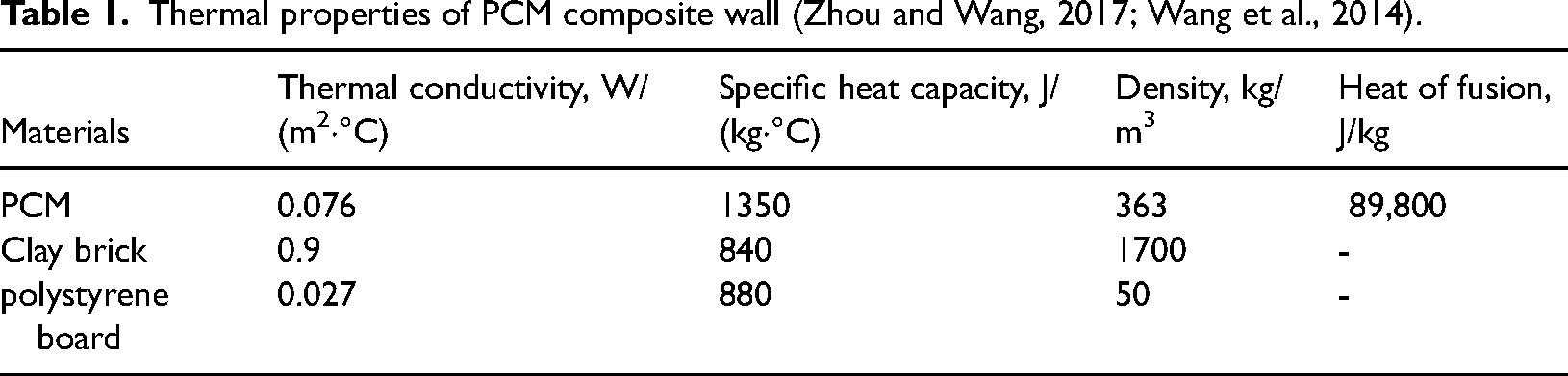
The PCM is made by phase change paraffin and expanded perlite, of which the differential scanning calorimetry (DSC) curve of PCM is shown in Figure 1 (Zhou and Wang, 2017). The material thermal properties of PCM, clay brick and polystyrene board are listed in Table 1 (Zhou and Wang, 2017; Wang et al., 2014).
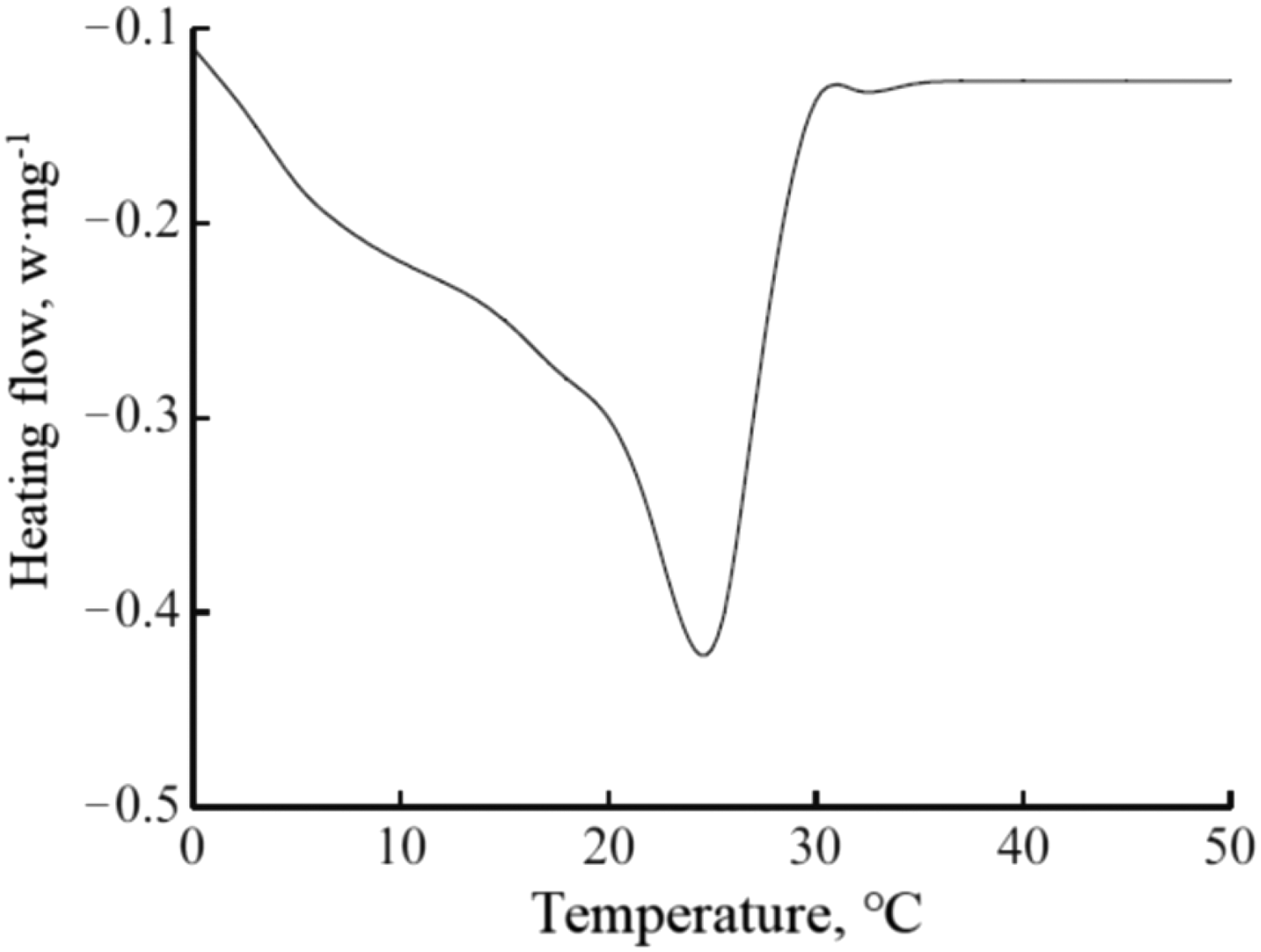
DSC curve of PCM (Zhou and Wang, 2017).
Thermal properties of PCM composite wall (Zhou and Wang, 2017; Wang et al., 2014).
Experimental method
The PCM composite wall is consist of PCM, clay brick (CB) and polystyrene board (PB). which is shown in Figure 2. The detail dimension of every part thickness in PCM composite wall is 40 mm × PCM + 240 mm × CB + 120 mm × PB + 240 mm × CB. The volume size of PCM composite wall in the experiment is 1 m × 1 m × 0.64 m, which is shown in Figure 3. The experimental temperature is 20 °C, which is smaller than the melt temperature 25.6 °C. Therefore, the physical state of PCM is solid. The Gree FGH-10b electric radiator is used for heating source in the experiment, of which the heat flux is 13 kW/m2. The distance between PCM composite wall interior surface with Gree FGH-10b electric radiator heat surface is 0.15 m. In order to reduce the effect of air flow and environmental temperature large changing on heat convection of PCM composite wall, the experiment is conducted indoor of house during the daylight hours. The procedure of experiment is heating the PCM composite wall for 4 h. Then, the PCM composite wall is cooled in the air for 4 h. The temperature value was recorded interval every 5 min by the temperature sensors. In order to guarantee the accuracy of temperature tested results, 3 repeat experiments in different days are necessary, of which the final temperature results is calculated the average value.
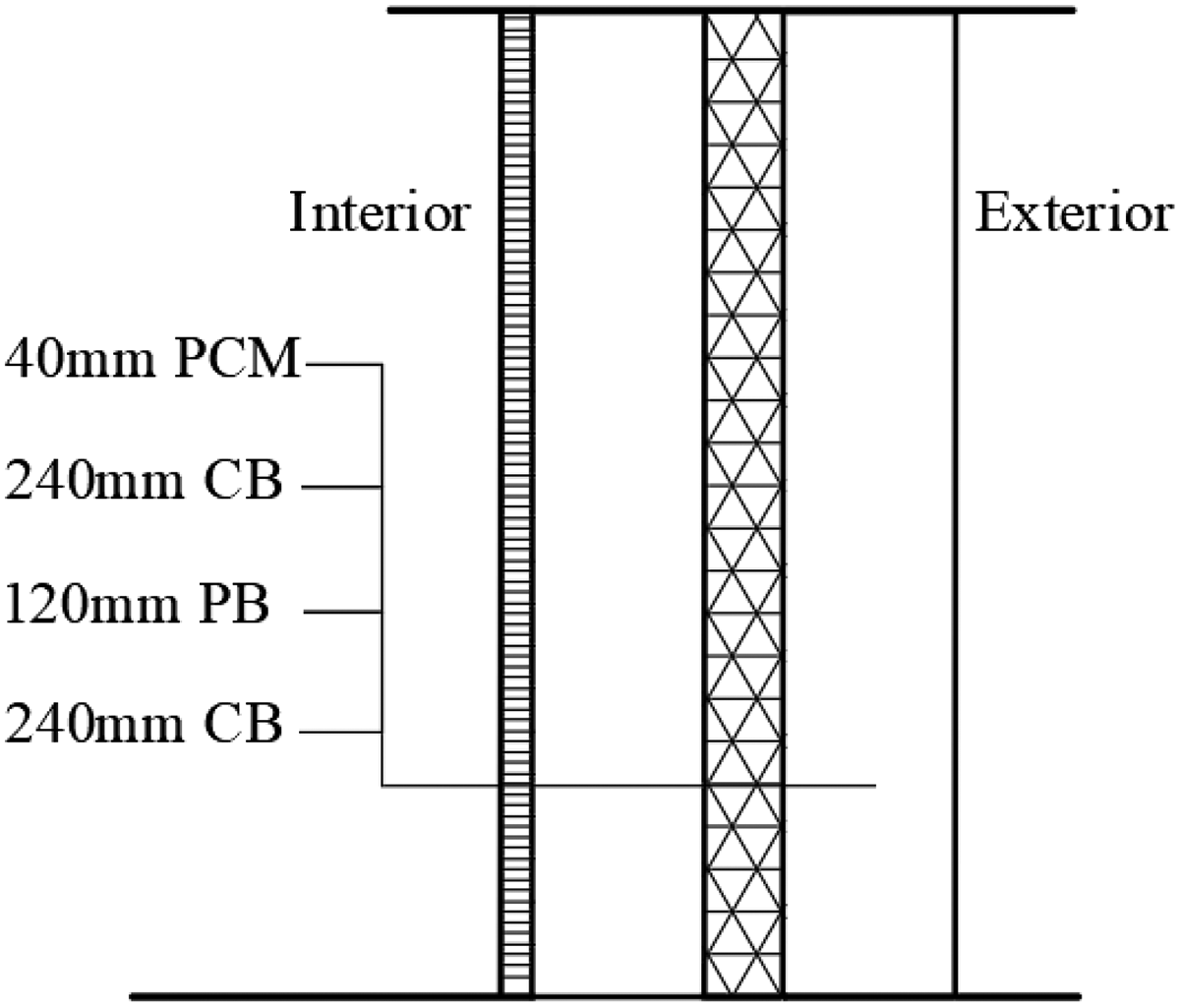
Section view of PCM composite wall.
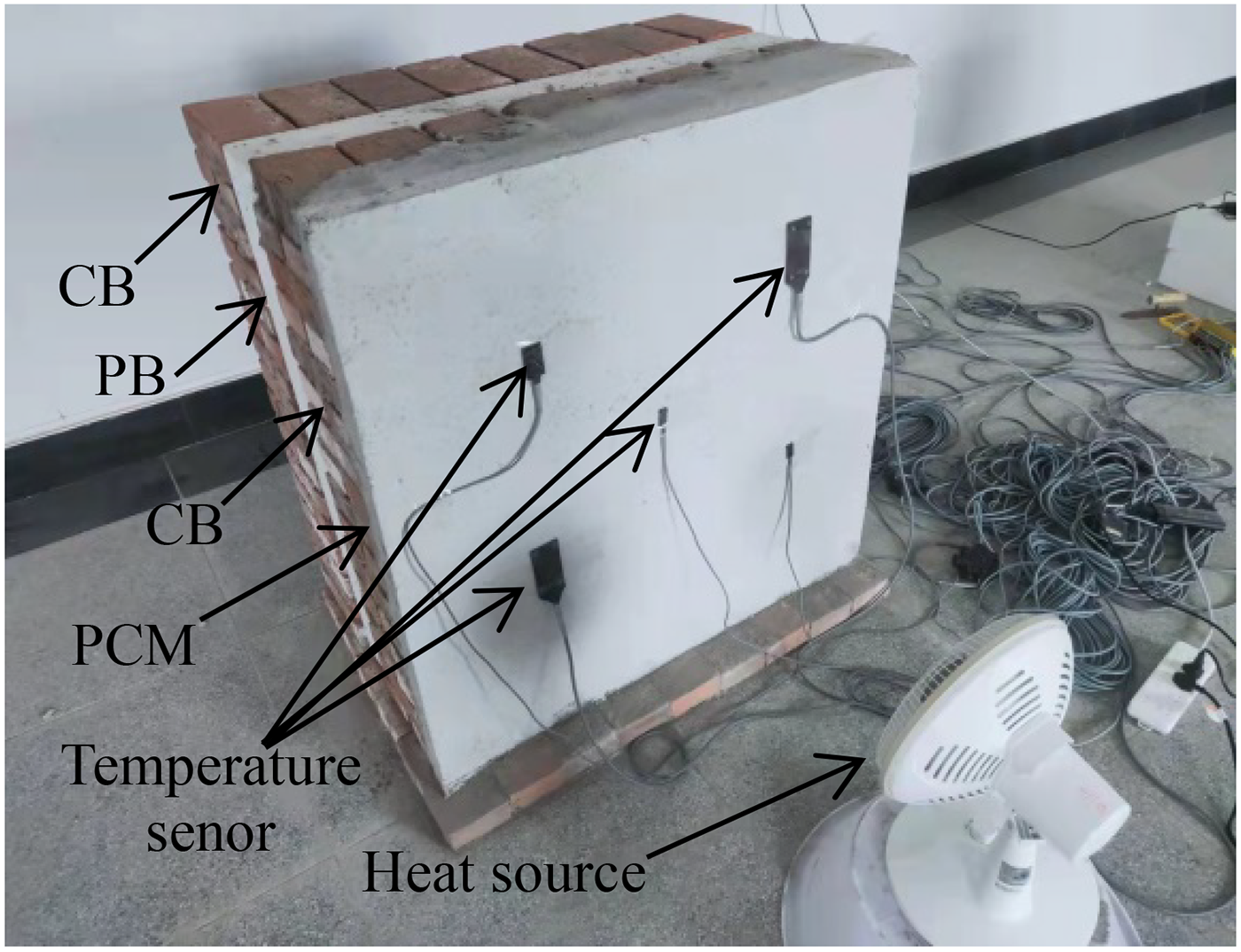
Schematic diagram of experiment.
Numerical simulation
In order to obtain the more realistic results, the simulation is 3D model by using CFD code of commercial software ANSYS-Fluent, which is consist of pressure based and transient simulation with gravity. As the air is regarded as a nonparticipating medium, the temperature boundary is directly loaded on the interior surface of PCM composite wall, which is obtained by the experiment under same condition. Meanwhile, the Gree FGH-10b electric radiator is also not taken into account. Therefore, the energy equation on is completely enough. The geometry of PCM composite wall is built by Design Modeler in commercial software ANSYS-Fluent, of which the mesh is a non-structure type of cuboid shape with the amount of 7200 elements and 8379 nodes. The mesh of PCM composite wall was shown in Figure 4. The analysis of phase transition heat transfer problem could be divided into two models according to the selected characterizing quantity: temperature method model and enthalpy method model. The temperature method model is used to regard temperature as the only dependent variable and establishes the governing equations in solid phase region, liquid phase region which is depended on the principle of energy conservation. However, the enthalpy model is used to take both enthalpy and temperature as the dependent variable and ignore the governing equation in different zones. Meanwhile, the enthalpy model is more easily embedded in the general heat conduction. Therefore, the enthalpy model is adopted for phase transition heat transfer in this study. The enthalpy method model solving is proposed to transform the regional solving problem into the nonlinear solving problem of the whole solving model. A unified energy equation on the whole model to solve is established. For the phase transition with the coexistence of two phases, since the two-phase region is limited between the curing temperature Ts and the liquefaction temperature Tl. The temperature distribution of the solid phase, the two-phase and the liquid phase should be determined to analyze the phase transition problem under this condition. The corresponding governing equation is as follows:
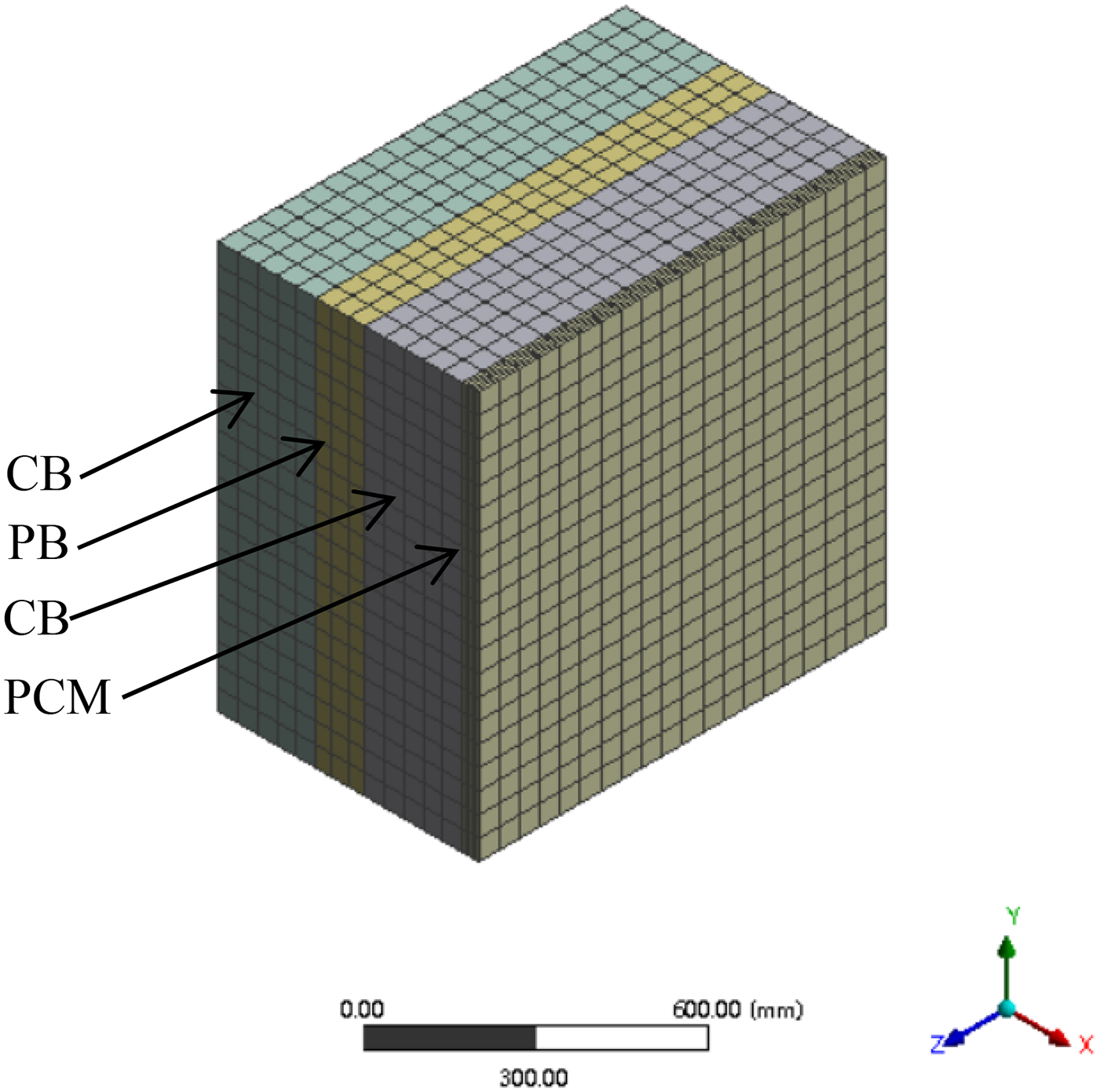
Mesh of PCM composite wall.
Where, T is the temperature, °C. Tr is the reference temperature, °C. ρ is the density, kg/m3. Cs is the specific heat capacity of a substance in the solidification interval, J/(kg·°C). Cf is the specific heat capacity of a substance in the liquefaction interval, J/(kg·°C). Tf is the melting temperature, °C. Ts is curing temperature, °C. Tl is liquefaction temperature, °C. L is latent heat fusion of liquid changing, J/kg. The initial environmental temperature is 20 °C. The heat convection of interior surface and exterior surface in PCM composite wall are 5 W/(m2·°C) and 15 W/(m2·°C) respectively (Zhou and Wang, 2017). The pressure-velocity coupling method is selected the simple. The spatial discretization is respectively selected the least squares cell based of gradient, second order of pressure, second order upwind of momentum, second order upwind of turbulent kinetic energy and second order upwind of specific dissipation rate. The interval solution time is fixed as 600 s with 20 iterations per time step. The total number of step is 48. The results are auto-saved by every time step.
As the thermal transfer process of PCM composite wall is very complex and hardly calculated, the following assumptions of the materials properties, environmental condition and calculated method are made to simplify the calculation process (Jiang and Liu, 2019; Cao et al., 2019a; Beltrán and Martínez-Gómez, 2019; Zhou and Wang, 2017; Wang et al., 2014; Selka et al., 2015; Wu et al., 2021):
The thickness of PCM composite wall is very smaller than the other dimensions. Hence, the heat transfer process across the PCM composite wall is simplified as a one-dimensional problem; Every layer of PCM composite wall is homogeneous and isotropic; No heat is generated in the layers of PCM composite wall; The heat convection effect of the melt PCM is completely neglected; The heat from people, devices and solar radiation are completely omitted; The thermal isolation of contact area between layers of PCM composite wall is completely neglected; Except interior surface and exterior surface of PCM composite wall, other boundary surfaces are completely adiabatic.
Under above assumptions, the numerical simulation is conducted by solely changing thermal parameter of PCM one by one, such as thermal conductivity, specific heat capacity, density and heat of fusion respective all changing from −40% to 40%.
Result
Validation of numerical simulation
During the numerical investigation on the heat release capacity of the active-passive PCM composite wall, the PCM layer is considered as variable specific heat capacity solid materials to save computational time and make convergence easier (Guan et al., 2020; Diarce et al., 2014). However, in current research, in order to reflect the realistic thermal transfer process of PCM composite wall, the physical state changing of PCM in numerical simulation is scientifically considered, even if the simulation will spend more computational time and make convergence harder. The numerical temperature evolution of PCM composite wall during heat and cool process are shown in Figure 5. Obviously, the temperature results of PCM composite wall interior surface’ center are more higher than others. The maximum temperature is 39.55 °C at heating 4 h, which is higher than the melt point of PCM. The temperature gradient of PCM composite wall interior surface is a gradually descend form center to the around. According to the transverse section of temperature gradient in PCM composite wall, the temperature of PCM layer is very higher than the other parts, which is illustrated that almost majority of heating is absorbed by PCM during the physical state changing.
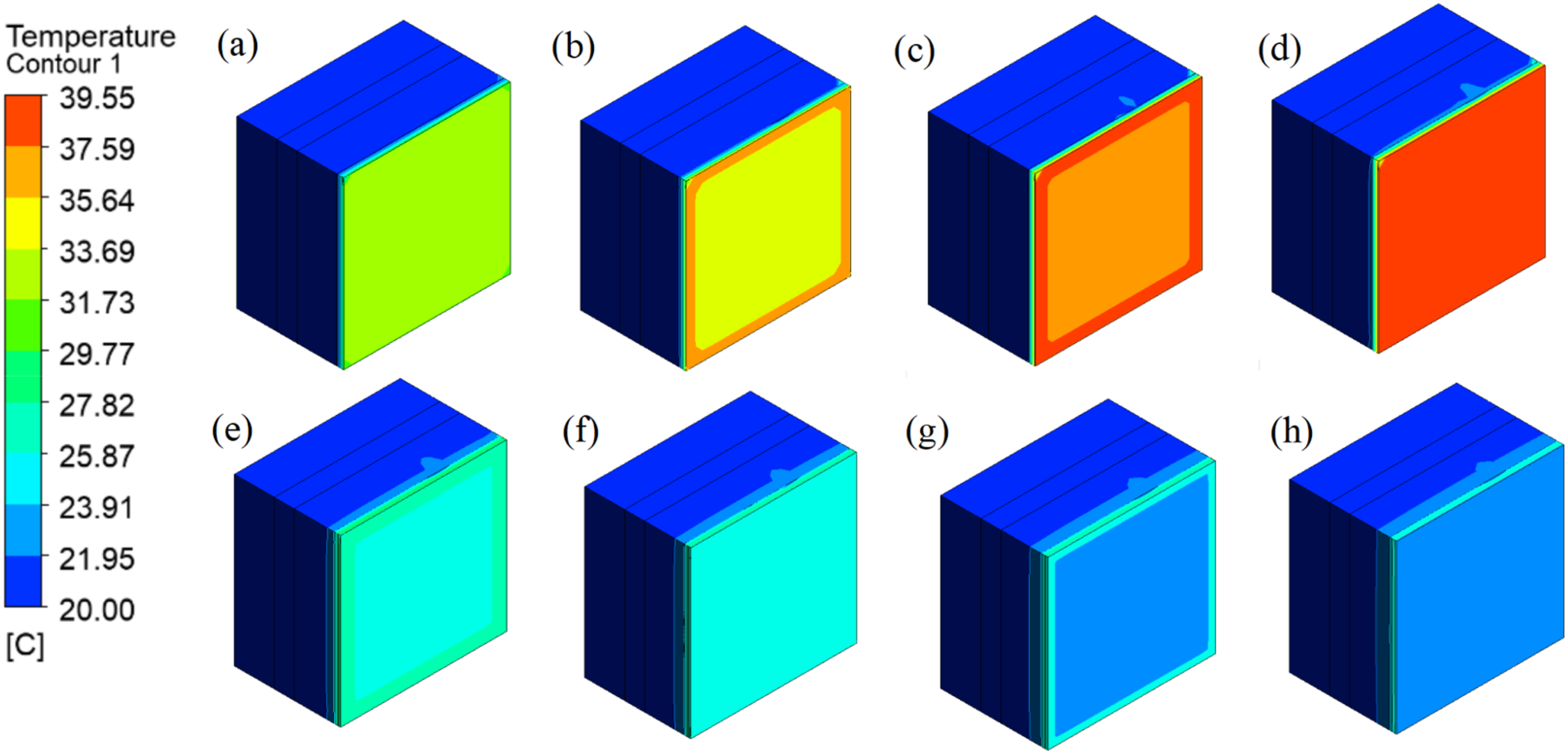
Numerical simulation temperature results of PCM composite wall at different time: (a) 1 h, (b) 2 h, (c) 3 h, (d) 4 h, (e) 5 h, (f) 6 h, (g) 7 h, (h) 8 h.
To ensure that the numerical simulation results are accurate enough to analyze the thermal transfer characteristic of the PCM composite wall, the temperature monitoring results of the PCM layer interior surface in numerical simulation and experiment under same condition are completely extracted, which is shown in Figure 6. As the numerical simulation of PCM composite wall thermal transfer is simplified to a one-dimensional calculation, the monitoring temperature point is located in the center of PCM's interior surface, which is corresponding to the center tested results of temperature senor. While, the monitoring temperature point is highlight by black color in Figure 6(a). According to Figure 6(b), the temperature fluctuation is obviously existed in the curve of numerical simulation result. It is illustrated that the physical state changing is generated during the heat process. The error analysis between numerical simulation with experiment temperature results of PCM composite wall is conducted by interval analysis (IA) method, which is expressed as follow (Rocca et al., 2020):
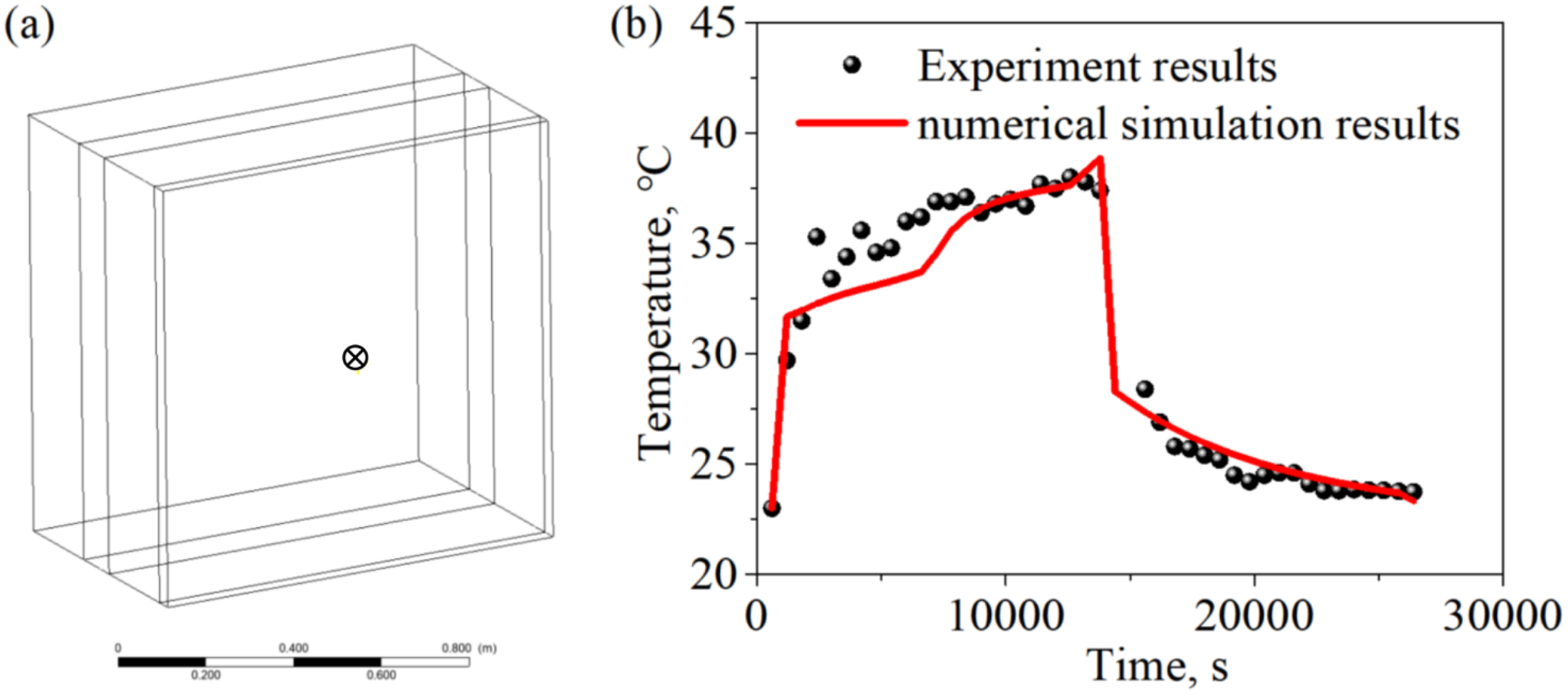
The results comparison between numerical simulation and experiment: (a) location of monitoring point, (b) curves of temperature monitoring result.
Where, x is stand for numerical simulation results; y is stand for experiment results;
Effect of solo thermal parameters on PCM composite wall
Temperature distribution
In order to analysis the effect of the thermal parameters on temperature gradient of PCM composite wall, the center transverse path is selected as shown in Figure 7. According to Figure 7, the temperature gradient at final heating time of center transverse path is shown in Figure 8. As can be seen from Figure 8, the maximum temperature of the center point in interior surface is completely dependent on the contrary tendency changing of thermal parameters, such as thermal conductivity, specific heat capacity, density and heat of fusion. The maximum temperature's fluctuation range of the center point in interior surface under different thermal parameters are larger influenced by density rather than that of the other thermal parameters. Meanwhile, the minimum fluctuation range of the center point's maximum temperature in interior surface is generated by specific heat capacity changing. It is worth to mentioned that the distribution pattern of maximum temperature and second maximum temperature in PCM composite wall are completely different, as shown in Figure 8(a). For −40% of thermal conductivity, the maximum temperature of PCM composite wall is largest. However, the second maximum temperature of PCM composite wall is lowest. This phenomenon is expected. Because the heat transfer through the PCM composite wall is directly proportional to the thermal conductivity, thereby reducing the heat storage and release of PCM composite wall, leading to a decline in energy consumption for maintaining the suitable indoor climate for Chinese solar greenhouse (Cao et al., 2019b).
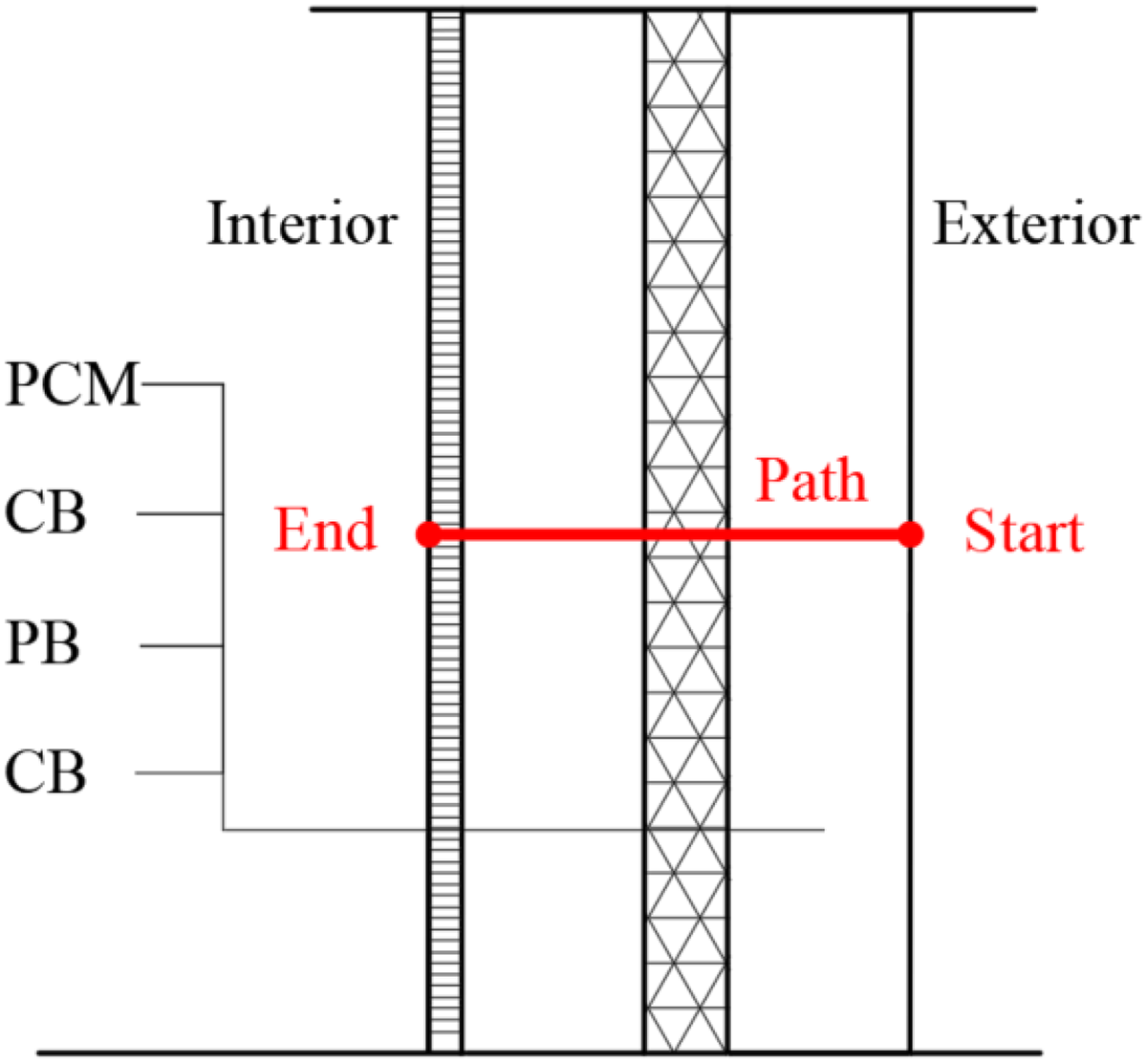
Location of center transverse path.
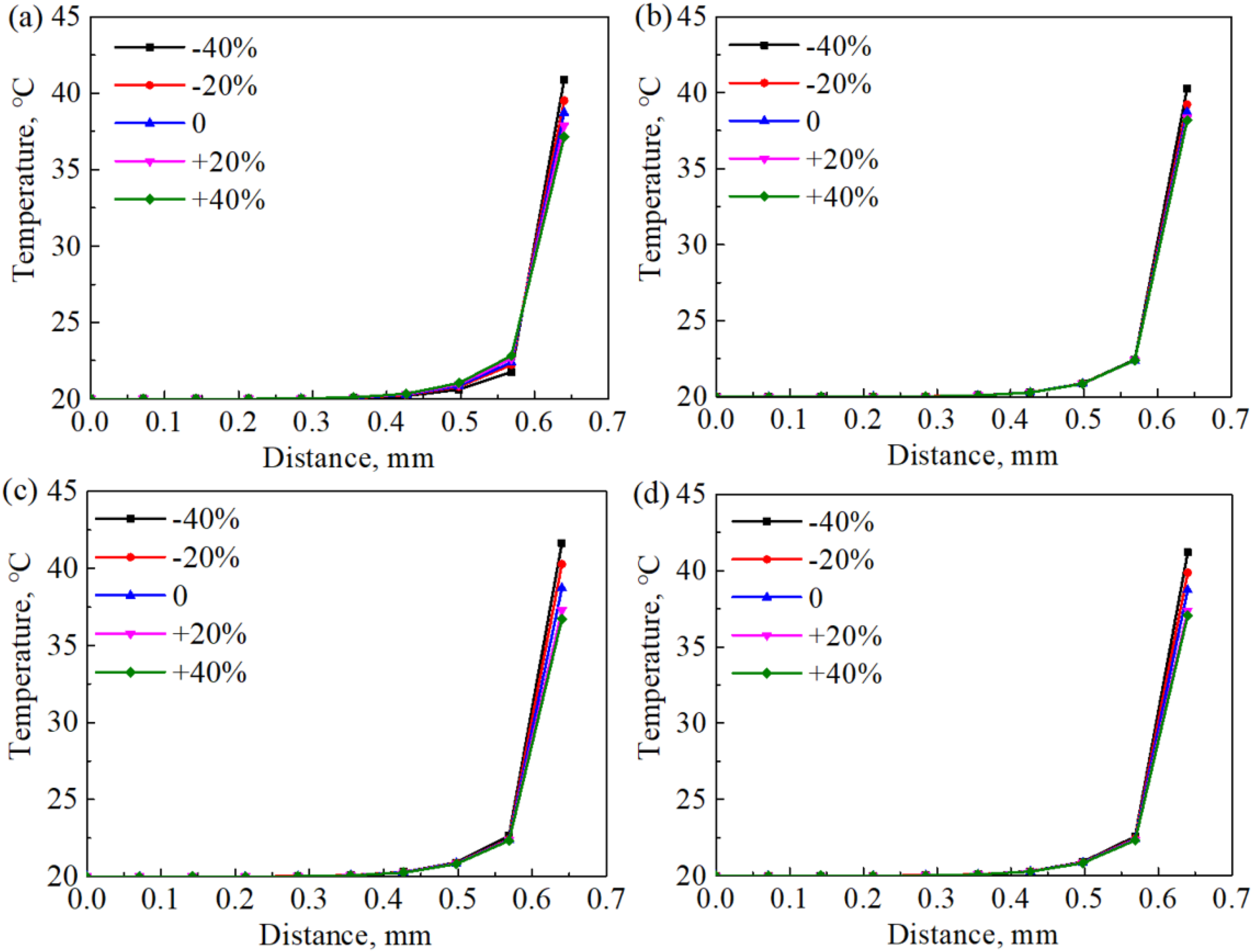
The effect of thermal parameters on center transverse path temperature on final heat time: (a) thermal conductivity, (b) specific heat capacity, (c) density, (d) heat of fusion.
Figure 9 is the effect of thermal parameters on center transverse path temperature on final cooling time. It is obviously that the most of interior surface center's maximum temperature of PCM composite wall are directly proportional to thermal parameters changing, except the specific heat capacity. The maximum temperature is all located in the middle zone of PCM layer. It is strongly demonstrated that the more energy can be storage in PCM rather than other parts. It can be seen from Figure 9(b) that the temperature distribution of center transverse path in PCM composite wall is almost unaffected by specific heat. As shown in Figure 9(a), contrary to the tendency of temperature distribution at final heating time, all the temperature distribution of center transverse path is directly proportional to the thermal conductivity changing. It is illustrated that the energy absorbing of PCM is reduced by the lower thermal conductivity. The lower temperature variation within the melting temperature range of PCM is significantly enhanced by lower thermal conductivity, which is promote for minimizing the effect of the phase change. Therefore, a lower enhanced efficiency of PCM layer is caused (Fateh et al., 2017). By comparing Figure 9(c) and (d), the temperature distribution tendency of center transverse path is almost similar influence by density and heat of fusion changing. However, the effect of density changing on temperature distribution tendency of center transverse path is more strong. Only the thermal conductivity increasing is benefit for increasing interior surface temperature of PCM composite wall at final cooling time. The thermal conductivity is the physical quantity to characteristic the ability of a material to transfer heat. In addition, the heat storage capacity is a parameter, which is used to express a ability of material to store or release thermal energy (Chen et al., 2018; Xiao et al., 2009). When the thermal conductivity is relatively lower, it is very difficult for PCM composite wall to transfer the heat to the indoor environment from outdoor environment. The effect of the heat storage and release on the energy performance is very limited, while the thermal conductivity is the mainly significant effect for stabilizing the indoor temperature (Cao et al., 2019b; Yan et al., 2013; Ait Kaci et al., 2013; Long et al., 2017). Consequently, According to Figures 8 and 9, the thermal conductivity of PCM is the only factor for PCM composite wall to reduce the temperature at final heating time and increase temperature at final cooling time.
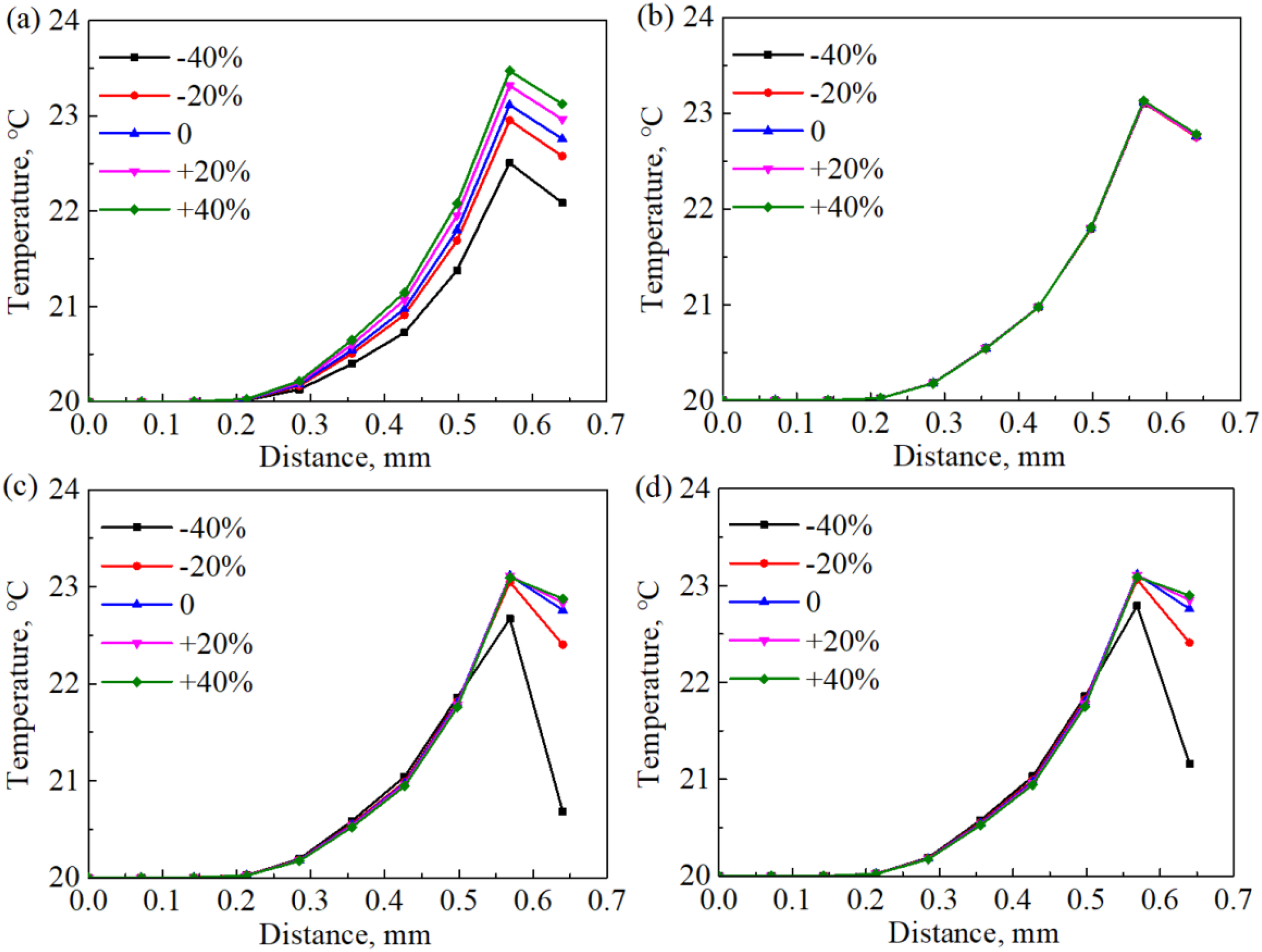
The effect of thermal parameters on center transverse path temperature on final cool time: (a) thermal conductivity, (b) specific heat capacity, (c) density, (d) heat of fusion.
Temperature evolution
The energy transfer mechanism of PCM composite wall in Chinese solar greenhouse is almost focused on the heat-storage and heat-release process of PCM. In realistic experiment of Chinese solar greenhouse, the energy transfer mode is very composite, which is involved the solar radiation, heat condition of the enclosures, natural and forced convection transfer and so on. For PCM composite wall to sustain a suitable climate for crop growth, the heat is largely absorbed by PCM in daylight, then released at night. Therefore, in current research, the important context is focused on the heating storage and release of PCM composite wall by temperature increasing and reducing. The effect of thermal parameters on temperature evolution of center monitoring point in interior surface is shown in Figure 10. It can be obviously seen that the temperature evolution tendency of center monitoring point in interior surface is also very obvious and inversely proportional to the thermal parameters changing. It is worth to mention that the effect of specific heat capacity on temperature evolution tendency of center monitoring point in interior surface is relatively minimum, as shown in Figure 10(b). By comparing Figure 10(a)–(d), the initial temperature center monitoring point in interior surface is only influenced by thermal conductivity. The effect of density and fusion of liquid changing on temperature evolution tendency of center monitoring point in interior surface are almost similar. However, the influence of density is more enhanced than that of fusion of liquid.
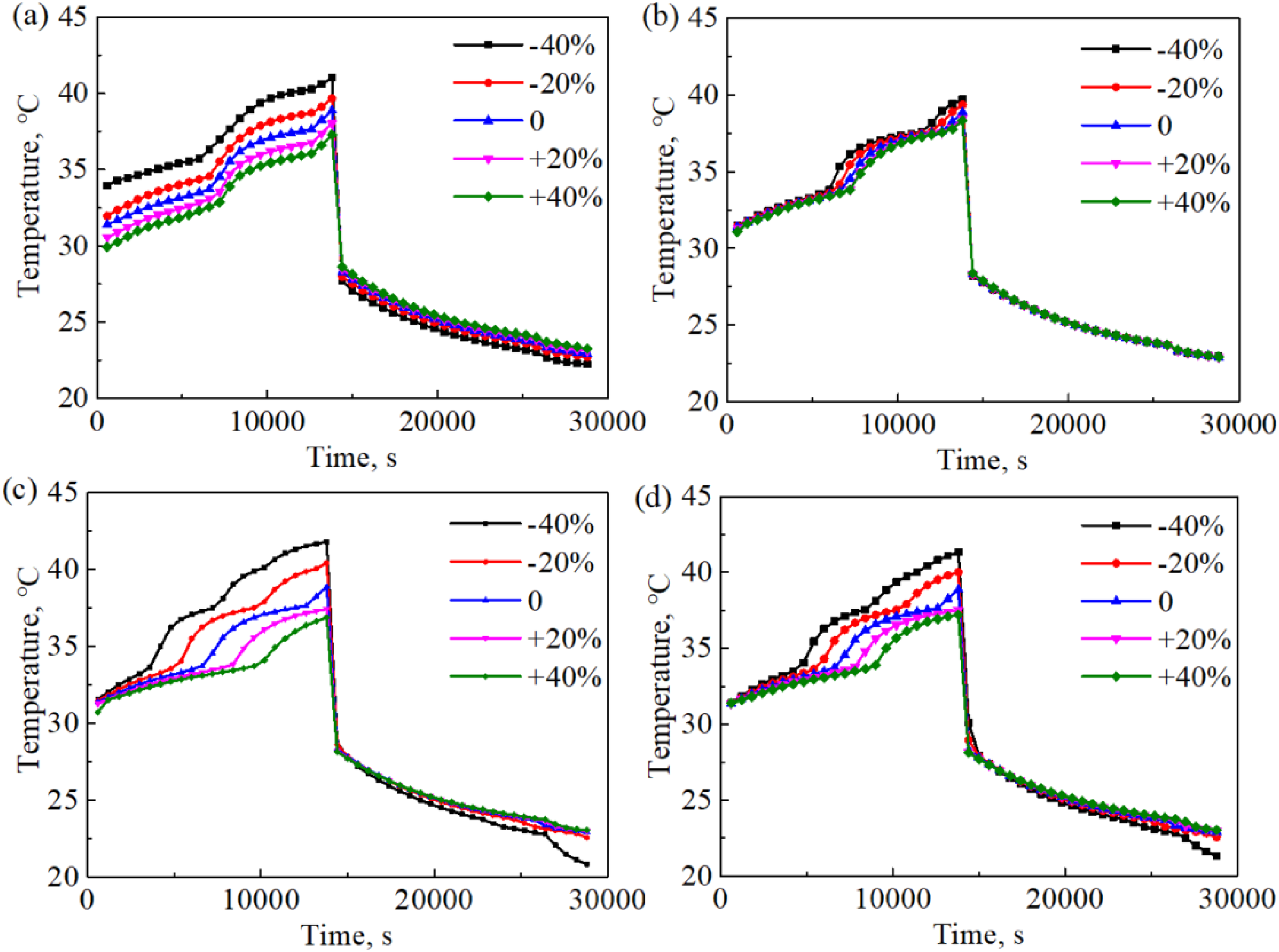
The effect of thermal parameters on temperature evolution of center monitoring point in interior surface: (a) thermal conductivity, (b) specific heat capacity, (c) density, (d) heat of fusion.
Figure 11 is the effect of thermal parameters on PCM's liquid fraction. It can be obviously seen that the liquid fraction of center monitoring point in interior surface is directly proportional to the thermal conductivity changing and inversely proportional to the other thermal parameters, such as specific heating, density and fusion of liquid. The influence of density and fusion of liquid changing are more enhanced than that of thermal conductivity and specific heat capacity. Consequently, a conclusion is obtained that the density and fusion of liquid changing are more significant for improving the storage and released capacity of PCM. In addition, the phase changing can be obviously seen in PCM layer. During the heating process of PCM composite wall, the increasing temperature of center monitoring point in interior surface is an obviously fluctuated process. It is illustrated that the phase changing is generated in the PCM layer leading its thermal conductivity changing (Guan et al., 2020; Kooli et al., 2015; Arfaoui et al., 2017).
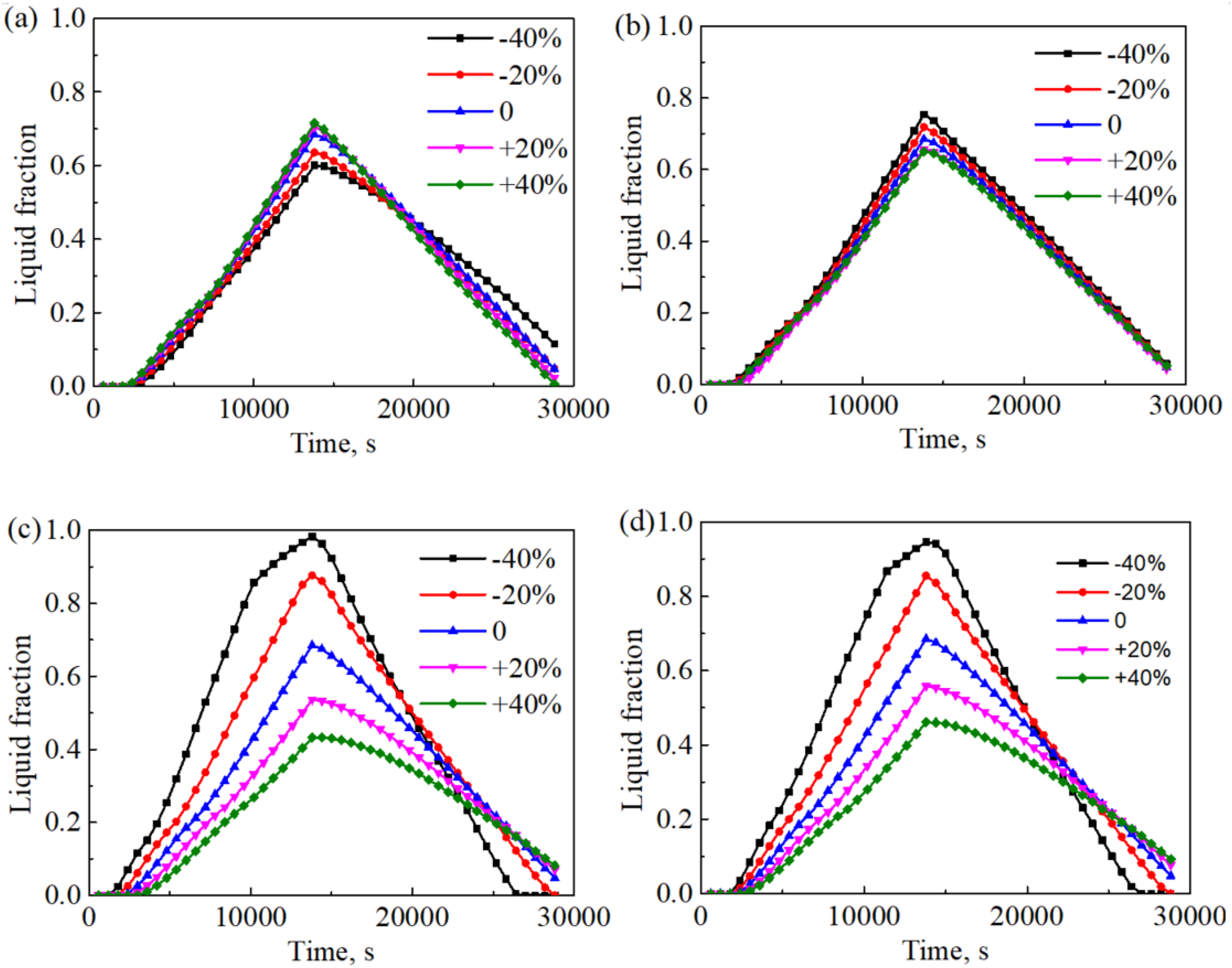
The effect of thermal parameters on PCM's liquid fraction: (a) thermal conductivity, (b) specific heat capacity, (c) density, (d) heat of fusion.
Effect of composite thermal parameters on PCM composite wall
Discussion
The indoor temperature environment of Chinese solar greenhouse is sustained at a suitable range for improving crop growth by using latent heat of phase changing in PCM. As the energy is storage and released by altering the phase of the PCM, the phase changing temperature is necessary belong to the specific range of desired and stable indoor temperature climate. For the material selection of PCM in Chinese solar greenhouse, the properties of the PCM are basically satisfied for the requirements as follow (Beltrán and Martínez-Gómez, 2019; Yan et al., 2013; Ait Kaci et al., 2013; Long et al., 2017; Omara et al., 2020; Benli and Durmuş, 2009; Berroug et al., 2011; Boulard et al., 1990):
High fusion of liquid per unit volume and unit weight are benefit for gaining more effect from heat storage with a small as possible volume of PCM; The melt point of PCM should be suitable for application, while the phase change temperature is necessary to accordance with the indoor climate, location in the composite wall of Chinese solar greenhouse; Outstanding chemical stability and resistance corrosion ability; If the encapsulation is ruptured or fire, the PCM is harmless and nontoxic; Reproducible crystallization without degradation; Low volume changing coefficient during solidification to avoid destroying the structure of PCM composite wall; The PCM should be more abundant and cheap, which is desired to provide an competitive advantage among manufactures.
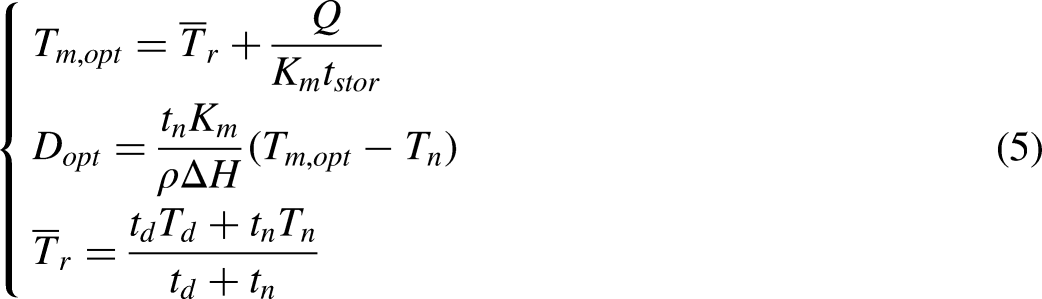
Under all above requirements, the relationships between PCM composite wall heat storage and release performance with thermal conductivity, specific heat capacity, density, fusion of liquid are necessary to be systematically and scientifically discussed. In order to analysis the thermal conductivity and heat preservation performance of PCM composite wall in engineering applications, the formula of thermal conductivity under transient heat transfer can be expressed as follow (Jiang and Liu, 2019):


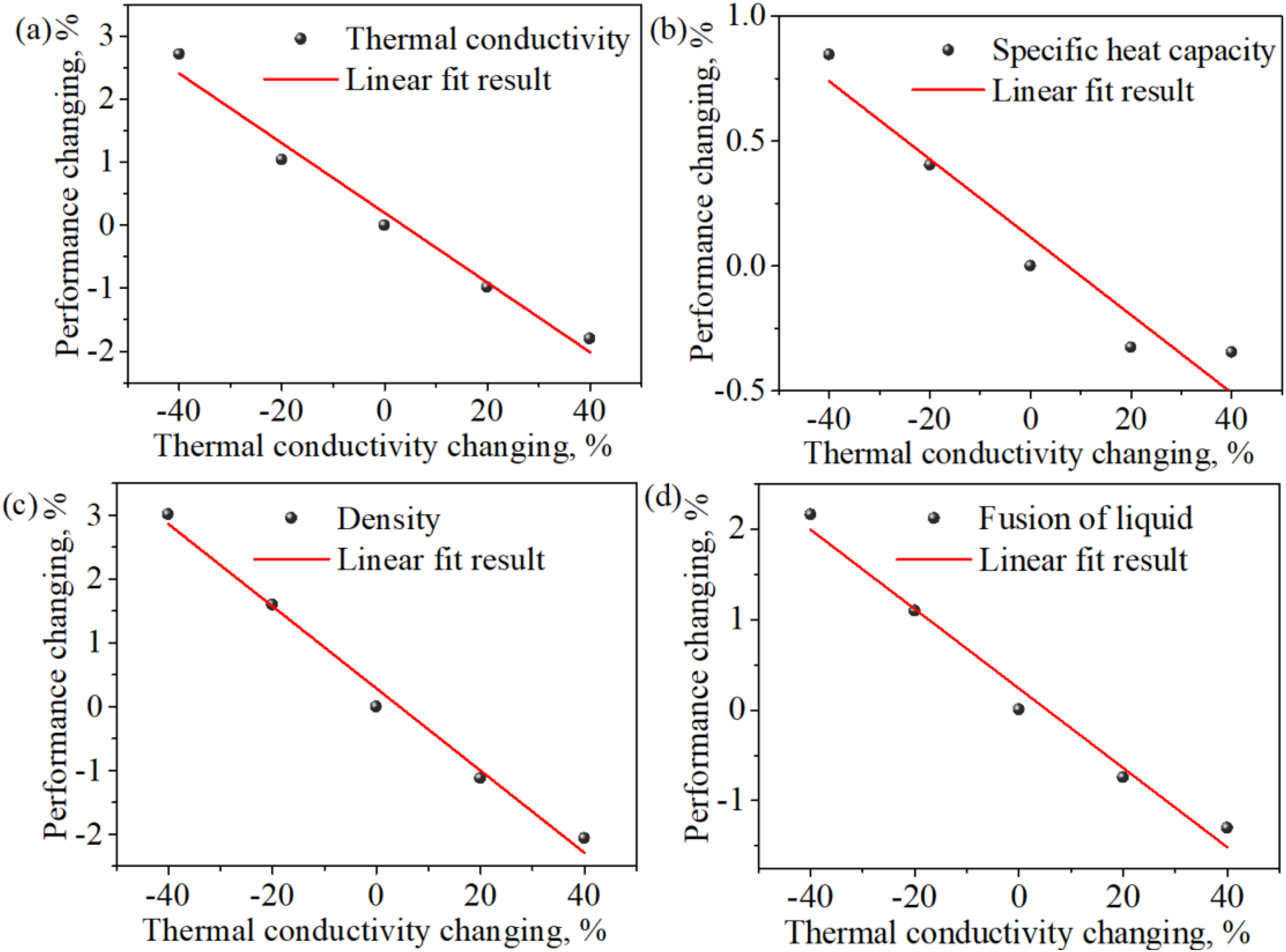
Heat storage and release performance changing of PCM composite wall under different thermal parameters changing: (a) thermal conductivity, (b) specific heat capacity, (c) density, (d) heat of fusion.
Where,
Conclusion
A numerical investigation about the effect of thermal parameters (such as thermal conductivity, specific heat capacity, density and latent heating capacity) changing on heat storage and release performance of PCM composite wall are systematically conducted and discussed by CFD code in ANSYS-Fluent commercial software. The main investigation results are as follows:
The results of the CFD numerical simulation are scientifically and reasonably validated by the experimental results under the same condition by curves of temperature monitoring result and error analysis of IA method respectively. the IA result of numerical simulation and experiment is 0.96, which is illustrated that the numerical simulation of PCM composite wall is significantly accurate and reliable. The maximum temperature of the center point in interior surface is completely dependent on the contrary tendency changing of thermal parameters at heating time, of which is directly proportional to thermal parameters changing at cooling time, except the specific heat capacity. While only the thermal conductivity increasing is benefit for increasing interior surface temperature of PCM composite wall at final cool time. When the solar radiation energy is approximately stable constant during the daylight and night in the same season, the lower value of The PCM application in CSG would be efficiently saved energy, which is benefit for alleviating the global energy crisis. The limitation of this paper is that the thermal parameter changing is only realized under numerical simulation. In addition, Increasing density is a fast and efficient method for improve the insulation performance of PCM in future study.
Footnotes
Declaration of conflicting interests
The author(s) declared no potential conflicts of interest with respect to the research, authorship, and/or publication of this article.
Funding
The author(s) disclosed receipt of the following financial support for the research, authorship, and/or publication of this article: This work was supported by the China Postdoctoral Science Foundation Funded Project, Key Research and Development Projects of Liaoning Province, (grant number No.2021M693862, No.2021JH210200022).
Institutional review board statement
Not applicable.
Informed consent statement
Not applicable.
Data availability statement
The data presented in this study are available upon request from the corresponding author.
