




Abstract
Recent technological advancements demand IEPM for sustainable energy development through the induction of advanced computational techniques. However, the applicability and outcomes of such modeling tools vary due to underlying limitations in addition to gaps within the energy sector. This study uses a three-pronged approach to determine the potential of IEPM in shaping sustainable energy systems, particularly for Pakistan. Findings suggest that the main hindrances in sustainable electricity generation in Pakistan are over dependence upon thermal fuel mix and partial achievement of national energy policy targets. A review of the public sector plans, researches, and historical energy mix of Pakistan affirms that all efforts are targeted towards least cost electricity production without considering social and environmental impacts. All past studies projected energy supply and demand to ascertain future implications, but no one suggested sustainable alternatives for meeting national energy targets. Findings of this study necessitate upon development of a fair, consistent, long-term and sustainable IEP with clear policies to overcome sectoral bottlenecks and attain a high growth trajectory. A review of modeling tools, their applications and limitations, carried out in this study, suggests the adoption of the LEAP model for realistic IEP for Pakistan. This considered LEAP’s strengths in terms of energy-environment nexus, strong-accounting and scenario-building, bottom-up/top-down approach, user-friendliness, and spatial-temporal flexibility.
Introduction
In wake of recent international and national commitments on the energy-environment nexus, Pakistan is bound to shift its development to a sustainable trajectory. Sustainable energy planning ensures that plan is long-term, flexible against unexpected changes, and well consulted with the stakeholders. This altogether reflects that the generation, supply, and utilization of energy are cost-effective and efficient. Additionally, the induction of clean energy technologies, a decent renewable-share, and energy intensities are considered during the planning process. For the case of Pakistan, the energy and electricity sectors are the most challenging. The current proportion of the total population with access to electricity and natural gas supply are only 62% and 25%, respectively. Although a huge efficiency potential of 3500 MW is available within the power sector but its operational efficiency ratio is insufficient. According to international observers, the main obstacles in sustainable energy development are energy poverty and the demand supply gap (WRI, 2017).
In the present world, realization for sustainable development has opened venues for advanced planning and modeling techniques for energy systems. Those are expected to address all market variations, fuels, technologies, policies, institutions, and infrastructures (Farooq et al., 2013, Cheema and Javid 2015). Accordingly, IEP based software tools/computational models are being introduced to meet energy sustainability criteria which altogether revolutionized energy planning and modeling processes. Such tools perform simulations for comparison and categorization/classification of alternative scenarios, constraints identification for negative cost prospects, optimized costs and long-term returns of short-term investments, and weighing outcomes (Zeng et al., 2011, Rehman et al., 2017). Therefore, these models are complex and multi-variable due to data challenges and computations for meeting sustainability criteria.
Objectives
This study aims to determine the potential of IEP computational models, specifically for Pakistan. Achieving long-term, modern, efficient, reliable and affordable energy supply is also a common goal of national and international commitments. Successful development of such plan would not only address the deep-rooted energy crisis but also ensure clean and sustainable energy.
To achieve this main objective, following sub-objectives were devised;
Understanding IEPM for sustainable energy and power development and its analysis Identification of challenges in energy sustainability of Pakistan, and Analysis of IEPM tools and applications to suggest the most suitable IEPM tool for Pakistan.
Methodology
A three-pronged methodology was devised to meet objectives of this study (Fig. 1). Firstly, the concept of sustainable energy development and its connection with IEP approach was briefly explored with the view to understand the potential of IEPM in shaping sustainable energy and/or power system. Secondly, in order to identify gaps in energy and power sector of Pakistan, an in-depth study of energy policies and energy mix was carried out through literature review and consultations with energy environment experts. This involved an in-depth review of country's policies highlighting energy environment aspects for sustainable energy planning, and sectoral analysis based upon current and historical fuel composition of national energy mix, supply demand flows, renewable energy input, clean energy potential and sectoral emissions. Lastly, modern IEPM software and decision aids were compared to determine their effectiveness and limitations in modeling sustainable systems. Emphasis was laid upon assessment of IEPM efforts carried out in Pakistan.
Analysis
Sub-objective i: IEPM for sustainable energy development
Environmental quality and energy systems are strongly linked to sustainable development. This relationship has reformed energy development processes, their valuation, and policymaking. Globally, environmental significance is also backed with historically high emissions from the energy sector. During 2017 alone, energy sector emitted 32.5 GtCO2eq. which contributed an overall 80% of CO2 and two third of GHGs. The World Bank reported that during that era, the US posed the least impact due to increased renewable share in energy-mix (Bashir et al., 2018).
On the other hand, developing countries are paying less attention to clean energy development. This is evident from the CO2 global emission projections for the year 2030, during which emissions from non-Annex I countries would exceed than those from the Annex I's countries by 61% (IEA, 2008). Its contributing factors include electricity demand growth, financial implications, dirty fuel use, and technological and technical barriers (Koh et al., 2011). Conversely, sustainable development must be attained with zero emissions and environmental impacts. Therefore, to address all such energy environment issues, the concept of sustainability has been integrated into energy planning (Shaaban et al., 2018, Rosen 2009).
Historically, the concept of “sustainable development” was first reported in WCED 1987 (WCED, 1987), as “development that meets the needs of the present without compromising the ability of future generations to meet their own needs”. With progression in the energy environment sustainability trio, the earlier concept was extended. One such term is ‘sustainable energy’ i.e. “a safe, environmentally sound, and economically viable energy pathway that will sustain human progress into distant future is imperative” (Brundtland 1987). The 7th goal of United Nation's 2030 Agenda for Sustainable Development also reflects the requirement for affordable, reliable, sustainable, and modern energy, fostering the objectives of the Sustainable Energy in all initiatives (United Nations, 2016). Hence, this term (sustainable energy) describes the availability, usage, and economic cost of environmentally sustainable energy supply (Ness et al., 2007). It also determined US energy security (Terrapon-Pfaff et al., 2014) and good practices (including the 4Rs and their inter linkages) (Stambouli et al., 2012), and its deterministic role in efficient supply portfolios (Tsai, 2010).
Another term, ‘energy sustainability’ (Liu, 2014) was also introduced and referred to in many studies (Singh et al., 2009; Awerbuch, 2006; Pohekar et al., 2004) to describe the current and future provision of sustainable, continuous, affordable, sufficient, accessible, acceptable, and environmentally safe energy services to everyone. It was later discussed to relate other dimensions (Kruyt et al., 2009, Salameh, 2003, Hughes, 2009) including spatial and temporal patterns of energy usage (Li and Li, 2017). Hence, the importance of policy regulation to enhance energy sustainability, including control over energy wastage by restricting its over consumption, cannot be neglected (Bohi and Toman 1996). However, financial liabilities of such green policies e.g., energy tax (Markandya and Pemberton 2010), carbon tax (Shukla et al., 2008), etc., considered during pre-assessment of those measures (Cellura et al., 2018, Sreekanth, 2016). This offers reduced water footprint and GHG emissions, resulting in the evolution of low carbon societies (Mekonnen et al., 2016).
More recently, both above concepts were connected to represent the single yet a broader theory of IEP. IAEA (IAEA, 2008) defined IEP as, “systematic analysis of all factors that influence the evolution of energy systems. It facilitates problem solving and makes it possible to explore linkages, evaluate trade-offs and compare consequences, thereby helping countries to develop an effective energy strategy that supports national sustainable development goals”. Following this, integrated approaches were analyzed to explore the importance of energy policy planning for GHG mitigation and sustainable energy development for cities and territories (Mirakyan and De Guio, 2015). This was facilitated with the IEP framework which integrates all sectors of economy/society at all levels of energy plan to address the cross cutting aspects of sustainable development. In absence of this, IEP is a mere abstract with unrealistic and intangible outcomes.
Nowadays, various models for IEP and IEPM are considering energy system uncertainties to achieve sustainable outcomes. However, these are not limited to a one-time plan or a computational model but rather built upon a dynamic structure for planning, investment, decision making, and execution. Such a model covers all steps including stakeholder commitment and communication, consideration of future risks and uncertainties, alignment of short-term actions with the set long-term strategy, and tools for analyzing alternatives. These involve drivers of poverty, equity, environment, and energy. In addition, they also compromised of comprehensive resource management plans with consideration of adverse impacts, for the implementation of strategic, and, regulatory, development programs by global, regional and national institutions.
Thus, overall output is improved decision making with firm political commitment, financial guidance on infrastructure planning for energy, and enhanced policy results. In short, such models can be referred to as the foundation of sustainable energy development for seeking the most effective strategic pathway in the best optimal mode. Detailed analysis of IEPM tools and techniques is presented in section 3.3.1.
Sub-objective ii: Energy sustainability challenges of Pakistan
Energy sector composition
Since the independence of Pakistan in 1947, the energy and power sectors faced drastic challenges. The nascent country had 60 MW of electricity generation capacity for 4.5 units/capita, which evolved to 38,719 MW at 710.5 kWh/capita during 2020 (NEPRA, 2020). Yet, this limited capacity is facing the world's highest rates of T&D losses causing shortfall peaks to approximately 7000 MW (GoP, 2020). Hence, needs of the world’s 5th most populous nation are hardly met. Some of the main sustainability challenges identified in this study are presented in Figure 1.
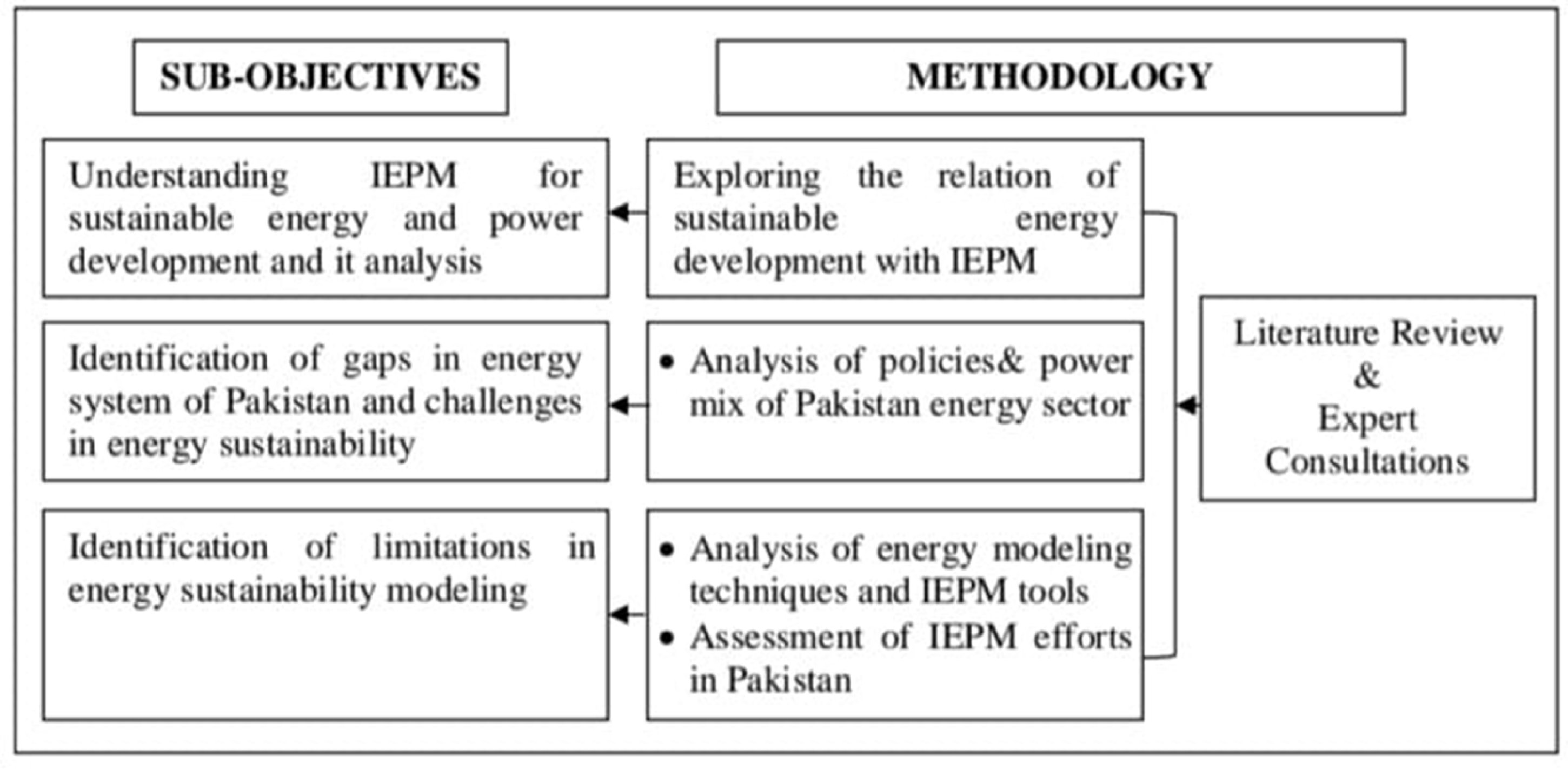
General Plan of Methodology.
During past 71 years, fuel dependency for electricity generation switched between thermal (1947–1959, 1964–1968, 1976 and, (1989–2012), and hydropower (1960–1963, 1969–1975, and 1977 1988) (GoP, 2020). Currently, 66% of the total electricity's installed capacity comes from thermal power whereas; hydropower and R.E represent only 9.7%, and 5.5%, respectively. The renewable based capacity of 2147 MWh, supplied 4304,91 GWh electricity from solar (23.6%), bagasse (26.7%), and wind (49.7%) resources during 2020.
In Pakistan, 28% population lacks access to modern energy. In terms of electricity and natural gas consumption, past trends prevailed at an annual average growth rate of 4.54% since the beginning of the 21st century. Although Pakistan has one of the highest electrification rates among developing countries which are indicative of economic prosperity but its electricity consumption per capita is a quarter of the world's average. This unmet energy demand particularly affected the domestic sector which alone posted an average annual growth of 5.94% (HDIP, 2020).
Meanwhile, the reliance of domestic and industrial sectors inefficient electricity generators and compressor devices increased, which amplified the usual cost of energy usage and GHG levels. This reflects a deeper crisis in energy policy making, governance, and regulation. Other problems of Pakistan's energy sector include over reliance on expensive imported fuel oils, energy security issues, personal interests, poor management, and consequent policies.
In past, uncontrolled circular debt represented 4% of GDP during peak load shedding [50]. Contrary to huge R.E. potential, a very few household/community based R.E. projects are operational. Barriers in harnessing R.E. also include its intermittent nature, location confinement, and weather dependency. Furthermore, technological, institutional, and capacity limitations, high initial investment, market variations, cultural/social perceptions, etc., are also limiting factors which provide hindrances in effective utilization of RE potential.
To tackle supply shortfall, the government has presented its Green Growth Agenda. Some short-term actions taken within the last few years include the enhancement of indigenous fuel capacities for power generation, diversification of fuel imports, and strengthening inter regional alliances. This resulted in considerable cuts in the frequency of load shedding in urban areas as compared to 16 to 18 h black out during 2013 (Khokhar et al., 2015).
The development of R.E. based power generation projects is being pursued through private investors. During the year 2020, 24 wind projects of 1233.37 MW, 06 solar projects of 430.00 MW, and 08 sugar mill bagasse based co-generation projects of 259.10 MW were operational whereas, one project of 74.40 MW capacity is under construction. Currently, the government is carrying out some energy projects with the foreign technical and financial assistance. Dedicated efforts are being made to ensure that CPEC translates into a game changer. Furthermore, 7650 MW coal power plants are planned to be installed with an investment of US $ 27.6 billion to increase energy security and reduce energy poverty (GoP, 2020). As per the government's future energy projections, relatively cleaner energy sources such as hydro, renewable, coal, and nuclear would replace expensive and dirty energy generation from fuel oil.
Energy sector emissions
Among the South Asian countries, urbanization trend in Pakistan is the second fastest. Its Global Environmental Performance and Environmental Health sub-index ranks at 142 among 180 countries and 176th position, respectively (Wendling et al., 2020). Furthermore, the Global Climate Risk Index-2021 (Eckstein et al., 2021) places Pakistan at the 8th position because of the long-term effects from climate change and, fatal consequences due to extreme climate vulnerability. Air pollution alone accounts for one-fourth of the annual death toll in Pakistan, in addition to the associated welfare losses and forgone labor.
Being at receiving end of the climate impacts, Pakistan is one of the least GHG contributors and ranks 19th position globally and 3rd regionally (GCISC, 2018). Strikingly, the per capita energy consumption and cumulative CO2 emissions are also extremely low i.e., 2.4 tCO2eq. but emissions per unit of energy consumption are relatively high (GoP, 2021a). The first GHG inventory of Pakistan (Athar et al., 2009) reported a total of 310 MtCO2eq emissions in year 2008 which increased to 489.87 MtCO2eq. in 2018 (GCISC, 2018), exhibiting 218.94 MtCO2eq alone from the energy sector. Thus, this area needs priority in terms of Pakistan's mitigation efforts.
Energy environment policies and international obligations
Following the 1970's global oil crises, countries started exploring more reliable and efficient means for energy generation and supply. However, in the case of Pakistan, the only notable step was the formulation of policy for development of renewable energy for power generation in 2006. It was the country's first major initiative towards the inclusion of small hydro, solar, and wind technology in the power mix, which, however, remain unimplemented. Upon its expiry in 2018, the new Alternative and Renewable Energy Policy 2019 (GoP, 2020) targeted a share of 20% from renewable resources in power mix by 2025 and 30% by 2030. It is expected to expand previous policy by the inclusion of all provincial entities in planning, competitive bidding, and procurement of large-scale projects. It also envisions to promote off grid rural electrification and village level energy services, business to business (B2B) methodologies, and distributed generation systems. Development of its ‘implementation strategy and action plan’ is supported by the World Bank.
The National Power Policy 2013 (GoP, 2013) was the first comprehensive strategy for the development of efficient, consumer centric power generation, and T&D system to meet population needs and to boost the economy sustainably and affordably. Its principle i.e., “efficiency, competition and sustainability for supply demand gap reduction, affordability, efficiency through decreasing T&D losses, financial viability and collections, and governance”, was set to achieve targets by 2017. However, its goals regarding complete eradication of the supply demand gap by 2017 and a power surplus for regional trading by end of five year could not be realized. Earlier, in the Power Plan 1994, the government declared various steps to promote the role of private power sector which was also reflected in subsequent policies and modifications in 1995, 1996, 1998, 2003, 2008, 2011, 2012, and 2014 to pace with growing energy needs. It also aimed for load forecast, generation planning, and transmission expansion planning from 1992 to 2018.
Among the efforts to sustain energy development in Pakistan, environmental aspects are being incorporated in energy policies and plans. Likewise, energy environment linkages are closely tied within National Environmental Policy 2005 (GoP, 2005) for environmental protection, energy conservation, and promotion of cleaner technologies including natural gas, solar, hydroelectric, biogas and energy cogeneration with waste, etc. The importance of environmental compliance of energy projects and stakeholder engagement is also highlighted in Policy for Power Generation Projects 2002 (GoP, 2002), superseded by Power Generation Policy 2015 (GoP, 2015). Section 9 of the 2002 policy states, “All requirements of Pakistan Environmental Protection Act, 1997 inter alia relating to environmental protection, environmental impact, and social soundness assessment shall have to be met”. It also emphasizes private, public private, and public sector projects for the provision of sufficient power generation capacity at least cost and to avoid capacity shortfalls, promotion of indigenous resources including R.E. and human resources. Furthermore, it encouraged local engineering and manufacturing capabilities so that all stakeholders are looked after in the process, i.e., a win-win situation for all, and attuned to safeguard the environment. Following existing and future needs, WAPDA put forward a Power Development Program (2010–2030) for power expansion by 106,656 MW at the national level through capacity additions of 34,040 MW till 2030.
Another important policy was the National Energy Conservation Policy, 2005 (GoP, 2005) which provided guidelines and possible actions that could enhance end use efficiency for various energy consuming sectors and for addressing various cross-sectoral issues that retard the promotion of energy conservation. One Nation One Vision-Pakistan Vision 2025 (PC, 2018) aims to double the power generation to 42,000 MW for supplying uninterrupted and affordable electricity, and increase electricity access from 67% to over 90% of the population by 2025. National Energy Security Action Plan (2005–2030), also included in Mid Term Development Framework was devised to meet the requirements of Pakistan's Vision, 2030 for reliable and quality energy supplies. Most recently, National Electricity Policy, 2021 (GoP, 2021b) has been formulated which envisions development of a self-sustainable power sector based on IEP approach for achieving universal electricity access and emission reduction.
In terms of strategic consideration for IEP in Pakistan, the government proposed Integrated Energy Plan (2009–2022) to provide a roadmap for achieving greater energy self-sufficiency by pursuing sustainable policies, providing energy security and conservation, and being environment friendly. The plan emphasizes on sufficient self-reliance on indigenous and renewable resources, energy diversity, and security. However, its findings remained unutilized, thus could not benefit the energy sector.
With the endeavor to meet its global pledge, Pakistan has adopted the Sustainable Development Goal (2030) regarding “access to affordable, reliable, sustainable and modern energy for all” on priority. Pakistan Vision-2025 (PC, 2018) also identifies “Energy, Food and Water Security” as one of the seven pillars of national development. Such an energy system is indispensable because of climate change challenges and recent global initiatives on the environment that impose bigger implications on developing countries.
National commitments made under multilateral agreement e.g., UNFCCC-Paris Agreement, also binds Pakistan for an immediate response. Hence, in the NDCs (GoP, 2021a) submitted to UNFCCC, Pakistan has committed to conditionally reduce 50% projected emissions by 2030 using 15% cost from own resources and 35% subject to provision of international grant. Priority has been allocated to mitigation efforts in energy sector. As per the NDC mitigation plan, there will be a 60% shift to R.E. by 2030 and complete ban on imported coal. This requires US$ 101 billion for energy transition by 2030 and an additional US$ 65 billion by 2040. Even though positive outcomes of these commitments rely upon an integrated plan which must address all aspects of sustainability.
Sub-objective iii: IEPM tools and applications to suggest IEPM for Pakistan IEPM tools and techniques
Earlier, energy modeling was carried out using various economic theories and mathematical models. Those models were classified on basis of several characteristics and categorized into energy planning levels of model based, analogy based, and inquiry based, following spatial temporal requirements (Cormio et al., 2003). With the integration of computer based modeling tools in the energy planning process, earlier classification was reviewed, extended, and improved in terms of concept, scope/objective, data, analytical capability and methodology. Nowadays, IEPM utilizes computational intelligence to explore energy systems sustainability.
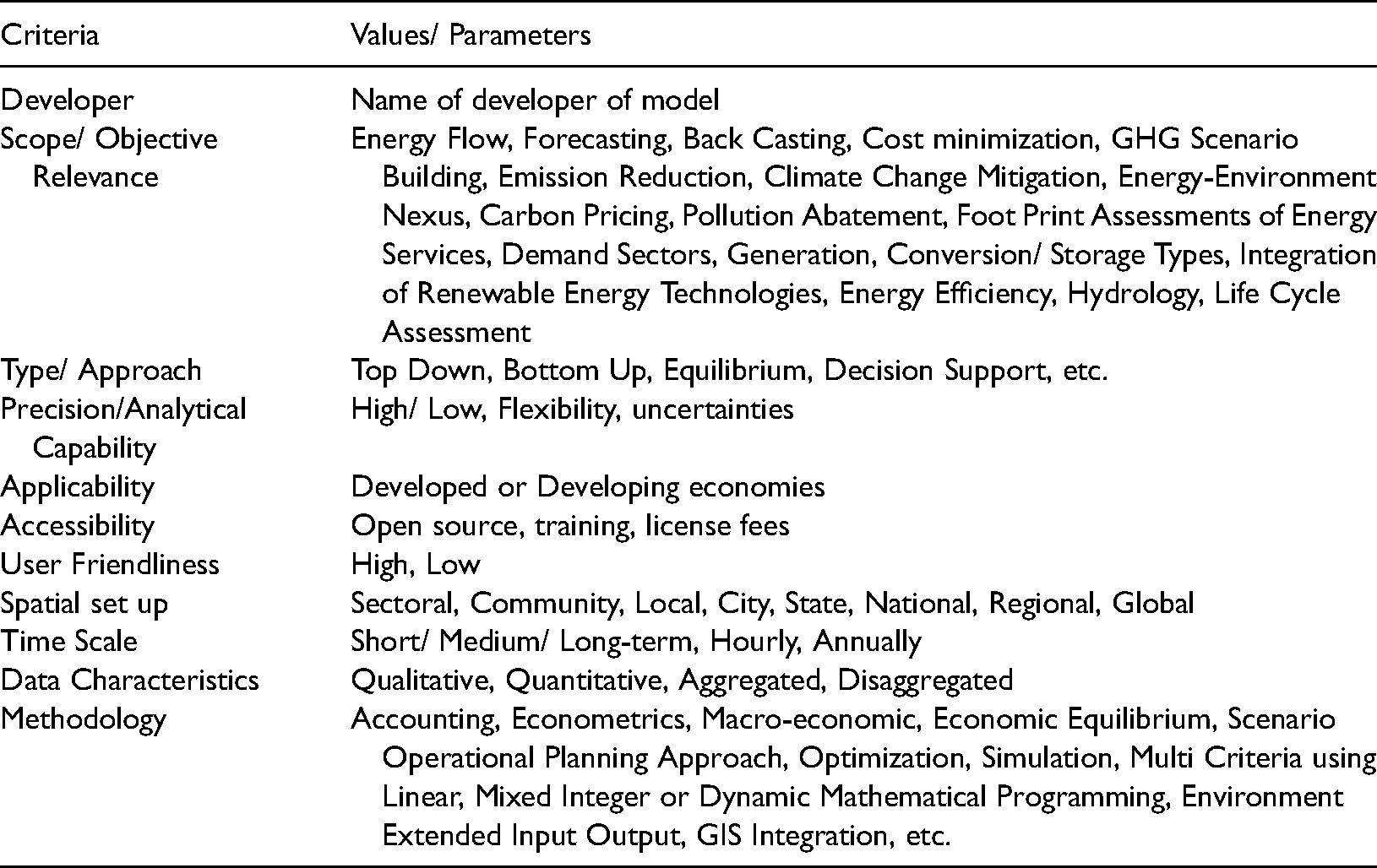
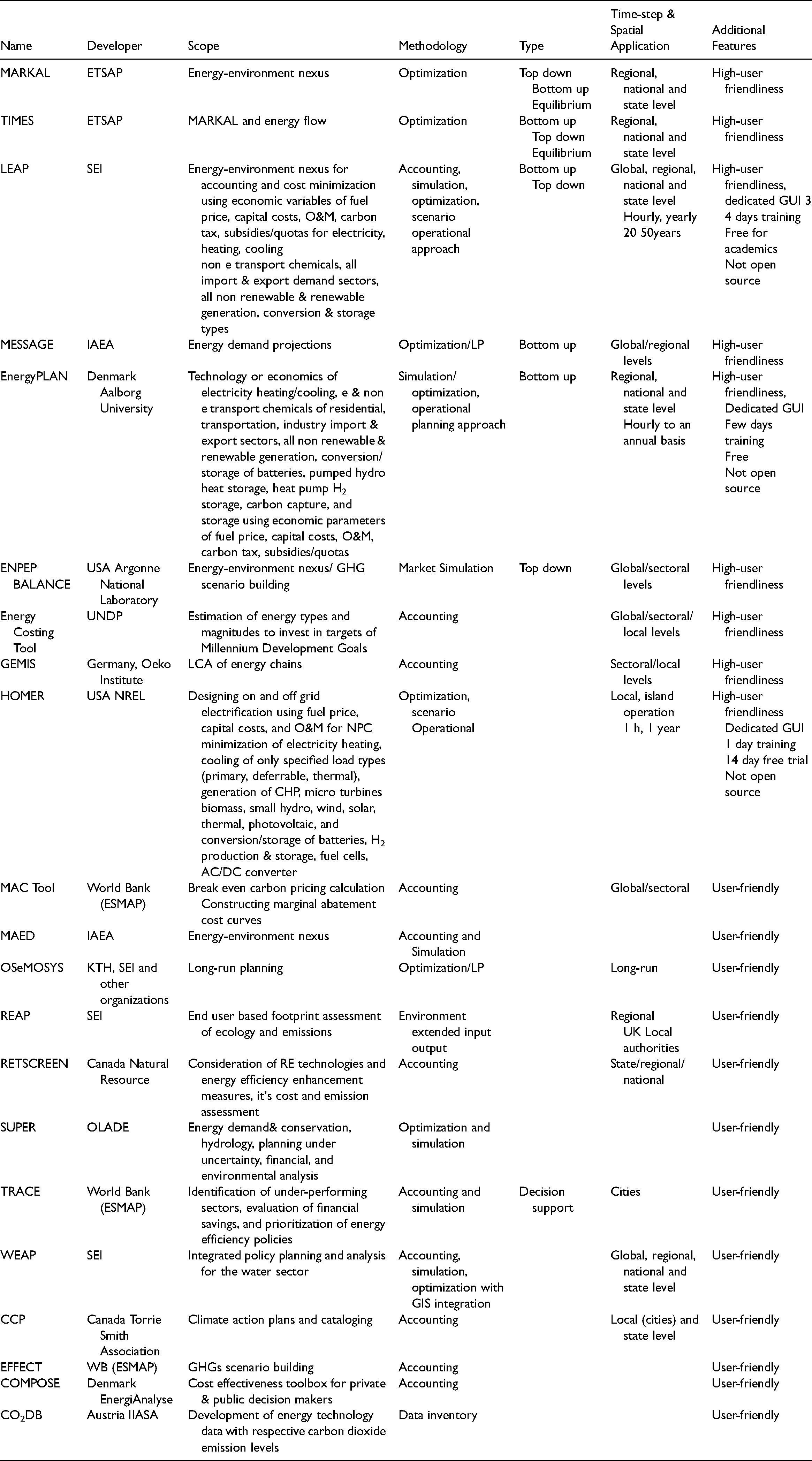
Generally, energy modeling and analysis use a top down or bottom-up approach to forecast, explore, and back cast policies and scenarios. A recent study categorized 50 forecasting methods, applied in 483 energy models, on basis of precision, applicability, and objective relevance (Debnath and Mourshed, 2018). These IEPM tools are accessible with/without charge or under license. Their user friendliness varies from high to low and in some cases training material is also provided. Their planning level range from community, local, national, regional, and global for short, medium, and long-term time scales. Whereas, data characteristics are mainly qualitative, quantitative, aggregated, and disaggregated as per energy services, demand sectors, generation, and conversion/ storage types. Methodologies applied in these models are econometrics, macro-economic, economic equilibrium, optimization, simulation, and multi criteria using linear, mixed integer, or dynamic mathematical programming. The criteria adopted for review of the IEP models in this study is summarized in Table 1. Based upon that criterion, Table 2 exhibits a comprehensive review of the main computational IEP models.
Criteria for review of the IEP models.
Main features of some integrated energy models.
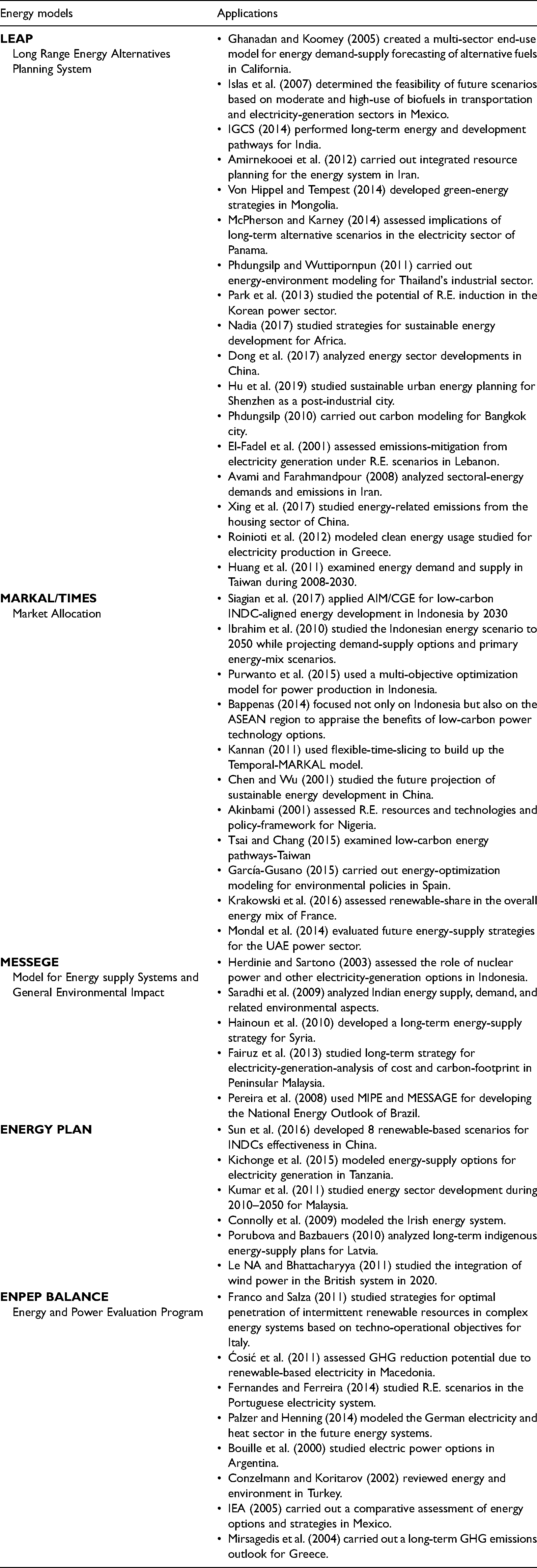
Literature review explicitly suggests that a model supports an objective policy formulation process. Studies (Fragnière et al., 2017; Qudrat-Ullah, 2015; Pina, 2012; Strachan et al., 2009) deployed a range of IEP models for the achievement of developmental goals. Many countries used models such as LEAP, MARKAL, and AIM to assess GHG mitigation targets and other low carbon policies including UNEP Balancing Energy, Sustainable Development, and Climate Change Project (Nakata et al., 2011). Among bottom up optimization tools for IEPM, MARKAL/TIMES can analyze Highly Integrated Community Energy Systems on long horizon. This is due to its scale flexibility for sustainable power deliverance to small communities (Mendes et al., 2011). Table 3 highlights applications (Siagian et al., 2017; Ibrahim et al., 2010) of the main IEP tools. Whereas, Pakistan specific studies are separately discussed in section 3.3.3.
Applications of main energy modeling tools.
Modeling was also carried out for analysis of emission reduction targets in the UK (Sithole et al., 2016) and the realization of goals for low carbon society in India through an integrated soft linked model framework (Shukla et al., 2008). These computational tools support analysis and interpretation of large data sets belonging to different regions to serve different objectives with different technologies, in a systematic manner. These applications generally endorse the performance of IEP tools (Blarke, 2005) for presenting a mix of policy options directed to achieve set objectives or a package of future scenarios representing various options (Heaps, 2017).
Table 3 also indicates that LEAP has the widest user-base and a long successful global experience including emerging economies. It uses quantitative analysis to simulate development/ transition in energy supply/ demand and associated GHG estimation. It's in built ‘Technology and Environmental Database TED module’ is linked to all fuel categories for emission analysis of existing and future devices and technologies. On a conceptual basis, LEAP model drives upon an energy services based scenario analysis. This also warrants an energy mix plan which considers both provision of energy supplies and role of efficiency in meeting demand. Such a plan would evolve with expected technological and financial changes in sector structure and provide roadmap for future energy sustainability, pricing issues, and setting high standards for electricity consumers.
Decision aids for sustainable energy modeling
Integration of more than a single model in multi agent energy modeling enhances its multi-purpose function under centralized decision making (Veit et al., 2004). The multi criteria assessment (MCA) approach can deal with a variety of uncertainties and input information as evident (Hong et al., 2013) from energy assessment studies (Atilgan and Azapagic, 2017). The purpose of optimization operation is the provision of an optimal cost effective solution under set constraints. Mathematical models like Multiple Criteria Decision aid (MCDA) and Preference Ratio in Multi attribute Evaluation (PRIME) are among numerous optimization models with a high user base. Furthermore, Analytic Hierarchy Process (AHP) is one of the most applied methods to resolve multi dimensional energy environment issues (Saaty, 1980). It is an extension of attribute level Multiple Criteria Decision making (MCDM) (Keeney and Raiffa, 1976).
Multi agent modeling and decision aid have also been practiced in many R.E. studies to develop desired levels of Renewable Portfolio Standards at the country level (Sadorsky, 2011; Katal and Fazelpour, 2018). Because of this, MCDM was also done in conjunction with GIS tools for resource identification and R.E. potential assessment (Quijano and Domínguez, 2008). For consideration of socio-economic variables, most of the energy demand forecasting studies employed co-integration, multivariate models, abductive and neural networking, and uni-variate time series analysis. A recent study (Debnath and Mourshed, 2018) found that Artificial Neural Network (ANN) is a highly accepted method but in the case of incomplete data, Fuzzy logic (FL) and Grey Prediction (GM) are appropriate. Accordingly, ANN was coupled with regression analysis (Kankal et al., 2011) whereas the GM model was used in a study for Brazil (Pao and Tsai, 2011). In another case, AHP was combined with Genetic Programming for a study in China (Lee and Tong, 2011). Log-linear and quadratic models were used to determine energy demand in some ASEAN countries (Galli, 1998) whereas; semi-parametric additive was used for density prediction for power demand in South Australia (Hyndman and Fan, 2010).
Another technique, ARMA, is the combination of two models i.e. Auto Regressive and Moving Average. It is used in many county studies including demand assessment for energy (Saab et al., 2001; Ediger and Akar, 2007), and for electricity and natural gas (Erdogdu, 2007; 2010). The energy demand analysis also employed Group Auto Regressive and Group Method of Data Handling (GMDH) in China (Xiao et al., 2015). ARMA model was later combined with various analytical operations and models including ANN and neuro-fuzzy system (Kaynar et al., 2011), ANN and regression analysis (Deka et al., 2015), neural networks (Voronin and Partanen 2014), SARIMA model (Pan et al., 2012), ETS model for Nigeria (Asumadu and Owusu, 2016), and ETS and multiple regression models for China (Chai et al., 2016). It was also combined with Holt Witner in studies carried out in Pakistan (Hussain et al., 2016) and Turkey (Akpinar and Yumusak, 2016). The latter study further added time series decomposition and exponential smoothing. Comparative analysis of ARIMA results was made with GM (1,1) (Yuan et al., 2016), and Holt Witner and LEAP (Rehman et al., 2017).
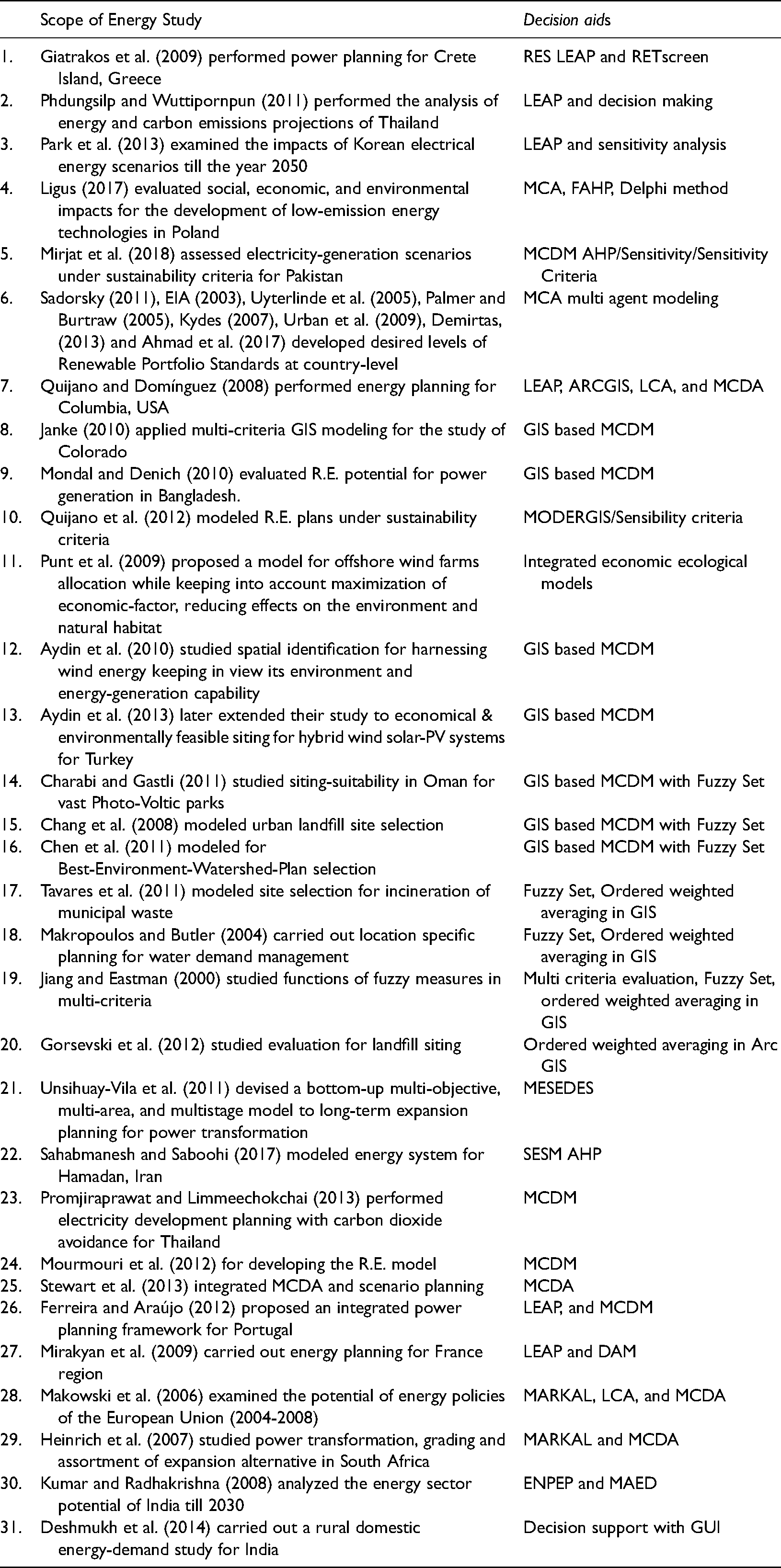
LEAP is also preferred for its application in Pakistan with consideration of multi agents (Mirjat et al., 2017) which is discussed in section 3.1. It has been suggested that due to continuous updating and improved versions of these tools by their developers, it is wiser to apply already available tools rather than devising new models (Dementjeva and Siirde, 2009). Table 4 provides a brief review of applications of decision aids for sustainable energy modeling.
Applications of decision aids for sustainable energy modelin
Analysis of IEPM efforts in Pakistan
During the 1970s, most of the developing world started practicing sustainable energy planning through management of energy demand, improvement in energy efficiency, and R.E. initiatives. From Pakistan, the only country initiative was the Renewable Energy 2006 Policy, with practically no implementation. An independent analysis (PC, 2013) observed that administrative flaws are responsible for the prevailing crisis. These mainly include the absence of government strategy to deal with short fall, delays and inaccuracies in tariffs with weak terms and conditions by NEPRA, unsettled arrears, inadequate fuel price method, slow disbursement of contracts, the court stays on fuel price adjustments, T&D losses, inefficient thermal plants and energy mix by thermal electricity generation companies, along with inadequate and delayed budgeting, disbursements and revenue collection to and from electricity distribution companies (DISCOs) (NEPRA, 2020). Also, there is a need to incorporate aspects of energy security into climate and sustainable development programs. This requirement is also highlighted in the mitigation plan of Pakistan's NDCs.
Additional reasons are absence of a reliable strategy for demand side management, in consideration of R.E. share, energy inefficiency, and non-conservation (Arshad et al., 2016). However, maximum R.E. induction can alleviate the burden on conventional fuels and the necessity for technological advancements for mining and exploration. Asian Development Bank suggested for enhancement of domestic energy (hydro, gas, and coal) to meet demand and liberation from expensive oil imports. Against the backdrop of the energy crisis in Pakistan, the majority of energy studies were conducted at the academic level (Rehman et al., 2017) which focused on economic growth and demand forecast only. These also employed modified econometric models to assess projected results of 4 scenarios by 2018 (Uqaili, 1996) in addition to use of partial equilibrium model for energy security analysis (Anwar, 2010).
Because of huge R.E. potential, energy forecasting studies were also done in Pakistan to highlight multiple challenges in harnessing R.E. which limits its benefits (Aydin et al., 2013). Some of those barriers are intermittent nature of renewable resources, location confinement, weather dependency, technological, institutional and capacity limitations, high initial investment, market variations, cultural and social perceptions, etc. Besides Pakistani researchers, other countries’ researchers (Painuly, 2001; Weyant, 2011) also discussed the issues which limit the benefits of renewable energy exploitation in renewable-rich regions. However, the necessary technical and financial support to overcome those barriers is missing.
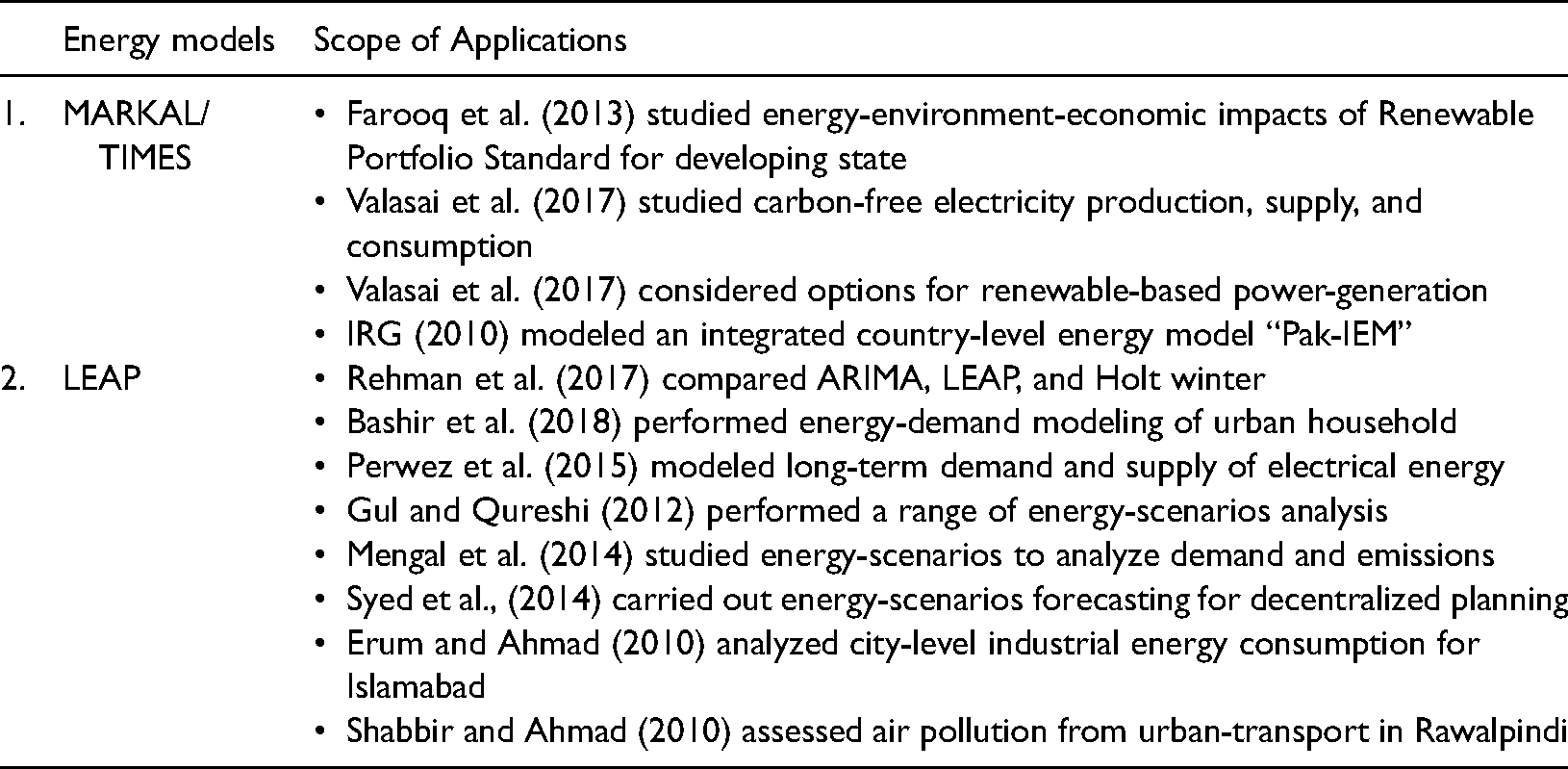
Although IEP is a high priority requirement by government and researchers (Rehman et al., 2017) but very few practical efforts have been made, with even fewer deployments of IEPM tools in Pakistan. In view of which, the USAID and Planning Commission of Pakistan also observed that absence of government strategy to deal short-fall is responsible for crisis. Some of those studies used linear regression operations (Sahir and Qureshi, 2006; Harijan, 2008; Schilling and Esmundo, 2010). As presented in Table 5, the majority of those efforts used LEAP and MARKAL/TIMES models only. Reasons for the lack of IEP are subjective policy making, inappropriate institutional developments, instability of administrative setup (Debnath and Mourshed, 2018), and an unauthentic database resulting in unrealistic future projections. A classic example of overly optimistic results is the Energy Security Action Plan of Pakistan: 2005–2030 which projected energy demand to 120.18 M.TOE for the year 2015, contrary to the actual consumption of 70 M.TOE. Hence, Pak IEM (Qazi and Jahanzaib, 2018) is the only notable contribution by the government which used the TIMES model. However, its findings remained unutilized, thus could not benefit the energy sector.
Energy modeling applications in Pakistan.
For a real application of Pakistan IEP, it is imperative to consider both the gaps within energy system and the limitations of energy model. This could warrant transition towards long-term sustainable energy development. In addition, energy model for such a plan must reflect on following features:
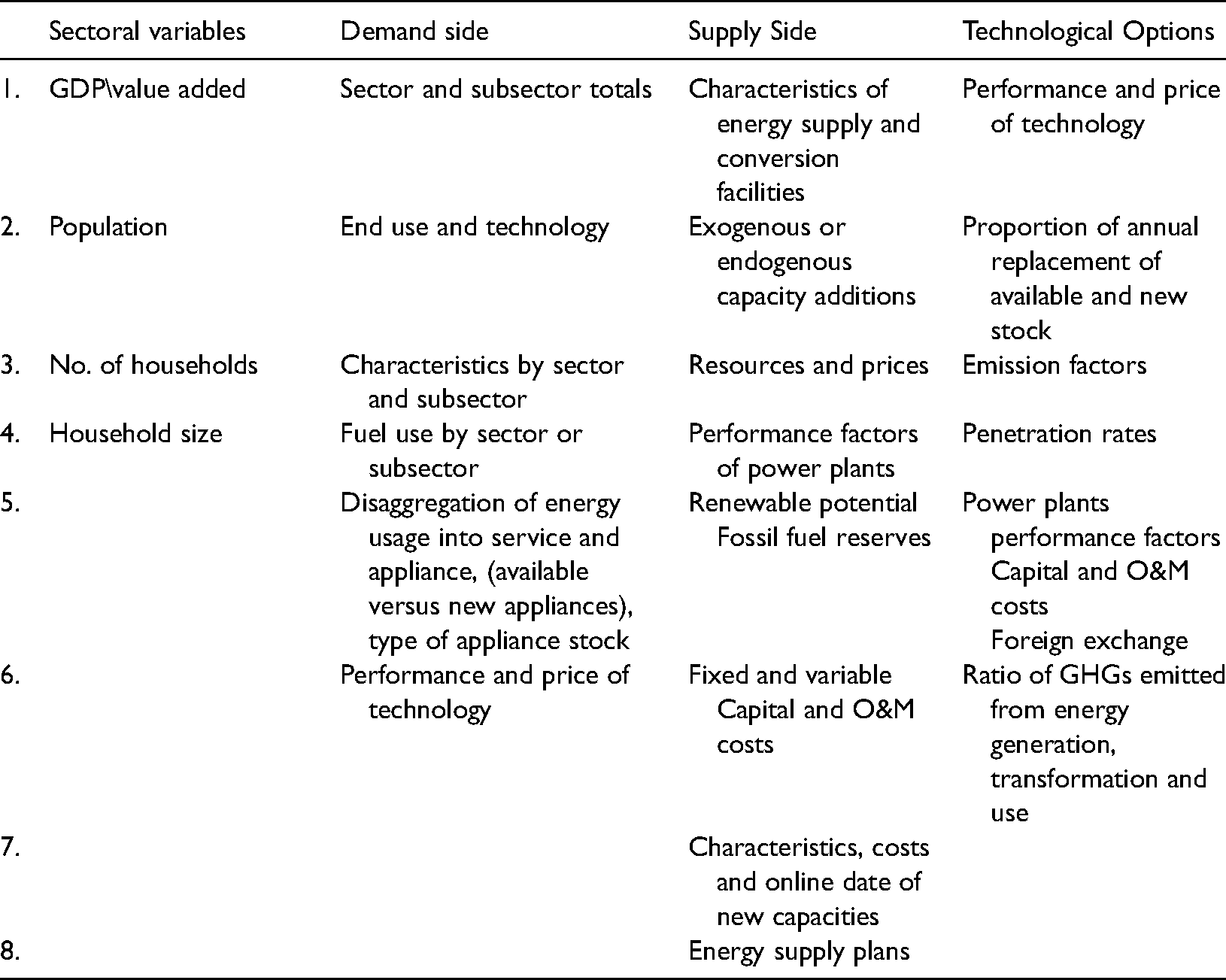
The crucial first step in developing a credible integrated energy planning model for Pakistan is acquiring and assembling the detailed data needed for a comprehensive national model. This begins with a methodical review of the nature of the existing economic, financial, and technical data related to the Pakistan energy system from resources (domestic and imports) through end use demands. The database required to build LEAP model for Pakistan is detailed in Table 6. Authenticity and consistency of database is highly essential for realistic future projections. IEP for Pakistan also entails detailed review of energy policies, international energy sector reports and analysis of country's energy sector. These must also consider GHG emissions reduction targets and climate change mitigation measures set out in Pakistan's NDCs. These policies are explicitly detailed in Section 1.5. Consideration of all quantitative as well as qualitative features of socio-economic environmental institutional aspects especially the environmental cost incurred, and present day challenges of electrical energy systems including energy market dynamics, uncertainties, etc. Enhanced targets for renewable energy generation through solar and hydel to meet domestic needs and village electrification. Multi agent modeling may be preferred in order to gain multiple linked outcomes while overcome sensitivity issues. Evaluation of modeling results for making planned decisions
Database used for energy modeling.
Limitations in sustainable energy planning and modeling
There are certain challenges and limitations in sustainable energy planning and modeling through conventional approaches. The main purpose of those approaches is forecasting energy use, and supply demand for least cost planning. However, sustainable planning considers all socio-economic environmental institutional aspects (Olerup, 2000; Ferreira, 2007). A review of energy modeling concerning technical and technological advancements suggests that modeling of present-day electrical energy systems is more challenging. It can be reasoned to the altogether transformation of the energy sector under decentralized, liberalized, and consequently more competitive energy markets. Accordingly, handling of data diversity and inconsistency needs careful consideration through the evaluation of modeling results and their applications.
Assessments of energy forecasting studies confirm that the model should not be relied upon as the ultimate decision maker rather it assists the user in evaluating all available options to decide a planned and logical way. Future projections of existing macro-economic models, under the usual case, generate biased estimations (Laitner et al., 2003). Such evaluations offer the partial reality of a system that represents quantifiable variables only; however, qualitative features are largely ignored (Van Beeck, 2003; Biswas, 1990). In addition to overly optimistic economic projections, environmental cost incurred in resource extraction/depletion or investment as eco innovation is usually unconsidered in the model system's production function.
Conventional models are usually inflexible and their results can easily be influenced by any unpredicted change or external variable. However, energy systems are open to change and the absence of associated influences, both internally and with its environment, is also reflected as deviation from reality (Farhad, 2008). Moreover, modern IEPM has additional limitations due to uncertainties related to model structure and database. Those uncertainties are quantifiable and unquantifiable which pose direct and indirect effects on decision making. These factors were accounted for in the assessment of energy models used in the IPCC Scenarios Report for building emission scenarios related to energy consumption (Urban et al., 2007, Van Ruijven et al., 2008). In many cases, optimization of energy systems is necessary to satisfy additional constraints from emissions reduction and efficiency improvement targets, volatility, and price insecurities regarding energy resources and long-run investment preferences, etc. (Ramos and Adler, 2007; Dyner and Larsen, 2001; Kagiannas et al., 2003; Botterud et al., 2007; Pasicko et al., 2007 & 2010). However, even if modern modeling tools consider environmental and economic constraints, these generally fail to address other aspects (Rath and Voss, 1981).
Assessment of IEP models also suggest that those are not open to technological development and are unable to reflect direct long-term impacts on human welfare from the environment and ecosystem goods and services. The reason is typical short-term perspective and less focus on local/ community level (Thörnqvist, 1980; Wene and Rydén, 1988). Whereas, long-term models are generally designed to consider high-capacity factors relating to non-renewable power generation for which annual flows are measured. Hence, renewable based energy is not calculated owing to its intermittent nature (Connolly et al., 2010; Kannan, 2011). Although H2RES, EnergyPLAN, MesapPlaNet, and SimREN generate results up to hourly or even finer time resolutions, still these models differ in other aspects (Sun et al., 2016). Also, there are more models designed to address issues of developed nations only.
Stakeholder engagement from the beginning of the IEP process is essential. It is advocated for transparency, openness, and determination of investors’ interests (Ivner et al., 2010; Webler and Tuler, 2006). However, in many cases, this proposition is unjustified as the results may instead delude policy makers and cause policy failure (Rydin and Pennington, 2000; Healey, 1992). Reasons for unintended outcomes of public participation can be differences in stakeholders’ knowledge, opinion, stakes, and interests.
In short, energy models are largely influenced by targets set by planners, and modeling uncertainties. These are designed to address specific needs of economies, energy importers, and producers, local and regional requirements, time horizon, etc. These factors are capable of fluctuating the relevance and results of the model. Therefore, planners and modelers must consider technique, data requirement, data disaggregation level, validation, and spatial and temporal flexibility of the model. Also, integration of more than one model is required to serve linked purposes of an energy plan or policy. This overall implies more research on effective integration of multiple sectors, resources, and technologies in a model while considering uncertainties.
Conclusion and recommendations
Energy crisis emerged as a major threat to the economy of Pakistan. Hence, this study determined potential of IEPM for shaping sustainable energy systems, particularly for Pakistan. It was found that current approaches and models for the analysis of energy system enjoin features physical accounting, simulation, and optimization, the entire mostly embedded within a general equilibrium system. But sustainability modeling requires complex mathematical calculations. It not only emphasizes the suitability of the modeling tool but also requires an understanding of underlying gaps and issues within energy systems. Hence, in this study a detailed review of Pakistan's energy mix, supply demand patterns, energy policies, and IEPM efforts was done.
It was found that the current electricity generation capability of Pakistan is limited due to the slow enhancement of the national grid whereas energy losses peaked at 18%. Consequently, 51 million people lack access to electricity. Hence, the availability of strong T&D infrastructure is essential for continuous and reliable energy supply. It is recommended that DISCOs shall also play a proactive role to overcome losses, maximizing recovery ratios, atomized metering, and grid to end consumers monitoring of power supply. Moreover, explorations for indigenous fuel and supply diversification shall be encouraged to reduce imported fuel dependency and affordably meet energy needs. Despite abundant R.E. potential in Pakistan, it contributes only 0.6 M.TOE.CO2 (excluding hydropower) to the national grid which is approximately 2.16% of the total energy mix and 5.5% of installed electricity capacity.
A lack of proper planning and cost analysis, coupled with unauthentic data and inadequate incentives to investors are huge obstacles in promoting clean energy and R.E. technologies. To address these concerns, it is strongly recommended that policy level ambiguities and technical issues must be resolved and small hydropower plants must be added. Also, regulatory policies, fiscal incentives, and public financing should be opted to overcome higher initial costs of R.E. Although CPEC is envisioned for regional energy prosperity due attention should be paid to ensure that energy solution road must not be paved through compromising environmental quality.
It is pertinent to mention here that the deep-rooted crisis must not be blindfolded with supply shortfall alone. There is no local/community level disaggregated plan for energy demand. Very few efforts have been made towards integrated planning for energy sector and its modeling in Pakistan. Whereas, the available policies and plans are cost-centric with unsustainable outcomes in long-term. Literature review also suggests that causes of these issues are lack of requisite authentic data and problems in data collection. Moreover, absence of sub-sectoral studies and decentralized data is also a huge obstacle in generating realistic energy system analysis of Pakistan. In addition, frequent political upsets affected policy implementation. Hence, coherent and cohesive governance is required for realistic decision making. The country's global commitments and multilateral agreements on the environment must be integrated in a long-term energy plan to address all aspects of sustainability.
In this study, assessment of energy models and their limitations in the transition towards sustainable development recommends the integration of more than one model to serve linked-purposes of energy plan or policy. Findings also suggest that LEAP is the most suitable IEP tool for Pakistan. Its operations are based upon sectoral characteristics and wider environmental and socio-economic aspects. The resultant system has an adaptable and transparent data structure where energy related uncertainties and barriers are integrated as constraints to cover all aspects of sustainability challenges in energy and power system.
Footnotes
Acknowledgements
This study is a part of a PhD research done by Sana Bashir (first author). The research proposed sustainable energy policies and developed a long term integrated model of the power sector of Pakistan for the period 2012 to 2050.
Declaration of conflicting interests
The author(s) declared no potential conflicts of interest with respect to the research, authorship, and/or publication of this article.
Funding
The author(s) received no financial support for the research, authorship, and/or publication of this article.
