




Abstract
Studying the characteristics and hydrogeochemical evolution processes of groundwater can contribute to the prevention of water-related hazards and ensure sustainable management of groundwater resources. In this study, the hydrogeochemical characteristics and evolution processes of the coal-bearing sandstone aquifer and Carboniferous limestone aquifer of the Taiyuan formation in the Liuqiao coal mine in Huaibei coalfield were assessed using piper diagram, Gibbs diagrams, ionic proportion ratios, and principal component analysis (PCA). The results showed that Na+ + K+ and SO42− were the dominant cations and anion, respectively, in both aquifers. The coefficients of variation of six hydrochemical parameters increased gradually, reflecting the formation of different water chemical compositions. The formation of hydrochemical compositions was dominated by water-rock interaction, including the dissolution of rock salt, cation exchange adsorption and pyrite oxidation. In addition, the PCA revealed two first components, explaining the highest proportion of variance. Over time, the water sample points were mostly found in the second and third quadrants, indicating the groundwater salinization effect as a result of the gradual increase in the cation alternating adsorption.
Keywords
Introduction
As an essential fundamental resource for human survival, water plays a curcial role in human production and life. Studies on the hydrochemical characteristics of groundwater in the mining areas are becoming more prevalent due to the potential risk of groundwater contamination (Lin et al., 2016, 2020; Singh et al. 2010; Voutsis et al. 2015). Groundwater drainage during mining leads to the formation of large-scale depression funnels, Indeed, these depression funnels may affect recharge, runoff, and discharge conditions of groundwater, resulting in impacts on the regional groundwater dynamic, water exchange between aquifers, groundwater hydrochemistry, and water cycle processes (Cidu et al. 2009; Wu et al. 2020). The groundwater chemical characteristics are the result of long-term interaction between groundwater and the surrounding environment. In fact, this interaction may provide information on recharge source, migration, and circulation of groundwater. Huaibei coalfield is located in an area with insufficient water supply due to climatic conditions and industrial uses. Indeed, the coal-mine aquifer is the only source of water supply in the area. Thus, groundwater pollution constitutes a risk to the water supply in the area (Wang et al. 2019). Therefore, a comprehensive study on the hydrogeochemical processes of the groundwater is crucial for understanding hydrogeological laws, rational utilization of groundwater resources, and ecological environment protection. The hydrogeochemical characteristics of mine groundwater are an essential basis for identifying the source of groundwater and determining the formation mechanisms of hydrochemical components. Indeed, using hydrochemical data, the formation, distribution, migration, and groundwater chemical compositions can be studied by applying hydrogeochemical diagrams, ionic ratios, and multivariate statistical analysis (Lin et al. 2016; Singh et al. 2010; Wu et al. 2020). The hydrochemical type analysis method, such as the graphing solutions, can scientifically classify numerous conventional water chemistry data. These diagrams are used to assess the hydrogeochemical characteristics of groundwater and to identify the main factors controlling the groundwater chemistry (Dassi, 2011). Moreover, ionic proportional ratios, according to the changes of ionic ratios in groundwater, are often used to identify the source of groundwater chemical composition (Fu et al. 2018; Yang et al. 2016). In addition, several researchers have revealed that multivariate statistical analysis methods, such as principal component analysis (PCA), can provide reliable results in groundwater chemical classification and spatiotemporal evolution of groundwater composition (Lin et al., 2016; Wang et al. 2019). Therefore, the use of various methods in hydrogeochemical studies can provide valuable information on the hydrogeochemical characteristics of groundwater and the major processes responsible for groundwater hydrochemistry.
In this study, the hydrogeochemical characteristics of the coal-bearing sandstone and Carboniferous limestone aquifers in the Liuqiao coal mine and Huaibei coalfield were assessed using various methods, namely the ionic proportional ratio method and PCA. The temporal evolution mechanism of hydrochemical characteristics under the influence of mining was also discussed. The main objectives of this study are: (1)to describe the hydrochemical characteristics of coal-bearing sandstone and Carboniferous limestone aquifers; (2) to determine sources and formation of hydrochemical components; (3) to assess the temporal evolution of hydrochemical components. The research results are crucial for the prevention and control of mine water hazards and the effective management of groundwater resources in the region.
Geological background of the study area
The Liuqiao coal mine is located in the central and western parts of the Huaibei coalfield in Anhui Province in North China Plain. The terrain of the study area is flat with a natural surface elevation of about 31 m. The study is characterized by a mild climate, with an average annual average precipitation of 737 mm. However, the surface water system is not well developed, with no perennial river in the region. In the stduy area, the strike length of the mine is 7 km, and the dip width varies between 1.5 and 2.0 km. Generally, the mine is inclined slightly from northwest to southeast.
The strata identified by drilling include Ordovician, Carboniferous, Permian, Neogene, and Quaternary strata, with an overall thickness of more than 1500 m. The main coal-bearing strata are the Permian Shanxi and Xiashihezi formation, with an overall thickness of about 336 m. This area is an incomplete syncline structure. According to the lithology, thickness, water-bearing medium porosity and burial conditions of the stratum, the main aquifers present in the coalfield can be divided into four types from top to bottom, namely quaternary aquifer, coal-bearing sandstone aquifer, carboniferous limestone aquifer of the Taiyuan formation, and Ordovician limestone aquifer. The coal-bearing sandstone aquifer is divided into four aquifers from top to bottom, of which seven aquifers and eight aquifers are the main mining coal seam roof and floor aquifers. The water level has decreased significantly as a result of mine drainage. Indeed, the water level of the carboniferous limestone aquifer of the Taiyuan formation is about 130 m. This aquifer consists of mudstone, siltstone, and 13 layers of limestone with developed fracture caves. In addition, the results of the borehole pumping test showed that the water inflow and the permeability coefficient were 0.815∼0.992 L/s·m and 0.045∼2.85 m/d, respectively. This unit is the main water-filling source of the mine. The geographical location and structural outline of the study area are shown in Figure 1.
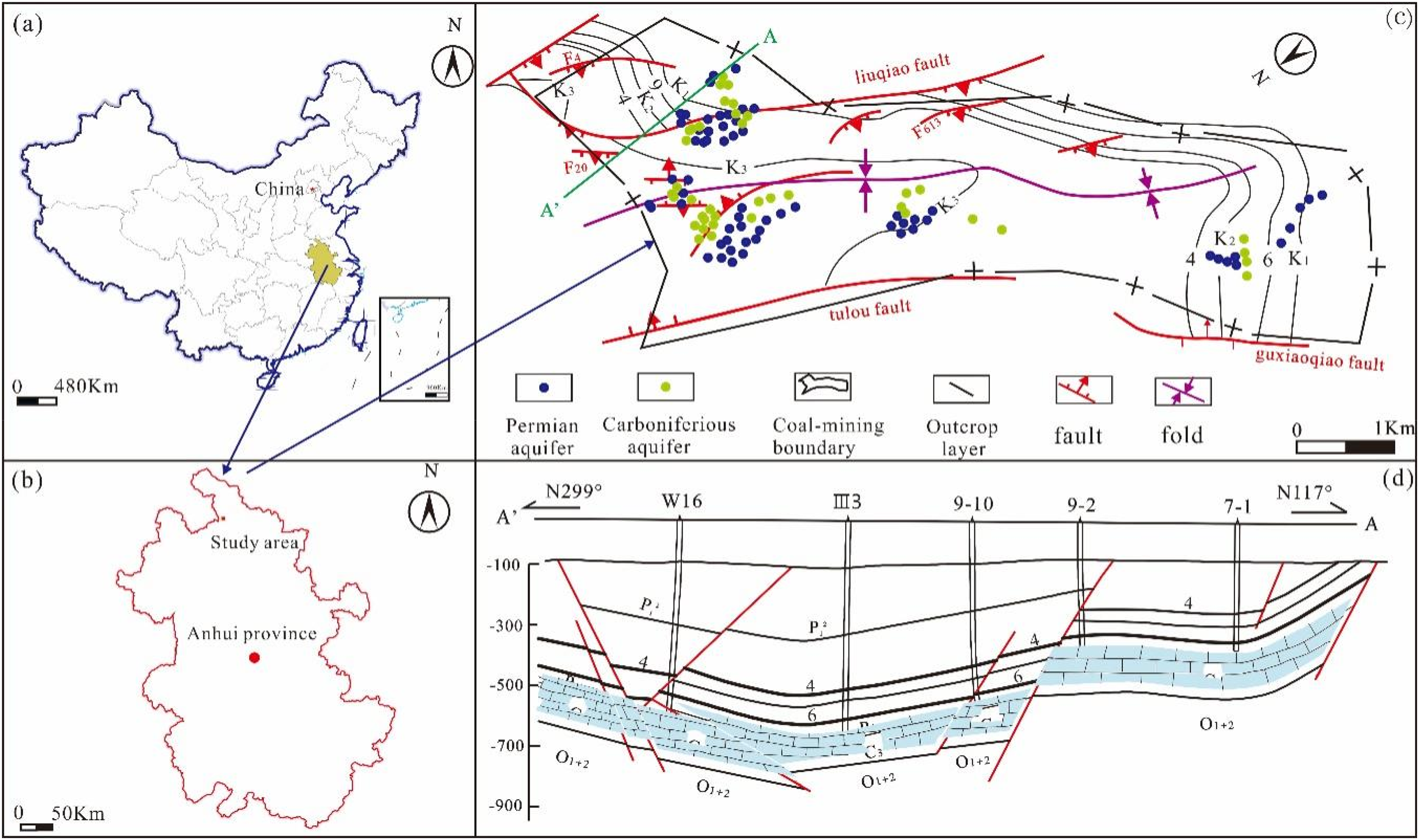
The geographic location of the study area, with the distribution of faults, folds, and sampling sites within the Liuqiao coal mine; (b) cross-section of the Liuqiao coal mine along lines A–A′.
Data collection and analysis methods
The hydrogeological data of the Liuqiao coal mine were collected over 30 years during the mining process. The data consist of 76 and 86 water samples from the coal-bearing sandstone aquifer and carboniferous limestone aquifer of the Taiyuan formation, respectively, collected from 1981 to 2017. The hydrochemical parameters considered in the current study were Na+ + K+ (the content of K+ is small and their chemical properties are similar, so they are combined for analysis), Ca2+, Mg2+, Cl−, SO42−, HCO3−, TDS and pH. The chemical analyzes were carried out at the third exploration team of Anhui Coalfield Geology Bureau. Ca2+ and Mg2+ were analyzed using EDTA titration. Na+ and K+ were determined by a flame atomic absorption spectrophotometer. Cl− and SO42− were determined by ion chromatography. HCO3− was analyzed using acid-base titration. On the other hand, TDS and pH were measured in-site. The ionic balance requirement results revealed that all samples were within the acceptable limit passed (≤5%) (Lin et al., 2020). The spatial distribution of the sampling points is shown in Figure 1.
Results and discussion
Characteristics of hydrochemical components
Conventional ions
The results of the physicochemical parameters of water samples were statistically analyzed. The average value and skewness coefficient of each hydrochemical parameters of sample were calculated, The skewness coefficient is expressed by the ratio of the standard deviation to the average value and was used to measure the degree of dispersion of hydrochemical variables. In this study, the SPSS software was used to generate a descriptive statistical analysis of the data (Table 1). The results showed that the average pH values of the coal-bearing sandstone aquifer and the carboniferous limestone aquifer of the Taiyuan formation were 8.05 and 7.68, respectively, suggesting that groundwater of both aquifers are generally alkaline. While, the average TDS of coal-bearing sandstone aquifer and the carboniferous limestone aquifer of the Taiyuan formation were 2138.70 and 1395.58 mg/L, respectively. Moreover, the hydrochemical characterization results of both aquifers showed that Na+, K+, and SO42− were the major cations, while SO42− was the dominant anion. On the other hand, the skewness coefficient values of Ca2+, Mg2+, SO42− and HCO3− were high, indicating a significant spatial variability in these ions and is a sensitive factor changing with the environment.
Descriptive statistics of the groundwater hydrochemical parameters in the Liuqiao coalmine.
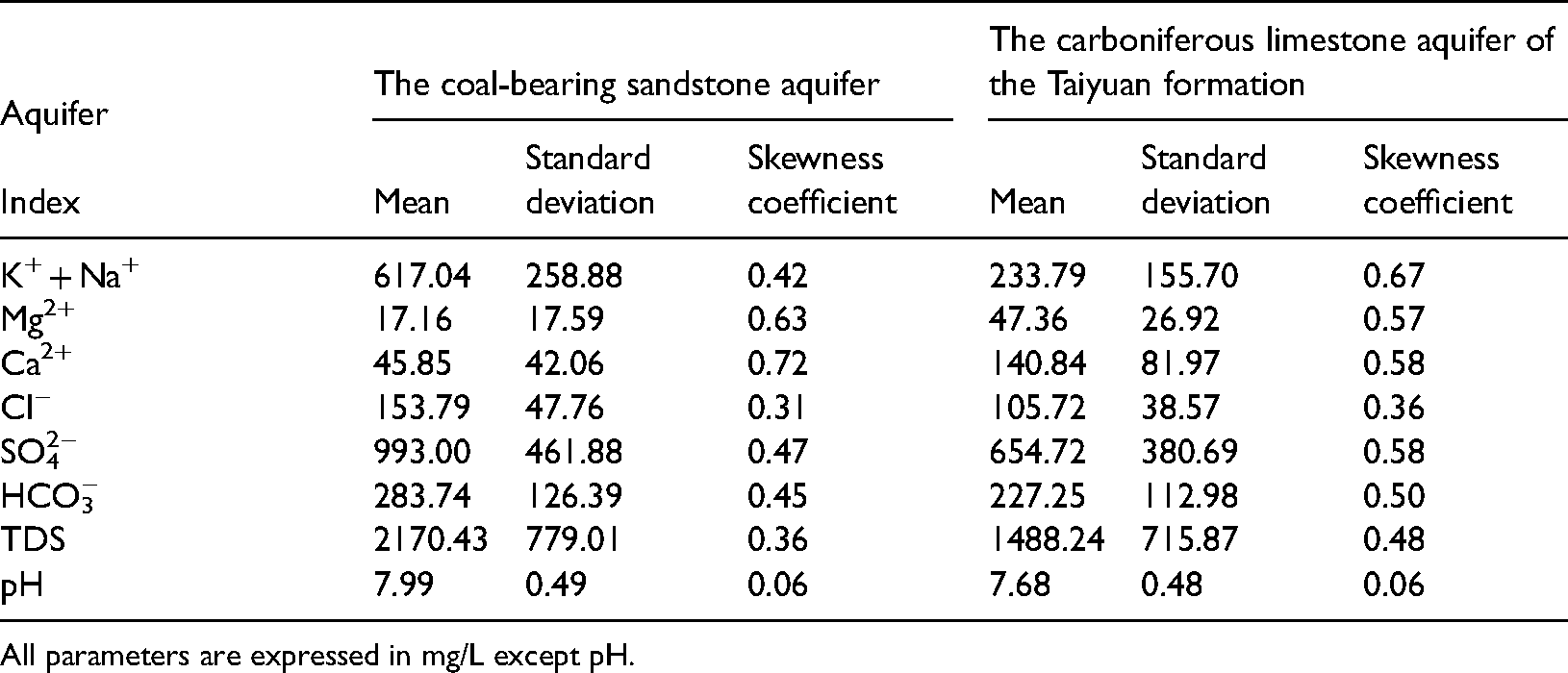
All parameters are expressed in mg/L except pH.
The comparison of hydrochemical parameters of water samples from both aquifers is shown in Figure 2. Except for Ca2+ and Mg2+, all hydrochemical parameters of the coal-bearing sandstone aquifer were higher than those observed in the carboniferous limestone aquifer of the Taiyuan formation. The reason is that the coal-bearing sandstone aquifer was damaged by mining activities, thus increasing the groundwater flow. The carboniferous limestone aquifer of the Taiyuan formation is recharged by the eastern outcrop area, in the process of groundwater runoff, the components of surrounding rock continue to enter the groundwater, resulting in high concentrations of Ca2+ and Mg2+.
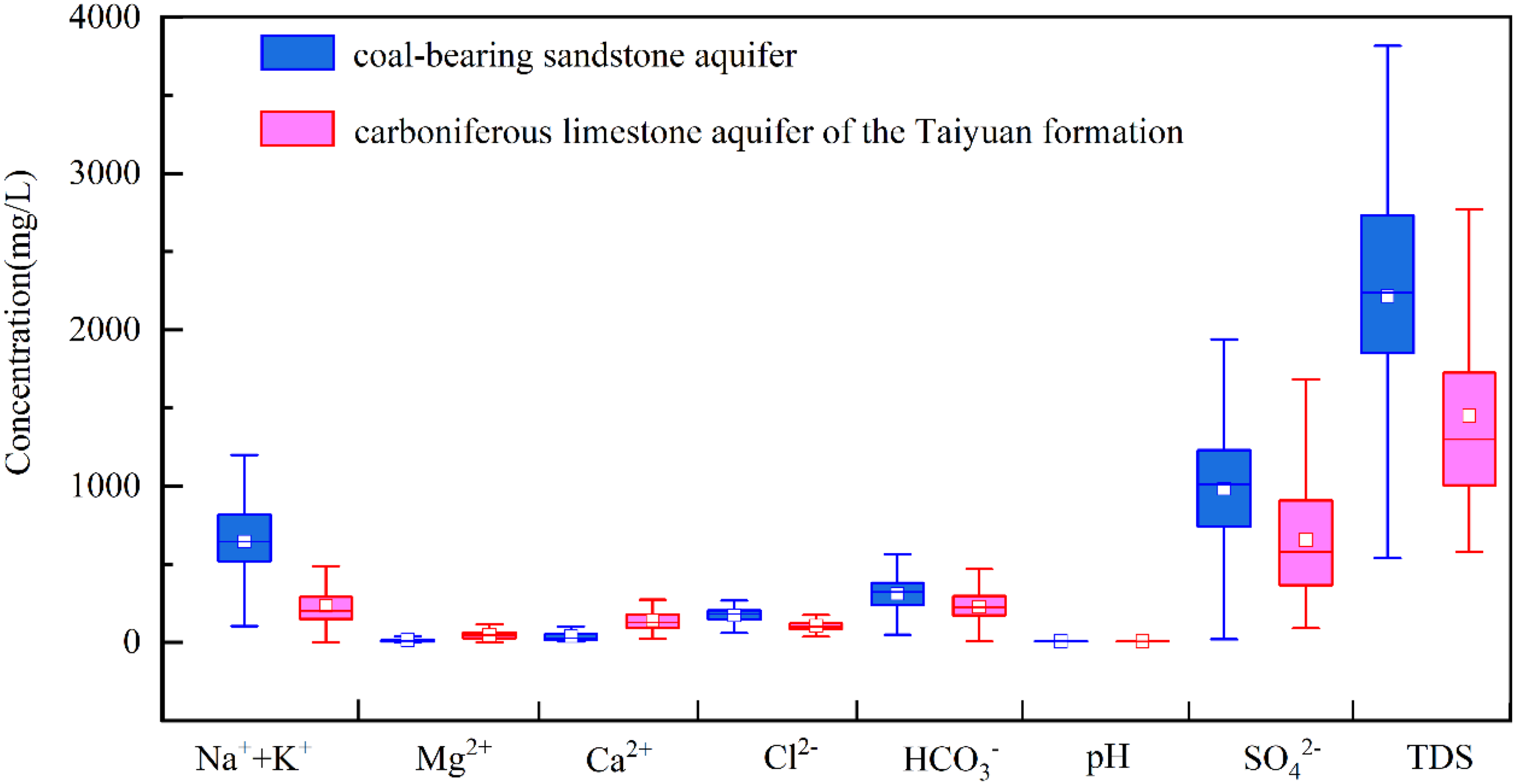
Box and whisker plot of hydrochemical parameters of aquifers.
Water chemistry types
The expansion of the mining range and the drainage test may change the runoff conditions of groundwater. In order to assess the hydrochemical characteristics and determine the hydrochemical facies of each water sample, the hydrochemical data collected were divided into three subdatasets based on three distinct periods: 1981 to 2004, 2005 to 2008 and 2009 to 2017. These subdatasets consisted of 17, 28, and 117 water samples collected during the first stage, the second stage, and the third stage of the stope expansion and drainage test, respectively. The results are shown in Figure 3.
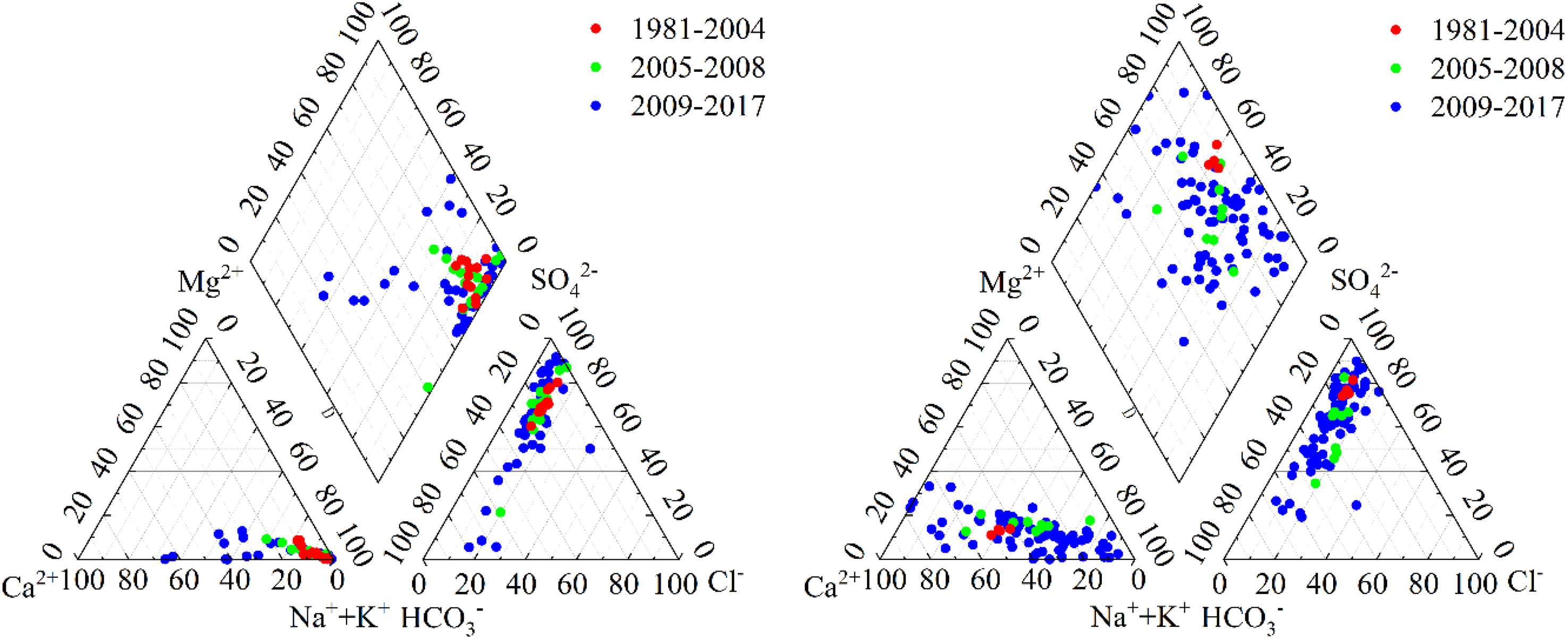
Piper diagram of groundwater samples collected in the study area:(a) coal-bearing sandstone aquifer, (b) carboniferous limestone aquifer of the Taiyuan formation.
As can be seen from Figure 3, the results of the Piper diagram showed significant variability in the facies of water sapmles. Indeed, the cations were observed mainly at the lower right corner, suggesting that Na+ and K+ were the dominant cations. On the other hand, anions were mainly observed in the left half of the area, showing the dominant anion were mainly HCO3− and SO42−. From the perspective of hydrochemical types of each aquifer, the coal-bearing sandstone aquifer is mainly SO4-Na type, while the carboniferous limestone aquifer of the Taiyuan formation is mainly of SO4-Na·Ca type. Over time, the change of main control ions showed a great impact on the hydrochemical characteristics, resulting in changes in the hydrochemical types of both aquifers to HCO3-Na type and HCO3-Na·Ca type.
Formation of hydrochemical components
Gibbs diagrams are often used to explain the genetic mechanism of the hydrochemical components (Fu et al., 2018; Zhang et al. 2020). Based on the relationship between TDS and Na+ / (Na+ + Ca2+) ratio, Cl−/ (Cl− + HCO3−) ratio, hydrogeochemical processes are divided into evaporation dominance (ECD), water-rock dominance (RWD) and precipitation dominance (APD). The Gibbs diagram of the water chemistry in the study area is shown in Figure 4. The TDS values of the sampling points during the three periods were high. The results showed that RWD was the most dominating process in groundwater, while a small size of the sample revealed ECD. None of the water sample points fell in the precipitation dominance zone, indicating that the aquifer is a relatively closed system, and the precipitation does not affect the hydrogeochemical of aquifers in the study area.
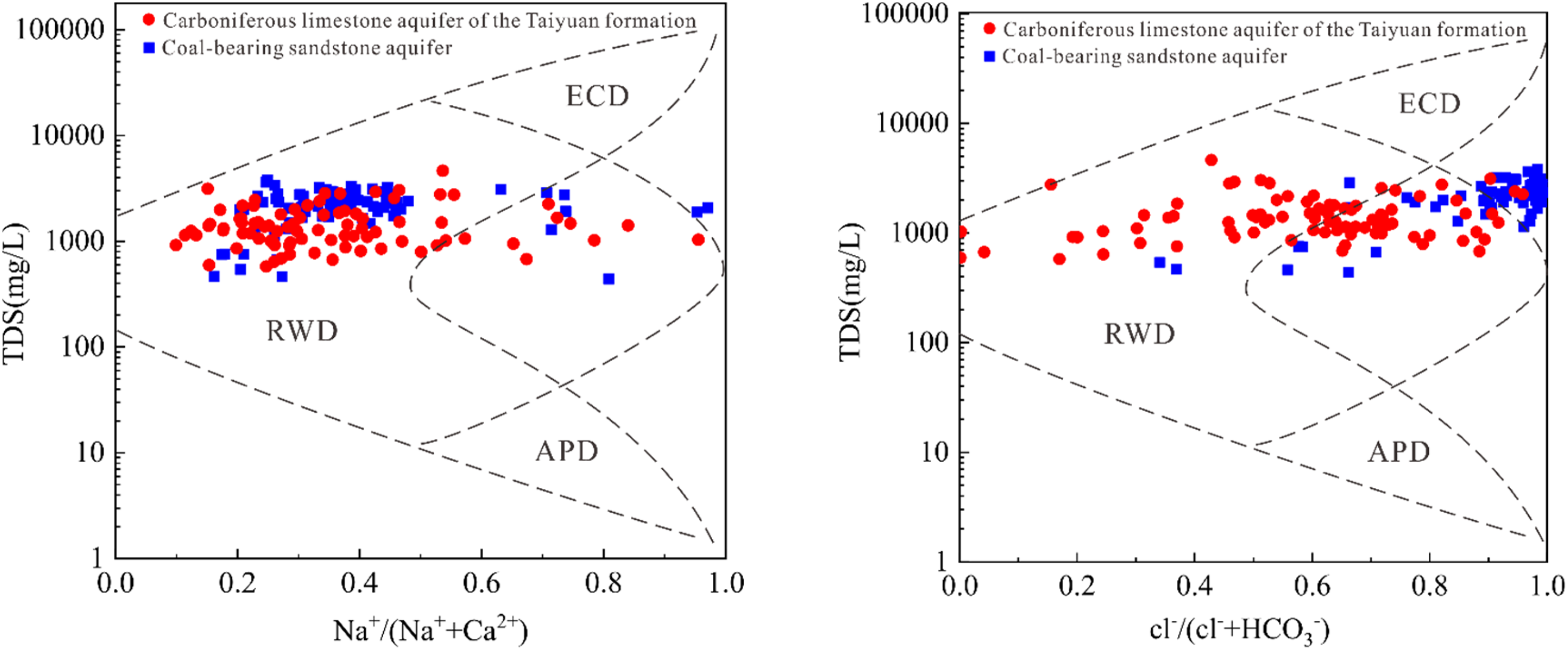
Gibbs diagrams for the major-ion composition of the groundwater in the study area.
Anions on the surface of rock particles can adsorb cations in groundwater, while Ca2+ and Mg2+ are characterized by strong adsorption capacity, which can replace Na+ on the rock surface and, thus, their contents can be decreased in groundwater, that is, cation alternating adsorption (Ju et al., 2020; Sahoo and Khaoash, 2020; Voutsis et al., 2015). This is an important process for the formation of the chemical composition of groundwater. The ion exchange in groundwater can be analyzed using the Scheler index, according to the following formulas:

It can be seen from Figure 5(a), that except for a few samples of the carboniferous limestone aquifer of the Taiyuan formation, all water samples showed negative values of CAI, indicating different degrees of cation alternating adsorption, resulting in decreases in Ca2+ and Mg2+ contents.
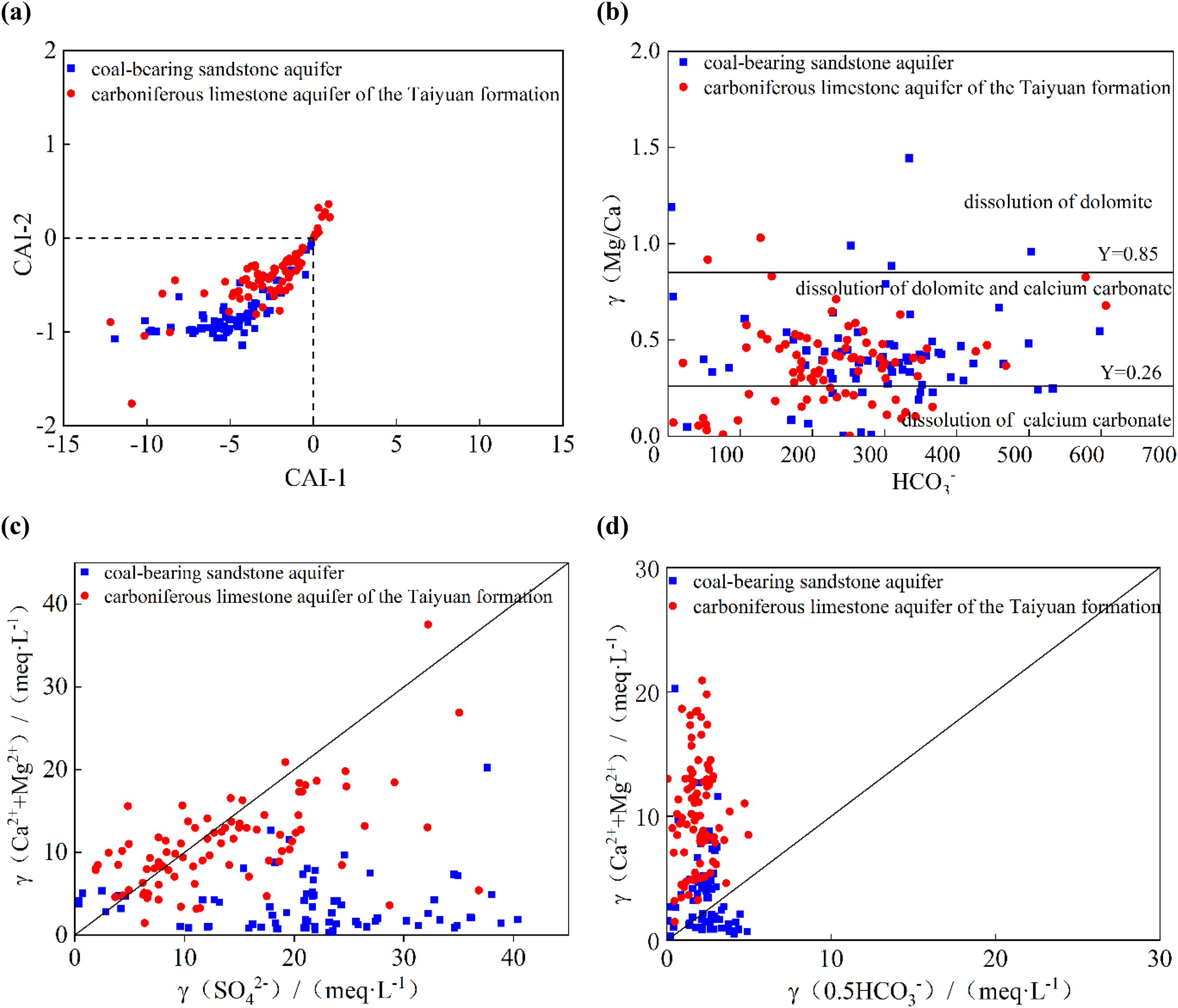
Scatter plots showing the correlation of major cations/anions to discriminate the geochemical processes.
Many factors control the formation of the water chemical components in groundwater. The ionic proportional ratio method can effectively determine the source of the chemical water components and their formation. Indeed, the ionic proportional ratio method groundwater is widely used in hydrogeochemical studies.
The Mg2+/Ca2+ content ratio n is commonly used to identify the lithology of groundwater flowing through aquifers. When n varies between 0.01 and 0.26, thus the groundwater flows through limestone aquifers. Moreover, the n varies above 0.85 suggests that groundwater flows through dolomite aquifers. It can be seen from Figure 5(b) that the water samples showed n values than 0.85, indicating that the sources of the main chemical components, namely Mg2+, Ca2+, and HCO3− are closely related to the dissolution and precipitation process of the calcium carbonate.
When Ca2+, Mg2+, and SO42− are mainly derived from the dissolution of sulfate, the ratio of Ca2+ + Mg2+ and SO42− is equal to 1. As shown in Figure 5(c), most of the water samples in the study area fall on and below the 1:1 line, indicating that the dissolution of sulfate is not the only source of Ca2+, Mg2+, and SO42−. According to the mine data, there are varying amounts of siderite and pyrite in the stratum in the study area. Indeed, mining activities facilitate the oxidation of SO42−, which becomes increases in concentration in the groungwater during the later stage of mining.
(Ca2+ + Mg2+)/0.5HCO3− = 1 indicate that Ca2+, Mg2+ and HCO3− were derived from the dissolution of carbonate. It can be seen from Figure 5(d) that the Taihui water samples mainly fall above the 1:1 line, suggesting the presence of other Ca2+ and Mg2+ sources. The water sample ratio of the coal-bearing sandstone aquifer was less than 1, indicating that HCO3− was derived from other sources, such as desulfation. The coal-bearing sandstone aquifer in the study area is in a reducing environment, thus desulfation may be an important source of HCO3− in the aquifer.
The results of the ionic proportional ratios suggest that the groundwater environment in the study area is relatively complex. Moreover, the hydrochemical composition was affected by the geological background and mining activities of the mining area. The groundwater formation is mainly affected by cation exchange, dissolution of carbonate and sulfate minerals, and oxidation of pyrite.
Principal component analysis
PCA is a mathematical transformation method that uses a correlation matrix (Zhang et al., 2020). This method reduces the dimension of the data set, clarifies the main dimensions of variation information based on retaining the variability of original information, and transforms the original data into a new dataset with fewer dimensions that explain the majority of the variability within the original dataset. The reduced number of dimensions allows for an easier explanation of the data by combining variables that are correlated with eath other.
The concentrations of K+ + Na+, Ca2+, Mg2+, Cl−, SO42− and HCO3− were selected to perform the PCA. This calculation extracts the first two principal components Z1 and Z2 with eigenvalues greater than 1. These two components explained 69.10% of the total variance, Thus, they cover the chemical information of groundwater in the study area and explain the formation of groundwater chemical components. The load value distribution of each analysis variable on the two principal components is shown in Figure 6.
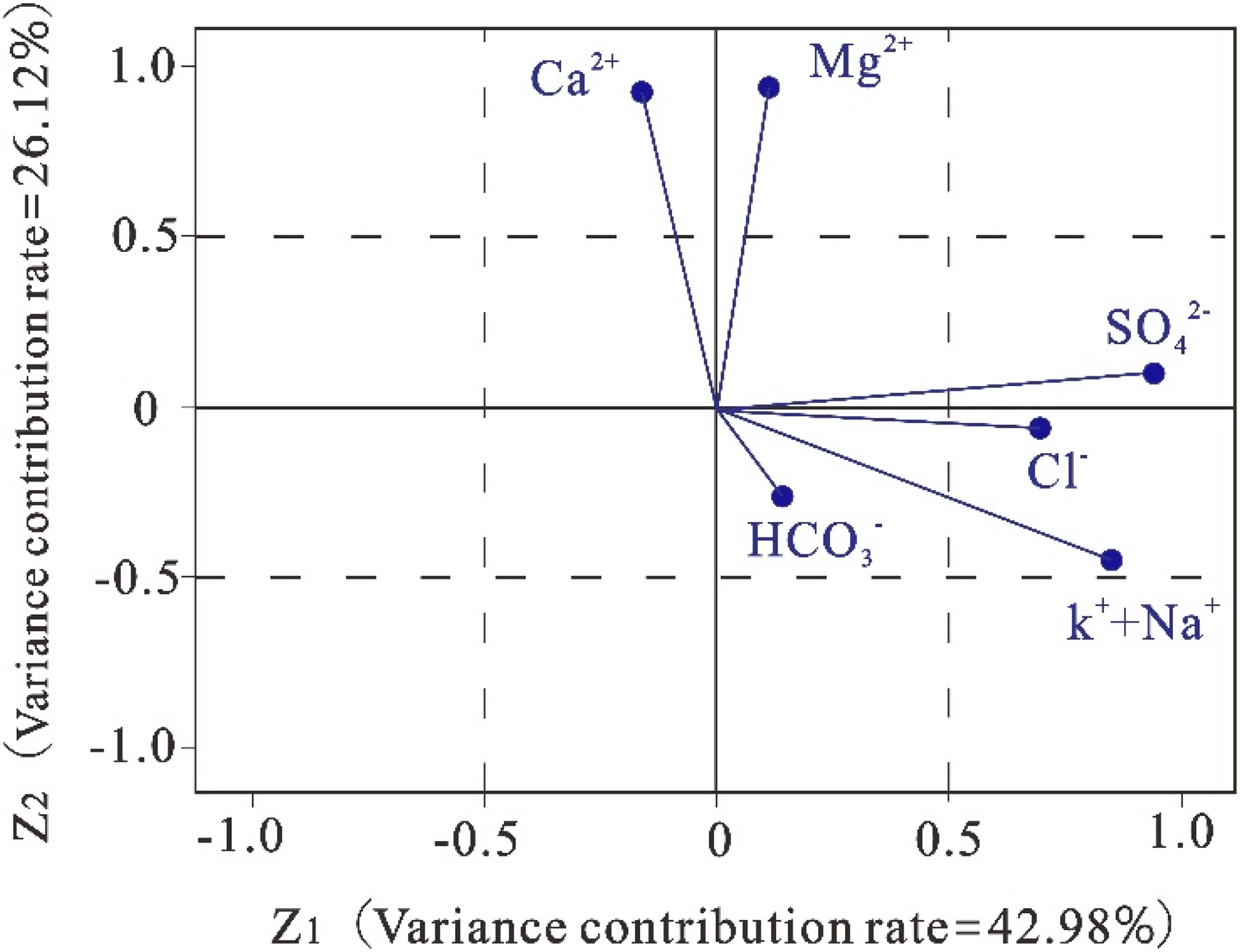
Load distribution of the conventional ions in the Liuqiao coal mine.
As can be seen from Figure 6, Principal component Z1 explained 42.98% of the variance, This component revealed positive loading on Na+ + K+, Cl− and SO42−. The high loading value on Na+ may be due to the alternating cation adsorption in the groundwater containing Ca2+ and Mg2+ contents derived from the rock stratum, resulting in an increase in Na+ concentration in the groundwater. In addition, the results revealed that Cl− concentrations increases accordingly with Na+ in the groundwater. Due to the mining disturbance, the originally closed reducing environment become a partially open oxidizing environment. The water containing CO2 dissolved the carbonates and gypsum rocks, thus increasing the loading of Z1 on Ca2+ and Mg2+. On the other hand, the high positive load on SO42− may be due to the dissolution of sulfate-containing minerals and the oxidation of pyrite. The chemical reaction equations are:




In order to reveal the temporal evolution of the main water-rock interaction process in the aquifers of Liuqiao coal mine, the eigenvalues of principal components 1 and 2 of collected water samples were plotted in the load scors relationship diagram of principal component 1 and principal component 2, respectively, as shown in Figure 7. Different shapes and colors in the diagram denote water samples collected from different aquifers and sampling periods. The lighter the gray, the closer the time.
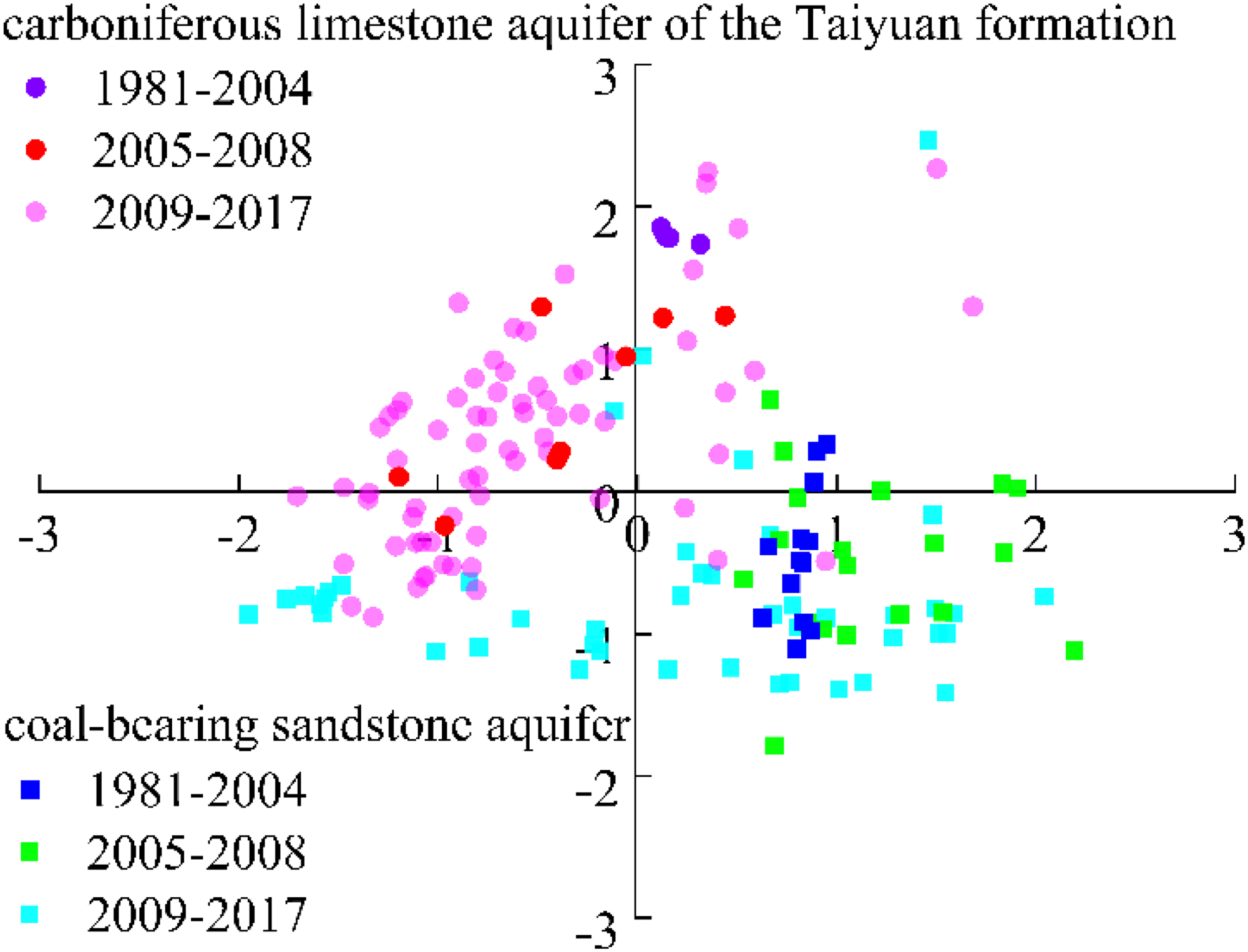
Diagram of the first principal component score (Z1) and the second principal component score (Z2) of groundwater samples in the Liuqiao coal mine.
It can be seen from the figure that the early water sample points of coal-bearing sandstone aquifer revealed low values in principal component 1, indicating that the cation alternating adsorption was weak in the early stage of mining. With time, the water sample points in the study area moved towards the direction with the highest scores, indicating that the aquifer was affected by the mining, while the alternating adsorption of cations was enhanced. In the early stage, the water samples of the carboniferous limestone aquifer of the Taiyuan formation showed high scores on the principal component Z1 axis, suggesting a water hardening effect in aquifers related, to the aqueous medium of limestone. In the later stage, the water sample points were mostly found in the second and third quadrants. The high Ca2+ and Mg2+ contents in a limestone aquifer, after mixing with the groundwater of other aquifers, may promote the salinization effect through cation alternating adsorption with Cl− present in the aqueous medium.
Conclusions
Based on the hydrochemical data of the aquifers collected from the main aquifer groundwater system in the Liuqiao coal mine in Huaibei coalfield from 1981 to 2017, the groundwater chemical characteristics were assessed using conventional ion mathematical statistics and ion combination ratio, combined with the PCA method of multivariate statistics. The temporal evolution mechanism of the hydrochemical composition of groundwater under the influence of mining is discussed.
The main conclusions of the current study are as follows:
In the main aquifer of Liuqiao coal mine, the relationship between cation content were Na+ > Ca2+ > Mg2+, and anion were SO42− > HCO3− > Cl−. The variation coefficients of six ions showed gradual temporal increases. The main controlling ions changed, and the hydrochemical types of coal-bearing sandstone aquifer and carboniferous limestone aquifer of the Taiyuan formation gradually changed from SO4-Na type and SO4-Na·Ca type to HCO3-Na type and HCO3-Na·Ca type. The groundwater environment in the study area is relatively complex, and the hydrochemical composition is affected by the geological background of the mining area and mining activities. According to the ionic proportional ratio results, the formation of hydrochemical characteristics was mainly affected by cation exchange, dissolution of carbonate and sulfate, and desulfation. PCA revealed the first principal component and the second principal component that explain the highest variance. The results revealed the evolution mechanism of conventional ion hydrochemical characteristics with time. Indeed, principal component 1 represented the cation alternating adsorption and desulfurization, while principal component 2 represented carbonate or sulfate dissolution. Over time, the water sample points were mostly found in the second and third quadrants, indicating a gradually increases in cation alternating adsorption and groundwater salinization effect.
The chemical evolution of groundwater is a dynamic process. Water chemistry data should be collected regularly to accurately assess the changes in groundwater in coal mine areas.
The findings of this work are of great significance for promoting the safe exploitation of deep coal resources and the sustainable utilization of groundwater in the Huaibei coalfield. In the future, we can study the evolution process of ground hydrology and geochemistry from the perspective of space.
Footnotes
Acknowledgements
We thank the Liuqiao Coal Mine for the measured data.
Data availability
The data used to support the findings of this study are available from the corresponding author upon request.
Declaration of conflicting interests
The author(s) declared no potential conflicts of interest with respect to the research, authorship, and/or publication of this article.
Funding
The author(s) disclosed receipt of the following financial support for the research, authorship, and/or publication of this article: This work was supported by the Scientific Research Platform Innovation Team Construction Project in Universities of Anhui, National Natural Science Foundation of China (grant number 2016-2018-24, 41272278).
