




Abstract
It is significant to predict the gas emission in the mine gob accurately for gas drainage to prevent accidents and ensure safe production. The change of atmospheric pressure makes the gas emission in the mine gob presents a “breathing phenomenon”, which causes the gas concentration in the return airway of the working face fluctuates even if there are no other disturbances. The gas emission of the return airway in mine working face is affected by many factors, so it is difficult to analyze the influences of atmospheric pressure fluctuations on the gas emission of mine gob. In order to reduce interference factors, by continuously monitoring the gas concentration in the return airway of a does not work mine, in the meantime, simultaneously monitoring and analyzing the atmospheric pressure on the ground, this paper studies the influence rules of atmospheric pressure on gas emission in goaf. And a new multi-parameter mathematical model for gas emission in gob is developed, the Particle Swarm Optimization algorithm (PSO) is used to invert the optimal parameters, and the model is verified by random monitoring data. The results show that the model can accurately indicate the influence of atmospheric pressure on gas emission in the gob. The faster the ground atmospheric pressure decreases, the higher the gas emission rate of the gob is, and the faster the ground atmospheric pressure increases, the lower the gas emission rate is. In addition, the mathematical model can also invert the effective permeability and effective porosity of the gob, which provides a new idea for the prediction of gas emission from goaf and the evolution characteristics of permeability in goaf.
Keywords
Introduction
Gas emission in mine goaf is affected by many factors (Lagny, 2014; Song et al., 2015; Zhu et al., 2014), and the change of surface atmospheric pressure is one of the important external conditions to cause the fluctuations of gas emission rate. As for whether atmospheric pressure has an impact on gas emission in goaf, most researchers hold a positive attitude (Cheng, 2015; Wasilewski, 2014). However, current studies about the influences of atmospheric pressure on gas emission in goaf are lacking quantitative and regularity analysis. Therefore, to study the influence of atmospheric pressure on gas emission is helpful to study the law of gas emission in goaf, which would provider reasonable technical measures for mine managers to reduce interferences of abnormal atmosphere pressures on gas emission and safe production.
Gas emission is complex and changeable which is affected by many factors (Wang et al., 2018, 2020). During normal production, gas emission is affected by various human factors, such as shearer on-off, mining methods, blasting, etc., even during maintenance downtime, it is still difficult to study the influence of environmental factor (atmospheric pressure fluctuation) on gas emission (Fu et al., 2012; Lolon et al., 2016, 2017; Zhou et al., 2012). Permeability and porosity are key parameters to influence the gas flow in goaf, T.X. Ren (Ren and Edwards, 2000), D.N. Whittles et al. (Whittles et al., 2006) have established 3D geotechnical models of the long wall face gob based on finite element software. The model researches the three-dimensional stress and strain distribution of the gob, and calculates the continuous three-dimensional spatial distribution of the gob permeability through the relationship between the strain and the permeability. Gao Jianliang et al. (Gao et al., 2010) found through simulation research that when permeability distribution is different, the distribution of air leakage and gas in goaf shows great differentiation. It is necessary to describe the permeability distribution to accurately simulate the coal and rock caving law in goaf. In addition, scholars have also used scanning electron microscope, nuclear magnetic resonance, and three-dimensional reconstruction methods to make in-depth study on the pore structure of coal (Song et al., 2013; Wang et al., 2019). Although the measured porosity is more accurate, it still cannot truly reflect the porosity size and distribution inside the gob. Due to the complexity and randomness of the gob environment, the structure of broken rock would change with time under external force. Therefore, further researches are needed on the measurement and analysis porosity and permeability in the gob.
In order to solve the problems above, this paper carried out an further research of the correlation regularity between gas emission in gob and atmospheric pressure fluctuation. During the COVID-19 epidemic, Shanxi Jinmei Group Pingshang Coal Mine 2,307 face was stop production. This is a great opportunity to obtain the continuous gas monitoring data of the return airway from 2,307 face, and the data of ground atmospheric pressure fluctuation in the Pingshang coal mine area was collected through National Meteorological Science Data Center (http://data.cma.cn). The paper develop a new multi-parameter mathematical model of gas emission, and uses particle swarm algorithm to back-calculate the optimal parameters, and verifies it through random monitoring data. The results show that the model can accurately predict the change trend of gas emission. In addition, the mathematical model can reversely calculate the equivalent permeability and equivalent porosity of the gob, which are novel parameters for calculating the gas seepage rate in gob.
Theoretical bases
Gas emission model under respiration of atmosphere pressures
Assuming that there is a single coal seam working face, the amount of monitored gas Q0(t) in the return airway consists of two parts: coal wall gas emission Q1(t) and gob gas emission Q2(t). Q1(t) can be considered as a constant, the gas emission volume is affected by air leakage flow-field in gob and the atmospheric pressure fluctuations. If the atmospheric pressure does not change, the amount of gas carried by the air leakage flow-field in the gob is a fixed value, and when the atmospheric pressure fluctuates, it will cause “breathing” action in the gob. This phenomenon will promote or suppress the gas emission from the gob toward working face under influences of air leakage flow-field.
The gob is divided into 3 areas horizontally as area I (coal wall support area), area II (separation area) and area III (compaction area). Among them, the porosity of zone I and zone II are relatively large, and the gas accumulated in ther

The dynamic viscosity of mixed gas is shown in equation (2).

According to the gas equation of state, under isothermal condition, if the absolute pressure of the gas does not change a lot, the change of gas density is proportional to the change of air pressure.

According to the gas mass balance equation in the gob:





Multi-parameter inversion of airflow model in gob
Objective function and constraints
According to whether the voids in the gob are connected to the working face, the voids in the gob can be divided into connected voids and unconnected voids (Pramanik et al., 2004). The connected voids are the “effective porosity” that affects the gas emission in the gob as shown in the Figure 1. Effective porosity refers to the percentage of effective voids volume in the total volume of gob. The calculation formula of equivalent porosity in the gob is shown in equation (9).

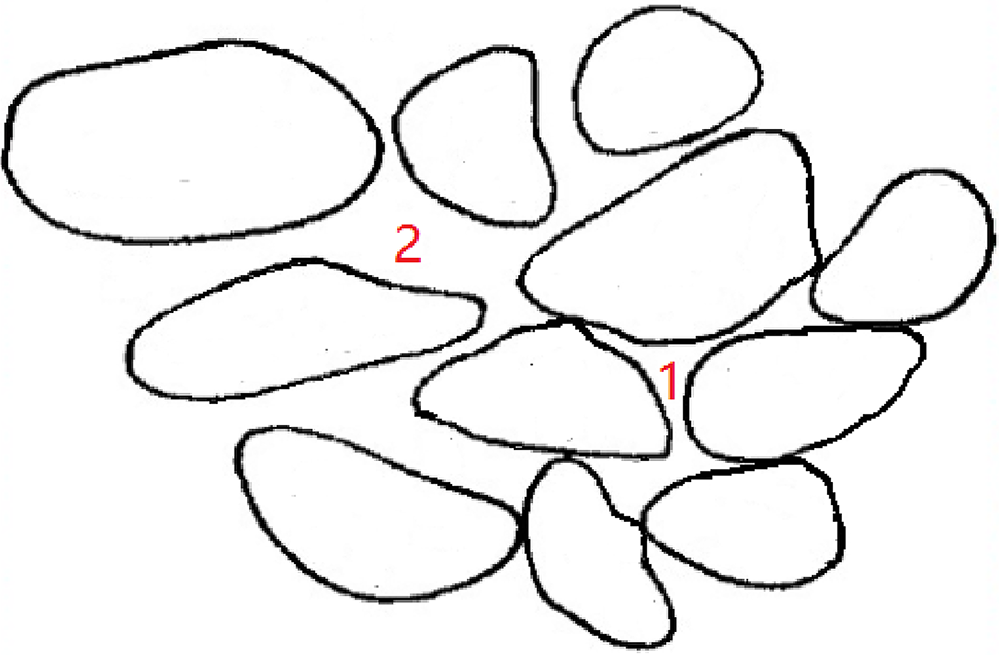
1—disconnected void, 2—connected void.
In order to use the atmospheric pressure fluctuation data to predict the change law of gas emission out from the gob, the basic parameters of equation (8) need to be determined in advance. There are three unknown parameters, equivalent porosity n, the equivalent permeability k, and the average gas concentration c.
In order to obtain accurate model parameters, it is necessary to find an optimal set of model parameter values, so as to make the forward value calculated by formula (8) has be best matched with the actual observed gas concentration data. And the root mean square error (RMSE) is used to measure the deviation between the calculated value and the real value. Therefore, the objective function is constructed as shown in equation (10).


Principle of particle swarm algorithm
In this study, a particle swarm optimization algorithm based on dynamic inertia factors is proposed to inverse calculate the parameters of the gob. Particle swarm optimization (PSO) is an algorithm for processing optimization problems in continuous or discrete space based on swarm search, which was proposed in 1995 by Dr Kennedy and Dr Eberhart (Kennedy and Eberhart, 2002). The particle swarm algorithm selects a group of all moving particles in the solution space as the optimal solution. Each particle has two attributes: position and velocity (the dimensions of position and velocity are the same as the dimension of the solution space). The position of the particle represents a feasible solution, and the velocity represents the differential between itself and the next feasible solution found. Each particle adjusts its speed (according to a certain rule) according to the optimal solution it has searched for and the optimal solution currently found by the group to find out a better solution. The flow of the PSO algorithm is as shown in Figure 2.
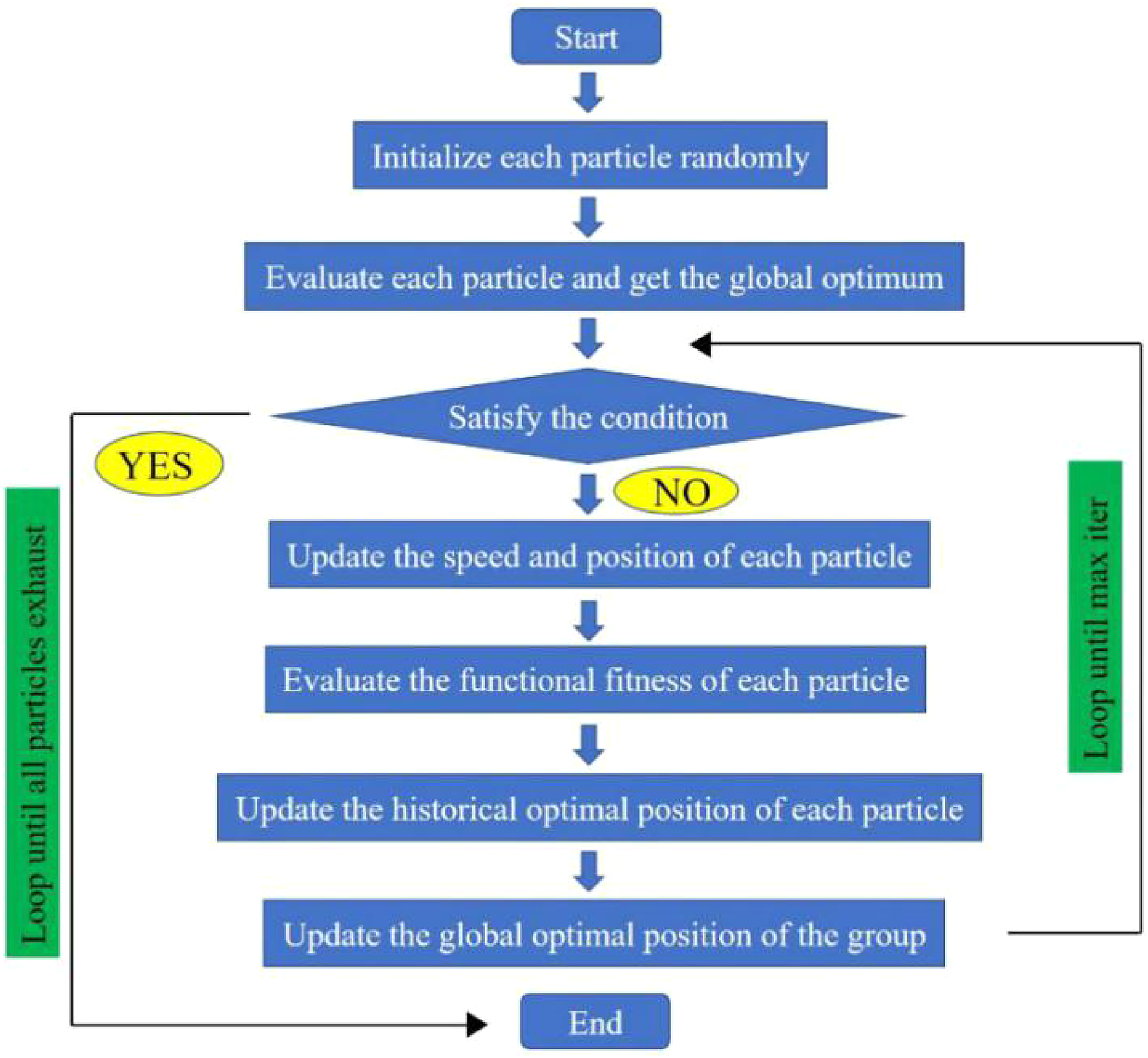
Flow chart of PSO algorithm program.
For the particle swarm algorithm, the inertia weight ω is the most important parameter, which reflects the ability of the particles to inherit the previous speed. A larger ω helps to improve the algorithm's global search ability, and a smaller ω helps to improve the algorithm's local search ability. In order to speed up the comprehensive search ability of particles, this paper selects the dynamic inertia weight value (Chen et al., 2006).

Data collection
General situation of working face
Pingshang Coal Mine, located in Jincheng City, Shanxi Province, P.R. China, is a 3-million-ton annual output mine of Jinmei Coal Industry (Group) CO. LTD, and is the data acquisition site of this experiment. The total thickness of coal seam in 2,307 face is 4.63–5.70 m, an average of 5.10 m, a dip angle of 3°, a strike length of 1,400 m and a dip length of 236 m, as shown in Figure 3. The working face uses panel slicing methods, the mining height is 2.5 m, the U-shaped ventilation system is adopted and the average air volume of 2,307 working face is 10 m3/s. The roadways along the channel are all rectangular sections, and the bolt-mesh support method is used, as shown in Figure 4. This working face was completed on December 20, 2019. Later, due to the impact of the COVID-19, the working face has stopped production, and the hydraulic support began to withdraw on May 4th, 2020. During the period, the working face was supplied with air without any other disturbance as normal.
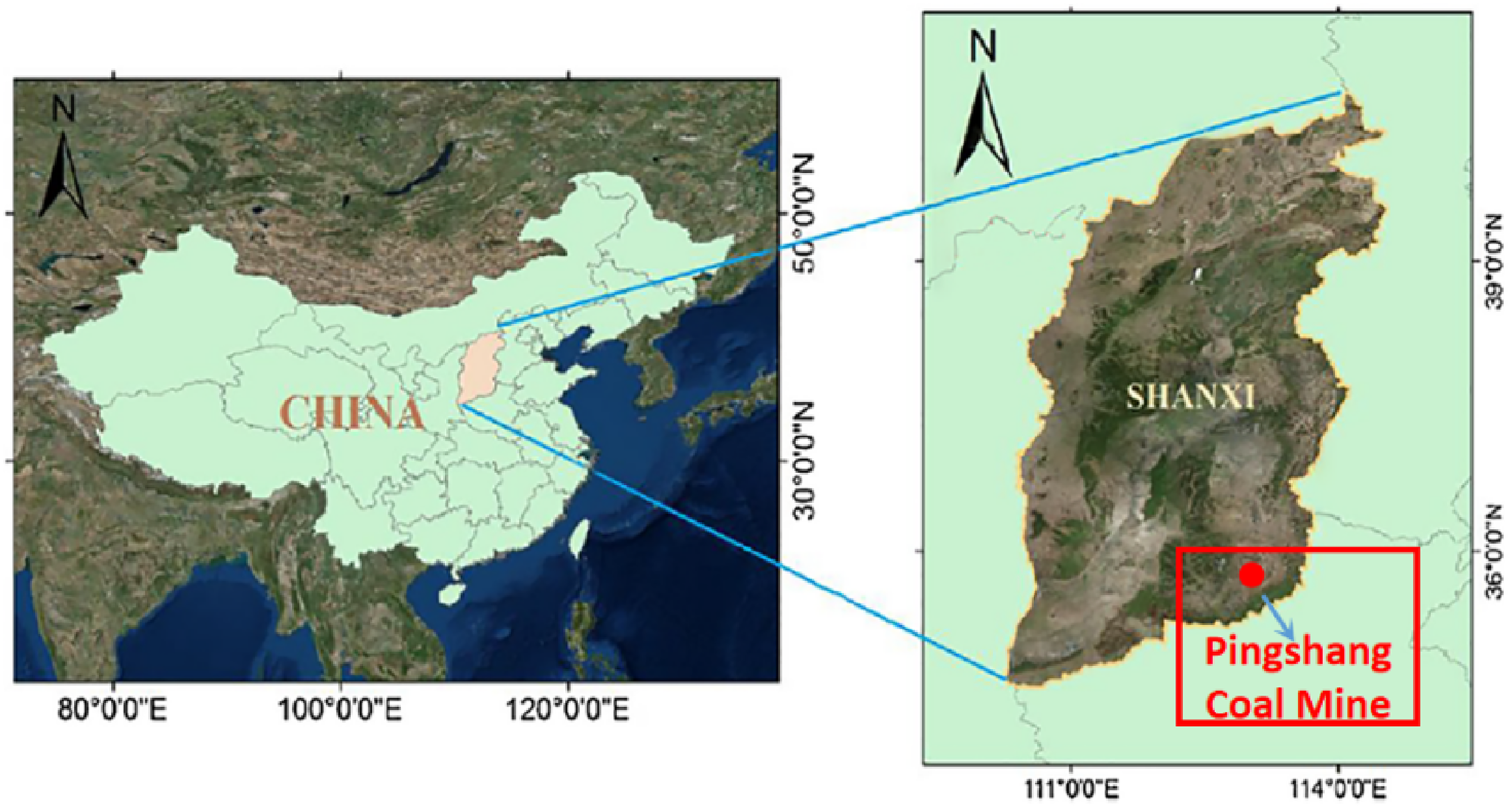
Pingshang coal mine geographical position.
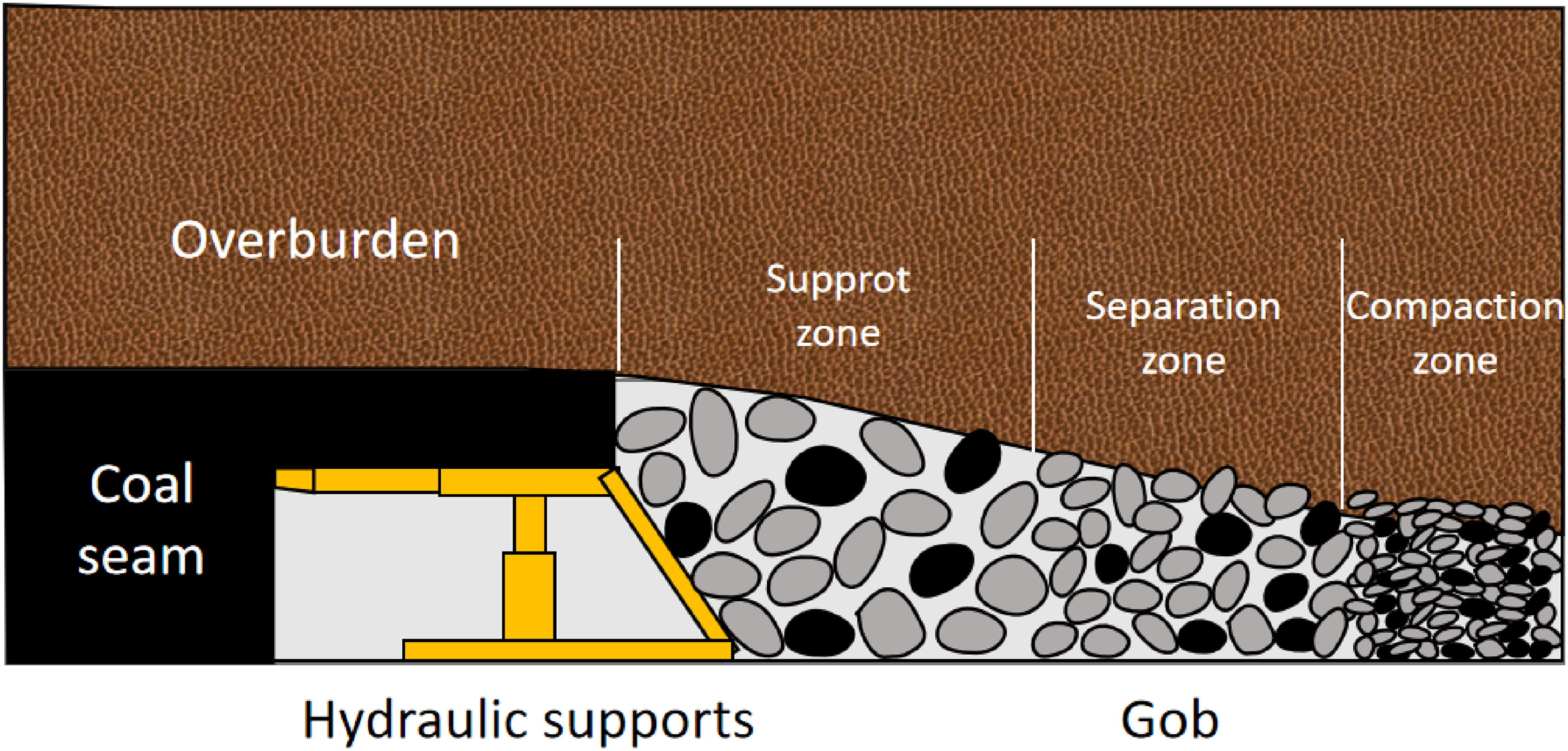
2,307 working face.
Data acquisition
In order to ensure the accuracy and scientificity of the measurement, according to the conditions of the working face and the gas flow theory, and requirements of the coal safety regulations, the stable air flow at 30 m away from return airway is selected as the monitoring point to obtain hourly gas emission rate data. Then, acquiring the hourly atmospheric pressure data of the mine area. The processing results of obtained atmospheric pressure data and gas concentration data changes are shown in Figure 5.
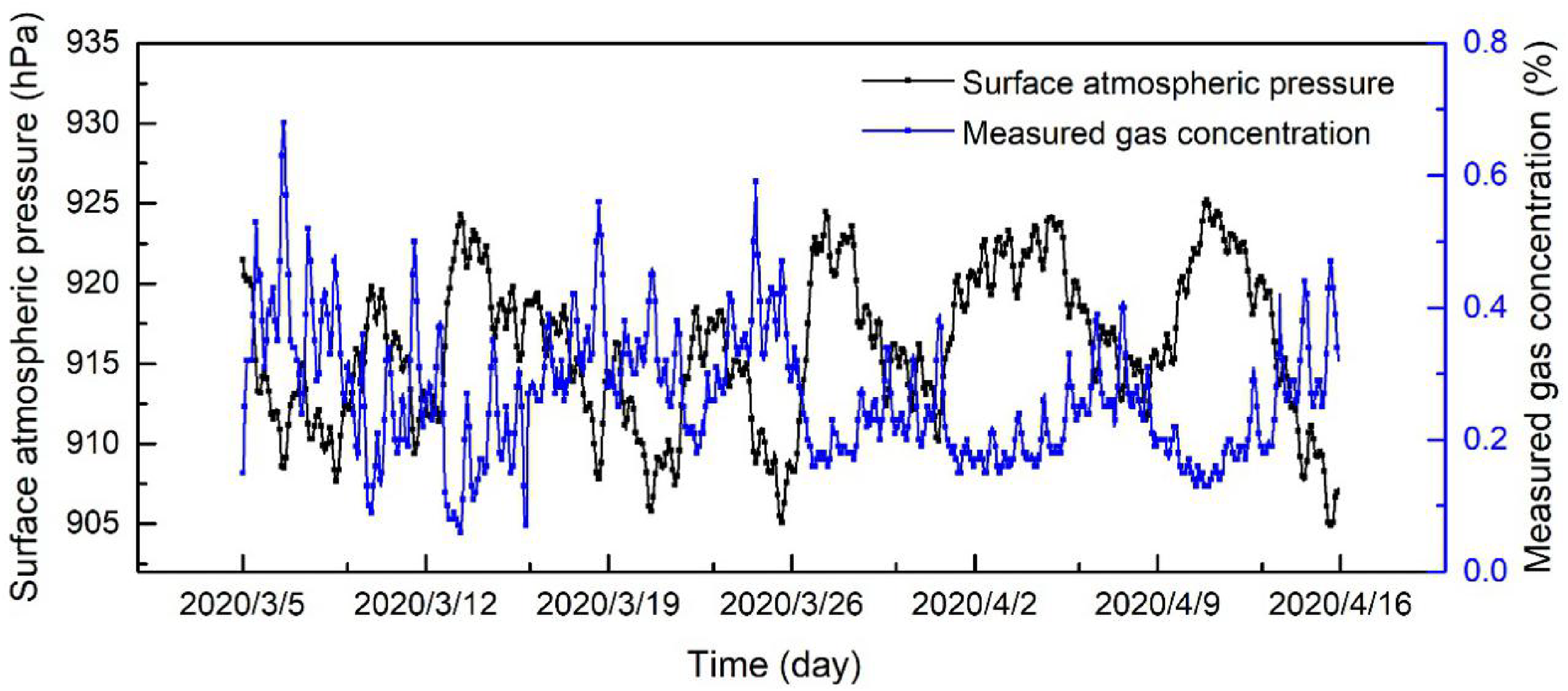
Ground atmospheric pressure data and gas concentration data.
PSO reliability and verification
The calculation results of the PSO method have a certain degree of randomness, so the results of each simulation are slightly different. In order to verify the rationality of the calculation results, the model stability test is carried out. The simulation case is tested for 50 times, and the results show that the equivalent porosity of the gob is stable at 0.1, the permeability is stable at 4.982 × 10⁻¹¹, the average gas concentration in the gob is [48.79%, 58.61%], the basic gas emission is [0.0223 m3/s, 0.0271 m3/s], and the range of initial atmospheric pressure in the gob is [91,015 Pa, 92,245 Pa]. Using the data of 14 days from March 5th, 2020 to March 18th, 2020 to invert calculate the seepage field parameters in the gob. According to the parameter values inversely performed by the particle swarm algorithm, the final value is determined that porosity is 0.1, permeability is 4.982 × 10⁻¹¹, gas concentration is 58.61%, basic gas emission is 0.02315 m3/s.
In order to verify the model and the inversion results, the parameters obtained by the particle swarm algorithm inversion calculation are substituted into the calculation model. The ground atmospheric pressure change value is used as the dependent variable to predict the gas concentration value of the return airway from March 18th to April 16th. The contrast results are shown in Figure 6.
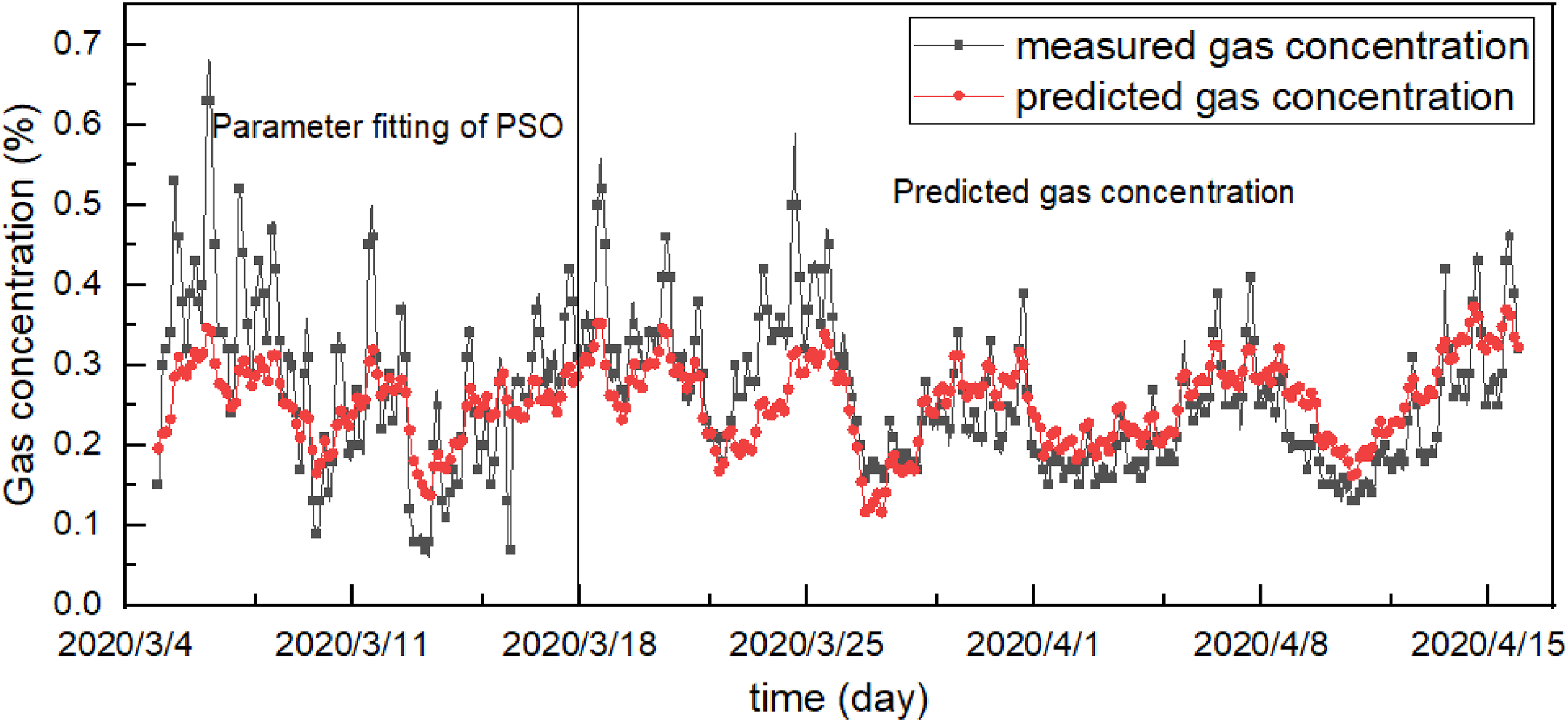
Contrasts of predicted gas concentration and real gas concentration.
It can be seen from Figure 6 that the predicted gas concentration obtained by the inversion calculation is highly consistent with the change trend of the real gas concentration. However, there are deviations between the gas concentration peaks by the inversion and the real gas concentration peaks due to the optimal parameter selection of PSO algorithm. PSO is a kind of fitting simulation, the remote value are discarded in order to make the formula meet more parameters, so the peak point of the curve may not be accurately estimated. In addition, other operation behaviors in the mine, such as the maintenance of extraction pump and damper, will also temporarily affect the peak change of overall gas concentration. In order to ensure the safety of the mine, such operations cannot be stopped. But, from the comparison between the predicted results and the overall change trend of the actual data, the similarity is very high. Therefore, the predicted results are of practical significance. In order to characterize the error, the RMSE (root mean squared error) is introduced, the RMSE is the square root of the mean square differences between the predicted value and the actual observation. It is defined as shown in equation (13).

Discussion
It can be seen from Figure 5 that the surface atmospheric pressure is negatively correlated with the gas concentration monitored in the return airway. The Pearson Correlation Coefficient (Saccenti et al., 2020) is used to evaluate the correlation between the ground atmospheric pressure and the gas concentration. The Pearson Correlation Coefficient is expressed as shown in equation (14).

According to formula (8), the influence of ground atmospheric pressure change on the mixed gas emission change in the gob can be calculated. As shown in Figure 7. when the ground atmospheric pressure increases, the amount of mixed gas in the gob decreases, while when the ground atmospheric pressure decreases, the amount of gas in the gob increases. This is mainly because when the ground atmospheric pressure increases, the absolute static pressure at the working face also increases rapidly, while the average absolute pressure in the gob can be considered unchanged. Therefore, under the conditions of the pressure gradient decreases between gob and working face, the outflow gas from the gob to the working face is reduced. In the same way, when the ground atmospheric pressure decreases, the gas moving from the gob to the working face increases, which eventually causes the gas concentration monitored at the return airway to reversely change with the atmospheric pressure.
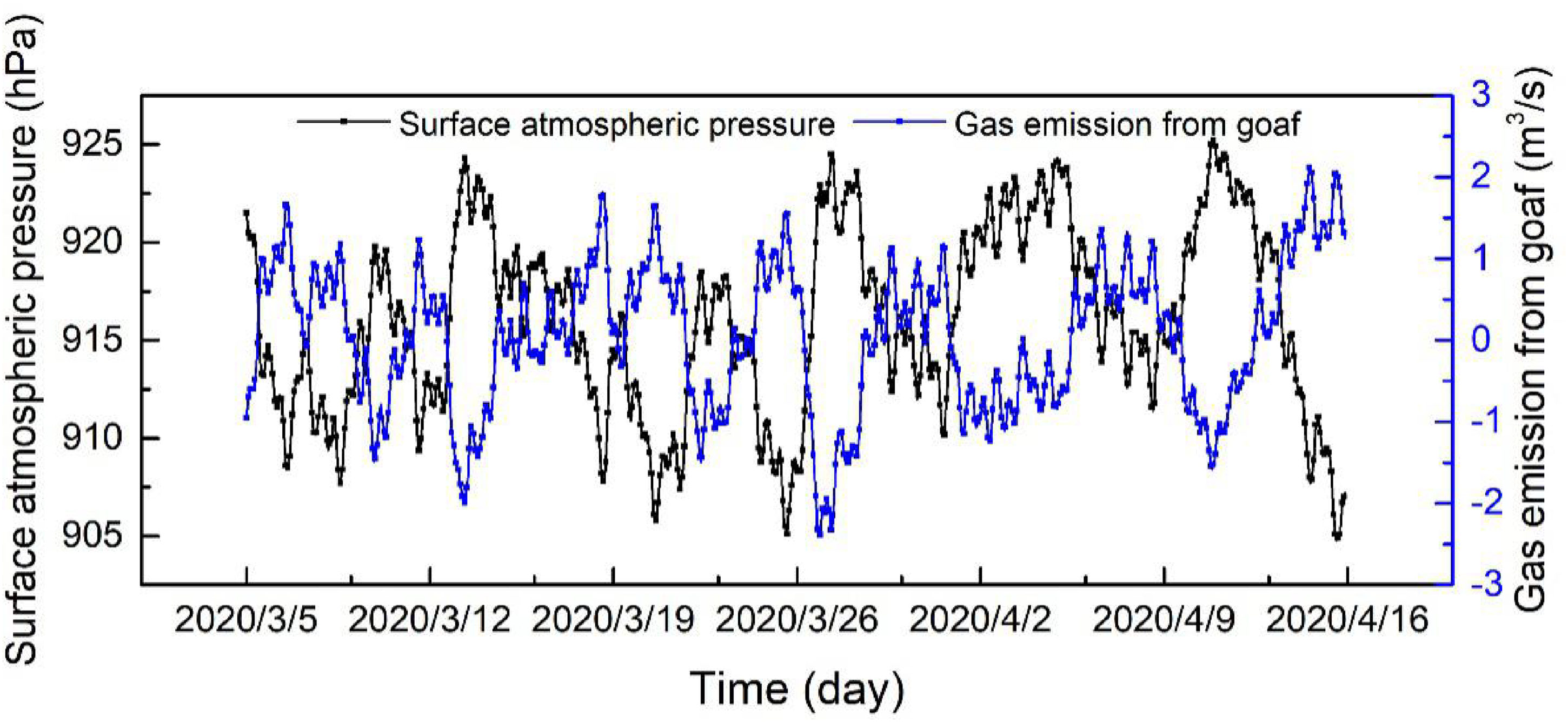
Atmospheric pressure change and the calculated change of the gas mixture in the gob.
According to the Figure 7, it can be seen that the fluctuation of the gas in the gob has only associated with the change of the ground atmospheric pressure. The more drastic the atmospheric pressure on the ground changes, the larger the gas emission out of the gob. As shown in Figure 8, the data on March 10, March 20, April 1, and April 10 were selected for the daily variation analysis of gas emission in units of ten days.
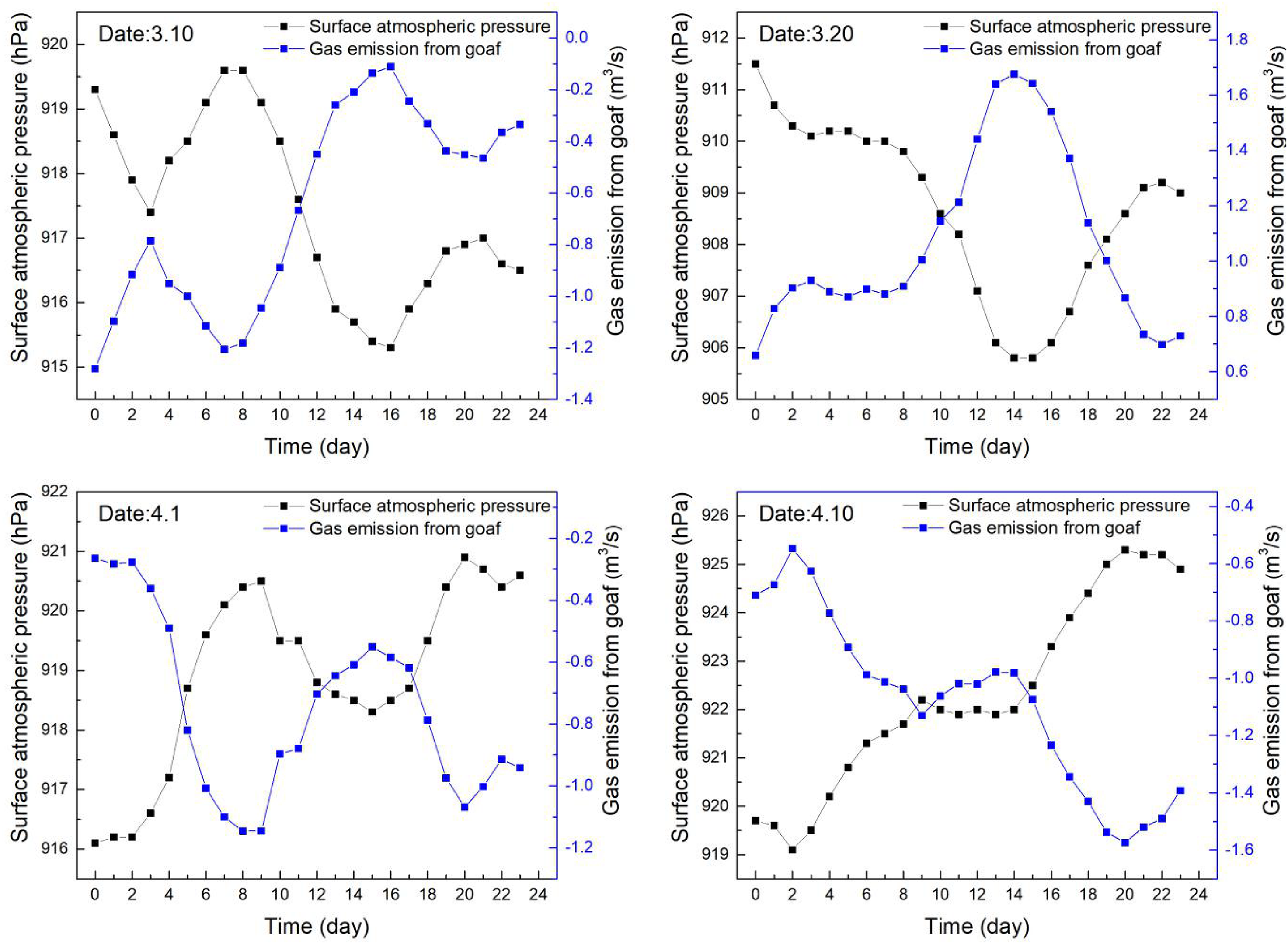
Hourly change of gas emission.
By observing Figure 8, It can be seen that the surface atmospheric pressure is negatively correlated with the gas emission in the goaf. The atmospheric pressure basically reaches its lowest value at 2:30 pm every day, so the gas emission from the gob increases at this moment. However, due to the poor daily periodicity of atmospheric pressure, changes in atmospheric pressure are affected by various environmental factors, not all of them had dropped to the lowest point in the afternoon.
Conclusions
Atmospheric pressure fluctuation will lead to “breathing phenomenon”, resulting in abnormal fluctuation of gas emission in goaf. Quantitative analysis of the influence of atmospheric pressure fluctuation on gas emission in goaf is helpful to guide gas drainage and reduce the possibility of disaster risk in working face. Therefore, this paper developed a wave model of gas emission in working face under atmospheric pressure, and verified in a mine without production, the results can be concluded as follows.
The multiple parameter model of gas emission under the action of atmosphere in goaf is be constructed, the concept of equivalent porosity and equivalent permeability of goaf is introduced. The particle swarm optimization algorithm (PSO) is used to inverse calculate the parameters. By comparing the model results with the field monitoring results, the model result is highly consistent with the change trend of the real gas concentration, which verified the rationality of inversion parameters. However, there are deviations between the gas concentration peaks, this may caused by other human factors, it would be studied in further reseaech. Based on theoretical analysis and field experiments, the influence of atmospheric pressure change on gas emission in goaf is verified. The gas emission in goaf is inversely proportional to the variation of ground atmospheric pressure. The surface atmospheric pressure is negatively correlated with the gas emission in the goaf. The faster the ground atmospheric pressure decreases / increases, the faster the gas emission increases / descresses.
Footnotes
Declaration of conflicting interests
The author(s) declared no potential conflicts of interest with respect to the research, authorship, and/or publication of this article.
Funding
The author(s) disclosed receipt of the following financial support for the research, authorship, and/or publication of this article: This work was supported by the Liaoning Provincial Natural Science Foundation Funding Program, The Basic Scientific Research Business Expenses of Central Universities (grant number 2021KF2305, 2021YQAQ03).
