




Abstract
It is very important to unseal the closed coal mine fire zone safely. Although the fire source disappears in the closed fire zone, it is uncertain whether there are still have high-temperature ignition points, and there is a risk of fire or even explosion again after unsealing. To ensure that the closed fire zone can be unsealed successfully at one time, the study puts forward the method of oxygen augmentation observation to understand the combustion state of the closed fire zone in underground coal mine from the perspective of gas analysis technology. When the mine fire is detected to be extinguished, the method is to inject 8–12% oxygen into the fire area, and the fire area shall be monitored for 2 weeks to determine whether the fire area is completely extinguished. The accuracy and practicality of the method of oxygen augmentation observation are verified by comparing and analyzing the difference results generated by two oxygen augmentation observations in closed zone of Yuwu Coal Mine. In this paper, the use conditions of unsealing in fire zone, detailed methods and steps in the whole process of unsealing and emergency rescue plan are given. The research results can provide valuable reference for one-time safe unsealing of fire zone during the process of disaster relief.
Keywords
Introduction
Mine fire is one of the most serious and difficult disasters to rescue. After a fire occurs in underground mine, the fire source is too dangerous to be directly extinguished, and the fire zone is usually closed to extinguish the fire (Kuchta, 1982; Wu 2014). The safe unsealing of fire zone must be based on the correct analysis of the state of fire source in closed fire zone. When the fire zone is extinguished and re-unsealed, understanding the following aspects of closed fire zone is essential for making fire disaster relief decisions: (a). the size of the fire (Lei et al., 2020); (b). the probability of gas explosion or reignition after opening (Qin et al., 2009; Lei et al., 2019; Zhu et al., 2019); (c). the effectiveness of fire control measures, such as inert gas injection, water injection, grouting (Zhang et al., 2020a; Liang et al., 2010; Xu et al., 2012); (d). when, where, and how to re-enter the fire zone; (e). whether there is a fire or not. And the gas analysis technology is the most common and important mean to understand the above aspects (He et al., 2020; Lu et al., 2004; Du, 2012; Jta et al., 2020). However, in many coal mines, the the faultiness analytical conclusions about the combustion state of the fire zone, which often leads to gas explosion when the fire zone is unsealed (Zhang et al., 2019). In the early 1990s, there were at least three false fire alarms in US mines due to errors in data collection and analysis (Mitchell, 1990).
Many researchers have carried out a lot of researches on unsealing fire zone. Magnusková et al. (2011) studied the technical measures of cooling the sealed fire fields in the underground coal mines and proposed to exchange mine air between the fire zone and the adjacent mine workings or to increase the energy exchange by building explosion-proof dams. Yao et al. (2015) analyzed the temperature and gas in the fire zone during the unsealing process and found that the monitoring of the gas and temperature during the whole process of unsealing is an important reference index for mastering the re-ignition of coal. Wanget al. (2003) derived the calculation formula of heat transfer and the time between closure to unsealing of the fire zone based on the basic theory of self-ignition heat release and heat transfer of coal. Zhou (2010) found that the existing reignite judgment at the time of unsealing the fire zone is often based on the experience of experts, which inevitably leads to the lack of intelligence and the ow reliability of the judgment results. Based on these reasons, he proposed a multi-parameter determination method and a mathematical model of safety factor (Wu et al., 2011) for unsealing and reignition of fire zone by using the principle of BP deep well network and the basic theory of fuzzy mathematics correspondingly. These guidelines proposed by the above researches provide effective technical guidance for correctly determining the state of the closed fire zone and formulating the unsealing measures of the fire zone during the process of unsealing. However, most of them are based on theories, which ensure the success of the unsealing of the fire zone to a great extent, not verified in the field. In the process of unsealing the fire zone, there are still cases that cause the fire zone to reignite and need to be re-sealed, and even to the explosion of the fire zone causing major accidents (Bai et al., 2020; Liang and Luo, 2008). How to accurately evaluate the fire zone condition and ensure a one-time successful unsealing is of great significance to mine safety and social impact.
Oxygen an essential condition for combustion. The reason to seal the fire zone is to isolate oxygen and thus extinguish the combustion (Zhang et al., 2020b). However, if the closed mine is opened blindly, the oxygen concentration in the fire area will increase, which may lead to reignition. Therefore, before unsealing, a small amount of oxygen is injected into the fire zone to observe the change in gas concentration. The combustion of coal is related to the coal's own characteristics but also to the ability of coal itself to react with O2. In the oxidation process of coal, various alkane gases are released, and the generation of each alkane gas and its concentration vary for different coal types at different stages of coal oxidation (Guo et al., 2019; Li et al., 2018). If the fire is not extinguished, oxygen will participate in the oxidation reaction, which will inevitably lead to abnormal changes of the index gas. At this point, stopping the oxygen supply immediately can prevent the occurrence of secondary disasters such as gas explosion in time, and reduce the time and economic loss caused by resealing, etc.
Therefore, taking the fire accident in Yuwu mine as an example, this study studies how to judge the situation of the fire area after the fire area is closed, so as to provide empirical support for the unsealing of the mine fire area.
Scene overview
Geological conditions of the fire zone
Yu wu Coal is located in Shanxi Province, China, due to its high altitude (around 1KM), the terrain is undulating and the temperature difference between day and night is large (Figure 1). Its N1203 working face is 1024.3 m in strike length and 301.7 m in inclined length, with a recoverable reserve of 2.835 million tons, an average coal seam thickness of 6.6 m and a bulk density of 1.39 t/m3. The buried depth of N1203 from the surface is + 509.7∼ + 534.3 m, the surface elevation is + 948.8∼ + 999.5 m, and the working face elevation is + 439.1∼ + 465.2 m. The thickness of the coal seam is stable, and there is no gangue in the coal seam, and the thickness is 6.50∼6.70 m, average 6.6 m. Coal seam 3# is mined in this working face, the natural tendency of the coal seam is grade III, which is not easy to combust spontaneously. In the process of mining, the absolute gas emission quantity is 52.863 m3/min, the relative gas emission quantity is 7.025 m3/t, and the air distribution at the mining face is 5200 m3/min.
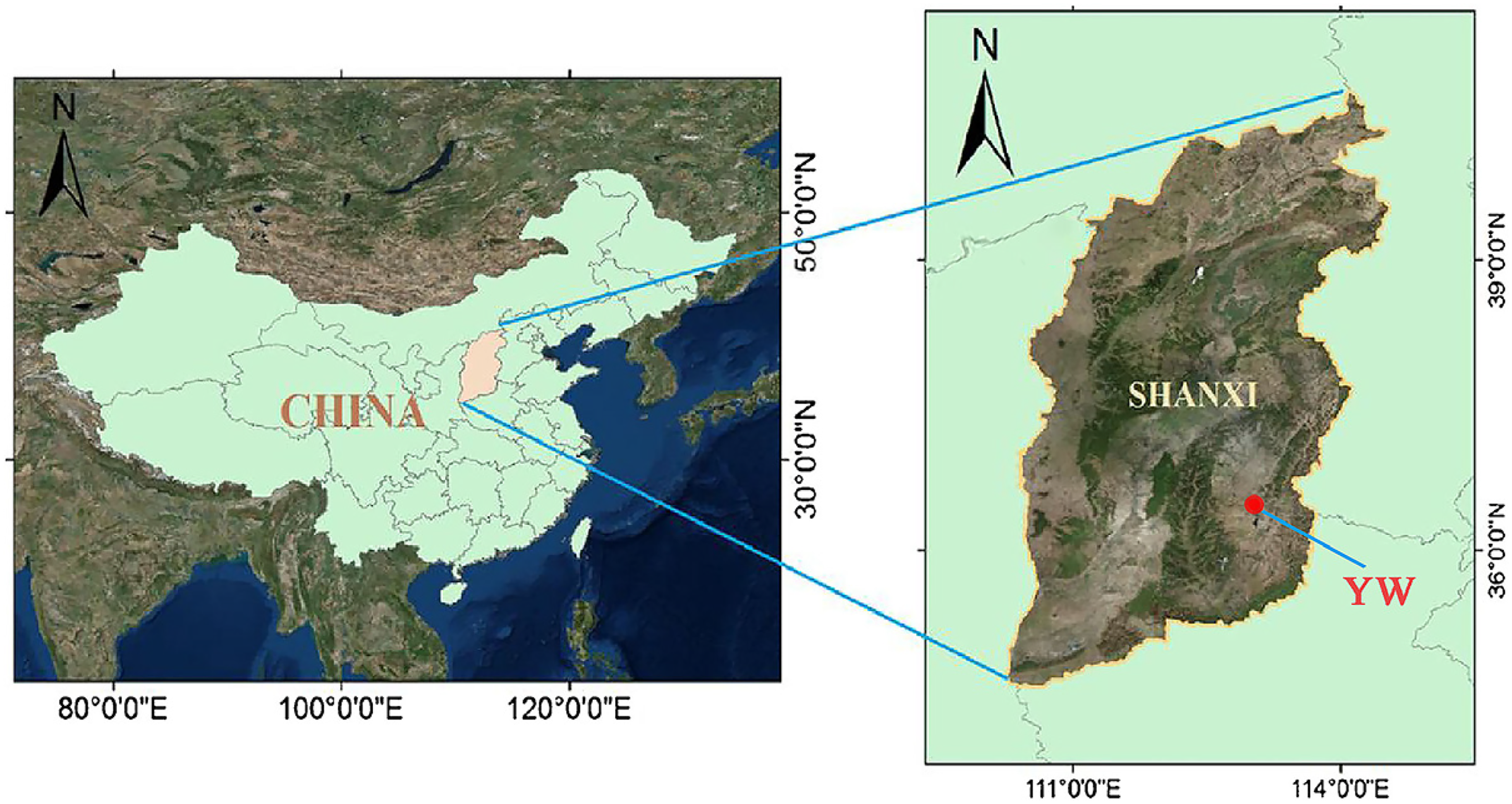
Yu Wu coal mine geographical location.
At 7:48 on June 22, 2011, when the working face unit was cutting stones, the spark caused gas combustion, resulting in a fire of the residual coal in the goaf. On June 23, the rescue commanders sealed off the mining area where the N1203 working face was located at a distance. On 24 June, the main fan of the mining area was shut down, the compressed air pipeline was converted into a nitrogen injection pipeline, injected and inert gas (N2 and CO2) was injected into the closed area to extinguish the fire. At the same time, three surface boreholes were drilled at the surface of the working face, with No. 3 located above the fire source. The permanent sealing of the fire zone was completed on August 4, the permanent sealing and the drilling position are shown in Figure 2.
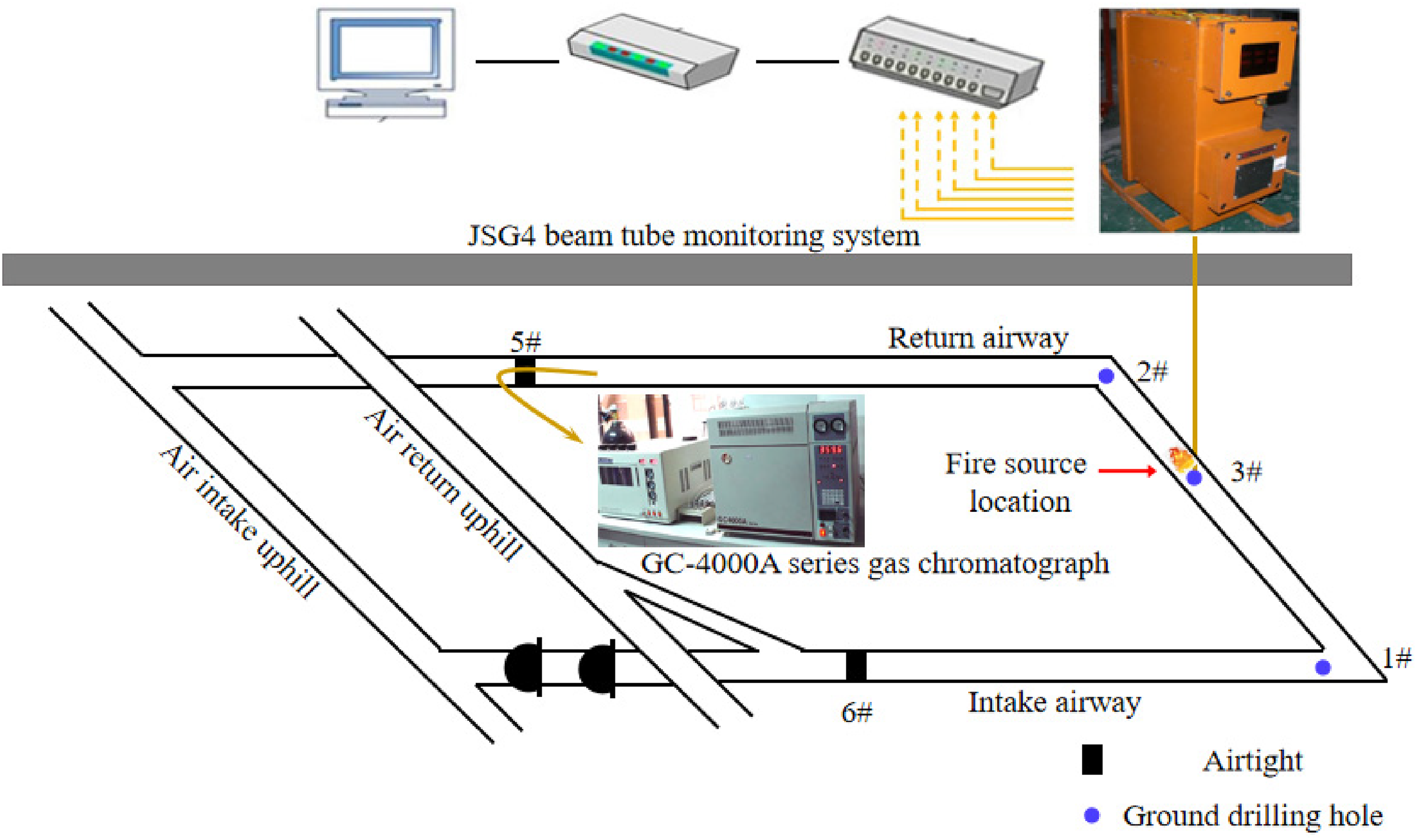
Schematic diagram of fire source location and ground drilling hole.
Selection of index gas
As stated in the introduction, the generation and concentration of each alkane gas varies for different coal types at different stages of coal oxidation. A programmed heating experiment was carried out on the coal samples from the mining area where the working face was located. The composition and concentration of gas H2, CO, CO2, C2H4, C2H2 and C2H6 were measured and analyzed during the heating process. Table 1 shows the test results.
Index gas change table in the temperature program experiment.
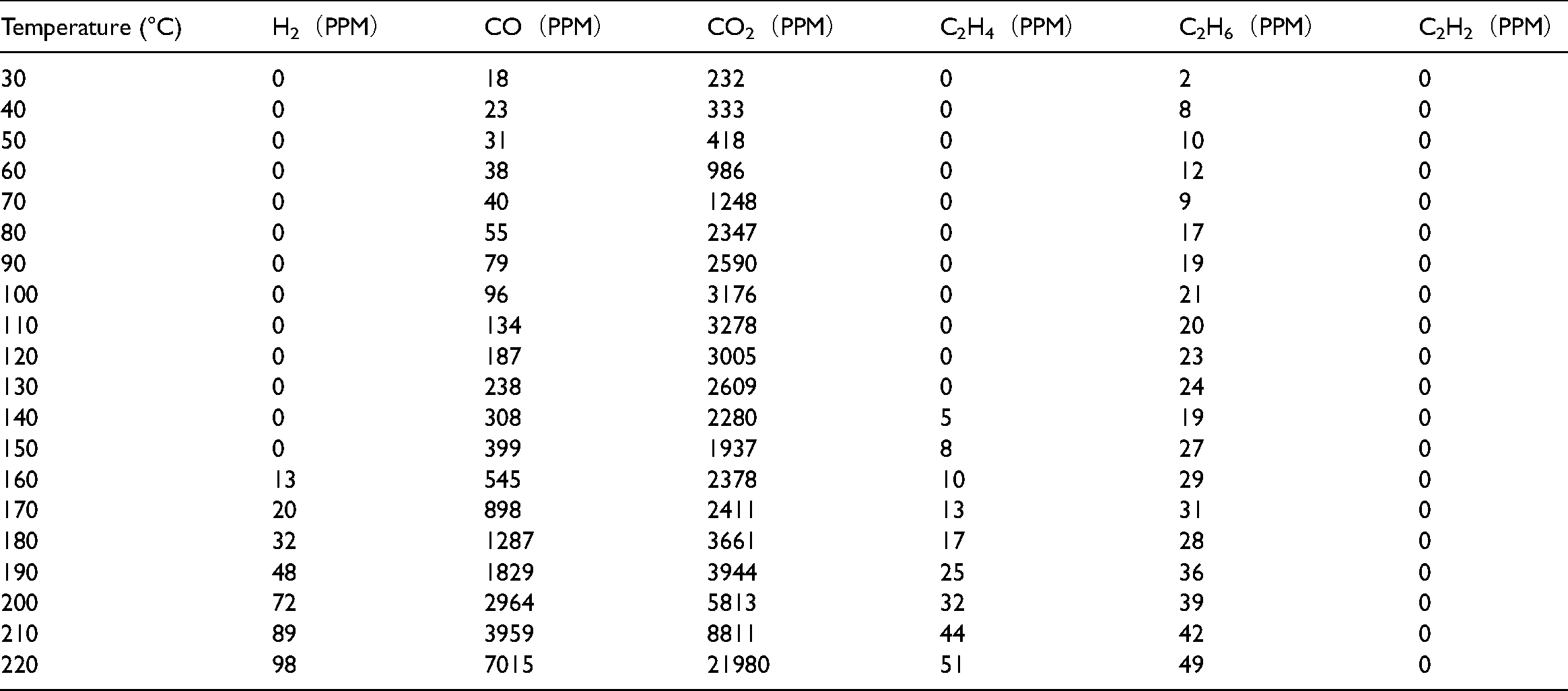
As can be seen from Table 1 and Figure 3, the concentration of CO increases exponentially with the increase of coal temperature, C2H4 appears at a temperature point of 140 °C in the process of coal heating, C2H2 does not appear until 220 °C, and H2 appears at 160 °C. Although the concentration of C2H6 increases with increasing coal temperature, the change range is not significant. As CO2 was injected during the rescue, the main index gases for the rescue are CO, C2H4 and H2.
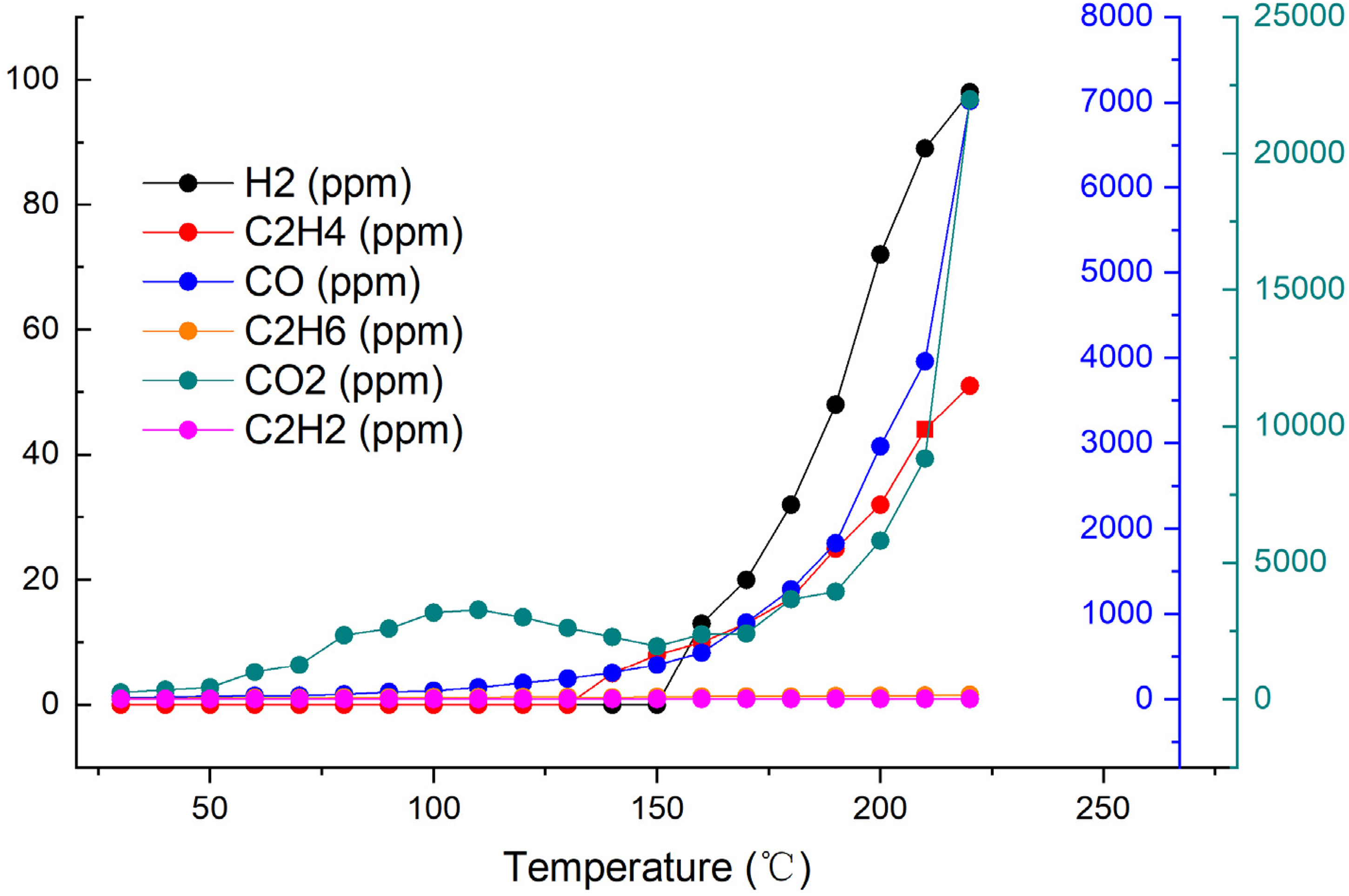
JSG4 beam tube monitoring system.
On-site gas sampling and analysis equipment
In order to make sure the results are accurate and reliable. During the disaster relief process, two gas analysis methods were used, continuous sampling analysis by beam tube monitoring system and manual sampling followed by ground gas chromatography analysis. As shown in Figure 2, borehole 3# was installed with the JSG4 beam tube monitoring system. The device uses beam tube sampling to continuously analyze the gas composition content of downhole sampling points throughout the day. The parameters of the beam tube monitoring station include: 8 collection channels, the gas components that can be analyzed include CO, CO2, CH4, and O2, and the analysis accuracy is less than or equal to 1.5%. Borehole 5# was installed with the GC-4000A series gas chromatograph, which is used to analyze the manually sampled gas. The gas components that can be analyzed include CO, CO2, CH4, O2, H2, C2H4, etc.
Explosive analysis under the condition of inert gas injected
After the fire area was sealed, inert gas was injected into the enclosed area. In order to grasp the gas concentration distribution and the risk of explosion in the fire area, numerical simulation was used to explore. For the convenience of calculation, the length of the simulated roadway is 100 m, the height is 3.6 m, and the slot injection port is initially set at 1.8 m from the top of the roadway. The gas composition is O2: 20.5%, N2: 77.5%, CH4: 0.5%, CO2: 0.1%. The fire source and gas emission of the fire area are taken into consideration within the range of the simulated roadway: the temperature is taken as 298 K, the reference pressure of the flow field is taken as the actual downhole value 1.01825 × 10⁵ Pa; the acceleration of gravity is taken as −9.81 m/s2, and the temperature at the fire source is taken as 923 K. Gas gushing is defined as a mass inlet, and its constant gushing amount is 0.0001 kg/s. Inject nitrogen or carbon dioxide into the closed fire area, the inlet conditions are the same, and the injection flow rate is 3000 m3/h. The simulation result is shown in Figure 4.
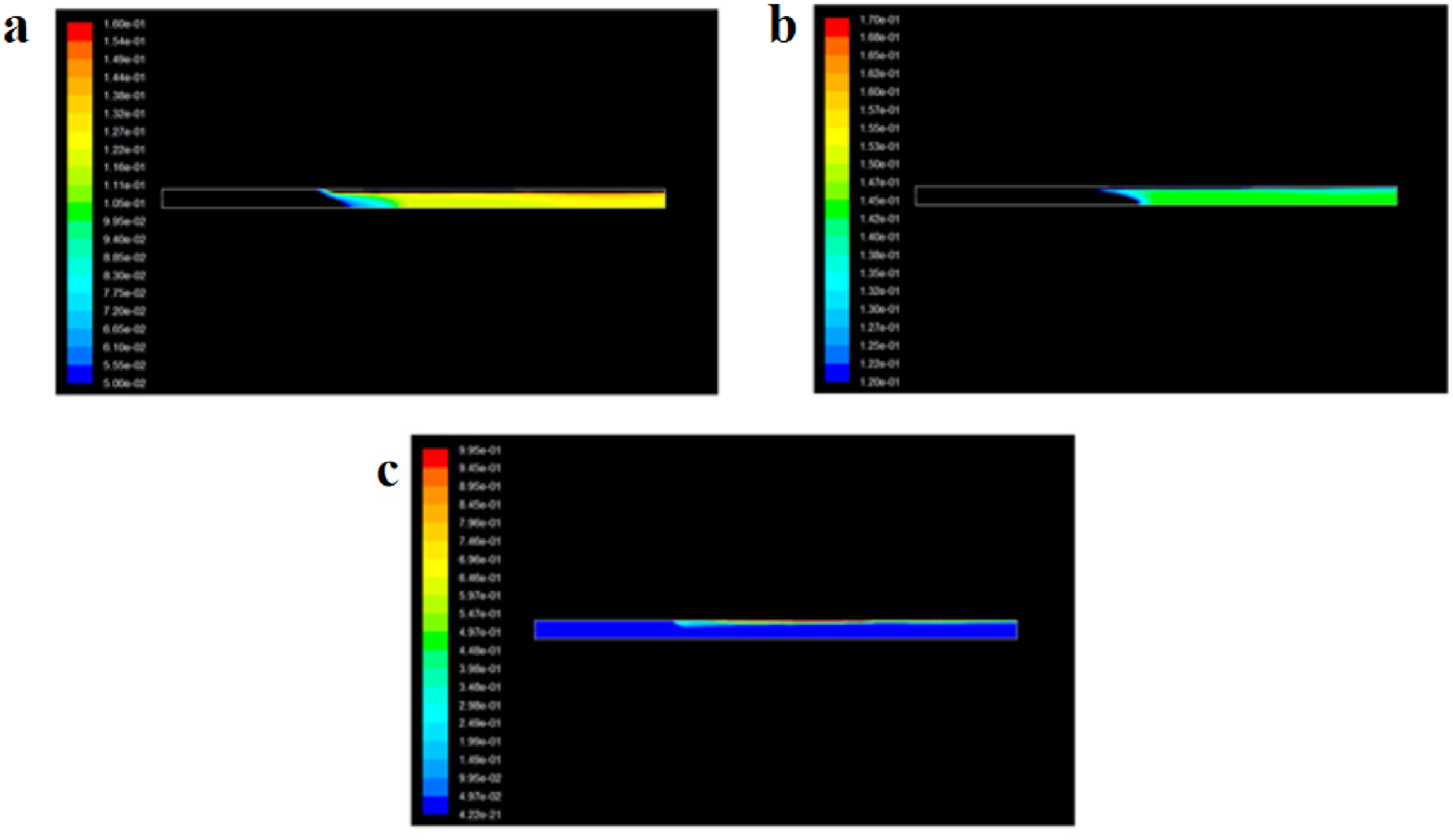
Distrabution of O2 and CH4 concentration in different times after injecting N2. (a). Distrabution area of CH4 concentration between 5% and 16% after injecting N2 for 2 min;(b). Distrabution area of O2 concentration between 12% and 17% after injecting N2 for 2 min; (c). Distrabution of CH4 concentration after injecting N2 for 10 min).
According to the comparative analysis of a-c in Figure 4, two minutes after the inert gas is injected, the distribution area where the gas concentration is 5–16% and the distribution area where the oxygen concentration exceeds 12% at the same time have a significant overlap. If the mixed gas in the overlapping area of the two encounters a fire source, the risk of explosion is extremely high. In order to ensure safety, when the fire area is closed, it should be closed far away from the fire source. It can be seen that the mixture of gas and inert gas has reached an equilibrium state after inertizing for a period of time. However, due to excessive gas emission, a very high concentration of gas layer (over 20%) is formed on the top of the roadway. The concentration of the gas layer at the end of the tunnel is relatively low, but it is also above the upper limit of the gas explosion, and no gas explosion will occur.
Steps for oxygen augmentation observation
Conditions of oxygenation observation
In China, meeting the unsealing conditions of fire zone in Coal Mine Safety Regulations does not necessarily mean that the fire zone is extinguished (State Administration of work safety, 2009). Therefore, oxygenation observation method is needed. The oxygen augmentation observation of fire zone is risky, other certain conditions need to be met:
The coal seam in which the fire zone is located is not easy to combust spontaneously, and the spontaneous combustion period of coal is long, then the oxygen augmentation observation of the fire zone within a short period of time will not cause the spontaneous combustion of coal. Control the fresh air supply volume and flow trajectory, so that the O2 concentration in the fire zone is maintained around 8%∼12%, and the gas concentration is controlled above the upper explosive limit. Arrange beam tube continuous monitoring and analysis equipment for closed fire zone to ensure that changes in index gases in the fire zone can be monitored in real time. Develop comprehensive emergency measures to ensure the safety of personnel. At the same time, prepare sufficient inert gas sources to ensure that the fire zone can be quickly re-inert once signs of reignition are detected.
Method
At the initial stage of oxygen augmentation in the fire zone, SF6 tracer gas is released to the fire zone through the borehole 3# to determine the direction of flow field in the fire zone and ensure that oxygen supply can pass through the combustion zone.
In the N1203 fire zone, oxygen is pumped into the fire area by a mobile pumping station. Oxygen concentration at the movable pumping station is controlled at 8%∼12%. The observation will be continued for two weeks after the concentration of O2 in the fire zone reaches and stabilizes at 8%∼12%. During the oxygen augmentation process, the changes of CO and H2 concentration in the fire zone should be continuous monitored. If CO concentration continues to rise, close the boreholes and end the oxygen augmentation observation of the fire zone. If the CO concentration does not change significantly, the borehole will be closed and the fire zone will be unsealed only if there is no significant change in CO concentration for two weeks. The implementation process of oxygen augmentation observation program in N1203 fire zone is shown in the Figure 5.
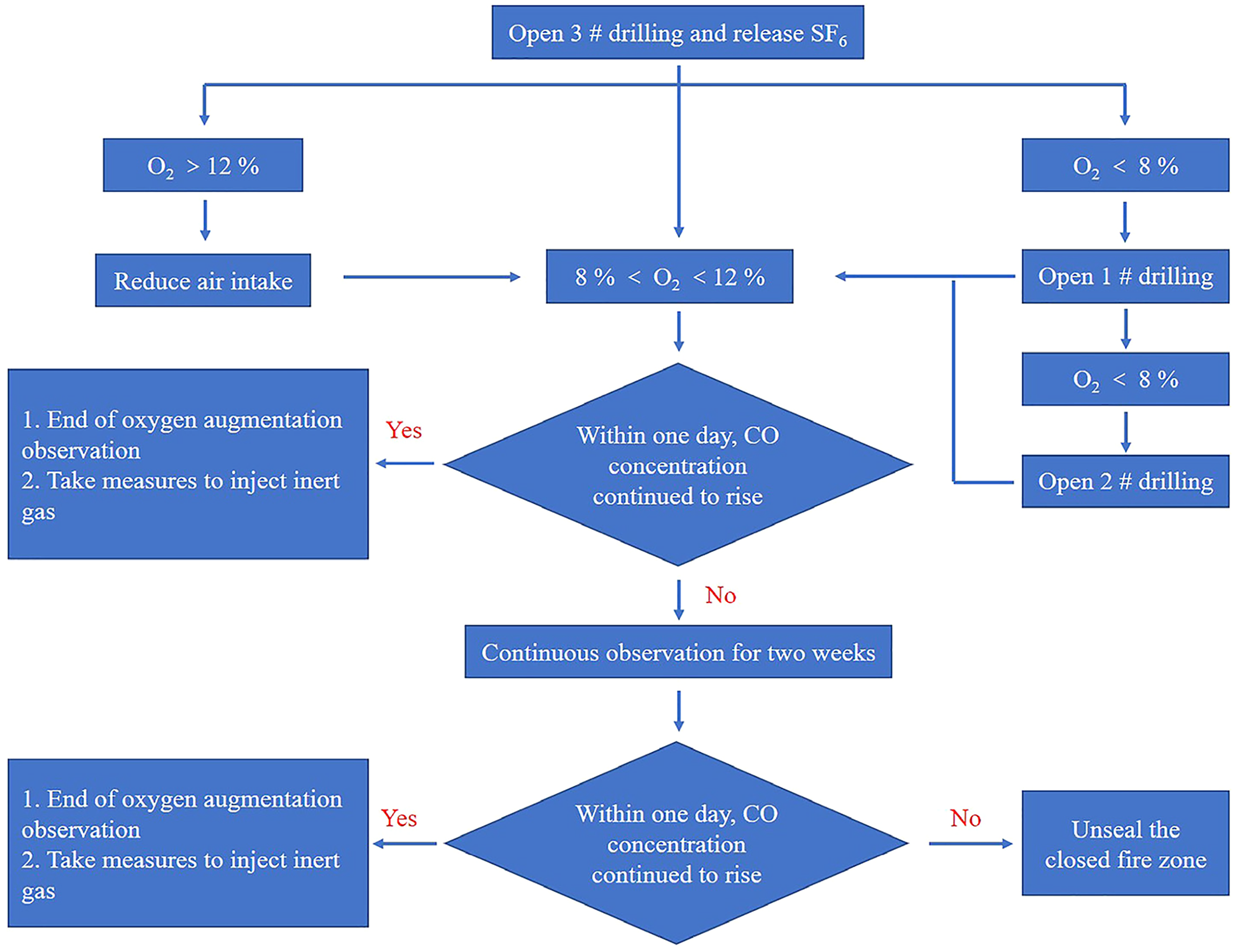
Flowchart for the implementation of oxygen augmentation observation program.
At the stage of oxygen augmentation observation, samples are taken manually from the gas drainage pipe in intake airflow roadway and gas variation are monitored by gas chromatography. At borehole 3#, the beam tube monitoring system is used to continuously analyze the change of index gas.
Emergency plan
In the process of oxygen augmentation, if the index gases concentration in the fire zone continues to rise within a day, it can be determined that the fire zone has reignited. The emergency measures needed to be taken are as follows: Close the surface boreholes and stop fresh air flowing into the fire zone. Turn off the movable pump and stop gas drainage in the fire zone. Open the valve of the nitrogen injecting pipeline, inject nitrogen into the fire zone to inert it.
Results and discussion
Fire zone status before oxygen augmentation observation
Article 248 of the Coal Mine Safety Regulations stipulates that a closed fire zone can be unsealed only after the fire has been confirmed to be extinguished by sampling and testing (State Administration of work safety, 2009). The fire shall be considered extinguished only if the following conditions are met at the same time: (1) The air temperature in the fire zone drops below 30 °C or is the same as the daily air temperature in the area before the fire. (2) Oxygen concentration of the air in the fire zone drops to 5.0% or less. (3) The air in the fire zone does not contain ethylene and acetylene, and the concentration of carbon monoxide gradually decreases and stabilizes at less than 0.001% during the sealing period. (4) The temperature of the water coming out from the fire zone is lower than 25 °C, or the same as the daily temperature before the fire. (5) The above 4 indicators have been stable for more than one month. On August 29, 2011, it was determined that the fire zone had met all the conditions of the Coal Mine Safety Regulations.
The first oxygen augmentation observation (stop unsealing)
On, August 29, 2011, the disaster relief personnel opened No. 5 and No. 6 airtights to ventilate the confined fire area. On September 1, the relief personnel conducted oxygen augmentation of the fire zone with the pressure fan in the 6# airtight, at the same time, gas monitoring and analysis of the airtight 5# and surface borehole 2# were conducted, the gas changes in the fire zone are shown in Figures 6 and 7.
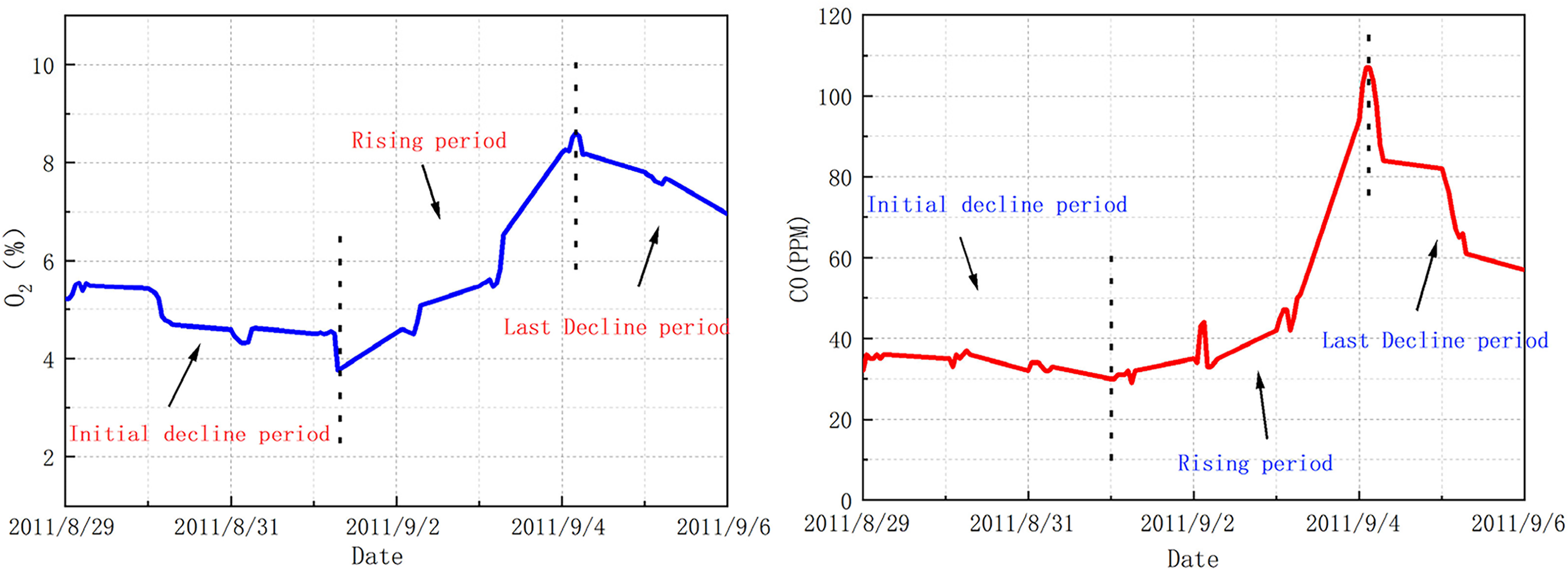
Gas monitoring data of surface borehole 2# (beam tube monitoring).
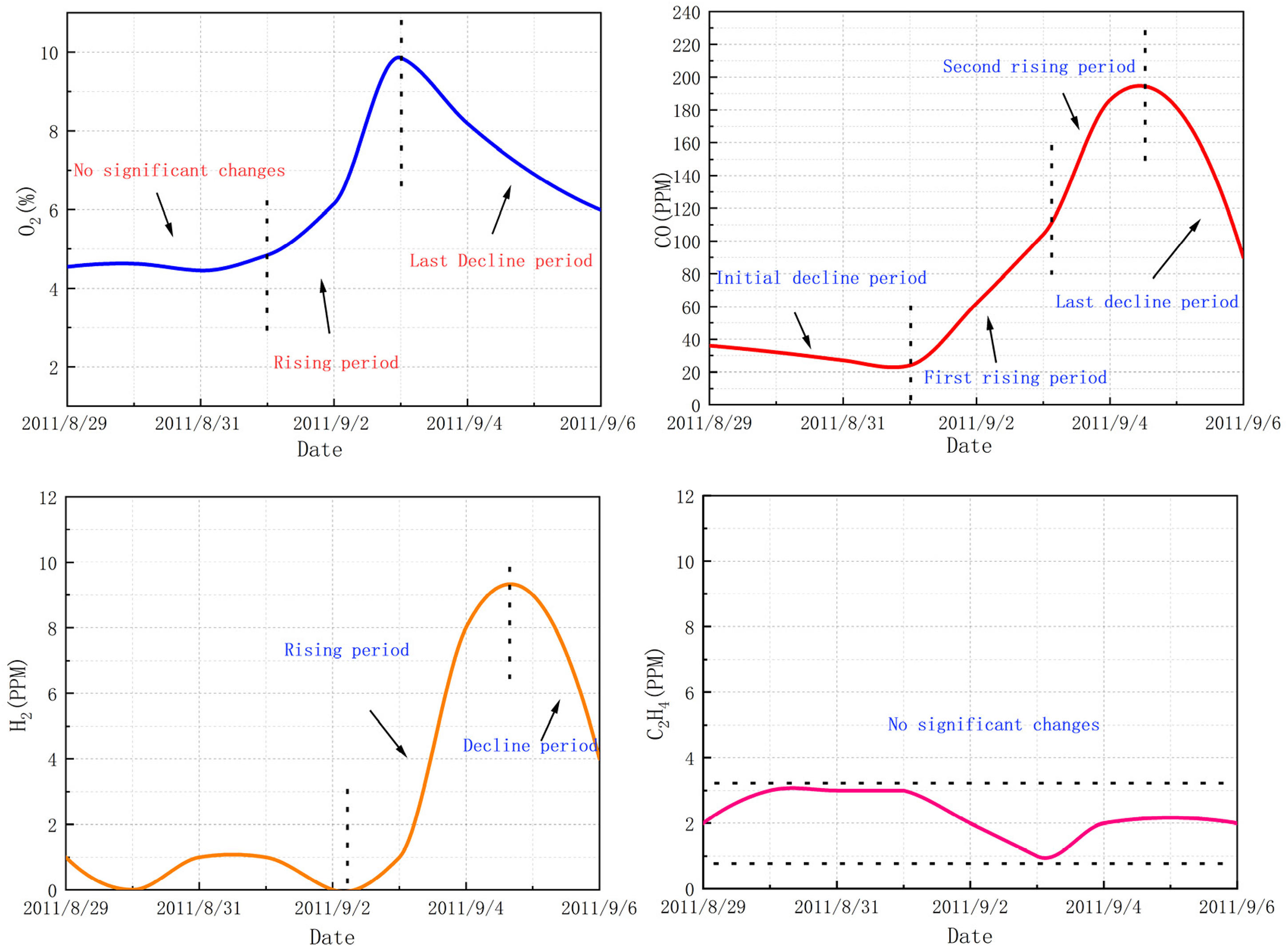
Gas monitoring data of airtight 5# (chromatographic analysis).
From Figures 6 and 7, it can be seen that at the beginning of the process of oxygen augmentation of the fire zone, the CO in the corresponding position of 5# airtight and 2# borehole began to increase rapidly, and the CO concentration reached the maximum value of 114 PPM by September 4, 2011. H2 also appeared to increase as CO increase. According to the programmed heating experiment, the temperature in the fire area is greater than 150 °C.
It can be concluded that the fire has not been extinguished, and with the oxygen supply to the fire zone, the fire zone presents a trend of re-ignition. The change trend of ethylene is not consistent with the programmed heating experiment, and the value of ethylene is small and has little change. From the change of CO and H2, it can be determined that the fire zone is reignited. In-depth analysis of the data: between August 29 and September 1, with natural ventilation, the oxygen content of the 5# airtight remained basically unchanged. This is because the fresh air flow did not reach the 5# airtight, and the No. 3 borehole slightly decreased due to the dilution of the fresh air flow. From September 1 to September 3, with the implementation of oxygen augmentation observations, a large amount of fresh air flow entered the confined area, and CO increased rapidly, which was obviously caused by the gradual increase in combustion. The oxygen supply was stopped on September 3, and the oxygen content gradually decreased, and the CO increased twice and the rate of increase was faster. This is due to the decrease in oxygen and incomplete combustion which makes the CO increase rate faster. H2 began to increase on September 2 and lags behind CO because of the higher temperature required for its production. There is no significant change in C2H4. All index gas changes can be reasonably explained by the re-ignition in the fire zone.
Rescuers immediately stopped supplying oxygen and injected N2 into the fire zone through the surface borehole, after verifying that the fire had not been extinguished. Rescuers decided to continue the closure of the N1203 fire zone and wait for the appropriate time to work out the unsealing measures.
The second oxygen augmentation observation (unsealed successfully)
On May 28, 2012, it was determined on site that the N1203 fire zone met all of the conditions of the Coal Mine Safety Regulations again. At this time, a second oxygen augmentation observation was conducted in the fire zone. The effect of the oxygen augmentation observation is as follows.
From May 28 to 31, 2012, the beam tube monitoring system was installed at the borehole 3#. The change curves of O2 and CO concentration in the fire zone during this period are shown in Figure 8. On May 28, when the airtights were opened on the 5th and 6th, the oxygen concentration gradually increased. The oxygen observation began on May 29, which stabilized the oxygen concentration in the enclosed area at 8%−12%. The CO concentration before and after the oxygen augmentation observation is small, the maximum value is only 15PPm, and no H2 and C2H4 appear. Combining with the results of the program temperature increase experiment, it can be determined that there is no re-combustion in the fire area.
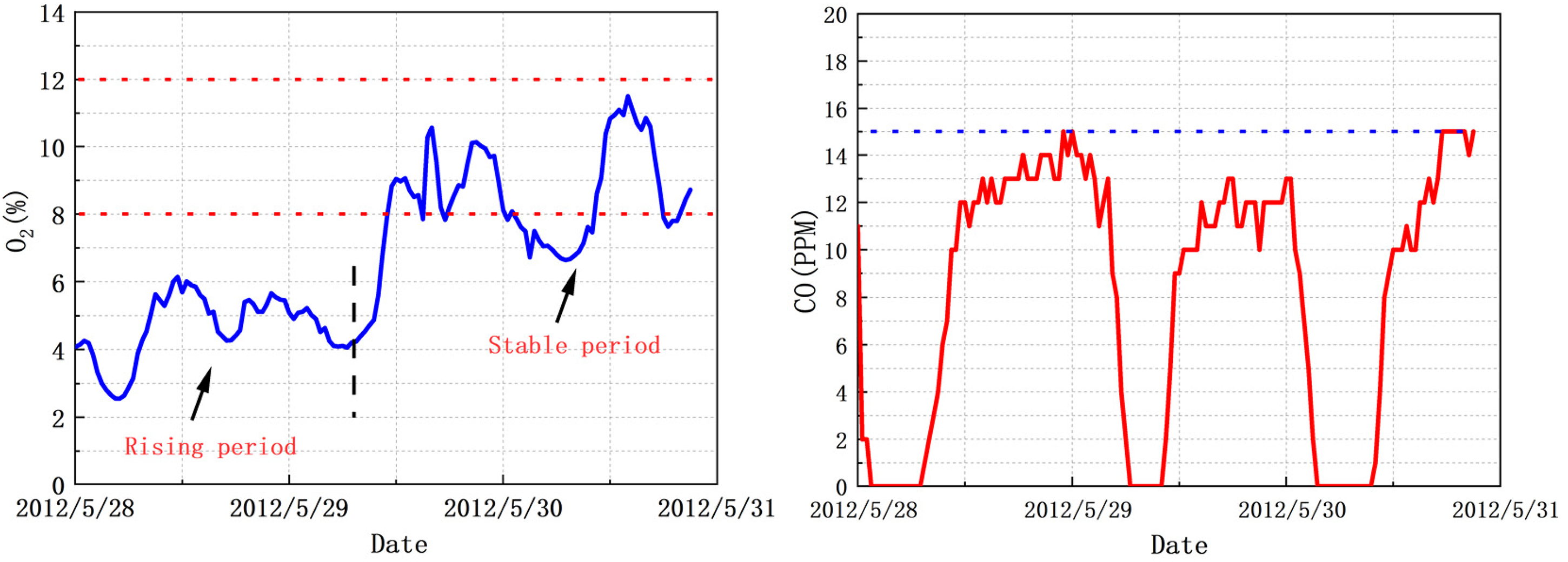
Gas monitoring data of surface borehole 2# (beam tube monitoring).
On May 31, 2012, due to the damage of the compressor fan, oxygen was supplied through boreholes 3#, and SF6 was released again to ensure that oxygen supply could pass through the combustion zone. Due to the change of airflow direction, the beam tube monitoring system was moved to borehole 1#. The change curves of O2 and CO concentration in the fire zone from May 31 to June 9, 2012 are shown in Figure 9.
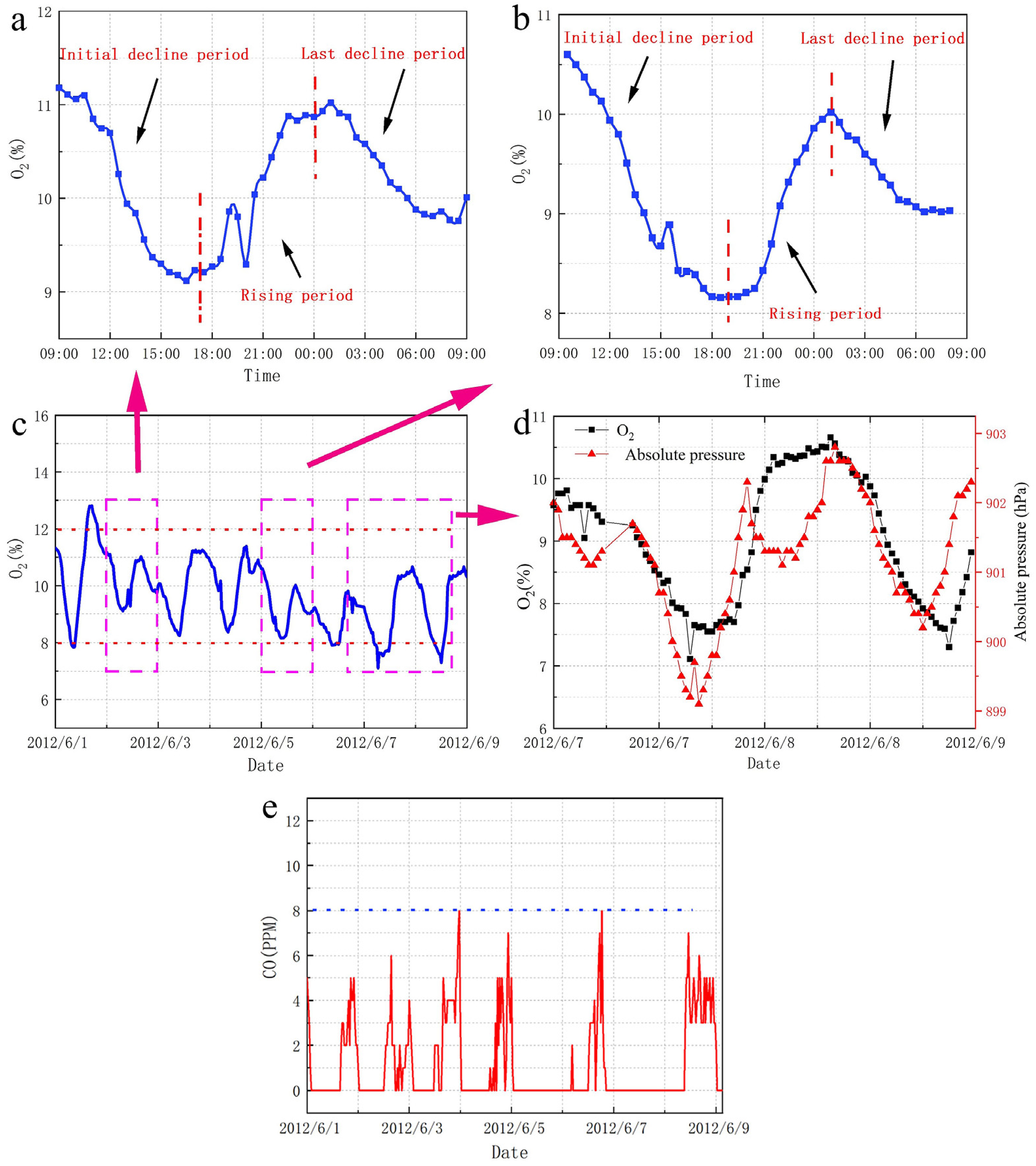
Gas monitoring data of surface borehole 1# (beam tube monitoring. a, b: Oxygen content changes hourly; c: Daily variation of oxygen content; d: Comparison of oxygen and atmospheric pressure; e: Daily variation of CO content).
From Figures 8 and 9, the changes of the main gas components in the fire zone monitored by the beam tube monitoring system are shown as follows:
The O2 concentration fluctuates, but always maintains between 8% and 12% (Figure 9c), meeting the requirement of O2 concentration for oxygen augmentation observation. The CO concentration fluctuates day and night, the maximum value is only 10PPM (Figure 9e). Combined with the programmed heating experiment data, the temperature in the fire zone is lower than 30℃. H2 and C2H4 were not present in the fire zone from the beginning to the end. Due to the high altitude of Yuwu Mine, the temperature difference between day and night is large, the atmospheric pressure changes greatly, and the “breathing” phenomenon in the fire zone is obvious, resulting in fluctuations of O2 (Zhou et al., 2012; Whittles et al., 2005). From the daily change of oxygen (Figure 9a and (b)), the oxygen concentration began to decline from early morning, and began to rise around 6 p.m. It can be seen that the “breathing” phenomenon is significant from the comparative analysis of atmospheric pressure and oxygen (Figure 9d).
Through two weeks of oxygen augmentation observation, it was proved that the fire in the fire zone had been extinguished. The N1203 fire zone not only conformed to the unsealing provisions of Coal Mine Safety Regulations, but also had better conditions for unsealing. Finally, the fire area was successfully unsealed at one time.
Conclusions
By comparing and analyzing the difference of index gas changes caused by two oxygen augmentation observations in the same fire zone, the study verified the effectiveness and accuracy of unsealing the fire zone on the premise of oxygen augmentation observation on site. A detailed procedure of the whole process of unsealing fire zone and the emergency rescue plan are given, which provides empirical support for the one-time unsealing of mine fire zone. The oxygen augmentation observation method has the following two obvious advantages.(1) Since the oxygen is augmented in the fire zone under the sealed state, if the fire is not extinguished and the fire increases after oxygen aeration, the oxygen augmentation work can be stopped immediately. Then, inert gas can be re-injected to inhibit further fire in the fire zone and avoid the occurrence of this disaster. (2) After the oxygen augmentation observation, it is clear that the fire zone has been extinguished. Since there is no threat of a fire source, the subsequent work of unsealing and discharging the accumulated gas in the fire zone will be simpler. In this study, case analysis was adopted. In the future, more experiments and simulation studies will be conducted to verify and optimize the oxygenation observation method, and further summarize and optimize the steps of this method, which can provide new ideas for mine fire rescue.
Footnotes
Declaration of conflicting interests
The author(s) declared no potential conflicts of interest with respect to the research, authorship, and/or publication of this article.
Funding
The author(s) disclosed receipt of the following financial support for the research, authorship, and/or publication of this article: This work was supported by the The Basic Scientific Research Business Expenses of Central Universities, (grant number 2021YQAQ03).
