




Abstract
Thar desert is located in south-east Pakistan carries 175 billion tons of coal and is the biggest coalfield in Asia. In this paper mathematical framework is developed for the accurate estimation of power production from the available Thar coal capacity. Annual TWh possible energy production the period 2020 to 2040 followed by detailed analysis of capacity factor and Maximizing the share percentage of coal in total energy mix at least 40% by 2040 is presented. The findings reveal that Thar coal has the capability of producing 100,000 MW power up to the next 250 years. The energy generation for the years 2020, 2032, and 2040 is calculated 744 TWh per year, 700 TWh per year, and 665 TWh per year respectively and it produces negligible negative impacts on the environment. The long-term energy planning presented in this paper would attract foreign investment and Pakistan's energy needs would be fulfilled for sustainable development of the country.
Keywords
Introduction
Pakistan is a developing country and is located in the region of South Asia with coordinates of latitudes 24° and 36° north and longitudes 61° and 76° east (Mengal et al., 2019). Electricity plays a crucial part in the development of any country but nowadays, Pakistan is considered an energy-deficient nation because of rapid urbanization and improved living standards of human beings (Procter, 2017) and is completely dependent on imported fossil fuels for power generation (Sáez-Martínez et al., 2016). Pakistan spent around 60% of foreign exchange amount on importing fossil fuels including coal, natural gas, and oil (Kanwa et al., 2020). Pakistan imports coal around 13.6 million tons with coasting 154,795 million while domestic production is 4.3 million tons even though Pakistan has total coal reserves of 186 billion tons (Rehman et al., 2017).
As reported by the South Asian Association for Regional Cooperation (SAARC) that the demand for coal has been growing steadily, from 6.889 million tons to 11.583 million tons during 2013 to 2018 as given in Figure 1. Which further escalate to 60 million tons by the end of 2030 (South Asian Association for Regional Cooperation, 2018). The major coal consuming sectors are the cement production industry, power sector, and brick kilns industry with varying ratios from 2018 to 2030 as given in Figure 2. Pakistan is highly dependent on imported coal over 66% and imports coal from South Africa and Indonesia. The government of Pakistan (GOP) pays 3% and 5% customs duties on thermal coal and other grade coal (South Asian Association for Regional Cooperation, 2018). The total consumption of coal in the power sector during 2017–18 was 859,600 t which was 4,436,125 t in 2016–17. The maximum electricity generated through coal was 12.224 TWh in fiscal 2017–18 which was 1.059 TWh in fiscal 2016–17 and 0.14816 TWh in fiscal 2015–16 respectively (National Electric Power Regulatory Authority, 2018). Such a huge dependency on imported coal and lack in planning for exploring domestic coal reserves for power generation. As a result, Pakistan is challenged with growing power demand in the country which is increasing at the rate of 11% to13% per year (Rehman et al., 2017).
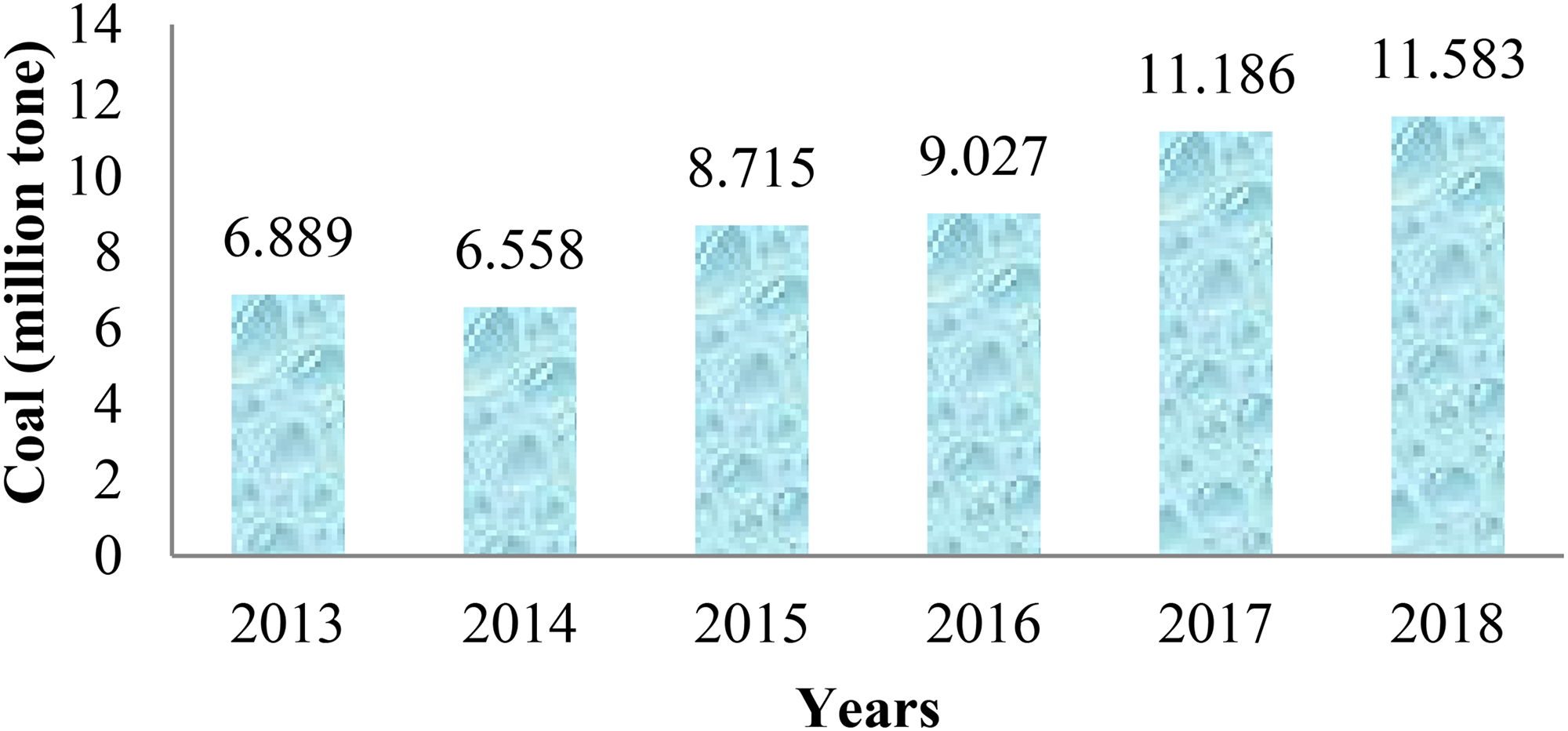
Coal consumption statistics from the year 2013 to 2018.
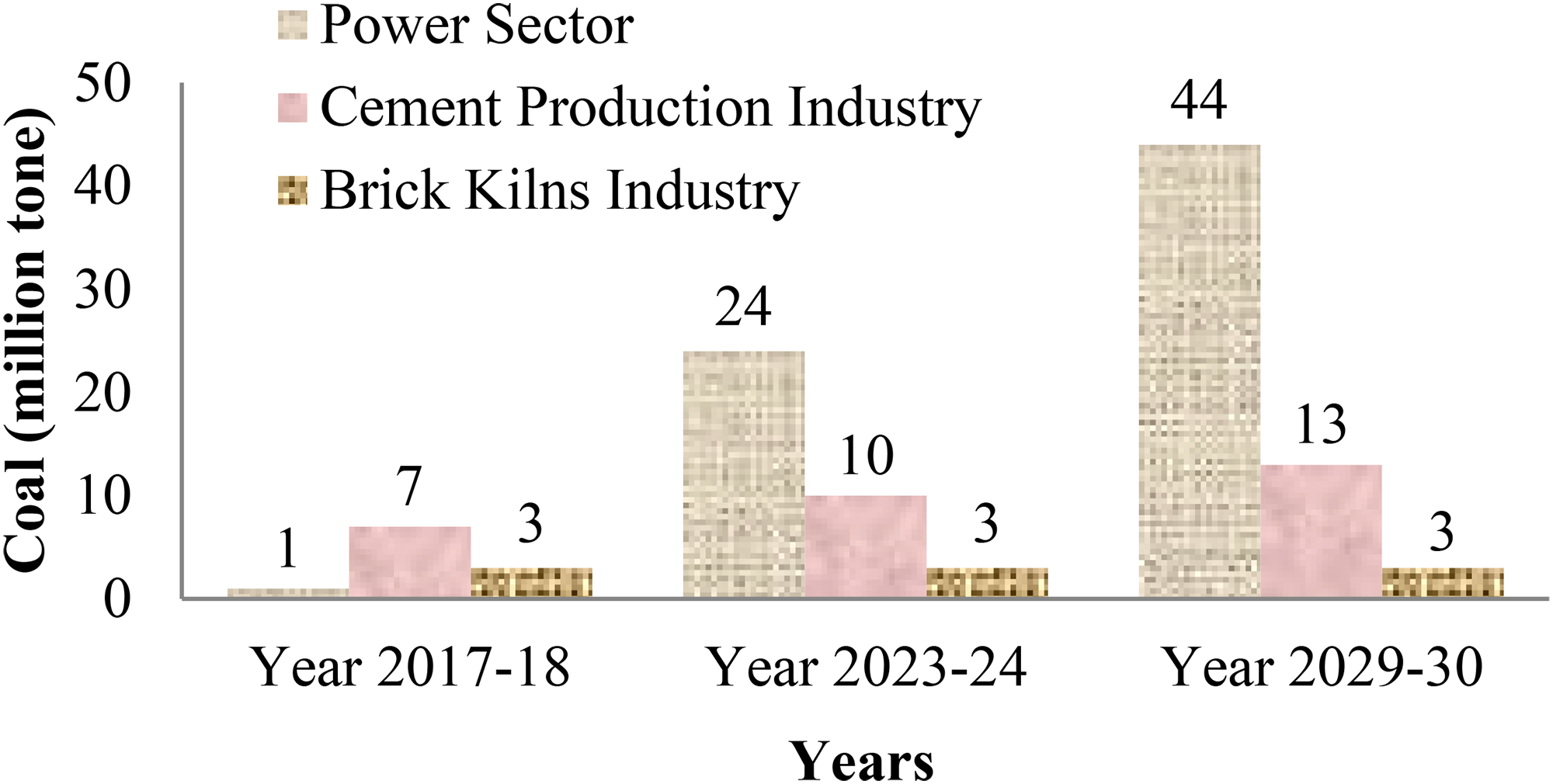
Sector wise coal requirement.
Mostly, fossil fuels are used around the globe for energy generation and have a huge percentage share of 87% followed by renewable 9% and nuclear 4% till 2019 (International Energy Agency, 2019). Pakistan has large deposits of fossil fuels like coal, natural, and oil but has a very negligible contribution in the total energy mix as given in Figure 3 (Farooq and Kumar, 2013).
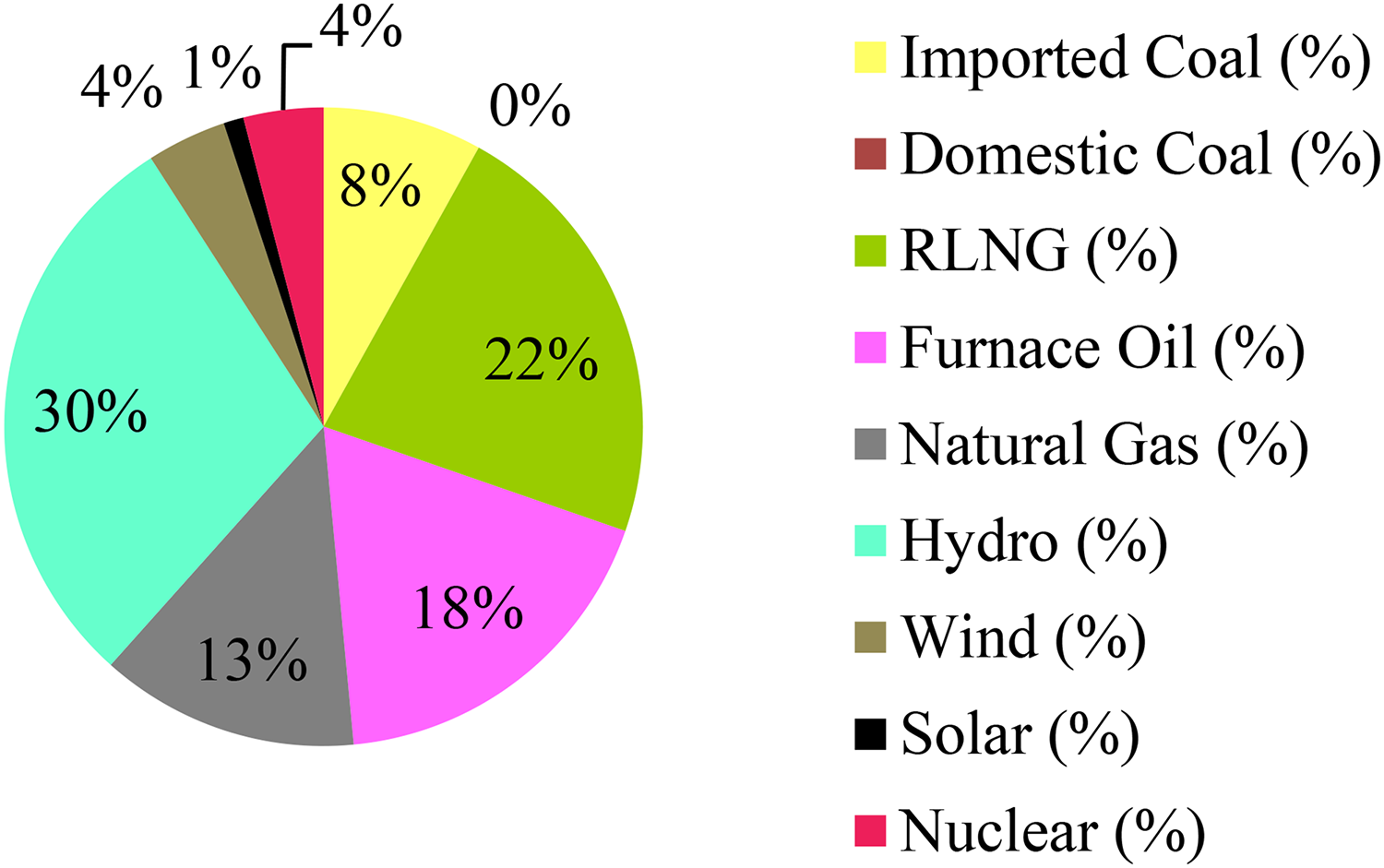
Contribution of energy resources in total energy mix.
Therefore, domestic energy assets to be monitor correctly for achieving long term electricity sustainable goals. After the discovery of Thar coalfield of capacity 175 billion tons Pakistan has become the sixth richest country for coal deposits and has a great capacity to generate electricity over the next few centuries (Akhtar et al., 2017). Power from Thar coal creates energy opportunities for Pakistan in all sectors of economies which in-terms of provide solutions for energy liberalization in the country. The development of Thar coal for power generation is the need of time that has a strong link with the growing population and rapid progress in the industrial sector (Fatai et al., 2004).
Furthermore, The GOP decided to wave off the subsidies on electricity tariffs because of the disappointing performance of public sector utilities and encourages the private sector to develop power stations based on domestic energy assets and provide electricity at an affordable price (Private Power Infrastructure Board, Pakistan, 2004). Therefore domestic coal deposits require superior consideration for harnessing through modern technologies and will play a crucial role in the total fuel mix for power production. Pakistan has immense stores of Thar lignite coal of capacity of around 175 billion tons that require significant consideration for the advancement since it is reasonable for power production and it is relatively cheap to mine. On the other hand plant efficiency is an important performance parameter that can be effectively managed through the use of modern technologies. However, the Thar coalfield has the capability for alleviating the ongoing energy crises, meeting future energy challenges and it ensure the stability and security in the power sector of Pakistan. In this regard the objectives are:
Development of Thar coalfield for power generation in Pakistan. A postmortem review of Pakistan's power sector is performed in order to identify the major drawbacks which are responsible for creating an energy shortfall in the country. Assessment of coal capacity, quality and environmental-friendly coal technologies. Calculate the total power production capacity for the next 250 years from Thar coalfield. Forecast the future capacity factor of the system, annual unit's generation and CO2 emissions using MATLAB for the period 2020 to 2040. Maximize the utilization of Thar coal in energy mix at least 40% by 2040.
This work targets to deliver the postmortem review of Pakistan's electric network. Major focus on organizational structure, energy demand in the context of installed power capacity, discuses the availability of primary energy resources, major issues in electric network and identified the major drawbacks in power planning and policies of Pakistan. Further, a detailed analysis is performed on effective strategies and efficient technologies for coal mining and power generation with possible recommendations. The reason for exploring the Thar coal deposits for power generation is to discover a new power generation path for Pakistan for meeting the energy challenges and developed an appropriate policy for the country. Therefore, the GOP and Private Investors (PI) must give the right of way to the development of Thar coalfield for sustainable energy development in the country.
Review of Pakistan's power sector
An assessment was performed on the current power sector of Pakistan in terms of identifying the operational jurisdiction area of each organization in the institutional structure of Pakistan. A detailed analysis is carried out on power planning studies and power policies announced so far since 1967 in Pakistan and the major reasons are identified and presented for energy shortfall.
Power sector of Pakistan: institutional structure
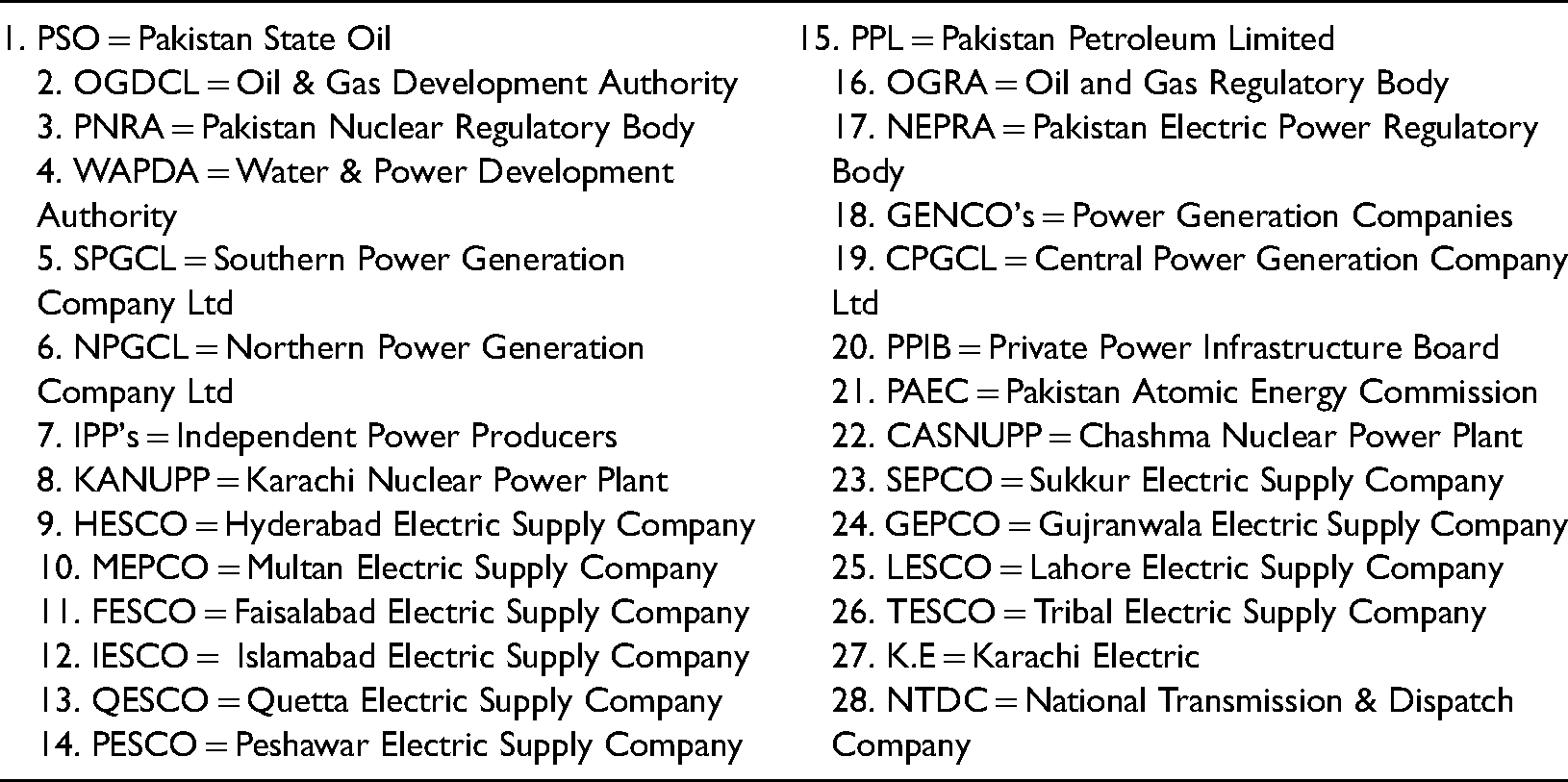
The power sector of Pakistan consists of many departments with multiple, overlapping, and ambiguous roles and responsibilities (Fatima and Nasim, 2013; Perwez and Sohail, 2014). The important organizations in the institutional structure are given in Figure 4. Ministry of energy is comprised of petroleum division, power division, and regulatory bodies. The petroleum division is managing the operations of PSO, PPL, and OGDCL. Power division holds the charge of power generation, transmission, and distribution of electricity in the country whereas regulatory bodies such as OGRA, PNRA, and NEPRA are responsible for regulating the oil, gas, and electricity commodities. PAEC, PPIB, GENCO's, and WAPDA are accountable for power generation in the country. The task of NTDC is to transmit electrical power at higher voltages while power distribution companies distribute the power at the consumer's premises (Ullah et al., 2017).
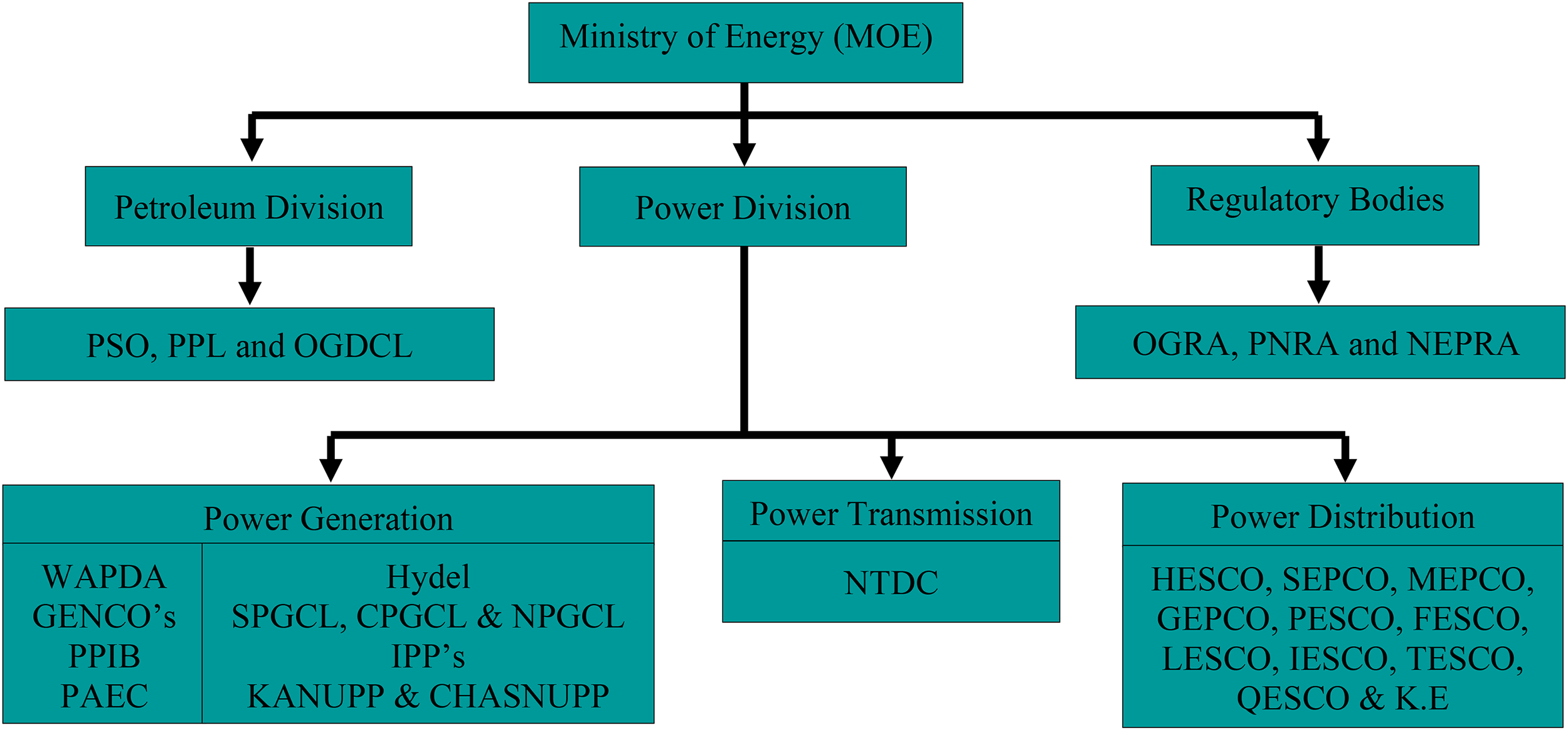
Institutional structure of Pakistan’s electric network
Current energy status of Pakistan
In Pakistan, energy is supplied from different sources such as RLNG, coal, hydro, gas, nuclear, wind, solar, bagasse, and furnace oil. The total electricity generated during the 2018 year was 33,414 MW and the resource-wise generation as follows; The highest value of electricity generation is from hydro around 9,732 MW followed by RLNG 7,275 MW, furnace oil 5,887 MW, gas 4,494 MW, coal 2,790 MW, nuclear 1,345 MW, wind 185 MW, solar 400 MW, and bagasse 306 MW respectively. The highest electricity consumption sector is domestic which consumed 53.2 TWh (48.05%) which showed greater values followed by industrial sector consumed 27.3 TWh (24.71%), agriculture sector consumed 10.1 TWh (9.13%), commercial sector consumed 8.51 TWh (7.68%) and other sector consumed 11.5 TWh (10.43%) respectively (National Transmission and Despatch Company, Government of Pakistan, 2018). However, the average annual growth rate of the domestic sector is 10.87% followed by industrial 14.39%, agriculture 9.83%, and commercial 9.55% (National Transmission and Despatch Company, Government of Pakistan, 2018).
According to the Energy Year Book 2018, the sector-wise generation during the year remains as follows: WAPDA about 42.3%, IPPs 33%, K.E 9%, and others around 10%. The provincial consumption of electricity reveals that Punjab province is the largest consumer of electricity around 61.3%, followed by Sindh 21.3%, KPK 11.1%, Baluchistan 5.3%, and AJK 1.1% respectively (Hydrocarbon Development Institute of Pakistan, 2018). As reported by NTDC currently, 26,793 MW is the net generation capacity available at the bus but the peak demand is 29,558 MW, only the gap is 2,765 MW. As a result, even the cities are stricken by the load shading from 8–10 h. An important contributing factor is also the transmission and distribution (T&D) losses of 17.4% from the net supply and are aggravating to an alarming level. Furthermore, NTDC reported that power demand rises to 50,306 MW by 2032 and 80,425 MW by 2040 as the total population of the country increases (National Transmission and Despatch Company, Government of Pakistan, 2018).
Current energy status of world
Currently, the global demand of electricity is increased because of technological development and human advancements as these are the accelerating factors of environmental changes that are experienced by the scientific community around the globe (Barca, 2011). Developed countries have greater energy demand than less developed countries due to the large socio-economic development at regional and national levels (Baethgen, 1997). As per the reports of World Energy Statistics (WES) and International Energy Agency (IEA) that china has greater energy demand of 19% (2,417 million tons of oil equivalent) of the total world energy demand followed by Russia with 6% (701 million tons of oil equivalent), India with 5% (692 million tons of oil equivalent) and Brazil with 2% (256 million tons of oil equivalent) respectively (Bian et al., 2016; Bildirici and Bakirtas, 2014; Jacobson, 2009; Mirza et al., 2009; Ozturk, 2015; Pao and Tsai, 2011; Sebri and Ben-Salha, 2014; Skea, 2014; Sun et al., 2016; Voigt et al., 2014; Yıldırım et al., 2014). Fossil fuels have a high percentage share of 87% in total world energy consumption till 2019 whereas renewable contribute around 9% and nuclear around 4% as given in Figure 5 (International Energy Agency, 2019).
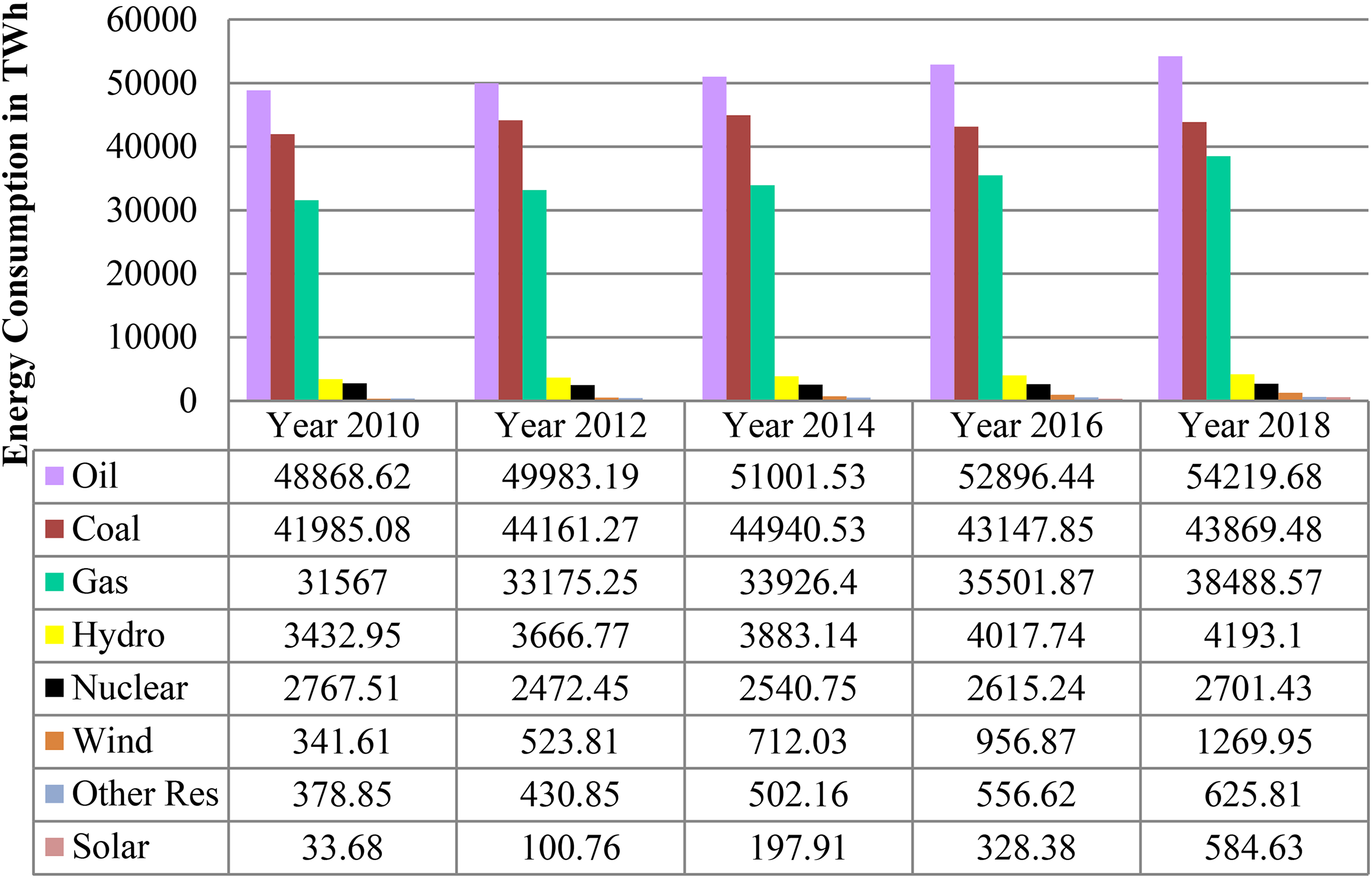
Global statistics of resource wise energy consumption.
Status of primary energy resources in Pakistan: coal, natural gas, and oil
The majority of electricity is generated in Pakistan from coal, natural gas, and oil resources (Valasai et al., 2017). But oil resources will run out by 2025 and natural gas will be exhausted by 2030 unless new fields of natural gas and oil are explored (Bhutto and Karim, 2005). Presently, coal resource provides a suitable option for power generation. The reserve and production rate of coal, natural and oil resources are given in Table 1.
Fossil fuels reserves and production capacity in MTOE.

Coal
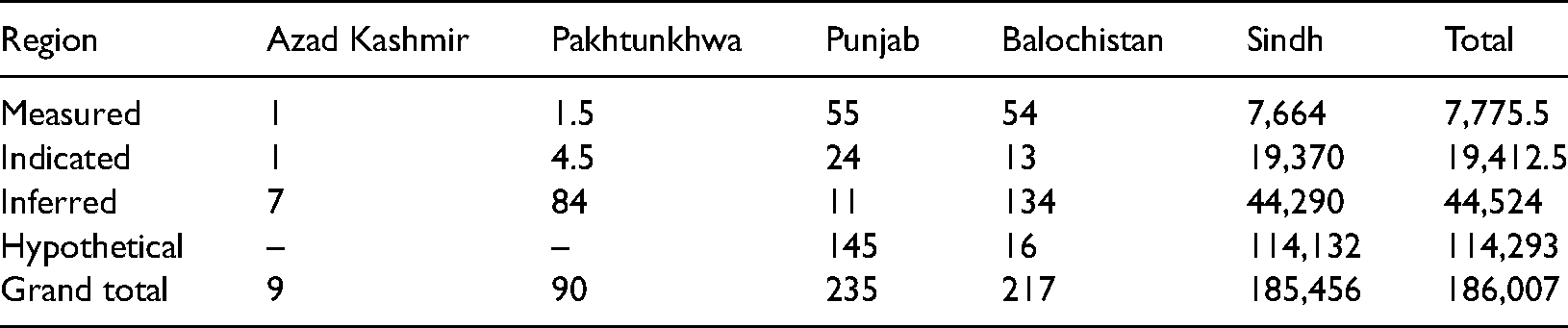
The total capacity of coal in Pakistan is 186 billion tons, out of which 175 billion is located at Thar coalfield in Sindh province of Pakistan (Bhutto and Karim, 2005). The map of coalfields in Pakistan is given in Figure 6. 97% of coal is falling under the class of lignite while the remaining 3% is termed as bituminous and sub-bituminous (Malkani, 2012). As per the report of the Hydrocarbon Development Institute of Pakistan (HDIP) that measured reserves are 7,775 MT, indicated reserves 19,412 MT, inferred reserves 44,524 MT, and hypothetical reserves 114,293 MT (Hydrocarbon Development Institute of Pakistan, 2014; Valasai et al., 2017). The region-wise coal reserve capacity reserves are given in Table 2 (Hydrocarbon Development Institute of Pakistan, 2014; Valasai et al., 2017).
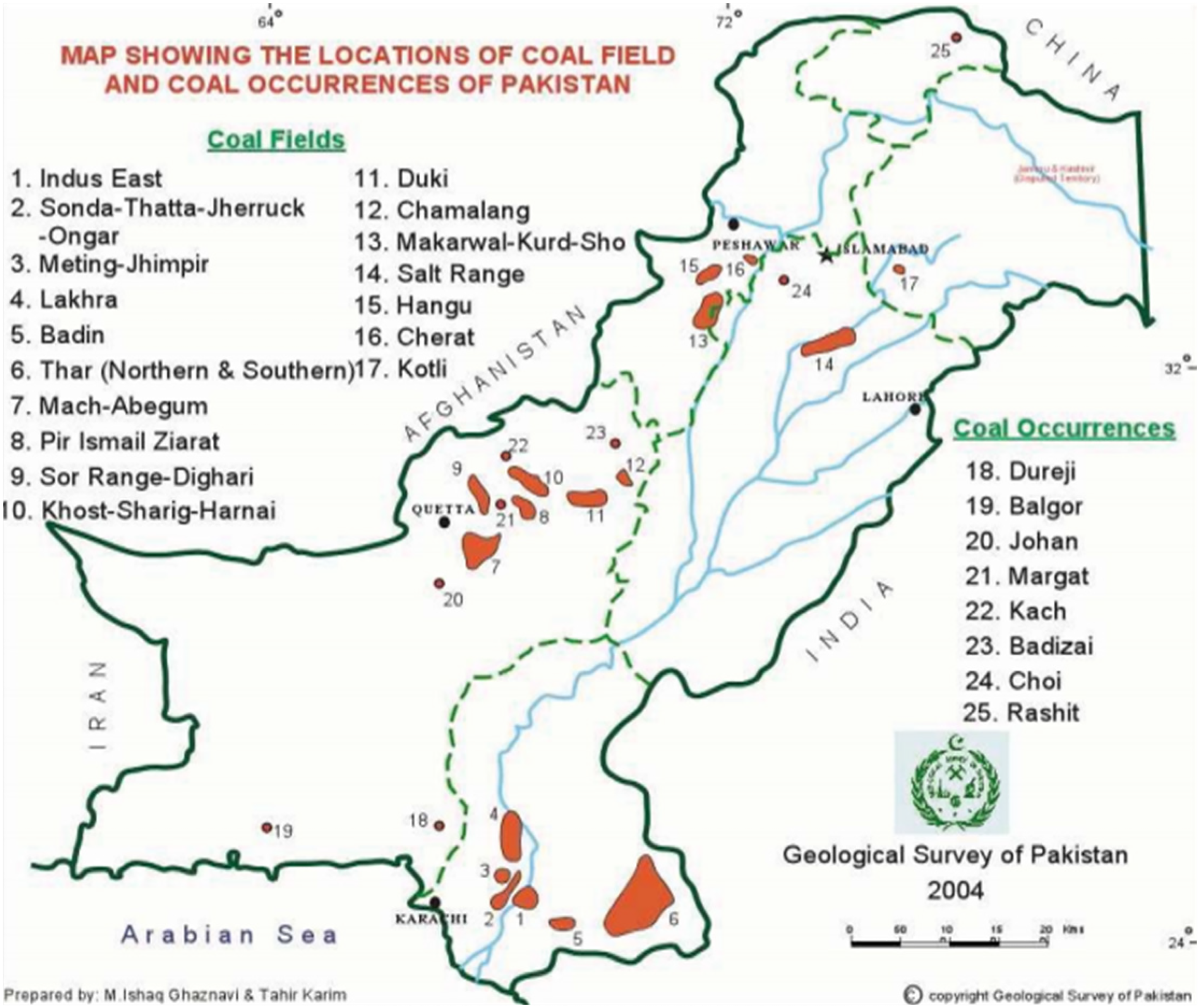
Location of coalfields in Pakistan (Malkani, 2012).
Coal reserves in Pakistan (million tons).
The domestic production of coal in 2017 was 1.828 million tons of oil equivalent (MTOE) whereas in 2018 was 1.734 MTOE (Kumar and Shahbaz, 2012). Figure 7 demonstrates the domestic production of coal for the period 2009 to 2018. The minimum coal production was recorded in the year 2013 and maximum coal production in the year 2016 (Kumar and Shahbaz, 2012).
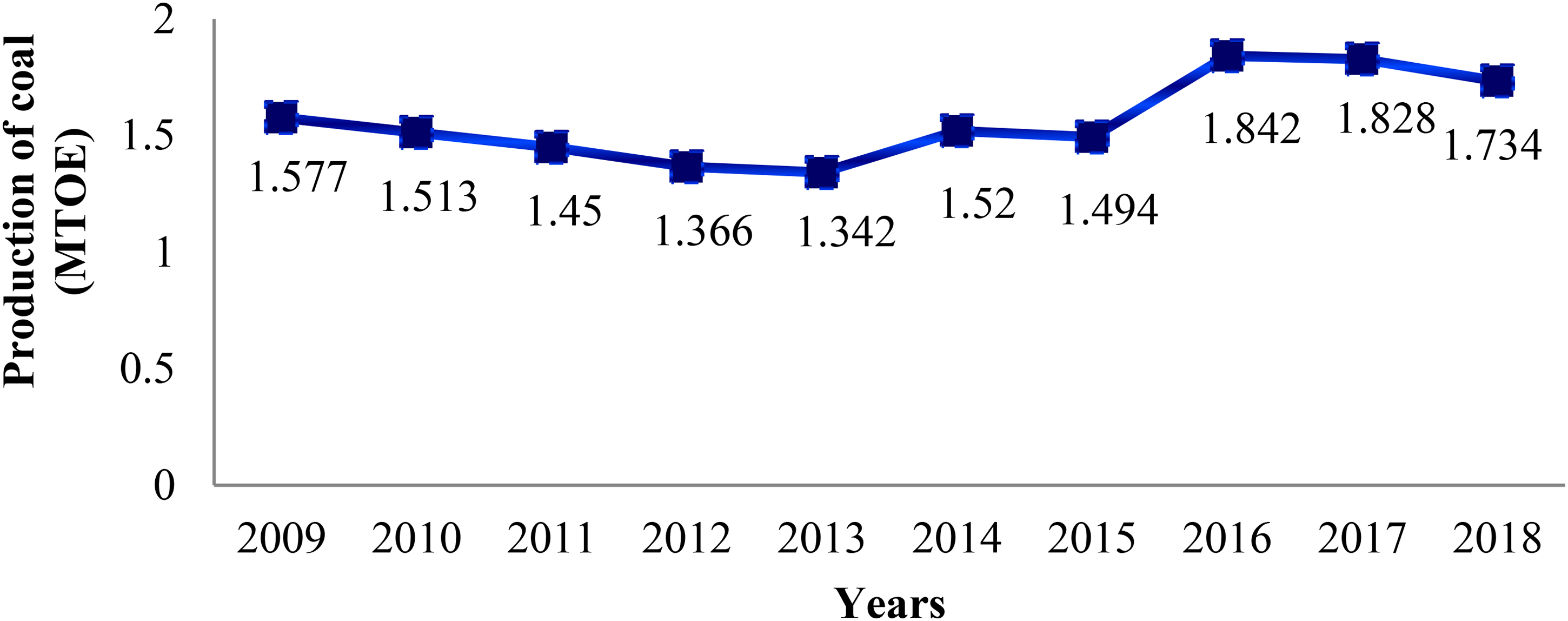
Domestic production of coal in MTOE from 2009 to 2018 (Kumar and Shahbaz, 2012).
It is clear from Figure 7 that the domestic production of coal is quite low as compared with the available reserves. So that coalfield has immense capacity to meet the present and future energy challenges and gives guarantee of energy security in Pakistan (Bhutto and Karim, 2005).
Natural gas
Initially, Natural gas was discovered in the Sui district of Balochistan province in 1952. The supply of gas was started in 1955 from Sui to the various regions of Pakistan (Malkani, 2012). Since then natural gas is contributing to the various economical sectors of Pakistan and has become an important commodity (Khan and Yasmin, 2014). Later, more reserves of natural gas were found in the two provinces of Pakistan named Balochistan and Sindh (Iqbal, 1983). The demand of natural gas was increased in the transport, industrial, domestic and commercial sectors. In the year 2017, natural gas contributed around 47% to fulfill the requirements and all natural gas was supplied from the domestic reserves (Khan, 2018). Natural gas has improved the economy of the country and hence it improved the production of industrial sectors (Khan, 2015). But this cheap source is now going to be depleting in near future and the production of natural gas has reduced from last couple of years (Malik and Sukhera, 2012). The transport and power sector consumed more natural gas as compared with the other sectors, because of the rapid urbanization and improved living standards of human beings across the country (Arslan et al., 2014). Now GOP has set the priorities to supply the natural gas. The first preference of providing natural gas to the commercial, domestic, and fertilizer sector, then to the power sector and industrial sector, and finally to the CNG stations across the country (Arslan et al., 2014).
The estimated reserve of natural gas is around 40 trillion cubic feet (TCFT) but the recoverable reserves are 23 TCFT with a production rate of 1.4 TCFT (Hydrocarbon Development Institute of Pakistan, 2014). The recoverable reserves will diminish till 2030 therefore GOP must explore the estimated reserves with advanced technologies for meeting the demand of natural gas in economical sectors (Malik and Sukhera, 2012; Valasai et al., 2017). As international reports claim that Pakistan possesses six times greater reserves than the estimated but due to the poor law and order situation, Pakistan could not harness them for domestic use (Khan, 2015; Valasai et al., 2017).
Oil
The country posses a sedimentary area of around 827,268 Km2 including offshore and onshore sites. This sedimentary area could be used for the exploration and development of oil fields across the different regions (Rehman et al., 2017). As per the estimate of Energy Information Administration (EIA) USA that the total reserve of oil in Pakistan is 227 billion barrels (BB) whereas the recoverable reserves of oil are estimated at 9 BB (State Bank of Pakistan (SBP)—Statistics and Data Warehouse Department, Government of Pakistan, 2015). The major consuming sectors of oil in Pakistan are the transport sector with 48.8% and the power sector with 42.7%. Both these sectors consumed oil around 92% (Marra, 2018). In the early 1990s, the consumption of oil was recorded 50% in transport and 25% in the power sector (Jamil and Ahmad, 2010). After 2001, the increase in prices of oil results in the declining share of oil percentage in both the transport and power sector (Ministry of Finance, Government of Pakistan, 2014). The oil prices increased from US dollar 50 to US dollar 93 from 2001 to 2014 (Ministry of Finance, Government of Pakistan, 2014). The large increment in oil prices gave birth to energy crises and the country is facing serious electricity shortfall since 2007 (Awan and Rashid, 2012). The increase in oil prices forced the GOP to rely on other energy resources include coal and natural gas to meet the requirement of the transport and power sector (Ministry of Finance, Government of Pakistan, 2014).
Issues in the power sector of Pakistan: circular debt, transmission and distribution losses, and power theft
Electricity producers and consumers owe each other and are unable to pay is known as circular debt (Ministry of Water and Power, Government of Pakistan, 2015). The process of electricity supply and payments flows against the delivered power in Pakistan is shown in Figure 8.
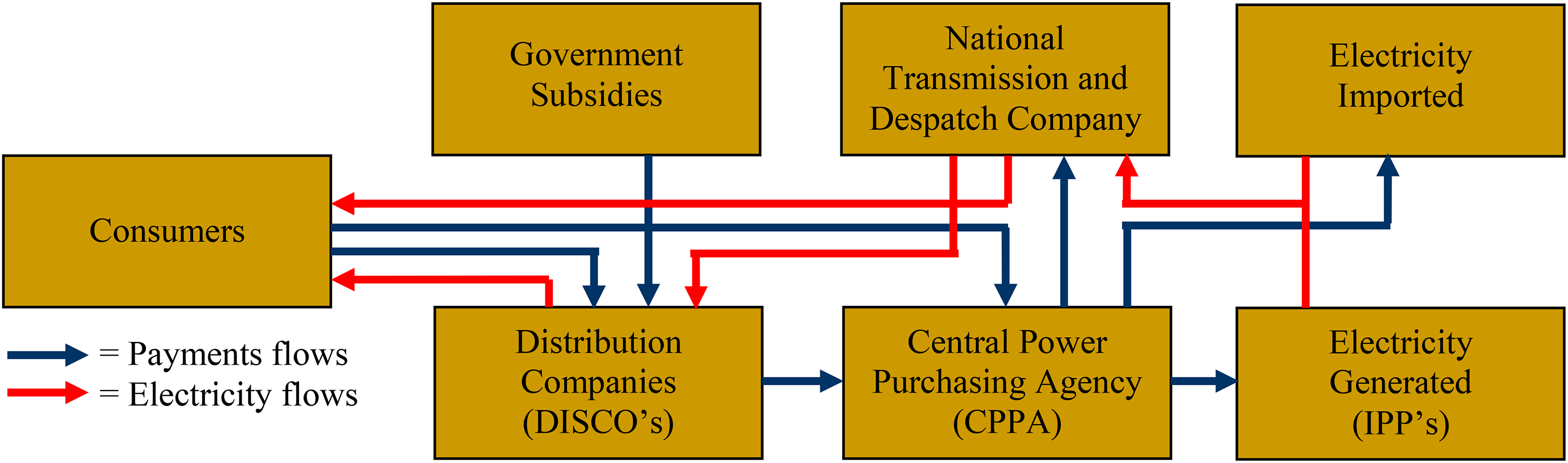
Payments and electricity flow chart.
Circular debt is become the major issue in the power sector of Pakistan and has reached 1.55 trillion rupees or 11.7 US billion dollars (National Electric Power Regulatory Authority, 2017). This sort of amount is short in CPPA (Ministry of Water and Power, Government of Pakistan, 2015). Therefore CPPA is unable to transfer payments against imported electricity and to IPP's. CPPA is also facing many difficulties in getting recoveries from DISCO's. Further DISCO's are unable to recover the electricity bills from consumers, this ultimately enhanced the circular debt to an unacceptable level (Ministry of Water and Power, Government of Pakistan, 2015). The recovery rate of electricity bills was 92% against the 100% target in 2017 (National Electric Power Regulatory Authority, 2017). Another contributor to circular debt is the high T&D losses that affect the power sector of Pakistan to a great extent. The T&D losses were 18% against the target of 15% and hence 21.6% amount is lost as a result of a big difference between power generated and sold by DISCO's (Institute for Energy Economics and Financial Analysis of Pakistan, 2018). As per the report of the Senate Committee (SC) in 2017, electricity theft is also increasing the circular debt. The electricity theft rate is 3.9% and the government lost payments of around 53 billion rupees or 430 million US dollars (Institute for Energy Economics and Financial Analysis of Pakistan, 2018). The SC identified that huge T&D losses and unrecovered bills created a large annual funding gap of 295 billion rupees or 2.2 billion US dollars and thereby becoming circular debt (Institute for Energy Economics and Financial Analysis of Pakistan, 2018). This circular debt remains a huge burden on GOP (Malik et al., 2019).
The GOP is trying to reduce the circular debt and improves the financial situation under the energy reforms programs (ERP) through the implementation of following best practices (Malik et al., 2019);
GOP will inject 400 billion rupees to prevent the closure of power plants. Reduce the reliance on imported fossil fuels. Urgent measures taken by GOP in reducing the systems losses. Tariff must be recovered on an urgent basis. Design a suitable mechanism for handling debt that benefits the consumers.
A review of power planning studies and power policies conducted by the government of Pakistan
Table 3 gives a detailed analysis of power planning studies conducted by GOP from 1967 to 2021. Energy planning studies were conducted but without using the energy modeling tools like ENPEP-BALANCE, Energy PLAN, MESSAGE, MARKAL, and LEAP (Mirjat et al., 2017). Even though these modeling tools are employed around the world for devising sustainable power policies (Ringkjøb et al., 2018). Various countries around the globe conducted planning studies by incorporating the modeling tools for sustainable planning at national and regional levels as shown in Table 4. Power policies announced by GOP from 1994 to 2021 are given in Table 5. These policies were based on conformist approaches and developed without any undertaking the integrated energy planning using modeling tools (Mirjat et al., 2018). Therefore the integrated energy planning using energy modeling tools will be helpful to develop sustainable energy policies in Pakistan to eradicate electricity crises (Mirjat et al., 2018).
Power planning studies conducted by GOP from 1967 to 2021.
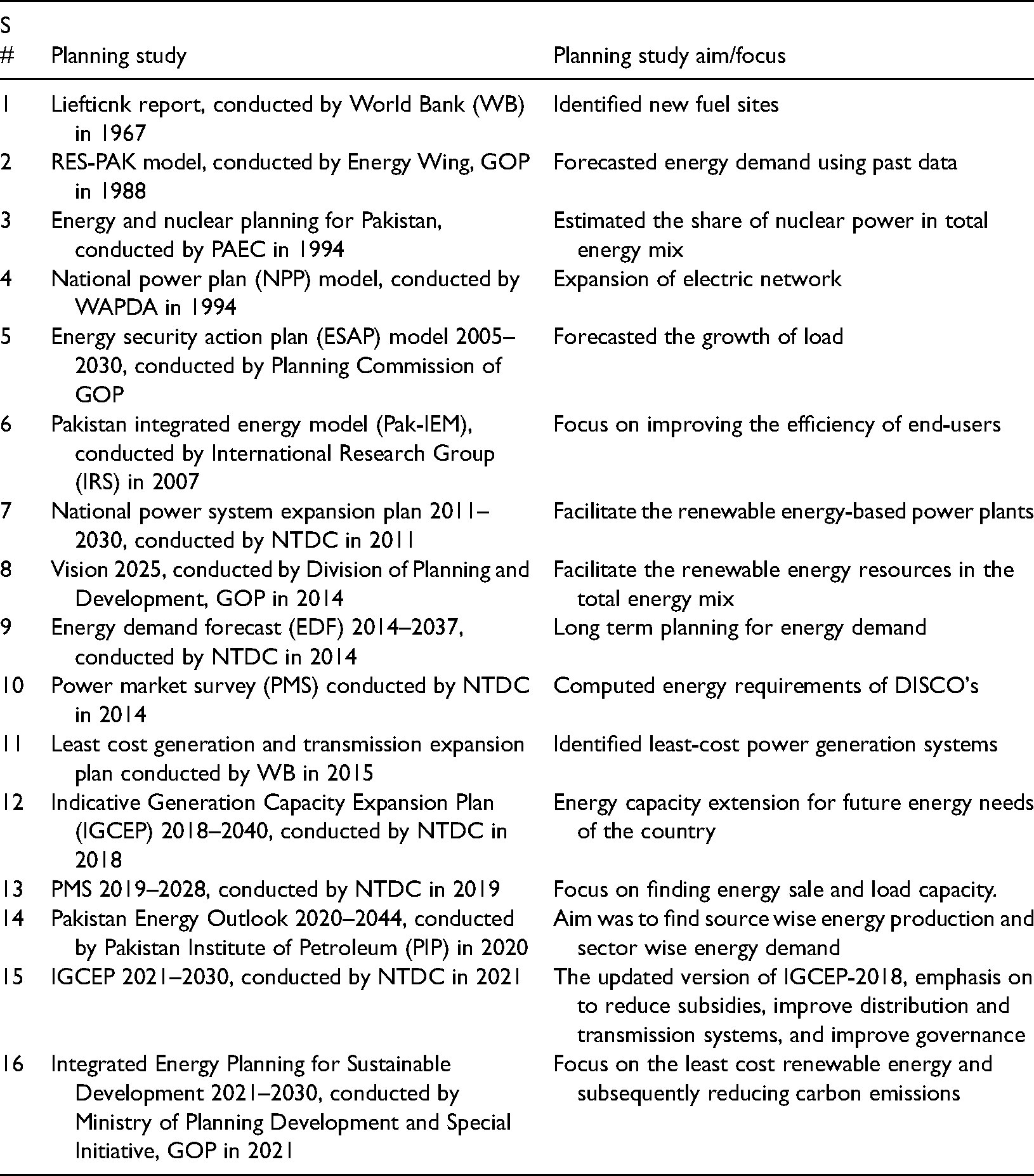
Power planning studies conducted using energy modeling tools around the globe.
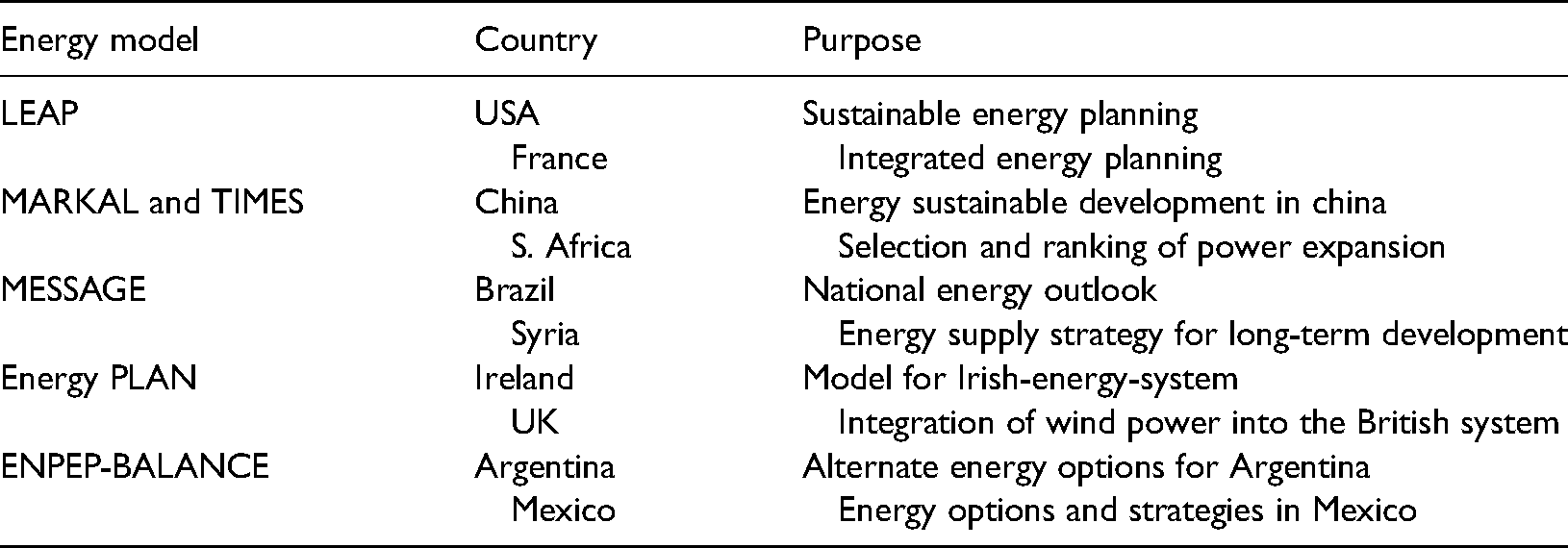
Power policies announced by GOP from 1994 to 2021.
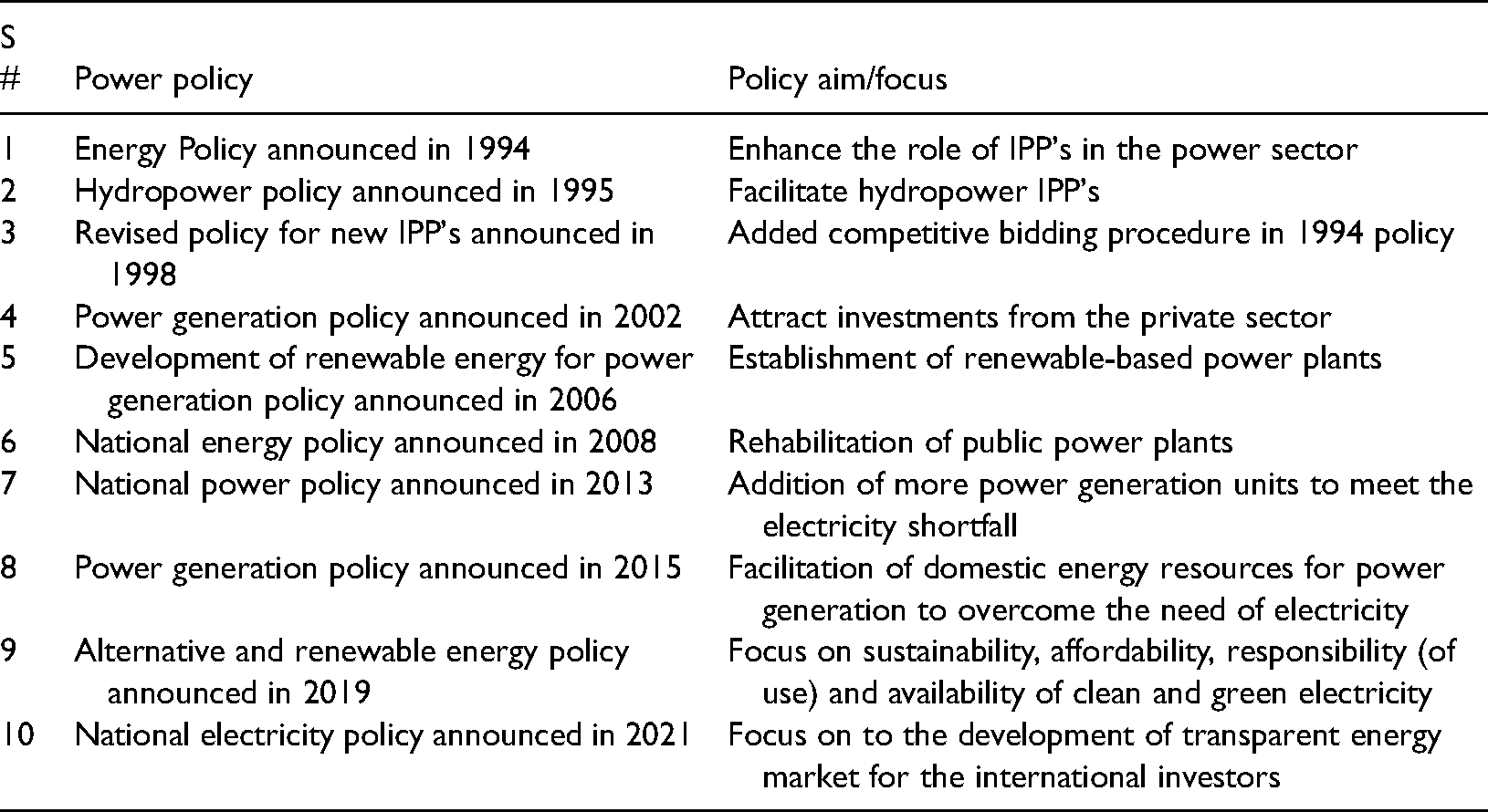
In light of the above discussion, currently electric sector of Pakistan is facing the following issues;
Institutional complexities and organizational governance issues. Domestic oil and natural gas will diminish by 2025 and 2030 respectively. Only coal resource is available in abundant capacity and need generous attention for harnessing through low carbon technologies. Circular debt, T&D losses, and power theft created a big financial burden on GOP. Power policies are developed by GOP without incorporating the integrated energy planning using modeling tools.
These sorts of issues are the major drawbacks of energy shortfall and hence the country is facing acute shortages of electricity since 2007. However, the development of power utility based on the newly developed Thar coal field is the optimal solution for Pakistan's electric network which helps in alleviating the all stated power issues.
Research methodology
The research methodology adopted in this research aims too find the answers to the following questions:
Is the capacity and quality of Thar coal is suitable for power generation? What are the economical mining techniques for Thar coal? What are the efficient technologies for power generation which creates less environmental hazards? Is 175 billion tons Thar coal having the capacity to produce power for the next 250 years? Is Thar coal alone having the capability to overcome the present energy crises, meets future energy challenges, identify energy transition structure through clean coal technologies, promotes economic development and helps in reducing the intensity of carbon emissions in the country?
Capacity and quality of Thar coal
Thar coalfield has a large deposit of 175 billion tons which seeks greater attention for power generation to meet the present and future energy challenges in Pakistan and that is located in Thar, Pakistan having latitudes 24′15 north and 25′45 north and longitudes 69′45 east and 70′45 east as given in Figure 9 and is reachable via road by 409 Km from Karachi. The lignite coalfield is spread on the 9,100 Km2 area and is bounded north, east and south side by India (Daood et al., 2014).
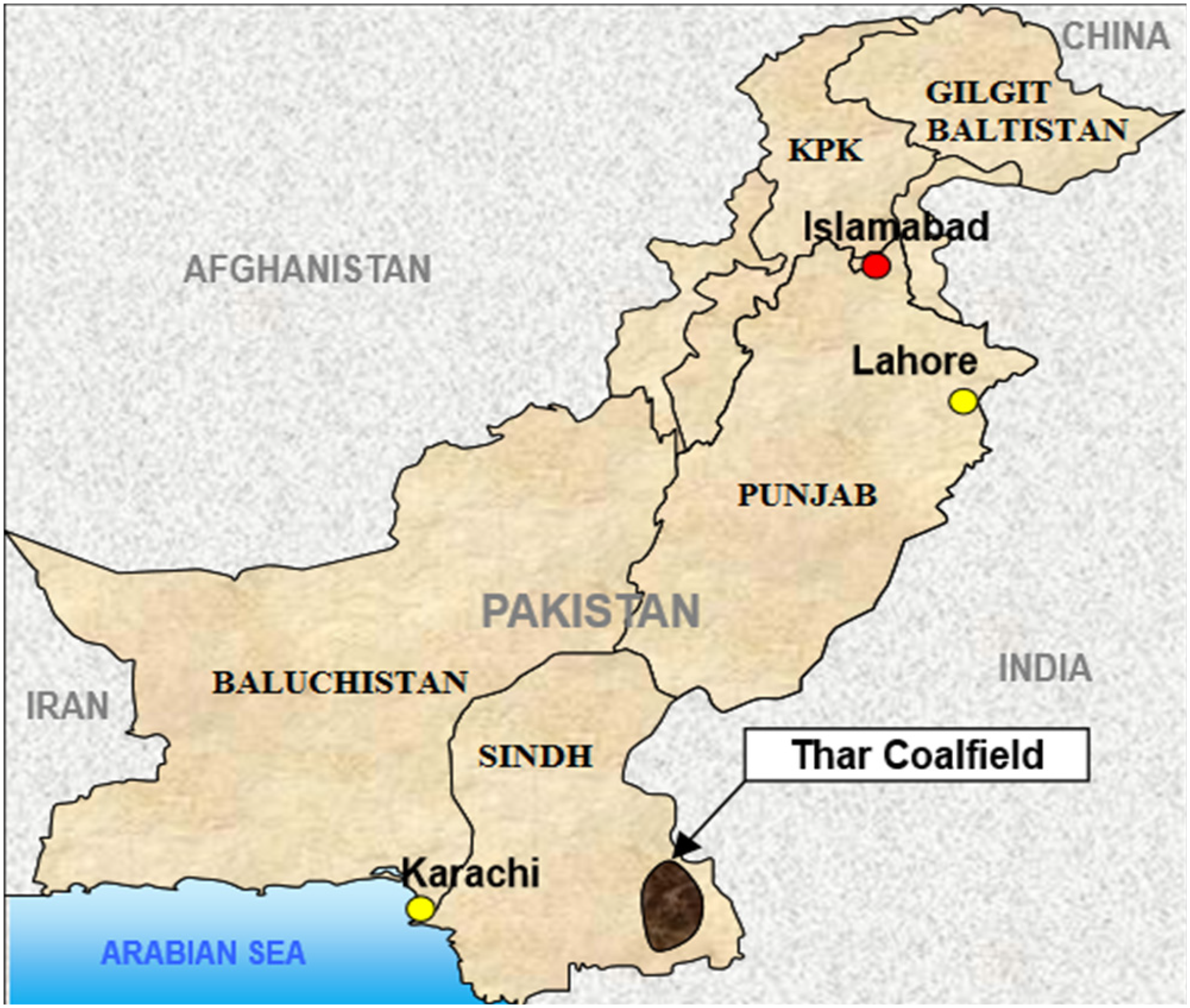
Location of Thar coal (Japan International Cooperation Agency, 2013).
Coal lies underground at a depth of 170 m having a thickness of 12 m to 21 m. The whole coalfield is covered with upper 50-m loose sand. As per the survey report of the Sindh coal authority, the rank of coal is estimated which is ranging from lignite B to lignite A. A total of two thousand samples were tested for identifying actual weighted chemical contents as given in Table 6 (Private Power Infrastructure Board, Pakistan, 2004).
Analysis of Thar coal quality for power generation.

Suitable mining techniques for Thar coal
The most suitable method for the mining of Thar lignite coal is underground mining which further divided into two categories namely room-and-pillar mining (it allows the thar lignite coal production much more quickly by using mobile machinery that cost under $ 5 million) and Long wall mining (used machinery of cost $ 50 million). In contrast to this research, organizations around the globe like Shenhua of China in 2004 and RWE of Germany in 2002 suggested open cut mining for Thar coal development. Surface mining or open-cut mining have more worth over other techniques because this technique recovers a higher proportion of the coal as compared to underground mining. Under the open-cut mining technique, 90% or more coal can be recovered easily (Japan International Cooperation Agency, 2013).
Efficient generation technologies for Thar coal
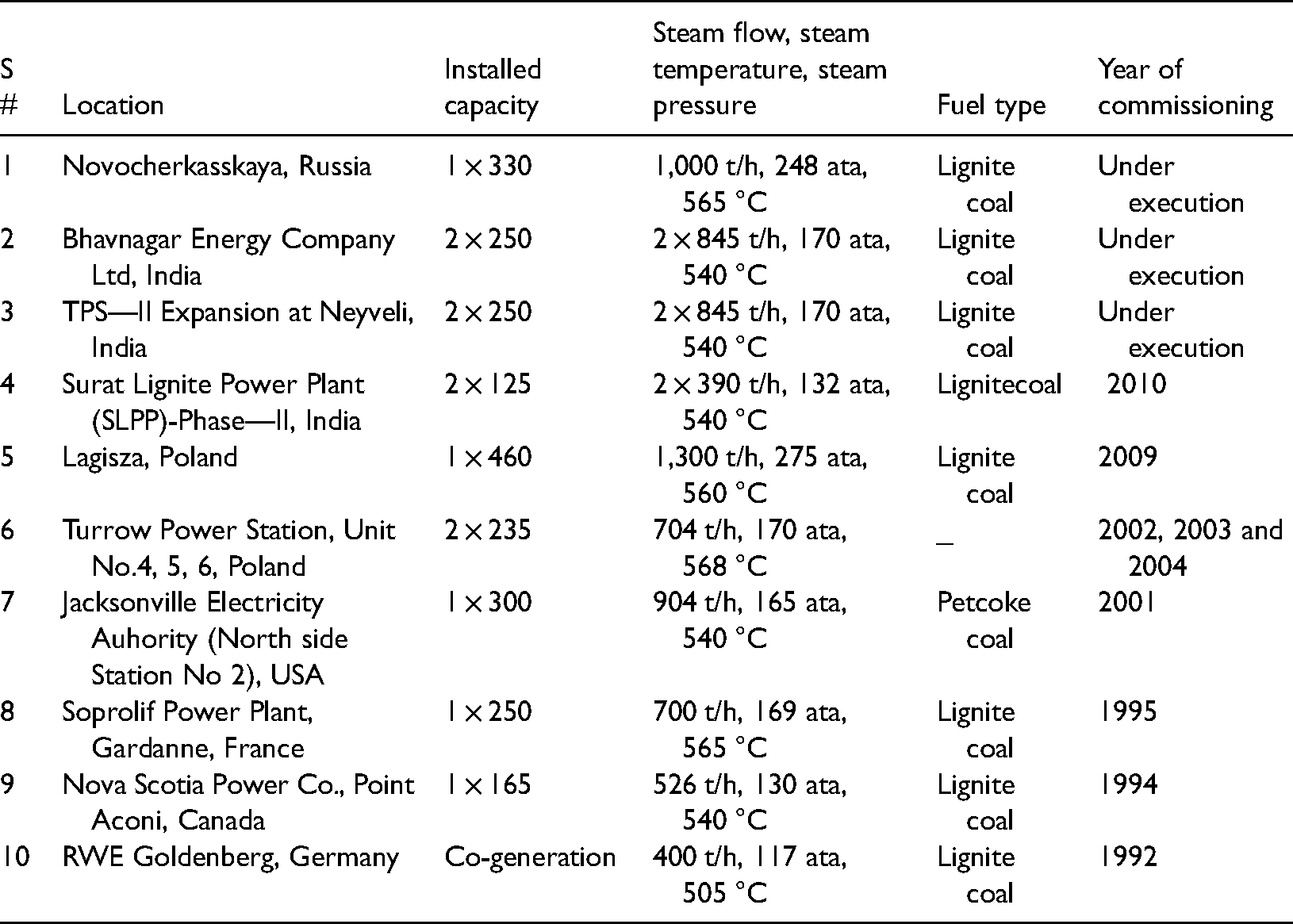
Thar lignite coal has a capacity of 175 billion tons which requires more concentration for harnessing through modern technologies. Usually, conventional boilers deteriorate the quality of coal and generate large NOx emissions. Therefore Circulating Fluidized Bed Combustion (CFBC) technology is developed and is used by modern industries and power stations because of lower environmental hazards and greater efficiency in power generation. Detailed classifications of coal boilers are shown in Figure 10. The usage of CFBC technology provides a techno-economic viable option for Pakistan because this technology applies to many solid fuels like anthracite culm, lignite coal, petroleum coke, municipal waste, and also has the capability to co-combust many unlike solid fuels (Luecke et al., 2004; Zhang et al., 2010). CFBC technology has several advantages few of them are; i. It fires high ash content, high moisture content, and high sulfur content lignite's coal without losing the reliability of plant, ii. It tolerates the declining quality of mine coal, iii. Low polluting: SOx and NOx emissions are ultimately reduced because SOx removal is carried out inside the boiler by directly injecting limestone and No issue with the NOx because of lower furnace temperature i.e. 800–900 °C, iv. Separate Baghouse filter for boilers to control a matter of particulate v. Dust suppression system, and vi. Separate Continuous Emission Monitoring System (CEMS) for boilers. The CEMS is an effective and moderate tool to monitor and handle NOx, SOx, PM, CO, temperature, and CO
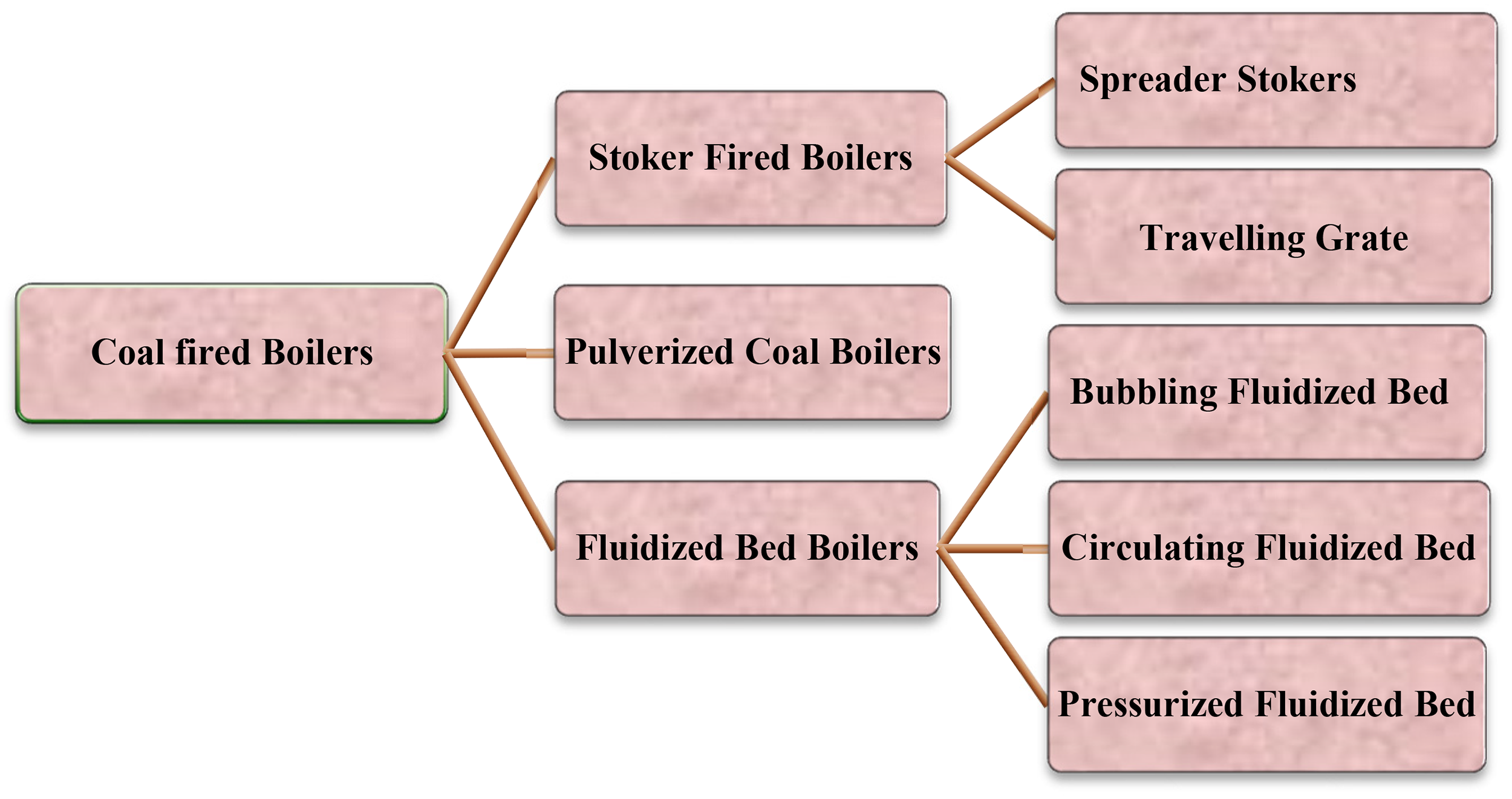
Major classifications of coal-fired boilers.
Global results of CFBC units in operation or under execution.
Mathematical framework for the estimation of power potential and carbon emissions from Thar coal
A mathematical framework is developed to utilize 175 billion tons coal for power generation in Pakistan for the next 250 years and also to find the carbon emissions that are produced as a result of exploiting Thar coalfield for power generation. The process flow diagram of mathematical framework is given in Figure 11.
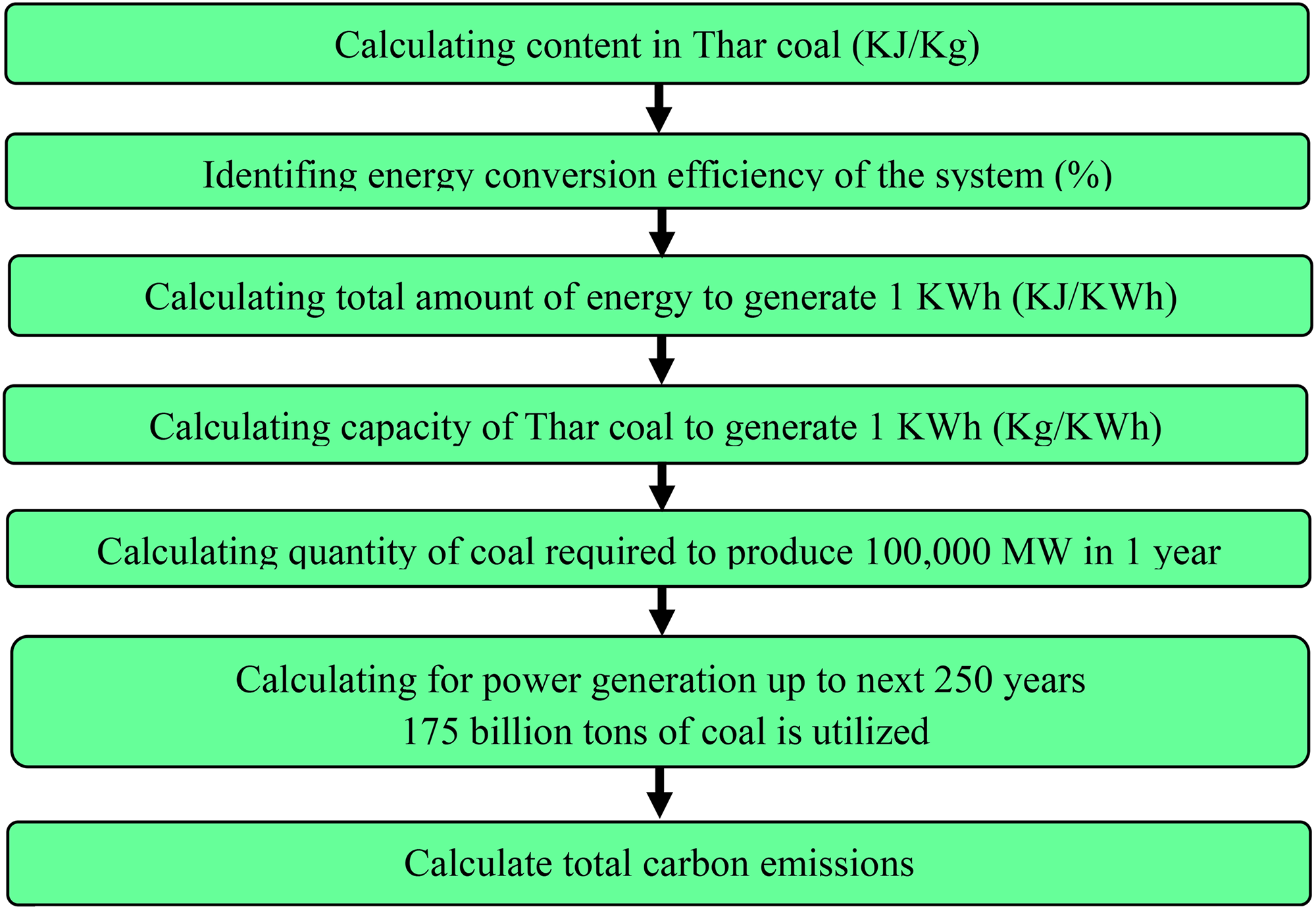
Process flow diagram of mathematical framework.
Step 01: Energy contents available in Thar lignite coal is varying from 6,300 BTU/lb to 11,000 BTU/lb, depends upon the area or site for mine but we consider in account the least calorific value that is 6,300 BTU/lb or 14,654 KJ/Kg (Azam et al., 2016).
Step 02: Energy conversion took place in two steps (i) Boiler and combustion for this we take 90% efficiency which is a normal range for well-optimized power plants. (ii) Modern Rankine cycle for coal power plants, have efficiencies that are between 33% to 43%. So the efficiencies of these two energy conversion technologies are the product of 38% and 90% (Li et al., 2017).
Step 03: To find heat rate (HR) using the values of conversion efficiency, that is 3,600 KJ/h for 1 KW of power (“Kilowatt-hours to Kilojoules Conversion (kWh to kJ)”, 2022).
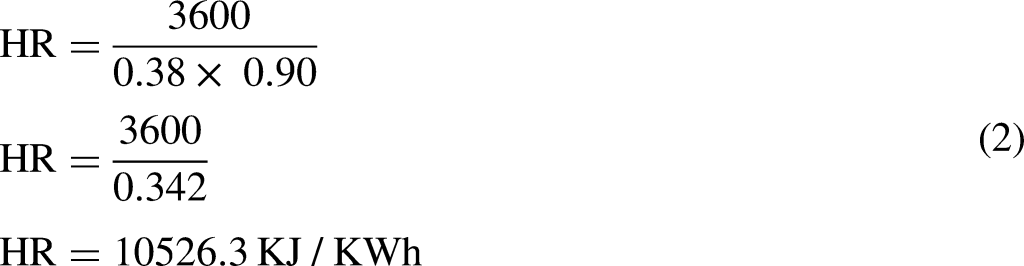
Step 04: Identify the quantity of Thar lignite coal (QTLC) which carry 10,526.3 KJ/KWh (Raza et al., 2021, 2022).

Step 05: Assume that for the next 250 years Thar coal of capacity 175 billion tons produces 100,000 MW of power. First find the quantity of coal required (QCR) to produce 100,000 MW in one year as given in equation (5).
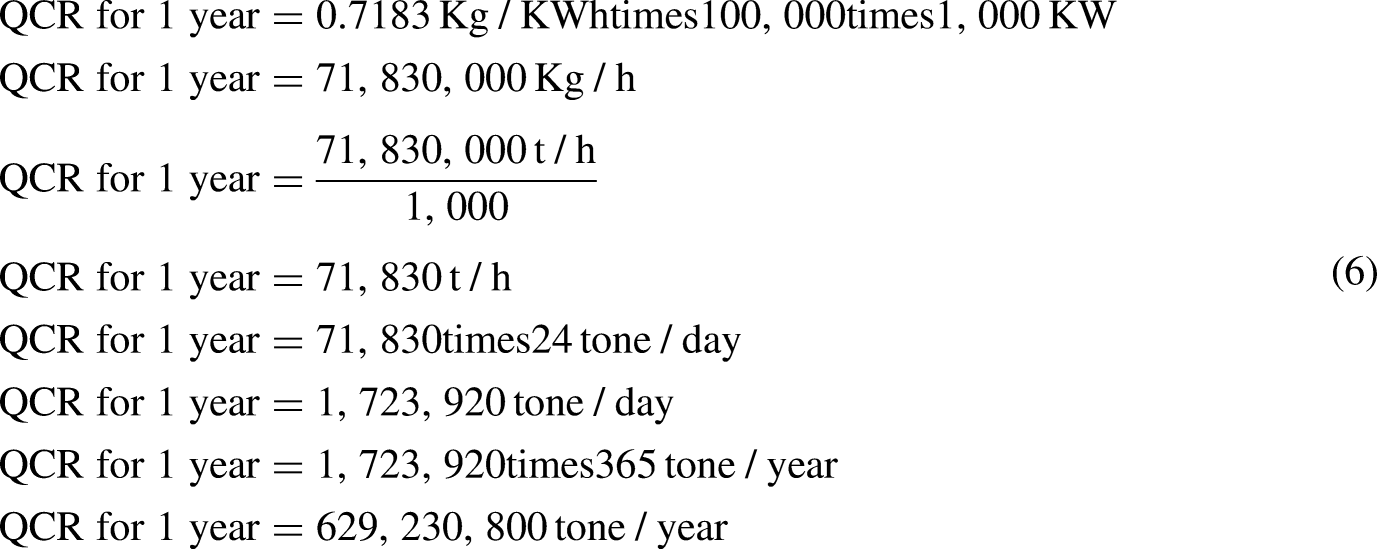

Carbon emissions also estimated for this large Thar coal deposits and are calculated by the equation (8) given below (Tian et al., 2012):
Technology-Environment-Economy nexus
Development of Thar coalfield in Pakistan brings prosperity in the country in terms of economic development, rapid progress of sustainable energy technologies, reduction of carbon emissions and least cost optimal energy transition pathway through cleaner technologies. Boosting economic growth required long term economical options for quality of power supply. Improving productivity of power supply by harnessing domestic coal through cleaner technologies is essential and Pakistan can increase long-run GDP by 2.3% on average till 2040. An investment in boosting domestic infrastructure and development of clean, smart and modern power system is the need of economic growth. The “State of Industry Report” estimates that US $1.3 billion investment is needed annually from 2020 to 2040 for the development of Thar coalfield for power generation. Additional, US $ 1,658 million and US $365 million are needed for the development of HVDC transmission lines and implementation of carbon capturing technologies (Valasai et al., 2017). Financial activities in each fiscal year till 2040 will foster the sustainable economic growth in the country. In 2021, country is producing 219 million metric tons of carbon emissions which were only 151 million metric tons in 2010 and 174 million metric tons in 2015 (Mirjat et al., 2017). As per the current development in fossil technologies, the carbon emissions will enhance at a growth of 6% annually. If Pakistan promotes the development of Thar coalfield through the deployment of clean, smart and modern technologies can limit the growth of carbon emissions at a large extant.
Results and discussions
Mathematical framework is developed for the estimation of power capacity and carbon emissions. It is estimated that the Thar coal has a potential to produce 100,000 MW for the next 250 years which shows greater interest in the development of industries and promote socio-economic linkages with the developed countries. Further, capacity factor, annual unit's generation of the system and carbon emissions are calculated for the period 2020 to 2040.
Forecasting net power production from 2020 to 2040
The new power generation path is developed for Pakistan by utilizing Thar lignite coal as fuel for power production. The capacity factor is the key consideration for the estimation of power in TWh units till 2040. Figure 12 depicts TWh generation and Figure 13 shows the capacity factor of Thar lignite coal. It is concluded that the Thar coal site has the potential to produce an average of 700 TWh units annually if it is fully harnessed through efficient technologies.
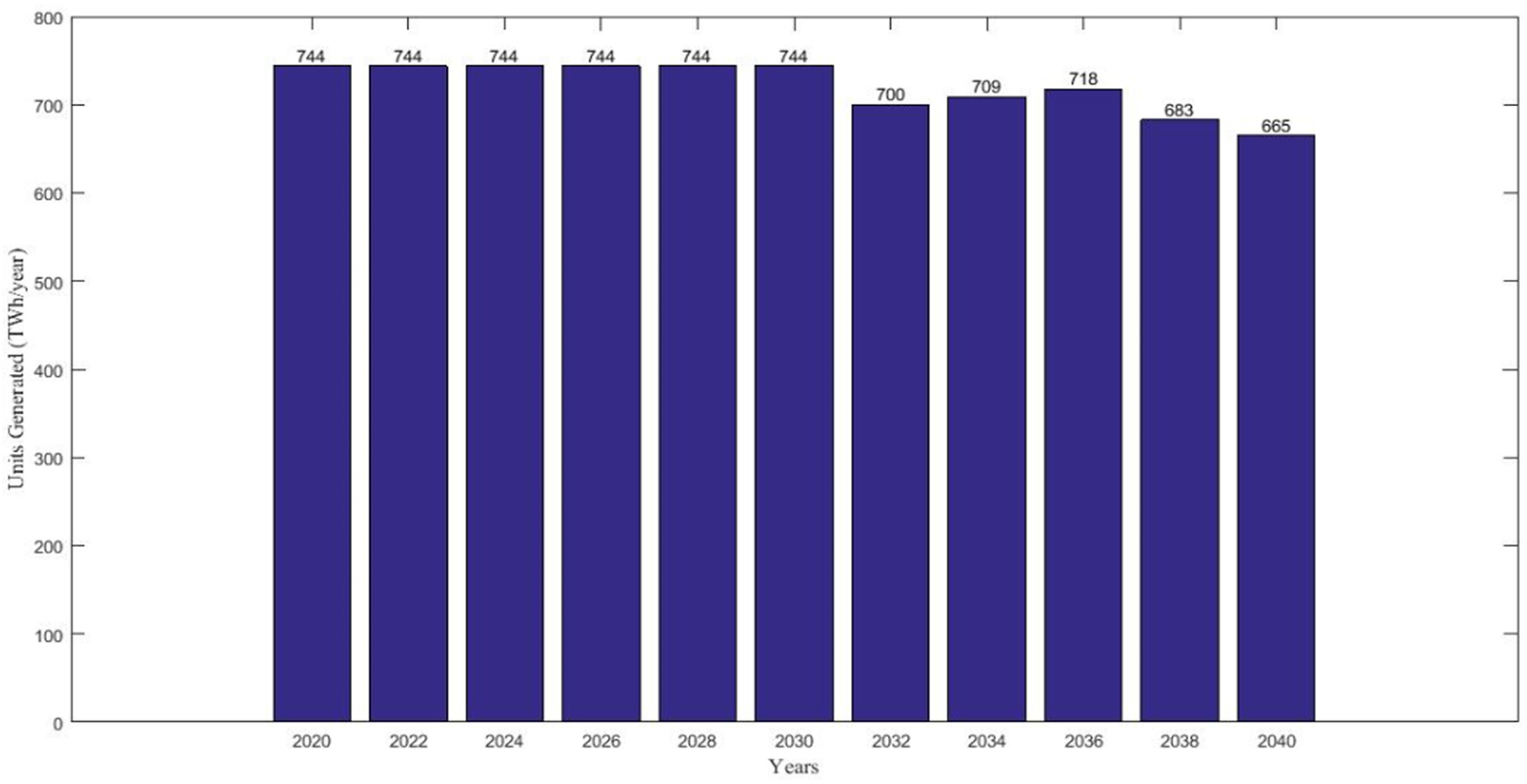
Annual unit's generation (TWh) from Thar lignite coal from 2020 to 2040.
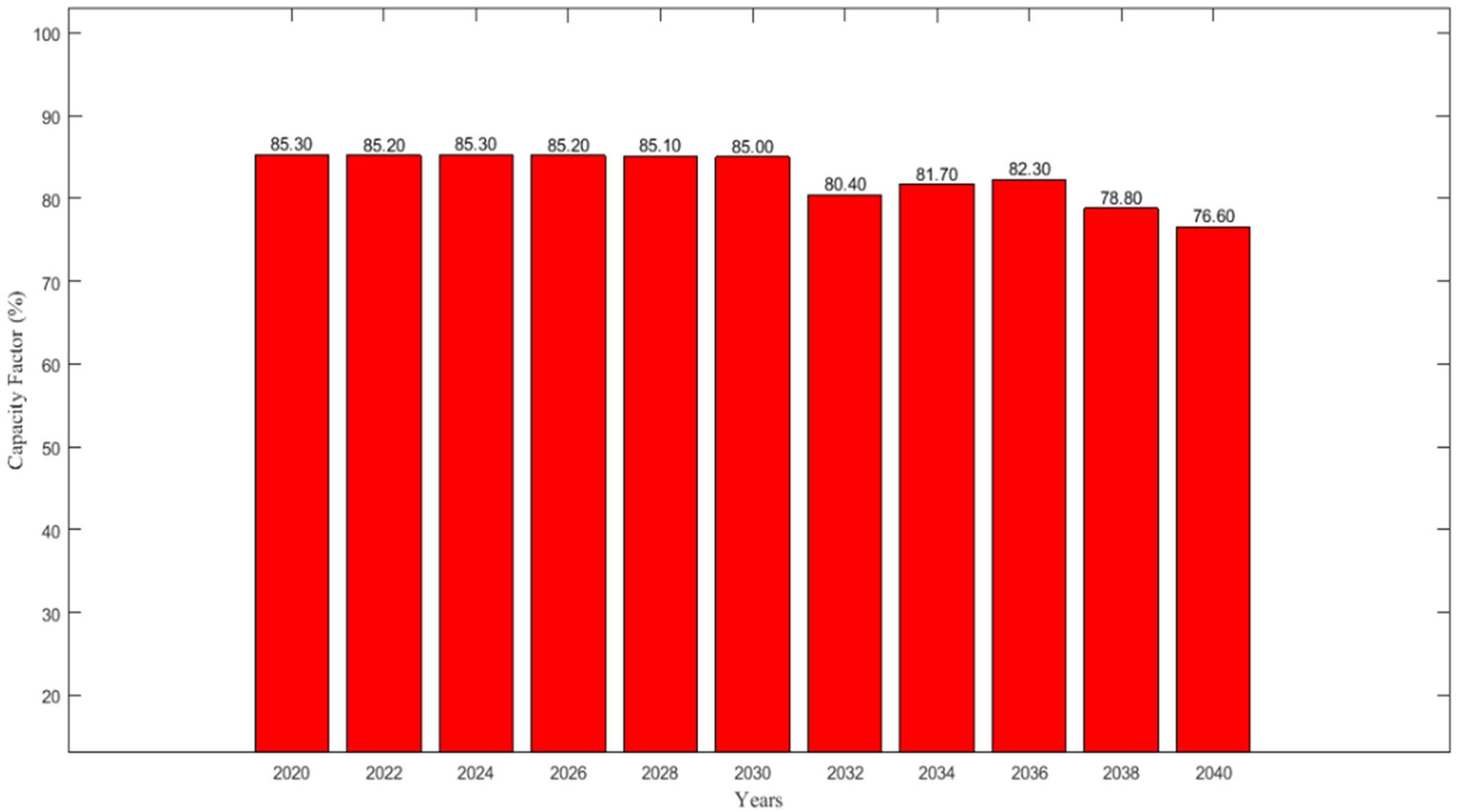
Annual capacity factor of Thar lignite coal from 2020 to 2040.
Pakistan's economy faced a load shedding of 33.068 TWh (Mirjat et al., 2018). The power sale to the consumers was 87.324 TWh whereas the energy demand of the country is 120.392 TWh in fiscal 2018 (Mirjat et al., 2018). The future power demand of Pakistan for 2030 and 2035 is forecasted by Nayyar at el. using the Long-Range Energy Alternative Planning (LEAP) [53]. The results reveal that 330.1 TWh energy required for 2030 and 504.4 TWh energy required for 2035 (Mirjat et al., 2018). In this paper, the power generation from Thar coal is forecasted for the period 2020 to 2040. The results shows that the power generation for 2020 is 744 TWh, for 2030 is 744 TWh, for 2036 is 718 TWh and for 2040 is 665 TWh respectively. If Thar coal is properly utilized for power generation in Pakistan then it has the capability of meeting the present and future energy challenges in the country and Thar coal is the solution of long term ecological energy planning in Pakistan.
Forecasting carbon emissions from 2020 to 2040
The relationship between the carbon emissions and sustainable environment is essential for making sustainable economy in the developing countries. Human activities cause carbon emissions in the environment over the last 150 years. The greater source of carbon emissions in Pakistan are burning of imported fossil fuels (furnace oil, natural gas and coal) through lower efficient technologies, and that the carbon capturing technologies are missing in the current fossil fuel-based power plants. Carbon emissions are responsible for the global warming, as earth temperature will rise to 2 °C it will cause issues like salinization of water supplies, beach erosion, increased coastal flooding, and other impacts on humans and ecological systems. Since is necessary to limit the temperature below 2 °C, extensive use of carbon capturing devices coupled with the efficient power generation technologies by relying on the domestic coal will help to achieve environment target in a sustainable way. In this regards, this study emphasis on the use of carbon capturing devices coupled with the efficient power generation technologies. These techniques will helps to reduce the carbon emissions in Pakistan from 90% to 25%. Carbon emissions were greater from the period 2000 to 2020 due to extensive utilization of imported fossil fuels as shown in Figure 14 (Mirjat et al., 2017). This study utilized the capacity of Thar coalfield (175 billion tons) for power generation through the cleaner, smarter and modern technologies and estimated carbon emissions for the period 2020 to 2040 as shown in Figure 15.
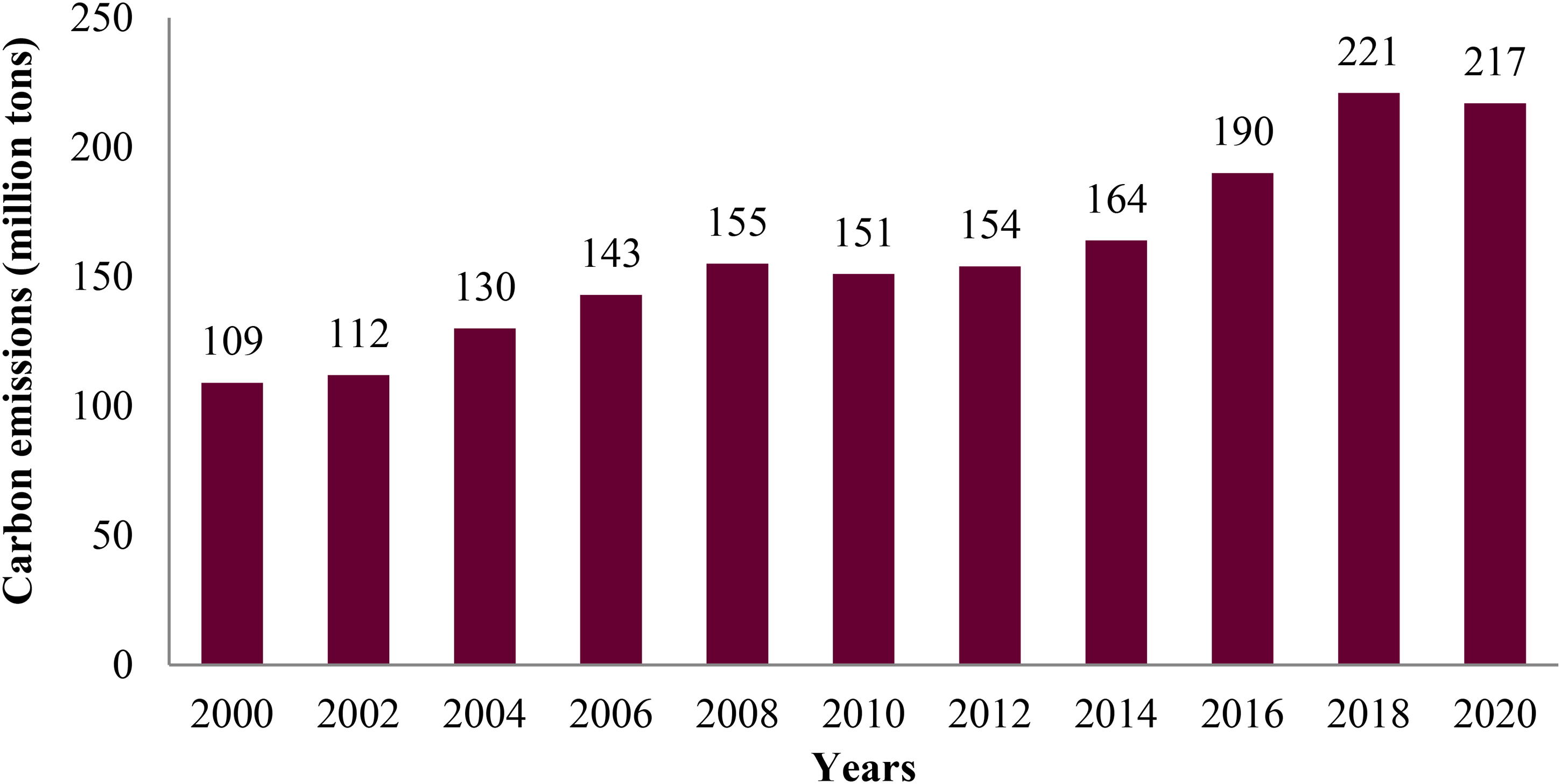
Annual carbon emissions production in Pakistan from 2000 to 2020.
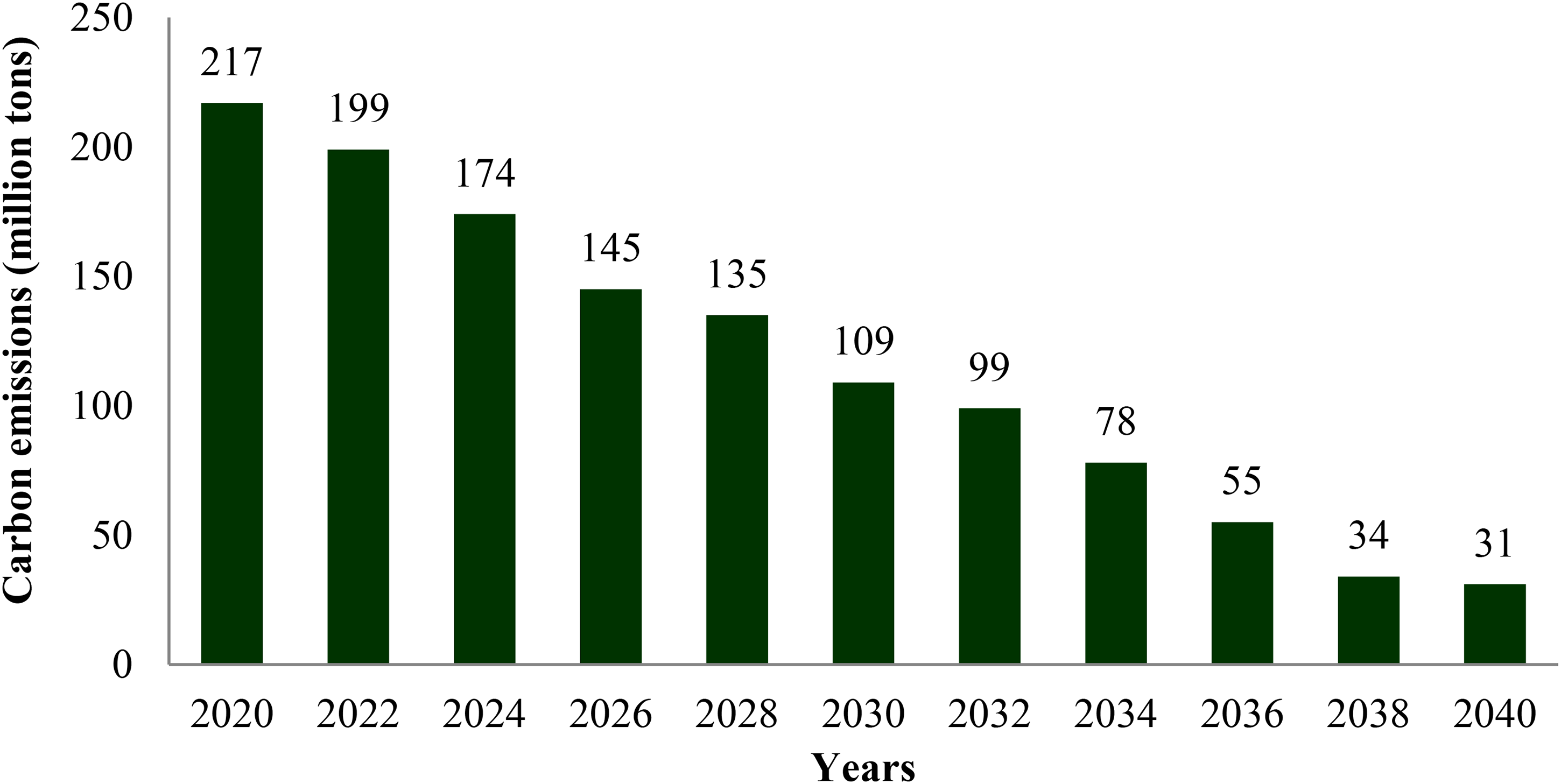
Annual carbon emissions production in Pakistan from 2020 to 2040.
Conclusion
Thar coal is a sustainable option for Pakistan to harness electricity effectively and meet present and future energy challenges in the country. Currently, most of electricity is generated using imported RLNG, natural gas, and coal resources but still the country is facing an energy shortage of around 33.068 TWh. This research finds that that oil and natural gas will be diminished by 2025 and 2030, only coal is available in an abundant capacity. Other important issues include circular debt, T&D losses, and electricity thefts are also addressed along with the energy planning studies and policies conducted by the government of Pakistan. Circular debt is reached at 11.7 US billion dollars, T&D losses appeared around 18% whereas the theft rate is 3.9% which is increasing as the day's passes out. It is identified that coalfield has the potential to cope with these all issues and provide sustainable energy development in Pakistan. The rank of Thar coal is considered as the lignite B to lignite A, which possess low ash content and high heating value. China and Germany recommended that open cut mining is a suitable technique for the Thar coal as this technique will provide help in recovering 90% of coal easily from the field. It is assessed that CFBC technology is suitable for power generation as it offers lower environmental hazards, greater efficiency and it can co-combust many other solid fuels like municipal solid waste and biomass. A mathematical framework has provided accurate estimations that the Thar coal has a potential to produce 100,000 MW for the next 250 years which shows greater interest in the development of industries and promote socio-economic linkages with the developed countries. The forecasted results of energy unit generation for the year 2020 are 744 TWh/annum and 665 TWh/annum for the year 2040 respectively. The energy generation for the year 2030 and 2035 are 744 TWh and 718 TWh, whereas the energy demand for the year 2030 is 330.1 TWh and for 2035 is 504.4 TWh respectively. CO2 emissions will reduce from 90% to 25% from the period 2020 to 2040. It is proved that energy generation is relatively higher than the energy demand with lower environmental impacts. In the future, the country would not suffer from the load shading if proper power harnessing strategies are employed followed by the proper implementation of efficient technologies for power generation and devise proper energy policies to attract investment in the power sector.
Footnotes
Declaration of conflicting interests
The author(s) declared no potential conflicts of interest with respect to the research, authorship, and/or publication of this article.
Funding
The author(s) received no financial support for the research, authorship and/or publication of this article.
