




Abstract
Pakistan is a developing nation that emphatically needs low cost energy resources to cope up with the economic growth. The major portion of energy is being generated by conventional methods. To generate energy through conventional methods is an expensive business that has direct impact on socio economic conditions corresponding to the rising of prices of energy in Pakistan. Another major implication of generation of energy by conventional source is increasing of circular debt that crossed Rs: 10 billion. The objective of this paper is to assess the potential of renewable energy resources and role of Government in policy formulation. The assessment showed that there is large availability of renewable energy resources. However, the formulated renewable energy policy does not have effect on the practical realization of renewable energy. This research study provides further insight owing to power policies, renewable energy transition and challenges of renewable energy policy facing in Pakistan. After potential assessment of renewable energy resources, the recommendations have been put forwarded that would help to promote renewable energy, as a key indicator in the sustainable growth and accelerating the energy transition to future energy perspectives of country.
Introduction
Currently, the focused strategy for energy is based on 3-D's that signifies Decentralize, Democratize and Decarbonizes (Di Silvestre et al., 2018). The concept refers to minimize the costs of energy, improving security and reliability, enhancing the energy infrastructure and reducing the carbon emissions. In a year 2015, the United Nations General Assembly (UNGA), a powerful institution that provided significant mechanism for sustainable development goals (SGD'S) of earth. The agenda 2030 comprised of decreasing poverty, right to equal distribution of resources and justice, and sustainable energy and environment of the planet. On the face of it, the green energy was central to an agenda that focused on reliable, affordable and accessible energy to all. The overall objective of UNGA to meet the future energy demands via renewable energy while minimizing the impact of dangerous environment to the planet (https://nepra.org.pk/About.php).
Viewing the recent energy scenario, the renewable energy technology has reached to the commercial acceptance and become economically competent to the conventional source of energy (Wei et al., 2018). There are some advantages of renewable energy technology including simple to install, minimal time for realization, affordable and environment friendly (Rehman et al., 2018). The European countries have a positive share of consumption of renewable energy that increased up to 17% in the year 2016. Indeed, it is double if comparing with year 2004 i.e. 8.5%. The European Union (EU) renewable energy strategy of 2020 focused to obtain 20% energy from renewable energy sources. Sweden has the highest share of renewable energy whereas Malta and Luxembourg has lowest. The E U adopted the policy of energy transition with sole objective of achieve higher sustainability, security and competitiveness; and become leader in renewable energy. However, the energy outlook presented by British Petroleum (BP) in 2018 stated that renewable energy is fastest growing source of energy that it will increase five times by the year 2040 with provision of 14% of world primary energy.
The current growing trends are presenting the clear signs of increased role of renewable energy in general and wind energy in particular for meeting up the future energy needs. The cumulative growth of global wind energy reached to 743 GW at the end of 2020 as stated by Global Wind Energy Council (GWEC). The year 2020 was considered as the best year in a history of wind energy with additions of 93 GW new installed capacities, a 53% rise in installed capacity compared to previous year. Like previous years, China along with US dominated the wind energy market having rise in installed capacity 75% in 2020. This will help to avoid 1.1 million tones of Co2 globally which is equivalent to carbon emissions of South America. However, this will not bring about neutrality up to half of this century (Franz et al., 2014; https://gwec.net/global-wind-report-2021/).
The US energy information administration assessed that the major portion of energy was derived from fossil fuel 80%, whereas 11% from the nuclear energy and 8% from renewable energy (US Energy Information Administration). The Secretary General of United Nation declared that leaders must act, time is not on our side” (Doyle). The energy crisis and enviornmental issues took reigns of the world. However, the world response against the matter is very slow. The recent Paris Climate Accord of 2015, being signed by the US and China, is termed as most promising accord. The US energy policy laid emphasis on the four objectives including rely on diverse supplies, reliability of infrastructure, affordability of energy prices and enviornmental and sustainable energy production (Smith et al., 2002).
In another study, a review on sustainable energy policy for promotion of renewable energy carried out that point out the development history of five nations including US, Germany, UK, Denmark and China (Net Zero: The Scorecard, 2020). Similarly, UK under EU law's has plan to generate 20% energy from renewable energy by the year 2020 (In Crown 2008 Climate Change Act 2008, 2008; McAllister and Nase, 2019; Saidur et al., 2010). More over, Denmark has a long history of energy generation from the renewable energy. The country has high penetration of wind energy combined with heating and power plants. Under the renewable energy policy, the wind energy technologies were installed in the rural areas to generate energy; and now offshore wind energy generation is on the way (Meyer, 2004). China has set an example for installtion of renewable energy technologies. China is top on the list of wind energy generation system. The energy policies promotes the significant measures and controls. Their simplest measures is based on the reward and penality system. However, the policy of feed-in-tariff and carbon tax of China has attarcted the attention of a lot of resaerchers and Government (Ritzenhofen and Spinler, 2016). Similarly, Norway has the highest share of renewable energy in energy supply. The major portion of electricity is generated from hydro power, country's largest primary source of energy in 2015. In total, renewable energy accounted for half of the total energy supply (https://iea.blob.core.windows.net/assets/7113f933-b252-434c-aa15-67c460475bc3/EnergyPoliciesofIEACountriesNorway2017).
India is agressively following the renewable energy policies to enhance its role in energy mix. India intends to generate 225 GW from the renewable energy by the year 2022 (Yearend review, 2017). The details of installed capacity and projected capacity for future, policies, and challenges of renewable energy are given in (Majid, 2020). The current renewable energy policies of Iran, an oil rich country, showing an ambitious aim to increase the share of renewable energy in energy mix. However, the main barrier to development of renewable energy is absence of appropriate government policies, international sanctions and low level of public awareness (Solaymani, 2021). Similar nature of problems lies in the renewable energy policies of Saudi Arabia, an oil rich state (Amran et al., 2020). According to assessment reports of International Renewable Energy Agency (IRENA) that United Arab Emirates (UAE) will increase the share of renewable energy from 10 to 25% in curent energy mix that will save US $ 1.9 Billion by the year 2030 (https://www.irena.org/publications/2015/Apr/Renewable-Energy-Prospects-United-Arab-Emirates).
Similarly, Qatar is also ambitiously pursuing the renewable energy under the banner of Qatar National Vision 2030. Qatar will generate 20% of energy from the solar system and achieve diversified economy that gradually reduce the use of fossil fuels (https://www.brookings.edu/wp-content/uploads/2016/07/low-carbon-energy-transitions-qatar-meltzer-hultman). According to Bahrain Vision of 2030 that the country will produce 280 MW of electricity from the renewable energy by the end of 2025 and increasing up to 710 MW till the end of 2035 (https://www.trade.gov/country-commercial-guides/bahrain-renewable-energy).
Energy resources are essential for the sustainable development of nation (Hulio et al., 2019). Pakistan is a developing nation and continuously trying to meet the national power demand by installing the conventional power plants. However, there is myth about Pakistan's power sector market that fuel based energy can bring the best Ultimately, the subject experts are putting high reliance on conventional method. The cost of installation and energy generation per kWh of the conventional power plants is high. The sudden increase in the priceof oil in international market cripple the energy economy in Pakistan (Shakeel et al., 2016). Figure 1 is showing the fluctuating price per liter of oil in Pakistan from August 2018 to December 2020. Since 1991, the national oil imports have been on rise at 3.8% per year. The total consumption of fossil fuels reached to 74 million tons of oil equivalent (MTOE) in 2016 compared to 28.6 M TOE in 1990 (Sheikh, 2010). Figure 2 is showing the Gross Domestic Product (GDP) of Pakistan from 2001 to 2020.
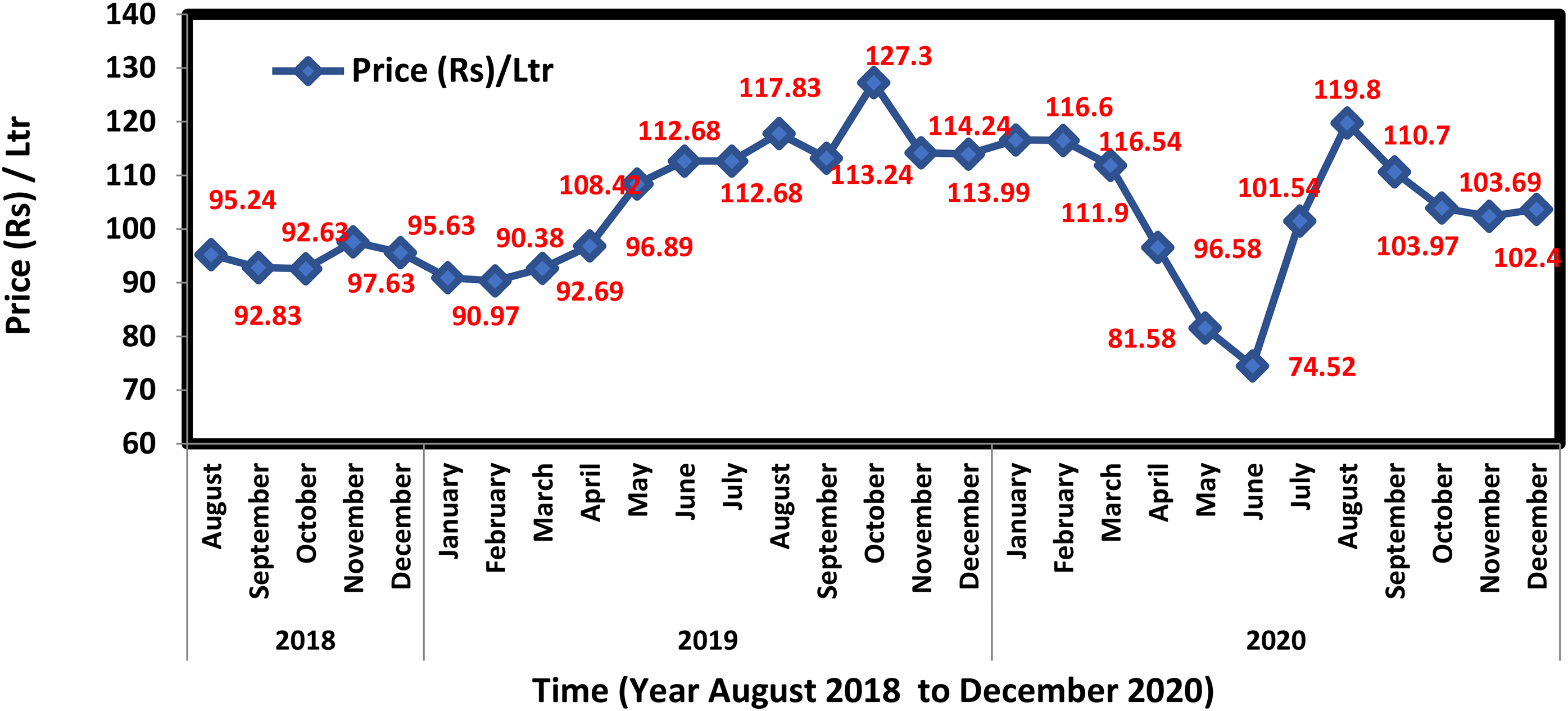
Fluctuating monthly prices / litre (Rs:) of oil in Pakistan from August 2018 – December 2020.
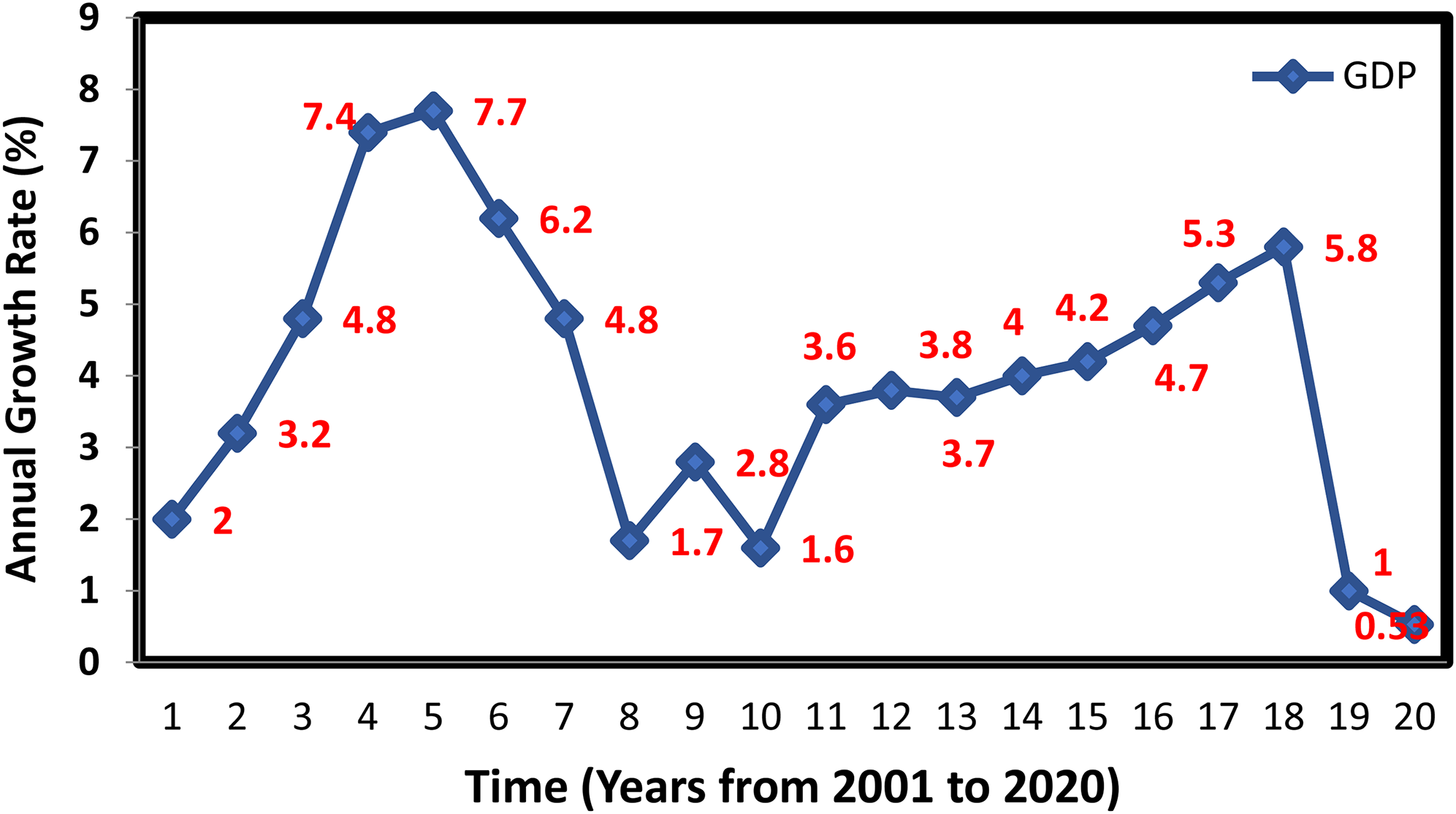
Annual gross domestic product of Pakistan from 2001 to 2020.
The natural gas is indigenous source of energy and considered as cost effective but soon after government permission to conversion of power plants on natural gas, opening of large number of Compressed Natural Gas (CNG) stations, and shift to basic fuel of industries put huge burden on sector. This raised supply demand variation that gradually laid to load shedding in the country. The energy statistics of primary sources showed that major portion of energy achieved for a period of 2015–16 by oil 34.2%, natural gas 41.2%, LNG import 3.3%, LPG 1.2%, Coal 6.9%, hydroelectricity 11.2%, nuclear 1.5%, renewable 0.5%. While annual growth rate of energy consumption was increased to 8.0%. Similarly during the same time more than 111,300 GWh electricity was generated, comparatively higher than the previous year. The major sources contributed to energy generation were thermal 63.4%, hydro 31.1%, nuclear 4.1%, and renewable 1.4%. However, the consumption increased to 90,430 GWh from 85,820 GWh compared to previous year (Hulio and Jiang, 2018a, 2018b). During the period, there was shown 10.5% an increase in the commercial sector followed by other sector 9.7% and bulk supplies 7.7% (Yearbook, 2003). Figure 3 is showing the energy scenario and Figure 4 is showing the energy resources consumption pattern of Pakistan. The energy deficit from 2011 to 2016 is given in Table 1 (Aized et al., 2018). Table is showing visible trend of energy deficit during the period from 2011 to 2016 that ranged from 5,100 MW to 7,900 MW.
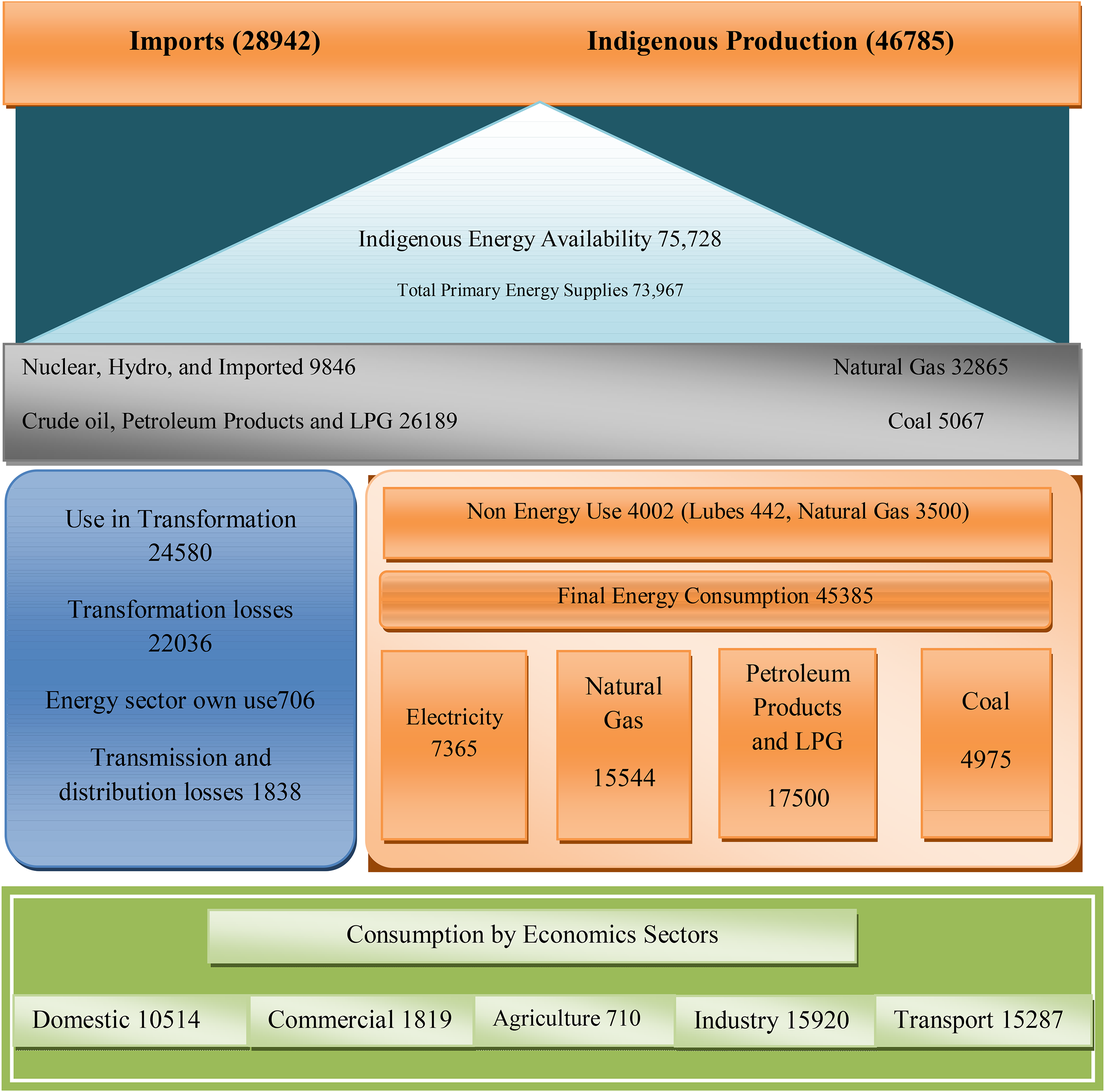
Energy scenario (thousand tonnes of oil equivalent) of Pakistan.
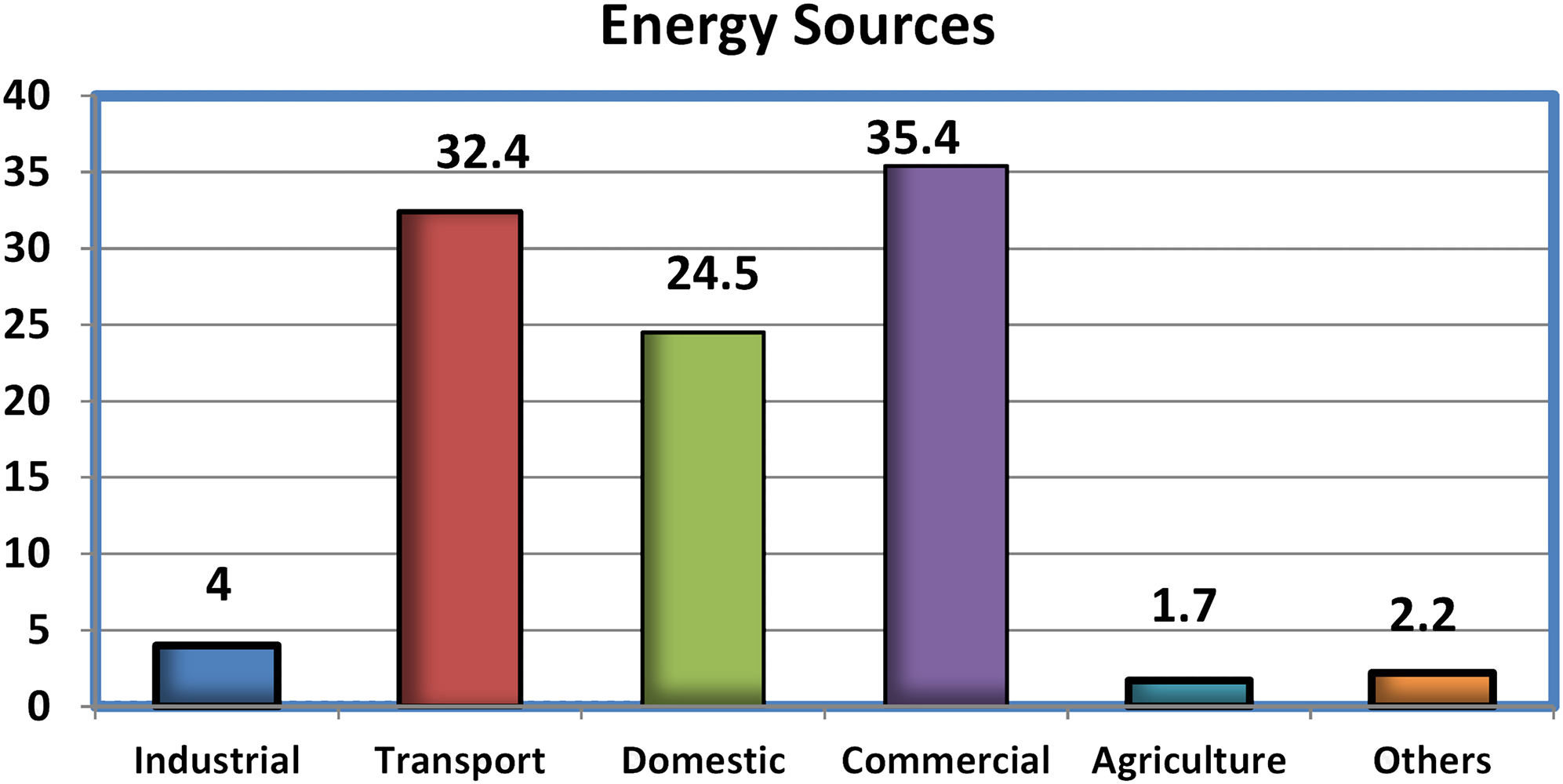
Sector wise consumption (%) of energy sources.
Energy deficit of Pakistan (MW).
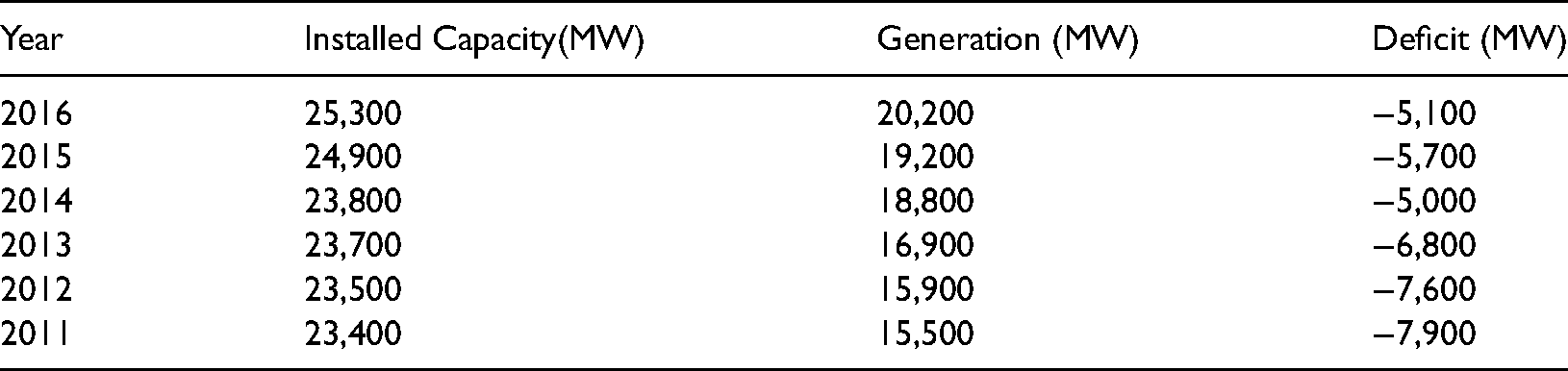
Figure 3 is showing the energy supplies including imports and indigenous production of Pakistan. It is also showing the major energy consumption sectors. The units can be read as Thousand Tones of Oil Equivalent (TOE's). The energy supplies of Pakistan mainly focused on oil and natural gas. Figure 3 represents the energy scenario of country during the year 2017–18. Similarly, Figure 4 is also showing the consumption trend of energy resources of different economic sectors, in which Industrial sectors are dominant whereas transport is next. However, the domestic sector is on third position in terms of consumption of energy resources. The industrial sectors consumed the 15,920 TOE's, whereas 15,287 TOE's and Domestic sector spent 10,514 TOE's. Figure 5 is showing sector wise consumption of energy resources.
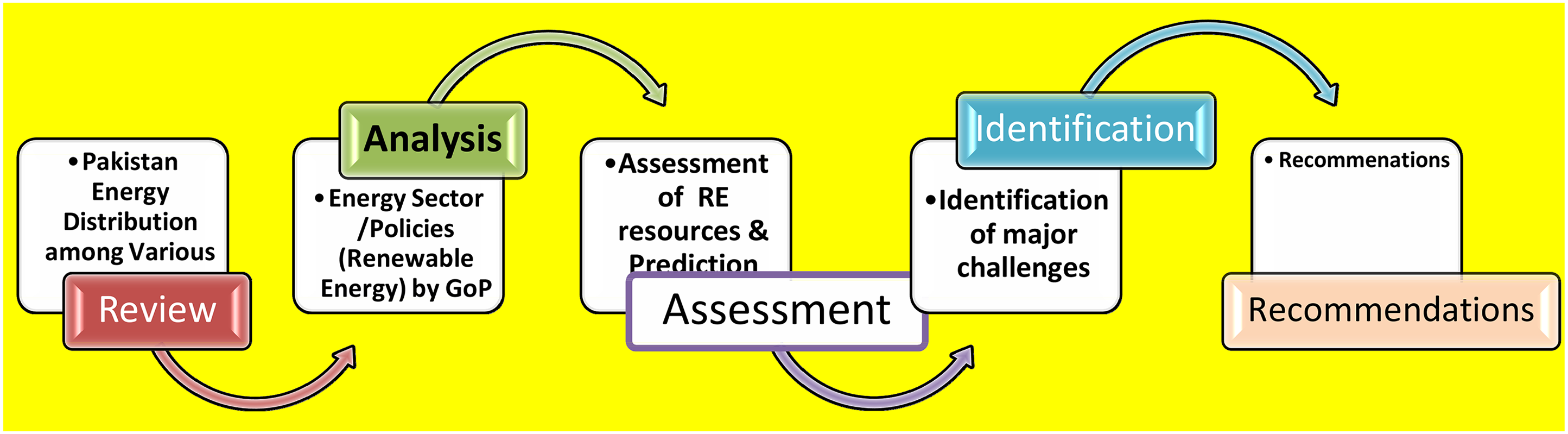
Methodology mapping.
Aims
The Aim of this research is to assess the detailed scenario of renewable energy resources including electricity generation from renewable energy, changes in energy policies from time to time, challenges faced by the energy sector; and at the end providing the possible recommendations to solve this problem.
Review of Pakistan's energy sector including their consumption patterns Assessment of functions of Government of Pakistan, energy policies & creation of statutory bodies and their role in distribution among provinces Assessment of renewable energy resources corresponding to renewable resource potential of provinces Finally assessing the challenges being faced by the renewable energy resource exploitation and recommendations for the potential growth of renewable energy in Pakistan.
Methodology
The methodology used in this research work comprised of qualitative data assessment being presented in different research works, journals, government yearly performance reports, periodicals & publications, books and newspapers etc. Figure 5 is representing the methodology that is used in this paper to investigate the renewable energy resources of Pakistan.
The methodology mapping of this research work is helpful in identifying the possible short comings and positive areas of renewable energy sector of Pakistan. The detailed review of renewable energy policies in particular and energy policies in general since their inception, constitutional framework and structure mechanism between provinces and federalism; and their role in energy policy formulation provides the significant insight. The assessment section provides the potential renewable energy resources corresponding to provinces. The identification section is based on the assessment of previous section and laid basis for the recommendations. If Government of Pakistan truly pay attention to these identified section can lead to the success of renewable energy generation
Power policies of Pakistan
Power policy of 1994
The power policy of 1994 focused on the private investment in power sector. Under the power policy of 1994, the GOP introduced the formula of Built-Own-Operate (BOO) for power plants. The new power policy framework and the package of incentives introduced with the objective to accelerate the power generation capacity and attract the private investment in power sector. The power policy of 1994 has been considered as most liberal power policy of Pakistan and gave so much power to private investor in terms of selection of most suitable site and tarrif settlement. The salient features of power policy of 1994 were choice of site, fuel, source and technology, power purchase guarantee by the GOP under the application of bulk power and payment of bulk power tariff, financial and fiscal arrangements, security package and one window operation to facilitate the development of power projects. Under the power policy of 1994, the government proactively supported the energy efficient technologies included combine cycle gas turbines, gas diesel and thermal plants. The power policy of 1994 attracted private investment to install power plants that crossed the capacity of 3,000 MW.
Power policy of 1998
The power policy of 1994 successfully attracted the attention of private investors to invest in power projects. In this regard, Hub power project was a successful example. However, the power policy framework of 1998 comprised of setting of a tariff as a result of competitive bidding process. The power policy of 1998 was a total departure from the previous power policy of 1994. On contrasting to previous policy, the government focused on the coal and hydo electric power projects. The power policy of 1998 put an end to exemption policy of all duties and taxes from the previous policy.
National power policy 2013
During the year 2013, the GOP announced the ambitious national power policy to support the current and future energy needs of the nation. The government's ambitions were reflections of growing demand for energy from with in circles. Table 1 showed that there was 7,900 MW deficit of energy during the year 2011 and onwards. This opened pandora's box of energy sector and now the sole priority of government was to meet the supply and demand gap. The key document included vision, challenges, setting major goals, policy principles to achieve national inspiration. The energy policy set the target points including minimize the supply demand gap, affordable prices; enhance the efficiency pertaining to transmission and distribution, maximize the financial collection and decreasing time at ministerial level or departmental level for decision making. This energy policy also focused on different challenges presented in the generation, distribution, transmission and governance with giving priority to energy load shedding in the country.
Power policy of 2015
During the year 2010 and onwards, the energy gap between supply and demand was a menace. So there was no option for federal government other than to come up with a new energy policy having much attractive feature compared to previous energy policies. To minimize the supply demand gap, the GOP announced the power policy of 2015. The policy laid emphasis on the local and international power producer (IPP's) to invest in development of energy sector projects. The GOP carried out the policy focusing on the low cost energy generation technologies, exploitation of indigenous energy resources, and fair participation of stakeholders; and safeguarding the environment. The power policy again laid emphasis on private sector investment in power projects especially the public private partnership in hydro power and thermal power projects. The GOP also created the Private Power and Infrastructure Board (PPIB) and relevant entities in the provinces. The GOP also provided the guarantees to local and foreign investors for attracting the large investment in power sector development.
If we critically assess the energy policy of 2015, it was a revised version of energy policy of 2002. The energy policy of 2002 was based on the development of thermal and hydro power generation. Similarly, the policy of 2015 again laid emphasis on the private form of investment and construction of mega power projects. The new power policy was similar to those of other power policies presented time and again. However, the certain rules for foreign investors were relaxed especially for those who have expertize or specialized knowledge in the energy sector. The policy allowed the installation of thermal and hydro energy projects having minimum generation capacity of 50 MW and laid emphasis on low cost energy output. However, the major drawback of energy policy of 2015 was that the GOP has not given priority to the renewable energy.
Policy restructuring frame work under the federal government
Pakistan is a federal state consists of four provinces namely, the Punjab, Sindh, Baluchistan and Khyber Pakhtunkhwa. At the inception of Pakistan, the Water and Power Development Authority (WAPDA) was established that was solely responsible for the energy affairs. But later on, the ministry of energy was created in 2017 comprised of WAPDA and ministry of petroleum and natural resources. The framework for energy sector under the GOP was assisted by federal ministry of Water and Power; and Atomic energy commission. Later on, the ministry of energy is included in the federal government of Pakistan. NEPRA is referred as the National Electric Power Regulatory Authority (NEPRA). During the last decade, the decentralization policy was adopted by WAPDA with sole objective of enhancing the performance and facilitates to the customers at local level. Under the policy of decentralization, the WAPDA was further decentralized in to different energy supplies and distribution companies having constitutional provision throughout the country. These were including for capital city Islamabad Electric Supply Corporation (IESCO), and for province of the Punjab were Gujranwala Electric Power Supply Corporation (GESCO), Lahore Electric Supply Corporation (LESCO), Faisalabad Electric Supply Corporation (FESCO), and Multan Electric Power Corporation (MEPCO). Similarly for Khyber Pakhtoon khawa and Baluchistan were Peshawar Electric Supply Corporation (PESCO) and Quetta Electric Supply Corporation (QUESCO); respectively. For the province of Sindh, there were three companies created including Hyderabad Electric Supply Corporation (HESCO), Sukkur Electric Power Corporation (SEPCO) and Karachi Electric Supply Corporation (KESC). Figure 6 is showing the framework of power policy of Pakistan.
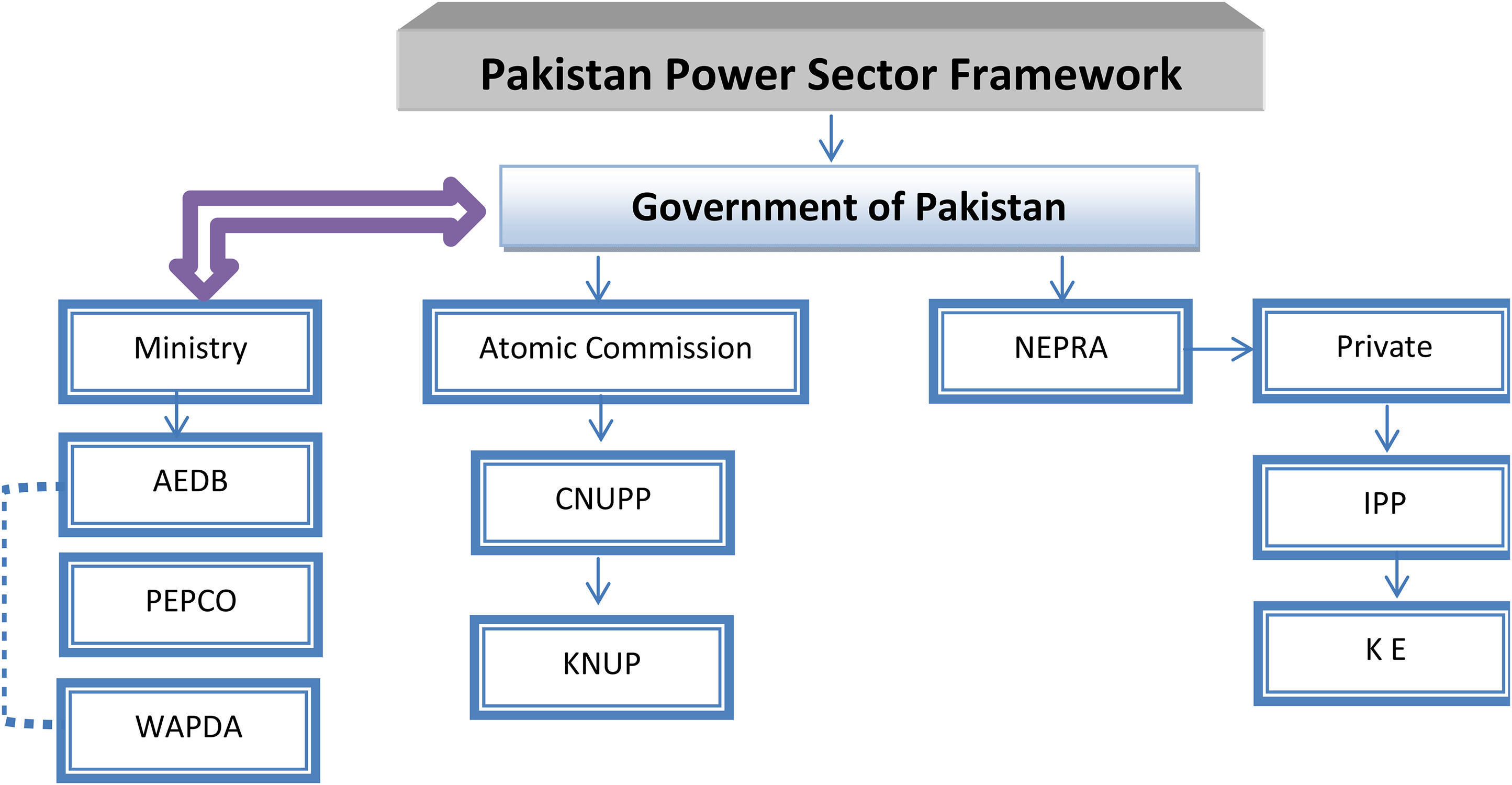
Power sector structuring in Pakistan.
National Electric Power Regulatory Authority (NEPRA) is working under the federal GOP and has been established in December 1997 for regulation of generation, transmission and distribution. It came into existence to introduce the transparent and judicious energy regulation. The working principle of NEPRA is to encompass wide variety of functions as given in the act including grant of licenses, specify the procedure of investment, enforce the performance, issue guidelines at different times, describing the power tariffs etc. NEPRA played significant role in creating a balance among the various stack holders including provinces having equal number of participation.
The GOP again decided to focus on lost role of alternate and renewable energy department. However, the alternate and renewable energy department has already been established in 2006 with the objective of realizing the cost effective and environment friendly generation of energy. The strategy was initially divided in three tiers including short term, midterm and long term policy. Now this time, the GOP made constitutional arrangement for safeguarding the renewable energy projects. For this purpose, the State Bank of Pakistan (SBP) initiated the green energy policy for financing the renewable energy projects in Pakistan. The sole objective of SBP plan was to provide affordable and accessible energy to the citizens of Pakistan. However, green energy policies have met with some shortfalls which can be easily found out from the set objectives by the alternate and renewable energy department. Currently; the federal government can devise the framework under the following heads which discussed as under:
Development and expansion of renewable energy policy 2006 and 2019: (Biased or Favor)
The renewable energy policy was initiated in 2006 headed by Alternate Energy Development Board (AEDB). This was a kick start of developing the renewable energy policy network in Pakistan. At initial stage, the priority was given to assessment of solar energy and wind energy resources and at later stages, the piority was gven to biogasse, biomass and waste to energy projects. While devising the renewable energy policy of 2006, the GOP gave high importance to international investors in establishing power projects of renewable energy (Ghafoor et al., 2016). The renewable energy policy of 2006 was expired in March, 2018 and new policy was adopted in 2019. The policy of Alternate and Renewable Energy (ARE) 2019 provided the basic guiding lines for further realization of renewable energy potential. The significant objectives of ARE policy were included clean enviornment by focusing on share of green energy, least cost on grid power production, transparent procurement, development of local technologies of ARE, and enabling the role of private investment. However, ARE policy is more or less having similar characterisitcs except focusing on enhance the role of green energy. Under new policy, the carbon development mechanism was adopted. The mechanism taken from the kyoto protocol that facilitates the reduction in emssions of green house gases. For achieving the the objective of reduction in green house gases, there were 18 projects registered for 1.3 million emissions reduction annually and 29 renewable energy projects under the process of registration to reduce 1.6 million emissions annually. In general, the GOP left no stone unturned for enhancing the role of renewable energy in energy mix of Pakistan. Since the inception of AEDB up to now, the little impact of renewable energy is observed in the energy mix.
Encouragement to cogeneration via sugar industry
Cogeneration, another important aspect of power generation, was initiated with the help of sugar plants using bagasse and coal as a fuel. The policy of cogeneration was presented in the name of National policy for cogeneration by sugar industry in the year 2008. The cogeneration set the detailed guidelines and comprehensive mechansim for encourging investors. Pakistan is 5th largest sugarcane producer in the world. The potential for energy can be realized from sugar industry. The upfront tariff was set by NEPRA under the full protection by GOP. The NEPRA provided the necessary arrangement and safeguards to sugar industry for producing energy that can be purchased by Disco's and NTDC under competitive rates.
Guiding framework
GOP presented well integrated framework for controlling and installing energy projects. The most promising was monitoring and supervising institution created known as National Electronic Power Regulatory Authority (NEPRA). NEPRA was created for regulatory affairs of energy including granting licenses, setting up standards and tariffs; preparing performance reports, specifying uniform procedures for DISCO'S, smooth functioning and promoting renewable energy sector in the country.
Energy policy framework under provincial set up
Pakistan is a federal form of country that provides the provincial autonomy to the provinces under well defined constititutional arrangement. However, the major portion of consititutional subjects are fall under the jurisdiction of federal government of Pakistan. The federal powers exercised by the federal government are including finance, foreign affairs, interior ministry, and energy ministry etc. Furthermore, the constitution of Pakistan under 18th amendment empowers the provincial government for adopting and making policies for energy sector. In this regard, the provincial governments established provincial energy departments and tried to exploit the potential energy resources in which they are rich.
Energy policies under Sindh
Under the constitutional domain, the Government of Sindh adopted the energy policy 2006 of central government and created the department named as Energy Department of Sindh. The provincial energy department will develop, generate, supply and distribute renewable, hydro and thermal energy. The provincial energy department is responsible for planning, policy formulation and conservation strategies. However, the financial and monetary incentives were taken same as from the central policies. A step ahead,the provincial Government of Sindh adopted the incentive policy for emphasizing and exploring the maximum benefits from renewable energy in 2015.
Energy policies under Baluchistan
Baluchistan is a largest province in size with a very small number of inhabitants per square kilometer. The Government of Baluchistan initiated the energy policy in 2007 with the aim of promoting the energy projects. However, the Baluchistan province followed by Sindh province put the maximum focus on the renewable energy projects most probably wind and solar projects. The provincial document adopted several rules and regulations from federal government. Geographically, the terrain of Baluchistan is much more complex compared to other provinces. The grid based network availability was a major drawback. To overcome the problem of installation of renewable projects and distribution network, the provincial government tried hard to get proper chunk of foreign investment. However, the province have not attracted the attention of private investors in energy projects in general and renewable energy sector in particular.
Energy policies in the Punjab
The Government of Punjab corresponding to energy policies followed the foot step of federal government. Under the energy policy, the Government of Punjab established the power development board associated with Private Partnership and Investment Board (PPIB) and central government board. The sole objective was to use indigenous energy resources including biomass, hydropower, coal and solar and wind for energy production effectively. For achieving the effective utilization of resources, Government of the Punjab focused on private-public partnerships. However, the more attention paid to the development of hydro power projects with in the province.
Energy policies in khyber pakhtunkhwa (KPK)
The Government of KPK also followed similar steps to those of other provinces for exploiting the local energy resources. However, KPK has high probability of installations of hydro power projects. Under the auspices, Government of KPK started to work on development of micro - hydro projects
Renewable energy environment
Pakistan can achieve energy from different sources of energy. The natural resources can be utilized for energy yield (Rafique and Rehman, 2017). Geographically, Pakistan consists of the flat land, deserts, tall mountains and glaciers which offers a large number of promising sites. The northern part is best for hydro power projects of different sizes (Sahir and Qureshi, 2008). Similarly, the flat and desert areas in the center get an ample sunshine and wind resource appropriate for installing the solar and wind power stations; respectively. The wind resource potential is identified in two provinces including Sindh and Baluchistan. Other than, Pakistan is agricultural country and had a well settled sugar cane industry that can be used for energy generation purpose.
Energy from water
The energy from water (Hydropower) is considered as low cost source of energy. Pakistan has witnessed this source of energy as low cost energy generation. In earlier period, Pakistan had experienced and installed some mega hydro power projects. Up to June 2015, the total installed capacity of hydro power was 7,120 MW. There are two significant objectives of hydro dams including using water for producing energy and then storing and using the same water for the agriculture during the shortage period. Pakistan is agricultural country whose major portion of population living in villages and their major source of income is agriculture.
The Water and Power Development Authority (WAPDA) owned 6,902 MW whereas 213 MW hydro power plant owned by International Power Producers (IPP'S). The private sector played an important role in investing in large scale hydropower project. The projects were included Suki Kinari Hydro power with capacity of 870 MW, Azad Pattan hydro project with capacity of 700 MW and Chakothi Hattian with capacity of 500 MW. Also, Pakistan's neighboring country China took keen interest in developing water projects in Pakistan. The Karot hydro power project is under construction by China given in Figure 7. The project was first Silk Road project being built on principle of Built - Own - Operate and Transfer (BOOT) for 30 years. The mentioned projects are showing the advance level and their tariffs are also settled by the NEPRA. These works are a small chunk of energy resources corresponding to technical assessed potential of 65 GW catering the different categories.
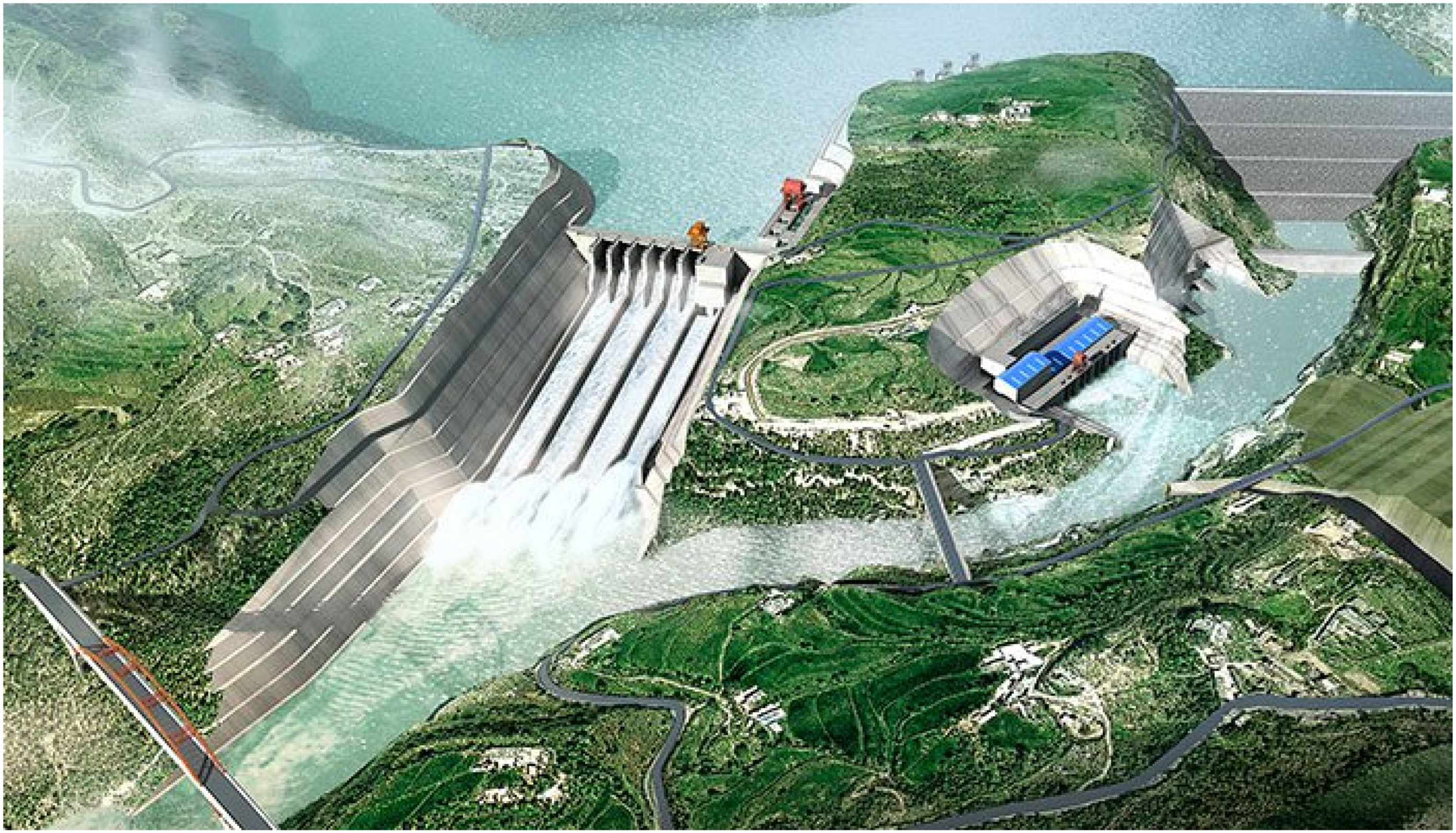
Karot hydropower project in Pakistan to be completed by Chinese firm in 2021.
The Khyber Pakhtunkhwa (KPK) and Gilgit - Baltistan (GB) of Pakistan have tremendous hydro potential of 45 GW. However, the work is in progress on some of the large hydro project in Gilgit - Baltistan. Owing to geographical remoteness and no connection with the national distribution network remains a major obstacle that is affecting the development of hydro projects in GB. The geographical structure of rivers most probably in Khyber Pakhtunkhwa and Punjab provides the best opportunity for development of hydropower. The Energy Development Board of KPK is focusing on the construction of small dams in order to produce energy approximately 272 MW. The policy directives have been taken to encourage the private sector to play a role in establishing 28 hydro projects with collective capacity of 122 MW which are at various stages. The Punjab Power Development Board (PPDB) was established in 2008 with the objective of working on small energy projects.
Solar energy
The global irradiance (GI) is a significant source of installation of solar photo voltaic (Stökler et al., 2016). The southern and southwestern parts have a greater irradiation levels than any other part of country (Harijan et al., 2015; Zafar et al., 2016). The highest recorded solar irradiance is observed in south-west Pakistan, whereas lowest to the north and northeastern parts. The Himalayan and Karakorum mountain ranges observed to be lowest Baluchistan falls in southwest parts have highest measured yearly global horizontal irradiance (GHI) i.e. 2,300 kWh/Sqm2. The measured estimates decrease gradually as one starts to move towards the northeast parts of the country. These parts have a good solar irradiation (Solangi et al., 2011). Figure 8 is showing the solar irradiance mapping of Pakistan is done by the World Bank.
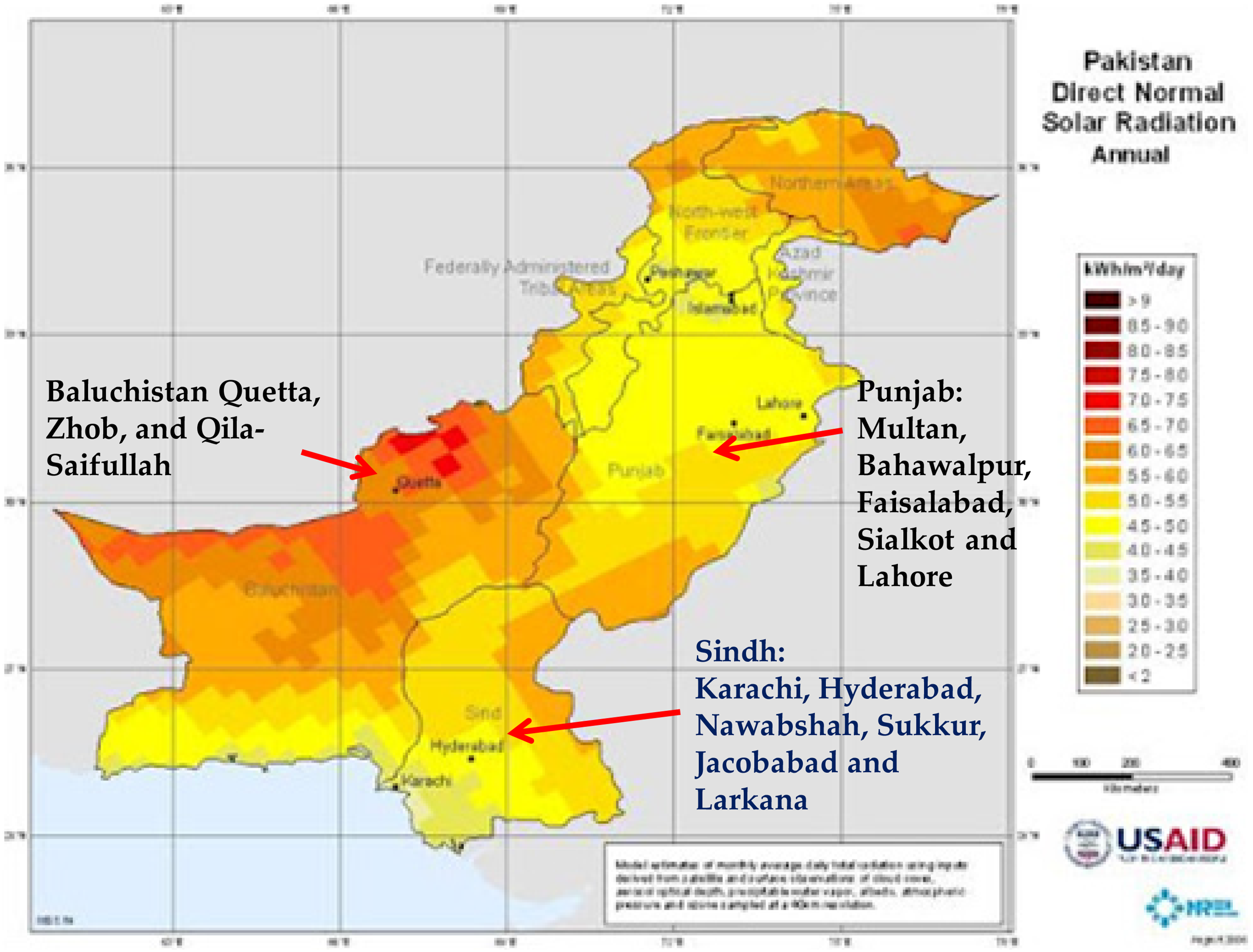
Solar irradiance mapping of Pakistan.
The Direct Normal Irradiance (DNI) is a used for solar PV cells. The values of solar PV are observed to be highest on dry land (Tahir and Asim, 2018). Generally, the measured estimates are showing high prevailing DNI throughout Pakistan other than the Himalayan region (Zafar et al., 2017). The estimated values found to be exceeding 2,700 kWh/m2/year in western Baluchistan. It has been assessed that more than 80% of area can achieve 2,000 kWh/m2/year. If we compare the assessed values to the values of sub Saharan (Sinai Peninsula) gives us the good results. Also, the computed DNI values of different cities of four provinces with the help of PV- Sol Software are given below. The computed DNI of different cities of Sindh province including Karachi, Hyderabad, Nawashah, Sukkur, Jacobabad and Larkana were found to be 1,834.5, 1,951.1, 1,992.4, 1,931.5, 1,934.7 and 1,932 kWh/m2/year; respectively. Similarly, the computed the DNI of different cities of the Punjab are including Multan, Bahawalpur, Faisalabad, Sialkot and Lahore were found to be 1,998.3, 1,941.3, 1,639.9, 1,671.1 and 1,640 kWh/m2/year respectively. Also, DNI of Baluchistan including Quetta, Zhob, and Qila-Saifullah found to be 2,039.6, 2,040.9 and 2,014.8 kWh/m2/year respectively. AEDB is approved the solar energy power plants in some of these regions are currently under different stages. The AEDB is pursuing 22 solar PV power projects having cumulative capacity of 890.80 MW. There are six solar power projects having capacity of 430 MW are operational since last five years given in the Appendix 1.
Wind energy
Wind energy is essential form of renewable energy. The wind mapping has been performed by number of international as well as local organization. The organizations performed the wind mapping were National Renewable Energy Laboratories (NREL), World Bank, and Pakistan Meteorological Department (PMD). Figure 9 is showing annual wind energy potential of Pakistan at 50 m above the ground level (AGL). The wind mapping carried out with the help of satellite based data as well as installed wind measurements masts around the country. The World Bank also performed the wind measurement studies around the Pakistan under the program named as Energy sector management program (ESMAP) that helps to point out the most significant locations. Also some researcher performed the studies on the viability of wind energy are given in (Bhutto et al., 2013; Hulio et al., 2017; Hulio and Jiang, 2018a, 2018b). The theoretical assessed wind energy potential of Pakistan is more than 300 GW.
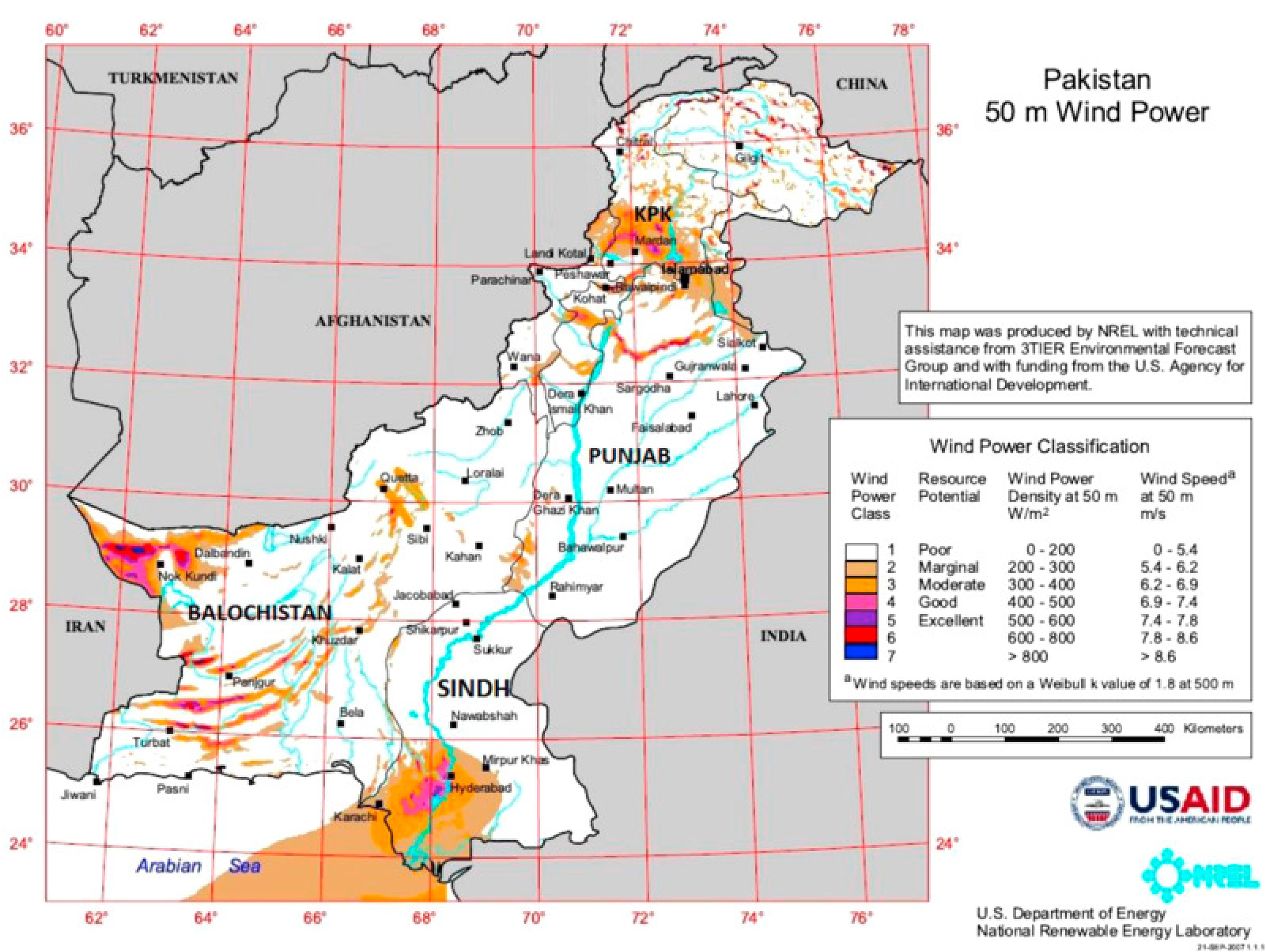
Wind energy potential assessment of Pakistan.
The most important among these is Gharo-Ketti Bandar wind corridor fall in southern part of Pakistan was accounts for 50 GW and prioritized by the GOP. The recent studies of wind resource and economic assessment of this region has been given in following literature (Hulio, 2020; Hulio et al., 2021a, 2021b; Hulio and Jiang, 2020). The wind resource and energy economic assessment of Gharo site has been carried out at 10, 30 and 50 m. The authors concluded that the site is suitable for isntalling the utility wind turbines (Hulio, 2021). In another wind resource assessmnet of Karachi Port Trust (KPT) has been carried at 10 and 30 m that showed site has potential for energy output (Hulio and Jiang, 2020). The wind resource and energy potential assessment of the Sujawal site was investigated to determine the potential of site at 20, 40, 60 and 80 m in (Hulio, 2020). To assess the wind resouce and energy potential of Sanghar site, the detailed study was carried out at three hieghts including 20, 40 and 60 m. The site witnessed the potential of energy generation at lowest cost (Hulio et al., 2021a). In another potential assessment of Quaidabad site has been carried out at 20, 40, 60 and 80 m neighboring to major industrial hub of Pakistan, Karachi. The potential assessment showed that the utility wind turbines can be used for energy generation (Hulio et al., 2021b). There are some more studies of wind resource assessment of Pakistan carried out by the different authors at different heights available in the literature.
Currently, the Gharo – Ketti Bandar wind corridor of Pakistan is hosting for 1,000 MW generation of wind energy. Some of these wind energy projects are being materialized (details are given in the Appendix 2) and some are at initial stages of tariff by NEPRA (https://nepra.org.pk/About.php). The wind energy projects are showing the promising results as indicated by AEDB. The government initiated the policy document to generate energy from wind as much as possible so as to minimize the dependance on expensive sources. In this context, the Government of Sindh is actively trying to exploit wind energy and issued some total of 23 Letter Of Intent (LOI) for wind energy projects. The total capacity of wind energy projects is 1,710 MW. Similar footsteps have been followed by Government of Punjab and showing eagerness to exploit wind energy potential.
Bioenergy
Bioenergy is an important form of energy (Bhutto et al., 2011). The bioenergy mapping has been prepared with the help of World Bank given as given in Figure 10. The bioenergy mapping of Pakistan is completed in the year 2016. The prepared biomass map consists of two parts: One is theoretical potential assessment of biomass energy considering the land classification based on satellite images and ground survey analysis. Whereas the second part is techno potential assessment based on survey that may consists of results showing the utilization patterns of yield (Naqvi et al., 2018). There are two important sources of biomass known as industrial and agriculture. The industrial biomass source is outcome of agro based industry including the husk from rice and maize. However, the agriculture biomass can be achieved from rice and wheat straw. By the end of December 2016, there were four sugar mills had installed bagasse energy producing units. The installed capacity of one bagasse unit is 45 MW. There is still some bagasse's power plants under construction having the capacity of 217 MW. Also, the letter of intent is given to number of companies during the last five years given in the Appendix 3.
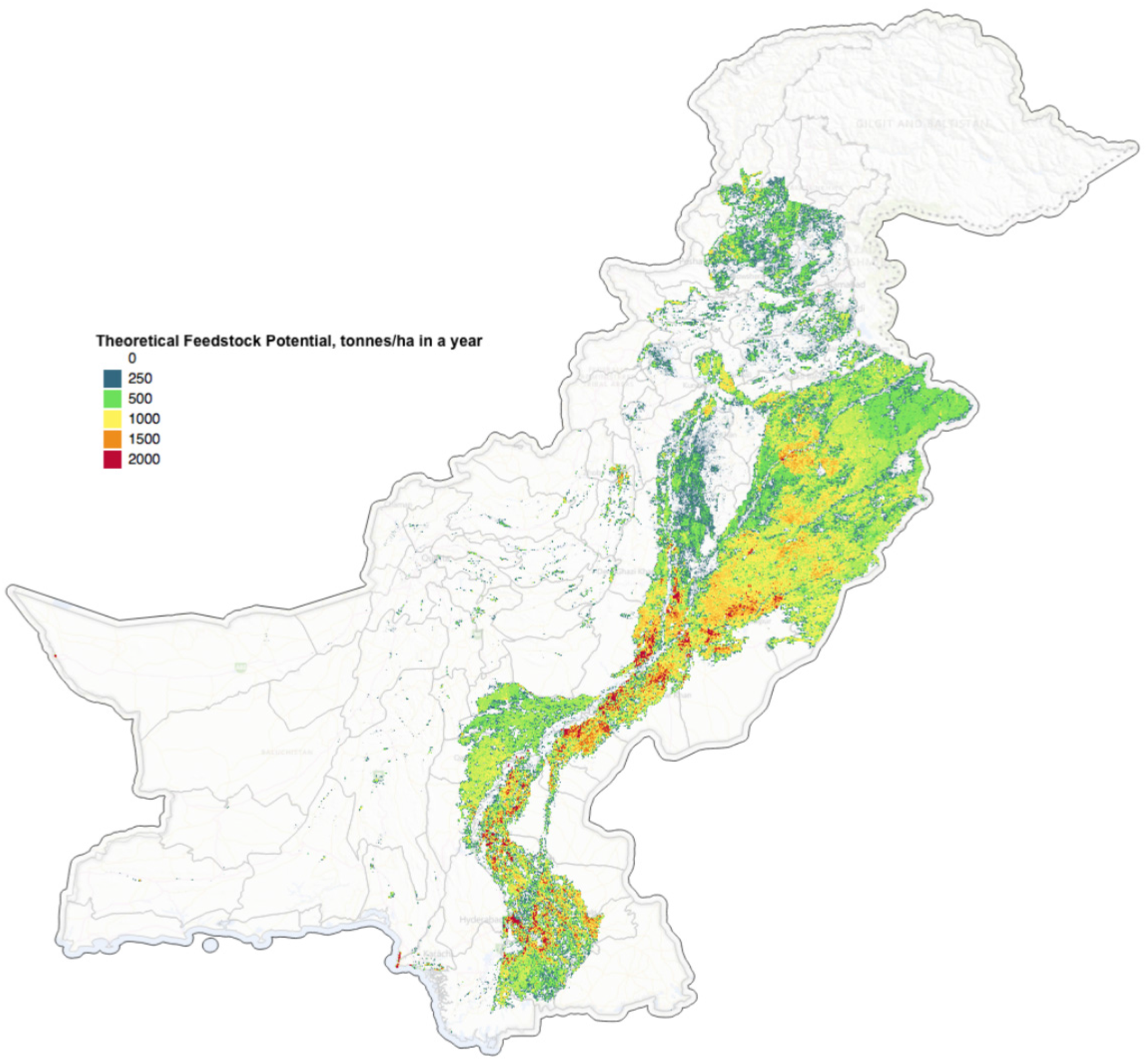
Bioenergy mapping of Pakistan by World Bank (https://thedocs.worldbank.org/en/doc/986571469213209777-0310042016/original/PakistanBiomassMappingFinalReportWBESMAPJuly2016.pdf).
Geothermal energy
The geothermal resource of energy is remains unexplored in Pakistan (Gondal et al., 2017). There is no comprehensive assessment plan for exploring the geothermal energy potential. However, there are some research publications showing the available potential of geothermal energy in all provinces of Pakistan (Mughal, 1998). Even though the Makran region is host for offshore mud volcanoes occurring in the shallow shelf area. The Makran region generally referred as Mud Active Zone (MAZ) of Pakistan and is best known for the Mud volcanoes. Figures 11 and 12(a) to (d) is showing the Makran region's mud volcanoes. Figure 12 is showing three different regions including Chandragup region; Kund Malir and Khandewari region. However, there are clear satellite images of mud volcanoes showing the fluxes and flows. According to the geological survey of Pakistan, the main areas of geothermal activity are presented in the Himalayan collision region, the Indus basin region and Chaghi region of Baluchistan. The research report suggested that geothermal energy is found near to high prone seismic areas. Thus the assessment of quantification results is showing the probability of exploitation of geothermal resources. Still, there is need to assess the potential of geothermal energy and locating appropriate areas. So the assessors need to assess further and assimilate their labors. Geothermal is generally considered as a valuable form of energy that can be utilized as an alternate option.
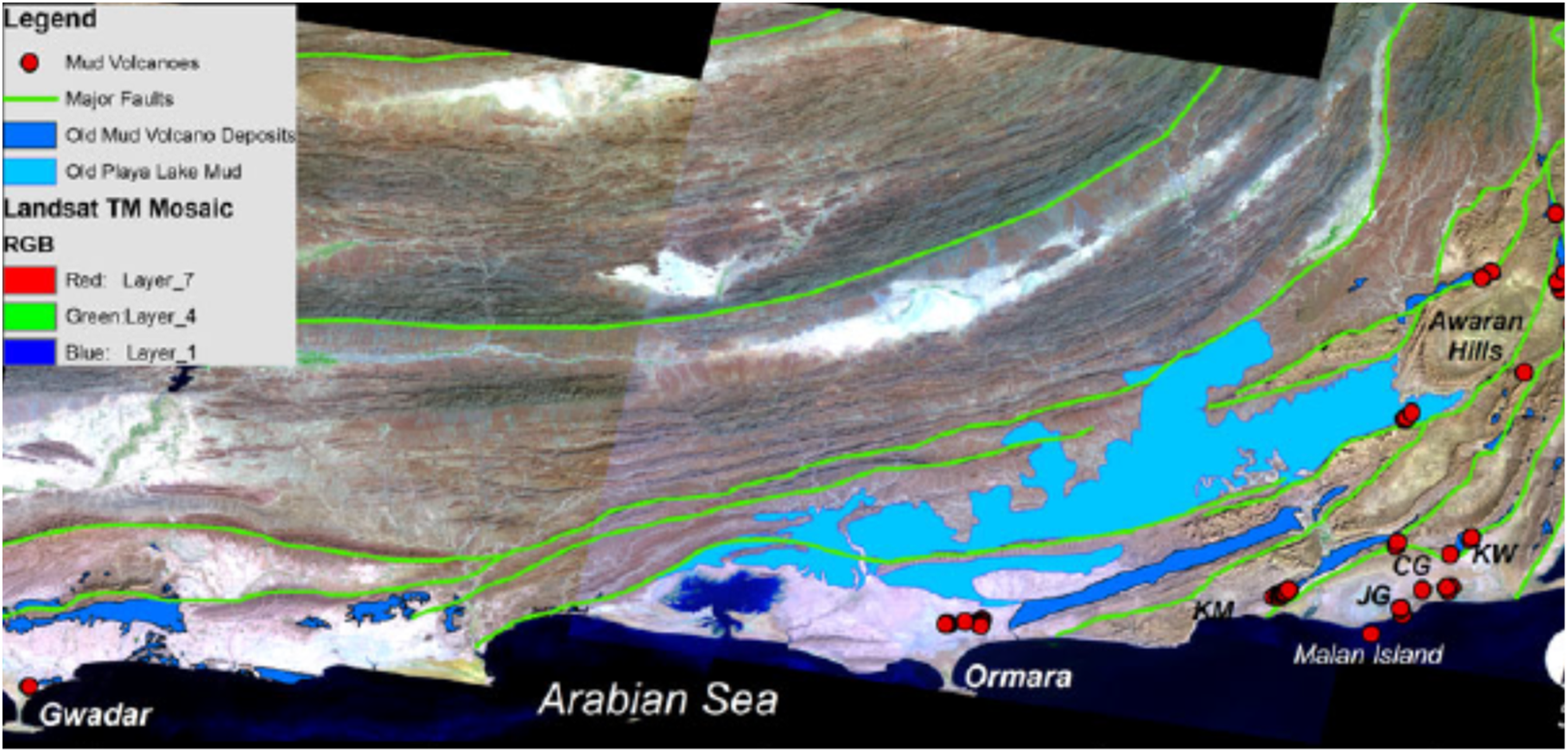
The image of Makran region taken with 5 TM (land satellite) with different active positions and deposits of old mud volcanoes (Kassi et al., 2014).
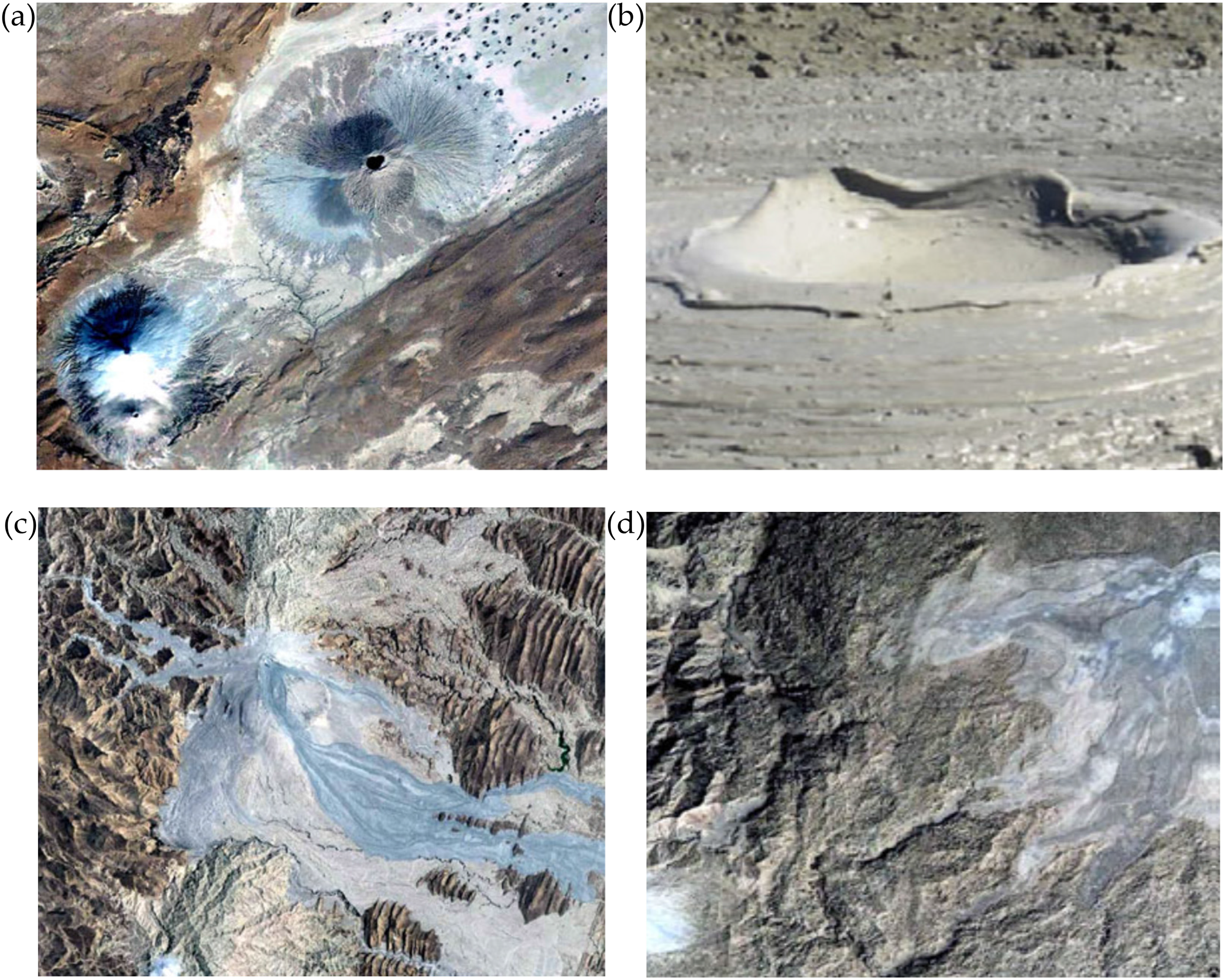
The images taken by satellite showing the mud volcanoes of different regions including chandragup, khandewari and Kund Malir regions: (a) satellite image of South Chandragup (blue texture is showing recent mud activity), (b) image of mud volcano of south Chandragup (showing extrusion and formation of bubbles due to gas and mud), (c) image of mud volcanoes of south khandewari (clear image is showingmud flows); & (d) mud volcano of Kund Malir (Kassi et al., 2014).
Structural policies and initiatives for developing renewable energy
For the realization of renewable energy, the GOP established the AEDB. The board developed renewable energy policies based on three tiers objectives. The first renewable energy policy was developed by the AEDB in 2006. But the prior expressed energy policy of 1994 permitted the private sector to participate in the development of the wind, solar and biomass along with the subsequent development of conventional projects. However, there were some restrictions on lack of economic viability (Yazdanie and Rutherford, 2010; https://www.google.com/search?q=alternate + energy + development + board + pakistan). The technological advancement in the renewable energy further reduced the operational cost of energy generation. The GOP tried to attract the foreign or private investors to invest in renewable energy formed investor friendly policies. The policy gave enormous financial benefits to investors.
The AEDB simplified the procedure for the realization of renewable energy schemes carried out by the private parties. The proponents adopt the procedure for setting up a renewable energy schemes based on the specified site for unsolicited scheme. The proposal is being evaluated by the AEDB and then Letter Of Intent (LOI) grants to conduct the technical paper. Later, to get AEDB and NEPRA approval is necessary for a startup of generation and tariff. The energy purchase agreement, implementation agreement and land lease are the most significant documents being issued by regulator. Figure 13 is showing the flow chart for renewable energy project proposal at different stages from initial to start of operation.
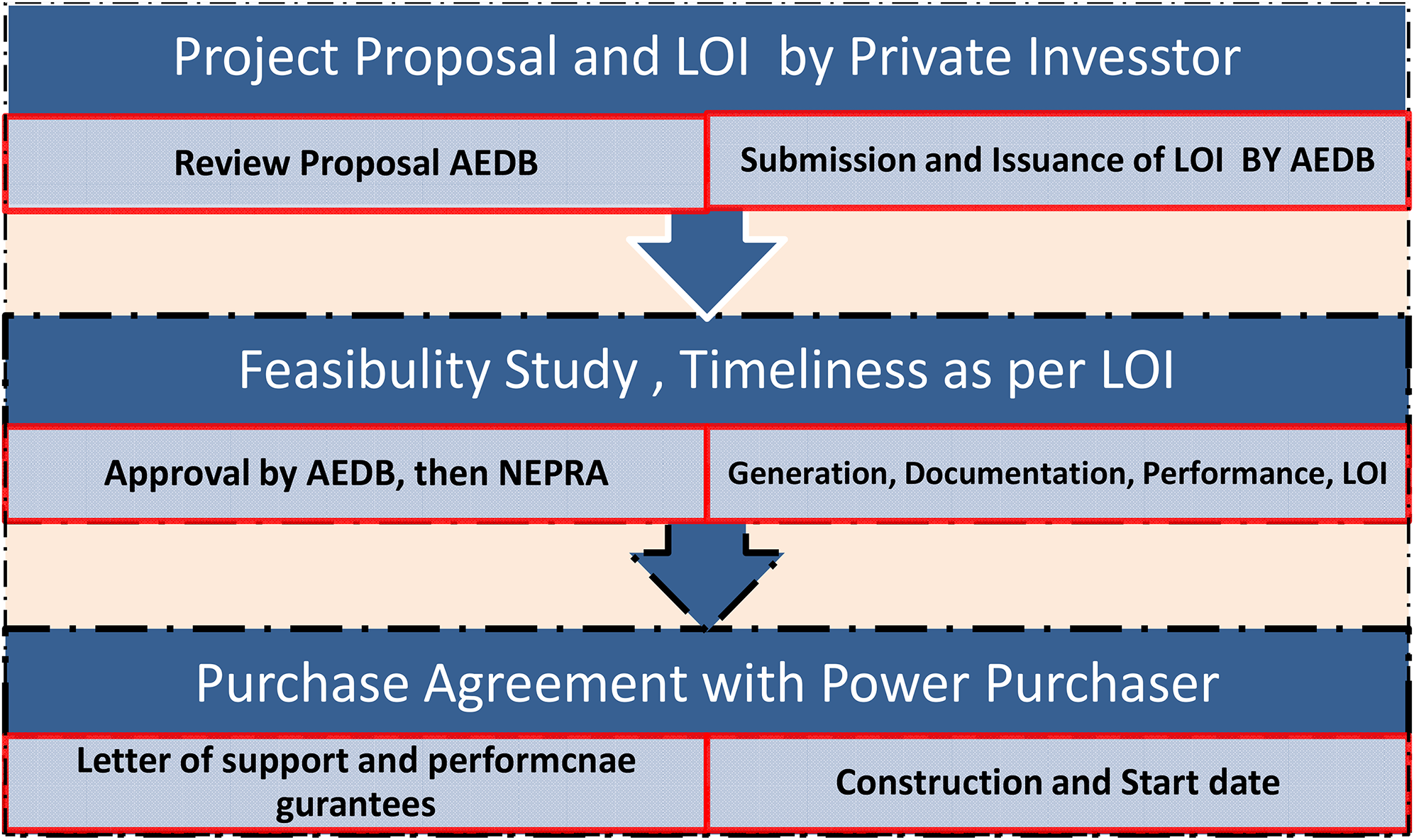
Flow chart for renewable energy describing different stages of project development (Initial proposal submission to final start of operation).
Constitutional arrangement for renewable energy
Pakistan is a federal state comprising of four provinces. The ministry of energy also comes under the jurisdiction of federal government. So it is sole responsibility of the GOP to take numerous initiatives corresponding to the renewable Energy. In this regard, the AEDB was established to facilitate the renewable energy development in Pakistan The board has used its own resources being allocated by the GOP. The most important steps taken by the AEDB are given below.
Land allocation
The AEDB systemized the renewable energy framework in Pakistan. It started with the deployment of wind power generation units owing to its commercial practicability. After finding the best location the AEDB decided to materialize the wind energy projects in different provinces. However, the provincial governments possess the right of sole ownership of land. The federal government and provincial governments can sign the lease document with owner of wind farm. The major issue of land allocation between provinces and federal government was amicably resolved to establish the renewable energy projects.
Renewable energy tariff
The tariff settlement is essential for materializing the renewable energy schemes. Generally, renewable energy is considered as less efficient compared to conventional form. But the advacncement in technology minimized the notion of less efficiency. In literature, there are number of auction schemes of different regions for renewable energy projects are present that provides multiple auction rules and guidelines to carryout the auctions (Del Río, 2017; Noothout and Winkel, 2016). Instead of this, AEDB took technical help from international agencies for settlement of tariffs. After careful evaluation of tariff, NEPRA announced the tariff for renewable projects under different terms of reference (TOR's) including origin of technology, operation and maintenance, etc. The tariff agreement is based on the standardized templates, net-metering; grid structuring corresponds to intermittent renewable energy source, etc. The standard patterns refers to purchase agreements that are used for making the process more transparent that can save time and cost to private investors.
Grid assessment and infrastructure for RE and integration code for RE projects
Grid infrastructure is essential while accommodating the grid connected solar and wind energy projects. In this regard, United States agency for International Development (USAID) assisted the NTDC on technical as well as financial projection of integrating the energy projects. For code integration, NEPRA has extended the traditional codes established for the thermal energy projects. The sole objective was to facilitate, improve and optimize the integration of wind and solar energy units for harnessing the maximum benefits of renewable energy generation. The infrastructure of renewable energy projects in Pakistan is a major source of concern. For Example: the potential regions of Gharo and Jhimpir identified as “Wind - Corridor” lacking the basic infrastructure facilities. There is inadequate transmission facilities for newly installed wind power projects. However, there is work in progress on development of infrastructure.
Pakistan renewable readiness assessment
The concept of renewable energy readiness assessment is significant instrument while measuring the conditions of renewable energy. It also identifies the challenges being present to renewable energy solutions and possible deployment of resources. In this regard, AEDB along with stakeholders assessed the natural resources of Pakistan. This led to significant benefit for different areas including distribution, transmission, regulators, and developers (AEDB, NEPRA and stakeholders). The important observations are discussed below.
Renewable energy infrastructure development
The renewable energy projects are generally installed at the remote areas, a distant from the traditional grid centers. For instance the recently developed Kettibandar – Gharo corridor is not near to available distribution network. The adequate power transmission network is challenging task for NTDC. For example: the Quaid-e-Azam solar park had been installed at remote region of Punjab. So this needs additional resources to develop distribution network. However, during the last decade, the cost of variable renewable technology and code integration has been decreased sharply.
State Bank of Pakistan and encouragement of renewable policy in 2009 & 2016
To encourage the renewable energy policy of Pakistan, the State Bank of Pakistan in 2009 started the subsidized scheme. Again in June 2016, the renewable energy scheme was revised for both investors and financing institutions. The financial limits ranged from 5 kW to 10 MW installed capacity in the initial policy where as in extended version of renewable energy policy 2016 the capacity increased up to 50 MW.
Setting Up attarctive guidelines for competitive auctioning / tendering
The government promulgated the basic competitive bidding guidelines for the energy yield and transmission schemes. In this regard, a bench mark tariff guidelines set during the year 2017. On the basis, the process of bidding was started. The provincial government directives are solely follow the instructions of federal ministry. The major decisions are being taken and approved by the GOP. However, the provincial governments are following the path of promoting renewable energy deployment.
Settlement of tariffs for renewable energy
The tariff settlement is essential for making the energy projects economical viable. The renewable energy guidelines of 2006 provides cost - plus – tariff setting mechanism that makes the document more convenient. In this regard, the wind energy projects tariff offered by NEPRA has been providing the best example of cost-cum tariffs. The settled levelized cost of energy of the wind power plants was in between Pak Rs 11.35 to 13.70/kWh. NEPRA followed a policy of shift mechanism that was adopted on the technology-based upfront tariffs. The upfront tariff was carried out differently corresponding to origin of technology and also varies with respect to validity periods of tariffs.
Prioritization energy policies for rural electrification
In Pakistan, the major portion population is living in the rural areas and more than 65% of population is associated with the agriculture. However, the federal regulation does not provide any effective policy mechanism for the implementation of rural electrification. So, the GOP must pay attention to develop and implement the rural electrification programs with the help of private sector. It is advisable to increase the role of private investment in electrification program. The GOP can take wise initiatives that have long term effect on the future energy scenario of Pakistan. To minimize the effect or rural electricification, the renewable energy can play vital role owing to its presence in abundant quantity. We can learn lessons from number of developing countries including Bangladesh, Kenya, India, Srilanka, etc adopted number of different modes and policies to electrify their rural population.
Challenges and recommendations
Integrated energy planning, development and implementation
Pakistan needs an integrated energy strategy. It helps decision makers in assessing the costs - benefit analysis of supply - demand cycle while considering the constraints including technological, economic and environmental. The constitutional arrangements between federal and provincial further draw attention for need of an integrated energy plan. After 18th constitutional amendment, the provinces got the right to develop energy departments. The energy planning should consist of public and private representatives and their contribution for investments in energy production, transmission, and distribution etc. In Pakistan, there is parliamentary form of government. If federal government and provincial governments are run by the different parties some times may cause a serious deadlocks on matters of national interest and so on. This leads to long delays, hurdles to carry the projects that can demotivate the foreign investors to invest a large amounts in energy projects. Similarly, the constitution provides the dual nature of subjects at federal and provincial level. To make legislation on such matters also creates a distrubance between federal and provincial governments.For Example: Energy department is a federal subject as well as provincial subject after 18th constitutional amendement.
The combined energy approach is termed as foundation for developing the maximum energy resource for power sector. The least cost energy planning develops a competitive energy fusion of sources to meet demand at cost effective mode. An integrated energy planning can be beneficial for development of energy-related infrastructure corresponding to energy generation forecasting and planning. This is a principal challenge faced by energy sector of Pakistan. This can call for distinctive chance to develop a well -harmonized, minimize the interdepartmental and interprovincial issues, and can laid foundation of cohesive plan on renewable energy.
Realization of achieving goals from renewable energy
The non-conventional energy policy is important to take advantage of its enormous presence in the country. It can be achieved by pointing out a well-structured, accurate and real time energy policy options. It would offer an indispensable instinct for putting renewables into lime light for energy segment. To date, the number of goals has not been realized owing to their non-binding nature and settled implementation order by government. Similarly, the financial limitation of country is another significant issue that clipped the wings of government to operate independently.
The anticipated level of non-conventional form of energy deployment can be achieved by implementing the cohesive energy planning. The cohesive energy planning can be helpful for achieving the goals. However, the goals must be well written in the policy instruments as provided by the law of government. For instance: the well written and explained tariff settlement between the purchaser and producer, energy purchase agreements etc.
Renewable energy relationship with high cost and advance technology
Renewable energy is criticized for their efficiency and cost/ kWh when it is compared to conventional form of energy. The current advancement of renewable technologies and rising prices of basic inputs used for energy generation changed the perception. The advancement in technology resolved the issue of energy efficiency that ultimately lead to reduction in cost/kWh makes it more competitive in the energy market.
The costs associated with doing business of RE in Pakistan showing the declining trend that makes it more feasible option. IT can be viewed from the renewable energy tariffs settled in Pakistan. The settled tariff between producer and regulator for wind energy plants was US$ (cents) 0.147/ kWh. To date the set benchmark tariff is US$(cents) 0.67/kWh. However, the costs of fossil fuel based energy generation remain volatile. Despite these factors, GOP showed willingness towards promoting fossil fuels based energy modes that appears to be greater than for renewables.
The integration of renewable energy is significant for energy blend as well as for the customer's basket price in short and long term. The ARE policy 2006 clearly explained the apprehensions of GOP towards renewables. Also puts responsibility on NTDC to ensure network availability for renewables energy.
Drawing a line between suitable sites and economical ordering of technology
The AEDB highlighted the potential sites for installation of renewable energy projects. The potential locations has been assessed by different institutions including National renewable energy laboratories, World Bank under ESMAP program, Meterological department of Pakistan, etc and some academic researchers working in the respective fields. For instance: the wind corridor of Gharo –Ketti Bandar showed the highest flow of wind that would lead to more energy at the lowest cost/kWh. There are number of research studies proved that the maximum windy areas lead to cheapest generation of energy. The generation cost/kWh for renewable energy projects is matter of concern and made available in written documents of energy. This will increase the confidence of purchasers, to whom more energy generation at low cost/kWh and producer to whom more energy generation corresponding to more chance of profit earning. The renewable energy regulator introduced new mechanism based on origin of energy technology and nature. The competitive bidding and tariff setting was first time introduced by NEPRA for solar and wind energy based on set benchmark with aim of minimizing the cost/kWh. For example: the set benchmark tariff at US$ 0.675/kWh for wind energy makes it cheaper than thermal energy generation. The GOP should make sure the exploitation of available enormous resources. Such steps can lead to utilizing the available solar and wind resource potential. It can create the jobs and enhance economic mobility.
Limitations of grid and transmission infrastructure
The country is taking new path of renewable energy while establishing the renewable energy authority AEDB. The AEDB along NREL and PMD assessed the wind and solar resources. The most notable sites explored were Bahawalpur of southern region of Punjab and Gharo-Ketti Bandar in Sindh. The identified areas were remote areas needed development of an anticipatory and extensive infrastructure. However, GOP has limited financial resources to face the grave challenge of energy scarcity. Whereas the scarcity of development funding might not fulfill the basic need of large scale investment that can satisfy the infrastructure need. The transmission and network arrangement in Pakistan is weak owing to number of reasons including political instability, lack of financial funding, and lack of interest of private sector. Even though, the energy policy has not been up to mark as it has not generated the required amount of investment in installing energy project and grid development.
Encouraging the role of private sector in infrastructure development
The role of private investors in developing the infrastructure is still underrated. However, the Renewable energy policies emphasized the participation of private sector in developing the grid and transmission networking. The renewable energy policy of 2015 has given NTDC the sole right to emphasize on a grid and network distribution projects. In this regard, NEPRA developed the first transmission line project with a concept of transmission tariff. This was the first transmission project being developed by private sector in Pakistan under the operational principle of Build, Own, Operate and Transfer modality (BOOT). This policy has set a precedent for role of private sector in establishing the grid and transmission lines sector. It will minimize the government's obligation to use government capitals and permit network advancement, assistances and changes in codes and construction of grids and new stations.
Preparation of comprehensive distributed power generation plan
Renewable energy policy explained the detailed description of net-metering rules that encompasses an occasion to exploit locally accessible and physically dispersed solar energy resources. The distribution network, technical and financial impacts are a central part of energy planning of Pakistan. However, the nature of distributed energy production differs significantly from the conventional energy production. The distribution network is showing the apprehensions about commercial viability, which is not measurable at the current stage. However, the apprehensions cannot be ruled out. Thus, the energy planning is comprised of a laborious analysis of disseminated network of energy output potential and their effects on the economics of energy market. So, it is significant to ensure the reasonable circulation of expected surpluses. The second important apprehension is technical tests and lack of experience of energy distribution output. These are binding apprehensions which are being addressed by building capacity. The GOP should help to carry out such initiatives. But after the mass decentralization of power system in Pakistan, it is now sole responsibility of DISCO's to assignappropriate resources to develop their local capacities.
Developing local participation for promoting mini grid
The rural areas consist of 65% population of Pakistan. Major portion of the population belonged to agriculture profession. For electrification of rural areas of Pakistan, the integrated energy planning is significant that will resolve the technical, financial and energy policy barrier. It also needs the coordinated effort to promote grid and enhance the involvement of huge population. So this requires the very septic energy policies and regulations framework with the basic objective of promoting the concept of mini grids and stand - alone hybrid systems. The concept of mini grids is helpful for rural population living away from the access to national distribution network. The mini grids are widely accepted that provides much better operational flexibility and low cost electricity compared to fossil-fuel power plants (Franz et al., 2014). There is another way for promoting the mini grids is inviting the local and foreign investors in energy sector of Pakistan. For achieving this, the GOP can play a vital role. The government can formulate the bendable rules to facilitate the investors from private sectors that address the key concerns including legal and licensing provisions, tariffs and cost, finance facilitations, technological and service considerations. The renewable strategy of Pakistan is also promotes the installation of the mini grids, but these policies needs some modifications to attract the local and international investors. There are so many examples available for Pakistan including India, Tanzania, Kenya, Nepal etc. These countries have developed the mechanism of rules and procedures, incentives and risk related to mini grids. These experiences helpus in drafting the policy manuals which contains the several significant factors including structure, size, energy resource and their availability, finances, tariffs and affordability.
Discussion
The renewable energy assessment is carried out by the different agencies including local and international agencies. In general, the renewable resource assessment showed that Pakistan has enormous availability of renewable resource. On the basis of resource assessment, the energy policy makers have long recognized the need of development and benefits of renewable energy in Pakistan. The following benefits can be achieved from development of renewable energy including energy security, minimum dependance and diversity of supplies, minimizing the circular debit and balance of payments, social cohesion in the form of deployment in remote areas, job creation, flursihing the engineering industry, and image building of country as a socially aware and responsible state. In above, the significant sites are highlighted in geographic maps. The locations and their potential in different segment of renewable energy are pointed out either in the form of maps or in form of calculations. If the appropriate planning is carried out, these potential locations will be fruitful for nurturing the clean energy and helpful for empowering the locals. The AEDB came with three fold planning including short, medium and long term planning of renewable energy. The AEDB under the three fold planning not yet achieved the desired results as set out in their documents. However, the overall assessment showed that still there is long way to materialize the energy projects. Another pitfall fall of AEDB is long way to decide the cases of energy purchase agreements with the GOP. In practical, there are number of energy projects materialized but their tariff settlement is not yet materialized. This can create a distrust between the government and concerned party. In return, most of the private investors showing unwillingness to invest in Pakistan.
The energy policies time and again proved to be incompetent corresponding to achievement of set objectives. For example: the GOP decided to minimize the energy short falls but same problem still exist Interestingly, there is no consistent energy planning found in the Pakistan. With the change of political situation of Pakistan, the political party come into power utilized the policies in their own way or shifting of energy policies without considering the pros and cons of project. From social point of view, there are some reservations on renewable energy projects especially on hydro power projects. The hydro power projects were came under criticism by different sections of society as well as by political parties in Pakistan. The most criticized and controversial project was the Kalabagh Dam project which caused a rift among the provinces and federal government. Even though the provinces passed a legislation on the aginst the construction of Kalabagh dam. However, solar and wind power projects have not faced any stiff social resistance from the masses compared to hydro power projects. Infact, the solar energy projects were accepted by the local population as a cost effective source of energy. The increased sales of solar panels is good example of acceptance of solar energy in society. The GOP is also pursuing the investors friendly policy to install more solar energy power plants. Similarly, the Punjab Government started solar energy policies under the name of Roshan Pakistan focused on solarization of government schools, offices and basic health units in reomte villages.
After the assessment of renewable energy sectors, it can be concluded that the Pakistan renewable energy sector is facing number of challenges. Each challenges has direct impact upon the energy sector of Pakistan, However, the previous energy policies focused on the role of private investor. Some other major challenges are integrated energy planning, realization of achieving goals by AEDB, drawing a clear line between the most suitable location, limitations of gird and transmission network, role of private investment in the infrastructure development. The given recommendations are focusing on the highlighted issues in terms of policy making. However, another drawback of power sector of Pakistan is presence of multiple institutional set up. The projects are being finalized by the AEDB whereas the tariff is being decided by the NEPRA. Further more, the harmonization of institutional framework is signiifcant for ARE development. For strengthening the harmonization process, the key stakeholders will take into account including federal government, provincial governments, energy department of federal and provinces, AEDB, NEPRA, State Bank of Pakistan, SME associations,and NGO's or rural representatives.
Conclusion
This research paper presents the insight of renewable energy presence and power policies assessment of Pakistan. The potential assessment is showing that there is enormous availability of renewable energy resources including hydro, wind, solar, bioenergy and geothermal but owing to non availability of sufficient financial resources and traditional mind restricted the rapid growth of renewable energy in Pakistan. The renewable energy can play a significant role to create balance between conventional and non conventional form of energy; and enhance the energy security, diversity in supplies, miniminze the circular debt and enhance the role of local engineering industry of country. This research paper point out the importance of energy mix that can help policy makers to rethink about energy mix. However, the potential energy assessment showed that there are some loopholes in the system and highlighted the role of private investors in all energy policies that can uplift the growth of renewable energies. There are some serious challenges to installation of renewable energy systems in Pakistan as highlighted above. This research paper presented significant recommendations, if followed in the true spirit can lead to generation of energy at the lowest cost and minimize the problem of load shedding of electricity in the Pakistan. The successful development of renewable energy in Pakistan dependent on the presented recommendation including integrated energy planning at federal and provincial level, realization of goals of renewable energy, adopting the more advance technology, giving priority to suitable sites having enormous potential first, developing grid and transmission infrastructure, scaling up the role of private investment, and promoting the role of local participation.
Footnotes
Author contributions
For this research articles several authors performed different works including conceptualization and methodology is done by Zahid Hussain Hulio whereas Ghulam Sarwar Chandio specified the literature portion and thoroughly checked by Wei Jiang.
Declaration of conflicting interests
The author(s) declared no potential conflicts of interest with respect to the research, authorship, and/or publication of this article.
Funding
The author(s) received no financial support for the research, authorship and/or publication of this article.
