




Abstract
Dust removal by ventilation is a commonly used dust control strategy. This study analyses the characteristics of airflow transport and dust pollution on a fully mechanised top-coal caving face at different inlet wind velocities by using a numerical simulation experiment, and the best wind velocity for dust suppression is obtained. When the inlet wind velocity fluctuates in the range of 0.5 to 3.0 m/s, the overall dust mass concentration on the working face initially increases and then remains stable, but in the range of 2.5 to 3.0 m/s, the changes in the overall dust mass concentration and dust mass concentration of the respiratory zone on the working face are not significant. The dust pollution in the respiratory zone produced by the hydraulic support lowering pillar and moving frame on the working face is quantitatively analysed at different inlet wind velocities of 2.5 to 3.0 m/s to determine the optimum wind velocity for dust suppression on the working face. The optimum wind speed for dust suppression is 2.6 m/s. This study lays a foundation for the ventilation design and dust control in the early stage of a mine and for the establishment of a clean and green production mine.
Keywords
Introduction
As the leading energy source in China, coal is very abundant, accounting for 96% of the primary energy resources (Elliott et al., 2017; Peng et al., 2019; Yuan, 2016). According to statistics, coal accounted for 70% and more than 60% of China’s energy production and consumption before 2017, but the figures decreased to 69.3% and 57.7% in 2019, respectively. In addition, 3.75 billion tonnes of coal in 5268 coal mines of China provide 72% of the energy in the electricity industry, 86% in the steel industry, 79% in the building materials industry and 50% in the chemical raw materials industry in China. It provides a strong support for the production and construction in China and for the development of the national economy (Wang et al., 2018a; Zhang et al., 2018a, 2018b). COVID-19 in 2020 has brought a great impact on the global economy and production. Under the influence of this unprecedented epidemic situation, the trade between countries worldwide is blocked, but the demand for coal still increases sharply. With the global energy structure and China’s resource endowment and realistic social-economic demand, coal will still account for a large proportion of the world energy structure for a long time in the future and will still be the main energy in China (Fan and Xia, 2012; Wang et al., 2018d).
At present, problems on coal mine dust and occupational health and safety have become increasingly prominent. The numbers of new, cumulative and death cases of pneumoconiosis predominated occupational diseases rank first in the world. By the end of 2018, 0.975 million cases of occupational diseases have been reported in China, of which 0.873 million are occupational pneumoconiosis, accounting for ∼90% of reported occupational cases, and most patients are coal mine employees (Wang et al., 2015, 2018c; Yu et al., 2017). In recent years, with the improvement of China’s coal mining mechanisation and the increasing demand for coal energy, total coal production has increased, and new mining techniques and processes have emerged, such as large mining height coal mining technology, continuous mining technology and quick tunnelling (Cheng et al., 2020; Du et al., 2020). However, coal dust pollution increases rapidly. As an example, the mass concentration of total dust and respiratory dust on a fully mechanised coal face can reach 4000 and 1100 mg/m3, respectively, before taking dust prevention measures (Sun et al., 2018; Yuan, 2020). At present, the dust control idea commonly used in coal mines is first inject, second spout, third control and fourth extract. Although the underground working environment is improved to a certain extent, the mass concentration of dust is still considerably higher than the relevant national regulations (Cheng et al., 2020; Li et al., 2019a).
Recent studies on the wind flow in coal mines and the distribution law of dust transport serve as the reference for the selection of dust prevention measures and the design of dust prevention equipment on the working face through analysing the escape law of wind flow and dust on the working face and their relationship. Zhai et al. (2020) studied the multi-nozzle injector duster on hydraulic support by combining numerical simulation with a field test When the water supply pressure is 12 MPa, the negative pressure formed by the flow field of the multi-nozzle injector duster is the lowest and the suction speed is the largest, which is conducive to dust removal. Finally, the field test of this device on a fully mechanised coal face shows that the removal rates of total coal dust and inhalable coal dust are 89.5% and 91.0%, respectively. In addition, a good application result is obtained. Zhou et al. (2020) analysed and calculated wind flow-dust under the duster on hydraulic support on the comprehensive mining working face by using numerical simulation and designed a negative-pressure spraying duster for governing hydraulic support dust on the comprehensive mining working face. Underground verification shows that it has an excellent dust reduction effect. Mo et al. (2020) innovatively designed an airborne dust collector on the fully mechanised coal face with large mining height and analysed the changing law of wind flow-dust before and after the installation of the airborne dust collector on the fully mechanised coal face through numerical simulation. After structural optimisation in the laboratory, it was applied in the field. Nie Wen et al. (Xiu et al., 2019; Xiu et al., 2020) analysed the distribution law of wind flow-dust on the fully mechanised coal face under complex dust resources by using CFD software and proposed effective measures for dust control on the working face based on the simulation results. Wang et al. (2019) proposed the design of a novel foam generator and investigated numerically and experimentally the influence of three key factors, such as the throat–nozzle distance, mixing throat length and contraction angle of the suction chamber, on performance. They obtained the parameters that yielded the optimum performance. This will provide theoretical guidance for studying the geometric parameters of the foam generator. Chen et al. (2018) studied the diffusion and pollution law of dust from multiple sources on the working face with 7 m mining height, performed the numerical simulation of dust concentration distribution in the respiratory area of the sidewalk by using CFD-Fluent and designed a novel dust removal system. Geng et al. (2019) studied dust movement rules in the working area at the fully mechanised face by numerical simulation for cases with and without an air curtain and the conventional hybrid ventilation system (FSNE). The controlling effect of the air curtain system on dust at the fully mechanised face was numerically proven and experimentally validated. To understand the impacts of the axial-to-radial airflow quantity ratio and suction distance on air curtain dust control in a fully mechanised coal face, Wang et al. (2018b) used CFD software to simulate the airflow migration and dust diffusion under different parameters by establishing a scaled-down model and determined the optimum parameter values.
These studies indicate that the wind flow on the working face is the main reason for dust emission and pollution. Reasonable control of wind velocity on the working face can greatly improve the current situation of dust pollution. Dust removal by ventilation is the simplest and most effective dust control strategy. On the basis of the above-mentioned research methods, taking the 122109 fully mechanised top-coal caving face of the Caojiatan coal mine in Northern Shaanxi as the research background, a highly similar three-dimensional (3D) simulation model is established to analyse the law of wind flow diffusion and dust pollution coupled by multidust sources at different inlet wind velocities by using Fluent simulation software. The study on the classification of wind flow reveals high dust pollution in the respiratory area at different inlet wind velocities, determines the study interval of wind velocity refining and identifies the optimum dust suppression wind velocity on this working face. This research provides a reference for the early stage of a mine on the fully mechanised top-coal caving face and the design of dust-removing measures. On the premise of establishing a safe, green and healthy mining environment, it can maximise to save energy.
Wind flow-dust mathematical model
In this paper, it is assumed that the air in a fully mechanised coal mining face is an incompressible fluid, and the airflow motion belongs to a continuous medium, which satisfies the law of conservation of energy and Newton's second law of motion. For this assumption, the standard
The continuity equation can be represented as (Ni et al., 2020; Xu et al., 2019):




The discrete phase model is used to calculate the motion trajectory of discrete phase particles by solving the differential equation of interaction among particles in the Lagrange coordinate system (Geng et al., 2009; Zhong et al., 2006):

The resistance force on dust particles

Establishment of numerical simulation scheme
Model building
The strike long wall retreating mining method is used in Caojiatan 122109 working face, and the fully mechanised top-coal caving mining technology is adopted. The full caving method is used to manage the top. The average thickness of coal on the working face is 11.8 m, the designed mining height is 5.8 m, the caving coal height is 6 m, and the strike length is 260 m. On the basis of one knife and one caving, the caving coal pace is determined to be 0.865 m. A total of 130 hydraulic supports can be found on this fully mechanised top-coal caving face, which includes 119 ZFY21000/34/63D basic supports, 1 ZFYG21000/34/63D(A) head and 1 ZFYG21000/34/63D(B) tail of intermediate transition support, 3 ZFG22000/30/50D(A) heads and 4 ZFG22000/30/50D(B) tails of end transition support, and 2 ZYT21000/28/50D heads of end hydraulic support. The 3D model of fully mechanised top-coal caving face established by using Solidworks software based on the actual situation of the working face is shown in Figure 1. The dust source is mainly arranged in the front and rear cylinders of the shearer and the moving frame of hydraulic support.
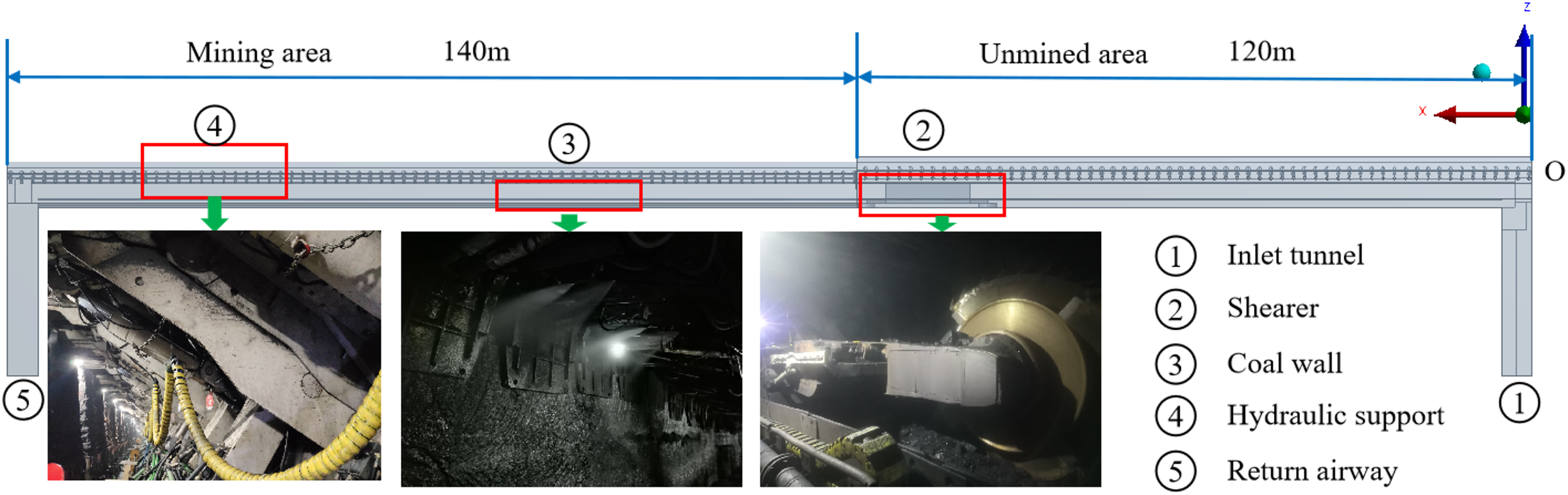
Three-dimensional (3D) model of 122109 working face.
Mesh generation and independence verification
The grid independence verification of the model is performed by selecting three grid partition methods to ensure the reliability of the numerical simulation result and the quality of the high-precision grid. With ICEM-CFD software, the grid partition is conducted by setting grid parameters A, B and C. Parameters A, B and C have 7,693,399, 8,500,966 and 10,176,961 grids, respectively. The distribution interval of the grid number is shown in Figure 2.
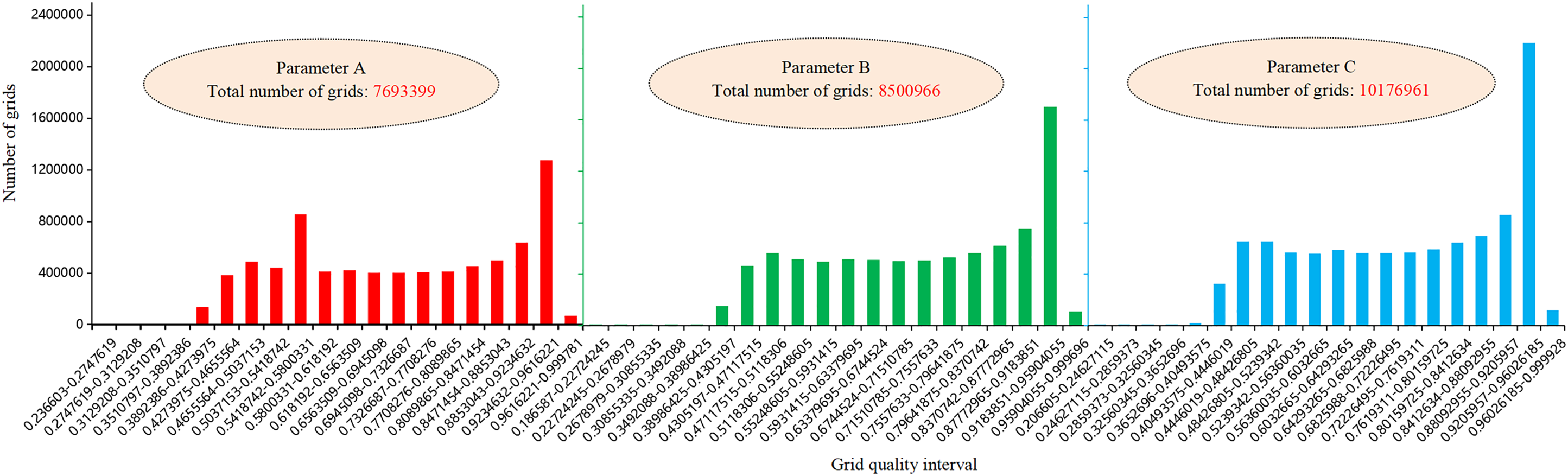
Grid partition.
Through the calculation of wind speed with three different grid parameter models, it is found that the wind speed calculation results of the three different grid parameter models are basically consistent, with no obvious difference, and the results are shown in Figure 3. Therefore, it can be considered that the grid is independent.
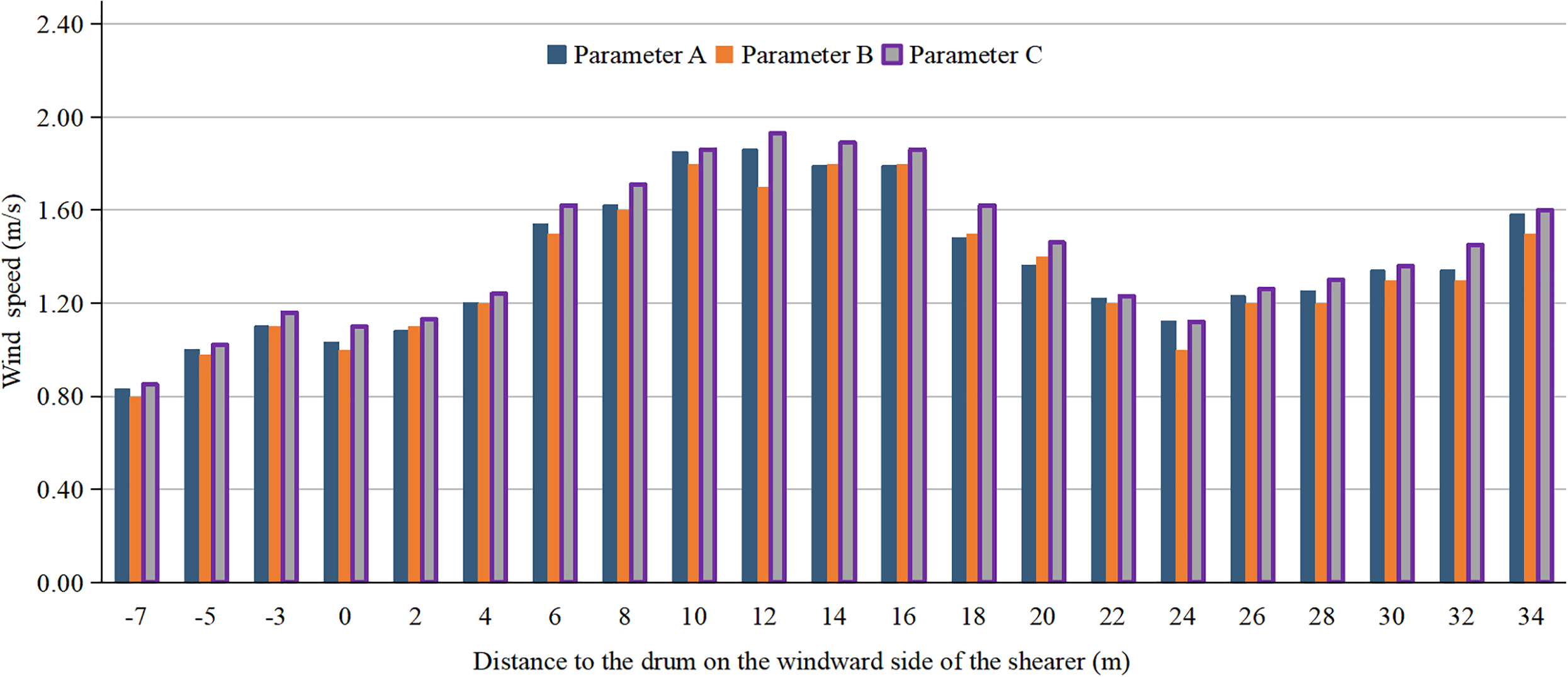
Grid independence verification results.
Finally, by comparing the number of grids corresponding to three different grid division methods and the dispersion degree of grid quality interval (Edwards et al., 2017; Grönman et al., 2018; Nie et al., 2018), combined with the computing power of the simulation workstation, the grid parameter C is more suitable for the numerical simulation of airflow and dust migration distribution law in Caojiatan 122109 fully mechanised top-coal caving face. This grid is adopted to conduct the numerical simulation of wind velocity distribution. The results of numerical simulation are then compared with the measured results of wind velocity in the height of the respiratory area (Y = 2.85 m) in the pedestrian side in the underground support, as shown in Figure 4. The figure shows that the numerical simulation result is roughly the same as the measured wind velocity underground, and the changing law is basically consistent. The numerical simulation result is slightly higher than the measured result underground, but the error is controlled below 16%. In modelling, some complex equipment is simplified properly, which causes a high simulation value, but the simulation result is still highly consistent with the measured value. Therefore, the grid partition and parameter selection are reasonable and feasible, which can be used for further research in later paragraphs.
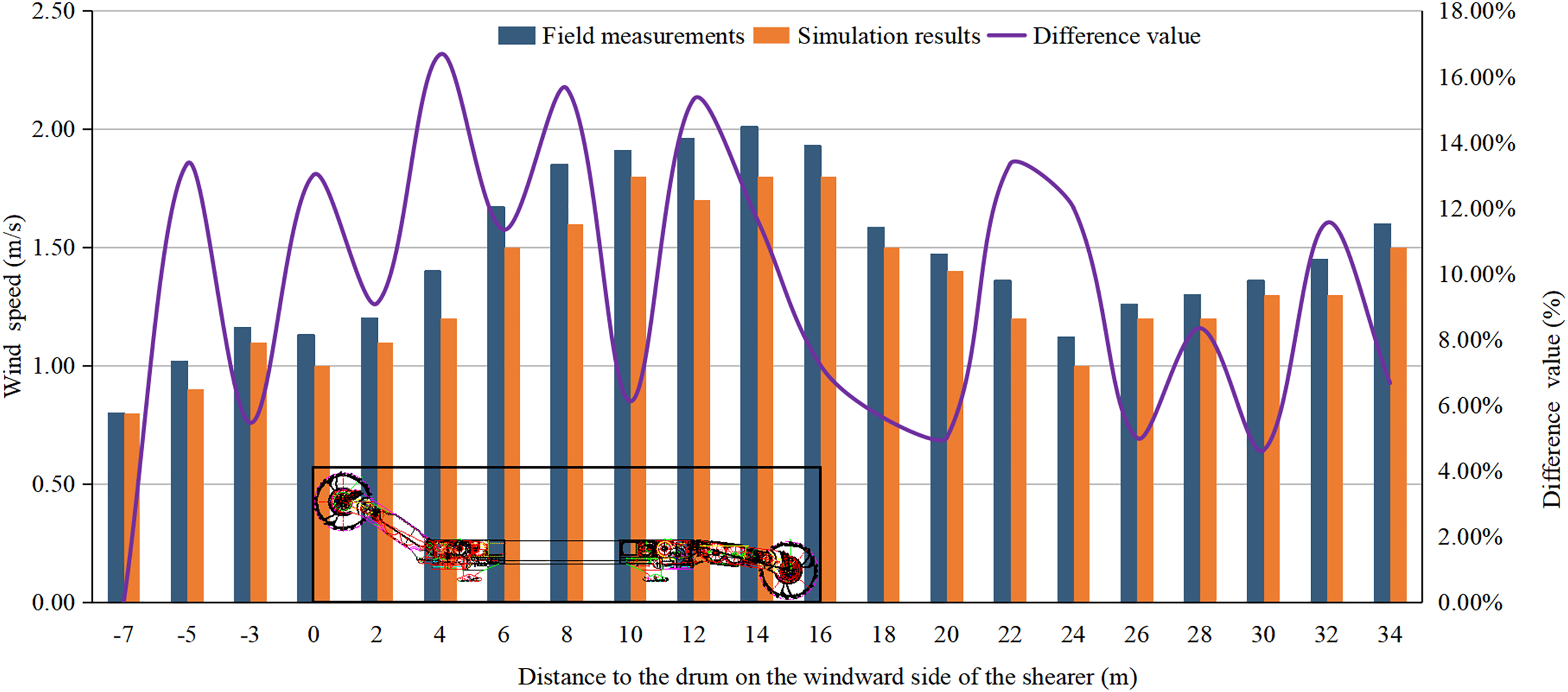
Comparative verification of the simulation result and underground measured value of wind velocity.
Setting of simulation environment variables
The divided grid file is imported into FLUENT solver to set the boundary conditions. The selection of a solver is based on pressure, steady-state and solution. The gravity is set to be 9.81 m/s2 (Li et al., 2019b, 2020). The viscous model can be selected to be a k-epsilon, realizable and discrete phase. The dust sources include the front and rear cylinders of the shearer and the lowering pillar and moving frame of the hydraulic support, with a mass flow rate of 0.018 and 0.012 kg/s, respectively. The wind dust coupler is turned on to set. The injection type is set to be surface, and Coal-hv is selected as the particle material (Hua et al., 2018; Wang et al., 2019; Zhou et al., 2017). On the basis of the test report of the dust particle analyser in the laboratory, the minimum particle diameter of dust (m), maximum particle diameter of dust (m) and medium particle diameter of dust (m) are set to be 1 × 10⁻⁶, 1 × 10⁻⁴ and 2 × 10⁻⁵ m, respectively. The entrance type is speed entrance and the export type is outflow. The wall condition is set to be reflected. The type of solver is SIMPLEC and the second-order windward mode is selected. In the calculation, the particle phase is added after the wind flow result converges. Finally, CFD-POST is used for quantitative and qualitative analyses of the results.
Analysis on wind velocity–dust numerical simulation result
Simulation calculation is performed for wind velocity–dust coupling at different inlet wind velocities through numerical simulation to obtain the optimum dust suppression wind velocity on the fully mechanised top-coal caving face. The distribution of wind velocity and dust concentration on the working face is analysed in detail through solving the dispersed phase.
Wind velocity distribution on the working face at different inlet wind velocities
As shown in Figure 5, the initial flow at different inlet wind velocities is stable in intake airflow roadway. When airflow starts to enter the coal face, the direction of airflow changes in the obstruction of the coal wall. The airflow velocity at the corner is increased by about 1.6 times, and the diffusion range of high wind velocity is about 16 m. A low-wind-velocity dead angle exists at the intake airflow roadway and the corner of the coal face, which may cause dust accumulation and dust explosion risk. When the wind flow reaches the unmined area, the wind velocity gradually decreases with the increase in space and energy loss along the way. On the one side of the mined coal wall, the average wind velocity is only 80% to 85% of the inlet wind velocity. At the hydraulic support, the wind velocity between two adjacent hydraulic supports is about 20% of the inlet wind velocity because of the blocked hydraulic support to the transverse wind flow. A low-wind-velocity area appears on both sides of the support, and the wind velocity is 50% lower in this area than in the inlet wind velocity. When the wind flow enters the mining area, obvious wind leakage occurs at the support of the moving frame. In addition, the shearer causes the space in the mining height direction of the working face to become narrow. When the wind flow moves to the end face of the wind side frame on the shearer, the wind flow diffuses to the top plate and support side. The diffusion wind velocity is about 1.2 times the inlet wind velocity. The wind flow here diffuses to the support side, which may cause the wind flow to carry a lot of dust, thereby polluting the walking area on the working face. The average wind velocity in the mining area is 80% of the inlet wind velocity. The wind velocity on the one side of the coal wall is high, reaching 3.2 m/s. This part of wind flow is mainly caused by high-speed wind flow from the shearer to the top plate. In the return airway, the wind flow is also relatively stable. In the mining area and the corner of the return airway, a high-wind-velocity zone exists, where the wind velocity is increased by 40% compared with the inlet wind velocity.
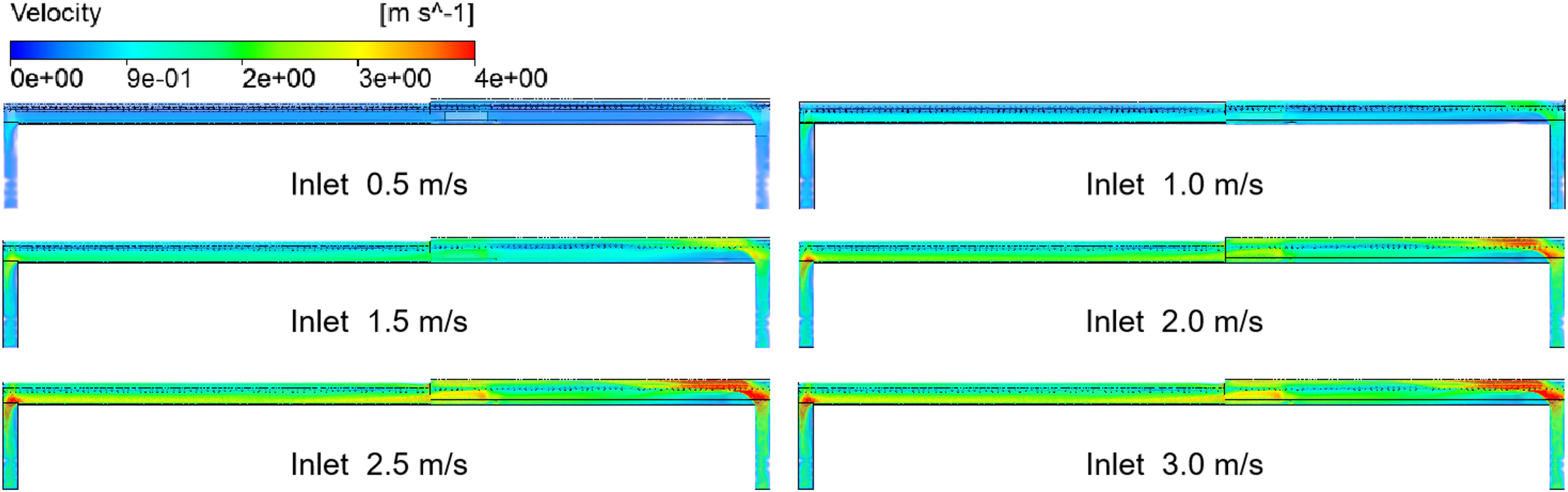
Three-dimensional (3D) wind velocity distribution on the working face at different inlet wind velocities.
Wind velocity distribution in the respiratory zone at different inlet wind velocities
The distribution of wind velocity in the height of the respiratory zone at different inlet wind velocities is shown in Figure 6. The height of the respiratory zone (Y = 2.85 m) is the location where the miners breathe. The rationality of wind velocity distribution directly affects miners’ physical comfort and dust distribution. The figure shows that the overall wind velocity distribution in the height section of the respiratory zone remains consistent with the 3D wind velocity distribution on the working face. In the whole section, the wind velocity on the coal face fluctuates the greatest, especially near the shearer. If the inlet wind velocity is higher, the influencing range of high wind velocity area in the shearer drivers’ position is wider. When the inlet wind velocity is 3.0 m/s, a ∼16 m high-wind-velocity zone forms in the driver’s position, and the highest wind velocity reaches 3.75 m/s. A high-wind-velocity zone gradually forms at the position behind 15 m of the downwind side of the shearer and uniformly extends to the return airway, with an average wind velocity of 3.3 m/s. The formation of a high-wind-velocity zone increases the risk of dust diffusion. Therefore, appropriate measures should be taken to avoid the deviation of the wind velocity and form a high-wind-velocity zone, which allows even airflow distribution on the working face through proper control of the inlet wind velocity.
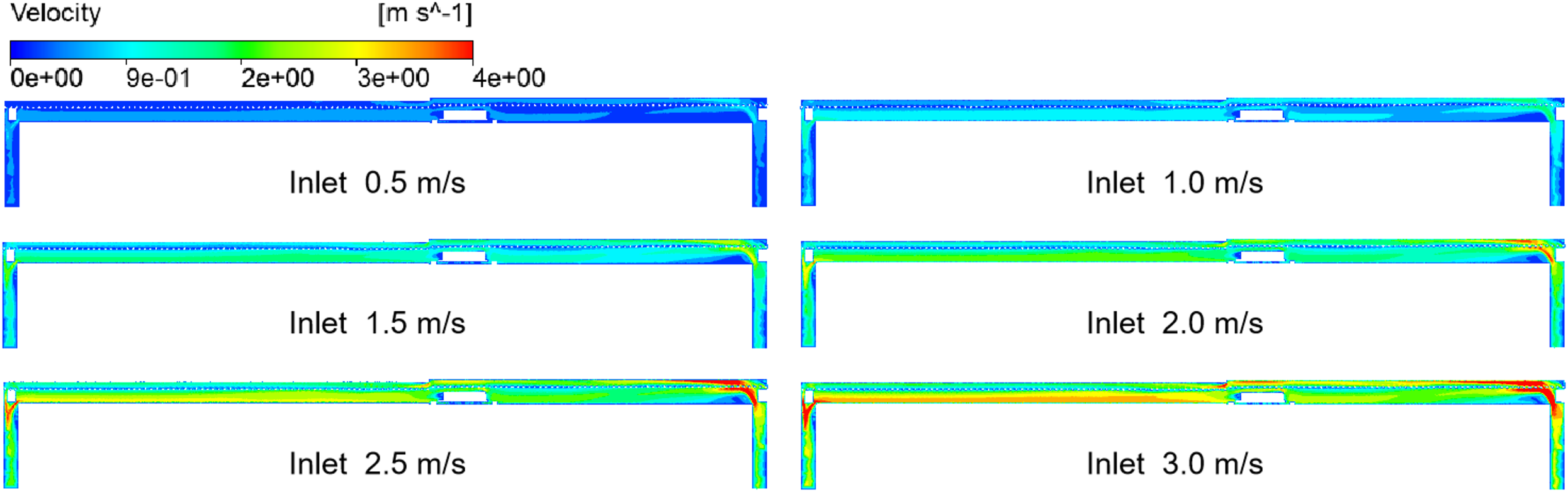
Distribution of wind velocity in the height of the respiratory zone at different inlet wind velocities.
Dust concentration distribution on the working face at different inlet wind velocities
The ventilation of the coal face aims to provide fresh air for the working face and prevent dust and gas accumulation resulting in an explosion. In addition, rational wind velocity can accelerate the settlement of dust particles and prevent dust from the working face. The dust on the working face is mainly affected by gravity, buoyant force and drag. Some of these factors are not only related to the dust shape and particle size but also directly related to the wind velocity on the working face. A safe and green underground coal mining environment is built for the simulation calculation of dust transport and distribution under six inlet wind velocities to explore the optimum wind velocity for dust suppression. The specific results are shown in Figure 7. The inlet wind is defaulted to fresh wind flow under the simulation setting conditions, which does not contain dust. Therefore, the windward space of the shearer lacked dust. The dust generated from cutting coal by the front cylinder of the shearer moved downward along the gap between the shearer and the coal wall, diffused to the bottom cylinder and then diffused to the non-mining area together with the dust generated from cutting coal by the bottom cylinder. As a result, the whole space on the downwind side of the shearer was filled with high-concentration dust. Affected by the wind flow, the dust generated from cutting coal by the cylinder was finally deposited on the wall near one side of the coal wall and extended to the return airway. The dust generated by the moving frame of the support firstly moved to the downwind side under the influence of wind flow and then diffused downward to one side of the coal wall and converged the dust produced from cutting coal by the cylinder. When the inlet wind velocity is increased from 0.5 to 1.5 m/s, most of the dust is deposited gradually during dust production from cutting coal by the front cylinder diffusing backward, and the dust concentration changes from 2200 to 1050 mg/m3. In addition to the high-concentration dust near the base plate in the non-mining area, the dust concentration in the upper space is <800 mg/m3. The dust produced from the moving frame of the support diffuses less to the non-mining area, and the length of high-concentration dust is shortened to be 20 m. The inlet wind velocity is continuously increased. When the inlet wind velocity fluctuates in 2.5 to 3.0 m/s, the dust settles more obviously. The dust concentration near the front cylinder of the shearer is decreased to 593 mg/m3, and the dust concentration diffusing backward is only around 400 mg/m3. The dust concentration in the unmined area on the downwind side of the shearer is significantly improved, and the average dust concentration is decreased to <350 mg/m3. This result indicates that the increase in inlet wind velocity helps dust deposition and reduces the risk of dust diffusion pollution, which is consistent with the influence of inlet wind velocity on the distribution of wind velocity on the working face.
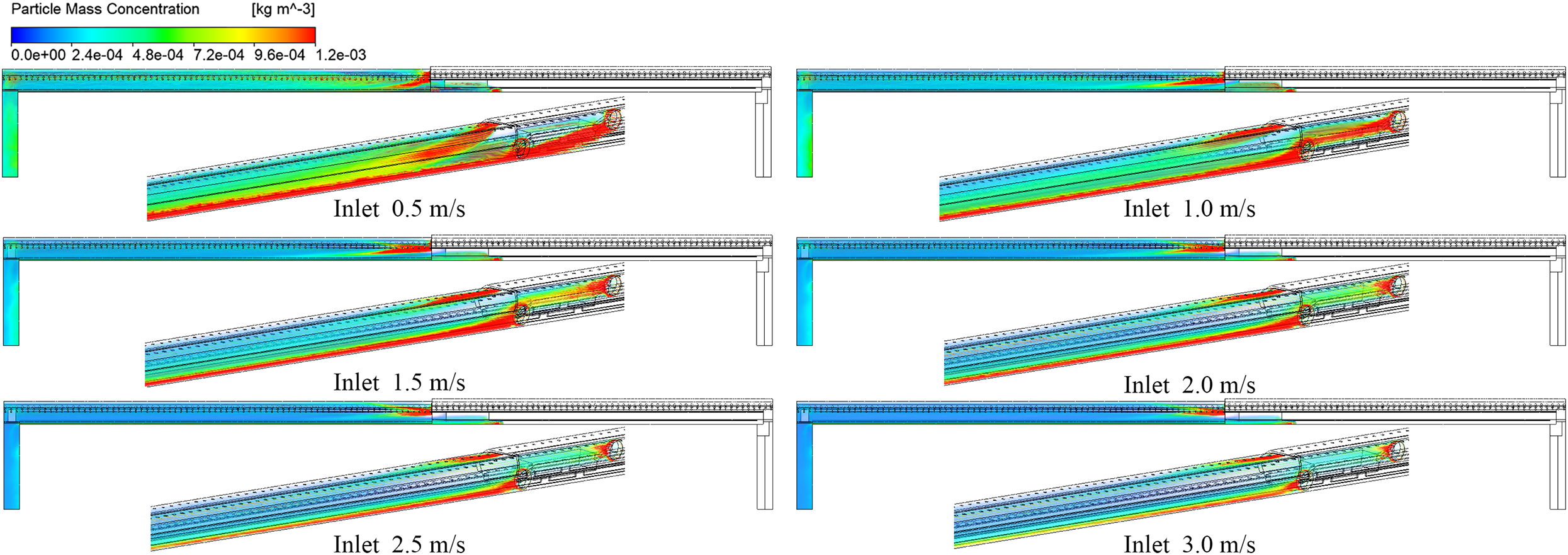
Three-dimensional (3D) dust concentration distribution on the working face at different inlet wind velocities.
Dust concentration distribution in the respiratory zone at different inlet wind velocities
As shown in Figure 8, different inlet wind velocities exert a great impact on dust concentration in the respiratory zone. The distribution of dust concentration in the respiratory zone height is directly related to the workers’ respiratory health. A detailed study on dust diffusion and distribution in the respiratory zone can effectively help reduce dust concentration. In addition, the positions in the sidewalk and pedestrian regions in the unmined area corresponding to the front and rear cylinders of the shearer are the main working places of drivers and other maintenance staff. Therefore, the dust concentration distribution in its related position is demonstrated in detail in the figure. The high-concentration dust in the respiratory zone is mainly concentrated on one side of the coal wall where the shearer is located and on position 13 m behind the downwind side of the shearer. The space of one side of the shearer near coal wall is relatively small, belonging to the dead space of wind velocity, where dust easily accumulates. In addition, a high-wind-velocity zone is located on the downwind side of the shearer. Therefore, it leads to the formation of high-concentration dust mass on the downwind side, which is consistent with the analysis result in Figure 5. When the inlet wind velocity is 0.5 m/s, the dust produced from cutting coal by the cylinder of the shearer converges with the dust produced from the moving frame of the support at the position 16 m from the downwind side of the shearer. The dust produced from cutting coal by the cylinder mainly affects the mining space. A 27 m-long high-concentration dust mass is formed at the position 13 m near the downwind side of the shearer. The dust concentration is high up to 1750 mg/m3. At the position, 36 m distant from the shearer, the dust produced from cutting coal by the cylinder starts to diffuse to the pedestrian area. The initial diffusion concentration is 586 mg/m3, and then the dust starts to accumulate, which seriously affects the workers’ respiratory health. The dust produced from the moving frame of the support is the main source of dust in the pedestrian area, which diffuses less to the mining space of the working face. The dust produced by a single moving frame of the support mainly affects the pedestrian area 20 m distant from the downwind side. The dust concentration is the highest up to 760 mg/m3. With the gradual increase in inlet wind velocity, the dust concentration in the respiratory zone is gradually improved. When the inlet wind velocity is increased to 1.5 m/s, the dust concentration on the side of the coal wall at the position of the shearer is obviously decreased and the coverage of high-concentration dust mass is reduced. In addition, the influencing range of the dust produced by the moving frame of the support is the position 25 m near the downwind side of the moving frame, and the highest dust concentration is 658 mg/m3. No obvious high-concentration dust mass is formed on 5555the downwind side of the shearer because of cutting coal by the cylinder. The diffusion position to the pedestrian side is 50 m near the downwind side of the shearer, and the diffusion concentration is about 150 mg/m3. In addition, the overall concentration in the return airway is <620 mg/m3. The inlet wind velocity is increased continuously. When the inlet wind velocity is 2.5 to 3.0 m/s, no high-concentration dust mass accumulates on the working face, except for a small quantity of high-concentration dust in the position of the front and rear cylinders. The dust concentration is <500 mg/m3. By comparison, when the inlet wind velocity increases from 2.5 to 3.0 m/s, the dust concentration on the working face shows no significant change. This result indicates that the increase in wind velocity has no obvious impact on the improvement of the working face environment, but it leads to a waste of resources.
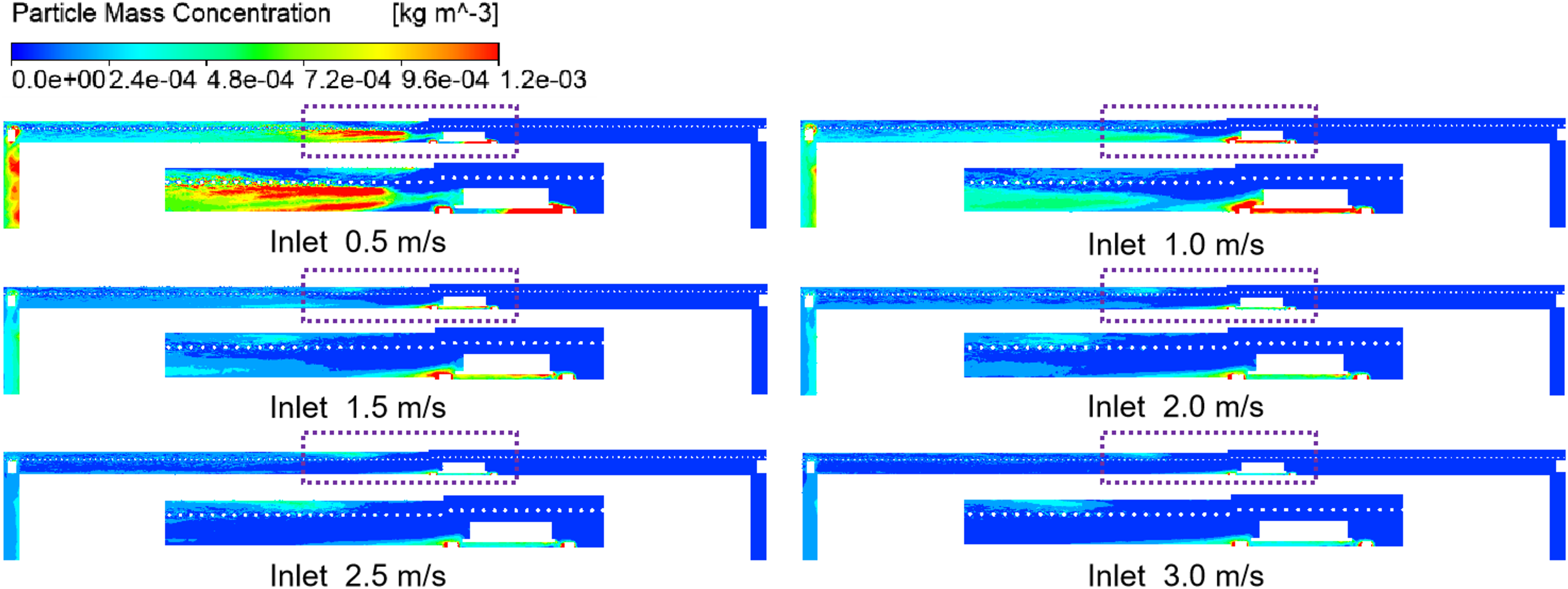
Distribution of dust concentration in the respiratory zone at different inlet wind velocities.
The key point of dust control is to solve the threat of dust to the health of miners. The diffusion and distribution of dust produced by the moving frame of the support in the pedestrian area are analysed in the inlet wind velocity of 2.3 to 3.0 m/s to further study the optimum wind velocity for dust suppression on the working face.
Impact of inlet wind velocity on the diffusion of dust from the hydraulic support’s moving frame
The detailed analysis shows that the dust produced by the falling column and moving frame of the hydraulic support varies greatly in the pedestrian area when the inlet wind velocity is 2.3 to 3.0 m/s, as shown in Figures 9 and 10. At different inlet wind velocities, the dust produced by the support shows consistent variation in the concentration in the respiratory zone of the pedestrian area, namely, an increasing–decreasing–increasing–decreasing–increasing–decreasing trend. The high-concentration dust produced by the moving frame of the support is mainly concentrated in 0 to 100 m, and the dust concentration is 165 to 585 mg/m3.
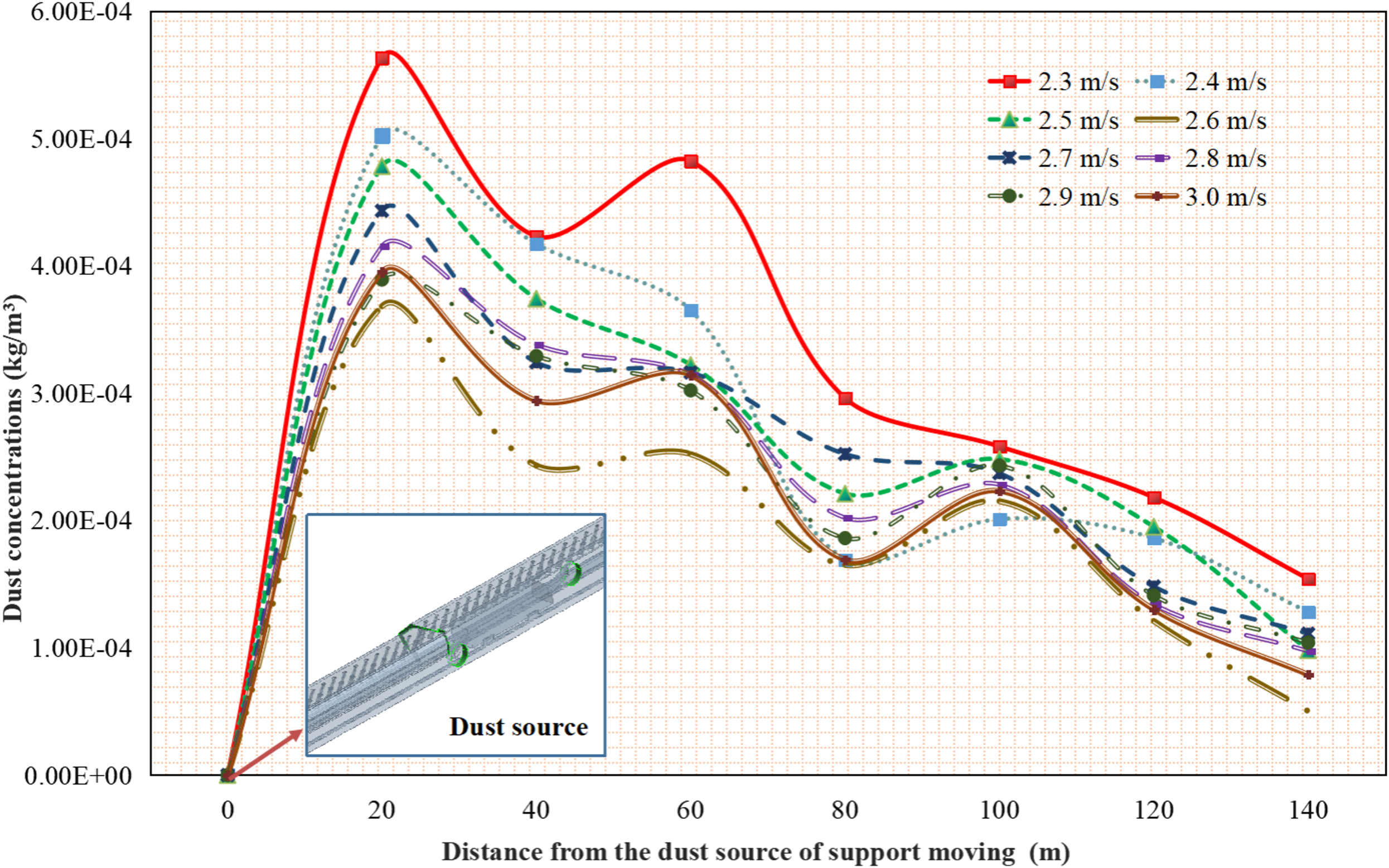
High-concentration dust distribution in the respiratory zone inside the support at different inlet wind velocities.
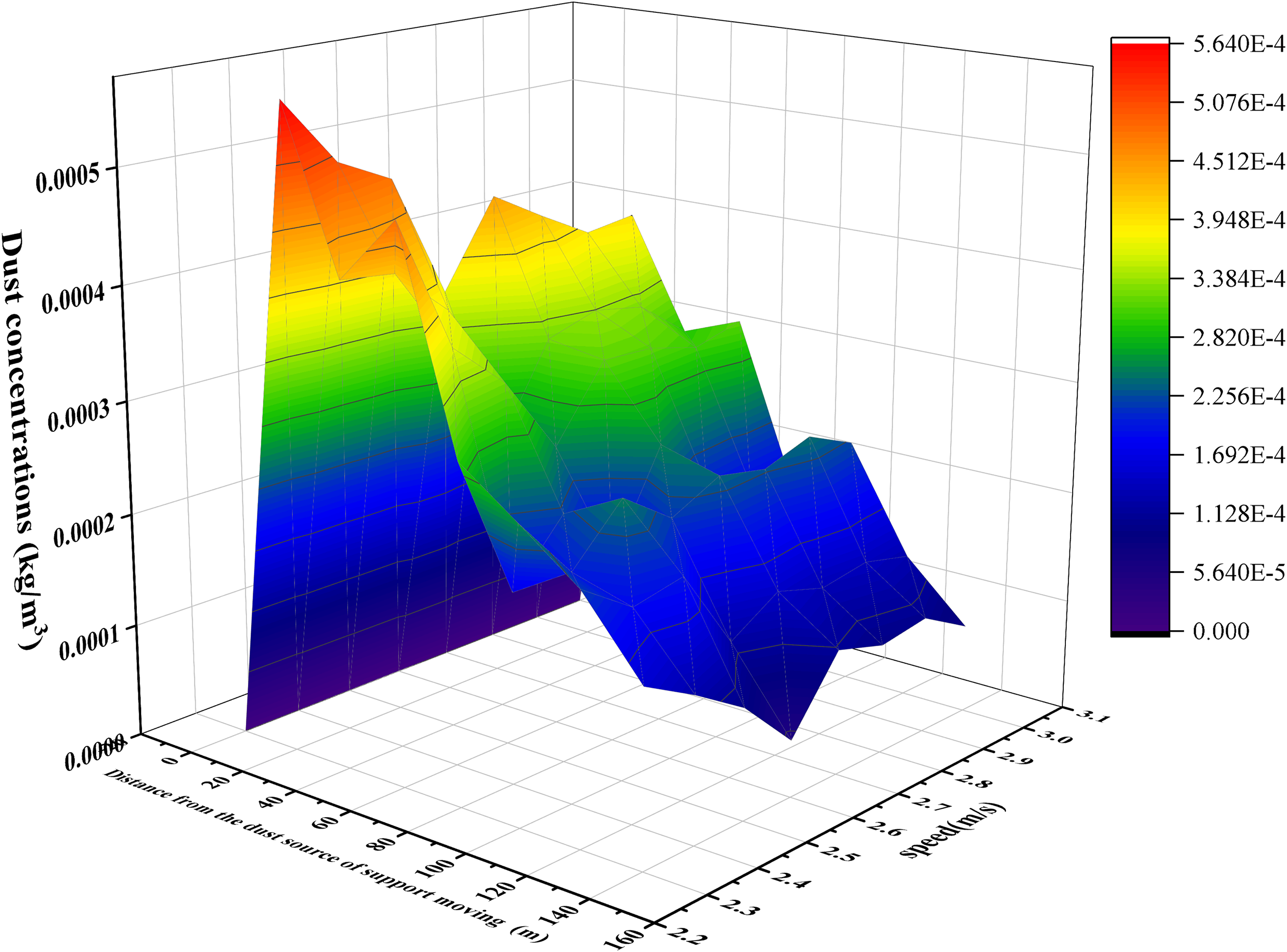
Three-dimensional (3D) distribution of high-concentration dust in the respiratory zone inside the support at different inlet wind velocities.
When the inlet wind velocity is 2.3 m/s, the dust concentration fluctuates greatly. At the position 20 m near the downwind side of the moving frame, the first peak value appears, with a dust concentration of 563 mg/m3. The dust on the working face is affected by many types of forces. The settlement track is parabolic. It indicates that the high-concentration dust produced by the moving frame only diffuses here under the condition of this wind velocity. It conforms to the previous analysis. At the area 60 m near the downwind side, the second peak value appears, with a dust concentration of 482 mg/m3. At the position 140 m distant from the dust source of the moving frame, the dust concentration is <150 mg/m3. When the inlet wind velocity is increasing to 2.6 m/s, the dust concentration in the pedestrian area is obviously improved. Two peak dust concentrations along the way are 368 and 252 mg/m3. Compared with that in the inlet wind velocity of 2.3 m/s, two peak values are decreased by 34.7% and 47.4%, respectively. When the inlet wind velocity is increased continuously, the dust concentration along the way in the pedestrian area starts to increase instead. When the inlet wind velocity is 2.7 m/s, the dust concentration at the position 20 m distant from the dust source is increased by 75 mg/m3, compared with that in 2.6 m/s. The dust concentration at the position 40 m distant from the dust source is increased by 81 mg/m3 compared with that in 2.6 m/s. When the inlet wind velocity continues to fluctuate in 2.8 to 2.9 m/s, the dust concentration is decreased, compared with that in 2.7 m/s. However, compared with that in 2.6 m/s, the dust concentration is still increased by 11.3% to 20% at the position with two peak values. The main reason may be that the increase in wind velocity disturbs the dust settlement, which increases the distance of dust settlement, and may lead to re-entrainment of dust on the bottom plate of the working face.
Moreover, the distribution of the average dust concentration in 0 to 140 m behind the dust source by the moving frame is compared at different inlet wind velocities in the inlet wind velocity of 2.3 to 3.0 m/s (Figure 11). When the inlet wind velocity is 2.6 m/s, the average dust concentration in the space behind the dust source produced by the moving frame is lower. Compared with that in 2.3 m/s, it is decreased by 28%. When the wind velocity reaches 2.6 m/s, the continuous increase in wind velocity exerts no obvious effect on the improvement of dust pollution on the working face.
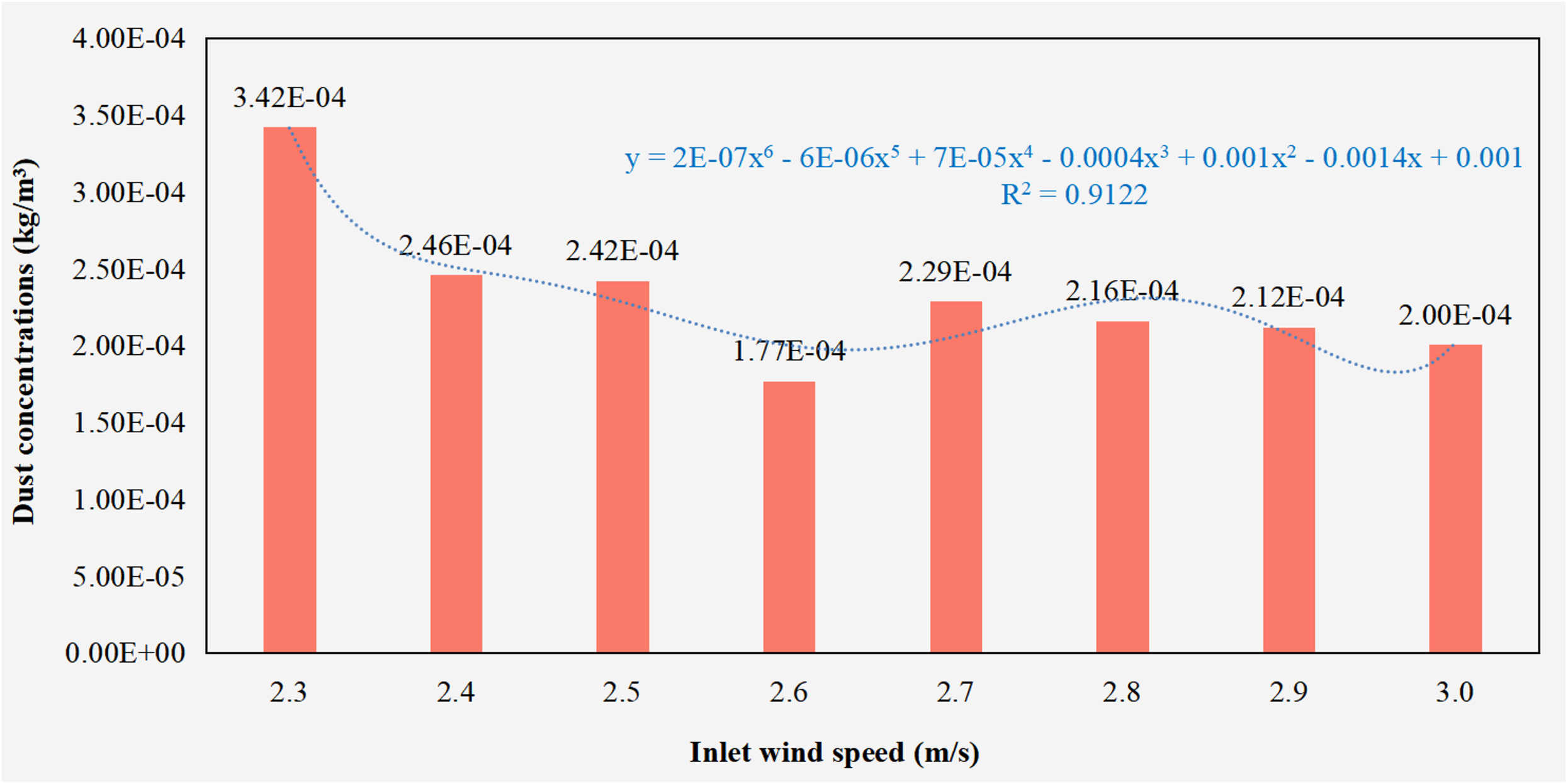
Distribution of average dust concentration in 0 to 140 m behind the dust source by the moving frame at different inlet wind velocities.
Therefore, we can control the wind velocity on the working face to reduce the dust pollution on the fully mechanised top-coal caving face, clean up the air of the working face and reduce the risk of pneumoconiosis among miners. Combined with the minimum wind velocity required by the 122109 working face field of the Caojiatan coal mine, the optimum wind velocity for wind suppression on this working face is 2.6 m/s, which can reduce the dust pollution hazard to the working face and personnel to the greatest extent when the coal mine starts production. In addition, through the study on the refining classification of wind velocity, the refining management of the optimum wind velocity for dust suppression on the working face can be realised, which avoids the waste of energy. It conforms to China’s concept of green, environmental protection and sustainable development.
Conclusion
The distribution and transport of wind flow and dust on the fully mechanised top-coal caving face at different inlet wind velocities are studied using numerical simulation and underground measurement. In addition, the optimum wind velocity for dust suppression on the fully mechanised top-coal caving face is determined through the study on the classification of inlet wind velocity, which maximises the improvement of the working face environment. It is mainly concluded as follows:
The overall wind velocity on the working face fluctuates greatly. The wind flow is evenly distributed in the intake airflow roadway, whereas the wind flow increases sharply at the corner of the intake airflow roadway and the coal mining face, and the wind velocity is 1.6 times the inlet wind velocity, forming a 16 m long high-wind-velocity zone. In the mining area, the average wind velocity on one side of the coal wall is 80% to 85% of the inlet wind velocity. In addition, the wind flow diffuses seriously at the end face of the body on the windward side of the shearer, and the diffusion wind velocity is 1.2 times the inlet wind velocity. Two low wind velocity dead angle areas exist, which are the corners of intake airflow roadway and coal mining face near the top plate, and the area between two adjacent support pillars, with the minimum wind velocity of only 20% of the inlet wind velocity. Simulation analysis shows that at different inlet wind velocities, the transport and distribution of dust on the working face are basically consistent under the influence of wind flow. However, under the condition of different inlet wind velocities, the settling effect of dust produced from cutting coal by the cylinder and the moving frame of the support is obviously influenced. When the inlet wind velocity increases from 0.5 to 2.5 m/s, the settling effect of the dust on the working face is significant, and the dust diffusion to the downwind side is reduced. When the inlet wind velocity increases from 2.5 to 3.0 m/s, the dust pollution on the working face is not improved obviously. Therefore, the situation in the wind velocity of 2.5 to 3.0 m/s is analysed in detail. An inlet wind velocity of 2.6 m/s is conducive to dust settling and improves the environmental quality of the working face. Considering the actual needs of on-site safety production and in accordance with the wind velocity requirements for coal mines specified in the Coal Mine Safety Code, on the premise of the environmental protection concept of energy conservation and emission reduction, the optimum wind velocity for dust suppression in Caojiatan 122109 fully mechanised top-coal caving face is determined to be 2.6 m/s, which can reduce the harm of dust to the environment and miners’ physical and mental health to the greatest extent. In addition, dust removal by ventilation, as the most basic method for dust removal in mines, can only control and improve dust pollution as a whole. To assist in dust removal by ventilation and improve dust suppression effect, dust suppression measures should be taken in a high-concentration dust area on the working face. For example, sprays and dust collectors should be placed on the front and rear cylinders of the shearer and the support.
Footnotes
Declaration of conflicting interests
The authors declared no potential conflicts of interest with respect to the research, authorship and/or publication of this article.
Funding
The authors disclosed receipt of the following financial support for the research, authorship and/or publication of this article: This work was supported by the National Key R&D Program of China (2017YFC0805200).
