




Abstract
To study crack propagation around the fracture hole in the coal body induced by high-pressure CO2 gas produced by CO2 phase transition fracturing, the mechanism of permeability enhancement of fractured coal induced by liquid CO2 phase transition fracturing was studied from two aspects, the process of coal gas displacement by competitive adsorption and physical characteristics of fractured coal induced by phase transition. Crack propagation pattern in coal under different lateral coefficients was explored by using discrete-element numerical simulation software. Distribution characteristics of hoop stress of fractured coal were analyzed through theoretical calculation. The results show that: (1) Micro-cracks in damaged coal body generated during phase transition process are mainly crack_tension type, which are formed by the composite action of tension and compression. The crack propagation is the result of the continuous release of compressive stress from concentrated area to the surrounding units. Micro-cracks are radially distributed in a pattern of “flame”. (2) The main crack formed above the fracture hole grows in the direction of vertical minimum initial stress, and the main crack formed below the fracture hole develops in the direction of horizontal initial stress. As the lateral compression coefficient increases, the extension distance of the second crack will not change after reducing to a certain length. (3) As the distance from the fracture hole increases, the peak compression loaded at the monitoring point decays, and the loop stress in the cracked coal is distributed in a pattern of “peanut”. It provides practical methods and ideas for studying the macroscopic and microscopic development of cracks, as well as theoretical support for the on-site hole layout.
Introduction
China has vast reserves of coal bed methane (coal seam gas) resources, with great prospects for development and utilization. The co-mining of coal and gas is in line with the safe and green development trend. Therefore, it is an urgent need to improve the extraction of gas in the development and utilization of coal seam gas (Fan et al., 2014; Mu et al., 2015; Yuan, 2016). However, it is difficult to extract gas with conventional extraction techniques due to the low permeability of coal seams in China. As the shallow recoverable coal resources are exhausted, the mining depth increases, the ground stress in coal mines raises, and the permeability of coal seams decreases, commercial challenges in mining are threatening the safe and efficient production of coal mines (Wang, 2020; Ye et al., 1999; Yuan et al., 2013). Currently, permeability enhancement technology is the key approach to maintain the efficiency of gas extraction from low-permeability coal seams in China. Multiple technologies of permeability enhancement by pressure relief (Dong and Zou, 2017), permeability enhancement by deep-hole controlled fracturing (Gu et al., 2020), permeability enhancement by hydraulic flushing (Xu, 2020) and hydraulic slotting (Lin et al., 2017) have been formed after long-term exploration and practice, and have been applied downground to some extent. However, constrained by complex geological conditions and low permeability of coal seams, some techniques and measures could not achieve desire permeability enhancement (Li et al., 2017; Wang et al., 2014; Zhao and Wang, 2014), developing a permeability enhancement technology for low-permeability coal seams is an imminent challenge.
With the overlapping and fusion of technologies in different fields, CO2 fracturing technology has been introduced from oil and gas development to the coal mining. Permeability enhancement induced by liquid CO2 phase transition fracturing is a physical fracturing method (Zhang et al., 2018), with higher safety factor than traditional explosive fracturing, which rectifies advantages such as mine collapse caused by over-crushed coal around borehole, effectively increases the production of new cracks in coal, increases seepage channels, and effectively raises permeability of low-permeability coal seams, thereby improving permeability enhancement. Some scholars have conducted a number of studies on permeability enhancement by CO2 phase transition fracturing. Xin et al. (2020) developed an experimental device for fractured coal rocks by liquid CO2 phase transition jets, and studied the variation of jet pressure and crack propagation in coal rocks. Zhang et al. (2018) developed a method to determine the fracturing direction of dominant perforation under ground stress. Wang et al.(2016) developed a CO2 phase transition controlled outburst prevention technology for the excavation at outburst-prone coal seam. Zhao et al. (2016) and Li et al.(2015) carried out technology application in high gas and low permeability coal seams. Liang et al. (2014) experimentally studied supercritical CO2 displacement.
At present, most scholars have studied the influence of stress wave on coal damages and crack propagation by using numerical simulation, however, it is difficult to obtain crack morphology and distribution characteristics or accurately discover crack propagation from perspective of microscopic inside coal, especially with the increase of mining depth, the initial stress is one of the important factors affecting the permeability of coal seams. There are few studies focusing on crack propagation under different initial stresses (different lateral compression coefficients). Therefore, in this paper, crack propagation in cola around fracture hole induced by injecting high-pressure CO2 gas was studied using discrete-element numerical simulation method based on the elasto-plastic mechanics, in order to provide a useful reference for guiding on-site hole layout.
Mechanism of coal permeability enhancement induced by liquid CO2 phase-transition fracturing
Mechanism analysis of coal gas displacement by competitive adsorption
Gas in coal exists in two states: free and adsorbed. Cracks and pores in coal induced by liquid CO2 phase transition fracturing are developed, leading gas of free-state to flow along the cracks, while some of gas of adsorbed-state will be converted into free-state and can be easily extracted. According to thermodynamic theories, thermal motion of different gas molecules varies when the ambient temperature and equilibrium pressure at which the coal is exposed are the same. It is this difference that which will affect the adsorption of CH4 molecules by coal through liquid CO2 phase transition fracturing. The variability of thermal motion of gas molecules can be expressed by the mean free range λ (Lu, 2014; Yu and Liu, 2015)

According to equation (1), when other conditions are determined, the smaller the molecular weight of the gas, the stronger the thermal movement trend in the coal pores.in the pores of coal. After liquid CO2 phase transition fracturing, CO2 gas molecular enter the coal body, and the two states of gas molecules exchange momentum inside the pores. Since the gas weight of CH4 molecules is smaller than that of CO2 gas molecules, the thermal motion of CH4 molecules is more violent, and the coal body is more prone to adsorb CO2 molecules, thereby it is more possible that CH4 molecules are desorbed. When CO2 molecules occupy part of adsorption sites in the coal body, CH4 molecules are displaced from the coal body by thermal movement, thereby improving the gas extraction.
Analysis of physical characteristics of phase-transition blasted coal
Under standard conditions, CO2 exists in the gaseous form and follows the equation of ideal gas state (Wang, 2019)

According to equation (2), during the process of phase change, 1 m3 of liquid CO2 can be vaporized into 794 m3 of gaseous CO2. During the fracturing process, it can be divided into fracture compaction zone, crack propagation zone and stress disturbance zone from borehole outward. The distribution of fracture characteristics is shown in Figure 1. The high-press gas generated by phase transition instantly acts around the borehole in coal. Under the compressive stress of high-pressure CO2 gas and stress wave, the fracture compaction zone in coal is formed, causing destruction of coal skeleton and formation of initial cracks in the hole wall. The induced quasi-static stress field promotes the secondary development of cracks to form crack propagation zone. The cracks are fully developed in these two zones, forming enough gas drainage channels which ensure good gas extraction. In the stress disturbance zone outside the crack propagation zone, most of cracks have stopped developing, and phase transition fracturing does not produce plenty of cracks, however, the vibration generated by phase transition fracturing that increases the internal energy of coal body can spread to the disturbance zone where relative displacement between coal particles happens to facilitate gas desorption. This facilitation decreases as the distance from the borehole increases. Therefore, in the fracture compaction zone, crack propagation zone and part of the stress disturbance zone, the coal body is influenced by the fracturing effect, gas desorption is accelerated, and permeability of coal seam is enhanced.
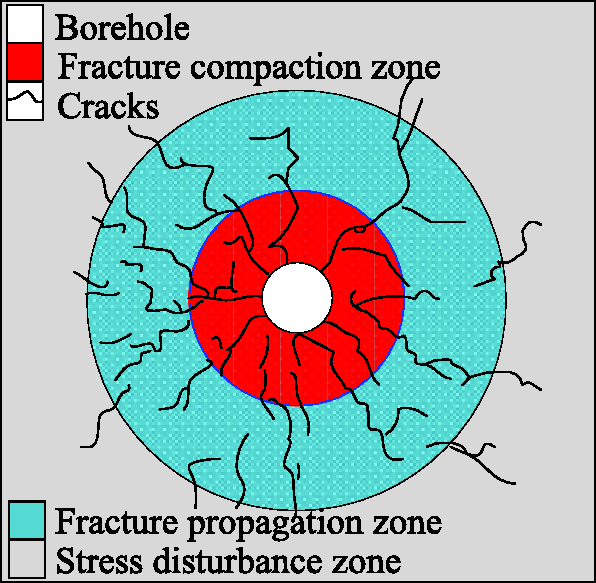
Fracture characteristics distribution around borehole by CO2 fracturing.
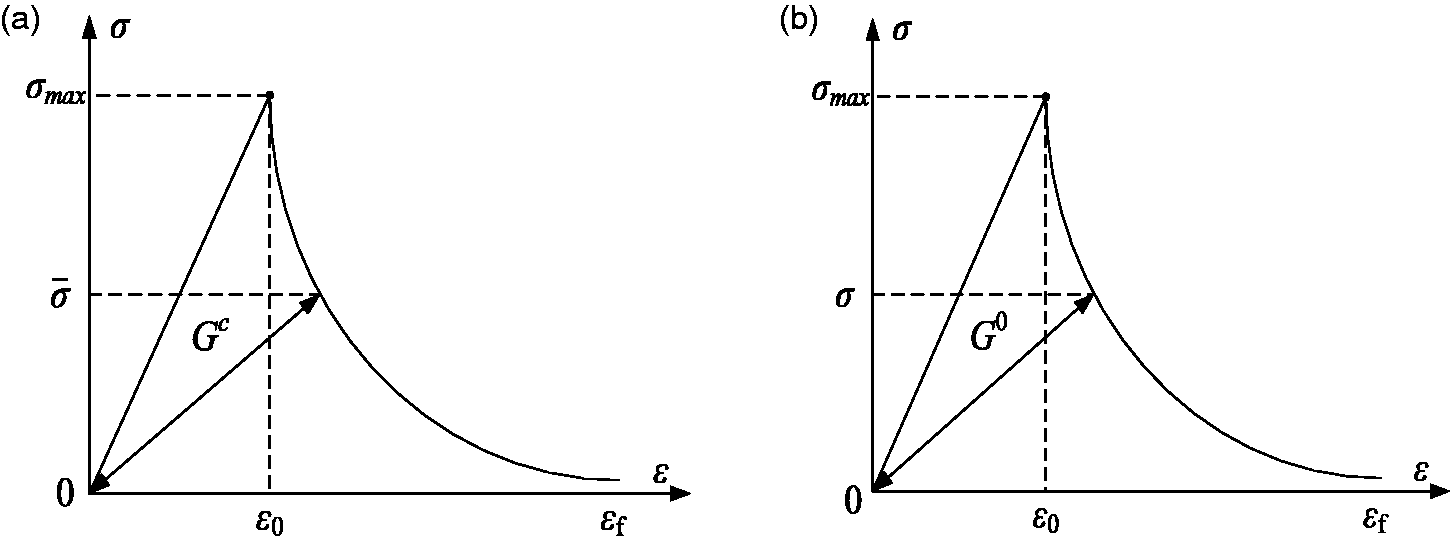
Energy-based non-linear damage evolution (Sun, 2016).
Mechanical model of liquid CO2 phase transition blasted crack propagation
According to the fracture characteristics distribution around borehole by CO2 fracturing in Figure 1, during the fracturing process of coal, CO2 gas produces tensile stress leading to secondary crack propagation in the crack propagation zone. The fracturing process of material will follow the traction separation law, which assumes that the stress-strain relationship of material before damage conforms to the linear elastic relationship, i.e. (Sun, 2016)

Under the action of fracturing gas, the crack propagation satisfies the maximum principal stress model, and then we have

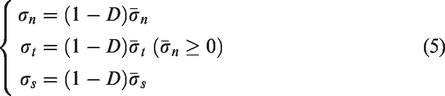
D is the damage variable, the evolution process of nonlinear damage based on energy is shown in Figure 2, with a value range of 0 ≤ D ≤ 1. When the material is not damaged or fractured, D = 0, during the process of damage evolution, 0 < D < 1. When the material is completely damaged, D = 1. The damage variable is defined as

Law of crack propagation in coal induced by liquid CO2 phase transition fracturing
Numerical modeling
To analyze the law of crack propagation in coal induced by CO2 phase transition fracturing under different lateral compression coefficients, a numerical model of liquid CO2 blasted fracture in the coal seam was established by using discrete-element numerical simulation software. The numerical model was a homogeneous material, coal particles were simulated by single spheres, and linearpbond was used to contact the model (Yuan et al., 2020). The linearpbond contact model includes linear elastic bonding interfaces with specific dimensions and infinitely small linear elastic interfaces. The first model is equivalent to the linear contact model. The second model is called parallel bonding. When there is such a bonding interface between particle elements, it can resist torque and behave as linear elasticity. When the bearing strength exceeds the critical value, it will fail. Degenerate into a linear contact model, which can better reflect the actual failure state of the coal body. The schematic diagram of the linearpbond contact model is shown in Figure 3.
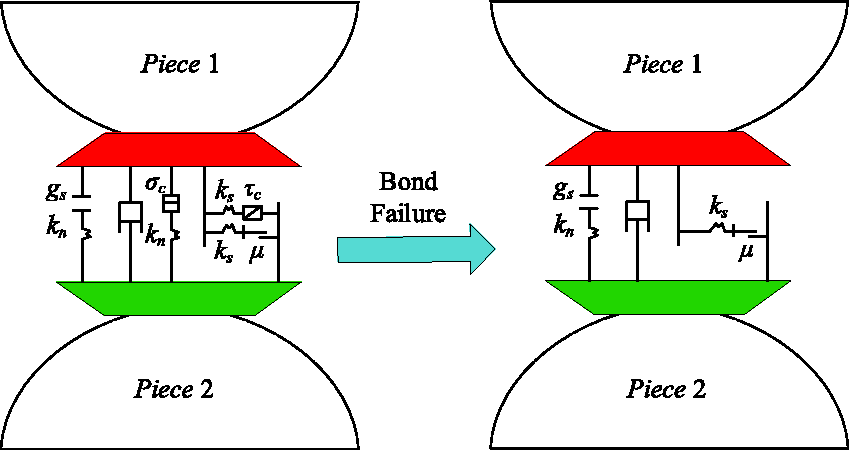
Schematic diagram of linear contact bond model.
The model size is 5 m × 5 m, the fracture hole is set in the center of the model, and the diameter of fracture hole is 94 mm. According to the elasto-plastic mechanics, the boundaries are set as more than 1.5 times as the hole size, where there is no mutual interference between the hole and boundaries. The model can be simplified to a two-dimensional plane strain model as shown in Figure 4. In the calculation, the ground stress is applied to the model through the servo mechanism until equilibrium, and dynamic load function is applied to the borehole wall for the dynamic calculation of borehole fracturing. When the strength loaded in the spherical particles is larger than the critical value, the adhesion is broken and micro-cracks are generated. The parameter selection is based on on-site geological data, using the trial and error method to establish the relationship between the macro parameters and the meso parameters, and finally determine the results. The physical mechanics parameters of coal seam are listed in Table 1.
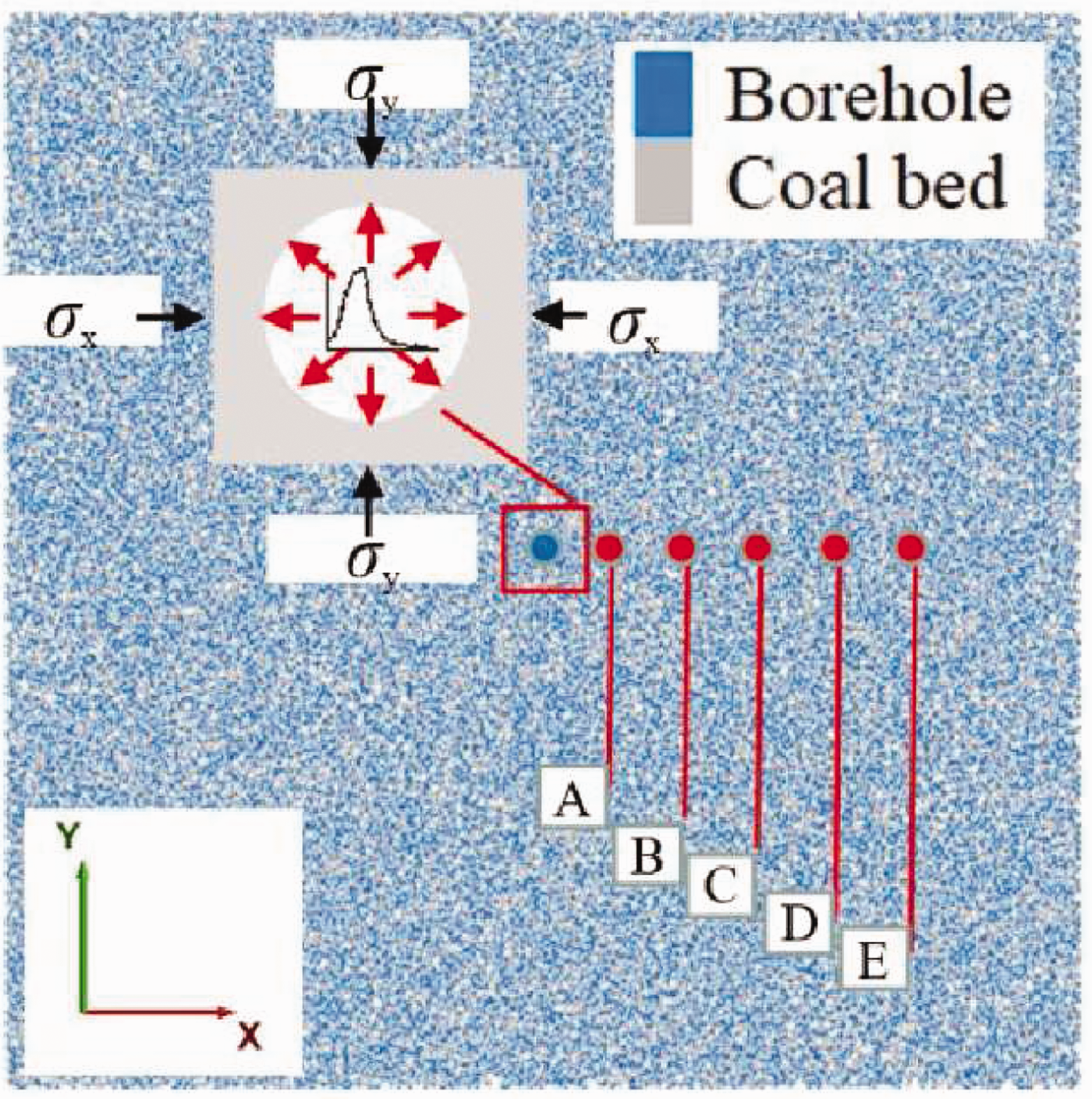
Numerical model.
Simulated microscopic parameters of coal seam.

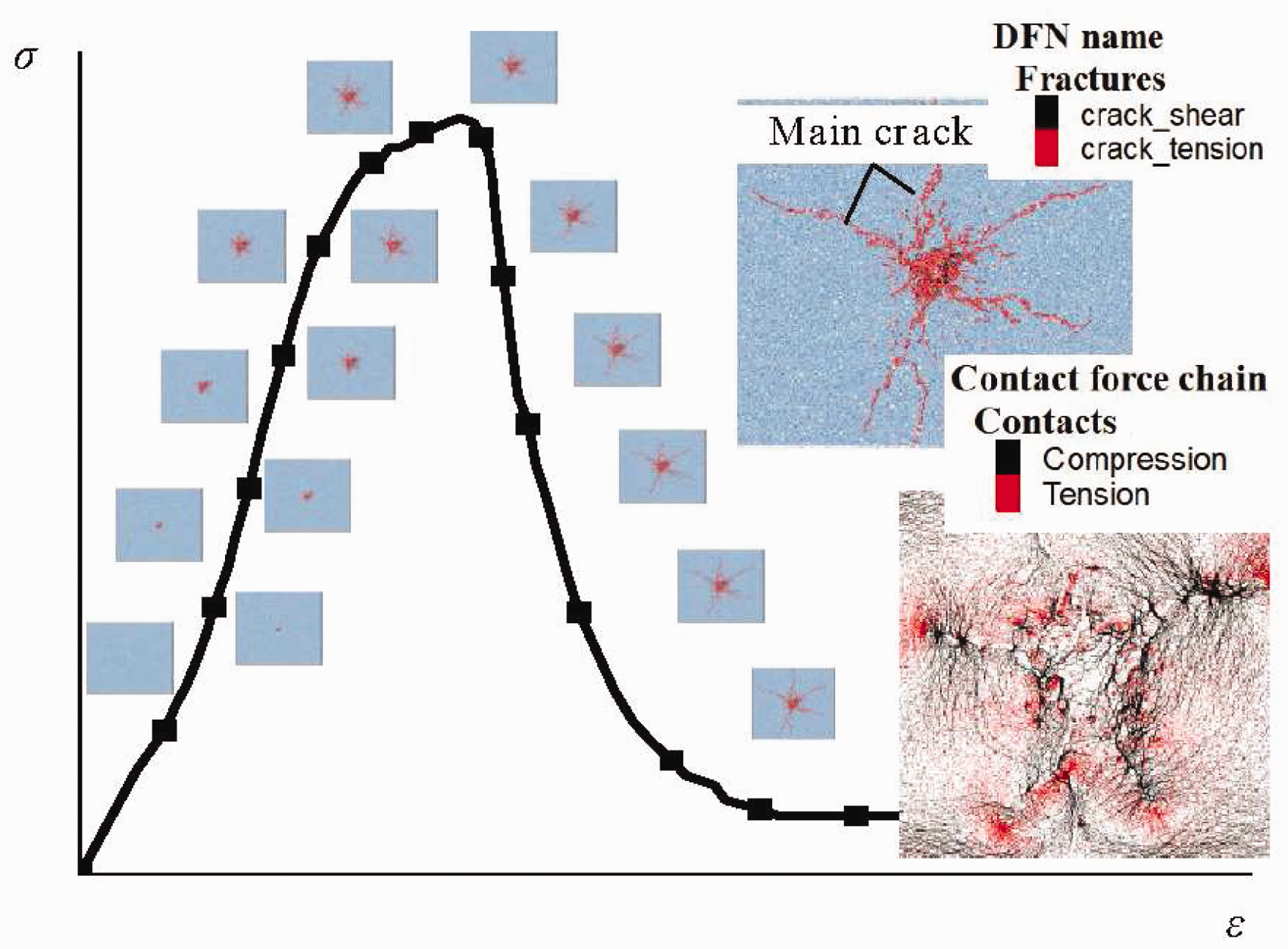
Five monitoring points were set in the X-direction of the model while applying the dynamic load (the distance near the borehole is A < B < C < D < E). As the coal body cracks induced by phase transition fracturing, tension cracks and crack_shear cracks appeared in the coal body, which are drawn in red and black, respectively. The force chain development in the whole evolution process of the model is conducive to analyze the bonding state and fracture state between coal particles, and also helps to find out the damage state of coal in macro- and microscopic. The two types of force chain, tension and compression, are drawn in red and black, respectively. The thickness of the lines in the figure represents the magnitude of the contact force. The crack propagation during the whole phase transition process is shown in Figure 5. It shows that:
Crack evolution process after phase transition fracturing.
The crack propagation and extension in coal are concentrated in the middle and late stages of pressure rise and the initial stage of pressure relief. In the middle and late stages of pressure relief, there are several different main cracks growing to a certain point when cracks stop developing.
When the phase transition fracturing starts, the stress generated by the phase transition does not reach the fracture strength of the coal body, and no obvious damages are produced. At 2–6 ms, as the impact energy increases to the critical fracture energy when the coal body completely cracks, the initial cracks around the borehole appear (in the fracture compaction zone), which continue to develop and extend with time (in the crack propagation zone).
At 6–8 ms, the extension speed of cracks decreases, and the number of cracks stops increasing in the fracture compaction zone. However, the five cracks generated still grow. At 8–16 ms, the five tension cracks continue to grow to form the main crack. After 16 ms, dynamic development of cracks in the coal body induced by phase transition fracturing no longer changes.
Coal crack distribution characteristics under different lateral compression coefficients
The ratio of horizontal stress to vertical stress is called lateral pressure coefficient (k). Since the ground stress environment of coal seam at the site is complex, the inverse analysis method using lateral compression coefficient to obtain the ground stress is more convenient for analyzing the engineering problems at site. Figure 6 shows simulated crack and force chain extension characteristics under different lateral compression coefficients, as well as crack distribution characteristics when σx = σy. It can be seen in Figure 6 that cracks are distributed radially as the main cracks are formed. The cracks are featured in a pattern of “flame.”
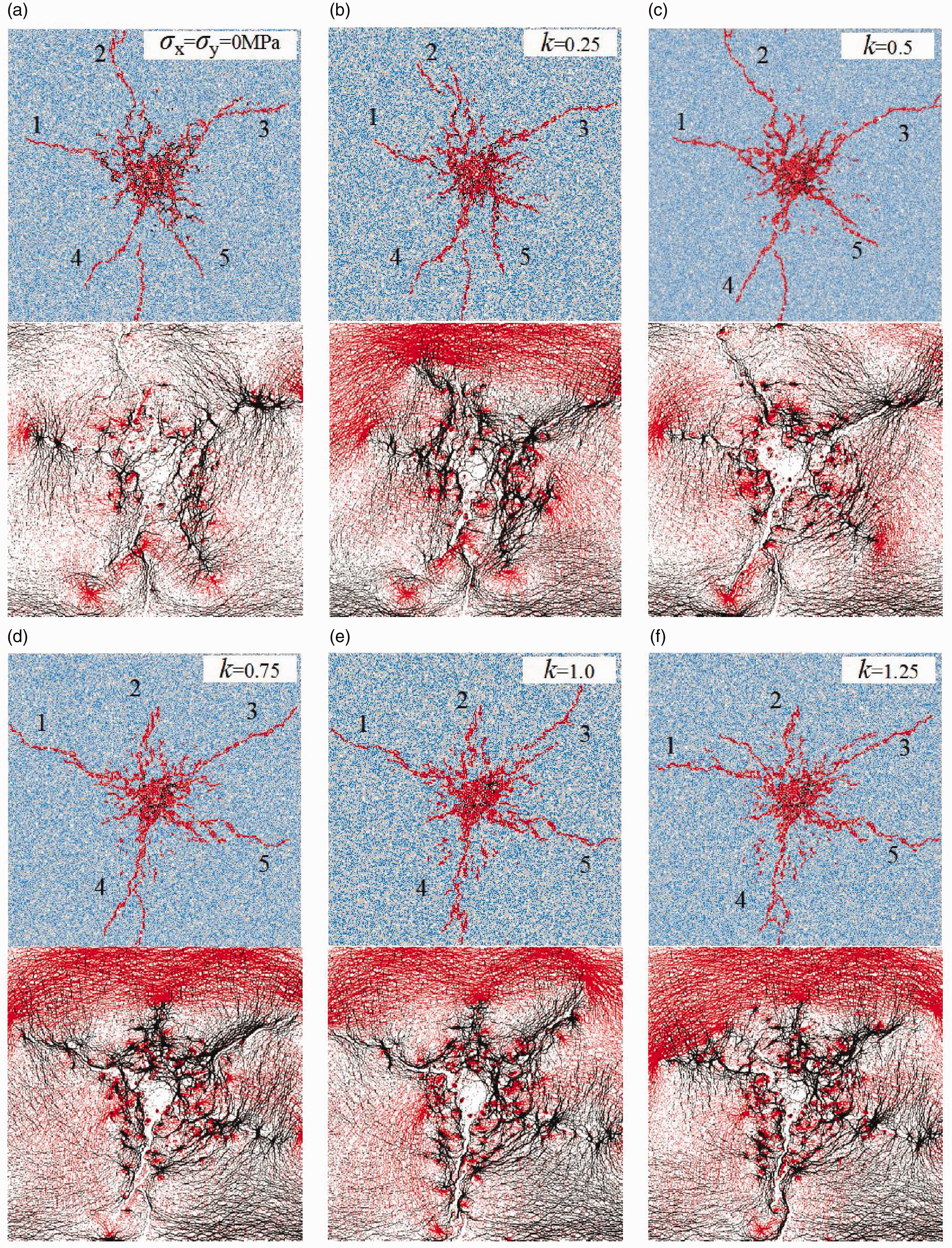
Distribution of coal cracks and force chains induced by phase transition fracturing under different lateral compression coefficients.
When 0.25 ≤ k ≤ 0.75, the main crack 1 and 3 develop in the direction of vertical stress, and the main crack 2 grows in the direction of vertical stress. The extension lengths increase first then decrease. When 0.75 < k ≤ 1.25, the main crack 1 and 3 extend in the direction of horizontal stress, and the main crack 2 does not change both in extension distance and direction. When 0.25 ≤ k ≤ 0.75, the main crack 4 and 5 grow in the direction of horizontal stress. When 0.75 < k ≤ 1.25, the main crack 4 and 5 do not change both in extension distance and direction. Being constrained by the horizontal stress, the forked cracks between the main crack 4 and 5 decreases.
The force chain in Figure 6 shows that the coal damage during phase transition fracturing is a result of tensile-shear composite action. It can be seen from the extension path of the main cracks that at the edge of the fracture, the gas enters along the cracks due to the percussive action of CO2 gas. The force chain of a main crack along the extension path is compression chain, indicating that it is subject to compressive stress. Force chains at the end of main chains and forked cracks are both tensile and compressive, indicating that they are subject to tensile-compressive composite stress, indicating two reasons for permeability enhancement by phase transition fracturing. The first reason is that CH4 is displaced from the coal body, and the second reason is that the particle adhesion inside the coal body is broken, the contact force is weakened, and the stress in the zone is released, and stress on the generated micro-cracks will concentrate, which further increases micro-cracks, providing seepage channels, therefore, the extraction of gas is greatly improved.
Compression variation law
To analyze the propagation law of phase-change CO2 gas in the coal body, the compression variation law was analyzed according to the five monitoring points. The distance from each monitoring point to the fracture holes is 0.25, 0.5, 0.75, 1.0 and 1.4 m, respectively. The time history curve of pressure was recorded by using the measurement circle, as shown in Figure 7.
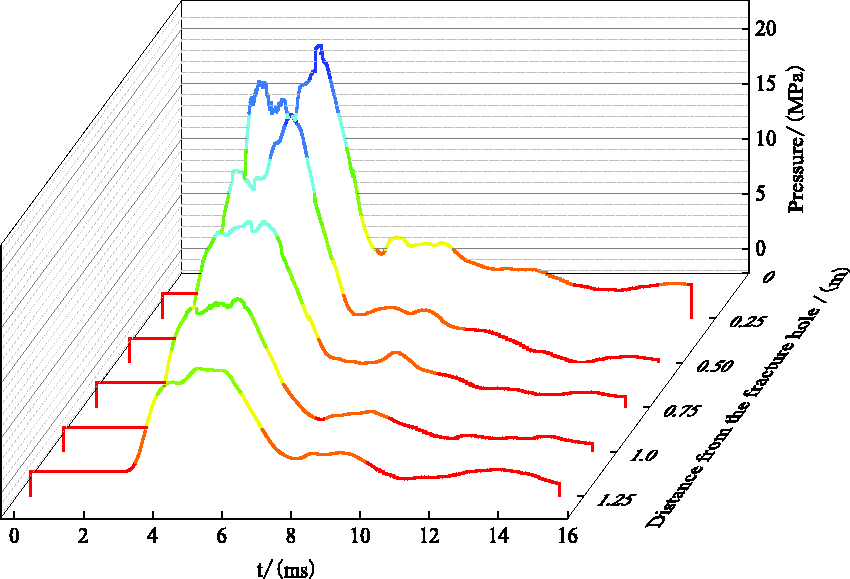
Time history curve of radial compression at monitoring points when k = 1.0.
Since the pattern of time history curves of compression at monitoring points under different lateral compression coefficients is consistent, the time history curves of monitoring points when k = 1.0 was analyzed. At 0–4 ms, the phase transition fracturing starts, the coal body around the fracture hole is in a static equilibrium state. At 4–8 ms, compression rises and then reliefs, in the middle and late stages of pressure rise, the coal body is crushed by high-pressure CO2 gas to generate a certain number of micro-cracks, and the peak pressure at each monitoring point is P0.25 = 22.6 MPa > P0.50 = 20 MPa > P0.75 = 13.7 MPa > P1.0 = 11.2 MPa > P1.4 = 8.74 MPa as the distance from the fracture hole increases, the peak pressure at monitoring points decreases until the end of phase transition fracturing.
Crack propagation law
Since the distribution characteristics of crack number under different lateral compression coefficients is consistent, time history curves of cracks when k = 1.0 was analyzed as shown in Figure 8. It can be seen that the number of tension cracks is much more than the number of shear cracks, indicating that the coal damages are the result of tension-compression composite action. At 5–7 ms, the tension cracks grow fastest. Figure 9 shows cracks of the fracturing-induced coal body under different lateral compression coefficients. As the lateral compression coefficient increases, the number of cracks decreases first then increases. When k = 0.5, the number of cracks is at the lowest level. The force chains in Figure 6 show that the force chains at the fracture in the coal body are finer than those under the other lateral compression coefficients, indicating that the tension-compression composite action is weakest at the crack development stage. Therefore, the ability driving micro-cracks increase is weakest relative to the other conditions.
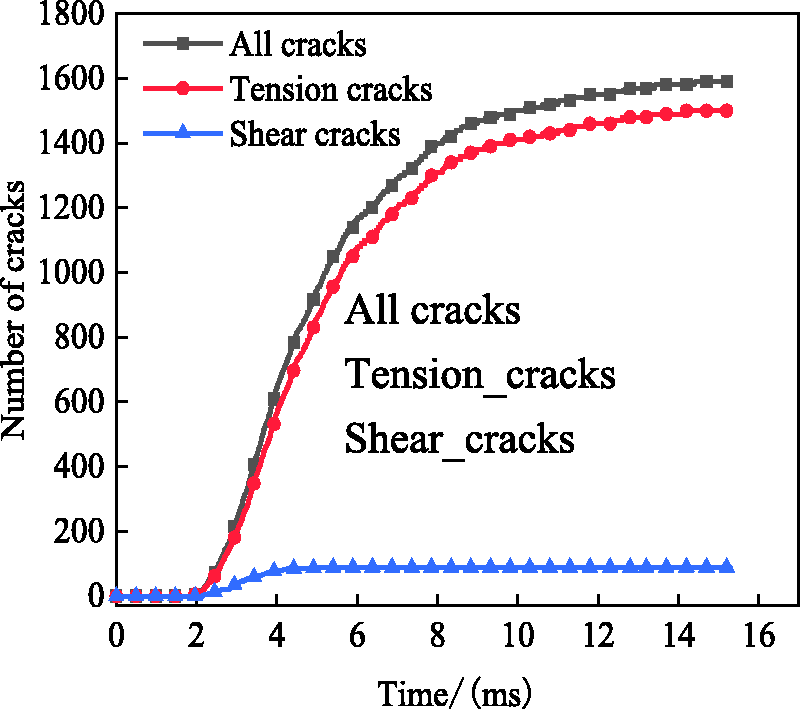
Time history curve of cracks when k = 1.0.
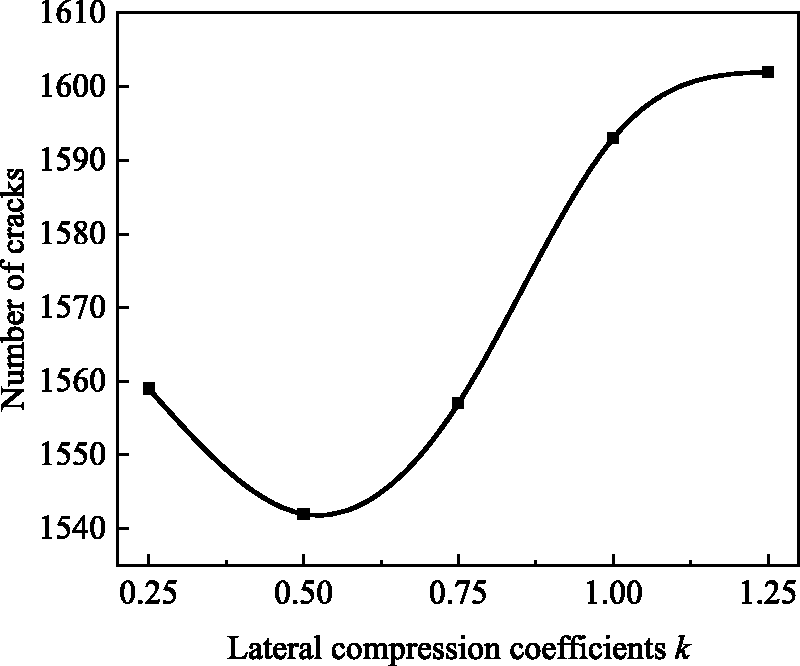
Cracks in the coal body induced by phase transition fracturing under different lateral compression coefficients.
Discussion
Studying the distribution characteristics of hoop stress around the fracture hole is conducive to analyze the stress state of the coal body and helps to determine whether the stress value of the coal body exceeds the strength limit, so as to prevent the coal body from being over-crushed and avoid borehole collapse. The main damage form of the coal body induced by CO2 phase transition fracturing is tensile damage, mainly as a result of the combined action of static ground stress and dynamic percussive drilling. Therefore, the hoop stress around the fracture hole σT is the combination of the initial static stress and the fracturing-induced dynamic percussive stress, which can be expressed as (Sun, 2018)

Pd is the initial compressive stress acting on the fracture hole wall by phase transition fracturing, and the attenuation law of the peak value P of the stress wave in the elastic zone is

When the test piece is subjected to the action of σx and σy, according to the elasto-plastic mechanics, the hoop stress distribution around the fracture hole loading in two directions can be expressed as

Convert k = 0.25, 0.5, 0.75, 1.25, and 1.5 to the initial stress to obtain the values of σx and σy. Make μ = 0.2 to obtain the value of α. Substitute P = 22.6 MPa and Pd = 20 MPa into equation (8) to obtain the value of a/r, which is substituted into equation (9) to obtain the hoop stress around the fracture hole during phase transition fracturing. The distribution of the hoop stress is shown in Figure 10.
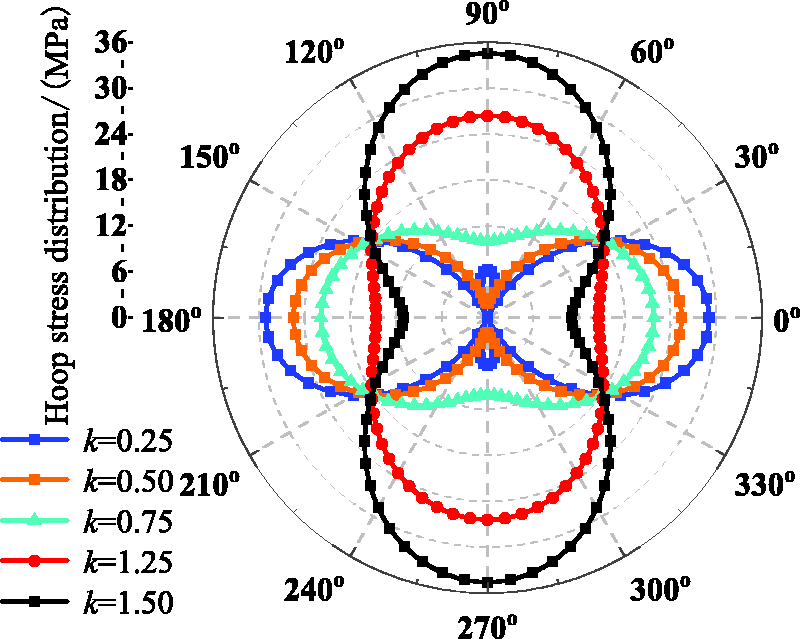
Hoop stress distribution around the fracture hole.
From the figure, the difference between hoop stresses when k = 0.5 and k = 1.5 is the largest, that is, when k = 0.5, the load on the coal body is at critical, and the coal body is damaged by the tension-compression composition action to generate cracks. As the stress wave spreads, the cracks further develop and extend. When k = 1.25 and k = 1.5, the overall hoop stress is distributed in a pattern of a vertical “peanut”, when k = 0.25, k = 0.5 and k = 0.75, the overall hoop stress is distributed in a pattern of a horizontal “peanut.” The pressure of fracturing can be predicted according to the hoop stress distribution, and then the amount of liquid loaded at site can be adjusted.
The preliminary crack propagation pattern and theoretical calculated value of hoop stress were obtained, however, it provides a practical method and idea to study the crack propagation characteristics under different lateral compression coefficients. The further plan is to study the mathematical characterization methods for analyzing crack number and macroscopic and microscopic damages, to establish the quantitative relationship with extraction concentration, and to develop a new hole layout process according to the crack propagation path, in order to guide on-site permeability enhancement by liquid CO2 phase transition fracturing.
Conclusion
By analyzing the mechanism of permeability enhancement induced by CO2 phase transition fracturing, crack propagation in the coal body under different lateral compression coefficients was studied with numerical simulation, distribution characteristics of hoop stress of fracturing induced coal body was calculated according to theories, and the main conclusions are as follows:
Micro-cracks generated by coal damages induced by CO2 phase transition fracturing are distributed radially and form five main cracks in a pattern of “flame.” The coal damages during phase transition fracturing are a result of tension-compression composite action, where internal particle adhesion is broken and contact force is weakened to produce micro-cracks. While the continuous development of cracks is the result of compressive stress in the concentrated area releasing to the surrounding units. The main crack formed above the fracture hole grows in the direction of vertical minimum initial stress, and the main crack below the fracture hole develops in the direction of horizontal initial stress. As the lateral compression coefficient increases, the propagation distance of the second main crack no longer changes until it decreases to a certain length. The crack propagation in the coal body mainly happens in the middle and late stages of pressure rise and the initial stage of pressure relief. The pattern of time history curves of pressure at monitoring points is obtained through numerical simulation. As the distance from the fracture hole increases, the peak pressure loaded on a monitoring point decreases, and the micro-cracks produced are mainly crack_tension type. Plenty of micro-cracks are generated near the fracture hole in the fracture compaction zone, and the main cracks formed in the fracture propagation zone will develop under the action of hoop stress. The hoop stress in the fracturing-induced coal body is distributed in a pattern of “peanut.” The theoretically calculated value of hoop stress is the smallest at k = 0.5, while the theoretically calculated value of hoop stress is the largest at k = 1.5. The compression formed by the fracturing-induced coal body can be predicted according to the hoop stress distribution. Then the amount of liquid at site is adjusted to obtain an ideal permeability enhancement.
Supplemental Material
sj-pdf-1-eea-10.1177_01445987211015367 - Supplemental material for Mechanism research on crack propagation in coal induced by CO2 phase-transition fracturing under different lateral compression coefficients
Supplemental material, sj-pdf-1-eea-10.1177_01445987211015367 for Mechanism research on crack propagation in coal induced by CO2 phase-transition fracturing under different lateral compression coefficients by Qingsong Li, Jinlei Fu, Xianwei Heng, Xiaoqian Xu and Shu Ma in Energy Exploration & Exploitation
Footnotes
Acknowledgements
The authors also gratefully acknowledge the helpful comments and suggestions of the reviewers, which have improved the document.
Declaration of conflicting interests
The author(s) declared no potential conflicts of interest with respect to the research, authorship, and/or publication of this article.
Funding
The author(s) disclosed receipt of the following financial support for the research, authorship, and/or publication of this article: This work was supported by the Science and Technology Foundation of Guizhou Province ([2019]1189, [2019]1426), the Guizhou Province High-level Innovative Talent Training Program Funding Project ([2019]5675) and the Guizhou Province Science and Technology Support Program Funding Project ([2020] No. 2Y056).

References
Supplementary Material
Please find the following supplemental material available below.
For Open Access articles published under a Creative Commons License, all supplemental material carries the same license as the article it is associated with.
For non-Open Access articles published, all supplemental material carries a non-exclusive license, and permission requests for re-use of supplemental material or any part of supplemental material shall be sent directly to the copyright owner as specified in the copyright notice associated with the article.
