




Abstract
A fluid inclusion petrographic and microthermometric study was performed on the sandstones gathered from the Yanchang Formation, Jiyuan area of the Ordos Basin. Four types of fluid inclusions in quartz can be recognized based on the location they entrapped. The petrographic characteristics indicate that fluid inclusions in quartz overgrowth and quartz fissuring-I were trapped earlier than that in quartz fissuring-IIa and fissuring-IIb. The homogenization temperature values of the earlier fluid inclusions aggregate around 80 to 90°C; exclusively, it is slightly higher in Chang 6 member, which approaches 95°C. The later fluid inclusions demonstrate high homogenization temperatures, which range from 100 to 115°C, and the temperatures are slightly higher in Chang 9 member. The calculated salinities show differences between each member, including their regression characteristics with burial depth. Combining with the vitrinite reflection data, the sequence and parameters of fluid inclusions indicate that the thermal history of the Yanchang formation mostly relied on burial. Salinity changes were associated with fluid-rock interaction or fluid interruption. Hydrocarbon contained fluid inclusions imply that hydrocarbon generation and migration occurred in the Early Cretaceous. The occurrence of late fluid inclusions implied that quartz cement is a reservoir porosity-loose factor.
Keywords
Introduction
Fluid inclusions are micro-scale samples of fluids, which were trapped during the evolution of sedimentary basins, and can be used to identify the composition of fluids associated with diagenetic and post-diagenetic processes (e.g. Conliffe et al., 2017). Fluid inclusions could be revised depending on the geological events they undergone after entrapment. However, the confined burial processes preferentially keep them original. These undisturbed fluid inclusions held the pore fluid where the inclusions were trapped throughout the geological history steadily. Consequently, the geological information hidden in these undisturbed fluid inclusions can be used to reveal the geothermal and geochemical environments when the entrapment occurring (e.g. Dolníček et al., 2012; Karim et al., 2012; Osborne and Haszeldine, 1993; Parnell et al., 1996; Rossi et al., 2002). Thus, the evolution processes of sedimentary rocks can be re-established by systematical research of fluid inclusions.
Volumetrically, quartz cement is the most important diagenetic phase in buried sandstone (Anovitz et al., 2015; Bjørkum et al., 1998; Robinson and Gluyas, 1992; Taylor et al., 2010). Much effort has been dedicated to understanding the quartz precipitation in burial sandstones (e.g. Hiatt et al., 2007; Marchand et al., 2001; Milliken et al., 2016; Robinson and Gluyas, 1992; Robinson et al., 1992; Worden et al., 1998). Fluid inclusions occur in quartz cement abundantly companied by the diagenetic events of quartz growth or cementation. The investigation of using the high-resolution microscope to determine the sequence of the quartz cementation can clarify the sequence of the fluid inclusion simultaneously. These substantially support the researches of geothermal and geochemical environments evolution and quartz precipitation in burial sandstone.
The Ordos Basin has undergone continuous depression in Triassic as an inland lake before it starts uplifting at the end of the Early Cretaceous (Ren et al., 2007). The stable sedimentation accretes thick clastic rocks, the Yanchang Formation, which has been subdivided into ten members (Chang 10 to 1 from bottom upward). The basin evolution and its thermal history has been addressed by modeling (e.g. Chen et al., 2006; Kuang et al., 2004; Ren, 1996; Ren et al., 1994, 2007, 2017; Ren and Zhao, 1997), which shows the general burial history of the Ordos Basin. The Chang 7 member, which has abundant lacustrine mudstones, dominated the petroleum sources with high quality of hydrocarbon generation (e.g. Xi et al., 2008; Yang et al., 2013, 2016; Yang and Zhang, 2005; Zhang et al., 2006). The Chang 6 member above, and the Chang 8, 9 members blow it are the main reservoirs in the Yanchang Formation, which generally presenting low porosity and permeability (e.g. Lan et al., 2014; Li et al., 2016; Zhou et al., 2016; Zhu et al., 2015). The reservoir qualities have been addressed by many researchers and concluded that it’s dominated by compaction and cementation (e.g. Luo et al., 2006; Zhang et al., 2017; Zhou et al., 2016). However, the coupling evolution of the thermal environment, reservoir quality, and hydrocarbon accumulation is still unclear. This paper addressed four members (from Chang 9 to 6) in the Jiyuan area to investigate the hydrothermal environment that these formations have undergone and to reveal the diagenetic events and hydrocarbon recourses using fluid inclusion and vitrinite reflectance data.
Geological setting
The Ordos Basin is located in northern China and covers an area of approximately 37 × 104 km2 (Figure 1(a)). It ranks the second largest sedimentary basin in size and has the highest hydrocarbon potential in China (Dai et al., 2016). Above the Archean and Proterozoic crystalline basement rocks, deposited a series of sedimentary rocks (Dai et al., 2016; Wang, Sandvol, et al., 2014). In the early Paleozoic, the Ordos Basin was covered by shallow marine, and carbonate developed immensely in the tectonic environment of the Craton margin. This situation was transformed by the later Paleozoic, which before the basin undergone depression as an inland basin. Indonesian movement at the end of the Paleozoic entered the basin into the inland rifting and subsiding period (Chen et al., 2006). The orogeny in the west and south of the basin led to rapid subsidence in the southwest, initiating from the beginning of the Mesozoic. The orogeny shaped the morphology of the basin higher in the northeast and lower in south and west, which determined steady deposition in the southwest (from Guyuan to Huanxian) of the basin in the Triassic (Wang, 2017; Yang, 2002) (Figure 1(a)), and the Yanchang Formation was developed in the Late Triassic.
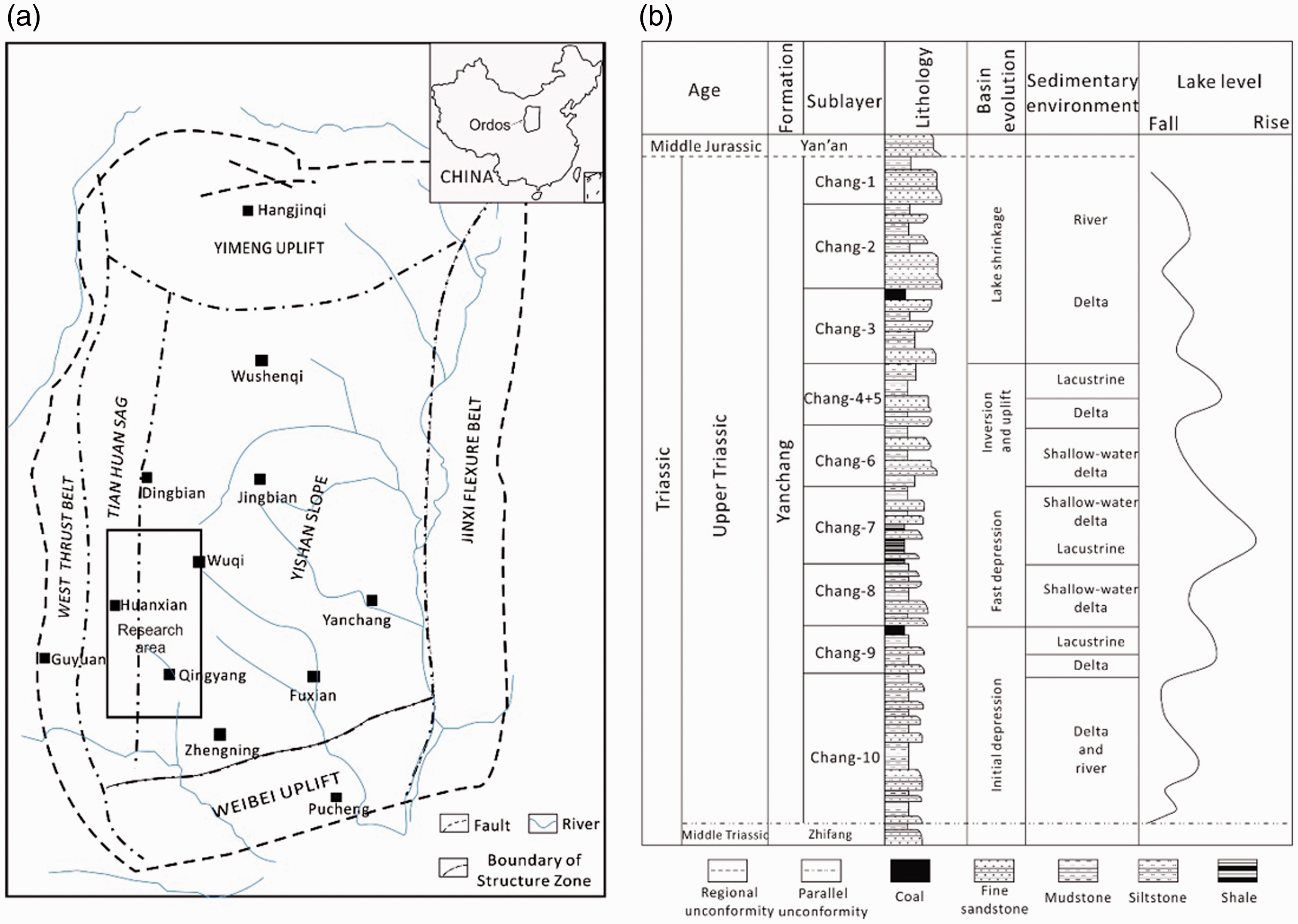
(a) The schematic diagram of the tectonic setting of the Ordos Basin and the location of the research area. (b) A diagram of stratigraphy, sedimentary log, sedimentary environment interpretation, and lake level changes of the Yanchang Formation.
Slightly uplift occurred at the end of the Triassic, driven by the Yanshan movement. The uplift caused erosion, which wiped Chang 1, Chang 2, and partial Chang 3 members in the southwest of the basin. However, the uplift didn’t change the tectonic regime generally, the subsidence and deposition occurred subsequently. Cyclic tectonic movement uplifted the basin several times in the Jurassic, which led to erosion and unconformable depositions, but the general subsidence brought the strata going deeper until the end of early Jurassic, then the last stage of the Yanshan movement uplifted the basin gradually (Chen et al., 2006; Ren et al., 2007; Yang, 2002). During the Cenozoic, several grabens developed around the Ordos basin (Ritts et al., 2009; Wang, Sandvol, et al., 2014). In present, the basin can be divided into six tectonic units: the Yimeng Uplift, Western Thrust Belt, Tianhuan Sag, Yishan Slope, Jinxi Flexure Belt, and the Weibei Uplift (Figure 1(a)). The study area is located in the southwest part of the basin across the Tianhuan Sag and Yishan Slope (Figure 1(a)). Faults and folds restrained the margins of the basin, and the principal part of the basin dips to the west gently (e.g. Zou et al., 2012).
The evolution of the Ordos Basin during the Paleozoic-Mesozoic is divided into three stages (Yang et al., 2005). (1) From Cambrian to Early Ordovician, the basin was occupied by shallow-marine and tidal-flat as a part of the craton basin margin; (2) From Middle Ordovician to Middle Triassic, it was surrounded by convergent margins, and the south of the basin was mainly dominated by thinly bedded marine sediments; and (3) From Late Triassic to Early Cretaceous, it transformed into a complete intraplate basin by the collision and convergence between the North and South China blocks, the Qiangtang block, and the Eurasian plate. The basin underwent a transition from an open marine environment to a non-marine lacustrine environment (Yang et al., 2005; Zou et al., 2012).
The Yanchang Formation, which developed in the Upper Triassic, was subdivided into ten members (Chang 10 to Chang 1 from bottom upward), and experienced a complete cycle of lake development: the initial formation and development stage (Chang 10 to Chang 8); peaking stage (Chang 7 to Chang 4 + 5) and declining stage (Chang 3 to Chang 1) (Xu et al., 2016; Zou et al., 2008). The maximum water level was reached during Chang 7 period, and the deepest part of the lake was located in the southwest and partly northeast (Xu et al., 2016). Siliciclastic sediments composed the Yanchang Formation, including fluvial, delta, debris, lacustrine sediments and others (Figure 1(b)), which accreted for more than 3,000 m (approximately 10,000 ft) in the southwest and about 1,000 m (approximately 3,200 ft) in the east of the Ordos Basin (Zhou et al., 2016). Shallow-lacustrine sand-rich deltas and associated fluvial developed extensively and form the main reservoir rocks in The Yanchang Formation (Zou et al., 2010, 2012). Chang 9 and Chang 8 members were dominated by fluvial sediments in the study area, which consisted of coarse to medium sand with abundant sedimentary structures (Figure 1(b)). Chang 7 member developed when the lake level abruptly rise (Figure 1(b)). Lacustrine mud and fine-grained delta sediments are predominated in this semi-deep and deep lake settings, forming high-quality hydrocarbon source rocks with an average TOC of 13.75% and a vitrinite reflectance (Ro) in the range of 0.85% - 1.15% (Xi et al., 2008; Yang and Zhang, 2005; Zhou et al., 2016). Regression of the lake started from Chang 6 member, and it was filled by delta and fluvial sediments. Chang 9, Chang 8, and Chang 6 are the main reservoirs in the Yanchang Formation (Figure 1(b)).
Samples and methods
The samples for analysis of fluid inclusions were collected from core intervals from 17 wells. There are seven samples from Chang 6 member, eight samples from Chang 7 member, six samples from Chang 8 member, and one sample from Chang 9 member. The fluid inclusions are hosted in quartz. Cold techniques and ultraviolet-light-sensitive epoxy, which can avoid thermal re-equilibration of fluid inclusion, were used for doubly polished thick sections during the sample preparation.
The measurement of the homogenization temperature of the inclusions follows the general method that O’Reilly et al. (1998) and Zhao et al. (2002) documented. The fluid inclusions first were fund and marked on the thick sections by optical microscope, and then the marked samples will be transported to the microscope equipped with a heating-freezing stage. The petrography of the fluid inclusions, including the shape, size, color, phase, location, sequence, and quality, was identified by using high magnification (200 to 400 magnification). And then the homogenization temperatures were determined by heating the fluid inclusion 5°C/min. The salinity of the inclusions was calculated from ice melting temperature according to the equation of Bodnar (1993). Several fluid inclusions failed to re-nucleate a vapor bubble after heating to the homogenization temperature. This situation even continued after prolonged cooling or standing at room temperature for a long time.
Followed the documentation of Schito et al. (2016), mean random vitrinite reflectance (Ro %) was measured on concentrated organic matter prepared using the traditional HF-HCl method (Robl and Davis, 1993). Samples were first mounted in epoxy resin and polished. Vitrinite reflectance analyses were then performed on randomly oriented grains.
Results
Fluid inclusion petrography
Fluid inclusions could be subdivided into four types based on the location that they were entrapped in the quartz and the sequence that they were entrapped. Two periods of quartz cementation were recognized. In the earlier quartz cementation, the fluid inclusion is developed with (i) quartz overgrowth (Figure 2) and (ii) quartz fissuring (quartz fissuring-I) (Figure 3); and in the later quartz cementation, the fluid inclusions are associated with the fissuring mainly, including that (iii) developed inside of quartz (quartz fissuring-IIa) (Figure 4(a) and (b)), and (iv) traversed the whole quartz grains including the overgrowth part (quartz fissuring-IIb) (Figure 4(c) and (d)). The sequence of the quartz cementation is identified by the spatial relationship between overgrowth quartz and fissuring themselves.
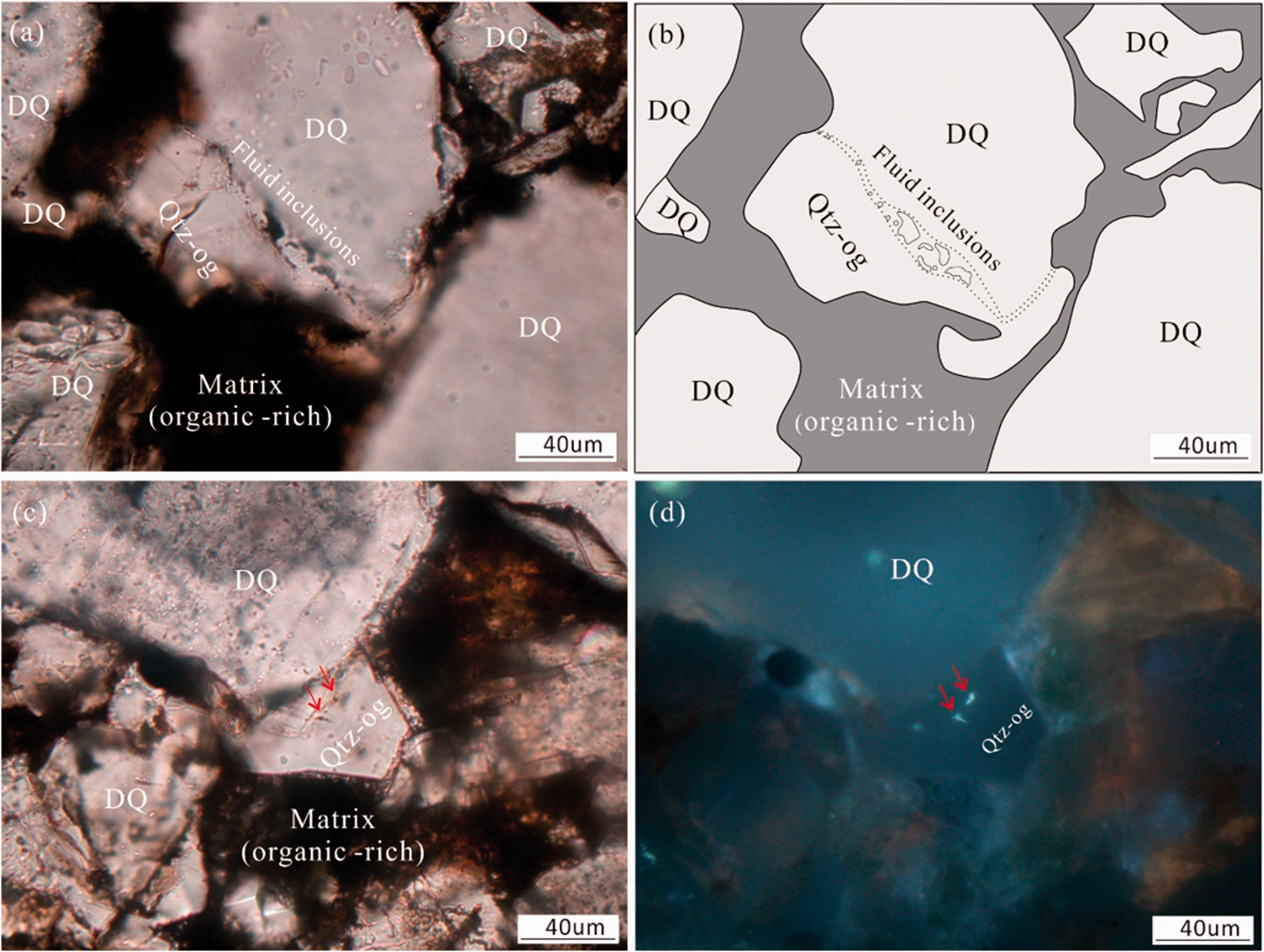
Microphotographs of fluid inclusions entrapped by quartz overgrowth. (a) and (b) Quartz overgrowth (Qtz-og) trapped fluid inclusions that lined along the edge of detrital quartz (DQ); (c) and (d) Hydrocarbon contained fluid inclusions (red arrows pointed) in the quartz overgrowth are illustrated by fluorescence technique.
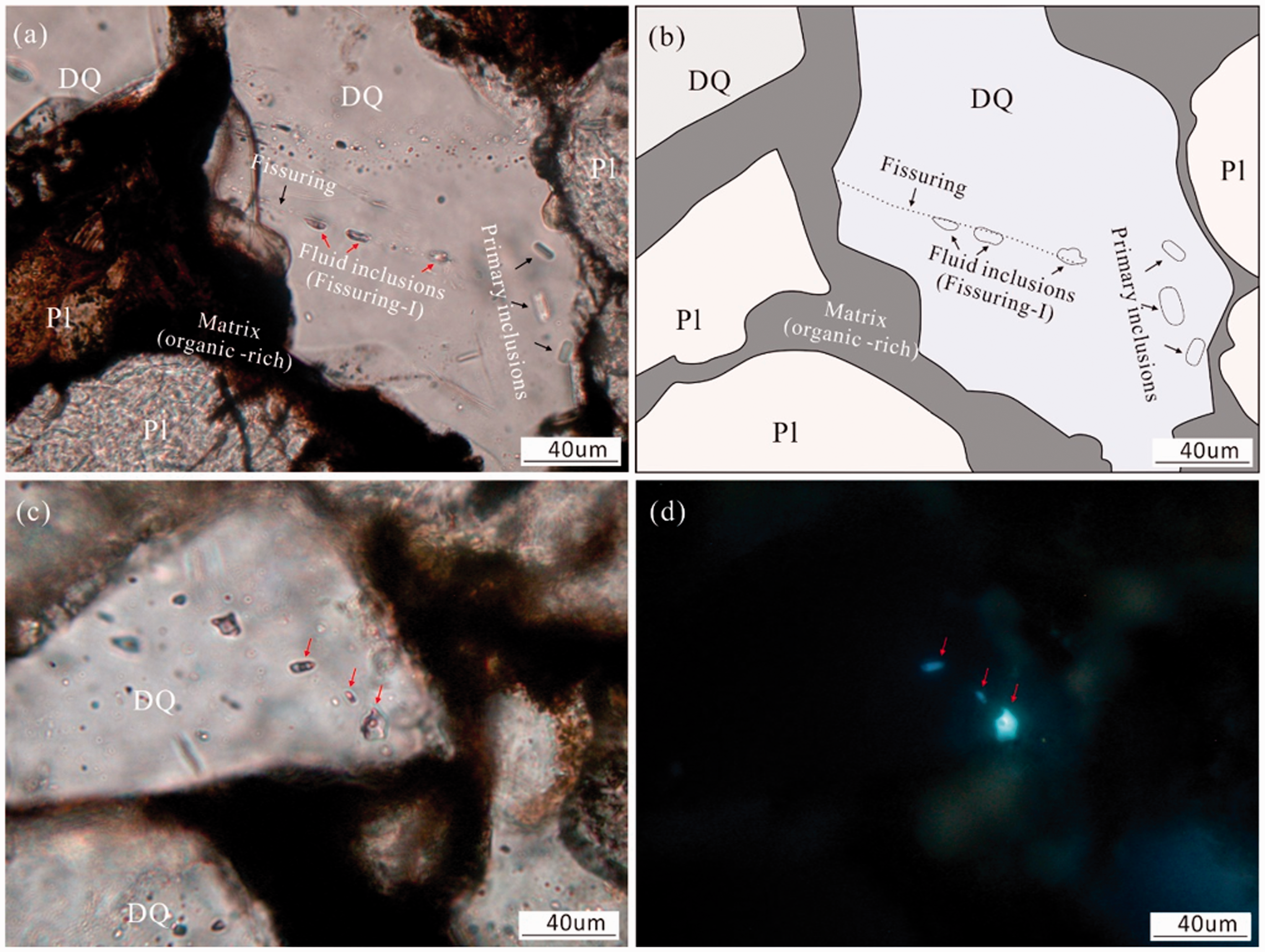
Microphotographs of earlier fluid inclusions entrapped in quartz fissuring (quartz fissuring-I). (a) and (b) The fissuring occurred inside of the detrital quartz (DQ) trapped fluid inclusions. Some primary inclusions were derived from the origin of detrital quartz. The organically enriched matrix filled up the intergranular space of detrital quartz and plagioclase (Pl). (c) and (d) The hydrocarbon contained fluid inclusions (red arrows pointed) sporadically arrayed in the micro-fissuring of detrital quartz (DQ), and show light blue in fluorescence. The little bobs suggest slightly gas including.
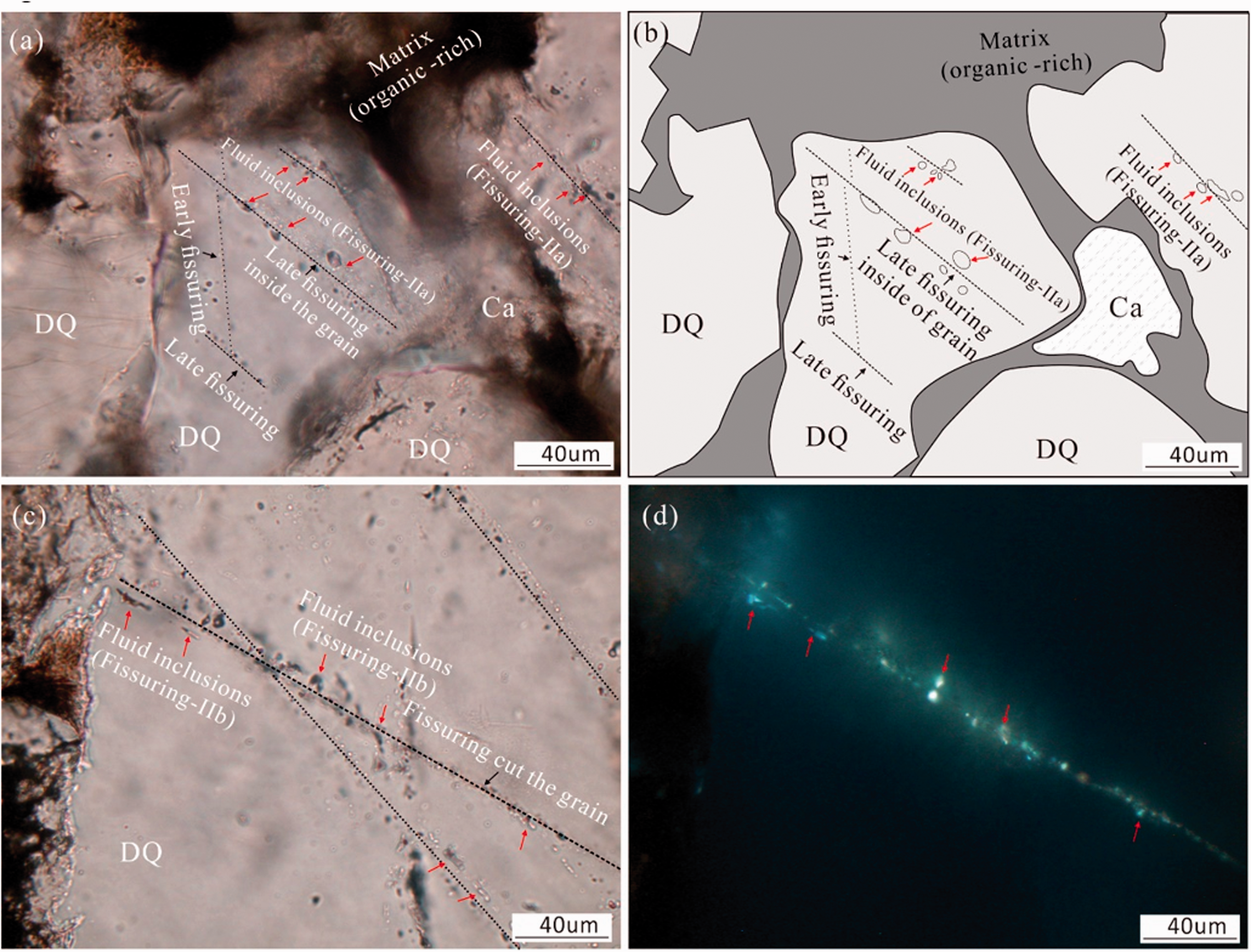
Microphotographs of later fluid inclusions entrapped in quartz fissuring. (a) and (b) Conjugated fissuring inside of the detrital quartz grain (DQ) trapped fluid inclusions (quartz fissuring-IIa), and the fissuring subparallel occurred in the adjacent quartz grains. Organic enriched matrix and calcite cement (Ca) fill in the intergranular pores. (c) and (d) Conjugated fissuring traverse the detrital quartz grain (DQ), and trapped hydrocarbon contained fluid inclusions serially (red arrows pointed, quartz-fissuring-IIb).
Quartz overgrowth in Yanchang sandstone was recognized growing in the eodiagenesis stage. The fluid inclusions entrapped in these quartzes are the earlier ones (Figure 2). Concurrently, the early physical mechanism ruptured while the quartz grains occurred, which entrapped fluid inclusions as earlier ones (Figure 3). These two kinds of earlier fluid inclusions may have different formation times, but hard to be investigated by microscope precisely. Generally, they occurred in the eodiagenesis stage when the temperature is low. The later fluid inclusions were mainly entrapped in the fissuring of quartz, both inside fissuring and traverse fissuring (Figure 4). The late fissuring usually conjugated occurred due to tectonic stress (Figure 4). The crosscutting relationship makes the inside fissuring easily to be distinguished from the earlier fissuring. And the traversing fissuring, particularly the ones that cross the overgrowth quartz, constrained these fluid inclusions to occur later. Commensurately, the relative formation time of these two types of later fluid inclusions is hard to be determined accurately, but they all presented later than the quartz overgrowth and quartz fissuring-I types.
The fluid inclusions are regular in morphology, spreading along the rim of the overgrowth or fissuring. The size of the inclusion is small; the diameters are around several millimeters. The color of the fluid inclusions appears to be dark brown, light yellow, or gray under the microscope. The composition is dominated by liquid water containing hydrocarbon (Figures 2(d), 3(d), and 4(d)). Some of them contain gas slightly (<5%) (Figure 3(c)).
Microthermometry and salinity
In the Chang 6 member, the homogenization temperature value of the earlier fluid inclusions range from 81 to 104°C (about 90°C on average, n = 11) (Figure 5(a), Table 1), most of them are in inside fissuring; their salinity value (eq. NaCl) range from 0.35 to 3.71 wt. % (about 1.61 wt. % on average, n = 11) (Figure 5(b), Table 1). And the homogenization temperature value of later fluid inclusions ranges from 77 to 103°C (about 103°C on average, n = 31) (Figure 5(a), Table 1); their salinity value ranges from 1.06 to 11.61 wt. % (about 5.80 wt. % on average) (Figure 5(b), Table 1). Generally, the homogenization temperature and salinity of the earlier fluid inclusions are relatively lower than the later ones.
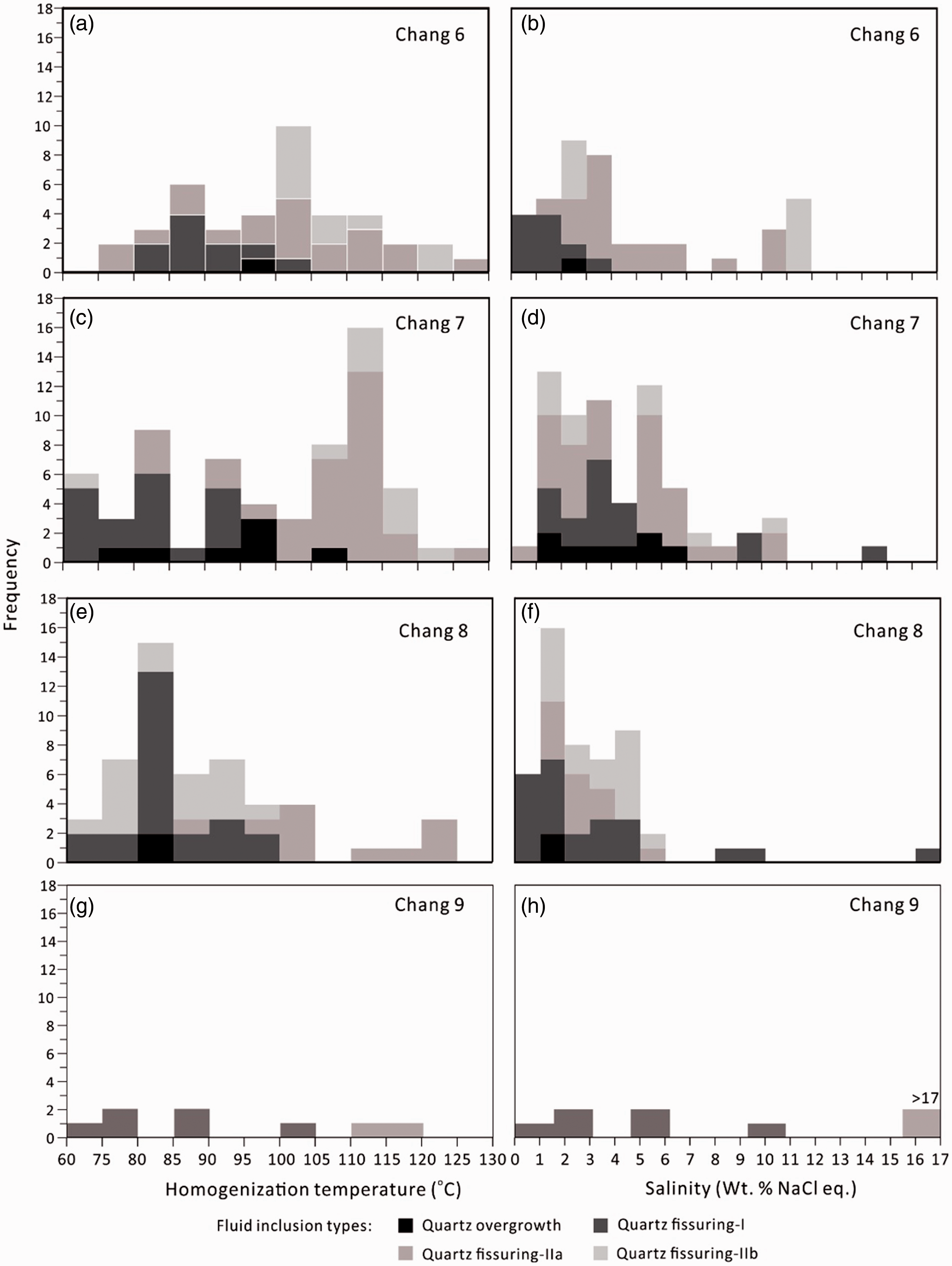
Histograms illustrate the statistic distributions of the homogenization temperature and salinity value in Chang 6 to 9 members. (a), (c), (e) and (g) Statistic result of the homogenization temperature value of the fluid inclusions in quartz in Chang 6 to Chang 9 members. (b), (d), (f) and (h) Statistic result of the salinity of the fluid inclusions in quartz in Chang 6 to Chang 9 members.
The homogenization temperature and salinity data of the fluid inclusions from the Chang 6 to Chang 9 members in the Jiyuan area, Ordos Basin.
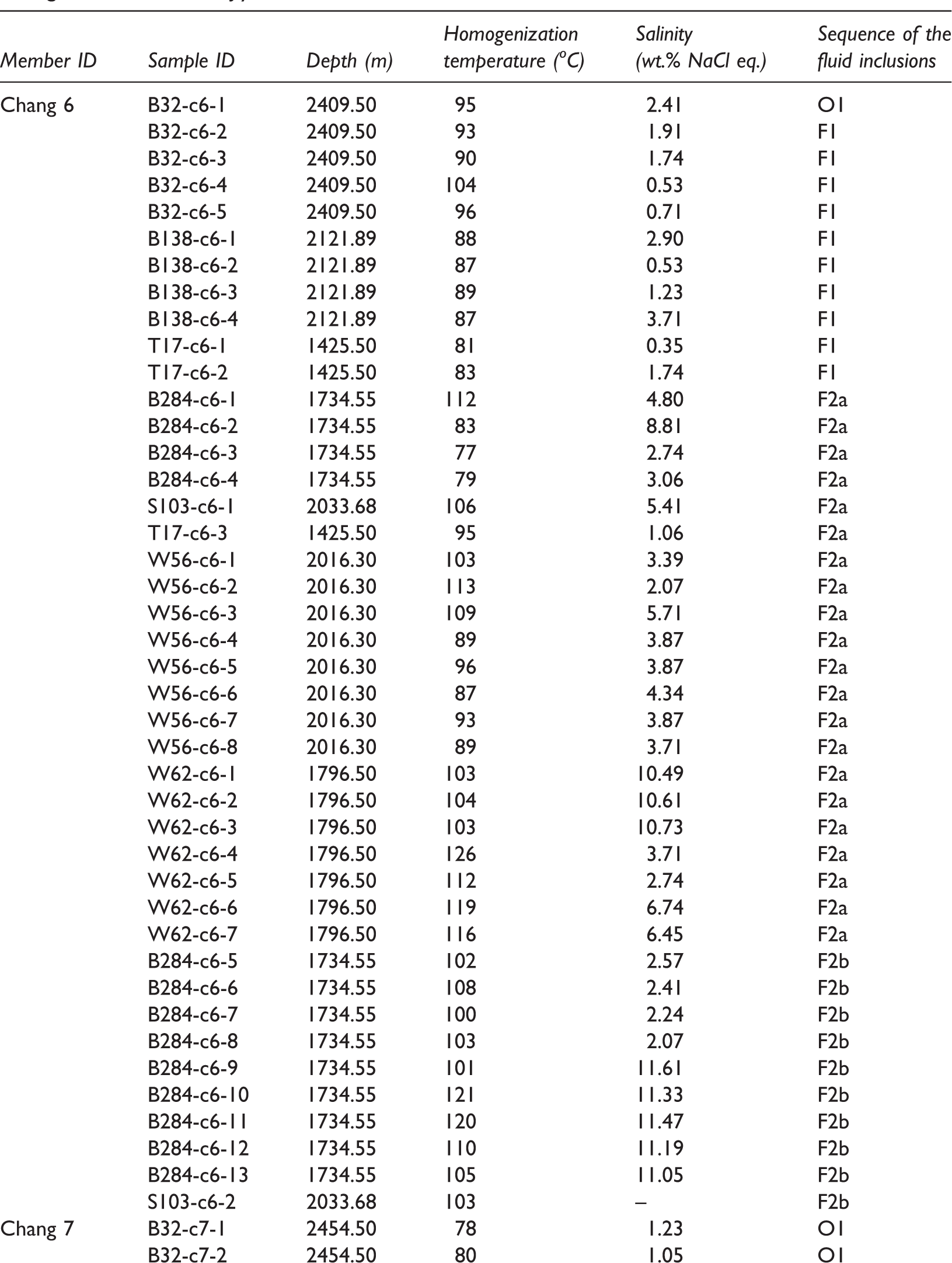
O1: quartz overgrowth; F1: quartz fissuring-I; F2a: quartz fissuring-IIa; F2b: quartz fissuring-IIb
In the Chang 7 member, the homogenization temperature value of the earlier fluid inclusions ranges from 70 to 105°C (about 87°C on average, n = 24) (Figure 5(c), Table 1); their salinity value ranges from 1.05 to 14.77 wt. % (about 4.55 wt. % on average, n = 24) (Figure 5(d), Table 1). The homogenization temperature value of later fluid inclusions ranges from 71 to 125°C (about 104°C on average, n = 40) (Figure 5(c), Table 1), and their salinity value range from 0.88 to 10.98 wt. % (about 4.47 wt. % on average, n = 40) (Figure 5(d), Table 1). The diversity of homogenization temperature values between the earlier fluid inclusions and later ones is distinctive; however, the salinity value doesn’t show obvious diversity in distribution.
In the Chang 8 member, the homogenization temperature value of the earlier fluid inclusions ranges from 72 to 96°C (about 84°C on average, n = 24) (Figure 5(e), Table 1); their salinity value ranges from 0.53 to 16.05 wt. % (about 3.15 wt. % on average, n = 24) (Figure 5(f), Table 1). The homogenization temperature value of later fluid inclusions ranges from 73 to 120°C (about 94°C on average, n = 27) (Figure 5(e), Table 1), and their salinity value is relatively very low, ranging from 1.06 to 5.86 wt. % (about 3.00 wt. % on average, n = 27) (Figure 5(f), Table 1). The difference of the salinity value between the fluid inclusions entrapped in the earlier and later is slight, several high salinity values present in the earlier fluid inclusion.
The samples from the Chang 9 member are limited, only eight fluid inclusions were tested in this study, and six of them are earlier ones. Their homogenization temperature and salinity values vary between 73 to 101°C (about 84°C on average) and 0.53 to 6.3 wt. % (about 2.95 wt. % on average) respectively (Figure 5(g) and (h), Table 1). The two later fluid inclusion samples show relatively high homogenization temperature (114.5°C on average) and salinity (18.03 wt. % on average) (Figure 5(g) and (h), Table 1).
Vitrinite reflectance
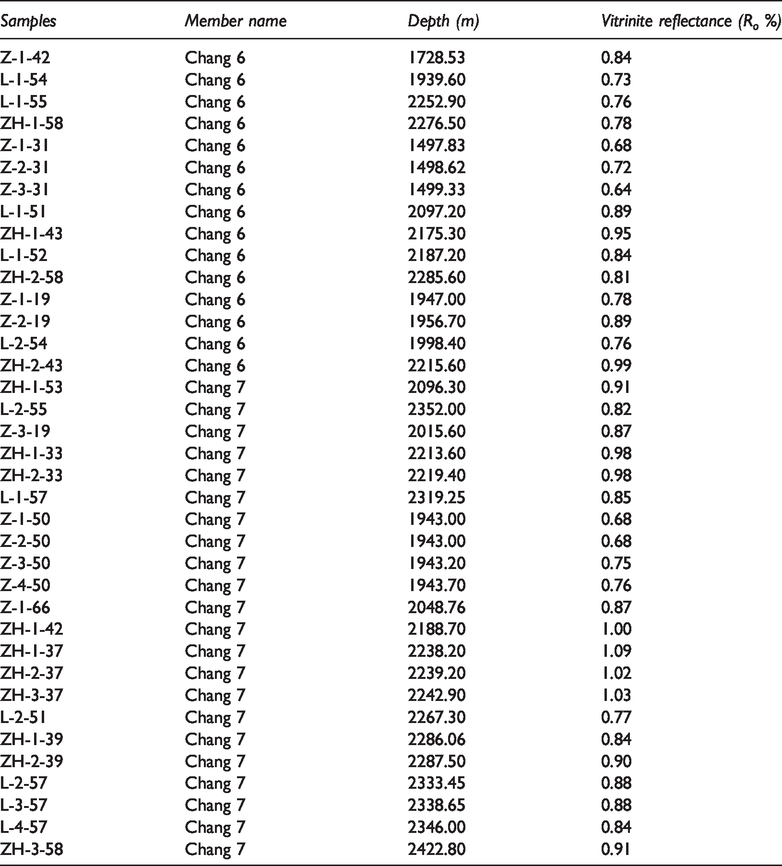
The vitrinite reflectance value of the mudstone ranges between 0.64% and 1.09% (0.85% on average). The burial depth of the samples varies from about 1500 to 2430 m (Figure 6, Table 2).
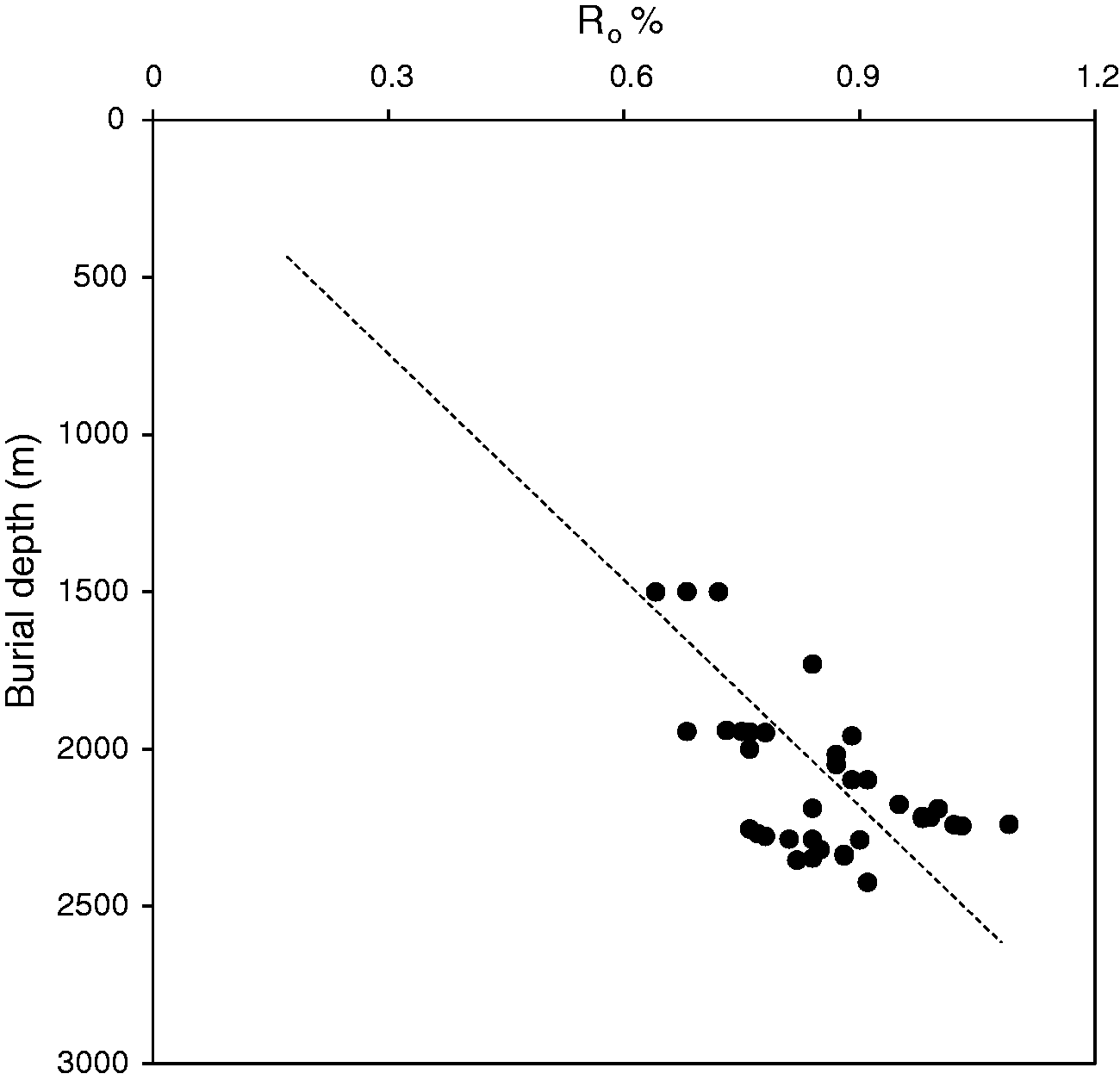
The plot of vitrinite reflectance (Ro) versus burial depth shows that the Ro rise steadily with the burial depth increasing in the Yanchang Formation.
The vitrinite reflectance data of the samples from the Chang 6 to Chang 9 members in the Jiyuan area, Ordos Basin.
Discussion
Geothermal history and fluid flow
Data obtained from the primary fluid inclusions in quartz cement that grew at different stages during diagenesis provides information about the thermal and compositional evolution of the pore fluids, which can be used to constrain the conditions of the cement formation (Karim et al., 2012). However, Fluid inclusions experienced several detail-unknown geological events after entrapped. The changes in the physical environment (i.e. temperature and pressure) can lead re-equilibrium of the fluid inclusions (Osborne and Haszeldine, 1993, 1995). And thus, the homogenization temperature of the fluid inclusions cannot accurately identify which geological event they subjected to. However, the re-equilibrium of the fluid inclusion requests rigid conditions, and this occurred in the burial history difficultly (Robinson et al., 1992; Sterner and Bodnar, 1989). Furthermore, the burial depth of The Yanchang Formation in the research area is from about 1400 to 2500 m, which argues against the likely burial depth that led to the re-equilibrium of fluid inclusion preferentially. And in the data preparation processes, the performance of stretching or leakage of the fluid inclusions were excluded in the database. However, there still has some unavoidable deviation in the data compiling processes, including the risk in recognition and distinguishing the sequence and generation of the fluid inclusions. But the result of the homogenization temperature data was based on statistical analysis, which shows the general temperature that the quartz growth (Walderhaug, 1994).
The formation of fluid inclusions in quartz cement is favored by saline fluids, which preferentially “wet” the quartz surface by higher temperatures, that result in faster growth of quartz overgrowths (Brantley and Voigt, 1989; Lander et al., 2008; Taylor et al., 2010). Therefore, it is unlikely that the fluid inclusions record the full range of conditions under which quartz cement grew; rather, they preferentially formed at times of higher temperatures (Karim et al., 2012). Besides, rapid burial history after the deposition of the Yanchang Formation elevated the temperature expeditiously (Chen et al., 2006; Kuang et al., 2004; Ren, 1996; Ren et al., 1994, 2007; Ren and Zhao, 1997). This narrowed the range of trapping temperature down, and thus, we postulate the homogenization temperature present the formation temperature when the fluid inclusions were entrapped.
Volcanic activity was frequently assaulted when the Yanchang Formation was depositing (Qiu et al., 2010; Wang, Xin, et al., 2014), and therefore lead to an abundance of hydrothermal sedimentation (He et al., 2016). The entrapment sequence of the fluid inclusions indicates that obvious thermal events absent in the burial processes of the Yanchang Formation. The homogenization temperature varies mainly between 80 to 90°C in the earlier fluid inclusions; and 100 to 115°C in the later fluid inclusions (Figure 5(a), (c), and (e)). Comparing to the burial history, these fluid inclusions are trapped before the tectonic reverse and uplifting initiating, and the depth range from 1800 to 2600 m roughly (Figure 7). Quartz cementation in Chang 6 occurred relative later after deep buried, and preferred when the temperature over 90°C; Chang 8 quartz cement grew earlier, slightly over 80°C. The later fluid inclusions occurred in Chang 9 member at a relatively high temperature than that of other members (Figure 7). This suggests that the depth of quartz cementation varies between different members, which indicated that thermal histories between the members were slightly different. However, the general temperature evolution with the burial processes suggests that thermal events were insignificant in the Yanchang Formation, although there has some report shows mineralogical evidence (Li et al., 2012).
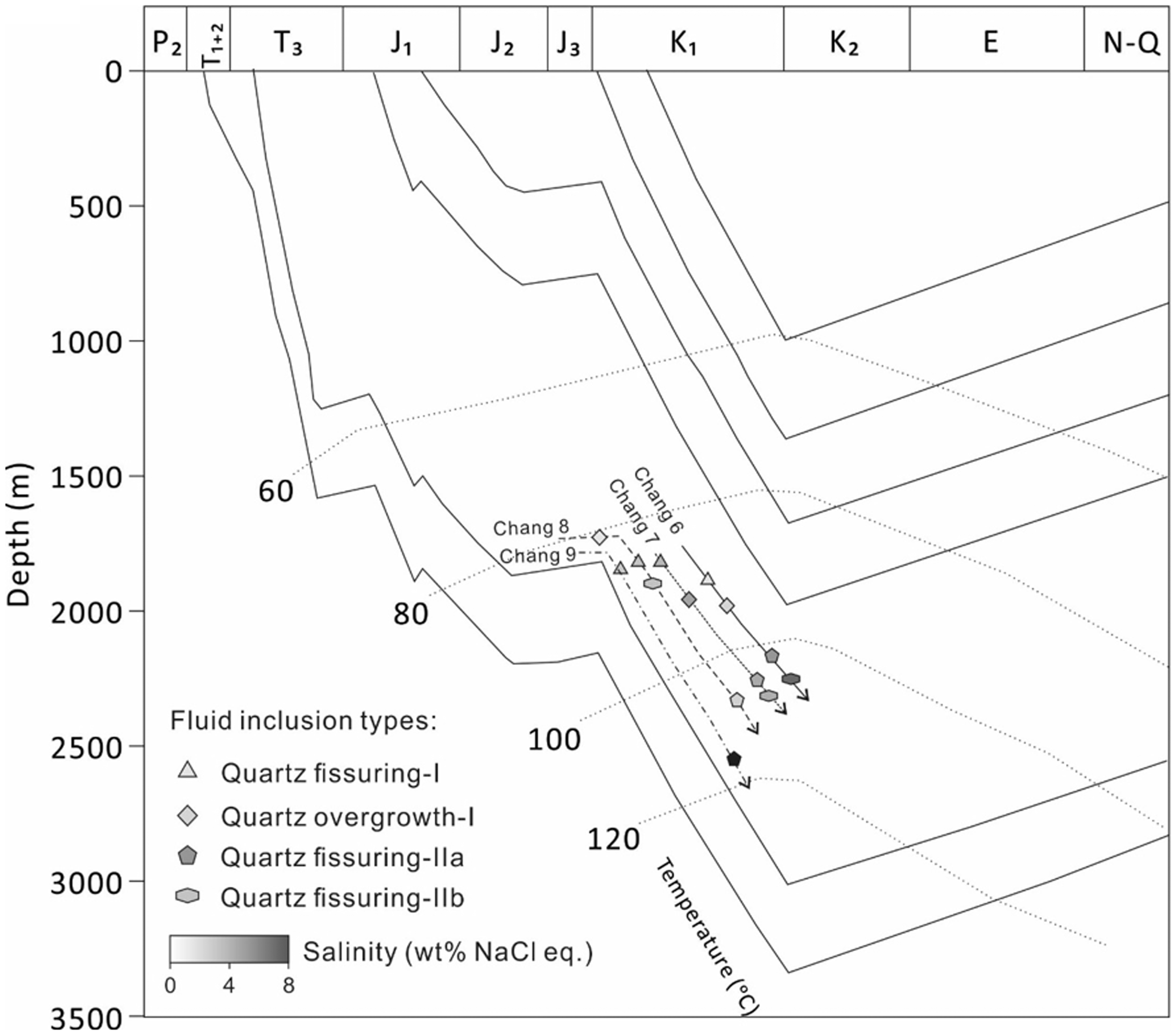
Schematic burial history curves in Shancan 1 well in the northeast of the research area (modified after Ren et al., 2007) showing a preferred interpretation of entrapment temperatures of fluid inclusions. Dashed lines show isotherms, and black arrow show inferred burial history of sandstones with quartz cement; mean salinity is grayscale coded.
The salinity of the fluid inclusion can reveal the origin and migration scenarios of pore waters. The fluids represent pore waters that were formed by long-term water-rock interactions involving initially low salinity fluids (Karim et al., 2012). It is obvious that the fluids in the inclusions did not result from the simple entrapment of lakewater. Burial processes probably increased the salinity of the pore water, the evidence exists in Chang 6 member, where the salinity increase from 1.5 to 7.3 wt. % NaCl from the earlier fluid inclusion (quartz overgrowth-I) to the later ones (quartz fissuring-IIb) (Figure 5(b)). Chang 7 and Chang 8 fluid inclusions show low-salinity (< 5 wt. % NaCl) in both stages (Figure 5(d) and (f)). The modification of primary low-salinity pore fluids by dehydration reactions involving the formation of clays or other hydrooxysilicates may occur, and the possibility of fluid input must also be considered. It is possible that the high-salinity fluid inclusions in Chang 9 member (17 wt. % NaCl on average in later inclusions) (Figure 6) obtained their dissolved salt from the dissolution of other minerals, these processes may relate to the relatively high temperature they formed and thermal processes the rocks have undergone.
Quartz precipitation
The trapped fluid compositions, trapping pressures, and temperatures affect the variations in homogenization temperature individually or as a combination. The compressibility and the likely uniform sedimentary source constrained the homogenization temperature to the condition of formation temperature. Based on the assumption above, the homogenization temperature closely represents trapping temperature. The precipitation of quartz could be revealed by the fluid inclusions entrapped inside. Further, we assumed that the variance of a sample of homogenization temperatures is numerically approximately equal to the variance of trapping temperatures. The range of trapping temperature is approximately equal to that of the corresponding homogenization temperature, even though the absolute value may be different slightly.
The measured homogenization temperature, therefore, reflects the temperature of quartz cementation approximately. According to the burial history, the range of homogenization temperatures of the fluid inclusions suggests that the quartz growth in the Yanchang Formation continued for a long period. The initial quartz cement occurred as very small overgrowths, probably hard to trap fluid inclusions (Burley et al., 1989). Therefore, the quartz precipitation at least initiated before the earlier fluid inclusion occurred, where the depth is about 1700 m at 190 Ma ago (Figure 7). The burial processes continued to the depth of about 2100 and 2500 m, where the late fluid inclusions were trapped in the fissuring of the quartz (Figure 4), this indicates that the quartz precipitation lasted to 130 Ma ago, when the formation approached the deepest burial (Figure 7). Further, we can infer that the quartz precipitation continued when the basin uplifting as the condition of temperature is enough for quartz growth, of cause, it is also controlled by other factors. It should be pointed out that the trapping temperature is higher than the homogenization temperature. Therefore, the range of duration and depth of quartz cementation diverge slightly.
Stoichiometrically, the precipitation and dissolution of quartz have been researched for a long time (e.g. Carr and Tester, 2013; Dove, 1994; Dove and Elston, 1992; Ganor et al., 2005; Kumar and Ghassemi, 2005; Rimstidt, 1997; Rimstidt and Barnes, 1980; Steele-MacInnis et al., 2012; Williams et al., 2015). Scholars were trying to build a model to explain the chemical equilibrium of dissolution and precipitation of quartz under different solution environment (Carr and Tester, 2013; Ganor et al., 2005; Rimstidt, 1997). The temperature is one of the key factors that can control the rate of quartz precipitation and dissolution. The higher temperature will increase the chemical kinetics of quartz dissolution; however, the concentration of SiO4− iron has an opposite function (Dove, 1994; Ganor et al., 2005). The pH of the pore fluid may be decreased by the hydrocarbon generated in Chang 7 Member and migrated into the adjacent members (Chen et al., 2017; Cui et al., 2019; He et al., 2019), which may have a potential advantage for quartz precipitation rather than dissolution. The rate of the quartz precipitation kept in a relatively low magnitude since a high rate of production can create amorphous silica (Ganor et al., 2005; Rimstidt and Barnes, 1980).
Petroleum implication
Chang 7 member is the main source rocks in the Yanchang Formation. Chang 6, Chang 8, and Chang 9 members are the main reservoirs (Li et al., 2011). Deep burial processes matured the source rocks and drove the Ro to a hydrocarbon-potential range (Figure 6, Table 2). The continuous burial propelled the stratigraphy level down and raised the temperature, which is sufficiently prolonged to be expected to have an impact on thermal maturation. After the Cretaceous, the cooling of the basin gradually occurred with the uplift, while Ro stopped rising (Ren et al., 2007). The hydrocarbon fluid inclusions record the time of hydrocarbon generation. The results suggest that the hydrocarbon generation at least started at the end of Jurassic, and sustained to the end of Cretaceous, when the source rocks matured sufficiently involving the value of Ro.
Hydrocarbon fluid inclusions constrain the time of hydrocarbon generation and demonstrate the migration pathways of hydrocarbons in the reservoir rocks by their location (Baron et al., 2008; Conliffe et al., 2017). Growth faulting was active in the southwest Ordos Basin since the Late Jurassic (Chen et al., 2006). The migration of hydrocarbons mainly through the faults from Chang 7 member (source rocks) to the other members (reservoir rocks) (Lan et al., 2014; Xi et al., 2008; Yang et al., 2005, 2013; Zhang et al., 2006). However, the fluid inclusions grew before the faults restrained the time of the hydrocarbon generation and migration, both in the source and reservoir rocks (Figures 2(d), 3(d), and 4(d)). This presumably suggests that the migration of hydrocarbon has initiated before the faults developed in the later Jurassic when the source rocks matured.
The rapid burial destroys the original porosity of the reservoir substantially. The diagenesis processes are the main factors modifying the reservoir quality after deposition (Dutton and Loucks, 2010; Estupinan et al., 2007; Kantorowicz et al., 1987; Zhang et al., 2017). Quartz cementation is one of the porosity-loss factors. However, the quartz precipitation after hydrocarbon emplacement is still under debate. Some researches argue that quartz is water wet and there is always water present in the system, and thus the petroleum emplacement cannot affect the quartz growth (Bjørkum et al., 1998; Walderhaug, 1994). Some others argue that transport rates for aqueous species will be reduced and quartz precipitation rates will therefore be retarded or even be fully stopped (Marchand et al., 2001; Robinson and Gluyas, 1992; Worden et al., 1998). The hydrocarbon fluid inclusions occurred in quartz and were trapped when the hydrocarbon generation and migration suggest that quartz cementation continued after hydrocarbon emplacement (Baron et al., 2008). However, we draw this conclusion circumspectly, because there is no direct evidence shows quartz cementation rates were affected or unaffected by hydrocarbon. But the occurrence of fluid inclusion in the quartz suggests that the cementation continually destroyed the reservoir quality after it deeply buried and hydrocarbon emplaced. And this may be liable for the tight reservoir in the Yanchang Formation.
Conclusion
The thermal characteristics of the fluid inclusions in the quartz grains from Jiyuan area are coincident with the burial thermal history of the Yanchang Formation simulated from well, which implies that the thermal events occurred in the burial history of the Yanchang Formation may have a negligible record by the fluid inclusions in quartz. The variation of salinity of the fluid inclusions depends on various factors. The regressions of salinity and burial depth suggest that the fluid interruption and dehydration reactions occurred in diagenetic processes, particularly in Chang 7 and Chang 8 members. Quartz precipitation continued a long period in the Yanchang sandstones. Evidently, it starts before the buried depth approaching 1700 m. The process lasted until the deepest burial of the basin was reached, which covers about 60 Ma. Presumably, quartz cementation occurred more extensively than we described in this paper. Evidence from fluid inclusion illustrated that the hydrocarbon generation occurred in the Jurassic and Cretaceous, and potential migration took place simultaneously. The tight reservoir may partially be ascribed to the quartz precipitation when the basin was deeply buried, coupling with the hydrocarbon accumulation.
Footnotes
Declaration of conflicting interests
The author(s) declared no potential conflicts of interest with respect to the research, authorship, and/or publication of this article.
Funding
The author(s) disclosed receipt of the following financial support for the research, authorship, and/or publication of this article: This study was supported by the National Natural Science Foundation for Young Scientists of China (Grant No. 41702123). We appreciate the help from the State Key Laboratory of Petroleum Resource and Prospecting for the fluid inclusion analysis, and we also thank the Changqing Oil Company for data supporting.
