




Abstract
To meet the global energy demands, the exploitation of coalbed methane has received increasing attention. Biogeochemical parameters of co-produced water from coalbed methane wells were performed in the No. 3 coal seam in the Shizhuangnan block of the southern Qinshui Basin (China). These biogeochemical parameters were firstly utilized to assess coal reservoir environments and corresponding coalbed methane production. A high level of Na+ and HCO3– and deuterium drift were found to be accompanied by high gas production rates, but these parameters are unreliable to some extent. Dissolved inorganic carbon (DIC) isotopes δ13CDIC from water can be used to distinguish the environmental redox conditions. Positive δ13CDIC values within a reasonable range suggest reductive conditions suitable for methanogen metabolism and were accompanied by high gas production rates. SO42–, NO3– and related isotopes affected by various bacteria corresponding to various redox conditions are considered effective parameters to identify redox states and gas production rates. Importantly, the combination of δ13CDIC and SO42– can be used to evaluate gas production rates and predict potentially beneficial areas. The wells with moderate δ13CDIC and negligible SO42– represent appropriate reductive conditions, as observed in most high and intermediate production wells. Furthermore, the wells with highest δ13CDIC and negligible SO42– exhibit low production rates, as the most reductive environments were too strict to extend pressure drop funnels.
Introduction
Coalbed methane (CBM) is becoming increasingly developed worldwide as an unconventional energy resource, with an increasing number of publications establishing CBM as efficient clean energy source (Baldassare et al., 2014). CBM is trapped in micropore structures of coal reservoirs due to formation pressure, while the coalbed is saturated with groundwater. During extraction of CBM, it is essential to remove aquifer water from the coalbed to lower reservoir pressure. Meanwhile, large volume of water is inevitably produced when CBM is formed. A variety of geochemical processes exist in coal reservoir water. Thus, CBM co-produced water serves as an indicator of these processes it has been subjected to, which could provide valuable information on its evolution (Moore, 2012). Additionally, CBM co-produced water may act as a signature to allow an improved understanding of CBM preservation and enrichment, which can be used as a tool to analyze gas production rates in the processes of CBM exploration (Wu et al., 2018).
The Qinshui Basin is a coal-bearing basin located in southeastern Shanxi in central China, with a long history of coal exploitation predominantly in the southern part of the Qinshui Basin. This region has received increasing interest for the availability of commercially valuable CBM reserve (Wang et al., 2015). The Shizhuangnan (SZN) block is one of the most commercially successful regions for CBM exploitation in the southern Qinshui Basin, where more than 1500 gas wells drilled since CBM exploration and exploitation commenced in 2010 (Zhang et al., 2015). Some studies have concluded that the geochemical signatures of coal reservoir water from the southern Qinshui Basin are similar to those of other important global CBM production regions, with the major characteristics being higher Na+, K+, HCO3– concentrations and lower Ca2+, Mg2+, SO42– concentrations (Cai et al., 2011; Tao et al., 2014). In the study area, previous studies have shown that chemical data from analysis of CBM co-produced water yield valuable information on the geochemistry and evolution of coal reservoir water (Zhang et al., 2015, 2016).
To date, few studies have assessed how geochemistry is affected by microbial mechanisms and identify links between groundwater environments and CBM production in the Shizhuanganan block. In particular, sulfate-reducing bacteria are considered to out-compete methanogens for nutrients in scenarios of sufficient SO42– availability, while methanogens are more active under low SO42– conditions. Sulfate reduction and denitrification via the removal of SO42– and NO3– is performed by the corresponding bacteria under diverse redox conditions (Mayumi et al., 2016). Biogeochemical features are significant parameters that have the potential to infer coal reservoir environments and redox conditions, for estimation of the closure degree of targeted coal reservoirs and effective CBM conservation and production. Therefore, in this study, a full year of water samples were systematically collected at various time points from the No. 3 coal seam in the SZN CBM region of the southern Qinshui Basin. Some major ions and stable isotopes affected by microbia in the water samples were investigated. This allowed analysis of the relationship between biogeochemical features and redox states, with assessment of their potential impact on CBM exploration within the CBM production period.
Geological setting
Structure
The Qinshui Basin is a tectonic Mesozoic basin which has evolved since the Late Paleozoic era in the North China Craton Basin in southeast Shanxi province (China), which is a complex synclinorium basin striking an NNE–SSW trajectory (Du et al., 2019). The southern Qinshui Basin CBM block is divided into SZN, Chengzhuang, Fanzhuang, Panzhuang, Shizhuangbei and Zhengzhuang, covering an area of approximately 23,923 km2 (Figure 1(b)). The SZN block covers an area of approximately 950 km2 and is located in the southern Qinshui Basin region where production accounts for the vast majority (>90%) of total CBM production in the Qinshui Basin (Tao et al., 2014).
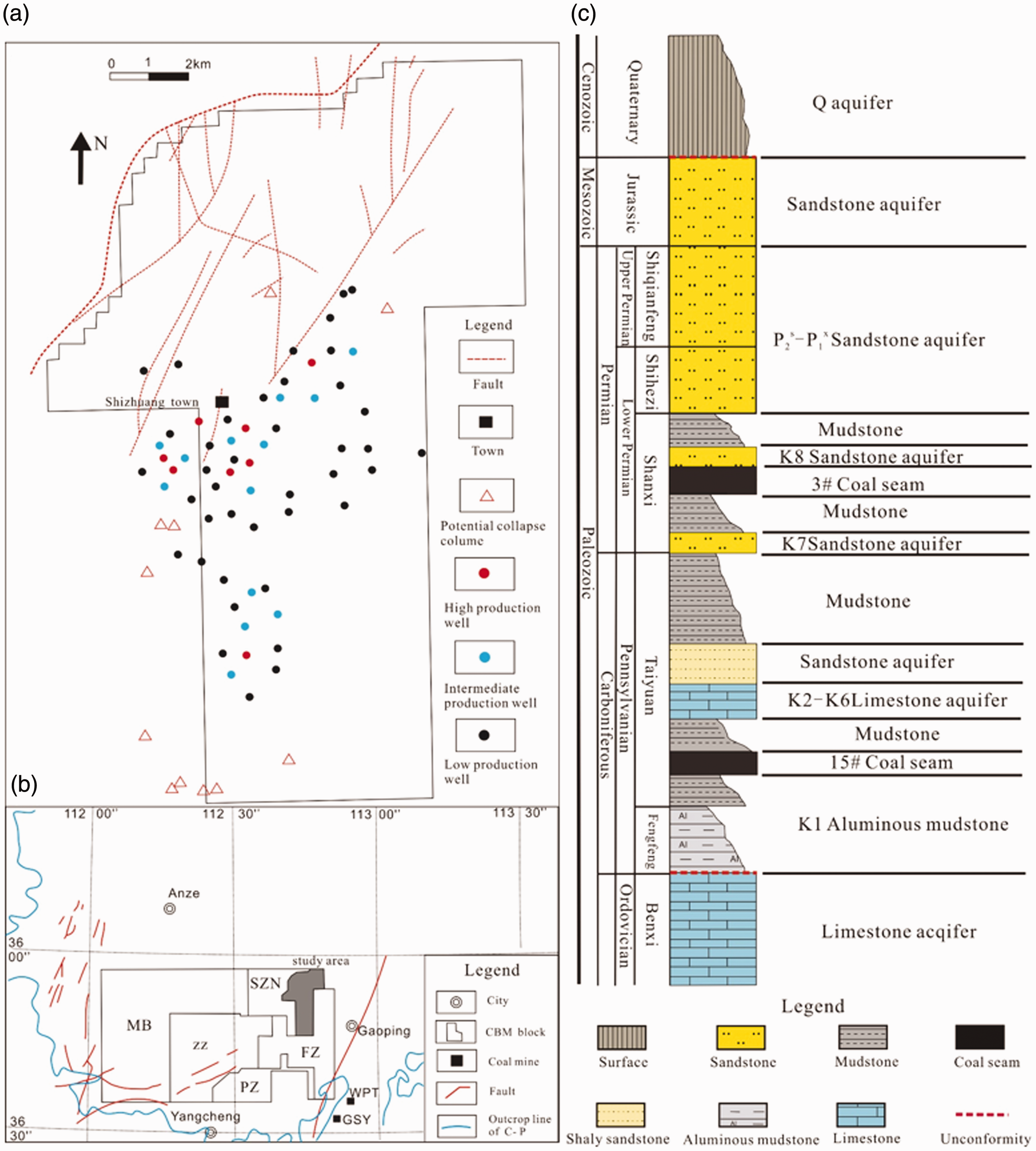
(a) Main structure outline and CBM well sampling distribution in the Shizhuangnan block. (b) The location of the Shizhuangnan block in the southern Qinshui Basin of China (SZN: Shizhuangnan CBM block; FZ: Fanzhuang CBM block; MB: Mabi CBM block; PZ: Panzhuang CBM block; ZZ: Zhengzhuang CBM block). (c) Delineation of the strata and aquifer characteristics for the southern Qinshui Basin.
As shown in Figure 1(c), the strata in the SZN block contains Benxi, Fengfeng, Taiyuan, Shanxi, Shihezi, Shiqianfeng formations, with loose quaternary sediments. In the study area, the No. 3 coal seam from the lower Permian Shanxi formation and the No. 15 coal seam from the upper Carboniferous Taiyuan formation are the major minable coal-bearing formations, with thick continuous lateral coal-bearing seams and relatively stable distributions (Guo et al., 2017).
Hydrogeology
Weather conditions in the study area consist of a temperate continental monsoon climate, with an average annual rainfall of 627 mm and average annual evaporation of 1645 mm. Surface discharge in the study area occurs through bedrock channels of varying sizes, with low flow or dry streams in the dry season and rainfall supplied in the rainy season. The groundwater of strata is supplied from injection of meteoric water in the southern outcrop area of the SZN block (Zhang et al., 2015, 2016).
Various aquifers exist in this region, including the Quaternary aquifer, the T1l-P2sh-P2s aquifer, the P1x-P1s aquifer, the C3t aquifer and the Ordovician aquifer. The No. 3 coal seam is part of the P1x-P1s aquifer formed by weak fractured sandstone, while the No. 15 coal seam is part of the C3t aquifer formed by fractured sandstone and karst-fissured limestone (Figure 1(c)). Generally, the coal aquifers are limited by water resisting layers composed of shale or mudstone. Therefore, these aquifers are separated from other aquifers by aquifuges. The P1x-P1s and C3t aquifers have important roles in storage and exploitation of target gas resources (Cai et al., 2011; Wang et al., 2015).
Coal reservoir for CBM exploitation
In the Shizhuangan block, the No. 3 coal seam is located in the middle-lower part of the Shanxi formation. The CBM seam is a primary mining target due to its continuous distribution and tectonic conditions. The No. 3 coal seam in the north is slightly thicker than in the south, and the depth of the seam in the north is relatively deeper than in the south. The No. 3 coal seam contains semi-bright coal, bright coal and a small amount of calcareous mudstone interbed or mudstone. The average value of reservoir pressure gradient (0.66 MPa/100 m) in the No. 3 coal seam indicates that it is generally an under-pressure reservoir (Zhang et al., 2016).
The SZN block is a synclinal basin, lying south of the Taihang Mountains and bound by the northwestern Sitou arc-shaped normal fault (Figure 1(a)). In general, the Sitou fault exerts a positive influence on gas accumulation due to its sealing capability (Zhang et al., 2015). Hence, the SZN block is a suitable region for CBM exploitation. In this study, it is hypothesized that CBM wells with gas production rates of more than 1000 m3/day are high production wells, while CBM wells with gas production rates ranging from 500 to 1000 m3/day are intermediate production wells, and those with gas production rates less than 500 m3/day are low production wells.
Material and methods
Samples collection
To comprehensively analyze the geochemical characteristics of coal seam water, a total of 61 CBM co-produced water samples were collected from the No. 3 coal seam over three sampling rounds between 2018 and 2019. CBM co-produced water samples were collected within various climatic conditions, with three sample collections performed on sampling days in October 2018, February 2019 and June 2019. All of the selected CBM wells began production before 2013 with a sufficiently stable and relatively long drainage phase.
Hydraulic fracturing with 2% KCl is widely used in the south Qinshui Basin, by which most of CBM wells were disposed before drainage across the study area. CBM co-produced water often exhibits major differences to original formation water, particularly when hydraulic fracturing has been used (Salmachi et al., 2013). The contamination impact of fracturing fluid on CBM co-produced water sample is significant (Fan et al., 2019). Stable and long drainage period was adopted to weaken the contamination influence of fracturing fluid. Zhang et al. (2016) reported that 10 meq/L Cl– concentrations could be considered a cut-off point for evaluation of the degree of fracturing fluid contamination, with Cl– concentrations below 10 meq/L indicating no influence of fracturing fluid on hydrochemical signatures. In the present study, Cl– concentration of all water samples was less than 10 meq/L, suggesting that the effect of fracturing fluid could be ignored. All sampling locations are shown in Figure 1(a) including high, intermediate and low production wells.
Prior to water collection, 5 L sterilized high density polyethylene sampling bottles were flushed three times with the target water. For chemical and isotope analyses, the bottles were filled and sealed with caps, minimizing headspace air without contact pipe opening of CBM wells to avoid contamination during the sampling process. Filtration and acidification of water sample were considered unnecessary due to large capacity and stable drainage of the water flow.
Analytical methods
To assess the hydrochemical behavior of coal seam water across the study area, chemical parameters and isotope compositions were analyzed. For each collected water sample, HCO3– was quantified by acid titration via the Gran-alkalinity titration method. The determination of other cation and anion concentrations was performed using a Perkin–Elmer Optima 5100DV Inductively Coupled Plasma-Optical Emission Spectrometer and a Dionex Ion Chromatograph model 3000 with an AS23 analytical column. δ18O and δD isotopes in the co-produced water were tested by isotope ratio mass spectrometry with a precision of ±1‰ for δD and ±0.2‰ for δ18O. To measure δ13CDIC isotopic values in water samples, CO2 was generated by pre-treatment with phosphoric acid, with an analytical precision of ±0.15‰. Isotope analysis was performed using a Thermo Quest Finnigan Delta Plus XL continuous flow gas ratio mass spectrometer. To determine the isotopic composition of
Results and discussion
Major ion composition and CBM production
The chemical data from CBM co-produced water could provide an effective method for investigating the evolution of groundwater. Several major ions (Na+, Ca2+, Mg2+, K+, HCO3–, Cl– CO32– and SO42– usually account for the vast majority of solutes in coal reservoir water (Owen et al., 2015; Pashin et al., 2014). As shown in Table 1, in the study area, the key geochemical distributions of the main cations and anions were similar to those reported for other CBM production areas, such as the Powder River Basin and San Juan Basin (Flores et al., 2008; Rice et al., 2008). In the study area, the major cation concentrations were ranked in the order: Na+ > Ca2+ > K+ > Mg2+, while the major anion concentrations were ranked in the order: HCO3– > Cl– > CO32– > SO42–. The concentration of total dissolved solid (TDS) was calculated by the sum of major cations (Na+, Ca2+, Mg2+ and K+) and anions (HCO3–, Cl– CO32– and SO42–), ranging from 703.18 to 2270.39 mg/L. Regression analysis shows that TDS is positively correlated to Na+ and HCO3– concentrations, with correlation coefficients of 0.95 and 0.75, respectively (Figure 2).
Sampling arrangement and major parameters assessed in CBM co-produced water from the Shizhuangnan block.

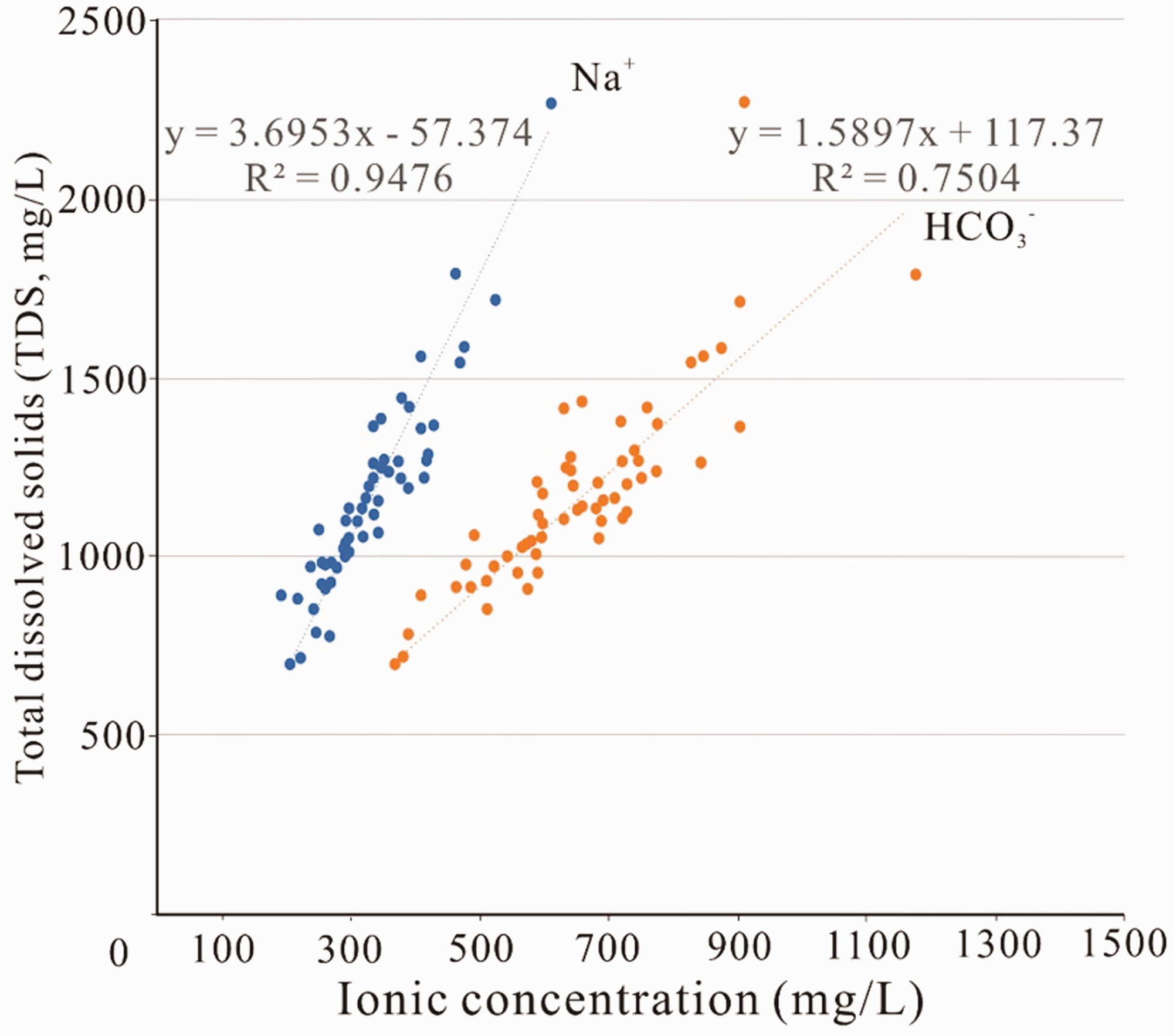
Plot of TDS versus Νa+ and HCO3– concentrations in CBM co-produced water from the Shizhuangnan block.
With groundwater evolution and migration, a variety of chemical reactions influence its compositions (Pan and Wood, 2015). The Na+ concentrations dominate the major cation compounds, ranging from 206.94 to 608.80 mg/L. The main Na+ source in coal reservoir water may be dissolved from silicate and other minerals. In addition to mineral dissolution, secondary processes, such as ion exchange between Ca2+ or Mg2+ and Na+, can cause further enrichment of Na+ (Warner et al., 2013). The concentrations of Ca2+ and Mg2+ were found to range from 0.86 to 6.38 mg/L and from 0.51 to 4.32 mg/L, respectively. Ca2+ and Mg2+ are likely to originate from the dissolution of carbonate and associated minerals, and Ca2+ and Mg2+ concentrations are controlled by limits of inorganic carbonate precipitation and cation exchange in anoxic coal reservoir environments (Jian and Lu, 2017). The HCO3– concentrations account for a majority of anion compounds, ranging from 368.54 to 1177.86 mg/L. Enrichment of HCO3– potentially occurs through organic matter breakdown, methane oxidation and carbonate dissolution. Generally, Cl– concentrations range from 39.03 to 256.04 mg/L, which may originate from evaporite in coal aquifers (Cheung et al., 2010). SO42– concentrations likely originate from dissolution of silicate and gypsum minerals, and sulfide mineral oxidation like pyrite near surface could increase the amount of SO42– in coal reservoir water. It is noted that SO42– is progressively removed from coal seam water through sulfate reduction by sulfate-reducing bacteria (Glossner et al., 2016). In the present study, the SO42– concentrations were particularly low, ranging from 0 to 7.62 mg/L. Hence, the joint effects of various geochemical activities such as biological activity, cation exchange, precipitation and dissolution of some minerals result in the eventually chemical signatures.
Based on previous studies, higher HCO3– and Na+ concentrations and lower SO42–, Ca2+ and Mg2+ concentrations are commonly observed in coal reservoir water from CBM wells with high gas production rates. Generally, the concentrations of SO42–, Ca2+ and Mg2+ in recharge and runoff area are relatively higher than in stranded area, while concentrations of HCO3– and Na+ are higher in stranded area. The stranded area implies certain closed conditions with higher pressures, which are favorable for CBM conservation and exploitation (Tao et al., 2017). Although high CBM production rates are associated with areas enriched in Na+ and HCO3– and depleted in SO42–, Ca2+ and Mg2+, not all hydrochemical parameters correspond to high CBM production rates in a specific CBM production region. In the SZN block, there is a strong correlation between HCO3– and Na+ with gas production rates. As shown in Figure 3, high Na+ concentrations (>300 mg/L) and HCO3– concentrations (>600 mg/L) are associated with CBM wells with high and intermediate gas production rates.
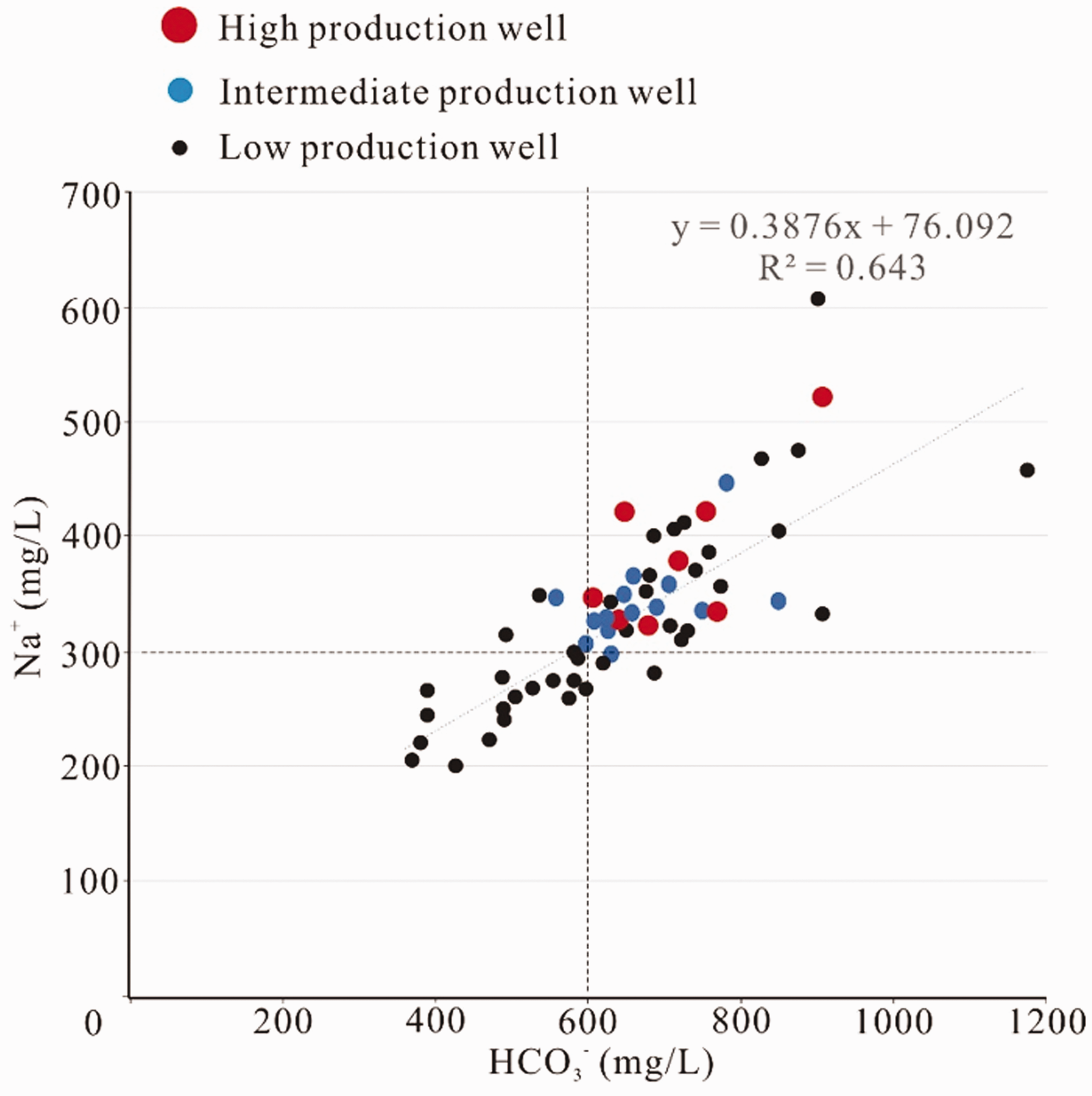
Plot of Na+ and HCO3– concentrations versus gas production rates (indicated by size and color of symbols) in CBM co-produced water from the Shizhuangnan block.
In terms of groundwater geochemical conditions, the discrepancies could be attributed to the coal reservoir environments and the drainage pattern differences over time among these CBM wells (Wu et al., 2019). A long production period and a large water discharge result in the expansion of pressure drop range facilitating carbonate dissolution, cation exchange and subsequent increase in Na+ and HCO3– concentrations. Furthermore, more CO2 entering coal reservoir water within CBM production period is another important factor for increased HCO3– concentrations in the water from high gas production wells (Vidic et al., 2013).
Characteristic pattern of hydrogen and oxygen isotopes and CBM production

Based on previous studies, the distributions of
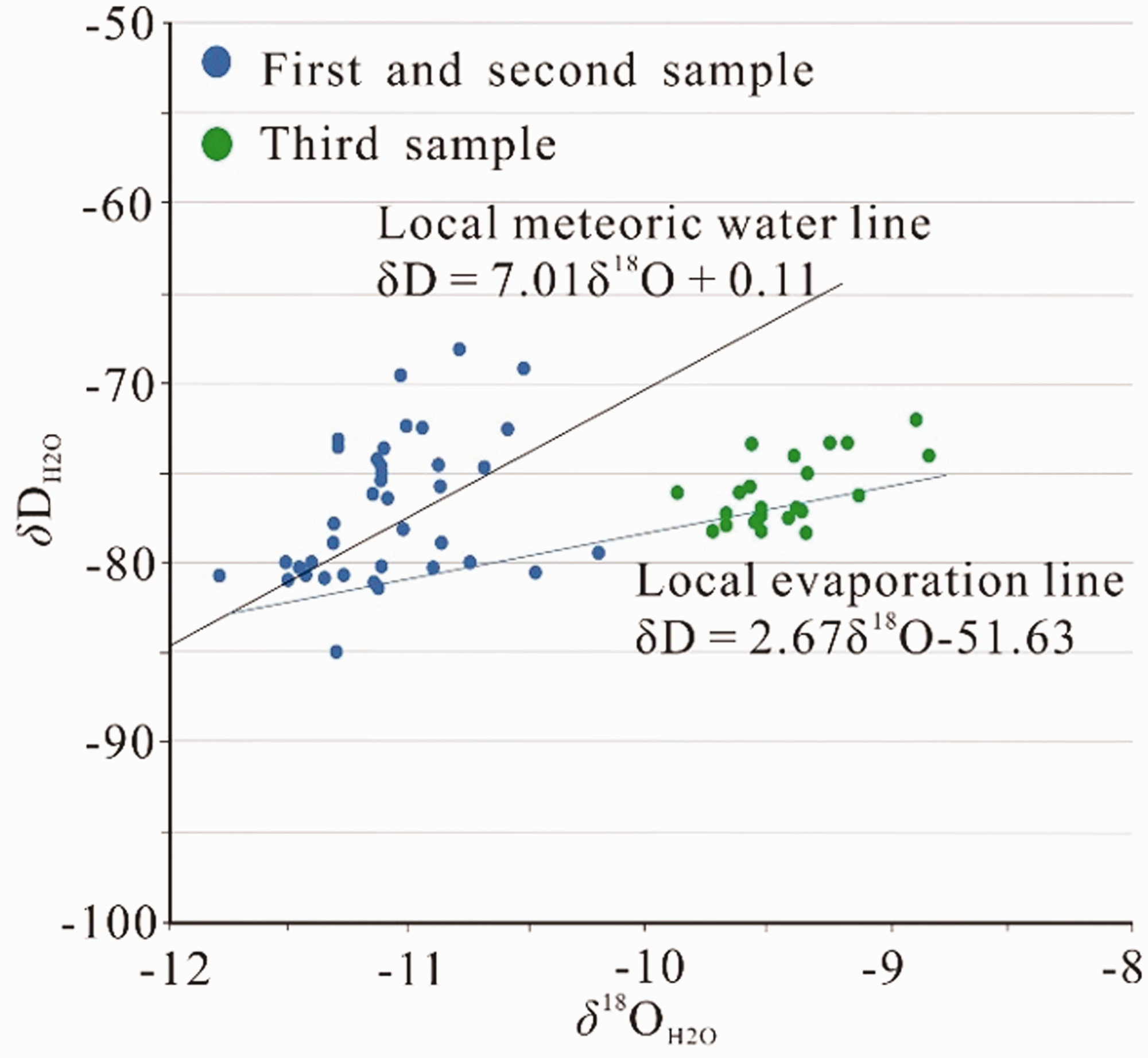
Plot of
These isotopes are located on two sides of the LMWL, with some 
According to previous studies, it is likely that isotopes shift to below or right of the LMWL due to high temperature fluid–rock interaction and evaporation (Vinson et al., 2017). In the present study, a relatively large change in 
Therefore, these wells exhibiting 18O drift in the coal reservoir water may not be capable of forming valid pressure drop funnels and may exhibit low gas production rates.
In contrast, D drift indicates that CBM co-produced water originates from coal reservoirs and exhibits weak connectivity with adjacent aquifers, resulting in high CBM production rates. Generally, D drift is affected by a combination of open carbon dioxide systems, microorganic functions and low-temperature fluid–rock interactions (Zhang et al., 2018). These processes utilize H resulting in D enrichment in residual groundwater. In the present study, low-temperature fluid–rock interactions and biological activities tend to result in D drift in coal formation water (Bao et al., 2016; Hamilton et al., 2014). Moreover, hydrogen sulfide produced by thermal evolution and sulfate reduction dissolved in coal reservoir water may lead to hydrogen isotope exchange as defined in equation (4)

Furthermore, hydrocarbon exchange among all kinds of hydrocarbon radical-containing compounds further contributes to D drift under reductive coal reservoir conditions as indicated by Gui et al. (2005), shown in Equation (5)

These findings suggest that D drift can be regarded as a significant indicator for high gas production rates. In contrast, O drift could be regarded as another important predictive factor suggesting low gas production rates (Huang et al., 2017). Therefore, to accurately judge the degree of hydrogen and oxygen isotope drift and their corresponding location relative to the LMWL, the D drift index (DDI) is applied, based on equation (6)

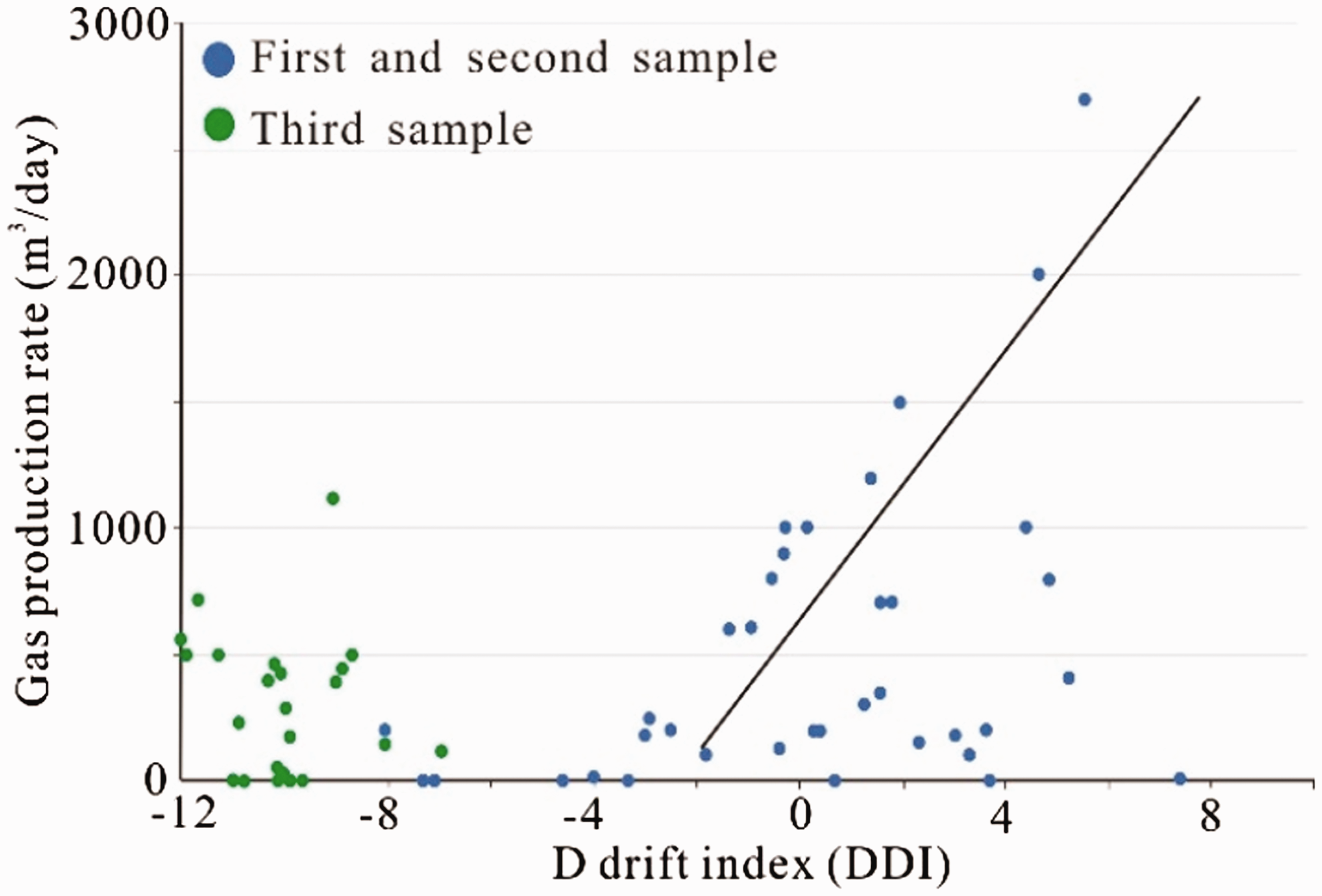
Plot of D drift index (DDI) values versus gas production rates from CBM co-produced water in the Shizhuangnan block.
Application of dissolved inorganic carbon isotopic ratio for CBM exploration
Based on the above analysis, the hydrogen and oxygen isotopes of groundwater can be enriched through various pathways. Hence, biological activity is not a unique factor affecting hydrogen and oxygen isotopes in coal seam conditions. In comparison, inorganic carbon isotopes in groundwater are dominantly affected by methanogenic activity. The total amount of inorganic carbon species referred to as dissolved inorganic carbon (DIC) includes dissolved carbonate, bicarbonate, carbonic acid and carbon dioxide in solution. DIC is readily available in the majority of coal reservoir water and mainly originates from organic matter breakdown and carbonate dissolution with significantly negative isotopic composition of δ13CDIC. In contrast, positive δ13CDIC is related to micro-organic activities such as methanogenesis in reductive coalbed reservoir environments (Li et al., 2016, 2019).
Methanogens are sensitive to high levels of oxidizing agents such as sulfate and nitrate, which are only active under reductive conditions. For instance, high sulfate concentrations stimulate the activity of sulfate-reducing bacteria, which inhibit the activity of methanogens (An and Picardal, 2015; Davis et al., 2018). Two metabolic types of methanogenesis have been determined, involving carbon dioxide reduction or acetate fermentation. Guo et al. (2014) found that carbon dioxide reduction methanogenesis is dominantly active in the Qinshui Basin. It is generally accepted that carbon dioxide reduction removes 12C, forming positive δ13CDIC in remaining formation water (Mori et al., 2012).
The δ13CDIC values across the study region include both positive and negative values (Figure 6). Results show that δ13CDIC values are strongly correlated with alkalinity (HCO3–), with negative δ13CDIC values dominantly attributed to organic matter breakdown and carbonate dissolution, while positive δ13CDIC values were induced by microbial activities, especially carbon dioxide reduction methanogenesis.
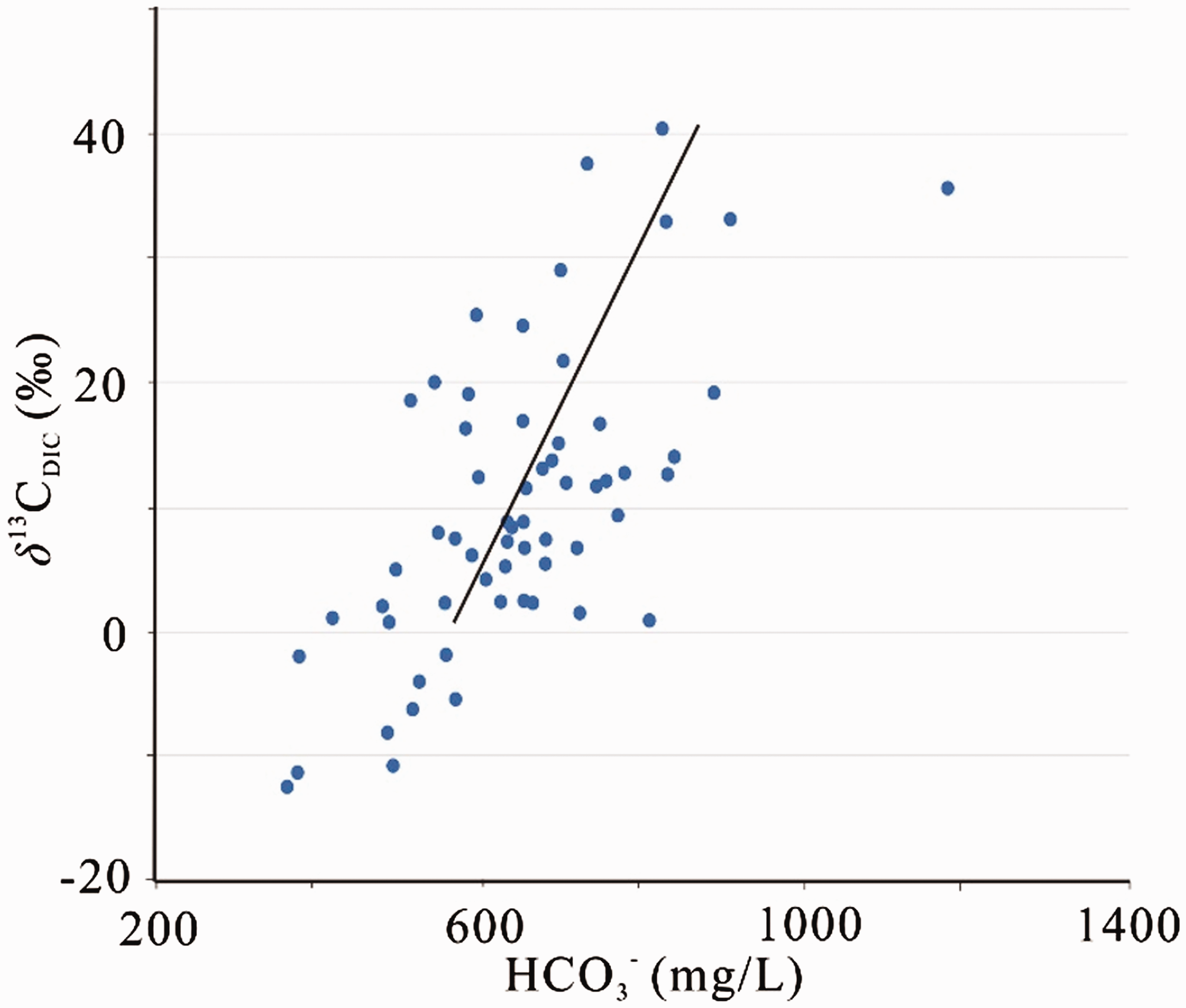
Plot of HCO3– concentrations versus δ13CDIC (‰) values in CBM co-produced water from the Shizhuangnan block.
Shallow groundwater in open environments and non-coal seam water from below or above coal seam usually exhibits negative δ13CDIC. Therefore, coal reservoirs with negative δ13CDIC are not suitable for CBM enrichment and exploitation. It is generally accepted that positive δ13CDIC is a valid indicator for the evaluation of CBM storage conditions and production rates, as a small amount of methanogenesis may result in positive δ13CDIC in reductive or sealed environments (Schweitzer et al., 2019). Based on the clear association between δ13CDIC values and gas production rates (Figure 7), negative δ13CDIC values indicate low gas production rates as expected. However, the variables affecting gas production rates in positive δ13CDIC regions are relatively complicated. High and intermediate production rates are associated with reasonably positive δ13CDIC values ranging from 0 to 25, while residual wells with higher δ13CDIC values (>25) exhibit low gas production rates. The negative δ13CDIC values represent disadvantageous reservoir conditions for CBM storage, resulting in unsatisfactory gas production rates across the study area. When the δ13CDIC values increase progressively and become positive, ideal CBM storage conditions begin to be observed, resulting in better gas production rates. However, as these δ13CDIC values continue to increase, the more closed coal reservoirs with lower permeability indicate that strata pressure cannot be effectively released to form viable pressure drop funnels, although these areas usually have potential for increased production. Consequently, positive δ13CDIC values do not necessarily indicate high CBM production rates unless the values fall within a reasonable range.
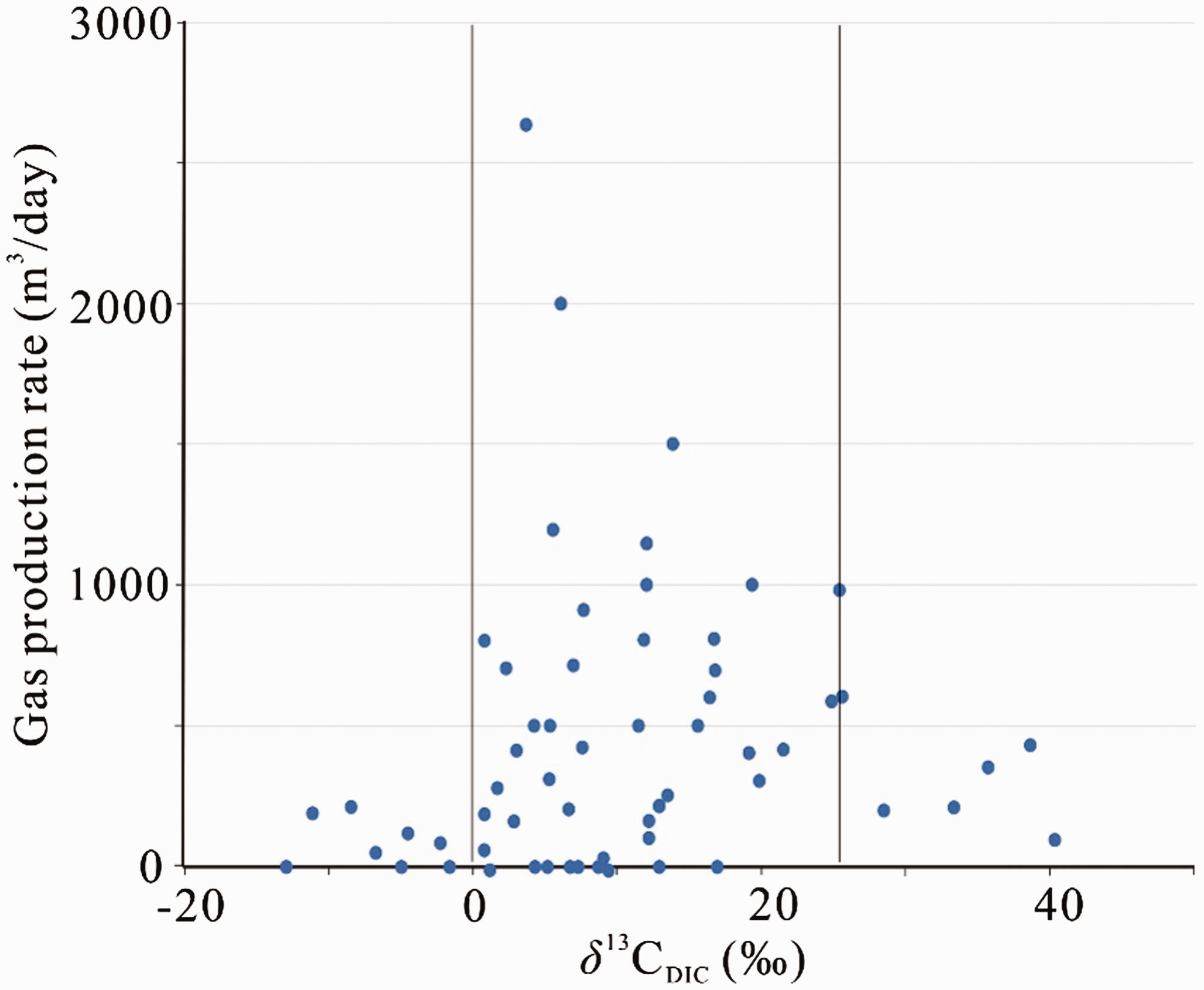
Plot of δ13CDIC (‰) values in CBM co-produced water and gas production rates in the Shizhuangnan block.
Application of redox parameter signatures associated with microbial activity for CBM exploration
With SO42– depletion and aquifer evolution, relatively reductive groundwater environments are progressively established. The SO42– concentrations in CBM wells with relatively high gas production rates do not commonly exceed 10 meq/L (Humez et al., 2016). In the study area, SO42– was usually presented at very low level, ranging from 0 to 7.62 mg/L. NO3– concentrations in all co-produced water samples were in the range of 5.14–64.00 mg/L across the SZN block. Biogeochemical indicators, especially SO42– and NO3– concentrations and their related isotopic compositions, are important criteria for the assessment of redox environments (Chen et al., 2018). For example, negligible SO42– and NO3– concentrations indicate reductive conditions which are favorable for CBM conservation and enrichment.
As shown in Figure 8(a), high SO42– concentrations are not associated with high gas production rates, while high gas production rates occur in CBM wells at low or absent SO42– concentrations (Hakil et al., 2013; Huang et al., 2017). However, in contrast to our prediction, CBM wells at low NO3– concentrations exhibit relatively low gas production rates (Figure 8(b)). High gas production rates are only detected when NO3– have not been completely consumed by microorganisms, with this unexpected phenomenon further supported by the redox ladder concept as shown in Figure 9.
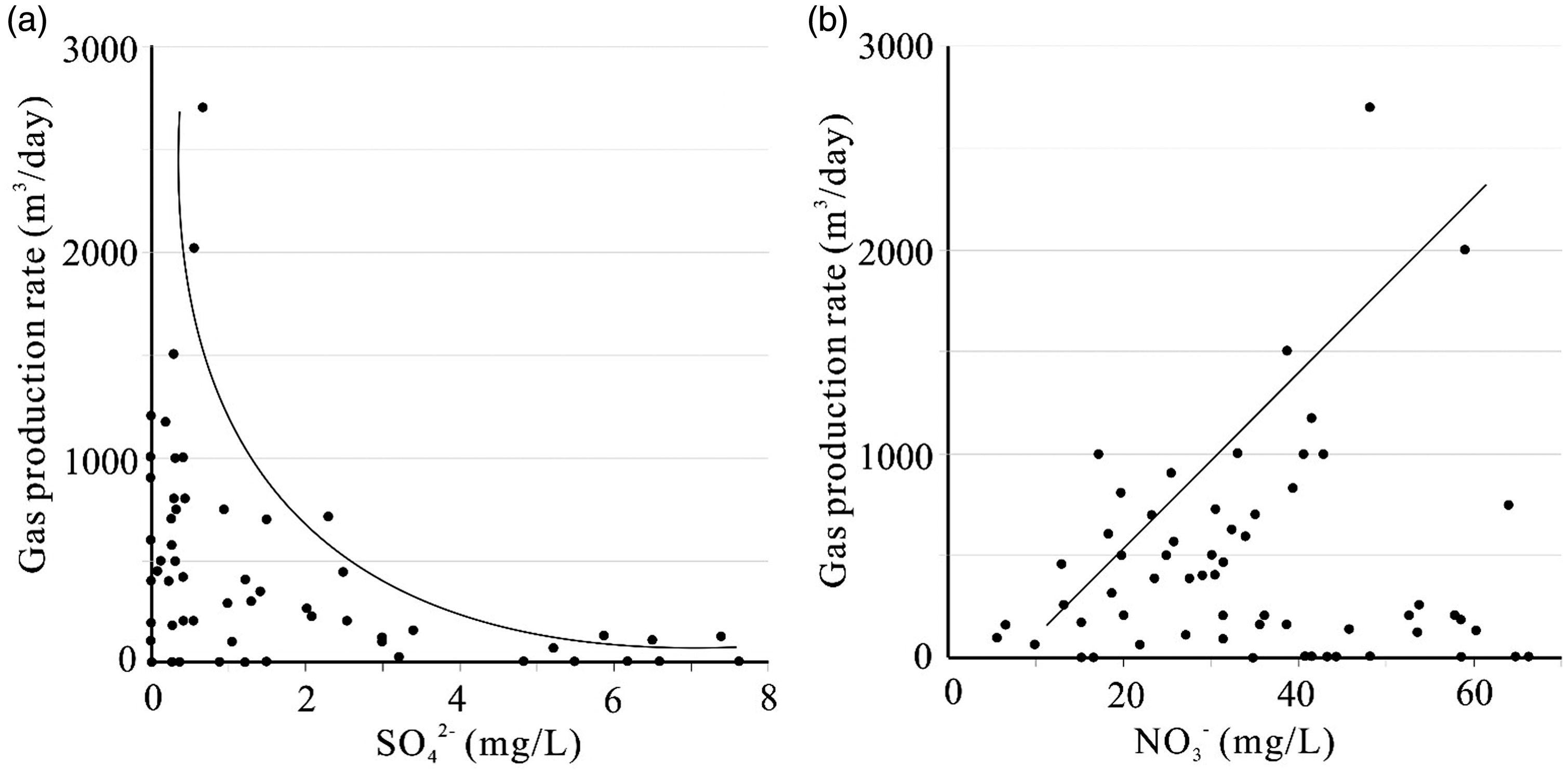
Redox indices SO42– (a) and NO3– (b) in CBM co-produced water versus gas production rates from the Shizhuangnan block.
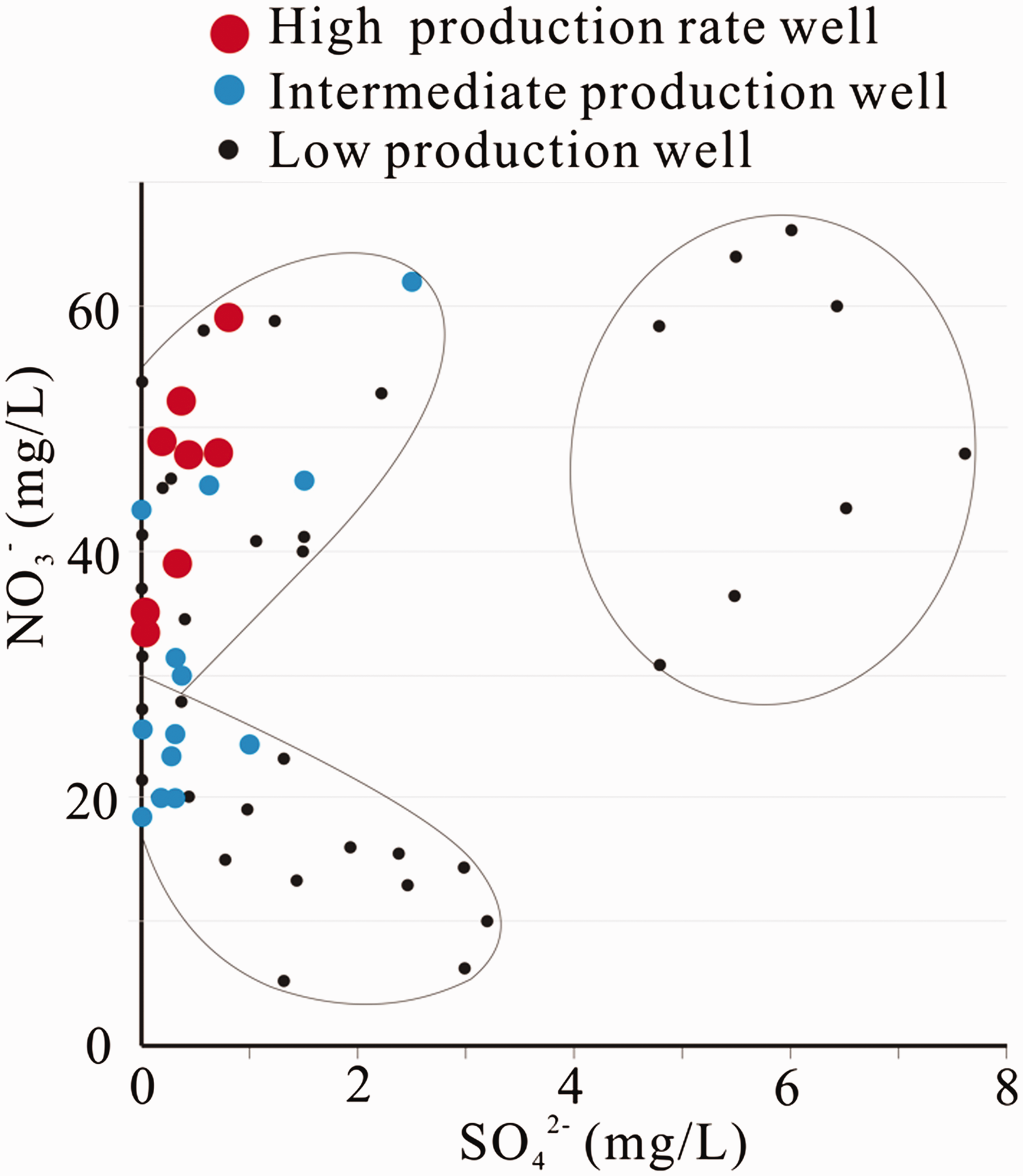
Plot of SO42– concentrations versus NO3– concentration in CBM co-produced water from the Shizhuangnan block (gas production rates indicated by size and color of symbols).
A cross plot of NO3– and SO42– concentrations with various gas production rates is shown in Figure 9. Wells with relatively high NO3– and SO42– concentrations exhibit negligible gas production rates, demonstrating that the coal seam water conditions are open where neither denitrification nor sulfate reduction is effectively accomplished, limiting the CBM storage capacity (Beckmann et al., 2018). Characteristic wells with low SO42– concentrations and high NO3– concentrations generally exhibit highest gas production rates in the study area. Wells with relatively low SO42– concentrations and low NO3– concentrations usually do not have relatively high gas production rates, as bacterial denitrification and sulfate reduction occur completely, forming optimal reductive environments (Doerfert et al., 2009). While these conditions were suitable for CBM conservation and enrichment, these wells had poor permeability and therefore had a limited capacity to form depression funnels and discharge gas from coal pores.
Some biogeochemical isotopes relating to redox ladder concept were utilized in this study. Firstly, sulfate reduction by sulfate-reducing bacteria affects SO42– isotopes, resulting in enrichment of
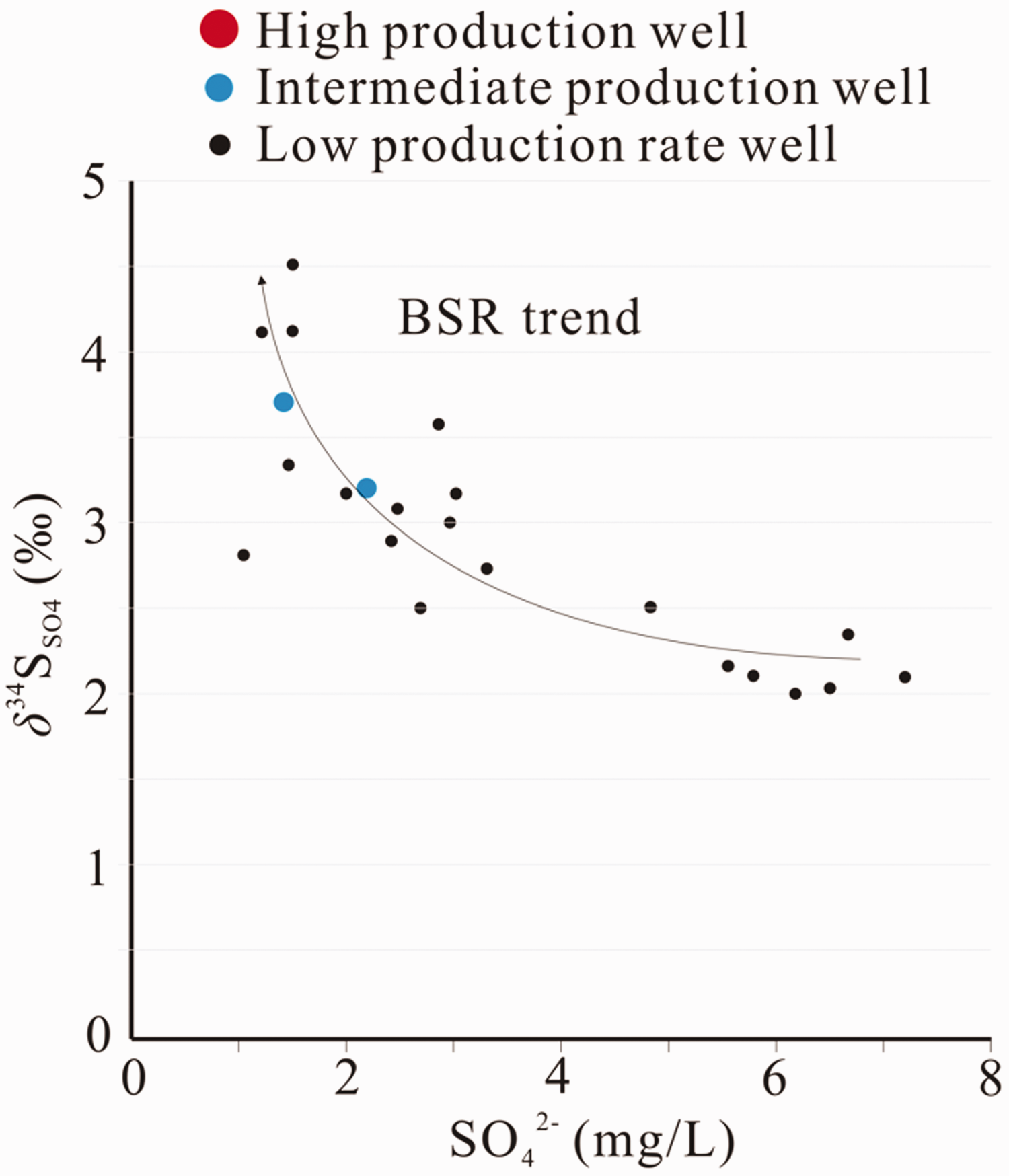
Plot of SO42– concentrations versus
Moreover, as shown in Figure 11, the combination of moderately positive δ13CDIC values and negligible SO42– concentrations in the water samples represent the appropriate reductive conditions containing most high and intermediate gas production wells. In contrast, the water samples with higher SO42– concentrations and lower δ13CDIC values characterized by relatively oxidative environments normally correspond to low gas production wells (Guo et al., 2019). This supports the hypothesis that sulfate reduction by sulfate-reducing bacteria inhibits methanogenesis (Jones et al., 2010). Meanwhile, the region with highest δ13CDIC values and negligible SO42– concentrations only relates to low production wells, indicating that the most reductive environments are too strict to allow extension of pressure drop funnels and support fluid migration (Bao et al., 2019). Importantly, the output of these wells can potentially be increased by effective measures such as hydraulic fracturing (Hou et al., 2017).
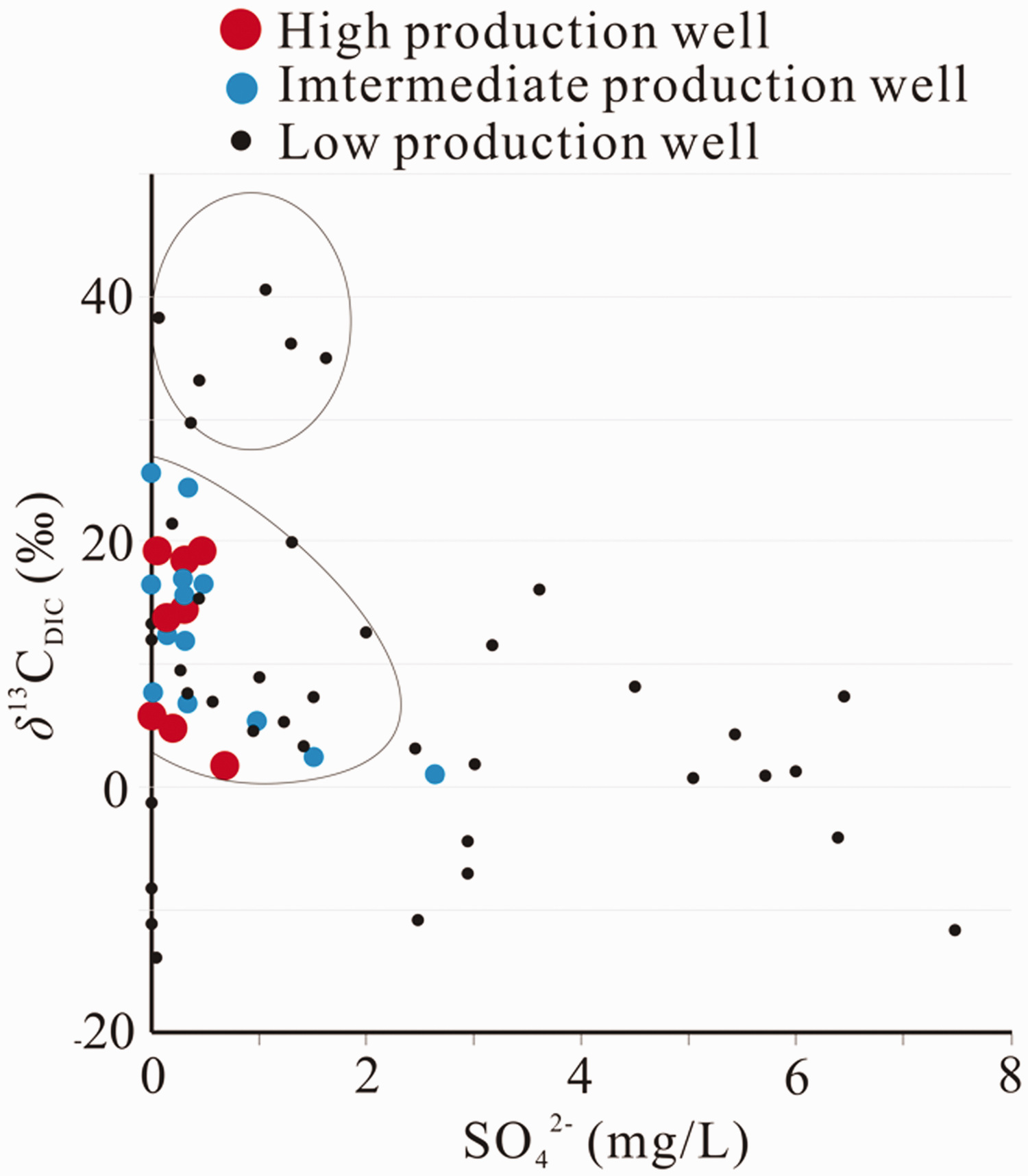
Plot of SO42– concentrations versus δ13CDIC values in CBM co-produced water from the Shizhuangnan block (gas production rates indicated by size and color of symbols).
Conclusions
The study has assessed the relationship between various geochemical parameters and gas production rates in CBM co-produced water samples from the SZN block. Firstly, analysis of the relationship between major ion concentrations in the water samples and CBM production rates suggests that the wells with high gas production rates often contain high Na+ and HCO3– concentrations in the water samples. Furthermore, the wells with high and intermediate gas production rates generally contain high concentrations of Na+ (>300 mg/L) and HCO3– (>600 mg/L) in the water samples.
On the basis of the relative locations of
The DIC in groundwater mainly originates from organic matter breakdown and carbonate dissolution with typically negative δ13CDIC. It has been proposed that relatively positive δ13CDIC values are caused by methanogenic activity and are indicative parameters of reductive environments. Compared with negative δ13CDIC, positive δ13CDIC values in the water samples illustrate that ideal CBM storage conditions tend to be associated with high gas production rates. However, excessively positive δ13CDIC values indicate more closed coal seams with low permeability, which are unable to form valid pressure drop funnels resulting in low gas production rates.
Taking into account of SO42– and NO3– allows the analysis of redox gradients based on sulfate reduction and denitrification. To assess coal reservoir conditions of gas storage, a combination of SO42– and NO3– concentrations is used to identify various redox environments for CBM preservation and exploitation. The coal reservoir environments with low SO42– and high NO3– concentrations present appropriate closed conditions, forming high gas production rates. In contrast, high SO42– and high NO3– concentration environments generally exhibit adverse or open CBM storage conditions resulting in low gas production rates.
Importantly, the combination of δ13CDIC and SO42– is not only useful for evaluation of gas production rates but also predicts potentially beneficial areas. The water samples with moderately high δ13CDIC values and negligible SO42– concentrations represent appropriate reductive conditions, relating to most high and intermediate production wells. In contrast, the water samples with low δ13CDIC values and high SO42– concentrations indicate open or oxidative environments, corresponding to low gas production wells. Moreover, the water samples characterized by highest δ13CDIC values and negligible SO42– concentrations were only observed in low gas production wells, as best reductive environments are too strict to extend pressure drop funnels and support fluid migration. However, CBM production of these wells can potentially be increased by hydraulic fracturing, which provides guidance for the identification of potentially beneficial areas.
Footnotes
Acknowledgements
We would like to thank the China United Coalbed Methane Corporation for providing the production well date.
Declaration of conflicting interests
The author(s) declared no potential conflicts of interest with respect to the research, authorship, and/or publication of this article.
Funding
The author(s) disclosed receipt of the following financial support for the research, authorship, and/or publication of this article: This work was supported by the National Natural Science Foundation of China (Grant Nos. 41772159/D0208; 41872178; U1910205), the National Science and Technology Major Project of China (Grant No. 2017ZX05064003) and the Fundamental Research Funds for the Central Universities (Grant No. 2652018233).
