




Abstract
In this study, based on seismic profiles, complemented with boreholes and well logs, two types of deltas are recognized in the Paleogene Qiongdongnan Basin, namely fan deltas and braided river deltas, and their temporal–spatial evolution characteristics and associated controlling factors are studied. The results show the following: (1) The base-level cycle and episodic rifting lead that the characteristics of the basin-marginal deltas vary among different system tracts, third-order sequences, and second-order sequences or rifting stages, i.e. the temporal evolution of the basin-marginal deltas. Among the different system tracts in each third-order sequences, the deltas in the lowstand system tracts are vertically thick with small horizontal extension, while those in the transgressive system tracts present retrogradation with limited vertical thickness and horizontal extension, and those in the highstand system tracts turn to present large extension and develop toplap points. Among the different third-order sequences in each rifting stage, the extension of the deltas presents a pattern “small-medium-large” from bottom to top. Among different rifting stages, the deltas also exhibit different characteristics in terms of extension and thickness, and even the type may change. (2) The paleogeomorphology controls the characteristics of the deltas in lateral space, which is mainly reflected by the fact that the gradient of the paleogeomorphology influences the scale and type of the deltas. This study will enhance our understanding of the relative influence of the controlling factors exerted on fan or braided river deltas, and aid in the exploration of the coal-measure source rocks in the Qiongdongnan Basin, which is a typical basin lacking boreholes, located in the South China Sea.
Keywords
Introduction
As the comprehensive manifestation of sedimentation, the development of basin-marginal deltas is affected by many factors, including syndepositional faults, base-level change, tectonism, sediment supply, etc. (Hoy and Ridgway, 2003; Li et al., 2015a; López-Blanco et al., 2000; Lv et al., 2014; Muto and Steel, 2002; Pondrelli et al., 2008; Yang et al., 2017a). Among the basins with different genetic mechanisms, the main influencing factors are altered. Research regarding the relative influence of the above factors on deltas is at the cutting edge of basin analysis (Feng et al., 2016). Moreover, with the successful exploration on the Gulf of Mexico, Columbus Basin, and coast of Africa, basin-marginal deltas have gradually received increasing attention from petroleum geologists and have become an area of interest for hydrocarbon prospecting. The reason for this is that basin-marginal deltas may serve as important reservoirs and also show great significance for coal-bearing successions, thus they could act as critical hydrocarbon source rocks (Lv and Chen, 2014; Lv et al., 2011; Sun et al., 2005, 2006; Wang et al., 2016).
Along with the increasing demand for petroleum resources and excessive exploration of onshore areas, the South China Sea has received increasing attention (Li et al., 2010; Zhang et al., 2007). In the South China Sea, widespread Cenozoic rift basins are distributed, such as the Qiongdongnan (QDN) Basin (Song et al., 2014). However, unlike onshore basins, there is a lack of boreholes revealing the buried strata and potential reservoirs, particularly in the deepwater areas, which has led to high risk for hydrocarbon exploration in the South China Sea. Therefore, determining how to use the existing geologic and seismic profiles to enhance the analysis of basin-marginal deltas, and thereby further analyze their temporal–spatial evolution for seeking reservoirs and coal-bearing successions, will be of great importance.
With consideration to the above two points, this paper aims to discuss the characteristics and main controlling factors of the temporal–spatial evolution of basin-marginal deltas found in the Paleogene QDN Basin. The study provides an exceptional opportunity for understanding the relative influences that the potential controlling factors, such as base-level change, episodic rifting, and paleogeomorphology, exert on the basin-marginal deltas of rifted basins in the sea. Moreover, the study results will compensate for the shortage of drill boreholes, and aid in reducing the high risk involved in the future petroleum prospecting of basins such as the QDN Basin, which lacks a sufficient number of drills.
Geological background
The QDN Basin is one of the most economically promising oil-prospecting basins located in the northwestern South China Sea. It is a rift basin distributing over a Mesozoic basement and formed by extension during the Cenozoic (Zhang, 2010). It is bounded by the Xisha Uplift to the south, the Yinggehai Basin to the west, Hainan Island to the north, and the Pearl River Mouth Basin to the east. It extends in a SSE direction and trends NE, and is 290 km in length and 181 km in width (Figure 1). Hainan Island is one of the most important source areas of the QDN Basin.
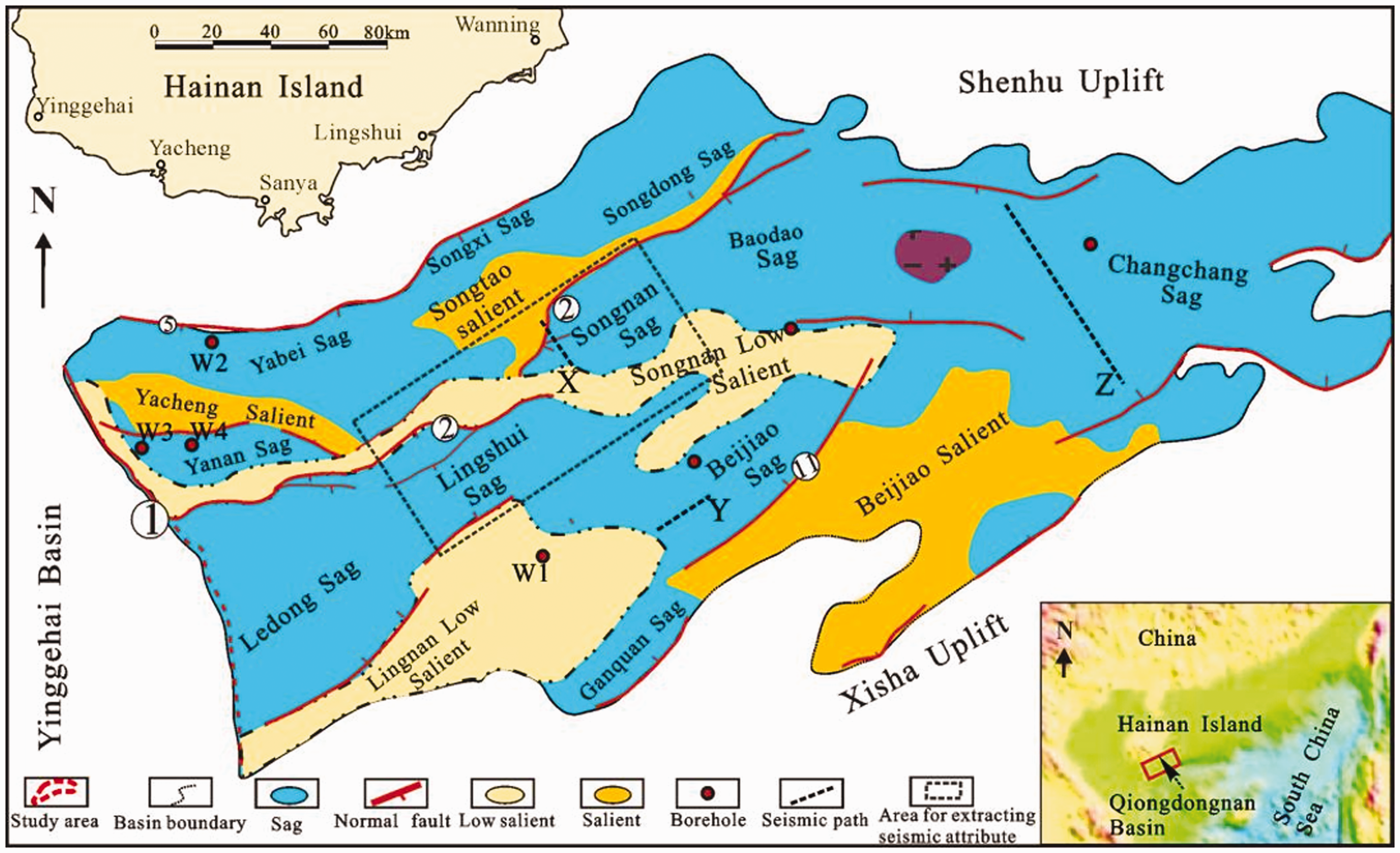
Regional geological map of the QDN Basin, northwestern South China Sea.
There are two styles of structures present, namely half graben and graben, developing with segmentation from east to west, and zonation from north to south. Like other rift basins, the Paleogene grabens or half-grabens and horsts in the lower basins and upper Neogene depressions constitute the typical “two-layer” structural pattern found in the QDN Basin, which was separated by the unconformity surface-T60. The Paleogene was the synrift period of the QDN Basin, when the Eocene Lingtou Formation, Yacheng Formation, and Lingshui Formation were deposited from bottom to top (Figure 2). The QDN Basin has received great attention due to its special tectonic location and abundant hydrocarbon potential.
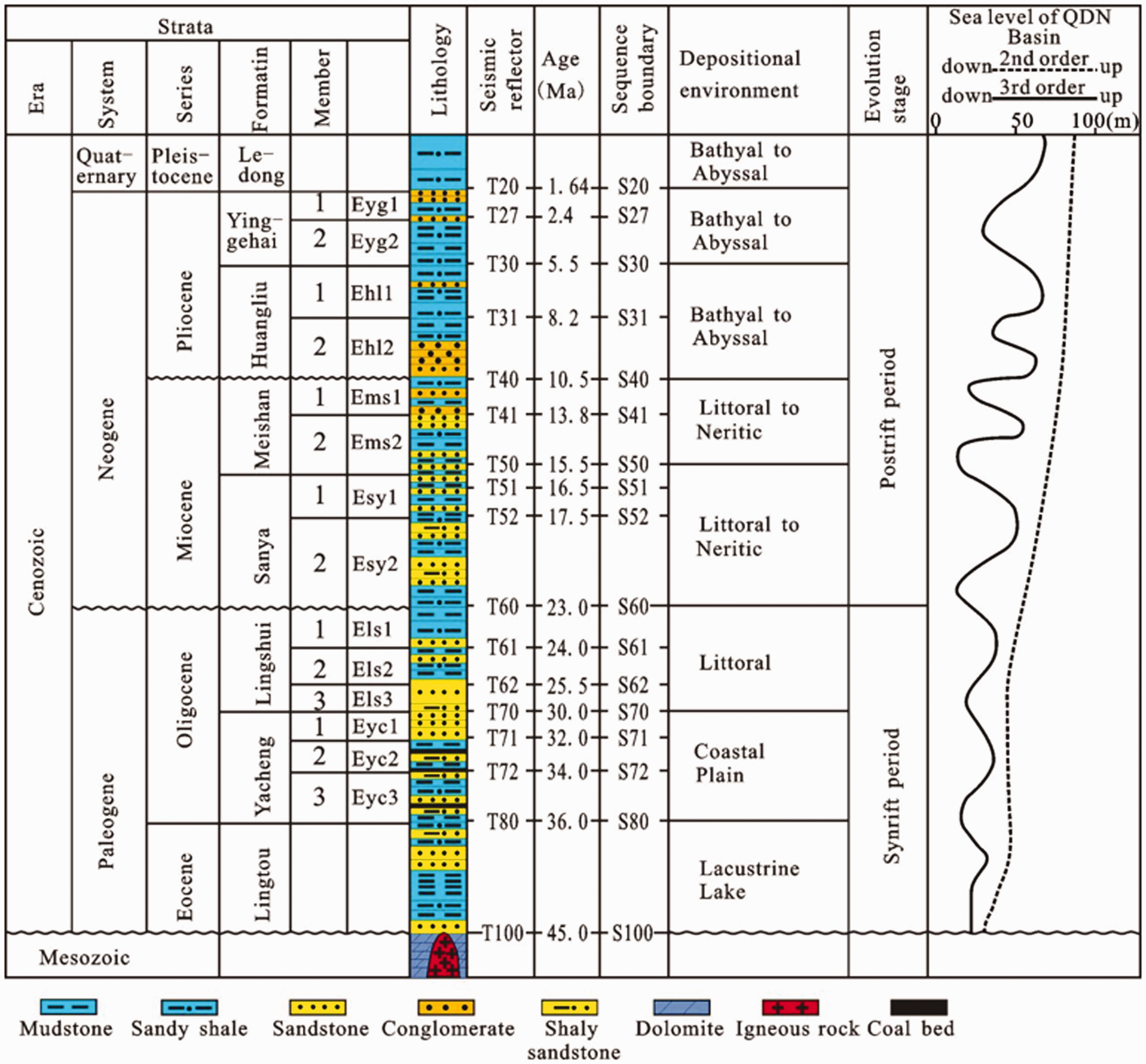
The sequence, sedimentary environment and basin filling evolution of the QDN Basin (modified after Yuan et al., 2009). The chronology and evolution stage were drawn after Zhao et al. (2015a). The lithology association and sedimentary facies were drawn after Mao et al. (2015). The sea level change of QDN Basin was adopted from Sun et al. (2010). QDN: Qiongdongnan.
Through the integrated analysis of seismic profiles, well logs, cores, paleontology, and geochemistry, previous researchers have concluded that the sedimentary environment of the Paleogene QDN Basin altered from Eocene lacustrine basin to Oligocene littoral environment, and the sedimentary facies mainly included fan or braided-river deltas along the basin margins, lagoon, and tidal-flat facies in the north of the basin, littoral facies, and neritic facies (Mao et al., 2015; Song et al., 2020).
Data and method
The well logs, boreholes, and seismic profiles, provided by the China National Offshore Oil Corporation (CNOOC), comprise the basic data used in this research, which are further complemented with previous research results. The QDN Basin has been covered with two-dimensional (2D) seismic profiles that have a spacing of 2 km or less. In addition, three-dimensional (3D) seismic surveys with an area of about 12,800 km2 have been performed in major oil prospecting districts. The main frequency of the utilized seismic database was approximately 25 Hz. Four wells drilling into the Paleogene succession and revealing the basin-marginal deltas were obtained and used. The wells contained cores, well logs, and lithology, and the respective locations of the wells are presented in Figure 1. The well log facies and seismic facies were adopted to analyze the sedimentary facies, such as the well log shape and vertical evolution, and seismic reflection characteristics, which would be introduced in detail when recognizing the deltas. These data provide the foundation for further research and allow the current work to focus on the following: (1) recognizing the types and the temporal–spatial characteristics of basin-marginal deltas in the Paleogene QDN Basin, and (2) the main controlling factors influencing the temporal–spatial distribution of the basin-marginal deltas.
In this study, first, high-quantity seismic profiles and the latest geological documents were used to establish the sequence stratigraphic framework, based on identifying the sequence boundaries. Second, a comprehensive recognition of the basin-marginal deltas was carried out using the seismic profiles, cores, and well logs. Additionally, the temporal–spatial characteristics of the deltas were delineated quantitatively. This mainly described the type, horizontal extension scale, and vertical thickness of the deltas. Third, the potential controlling factors which influenced the deltas were discussed, such as the base-level cycle, subsidence history, and paleogeomorphology characteristics. Finally, the coupling relationship was interpreted, so as to discuss the controlling factors and temporal–spatial evolution characteristics of the basin-marginal deltas. These discussions will aid in predicting the basin-marginal deltas, and further provide beneficial conditions for the exploration of coal-bearing source rocks in marine basins, particularly in deepwater areas which lack drills.
Results
Sequence stratigraphic framework
The sequence stratigraphy builds up a framework for the research of internal sedimentary bodies (Li et al., 2015b; Lv et al., 2017; Zhang et al., 2015), such as the basin-marginal deltas, and the sequence identification used for the QDN Basin is similar to those described by Catuneanu et al. (2009). In the Paleogene QDN Basin, the identification of sequence boundaries is based on the integrated analysis of seismic profiles, boreholes, and well logs, and the following criteria were adopted.
In general, basin-marginal unconformities and their correlative conformities in central basins often act as the sequence boundaries. In seismic profiles, unconformable stratigraphic contacts are reflected by the points of truncation, onlap or downlap (Figure 3(a) to (c)).
Incised valley fills also define sequence boundaries. Along the basin margin, large-scale incised valley fills can be observed at T60 (Figure 3(a)). Abrupt changes in the physical characteristics, such as lithology and sedimentary facies, may also indicate sequence boundaries, which can be recognized through abrupt changes in the shapes of well logs and seismic reflection characteristics (Figure 3(b) and (d)).
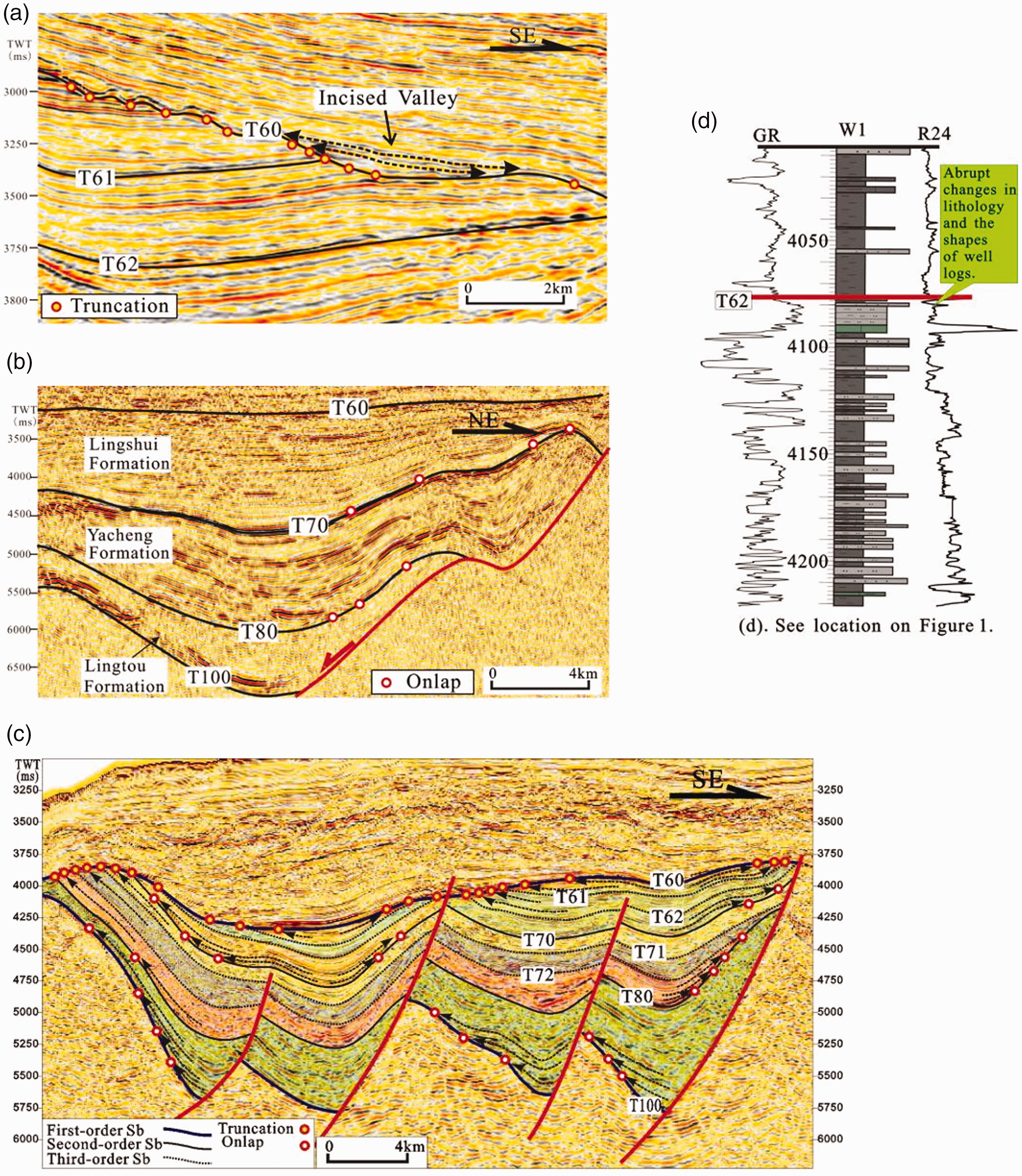
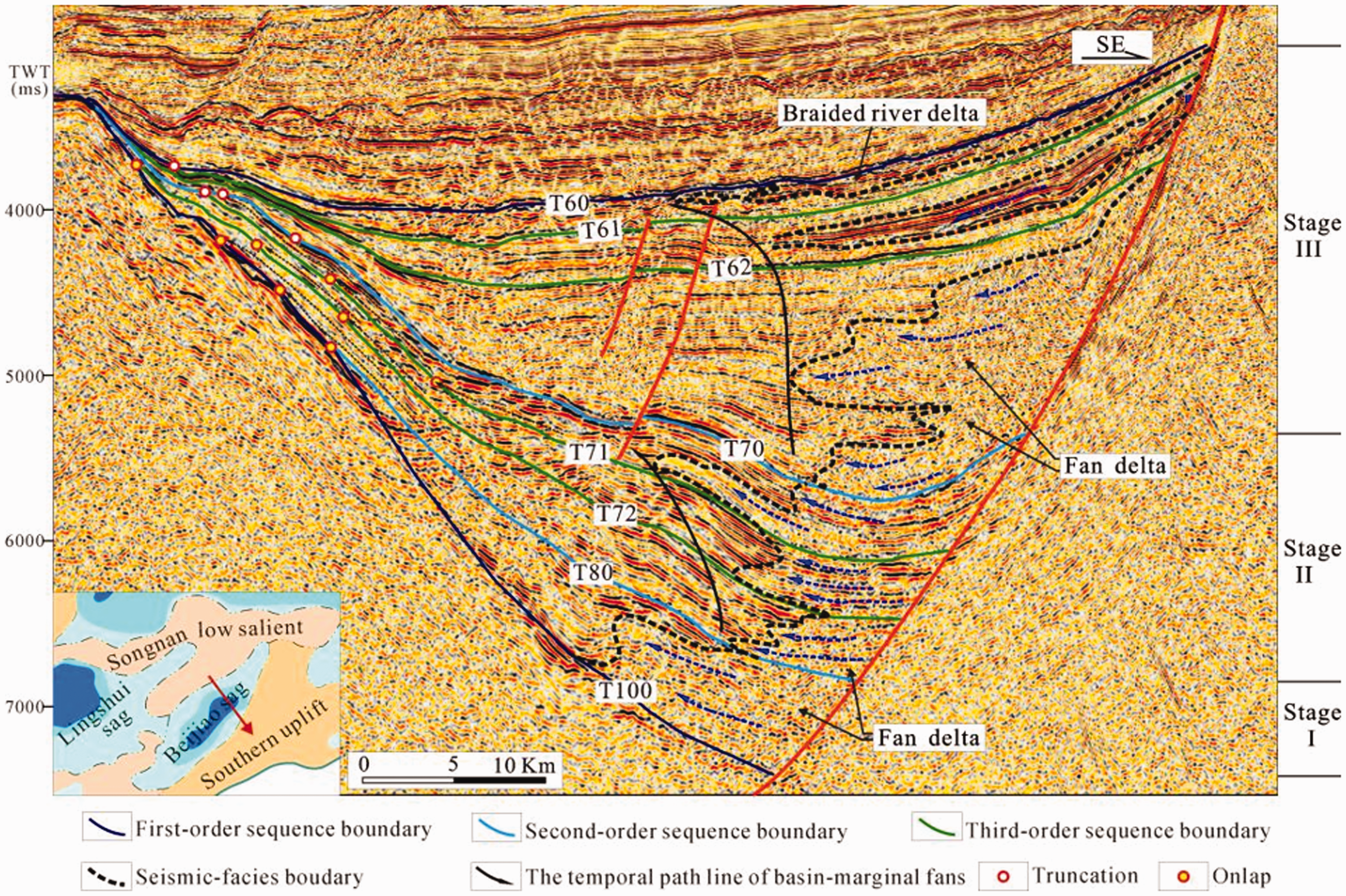
Based on the above criteria, a total of seven sequence boundaries were recognized, thus enabling the Paleogene sequence framework to be established (Figure 4).
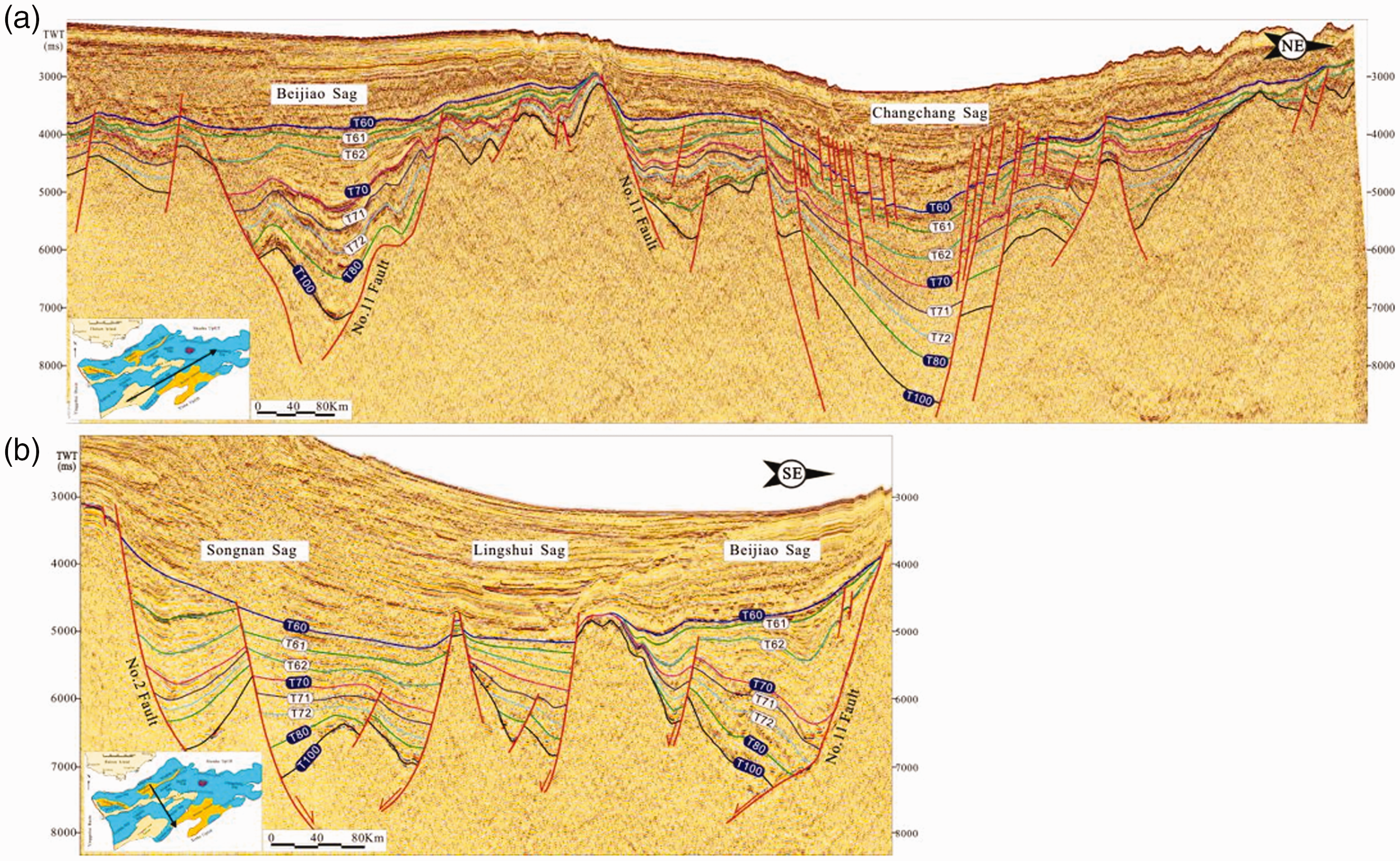
The sequence stratigraphic framework of the Paleogene QDN Basin. (a) Seismic profile trending SW–NE and (b) seismic profile trending NW–SE.
Among the seven boundaries, T100 and T60 appeared as angular unconformities extensively and universally throughout the entire basin, and acted as the first-order sequence boundaries, which signified that the Paleogene succession was recognized as a first-order sequence. In addition, T80 and T70 were observed to be second-order sequence boundaries, and divided the Paleogene succession into three second-order sequences. Finally, T72, T71, T62, and T61 were identified as third-order sequence boundaries, and these further divided the Paleogene section into seven third-order sequences.
The hierarchy of sequence stratigraphy adopted by this paper is tectonic based rather than time-scale based, and thus is more suitable for sequence stratigraphic classification in rifted basins (Feng et al., 2016).
Recognition of deltas
Next, according to the seismic profiles, and complemented with boreholes, well logs, and cores, the basin-marginal deltas were recognized inside the sequence framework. In the Paleogene QDN Basin, fan and braided-river deltas were developed and constituted the basin-marginal deltas.
Fan deltas
In the seismic profiles, the fan deltas exhibited seismic reflection with obvious characteristics, such as a wedge shape with progradation reflection and strong amplitude, imbricate shape with progradation reflection and strong amplitude, and basin-marginal reversed-S shape with progradation reflection (Figure 5(a)) (Liao et al., 2016; Liu et al., 2015). In addition to the seismic profile, the fan deltas could also be recognized in the boreholes (Figure 5(b)) (Zhang et al., 2017). In the boreholes, the fan deltas presented characterized well logs, such as the jugged bell shape revealing the fan delta plain.
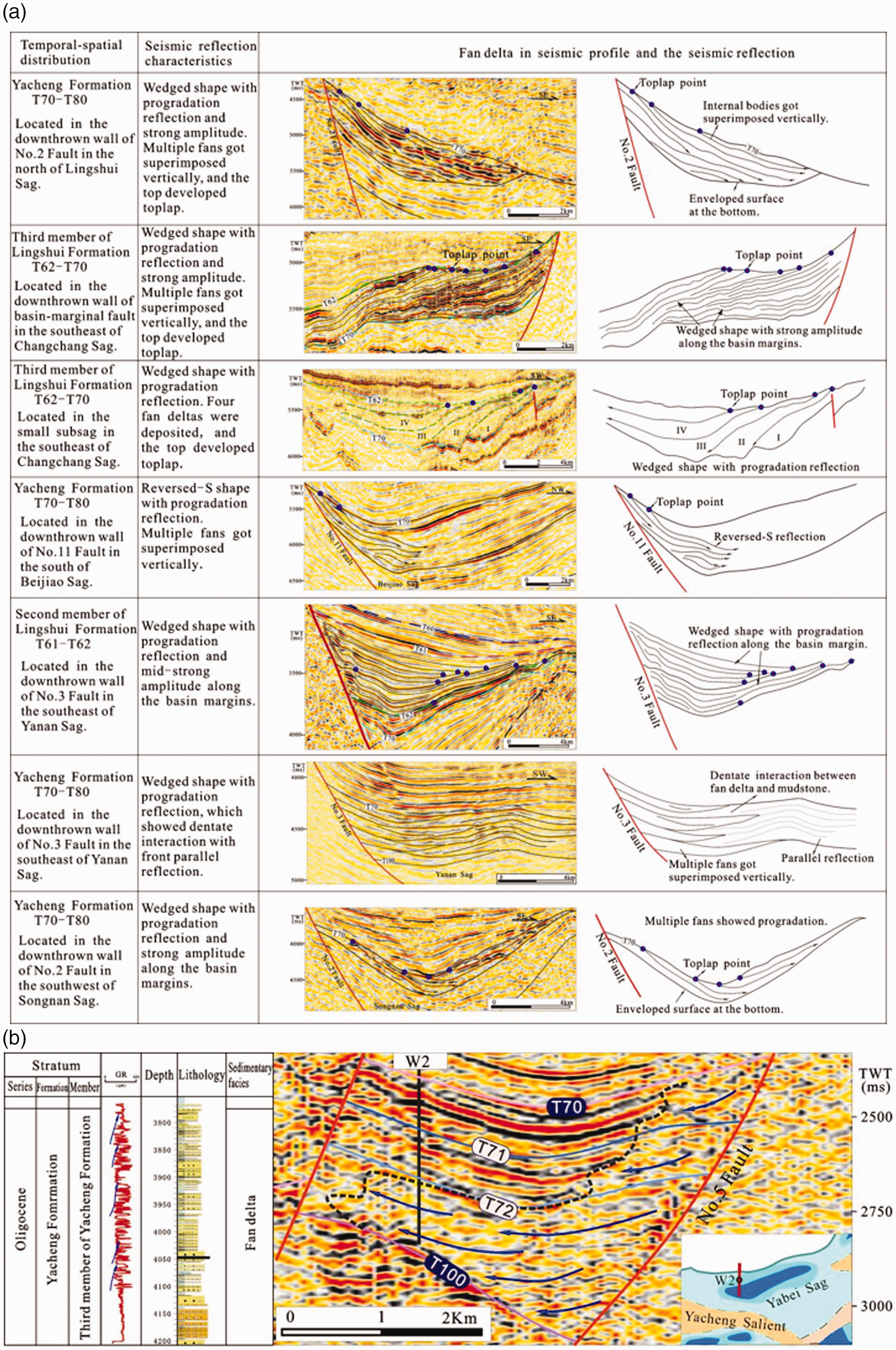
The recognition of fan deltas through seismic profiles and boreholes. (a) The seismic reflection characteristics of fan deltas along the margins of Paleogene QDN Basin and (b) the characteristics of fan deltas in boreholes, the well log presented jugged bell shape.
Braided river deltas
Different from the fan deltas, the braided river deltas exhibited sub-parallel seismic reflection with progradation in the seismic profiles, which extended further and with a more gentle slope than the fan deltas, and even the inside distributary channel sand body could be recognized (Figure 6(a)) (Liao et al., 2016; Liu et al., 2015). In the boreholes, the core of the braided river deltas developed tabular cross-bedding and mud pebbles, while the well log presented a smooth bell shape or funnel shape, revealing different microfacies such as the subaqueous distributary channel or subaqueous mouth bar in the braided river delta (Figure 6(b)) (Zhang et al., 2017).
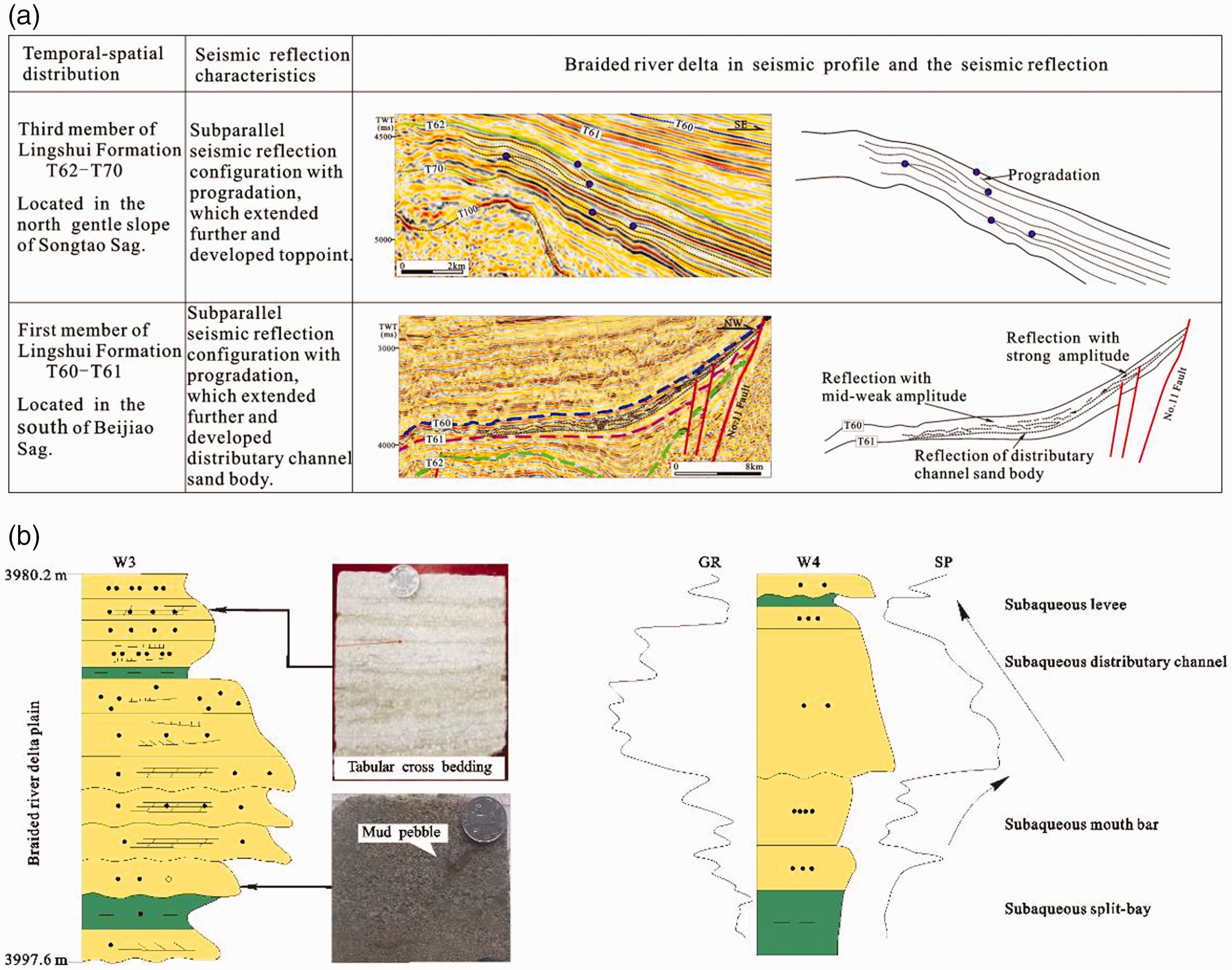
The recognition of braided river deltas through seismic profiles and boreholes. (a) The seismic reflection characteristics of braided river deltas along the margins of Paleogene QDN Basin and (b) the characteristics of braided river deltas in boreholes, the well log presented smooth bell shape or funnel shape. See the location of Well 3 and Well 4 in Figure 1.
Temporal–spatial evolution of the deltas
Temporal evolution among system tracts
Inside the third-order sequence framework, the lowstand system tract (LST), transgressive system tract (TST), and highstand system tract (HST) were developed from bottom to top as the base-level changed (Figure 7(a)) (Catuneanu et al., 2009). In the LST, the base-level first declined and then rose with a speed lower than the deposition rate, so that the basin-marginal deltas presented progradation. In the TST, the base-level rose rapidly with a speed greater than the deposition rate, thereby resulting in the basin-marginal deltas presenting retrogradation. The base-level began to rise more slowly than deposition rate, and finally even stopped rising, with the HST presenting progradation and developing toplap points at the top.
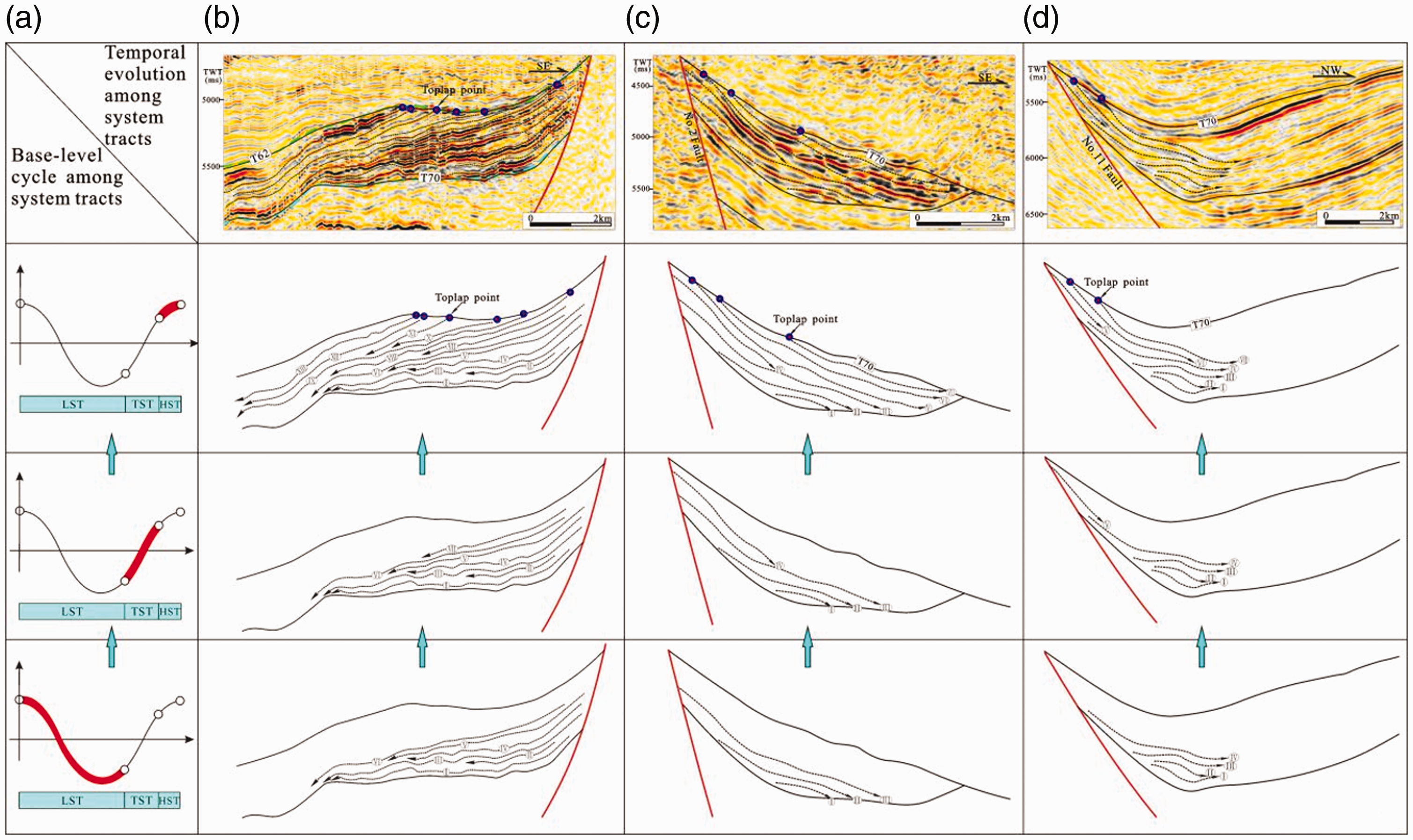
The temporal evolution of basin-marginal deltas among different system tracts controlled by base-level cycle within third-order sequences. The basin-marginal deltas were numbered in order to analyze the evolution. HST: highstand system tract; LST: lowstand system tract; TST: transgressive system tract.
In Figure 7(b), it can be seen that 13 basin-marginal deltas developed vertically and were superimposed with one another. The fans from No. I to VI belonged to the LST, No. VII fan was deposited through retrogradation up the LST and belonged to the TST, while the HST developed the fans from No. VIII to XIII and presented progradation, with the top forming clear toplap points. In Figure 7(c), seven basin-marginal deltas developed from bottom to top. Nos. I, II, and III developed in the LST, No. IV developed in the TST and showed retrogradation up the LST, and the HST developed the No. V, VI, and VII fans. In Figure 7(d), it is shown that seven basin-marginal deltas developed from bottom to top. Nos. I, II, III, and IV developed in the LST, No. V developed in the TST and showed retrogradation up the LST, and the HST developed the No. VI and VII fans. From the above observations and Figure 7, it can be clearly concluded that among the different system tracts in each third-order sequence, the fans in the LST are vertically thick with short lateral extension, while the fans in the TST present retrogradation with limited lateral extension and vertical thickness, and those in the HST turn to present large extension and develop toplap points. This temporal evolution law was induced by the accommodation changes caused by a base-level cycle, which will be discussed in detail in the following part of this paper.
Temporal evolution among sequences
According to previous research results, the Paleogene QDN Basin has been confirmed to have undergone a synrift period, which can be divided into three clear stages, namely stage-I (45–36 Ma), stage-II (36–30 Ma), and stage-III (30–23 Ma) (Figure 8) (Song et al., 2014). In each rifting stage, one second-order sequence developed (Dong et al., 2011). Rifting stage-I occurred in the Eocene (T80–T100) when the Lingtou Formation deposited, followed by rifting stage-II in the early Oligocene (T70–T80) when the Yacheng Formation deposited, and rifting stage-III in the late Oligocene (T60–T70) when the Lingshui Formation deposited.
Based on the recognition of the basin-marginal deltas, it is clear that the temporal evolution among third-order sequences and rifting stages or second-order sequences was delineated (Figure 9). Among the different third-order sequences in each rifting stage, the extension of the basin-marginal deltas presented a clear “small-medium-large” pattern from bottom to top. Among the different rifting stages, the fans also showed different characteristics in extension; in particular those in rifting stage-II were significantly shorter than those in rifting stage-III, and even the fan type may have changed from fan delta to braided river delta.
Spatial extension scale
After analyzing the coupling relationship of the gradient of paleogeomorphology and the gradient of the basin-marginal deltas, the roles played by the paleogeomorphology in influencing the basin-marginal deltas are discussed. The third member of the Lingshui Formation is used as an example to discuss the coupling relationship. Equations (1) and (2) are, respectively, used to calculate the gradient of paleogeomorphology and the gradient of basin-marginal deltas, which had been widely acknowledged and adopted by previous researchers (Song et al., 2013; Zhao et al., 2001)


Using the above equations, the gradients of the important basin-marginal deltas and nearby paleogeomorphology were calculated (Figure 11). From the figure, it can be seen that the gentler the paleogeomorphology gradient was, the more gently the gradient of the basin-marginal deltas would develop.
Discussion
Base-level changes controlled the temporal evolution of the system tracts
In sedimentary basins, the base-level cycle may influence the accommodation space, distance from the source areas to the basins, velocity of sedimentation, and other aspects (Lv et al., 2016), and is one important factor controlling the temporal evolution of the basin-marginal deltas. In different system tracts, the base-level presented different increasing or decreasing speed, with forming different ratio of accommodation space and sediment supply (Catuneanu et al., 2009). In the LST, due to the fact that the sediment supply was relatively abundant, the base-level increased rapidly during the late period, which offered sufficient accommodation to allow thick basin-marginal deltas to be deposited, with a small lateral extension area. In the TST, as the base-level rose rapidly and the duration time was short, few retrogradated fans formed, and these developed small extension and thickness. At the same time, in the HST, the source input was significant compared with the increased accommodation space caused by the base-level change. A relatively limited accommodation space led to the fans being thinner than the LST, yet further extended, and even developed several toplap points at the top as the base-level ceased to rise at the end.
Episodic rifting controlled the temporal evolution among sequences
During each rifting stage, the subsidence rates first increased quickly to the maximum value, then decreased slowly during the rest of the stage, while stage-II developed the highest subsidence rate, which was the rapid rifting period of the QDN Basin (Figure 8).
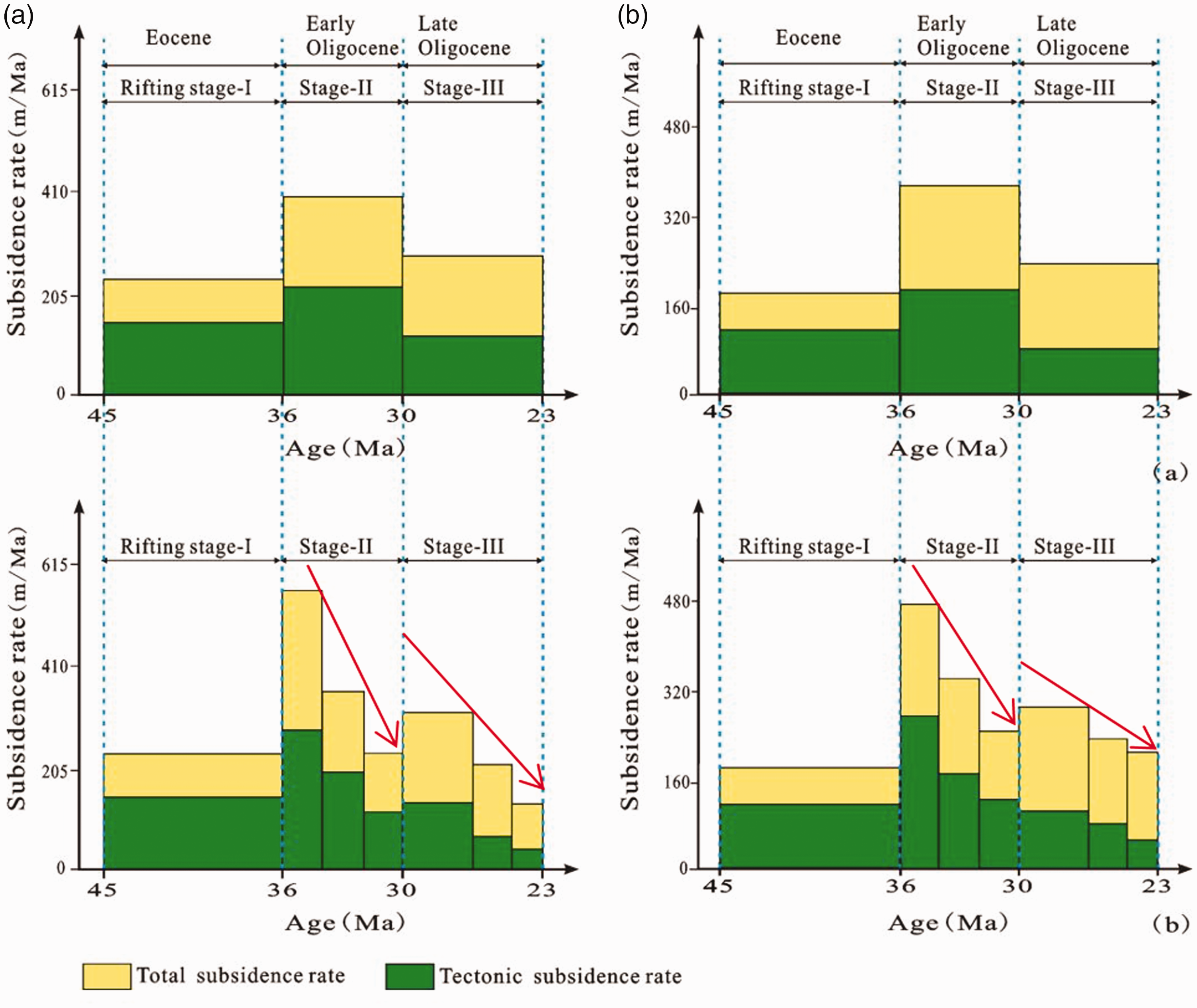
The subsidence history of Paleogene QDN Basin (modified after Song et al., 2014). (a) The subsidence rate of second-order sequences or rifting stages and (b) the subsidence rate of third-order sequences.
It has previously been established that high subsidence rates usually form large accommodation spaces (Korsch and Totterdell, 2009; Li et al., 2013). When the accommodation space increased rapidly, the clastics from the source areas were often unloaded quickly to form the basin-marginal deltas with relatively small extension when entering the basin. Different from this, the clastics were uploaded slowly to form the basin-marginal deltas with large extension when entering the slowly increased accommodation space, which was caused by the low subsidence rate. In each rifting stage, the subsidence rates first increased quickly then decreased slowly during the rest of the stage, so that the basin-marginal deltas showed the extension characteristics of a “small-medium-large” pattern. Rifting stage-III developed a lower subsidence rate than rifting stage-II overall (Figure 8), thus the basin-marginal deltas in the Lingshui Formation extended more greatly than those in the Yacheng Formation, especially at the final period of rifting stage-III, when the first member of the Lingshui Formation deposited, and the subsidence rate became so small that the basin-marginal deltas changed from fan deltas to braided river deltas (Figure 9).
The temporal evolution of the basin-marginal deltas among third-order sequences and second-order sequences.
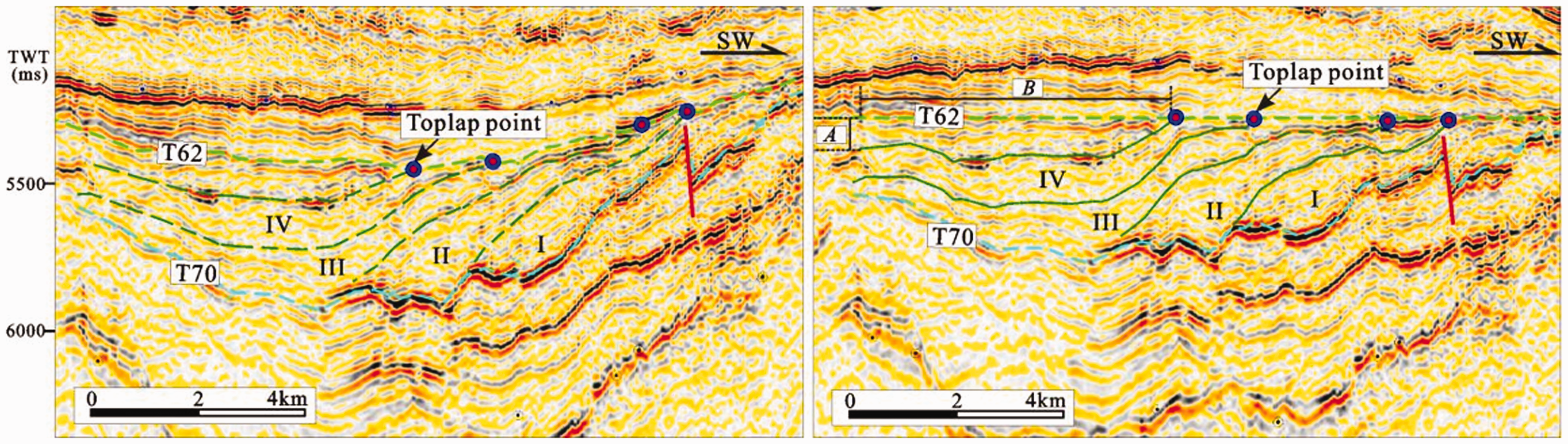
The method used to calculate the gradient of the basin-marginal deltas.
Paleogeomorphology controlled the spatial extension scale
It is known that synsedimentary paleogeomorphology plays an important role in controlling sedimentation, such as influencing the location of provenance into the basin, the distribution direction, and the scale of sedimentary bodies (Yang et al., 2017b). As a transitional zone between the source area outside the basin and the sedimentary area inside the basin, the basin margin paleogeomorphology has a certain gradient, which is the place where the detrital materials carried into the basin by the drainage systems were first discharged to form the basin-marginal deltas (Zhao et al., 2015b). With the gradient of the paleogeomorphology, the accommodation space increased from the basin margin to the basin center.
If the gradient of the paleogeomorphology was gentle, the accommodation space increased slowly. Consequently, the clastics were uploaded slowly, with the formed basin-marginal deltas extending further toward the central basin and developing a gentle gradient (Figure 11).
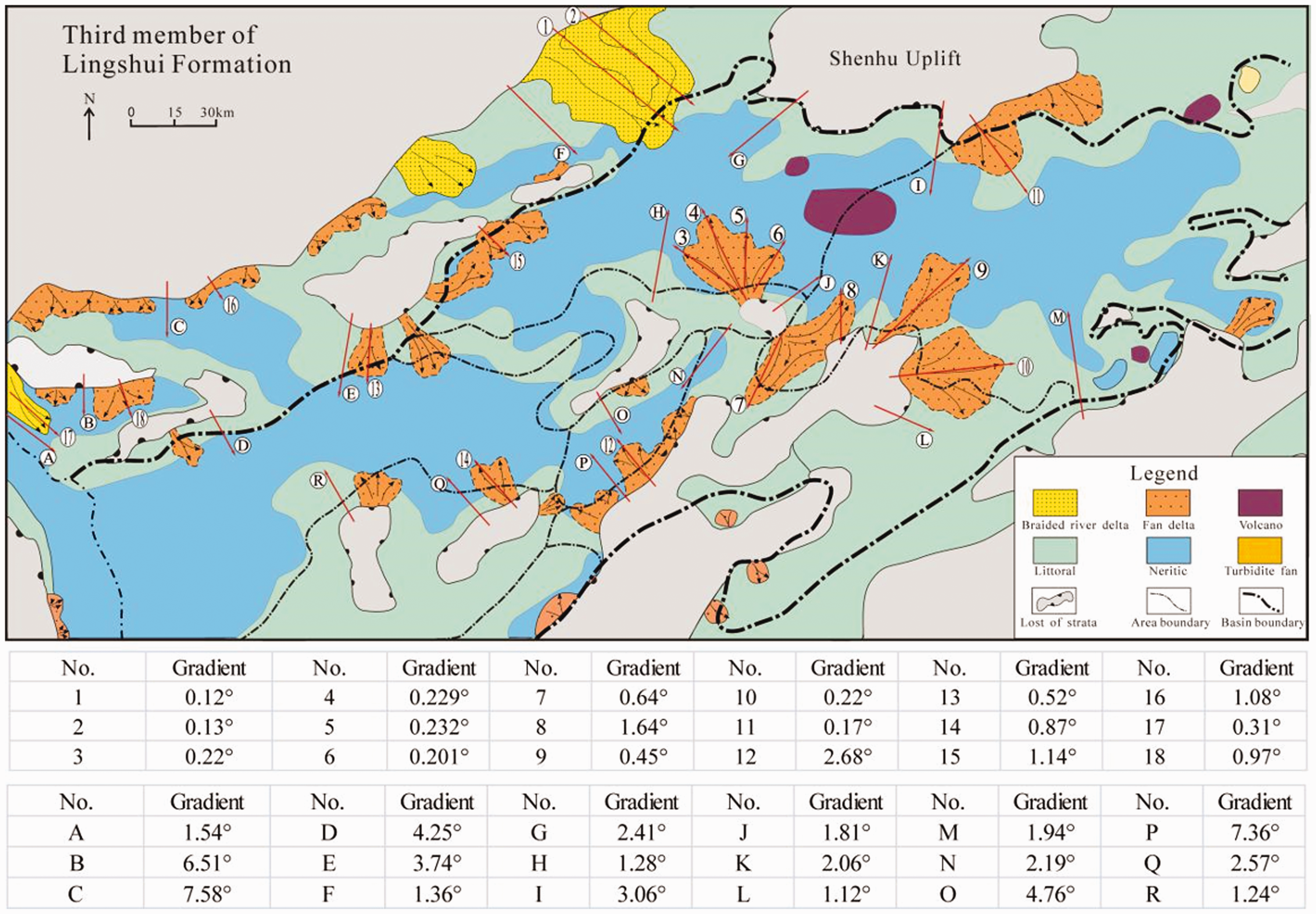
The gradient of basin-marginal deltas and paleogeomorphology developing in third member of Lingshui Formation (“1” was the line number used to calculate the gradient of basin-marginal deltas, “A” was the line number used to calculate the gradient of paleogeomorphology. The sedimentary facies were modified after the Exploration Research Institute of CNOOC, 2017).
Other controlling factors
During the synrift period, the faulting activity was so intense that it controlled the subsidence center, and formed fault ditches which could control the drainage system and carry the clastics from the provenance areas to the basins to form deltas. As a result, the deltas extended along the fault trend. In the Yacheng Formation, a large delta developed in the Beijiao Sag and extended along the No. 11 Fault, which was the boundary fault of the Beijiao Sag, and controlled the distribution direction of the delta (Figure 12). In addition to the above, the fault may also have formed other characterized structures controlling deposition, such as transverse anticline and step-fault belt, thereby influencing the development location and scale of the deltas, which has been discussed by previous researchers in terms of the Cenozoic rift basins located in the eastern part of North China (Wang et al., 2010). However, this phenomenon was not apparent in the study area covered here.
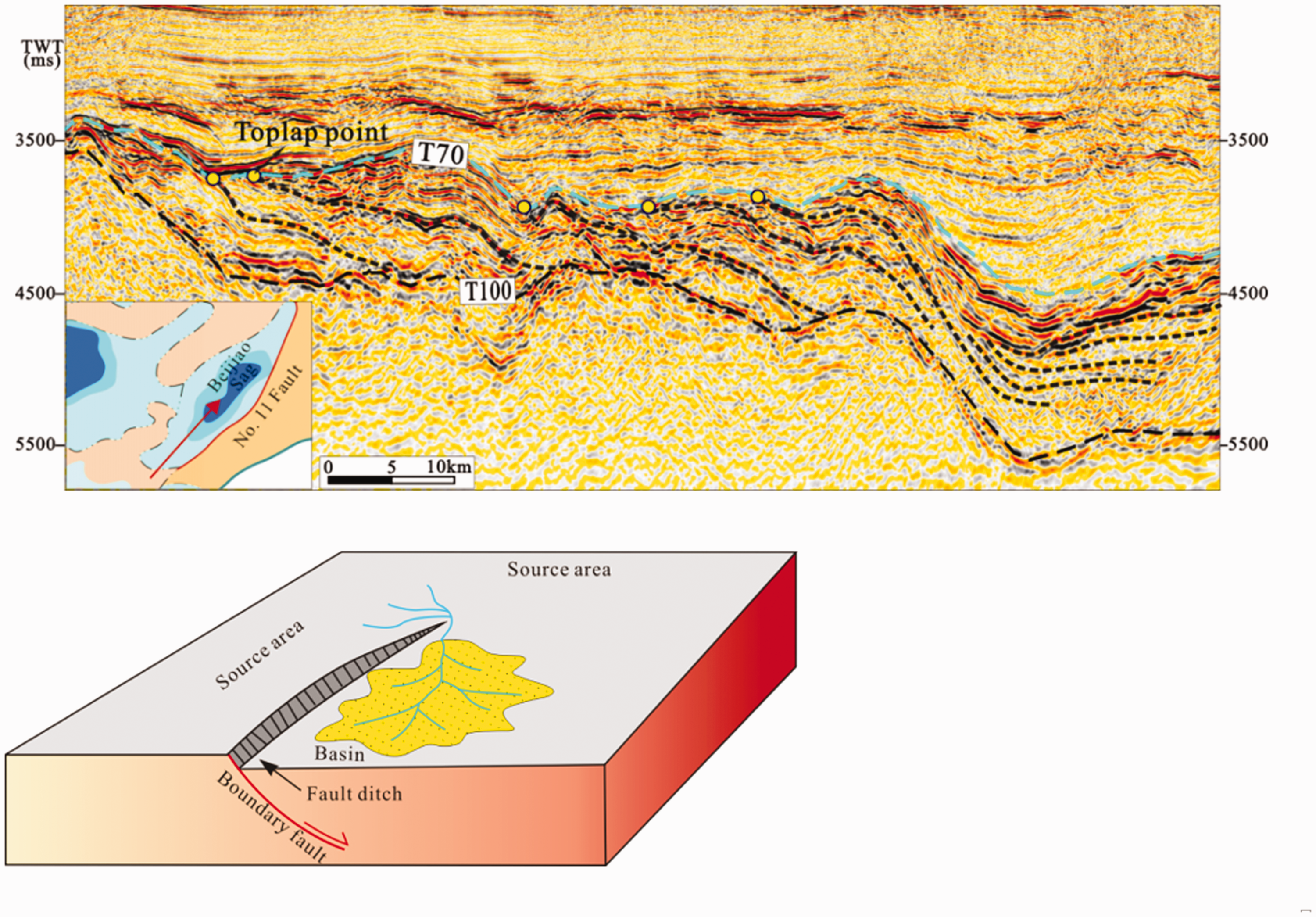
The boundary fault controlled the spatial distribution of the basin-marginal delta.
The sediment supply of clastics, which was linked with tectonism and climate, and was directly dominated by the altitude of the source areas or distance from the source areas to basins, acted as another important immediate factor influencing the temporal evolution of the basin-marginal deltas, such as the extension scale. For the QDN Basin, the surrounding source areas, especially Hainan Island as the main source area, have been researched in terms of their uplifting history by previous researchers (Shi et al., 2011). The denudation history and cooling rate of southern Hainan Island have been investigated using the low temperature thermochronology, the results of which showed a rapid cooling phase commencing at the Late Eocene–Early Oligocene, with a rate of ≥ 4.0°C/Ma, after which the cooling rate decreased to ≤2.5°C/Ma (Figure 13) (Shi et al., 2011). This signifies that Hainan Island was uplifted in the Late Eocene–Early Oligocene, especially the early Oligocene when the Yacheng Formation deposited. The rapid uplifting time of the Hainan Uplift corresponded quite closely to the high subsidence rate of the QDN Basin, which showed the basin–mountain coupling relationship between Hainan Island and the QDN Basin (Figure 13). Source area uplifting may provide sufficient clastics for the basin to develop large basin-marginal deltas. However, in the early Oligocene, the extension scale of the basin-marginal deltas was smaller than that in the late Oligocene, which showed a poor coupling relationship with the uplift of Hainan Island.
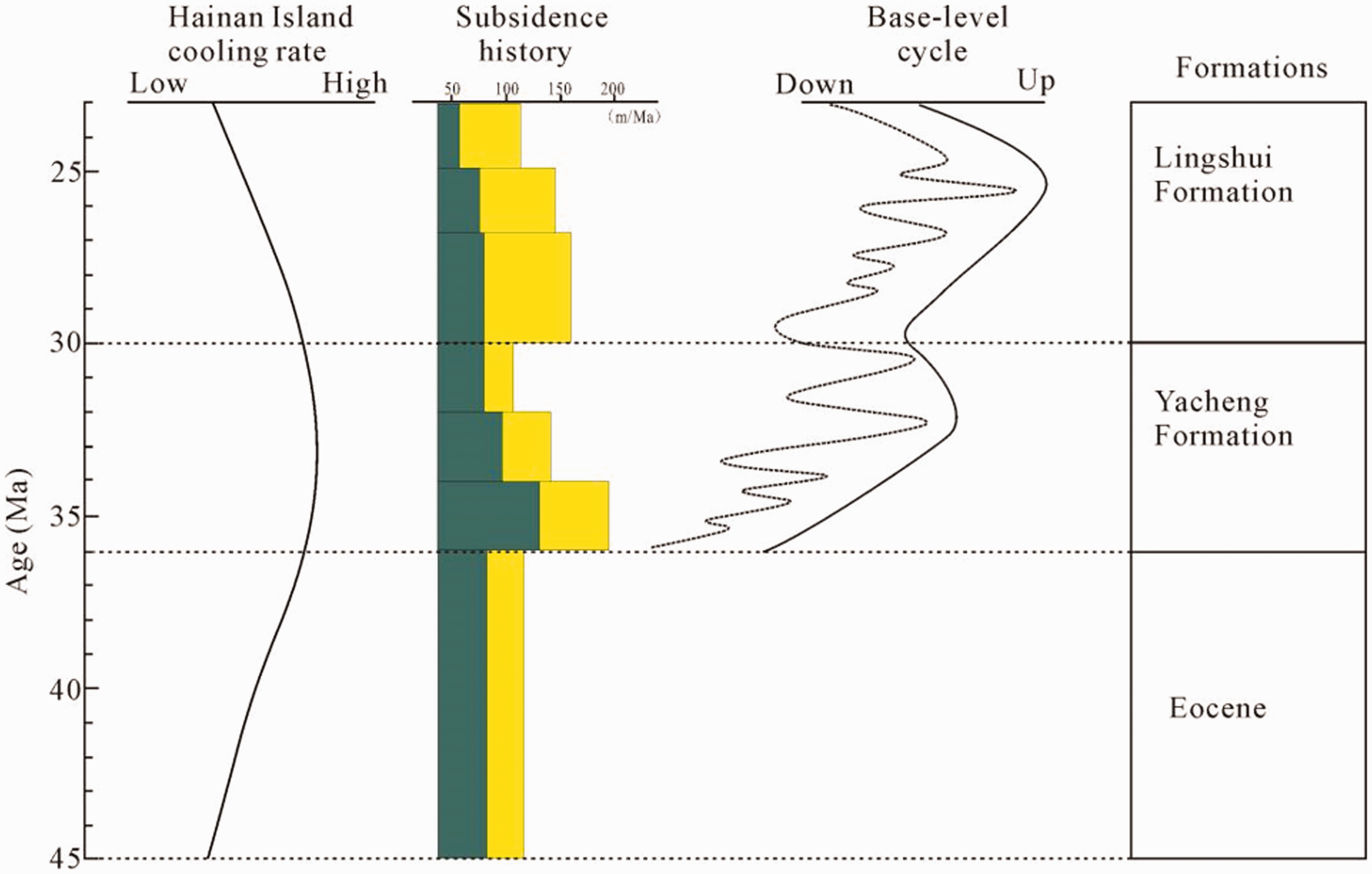
The potential factors controlling the temporal evolution of basin-marginal deltas in Paleogene QDN Basin. The cooling rate of Hainan Island was modified after Shi et al. (2011) and the subsidence history was modified after Song et al. (2014).
Implication for coal-bearing succession
In the South China Sea, the coal-bearing succession acted as the critical hydrocarbon source rocks (Li et al., 2010; Lv et al., 2019), and this was the important foundation for petroleum prospecting in the QDN Basin. However, the shortage of boreholes and poor seismic profiles made it difficult to research the coal-measure source rocks. It was known that the development of basin-marginal deltas was advantageous to form the coal-measure source rocks, and the larger basin-marginal deltas were, the more beneficial for forming the coal-measuring source rocks (Li et al., 2018; Zhang et al., 2019), which were mainly composed of two parts in South China Sea: coal seams and terrestrial marine mudstone (Figure 14) (Wang et al., 2019). The temporal–spatial evolution of the basin-marginal deltas determined the characteristics of the above two types of coal-measure source rocks. For the terrestrial marine mudstone, the TOC could be adopted as the parameter to evaluate the relationship between the basin-marginal delta and terrestrial marine mudstone (Wang et al., 2019) (Table 1). The more greatly the TOC developed in the delta, the more beneficial the delta would be for the terrestrial marine mudstone (Li et al., 2018).
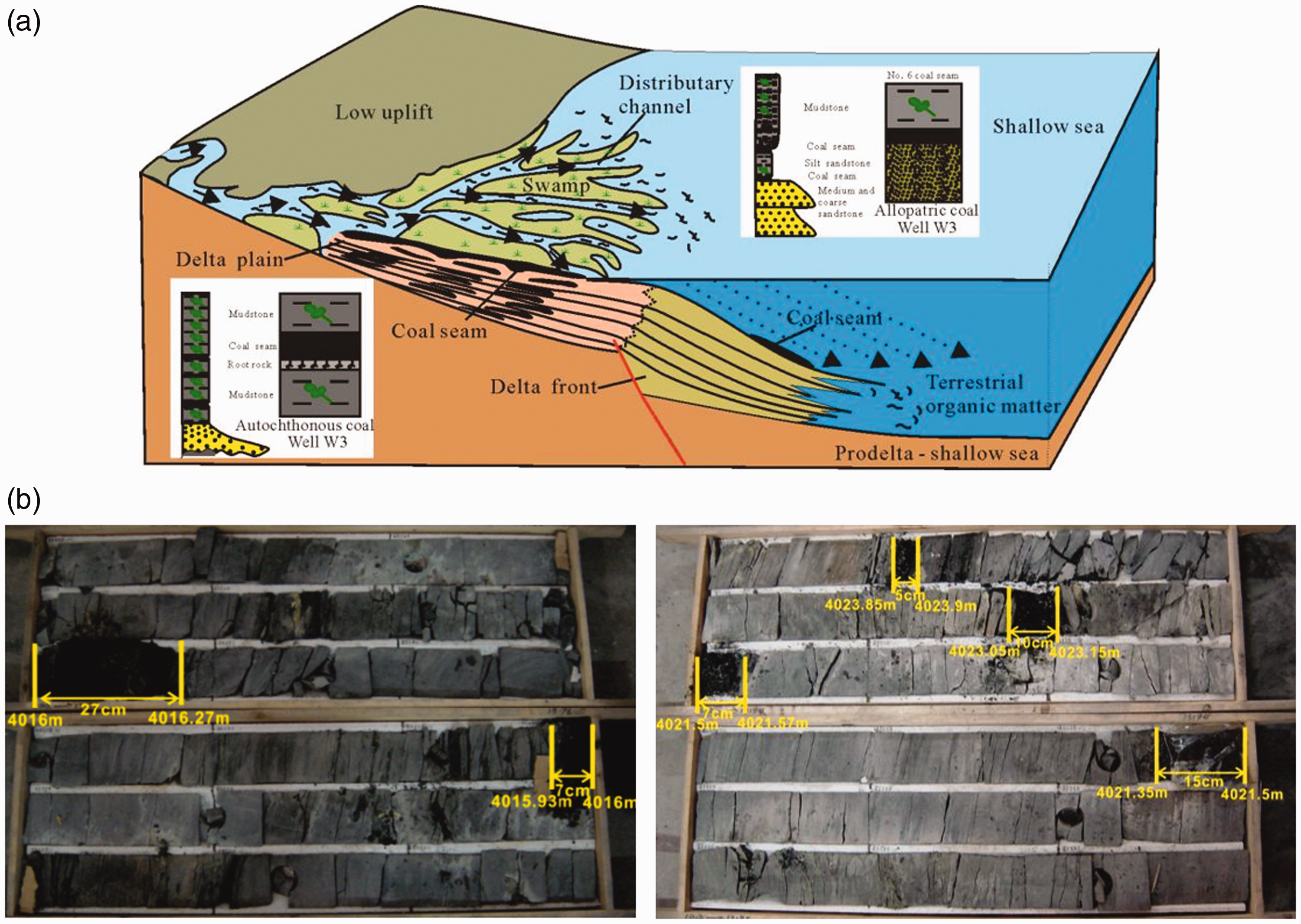
The relationship between the coal seams, terrestrial organic matter, and the basin-marginal deltas. (a) The model revealing the relationship between the basin-marginal deltas and coal seams, terrestrial organic matters. In the Yacheng Formation of Well W3, braided river delta and coal seams were all recognized. Please see Figure 6 for the delta in Well W3. (b) The coal seams in Well W3. (See the location of Well W3 in Figure 1. The model was modified after Zhang et al., 2019.)
The TOC values of Yacheng Formation in different wells. (The TOC data were provided by the Exploration Research Institute of CNOOC, 2017.)
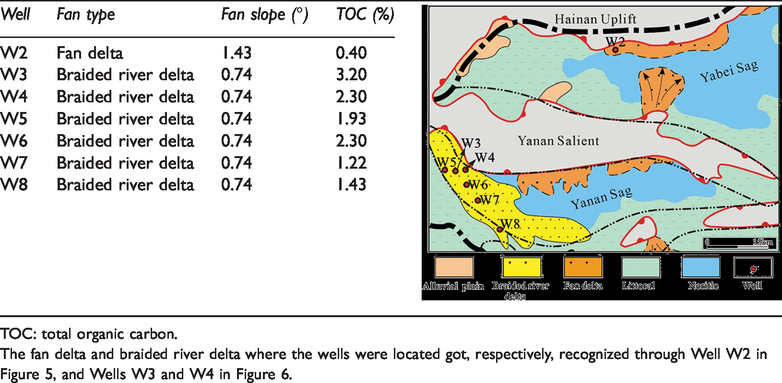
TOC: total organic carbon.
From Table 1, it can be seen that the TOC in W2 reached the smallest value among all of the wells, and the fan delta in which Well 2 was located developed the steepest slope. Therefore, it can be concluded that the basin-marginal deltas with gentle gradient were more beneficial to the terrestrial organic matter development.
For the coal seams, the thickness could be adopted as the parameter to evaluate the relationship between the coal seam and the deltas (Wang et al., 2019). In Table 2, W2 exhibits the thickest coal seam, which reflects the fact that the fan delta was more favorable to coal formation than the braided river delta in the QDN Basin. The reason for this was that the fan deltas were deposited in a steep slope region, where the large accommodation developed. Among the three members of the Yacheng Formation, the third member developed the thickest coal seams, which was due to the fact that the subsidence rate was highest when the third member of the Yacheng Formation deposited, which was favorable for developing a large accommodation space.
The thickness of coal seams in different wells. (The data were provided by the Exploration Research Institute of CNOOC, 2017.)
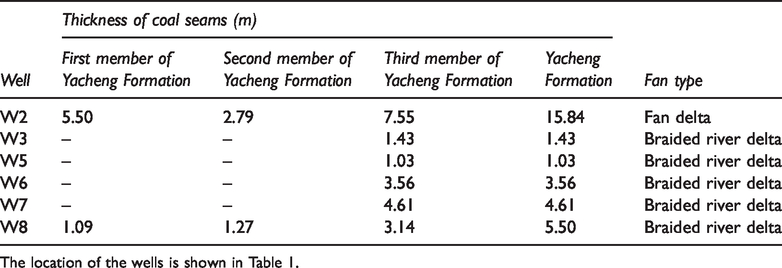
The location of the wells is shown in Table 1.
Conclusions
The basin-marginal deltas developed in the Paleogene QDN Basin mainly included fan deltas and braided river deltas, while the temporal–spatial evolution of the basin-marginal deltas was controlled by the base-level cycle, basin subsidence history, and syndepositional paleogeomorphology. The base-level cycle and subsidence history, respectively, influenced the temporal evolution of the basin-marginal deltas among the different system tracts, third-order sequences, and second-order sequences or rifting stages. The paleogeomorphology controlled the spatial evolution of the basin-marginal deltas, which was mainly reflected by the fact that the gradient of paleogeomorphology influenced the scale and type of the fans. The temporal–spatial evolution of the basin-marginal deltas determined the characteristics of the above two types of coal-measure source rocks. The deltas with gentle slope were beneficial to forming terrestrial organic matter, while those with large thickness aided in developing thick coal seams.
Footnotes
Acknowledgements
Careful reviews and constructive suggestions of the manuscript by anonymous reviewers are also greatly appreciated.
Declaration of conflicting interests
The author(s) declared no potential conflicts of interest with respect to the research, authorship, and/or publication of this article.
Funding
The author(s) disclosed receipt of the following financial support for the research, authorship, and/or publication of this article: The authors gratefully acknowledge the supports from the Science Foundation of Jinan City (No. 2018GXRC012), the National Natural Science Foundation of China (No. 41872172, No. 41672096), the Major National Science and Technology Projects (No. 2016ZX05026007-004), the Natural Science Foundation of Shandong Province (No. ZR2019QD008), and the Doctor Foundation of University of Jinan (No. XKY1922).
