




Abstract
To explore the effect of airflow on water atomization mechanism in mine exhaust heat recovery system, an experimental study of the dispersed phase fraction for droplets is conducted by Malvern laser particle size analyzer. This paper focuses on the influence of gas disturbance on water atomization in a curved diffuser in a ventilation system. With the theory of liquid breakup, it shows how liquid sheet occurs in primary breakup under different operating conditions. In case that the spray flows in the same direction as the airflow, the dominant factor affecting the breakup length of liquid film near the atomizing nozzle is the injection pressure. At a long distance from the nozzle, the droplet goes through vibrational shape oscillation and eventually further breakup in the complete atomization area. The main conclusions are as follows: (1) the dispersed phase fraction for droplets reaches maximum when the airflow is 3.2 m3/s; (2) droplets achieve the optimal atomization effect of the spray; (3) the heat and moisture should be fully exchanged.
Introduction
In coal mining, the ground air is sucked into the underground through the air intake well, diluting the gas, coal dust and taking away the residual heat and residual moisture, flowing through the exhaust well, and the total return air (the airflow flowing through the return air well in a mine) is discharged into the atmospheric environment, resulting in invisible energy wasting. Therefore, the recovery of heat from return air is a sustainable technology of environmental protection, high efficiency and energy saving.
For utilizing this energy, a device with recovering heat energy of the exhaust airflow in mine was proposed (Li et al., 2011; Liu, 2011; Liu et al., 2012; Niu and Wang, 2011, 2012). In the early exhaust ventilation system of mine, the prominent characteristics of the flow field in the diffuser are large wind volume, high wind speed and uneven wind speed distribution (Chen et al., 2012; Ping et al., 2015). The internal flow of the device with the function of diffuser also has similar flow field characteristics, which leads to the low operational efficiency of the device, such as high resistance and large wind (Tian et al., 2018). In the project site, the trial and error method is generally used to adjust the operating parameters of mine exhaust air volume and spray pressure for many times, in order to find the appropriate gas–liquid ratio (i.e. the ratio of gas flow to liquid flow) and improve the heat recovery efficiency of the device. However, the method is time-consuming, laborious and inconvenient in management. Therefore, it is of great importance to realize the optimization of operating parameters of gas–liquid ratio.
In the present work, one of the first PIV analyses of water-mist sprays was carried out by Wang et al. (2002) at low operative pressure (2–8 bar), while recent studies were realized by Husted et al. (2009) and Santangelo (2010) focusing on higher operative pressures (>35 bar). Santangelo (2012) reconstructed the velocity field in the initial region of the spray. It revealed the phenomenon (saddle shape), which is typical of pressure-swirl atomizers. In the central stream, velocity is greater than 90% close to the outlet, since hollow-cone sprays tend to have lower density and smaller droplets in the core. For numerical simulation, the behavior of particles is simulated in rectifying plate system by using combination method of finite element model and discrete phase model (Peng et al., 2019). The flow field of manifold in natural gas transportation station is analyzed based on large eddy simulation (Su et al., 2019). Liu et al. (2019) analyzed turbulent flow of tail oil in a pipe by the Reynolds time-averaged method.
Pan et al. (2015) measured the particle size of atomized droplets by Malvern laser particle size analyzer in the cooling chamber of spray cooling chamber. The experiment provided some data support for further study of heat and mass transfer in the device. It was found that under the action of cross-flow gas, the significant factor that affects the droplet size was the spray flow in near nozzle area. The particle size of the droplets far away from the nozzle was affected by the gas flow and spray flow. With the increase of gas flow rate, the droplet coalescence was enhanced and the particle size increased. Liu et al. (2016) explored the effect of inlet pressure and system pressure on spray cooling and heat transfer characteristics of smooth surface by using a closed spray cooling and heat transfer experimental test device. The results show that with the nozzle inlet pressure increasing, the droplet exit velocity and dispersed phase fraction increase, meanwhile the average surface temperature also decreases, which enhances the ability of spray cooling and heat transfer. Liu et al. (2018) accurately measured atomization prosperity by using Phase Doppler Particle Analyzer and analyzed atomization parameters, such as droplet velocity, droplet size, spray pressure and nozzle diameter. The results showed that the diameter and velocity start out high in the core and reduce outward. With the increase of spray pressure, the size distribution of droplets tends to be uniform, and the majority of the droplets are smaller. However, few studies are currently available on the fluid-dynamic characterization of the generated spray. The present work represents an attempt to enhance the understanding of this aspect.
To investigate the effects of airflow on the liquid breakup regimes, an experimental study on the variation of dispersed phase fraction of droplet along the spray streamline is carried out in the upper spraying mine exhaust heat recovery device. This study will explore the breakup mechanism of liquid sheet in co-current airflow in curved device. It is of great significance to realize the efficient recovery and utilization of low-grade heat energy in mines.
This paper is divided into three sections. At first, the engineering background is discussed and the importance of the optimization of operating parameters of gas–liquid ratio is analyzed. In “Experimental setup” section, an experimental study of the dispersed phase fraction for droplets is presented. The “Results and discussion” section, with the theory of liquid breakup, shows how liquid sheet occurs in primary breakup and further breakup. The main results are summarized in the “Conclusion” section.
Experimental setup
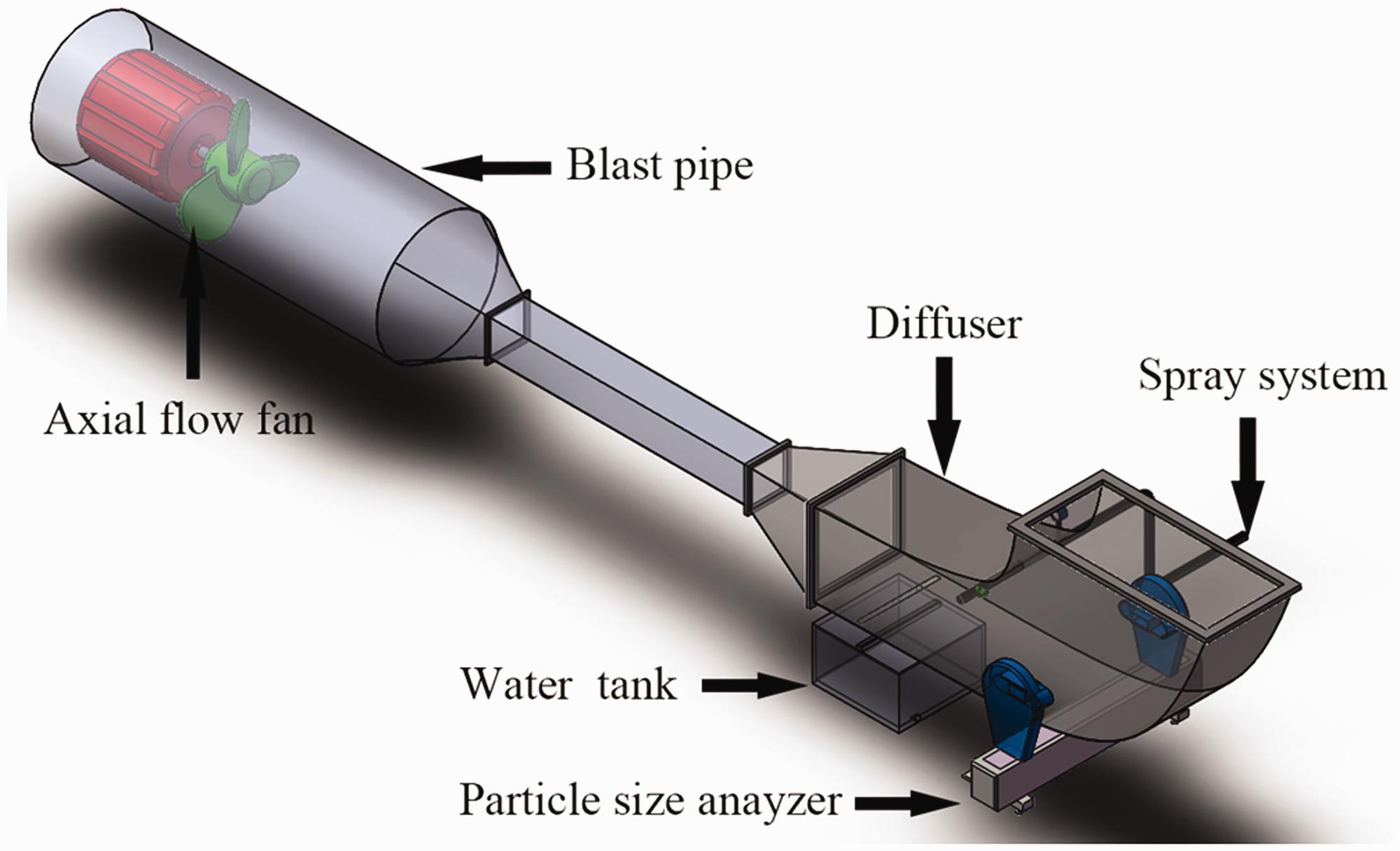
The schematic diagram of the experimental setup utilized in this study is shown in Figure 1.
Experimental model.
The system uses the performance of a K45-4-№9/18.5 kW axial mine fan adjusted by a variable frequency driver set to different fractions of a typical national electric grid frequency of 50 Hz. The rated power of the test fan was 18.5 kW, and its rated speed was 1470 r/min; also its blade tip angle was 20.9° and the blade hub angle was 50.9°. The range of the volumetric flow rate was 0.5–12.0 m3/s, and that of static pressure was 350–950 Pa. The fan was adjusted by a variable frequency driver with a power capacity of 1.1–20.0 kW, and the frequency range was 0–50 Hz with an error limit of 0.5 Hz. The accuracy of Spraytec Malvern particle size analyzer is as high as 10,000 times per second. The instrument has a wide particle size range of 0.1–2000 µm, accuracy above 1% and repeatability above 1%.
The material used in the curved diffuser model, which is named as “Diffuser” in Figure1 ,was 1 cm transparent plexiglass. The gas phase of the experiment is air, which is fed by the axial fan. The air volume can be controlled by the fan performance test software on the computer. The air supplied by the axial fan enters the inlet of the simulated roadway and contacts fully with the droplets emitted by the nozzle in order to realize heat transfer, and the gas is discharged from the exhaust outlet. The droplets gathered at the outlet are returned to the flume by gravity to recover heat energy. The liquid phase of the experiment is water, which is pressurized by water pump, so that water enters the upper spray pipe and sprays out from the atomizing nozzle to form an upper spray droplet. With the help of the experimental platform of mine main ventilation performance, the experiments were conducted under injection pressure (0.15–0.25 MPa) and the condition of multi-variable input frequency of main ventilator from 30% to 60%. Measurements, which were made in the mine exhaust heat extraction device, were experimentally determined by Malvern laser particle size analyzer. Focusing on the experimental measurement of the dispersed phase fraction of droplet of seven measuring points, the three horizontal seven factor crossover experiment was complete, and the optimum points of operation parameters were obtained through analysis. The study used a pressure-swirl hollow cone nozzle, which is classified in Table 1. The distance from the measured point to the nozzle in this experiment is shown in Table 2.
Nozzle property.

Distance from the measuring points to the nozzle (along the spray streamline).

In the case that the working frequency is 50 Hz, the input frequency of the motor of the main ventilator is adjusted through the automatic control software of this axial mine fan. The input frequency is 15.0 to 30.0 Hz, and the input frequency percentage is 30% to 60% of the working frequency, which is referred to as 30% to 60% air volume. The gas flow varies from the input frequency of motor of the main ventilator as shown in Table 3.
Input frequency percentage corresponding to gas flow rate.

Results and discussion
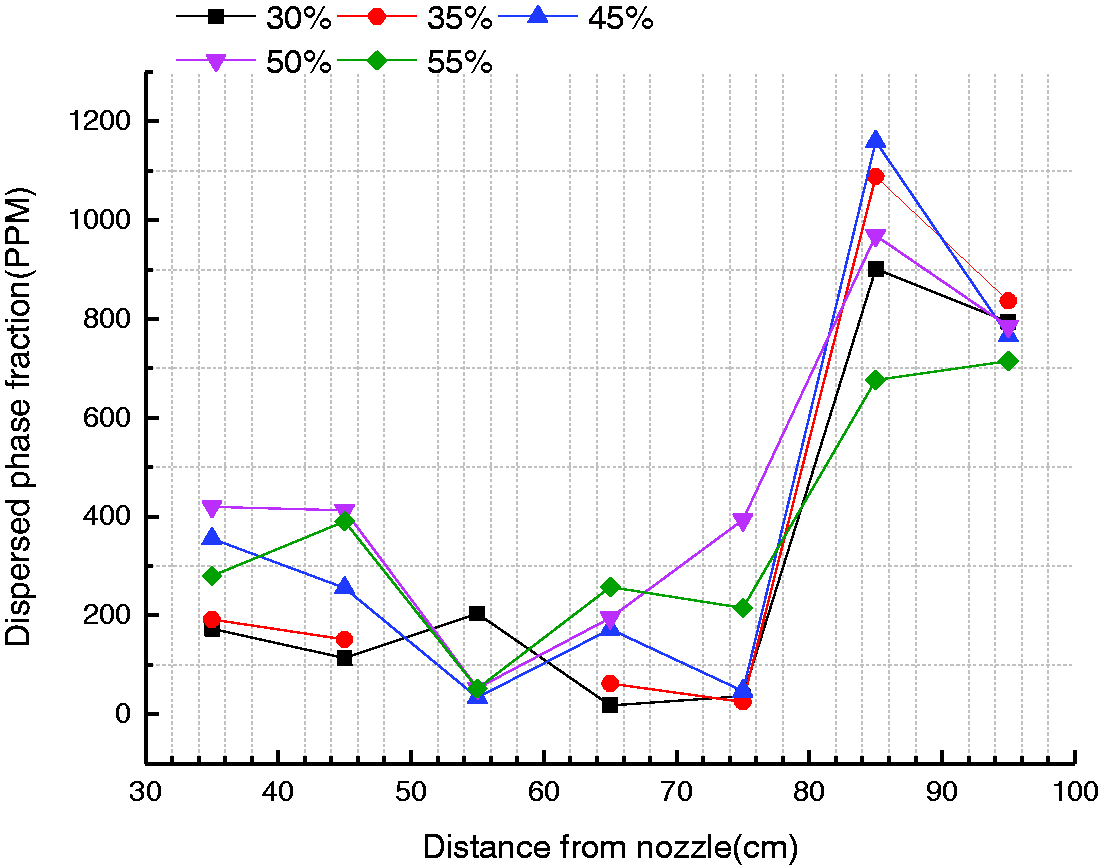
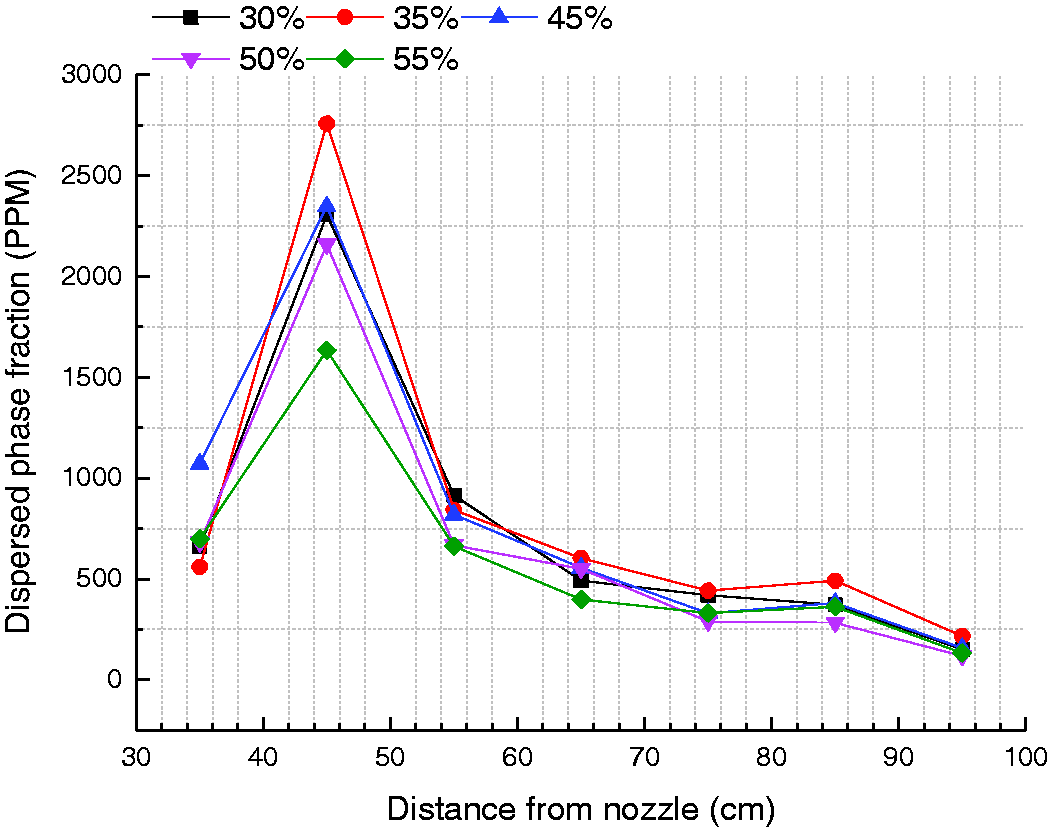
To fully characterize the flow and analyze the spray dynamics of droplets, measurements were made throughout the spray at various injection pressures and airflow. Dispersed phase fraction can be well extracted from the experimental data. The dispersed phase fraction
Measurements and observation
The dispersed phase fraction
Dispersed phase fraction for distance from nozzle at
Dispersed phase fraction for distance from nozzle at
At
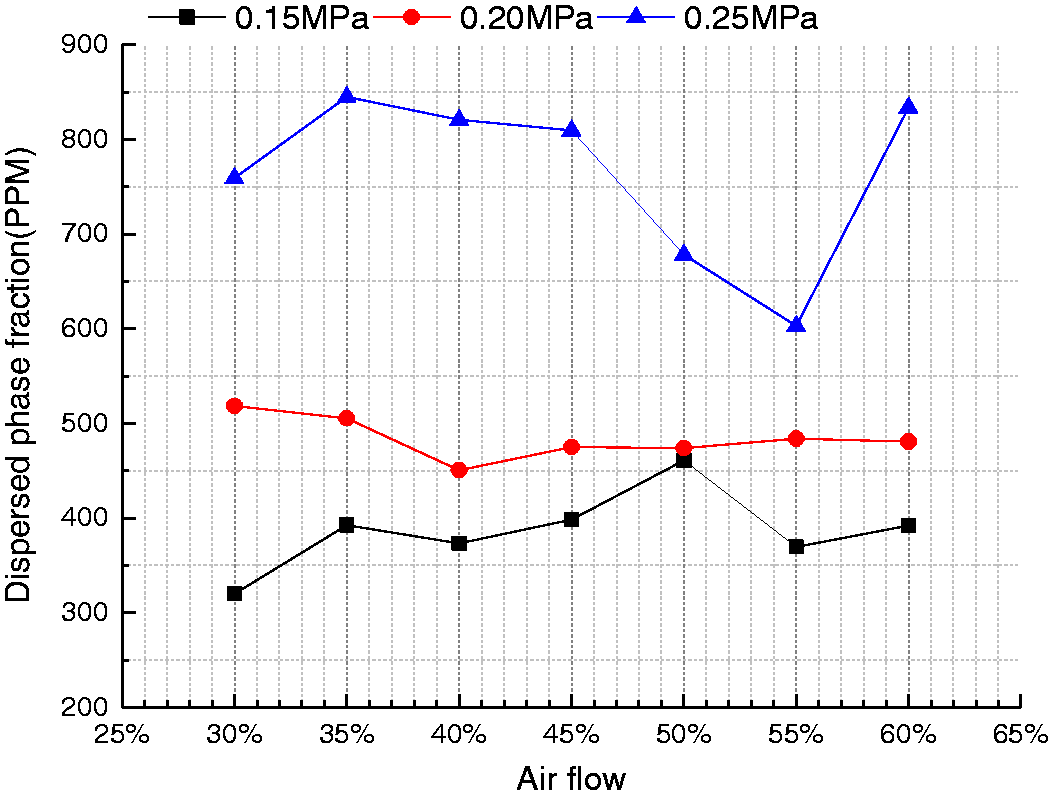
When the nozzle injection pressure is constant, the droplet dispersion fraction varies greatly under different airflow rates, and there exists a reasonable range of exhaust airflow, that is, the coupling optimization of wind–water parameters. As is shown in Figure 4, the maximum dispersed phase fraction appears near 35% airflow rate of the main fan at the nozzle pressure of 0.25 MPa, indicating that the minimum void fraction and good atomization effect of droplets are achieved.
Effect of airflow and atomization pressure on the fractions of dispersed phase.
However, for the nozzle pressure of 0.20 MPa, as airflow increases, the dispersed phase fraction did not change significantly due to the approximate initial relative velocity. At
Dynamics of film breakup, secondary atomization
In a hollow cone pressure swirl nozzle, droplet generation takes place though primary and secondary breakup processes. The dynamic of these breakup processes of liquid film occurs within a very small region next to the nozzle exit. This is fundamentally important as these processes control the downstream of the nozzle. Here, the Weber number is defined as
Senecal et al. (1999) modeled breakup of two-dimensional liquid films, showing that based on the Weber number (
In the experiment, the velocity of liquid sheet is given by 
Once the liquid film disintegrates, it forms ligaments. Theoretically, it is assumed that for short wavelength, one ligament forms per wavelength of the liquid film, and for long wavelength, two ligaments form per wavelength. From simple mass balance, one can find the diameter of these ligaments for both types of instabilities:


When a drop is subjected to a surrounding dispersed phase that is moving at an initial relative velocity, aerodynamic forces will cause it to deform and fragment. In all the cases studied in this paper, the long-wave regime is predominant (Figure 5).
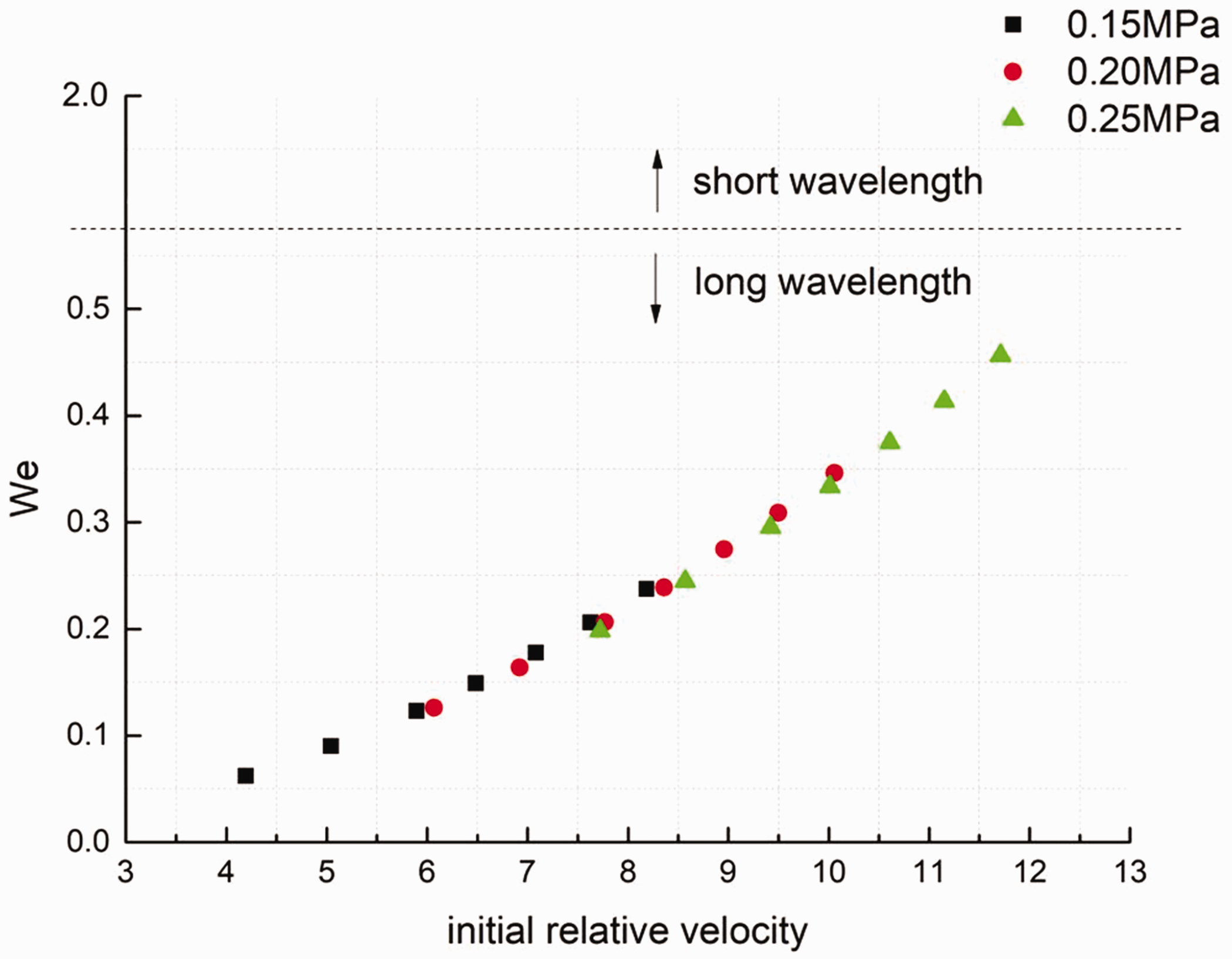
Effects of Weber number on initial relative velocity.
It is known that the long-wave regime is dominant for low-speed sheet atomization, while short waves are responsible for breakup in the case of high-speed sheets. Once the spray becomes fully developed, short wavelength film breakup becomes dominant, and this shows that liquid sheet has not been spread furthermore.
The relative velocity between liquid film and ambient gas phase induces instability of film, and eventually breaks up in the form of ligaments. In general, this unstable ligament goes through further atomization, and generates droplets. These droplets, in most cases, exhibit secondary atomization generating smaller daughter droplets due to aerodynamic breakup.
When it is calculated or estimated that the film thickness (
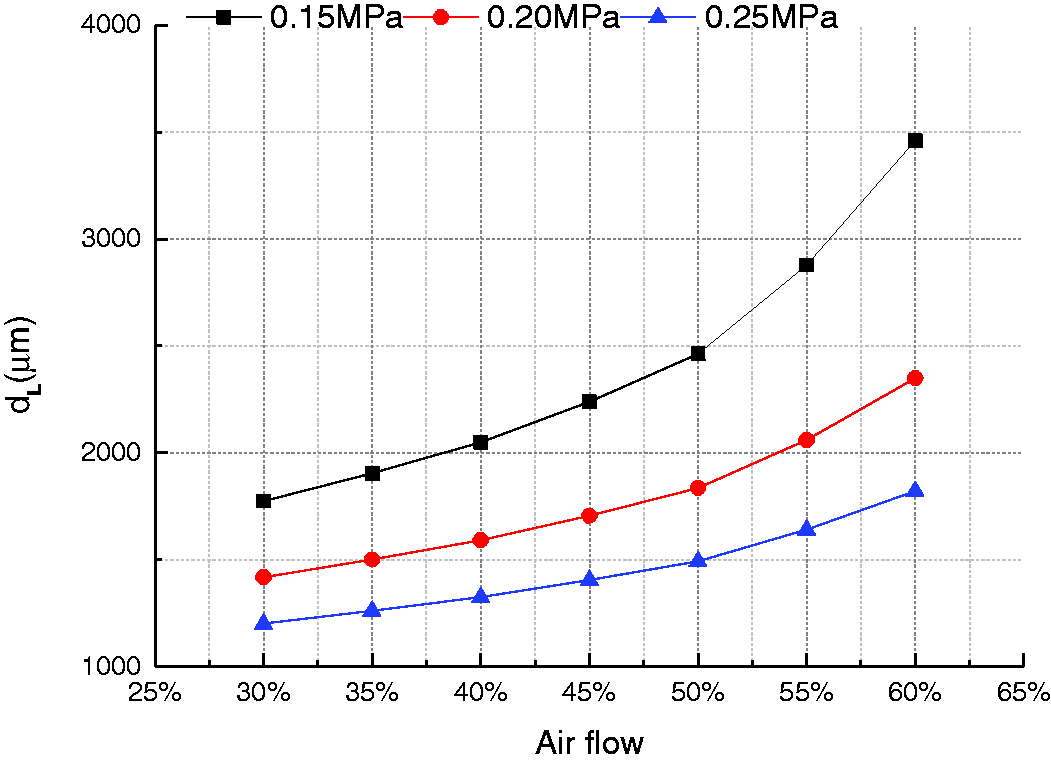
The diameter of ligament for airflow at different pressures.
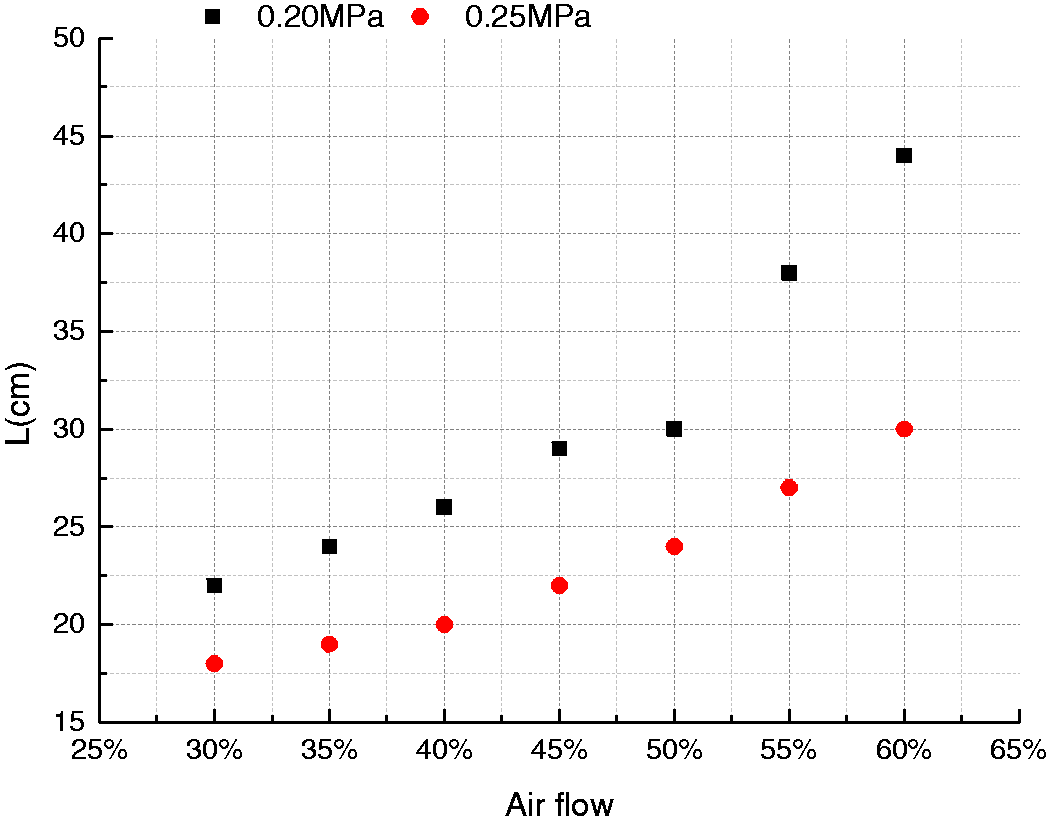
The breakup length of droplet for airflow at different pressures.
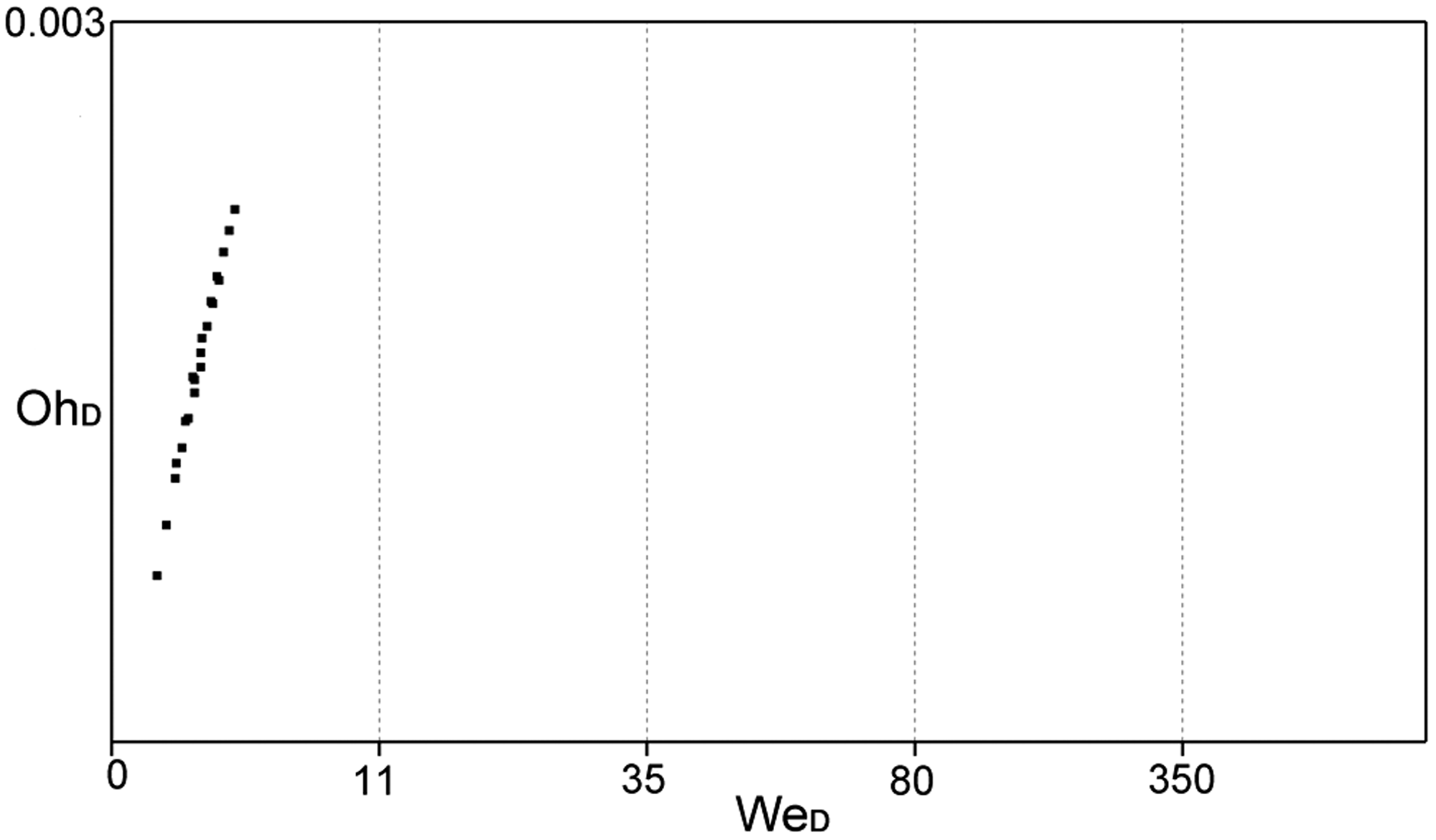
The Ohnesorge number and Weber number of measurement points.
A simple model for a cylindrical liquid column (ligament instability) was introduced by Dombrowski and Johns (1963). The droplet diameter can be estimated by
Types of secondary breakup.
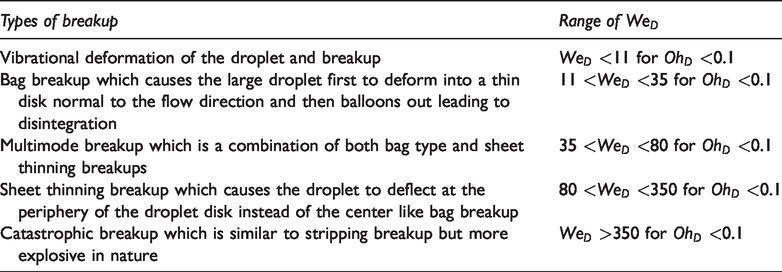
In the current experiments, WeD is found to be less than 11 when
Conclusions
This paper reveals that liquid sheet in primary breakup are dominated by long wavelength film breakup and calculates the fragmentation length of film based on Weber number which correlated to a certain type of wavelength breakup. The main factor affecting the primary breakup of liquid is the spray pressure of atomizing nozzle. When the pressure difference of the nozzle is constant, the dispersed phase fraction of the droplets varies greatly under different airflow rates. The trend suggests that the maximum dispersed phase fraction appears near 35% air volume of the main fan, and the droplets are in the optimum atomization state.
The relationship between Ohnesorge number and Weber number is defined under the condition of that primarily secondary breakup. When Weber number is found to be less than 11, Ohnesorge number is smaller than 0.002. This suggests that the droplets generating smaller daughter droplets should go through vibrational shape oscillation and eventually further breakup.
Footnotes
Declaration of conflicting interests
The author(s) declared no potential conflicts of interest with respect to the research, authorship, and/or publication of this article.
Funding
The author(s) disclosed receipt of the following financial support for the research, authorship, and/or publication of this article: The authors are grateful for financial support from the National Natural Science Foundation of China (Grant Nos. 51774134 and 51864014), the Project of Hunan Provincial Natural Science Foundation of China (Grant No. 2019JJ60044), and the Doctor Research Fund of Hunan University of Science and Technology (Grant No. E51681).

Supplemental Material
Supplemental material for this article is available online.
References
Supplementary Material
Please find the following supplemental material available below.
For Open Access articles published under a Creative Commons License, all supplemental material carries the same license as the article it is associated with.
For non-Open Access articles published, all supplemental material carries a non-exclusive license, and permission requests for re-use of supplemental material or any part of supplemental material shall be sent directly to the copyright owner as specified in the copyright notice associated with the article.
