




Abstract
Geochemistry characteristics of rare metal elements of No.15 Permian coal seam in Changzhi coalfield, such as concentration, distribution, occurrence, and mining value were investigated by low-temperature ashing prior to powder X-ray diffraction, X-ray fluorescence, inductively coupled plasma mass spectrometry, and field emission scanning electron microscopy equipped with energy-dispersive X-ray analysis. The results showed that the ∑REE concentrations ranged from 19.12 to 268.21 μg/g, with an average value of 91.74 μg/g; the average concentrations of Ga, Ge, and Th were 11.03, 1.96, and 15.09 μg/g, respectively. The concentration of rare earth elements (REEs), Th, Ga, and Ge, are all below the minimum industrial grade. However, the concentrations of rare earth oxides and Ge in high-temperature ash of some coal benches are higher than the minimum recoverable value and are thus potentially recoverable. The vertical distribution of REEs is uneven, with a maximum value adjacent to a minimum value. The source of the different layers of REEs was stable and influenced by seawater. Moreover, the ∑REE, Ga, and Th are enriched with the inorganic minerals and correlated with kaolinite. Ga and Th are also correlated with illite. Significant fractionation of REE is observed during the process of combustion.
Introduction
Rare metal elements (e.g., Ge, Ga, Th, rare earth elements (REEs)) are of strategic significance because they can be applied to various sectors of the global economy, such as clean energy production, health care, oil refining, and electronics. For example, Ga and Ge play a critical role in the aerospace industry, while Th is progressively gaining more attention in nuclear energy. Some rare metal elements can be absorbed and enriched from coals, making them to be economically exploitable. In addition, 61.33 metric tones of REEs occur in coal deposits globally and account for about 50% of traditional REE mining resources (Franus et al., 2015; Sun et al., 2015). A vast Ga deposit was found in Junger coal seams of China, suggesting that some rare metal elements can be accumulated in coal deposits and could, thus, be a promising resource (Dai et al., 2006a, 2006b, 2006c). To that end, the mining value of Li in the Guanbanwusu and Pingshuo mines and the Jungar coalfield has been determined (Sun et al., 2012, 2013a, 2013b). Moreover, some researchers have focused their attention on the extraction of REEs from coal ash (Fang and Gesser, 1996). Coal and its by-products are promising alternatives to REE resources and offer many advantages including large and reliable sources, use of materials that have already been extracted, reduced environmental and health effects due to the lack of new extraction activities, and the reuse of potential waste materials.
China held an estimated 103.87 Gt recoverable coal reserves, the third largest following the United States and Russia. Coal production in China amounted to 3.750 Gt in 2015 (National Bureau of Statistics, 2016). The distribution of trace elements in coals can provide geological information, such as depositional conditions, coal-bearing sequence formation, and regional tectonic history, because their distributions are determined by the processes of peat accumulation and coal rank advance, as well as interaction with the organic matter, basinal fluids, sediment diagenesis, and synsedimentary volcanic inputs. Recently, several researchers in China have studied the geochemistry characteristics, occurrence model, and geological control factors of REEs in coal deposits in different regions of China (e.g., Huainan, Huaibei, South China, and Chongqing) as well as in the different coal forming periods, prompting discussion on the microenvironment of REEs in coal deposits (Du and Zhuang, 2006; Li et al., 2005, 2018; Wang et al., 2002; Zhao et al., 2000a, 2000b;). Previous studies showed that the concentration of REEs in coal deposits can be up to 300 − 1000 μg/g in the far east of Russian (Finkelman et al., 1990) and 500 − 4000 μg/g in Fire Clay, the America East (Seredin, 1996), respectively; the concentration of REEs in coal deposits in the Sydney Basin in Nova Scotia, Canada, is 72 − 483 μg/g and is mainly deposited in silicate minerals, which are mainly from terrestrial detritus or marsh solution (Birk and White, 1991). In China, there has been little research on Ga, Ge, and Th in coal deposits as compared to REEs, and the research is mainly focused on Inner Mongolia (Dai et al., 2006a; Wang et al., 2011).
Shanxi Province is an important coal-bearing province with abundant coal reserves. In this study, the concentration, distribution, occurrence of rare metal elements in No. 15 coal seam, including REEs, Ge, Ga, and Th were investigated. The potential utilization value of rare metal elements in coal ash was also evaluated.
Geological setting
LuAn-Changzhi mining area is located in the Middle East wing of Qinshui coalfield, southeast Shanxi Province. It originates from the southern part of Xichuan normal fault in the south-central Xiangyuan country and reaches the Zhuangzhou normal fault at the adjunction of Changzhi city and Gaoping city (Figure 1). The total mining area is over 1000 km2 with the buried depth <1000 m.
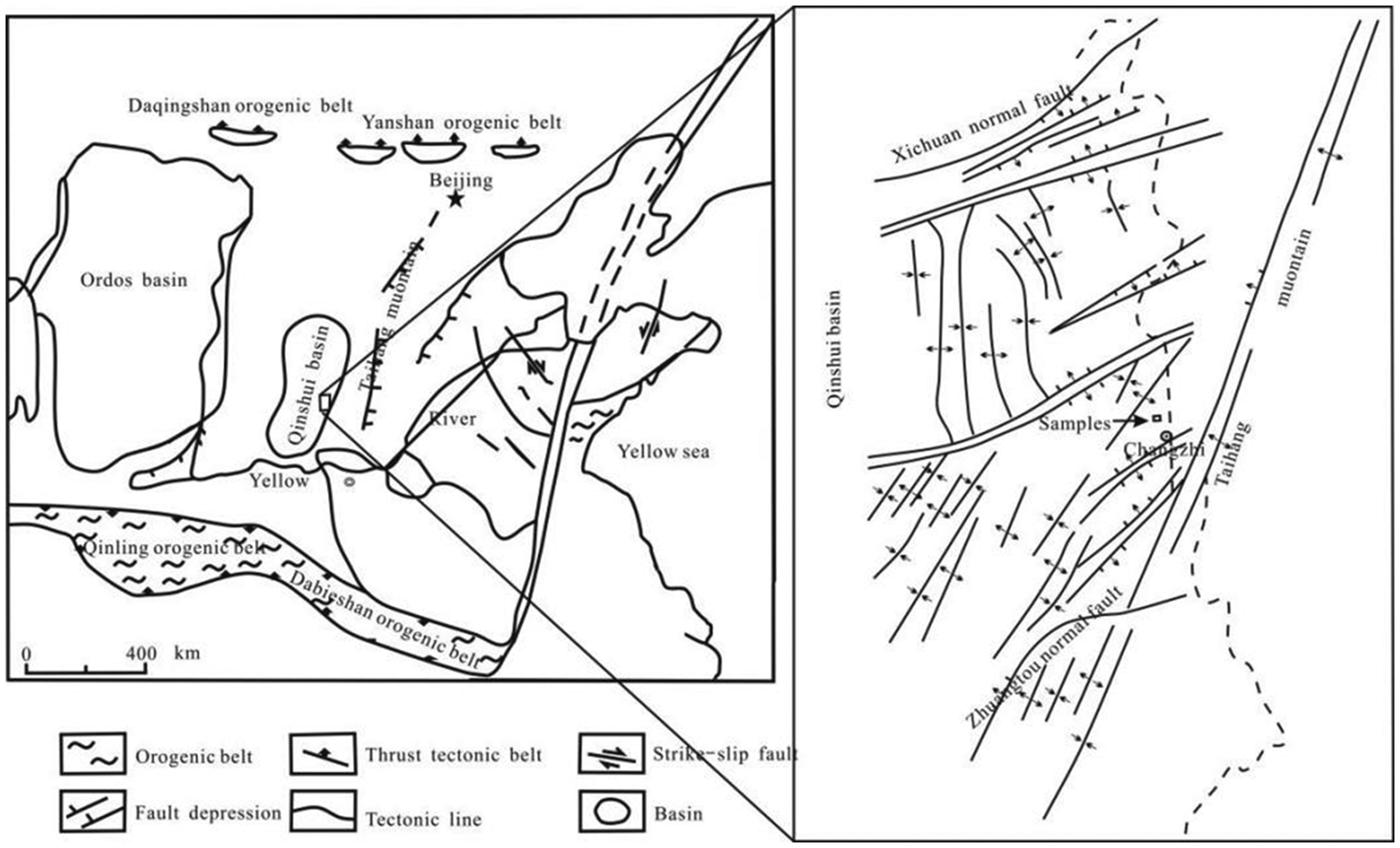
Location and tectonic background of Changzhi mine.
The paleostructure of Qinshui Basin in southeast Shanxi Province is located in the middle section of the north China platform, which is the residual tectonic basin influenced by the continuous increase of the shear pressure and rising uplift during Yanshan movement period (Shao et al., 2006). The shear extrusion stress in North China increased and the big basin in North China gradually retreated to Ordos area during Yanshan movement period; the Shanxi massif has become the uplift area, and the biggest synclinorium Qinshui basin appeared during Late Jurassic-early cretaceous (Cheng and Lin, 1998). The study area was from Carboniferous to Diassic, including Benxi, Taiyuan, Shanxi, Lower Shihezi, Upper Shihezi, and Shiqianfeng Group as shown in Figure 2; Taiyan and Shanxi group were the main coal-bearing rock series (Jin et al., 2005; Kong et al., 1996). No. 15 Permian coal from Taiyuan group, the main coal seam and main coal reserves in the whole area, is widely distributed, with stable horizontal distribution and large thickness. The coal seam thickness ranges from 2.31 to 4.26 m around the mining area.
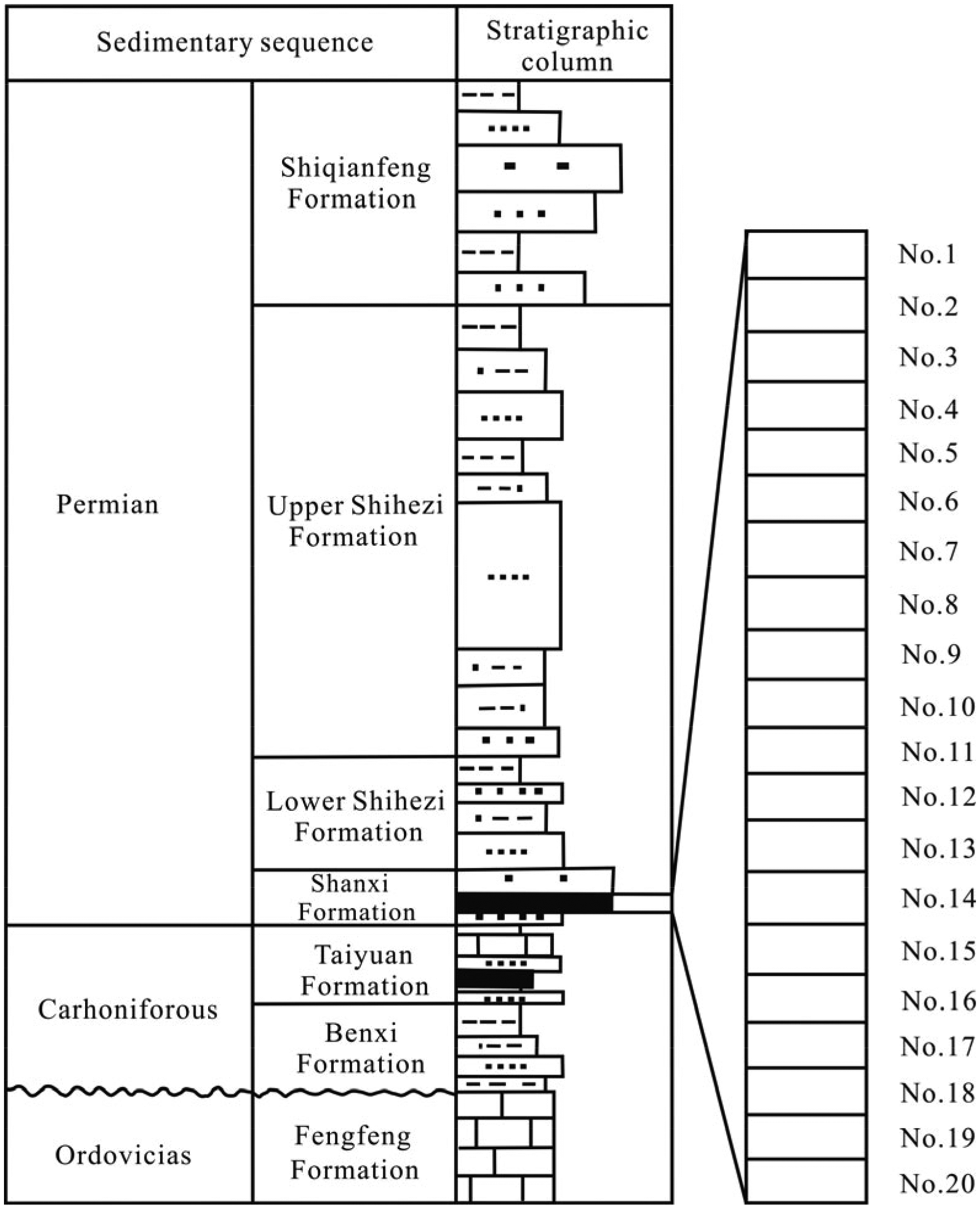
Stratigraphic column of Zhang Village Coal mine and profile samples in the coal seams.
Samples and analysis methods
Sample collection and processing
The 2306 working face of Zhangcun mining was selected as the sampling point to collect the full-layer samples, and the coal seam thickness is 4.21 m. Continuous groove sampling method was implemented and the stratified thickness of sampling was controlled between 16 and 22 cm according to Chinese National Standard (GB/T 482—2008). Twenty benches samples were collected including 16 coal benches (No. 3 to No. 18), two roof samples (No. 1 and No. 2), as well as two floor samples (No. 19 and No. 20). After sampling, they were dried, shrunk, and ground to 200 mesh (75 μm) and sealed in brown jar before analysis.
The objective of this study was to provide evidence that coal ash is a promising source for the recovery of rare metal elements. The coal was burnt in a clean quartz cell at 810°C and the fly ash was collected from the surrounding area using a plastic brush. Bottom ash was collected from the quartz cell and sieved into different particle sizes (>100, 100 − 150, 150 − 200, <200 mesh) using a combination of sieves (100, 150, and 200 mesh) selected to separate the different sizes of bottom ash.
Sample testing
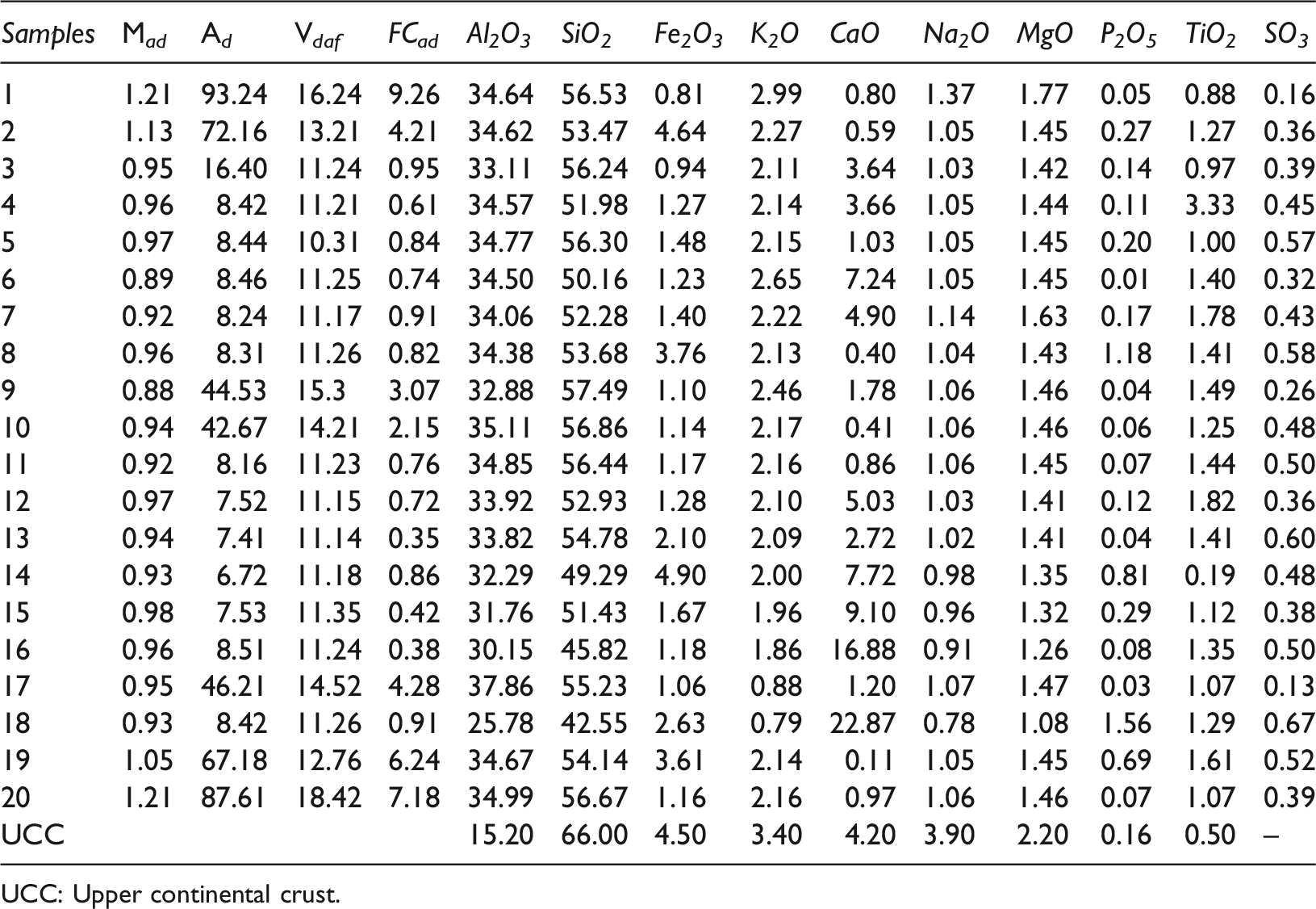
Proximate analysis was conducted according to Chinese National standard (GB/T 212–2008) and the results were shown in Table 1. Results showed that the No. 9, No. 10, and No. 17 coal benches contain thin layer of gangue and the high-temperature ash yield is 44.53%, 42.67%, and 46.21%, respectively.
Proximate analysis and vitrinite reflectance in raw coal and contents of major-element oxides in the ash of the coal benches, roof, and floor (%).
UCC: Upper continental crust.
To determine the constant element concentrations, the samples were pretreated at 815°C according to Chinese National Standard (GB/T 30725–2014) and analyzed by X-ray fluorescence spectrometer (XRF; Thermo Fisher, ARL Quant’X). The sulfur content was determined by coulomb sulfur meter and the concentration was transferred into SO3. The results were shown in Table 1.
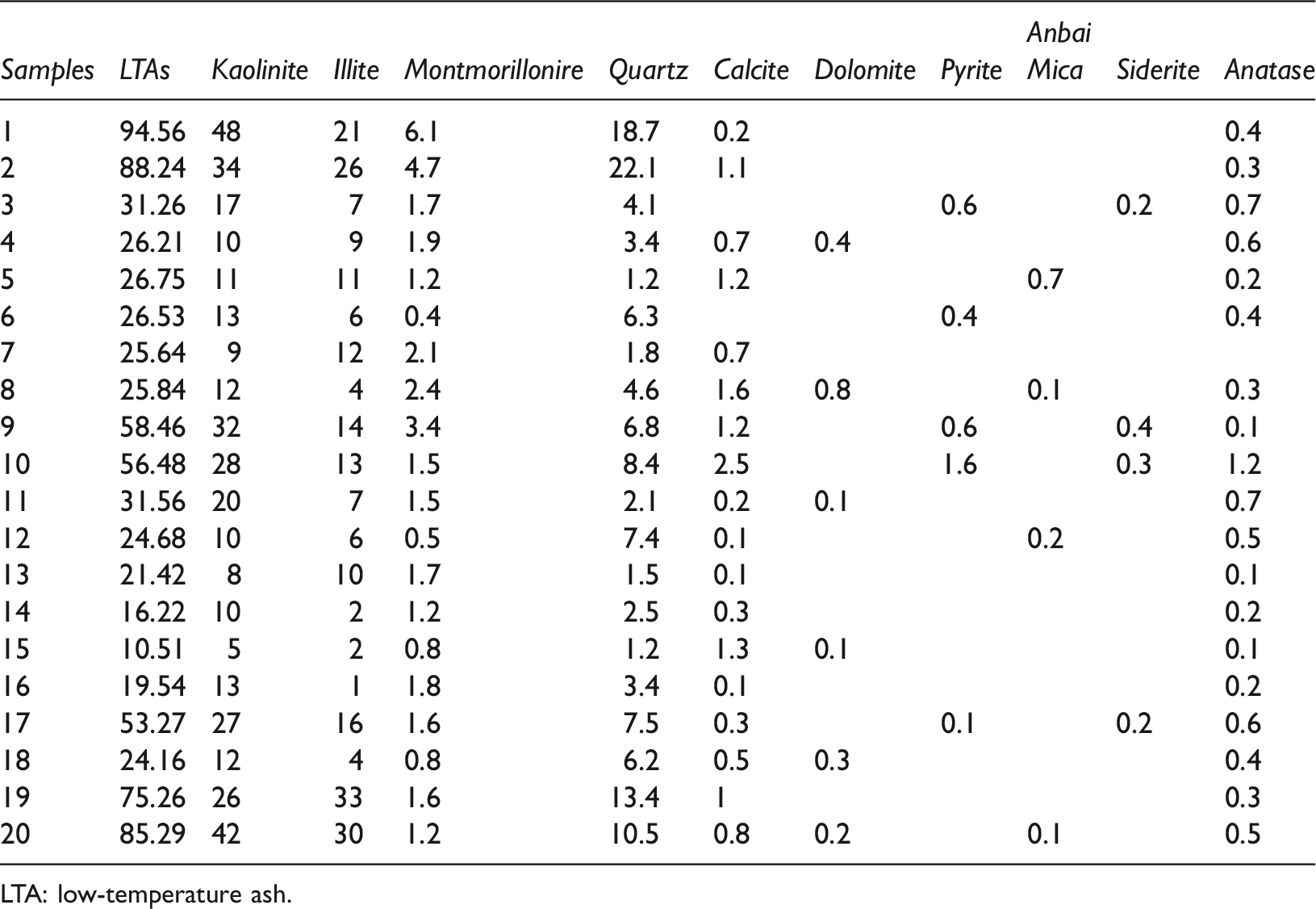
The main minerals in coals were identified by powder X-ray diffraction (XRD). The samples were treated at the tube furnace under the conditions of 100% oxygen and constant temperature of 370°C to exclude the influence of organic matter (Finkelman et al., 1990). The corundum was added so as to calibrate the data and the mineral species were detected by X-ray diffractometer (Bruker, D8 Advance X). Each XRD pattern was recorded over 2θ interval of 5°−80°, with a step size of 0.02° and the scanning speed of 1 s per step, step-by-step mode for mineralogical analysis. The mineralogical characteristics were qualitatively analyzed by using Highscore software according to PDF-2007 database. Rockjack system accurately quantifies the mineral components by the whole XRD spectrum and the fitting degree was 0.1583%. The results are relatively reliable if the fitting degree is within 0.2% (Eberl and Norton, 2003). Figure 3 shows the XRD pattern and main minerals in low-temperature ash of the floor. The content of mineral components was transferred into raw coal base content by using low-temperature ash yield, and the results were shown in Table 2.
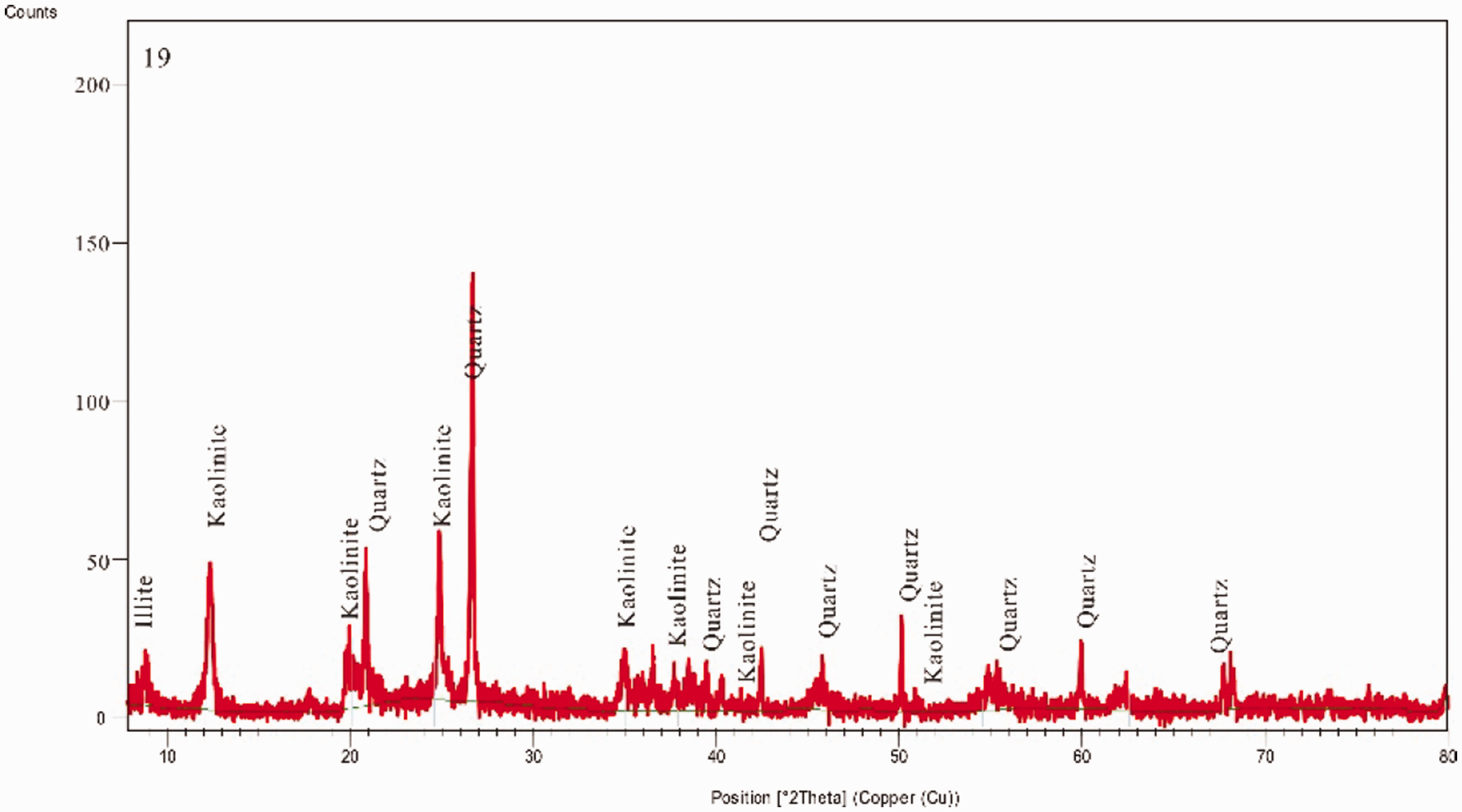
XRD pattern and main minerals in low temperature ash of the floor.
Mineral compositions of floor, roof, and LTAs of coal by XRD analysis (%; on organic matter-free basis).
LTA: low-temperature ash.
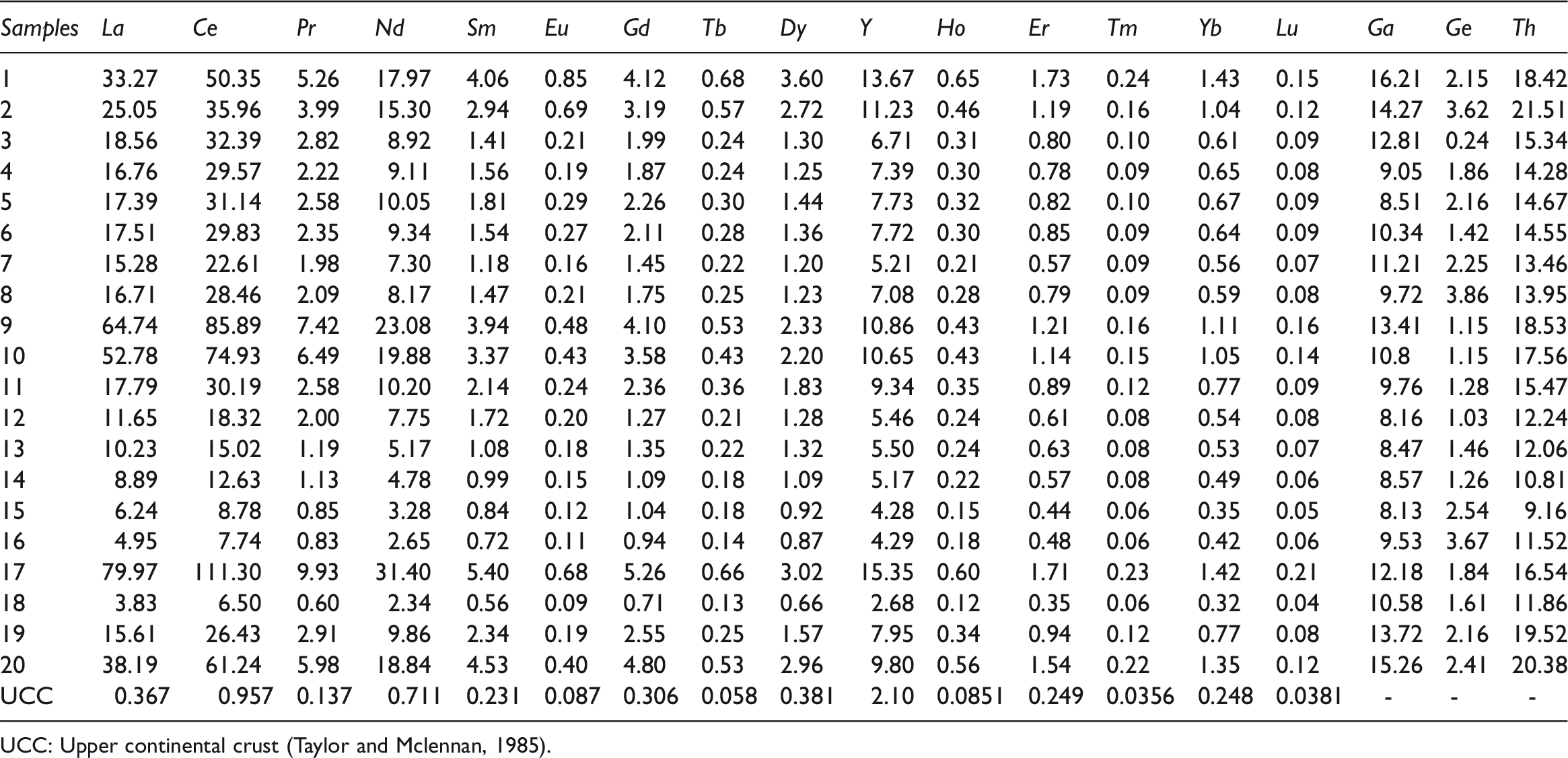
Coal samples were digested using Microwave digestion meter (ERHOSI; Milestone Inc., Italy) and HNO3/HF + H3BO3 digestion procedure. First, 0.1000 g coal samples were weighted and added into polytetrafluoroethylene digestion tank, followed by 7-ml 70% HNO3 and 1.5-ml 40% HF. The samples were then heated to 80°C, 140°C, and 210°C with a three-step heating procedure and digested for 10 min at 210°C for the first digestion. Second, the samples were cooled to room temperature and 10-ml 5% H3BO3 were added; the samples were heated to 150°C for the second digestion. Third, 8-ml 40% HNO3 were added for acid treatment and then 2% HNO3 were added to constant volume; the samples were kept in high-speed centrifugal and the clear solution were diluted and analyzed by inductively coupled plasma mass spectrometry. The standard quantitative analysis curve was established and the mass concentration were determined based on blank sample and standard sample test data (NIST-1632b and GBW07406). The concentrations of rare metal elements are shown in Table 3.
Concentrations of rare metal elements in different samples (μg/g).
UCC: Upper continental crust (Taylor and Mclennan, 1985).
Results and discussion
Concentrations of rare metal elements
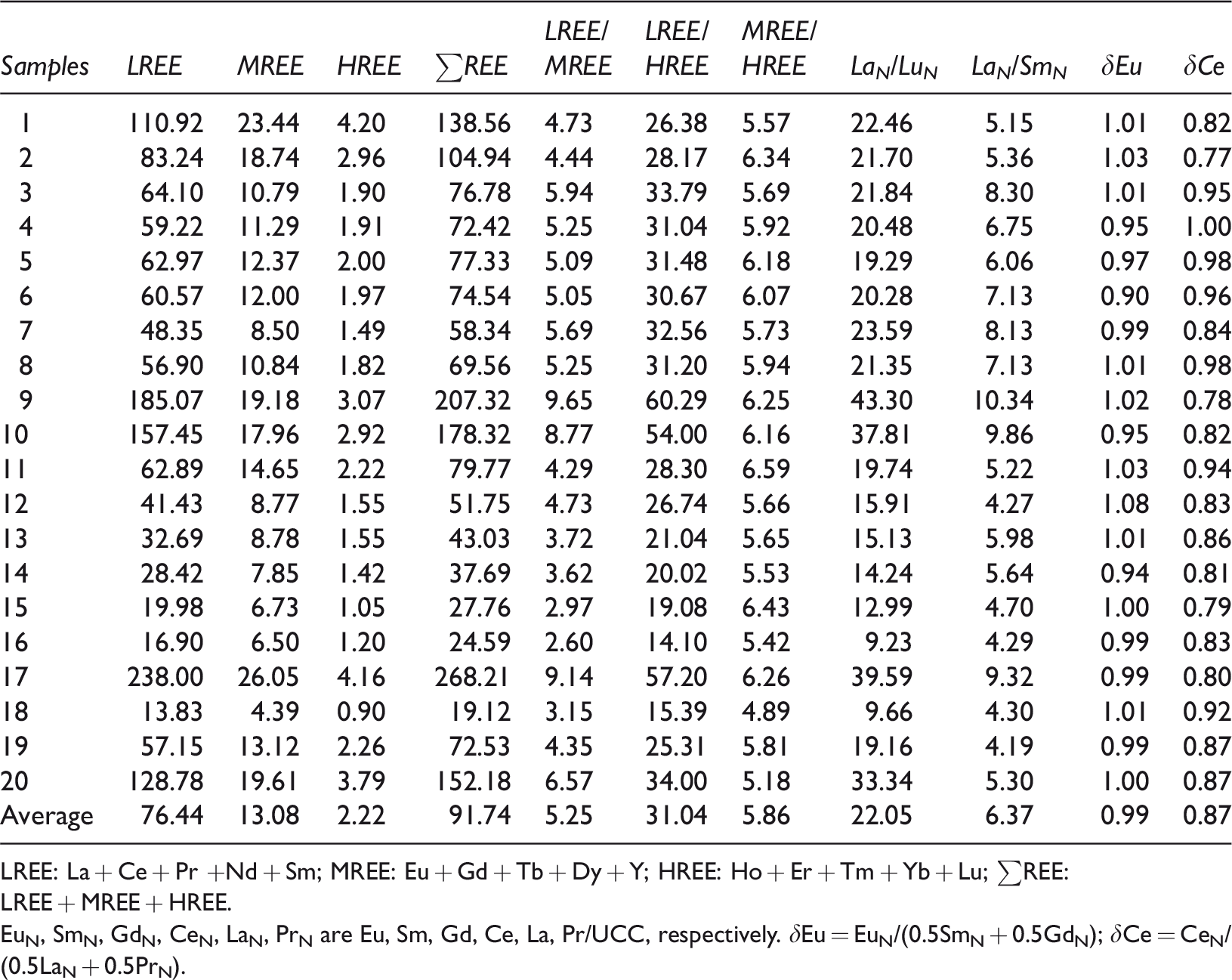
As shown in Table 4, the ∑REE concentration ranges from 19.12 to 268.21 μg/g, with an average of 91.47 μg/g, which is higher than that of the world (68.47 μg/g; Valkovic, 1983), American (62.1 μg/g; Finkelman, 1993), and North China coals (56 μg/g; Huang et al., 1999) and slightly higher than that of the Permian coals in Qinshui Basin (80.29 μg/g; Liu et al., 2015); however, lower than that of other areas in China such as Huainan (133.09 μg/g; Liu et al., 2009), Huaibei (141.2 μg/g; Zheng et al., 2006), and Southwest China (152 μg/g; Li et al., 2002). Compared with UCC value, the ∑REE is highly enriched in the coals of Changzhi coalfield. As shown in Table 4, the LREE concentration ranges from 13.83 to 238.00 μg/g, with an average of 76.44 μg/g; the MREE concentration ranges from 4.39 to 26.05 μg/g, with an average of 13.08 μg/g; the HREE concentration ranges from 0.90 to 2.40 μg/g, with an average of 2.22 μg/g. REEs can be classified into three groups according to the values of LaN/LuN and LaN/SmN including LREE (LaN/LuN > 1), MREE (LaN/SmN < 1, LaN/LuN > 1) and HREE (LaN/LuN < 1) (Liu et al., 2009). The values of LaN/LuN value ranges from 9.23 to 43.30, with an average of 22.05; LaN/SmN value ranges from 4.19 to 10.34, with an average of 6.37. Those suggest that LREE concentration relative enrichment.
Characteristic parameters of REEs of coal seam (μg/g).
LREE: La + Ce + Pr +Nd + Sm; MREE: Eu + Gd + Tb + Dy + Y; HREE: Ho + Er + Tm + Yb + Lu; ∑REE: LREE + MREE + HREE.
EuN, SmN, GdN, CeN, LaN, PrN are Eu, Sm, Gd, Ce, La, Pr/UCC, respectively. δEu = EuN/(0.5SmN + 0.5GdN); δCe = CeN/(0.5LaN + 0.5PrN).
The Ga concentration ranges from 8.13 to 16.21 μg/g, with an average of 11.03 μg/g, which is higher than that of the Chinese coals (9 μg/g; Dai et al., 2008) and the world coals (5.8 μg/g; Ketris and Yudovich, 2009) while lower than that of the Junger coals (18.8 − 26.0 μg/g; Wang et al., 2011). The Ge concentration ranges from 0.24 to 3.86 μg/g, with an average of 1.96 μg/g, which is lower than that of the Chinese Carbonic-Permian coals (3.35 μg/g; Dai et al., 2006c) and similar with the Datong coals (2.01 μg/g; Wang et al., 2010), but it is higher than the average value of the crust (1.25 μg/g; Han and Ma, 2007). The Th concentration ranges from 9.16 to 21.51 μg/g, with an average of 15.09 μg/g, which is higher than that of the world coals (0.5 − 10 μg/g; Finkelman et al., 1990) and lower than that of the Junger coals (17.8 μg/g; Dai et al., 2006c). The concentrations of rear earth metals are normal.
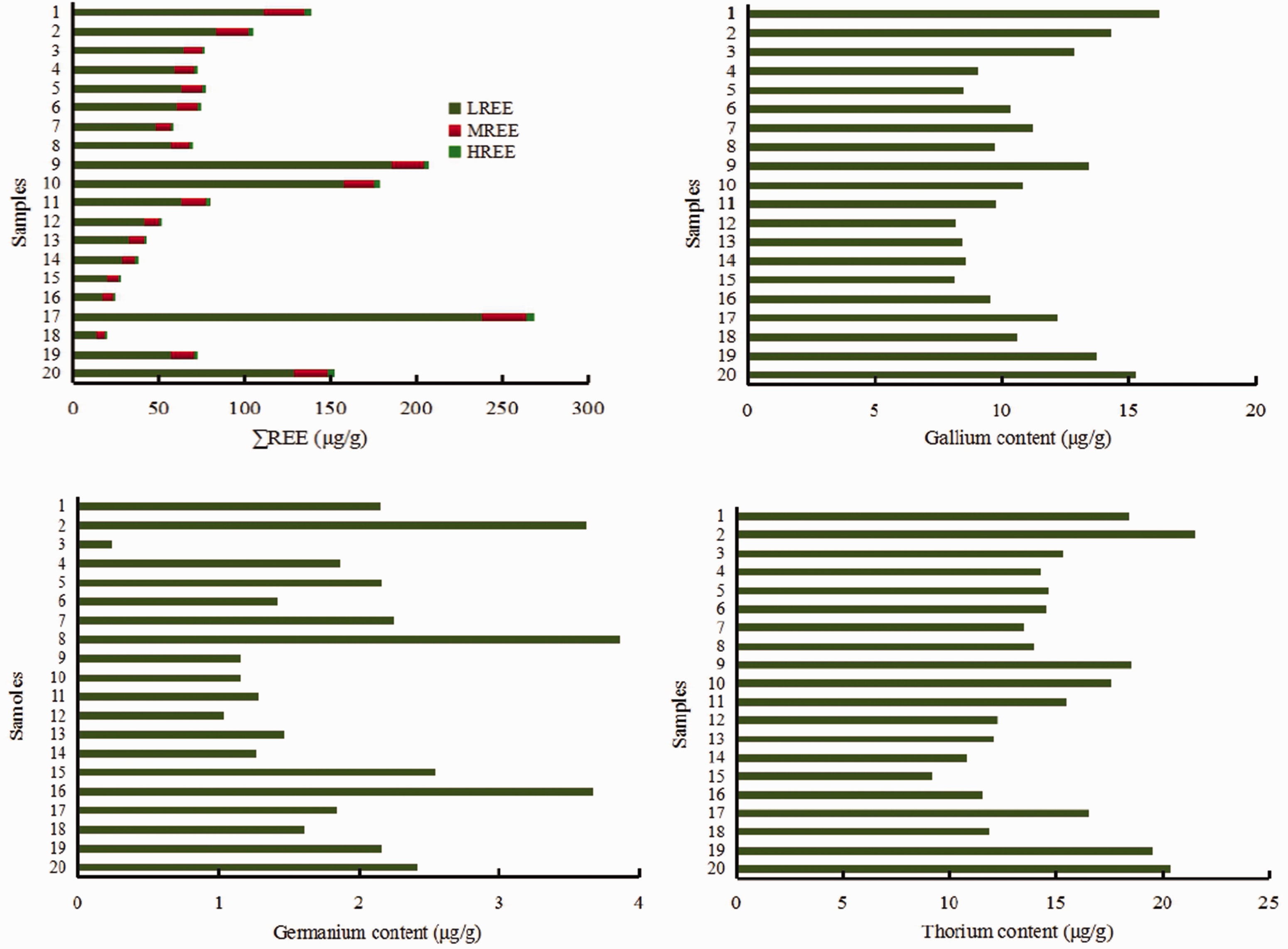
The abundance of REEs in Zhang village differs within different coal benches. The average weighted concentration of REEs in coal benches No. 3 to No. 18 is 85.40 μg/g, lower than that of the roof and floor samples (117.05 μg/g). The results are similar to the ∑REE distribution in Late Paleozoic coals (Ketris and Yudovich, 2009). The No. 9, No. 10, and No. 17 coal benches show high ∑REE concentrations with 207.32, 178.32, and 268.21 μg/g, respectively. The Ga and Th concentrations in roof samples are higher than those in coal samples, as shown in Figure 4. The Ge shows similar concentrations in the roof samples and the coal benches.
Distribution of rare elements concentration in primary mineable coal seam of Zhangcun mine (μg/g). LREE: La + Ce + Pr +Nd + Sm; MREE: Eu + Gd + Tb + Dy + Y; HREE: Ho + Er + Tm + Yb + Lu; ∑REE: LREE + MREE + HREE.
As shown in Figure 4, the roof samples, floor samples, and the coal benches with gangue show higher ∑REE concentrations. Furthermore, there is an obvious concentration gap between the adjacent layers with high and low ∑REE concentrations. For example, the ∑REE concentration of No. 9 coal bench is 207.32 μg/g, nearly three times as much as that of the adjacent No. 8 coal bench (69.56 μg/g); the ∑REE concentration of the No. 17 coal bench is 268.21 μg/g, nearly five times as much as that of the adjacent No. 16 coal bench (24.59 μg/g).The LREE are more enriched compared to MREEs and HREEs. The values of the LREE/HREE rations are 14.10 − 60.29 with an average of 31.04, while those of LREE/MREE are 2.60 − 9.65 with an average of 5.25 suggesting that the REE are mainly from territe clastic rock. HREEs could easily have been formed in bicarbonate and organic complexes, prior to the formation of MREEs and LREEs when the rocks were weathered. LREEs can be adsorbed on clay minerals along with the redistribution of LREEs, MREEs, and HREEs; the LREEs are enriched and the MREEs and HREEs are lost (Huang and Gong, 2001). The values of LREEs/HREEs in coal benches with gangue and in roof/floor samples and coal benches without gangue, sorted in descending order, suggesting that the strength and composition of the extraneous debris are constantly changing during the development of peat bogs.
The Ge among the each samples show obvious concentration gap as shown in Figure 4. For example, the Ge concentration of No. 4 coal bench is 1.89 μg/g, nearly four times as much as that for adjacent No. 3 coal bench (0.24 μg/g) and the Ge concentration of No. 8 coal bench are 3.86 μg/g, nearly three times as much as that of the adjacent No. 9 coal bench (1.15 μg/g). The Ga and Tu show no obvious concentration gap.
Distribution of REEs in coal seam
The distribution pattern of REEs is similar and can directly reflect the source of REEs under the same coal forming environment, although the contents of REEs in different peat bogs may vary depending on the distances from source materials (Zhao et al., 2001).
The δCe in each samples ranges from 0.77 to 1.00 with an average of 0.87 and the δEu ranges from 0.94 to 1.08 with an average of 0.99. Based on the negative δCe, the δCe value is <0.5 in oxic marine water, approximately 0.6 − 0.9 in suboxic marine water, and approximately 0.9 to 1.0 in anoxic marine water (Dai et al., 2016). This indicates that the Changzhi coal was formed in an environment influenced by seawater. This finding is consistent with the results of the sedimentary facies study which shows that the No. 15 coal field in southeast Shanxi Province was formed in a delta-shunt-bay marine facies environment (Shao et al., 2006).
The distribution of REEs in each sample shows similar trends with higher values among La, Ce, Pr, Nd, and Sm. The slop of La-Sm is higher than Gd-Dy and Ho-Lu (Figure 5) suggesting that the LREEs, MREEs, and HREEs were separated. The REE distribution in coal benches shows a similar model; however, the REE concentrations in coal benches with gangue are higher than the concentration in coal beaches without coal gangue. This suggests that the sources of the stable supply of terrestrial debris and the REEs in all the samples are similar.
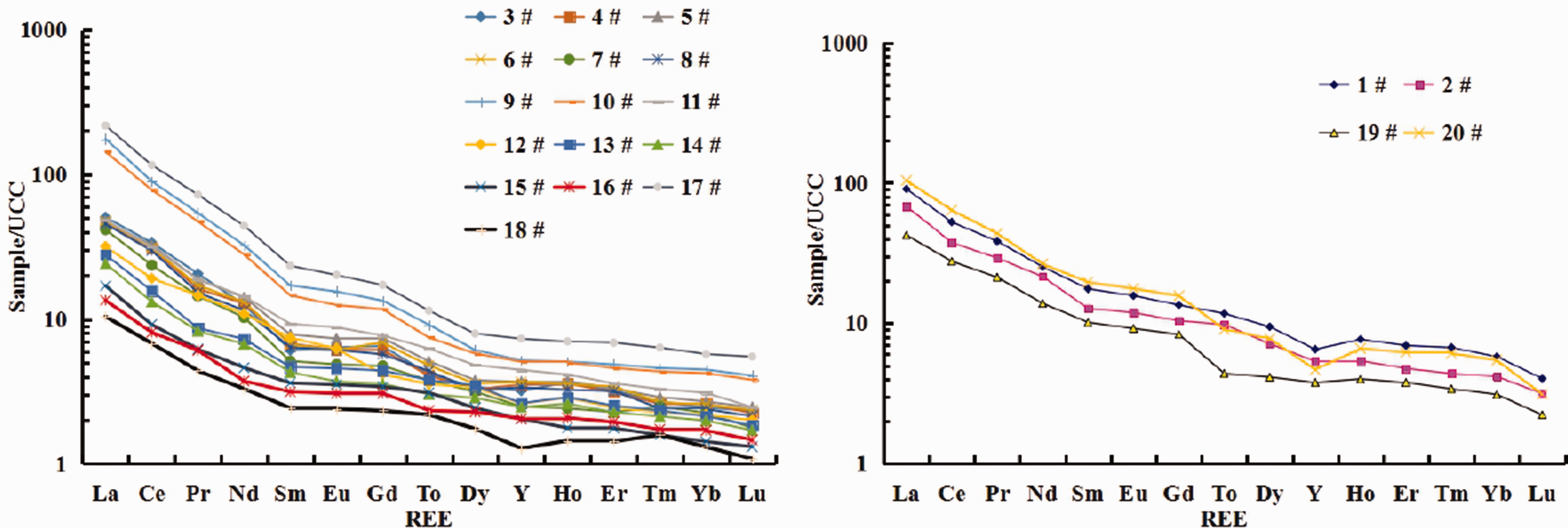
REEs’ distribution pattern of the coal roof, floor, and benches. UCC: upper continental crust; REE: LREE + MREE + HREE.
Occurrence of rear metal elements
The productivity of low-temperature ash shows positive correlation with ∑REE, Ga, and Th and the correlation efficiency is 0.61, 0.91, and 0.92 (Figure 6), respectively. This suggests that the ∑REE, Ga and Th may be enriched in the inorganic mineral. The productivity of low-temperature ash shows no obvious correlation with Ge, suggesting that Ge may be enriched in organic matter. It was also found that Ge is enriched in organic matter in the Shengli Coal field in China (Du et al., 2003).
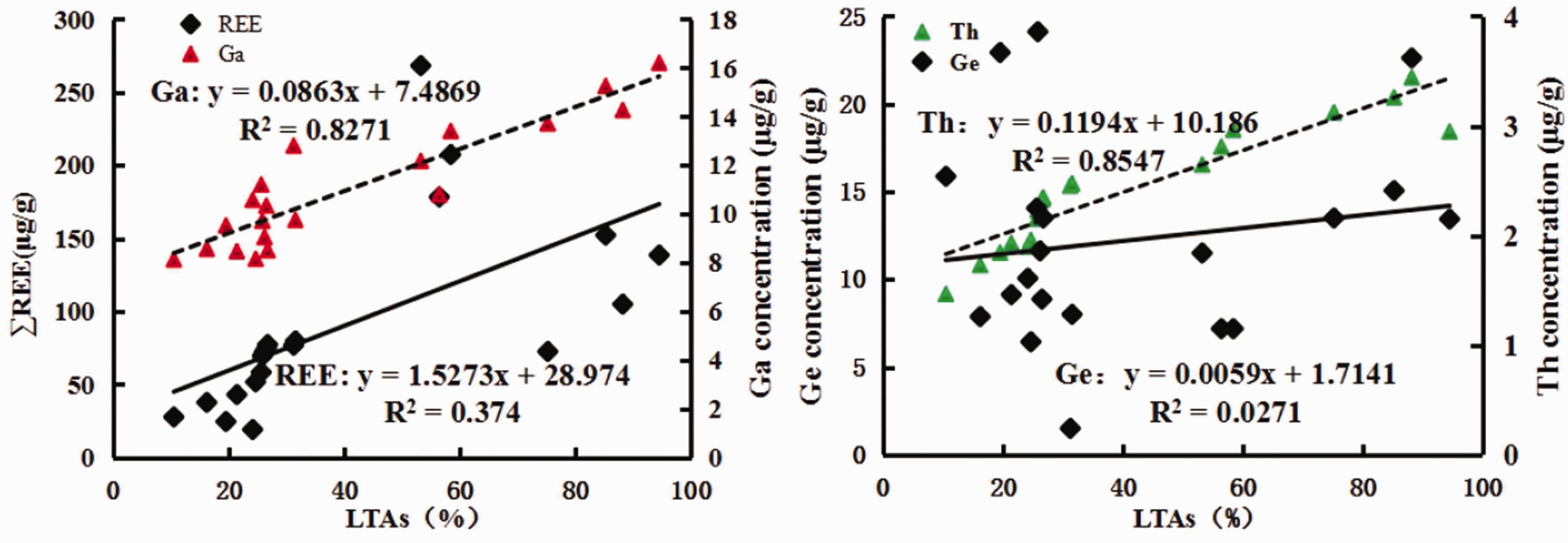
Correlation between rare elements concentration and ash yield. LTA: low-temperature ash; ∑REE: LREE + MREE + HREE.
XRD results show that all the samples were dominated by quartz and clay minerals. The amount of minerals, such as calcite, siderite, and anatase are shown in Table 2. The ∑REE, Ga, and Th show a positive correlation with clay minerals, especially with kaolinite and illite. ∑REE, Ga, and Th show a great positive correlation with kaolinite where the correlation efficiency is 0.69, 0.91, and 0.87 (Figure 7), respectively. The correlation efficiency of Ga and Th with illite is 0.79 and 0.88, respectively. There are no obvious correlations with other minerals.
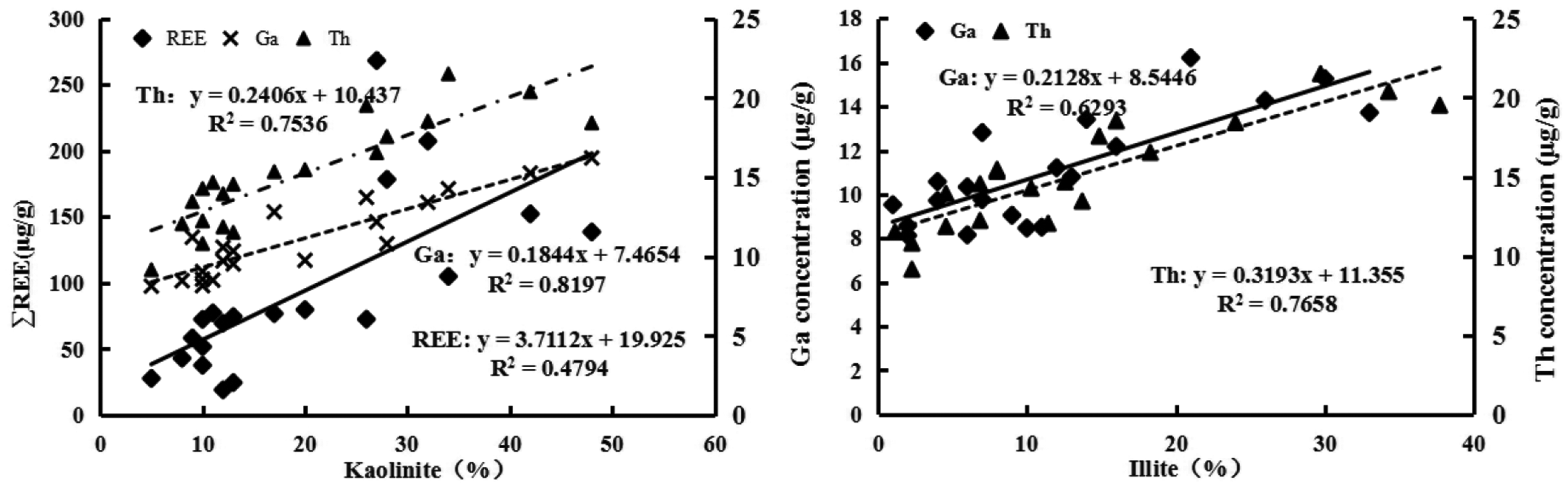
Correlation between rare elements concentration and kaolinite, illite. ∑REE: LREE + MREE + HREE.
Al, Si, Na, and K are the main components of clay minerals and show positive correlation with each other apart, from in a few coal benches where the correlation efficiency is more than 0.73 (Table 5). ∑REE and Tu show a great positive correlation with clay mineral elements (Al, Si, Na, and K), while Ga show weak positive correlation. These results suggest that the ∑REE, Th, and Ga are positively correlated with clay mineral elements. Map scanning of clay minerals by field emission scanning electron microscopy equipped with energy-dispersive X-ray analysis (FESEM-EDX) shows that these clay minerals contain La and Th (as shown in Figure 8), suggesting that the REEs and Th are correlated with clay minerals.
Correlation coefficient between rare elements and inorganic major elements in coal.
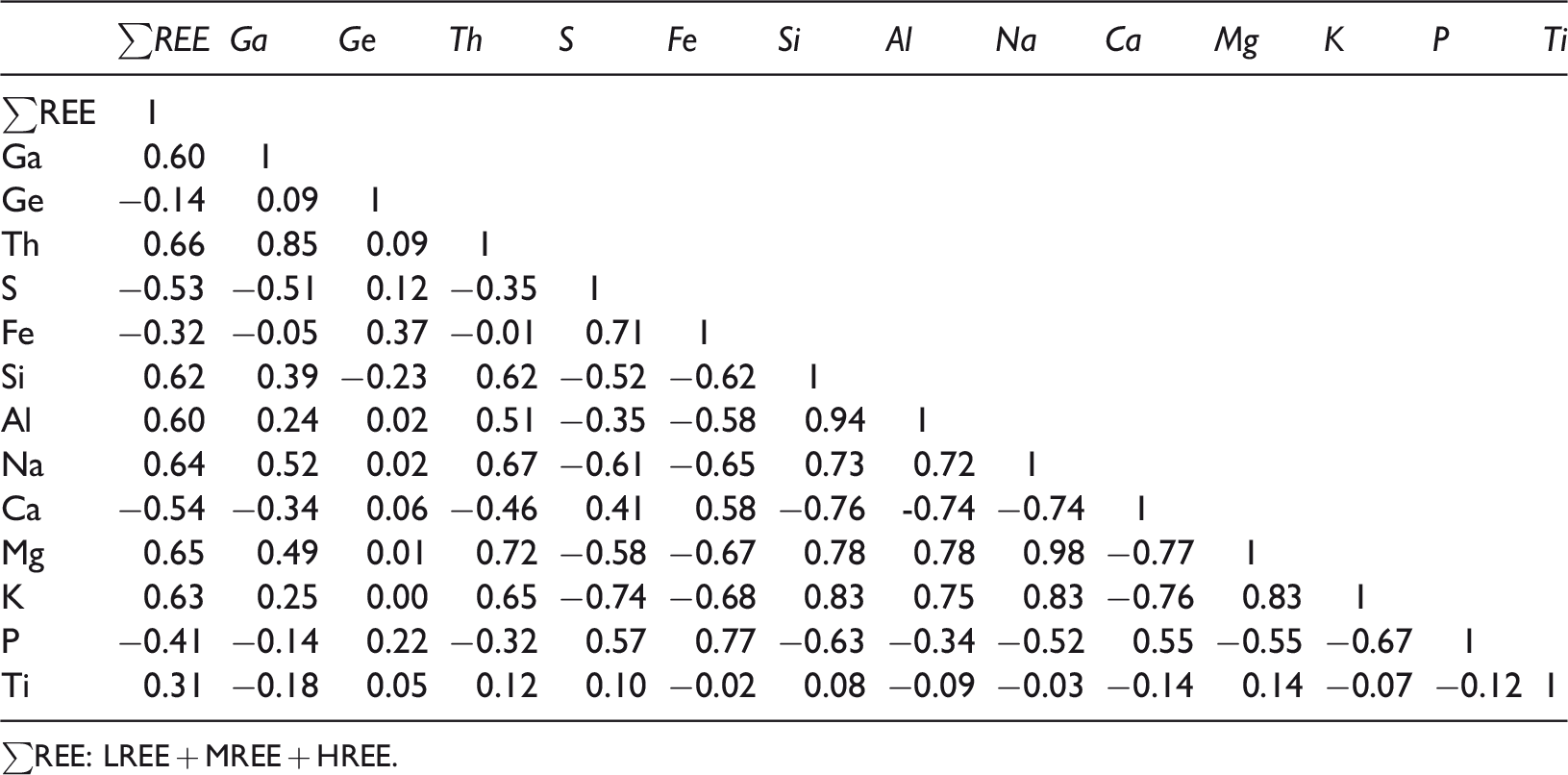
∑REE: LREE + MREE + HREE.
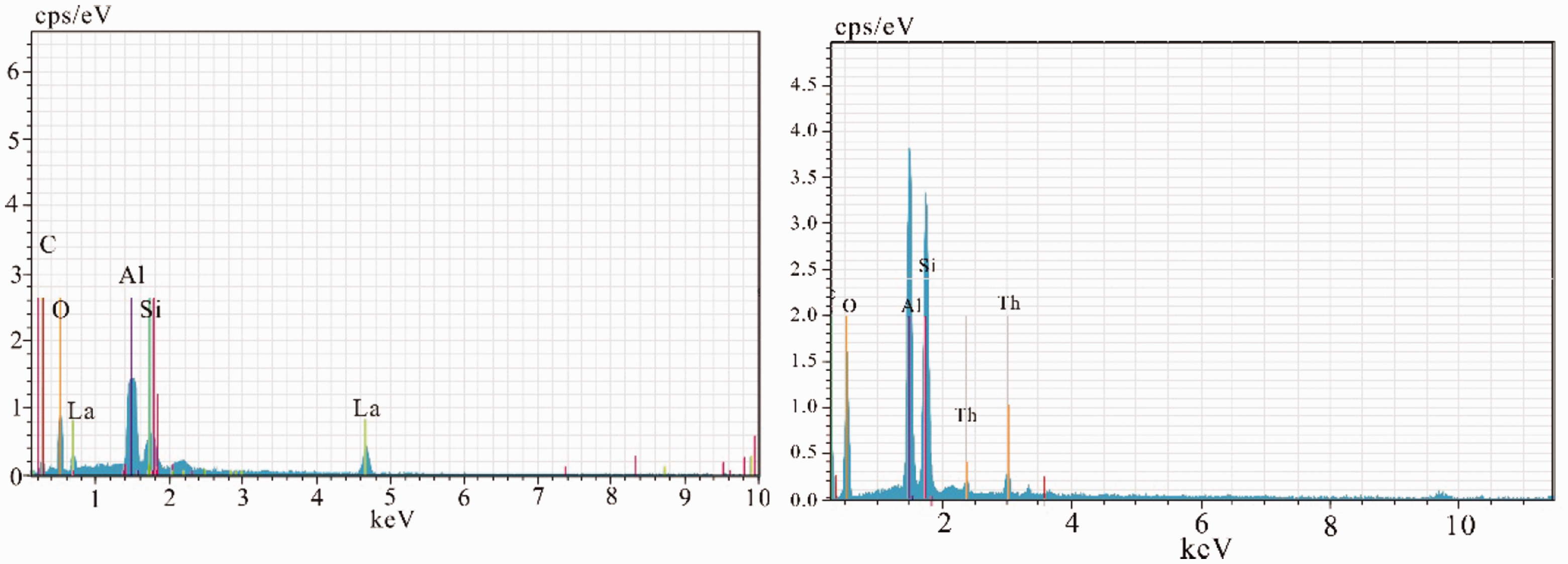
SEM image of energy-dispersive spectrometry spectra.
Studies show that the REEs may correlate with clay minerals (e.g., kaolinite, illite), organic matter and independent mineral containing REEs (Dai et al., 2005; Li et al., 2005). REEs (especially LREE), Ga, and Th are incompatible elements and can occur in small amounts adsorbed in a mineral crystal lattice. The clay minerals with layered structure tend to adsorb much more target elements. Some authigenic minerals in sedimentary rocks, such as apatite and zircon, are also REE-rich minerals. Ga is mainly enriched in boehmite in coals deposits (Dai et al., 2008). Th is believed to be enriched in monazite. These clay minerals are not found by XRD and FESEM in this study. The occurrence of Ge is complex and it can be enriched in organic matters and inorganic matters (clay minerals, black mica, raw montmorillonite, and garnet).
Rear metal elements reserves
The rear earth metals can be recovered from the by-products of coals or through combustion. The workable rare earth oxide concentration of mineral REEs (e.g., fluorocarbon mine, monazite) and adsorbed ion REEs are 1.5%−2.2% and 0.06%−0.15%, respectively (Zhang et al., 2015). Lin et al. (2017) and Pan et al. (2019) used physical separation techniques and a sequential chemical extraction procedure for the enrichment of REE from coal and coal by-products, respectively. Font et al. (2007) used chemical technology for the recovery of Ga from fly ash.
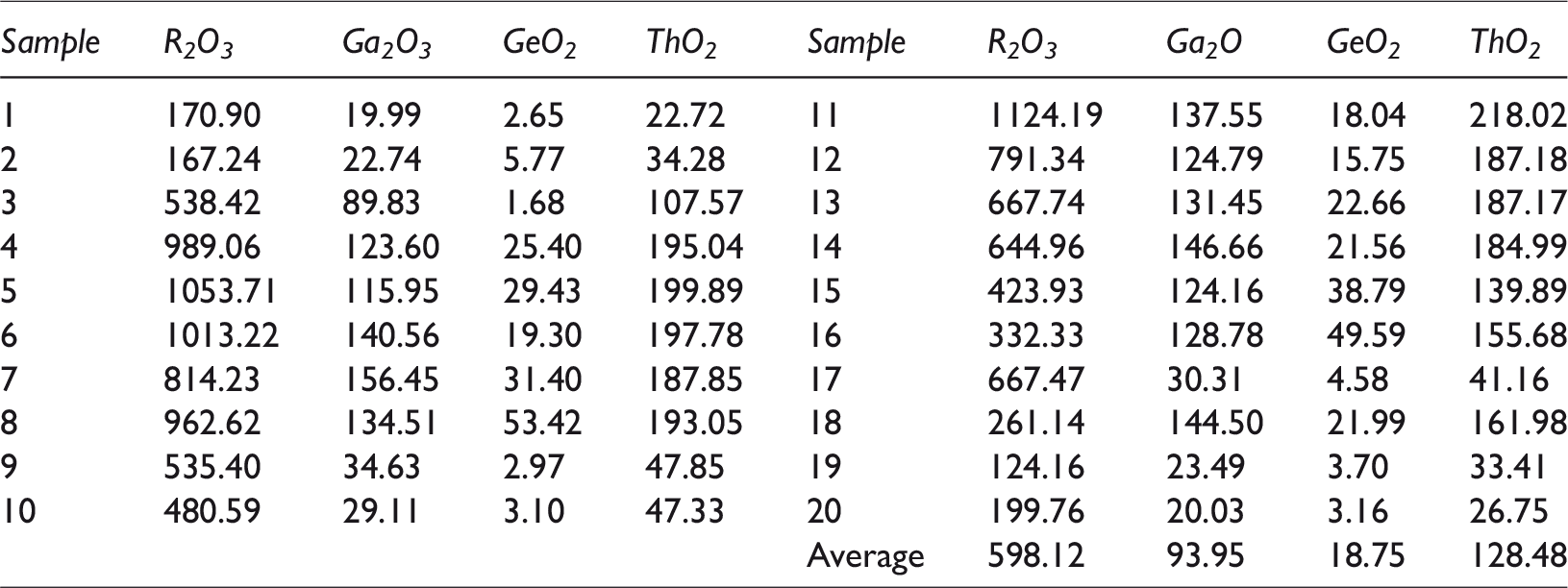
Sun et al. (2014) suggest that the minimum grades of Th and REE should be 150 and 300 μg/g, respectively. The Th concentration and REE concentration in roof/floor, coal bench with gangue and without gangue are all below the minimum mining grades as shown in Tables 3 and 4. Researchers suggest that the cut-off grade of Ge should be 20 μg/g (Ao et al., 2007; Bernstein, 1985). The Ge concentration in coal seam is below the cut-off grade. But Ge oxide concentrations in high-temperature ash of some coal bench. The Ga industrial grade in Chinese coal is 30 μg/g (Sun et al., 2014). Therefore, the Ga concentration in coal seam is also below the industrial grade. Most of the rear metal elements in coals are left in ash after combustion (Huang and Gong, 2001; Yao et al., 2003). According to Seredin and Dai (2012), the REEs can be economically recoverable if the concentration of rear earth oxides in ash is higher than 0.1% (0.08% − 0.09% if the coal seam is higher than 4.0 m; Hower et al., 2016). Table 6 shows the concentrations of rear earth oxides in high-temperature ash. The concentration of rear earth oxides in high-temperature ash of the No. 5, No. 6, and No. 11 coal bench are higher than the minimum recoverable value, suggesting that they are potentially recoverable.
Concentrations of REEs oxides in high temperature ash (μg/g).
Fractionation of REEs in combustion process
Table 7 shows ∑REE concentrations in fly ash and bottom ash. The ∑REE concentration is lowest in the fly ash, followed by >200, 150 − 200, <100, and 100 − 150 mesh. The ∑REE concentration shows significant differences in different mesh production as a result of combustion. The concentration of ∑REE differed in different mesh production from bottom ash, the reason of which may be different physicochemical characteristics of rare earth metals. The values of LREE/MREE, LREE/HREE, and MREE/HREE in fly ash are 15.76, 60.86, and 3.86, respectively. Furthermore, the values of LREE/MREE and LREE/HREE in bottom ash are higher than that of coal samples; the values of LREE/MREE and MREE/HREE in bottom ash are similar to coal samples whereas the value of LREE/HREE is lower than that in coal samples. This suggesting that the LREE tends to enriched in fly ash, while the HREE tends to be enriched in bottom ash. Significant fractionation during the process of combustion is observed.
Concentrations of REEs in different diameters (μg/g).

LREE: La + Ce + Pr +N d + Sm; MREE: Eu + Gd + Tb + Dy + Y; HREE: Ho + Er + Tm + Yb + Lu; ∑REE: LREE + MREE + HREE.
Conclusion
The average concentrations of ∑REE, Ga, Ge, and Th are 91.74, 11.03, 1.96, and 15.09 μg/g, respectively. The concentration of REEs, Th, Ga, and Ge are all below the minimum industrial grade. However, the concentrations of rare earth oxides and Ge in high-temperature ash of some coal benches are higher than the minimum recoverable value and are, thus, potentially recoverable.
The vertical distribution of REE is uneven, with a maximum value adjacent to a minimum value. The REE distribution patterns within coal beds are almost the same, with an average δCe of 0.87 and the average δEu of 0.99. This indicates that the source of the different layers of REEs was stable and influenced by seawater. Moreover, the ∑REE, Ga, and Th are enriched with the inorganic minerals and correlated with kaolinite. Ga and Th are also correlated with illite. Significant fractionation of REE is observed during the process of combustion; LREEs tend to enriched in fly ash, while the HREEs tend to be enriched in bottom ash.
Highlights
It was observed that the concentration of REE and Ge in some coal seams was higher than the minimum recoverable value.
Significant fractionation of REE during the process of combustion was observed.
Footnotes
Acknowledgements

Declaration of conflicting interests
The author(s) declared no potential conflicts of interest with respect to the research, authorship, and/or publication of this article.
Funding
The author(s) disclosed receipt of the following financial support for the research, authorship, and/or publication of this article: This study was financially supported by the State Key Laboratory of Coal Resources and Safe Mining (SKLCRSM17ZZ01) and the National Natural Science Foundation of China (Grant Nos. 41371449, 41772157).