




Abstract
Whether the northwestern Junggar Basin (NW China) has natural gas potential is an urgent but unresolved question. In this study, we discuss the origin of deep heavy oils (>2900 m) and its implication for gas migration and accumulation, based on a comprehensive investigation into physicochemical and geological properties of hydrocarbons in the northern Zhongguai High. Our results indicate that multiple-episode migration of hydrocarbons created four genetic types of oils and three genetic types of hydrocarbon gases and induced widespread gas washing. Relatively low maturity and gas washing are both responsible for the formation of the deep heavy oils. In detail, the migrating late-stage humic-type gases washed the encountered early stage low-maturity oils. The oil reservoirs lost their light fraction and evolved into heavy oils, which are preserved in the deep layer to the present, while the light-end components continued to migrate upward and accumulated as mixed gas pools or vented out of the system. The spatial distributions pattern of source rocks, heavy oils, and mixed gas clearly indicates the migration pathways of humic-type gases, which otherwise are difficult to define in the study area. Because the gases finally migrate into fault belts, their poor preservation condition likely results in the rare discoveries of gas fields. The favorable exploration targets for gas in the area are expected to be fault traps in fault belts, stratigraphic traps along the pinch-out boundary of the Upper Wuerhe Formation, and, particularly, the deep traps in the Mahu Sag.
Introduction
The Junggar Basin is a well-known superimposed petroliferous basin in NW China, consisting of multiple petroleum systems. The Mahu Sag, located near the northwestern margin of the Junggar Basin (Figure 1), is a Permian hybrid petroleum system containing three sets of Permian source rocks (Figure 2): the lower Permian Jiamuhe Formation (P1j), the lower Permian Fengcheng Formation (P1f), and the Middle Permian Lower Wuerhe Formation (P2w) (Cao et al., 2005). Although all the Permian source rocks are currently moderately to highly mature, mostly with vitrinite reflectance values of >1.3% Ro (Cao et al., 2006; Liu et al., 2013; Xiang et al., 2015), plenty of oil but few gas resources have been explored in this region (Tao et al., 2016, 2019). The lack of gas field discoveries is casting doubt on the natural gas potential and the soundness of gas exploration strategies in the region (Tao et al., 2016).
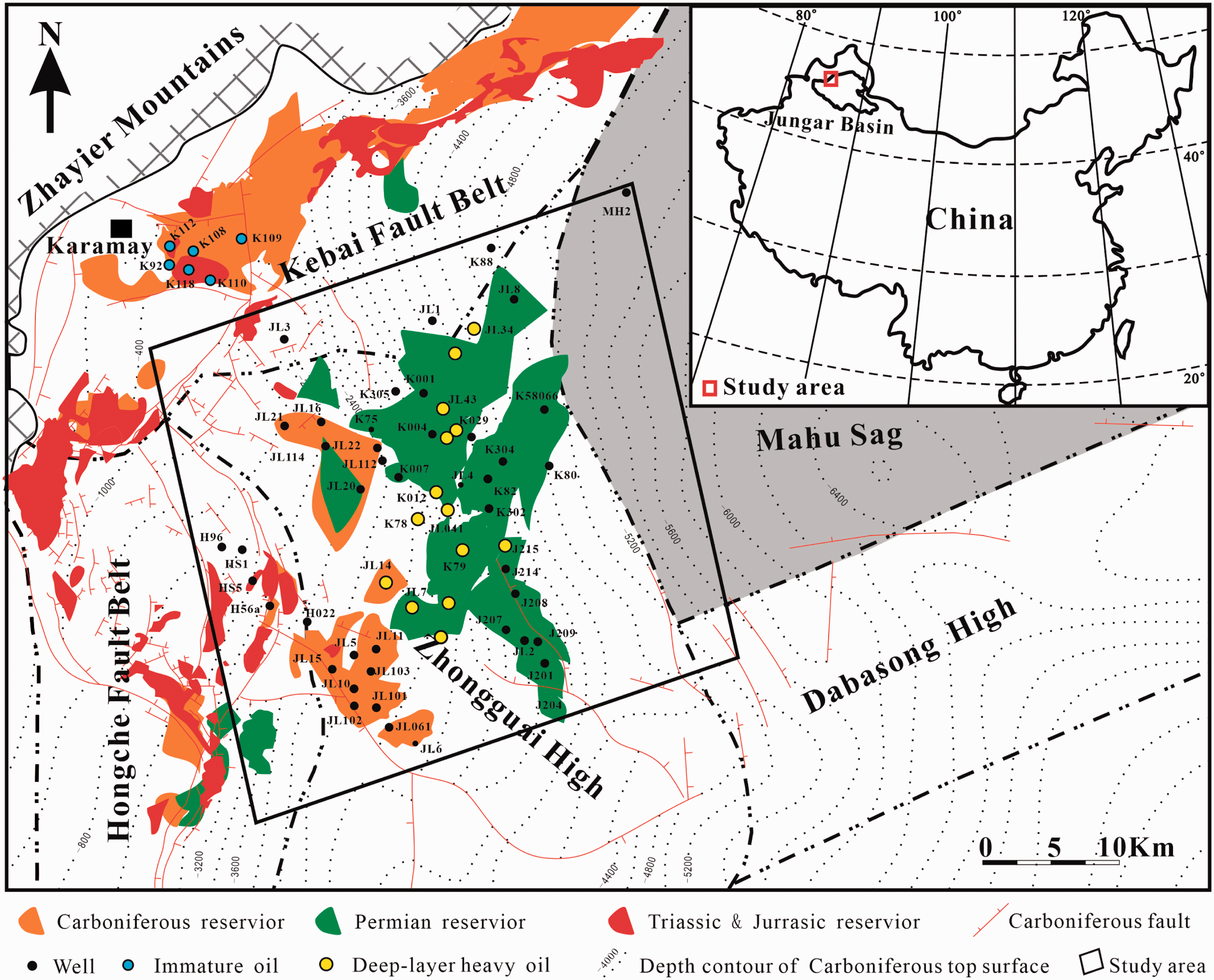
Structural features and distribution of hydrocarbons in the Zhongguai area.
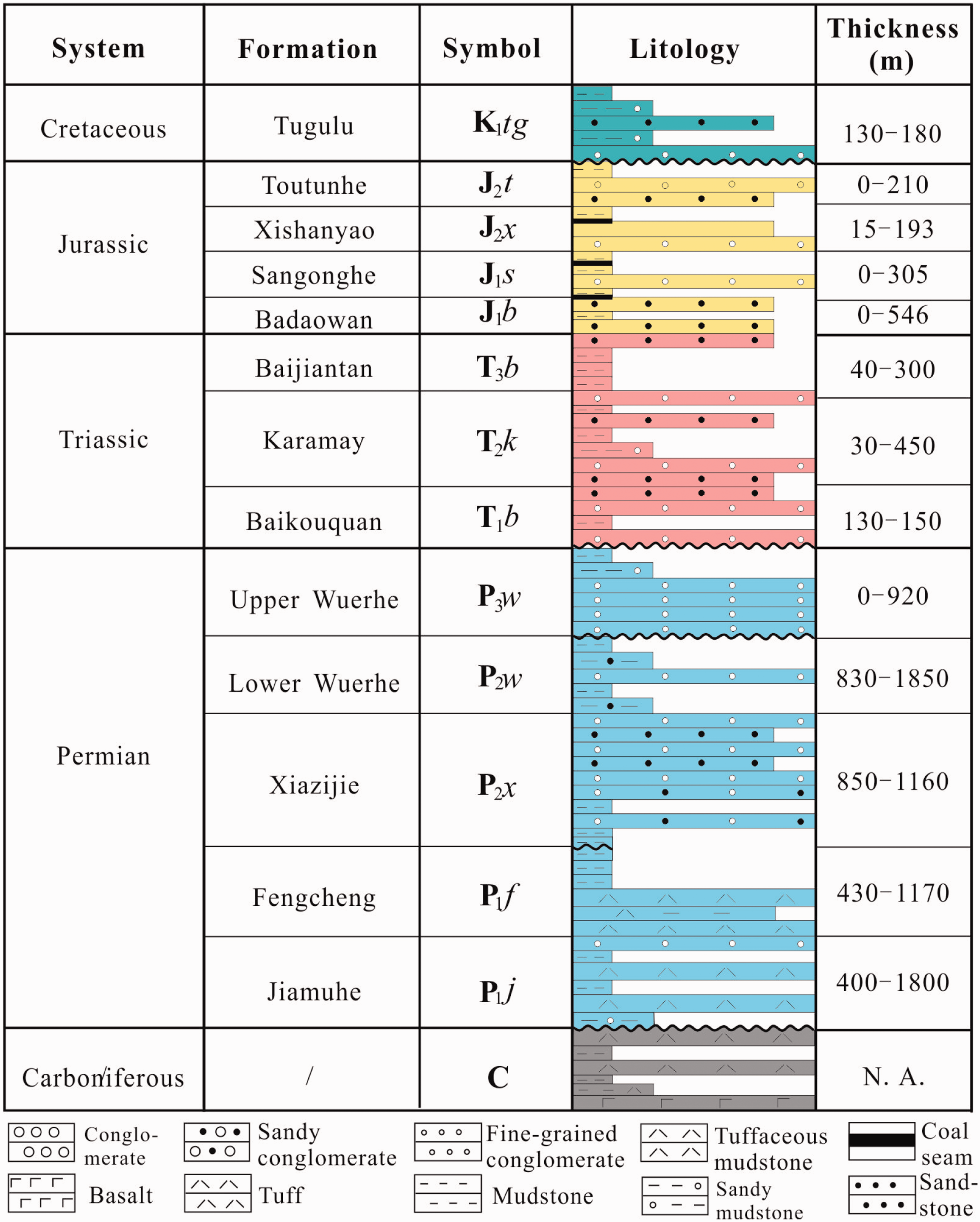
Generalized stratigraphy in the northwestern Junggar Basin (Cao et al., 2006).
Several research studies have attributed the sparseness of gas discoveries to the underdevelopment of gas-prone source rock in the sag (Cao et al., 2005; Jin et al., 2008; Liu et al., 2016). However, Tao et al. (2016, 2019) argued that gases accumulate at significant depths that have not been discovered by drilling. These suggestions were mainly obtained from the investigation of source rocks. In fact, gas migration also affects gas accumulation. However, knowledge of gas migration in the region is lacking.
Gas resources in the region have only been identified on the northern Zhongguai High (Wang et al., 2015). In this area, various hydrocarbons including heavy oils, light oils, and condensate oils (Figures 1 and 3) have been discovered as well. The heavy oils occur at depths of >2900 m and are obviously different from the shallow-layer heavy oils in the adjacent area. For the shallow-layer heavy oils, previous studies have attributed their origin to biodegradation (Huo et al., 2008; Li and Yu, 2012; Li et al., 1993; Wang and Jiang, 1998), which caused the absence of n-alkanes or anomalously high pristane/nC17 (Pr/nC17) and phytane/nC18 (Ph/nC18) values (Figure 3(b) and (c)). However, the deep heavy oils cannot be explained by biodegradation based on the following facts: (1) these oils contain full ranges of n-alkanes and are characterized by Pr/nC17 and Ph/nC18 values of <1 (Figure 3(b) and (c)); (2) unresolved complex humps and 25-norhopane (Cai et al., 2007; Curiale and Bromley, 1996; Losh et al., 2002; Peters et al., 1996) do not occur in the oils; and (3) their reservoirs (i.e. of Permian age) (Figure 1) have been maintaining temperatures of >80°C since hydrocarbon charged (Cao et al., 2006; Wang et al., 2019), which is likely to have inhibited microbial activity (Head et al., 2003; Larter et al., 2003).
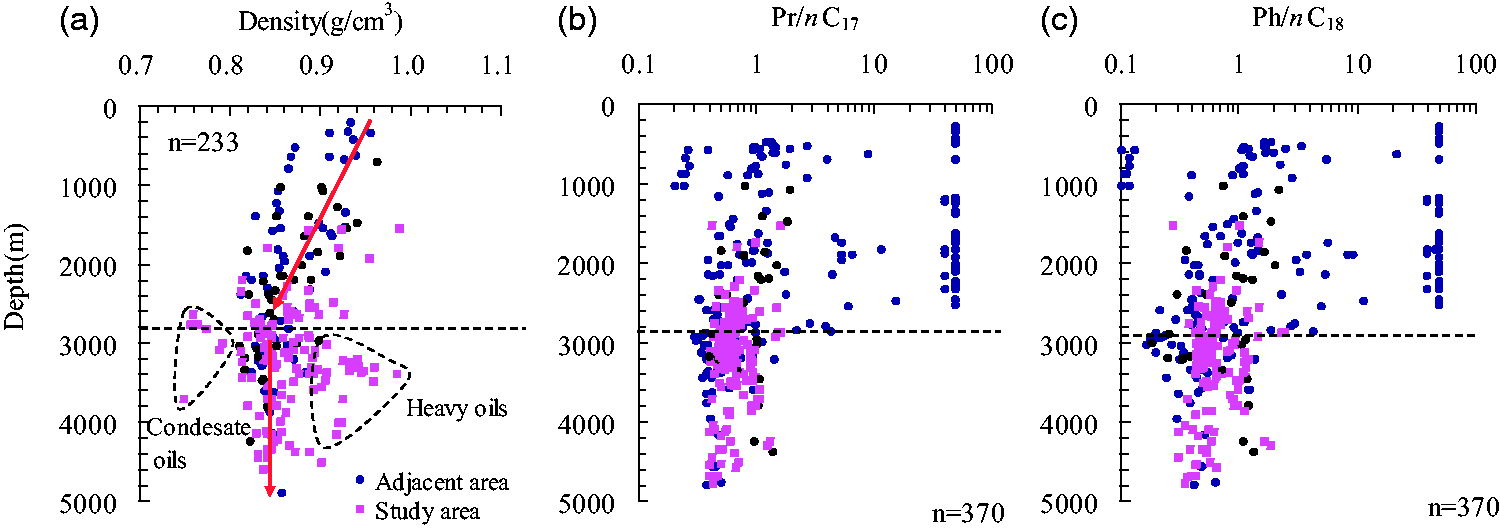
(a) Profiles of density, (b) Pr/nC17, and (c) Ph/nC18 values along depths for oils from the Zhongguai area. Pr/nC17 and Ph/nC18 values are assigned to be 50 for oils containing no n-alkanes and isoparaffin and 40 for those containing isoparaffin but no n-alkanes. The dashed lines mark the depth of ∼2900 m, where abrupt significant shifts in density, Pr/nC17, and Ph/nC18 values occur.
This study focuses on the deep heavy oils and other hydrocarbons in the northern Zhongguai High and seeks to unravel their origins by employing geochemical and geological analyses. Our goals are to (1) build a new formation model of heavy oils and (2) help understand gas migration and expand gas exploration in the northwestern Junggar Basin.
Geological setting
Tectonics and lithostratigraphy
The Junggar Basin is a Late Paleozoic, Mesozoic, and Cenozoic superimposed basin at the junction of the Kazakhstan block, the Siberia block, and the Tarim block, which developed on the Early Paleozoic Junggar basement (Li et al., 2006; Wang, 1996). Tectonic movements during the Permian created the fault belts, embryonic Zhongguai High (Figure 1), and several sets of regional unconformities within the Permian strata (Chen and Zha, 2002; Chen et al., 2010) (Figure 2). During the Mesozoic, the Zhongguai High was inherited and covered by Triassic–Jurassic strata. Since the Late Cretaceous, the Zhongguai High gradually has evolved into an east-dipping monocline (Figure 1) as a result of the uplift of the northwestern margin of the basin (Sui, 2015). The observed deep heavy oils occur in the north slope of the Zhongguai High, which is the studied area of this work.
As shown in Figure 2, the northwestern margin of the basin contains Middle–Upper Carboniferous to Cretaceous strata. The Carboniferous strata are composed mainly of volcanic and clastic sequences, while the Permian strata consist mainly of clastic rocks with some volcaniclastic rocks in the lower part. The Triassic to Cretaceous section is composed mainly of clastic rocks, including conglomerate, sandstone, siltstone, mudstone, and shale. Several swamp coal seams in the Lower–Middle Jurassic strata occur throughout almost the whole basin (Cao et al., 2005; Figure 2).
Hydrocarbon occurrence and source rocks
The hydrocarbons accumulated in the study area are mainly present in the Carboniferous–Lower Permian fractured volcanics and Permian sandstone reservoirs (Figure 1). The predominant hydrocarbon fluid type is oil, which includes condensate, light oil, normal oil, and heavy oil. Hydrocarbon gases are commonly associated with oil but occur as nonassociated gas pools in several limited areas. The Permian source rocks are buried deeply within the Mahu Sag and have not been drilled but were evidenced to have supplied these hydrocarbons (Wang et al., 2019).
Of the three hydrocarbon source sequences, the P1f source rocks are interbedded dark gray and dolomitic mudstones deposited in a hypersaline lagoonal environment, while the P1j and P2w source rocks are dark gray mudstones deposited in more fresh water lacustrine settings (Cao et al., 2005). Previous geochemical studies (e.g. Chen et al., 2003; Wang, 2001; Yang et al., 1992) show that the P1j, P1f, and P2w source rocks (1) contain total organic carbon content varying in the ranges of 0.08%–0.74%, 0.5%–1.5%, and 0.8%–6.9%, respectively; (2) are characterized by type III, type I–II, and type II–III kerogens, respectively; and (3) have reached a moderate to highly mature stage at present. Accordingly, P1f and P2w rocks are, respectively, good and fair source rocks for oil, while the P1j rocks may be source rocks for natural gas (Chen et al., 2016).
Samples and analytical methods
Sixty-two archived oil samples from 56 wells in the study area and 6 immature oil samples adjacent to Karamay City (Table 1 and Figure 1) were collected from the Research Institute of Experiment and Testing (RIET), Xinjiang Oilfield Company. These oil samples were separated into saturated, aromatic, nonhydrocarbon, and asphaltene fractions by silica gel and alumina column chromatography. Gas chromatography–mass spectrometry analysis was conducted on the saturated fractions using an Agilent 7890-5975c system. As RIET had already analyzed the whole-oil components of fresh oils corresponding to the oil samples, we thus simply adopted the old data obtained by RIET. To supplement the oil samples, biomarker data from five deep heavy oils and carbon isotopic data from 79 natural gases in the study area were also collected from RIET for this study. Additionally, eight carbon isotopic data samples of natural gases adjacent to Karamay City (Figure 1) were collected from RIET for comparative analysis.
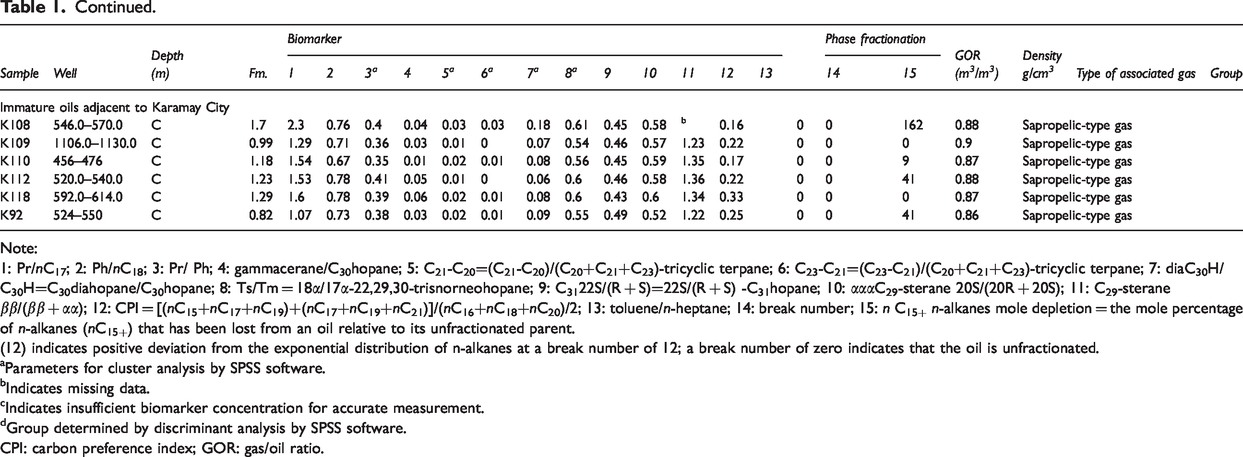
Parameters of biomarker and phase fractionation obtained from the oil samples.
Note:
1: Pr/nC17; 2: Ph/nC18; 3: Pr/ Ph; 4: gammacerane/C30hopane; 5: C21-C20=(C21-C20)/(C20+C21+C23)-tricyclic terpane; 6: C23-C21=(C23-C21)/(C20+C21+C23)-tricyclic terpane; 7: diaC30H/C30H=C30diahopane/C30hopane; 8: Ts/Tm = 18α/17α-22,29,30-trisnorneohopane; 9: C3122S/(R + S)=22S/(R + S) -C31hopane; 10: αααC29-sterane 20S/(20R + 20S); 11: C29-sterane ββ/(ββ + αα); 12: CPI = [(nC15+nC17+nC19)+(nC17+nC19+nC21)]/(nC16+nC18+nC20)/2; 13: toluene/n-heptane; 14: break number; 15: n C15+ n-alkanes mole depletion = the mole percentage of n-alkanes (nC15+) that has been lost from an oil relative to its unfractionated parent.
(12) indicates positive deviation from the exponential distribution of n-alkanes at a break number of 12; a break number of zero indicates that the oil is unfractionated.
aParameters for cluster analysis by SPSS software.
bIndicates missing data.
cIndicates insufficient biomarker concentration for accurate measurement.
dGroup determined by discriminant analysis by SPSS software.
CPI: carbon preference index; GOR: gas/oil ratio.
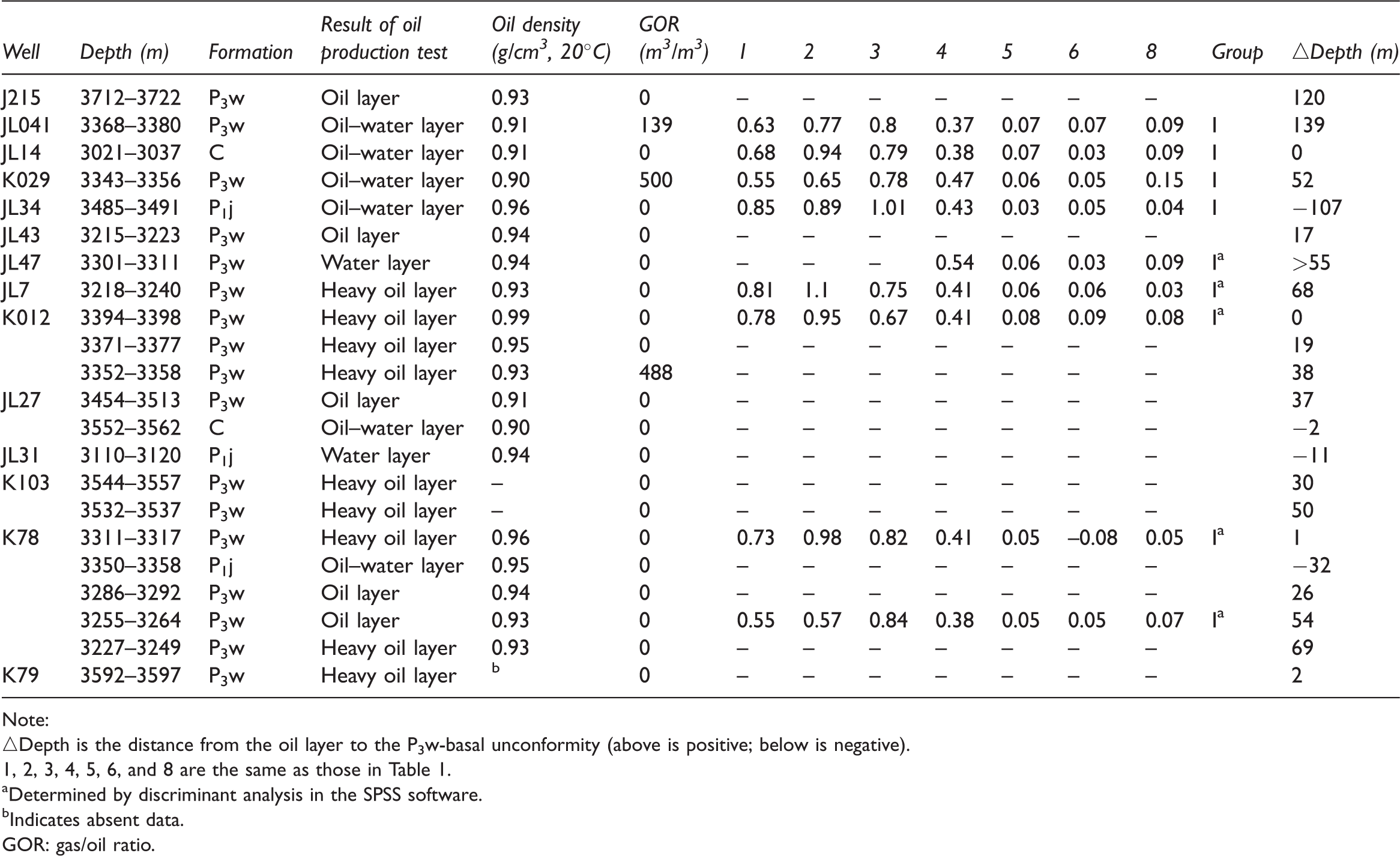
A total of 61 oils and 5 effective biomarker parameters (marked with “a” in Table 1) were selected for oil classification using hierarchical cluster analysis in the multivariate analysis tool SPSS software. The filtering rules used for biomarker parameters were diagnostic geochemical signatures (1) evidenced in previous research, (2) distinguishable but slightly affected by phase fractionation, and (3) consisting of source-related and maturity-related parameters available. After the oils were classified, discriminant analysis in the software was applied to determine to which groups the condensate oil (Y60) and the five heavy oils belong (Tables 1 and 2).
Occurrence, geochemical features, and classification of deep heavy oils in the study area.
Note:
△Depth is the distance from the oil layer to the P3w-basal unconformity (above is positive; below is negative).
1, 2, 3, 4, 5, 6, and 8 are the same as those in Table 1.
Determined by discriminant analysis in the SPSS software.
Indicates absent data.
GOR: gas/oil ratio.
Results and interpretation
Thermal maturity
According to the carbon preference index (CPI) (Marzi et al., 1993; Scalan and Smith, 1970) for the identification of immature oils (Bray and Evans, 1961), six oils with CPI values > 1.2 (Table 1) are considered to be immature oils. These oils are all adjacent to Karamay City and have relatively high Pr/nC17 and Ph/nC18 values (Table 1 and Figure 1).
The isomerization ratios of C31 hopane and C29 sterane (i.e., C3122S/(22R + 22S), C2920S/(20S + 20R), and C29ββ/(ββ + αα)) were essentially used to evaluate thermal maturity. Their values have reached or are close to the equilibrium values (0.60, 0.50, and 0.50–0.55, respectively), suggesting that the majority of the oils are thermally mature. Accordingly, these parameters thus fail to indicate the maturity variation among oils. Notably, the ratios 18α/17α-C27 trisnorneohopane (Ts/Tm) and C30 diahopane/C30 hopane (diaC30H/C30H) vary in the ranges of 0.05–0.99 and 0–0.15, respectively (Table 1). Although source facies and oil mixing can exert influence on these parameters (e.g. Liu et al., 2016), they exhibit a good positive correlation (Figure 5(a)). Therefore, Ts/Tm and diaC30H/C30H are good maturity indicators in the study area.
Hydrocarbon grouping
Crude oils
A multivariate statistical analysis allowed classifying the oil samples into four genetic groups (Figure 4) based on the main geochemical features among the oils. These four oil groups are distinct in the source-related parameters (Figures 5 and 6): (1) Group I oils are characterized by C20 < C21 < C23 tricyclic terpane (TT) distributions and low pristane/phytane (Pr/Ph); (2) Group II oils exhibit C23< C20 < C21 TT distributions and high Pr/Ph (>0.95); (3) Group III and IV oils have similar source-related parameters, being characterized by C20 < C21 ≈ C23 TT distributions and moderate Pr/Ph values. These oil groups are also distinct in their maturity-related parameters (Figure 5(a)): (1) Group I and II oils are both characterized by low diaC30H/C30H and low Ts/Tm values (<0.06 and <0.32, respectively); (2) Group IV oils exhibit high diaC30H/C30H values (>0.08) and high Ts/Tm values (>0.68); (3) the maturity-related parameters in Group III oils lie between those of Groups I–II and Group IV oils.
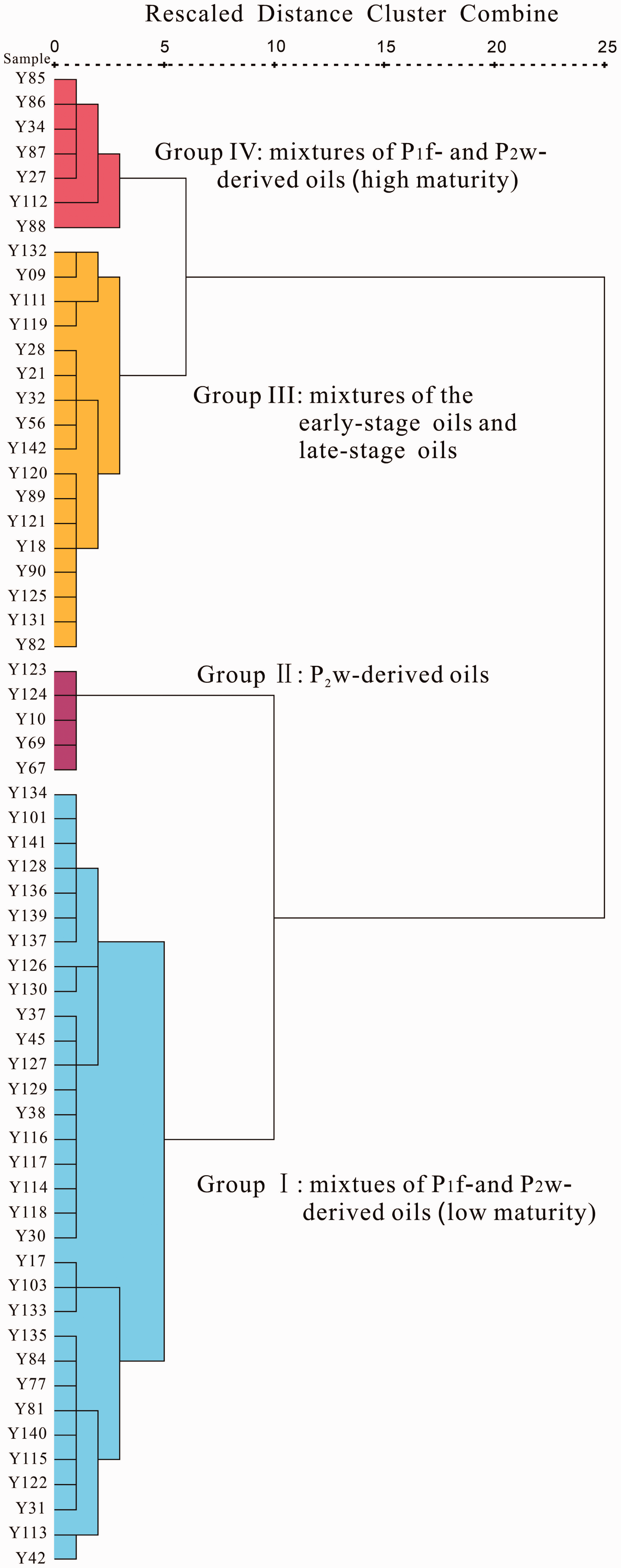
Four oil groups determined by hierarchical cluster analysis of the oil samples.
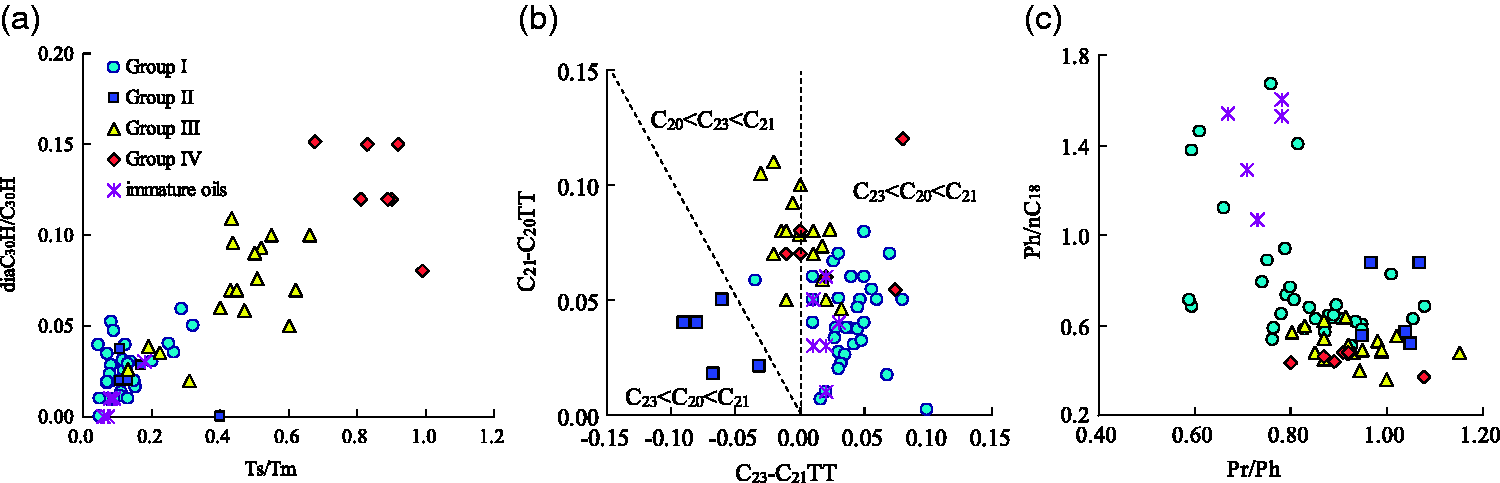
Biomarker parameter plots showing geochemical differences among the four oil groups. (a) scatter diagram of the maturity-related parameters (Ts/Tm vs. diaC30H/C30H) for crude oils, (b) scatter diagram of the source-related parameters (C23-C21TT vs. C21-C20TT) showing C20, C21, C23-tricyclic terpanes distribution for crude oils and (c) scatter diagram of the parameters (Pr/Ph vs. Ph/nC18) for crude oils.
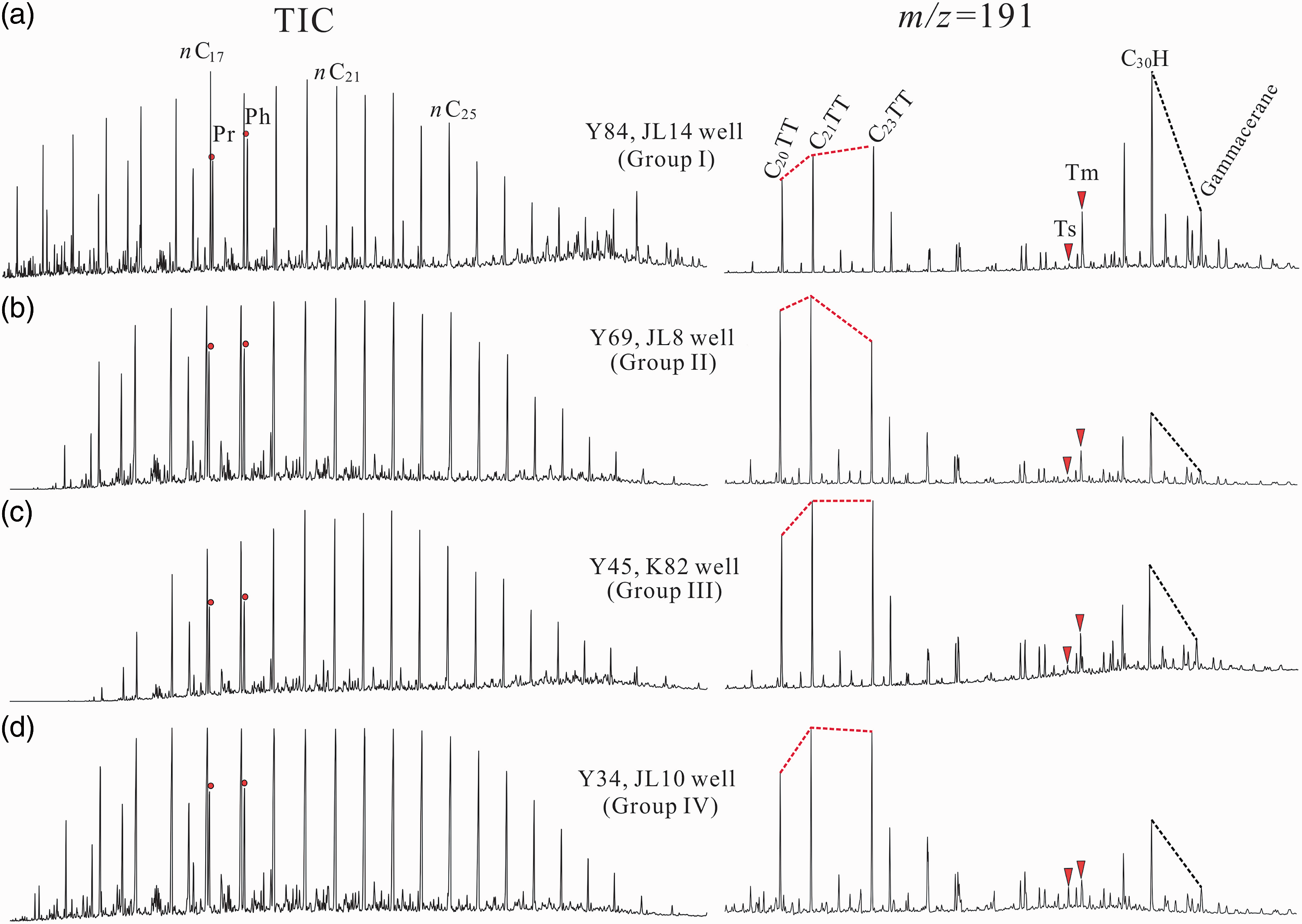
TIC and m/z 191 mass chromatograms of typical oils from the four oil groups.
The distinctive geochemical features of the four oil groups (Figures 5 and 6) suggest that Groups I, II, and IV oils are end-member oils, whereas Group III oils may be mixed oils.
Hydrocarbon gases
Carbon isotope composition is a good indicator of the origins of natural gases (Clayton, 1991; Dai, 1993; Galimov, 2006). Based on the classification scheme of Dai(1993), the hydrocarbon gases in the study area and near Karamay City fall in three genetic types (Figure 7(a) and (b)): humic-type, sapropelic-type, and mixed gases (a mixture of sapropelic-type and humic-type gases). For sapropelic-type gas, the carbon isotope difference between methane and ethane decreases with increasing maturity and thus can be used as an indicator of gas maturity (Dai et al., 2008). Accordingly, the sapropelic-type gases were further divided into relatively high-maturity and low-maturity subgroups (Figure 7(c)). The sapropelic-type gases in the study area are more mature than those associated with the immature oils near Karamay City.
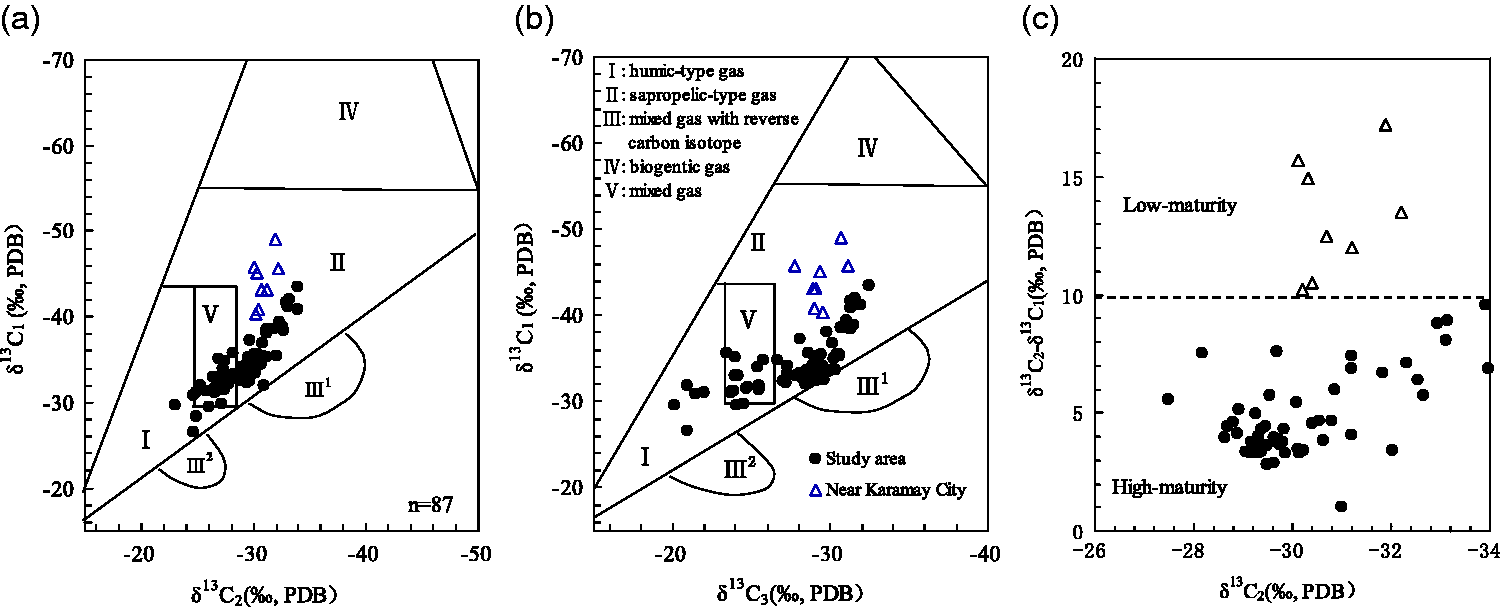
Three genetic types of hydrocarbon gas (a, b) determined by the classification scheme (Dai, 1993) and two subgroups of sapropelic-type gases (c).
n-Alkane distribution
The abundance of n-alkanes in mature unfractionated oils exponentially decreases as the carbon number increases (Kissin, 1987; Losh et al., 2002; Meulbroek et al., 1998). This pattern, however, can be broken by several processes such as phase fractionation, biodegradation, and poor storage of samples. The carbon number at which the oil deviates from the exponential distribution pattern is called the “break number” (Meulbroek et al., 1998).
The oil samples exhibit several distinct patterns in n-alkane distribution (Figure 8). Y101 oil, for example, displays an exponential distribution pattern (Figure 8(a)). Most of the oils, however, deviate from the exponential pattern at carbon numbers of 12–17, 19, 21, 23, or 25 (Table 1 and Figure 8). The maximum break numbers of Groups II and IV oils are identical at 25, whereas those in Group I oils are variable. Out of 61 oils, 52 deviate negatively from the exponential distribution pattern, indicating depletion of light-end n-alkanes (Table 1), and 11 oils deviate positively at carbon numbers of 10, 12, 14, 16, 18, 19, and 21 (e.g. Figure 8(h)), indicating the invasion of light-end n-alkanes. Eighteen oils display two break numbers (e.g. Figure 8(d) and (f)), suggesting that each oil has been fractionated twice.
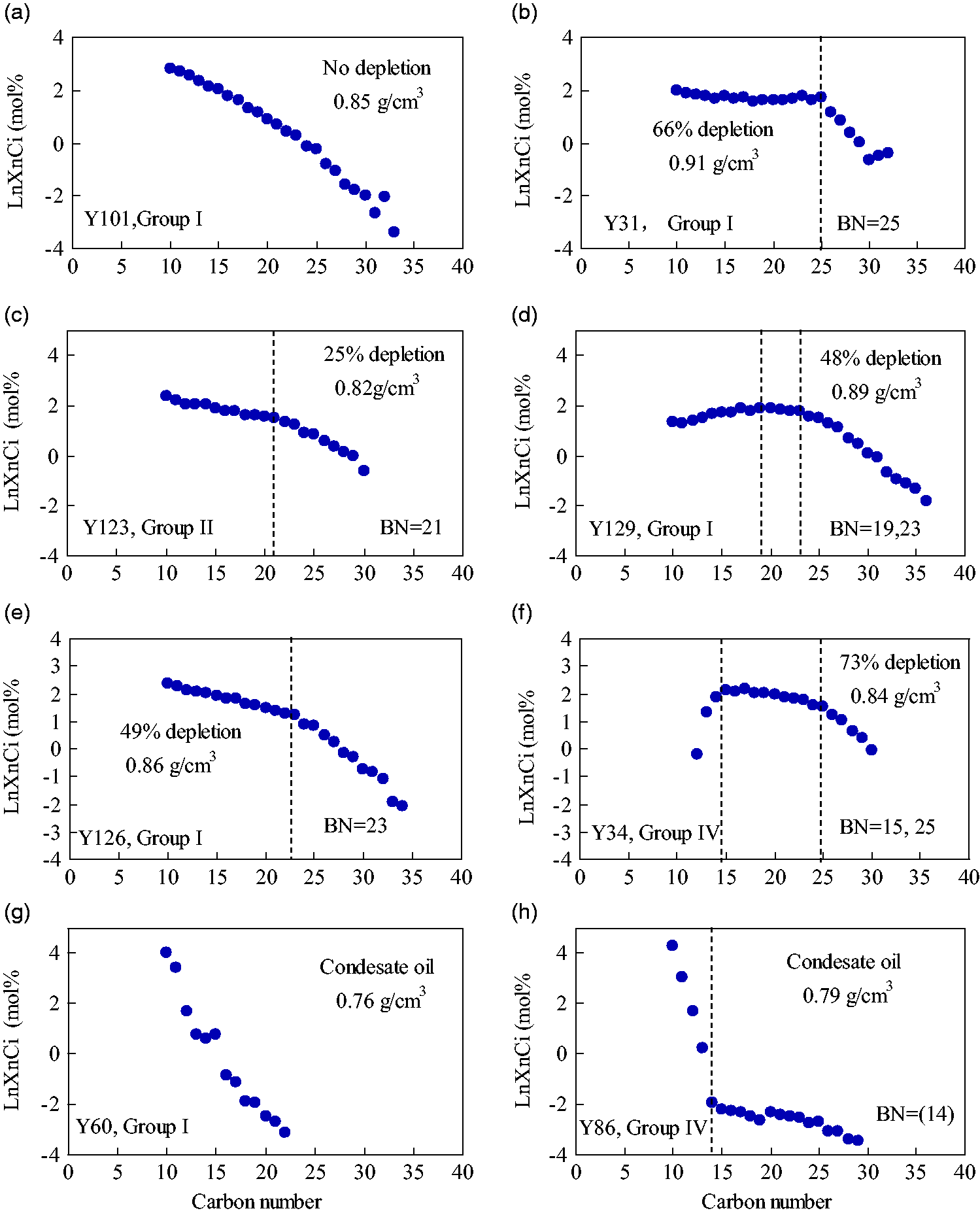
n-Alkane molar fraction plots of typical oils in the study area. (a) the crude oil displays an exponential distribution pattern, indicating no depletion of light–end n-alkanes, (b-f) crude oils deviate negatively from the exponential distribution pattern at various carbon numbers, indicating the depletion of light–end n-alkanes, (g) the oil condensed from the mixed gases is enriched in light n-alkanes with carbon numbers less than 23 and (h) the crude oil deviate positively from the exponential distribution pattern at carbon number of 14, indicating the invasion of light n-alkanes with carbon numbers less than 14.
We further calculated the nC15+ molar depletion relative to an unfractionated oil (Table 1) using the method introduced by Losh et al. (2002). The results (Table 1) show that Group I oils have the largest range of molar depletion (from 0% to 82%), while Group IV oils have a relatively narrow range (from 60% to 80%).
Discussion
Origin of hydrocarbons
Crude oils
In previous studies, several diagnostic geochemical signatures to differentiate the P1j, P1f, and P2w source rocks in the northwestern Junggar Basin have been proposed (Gong et al., 2013; Liu et al., 2011; Tao et al., 2008; Wang and Kang, 1999; Xiao et al., 2014). Particularly, the relative abundance of C20–C21–C23 TT has been used as a characteristic geochemical signature for oil–oil and oil–source correlations (Cao et al., 2005, 2006). Based on this index, Group II oils are likely the P2w-sourced oils, whereas the other oils (i.e. Groups I, III, and IV oils) are mixtures with variable contributions of P1f- and P2w-sourced oils. According to the artificial mixing experiments (Tao et al., 2008), Group I oils are dominated by P1f-sourced oils, whereas Groups III and IV oils contain approximately equal amounts of P1f- and P2w-sourced oils.
For the mixed oils derived from the common source rocks, the values of diaC30H/C30H and Ts/Tm (Figure 5(a)) suggest a maturity sequence of Group I < Group III < Group IV oils. Although the maturities of Group I oils are the lowest in the study area, they are more mature than the immature oils near Karamay City, based on the lower CPI values (close to 1; see Table 1) and relatively higher maturity of associated sapropelic-type gases (Figure 8(c)). As the end-member oils, the significant maturity difference between Group I and IV oils indicate that they likely represent early stage oils and late-stage oils, respectively. Accordingly, Group III oils, whose maturities are between those of Group I and Group IV oils and vary in a wide range (Figure 5(a)), may be mixed-episode oils (i.e. mixtures of early stage oils and late-stage oils).
Hydrocarbon gases
Both the P1j and P2w contain type III kerogens (Chen et al., 2003; Wang, 2001; Yang et al., 1992) and are thus the potential source rocks for humic-type gases. We consider the P1j as a more likely source, because (1) the humic-type gases are solely distributed in the P1j, occurring as nonassociated gas and (2) the stratum matching between the gas pool and the potential source kitchen supports a gas migration from the P1j rather than the P2w (Figure 9(b) and (c)). The sapropelic-type gases are associated with oils, indicating the same source for the associated oils.
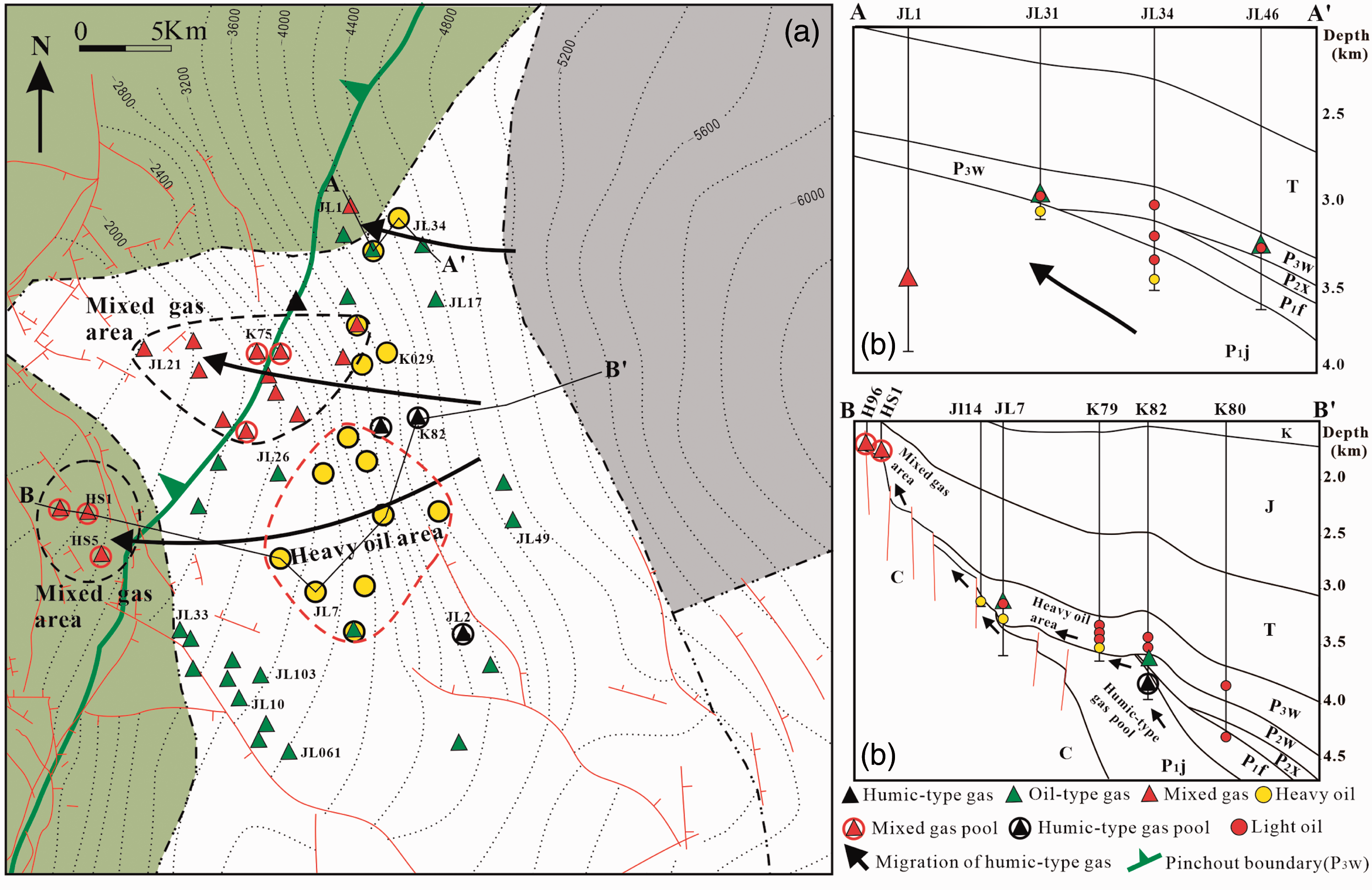
Gas migration pathways indicated by spatial distributions of source rocks, deep heavy oils, and mixed gases.
Phase fractionation
Several processes that potentially affect oil composition can be ruled out as causes for the observed compositional patterns of the studied oils. Biodegradation was not observed in the oils. Water washing, which can cause toluene loss (Napitupulu et al., 2000), should not significantly affect the oils either, because the majority of oils contain significant amounts of toluene (Table 1). Paraffin precipitation only affects n-alkanes at the high-carbon-number end (e.g. >30; Losh et al., 2002), whereas the break numbers in our samples are <25. Gas cap separation, fractionation in the separator, and short-term evaporation of samples after collection have been shown by Meulbroek et al. (1998) to affect compounds only as heavy as decane or so and thus cannot explain our results. Instead, phase fractionation was identified in the area, and it is the most likely cause for the diverse compositional distribution patterns of the oils.
Gas washing
Gas washing was proposed by Meulbroek et al. (1998) to define a process in which a continuous gas stream flows past and removes compounds from the oil. Its occurrence requires at least two preconditions: excessive gas supply and developed migration pathways for gas invasion and departure (Losh et al., 2002; Meulbroek et al., 1998). Both preconditions could be easily reached in the area: (1) The P1j source kitchen in the Mahu Sag had approached the study area prior to the Paleogene (Liu et al., 2013) and several humic-type gas pools are currently distributed in the down-dip structural locations (Figure 9), providing gas streams available for gas washing and (2) several regional unconformities within the Permian strata in the northwestern Junggar Basin have already been considered as the main pathways for hydrocarbon migration (Chen et al., 2000; Wu et al., 2002). Particularly, the P3w basal unconformity in the area has good transportation ability for hydrocarbon migration.
During gas washing, the compositions of involved gases and oils are both expected to change because of the transfer and mixing of light hydrocarbons (Meulbroek et al., 1998). If the oils are washed by humic-type gases, the residual oils would be depleted in light-end compositions, while the humic-type gases likely evolve into mixed gases by incorporating light-end components when leaving the oils. Subsequently, the mixed gas can continue to migrate upward to be trapped in shallower reservoirs, invade the encountered oils, or vented out of the system. Such a scenario is supported by the geochemical characteristics and distribution of hydrocarbons in the area: (1) most of the oils are depleted in light-end hydrocarbons (Table 1); (2) the mixed gases occur in locations shallower than those of the depleted oils and humic-type gases (Figure 9); and (3) the compounds in Y60 oil, which condensed from the mixed gases, match well with those depleted in the residual oils (Figure 8(e) and (g)).
Therefore, gas washing should have occurred and significantly altered the compositional distribution patterns of the oils in the study area.
Migration fractionation
In Group IV, the light n-alkanes with carbon numbers of <15 (hereafter referred to as nC15-) are enriched in the condensate oil (Figure 8(h)) but depleted in several other light oils (e.g. Figure 8(d)). This can be best explained by a physical separation that cut original oil into two parts: an nC15--enriched light end and a residual heavy end. However, this separation process cannot be simply attributed to gas washing, because (1) the gas associated with the condensate is sapropelic-type gas, which indicates little influence from humic-type gases and (2) no sapropelic-type gas pools have been discovered in the area as potential gas sources for gas washing.
It is worth noting that Group IV oils had accumulated in the fractured volcanics, which were created by multiple stages of tectonic movements since the Permian (Fan et al., 2012, 2018). During the Cretaceous–Neogene tilted extensive stage, E–W trending normal faults were developed in the volcanics (Wu et al., 2017; Zhang et al., 2018). When the fault-cross-cutting oil pools opened, the reduction of pressure could cause gas separation from the oil pools and subsequent gas migration through the faults. This process has been defined as migration fractionation (Curiale and Bromley, 1996; Dzou and Hughes, 1993; Illich et al., 1981).
Origin of the deep heavy oils
Two formation mechanisms have been proposed for the origin of heavy oils (Hu et al., 2009; Li et al., 2008; Zhang, 2002): (1) source rocks expelling out the original heavy oils (e.g. immature oils) during the early stage diagenesis and (2) secondary alterations (e.g. biodegradation) turning conventional light oils into heavy oils. Of the causes for heavy oils, biodegradation has been considered as the most important one (Head et al., 2003; Hein, 2017; Larter et al., 2003). However, biodegradation can be suppressed when the reservoir temperature exceeds 75°C (Head et al., 2003; Larter et al., 2003). Other causes, such as the expulsion of immature source rocks, water washing, and oxidation, are also liable to occur in shallow layers (Hu et al., 2009; Huang et al., 2003; Lafargue and Barker, 1988; Mauk and Burruss, 2002). Accordingly, the vast majority of heavy oils around the world presently occur in shallow layers (usually <200 m, with a maximum of 2000 m) (Hein, 2017). Although deep heavy oils were also observed in several basins, they are either original heavy oils or biodegraded heavy oils, which firstly formed in shallow layers and subsequently subsided to their present burial depths (Song et al., 2007; Zhang, 2002; Zhu et al., 2012, 2016).
Given that (1) gas washing has caused significant light-end loss of the examined heavy oils (e.g. Figure 8(b)), which are characterized by extremely low gas-oil ratio (GOR, Table 2), (2) deep heavy oils commonly occur in the reservoirs close to the main pathway of hydrocarbon migration (i.e., the P3w-basal unconformity) (Table 2), and (3) gas washing is expected to lead to an increase in wax contents and densities of the oils (Wang et al., 2014), gas washing most likely played an important role in the formation of the deep heavy oils. However, gas washing could not be the sole cause, because the high-maturity oils (e.g. Group IV oils), which suffered from gas washing and migration fractionation and are thus more depleted in light hydrocarbons, have not evolved into heavy oils (Table 1). This indicates that maturity also plays an important role in the formation of the heavy oils. High-maturity oils can resist the effect of gas washing to a certain degree, which hinders them from becoming heavy oils. In contrast, all the deep heavy oils were determined to be Group I oils (Table 2), which indicates the effect of low maturity on the formation of the heavy oils. Notably, low maturity should not be the sole cause as well, because the adjacent immature oils with lower maturity than Group I oils are not heavy oils (Table 1).
Accordingly, we propose that the deep heavy oils resulted from the combined effect of gas washing and low maturity based on the hydrocarbon migration process in the study area. In detail, we propose the following:
The early stage low-maturity oils from the P1f and P2w source rocks (i.e. Group I and Group II oils) charged the reservoirs and accumulated there. During the late stage, all the Permian source rocks expelled out high-maturity hydrocarbons, including Group IV oils and P1j-sourced humic-type gases. The gases migrated upward within P1j, and they washed the encountered oils (e.g., Figure 8(b)) or accumulated at the up-dip locations of this formation (e.g. Figure 7(c)). The more humic-type gases migrated into the unconformities within the Permian and washed the encountered oils. The low-maturity oils lost their light fraction and evolved into heavy oils, whereas the high-maturity oils did not. The light-end compositions and/or humic-type gases continued to migrate upward and invaded other oils, accumulating as mixed gas pools or venting out the system. The heavy oil reservoirs had not obviously uplifted since the late-stage hydrocarbon charging (Tao et al., 2016, 2019), so the reservoired heavy oils were preserved in the deep layers till the present.
Implication for humic-type gas migration and gas potential
Gas washing induces significant shifts in physical properties (e.g. density) and chemical compositions of involved oils and gases in the study area. Therefore, the physicochemical alterations and their spatial distribution provide an opportunity to reconstruct the pathways of gas washing, as well as gas migration.
The distribution patterns of the P1j source kitchen, deep heavy oils, and mixed gases indicate at least three migration pathways for the humic-type gases, from the Mahu Sag through the Zhongguai High into the fault belts (Figure 9). The affected areas of gas migration nearly cover the entire northern Zhongguai High, suggesting widespread gas migration occurring in the southwestern slope of the Mahu Sag. Notably, recent research indicates that a large amount of gas (as much as 1224 Tg of methane) could have been oxidized (i.e. thermochemical oxidation of methane) in the western slope of the Mahu Sag (Hu et al., 2018). These studies unquestionably strengthen the expectations of significant gas potential in the region. The reason why few gas pools have been discovered in the northwestern Junggar Basin may be attributed to the poor sealing property of the fault belts or thermochemical oxidation of methane.
Notably, several gas pools occur in the Hongche fault belt, stratigraphic traps along the pinch-out boundary of the Upper Wuerhe Formation, and deep layers close to the Mahu Sag (Figure 9). Accordingly, the favorable exploration targets for gas are expected to be located in these areas, particularly the deep traps within the Mahu Sag that have not been drilled.
Conclusions
Hydrocarbon geochemistry and phase fractionation were used to investigate the origin of deep heavy oils in the northwestern Junggar Basin, NW China. This study identified four genetic types of oils and three genetic types of gases (i.e. humic-type gases, sapropelic-type gases, and mixed gases), which originated from the three sets of Permian source rocks (i.e. P1j, P1f, and P2w) in the Mahu Sag. Phase fractionation including gas washing and migration fractionation was also identified in the studied area. The majority of oils have suffered from gas washing, and the high-maturity oils in the fractured volcanics further underwent migration fractionation.
Based on comparisons with the adjacent immature oils and more depleted high-maturity oils, neither low maturity nor gas washing separately created the deep heavy oils; rather their combined effects were responsible. The formation process is as follows: (1) The early stage low-maturity oils migrated along the P3w-basal unconformity and accumulated in the reservoirs near the unconformity; (2) the migrating late-stage humic-type gases washed the encountered low-maturity oils; (3) the low-maturity oils lost the light fraction and evolved into heavy oils; and (4) the gases leaving the oils turned into mixed gases and continued to migrate upward.
The upward distribution patterns of the P1j source kitchen, deep heavy oils, and mixed gases clearly indicate three migration pathways for the humic-type gases, which terminate at fault belts. The few gas discoveries may be attributed to the poor sealing property of the fault belts or thermochemical oxidation of methane. The favorable exploration targets for gas are expected to be located in fault belts, stratigraphic traps along the pinch-out boundary of the Upper Wuerhe Formation, and other deep traps in the Mahu Sag.
Footnotes
Acknowledgements
The authors sincerely thank the Research Institute of Experiment and Testing, PetroChina Xinjiang Oilfield Company, for supporting the work reported here and for contributing data and geological background. We are grateful to the reviewers for their constructive comments and to Ahmed Khaled for his kind help in polishing the language.
Declaration of conflicting interests
The author(s) declared no potential conflicts of interest with respect to the research, authorship, and/or publication of this article.
Funding
The author(s) disclosed receipt of the following financial support for the research, authorship, and/or publication of this article: This study was jointly funded by the Research Institute of Experiment and Testing, Xinjiang Oilfield Company, and the National Natural Science Foundation of China (Grant Nos. 41402115 and 41672121).
